EP2679229B1 - Zusammensetzung zur Behandlung von hyperglykämischen Erkrankungen - Google Patents
Zusammensetzung zur Behandlung von hyperglykämischen Erkrankungen Download PDFInfo
- Publication number
- EP2679229B1 EP2679229B1 EP12174534.3A EP12174534A EP2679229B1 EP 2679229 B1 EP2679229 B1 EP 2679229B1 EP 12174534 A EP12174534 A EP 12174534A EP 2679229 B1 EP2679229 B1 EP 2679229B1
- Authority
- EP
- European Patent Office
- Prior art keywords
- plant
- extract
- phlorizin
- composition
- diabetes
- Prior art date
- Legal status (The legal status is an assumption and is not a legal conclusion. Google has not performed a legal analysis and makes no representation as to the accuracy of the status listed.)
- Not-in-force
Links
Images
Classifications
-
- A—HUMAN NECESSITIES
- A61—MEDICAL OR VETERINARY SCIENCE; HYGIENE
- A61K—PREPARATIONS FOR MEDICAL, DENTAL OR TOILETRY PURPOSES
- A61K31/00—Medicinal preparations containing organic active ingredients
- A61K31/70—Carbohydrates; Sugars; Derivatives thereof
- A61K31/7028—Compounds having saccharide radicals attached to non-saccharide compounds by glycosidic linkages
- A61K31/7034—Compounds having saccharide radicals attached to non-saccharide compounds by glycosidic linkages attached to a carbocyclic compound, e.g. phloridzin
-
- A—HUMAN NECESSITIES
- A61—MEDICAL OR VETERINARY SCIENCE; HYGIENE
- A61K—PREPARATIONS FOR MEDICAL, DENTAL OR TOILETRY PURPOSES
- A61K36/00—Medicinal preparations of undetermined constitution containing material from algae, lichens, fungi or plants, or derivatives thereof, e.g. traditional herbal medicines
- A61K36/18—Magnoliophyta (angiosperms)
- A61K36/185—Magnoliopsida (dicotyledons)
- A61K36/31—Brassicaceae or Cruciferae (Mustard family), e.g. broccoli, cabbage or kohlrabi
-
- A—HUMAN NECESSITIES
- A61—MEDICAL OR VETERINARY SCIENCE; HYGIENE
- A61P—SPECIFIC THERAPEUTIC ACTIVITY OF CHEMICAL COMPOUNDS OR MEDICINAL PREPARATIONS
- A61P3/00—Drugs for disorders of the metabolism
- A61P3/08—Drugs for disorders of the metabolism for glucose homeostasis
- A61P3/10—Drugs for disorders of the metabolism for glucose homeostasis for hyperglycaemia, e.g. antidiabetics
Definitions
- the present invention relates to a synergistic composition
- a synergistic composition comprising (a) at least one extract of a plant of the genus Brassica and (b) more than 1% (w / w) phlorizin, the plant of the genus Brassica being kale.
- the present invention relates to such a composition for use in a method for the treatment and / or prophylaxis of a hyperglycemic disease, such as obesity, diabetes or diabetes-related sequelae.
- the invention further relates to the use of such a composition for the preparation of a pharmaceutical composition, a dietetic food and / or a dietary supplement.
- the invention further relates to pharmaceutical compositions, dietetic foods and dietary supplements comprising a composition according to the present invention.
- SGLT-2 sodium-dependent glucose transporter 2
- This transport protein resorbs glucose and sodium from the primary urine in the proximal tubule of the kidney.
- Specific SGLT-2 inhibitors are able to prevent the uptake of glucose into the renal tubules, resulting in the restoration of normal plasma glucose levels.
- SGLT-2 inhibitors Long-term treatment with SGLT-2 inhibitors greater than 6 months has led to increased insulin sensitivity, improved insulin response, and delayed development of diabetes-related complications in animal studies.
- the inhibition of the transporter SGLT-2 is based on an increased concentration-dependent excretion of glucose, which leads to a lowering of the blood sugar in the body. However, no hypoglycaemia is caused. The mechanism of lowering blood sugar is independent of any existing insulin resistance or lack of insulin production by the beta cells of the pancreas.
- SGLT-2 there is another sodium-dependent glucose transporter, SGLT-1, which has also been implicated in the treatment of diabetes. SGLT-1 is found in the small intestine as well as in the S3 segment of the proximal renal tubule. He is responsible for the active uptake of glucose. Compared to SGLT-2, SGLT-1 has altered substrate specificity for some sugars.
- Several drugs that inhibit SGLT-1 and / or SGLT-2 are currently in clinical trials.
- compositions containing (a) an extract of a plant of the genus Brassica and (b) phlorizin is highly suitable for the treatment and / or prophylaxis of a metastatic hyperglycaemic disorder such as diabetes and / or obesity.
- a metastatic hyperglycaemic disorder such as diabetes and / or obesity.
- Such Composition by inhibiting the sodium-dependent glucose transporter, results in significantly lower increases in blood glucose concentration after ingestion of foods containing carbohydrates, such as starch.
- JP 2008 074742 A and JP 2008 074745 A describe the use of isolated brassinin in combination with phloretin or phloretin glycosides to reduce blood glucose levels.
- JP 2003 238417 A describes the use of phlorizin and beta-glucosidase inhibitors as a therapeutic agent against diabetes.
- the invention relates to compositions containing at least the following two ingredients: (a) at least one extract from a plant of the genus Brassica, wherein the plant of the genus Brassica is kale and (b) more than 1 % (w / w) phlorizin.
- the compositions according to the invention are proposed according to the invention for the treatment and / or the prophylaxis of a hyperglycemic disease.
- the compositions are characterized by a synergistic effect of their constituents, ie the interaction of the individual constituents goes beyond a purely additive effect.
- Diseases that can be treated using the compositions proposed by the invention include all diseases characterized by hyperglycemia, ie elevated blood sugar levels, exceeding the physiologically normal level of 140 mg / dl (7.8 mmol / l).
- diseases include, in particular, obesity, diabetes or diabetes-related sequelae (such as retinopathy, neurophathy, nephropathy, and impaired wound healing).
- diabetes caused by the compositions according to the invention treated it may be type I or type II diabetes.
- it is Type II diabetes.
- the compositions of the invention are generally suggested for the treatment and / or prophylaxis of such diseases and conditions in which it is advantageous to slow and / or reduce sugar absorption from the intestine.
- compositions proposed according to the invention for the treatment or prophylaxis can also be advantageously used with other active substances, e.g. together with other antidiabetic agents described in the art, e.g. Biguanides, sulfonylureas, glucosidase inhibitors, thiazolidinediones, dipeptidyl peptidase IV (DP4) inhibitors, meglitinides, glucagon-like peptide-1 (GLP-1), PTP1B inhibitors, glycogen phosphorylase inhibitors, and glucose-6-phosphatase inhibitors.
- other active substances e.g. together with other antidiabetic agents described in the art, e.g. Biguanides, sulfonylureas, glucosidase inhibitors, thiazolidinediones, dipeptidyl peptidase IV (DP4) inhibitors, meglitinides, glucagon-like peptide-1 (GLP-1), P
- the genus Brassica is a plant genus within the family Chrysler (Brassicaceae). It is particularly preferred that the or the Brassica extract (s) is prepared from plants of the species Brassica oleracea .
- the species Brassica oleracea is a species-rich plant within the genus Brassica. The species includes numerous varieties, including broccoli (Brassica oleracea var. Silvestris L.), red cabbage (Brassica oleracea var. Capitata f.rubra L.), cabbage (Brassica oleracea var. Capitata f.alba), savoy cabbage (Brassica oleracea L. convar capitata (L.) Aleph. Var.
- the extract (s) is produced from a plant of the genus Brassica starting from kale
- the compositions according to the invention comprise, in addition to one or more Brassica extracts, the flavonoid phlorizin in an amount of more than 1% (w / w).
- the phlorizin is not derived from the Brassica extract, but is added to it, for example in the form of a phlorizin-containing plant extract.
- Kale contains no or very little (> 0.0001% (w / w)) phlorizin. Phlorizin inhibits SGLT in vitro ( Kottra et al. (2007), J Pharmacol Exp Ther, 322 (2): 829-35 ). It has also been known for a long time that phlorizin acts on the renal glucose excretion when administered intravenously. However, the effect is weak when phlorizin is taken orally.
- compositions of the invention contain an amount of phlorizin which is effective to inhibit the glucose transporter SGLT-1 after oral administration and / or to slow sugar uptake from the intestine.
- the activity of the intestinal SGLT-1 transporter is increased by the compositions by at least about 1%, 2%, 3%, 4%, 5%, 10%, 20%, 30%, 40%, 50 %, 60%, 70%, 80%, 90% or more reduced compared to the untreated condition.
- the composition according to the invention gives a sugar uptake from the intestine compared to the untreated state after administration by at least about 1%, 2%, 3%, 4%, 5%, 10%, 20%, 30%, 40 %, 50%, 60%, 70%, 80%, 90% or more.
- the person skilled in the art is easily able to determine the amount of phlorizin required for the respective (therapeutic) effect to be achieved by simple series of experiments.
- one skilled in the art will consider various factors, such as the type and amount of Brassica extract present in the composition, the type and amount of components additionally present in the compositions, the age and weight of the person to whom the composition is administered, etc
- the amount of phlorizin in the compositions according to the invention is greater than 10 4 ppm, preferably greater than 5 * 10 4 ppm or greater than 10 5 ppm.
- the composition according to the invention contains more than 1%, more than 2%, more than 3%, more than 4%, more than 5%, more than 6%, more than 7%, more than 8%, more than 9% , more than 10%, more than 11%, more than 12%, more than 13%, more than 14%, or more than 15%.
- the compositions according to the invention contain more than 5% phlorizin.
- the term "%" denotes weight percent (w / w).
- composition of the invention is preferably formulated so that the particular delivery unit (e.g., a capsule or tablet) contains an amount of 0.01 and 10 g of phlorizin, e.g. more than 0.05 g, more than 0.1 g, more than 0.2 g, more than 0.3 g, more than 0.4 g, more than 0.5 g, more than 0.75 g, more than 1 g, more than 2 g, more than 3 g, more than 4 g or more than 5 g.
- the particular delivery unit e.g., a capsule or tablet
- the particular delivery unit contains an amount of 0.01 and 10 g of phlorizin, e.g. more than 0.05 g, more than 0.1 g, more than 0.2 g, more than 0.3 g, more than 0.4 g, more than 0.5 g, more than 0.75 g, more than 1 g, more than 2 g, more than 3 g, more than 4 g or more than 5 g.
- the invention relates to a composition in which the phlorizin is in the form of a phlorizin-containing plant extract.
- the phlorizin-containing herbal extract can be obtained, for example, from at least one plant of the family Rosaceae .
- the plant of the family Rosaceae belongs to a genus selected from the group consisting of Malus, Pyrus or Prunus.
- the phlorizin-containing herbal extract may also be obtained from a plant of the family Verbenaceae .
- the plant of the family Verbenaceae is one of the genus Lippia. It is known that especially plants of these families contain phlorizin.
- the extract of the plant of the family Rosaceae or Verbenaceae can be obtained, for example, from the bark, the fruits or the leaves of the plant.
- Plants of the genera Malus, Pyrus and Prunus contain relatively high amounts of phlorizin in the bark, in the fruits and in the leaves.
- the fruits of the genus Malus ie apples
- the phlorizin is present in the composition according to the invention in the form of an extract from a plant of the genus Malus, preferably in the form of an extract from apples or the bark.
- the genus Malus is a plant genus in the family Rosaceae. It is particularly preferred that the extracts are produced from a plant of the genus Malus starting from plants of the species Malus domestica .
- the cultivated apple Malus domestica Borkh, Pyrus malus, L.
- the cultivated apple is an economically very important type of fruit, which includes numerous varieties.
- all varieties of the culture apple can be used to prepare the phlorizin-containing extracts. It is particularly preferred that the extracts are prepared starting from one of the varieties Red Delicious, Golden Delicious, Braeburn, Cox Orange, Prince Finkenwerder, Prince Blücher, Markischer Cox or Red Chief.
- other species of the genus Malus can be used.
- the at least one extract from the plant of the family Rosaceae and / or at least an extract from the family of Verbenaceae preferably contains at least 2%, 3%, 4%, 5%, 6%, 7%, 8%, 9%, 10%, 15%, 20% or more phlorizin (w / w) ,
- the compositions comprise at least one extract of a plant of the genus Brassica, wherein the plant of the genus Brassica is kale, and at least one extract of at least one plant of the family Rosaceae and / or of at least one plant of the Family Verbenaceae.
- the compositions contain more than one, eg, two, three, four or more, extracts from one plant of the genus Brassica and / or more than one, eg two, three, four or more, extracts from a plant of the genus Malus.
- Particularly preferred are compositions containing a curly kale extract and at least one extract of a plant of the genus Malus .
- the term "extract from a plant” refers to an extract derived from one or more plants of the same species and is not to be understood as limited to a single plant.
- extract refers to a composition of matter obtained by digesting cells of a plant and recovering the cell juice.
- the extracts proposed by the invention can be prepared by a variety of methods known in the art.
- material of a plant is first provided.
- suitable starting materials for the process according to the invention are plants in all developmental stages, from the seed to the mature plant.
- all plant parts such as the fruits, stems, leaves, bark or roots of the plant are suitable.
- the starting material may be a mixture of different plant parts be, or include only certain parts of plants.
- the vegetable material is usually crushed first. The crushing can be achieved by simply breaking up the respective plant parts with conventional cutters.
- all plant parts can be used as a starting point for extract formation.
- the extracts from a plant of the genus Brassica according to a preferred embodiment of the invention are prepared from the leaves of the respective Brassica plant.
- the fruits and the bark have proven to be particularly suitable.
- the extracts are produced from a plant of the genus Malus from the fruits, ie the apples, or from the bark of the respective malus plant.
- the vegetable material Prior to comminution, the vegetable material may be blanched at temperatures between 45 ° C and 100 ° C to remove bacterial contamination and improve the quality of the digestion. Furthermore, blanching reduces the activity of enzymes such as hydrolases, lipases and oxidases and thus increases the stability and quality of the plant material.
- the plant material is disrupted, ie the cellular structures of the material are destroyed, so that the content of the cells is released.
- Digestion may be achieved by conventional plant cell disruption techniques, such as by repeated freezing and thawing, or by suitable equipment such as homogenizers, high pressure homogenizers, or ultrasonic homogenizers. Colloid mills or French presses can also be used for digestion.
- the cell disruption can also be achieved enzymatically.
- the plant material is mixed with suitable enzymes, which lead to a destruction of the structural components of the cells. It has been found that incubation of the plant material with pectinase, collagenase, cellulase and / or hemicellulases in this phase of the method is particularly suitable for effectively disrupting the cells.
- the incubation time can be between 30 minutes and 24 hours, preferably between 1 hour and 6 hours, more preferably between 90 minutes and 4 hours, e.g. 2 hours.
- the temperature may be in the range of 20 ° C and 60 ° C, preferably between 25 ° C and 45 ° C, e.g.
- a suitable pH of the reaction mixture may be determined using suitable buffers such as e.g. Phosphate, carbonate, sodium bicarbonate buffer and / or suitable acids, e.g. Citric acid, lactic acid or ascorbic acid can be adjusted.
- suitable buffers such as e.g. Phosphate, carbonate, sodium bicarbonate buffer and / or suitable acids, e.g. Citric acid, lactic acid or ascorbic acid can be adjusted.
- the resulting cell sap can be used directly to inhibit the sodium-dependent glucose transporter 1 (SGLT-1). However, it is preferred to subject the vegetable juice obtained after the digestion of the cells to further purification steps.
- the material obtained from the cell disruption may be subjected to drying or freeze-drying with subsequent extraction.
- a spray-drying can be used.
- the dried or freeze-dried plant material may then be extracted with an aqueous or organic solvent.
- the extraction can be carried out with a conventional extractant, for example with ethanol, ethyl acetate or with other organic solvents.
- gases such as with nitrogen is possible.
- the incubation time is 0.5 to 24 hours, preferably 2 to 8 hours.
- nitrogen the extraction is carried out at temperatures between 4 ° C and 37 ° C in a period of 0.25 to 3 hours, preferably in a period of 20 and 60 minutes.
- the vegetable juice obtained after digestion of the cells may also be subjected to chromatographic purification to enrich the polyphenols (including the flavonoids), for example using ion exchange chromatography or affinity chromatography.
- polyphenols including the flavonoids
- ion exchange chromatography or affinity chromatography e.g. an XAD 16HD column (Rohm & Haas, Frankfurt) can be used.
- the column is loaded with the supernatant obtained from the cell digestion, and by rinsing with demineralized water, hydrophilic substances are depleted.
- the polyphenols can be enriched by elution with ethanol.
- the eluted fractions can then be used directly or dried.
- the eluted fractions may e.g. be subjected to freeze-drying, and the resulting powder may be encapsulated for administration
- compositions proposed by the invention can be prepared by a variety of methods known in the art.
- the extracts of plants of the genera Brassica and Malus included in the composition may first be prepared individually and mixed immediately prior to use into a composition comprising the extracts.
- one or more Brassica extracts may be prepared and mixed together, followed by the addition of isolated phlorizin.
- Phlorizin can stand by in the known to the art produced or purchased directly from various manufacturers (eg Carl Roth GmbH & Co. KG, Düsseldorf, Germany).
- the phlorizin is added to the kale extract in the form of another vegetable extract.
- the phlorizin-containing extract is an extract from a plant of the genus Malus.
- compositions of the invention containing at least one kale extract and phlorizin are proposed herein for the treatment and / or prophylaxis of a hyperglycemic disease. It does not matter when the individual components are mixed together, as long as they are administered promptly. Therefore, the present invention also relates to the use of at least one kale extract and at least one phlorizin-containing extract or phlorizin for the treatment and / or prophylaxis of a hyperglycemic disease, wherein the components are formulated for separate administration.
- the two extracts can be used in any mixing ratio.
- the composition of the invention contains the kale extract and the phlorizin-containing extract in the ratio of approximately 20: 1, 10: 1, 5: 1, 4: 1, 3: 1, 2: 1, 1: 1, 1 : 2, 1: 3, 1: 4, 1: 5, 1:10 or 1:20.
- a mixing ratio between the kale extract and the phlorizin-containing extract of 1: 1 is particularly preferred.
- Flavonoids belong to the group of secondary Plant substances, and they represent an extensive class of polyphenolic compounds, which are common in foods of plant origin. Glycosides are chemical compounds in which an alcohol (R-OH) is linked to a sugar moiety via a glycosidic bond. It is therefore a glycoside to the full acetal of a sugar. Examples of typical glycosides found as secondary plant metabolites are the glucosinolates. Kale and other varieties of the species Brassica oleracea have a relatively high content of glucosinolates.
- Kale contains about 1 mg of glucosinolates per gram fresh weight ( Rouzaud G et al. Br J Nutr. 2003; 90 (2): 395-404 ). Concerning the concentration of flavonoids in curly kale quite different opinions are found in the literature. Investigations by the inventor show that the dry weight of kale can contain 1.5% to 2% flavonoids. About the exact amounts of the respective glucosinolates or flavonoids is relatively little known. Also, the culture apple, and especially its fruits (apples) and the bark of the apple tree, contain relatively high levels of polyphenols (including flavonoids). Depending on the variety, apple juice may contain over 400 mg polyphenols per liter ( Will, F., et al., 2006, LWT - Food Science and Technology, 40 (8): 1344-1351 ).
- the composition contains an extract of kale, preferably kale leaves, and an extract of the apples of a plant of the genus Malus, preferably Malus domesticus.
- the composition contains an extract of kale, preferably kale leaves, which has been mixed with phlorizin.
- the present invention relates to the use of plant extracts, it is preferred that these extracts contain the polyphenols, flavonoids and / or glycosides contained in the plant cells.
- the polyphenols, flavonoids and / or glycosides are concentrated in the extract or in the extracts. If phlorizin-containing extracts are used for the preparation of the compositions according to the invention, they too can be treated accordingly in order to concentrate the phlorizin. Processes for concentrating these substances are well known to the person skilled in the art and are described, for example, in US Pat Will et al. (2006, LWT - Food Science and Technology, 40 (8): 1344-1351 ).
- Concentration of the polyphenols, flavonoids and / or glycosides or phlorizin can be achieved, for example, by use of column chromatography methods.
- Adsorbe Hurlen can be used for this purpose.
- the chromatographic columns are loaded with the starting extract, freed of unwanted constituents by rinsing with suitable solutions and then eluted from the column in concentrated form.
- hydrophilic substances salts, amino acids, peptides, sugars, etc.
- polyphenols are then enriched.
- the inventive method thus allows starting from kale plants and phlorizin or phlorizin-containing plants, the production of compositions with a high proportion of health-promoting polyphenols, flavonoids and / or glycosides, which exert an inhibitory effect on the glucose transporter SGLT-1.
- the extracts obtainable according to the invention can be prepared both in dry and in liquid form.
- the present invention relates to the use of a composition as described above for the preparation of a pharmaceutical composition, a dietetic Food or a dietary supplement.
- the present invention thus also relates to a pharmaceutical composition, a dietetic food or a nutritional supplement comprising a composition as described above which comprises at least one extract from a plant of the genus Brassica, wherein the plant is the plant Genus Brassica is about kale, and more than 1% (w / w) phlorizin comprises.
- the pharmaceutical composition, dietetic food or dietary supplement are suitable for use in a method for the treatment and / or prophylaxis of a hyperglycemic disease, preferably selected from the group consisting of obesity, diabetes or diabetes-related sequelae, and in particular for the treatment and / or or prophylaxis of type II diabetes.
- a pharmaceutical composition comprising the composition of the invention may be formulated for oral, parenteral or topical administration.
- Such a pharmaceutical composition may be prepared by methods well known in the art. Such processes as well as suitable auxiliaries and carriers are described, for example, in US Pat. Remington: The Science and Practice of Pharmacy ", Lippincott Williams & Wilkins, 21st Edition (2005 ).
- the pharmaceutical compositions may be in the form of, for example, granules, powders, tablets, capsules, syrups, suppositories, injections, emulsions, suspensions or solutions.
- compositions may be formulated for various modes of administration, for example, for oral, parenteral, topical, buccal, sublingual, transmucosal, rectal, subcutaneous intrathecal, intravenous, intramuscular, intraperitoneal, nasal, intraocular or intraventricular administration.
- the formulation as oral, parenteral or topical composition is particularly preferred.
- the composition is formulated for oral administration.
- the pharmaceutical compositions may also be formulated as sustained-release agents.
- solid formulations such as, for example, powders, suspensions, granules, tablets, pills, capsules and gelcaps are generally used. These can be prepared, for example, by mixing the active ingredients (the Brassica extract and phlorizin) with at least one additive or with at least one excipient.
- active ingredients the Brassica extract and phlorizin
- auxiliaries and carriers are described, for example, in US Pat. Remington: The Science and Practice of Pharmacy ", Lippincott Williams & Wilkins, 21st Edition (2005 ).
- compositions for oral administration may include antioxidants (eg, ascorbic acid, tocopherol, or cysteine), lubricants (eg, magnesium stearate), preservatives (eg, paraben or sorbic acid), flavor enhancers, disintegrants, binders, thickeners, dyes, and the like.
- Liquid formulations of the extracts of the invention and compositions suitable for oral administration may be present, for example, as an emulsion, syrup, suspension or solutions. These formulations may be prepared using a sterile liquid carrier (eg, oil, water, alcohol, or combinations thereof) in the form of liquid suspensions or solutions.
- a sterile liquid carrier eg, oil, water, alcohol, or combinations thereof
- pharmaceutically suitable surfactants, suspending agents, oils or emulsifiers may be added.
- suitable oils include For example, olive oil, sesame oil, peanut oil, rapeseed oil and corn oil.
- suitable alcohols include ethanol, isopropyl alcohol, hexadecyl alcohol, glycerol and propylene glycol.
- Suspensions may further include fatty acid esters such as ethyl oleate, isopropyl myristate, fatty acid glycerides and acetylated fatty acid glycerides. Furthermore, suspensions are often mixed with substances such as mineral oil or petrolatum.
- the present invention further relates to a dietetic food or a dietary supplement comprising a composition as defined above, ie a composition comprising at least one extract from a plant of the genus Brassica, wherein the plant of the genus Brassica is kale, and contains more than 1% (w / w) phlorizin.
- the dietary food or dietary supplement is particularly useful for the treatment and / or prophylaxis of obesity as defined above, diabetes (especially Type II diabetes) or diabetes-related sequelae. It is particularly preferred that the at least one Brassica extract was recovered from the leaves of the respective Brassica plant.
- the phlorizin is derived from at least one phlorizin-containing vegetable extract.
- the at least one phlorizin-containing extract preferably originates from a plant of the genus Malus, in particular from a plant of the species Malus domesticus. It is particularly preferred that at least one extract from a plant of the genus Malus has been obtained from the apples or the bark of a Malus plant. According to another preferred embodiment, the at least one extract from a Brassica plant was obtained from the leaves of the Brassica plant and the phlorizin was added to the extract in isolated and / or purified form.
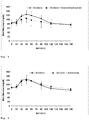
- FIG. 1 shows the course of the glucose measurements in the subjects who have consumed white bread or white bread with a mixture of kale extract (1.8 g) and apple extract (1.8 g).
- Fig. 2 shows the effect of the separately administered apple extract (3.6 g);
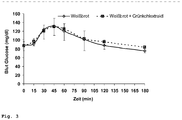
- Fig. 3 shows the effect of separately administered kale extract (3.6 g). In both cases, there was only one trend, but no significant effect on blood glucose levels (p> 0.05).
Landscapes
- Health & Medical Sciences (AREA)
- Life Sciences & Earth Sciences (AREA)
- Natural Medicines & Medicinal Plants (AREA)
- Public Health (AREA)
- Veterinary Medicine (AREA)
- Pharmacology & Pharmacy (AREA)
- Chemical & Material Sciences (AREA)
- General Health & Medical Sciences (AREA)
- Animal Behavior & Ethology (AREA)
- Medicinal Chemistry (AREA)
- Diabetes (AREA)
- Engineering & Computer Science (AREA)
- Epidemiology (AREA)
- Obesity (AREA)
- Biotechnology (AREA)
- Nuclear Medicine, Radiotherapy & Molecular Imaging (AREA)
- General Chemical & Material Sciences (AREA)
- Chemical Kinetics & Catalysis (AREA)
- Hematology (AREA)
- Bioinformatics & Cheminformatics (AREA)
- Endocrinology (AREA)
- Alternative & Traditional Medicine (AREA)
- Organic Chemistry (AREA)
- Botany (AREA)
- Medical Informatics (AREA)
- Microbiology (AREA)
- Mycology (AREA)
- Emergency Medicine (AREA)
- Molecular Biology (AREA)
- Medicines Containing Plant Substances (AREA)
Description
- Die vorliegende Erfindung betrifft eine synergistisch wirkende Zusammensetzung, die (a) mindestens einen Extrakt einer Pflanze der Gattung Brassica und (b) mehr als 1% (w/w) Phlorizin enthält, wobei es sich bei der Pflanze der Gattung Brassica um Grünkohl handelt. Insbesondere betrifft die vorliegende Erfindung eine solche Zusammensetzung zur Verwendung in einem Verfahren zur Behandlung und/oder Prophylaxe einer hyperglykämischen Erkrankung, wie z.B. Fettsucht, Diabetes oder einer von Diabetes verursachten Folgeerkrankung. Die Erfindung betrifft ferner die Verwendung einer solchen Zusammensetzung zur Herstellung einer pharmazeutischen Zusammensetzung, eines diätetischen Lebensmittels und/oder eines Nahrungsergänzungsmittels. Die Erfindung betrifft darüber hinaus pharmazeutische Zusammensetzungen, diätetische Lebensmittel und Nahrungsergänzungsmittel, die eine Zusammensetzung gemäß der vorliegenden Erfindung umfassen.
- Die Zahl der Diabetes-Toten ist nach Angaben des Statistischen Bundesamts seit 1980 um 29 Prozent gestiegen. Diabetes mellitus ist damit verantwortlich für knapp drei Prozent aller Sterbefälle (1980: zwei Prozent) in Deutschland. Parallel dazu steigt die Zahl der übergewichtigen Menschen in Deutschland stark an; jeder zweite Deutsche ist bereits übergewichtig, jeder fünfte sogar fettleibig. Bei diesen Menschen ist das Risiko, an Diabetes zu erkranken, dramatisch erhöht.
- Aktuelle Hochrechnungen gehen davon aus, dass bis zu 7 % der Deutschen (Hauner H. Dtsch Med Wochenschr 2005; 130 Suppl 2:S.64-65), d.h. rund 6 Millionen Menschen, wegen eines Diabetes in Behandlung sind. Die Anzahl der Neuerkrankungen nimmt dabei mit steigendem Alter zu; in der Altersgruppe der über 60-jährigen liegt der Anteil der an Diabetes Erkrankten bei 18-28 %. Parallel dazu sinkt das Manifestationsalter betroffener Typ-2-Diabetiker stetig. Typ-2-Diabetes ist mit rund 11 % die vierthäufigste Diagnose der hausärztlichen Internisten und mit rund 8 % die fünfthäufigste Diagnose aller Allgemeinärzte (Wittchen HU, (HYDRA)-Studie, Fortschr Med Orig 2003; 121). Aktuelle Schätzungen der WHO gehen davon aus, dass sich die Zahl der an Diabetes Erkrankten bis zum Jahr 2025 verdoppeln wird (World Health Organization, Diabetes mellitus, Fact sheet No. 138, 2002).
- Mit der Nahrung wird eine Vielzahl an Fetten, Kohlehydraten und Proteinen aufgenommen, die den menschlichen Körper mit der benötigten Energie versorgen. Eine zu starke Aufnahme und insbesondere eine zu schnelle Aufnahme von Zuckern stellt eine starke Belastung des Stoffwechsels dar und gilt als ein wesentlicher Risikofaktor für Diabetes, Übergewicht und Fettleibigkeit. Es besteht daher ein anhaltender Bedarf an neuen Mitteln für die Behandlung von hyperglykämischen Erkrankungen wie Diabetes und Fettleibigkeit.
- Zahlreiche Verbindungsklassen sind für die Behandlung des Diabetes mellitus, insbesondere des Diabetes mellitus Typ II, vorgeschlagen worden. In verschiedenen Internationalen Anmeldungen sind beispielsweise Substanzen vorgeschlagen worden, die den Natrium-abhängigen Glucose-Transporter 2 (SGLT-2) hemmen (siehe z.B.
WO 98/31697 WO 02/083066 WO 03/099836 WO 01/31697 - Im Rahmen der vorliegenden Erfindung wurde festgestellt, dass die orale Gabe eines Extrakts aus einer Pflanze der Gattung Brassica oder eines Extrakts aus Früchten der Gattung Malus (Äpfel) jeweils zu einer leichten Hemmung des Natrium-abhängigen Glucose-Transporters SGLT-1 führt. Überaschenderweise führte die gleichzeitige Gabe dieser Extrakte zu einer deutlich stärkeren Inhibierung des SGLT-1 und damit zur verringerten Aufnahme von Zucker aus im Darm. Die synergistische Wirkung der beiden Extrakte ist auf das Zusammenwirken des Brassica-Extrakts mit dem im Apfelextrakt enthaltenen Phlorizin zurückzuführen. Demgemäß eignet sich eine Zusammensetzung, die (a) einen Extrakt aus einer Pflanze der Gattung Brassica und (b) Phlorizin enthält, in hohem Maße für die Behandlung und/oder Prophylaxe einer hyperglykämischen Stoffwechselerkrankung wie Diabetes und/oder Übergewicht. Eine solche Zusammensetzung führt über die Hemmung des Natrium-abhängigen Glucose-Transporters zu deutlich geringeren Erhöhungen der Blutglucosekonzentration nach der Aufnahme von Lebensmitteln, die Kohlenhydrate, wie z.B. Stärke, enthalten.
-
JP 2008 074742 A JP 2008 074745 A JP 2003 238417 A - Demgemäß betrifft die Erfindung in einem ersten Aspekt Zusammensetzungen, die mindestens die folgenden beiden Bestandteile enthalten: (a) mindestens einen Extrakt aus einer Pflanze der Gattung Brassica, wobei es sich bei der Pflanze der Gattung Brassica um Grünkohl handelt und (b) mehr als 1% (w/w) Phlorizin. Die erfindungsgemäßen Zusammensetzungen werden erfindungsgemäß für die Behandlung und/oder die Prophylaxe einer hyperglykämischen Erkrankung vorgeschlagen. Die Zusammensetzungen zeichnen sich durch eine synergistische Wirkung ihrer Bestandteile aus, d.h. das Zusammenwirken der einzelnen Bestandteile geht über einen rein additiven Effekt hinaus.
- Erkrankungen, die sich mit Hilfe der erfindungsgemäß vorgeschlagenen Zusammensetzungen behandeln lassen, umfassen alle Krankheiten, die durch eine Hyperglykämie, d.h. durch einen erhöhten Blutzuckerspiegel gekennzeichnet sind, der den physiologisch normalen Wert von 140 mg/dl (7,8 mmol/l) übersteigt. Solche Erkrankungen umfassen insbesondere Fettsucht, Diabetes oder von Diabetes verursachte Folgeerkrankungen (wie z.B. Retinopathie, Neurophathie, Nephropathie und gestörte Wundheilung). Bei dem Diabetes, der mittels der erfindungsgemäßen Zusammensetzungen behandelt werden soll, kann es sich um Diabetes Typ I oder Typ II handeln. Vorzugsweise handelt es sich um Diabetes Typ II. Ferner werden die erfindungsgemäßen Zusammensetzungen allgemein für die Behandlung und/oder Prophylaxe solcher Erkrankungen und Zustände vorgeschlagen, bei denen es vorteilhaft ist, die Zuckeraufnahme aus dem Darm zu verlangsamen und/oder zu reduzieren.
- Die erfindungsgemäß zur Behandlung oder Prophylaxe vorgeschlagenen Zusammensetzungen können auch in vorteilhafter Weise mit anderen Wirkstoffen verwendet werden, z.B. zusammen mit anderen im Stand der Technik beschriebenen antidiabetischen Mitteln, wie z.B. Biguaniden, Sulfonylharnstoffen, Glucosidaseinhibitoren, Thiazolidindionen, Dipeptidylpeptidase IV (DP4)-Inhibitoren, Meglitiniden, Glucagon-ähnliches Peptid-1 (GLP-1), PTP1B-Inhibitoren, Glycogenphosphorylase-Inhibitoren und Glucose-6-Phosphatase-Inhibitoren.
- Bei der Gattung Brassica handelt es sich um eine pflanzliche Gattung innerhalb der Familie der Kreuzblütengewächse (Brassicaceae). Besonders bevorzugt ist es, dass der oder die Brassica-Extrakt(e) ausgehend von Pflanzen der Spezies Brassica oleracea hergestellt wird. Bei der Spezies Brassica oleracea handelt es sich um eine formenreiche Pflanzenart innerhalb der Gattung Brassica. Die Art umfasst zahlreiche Sorten, zu denen u.a. Brokkoli (Brassica oleracea var. silvestris L.), Rotkohl (Brassica oleracea var. capitata f. rubra L.), Weißkohl (Brassica oleracea var. capitata f. alba), Wirsing (Brassica oleracea L. convar. capitata (L.) Alef. var. sabauda L.), Chinakohl (Brassica rapa ssp. pekinensis) und Grünkohl (Brassica oleracea convar. acephala var. sabellica) zählen. Erfindungsgemäß wird der oder die Extrakt(e) aus einer Pflanze der Gattung Brassica ausgehend von Grünkohl hergestellt Die erfindungsgemäßen Zusammensetzungen umfassen neben einem oder mehreren Brassica-Extrakten das Flavonoid Phlorizin in einer Menge von mehr als 1% (w/w). Das Phlorizin stammt dabei nicht aus dem Brassica-Extrakt, sondern wird diesem zugesetzt, z.B. in Form eines Phlorizin-haltigen Pflanzenextrakts. Grünkohl enthält kein oder nur sehr wenig (>0,0001% (w/w)) Phlorizin. Phlorizin hemmt den SGLT in vitro (Kottra et al. (2007), J Pharmacol Exp Ther, 322 (2) :829-35). Es ist ferner seit langer Zeit bekannt, dass Phlorizin auf die Glucoseausscheidung der Niere wirkt, wenn es intravenös appliziert wird. Allerdings ist die Wirkung schwach, wenn Phlorizin oral eingenommen wird. Dies ist vermutlich auf einen enzymatischen Abbau des Phlorizins im Darm zurückzuführen, der z.B. durch das Enzym Laktat-Phlorizin-Hydrolase katalysiert wird (Birkenmeier & Alpers (1974), Biochim Biophys Acta., 350(1):100-12). Offenbar wird nach Einnahme der erfindungsgemäßen Zusammensetzung der enzymatische Abbau des Phlorizins im Darm durch bestimmte Bestandteile des Brassica-Extrakts gehemmt, wodurch das Phlorizin seine inhibitorischen Eigenschaften auf die Glucoseaufnahme (SGLT 1) entfalten.
- Die erfindungsgemäßen Zusammensetzungen enthalten eine Menge an Phlorizin, die wirksam ist, um nach oraler Gabe den Glucose-Transporters SGLT-1 zu hemmen und/oder die Zuckeraufnahme aus dem Darm zu verlangsamen. In einer bevorzugten Ausführungsform wird die Aktivität des im Darm befindlichen SGLT-1-Transporters durch die Zusammensetzungen um mindestens etwa 1%, 2%, 3%, 4%, 5%, 10%, 20%, 30%, 40%, 50%, 60%, 70%, 80%, 90% oder mehr gegenüber dem unbehandelten Zustand verringert. In einer weiteren bevorzugten Ausführungsform führt die erfindungsgemäße Zusammensetzung nach Gabe zu einer Zuckeraufnahme aus dem Darm die gegenüber dem unbehandelten Zustand um mindestens etwa 1%, 2%, 3%, 4%, 5%, 10%, 20%, 30%, 40%, 50%, 60%, 70%, 80%, 90% oder mehr verringert ist.
- Der Fachmann ist problemlos in der Lage, die für die jeweils zu erreichende (therapeutische) Wirkung erforderliche Menge an Phlorizin durch einfache Versuchsreihen zu ermitteln. Hierbei wird der Fachmann verschiedene Faktoren berücksichtigen, wie z.B. die Art und Menge der in der Zusammensetzung vorhandenen Brassica-Extrakts, die Art und Menge der zusätzlich in den Zusammensetzungen vorhandenen Komponenten, Alter und Gewicht der Person, an die die Verabreichung der Zusammensetzung erfolgt, usw. Die Menge an Phlorizin in den erfindungsgemäßen Zusammensetzungen ist größer als 104 ppm, vorzugsweise größer als 5*104 ppm oder größer als 105 ppm. Anders ausgedrückt enthält die erfindungsgemäße Zusammensetzung mehr als 1%, mehr als 2%, mehr als 3%, mehr als 4%, mehr als 5%, mehr als 6%, mehr als 7%, mehr als 8%, mehr als 9%, mehr als 10%, mehr als 11%, mehr als 12%, mehr als 13%, mehr als 14%, oder mehr als 15%. In einer besonders bevorzugten Ausführungsform enthalten die erfindungsgemäßen Zusammensetzungen mehr als 5% Phlorizin. Wie hierin verwendet, bezeichnet die Angabe "%" Gewichtsprozent (w/w).
- Die erfindungsgemäße Zusammensetzung wird vorzugsweise so formuliert, dass die jeweilige Verabreichungseinheit (z.B. eine Kapsel oder Tablette) eine Menge von 0,01 und 10 g Phlorizin enthält, z.B. mehr als 0,05 g, mehr als 0,1 g, mehr als 0,2 g, mehr als 0,3 g, mehr als 0,4 g, mehr als 0,5 g, mehr als 0,75 g, mehr als 1 g, mehr als 2 g, mehr als 3 g, mehr als 4 g oder mehr als 5 g.
- In einer besonders bevorzugten Ausführungsform betrifft die Erfindung eine Zusammensetzung, in der das Phlorizin in Form eines Phlorizin-haltigen pflanzlichen Extrakts vorliegt. Der Phlorizin-haltige pflanzliche Extrakt kann z.B. aus mindestens einer Pflanze der Familie Rosaceae gewonnen werden. Vorzugsweise gehört die Pflanze aus der Familie Rosaceae dabei einer Gattung an, die ausgewählt ist aus der Gruppe bestehend aus Malus, Pyrus oder Prunus. Der Phlorizin-haltige pflanzliche Extrakt kann ferner auch aus einer Pflanze der Familie Verbenaceae gewonnen werden. Vorzugsweise handelt es sich bei der Pflanze aus der Familie Verbenaceae um eine solche der Gattung Lippia. Es ist bekannt, dass insbesondere Pflanzen dieser Familien Phlorizin enthalten. Der Extrakt der Pflanze aus der Familie der Rosaceae oder Verbenaceae kann dabei z.B. aus der Rinde, den Früchten oder den Blättern der Pflanze gewonnen wurde.
- Pflanzen der Gattungen Malus, Pyrus und Prunus enthalten relativ hohe Mengen an Phlorizin in der Rinde, in den Früchten und in den Blättern. Insbesondere die Früchte der Gattung Malus (d.h. Äpfel) weisen besonders hohe Mengen an Phlorizin auf. Es ist daher besonders bevorzugt, dass das Phlorizin in der erfindungsgemäßen Zusammensetzung in Form eines Extrakts aus einer Pflanze der Gattung Malus, vorzugsweise in Form eines Extrakts aus Äpfeln oder der Rinde, vorliegt. Bei der Gattung Malus handelt es sich um eine pflanzliche Gattung in der Familie der Rosengewächse (Rosaceae). Besonders bevorzugt ist es, dass die Extrakte aus einer Pflanze der Gattung Malus ausgehend von Pflanzen der Spezies Malus domestica hergestellt werden. Der Kulturapfel (Malus domestica Borkh.; Pyrus malus, L.) ist eine wirtschaftlich sehr bedeutende Obstart, zu der zahlreiche Sorten gehören. Grundsätzlich können alle Sorten des Kulturapfels zur Herstellung der Phlorizin-haltigen Extrakte verwendet werden. Besonders bevorzugt ist es, dass die Extrakte ausgehend von einer der Sorten Red Delicious, Golden Delicious, Braeburn, Cox Orange, Finkenwerder Prinz, Fürst Blücher, Märkischer Cox oder Red Chief hergestellt werden. Neben Pflanzen der Spezies Malus domestica können jedoch auch andere Spezies der Gattung Malus Verwendung finden.
- Es ist bevorzugt, dass der mindestens eine Extrakt aus der Pflanze aus der Familie der Rosaceae und/oder der mindestens eine Extrakt aus der Familie der Verbenaceae vorzugsweise mindestens 2%, 3%, 4%, 5%, 6%, 7%, 8%, 9%, 10%, 15%, 20% oder mehr Phlorizin enthält (w/w).
- In einer besonders bevorzugten Ausführungsform umfassen die Zusammensetzungen mindestens einen Extrakt aus einer Pflanze der Gattung Brassica, wobei es sich bei der Pflanze der Gattung Brassica um Grünkohl handelt, und mindestens einen Extrakt aus mindestens einer Pflanze der Familie Rosaceae und/oder aus mindestens einer Pflanze der Familie Verbenaceae. In einer Ausführungsform enthalten die Zusammensetzungen mehr als einen, z.B. zwei, drei, vier oder mehr, Extrakte aus einer Pflanze der Gattung Brassica und/oder mehr als einen, z.B. zwei, drei, vier oder mehr, Extrakte aus einer Pflanze der Gattung Malus. Besonders bevorzugt sind Zusammensetzungen, die einen Grünkohl-Extrakt und mindestens einen Extrakt aus einer Pflanze der Gattung Malus enthalten. Der hier verwendete Begriff "Extrakt aus einer Pflanze" bezeichnet einen Extrakt der aus einer oder mehreren Pflanzen der gleichen Art bzw. Spezies gewonnen wird und ist nicht als auf eine einzige Pflanze beschränkt zu verstehen.
- Wie vorliegend verwendet bezeichnet der Begriff "Extrakt" ein Stoffgemisch, das durch Aufschluss von Zellen einer Pflanze und Gewinnung des Zellsafts erhalten wird. Die erfindungsgemäß vorgeschlagenen Extrakte lassen sich durch eine Vielzahl von im Stand der Technik bekannten Verfahren herstellen.
- In einer Ausführungsform der Erfindung wird zunächst Material einer Pflanze bereitgestellt. Als Ausgangsmaterial für das erfindungsgemäße Verfahren eignen sich Pflanzen in sämtlichen Entwicklungsstadien, vom Samen bis zur reifen Pflanze. Ferner eignen sich sämtliche Pflanzenteile, wie z.B. die Früchte, Stängel, Blätter, Rinde oder Wurzeln der Pflanze. Das Ausgangsmaterial kann eine Mischung aus verschiedenen Pflanzenteilen sein, oder nur bestimmte Pflanzenteile umfassen. Das pflanzliche Material wird in der Regel zunächst zerkleinert. Das Zerkleinern kann durch einfaches Zerstückeln der jeweiligen Pflanzenteile mit herkömmlichen Cuttern erreicht werden. Es lassen sich grundsätzlich alle Pflanzenteile als Ausgangspunkt für die Extraktbildung verwenden. Bei der Herstellung von Brassica-Extrakten werden besonders gute Ergebnisse erzielt, wenn Blätter der Pflanzen verwendet werden. Daher werden die Extrakte aus einer Pflanze der Gattung Brassica gemäß einer bevorzugten Ausführungsform der Erfindung aus den Blättern der jeweiligen Brassica-Pflanze hergestellt. Bei der Herstellung von Extrakten von Pflanzen der Gattung Malus haben sich die Früchte und die Rinde als besonders geeignet erwiesen. In einer weiteren bevorzugten Ausführungsform werden die Extrakte aus einer Pflanze der Gattung Malus aus den Früchten, d.h. den Äpfeln, oder aus der Rinde der jeweiligen Malus-Pflanze hergestellt. Vor der Zerkleinerung kann das pflanzliche Material bei Temperaturen zwischen 45°C und 100°C blanchiert werden, um bakterielle Verunreinigungen zu beseitigen und die Qualität des Aufschlusses zu verbessern. Des Weiteren wird durch das Blanchieren die Aktivität von Enzymen wie Hydrolasen, Lipasen und Oxidasen reduziert und somit die Stabilität und Qualität des Pflanzenmaterials erhöht.
- In einem nächsten Schritt wird das pflanzliche Material aufgeschlossen, d.h. die zellulären Strukturen des Materials werden zerstört, sodass der Inhalt der Zellen freigesetzt wird. Der Aufschluss kann durch herkömmliche Verfahren zum Aufschluss pflanzlicher Zellen erreicht werden, beispielsweise durch wiederholtes Einfrieren und Auftauen, oder durch geeignete Apparaturen, wie z.B. durch Homogenisatoren, Hochdruckhomogenisatoren oder Ultraschallhomogenisatoren. Auch Kolloidmühlen oder French-Pressen können für den Aufschluss verwendet werden.
- Darüber hinaus kann der Zellaufschluss auch enzymatisch erzielt werden. Zu diesem Zweck wird das pflanzliche Material mit geeigneten Enzymen versetzt, die zu einer Zerstörung der strukturellen Bestandteile der Zellen führen. Es hat sich gezeigt, dass eine Inkubation des pflanzlichen Materials mit Pektinase, Kollagenase, Cellulase und/oder Hemicellulasen in dieser Phase des Verfahrens besonders geeignet ist, die Zellen wirkungsvoll aufzuschließen. Die Inkubationszeit kann zwischen 30 min und 24 Stunden liegen, vorzugsweise zwischen 1 Stunde und 6 Stunden, mehr bevorzugt zwischen 90 min und 4 Stunden, z.B. 2 Stunden. Die Temperatur kann im Bereich von 20° und 60°C liegen, vorzugsweise zwischen 25°C und 45°C, z.B. bei ca. 37°C, und sie sollte vorzugsweise im Bereich des Temperaturoptimums des jeweils verwendeten Enzyms liegen. Ein geeigneter pH-Wert des Reaktionsansatzes kann unter Verwendung geeigneter Puffer, wie z.B. Phosphat-, Carbonat-, Natriumhydrogencarbonatpuffer und/oder geeigneter Säuren, wie z.B. Citronensäure, Milchsäure oder Ascorbinsäure eingestellt werden. Ein pH Wert zwischen 4 und 6, z.B. pH 5, ist für den Aufschluss besonders geeignet.
- Nach Aufschluss der Zellen, kann der erhaltende Zellsaft direkt zur Hemmung des Natrium-abhängigen Glucose-Transporters 1 (SGLT-1) verwendet werden. Es ist allerdings bevorzugt, den nach dem Aufschluss der Zellen erhaltenen Pflanzensaft weiteren Reinigungsschritten zu unterziehen.
- Beispielsweise kann das aus dem Zellaufschluss erhaltene Material einer Trocknung oder Gefriertrocknung mit anschließender Extraktion unterzogen werden. Hier kann beispielsweise zunächst eine Sprühtrocknung eingesetzt werden. Das getrocknete oder gefriergetrocknete pflanzliche Material kann anschließend mit einem wässrigen oder organischen Lösungsmittel extrahiert werden. Die Extraktion kann mit einem herkömmlichen Extraktionsmittel durchgeführt werden, z.B. mit Ethanol, Ethylacetat oder mit anderen organischen Lösungsmitteln. Auch eine Extraktion mit Gasen, wie z.B. mit Stickstoff ist möglich. Bei Verwendung eines flüssigen Lösungsmittels beträgt die Inkubationszeit 0,5 bis 24 Stunden, vorzugsweise 2 bis 8 Stunden. Bei Verwendung von Stickstoff erfolgt die Extraktion bei Temperaturen zwischen 4°C und 37°C in einem Zeitraum von 0,25 bis 3 Stunden, vorzugsweise in einem Zeitraum von 20 und 60 Minuten.
- Alternativ zu einer Trocknung/Extraktion kann der nach Aufschluss der Zellen erhaltene Pflanzensaft auch einer chromatographischen Reinigung unterzogen werden, um die Polyphenole (einschließlich der Flavonoide) anzureichern, beispielsweise unter Verwendung einer Ionenaustauschchromatographie oder einer Affinitätschromatographie. Wie in den Beispielen beschrieben wird, kann zu diesem Zweck z.B. eine XAD 16HD-Säule (Fa. Rohm & Haas, Frankfurt) verwendet werden. Die Säule wird mit dem aus dem Zellaufschluss erhaltenen Überstand beladen, und durch Spülen mit demineralisiertem Wasser werden hydrophile Substanzen abgereichert. Die Polyphenole dagegen können durch Elution mit Ethanol angereichert werden. Die eluierten Fraktionen können anschließend direkt verwendet oder getrocknet werden. So können die eluierten Fraktionen z.B. einer Gefriertrocknung unterzogen werden, und das dabei erhaltene Pulver kann für die Verabreichung verkapselt werden
- Die erfindungsgemäß vorgeschlagenen Zusammensetzungen lassen sich durch eine Vielzahl von im Stand der Technik bekannten Verfahren herstellen. So können beispielsweise die von der Zusammensetzung umfassten Extrakte aus den Pflanzen der Gattungen Brassica und Malus zunächst einzeln hergestellt und unmittelbar vor der Verwendung zu einer die Extrakte umfassenden Zusammensetzung gemischt werden. Alternativ dazu können zunächst ein oder mehrere Brassica-Extrakte hergestellt und miteinander vermischt werden, wobei anschließend die Zugabe von isoliertem Phlorizin erfolgt. Phlorizin kann durch im Stand der Technik bekannte Verfahren hergestellt oder von verschiedenen Herstellern direkt erworben werden (z.B. von der Carl Roth GmbH & Co. KG, Karlsruhe, Deutschland).
- In einer bevorzugten Ausführungsform wird das Phlorizin dem Grünkohl-Extrakt in Form eines weiteren pflanzlichen Extrakts zugegeben. In einer besonders bevorzugten Ausführungsform handelt es sich bei dem Phlorizin-haltigen Extrakt um einen Extrakt aus einer Pflanze der Gattung Malus.
- Die erfindungsgemäßen Zusammensetzungen, die mindestens einen Grünkohl-Extrakt sowie Phlorizin enthalten, werden vorliegend zur Behandlung und/oder zur Prophylaxe einer hyperglykämischen Erkrankung vorgeschlagen. Dabei spielt es keine Rolle wann die einzelnen Komponenten miteinander gemischt werden, so lange sie zeitnah verabreicht werden. Daher betrifft die vorliegende Erfindung auch die Verwendung von mindestens einem Grünkohl-Extrakt und mindestens einem Phlorizin-enthaltenen Extrakt bzw. Phlorizin zur Behandlung und/oder zur Prophylaxe einer hyperglykämischen Erkrankung, wobei die Komponenten für die getrennte Verabreichung formuliert sind.
- Sofern das Phlorizin dem Grünkohl-Extrakt in Form eines Phlorizin-enthaltenen Pflanzenextrakts zugefügt wird, können die beiden Extrakte in jeglichem Mischungsverhältnis verwendet werden. In einer Ausführungsform enthält die erfindungsgemäße Zusammensetzung den Grünkohl-Extrakt und den Phlorizin-enthaltenen Extrakt im Verhältnis von ungefähr 20:1, 10:1, 5:1, 4:1, 3:1, 2:1, 1:1, 1:2, 1:3, 1:4, 1:5, 1:10 oder 1:20. Ein Mischungsverhältnis zwischen dem Grünkohl-Extrakt und dem Phlorizin-enthaltenen Extrakt von 1:1 ist besonders bevorzugt.
- Es wird angenommen, dass die den SGLT-1 hemmenden Bestandteile des Grünkohl-Extrakts zur Gruppe der Flavonoide und/oder Glycoside gehören. Flavonoide zählen zur Gruppe der sekundären Pflanzenstoffe, und sie stellen eine umfangreiche Stoffklasse polyphenolischer Verbindungen dar, die in Lebensmitteln pflanzlicher Herkunft verbreitet vorkommen. Glycoside sind chemische Verbindungen, bei denen ein Alkohol (R-OH) über eine glykosidische Bindung an einen Zuckerteil gebunden ist. Es handelt sich daher bei einem Glycosid um das Vollacetal eines Zuckers. Beispiele für typische Glycoside, die als sekundäre Pflanzenmetabolite vorkommen, sind die Glucosinolate. Grünkohl und andere Sorten der Pflanzenart Brassica oleracea besitzen einen verhältnismäßig hohen Gehalt an Glucosinolaten. Grünkohl enthält etwa 1 mg Glucosinolate pro Gramm Frischgewicht (Rouzaud G et al. Br J Nutr. 2003; 90(2):395-404). Über die Konzentration an Flavonoiden in Grünkohl sind recht unterschiedliche Meinungen in der Literatur zu finden. Untersuchungen des Erfinders zeigen, dass die Trockenmasse von Grünkohl 1,5% bis 2% Flavonoide enthalten kann. Über die genauen Mengen der jeweiligen Glucosinolate bzw. Flavonoide ist relativ wenig bekannt. Auch der Kulturapfel, und insbesondere seine Früchte (Äpfel) und die Rinde des Apfelbaumes, enthalten verhältnismäßig hohe Konzentrationen an Polyphenolen (inklusive Flavonoide). Je nach Sorte kann Apfelsaft über 400 mg Polyphenole pro Liter enthalten (Will, F., et al., 2006, LWT - Food Science and Technology, 40(8):1344-1351).
- In einer Ausführungsart enthält die Zusammensetzung einen Extrakt aus Grünkohl, vorzugsweise Grünkohlblättern, und einen Extrakt aus den Äpfeln einer Pflanze der Gattung Malus, vorzugsweise Malus domesticus. In einer anderen Ausführungsart enthält die Zusammensetzung einen Extrakt aus Grünkohl, vorzugsweise Grünkohlblättern, der mit Phlorizin vermischt wurde.
- Sofern die vorliegende Erfindung die Verwendung von pflanzlichen Extrakten betrifft, ist es bevorzugt, dass diese Extrakte die in den Pflanzenzellen enthaltenden Polyphenole, Flavonoide und/oder Glycoside enthalten. In einer bevorzugten Ausführungsform sind die Polyphenole, Flavonoide und/oder Glycoside in dem Extrakt oder in den Extrakten aufkonzentriert. Sofern für die Herstellung der erfindungsgemäßen Zusammensetzungen Phlorizin-haltige Extrakte verwendet werden, so können auch diese entsprechend behandelt werden, um das Phlorizin aufzukonzentrieren. Verfahren zur Aufkonzentrierung dieser Substanzen sind dem Fachmann hinreichend bekannt und werden z.B. in Will et al. (2006, LWT - Food Science and Technology, 40(8):1344-1351) beschrieben. Eine Aufkonzentrierung der Polyphenole, Flavonoide und/oder Glycoside oder von Phlorizin kann beispielsweise durch Verwendung von Säulenchromatographieverfahren erreicht werden. Zu diesem Zweck können z.B. verschiedene Adsorbersäulen eingesetzt werden. Die Chromatographiesäulen werden mit dem Ausgangsextrakt beladen, durch Spülen mit geeigneten Lösungen von unerwünschten Bestandteilen befreit und anschließend in aufkonzentrierter Form von der Säule eluiert. Zum Beispiel werden nach Beladen von Adsorbersäulen mit unkonzentriertem Extrakt durch Spülen mit demineralisiertem Wasser hydrophile Substanzen (Salze, Aminosäuren, Peptide, Zucker etc.) abgereichert. In dem mit 95% Ethanol eluiertem Extrakt sind anschließend Polyphenole angereichert.
- Das erfindungsgemäße Verfahren erlaubt somit ausgehend von Grünkohl-Pflanzen und Phlorizin bzw. Phlorizin-enthaltenen Pflanzen die Herstellung von Zusammensetzungen mit einem hohen Anteil an gesundheitsfördernden Polyphenolen, Flavonoiden und/oder Glycosiden, die eine inhibierende Wirkung auf den Glucose-Transporter SGLT-1 ausüben. Die erfindungsgemäß erhältlichen Extrakte können sowohl in trockener als auch in flüssiger Form hergestellt werden.
- In einem Aspekt betrifft die vorliegende Erfindung die Verwendung einer wie oben beschriebenen Zusammensetzung zur Herstellung einer pharmazeutischen Zusammensetzung, eines diätetischen Lebensmittels oder eines Nahrungsergänzungsmittels. In einem noch weiteren Aspekt betrifft die vorliegende Erfindung somit auch eine pharmazeutische Zusammensetzung, ein diätetisches Lebensmittel oder ein Nahrungsergänzungsmittel, die/das eine wie oben beschriebene Zusammensetzung umfasst, welche mindestens einen Extrakt aus einer Pflanze der Gattung Brassica, wobei es sich bei der Pflanze der Gattung Brassica um Grünkohl handelt, und mehr als 1% (w/w) Phlorizin umfasst. Die pharmazeutische Zusammensetzung, das diätetische Lebensmittel oder das Nahrungsergänzungsmittel eignen sich zur Verwendung in einem Verfahren zur Behandlung und/oder Prophylaxe einer hyperglykämischen Erkrankung, vorzugsweise ausgewählt aus der Gruppe bestehend aus Fettsucht, Diabetes oder eine von Diabetes verursachte Folgeerkrankung, und insbesondere zur Behandlung und/oder Prophylaxe der Diabetes vom Typ II.
- Eine die erfindungsgemäße Zusammensetzung umfassende pharmazeutische Zusammensetzung kann für die orale, parenterale oder topische Darreichung formuliert sein. Eine solche pharmazeutische Zusammensetzung kann mittels im Stand der Technik hinreichend bekannter Verfahren hergestellt werden. Derartige Verfahren sowie geeignete Hilfsstoffe und Träger werden beispielsweise in "Remington: The Science and Practice of Pharmacy", Lippincott Williams & Wilkins; 21. Auflage (2005) beschrieben. Die pharmazeutischen Zusammensetzungen können beispielsweise in Form von Granulaten, Pulvern, Tabletten, Kapseln, Sirup, Suppositorien, Injektionen, Emulsionen, Suspensionen oder Lösungen vorliegen. Die Zusammensetzungen können für verschiedene Verabreichungsarten formuliert sein, beispielsweise für die orale, parenterale, topische, bukkale, sublinguale, transmukosale, rektale, subkutane intrathekale, intravenöse, intramuskuläre, intraperitoneale, nasale, intraokulare oder intraventrikuläre Verabreichung. Die Formulierung als orale, parenterale oder topische Zusammensetzung ist besonders bevorzugt. In einer besonders bevorzugten Ausführungsform ist die Zusammensetzung für die orale Verabreichung formuliert. Die pharmazeutischen Zusammensetzungen können auch als Retardmittel formuliert werden.
- Für die orale, bukkale und sublinguale Verabreichung werden in der Regel feste Formulierungen wie, z.B. Pulver, Suspensionen, Granulate, Tabletten, Pillen, Kapseln und Gelcaps verwendet. Diese können beispielsweise hergestellt werden, indem man die wirksamen Bestandteile (den Brassica-Extrakt und Phlorizin) mit mindestens einem Additiv oder mit mindestens einem Hilfsstoff vermischt. Derartige Hilfsstoffe und Träger werden beispielsweise in "Remington: The Science and Practice of Pharmacy", Lippincott Williams & Wilkins; 21. Auflage (2005) beschrieben. Als Additive oder Hilfsstoffe können beispielsweise mikrokristalline Cellulose, Methylcellulose, Hydroxypropylmethylcellulose, Casein, Albumin, Mannit, Dextran, Saccharose, Lactose, Sorbitol, Stärke, Agar, Alginate, Pectine, Kollagen, Glyceride oder Gelatine verwendet werden. Ferner können Zusammensetzungen für die orale Verabreichung Antioxidantien (z.B. Ascorbinsäure, Tocopherol oder Cystein), Gleitmittel (z.B. Magnesiumstearat), Konservierungsmittel (z.B. Paraben oder Sorbinsäure), Geschmacksverbesserer, Sprengmittel, Bindemittel, Verdicker, Farbstoffe und ähnliche Substanzen umfassen.
- Flüssige Formulierungen der erfindungsgemäßen Extrakte und Zusammensetzungen, die sich für die orale Verabreichung eignen, können beispielsweise als Emulsion, Sirup, Suspension oder Lösungen vorliegen. Diese Formulierungen können unter Verwendung einer sterilen Flüssigkeit als Träger (z.B. Öl, Wasser, Alkohol oder Kombinationen derselben) in Form von flüssigen Suspensionen oder Lösungen hergestellt werden. Für die orale oder parenterale Verabreichung können pharmazeutisch geeignete Tenside, Suspensionsmittel, Öle oder Emulgatoren zugefügt werden. Für den Gebrauch in flüssigen Dosisformen geeignete Öle umfassen beispielsweise Olivenöl, Sesamöl, Erdnussöl, Rapsöl und Maisöl. Geeignete Alkohole umfassen Ethanol, Isopropylalkohol, Hexadecylalkohol, Glycerin und Propylenglykol. Suspensionen können ferner Fettsäureester, wie Ethyloleat, Isopropylmyristat, Fettsäureglyceride und acetylierte Fettsäureglyceride umfassen. Ferner werden Suspensionen häufig auch mit Substanzen wie Mineralöl oder Petrolatum versetzt.
- Die vorliegende Erfindung betrifft ferner auch ein diätetisches Lebensmittel oder ein Nahrungsergänzungsmittel, das eine wie oben definierte Zusammensetzung umfasst, d.h. eine Zusammensetzung, die mindestens einen Extrakt aus einer Pflanze der Gattung Brassica, wobei es sich bei der Pflanze der Gattung Brassica um Grünkohl handelt, und mehr als 1% (w/w) Phlorizin enthält. Das diätetisches Lebensmittel oder Nahrungsergänzungsmittel ist insbesondere für die Behandlung und/oder Prophylaxe der wie oben definierten Fettsucht, Diabetes (insbesondere Diabetes Typ II) oder einer von Diabetes verursachten Folgeerkrankung geeignet. Es ist besonders bevorzugt, dass der mindestens eine Brassica-Extrakt aus den Blättern der jeweiligen Brassica-Pflanze gewonnen wurde. Ebenfalls vorzugsweise stammt das Phlorizin aus mindestens einem Phlorizin-enthaltenen, pflanzlichen Extrakt. Der mindestens eine Phlorizin-enthaltene Extrakt stammt vorzugsweise von einer Pflanze der Gattung Malus, insbesondere aus einer Pflanze der Spezies Malus domesticus. Es ist besonders bevorzugt, dass mindestens ein Extrakt aus einer Pflanze der Gattung Malus aus den Äpfeln oder der Rinde einer Malus-Pflanze gewonnen wurde. Gemäß einer weiteren bevorzugten Ausführungsform wurde der mindestens eine Extrakt aus einer Brassica-Pflanze aus den Blättern der Brassica-Pflanze gewonnen und das Phlorizin wurde dem Extrakt in isolierter und/oder gereinigter Form zugegeben.
-
-
Figur 1 zeigt die Wirkung einer Zusammensetzung, die einen Grünkohlextrakt und einen Apfelextrakt enthält, auf die Blutglucose. Gezeigt ist der Verlauf der Glucosemessungen bei Probanden, die Weißbrot bzw. Weißbrot mit einer Mischung aus Grünkohlextrakt (1,8 g) und Apfelextrakt (1,8 g) zu sich genommen haben. -
Figur 2 zeigt die Wirkung des Apfelextrakts auf die Blutglucosekonzentration der Probanten. -
Figur 3 zeigt Wirkung des Grünkohlextrakts auf die Blutglucosekonzentration der Probanten. - Die Erfindung wird nunmehr durch die nachfolgenden Beispiele veranschaulicht, wobei diese die Erfindung in keiner Weise beschränken.
- Die nachfolgenden Beispiele beschreiben die physiologische Wirkung der erfindungsgemäßen Zusammensetzungen:
- Es wurden verschiedene Extrakte aus Blättern von Brassica oleracea und Äpfeln (Malus) hergestellt.
- 6 Kilogramm Blätter von Brassica oleracea convar. acephala var. sabellica (Grünkohl) wurden mit einem Cutter zerkleinert, und der pH-Wert der resultierenden Maische wurde mit Ascorbinsäure auf pH 5 eingestellt. Der enzymatische Aufschluss erfolgte mit den Enzymen Cellulase (0,025 ml Vegazym HC, 11000 Units/ml, Fa. Erbslöh) und Pektinase (0,025 ml Vegazym P, 40 Units/ml, Fa. Erbslöh) bei 37°C. Die Inkubationszeit betrug 4 Stunden. Anschließend wurde der Ansatz zentrifugiert und die Polyphenole (inklusive der vorhandenen Flavonoide) aus dem Überstand, wie von Will et al. (2006, LWT - Food Science and Technology, 40(8):1344-1351) beschrieben, angereichert: Hierbei wird eine Adsorbersäule (XAD 16HD, Fa. Rohm & Haas, Frankfurt) mit dem Überstand beladen. Durch Spülen mit demineralisiertem Wasser werden hydrophile Substanzen (Salze, Aminosäuren, Peptide, Zucker etc.) abgereichert. Polyphenole dagegen werden durch Elution mit Ethanol (95%) angereichert. Die nachfolgende Gefriertrocknung der eluierten Fraktionen liefert ein Pulver (ca. 80 g), das für nachfolgende Studien verkapselt (Gelatine) wurde.
- 6 Kilogramm Äpfel (Malus domestica) wurden mit einem Cutter zerkleinert, und der pH-Wert der resultierenden Maische wurde mit Ascorbinsäure auf pH 5 eingestellt. Der enzymatische Aufschluss erfolgte mit den Enzymen Cellulase (0,025 ml Vegazym HC, 11000 Units/ml, Fa. Erbslöh) und Pektinase (0,025 ml Vegazym P, 40 Units/ml, Fa. Erbslöh) bei 37°C. Die Inkubationszeit betrug 4 Stunden. Anschließend wurde der Ansatz zentrifugiert und die Polyphenole (inklusive Flavonoide) aus dem Überstand, wie in der Veröffentlichung von Will et al. (2006, LWT - Food Science and Technology, 40(8):1344-1351) beschrieben, angereichert: Hierbei wird eine Adsorbersäule (XAD 16HD, Fa. Rohm & Haas, Frankfurt) mit dem Überstand beladen. Durch Spülen mit demineralisiertem Wasser werden hydrophile Substanzen (Salze, Aminosäuren, Peptide, Zucker etc.) abgereichert. Polyphenole dagegen werden durch Elution mit Ethanol (95%) angereichert. Die nachfolgende Gefriertrocknung der eluierten Fraktionen liefert ein Pulver (ca. 25 g), das für nachfolgende Studien verkapselt (Gelatine) wurde. Der Extrakt enthielt etwa 15% Phlorizin, d.h. 1,8 g Apfelextrakt enthielten etwa 0,27 g Phlorizin.
- Die in (A) und (B) beschriebenen Extrakte wurden 1:1 gemischt und nach der Mischung für nachfolgende Studien verkapselt. Die biologischen Eigenschaften der Extrakte wurden im Rahmen von humanen Studien getestet:
- Für die humanen Studien wurden jeweils 10 Probanden getestet. Jeder Proband erhielt an einem Testtag (Testtag 1) nur Weißbrot und an einem weiteren Testtag einen der beiden Extrakte bzw. die Extraktmischung zusammen mit Weißbrot. Es handelte sich um eine "Crossover-Studie".
- Testtag 1: Jeder Proband erhielt 104 g Weißbrot (ohne Rinde), die innerhalb von 10 Minuten zusammen mit 150 ml Wasser verzehrt wurden (Zeitpunkt 0). Den Probanden wurde 10 Minuten vor der Einnahme des Weißbrotes Blut über eine Kanüle abgenommen, und die Blutglucosewerte wurden mit Hilfe des HemoCue® Glukose System 2.0 der Fa. HemoCue GmbH, 63762 Großostheim, bestimmt. Zum Zeitpunkt 0 und in Abständen von jeweils 15 Minuten erfolgten vier weitere Glucosebestimmungen. Anschließend wurden im Abstand von 30 Minuten die Blutglucosewerte bestimmt. Die letzte Messung erfolgte 180 Minuten nach Einnahme des Weißbrotes.
- Testtag 2: Durchführung wie am Testtag 1, allerdings wurde der Extrakt bzw. die Extraktmischung 10 Minuten vor Einnahme des Weißbrotes eingenommen.
- Der modulierende Einfluss auf die Blutglucose der getrennt verabreichten Malus- bzw. Brassica-Extrakte und der Extraktmischung ist in den Abbildungen 1-3 dargestellt.
Abb. 1 zeigt den Verlauf der Glucosemessungen bei den Probanden, die Weißbrot bzw. Weißbrot mit einer Mischung aus Grünkohlextrakt (1,8 g) und Apfelextrakt (1,8 g) zu sich genommen haben. Die Einnahme der Extraktmischung hatte eine signifikante Wirkung, da der Glucoseanstieg nach Einnahme gegenüber der Kontrolle (nur Weißbrot) deutlich geringer war (p = 0,02).Abb. 2 zeigt die Wirkung des getrennt verabreichten Apfelextrakts (3,6 g);Abb. 3 zeigt die Wirkung des getrennt verabreichten Grünkohlextrakts (3,6 g). In beiden Fällen gab es lediglich eine Tendenz, aber keine signifikante Wirkung auf die Blutglucosewerte (p> 0,05). Diese Daten zeigen, dass die Extraktmischung eine signifikante, inhibierende Wirkung auf die Aufnahme von Glucose im Darm aufweist, während die getrennt verabreichten Extrakte bei in entsprechender Menge eine deutlich schwächere Wirkung aufweisen. Offenbar liegt hier ein synergistischer Effekt der beiden Extrakte vor.
Claims (13)
- Zusammensetzung, umfassend:(a) mindestens einen Extrakt aus einer Pflanze der Gattung Brassica, und(b) mehr als 1% (w/w) Phlorizin,wobei es sich bei der Pflanze der Gattung Brassica um Grünkohl handelt.
- Zusammensetzung nach Anspruch 1, wobei der Extrakt der Pflanze der Gattung Brassica aus den Blättern der Brassica Pflanze gewonnen wurde.
- Zusammensetzung nach einem der Ansprüche 1-2, wobei das Phlorizin in Form eines Phlorizin-haltigen pflanzlichen Extrakts vorliegt.
- Zusammensetzung nach Anspruch 3, wobei der Phlorizin-haltige pflanzliche Extrakt aus mindestens einer Pflanze der Familie Rosaceae gewonnen wurde, und wobei die Pflanze vorzugsweise einer Gattung angehört, die ausgewählt ist aus der Gruppe bestehend aus Malus, Pyrus oder Prunus.
- Zusammensetzung nach Anspruch 4, wobei der Phlorizin-haltige pflanzliche Extrakt aus mindestens einer Pflanze der Familie Verbenaceae gewonnen wurde, wobei die Pflanze vorzugsweise der Gattung Lippia angehört.
- Zusammensetzung nach einem der Ansprüche 3-5, wobei der Phlorizin-haltige pflanzliche Extrakt aus der Rinde, den Früchten oder den Blättern der Pflanze gewonnen wurde.
- Zusammensetzung nach einem der Ansprüche 1-6, wobei der Extrakt der Pflanze der Gattung Brassica und/oder der Extrakt der Pflanze aus der Familie der Rosaceae oder Verbenaceae Flavonoide, Glycoside und/oder Polyphenole enthält.
- Zusammensetzung nach einem der Ansprüche 1-7, zur Verwendung in einem Verfahren zur Behandlung und/oder Prophylaxe einer hyperglykämischen Erkrankung, vorzugsweise ausgewählt aus der Gruppe bestehend aus Fettsucht, Diabetes oder eine von Diabetes verursachte Folgeerkrankung.
- Verwendung einer Zusammensetzung nach einem der Ansprüche 1-7 zur Herstellung einer pharmazeutischen Zusammensetzung, eines diätetischen Lebensmittels oder eines Nahrungsergänzungsmittels.
- Pharmazeutische Zusammensetzung, diätetisches Lebensmittel oder Nahrungsergänzungsmittel, die/das eine Zusammensetzung nach einem der Ansprüche 1-7 umfasst.
- Pharmazeutische Zusammensetzung, diätetisches Lebensmittel oder Nahrungsergänzungsmittel nach Anspruch 10, zur Verwendung in einem Verfahren zur Behandlung und/oder Prophylaxe einer hyperglykämischen Erkrankung, vorzugsweise ausgewählt aus der Gruppe bestehend aus Fettsucht, Diabetes oder eine von Diabetes verursachte Folgeerkrankung.
- Pharmazeutische Zusammensetzung, diätetisches Lebensmittel oder Nahrungsergänzungsmittel zur Verwendung nach Anspruch 11, dadurch gekennzeichnet, dass der Diabetes vom Typ II ist.
- Pharmazeutische Zusammensetzung zur Verwendung nach einem der Ansprüche 11-12, dadurch gekennzeichnet, dass die Zusammensetzung für die orale, parenterale oder topische Darreichung formuliert ist.
Priority Applications (2)
| Application Number | Priority Date | Filing Date | Title |
|---|---|---|---|
| EP12174534.3A EP2679229B1 (de) | 2012-06-30 | 2012-06-30 | Zusammensetzung zur Behandlung von hyperglykämischen Erkrankungen |
| EP19159302.9A EP3549587A1 (de) | 2012-06-30 | 2012-06-30 | Zusammensetzung zur behandlung von hyperglykämischen erkrankungen |
Applications Claiming Priority (1)
| Application Number | Priority Date | Filing Date | Title |
|---|---|---|---|
| EP12174534.3A EP2679229B1 (de) | 2012-06-30 | 2012-06-30 | Zusammensetzung zur Behandlung von hyperglykämischen Erkrankungen |
Related Child Applications (1)
| Application Number | Title | Priority Date | Filing Date |
|---|---|---|---|
| EP19159302.9A Division EP3549587A1 (de) | 2012-06-30 | 2012-06-30 | Zusammensetzung zur behandlung von hyperglykämischen erkrankungen |
Publications (2)
| Publication Number | Publication Date |
|---|---|
| EP2679229A1 EP2679229A1 (de) | 2014-01-01 |
| EP2679229B1 true EP2679229B1 (de) | 2019-02-27 |
Family
ID=46419991
Family Applications (2)
| Application Number | Title | Priority Date | Filing Date |
|---|---|---|---|
| EP12174534.3A Not-in-force EP2679229B1 (de) | 2012-06-30 | 2012-06-30 | Zusammensetzung zur Behandlung von hyperglykämischen Erkrankungen |
| EP19159302.9A Withdrawn EP3549587A1 (de) | 2012-06-30 | 2012-06-30 | Zusammensetzung zur behandlung von hyperglykämischen erkrankungen |
Family Applications After (1)
| Application Number | Title | Priority Date | Filing Date |
|---|---|---|---|
| EP19159302.9A Withdrawn EP3549587A1 (de) | 2012-06-30 | 2012-06-30 | Zusammensetzung zur behandlung von hyperglykämischen erkrankungen |
Country Status (1)
| Country | Link |
|---|---|
| EP (2) | EP2679229B1 (de) |
Families Citing this family (2)
| Publication number | Priority date | Publication date | Assignee | Title |
|---|---|---|---|---|
| RU2015152566A (ru) * | 2013-06-19 | 2017-07-20 | Ассесс Бузинесс Груп Интернэшнл Ллс | Ингибиторы кетогексокиназы на растительной основе для поддержания управления весом |
| EP2944311A1 (de) * | 2014-05-16 | 2015-11-18 | BioActive Food GmbH | Kombination von biologisch aktiven Substanzen zur Behandlung von hyperglykämischen Erkrankungen |
Citations (1)
| Publication number | Priority date | Publication date | Assignee | Title |
|---|---|---|---|---|
| JP2008074745A (ja) * | 2006-09-20 | 2008-04-03 | Kao Corp | 血糖上昇抑制剤 |
Family Cites Families (6)
| Publication number | Priority date | Publication date | Assignee | Title |
|---|---|---|---|---|
| AU6024998A (en) | 1997-01-15 | 1998-08-07 | Glycomed Incorporated | Aryl c-glycoside compounds and sulfated esters thereof |
| US6515117B2 (en) | 1999-10-12 | 2003-02-04 | Bristol-Myers Squibb Company | C-aryl glucoside SGLT2 inhibitors and method |
| US6431182B1 (en) | 1999-10-27 | 2002-08-13 | Advanced Micro Devices, Inc. | Plasma treatment for polymer removal after via etch |
| ES2258141T3 (es) | 2001-04-11 | 2006-08-16 | Bristol-Myers Squibb Company | Complejos de aminoacidos de glucosidos c-arilo para el tratamiento de la diabetes y procedimiento. |
| JP2003238417A (ja) * | 2002-02-18 | 2003-08-27 | Nippon Shoyaku Kenkyusho:Kk | フロレチン配糖体の安定化組成物、該安定化組成物を含有する糖尿病予防・治療剤、および保健食品 |
| JP2008074742A (ja) * | 2006-09-20 | 2008-04-03 | Kao Corp | 血糖上昇抑制剤 |
-
2012
- 2012-06-30 EP EP12174534.3A patent/EP2679229B1/de not_active Not-in-force
- 2012-06-30 EP EP19159302.9A patent/EP3549587A1/de not_active Withdrawn
Patent Citations (1)
| Publication number | Priority date | Publication date | Assignee | Title |
|---|---|---|---|---|
| JP2008074745A (ja) * | 2006-09-20 | 2008-04-03 | Kao Corp | 血糖上昇抑制剤 |
Also Published As
| Publication number | Publication date |
|---|---|
| EP3549587A1 (de) | 2019-10-09 |
| EP2679229A1 (de) | 2014-01-01 |
Similar Documents
| Publication | Publication Date | Title |
|---|---|---|
| DE602004012745T2 (de) | Synergistische zusammensetzung zur behandlung von diabetes mellitus | |
| DE69633502T2 (de) | Procyanidin als den aktiven bestandteil enthaltende mittel gegen fettleibigkeit | |
| EP3142671B1 (de) | Kombination von biologisch aktiven substanzen zur behandlung von hyperglykämischen erkrankungen | |
| EP2057994A1 (de) | Feigenkakteen-Extraktzubereitung | |
| DE19834717A1 (de) | Zusammensetzung | |
| AT506095A1 (de) | Verwendung von proteasen | |
| KR102064651B1 (ko) | 여주 추출물, 구절초 추출물 및 작약 추출물을 유효 성분으로 포함하는, 당뇨 예방 또는 개선용 조성물 | |
| Widharna et al. | Antidiabetic effect of the aqueous extract mixture of Andrographis paniculata and Syzygium polyanthum leaf. | |
| EP1784201B1 (de) | Physiologisch aktive zusammensetzung gegen diabetes | |
| EP2066186B1 (de) | Grüntee-extrakt, insbesondere zur verwendung als funktionelles lebensmittel, nahrungsergänzungsmittel oder entsprechende zutat, dessen verwendung sowie verfahren zur herstellung eines solchen grüntee-extrakts | |
| DE10308298A1 (de) | Verfahren zur Herstellung von Präparationen mit hochkonzentrierten Brassica-Inhaltsstoffen und deren Verwendung | |
| EP3549587A1 (de) | Zusammensetzung zur behandlung von hyperglykämischen erkrankungen | |
| Hoang et al. | Comparative study on the hypoglycemic effects of different parts of Musa balbisiana | |
| EP2774619B1 (de) | Zusammensetzung zur Behandlung von hyperglykämischen Erkrankungen | |
| DE102009058325A1 (de) | Brassica Extrakte zur Erhöhung des antioxidativen Potentials der Haut | |
| DE60030786T2 (de) | Murraya koenigii-extrakte zur behandlung von asthma | |
| ASMEI | Effects of crystal derived from Stevia rebaudiana leaves on Alloxan induced type-1 diabetic mice | |
| EP3153174B1 (de) | Natürliche zusammensetzungen zur behandlung von schlafstörungen | |
| EP3299026B1 (de) | Extrakte aus samen von aframomum-arten und deren verwendung | |
| EP2226076A1 (de) | Pflanzlicher Extrakt zur Prophylaxe und Behandlung von hyperglykämischen Erkrankungen | |
| EP2793917B1 (de) | Extrakt aus rhus copallina zur verwendung als arzneimittel | |
| KR101222779B1 (ko) | 식용피 추출물을 유효성분으로 함유하는 당뇨병 예방 및 치료용 약학조성물 | |
| EP3417870A1 (de) | Oral einzunehmende zubereitungen mit anthocyaninen aus blauen mais-spindeln | |
| Hadi | E4An ultrastructural study by transmission electron microscope of exocrine pancreatic cells in diabetic rats treated with herbal combination | |
| KR20090003661A (ko) | 달개비 및 가시오가피 추출물을 포함하는 당뇨병 예방 및치료용 기능성 음료 및 제조방법 |
Legal Events
| Date | Code | Title | Description |
|---|---|---|---|
| PUAI | Public reference made under article 153(3) epc to a published international application that has entered the european phase |
Free format text: ORIGINAL CODE: 0009012 |
|
| 17P | Request for examination filed |
Effective date: 20120630 |
|
| AK | Designated contracting states |
Kind code of ref document: A1 Designated state(s): AL AT BE BG CH CY CZ DE DK EE ES FI FR GB GR HR HU IE IS IT LI LT LU LV MC MK MT NL NO PL PT RO RS SE SI SK SM TR |
|
| AX | Request for extension of the european patent |
Extension state: BA ME |
|
| STAA | Information on the status of an ep patent application or granted ep patent |
Free format text: STATUS: EXAMINATION IS IN PROGRESS |
|
| 17Q | First examination report despatched |
Effective date: 20170512 |
|
| GRAP | Despatch of communication of intention to grant a patent |
Free format text: ORIGINAL CODE: EPIDOSNIGR1 |
|
| STAA | Information on the status of an ep patent application or granted ep patent |
Free format text: STATUS: GRANT OF PATENT IS INTENDED |
|
| INTG | Intention to grant announced |
Effective date: 20181004 |
|
| GRAS | Grant fee paid |
Free format text: ORIGINAL CODE: EPIDOSNIGR3 |
|
| GRAA | (expected) grant |
Free format text: ORIGINAL CODE: 0009210 |
|
| STAA | Information on the status of an ep patent application or granted ep patent |
Free format text: STATUS: THE PATENT HAS BEEN GRANTED |
|
| AK | Designated contracting states |
Kind code of ref document: B1 Designated state(s): AL AT BE BG CH CY CZ DE DK EE ES FI FR GB GR HR HU IE IS IT LI LT LU LV MC MK MT NL NO PL PT RO RS SE SI SK SM TR |
|
| REG | Reference to a national code |
Ref country code: GB Ref legal event code: FG4D Free format text: NOT ENGLISH |
|
| REG | Reference to a national code |
Ref country code: CH Ref legal event code: EP |
|
| REG | Reference to a national code |
Ref country code: AT Ref legal event code: REF Ref document number: 1100346 Country of ref document: AT Kind code of ref document: T Effective date: 20190315 |
|
| REG | Reference to a national code |
Ref country code: IE Ref legal event code: FG4D Free format text: LANGUAGE OF EP DOCUMENT: GERMAN |
|
| REG | Reference to a national code |
Ref country code: DE Ref legal event code: R096 Ref document number: 502012014331 Country of ref document: DE |
|
| REG | Reference to a national code |
Ref country code: CH Ref legal event code: NV Representative=s name: RENTSCH PARTNER AG, CH |
|
| REG | Reference to a national code |
Ref country code: NL Ref legal event code: MP Effective date: 20190227 |
|
| REG | Reference to a national code |
Ref country code: LT Ref legal event code: MG4D |
|
| PG25 | Lapsed in a contracting state [announced via postgrant information from national office to epo] |
Ref country code: PT Free format text: LAPSE BECAUSE OF FAILURE TO SUBMIT A TRANSLATION OF THE DESCRIPTION OR TO PAY THE FEE WITHIN THE PRESCRIBED TIME-LIMIT Effective date: 20190627 Ref country code: NL Free format text: LAPSE BECAUSE OF FAILURE TO SUBMIT A TRANSLATION OF THE DESCRIPTION OR TO PAY THE FEE WITHIN THE PRESCRIBED TIME-LIMIT Effective date: 20190227 Ref country code: SE Free format text: LAPSE BECAUSE OF FAILURE TO SUBMIT A TRANSLATION OF THE DESCRIPTION OR TO PAY THE FEE WITHIN THE PRESCRIBED TIME-LIMIT Effective date: 20190227 Ref country code: FI Free format text: LAPSE BECAUSE OF FAILURE TO SUBMIT A TRANSLATION OF THE DESCRIPTION OR TO PAY THE FEE WITHIN THE PRESCRIBED TIME-LIMIT Effective date: 20190227 Ref country code: NO Free format text: LAPSE BECAUSE OF FAILURE TO SUBMIT A TRANSLATION OF THE DESCRIPTION OR TO PAY THE FEE WITHIN THE PRESCRIBED TIME-LIMIT Effective date: 20190527 Ref country code: LT Free format text: LAPSE BECAUSE OF FAILURE TO SUBMIT A TRANSLATION OF THE DESCRIPTION OR TO PAY THE FEE WITHIN THE PRESCRIBED TIME-LIMIT Effective date: 20190227 |
|
| PG25 | Lapsed in a contracting state [announced via postgrant information from national office to epo] |
Ref country code: BG Free format text: LAPSE BECAUSE OF FAILURE TO SUBMIT A TRANSLATION OF THE DESCRIPTION OR TO PAY THE FEE WITHIN THE PRESCRIBED TIME-LIMIT Effective date: 20190527 Ref country code: LV Free format text: LAPSE BECAUSE OF FAILURE TO SUBMIT A TRANSLATION OF THE DESCRIPTION OR TO PAY THE FEE WITHIN THE PRESCRIBED TIME-LIMIT Effective date: 20190227 Ref country code: RS Free format text: LAPSE BECAUSE OF FAILURE TO SUBMIT A TRANSLATION OF THE DESCRIPTION OR TO PAY THE FEE WITHIN THE PRESCRIBED TIME-LIMIT Effective date: 20190227 Ref country code: HR Free format text: LAPSE BECAUSE OF FAILURE TO SUBMIT A TRANSLATION OF THE DESCRIPTION OR TO PAY THE FEE WITHIN THE PRESCRIBED TIME-LIMIT Effective date: 20190227 Ref country code: GR Free format text: LAPSE BECAUSE OF FAILURE TO SUBMIT A TRANSLATION OF THE DESCRIPTION OR TO PAY THE FEE WITHIN THE PRESCRIBED TIME-LIMIT Effective date: 20190528 Ref country code: IS Free format text: LAPSE BECAUSE OF FAILURE TO SUBMIT A TRANSLATION OF THE DESCRIPTION OR TO PAY THE FEE WITHIN THE PRESCRIBED TIME-LIMIT Effective date: 20190627 |
|
| PG25 | Lapsed in a contracting state [announced via postgrant information from national office to epo] |
Ref country code: CZ Free format text: LAPSE BECAUSE OF FAILURE TO SUBMIT A TRANSLATION OF THE DESCRIPTION OR TO PAY THE FEE WITHIN THE PRESCRIBED TIME-LIMIT Effective date: 20190227 Ref country code: RO Free format text: LAPSE BECAUSE OF FAILURE TO SUBMIT A TRANSLATION OF THE DESCRIPTION OR TO PAY THE FEE WITHIN THE PRESCRIBED TIME-LIMIT Effective date: 20190227 Ref country code: SK Free format text: LAPSE BECAUSE OF FAILURE TO SUBMIT A TRANSLATION OF THE DESCRIPTION OR TO PAY THE FEE WITHIN THE PRESCRIBED TIME-LIMIT Effective date: 20190227 Ref country code: AL Free format text: LAPSE BECAUSE OF FAILURE TO SUBMIT A TRANSLATION OF THE DESCRIPTION OR TO PAY THE FEE WITHIN THE PRESCRIBED TIME-LIMIT Effective date: 20190227 Ref country code: DK Free format text: LAPSE BECAUSE OF FAILURE TO SUBMIT A TRANSLATION OF THE DESCRIPTION OR TO PAY THE FEE WITHIN THE PRESCRIBED TIME-LIMIT Effective date: 20190227 Ref country code: EE Free format text: LAPSE BECAUSE OF FAILURE TO SUBMIT A TRANSLATION OF THE DESCRIPTION OR TO PAY THE FEE WITHIN THE PRESCRIBED TIME-LIMIT Effective date: 20190227 Ref country code: ES Free format text: LAPSE BECAUSE OF FAILURE TO SUBMIT A TRANSLATION OF THE DESCRIPTION OR TO PAY THE FEE WITHIN THE PRESCRIBED TIME-LIMIT Effective date: 20190227 |
|
| REG | Reference to a national code |
Ref country code: DE Ref legal event code: R097 Ref document number: 502012014331 Country of ref document: DE |
|
| PG25 | Lapsed in a contracting state [announced via postgrant information from national office to epo] |
Ref country code: SM Free format text: LAPSE BECAUSE OF FAILURE TO SUBMIT A TRANSLATION OF THE DESCRIPTION OR TO PAY THE FEE WITHIN THE PRESCRIBED TIME-LIMIT Effective date: 20190227 Ref country code: PL Free format text: LAPSE BECAUSE OF FAILURE TO SUBMIT A TRANSLATION OF THE DESCRIPTION OR TO PAY THE FEE WITHIN THE PRESCRIBED TIME-LIMIT Effective date: 20190227 |
|
| PLBE | No opposition filed within time limit |
Free format text: ORIGINAL CODE: 0009261 |
|
| STAA | Information on the status of an ep patent application or granted ep patent |
Free format text: STATUS: NO OPPOSITION FILED WITHIN TIME LIMIT |
|
| PG25 | Lapsed in a contracting state [announced via postgrant information from national office to epo] |
Ref country code: MC Free format text: LAPSE BECAUSE OF FAILURE TO SUBMIT A TRANSLATION OF THE DESCRIPTION OR TO PAY THE FEE WITHIN THE PRESCRIBED TIME-LIMIT Effective date: 20190227 |
|
| 26N | No opposition filed |
Effective date: 20191128 |
|
| PG25 | Lapsed in a contracting state [announced via postgrant information from national office to epo] |
Ref country code: SI Free format text: LAPSE BECAUSE OF FAILURE TO SUBMIT A TRANSLATION OF THE DESCRIPTION OR TO PAY THE FEE WITHIN THE PRESCRIBED TIME-LIMIT Effective date: 20190227 |
|
| REG | Reference to a national code |
Ref country code: BE Ref legal event code: MM Effective date: 20190630 |
|
| PG25 | Lapsed in a contracting state [announced via postgrant information from national office to epo] |
Ref country code: TR Free format text: LAPSE BECAUSE OF FAILURE TO SUBMIT A TRANSLATION OF THE DESCRIPTION OR TO PAY THE FEE WITHIN THE PRESCRIBED TIME-LIMIT Effective date: 20190227 |
|
| PG25 | Lapsed in a contracting state [announced via postgrant information from national office to epo] |
Ref country code: IE Free format text: LAPSE BECAUSE OF NON-PAYMENT OF DUE FEES Effective date: 20190630 |
|
| PG25 | Lapsed in a contracting state [announced via postgrant information from national office to epo] |
Ref country code: BE Free format text: LAPSE BECAUSE OF NON-PAYMENT OF DUE FEES Effective date: 20190630 Ref country code: LU Free format text: LAPSE BECAUSE OF NON-PAYMENT OF DUE FEES Effective date: 20190630 |
|
| PG25 | Lapsed in a contracting state [announced via postgrant information from national office to epo] |
Ref country code: CY Free format text: LAPSE BECAUSE OF FAILURE TO SUBMIT A TRANSLATION OF THE DESCRIPTION OR TO PAY THE FEE WITHIN THE PRESCRIBED TIME-LIMIT Effective date: 20190227 |
|
| PG25 | Lapsed in a contracting state [announced via postgrant information from national office to epo] |
Ref country code: HU Free format text: LAPSE BECAUSE OF FAILURE TO SUBMIT A TRANSLATION OF THE DESCRIPTION OR TO PAY THE FEE WITHIN THE PRESCRIBED TIME-LIMIT; INVALID AB INITIO Effective date: 20120630 Ref country code: MT Free format text: LAPSE BECAUSE OF FAILURE TO SUBMIT A TRANSLATION OF THE DESCRIPTION OR TO PAY THE FEE WITHIN THE PRESCRIBED TIME-LIMIT Effective date: 20190227 |
|
| PGFP | Annual fee paid to national office [announced via postgrant information from national office to epo] |
Ref country code: AT Payment date: 20211223 Year of fee payment: 10 Ref country code: GB Payment date: 20211221 Year of fee payment: 10 Ref country code: FR Payment date: 20211224 Year of fee payment: 10 Ref country code: DE Payment date: 20211221 Year of fee payment: 10 |
|
| PGFP | Annual fee paid to national office [announced via postgrant information from national office to epo] |
Ref country code: IT Payment date: 20211223 Year of fee payment: 10 Ref country code: CH Payment date: 20211221 Year of fee payment: 10 |
|
| PG25 | Lapsed in a contracting state [announced via postgrant information from national office to epo] |
Ref country code: MK Free format text: LAPSE BECAUSE OF FAILURE TO SUBMIT A TRANSLATION OF THE DESCRIPTION OR TO PAY THE FEE WITHIN THE PRESCRIBED TIME-LIMIT Effective date: 20190227 |
|
| REG | Reference to a national code |
Ref country code: DE Ref legal event code: R119 Ref document number: 502012014331 Country of ref document: DE |
|
| REG | Reference to a national code |
Ref country code: CH Ref legal event code: PL |
|
| REG | Reference to a national code |
Ref country code: AT Ref legal event code: MM01 Ref document number: 1100346 Country of ref document: AT Kind code of ref document: T Effective date: 20220630 |
|
| GBPC | Gb: european patent ceased through non-payment of renewal fee |
Effective date: 20220630 |
|
| PG25 | Lapsed in a contracting state [announced via postgrant information from national office to epo] |
Ref country code: LI Free format text: LAPSE BECAUSE OF NON-PAYMENT OF DUE FEES Effective date: 20220630 Ref country code: FR Free format text: LAPSE BECAUSE OF NON-PAYMENT OF DUE FEES Effective date: 20220630 Ref country code: CH Free format text: LAPSE BECAUSE OF NON-PAYMENT OF DUE FEES Effective date: 20220630 Ref country code: AT Free format text: LAPSE BECAUSE OF NON-PAYMENT OF DUE FEES Effective date: 20220630 |
|
| PG25 | Lapsed in a contracting state [announced via postgrant information from national office to epo] |
Ref country code: GB Free format text: LAPSE BECAUSE OF NON-PAYMENT OF DUE FEES Effective date: 20220630 Ref country code: DE Free format text: LAPSE BECAUSE OF NON-PAYMENT OF DUE FEES Effective date: 20230103 |
|
| PG25 | Lapsed in a contracting state [announced via postgrant information from national office to epo] |
Ref country code: IT Free format text: LAPSE BECAUSE OF NON-PAYMENT OF DUE FEES Effective date: 20220630 |