EP2668353B1 - Tragbarer sicherheitsraum - Google Patents
Tragbarer sicherheitsraum Download PDFInfo
- Publication number
- EP2668353B1 EP2668353B1 EP12706111.7A EP12706111A EP2668353B1 EP 2668353 B1 EP2668353 B1 EP 2668353B1 EP 12706111 A EP12706111 A EP 12706111A EP 2668353 B1 EP2668353 B1 EP 2668353B1
- Authority
- EP
- European Patent Office
- Prior art keywords
- room
- safe
- container
- citadel
- armour plate
- Prior art date
- Legal status (The legal status is an assumption and is not a legal conclusion. Google has not performed a legal analysis and makes no representation as to the accuracy of the status listed.)
- Active
Links
Images

Classifications
-
- E—FIXED CONSTRUCTIONS
- E04—BUILDING
- E04H—BUILDINGS OR LIKE STRUCTURES FOR PARTICULAR PURPOSES; SWIMMING OR SPLASH BATHS OR POOLS; MASTS; FENCING; TENTS OR CANOPIES, IN GENERAL
- E04H9/00—Buildings, groups of buildings or shelters adapted to withstand or provide protection against abnormal external influences, e.g. war-like action, earthquake or extreme climate
- E04H9/04—Buildings, groups of buildings or shelters adapted to withstand or provide protection against abnormal external influences, e.g. war-like action, earthquake or extreme climate against air-raid or other war-like actions
- E04H9/10—Independent shelters; Arrangement of independent splinter-proof walls
-
- E—FIXED CONSTRUCTIONS
- E04—BUILDING
- E04B—GENERAL BUILDING CONSTRUCTIONS; WALLS, e.g. PARTITIONS; ROOFS; FLOORS; CEILINGS; INSULATION OR OTHER PROTECTION OF BUILDINGS
- E04B1/00—Constructions in general; Structures which are not restricted either to walls, e.g. partitions, or floors or ceilings or roofs
- E04B1/348—Structures composed of units comprising at least considerable parts of two sides of a room, e.g. box-like or cell-like units closed or in skeleton form
-
- B—PERFORMING OPERATIONS; TRANSPORTING
- B63—SHIPS OR OTHER WATERBORNE VESSELS; RELATED EQUIPMENT
- B63B—SHIPS OR OTHER WATERBORNE VESSELS; EQUIPMENT FOR SHIPPING
- B63B29/00—Accommodation for crew or passengers not otherwise provided for
- B63B29/02—Cabins or other living spaces; Construction or arrangement thereof
- B63B29/025—Modular or prefabricated cabins
-
- B—PERFORMING OPERATIONS; TRANSPORTING
- B63—SHIPS OR OTHER WATERBORNE VESSELS; RELATED EQUIPMENT
- B63G—OFFENSIVE OR DEFENSIVE ARRANGEMENTS ON VESSELS; MINE-LAYING; MINE-SWEEPING; SUBMARINES; AIRCRAFT CARRIERS
- B63G13/00—Other offensive or defensive arrangements on vessels; Vessels characterised thereby
-
- E—FIXED CONSTRUCTIONS
- E05—LOCKS; KEYS; WINDOW OR DOOR FITTINGS; SAFES
- E05G—SAFES OR STRONG-ROOMS FOR VALUABLES; BANK PROTECTION DEVICES; SAFETY TRANSACTION PARTITIONS
- E05G1/00—Safes or strong-rooms for valuables
-
- E—FIXED CONSTRUCTIONS
- E05—LOCKS; KEYS; WINDOW OR DOOR FITTINGS; SAFES
- E05G—SAFES OR STRONG-ROOMS FOR VALUABLES; BANK PROTECTION DEVICES; SAFETY TRANSACTION PARTITIONS
- E05G1/00—Safes or strong-rooms for valuables
- E05G1/005—Portable strong boxes, e.g. which may be fixed to a wall or the like
-
- E—FIXED CONSTRUCTIONS
- E05—LOCKS; KEYS; WINDOW OR DOOR FITTINGS; SAFES
- E05G—SAFES OR STRONG-ROOMS FOR VALUABLES; BANK PROTECTION DEVICES; SAFETY TRANSACTION PARTITIONS
- E05G1/00—Safes or strong-rooms for valuables
- E05G1/02—Details
- E05G1/024—Wall or panel structure
-
- F—MECHANICAL ENGINEERING; LIGHTING; HEATING; WEAPONS; BLASTING
- F41—WEAPONS
- F41H—ARMOUR; ARMOURED TURRETS; ARMOURED OR ARMED VEHICLES; MEANS OF ATTACK OR DEFENCE, e.g. CAMOUFLAGE, IN GENERAL
- F41H5/00—Armour; Armour plates
- F41H5/24—Armour; Armour plates for stationary use, e.g. fortifications ; Shelters; Guard Booths
-
- E—FIXED CONSTRUCTIONS
- E04—BUILDING
- E04H—BUILDINGS OR LIKE STRUCTURES FOR PARTICULAR PURPOSES; SWIMMING OR SPLASH BATHS OR POOLS; MASTS; FENCING; TENTS OR CANOPIES, IN GENERAL
- E04H1/00—Buildings or groups of buildings for dwelling or office purposes; General layout, e.g. modular co-ordination or staggered storeys
- E04H1/12—Small buildings or other erections for limited occupation, erected in the open air or arranged in buildings, e.g. kiosks, waiting shelters for bus stops or for filling stations, roofs for railway platforms, watchmen's huts or dressing cubicles
- E04H2001/1283—Small buildings of the ISO containers type
-
- E—FIXED CONSTRUCTIONS
- E05—LOCKS; KEYS; WINDOW OR DOOR FITTINGS; SAFES
- E05G—SAFES OR STRONG-ROOMS FOR VALUABLES; BANK PROTECTION DEVICES; SAFETY TRANSACTION PARTITIONS
- E05G5/00—Bank protection devices
- E05G5/02—Trapping or confining mechanisms, e.g. transaction security booths
Definitions
- the present invention relates generally to a portable safe-room and a method of assembling a safe-room and finds particular, although not exclusive, utility in the provision of safe-rooms on merchant ships.
- Recent successful attacks include the MV Sirius Star, a 330 metre long Saudi Arabian owned tanker carrying some £66M worth of oil, which was eventually released after her owners paid a reputed £17M ransom.
- This response includes preventative measures such as armed (and non-armed) guarding, laser dazzle systems, acoustic devices, and ship modification, together with activities such as conduct-after-capture training for crews and ransom negotiation services.
- citadels or safe-rooms Although there is some evidence that the use of citadels or safe-rooms is successful, there are issues faced by the shipping companies such as the cost and time involved. For instance, it typically takes around 4-5 days to fit and would then require an assessment by a maritime architect. The actual cost of the modifications is not the only factor however, as the charges relating to being docked and the loss of revenue must also be taken into account. It is understood that it typically costs US$45,000-60,000 per day to operate a supertanker.
- DE20315249U1 describes a reinforced air-raid type shelter.
- WO0123261 describes a method for using modules with containers.
- WO03080966 , WO2008150174 and DE102004018368A1 describe various ways in which reinforcement may be added to a shipping container.
- DE202007008313U1 describes an extensible citadel within an extensible safe-room container.
- US2008196329A1 describes a mine refuge for use in underground mines.
- none of these documents disclose ways of providing a relatively inexpensive, portable safe room for use on ships.
- the invention provides a portable safe-room comprising a standard ISO shipping container, the container having armour plate located substantially adjacent its inside wall, the container including a citadel located inside of the armour plate, the citadel including communication means for communicating with remote locations, and water storage means, the safe-room including air conditioning equipment for providing conditioned air to the interior of the citadel.
- a standard High Cube ISO container has a standardised width of 2.4m, a standardised height of 2.695m and a length selectable from 6.1, 12, 14, 15, or 16m, although other dimensions exist for standard ISO containers.
- the ISO container may be known as a twenty foot equivalent unit or "TEU”.
- the container may be camouflaged in that it appears from the outside to be a regular freight container such that when it is stacked in amongst other containers it is difficult to know in which container the crew may be hiding.
- the container may be deliberately marked so that it is immediately recognisable as a safe-room. This may be useful to avoid injury to the crew in the safe-room if the ship is attacked by anti-pirate agencies. Also, it may act as a deterrent in that pirates may consciously avoid ships which have such a safe-room as they know it will cause them problems.
- the invention provides for a safe-room or citadel to be at least partially manufactured, or assembled, prior to insertion into a container. This allows for greater freedom in designing the safe room and/or citadel, such as the amount, location and characteristics of the armour plate, and in the provision of equipment such as for communication and air treatment. It also allows for the citadel to be moved from one container to another if required. Another advantage is that the integrity of the citadel may be ascertained and/or tested prior to insertion into a container thus avoiding any damage to the container.
- the container and armour plate may include a first vent for communication with the air conditioning equipment, an additional piece of armour plate being provided inside of the first vent, the additional piece including a second vent off-set from the first vent to prohibit direct line of sight through said first and second vents. In this way bullets cannot be fired through the first vent thus damaging the air conditioning equipment and/or any other equipment or personnel within the container.
- the first and/or second vents may be provided by one or more holes.
- the holes may be provided in the armour plate.
- a fan may be provided between the armour plate and the additional piece of armour plate. This may prevent stalling of the air in the void therein to promote the efficiency and efficacy of the air conditioning equipment.
- the armour plate around the inside of the side walls may be arranged immediately adjacent the walls. It has been found that if a gap is provided between the armour plate and the container wall a high velocity rifle bullet (especially one fired from an AK47 - 7.62mm x 39mm) may have its outer copper layer stripped by the container wall without any substantial loss of velocity enabling the narrower bullet to pass through the armour plate.
- a high velocity rifle bullet especially one fired from an AK47 - 7.62mm x 39mm
- the container wall is often corrugated there will be some gaps between it and armour plate.
- the stripping effect has been found to only occur on rare occasions and with strict conditions such as temperature, thickness of container wall and most importantly the angle of attack on the container wall.
- material will be inserted within these gaps.
- the material may be affixed to the inside surface of the container wall at these points.
- Such materials include ceramics, gravel, plate, tubes and rods, possible of steel, resin and so on. Any one or more of these materials may make the bullet tumble or deform which thus prevents its penetration through the armour plating.
- the armour plate may be held in place by a frame including clamps. This removes the need for welding which is expensive and can weaken the armour plate. Accordingly, in one embodiment the armour plate includes no direct welding.
- a further benefit observed is that when containers are lifted (or slung) some twisting and minor deformation is possible, with welded plates there is not sufficient movement for them to flex and cracking of welds or the plate edges can occur. This problem is not experienced when the plates are clamped as they have the necessary ability to move fractionally as the weight of the container is experienced.
- the safe-room may further include armour plate arranged beneath, and spaced from, the top of the container.
- a gap may be provide between the armour plate and the container to promote ventilation as will be discussed below.
- tops of containers typically have thinner steel (1.5mm) than the walls and it has been found that the stripping effect discussed above does not occur and therefore the need for not having a gap between the container and the armour plate is diminished.
- the container may include doors at one end thereof and an armour plated door is arranged immediately inside said doors.
- the container doors may be the standard ones supplied with such containers.
- the armour plated door may be a sliding door.
- a vestibule may be arranged between the container and the citadel, inside of the armour plated door, and at least some of the air conditioning equipment may be located within said vestibule.
- This vestibule may be useful in camouflaging the citadel in that goods may be stacked in the vestibule so that if the container is opened it appears to be a regular freight container. Other uses for the vestibule are also possible.
- the citadel may include an air-tight door openable outwardly only.
- the door may open outwardly into the vestibule.
- the safe-room may further include a first layer of insulation provided between the citadel and the armour plate.
- the first layer of insulation may include an acoustic layer of insulation and a heat layer of insulation.
- the acoustic layer of insulation may include a rubber layer. This may be 5mm thick. It may also include a 25mm class "O" acoustic dense foam.
- the heat layer of insulation may be a class "O" foil.
- the first layer of insulation may not be structural in that it is not providing any structural integrity to the safe-room nor any significant armouring.
- An air gap may be provided between the first layer of insulation and the armour plate.
- the citadel may include a second layer of insulation adjacent its inner wall.
- a 50mm insulation board such as Kingspan (RTM).
- the citadel may include a pitched roof. This may assist in directing any condensation dripping off the underside of the top of the container onto the citadel beneath. This may prevent water ponding thus removing the breeding grounds for bacteria.
- the safe-room may further include a power supply.
- the power supply may be a generator, such as a petrol or diesel generator, and/or batteries.
- batteries are the primary source of electrical power, being assisted or superseded by the generator as necessary.
- a means for connecting the safe-room to another source of electrical power may also be provided.
- a cable for connecting to a ship's electricity supply may be provided.
- the batteries may provide a period of 8 hours minimum of silent running before the generator is required.
- the acoustic layers described above may help to prevent the noise of such a generator leaving the container and thus reduce the risk of it being found amongst other containers.
- the generator may be arranged substantially within the vestibule. This may reduce the effects, such as gases, noise and heat emanating from it, on the personnel within the citadel.
- the citadel may includes air vents. These may be located at low and/or high points within it to promote ventilation.
- the container may also include air vents. Air may then circulate between the citadel, the inside of the container and the outside of the container.
- the armour plate arranged at the top of the container may include a vent and an additional piece of armour plate may be arranged spaced from said vent to prohibit direct line of sight through said vent.
- the additional piece of armour may be placed 20 to 25 mm directly below the vent in the armour plate and may be larger than the vent.
- the citadel may be ventilated by a passive stack ventilation system. This is where the air within the citadel, heated by its inhabitants, rises and exits the citadel at the top, with fresh air being drawn-in through vents at the base of the citadel. Because the container includes vents towards the upper ends of the side walls, air may flow through the container across the top of the citadel. This flow of air may entrain the heated air rising from within the citadel and draw it out.
- the armour plate may be of the type that is substantially bullet-proof. In this regard it may be able to stop penetration by bullets fired from a Kalashnikov AK-47 (7.62mm x 39mm) or assault weapons of similar type including those firing 7.62 x 51 NATO Ball.
- the characteristics of the armour plate may be varied as required.
- the Ballistic Standard for the plate may be EN1063 standard with (7.62mm x 51mm ball rounds).
- the steel plates may be any of the EN1063 standards.
- the citadel includes means for sliding it into the container.
- Such means may include a pallet underneath.
- the pallet may take any form and may be armour plated.
- the citadel may be erected and/or assembled onto the pallet for ease of transport.
- the pallet may include sleds, and/or rollers, for sliding the citadel into the container after it has been fitted with armour plate, and/or lifting attachment means for lifting the citadel with a crane.
- Another possibility is the provision of external slots for accommodating tines, of the type used with telehandlers and fork lift trucks, such that the citadel is insertable into a standard ISO shipping container relatively easily.
- the safe-room may further include sealing means for effecting air-tightness of the citadel.
- the safe-room may include sealing means for providing a substantially air-tight chamber within the safe-room and/or citadel.
- the citadel may include under floor storage located between a base liner and the base of the ISO shipping container. This storage may take the form of containers or voids, possibly lockable.
- the safe-room may include wall storage located outwardly of a side wall of the citadel.
- voids and/or cupboards may be provided in the space between the side wall and the insulation and/or the container internal wall surface.
- the safe-room may include treatment means for treating the air inside, and/or entering, the safe-room.
- the treatment means may include one or more of a carbon dioxide treatment means for removing or reducing the presence of carbon dioxide, a carbon monoxide treatment means for removing or reducing the presence of carbon monoxide, a humidity treatment means for controlling the humidity of the air, and a temperature treatment means for controlling the temperature of the air.
- the treatment means may contain a system of filters for purifying the incoming air and reducing or removing potentially harmful gases, smokes or urticants (pain causing gases) such as CS gas.
- Modifications to the container may be necessary to allow some of these means to operate correctly. For instance, specialised ventilation ducts may be required.
- the carbon dioxide treatment means may include a carbon dioxide absorption system based on Lithium Hydroxide or Soda Lime CO2 absorbent material.
- the carbon dioxide treatment means may include a carbon dioxide scrubbing system of the type found in hyperbaric recompression chambers.
- the safe-room may also include a reserve of oxygen, oxygen enriched air or pressurised air.
- Sealing means for the doors may be included such as rubber seals to ensure air-tightness. Any door may be armour plated.
- the safe-room may also include a second access/egress point. This may be located at one end of the safe-room opposite the doors of the container, or might be in another wall, the floor, or ceiling. Appropriate holes, if necessary may be cut in the container to allow access therethrough as required. If a hole is cut in the top of a container and the second access/egress is located in the top of the citadel adjacent this hole then personnel may escape through this second access/egress point if necessary. This would only be possible if either there is nothing on top of the second access/egress point, such as another container, or if there is a corresponding hole cut in the container above to allow access thereto. In one embodiment, therefore, the invention contemplates interconnected containers/safe-rooms.
- a layer of condensation reducing paint may be provided on the underside of the top of the container. This may be a Grafo-therm (RTM) product.
- RTM Grafo-therm
- the communication means may be arranged to receive images and sounds from monitors remote and/or external to the safe-room.
- the safe-room may include control means for controlling certain aspects of remote facilities.
- the remote facility may be a ship, or offshore installation.
- the control means may include drive control means for preventing the ship's engine(s) from driving the ship.
- the control means may include steering control means for preventing the ship's steering means from steering the ship.
- the safe-room may include GPS means for providing the location of the safe-room.
- the safe-room may include any one or more of charts/maps, medical supplies, food, toilet facilities, batteries, hammock, and electricity.
- the safe-room may include remote monitoring equipment for monitoring an area outside of the safe-room.
- the invention provides a method of assembling a safe-room comprising the steps of: providing an ISO shipping container; erecting a frame inside of said container and using it to hold armour plate in place substantially adjacent three of the four side walls and the top of said container; providing a citadel; sliding said citadel into said container; arranging armour plate on said fourth wall; and arranging sliding doors inside said container doors.
- the method step of inserting the citadel into the container may be effected by using a fork-lift truck or telehandler.
- the method may further comprise the step of installing in the safe-room any one or more of air treatment means, a reserve of oxygen, oxygen enriched air or pressurised air, a sealable first access/egress point with an air-tight door, a second access/egress point, communication means for communicating with remote locations, control means for controlling certain aspects of a ship on/in which the safe-room is located when in use, GPS means, charts/maps, medical supplies, food, water, toilet facilities, lighting and an electricity supply, and remote monitoring equipment for monitoring an area outside of the safe-room.
- the invention provides an air conditioning system for a portable safe-room including a bullet proof vent. The features of this may be discerned from the description herein.
- the safe-room may include a frame having armour plate attachment means to which the armour plate is attachable.
- the frame may be affixed to the floor of the container.
- the frame may be comprised of mild steel or aluminium although other materials are contemplated.
- the frame members may be square and/or round in cross-section. Other shapes such as "I" or RHS beams are contemplated.
- the armour plate attachment means may be in the form of clamps or other members projecting outwardly from the frame, the armour plate being affixed by these clamps and held in place against the container walls. The plates may abut one another.
- the citadel is constructed in a modular manner having standard lengths of frame elements which may be assembled to create one of several standard sized citadels.
- the final citadel may comprise two smaller units.
- the armour plate may also comprise standard sized panels.
- the panels may be approximately 8' x 4' in size and may be 5mm thick. They may be 300mm wide. Other thicknesses are contemplated such as 6mm and 6.5mm.
- the plate may be steel and may have at least 500 Brunel hardness. This may allow use of industrial wear plate instead of ballistic steel and may help to reduce its price.
- the plates may be welded together thus making it extremely difficult to remove the plates from outside the safe room when in-situ inside a container.
- the safe-room armour plate may only be arranged along one wall which will be exposed externally, the other walls, floor and ceiling being protected by other containers and/or part of the ship's structure.
- the safe-room may include heat-resistant material located outwardly of the citadel to substantially prevent or hinder the use of cutting equipment from cutting through the container walls/ceiling/floor, thus providing greater protection for the occupants of the safe-room. It may also provide some defence against fires.
- a water-filled jacket is provided between the armour and the citadel.
- the armour plate located on at least one wall may be inclined relative to the vertical and/or the horizontal. In this way, the cross-sectional thickness in a plane parallel to either the horizontal or vertical respectively is increased thus providing greater protection against arms fire.
- adjacent sections of armour plates may be arranged in a zigzag pattern.
- the communication means may be for communicating with locations remote from the ship, such as ports, anti-pirate agencies, ship owners, and the coast guard.
- the means may also allow communication with places within the ship such as the bridge, engine room etc.
- Such communication means may be arranged to receive images and sounds from monitors remote and/or external to the safe-room. For example, CCTV cameras positioned around the ship, including outside the safe-room, may transmit their images to the safe-room. These transmissions may be wireless and or wired.
- the safe-room has been designed and developed to remedy the problem of hostages being taken.
- the safe-room is portable, easily deployable and based within a standard ISBU (ISO) shipping container.
- ISO container units are common to every major port in the world and marine cranage systems allow them to be rapidly fitted to ships without the need for external modification.
- the unit is armoured and may be bulletproof, and may contain its own air supply, electrical system, communications suite and a facility to shut down most marine diesel systems remotely from within the unit.
- Each unit can accommodate up to approximately 24 personnel for up to 96 hours if required, although 48 hour is preferred.
- the safe-room may have certain advantages when compared to a citadel internal of the ship, in that from the outside it retains the general appearance of a standard ISO container and could be made covert if necessary. It avoids the need for expensive and lengthy structural work to shipping making it suitable for deployment on a temporary basis for 'one off transits' of dangerous areas. Additionally due to the highly portable nature of the invention it is possible to deliver a stand-alone functioning safe room either at land or sea in a comparatively short space of time.
- the safe-room may have a lockable external door by which access to it may be controlled. It may be locked from within to secure the safe-room.
- the safe-room may also contain a separate emergency door to provide an alternative means of exit.
- a facility may exist to isolate the safe-room from the external atmosphere and provide a breathable internal atmosphere for a limited period of time.
- the safe-room may contain, if required, a device capable of transmitting a signal to shut down the main propulsion system of the host ship (if being used at sea).
- Provision of a safe-room on a ship may reduce insurance premiums for the ship's owner.
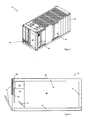
- FIG. 1 a general arrangement is shown of a safe-room 10. It does not show all of the features and in particular some of the walls have been removed for the sake of clarity. It comprises a container 20, being a standard shipping container, including a citadel 30 within.
- the safe-room has a sliding door 40 within the conventional doors (not shown) of the container.
- a door 50 is provided within these doors allowing access to the citadel 30.
- An air vent 60 is provided at one end for the air conditioning unit as described below.
- FIG 2 the plan of the container 20 is depicted including within it a liner 70.
- This liner 70 includes armour plate and insulation as will be described with reference to Figure 3 below.
- Liners 70 are provided along the four side walls. A gap is shown between the inside of the container walls and the liner 70 but this may not be present in one embodiment.
- the container 20 includes two conventional doors 25 which open outwardly. One may be welded, or otherwise fixed, permanently closed after assembly is complete.
- a sliding door 40 is provided inside the conventional doors 25.
- the citadel 30 is shown within the container, although it will be noted that a vestibule 45 is formed at the door end since the citadel 30 is somewhat shorter in length than the container 20.
- the citadel 30 includes a door 50 which opens outwardly into the vestibule 45.
- the vestibule 45 includes an air conditioning unit 82.
- This unit 82 is linked to the outside environment via an air vent system 80, which will be described below with reference to Figures 5 and 6 .
- a generator (not shown) may be located above or below the air conditioning unit 82.
- Batteries (not shown) may be located within the citadel 30 for, not least, the purpose of temperature control.
- the container wall 20 includes an armour plate 74 pushed up against it. This is held in place by clamps (not shown) at the top of each plate 74.
- the clamps are attached to a frame (not shown) which is attached to the base of the container and extends around the inside of the container 20.
- insulation 76 Inside of the armour plate 74 is an arrangement of insulation 76. This may comprise both acoustic and heat insulation in the form of various foams, rubbers and foils. An air gap 75 is maintained between the liner 70 and the insulation 76.
- the wall of the citadel 30 is shown inside of the layer of insulation 76.
- the insulation may be affixed to the wall of the citadel such that the whole assembly of citadel 30 and insulation layer 76 is slid inside the container after the armour plate has been erected within.
- the gaps 71, inside the corrugations, between the wall of the container 20 and the armour plate 74 may be filled with material to produce tumbling of bullets fired therethrough.
- air vents 100 may be provided at the base of the walls of the container, or in its base, as shown in Figure 4 . Air may also be drawn in and/or exit via air vents 120 provided at the top of citadel 30 walls. Air will be heated by the occupants and equipment in within the citadel 30 and will rise. It will exit via the vents 130, 140 provided in the roof of the citadel 30.
- the air will then exit through air vents 150 provided in the armour plate 74 above the citadel 30.
- the air flow is aided by the passive stack ventilation effect whereby wind 160 on the side of the container will blow in through a vent 110 provided above the armour plate 74 and pass across and out of vents 110 provide on the other side of the container. This movement of air will pull the heated air, rising from the citadel 30, with it and out of the container 20. Arrows depict the movement of air.
- the air vents 150 in the armour plate include baffle plates 79 beneath each vent to prevent direct line of sight into the citadel 30 from outside to ensure that the armouring effect is maintained.
- a gap of 20-25mm between the baffles 79 and the vents 150 is contemplated.
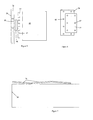
- FIG. 5 shows the air vent system 80 in more detail. It comprises an air conditioning unit 82 which, as is customary in indirect air conditioning units, requires access to air at a different temperature to function correctly. Although no air actually flows from outside the container 20 to the inside of the citadel via the air conditioning unit 82, the unit 82 does cool, or warm the air circulating within the citadel via its heat exchanger/condenser.
- an air conditioning unit 82 which, as is customary in indirect air conditioning units, requires access to air at a different temperature to function correctly. Although no air actually flows from outside the container 20 to the inside of the citadel via the air conditioning unit 82, the unit 82 does cool, or warm the air circulating within the citadel via its heat exchanger/condenser.
- a vent 83 in the form of an array of holes is formed through the armour plate 74 and the container 20 wall.
- a baffle plate 77 is provided inside of the vent 83.
- This plate 77 includes an array of holes 87 which are off-set from the array of holes in the vent 83 in the container 20.
- a fan 86 is provided within the gap between the baffle plate 77 and the armour plate 74 to prevent air stalling and to thus promote air flow through the holes 87 and vent 83. Thus air can reach the air conditioning unit 82 without it being damaged by arms fire.
- the holes 87 may be 20-25mm in diameter.
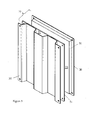
- Figure 6 shows an elevational view of the armour plate 74 and the baffle 77. Each comprises an array of eight holes 83, 87. These are off-set as shown.
- Figure 7 shows an embodiment in which the armour plates 74 along the side walls of the citadel 30 are arranged in a zigzag manner, as viewed from above. This arrangement may aid the deflection of bullets and prevent them penetrating the armour.
Landscapes
- Engineering & Computer Science (AREA)
- Architecture (AREA)
- Civil Engineering (AREA)
- Structural Engineering (AREA)
- Physics & Mathematics (AREA)
- Electromagnetism (AREA)
- Mechanical Engineering (AREA)
- Combustion & Propulsion (AREA)
- Chemical & Material Sciences (AREA)
- Ocean & Marine Engineering (AREA)
- General Engineering & Computer Science (AREA)
- Business, Economics & Management (AREA)
- Emergency Management (AREA)
- Environmental & Geological Engineering (AREA)
- Aviation & Aerospace Engineering (AREA)
- Building Environments (AREA)
- Respiratory Apparatuses And Protective Means (AREA)
- Packages (AREA)
Claims (15)
- Transportabler Schutzraum umfassend einen Standard ISO Transport-Behälter (20), welcher eine Panzerplatte (74) aufweist, im Wesentlichen benachbart zu seiner inneren Wand, dadurch gekennzeichnet, dass der Behälter eine Zitadelle (30) umfasst, die innerhalb der Panzerplatte angeordnet ist, wobei die Zitadelle Kommunikationsmittel für eine Kommunikation mit ferngesteuerten Standorten und Wasserbevorratungsmittel umfasst, wobei der Schutzraum eine Klimatisierungseinrichtung (82) umfasst, um klimatisierte Luft für das Innere der Zitadelle bereit zu stellen.
- Transportabler Schutzraum nach Anspruch 1, bei dem der Behälter (20) und die Panzerplatte (74) eine erste Lüftungsöffnung (83) aufweisen, um mit der Klimatisierungseinrichtung zu kommunizieren, ein zusätzliches Stück Panzerplatte (77) innerhalb der ersten Lüftungsöffnung vorgesehen ist, wobei das zusätzliche Stück eine zweite Lüftungsöffnung (87) umfasst, versetzt zu der ersten Lüftungsöffnung, um eine direkte Sichtlinie durch die erste und die zweite Lüftungsöffnung zu verhindern.
- Transportabler Schutzraum nach Anspruch 2, bei dem ein Ventilator (86) vorgesehen ist zwischen der Panzerplatte (74) und dem zusätzlichen Stück Panzerplatte (77).
- Schutzraum nach einem der vorhergehenden Ansprüche, bei dem die Panzerplatte rund um das Innere der Seitenwände unmittelbar benachbart zu den Wänden angeordnet ist.
- Schutzraum nach Anspruch 4, bei dem die Panzerplatte in ihrer Position gehalten wird durch einen Rahmen umfassend Klammern.
- Schutzraum gemäß einem der vorhergehenden Ansprüche, welcher weiterhin eine Panzerplatte umfasst, unter der Oberseite des Behälters und mit Abstand zu dieser angeordnet.
- Schutzraum gemäß einem der vorhergehenden Ansprüche, bei dem der Behälter Türen (25) an seinem einen Ende umfasst und eine mit Panzerplatte versehene Tür (40) unmittelbar innerhalb dieser Türen angeordnet ist.
- Schutzraum nach Anspruch 7, bei dem die die mit Panzerplatte versehene Tür eine Schiebetür ist.
- Schutzraum nach einem der Ansprüche 7 oder 8, bei dem ein Vorraum (45) zwischen dem Behälter (20) und der Zitadelle (30) angeordnet ist, innerhalb von der mit Panzerplatte versehenen Tür (40) und wobei wenigstens ein Teil der Klimatisierungseinrichtung (82) innerhalb dieses Vorraums angeordnet ist.
- Schutzraum nach einem der vorhergehenden Ansprüche, bei dem die Zitadelle eine luftdichte Tür (50) umfasst, die nur von außen her zu öffnen ist.
- Schutzraum nach einem der vorhergehenden Ansprüche, weiterhin umfassend eine erste Schicht Isolierung (76), vorgesehen zwischen der Zitadelle und der Panzerplatte.
- Schutzraum nach einem der vorhergehenden Ansprüche, bei dem die Zitadelle ein geneigtes Dach umfasst.
- Schutzraum nach einem der vorhergehenden Ansprüche, bei dem die Zitadelle Mittel umfasst, um diese gleitend in den Behälter zu bewegen.
- Schutzraum nach einem der vorhergehenden Ansprüche, umfassend einen zweiten Zugangs-/Ausgangspunkt.
- Verfahren zum Erstellen eines Schutzraums umfassend die Schritte:a) Bereitstellen eines ISO-Transportbehälters (20);b) Aufstellen eines Rahmens im Inneren dieses Behälters und verwenden dieses Rahmens, um eine Panzerplatte in Position zu halten im Wesentlichen benachbart zu drei der vier Seitenwände und der Oberseite des Behälters;c) Bereitstellen einer Zitadelle (30);d) Gleiten dieser Zitadelle in den Behälter hinein;e) Anordnen einer Panzerplatte an der genannten vierten Wand; undf) Anordnen von Schiebetüren im Inneren der genannten Behältertüren.
Applications Claiming Priority (2)
| Application Number | Priority Date | Filing Date | Title |
|---|---|---|---|
| GB1101328.1A GB2487554A (en) | 2011-01-26 | 2011-01-26 | A portable safe-room for installation in iso shipping container |
| PCT/IB2012/050372 WO2012101598A2 (en) | 2011-01-26 | 2012-01-26 | A portable safe-room |
Publications (2)
| Publication Number | Publication Date |
|---|---|
| EP2668353A2 EP2668353A2 (de) | 2013-12-04 |
| EP2668353B1 true EP2668353B1 (de) | 2015-08-26 |
Family
ID=43769632
Family Applications (1)
| Application Number | Title | Priority Date | Filing Date |
|---|---|---|---|
| EP12706111.7A Active EP2668353B1 (de) | 2011-01-26 | 2012-01-26 | Tragbarer sicherheitsraum |
Country Status (6)
| Country | Link |
|---|---|
| EP (1) | EP2668353B1 (de) |
| CN (1) | CN103348070B (de) |
| AU (1) | AU2012210233B2 (de) |
| ES (1) | ES2553746T3 (de) |
| GB (1) | GB2487554A (de) |
| WO (1) | WO2012101598A2 (de) |
Families Citing this family (16)
| Publication number | Priority date | Publication date | Assignee | Title |
|---|---|---|---|---|
| DE102013022091A1 (de) * | 2013-12-17 | 2015-06-18 | Thyssenkrupp Marine Systems Gmbh | Behältersystem |
| US9797153B2 (en) | 2015-06-01 | 2017-10-24 | Simply IV Safety LLC | Refuge |
| IL239683B (en) * | 2015-06-29 | 2021-07-29 | Klein Amos | Multi-layer protective system |
| CN105257060A (zh) * | 2015-11-19 | 2016-01-20 | 衡阳泰豪通信车辆有限公司 | 一种带披挂式防弹片的方舱 |
| CN105346670A (zh) * | 2015-11-25 | 2016-02-24 | 浙江海洋学院 | 一种防海盗甲板 |
| ITUB20160804A1 (it) * | 2016-02-16 | 2017-08-16 | Termogamma Impianti E Servizi Srl | Modulo trasportabile per l’alloggiamento di impianti tecnologici in particolare per l’alloggiamento di centrali termiche o frigorifere o di condizionamento |
| US10455200B2 (en) * | 2016-09-26 | 2019-10-22 | 3 Strike, Llc | Storage container with inventory control |
| US12323743B2 (en) | 2016-09-26 | 2025-06-03 | 3 Strike, Llc | Storage room with inventory control |
| GB2564411A (en) * | 2017-07-06 | 2019-01-16 | Htl Group Ltd | Containerised system with modules |
| DE102017008903B4 (de) * | 2017-09-24 | 2021-06-17 | Safe Global Housing Ltd. | Mobiles Unterkunftssystem |
| CN111039173A (zh) * | 2018-10-12 | 2020-04-21 | 中冶宝钢技术服务有限公司 | 一种电动夹钳与起重机间的通讯系统 |
| CN110243618B (zh) * | 2019-06-17 | 2021-10-08 | 中国船舶科学研究中心(中国船舶重工集团公司第七0二研究所) | 载人潜器外场试验用保障箱及其试验方法 |
| CN110217353A (zh) * | 2019-07-01 | 2019-09-10 | 上海外高桥造船有限公司 | 主甲板避难所及包含其的海上浮式生产储油船 |
| CN110789691A (zh) * | 2019-11-10 | 2020-02-14 | 荆门一天阁动力机械科技有限责任公司 | 船只救援舱 |
| CN114000733B (zh) * | 2021-10-14 | 2022-11-08 | 苏州美瑞德建筑装饰有限公司 | 一种便于临时快速搭建的装配式隔离病房施工工艺及结构 |
| CN115288365A (zh) * | 2022-04-13 | 2022-11-04 | 杭州巨力绝缘材料有限公司 | 高强度高韧高硬度防弹快装墙柱及制作方法 |
Family Cites Families (11)
| Publication number | Priority date | Publication date | Assignee | Title |
|---|---|---|---|---|
| US3722152A (en) * | 1971-08-02 | 1973-03-27 | Art Inon Inc | Portable jail cell |
| US4470228A (en) * | 1982-02-01 | 1984-09-11 | Dirck Ronald L | Prisoner transport module |
| US6299008B1 (en) * | 1999-09-28 | 2001-10-09 | Boh Environmental, Llc | Transport and storage system |
| CN2471727Y (zh) * | 2001-02-18 | 2002-01-16 | 汪洋 | 防爆集装箱 |
| GB0207254D0 (en) * | 2002-03-07 | 2002-05-08 | Composhield As | Barrier-protected container |
| DE20315249U1 (de) * | 2003-10-02 | 2003-12-11 | Zeppelin Mobile Systeme Gmbh | Armierter Shelter in Containerform |
| DE102004018368A1 (de) * | 2004-04-13 | 2005-11-03 | Hugo Siebert | Panzerungs-System für modulare Flächenpanzerung |
| US8007047B2 (en) * | 2006-02-27 | 2011-08-30 | Kennedy Metal Products & Buildings, Inc. | Mine refuge |
| WO2008150174A1 (en) * | 2007-06-06 | 2008-12-11 | Gbs Karotek As | Lining of a standard iso container |
| DE202007008313U1 (de) * | 2007-06-14 | 2008-10-16 | Drehtainer Gmbh Spezial Container- Und Fahrzeugbau | Militärpersonenfahrzeug oder -aufenthaltsraum |
| AU2010100147A4 (en) * | 2010-02-15 | 2010-03-25 | Mironenko, Igor Mr | Riffle splitter slots lining |
-
2011
- 2011-01-26 GB GB1101328.1A patent/GB2487554A/en not_active Withdrawn
-
2012
- 2012-01-26 AU AU2012210233A patent/AU2012210233B2/en active Active
- 2012-01-26 CN CN201280006729.9A patent/CN103348070B/zh active Active
- 2012-01-26 EP EP12706111.7A patent/EP2668353B1/de active Active
- 2012-01-26 ES ES12706111.7T patent/ES2553746T3/es active Active
- 2012-01-26 WO PCT/IB2012/050372 patent/WO2012101598A2/en not_active Ceased
Also Published As
| Publication number | Publication date |
|---|---|
| ES2553746T3 (es) | 2015-12-11 |
| CN103348070A (zh) | 2013-10-09 |
| WO2012101598A2 (en) | 2012-08-02 |
| AU2012210233B2 (en) | 2016-08-18 |
| GB201101328D0 (en) | 2011-03-09 |
| AU2012210233A1 (en) | 2013-09-19 |
| CN103348070B (zh) | 2015-11-25 |
| GB2487554A (en) | 2012-08-01 |
| WO2012101598A3 (en) | 2013-01-03 |
| EP2668353A2 (de) | 2013-12-04 |
Similar Documents
| Publication | Publication Date | Title |
|---|---|---|
| EP2668353B1 (de) | Tragbarer sicherheitsraum | |
| KR20070057764A (ko) | 차량용 장갑 캡 | |
| CN102837809A (zh) | 一种国际航行防海盗船舶及防御方法 | |
| EP2828450A1 (de) | Wachturm | |
| GB2345069A (en) | Armoured modular structure assembled from kit of parts | |
| US20230392904A1 (en) | Mobile Ballistics & Projectile Resistant Crate With Telescoping Protective Ballistic Resistant Panels & Removable Storage Cage | |
| WO2011033323A1 (en) | Bullet proof sentry box made of steel and multi-layered transparent armor equipped with tear gas and flash-bang grenade launching systems | |
| RU195422U1 (ru) | Сборно-разборный универсальный защитный бронеколпак | |
| US11667345B1 (en) | School children rescue vehicle | |
| EP3411289B1 (de) | Sicherheitsvorrichtung | |
| DE102012011187A1 (de) | Mobiler Schutzraum | |
| EP3067489B1 (de) | Sicherer raum | |
| WO2006104469A1 (en) | Portable armoured booth | |
| RU2227891C1 (ru) | Транспортное средство | |
| KR920004056B1 (ko) | 테러 엄폐소용 키트 | |
| von Heinegg | The protection of navigation in case of armed conflict | |
| EP1132547B1 (de) | Modularer gepanzerter Raum für die Lagerung von Sprengstoffen | |
| RU2170676C1 (ru) | Бронированная машина | |
| RU2360205C1 (ru) | Машина | |
| Alkenbrack | First Deployment of the 14th Field Regiment, RCA: D-Day—Bernières-sur-Mer—6 June 1944 | |
| CN211691067U (zh) | 一种掩体单元及其制成的产品 | |
| GB2546807A (en) | Security barrier | |
| Wollert | Naval assets—not just a tool for war | |
| Karim et al. | Piracy and Maritime Terrorism Involving Autonomous Ships | |
| Carral et al. | Considering Anti-Piracy Ship Security: Citadel Design And Use |
Legal Events
| Date | Code | Title | Description |
|---|---|---|---|
| PUAI | Public reference made under article 153(3) epc to a published international application that has entered the european phase |
Free format text: ORIGINAL CODE: 0009012 |
|
| 17P | Request for examination filed |
Effective date: 20130823 |
|
| AK | Designated contracting states |
Kind code of ref document: A2 Designated state(s): AL AT BE BG CH CY CZ DE DK EE ES FI FR GB GR HR HU IE IS IT LI LT LU LV MC MK MT NL NO PL PT RO RS SE SI SK SM TR |
|
| DAX | Request for extension of the european patent (deleted) | ||
| 17Q | First examination report despatched |
Effective date: 20150507 |
|
| GRAP | Despatch of communication of intention to grant a patent |
Free format text: ORIGINAL CODE: EPIDOSNIGR1 |
|
| RIC1 | Information provided on ipc code assigned before grant |
Ipc: E04H 1/12 20060101ALI20150519BHEP Ipc: E04H 9/10 20060101AFI20150519BHEP Ipc: F24F 7/10 20060101ALI20150519BHEP Ipc: E05G 1/00 20060101ALI20150519BHEP Ipc: F41H 5/24 20060101ALI20150519BHEP Ipc: F41H 5/013 20060101ALI20150519BHEP Ipc: B65D 88/12 20060101ALI20150519BHEP Ipc: E05G 5/02 20060101ALI20150519BHEP Ipc: E05G 1/024 20060101ALI20150519BHEP Ipc: B63B 29/02 20060101ALI20150519BHEP Ipc: B63G 13/00 20060101ALI20150519BHEP |
|
| INTG | Intention to grant announced |
Effective date: 20150617 |
|
| GRAS | Grant fee paid |
Free format text: ORIGINAL CODE: EPIDOSNIGR3 |
|
| GRAA | (expected) grant |
Free format text: ORIGINAL CODE: 0009210 |
|
| AK | Designated contracting states |
Kind code of ref document: B1 Designated state(s): AL AT BE BG CH CY CZ DE DK EE ES FI FR GB GR HR HU IE IS IT LI LT LU LV MC MK MT NL NO PL PT RO RS SE SI SK SM TR |
|
| REG | Reference to a national code |
Ref country code: GB Ref legal event code: FG4D |
|
| REG | Reference to a national code |
Ref country code: CH Ref legal event code: EP |
|
| REG | Reference to a national code |
Ref country code: AT Ref legal event code: REF Ref document number: 745277 Country of ref document: AT Kind code of ref document: T Effective date: 20150915 |
|
| REG | Reference to a national code |
Ref country code: IE Ref legal event code: FG4D |
|
| REG | Reference to a national code |
Ref country code: DE Ref legal event code: R096 Ref document number: 602012009990 Country of ref document: DE |
|
| REG | Reference to a national code |
Ref country code: ES Ref legal event code: FG2A Ref document number: 2553746 Country of ref document: ES Kind code of ref document: T3 Effective date: 20151211 |
|
| REG | Reference to a national code |
Ref country code: AT Ref legal event code: MK05 Ref document number: 745277 Country of ref document: AT Kind code of ref document: T Effective date: 20150826 |
|
| REG | Reference to a national code |
Ref country code: FR Ref legal event code: PLFP Year of fee payment: 5 |
|
| REG | Reference to a national code |
Ref country code: LT Ref legal event code: MG4D |
|
| REG | Reference to a national code |
Ref country code: NL Ref legal event code: FP |
|
| PG25 | Lapsed in a contracting state [announced via postgrant information from national office to epo] |
Ref country code: FI Free format text: LAPSE BECAUSE OF FAILURE TO SUBMIT A TRANSLATION OF THE DESCRIPTION OR TO PAY THE FEE WITHIN THE PRESCRIBED TIME-LIMIT Effective date: 20150826 Ref country code: LT Free format text: LAPSE BECAUSE OF FAILURE TO SUBMIT A TRANSLATION OF THE DESCRIPTION OR TO PAY THE FEE WITHIN THE PRESCRIBED TIME-LIMIT Effective date: 20150826 Ref country code: GR Free format text: LAPSE BECAUSE OF FAILURE TO SUBMIT A TRANSLATION OF THE DESCRIPTION OR TO PAY THE FEE WITHIN THE PRESCRIBED TIME-LIMIT Effective date: 20151127 |
|
| REG | Reference to a national code |
Ref country code: NO Ref legal event code: T2 Effective date: 20150826 |
|
| PG25 | Lapsed in a contracting state [announced via postgrant information from national office to epo] |
Ref country code: PL Free format text: LAPSE BECAUSE OF FAILURE TO SUBMIT A TRANSLATION OF THE DESCRIPTION OR TO PAY THE FEE WITHIN THE PRESCRIBED TIME-LIMIT Effective date: 20150826 Ref country code: HR Free format text: LAPSE BECAUSE OF FAILURE TO SUBMIT A TRANSLATION OF THE DESCRIPTION OR TO PAY THE FEE WITHIN THE PRESCRIBED TIME-LIMIT Effective date: 20150826 Ref country code: AT Free format text: LAPSE BECAUSE OF FAILURE TO SUBMIT A TRANSLATION OF THE DESCRIPTION OR TO PAY THE FEE WITHIN THE PRESCRIBED TIME-LIMIT Effective date: 20150826 Ref country code: IS Free format text: LAPSE BECAUSE OF FAILURE TO SUBMIT A TRANSLATION OF THE DESCRIPTION OR TO PAY THE FEE WITHIN THE PRESCRIBED TIME-LIMIT Effective date: 20151226 Ref country code: RS Free format text: LAPSE BECAUSE OF FAILURE TO SUBMIT A TRANSLATION OF THE DESCRIPTION OR TO PAY THE FEE WITHIN THE PRESCRIBED TIME-LIMIT Effective date: 20150826 Ref country code: PT Free format text: LAPSE BECAUSE OF FAILURE TO SUBMIT A TRANSLATION OF THE DESCRIPTION OR TO PAY THE FEE WITHIN THE PRESCRIBED TIME-LIMIT Effective date: 20151228 Ref country code: SE Free format text: LAPSE BECAUSE OF FAILURE TO SUBMIT A TRANSLATION OF THE DESCRIPTION OR TO PAY THE FEE WITHIN THE PRESCRIBED TIME-LIMIT Effective date: 20150826 |
|
| PG25 | Lapsed in a contracting state [announced via postgrant information from national office to epo] |
Ref country code: SK Free format text: LAPSE BECAUSE OF FAILURE TO SUBMIT A TRANSLATION OF THE DESCRIPTION OR TO PAY THE FEE WITHIN THE PRESCRIBED TIME-LIMIT Effective date: 20150826 Ref country code: EE Free format text: LAPSE BECAUSE OF FAILURE TO SUBMIT A TRANSLATION OF THE DESCRIPTION OR TO PAY THE FEE WITHIN THE PRESCRIBED TIME-LIMIT Effective date: 20150826 Ref country code: DK Free format text: LAPSE BECAUSE OF FAILURE TO SUBMIT A TRANSLATION OF THE DESCRIPTION OR TO PAY THE FEE WITHIN THE PRESCRIBED TIME-LIMIT Effective date: 20150826 |
|
| REG | Reference to a national code |
Ref country code: DE Ref legal event code: R097 Ref document number: 602012009990 Country of ref document: DE |
|
| PG25 | Lapsed in a contracting state [announced via postgrant information from national office to epo] |
Ref country code: RO Free format text: LAPSE BECAUSE OF FAILURE TO SUBMIT A TRANSLATION OF THE DESCRIPTION OR TO PAY THE FEE WITHIN THE PRESCRIBED TIME-LIMIT Effective date: 20150826 Ref country code: BE Free format text: LAPSE BECAUSE OF NON-PAYMENT OF DUE FEES Effective date: 20160131 |
|
| PLBE | No opposition filed within time limit |
Free format text: ORIGINAL CODE: 0009261 |
|
| STAA | Information on the status of an ep patent application or granted ep patent |
Free format text: STATUS: NO OPPOSITION FILED WITHIN TIME LIMIT |
|
| REG | Reference to a national code |
Ref country code: DE Ref legal event code: R082 Ref document number: 602012009990 Country of ref document: DE |
|
| 26N | No opposition filed |
Effective date: 20160530 |
|
| PG25 | Lapsed in a contracting state [announced via postgrant information from national office to epo] |
Ref country code: LU Free format text: LAPSE BECAUSE OF FAILURE TO SUBMIT A TRANSLATION OF THE DESCRIPTION OR TO PAY THE FEE WITHIN THE PRESCRIBED TIME-LIMIT Effective date: 20160126 Ref country code: SI Free format text: LAPSE BECAUSE OF FAILURE TO SUBMIT A TRANSLATION OF THE DESCRIPTION OR TO PAY THE FEE WITHIN THE PRESCRIBED TIME-LIMIT Effective date: 20150826 |
|
| REG | Reference to a national code |
Ref country code: CH Ref legal event code: PL |
|
| PG25 | Lapsed in a contracting state [announced via postgrant information from national office to epo] |
Ref country code: MC Free format text: LAPSE BECAUSE OF FAILURE TO SUBMIT A TRANSLATION OF THE DESCRIPTION OR TO PAY THE FEE WITHIN THE PRESCRIBED TIME-LIMIT Effective date: 20150826 |
|
| PG25 | Lapsed in a contracting state [announced via postgrant information from national office to epo] |
Ref country code: LI Free format text: LAPSE BECAUSE OF NON-PAYMENT OF DUE FEES Effective date: 20160131 Ref country code: CH Free format text: LAPSE BECAUSE OF NON-PAYMENT OF DUE FEES Effective date: 20160131 |
|
| REG | Reference to a national code |
Ref country code: IE Ref legal event code: MM4A |
|
| PG25 | Lapsed in a contracting state [announced via postgrant information from national office to epo] |
Ref country code: BE Free format text: LAPSE BECAUSE OF FAILURE TO SUBMIT A TRANSLATION OF THE DESCRIPTION OR TO PAY THE FEE WITHIN THE PRESCRIBED TIME-LIMIT Effective date: 20150826 |
|
| REG | Reference to a national code |
Ref country code: FR Ref legal event code: PLFP Year of fee payment: 6 |
|
| PG25 | Lapsed in a contracting state [announced via postgrant information from national office to epo] |
Ref country code: IE Free format text: LAPSE BECAUSE OF NON-PAYMENT OF DUE FEES Effective date: 20160126 |
|
| PG25 | Lapsed in a contracting state [announced via postgrant information from national office to epo] |
Ref country code: MT Free format text: LAPSE BECAUSE OF FAILURE TO SUBMIT A TRANSLATION OF THE DESCRIPTION OR TO PAY THE FEE WITHIN THE PRESCRIBED TIME-LIMIT Effective date: 20150826 |
|
| REG | Reference to a national code |
Ref country code: FR Ref legal event code: PLFP Year of fee payment: 7 |
|
| PG25 | Lapsed in a contracting state [announced via postgrant information from national office to epo] |
Ref country code: CY Free format text: LAPSE BECAUSE OF FAILURE TO SUBMIT A TRANSLATION OF THE DESCRIPTION OR TO PAY THE FEE WITHIN THE PRESCRIBED TIME-LIMIT Effective date: 20150826 Ref country code: HU Free format text: LAPSE BECAUSE OF FAILURE TO SUBMIT A TRANSLATION OF THE DESCRIPTION OR TO PAY THE FEE WITHIN THE PRESCRIBED TIME-LIMIT; INVALID AB INITIO Effective date: 20120126 Ref country code: SM Free format text: LAPSE BECAUSE OF FAILURE TO SUBMIT A TRANSLATION OF THE DESCRIPTION OR TO PAY THE FEE WITHIN THE PRESCRIBED TIME-LIMIT Effective date: 20150826 |
|
| PG25 | Lapsed in a contracting state [announced via postgrant information from national office to epo] |
Ref country code: MT Free format text: LAPSE BECAUSE OF FAILURE TO SUBMIT A TRANSLATION OF THE DESCRIPTION OR TO PAY THE FEE WITHIN THE PRESCRIBED TIME-LIMIT Effective date: 20160131 Ref country code: MK Free format text: LAPSE BECAUSE OF FAILURE TO SUBMIT A TRANSLATION OF THE DESCRIPTION OR TO PAY THE FEE WITHIN THE PRESCRIBED TIME-LIMIT Effective date: 20150826 |
|
| PG25 | Lapsed in a contracting state [announced via postgrant information from national office to epo] |
Ref country code: BG Free format text: LAPSE BECAUSE OF FAILURE TO SUBMIT A TRANSLATION OF THE DESCRIPTION OR TO PAY THE FEE WITHIN THE PRESCRIBED TIME-LIMIT Effective date: 20150826 |
|
| PG25 | Lapsed in a contracting state [announced via postgrant information from national office to epo] |
Ref country code: AL Free format text: LAPSE BECAUSE OF FAILURE TO SUBMIT A TRANSLATION OF THE DESCRIPTION OR TO PAY THE FEE WITHIN THE PRESCRIBED TIME-LIMIT Effective date: 20150826 |
|
| PGFP | Annual fee paid to national office [announced via postgrant information from national office to epo] |
Ref country code: NL Payment date: 20221215 Year of fee payment: 12 |
|
| PGFP | Annual fee paid to national office [announced via postgrant information from national office to epo] |
Ref country code: CZ Payment date: 20230117 Year of fee payment: 12 |
|
| PGFP | Annual fee paid to national office [announced via postgrant information from national office to epo] |
Ref country code: LV Payment date: 20230115 Year of fee payment: 12 |
|
| REG | Reference to a national code |
Ref country code: NL Ref legal event code: MM Effective date: 20240201 |
|
| PG25 | Lapsed in a contracting state [announced via postgrant information from national office to epo] |
Ref country code: NL Free format text: LAPSE BECAUSE OF NON-PAYMENT OF DUE FEES Effective date: 20240201 |
|
| PG25 | Lapsed in a contracting state [announced via postgrant information from national office to epo] |
Ref country code: CZ Free format text: LAPSE BECAUSE OF NON-PAYMENT OF DUE FEES Effective date: 20240126 |
|
| PG25 | Lapsed in a contracting state [announced via postgrant information from national office to epo] |
Ref country code: LV Free format text: LAPSE BECAUSE OF NON-PAYMENT OF DUE FEES Effective date: 20240126 |
|
| PG25 | Lapsed in a contracting state [announced via postgrant information from national office to epo] |
Ref country code: NL Free format text: LAPSE BECAUSE OF NON-PAYMENT OF DUE FEES Effective date: 20240201 Ref country code: LV Free format text: LAPSE BECAUSE OF NON-PAYMENT OF DUE FEES Effective date: 20240126 Ref country code: CZ Free format text: LAPSE BECAUSE OF NON-PAYMENT OF DUE FEES Effective date: 20240126 |
|
| PGFP | Annual fee paid to national office [announced via postgrant information from national office to epo] |
Ref country code: GB Payment date: 20251217 Year of fee payment: 15 |
|
| PGFP | Annual fee paid to national office [announced via postgrant information from national office to epo] |
Ref country code: NO Payment date: 20251218 Year of fee payment: 15 |
|
| PGFP | Annual fee paid to national office [announced via postgrant information from national office to epo] |
Ref country code: ES Payment date: 20260227 Year of fee payment: 15 |
|
| PGFP | Annual fee paid to national office [announced via postgrant information from national office to epo] |
Ref country code: DE Payment date: 20251217 Year of fee payment: 15 |
|
| PGFP | Annual fee paid to national office [announced via postgrant information from national office to epo] |
Ref country code: IT Payment date: 20260123 Year of fee payment: 15 |
|
| PGFP | Annual fee paid to national office [announced via postgrant information from national office to epo] |
Ref country code: FR Payment date: 20260123 Year of fee payment: 15 |
|
| PGFP | Annual fee paid to national office [announced via postgrant information from national office to epo] |
Ref country code: TR Payment date: 20260122 Year of fee payment: 15 |