EP2664917A1 - Method for detecting single nucleotide polymorphisms - Google Patents
Method for detecting single nucleotide polymorphisms Download PDFInfo
- Publication number
- EP2664917A1 EP2664917A1 EP12734188.1A EP12734188A EP2664917A1 EP 2664917 A1 EP2664917 A1 EP 2664917A1 EP 12734188 A EP12734188 A EP 12734188A EP 2664917 A1 EP2664917 A1 EP 2664917A1
- Authority
- EP
- European Patent Office
- Prior art keywords
- type
- single nucleotide
- mutant
- wild
- nucleotide polymorphisms
- Prior art date
- Legal status (The legal status is an assumption and is not a legal conclusion. Google has not performed a legal analysis and makes no representation as to the accuracy of the status listed.)
- Granted
Links
Images

Classifications
-
- C—CHEMISTRY; METALLURGY
- C12—BIOCHEMISTRY; BEER; SPIRITS; WINE; VINEGAR; MICROBIOLOGY; ENZYMOLOGY; MUTATION OR GENETIC ENGINEERING
- C12Q—MEASURING OR TESTING PROCESSES INVOLVING ENZYMES, NUCLEIC ACIDS OR MICROORGANISMS; COMPOSITIONS OR TEST PAPERS THEREFOR; PROCESSES OF PREPARING SUCH COMPOSITIONS; CONDITION-RESPONSIVE CONTROL IN MICROBIOLOGICAL OR ENZYMOLOGICAL PROCESSES
- C12Q1/00—Measuring or testing processes involving enzymes, nucleic acids or microorganisms; Compositions therefor; Processes of preparing such compositions
- C12Q1/68—Measuring or testing processes involving enzymes, nucleic acids or microorganisms; Compositions therefor; Processes of preparing such compositions involving nucleic acids
- C12Q1/6844—Nucleic acid amplification reactions
-
- C—CHEMISTRY; METALLURGY
- C12—BIOCHEMISTRY; BEER; SPIRITS; WINE; VINEGAR; MICROBIOLOGY; ENZYMOLOGY; MUTATION OR GENETIC ENGINEERING
- C12Q—MEASURING OR TESTING PROCESSES INVOLVING ENZYMES, NUCLEIC ACIDS OR MICROORGANISMS; COMPOSITIONS OR TEST PAPERS THEREFOR; PROCESSES OF PREPARING SUCH COMPOSITIONS; CONDITION-RESPONSIVE CONTROL IN MICROBIOLOGICAL OR ENZYMOLOGICAL PROCESSES
- C12Q1/00—Measuring or testing processes involving enzymes, nucleic acids or microorganisms; Compositions therefor; Processes of preparing such compositions
- C12Q1/68—Measuring or testing processes involving enzymes, nucleic acids or microorganisms; Compositions therefor; Processes of preparing such compositions involving nucleic acids
- C12Q1/6813—Hybridisation assays
- C12Q1/6827—Hybridisation assays for detection of mutation or polymorphism
-
- C—CHEMISTRY; METALLURGY
- C12—BIOCHEMISTRY; BEER; SPIRITS; WINE; VINEGAR; MICROBIOLOGY; ENZYMOLOGY; MUTATION OR GENETIC ENGINEERING
- C12Q—MEASURING OR TESTING PROCESSES INVOLVING ENZYMES, NUCLEIC ACIDS OR MICROORGANISMS; COMPOSITIONS OR TEST PAPERS THEREFOR; PROCESSES OF PREPARING SUCH COMPOSITIONS; CONDITION-RESPONSIVE CONTROL IN MICROBIOLOGICAL OR ENZYMOLOGICAL PROCESSES
- C12Q1/00—Measuring or testing processes involving enzymes, nucleic acids or microorganisms; Compositions therefor; Processes of preparing such compositions
- C12Q1/68—Measuring or testing processes involving enzymes, nucleic acids or microorganisms; Compositions therefor; Processes of preparing such compositions involving nucleic acids
- C12Q1/6844—Nucleic acid amplification reactions
- C12Q1/6858—Allele-specific amplification
-
- G—PHYSICS
- G01—MEASURING; TESTING
- G01N—INVESTIGATING OR ANALYSING MATERIALS BY DETERMINING THEIR CHEMICAL OR PHYSICAL PROPERTIES
- G01N30/00—Investigating or analysing materials by separation into components using adsorption, absorption or similar phenomena or using ion-exchange, e.g. chromatography or field flow fractionation
- G01N30/96—Investigating or analysing materials by separation into components using adsorption, absorption or similar phenomena or using ion-exchange, e.g. chromatography or field flow fractionation using ion-exchange
-
- C—CHEMISTRY; METALLURGY
- C12—BIOCHEMISTRY; BEER; SPIRITS; WINE; VINEGAR; MICROBIOLOGY; ENZYMOLOGY; MUTATION OR GENETIC ENGINEERING
- C12Q—MEASURING OR TESTING PROCESSES INVOLVING ENZYMES, NUCLEIC ACIDS OR MICROORGANISMS; COMPOSITIONS OR TEST PAPERS THEREFOR; PROCESSES OF PREPARING SUCH COMPOSITIONS; CONDITION-RESPONSIVE CONTROL IN MICROBIOLOGICAL OR ENZYMOLOGICAL PROCESSES
- C12Q2565/00—Nucleic acid analysis characterised by mode or means of detection
- C12Q2565/10—Detection mode being characterised by the assay principle
- C12Q2565/137—Chromatographic separation
Definitions
- the filler used for ion-exchange chromatography is preferably one having cationic groups introduced into at least the surface of base material particles, and more preferably one having strong cationic groups and weak anionic groups on at least the surface of base material particles.
- Examples of the strong cationic group include quaternary ammonium groups. Specific examples thereof include trialkylammonium groups such as a trimethylammonium group, a triethylammonium group, and a dimethylethylammonium group.
- Examples of counter ions for the strong cationic group include halide ions such as chloride ion, bromide ion, and iodide ion.
- the size of the product amplified by the AS-PCR method is preferably 200 bp or less.
- a size of the product amplified by the AS-PCR method of more than 200 bp may prolong amplification time of PCR and analysis time in ion-exchange chromatography or may cause insufficient separation performance.
- the size of the product amplified by the AS-PCR method is preferably 100 bp or less.
- the ozonated water was prepared using an ozonated water production system in which 400 hollow tube-shaped ozone gas permeable membranes 0.5 mm in inside diameter, 0.04 mm in thickness, and 350 cm in length were enclosed in a cylindrical mantle 15 cm in inside diameter and 20 cm in length (from Sekisui Chemical Co., Ltd.).
- each UGT1A1 gene sequence-inserted plasmid was added to a solution prepared by adding Nuclease-free Water to 5 ⁇ L of 10 ⁇ AccuPrime PCR Buffer I, 1 ⁇ L of the Forward primer, and 1 ⁇ L of the Reverse primer to make a total volume of 49 ⁇ L of a reaction solution.
Landscapes
- Chemical & Material Sciences (AREA)
- Life Sciences & Earth Sciences (AREA)
- Organic Chemistry (AREA)
- Health & Medical Sciences (AREA)
- Wood Science & Technology (AREA)
- Proteomics, Peptides & Aminoacids (AREA)
- Zoology (AREA)
- Engineering & Computer Science (AREA)
- Immunology (AREA)
- Biochemistry (AREA)
- General Health & Medical Sciences (AREA)
- Physics & Mathematics (AREA)
- Analytical Chemistry (AREA)
- Biotechnology (AREA)
- Molecular Biology (AREA)
- Biophysics (AREA)
- Bioinformatics & Cheminformatics (AREA)
- General Engineering & Computer Science (AREA)
- Microbiology (AREA)
- Genetics & Genomics (AREA)
- Chemical Kinetics & Catalysis (AREA)
- General Physics & Mathematics (AREA)
- Pathology (AREA)
- Measuring Or Testing Involving Enzymes Or Micro-Organisms (AREA)
Abstract
Description
- The present invention relates to a method for rapidly and simply detecting single nucleotide polymorphisms.
- In recent years, techniques have been developed for analyzing single nucleotide polymorphisms (SNP) which have been shown to be associated with various diseases and drug side effects; in the development thereof, it is an important factor to accurately detect single nucleotide polymorphisms simply and in a short time.
An RFLP (Restriction Fragment Length Polymorphism) method is known as a method for analyzing single nucleotide polymorphisms. The RFLP method involves, when a restriction enzyme exists recognizing a gene mutation site in a PCR (Polymerase Chain Reaction) amplification product, preparing primers in common sequence sites, performing amplification by holding polymorphisms in the PCR amplification product, cleaving the resultant PCR product with the restriction enzyme, and determining the presence of polymorphisms based on the length of the fragments. However, the method has problems including that the use of restriction enzyme increases analysis cost and prolongs time of the whole analysis. It also has problems including that the detection of the chain length difference by electrophoresis complicates operation and prolongs time of the whole analysis. - In the fields of biochemistry, medicine, and the like, ion-exchange chromatography is used for the separation of biomacromolecules such as nucleic acids, proteins, and polysaccharides as a method capable of accurately detecting them simply and in a short time. The use of ion-exchange chromatography reduces complicated operation as required for measurement by electrophoresis.
Non Patent Literature 1 discloses a method for separating nucleic acid-related compounds by high-performance liquid chromatography. However, even the method disclosed inNon Patent Literature 1 has a problem that it is difficult to sufficiently separate nucleic acids having chain lengths approaching to each other such as single nucleotide polymorphisms. - Non Patent Literature 1: "Raifusaiensu Notameno Kosoku Ekitai Kuromatogurafi Kiso To Jikken (High-Performance Liquid Chromatography for Life Science) (Basis and Experiment)", Hirokawa Shoten, p. 323.
- An object of the present invention is to provide a method for rapidly and simply detecting single nucleotide polymorphisms.
- The present invention is a method for detecting single nucleotide polymorphisms, comprising analyzing wild-type and mutant-type products amplified by an AS-PCR method using ion-exchange chromatography.
The present invention will be described below in detail. - The present inventors have found that the wild-type and mutant-type products amplified by an AS-PCR method can be analyzed using ion-exchange chromatography to detect single nucleotide polymorphisms rapidly and simply, thereby accomplishing the present invention.
- The AS-PCR (Allele Specific-PCR) method is a method for detecting gene polymorphism (particularly, single nucleotide polymorphisms) using a sequence-specific amplification reaction. Specifically, PCR is performed in such a manner that a nucleotide sequence of a single nucleotide polymorphism desired to be detected is located at the 3' end of primer. When the sequence of the target nucleic acid is completely complementary to the primer, an extension reaction by DNA polymerase occurs. In contrast, when the sequence of the target nucleic acid is incompletely complementary to the primer, the extension reaction of DNA polymerase is inhibited. Thus, it is a method which involves using two primers, which have a wild-type or mutant-type nucleotide sequence of a single nucleotide polymorphism at the 3' end, to perform the determination of the single nucleotide polymorphism based on the results of the amplification reaction. The AS-PCR method can use a method as disclosed in "Nature, 324, p. 163-166, 1986".
- The method for detecting single nucleotide polymorphisms according to the present invention uses ion-exchange chromatography.
The eluent used for ion-exchange chromatography preferably contains a guanidine salt derived from guanidine represented by formula (1) below. -

- Examples of the guanidine salt include guanidine hydrochloride, guanidine sulfate, guanidine nitrate, guanidine carbonate, guanidine phosphate, guanidine thiocyanate, guanidine sulfamate, aminoguanidine hydrochloride, and aminoguanidine bicarbonate. Guanidine hydrochloride and guanidine sulfate are preferably used, among these.
- The concentration of a guanidine salt in the eluent when analyzed may be properly adjusted in accordance with a substance to be detected; however, it is preferably 2,000 mmol/L or less.
Specifically, a method can be mentioned which involves performing gradient elution in the guanidine salt concentration range of 0 to 2,000 mmol/L. Thus, it is not necessary that the concentration of the guanidine salt in starting analysis is 0 mmol/L, and it is also not necessary that the concentration of the guanidine salt in terminating analysis is 2,000 mmol/L.
The method of gradient elution may be a low-pressure gradient method or a high-pressure gradient method; however, a method is preferable which involves carrying out elution while performing precise concentration adjustment by the high-pressure gradient method. - The guanidine salt may be added alone to the eluent or in combination with another salt. Examples of the salt capable of being used in combination with the guanidine salt include salts consisting of halides and alkali metals, such as sodium chloride, potassium chloride, sodium bromide, and potassium bromide, salts consisting of halides and alkali earth metals, such as calcium chloride, calcium bromide, magnesium chloride, and magnesium bromide, and inorganic acid salts such as sodium perchlorate, potassium perchlorate, sodium sulfate, potassium sulfate, ammonium sulfate, sodium nitrate, and potassium nitrate. Organic salts such as sodium acetate, potassium acetate, sodium succinate, and potassium succinate may also be used.
- A known buffer or an organic solvent can be used as a buffer used in an eluent; specific examples thereof include Tris-hydrochloric acid buffer, TE buffer consisting of Tris and EDTA, TAE buffer consisting of Tris, acetic acid, and EDTA, and TBA buffer consisting of Tris, boric acid, and EDTA.
- The pH of the eluent is not particularly limited, as long as it is in a range that allows the separation of nucleic acid chains by anionic exchange.
- The filler used for ion-exchange chromatography is preferably one having cationic groups introduced into at least the surface of base material particles, and more preferably one having strong cationic groups and weak anionic groups on at least the surface of base material particles.
- As used herein, the "strong cationic group" means a cationic group dissociating in the wide pH range of 1 to 14. Thus, the strong cationic group can retain a dissociated (cationized) state without being affected by the pH of the aqueous solution.
- Examples of the strong cationic group include quaternary ammonium groups. Specific examples thereof include trialkylammonium groups such as a trimethylammonium group, a triethylammonium group, and a dimethylethylammonium group.
Examples of counter ions for the strong cationic group include halide ions such as chloride ion, bromide ion, and iodide ion. - The amount of the strong cationic group is not particularly limited; however, the lower limit thereof per dry weight of the filler is preferably 1 µeq/g and the upper limit is preferably 500 µeq/g. A strong cationic group amount of less than 1 µeq/g may weaken the retaining force of the filler and deteriorate separation performance. A strong cationic group amount of more than 500 µeq/g may pose problems of making the retaining force of the filler too strong, thereby not easily causing the elution of a substance, prolonging analysis time, and the like.
- As used herein, the "weak anionic group" means an anionic group having a pKa of 3 or more. Thus, the weak anionic group described above is affected by the pH of the aqueous solution, by which the dissociated state thereof changes. A pH of more than 3 causes the dissociation of the proton of the carboxy group and increases the percentage thereof having a minus charge. Conversely, a pH of less than 3 increases the percentage of the carboxy group in an undissociated state in which the proton of the carboxy group is bonded.
Examples of the weak anionic group described above include a carboxy group and a phosphoric acid group. A carboxy group is preferable, among these. - Examples of methods for introducing carboxy groups into at least the surface of base material particles, which can be used, include known methods such as a method involving copolymerizing a monomer having a carboxy group, a method involving hydrolyzing the ester moiety of a monomer, a method involving forming a carboxy group by ozonated water treatment, a method involving forming a carboxy group using ozone gas, a method involving forming a carboxy group by plasma treatment, a method involving reacting a silane coupling agent having a carboxy group, and a method involving copolymerizing a monomer having an epoxy group and forming a carboxy group by ring-opening of the epoxy group. Among these, a method involving forming a carboxy group by ozonated water treatment is preferably used when the base material particle has hydrophobic structural portions, particularly carbon-carbon double bonds.
- The method involving forming a carboxy group by ozonated water treatment will be described.
Ozone has high reactivity with a double bond, and the ozone reacting with the double bond forms ozonide as an intermediate, followed by the formation of a carboxy group and the like. - Ozonated water means what is formed by dissolving ozone gas in water.
Ozonated water can be used to simply oxidize the particle surface by merely dispersing the particles in the ozonated water. As a result, hydrophobic structural portions in the base material particle can be considered to be oxidized to form hydrophilic groups such as a carboxy group, a hydroxyl group, an aldehyde group, and a keto group.
Ozone has a strong oxidation effect; treatment with ozonated water is preferable because it can more uniformly oxidize the particle surface and causes the more uniform formation of carboxy groups than treatment with ozone gas. - The concentration of dissolved ozone in the ozonated water is not particularly limited; however, the lower limit thereof is preferably 20 ppm. A dissolved ozone concentration of less than 20 ppm requires a long time to form a carboxy group, or cannot sufficiently suppress the non-specific adsorption or the like of a substance to be detected since it causes the insufficient formation of a carboxy group. The lower limit of the dissolved ozone concentration is more preferably 50 ppm.
- The ozonated water can be prepared, for example by a method involving contacting raw material water with ozone gas via an ozone gas-permeable membrane allowing only gas to pass therethrough and blocking the permeation of liquid as described, for example, in
JP 2001-330969 A - Under alkali conditions, it can be considered that the carboxy groups introduced into the surface of the base material particle are in a nearly dissociated state and produce weak cation exchange interaction with a few cations in a nucleic acid base.
It can also be considered that treatment with ozonated water causes the formation of hydrophilic groups such as a hydroxyl group, an aldehyde group, and a keto group in addition to a carboxy group and the presence of these hydrophilic groups weakens hydrophobic interaction acting between the filler surface and the nucleic acid.
Thus, it can be considered that the use of a filler having strong cationic groups and weak anionic groups on at least the surface improves separation performance by the action of the weak cation exchange interaction and the weakening of the hydrophobic interaction as described above in addition to the anion exchange interaction acting between the filler surface and a nucleic acid as the main interaction. - The amount of the weak anionic groups introduced into at least the surface of the base material particle is not particularly limited provided that it is smaller than or equal to the amount of the strong cationic group.
- The base material particle which can be used is, for example, a synthetic polymer fine particle obtained using a polymerizable monomer or the like, and an inorganic fine particle such as silica; however, it is preferably one consisting of a hydrophobic cross-linked polymer particle consisting of an organic synthetic polymer and a layer consisting of a hydrophilic polymer having ion exchange groups copolymerized on the surface of the hydrophobic cross-linked polymer particle.
- The hydrophobic cross-linked polymer may be a hydrophobic cross-linked polymer obtained by homopolymerizing one hydrophobic cross-linkable monomer, a hydrophobic cross-linked polymer obtained by copolymerizing two or more hydrophobic cross-linkable monomers, or a hydrophobic cross-linked polymer obtained by copolymerizing at least one hydrophobic cross-linkable monomer and at least one hydrophobic non-cross-linkable monomer.
- The hydrophobic cross-linkable monomer is not particularly limited provided that it has 2 or more vinyl groups in one molecule of the monomer. Examples thereof include di(meth)acrylic esters such as ethylene glycol di(meth)acrylate, polyethylene glycol di(meth)acrylate, propylene glycol di(meth)acrylate, and polypropylene glycol di(meth)acrylate; tri(meth)acrylic esters or tetra(meth)acrylic esters such as tetramethylol methane tri(meth)acrylate, trimethylol propane tri(meth)acrylate, and tetramethylol methane tetra(meth)acrylate; and aromatic compounds such as divinylbenzene, divinyltoluene, divinylxylene, and divinylnaphthalene.
As used herein, the "(meth)acrylic" means "acrylic or methacrylic", and the "(meth)acrylate " means "acrylate or methacrylate". - The hydrophobic non-cross-linkable monomer is not particularly limited provided that it is a non-cross-linkable polymerizable organic monomer having hydrophobic properties; examples thereof include (meth)acrylic esters such as methyl(meth)acrylate, ethyl(meth)acrylate, propyl(meth)acrylate, isopropyl(meth)acrylate, butyl(meth)acrylate, and t-butyl(meth)acrylate, and styrene monomers such as styrene and methylstyrene.
- When the hydrophobic cross-linked polymer consists of a copolymer of a hydrophobic cross-linkable monomer and a hydrophobic non-cross-linkable monomer, the lower limit of the content of the segment derived from the hydrophobic cross-linkable monomer in the hydrophobic cross-linked polymer is preferably 10% by weight, more preferably 20% by weight.
- The hydrophilic polymer having ion exchange groups is composed of a hydrophilic monomer having an ion exchange group and shall contain the segment derived from a hydrophilic monomer having one or more kinds of ion exchange groups. Thus, Methods for producing a hydrophilic polymer having ion exchange groups include a method involving homopolymerizing a hydrophilic monomer having an ion exchange group and a method involving copolymerizing a hydrophilic monomer having an ion exchange group and a hydrophilic monomer not having an ion exchange group.
- The hydrophilic monomer having an ion exchange group is preferably one having a strong cationic group and more preferably one having a quaternary ammonium group. Specific examples thereof include ethyl methacrylate trimethylammonium chloride, ethyl methacrylate triethylammonium chloride, ethyl methacrylate dimethylethylammonium chloride, ethyl acrylate trimethylammonium chloride, ethyl acrylate triethylammonium chloride, ethyl acrylate dimethylethylammonium chloride, acrylamide ethyltrimethylammonium chloride, acrylamide ethyltriethylammonium chloride, and acrylamide ethyldimethylethylammonium chloride.
- The average particle diameter of the filler is not particularly limited; however, the preferable lower limit thereof is 0.1 µm, and the preferable upper limit is 20 µm. An average particle diameter of the filler of less than 0.1 µm increases the internal pressure of the column and may cause poor separation. An average particle diameter of the filler of more than 20 µm makes dead volume in the column too large and may cause poor separation.
As used herein, the average particle diameter refers to the volume average particle diameter, and can be measured using a particle size distribution analyzer (AccuSizer780 from Particle Sizing Systems). - According to the detection method for single nucleotide polymorphisms of the present invention, the size of the product amplified by the AS-PCR method is preferably 200 bp or less. A size of the product amplified by the AS-PCR method of more than 200 bp may prolong amplification time of PCR and analysis time in ion-exchange chromatography or may cause insufficient separation performance. The size of the product amplified by the AS-PCR method is preferably 100 bp or less.
- According to the detection method for single nucleotide polymorphisms of the present invention, the size difference of the products (difference in chain length) between the wild-type and mutant-type amplified by the AS-PCR method is preferably 10 bp or less. When AS primers are designed so that the size difference of the products between the amplified wild-type and mutant-type exceeds 10 bp, desired amplification products may not be obtained due to a non-specific amplification reaction and the like.
- According to the present invention, a method can be provided for rapidly and simply detecting single nucleotide polymorphisms.
-
- [
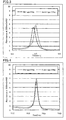
Figure 1] Figure 1 is a pair of chromatograms obtained by separating and detecting wild-type 76 bp and mutant-type 79 bp in UGT1A1*6 region usinganion exchange column 1 in Example 1. - [
Figure 2] Figure 2 is a pair of chromatograms obtained by separating and detecting wild-type 76 bp and mutant-type 79 bp in UGT1A1*6 region usinganion exchange column 2 in Example 1. - [
Figure 3] Figure 3 is a pair of chromatograms obtained by separating and detecting wild-type 271 bp and mutant-type 274 bp in UGT1A1*6 region usinganion exchange column 1 in Reference Example 1. - [
Figure 4] Figure 4 is a pair of chromatograms obtained by separating and detecting wild-type 271 bp and mutant-type 274 bp in UGT1A1*6 region usinganion exchange column 2 in Reference Example 1. - [
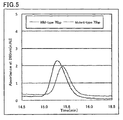
Figure 5] Figure 5 is a pair of chromatograms obtained by separating and detecting wild-type 76 bp and mutant-type 79 bp in UGT1A1*6 region usinganion exchange column 1 in Reference Example 2. - The present invention will be described below in further detail with reference to Examples. However, the present invention is not limited to only these Examples.
- In a reactor provided with a stirrer, 300 g of tetraethylene glycol dimethacrylate (from Shin-Nakamura Chemical Co., Ltd.), 100 g of triethylene glycol dimethacrylate (from Shin-Nakamura Chemical Co., Ltd.), and 1.0 g of benzoyl peroxide (from Kishida Chemical Co., Ltd.) were added to 2,000 mL of aqueous solution of 3% by weight polyvinyl alcohol (from Nippon Synthetic Chemical Industry Co., Ltd.). The mixture was heated while stirring and polymerized at 80°C for 1 hour in an atmosphere of nitrogen. Then, 100 g of ethyl methacrylate trimethylammonium chloride (from Wako Pure Chemical Industries Ltd.) as a monomer having a strong cationic ion exchange group (a quaternary ammonium group) was dissolved in ion-exchange water, and the resultant solution was further added into the reactor. Subsequently, the solution was polymerized at 80°C for 2 hours in an atmosphere of nitrogen while stirring to provide a polymer composition. The resultant polymer composition was washed with water and acetone to provide hydrophilic coated polymer particles having quaternary ammonium groups on the surface of base material particles.
- 10 g of the resultant coated polymer particles were immersed in 300 mL of ozonated water having a dissolved ozone concentration of 100 ppm and stirred for 30 minutes. After stirring, centrifugation was performed using a centrifuge ("Himac CR20G" from Hitachi, Ltd.), and the supernatant was removed. This operation was repeated 2 times, and ozonated water treatment was applied to the coated polymer particles to provide a filler for ion-exchange chromatography in which quaternary ammonium groups and carboxy groups coexist.
- The ozonated water was prepared using an ozonated water production system in which 400 hollow tube-shaped ozone gas permeable membranes 0.5 mm in inside diameter, 0.04 mm in thickness, and 350 cm in length were enclosed in a cylindrical mantle 15 cm in inside diameter and 20 cm in length (from Sekisui Chemical Co., Ltd.).
- When the resultant filler for ion-exchange chromatography was measured using a particle size distribution analyzer ("Accusizer780" from Particle Sizing Systems), the average particle diameter thereof was found to be 10 µm.
- The following column (anion exchange column 1) was provided using the resultant filler for ion-exchange chromatography.
Column size: 4.6 mm in inside diameter × 20 mm
Ion exchange group: quaternary ammonium group - The following column as a commercially available column was provided.
Product name: TSK-gel DNA-STAT (from Tosoh Corporation)
Column size: 4.6 mm in inside diameter × 100 mm in length
Ion exchange group: quaternary ammonium group - The separation and detection of wild-type 76 bp and mutant-type 79 bp in UGT1A1*6 region was performed in Example 1.
- Wild-type and mutant-type amplification products were obtained using AS-PCR conditions as described below.
- AccuPrime Taq DNA Polymerase High Fidelity (from Invitorgen, Lot. 760816)
10 × AccuPrime PCR Buffer I
AccuPrime Taq DNA Polymerase High Fidelity (5 U/µL) UGT1A1*6 primer (from Operon Biotechnologies)
Forward (wild-type) (10 pmol/µL): 5'-(cgcctcgttgtacatcagagcgg)-3' (SEQ ID NO: 1)
Forward (mutant-type) (10 pmol/µL): 5'-(ctgacgcctcgttgtacatcagagcga)-3" (SEQ ID NO: 2)
Reverse (10 pmol/µL): 5'-(cacatcctccctttggaatggca)-3" (SEQ ID NO: 3)
Nuclease-free Water (not DEPC-treated) (from Ambion, Lot. 0803015)
UGT1A1 gene wild-type sequence-inserted plasmid (1 × 10⁶ copies/µL)
UGT1A1 gene mutant-type sequence-inserted plasmid (1 × 10⁶ copies/µL) - One (1) µL of each UGT1A1 gene sequence-inserted plasmid was added to a solution prepared by adding Nuclease-free Water to 5 µL of 10 × AccuPrime PCR Buffer I, 1 µL of the Forward primer, and 1 µL of the Reverse primer to make a total volume of 49 µL of a reaction solution.
- PCR reaction was performed using C1000 (from BIO-RAD Laboratories). The temperature cycle is as described below.
- The template was heat-degenerated at 94°C for 30 seconds; the amplification cycle of 94°C for 15 seconds, 62°C for 15 seconds, and 68°C for 30 seconds was repeated 40 times; and finally, incubation was carried out at 68°C for 5 minutes. The samples were stored at 4°C until use.
- After AS-PCR amplification, bands derived from the amplification product were identified at about 80 bp by electrophoresis ("Mupid-ex" from Advance Co., Ltd.). The amplification product size was determined using 20 bp DNA Ladder Marker (from Takara Bio Inc.).
- Using the provided anion exchange column, the AS-PCR amplification products were separated and detected under the following conditions.
System: LC-20A series (from Shimadzu Corporation)
Eluent: eluent A 25 mmol/L Tris-Hydrochloride buffer (pH 7.5)
eluent B 25 mmol/L Tris-Hydrochloride buffer (pH 7.5) + 1 mol/L guanidine hydrochloride
Analysis time: Analysis time was 10 minutes whenanion exchange column 1 was used.
Analysis time was 20 minutes whenanion exchange column 2 was used.
Elution method: the mixing ratio of eluent B was linearly increased using the following gradient conditions.
Conditions whenanion exchange column 1 was used
0 minute (eluent B 40%) → 10 minutes (eluent B 50%)
Conditions whenanion exchange column 2 was used
0 minute (eluent B 70%) → 20 minutes (eluent B 90%)
Analyte: Wild-type 76 bp in UGT1A1*6 region
Mutant-type 79 bp in UGT1A1*6 region
Flow rate: 0.5 mL/min. (whenanion exchange column 1 was used)
1.0 mL/min. (whenanion exchange column 2 was used)
Detection wavelength: 260 nm
Sample injection volume: 10 µL - The separation and detection of wild-type 271 bp and mutant-type 274 bp in UGT1A1*6 region were performed in Reference Example 1.
- Wild-type and mutant-type amplification products were obtained using the following AS-PCR conditions.
- AccuPrime Taq DNA Polymerase High Fidelity (from Invitrogen, Lot. 760816)
10 × AccuPrime PCR Buffer I
AccuPrime Taq DNA Polymerase High Fidelity (5 U/µL) UGT1A1*6 primer (from Operon Biotechnologies)
Forward (wild-type) (10 pmol/µL): 5'-(cgcctcgttgtacatcagagcgg)-3' (SEQ ID NO: 1)
Forward (mutant-type) (10 pmol/µL): 5'-(ctgacgcctcgttgtacatcagagcga)-3" (SEQ ID NO: 2)
Reverse (10 pmol/µL): 5'-(gaaagggtccgtcagcatgac)-3" (SEQ ID NO: 4)
Nuclease-free Water (not DEPC-treated) (from Ambion, Lot. 0803015)
UGT1A1 gene wild-type sequence-inserted plasmid (1 × 10⁶ copies/µL)
UGT1A1 gene mutant-type sequence-inserted plasmid (1 × 10⁶ copies/µL) - One (1) µL of each UGT1A1 gene sequence-inserted plasmid was added to a solution prepared by adding Nuclease-free Water to 5 µL of 10 × AccuPrime PCR Buffer I, 1 µL of the Forward primer, and 1 µL of the Reverse primer to make a total volume of 49 µL of a reaction solution.
- PCR reaction was performed using C1000 (from BIO-RAD Laboratories). The temperature cycle is as described below.
- The template was heat-degenerated at 94°C for 30 seconds; the amplification cycle of 94°C for 15 seconds, 62°C for 15 seconds, and 68°C for 30 seconds was repeated 40 times; and finally, incubation was carried out at 68°C for 5 minutes. The samples were stored at 4°C until use.
- After AS-PCR amplification, bands derived from the amplification product were identified at about 270 bp (between 200 bp and 300 bp) by electrophoresis ("Mupid-ex" from Advance Co., Ltd.). The amplification product size was determined using 20 bp DNA Ladder Marker (from Takara Bio Inc.).
- Using the provided anion exchange column, the AS-PCR amplification products were separated and detected under the following conditions.
System: LC-20A series (from Shimadzu Corporation)
Eluent: eluent A 25 mmol/L Tris-Hydrochloride buffer (pH 7.5)
eluent B 25 mmol/L Tris-Hydrochloride buffer (pH 7.5) + 1 mol/L guanidine hydrochloride
Analysis time: Analysis time was 10 minutes whenanion exchange column 1 was used.
Analysis time was 20 minutes whenanion exchange column 2 was used.
Elution method: the mixing ratio of eluent B was linearly increased using the following gradient conditions.
Conditions whenanion exchange column 1 was used
0 minute (eluent B 60%) → 10 minutes (eluent B 80%)
Conditions whenanion exchange column 2 was used
0 minute (eluent B 80%) → 20 minutes (eluent B 100%)
Analyte: Wild-type 271 bp in UGT1A1*6 region Mutant-type 274 bp in UGT1A1*6 region
Flow rate: 0.5 mL/min. (whenanion exchange column 1 was used)
1.0 mL/min. (whenanion exchange column 2 was used)
Detection wavelength: 260 nm
Sample injection volume: 10 µL - The separation and detection of wild-type 76 bp and mutant-type 96 bp in UGT1A1*6 region were attempted to be performed in Comparative Example 1.
- AccuPrime Taq DNA Polymerase High Fidelity (from Invitorgen, Lot. 760816)
10 × AccuPrime PCR Buffer I
AccuPrime Taq DNA Polymerase High Fidelity (5 U/µL)
UGT1A1*6 primer (from Operon Biotechnologies)
Forward (wild-type) (10 pmol/µL): 5'-(cgcctcgttgtacatcagagcgg)-3' (SEQ ID NO: 1)
Forward (mutant-type) (10 pmol/µL): 5'-(atagttgtcctagcacctgacgcctcgttgtacatcagagcga)-3" (SEQ ID NO: 5)
Reverse (10 pmol/µL): 5'-(cacatcctccctttggaatggca)-3" (SEQ ID NO: 3)
Nuclease-free Water (not DEPC-treated) (from Ambion, Lot. 0803015)
UGT1A1 gene wild-type sequence-inserted plasmid (1 × 10⁶ copies/µL)
UGT1A1 gene mutant-type sequence-inserted plasmid (1 × 10⁶ copies/µL) - One (1) µL of each UGT1A1 gene sequence-inserted plasmid was added to a solution prepared by adding Nuclease-free Water to 5 µL of 10 × AccuPrime PCR Buffer I, 1 µL of the Forward primer, and 1 µL of the Reverse primer to make a total volume of 49 µL of a reaction solution.
- PCR reaction was performed using C1000 (from BIO-RAD Laboratories). The temperature cycle is as described below.
The template was heat-degenerated at 94°C for 30 seconds; the amplification cycle of 94°C for 15 seconds, 62°C for 15 seconds, and 68°C for 30 seconds was repeated 40 times; and finally, incubation was carried out at 68°C for 5 minutes. The samples were stored at 4°C until use. - When, after AS-PCR amplification, the amplification product was determined by electrophoresis ("Mupid-ex" from Advance Co., Ltd.), many bands likely to indicate non-specific amplification were identified. This means that the AS-PCR amplification was not properly performed. Thus, HPLC analysis was not carried out.
- The separation and detection of wild-type 76 bp and mutant-type 79 bp in UGT1A1*6 region were performed in Reference Example 2.
- HPLC analysis was performed using
anion exchange column 2 in the same way as Example 1, except that the salt added to eluent B was sodium chloride in place of guanidine hydrochloride. - The chromatograms obtained by separating and detecting wild-type 76 bp and mutant-type 79 bp in UGT1A1*6 region in Example 1 are shown in
Figure 1 (whenanion exchange column 1 is used) andFigure 2 (whenanion exchange column 2 is used). The results ofFigures 1 and 2 show that both columns could favorably separate and detect the wild-type 76 bp and mutant-type 79 bp in UGT1A1*6 region amplified by AS-PCR. Particularly, the use ofanion exchange column 1 could almost completely separate and detect them in a short time. - The chromatograms obtained by separating and detecting wild-type 271 bp and mutant-type 274 bp in UGT1A1*6 region in Reference Example 1 are shown in
Figure 3 (whenanion exchange column 1 is used) andFigure 4 (whenanion exchange column 2 is used). The results ofFigures 3 and 4 show that the wild-type 271 bp and mutant-type 274 bp in UGT1A1*6 region amplified by AS-PCR could not be separated in contrast to Example 1. It can be considered that the reason for this lies in the fact that, compared to the size of the AS-PCR amplification products, the difference in the chain length between the wild-type and the mutant-type was relatively small. - The chromatograms obtained by separating and detecting wild-type 76 bp and mutant-type 79 bp in UGT1A1*6 region in Reference Example 2 are shown in
Figure 5 . When sodium chloride was added in place of guanidine hydrochloride to the eluent B, the wild-type 76 bp and the mutant-type 79 bp could not be separated. - According to the present invention, a method can be provided for rapidly and simply detecting single nucleotide polymorphisms.


Claims (4)
- A method for detecting single nucleotide polymorphisms, comprising analyzing wild-type and mutant-type products amplified by an AS-PCR method using ion-exchange chromatography.
- The method for detecting single nucleotide polymorphisms according to claim 1, wherein the size of the products amplified by an AS-PCR method is 200 bp or less and the difference in the chain length between the wild-type and the mutant-type is 10 bp or less.
- The method for detecting single nucleotide polymorphisms according to claim 1 or 2, comprising using an eluent containing a guanidine salt derived from guanidine represented by formula (1) below in ion-exchange chromatography:

- The method for detecting single nucleotide polymorphisms according to claim 3, wherein the guanidine salt is guanidine hydrochloride or guanidine sulfate.
Applications Claiming Priority (3)
| Application Number | Priority Date | Filing Date | Title |
|---|---|---|---|
| JP2011004216 | 2011-01-12 | ||
| JP2011080369 | 2011-03-31 | ||
| PCT/JP2012/050430 WO2012096329A1 (en) | 2011-01-12 | 2012-01-12 | Method for detecting single nucleotide polymorphisms |
Publications (3)
| Publication Number | Publication Date |
|---|---|
| EP2664917A1 true EP2664917A1 (en) | 2013-11-20 |
| EP2664917A4 EP2664917A4 (en) | 2015-01-07 |
| EP2664917B1 EP2664917B1 (en) | 2017-09-06 |
Family
ID=46507221
Family Applications (1)
| Application Number | Title | Priority Date | Filing Date |
|---|---|---|---|
| EP12734188.1A Active EP2664917B1 (en) | 2011-01-12 | 2012-01-12 | Method for detecting single nucleotide polymorphisms |
Country Status (6)
| Country | Link |
|---|---|
| US (2) | US20140147842A1 (en) |
| EP (1) | EP2664917B1 (en) |
| JP (1) | JP6061381B2 (en) |
| KR (1) | KR102047650B1 (en) |
| CN (1) | CN103348242B (en) |
| WO (1) | WO2012096329A1 (en) |
Families Citing this family (7)
| Publication number | Priority date | Publication date | Assignee | Title |
|---|---|---|---|---|
| WO2012133834A1 (en) * | 2011-03-31 | 2012-10-04 | 積水メディカル株式会社 | Sample nucleic acid for single nucleotide polymorphism detection purposes, pcr primer for preparing sample for single nucleotide polymorphism detection purposes, and method for preparing sample for single nucleotide polymorphism detection purposes which can be used in ion exchange chromatographic analysis |
| US10190172B2 (en) | 2014-02-28 | 2019-01-29 | National Cancer Center | Method for determining prognosis of renal cell carcinoma |
| JP2019129706A (en) * | 2016-03-31 | 2019-08-08 | 積水メディカル株式会社 | Single base substitution detection method using ion exchange chromatography |
| WO2019022132A1 (en) * | 2017-07-26 | 2019-01-31 | 積水メディカル株式会社 | Method for detecting mutant gene |
| WO2019039613A1 (en) * | 2017-08-25 | 2019-02-28 | 積水メディカル株式会社 | Chromatography packing for separation and/or detection of methylated dna |
| WO2019064483A1 (en) * | 2017-09-29 | 2019-04-04 | 積水メディカル株式会社 | Method for detecting single base substitution using ion exchange chromatography |
| CN114577936B (en) * | 2022-03-03 | 2024-06-04 | 中科谱研(北京)科技有限公司 | Separation detection method of beta-nicotinamide mononucleotide in capsule |
Family Cites Families (25)
| Publication number | Priority date | Publication date | Assignee | Title |
|---|---|---|---|---|
| JPS6098988A (en) | 1983-11-01 | 1985-06-01 | Chemo Sero Therapeut Res Inst | Purification of lpf-ha |
| CA2063855C (en) | 1991-04-03 | 1997-08-26 | Will Bloch | Precision and accuracy of anion-exchange separation of nucleic acids |
| US5438128A (en) | 1992-02-07 | 1995-08-01 | Millipore Corporation | Method for rapid purifiction of nucleic acids using layered ion-exchange membranes |
| JP3256238B2 (en) | 1994-02-11 | 2002-02-12 | クイアジェン・ゲゼルシャフト・ミット・ベシュレンクテル・ハフツング | Method for separating double-stranded / single-stranded nucleic acid structure |
| SE9600590D0 (en) | 1996-02-19 | 1996-02-19 | Pharmacia Biotech Ab | Methods for chromatographic separation of peptides and nucleic acid and new high-affinity ion exchange matrix |
| US6265168B1 (en) * | 1998-10-06 | 2001-07-24 | Transgenomic, Inc. | Apparatus and method for separating and purifying polynucleotides |
| EP1226275B1 (en) * | 1999-10-12 | 2008-09-10 | TRANSGENOMIC, Inc. | Detection of nucleic acid heteroduplex molecules by anion-exchange chromatography |
| JP2001330969A (en) | 2000-05-23 | 2001-11-30 | Sekisui Chem Co Ltd | Apparatus for removing photoresist |
| ES2263651T3 (en) | 2000-08-30 | 2006-12-16 | Avi Biopharma, Inc. | METHOD FOR ANALIDIS OF OLIGONUCLEOTID ANALOGS. |
| CN1451762A (en) | 2002-04-12 | 2003-10-29 | 刘湘军 | Determination of SNP by different length of PCR products |
| JP2004180637A (en) * | 2002-12-06 | 2004-07-02 | Fuji Photo Film Co Ltd | Apparatus for separation and purification of nucleic acid |
| JP4228041B2 (en) | 2003-07-08 | 2009-02-25 | 東洋紡績株式会社 | Nucleotide polymorphism detection method |
| JP4491276B2 (en) | 2004-05-17 | 2010-06-30 | 日本製粉株式会社 | Method and kit for detecting the presence of a single nucleotide polymorphism in a target DNA sequence |
| JP2006075126A (en) | 2004-09-13 | 2006-03-23 | National Institute Of Advanced Industrial & Technology | Method for detecting single base mutation and probe for detection |
| CA2605149A1 (en) | 2005-04-26 | 2006-11-02 | Sandoz Ag | Production of recombinant proteins by autoproteolytic cleavage of a fusion protein |
| US20070154892A1 (en) | 2005-12-30 | 2007-07-05 | Simon Wain-Hobson | Differential amplification of mutant nucleic acids by PCR in a mixure of nucleic acids |
| CN1880480A (en) | 2006-04-12 | 2006-12-20 | 重庆医科大学 | PCR method for detection of allele specific primer and use in detection of KLOTHO gene polymorphism |
| GB2445442A (en) | 2006-09-26 | 2008-07-09 | Ge Healthcare Bio Sciences | Nucleic acid purification using anion exchange |
| GB2443505B (en) * | 2006-09-26 | 2008-12-31 | Ge Healthcare Bio Sciences | Nucleic acid purification method |
| CN101323852B (en) | 2007-06-11 | 2013-01-23 | 北京东胜创新生物科技有限公司 | Reagent box and method for genome extraction on automatic nucleic acid extraction workstation |
| US20090053719A1 (en) * | 2007-08-03 | 2009-02-26 | The Chinese University Of Hong Kong | Analysis of nucleic acids by digital pcr |
| CN101899437B (en) * | 2010-04-15 | 2012-04-25 | 浙江大学 | Functional molecular markers for identification of muskmelon wilt resistance and uses thereof |
| CN101899511B (en) | 2010-07-09 | 2012-08-08 | 华中农业大学 | Method for detecting bovine leukocyte adhesion deficiency by applying allele specific polymerase chain reaction (AS-PCR) |
| US9481881B2 (en) | 2011-01-12 | 2016-11-01 | Sekisui Medical Co., Ltd. | Eluent for ion-exchange chromatography, and method of analyzing nucleic acid chains |
| WO2012133834A1 (en) | 2011-03-31 | 2012-10-04 | 積水メディカル株式会社 | Sample nucleic acid for single nucleotide polymorphism detection purposes, pcr primer for preparing sample for single nucleotide polymorphism detection purposes, and method for preparing sample for single nucleotide polymorphism detection purposes which can be used in ion exchange chromatographic analysis |
-
2012
- 2012-01-12 CN CN201280005010.3A patent/CN103348242B/en active Active
- 2012-01-12 US US13/979,256 patent/US20140147842A1/en not_active Abandoned
- 2012-01-12 JP JP2012552752A patent/JP6061381B2/en active Active
- 2012-01-12 EP EP12734188.1A patent/EP2664917B1/en active Active
- 2012-01-12 KR KR1020137020841A patent/KR102047650B1/en not_active Expired - Fee Related
- 2012-01-12 WO PCT/JP2012/050430 patent/WO2012096329A1/en not_active Ceased
-
2015
- 2015-03-26 US US14/669,735 patent/US9447460B2/en active Active
Also Published As
| Publication number | Publication date |
|---|---|
| CN103348242A (en) | 2013-10-09 |
| KR102047650B1 (en) | 2019-11-22 |
| JPWO2012096329A1 (en) | 2014-06-09 |
| KR20140041421A (en) | 2014-04-04 |
| US20150197795A1 (en) | 2015-07-16 |
| EP2664917B1 (en) | 2017-09-06 |
| CN103348242B (en) | 2016-08-17 |
| US20140147842A1 (en) | 2014-05-29 |
| WO2012096329A1 (en) | 2012-07-19 |
| US9447460B2 (en) | 2016-09-20 |
| EP2664917A4 (en) | 2015-01-07 |
| JP6061381B2 (en) | 2017-01-18 |
Similar Documents
| Publication | Publication Date | Title |
|---|---|---|
| US9447460B2 (en) | Method for detecting single nucleotide polymorphisms | |
| KR102088639B1 (en) | Filler for ion exchange chromatography and method for separating and detecting nucleic acid strand | |
| CN105074010A (en) | Method for detecting methylated DNA | |
| EP2692863B1 (en) | Pcr primers for preparing samples for single nucleotide polymorphism detection comprising allele-specific pcr and ion exchange chromatographic detection | |
| CN106062215A (en) | Method for determining prognosis of renal cell carcinoma | |
| JP6090985B2 (en) | Nucleic acid strand separation method | |
| JP5812464B2 (en) | Target nucleic acid separation and detection method, target nucleic acid separation and detection packing material for ion exchange chromatography, and target nucleic acid separation and detection column for ion exchange chromatography | |
| CN111050903A (en) | Chromatographic packing material for separating and/or detecting methylated DNA |
Legal Events
| Date | Code | Title | Description |
|---|---|---|---|
| PUAI | Public reference made under article 153(3) epc to a published international application that has entered the european phase |
Free format text: ORIGINAL CODE: 0009012 |
|
| 17P | Request for examination filed |
Effective date: 20130805 |
|
| AK | Designated contracting states |
Kind code of ref document: A1 Designated state(s): AL AT BE BG CH CY CZ DE DK EE ES FI FR GB GR HR HU IE IS IT LI LT LU LV MC MK MT NL NO PL PT RO RS SE SI SK SM TR |
|
| DAX | Request for extension of the european patent (deleted) | ||
| A4 | Supplementary search report drawn up and despatched |
Effective date: 20141208 |
|
| RIC1 | Information provided on ipc code assigned before grant |
Ipc: C12Q 1/68 20060101ALI20141202BHEP Ipc: G01N 30/26 20060101ALI20141202BHEP Ipc: G01N 30/88 20060101AFI20141202BHEP Ipc: C12N 15/00 20060101ALI20141202BHEP |
|
| 17Q | First examination report despatched |
Effective date: 20160104 |
|
| GRAJ | Information related to disapproval of communication of intention to grant by the applicant or resumption of examination proceedings by the epo deleted |
Free format text: ORIGINAL CODE: EPIDOSDIGR1 |
|
| GRAP | Despatch of communication of intention to grant a patent |
Free format text: ORIGINAL CODE: EPIDOSNIGR1 |
|
| GRAP | Despatch of communication of intention to grant a patent |
Free format text: ORIGINAL CODE: EPIDOSNIGR1 |
|
| INTG | Intention to grant announced |
Effective date: 20170411 |
|
| GRAS | Grant fee paid |
Free format text: ORIGINAL CODE: EPIDOSNIGR3 |
|
| GRAA | (expected) grant |
Free format text: ORIGINAL CODE: 0009210 |
|
| AK | Designated contracting states |
Kind code of ref document: B1 Designated state(s): AL AT BE BG CH CY CZ DE DK EE ES FI FR GB GR HR HU IE IS IT LI LT LU LV MC MK MT NL NO PL PT RO RS SE SI SK SM TR |
|
| REG | Reference to a national code |
Ref country code: GB Ref legal event code: FG4D |
|
| REG | Reference to a national code |
Ref country code: CH Ref legal event code: EP Ref country code: AT Ref legal event code: REF Ref document number: 926411 Country of ref document: AT Kind code of ref document: T Effective date: 20170915 |
|
| REG | Reference to a national code |
Ref country code: IE Ref legal event code: FG4D |
|
| REG | Reference to a national code |
Ref country code: DE Ref legal event code: R096 Ref document number: 602012036930 Country of ref document: DE |
|
| REG | Reference to a national code |
Ref country code: FR Ref legal event code: PLFP Year of fee payment: 7 |
|
| REG | Reference to a national code |
Ref country code: NL Ref legal event code: MP Effective date: 20170906 |
|
| REG | Reference to a national code |
Ref country code: LT Ref legal event code: MG4D |
|
| PG25 | Lapsed in a contracting state [announced via postgrant information from national office to epo] |
Ref country code: NO Free format text: LAPSE BECAUSE OF FAILURE TO SUBMIT A TRANSLATION OF THE DESCRIPTION OR TO PAY THE FEE WITHIN THE PRESCRIBED TIME-LIMIT Effective date: 20171206 Ref country code: FI Free format text: LAPSE BECAUSE OF FAILURE TO SUBMIT A TRANSLATION OF THE DESCRIPTION OR TO PAY THE FEE WITHIN THE PRESCRIBED TIME-LIMIT Effective date: 20170906 Ref country code: SE Free format text: LAPSE BECAUSE OF FAILURE TO SUBMIT A TRANSLATION OF THE DESCRIPTION OR TO PAY THE FEE WITHIN THE PRESCRIBED TIME-LIMIT Effective date: 20170906 Ref country code: HR Free format text: LAPSE BECAUSE OF FAILURE TO SUBMIT A TRANSLATION OF THE DESCRIPTION OR TO PAY THE FEE WITHIN THE PRESCRIBED TIME-LIMIT Effective date: 20170906 Ref country code: LT Free format text: LAPSE BECAUSE OF FAILURE TO SUBMIT A TRANSLATION OF THE DESCRIPTION OR TO PAY THE FEE WITHIN THE PRESCRIBED TIME-LIMIT Effective date: 20170906 |
|
| REG | Reference to a national code |
Ref country code: AT Ref legal event code: MK05 Ref document number: 926411 Country of ref document: AT Kind code of ref document: T Effective date: 20170906 |
|
| PG25 | Lapsed in a contracting state [announced via postgrant information from national office to epo] |
Ref country code: RS Free format text: LAPSE BECAUSE OF FAILURE TO SUBMIT A TRANSLATION OF THE DESCRIPTION OR TO PAY THE FEE WITHIN THE PRESCRIBED TIME-LIMIT Effective date: 20170906 Ref country code: BG Free format text: LAPSE BECAUSE OF FAILURE TO SUBMIT A TRANSLATION OF THE DESCRIPTION OR TO PAY THE FEE WITHIN THE PRESCRIBED TIME-LIMIT Effective date: 20171206 Ref country code: GR Free format text: LAPSE BECAUSE OF FAILURE TO SUBMIT A TRANSLATION OF THE DESCRIPTION OR TO PAY THE FEE WITHIN THE PRESCRIBED TIME-LIMIT Effective date: 20171207 Ref country code: LV Free format text: LAPSE BECAUSE OF FAILURE TO SUBMIT A TRANSLATION OF THE DESCRIPTION OR TO PAY THE FEE WITHIN THE PRESCRIBED TIME-LIMIT Effective date: 20170906 Ref country code: ES Free format text: LAPSE BECAUSE OF FAILURE TO SUBMIT A TRANSLATION OF THE DESCRIPTION OR TO PAY THE FEE WITHIN THE PRESCRIBED TIME-LIMIT Effective date: 20170906 |
|
| PG25 | Lapsed in a contracting state [announced via postgrant information from national office to epo] |
Ref country code: NL Free format text: LAPSE BECAUSE OF FAILURE TO SUBMIT A TRANSLATION OF THE DESCRIPTION OR TO PAY THE FEE WITHIN THE PRESCRIBED TIME-LIMIT Effective date: 20170906 |
|
| PG25 | Lapsed in a contracting state [announced via postgrant information from national office to epo] |
Ref country code: CZ Free format text: LAPSE BECAUSE OF FAILURE TO SUBMIT A TRANSLATION OF THE DESCRIPTION OR TO PAY THE FEE WITHIN THE PRESCRIBED TIME-LIMIT Effective date: 20170906 Ref country code: RO Free format text: LAPSE BECAUSE OF FAILURE TO SUBMIT A TRANSLATION OF THE DESCRIPTION OR TO PAY THE FEE WITHIN THE PRESCRIBED TIME-LIMIT Effective date: 20170906 Ref country code: PL Free format text: LAPSE BECAUSE OF FAILURE TO SUBMIT A TRANSLATION OF THE DESCRIPTION OR TO PAY THE FEE WITHIN THE PRESCRIBED TIME-LIMIT Effective date: 20170906 |
|
| PG25 | Lapsed in a contracting state [announced via postgrant information from national office to epo] |
Ref country code: AT Free format text: LAPSE BECAUSE OF FAILURE TO SUBMIT A TRANSLATION OF THE DESCRIPTION OR TO PAY THE FEE WITHIN THE PRESCRIBED TIME-LIMIT Effective date: 20170906 Ref country code: SM Free format text: LAPSE BECAUSE OF FAILURE TO SUBMIT A TRANSLATION OF THE DESCRIPTION OR TO PAY THE FEE WITHIN THE PRESCRIBED TIME-LIMIT Effective date: 20170906 Ref country code: SK Free format text: LAPSE BECAUSE OF FAILURE TO SUBMIT A TRANSLATION OF THE DESCRIPTION OR TO PAY THE FEE WITHIN THE PRESCRIBED TIME-LIMIT Effective date: 20170906 Ref country code: IS Free format text: LAPSE BECAUSE OF FAILURE TO SUBMIT A TRANSLATION OF THE DESCRIPTION OR TO PAY THE FEE WITHIN THE PRESCRIBED TIME-LIMIT Effective date: 20180106 Ref country code: IT Free format text: LAPSE BECAUSE OF FAILURE TO SUBMIT A TRANSLATION OF THE DESCRIPTION OR TO PAY THE FEE WITHIN THE PRESCRIBED TIME-LIMIT Effective date: 20170906 Ref country code: EE Free format text: LAPSE BECAUSE OF FAILURE TO SUBMIT A TRANSLATION OF THE DESCRIPTION OR TO PAY THE FEE WITHIN THE PRESCRIBED TIME-LIMIT Effective date: 20170906 |
|
| REG | Reference to a national code |
Ref country code: DE Ref legal event code: R097 Ref document number: 602012036930 Country of ref document: DE |
|
| PLBE | No opposition filed within time limit |
Free format text: ORIGINAL CODE: 0009261 |
|
| STAA | Information on the status of an ep patent application or granted ep patent |
Free format text: STATUS: NO OPPOSITION FILED WITHIN TIME LIMIT |
|
| PG25 | Lapsed in a contracting state [announced via postgrant information from national office to epo] |
Ref country code: DK Free format text: LAPSE BECAUSE OF FAILURE TO SUBMIT A TRANSLATION OF THE DESCRIPTION OR TO PAY THE FEE WITHIN THE PRESCRIBED TIME-LIMIT Effective date: 20170906 |
|
| 26N | No opposition filed |
Effective date: 20180607 |
|
| PG25 | Lapsed in a contracting state [announced via postgrant information from national office to epo] |
Ref country code: SI Free format text: LAPSE BECAUSE OF FAILURE TO SUBMIT A TRANSLATION OF THE DESCRIPTION OR TO PAY THE FEE WITHIN THE PRESCRIBED TIME-LIMIT Effective date: 20170906 |
|
| REG | Reference to a national code |
Ref country code: CH Ref legal event code: PL |
|
| PG25 | Lapsed in a contracting state [announced via postgrant information from national office to epo] |
Ref country code: LU Free format text: LAPSE BECAUSE OF NON-PAYMENT OF DUE FEES Effective date: 20180112 |
|
| REG | Reference to a national code |
Ref country code: IE Ref legal event code: MM4A |
|
| REG | Reference to a national code |
Ref country code: BE Ref legal event code: MM Effective date: 20180131 |
|
| PG25 | Lapsed in a contracting state [announced via postgrant information from national office to epo] |
Ref country code: BE Free format text: LAPSE BECAUSE OF NON-PAYMENT OF DUE FEES Effective date: 20180131 Ref country code: CH Free format text: LAPSE BECAUSE OF NON-PAYMENT OF DUE FEES Effective date: 20180131 Ref country code: LI Free format text: LAPSE BECAUSE OF NON-PAYMENT OF DUE FEES Effective date: 20180131 |
|
| PG25 | Lapsed in a contracting state [announced via postgrant information from national office to epo] |
Ref country code: IE Free format text: LAPSE BECAUSE OF NON-PAYMENT OF DUE FEES Effective date: 20180112 |
|
| PG25 | Lapsed in a contracting state [announced via postgrant information from national office to epo] |
Ref country code: MC Free format text: LAPSE BECAUSE OF FAILURE TO SUBMIT A TRANSLATION OF THE DESCRIPTION OR TO PAY THE FEE WITHIN THE PRESCRIBED TIME-LIMIT Effective date: 20170906 |
|
| PG25 | Lapsed in a contracting state [announced via postgrant information from national office to epo] |
Ref country code: MT Free format text: LAPSE BECAUSE OF NON-PAYMENT OF DUE FEES Effective date: 20180112 |
|
| PG25 | Lapsed in a contracting state [announced via postgrant information from national office to epo] |
Ref country code: TR Free format text: LAPSE BECAUSE OF FAILURE TO SUBMIT A TRANSLATION OF THE DESCRIPTION OR TO PAY THE FEE WITHIN THE PRESCRIBED TIME-LIMIT Effective date: 20170906 |
|
| PG25 | Lapsed in a contracting state [announced via postgrant information from national office to epo] |
Ref country code: PT Free format text: LAPSE BECAUSE OF FAILURE TO SUBMIT A TRANSLATION OF THE DESCRIPTION OR TO PAY THE FEE WITHIN THE PRESCRIBED TIME-LIMIT Effective date: 20170906 Ref country code: HU Free format text: LAPSE BECAUSE OF FAILURE TO SUBMIT A TRANSLATION OF THE DESCRIPTION OR TO PAY THE FEE WITHIN THE PRESCRIBED TIME-LIMIT; INVALID AB INITIO Effective date: 20120112 |
|
| PG25 | Lapsed in a contracting state [announced via postgrant information from national office to epo] |
Ref country code: MK Free format text: LAPSE BECAUSE OF NON-PAYMENT OF DUE FEES Effective date: 20170906 Ref country code: CY Free format text: LAPSE BECAUSE OF FAILURE TO SUBMIT A TRANSLATION OF THE DESCRIPTION OR TO PAY THE FEE WITHIN THE PRESCRIBED TIME-LIMIT Effective date: 20170906 |
|
| PG25 | Lapsed in a contracting state [announced via postgrant information from national office to epo] |
Ref country code: AL Free format text: LAPSE BECAUSE OF FAILURE TO SUBMIT A TRANSLATION OF THE DESCRIPTION OR TO PAY THE FEE WITHIN THE PRESCRIBED TIME-LIMIT Effective date: 20170906 |
|
| REG | Reference to a national code |
Ref country code: DE Ref legal event code: R082 Ref document number: 602012036930 Country of ref document: DE Representative=s name: CBDL PATENTANWAELTE GBR, DE Ref country code: DE Ref legal event code: R082 Ref document number: 602012036930 Country of ref document: DE Representative=s name: CBDL PATENTANWAELTE EGBR, DE |
|
| P01 | Opt-out of the competence of the unified patent court (upc) registered |
Effective date: 20230522 |
|
| PGFP | Annual fee paid to national office [announced via postgrant information from national office to epo] |
Ref country code: GB Payment date: 20241128 Year of fee payment: 14 |
|
| PGFP | Annual fee paid to national office [announced via postgrant information from national office to epo] |
Ref country code: FR Payment date: 20241209 Year of fee payment: 14 |
|
| PGFP | Annual fee paid to national office [announced via postgrant information from national office to epo] |
Ref country code: DE Payment date: 20241203 Year of fee payment: 14 |