EP2664680A1 - Antibody-based methods of diagnosing infections with lymphocytic choriomeningitis virus (LCMV) - Google Patents
Antibody-based methods of diagnosing infections with lymphocytic choriomeningitis virus (LCMV) Download PDFInfo
- Publication number
- EP2664680A1 EP2664680A1 EP20130179952 EP13179952A EP2664680A1 EP 2664680 A1 EP2664680 A1 EP 2664680A1 EP 20130179952 EP20130179952 EP 20130179952 EP 13179952 A EP13179952 A EP 13179952A EP 2664680 A1 EP2664680 A1 EP 2664680A1
- Authority
- EP
- European Patent Office
- Prior art keywords
- lcmv
- seq
- antibody
- subject
- fragment
- Prior art date
- Legal status (The legal status is an assumption and is not a legal conclusion. Google has not performed a legal analysis and makes no representation as to the accuracy of the status listed.)
- Ceased
Links
Images
















Classifications
-
- C—CHEMISTRY; METALLURGY
- C12—BIOCHEMISTRY; BEER; SPIRITS; WINE; VINEGAR; MICROBIOLOGY; ENZYMOLOGY; MUTATION OR GENETIC ENGINEERING
- C12Q—MEASURING OR TESTING PROCESSES INVOLVING ENZYMES, NUCLEIC ACIDS OR MICROORGANISMS; COMPOSITIONS OR TEST PAPERS THEREFOR; PROCESSES OF PREPARING SUCH COMPOSITIONS; CONDITION-RESPONSIVE CONTROL IN MICROBIOLOGICAL OR ENZYMOLOGICAL PROCESSES
- C12Q1/00—Measuring or testing processes involving enzymes, nucleic acids or microorganisms; Compositions therefor; Processes of preparing such compositions
- C12Q1/70—Measuring or testing processes involving enzymes, nucleic acids or microorganisms; Compositions therefor; Processes of preparing such compositions involving virus or bacteriophage
- C12Q1/701—Specific hybridization probes
-
- C—CHEMISTRY; METALLURGY
- C07—ORGANIC CHEMISTRY
- C07K—PEPTIDES
- C07K16/00—Immunoglobulins [IG], e.g. monoclonal or polyclonal antibodies
- C07K16/08—Immunoglobulins [IG], e.g. monoclonal or polyclonal antibodies against material from viruses
- C07K16/10—RNA viruses
-
- G—PHYSICS
- G01—MEASURING; TESTING
- G01N—INVESTIGATING OR ANALYSING MATERIALS BY DETERMINING THEIR CHEMICAL OR PHYSICAL PROPERTIES
- G01N33/00—Investigating or analysing materials by specific methods not covered by groups G01N1/00 - G01N31/00
- G01N33/48—Biological material, e.g. blood, urine; Haemocytometers
- G01N33/50—Chemical analysis of biological material, e.g. blood, urine; Testing involving biospecific ligand binding methods; Immunological testing
- G01N33/53—Immunoassay; Biospecific binding assay; Materials therefor
- G01N33/569—Immunoassay; Biospecific binding assay; Materials therefor for microorganisms, e.g. protozoa, bacteria, viruses
- G01N33/56983—Viruses
Definitions
- compositions and methods for reliable detection and diagnosis of certain viruses are limited. Techniques for discriminating between acute and chronic viral infections are also limited and can be unreliable.
- the disclosure provides a composition comprising two or more compositions selected from the group consisting of: one or more probes or primers that bind specifically to one or more LCMV nucleic acids or a portion of one or more LCMV nucleic acids; one or more LCMV proteins or fragments thereof; and one or more compositions for detecting one or more LCMV peptides or LCMV peptide fragments (e.g., one or more antibodies or antibody fragments).
- the disclosure provides a plurality of isolated polypeptides, wherein the plurality comprises or consists of at least two, e.g., three, four, or five, types of polypeptides, selected from the group consisting of isolated NP antigen or a fragment thereof, isolated GP antigen or a fragment thereof, isolated GPC antigen or a fragment thereof, isolated GP1 antigen or a fragment thereof, and isolated ZP antigen or a fragment thereof.
- the disclosure provides a diagnostic kit comprising such a plurality of polypeptides.
- the disclosure provides a plurality of isolated nucleic acid probes or primers, wherein the plurality comprises or consists of probes or primers that specifically bind to nucleotide sequences that encode at least two, e.g., three, four, or five, types of polypeptides selected from the group consisting ofNP antigen or a fragment thereof, GP antigen or a fragment thereof, GPC antigen or a fragment thereof, GP1 antigen or a fragment thereof, and ZP antigen or a fragment thereof.
- the disclosure provides a diagnostic kit comprising such a plurality of probes or primers.
- the disclosure provides a monoclonal antibody M87 that binds specifically to LCMV NP or antigen binding fragment thereof, e.g., a complementarity determining region (CDR), e.g., CDR3, thereof.
- a kit comprising such an antibody.
- the disclosure provides a monoclonal antibody that binds specifically to LCMV GP1 or antigen binding fragment thereof, e.g., a complementarity determining region (CDR), e.g., CDR3, thereof.
- a kit comprising such an antibody.
- such methods can include selecting a subject (e.g., a candidate subject), obtaining or providing a sample from the subject, contacting the sample with one or more compositions for detecting LCMV, and determining whether the one or more compositions for detecting LCMV is associated with a marker of LCMV from the sample, wherein detection of an association indicates that the subject is infected with LCMV.
- a subject e.g., a candidate subject
- obtaining or providing a sample from the subject contacting the sample with one or more compositions for detecting LCMV, and determining whether the one or more compositions for detecting LCMV is associated with a marker of LCMV from the sample, wherein detection of an association indicates that the subject is infected with LCMV.
- the methods of the disclosure can include use of one or more compositions disclosed herein alone or in combination with any of the other compositions disclosed herein.
- use of two or more compositions in combination is not limited to simultaneous use, but rather includes, for example, parallel use or subsequent use.
- a result observed using one composition can be verified or confirmed using one or more of the other compositions disclosed herein.
- the methods of the disclosure can include use of one or more probes or primers that bind specifically to one or more LCMV nucleic acids or a portion of one or more LCMV nucleic acids.
- probes or primers can include nucleic acid probes or primers having 10 or more nucleic acids, wherein the 10 or more nucleic acids have at least at least 80% identity to one or more target regions within one or more of SEQ ID NOs: 1-51, such that the one or more nucleic acid probes or primers bind specifically to the one or more target regions.
- such antibodies or antibody fragments can include a monoclonal antibody having the same epitope specificity as hybridoma M166, LMBP accession number 9216CB, deposited with the Belgian Coordinated Collections of Microorganisms (BCCM) at Ghent University, Belgium.
- such antibodies or antibody fragments can include a monoclonal antibody produced by hybridoma M166, LMBP accession number 9216CB, deposited with the Belgian Coordinated Collections of Microorganisms (BCCM) at Ghent University, Belgium.
- one or more of the antibodies or antibody binding fragments disclosed herein can be provided as (e.g., sold, offered for sale, marketed, shipped, stored, and/or packaged) or contained within a kit.
- the present disclosure provides a monoclonal antibody having the same epitope specificity as hybridoma MJ3, LMBP accession number 9217CB, deposited with Belgian Coordinated Collections of Microorganisms (BCCM) at Ghent University, Belgium.
- the present disclosure provides a monoclonal antibody having the same epitope specificity as hybridoma M166, LMBP accession number 9216CB, deposited with Belgian Coordinated Collections of Microorganisms (BCCM) at Ghent University, Belgium.
- the present disclosure is based, inter alia, on the surprising discovery LCMV in persistence can be reactivated by hypoxia. Such viral reactivation can manifest clinically, e.g., in vulnerable subjects that include, but are not limited to, e.g., pregnant subjects, immunocompromised subjects, transplant recipients, and subjects at risk for developing or with cancer. Accordingly, the present disclosure provides compositions and methods for reliably detecting LCMV, e.g., reactivated LCMV.
- LCMV is distributed worldwide due to its association with rodents of the species Mus musculus. Humans are generally infected through the respiratory tract after direct or indirect contact with infected rodents or pets (via inhalation of virus-contaminated aerosols of animal saliva, urine, and feces). In immunocompetent individuals, LCMV causes illnesses varying from mild flu-like symptoms to rare severe encephalitis (Robling and Peters, 1992, Buchmeier et al, 2007). Infection with this virus during pregnancy has been linked to spontaneous abortions and malformations (Jamieson et al, 2006, Meritet et al, 2009). More strikingly, fatal cases of LCMV infections transmitted via transplanted organs from infected donors to immunosuppressed recipients were recently reported and call for more attention to this seemingly innocent virus (Fischer et al, 2006, Amman et al, 2007).
- compositions for Detecting LCMV Compositions for Detecting LCMV
- nucleic acid probes or primers that can be used to detect one or more or at least one marker of LCMV can include nucleic acid probes or primers containing, for example, 10 or more nucleic acids (e.g., 10, 11, 12, 3, 14, 15, 16, 17, 18, 19, 20, 21, 22, 23 ,24, 25, 26, 27, 28, 29, 30, 35, 40, 45, 50, 55, 60, 70, 75, 80, 85, 90, 95, 100, 200, 300, 400, 500, 600, 700, 800, 900, 1000, or more than 1000 nucleic acids), e.g., wherein the 10 or more nucleic acids has at least at least 50% identity (e.g., 50%, 60%, 70%, 80%, 85%, 90%, 95%, 98%, 99%, or 100% identity) to a target region within one or more LCMV markers (e.g., within one or more of SEQ ID NOs:1-51), such that the nucleic acid probe or primer binds specifically to the target region (e.g., within one or more
- the multiple probes or primers can be used to detect the same LCMV nucleic acid in a sample (the term "sample” or “biological sample” refers to a sample of tissue or body fluid obtained from a subject (human or animal), including but not limited to blood, serum, plasma, tissue biopsies and surgical specimens, saliva, urine, cerebrospinal fluid etc.
- Biological sample also includes in vitro cultured cells and culture media. The samples may be treated prior to analysis by heating, centrifugation, precipitation etc.).
- the probes can detect overlapping portions of the same LCMV nucleic acid or they can detect non-overlapping portions of the same LCMV nucleic acid.
- nucleic acid probes or primers that can be used to detect one or more or at least one marker of LCMV can include, for example, one or more or at least one of SEQ ID NO:58, SEQ ID NO:59 (e.g., a combination of SEQ ID NO:58 and 59, which detect LCMV NP), SEQ ID NO:60, SEQ ID NO:61 (e.g., a combination of SEQ ID NO:60-61, which detect LCMV GP), SEQ ID NO:62, SEQ ID NO:63 (e.g., a combination of SEQ ID NO:62-63, which detect LCMV ZP), SEQ ID NO:66, SEQ ID NO:67 (e.g., a combination of SEQ ID NO:66-67, which detect LCMV NP), SEQ ID NO:68, SEQ ID NO:69 (e.g.
- nucleic acid probes or primers that can be used to detect one or more or at least one marker of LCMV can include nucleic acid probes or primers with at least 50% (e.g., 50%, 60%, 70%, 80%, 85%, 90%, 95%, 96%, 97%, 98%, 99%, and 100%) sequence homology or identity to one or more of SEQ ID NO:58, SEQ ID NO:59 (e.g., a combination of SEQ ID NO:58 and 59, which detect LCMV NP), SEQ ID NO:60, SEQ ID NO:61 (e.g., a combination of SEQ ID NO:60-61, which detect LCMV GP), SEQ ID NO:62, SEQ ID NO:63 (e.g., a combination of SEQ ID NO:62-63, which detect LCMV ZP), SEQ ID NO:66, SEQ ID NO:67 (e.g., a combination of SEQ ID NO:66-67, which detect LCMV NP),
- polypeptide and “protein” refer to a polymer or oligomer of amino acid residues, including full-length proteins, fragments, peptides, oligopeptides, multimers and the like.
- the term also includes posttranslational modifications (glycosylation, phosphorylation, acetylation etc.), as well as deletions, additions, substitutions, mutations to the native sequence (natural mutations and variations), e.g., as long as the product maintains the desired activity), e.g., one or more LCMV peptides disclosed herein.
- the LCMV peptides can be a full length LCMV peptide or a fragment of a LCMV peptide, e.g., a fragment of a LCMV peptide disclosed herein (see, e.g., peptides or peptide fragments encoded by one or more of SEQ ID NOs: 1-51 and/or one or more of SEQ ID NOs:52-58 or fragments/portions of one or more of SEQ ID NOs:52-58).
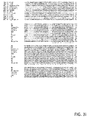
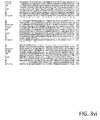
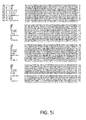
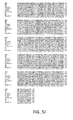
- Suitable fragments can include regions of amino acids that are conserved between one or more LCMV strains or isolates. For example, suitable fragments can include those regions identified as being conserved in FIGs.
- suitable fragments can include a region within an LCMV amino acid that has at least 50% identity (e.g., 50%, 60%, 70%, 80%, 85%, 90%, 95%, 98%, 99%, or 100% identity) to a region in one or more distinct LCMV strains.
- suitable fragments can include at least 3 amino acids (e.g., 3-10 amino acids).
- suitable fragments can include 3, 4, 5, 6, 7, 8, 9, 10, 11, 12, 13, 14, 15, 16, 17, 18, 19, 20, 25, 30, 40, 50, 60, 70, 80, 90, 100, or more amino acids.
- the antigen may be a component of an immunogenic composition, which refers to a sample (including but not limited to infected cell, whole cell lysate, protein extract), that may not or may be substantially purified (comprising more than 50% of sample in which in resides), or may be isolated (in separated and discrete form).
- an immunogenic composition refers to a sample (including but not limited to infected cell, whole cell lysate, protein extract), that may not or may be substantially purified (comprising more than 50% of sample in which in resides), or may be isolated (in separated and discrete form).
- NP antigen refers to an antigen derived from the nucleocapsid protein of LCMV (e.g., including any LCMV strain and isolate).
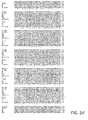
- the nucleotide and corresponding amino acid sequences for various NP antigens of LCMV are known ( FIGs. 2 and 5 , SEQ ID NOS: 1-11 and 31-40). Additional sequences have been deposited with Genbank as specified in Prior publications (see below).
- a representative immunoreactive NP antigen useful in the present assays is a fusion protein derived from MX strain of LCMV. It includes several epitopes, and antibodies binding this antigen are cross-reactive with NP antigen from Armstrong strain.
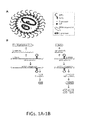
- ribonucleoprotein or RNP refers to a complex of virus genomic RNA segments (S and/or L) covered by NP antigen. Such RNPs are formed during the LCMV infection within the infected cells and can be also released to extracellular space.
- GP antigen refers to an antigen derived from the glycoprotein of LCMV (including any LCMV strain and isolate).
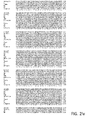
- the nucleotide and corresponding amino acid sequences for various GP antigens of LCMV are known (see, e.g., FIGs. 3 and 6 , SEQ ID NOS: 12-23 and 41-51). Additional sequences have been deposited with Genbank as specified in Prior publications (see below).
- a representative immunoreactive GP antigen useful in the present assays is a fusion protein derived from MX strain of LCMV. It includes several epitopes, and antibodies binding this antigen are cross-reactive with GP antigen from Armstrong strain.
- GPC antigen is a precursor, immature form of a GP antigen and is typical for persistent or aberrant infection. It includes the epitope spanning the region (fragment) of GPC cleavage to GP1 and GP2, which is relevant for specific recognition of GPC only.
- sequences for various GPC antigens of LCMV are known (see FIGs. 3 and 6 , SEQ ID NOS: 12-23 and 41-51).
- GP 1 antigen means a mature external subunit of envelope antigen that is typical for acute infection. It includes the epitope of the C-terminal region (fragment) of GP1, which is not exposed in GPC. The amino acid sequences for various GP 1 antigens of LCMV are known.
- ZP antigen refers to an antigen derived from the Z protein of LCMV.
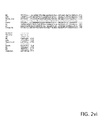
- the nucleotide and corresponding amino acid sequences for various ZP antigens of LCMV are known. (see FIGs. 4 and 7 , SEQ ID NOS: 24-30 and 52-57). Additional sequences have been deposited with Genbank as specified in Prior publications (see below).
- a representative immunoreactive ZP antigen useful in the present assays is a fusion protein derived from MX strain of LCMV. It includes several epitopes, and antibodies binding this antigen are cross-reactive with ZP antigen from Armstrong strain.
- immunogenic composition refers to at least one immunogenic polypeptide (e.g. NP, GP, ZP and/or ribonucleoprotein (RNP)).
- immunogenic polypeptide e.g. NP, GP, ZP and/or ribonucleoprotein (RNP)
- peptide markers of LCMV can be used as diagnostics, e.g., to detect antibodies directed against LCMV in a biological sample.
- the antigens may be also used to produce polyclonal and monoclonal antibodies for use in diagnostics.
- Polyclonal antibodies can be produced by administering the LCMV antigens, either isolated, or substantially purified, or as part of immunogenic compositions (i.e. in the form of infected cells) to a mammal, such as a mouse, rat, rabbit, goat, sheep, lama, horse etc. Serum from the immunized antigen can be collected and the antibodies can be further purified.
- Techniques for producing and processing polyclonal antibodies are known in the art.
- antibody is used in the broadest sense and specifically covers, for example, single monoclonal antibodies (including agonist, antagonist, and neutralizing antibodies, de-immunized, murine, chimeric or humanized antibodies), antibody compositions with polyepitopic specificity, single-chain antibodies, diabodies, triabodies, immuno-conjugates and antibody fragments.
- monoclonal antibody refers to an antibody obtained from a population of substantially homogeneous antibodies, i.e., the individual antibodies comprising the population are identical except for possible naturally occurring mutations that may be present in minor amounts. Monoclonal antibodies are highly specific, being directed against a single antigenic site. Furthermore, in contrast to polyclonal antibody preparations which include different antibodies directed against different determinants (epitopes), each monoclonal antibody is directed against a single determinant on the antigen. In addition to their specificity, the monoclonal antibodies are advantageous in that they may be synthesized uncontaminated by other antibodies.
- the modifier "monoclonal” indicates the character of the antibody as being obtained from a substantially homogeneous population of antibodies, and is not to be construed as requiring production of the antibody by any particular method.
- the monoclonal antibodies to be used in accordance with the present invention may be made by the hybridoma (murine or human) method first described by Kohler et al., Nature, 256:495 (1975 ), or may be made by recombinant DNA methods (see, e.g., U.S. Pat. No.4,816,567 ).
- the "monoclonal antibodies” may also be isolated from phage antibody libraries using the techniques described in Clackson et al., Nature, 352:624-628 (1991 ) and Marks et al., J. Mol. Biol., 222:581-597 (1991 ), for example.
- an antibody "which binds" an antigen of interest e.g. an LCMV antigen or marker
- an antigen of interest e.g. an LCMV antigen or marker
- Methods, for the detection of an antibody that binds an antigen of interest are well known in the art and can include but are not limited to assays such as FACS, cell ELISA and Western blot.
- “Humanized” and/or “chimeric” forms of non-human (e.g. murine) immunoglobulins refer to antibodies which contain specific chimeric immunoglobulins, immunoglobulin chains or fragments thereof (such as Fv, Fab, Fab', F(ab')2 or other antigen-binding subsequences of antibodies) which results in the decrease of a human anti-mouse antibody (HAMA), human anti-chimeric antibody (HACA) or a human anti-human antibody (HAHA) response, compared to the original antibody, and contain the requisite portions (e.g.
- HAMA human anti-mouse antibody
- HACA human anti-chimeric antibody
- HAHA human anti-human antibody
- hybridoma cell lines as well as the monoclonal antibodies which are produced therefrom, are referred to by their internal designation, e.g., M59, M87, M166, and MJ3 or their Depository Designation, LMBP 9216CB (M166) and LMBP 9217CB (MJ3).
- compositions suitable for specifically detecting one or more LCMV peptides or LCMV peptide fragments can include, but are not limited to antibodies and/or antibody fragments.
- the term "antibody” refers to a molecule, its fragments (Fab'2, Fab, Fv, sFv, minibodies and any other functional fragments), its hybrid (chimeric) or bispecific variants, which specifically bind to an antigen and/or epitope of interest.
- the term includes antibodies obtained both from polyclonal and monoclonal preparations. In some instances, the antibody or antibody fragment can be humanized.
- compositions for detecting one or more LCMV peptides or fragments can include (e.g., can consist, consist essentially of, or can comprise), for example, the heavy chain variable region of antibody M87 (i.e., SEQ ID NO:74) or an amino acid sequence with at least 50% identity (e.g., 50%, 60%, 70%, 80%, 85%, 90%, 95%, 98%, 99%, or 100% identity) to SEQ ID NO:74.
- SEQ ID NO:74 the heavy chain variable region of antibody M87
- amino acid sequence with at least 50% identity e.g., 50%, 60%, 70%, 80%, 85%, 90%, 95%, 98%, 99%, or 100% identity
- the one or more of the antibodies or antigen binding fragments thereof can be modified by insertion of one or more conservative amino acid substitutions.
- a “conservative amino acid substitution” is one in which the amino acid residue is replaced with an amino acid residue having a similar side chain.
- Families of amino acid residues having similar side chains have been defined in the art. These families include amino acids with basic side chains (e.g., lysine, arginine, histidine), acidic side chains (e.g., aspartic acid, glutamic acid), uncharged polar side chains (e.g., glycine, asparagine, glutamine, serine, threonine, tyrosine, cysteine), nonpolar side chains (e.g., alanine, valine, leucine, isoleucine, proline, phenylalanine, methionine, tryptophan), beta-branched side chains (e.g., threonine, valine, isoleucine) and aromatic side chains (e.g., tyrosine, phenylalanine, tryptophan, histidine).
- the "interacting face" of the alpha helix includes those amino acid residues which interact with other amino acid residues.
- the interacting face includes those amino acids that interact with LCMV.
- Methods for identifying the interactive face of a peptide are known in the art (see, e.g., Broglia et al., Protein sci., 14(10):2668-81, 2005 ; Hammond et al., J. Pharm. Sci., 98(1):4589-603, 2009 ; Ng and Yang, J. Phys. Chem. B., 111(50):13886-93, 2007 ; and Bird et al., PNAS USA, 197:14093, 2010 ).
- the amino acid sequence of any peptide disclosed herein can be varied as long as the residues of the interacting face are identical to those of SAH-p53-8 or are conservative substitutions thereof.
- compositions suitable for specifically detecting one or more LCMV peptides or LCMV peptide fragments can be modified to include, for example, amino and/or carboxyl terminal labels or moieties (e.g., detectable moieties).
- moieties can include, but are not limited to, fluorescent moieties (e.g., a fluorescent probe (e.g.
- label refers to a molecule capable of detection, such as radioisotope, fluorescent dyes, chemiluminescent dyes, chromophores, metal ions, metal salts, enzymes, enzyme substrates, enzyme cofactors, enzyme inhibitors, adaptors (biotin, avidin, streptavidin, digoxigenin) etc.
- peptides of this invention can be made by chemical synthesis methods, which are well known to the ordinarily skilled artisan. See, for example, Fields et al., Chapter 3 in Synthetic Peptides: A User's Guide, ed. Grant, W. H. Freeman & Co., New York, N.Y., 1992, p. 77 .
- peptides can be synthesized using the automated Merrifield techniques of solid phase synthesis with the ⁇ -NH 2 protected by either t-Boc or Fmoc chemistry using side chain protected amino acids on, for example, an Applied Biosystems Peptide Synthesizer Model 430A or 431.
- the peptides can be made in a high-throughput, combinatorial fashion, e.g., using a high-throughput multiple channel combinatorial synthesizer available from Advanced Chemtech.
- immune complex refers to the molecular composite formed via binding of antibody to an antigen in the assay settings. It also refers to naturally occurring multimolecular composite containing viral ribonucleoprotein and immunoglobulins in biological samples.
- the present disclosure also features methods for detecting LCMV in a sample, e.g., using one or more of the compositions for detecting LCMV disclosed herein (e.g., one or more probes or primers and/or one or more LCMV peptides or LCMV peptide fragments and/or one or more compositions for detecting one or more LCMV peptides or LCMV peptide fragments (e.g., one or more antibodies or antibody fragments).
- the compositions for detecting LCMV disclosed herein e.g., one or more probes or primers and/or one or more LCMV peptides or LCMV peptide fragments and/or one or more compositions for detecting one or more LCMV peptides or LCMV peptide fragments (e.g., one or more antibodies or antibody fragments).
- antibodies specific for NP, GP e.g. GPC, GP 1
- ZP are attached to solid phase and serve as capture to which LCMV antigens from biological sample are bound and then detected with non-competing antibody or antibody/associated detectors.
- detector is represented by LCMV antigen-specific antibody directly conjugated with label.
- detector is represented by anti-human (or anti-mouse or other animal species-specific) IgG or IgM directly conjugated with label.
- detector antibody is conjugated with biotin, which is further bound with avidin/streptavidin and then revealed with label-conjugated biotin.
- the methods include selecting a subject (the term "subject" is used throughout the specification to describe an animal, human or non-human. Both human and veterinary applications are contemplated.
- the term can include, for example, mammals, e.g., humans, other primates, pigs, rodents such as mice and rats, rabbits, guinea pigs, hamsters, cows, horses, cats, dogs, sheep and goats).
- subjects at risk for LCMV infection or subjects suspected of having LCMV can be selected.
- subjects with a condition or disease that renders the subject more susceptible to damage caused by LCMV can be selected.
- Such subjects can include subjects that are planning to become pregnant or that are pregnant, immunocompromised subjects, transplant recipients, and subjects at risk for developing or having cancer.
- a subject is selected if the subject has a condition known to manifest hypoxia in the subject.
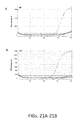
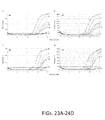
- the analytical sensitivity of qPCR was assessed by testing of serial dilution of the standard virus strain MX.
- Blood from healthy individual was spiked with serial dilution of LCMV infected cells (105, 103, 10, 1, 0.5, 0.25 infected cell) to standardize RNA extraction and to detect the analytical sensitivity of the PCR.
- Serial dilutions were prepared in a Dulbecco modified Eagle growth medium. Healthy blood samples were spiked with each of these dilutions. Blood from healthy individuals and molecular grade water were included as negative controls.
Landscapes
- Health & Medical Sciences (AREA)
- Life Sciences & Earth Sciences (AREA)
- Chemical & Material Sciences (AREA)
- Immunology (AREA)
- Engineering & Computer Science (AREA)
- Virology (AREA)
- Organic Chemistry (AREA)
- Molecular Biology (AREA)
- Biochemistry (AREA)
- General Health & Medical Sciences (AREA)
- Proteomics, Peptides & Aminoacids (AREA)
- Wood Science & Technology (AREA)
- Zoology (AREA)
- Analytical Chemistry (AREA)
- Urology & Nephrology (AREA)
- Biomedical Technology (AREA)
- Biotechnology (AREA)
- Physics & Mathematics (AREA)
- Hematology (AREA)
- Microbiology (AREA)
- Genetics & Genomics (AREA)
- Medicinal Chemistry (AREA)
- Biophysics (AREA)
- General Physics & Mathematics (AREA)
- Food Science & Technology (AREA)
- Pathology (AREA)
- Tropical Medicine & Parasitology (AREA)
- Cell Biology (AREA)
- Bioinformatics & Cheminformatics (AREA)
- General Engineering & Computer Science (AREA)
- Peptides Or Proteins (AREA)
- Measuring Or Testing Involving Enzymes Or Micro-Organisms (AREA)
- Micro-Organisms Or Cultivation Processes Thereof (AREA)
- Medicines Containing Antibodies Or Antigens For Use As Internal Diagnostic Agents (AREA)
Applications Claiming Priority (2)
| Application Number | Priority Date | Filing Date | Title |
|---|---|---|---|
| US201161430822P | 2011-01-07 | 2011-01-07 | |
| EP12710536.9A EP2661509A2 (en) | 2011-01-07 | 2012-01-06 | Viral diagnostics |
Publications (1)
| Publication Number | Publication Date |
|---|---|
| EP2664680A1 true EP2664680A1 (en) | 2013-11-20 |
Family
ID=45878971
Family Applications (2)
| Application Number | Title | Priority Date | Filing Date |
|---|---|---|---|
| EP20130179952 Ceased EP2664680A1 (en) | 2011-01-07 | 2012-01-06 | Antibody-based methods of diagnosing infections with lymphocytic choriomeningitis virus (LCMV) |
| EP12710536.9A Withdrawn EP2661509A2 (en) | 2011-01-07 | 2012-01-06 | Viral diagnostics |
Family Applications After (1)
| Application Number | Title | Priority Date | Filing Date |
|---|---|---|---|
| EP12710536.9A Withdrawn EP2661509A2 (en) | 2011-01-07 | 2012-01-06 | Viral diagnostics |
Country Status (7)
| Country | Link |
|---|---|
| US (1) | US8883429B2 (enExample) |
| EP (2) | EP2664680A1 (enExample) |
| JP (1) | JP2014502848A (enExample) |
| CN (1) | CN103597098A (enExample) |
| AU (1) | AU2012204757A1 (enExample) |
| CA (1) | CA2823876A1 (enExample) |
| WO (1) | WO2012093340A2 (enExample) |
Families Citing this family (11)
| Publication number | Priority date | Publication date | Assignee | Title |
|---|---|---|---|---|
| LT2604695T (lt) | 2007-12-27 | 2022-12-12 | Universität Zürich | Replikacijos defektų turintys arenaviruso vektoriai |
| WO2011063127A1 (en) | 2009-11-18 | 2011-05-26 | University Of Medicine And Dentistry Of New Jersey | Targeting tumor cells with chemotherapeutic agents conjugated to matriptase antibodies |
| US9849192B2 (en) | 2009-11-18 | 2017-12-26 | Rutgers, The State University Of New Jersey | Targeting tumor cells with chemotherapeutic agents conjugated to matriptase antibodies |
| US9549993B2 (en) * | 2012-10-02 | 2017-01-24 | Rutgers, The State University Of New Jersey | Specific delivery of toxins conjugated with antibodies to activate matripase |
| WO2014140301A1 (en) * | 2013-03-15 | 2014-09-18 | Université De Genève | Anti-mycobacterial vaccines |
| AU2014359276B2 (en) * | 2013-12-03 | 2021-01-28 | Hookipa Biotech Gmbh | CMV vaccines |
| WO2015183895A1 (en) * | 2014-05-27 | 2015-12-03 | University Of Rochester | Novel arenavirus vaccine |
| JP7145374B2 (ja) | 2016-03-18 | 2022-10-03 | ラトガース ザ ステイト ユニバーシティー オブ ニュージャージー | インビボでの切断可能連結部分によって抗マトリプターゼ抗体にコンジュゲートされた化学療法剤を用いる腫瘍細胞の標的化 |
| DE102018215551A1 (de) * | 2018-09-12 | 2020-03-12 | Virolutions Biotech Gmbh | Verfahren zur Herstellung eines antitumoralen Arenavirus sowie Arenavirusmutanten |
| KR102446014B1 (ko) * | 2022-04-19 | 2022-09-23 | 주식회사 웰에이블 | 저시력자용 진단키트 전용 커버 |
| CN119080935B (zh) * | 2024-10-11 | 2026-04-14 | 上海市同仁医院 | 一种抗人SMIM45-107aa单克隆抗体及其用途 |
Citations (1)
| Publication number | Priority date | Publication date | Assignee | Title |
|---|---|---|---|---|
| US4816567A (en) | 1983-04-08 | 1989-03-28 | Genentech, Inc. | Recombinant immunoglobin preparations |
-
2012
- 2012-01-06 WO PCT/IB2012/000293 patent/WO2012093340A2/en not_active Ceased
- 2012-01-06 AU AU2012204757A patent/AU2012204757A1/en not_active Abandoned
- 2012-01-06 CN CN201280012143.3A patent/CN103597098A/zh active Pending
- 2012-01-06 EP EP20130179952 patent/EP2664680A1/en not_active Ceased
- 2012-01-06 EP EP12710536.9A patent/EP2661509A2/en not_active Withdrawn
- 2012-01-06 CA CA 2823876 patent/CA2823876A1/en not_active Abandoned
- 2012-01-06 JP JP2013547936A patent/JP2014502848A/ja active Pending
- 2012-01-06 US US13/345,334 patent/US8883429B2/en not_active Expired - Fee Related
Patent Citations (1)
| Publication number | Priority date | Publication date | Assignee | Title |
|---|---|---|---|---|
| US4816567A (en) | 1983-04-08 | 1989-03-28 | Genentech, Inc. | Recombinant immunoglobin preparations |
Non-Patent Citations (36)
| Title |
|---|
| A BARRY ET AL: "Lymphocytic Choriomeningitis Virus transmitted through solid organ transplantatio - Massachusetts, 2008", MORBIDITY AND MORTALITY WEEKLY REPORT, vol. 57, no. 29, 25 July 2008 (2008-07-25), pages 799 - 801, XP055078833 * |
| ALBARINO,C.G. ET AL., EMERGING INFECT. DIS., vol. 16, 2010, pages 1093 - 1100 |
| ASPER, M. ET AL., VIROLOGY, vol. 284, 2001, pages 203 - 213 |
| BIRD ET AL., PNAS USA, vol. 197, 2010, pages 14093 |
| BLECHSCHMIDT M ET AL: "Radioimmunoassay for LCM virus antigens and anti-LCM virus antibodies and its application in an epidemiologic survey of people exposed to syrian hamsters.", MEDICAL MICROBIOLOGY AND IMMUNOLOGY 18 MAY 1977, vol. 163, no. 1, 18 May 1977 (1977-05-18), pages 67 - 76, XP009172428, ISSN: 0300-8584 * |
| BONTHIUS ET AL: "Lymphocytic Choriomeningitis Virus: A Prenatal and Postnatal Threat", ADVANCES IN PEDIATRICS, YEAR BOOK MEDICAL PUBLISHERS, CHICAGO, IL, US, vol. 56, no. 1, 1 January 2009 (2009-01-01), pages 75 - 86, XP026760632, ISSN: 0065-3101, [retrieved on 20091114], DOI: 10.1016/J.YAPD.2009.08.007 * |
| BROGLIA ET AL., PROTEIN SCI., vol. 14, no. 10, 2005, pages 2668 - 81 |
| BUCHMEIER, CURR TOP MICROBIOL IMMUNOL., vol. 262, 2002, pages 159 - 73 |
| CLACKSON ET AL., NATURE, vol. 352, 1991, pages 624 - 628 |
| DIRK HOMANN ET AL: "Visualizing the viral burden: phenotypic and functional alterations of T cells and APCs during persistent infection.", THE JOURNAL OF IMMUNOLOGY, vol. 172, no. 10, 1 May 2004 (2004-05-01), pages 6239 - 6250, XP055078790, ISSN: 0022-1767 * |
| DJAVANI, M ET AL., VIRUS GENES, vol. 17, 1998, pages 151 - 155 |
| EMONET, S. ET AL., EMERGING INFECT. DIS., vol. 13, 2007, pages 472 - 475 |
| FIELDS ET AL.: "Synthetic Peptides: A User's Guide", 1992, W. H. FREEMAN & CO., pages: 77 |
| GIBADULINOVÁ A ET AL: "Sequence and characterisation of the Z gene encoding ring finger protein of the lymphocytic choriomeningitis virus MX strain.", ACTA VIROLOGICA DEC 1998, vol. 42, no. 6, December 1998 (1998-12-01), pages 369 - 374, XP009172426, ISSN: 0001-723X * |
| GIBADULINOVA,A. ET AL., ACTA VIROL., vol. 42, 1998, pages 369 - 374 |
| GRANDE-PEREZ,A. ET AL., J. VIROL., vol. 79, 2005, pages 10451 - 10459 |
| HAMMOND ET AL., J. PHARM. SCI., vol. 98, no. 1, 2009, pages 4589 - 603 |
| IKE, F. ET AL., COMP. MED., vol. 57, 2007, pages 272 - 281 |
| JAEGER ET AL., METHODS ENZYMOL., vol. 183, 1989, pages 281 - 306 |
| JAEGER ET AL., PROC. NATL. ACAD. SCI. USA, vol. 86, 1989, pages 7706 - 10 |
| KOHLER ET AL., NATURE, vol. 256, 1975, pages 495 |
| LEE ET AL: "Inhibition of cellular entry of lymphocytic choriomeningitis virus by amphipathic DNA polymers", VIROLOGY, ELSEVIER, AMSTERDAM, NL, vol. 372, no. 1, 26 November 2007 (2007-11-26), pages 107 - 117, XP022475570, ISSN: 0042-6822, DOI: 10.1016/J.VIROL.2007.10.016 * |
| MARKS ET AL., J. MOL. BIOL., vol. 222, 1991, pages 581 - 597 |
| NG; YANG, J. PHYS. CHEM. B., vol. 111, no. 50, 2007, pages 13886 - 93 |
| NOEMÍ SEVILLA ET AL: "Viral targeting of hematopoietic progenitors and inhibition of DC maturation as a dual strategy for immune subversion", JOURNAL OF CLINICAL INVESTIGATION, vol. 113, no. 5, 1 March 2004 (2004-03-01), pages 737 - 745, XP055078794, ISSN: 0021-9738, DOI: 10.1172/JCI200420243 * |
| OLDSTONE, CURR TOP MICROBIOL IMMUNOL., vol. 263, 2002, pages 83 - 117 |
| REISEROVA,L. ET AL., VIROLOGY, vol. 257, 1999, pages 73 - 83 |
| ROMANOWSKI, V. ET AL., VIRUS RES., vol. 3, 1985, pages 101 - 114 |
| SALVATO, VIROLOGY, vol. 173, 1989, pages 1 - 10 |
| SALVATO,M. ET AL., VIROLOGY, vol. 164, 1988, pages 517 - 522 |
| SOUTHERN ET AL., VIROLOGY, vol. 157, no. 1, 1987, pages 145 - 55 |
| STACI A. FISCHER ET AL: "Transmission of Lymphocytic Choriomeningitis Virus by Organ Transplantation", NEW ENGLAND JOURNAL OF MEDICINE, vol. 354, no. 21, 25 May 2006 (2006-05-25), pages 2235 - 2249, XP055078830, ISSN: 0028-4793, DOI: 10.1056/NEJMoa053240 * |
| TOMASKOVA,J ET AL., VIRUS GENES, vol. 37, 2008, pages 31 - 38 |
| VAN DER ZEIJST ET AL., J VIROL, vol. 48, 1983, pages 249 - 61 |
| ZELLER W ET AL: "Lymphocytic choriomeningitis virus X. Demonstration of nucleoprotein on the surface of infected cells", VIROLOGY, ELSEVIER, AMSTERDAM, NL, vol. 162, no. 1, 1 January 1988 (1988-01-01), pages 90 - 97, XP023047770, ISSN: 0042-6822, [retrieved on 19880101], DOI: 10.1016/0042-6822(88)90397-2 * |
| ZUKER, SCIENCE, vol. 244, 1989, pages 48 - 52 |
Also Published As
| Publication number | Publication date |
|---|---|
| WO2012093340A2 (en) | 2012-07-12 |
| EP2661509A2 (en) | 2013-11-13 |
| WO2012093340A3 (en) | 2012-12-13 |
| US20120237922A1 (en) | 2012-09-20 |
| US8883429B2 (en) | 2014-11-11 |
| AU2012204757A1 (en) | 2013-05-02 |
| JP2014502848A (ja) | 2014-02-06 |
| CN103597098A (zh) | 2014-02-19 |
| CA2823876A1 (en) | 2012-07-12 |
Similar Documents
| Publication | Publication Date | Title |
|---|---|---|
| US8883429B2 (en) | Viral diagnostics | |
| CA3109607C (en) | Methods and reagents for diagnosis of sars-cov-2 infection | |
| US11054429B1 (en) | SARS-CoV-2 surrogate virus neutralization test based on antibody-mediated blockage of ACE2-spike protein binding | |
| KR101785290B1 (ko) | 중증 열성 혈소판 감소 증후군 바이러스 감염 진단용 단클론항체, 이를 생산하는 하이브리도마 및 이 단클론항체를 사용하는 중증 열성 혈소판 감소 증후군 바이러스 감염 진단방법 | |
| WO2023088444A1 (zh) | 一种抗hiv-1 p24的抗体及其制备方法和用途 | |
| JP7529639B2 (ja) | 診断アッセイに使用するためのタンパク質抗原としてのrepタンパク質 | |
| CN101687921A (zh) | 可用于h5禽流感诊断和监视的h5亚型特异性结合蛋白 | |
| WO2023088443A1 (zh) | 一种抗人IgM抗体及其制备方法和用途 | |
| CN110272488B (zh) | 猫杯状病毒单克隆抗体及其应用 | |
| CN108474017B (zh) | 用于检测呼吸道合胞病毒抗原p的单克隆抗体 | |
| JPWO2007043582A1 (ja) | Sarsウイルスヌクレオカプシドタンパク質を測定するための測定方法、測定用試薬キット、試験具、sarsウイルスヌクレオカプシドタンパク質に対するモノクローナル抗体及び前記モノクローナル抗体を産生するハイブリドーマ | |
| Zhang et al. | Development of monoclonal antibody based IgG and IgM ELISA for diagnosis of severe fever with thrombocytopenia syndrome virus infection | |
| US7303913B2 (en) | Rapid diagnostic methods of Peste des Petits Ruminants using recombinant nucleocapsid protein expressed in insect cells and monoclonal antibody | |
| WO2013043125A1 (en) | Enterovirus 71 specific antibodies and uses thereof | |
| US20220026428A1 (en) | Detection of antibodies to sarsr-cov | |
| CA3125208A1 (en) | Monoclonal antibody or antigen binding fragment thereof that binds to the l protein of the human parainfluenza virus (piv); method and kit for detecting piv | |
| Kim et al. | Development and clinical evaluation of a rapid diagnostic kit for feline leukemia virus infection | |
| Bai et al. | Characterization of monoclonal antibodies against duck Tembusu virus E protein: an antigen-capture ELISA for the detection of Tembusu virus infection | |
| EP3231815A1 (en) | Specific monoclonal antibodies of the antigen m of the human metapneumovirus (hmpv) and use thereof in a diagnostic method | |
| US8022175B1 (en) | Production of anti-peptide monoclonal antibodies to distinguish Exotic New Castle diseases viruses from vaccine strains of Newcastle disease virus | |
| CN112912394B (zh) | 针对hrsv的n抗原的单抗,可用于治疗感染、其检测和诊断 | |
| Wang et al. | Sensitive detection of HEV antibodies using a blocking ELISA based on ORF2-specific monoclonal antibodies | |
| HK40016702A (en) | Rep protein as protein antigen for use in diagnostic assays | |
| CN117178190A (zh) | 用于检测sars-cov-2的测定 | |
| JP2010507780A (ja) | B型インフルエンザウイルスの検出 |
Legal Events
| Date | Code | Title | Description |
|---|---|---|---|
| PUAI | Public reference made under article 153(3) epc to a published international application that has entered the european phase |
Free format text: ORIGINAL CODE: 0009012 |
|
| 17P | Request for examination filed |
Effective date: 20130809 |
|
| AC | Divisional application: reference to earlier application |
Ref document number: 2661509 Country of ref document: EP Kind code of ref document: P |
|
| AK | Designated contracting states |
Kind code of ref document: A1 Designated state(s): AL AT BE BG CH CY CZ DE DK EE ES FI FR GB GR HR HU IE IS IT LI LT LU LV MC MK MT NL NO PL PT RO RS SE SI SK SM TR |
|
| STAA | Information on the status of an ep patent application or granted ep patent |
Free format text: STATUS: THE APPLICATION HAS BEEN REFUSED |
|
| 18R | Application refused |
Effective date: 20151112 |