EP2658620B1 - Virtual golf simulation apparatus and method capable of compensating ball flight distance decreasing rate - Google Patents
Virtual golf simulation apparatus and method capable of compensating ball flight distance decreasing rate Download PDFInfo
- Publication number
- EP2658620B1 EP2658620B1 EP11854207.5A EP11854207A EP2658620B1 EP 2658620 B1 EP2658620 B1 EP 2658620B1 EP 11854207 A EP11854207 A EP 11854207A EP 2658620 B1 EP2658620 B1 EP 2658620B1
- Authority
- EP
- European Patent Office
- Prior art keywords
- golf
- ball
- region
- flight distance
- bunker
- Prior art date
- Legal status (The legal status is an assumption and is not a legal conclusion. Google has not performed a legal analysis and makes no representation as to the accuracy of the status listed.)
- Active
Links
Images


Classifications
-
- A—HUMAN NECESSITIES
- A63—SPORTS; GAMES; AMUSEMENTS
- A63B—APPARATUS FOR PHYSICAL TRAINING, GYMNASTICS, SWIMMING, CLIMBING, OR FENCING; BALL GAMES; TRAINING EQUIPMENT
- A63B69/00—Training appliances or apparatus for special sports
- A63B69/36—Training appliances or apparatus for special sports for golf
- A63B69/3658—Means associated with the ball for indicating or measuring, e.g. speed, direction
-
- G—PHYSICS
- G09—EDUCATION; CRYPTOGRAPHY; DISPLAY; ADVERTISING; SEALS
- G09B—EDUCATIONAL OR DEMONSTRATION APPLIANCES; APPLIANCES FOR TEACHING, OR COMMUNICATING WITH, THE BLIND, DEAF OR MUTE; MODELS; PLANETARIA; GLOBES; MAPS; DIAGRAMS
- G09B19/00—Teaching not covered by other main groups of this subclass
- G09B19/003—Repetitive work cycles; Sequence of movements
- G09B19/0038—Sports
-
- A—HUMAN NECESSITIES
- A63—SPORTS; GAMES; AMUSEMENTS
- A63B—APPARATUS FOR PHYSICAL TRAINING, GYMNASTICS, SWIMMING, CLIMBING, OR FENCING; BALL GAMES; TRAINING EQUIPMENT
- A63B69/00—Training appliances or apparatus for special sports
- A63B69/36—Training appliances or apparatus for special sports for golf
- A63B69/3661—Mats for golf practice, e.g. mats having a simulated turf, a practice tee or a green area
-
- A—HUMAN NECESSITIES
- A63—SPORTS; GAMES; AMUSEMENTS
- A63B—APPARATUS FOR PHYSICAL TRAINING, GYMNASTICS, SWIMMING, CLIMBING, OR FENCING; BALL GAMES; TRAINING EQUIPMENT
- A63B71/00—Games or sports accessories not covered in groups A63B1/00 - A63B69/00
- A63B71/06—Indicating or scoring devices for games or players, or for other sports activities
- A63B71/0619—Displays, user interfaces and indicating devices, specially adapted for sport equipment, e.g. display mounted on treadmills
- A63B71/0622—Visual, audio or audio-visual systems for entertaining, instructing or motivating the user
- A63B2071/0638—Displaying moving images of recorded environment, e.g. virtual environment
Definitions
- the present invention relates to a virtual golf simulation apparatus and method, and, more particularly, to a virtual golf simulation apparatus and method wherein a virtual golf course is imaged and simulated, and the trajectory of a golf ball directly hit by a user is simulated in the virtual golf course.
- the screen golf system senses the velocity and direction of a golf ball that a golfer hits onto a screen installed indoors for displaying a virtual golf range, and displays the progress of the golf ball on the screen.
- a ball flight distance when the golf ball is hit in a fairway is greatly different from that when the golf ball is hit in a rough or in a bunker.
- a golf mat on which a user hits a golf ball, may be divided into a fairway region, a rough region, and a bunker region, which have different states of artificial turf in a manner similar to the real golf course.
- the bunker region may be formed of various materials, by which the user feels as if he or she hit a bunker shot.
- hitting environment based on the golf mat is configured so as to be similar to the real golf course, however, virtual golf simulation is carried out irrespective of the hitting environment based on the golf mat.
- a virtual golf rounding using the virtual golf simulation apparatus is considerably different from that performed in the real golf course.
- such conventional solution is disclosed in documents US4150825 , US5437457 , US5342054 , KR100937922 and KR100946970 .
- a virtual golf simulation apparatus to perform virtual golf simulation on a virtual golf course.
- the apparatus of the invention includes a sensing device to sense a golf ball placed on a golf mat and sense movement of the golf ball after the golf ball is hit, an image processing unit to realize a simulation image regarding a trajectory of the golf ball on the virtual golf course based on results sensed by the sensing device, and a control unit configured to adjust a ball flight distance based on the trajectory of the ball simulated according to a landform in which the golf ball is placed on the virtual golf course.
- the golf mat is configured to have a fairway region and a trouble region.
- the control unit is configured to control simulation to be performed according to a ball flight distance decreasing rate preset with respect to a corresponding landform based on whether the golf ball is placed in a fairway, a rough or a bunker on the virtual golf course of the simulation image.
- the control unit is also configured to adjust the ball flight distance based on the trajectory of ball simulated according to the landform in which the golf ball is placed on the virtual golf course and the region of the golf mat in which the golf ball sensed by the sensing device is placed.
- the control unit may be set to calculate different ball flight distances based on kinds of the landform, in which the golf ball is placed, on the virtual golf course.
- a virtual golf simulation method to perform virtual golf simulation on a virtual golf course including simulating a trajectory of a golf ball in a virtual golf course according to sensed results of the golf ball after the golf ball is hit, checking the kind of a landform, in which the golf ball is placed, on the virtual golf course as the result of the simulation, and applying a predetermined ball flight distance decreasing rate to the checked landform to simulate the trajectory of the golf ball.
- the virtual golf simulation method to perform virtual golf simulation on a virtual golf course when a golf ball is hit on a golf mat having a fairway region and a trouble region includes calculating a ball flight distance decreasing rate based on a landform in which the ball is placed on a virtual golf course of a virtual golf simulation image, calculating a compensation value based on a region in which the ball is placed on the golf mat using a sensing device, calculating a trajectory of the ball based on movement of the hit ball sensed by the sensing device, and performing simulation based on results obtained by calculating the ball flight distance decreasing rate and the compensation value with respect to a ball flight distance of the ball based on the calculated trajectory of the ball according to predetermined conditions.
- the virtual golf simulation apparatus and method according to the present invention it is possible to apply differences between golf shots based on kinds of a landform of a real golf course when a user performs a golf rounding in the real golf course to hitting environment based on a golf mat, on which the user hits a golf ball, and to a virtual golf course through virtual golf simulation. Also, it is possible to simultaneously and properly reflect the hitting environment of the user and the environment of the virtual golf course in simulation results. Consequently, the present invention has the effect of providing the same sense of reality that the user would feel in the real golf course.
- FIGS. 1 to 3 First, a virtual golf simulation apparatus according to an embodiment of the present invention will be described in detail with reference to FIGS. 1 to 3 .
- a sensing device 50 used in the virtual golf simulation apparatus includes camera units 51 and 52 and a sensing processing unit (not shown) for processing images captured by the camera units 51 and 52 to process an image of a golf ball hit by a user and/or a golf club used for the user to hit the golf ball and to analyze the hit ball.
- FIG. 2 show a case in which the two camera units 51 and 52 are provided.
- the number of camera units is not limited thereto.
- one or more camera units may be used.
- the sensing processing unit (not shown) analyzes and extracts images captured by the camera units 51 and 52 and transmits information on the analyzed and extracted images to a simulator 1.
- the simulator 1 includes a control unit M, a database 10, an image processing unit 20, and an image output device 30.
- the simulator 1 may further include a manipulation device 60 as a means for allowing a user to set a virtual golf simulation environment or to adjust aiming during a virtual golf rounding.
- the control unit M converts information on coordinates of center points regarding movement of a golf ball and/or a golf club image-processed and extracted by the sensing device 50 into three-dimensional coordinate information to calculate physical information for movement trajectory simulation of the golf ball and transmits the calculated physical information to the image processing unit 20.
- Data for movement trajectory simulation of the golf ball are extracted from the database 10, and image processing of movement trajectory simulation of the golf ball by the image processing unit 20 may be achieved by extracting image data from the database 10.
- a converting means to convert coordinate information of the golf ball transmitted from the sensing device 50 into three-dimensional coordinate information may be provided separately from the control unit M.
- FIG. 1 An example of a screen golf system, to which the virtual golf simulation apparatus with the above-stated construction is applied, is shown in FIG. 1 .
- the hitting box may be provided on a swing plate 100 or on the floor of the golf booth 2. (In the following description, the swing plate 100 is provided on the hitting box.)
- the swing plate 100 may be configured to be slopped in correspondence to the landform of a virtual golf course.
- a golf mat 120 on which a golf ball is placed so that the user can hit the golf ball, is provided at one side of the swinging plate 100.
- the golf mat 120 may be divided into a fairway region 121 and a trouble region so as to provide an environment similar to an real golf course including a fairway, a rough, and a bunker prepared based on a state of turf.
- the trouble region may be configured to include a rough region 122 and/or a bunker region 123.
- FIG. 2 shows a case in which the trouble region includes both the rough region 122 and the bunker region 123.
- the fairway region 121, the rough region 122, and the bunker region 123 may be provided so as to have different states of artificial turf.
- the bunker region 123 may be formed of a special material instead of the artificial turf so as to provide touch similar to an real bunker.
- the fairway region 121 of the golf mat 120 is a region prepared so that the user can normally hit a golf ball in the same manner as in a fairway of an real golf course
- the rough region 122 is a region prepared so that it is harder for the user to hit a golf ball than in the fairway in the same manner as in a rough of the real golf course
- the bunker region 123 is a region prepared so that it is very difficult for the user to hat a golf ball in the same manner as in a bunker of the real golf course.
- a tee 1424 on which a golf ball is placed so that the user can hit a drive shot, may be provided at the golf mat 120.
- a screen, on which a virtual golf simulation image realized by the image output device 30 is displayed, may be provided at the front of a golf booth B, and camera units 51 and 52 and a lighting device (not shown) may be provided at the ceiling and wall of the golf booth B.
- FIG. 1 shows a case in which the camera units 51 and 52 are provided at the ceiling and wall of the golf booth.
- the location of the camera units is not limited thereto.
- the camera units may be installed at any position so long as the camera units do not disturb golf swinging of a user and a golf ball, hit by the user, does not collide with the camera units while the camera units can effectively capture images regarding movement of the golf ball.
- the camera units 51 and 52 to capture a predetermined region at which the golf ball is hit, i.e. a hitting region, capture a plurality of frame images.
- the virtual golf simulation apparatus is basically configured to adjust a ball flight distance based on whether a user hits a golf ball in a fairway, in a rough, or in a bunker on an simulation image during a virtual golf rounding.
- simulation is carried out in a state in which a ball flight distance decreasing rate of 20 % is applied to a shot in the rough as compared with a shot in a fairway.
- simulation is carried out in a state in which a ball flight distance decreasing rate of 40 % is applied to a shot in the bunker as compared with a shot in the fairway.
- the ball flight distance decreasing rate of 20 % or 40 % is a value which is 20 % or 40 % reduced from a normally calculated ball flight distance, recorded by a golf ball on an simulation image obtained by sensing a golf ball hit by the user using the sensing device and simulating the trajectory of the golf ball. That is, a ball flight distance equivalent to a value obtained by subtracting a value corresponding to 20 % or 40% of the normally calculated value from the normally calculated value is applied to the simulation result so as to be displayed as a simulation image.
- a rough of a real golf course may include a light rough and a heavy rough having turf the length of which is longer than that of the turf in the light rough.
- a bunker of the real golf course may include a fairway bunker and a green bunker having finer sand than the fairway bunker and at which it is harder for the user to hit a golf ball than in the fairway bunker.
- the above factors may be reflected in the virtual golf simulation environment so that the light rough and the heavy rough have different ball flight distance decreasing rates and so that the fairway bunker and the green bunker have different ball flight distance decreasing rates.
- the ball flight distance decreasing rate may be separately defined based on the landform of the real golf course. For example, in a damp area, a ball flight distance decreasing rate different from the ball flight distance decreasing rate of the rough or the bunker may be set.
- a predetermined ball flight distance decreasing rate is applied based on the landform in which a golf ball is hit.
- the golf mat 120 on which the user hits a golf ball, is divided into a fairway region and a trouble region.
- the user hits a golf ball on a rough region on the golf mat although the user hits the golf ball in a rough in an simulation image, the user hits the golf ball in the rough region, in which it is harder for the user to hit the golf ball than in the fairway region, and a ball flight distance is reduced from the simulation result.
- the difference between the simulation result and a real shot is great.
- a ball flight distance decreasing rate based on the landform on a simulation image is corrected based on the regions of the golf mat on which the user hits the golf ball to further improving accuracy of the simulation result.
- a predetermined ball flight distance decreasing rate is applied without change.
- a ball flight distance decreasing rate of 0 % is applied, or the ball flight distance decreasing rate is further reduced so that the ball flight distance of the simulation result is little less reduced.
- a compensation value preset for each region on the golf mat, on which the user actually hits a golf ball is applied to a predetermined ball flight distance decreasing rate with respect to the landform, on which the golf ball is hit, of the simulation image, and then simulation is carried out.
- FIG. 4 is a flow chart showing a virtual golf simulation method according to an embodiment of the present invention
- FIGS. 5 to 7 are flow charts showing more realized embodiments of steps S200 to S600 shown in FIG. 4 .
- the kind of a landform of a virtual golf course, on which a golf ball is placed, in a simulation image ischecked (S200). That is, it is determined whether the landform on which the golf ball hit by the user has dropped is a fairway, a rough, or a bunker.
- a ball flight distance decreasing rate applied when the user hits the golf ball placed in a rough is calculated to 20 %
- a ball flight distance decreasing rate applied when the user hits the golf ball placed in a bunker is calculated to 40 %.
- the sensing device 50 senses the golf ball placed on the golf mat (S400). More specifically, the camera units 51 and 52 (see FIG. 1 ) capture images of the golf mat, on which the golf ball is placed, and sensing processing unit extracts images of the golf ball from the captured images to sense on which region of the golf mat the golf ball is placed, i.e. whether the golf ball is placed in the fairway region, in the rough region, or in the bunker region.
- a compensation value of 20 may be calculated, and, when the golf ball is placed in the bunker region, a compensation value of 40 may be calculated.
- the ball flight distance decreasing rate calculated at step S300 and the compensation value calculated at step S500 are calculated according to a predetermined condition to calculate a final ball flight distance decreasing rate (S600).
- calculating the ball flight distance decreasing rate and the compensation value according to the predetermined condition means that the ball flight distance decreasing rate and the compensation value are calculated using an appropriate calculation method so that a ball flight distance based on the simulation result obtained by the user hitting a golf ball on the golf mat is maximally approximate to a ball flight distance obtained by the user hitting a golf ball in a real golf course under the same conditions.
- Such calculation may be achieved using a simple calculation method, such as addition or subtraction, or may be achieved using a complicated empirical formula.
- the ball flight distance decreasing rate is 20 %
- the compensation value is 20.
- subtraction may be applied so that a final ball flight distance decreasing rate of 0 % can be calculated.
- the ball flight distance decreasing rate is 40 %, and, when the golf ball is actually placed in the rough region on the golf mat, the compensation value is 20. At this time, subtraction may be applied so that a final ball flight distance decreasing rate of 20 % can be calculated.
- the sensing device senses the golf ball hit by the user (S710).
- the simulator calculates the trajectory of the golf ball based on the sensed result (S720) and outputs an simulation image regarding movement of the golf ball.
- the calculated final ball flight distance decreasing rate is applied and then the simulation image is output (S730).
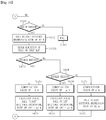
- FIGs. 5 and 6 show a case in which, in steps S200 to S600 shown in FIG. 4 , a ball flight distance decreasing rate is preset with respect to a fairway, a rough, and a bunker of a virtual golf course, and the golf mat is divided into a fairway region, a rough region, and a bunker region.
- FIGs. 5 and 6 are divided from a flow chart. "A" and "B” in FIG. 5 correspond to "A” and "B” in FIG. 6 , respectively.
- the location of a golf ball placed on a virtual golf course during a virtual golf rounding is checked (S200) and it is determined whether the golf ball is placed in the fairway (S210), whether the golf ball is placed in the rough (S220), and whether the golf ball is placed in the bunker (S230).
- the sensing device senses the location of the golf ball on the golf mat (S401), and, when a user hits the golf ball, the sensing devices senses the golf ball hit by the user to perform golf simulation.
- a ball flight distance decreasing rate becomes A % (S320)
- the sensing device senses the location of the golf ball on the golf mat (S402) to determine whether the golf ball is placed in the rough region(S420).
- a compensation value of - a % is calculated (S520), and a final ball flight distance decreasing rate becomes (A - a) % (S620).
- a compensation value becomes 0 %
- a final ball flight distance decreasing rate becomes A % (S621).
- a and a indicate integers.
- a ball flight distance decreasing rate becomes B % (S330)
- the sensing device senses the location of the golf ball on the golf mat (S403) to determine whether the golf ball is placed in the bunker region (S430).
- a compensation value of - b % is calculated (S530), and a final ball flight distance decreasing rate becomes (B - b) % (S630).
- B b indicate integers.
- the ball flight distance when the golf ball is hit in the bunker is shorter than the ball flight distance when the golf ball is hit in the rough. Consequently, it is preferable to adjust the ball flight distance decreasing rate so that the ball flight distance decreasing rate when the golf ball is hit in the bunker is greater than the ball flight distance decreasing rate when the golf ball is hit in the rough.
- the ball flight distance decreasing rate is adjusted so that A ⁇ B.
- the compensation values a and b may be set so that a and b are equal to each other or b is greater than a based on the state of the golf mat.
- FIGs. 7 and 8 show a more concrete embodiment of a case in which a golf ball is placed in a rough of a virtual golf course in the flow chart shown in FIGs. 5 and 6 .
- FIGs. 7 and 8 are divided from a flow chart. "A" and “B” in FIG. 7 correspond to "A” and “B” in FIG. 8 , respectively.
- the rough of the virtual golf course is divided into a light rough and a heavy rough.
- a ball flight distance decreasing rate becomes A1 % (S321), and the sensing device senses the location of the golf ball on the golf mat (S402a) to determine whether the golf ball is placed in the rough region (S421) or whether the golf ball is placed in the bunker region (S422).
- a compensation value of - a % is calculated (S522), and a final ball flight distance decreasing rate becomes (A1 - a) % (S622).
- a compensation value becomes - b % (S523), and a final ball flight distance decreasing rate becomes (A1 - b) % (S623).
- a compensation value becomes 0 % (S524), and a final ball flight distance decreasing rate becomes A1 % (S624).
- A1, a and b indicate integers.
- a ball flight distance decreasing rate becomes A2 % (S322)
- the sensing device senses the location of the golf ball on the golf mat (S402b) to determine whether the golf ball is placed in the rough region (S423) or whether the golf ball is placed in the bunker region (S424).
- a compensation value of - a % is calculated (S525), and a final ball flight distance decreasing rate becomes (A2 - a) % (S625).
- a compensation value becomes - b % (S526), and a final ball flight distance decreasing rate becomes (A2 - b) % (S626).
- a compensation value becomes 0 % (S527), and a final ball flight distance decreasing rate becomes A2 % (S627).
- A2, a and b indicate integers.
- the ball flight distance when the golf ball is hit in the heavy rough is shorter than the ball flight distance when the golf ball is hit in the light rough. Consequently, it is preferable to adjust the ball flight distance decreasing rate so that the ball flight distance decreasing rate when the golf ball is hit in the heavy rough is greater than the ball flight distance decreasing rate when the golf ball is hit in the light rough.
- the ball flight distance decreasing rate is adjusted so that A1 ⁇ A2.
- the compensation values a and b may be set so that a and b are equal to each other or b is greater than a based on the state of the golf mat.
- FIGs. 9 and 10 show a more concrete embodiment of a case in which a golf ball is placed in a bunker of a virtual golf course in the flow chart shown in FIGs. 5 and 6 .
- FIGs. 9 and 10 are divided from a flow chart. "A" and “B” in FIG. 9 correspond to "A” and “B” in FIG. 10 , respectively.
- the bunker of the virtual golf course is divided into a fairway bunker and a green bunker.
- a bunker When the location of a golf ball placed on a virtual golf course during a virtual golf rounding is checked to determine that the golf ball is placed in a bunker (S230), it is determined whether the golf ball is placed in a fairway bunker (S231) or whether the golf ball is placed in a green bunker (S232). When it is determined that the golf ball is placed neither in the fairway bunker nor in the green bunker, it is determined whether the golf ball is placed in another landform (for example, a special landform, such as a damp area, which cannot be defined as a rough or a bunker).
- a special landform such as a damp area
- a ball flight distance decreasing rate becomes B1 % (S331)
- the sensing device senses the location of the golf ball on the golf mat (S403a) to determine whether the golf ball is placed in the bunker region (S431) or whether the golf ball is placed in the rough region (S422).
- a compensation value of - b % is calculated (S532), and a final ball flight distance decreasing rate becomes (B1 - b) % (S632).
- a compensation value becomes - a % (S533), and a final ball flight distance decreasing rate becomes (B1 - a) % (S633).
- a compensation value becomes 0 % (S534), and a final ball flight distance decreasing rate becomes B1 % (S634).
- B1, a and b indicate integers.
- a ball flight distance decreasing rate becomes B2 % (S332)
- the sensing device senses the location of the golf ball on the golf mat (S403b) to determine whether the golf ball is placed in the bunker region (S433) or whether the golf ball is placed in the rough region (S434).
- a compensation value of - b % is calculated (S535), and a final ball flight distance decreasing rate becomes (B2 - b) % (S635).
- a compensation value becomes - a % (S536), and a final ball flight distance decreasing rate becomes (B2 - a) % (S636).
- a compensation value becomes 0 % (S537), and a final ball flight distance decreasing rate becomes B2 % (S627).
- B2, a and b indicate integers.
- the ball flight distance when the golf ball is hit in the green bunker is shorter than the ball flight distance when the golf ball is hit in the fairway bunker. Consequently, it is preferable to adjust the ball flight distance decreasing rate so that the ball flight distance decreasing rate when the golf ball is hit in the fairway bunker is greater than the ball flight distance decreasing rate when the golf ball is hit in the fairway bunker.
- the ball flight distance decreasing rate is adjusted so that B1 ⁇ B2.
- the compensation values a and b may be set so that a and b are equal to each other or b is greater than a based on the state of the golf mat.
- the virtual golf simulation apparatus and method it is possible to apply differences between golf shots based on kinds of a landform of a real golf course when a user performs a golf rounding in the real golf course to hitting environment based on a golf mat, on which the user hits a golf ball, and to a virtual golf course through virtual golf simulation. Also, it is possible to simultaneously and properly reflect the hitting environment of the user and the environment of the virtual golf course in simulation results. Consequently, it is possible to provide the same sense of reality that the user would feel in the real golf course, and therefore, the present invention can be widely used in industries related to the virtual golf simulation apparatus and method.
Landscapes
- Engineering & Computer Science (AREA)
- Business, Economics & Management (AREA)
- Health & Medical Sciences (AREA)
- Physical Education & Sports Medicine (AREA)
- General Health & Medical Sciences (AREA)
- Educational Administration (AREA)
- General Physics & Mathematics (AREA)
- Theoretical Computer Science (AREA)
- Educational Technology (AREA)
- Physics & Mathematics (AREA)
- Entrepreneurship & Innovation (AREA)
- Life Sciences & Earth Sciences (AREA)
- Biophysics (AREA)
- Management, Administration, Business Operations System, And Electronic Commerce (AREA)
- Processing Or Creating Images (AREA)
- Length Measuring Devices By Optical Means (AREA)
Description
- The present invention relates to a virtual golf simulation apparatus and method, and, more particularly, to a virtual golf simulation apparatus and method wherein a virtual golf course is imaged and simulated, and the trajectory of a golf ball directly hit by a user is simulated in the virtual golf course.
- With the recent upsurge of the golfing population, a so-called screen golf system has gained popularity, which allows a golfer to practice golf and to enjoy a virtual golf game using a virtual golf simulation apparatus. The screen golf system senses the velocity and direction of a golf ball that a golfer hits onto a screen installed indoors for displaying a virtual golf range, and displays the progress of the golf ball on the screen.
- In a case in which a user performs a golf rounding in a real golf course, a ball flight distance when the golf ball is hit in a fairway is greatly different from that when the golf ball is hit in a rough or in a bunker. Such golf environment is reflected in the screen golf system. For example, a golf mat, on which a user hits a golf ball, may be divided into a fairway region, a rough region, and a bunker region, which have different states of artificial turf in a manner similar to the real golf course. Also, the bunker region may be formed of various materials, by which the user feels as if he or she hit a bunker shot.
- Although hitting environment based on the golf mat is configured so as to be similar to the real golf course, however, virtual golf simulation is carried out irrespective of the hitting environment based on the golf mat. As a result, a virtual golf rounding using the virtual golf simulation apparatus is considerably different from that performed in the real golf course. For example, such conventional solution is disclosed in documents
US4150825 ,US5437457 ,US5342054 ,KR100937922 KR100946970 - Therefore, it is an object of the present invention to provide a virtual golf simulation apparatus and method that is capable of applying differences between golf shots based on kinds of a landform of a real golf course when a user performs a golf rounding in the real golf course to hitting environment based on a golf mat, on which the user hits a golf ball, and to a virtual golf course through virtual golf simulation, and that is capable of simultaneously and properly reflecting the hitting environment of the user and the environment of the virtual golf course in simulation results, thereby providing the same sense of reality that the user would feel in the real golf course.
- In accordance with one aspect of the present invention, the above and other objects can be accomplished by the provision of a virtual golf simulation apparatus, to perform virtual golf simulation on a virtual golf course. The apparatus of the invention includes a sensing device to sense a golf ball placed on a golf mat and sense movement of the golf ball after the golf ball is hit, an image processing unit to realize a simulation image regarding a trajectory of the golf ball on the virtual golf course based on results sensed by the sensing device, and a control unit configured to adjust a ball flight distance based on the trajectory of the ball simulated according to a landform in which the golf ball is placed on the virtual golf course.
- The golf mat is configured to have a fairway region and a trouble region. The control unit is configured to control simulation to be performed according to a ball flight distance decreasing rate preset with respect to a corresponding landform based on whether the golf ball is placed in a fairway, a rough or a bunker on the virtual golf course of the simulation image. The control unit is also configured to adjust the ball flight distance based on the trajectory of ball simulated according to the landform in which the golf ball is placed on the virtual golf course and the region of the golf mat in which the golf ball sensed by the sensing device is placed.
- The control unit may be set to calculate different ball flight distances based on kinds of the landform, in which the golf ball is placed, on the virtual golf course.
- In accordance with another aspect of the present invention, there is provided a virtual golf simulation method to perform virtual golf simulation on a virtual golf course including simulating a trajectory of a golf ball in a virtual golf course according to sensed results of the golf ball after the golf ball is hit, checking the kind of a landform, in which the golf ball is placed, on the virtual golf course as the result of the simulation, and applying a predetermined ball flight distance decreasing rate to the checked landform to simulate the trajectory of the golf ball.
- According to the present invention, the virtual golf simulation method to perform virtual golf simulation on a virtual golf course when a golf ball is hit on a golf mat having a fairway region and a trouble region, includes calculating a ball flight distance decreasing rate based on a landform in which the ball is placed on a virtual golf course of a virtual golf simulation image, calculating a compensation value based on a region in which the ball is placed on the golf mat using a sensing device, calculating a trajectory of the ball based on movement of the hit ball sensed by the sensing device, and performing simulation based on results obtained by calculating the ball flight distance decreasing rate and the compensation value with respect to a ball flight distance of the ball based on the calculated trajectory of the ball according to predetermined conditions.
- In the virtual golf simulation apparatus and method according to the present invention, it is possible to apply differences between golf shots based on kinds of a landform of a real golf course when a user performs a golf rounding in the real golf course to hitting environment based on a golf mat, on which the user hits a golf ball, and to a virtual golf course through virtual golf simulation. Also, it is possible to simultaneously and properly reflect the hitting environment of the user and the environment of the virtual golf course in simulation results. Consequently, the present invention has the effect of providing the same sense of reality that the user would feel in the real golf course.
- The above and other objects, features and other advantages of the present invention will be more clearly understood from the following detailed description taken in conjunction with the accompanying drawings, in which:
-
FIG. 1 is a view showing an example of a screen golf system to which a virtual golf simulation apparatus according to an embodiment of the present invention is applied; -
FIG. 2 is a view showing a swing plate shown inFIG. 1 in more detail; -
FIG. 3 is a schematic block diagram showing the construction of the virtual golf simulation apparatus shown inFIG. 1 ; -
FIG. 4 is a flow chart showing a virtual golf simulation method according to an embodiment of the present invention; and -
FIGS. 5 to 10 are flow charts showing more realized embodiments of steps S200 to S600 shown inFIG. 4 . - Now, exemplary embodiments of a virtual golf simulation apparatus and method according to the present invention capable of compensation a ball flight distance decreasing rate will be described in detail with reference to the accompanying drawings.
- First, a virtual golf simulation apparatus according to an embodiment of the present invention will be described in detail with reference to
FIGS. 1 to 3 . - As shown in
FIGS. 1 to 3 , asensing device 50 used in the virtual golf simulation apparatus according to the embodiment of the present invention includescamera units camera units -
FIG. 2 show a case in which the twocamera units - The sensing processing unit (not shown) analyzes and extracts images captured by the
camera units simulator 1. - The
simulator 1 includes a control unit M, adatabase 10, animage processing unit 20, and animage output device 30. Thesimulator 1 may further include amanipulation device 60 as a means for allowing a user to set a virtual golf simulation environment or to adjust aiming during a virtual golf rounding. - The control unit M converts information on coordinates of center points regarding movement of a golf ball and/or a golf club image-processed and extracted by the
sensing device 50 into three-dimensional coordinate information to calculate physical information for movement trajectory simulation of the golf ball and transmits the calculated physical information to theimage processing unit 20. - Data for movement trajectory simulation of the golf ball are extracted from the
database 10, and image processing of movement trajectory simulation of the golf ball by theimage processing unit 20 may be achieved by extracting image data from thedatabase 10. - Here, a converting means to convert coordinate information of the golf ball transmitted from the
sensing device 50 into three-dimensional coordinate information may be provided separately from the control unit M. - An example of a screen golf system, to which the virtual golf simulation apparatus with the above-stated construction is applied, is shown in
FIG. 1 . - As shown in
FIG. 1 , ascreen 3, on which an image output from theimage output device 30 is projected, is provided at the front of a golf booth 2, and ahitting box 110, on which a user hits a golf ball, is provided at one side of the floor of the golf booth 2. The hitting box may be provided on aswing plate 100 or on the floor of the golf booth 2. (In the following description, theswing plate 100 is provided on the hitting box.) Theswing plate 100 may be configured to be slopped in correspondence to the landform of a virtual golf course. - A
golf mat 120, on which a golf ball is placed so that the user can hit the golf ball, is provided at one side of theswinging plate 100. - The
golf mat 120 may be divided into afairway region 121 and a trouble region so as to provide an environment similar to an real golf course including a fairway, a rough, and a bunker prepared based on a state of turf. - The trouble region may be configured to include a
rough region 122 and/or abunker region 123.FIG. 2 shows a case in which the trouble region includes both therough region 122 and thebunker region 123. - The
fairway region 121, therough region 122, and thebunker region 123 may be provided so as to have different states of artificial turf. On the other hand, thebunker region 123 may be formed of a special material instead of the artificial turf so as to provide touch similar to an real bunker. - That is, the
fairway region 121 of thegolf mat 120 is a region prepared so that the user can normally hit a golf ball in the same manner as in a fairway of an real golf course, therough region 122 is a region prepared so that it is harder for the user to hit a golf ball than in the fairway in the same manner as in a rough of the real golf course, and thebunker region 123 is a region prepared so that it is very difficult for the user to hat a golf ball in the same manner as in a bunker of the real golf course. - Also, a tee 1424, on which a golf ball is placed so that the user can hit a drive shot, may be provided at the
golf mat 120. - A screen, on which a virtual golf simulation image realized by the
image output device 30 is displayed, may be provided at the front of a golf booth B, andcamera units -
FIG. 1 shows a case in which thecamera units - In the system with the above-stated construction, when the user on the hitting
box 110 hits a golf ball on thegolf mat 120 to the screen, thecamera units - Meanwhile, the virtual golf simulation apparatus according to the present invention is basically configured to adjust a ball flight distance based on whether a user hits a golf ball in a fairway, in a rough, or in a bunker on an simulation image during a virtual golf rounding.
- That is, a phenomenon in which ball flight distances are different although a user hits a golf ball under the same conditions when the user hits the golf ball in a fairway, in a rough, or in a bunker of an real golf course is reflected in a virtual golf simulation environment so that simulation is carried out in a state in which the ball flight distances are further reduced when the user hits the golf ball in the rough or in the bunker than when the user hits the golf ball in the fairway, thereby providing the same sense of reality that the user would feel in the real golf course.
- For example, when a golf ball is placed in a rough during a virtual golf rounding, simulation is carried out in a state in which a ball flight distance decreasing rate of 20 % is applied to a shot in the rough as compared with a shot in a fairway. On the other hand, when a golf ball is placed in a bunker during the virtual golf rounding, simulation is carried out in a state in which a ball flight distance decreasing rate of 40 % is applied to a shot in the bunker as compared with a shot in the fairway.
- Here, the ball flight distance decreasing rate of 20 % or 40 % is a value which is 20 % or 40 % reduced from a normally calculated ball flight distance, recorded by a golf ball on an simulation image obtained by sensing a golf ball hit by the user using the sensing device and simulating the trajectory of the golf ball. That is, a ball flight distance equivalent to a value obtained by subtracting a value corresponding to 20 % or 40% of the normally calculated value from the normally calculated value is applied to the simulation result so as to be displayed as a simulation image.
- Also, a rough of a real golf course may include a light rough and a heavy rough having turf the length of which is longer than that of the turf in the light rough. In the same manner, a bunker of the real golf course may include a fairway bunker and a green bunker having finer sand than the fairway bunker and at which it is harder for the user to hit a golf ball than in the fairway bunker.
- Consequently, the above factors may be reflected in the virtual golf simulation environment so that the light rough and the heavy rough have different ball flight distance decreasing rates and so that the fairway bunker and the green bunker have different ball flight distance decreasing rates.
- Also, the ball flight distance decreasing rate may be separately defined based on the landform of the real golf course. For example, in a damp area, a ball flight distance decreasing rate different from the ball flight distance decreasing rate of the rough or the bunker may be set.
- Meanwhile, in the virtual golf simulation environment as described above, a predetermined ball flight distance decreasing rate is applied based on the landform in which a golf ball is hit. The
golf mat 120, on which the user hits a golf ball, is divided into a fairway region and a trouble region. When the user hits a golf ball on a rough region on the golf mat although the user hits the golf ball in a rough in an simulation image, the user hits the golf ball in the rough region, in which it is harder for the user to hit the golf ball than in the fairway region, and a ball flight distance is reduced from the simulation result. As a result, the difference between the simulation result and a real shot is great. - According to the present invention, therefore, a ball flight distance decreasing rate based on the landform on a simulation image is corrected based on the regions of the golf mat on which the user hits the golf ball to further improving accuracy of the simulation result.
- For example, when a golf ball is hit on the rough landform in the simulation image and the user hits a golf ball in the fairway region on the golf mat, a predetermined ball flight distance decreasing rate is applied without change. On the other hand, when a golf ball is hit on the rough landform in the simulation image and the user hits a golf ball in the rough region on the golf mat, a ball flight distance decreasing rate of 0 % is applied, or the ball flight distance decreasing rate is further reduced so that the ball flight distance of the simulation result is little less reduced. (Since the user hits a golf ball in the rough region, the ball flight distance is further reduced than when the user hits a golf ball in the fairway region. In this case, if the ball flight distance decreasing rate when the user hits the golf ball in the rough landform is applied the simulation result without change, the ball flight distance is excessively reduced. For this reason, the ball flight distance decreasing rate is corrected.)
- That is, a compensation value preset for each region on the golf mat, on which the user actually hits a golf ball, is applied to a predetermined ball flight distance decreasing rate with respect to the landform, on which the golf ball is hit, of the simulation image, and then simulation is carried out.
- Application of the compensation value will be described in detail with reference to
FIGS. 4 to 7 . -
FIG. 4 is a flow chart showing a virtual golf simulation method according to an embodiment of the present invention, andFIGS. 5 to 7 are flow charts showing more realized embodiments of steps S200 to S600 shown inFIG. 4 . - First, a virtual golf simulation method according to an embodiment of the present invention will be described with reference to
FIG. 4 . - As a user performs a virtual golf rounding (S100), the kind of a landform of a virtual golf course, on which a golf ball is placed, in a simulation image ischecked (S200). That is, it is determined whether the landform on which the golf ball hit by the user has dropped is a fairway, a rough, or a bunker.
- Subsequently, a ball flight distance decreasing rate applied when the user hits the golf ball on a specific landform of the virtual golf course, on which the golf ball is placed, in the simulation image is calculated (S300).
- For example, a ball flight distance decreasing rate applied when the user hits the golf ball placed in a rough is calculated to 20 %, and a ball flight distance decreasing rate applied when the user hits the golf ball placed in a bunker is calculated to 40 %.
- On the other hand, the sensing device 50 (see
FIG. 3 ) senses the golf ball placed on the golf mat (S400). More specifically, thecamera units 51 and 52 (seeFIG. 1 ) capture images of the golf mat, on which the golf ball is placed, and sensing processing unit extracts images of the golf ball from the captured images to sense on which region of the golf mat the golf ball is placed, i.e. whether the golf ball is placed in the fairway region, in the rough region, or in the bunker region. - When the region on which the golf ball is placed is sensed, a compensation value of the corresponding region is calculated (S500).
- For example, when the golf ball is placed in the rough region, a compensation value of 20 may be calculated, and, when the golf ball is placed in the bunker region, a compensation value of 40 may be calculated.
- The ball flight distance decreasing rate calculated at step S300 and the compensation value calculated at step S500 are calculated according to a predetermined condition to calculate a final ball flight distance decreasing rate (S600).
- Here, calculating the ball flight distance decreasing rate and the compensation value according to the predetermined condition means that the ball flight distance decreasing rate and the compensation value are calculated using an appropriate calculation method so that a ball flight distance based on the simulation result obtained by the user hitting a golf ball on the golf mat is maximally approximate to a ball flight distance obtained by the user hitting a golf ball in a real golf course under the same conditions.
- Such calculation may be achieved using a simple calculation method, such as addition or subtraction, or may be achieved using a complicated empirical formula.
- For example, when the golf ball is placed in the rough of the simulation image, the ball flight distance decreasing rate is 20 %, and, when the golf ball is actually placed in the rough region on the golf mat, the compensation value is 20. At this time, subtraction may be applied so that a final ball flight distance decreasing rate of 0 % can be calculated.
- Also, when the golf ball is placed in the bunker of the simulation image, the ball flight distance decreasing rate is 40 %, and, when the golf ball is actually placed in the rough region on the golf mat, the compensation value is 20. At this time, subtraction may be applied so that a final ball flight distance decreasing rate of 20 % can be calculated.
- Meanwhile, when the user hits the golf ball placed on the golf mat (S700) after the final ball flight distance decreasing rate is calculated, the sensing device senses the golf ball hit by the user (S710). The simulator calculates the trajectory of the golf ball based on the sensed result (S720) and outputs an simulation image regarding movement of the golf ball. At this time, the calculated final ball flight distance decreasing rate is applied and then the simulation image is output (S730).
- Meanwhile, a virtual golf simulation method according to another embodiment of the present invention will be described with reference to
FIGs. 5 and6 .FIGs. 5 and6 show a case in which, in steps S200 to S600 shown inFIG. 4 , a ball flight distance decreasing rate is preset with respect to a fairway, a rough, and a bunker of a virtual golf course, and the golf mat is divided into a fairway region, a rough region, and a bunker region.FIGs. 5 and6 are divided from a flow chart. "A" and "B" inFIG. 5 correspond to "A" and "B" inFIG. 6 , respectively. - The location of a golf ball placed on a virtual golf course during a virtual golf rounding is checked (S200) and it is determined whether the golf ball is placed in the fairway (S210), whether the golf ball is placed in the rough (S220), and whether the golf ball is placed in the bunker (S230).
- When it is determined that the golf ball is placed in the fairway of the simulation image (S210), a ball flight distance decreasing rate becomes 0 (S310), and the trajectory of the golf ball calculated based on the result sensed by the sensing device is normally simulated.
- The sensing device senses the location of the golf ball on the golf mat (S401), and, when a user hits the golf ball, the sensing devices senses the golf ball hit by the user to perform golf simulation.
- When it is determined that the golf ball is placed in the rough of the simulation image (S220), a ball flight distance decreasing rate becomes A % (S320), and the sensing device senses the location of the golf ball on the golf mat (S402) to determine whether the golf ball is placed in the rough region(S420).
- When it is determined that the golf ball is placed in the rough region, a compensation value of - a % is calculated (S520), and a final ball flight distance decreasing rate becomes (A - a) % (S620). When it is determined that the golf ball is not placed in the rough region (in this case, the golf ball is almost placed in the fairway region), a compensation value becomes 0 %, and a final ball flight distance decreasing rate becomes A % (S621). Here, A and a indicate integers.
- On the other hand, when it is determined that the golf ball is placed in the bunker of the simulation image (S230), a ball flight distance decreasing rate becomes B % (S330), and the sensing device senses the location of the golf ball on the golf mat (S403) to determine whether the golf ball is placed in the bunker region (S430).
- When it is determined that the golf ball is placed in the bunker region, a compensation value of - b % is calculated (S530), and a final ball flight distance decreasing rate becomes (B - b) % (S630). When it is determined that the golf ball is not placed in the bunker region (in this case, the golf ball is almost placed in the fairway region), a compensation value becomes 0 %, and a final ball flight distance decreasing rate becomes B % (S621). Here, B and b indicate integers.
- Since hitting a golf ball in the rough is harder than hitting a golf ball in the bunker, the ball flight distance when the golf ball is hit in the bunker is shorter than the ball flight distance when the golf ball is hit in the rough. Consequently, it is preferable to adjust the ball flight distance decreasing rate so that the ball flight distance decreasing rate when the golf ball is hit in the bunker is greater than the ball flight distance decreasing rate when the golf ball is hit in the rough. Preferably, the ball flight distance decreasing rate is adjusted so that A < B. Also, the compensation values a and b may be set so that a and b are equal to each other or b is greater than a based on the state of the golf mat.
- Hereinafter, a virtual golf simulation method according to another embodiment of the present invention will be described with reference to
FIGs. 7 and8 .FIGs. 7 and8 show a more concrete embodiment of a case in which a golf ball is placed in a rough of a virtual golf course in the flow chart shown inFIGs. 5 and6 .FIGs. 7 and8 are divided from a flow chart. "A" and "B" inFIG. 7 correspond to "A" and "B" inFIG. 8 , respectively. - In the embodiment shown in
FIGs. 7 and8 , the rough of the virtual golf course is divided into a light rough and a heavy rough. - When the location of a golf ball placed on a virtual golf course during a virtual golf rounding is checked to determine that the golf ball is placed in a rough (S220), it is determined whether the golf ball is placed in a light rough (S221) or whether the golf ball is placed in a heavy rough (S222). When it is determined that the golf ball is placed neither in the light rough nor in the heavy rough, it is determined whether the golf ball is placed in a bunker.
- When it is determined that the golf ball is placed in the light rough of the simulation image (S211), a ball flight distance decreasing rate becomes A1 % (S321), and the sensing device senses the location of the golf ball on the golf mat (S402a) to determine whether the golf ball is placed in the rough region (S421) or whether the golf ball is placed in the bunker region (S422).
- When it is determined that the golf ball is placed in the rough region, a compensation value of - a % is calculated (S522), and a final ball flight distance decreasing rate becomes (A1 - a) % (S622). When it is determined that the golf ball is placed in the bunker region, a compensation value becomes - b % (S523), and a final ball flight distance decreasing rate becomes (A1 - b) % (S623). When it is determined that the golf ball is placed in the fairway region, a compensation value becomes 0 % (S524), and a final ball flight distance decreasing rate becomes A1 % (S624). Here, A1, a and b indicate integers.
- On the other hand, when it is determined that the golf ball is placed in the heavy rough of the simulation image (S222), a ball flight distance decreasing rate becomes A2 % (S322), and the sensing device senses the location of the golf ball on the golf mat (S402b) to determine whether the golf ball is placed in the rough region (S423) or whether the golf ball is placed in the bunker region (S424).
- When it is determined that the golf ball is placed in the rough region, a compensation value of - a % is calculated (S525), and a final ball flight distance decreasing rate becomes (A2 - a) % (S625). When it is determined that the golf ball is placed in the bunker region, a compensation value becomes - b % (S526), and a final ball flight distance decreasing rate becomes (A2 - b) % (S626). When it is determined that the golf ball is placed in the fairway region, a compensation value becomes 0 % (S527), and a final ball flight distance decreasing rate becomes A2 % (S627). Here, A2, a and b indicate integers.
- Since hitting a golf ball in the heavy rough is harder than hitting a golf ball in the light rough, the ball flight distance when the golf ball is hit in the heavy rough is shorter than the ball flight distance when the golf ball is hit in the light rough. Consequently, it is preferable to adjust the ball flight distance decreasing rate so that the ball flight distance decreasing rate when the golf ball is hit in the heavy rough is greater than the ball flight distance decreasing rate when the golf ball is hit in the light rough. Preferably, the ball flight distance decreasing rate is adjusted so that A1 < A2. Also, the compensation values a and b may be set so that a and b are equal to each other or b is greater than a based on the state of the golf mat.
- Hereinafter, a virtual golf simulation method according to another embodiment of the present invention will be described with reference to
FIGs. 9 and10 .FIGs. 9 and10 show a more concrete embodiment of a case in which a golf ball is placed in a bunker of a virtual golf course in the flow chart shown inFIGs. 5 and6 .FIGs. 9 and10 are divided from a flow chart. "A" and "B" inFIG. 9 correspond to "A" and "B" inFIG. 10 , respectively. - In the embodiment shown in
FIGs. 9 and10 , the bunker of the virtual golf course is divided into a fairway bunker and a green bunker. - When the location of a golf ball placed on a virtual golf course during a virtual golf rounding is checked to determine that the golf ball is placed in a bunker (S230), it is determined whether the golf ball is placed in a fairway bunker (S231) or whether the golf ball is placed in a green bunker (S232). When it is determined that the golf ball is placed neither in the fairway bunker nor in the green bunker, it is determined whether the golf ball is placed in another landform (for example, a special landform, such as a damp area, which cannot be defined as a rough or a bunker).
- When it is determined that the golf ball is placed in the fairway bunker of the simulation image (S231), a ball flight distance decreasing rate becomes B1 % (S331), and the sensing device senses the location of the golf ball on the golf mat (S403a) to determine whether the golf ball is placed in the bunker region (S431) or whether the golf ball is placed in the rough region (S422).
- When it is determined that the golf ball is placed in the bunker region, a compensation value of - b % is calculated (S532), and a final ball flight distance decreasing rate becomes (B1 - b) % (S632). When it is determined that the golf ball is placed in the rough region, a compensation value becomes - a % (S533), and a final ball flight distance decreasing rate becomes (B1 - a) % (S633). When it is determined that the golf ball is placed in the fairway region, a compensation value becomes 0 % (S534), and a final ball flight distance decreasing rate becomes B1 % (S634). Here, B1, a and b indicate integers.
- On the other hand, when it is determined that the golf ball is placed in the green bunker of the simulation image (S232), a ball flight distance decreasing rate becomes B2 % (S332), and the sensing device senses the location of the golf ball on the golf mat (S403b) to determine whether the golf ball is placed in the bunker region (S433) or whether the golf ball is placed in the rough region (S434).
- When it is determined that the golf ball is placed in the bunker region, a compensation value of - b % is calculated (S535), and a final ball flight distance decreasing rate becomes (B2 - b) % (S635). When it is determined that the golf ball is placed in the rough region, a compensation value becomes - a % (S536), and a final ball flight distance decreasing rate becomes (B2 - a) % (S636). When it is determined that the golf ball is placed in the fairway region, a compensation value becomes 0 % (S537), and a final ball flight distance decreasing rate becomes B2 % (S627). Here, B2, a and b indicate integers.
- Since hitting a golf ball in the green bunker is harder than hitting a golf ball in the fairway bunker, the ball flight distance when the golf ball is hit in the green bunker is shorter than the ball flight distance when the golf ball is hit in the fairway bunker. Consequently, it is preferable to adjust the ball flight distance decreasing rate so that the ball flight distance decreasing rate when the golf ball is hit in the fairway bunker is greater than the ball flight distance decreasing rate when the golf ball is hit in the fairway bunker. Preferably, the ball flight distance decreasing rate is adjusted so that B1 < B2. Also, the compensation values a and b may be set so that a and b are equal to each other or b is greater than a based on the state of the golf mat.
- Also, in the rough shown in
FIGs. 7 and8 and the bunker shown inFIGs. 9 and10 , the ball flight distance decreasing rates may be preset so that A1 > A2 > B1 > B2 or so that A1 > A2 = B1 >B2. - Various embodiments of a virtual golf simulation apparatus and method have been described in the best mode for carrying out the invention.
- In the virtual golf simulation apparatus and method the according to the present invention as described above, it is possible to apply differences between golf shots based on kinds of a landform of a real golf course when a user performs a golf rounding in the real golf course to hitting environment based on a golf mat, on which the user hits a golf ball, and to a virtual golf course through virtual golf simulation. Also, it is possible to simultaneously and properly reflect the hitting environment of the user and the environment of the virtual golf course in simulation results. Consequently, it is possible to provide the same sense of reality that the user would feel in the real golf course, and therefore, the present invention can be widely used in industries related to the virtual golf simulation apparatus and method.
Claims (10)
- A virtual golf simulation apparatus to perform a virtual golf simulation on a virtual golf course, comprising:- a sensing device (50) to sense a golf ball placed on a golf mat (120) and to sense movement of the golf ball after the golf ball is hit;- an image processing unit (20) to realize a simulation image regarding a trajectory of the golf ball on a virtual golf course based on results sensed by the sensing device (50); wherein the apparatus further comprises a control unit (M) configured to adjust a ball flight distance based on the trajectory of the ball simulated according to a landform in which the golf ball is placed on the virtual golf course, wherein the control unit (M) controls simulation to be performed according to a ball flight distance decreasing rate preset with respect to a corresponding landform based on whether the golf ball is placed in a fairway, a rough, or a bunker on the virtual golf course of the simulation image, and wherein the golf mat (120) is configured to have a fairway region and a trouble region, and the control unit (M) is configured to adjust the ball flight distance based on the trajectory of the ball simulated according to the landform in which the golf ball is placed on the virtual golf course and the region of the golf mat (120) in which the golf ball sensed by the sensing device is placed.
- The virtual golf simulation apparatus according to claim 1, wherein the control unit (M) is set to calculate different ball flight distances based on kinds of the landform in which the golf ball is placed on the virtual golf course.
- The virtual golf simulation apparatus according to claim 1, wherein the control unit (M) is set to calculate different compensation values based on whether the golf ball sensed by the sensing device (50) is placed in the fairway region (121) or in the trouble region (122, 123) on the golf mat (120) so as to adjust the ball flight distance.
- The virtual golf simulation apparatus according to claim 1, wherein
the trouble region of the golf mat (120) is divided into a rough region (122) and a bunker region (123), and
the control unit (M) is set to calculate a specific ball flight distance decreasing rate with respect to a corresponding landform based on whether the golf ball is placed in a fairway, a rough, or a bunker on the virtual golf course of the simulation image and to calculate a specific compensation value with respect to a corresponding landform based on whether the golf ball sensed by the sensing device (50) is placed in the fairway region (121), in the rough region (122), or in the bunker region (123), thereby performing simulation based on results obtained by calculating the ball flight distance decreasing rate and the compensation value according to predetermined conditions. - The virtual golf simulation apparatus according to claim 1, wherein
the trouble region of the golf mat (120) is divided into a rough region (122) and a bunker region (123), and
the control unit (M) is set to calculate a specific ball flight distance decreasing rate with respect to a corresponding landform based on whether the golf ball is placed in a fairway, a light rough, a heavy rough, a fairway bunker, or a green bunker on the virtual golf course of the simulation image and to calculate a specific compensation value with respect to a corresponding landform based on whether the golf ball sensed by the sensing device (50) is placed in the fairway region (121), in the rough region (122), or in the bunker region (123), thereby performing simulation based on results obtained by calculating the ball flight distance decreasing rate and the compensation value according to predetermined conditions. - A virtual golf simulation method to perform virtual golf simulation on a virtual golf course when a golf ball is hit on a golf mat (120) having a fairway region (121) and a trouble region (122, 123), the method comprising:calculating a ball flight distance decreasing rate based on a landform in which the ball is placed on a virtual golf course of a virtual golf simulation image;calculating a compensation value based on a region in which the ball is placed on the golf mat and sensed by using a sensing device;calculating a trajectory of the ball based on movement of the hit ball sensed by the sensing device (50); andperforming simulation based on results obtained by calculating the ball flight distance decreasing rate and the compensation value with respect to a ball flight distance of the ball based on the calculated trajectory of the ball according to predetermined conditions.
- The virtual golf simulation method according to claim 6, wherein the step of calculating the ball flight distance decreasing rate comprises:checking the kind of the landform, in which the golf ball is placed, on the virtual golf course; andcalculating a ball flight distance decreasing rate preset with respect to the checked landform.
- The virtual golf simulation method according to claim 6, wherein the step of calculating the compensation value comprises:sensing the ball placed on the golf mat (120) using the sensing device;determining in which region of the golf mat (120) the sensed ball is placed; andcalculating a compensation value preset with respect to the region in which the sensed ball is placed.
- The virtual golf simulation method according to claim 6, wherein
the trouble region of the golf mat (120) is divided into a rough region (122) and a bunker region (123),
the step of calculating the ball flight distance decreasing rate comprises determining whether the golf ball is placed in a fairway, a rough, or a bunker on the virtual golf course and calculating a ball flight distance decreasing rate preset with respect to the landform, in which the golf ball is placed, and
the step of calculating the compensation value comprises determining whether the golf ball is placed in the fairway region (121), in the rough region (122), or in the bunker region (123) of the golf mat (120) and calculating a compensation value preset with respect to the region, in which the golf ball is placed. - The virtual golf simulation method according to claim 6, wherein
the trouble region of the golf mat is divided into a rough region (122) and a bunker region (123),
the step of calculating the ball flight distance decreasing rate comprises determining whether the golf ball is placed in a fairway, a light rough, a heavy rough, a fairway bunker, or a bunker on the virtual golf course and calculating a ball flight distance decreasing rate preset with respect to the landform, in which the golf ball is placed, and
the step of calculating the compensation value comprises determining whether the golf ball is placed in the fairway region (121), in the rough region (122), or in the bunker region (123) of the golf mat (120) and calculating a compensation value preset with respect to the region, in which the golf ball is placed.
Applications Claiming Priority (2)
| Application Number | Priority Date | Filing Date | Title |
|---|---|---|---|
| KR1020100140763A KR101031432B1 (en) | 2010-12-31 | 2010-12-31 | Virtual golf simulation apparatus and method for providing correction for distance reduction rate |
| PCT/KR2011/010371 WO2012091513A2 (en) | 2010-12-31 | 2011-12-30 | Virtual golf simulation apparatus and method capable of compensation ball flight distance decreasing rate |
Publications (3)
| Publication Number | Publication Date |
|---|---|
| EP2658620A2 EP2658620A2 (en) | 2013-11-06 |
| EP2658620A4 EP2658620A4 (en) | 2016-02-10 |
| EP2658620B1 true EP2658620B1 (en) | 2018-11-28 |
Family
ID=44050639
Family Applications (1)
| Application Number | Title | Priority Date | Filing Date |
|---|---|---|---|
| EP11854207.5A Active EP2658620B1 (en) | 2010-12-31 | 2011-12-30 | Virtual golf simulation apparatus and method capable of compensating ball flight distance decreasing rate |
Country Status (7)
| Country | Link |
|---|---|
| US (1) | US9314683B2 (en) |
| EP (1) | EP2658620B1 (en) |
| JP (1) | JP5794714B2 (en) |
| KR (1) | KR101031432B1 (en) |
| CN (1) | CN103338824B (en) |
| CA (1) | CA2823537C (en) |
| WO (1) | WO2012091513A2 (en) |
Families Citing this family (30)
| Publication number | Priority date | Publication date | Assignee | Title |
|---|---|---|---|---|
| US9261526B2 (en) | 2010-08-26 | 2016-02-16 | Blast Motion Inc. | Fitting system for sporting equipment |
| US9607652B2 (en) | 2010-08-26 | 2017-03-28 | Blast Motion Inc. | Multi-sensor event detection and tagging system |
| KR101290112B1 (en) | 2012-07-12 | 2013-07-26 | 한국과학기술원 | Golf simulation apparatus and computer readable medium on which golf simulation program is recorded |
| US11565163B2 (en) | 2015-07-16 | 2023-01-31 | Blast Motion Inc. | Equipment fitting system that compares swing metrics |
| AU2016293613B2 (en) | 2015-07-16 | 2021-11-04 | Blast Motion Inc. | Multi-sensor event detection and tagging system |
| US10974121B2 (en) | 2015-07-16 | 2021-04-13 | Blast Motion Inc. | Swing quality measurement system |
| US11577142B2 (en) | 2015-07-16 | 2023-02-14 | Blast Motion Inc. | Swing analysis system that calculates a rotational profile |
| US9984587B2 (en) * | 2015-08-05 | 2018-05-29 | David Shultz | Virtual and live play hybrid golf attraction |
| KR102406760B1 (en) * | 2016-06-14 | 2022-06-08 | 브렛 리키 | Method and apparatus for simulating gaming events |
| KR101843107B1 (en) | 2016-09-21 | 2018-03-28 | (주)나라소프트 | Screen golf game system having real golf green |
| KR101878100B1 (en) * | 2017-05-01 | 2018-07-16 | 주식회사 에스지엠 | Virtual golf system |
| US10786728B2 (en) | 2017-05-23 | 2020-09-29 | Blast Motion Inc. | Motion mirroring system that incorporates virtual environment constraints |
| CA3069890A1 (en) * | 2017-07-14 | 2019-01-17 | A La Carte Media, Inc. | Low-cost apparatus and method for distributed remote collection of electronic devices for value |
| KR101945627B1 (en) * | 2017-08-14 | 2019-02-08 | 이재원 | Screen golf system providing shot advice |
| KR101928222B1 (en) * | 2017-12-18 | 2018-12-12 | 주식회사 에스지엠 | Virtual golf simulation device adjusting ball's trajectory and method thereof |
| KR101994225B1 (en) * | 2018-04-02 | 2019-07-01 | 주식회사 골프존 | Device for putting guide, virtual golf simulation apparatus using the same and control method of the same |
| KR101937720B1 (en) * | 2018-04-27 | 2019-01-11 | 주식회사 에스지엠 | Virtual golf system |
| KR102092081B1 (en) * | 2018-10-05 | 2020-03-24 | 주식회사 키루스 | Virtual golf simulation system and method |
| KR102235460B1 (en) * | 2019-07-15 | 2021-04-02 | 주식회사 골프존 | Virtual golf simulation processing method and screen golf system using the same |
| KR102284901B1 (en) * | 2019-10-21 | 2021-08-04 | 주식회사 에스지엠 | Virtual golf device and method thereof |
| KR102280404B1 (en) * | 2019-10-31 | 2021-07-23 | 주식회사 에스지엠 | Virtual golf device adjusting flying distance |
| KR102335501B1 (en) * | 2020-06-29 | 2021-12-06 | 주식회사 골프존 | Apparatus and method for virtual golf simulation |
| KR102217517B1 (en) * | 2020-07-22 | 2021-02-19 | 주식회사 골프렉스 | Virtual golf simulation device |
| KR102394395B1 (en) * | 2020-09-09 | 2022-05-20 | 주식회사 골프존 | Apparatus and method for providing topographic information of green |
| JP7561415B2 (en) * | 2020-09-25 | 2024-10-04 | エスジーエム・カンパニー・リミテッド | Virtual Golf System with Tilt Swing Plate |
| KR102249738B1 (en) | 2020-09-29 | 2021-05-10 | 주식회사 골프존 | Apparatus and method for virtual golf simulation |
| KR102761468B1 (en) * | 2021-07-22 | 2025-02-04 | 주식회사 골프존 | Method for analyzing image for sensing moving ball and sensing device using the same |
| KR102913615B1 (en) * | 2023-10-31 | 2026-01-16 | 계명대학교 산학협력단 | Automatic-transforming golf practice mat device and operation method based on ball position data of the simulation golf system |
| US12447829B2 (en) | 2023-12-19 | 2025-10-21 | Textron Innovations Inc. | Controlling vehicles based on current locations and current motion characteristics |
| CN119545181A (en) * | 2025-01-17 | 2025-02-28 | 苏州大学 | Ping-pong ball path shooting method, shooting system and storage medium |
Family Cites Families (29)
| Publication number | Priority date | Publication date | Assignee | Title |
|---|---|---|---|---|
| US3563553A (en) * | 1969-04-29 | 1971-02-16 | Brunswick Corp | Automatic indexing of indexible tee for automatic lie selection |
| US3589732A (en) * | 1969-09-04 | 1971-06-29 | Brunswick Corp | Map spot projection system for a golf game |
| US3655202A (en) * | 1969-10-20 | 1972-04-11 | Brunswick Corp | Golf game |
| US4150825A (en) | 1977-07-18 | 1979-04-24 | Wilson Robert F | Golf game simulating apparatus |
| US4437672A (en) * | 1980-12-01 | 1984-03-20 | Robert D. Wilson | Golf Game simulating apparatus |
| JPH0715611B2 (en) * | 1985-10-21 | 1995-02-22 | カシオ計算機株式会社 | Electronic map device |
| US5226660A (en) * | 1989-05-25 | 1993-07-13 | Curchod Donald B | Golf simulator apparatus |
| US5221082A (en) * | 1992-02-05 | 1993-06-22 | Ingolf Corporation | Enhanced golf simulation system |
| US5303924A (en) * | 1992-04-29 | 1994-04-19 | Accu-Sport International, Inc. | Golf game simulating apparatus and method |
| US5354064A (en) * | 1993-01-12 | 1994-10-11 | Optronics, Ltd. | Golf ball striking mat |
| US5342054A (en) * | 1993-03-25 | 1994-08-30 | Timecap, Inc. | Gold practice apparatus |
| US5437457A (en) | 1993-10-04 | 1995-08-01 | Virtual Golf, Inc. | Golf ball trajectory and spin sensing system |
| CA2161123C (en) * | 1994-02-24 | 2004-08-17 | Makoto Hyuga | Method for guiding golf course, device therefor, and golf course managing system |
| US6227973B1 (en) * | 1996-05-10 | 2001-05-08 | Konami Co., Ltd. | Video game system using terrain profile information |
| US5655974A (en) * | 1996-08-13 | 1997-08-12 | Bair; Carl J. | Golf playing surface assembly |
| US5885168A (en) * | 1996-08-13 | 1999-03-23 | Bair; Carl J. | Golf playing surface assembly |
| KR100470703B1 (en) * | 2001-09-22 | 2005-03-09 | 권오석 | Simulation System for Golf Practice |
| KR100434599B1 (en) * | 2001-11-30 | 2004-06-04 | 아토정보기술 주식회사 | System for simulating high realizable golf |
| JP2003230650A (en) * | 2002-02-12 | 2003-08-19 | Field Nets Co Ltd | Golf play support system |
| JP3960602B2 (en) * | 2003-04-22 | 2007-08-15 | 任天堂株式会社 | GAME DEVICE AND GAME PROGRAM |
| JP2005253858A (en) | 2004-03-15 | 2005-09-22 | Nec Fielding Ltd | Golf play supporting system, method, advice server, and program |
| KR20070095407A (en) * | 2005-01-26 | 2007-09-28 | 벤틀리 키네틱스 인코포레이티드 | Method and system for analysis and instruction of movement |
| JP5719170B2 (en) * | 2007-09-21 | 2015-05-13 | プレイデータ エルエルシー | Object position and motion detection system and method |
| KR20090056472A (en) * | 2007-11-30 | 2009-06-03 | 주식회사 이엑스텍 | Golf simulation device and automatic swing golf mat to change the swing mat automatically |
| KR100937922B1 (en) * | 2009-02-12 | 2010-01-21 | 엔지비스 주식회사 | System and method for measuring flight parameter of ball |
| KR20100009950U (en) * | 2009-04-01 | 2010-10-11 | 이재훈 | The screen golf artificial grass foot hold system which changes with intelligence style |
| CN101890218B (en) * | 2009-05-19 | 2012-07-04 | 高夫准株式会社 | Virtual golf simulator, sensor therein and sensing method of virtual golf simulator |
| KR100946970B1 (en) | 2009-09-04 | 2010-03-15 | (주) 골프존 | Auto caddie-device and virtual golf simulation system including the saem and control method for the same |
| KR100970172B1 (en) | 2009-11-30 | 2010-07-14 | (주) 골프존 | Apparatus for virtual golf simulation and method for the same |
-
2010
- 2010-12-31 KR KR1020100140763A patent/KR101031432B1/en active Active
-
2011
- 2011-12-30 CA CA2823537A patent/CA2823537C/en active Active
- 2011-12-30 WO PCT/KR2011/010371 patent/WO2012091513A2/en not_active Ceased
- 2011-12-30 JP JP2013547362A patent/JP5794714B2/en active Active
- 2011-12-30 CN CN201180066014.8A patent/CN103338824B/en active Active
- 2011-12-30 EP EP11854207.5A patent/EP2658620B1/en active Active
- 2011-12-30 US US13/976,444 patent/US9314683B2/en active Active
Non-Patent Citations (1)
| Title |
|---|
| None * |
Also Published As
| Publication number | Publication date |
|---|---|
| KR101031432B1 (en) | 2011-04-26 |
| WO2012091513A3 (en) | 2012-10-04 |
| JP2014502546A (en) | 2014-02-03 |
| JP5794714B2 (en) | 2015-10-14 |
| CN103338824A (en) | 2013-10-02 |
| US20130281223A1 (en) | 2013-10-24 |
| CA2823537A1 (en) | 2012-07-05 |
| US9314683B2 (en) | 2016-04-19 |
| CA2823537C (en) | 2016-11-01 |
| EP2658620A4 (en) | 2016-02-10 |
| EP2658620A2 (en) | 2013-11-06 |
| WO2012091513A2 (en) | 2012-07-05 |
| CN103338824B (en) | 2015-10-21 |
Similar Documents
| Publication | Publication Date | Title |
|---|---|---|
| CA2823537C (en) | Virtual golf simulation apparatus and method capable of compensation ball flight distance decreasing rate | |
| KR101031475B1 (en) | Apparatus and method for virtual golf simulation providing putting mode | |
| CA2785986C (en) | Virtual golf simulation apparatus providing putting guide | |
| JP6983172B2 (en) | Methods and equipment for performing motion analysis of sports equipment | |
| US10716991B2 (en) | Virtual golf simulation apparatus, method of realizing image for virtual golf, and computing-device-readable recording medium having the same recorded therein | |
| CN103842038A (en) | Virtual sport system using start sensor | |
| CN101890218B (en) | Virtual golf simulator, sensor therein and sensing method of virtual golf simulator | |
| KR101562319B1 (en) | System and Method for analyzing putting motion using Depth Information | |
| JP7560012B2 (en) | Hybrid golf system, control method of portable terminal used therein, and method of positioning golf ball at ball position on field using user's portable terminal in hybrid golf system | |
| EP3602566B1 (en) | Method and apparatus for personalized putting of a golf ball | |
| KR101019862B1 (en) | Virtual golf simulation method and virtual golf simulation device using same | |
| US11007424B2 (en) | Virtual golf simulation apparatus, method of realizing image for virtual golf, and computing-device-readable recording medium having the same recorded therein | |
| JP7248353B1 (en) | Hitting analysis system and hitting analysis method | |
| US20250375692A1 (en) | Hybrid golf system and method for automatic scoring using user's mobile terminal in the same | |
| WO2012134209A2 (en) | Virtual golf simulation apparatus and method | |
| KR20020092266A (en) | Hybrid Golf System | |
| KR101059293B1 (en) | Sensing device for detecting user manipulation, virtual golf simulation device using the same, and virtual golf simulation method | |
| KR101913034B1 (en) | home golf simulator using light beam's pattern image and light sensors | |
| JP5909208B2 (en) | Program, center of gravity measurement method, and center of gravity measurement device | |
| KR102220489B1 (en) | Virtual golf simulation system | |
| KR20150021359A (en) | Golf practice device and operating method of thereof | |
| JP2025519111A (en) | Putting information providing system, putting information providing method, user terminal control method for guiding user's putting play, and computing device readable recording medium having the same recorded thereon |
Legal Events
| Date | Code | Title | Description |
|---|---|---|---|
| PUAI | Public reference made under article 153(3) epc to a published international application that has entered the european phase |
Free format text: ORIGINAL CODE: 0009012 |
|
| 17P | Request for examination filed |
Effective date: 20130628 |
|
| AK | Designated contracting states |
Kind code of ref document: A2 Designated state(s): AL AT BE BG CH CY CZ DE DK EE ES FI FR GB GR HR HU IE IS IT LI LT LU LV MC MK MT NL NO PL PT RO RS SE SI SK SM TR |
|
| DAX | Request for extension of the european patent (deleted) | ||
| RAP1 | Party data changed (applicant data changed or rights of an application transferred) |
Owner name: GOLFZON CO., LTD. |
|
| REG | Reference to a national code |
Ref country code: DE Ref legal event code: R079 Ref document number: 602011054397 Country of ref document: DE Free format text: PREVIOUS MAIN CLASS: A63B0069360000 Ipc: G09B0019000000 |
|
| A4 | Supplementary search report drawn up and despatched |
Effective date: 20160113 |
|
| RIC1 | Information provided on ipc code assigned before grant |
Ipc: G09B 19/00 20060101AFI20160107BHEP Ipc: A63B 71/06 20060101ALI20160107BHEP Ipc: A63B 69/36 20060101ALI20160107BHEP |
|
| STAA | Information on the status of an ep patent application or granted ep patent |
Free format text: STATUS: EXAMINATION IS IN PROGRESS |
|
| 17Q | First examination report despatched |
Effective date: 20170717 |
|
| GRAP | Despatch of communication of intention to grant a patent |
Free format text: ORIGINAL CODE: EPIDOSNIGR1 |
|
| STAA | Information on the status of an ep patent application or granted ep patent |
Free format text: STATUS: GRANT OF PATENT IS INTENDED |
|
| INTG | Intention to grant announced |
Effective date: 20180814 |
|
| RIN1 | Information on inventor provided before grant (corrected) |
Inventor name: SONG, HYOUN SEOP Inventor name: LEE, HYANG RAK Inventor name: LEE, DONG IL |
|
| GRAS | Grant fee paid |
Free format text: ORIGINAL CODE: EPIDOSNIGR3 |
|
| GRAA | (expected) grant |
Free format text: ORIGINAL CODE: 0009210 |
|
| STAA | Information on the status of an ep patent application or granted ep patent |
Free format text: STATUS: THE PATENT HAS BEEN GRANTED |
|
| AK | Designated contracting states |
Kind code of ref document: B1 Designated state(s): AL AT BE BG CH CY CZ DE DK EE ES FI FR GB GR HR HU IE IS IT LI LT LU LV MC MK MT NL NO PL PT RO RS SE SI SK SM TR |
|
| REG | Reference to a national code |
Ref country code: GB Ref legal event code: FG4D |
|
| REG | Reference to a national code |
Ref country code: CH Ref legal event code: EP |
|
| REG | Reference to a national code |
Ref country code: AT Ref legal event code: REF Ref document number: 1071137 Country of ref document: AT Kind code of ref document: T Effective date: 20181215 |
|
| REG | Reference to a national code |
Ref country code: DE Ref legal event code: R096 Ref document number: 602011054397 Country of ref document: DE |
|
| REG | Reference to a national code |
Ref country code: IE Ref legal event code: FG4D |
|
| REG | Reference to a national code |
Ref country code: NL Ref legal event code: MP Effective date: 20181128 |
|
| REG | Reference to a national code |
Ref country code: LT Ref legal event code: MG4D |
|
| REG | Reference to a national code |
Ref country code: AT Ref legal event code: MK05 Ref document number: 1071137 Country of ref document: AT Kind code of ref document: T Effective date: 20181128 |
|
| PG25 | Lapsed in a contracting state [announced via postgrant information from national office to epo] |
Ref country code: FI Free format text: LAPSE BECAUSE OF FAILURE TO SUBMIT A TRANSLATION OF THE DESCRIPTION OR TO PAY THE FEE WITHIN THE PRESCRIBED TIME-LIMIT Effective date: 20181128 Ref country code: IS Free format text: LAPSE BECAUSE OF FAILURE TO SUBMIT A TRANSLATION OF THE DESCRIPTION OR TO PAY THE FEE WITHIN THE PRESCRIBED TIME-LIMIT Effective date: 20190328 Ref country code: LT Free format text: LAPSE BECAUSE OF FAILURE TO SUBMIT A TRANSLATION OF THE DESCRIPTION OR TO PAY THE FEE WITHIN THE PRESCRIBED TIME-LIMIT Effective date: 20181128 Ref country code: HR Free format text: LAPSE BECAUSE OF FAILURE TO SUBMIT A TRANSLATION OF THE DESCRIPTION OR TO PAY THE FEE WITHIN THE PRESCRIBED TIME-LIMIT Effective date: 20181128 Ref country code: BG Free format text: LAPSE BECAUSE OF FAILURE TO SUBMIT A TRANSLATION OF THE DESCRIPTION OR TO PAY THE FEE WITHIN THE PRESCRIBED TIME-LIMIT Effective date: 20190228 Ref country code: LV Free format text: LAPSE BECAUSE OF FAILURE TO SUBMIT A TRANSLATION OF THE DESCRIPTION OR TO PAY THE FEE WITHIN THE PRESCRIBED TIME-LIMIT Effective date: 20181128 Ref country code: ES Free format text: LAPSE BECAUSE OF FAILURE TO SUBMIT A TRANSLATION OF THE DESCRIPTION OR TO PAY THE FEE WITHIN THE PRESCRIBED TIME-LIMIT Effective date: 20181128 Ref country code: NO Free format text: LAPSE BECAUSE OF FAILURE TO SUBMIT A TRANSLATION OF THE DESCRIPTION OR TO PAY THE FEE WITHIN THE PRESCRIBED TIME-LIMIT Effective date: 20190228 Ref country code: AT Free format text: LAPSE BECAUSE OF FAILURE TO SUBMIT A TRANSLATION OF THE DESCRIPTION OR TO PAY THE FEE WITHIN THE PRESCRIBED TIME-LIMIT Effective date: 20181128 |
|
| PG25 | Lapsed in a contracting state [announced via postgrant information from national office to epo] |
Ref country code: PT Free format text: LAPSE BECAUSE OF FAILURE TO SUBMIT A TRANSLATION OF THE DESCRIPTION OR TO PAY THE FEE WITHIN THE PRESCRIBED TIME-LIMIT Effective date: 20190328 Ref country code: AL Free format text: LAPSE BECAUSE OF FAILURE TO SUBMIT A TRANSLATION OF THE DESCRIPTION OR TO PAY THE FEE WITHIN THE PRESCRIBED TIME-LIMIT Effective date: 20181128 Ref country code: GR Free format text: LAPSE BECAUSE OF FAILURE TO SUBMIT A TRANSLATION OF THE DESCRIPTION OR TO PAY THE FEE WITHIN THE PRESCRIBED TIME-LIMIT Effective date: 20190301 Ref country code: RS Free format text: LAPSE BECAUSE OF FAILURE TO SUBMIT A TRANSLATION OF THE DESCRIPTION OR TO PAY THE FEE WITHIN THE PRESCRIBED TIME-LIMIT Effective date: 20181128 Ref country code: SE Free format text: LAPSE BECAUSE OF FAILURE TO SUBMIT A TRANSLATION OF THE DESCRIPTION OR TO PAY THE FEE WITHIN THE PRESCRIBED TIME-LIMIT Effective date: 20181128 |
|
| PG25 | Lapsed in a contracting state [announced via postgrant information from national office to epo] |
Ref country code: NL Free format text: LAPSE BECAUSE OF FAILURE TO SUBMIT A TRANSLATION OF THE DESCRIPTION OR TO PAY THE FEE WITHIN THE PRESCRIBED TIME-LIMIT Effective date: 20181128 |
|
| PG25 | Lapsed in a contracting state [announced via postgrant information from national office to epo] |
Ref country code: CZ Free format text: LAPSE BECAUSE OF FAILURE TO SUBMIT A TRANSLATION OF THE DESCRIPTION OR TO PAY THE FEE WITHIN THE PRESCRIBED TIME-LIMIT Effective date: 20181128 Ref country code: IT Free format text: LAPSE BECAUSE OF FAILURE TO SUBMIT A TRANSLATION OF THE DESCRIPTION OR TO PAY THE FEE WITHIN THE PRESCRIBED TIME-LIMIT Effective date: 20181128 Ref country code: DK Free format text: LAPSE BECAUSE OF FAILURE TO SUBMIT A TRANSLATION OF THE DESCRIPTION OR TO PAY THE FEE WITHIN THE PRESCRIBED TIME-LIMIT Effective date: 20181128 Ref country code: PL Free format text: LAPSE BECAUSE OF FAILURE TO SUBMIT A TRANSLATION OF THE DESCRIPTION OR TO PAY THE FEE WITHIN THE PRESCRIBED TIME-LIMIT Effective date: 20181128 |
|
| REG | Reference to a national code |
Ref country code: CH Ref legal event code: PL |
|
| REG | Reference to a national code |
Ref country code: DE Ref legal event code: R097 Ref document number: 602011054397 Country of ref document: DE |
|
| PG25 | Lapsed in a contracting state [announced via postgrant information from national office to epo] |
Ref country code: MC Free format text: LAPSE BECAUSE OF FAILURE TO SUBMIT A TRANSLATION OF THE DESCRIPTION OR TO PAY THE FEE WITHIN THE PRESCRIBED TIME-LIMIT Effective date: 20181128 Ref country code: SK Free format text: LAPSE BECAUSE OF FAILURE TO SUBMIT A TRANSLATION OF THE DESCRIPTION OR TO PAY THE FEE WITHIN THE PRESCRIBED TIME-LIMIT Effective date: 20181128 Ref country code: LU Free format text: LAPSE BECAUSE OF NON-PAYMENT OF DUE FEES Effective date: 20181230 Ref country code: RO Free format text: LAPSE BECAUSE OF FAILURE TO SUBMIT A TRANSLATION OF THE DESCRIPTION OR TO PAY THE FEE WITHIN THE PRESCRIBED TIME-LIMIT Effective date: 20181128 Ref country code: EE Free format text: LAPSE BECAUSE OF FAILURE TO SUBMIT A TRANSLATION OF THE DESCRIPTION OR TO PAY THE FEE WITHIN THE PRESCRIBED TIME-LIMIT Effective date: 20181128 Ref country code: SM Free format text: LAPSE BECAUSE OF FAILURE TO SUBMIT A TRANSLATION OF THE DESCRIPTION OR TO PAY THE FEE WITHIN THE PRESCRIBED TIME-LIMIT Effective date: 20181128 |
|
| REG | Reference to a national code |
Ref country code: BE Ref legal event code: MM Effective date: 20181231 Ref country code: IE Ref legal event code: MM4A |
|
| PLBE | No opposition filed within time limit |
Free format text: ORIGINAL CODE: 0009261 |
|
| STAA | Information on the status of an ep patent application or granted ep patent |
Free format text: STATUS: NO OPPOSITION FILED WITHIN TIME LIMIT |
|
| PG25 | Lapsed in a contracting state [announced via postgrant information from national office to epo] |
Ref country code: SI Free format text: LAPSE BECAUSE OF FAILURE TO SUBMIT A TRANSLATION OF THE DESCRIPTION OR TO PAY THE FEE WITHIN THE PRESCRIBED TIME-LIMIT Effective date: 20181128 Ref country code: IE Free format text: LAPSE BECAUSE OF NON-PAYMENT OF DUE FEES Effective date: 20181230 |
|
| 26N | No opposition filed |
Effective date: 20190829 |
|
| PG25 | Lapsed in a contracting state [announced via postgrant information from national office to epo] |
Ref country code: BE Free format text: LAPSE BECAUSE OF NON-PAYMENT OF DUE FEES Effective date: 20181231 |
|
| PG25 | Lapsed in a contracting state [announced via postgrant information from national office to epo] |
Ref country code: LI Free format text: LAPSE BECAUSE OF NON-PAYMENT OF DUE FEES Effective date: 20181231 Ref country code: CH Free format text: LAPSE BECAUSE OF NON-PAYMENT OF DUE FEES Effective date: 20181231 |
|
| PG25 | Lapsed in a contracting state [announced via postgrant information from national office to epo] |
Ref country code: MT Free format text: LAPSE BECAUSE OF NON-PAYMENT OF DUE FEES Effective date: 20181230 |
|
| PG25 | Lapsed in a contracting state [announced via postgrant information from national office to epo] |
Ref country code: TR Free format text: LAPSE BECAUSE OF FAILURE TO SUBMIT A TRANSLATION OF THE DESCRIPTION OR TO PAY THE FEE WITHIN THE PRESCRIBED TIME-LIMIT Effective date: 20181128 |
|
| PG25 | Lapsed in a contracting state [announced via postgrant information from national office to epo] |
Ref country code: HU Free format text: LAPSE BECAUSE OF FAILURE TO SUBMIT A TRANSLATION OF THE DESCRIPTION OR TO PAY THE FEE WITHIN THE PRESCRIBED TIME-LIMIT; INVALID AB INITIO Effective date: 20111230 Ref country code: CY Free format text: LAPSE BECAUSE OF FAILURE TO SUBMIT A TRANSLATION OF THE DESCRIPTION OR TO PAY THE FEE WITHIN THE PRESCRIBED TIME-LIMIT Effective date: 20181128 Ref country code: MK Free format text: LAPSE BECAUSE OF NON-PAYMENT OF DUE FEES Effective date: 20181128 |
|
| PGFP | Annual fee paid to national office [announced via postgrant information from national office to epo] |
Ref country code: DE Payment date: 20251105 Year of fee payment: 15 |
|
| PGFP | Annual fee paid to national office [announced via postgrant information from national office to epo] |
Ref country code: GB Payment date: 20251105 Year of fee payment: 15 |
|
| PGFP | Annual fee paid to national office [announced via postgrant information from national office to epo] |
Ref country code: FR Payment date: 20251111 Year of fee payment: 15 |
|
| REG | Reference to a national code |
Ref country code: DE Ref legal event code: R082 Ref document number: 602011054397 Country of ref document: DE Representative=s name: VUILLERMOZ, BRUNO, FR |