EP2654530B1 - Procédé de dosage de café moulu - Google Patents
Procédé de dosage de café moulu Download PDFInfo
- Publication number
- EP2654530B1 EP2654530B1 EP11794510.5A EP11794510A EP2654530B1 EP 2654530 B1 EP2654530 B1 EP 2654530B1 EP 11794510 A EP11794510 A EP 11794510A EP 2654530 B1 EP2654530 B1 EP 2654530B1
- Authority
- EP
- European Patent Office
- Prior art keywords
- powder
- brewing
- values
- coffee
- volume
- Prior art date
- Legal status (The legal status is an assumption and is not a legal conclusion. Google has not performed a legal analysis and makes no representation as to the accuracy of the status listed.)
- Active
Links
Images

Classifications
-
- A—HUMAN NECESSITIES
- A47—FURNITURE; DOMESTIC ARTICLES OR APPLIANCES; COFFEE MILLS; SPICE MILLS; SUCTION CLEANERS IN GENERAL
- A47J—KITCHEN EQUIPMENT; COFFEE MILLS; SPICE MILLS; APPARATUS FOR MAKING BEVERAGES
- A47J31/00—Apparatus for making beverages
- A47J31/24—Coffee-making apparatus in which hot water is passed through the filter under pressure, i.e. in which the coffee grounds are extracted under pressure
- A47J31/34—Coffee-making apparatus in which hot water is passed through the filter under pressure, i.e. in which the coffee grounds are extracted under pressure with hot water under liquid pressure
- A47J31/36—Coffee-making apparatus in which hot water is passed through the filter under pressure, i.e. in which the coffee grounds are extracted under pressure with hot water under liquid pressure with mechanical pressure-producing means
- A47J31/3604—Coffee-making apparatus in which hot water is passed through the filter under pressure, i.e. in which the coffee grounds are extracted under pressure with hot water under liquid pressure with mechanical pressure-producing means with a mechanism arranged to move the brewing chamber between loading, infusing and ejecting stations
- A47J31/3609—Loose coffee being employed
-
- A—HUMAN NECESSITIES
- A47—FURNITURE; DOMESTIC ARTICLES OR APPLIANCES; COFFEE MILLS; SPICE MILLS; SUCTION CLEANERS IN GENERAL
- A47J—KITCHEN EQUIPMENT; COFFEE MILLS; SPICE MILLS; APPARATUS FOR MAKING BEVERAGES
- A47J31/00—Apparatus for making beverages
- A47J31/42—Beverage-making apparatus with incorporated grinding or roasting means for coffee
Definitions
- the invention relates to a method for operating a coffee machine for ensuring a constant quality of brewing during its lifetime. For this purpose, a freeness is determined regularly by physical properties are detected after the brewing with respect to the coffee powder for a cup portion.
- a coffee machine for carrying out this method comprises a brewing chamber, a T-piston for compressing coffee powder in the brewing chamber, a storage unit for storing values and a control unit for processing stored and determined values.
- the WO 2008/105017 A1 describes a method for automatically adjusting the coffee powder quantity and a coffee machine for carrying out this method.
- a certain predefined amount of coffee powder is added to a brewing chamber, the brewing chamber is closed by driving an electric actuator and compacts the coffee powder.
- at least one parameter of the electric actuator is detected and the amount of coffee powder determined in dependence on the detected parameter in relation to a factory set limit value. If it exceeds or falls below the limit value, the coffee powder quantity is adjusted in the subsequent brewing process.
- This method is mainly used to avoid over- or underfilling the brewing chamber. Overfilling could damage the mechanics of the machine. If it is underfilled, the brewing unit can become silted up because the pomace can not be compressed sufficiently. Due to aging processes, however, there may be a creeping deviation of the determined amounts of coffee powder, which are discharged into the brewing chamber.
- the WO 2009/010190 A1 discloses a method for operating a coffee machine to ensure a constant Brühgualität during its life by determining a degree of grinding under detection of physical characteristics of the coffee powder by detecting a characteristic of a coffee powder quantity and from a parameter for determining the degree of grinding of a subsequent brewing process is determined.
- the DE 36 151 58 U1 indicates a method in which inter alia a freeness is determined indirectly from a cycle time of the brewing water. However, this method is relatively inaccurate.
- This object is achieved in the aforementioned method in that during operation of the coffee maker, the freeness of the prepared coffee powder is determined by detecting a physical characteristic of a coffee powder before and after an infusion of water preparation and therefrom a parameter for determining the degree of grinding of a subsequent brewing process is determined.
- a characteristic value of the freshly ground but still dry coffee powder is determined. Deviating from the prior art, however, a measured value is detected even before a brewing process, which relates to the ground coffee and serves to determine the degree of grinding.
- the invention thus turns away from initially starting from a factory setting of the freeness and then over the life of an experimentally determined aging or wear in particular the grinder or to determine a freeness indirectly by a derivation of characteristics during or after the brewing. Rather, it pursues the principle of detecting the actual degree of grinding on the basis of data from the fresh and not brewed coffee powder of a cup portion immediately after grinding. It succeeds in a much more accurate determination of the actual freeness. This allows a much more precise control of the coffee machine in terms of a consistent quality of the drinks obtained.
- a meaningful physical characteristic of the coffee powder for determining the degree of grinding for example, the weight of the powder amount. It can be detected before and after wetting with water and determine a significant deviation, which correlates with the degree of grinding.
- the volume of coffee powder is detected in the brewing chamber. In order to do this, it has to be pressed in order to allow a simple detection. Because compacting in the brewing chamber brings the coffee powder in a more easily measurable form than its loose uncompressed state would offer. But no additional facilities are required because a compression takes place anyway during the brewing process.
- the volume determination can be made by determining the position of the piston in its dimensions and thus its volume according to known brewing chamber.
- the volume detection is a particularly cost-effective method step.
- a decrease in the volume of a dry coffee powder quantity compared to the volume of the same moistened coffee powder quantity is detected during a brewing process and taken into account during subsequent brewing.
- a first measurement is made on the dry coffee powder and a second measurement on the wet coffee powder.
- it can also be compressed or pressed as in known preparation processes in order to create suitable and comparable conditions for a subsequent measurement.
- the invention thus for the first time pursues the principle of detecting the actual degree of grinding of a ground powder quantity by comparing its parameters before and after brewing. It determines for the first time an actual leachable surface of the coffee powder resulting from the degree of grinding. This determination of the actual freeness allows a much more accurate response to changes in the milling process.
- a continuous adjustment of a grinding time by a preset value, with which so far often the aging of the grinder has been taken into account, can be dispensed with in any case.
- higher effort to capture the specific freeness justifies itself already by the fact that even the particular coffee used depending on, for example, on their bean type and their degree of roast can affect the grinding behavior.
- a change in the type of coffee can thus lead to a disproportionate deviation from the desired beverage result without detection of the actual freeness.
- the determination of the freeness according to the invention on the basis of a volume comparison is carried out by comparison with factory-determined and stored data sets. They indicate a relationship between the freeness and a decrease between a dry and the same humidified powder volume. The determination also requires a constant pressing force for the compression processes. Otherwise, a comparison with the stored data or previous measured values would not make sense.
- the factory set volumes of powder quantities per type of beverage are known, so that it can be concluded from the determined volume difference and stored comparison values for different volumes of different types of beverage on the current freeness.
- the grinder can be compensated for example by extending the meal, the deviations in the amount of powder in terms of both an overdose and an underdosing in a manageable narrow frame. Damage to the machine can thus be excluded.
- a leachable coffee powder surface is determined in a first brewing process not only from the volume decrease of the powder mass, but additionally from a specific powder quantity or the concrete powder volume and adjusted in a subsequent second brewing process, the powder quantity and / or the freeness ,
- a higher accuracy can be achieved according to the invention namely that the specific volume of powder is produced, which is produced for a brewing process.
- the detection of the concrete powder volume can be determined by the position of the brewing piston within the brewing chamber with compressed coffee powder, because the dimensions, in particular for example the diameter of the brewing chamber, are known and constant.
- the invention comes to the realization that for a desired preparation result not - as previously in the prior art - the amount of powder alone and not the freeness are considered isolated. Rather, it teaches that both the degree of grinding and the volume of ground coffee are important. After all, it is not only the grain size of the ground coffee or the leachable surface of the coffee powder that determines the brewing result. Rather, it is important from which volume of ground coffee powder results in its leachable surface. Because it can result from a high volume of powder with a low degree of grinding as well as from a small volume of powder with a high freeness. However, an equal value determined for both cases leads to significant differences in taste. Therefore, the detection of both the degree of grinding and the coffee powder quantity is required.
- the volumetric measurement of the moist coffee powder can take place before or after its leaching. So the coffee powder can also be applied and pressed with water even before brewing.
- the powder volume is determined after brewing. For a pre-wetting and pressing the coffee powder before leaching can have undesirable flavor effects on the coffee powder.
- pressing after brewing has the advantage of lower residual moisture in the pomace and is easier to integrate into the brewing process.
- the coffee powder is discharged in an initially unknown amount with an initially unknown degree of grinding in the brewing chamber.
- the brewing group compresses the coffee powder in a dry state. It has a device for detecting the piston stroke, in order to calculate the volume of the compressed coffee powder.
- the piston stroke can be derived from the number of engine revolutions of the drive unit or from the operating time of the engine.
- the toggle lever group With a toggle lever group, the position of the T-piston in the brewing chamber can be detected. When a defined pressing force is reached, the pressing process is terminated.
- the determination of the pressing force can be made via the motor current or via a defined switching point, for a toggle lever group by the design of the T-piston springs. From the position of the brewing piston and from the known dimensions of the brewing chamber, the powder volume of the ground coffee powder can now be detected. This completes step a). As a result, it delivers the volume of the fresh compressed coffee powder in the dry state at a defined pressing force.
- a crema valve which provides a sufficient brewing pressure in the brewing chamber, closed and the brewing can be performed.
- the hot water of preparation leaches out the coffee powder. Due to the leaching of the coffee powder, the volume of the coffee powder is reduced depending on its degree of grinding or its grain size. Because coarse coffee powder offers less wetting or attack surface than fine powder. Fine coffee powder therefore loses more volume than coarse powder.
- the crema valve is opened again to reduce any residual pressure remaining in the brewing chamber.
- step b) the remaining leached coffee residue is pressed again. For this it may be necessary to open the brewing chamber briefly and close it again. The compression takes place again up to a defined pressing force with simultaneous detection of the position of the brewing piston. From this, the value for the powder volume in the pressed wet state can be determined. In addition, the pomace cake is dehydrated, so that less residual moisture remains in the device.
- steps a) and b) thus provide two concrete measured values for the powder volumes P t and P f in the dry or in the moistened state, from which a difference value ⁇ P can be formed in step c), namely that for the volume decrease of the pressed coffee powder at a defined pressing force.
- the presented method allows a much more accurate conclusion about the metered amount of powder than was previously possible, for example, by evaluating the motor current for the grinder.
- the risk of a crowded or undercooked brewing unit can be significantly reduced. Aging of the grinder, which so far made itself felt by a coarse degree of grinding and consequently by a thinner and tastily bitter coffee because a lower wettable or auslagubare surface was present can now be compensated very accurately.
- the coffee machine also achieves consistently good brewing results over its lifetime.
- the ground coffee powder is pressed with a force of about 50 N. This value is usually a good compromise between a sufficient compression on the one hand and the design effort for applying the pressing force on the other.
- the associated degree of grinding can be recorded after each grinding process or for each grinding process and the subsequent brewing process can be changed in case of a deviation. As a result, high accuracy can be achieved.
- the degree of grinding can also be detected in larger, possibly adjustable or adjustable intervals, for example, after every fifth or tenth brewing and possibly for each type of beverage such as brewed coffee, espresso, etc. separately.
- the values of the powder volume P t or P f are continuously recorded, these values can be averaged over several brewing operations and the degree of beating can be determined on the basis of the average values.
- an adaptation of a subsequent brewing process can be carried out only if a significant deviation from previous values or a significant deviation of the grinding degree is detected repeatedly, because a determined deviation is based on a single irregularity could.
- a significant deviation can result from the exceeding of a limit value compared to a reference value or also as "n" -th repeated determination of the deviation, where "n” can be for example 5 or 10. All of these process variants are used to eliminate random or minor deviations and to reduce the calculation effort in determining the degree of grinding.
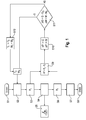
- FIG. 1 The course of the inventive method is in FIG. 1 shown schematically.
- a coffee machine is switched on, a drink is selected and the brewing process is started.
- the coffee machine in step S2 grinds a metered amount of beans to a certain, but still unknown mass of powder G.
- the grinding process is based on stored values for a meal or grinding time T 0 with a freeness M 0 .
- the values for the grinding time T 0 and the degree of grinding M 0 come from a previous preparation process.
- a powder mass G results for a beverage portion, which is required for a satisfactory brewing result.
- step S3 the ground powder mass G is now already pressed in the dry state with a defined pressing force F t . Subsequently, the volume P t of the pressed powder mass G is measured. The measured value P t is stored in a memory of the coffee machine.
- step S4 the powder mass G is brewed with hot water for a beverage portion.
- step S5 the selected beverage is dispensed at the beverage outlet.
- the brewing causes a leaching of the coffee powder and at the same time means a loss of mass of the coffee powder. It is the bigger, the finer the coffee powder is ground, the higher the degree of grinding. The finer the coffee powder is ground, the more surface is available to attack the hot water during the brewing and leaching the powder. The degree of grinding thus determines a leachable coffee surface. For the taste result, however, it is important whether the leachable coffee surface originates from a smaller but finely ground coffee powder mass or from a less finely ground large coffee powder mass. Therefore, not only the determination of the leachable coffee powder surface is required for a consistent beverage quality, but also the determination of the underlying coffee powder mass.
- step S4 After completion of the brewing in step S4 and the discharge of the beverage in step S5, the crema valve is opened to release the pressure in the brewing chamber.
- the now formed pomace from leached coffee powder is in step S6 again and also with a Pressed force F f compressed and measured the volume P f of the coffee residue in the wet and eluted state. Also, the value thus determined for the powder volume P f in the wet state is stored in a memory of the coffee machine.
- step S7 The re-pressing of the coffee powder in the wet state reduces the water content of the pomace, so that in step S7, a relatively dry pomace can be ejected into a drip tray. This completes the brewing process itself.
- the arithmetic unit determines the originally ground powder mass G and the actual degree of grinding M. in step S10. The determination is made by a value comparison with values stored in the memory of the powder Coffee machines are stored at the factory. The values for this are taken from factory measurements of reference brewing processes whose data are stored in the memory unit of the coffee machine. This determination is based on the graph of FIG. 2 explained in more detail.
- step S10 The values determined for the actual coffee powder mass G and the degree of grinding M of the instantaneous brewing process determined in step S10 are compared in step S11 with the values for a coffee mass G 0 and for the degree of beating M 0 of the previous brewing. If they coincide with each other, the initial values for the grinding time T 0 and for the degree of grinding M 0 which are used in a subsequent brewing process in step 2 remain unchanged.
- step S12 the grinding time T 0 or the grinding degree M 0 or possibly both are adjusted in step S12 in order to achieve the desired beverage result in the subsequent brewing process in accordance with the changed conditions.
- the measured values of the volumes P t and P f of the compressed coffee powder quantity G are at least indirectly compared with corresponding values of previous and subsequent brewing operations. For a meaningful and comparable measurement is therefore one each constant and defined pressing force F t or F f required. F t and F f need not be the same size, but should remain constant over the operating time of the coffee machine. In the construction of the coffee machine, special attention must therefore be paid to a reproducible and respectively constant pressing force F t or F f .
- the determination of the degree of grinding M and of the actual powder mass G in step S 10 takes place on the basis of an assignment of the measured values to stored data triplets (g; p; m).
- Each data triplet consists of one value each for a compressed volume p, for a dry powder mass g and for a degree of grinding m. They are divided into two groups of data triplets, namely those for the measurement of the compressed dry coffee powder before brewing and for the measurement of the compressed wet coffee powder after brewing. This results in two data spaces R t and R f , which in FIG. 2 exemplified as surfaces are shown. They are at a defined distance from one another in a coordinate system with three axes, namely an x-axis for the dry powder mass G, with a y-axis for the compressed volume P and a z-axis for the degree M.
- the invention is based on the recognition that the two data spaces for the data triplets of the coffee powder before brewing and that after brewing at virtually no point have the same distance.
- This knowledge makes use of the method by making an assignment of this value to the dry powder mass G and in particular to the freeness M from the measurement of the difference ⁇ P of the volumes P t and P f of the coffee powder before and after the brewing.
- the value for the compressed volume P which must be determined in any case to calculate the difference, is also recorded and evaluated. This ensures that the method provides reliable results even if the measured values show some blurring.
- step S10 the concrete embodiments of the value comparisons in step S10 may also follow in a different form to that described here, for example by forming a broader database from a plurality of values of previous brews.
- the use of the indefinite article "on” or "one” does not exclude that the characteristics in question may also be present multiple times.
Landscapes
- Engineering & Computer Science (AREA)
- Food Science & Technology (AREA)
- Mechanical Engineering (AREA)
- Apparatus For Making Beverages (AREA)
Claims (9)
- Procédé de fonctionnement d'une machine à café entièrement automatique pour assurer une qualité de percolation constante pendant sa durée de vie par détermination d'un degré de mouture en enregistrant des valeurs caractéristiques physiques relatives à la poudre de café, du fait qu'une valeur caractéristique d'une quantité de poudre de café est détectée et qu'à partir de cette quantité un paramètre de détermination du degré de mouture d'une opération de percolation suivante est déterminé, caractérisé en ce que la valeur caractéristique est détectée avant et après une infusion d'eau de préparation.
- Procédé selon la revendication 1, caractérisé en ce qu'un volume est détecté comme valeur caractéristique physique de la quantité de poudre de café.
- Procédé selon la revendication 2, caractérisé en ce qu'une différence ΔP des volumes de la quantité de poudre de café sèche Pt et de la même quantité de poudre de café humide Pf est détectée.
- Procédé selon la revendication 3, caractérisé en ce que le volume de poudre Pf de la quantité de poudre de café humide est déterminé après la percolation.
- Procédé selon l'une quelconque des revendications précédentes, comprenant les étapes suivantes :a) pressage et mesure du volume de poudre Pt à l'état sec,b) pressage et mesure du volume de poudre Pf à l'état humide,c) formation d'une différence ΔP à partir des valeurs pour le volume de poudre Pt sec et pour le volume de poudre Pf humide,d) détection du degré de mouture et de la quantité de poudre initialement dosée à partir de la différence ΔP et du volume de poudre pressé Pt ou Pf.
- Procédé selon la revendication 5, caractérisé en ce que le volume de poudre Pt et/ou Pf est pressé avec env. 40 à 60 N.
- Procédé selon l'une quelconque des revendications précédentes, caractérisé en ce que le degré de mouture est détecté à intervalles réglés de manière fixe ou à intervalles réglables resp. modifiables.
- Procédé selon l'une quelconque des revendications précédentes 2 à 6, caractérisé par une détection continue des valeurs du volume de poudre Pt resp. Pf par formation d'une moyenne des valeurs sur plusieurs opérations de percolation et par une détection du degré de mouture en raison des valeurs moyennes.
- Procédé selon l'une quelconque des revendications précédentes 2 à 6, caractérisé par une détection continue des valeurs du volume de poudre Pt resp. Pf et par une comparaison des valeurs avec des valeurs précédentes pour déterminer une variation.
Applications Claiming Priority (2)
| Application Number | Priority Date | Filing Date | Title |
|---|---|---|---|
| DE201010063947 DE102010063947A1 (de) | 2010-12-22 | 2010-12-22 | Verfahren zum Dosieren von Kaffeemehl |
| PCT/EP2011/072871 WO2012084676A1 (fr) | 2010-12-22 | 2011-12-15 | Procédé de dosage de café moulu |
Publications (2)
| Publication Number | Publication Date |
|---|---|
| EP2654530A1 EP2654530A1 (fr) | 2013-10-30 |
| EP2654530B1 true EP2654530B1 (fr) | 2015-12-09 |
Family
ID=45319129
Family Applications (1)
| Application Number | Title | Priority Date | Filing Date |
|---|---|---|---|
| EP11794510.5A Active EP2654530B1 (fr) | 2010-12-22 | 2011-12-15 | Procédé de dosage de café moulu |
Country Status (3)
| Country | Link |
|---|---|
| EP (1) | EP2654530B1 (fr) |
| DE (1) | DE102010063947A1 (fr) |
| WO (1) | WO2012084676A1 (fr) |
Families Citing this family (6)
| Publication number | Priority date | Publication date | Assignee | Title |
|---|---|---|---|---|
| CN105101851B (zh) | 2013-04-08 | 2018-11-30 | 布瑞威利私人有限公司 | 改进的咖啡研磨器 |
| CH713826A1 (de) * | 2017-05-30 | 2018-11-30 | Aequator Ag | Dosiervorrichtung zum Dosieren von Kaffeebohnen und Kaffeemaschine. |
| CN107951393A (zh) * | 2017-12-20 | 2018-04-24 | 苏州咖博士咖啡系统科技有限公司 | 一种咖啡机内部咖啡渣的检测方法 |
| IT201800010697A1 (it) * | 2018-11-29 | 2020-05-29 | Simonelli Group Spa | Macchina da caffè con sistema di preinfusione proporzionale. |
| DE102022207807A1 (de) | 2022-07-28 | 2024-02-08 | BSH Hausgeräte GmbH | Verfahren zur Regelung einer Kaffeepulvermenge, Kaffeeautomat und Computerprogrammprodukt |
| DE102022212640B4 (de) | 2022-11-25 | 2024-09-19 | BSH Hausgeräte GmbH | Verfahren zur Antriebsüberwachung, Haushaltsgerät und Computerprogrammprodukt |
Family Cites Families (4)
| Publication number | Priority date | Publication date | Assignee | Title |
|---|---|---|---|---|
| DE3615158C2 (de) | 1986-05-05 | 1990-11-15 | Cafina Ag | Verfahren zur Zubereitung einer Mehrzahl von Kaffeeportionen |
| ITFI20070049A1 (it) | 2007-02-27 | 2008-08-28 | Saeco Ipr Ltd | Metodo per la regolazione automatica della quantita di caffe' e macchina da caffe' che usa detto metodo. |
| ITMI20071442A1 (it) * | 2007-07-18 | 2009-01-19 | De Longhi Appliances Srl | Procedimento per il controllo di un maciinino di una macchina da caffe' |
| DE102009049229A1 (de) * | 2009-10-13 | 2011-05-05 | Wmf Württembergische Metallwarenfabrik Ag | Espressomaschine oder Kaffeevollautomat mit automatischer Bestimmung der Korngrößenverteilung und/oder des Mahlgrads von gemahlenem Kaffee |
-
2010
- 2010-12-22 DE DE201010063947 patent/DE102010063947A1/de not_active Ceased
-
2011
- 2011-12-15 EP EP11794510.5A patent/EP2654530B1/fr active Active
- 2011-12-15 WO PCT/EP2011/072871 patent/WO2012084676A1/fr not_active Ceased
Also Published As
| Publication number | Publication date |
|---|---|
| EP2654530A1 (fr) | 2013-10-30 |
| WO2012084676A1 (fr) | 2012-06-28 |
| DE102010063947A1 (de) | 2012-06-28 |
Similar Documents
| Publication | Publication Date | Title |
|---|---|---|
| EP2488076B1 (fr) | Machine à expresso ou cafetière entièrement automatique, avec détermination automatique de la distribution granulométrique et/ou de la finesse de mouture du café moulu | |
| EP3108776B1 (fr) | Procédé de génération d'un boisson au café | |
| EP1955624B1 (fr) | Machine à café | |
| EP3813614B1 (fr) | Mécanisme de mouture, machine à café et procédé de mouture des grains de café | |
| WO2012084676A1 (fr) | Procédé de dosage de café moulu | |
| EP4280918B1 (fr) | Procédé de fonctionnement d'une machine à café entièrement automatique et machine à café entièrement automatique | |
| EP3345517B1 (fr) | Machine à café et à expresso | |
| EP2457475A1 (fr) | Procédé d'ébouillantage | |
| DE102011054155A1 (de) | Kaffeeautomat und Verfahren zum Einbringen einer Bohnenmenge | |
| EP3415047A1 (fr) | Distributeur automatique de thé doté du dispositif d'analyse de thé et procédé de préparation automatique d'une boisson à base de thé | |
| WO2021204455A1 (fr) | Machine à espresso | |
| EP3415050B1 (fr) | Distributeur automatique de thé pour une pluralité d'infusions et procédé de fonctionnement d'un tel distributeur automatique de thé | |
| EP2578121A1 (fr) | Machine à café et procédé destiné au fonctionnement d'une machine à café | |
| DE102017111859A1 (de) | Kaffeeautomat mit einer Steuereinrichtung zur Einstellung von Getränkeparametern | |
| EP4044879A1 (fr) | Procédé de production de café et dispositif de mise en oeuvre dudit procédé | |
| EP3817633B1 (fr) | Procédé de fabrication de boissons à base de café, et dispositif de fabrication de boissons chaudes contenant de la caféine | |
| EP3415048A1 (fr) | Distributeur automatique de thé doté du dispositif de détection permettant de détecter les portions d'ingrédients et procédé de commande d'un distributeur automatique de thé | |
| DE102020123034A1 (de) | Kaffeekapsel | |
| EP4445809B1 (fr) | Procédé de fonctionnement d'un dispositif de préparation de boissons doté d'une unité de pré-compression hydraulique pour comprimer un substrat de boisson | |
| CN119366787A (zh) | 一种自动装载咖啡粉的方法 | |
| DE102006061221A1 (de) | Verfahren zur Herstellung von Brühgetränken und Brühvorrichtung zur Durchführung des Verfahrens | |
| DE202014008675U1 (de) | Auto-Start Dosierung | |
| DD289700A5 (de) | Getraenkebereiter, insbesondere zur herstellung von kaffeegetraenken |
Legal Events
| Date | Code | Title | Description |
|---|---|---|---|
| PUAI | Public reference made under article 153(3) epc to a published international application that has entered the european phase |
Free format text: ORIGINAL CODE: 0009012 |
|
| 17P | Request for examination filed |
Effective date: 20130722 |
|
| AK | Designated contracting states |
Kind code of ref document: A1 Designated state(s): AL AT BE BG CH CY CZ DE DK EE ES FI FR GB GR HR HU IE IS IT LI LT LU LV MC MK MT NL NO PL PT RO RS SE SI SK SM TR |
|
| DAX | Request for extension of the european patent (deleted) | ||
| RAP1 | Party data changed (applicant data changed or rights of an application transferred) |
Owner name: BSH HAUSGERAETE GMBH |
|
| GRAP | Despatch of communication of intention to grant a patent |
Free format text: ORIGINAL CODE: EPIDOSNIGR1 |
|
| INTG | Intention to grant announced |
Effective date: 20150708 |
|
| GRAS | Grant fee paid |
Free format text: ORIGINAL CODE: EPIDOSNIGR3 |
|
| GRAA | (expected) grant |
Free format text: ORIGINAL CODE: 0009210 |
|
| AK | Designated contracting states |
Kind code of ref document: B1 Designated state(s): AL AT BE BG CH CY CZ DE DK EE ES FI FR GB GR HR HU IE IS IT LI LT LU LV MC MK MT NL NO PL PT RO RS SE SI SK SM TR |
|
| REG | Reference to a national code |
Ref country code: GB Ref legal event code: FG4D Free format text: NOT ENGLISH |
|
| REG | Reference to a national code |
Ref country code: AT Ref legal event code: REF Ref document number: 764157 Country of ref document: AT Kind code of ref document: T Effective date: 20151215 Ref country code: CH Ref legal event code: EP |
|
| REG | Reference to a national code |
Ref country code: IE Ref legal event code: FG4D Free format text: LANGUAGE OF EP DOCUMENT: GERMAN |
|
| REG | Reference to a national code |
Ref country code: DE Ref legal event code: R096 Ref document number: 502011008484 Country of ref document: DE |
|
| REG | Reference to a national code |
Ref country code: LT Ref legal event code: MG4D |
|
| REG | Reference to a national code |
Ref country code: NL Ref legal event code: MP Effective date: 20151209 |
|
| PG25 | Lapsed in a contracting state [announced via postgrant information from national office to epo] |
Ref country code: ES Free format text: LAPSE BECAUSE OF FAILURE TO SUBMIT A TRANSLATION OF THE DESCRIPTION OR TO PAY THE FEE WITHIN THE PRESCRIBED TIME-LIMIT Effective date: 20151209 Ref country code: NO Free format text: LAPSE BECAUSE OF FAILURE TO SUBMIT A TRANSLATION OF THE DESCRIPTION OR TO PAY THE FEE WITHIN THE PRESCRIBED TIME-LIMIT Effective date: 20160309 Ref country code: LT Free format text: LAPSE BECAUSE OF FAILURE TO SUBMIT A TRANSLATION OF THE DESCRIPTION OR TO PAY THE FEE WITHIN THE PRESCRIBED TIME-LIMIT Effective date: 20151209 |
|
| PG25 | Lapsed in a contracting state [announced via postgrant information from national office to epo] |
Ref country code: RS Free format text: LAPSE BECAUSE OF FAILURE TO SUBMIT A TRANSLATION OF THE DESCRIPTION OR TO PAY THE FEE WITHIN THE PRESCRIBED TIME-LIMIT Effective date: 20151209 Ref country code: NL Free format text: LAPSE BECAUSE OF FAILURE TO SUBMIT A TRANSLATION OF THE DESCRIPTION OR TO PAY THE FEE WITHIN THE PRESCRIBED TIME-LIMIT Effective date: 20151209 Ref country code: BE Free format text: LAPSE BECAUSE OF NON-PAYMENT OF DUE FEES Effective date: 20151231 Ref country code: SE Free format text: LAPSE BECAUSE OF FAILURE TO SUBMIT A TRANSLATION OF THE DESCRIPTION OR TO PAY THE FEE WITHIN THE PRESCRIBED TIME-LIMIT Effective date: 20151209 Ref country code: LV Free format text: LAPSE BECAUSE OF FAILURE TO SUBMIT A TRANSLATION OF THE DESCRIPTION OR TO PAY THE FEE WITHIN THE PRESCRIBED TIME-LIMIT Effective date: 20151209 Ref country code: FI Free format text: LAPSE BECAUSE OF FAILURE TO SUBMIT A TRANSLATION OF THE DESCRIPTION OR TO PAY THE FEE WITHIN THE PRESCRIBED TIME-LIMIT Effective date: 20151209 Ref country code: GR Free format text: LAPSE BECAUSE OF FAILURE TO SUBMIT A TRANSLATION OF THE DESCRIPTION OR TO PAY THE FEE WITHIN THE PRESCRIBED TIME-LIMIT Effective date: 20160310 |
|
| PG25 | Lapsed in a contracting state [announced via postgrant information from national office to epo] |
Ref country code: IS Free format text: LAPSE BECAUSE OF FAILURE TO SUBMIT A TRANSLATION OF THE DESCRIPTION OR TO PAY THE FEE WITHIN THE PRESCRIBED TIME-LIMIT Effective date: 20151209 |
|
| PG25 | Lapsed in a contracting state [announced via postgrant information from national office to epo] |
Ref country code: CZ Free format text: LAPSE BECAUSE OF FAILURE TO SUBMIT A TRANSLATION OF THE DESCRIPTION OR TO PAY THE FEE WITHIN THE PRESCRIBED TIME-LIMIT Effective date: 20151209 |
|
| PG25 | Lapsed in a contracting state [announced via postgrant information from national office to epo] |
Ref country code: RO Free format text: LAPSE BECAUSE OF FAILURE TO SUBMIT A TRANSLATION OF THE DESCRIPTION OR TO PAY THE FEE WITHIN THE PRESCRIBED TIME-LIMIT Effective date: 20151209 Ref country code: PT Free format text: LAPSE BECAUSE OF FAILURE TO SUBMIT A TRANSLATION OF THE DESCRIPTION OR TO PAY THE FEE WITHIN THE PRESCRIBED TIME-LIMIT Effective date: 20160411 Ref country code: IS Free format text: LAPSE BECAUSE OF FAILURE TO SUBMIT A TRANSLATION OF THE DESCRIPTION OR TO PAY THE FEE WITHIN THE PRESCRIBED TIME-LIMIT Effective date: 20160409 Ref country code: SK Free format text: LAPSE BECAUSE OF FAILURE TO SUBMIT A TRANSLATION OF THE DESCRIPTION OR TO PAY THE FEE WITHIN THE PRESCRIBED TIME-LIMIT Effective date: 20151209 Ref country code: EE Free format text: LAPSE BECAUSE OF FAILURE TO SUBMIT A TRANSLATION OF THE DESCRIPTION OR TO PAY THE FEE WITHIN THE PRESCRIBED TIME-LIMIT Effective date: 20151209 Ref country code: SM Free format text: LAPSE BECAUSE OF FAILURE TO SUBMIT A TRANSLATION OF THE DESCRIPTION OR TO PAY THE FEE WITHIN THE PRESCRIBED TIME-LIMIT Effective date: 20151209 |
|
| REG | Reference to a national code |
Ref country code: DE Ref legal event code: R097 Ref document number: 502011008484 Country of ref document: DE |
|
| REG | Reference to a national code |
Ref country code: IE Ref legal event code: MM4A |
|
| PG25 | Lapsed in a contracting state [announced via postgrant information from national office to epo] |
Ref country code: MC Free format text: LAPSE BECAUSE OF FAILURE TO SUBMIT A TRANSLATION OF THE DESCRIPTION OR TO PAY THE FEE WITHIN THE PRESCRIBED TIME-LIMIT Effective date: 20151209 |
|
| PLBE | No opposition filed within time limit |
Free format text: ORIGINAL CODE: 0009261 |
|
| STAA | Information on the status of an ep patent application or granted ep patent |
Free format text: STATUS: NO OPPOSITION FILED WITHIN TIME LIMIT |
|
| PG25 | Lapsed in a contracting state [announced via postgrant information from national office to epo] |
Ref country code: IE Free format text: LAPSE BECAUSE OF NON-PAYMENT OF DUE FEES Effective date: 20151215 Ref country code: PL Free format text: LAPSE BECAUSE OF FAILURE TO SUBMIT A TRANSLATION OF THE DESCRIPTION OR TO PAY THE FEE WITHIN THE PRESCRIBED TIME-LIMIT Effective date: 20151209 Ref country code: DK Free format text: LAPSE BECAUSE OF FAILURE TO SUBMIT A TRANSLATION OF THE DESCRIPTION OR TO PAY THE FEE WITHIN THE PRESCRIBED TIME-LIMIT Effective date: 20151209 |
|
| 26N | No opposition filed |
Effective date: 20160912 |
|
| GBPC | Gb: european patent ceased through non-payment of renewal fee |
Effective date: 20160309 |
|
| PG25 | Lapsed in a contracting state [announced via postgrant information from national office to epo] |
Ref country code: SI Free format text: LAPSE BECAUSE OF FAILURE TO SUBMIT A TRANSLATION OF THE DESCRIPTION OR TO PAY THE FEE WITHIN THE PRESCRIBED TIME-LIMIT Effective date: 20151209 |
|
| REG | Reference to a national code |
Ref country code: FR Ref legal event code: ST Effective date: 20161114 |
|
| PG25 | Lapsed in a contracting state [announced via postgrant information from national office to epo] |
Ref country code: GB Free format text: LAPSE BECAUSE OF NON-PAYMENT OF DUE FEES Effective date: 20160309 Ref country code: FR Free format text: LAPSE BECAUSE OF NON-PAYMENT OF DUE FEES Effective date: 20160209 |
|
| PG25 | Lapsed in a contracting state [announced via postgrant information from national office to epo] |
Ref country code: HU Free format text: LAPSE BECAUSE OF FAILURE TO SUBMIT A TRANSLATION OF THE DESCRIPTION OR TO PAY THE FEE WITHIN THE PRESCRIBED TIME-LIMIT; INVALID AB INITIO Effective date: 20111215 Ref country code: BG Free format text: LAPSE BECAUSE OF FAILURE TO SUBMIT A TRANSLATION OF THE DESCRIPTION OR TO PAY THE FEE WITHIN THE PRESCRIBED TIME-LIMIT Effective date: 20151209 |
|
| PG25 | Lapsed in a contracting state [announced via postgrant information from national office to epo] |
Ref country code: CY Free format text: LAPSE BECAUSE OF FAILURE TO SUBMIT A TRANSLATION OF THE DESCRIPTION OR TO PAY THE FEE WITHIN THE PRESCRIBED TIME-LIMIT Effective date: 20151209 |
|
| PG25 | Lapsed in a contracting state [announced via postgrant information from national office to epo] |
Ref country code: HR Free format text: LAPSE BECAUSE OF FAILURE TO SUBMIT A TRANSLATION OF THE DESCRIPTION OR TO PAY THE FEE WITHIN THE PRESCRIBED TIME-LIMIT Effective date: 20151209 |
|
| PG25 | Lapsed in a contracting state [announced via postgrant information from national office to epo] |
Ref country code: MT Free format text: LAPSE BECAUSE OF FAILURE TO SUBMIT A TRANSLATION OF THE DESCRIPTION OR TO PAY THE FEE WITHIN THE PRESCRIBED TIME-LIMIT Effective date: 20151209 |
|
| PG25 | Lapsed in a contracting state [announced via postgrant information from national office to epo] |
Ref country code: LU Free format text: LAPSE BECAUSE OF NON-PAYMENT OF DUE FEES Effective date: 20151215 |
|
| REG | Reference to a national code |
Ref country code: AT Ref legal event code: MM01 Ref document number: 764157 Country of ref document: AT Kind code of ref document: T Effective date: 20161215 |
|
| PG25 | Lapsed in a contracting state [announced via postgrant information from national office to epo] |
Ref country code: AT Free format text: LAPSE BECAUSE OF NON-PAYMENT OF DUE FEES Effective date: 20161215 |
|
| PG25 | Lapsed in a contracting state [announced via postgrant information from national office to epo] |
Ref country code: MK Free format text: LAPSE BECAUSE OF FAILURE TO SUBMIT A TRANSLATION OF THE DESCRIPTION OR TO PAY THE FEE WITHIN THE PRESCRIBED TIME-LIMIT Effective date: 20151209 Ref country code: TR Free format text: LAPSE BECAUSE OF FAILURE TO SUBMIT A TRANSLATION OF THE DESCRIPTION OR TO PAY THE FEE WITHIN THE PRESCRIBED TIME-LIMIT Effective date: 20151209 |
|
| PG25 | Lapsed in a contracting state [announced via postgrant information from national office to epo] |
Ref country code: AL Free format text: LAPSE BECAUSE OF FAILURE TO SUBMIT A TRANSLATION OF THE DESCRIPTION OR TO PAY THE FEE WITHIN THE PRESCRIBED TIME-LIMIT Effective date: 20151209 |
|
| REG | Reference to a national code |
Ref country code: CH Ref legal event code: U11 Free format text: ST27 STATUS EVENT CODE: U-0-0-U10-U11 (AS PROVIDED BY THE NATIONAL OFFICE) Effective date: 20260101 |
|
| PGFP | Annual fee paid to national office [announced via postgrant information from national office to epo] |
Ref country code: DE Payment date: 20251231 Year of fee payment: 15 |
|
| PGFP | Annual fee paid to national office [announced via postgrant information from national office to epo] |
Ref country code: IT Payment date: 20251231 Year of fee payment: 15 |
|
| PGFP | Annual fee paid to national office [announced via postgrant information from national office to epo] |
Ref country code: CH Payment date: 20260101 Year of fee payment: 15 |