EP2653536A1 - Procédé de préparation de bactériophages modifiés par insertion de séquences aléatoires dans les protéines de ciblage desdits bactériophages. - Google Patents
Procédé de préparation de bactériophages modifiés par insertion de séquences aléatoires dans les protéines de ciblage desdits bactériophages. Download PDFInfo
- Publication number
- EP2653536A1 EP2653536A1 EP12192306.4A EP12192306A EP2653536A1 EP 2653536 A1 EP2653536 A1 EP 2653536A1 EP 12192306 A EP12192306 A EP 12192306A EP 2653536 A1 EP2653536 A1 EP 2653536A1
- Authority
- EP
- European Patent Office
- Prior art keywords
- bacteriophage
- bacteriophages
- sequence
- pcr
- bacteria
- Prior art date
- Legal status (The legal status is an assumption and is not a legal conclusion. Google has not performed a legal analysis and makes no representation as to the accuracy of the status listed.)
- Withdrawn
Links
- 241001515965 unidentified phage Species 0.000 title claims abstract description 230
- 108090000623 proteins and genes Proteins 0.000 title claims abstract description 172
- 102000004169 proteins and genes Human genes 0.000 title claims abstract description 93
- 238000000034 method Methods 0.000 title claims abstract description 68
- 230000037431 insertion Effects 0.000 title claims abstract description 25
- 238000003780 insertion Methods 0.000 title claims abstract description 25
- 241000894006 Bacteria Species 0.000 claims abstract description 104
- 230000008685 targeting Effects 0.000 claims abstract description 66
- 108091034117 Oligonucleotide Proteins 0.000 claims abstract description 40
- 230000006801 homologous recombination Effects 0.000 claims abstract description 25
- 238000002744 homologous recombination Methods 0.000 claims abstract description 25
- 230000008569 process Effects 0.000 claims abstract description 13
- 230000001131 transforming effect Effects 0.000 claims abstract description 6
- 239000013598 vector Substances 0.000 claims description 32
- 230000010076 replication Effects 0.000 claims description 25
- 208000015181 infectious disease Diseases 0.000 claims description 21
- 238000002360 preparation method Methods 0.000 claims description 9
- 101150064129 slp gene Proteins 0.000 claims description 7
- 101800001670 GP38 Proteins 0.000 claims description 6
- 208000035143 Bacterial infection Diseases 0.000 claims description 5
- 208000022362 bacterial infectious disease Diseases 0.000 claims description 5
- 101100351324 Homo sapiens PDPN gene Proteins 0.000 claims description 4
- 102100037265 Podoplanin Human genes 0.000 claims description 4
- 239000003814 drug Substances 0.000 claims description 4
- 238000001514 detection method Methods 0.000 claims description 3
- 238000000338 in vitro Methods 0.000 claims 2
- 229940124597 therapeutic agent Drugs 0.000 claims 1
- 230000003321 amplification Effects 0.000 abstract description 31
- 238000003199 nucleic acid amplification method Methods 0.000 abstract description 31
- JLCPHMBAVCMARE-UHFFFAOYSA-N [3-[[3-[[3-[[3-[[3-[[3-[[3-[[3-[[3-[[3-[[3-[[5-(2-amino-6-oxo-1H-purin-9-yl)-3-[[3-[[3-[[3-[[3-[[3-[[5-(2-amino-6-oxo-1H-purin-9-yl)-3-[[5-(2-amino-6-oxo-1H-purin-9-yl)-3-hydroxyoxolan-2-yl]methoxy-hydroxyphosphoryl]oxyoxolan-2-yl]methoxy-hydroxyphosphoryl]oxy-5-(5-methyl-2,4-dioxopyrimidin-1-yl)oxolan-2-yl]methoxy-hydroxyphosphoryl]oxy-5-(6-aminopurin-9-yl)oxolan-2-yl]methoxy-hydroxyphosphoryl]oxy-5-(6-aminopurin-9-yl)oxolan-2-yl]methoxy-hydroxyphosphoryl]oxy-5-(6-aminopurin-9-yl)oxolan-2-yl]methoxy-hydroxyphosphoryl]oxy-5-(6-aminopurin-9-yl)oxolan-2-yl]methoxy-hydroxyphosphoryl]oxyoxolan-2-yl]methoxy-hydroxyphosphoryl]oxy-5-(5-methyl-2,4-dioxopyrimidin-1-yl)oxolan-2-yl]methoxy-hydroxyphosphoryl]oxy-5-(4-amino-2-oxopyrimidin-1-yl)oxolan-2-yl]methoxy-hydroxyphosphoryl]oxy-5-(5-methyl-2,4-dioxopyrimidin-1-yl)oxolan-2-yl]methoxy-hydroxyphosphoryl]oxy-5-(5-methyl-2,4-dioxopyrimidin-1-yl)oxolan-2-yl]methoxy-hydroxyphosphoryl]oxy-5-(6-aminopurin-9-yl)oxolan-2-yl]methoxy-hydroxyphosphoryl]oxy-5-(6-aminopurin-9-yl)oxolan-2-yl]methoxy-hydroxyphosphoryl]oxy-5-(4-amino-2-oxopyrimidin-1-yl)oxolan-2-yl]methoxy-hydroxyphosphoryl]oxy-5-(4-amino-2-oxopyrimidin-1-yl)oxolan-2-yl]methoxy-hydroxyphosphoryl]oxy-5-(4-amino-2-oxopyrimidin-1-yl)oxolan-2-yl]methoxy-hydroxyphosphoryl]oxy-5-(6-aminopurin-9-yl)oxolan-2-yl]methoxy-hydroxyphosphoryl]oxy-5-(4-amino-2-oxopyrimidin-1-yl)oxolan-2-yl]methyl [5-(6-aminopurin-9-yl)-2-(hydroxymethyl)oxolan-3-yl] hydrogen phosphate Polymers Cc1cn(C2CC(OP(O)(=O)OCC3OC(CC3OP(O)(=O)OCC3OC(CC3O)n3cnc4c3nc(N)[nH]c4=O)n3cnc4c3nc(N)[nH]c4=O)C(COP(O)(=O)OC3CC(OC3COP(O)(=O)OC3CC(OC3COP(O)(=O)OC3CC(OC3COP(O)(=O)OC3CC(OC3COP(O)(=O)OC3CC(OC3COP(O)(=O)OC3CC(OC3COP(O)(=O)OC3CC(OC3COP(O)(=O)OC3CC(OC3COP(O)(=O)OC3CC(OC3COP(O)(=O)OC3CC(OC3COP(O)(=O)OC3CC(OC3COP(O)(=O)OC3CC(OC3COP(O)(=O)OC3CC(OC3COP(O)(=O)OC3CC(OC3COP(O)(=O)OC3CC(OC3COP(O)(=O)OC3CC(OC3COP(O)(=O)OC3CC(OC3CO)n3cnc4c(N)ncnc34)n3ccc(N)nc3=O)n3cnc4c(N)ncnc34)n3ccc(N)nc3=O)n3ccc(N)nc3=O)n3ccc(N)nc3=O)n3cnc4c(N)ncnc34)n3cnc4c(N)ncnc34)n3cc(C)c(=O)[nH]c3=O)n3cc(C)c(=O)[nH]c3=O)n3ccc(N)nc3=O)n3cc(C)c(=O)[nH]c3=O)n3cnc4c3nc(N)[nH]c4=O)n3cnc4c(N)ncnc34)n3cnc4c(N)ncnc34)n3cnc4c(N)ncnc34)n3cnc4c(N)ncnc34)O2)c(=O)[nH]c1=O JLCPHMBAVCMARE-UHFFFAOYSA-N 0.000 abstract description 25
- 239000002773 nucleotide Substances 0.000 abstract description 22
- 125000003729 nucleotide group Chemical group 0.000 abstract description 22
- 238000010276 construction Methods 0.000 abstract description 9
- 230000000694 effects Effects 0.000 abstract description 6
- 230000000844 anti-bacterial effect Effects 0.000 abstract 1
- 230000010534 mechanism of action Effects 0.000 abstract 1
- 101710086578 Chaperone protein gp12 Proteins 0.000 description 40
- 101710102575 Pre-neck appendage protein Proteins 0.000 description 40
- 239000000047 product Substances 0.000 description 39
- 108020004414 DNA Proteins 0.000 description 31
- 238000006243 chemical reaction Methods 0.000 description 31
- 210000004027 cell Anatomy 0.000 description 29
- 230000035772 mutation Effects 0.000 description 16
- 241000701533 Escherichia virus T4 Species 0.000 description 14
- 230000001580 bacterial effect Effects 0.000 description 12
- 239000007795 chemical reaction product Substances 0.000 description 12
- 108091028043 Nucleic acid sequence Proteins 0.000 description 11
- 239000000203 mixture Substances 0.000 description 11
- 101800000385 Transmembrane protein Proteins 0.000 description 10
- 239000012634 fragment Substances 0.000 description 10
- 230000006798 recombination Effects 0.000 description 10
- 238000005215 recombination Methods 0.000 description 10
- 241000588724 Escherichia coli Species 0.000 description 8
- 238000004873 anchoring Methods 0.000 description 8
- 230000000717 retained effect Effects 0.000 description 8
- 230000007923 virulence factor Effects 0.000 description 8
- 239000000304 virulence factor Substances 0.000 description 8
- HEDRZPFGACZZDS-UHFFFAOYSA-N Chloroform Chemical compound ClC(Cl)Cl HEDRZPFGACZZDS-UHFFFAOYSA-N 0.000 description 6
- 230000000692 anti-sense effect Effects 0.000 description 6
- 239000000835 fiber Substances 0.000 description 6
- 230000002458 infectious effect Effects 0.000 description 6
- 238000012986 modification Methods 0.000 description 6
- 230000004048 modification Effects 0.000 description 6
- 102000005962 receptors Human genes 0.000 description 6
- 108020003175 receptors Proteins 0.000 description 6
- 238000012163 sequencing technique Methods 0.000 description 6
- 238000012795 verification Methods 0.000 description 6
- 238000005273 aeration Methods 0.000 description 5
- 239000000872 buffer Substances 0.000 description 5
- WIIZWVCIJKGZOK-RKDXNWHRSA-N chloramphenicol Chemical compound ClC(Cl)C(=O)N[C@H](CO)[C@H](O)C1=CC=C([N+]([O-])=O)C=C1 WIIZWVCIJKGZOK-RKDXNWHRSA-N 0.000 description 5
- 238000004519 manufacturing process Methods 0.000 description 5
- 229920001184 polypeptide Polymers 0.000 description 5
- 108090000765 processed proteins & peptides Proteins 0.000 description 5
- 102000004196 processed proteins & peptides Human genes 0.000 description 5
- 238000011084 recovery Methods 0.000 description 5
- 241000894007 species Species 0.000 description 5
- QKNYBSVHEMOAJP-UHFFFAOYSA-N 2-amino-2-(hydroxymethyl)propane-1,3-diol;hydron;chloride Chemical compound Cl.OCC(N)(CO)CO QKNYBSVHEMOAJP-UHFFFAOYSA-N 0.000 description 4
- 239000003242 anti bacterial agent Substances 0.000 description 4
- 229940088710 antibiotic agent Drugs 0.000 description 4
- 229960005091 chloramphenicol Drugs 0.000 description 4
- 238000010367 cloning Methods 0.000 description 4
- 108091006047 fluorescent proteins Proteins 0.000 description 4
- 102000034287 fluorescent proteins Human genes 0.000 description 4
- 230000004927 fusion Effects 0.000 description 4
- 230000002068 genetic effect Effects 0.000 description 4
- 230000002101 lytic effect Effects 0.000 description 4
- 238000000746 purification Methods 0.000 description 4
- 238000001228 spectrum Methods 0.000 description 4
- 239000006228 supernatant Substances 0.000 description 4
- 102000053602 DNA Human genes 0.000 description 3
- 241000701959 Escherichia virus Lambda Species 0.000 description 3
- 108010047357 Luminescent Proteins Proteins 0.000 description 3
- 102000006830 Luminescent Proteins Human genes 0.000 description 3
- 241001465754 Metazoa Species 0.000 description 3
- 239000011543 agarose gel Substances 0.000 description 3
- 244000052616 bacterial pathogen Species 0.000 description 3
- 230000008901 benefit Effects 0.000 description 3
- 238000011161 development Methods 0.000 description 3
- 230000018109 developmental process Effects 0.000 description 3
- 238000004520 electroporation Methods 0.000 description 3
- 238000001502 gel electrophoresis Methods 0.000 description 3
- 230000012010 growth Effects 0.000 description 3
- 229930027917 kanamycin Natural products 0.000 description 3
- 229960000318 kanamycin Drugs 0.000 description 3
- SBUJHOSQTJFQJX-NOAMYHISSA-N kanamycin Chemical compound O[C@@H]1[C@@H](O)[C@H](O)[C@@H](CN)O[C@@H]1O[C@H]1[C@H](O)[C@@H](O[C@@H]2[C@@H]([C@@H](N)[C@H](O)[C@@H](CO)O2)O)[C@H](N)C[C@@H]1N SBUJHOSQTJFQJX-NOAMYHISSA-N 0.000 description 3
- 229930182823 kanamycin A Natural products 0.000 description 3
- 230000001320 lysogenic effect Effects 0.000 description 3
- 238000002703 mutagenesis Methods 0.000 description 3
- 231100000350 mutagenesis Toxicity 0.000 description 3
- 239000002245 particle Substances 0.000 description 3
- 230000037452 priming Effects 0.000 description 3
- 230000009466 transformation Effects 0.000 description 3
- 206010011409 Cross infection Diseases 0.000 description 2
- 108091029865 Exogenous DNA Proteins 0.000 description 2
- 108090000288 Glycoproteins Proteins 0.000 description 2
- 102000003886 Glycoproteins Human genes 0.000 description 2
- 108010043121 Green Fluorescent Proteins Proteins 0.000 description 2
- 102000004144 Green Fluorescent Proteins Human genes 0.000 description 2
- FAPWRFPIFSIZLT-UHFFFAOYSA-M Sodium chloride Chemical compound [Na+].[Cl-] FAPWRFPIFSIZLT-UHFFFAOYSA-M 0.000 description 2
- 241000700605 Viruses Species 0.000 description 2
- 150000001413 amino acids Chemical class 0.000 description 2
- 229960000723 ampicillin Drugs 0.000 description 2
- AVKUERGKIZMTKX-NJBDSQKTSA-N ampicillin Chemical compound C1([C@@H](N)C(=O)N[C@H]2[C@H]3SC([C@@H](N3C2=O)C(O)=O)(C)C)=CC=CC=C1 AVKUERGKIZMTKX-NJBDSQKTSA-N 0.000 description 2
- 238000004458 analytical method Methods 0.000 description 2
- 230000015572 biosynthetic process Effects 0.000 description 2
- 210000000234 capsid Anatomy 0.000 description 2
- 238000004113 cell culture Methods 0.000 description 2
- 239000000470 constituent Substances 0.000 description 2
- 239000005090 green fluorescent protein Substances 0.000 description 2
- 230000000670 limiting effect Effects 0.000 description 2
- 230000001717 pathogenic effect Effects 0.000 description 2
- 238000006116 polymerization reaction Methods 0.000 description 2
- 239000011541 reaction mixture Substances 0.000 description 2
- 230000008707 rearrangement Effects 0.000 description 2
- 101150079601 recA gene Proteins 0.000 description 2
- 230000002441 reversible effect Effects 0.000 description 2
- 238000012216 screening Methods 0.000 description 2
- 230000035939 shock Effects 0.000 description 2
- 239000007787 solid Substances 0.000 description 2
- 239000000243 solution Substances 0.000 description 2
- 241001624918 unidentified bacterium Species 0.000 description 2
- XLYOFNOQVPJJNP-UHFFFAOYSA-N water Substances O XLYOFNOQVPJJNP-UHFFFAOYSA-N 0.000 description 2
- OPIFSICVWOWJMJ-AEOCFKNESA-N 5-bromo-4-chloro-3-indolyl beta-D-galactoside Chemical compound O[C@@H]1[C@@H](O)[C@@H](O)[C@@H](CO)O[C@H]1OC1=CNC2=CC=C(Br)C(Cl)=C12 OPIFSICVWOWJMJ-AEOCFKNESA-N 0.000 description 1
- 229920000936 Agarose Polymers 0.000 description 1
- 108090000565 Capsid Proteins Proteins 0.000 description 1
- 102100023321 Ceruloplasmin Human genes 0.000 description 1
- 108091026890 Coding region Proteins 0.000 description 1
- 108091033380 Coding strand Proteins 0.000 description 1
- 241001135265 Cronobacter sakazakii Species 0.000 description 1
- 101150063735 DNASE1 gene Proteins 0.000 description 1
- KCXVZYZYPLLWCC-UHFFFAOYSA-N EDTA Chemical compound OC(=O)CN(CC(O)=O)CCN(CC(O)=O)CC(O)=O KCXVZYZYPLLWCC-UHFFFAOYSA-N 0.000 description 1
- 241000196324 Embryophyta Species 0.000 description 1
- 241000724228 Enterobacteria phage RB69 Species 0.000 description 1
- 241000701536 Enterobacteria phage T6 Species 0.000 description 1
- 241000701867 Enterobacteria phage T7 Species 0.000 description 1
- 108090000790 Enzymes Proteins 0.000 description 1
- 102000004190 Enzymes Human genes 0.000 description 1
- 241000588722 Escherichia Species 0.000 description 1
- 241001333951 Escherichia coli O157 Species 0.000 description 1
- 241001646719 Escherichia coli O157:H7 Species 0.000 description 1
- 241000701988 Escherichia virus T5 Species 0.000 description 1
- 241000206602 Eukaryota Species 0.000 description 1
- 108010010803 Gelatin Proteins 0.000 description 1
- 241000282412 Homo Species 0.000 description 1
- QIVBCDIJIAJPQS-VIFPVBQESA-N L-tryptophane Chemical compound C1=CC=C2C(C[C@H](N)C(O)=O)=CNC2=C1 QIVBCDIJIAJPQS-VIFPVBQESA-N 0.000 description 1
- 241000186781 Listeria Species 0.000 description 1
- 241000186779 Listeria monocytogenes Species 0.000 description 1
- 206010024641 Listeriosis Diseases 0.000 description 1
- 102000016943 Muramidase Human genes 0.000 description 1
- 108010014251 Muramidase Proteins 0.000 description 1
- 108010062010 N-Acetylmuramoyl-L-alanine Amidase Proteins 0.000 description 1
- 101710163270 Nuclease Proteins 0.000 description 1
- 108700028353 OmpC Proteins 0.000 description 1
- 108700026244 Open Reading Frames Proteins 0.000 description 1
- 238000012408 PCR amplification Methods 0.000 description 1
- 108010002747 Pfu DNA polymerase Proteins 0.000 description 1
- 208000035415 Reinfection Diseases 0.000 description 1
- 241000607142 Salmonella Species 0.000 description 1
- 241000607149 Salmonella sp. Species 0.000 description 1
- 241000607768 Shigella Species 0.000 description 1
- 108010090804 Streptavidin Proteins 0.000 description 1
- 229930006000 Sucrose Natural products 0.000 description 1
- CZMRCDWAGMRECN-UGDNZRGBSA-N Sucrose Chemical compound O[C@H]1[C@H](O)[C@@H](CO)O[C@@]1(CO)O[C@@H]1[C@H](O)[C@@H](O)[C@H](O)[C@@H](CO)O1 CZMRCDWAGMRECN-UGDNZRGBSA-N 0.000 description 1
- 101710194518 T4 protein Proteins 0.000 description 1
- 101710166729 Tail fiber protein Proteins 0.000 description 1
- 108010006785 Taq Polymerase Proteins 0.000 description 1
- 241001080024 Telles Species 0.000 description 1
- 229920004890 Triton X-100 Polymers 0.000 description 1
- 239000013504 Triton X-100 Substances 0.000 description 1
- QIVBCDIJIAJPQS-UHFFFAOYSA-N Tryptophan Natural products C1=CC=C2C(CC(N)C(O)=O)=CNC2=C1 QIVBCDIJIAJPQS-UHFFFAOYSA-N 0.000 description 1
- 101710174842 Tumor necrosis factor soluble receptor Proteins 0.000 description 1
- 241000131891 Yersinia sp. Species 0.000 description 1
- 240000008042 Zea mays Species 0.000 description 1
- 238000010521 absorption reaction Methods 0.000 description 1
- 238000004378 air conditioning Methods 0.000 description 1
- 230000004075 alteration Effects 0.000 description 1
- 230000003698 anagen phase Effects 0.000 description 1
- 238000013459 approach Methods 0.000 description 1
- 239000011324 bead Substances 0.000 description 1
- 239000012148 binding buffer Substances 0.000 description 1
- 230000003115 biocidal effect Effects 0.000 description 1
- 238000009395 breeding Methods 0.000 description 1
- 230000001488 breeding effect Effects 0.000 description 1
- 230000009172 bursting Effects 0.000 description 1
- 238000004364 calculation method Methods 0.000 description 1
- 239000013592 cell lysate Substances 0.000 description 1
- 238000005119 centrifugation Methods 0.000 description 1
- 238000004737 colorimetric analysis Methods 0.000 description 1
- 230000000295 complement effect Effects 0.000 description 1
- 238000001816 cooling Methods 0.000 description 1
- 210000000805 cytoplasm Anatomy 0.000 description 1
- SUYVUBYJARFZHO-RRKCRQDMSA-N dATP Chemical compound C1=NC=2C(N)=NC=NC=2N1[C@H]1C[C@H](O)[C@@H](COP(O)(=O)OP(O)(=O)OP(O)(O)=O)O1 SUYVUBYJARFZHO-RRKCRQDMSA-N 0.000 description 1
- SUYVUBYJARFZHO-UHFFFAOYSA-N dATP Natural products C1=NC=2C(N)=NC=NC=2N1C1CC(O)C(COP(O)(=O)OP(O)(=O)OP(O)(O)=O)O1 SUYVUBYJARFZHO-UHFFFAOYSA-N 0.000 description 1
- RGWHQCVHVJXOKC-SHYZEUOFSA-J dCTP(4-) Chemical compound O=C1N=C(N)C=CN1[C@@H]1O[C@H](COP([O-])(=O)OP([O-])(=O)OP([O-])([O-])=O)[C@@H](O)C1 RGWHQCVHVJXOKC-SHYZEUOFSA-J 0.000 description 1
- HAAZLUGHYHWQIW-KVQBGUIXSA-N dGTP Chemical compound C1=NC=2C(=O)NC(N)=NC=2N1[C@H]1C[C@H](O)[C@@H](COP(O)(=O)OP(O)(=O)OP(O)(O)=O)O1 HAAZLUGHYHWQIW-KVQBGUIXSA-N 0.000 description 1
- NHVNXKFIZYSCEB-XLPZGREQSA-N dTTP Chemical compound O=C1NC(=O)C(C)=CN1[C@@H]1O[C@H](COP(O)(=O)OP(O)(=O)OP(O)(O)=O)[C@@H](O)C1 NHVNXKFIZYSCEB-XLPZGREQSA-N 0.000 description 1
- 235000013365 dairy product Nutrition 0.000 description 1
- 230000006378 damage Effects 0.000 description 1
- 238000012217 deletion Methods 0.000 description 1
- 230000037430 deletion Effects 0.000 description 1
- 230000001419 dependent effect Effects 0.000 description 1
- 238000002405 diagnostic procedure Methods 0.000 description 1
- 238000010586 diagram Methods 0.000 description 1
- 229940079593 drug Drugs 0.000 description 1
- 230000008030 elimination Effects 0.000 description 1
- 238000003379 elimination reaction Methods 0.000 description 1
- 239000002158 endotoxin Substances 0.000 description 1
- 229940088598 enzyme Drugs 0.000 description 1
- 210000003527 eukaryotic cell Anatomy 0.000 description 1
- 230000007717 exclusion Effects 0.000 description 1
- 230000003721 exogen phase Effects 0.000 description 1
- 239000013604 expression vector Substances 0.000 description 1
- 235000013305 food Nutrition 0.000 description 1
- 239000008273 gelatin Substances 0.000 description 1
- 229920000159 gelatin Polymers 0.000 description 1
- 235000019322 gelatine Nutrition 0.000 description 1
- 235000011852 gelatine desserts Nutrition 0.000 description 1
- 238000003306 harvesting Methods 0.000 description 1
- 230000001939 inductive effect Effects 0.000 description 1
- 239000013067 intermediate product Substances 0.000 description 1
- 101150066555 lacZ gene Proteins 0.000 description 1
- 229920006008 lipopolysaccharide Polymers 0.000 description 1
- 239000007788 liquid Substances 0.000 description 1
- 238000004020 luminiscence type Methods 0.000 description 1
- 239000006166 lysate Substances 0.000 description 1
- 230000002934 lysing effect Effects 0.000 description 1
- 229960000274 lysozyme Drugs 0.000 description 1
- 235000010335 lysozyme Nutrition 0.000 description 1
- 239000004325 lysozyme Substances 0.000 description 1
- 239000011572 manganese Substances 0.000 description 1
- 150000002696 manganese Chemical class 0.000 description 1
- 230000000873 masking effect Effects 0.000 description 1
- 235000019988 mead Nutrition 0.000 description 1
- 235000013622 meat product Nutrition 0.000 description 1
- 238000010369 molecular cloning Methods 0.000 description 1
- 238000012544 monitoring process Methods 0.000 description 1
- 238000007857 nested PCR Methods 0.000 description 1
- 108020004707 nucleic acids Proteins 0.000 description 1
- 102000039446 nucleic acids Human genes 0.000 description 1
- 150000007523 nucleic acids Chemical class 0.000 description 1
- 230000036961 partial effect Effects 0.000 description 1
- 230000035515 penetration Effects 0.000 description 1
- 230000002093 peripheral effect Effects 0.000 description 1
- 238000002823 phage display Methods 0.000 description 1
- 239000013612 plasmid Substances 0.000 description 1
- 238000003752 polymerase chain reaction Methods 0.000 description 1
- 108091033319 polynucleotide Proteins 0.000 description 1
- 102000040430 polynucleotide Human genes 0.000 description 1
- 239000002157 polynucleotide Substances 0.000 description 1
- 239000000843 powder Substances 0.000 description 1
- 238000001556 precipitation Methods 0.000 description 1
- 239000003755 preservative agent Substances 0.000 description 1
- 230000002335 preservative effect Effects 0.000 description 1
- 230000003449 preventive effect Effects 0.000 description 1
- 108020001580 protein domains Proteins 0.000 description 1
- 239000011535 reaction buffer Substances 0.000 description 1
- 230000002829 reductive effect Effects 0.000 description 1
- 230000000241 respiratory effect Effects 0.000 description 1
- 208000023504 respiratory system disease Diseases 0.000 description 1
- 239000011780 sodium chloride Substances 0.000 description 1
- 239000007921 spray Substances 0.000 description 1
- 239000000126 substance Substances 0.000 description 1
- 238000006467 substitution reaction Methods 0.000 description 1
- 239000000758 substrate Substances 0.000 description 1
- 239000005720 sucrose Substances 0.000 description 1
- 238000003786 synthesis reaction Methods 0.000 description 1
- 238000012360 testing method Methods 0.000 description 1
- 230000001225 therapeutic effect Effects 0.000 description 1
- 238000013519 translation Methods 0.000 description 1
- 238000011144 upstream manufacturing Methods 0.000 description 1
Images




Classifications
-
- C—CHEMISTRY; METALLURGY
- C12—BIOCHEMISTRY; BEER; SPIRITS; WINE; VINEGAR; MICROBIOLOGY; ENZYMOLOGY; MUTATION OR GENETIC ENGINEERING
- C12N—MICROORGANISMS OR ENZYMES; COMPOSITIONS THEREOF; PROPAGATING, PRESERVING, OR MAINTAINING MICROORGANISMS; MUTATION OR GENETIC ENGINEERING; CULTURE MEDIA
- C12N15/00—Mutation or genetic engineering; DNA or RNA concerning genetic engineering, vectors, e.g. plasmids, or their isolation, preparation or purification; Use of hosts therefor
- C12N15/09—Recombinant DNA-technology
- C12N15/10—Processes for the isolation, preparation or purification of DNA or RNA
- C12N15/1034—Isolating an individual clone by screening libraries
- C12N15/1037—Screening libraries presented on the surface of microorganisms, e.g. phage display, E. coli display
-
- A—HUMAN NECESSITIES
- A61—MEDICAL OR VETERINARY SCIENCE; HYGIENE
- A61P—SPECIFIC THERAPEUTIC ACTIVITY OF CHEMICAL COMPOUNDS OR MEDICINAL PREPARATIONS
- A61P31/00—Antiinfectives, i.e. antibiotics, antiseptics, chemotherapeutics
-
- A—HUMAN NECESSITIES
- A61—MEDICAL OR VETERINARY SCIENCE; HYGIENE
- A61P—SPECIFIC THERAPEUTIC ACTIVITY OF CHEMICAL COMPOUNDS OR MEDICINAL PREPARATIONS
- A61P31/00—Antiinfectives, i.e. antibiotics, antiseptics, chemotherapeutics
- A61P31/02—Local antiseptics
-
- A—HUMAN NECESSITIES
- A61—MEDICAL OR VETERINARY SCIENCE; HYGIENE
- A61P—SPECIFIC THERAPEUTIC ACTIVITY OF CHEMICAL COMPOUNDS OR MEDICINAL PREPARATIONS
- A61P31/00—Antiinfectives, i.e. antibiotics, antiseptics, chemotherapeutics
- A61P31/04—Antibacterial agents
-
- C—CHEMISTRY; METALLURGY
- C12—BIOCHEMISTRY; BEER; SPIRITS; WINE; VINEGAR; MICROBIOLOGY; ENZYMOLOGY; MUTATION OR GENETIC ENGINEERING
- C12N—MICROORGANISMS OR ENZYMES; COMPOSITIONS THEREOF; PROPAGATING, PRESERVING, OR MAINTAINING MICROORGANISMS; MUTATION OR GENETIC ENGINEERING; CULTURE MEDIA
- C12N2795/00—Bacteriophages
- C12N2795/00011—Details
- C12N2795/10011—Details dsDNA Bacteriophages
- C12N2795/10111—Myoviridae
Definitions
- the present invention is directed to a method for obtaining a variety of recombinant bacteriophages whose targeting proteins have been randomly modified, as well as bacteriophage libraries obtainable by this method.
- Bacteriophages are viruses that can specifically infect and replicate bacteria. Their existence has been demonstrated at the beginning of XX th century by the British Frederick Twort and Felix d'Hérelle Quebecers.
- Bacteriophages occupy all ecological niches where bacteria are found. They occur mainly in two forms: the lysogenic form, through which they can remain quiescent within their host, or in lytic form, when they actively replicate by lysing the bacterial cell.
- the lytic form causes the bacteriophage to be released in large numbers into the environment in an infectious form.
- the bacteriophage replication cycle requires, in fact, a step of recognition and adhesion of the bacteriophage to the wall of the host bacterium, which conditions the possibility for the bacteriophage to infect the bacterium, that is to say, the bacteriophage. injecting the genetic material contained in its capsid into the cytoplasm of the bacterium.
- the bacteriophage T4 for example, which is a bacteriophage that infects Escherichia coli- like bacteria, has a replication cycle that lasts about 30 minutes at 37 ° C.
- This replication cycle begins immediately after the recognition of the host bacterium by the bacteriophage, by the absorption phase and penetration. It results in the immediate stopping of the expression of the genes of the host bacterium, the synthesis of the enzymes necessary for the replication of the bacteriophage, 5 minutes after the infection, then the replication of the DNA (starting after 10 minutes) and virus formation (starting after 12 minutes).
- the replication cycle leads to the bursting of the bacterium (after 30 minutes) and the release into the environment of about fifty bacteriophages per lysed bacterium.
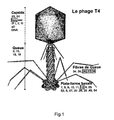
- the adhesion to the bacterium is essentially provided by the basal platform proteins (baseplate) serving as anchoring to the bacteriophage and the recognition is provided more particularly by proteins forming the peripheral filaments, called “tail fibers". Nevertheless, tail fiber proteins and baseplate can be both involved in the recognition and adherence of the bacteriophage to the bacterial wall. All of these so-called “targeting” proteins are represented on the figures 1 and 3 of this application.
- the proteins involved in this recognition or adhesion in T4 bacteriophage there may be mentioned more particularly the GP12 glycoproteins of the basal platform, and the glycoproteins GP36, GP37 and GP38 of the tail fibers.
- bacteriophages are taken from the wild or from collections, to form together what is called a "cocktail of bacteriophages”.
- WO 01/51066 discloses such a bacteriophage preparation comprising six different bacteriophages, used as a preservative of fresh food products to destroy Listeria monocytogenes, responsible for listeriosis. This natural preparation is packaged as a spray to be sprayed on meat or dairy products. It is safe for humans, animals or plants because bacteriophages can only infect Listeria bacteria and not the cells of multicellular organisms.
- Virulence factors are molecules that are described as being necessary for the bacteria to develop an infection. These molecules are considered stable elements, less likely to vary during infection than elements of external structures such as, for example, lipopolysaccharides.
- the described method proposes to select a protein resulting from a natural bacteriophage (for example GP37 of bacteriophage T4) capable of recognizing a virulence factor described in the literature (for example OmpC of E. coli ), of transferring the gene coding for this bacteriophage.
- the modification of the protein consists in making exchanges between the different domains involved in the recognition of the virulence factor (for example the His domains of GP37). These exchanges occur by means of successive recombinations between common homologous domains of these genetic sequences, which results in rearrangement of the various sequences constituting the gene, without insertion of exogenous DNA.
- the lambda bacteriophages thus obtained are tested for their ability to adhere to the targeted virulence factor.
- This method which is similar to the "phage display” technique, makes it possible to isolate different variants of bacteriophage lambda capable of targeting the virulence factor, and thus to have different targeting proteins.
- the genes corresponding to these different targeting proteins can subsequently be transferred to infectious bacteriophages.
- These bacteriophages can then constitute active bacteriophage cocktails against the bacterium carrying the virulence factor initially targeted.
- This method represents an advance in obtaining diversified bacteriophages for the development of bacteriophage cocktails. However, it can only be used for pathogenic pathogenic bacteria, on which a preliminary identification of the virulence factors could be carried out.
- bacteriophages infectious vis-à-vis a greater number of species, for example, by creating bacteriophages whose infectivity spectrum would be modified independently of the host bacterium needed to obtain them.
- Such bacteriophages could be used against new bacterial species, especially against emerging pathogenic bacteria or at the origin of nosocomial infections.
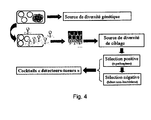
- the present invention provides a novel method of diversifying bacteriophage targeting proteins by inserting into their genes randomly produced DNA sequences.
- This method is designed to be implemented with a minimum of replication cycle in the host bacterium, see only one.
- This method makes it possible to obtain a large variety of recombinant bacteriophages in the form of ready-to-use infectious bacteriophage libraries, useful for treating, for example, emerging or mutant bacteria.
- the invention thus relates to a process for the preparation of recombinant bacteriophages, said bacteriophages taking the form of a genetically modified bacteriophage library.
- DNA constructs allowing the insertion of an oligonucleotide produced in a random manner.
- randomly produced oligonucleotides are inserted into the genes encoding the bacteriophage targeting proteins. This insertion is intended to introduce genetic variability at certain segments of the targeting proteins encoded by said genes.
- the proteins thus translated, are likely to have recognition or adhesion properties different from the initial proteins of the bacteriophage.
- the targeting proteins of the bacteriophage are defined as proteins that participate in the recognition and adhesion of the bacteriophage to the host bacterium. These proteins are preferably chosen from those constituting the tail fibers or the basal platform of bacteriophage T4.
- a protein that is particularly suitable for the process according to the invention is the GP12 protein of the basal platform whose nucleotide sequence corresponds to SEQ ID No. 1.
- Other preferred targeting proteins are GP36, GP37 or GP38 constituting the distal portion of the proteins. tail fibers.
- proteins homologous to those mentioned above present in other bacteriophages are also preferred. By homologous sequence is meant proteins having at least 50% identity with the latter, preferably at least 70%, more preferably at least 90%.
- the randomly produced oligonucleotides insert, by insertion, the segments of the targeting protein genes corresponding to the domains of the protein involved in the adhesion or recognition functions.
- these segments correspond to variable domains, that is to say sequences of recognition domains less conserved from one species of bacteriophage to another.
- the example is given in the present application for the modification of the bacteriophage T4 protein GP12, which is particularly preferred according to the invention.
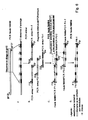
- the GP12 protein has an anchoring domain in which it is desirable to introduce variability while maintaining the integrity of certain segments denoted D ( figure 5 ), which segments correspond to conserved domains in homologous proteins of T-type bacteriophages.
- Oligonucleotides to be inserted into the chosen protein domains can be randomly produced by various techniques well known to those skilled in the art.
- Randomly produced oligonucleotides are understood to mean artificially produced nucleotide sequences having insertions, deletions, or substitutions of nucleotides, which are left to chance.
- One of the objectives of the invention is to introduce DNA inserts covering as many different combinations of nucleotides as possible in the targeting genes without preventing the functioning of said genes.
- sequences thus produced can be introduced in the form of inserts into the genes encoding the bacteriophage targeting proteins, for example by homologous recombination. These inserts then constitute exogenous DNA sequences, produced artificially.
- synthetic oligonucleotides whose base sequence natural A, T, C and G was left to chance, or else to oligonucleotides resulting from amplification by PCR-error (error-prone PCR).
- oligonucleotides corresponding to different segments of a gene or of several genes are produced randomly so as to be provided with identical 3 'or 5' ends. In this manner the oligonucleotides can be permuted or substituted for each other in the modified sequence, thereby increasing the diversity of the resulting genetic sequences.
- the randomly produced oligonucleotides may also include unnatural bases, including "ambiguous" bases allowing the translation of a single nucleotide sequence into different polypeptides.
- the randomly produced oligonucleotides are inserted into the bacteriophage genes encoding the screening proteins by means of homologous recombination.
- the genes are modified by introducing a plurality of oligonucleotides produced randomly, preferably at locations corresponding to variable segments of said gene.
- This reconstitution can be carried out in a conventional manner by reconstitution of a modified copy of the gene or a part of this gene by cloning, that is to say by assembling the oligonucleotides randomly produced to conserved segments of the sequence. in a vector. Nevertheless, this step can prove to be very tedious, because of subcloning and many verification steps that this may involve.
- the present invention proposes, in one of its particular aspects, a method for facilitating the production of an insert consisting of a copy of a gene or part of a gene including randomly produced oligonucleotides.
- This method can be applied to any nucleotide sequence whose selective aim is to selectively vary certain segments. Indeed, this method can find applications in many therapeutic areas. Its implementation is indeed particularly useful when one seeks to modify the spectrum of activity of a protein by modifying targeted domains of its genetic sequence.
- This method applies more particularly to the anchoring domain of gp12 in which it is sought to retain certain invariant domains D1 to D4 represented in FIG. figure 5 .
- a primer according to the invention is a single-stranded nucleic acid capable of hybridizing, in part or in full, with one of the DNA strands forming the support Double stranded DNA of the S sequence.
- a primer is called “sense” when its nucleotide sequence reproduces, a few nucleotides near, a portion of the DNA strand encoding S.
- a primer is called “antisense” of S, when its sequence of nucleotides reproduces, a few nucleotides mead, a portion of the complementary non-coding strand of S.
- a primer When a primer is given as "corresponding to" a given segment of the S sequence, it means that it may be sense or antisense with respect to a portion of the S sequence taken as a double-stranded DNA molecule.
- the PCR method according to the invention more particularly involves sense and antisense PCR primers as described hereinafter and in the examples of the present application.
- PCR-error is meant a chain polymerization reaction carried out under conditions that do not allow faithful replication of the DNA sequences.
- This type of reaction can be obtained by using a conventional Taq- type polymerase under weakly stringent conditions and in the presence of manganese salts, as described in the literature [ Cadwell, RC et al., Randomization of genes by PCR mutagenesis, PCR Methods Appl., 1992, 28-33 ].
- a faithful PCR is, on the contrary, a chain polymerization reaction for amplifying a DNA template with a very low replication error rate.
- This type of reaction can be obtained by using, for example, a Pfu polymerase under stringent conditions, as described in the literature [ Inmis, MA and Eds., PCR Protocols: A Guide to Methods and Applications, 1989, Academic Press ].
- the internal segments D N retain, according to the method of the invention, more than 50% identity with respect to their initial sequence in the wild-type protein, preferably more than 70%, and more preferably more than 90%, or more than 99% depending on the PCR conditions used.
- nucleotide sequences contained in the abovementioned library may result in the expression of proteins having a diversity of randomly produced polypeptide sequences including internal D N domains whose sequence is conserved.
- sequences can be directly cloned in expression vectors, or more preferably in homologous recombination vectors, which is known to those skilled in the art.
- the region allowing homologous recombination comprises all or part of the gene encoding the targeting protein, preferably the entire gene sequence.
- this second region consists of an amplification product that can be obtained according to the random mutation method described above.
- DNA constructs according to the invention taken as a whole, make it possible to integrate into the genome of the bacteriophage a very large number of different nucleotide sequences encoding modified targeting proteins.
- the invention provides for transforming the host bacterium successively with the aid of different vectors, each targeting a different gene.
- the preferred vectors for simultaneously modifying the GP12, GP37 or GP38 genes of the bacteriophage T4 according to the invention in the E. coli host bacterium are, for example, the vectors pACYC184 (ATCC 37033), pBAD18-K (ATCC 87397) and RR1 (ATCC 87076).
- Such vectors have the advantage of possessing markers conferring resistance to different antibiotics and do not share common nucleotide sequences likely to cause recombinations between the different vectors once they are integrated into the host bacterium.
- a bacteriophage according to the invention is preferably a lytic bacteriophage, natural or modified.
- the bacteriophage used is a T-type bacteriophage, such as the bacteriophage T4, T5, T6 and T7, well known to those skilled in the art and more particularly the bacteriophage T4, whose genome has been sequenced [ Miller, ES et al., Bacteriophage T4 genome, Microbiol Mol. Biol. Rev., 2003, 67 (1): 86-156 ].
- Genbank Genbank
- a host bacterium according to the invention is a bacterium commonly used to replicate the bacteriophage that is to be modified.
- the host bacterium is a strain that can be transformed using a DNA construct according to the invention for modifying the bacteriophage by homologous recombination.
- a host bacterium particularly adapted to T-type bacteriophages for carrying out the method of the present invention is Escherichia coli, for example strain DK8 (ATCC 47038).
- a vector of the Mini-lambda type derived from the lambda prophage and comprising the exo genes. , bet and gam.
- Such a vector makes it possible to control, for example, recombination homologous as a function of the temperature at which the host bacterium is cultured and thus limit the recombination events to only replication steps provided according to the invention.
- the host bacterium is therefore preferably transformed with the aid of a DNA construct for modifying a gene coding for a bacteriophage targeting protein, comprising an insert corresponding to a randomly mutated copy of all or part of the coding gene. a targeting protein.
- This insert is preferably produced by the PCR method described above.
- the stage of transformation of the host bacterium according to the process of the invention may take place one or more times.
- one or more banks of host bacteria transformed using one or more of the constructs according to the invention are available.
- Each of the bacteria in this library potentially contains a construct capable of transforming one or more of the bacteriophage targeting proteins in a different manner by homologous recombination.
- An object of the present invention is therefore a host bacteria library transformed with the DNA constructs described above, capable of being infected with a bacteriophage.
- Such a host bacterial bank has the advantage of being able to be multiplied and preserved. It constitutes a renewable intermediate product useful for the production of recombinant bacteriophages described below.
- the step of infection of the host bacteria with the selected bacteriophage does not pose any particular difficulty insofar as the bacteriophage is not modified at this stage. Infection is initiated preferably during the exponential phase of growth of the host bacteria at about 30 ° C.
- homologous recombination can take place between the homologous region of the gene including the randomly produced oligonucleotide and the gene present in the bacteriophage genome.
- This replication step begins immediately after infection of the host bacteria by bacteriophages.
- the bacteriophages are introduced into the culture of transformed host bacteria at the same time as a heat shock between about 40 and 45 ° C is applied.
- This temperature is maintained for a limited time of between 5 and 15 minutes, preferably between 12 and 15 minutes, which makes it possible to activate homologous recombination.
- the host bacteria being preferentially transformed using a Mini-lambda vector making it possible to condition the homologous recombination under certain temperature conditions, in particular in the event of thermal shock, the homologous recombination occurs over a duration equivalent to or shorter than that of a replication cycle.
- the host bacteria are then transferred to a culture at a normal temperature of about 30 ° C at which homologous recombination occurs much more difficult. This second period at about 30 ° C lasts approximately 25 minutes, equivalent to a single cycle of replication.
- a particularly innovative aspect of the process according to the invention lies in the fact that the bacteriophages are harvested at the end of the second period of at the end of a single replication cycle, on average, preferably before a second cycle of bacteriophage replication occurs.
- This approach has the advantage of harvesting recombinant bacteriophages before a new replication cycle in the host bacterium occurs.
- bacteriophages do not have time to re-infect the host bacteria for a second replication cycle.
- modified bacteriophages can be harvested that have lost the ability to recognize or infect their host bacteria, which would otherwise be eliminated during subsequent reinfection cycles.
- the method targeted by the present invention makes it possible to obtain a very diverse set of recombinant bacteriophages.
- bacteriophages form a bacteriophage library according to the invention.
- a recombinant bacteriophage library according to the invention therefore consists of polynucleotide variants comprising different copies of at least one gene coding for a targeting protein, said gene comprising the insertion of an oligonucleotide sequence produced in a random manner.
- said gene whose bacteriophages comprise different copies codes for the GP12 targeting protein.
- the bacteriophages that make up this library may also comprise different copies of several genes encoding targeting proteins, said genes comprising the insertion of randomly generated oligonucleotide sequences.
- These different genes can be modified in the same bacteriophages or in different bacteriophages of the same bank.
- several targeting genes are modified in each bacteriophage constituting the bacteriophage library.
- the modified targeting proteins are preferably GP12, GP36, GP37, GP38 or homologous proteins thereof.
- a bacteriophage library according to the invention comprises at least at least 10 3 , preferably 10 5 , more preferably 10 8 different variants of the same bacteriophage, said variables being distinguished by the sequence of at least one of their targeting proteins.
- the method according to the invention aims, in the first place, to increase the diversity of targeting proteins expressed by bacteriophages and prevents the elimination of recombinant bacteriophages, especially those which would not have replicated or not sooner in the host bacterium during successive cycles of replication.
- the diversity of bacteriophages in the bank according to the invention can be justified by a simple calculation of enumeration.
- the present invention relates more particularly to an isolated recombinant bacteriophage derived from the bacteriophage library according to the invention, capable of infecting a target bacterium and multiplying therein.
- bacteriophages capable of infecting bacteria whose identity is known or unknown according to the invention, it is advantageous to have bacteriophages detectable by fluorescence or luminescence.
- the bacteriophage used to infect the host bacteria may be a bacteriophage itself previously modified, made fluorescent by the introduction of a gene encoding a luminescent or fluorescent protein.
- the bacteriophage comprises a capsid protein fused to a luminescent or fluorescent protein such as, for example, GFP (Green Fluorescent Protein).
- a luminescent or fluorescent protein such as, for example, GFP (Green Fluorescent Protein).
- the Hoc protein [Genbank NP 049793] of the bacteriophage capsid, or a portion thereof, is fused to this luminescent or fluorescent protein.
- This fusion normally has no effect on the recognition and adhesion properties of the bacteriophage to the bacteria.
- the presence of a fluorescent protein can locate bacteria that, because of their infection, harbor many bacteriophages.
- the concentration of the bacteriophages at their place makes it possible to reach a level of fluorescence that can be detected by the measuring instruments known to those skilled in the art.
- These modified bacteriophages are particularly useful for screening for infectious bacteriophages when the bacteria are grown in a spread on a solid support.
- the invention also relates to a modified targeting protein extracted from a recombinant bacteriophage according to the invention or translated from the DNA from said bacteriophage.
- the present invention also covers any method for obtaining modified bacteriophage targeting proteins, characterized in that a recombinant bacteriophage according to the invention is used.
- a bacteriophage library according to the invention can be used to fight against known or unknown bacteria. Indeed, the diversity of recombinant bacteriophages present in the library having different targeting proteins is such that the probability that one of these bacteriophages can infect the known or unknown bacterium is significantly non-zero.
- An unknown bacterium within the meaning of the present invention, is a bacterium which has not yet been characterized, or of the month not sufficient to establish, for example, its antibiogram. It may be an emerging bacterium against which there is no active antibiotic or a bacterium whose existence is not yet established.
- a bacteriophage library according to the invention may advantageously be used in a preventive manner, against known or unknown bacteria likely to develop on the surface of an object or in living beings.
- the invention therefore also relates to a method of aseptization, characterized in that a bacteriophage library comprising bacteriophage modified by insertion into one or more genes encoding targeting proteins of this bacteriophage is used, an oligonucleotide produced from random way.
- Another subject of the invention relates to a solid or liquid composition
- a solid or liquid composition comprising a bacteriophage library according to the invention, for example a powder that can be sprayed on a surface that is to be made free of bacteria.
- a preferred application consists in treating the air conditioning devices, especially the air-cooling systems using the bacteriophage libraries according to the invention.
- composition may also be used as a medicament, especially for preventing or treating bacterial infections and more particularly for treating respiratory or cutaneous airway diseases.
- a recombinant bacteriophage according to the invention which is identified as being capable of infecting a given bacterium, can be used alone in one of the applications described above.
- a recombinant bacteriophage according to the invention may be used as a reference bacteriophage for the detection and / or identification of the known or unknown bacterium that it is capable of infecting.
- a reference bacteriophage within the meaning of the invention, is a bacteriophage made capable of targeting a given type of bacterium, so that it can serve as a detection or diagnostic tool.
- the recombinant bacteriophages according to the invention are generally obtained using bacterial strains of laboratories that are easy to cultivate. They may therefore prove useful against bacteria which, on the contrary, are difficult to cultivate under laboratory conditions.
- a recombinant bacteriophage according to the invention can therefore be used in diagnostic methods, for example methods comprising contacting said bacteriophage with samples from patients in whom a bacterial infection is to be sought.
- the bacteriophages are fluorescent or luminescent, which allows a real-time monitoring of the evolution of an infection, in particular in that the bacteria can be traced using their respective bacteriophages.
- Step 1 Preparation of the gp12 gene
- the PCR product (gp12A) is used as a template in error-sensitive PCR reactions with the aim of introducing point mutations and insertions into the coding region corresponding to the binding domain. to the gp12 receiver (see figure 5 ).
- Step 2 Introduction of random mutations in the receptor binding domain.
- a series of 4 nested PCR reactions (40 cycles each) is carried out in the presence of Mn 2 so as to induce random polymerase errors.
- PCR-errors are carried out in a reaction volume of 100 ⁇ l, using matrices and primers at final concentrations respectively equal to 400 ng and 30 pmol, with 0.2 mM of dATP and dGTP (of each), 1 mM of dCTP and dTTP (each), 2.5 mM MgCl 2 , 0.7 mM MnCl 2 and 5 U Taq DNA polymerase (New England Biolabs, Inc.) in 1 ⁇ reaction buffer. PCR is performed at 96 ° C for 2 min, with 30 cycles at 95 ° C for 1 min, 56 ° C for 1 min and 72 ° C for 2 min, and final extension at 72 ° C for 7 min.
- each of these reaction products has a partial overlap with two other reaction products and the primers used correspond to invariant domains conserved in the gp12 protein. These domains must be faithfully preserved in the final mutated gene structures produced. However, some of the fragments produced by error-sensitive PCR reactions may well have undergone mutagenesis in these regions. In order to preserve Intact domains, each of the aforementioned products must then be subjected to high fidelity PCR reactions designed to selectively amplify only those fragments in which the conserved domain has been retained.
- Retape 3 Selective amplification of the desired fragments.
- the high fidelity PCRs are carried out in a reaction volume of 50 ⁇ l, using matrices and primers at final concentrations equal to 250 ng and 40 ⁇ M respectively, in buffer for pfu 1 ⁇ (20 mM Tris-HCl pH 9, 0, 10 mM KCl, 1 mM MgSO 4 , (NH 4 ) 2 SO 4 6 mM, 0.1% Triton X-100, 0.1 mg / ml BSA) with 200 ⁇ M dNTP and 5 U polymerase pfu (Promega).
- the PCR profiles are as follows: 94 ° C for 20s, 45 ° C for 15s and 72 ° C for 30s, with repetition for 20 cycles.
- the products of each reaction are then passed through mini-size exclusion columns (to remove excess primer), purified individually on streptavidin beads, washed in binding buffer, eluted, precipitated and resuspended. in ddH 2 O.
- the "+" strand of the P1-2 reaction products serves as a primer for the "-" strand of the P2-2 reaction products, and the extension with a polymerase begins at the internal F3-R2 priming site. P2-2.
- the extension fails for the P2-2 reaction products where this conserved site has been significantly mutated.
- PA-1 The successfully amplified PCR products (PA-1) correspond to a fusion of the P1-2 and P2-2 fragments in which each of the four conserved domains (F1 + F2-R1 + F3-R2 + F4-R3) was retained. in the non-mutated state.
- reaction products P3-2 and P4-2 A similar mixture is prepared from the reaction products P3-2 and P4-2.
- a successful extension is based on intact intact F4-R3 (P3-2) and F5-R4 (P4-2) internal sites and the resulting PCR products (PA-1 and PB-1) match to a fusion of the P3-2 and P4-2 fragments in which each of the four conserved domains (F3-R2 + F4-R3 + F5-R4 + R5) was obtained in the non-mutated state.
- the products obtained are purified by preparative gel electrophoresis since the dimensions of the fused PCR products are very different from those of the individual matrices.
- the reactions were stopped, 50 ng of each of the p12NF1F and p12NF3R primers were added to the PA-1 mixture while 50 ng of each of the p12NF3F and p12NF5R primers were added to the PB-1 mixture, then allowing the PCR reactions to continue for 15 minutes. additional cycles.
- Step 4 Reconstitution of the mutated anchor domain of gp12.
- PA-1 products serve as extension primers for PB-1 products and vice versa.
- the final fused PCR product (gp12BD-Fu) is purified by gel electrophoresis since its dimensions are very different from those of the individual matrices.
- the extension protocol can be modified by carrying out a reaction comprising 15 cycles with only the products P1-2 and P2-2, and P3-2 and P4-2 in the reaction mixtures.
- the reactions are stopped, 50 ng of each of the p12NF1F and p12NF5R primers are added to the mixture, and the PCR reactions are then allowed to continue for another 15 cycles.
- an aliquot (about 250 ng) of the reconstituted gp12 receptor binding domain is used as a template in a new series of four error-sensitive PCR reactions, followed by selective amplifications and reconstitutions of the described above.
- Step 5 Reconstitution of the modified copy of the gp12 gene in its entirety
- gp12B An aliquot (about 500 ng) of the PCR product (gp12B) is used together with an equal amount of reconstituted gp12 receptor binding domain (gp12BD-Fu) in a high fidelity PCR reaction. It should be noted that these two products only share an overlap of 20 bp in common. As a result, the profile of the PCR reaction must be modified to take this into consideration.
- Modified PCR profile A) 30 min at 96 ° C followed by 5 cycles of 1 min at 94 ° C, 10 s at 45 ° C, and then B) 5 cycles of 1 min at 94 ° C and 20 min. s at 50 ° C, then C) 5 cycles of 1 min at 94 ° C, 30 s at 50 ° C, and finally D) 15 cycles of 1 min at 94 ° C, 1 min at 55 ° C, 5 seconds at 72 ° C.
- the reaction can be interrupted in substep D above and primers gp12F and p12NF5R can be introduced into the mixture. The reaction is then allowed to recover and proceed to completion.
- the end products (gp12-Mut) are purified on a preparative agarose gel, precipitated and resuspended in ddH 2 O until used.
- Step 6 Verification by sequencing of gp12-Mut PCR products obtained
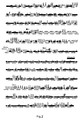
- the agarose gel-purified PCR products are sequenced using an automatic sequencer to verify that mutations have been randomly introduced into gp12, while keeping the D1 and D2 domains intact. Sequencing is performed on two portions corresponding respectively to nucleotides 1089 to 1110 ( Fig. 6A ) and 1195 and 1212 ( Fig. 6B ) of gp12 (SEQ ID NO.1). The sequencing profiles typically obtained are presented in the Fig.6 . When comparing their profiles to those of the initial sequence of gp12, we can see that many additional peaks are superimposed on the expected profile of gp12. These additional peaks reflect a high frequency of mutations introduced into the gp12 sequence by the PCR method. These peaks are not found at domain level D1, which confirms that this domain has retained its sequence identity with gp12.
- T4 variant genes so as to promote their introduction, by homologous recombination, into the bacteriophage T4 genome so as to produce T4 progenies with different host targeting specificities. from that of the parental bacteriophage.
- the mutated genes generated above must be introduced into alternative vectors (a different vector for each gene).
- the vectors pACYC184, pBAD18-K and RR1 are used to clone each of the mutated genes.
- the chosen vector (for example pACYC184 for the cloning of gp12Mut) is cut at the Sma I site, purified and resuspended in 20 ⁇ l of ddH 2 O and mixed with the PCR product gp12Mut in a ratio of 1: 3. After ligation, the DNA is purified, resuspended in ddH 2 O and transformed into "electrocompetent" DK8 cells (ATCC 47038). This vector carries a chloramphenicol (Chl) resistance gene.
- Chl chloramphenicol
- the cells are transferred to 10 ml of LB medium containing 170 ⁇ g / ml of chloramphenicol and are cultured at 30 ° C for 4 h with constant aeration.
- the cells are then plated on LB + Chl plates and grown overnight at 30 ° C. Some colonies were removed for PCR verification of the presence of the gp12Mut insertion segment and some positive colonies were cultured in LB + Chl medium for the preparation of a concentrated cell culture (DK8-p12C).
- a fresh overnight culture of DK8-p12C is used to prepare electrocompetent cells.
- the pBAD18-K vector is cut at the Sma I site , purified and resuspended in 20 ⁇ l of ddH 2 O and mixed with the PCR product gp37Mut in a ratio of 1: 3. After ligation, the DNA is purified, resuspended in ddH 2 O and transformed into "electrocompetent" DK8-p12C cells.
- the vector used in this case carries a resistance gene for kanamycin (Kan).
- Kan kanamycin
- the cells are transferred to 10 ml of LB medium containing 170 ⁇ g / ml of chloramphenicol and 50 ⁇ g / ml of kanamycin and are cultured at 30 ° C. for 4 hours with aeration. constant.
- the cells are then plated on LB + Chl + Kan plates and grown overnight at 30 ° C.
- a fresh overnight culture of DK8-p12C-p37K is used to prepare electrocompetent cells.
- the vector RR1 is cut at the Sma I site, purified and resuspended in 20 ⁇ l of ddH 2 O and mixed with the PCR product gp37Mut in a ratio of 1: 3. After ligation, the DNA is purified, resuspended in ddH 2 O and transformed into "electrocompetent" DK8-p12C-p37K cells.
- the vector used in this case carries an ampicillin resistance gene (Amp).
- the cells are transferred into 10 ml of LB medium containing 170 ⁇ g / ml of chloramphenicol + 50 ⁇ g / ml of kanamycin + 60 ⁇ g / ml of ampicillin and are cultured at 30 ° C for 4 h with constant aeration.
- the cells are then plated on LB + Chl + Kan + Amp plates and grown overnight at 30 ° C.
- the host E. coli which contains a prophage ⁇ bearing the recombination genes exo , bet and gam under the control of a repressor is prepared.
- ⁇ sensitive to temperature.
- the genes exo, bet and gam can be easily operated at 42 ° C and inhibited at 32 ° C.
- ⁇ Gam inhibits the attack of linear DNA by E. coli RecBCD nuclease
- Exo and Beta generate recombinant activity for this linear DNA. More importantly, this recombination is effective with DNA homologies limited to 30-50 bp at the ends of the linear DNA substrates.
- the oligonucleotides 5 'GTATGCATGCTGGGTGTGG (M ⁇ Rf) and 5' CGCACTCTCGATTCGTAGAGCCTCG (M ⁇ Rr) are used as primers for PCR amplification of the DNA from the attP-cro region using ⁇ 13857 DNA as a template.
- prophage ⁇ generated by PCR
- one possibility is to clone the prophage ⁇ in the plasmid pFN476 (ATCC86962) to a small number of copies with LacZ selection, for example.
- the vector pFN476 is cut at the Sma I site (blunt end), purified, resuspended in 20 ⁇ l of ddH 2 O and mixed with the product of PCR of prophage ⁇ in a ratio of 1: 3. After ligation, the DNA is purified, resuspended in ddH 2 O and transformed into "electrocompetent" DK8-p12C-p37K-p38A cells. After recovery, the cells are plated on LB X-gal + Chl + Kan + Amp media (see above) and incubated at 30 ° C.
- prophage ⁇ Some white colonies are selected for PCR verification of the presence of prophage ⁇ .
- a positive prophage colony ⁇ is then cultured overnight at 30 ° C. in LB + Chl + Kan + Amp medium to prepare a concentrated culture of cells (DK8-T4Mut- ⁇ ) for use in subsequent manipulations.
- the transformed hosts are high temperature ⁇ inducible, lacZ positive and contain copies of mutated T4 gp12, gp37 and gp38 genes ready for homologous recombination.
- a fresh night culture of DK8-T4Mut- ⁇ cells is prepared in LB + Chl + Kan + Amp medium at 30 ° C.
- Cultures for T4 infection are started with a volume equal to or less than 0.05 ml cells of one overnight culture per 10 ml of LB + Chl + Kan + Amp medium to ensure that the cells switch to the exponential growth phase prior to the addition of the bacteriophage.
- these cultures are grown in 250 ml side-branched Erlenmeyer flasks, unsealed, in a shaking water bath at 30 ° C.
- 250 ml of cells in LB + Chl + Kan + Amp medium are cultured at a density of 3 ⁇ 10 8 cells per ml at 30 ° C. with shaking.
- the goal in this case is to isolate the offspring of the first salvo and to stop the spread before this first-generation bacteriophage offspring has had time to become breeding.
- the cells are collected by centrifugation at 5000 rpm for 5 minutes and the supernatant is recovered, a few drops of chloroform are added and the mixture is centrifuged again for 10 min at 6000 rpm.
- the supernatant, excluding chloroform is adjusted to a concentration of 1 ⁇ SM buffer (10 mM MgSO 4 , 100 mM NaCl, 0.01% gelatin and 50 mM Tris-HCl [pH 7.5]) using 5x concentrated buffer, and is stored at 4 ° C before analysis.
- the pelleted cells are resuspended in 8 ml of 0.05 M Tris-hydrochloride solution at pH 8.0 with 25% sucrose. An aliquot of 1.6 ml of lysozyme (5 mg / ml) is added and the mixture is incubated for 5 min at 0 ° C. An aliquot 3.2 ml of 0.2 M EDTA solution is added and the mixture is incubated for an additional 15 minutes at 0 ° C. The cell lysate is adjusted to 500 mM Tris-HCl pH 7.4, 100 mM MnCl 2 using 10x concentrated buffer, equilibrated at 15 ° C and incubated with 10 U of Dnase1 (Sigma ) for 2 hours. The mixture is then centrifuged at 6000 rpm for 10 minutes. The clear supernatant is carefully removed, adjusted to a 1 ⁇ SM buffer concentration and stored as above.
- the supernatant is recovered and used as an infectious substance for the production of bacteriophage particles dedicated to the bacterium tested, which in nature can not be attacked by wild-type bacteriophage T4.
Landscapes
- Health & Medical Sciences (AREA)
- Life Sciences & Earth Sciences (AREA)
- Chemical & Material Sciences (AREA)
- Organic Chemistry (AREA)
- Engineering & Computer Science (AREA)
- Genetics & Genomics (AREA)
- General Health & Medical Sciences (AREA)
- Zoology (AREA)
- Wood Science & Technology (AREA)
- General Engineering & Computer Science (AREA)
- Biotechnology (AREA)
- Bioinformatics & Cheminformatics (AREA)
- Biomedical Technology (AREA)
- Animal Behavior & Ethology (AREA)
- Veterinary Medicine (AREA)
- Chemical Kinetics & Catalysis (AREA)
- Oncology (AREA)
- Public Health (AREA)
- Communicable Diseases (AREA)
- General Chemical & Material Sciences (AREA)
- Nuclear Medicine, Radiotherapy & Molecular Imaging (AREA)
- Medicinal Chemistry (AREA)
- Pharmacology & Pharmacy (AREA)
- Crystallography & Structural Chemistry (AREA)
- Molecular Biology (AREA)
- Plant Pathology (AREA)
- Biophysics (AREA)
- Microbiology (AREA)
- Physics & Mathematics (AREA)
- Virology (AREA)
- Biochemistry (AREA)
- Micro-Organisms Or Cultivation Processes Thereof (AREA)
- Measuring Or Testing Involving Enzymes Or Micro-Organisms (AREA)
- Medicines Containing Material From Animals Or Micro-Organisms (AREA)
- Investigating Or Analysing Materials By The Use Of Chemical Reactions (AREA)
Applications Claiming Priority (2)
| Application Number | Priority Date | Filing Date | Title |
|---|---|---|---|
| FR0655721A FR2910492B1 (fr) | 2006-12-20 | 2006-12-20 | Procede de preparation de bacteriophages modifies par insertion de sequences aleatoires dans les proteines de ciblage desdits bacteriophages |
| EP07872388A EP2097516B1 (fr) | 2006-12-20 | 2007-12-18 | Procédé de préparation de bactériophages modifiés par insertion de séquences aléatoires dans les protéines de ciblage desdits bactériophages |
Related Parent Applications (2)
| Application Number | Title | Priority Date | Filing Date |
|---|---|---|---|
| WOPCT/FR2007/002101 Previously-Filed-Application | 2007-12-18 | ||
| EP07872388.9 Division | 2007-12-18 |
Publications (1)
| Publication Number | Publication Date |
|---|---|
| EP2653536A1 true EP2653536A1 (fr) | 2013-10-23 |
Family
ID=38293109
Family Applications (2)
| Application Number | Title | Priority Date | Filing Date |
|---|---|---|---|
| EP12192306.4A Withdrawn EP2653536A1 (fr) | 2006-12-20 | 2007-12-18 | Procédé de préparation de bactériophages modifiés par insertion de séquences aléatoires dans les protéines de ciblage desdits bactériophages. |
| EP07872388A Not-in-force EP2097516B1 (fr) | 2006-12-20 | 2007-12-18 | Procédé de préparation de bactériophages modifiés par insertion de séquences aléatoires dans les protéines de ciblage desdits bactériophages |
Family Applications After (1)
| Application Number | Title | Priority Date | Filing Date |
|---|---|---|---|
| EP07872388A Not-in-force EP2097516B1 (fr) | 2006-12-20 | 2007-12-18 | Procédé de préparation de bactériophages modifiés par insertion de séquences aléatoires dans les protéines de ciblage desdits bactériophages |
Country Status (7)
| Country | Link |
|---|---|
| US (1) | US9315803B2 (https=) |
| EP (2) | EP2653536A1 (https=) |
| JP (1) | JP2010512774A (https=) |
| AU (1) | AU2007346006B2 (https=) |
| CA (1) | CA2673579C (https=) |
| FR (1) | FR2910492B1 (https=) |
| WO (1) | WO2008093009A2 (https=) |
Families Citing this family (6)
| Publication number | Priority date | Publication date | Assignee | Title |
|---|---|---|---|---|
| FR2945049B1 (fr) * | 2009-04-30 | 2013-10-04 | Pherecydes Pharma | Modification du genome d'un bacteriophage lytique par immobilisation dudit bacteriophage dans sa bacterie hote |
| CA3020371A1 (en) * | 2016-04-08 | 2017-10-12 | Phico Therapeutics Ltd. | Modifying bacteriophage |
| WO2020077559A1 (zh) * | 2018-10-17 | 2020-04-23 | 深圳华大生命科学研究院 | 从细菌全基因组序列中挖掘温和型噬菌体的方法、装置和存储介质 |
| USD942002S1 (en) | 2019-12-16 | 2022-01-25 | Melissa H. Egts | Nasal cannula cover |
| US11724057B2 (en) | 2019-12-16 | 2023-08-15 | Melissa H. Egts | Protective, sanitary, securable nasal cannula cover |
| DE102024113842A1 (de) * | 2024-05-16 | 2025-11-20 | bifa Umweltinstitut GmbH | Verfahren zur Verringerung der bakteriellen Last auf bzw. in einer Klimaanlage |
Citations (4)
| Publication number | Priority date | Publication date | Assignee | Title |
|---|---|---|---|---|
| EP0698091A1 (en) * | 1993-05-11 | 1996-02-28 | Istituto Di Ricerche Di Biologia Molecolare P. Angeletti S.P.A. | Process for the preparation of immunogens or diagnostic reagents, and immunogens or diagnostic reagents thereby obtainable |
| WO2001051066A2 (en) | 2000-01-11 | 2001-07-19 | Intralytix, Inc. | Reduction in bacterial colonization by administering bacteriophage compositions |
| US20030216338A1 (en) * | 2000-07-25 | 2003-11-20 | Merril Carl R | Bacteriophage having multiple host range |
| WO2006066224A2 (en) | 2004-12-14 | 2006-06-22 | Yale University | Virulence targeted antibiotics |
Family Cites Families (2)
| Publication number | Priority date | Publication date | Assignee | Title |
|---|---|---|---|---|
| US6203986B1 (en) * | 1998-10-22 | 2001-03-20 | Robert H. Singer | Visualization of RNA in living cells |
| GB0028130D0 (en) * | 2000-11-17 | 2001-01-03 | Phico Therapeutics Ltd | Polypeptide and uses thereof |
-
2006
- 2006-12-20 FR FR0655721A patent/FR2910492B1/fr not_active Expired - Fee Related
-
2007
- 2007-12-18 CA CA2673579A patent/CA2673579C/fr active Active
- 2007-12-18 JP JP2009542133A patent/JP2010512774A/ja active Pending
- 2007-12-18 EP EP12192306.4A patent/EP2653536A1/fr not_active Withdrawn
- 2007-12-18 US US12/520,789 patent/US9315803B2/en not_active Expired - Fee Related
- 2007-12-18 AU AU2007346006A patent/AU2007346006B2/en not_active Ceased
- 2007-12-18 WO PCT/FR2007/002101 patent/WO2008093009A2/fr not_active Ceased
- 2007-12-18 EP EP07872388A patent/EP2097516B1/fr not_active Not-in-force
Patent Citations (4)
| Publication number | Priority date | Publication date | Assignee | Title |
|---|---|---|---|---|
| EP0698091A1 (en) * | 1993-05-11 | 1996-02-28 | Istituto Di Ricerche Di Biologia Molecolare P. Angeletti S.P.A. | Process for the preparation of immunogens or diagnostic reagents, and immunogens or diagnostic reagents thereby obtainable |
| WO2001051066A2 (en) | 2000-01-11 | 2001-07-19 | Intralytix, Inc. | Reduction in bacterial colonization by administering bacteriophage compositions |
| US20030216338A1 (en) * | 2000-07-25 | 2003-11-20 | Merril Carl R | Bacteriophage having multiple host range |
| WO2006066224A2 (en) | 2004-12-14 | 2006-06-22 | Yale University | Virulence targeted antibiotics |
Non-Patent Citations (13)
| Title |
|---|
| "PCR Protocols : a guide to methods and applications", 1989, ACADEMIC PRESS |
| BREDO ET AL: "Gene reconstitution using high efficiency homologous recombination between a bacteriophage fd and a plasmid", JOURNAL OF BIOTECHNOLOGY, ELSEVIER SCIENCE PUBLISHERS, AMSTERDAM, NL, vol. 126, no. 3, 10 November 2006 (2006-11-10), pages 286 - 290, XP005703077, ISSN: 0168-1656 * |
| CADWELL, R.C. ET AL.: "Randomization of genes by PCR mutagenesis", PCR METHODS APPL., 1992, pages 28 - 33 |
| DESPLATS CARINE ET AL: "The diversity and evolution of the T4-type bacteriophages.", RESEARCH IN MICROBIOLOGY, vol. 154, no. 4, May 2003 (2003-05-01), pages 259 - 267, XP002445692, ISSN: 0923-2508 * |
| KUZMINOV, A. ET AL., PNAS, vol. 98, no. 15, 2001, pages 8298 - 305 |
| MASATOSHI Y. ET AL.: "Alteration of tail fiber protein GP38 enables T2 phage to infect E.coli O157:H7", JOURNAL OF BIOTECHNOLOGY, vol. 115, 2005, pages 101 - 107 |
| MILLER, E.S. ET AL.: "Bacteriophage T4 genome", MICROBIOL MOL. BIOL. REV., vol. 67, no. 1, 2003, pages 86 - 156 |
| POTEETE, A.R. ET AL., FEMS MICROBIOL. LETT., vol. 201, no. 1, 2001, pages 9 - 14 |
| SAMBROOK J.; RUSSEL D.W.: "Molecular Cloning, a Laboratory Manual", 2001, CHSL PRESS |
| SWITALA-JELEN K ET AL: "Mutations in bacteriophage T4 genome", ACTA VIROLOGICA, ACADEMIA PRAGUE, PRAGUE, CS, vol. 46, no. 2, 2002, pages 57 - 62, XP008025059, ISSN: 0001-723X * |
| TETART F ET AL: "Genome plasticity in the distal tail fiber locus of the T-even bacteriophage: recombination between conserved motifs swaps adhesin specificity", JOURNAL OF MOLECULAR BIOLOGY, LONDON, GB, vol. 282, no. 3, 25 September 1998 (1998-09-25), pages 543 - 556, XP004455941, ISSN: 0022-2836 * |
| THIEL, K., NATURE BIOTECHNOLOGY, vol. 22, 2004, pages 31 - 36 |
| YOICHI M ET AL: "Alteration of tail fiber protein gp38 enables T2 phage to infect Escherichia coli O157:H7", JOURNAL OF BIOTECHNOLOGY, ELSEVIER SCIENCE PUBLISHERS, AMSTERDAM, NL, vol. 115, no. 1, 12 January 2005 (2005-01-12), pages 101 - 107, XP004966993, ISSN: 0168-1656 * |
Also Published As
| Publication number | Publication date |
|---|---|
| FR2910492B1 (fr) | 2013-02-15 |
| AU2007346006A1 (en) | 2008-08-07 |
| AU2007346006B2 (en) | 2013-08-29 |
| CA2673579C (fr) | 2019-04-09 |
| WO2008093009A3 (fr) | 2009-02-12 |
| US9315803B2 (en) | 2016-04-19 |
| CA2673579A1 (fr) | 2008-08-07 |
| EP2097516A2 (fr) | 2009-09-09 |
| FR2910492A1 (fr) | 2008-06-27 |
| US20110027231A1 (en) | 2011-02-03 |
| WO2008093009A2 (fr) | 2008-08-07 |
| WO2008093009A8 (fr) | 2009-07-16 |
| JP2010512774A (ja) | 2010-04-30 |
| EP2097516B1 (fr) | 2012-11-14 |
Similar Documents
| Publication | Publication Date | Title |
|---|---|---|
| EP2097516B1 (fr) | Procédé de préparation de bactériophages modifiés par insertion de séquences aléatoires dans les protéines de ciblage desdits bactériophages | |
| Kutter et al. | Bacteriophages: biology and applications | |
| JP2010512774A5 (https=) | ||
| EP2097524B1 (fr) | Procede de diversification aleatoire d'une sequence genetique permettant de preserver l'identite de certains segments internes de ladite sequence genetique | |
| EP2424878B1 (fr) | Modification du genome d'un bacteriophage lytique par immobilisation dudit bacteriophage dans sa bacterie hote | |
| FR2738841A1 (fr) | Procede de polymerisation de sequences d'acides nucleiques et ses applications | |
| Parcey | The Role of CRISPR-Mediated Phage Resistance in the Development of Phage-Based Biocontrol for Erwinia amylovora | |
| Knapik | Genetic analysis of bacteriophages from clinical and environmental samples | |
| Mohammed | Elucidating Mechanisms of Mycobacteriophage Butters Prophage-Mediated Defenses | |
| O'Hara | Interrogating the Complex Roles and Regulation of Vibrio cholerae Seventh Pandemic Islands | |
| Maguin | Restriction-Modification and CRISPR-Cas systems: cooperation between innate and adaptive immunity in prokaryotes | |
| Eugene LeClerc | Single‐Stranded DNA Phages | |
| Chevallereau | Comprehensive study of new virulent bacteriophages: from transcriptomic and mechanistic characterisations towards evolutionary perspectives | |
| Hutinet | Homologous recombination in Bacteriophages, less fidelity for more exchanges | |
| 藤原亜希子 | Characterization and utilization of bacteriophages infecting Ralstonia solanacearum | |
| Doron | Discovery and characterization of defense/attack interactions between bacteria and their viruses | |
| Kukkaro | Characterization of New viruses from hypersaline environments | |
| Liu | Parasite adaptations to dynamic hosts: Bordetella-phage and Bordetella-host interactions | |
| Auguet | Les virus de l'estuaire de la Charente el du bassin de Marennes-Oleron. Dynamiques spatio-temporelles et interactions avec les communautés bactériennes | |
| Weiss | Regulation of xanthangum gene expression in Xanthomonas campestris pv. campestris | |
| WO2006106193A1 (fr) | Methode d'obtention de variants solubles ou mieux exprimes d'une proteine d'interet | |
| FR2883885A1 (fr) | Recombinaison in vitro circulaire |
Legal Events
| Date | Code | Title | Description |
|---|---|---|---|
| PUAI | Public reference made under article 153(3) epc to a published international application that has entered the european phase |
Free format text: ORIGINAL CODE: 0009012 |
|
| AC | Divisional application: reference to earlier application |
Ref document number: 2097516 Country of ref document: EP Kind code of ref document: P |
|
| AK | Designated contracting states |
Kind code of ref document: A1 Designated state(s): AT BE BG CH CY CZ DE DK EE ES FI FR GB GR HU IE IS IT LI LT LU LV MC MT NL PL PT RO SE SI SK TR |
|
| STAA | Information on the status of an ep patent application or granted ep patent |
Free format text: STATUS: THE APPLICATION IS DEEMED TO BE WITHDRAWN |
|
| 18D | Application deemed to be withdrawn |
Effective date: 20140424 |