EP2644267B1 - Aktivierung eines Erdalkalicarbonat und Erdalkalihydroxid enthaltenden Materials für die trockene Rauchgasreinigung - Google Patents
Aktivierung eines Erdalkalicarbonat und Erdalkalihydroxid enthaltenden Materials für die trockene Rauchgasreinigung Download PDFInfo
- Publication number
- EP2644267B1 EP2644267B1 EP12162517.2A EP12162517A EP2644267B1 EP 2644267 B1 EP2644267 B1 EP 2644267B1 EP 12162517 A EP12162517 A EP 12162517A EP 2644267 B1 EP2644267 B1 EP 2644267B1
- Authority
- EP
- European Patent Office
- Prior art keywords
- alkaline earth
- earth metal
- material containing
- metal hydroxide
- carbonate
- Prior art date
- Legal status (The legal status is an assumption and is not a legal conclusion. Google has not performed a legal analysis and makes no representation as to the accuracy of the status listed.)
- Active
Links
Images
Classifications
-
- B—PERFORMING OPERATIONS; TRANSPORTING
- B01—PHYSICAL OR CHEMICAL PROCESSES OR APPARATUS IN GENERAL
- B01D—SEPARATION
- B01D53/00—Separation of gases or vapours; Recovering vapours of volatile solvents from gases; Chemical or biological purification of waste gases, e.g. engine exhaust gases, smoke, fumes, flue gases, aerosols
- B01D53/34—Chemical or biological purification of waste gases
- B01D53/46—Removing components of defined structure
- B01D53/48—Sulfur compounds
- B01D53/50—Sulfur oxides
- B01D53/508—Sulfur oxides by treating the gases with solids
-
- B—PERFORMING OPERATIONS; TRANSPORTING
- B01—PHYSICAL OR CHEMICAL PROCESSES OR APPARATUS IN GENERAL
- B01J—CHEMICAL OR PHYSICAL PROCESSES, e.g. CATALYSIS OR COLLOID CHEMISTRY; THEIR RELEVANT APPARATUS
- B01J20/00—Solid sorbent compositions or filter aid compositions; Sorbents for chromatography; Processes for preparing, regenerating or reactivating thereof
- B01J20/02—Solid sorbent compositions or filter aid compositions; Sorbents for chromatography; Processes for preparing, regenerating or reactivating thereof comprising inorganic material
- B01J20/04—Solid sorbent compositions or filter aid compositions; Sorbents for chromatography; Processes for preparing, regenerating or reactivating thereof comprising inorganic material comprising compounds of alkali metals, alkaline earth metals or magnesium
- B01J20/041—Oxides or hydroxides
-
- B—PERFORMING OPERATIONS; TRANSPORTING
- B01—PHYSICAL OR CHEMICAL PROCESSES OR APPARATUS IN GENERAL
- B01J—CHEMICAL OR PHYSICAL PROCESSES, e.g. CATALYSIS OR COLLOID CHEMISTRY; THEIR RELEVANT APPARATUS
- B01J20/00—Solid sorbent compositions or filter aid compositions; Sorbents for chromatography; Processes for preparing, regenerating or reactivating thereof
- B01J20/02—Solid sorbent compositions or filter aid compositions; Sorbents for chromatography; Processes for preparing, regenerating or reactivating thereof comprising inorganic material
- B01J20/04—Solid sorbent compositions or filter aid compositions; Sorbents for chromatography; Processes for preparing, regenerating or reactivating thereof comprising inorganic material comprising compounds of alkali metals, alkaline earth metals or magnesium
- B01J20/043—Carbonates or bicarbonates, e.g. limestone, dolomite, aragonite
-
- B—PERFORMING OPERATIONS; TRANSPORTING
- B01—PHYSICAL OR CHEMICAL PROCESSES OR APPARATUS IN GENERAL
- B01J—CHEMICAL OR PHYSICAL PROCESSES, e.g. CATALYSIS OR COLLOID CHEMISTRY; THEIR RELEVANT APPARATUS
- B01J20/00—Solid sorbent compositions or filter aid compositions; Sorbents for chromatography; Processes for preparing, regenerating or reactivating thereof
- B01J20/28—Solid sorbent compositions or filter aid compositions; Sorbents for chromatography; Processes for preparing, regenerating or reactivating thereof characterised by their form or physical properties
- B01J20/28002—Solid sorbent compositions or filter aid compositions; Sorbents for chromatography; Processes for preparing, regenerating or reactivating thereof characterised by their form or physical properties characterised by their physical properties
- B01J20/28004—Sorbent size or size distribution, e.g. particle size
-
- B—PERFORMING OPERATIONS; TRANSPORTING
- B01—PHYSICAL OR CHEMICAL PROCESSES OR APPARATUS IN GENERAL
- B01J—CHEMICAL OR PHYSICAL PROCESSES, e.g. CATALYSIS OR COLLOID CHEMISTRY; THEIR RELEVANT APPARATUS
- B01J20/00—Solid sorbent compositions or filter aid compositions; Sorbents for chromatography; Processes for preparing, regenerating or reactivating thereof
- B01J20/28—Solid sorbent compositions or filter aid compositions; Sorbents for chromatography; Processes for preparing, regenerating or reactivating thereof characterised by their form or physical properties
- B01J20/28014—Solid sorbent compositions or filter aid compositions; Sorbents for chromatography; Processes for preparing, regenerating or reactivating thereof characterised by their form or physical properties characterised by their form
- B01J20/28016—Particle form
-
- B—PERFORMING OPERATIONS; TRANSPORTING
- B01—PHYSICAL OR CHEMICAL PROCESSES OR APPARATUS IN GENERAL
- B01J—CHEMICAL OR PHYSICAL PROCESSES, e.g. CATALYSIS OR COLLOID CHEMISTRY; THEIR RELEVANT APPARATUS
- B01J20/00—Solid sorbent compositions or filter aid compositions; Sorbents for chromatography; Processes for preparing, regenerating or reactivating thereof
- B01J20/30—Processes for preparing, regenerating, or reactivating
- B01J20/3078—Thermal treatment, e.g. calcining or pyrolizing
-
- B—PERFORMING OPERATIONS; TRANSPORTING
- B01—PHYSICAL OR CHEMICAL PROCESSES OR APPARATUS IN GENERAL
- B01D—SEPARATION
- B01D2251/00—Reactants
- B01D2251/40—Alkaline earth metal or magnesium compounds
- B01D2251/402—Alkaline earth metal or magnesium compounds of magnesium
-
- B—PERFORMING OPERATIONS; TRANSPORTING
- B01—PHYSICAL OR CHEMICAL PROCESSES OR APPARATUS IN GENERAL
- B01D—SEPARATION
- B01D2251/00—Reactants
- B01D2251/40—Alkaline earth metal or magnesium compounds
- B01D2251/404—Alkaline earth metal or magnesium compounds of calcium
-
- B—PERFORMING OPERATIONS; TRANSPORTING
- B01—PHYSICAL OR CHEMICAL PROCESSES OR APPARATUS IN GENERAL
- B01D—SEPARATION
- B01D2251/00—Reactants
- B01D2251/60—Inorganic bases or salts
- B01D2251/604—Hydroxides
-
- B—PERFORMING OPERATIONS; TRANSPORTING
- B01—PHYSICAL OR CHEMICAL PROCESSES OR APPARATUS IN GENERAL
- B01D—SEPARATION
- B01D2251/00—Reactants
- B01D2251/60—Inorganic bases or salts
- B01D2251/606—Carbonates
-
- B—PERFORMING OPERATIONS; TRANSPORTING
- B01—PHYSICAL OR CHEMICAL PROCESSES OR APPARATUS IN GENERAL
- B01D—SEPARATION
- B01D2253/00—Adsorbents used in seperation treatment of gases and vapours
- B01D2253/10—Inorganic adsorbents
- B01D2253/112—Metals or metal compounds not provided for in B01D2253/104 or B01D2253/106
-
- B—PERFORMING OPERATIONS; TRANSPORTING
- B01—PHYSICAL OR CHEMICAL PROCESSES OR APPARATUS IN GENERAL
- B01D—SEPARATION
- B01D2253/00—Adsorbents used in seperation treatment of gases and vapours
- B01D2253/30—Physical properties of adsorbents
- B01D2253/302—Dimensions
- B01D2253/304—Linear dimensions, e.g. particle shape, diameter
-
- B—PERFORMING OPERATIONS; TRANSPORTING
- B01—PHYSICAL OR CHEMICAL PROCESSES OR APPARATUS IN GENERAL
- B01D—SEPARATION
- B01D2258/00—Sources of waste gases
- B01D2258/02—Other waste gases
- B01D2258/0283—Flue gases
-
- B—PERFORMING OPERATIONS; TRANSPORTING
- B01—PHYSICAL OR CHEMICAL PROCESSES OR APPARATUS IN GENERAL
- B01D—SEPARATION
- B01D53/00—Separation of gases or vapours; Recovering vapours of volatile solvents from gases; Chemical or biological purification of waste gases, e.g. engine exhaust gases, smoke, fumes, flue gases, aerosols
- B01D53/34—Chemical or biological purification of waste gases
- B01D53/74—General processes for purification of waste gases; Apparatus or devices specially adapted therefor
- B01D53/81—Solid phase processes
- B01D53/83—Solid phase processes with moving reactants
-
- B—PERFORMING OPERATIONS; TRANSPORTING
- B01—PHYSICAL OR CHEMICAL PROCESSES OR APPARATUS IN GENERAL
- B01J—CHEMICAL OR PHYSICAL PROCESSES, e.g. CATALYSIS OR COLLOID CHEMISTRY; THEIR RELEVANT APPARATUS
- B01J2220/00—Aspects relating to sorbent materials
- B01J2220/40—Aspects relating to the composition of sorbent or filter aid materials
- B01J2220/42—Materials comprising a mixture of inorganic materials
-
- B—PERFORMING OPERATIONS; TRANSPORTING
- B01—PHYSICAL OR CHEMICAL PROCESSES OR APPARATUS IN GENERAL
- B01J—CHEMICAL OR PHYSICAL PROCESSES, e.g. CATALYSIS OR COLLOID CHEMISTRY; THEIR RELEVANT APPARATUS
- B01J2220/00—Aspects relating to sorbent materials
- B01J2220/40—Aspects relating to the composition of sorbent or filter aid materials
- B01J2220/48—Sorbents characterised by the starting material used for their preparation
- B01J2220/4806—Sorbents characterised by the starting material used for their preparation the starting material being of inorganic character
Definitions
- the invention relates to a method for increasing the absorption capacity of a Erdalkalicarbonat and Erdalkalihydroxid containing material against sulfur oxides and / or other pollutants in flue gas.
- the invention further relates to an activated alkaline earth metal carbonate and alkaline earth metal hydroxide-containing material produced by this process, and to the use of this dry flue gas cleaning material.
- the aim is to neutralize the acidic pollutants present in the exhaust gas stream, such as sulfur dioxide, hydrogen chloride and hydrogen fluoride, and to deposit the neutral salts formed on suitable separating devices.
- suitable separating devices such as sulfur dioxide, hydrogen chloride and hydrogen fluoride.
- B. bulk layer filter, flight flow method iVm electrostatic precipitators or fabric filters are used.
- the dry exhaust gas purification is applied in different variants.
- the most important fields of application are the cleaning of exhaust fumes from coal and lignite power plants, waste incineration plants, hazardous waste incineration plants, heat and power plants and furnaces with a wide variety of feedstock.
- Sorbents based on limestone (CaCO 3 ), in particular granulated or pelleted products based on limestone (CaCO 3 ) and / or hydrated lime (Ca (OH) 2 ) and / or the corresponding dolomitic products are used here.
- a granular bulk layer of alkaline earth metal carbonate and / or alkaline earth metal containing material is flowed through by the exhaust gas to be cleaned.
- the deposition of the acidic exhaust gas components takes place on the material containing alkaline earth carbonate and / or alkaline earth metal hydroxide (sorbent).
- the pollutant-containing exhaust gases can be cleaned as much as possible.
- the disadvantage is that the consumption of alkaline earth carbonate and / or alkaline earth metal containing sorbent is very high.
- the moderate efficiency of the dry exhaust gas purification is due to the fact that the sorbents do not fully react. On the sorbent, a layer of reaction products is formed which impedes the further penetration of the acidic pollutants to be separated.
- a shortcoming of the packed-bed filter technique is the relatively high consumption for the deposition of sulfur oxides (SO 2 and SO 3 ) and the closing of the reactive surface of the sorbents by the forming reaction products such as calcium sulfite (CaSO 3 ) and calcium sulfate (CaSO 4 ).
- One method is to mechanically reprocess the deposited product consisting of unreacted sorbent and the formed reaction products after the exhaust gas purification.
- the purpose of the mechanical treatment is to separate the outer non-reactive layers.
- Another method provides intermediate storage of the reaction product and reuse after 1-2 days storage.
- Increasing the absorption capacity of the sorbent is understood as meaning the reduction of the amount of sorbent in order to achieve a certain degree of separation of the acidic pollutants. A higher absorption capacity leads to a reduction of the stoichiometric factor.
- WO 2006/113301 A1 describes a method of increasing the absorbency of a lime hydrate containing material which is activated by heating to 475 ° C for a period of four hours. The activated hydrated lime is then used for the separation of sulfur dioxide from an exhaust gas by means of a fly-flow process.
- WO 2011/039034 A1 describes a granulated desulphurising agent containing calcium carbonate and hydrated lime. It is used in a temperature range of 100 ° C to 900 ° C, preferably from 130 ° C to 450 ° C use in the exhaust desulfurization of internal combustion engines, especially large marine diesel engines. This object is achieved by a method according to claim 1. Under Erdalkalicarbonat and alkaline earth metal-containing material in the context of this invention, all materials are understood to contain at least one alkaline earth metal carbonate and at least one alkaline earth metal or consist of one of these substances.
- the material containing alkaline earth carbonate and alkaline earth metal hydroxide is understood to mean both lime and dolomite-based material.
- a preferred embodiment of the invention provides that the material containing alkaline earth carbonate and alkaline earth metal hydroxide is calcium carbonate, calcium hydroxide, magnesium carbonate and / or magnesium hydroxide.
- alkaline earth metal carbonates are understood as meaning all salts and esters of carbonic acid, that is to say in particular secondary carbonates, bicarbonates, orthocarbonates and carbonic esters, which contain an alkaline earth metal.
- the alkaline earth metals include among others Magnesium, calcium, beryllium, strontium and barium.
- the alkaline earth carbonate is magnesium or calcium carbonate or a mixture thereof.
- particularly suitable alkaline earth metal carbonates are present in lime and / or dolomitstämmigen products.
- a material based on limestone and / or dolomite is used as the material containing alkaline earth carbonate.
- alkaline earth hydroxides are understood as meaning all compounds which contain an alkaline earth metal and the monovalent atomic group -OH as a functional group or ion.
- the alkaline earth metals include magnesium, calcium, beryllium, strontium and barium.
- the alkaline earth metal hydroxide is magnesium or calcium hydroxide or a mixture thereof.
- particularly suitable alkaline earth metal hydroxides are present in lime and / or dolomitstämmigen products.
- a material based on hydrated lime (hydrated lime) and / or dolomite hydrate is used as the material containing alkaline earth metal hydroxide.
- the inventive method thus enables a more effective separation of pollutants and thus minimizing the demand for alkaline earth metal carbonate and alkaline earth metal containing material (sorbent) in the dry flue gas cleaning.
- the heating of the material containing alkaline earth carbonate and / or alkaline earth metal hydroxide can be carried out in various ways known to the person skilled in the art.
- the heating can be done for example in an oven or by flowing hot exhaust gas in a fluidized bed or fluidized bed or in packed bed filters.
- the period during which the material containing alkaline earth carbonate and / or alkaline earth metal hydroxide is heated and thus activated can vary within wide ranges.
- the optimum activation time depends on the material used and the chosen activation temperature.
- the person skilled in the art can determine the optimum activation parameter for a particular material, in particular activation time and activation temperature, by means of test series.
- the material containing alkaline earth carbonate and / or alkaline earth metal hydroxide for a period of 1 minute to 12 hours, preferably 10 minutes to 12 hours, more preferably 1 hour to 6 hours, in particular 2 to 5 hours. With very finely divided materials and / or a suitable choice of the activation temperature and optimized heating method, shorter heating times are also possible.
- the material containing alkaline earth metal carbonate and alkaline earth metal hydroxide is activated in a separate step before it is used as a sorbent.
- inventive thermal activation also stops when the material containing alkaline earth carbonate and alkaline earth metal hydroxide is cooled again after activation.
- An embodiment of the invention thus provides that in a further step, the activated alkaline earth metal carbonate and alkaline earth metal hydroxide containing material is cooled to room temperature.
- the material containing alkaline earth carbonate and / or alkaline earth metal hydroxide, as part of its use in dry flue gas cleaning is heated once or continuously to temperatures of from about 200 ° C to about 850 ° C, preferably from about 250 ° C to about 750 ° C, especially about 300 ° C to about 500 ° C heated.
- the material comprising alkaline earth carbonate and / or alkaline earth metal hydroxide can already be present during heating in a filter ready for flue gas purification, in particular a packed bed filter or a filter cartridge.
- materials containing alkaline earth carbonate and / or alkaline earth metal hydroxide are in particular all materials based on limestone and / or dolomite, which are used for separating acidic components into flue gas, especially sulfur dioxide are suitable. Particularly good results are achieved when using specially developed for the flue gas cleaning lime or dolomitstämmigen products with a particularly large surface area.
- the material containing alkaline earth carbonate and / or alkaline earth metal hydroxide is calcium hydroxide and / or calcium carbonate and also products which contain a proportion of calcium hydroxide and / or calcium carbonate.
- thermal activation according to the invention works particularly well with materials which at least partly contain alkaline earth metal hydroxides. Particularly good activations occur when the material has an alkaline earth metal hydroxide content of about 1 to about 100 wt .-%, for example, an alkaline earth metal hydroxide content of about 5 to about 25 wt .-% or from about 10 to about 15 wt. -%.
- the alkaline earth metal hydroxide content may in particular be selected from the group consisting of greater than about 5 wt%, greater than about 15 wt%, greater than about 25 wt%, and greater than about 50 wt%. Practical experiments have shown that with alkaline earth hydroxide contents of about 60 to about 90 wt .-% also very good thermal activations can be achieved.
- the particle size of the alkaline earth carbonate and / or alkaline earth metal containing material may vary widely. Particularly good separation performance is achieved with granules and granulated or pelleted products.
- the particle sizes of the granules or granulated or pelletized materials preferably range from about 0.1 to about 50 mm, more preferably from about 1 mm to about 10 mm, and most preferably from about 2 mm to about 6 mm.
- the product prepared by the process according to the invention activated alkaline earth metal carbonate and alkaline earth metal hydroxide containing product is ideal as a sorbent for the absorption of sulfur oxides and / or other pollutants in the dry flue gas cleaning.
- the present invention also relates to a product prepared by the process according to the invention alkaline earth metal carbonate and alkaline earth metal containing product, as well as its use in the dry flue gas cleaning.
- the gas to be purified flows through a loose granular layer of alkaline earth carbonate and alkaline earth metal hydroxide-containing material which serves as a filter medium.
- the range of grain size of the alkaline earth carbonate and alkaline earth metal hydroxide containing material preferably ranges between about 0.1 mm and about 10 mm, more preferably between about 2 mm and about 6 mm, in particular between about 3 mm to about 5 mm.
- the activation can either during the operation of the Bulk filter be made or the Erdalkalicarbonat and alkaline earth metal containing material according to the invention is activated in advance, ie before it comes as a sorbent in the packed bed filter used.
- the flow velocities in the packed bed filter can vary within wide limits. For example, speeds between 0.1 m / s and 5 m / s can be set.
- the layer heights can be up to a few meters depending on the required degree of separation and pressure loss. Preferred layer heights are in the range of about 100 mm to about 500 mm, in particular from about 200 mm to about 400 mm.
- the separation of particles in packed-bed filters can take place in a fixed bed (static packed bed), a fluidized bed, a moving bed (moving packed bed) and a fluidized bed (carried by the gas flow).
- a fixed bed static packed bed
- a fluidized bed a moving bed
- a fluidized bed carried by the gas flow.
- Particularly useful is the use of packed bed filters with static bed.
- the operating temperature in the packed bed filter is increased to temperatures of more than 200 ° C and thus causes an increase in the absorption capacity of the material containing alkaline earth carbonate and / or alkaline earth metal hydroxide.
- maximum efficiency can be achieved at an activation temperature of about 400 ° C.
- a sorbent consisting of granules containing about 90% by weight of calcium carbonate and about 10% by weight of hydrated lime was used. initially the sorbent was divided into 7 batches of 200 g each. The first batch served as a reference sample and was not further discussed. Batches 2 to 7 were stored at 200 ° C, 300 ° C, 400 ° C, 500 ° C, 600 ° C and 900 ° C in appropriately tempered ovens for 6 hours. Subsequently, the differently activated sorbents were at room temperature cooled and each filled into the designated cartridge of a 160ml laboratory packed bed filter.
- the absorbency has now been determined in comparison to the reference material by recording SO 2 breakdown curves in the laboratory bulk layer filter.
- the bulk layer filters filled with the sample material or reference material filled with different temperatures were passed through at 160 to 170 ° C. with likewise tempered N 2 / SO 2 test gas mixture having an SO 2 concentration of 2000 ppm.
- the gas flowed through the filter at a speed of 0.1 m / s at a pressure of about 30 to 60 mmWS (residence time about 2 s).
- Downstream of the filter was a computer-aided, continuous gas analysis unit (MSI, type MSI 2000), which recorded the SO 2 concentration in the filter flow.
- MSI computer-aided, continuous gas analysis unit
- Example 2 the influence of the activation time on the absorption capacity of the material was investigated.
- the procedure according to Example 1 was followed. Only the activation time (residence time in the oven) was varied.
- the SO 2 absorption capacity of the materials of different lengths and activated at different temperatures was then investigated.
- the results as well as the activation conditions are in FIG. 2 displayed. It shows that the closer the activation temperature is 400 ° C, the shorter activation times are required to achieve comparatively good absorption capabilities. So shows a 30-minute Activation at 400 ° C gives about the same improvement in absorbency as 12 hours activation at 300 ° C.
- the experiments also show that at optimal activation temperature already very low activation times (s. Fig. 2 5 min.
- Activation at 400 ° C will result in significant improvements in absorbency compared to the reference material. At some activation temperatures, a further improvement in absorbency was evident with increasing activation time (cf. Fig. 2 , 300 ° C and 400 ° C). At an activation temperature of 500 ° C, however, a 1-hour activation led to better results than a 6-hour activation. As in Example 1, the material activated at 900 ° C showed inferior absorbency than the reference material.
- a filled with a Erdalkalicarbonat and alkaline earth metal sorbent packed bed filter in a combined heat and power plant is activated by about 400 ° C hot, flowing gas once for 2 hours. Thereafter, the packed bed filter is further operated at a regular operating temperature of below 200 ° C. The thermal activation causes an improvement in the pollutant absorption capacity of the packed bed filter.
- Granules of CaCO 3 and Ca (OH) 2 are flowed through in the large-scale fluidized bed process with 270 ° C hot gas and thereby dried and hardened. By extending the residence time, the material is heated above the drying point to the hot gas temperature and thereby activated.
Landscapes
- Chemical & Material Sciences (AREA)
- Chemical Kinetics & Catalysis (AREA)
- Analytical Chemistry (AREA)
- Organic Chemistry (AREA)
- Engineering & Computer Science (AREA)
- Inorganic Chemistry (AREA)
- Thermal Sciences (AREA)
- Health & Medical Sciences (AREA)
- Physics & Mathematics (AREA)
- Biomedical Technology (AREA)
- Environmental & Geological Engineering (AREA)
- General Chemical & Material Sciences (AREA)
- Oil, Petroleum & Natural Gas (AREA)
- Solid-Sorbent Or Filter-Aiding Compositions (AREA)
- Treating Waste Gases (AREA)
- Gas Separation By Absorption (AREA)
Description
- Die Erfindung betrifft ein Verfahren zur Erhöhung der Absorptionsfähigkeit eines Erdalkalicarbonat und Erdalkalihydroxid enthaltenden Materials gegenüber Schwefeloxiden und/oder anderen Schadstoffen in Rauchgas. Die Erfindung betrifft ferner ein nach diesem Verfahren hergestelltes aktiviertes Erdalkalicarbonat und Erdalkalihydroxid enthaltendes Material sowie die Verwendung dieses Materials zur trockenen Rauchgasreinigung.
- Auf dem Gebiet der Abgasreinigung kommen zahlreiche Verfahren zur Anwendung. Neben der nassen Abgasreinigung kommt auch die trockene Abgasreinigung zum Einsatz. Erdalkalicarbonat und/oder Erdalkalihydroxid enthaltende Materialien, insbesondere Kalkprodukte, werden in verschiedenen trockenen Rauchgasreinigungsprozessen als Sorbentien zur Abscheidung säurebildender Abgaskomponenten in verschiedenen Temperaturbereichen eingesetzt.
- Ziel ist, die im Abgasstrom vorhandenen sauren Schadstoffe, wie Schwefeldioxid, Chlorwasserstoff und Fluorwasserstoff zu neutralisieren und die gebildeten Neutralsalze an geeigneten Abscheidevorrichtungen abzuscheiden. Hierbei kommen z. B. Schüttschichtfilter, Flugstromverfahren i.V.m. Elektrofiltern oder Gewebefilter zum Einsatz.
- Die trockene Abgasreinigung wird in verschiedenen Varianten angewandt. Die wesentlichsten Einsatzgebiete sind die Reinigung der Abgase von Kohle- und Braunkohlekraftwerken, Müllverbrennungsanlagen, Sondermüllverbrennungsanlagen, Wärme-Kraft-Maschinen und Feuerungsanlagen mit unterschiedlichstem Einsatzmaterial.
- Eine weit verbreitete Technik im Temperaturbereich bis zumeist ca. 200°C ist die Schüttschichtfiltertechnik. Hier kommen Sorbentien auf Basis von Kalkstein (CaCO3), insbesondere granulierten oder pelletierten Produkten auf Basis von Kalkstein (CaCO3) und/oder Kalkhydrat (Ca(OH)2) und/oder den entsprechenden dolomitischen Produkten zum Einsatz. In diesen Filtern wird eine körnige Schüttschicht aus Erdalkalicarbonat und/oder Erdalkalihydroxid enthaltendem Material vom zu reinigenden Abgas durchströmt. Hierbei findet die Abscheidung der sauren Abgaskomponenten an dem Erdalkalicarbonat und/oder Erdalkalihydroxid enthaltendem Material (Sorbens) statt.
- Mit Hilfe der trockenen Abgasreinigung lassen sich die schadstoffhaltigen Abgase weitestgehend reinigen. Von Nachteil ist jedoch, dass der Verbrauch an Erdalkalicarbonat und/oder Erdalkalihydroxid enthaltendem Sorbens sehr hoch ist. Der mäßige Wirkungsgrad der trockenen Abgasreinigung ist darauf zurückzuführen, dass die Sorbentien nicht vollständig durchreagieren. Auf dem Sorbens bildet sich eine Schicht aus Reaktionsprodukten, die das weitere Eindringen der abzuscheidenden sauren Schadstoffe erschwert.
- Ein Mangel der Schüttschichtfiltertechnik ist der relativ hohe Verbrauch für die Abscheidung von Schwefeloxiden (SO2 und SO3) und das Verschließen der reaktiven Oberfläche der Sorbentien durch die sich bildenden Reaktionsprodukte wie z.B. Calciumsulfit (CaSO3) und Calciumsulfat (CaSO4).
- Es ist immer wieder versucht worden, den hohen Sorbens-Verbrauch zu senken. Ein Verfahren besteht darin, nach der Abgasreinigung das abgeschiedene Produkt, das aus nichtumgesetztem Sorbens und den gebildeten Reaktionsprodukten besteht, mechanisch wiederaufzubereiten. Sinn und Zweck der mechanischen Behandlung besteht darin, die äußeren, nicht reaktionsfähigen Schichten abzutrennen. Ein weiteres Verfahren sieht eine Zwischenlagerung des Reaktionsproduktes und einen erneuten Einsatz nach einer Lagerung von 1-2 Tagen vor.
- Alle diese Verfahren sind jedoch von einer ungenügenden Wirksamkeit hinsichtlich der Steigerung der Absorptionsfähigkeit des Sorbens gekennzeichnet.
- Unter Steigerung der Absorptionsfähigkeit des Sorbens wird die Verringerung der Sorbens-Menge zur Erreichung eines bestimmten Abscheidegrads der sauren Schadstoffe verstanden. Eine höhere Absorptionsfähigkeit führt dabei zu einer Verringerung des stöchiometrischen Faktors.
- Es besteht ein erhebliches Interesse, aktivierte Erdalkalicarbonat und/oder Erdalkalihydroxid enthaltende Materialien herzustellen, die eine erhöhte Absorptionsfähigkeit gegenüber den Schwefeloxiden und/oder anderen Schadstoffen in Rauchgas aufweisen.
-
WO 2006/113301 A1 beschreibt ein Verfahren zur Erhöhung der Absorptionsfähigkeit eines Kalkhydrat enthaltenden Materials, welches durch Erhitzen auf 475°C für einen Zeitraum von vier Stunden aktiviert wird. Das aktivierte Kalkhydrat wird anschließend zur Abscheidung von Schwefeldioxid aus einem Abgas mittels eines Flugstromverfahrens verwendet. -
WO 2011/039034 A1 beschreibt ein granuliertes Entschwefelungsmittel, welches Calciumcarbonat und Kalkhydrat enthält. Es findet in einem Temperaturbereich von 100°C bis 900°C, bevorzugt von 130°C bis 450°C Verwendung in der Abgasentschwefelung von Verbrennungsmotoren, insbesondere auch großen Schiffsdieselmotoren. Diese Aufgabe wird erfindungsgemäß gelöst durch ein Verfahren gemäß des Anspruchs 1. Unter Erdalkalicarbonat und Erdalkalihydroxid enthaltendem Material im Sinne dieser Erfindung werden alle Materialien verstanden, die mindestens ein Erdalkalicarbonat und mindestens ein Erdalkalihydroxid enthalten oder aus einem dieser Stoffe bestehen. Insbesondere ist erfindungsgemäß unter Erdalkalicarbonat und Erdalkalihydroxid enthaltendem Material sowohl kalk- als auch dolomitstämmiges Material zu verstehen. Eine bevorzugte Ausführungsform der Erfindung sieht vor, dass das Erdalkalicarbonat und Erdalkalihydroxid enthaltende Material Calciumcarbonat, Calciumhydroxid, Magnesiumcarbonat und/oder Magnesiumhydroxid enthält. Unter Erdalkalicarbonaten werden erfindungsgemäß alle Salze und Ester der Kohlensäure, also insbesondere sekundäre Carbonate, Hydrogencarbonate, Orthocarbonate und Kohlensäureester, verstanden, die ein Erdalkalimetall enthalten. Zu den Erdalkalimetallen zählen unter anderem Magnesium, Calcium, Beryllium, Strontium und Barium. Gemäß einer bevorzugten Ausführungsform der Erfindung handelt es sich bei dem Erdalkalicarbonat um Magnesium- oder Calciumcarbonat bzw. einer Mischung daraus. Erfindungsgemäß besonders geeignete Erdalkalicarbonate sind in kalk- und/oder dolomitstämmigen Produkten vorhanden. Gemäß einer bevorzugten Ausführungsform der Erfindung wird als Erdalkalicarbonat enthaltendes Material ein Material auf Basis von Kalkstein und/oder Dolomit verwendet. - Unter Erdalkalihydroxiden werden erfindungsgemäß sämtliche Verbindungen verstanden, die ein Erdalkalimetall und die einwertige Atomgruppierung -OH als funktionelle Gruppe oder Ion enthalten. Zu den Erdalkalimetallen zählen unter anderem Magnesium, Calcium, Beryllium, Strontium und Barium. Gemäß einer bevorzugten Ausführungsform der Erfindung handelt es sich bei dem Erdalkalihydroxid um Magnesium- oder Calciumhydroxid bzw. einer Mischung daraus. Erfindungsgemäß besonders geeignete Erdalkalihydroxide sind in kalk- und/oder dolomitstämmigen Produkten vorhanden. Gemäß einer bevorzugten Ausführungsform der Erfindung wird als Erdalkalihydroxid enthaltendes Material ein Material auf Basis von Kalkhydrat (Löschkalk) und/oder Dolomithydrat verwendet.
- Überraschend wurde gefunden, dass die Abscheideleistung von Erdalkalicarbonat und/oder Erdalkalihydroxid enthaltenden Materialien gegenüber sauren Gaskomponenten, insbesondere Schwefeldioxid in Rauchgas, verbessert werden kann, wenn das Material auf Temperaturen zwischen etwa 200°C bis etwa 850°C erhitzt wird. Ohne an wissenschaftliche Theorie gebunden sein zu wollen, scheint das Erhitzen zu einer Aktivierung der Erdalkalicarbonat und/oder Erdalkalihydroxid enthaltenden Sorbentien zu führen. So kann bereits durch einmaliges Erhitzen auf Temperaturen zwischen etwa 200°C bis etwa 850°C eine deutliche Erhöhung der Absorptionsfähigkeit von Erdalkalicarbonat und/oder Erdalkalihydroxid enthaltenden Materialien (Sorbentien) erzielt werden.
- Das erfindungsgemäße Verfahren ermöglicht somit eine effektivere Abscheidung von Schadstoffen und somit eine Minimierung des Bedarfs an Erdalkalicarbonat und Erdalkalihydroxid enthaltendem Material (Sorbens) in der trockenen Rauchgasreinigung.
- Praktische Versuche haben ergeben, dass eine besonders starke Erhöhung der Absorptionsfähigkeit des Sorbens erzielt werden kann, wenn das Erdalkalicarbonat und/oder Erdalkalihydroxid enthaltende Material auf Temperaturen von etwa 250°C bis etwa 750°C insbesondere von etwa 300°C bis etwa 500°C erhitzt wird. Es wurde beobachtet, dass oberhalb von etwa 850°C der Aktivierungseffekt nicht mehr eintritt. Vermutlich liegt dies daran, dass bei diesen Temperaturen weniger gut absorbierende, gebrannte Produkte entstehen. Beispielsweise wurde bei Verwendung von kalkstämmigem Material beobachtet, dass bei Aktivierungstemperaturen oberhalb von etwa 850°C das weniger gut absorbierende Calciumoxid gebildet wird. Bei Erhitzen auf Temperaturen von unter 200°C war ebenfalls keine merkliche Aktivierung des Erdalkalicarbonat und/oder Erdalkalihydroxid enthaltenden Materials feststellbar.
- Das Erhitzen des Erdalkalicarbonat und/oder Erdalkalihydroxid enthaltenden Materials kann auf verschiedene dem Fachmann bekannte Arten und Weisen erfolgen. So kann das Erhitzen beispielsweise in einem Ofen oder durch Anströmen mit heißem Abgas in Wirbelbett oder Fließbett bzw. in Schüttschichtfiltern erfolgen.
- Der Zeitraum, in dem das Erdalkalicarbonat und/oder Erdalkalihydroxid enthaltende Material erhitzt und damit aktiviert wird kann in weiten Bereichen variieren. Insbesondere wurde festgestellt, dass die optimale Aktivierungszeit von dem verwendeten Material und der gewählten Aktivierungstemperatur abhängt. Der Fachmann kann die für ein bestimmtes Material optimalen Aktivierungsparameter, insbesondere Aktivierungszeit und Aktivierungstemperatur, durch Versuchsreihen bestimmen.
- Aus energetischen Gründen ist es vorteilhaft, den Zeitraum des Erhitzens zu begrenzen. Als besonders zweckmäßig hat sich erwiesen, das Erdalkalicarbonat und/oder Erdalkalihydroxid enthaltende Material für einen Zeitraum von 1 Minute bis 12 Stunden, vorzugsweise 10 Minuten bis 12 Stunden, besonders bevorzugt 1 Stunde bis 6 Stunden, insbesondere 2 bis 5 Stunden zu erhitzen. Bei sehr feinteiligen Materialien und/oder geeigneter Wahl der Aktivierungstemperatur und optimierter Erhitzungsmethode sind auch kürzere Erhitzungszeiten möglich. Erfindungsgemäß wird das Erdalkalicarbonat und Erdalkalihydroxid enthaltende Material vor seiner Verwendung als Sorbens in einem separaten Schritt aktiviert.
- Versuche haben gezeigt, dass die erfindungsgemäße thermische Aktivierung auch anhält, wenn das Erdalkalicarbonat und Erdalkalihydroxid enthaltende Material nach der Aktivierung wieder abgekühlt wird. Eine Ausführungsform der Erfindung sieht demnach vor, dass in einem weiteren Schritt das aktivierte Erdalkalicarbonat und Erdalkalihydroxid enthaltende Material auf Raumtemperatur abgekühlt wird.
- Gemäß einer Ausführungsform wird das Erdalkalicarbonat und/oder Erdalkalihydroxid enthaltende Material im Rahmen seiner Verwendung in der trockenen Rauchgasreinigung einmalig oder kontinuierlich auf Temperaturen von etwa 200°C bis etwa 850°C, vorzugsweise von etwa 250°C bis etwa 750°C, insbesondere von etwa 300°C bis etwa 500°C erhitzt. Das Erdalkalicarbonat und/oder Erdalkalihydroxid enthaltende Material kann sich gemäß einer weiteren Ausführungsform schon während des Erhitzens in einem für die Rauchgasreinigung gebrauchsfertigen Filter, insbesondere einem Schüttschichtfilter oder einer Filterpatrone befinden.
- Als Erdalkalicarbonat und/oder Erdalkalihydroxid enthaltende Materialien eignen sich erfindungsgemäß insbesondere alle Materialien auf der Basis von Kalkstein und/oder Dolomit, die zur Abscheidung von sauren Komponenten in Rauchgas, insbesondere Schwefeldioxid geeignet sind. Besonders gute Ergebnisse werden bei der Verwendung von speziell für die Rauchgasreinigung entwickelten kalk- oder dolomitstämmigen Produkten mit besonders großer Oberfläche erzielt. Gemäß einer bevorzugten Ausführungsform wird als Erdalkalicarbonat und/oder Erdalkalihydroxid enthaltendes Material Calciumhydroxid und/oder Calciumcarbonat sowie Produkte verwendet, die anteilig Calciumhydroxid und/oder Calciumcarbonat enthalten.
- Praktische Versuche haben gezeigt, dass die erfindungsgemäße, thermische Aktivierung besonders gut bei Materialien funktioniert, die zumindest anteilig Erdalkalihydroxide enthalten. Besonders gute Aktivierungen stellen sich ein, wenn das Material einen Erdalkalihydroxid-Anteil von etwa 1 bis etwa 100 Gew.-% aufweist, beispielsweise einen Erdalkalihydroxid-Anteil von etwa 5 bis etwa 25 Gew.-% oder von etwa 10 bis etwa 15 Gew.-%. Der Erdalkalihydroxid-Anteil kann insbesondere ausgewählt sein aus der Gruppe bestehend aus größer etwa 5 Gew.-%, größer etwa 15 Gew.-%, größer etwa 25 Gew.-% und größer etwa 50 Gew.-%. Praktische Versuche haben gezeigt, dass bei Erdalkalihydroxid-Anteilen von etwa 60 bis etwa 90 Gew.-% ebenfalls sehr gute thermische Aktivierungen erzielt werden können.
- Die Partikelgröße des Erdalkalicarbonat und/oder Erdalkalihydroxid enthaltenden Materials kann in weiten Bereichen variieren. Besonders gute Abscheideleistungen werden mit Granalien sowie granulierten oder pelletierten Produkten erzielt. Die Partikelgrößen der Granalien bzw. granulierten oder pelletierten Materialien bewegen sich vorzugsweise im Bereich von etwa 0,1 bis etwa 50 mm, besonders bevorzugt zwischen etwa 1 mm bis etwa 10 mm und insbesondere zwischen etwa 2 mm bis etwa 6 mm.
- Das mit dem erfindungsgemäßen Verfahren hergestellte aktivierte Erdalkalicarbonat und Erdalkalihydroxid enthaltende Produkt eignet sich hervorragend als Sorbens zur Absorption von Schwefeloxiden und/oder anderen Schadstoffen in der trockenen Rauchgasreinigung. Gegenstand der vorliegenden Erfindung ist ferner auch ein mit dem erfindungsgemäßen Verfahren hergestelltes Erdalkalicarbonat und Erdalkalihydroxid enthaltendes Produkt, sowie dessen Verwendung in der in der trockenen Rauchgasreinigung.
- Praktische Versuche haben ergeben, dass besonders gute Abscheideleistungen erzielt werden, wenn das Erdalkalicarbonat und Erdalkalihydroxid enthaltende Material als Füllmaterial in einem Schüttschichtfilter eingesetzt wird. In dieser Ausführungsform der Erfindung durchströmt das zu reinigende Gas eine lockere körnige Schicht Erdalkalicarbonat und Erdalkalihydroxid enthaltenden Materials, das als Filtermedium dient. Der Körnungsbereich des Erdalkalicarbonat und Erdalkalihydroxid enthaltenden Materials bewegt sich vorzugsweise zwischen etwa 0,1 mm und etwa 10 mm, noch bevorzugter zwischen etwa 2 mm und etwa 6 mm, insbesondere zwischen etwa 3 mm bis etwa 5 mm. Die Aktivierung kann dabei entweder während des Betriebs des Schüttschichtfilters vorgenommen werden oder das Erdalkalicarbonat und Erdalkalihydroxid enthaltende Material wird erfindungsgemäß vorab aktiviert, also bevor es als Sorbens im Schüttschichtfilter zum Einsatz kommt.
- Die Strömungsgeschwindigkeiten im Schüttschichtfilter können in weiten Bereichen variieren. So können beispielsweise Geschwindigkeiten zwischen 0,1 m/s und 5 m/s eingestellt werden. Die Schichthöhen können je nach gefordertem Abscheidegrad und Druckverlust bis zu einigen Metern betragen. Bevorzugte Schichthöhen liegen im Bereich von etwa 100 mm bis etwa 500 mm, insbesondere von etwa 200 mm bis etwa 400 mm.
- Die Abscheidung von Partikeln in Schüttschichtfiltern kann erfindungsgemäß in einem Festbett (ruhende Schüttschicht), einem Fließbett, einem Wanderbett (bewegte Schüttschicht) sowie einer Wirbelschicht (von der Gasströmung getragene Schicht) erfolgen. Besonders zweckmäßig ist die Verwendung von Schüttschichtfiltern mit ruhender Schüttung.
- Gemäß einer bevorzugten Ausführungsform wird die Betriebstemperatur im Schüttschichtfilter auf Temperaturen von mehr als 200°C erhöht und somit eine Erhöhung der Absorptionsfähigkeit des Erdalkalicarbonat und/oder Erdalkalihydroxid enthaltenden Materials bewirkt. Bei vielen Erdalkalicarbonat und/oder Erdalkalihydroxid enthaltenden Materialien lässt sich ein Maximum der Effektivität bei einer Aktivierungstemperatur von etwa 400°C erzielen.
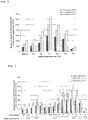
- Wie in
Abbildung 1 gezeigt, tritt bei Erhöhung der Aktivierungstemperatur bei anschließender Verwendung des aktivierten Materials als Filtermedium im Schüttschichtfilter eine deutliche Verbesserung der Abscheideleistung auf. Ein Maximum der Effektivität wird dabei bei etwa 400°C erreicht. - Es ist jedoch gemäß einer weiteren erfindungsgemäßen Ausführungsform ebenso möglich, das Erhitzen des Erdalkalicarbonat und Erdalkalihydroxid enthaltenden Materials direkt im Schüttschichtfilter durchzuführen.
- Aus energetischen Gründen wird das Erdalkalicarbonat und Erdalkalihydroxid enthaltende Material vor seinem Einsatz, beispielsweise einmalig, auf eine Temperatur zwischen 300°C bis 500°C erhitzt. Die wesentlichen Vorteile dieses erfindungsgemäßen Vorgehens sind die folgenden:
- 1. Das Verfahren ist energetisch effizient, da das Filter nicht dauerhaft bei hohen Temperaturen betrieben werden muss.
- 2. Das Filter kann wie bisher bei den üblichen, niedrigen Temperaturen unterhalb von 200°C und damit kostengünstiger betrieben werden.
- 3. Die Aktivierung durch Erhitzen kann beim Hersteller des Erdalkalicarbonat und Erdalkalihydroxid enthaltenden Materials (Sorbens) durchgeführt werden.
- 4. Der Bedarf an Erdalkalicarbonat und Erdalkalihydroxid enthaltendem Material kann durch effektivere Abscheidung minimiert werden.
- Das erfindungsgemäße Verfahren wird im Folgenden anhand von Ausführungsbeispielen näher erläutert.
- Im Laborversuch wurde der Einfluss einer thermischen Aktivierung auf die Absorptionsfähigkeit eines Sorbens für die trockenen Rausgasreinigung untersucht. Es wurde ein Sorbens verwendet, das aus Granalien, welche etwa 90 Gew.-% Calciumcarbonat und etwa 10 Gew.-% Kalkhydrat enthalten, besteht. zunächst wurde das Sorbens in 7 Chargen à 200 g aufgeteilt. Die erste Charge diente als Referenzprobe und wurde nicht weiter behandelt. Chargen 2 bis 7 wurden bei 200°C, 300°C, 400°C, 500°C, 600°C bzw. 900°C in entsprechend temperierten Öfen für 6 Stunden gelagert. Anschließend wurde die unterschiedlich aktivierten Sorbentien auf Raumtemperatur abgekühlt und jeweils in die dafür vorgesehene Patrone eines 160ml Labor-Schüttschichtfilter eingefüllt. Für jedes Material wurde nun die Absorptionsfähigkeit im Vergleich zum Referenzmaterial durch Aufnahme von SO2-Durchbruchskurven im Laborschüttschichtfilter bestimmt. Hierzu wurden die mit dem bei unterschiedlichen Temperaturen aktivierten Probenmaterial oder Referenzmaterial befüllten Schüttschichtfilter bei 160 bis 170°C mit ebenso temperiertem N2/SO2 Prüfgasgemisch mit einer SO2 Konzentration von 2000 ppm durchströmt. Das Gas durchströmte dabei den Filter mit einer Geschwindigkeit von 0,1 m/s bei einem Druck von etwa 30 bis 60 mmWS (Verweilzeit ca. 2 s). Dem Filter nachgeschaltet war eine computergestützte, kontinuierliche Gasanalyseeinheit (Fa. MSI, Typ MSI 2000), welche die SO2 Konzentration im Filterdurchstrom aufzeichnete. Die Differenz zwischen SO2 Konzentration vor dem Filter (2000 ppm) und nach dem Filter wurde als Abscheidegrad errechnet. Zum Zeitpunkt null war der Abscheidegrad in allen Fällen 100%, d.h. das Filtermaterial war in der Lage, das SO2 im durchströmenden Prüfgas vollständig zurückzuhalten. Ab einer gewissen Zeit zeigte sich jedoch eine Reduktion des Abscheidegrads, d.h. ein Durchbruch von SO2 im Filterdurchstrom, was wahrscheinlich durch die allmähliche Absättigung des Sorbens mit SO2 bedingt ist. Je stärker die Absorptionsfähigkeit des Sorbens ist, desto länger wird das SO2 im Prüfgas im Filter zurückgehalten und desto langsamer verläuft die Reduktion der Abscheidegradwerte bzw. des SO2-Durchbruchs. Charakteristische Werte sind die Zeitpunkte nach Versuchsbeginn, an denen der Abscheidegrad von 90%, 70% oder 50% unterschritten wird. Diese Werte sind in
Figur 1 für das unbehandelte Referenzmaterial und die bei unterschiedlichen Temperaturen aktivierten Probenmaterialen aufgetragen. Überraschenderweise zeigte sich, dass bereits eine einmalige thermische Aktivierung des Sorbens eine starke Erhöhung der Absorptionsfähigkeit zur Folge hatte. So zeigt ein Material, dass bei 400°C aktiviert wurde, eine Steigerung des SO2 Absorptionsvermögens um etwa 200% im Vergleich zum Referenzmaterial. Selbst bei einer Aktivierungstemperatur von nur 200°C zeigten sich schon leichte Verbesserungen im Absorptionsvermögen des so aktivierten Materials. Bei einer Aktivierungstemperatur von 900°C hingegen kam es zu einer Verschlechterung des Absorptionsvermögens. Beste Ergebnisse wurden bei Aktivierungstemperaturen von 200 bis 600°C und insbesondere von 300 bis 500°C erzielt. - In einer zweiten Versuchsreihe wurde der Einfluss der Aktivierungszeit auf das Absorptionsvermögen des Materials untersucht. Hierzu wurde entsprechend der Versuchsdurchführung gemäß Beispiel 1 verfahren. Einzig die Aktivierungszeit (Verweildauer im Ofen) wurde variiert. Entsprechend Beispiel 1 wurde anschließend das SO2 Absorptionsvermögen der unterschiedlich lange und bei unterschiedlichen Temperaturen aktivierten Materialien untersucht. Die Ergebnisse sowie die Aktivierungsbedingungen sind in
Figur 2 abgebildet. Dabei zeigt sich, dass je näher die Aktivierungstemperatur 400°C ist, umso kürzere Aktivierungszeiten sind erforderlich um vergleichsweise gute Absorptionsfähigkeiten zu erzielen. So zeigt eine 30-minütige Aktivierung bei 400°C in etwa die gleiche Verbesserung der Absorptionsfähigkeit wie eine 12-stündige Aktivierung bei 300°C. Die Versuche zeigen ferner, dass bei optimaler Aktivierungstemperatur schon sehr geringe Aktivierungszeiten (s.Fig. 2 , 5-minütige Aktivierung bei 400°C) zu deutlichen Verbesserungen der Absorptionsfähigkeit im Vergleich zum Referenzmaterial führen. Bei manchen Aktivierungstemperaturen zeigte sich eine weitere Verbesserung der Absorptionsfähigkeit mit steigender Aktivierungszeit (vgl.Fig. 2 , 300°C und 400°C). Bei einer Aktivierungstemperatur von 500°C führte hingegen eine 1-stündige Aktivierung zu besseren Ergebnissen als eine 6-stündige Aktivierung. Wie in Beispiel 1 zeigte das bei 900°C aktivierte Material schlechtere Absorptionsfähigkeit als das Referenzmaterial. - Ein mit einem Erdalkalicarbonat und Erdalkalihydroxid enthaltenden Sorbens befüllter Schüttschichtfilter in einem Heizkraftwerk wird durch etwa 400°C heißes, durchströmendes Gas einmalig für 2 Stunden aktiviert. Danach wird der Schüttschichtfilter weiter bei einer regulären Betriebstemperatur von unter 200°C betrieben. Die thermische Aktivierung bewirkt eine Verbesserung der Schadstoff Absorptionsfähigkeit des Schüttschichtfilters.
- Granalien aus CaCO3 und Ca(OH)2 werden im großtechnischen Fließbett-Prozess mit 270°C heißem Gas durchströmt und dabei getrocknet und gehärtet. Durch Verlängerung der Verweilzeit wird das Material über den Trocknungspunkt hinaus auf die Heißgastemperatur erhitzt und dabei aktiviert.
Claims (14)
- Verfahren zur Erhöhung der Absorptionsfähigkeit eines Erdalkalicarbonat und Erdalkalihydroxid enthaltenden Materials gegenüber Schwefeloxiden und/oder anderen Schadstoffen in Rauchgas, dadurch gekennzeichnet, dass das Erdalkalicarbonat und Erdalkalihydroxid enthaltende Material vor seiner Verwendung als Sorbens in einem separaten Schritt durch Erhitzen auf 300°C bis 500°C für einen Zeitraum von 1 Minute bis 12 Stunden aktiviert wird.
- Verfahren nach Anspruch 1, dadurch gekennzeichnet, dass das Erdalkalicarbonat und Erdalkalihydroxid enthaltende Material Calciumcarbonat, Calciumhydroxid, Magnesiumcarbonat und/oder Magnesiumhydroxid enthält.
- Verfahren nach Anspruch 1 oder 2, dadurch gekennzeichnet, dass das Erdalkalicarbonat und Erdalkalihydroxid enthaltende Material Kalk und/oder Dolomit enthält.
- Verfahren nach einem der vorangehenden Ansprüche, dadurch gekennzeichnet, dass das Erhitzen des Erdalkalicarbonat und Erdalkalihydroxid enthaltenden Materials für einen Zeitraum von 10 Minuten bis 12 Stunden durchgeführt wird.
- Verfahren nach einem der vorangehenden Ansprüche, dadurch gekennzeichnet, dass das Erdalkalicarbonat und Erdalkalihydroxid enthaltende Material als Granulat, Granalien oder Pellets vorliegt.
- Verfahren nach einem der vorangehenden Ansprüche, dadurch gekennzeichnet, dass das Erdalkalicarbonat und Erdalkalihydroxid enthaltende Material eine mittlere Partikelgröße von 0,1 bis 50 mm, insbesondere von 1 bis 10 mm aufweist.
- Verfahren nach einem der vorangehenden Ansprüche, dadurch gekennzeichnet, dass in einem weiteren Schritt das aktivierte Erdalkalicarbonat und Erdalkalihydroxid enthaltende Material auf Raumtemperatur abgekühlt wird.
- Verfahren nach einem der vorangehenden Ansprüche, dadurch gekennzeichnet, dass das Erdalkalicarbonat und Erdalkalihydroxid enthaltende Material sich in einem Filter, insbesondere einem Schüttschichtfilter oder einer Filterpatrone befindet.
- Aktiviertes Erdalkalicarbonat und Erdalkalihydroxid enthaltendes Material zur Absorption von Schwefeloxiden und/oder anderen Schadstoffen in der trockenen Rauchgasreinigung, hergestellt nach einem Verfahren gemäß einem oder mehreren der Ansprüche 1 bis 8.
- Verwendung eines aktivierten Erdalkalicarbonat und Erdalkalihydroxid enthaltenden Materials nach Anspruch 9 zur Absorption von Schwefeloxiden und/oder anderen Schadstoffen zur trockenen Rauchgasreinigung.
- Verwendung nach Anspruch 10, dadurch gekennzeichnet, dass das aktivierte Erdalkalicarbonat und Erdalkalihydroxid enthaltende Material als Füllmaterial in einem Schüttschichtfilter eingesetzt wird.
- Verwendung nach Anspruch 11 dadurch gekennzeichnet, dass das aktivierte Erdalkalicarbonat und Erdalkalihydroxid enthaltende Material durch Erhitzen des Materials im Schüttschichtfilter hergestellt wird.
- Verwendung nach Anspruch 10, dadurch gekennzeichnet, dass das aktivierte Erdalkalicarbonat und Erdalkalihydroxid enthaltende Material in einem Wirbel-oder Fließbett verwendet wird.
- Verwendung nach Anspruch 10, dadurch gekennzeichnet, dass das aktivierte Erdalkalicarbonat und Erdalkalihydroxid enthaltende Material in einem Flugstromverfahren verwendet wird.
Priority Applications (12)
| Application Number | Priority Date | Filing Date | Title |
|---|---|---|---|
| PL12162517T PL2644267T5 (pl) | 2012-03-30 | 2012-03-30 | Aktywacja materiału zawierającego węglan metalu ziem alkalicznych i wodorotlenek metalu ziem alkalicznych do suchego oczyszczania gazu spalinowego |
| DK12162517.2T DK2644267T4 (da) | 2012-03-30 | 2012-03-30 | Aktivering af et materiale, der indeholder jordalkalicarbonat og jordalkalihydroxid, til tør røggasrensning |
| EP12162517.2A EP2644267B2 (de) | 2012-03-30 | 2012-03-30 | Aktivierung eines Erdalkalicarbonat und Erdalkalihydroxid enthaltenden Materials für die trockene Rauchgasreinigung |
| ES12162517T ES2656018T5 (es) | 2012-03-30 | 2012-03-30 | Activación de un material que contiene carbonato alcalinotérreo e hidróxido alcalinotérreo para la limpieza en seco de gases de combustión |
| PT121625172T PT2644267T (pt) | 2012-03-30 | 2012-03-30 | Ativação de um material que contém carbonato alcalinoterroso e hidróxido alcalinoterroso para depuração a seco de gás de combustão |
| NO12162517A NO2644267T3 (de) | 2012-03-30 | 2012-03-30 | |
| PCT/EP2013/056904 WO2013144367A1 (de) | 2012-03-30 | 2013-04-02 | Aktivierung eines erdalkalicarbonat und erdalkalihydroxid enthaltenden materials für die trockene rauchgasreinigung |
| JP2015502380A JP6286415B2 (ja) | 2012-03-30 | 2013-04-02 | 排ガスの乾式浄化のためのアルカリ土類金属カーボネートおよびアルカリ土類金属水酸化物を含有する材料の活性化 |
| US14/388,429 US20150157977A1 (en) | 2012-03-30 | 2013-04-02 | Activation of a material containing alkaline-earth carbonate and alkaline-earth hydroxide for the dry scrubbing of flue gas |
| BR112014023593A BR112014023593B1 (pt) | 2012-03-30 | 2013-04-02 | processo para o aumento da capacidade de absorção de um material contendo carbonato alcalinoterroso e hidróxido alcalinoterroso e uso de um material contendo carbonato alcalinoterroso e hidróxido alcalinoterroso ativado |
| US15/290,201 US10532313B2 (en) | 2012-03-30 | 2016-10-11 | Activation of a material containing alkaline-earth metal carbonate and alkaline-earth metal hydroxide for the dry scrubbing of flue gas |
| US16/704,661 US11167244B2 (en) | 2012-03-30 | 2019-12-05 | Activation of a material containing alkaline-earth metal carbonate and alkaline-earth metal hydroxide for the dry scrubbing of flue gas |
Applications Claiming Priority (1)
| Application Number | Priority Date | Filing Date | Title |
|---|---|---|---|
| EP12162517.2A EP2644267B2 (de) | 2012-03-30 | 2012-03-30 | Aktivierung eines Erdalkalicarbonat und Erdalkalihydroxid enthaltenden Materials für die trockene Rauchgasreinigung |
Publications (3)
| Publication Number | Publication Date |
|---|---|
| EP2644267A1 EP2644267A1 (de) | 2013-10-02 |
| EP2644267B1 true EP2644267B1 (de) | 2017-11-08 |
| EP2644267B2 EP2644267B2 (de) | 2021-01-20 |
Family
ID=48040257
Family Applications (1)
| Application Number | Title | Priority Date | Filing Date |
|---|---|---|---|
| EP12162517.2A Active EP2644267B2 (de) | 2012-03-30 | 2012-03-30 | Aktivierung eines Erdalkalicarbonat und Erdalkalihydroxid enthaltenden Materials für die trockene Rauchgasreinigung |
Country Status (10)
| Country | Link |
|---|---|
| US (1) | US20150157977A1 (de) |
| EP (1) | EP2644267B2 (de) |
| JP (1) | JP6286415B2 (de) |
| BR (1) | BR112014023593B1 (de) |
| DK (1) | DK2644267T4 (de) |
| ES (1) | ES2656018T5 (de) |
| NO (1) | NO2644267T3 (de) |
| PL (1) | PL2644267T5 (de) |
| PT (1) | PT2644267T (de) |
| WO (1) | WO2013144367A1 (de) |
Families Citing this family (3)
| Publication number | Priority date | Publication date | Assignee | Title |
|---|---|---|---|---|
| IL246429A0 (en) * | 2016-06-19 | 2016-09-29 | Yeda Res & Dev | A method for removing sulfur from furnace gas |
| JP7891253B2 (ja) * | 2023-05-15 | 2026-07-16 | Cyc株式会社 | 工業炉用煤塵除去装置 |
| US20260048996A1 (en) * | 2024-08-13 | 2026-02-19 | Heimdal, Inc. | Methods of manufacture and use of calcium hydroxide granules for carbon dioxide capture |
Citations (21)
| Publication number | Priority date | Publication date | Assignee | Title |
|---|---|---|---|---|
| DE2252710A1 (de) | 1972-10-27 | 1974-05-02 | Ver Kesselwerke Ag | Verfahren zur entfernung von salzsaeure (hcl) aus den rauchgasen von verbrennungseinrichtungen aller art |
| US4061593A (en) | 1977-01-26 | 1977-12-06 | General Motors Corporation | Stabilization of calcium oxide sulfate trapping materials |
| CN85105415A (zh) | 1985-07-16 | 1985-12-20 | 北京工业大学 | 可治理多种酸气的吸附剂 |
| DE3230472C2 (de) | 1982-08-16 | 1988-01-21 | Deutsche Kommunal-Anlagen Miete Gmbh, 8000 Muenchen, De | |
| WO1992001509A1 (en) | 1990-07-16 | 1992-02-06 | Michigan State University | COMPOSITE CLAY MATERIALS FOR REMOVAL OF SOx FROM GAS STREAMS |
| EP0613712A1 (de) | 1993-03-05 | 1994-09-07 | IC UMWELT- UND ANLAGENTECHNIK GmbH | Verfahren und Vorrichtung zur Trockenreinigung von heissen Gasen |
| JPH07149580A (ja) | 1992-12-02 | 1995-06-13 | Suzuki Kogyo Kk | 高活性酸化カルシウム多孔質体及びその製造方法 |
| EP0748766A1 (de) | 1995-06-16 | 1996-12-18 | Rheinische Kalksteinwerke GmbH. | Granulat auf Basis von Erdalkalikarbonaten mit ab- und adsorptiven Substanzen |
| EP0861209B1 (de) | 1995-10-19 | 1999-08-18 | S.A. Lhoist Recherche Et Developpement | Calciumhydroxidteilchen |
| JP2003164757A (ja) | 2001-11-29 | 2003-06-10 | Nippon Shokubai Co Ltd | 窒素酸化物および/または硫黄酸化物の吸着剤 |
| JP2006169062A (ja) | 2004-12-17 | 2006-06-29 | Ube Material Industries Ltd | 酸化カルシウム含有多孔質粒状物 |
| WO2006113301A1 (en) | 2005-04-19 | 2006-10-26 | Carmeuse North America Services, Inc. | Method for producing activated lime for removal of acid gases from a combustion gas |
| US7314847B1 (en) | 2004-10-21 | 2008-01-01 | The United States Of America As Represented By The United States Department Of Energy | Regenerable sorbents for CO2 capture from moderate and high temperature gas streams |
| JP2009057254A (ja) | 2007-08-31 | 2009-03-19 | Sekitan Energy Center | 粒子状のCa(OH)2の製造方法及びそれを用いたガス吸収方法又はガス回収方法 |
| UA44170U (ru) | 2009-03-24 | 2009-09-25 | Инна Вячеславовна Питак | Способ получения активного оксида магния |
| JP2010064040A (ja) | 2008-09-12 | 2010-03-25 | Asahi Glass Co Ltd | ハロゲン系ガスの除去剤およびハロゲン系ガスの除去方法 |
| WO2011039034A1 (de) | 2009-10-02 | 2011-04-07 | Torsten Schlicht | Mineralisches, granuliertes entschwefelungsmittel auf basis von calciumhydroxid, verfahren zu seiner herstellung sowie seine verwendung |
| CA2707959A1 (en) | 2010-03-11 | 2011-09-11 | Electrical Power Research Institute | Method and apparatus for on-site production of lime and sorbents for use in removal of gaseous pollutants |
| DE102011112657A1 (de) | 2011-09-06 | 2013-03-07 | Fels-Werke Gmbh | Gasabsorptionsgranulat |
| WO2013034315A1 (de) | 2011-09-06 | 2013-03-14 | Fels-Werke Gmbh | Gasabsorptionsgranulat |
| EP2328675B1 (de) | 2008-08-25 | 2013-05-29 | Torsten Schlicht | VERFAHREN UND ABGASANLAGE ZUR REINIGUNG SOx-HALTIGER ABGASE, INSBESONDERE VON SCHIFFSBRENNKRAFTMASCHINEN |
Family Cites Families (1)
| Publication number | Priority date | Publication date | Assignee | Title |
|---|---|---|---|---|
| EP1867620A1 (de) * | 2005-03-30 | 2007-12-19 | Ube Material Industries, Ltd. | Körnige materialien, umfassend calicum und/oder magnesium enthaltende poröse teilchen |
-
2012
- 2012-03-30 PL PL12162517T patent/PL2644267T5/pl unknown
- 2012-03-30 NO NO12162517A patent/NO2644267T3/no unknown
- 2012-03-30 EP EP12162517.2A patent/EP2644267B2/de active Active
- 2012-03-30 ES ES12162517T patent/ES2656018T5/es active Active
- 2012-03-30 DK DK12162517.2T patent/DK2644267T4/da active
- 2012-03-30 PT PT121625172T patent/PT2644267T/pt unknown
-
2013
- 2013-04-02 US US14/388,429 patent/US20150157977A1/en not_active Abandoned
- 2013-04-02 JP JP2015502380A patent/JP6286415B2/ja active Active
- 2013-04-02 BR BR112014023593A patent/BR112014023593B1/pt active IP Right Grant
- 2013-04-02 WO PCT/EP2013/056904 patent/WO2013144367A1/de not_active Ceased
Patent Citations (23)
| Publication number | Priority date | Publication date | Assignee | Title |
|---|---|---|---|---|
| DE2252710A1 (de) | 1972-10-27 | 1974-05-02 | Ver Kesselwerke Ag | Verfahren zur entfernung von salzsaeure (hcl) aus den rauchgasen von verbrennungseinrichtungen aller art |
| US4061593A (en) | 1977-01-26 | 1977-12-06 | General Motors Corporation | Stabilization of calcium oxide sulfate trapping materials |
| DE3230472C2 (de) | 1982-08-16 | 1988-01-21 | Deutsche Kommunal-Anlagen Miete Gmbh, 8000 Muenchen, De | |
| CN85105415A (zh) | 1985-07-16 | 1985-12-20 | 北京工业大学 | 可治理多种酸气的吸附剂 |
| WO1992001509A1 (en) | 1990-07-16 | 1992-02-06 | Michigan State University | COMPOSITE CLAY MATERIALS FOR REMOVAL OF SOx FROM GAS STREAMS |
| JPH07149580A (ja) | 1992-12-02 | 1995-06-13 | Suzuki Kogyo Kk | 高活性酸化カルシウム多孔質体及びその製造方法 |
| EP0613712A1 (de) | 1993-03-05 | 1994-09-07 | IC UMWELT- UND ANLAGENTECHNIK GmbH | Verfahren und Vorrichtung zur Trockenreinigung von heissen Gasen |
| EP0748766A1 (de) | 1995-06-16 | 1996-12-18 | Rheinische Kalksteinwerke GmbH. | Granulat auf Basis von Erdalkalikarbonaten mit ab- und adsorptiven Substanzen |
| EP0861209B1 (de) | 1995-10-19 | 1999-08-18 | S.A. Lhoist Recherche Et Developpement | Calciumhydroxidteilchen |
| JP2003164757A (ja) | 2001-11-29 | 2003-06-10 | Nippon Shokubai Co Ltd | 窒素酸化物および/または硫黄酸化物の吸着剤 |
| US7314847B1 (en) | 2004-10-21 | 2008-01-01 | The United States Of America As Represented By The United States Department Of Energy | Regenerable sorbents for CO2 capture from moderate and high temperature gas streams |
| JP2006169062A (ja) | 2004-12-17 | 2006-06-29 | Ube Material Industries Ltd | 酸化カルシウム含有多孔質粒状物 |
| WO2006113301A1 (en) | 2005-04-19 | 2006-10-26 | Carmeuse North America Services, Inc. | Method for producing activated lime for removal of acid gases from a combustion gas |
| JP2009057254A (ja) | 2007-08-31 | 2009-03-19 | Sekitan Energy Center | 粒子状のCa(OH)2の製造方法及びそれを用いたガス吸収方法又はガス回収方法 |
| EP2328675B1 (de) | 2008-08-25 | 2013-05-29 | Torsten Schlicht | VERFAHREN UND ABGASANLAGE ZUR REINIGUNG SOx-HALTIGER ABGASE, INSBESONDERE VON SCHIFFSBRENNKRAFTMASCHINEN |
| JP2010064040A (ja) | 2008-09-12 | 2010-03-25 | Asahi Glass Co Ltd | ハロゲン系ガスの除去剤およびハロゲン系ガスの除去方法 |
| UA44170U (ru) | 2009-03-24 | 2009-09-25 | Инна Вячеславовна Питак | Способ получения активного оксида магния |
| WO2011039034A1 (de) | 2009-10-02 | 2011-04-07 | Torsten Schlicht | Mineralisches, granuliertes entschwefelungsmittel auf basis von calciumhydroxid, verfahren zu seiner herstellung sowie seine verwendung |
| DE102009045278A1 (de) | 2009-10-02 | 2011-05-05 | Dirk Dombrowski | Mineralisches, granuliertes Entschwefelungsmittel auf Basis von Calciumhydroxid, Verfahren zu seiner Herstellung sowie seine Verwendung |
| CA2707959A1 (en) | 2010-03-11 | 2011-09-11 | Electrical Power Research Institute | Method and apparatus for on-site production of lime and sorbents for use in removal of gaseous pollutants |
| DE102011112657A1 (de) | 2011-09-06 | 2013-03-07 | Fels-Werke Gmbh | Gasabsorptionsgranulat |
| WO2013034315A1 (de) | 2011-09-06 | 2013-03-14 | Fels-Werke Gmbh | Gasabsorptionsgranulat |
| WO2013034314A1 (de) | 2011-09-06 | 2013-03-14 | Fels-Werke Gmbh | Gasabsorptionsgranulat |
Non-Patent Citations (3)
| Title |
|---|
| "Dry Exhaust Gas Cleaning System", POWER POINT SUSTAINABLE SHIPPING CONFERENCE 2009, 2009, San Francisco , U.S.A., XP055510749 |
| GREENWOOD, N.N. ET AL.: "Chemie der Elemente", 1988, ISBN: 3-527-26169-9, pages: 146 - 157, XP055511894 |
| WEISWEILER ET AL.: "Trockene Rauchgasentschwefelung mit Kalkstein oder Dolomit: Verbesserung der Entschwefelungswirkung durch Optimierung der Feststoff-Porenstruktur, Pelletierung und chemische Aktivierung", KFK-PEF 31, October 1987 (1987-10-01), pages 1 - 89, XP055510731 |
Also Published As
| Publication number | Publication date |
|---|---|
| JP6286415B2 (ja) | 2018-02-28 |
| EP2644267A1 (de) | 2013-10-02 |
| NO2644267T3 (de) | 2018-04-07 |
| PT2644267T (pt) | 2018-01-19 |
| JP2015526263A (ja) | 2015-09-10 |
| PL2644267T3 (pl) | 2018-04-30 |
| DK2644267T3 (en) | 2018-01-15 |
| PL2644267T5 (pl) | 2021-05-31 |
| EP2644267B2 (de) | 2021-01-20 |
| US20150157977A1 (en) | 2015-06-11 |
| DK2644267T4 (da) | 2021-04-12 |
| ES2656018T5 (es) | 2021-10-26 |
| WO2013144367A1 (de) | 2013-10-03 |
| WO2013144367A9 (de) | 2013-12-19 |
| BR112014023593A2 (pt) | 2017-06-27 |
| ES2656018T3 (es) | 2018-02-22 |
| BR112014023593B1 (pt) | 2019-12-10 |
Similar Documents
| Publication | Publication Date | Title |
|---|---|---|
| EP3386932B1 (de) | Zusammensetzung enthaltend modifizierten, chromatarmen rotschlamm sowie verfahren zu deren herstellung | |
| DE4023030C2 (de) | Trockenverfahren zur Behandlung von Verbrennungsabgasen | |
| DE102005005818A1 (de) | Verfahren zum Reinigen von Abgasen eines Sinterprozesses von Erzen in der Metallerzeugung | |
| DE2907177A1 (de) | Verfahren zur entfernung von schwefeloxiden aus abgasen | |
| EP2709962B1 (de) | Verfahren und vorrichtung zur quecksilberabscheidung bei der zementklinkerherstellung | |
| DE4303450C2 (de) | Mittel zur trockenen Reinigung von Abgasen | |
| DE3880334T2 (de) | Sorbentmittel für Giftgas, seine Herstellung und Verwendung. | |
| DE102005001595A1 (de) | Verfahren zum Reinigen von Abgasen eines Glasschmelzprozesses, insbesondere für Gläser für LCD-Bildschirme | |
| EP2078555A1 (de) | Verfahren zur reinigung von Abgasen | |
| EP2644267B2 (de) | Aktivierung eines Erdalkalicarbonat und Erdalkalihydroxid enthaltenden Materials für die trockene Rauchgasreinigung | |
| DE69620697T2 (de) | Verfahren zur Vermeidung der Dioxinbildung in Verbrennungsabgas | |
| EP3256236B1 (de) | Verfahren zur reinigung von abgasen bei der thermischen aufarbeitung von mineralstoffen | |
| DE69116819T2 (de) | Aktivkohle, Verfahren zur Herstellung und ihre Verwendung zur Adsorption | |
| WO2019120835A1 (de) | Verfahren zur behandlung von schwefeloxide enthaltenden abgasen | |
| DE102008010349A1 (de) | Als CO2-Absorbens und zur Anwendung als Bettmaterial in Wirbelschichten geeignetes Material und dessen Herstellung | |
| DE10302978A1 (de) | Sorptionsmittel und Verfahren zur Entfernung von Schwermetallen aus einem schwermetallhaltigen Gas | |
| EP0367148B1 (de) | Mittel und Verfahren zur Reinigung von Gasen und Abgasen von Schwermetallen und ein Verfahren zur Herstellung dieser Mittel | |
| DE102014113620A1 (de) | Puzzolane zur Abgasreinigung | |
| EP0748766B1 (de) | Granulat auf Basis von Erdalkalikarbonaten mit ab- und adsorptiven Substanzen | |
| EP2260923B1 (de) | Verfahren zur Reinigung von Müllverbrennungsabgasen | |
| DE4401166A1 (de) | Verfahren zur Reinigung von Rauchgasen | |
| DE102008014893A1 (de) | Rauchgasreinigungsverfahren und Kalkhydrat für Rauchgasreinigungsverfahren | |
| EP3268114A1 (de) | Rauchgasreinigungsanlage und verfahren zur reinigung von rauchgas | |
| DE3590533C2 (de) | Sorbens für die Entfernung von Stickoxiden, Schwefeloxiden und Schwefelwasserstoff aus Gasströmen | |
| DE2924585C2 (de) | Feste Absorptionsmasse für die trockene Enthalogenierung von Gasströmen, Verfahren zu ihrer Herstellung und ihre Verwendung |
Legal Events
| Date | Code | Title | Description |
|---|---|---|---|
| PUAI | Public reference made under article 153(3) epc to a published international application that has entered the european phase |
Free format text: ORIGINAL CODE: 0009012 |
|
| AK | Designated contracting states |
Kind code of ref document: A1 Designated state(s): AL AT BE BG CH CY CZ DE DK EE ES FI FR GB GR HR HU IE IS IT LI LT LU LV MC MK MT NL NO PL PT RO RS SE SI SK SM TR |
|
| AX | Request for extension of the european patent |
Extension state: BA ME |
|
| 17P | Request for examination filed |
Effective date: 20140328 |
|
| RBV | Designated contracting states (corrected) |
Designated state(s): AL AT BE BG CH CY CZ DE DK EE ES FI FR GB GR HR HU IE IS IT LI LT LU LV MC MK MT NL NO PL PT RO RS SE SI SK SM TR |
|
| 17Q | First examination report despatched |
Effective date: 20170207 |
|
| GRAP | Despatch of communication of intention to grant a patent |
Free format text: ORIGINAL CODE: EPIDOSNIGR1 |
|
| RIC1 | Information provided on ipc code assigned before grant |
Ipc: B01D 53/50 20060101ALI20170425BHEP Ipc: B01J 20/30 20060101ALI20170425BHEP Ipc: B01D 53/04 20060101ALI20170425BHEP Ipc: B01D 53/83 20060101ALI20170425BHEP Ipc: B01J 20/28 20060101AFI20170425BHEP Ipc: B01J 20/04 20060101ALI20170425BHEP |
|
| INTG | Intention to grant announced |
Effective date: 20170517 |
|
| GRAS | Grant fee paid |
Free format text: ORIGINAL CODE: EPIDOSNIGR3 |
|
| GRAA | (expected) grant |
Free format text: ORIGINAL CODE: 0009210 |
|
| AK | Designated contracting states |
Kind code of ref document: B1 Designated state(s): AL AT BE BG CH CY CZ DE DK EE ES FI FR GB GR HR HU IE IS IT LI LT LU LV MC MK MT NL NO PL PT RO RS SE SI SK SM TR |
|
| REG | Reference to a national code |
Ref country code: GB Ref legal event code: FG4D Free format text: NOT ENGLISH |
|
| REG | Reference to a national code |
Ref country code: CH Ref legal event code: EP Ref country code: AT Ref legal event code: REF Ref document number: 943624 Country of ref document: AT Kind code of ref document: T Effective date: 20171115 |
|
| REG | Reference to a national code |
Ref country code: IE Ref legal event code: FG4D Free format text: LANGUAGE OF EP DOCUMENT: GERMAN |
|
| REG | Reference to a national code |
Ref country code: DE Ref legal event code: R096 Ref document number: 502012011598 Country of ref document: DE |
|
| REG | Reference to a national code |
Ref country code: DK Ref legal event code: T3 Effective date: 20180109 |
|
| REG | Reference to a national code |
Ref country code: NL Ref legal event code: FP |
|
| REG | Reference to a national code |
Ref country code: PT Ref legal event code: SC4A Ref document number: 2644267 Country of ref document: PT Date of ref document: 20180119 Kind code of ref document: T Free format text: AVAILABILITY OF NATIONAL TRANSLATION Effective date: 20180111 |
|
| REG | Reference to a national code |
Ref country code: CH Ref legal event code: NV Representative=s name: SCHMAUDER AND PARTNER AG PATENT- UND MARKENANW, CH |
|
| REG | Reference to a national code |
Ref country code: SE Ref legal event code: TRGR |
|
| REG | Reference to a national code |
Ref country code: ES Ref legal event code: FG2A Ref document number: 2656018 Country of ref document: ES Kind code of ref document: T3 Effective date: 20180222 |
|
| REG | Reference to a national code |
Ref country code: NO Ref legal event code: T2 Effective date: 20171108 |
|
| REG | Reference to a national code |
Ref country code: FR Ref legal event code: PLFP Year of fee payment: 7 |
|
| REG | Reference to a national code |
Ref country code: LT Ref legal event code: MG4D |
|
| PG25 | Lapsed in a contracting state [announced via postgrant information from national office to epo] |
Ref country code: LT Free format text: LAPSE BECAUSE OF FAILURE TO SUBMIT A TRANSLATION OF THE DESCRIPTION OR TO PAY THE FEE WITHIN THE PRESCRIBED TIME-LIMIT Effective date: 20171108 |
|
| REG | Reference to a national code |
Ref country code: SK Ref legal event code: T3 Ref document number: E 26332 Country of ref document: SK |
|
| PG25 | Lapsed in a contracting state [announced via postgrant information from national office to epo] |
Ref country code: IS Free format text: LAPSE BECAUSE OF FAILURE TO SUBMIT A TRANSLATION OF THE DESCRIPTION OR TO PAY THE FEE WITHIN THE PRESCRIBED TIME-LIMIT Effective date: 20180308 Ref country code: RS Free format text: LAPSE BECAUSE OF FAILURE TO SUBMIT A TRANSLATION OF THE DESCRIPTION OR TO PAY THE FEE WITHIN THE PRESCRIBED TIME-LIMIT Effective date: 20171108 Ref country code: GR Free format text: LAPSE BECAUSE OF FAILURE TO SUBMIT A TRANSLATION OF THE DESCRIPTION OR TO PAY THE FEE WITHIN THE PRESCRIBED TIME-LIMIT Effective date: 20180209 Ref country code: HR Free format text: LAPSE BECAUSE OF FAILURE TO SUBMIT A TRANSLATION OF THE DESCRIPTION OR TO PAY THE FEE WITHIN THE PRESCRIBED TIME-LIMIT Effective date: 20171108 Ref country code: LV Free format text: LAPSE BECAUSE OF FAILURE TO SUBMIT A TRANSLATION OF THE DESCRIPTION OR TO PAY THE FEE WITHIN THE PRESCRIBED TIME-LIMIT Effective date: 20171108 Ref country code: BG Free format text: LAPSE BECAUSE OF FAILURE TO SUBMIT A TRANSLATION OF THE DESCRIPTION OR TO PAY THE FEE WITHIN THE PRESCRIBED TIME-LIMIT Effective date: 20180208 |
|
| PG25 | Lapsed in a contracting state [announced via postgrant information from national office to epo] |
Ref country code: EE Free format text: LAPSE BECAUSE OF FAILURE TO SUBMIT A TRANSLATION OF THE DESCRIPTION OR TO PAY THE FEE WITHIN THE PRESCRIBED TIME-LIMIT Effective date: 20171108 Ref country code: CY Free format text: LAPSE BECAUSE OF FAILURE TO SUBMIT A TRANSLATION OF THE DESCRIPTION OR TO PAY THE FEE WITHIN THE PRESCRIBED TIME-LIMIT Effective date: 20171108 |
|
| REG | Reference to a national code |
Ref country code: DE Ref legal event code: R026 Ref document number: 502012011598 Country of ref document: DE |
|
| PLBI | Opposition filed |
Free format text: ORIGINAL CODE: 0009260 |
|
| PLAX | Notice of opposition and request to file observation + time limit sent |
Free format text: ORIGINAL CODE: EPIDOSNOBS2 |
|
| PG25 | Lapsed in a contracting state [announced via postgrant information from national office to epo] |
Ref country code: SM Free format text: LAPSE BECAUSE OF FAILURE TO SUBMIT A TRANSLATION OF THE DESCRIPTION OR TO PAY THE FEE WITHIN THE PRESCRIBED TIME-LIMIT Effective date: 20171108 Ref country code: RO Free format text: LAPSE BECAUSE OF FAILURE TO SUBMIT A TRANSLATION OF THE DESCRIPTION OR TO PAY THE FEE WITHIN THE PRESCRIBED TIME-LIMIT Effective date: 20171108 |
|
| 26 | Opposition filed |
Opponent name: SCHAEFER KALK GMBH & CO. KG Effective date: 20180808 Opponent name: FELS VERTRIEBS- UND SERVICE GMBH & CO. KG Effective date: 20180807 |
|
| PG25 | Lapsed in a contracting state [announced via postgrant information from national office to epo] |
Ref country code: MT Free format text: LAPSE BECAUSE OF FAILURE TO SUBMIT A TRANSLATION OF THE DESCRIPTION OR TO PAY THE FEE WITHIN THE PRESCRIBED TIME-LIMIT Effective date: 20171108 |
|
| PG25 | Lapsed in a contracting state [announced via postgrant information from national office to epo] |
Ref country code: MC Free format text: LAPSE BECAUSE OF FAILURE TO SUBMIT A TRANSLATION OF THE DESCRIPTION OR TO PAY THE FEE WITHIN THE PRESCRIBED TIME-LIMIT Effective date: 20171108 Ref country code: SI Free format text: LAPSE BECAUSE OF FAILURE TO SUBMIT A TRANSLATION OF THE DESCRIPTION OR TO PAY THE FEE WITHIN THE PRESCRIBED TIME-LIMIT Effective date: 20171108 |
|
| REG | Reference to a national code |
Ref country code: IE Ref legal event code: MM4A |
|
| PLBB | Reply of patent proprietor to notice(s) of opposition received |
Free format text: ORIGINAL CODE: EPIDOSNOBS3 |
|
| PG25 | Lapsed in a contracting state [announced via postgrant information from national office to epo] |
Ref country code: IE Free format text: LAPSE BECAUSE OF NON-PAYMENT OF DUE FEES Effective date: 20180330 |
|
| APBM | Appeal reference recorded |
Free format text: ORIGINAL CODE: EPIDOSNREFNO |
|
| APBP | Date of receipt of notice of appeal recorded |
Free format text: ORIGINAL CODE: EPIDOSNNOA2O |
|
| APAH | Appeal reference modified |
Free format text: ORIGINAL CODE: EPIDOSCREFNO |
|
| PG25 | Lapsed in a contracting state [announced via postgrant information from national office to epo] |
Ref country code: HU Free format text: LAPSE BECAUSE OF FAILURE TO SUBMIT A TRANSLATION OF THE DESCRIPTION OR TO PAY THE FEE WITHIN THE PRESCRIBED TIME-LIMIT; INVALID AB INITIO Effective date: 20120330 |
|
| APBQ | Date of receipt of statement of grounds of appeal recorded |
Free format text: ORIGINAL CODE: EPIDOSNNOA3O |
|
| PG25 | Lapsed in a contracting state [announced via postgrant information from national office to epo] |
Ref country code: MK Free format text: LAPSE BECAUSE OF NON-PAYMENT OF DUE FEES Effective date: 20171108 |
|
| APBU | Appeal procedure closed |
Free format text: ORIGINAL CODE: EPIDOSNNOA9O |
|
| PG25 | Lapsed in a contracting state [announced via postgrant information from national office to epo] |
Ref country code: AL Free format text: LAPSE BECAUSE OF FAILURE TO SUBMIT A TRANSLATION OF THE DESCRIPTION OR TO PAY THE FEE WITHIN THE PRESCRIBED TIME-LIMIT Effective date: 20171108 |
|
| PLAB | Opposition data, opponent's data or that of the opponent's representative modified |
Free format text: ORIGINAL CODE: 0009299OPPO |
|
| R26 | Opposition filed (corrected) |
Opponent name: SCHAEFER KALK GMBH & CO. KG Effective date: 20180808 |
|
| PUAH | Patent maintained in amended form |
Free format text: ORIGINAL CODE: 0009272 |
|
| STAA | Information on the status of an ep patent application or granted ep patent |
Free format text: STATUS: PATENT MAINTAINED AS AMENDED |
|
| 27A | Patent maintained in amended form |
Effective date: 20210120 |
|
| AK | Designated contracting states |
Kind code of ref document: B2 Designated state(s): AL AT BE BG CH CY CZ DE DK EE ES FI FR GB GR HR HU IE IS IT LI LT LU LV MC MK MT NL NO PL PT RO RS SE SI SK SM TR |
|
| REG | Reference to a national code |
Ref country code: DE Ref legal event code: R102 Ref document number: 502012011598 Country of ref document: DE |
|
| REG | Reference to a national code |
Ref country code: DK Ref legal event code: T4 Effective date: 20210408 |
|
| REG | Reference to a national code |
Ref country code: NL Ref legal event code: FP |
|
| REG | Reference to a national code |
Ref country code: SE Ref legal event code: RPEO |
|
| REG | Reference to a national code |
Ref country code: NO Ref legal event code: TB2 |
|
| REG | Reference to a national code |
Ref country code: SK Ref legal event code: T5 Ref document number: E 26332 Country of ref document: SK |
|
| REG | Reference to a national code |
Ref country code: ES Ref legal event code: DC2A Ref document number: 2656018 Country of ref document: ES Kind code of ref document: T5 Effective date: 20211026 |
|
| P01 | Opt-out of the competence of the unified patent court (upc) registered |
Effective date: 20230517 |
|
| REG | Reference to a national code |
Ref country code: CH Ref legal event code: U11 Free format text: ST27 STATUS EVENT CODE: U-0-0-U10-U11 (AS PROVIDED BY THE NATIONAL OFFICE) Effective date: 20260401 |
|
| PGFP | Annual fee paid to national office [announced via postgrant information from national office to epo] |
Ref country code: SE Payment date: 20260327 Year of fee payment: 15 |
|
| PGFP | Annual fee paid to national office [announced via postgrant information from national office to epo] |
Ref country code: GB Payment date: 20260326 Year of fee payment: 15 |
|
| PGFP | Annual fee paid to national office [announced via postgrant information from national office to epo] |
Ref country code: DK Payment date: 20260331 Year of fee payment: 15 Ref country code: DE Payment date: 20260327 Year of fee payment: 15 |
|
| PGFP | Annual fee paid to national office [announced via postgrant information from national office to epo] |
Ref country code: AT Payment date: 20260327 Year of fee payment: 15 |
|
| PGFP | Annual fee paid to national office [announced via postgrant information from national office to epo] |
Ref country code: LU Payment date: 20260326 Year of fee payment: 15 Ref country code: FI Payment date: 20260326 Year of fee payment: 15 Ref country code: BE Payment date: 20260326 Year of fee payment: 15 |
|
| PGFP | Annual fee paid to national office [announced via postgrant information from national office to epo] |
Ref country code: NL Payment date: 20260326 Year of fee payment: 15 |
|
| PGFP | Annual fee paid to national office [announced via postgrant information from national office to epo] |
Ref country code: FR Payment date: 20260326 Year of fee payment: 15 |
|
| PGFP | Annual fee paid to national office [announced via postgrant information from national office to epo] |
Ref country code: TR Payment date: 20260306 Year of fee payment: 15 |
|
| PGFP | Annual fee paid to national office [announced via postgrant information from national office to epo] |
Ref country code: PT Payment date: 20260226 Year of fee payment: 15 Ref country code: CZ Payment date: 20260310 Year of fee payment: 15 |
|
| PGFP | Annual fee paid to national office [announced via postgrant information from national office to epo] |
Ref country code: PL Payment date: 20260313 Year of fee payment: 15 |
|
| PGFP | Annual fee paid to national office [announced via postgrant information from national office to epo] |
Ref country code: SK Payment date: 20260310 Year of fee payment: 15 |
|
| PGFP | Annual fee paid to national office [announced via postgrant information from national office to epo] |
Ref country code: ES Payment date: 20260427 Year of fee payment: 15 |
|
| PGFP | Annual fee paid to national office [announced via postgrant information from national office to epo] |
Ref country code: IT Payment date: 20260327 Year of fee payment: 15 |
|
| PGFP | Annual fee paid to national office [announced via postgrant information from national office to epo] |
Ref country code: NO Payment date: 20260331 Year of fee payment: 15 |
|
| PGFP | Annual fee paid to national office [announced via postgrant information from national office to epo] |
Ref country code: CH Payment date: 20260401 Year of fee payment: 15 |