EP2640102A1 - Mobiles kommunikationssystem - Google Patents
Mobiles kommunikationssystem Download PDFInfo
- Publication number
- EP2640102A1 EP2640102A1 EP11840677.6A EP11840677A EP2640102A1 EP 2640102 A1 EP2640102 A1 EP 2640102A1 EP 11840677 A EP11840677 A EP 11840677A EP 2640102 A1 EP2640102 A1 EP 2640102A1
- Authority
- EP
- European Patent Office
- Prior art keywords
- sctp
- node
- mobile station
- assigned
- streams
- Prior art date
- Legal status (The legal status is an assumption and is not a legal conclusion. Google has not performed a legal analysis and makes no representation as to the accuracy of the status listed.)
- Withdrawn
Links
Images


Classifications
-
- H—ELECTRICITY
- H04—ELECTRIC COMMUNICATION TECHNIQUE
- H04W—WIRELESS COMMUNICATION NETWORKS
- H04W4/00—Services specially adapted for wireless communication networks; Facilities therefor
- H04W4/90—Services for handling of emergency or hazardous situations, e.g. earthquake and tsunami warning systems [ETWS]
-
- H—ELECTRICITY
- H04—ELECTRIC COMMUNICATION TECHNIQUE
- H04L—TRANSMISSION OF DIGITAL INFORMATION, e.g. TELEGRAPHIC COMMUNICATION
- H04L69/00—Network arrangements, protocols or services independent of the application payload and not provided for in the other groups of this subclass
- H04L69/16—Implementation or adaptation of Internet protocol [IP], of transmission control protocol [TCP] or of user datagram protocol [UDP]
- H04L69/163—In-band adaptation of TCP data exchange; In-band control procedures
-
- H—ELECTRICITY
- H04—ELECTRIC COMMUNICATION TECHNIQUE
- H04W—WIRELESS COMMUNICATION NETWORKS
- H04W80/00—Wireless network protocols or protocol adaptations to wireless operation
- H04W80/06—Transport layer protocols, e.g. TCP [Transport Control Protocol] over wireless
-
- H—ELECTRICITY
- H04—ELECTRIC COMMUNICATION TECHNIQUE
- H04W—WIRELESS COMMUNICATION NETWORKS
- H04W76/00—Connection management
- H04W76/50—Connection management for emergency connections
Definitions
- the present invention relates to a mobile communication system.
- An LTE (Long Term Evolution) mobile communication system is configured such that a communication between a first node (for example, a radio base station eNB) and a second node (for example, a mobile management node MME and a radio base station eNB) is performed by using SCTP (Stream Control Transmission Protocol).
- a first node for example, a radio base station eNB
- a second node for example, a mobile management node MME and a radio base station eNB
- SCTP Stream Control Transmission Protocol
- the present invention has been achieved in view of the above described problem, and an object thereof is to provide a mobile communication system with which it is possible to perform the priority control with distinguishing the S1AP signal and the X2AP signal for the emergency call from the S1AP signal and the X2AP signal for the normal call in an SCTP layer.
- a first characteristic of the present invention is summarized in that a mobile communication system configured such that one or a plurality of SCTP (Stream Control Transmission Protocol) streams are set between a first node and a second node, wherein the first node and the second node are configured such that one of the preset SCTP streams is assigned to the mobile station in a round robin manner regardless of whether a call is an emergency call or a normal call when the call by a mobile station subordinate to the first node is generated.
- SCTP Stream Control Transmission Protocol
- a second characteristic of the present invention is summarized in that a mobile communication system configured such that one or a plurality of SCTP streams are set between a first node and a second node, wherein the first node and the second node are configured such that the SCTP stream having the smallest number of assigned mobile stations among the preset SCTP streams is assigned to the mobile station regardless of whether a call is an emergency call or a normal call when the call by a mobile station subordinate to the first node is generated.
- a third characteristic of the present invention is summarized in that a mobile communication system configured such that one or a plurality of SCTP streams are set between a first node and a second node, wherein the first node and the second node are configured such that the preset SCTP streams are managed so as to be divided into an emergency SCTP stream assignable to a mobile station that performs an emergency call and a normal SCTP stream assignable to a mobile station that performs a normal call, the first node and the second node are configured such that one of the emergency SCTP streams is assigned to the first mobile station when an emergency call by the first mobile station subordinate to the first node is generated, and the first node and the second node are configured such that one of the normal SCTP streams is assigned to the second mobile station when a normal call by the second mobile station subordinate to the first node is generated.
- a fourth characteristic of the present invention is summarized in that a mobile communication system configured such that one or a plurality of SCTP streams are set between a first node and a second node, wherein the first node and the second node manage SCTP streams assignable to a mobile station among the SCTP streams, the first node and the second node are configured such that the SCTP stream having the smallest number of assigned mobile stations among the assignable SCTP streams is assigned to the mobile station when a call by the mobile station subordinate to the first node is generated, and the first node and the second node are configured such that the number of assignable SCTP streams is increased when an initial emergency call is generated.
- the present invention it is possible to provide a mobile communication system with which it is possible to perform the priority control with distinguishing the S1AP signal and the X2AP signal for the emergency call from the S1AP signal and the X2AP signal for the normal call in the SCTP layer.
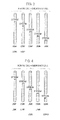
- a mobile communication system will be described with reference to Fig. 1 to Fig. 6 .
- an LTE mobile communication system will be exemplified and described as the mobile communication system according to the present embodiment.
- the present invention is also applicable to mobile communication systems other than the LTE mobile communication system.
- the mobile communication system is configured such that a communication is performed between a node (an end point) #A and a node (an end point) #Z by using an AP (Application Protocol) layer, an SCTP layer lower than the AP layer, and L1/L2/L3 layers lower than the SCTP layer.
- AP Application Protocol
- SCTP layer and the L1/L2/L3 layers are generally called “PF (platform)”.
- a communication is configured to be performed between the AP layer and the SCTP layer through an API (AP Interface) within the node #A and the node #Z.
- API API Interface
- a combination of the node #A and the node #Z may be the combination of radio base stations eNB themselves or the combination of the radio base station eNB and the mobile management node MME.
- the mobile communication system according to the present embodiment is configured such that an "SCTP Association" is set between the SCTP layer of the node #A and the SCTP layer of the node #Z.
- the SCTP layer of the node #A as a transmission side node can include one or a plurality of transmission side IP addresses (Source IP Addresses), and the SCTP layer of the node #Z as a reception side node can include one or a plurality of reception side IP addresses (Destination IP addresses).
- the node #A includes a plurality of transmission side IP addresses IP#1 to IP#3, and the node #Z includes a plurality of transmission side IP address IP#11 to IP#13 in the "SCTP Association".
- the communication can be performed by using the plurality of IP addresses in one "SCTP Association". That is, a plurality of physical paths can be set.
- the plurality of physical paths are configured to be set by each of the transmission side IP addresses (IP#1 to IP#3) and each of the reception side IP addresses (IP#11 to IP#13).
- a Primary Path to be used by default is configured to be decided among the plurality of physical paths which constitute each of the "SCTP Associations".
- one or a plurality of SCTP streams are configured to be set between the node #A and the node #Z within the "SCTP Association".
- the AP layer is configured to notify the SCTP layer through the API whether or not the call is the emergency call by using an indicator and a predetermined bit.
- the SCTP layer is configured to perform an assignment control of the SCTP stream for the above described call by using a predetermined algorithm in the node #A and the node #Z.
- a call by a mobile station UE#1, a call by a mobile station UE#2, a call by a mobile station UE#3, a call by a mobile station UE#4, a call by a mobile station UE#5, a call by a mobile station UE#6, and a call by a mobile station UE#7 are generated in this order.
- the call by the mobile station UE#4 is terminated after the call by the mobile station UE#7 is generated.
- SCTP streams #1 to #5 are set between the node #A and the node #Z.
- the SCTP layer is configured such that one of the preset SCTP streams is assigned to the mobile station UE in a round robin manner regardless of whether the call is the emergency call or the normal call.
- the SCTP layer is configured such that an SCTP stream #1 is assigned to the mobile station UE#1, an SCTP stream #2 is assigned to the mobile station UE#2, an SCTP stream #3 is assigned to the mobile station UE#3, an SCTP stream #4 is assigned to the mobile station UE#4, an SCTP stream #5 is assigned to the mobile station UE#5, the SCTP stream #1 is assigned to the mobile station UE#6, and the SCTP stream #2 is assigned to the mobile station UE#7.
- the algorithm 1 is a simple algorithm, when the SCTP layer uses the algorithm 1, a processing capacity necessary for the assignment control of the SCTP stream can be reduced.
- the SCTP layer is configured such that the SCTP stream having the smallest number of assigned mobile stations UE among the preset SCTP streams is assigned to the mobile station UE regardless of whether the call is the emergency call or the normal call.
- the SCTP layer is managed such that an emergency SCTP stream assignable to the mobile station that performs the emergency call and an normal SCTP stream assignable to the mobile station that performs the normal call become identical to each other.
- the SCTP layer is configured such that, when the normal call by the mobile station UE#1 subordinate to the node #A is generated, the SCTP stream #1 having the smallest number of assigned mobile stations UE among the SCTP streams #1 to #5 is assigned to the mobile station UE#1.
- the SCTP layer is configured such that the SCTP stream #1 having a smallest identification number among the SCTP streams #1 to #5 (the number of assigned mobile stations UE: 0) having the smallest number of assigned mobile stations UE among the SCTP streams #1 to #5 is assigned to the mobile station UE#1.
- the SCTP layer may be configured such that one of the SCTP streams #1 to #5 is assigned to the mobile station UE#1 according to a predetermined rule (for example, a rule giving a priority to the SCTP stream of a lower number and the SCTP stream of which the time assigned at last is older) .
- a predetermined rule for example, a rule giving a priority to the SCTP stream of a lower number and the SCTP stream of which the time assigned at last is older
- the SCTP layer is configured such that the SCTP stream #2 having the smallest number of assigned mobile stations UE among the SCTP streams #1 to #5 is assigned to the mobile station UE#2 when the normal call by the mobile station UE#2 subordinate to the node #A is generated.
- the SCTP layer is configured such that the SCTP stream #3 having the smallest number of assigned mobile stations UE among the SCTP streams #1 to #5 is assigned to the mobile station UE#3 when the emergency call by the mobile station UE#3 subordinate to the node #A is generated.
- the SCTP layer is configured such that the SCTP stream #4 having the smallest number of assigned mobile stations UE among the SCTP streams #1 to #5 is assigned to the mobile station #4 when the emergency call by the mobile station UE#4 subordinate to the node #A is generated.
- the SCTP layer is configured such that the SCTP stream #5 having the smallest number of assigned mobile stations UE among the SCTP streams #1 to #5 is assigned to the mobile station UE#5 when the emergency call by the mobile station UE#5 subordinate to the node #A is generated.
- the SCTP layer is configured such that the SCTP stream #1 having the smallest number of assigned mobile stations UE among the SCTP streams #1 to #5 is assigned to the mobile station UE#6 when the normal call by the mobile station UE#6 subordinate to the node #A is generated.
- the SCTP layer is configured such that the SCTP stream #2 having the smallest number of assigned mobile stations UE among the SCTP streams #1 to #5 is assigned to the mobile station UE#7 when the emergency call by the mobile station UE#7 subordinate to the node #A is generated.
- the SCTP layer is configured such that the SCTP stream #4 having the smallest number of assigned mobile stations UE among the SCTP streams #1 to #5 is assigned to the mobile station UE#8 when the normal call by the mobile station UE#8 subordinate to the node #A is generated since the emergency call by the mobile station UE#4 is terminated.
- the SCTP layer is configured such that the SCTP stream #3 having the smallest number of assigned mobile stations UE among the SCTP streams #1 to #5 is assigned to the mobile station UE#9 when the normal call by the mobile station UE#9 subordinate to the node #A is generated.
- the SCTP layer is configured such that the SCTP stream #5 having the smallest number of assigned mobile stations UE among the SCTP streams #1 to #5 is assigned to the mobile station UE#10 when the normal call by the mobile station UE#10 subordinate to the node #A is generated.
- the SCTP layer is configured such that the SCTP stream #5 of which the time assigned at last is old among the SCTP streams #4 and #5 (the number of assigned mobile stations UE: 1) having the smallest number of assigned mobile stations UE among the SCTP streams #1 and #5 is assigned to the mobile station UE#10.
- the SCTP layer can assign the SCTP stream having the smallest number of assigned mobile stations UE without distinguishing the emergency call from the normal call, the generation of the "Head of Line Blocking" can be avoided without performing complicated processing.
- the SCTP layer is configured such that one of the emergency SCTP streams is assigned to the mobile station UE when the emergency call by the mobile station UE subordinate to the node #A is generated.
- the SCTP layer is configured such that one of the normal SCTP streams is assigned to the mobile station UE when the normal call by the mobile station UE subordinate to the node #A is generated.
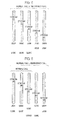
- the SCTP layer as illustrated in Fig. 5 , is configured such that the SCTP streams #1 to #5 are managed so as to be divided into the emergency SCTP streams #4 and #5 assignable to the mobile station UE that performs the emergency call and the normal SCTP streams #1 to #3 assignable to the mobile station UE that performs the normal call.
- the SCTP layer is configured such that the normal SCTP stream #1 is assigned to the mobile station UE#1 when the normal call by the mobile station UE#1 subordinate to the node #A is generated.
- the SCTP layer is configured such that the normal SCTP stream #1 which is the normal SCTP stream having the smallest number of assigned mobile stations UE and having a smallest identification number among the normal SCTP streams #1 to #3 is assigned to the mobile station UE#1.
- the SCTP layer may be configured such that one of the normal SCTP streams #1 to #3 is assigned to the mobile station UE#1 according to the predetermined rule (for example, the rule giving a priority to the normal SCTP stream having a smaller number of assigned mobile stations, the normal SCTP stream having a smallest identification number, and the SCTP stream of which the time assigned at last is older).
- the predetermined rule for example, the rule giving a priority to the normal SCTP stream having a smaller number of assigned mobile stations, the normal SCTP stream having a smallest identification number, and the SCTP stream of which the time assigned at last is older.
- the SCTP layer is configured such that the normal SCTP stream #2 is assigned to the mobile station UE#2 when the normal call by the mobile station UE#2 subordinate to the node #A is generated.
- the SCTP layer is configured such that the emergency SCTP stream #4 is assigned to the mobile station UE#3 when the emergency call by the mobile station UE#2 subordinate to the node #A is generated.
- the SCTP layer is configured such that the emergency SCTP stream #4 which is the emergency SCTP stream having the smallest number of assigned mobile stations UE and a smallest identification number among the emergency SCTP streams #4 and #5 is assigned to the mobile station UE#3.
- the SCTP layer may be configured such that one of the emergency SCTP streams #4 and #5 is assigned to the mobile station UE#3 according to the predetermined rule (for example, the rule giving a priority to the emergency SCTP stream having the smallest number of assigned mobile stations, the emergency SCTP stream having a smaller identification number, and the SCTP stream of which the time assigned at last is older).
- the predetermined rule for example, the rule giving a priority to the emergency SCTP stream having the smallest number of assigned mobile stations, the emergency SCTP stream having a smaller identification number, and the SCTP stream of which the time assigned at last is older.
- the SCTP layer is configured such that the emergency SCTP stream #5 is assigned to the mobile station UE#4 when the emergency call by the mobile station UE#4 subordinate to the node #A is generated.
- the SCTP layer is configured such that the emergency SCTP stream #4 is assigned to the mobile station UE#5 when the emergency call by the mobile station UE#5 subordinate to the node #A is generated.
- the SCTP layer is configured such that the normal SCTP stream #3 is assigned to the mobile station UE#6 when the normal call by the mobile station UE#6 subordinate to the node #A is generated.
- the SCTP layer is configured such that the emergency SCTP stream #5 is assigned to the mobile station UE#7 when the emergency call by the mobile station UE#7 subordinate to the node #A is generated.
- the SCTP layer is capable of always assigning an available emergency SCTP stream to the mobile station UE that performs the emergency call, in a state in which the emergency call is not generated between the node #A and the node #Z.
- the SCTP layer can preferentially assign the SCTP stream to the mobile station that performs the emergency call even when the frequency of the normal call is high in case that the frequency of the emergency call is low.
- the SCTP layer is configured such that the SCTP stream having the smallest number of assigned mobile stations UE among the SCTP streams assignable to the mobile station UE is assigned when the call by the mobile station UE subordinate to the node #A is generated.
- the node #A and the node #Z manage the assignable SCTP streams, and are configured such that the number of the assignable SCTP streams is increased when an initial emergency call is generated.
- the assignable SCTP streams are the SCTP streams #1 to #3 when the emergency call is not generated, and the assignable SCTP streams are the SCTP streams #1 to #5 when the emergency call is generated.
- the SCTP layer is configured such that the SCTP stream #1 having the smallest number of assigned mobile stations UE and having a smallest identification number among the assignable SCTP streams #1 to #3 is assigned to the mobile station UE#1 when the normal call by the mobile station UE#1 subordinate to the node #A is generated.
- the SCTP layer may be configured such that one of the assignable SCTP streams #1 to #3 is assigned to the mobile station UE#1 according to the predetermined rule (for example, the rule giving a priority to the SCTP stream having the smallest number of assigned mobile stations, the SCTP stream having a smaller identification number, and the SCTP stream of which the time assigned at last is older).
- the predetermined rule for example, the rule giving a priority to the SCTP stream having the smallest number of assigned mobile stations, the SCTP stream having a smaller identification number, and the SCTP stream of which the time assigned at last is older.
- the SCTP layer is configured such that the SCTP stream #2 having the smallest number of assigned mobile stations UE and having a smallest identification number among the assignable SCTP streams #1 to #3 is assigned to the mobile station UE#2 when the normal call by the mobile station UE#2 subordinate to the node #A is generated.
- the SCTP layer is configured such that the SCPT stream #4 having the smallest number of assigned mobile stations UE among the assignable SCTP streams #1 to #4 obtained by increasing the number of assignable SCTP streams by one (that is, the SCTP streams #1 to #3 -> the SCTP streams #1 to #4) is assigned to the mobile station UE#3 when the emergency call by the mobile station UE#3 subordinate to the node #A is generated.
- the SCTP layer is configured such that the SCTP stream #4 newly added as the assignable SCTP stream among the SCTP streams #3 and #4 having the smallest number of assigned mobile stations UE among the assignable SCTP streams #1 to #4 is preferentially assigned to the mobile station UE#3 when the emergency call (an initial emergency call) by the mobile station UE#3 subordinate to the node #A is generated.
- the SCTP layer is configured such that the SCTP stream #5 having the smallest number of assignable mobile stations UE among the assignable SCTP streams #1 to #5 obtained by increasing the number of assignable SCTP streams by one (that is, the SCTP streams #1 to #4 -> the SCTP streams #1 to #5) is assigned to the mobile station UE #4 when the emergency call by the mobile station UE#4 subordinate to the node #A is generated.
- the SCTP layer is configured such that the SCTP stream #5 newly added as the assignable SCTP stream among the SCTP streams #3 and #5 having the smallest number of assigned mobile stations UE among the assignable SCTP streams #1 to #5 is preferentially assigned to the mobile station UE#4 when the emergency call by the mobile station UE#4 subordinate to the node #A is generated.
- the SCTP layer may increase the number of assignable SCTP streams by two (that is, the SCTP streams #1 to #3 -> the SCTP streams #1 to #5) when the emergency call by the mobile station UE#3 subordinate to the node #A is generated, and may not increase the number of assignable SCTP streams when the emergency call by the mobile station UE#4 subordinate to the node #A is generated.
- the SCTP layer is configured such that the SCTP stream #3 having the smallest number of assigned mobile stations UE among the assignable SCTP streams #1 to #5 is assigned to the mobile station UE#5 when the emergency call by the mobile station UE#5 subordinate to the node #A is generated.
- the SCTP layer is configured such that the SCTP stream #1 having the smallest number of assigned mobile stations UE and having a smallest identification number among the assignable SCTP streams #1 to #5 is assigned to the mobile station UE#6 when the normal call by the mobile station UE#6 subordinate to the node #A is generated.
- the SCTP layer is configured such that the SCTP stream #2 having the smallest number of assigned mobile stations UE and having a smallest identification number among the assignable SCTP streams #1 to #5 is assigned to the mobile station UE#7 when the emergency call by the mobile station UE#7 subordinate to the node #A is generated.
- the SCTP layer is configured to assign the SCTP stream #5 having the smallest number of assigned mobile stations UE and having a smallest identification number among the assignable SCTP streams #1 to #5 is assigned to the mobile station UE#8 when the normal call by the mobile station UE#8 subordinate to the node #A is generated since the emergency call by the mobile station UE#4 is terminated.
- the SCTP layer is configured such that the SCTP stream #4 having the smallest number of assigned mobile stations UE and having the time assigned at last being old among the assignable SCTP streams #1 to #5 is assigned to the mobile station UE#9 when the normal call by the mobile station UE#9 subordinate to the node #A is generated.
- the SCTP layer is configured such that the SCTP stream #4 having the smallest number of assigned mobile stations UE and having the time assigned at last being old among the assignable SCTP streams #1 to #5 is assigned to the mobile station UE#10 when the normal call by the mobile station UE#10 subordinate to the node #A is generated.
- the SCTP layer may not reduce the number of the assignable SCTP streams even when all emergency calls are terminated, and may restore the assignable SCTP streams to an initial state when all emergency calls are terminated.
- the SCTP layer is capable of always assigning an available SCTP stream to the mobile station UE that performs the emergency call, in a state in which the emergency call is not generated between the node #A and the node #Z.
- the SCTP layer can assign the SCTP stream having the smallest number of assigned mobile stations UE even when the frequency of the emergency call increases.
- SCTP layer can be applied to at least one of the above described algorithms 1 to 4.
- SCTP layer can be applied to two or more among the above described algorithms 1 to 4, and may be configured such that an operator and the like can select as to which algorithm is to be applied.
- a first characteristic of the present embodiment is summarized in that a mobile communication system configured such that one or a plurality of SCTP (Stream Control Transmission Protocol) streams are set between a node #A (a first node) and a node #Z (a second node), wherein the node #A and the node #Z are configured such that one of the preset SCTP streams is assigned to the mobile station UE in a round robin manner regardless of whether a call is an emergency call or a normal call when the call by a mobile station UE subordinate to the node #A is generated.
- SCTP Stream Control Transmission Protocol
- a second characteristic of the present embodiment is summarized in that a mobile communication system configured such that one or a plurality of SCTP streams are set between a node #A and a node #Z, wherein the node #A and the node #Z are configured such that the SCTP stream having the smallest number of assigned mobile stations UE among the preset SCTP streams is assigned to the mobile station UE regardless of whether a call is an emergency call or a normal call when the call by a mobile station UE subordinate to the node #A is generated.
- a third characteristic of the present embodiment is summarized in that a mobile communication system configured such that one or a plurality of SCTP streams are set between a node #A and a node #Z, wherein the node #A and the node #Z are configured such that the preset SCTP streams are managed so as to be divided into an emergency SCTP stream assignable to a mobile station UE that performs an emergency call and a normal SCTP stream assignable to a mobile station UE that performs a normal call, the node #A and the node #Z are configured such that one of the emergency SCTP streams is assigned to the first mobile station UE when an emergency call by the first mobile station UE subordinate to the node #A is generated, and the node #A and the node #Z are configured such that one of the normal SCTP streams is assigned to the second mobile station UE when a normal call by the second mobile station UE subordinate to the node #A is generated.
- a fourth characteristic of the present embodiment is summarized in that a mobile communication system configured such that one or a plurality of SCTP streams are set between a node # A and a node #Z, wherein the node #A and the node #Z manage SCTP streams assignable to a mobile station UE among the SCTP streams, the node # A and the node #Z are configured such that the SCTP stream having the smallest number of assigned mobile stations UE among the assignable SCTP streams is assigned to the mobile station UE when a call by the mobile station UE subordinate to the node #A is generated, and the node #A and the node #Z are configured such that the number of assignable SCTP streams is increased when an initial emergency call is generated.
- node #A and node #Z may be performed by hardware, a software module performed by a processor, or a combination thereof.
- the software module may be arranged in a storage medium of an arbitrary format such as a RAM (Random Access Memory), a flash memory, a ROM (Read Only Memory), an EPROM (Erasable Programmable ROM), an EEPROM (Electronically Erasable and Programmable ROM), a register, a hard disk, a removable disk, or a CD-ROM.
- a RAM Random Access Memory
- flash memory a ROM (Read Only Memory)
- EPROM Erasable Programmable ROM
- EEPROM Electrically Erasable and Programmable ROM
- the storage medium is connected to the processor so that the processor can write and read information into and from the storage medium.
- a storage medium may also be accumulated in the processor.
- Such a storage medium and processor may be arranged in an ASIC.
- the ASIC may be arranged in the node #A or the node # Z.
- such a storage medium and processor may be arranged in the node #A or the node #Z as discrete components.
Landscapes
- Engineering & Computer Science (AREA)
- Computer Networks & Wireless Communication (AREA)
- Signal Processing (AREA)
- Business, Economics & Management (AREA)
- Health & Medical Sciences (AREA)
- Emergency Management (AREA)
- Environmental & Geological Engineering (AREA)
- Public Health (AREA)
- Computer Security & Cryptography (AREA)
- Mobile Radio Communication Systems (AREA)
Applications Claiming Priority (2)
| Application Number | Priority Date | Filing Date | Title |
|---|---|---|---|
| JP2010250108A JP5498354B2 (ja) | 2010-11-08 | 2010-11-08 | 移動通信システム |
| PCT/JP2011/075309 WO2012063705A1 (ja) | 2010-11-08 | 2011-11-02 | 移動通信システム |
Publications (1)
| Publication Number | Publication Date |
|---|---|
| EP2640102A1 true EP2640102A1 (de) | 2013-09-18 |
Family
ID=46050854
Family Applications (1)
| Application Number | Title | Priority Date | Filing Date |
|---|---|---|---|
| EP11840677.6A Withdrawn EP2640102A1 (de) | 2010-11-08 | 2011-11-02 | Mobiles kommunikationssystem |
Country Status (4)
| Country | Link |
|---|---|
| US (1) | US20130301527A1 (de) |
| EP (1) | EP2640102A1 (de) |
| JP (1) | JP5498354B2 (de) |
| WO (1) | WO2012063705A1 (de) |
Cited By (1)
| Publication number | Priority date | Publication date | Assignee | Title |
|---|---|---|---|---|
| WO2017200478A1 (en) * | 2016-05-20 | 2017-11-23 | Telefonaktiebolaget Lm Ericsson (Publ) | Method performed in radio network nodes for efficient handling of sctp based communcation |
Family Cites Families (6)
| Publication number | Priority date | Publication date | Assignee | Title |
|---|---|---|---|---|
| JPH07254933A (ja) * | 1994-03-15 | 1995-10-03 | Fujitsu Ltd | 緊急呼の処理方式 |
| WO2005084066A1 (ja) * | 2004-02-27 | 2005-09-09 | Mitsubishi Denki Kabushiki Kaisha | スケジューラ、基地局およびスケジューリング方法 |
| JP2008256681A (ja) | 2007-03-14 | 2008-10-23 | Toshiba Corp | 原子力プラントの圧力変動監視システム |
| WO2008129845A1 (ja) * | 2007-03-28 | 2008-10-30 | Panasonic Corporation | 無線通信装置および緊急信号送信方法 |
| JP5075784B2 (ja) * | 2008-10-01 | 2012-11-21 | 株式会社エヌ・ティ・ティ・ドコモ | 移動通信システム及び送信側ノード |
| US8300772B2 (en) * | 2008-12-31 | 2012-10-30 | Telefonaktiebolaget L M Ericsson (Publ) | Method and apparatus for emergency call processing |
-
2010
- 2010-11-08 JP JP2010250108A patent/JP5498354B2/ja not_active Expired - Fee Related
-
2011
- 2011-11-02 EP EP11840677.6A patent/EP2640102A1/de not_active Withdrawn
- 2011-11-02 WO PCT/JP2011/075309 patent/WO2012063705A1/ja not_active Ceased
- 2011-11-02 US US13/883,461 patent/US20130301527A1/en not_active Abandoned
Non-Patent Citations (1)
| Title |
|---|
| See references of WO2012063705A1 * |
Cited By (1)
| Publication number | Priority date | Publication date | Assignee | Title |
|---|---|---|---|---|
| WO2017200478A1 (en) * | 2016-05-20 | 2017-11-23 | Telefonaktiebolaget Lm Ericsson (Publ) | Method performed in radio network nodes for efficient handling of sctp based communcation |
Also Published As
| Publication number | Publication date |
|---|---|
| WO2012063705A1 (ja) | 2012-05-18 |
| US20130301527A1 (en) | 2013-11-14 |
| JP2012104952A (ja) | 2012-05-31 |
| JP5498354B2 (ja) | 2014-05-21 |
Similar Documents
| Publication | Publication Date | Title |
|---|---|---|
| US10750487B2 (en) | Wireless communications method and apparatus | |
| KR102233104B1 (ko) | 정보 전송 방법 및 장치 | |
| US10624003B2 (en) | Method for handover between secondary base stations, network device, and user equipment | |
| EP2744262B1 (de) | Verfahren zur erstellung einer verbindung mit träger-aggregation unter berücksichtigung von unterstützter signalisierung zur leistungsreduktion | |
| US8867387B2 (en) | Mobile communication system and transmission-side node | |
| EP3226599A1 (de) | Verfahren und vorrichtung für drb-mapping | |
| JP2020507242A (ja) | データ伝送方法及び装置 | |
| CN109891830B (zh) | 一种功能调度方法、设备和系统 | |
| EP3595387B1 (de) | Benutzergerät, basisstation und kommunikationsverfahren für benutzergerät und basisstation | |
| US20200112870A1 (en) | Method for transmitting information, method for receiving information, pdcp entity, and computer storage medium | |
| KR102419411B1 (ko) | 무선 통신 시스템에서 대역폭 할당 장치 및 방법 | |
| US20150312111A1 (en) | Apparatus and method for distributing rule ownership among devices in a system | |
| WO2018230623A1 (ja) | 無線通信システム、ユーザ装置、無線基地局及び無線通信方法 | |
| EP2640102A1 (de) | Mobiles kommunikationssystem | |
| EP3176985A1 (de) | Steuerungsvorrichtung und steuerungsverfahren | |
| US10405233B2 (en) | Enhanced overload protection in a telecommunications network | |
| CN108990096B (zh) | 移动终端的nas消息处理方法、系统及移动终端 | |
| CN112995922B (zh) | 群组建立方法及装置 | |
| EP3114873B1 (de) | Verfahren, drahtlose vorrichtung, funkbasisstation und zweiter netzwerkknoten zur verwaltung eines eps-trägers | |
| US10231248B2 (en) | Methods and devices for managing connectivity for a service | |
| US20170223666A1 (en) | Method and First Network Node for Managing a Request for Connectivity for a Service of a Wireless Device | |
| JP2015517227A (ja) | 無線アクセスネットワーク装置、制御方法、移動通信システム、およびプログラム | |
| US9887896B2 (en) | Hidden node counteraction in a wireless network | |
| EP2536098A1 (de) | Verfahren und Vorrichtungen für die Steuerung der Codierung eines Datenflusses | |
| US8977272B2 (en) | Mobile communication system, and mobile communication method and radio control device used in mobile communication system |
Legal Events
| Date | Code | Title | Description |
|---|---|---|---|
| PUAI | Public reference made under article 153(3) epc to a published international application that has entered the european phase |
Free format text: ORIGINAL CODE: 0009012 |
|
| 17P | Request for examination filed |
Effective date: 20130604 |
|
| AK | Designated contracting states |
Kind code of ref document: A1 Designated state(s): AL AT BE BG CH CY CZ DE DK EE ES FI FR GB GR HR HU IE IS IT LI LT LU LV MC MK MT NL NO PL PT RO RS SE SI SK SM TR |
|
| DAX | Request for extension of the european patent (deleted) | ||
| STAA | Information on the status of an ep patent application or granted ep patent |
Free format text: STATUS: THE APPLICATION HAS BEEN WITHDRAWN |
|
| 18W | Application withdrawn |
Effective date: 20150211 |