EP2630472B1 - Verfahren zur identifizierung eines kraftstoffs - Google Patents
Verfahren zur identifizierung eines kraftstoffs Download PDFInfo
- Publication number
- EP2630472B1 EP2630472B1 EP11778662.4A EP11778662A EP2630472B1 EP 2630472 B1 EP2630472 B1 EP 2630472B1 EP 11778662 A EP11778662 A EP 11778662A EP 2630472 B1 EP2630472 B1 EP 2630472B1
- Authority
- EP
- European Patent Office
- Prior art keywords
- fuel
- sers
- sample
- internal standard
- taggant
- Prior art date
- Legal status (The legal status is an assumption and is not a legal conclusion. Google has not performed a legal analysis and makes no representation as to the accuracy of the status listed.)
- Active
Links
Images

Classifications
-
- G—PHYSICS
- G01—MEASURING; TESTING
- G01N—INVESTIGATING OR ANALYSING MATERIALS BY DETERMINING THEIR CHEMICAL OR PHYSICAL PROPERTIES
- G01N21/00—Investigating or analysing materials by the use of optical means, i.e. using sub-millimetre waves, infrared, visible or ultraviolet light
- G01N21/62—Systems in which the material investigated is excited whereby it emits light or causes a change in wavelength of the incident light
- G01N21/63—Systems in which the material investigated is excited whereby it emits light or causes a change in wavelength of the incident light optically excited
- G01N21/65—Raman scattering
- G01N21/658—Raman scattering enhancement Raman, e.g. surface plasmons
-
- G—PHYSICS
- G01—MEASURING; TESTING
- G01N—INVESTIGATING OR ANALYSING MATERIALS BY DETERMINING THEIR CHEMICAL OR PHYSICAL PROPERTIES
- G01N21/00—Investigating or analysing materials by the use of optical means, i.e. using sub-millimetre waves, infrared, visible or ultraviolet light
- G01N21/62—Systems in which the material investigated is excited whereby it emits light or causes a change in wavelength of the incident light
- G01N21/63—Systems in which the material investigated is excited whereby it emits light or causes a change in wavelength of the incident light optically excited
- G01N21/65—Raman scattering
-
- B—PERFORMING OPERATIONS; TRANSPORTING
- B82—NANOTECHNOLOGY
- B82Y—SPECIFIC USES OR APPLICATIONS OF NANOSTRUCTURES; MEASUREMENT OR ANALYSIS OF NANOSTRUCTURES; MANUFACTURE OR TREATMENT OF NANOSTRUCTURES
- B82Y15/00—Nanotechnology for interacting, sensing or actuating, e.g. quantum dots as markers in protein assays or molecular motors
-
- B—PERFORMING OPERATIONS; TRANSPORTING
- B82—NANOTECHNOLOGY
- B82Y—SPECIFIC USES OR APPLICATIONS OF NANOSTRUCTURES; MEASUREMENT OR ANALYSIS OF NANOSTRUCTURES; MANUFACTURE OR TREATMENT OF NANOSTRUCTURES
- B82Y30/00—Nanotechnology for materials or surface science, e.g. nanocomposites
-
- G—PHYSICS
- G01—MEASURING; TESTING
- G01N—INVESTIGATING OR ANALYSING MATERIALS BY DETERMINING THEIR CHEMICAL OR PHYSICAL PROPERTIES
- G01N21/00—Investigating or analysing materials by the use of optical means, i.e. using sub-millimetre waves, infrared, visible or ultraviolet light
- G01N21/17—Systems in which incident light is modified in accordance with the properties of the material investigated
- G01N21/25—Colour; Spectral properties, i.e. comparison of effect of material on the light at two or more different wavelengths or wavelength bands
- G01N21/27—Colour; Spectral properties, i.e. comparison of effect of material on the light at two or more different wavelengths or wavelength bands using photo-electric detection ; circuits for computing concentration
- G01N21/274—Calibration, base line adjustment, drift correction
-
- G—PHYSICS
- G01—MEASURING; TESTING
- G01N—INVESTIGATING OR ANALYSING MATERIALS BY DETERMINING THEIR CHEMICAL OR PHYSICAL PROPERTIES
- G01N33/00—Investigating or analysing materials by specific methods not covered by groups G01N1/00 - G01N31/00
- G01N33/22—Fuels; Explosives
-
- G—PHYSICS
- G01—MEASURING; TESTING
- G01N—INVESTIGATING OR ANALYSING MATERIALS BY DETERMINING THEIR CHEMICAL OR PHYSICAL PROPERTIES
- G01N33/00—Investigating or analysing materials by specific methods not covered by groups G01N1/00 - G01N31/00
- G01N33/26—Oils; Viscous liquids; Paints; Inks
- G01N33/28—Oils, i.e. hydrocarbon liquids
-
- G—PHYSICS
- G01—MEASURING; TESTING
- G01N—INVESTIGATING OR ANALYSING MATERIALS BY DETERMINING THEIR CHEMICAL OR PHYSICAL PROPERTIES
- G01N33/00—Investigating or analysing materials by specific methods not covered by groups G01N1/00 - G01N31/00
- G01N33/26—Oils; Viscous liquids; Paints; Inks
- G01N33/28—Oils, i.e. hydrocarbon liquids
- G01N33/2835—Specific substances contained in the oils or fuels
- G01N33/2882—Markers
Definitions
- the present invention relates to the analysis of a fuel to measure the amount of a taggant and identification of a fuel by adding a known taggant compound to the fuel and then later analysing a sample of fuel to determine whether the taggant is present.
- taggants for liquid and solid materials. Fluorescent dyes have been used in many applications, the fluorescence characteristics of a sample of the marked material being used to determine the presence and concentration of the taggant in the material.
- Other known taggants include biological compounds, especially DNA and oligonucleotides, and also halogenated chemicals such as perfluorocarbons.
- a typical application of these taggants is in the tagging of liquids such as hydrocarbon fuels in order to identify the liquid at a subsequent point in the supply chain. This may be done for operational reasons, e.g. to assist in distinguishing one grade of fuel from another, or for other reasons, in particular to ensure fuel quality, deter and detect adulteration and to provide a means to check that the correct tax has been paid.
- a problem with the method of detecting fluorescent compounds used as markers arises when the fuel which is marked interferes with the fluorescence of the marker, by absorbing the excitation or emitted light, by exhibiting its own background fluorescence, or by changing the fluorescent characteristics of the marker.
- This is a particular problem in the marking of coloured liquids such as petroleum derived products with fluorescent dyes because hydrocarbon based liquids, such as fuels, exhibit a broad fluorescent emission.
- the fluorescent background tends to add to any fluorescent signal of the dye but the inherent absorbance of the liquid diminishes the fluorescence of the dye.
- the marking of such fuels, especially gasoline and diesel is an important use of marker compounds and the ability to detect single or multiple marker compounds with a high degree of certainty is critical to the use of such markers in such valuable and widespread products.
- US 5,358,873 describes and claims a method of detecting gasoline adulteration by tagging with a rhodamine dye and then shaking a small sample of the suspected fuel in a vial containing a small quantity of un-bonded flash chromatography-grade silica. The presence of the rhodamine marker dye in the suspect sample colours the silica red.
- US 4,659,676 describes a fluorescently labelled complex hydrophobic fluid produced by dissolving therein a porphyrin.
- the fluorescently labelled complex hydrophobic fluid is identified by observation of the characteristic fluorescence upon irradiation.
- the porphyrin may be first extracted into an acidic aqueous solution for determination of fluorescence.
- US 2,392,620 describes the use of umbelliferone or a derivative as a fluorescent marker for petroleum with detection by determination of the characteristic fluorescence after extraction into an aqueous alkaline solution.
- fuels are marked with certain substituted anthraquinones which are subsequently detected in a marked sample of fuel by extraction into an immiscible alkaline reagent.
- DNA has been described for use as a taggant for hydrocarbon fuels
- the quantitative detection of nucleic acids is not sufficiently reproducible to encourage its use as a marker for fuels, where detection of dilution or adulteration of the fuel by detection of relatively small differences in the concentration of the taggant is required.
- WO2008/019161 describes a method of fuel identification with surface enhanced Raman spectroscopy (SERS) tags. This method includes the association of a substance having a known Raman spectrum with a quantity of fuel.
- a nanoparticle including a SERS active core may be mixed into a fuel supply.
- a SERS active dye including a Raman active reporter molecule may be mixed with a quantity of fuel. If the quantity of fuel is tagged with a dye having Raman active reporter molecules, the process of identifying the quantity of fuel may include mixing into a sample of the fuel a colloid of Raman enhancing metal particles and then acquiring the Raman spectrum of the Raman active reporter molecule associated with the tag.
- Suitable metals include, but are not limited to, silver or gold.
- a portion of the sample may be associated with a SERS active substrate.
- SERS response of the tags tend to vary such that the results include a significant uncertainty due to non-reproducibility.
- WO 2010/057212 discloses a method of detecting melamine which includes providing a quantity of SERS-active particles and mixing the SERS-active particles with a solution containing melamine. The method further includes detecting a surface enhanced Raman spectrum of the melamine.
- the examples disclose methods and systems to carry out an assay or test or measurement for the identification or quantitation of melamine or other molecules which are contaminants in food, pet food, drugs, cosmetics, or other materials.
- US2009/219526 discloses reagents for biomolecular labelling, detection and quantification employing Raman spectroscopy.
- Zhang et al. disclose an isotope edited internal standard method for quantitative surface-enhanced Raman spectroscopy ( Analytical Chemistry, America Chemical Society, US, vol. 77, no. 11, 1 June 2005, pages 3563-3569 ).
- the method has been found to be particularly applicable to identifying hydrocarbon fuels by marking the fuels with a taggant and then measuring the concentration of taggant in a sample of fuel to determine whether the sample is a sample of the marked fuel and also whether the fuel has been diluted with an unmarked or differently marked liquid.
- the material may be dissolved or dispersed in a liquid before analysis if required. This is especially useful if the material is a solid but may also be used for liquid or semi-liquid materials.
- a taggant is a compound present in a fuel by means of which the material may be identified.
- a sample of the distributed fuel may be identified by analysing the fuel to determine the presence, absence or the concentration of the taggant compound and comparison with the concentration of taggant in the fuel before distribution.
- Adulteration of the distributed fuel for example by dilution with an untagged material, may also be detected by comparison of the concentration of taggant in the fuel before and after distribution.
- SERS surface enhanced spectroscopy
- SERRS surface-enhanced resonance Raman spectroscopy
- the SERS-active taggant compound is a chemical compound which can be identified by its Raman signal when in contact with a SERS substrate. Suitable taggants are therefore capable of adsorption to a SERS substrate in order that they exhibit surface-enhanced Raman scattering. Suitable taggants produce an enhanced Raman signal when in contact with a SERS substrate compared with the Raman signal produced in the absence of a SERS substrate.
- the taggant is preferably soluble in the fuel which is to be marked with the taggant up to the concentration which is to be used. For use in hydrocarbon fuels, the taggant is preferably soluble in the fuel up to a concentration which is measurable using SERS analysis.
- the taggant may be less soluble in the fuel to be marked than it is in a solvent used to extract the taggant prior to SERS analysis.
- the SERS substrate is an aqueous solution of a metal colloid
- the taggant may be capable of adsorbing onto the metal surface whilst maintaining the ability of the colloidal particles to partition into the aqueous phase after mixing with the sample.
- the choice of taggant must therefore take into consideration its capability of producing an enhanced Raman signal through use of SERS methods, its affinity to a SERS substrate surface, and solubility and partitioning properties.
- the taggant must also be available as an isotopically-altered version for use as an internal standard in the method.
- Methods of producing isotopically altered molecules are well known and typically include replacing at least one hydrogen atom in the taggant molecule with deuterium or replacing a carbon atom with C 13 .
- the isotopically altered version of the SERS-active taggant must itself be SERS-active and must produce a SERS Raman signal which is resolvable from the signal produced by the taggant.
- the SERS substrate is a substrate having a surface which is capable of enhancing the spectroscopic response of a molecule which is close to or in contact with the surface, i.e. it is capable of promoting surface-enhanced spectroscopy (SES).
- the SERS substrate may be any material showing surface plasmon enhancement.
- SERS substrates typically comprise metals such as silver, gold and copper.
- the use of other SERS substrates, particularly metals, may be possible, including Na and Al and transition metals such as Pt, Ni, Ru, Rh, Pd, Co, Fe, Cr.
- SES-promoting substrates may become available and may be useful for the method of the invention.
- the SERS substrate may take the form of small particles, usually nanoparticles, typically used as colloidal solutions, especially aqueous colloidal solutions.
- the SERS substrate may take the form of a planar material having a metallic surface comprising microstructure in the form of an immobilised metal colloid or a patterned surface made from or coated with a metal such as gold, silver or copper.
- Suitable SERS substrates are widely available commercially, either as colloidal gold or silver solutions or as specialist planar materials for SERS having plasmonic surfaces, such as KlariteTM.
- the SERS-active taggant compound and / or the internal standard may be incorporated in a "nanotag" including a SERS substrate.
- Suitable nanotags include SERS-active composite nanoparticles which are described, for example, in WO01/25758 and comprise a SES (surface enhanced spectroscopy) metal nanoparticle, a layer of a SES-active species in close proximity to the metal surface and an encapsulating shell comprising a polymer, glass or another dielectric material.
- the internal standard may comprise a nanotag incorporating an isotopically-altered version of the SERS-active taggant compound.
- the internal standard may comprise a SES metal nanoparticle, a layer of a SES-active species in close proximity to the metal surface and an encapsulating shell comprising a polymer, glass or another dielectric material in which the SES-active species is an isotopically-altered version of the SERS-active taggant compound.
- the taggant is added to the fuel to be marked by standard means, for example when the fuel is held in bulk volumes at a manufacturing or distribution location. Different taggants may be added to different volumes of fuel of the same bulk composition which are intended for different purposes or for use in different territories or which originate from different batches of fuel. Alternatively, different taggants may be added to different bulk volumes of fuel having different compositions, for example to distinguish between fuels of different grades.
- the concentration of taggant in the fuel is preferably in the range from 1 ppb (i.e. 0.001 ppm) to 100 ppm, more preferably from 10 ppb to 10 ppm.
- the taggant is normally added to the fuel in amounts less than 10 ppm. "ppb” means parts per billion. "ppm” means parts per million. More than one taggant may be added to a single fuel and the use of combinations of different taggants in varying relative amounts may provide a large number of uniquely tagged fuels using relatively few taggant compounds.
- the taggant may be added to a component of the fuel to be marked.
- the taggant may be added to a fuel additive which is then incorporated into the bulk fuel before it is distributed. In these cases, the fuel becomes marked with the taggant when the ingredient incorporating the taggant is added to the fuel composition during preparation or manufacture.
- the taggant may be added to or mixed with a solvent before it is mixed with the fuel to be marked.
- the method of the invention When it is required to determine the amount of a particular SERS-active taggant in a sample of a fuel the method of the invention is used.
- a standard prior art SERS method using an aqueous gold colloid we have found that the variation in results between identical samples, possibly caused by unpredictable variation in the colloidal gold and the aggregation behaviour of the gold nanoparticles, can be very large, giving a relative standard deviation of about 20%. This variation is unacceptable for detecting fuel adulteration by dilution because the difference between the amount of taggant detected in the sample and that added to the original liquid is used to indicate the presence of an untagged liquid.
- SERS is very dependent on the adsorption of the SERS active compound to the SERS substrate, aggregation of the gold particles to which they have adsorbed and, in the case of analysis of organic liquids, on the partitioning of the SERS active compound and the gold nanoparticles between organic and aqueous phases.
- the internal standard must be as chemically similar to the SERS-active taggant compound as possible, so that it behaves in the same way.
- the internal standard used in the present method is therefore an isotopically altered (or "isotopically edited") version of the taggant compound.
- the concentration of internal standard added to the sample may be greater or less than the concentration of SERS-active taggant expected to be present in the sample.
- the concentration of internal standard added to the sample is preferably in the range from 1 ppb (i.e. 0.001 ppm) to 100 ppm, more preferably from 10 ppb to 10 ppm. Normally the concentration of internal standard added to the sample is the same as the concentration of internal standard in the reference sample.
- the amount of sample used for analysis by the method of the invention must be accurately known. Suitable methods of sampling are known and may involve the use of volumetric flasks or a sampling loop. The internal standard is added to the sample in an accurately known quantity and mixed thoroughly.
- the sample may be diluted with a suitable solvent or with a further volume of the liquid comprising the bulk of the sample.
- a suitable solvent such as an alkane, for example iso-octane, n-octane, decane or dodecane.
- the volume ratio of sample to solvent used is typically in the range 1 : 1 - 50.
- the use of a solvent may enhance the partitioning of the taggant and metal nanoparticles into an aqueous phase.
- the contact of the SERS-active taggant compound and the internal standard in the sample with the SERS substrate is carried out by mixing, e.g. by shaking, the colloid solution with the sample for sufficient time to allow the molecules in the sample to adsorb on the metal surfaces. The time allowed for this mixing should be kept constant between samples.
- the colloidal metal particles partition into the aqueous phase.
- the metal particles carrying the adsorbed SERS-active molecules normally form aggregates.
- the sample and SERS substrate is then subjected to Raman spectroscopy to obtain the Raman spectrum of the aqueous portion of the mixture using known methods.
- the colloidal metal particles it is normally beneficial for the colloidal metal particles to form aggregates comprising several particles in the presence of the SERS-active taggant compound. Aggregation may take place spontaneously, depending on the nature of the colloid and the compounds present in the mixture to be analysed. As an option, one or more aggregating agents may be used in order to improve the aggregation of the colloidal metal particles in the presence of the SERS-active taggant compound. Suitable aggregating agents may be selected according to the nature of the colloidal metal and/or the SERS-active taggant compound.
- aggregating agents which may be useful include compounds which affect the ionic concentration in the colloid, such as active or passive salts, acids and bases; polymers or long-chain ions which may affect the surface charge of the colloid or otherwise alter the colloidal properties e.g. by affecting steric interaction or stability of the colloid by displacement of or interaction with colloidal stabilisers.
- Typical examples of aggregating agents include sodium chloride, sodium sulphate, sodium nitrate, potassium nitrate, potassium chloride, calcium chloride, nitric acid, sulphuric acid, sulphurous acid, hydrochloric acid, spermine, and poly(L)lysine.
- the relative amount of the SERS-active taggant compound and the internal standard is calculated from the ratio of (i) the Raman spectroscopy detector response to the SERS-active taggant compound to (ii) the Raman spectroscopy detector response to the internal standard.
- the detector response ratio may be the ratio of selected peaks (peak height, peak area) of the SERS spectrum.
- concentration of said SERS-active taggant compound in said sample is calculated from the ratio calculated in step (d) of the method.
- the ratio calculated in step (d) is compared with a reference value representing the ratio of (i) the Raman spectroscopy detector response to the SERS-active taggant compound to (ii) the Raman spectroscopy detector response to the internal standard from a reference sample containing a known concentration of SERS-active taggant compound.
- the SERS spectrum obtained from a reference sample containing only the target SERS-active taggant or the internal standard may be used to identify suitable peaks which are characteristic of either the taggant or the internal standard, which may be selected for comparing the relative response of the compounds.
- the relative response may be calculated from the relative intensity of one peak attributable to each compound or from more than one peak.
- the whole spectrum, or a portion of it, obtained from the Raman spectroscopy of the sample in contact with the SERS substrate may be compared, preferably in vector form, to a spectrum obtained from a reference sample containing a known concentration the SERS-active taggant compound in contact with the SERS substrate and a spectrum obtained from a reference sample containing a known concentration the internal standard compound in contact with the SERS substrate.
- a calculated property of the spectrum such as the relative response compared to a reference spectrum of one or each compound present, may be used to represent the detector response due to the SERS-active taggant and/or the internal standard. It is not always necessary to collect and display a Raman spectrum.
- the identity of the taggant and internal standard are known, it may be sufficient to measure the detector response at one or more predetermined Raman shift wavenumbers or ranges of wavenumbers and calculate a concentration of the taggant from the measured response.
- the result of the calculation may be displayed to the user as a concentration value, a "pass/fail" result or as an arbitrary value of quality or similarity based upon a value for a solution containing a standard amount of the taggant.
- Methods of comparing spectra and calculating relative response and peak ratios are well-known and are typically carried out using a suitable computer programmed with spectroscopic data handling software.
- the relationship between the concentration of the SERS-active taggant compound and the Raman detector response ratio is linear and may be determined by calibration.
- the weight assignment of each component within the recorded SERS spectrum of the mixture is calculated and recorded. If the same amount of internal standard is added to each of the samples, the concentration of the internal standard in each sample should be the same, within experimental error of the addition. The measured amount of internal standard found in the samples is then indicated by the intensity of the weight assignment computed against the stored internal standard reference spectra. This could also be expressed as: TAGGANT Internal standard ⁇ S TAGGANT / C TAGGANT S Internal standard / C Internal standard
- a method for determining the amount of a SERS-active taggant compound in a sample of a hydrocarbon fuel comprising the steps of:- mixing the sample with a quantity of a non-polar solvent; adding an internal standard comprising an isotopically-altered version of said SERS-active taggant compound to the mixture; contacting said mixture containing said internal standard with a SERS substrate; subjecting the mixture and SERS substrate to Raman spectroscopy; and calculating the concentration of said SERS-active taggant compound in said sample from the ratio of (i) the Raman spectroscopy detector response to the SERS-active taggant compound to (ii) the Raman spectroscopy detector response to the internal standard.
- the taggant used in the examples is dipyridine (DPY).
- the internal standard is deuterated dipyridine (DPY-d8).
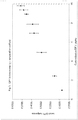
- Fig 1 shows that the Raman spectra obtained from DPY (dashed line) and DPY-d8 (solid line) are resolvable and show a similar pattern of peaks but at a relative Raman shift of approximately 100 cm -1 .
- Ref peak DPY-d8 for all 24 samples in Table 1 is 0.768 with a standard deviation of 0.160. This gives a calculated reference standard deviation of 20.83%, indicating that a simple comparison of a measured SERS reference peak with a calibration of peak intensity vs concentration for DPY-d8 would produce an error which is not acceptable for determining taggant concentration to detect fuel dilution.
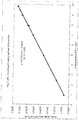
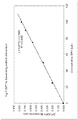
- the mean ratio of reference peaks of DPY to DPY-d8 is plotted vs DPY concentration in Fig 2 together with the error (calculated as +/- 2x standard deviations).
- the tagged fuel for this example was a diesel fuel containing a fuel additive pack.
- six different mixtures of DPY in the diesel fuel were prepared at different concentrations between 0 and 100 ppb as shown in Table 2. Each mixture was analysed as follows: 1000 ⁇ l of a sample of the fuel containing the DPY taggant was dispensed using a micro-pipette into a 2ml vial. 10 ⁇ l of 100ppm DPY-d8 internal standard in iso-octane was accurately dispensed by micro-pipette into the same vial and the resulting solution thoroughly mixed.
Landscapes
- Chemical & Material Sciences (AREA)
- Health & Medical Sciences (AREA)
- Engineering & Computer Science (AREA)
- Life Sciences & Earth Sciences (AREA)
- Physics & Mathematics (AREA)
- General Physics & Mathematics (AREA)
- General Health & Medical Sciences (AREA)
- Immunology (AREA)
- Analytical Chemistry (AREA)
- Biochemistry (AREA)
- Pathology (AREA)
- Nanotechnology (AREA)
- Nuclear Medicine, Radiotherapy & Molecular Imaging (AREA)
- Medicinal Chemistry (AREA)
- Food Science & Technology (AREA)
- Crystallography & Structural Chemistry (AREA)
- Oil, Petroleum & Natural Gas (AREA)
- General Chemical & Material Sciences (AREA)
- Chemical Kinetics & Catalysis (AREA)
- Molecular Biology (AREA)
- Mathematical Physics (AREA)
- Theoretical Computer Science (AREA)
- Spectroscopy & Molecular Physics (AREA)
- Composite Materials (AREA)
- Condensed Matter Physics & Semiconductors (AREA)
- Materials Engineering (AREA)
- Investigating, Analyzing Materials By Fluorescence Or Luminescence (AREA)
Claims (10)
- Verfahren zum Markieren eines ersten Treibstoffs mit einer SERS-aktiven Marker-Verbindung und anschließenden Identifizieren, ob eine Probe eines zweiten Treibstoffs eine Probe des markierten Treibstoffs ist, wobei das Verfahren den Schritt des Zugebens einer bekannten Konzentration einer SERS-aktiven Marker-Verbindung zum ersten Treibstoff und die folgenden Schritte umfasst:a) Zugeben einer bekannten Menge eines internen Standards zur Probe des zweiten Treibstoffs und gründliches Durchmischen, wobei der interne Standard eine isotopenmodifizierte Version der SERS-aktiven Marker-Verbindung umfasst;b) In-Kontakt-bringen der Probe des zweiten Treibstoffs, der den internen Standard enthält, mit einem SERS-Substrat;c) Unterziehen der Probe des zweiten Treibstoffs mit dem internen Standard und des SERS-Substrats einer Raman-Spektroskopie; undd) Berechnen des Verhältnisses (i) der Raman-Spektroskopie-Detektorantwort auf die SERS-aktive Marker-Verbindung zu (ii) der Raman-Spektroskopie-Detektorantwort auf die Probe des zweiten Treibstoffs mit dem internen Standard,wobei das in Schritt (d) berechnete Verhältnis mit einem Referenzwert, der das Verhältnis (iii) der Raman-Spektroskopie-Detektorantwort auf die SERS-aktive Marker-Verbindung, die im ersten markierten Treibstoff gemessen wird, zu (iv) der Raman-Spektroskopie-Detektorantwort auf den ersten markierten Treibstoff darstellt, der die gleiche Menge des internen Standards enthält, der die isotopenmodifizierte Version der SERS-aktiven Merker-Verbindung umfasst, verglichen wird, um dadurch zu identifizieren, ob die Treibstoffprobe eine Probe des markierten Treibstoffs ist.
- Verfahren nach einem der vorhergehenden Ansprüche, wobei das SERS-Substrat Silber, Gold oder Kupfer umfasst.
- Verfahren nach einem nach einem der vorhergehenden Ansprüche, wobei das SERS-Substrat in der Form einer kolloidalen Lösung ist.
- Verfahren nach einem nach einem der vorhergehenden Ansprüche, wobei das SERS-Substrat in der Form eines ebenflächiges Materials mit einer metallischen Oberfläche ist, die eine Mikrostruktur umfasst.
- Verfahren nach Anspruch 4, wobei das SERS-Substrat ein immobilisiertes Metallkolloid oder ein gemusterte Oberfläche ist, die aus einem Metall hergestellt oder damit beschichtet ist.
- Verfahren nach einem nach einem der vorhergehenden Ansprüche, wobei vor Schritt (b) ein Lösungsmittel zur Probe des zweiten Treibstoffs zugegeben wird.
- Verfahren nach Anspruch 6, wobei das Lösungsmittel ein nicht-polares Lösungsmittel ist.
- Verfahren nach einem nach einem der vorhergehenden Ansprüche, wobei die Konzentration der SERS-aktiven Marker-Verbindung in der Probe des zweiten Treibstoffs aus dem in Schritt (d) berechneten Verhältnis berechnet wird.
- Verfahren nach Anspruch 8, wobei die Konzentration der SERS-aktiven Marker-Verbindung in der Probe des zweiten Treibstoffs verwendet wird, um zu bestimmen, ob der zweite Treibstoff verdünnt wurde.
- Verfahren nach einem nach einem der vorhergehenden Ansprüche, wobei mehr als eine Marker-Verbindung zum Markieren des Treibstoffs zugegeben wird.
Applications Claiming Priority (3)
| Application Number | Priority Date | Filing Date | Title |
|---|---|---|---|
| GBGB1017875.4A GB201017875D0 (en) | 2010-10-22 | 2010-10-22 | Method of identifying a material |
| US41297010P | 2010-11-12 | 2010-11-12 | |
| PCT/GB2011/052050 WO2012052779A1 (en) | 2010-10-22 | 2011-10-21 | Method of identifying a material |
Publications (2)
| Publication Number | Publication Date |
|---|---|
| EP2630472A1 EP2630472A1 (de) | 2013-08-28 |
| EP2630472B1 true EP2630472B1 (de) | 2020-02-12 |
Family
ID=43334248
Family Applications (1)
| Application Number | Title | Priority Date | Filing Date |
|---|---|---|---|
| EP11778662.4A Active EP2630472B1 (de) | 2010-10-22 | 2011-10-21 | Verfahren zur identifizierung eines kraftstoffs |
Country Status (6)
| Country | Link |
|---|---|
| US (1) | US9618454B2 (de) |
| EP (1) | EP2630472B1 (de) |
| BR (1) | BR112013009646B1 (de) |
| CA (1) | CA2814587C (de) |
| GB (2) | GB201017875D0 (de) |
| WO (1) | WO2012052779A1 (de) |
Families Citing this family (21)
| Publication number | Priority date | Publication date | Assignee | Title |
|---|---|---|---|---|
| US10254229B2 (en) | 2007-04-18 | 2019-04-09 | Ondavia, Inc. | Portable water quality instrument |
| MY181697A (en) * | 2012-03-30 | 2021-01-04 | Johnson Matthey Plc | Tracer and method of identifying tracer in product |
| US11867631B2 (en) | 2014-03-05 | 2024-01-09 | Ondavia, Inc. | Portable water quality instrument |
| GB201418483D0 (en) * | 2014-10-17 | 2014-12-03 | Johnson Matthey Plc | Analytical method and composition |
| US9678002B2 (en) * | 2014-10-29 | 2017-06-13 | Chevron U.S.A. Inc. | Method and system for NIR spectroscopy of mixtures to evaluate composition of components of the mixtures |
| EP3070149B1 (de) * | 2015-03-20 | 2017-07-12 | Authentix, Inc. | Verfahren zum nachweis der verfälschung eines treibstoffs |
| US9732296B2 (en) | 2015-03-20 | 2017-08-15 | Authentix, Inc. | Fuel markers and methods of producing and using same |
| GB201508668D0 (en) * | 2015-05-20 | 2015-07-01 | Johnson Matthey Plc | Identifiable chemical product |
| EP3350579B1 (de) | 2015-09-16 | 2024-11-27 | Ondavia, Inc. | Messung der konzentration von analyten in flüssigkeitsproben unter verwendung von oberflächenverstärkter raman-streuung |
| GB201608836D0 (en) * | 2016-05-19 | 2016-07-06 | Johnson Matthey Plc | Method of identifying a material |
| AU2017302597A1 (en) | 2016-07-29 | 2019-02-07 | Fmc Corporation | Marker system to confirm proper agrochemical compositions and formulations |
| US10962481B2 (en) * | 2016-09-08 | 2021-03-30 | Baker Hughes, A Ge Company, Llc | Amine detection using surface enhanced Raman spectroscopy with functionalized nanoparticles |
| US11002682B2 (en) | 2018-03-12 | 2021-05-11 | Ondavia, Inc. | Aldehyde detection and analysis using surface-enhanced Raman spectroscopy |
| JP7075285B2 (ja) | 2018-05-29 | 2022-05-25 | 株式会社堀場製作所 | 薬剤分析に用いられる検量線設定方法 |
| US10739269B2 (en) * | 2018-10-18 | 2020-08-11 | Baker Hughes, A Ge Company, Llc | Detection of trace chemicals in oil and gas applications |
| CN112285089B (zh) * | 2020-09-23 | 2022-04-01 | 嘉兴学院 | 表面增强拉曼散射基底引入内标分子的方法 |
| US11994455B2 (en) | 2021-04-01 | 2024-05-28 | Ondavia, Inc. | Analyte quantitation using Raman spectroscopy |
| US12391986B2 (en) | 2021-09-30 | 2025-08-19 | Microsoft Technology Licensing, Llc | Anti-counterfeit tags using base ratios of polynucleotides |
| US12530651B2 (en) * | 2021-10-26 | 2026-01-20 | Microsoft Technology Licensing, Llc | Synthetic molecular tags for supply chain tracking |
| CN115219429B (zh) * | 2022-08-25 | 2026-03-10 | 郑州大学 | 一种内标辅助花瓣状sers纳米探针及其制备方法、应用 |
| CN116804627A (zh) * | 2023-05-29 | 2023-09-26 | 广西三环高科拉曼芯片技术有限公司 | 一种基于固有内标表面增强拉曼散射基底检测硫氰化物的方法 |
Family Cites Families (18)
| Publication number | Priority date | Publication date | Assignee | Title |
|---|---|---|---|---|
| US2392620A (en) | 1942-08-20 | 1946-01-08 | Standard Oil Co | Identifying petroleum products |
| US4735631A (en) | 1983-12-16 | 1988-04-05 | Morton Thiokol, Inc. | Colored petroleum markers |
| US4659676A (en) | 1985-04-17 | 1987-04-21 | Rhyne Jr Richard H | Fluorescent tracers for hydrophobic fluids |
| US5358873A (en) | 1992-07-27 | 1994-10-25 | Atlantic Richfield Company | Method for determining adulteration of gasolines |
| US6770488B1 (en) * | 1999-03-19 | 2004-08-03 | The University Of Wyoming | Practical method and apparatus for analyte detection with colloidal particles |
| ES2584553T3 (es) | 1999-10-06 | 2016-09-28 | Becton Dickinson And Company | Nanopartículas compuestas espectroscópicamente activas superficialmente potenciadas |
| US20040258617A1 (en) * | 2002-06-17 | 2004-12-23 | Pearl Technology Holdings, Llc. | Physical, chemical, and isotopic (atomic) labels |
| US20060038979A1 (en) * | 2004-08-05 | 2006-02-23 | Michael Natan | Nanoparticles as covert taggants in currency, bank notes, and related documents |
| US9494581B2 (en) * | 2004-08-24 | 2016-11-15 | University Of Wyoming | System and method for Raman spectroscopy assay using paramagnetic particles |
| WO2006037036A2 (en) | 2004-09-27 | 2006-04-06 | Purdue Research Foundation | Quantitative proteomics with isotopic substituted raman active labeling |
| WO2008019161A2 (en) | 2006-01-10 | 2008-02-14 | Oxonica, Inc. | Fuel identification with surface enhanced raman spectroscopy tags |
| WO2008007242A2 (en) * | 2006-06-15 | 2008-01-17 | Koninklijke Philips Electronics N.V. | Increased specificity of analyte detection by measurement of bound and unbound labels |
| EP1992938A1 (de) | 2007-05-14 | 2008-11-19 | Koninklijke Philips Electronics N.V. | Verbesserte Verfahren zum SE(R)RS-Nachweis unter Verwendung mehrerer Marker |
| US8153827B2 (en) | 2007-12-27 | 2012-04-10 | Purdue Research Foundation | Reagents for biomolecular labeling, detection and quantification employing Raman spectroscopy |
| CA2718276A1 (en) * | 2008-03-13 | 2009-09-17 | Perkinelmer Las, Inc. | Enzymatic substrates for multiple detection systems |
| US8574916B2 (en) * | 2008-11-17 | 2013-11-05 | Cabot Security Materials Inc. | Melamine assay methods and systems |
| US20100291599A1 (en) | 2009-05-18 | 2010-11-18 | Bruker Optics, Inc. | Large area scanning apparatus for analyte quantification by surface enhanced raman spectroscopy and method of use |
| WO2010138914A1 (en) | 2009-05-29 | 2010-12-02 | Oxonica Materials Inc. | Sers-active particles or substances and uses thereof |
-
2010
- 2010-10-22 GB GBGB1017875.4A patent/GB201017875D0/en not_active Ceased
-
2011
- 2011-10-21 BR BR112013009646-2A patent/BR112013009646B1/pt active IP Right Grant
- 2011-10-21 EP EP11778662.4A patent/EP2630472B1/de active Active
- 2011-10-21 WO PCT/GB2011/052050 patent/WO2012052779A1/en not_active Ceased
- 2011-10-21 US US13/880,596 patent/US9618454B2/en active Active
- 2011-10-21 GB GB1118180.7A patent/GB2484826B/en active Active
- 2011-10-21 CA CA2814587A patent/CA2814587C/en not_active Expired - Fee Related
Non-Patent Citations (1)
| Title |
|---|
| None * |
Also Published As
| Publication number | Publication date |
|---|---|
| GB2484826B (en) | 2014-02-19 |
| CA2814587C (en) | 2018-11-06 |
| GB201017875D0 (en) | 2010-12-01 |
| GB201118180D0 (en) | 2011-12-07 |
| US9618454B2 (en) | 2017-04-11 |
| BR112013009646B1 (pt) | 2020-03-10 |
| US20130271758A1 (en) | 2013-10-17 |
| CA2814587A1 (en) | 2012-04-26 |
| BR112013009646A2 (pt) | 2017-07-11 |
| GB2484826A (en) | 2012-04-25 |
| WO2012052779A1 (en) | 2012-04-26 |
| EP2630472A1 (de) | 2013-08-28 |
Similar Documents
| Publication | Publication Date | Title |
|---|---|---|
| US9618454B2 (en) | Method of identifying a material | |
| Shrivas et al. | Colorimetric and smartphone-integrated paper device for on-site determination of arsenic (III) using sucrose modified gold nanoparticles as a nanoprobe | |
| Han et al. | Portable kit for identification and detection of drugs in human urine using surface-enhanced Raman spectroscopy | |
| Nogueira et al. | Redox titration on foldable paper-based analytical devices for the visual determination of alcohol content in whiskey samples | |
| EP2831569B1 (de) | Verfahren zur identifizierung einer flüssigen zusammensetzung, die einen tracer enthält | |
| Sun et al. | Dual-mode fluorescence–SERS sensor for sensitive and selective detection of uranyl ions based on satellite Fe3O4-Au@ CdTe nanostructure | |
| Sahu et al. | A simple and cost-effective paper-based and colorimetric dual-mode detection of arsenic (iii) and lead (ii) based on glucose-functionalized gold nanoparticles | |
| Qiu et al. | A self-assembly hydrophobic oCDs/Ag nanoparticles SERS sensor for ultrasensitive melamine detection in milk | |
| Lockett et al. | Analyzing forensic evidence based on density with magnetic levitation | |
| Ameen et al. | Self-calibrating dual-emission Eu-MOF for visual detection of dexamethasone without encapsulation or functionalization | |
| EP3207360B1 (de) | Analytisches verfahren mit verwendung von oberflächenverstärkter raman-spektroskopie | |
| GB2550479B (en) | Measuring a SERS-active taggant in a sample of organic liquid | |
| Erkok et al. | Combining surface-enhanced Raman spectroscopy (SERS) and paper spray mass spectrometry (PS-MS) for illicit drug detection | |
| Gavrilenko et al. | Transparent polymer sensor for visual and photometrical detection of thiocyanate in oilfield water | |
| Bahathiq et al. | Fabrication of a novel palladium membrane sensor for its determination in environmental and biological samples | |
| Gambucci et al. | Probing the Fluorescence Behavior of DNA‐Stabilized Silver Nanoclusters in the Presence of Biomolecules | |
| Ulusoy et al. | Kinetic spectrophotometric determination of trace copper (II) ions by their catalytic effect on the reduction of brilliant cresyl blue by ascorbic acid | |
| Bahavarnia et al. | Micro‐Scale Arrays Fabricated on Parafilm and Polymethyl Methacrylate Towards Differential Colorimetric Analysis of Amines via Shape Transformation of Ag Nanoprisms | |
| Shui et al. | Fast identification of Baijius based on organic acid response colorimetric sensor array | |
| Rivera et al. | based colorimetric sensor for histamine detection using dopamine-functionalized, size-varied gold nanoparticles | |
| Tayefeh-Rahimian et al. | Plasmonic chemosensing of W (vi), Pd (ii), Cr (iii), and Cs (i) in deep eutectic solvent using silver nanoparticles: green solvent toward optical point-of-use quality testing | |
| Paul | Basic Principles and Applications of Simple Analytical Methods | |
| Chen et al. | Discrimination of Triphenylmethane Drug in Aquatic Products Using Fluorescence Sensor Array Based on Rare-Earth Complexes | |
| Domingos | Consequences of the Use of Nanomaterials for Environmental Analysis: Fate, Transport and Bioavailability in the Environment |
Legal Events
| Date | Code | Title | Description |
|---|---|---|---|
| PUAI | Public reference made under article 153(3) epc to a published international application that has entered the european phase |
Free format text: ORIGINAL CODE: 0009012 |
|
| 17P | Request for examination filed |
Effective date: 20130416 |
|
| AK | Designated contracting states |
Kind code of ref document: A1 Designated state(s): AL AT BE BG CH CY CZ DE DK EE ES FI FR GB GR HR HU IE IS IT LI LT LU LV MC MK MT NL NO PL PT RO RS SE SI SK SM TR |
|
| DAX | Request for extension of the european patent (deleted) | ||
| STAA | Information on the status of an ep patent application or granted ep patent |
Free format text: STATUS: EXAMINATION IS IN PROGRESS |
|
| 17Q | First examination report despatched |
Effective date: 20190415 |
|
| REG | Reference to a national code |
Ref country code: DE Ref legal event code: R079 Ref document number: 602011064959 Country of ref document: DE Free format text: PREVIOUS MAIN CLASS: G01N0021650000 Ipc: G01N0021270000 |
|
| GRAP | Despatch of communication of intention to grant a patent |
Free format text: ORIGINAL CODE: EPIDOSNIGR1 |
|
| STAA | Information on the status of an ep patent application or granted ep patent |
Free format text: STATUS: GRANT OF PATENT IS INTENDED |
|
| RIC1 | Information provided on ipc code assigned before grant |
Ipc: B82Y 15/00 20110101ALI20190823BHEP Ipc: G01N 21/65 20060101ALI20190823BHEP Ipc: G01N 21/27 20060101AFI20190823BHEP Ipc: B82Y 30/00 20110101ALI20190823BHEP Ipc: G01N 33/28 20060101ALI20190823BHEP |
|
| INTG | Intention to grant announced |
Effective date: 20190926 |
|
| GRAS | Grant fee paid |
Free format text: ORIGINAL CODE: EPIDOSNIGR3 |
|
| GRAA | (expected) grant |
Free format text: ORIGINAL CODE: 0009210 |
|
| STAA | Information on the status of an ep patent application or granted ep patent |
Free format text: STATUS: THE PATENT HAS BEEN GRANTED |
|
| AK | Designated contracting states |
Kind code of ref document: B1 Designated state(s): AL AT BE BG CH CY CZ DE DK EE ES FI FR GB GR HR HU IE IS IT LI LT LU LV MC MK MT NL NO PL PT RO RS SE SI SK SM TR |
|
| REG | Reference to a national code |
Ref country code: GB Ref legal event code: FG4D |
|
| REG | Reference to a national code |
Ref country code: CH Ref legal event code: EP |
|
| REG | Reference to a national code |
Ref country code: AT Ref legal event code: REF Ref document number: 1232786 Country of ref document: AT Kind code of ref document: T Effective date: 20200215 |
|
| REG | Reference to a national code |
Ref country code: IE Ref legal event code: FG4D |
|
| REG | Reference to a national code |
Ref country code: DE Ref legal event code: R096 Ref document number: 602011064959 Country of ref document: DE |
|
| REG | Reference to a national code |
Ref country code: CH Ref legal event code: NV Representative=s name: BOVARD AG PATENT- UND MARKENANWAELTE, CH |
|
| REG | Reference to a national code |
Ref country code: SK Ref legal event code: T3 Ref document number: E 33970 Country of ref document: SK |
|
| REG | Reference to a national code |
Ref country code: GR Ref legal event code: EP Ref document number: 20200401253 Country of ref document: GR Effective date: 20200716 |
|
| PG25 | Lapsed in a contracting state [announced via postgrant information from national office to epo] |
Ref country code: RS Free format text: LAPSE BECAUSE OF FAILURE TO SUBMIT A TRANSLATION OF THE DESCRIPTION OR TO PAY THE FEE WITHIN THE PRESCRIBED TIME-LIMIT Effective date: 20200212 Ref country code: FI Free format text: LAPSE BECAUSE OF FAILURE TO SUBMIT A TRANSLATION OF THE DESCRIPTION OR TO PAY THE FEE WITHIN THE PRESCRIBED TIME-LIMIT Effective date: 20200212 Ref country code: NO Free format text: LAPSE BECAUSE OF FAILURE TO SUBMIT A TRANSLATION OF THE DESCRIPTION OR TO PAY THE FEE WITHIN THE PRESCRIBED TIME-LIMIT Effective date: 20200512 |
|
| REG | Reference to a national code |
Ref country code: LT Ref legal event code: MG4D |
|
| REG | Reference to a national code |
Ref country code: NL Ref legal event code: MP Effective date: 20200212 |
|
| PG25 | Lapsed in a contracting state [announced via postgrant information from national office to epo] |
Ref country code: LV Free format text: LAPSE BECAUSE OF FAILURE TO SUBMIT A TRANSLATION OF THE DESCRIPTION OR TO PAY THE FEE WITHIN THE PRESCRIBED TIME-LIMIT Effective date: 20200212 Ref country code: SE Free format text: LAPSE BECAUSE OF FAILURE TO SUBMIT A TRANSLATION OF THE DESCRIPTION OR TO PAY THE FEE WITHIN THE PRESCRIBED TIME-LIMIT Effective date: 20200212 Ref country code: BG Free format text: LAPSE BECAUSE OF FAILURE TO SUBMIT A TRANSLATION OF THE DESCRIPTION OR TO PAY THE FEE WITHIN THE PRESCRIBED TIME-LIMIT Effective date: 20200512 Ref country code: IS Free format text: LAPSE BECAUSE OF FAILURE TO SUBMIT A TRANSLATION OF THE DESCRIPTION OR TO PAY THE FEE WITHIN THE PRESCRIBED TIME-LIMIT Effective date: 20200612 Ref country code: HR Free format text: LAPSE BECAUSE OF FAILURE TO SUBMIT A TRANSLATION OF THE DESCRIPTION OR TO PAY THE FEE WITHIN THE PRESCRIBED TIME-LIMIT Effective date: 20200212 |
|
| PG25 | Lapsed in a contracting state [announced via postgrant information from national office to epo] |
Ref country code: NL Free format text: LAPSE BECAUSE OF FAILURE TO SUBMIT A TRANSLATION OF THE DESCRIPTION OR TO PAY THE FEE WITHIN THE PRESCRIBED TIME-LIMIT Effective date: 20200212 |
|
| PG25 | Lapsed in a contracting state [announced via postgrant information from national office to epo] |
Ref country code: LT Free format text: LAPSE BECAUSE OF FAILURE TO SUBMIT A TRANSLATION OF THE DESCRIPTION OR TO PAY THE FEE WITHIN THE PRESCRIBED TIME-LIMIT Effective date: 20200212 Ref country code: EE Free format text: LAPSE BECAUSE OF FAILURE TO SUBMIT A TRANSLATION OF THE DESCRIPTION OR TO PAY THE FEE WITHIN THE PRESCRIBED TIME-LIMIT Effective date: 20200212 Ref country code: SM Free format text: LAPSE BECAUSE OF FAILURE TO SUBMIT A TRANSLATION OF THE DESCRIPTION OR TO PAY THE FEE WITHIN THE PRESCRIBED TIME-LIMIT Effective date: 20200212 Ref country code: DK Free format text: LAPSE BECAUSE OF FAILURE TO SUBMIT A TRANSLATION OF THE DESCRIPTION OR TO PAY THE FEE WITHIN THE PRESCRIBED TIME-LIMIT Effective date: 20200212 Ref country code: ES Free format text: LAPSE BECAUSE OF FAILURE TO SUBMIT A TRANSLATION OF THE DESCRIPTION OR TO PAY THE FEE WITHIN THE PRESCRIBED TIME-LIMIT Effective date: 20200212 Ref country code: CZ Free format text: LAPSE BECAUSE OF FAILURE TO SUBMIT A TRANSLATION OF THE DESCRIPTION OR TO PAY THE FEE WITHIN THE PRESCRIBED TIME-LIMIT Effective date: 20200212 Ref country code: PT Free format text: LAPSE BECAUSE OF FAILURE TO SUBMIT A TRANSLATION OF THE DESCRIPTION OR TO PAY THE FEE WITHIN THE PRESCRIBED TIME-LIMIT Effective date: 20200705 Ref country code: RO Free format text: LAPSE BECAUSE OF FAILURE TO SUBMIT A TRANSLATION OF THE DESCRIPTION OR TO PAY THE FEE WITHIN THE PRESCRIBED TIME-LIMIT Effective date: 20200212 |
|
| REG | Reference to a national code |
Ref country code: DE Ref legal event code: R097 Ref document number: 602011064959 Country of ref document: DE |
|
| REG | Reference to a national code |
Ref country code: AT Ref legal event code: MK05 Ref document number: 1232786 Country of ref document: AT Kind code of ref document: T Effective date: 20200212 |
|
| PLBE | No opposition filed within time limit |
Free format text: ORIGINAL CODE: 0009261 |
|
| STAA | Information on the status of an ep patent application or granted ep patent |
Free format text: STATUS: NO OPPOSITION FILED WITHIN TIME LIMIT |
|
| 26N | No opposition filed |
Effective date: 20201113 |
|
| PG25 | Lapsed in a contracting state [announced via postgrant information from national office to epo] |
Ref country code: AT Free format text: LAPSE BECAUSE OF FAILURE TO SUBMIT A TRANSLATION OF THE DESCRIPTION OR TO PAY THE FEE WITHIN THE PRESCRIBED TIME-LIMIT Effective date: 20200212 Ref country code: IT Free format text: LAPSE BECAUSE OF FAILURE TO SUBMIT A TRANSLATION OF THE DESCRIPTION OR TO PAY THE FEE WITHIN THE PRESCRIBED TIME-LIMIT Effective date: 20200212 |
|
| PG25 | Lapsed in a contracting state [announced via postgrant information from national office to epo] |
Ref country code: SI Free format text: LAPSE BECAUSE OF FAILURE TO SUBMIT A TRANSLATION OF THE DESCRIPTION OR TO PAY THE FEE WITHIN THE PRESCRIBED TIME-LIMIT Effective date: 20200212 Ref country code: PL Free format text: LAPSE BECAUSE OF FAILURE TO SUBMIT A TRANSLATION OF THE DESCRIPTION OR TO PAY THE FEE WITHIN THE PRESCRIBED TIME-LIMIT Effective date: 20200212 |
|
| REG | Reference to a national code |
Ref country code: DE Ref legal event code: R119 Ref document number: 602011064959 Country of ref document: DE |
|
| PG25 | Lapsed in a contracting state [announced via postgrant information from national office to epo] |
Ref country code: LU Free format text: LAPSE BECAUSE OF NON-PAYMENT OF DUE FEES Effective date: 20201021 Ref country code: MC Free format text: LAPSE BECAUSE OF FAILURE TO SUBMIT A TRANSLATION OF THE DESCRIPTION OR TO PAY THE FEE WITHIN THE PRESCRIBED TIME-LIMIT Effective date: 20200212 |
|
| REG | Reference to a national code |
Ref country code: BE Ref legal event code: MM Effective date: 20201031 |
|
| PG25 | Lapsed in a contracting state [announced via postgrant information from national office to epo] |
Ref country code: FR Free format text: LAPSE BECAUSE OF NON-PAYMENT OF DUE FEES Effective date: 20201031 Ref country code: DE Free format text: LAPSE BECAUSE OF NON-PAYMENT OF DUE FEES Effective date: 20210501 |
|
| PG25 | Lapsed in a contracting state [announced via postgrant information from national office to epo] |
Ref country code: BE Free format text: LAPSE BECAUSE OF NON-PAYMENT OF DUE FEES Effective date: 20201031 |
|
| PG25 | Lapsed in a contracting state [announced via postgrant information from national office to epo] |
Ref country code: TR Free format text: LAPSE BECAUSE OF FAILURE TO SUBMIT A TRANSLATION OF THE DESCRIPTION OR TO PAY THE FEE WITHIN THE PRESCRIBED TIME-LIMIT Effective date: 20200212 Ref country code: MT Free format text: LAPSE BECAUSE OF FAILURE TO SUBMIT A TRANSLATION OF THE DESCRIPTION OR TO PAY THE FEE WITHIN THE PRESCRIBED TIME-LIMIT Effective date: 20200212 Ref country code: CY Free format text: LAPSE BECAUSE OF FAILURE TO SUBMIT A TRANSLATION OF THE DESCRIPTION OR TO PAY THE FEE WITHIN THE PRESCRIBED TIME-LIMIT Effective date: 20200212 |
|
| PG25 | Lapsed in a contracting state [announced via postgrant information from national office to epo] |
Ref country code: AL Free format text: LAPSE BECAUSE OF FAILURE TO SUBMIT A TRANSLATION OF THE DESCRIPTION OR TO PAY THE FEE WITHIN THE PRESCRIBED TIME-LIMIT Effective date: 20200212 |
|
| P01 | Opt-out of the competence of the unified patent court (upc) registered |
Effective date: 20230526 |
|
| REG | Reference to a national code |
Ref country code: GB Ref legal event code: 732E Free format text: REGISTERED BETWEEN 20240229 AND 20240306 |
|
| PGFP | Annual fee paid to national office [announced via postgrant information from national office to epo] |
Ref country code: GB Payment date: 20241030 Year of fee payment: 14 |
|
| PGFP | Annual fee paid to national office [announced via postgrant information from national office to epo] |
Ref country code: IE Payment date: 20241024 Year of fee payment: 14 |
|
| PGFP | Annual fee paid to national office [announced via postgrant information from national office to epo] |
Ref country code: SK Payment date: 20241008 Year of fee payment: 14 |
|
| PGFP | Annual fee paid to national office [announced via postgrant information from national office to epo] |
Ref country code: CH Payment date: 20241101 Year of fee payment: 14 |
|
| PGFP | Annual fee paid to national office [announced via postgrant information from national office to epo] |
Ref country code: GR Payment date: 20250428 Year of fee payment: 14 |
|
| PGFP | Annual fee paid to national office [announced via postgrant information from national office to epo] |
Ref country code: MK Payment date: 20240927 Year of fee payment: 14 |