EP2604764A2 - Wärmedämmelement aus Mineralwolle, insbesondere Stein- oder Glaswolle - Google Patents
Wärmedämmelement aus Mineralwolle, insbesondere Stein- oder Glaswolle Download PDFInfo
- Publication number
- EP2604764A2 EP2604764A2 EP20120196417 EP12196417A EP2604764A2 EP 2604764 A2 EP2604764 A2 EP 2604764A2 EP 20120196417 EP20120196417 EP 20120196417 EP 12196417 A EP12196417 A EP 12196417A EP 2604764 A2 EP2604764 A2 EP 2604764A2
- Authority
- EP
- European Patent Office
- Prior art keywords
- zirconium silicate
- mineral wool
- element according
- binder
- insulation element
- Prior art date
- Legal status (The legal status is an assumption and is not a legal conclusion. Google has not performed a legal analysis and makes no representation as to the accuracy of the status listed.)
- Granted
Links
Images
Classifications
-
- E—FIXED CONSTRUCTIONS
- E04—BUILDING
- E04B—GENERAL BUILDING CONSTRUCTIONS; WALLS, e.g. PARTITIONS; ROOFS; FLOORS; CEILINGS; INSULATION OR OTHER PROTECTION OF BUILDINGS
- E04B1/00—Constructions in general; Structures which are not restricted either to walls, e.g. partitions, or floors or ceilings or roofs
- E04B1/62—Insulation or other protection; Elements or use of specified material therefor
- E04B1/74—Heat, sound or noise insulation, absorption, or reflection; Other building methods affording favourable thermal or acoustical conditions, e.g. accumulating of heat within walls
- E04B1/76—Heat, sound or noise insulation, absorption, or reflection; Other building methods affording favourable thermal or acoustical conditions, e.g. accumulating of heat within walls specifically with respect to heat only
- E04B1/7654—Heat, sound or noise insulation, absorption, or reflection; Other building methods affording favourable thermal or acoustical conditions, e.g. accumulating of heat within walls specifically with respect to heat only comprising an insulating layer, disposed between two longitudinal supporting elements, e.g. to insulate ceilings
- E04B1/7658—Heat, sound or noise insulation, absorption, or reflection; Other building methods affording favourable thermal or acoustical conditions, e.g. accumulating of heat within walls specifically with respect to heat only comprising an insulating layer, disposed between two longitudinal supporting elements, e.g. to insulate ceilings comprising fiber insulation, e.g. as panels or loose filled fibres
Definitions
- the invention relates to a thermal insulation element made of mineral wool according to the preamble of patent claim 1.
- Thermal insulation elements made of mineral wool, especially glass or rock wool, are widely used for the insulation of buildings and the like and are used in particular in the form of mineral wool plates and mineral wool tracks, but also as mineral wool pipes and shells and the like.
- the mineral wool insulation elements are made of mineral wool fibers. These are fiberized from a melt by various methods, with binders being added to the fibers. Via one or more chutes, the binder-added fibers are collected on an endless conveyor belt to form a mineral wool web. The web is pressed to set a specific density and in this compressed state by a curing oven, usually a tunnel oven, out to form the finished thermal insulation element.
- thermal insulation capacity is characterized by the thermal conductivity ⁇ , which after the DIN EN 12667 is determined.
- a classification of thermal insulation elements in so-called istleitopathy (WLG) is common.
- the thermal insulation capacity of the fibers is largely determined by the fiber structure of the Dämmelements, which is determined by a plurality of partially intersecting fibers that enclose air between them, the dormant air acts as a significant insulator.
- the heat transfer takes place in such Faserdämmimplantationn by heat conduction through the fiber skeleton, by gas heat conduction of the trapped air and by heat radiation transport.
- the thermal conductivity of static air is about 26 mW / mK at room temperature.
- gases including argon and CO 2 , have better, ie lower thermal conductivities.
- approaches are known to improve the thermal conductivity of mineral wool insulation materials in that the trapped air is replaced by a gas with low thermal conductivity. Because of the production technically very complicated implementation and the problem of a long-term, diffusion-related gas exchange in use, these proposals have not been able to prevail.
- the heat radiation transport in particular the infrared rays, is at room temperature, depending on the bulk density up to about 7 mW / mK.
- the heat radiation transport is at room temperature, depending on the bulk density up to about 7 mW / mK.
- the proportion of heat radiation transport in the entire heat conduction increases disproportionately.
- An improvement of the heat radiation transport can be achieved by a finer fiber structure, whereby the above-mentioned restrictions regarding the desired properties set limits here.
- Infrared opacifiers is possible and known.
- infrared opacifier powder systems for example, infrared active oxides or carbides, but especially carbon black or graphite powder are used, which are attached to the mineral wool fibers.
- the attachment is usually via the binder with which the mineral wool is added during manufacture. So it is from the EP 1 127 032 B1 Known to accumulate graphite together with the binder addition to so-called.
- MMVF fibers ie synthetic fibers, which include glass and rock wool fibers.
- Graphite as an organic substance is hereby added in an amount of up to 15%, although smaller amounts are generally preferred.
- the inventors have recognized that although the heat transfer due to absorption of the infrared rays can be reduced by the incorporation of such organic substances, the disadvantage is that graphite or carbon black have lubricant properties, which leads to a reduction of the mechanical strength, in particular the bonding of the Fibers can lead to each other. This can have a disadvantageous effect on the possible uses of mineral wool insulating materials of this type.
- Another disadvantage of graphite and carbon black is that these are substances that can lead to a not negligible contamination of the manufacturing plants during processing, which results from the fact that soot and graphite accumulate everywhere and very difficult and with great effort can be eliminated.
- Graphite as well as soot bring a certain fire load as organic substances, which is particularly disadvantageous for applications in high-temperature insulation, especially in application ranges of 300 to 500 ° C.
- the organic opacifier may ignite, resulting in a so-called punking, whereby the risk of failure of fire protection tests may be given.
- the addition of graphite or carbon black is too great, the formation of conductor bridges between the particles can also lead to a deterioration of the thermal conductivity, since both graphite and carbon black have a large inherent thermal conductivity.
- the object of the invention is to provide a thermal insulation element made of mineral wool, in particular glass or rock wool, with the improved by the incorporation of additional substances, in particular opacifiers, the thermal insulation, especially the thermal conductivity value is reduced, while maintaining the mechanical properties the Dämmelements and a good fiber bonding, the processing process technology should be possible in a simple manner.
- the opacifier used for mineral wool is an inorganic substance, namely zirconium silicate.
- zirconium silicate does not have the disadvantages of conventional opacifiers, such as graphite, allows for easy processing and thus production of the mineral wool insulating element and in this case also the use of relatively large amounts, the mechanical properties, the structural strength and the binding of the fibers within the Fiber structure significantly less affected. Also, the own thermal conductivity compared to particular graphite or soot is much lower.
- zirconium silicate is an inorganic substance, which has a favorable effect on the fire resistance properties of the Dämmelements. This makes zirconium silicate very useful, especially for use as opacifiers for mineral wool insulation for the high temperature range.
- Zirkonsilikat is used in particular in the form of a powdery mixture having 60 to 70% zirconium dioxide and 30 to 35% silica with metal oxides, in particular iron and / or titanium oxide in a range of 0.1 to 0.5%.
- metal oxides in particular iron and / or titanium oxide in a range of 0.1 to 0.5%.
- zirconium silicate marketed under the trademark Kreutzonit, which is commercially available from Helmut Buch GmbH, 35708 Haiger-Langenaubach, and is used in the ceramic industry for engobes and glazes.
- Zirkonsilikat is suitably used, which 64 to 65.5% ZrO 2 , 33 to 34% SiO 2 , 0.1% max. Fe 2 O 3 and 0.15% max. TiO 2 has.
- the zirconium silicate may be applied simultaneously with the binder, such as by applying both the binder and the zirconium silicate to the fibers in the chute. This is conveniently done by a spraying process wherein the zirconium silicate is supplied to the binder prior to spraying the binder onto the mineral wool fibers.
- the zirconium silicate is expediently used as a powder, which is mixed with a binder for application with the binder.
- the powder particles are present in the form of spherical particles, which counteracts the encrustation and islanding of the zirconium silicate to be deposited on the mineral fibers.
- the zirconium silicate is abandoned after the application of the binder.
- the addition of the binder can take place within the chute and, in particular in the formation of pipe shells, the application of the zirconium silicate can take place via the fibers already deposited on the endless conveyor belt.
- the average particle diameter is suitably 0.5 to 5 microns.
- the addition of zirconium silicate is preferred in an amount of 1 to 10 wt .-% based on the total weight of the mineral wool Dämmelements, so that about 1 to 10 wt .-% zirconium silicate is deposited in the mineral wool. Preference is given here to an amount of zirconium silicate in the range from 3 to 6% by weight. It has been found that even larger amounts of zirconium silicate can be incorporated without affecting the mechanical properties or the fire behavior. Larger amounts added than those specified are possible in principle, but do not lead to a further improvement in the thermal insulation capacity.
- Suitable binders are any conventional binders, such as those used for the production of mineral fiber insulation products, wherein binder is expediently added in an amount of 0.5 to 7 wt .-%. In particular, when used in a high temperature range, the aim is to keep the binder content as low as possible.
- the binder is in particular a phenol-formaldehyde resin, which can be processed well.
- the zirconium silicate according to the invention can be added to all mineral wool insulating products for thermal insulation and / or fire protection, in particular for technical insulation.
- the zirconium silicate is applicable in a wide range of densities for the mineral wool products, in particular in a range of apparent density of 10 to 250 kg / m 3 , preferably in the range of 50 to 150 kg / m 3 .
- the mechanical properties of the mineral wool product are not impaired by the additional incorporation of inorganic opacifiers, namely zirconium silicate, in particular as regards structural strength and also fiber bonding.
- the zirconium silicate poses no problems during processing at the manufacturing plant, in particular when the zirconium silicate is added by means of the defibration process before the fibers are deposited on an endless conveyor belt.
- the punking in fire protection tests for products in the high temperature application area occurring with certain built-in turbidity does not occur, so that the installation of zirconium silicate to improve the thermal conductivity especially for mineral wool products suitable for use in all fire protection classes.
- zirconium silicate is also inexpensive, which is just advantageous for the production of mass-produced, which is it Mineralwolledämmettin.
- Comparative Example 1 is a pipe shell with a bulk density of 62.2 kg / m 3 .
- the embodiment 1 is a pipe shell of the same size with an addition of zirconium silicate in the amount of 3 wt .-% based on the weight of the pipe shell without zirconium silicate, ie a loading of 3%.
- This tube shell has a bulk density (including zirconium silicate) of 65.4 kg / m 3 .
- Embodiment 2 is a tube shell of the same dimension with an addition of zirconium silicate in the amount of 6% by weight, based on the weight of the tube shell without zirconium silicate, ie a loading of 6%.
- This pipe shell has a gross density (including zirconium silicate) of 67.9 kg / m 3 .
- Table 1 Measured value of thermal conductivity [mW / mK] Zirconium silicate [%] RD [kg / m 3 ] Mic. [l / min] 50 ° C 100 ° C 150 ° C 200 ° C 250 ° C 300 ° C Comparison. 1 0 62.2 17 36.7 42.3 50.1 60.1 72.6 87.3 Execution. 1 3 65.4 17 37.0 42.5 49.9 59.2 70.5 83.7 Execution 2 6 67.9 17 36.7 41.8 48.7 57.4 67.9 80.4
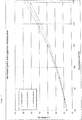
- the measured values of the thermal conductivity are also graphically in Fig. 1 shown.
- the mean temperature increases, so does the effectiveness of the addition of zirconium silicate in the form of a reduction in thermal conductivity, which can be seen directly from the increasing difference in thermal conductivity between Comparative Example 1 and Embodiment 1 and Embodiment 2, respectively.
- the doubling of the addition amount of zirconium silicate in the embodiment 2 in comparison with the embodiment 1 improves the thermal conductivity at an average temperature of 300 ° C by about 4%.
- the exemplary embodiments prove that the addition of zirconium silicate offers a considerable potential for optimization in terms of thermal engineering.
- Table 3 compares the compressive stress determined according to EN 826 at 10% compression for three comparative examples and one exemplary embodiment.
- Table 2 sample density binder content additive compressive stress [kg / m 3 ] [%] [KPa] Comparative Example 2 53.7 3.8 - 9.4 Comparative Example 3 53.5 5.7 Graphite 2% 8.1 Comparative Example 4 62.2 3.4 - 16.3 Embodiment 3 61.7 3.3 Zirconium silicate 3% 16.7
- Comparative Examples 2 and 3 show that despite a significantly greater binder content of 50%, the 2% addition of graphite results in a deterioration of the mechanical compressive stress of more than 15%. In contrast, an addition of 3% zirconium silicate on the compressive stress has no effect, as the comparison of Comparative Example 4 with Embodiment 3 occupied.
- Comparative Example 3 has a total annealing loss of 7.7%, while Embodiment 2 has only an ignition loss of 3.3%. This can effectively prevent punking.
- Tables 1 and 2 show that the use according to the invention of the opacifier zirconium silicate provides a mineral wool insulating material which is optimized in particular for higher application temperatures and which has improved thermal conductivity with constant mechanical properties.
Landscapes
- Physics & Mathematics (AREA)
- Engineering & Computer Science (AREA)
- Architecture (AREA)
- Acoustics & Sound (AREA)
- Electromagnetism (AREA)
- Civil Engineering (AREA)
- Structural Engineering (AREA)
- Thermal Insulation (AREA)
- Glass Compositions (AREA)
Abstract
Description
- Die Erfindung betrifft ein Wärmedämmelement aus Mineralwolle gemäß dem Oberbegriff des Patentanspruchs 1.
- Wärmedämmelemente aus Mineralwolle, insbesondere Glas- oder Steinwolle, sind für die Dämmung von Gebäuden und dergleichen weit verbreitet und werden insbesondere in Form von Mineralwollplatten und Mineralwollbahnen, aber auch als Mineralwollrohre und Schalen und dergleichen verwendet. Die Mineralwoll-Dämmelemente sind aus Mineralwollfasern gebildet. Diese werden aus einer Schmelze mittels verschiedener Verfahren zerfasert, wobei den Fasern Bindemittel zugegeben wird. Über einen oder mehrere Fallschächte werden die mit Bindemittel versetzten Fasern auf einem Endlosförderband zur Bildung einer Mineralwollbahn gesammelt. Die Bahn wird zur Einstellung einer bestimmten Rohdichte gepresst und in diesem komprimierten Zustand durch einen Aushärtofen, üblicherweise einen Tunnelofen, geführt, um das fertige Wärmedämmelement zu bilden.
- Bedingt durch die Verwendung als Wärmedämmung besteht ein Hauptbestreben bei der Herstellung von Mineralwoll-Dämmelementen darin, das Wärmedämmvermögen zu verbessern. Das Wärmedämmvermögen wird durch die Wärmeleitfähigkeit λ, charakterisiert, die nach der DIN EN 12667 ermittelt wird. Je niedriger die Wärmeleitfähigkeit ist, desto besser ist das Wärmedämmvermögen, so dass weniger Wärme durch ein Dämmelement hindurch gelangt. In der Praxis ist eine Eingruppierung von Wärmedämmelementen in sogenannte Wärmeleitgruppen (WLG) üblich.
- Das Wärmedämmvermögen der Fasern ist maßgeblich durch die Faserstruktur des Dämmelements bedingt, die aus einer Vielzahl von teilweise sich kreuzenden Fasern bestimmt ist, die zwischen sich Luft einschliessen, wobei die ruhende Luft als maßgeblicher Isolator wirkt.
- Im Einzelnen findet der Wärmetransport bei derartigen Faserdämmelementen durch Wärmeleitung über das Fasergerüst, durch Gaswärmeleitung der eingeschlossenen Luft sowie durch Wärmestrahlungstransport statt.
- Die Wärmeleitfähigkeit ruhender Luft beträgt etwa 26 mW/mK bei Raumtemperatur. Verschiedene Gase, u.a. Argon und CO2, weisen bessere, d.h. geringere Wärmeleitfähigkeiten auf. Zwar sind verschiedene Ansätze bekannt, die Wärmeleitfähigkeit von Mineralwolle-Dämmstoffen dadurch zu verbessern, dass die eingeschlossene Luft durch ein Gas mit niedriger Wärmeleitfähigkeit ersetzt wird. Wegen der herstellungstechnisch sehr aufwendigen Umsetzung und dem Problem eines längerfristigen, diffusionsbedingten Gasaustauschs in der Nutzung haben sich diese Vorschläge bislang nicht durchsetzen können.
- Eine Verbesserung, d.h. eine Reduzierung der Wärmeleitung über das Fasergerüst ist nur begrenzt möglich. Allgemein gilt, dass mit geringerer Fasermenge sich die Wärmeleitfähigkeit des Fasergerüsts verbessert. Allerdings ist die Faserstruktur auch für gewollte Eigenschaften des Mineralwoll-Dämmelements maßgeblich, wie etwa Steifigkeit, mechanische Festigkeit und dergleichen, so dass auch hier Verbesserungen nur begrenzt möglich sind.
- Der Wärmestrahlungstransport, insbesondere der Infrarotstrahlen, beträgt bei Raumtemperatur abhängig von der Rohdichte bis zu etwa 7 mW/mK. Bei höheren Temperaturen, wie sie bei Anwendungen in der technischen Isolierung, beispielsweise der Isolierung von Heißdampfleitungen im Kraftwerksbau, auftreten, nimmt der Anteil des Wärmestrahlungstransports an der gesamten Wärmeleitung überproportional zu. Eine Verbesserung des Wärmestrahlungstransports kann durch eine feinere Faserstruktur erzielt werden, wobei die bereits oben genannten Einschränkungen hinsichtlich der gewollten Eigenschaften hier Grenzen setzen. Weiterhin ist der Einsatz sog. Infrarot-Trübungsmittel möglich und bekannt. Als Infrarot-Trübungsmittel Pulversysteme werden beispielsweise infrarot aktive Oxide oder Carbide, insbesondere aber Ruß- oder Graphitpulver verwendet, welche an die Mineralwollfasern angelagert werden. Die Anlagerung erfolgt zumeist über das Bindemittel, mit welchem die Mineralwolle bei der Herstellung versetzt wird. So ist es aus der
EP 1 127 032 B1 bekannt, Graphit zusammen mit der Bindemittelzugabe an sog. MMVF-Fasern anzulagern, d. h. an synthetische Fasern, zu denen auch Glas- und Steinwollfasern gehören. Graphit als organische Substanz wird hierbei in einer Menge bis zu 15 % angelagert, wobei allerdings geringere Mengen im allgemeinen bevorzugt sind. - Die Erfinder haben erkannt, dass sich durch den Einbau derartiger organischer Substanzen zwar der Wärmetransport infolge Absorption der Infrarot-Strahlen reduzieren lässt, der Nachteil jedoch darin besteht, dass Graphit oder Ruß Schmiermitteleigenschaften aufweisen, was zu einer Verminderung der mechanischen Festigkeit, insbesondere der Bindung der Fasern untereinander führen kann. Dies kann sich nachteilig auf die Einsatzmöglichkeiten derart ausgerüsterter Mineralwolledämmstoffe auswirken. Ein weiterer Nachteil von Graphit und Ruß besteht darin, dass es sich hierbei um Stoffe handelt, die bei der Verarbeitung zu einer nicht zu vernachlässigenden Verschmutzung der Herstellungsanlagen führen können, was daraus resultiert, dass sich Ruß und Graphit überall anlagern und nur sehr schwer und mit großem Aufwand beseitigt werden können. Graphit wie auch Ruß bringen als organische Substanzen eine gewisse Brandlast ein, was insbesondere für Anwendungen bei der Hochtemperaturdämmung, insbesondere bei Anwendungsbereichen von 300 bis 500°C nachteilhaft ist. Insbesondere kann sich das organische Trübungsmittel entzünden, was zu einem sogenannten Punking führt, wodurch die Gefahr eines Nichtbestehens von Brandschutzprüfungen gegeben sein kann. Bei einer zu großen Zugabemenge von Graphit oder Ruß kann zudem durch die Ausbildung von Leiterbrücken zwischen den Partikeln es zu einer Verschlechterung der Wärmeleitfähigkeit kommen, da sowohl Graphit als auch Ruß eine große eigene Wärmeleitfähigkeit aufweisen.
- Aufgabe der Erfindung ist es, ein Wärmedämmelement aus Mineralwolle, insbesondere Glas- oder Steinwolle, bereitzustellen, mit dem durch den Einbau zusätzlicher Substanzen, insbesondere Trübungsmitteln, das Wärmedämmvermögen verbessert, insbesondere der Wärmeleitfähigkeitswert reduziert wird, und zwar unter Beibehaltung der mechanischen Eigenschaften des Dämmelements und einer guten Faserbindung, wobei die Verarbeitung prozesstechnisch in einfacher Weise möglich sein soll.
- Die Aufgabe wird erfindungsgemäß durch die im kennzeichnenden Teil des Anspruchs 1 enthaltenen Merkmale gelöst, wobei zweckmäßige Weiterbildungen der Erfindung durch die in den Unteransprüchen enthaltenen Merkmale gekennzeichnet sind.
- Nach Maßgabe der Erfindung wird als Trübungsmittel für die Mineralwolle eine anorganische Substanz verwendet und zwar Zirkonsilikat. Überraschend hat sich hierbei herausgestellt, dass Zirkonsilikat nicht über die Nachteile üblicher Trübungsmittel, wie etwa Graphit, verfügt, eine einfache Verarbeitung und damit Herstellung des Mineralwolledämmelements ermöglicht und hierbei auch beim Einsatz größerer Mengen die mechanischen Eigenschaften, die Strukturfestigkeit und die Bindung der Fasern innerhalb der Faserstruktur erheblich weniger beeinträchtigt. Auch ist die eigene Wärmeleitfähigkeit im Vergleich zu insbesondere Graphit oder Ruß wesentlich geringer. Zudem handelt es sich bei Zirkonsilikat um eine anorganische Substanz, was sich günstig auf die Feuerwiderstandseigenschaften des Dämmelements auswirkt. Dies macht Zirkonsilikat insbesondere für die Anwendung als Trübungsmittel für Mineralwolledämmstoffe für den Hochtemperaturbereich sehr zweckmäßig.
- Zirkonsilikat wird insbesondere in Form eines pulverförmigen Gemisches verwendet, welches 60 bis 70 % Zirkondioxid sowie 30 bis 35 % Siliziumdioxid mit Metalloxiden, insbesondere Eisen- und/oder Titanoxid in einem Bereich von 0,1 bis 0,5 % aufweist. Geeignet ist insbesondere das unter der Marke Kreutzonit vertriebene Zirkonsilikat, welches im Handel über die Helmut Kreuz GmbH, 35708 Haiger-Langenaubach verfügbar ist und in der keramischen Industrie für Engoben und Glasuren verwendet wird.
- Zweckmäßigerweise wird Zirkonsilikat verwendet, welches 64 bis 65,5 % ZrO2, 33 bis 34 % SiO2, 0,1 % max. Fe2O3 sowie 0,15 % max. TiO2 aufweist.
- Das Zirkonsilikat kann zeitgleich mit dem Bindemittel aufgetragen werden, etwa dadurch, dass sowohl das Bindemittel wie auch das Zirkonsilikat auf die Fasern im Fallschacht aufgebracht werden. Dies erfolgt zweckmäßigerweise durch einen Sprühvorgang, wobei das Zirkonsilikat dem Bindemittel vor dem Aufsprühen des Bindemittels auf die Mineralwollfasern zugeführt wird. Hierbei wird zweckmäßigerweise das Zirkonsilikat als Pulver verwendet, welches für das Aufbringen mit dem Bindemittel mit diesem zu einer Aufschlämmung vermischt wird. Hierfür ist es zweckmäßig, dass die Pulverteilchen in Form von kugelförmigen Teilchen vorliegen, was einer Verkrustung und Inselbildung des anzulagernden Zirkonsilikats an den Mineralfasern entgegenwirkt. Allerdings ist es auch möglich, das Bindemittel zeitlich versetzt zuzugeben. Hierbei ist es besonders vorteilhaft, dass das Zirkonsilikat nach dem Aufbringen des Bindemittels aufgegeben wird. Beispielsweise kann die Zugabe des Bindemittels innerhalb des Fallschachtes erfolgen und kann insbesondere bei der Ausbildung von Rohrschalen der Auftrag des Zirkonsilikats über die auf dem Endlosförderband bereits abgelagerten Fasern erfolgen.
- Der mittlere Teilchendurchmesser beträgt zweckmäßigerweise 0,5 bis 5 µm. Die Zugabe von Zirkonsilikat ist in einer Menge von 1 bis 10 Gew.-% bezogen auf das Gesamtgewicht das Mineralwoll-Dämmelements bevorzugt, so dass also etwa 1 bis 10 Gew.-% Zirkonsilikat in der Mineralwolle angelagert wird. Bevorzugt ist hierbei eine Menge an Zirkonsilikat im Bereich von 3 bis 6 Gew.-%. Hierbei hat sich herausgestellt, dass auch größere Mengen von Zirkonsilikat eingebaut werden können, ohne dass die mechanischen Eigenschaften oder das Brandverhalten beeinträchtigt werden. Größere Zugabemengen als die angegebenen sind prinzipiell möglich, führen jedoch nicht zu einer weiteren Verbesserung des Wärmedämmvermögens.
- Als Bindemittel eignet sich jedes übliche Bindemittel, wie es für die Herstellung von Mineralfaser-Dämmstoffprodukten Verwendung findet, wobei Bindemittel zweckmäßigerweise in einer Menge von 0,5 bis 7 Gew.-% zugegeben wird. Insbesondere bei Anwendung in einem Hochtemperaturbereich ist man bestrebt, den Bindemittelanteil möglichst gering zu halten. Als Bindemittel eignet sich insbesondere ein Phenolformaldehydharz, was sich gut verarbeiten lässt.
- Das erfindungsgemäße Zirkonsilikat kann allen Mineralwoll-Dämmstoffprodukten für die Wärmedämmung und/oder den Brandschutz, insbesondere für die technische Isolierung, zugegeben werden. Ebenso ist das Zirkonsilikat in einem breiten Rohdichtebereich für die Mineralwoll-Produkte anwendbar, insbesondere in einem Bereich der Rohdichte von 10 bis 250 kg/m3, vorzugsweise im Bereich von 50 bis 150 kg/m3.
- Insgesamt hat es sich überraschend gezeigt, dass durch den zusätzlichen Einbau von anorganischen Trübungsmitteln und zwar Zirkonsilikat die mechanischen Eigenschaften des Mineralwollprodukts nicht beeinträchtigt werden, insbesondere was die Strukturfestigkeit und auch die Faserbindung anbelangt. Zugleich wirft das Zirkonsilikat bei der Verarbeitung im Herstellerwerk, insbesondere bei Beigabe des Zirkonsilikats im Wege des Zerfaserungsprozesses vor Ablage der Fasern auf einem Endlosförderband keine Probleme auf. Auch das bei bestimmten eingebauten Trübungsmitteln auftretende Punking bei Brandschutzprüfungen für Produkte im Hochtemperaturanwendungsbereich tritt nicht auf, so dass sich der Einbau von Zirkonsilikat zur Verbesserung der Wärmeleitfähigkeit insbesondere für Mineralwoll-Produkte für die Anwendung in allen Brandschutzklassen eignet. Zudem ist Zirkonsilikat auch kostengünstig, was gerade für die Herstellung von Massenware vorteilhaft ist, um die es sich bei Mineralwolledämmelementen handelt.
- Versuche haben die Verbesserung der Wärmeleitfähigkeit bei Einsatz von Zirkonsilikat als Trübungsmittel gezeigt. Dies ergibt sich aus der folgenden Tabelle 1, bei welcher die temperaturabhängige Wärmeleitfähigkeit λ(T) gemäß EN ISO 8497 von Rohrschalen mit einer Dämmdicke von 80 mm und einem Innendurchmesser von 89 mm verglichen wird. Für alle Rohrschalen wurde eine Faserfeinheit, angegeben als Micronaire von 17 l/min vorgegeben, um einen Einfluß unterschiedlicher Faserfeinheiten auf den Messwert der Wärmeleitfähigkeit zu minimieren. Für die Messapparatur und das Meßverfahren zur Bestimmung des Micronaire-Wertes wird auf die
WO2003098209 verwiesen. - Das Vergleichsbeispiel 1 ist eine Rohrschale mit einer Rohdichte von 62,2 kg/m3. Das Ausführungsbeispiel 1 ist eine Rohrschale gleicher Abmessung mit einen Zusatz von Zirkonsilikat in Höhe von 3 Gew.-% bezogen auf das Gewicht der Rohrschale ohne Zirkonsilikat, d.h. eine Beladung von 3 %. Diese Rohrschale weist eine Rohdichte (einschließlich Zirkonsilikat) von 65,4 kg/m3 auf. , Das Ausführungsbeispiel 2 ist eine Rohrschale gleicher Abmessung mit einen Zusatz von Zirkonsilikat in Höhe von 6 Gew.-% bezogen auf das Gewicht der Rohrschale ohne Zirkonsilikat, d.h. eine Beladung von 6 %. Diese Rohrschale weist eine Rohdichte (einschließlich Zirkonsilikat) von 67,9 kg/m3 auf.
Tabelle 1: Messwert der Wärmeleitfähigkeit [mW/mK] Zirkonsilikat [%] RD [kg/m3] Mic. [l/min] 50°C 100°C 150°C 200°C 250°C 300°C Vergleich. 1 0 62,2 17 36,7 42,3 50,1 60,1 72,6 87,3 Ausführung. 1 3 65,4 17 37,0 42,5 49,9 59,2 70,5 83,7 Ausführung 2 6 67,9 17 36,7 41,8 48,7 57,4 67,9 80,4 - Die Messwerte der Wärmeleitfähigkeit sind auch graphisch in
Fig. 1 dargestellt. - Tabelle 1 bzw.
Fig.1 mit einem Diagramm Wärmeleitfähigkeit abhängig von der Mitteltemperatur (EN ISO 8497) für ein Vergleichs- und zwei Ausführungsbeispiele zeigen, dass bis zu einer Mitteltemperatur von etwa 100°C die Zugabe von Zirkonsilikat im Rahmen der Messgenauigkeit keine Auswirkung auf die Wärmeleitfähigkeit hat. Mit zunehmender Mitteltemperatur nimmt auch die Wirksamkeit der Zugabe von Zirkonsilikat in Form einer Verringerung der Wärmeleitfähigkeit zu, was unmittelbar aus der sich vergrößernden Differenz der Wärmeleitfähigkeit zwischen dem Vergleichsbeispiel 1 und dem Ausführungsbeispiel 1 bzw. dem Ausführungsbeispiel 2 ersichtlich ist. Die Verdoppelung der Zugabemenge von Zirkonsilikat im Ausführungsbeispiel 2 im Vergleich zum Ausführungsbeispiel 1 verbessert die Wärmeleitfähigkeit bei einer Mitteltemperatur von 300°C um etwa 4%. Die Ausführungsbeispiele belegen, dass die Zugabe von Zirkonsilikat ein erhebliches wärmetechnisches Optimierungspotential bietet. - In der nachfolgenden Tabelle 2 wird für drei Vergleichsbeispiele und ein Ausführungsbeispiel die nach EN 826 ermittelte Druckspannung bei 10% Kompression gegenübergestellt.
Tabelle 2: Probe Rohdichte Bindemittelgehalt Additiv Druckspannung [kg/m3] [%] [kPa] Vergleichsbeispiel 2 53,7 3,8 - 9,4 Vergleichsbeispiel 3 53,5 5,7 Graphit 2% 8,1 Vergleichsbeispiel 4 62,2 3,4 - 16,3 Ausführungsbeispiel 3 61,7 3,3 Zirkonsilikat 3% 16,7 - Der unmittelbare Vergleich der Vergleichsbeispiele 2 und 3 zeigt, dass trotz eines signifikant größeren Bindemittelgehalts von 50% die 2%-ige Zugabe von Graphit eine Verschlechterung der mechanischen Druckspannung um mehr als 15% zur Folge hat. Dagegen hat eine Zugabe von 3% Zirkonsilikat auf die Druckspannung keine Auswirkung, wie der Vergleich von Vergleichsbeispiel 4 mit dem Ausführungsbeispiel 3 belegt.
- Das Vergleichsbeispiel 3 weist einen Gesamtglühverlust von 7,7 % auf, während das Ausführungsbeispiel 2 lediglich einen Glühverlust von 3,3 % besitzt. Damit kann ein Punking wirkungsvoll verhindert werden.
- Die in den Tabellen 1 und 2 dargestellten Ergebnisse belegen, dass durch die erfindungsgemäße Verwendung des Trübungsmittels Zirkonsilikat ein insbesondere für höhere Anwendungstemperaturen optimierter Mineralwolledämmstoff bereitgestellt wird, der eine verbesserte Wärmeleitfähigkeit bei gleichbleibenden mechanischen Eigenschaften aufweist.
- Sofern es bei bestimmten Anwendungen auf eine Reduzierung des Gewichts der Dämmung ankommt, ist es auch möglich, durch die Zugabe von Zirkonsilikat eine Absenkung der Produkt-Rohdichte bei gleichbleibender Wärmeleitfähigkeit vorzunehmen.
Claims (11)
- Wärmedämmelement aus Mineralwolle, insbesondere aus Stein- oder Glaswolle, bei dem die Mineralwollfasern mit einem Bindemittel zum Zwecke der Aushärtung benetzt sind,
dadurch gekennzeichnet dass,
an die Mineralwollfasern ein anorganische Infrarot-Trübungsmittel angelagert ist, welches aus Zirkonsilikat gebildet ist. - Dämmelement nach Anspruch 1,
dadurch gekennzeichnet dass,
das Zirkonsilikat in einem Gemisch vorliegt, welches wenigstens 60 bis 70 % Zirkondioxid sowie Oxide aus Metall und/oder Halbmetall, insbesondere Eisen, Titan- und/oder Siliziumoxide aufweist. - Dämmmittel nach Anspruch 1 oder 2
dadurch gekennzeichnet dass,
das Zirkonsilikat in einem Gemisch mit folgender Zusammensetzung vorliegt:ZrO2 64 - 65,5 % SiO2 33 - 34 % Fe2O3 0,10 % max. TiO2 0,15 % max. - Dämmelement nach Anspruch 1,
dadurch gekennzeichnet dass,
das Zirkonsilikat zusammen mit dem Bindemittel an die Mineralfasern angelagert ist. - Dämmelement nach Anspruch 4,
dadurch gekennzeichnet dass,
das Zirkonsilikat zusammen mit dem Bindemittel auf die Mineralwollfasern aufgebracht, insbesondere aufgesprüht ist. - Dämmelement nach einem der vorhergehenden Ansprüche,
dadurch gekennzeichnet dass,
Zirkonsilikat als Pulver verwendet ist, insbesondere in Form von kugelförmigen Teilchen. - Dämmelement nach Anspruch 4,
dadurch gekennzeichnet dass,
der mittlere Durchmesser der Zirkonsilikatteilchen 0,5 bis 5 µm beträgt. - Dämmelement nach einem der vorhergehenden Ansprüche,
dadurch gekennzeichnet dass,
das Zirkonsilikat in einer auf das Gesamtgewicht bezogenen Menge von 1 bis 10 Gew.-% in der Mineralwolle angelagert ist, vorzugsweise in einer Menge von 3 bis 6 Gew.-%. - Dämmelement nach einem der vorhergehenden Ansprüche,
dadurch gekennzeichnet dass,
0,5 bis 7 Gew.-% Bindemittel verwendet ist bezogen auf das Gesamtgewicht und dass als Bindemittel vorzugsweise Phenolformaldehydharz verwendet ist. - Dämmelement nach einem der vorhergehenden Ansprüche,
dadurch gekennzeichnet dass,
das Mineralwoll-Dämmelement eine Rohdichte im Bereich von 10 bis 250 kg/m3, vorzugsweise im Bereich von 50 bis 150 kg/m3 aufweist. - Dämmelement nach einem der vorhergehenden Ansprüche,
dadurch gekennzeichnet dass,
das Wärmedämmelement in Platten-, Bahn-, Rollen- oder Schalenform vorliegt, für die Wärmedämmung und/oder den Brandschutz, insbesondere für die technische Isolierung.
Applications Claiming Priority (1)
| Application Number | Priority Date | Filing Date | Title |
|---|---|---|---|
| DE102011121090A DE102011121090A1 (de) | 2011-12-14 | 2011-12-14 | Wärmedämmelement aus Mineralwolle, insbesondere Stein-oder Glaswolle |
Publications (3)
| Publication Number | Publication Date |
|---|---|
| EP2604764A2 true EP2604764A2 (de) | 2013-06-19 |
| EP2604764A3 EP2604764A3 (de) | 2015-01-14 |
| EP2604764B1 EP2604764B1 (de) | 2020-04-01 |
Family
ID=47355859
Family Applications (1)
| Application Number | Title | Priority Date | Filing Date |
|---|---|---|---|
| EP12196417.5A Active EP2604764B1 (de) | 2011-12-14 | 2012-12-11 | Wärmedämmelement aus mineralwolle, insbesondere stein- oder glaswolle |
Country Status (2)
| Country | Link |
|---|---|
| EP (1) | EP2604764B1 (de) |
| DE (1) | DE102011121090A1 (de) |
Cited By (1)
| Publication number | Priority date | Publication date | Assignee | Title |
|---|---|---|---|---|
| CN116277389A (zh) * | 2022-12-30 | 2023-06-23 | 江苏利元亨智能装备有限公司 | 烧结炉运载机构及其制备方法 |
Citations (2)
| Publication number | Priority date | Publication date | Assignee | Title |
|---|---|---|---|---|
| WO2003098209A1 (fr) | 2002-05-22 | 2003-11-27 | Saint-Gobain Isover | Dispositif de determination de la finesse de fibres minerales |
| EP1127032B1 (de) | 1998-09-24 | 2004-01-28 | Rockwool International A/S | Synthetische glasfaserprodukte für wärmeisolierung und deren herstellung |
Family Cites Families (6)
| Publication number | Priority date | Publication date | Assignee | Title |
|---|---|---|---|---|
| BE638381A (de) * | 1962-10-12 | |||
| DE19928011A1 (de) * | 1999-06-19 | 2000-12-21 | Porextherm Daemmstoffe Gmbh | Isolierplatte, insbesondere für den Niedertemperaturbereich |
| DE202007013688U1 (de) * | 2007-05-03 | 2008-01-31 | Kratel, Günter, Dr. | Wärmedämmstoffverbundsysteme mit hydrophobem, mikroporösem Wärmedämmstoffkern |
| GB0801355D0 (en) * | 2008-01-25 | 2008-03-05 | Microtherm N V | Liquid formulation of microporous thermal insulation material, method of manufacture and use thereof |
| DE102009042526A1 (de) * | 2009-09-22 | 2011-03-24 | Kratel, Günter, Dr. | Flexible Wärmedämmstofffasermatten mit integriertem nanoporösen Wärmedämmstoff |
| DE102010029513A1 (de) * | 2010-05-31 | 2011-02-24 | Wacker Chemie Ag | Dämmung mit Schichtaufbau |
-
2011
- 2011-12-14 DE DE102011121090A patent/DE102011121090A1/de not_active Withdrawn
-
2012
- 2012-12-11 EP EP12196417.5A patent/EP2604764B1/de active Active
Patent Citations (2)
| Publication number | Priority date | Publication date | Assignee | Title |
|---|---|---|---|---|
| EP1127032B1 (de) | 1998-09-24 | 2004-01-28 | Rockwool International A/S | Synthetische glasfaserprodukte für wärmeisolierung und deren herstellung |
| WO2003098209A1 (fr) | 2002-05-22 | 2003-11-27 | Saint-Gobain Isover | Dispositif de determination de la finesse de fibres minerales |
Cited By (1)
| Publication number | Priority date | Publication date | Assignee | Title |
|---|---|---|---|---|
| CN116277389A (zh) * | 2022-12-30 | 2023-06-23 | 江苏利元亨智能装备有限公司 | 烧结炉运载机构及其制备方法 |
Also Published As
| Publication number | Publication date |
|---|---|
| EP2604764A3 (de) | 2015-01-14 |
| DE102011121090A1 (de) | 2013-06-20 |
| EP2604764B1 (de) | 2020-04-01 |
Similar Documents
| Publication | Publication Date | Title |
|---|---|---|
| EP1678386B2 (de) | Dämmstoffelement aus Mineralfaserfilz für den klemmenden Einbau zwischen Balken | |
| EP0575886B1 (de) | Gegen Abplatzungen bei Brandbeanspruchung beständiger Beton oder Mörtel | |
| DE1925009A1 (de) | Faserverstaerkter Verbundwerkstoff und daraus hergestellte Koerper | |
| DE69914501T2 (de) | Synthetische glasfaserprodukte für wärmeisolierung und deren herstellung | |
| EP0119382B1 (de) | Verfahren zur Herstellung von bindemittelfreien Wärmedämmformkörpern | |
| EP2523912B1 (de) | Blähglasgranulat und dessen verwendung | |
| EP1757915B1 (de) | Vorrichtung zur Temperaturmessung in Metallschmelzen | |
| EP0013387A1 (de) | Agglomerierte Teilchen aus hochdispersen Metalloxiden und Trübungsstoffen, Verfahren zu ihrer Herstellung und ihre Verwendung | |
| EP1680372B2 (de) | Feuerschutztüre und feuerschutzeinlage hierfür | |
| EP2604764B1 (de) | Wärmedämmelement aus mineralwolle, insbesondere stein- oder glaswolle | |
| EP3371250B1 (de) | Funktionswerkstoff mit zumindest einem additiv | |
| EP2960221B1 (de) | Feuerfestes keramisches Erzeugnis | |
| DE3105534C2 (de) | Verfahren zur Herstellung eines Formteiles und seine Verwendung | |
| DE202022002952U1 (de) | Faserverstärkter keramischer Kompositwerkstoff, Bauteil aus einem faserverstärkten keramischen Kompositwerkstoff | |
| EP1522800B1 (de) | Klima- Bzw. Lüftungskanal | |
| DE1471032B2 (de) | Mischung zur herstellung eines feuerfesten koerpers, moertels u.dgl | |
| DE102008001176B4 (de) | Formkörper und Verfahren zur Herstellung eines Formkörpers | |
| DE102022132031B4 (de) | Verwendung von 1-Jahres-Salzwasserpflanzenfasern zur Herstellung eines biobasierten ablativen Thermalschutzmaterials für die Luft- und Raumfahrt | |
| DE3105579A1 (de) | Verfahren zur herstellung von keramische fasern enthaltenden, koernigen, feuerbestaendigen oder feuerfesten materialien, nach dem verfahren hergestellte materialien und ihre verwendung | |
| DE20009690U1 (de) | Dämmstoff, insbesondere Wärmedämmstoff | |
| DE19732518A1 (de) | Ziegelstein mit hoher Wärmedämmwirkung und niedriger Wasserdampfdiffusionswiderstandszahl sowie Verfahren zu seiner Herstellung | |
| DE102004014344B4 (de) | Biologisch abbaubare Glaszusammensetzung und Mineralwolleprodukt hieraus | |
| DE102023132705A1 (de) | Mikroporöser Wärmedämmkörper | |
| EP3511306A1 (de) | Thermisch stabiles und zyklisch beanspruchbares hochfestes oder ultrahochfestes betonbauteil | |
| DE2851813A1 (de) | Herstellung von materialien auf der grundlage von fasern und zement und derartige erzeugnisse |
Legal Events
| Date | Code | Title | Description |
|---|---|---|---|
| PUAI | Public reference made under article 153(3) epc to a published international application that has entered the european phase |
Free format text: ORIGINAL CODE: 0009012 |
|
| AK | Designated contracting states |
Kind code of ref document: A2 Designated state(s): AL AT BE BG CH CY CZ DE DK EE ES FI FR GB GR HR HU IE IS IT LI LT LU LV MC MK MT NL NO PL PT RO RS SE SI SK SM TR |
|
| AX | Request for extension of the european patent |
Extension state: BA ME |
|
| PUAL | Search report despatched |
Free format text: ORIGINAL CODE: 0009013 |
|
| AK | Designated contracting states |
Kind code of ref document: A3 Designated state(s): AL AT BE BG CH CY CZ DE DK EE ES FI FR GB GR HR HU IE IS IT LI LT LU LV MC MK MT NL NO PL PT RO RS SE SI SK SM TR |
|
| AX | Request for extension of the european patent |
Extension state: BA ME |
|
| RIC1 | Information provided on ipc code assigned before grant |
Ipc: E04B 1/76 20060101AFI20141211BHEP |
|
| 17P | Request for examination filed |
Effective date: 20150408 |
|
| RBV | Designated contracting states (corrected) |
Designated state(s): AL AT BE BG CH CY CZ DE DK EE ES FI FR GB GR HR HU IE IS IT LI LT LU LV MC MK MT NL NO PL PT RO RS SE SI SK SM TR |
|
| 17Q | First examination report despatched |
Effective date: 20160407 |
|
| GRAP | Despatch of communication of intention to grant a patent |
Free format text: ORIGINAL CODE: EPIDOSNIGR1 |
|
| STAA | Information on the status of an ep patent application or granted ep patent |
Free format text: STATUS: GRANT OF PATENT IS INTENDED |
|
| INTG | Intention to grant announced |
Effective date: 20191023 |
|
| GRAS | Grant fee paid |
Free format text: ORIGINAL CODE: EPIDOSNIGR3 |
|
| GRAA | (expected) grant |
Free format text: ORIGINAL CODE: 0009210 |
|
| STAA | Information on the status of an ep patent application or granted ep patent |
Free format text: STATUS: THE PATENT HAS BEEN GRANTED |
|
| AK | Designated contracting states |
Kind code of ref document: B1 Designated state(s): AL AT BE BG CH CY CZ DE DK EE ES FI FR GB GR HR HU IE IS IT LI LT LU LV MC MK MT NL NO PL PT RO RS SE SI SK SM TR |
|
| REG | Reference to a national code |
Ref country code: GB Ref legal event code: FG4D Free format text: NOT ENGLISH |
|
| REG | Reference to a national code |
Ref country code: AT Ref legal event code: REF Ref document number: 1251496 Country of ref document: AT Kind code of ref document: T Effective date: 20200415 Ref country code: CH Ref legal event code: EP |
|
| REG | Reference to a national code |
Ref country code: DE Ref legal event code: R096 Ref document number: 502012015914 Country of ref document: DE |
|
| REG | Reference to a national code |
Ref country code: IE Ref legal event code: FG4D Free format text: LANGUAGE OF EP DOCUMENT: GERMAN |
|
| RAP2 | Party data changed (patent owner data changed or rights of a patent transferred) |
Owner name: SAINT-GOBAIN ISOVER |
|
| PG25 | Lapsed in a contracting state [announced via postgrant information from national office to epo] |
Ref country code: BG Free format text: LAPSE BECAUSE OF FAILURE TO SUBMIT A TRANSLATION OF THE DESCRIPTION OR TO PAY THE FEE WITHIN THE PRESCRIBED TIME-LIMIT Effective date: 20200701 |
|
| REG | Reference to a national code |
Ref country code: NL Ref legal event code: MP Effective date: 20200401 |
|
| REG | Reference to a national code |
Ref country code: LT Ref legal event code: MG4D |
|
| PG25 | Lapsed in a contracting state [announced via postgrant information from national office to epo] |
Ref country code: LT Free format text: LAPSE BECAUSE OF FAILURE TO SUBMIT A TRANSLATION OF THE DESCRIPTION OR TO PAY THE FEE WITHIN THE PRESCRIBED TIME-LIMIT Effective date: 20200401 Ref country code: PT Free format text: LAPSE BECAUSE OF FAILURE TO SUBMIT A TRANSLATION OF THE DESCRIPTION OR TO PAY THE FEE WITHIN THE PRESCRIBED TIME-LIMIT Effective date: 20200817 Ref country code: SE Free format text: LAPSE BECAUSE OF FAILURE TO SUBMIT A TRANSLATION OF THE DESCRIPTION OR TO PAY THE FEE WITHIN THE PRESCRIBED TIME-LIMIT Effective date: 20200401 Ref country code: NL Free format text: LAPSE BECAUSE OF FAILURE TO SUBMIT A TRANSLATION OF THE DESCRIPTION OR TO PAY THE FEE WITHIN THE PRESCRIBED TIME-LIMIT Effective date: 20200401 Ref country code: FI Free format text: LAPSE BECAUSE OF FAILURE TO SUBMIT A TRANSLATION OF THE DESCRIPTION OR TO PAY THE FEE WITHIN THE PRESCRIBED TIME-LIMIT Effective date: 20200401 Ref country code: GR Free format text: LAPSE BECAUSE OF FAILURE TO SUBMIT A TRANSLATION OF THE DESCRIPTION OR TO PAY THE FEE WITHIN THE PRESCRIBED TIME-LIMIT Effective date: 20200702 Ref country code: NO Free format text: LAPSE BECAUSE OF FAILURE TO SUBMIT A TRANSLATION OF THE DESCRIPTION OR TO PAY THE FEE WITHIN THE PRESCRIBED TIME-LIMIT Effective date: 20200701 Ref country code: CZ Free format text: LAPSE BECAUSE OF FAILURE TO SUBMIT A TRANSLATION OF THE DESCRIPTION OR TO PAY THE FEE WITHIN THE PRESCRIBED TIME-LIMIT Effective date: 20200401 Ref country code: IS Free format text: LAPSE BECAUSE OF FAILURE TO SUBMIT A TRANSLATION OF THE DESCRIPTION OR TO PAY THE FEE WITHIN THE PRESCRIBED TIME-LIMIT Effective date: 20200801 |
|
| PG25 | Lapsed in a contracting state [announced via postgrant information from national office to epo] |
Ref country code: HR Free format text: LAPSE BECAUSE OF FAILURE TO SUBMIT A TRANSLATION OF THE DESCRIPTION OR TO PAY THE FEE WITHIN THE PRESCRIBED TIME-LIMIT Effective date: 20200401 Ref country code: LV Free format text: LAPSE BECAUSE OF FAILURE TO SUBMIT A TRANSLATION OF THE DESCRIPTION OR TO PAY THE FEE WITHIN THE PRESCRIBED TIME-LIMIT Effective date: 20200401 Ref country code: RS Free format text: LAPSE BECAUSE OF FAILURE TO SUBMIT A TRANSLATION OF THE DESCRIPTION OR TO PAY THE FEE WITHIN THE PRESCRIBED TIME-LIMIT Effective date: 20200401 |
|
| PG25 | Lapsed in a contracting state [announced via postgrant information from national office to epo] |
Ref country code: AL Free format text: LAPSE BECAUSE OF FAILURE TO SUBMIT A TRANSLATION OF THE DESCRIPTION OR TO PAY THE FEE WITHIN THE PRESCRIBED TIME-LIMIT Effective date: 20200401 |
|
| REG | Reference to a national code |
Ref country code: DE Ref legal event code: R097 Ref document number: 502012015914 Country of ref document: DE |
|
| PG25 | Lapsed in a contracting state [announced via postgrant information from national office to epo] |
Ref country code: ES Free format text: LAPSE BECAUSE OF FAILURE TO SUBMIT A TRANSLATION OF THE DESCRIPTION OR TO PAY THE FEE WITHIN THE PRESCRIBED TIME-LIMIT Effective date: 20200401 Ref country code: RO Free format text: LAPSE BECAUSE OF FAILURE TO SUBMIT A TRANSLATION OF THE DESCRIPTION OR TO PAY THE FEE WITHIN THE PRESCRIBED TIME-LIMIT Effective date: 20200401 Ref country code: EE Free format text: LAPSE BECAUSE OF FAILURE TO SUBMIT A TRANSLATION OF THE DESCRIPTION OR TO PAY THE FEE WITHIN THE PRESCRIBED TIME-LIMIT Effective date: 20200401 Ref country code: SM Free format text: LAPSE BECAUSE OF FAILURE TO SUBMIT A TRANSLATION OF THE DESCRIPTION OR TO PAY THE FEE WITHIN THE PRESCRIBED TIME-LIMIT Effective date: 20200401 Ref country code: DK Free format text: LAPSE BECAUSE OF FAILURE TO SUBMIT A TRANSLATION OF THE DESCRIPTION OR TO PAY THE FEE WITHIN THE PRESCRIBED TIME-LIMIT Effective date: 20200401 |
|
| PLBE | No opposition filed within time limit |
Free format text: ORIGINAL CODE: 0009261 |
|
| STAA | Information on the status of an ep patent application or granted ep patent |
Free format text: STATUS: NO OPPOSITION FILED WITHIN TIME LIMIT |
|
| PG25 | Lapsed in a contracting state [announced via postgrant information from national office to epo] |
Ref country code: SK Free format text: LAPSE BECAUSE OF FAILURE TO SUBMIT A TRANSLATION OF THE DESCRIPTION OR TO PAY THE FEE WITHIN THE PRESCRIBED TIME-LIMIT Effective date: 20200401 Ref country code: PL Free format text: LAPSE BECAUSE OF FAILURE TO SUBMIT A TRANSLATION OF THE DESCRIPTION OR TO PAY THE FEE WITHIN THE PRESCRIBED TIME-LIMIT Effective date: 20200401 |
|
| 26N | No opposition filed |
Effective date: 20210112 |
|
| PG25 | Lapsed in a contracting state [announced via postgrant information from national office to epo] |
Ref country code: SI Free format text: LAPSE BECAUSE OF FAILURE TO SUBMIT A TRANSLATION OF THE DESCRIPTION OR TO PAY THE FEE WITHIN THE PRESCRIBED TIME-LIMIT Effective date: 20200401 |
|
| REG | Reference to a national code |
Ref country code: CH Ref legal event code: PL |
|
| PG25 | Lapsed in a contracting state [announced via postgrant information from national office to epo] |
Ref country code: MC Free format text: LAPSE BECAUSE OF FAILURE TO SUBMIT A TRANSLATION OF THE DESCRIPTION OR TO PAY THE FEE WITHIN THE PRESCRIBED TIME-LIMIT Effective date: 20200401 |
|
| REG | Reference to a national code |
Ref country code: BE Ref legal event code: MM Effective date: 20201231 |
|
| PG25 | Lapsed in a contracting state [announced via postgrant information from national office to epo] |
Ref country code: LU Free format text: LAPSE BECAUSE OF NON-PAYMENT OF DUE FEES Effective date: 20201211 Ref country code: IE Free format text: LAPSE BECAUSE OF NON-PAYMENT OF DUE FEES Effective date: 20201211 |
|
| PG25 | Lapsed in a contracting state [announced via postgrant information from national office to epo] |
Ref country code: LI Free format text: LAPSE BECAUSE OF NON-PAYMENT OF DUE FEES Effective date: 20201231 Ref country code: CH Free format text: LAPSE BECAUSE OF NON-PAYMENT OF DUE FEES Effective date: 20201231 |
|
| REG | Reference to a national code |
Ref country code: AT Ref legal event code: MM01 Ref document number: 1251496 Country of ref document: AT Kind code of ref document: T Effective date: 20201211 |
|
| PG25 | Lapsed in a contracting state [announced via postgrant information from national office to epo] |
Ref country code: AT Free format text: LAPSE BECAUSE OF NON-PAYMENT OF DUE FEES Effective date: 20201211 |
|
| PG25 | Lapsed in a contracting state [announced via postgrant information from national office to epo] |
Ref country code: TR Free format text: LAPSE BECAUSE OF FAILURE TO SUBMIT A TRANSLATION OF THE DESCRIPTION OR TO PAY THE FEE WITHIN THE PRESCRIBED TIME-LIMIT Effective date: 20200401 Ref country code: MT Free format text: LAPSE BECAUSE OF FAILURE TO SUBMIT A TRANSLATION OF THE DESCRIPTION OR TO PAY THE FEE WITHIN THE PRESCRIBED TIME-LIMIT Effective date: 20200401 Ref country code: CY Free format text: LAPSE BECAUSE OF FAILURE TO SUBMIT A TRANSLATION OF THE DESCRIPTION OR TO PAY THE FEE WITHIN THE PRESCRIBED TIME-LIMIT Effective date: 20200401 |
|
| PG25 | Lapsed in a contracting state [announced via postgrant information from national office to epo] |
Ref country code: MK Free format text: LAPSE BECAUSE OF FAILURE TO SUBMIT A TRANSLATION OF THE DESCRIPTION OR TO PAY THE FEE WITHIN THE PRESCRIBED TIME-LIMIT Effective date: 20200401 |
|
| PG25 | Lapsed in a contracting state [announced via postgrant information from national office to epo] |
Ref country code: BE Free format text: LAPSE BECAUSE OF NON-PAYMENT OF DUE FEES Effective date: 20201231 |
|
| P01 | Opt-out of the competence of the unified patent court (upc) registered |
Effective date: 20230421 |
|
| PGFP | Annual fee paid to national office [announced via postgrant information from national office to epo] |
Ref country code: DE Payment date: 20251104 Year of fee payment: 14 |
|
| PGFP | Annual fee paid to national office [announced via postgrant information from national office to epo] |
Ref country code: GB Payment date: 20251030 Year of fee payment: 14 |
|
| PGFP | Annual fee paid to national office [announced via postgrant information from national office to epo] |
Ref country code: IT Payment date: 20251121 Year of fee payment: 14 |
|
| PGFP | Annual fee paid to national office [announced via postgrant information from national office to epo] |
Ref country code: FR Payment date: 20251110 Year of fee payment: 14 |