EP2598631B1 - Recombinant bacterium and uses thereof - Google Patents
Recombinant bacterium and uses thereof Download PDFInfo
- Publication number
- EP2598631B1 EP2598631B1 EP11811675.5A EP11811675A EP2598631B1 EP 2598631 B1 EP2598631 B1 EP 2598631B1 EP 11811675 A EP11811675 A EP 11811675A EP 2598631 B1 EP2598631 B1 EP 2598631B1
- Authority
- EP
- European Patent Office
- Prior art keywords
- ova
- antigen
- cells
- mice
- recombinant bacterium
- Prior art date
- Legal status (The legal status is an assumption and is not a legal conclusion. Google has not performed a legal analysis and makes no representation as to the accuracy of the status listed.)
- Not-in-force
Links
- 241000894006 Bacteria Species 0.000 title claims description 95
- 239000000427 antigen Substances 0.000 claims description 104
- 102000036639 antigens Human genes 0.000 claims description 98
- 108091007433 antigens Proteins 0.000 claims description 98
- 230000005945 translocation Effects 0.000 claims description 50
- 210000001744 T-lymphocyte Anatomy 0.000 claims description 49
- 210000000172 cytosol Anatomy 0.000 claims description 41
- 206010028980 Neoplasm Diseases 0.000 claims description 37
- 229960005486 vaccine Drugs 0.000 claims description 27
- 108010006519 Molecular Chaperones Proteins 0.000 claims description 25
- 239000013598 vector Substances 0.000 claims description 24
- 102000037865 fusion proteins Human genes 0.000 claims description 23
- 108020001507 fusion proteins Proteins 0.000 claims description 23
- 241000607142 Salmonella Species 0.000 claims description 22
- 210000002540 macrophage Anatomy 0.000 claims description 17
- 108020004707 nucleic acids Proteins 0.000 claims description 17
- 102000039446 nucleic acids Human genes 0.000 claims description 17
- 150000007523 nucleic acids Chemical class 0.000 claims description 17
- 102000011931 Nucleoproteins Human genes 0.000 claims description 14
- 108010061100 Nucleoproteins Proteins 0.000 claims description 14
- 108010069584 Type III Secretion Systems Proteins 0.000 claims description 14
- 210000000680 phagosome Anatomy 0.000 claims description 12
- 102100031413 L-dopachrome tautomerase Human genes 0.000 claims description 9
- 210000004443 dendritic cell Anatomy 0.000 claims description 9
- 108010051081 dopachrome isomerase Proteins 0.000 claims description 9
- 230000003612 virological effect Effects 0.000 claims description 7
- 102000008840 Melanoma-associated antigen 1 Human genes 0.000 claims description 6
- 108050000731 Melanoma-associated antigen 1 Proteins 0.000 claims description 6
- 241000700605 Viruses Species 0.000 claims description 6
- 230000036039 immunity Effects 0.000 claims description 6
- 241000712899 Lymphocytic choriomeningitis mammarenavirus Species 0.000 claims description 5
- 238000007920 subcutaneous administration Methods 0.000 claims description 5
- 238000002649 immunization Methods 0.000 claims description 4
- 230000003053 immunization Effects 0.000 claims description 4
- 238000011282 treatment Methods 0.000 claims description 4
- 101100314454 Caenorhabditis elegans tra-1 gene Proteins 0.000 claims description 3
- 101710163595 Chaperone protein DnaK Proteins 0.000 claims description 3
- 101710178376 Heat shock 70 kDa protein Proteins 0.000 claims description 3
- 101710152018 Heat shock cognate 70 kDa protein Proteins 0.000 claims description 3
- 101000578784 Homo sapiens Melanoma antigen recognized by T-cells 1 Proteins 0.000 claims description 3
- 102100028389 Melanoma antigen recognized by T-cells 1 Human genes 0.000 claims description 3
- 238000001990 intravenous administration Methods 0.000 claims description 3
- 201000001441 melanoma Diseases 0.000 claims description 3
- 230000028993 immune response Effects 0.000 claims description 2
- 241000699670 Mus sp. Species 0.000 description 102
- 210000004027 cell Anatomy 0.000 description 56
- 108010058846 Ovalbumin Proteins 0.000 description 50
- 241000293869 Salmonella enterica subsp. enterica serovar Typhimurium Species 0.000 description 48
- 229940092253 ovalbumin Drugs 0.000 description 47
- 208000015181 infectious disease Diseases 0.000 description 44
- 230000005867 T cell response Effects 0.000 description 41
- 230000001580 bacterial effect Effects 0.000 description 35
- 108090000623 proteins and genes Proteins 0.000 description 31
- 210000001266 CD8-positive T-lymphocyte Anatomy 0.000 description 29
- 235000001014 amino acid Nutrition 0.000 description 29
- 150000001413 amino acids Chemical class 0.000 description 29
- 229940024606 amino acid Drugs 0.000 description 26
- 244000052769 pathogen Species 0.000 description 26
- 230000003389 potentiating effect Effects 0.000 description 24
- 102000004169 proteins and genes Human genes 0.000 description 24
- 210000000952 spleen Anatomy 0.000 description 24
- 239000013612 plasmid Substances 0.000 description 23
- 230000030741 antigen processing and presentation Effects 0.000 description 22
- 235000018102 proteins Nutrition 0.000 description 22
- 230000000890 antigenic effect Effects 0.000 description 16
- 230000002238 attenuated effect Effects 0.000 description 16
- 230000006698 induction Effects 0.000 description 16
- 230000003834 intracellular effect Effects 0.000 description 15
- 239000012634 fragment Substances 0.000 description 14
- 230000000670 limiting effect Effects 0.000 description 14
- 210000004989 spleen cell Anatomy 0.000 description 14
- 230000001717 pathogenic effect Effects 0.000 description 12
- 238000011746 C57BL/6J (JAX™ mouse strain) Methods 0.000 description 11
- 238000002474 experimental method Methods 0.000 description 10
- 238000001727 in vivo Methods 0.000 description 10
- 241001167018 Aroa Species 0.000 description 9
- 101100491986 Emericella nidulans (strain FGSC A4 / ATCC 38163 / CBS 112.46 / NRRL 194 / M139) aromA gene Proteins 0.000 description 9
- 101150037081 aroA gene Proteins 0.000 description 9
- 238000000034 method Methods 0.000 description 9
- 101001018097 Homo sapiens L-selectin Proteins 0.000 description 8
- 102100033467 L-selectin Human genes 0.000 description 8
- 239000002299 complementary DNA Substances 0.000 description 8
- 230000002441 reversible effect Effects 0.000 description 8
- 230000004913 activation Effects 0.000 description 7
- 230000014102 antigen processing and presentation of exogenous peptide antigen via MHC class I Effects 0.000 description 7
- 230000002950 deficient Effects 0.000 description 7
- 230000002829 reductive effect Effects 0.000 description 7
- 206010061218 Inflammation Diseases 0.000 description 6
- 230000006044 T cell activation Effects 0.000 description 6
- 238000011161 development Methods 0.000 description 6
- 230000018109 developmental process Effects 0.000 description 6
- 230000000694 effects Effects 0.000 description 6
- 230000004054 inflammatory process Effects 0.000 description 6
- 239000000047 product Substances 0.000 description 6
- 230000035755 proliferation Effects 0.000 description 6
- 230000004044 response Effects 0.000 description 6
- 241001138501 Salmonella enterica Species 0.000 description 5
- 239000002671 adjuvant Substances 0.000 description 5
- 229960000723 ampicillin Drugs 0.000 description 5
- AVKUERGKIZMTKX-NJBDSQKTSA-N ampicillin Chemical compound C1([C@@H](N)C(=O)N[C@H]2[C@H]3SC([C@@H](N3C2=O)C(O)=O)(C)C)=CC=CC=C1 AVKUERGKIZMTKX-NJBDSQKTSA-N 0.000 description 5
- 230000001461 cytolytic effect Effects 0.000 description 5
- 230000008030 elimination Effects 0.000 description 5
- 238000003379 elimination reaction Methods 0.000 description 5
- 238000000684 flow cytometry Methods 0.000 description 5
- 210000000987 immune system Anatomy 0.000 description 5
- 238000000338 in vitro Methods 0.000 description 5
- 230000004048 modification Effects 0.000 description 5
- 238000012986 modification Methods 0.000 description 5
- 238000006467 substitution reaction Methods 0.000 description 5
- 230000004083 survival effect Effects 0.000 description 5
- 238000002255 vaccination Methods 0.000 description 5
- 230000001018 virulence Effects 0.000 description 5
- CEAZRRDELHUEMR-URQXQFDESA-N Gentamicin Chemical compound O1[C@H](C(C)NC)CC[C@@H](N)[C@H]1O[C@H]1[C@H](O)[C@@H](O[C@@H]2[C@@H]([C@@H](NC)[C@@](C)(O)CO2)O)[C@H](N)C[C@@H]1N CEAZRRDELHUEMR-URQXQFDESA-N 0.000 description 4
- 229930182566 Gentamicin Natural products 0.000 description 4
- 102100037850 Interferon gamma Human genes 0.000 description 4
- 108010074328 Interferon-gamma Proteins 0.000 description 4
- 241000222722 Leishmania <genus> Species 0.000 description 4
- 108091034117 Oligonucleotide Proteins 0.000 description 4
- 238000012408 PCR amplification Methods 0.000 description 4
- 108010006785 Taq Polymerase Proteins 0.000 description 4
- 230000003321 amplification Effects 0.000 description 4
- 238000013459 approach Methods 0.000 description 4
- 230000001351 cycling effect Effects 0.000 description 4
- 230000003111 delayed effect Effects 0.000 description 4
- 239000012895 dilution Substances 0.000 description 4
- 238000010790 dilution Methods 0.000 description 4
- 201000010099 disease Diseases 0.000 description 4
- 208000037265 diseases, disorders, signs and symptoms Diseases 0.000 description 4
- 229960002518 gentamicin Drugs 0.000 description 4
- 230000002147 killing effect Effects 0.000 description 4
- 230000001404 mediated effect Effects 0.000 description 4
- 239000002609 medium Substances 0.000 description 4
- 230000035772 mutation Effects 0.000 description 4
- 238000003199 nucleic acid amplification method Methods 0.000 description 4
- 108090000765 processed proteins & peptides Proteins 0.000 description 4
- 230000028327 secretion Effects 0.000 description 4
- 238000012546 transfer Methods 0.000 description 4
- 210000004881 tumor cell Anatomy 0.000 description 4
- LKKMLIBUAXYLOY-UHFFFAOYSA-N 3-Amino-1-methyl-5H-pyrido[4,3-b]indole Chemical compound N1C2=CC=CC=C2C2=C1C=C(N)N=C2C LKKMLIBUAXYLOY-UHFFFAOYSA-N 0.000 description 3
- 241000589562 Brucella Species 0.000 description 3
- 208000001382 Experimental Melanoma Diseases 0.000 description 3
- WSFSSNUMVMOOMR-UHFFFAOYSA-N Formaldehyde Chemical compound O=C WSFSSNUMVMOOMR-UHFFFAOYSA-N 0.000 description 3
- DHMQDGOQFOQNFH-UHFFFAOYSA-N Glycine Chemical compound NCC(O)=O DHMQDGOQFOQNFH-UHFFFAOYSA-N 0.000 description 3
- 239000006142 Luria-Bertani Agar Substances 0.000 description 3
- 102000005431 Molecular Chaperones Human genes 0.000 description 3
- 108091006619 SLC11A1 Proteins 0.000 description 3
- 230000002378 acidificating effect Effects 0.000 description 3
- 210000000612 antigen-presenting cell Anatomy 0.000 description 3
- 230000001684 chronic effect Effects 0.000 description 3
- 231100000749 chronicity Toxicity 0.000 description 3
- 230000001276 controlling effect Effects 0.000 description 3
- 230000001086 cytosolic effect Effects 0.000 description 3
- 210000001151 cytotoxic T lymphocyte Anatomy 0.000 description 3
- 239000012636 effector Substances 0.000 description 3
- 230000006870 function Effects 0.000 description 3
- 230000002209 hydrophobic effect Effects 0.000 description 3
- 238000009630 liquid culture Methods 0.000 description 3
- 230000007246 mechanism Effects 0.000 description 3
- 239000008188 pellet Substances 0.000 description 3
- 210000005259 peripheral blood Anatomy 0.000 description 3
- 239000011886 peripheral blood Substances 0.000 description 3
- 238000011084 recovery Methods 0.000 description 3
- 230000009467 reduction Effects 0.000 description 3
- 238000010186 staining Methods 0.000 description 3
- 239000006228 supernatant Substances 0.000 description 3
- 231100000419 toxicity Toxicity 0.000 description 3
- 230000001988 toxicity Effects 0.000 description 3
- 230000032258 transport Effects 0.000 description 3
- 101710088758 23kDa protein Proteins 0.000 description 2
- 108020004705 Codon Proteins 0.000 description 2
- 238000011510 Elispot assay Methods 0.000 description 2
- 102000018932 HSP70 Heat-Shock Proteins Human genes 0.000 description 2
- 108010027992 HSP70 Heat-Shock Proteins Proteins 0.000 description 2
- DCXYFEDJOCDNAF-REOHCLBHSA-N L-asparagine Chemical compound OC(=O)[C@@H](N)CC(N)=O DCXYFEDJOCDNAF-REOHCLBHSA-N 0.000 description 2
- CKLJMWTZIZZHCS-REOHCLBHSA-N L-aspartic acid Chemical compound OC(=O)[C@@H](N)CC(O)=O CKLJMWTZIZZHCS-REOHCLBHSA-N 0.000 description 2
- WHUUTDBJXJRKMK-VKHMYHEASA-N L-glutamic acid Chemical compound OC(=O)[C@@H](N)CCC(O)=O WHUUTDBJXJRKMK-VKHMYHEASA-N 0.000 description 2
- AGPKZVBTJJNPAG-WHFBIAKZSA-N L-isoleucine Chemical compound CC[C@H](C)[C@H](N)C(O)=O AGPKZVBTJJNPAG-WHFBIAKZSA-N 0.000 description 2
- ROHFNLRQFUQHCH-YFKPBYRVSA-N L-leucine Chemical compound CC(C)C[C@H](N)C(O)=O ROHFNLRQFUQHCH-YFKPBYRVSA-N 0.000 description 2
- COLNVLDHVKWLRT-QMMMGPOBSA-N L-phenylalanine Chemical compound OC(=O)[C@@H](N)CC1=CC=CC=C1 COLNVLDHVKWLRT-QMMMGPOBSA-N 0.000 description 2
- OUYCCCASQSFEME-QMMMGPOBSA-N L-tyrosine Chemical compound OC(=O)[C@@H](N)CC1=CC=C(O)C=C1 OUYCCCASQSFEME-QMMMGPOBSA-N 0.000 description 2
- KDXKERNSBIXSRK-UHFFFAOYSA-N Lysine Natural products NCCCCC(N)C(O)=O KDXKERNSBIXSRK-UHFFFAOYSA-N 0.000 description 2
- 102000043129 MHC class I family Human genes 0.000 description 2
- 108091054437 MHC class I family Proteins 0.000 description 2
- 241001529936 Murinae Species 0.000 description 2
- 102000007999 Nuclear Proteins Human genes 0.000 description 2
- 108010089610 Nuclear Proteins Proteins 0.000 description 2
- 208000037581 Persistent Infection Diseases 0.000 description 2
- 108700018133 Salmonella Spi1 Proteins 0.000 description 2
- FAPWRFPIFSIZLT-UHFFFAOYSA-M Sodium chloride Chemical compound [Na+].[Cl-] FAPWRFPIFSIZLT-UHFFFAOYSA-M 0.000 description 2
- 230000037453 T cell priming Effects 0.000 description 2
- KZSNJWFQEVHDMF-UHFFFAOYSA-N Valine Natural products CC(C)C(N)C(O)=O KZSNJWFQEVHDMF-UHFFFAOYSA-N 0.000 description 2
- 208000036142 Viral infection Diseases 0.000 description 2
- JLCPHMBAVCMARE-UHFFFAOYSA-N [3-[[3-[[3-[[3-[[3-[[3-[[3-[[3-[[3-[[3-[[3-[[5-(2-amino-6-oxo-1H-purin-9-yl)-3-[[3-[[3-[[3-[[3-[[3-[[5-(2-amino-6-oxo-1H-purin-9-yl)-3-[[5-(2-amino-6-oxo-1H-purin-9-yl)-3-hydroxyoxolan-2-yl]methoxy-hydroxyphosphoryl]oxyoxolan-2-yl]methoxy-hydroxyphosphoryl]oxy-5-(5-methyl-2,4-dioxopyrimidin-1-yl)oxolan-2-yl]methoxy-hydroxyphosphoryl]oxy-5-(6-aminopurin-9-yl)oxolan-2-yl]methoxy-hydroxyphosphoryl]oxy-5-(6-aminopurin-9-yl)oxolan-2-yl]methoxy-hydroxyphosphoryl]oxy-5-(6-aminopurin-9-yl)oxolan-2-yl]methoxy-hydroxyphosphoryl]oxy-5-(6-aminopurin-9-yl)oxolan-2-yl]methoxy-hydroxyphosphoryl]oxyoxolan-2-yl]methoxy-hydroxyphosphoryl]oxy-5-(5-methyl-2,4-dioxopyrimidin-1-yl)oxolan-2-yl]methoxy-hydroxyphosphoryl]oxy-5-(4-amino-2-oxopyrimidin-1-yl)oxolan-2-yl]methoxy-hydroxyphosphoryl]oxy-5-(5-methyl-2,4-dioxopyrimidin-1-yl)oxolan-2-yl]methoxy-hydroxyphosphoryl]oxy-5-(5-methyl-2,4-dioxopyrimidin-1-yl)oxolan-2-yl]methoxy-hydroxyphosphoryl]oxy-5-(6-aminopurin-9-yl)oxolan-2-yl]methoxy-hydroxyphosphoryl]oxy-5-(6-aminopurin-9-yl)oxolan-2-yl]methoxy-hydroxyphosphoryl]oxy-5-(4-amino-2-oxopyrimidin-1-yl)oxolan-2-yl]methoxy-hydroxyphosphoryl]oxy-5-(4-amino-2-oxopyrimidin-1-yl)oxolan-2-yl]methoxy-hydroxyphosphoryl]oxy-5-(4-amino-2-oxopyrimidin-1-yl)oxolan-2-yl]methoxy-hydroxyphosphoryl]oxy-5-(6-aminopurin-9-yl)oxolan-2-yl]methoxy-hydroxyphosphoryl]oxy-5-(4-amino-2-oxopyrimidin-1-yl)oxolan-2-yl]methyl [5-(6-aminopurin-9-yl)-2-(hydroxymethyl)oxolan-3-yl] hydrogen phosphate Polymers Cc1cn(C2CC(OP(O)(=O)OCC3OC(CC3OP(O)(=O)OCC3OC(CC3O)n3cnc4c3nc(N)[nH]c4=O)n3cnc4c3nc(N)[nH]c4=O)C(COP(O)(=O)OC3CC(OC3COP(O)(=O)OC3CC(OC3COP(O)(=O)OC3CC(OC3COP(O)(=O)OC3CC(OC3COP(O)(=O)OC3CC(OC3COP(O)(=O)OC3CC(OC3COP(O)(=O)OC3CC(OC3COP(O)(=O)OC3CC(OC3COP(O)(=O)OC3CC(OC3COP(O)(=O)OC3CC(OC3COP(O)(=O)OC3CC(OC3COP(O)(=O)OC3CC(OC3COP(O)(=O)OC3CC(OC3COP(O)(=O)OC3CC(OC3COP(O)(=O)OC3CC(OC3COP(O)(=O)OC3CC(OC3COP(O)(=O)OC3CC(OC3CO)n3cnc4c(N)ncnc34)n3ccc(N)nc3=O)n3cnc4c(N)ncnc34)n3ccc(N)nc3=O)n3ccc(N)nc3=O)n3ccc(N)nc3=O)n3cnc4c(N)ncnc34)n3cnc4c(N)ncnc34)n3cc(C)c(=O)[nH]c3=O)n3cc(C)c(=O)[nH]c3=O)n3ccc(N)nc3=O)n3cc(C)c(=O)[nH]c3=O)n3cnc4c3nc(N)[nH]c4=O)n3cnc4c(N)ncnc34)n3cnc4c(N)ncnc34)n3cnc4c(N)ncnc34)n3cnc4c(N)ncnc34)O2)c(=O)[nH]c1=O JLCPHMBAVCMARE-UHFFFAOYSA-N 0.000 description 2
- 125000000539 amino acid group Chemical group 0.000 description 2
- 238000004458 analytical method Methods 0.000 description 2
- 230000006907 apoptotic process Effects 0.000 description 2
- 201000011510 cancer Diseases 0.000 description 2
- 230000024245 cell differentiation Effects 0.000 description 2
- 230000008859 change Effects 0.000 description 2
- 238000012790 confirmation Methods 0.000 description 2
- 230000004069 differentiation Effects 0.000 description 2
- 230000003828 downregulation Effects 0.000 description 2
- 238000004520 electroporation Methods 0.000 description 2
- 238000003114 enzyme-linked immunosorbent spot assay Methods 0.000 description 2
- 230000017188 evasion or tolerance of host immune response Effects 0.000 description 2
- 230000004927 fusion Effects 0.000 description 2
- 210000002443 helper t lymphocyte Anatomy 0.000 description 2
- 230000037451 immune surveillance Effects 0.000 description 2
- 238000011534 incubation Methods 0.000 description 2
- 230000001939 inductive effect Effects 0.000 description 2
- 231100000518 lethal Toxicity 0.000 description 2
- 230000001665 lethal effect Effects 0.000 description 2
- 230000004807 localization Effects 0.000 description 2
- 238000005259 measurement Methods 0.000 description 2
- 230000007935 neutral effect Effects 0.000 description 2
- 230000037361 pathway Effects 0.000 description 2
- YBYRMVIVWMBXKQ-UHFFFAOYSA-N phenylmethanesulfonyl fluoride Chemical compound FS(=O)(=O)CC1=CC=CC=C1 YBYRMVIVWMBXKQ-UHFFFAOYSA-N 0.000 description 2
- 229920000136 polysorbate Polymers 0.000 description 2
- 230000000069 prophylactic effect Effects 0.000 description 2
- 230000003248 secreting effect Effects 0.000 description 2
- 239000000126 substance Substances 0.000 description 2
- 229940031626 subunit vaccine Drugs 0.000 description 2
- 230000001225 therapeutic effect Effects 0.000 description 2
- 230000003827 upregulation Effects 0.000 description 2
- 230000009385 viral infection Effects 0.000 description 2
- 238000001262 western blot Methods 0.000 description 2
- KISWVXRQTGLFGD-UHFFFAOYSA-N 2-[[2-[[6-amino-2-[[2-[[2-[[5-amino-2-[[2-[[1-[2-[[6-amino-2-[(2,5-diamino-5-oxopentanoyl)amino]hexanoyl]amino]-5-(diaminomethylideneamino)pentanoyl]pyrrolidine-2-carbonyl]amino]-3-hydroxypropanoyl]amino]-5-oxopentanoyl]amino]-5-(diaminomethylideneamino)p Chemical compound C1CCN(C(=O)C(CCCN=C(N)N)NC(=O)C(CCCCN)NC(=O)C(N)CCC(N)=O)C1C(=O)NC(CO)C(=O)NC(CCC(N)=O)C(=O)NC(CCCN=C(N)N)C(=O)NC(CO)C(=O)NC(CCCCN)C(=O)NC(C(=O)NC(CC(C)C)C(O)=O)CC1=CC=C(O)C=C1 KISWVXRQTGLFGD-UHFFFAOYSA-N 0.000 description 1
- HLXHCNWEVQNNKA-UHFFFAOYSA-N 5-methoxy-2,3-dihydro-1h-inden-2-amine Chemical compound COC1=CC=C2CC(N)CC2=C1 HLXHCNWEVQNNKA-UHFFFAOYSA-N 0.000 description 1
- VWEWCZSUWOEEFM-WDSKDSINSA-N Ala-Gly-Ala-Gly Chemical compound C[C@H](N)C(=O)NCC(=O)N[C@@H](C)C(=O)NCC(O)=O VWEWCZSUWOEEFM-WDSKDSINSA-N 0.000 description 1
- 239000004475 Arginine Substances 0.000 description 1
- DCXYFEDJOCDNAF-UHFFFAOYSA-N Asparagine Natural products OC(=O)C(N)CC(N)=O DCXYFEDJOCDNAF-UHFFFAOYSA-N 0.000 description 1
- 101100507655 Canis lupus familiaris HSPA1 gene Proteins 0.000 description 1
- 241000283707 Capra Species 0.000 description 1
- 108050001049 Extracellular proteins Proteins 0.000 description 1
- 208000005577 Gastroenteritis Diseases 0.000 description 1
- 239000004471 Glycine Substances 0.000 description 1
- 206010061598 Immunodeficiency Diseases 0.000 description 1
- QNAYBMKLOCPYGJ-REOHCLBHSA-N L-alanine Chemical compound C[C@H](N)C(O)=O QNAYBMKLOCPYGJ-REOHCLBHSA-N 0.000 description 1
- FFEARJCKVFRZRR-BYPYZUCNSA-N L-methionine Chemical compound CSCC[C@H](N)C(O)=O FFEARJCKVFRZRR-BYPYZUCNSA-N 0.000 description 1
- QIVBCDIJIAJPQS-VIFPVBQESA-N L-tryptophane Chemical compound C1=CC=C2C(C[C@H](N)C(O)=O)=CNC2=C1 QIVBCDIJIAJPQS-VIFPVBQESA-N 0.000 description 1
- KZSNJWFQEVHDMF-BYPYZUCNSA-N L-valine Chemical compound CC(C)[C@H](N)C(O)=O KZSNJWFQEVHDMF-BYPYZUCNSA-N 0.000 description 1
- ROHFNLRQFUQHCH-UHFFFAOYSA-N Leucine Natural products CC(C)CC(N)C(O)=O ROHFNLRQFUQHCH-UHFFFAOYSA-N 0.000 description 1
- 241000186781 Listeria Species 0.000 description 1
- 206010024641 Listeriosis Diseases 0.000 description 1
- 206010025323 Lymphomas Diseases 0.000 description 1
- 239000004472 Lysine Substances 0.000 description 1
- 102000043131 MHC class II family Human genes 0.000 description 1
- 108091054438 MHC class II family Proteins 0.000 description 1
- 241001465754 Metazoa Species 0.000 description 1
- 102000047918 Myelin Basic Human genes 0.000 description 1
- 101710107068 Myelin basic protein Proteins 0.000 description 1
- 102000004503 Perforin Human genes 0.000 description 1
- 108010056995 Perforin Proteins 0.000 description 1
- KHGNFPUMBJSZSM-UHFFFAOYSA-N Perforine Natural products COC1=C2CCC(O)C(CCC(C)(C)O)(OC)C2=NC2=C1C=CO2 KHGNFPUMBJSZSM-UHFFFAOYSA-N 0.000 description 1
- ONIBWKKTOPOVIA-UHFFFAOYSA-N Proline Natural products OC(=O)C1CCCN1 ONIBWKKTOPOVIA-UHFFFAOYSA-N 0.000 description 1
- 229940124158 Protease/peptidase inhibitor Drugs 0.000 description 1
- 102000007056 Recombinant Fusion Proteins Human genes 0.000 description 1
- 108010008281 Recombinant Fusion Proteins Proteins 0.000 description 1
- 206010039438 Salmonella Infections Diseases 0.000 description 1
- MTCFGRXMJLQNBG-UHFFFAOYSA-N Serine Natural products OCC(N)C(O)=O MTCFGRXMJLQNBG-UHFFFAOYSA-N 0.000 description 1
- 101710142113 Serine protease inhibitor A3K Proteins 0.000 description 1
- AYFVYJQAPQTCCC-UHFFFAOYSA-N Threonine Natural products CC(O)C(N)C(O)=O AYFVYJQAPQTCCC-UHFFFAOYSA-N 0.000 description 1
- 239000004473 Threonine Substances 0.000 description 1
- 229920004890 Triton X-100 Polymers 0.000 description 1
- 239000013504 Triton X-100 Substances 0.000 description 1
- QIVBCDIJIAJPQS-UHFFFAOYSA-N Tryptophan Natural products C1=CC=C2C(CC(N)C(O)=O)=CNC2=C1 QIVBCDIJIAJPQS-UHFFFAOYSA-N 0.000 description 1
- 208000037386 Typhoid Diseases 0.000 description 1
- 241000607447 Yersinia enterocolitica Species 0.000 description 1
- 230000009471 action Effects 0.000 description 1
- 230000001154 acute effect Effects 0.000 description 1
- 238000007792 addition Methods 0.000 description 1
- 235000004279 alanine Nutrition 0.000 description 1
- 239000003242 anti bacterial agent Substances 0.000 description 1
- 230000002365 anti-tubercular Effects 0.000 description 1
- 230000000259 anti-tumor effect Effects 0.000 description 1
- 229940088710 antibiotic agent Drugs 0.000 description 1
- ODKSFYDXXFIFQN-UHFFFAOYSA-N arginine Natural products OC(=O)C(N)CCCNC(N)=N ODKSFYDXXFIFQN-UHFFFAOYSA-N 0.000 description 1
- 229960001230 asparagine Drugs 0.000 description 1
- 235000009582 asparagine Nutrition 0.000 description 1
- 229940009098 aspartate Drugs 0.000 description 1
- 244000052616 bacterial pathogen Species 0.000 description 1
- 229960001212 bacterial vaccine Drugs 0.000 description 1
- 230000008901 benefit Effects 0.000 description 1
- 229960000074 biopharmaceutical Drugs 0.000 description 1
- 230000000981 bystander Effects 0.000 description 1
- 210000004899 c-terminal region Anatomy 0.000 description 1
- 210000004970 cd4 cell Anatomy 0.000 description 1
- 238000002659 cell therapy Methods 0.000 description 1
- 239000003153 chemical reaction reagent Substances 0.000 description 1
- 230000002596 correlated effect Effects 0.000 description 1
- 238000005520 cutting process Methods 0.000 description 1
- 235000018417 cysteine Nutrition 0.000 description 1
- XUJNEKJLAYXESH-UHFFFAOYSA-N cysteine Natural products SCC(N)C(O)=O XUJNEKJLAYXESH-UHFFFAOYSA-N 0.000 description 1
- 210000000805 cytoplasm Anatomy 0.000 description 1
- 231100000135 cytotoxicity Toxicity 0.000 description 1
- 230000003013 cytotoxicity Effects 0.000 description 1
- 230000006378 damage Effects 0.000 description 1
- 230000034994 death Effects 0.000 description 1
- 230000003247 decreasing effect Effects 0.000 description 1
- 238000012217 deletion Methods 0.000 description 1
- 230000037430 deletion Effects 0.000 description 1
- 238000013461 design Methods 0.000 description 1
- 238000001514 detection method Methods 0.000 description 1
- 239000010432 diamond Substances 0.000 description 1
- 238000009510 drug design Methods 0.000 description 1
- 210000003162 effector t lymphocyte Anatomy 0.000 description 1
- 238000001378 electrochemiluminescence detection Methods 0.000 description 1
- 230000026502 entry into host cell Effects 0.000 description 1
- 210000002919 epithelial cell Anatomy 0.000 description 1
- 230000008029 eradication Effects 0.000 description 1
- 230000003628 erosive effect Effects 0.000 description 1
- 238000011156 evaluation Methods 0.000 description 1
- 230000001747 exhibiting effect Effects 0.000 description 1
- 238000002825 functional assay Methods 0.000 description 1
- 239000000499 gel Substances 0.000 description 1
- 238000010353 genetic engineering Methods 0.000 description 1
- 229930195712 glutamate Natural products 0.000 description 1
- ZDXPYRJPNDTMRX-UHFFFAOYSA-N glutamine Natural products OC(=O)C(N)CCC(N)=O ZDXPYRJPNDTMRX-UHFFFAOYSA-N 0.000 description 1
- 230000012010 growth Effects 0.000 description 1
- 108010021083 hen egg lysozyme Proteins 0.000 description 1
- HNDVDQJCIGZPNO-UHFFFAOYSA-N histidine Natural products OC(=O)C(N)CC1=CN=CN1 HNDVDQJCIGZPNO-UHFFFAOYSA-N 0.000 description 1
- 230000005745 host immune response Effects 0.000 description 1
- 230000005847 immunogenicity Effects 0.000 description 1
- 230000016784 immunoglobulin production Effects 0.000 description 1
- 230000006882 induction of apoptosis Effects 0.000 description 1
- 238000002347 injection Methods 0.000 description 1
- 239000007924 injection Substances 0.000 description 1
- 230000009545 invasion Effects 0.000 description 1
- 229960000310 isoleucine Drugs 0.000 description 1
- AGPKZVBTJJNPAG-UHFFFAOYSA-N isoleucine Natural products CCC(C)C(N)C(O)=O AGPKZVBTJJNPAG-UHFFFAOYSA-N 0.000 description 1
- 230000007774 longterm Effects 0.000 description 1
- 239000006166 lysate Substances 0.000 description 1
- 210000004962 mammalian cell Anatomy 0.000 description 1
- 238000004519 manufacturing process Methods 0.000 description 1
- 239000003550 marker Substances 0.000 description 1
- 230000013011 mating Effects 0.000 description 1
- 239000012528 membrane Substances 0.000 description 1
- 210000003071 memory t lymphocyte Anatomy 0.000 description 1
- 229930182817 methionine Natural products 0.000 description 1
- 239000013642 negative control Substances 0.000 description 1
- 231100001160 nonlethal Toxicity 0.000 description 1
- 230000007918 pathogenicity Effects 0.000 description 1
- 239000000137 peptide hydrolase inhibitor Substances 0.000 description 1
- 229930192851 perforin Natural products 0.000 description 1
- 230000002085 persistent effect Effects 0.000 description 1
- COLNVLDHVKWLRT-UHFFFAOYSA-N phenylalanine Natural products OC(=O)C(N)CC1=CC=CC=C1 COLNVLDHVKWLRT-UHFFFAOYSA-N 0.000 description 1
- 101150028857 phoP gene Proteins 0.000 description 1
- 101150086617 phoQ gene Proteins 0.000 description 1
- 229920002401 polyacrylamide Polymers 0.000 description 1
- 229920001184 polypeptide Polymers 0.000 description 1
- 239000013641 positive control Substances 0.000 description 1
- 239000000843 powder Substances 0.000 description 1
- 238000002360 preparation method Methods 0.000 description 1
- 102000004196 processed proteins & peptides Human genes 0.000 description 1
- 230000001737 promoting effect Effects 0.000 description 1
- 230000001681 protective effect Effects 0.000 description 1
- 108020001580 protein domains Proteins 0.000 description 1
- 230000007398 protein translocation Effects 0.000 description 1
- 238000010188 recombinant method Methods 0.000 description 1
- 230000001105 regulatory effect Effects 0.000 description 1
- 230000010076 replication Effects 0.000 description 1
- 238000011160 research Methods 0.000 description 1
- 108091008146 restriction endonucleases Proteins 0.000 description 1
- 239000011435 rock Substances 0.000 description 1
- 206010039447 salmonellosis Diseases 0.000 description 1
- 235000020183 skimmed milk Nutrition 0.000 description 1
- 238000002415 sodium dodecyl sulfate polyacrylamide gel electrophoresis Methods 0.000 description 1
- 239000000243 solution Substances 0.000 description 1
- 230000003393 splenic effect Effects 0.000 description 1
- 230000002269 spontaneous effect Effects 0.000 description 1
- 239000000758 substrate Substances 0.000 description 1
- 230000009885 systemic effect Effects 0.000 description 1
- 238000012360 testing method Methods 0.000 description 1
- 231100000331 toxic Toxicity 0.000 description 1
- 230000002588 toxic effect Effects 0.000 description 1
- 230000009261 transgenic effect Effects 0.000 description 1
- 230000007704 transition Effects 0.000 description 1
- 201000008827 tuberculosis Diseases 0.000 description 1
- 201000008297 typhoid fever Diseases 0.000 description 1
- OUYCCCASQSFEME-UHFFFAOYSA-N tyrosine Natural products OC(=O)C(N)CC1=CC=C(O)C=C1 OUYCCCASQSFEME-UHFFFAOYSA-N 0.000 description 1
- 239000004474 valine Substances 0.000 description 1
- 244000052613 viral pathogen Species 0.000 description 1
- 239000013603 viral vector Substances 0.000 description 1
- 229940098232 yersinia enterocolitica Drugs 0.000 description 1
Images








Classifications
-
- C—CHEMISTRY; METALLURGY
- C07—ORGANIC CHEMISTRY
- C07K—PEPTIDES
- C07K14/00—Peptides having more than 20 amino acids; Gastrins; Somatostatins; Melanotropins; Derivatives thereof
- C07K14/435—Peptides having more than 20 amino acids; Gastrins; Somatostatins; Melanotropins; Derivatives thereof from animals; from humans
- C07K14/76—Albumins
- C07K14/77—Ovalbumin
-
- A—HUMAN NECESSITIES
- A61—MEDICAL OR VETERINARY SCIENCE; HYGIENE
- A61K—PREPARATIONS FOR MEDICAL, DENTAL OR TOILETRY PURPOSES
- A61K39/00—Medicinal preparations containing antigens or antibodies
- A61K39/0005—Vertebrate antigens
-
- A—HUMAN NECESSITIES
- A61—MEDICAL OR VETERINARY SCIENCE; HYGIENE
- A61K—PREPARATIONS FOR MEDICAL, DENTAL OR TOILETRY PURPOSES
- A61K39/00—Medicinal preparations containing antigens or antibodies
- A61K39/0005—Vertebrate antigens
- A61K39/0011—Cancer antigens
-
- A—HUMAN NECESSITIES
- A61—MEDICAL OR VETERINARY SCIENCE; HYGIENE
- A61K—PREPARATIONS FOR MEDICAL, DENTAL OR TOILETRY PURPOSES
- A61K39/00—Medicinal preparations containing antigens or antibodies
- A61K39/0005—Vertebrate antigens
- A61K39/0011—Cancer antigens
- A61K39/001102—Receptors, cell surface antigens or cell surface determinants
- A61K39/001103—Receptors for growth factors
- A61K39/001106—Her-2/neu/ErbB2, Her-3/ErbB3 or Her 4/ErbB4
-
- A—HUMAN NECESSITIES
- A61—MEDICAL OR VETERINARY SCIENCE; HYGIENE
- A61K—PREPARATIONS FOR MEDICAL, DENTAL OR TOILETRY PURPOSES
- A61K39/00—Medicinal preparations containing antigens or antibodies
- A61K39/0005—Vertebrate antigens
- A61K39/0011—Cancer antigens
- A61K39/001154—Enzymes
- A61K39/001156—Tyrosinase and tyrosinase related proteinases [TRP-1 or TRP-2]
-
- A—HUMAN NECESSITIES
- A61—MEDICAL OR VETERINARY SCIENCE; HYGIENE
- A61K—PREPARATIONS FOR MEDICAL, DENTAL OR TOILETRY PURPOSES
- A61K39/00—Medicinal preparations containing antigens or antibodies
- A61K39/0005—Vertebrate antigens
- A61K39/0011—Cancer antigens
- A61K39/001184—Cancer testis antigens, e.g. SSX, BAGE, GAGE or SAGE
- A61K39/001186—MAGE
-
- A—HUMAN NECESSITIES
- A61—MEDICAL OR VETERINARY SCIENCE; HYGIENE
- A61K—PREPARATIONS FOR MEDICAL, DENTAL OR TOILETRY PURPOSES
- A61K39/00—Medicinal preparations containing antigens or antibodies
- A61K39/0005—Vertebrate antigens
- A61K39/0011—Cancer antigens
- A61K39/00119—Melanoma antigens
- A61K39/001191—Melan-A/MART
-
- A—HUMAN NECESSITIES
- A61—MEDICAL OR VETERINARY SCIENCE; HYGIENE
- A61K—PREPARATIONS FOR MEDICAL, DENTAL OR TOILETRY PURPOSES
- A61K39/00—Medicinal preparations containing antigens or antibodies
- A61K39/0005—Vertebrate antigens
- A61K39/0011—Cancer antigens
- A61K39/00119—Melanoma antigens
- A61K39/001192—Glycoprotein 100 [Gp100]
-
- A—HUMAN NECESSITIES
- A61—MEDICAL OR VETERINARY SCIENCE; HYGIENE
- A61K—PREPARATIONS FOR MEDICAL, DENTAL OR TOILETRY PURPOSES
- A61K39/00—Medicinal preparations containing antigens or antibodies
- A61K39/12—Viral antigens
-
- A—HUMAN NECESSITIES
- A61—MEDICAL OR VETERINARY SCIENCE; HYGIENE
- A61K—PREPARATIONS FOR MEDICAL, DENTAL OR TOILETRY PURPOSES
- A61K40/00—Cellular immunotherapy
- A61K40/10—Cellular immunotherapy characterised by the cell type used
- A61K40/11—T-cells, e.g. tumour infiltrating lymphocytes [TIL] or regulatory T [Treg] cells; Lymphokine-activated killer [LAK] cells
-
- A—HUMAN NECESSITIES
- A61—MEDICAL OR VETERINARY SCIENCE; HYGIENE
- A61K—PREPARATIONS FOR MEDICAL, DENTAL OR TOILETRY PURPOSES
- A61K40/00—Cellular immunotherapy
- A61K40/40—Cellular immunotherapy characterised by antigens that are targeted or presented by cells of the immune system
- A61K40/41—Vertebrate antigens
- A61K40/42—Cancer antigens
-
- A—HUMAN NECESSITIES
- A61—MEDICAL OR VETERINARY SCIENCE; HYGIENE
- A61K—PREPARATIONS FOR MEDICAL, DENTAL OR TOILETRY PURPOSES
- A61K40/00—Cellular immunotherapy
- A61K40/40—Cellular immunotherapy characterised by antigens that are targeted or presented by cells of the immune system
- A61K40/45—Bacterial antigens
- A61K40/4562—Salmonella; Shigella
-
- A—HUMAN NECESSITIES
- A61—MEDICAL OR VETERINARY SCIENCE; HYGIENE
- A61K—PREPARATIONS FOR MEDICAL, DENTAL OR TOILETRY PURPOSES
- A61K40/00—Cellular immunotherapy
- A61K40/40—Cellular immunotherapy characterised by antigens that are targeted or presented by cells of the immune system
- A61K40/46—Viral antigens
-
- A—HUMAN NECESSITIES
- A61—MEDICAL OR VETERINARY SCIENCE; HYGIENE
- A61P—SPECIFIC THERAPEUTIC ACTIVITY OF CHEMICAL COMPOUNDS OR MEDICINAL PREPARATIONS
- A61P31/00—Antiinfectives, i.e. antibiotics, antiseptics, chemotherapeutics
- A61P31/04—Antibacterial agents
-
- A—HUMAN NECESSITIES
- A61—MEDICAL OR VETERINARY SCIENCE; HYGIENE
- A61P—SPECIFIC THERAPEUTIC ACTIVITY OF CHEMICAL COMPOUNDS OR MEDICINAL PREPARATIONS
- A61P31/00—Antiinfectives, i.e. antibiotics, antiseptics, chemotherapeutics
- A61P31/12—Antivirals
-
- A—HUMAN NECESSITIES
- A61—MEDICAL OR VETERINARY SCIENCE; HYGIENE
- A61P—SPECIFIC THERAPEUTIC ACTIVITY OF CHEMICAL COMPOUNDS OR MEDICINAL PREPARATIONS
- A61P37/00—Drugs for immunological or allergic disorders
- A61P37/02—Immunomodulators
- A61P37/04—Immunostimulants
-
- C—CHEMISTRY; METALLURGY
- C07—ORGANIC CHEMISTRY
- C07K—PEPTIDES
- C07K14/00—Peptides having more than 20 amino acids; Gastrins; Somatostatins; Melanotropins; Derivatives thereof
- C07K14/195—Peptides having more than 20 amino acids; Gastrins; Somatostatins; Melanotropins; Derivatives thereof from bacteria
-
- C—CHEMISTRY; METALLURGY
- C07—ORGANIC CHEMISTRY
- C07K—PEPTIDES
- C07K14/00—Peptides having more than 20 amino acids; Gastrins; Somatostatins; Melanotropins; Derivatives thereof
- C07K14/435—Peptides having more than 20 amino acids; Gastrins; Somatostatins; Melanotropins; Derivatives thereof from animals; from humans
- C07K14/46—Peptides having more than 20 amino acids; Gastrins; Somatostatins; Melanotropins; Derivatives thereof from animals; from humans from vertebrates
- C07K14/47—Peptides having more than 20 amino acids; Gastrins; Somatostatins; Melanotropins; Derivatives thereof from animals; from humans from vertebrates from mammals
- C07K14/4701—Peptides having more than 20 amino acids; Gastrins; Somatostatins; Melanotropins; Derivatives thereof from animals; from humans from vertebrates from mammals not used
- C07K14/4713—Autoimmune diseases, e.g. Insulin-dependent diabetes mellitus, multiple sclerosis, rheumathoid arthritis, systemic lupus erythematosus; Autoantigens
-
- C—CHEMISTRY; METALLURGY
- C07—ORGANIC CHEMISTRY
- C07K—PEPTIDES
- C07K14/00—Peptides having more than 20 amino acids; Gastrins; Somatostatins; Melanotropins; Derivatives thereof
- C07K14/435—Peptides having more than 20 amino acids; Gastrins; Somatostatins; Melanotropins; Derivatives thereof from animals; from humans
- C07K14/46—Peptides having more than 20 amino acids; Gastrins; Somatostatins; Melanotropins; Derivatives thereof from animals; from humans from vertebrates
- C07K14/47—Peptides having more than 20 amino acids; Gastrins; Somatostatins; Melanotropins; Derivatives thereof from animals; from humans from vertebrates from mammals
- C07K14/4701—Peptides having more than 20 amino acids; Gastrins; Somatostatins; Melanotropins; Derivatives thereof from animals; from humans from vertebrates from mammals not used
- C07K14/4748—Tumour specific antigens; Tumour rejection antigen precursors [TRAP], e.g. MAGE
-
- C—CHEMISTRY; METALLURGY
- C07—ORGANIC CHEMISTRY
- C07K—PEPTIDES
- C07K14/00—Peptides having more than 20 amino acids; Gastrins; Somatostatins; Melanotropins; Derivatives thereof
- C07K14/435—Peptides having more than 20 amino acids; Gastrins; Somatostatins; Melanotropins; Derivatives thereof from animals; from humans
- C07K14/705—Receptors; Cell surface antigens; Cell surface determinants
- C07K14/70596—Molecules with a "CD"-designation not provided for elsewhere
-
- C—CHEMISTRY; METALLURGY
- C07—ORGANIC CHEMISTRY
- C07K—PEPTIDES
- C07K14/00—Peptides having more than 20 amino acids; Gastrins; Somatostatins; Melanotropins; Derivatives thereof
- C07K14/435—Peptides having more than 20 amino acids; Gastrins; Somatostatins; Melanotropins; Derivatives thereof from animals; from humans
- C07K14/705—Receptors; Cell surface antigens; Cell surface determinants
- C07K14/71—Receptors; Cell surface antigens; Cell surface determinants for growth factors; for growth regulators
-
- C—CHEMISTRY; METALLURGY
- C12—BIOCHEMISTRY; BEER; SPIRITS; WINE; VINEGAR; MICROBIOLOGY; ENZYMOLOGY; MUTATION OR GENETIC ENGINEERING
- C12N—MICROORGANISMS OR ENZYMES; COMPOSITIONS THEREOF; PROPAGATING, PRESERVING, OR MAINTAINING MICROORGANISMS; MUTATION OR GENETIC ENGINEERING; CULTURE MEDIA
- C12N1/00—Microorganisms, e.g. protozoa; Compositions thereof; Processes of propagating, maintaining or preserving microorganisms or compositions thereof; Processes of preparing or isolating a composition containing a microorganism; Culture media therefor
- C12N1/20—Bacteria; Culture media therefor
-
- C—CHEMISTRY; METALLURGY
- C12—BIOCHEMISTRY; BEER; SPIRITS; WINE; VINEGAR; MICROBIOLOGY; ENZYMOLOGY; MUTATION OR GENETIC ENGINEERING
- C12N—MICROORGANISMS OR ENZYMES; COMPOSITIONS THEREOF; PROPAGATING, PRESERVING, OR MAINTAINING MICROORGANISMS; MUTATION OR GENETIC ENGINEERING; CULTURE MEDIA
- C12N9/00—Enzymes; Proenzymes; Compositions thereof; Processes for preparing, activating, inhibiting, separating or purifying enzymes
- C12N9/0004—Oxidoreductases (1.)
- C12N9/0055—Oxidoreductases (1.) acting on diphenols and related substances as donors (1.10)
- C12N9/0057—Oxidoreductases (1.) acting on diphenols and related substances as donors (1.10) with oxygen as acceptor (1.10.3)
- C12N9/0059—Catechol oxidase (1.10.3.1), i.e. tyrosinase
-
- C—CHEMISTRY; METALLURGY
- C12—BIOCHEMISTRY; BEER; SPIRITS; WINE; VINEGAR; MICROBIOLOGY; ENZYMOLOGY; MUTATION OR GENETIC ENGINEERING
- C12N—MICROORGANISMS OR ENZYMES; COMPOSITIONS THEREOF; PROPAGATING, PRESERVING, OR MAINTAINING MICROORGANISMS; MUTATION OR GENETIC ENGINEERING; CULTURE MEDIA
- C12N9/00—Enzymes; Proenzymes; Compositions thereof; Processes for preparing, activating, inhibiting, separating or purifying enzymes
- C12N9/14—Hydrolases (3)
- C12N9/24—Hydrolases (3) acting on glycosyl compounds (3.2)
- C12N9/2402—Hydrolases (3) acting on glycosyl compounds (3.2) hydrolysing O- and S- glycosyl compounds (3.2.1)
- C12N9/2462—Lysozyme (3.2.1.17)
-
- C—CHEMISTRY; METALLURGY
- C12—BIOCHEMISTRY; BEER; SPIRITS; WINE; VINEGAR; MICROBIOLOGY; ENZYMOLOGY; MUTATION OR GENETIC ENGINEERING
- C12N—MICROORGANISMS OR ENZYMES; COMPOSITIONS THEREOF; PROPAGATING, PRESERVING, OR MAINTAINING MICROORGANISMS; MUTATION OR GENETIC ENGINEERING; CULTURE MEDIA
- C12N9/00—Enzymes; Proenzymes; Compositions thereof; Processes for preparing, activating, inhibiting, separating or purifying enzymes
- C12N9/14—Hydrolases (3)
- C12N9/48—Hydrolases (3) acting on peptide bonds (3.4)
- C12N9/50—Proteinases, e.g. Endopeptidases (3.4.21-3.4.25)
- C12N9/64—Proteinases, e.g. Endopeptidases (3.4.21-3.4.25) derived from animal tissue
- C12N9/6421—Proteinases, e.g. Endopeptidases (3.4.21-3.4.25) derived from animal tissue from mammals
- C12N9/6489—Metalloendopeptidases (3.4.24)
- C12N9/6494—Neprilysin (3.4.24.11), i.e. enkephalinase or neutral-endopeptidase 24.11
-
- C—CHEMISTRY; METALLURGY
- C12—BIOCHEMISTRY; BEER; SPIRITS; WINE; VINEGAR; MICROBIOLOGY; ENZYMOLOGY; MUTATION OR GENETIC ENGINEERING
- C12Y—ENZYMES
- C12Y110/00—Oxidoreductases acting on diphenols and related substances as donors (1.10)
- C12Y110/03—Oxidoreductases acting on diphenols and related substances as donors (1.10) with an oxygen as acceptor (1.10.3)
- C12Y110/03001—Catechol oxidase (1.10.3.1), i.e. tyrosinase
-
- C—CHEMISTRY; METALLURGY
- C12—BIOCHEMISTRY; BEER; SPIRITS; WINE; VINEGAR; MICROBIOLOGY; ENZYMOLOGY; MUTATION OR GENETIC ENGINEERING
- C12Y—ENZYMES
- C12Y304/00—Hydrolases acting on peptide bonds, i.e. peptidases (3.4)
- C12Y304/24—Metalloendopeptidases (3.4.24)
- C12Y304/24011—Neprilysin (3.4.24.11), i.e. enkephalinase or neutral endopeptidase 24.11
-
- A—HUMAN NECESSITIES
- A61—MEDICAL OR VETERINARY SCIENCE; HYGIENE
- A61K—PREPARATIONS FOR MEDICAL, DENTAL OR TOILETRY PURPOSES
- A61K39/00—Medicinal preparations containing antigens or antibodies
- A61K2039/51—Medicinal preparations containing antigens or antibodies comprising whole cells, viruses or DNA/RNA
- A61K2039/52—Bacterial cells; Fungal cells; Protozoal cells
- A61K2039/522—Bacterial cells; Fungal cells; Protozoal cells avirulent or attenuated
-
- A—HUMAN NECESSITIES
- A61—MEDICAL OR VETERINARY SCIENCE; HYGIENE
- A61K—PREPARATIONS FOR MEDICAL, DENTAL OR TOILETRY PURPOSES
- A61K39/00—Medicinal preparations containing antigens or antibodies
- A61K2039/51—Medicinal preparations containing antigens or antibodies comprising whole cells, viruses or DNA/RNA
- A61K2039/52—Bacterial cells; Fungal cells; Protozoal cells
- A61K2039/523—Bacterial cells; Fungal cells; Protozoal cells expressing foreign proteins
-
- A—HUMAN NECESSITIES
- A61—MEDICAL OR VETERINARY SCIENCE; HYGIENE
- A61K—PREPARATIONS FOR MEDICAL, DENTAL OR TOILETRY PURPOSES
- A61K2239/00—Indexing codes associated with cellular immunotherapy of group A61K40/00
- A61K2239/31—Indexing codes associated with cellular immunotherapy of group A61K40/00 characterized by the route of administration
-
- A—HUMAN NECESSITIES
- A61—MEDICAL OR VETERINARY SCIENCE; HYGIENE
- A61K—PREPARATIONS FOR MEDICAL, DENTAL OR TOILETRY PURPOSES
- A61K2239/00—Indexing codes associated with cellular immunotherapy of group A61K40/00
- A61K2239/38—Indexing codes associated with cellular immunotherapy of group A61K40/00 characterised by the dose, timing or administration schedule
-
- C—CHEMISTRY; METALLURGY
- C07—ORGANIC CHEMISTRY
- C07K—PEPTIDES
- C07K2319/00—Fusion polypeptide
- C07K2319/01—Fusion polypeptide containing a localisation/targetting motif
- C07K2319/036—Fusion polypeptide containing a localisation/targetting motif targeting to the medium outside of the cell, e.g. type III secretion
-
- C—CHEMISTRY; METALLURGY
- C07—ORGANIC CHEMISTRY
- C07K—PEPTIDES
- C07K2319/00—Fusion polypeptide
- C07K2319/35—Fusion polypeptide containing a fusion for enhanced stability/folding during expression, e.g. fusions with chaperones or thioredoxin
-
- C—CHEMISTRY; METALLURGY
- C12—BIOCHEMISTRY; BEER; SPIRITS; WINE; VINEGAR; MICROBIOLOGY; ENZYMOLOGY; MUTATION OR GENETIC ENGINEERING
- C12N—MICROORGANISMS OR ENZYMES; COMPOSITIONS THEREOF; PROPAGATING, PRESERVING, OR MAINTAINING MICROORGANISMS; MUTATION OR GENETIC ENGINEERING; CULTURE MEDIA
- C12N2760/00—MICROORGANISMS OR ENZYMES; COMPOSITIONS THEREOF; PROPAGATING, PRESERVING, OR MAINTAINING MICROORGANISMS; MUTATION OR GENETIC ENGINEERING; CULTURE MEDIA ssRNA viruses negative-sense
- C12N2760/00011—Details
- C12N2760/10011—Arenaviridae
- C12N2760/10034—Use of virus or viral component as vaccine, e.g. live-attenuated or inactivated virus, VLP, viral protein
-
- Y—GENERAL TAGGING OF NEW TECHNOLOGICAL DEVELOPMENTS; GENERAL TAGGING OF CROSS-SECTIONAL TECHNOLOGIES SPANNING OVER SEVERAL SECTIONS OF THE IPC; TECHNICAL SUBJECTS COVERED BY FORMER USPC CROSS-REFERENCE ART COLLECTIONS [XRACs] AND DIGESTS
- Y02—TECHNOLOGIES OR APPLICATIONS FOR MITIGATION OR ADAPTATION AGAINST CLIMATE CHANGE
- Y02A—TECHNOLOGIES FOR ADAPTATION TO CLIMATE CHANGE
- Y02A50/00—TECHNOLOGIES FOR ADAPTATION TO CLIMATE CHANGE in human health protection, e.g. against extreme weather
- Y02A50/30—Against vector-borne diseases, e.g. mosquito-borne, fly-borne, tick-borne or waterborne diseases whose impact is exacerbated by climate change
Definitions
- the present invention relates to recombinant bacterium and uses thereof. More specifically, the invention relates to recombinant bacterium expressing an antigen that is translocated to the cytosol of a host organism, and uses thereof.
- CD8+ T cells uniquely provide immune-surveillance to the entire body because they recognize targets in the context of MHC class I molecules, which are present in every cell (Bevan, 1995). Furthermore, CD8+ T cells can eliminate infected cells or tumour cells rapidly. Thus, the induction of specific, potent CD8+ T cells is highly desirable for diseases that are caused by intracellular pathogens and tumours.
- Intracellular pathogens induce CD8+ T cell responses; however, the responses are either highly attenuated or the organism itself is highly toxic.
- rapid proliferation of pathogens is countered by rapid presentation of antigen to CD8 + T cells within the first few days of infection and activated CD8 + T cells undergo profound expansion (>1000-fold) within the first week of infection, which results in resolution of infection (Kaech and Ahmed, 2001).
- CD8+ T cells play a key role in mediating immune-surveillance against tumours (Smyth et al., 2000).
- CD8+ T cells play a principal role in controlling intracellular pathogens and tumours.
- rapid induction of memory CD8+ T cells is essential for developing vaccines against tumours or intracellular pathogens.
- CD8+ T cells play a key role against various diseases, their induction is highly tedious. Antigenic proteins injected into hosts in the absence or presence of adjuvants does not lead to the induction of CD8+ T cells (Moore et al., 1988). This is mainly because extracelluar proteins do not gain access to the cytoplasm (cytosol) of antigen-presenting cells (APC) (Rock, 1996). Rather, these extracellular proteins or vaccines are trafficked through specialized intracellular vesicles called phagosomes, which leads to the activation of helper T cells to aid antibody production. For induction of CD8+ T cell responses, the pathogen or the vaccine has to reside within the cytosol of an antigen-presenting cell (Bahjat et al., 2006).
- Salmonella enterica serovar Typhimurium nduces rapid death of macrophages and dendritic cells (Hersh et al., 1999; van der Velden et al., 2000) and it has been shown that cross-presentation of ST antigens occurs through dendritic cells (Yrlid and Wick, 2000). Phagosomes have themselves been considered to be competent at promoting cross-presentation (Houde et al., 2003). However, these mechanisms are of little protective value since rapid pathogen elimination is not observed. Cells that are cross-presenting ST antigens don't appear to serve as good targets for CD8 ⁇ +> T cells to mediate their function. Thus, target cell accessibility seems to be the critical difference between direct and cross-presentation.
- Subunit vaccines that consist of purified proteins admixed with adjuvants typically do not induce CD8+ T cell response due to residence of these entities within phagosomes of cells (Bahjat et al., 2006). However, some adjuvants induce CD8+ T cell responses most likely by the cross-presentation pathway (Krishnan et al., 2000). Subunit vaccines are difficult to mass-produce and are faced with numerous technical difficulties including batch to batch variability, quantitation of the antigen-adjuvant ratio, and extensively laborious procedures. To avoid this problem, live vaccines are preferred. However, live vaccines can be either over- or under-attenuated and it is difficult to find the right balance (Raupach and Kaufmann, 2001).
- viral infections such as Lyphochoriomeningitis virus, LCMV
- LCMV Lyphochoriomeningitis virus
- Live bacteria can be considered as an alternative option for vaccine development since antibiotics can be used in case they are not controlled by the host.
- extracellular bacteria do not gain access to the cytosol of infected cells, hence fail to induce CD8+ T cell response (Bevan, 1995).
- intracellular bacteria induce CD8+ T cell response, albeit poor, despite residing within the phagosomes of infected cells, perhaps by cross-presentation (Kaufmann, 1993) - the caveat being that intracellular bacteria (e.g., Salmonella, Mycobacteria, Leishmania) that reside within the phagosomes of infected cells induce a chronic infection, implying that CD8+ T cells fail to eradicate them from the host (Kaufmann, 1993; Hess and Kaufmann, 1993).
- intracellular bacteria e.g., Salmonella, Mycobacteria, Leishmania
- the present invention relates to recombinant bacterium and uses thereof. More specifically, the invention relates to recombinant bacterium expressing an antigen that is translocated to the cytosol of a host organism, and uses thereof.
- the present invention provides a recombinant bacterium, comprising a nucleic acid encoding an antigen that is translocated to the cytosol of a host cell.
- the bacterium may be Salmonella, Mycobacteria, Brucella, or Leishmania.
- the recombinant bacterium may be Salmonella.
- the antigen expressed by the recombinant bacteria as just described may be a viral antigen, a bacterial antigen, or a tumour antigen.
- the antigen may be the nucleoprotein of LCMV, tyrosinase related protein 2 (TRP-2), MART-1, melanoma associated antigen 1 (MAGE1), gp100, or Her-2/neu or other viral or bacterial antigens.
- the nucleic acid encoding the antigen may encode a fusion protein comprising the antigen and a translocation domain from a type III secretion system.
- the translocation domain may be YopE, SopE, SptP, or a fragment thereof.
- the chaperone may be SycE or a fragment thereof (such as, but not limited to MKISSFISTSLPLPTSVS, SEQ ID NO:2).
- the fusion protein may optionally further comprise a chaperone.
- the chaperone may be derived from a type III secretion system.
- the chaperone may be SycE or HSP70.
- the nucleic acid may be comprised in a vector.
- the vector may be a pHR vector; in a specific example, the vector may be a modified pHR-241 vector.
- the vector may be modified to remove the sequence of p60/M45, may be optionally further modified to remove the sequence of SycE.
- fusion proteins encompassed by the present invention are those of SEQ ID NO:7 to SEQ ID NO:12.
- the present invention also provides a method of imparting immunity against naturally-occurring bacterium in a subject, the method comprising administering the recombinant bacterium described above to said subject.
- the present invention further provides a method of imparting immunity against tumours in a subject, the method comprising administering the recombinant bacterium described above to said subject.
- the recombinant bacterium may be administered by intravenous, oral, or subcutaneous routes of immunization.
- the present invention also encompasses a use of the recombinant bacterium described herein as a vaccine.
- a novel vaccine vector Salmonella ) is presently provided, wherein a key modification makes the bacterium generate rapid, potent CD8+ T cell response, resulting in self-destruction of the vaccine in vivo, making it highly efficacious, safe and cost-effective at the same time.
- the present invention relates to recombinant bacterium and uses thereof. More specifically, the invention relates to recombinant bacterium expressing an antigen that is translocated to the cytosol of a host organism, and uses thereof.
- the present invention provides a recombinant bacterium, comprising a nucleic acid encoding an antigen that is translocated to the cytosol of the host organism.
- the bacterium may be any virulent or attenuated bacterium that resides in the phagosome of macrophages and/or dendritic cells and induces poor T cell activation.
- a bacterium may be, but is not limited to Salmonella, Mycobacteria, Brucella, Leishmania, and the like, which are all intracellular pathogens that reside in the phagosome and fail to induce rapid T cell activation, hence causing diseases that are not controlled by the immune system.
- the virulent or attenuated bacterium may be Salmonella. Any suitable strain of Salmonella known in the art may be used; for example, and without wishing to be limiting in any manner, the virulent or attenuated bacterium may be Salmonella enterica, serovar Typhimurium (ST). ST is a highly virulent pathogen that induces gastroenteritis in humans, and typhoid-like disease in mice (Jones and Falkow, 1996).
- ST resistance-associated macrophage proteins
- iv 10 2 )
- ST induces a chronic but non-lethal infection in resistant 129SvJ mice (which express NRAMP).
- F1 hybrids between susceptible and resistant mice (B6.129F1) also harbour a chronic, non fatal, infection (Luu et al., 2006).
- SPI-1 Salmonella pathogenicity island-1 loci
- TTSS type III secretion system
- the two-component regulatory system phoP / phoQ which controls >40 genes (Groisman et al., 1989; Miller et al., 1989), is involved in intracellular survival (Garvis et al., 2001).
- Another pathogenicity island (SPI-2) encodes a second TTSS, mediates resistance to intracellular killing, and is key to virulence (Hensel et al., 1995; Shea et al., 1996).
- the CD8+ T cell response against ST is delayed, which fails to control the bacterium leading to a chronic infection (Albaghdadi et al., 2009).
- aroA mutant of ST was developed as a vaccine against Salmonella (Hoiseth and Stocker, 1981), which induces minimal inflammation and poor immunogenicity (Albaghdadi et al., 2009; Dudani et al., 2008).
- the virulent or attenuated bacterium of the present invention may be the aroA mutant of ST, comprising a vaccine vector modified such that the bacterium resides in the phagosome of infected cells, but translocates antigen to the cytosol.
- Phagosomal localization is considered a major impediment to T cell activation, and the antigenic translocation strategy described herein can be used for other intracellular bacterial vaccine vectors, including Mycobacteria, Brucella or Leishmania.
- recombinant it is meant that the bacterium has been genetically altered or engineered; such genetic engineering may be the inclusion of a recombinant (or artificial) nucleic acid or vector (comprising a nucleic acid) encoding a foreign protein that is an antigen.
- the antigen may be any suitable protein or fragment thereof that is processed and presented efficiently by dendritic cells and/or macrophages resulting in efficient T cell activation.
- the antigen or fragment thereof may be a nascent protein, a bacterial antigen, viral antigen, or a tumour antigen.
- the antigen may be, but is not limited to tyrosinase related protein 2 (TRP-2), MART-1, melanoma associated antigen 1 (MAGE1), gp100, Her-2/neu or other proteins or fragments thereof known in the art.
- proteins may include, but are not limited to ovalbumin, hen egg lysozyme, and myelin basic protein, nuclear protein of LCMV.
- the antigens may be ovalbumin, TRP-2, gp-100, LCMV-NP, or fragments thereof.
- the antigen Upon infection, the antigen is translocated into the cytosol of the host cell (for example macrophages and/or dendritic cells).
- the antigen may naturally translocate to the cytosol, or may be a recombinant protein engineered to do so.
- the antigen may be comprised in a fusion protein that further comprises a translocation domain from a type III secretion system; optionally, the fusion protein may further comprise a chaperone.
- the fusion protein also referred to herein as "fused proteins", comprising the antigen may be generated via recombinant methods well-known to those of skill in the art.
- the antigen and translocation domain, and the optional chaperone may be joined directly or by a linker; appropriate linkers would be well-known to those of skill in the art.
- translocation domain a protein domain or fragment thereof that directs translocation of a protein from the phagosome to the cytosol of the host cell.
- the translocation domain may be any suitable translocation domain from known type III secretion systems of bacteria, which are well-known to those of skill in the art.
- the translocation domain may be YopE or a fragment thereof.
- YopE is a 23kDa protein comprising a N-terminal secretion domain of approximately 11 amino acids and a translocation domain of at least 50 aa.
- the YopE translocation domain may comprise the sequence: a fragment thereof (such as, but not limited to MKISSFISTSLPLPTSVS, SEQ ID NO:2), or a sequence substantially identical thereto.
- the fusion protein may optionally comprise a chaperone.
- chaperone it is meant a protein that assists in translocation of the immunodominant antigen.
- the chaperone protein may be any suitable protein known in the art, and must be compatible with translocation domain chosen.
- the chaperone may also be from a type III secretion system.
- the chaperone may be SycE.
- SycE is a YopE-specific chaperone that is required for YopE-mediated translocation of fused proteins to the cytosol (Russmann et al., 2001). SycE assists in translocation of the fused protein into the cytosol of infected cells through the type III secretion system of ST.
- the SycE chaperone may comprise the sequence: or a sequence substantially identical thereto.
- the SopE translocation domain has been used in combination with the chaperone protein heat shock protein 70 (Hsp70) to deliver an antigen to the cytosol (Zhu et al., 2010).
- the chaperone may comprise the sequence: or a sequence substantially identical thereto.
- the inclusion of the chaperone is optional, as the translocation domain, or a fragment thereof, alone may be sufficient to cause translocation of the antigen to the cytosol; for example, and without wishing to be limiting, YopE alone, or an 18-amino acid fragment thereof (MKISSFISTSLPLPTSVS, SEQ ID NO:2) are presently shown to produce the desired effect.
- YopE alone, or an 18-amino acid fragment thereof (MKISSFISTSLPLPTSVS, SEQ ID NO:2) are presently shown to produce the desired effect.
- expression of the endogenous Salmonella chaperone protein InvB is sufficient to mediate the translocation function of SopE (Lee and Galan, 2003).
- the recombinant bacterium comprises a nucleic acid encoding an antigen comprising a fusion protein comprising the sequence of SycE, YopE, and ovalbumin:
- the recombinant bacterium comprises a nucleic acid encoding an antigen comprising a fusion protein comprising the sequence of SycE, a fragment of YopE, and ovalbumin:
- the specification describes also a fusion protein comprising the sequence of a fragment of YopE and ovalbumin: a fusion protein comprising the sequence of SycE, YopE, and TRP-2: a fusion protein comprising the sequence of SycE, YopE, and gp100: a fusion protein comprising the nuclear protein ofSycE, YopE, and LCMV-NP : or a sequence substantially identical thereto.
- the fusion protein further comprises the sequence of the antigen of interest.
- a substantially identical sequence may comprise one or more conservative amino acid mutations. It is known in the art that one or more conservative amino acid mutations to a reference sequence may yield a mutant peptide with no substantial change in physiological, chemical, or functional properties compared to the reference sequence; in such a case, the reference and mutant sequences would be considered "substantially identical" polypeptides.
- Conservative amino acid mutation may include addition, deletion, or substitution of an amino acid; a conservative amino acid substitution is defined herein as the substitution of an amino acid residue for another amino acid residue with similar chemical properties (e.g. size, charge, or polarity).
- a conservative mutation may be an amino acid substitution.
- Such a conservative amino acid substitution may substitute a basic, neutral, hydrophobic, or acidic amino acid for another of the same group.
- basic amino acid it is meant hydrophilic amino acids having a side chain pK value of greater than 7, which are typically positively charged at physiological pH.
- Basic amino acids include histidine (His or H), arginine (Arg or R), and lysine (Lys or K).
- neutral amino acid also “polar amino acid”
- hydrophilic amino acids having a side chain that is uncharged at physiological pH, but which has at least one bond in which the pair of electrons shared in common by two atoms is held more closely by one of the atoms.
- Polar amino acids include serine (Ser or S), threonine (Thr or T), cysteine (Cys or C), tyrosine (Tyr or Y), asparagine (Asn or N), and glutamine (Gln or Q).
- hydrophobic amino acid (also “non-polar amino acid”) is meant to include amino acids exhibiting a hydrophobicity of greater than zero according to the normalized consensus hydrophobicity scale of Eisenberg (1984). Hydrophobic amino acids include proline (Pro or P), isoleucine (Ile or I), phenylalanine (Phe or F), valine (Val or V), leucine (Leu or L), tryptophan (Trp or W), methionine (Met or M), alanine (Ala or A), and glycine (Gly or G).
- “Acidic amino acid” refers to hydrophilic amino acids having a side chain pK value of less than 7, which are typically negatively charged at physiological pH. Acidic amino acids include glutamate (Glu or E), and aspartate (Asp or D).
- Sequence identity is used to evaluate the similarity of two sequences; it is determined by calculating the percent of residues that are the same when the two sequences are aligned for maximum correspondence between residue positions. Any known method may be used to calculate sequence identity; for example, computer software is available to calculate sequence identity. Without wishing to be limiting, sequence identity can be calculated by software such as NCBI BLAST2 service maintained by the Swiss Institute of Bioinformatics (and as found at http://ca.expasy.org/tools/blast/), BLAST-P, Blast-N, or FASTA-N, or any other appropriate software that is known in the art.
- the substantially identical sequences of the present invention may be at least 70%, 80%, 90%, or 95% identical; in another example, the substantially identical sequences may be at least 70, 71, 72, 73, 74, 75, 80, 85, 90, 95, 96, 97, 98, 99, or 100% identical at the amino acid level to sequences described herein. Importantly, the substantially identical sequences retain the activity and specificity of the reference sequence.
- the present invention also encompasses nucleic acids encoding the antigen as described above, as well as vectors comprising the nucleic acid.
- the recombinant bacterium of the present invention may comprise a nucleic acid encoding the antigen as described above, or may comprise a vector (also referred to herein as"plasmid") comprising such nucleic acid that is fused with the nucleic acid of a translocation domain and optionally the nucleic acid of a chaperone; for example, and without wishing to be limiting in any manner, the vector in which antigen is translocated to the cytosol of infected cells may be a modified pHR plasmid.
- the modified pHR construct uses the type III secretion protein to generate fusion proteins that are transported out of the phagosome and through the host bacterial type III secretion system for direct cytosolic antigen presentation.
- the pHR constructs may comprise sequences encoding a translocation domain and optionally a chaperone protein to aid in proper trafficking of the downstream fusion protein.
- the vector may be a modified pHR-241 plasmid (Russmann et al., 2001); more specifically, the pHR-241 comprising the sequence of SycE-YopE-p60/M45 fusion protein (Russmann et al., 2000) modified to remove the sequence of p60/M45.
- the pHR241 vector is modified to comprise YopE or a fragment of YopE (for example, but not limited to MKISSFISTSLPLPTSVS, SEQ ID NO:2) with the sequence for the SycE and p60/M45 proteins removed.
- YopE or a fragment of YopE
- SEQ ID NO:2 the sequence for the SycE and p60/M45 proteins removed.
- Replacement of the antigenic sequence by appropriate restriction enzymes and subsequent ligation of other antigens would result in development of the desired CD8+ T cell response against said antigens upon vaccination.
- the recombinant bacterium that harbors this plasmid need not be a highly virulent bacterium; for example, attenuated Salmonella is presently shown to be effective at inducing the desired response. The response can be accentuated further by vaccination with higher doses of the attenuated strain.
- the recombinant bacterium as described above may be utilized to impart immunity against other naturally-occurring and virulent bacteria. This may be accomplished by administering an effective amount of the recombinant bacterium of the present invention to a subject, and allowing a CD8 + T cell response to be mounted. Similarly, the recombinant bacterium may be utilized to impart immunity against tumors in a subject, by administering an effective amount of the recombinant bacterium of the present invention to said subject. In both methods, the recombinant bacterium may be administered through intravenous, oral or subcutaneous routes of immunization. This approach avoids the unwanted side-effects of persisting bacteria and undesirable toxicity/inflammation associated with live vaccines.
- the modified bacterium can be administered through the oral route for induction of the desired CD8+ T cell response.
- the recombinant bacterium as described above may also be utilized as a vaccine; the vaccine may protect against other naturally-occurring and virulent bacteria, other bacterial pathogens, viral pathogens, or tumors.
- the antigen is a tumour-antigen
- the tumour-antigen will be translocated to the host cell cytosol, resulting in rapid activation of tumor-specific CD8 + T cells, which will translate to better tumour control by tumor-specific CD8+ T cells.
- the recombinant bacterium described herein may be used as a novel vaccine, wherein a key modification makes the bacterium generate rapid, potent CD8+ T cell response, resulting in self-destruction of the vaccine in vivo, making it highly efficacious, safe and cost-effective.
- the utility of the recombinant bacterium described herein is demonstrated using OVA, TRP-2, and gp-100 as antigens.
- other putative antigens from other pathogens (bacteria, virus) or tumours can be cloned into the recombinant bacterium; these antigens can then be translocated into the host cell cytosol for rapid and potent antigen-presentation using the a translocation domain/chaperone system.
- Example 1 Preparation of recombinant bacteria
- Recombinant bacteria comprising Salmonella enterica, serovar Typhimurium (ST) expressing ovalbumin (OVA) were prepared.
- Construct ST-OVA-NT which does not translocate antigen to the cytosol, was prepared as previously described (Luu et al., 2006).
- a recombinant construct, ST-OVA-T that produces an OVA fusion protein that is translocated to the cytosol;
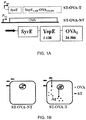
- Figure 1A shows a schematic of the fusion protein, where OVA is fused to YopE and SycE.
- YopE is a 23kDa protein comprising a N-terminal secretion domain (-11 aa) and a translocation domain (at least 50 aa); the latter domain provides the binding site for the YopE-specific chaperone (SycE) that is required for YopE-mediated translocation of fused proteins to the cytosol (R).
- SycE is a chaperone necessary for translocation of the fused protein into the cytosol of infected cells through the type III secretion system of ST.
- Figure 1B A schematic of both ST-OVA-NT and ST-OVA-T constructs and their proposed actions are shown in Figure 1B .
- Plasmid pHR-OVA was constructed by the modification of the plasmid pHR-241 (Russmann et al., 2001), which contains the sequence of the fusion protein SycE-YopE-p60/M45 (Russmann et al., 2000). In a first step, the genes of p60/M45 were removed by cutting plasmid pHR-241 with BamHI and Kpnl. Then, the pKK-OVA plasmid was purified from the recombinant ST-OVA-NT bacteria by mid prep kit (Invitrogen, US) according to the manufacturer's instructions.
- the OVA gene was PCR-amplified using the plasmid pKK-OVA as a template (forward primer BamHI 5'-CGGGATCCAACTTTCAAACAGCTG-3' (SEQ ID NO:13) and reverse primer Kpnl 5'-GGGGTACCTTAAGGGGAAACACATC-3' (SEQ ID NO:14). Subsequently, the OVA gene was inserted between the BamHI-KpnI sites of the cut pHR-241 palsmid, creating new plasmid pHR-OVA.
- PCR amplification of the inserts was performed with Taq polymerase using the following cycling parameters: 94°C, 5 min; 25 cycles of 94°C, 30 s to 58°C, 1 min to 72°C, 1 min; followed by a 7 min extension time at 72°C.
- the amplified insert was ligated into the intended vector then sequenced to verify the accuracy of the amplified cDNA.
- the pHR-OVA plasmid was then transfected into the highly virulent ST (strain SL1344). 50 ⁇ L of electrocompetent Salmonella (WT or aroA ) were mixed with -20 ng plasmid DNA and pulsed in a Bio-Rad micropulser using one pulse of 2.5 kV. Immediately afterwards, 1 mL of SOC recovery medium was added to the bacteria and they were allowed to recover with shaking at 37°C. The bacteria were then plated on LB agar plates with ampicillin for the selection of individual clones.
- ST-OVA-NT and ST-OVA-T constructs of Example 1 were grown and expression and translocation of ovalbumin was evaluated. Pellet and supernatant of ST-OVA-NT and ST-OVA-T growing in liquid cultures were tested for the presence of OVA.
- C57BL/6J mice were injected intravenously with 10 6 ST-OVA-NT or ST-OVA-T reconstituted in 200 microlitres normal saline. Two days later, spleens were obtained from infected mice; spleen cells were isolated and lysed with Triton X-100 in the presence of protease inhibitor, phenylmethylsulfonyl fluoride. The soluble lysate containing cytosolic proteins was tested for OVA expression by western blotting. Samples were normalized for cell number and were loaded on SDS-10% polyacrylamide gels. SDS-PAGE was performed and proteins were transferred to membranes, which were then blocked with 5% skim milk powder in PBS-Tween.
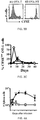
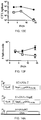
- OVA expression was detected using a 1/10,000 dilution of polyclonal anti-OVA antibody (Sigma-Aldrich), followed by incubation with HRP-conjugated goat anti-rabbit Ab (1/5,000 dilution in PBS-Tween) from Roche Applied Science. Immuno-reactive bands were detected with enhanced chemiluminescence substrate (Roche Applied Bioscience). Results show that OVA-expression by ST-OVA-NT and ST-OVA-T (from ⁇ 5x10 6 ) in the bacterial pellets was similar ( Fig. 1 C) . However, OVA could only be detected in the supernatant of ST-OVA-T cultures. Expression of OVA was detectable in the cytosol of spleen cells from mice infected with ST-OVA-T- but not ST-OVA-NT ( Fig. 1 C) .
- IC-21 macrophages H-2 b
- gentamicin 50 ⁇ g/ml
- ST-OVA-T ST-OVA-T
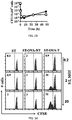
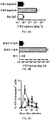
- IC-21 macrophages (H-2 b ) cells (10 5 /well) were infected with different MOI of ST (Albaghdadi et al., 2009), ST-OVA-NT (Example 1), or ST-OVA-T (Example 1) for 30 min. Extracellular bacteria were removed after incubation in medium containing gentamicin (50 ⁇ g/ml). At 2 h, cells were cultured in media containing lower levels of gentamicin (10 ⁇ g/ml) and incubated with CFSE-labelled OT-1 (CD45.1 + 45.2 - ) TCR transgenic cells (10 6 /well). After 4 days of culture, cells were harvested, stained with anti-CD45.1 and anti-CD8 antibodies, and the reduction in CFSE intensity of OT-1 CD8 + T cells was evaluated by flow cytometry.
- B6129F1 mice were infected with the recombinant bacteria of Example 1, followed by adoptive transfer of CFSE labelled OT-1 cells.
- B6.129F1 mice were used because B6 parents are highly susceptible and die within the first week of infection (Albaghdadi et al., 2009). Briefly, B6129F1 mice were generated in house by mating 129x1SvJ female mice with C57BL/6J male mice; mice were obtained from The Jackson Laboratory and were maintained at the Institute for Biological Sciences (National Research Council of Canada, Ottawa, Canada) in accordance with the guidelines of the Canadian Council on Animal Care.
- CFSE-labelled OT-1 cells were injected (5x10 6 , iv).
- spleens were isolated from recipient mice and spleen cells were stained with OVA-tetramer and anti-CD8 antibody. Reduction in the expression of CFSE intensity was evaluated by flow cytometry, as described above.
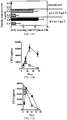
- Results are shown in Figures 3B and 3C ; results represent the mean of three mice ⁇ SD per group, and are representative of two-three independent experiments.
- the majority of transferred OT-1 cells displayed reduced expression of CFSE in mice infected with ST-OVA-T ( Fig. 3B ).
- OT-1 cells in ST-OVA-NT-infected mice maintained high levels of CFSE expression.
- ST-OVA-NT infected mice displayed muted and delayed activation of CFSE-labelled OT-1 cells ( Fig. 3C ).
- the massive antigen-presentation that was induced early on in ST-OVA-T infected mice was subsequently reduced to baseline levels as the pathogen was cleared.
- B6.129F1 mice were infected (10 3 , iv) with ST-OVA-T or ST-OVA-NT without any adoptive transfer of OT-1 cells. At various time intervals, the numbers of spleen cells, spleen size and bacterial burden were evaluated. OVA-specific CD8+ T cell response was enumerated by Flow cytometry. Briefly, aliquots of spleen cells (5 x 10 6 ) were incubated in 80 ⁇ l of PBS plus 1% BSA (PBS-BSA) with anti-CD16/32 at 4°C.
- PBS-BSA BSA
- H-2K b OVA 257-264 tetramer-PE (Beckman Coulter, US) and various antibodies (anti-CD8 PerCP-Cy5, anti-CD62L APC-Cy7, and anti-CD127 (PE-Cy7) for 30 min. All antibodies were obtained from BD Biosciences. Cells were washed with PBS, fixed in 0.5% formaldehyde and acquired on a BD Biosciences FACSCanto analyzer.
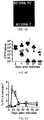
- Results are shown in Figure 4 ; these results represent the mean of three to five mice ⁇ SD per group and are representative of three independent experiments.
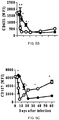
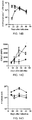
- Infection of mice with ST-OVA-T resulted in the development of a rapid and potent OVA-specific CD8 + T cell response as evaluated by staining with OVA-tetramers ( Fig. 4D , 4E; Fig. 5A ); these mice displayed reduced spleen cell numbers and size ( Fig. 4A , 4B ).
- Similar bacterial burdens were noted in mice that received ST-OVA-T or ST-OVA-NT ( Fig. 4C ).
- FIG. 5A shows the OVA-tetramer profile in the spleens of infected mice, and the expression (MFI) of CD62L ( Fig. 5B , 5D ) and CD127 ( Fig. 5C , 5D ) on OVA-tetramer + CD8 + T cells.
- MFI MFI
- OVA-specific CD8 + T cells induced against ST-OVA-T displayed rapid activation (CD62L down-regulation) and rapid progression to the memory state (CD127 up-regulation) ( Fig. 5B-D ).
- Example 6 Rapid CD8 + T cells response and survival of susceptible mice.
- C57BL/6J mice were infected (10 3 , iv) with ST-OVA-T or ST-OVA-NT. At different time points (day 1, 3, 5, 7 and 14) after infection, spleens were removed and the bacterial burdens were enumerated. Spleen cells were stained with OVA-tetramers and antibodies against CD8, CD62L and CD127. The percentage and numbers of OVA-specific CD8 + T cells were determined, as was the expression of CD62L versus CD127 on OVA-tetramer + CD8 + T cells. Results are shown in Figure 6 and represent the mean of three to four mice ⁇ SD per group; results are representative of two independent experiments.
- Figure 7 shows results of phenotypic analysis of OVA-specific CD8 + T cells induced against ST-OVA-T versus ST-OVA-NT. Similar to the profile in resistant mice, OVA-specific CD8 + T cells induced against ST-OVA-T in susceptible mice displayed rapid down-regulation of CD62L and rapid transition to the memory phenotype (increased CD127 up-regulation; Figure 7 ).
- Example 8 Control of bacterial growth
- Example 6 While the data of Example 6 indicated that rapid emergence of functional CD8 + T cells by antigenic translocation can control ST burden rapidly, it was still correlative.
- C57BL/6J mice were treated with anti-CD8 or anti-CD4 antibody or isotype control then infected with ST-OVA-T to eliminate those cells specifically.
- C57BL/6J mice were treated with (100 ⁇ g/injection) anti-CD4 (clone GK1.5), anti-CD8 (clone 2.43), or Rat IgG isotype antibodies on days -3, 0 and 3 after infection with 10 3 ST-OVA-T.
- MHC-I deficient mice lack CD8 + T cells they should be susceptible to infection. Twenty days after infection, MHC-I deficient mice were moribund, displaying very high bacterial loads ( Fig. 8B ) whereas control mice had undetectable burden, and MHC class II-deficient hosts (lacking CD4 + T cells) showed only a minor effect. MHC-I deficient mice were sick due to high bacterial loads, while MHC-II-deficient and WT mice were healthy. Taken together, these results indicate that antigenic translocation to cytosol in the context of ST infection results in a rapid emergence of a potent CD8 + T cell response which is sufficient to control the burden.
- mice were infected with 10 3 (virulent) wild type (WT; SL1344)) or 10 5 attenuated (avirulent; ⁇ aroA ) ST-OVA expressing non-translocated or non-translocated OVA.
- 10 3 (virulent) wild type (WT; SL1344) or 10 5 attenuated (avirulent; ⁇ aroA ) ST-OVA expressing non-translocated or non-translocated OVA.
- spleens and peripheral blood were collected and the relative change in the numbers of OVA-specific CD8 + T cells enumerated after staining with OVA-tetramers and anti-CD8 antibodies as described in Example 5.
- Example 10 Translocation of antigen and tumour control.
- mice C57BL/6J mice were infected with 10 3 ST-OVA-T; non-infected (naive) mice served as controls.
- mice On day 60, mice were challenged subcutaneously in the lower dorsal region with 10 6 B16 melanoma cells carrying the OVA gene (B16-OVA). Survival of mice was measured subsequently.
- prophylactic vaccination with ST-OVA-T resulted in potent protection against tumour challenge. Protection in a therapeutic model, where mice were first challenged with tumours and then vaccinated with immunogens, was also tested.
- B6.129F1 mice were challenged first with 10 6 B16-OVA tumour cells subcutaneously in the lower dorsal region.
- mice were vaccinated with ST-OVA-NT or ST-OVA-T.
- Non-infected mice served as negative controls and LM-OVA infected mice served as positive controls.
- survival of mice was monitored.
- Mice receiving ST-OVA-T displayed the best protection against B16 melanoma cells ( Figure 10B ). Protection induced by ST-OVA-T was far greater than that induced by ST-OVA-NT and LM-OVA. Results represent the mean of five mice ⁇ SD per group.
- Example 11 CD8+ T cell response against tumor-antigens.
- OVA immunodominant antigen
- tumour-antigen (Trp-2) (Schumacher and Restifo, 2009) was cloned into the WT or aroA mutant of ST, which translocates antigen to the cytosol.
- PCR was done using pCDNA3-Trp2 as template using the following primers:
- the PCR product and pHR-OVA were digested with BamHI and Kpnl and ligated.
- PCR amplification of the inserts was performed with Taq polymerase using the following cycling parameters: 94°C, 5 min; 25 cycles of 94°C, 30 s to 58°C, 1 min to 72°C, 1 min; followed by a 7 min extension time at 72°C.
- the amplified insert was ligated into the intended vector, then sequenced to verify the accuracy of the amplified cDNA.
- the PCR product was digested with BglII and Kpnl; pHR-241 was digested with BamHI and Kpnl and the digested products were ligated.
- pHR-Trp2 plasmid was then transfected into the highly virulent ST (SL1344) or aroA mutant of ST.
- 50 ⁇ L of electrocompetent Salmonella (WT or aroA) were mixed with -20 ng plasmid DNA and pulsed in a Bio-Rad micropulser using one pulse of 2.5 kV.
- 1 mL of SOC recovery medium was added to the bacteria and they were allowed to recover shaking at 37°C.
- the bacteria were then plated on LB agar plates with ampicillin for the selection of individual clones.
- the gene for gp100 tumour-antigen was cloned into a pHR or pKK plasmid. PCR was done using pCDNA3-gp100 as template with the following primers:
- the PCR product was digested with BglII and Kpnl; pHR-241 was digested with BamHI and Kpnl and the digested products were ligated.
- Infection of B6.129F1 mice with these recombinant nucleic acids resulted in the induction of CD8+ T cell response against Trp-2 ( Fig. 11A ). This was associated with accelerated control of the bacterium ( Fig. 11B,C ).
- infection of mice with the gp100 expressing aroA-ST resulted in accelerated control of the bacterium ( FIGURE 12A ) and induction of a better CD8+ T cell response against gp100 ( FIGURE 12B ).
- Example 12 CD8+ T cell response to a viral antigen.
- the immunodominant epitope recognized to stimulate a CD8 + T cell response from LCMV nucleoprotein (NP) in C57BI/6 mice was also used as an antigen and cloned into ST, and its effect on T cell response in mice was evaluated.
- LCMV-NP was encoded over amino acids 396-404 (FQPQNGQFI) of the protein (Basler et al., 2004).
- cDNA encoding amino acids 288 - 463 of the NP protein was cloned into plasmid pKK to generate pKK-NP ( Fig. 13 ), using PCT methods as described in Example 1 and 11. Again, DH5 ⁇ clones were selected using ampicillin. In this case, Ncol and Hindlll restriction sites were added to the oligonucleotides used for amplification of the insert sequence.
- the oligonucleotide sequences used for the cDNA amplification were:
- the final insert in the pKK plasmid was truncated prior to the end of the amplified insert due to the presence of an internal Hindlll restriction site, ending at codon 461. After confirmation of the sequence, this plasmid was also transferred into ST wild type and ST ⁇ Aro using a standard electroporation protocol (as described below and in Examples 1 and 11).
- cDNA encoding amino acids 288 - 461 of the NP protein was similarly cloned into the plasmid, pKK, to generate pKK-NP ( Fig. 13 ). Again, DH5 ⁇ clones were selected using ampicillin. In this case, Ncol and Hindlll restriction sites were added to the oligonucleotides used for amplification of the insert sequence.
- the oligonucleotide sequences used for the cDNA amplification are:
- the final insert in the pKK plasmid was truncated prior to the end of the amplified insert due to the presence of an internal Hindlll restriction site, ending at codon 461. After confirmation of the sequence, this plasmid was also transferred into ST wild type and ST ⁇ Aro using a standard electroporation protocol. Briefly, 50 ⁇ L of electrocompetent Salmonella (WT or aroA ) were mixed with -20 ng plasmid DNA and pulsed in a Bio-Rad micropulser using one pulse of 2.5 kV. Immediately afterwards, 1 mL of SOC recovery medium was added to the bacteria and they were allowed to recover shaking at 37°C.
- WT or aroA electrocompetent Salmonella
- the bacteria were then plated on LB agar plates with ampicillin for the selection of individual clones.
- PCR amplification of the inserts was performed with Taq polymerase using the following cycling parameters: 94°C, 5 min; 25 cycles of 94°C, 30 s to 58°C, 1 min to 72°C, 1 min; followed by a 7 min extension time at 72°C.
- the amplified insert was ligated into the intended vector then sequenced to verify the accuracy of the amplified cDNA.
- mice were infected intravenously with 10 3 recombinant ST expressing NP. Both virulent (Fig. 13B,C ) and avirulent ( Fig. 13D ) ST induced profound NP-specific CD8+ T cell response when NP was translocated to the cytosol. Furthermore, antigenic translocation resulted in decreased bacterial burden ( Fig. 13E ) and control of vaccine induced inflammation ( Fig. 13F ).
- Example 13 Use of truncated YopE as a means to induce potent CD8+ T cell response.
- the gene for OVA was fused with truncated YopE (first eighteen amino acids only), which does not carry the C-terminal domain for binding to the SycE chaperon ( Fig. 14A ).
- PCR was done using pHR-OVA as template with the following primers:
- PCR product and pHR-OVA were digested with EcoRI and BamHI and ligated.
- PCR amplification of the inserts was performed with Taq polymerase using the following cycling parameters: 94°C, 5 min; 25 cycles of 94°C, 30 s to 58°C, 1 min to 72°C, 1 min; followed by a 7 min extension time at 72°C.
- the amplified insert was ligated into the intended vector, then sequenced to verify the accuracy of the amplified cDNA.
Landscapes
- Health & Medical Sciences (AREA)
- Life Sciences & Earth Sciences (AREA)
- Chemical & Material Sciences (AREA)
- Organic Chemistry (AREA)
- General Health & Medical Sciences (AREA)
- Medicinal Chemistry (AREA)
- Genetics & Genomics (AREA)
- Zoology (AREA)
- Immunology (AREA)
- Public Health (AREA)
- Veterinary Medicine (AREA)
- Animal Behavior & Ethology (AREA)
- Engineering & Computer Science (AREA)
- Biochemistry (AREA)
- Microbiology (AREA)
- Epidemiology (AREA)
- Bioinformatics & Cheminformatics (AREA)
- Wood Science & Technology (AREA)
- Molecular Biology (AREA)
- Pharmacology & Pharmacy (AREA)
- Mycology (AREA)
- Oncology (AREA)
- Proteomics, Peptides & Aminoacids (AREA)
- Gastroenterology & Hepatology (AREA)
- Biophysics (AREA)
- General Engineering & Computer Science (AREA)
- Toxicology (AREA)
- Biomedical Technology (AREA)
- Biotechnology (AREA)
- Cell Biology (AREA)
- Virology (AREA)
- Nuclear Medicine, Radiotherapy & Molecular Imaging (AREA)
- General Chemical & Material Sciences (AREA)
- Chemical Kinetics & Catalysis (AREA)
- Rehabilitation Therapy (AREA)
- Rheumatology (AREA)
- Hematology (AREA)
- Diabetes (AREA)
- Tropical Medicine & Parasitology (AREA)
- Communicable Diseases (AREA)
Applications Claiming Priority (2)
| Application Number | Priority Date | Filing Date | Title |
|---|---|---|---|
| US36834610P | 2010-07-28 | 2010-07-28 | |
| PCT/CA2011/000848 WO2012012872A1 (en) | 2010-07-28 | 2011-07-28 | Recombinant bacterium and uses thereof |
Publications (3)
| Publication Number | Publication Date |
|---|---|
| EP2598631A1 EP2598631A1 (en) | 2013-06-05 |
| EP2598631A4 EP2598631A4 (en) | 2014-10-08 |
| EP2598631B1 true EP2598631B1 (en) | 2019-04-10 |
Family
ID=45529306
Family Applications (1)
| Application Number | Title | Priority Date | Filing Date |
|---|---|---|---|
| EP11811675.5A Not-in-force EP2598631B1 (en) | 2010-07-28 | 2011-07-28 | Recombinant bacterium and uses thereof |
Country Status (5)
| Country | Link |
|---|---|
| US (3) | US20130156809A1 (enExample) |
| EP (1) | EP2598631B1 (enExample) |
| CA (1) | CA2806536A1 (enExample) |
| IN (1) | IN2013CN01528A (enExample) |
| WO (1) | WO2012012872A1 (enExample) |
Families Citing this family (3)
| Publication number | Priority date | Publication date | Assignee | Title |
|---|---|---|---|---|
| US20130273092A1 (en) * | 2010-10-22 | 2013-10-17 | Trudeau Institute | Uses of yersinia yope peptide, gene and subparts thereof as a plague vaccine component and assays for yersinia pestis-specific t cells |
| US10973908B1 (en) | 2020-05-14 | 2021-04-13 | David Gordon Bermudes | Expression of SARS-CoV-2 spike protein receptor binding domain in attenuated salmonella as a vaccine |
| EP4019539A1 (en) | 2020-12-22 | 2022-06-29 | Consejo Superior de Investigaciones Científicas (CSIC) | Recombinant bacterium and uses thereof |
Family Cites Families (4)
| Publication number | Priority date | Publication date | Assignee | Title |
|---|---|---|---|---|
| US6306387B1 (en) * | 1997-05-29 | 2001-10-23 | The Research Foundation Of State University Of New York | Antigen delivery system |
| US20060068469A1 (en) * | 2004-08-17 | 2006-03-30 | Research Development Foundation | Bacterial vector systems |
| WO2007044406A2 (en) * | 2005-10-04 | 2007-04-19 | Ludwig Institute For Cancer Research | Methods for stimulating an immune response using bacterial antigen delivery system |
| CN101204584A (zh) * | 2007-12-17 | 2008-06-25 | 北京娜可长今国际银离子科技开发有限公司 | 以减毒沙门氏菌为载体的肿瘤疫苗及其制备方法 |
-
2011
- 2011-07-28 CA CA2806536A patent/CA2806536A1/en not_active Abandoned
- 2011-07-28 EP EP11811675.5A patent/EP2598631B1/en not_active Not-in-force
- 2011-07-28 WO PCT/CA2011/000848 patent/WO2012012872A1/en not_active Ceased
- 2011-07-28 IN IN1528CHN2013 patent/IN2013CN01528A/en unknown
- 2011-07-28 US US13/811,690 patent/US20130156809A1/en not_active Abandoned
-
2014
- 2014-10-16 US US14/516,090 patent/US9539313B2/en not_active Expired - Fee Related
-
2016
- 2016-12-05 US US15/369,294 patent/US20170174746A1/en not_active Abandoned
Non-Patent Citations (1)
| Title |
|---|
| H. RUSSMANN ET AL: "Protection Against Murine Listeriosis by Oral Vaccination with Recombinant Salmonella Expressing Hybrid Yersinia Type III Proteins", THE JOURNAL OF IMMUNOLOGY, vol. 167, no. 1, 1 July 2001 (2001-07-01), US, pages 357 - 365, XP055362697, ISSN: 0022-1767, DOI: 10.4049/jimmunol.167.1.357 * |
Also Published As
| Publication number | Publication date |
|---|---|
| CA2806536A1 (en) | 2012-02-02 |
| EP2598631A4 (en) | 2014-10-08 |
| US20130156809A1 (en) | 2013-06-20 |
| US9539313B2 (en) | 2017-01-10 |
| EP2598631A1 (en) | 2013-06-05 |
| US20170174746A1 (en) | 2017-06-22 |
| IN2013CN01528A (enExample) | 2015-07-03 |
| WO2012012872A1 (en) | 2012-02-02 |
| US20150140028A1 (en) | 2015-05-21 |
Similar Documents
| Publication | Publication Date | Title |
|---|---|---|
| US11446369B2 (en) | Compositions and methods comprising KLK3 or FOLH1 antigen | |
| JP6182172B2 (ja) | 異種抗原のための二重送達システム | |
| EP2283112B1 (en) | Compositions comprising prfa*mutant listeria and methods of use thereof | |
| ES2566392T3 (es) | Vacunas basadas en Listeria y basadas en LLO | |
| Bolhassani et al. | Therapeutic live vaccines as a potential anticancer strategy | |
| KR20170028363A (ko) | 이종 항원 융합 단백질을 발현하는 재조합 리스테리아 균주 및 그 사용 방법 | |
| TW201723171A (zh) | 基於李斯特菌屬之免疫原性組成物及其於癌症預防與治療中之使用方法 | |
| US20180360940A1 (en) | Listeria-based immunotherapy and methods of use thereof | |
| AU2018235153A1 (en) | Novel PD-L1 targeting DNA vaccine for cancer immunotherapy | |
| EP3101134A1 (en) | Therapeutic vaccine for treating or preventing merkel cell polyoma virus-associated tumors | |
| US20170174746A1 (en) | Recombinant Bacterium and Uses Thereof | |
| Wallecha et al. | Construction and characterization of an attenuated Listeria monocytogenes cancer immunotherapeutic for clinical use | |
| Bruhn | Recombinant Listeria monocytogenes as an anti-tumor vaccine and a probe to study innate and acquired immunity | |
| HK1190757B (en) | Methods and compositions for inducing an immune response to egfrviii |
Legal Events
| Date | Code | Title | Description |
|---|---|---|---|
| PUAI | Public reference made under article 153(3) epc to a published international application that has entered the european phase |
Free format text: ORIGINAL CODE: 0009012 |
|
| 17P | Request for examination filed |
Effective date: 20130228 |
|
| AK | Designated contracting states |
Kind code of ref document: A1 Designated state(s): AL AT BE BG CH CY CZ DE DK EE ES FI FR GB GR HR HU IE IS IT LI LT LU LV MC MK MT NL NO PL PT RO RS SE SI SK SM TR |
|
| DAX | Request for extension of the european patent (deleted) | ||
| A4 | Supplementary search report drawn up and despatched |
Effective date: 20140908 |
|
| RIC1 | Information provided on ipc code assigned before grant |
Ipc: C12N 1/21 20060101AFI20140902BHEP Ipc: C12N 15/00 20060101ALI20140902BHEP Ipc: A61P 37/04 20060101ALI20140902BHEP Ipc: A61P 31/04 20060101ALI20140902BHEP Ipc: C07K 14/255 20060101ALI20140902BHEP Ipc: C12N 15/74 20060101ALI20140902BHEP Ipc: A61P 31/12 20060101ALI20140902BHEP Ipc: C07K 19/00 20060101ALI20140902BHEP Ipc: A61K 39/295 20060101ALI20140902BHEP |
|
| 17Q | First examination report despatched |
Effective date: 20160607 |
|
| STAA | Information on the status of an ep patent application or granted ep patent |
Free format text: STATUS: EXAMINATION IS IN PROGRESS |
|
| GRAP | Despatch of communication of intention to grant a patent |
Free format text: ORIGINAL CODE: EPIDOSNIGR1 |
|
| STAA | Information on the status of an ep patent application or granted ep patent |
Free format text: STATUS: GRANT OF PATENT IS INTENDED |
|
| INTG | Intention to grant announced |
Effective date: 20181029 |
|
| GRAS | Grant fee paid |
Free format text: ORIGINAL CODE: EPIDOSNIGR3 |
|
| GRAA | (expected) grant |
Free format text: ORIGINAL CODE: 0009210 |
|
| STAA | Information on the status of an ep patent application or granted ep patent |
Free format text: STATUS: THE PATENT HAS BEEN GRANTED |
|
| AK | Designated contracting states |
Kind code of ref document: B1 Designated state(s): AL AT BE BG CH CY CZ DE DK EE ES FI FR GB GR HR HU IE IS IT LI LT LU LV MC MK MT NL NO PL PT RO RS SE SI SK SM TR |
|
| REG | Reference to a national code |
Ref country code: GB Ref legal event code: FG4D |
|
| REG | Reference to a national code |
Ref country code: CH Ref legal event code: EP Ref country code: AT Ref legal event code: REF Ref document number: 1118649 Country of ref document: AT Kind code of ref document: T Effective date: 20190415 |
|
| REG | Reference to a national code |
Ref country code: IE Ref legal event code: FG4D |
|
| REG | Reference to a national code |
Ref country code: DE Ref legal event code: R096 Ref document number: 602011058004 Country of ref document: DE |
|
| REG | Reference to a national code |
Ref country code: NL Ref legal event code: MP Effective date: 20190410 |
|
| REG | Reference to a national code |
Ref country code: LT Ref legal event code: MG4D |
|
| REG | Reference to a national code |
Ref country code: AT Ref legal event code: MK05 Ref document number: 1118649 Country of ref document: AT Kind code of ref document: T Effective date: 20190410 |
|
| PG25 | Lapsed in a contracting state [announced via postgrant information from national office to epo] |
Ref country code: NL Free format text: LAPSE BECAUSE OF FAILURE TO SUBMIT A TRANSLATION OF THE DESCRIPTION OR TO PAY THE FEE WITHIN THE PRESCRIBED TIME-LIMIT Effective date: 20190410 |
|
| PG25 | Lapsed in a contracting state [announced via postgrant information from national office to epo] |
Ref country code: AL Free format text: LAPSE BECAUSE OF FAILURE TO SUBMIT A TRANSLATION OF THE DESCRIPTION OR TO PAY THE FEE WITHIN THE PRESCRIBED TIME-LIMIT Effective date: 20190410 Ref country code: FI Free format text: LAPSE BECAUSE OF FAILURE TO SUBMIT A TRANSLATION OF THE DESCRIPTION OR TO PAY THE FEE WITHIN THE PRESCRIBED TIME-LIMIT Effective date: 20190410 Ref country code: LT Free format text: LAPSE BECAUSE OF FAILURE TO SUBMIT A TRANSLATION OF THE DESCRIPTION OR TO PAY THE FEE WITHIN THE PRESCRIBED TIME-LIMIT Effective date: 20190410 Ref country code: PT Free format text: LAPSE BECAUSE OF FAILURE TO SUBMIT A TRANSLATION OF THE DESCRIPTION OR TO PAY THE FEE WITHIN THE PRESCRIBED TIME-LIMIT Effective date: 20190910 Ref country code: SE Free format text: LAPSE BECAUSE OF FAILURE TO SUBMIT A TRANSLATION OF THE DESCRIPTION OR TO PAY THE FEE WITHIN THE PRESCRIBED TIME-LIMIT Effective date: 20190410 Ref country code: ES Free format text: LAPSE BECAUSE OF FAILURE TO SUBMIT A TRANSLATION OF THE DESCRIPTION OR TO PAY THE FEE WITHIN THE PRESCRIBED TIME-LIMIT Effective date: 20190410 Ref country code: NO Free format text: LAPSE BECAUSE OF FAILURE TO SUBMIT A TRANSLATION OF THE DESCRIPTION OR TO PAY THE FEE WITHIN THE PRESCRIBED TIME-LIMIT Effective date: 20190710 Ref country code: HR Free format text: LAPSE BECAUSE OF FAILURE TO SUBMIT A TRANSLATION OF THE DESCRIPTION OR TO PAY THE FEE WITHIN THE PRESCRIBED TIME-LIMIT Effective date: 20190410 |
|
| PG25 | Lapsed in a contracting state [announced via postgrant information from national office to epo] |
Ref country code: LV Free format text: LAPSE BECAUSE OF FAILURE TO SUBMIT A TRANSLATION OF THE DESCRIPTION OR TO PAY THE FEE WITHIN THE PRESCRIBED TIME-LIMIT Effective date: 20190410 Ref country code: PL Free format text: LAPSE BECAUSE OF FAILURE TO SUBMIT A TRANSLATION OF THE DESCRIPTION OR TO PAY THE FEE WITHIN THE PRESCRIBED TIME-LIMIT Effective date: 20190410 Ref country code: BG Free format text: LAPSE BECAUSE OF FAILURE TO SUBMIT A TRANSLATION OF THE DESCRIPTION OR TO PAY THE FEE WITHIN THE PRESCRIBED TIME-LIMIT Effective date: 20190710 Ref country code: GR Free format text: LAPSE BECAUSE OF FAILURE TO SUBMIT A TRANSLATION OF THE DESCRIPTION OR TO PAY THE FEE WITHIN THE PRESCRIBED TIME-LIMIT Effective date: 20190711 Ref country code: RS Free format text: LAPSE BECAUSE OF FAILURE TO SUBMIT A TRANSLATION OF THE DESCRIPTION OR TO PAY THE FEE WITHIN THE PRESCRIBED TIME-LIMIT Effective date: 20190410 |
|
| PG25 | Lapsed in a contracting state [announced via postgrant information from national office to epo] |
Ref country code: IS Free format text: LAPSE BECAUSE OF FAILURE TO SUBMIT A TRANSLATION OF THE DESCRIPTION OR TO PAY THE FEE WITHIN THE PRESCRIBED TIME-LIMIT Effective date: 20190810 Ref country code: AT Free format text: LAPSE BECAUSE OF FAILURE TO SUBMIT A TRANSLATION OF THE DESCRIPTION OR TO PAY THE FEE WITHIN THE PRESCRIBED TIME-LIMIT Effective date: 20190410 |
|
| REG | Reference to a national code |
Ref country code: DE Ref legal event code: R097 Ref document number: 602011058004 Country of ref document: DE |
|
| PG25 | Lapsed in a contracting state [announced via postgrant information from national office to epo] |
Ref country code: CZ Free format text: LAPSE BECAUSE OF FAILURE TO SUBMIT A TRANSLATION OF THE DESCRIPTION OR TO PAY THE FEE WITHIN THE PRESCRIBED TIME-LIMIT Effective date: 20190410 Ref country code: RO Free format text: LAPSE BECAUSE OF FAILURE TO SUBMIT A TRANSLATION OF THE DESCRIPTION OR TO PAY THE FEE WITHIN THE PRESCRIBED TIME-LIMIT Effective date: 20190410 Ref country code: EE Free format text: LAPSE BECAUSE OF FAILURE TO SUBMIT A TRANSLATION OF THE DESCRIPTION OR TO PAY THE FEE WITHIN THE PRESCRIBED TIME-LIMIT Effective date: 20190410 Ref country code: DK Free format text: LAPSE BECAUSE OF FAILURE TO SUBMIT A TRANSLATION OF THE DESCRIPTION OR TO PAY THE FEE WITHIN THE PRESCRIBED TIME-LIMIT Effective date: 20190410 Ref country code: SK Free format text: LAPSE BECAUSE OF FAILURE TO SUBMIT A TRANSLATION OF THE DESCRIPTION OR TO PAY THE FEE WITHIN THE PRESCRIBED TIME-LIMIT Effective date: 20190410 |
|
| PLBE | No opposition filed within time limit |
Free format text: ORIGINAL CODE: 0009261 |
|
| STAA | Information on the status of an ep patent application or granted ep patent |
Free format text: STATUS: NO OPPOSITION FILED WITHIN TIME LIMIT |
|
| PG25 | Lapsed in a contracting state [announced via postgrant information from national office to epo] |
Ref country code: IT Free format text: LAPSE BECAUSE OF FAILURE TO SUBMIT A TRANSLATION OF THE DESCRIPTION OR TO PAY THE FEE WITHIN THE PRESCRIBED TIME-LIMIT Effective date: 20190410 Ref country code: SM Free format text: LAPSE BECAUSE OF FAILURE TO SUBMIT A TRANSLATION OF THE DESCRIPTION OR TO PAY THE FEE WITHIN THE PRESCRIBED TIME-LIMIT Effective date: 20190410 Ref country code: MC Free format text: LAPSE BECAUSE OF FAILURE TO SUBMIT A TRANSLATION OF THE DESCRIPTION OR TO PAY THE FEE WITHIN THE PRESCRIBED TIME-LIMIT Effective date: 20190410 |
|
| REG | Reference to a national code |
Ref country code: CH Ref legal event code: PL |
|
| 26N | No opposition filed |
Effective date: 20200113 |
|
| PG25 | Lapsed in a contracting state [announced via postgrant information from national office to epo] |
Ref country code: TR Free format text: LAPSE BECAUSE OF FAILURE TO SUBMIT A TRANSLATION OF THE DESCRIPTION OR TO PAY THE FEE WITHIN THE PRESCRIBED TIME-LIMIT Effective date: 20190410 |
|
| REG | Reference to a national code |
Ref country code: BE Ref legal event code: MM Effective date: 20190731 |
|
| PG25 | Lapsed in a contracting state [announced via postgrant information from national office to epo] |
Ref country code: BE Free format text: LAPSE BECAUSE OF NON-PAYMENT OF DUE FEES Effective date: 20190731 Ref country code: SI Free format text: LAPSE BECAUSE OF FAILURE TO SUBMIT A TRANSLATION OF THE DESCRIPTION OR TO PAY THE FEE WITHIN THE PRESCRIBED TIME-LIMIT Effective date: 20190410 Ref country code: CH Free format text: LAPSE BECAUSE OF NON-PAYMENT OF DUE FEES Effective date: 20190731 Ref country code: LU Free format text: LAPSE BECAUSE OF NON-PAYMENT OF DUE FEES Effective date: 20190728 Ref country code: LI Free format text: LAPSE BECAUSE OF NON-PAYMENT OF DUE FEES Effective date: 20190731 |
|
| PG25 | Lapsed in a contracting state [announced via postgrant information from national office to epo] |
Ref country code: IE Free format text: LAPSE BECAUSE OF NON-PAYMENT OF DUE FEES Effective date: 20190728 |
|
| PG25 | Lapsed in a contracting state [announced via postgrant information from national office to epo] |
Ref country code: CY Free format text: LAPSE BECAUSE OF FAILURE TO SUBMIT A TRANSLATION OF THE DESCRIPTION OR TO PAY THE FEE WITHIN THE PRESCRIBED TIME-LIMIT Effective date: 20190410 |
|
| PG25 | Lapsed in a contracting state [announced via postgrant information from national office to epo] |
Ref country code: HU Free format text: LAPSE BECAUSE OF FAILURE TO SUBMIT A TRANSLATION OF THE DESCRIPTION OR TO PAY THE FEE WITHIN THE PRESCRIBED TIME-LIMIT; INVALID AB INITIO Effective date: 20110728 Ref country code: MT Free format text: LAPSE BECAUSE OF FAILURE TO SUBMIT A TRANSLATION OF THE DESCRIPTION OR TO PAY THE FEE WITHIN THE PRESCRIBED TIME-LIMIT Effective date: 20190410 |
|
| PGFP | Annual fee paid to national office [announced via postgrant information from national office to epo] |
Ref country code: FR Payment date: 20210726 Year of fee payment: 11 |
|
| PGFP | Annual fee paid to national office [announced via postgrant information from national office to epo] |
Ref country code: DE Payment date: 20210713 Year of fee payment: 11 Ref country code: GB Payment date: 20210726 Year of fee payment: 11 |
|
| PG25 | Lapsed in a contracting state [announced via postgrant information from national office to epo] |
Ref country code: MK Free format text: LAPSE BECAUSE OF FAILURE TO SUBMIT A TRANSLATION OF THE DESCRIPTION OR TO PAY THE FEE WITHIN THE PRESCRIBED TIME-LIMIT Effective date: 20190410 |
|
| REG | Reference to a national code |
Ref country code: DE Ref legal event code: R119 Ref document number: 602011058004 Country of ref document: DE |
|
| GBPC | Gb: european patent ceased through non-payment of renewal fee |
Effective date: 20220728 |
|
| PG25 | Lapsed in a contracting state [announced via postgrant information from national office to epo] |
Ref country code: FR Free format text: LAPSE BECAUSE OF NON-PAYMENT OF DUE FEES Effective date: 20220731 |
|
| PG25 | Lapsed in a contracting state [announced via postgrant information from national office to epo] |
Ref country code: GB Free format text: LAPSE BECAUSE OF NON-PAYMENT OF DUE FEES Effective date: 20220728 Ref country code: DE Free format text: LAPSE BECAUSE OF NON-PAYMENT OF DUE FEES Effective date: 20230201 |