EP2598523B1 - Neue peptide mit schmerzstillender wirkung zur hemmung des asic-kanals - Google Patents
Neue peptide mit schmerzstillender wirkung zur hemmung des asic-kanals Download PDFInfo
- Publication number
- EP2598523B1 EP2598523B1 EP11752299.5A EP11752299A EP2598523B1 EP 2598523 B1 EP2598523 B1 EP 2598523B1 EP 11752299 A EP11752299 A EP 11752299A EP 2598523 B1 EP2598523 B1 EP 2598523B1
- Authority
- EP
- European Patent Office
- Prior art keywords
- peptide
- asicalgine
- pain
- asic1a
- polynucleotide
- Prior art date
- Legal status (The legal status is an assumption and is not a legal conclusion. Google has not performed a legal analysis and makes no representation as to the accuracy of the status listed.)
- Active
Links
Images



Classifications
-
- C—CHEMISTRY; METALLURGY
- C07—ORGANIC CHEMISTRY
- C07K—PEPTIDES
- C07K14/00—Peptides having more than 20 amino acids; Gastrins; Somatostatins; Melanotropins; Derivatives thereof
- C07K14/435—Peptides having more than 20 amino acids; Gastrins; Somatostatins; Melanotropins; Derivatives thereof from animals; from humans
- C07K14/46—Peptides having more than 20 amino acids; Gastrins; Somatostatins; Melanotropins; Derivatives thereof from animals; from humans from vertebrates
-
- A—HUMAN NECESSITIES
- A61—MEDICAL OR VETERINARY SCIENCE; HYGIENE
- A61P—SPECIFIC THERAPEUTIC ACTIVITY OF CHEMICAL COMPOUNDS OR MEDICINAL PREPARATIONS
- A61P1/00—Drugs for disorders of the alimentary tract or the digestive system
-
- A—HUMAN NECESSITIES
- A61—MEDICAL OR VETERINARY SCIENCE; HYGIENE
- A61P—SPECIFIC THERAPEUTIC ACTIVITY OF CHEMICAL COMPOUNDS OR MEDICINAL PREPARATIONS
- A61P1/00—Drugs for disorders of the alimentary tract or the digestive system
- A61P1/04—Drugs for disorders of the alimentary tract or the digestive system for ulcers, gastritis or reflux esophagitis, e.g. antacids, inhibitors of acid secretion, mucosal protectants
-
- A—HUMAN NECESSITIES
- A61—MEDICAL OR VETERINARY SCIENCE; HYGIENE
- A61P—SPECIFIC THERAPEUTIC ACTIVITY OF CHEMICAL COMPOUNDS OR MEDICINAL PREPARATIONS
- A61P19/00—Drugs for skeletal disorders
-
- A—HUMAN NECESSITIES
- A61—MEDICAL OR VETERINARY SCIENCE; HYGIENE
- A61P—SPECIFIC THERAPEUTIC ACTIVITY OF CHEMICAL COMPOUNDS OR MEDICINAL PREPARATIONS
- A61P21/00—Drugs for disorders of the muscular or neuromuscular system
-
- A—HUMAN NECESSITIES
- A61—MEDICAL OR VETERINARY SCIENCE; HYGIENE
- A61P—SPECIFIC THERAPEUTIC ACTIVITY OF CHEMICAL COMPOUNDS OR MEDICINAL PREPARATIONS
- A61P25/00—Drugs for disorders of the nervous system
-
- A—HUMAN NECESSITIES
- A61—MEDICAL OR VETERINARY SCIENCE; HYGIENE
- A61P—SPECIFIC THERAPEUTIC ACTIVITY OF CHEMICAL COMPOUNDS OR MEDICINAL PREPARATIONS
- A61P25/00—Drugs for disorders of the nervous system
- A61P25/04—Centrally acting analgesics, e.g. opioids
-
- A—HUMAN NECESSITIES
- A61—MEDICAL OR VETERINARY SCIENCE; HYGIENE
- A61P—SPECIFIC THERAPEUTIC ACTIVITY OF CHEMICAL COMPOUNDS OR MEDICINAL PREPARATIONS
- A61P25/00—Drugs for disorders of the nervous system
- A61P25/22—Anxiolytics
-
- A—HUMAN NECESSITIES
- A61—MEDICAL OR VETERINARY SCIENCE; HYGIENE
- A61P—SPECIFIC THERAPEUTIC ACTIVITY OF CHEMICAL COMPOUNDS OR MEDICINAL PREPARATIONS
- A61P25/00—Drugs for disorders of the nervous system
- A61P25/24—Antidepressants
-
- A—HUMAN NECESSITIES
- A61—MEDICAL OR VETERINARY SCIENCE; HYGIENE
- A61P—SPECIFIC THERAPEUTIC ACTIVITY OF CHEMICAL COMPOUNDS OR MEDICINAL PREPARATIONS
- A61P25/00—Drugs for disorders of the nervous system
- A61P25/28—Drugs for disorders of the nervous system for treating neurodegenerative disorders of the central nervous system, e.g. nootropic agents, cognition enhancers, drugs for treating Alzheimer's disease or other forms of dementia
-
- A—HUMAN NECESSITIES
- A61—MEDICAL OR VETERINARY SCIENCE; HYGIENE
- A61P—SPECIFIC THERAPEUTIC ACTIVITY OF CHEMICAL COMPOUNDS OR MEDICINAL PREPARATIONS
- A61P29/00—Non-central analgesic, antipyretic or antiinflammatory agents, e.g. antirheumatic agents; Non-steroidal antiinflammatory drugs [NSAID]
-
- A—HUMAN NECESSITIES
- A61—MEDICAL OR VETERINARY SCIENCE; HYGIENE
- A61P—SPECIFIC THERAPEUTIC ACTIVITY OF CHEMICAL COMPOUNDS OR MEDICINAL PREPARATIONS
- A61P29/00—Non-central analgesic, antipyretic or antiinflammatory agents, e.g. antirheumatic agents; Non-steroidal antiinflammatory drugs [NSAID]
- A61P29/02—Non-central analgesic, antipyretic or antiinflammatory agents, e.g. antirheumatic agents; Non-steroidal antiinflammatory drugs [NSAID] without antiinflammatory effect
-
- A—HUMAN NECESSITIES
- A61—MEDICAL OR VETERINARY SCIENCE; HYGIENE
- A61P—SPECIFIC THERAPEUTIC ACTIVITY OF CHEMICAL COMPOUNDS OR MEDICINAL PREPARATIONS
- A61P35/00—Antineoplastic agents
-
- A—HUMAN NECESSITIES
- A61—MEDICAL OR VETERINARY SCIENCE; HYGIENE
- A61P—SPECIFIC THERAPEUTIC ACTIVITY OF CHEMICAL COMPOUNDS OR MEDICINAL PREPARATIONS
- A61P43/00—Drugs for specific purposes, not provided for in groups A61P1/00-A61P41/00
-
- A—HUMAN NECESSITIES
- A61—MEDICAL OR VETERINARY SCIENCE; HYGIENE
- A61P—SPECIFIC THERAPEUTIC ACTIVITY OF CHEMICAL COMPOUNDS OR MEDICINAL PREPARATIONS
- A61P9/00—Drugs for disorders of the cardiovascular system
- A61P9/10—Drugs for disorders of the cardiovascular system for treating ischaemic or atherosclerotic diseases, e.g. antianginal drugs, coronary vasodilators, drugs for myocardial infarction, retinopathy, cerebrovascula insufficiency, renal arteriosclerosis
-
- A—HUMAN NECESSITIES
- A61—MEDICAL OR VETERINARY SCIENCE; HYGIENE
- A61K—PREPARATIONS FOR MEDICAL, DENTAL OR TOILETRY PURPOSES
- A61K38/00—Medicinal preparations containing peptides
-
- A—HUMAN NECESSITIES
- A61—MEDICAL OR VETERINARY SCIENCE; HYGIENE
- A61K—PREPARATIONS FOR MEDICAL, DENTAL OR TOILETRY PURPOSES
- A61K38/00—Medicinal preparations containing peptides
- A61K38/16—Peptides having more than 20 amino acids; Gastrins; Somatostatins; Melanotropins; Derivatives thereof
- A61K38/17—Peptides having more than 20 amino acids; Gastrins; Somatostatins; Melanotropins; Derivatives thereof from animals; from humans
- A61K38/1703—Peptides having more than 20 amino acids; Gastrins; Somatostatins; Melanotropins; Derivatives thereof from animals; from humans from vertebrates
Definitions
- the present invention relates to novel peptides which induce analgesia and which inhibit ASIC (Acid Sensing Ion Channel) channels, more particularly homiceric ASIC1a, homomeric ASIC1b and / or heteromeric channels containing at least one subunit selected from ASIC1a and ASIC1b, polynucleotides encoding said peptides, and pharmaceutical compositions, host cells and vectors comprising them.
- ASIC Acid Sensing Ion Channel
- said peptides have at least 56% identity with the amino acid sequence SEQ ID NO: 1 in the attached sequence listing.
- ASICalgine-1 ⁇ -Dp1
- ASICalgine-2 ⁇ -Dp2
- snake venom Dendroaspis polylepis black mamba
- the present invention also relates to their use for obtaining a diagnostic tool or a drug, in particular an analgesic, as well as for the identification of analgesic molecules or inhibiting ASIC channels.
- the present invention finds particular application in the prevention or treatment of pain, particularly that associated with the activation of ASIC channels (for example inflammatory pain, neuropathic, cancerous, post-operative, musculoskeletal, visceral, etc.. ), central neurological diseases (eg, post-traumatic stress disorder, depression, anxiety, stroke, epilepsy, multiple sclerosis, brain inflammation, neurodegenerative diseases, etc.), and pathologies in which the implication of ASIC channels has been proposed (for example inflammations, cancers, fibromyalgia, irritable bowel syndrome, etc.).
- ASIC channels for example inflammatory pain, neuropathic, cancerous, post-operative, musculoskeletal, visceral, etc..
- central neurological diseases eg, post-traumatic stress disorder, depression, anxiety, stroke, epilepsy, multiple sclerosis, brain inflammation, neurodegenerative diseases, etc.
- pathologies in which the implication of ASIC channels has been proposed for example inflammations, cancers, fibromyalgia, irritable
- references in brackets ([]) refer to the list of references at the end of the text.
- the consideration and treatment of pain are essential aspects of improving the quality of life of patients.
- the pain affects a considerable number of people, of the order of 60 million in Europe each year, which represents an annual cost of $ 1 billion in analgesic medication for its treatment.
- Worldwide annual expenditures on analgesic drugs can be estimated at about $ 25 billion, and are expected to reach $ 42 billion in 2010.
- the pain falls into two categories: acute pain and chronic pain.
- Acute pain is a rapid, brief, time-limited pain.
- chronic pain is persistent pain that may be related to, for example, hyperalgesia, and is a huge burden of the disease, affecting approximately 20% of adults and 50% of the oldest population.
- NSAID nonsteroidal
- corticosteroids steroidal opiates
- weak or strong opiates NSAIDs are the most prescribed therapeutic class in the world because of their high efficacy in both inflammation and pain itself. They are used in all types of inflammatory pain whether acute or chronic [Bertin and Vergne-Salle, 2007] [1].
- the prescriber associates a non-anti-inflammatory analgesic, for example paracetamol, weak opioids (codeine, tramadol), and if the pain still resistant to treatment, strong opioids (morphine, oxycodone, fentanyl) [Gutstein & Akil, 2006] [2].
- a non-anti-inflammatory analgesic for example paracetamol, weak opioids (codeine, tramadol), and if the pain still resistant to treatment, strong opioids (morphine, oxycodone, fentanyl) [Gutstein & Akil, 2006] [2].
- NSAIDs are very effective, they are still major providers of undesirable side effects. Among the most common side effects, digestive effects are very common and limit the use of NSAIDs in many clinical situations. There are also adverse side effects renal, cutaneous, mucous, allergic and respiratory, hematological, hepatic and finally neurosensory and psychic [Bertin and Vergne-Salle, 2007, cited above] [1]. In addition, NSAIDs are not effective in all types of pain. Opioids also play a major role in the fight against pain but can cause hallucinatory phenomena and cardiorespiratory depression. Painkillers can also be a source of dependence, such as morphine addiction, methadone, etc.
- Acid Sensing Ion Channels are cationic channels activated by acidification of the extracellular medium (extracellular acidosis) [Waldmann & Lazdunski, 1998; Wemmie et al., 2006; Lingueglia et al., 2007] [6, 7, 8]. So far, four genes coding for at least seven subunits (ASIC1a, ASIC1b, ASIC1b2, ASIC2a, ASIC2b, ASIC3 and ASIC4) have been identified in mammals.
- ASICs result from the association of different ASIC subunits to trimers [Jasti et al., 2007] [9] leading to homomeric or heteromeric channels [Lingueglia et al., 1997; Benson et al., 2002; Hesselager et al., 2004] [10, 11, 12].
- ASIC channels are mainly expressed in the nociceptor sensory neurons of the peripheral nervous system and in the neurons of the central nervous system [Waldmann et al., 1997a; Lingueglia et al., 2007, supra; Noel et al., 2010] [13, 8, 14].
- ASIC1a and ASIC2 isoforms are present in both the central and peripheral nervous systems, the expression of the ASIC1b and ASIC3 isoforms is restricted to sensory neurons [Waldmann et al., 1997b; Bassler et al., 2001; Chen et al., 1998] [15, 16, 17].
- the ASIC channels expressed by sensory neurons are capable of detecting extracellular acidifications that may develop during ischemia, inflammation, hematoma, fracture, injury, surgery (postoperative pain), or the development of certain tumors [Reeh and Steen, 1996] [18].
- ASIC1a channels The important role of certain ASIC channels expressed in neurons of the central nervous system in neuronal activity (synaptic plasticity of the hippocampus, amygdala) and neuromodulation of the transmission of painful information has also been demonstrated ( ASIC1a channels) by neurons in the spinal cord [Noel et al., 2010] [14].
- Peripheral (subcutaneous) injection of APETx2 induces an analgesic effect on inflammatory and acidic pain in rats [Deval et al., 2008] [27] and on postoperative pain in rats after intravenous application.
- APETx2 procedure [ Deval et al., J. Neurosci., 31 (16): 6059-6066, 2011 ] [36]
- central injection of PcTx1 induces a strong analgesic effect in mice [Mazzuca et al., 2007] [28].
- the analgesic effects of these toxins have demonstrated the involvement of ASIC channels in the perception and transmission of painful information.
- the inventors have now discovered and identified from the venom of the snake Dendroaspis polylepis (black mamba), new peptides which induce analgesia and which inhibit the ASIC (Acid Sensing Ion Channels) channels, more specifically the ASIC1b homomeric ASIC1a homomeric channels, heteromeric ASIC1a + 2a and heteromeric ASIC1a + 1b.
- ASIC Acid Sensing Ion Channels
- ASICalgine-1 ⁇ -Dp1
- ASICalgine-2 ⁇ -Dp2
- ⁇ -Dp1 ASICalgine-1
- ⁇ -Dp2 ASICalgine-2
- these peptides have no neurotoxic effects when injected centrally.
- peripheral injection subcutaneously these peptides also exert an analgesic effect with reversion of inflammatory hyperalgesia.
- These two peptides are the first peptides extracted from the venom of Dendroaspis polylepis (black mamba) to have an analgesic effect.
- these peptides effectively inhibit ASIC1a, homomeric ASIC1b and / or heteromeric ASIC1a homomeric channels containing a rat and human ASIC1a and / or ASIC1b subunit.
- These two peptides are in particular the first known inhibitors of the homomeric channels ASIC1b and ASIC1a, and heteromeric ASIC1a + ASIC1b and ASIC1a + ASIC2a.
- ASICalgine-1 ⁇ -Dp1
- ASICalgine-2 ⁇ -Dp2
- ⁇ -Dp1 ASICalgine-1
- ⁇ -Dp2 ASICalgine-2
- ASICalgine-1 ( ⁇ -Dp1) and ASICalgine-2 ( ⁇ -Dp2) thus possess in the rodent analgesic properties of power comparable to those of morphine, which continue to be observed when the opiate receptors are blocked, and which could be explained by their ability to specifically inhibit some ASIC channels of rodents and humans.
- Their central injection does not induce any toxicity (neurotoxicity, convulsions %), nor any effect on the motor activity (accelerated rotarod test).
- the peptides ASICalgine-1 ( ⁇ -Dp1) and ASICalgine-2 ( ⁇ -Dp2) can therefore be considered as new molecules having a therapeutic potential against pain (for example cancerous, neuropathic, post-operative pain, etc. .) in humans.
- Said peptides according to the invention function more particularly as a blocker of ASIC1a homomeric channels, homomeric ASIC1b and / or heteromeric ASIC channels containing at least one subunit chosen from the group consisting of ASIC1a and ASIC1b subunits, in particular heteromeric channels ASIC1a + ASIC1b and / or heteromeric ASIC1a + ASIC2a.
- the term "blocker” means a peptide capable of inhibiting in a concentration-dependent manner the current produced by the aforementioned channels.
- it is a peptide which, like PcTx1 [Escoubas et al., 2000, cited above] [25] is capable of inhibiting at a concentration of 1 nM, 50% of the current produced by the homomeric ASIC1a channels.
- PcTx1 Escoubas et al., 2000, cited above] [25]
- APETx2 Diochot et al., 2004, above mentioned] [26]
- said peptides according to the invention are extracted from the venom of the snake Dendroaspis polylepis.
- they are isolated from the venom by sequential fractionation using reversed-phase high-performance liquid chromatography (RP-HPLC).
- RP-HPLC reversed-phase high-performance liquid chromatography
- the peptides may also be prepared by recombinant DNA methods or by chemical synthesis.
- said peptides according to the invention comprise the peptide ASICalgine-1 ( ⁇ -Dp1) or ASICalgine-2 ( ⁇ -Dp2) having the sequence SEQ ID NO: 1 where X 4 represents Y or F, respectively (SEQ ID NO : 2 and 3, respectively).
- the present invention also relates to a polynucleotide comprising a nucleotide sequence encoding a peptide according to the invention.
- said polynucleotide according to the invention comprises a nucleotide sequence: or where 73 txx 75 and 10 txx 12 represents tac, tat or ttt, ttc.
- said polynucleotide according to the invention comprises a nucleotide sequence such that it can hybridize under stringent conditions with the nucleotide sequence SEQ ID NO: 4 or SEQ ID NO: 22, or a complementary sequence thereof.
- it is a polynucleotide that includes a natural sequence or synthetic compound having an identity of at least 76% with the sequence SEQ ID NO: 4 or the sequence SEQ ID NO: 22, preferably at least 80%, most preferably at least 98%.
- the present invention also relates to a vector comprising a polynucleotide according to the invention.
- said vector according to the invention is an expression vector.
- the present invention further relates to a host cell comprising a vector according to the invention.
- the subject of the present invention is also a pharmaceutical composition
- a pharmaceutical composition comprising one or more peptides according to the invention, polynucleotide according to the invention, vector according to the invention, or host cell according to the invention.
- a pharmaceutical composition according to the invention may also comprise one or more pharmaceutically acceptable vehicle (calcium carbonate, starch, talc lactose, magnesium stearate, acacia gum, etc.), and be in the form of a solution, suspension or paste. , capsule, tablet, capsule, powder, granule, freeze-dried, controlled release system, microparticle, micro- or nanosphere, liposome, etc.
- a pharmaceutical composition according to the invention can be administered orally, intramuscularly, intravenously, subcutaneously, dermal, topical, pulmonary, intranasal, buccal, rectal, sublingual, intradermal, intraperitoneal, intrathecal, etc.
- the effective amount of active ingredient (peptide, polynucleotide, vector, or host cell according to the invention), in a pharmaceutical composition according to the invention may vary so that an effective dose is obtained and an analgesic amount is administered to a mammal.
- the dosage administered to a particular mammal depends on several factors: the route of administration, the duration of treatment, the size and physical condition of the mammal, the potency of the active ingredient and the mammal's response to said active ingredient.
- an analgesic amount effective agent administered intrathecally generally ranges from about 5 ng / kg to 500 ⁇ g / kg body weight of the mammal, preferably from about 50 ng / kg to 50 ⁇ g / kg body weight of the mammal, most preferably from about 500 ng / kg to 5 ⁇ g / kg body weight of the mammal.
- Effective amounts of active ingredient may vary when other routes of administration are used.
- An effective analgesic amount can be estimated by testing the active ingredient in one or more of the pain tests cited below at a dose that may vary according to one or more of the above-mentioned criteria in order to determine the effective amount of active ingredient to be administered to a patient. mammal.
- the subject of the present invention is also a substance chosen from a peptide according to the invention, a polynucleotide according to the invention, a vector according to the invention, a host cell according to the invention, or a pharmaceutical composition according to the invention, for its application as a medicine.
- said drug is an analgesic, for example for the prevention or treatment of pain involving the activation of ASIC channels, in particular ASIC channels containing at least one subunit selected from the group consisting of subunits ASIC1a and ASIC1b, in particular homomeric ASIC1a, homomeric ASIC1b, heteromeric ASIC1a + ASIC1b and / or heteromeric ASIC1a + ASIC2a channels.
- the pain may (i) result from the activation of the central or peripheral ASIC channels or (ii) induce their activation.
- said medicament is intended for the prevention or treatment of a pathology involving activation of the ASIC channels, in particular ASIC channels containing at least one subunit chosen from the group consisting of the ASIC1a and ASIC1b subunits, while particularly homomeric channels ASIC1a, homomeric ASIC1b, heteromeric ASIC1 a + ASIC1b and / or heteromeric ASIC1a + ASIC2a.
- ASIC channels containing at least one subunit chosen from the group consisting of the ASIC1a and ASIC1b subunits, while particularly homomeric channels ASIC1a, homomeric ASIC1b, heteromeric ASIC1 a + ASIC1b and / or heteromeric ASIC1a + ASIC2a.
- these are the pathologies selected from the group comprising inflammations, cancers, fibromyalgia, irritable bowel syndrome, etc.
- a central neurological disease for example selected from the group comprising post-traumatic stress, depression, anxiety, stroke, epilepsy, inflammation central diseases, multiple sclerosis, neurodegenerative diseases, etc.
- said drug is administered parenterally, namely loco-regional or central (intraperitoneal, epidural, intrathecal, intracerebroventricular, intradermal, etc.) and general (intramuscular, intravenous, subcutaneous, etc ...), orally , local route (trans-cutaneous, etc ...) or respiratory route (inhalation, instillation, etc ).
- said drug is administered intrathecally, epidurally, intracerebroventricularly, intraperitoneally or subcutaneously.
- the subject of the present invention is also a substance chosen from a peptide according to the invention, a polynucleotide according to the invention, a vector according to the invention, a host cell according to the invention, or a pharmaceutical composition according to the invention, for its application as a diagnostic tool.
- compound mimicking the analgesic activity of a peptide according to the invention in the sense of the present invention, a candidate compound capable of inducing analgesia and binding the ASIC channels to which the peptides according to the invention are bound or alternatively to act in a physiological manner identical or similar to that of the peptides according to the invention, namely to modulate (inhibit or stimulate) reversibly and concentration-dependent the current produced by at least one channel containing at least one subunit chosen from the group consisting of ASIC1a and ASIC1b subunits, in particular by homomeric ASIC1a, homomeric ASIC1b, heteromeric ASIC1a + ASIC1b and / or heteromeric ASIC1a + ASIC2a channels.
- it is a peptide which, like PcTx1 [Escoubas et al., 2000, cited above] [25] is capable of inhibiting at a concentration of 1 nM, 50% of the current produced by the homomeric ASIC1a channels. , or which, like APETx2 [Diochot et al., 2004, cited above] [26], is capable of inhibiting at a concentration of 2 ⁇ M, 50% of the current produced by rat ASIC1 ⁇ + ASIC3 heteromeric channels.
- sample means cells or tissue previously isolated from the whole organism or from immortalized cell lines, insects or mammals.
- analgesic activity reference is made to the ability of a peptide according to the invention to treat pain in a mammal, or to alleviate pain as evidenced by one or more conventional laboratory model for testing the disease. pain or evaluate analgesia, such as those described below.
- the analgesic activity of a peptide according to the invention can be determined for example by means of one or more of the following in vivo tests: i) latency of removal of the tail / paw (measurement of thermal nociception ) [Abott et al., 1982; Cridland and Henry, 1992] [29, 30], ii) warm / cold plate threshold (measurement of thermal nociception) [Woolfe and Macdonald, 1944; Ankier, 1974] [31, 32], iii) vonFrey filament threshold or Randall-Selitto test or instrumented clamp test (measurement of mechanical nociceptive activity) [Kim et al., 1993] [33], iv ) dynamic weight distribution test (measurement of nociceptive activity related to posture), v) measurement of spontaneous nociceptive behavior and / or one or more in vitro tests: for example, the screening of candidate compounds by competition or a peptide according to the invention labeled (
- a smaller amount of detectable labeling is measured when the test compounds mimic the activity of said peptide by binding to the receptor than when the test compounds do not mimic the activity of said peptide and do not bind the receptor, or bind with lower affinity.
- the competitive screening may be performed with the labeling of the candidate compound instead of that of the peptide according to the invention.
- a higher amount of detectable labeling will be measured when the test compounds mimic the activity of said peptide by binding to the receptor than when the test compounds do not mimic the activity of said peptide and do not bind the receptor, or bind with a less affinity.
- EXAMPLE 1 ISOLATION OF TWO PEPTIDES, ASICALGINE-1 ( ⁇ -Dp1) AND ASICALGINE-2 ( ⁇ -Dp2), FROM THE VENOM OF THE SERPENT DENDROASPIS POLYLEPIS
- Freeze-dried venom comes from the company Latoxan (Valence, France). The venom was diluted in acetic acid (1%) and fractionated by passage on a column containing Sephadex G50 resin. The peptide fraction was recovered and then fractionated on a High Pressure Liquid Chromatography (HPLC) system: 1) The peptide fraction was loaded and eluted on a cation exchange column with a pH gradient with solvents (1% acetic acid) pH 3.0 and 1 M ammonium acetate pH6.8). The fraction containing the ASICalgines was eluted from 60% of ammonium acetate.
- HPLC High Pressure Liquid Chromatography
- This peptide fraction was loaded onto a C18 reverse phase column and its components eluted with a hydrophobicity gradient between 0.1% water-TFA and 0.1% acetonitrile-TFA solvents.
- the peptides ASICalgine-1 and ASICalgine-2 were eluted pure 26 and 27% acetonitrile respectively.
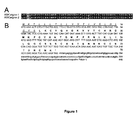
- FIG. 1B The complete sequence ( Figure 1B ) of ASICalgine-1 was determined by cloning the cDNA by PCR, from the messenger RNAs (mRNA) present in trace amounts in the crude venom.
- mRNA messenger RNAs
- Messenger RNAs were captured using magnetic beads grafted with dT25 oligonucleotides (Dynal, UK).
- oligonucleotides were directly used as primers to perform reverse transcription of cDNA mRNA with PrimeScript TM reverse transcriptase (TaKaRa Bio Inc., Japan).
- the solid phase cDNA library thus obtained was used to carry out a degenerate PCR with the sense oligonucleotides (TGITTYCARCAYGGIAARGT, SEQ ID NO: 7) and antisense oligonucleotides (YTTIARRTTICGRAAIGGCAT, SEQ ID NO: 8) defined from the partial protein sequence of the toxin determined by direct N-terminal sequencing.
- a sense oligonucleotide (ACAC (GAATTC) TCCAGAGAAGATCGCAAG ATG , SEQ ID NO: 11) and antisense (ACAC (GAATTC) ATTTAGCCACTCGTAGAG CTA , SEQ ID NO: 12) flanking the coding sequence were synthesized.
- PCRs were made on the solid phase cDNA library and the PCR products were again subcloned into the pGEMTeasy vector to obtain the complete nucleotide sequence of the ASICalgine-1 toxin precursor.
- the peptides were subjected to the following enzymatic treatments: (a) V8 protease with separation of peptides digested on a C18 reverse phase HPLC column. Cleavage at position D15 and E43 and separation on HPLC of 2 peptides of molecular mass 1786.9 Da (peptide 1-15), completely re-sequenced, and 3194.5 Da (peptide 16-43), partial sequence, make it possible to confirm the sequence N-terminal. (b) trypsin digestion with direct analysis by mass spectrometry. The tryptic fragments also confirm the N-terminal sequence as well as other parts of the peptide sequence of ASICalgines.
- the measured molecular mass is 6554.8 Da for ASICalgine-1, and 6538.4 for ASICalgine-2. It is in perfect agreement with the molecular weights calculated by the sequence 6554.58Da and 6538.58 Da, respectively, on the GPMAW protein analysis software. These results suggest a C-terminal free carboxylic acid end.
- ASICalgine-1 and ASICalgine-2 do not appear in the databases and show no complete sequence identity with other previously known peptides or toxins.
- the BLAST sequence alignment program shows that ASICalgine-1 and ASICalgine-2 nevertheless exhibit 47 to 55% sequence identity (63 to 66% sequence homologies) with the CM-1b, CM-3 peptides and CM-2a purified from venoms of various species of Cobra snakes (Naja and Ringhals), as well as with a neurotoxin- ⁇ OH-26 present in the venom of the royal cobra Ophiophagus hannah.
- these neurotoxins CM and OH-26 are not described as acting on the ASIC channels nor exhibiting analgesic effects in vivo but rather as having cytotoxic effects.
- mice C57B16J, males 7 to 11 weeks old
- IT intrathecal injection
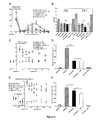
- the effects of an IT injection of 10 ⁇ l of solution containing 34 ⁇ M ASICalgine-1 (0.34 nmole) or 20 ⁇ M ASIcalgine-2 (0.2 nmole) were compared with the effects of an injection.
- naxolone an opioid receptor blocker (mainly of the ⁇ 1 type), was injected subcutaneously at 2 mg / kg in 50 ⁇ l of 0.9% NaCl, ten minutes before IT injection of the ASICalgine peptide.
- ASICalgine-1 and ASICalgine-2 peptides does not induce any behavioral changes such as motor disorders, balance disorders, apathy, paralysis or convulsions, nor any death in the mouse.
- Pain is measured by observing the animal's spontaneous pain behavior, that is, counting the time the mouse lifts the injected paw, licks, chews, or shakes it (integrated voluntary behavior).
- ASICalgine-1 significantly reduced phase I pain by 40% and phase II pain by 70%. This analgesic effect is similar to that of morphine ( Figure 2B ).
- ASICalgine-2 produces an identical effect to ASICalgine-1.
- Pretreatment with naxolone, an opioid receptor antagonist, has no effect on the analgesic effect of ASICalgine-1, either on either of the two painful phases I and II ( Figure 2B ).
- the peptides ASICalgine-1 and ASICalgine-2 are the first analgesic peptides extracted from the venom of Dendroaspis polylpis.
- Thermal pain was studied in mice by measuring the withdrawal latency of the tail immersed in water at 46 ° C (reflex movement, the animal is submitted to a restraint), with a time limit of 30 s.
- the peptide ASICalgine-1 induces an analgesic effect as powerful as that of morphine (7 minutes after the IT injection) but which is more transient at the concentration used ( Figure 2C ).
- ASICalgine-1 is not significantly inhibited by pretreatment with naxolone ( 2D Figure ).
- ASICalgine-1 leads to rapid analgesia, comparable to that of morphine and lasting the entire duration of the experiment (67 minutes, Figure 2E ).
- the IT injection of the peptide ASICalgine-1 induces no significant effect (ANOVA test) on the performance of the mice with respect to the motor activity compared with a vehicle solution injection.
- Intracerebroventricular injection (ICV) of the ASICalgine-1 peptide was performed in the third mouse brain ventricle (C57B16J, males 7-11 weeks old) anesthetized with isoflurane (1.5%) using the following stereotactic coordinates: -2.4 mm below the cortical surface, -0.5 mm in the anteroposterior axis and +1.6 mm in the medio-lateral axis with respect to the bregma.
- the ICV injection of the ASICalgine-1 peptide induces no change in behavior such as motor disorders, equilibrium disorders, apathy, paralysis or convulsions, nor any death in mice, even after 3 days.
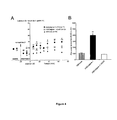
- Thermal pain was studied in mice by measuring the withdrawal latency of the tail immersed in water at 46 ° C (reflex movement, the animal is subjected to a restraint) with a time limit of 30 s.
- the ICV injection of the peptide ASICalgine-1 induces a strong and sustained analgesic effect throughout the duration of the experiment (67 min, Figure 3 ), which is not affected by naloxone pretreatment.
- the analgesic effect persists for several hours before the value of the tail withdrawal latency returns to its control value.
- SC subcutaneous injection
- the peptides ASICalgine-1 and ASICalgine-2 inhibit the currents generated by the ASIC channels expressed heterologously in the COS cell line and recorded by the patch-clamp technique in "whole cell” configuration ("potential-imposed” mode).
- the peptides are applied at pH 7.4, 30 seconds before the extracellular pH jump of 7.4 to 6 or 5.5.
- the peptides ASICalgine-1 and ASICalgine-2 have the same effect, and inhibit the current generated by rat ASIC1a homomeric channels with a concentration producing 50% inhibition (IC 50 ) of 49 nM ( Figure 5A ), and the current generated by human ASIC1a homomeric channels with an IC 50 of 127nM ( Figure 5B ).
- rat ASIC1b homomeric channels The current generated by rat ASIC1b homomeric channels is inhibited with an IC 50 of 650 nM ( Figure 5C ), rat and human ASIC1 a + ASIC2a heteromeric channels with an IC 50 of 308 nM ( Figure 5E ), and rat ASIC1 a + ASIC1 b heteromeric channels with an IC 50 of 223 nM ( Figure 5D ) (the ASIC1b channel has not been described in humans).
- the ASICalgine-1 and ASICalgine-2 peptides do not inhibit the rat and human ASIC2a and ASIC3 homomeric channels, nor the rat ASIC1 a + ASIC3 and ASIC1b + ASIC3 heteromeric channels.
- the ASICalgine-1 and ASICalgine-2 peptides are the only peptides described to date capable of inhibiting the ASIC1b homomeric channels and the ASIC1a + ASIC1b and ASIC1a + ASIC2a heteromeric channels.
- the ASICalgine-1 peptide (2 ⁇ M) does not inhibit the current produced by the capsaicin-activated rat TRPV1 channels (1 ⁇ M), channels also involved in the transduction of pain by the sensory nerve endings.
- the analgesic effects of ASICalgine-1 and ASICalgine-2 peptides appear to involve the inhibition of homomeric ASIC1a and ASIC1a + ASIC2a heteromeric channels in neurons of the central nervous system (IT and ICV injections). , and the inhibition of heteromeric ASIC1a and ASIC1b homomeric and ASIC1a + ASIC1b channels in sensory neurons (subcutaneous injection, IT injection provided that ASIC1a and ASIC1b homomeric and ASIC1a + ASIC1b heteromeric are present in the central endings of sensory neurons at level of the dorsal horn of the spinal cord).
- ASICalgine-1 and ASICalgine-2 peptides reversibly inhibit ASIC currents recorded by the "whole-cell"("potential-imposed") patch-clamp technique in primary culture neurons isolated from spinal ganglia adult rat ( Figure 6A ), dorsal spinal cord of mouse embryos ( Figure 6B ), and hippocampus mouse neonates (2 days) ( Figure 6C ).
- ASICalgine-1 and ASICalgine-2 peptides The partial inhibitory effect of ASICalgine-1 and ASICalgine-2 peptides on the total ASIC current of sensory neurons is explained by the large share of ASIC3-type current (not inhibited by peptides).
- ASICalgine-1 and ASICalgine-2) in sensory neurons whereas the central ASIC currents (hippocampus and marrow) are composed of a mixture of homomeric ASIC1a and heteromeric ASIC1a + ASIC2a currents (both inhibited by ASICalgine-1 peptides and ASICalgine-2).
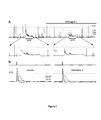
- the peptides ASICalgine-1 and ASICalgine-2 applied to the spinal neurons in culture do not induce any change in the basal current level, or variations in the resting potential ( Figure 7A ) recorded by the patch-clamp technique in "whole cell" configuration.
Landscapes
- Health & Medical Sciences (AREA)
- Chemical & Material Sciences (AREA)
- Organic Chemistry (AREA)
- Life Sciences & Earth Sciences (AREA)
- General Health & Medical Sciences (AREA)
- Medicinal Chemistry (AREA)
- Animal Behavior & Ethology (AREA)
- Nuclear Medicine, Radiotherapy & Molecular Imaging (AREA)
- Chemical Kinetics & Catalysis (AREA)
- Pharmacology & Pharmacy (AREA)
- General Chemical & Material Sciences (AREA)
- Public Health (AREA)
- Veterinary Medicine (AREA)
- Bioinformatics & Cheminformatics (AREA)
- Engineering & Computer Science (AREA)
- Neurology (AREA)
- Biomedical Technology (AREA)
- Neurosurgery (AREA)
- Pain & Pain Management (AREA)
- Gastroenterology & Hepatology (AREA)
- Toxicology (AREA)
- Proteomics, Peptides & Aminoacids (AREA)
- Molecular Biology (AREA)
- Genetics & Genomics (AREA)
- Biophysics (AREA)
- Biochemistry (AREA)
- Zoology (AREA)
- Rheumatology (AREA)
- Psychiatry (AREA)
- Physical Education & Sports Medicine (AREA)
- Cardiology (AREA)
- Hospice & Palliative Care (AREA)
- Vascular Medicine (AREA)
- Urology & Nephrology (AREA)
- Orthopedic Medicine & Surgery (AREA)
- Heart & Thoracic Surgery (AREA)
- Medicines That Contain Protein Lipid Enzymes And Other Medicines (AREA)
- Peptides Or Proteins (AREA)
- Pharmaceuticals Containing Other Organic And Inorganic Compounds (AREA)
- Medicines Containing Material From Animals Or Micro-Organisms (AREA)
Claims (22)
- Peptid, das die Aminosäuresequenzwobei X4 eine beliebige Aminosäure; oder eine Sequenz darstellt, die eine Identität von mindestens 56% mit der Sequenz SEQ ID NO : 1 aufweist und die die analgetische Aktivität des die Sequenz SEQ ID NO : 1 umfassenden Peptids beibehält.

- Peptid nach Anspruch 1, wobei das Peptid mindestens einen ASIC-Kanals blockiert.
- Peptid nach Anspruch 2, wobei das Peptid mindestens einen ASIC-Kanals blockiert, der aus mindestens einer Untereinheit besteht, die aus der Gruppe bestehend aus den Untereinheiten ASIC1a und ASIC1b ausgewählt ist.
- Peptid nach Anspruch 3, wobei das Peptid den homomerischen Kanal ASIC1a, den homomerischen Kanal ASIC1b, den heteromerischen Kanal ASIC1a+ASIC1b und/oder den heteromerischen Kanal ASIC1a+ASIC2a blockiert.
- Peptid nach einem beliebigen der Ansprüche 1 bis 4, wobei X4 Y oder F in der Sequenz SEQ ID NO : 1 darstellt.
- Polynucleotid eine Nucleotidsequenz umfassend, die für ein wie in einem beliebigen der Ansprüche 1 bis 5 definiertes Peptid kodiert.
- Polynucleotid nach Anspruch 6, das folgende Nucleotidsequenz umfasst:oder
 wo73txx75 und 10txx12 für tac, tat, ttt, oder ttc stehen.
- Polynucleotid nach Anspruch 6, wobei das Polynucleotid sich unter stringenten Bedingungen mit der Nucleotidsequenz SEQ ID NO : 4 oder SEQ ID NO : 22 oder einer komplementären Sequenz von diesen hybridiert.
- Polynucleotid nach Anspruch 6 oder 8, wobei das Polynucleotid eine natürliche oder synthetische Sequenz umfasst, die eine Identität von mindestens 76% mit der Sequenz SEQ ID NO: 4 oder der Sequenz SEQ ID NO: 22 aufweist.
- Vektor, der ein Polynucleotid wie in einem beliebigen der Ansprüche 1 bis 5 definiert enthält.
- Vektor nach Anspruch 10, wobei der Vektor ein Expressionsvektor ist.
- Wirtszelle, die einen Vektor wie in einem der Ansprüche 10 oder 11 definiert umfasst.
- Pharmazeutische Zusammensetzung umfassend ein oder mehrere Peptide wie in einem beliebigen der Ansprüche 1 bis 5 definiert, Polynucleotid wie in einem beliebigen der Ansprüche 6 bis 9 definiert, Vektor, wie einem beliebigen der Ansprüche 10 oder 11 definiert oder Wirtszelle wie in Anspruch 12 definiert.
- Substanz ausgewählt unter:- einem Peptid wie in einem beliebigen der Ansprüche 1 bis 5 definiert;- einem Polynucleotid wie in einem beliebigen der Ansprüche 6 bis 9 definiert;- einem Vektor wie in einem beliebigen der Ansprüche 10 oder 11 definiert; oder- einer Wirtszelle wie in Anspruch 12 definiert;- einer pharmazeutische Zusammensetzung nach Anspruch 13 ;
für ihre Verwendung als Medikament. - Substanz nach Anspruch 14, wobei das Medikament ein Analgetikum ist.
- Substanz nach Anspruch 15, wobei das Analgetikm zur Vorbeugung oder Behandlung eines Schmerzes oder einer Pathologie ist, die eine Aktivierung der ASIC-Kanäle beinhaltet.
- Substanz nach Anspruch 16, wobei der Schmerz oder die Pathologie mit einer Aktivierung der ASIC-Kanäle aus der Gruppe ausgewählt ist, die entzündliche, neuropathische Schmerzen, Krebsschmerzen, postoperative Schmerzen, Skelett-und Muskelschmerzen, viszerale Schmerzen, Entzündungen, Krebs, Fibromyalgien und das Reizdarmsyndrom umfasst.
- Substanz nach Anspruch 14, wobei das Medikament zur Vorbeugung oder Behandlung einer zentralen neurologischen Krankheit bestimmt ist, die aus der Gruppe ausgewählt ist, die Depression, Angstzustände, Hirnschläge, Epilepsie, zentrale Entzündungen und neurodegenerative Krankheiten umfasst.
- Substanz nach einem beliebigen der Ansprüche 14 bis 18, wobei das Medikament zentral, subkutan, transkutan, systemisch, oral oder respiratorisch verabreicht wird.
- Substanz ausgewählt unter:- einem Peptid wie in einem beliebigen der Ansprüche 1 bis 5 definiert;- einem Polynucleotid wie in einem beliebigen der Ansprüche 6 bis 9 definiert;- einem Vektor wie in einem der beliebigen Ansprüche 10 oder 11 definiert; oder- einer Wirtszelle wie in Anspruch 12 definiert;- einer pharmazeutische Zusammensetzung nach Anspruch 13 ;
für ihre Anwendung als diagnostisches Werkzeug. - Verfahren zur Identifizierung einer Verbindung, die die analgetische Aktivität eines Peptids wie in einem beliebigen der Ansprüche 1 bis 5 definiert nachahmt, welches folgende Schritte umfasst:a. Bestimmung der analgetischen Wirkung eines Peptids wie in einem beliebigen der Ansprüche 1 bis 5 definiert;b. Bestimmung der analgetischen Wirkung einer Kandidatenverbindung ;c. Vergleich der in den Schritten a) und b) erhaltenen analgetischen Wirkung;d. Auswahl der Kandidatenverbindung, die eine gleichwertige oder grössere analgetische Aktivität als das Peptid aufweist.
- Verfahren zur Identifizierung einer Verbindung, die die analgetische Wirkung eines Peptids wie einem beliebigen der Ansprüche 1 bis 5 definiert nachahmt, welches folgende Schritte umfasst:a) in Kontakt bringen eines Peptids wie in einem beliebigen der Ansprüche 1 bis 5 definiert mit einer Probe und Messen der Bindung zwischen dem Peptid und der Probe;b) Hinzufügen der Kandidatenverbindung und Bestimmen der Wirkung der Verbindung auf die Bindung zwischen dem Peptid und der Probe ;c) Auswahl der Kandidatenverbindung, welche die Bindung zwischen dem Peptid und der Probe modulieren kann.
Applications Claiming Priority (2)
| Application Number | Priority Date | Filing Date | Title |
|---|---|---|---|
| FR1003136A FR2963010B1 (fr) | 2010-07-26 | 2010-07-26 | Nouveaux peptides avec des effets analgesiques et inhibant les canaux asic |
| PCT/FR2011/051800 WO2012022894A1 (fr) | 2010-07-26 | 2011-07-26 | Nouveaux peptides avec des effets analgesiques et inhibant les canaux asic |
Publications (2)
| Publication Number | Publication Date |
|---|---|
| EP2598523A1 EP2598523A1 (de) | 2013-06-05 |
| EP2598523B1 true EP2598523B1 (de) | 2015-09-09 |
Family
ID=43589927
Family Applications (1)
| Application Number | Title | Priority Date | Filing Date |
|---|---|---|---|
| EP11752299.5A Active EP2598523B1 (de) | 2010-07-26 | 2011-07-26 | Neue peptide mit schmerzstillender wirkung zur hemmung des asic-kanals |
Country Status (13)
| Country | Link |
|---|---|
| US (1) | US8987207B2 (de) |
| EP (1) | EP2598523B1 (de) |
| JP (1) | JP6000245B2 (de) |
| CN (1) | CN103097404B (de) |
| AU (1) | AU2011290589A1 (de) |
| BR (1) | BR112013001863A2 (de) |
| CA (1) | CA2806471C (de) |
| FR (1) | FR2963010B1 (de) |
| MX (1) | MX336586B (de) |
| RU (1) | RU2583299C2 (de) |
| SG (1) | SG187877A1 (de) |
| WO (1) | WO2012022894A1 (de) |
| ZA (1) | ZA201300662B (de) |
Families Citing this family (6)
| Publication number | Priority date | Publication date | Assignee | Title |
|---|---|---|---|---|
| CN105233286B (zh) * | 2015-09-10 | 2018-10-30 | 上海交通大学医学院 | 含酸敏感离子通道调控剂的制剂及其在治疗瘙痒中的用途 |
| CN105412932B (zh) * | 2015-10-26 | 2019-08-16 | 上海交通大学医学院 | 含ASIC1a与RIP1结合抑制剂的制剂及其抑制神经元死亡的用途 |
| CN112717135A (zh) * | 2016-11-22 | 2021-04-30 | 上海交通大学医学院 | 酸敏感离子通道调控剂的用途 |
| CN107384952A (zh) * | 2017-08-23 | 2017-11-24 | 湖南甲骨文生物医药有限公司 | 用于筛选ASICs作用蛋白的酵母双杂交诱饵载体的构建方法 |
| EP3980456A4 (de) * | 2019-06-04 | 2023-01-18 | Shanghaitech University | Affinitätsgereifte anti-asic1a-antikörper |
| RU2768484C1 (ru) * | 2021-05-24 | 2022-03-24 | Закрытое акционерное общество "СКАЙ ЛТД" | Фармацевтическая композиция иммуностимулирующих веществ мурамилпептидной природы |
Family Cites Families (3)
| Publication number | Priority date | Publication date | Assignee | Title |
|---|---|---|---|---|
| US5776896A (en) | 1996-01-03 | 1998-07-07 | Zeneca Limited | Analgesic peptides from venom of grammostola spatulata and use thereof |
| JP4959226B2 (ja) * | 2006-05-19 | 2012-06-20 | 独立行政法人産業技術総合研究所 | スリーフィンガー様蛋白質ライブラリ |
| JP2008193923A (ja) * | 2007-02-09 | 2008-08-28 | Janusys Kk | 蛋白質ライブラリ |
-
2010
- 2010-07-26 FR FR1003136A patent/FR2963010B1/fr not_active Expired - Fee Related
-
2011
- 2011-07-26 CA CA2806471A patent/CA2806471C/fr active Active
- 2011-07-26 BR BR112013001863A patent/BR112013001863A2/pt not_active Application Discontinuation
- 2011-07-26 SG SG2013011705A patent/SG187877A1/en unknown
- 2011-07-26 EP EP11752299.5A patent/EP2598523B1/de active Active
- 2011-07-26 JP JP2013521194A patent/JP6000245B2/ja active Active
- 2011-07-26 US US13/812,457 patent/US8987207B2/en active Active
- 2011-07-26 CN CN201180043328.6A patent/CN103097404B/zh active Active
- 2011-07-26 MX MX2013001020A patent/MX336586B/es unknown
- 2011-07-26 WO PCT/FR2011/051800 patent/WO2012022894A1/fr not_active Ceased
- 2011-07-26 AU AU2011290589A patent/AU2011290589A1/en not_active Abandoned
- 2011-07-26 RU RU2013108262/10A patent/RU2583299C2/ru active
-
2013
- 2013-01-24 ZA ZA2013/00662A patent/ZA201300662B/en unknown
Also Published As
| Publication number | Publication date |
|---|---|
| EP2598523A1 (de) | 2013-06-05 |
| FR2963010A1 (fr) | 2012-01-27 |
| MX2013001020A (es) | 2014-04-14 |
| CN103097404B (zh) | 2015-09-16 |
| JP6000245B2 (ja) | 2016-09-28 |
| WO2012022894A4 (fr) | 2012-04-12 |
| CA2806471C (fr) | 2020-07-07 |
| FR2963010B1 (fr) | 2014-08-15 |
| AU2011290589A1 (en) | 2013-03-07 |
| SG187877A1 (en) | 2013-03-28 |
| US8987207B2 (en) | 2015-03-24 |
| JP2013535965A (ja) | 2013-09-19 |
| CN103097404A (zh) | 2013-05-08 |
| BR112013001863A2 (pt) | 2016-05-31 |
| WO2012022894A1 (fr) | 2012-02-23 |
| RU2583299C2 (ru) | 2016-05-10 |
| CA2806471A1 (fr) | 2012-02-23 |
| MX336586B (es) | 2016-01-21 |
| RU2013108262A (ru) | 2014-09-10 |
| US20130196923A1 (en) | 2013-08-01 |
| ZA201300662B (en) | 2013-09-25 |
Similar Documents
| Publication | Publication Date | Title |
|---|---|---|
| EP2598523B1 (de) | Neue peptide mit schmerzstillender wirkung zur hemmung des asic-kanals | |
| CA2832521C (fr) | Peptides therapeutiques et leur utilisation contre la choree de huntington | |
| EP0648269A1 (de) | Polypeptide mit nmda rezeptor aktivität für sie kodierende nukleinsäuren und ihre verwendung | |
| EP2300043B1 (de) | Analgetische wirkungen von peptidtoxin apetx2 | |
| EP0980427B1 (de) | Verwendung von ulip proteinen zur diagnose und therapie von krebs und paraneoplastischen neurologischen syndromen | |
| KR101293777B1 (ko) | 알러지성 질환의 치료 및 예방을 위한 펩타이드 | |
| US10894811B2 (en) | Peptide inhibitors of calcium channels | |
| JP2001507924A (ja) | コナントキン類 | |
| WO2000044887A1 (fr) | Peptides et proteines aptes a desensibiliser les sujets allergiques au venin d'abeille et compositions les contenant | |
| CA3124178A1 (fr) | Utilisation d'un antagoniste de par-1 pour le traitement d'une maladie inflammatoire chronique intestinale | |
| WO2010081971A1 (fr) | Identification de nouvelles toxines antagonistes de canaux calciques type-t a visee analgesique | |
| US20230374067A1 (en) | Novel peptoids and use thereof for preventing or treating chronic pain | |
| FR2701265A1 (fr) | Nouveaux polypeptides ayant une activité de récepteur sérotoninergique, acides nucléiques codant pour ces polypeptides et utilisations. | |
| Alsaleh et al. | BAFF synthesis by rheumatoid synoviocytes is positively controled by integrin α5β1 stimulation and negatively regulated by TNFα and TLR ligands | |
| FR2785613A1 (fr) | Conotoxine isolee a partir du venin de conus ermineus, ses analogues et ses applications | |
| Veglianese | Sub-cellular localization and regulatory mechanisms of AMPA receptors in motor neurons of a murine model of familial Amyotrophic Lateral Sclerosis |
Legal Events
| Date | Code | Title | Description |
|---|---|---|---|
| PUAI | Public reference made under article 153(3) epc to a published international application that has entered the european phase |
Free format text: ORIGINAL CODE: 0009012 |
|
| 17P | Request for examination filed |
Effective date: 20130125 |
|
| AK | Designated contracting states |
Kind code of ref document: A1 Designated state(s): AL AT BE BG CH CY CZ DE DK EE ES FI FR GB GR HR HU IE IS IT LI LT LU LV MC MK MT NL NO PL PT RO RS SE SI SK SM TR |
|
| DAX | Request for extension of the european patent (deleted) | ||
| 17Q | First examination report despatched |
Effective date: 20140909 |
|
| 17Q | First examination report despatched |
Effective date: 20150317 |
|
| GRAP | Despatch of communication of intention to grant a patent |
Free format text: ORIGINAL CODE: EPIDOSNIGR1 |
|
| GRAS | Grant fee paid |
Free format text: ORIGINAL CODE: EPIDOSNIGR3 |
|
| GRAA | (expected) grant |
Free format text: ORIGINAL CODE: 0009210 |
|
| INTG | Intention to grant announced |
Effective date: 20150721 |
|
| AK | Designated contracting states |
Kind code of ref document: B1 Designated state(s): AL AT BE BG CH CY CZ DE DK EE ES FI FR GB GR HR HU IE IS IT LI LT LU LV MC MK MT NL NO PL PT RO RS SE SI SK SM TR |
|
| REG | Reference to a national code |
Ref country code: GB Ref legal event code: FG4D Free format text: NOT ENGLISH |
|
| REG | Reference to a national code |
Ref country code: AT Ref legal event code: REF Ref document number: 748052 Country of ref document: AT Kind code of ref document: T Effective date: 20150915 Ref country code: CH Ref legal event code: EP |
|
| REG | Reference to a national code |
Ref country code: IE Ref legal event code: FG4D Free format text: LANGUAGE OF EP DOCUMENT: FRENCH |
|
| REG | Reference to a national code |
Ref country code: DE Ref legal event code: R096 Ref document number: 602011019627 Country of ref document: DE |
|
| REG | Reference to a national code |
Ref country code: NL Ref legal event code: MP Effective date: 20150909 |
|
| PG25 | Lapsed in a contracting state [announced via postgrant information from national office to epo] |
Ref country code: FI Free format text: LAPSE BECAUSE OF FAILURE TO SUBMIT A TRANSLATION OF THE DESCRIPTION OR TO PAY THE FEE WITHIN THE PRESCRIBED TIME-LIMIT Effective date: 20150909 Ref country code: LT Free format text: LAPSE BECAUSE OF FAILURE TO SUBMIT A TRANSLATION OF THE DESCRIPTION OR TO PAY THE FEE WITHIN THE PRESCRIBED TIME-LIMIT Effective date: 20150909 Ref country code: GR Free format text: LAPSE BECAUSE OF FAILURE TO SUBMIT A TRANSLATION OF THE DESCRIPTION OR TO PAY THE FEE WITHIN THE PRESCRIBED TIME-LIMIT Effective date: 20151210 Ref country code: LV Free format text: LAPSE BECAUSE OF FAILURE TO SUBMIT A TRANSLATION OF THE DESCRIPTION OR TO PAY THE FEE WITHIN THE PRESCRIBED TIME-LIMIT Effective date: 20150909 Ref country code: NO Free format text: LAPSE BECAUSE OF FAILURE TO SUBMIT A TRANSLATION OF THE DESCRIPTION OR TO PAY THE FEE WITHIN THE PRESCRIBED TIME-LIMIT Effective date: 20151209 |
|
| REG | Reference to a national code |
Ref country code: LT Ref legal event code: MG4D |
|
| REG | Reference to a national code |
Ref country code: AT Ref legal event code: MK05 Ref document number: 748052 Country of ref document: AT Kind code of ref document: T Effective date: 20150909 |
|
| PG25 | Lapsed in a contracting state [announced via postgrant information from national office to epo] |
Ref country code: RS Free format text: LAPSE BECAUSE OF FAILURE TO SUBMIT A TRANSLATION OF THE DESCRIPTION OR TO PAY THE FEE WITHIN THE PRESCRIBED TIME-LIMIT Effective date: 20150909 Ref country code: HR Free format text: LAPSE BECAUSE OF FAILURE TO SUBMIT A TRANSLATION OF THE DESCRIPTION OR TO PAY THE FEE WITHIN THE PRESCRIBED TIME-LIMIT Effective date: 20150909 Ref country code: SE Free format text: LAPSE BECAUSE OF FAILURE TO SUBMIT A TRANSLATION OF THE DESCRIPTION OR TO PAY THE FEE WITHIN THE PRESCRIBED TIME-LIMIT Effective date: 20150909 Ref country code: ES Free format text: LAPSE BECAUSE OF FAILURE TO SUBMIT A TRANSLATION OF THE DESCRIPTION OR TO PAY THE FEE WITHIN THE PRESCRIBED TIME-LIMIT Effective date: 20150909 |
|
| PG25 | Lapsed in a contracting state [announced via postgrant information from national office to epo] |
Ref country code: NL Free format text: LAPSE BECAUSE OF FAILURE TO SUBMIT A TRANSLATION OF THE DESCRIPTION OR TO PAY THE FEE WITHIN THE PRESCRIBED TIME-LIMIT Effective date: 20150909 |
|
| PG25 | Lapsed in a contracting state [announced via postgrant information from national office to epo] |
Ref country code: IS Free format text: LAPSE BECAUSE OF FAILURE TO SUBMIT A TRANSLATION OF THE DESCRIPTION OR TO PAY THE FEE WITHIN THE PRESCRIBED TIME-LIMIT Effective date: 20160109 Ref country code: EE Free format text: LAPSE BECAUSE OF FAILURE TO SUBMIT A TRANSLATION OF THE DESCRIPTION OR TO PAY THE FEE WITHIN THE PRESCRIBED TIME-LIMIT Effective date: 20150909 Ref country code: SK Free format text: LAPSE BECAUSE OF FAILURE TO SUBMIT A TRANSLATION OF THE DESCRIPTION OR TO PAY THE FEE WITHIN THE PRESCRIBED TIME-LIMIT Effective date: 20150909 Ref country code: CZ Free format text: LAPSE BECAUSE OF FAILURE TO SUBMIT A TRANSLATION OF THE DESCRIPTION OR TO PAY THE FEE WITHIN THE PRESCRIBED TIME-LIMIT Effective date: 20150909 Ref country code: IT Free format text: LAPSE BECAUSE OF FAILURE TO SUBMIT A TRANSLATION OF THE DESCRIPTION OR TO PAY THE FEE WITHIN THE PRESCRIBED TIME-LIMIT Effective date: 20150909 |
|
| PG25 | Lapsed in a contracting state [announced via postgrant information from national office to epo] |
Ref country code: PT Free format text: LAPSE BECAUSE OF FAILURE TO SUBMIT A TRANSLATION OF THE DESCRIPTION OR TO PAY THE FEE WITHIN THE PRESCRIBED TIME-LIMIT Effective date: 20160111 Ref country code: PL Free format text: LAPSE BECAUSE OF FAILURE TO SUBMIT A TRANSLATION OF THE DESCRIPTION OR TO PAY THE FEE WITHIN THE PRESCRIBED TIME-LIMIT Effective date: 20150909 Ref country code: AT Free format text: LAPSE BECAUSE OF FAILURE TO SUBMIT A TRANSLATION OF THE DESCRIPTION OR TO PAY THE FEE WITHIN THE PRESCRIBED TIME-LIMIT Effective date: 20150909 Ref country code: RO Free format text: LAPSE BECAUSE OF FAILURE TO SUBMIT A TRANSLATION OF THE DESCRIPTION OR TO PAY THE FEE WITHIN THE PRESCRIBED TIME-LIMIT Effective date: 20150909 |
|
| REG | Reference to a national code |
Ref country code: DE Ref legal event code: R097 Ref document number: 602011019627 Country of ref document: DE |
|
| REG | Reference to a national code |
Ref country code: FR Ref legal event code: PLFP Year of fee payment: 6 |
|
| PLBE | No opposition filed within time limit |
Free format text: ORIGINAL CODE: 0009261 |
|
| STAA | Information on the status of an ep patent application or granted ep patent |
Free format text: STATUS: NO OPPOSITION FILED WITHIN TIME LIMIT |
|
| 26N | No opposition filed |
Effective date: 20160610 |
|
| PG25 | Lapsed in a contracting state [announced via postgrant information from national office to epo] |
Ref country code: SI Free format text: LAPSE BECAUSE OF FAILURE TO SUBMIT A TRANSLATION OF THE DESCRIPTION OR TO PAY THE FEE WITHIN THE PRESCRIBED TIME-LIMIT Effective date: 20150909 Ref country code: DK Free format text: LAPSE BECAUSE OF FAILURE TO SUBMIT A TRANSLATION OF THE DESCRIPTION OR TO PAY THE FEE WITHIN THE PRESCRIBED TIME-LIMIT Effective date: 20150909 |
|
| PG25 | Lapsed in a contracting state [announced via postgrant information from national office to epo] |
Ref country code: BE Free format text: LAPSE BECAUSE OF NON-PAYMENT OF DUE FEES Effective date: 20160731 |
|
| REG | Reference to a national code |
Ref country code: CH Ref legal event code: PL |
|
| PG25 | Lapsed in a contracting state [announced via postgrant information from national office to epo] |
Ref country code: MC Free format text: LAPSE BECAUSE OF FAILURE TO SUBMIT A TRANSLATION OF THE DESCRIPTION OR TO PAY THE FEE WITHIN THE PRESCRIBED TIME-LIMIT Effective date: 20150909 |
|
| PG25 | Lapsed in a contracting state [announced via postgrant information from national office to epo] |
Ref country code: LI Free format text: LAPSE BECAUSE OF NON-PAYMENT OF DUE FEES Effective date: 20160731 Ref country code: CH Free format text: LAPSE BECAUSE OF NON-PAYMENT OF DUE FEES Effective date: 20160731 |
|
| REG | Reference to a national code |
Ref country code: IE Ref legal event code: MM4A |
|
| REG | Reference to a national code |
Ref country code: FR Ref legal event code: PLFP Year of fee payment: 7 |
|
| PG25 | Lapsed in a contracting state [announced via postgrant information from national office to epo] |
Ref country code: IE Free format text: LAPSE BECAUSE OF NON-PAYMENT OF DUE FEES Effective date: 20160726 |
|
| PG25 | Lapsed in a contracting state [announced via postgrant information from national office to epo] |
Ref country code: LU Free format text: LAPSE BECAUSE OF NON-PAYMENT OF DUE FEES Effective date: 20160726 |
|
| PG25 | Lapsed in a contracting state [announced via postgrant information from national office to epo] |
Ref country code: HU Free format text: LAPSE BECAUSE OF FAILURE TO SUBMIT A TRANSLATION OF THE DESCRIPTION OR TO PAY THE FEE WITHIN THE PRESCRIBED TIME-LIMIT; INVALID AB INITIO Effective date: 20110726 Ref country code: SM Free format text: LAPSE BECAUSE OF FAILURE TO SUBMIT A TRANSLATION OF THE DESCRIPTION OR TO PAY THE FEE WITHIN THE PRESCRIBED TIME-LIMIT Effective date: 20150909 Ref country code: CY Free format text: LAPSE BECAUSE OF FAILURE TO SUBMIT A TRANSLATION OF THE DESCRIPTION OR TO PAY THE FEE WITHIN THE PRESCRIBED TIME-LIMIT Effective date: 20150909 |
|
| PG25 | Lapsed in a contracting state [announced via postgrant information from national office to epo] |
Ref country code: MK Free format text: LAPSE BECAUSE OF FAILURE TO SUBMIT A TRANSLATION OF THE DESCRIPTION OR TO PAY THE FEE WITHIN THE PRESCRIBED TIME-LIMIT Effective date: 20150909 Ref country code: TR Free format text: LAPSE BECAUSE OF FAILURE TO SUBMIT A TRANSLATION OF THE DESCRIPTION OR TO PAY THE FEE WITHIN THE PRESCRIBED TIME-LIMIT Effective date: 20150909 Ref country code: MT Free format text: LAPSE BECAUSE OF FAILURE TO SUBMIT A TRANSLATION OF THE DESCRIPTION OR TO PAY THE FEE WITHIN THE PRESCRIBED TIME-LIMIT Effective date: 20150909 |
|
| REG | Reference to a national code |
Ref country code: FR Ref legal event code: PLFP Year of fee payment: 8 |
|
| PG25 | Lapsed in a contracting state [announced via postgrant information from national office to epo] |
Ref country code: BG Free format text: LAPSE BECAUSE OF FAILURE TO SUBMIT A TRANSLATION OF THE DESCRIPTION OR TO PAY THE FEE WITHIN THE PRESCRIBED TIME-LIMIT Effective date: 20150909 |
|
| REG | Reference to a national code |
Ref country code: DE Ref legal event code: R082 Ref document number: 602011019627 Country of ref document: DE Representative=s name: LAVOIX MUNICH, DE |
|
| PG25 | Lapsed in a contracting state [announced via postgrant information from national office to epo] |
Ref country code: AL Free format text: LAPSE BECAUSE OF FAILURE TO SUBMIT A TRANSLATION OF THE DESCRIPTION OR TO PAY THE FEE WITHIN THE PRESCRIBED TIME-LIMIT Effective date: 20150909 |
|
| REG | Reference to a national code |
Ref country code: DE Ref legal event code: R082 Ref document number: 602011019627 Country of ref document: DE |
|
| PGFP | Annual fee paid to national office [announced via postgrant information from national office to epo] |
Ref country code: DE Payment date: 20250825 Year of fee payment: 15 |
|
| PGFP | Annual fee paid to national office [announced via postgrant information from national office to epo] |
Ref country code: GB Payment date: 20250729 Year of fee payment: 15 |
|
| PGFP | Annual fee paid to national office [announced via postgrant information from national office to epo] |
Ref country code: FR Payment date: 20250729 Year of fee payment: 15 |