EP2590632B1 - Forme pharmaceutique pour lutter contre la soumission chimique d'un medicament - Google Patents
Forme pharmaceutique pour lutter contre la soumission chimique d'un medicament Download PDFInfo
- Publication number
- EP2590632B1 EP2590632B1 EP11743100.7A EP11743100A EP2590632B1 EP 2590632 B1 EP2590632 B1 EP 2590632B1 EP 11743100 A EP11743100 A EP 11743100A EP 2590632 B1 EP2590632 B1 EP 2590632B1
- Authority
- EP
- European Patent Office
- Prior art keywords
- pharmaceutical form
- drink
- particles
- agent
- mouth
- Prior art date
- Legal status (The legal status is an assumption and is not a legal conclusion. Google has not performed a legal analysis and makes no representation as to the accuracy of the status listed.)
- Active
Links
Images
Classifications
-
- G—PHYSICS
- G01—MEASURING; TESTING
- G01N—INVESTIGATING OR ANALYSING MATERIALS BY DETERMINING THEIR CHEMICAL OR PHYSICAL PROPERTIES
- G01N33/00—Investigating or analysing materials by specific methods not covered by groups G01N1/00 - G01N31/00
- G01N33/48—Biological material, e.g. blood, urine; Haemocytometers
- G01N33/50—Chemical analysis of biological material, e.g. blood, urine; Testing involving biospecific ligand binding methods; Immunological testing
- G01N33/94—Chemical analysis of biological material, e.g. blood, urine; Testing involving biospecific ligand binding methods; Immunological testing involving narcotics or drugs or pharmaceuticals, neurotransmitters or associated receptors
-
- A—HUMAN NECESSITIES
- A61—MEDICAL OR VETERINARY SCIENCE; HYGIENE
- A61K—PREPARATIONS FOR MEDICAL, DENTAL OR TOILETRY PURPOSES
- A61K9/00—Medicinal preparations characterised by special physical form
- A61K9/14—Particulate form, e.g. powders, Processes for size reducing of pure drugs or the resulting products, Pure drug nanoparticles
- A61K9/16—Agglomerates; Granulates; Microbeadlets ; Microspheres; Pellets; Solid products obtained by spray drying, spray freeze drying, spray congealing,(multiple) emulsion solvent evaporation or extraction
-
- A—HUMAN NECESSITIES
- A61—MEDICAL OR VETERINARY SCIENCE; HYGIENE
- A61K—PREPARATIONS FOR MEDICAL, DENTAL OR TOILETRY PURPOSES
- A61K31/00—Medicinal preparations containing organic active ingredients
- A61K31/33—Heterocyclic compounds
- A61K31/395—Heterocyclic compounds having nitrogen as a ring hetero atom, e.g. guanethidine or rifamycins
- A61K31/435—Heterocyclic compounds having nitrogen as a ring hetero atom, e.g. guanethidine or rifamycins having six-membered rings with one nitrogen as the only ring hetero atom
- A61K31/4353—Heterocyclic compounds having nitrogen as a ring hetero atom, e.g. guanethidine or rifamycins having six-membered rings with one nitrogen as the only ring hetero atom ortho- or peri-condensed with heterocyclic ring systems
- A61K31/437—Heterocyclic compounds having nitrogen as a ring hetero atom, e.g. guanethidine or rifamycins having six-membered rings with one nitrogen as the only ring hetero atom ortho- or peri-condensed with heterocyclic ring systems the heterocyclic ring system containing a five-membered ring having nitrogen as a ring hetero atom, e.g. indolizine, beta-carboline
-
- A—HUMAN NECESSITIES
- A61—MEDICAL OR VETERINARY SCIENCE; HYGIENE
- A61K—PREPARATIONS FOR MEDICAL, DENTAL OR TOILETRY PURPOSES
- A61K31/00—Medicinal preparations containing organic active ingredients
- A61K31/33—Heterocyclic compounds
- A61K31/395—Heterocyclic compounds having nitrogen as a ring hetero atom, e.g. guanethidine or rifamycins
- A61K31/435—Heterocyclic compounds having nitrogen as a ring hetero atom, e.g. guanethidine or rifamycins having six-membered rings with one nitrogen as the only ring hetero atom
- A61K31/47—Quinolines; Isoquinolines
- A61K31/485—Morphinan derivatives, e.g. morphine, codeine
-
- A—HUMAN NECESSITIES
- A61—MEDICAL OR VETERINARY SCIENCE; HYGIENE
- A61K—PREPARATIONS FOR MEDICAL, DENTAL OR TOILETRY PURPOSES
- A61K9/00—Medicinal preparations characterised by special physical form
- A61K9/0012—Galenical forms characterised by the site of application
- A61K9/0053—Mouth and digestive tract, i.e. intraoral and peroral administration
- A61K9/0056—Mouth soluble or dispersible forms; Suckable, eatable, chewable coherent forms; Forms rapidly disintegrating in the mouth; Lozenges; Lollipops; Bite capsules; Baked products; Baits or other oral forms for animals
-
- A—HUMAN NECESSITIES
- A61—MEDICAL OR VETERINARY SCIENCE; HYGIENE
- A61K—PREPARATIONS FOR MEDICAL, DENTAL OR TOILETRY PURPOSES
- A61K9/00—Medicinal preparations characterised by special physical form
- A61K9/20—Pills, tablets, discs, rods
-
- A—HUMAN NECESSITIES
- A61—MEDICAL OR VETERINARY SCIENCE; HYGIENE
- A61K—PREPARATIONS FOR MEDICAL, DENTAL OR TOILETRY PURPOSES
- A61K9/00—Medicinal preparations characterised by special physical form
- A61K9/20—Pills, tablets, discs, rods
- A61K9/2004—Excipients; Inactive ingredients
- A61K9/2009—Inorganic compounds
-
- A—HUMAN NECESSITIES
- A61—MEDICAL OR VETERINARY SCIENCE; HYGIENE
- A61K—PREPARATIONS FOR MEDICAL, DENTAL OR TOILETRY PURPOSES
- A61K9/00—Medicinal preparations characterised by special physical form
- A61K9/20—Pills, tablets, discs, rods
- A61K9/2004—Excipients; Inactive ingredients
- A61K9/2013—Organic compounds, e.g. phospholipids, fats
-
- A—HUMAN NECESSITIES
- A61—MEDICAL OR VETERINARY SCIENCE; HYGIENE
- A61K—PREPARATIONS FOR MEDICAL, DENTAL OR TOILETRY PURPOSES
- A61K9/00—Medicinal preparations characterised by special physical form
- A61K9/20—Pills, tablets, discs, rods
- A61K9/2004—Excipients; Inactive ingredients
- A61K9/2013—Organic compounds, e.g. phospholipids, fats
- A61K9/2018—Sugars, or sugar alcohols, e.g. lactose, mannitol; Derivatives thereof, e.g. polysorbates
-
- A—HUMAN NECESSITIES
- A61—MEDICAL OR VETERINARY SCIENCE; HYGIENE
- A61K—PREPARATIONS FOR MEDICAL, DENTAL OR TOILETRY PURPOSES
- A61K9/00—Medicinal preparations characterised by special physical form
- A61K9/20—Pills, tablets, discs, rods
- A61K9/2004—Excipients; Inactive ingredients
- A61K9/2022—Organic macromolecular compounds
- A61K9/2027—Organic macromolecular compounds obtained by reactions only involving carbon-to-carbon unsaturated bonds, e.g. polyvinyl pyrrolidone, poly(meth)acrylates
-
- A—HUMAN NECESSITIES
- A61—MEDICAL OR VETERINARY SCIENCE; HYGIENE
- A61K—PREPARATIONS FOR MEDICAL, DENTAL OR TOILETRY PURPOSES
- A61K9/00—Medicinal preparations characterised by special physical form
- A61K9/20—Pills, tablets, discs, rods
- A61K9/2004—Excipients; Inactive ingredients
- A61K9/2022—Organic macromolecular compounds
- A61K9/205—Polysaccharides, e.g. alginate, gums; Cyclodextrin
- A61K9/2054—Cellulose; Cellulose derivatives, e.g. hydroxypropyl methylcellulose
-
- A—HUMAN NECESSITIES
- A61—MEDICAL OR VETERINARY SCIENCE; HYGIENE
- A61K—PREPARATIONS FOR MEDICAL, DENTAL OR TOILETRY PURPOSES
- A61K9/00—Medicinal preparations characterised by special physical form
- A61K9/20—Pills, tablets, discs, rods
- A61K9/2072—Pills, tablets, discs, rods characterised by shape, structure or size; Tablets with holes, special break lines or identification marks; Partially coated tablets; Disintegrating flat shaped forms
- A61K9/2077—Tablets comprising drug-containing microparticles in a substantial amount of supporting matrix; Multiparticulate tablets
-
- A—HUMAN NECESSITIES
- A61—MEDICAL OR VETERINARY SCIENCE; HYGIENE
- A61K—PREPARATIONS FOR MEDICAL, DENTAL OR TOILETRY PURPOSES
- A61K9/00—Medicinal preparations characterised by special physical form
- A61K9/20—Pills, tablets, discs, rods
- A61K9/2072—Pills, tablets, discs, rods characterised by shape, structure or size; Tablets with holes, special break lines or identification marks; Partially coated tablets; Disintegrating flat shaped forms
- A61K9/2077—Tablets comprising drug-containing microparticles in a substantial amount of supporting matrix; Multiparticulate tablets
- A61K9/2081—Tablets comprising drug-containing microparticles in a substantial amount of supporting matrix; Multiparticulate tablets with microcapsules or coated microparticles according to A61K9/50
-
- A—HUMAN NECESSITIES
- A61—MEDICAL OR VETERINARY SCIENCE; HYGIENE
- A61K—PREPARATIONS FOR MEDICAL, DENTAL OR TOILETRY PURPOSES
- A61K9/00—Medicinal preparations characterised by special physical form
- A61K9/48—Preparations in capsules, e.g. of gelatin, of chocolate
- A61K9/4808—Preparations in capsules, e.g. of gelatin, of chocolate characterised by the form of the capsule or the structure of the filling; Capsules containing small tablets; Capsules with outer layer for immediate drug release
-
- A—HUMAN NECESSITIES
- A61—MEDICAL OR VETERINARY SCIENCE; HYGIENE
- A61K—PREPARATIONS FOR MEDICAL, DENTAL OR TOILETRY PURPOSES
- A61K9/00—Medicinal preparations characterised by special physical form
- A61K9/48—Preparations in capsules, e.g. of gelatin, of chocolate
- A61K9/50—Microcapsules having a gas, liquid or semi-solid filling; Solid microparticles or pellets surrounded by a distinct coating layer, e.g. coated microspheres, coated drug crystals
- A61K9/5084—Mixtures of one or more drugs in different galenical forms, at least one of which being granules, microcapsules or (coated) microparticles according to A61K9/16 or A61K9/50, e.g. for obtaining a specific release pattern or for combining different drugs
-
- A—HUMAN NECESSITIES
- A61—MEDICAL OR VETERINARY SCIENCE; HYGIENE
- A61P—SPECIFIC THERAPEUTIC ACTIVITY OF CHEMICAL COMPOUNDS OR MEDICINAL PREPARATIONS
- A61P25/00—Drugs for disorders of the nervous system
- A61P25/20—Hypnotics; Sedatives
-
- A—HUMAN NECESSITIES
- A61—MEDICAL OR VETERINARY SCIENCE; HYGIENE
- A61P—SPECIFIC THERAPEUTIC ACTIVITY OF CHEMICAL COMPOUNDS OR MEDICINAL PREPARATIONS
- A61P25/00—Drugs for disorders of the nervous system
- A61P25/22—Anxiolytics
-
- G—PHYSICS
- G01—MEASURING; TESTING
- G01N—INVESTIGATING OR ANALYSING MATERIALS BY DETERMINING THEIR CHEMICAL OR PHYSICAL PROPERTIES
- G01N21/00—Investigating or analysing materials by the use of optical means, i.e. using sub-millimetre waves, infrared, visible or ultraviolet light
- G01N21/84—Systems specially adapted for particular applications
- G01N21/88—Investigating the presence of flaws or contamination
- G01N21/94—Investigating contamination, e.g. dust
-
- G—PHYSICS
- G01—MEASURING; TESTING
- G01N—INVESTIGATING OR ANALYSING MATERIALS BY DETERMINING THEIR CHEMICAL OR PHYSICAL PROPERTIES
- G01N33/00—Investigating or analysing materials by specific methods not covered by groups G01N1/00 - G01N31/00
- G01N33/02—Food
- G01N33/14—Beverages
-
- G—PHYSICS
- G01—MEASURING; TESTING
- G01N—INVESTIGATING OR ANALYSING MATERIALS BY DETERMINING THEIR CHEMICAL OR PHYSICAL PROPERTIES
- G01N33/00—Investigating or analysing materials by specific methods not covered by groups G01N1/00 - G01N31/00
- G01N33/48—Biological material, e.g. blood, urine; Haemocytometers
- G01N33/50—Chemical analysis of biological material, e.g. blood, urine; Testing involving biospecific ligand binding methods; Immunological testing
- G01N33/52—Use of compounds or compositions for colorimetric, spectrophotometric or fluorometric investigation, e.g. use of reagent paper and including single- and multilayer analytical elements
Definitions
- the subject of the invention is a pharmaceutical form for combating chemical application.
- WO2009 / 043844 discloses orodispersible tablets comprising an opacifier.
- FR2829932 and WO2003 / 026621 disclose an orally administrable pharmaceutical product comprising at least one taste, color and / or appearance keying agent.
- the document WO2000 / 038649 describes a pharmaceutical composition for oral administration intended to prevent diversion of use at the expense of a third party, thanks to the floating of the tablet.
- An essential objective of the present invention is therefore to provide a pharmaceutical form comprising at least one compound allowing the immediate detection of said pharmaceutical form unlawfully introduced into a beverage. Another objective is to be able to detect the pharmaceutical form whatever the nature, the color of the drink.
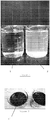
- the figure 1 is a photograph showing a beaker containing 250 mL of water (1) and a beaker in which an orodispersible zolpidem tablet comprising 50 mg of calcium silicate (opacifying agent) (2) has been introduced.
- the figure 2 is a photograph of a glass of coca and a glass of coca in which an orodispersible zolpidem tablet C1 having floating particles has been introduced.
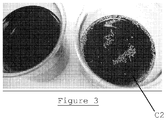
- the figure 3 is a photograph of a glass of coca in which an orodispersible zolpidem tablet C2 has been introduced comprising other floating particles.
- the present invention describes a novel pharmaceutical form for combating chemical submission.
- This object is achieved by means of a pharmaceutical formulation comprising an active principle and at least one compound allowing the immediate modification of the organoleptic characteristics of a beverage into which the pharmaceutical form is introduced, said compound being chosen from the group comprising: an opacifying agent, a fluorescent agent, floating particles, perceptible particles in the mouth, effervescent microgranules, and mixtures thereof.
- the invention also describes the use in a pharmaceutical form, of at least one compound allowing the immediate modification of the organoleptic characteristics of a beverage selected from the group comprising an opacifying agent, a fluorescent agent, floating particles, perceptible particles in the mouth, effervescent microgranules, and mixtures thereof, for combating chemical application.
- a pharmaceutical form of at least one compound allowing the immediate modification of the organoleptic characteristics of a beverage selected from the group comprising an opacifying agent, a fluorescent agent, floating particles, perceptible particles in the mouth, effervescent microgranules, and mixtures thereof, for combating chemical application.
- chemical submission means the administration for criminal or tortious purposes of a psychoactive substance without the knowledge of the victim.
- the invention more particularly relates to a method for the immediate detection in a beverage of a pharmaceutical form illicitly introduced into said beverage, said method being as defined in any one of claims 1 to 8.
- the compounds may be incorporated into the pharmaceutical form individually or in combination.
- the pharmaceutical form is preferably an oral pharmaceutical form. However, it could be another type of pharmaceutical form that the offender would divert from its original purpose.
- immediate is understood to mean the modification of the organoleptic characteristics of the beverage which occurs in less than one minute, preferably in less than 30 seconds, more preferably still in less than 15 seconds from the introduction of the pharmaceutical form into the drink.
- the term “immediate” can also be defined as the modification of the organoleptic characteristics of the beverage which occurs in less than one minute, preferably in less than 30 seconds, more preferably still less 15 seconds from the introduction and stirring of the pharmaceutical form into the drink.
- agitation is meant a setting in motion of the liquid, for example using a straw, spoon, by movement of the container.
- Opacifying agents are mineral compounds that can disturb drinks. It may be silicates such as magnesium silicate, aluminum silicate (especially kaolin), magnesium aluminum silicate, calcium silicate, titanium dioxide and mixtures thereof. These compounds are generally present at least in an amount of at least 15 mg, preferably from 15 to 100 mg, more preferably from 20 mg to 60 mg and still more preferably from 25 to 40 mg. Below 15 mg, the opacity may be more difficult to detect with the naked eye.
- the opacifying agents incorporated in an oral pharmaceutical form make it possible to disturb the drinks into which they are introduced.
- These agents are particularly interesting for disturbing transparent and clear drinks such as water, wine white, apple juice, spirits such as vodka, white rum ...
- the opaque appearance of the drink appears from the first seconds after introduction and agitation of the pharmaceutical form in said drink.
- the pharmaceutical form may also comprise a fluorescent agent in an amount of at least 0.1 mg, preferably in an amount of at least 1 mg, more preferably between 0.2 and 5 mg and even more preferably between 0.3. at 2 mg.
- This agent may be fluorescein and its derivatives, indocyanine green.
- This agent is visible in all types of drinks in the presence of ultraviolet radiation and in the dark. It reveals the pharmaceutical form containing it by emitting a fluorescent light that emerges from the trapped drink. This agent is particularly useful to warn the victim when he is in a dark space where it is easy to sneak a foreign body into a drink.
- the pharmaceutical form may comprise floating particles and / or perceptible particles in the mouth.
- These particles are microgranules comprising an insoluble neutral carrier, or rendered insoluble in water or in an alcoholic solution by coating with an insoluble polymer or by coating with a lipid material.
- microgranules made insoluble in water or in an alcoholic solution we mean a neutral support consisting of materials soluble in water or in an alcoholic solution covered with at least one layer of materials that are insoluble in water or in an alcoholic solution and whose function is to limit or even prevent the penetration of these media into the core of the support.
- a neutral carrier soluble in water or in an alcoholic solution may also be used.
- the soluble neutral carrier may comprise at least one excipient selected from: starch, sucrose, polyols such as mannitol or lactose and mixtures thereof.
- the insoluble neutral support may also be covered by at least one coating layer as described above, insofar as it does not increase the density of the particles unacceptably.
- the degree of coating represents the ratio of the quantity of dry mass constituting the coating layer to the total mass of the microgranule before coating (in dry mass).
- the degree of coating is between 0.1% to 50% w / w, preferably 2% to 30% w / w, and more preferably 5% to 40% w / w.
- the degree of coating is such that the particles obtained have a density lower than that of the beverage in which they will be introduced, preferably a density of less than 1, so that they remain on the surface of the beverage in which they will be introduced. Such particles are called floating particles.
- the hydrophobic polymer used to ensure the insoluble nature of the microgranules is selected from the group of the following products: non-water-soluble derivatives of cellulose, derivatives of (co) polymers (meth) acrylic, derivatives of polyvinylacetates and mixtures thereof.
- the hydrophobic polymer (s) is (are) chosen from the following group of products: ethylcellulose, cellulose acetate butyrate, cellulose acetate, ammonium copolymers, methacrylates type A and type B sold under the trade name Eudragit®, in particular Eudragit® RS 30D, Eudragit NE 30D, Eudragit® RL 30D, Eudragit® RS PO and Eudragit® RL PO from family of poly (ethyl acrylate, methyl methacrylate, trimethylamonioethyl methacrylate), polyvinylacetates and mixtures thereof.
- Eudragit® in particular Eudragit® RS 30D, Eudragit NE 30D, Eudragit® RL 30D, Eudragit® RS PO and Eudragit® RL PO from family of poly (ethyl acrylate, methyl methacrylate, trimethylamonioethyl methacrylate), polyvinylacetates and mixtures thereof.
- the amount of hydrophobic polymer is between 50% to 100%, preferably 70% to 100%, of the dry weight of the coating layer.
- An inert filler may be present in the coating layer in a proportion of 0 to 50% w / w, preferably 0 to 20% w / w, and still more preferably 5 to 20% of the dry weight of the wafer. hydrophobic coating polymer.
- the inert filler uniformly distributed in the coating is chosen from the group comprising, in particular, talc, anhydrous colloidal silica, magnesium stearate, glycerol monostearate and their mixtures.
- a plasticizer may be added to the coating dispersion in an amount of from 0% to 50% w / w, preferably from 2% to 25% w / w, in dry mass. hydrophobic coating polymer.
- the plasticizer is selected in particular from the following group of products: glycerol and its esters, preferably in the following subgroup: medium chain triglycerides, acetylated glycerides, glyceryl monostearate, glyceryl triacetate, glyceryl tributrate phthalates, preferably in the following sub-group: dibutyl phthalate, diethyl phthalate, dimethyl phthalate, dioctyl phthalate, citrates, preferably in the following subgroup: acetyl tributyl citrate, acetyl triethyl citrate, tributyl citrate, triethyl citrate, sebacates, preferably in the sub-group.
- glycerol and its esters preferably in the following subgroup: medium chain triglycerides, acetylated glycerides, glyceryl monostearate, glyceryl triacetate, gly
- diethylsébaçate dibutylsébaçate, adipates, azelates, benzoates, chlorobutanol, polyethylene glycols, vegetable oils, fumarates, preferably diethylfumarate, malates, preferably diethylmalate, oxalates, preferably diethyloxalate succinates; preferably dibutylsuccinate, butyrates, esters of cetyl alcohol, malonates, preferably diethylmalonate, castor oil (the latter being particularly preferred), and mixtures thereof.
- the plasticizing agent is selected from the following group of products: acetylated monoglycerides including Myvacet® 9-45, triethylcitrate (TEC), dibutylsébaçate, triacétine, and mixtures thereof.
- acetylated monoglycerides including Myvacet® 9-45, triethylcitrate (TEC), dibutylsébaçate, triacétine, and mixtures thereof.
- the surfactant is optionally present in the coating in a proportion of 0 to 30% w / w, preferably 0 to 20% w / w, and still more preferably 5 to 15% of the plasticizer dry mass.
- the surfactant is preferably selected from the following group of products: the alkaline or alkaline earth salts of fatty acids, sodium dodecyl sulfate and sodium docusate being preferred, polyoxyethylenated oils, preferably polyoxyethylenated hydrogenated castor oil, polyoxyethylene-polyoxypropylene copolymers, polyoxyethylenated sorbitan esters, polyoxyethylenated castor oil derivatives, stearates, preferably calcium, magnesium, aluminum or zinc, polysorbates, stearyl fumarates, preferably sodium , glycerol behenate, benzalkonium chloride, acetyltrimethylammonium bromide, cetyl alcohol and mixtures thereof.
- the microgranules can also be coated by coating a lipid material.
- the lipidic material according to the invention is selected in particular from the following group of products: glyceryl palmitostearate, waxes, polyoxylglycerides and glyceryl behenate.
- the amount of lipid material is between 50 and 100%, preferably between 80 and 100% of the dry weight of the coating layer.
- the amount of lipid material is chosen such that the density of the resulting particles is less than that of the beverage in which they will be introduced, preferably a density of less than 1, so that they remain on the surface of the drink in which they will be introduced.
- the floating particles have a total diameter (optionally coated neutral support of between 50 and 500 ⁇ m, preferably between 200 and 500 ⁇ m so as not to be perceptible in the mouth and to ensure a certain comfort for the patient. mouth have meanwhile a total diameter greater than 500. ⁇ m, preferably greater than 1 mm so as to be perceived by the lips and especially by the taste buds.
- the measurement of the diameter of the floating particles and perceptible in the mouth is made by laser granulometry in the dry process (Malvern laser granulometer: mastersizer 2000).
- said particles that are perceptible in the mouth are floating.
- the amount of floating particles and / or perceptible in the mouth contained in the pharmaceutical form is at least 25 mg, preferably 40 mg.
- the floating particles and / or the perceptible particles in the mouth may be stained with at least one of the following coloring agents: indigocarmine, erythrosine, brilliant blue FCF, alphazurine FG, fast green FCF, quinzarin green SS, orange II, tartrazine, Sunset yellow FCF and / or can be made fluorescent with a fluorescent agent selected from the group consisting of fluorescein and its derivatives and green d indocyanine.
- coloring agents indigocarmine, erythrosine, brilliant blue FCF, alphazurine FG, fast green FCF, quinzarin green SS, orange II, tartrazine, Sunset yellow FCF and / or can be made fluorescent with a fluorescent agent selected from the group consisting of fluorescein and its derivatives and green d indocyanine.
- the active ingredient may also be colored with at least one dye as described above in order to prevent the possible sorting between the active ingredient and the floating particles and / or the perceptible particles in the mouth.
- the floating particles and / or perceptible in the mouth adapt to all types of drink.
- the floating particles immediately return to the surface of the drink and are visible to the naked eye. These particles remain on the surface of the liquid for at least 5 minutes and preferably for at least 4 hours, more preferably for at least 12 hours.
- Perceptible particles in the mouth can also be floating particles. They are detected immediately when taking the first sip of the boozed drink.
- the dosage form may also include effervescent microgranules.
- the effervescent microgranules comprise a basic excipient which will create an effervescence when it is in the presence of an acidic drink such as soda or beer.
- the amount of alkaline agent is at least greater than 5 mg, preferably greater than 10 mg and even more preferably greater than 20 mg.
- the particles of alkaline agent (s) in contact with the present acid create an effervescence visible to the naked eye.
- the effervescent microgranules can be coated.
- the coating is sufficiently permeable to allow release of the effervescent agent particles over a period of at least thirty minutes to one hour.
- the coating contains at least one insoluble polymer of the family of cellulose derivatives, vinyl derivatives or acrylic derivatives. It may comprise a plasticizer and / or a surfactant. It can be permeabilized by adding a soluble pore-forming agent such as, for example, soluble cellulose derivatives, povidone, a disintegrating agent.
- the amount of effervescent microgranules contained in the dosage form is at least 25 mg, preferably 40 mg.
- the effervescent microgranules can be stained with at least one coloring agent chosen from indigocarmine, erythrosine, brilliant blue FCF, alphazurine FG, fast green FCF, quinzarin green SS, orange II, tartrazine, Sunset yellow FCF and / or may be rendered fluorescent using a fluorescent agent selected from the group consisting of fluorescein and its derivatives and indocyanine green.
- at least one coloring agent chosen from indigocarmine, erythrosine, brilliant blue FCF, alphazurine FG, fast green FCF, quinzarin green SS, orange II, tartrazine, Sunset yellow FCF and / or may be rendered fluorescent using a fluorescent agent selected from the group consisting of fluorescein and its derivatives and indocyanine green.
- a colored effervescence and / or effervescence will appear on the surface of the beverage after introduction of the pharmaceutical form containing the effervescent microgranules.
- the invention is adapted for any active ingredient that modifies the state of consciousness of the patient. More particularly, the active ingredient is chosen from the group comprising: anoxolytics, for example benzodiazepines, hypnotics, sedatives, analgesics, for example of the opioid type.
- Anxyolytics are a class of psychotropic drugs, preferably selected from Alprazolam, Bromazepam, Chlordiazepoxide, Clobazam, Clonazepam, Clotiazepam, Clorazepate, Diazepam, Estazolam, Flunitrazepam, Lorazepam, Lormetazepam, Midazolam, Nitrazepam, Nordazepam, Oxazepam, Prazepam, Temazepam, Tetrazepam, Triazolam, clozapine, olanzapine, pirenzepine, zolpidem, lezopiclone, zaleplon, meprobamate, etifoxine, and mixtures thereof.
- the opiods are preferably chosen from Alfentanil, Anileridine, Butorphanol, Carfentanil, Codeine, Diamorphine (heroin), Dextropropoxyphene, Enkephalins, Endorphins, Fentanyl, Hydrocodone, Hydromorphone, Methadone, Morphine, Nalbuphine, Oxycodone, Oxymorphone, Pentazocine, Pethidine (meperidine), Propoxyphene, Remifentanil, Sufentanil, Tramadol and Buprenorphine, and mixtures thereof.
- the active ingredient present in the pharmaceutical form is in solid form.
- the active ingredient may also be colored using at least one coloring agent.
- the coloring agent may be one of those described above and / or may be rendered fluorescent by addition of a fluorescent agent as described above.
- the active ingredient may be mounted on the floating particles and / or on the perceptible particles in the mouth.
- the pharmaceutical form may also comprise, within its matrix, at least one water-soluble coloring agent chosen from the group comprising: indigocarmine or E 132, erythrosine or E 127, brilliant blue FCF, alphazurine FG, fast green FCF, quinzarin green SS, orange II, tartrazine, Sunset yellow FCF.
- water-soluble coloring agents that can be used in the invention are soluble dyes in any liquid comprising at least partly water and which are pharmaceutically acceptable.
- the coloring agent is present in an amount sufficient to allow coloring intense enough to be perceived with the naked eye and which can appear from the first seconds after the introduction and agitation of the pharmaceutical form in said beverage.
- the coloring agent is present in an amount of at least 0.05 mg, preferably 0.2 to 5 mg, more preferably still 0.3 to 2 mg in the pharmaceutical form.
- the coloring agent is indigocarmine
- an intense blue color emerges immediately from the pharmaceutical form, for example dyeing the drink in blue if it is a colorless beverage such as water or lemonade, or in green if it is a yellow drink like orange juice.
- Erythrosine another coloring agent, colors drinks red.
- the term "drink” will be used to designate cold drinks and hot drinks, for example water; sparkling water ; wine (red, white, rosé); beer (brown, blonde); liqueurs; spirits such as vodka, rum, eau-de-vie, tequila, whiskey; cocktails; fruit juices such as orange juice, grape juice; sodas such as coca, lemonade; coffee ; tea.
- drinks are given as an indication but in no way limiting.
- the container containing a beverage in which the pharmaceutical form can be introduced has a capacity of between 3 cl and 1 L.
- the active ingredient may be in the form of microcrystals, microgranules or suspended and mounted on a neutral support.
- the active ingredient When mounted on a neutral support, the active ingredient is in the form of a solution or suspension in an aqueous or organic solvent.
- a binder, a diluent, an antistatic agent may also be added.
- the neutral support may be any excipient which is chemically and pharmaceutically inert, existing in particulate, crystalline or amorphous form.
- excipients such as lactose, sucrose, hydrolysed starch (maltodextrins) or celluloses.
- sugar derivatives such as lactose, sucrose, hydrolysed starch (maltodextrins) or celluloses.
- Mixtures such as sucrose and starch or cellulose-based are also used for the preparation of spherical neutral supports.
- the active ingredient can also be formed into microgranules by a process known per se, such as, for example, extrusion-spheronization, assembly of active principle in perforated turbine, fluidized bed and the like.
- microgranules are optionally coated in a turbine or fluidized bed.
- the active ingredient can be coated with a polymer chosen depending on the type of release desired (immediate, controlled, delayed) or according to its taste-masking properties.
- the active ingredient is then combined with at least one agent that makes it possible to fight against chemical submission and with at least one pharmaceutically acceptable excipient.
- the invention is suitable for any pharmaceutical form, especially an oral form, chosen from uncoated tablets such as conventional tablets, sucking tablets, sublingual tablets, chewable tablets, effervescent tablets, dispersible tablets, orodispersible tablets; powder for sachets or capsules, thin films.
- the invention is more particularly useful for immediate release pharmaceutical compositions, since the perpetrator will wish that the effect of loss of alertness is as fast as possible. It could, however, be adapted to controlled release forms.
- the pharmaceutically acceptable excipients used in the pharmaceutical compositions according to the invention are conventionally used excipients.
- the proportion of disintegrating agent and soluble agent relative to the mass of the tablet being from 1 to 15%, preferably from 2 to 7% by weight for the first and from 30 to 90%, preferably from 40 to 70% by weight for the second.
- the diluent soluble agent with binding properties consists of a polyol of less than 13 carbon atoms which is either in the form of the directly compressible product having a mean particle diameter of between 100 and 500 microns, or in the form of a powder whose average particle diameter is less than 100 micrometers, this polyol preferably being chosen from the group comprising mannitol, xylitol, sorbitol and maltitol, sorbitol can not be used alone.
- the disintegrating agent is chosen from the group comprising in particular the crosslinked sodium carboxymethylcellulose designated in the art by the term croscarmellose, crospovidone and their mixture. Due to the choice and proportion of this disintegrating agent, the tablet retains an acceptable hardness for normal handling conditions of the tablets when stored in sealed condition at temperatures of at least 30 ° C.
- the lubricant preferably used in this mixture of excipients is selected from the group comprising magnesium stearate, sodium stearyl fumarate, stearic acid, micronized polyoxyethylene glycol (Macrogol 6000 micronised), and mixtures thereof. It can be used in a proportion from 0.05 to 2% relative to the total mass of the tablet.
- permeabilizing agent a compound selected from the group including silicas having a high affinity for aqueous solvents, such as precipitated silica better known under the brand name Syloid, maltodextrins, 1-cyclodextrins and mixtures thereof.
- the permeabilizing agent allows the creation of a hydrophilic network which facilitates the penetration of saliva and thus contributes to a better disintegration of the tablet.
- Orodispersible tablets comprising 10 mg of zolpidem and an opacifying agent having the following composition: constituents % mg / unit Zolpidem grains 32.8 82.1 Microcrystalline cellulose 9.6 23,90 mannitol 30.0 75.00 crospovidone 5.0 12.50 Calcium silicate 20.0 50,00 aspartame 1.0 2.50 Aroma 0.1 0.25 Silica 1.0 2.50 Mg stearate 0.5 1.25 Total 100.0 250.0
- the orodispersible tablets are prepared as follows.
- the zolpidem grains which have the following percentage composition are initially prepared: NPTAB 190 (180-220 ⁇ m) 56 Zolpidem tartrate 13 Hypromellose 603 7 HCl1N 2 Aquacoat ECD30 13 Hypromellose 603 6 Triethyl citrate 3
- zolpidem tartrate is dissolved in water using HCl, then a dispersion is prepared by adding hypromellose 603.
- a dispersion is prepared by adding hypromellose 603.
- a fluidized bed GPCG1 Gelatt
- spheres of sugar NPTAB 190 are introduced and the dispersion prepared above.
- An aqueous dispersion of aquacoat ECD30, triethyl citrate and hypromellose 603 is then introduced to obtain a taste-masking coating.
- the zolpidem grains are then mixed with the compression excipients.
- the powder mixture is then compressed on a rotary press (SVIAC PR12) equipped with round, convex punches at a compressive force of 5kN.
- the tablets are pleasant in the mouth.
- a tablet is introduced into a transparent container containing 250 ml of water. A disorder appears as soon as the tablet is disintegrated, as shown on the figure 1 .
- the figure 1 is a photograph showing a beaker containing 250mL of water (1) and a beaker into which was introduced the tablet prepared in this example (2).
- zolpidem tablets comprising an opacifying agent having the following general formula are prepared: % Mg / unit Zolpidem grains 32.8 82.0 Microcrystalline cellulose 10.0 25.0 Lactose 32.7 81.75 Calcium silicate 20.0 50.0 povidone 3.0 7.5 Silica 1.0 2.50 Mg stearate 0.5 1.25 Total 100.0 250.0
- the zolpidem grains are prepared in the same manner as in Example 1 above. They are then mixed with the excipients and the powder mixture is compressed.
- a tablet thus prepared is introduced into a glass of water in which it dissolves forming a haze very visible to the naked eye.
- Two types of orodispersible tablets are prepared comprising floating particles having the following formula: constituents % mg / unit Zolpidem grains 32.8 82.1 Microcrystalline cellulose 9.6 23,90 mannitol 30.0 75.00 crospovidone 5.0 12.50 Floating particles 20.0 50,00 aspartame 1.0 2.50 Aroma 0.1 0.25 Silica 1.0 2.50 Mg stearate 0.5 1.25 Total 100.0 250.0
- the floating particles are prepared as follows: Neutrals NPTAB 190 (180-220 ⁇ m) are coated with an aqueous dispersion of ethylcellulose, triacetin and talc. The coating factor is 30% dry mass and the talc / polymer ratio is 1: 2.
- the floating particles are calcium phosphate dibasic dihydrate particles coated with glyceryl palmitostearate.
- the glyceryl palmitostearate / dibasic calcium phosphate dihydrate ratio is 1: 4.
- the tablets of both series disintegrate in less than 30s, and have a pleasant sensation in the mouth.
- One tablet of each type is introduced into a glass of coca cola.
- the disintegration is done immediately and the presence of particles on the surface of the coca cola is detectable with the naked eye. These floating particles are visible on the surface for more than 3 hours.
- Immediate release morphine capsules comprising floating particles are prepared as follows: In a fluidized bed GPCG1 (Glatt), SP sugar neutrinos (400-600 ⁇ m) are introduced and an aqueous dispersion of morphine sulfate and hypromellose 603 is sprayed onto them, so as to obtain the following percentage composition: 43% SP neutral, 42% morphine sulfate and 15% hypromellose.
- the two populations of particles present in the capsule are not distinguishable with the naked eye.
- Morphine sulphate capsules are prepared as in the preceding example but using neutrons with a diameter of 250-300 ⁇ m and replacing the floating particles with floating particles prepared in the following manner: NPTAB neutrals (300-350 ⁇ m) are coated with an aqueous dispersion of ethylcellulose, triacetin and talc. The coating factor is 40% dry mass and the talc / polymer ratio is 1: 2.
- Both populations of particles are introduced into capsules.
- the two particle populations are not distinguishable with the naked eye.
- the contents of one capsule are introduced into a can of coca-cola. Floating particles immediately rise to the surface and as soon as the person carries the drink in his mouth, he feels the presence of microparticles, a sign that a substance has been introduced into the can.
- Orodispersible tablets comprising 5 mg of zolpidem and a fluorescent agent having the following composition: % Mg / unit Zolpidem grains 32.8 41.05 Microcrystalline cellulose 10.0 12.50 mannitol 43.7 54.57 crospovidone 10.0 12.50 aspartame 1.0 1.25 Aroma 0.1 0.13 fluorescein 0.4 0.50 Silica 1.0 1.25 Mg stearate 1.0 1.25 Total 100.0 125.0
- the orodispersible tablets are prepared as follows.
- the zolpidem grains which have the following percentage composition are initially prepared: NPTAB 190 (180-220 ⁇ m) 56 Zolpidem tartrate 13 Hypromellose 603 7 HCl1N 2 Aquacoat ECD30 13 Hypromellose 603 6 Triethyl citrate 3
- zolpidem tartrate is dissolved in water using HCl, then a dispersion is prepared by adding hypromellose 603.
- a dispersion is prepared by adding hypromellose 603.
- a fluidized bed GPCG1 Gelatt
- spheres of sugar NPTAB 190 are introduced and the dispersion prepared above.
- An aqueous dispersion of aquacoat ECD30, triethyl citrate and hypromellose 603 is then introduced to obtain a taste-masking coating.
- the zolpidem grains are then mixed with the compression excipients.
- the powder mixture is then compressed on a rotary tablet press (SVIAC PR12) with round, convex punches at a compressive force of 5kN
- the tablets are pleasant in the mouth.
- a tablet is introduced into a transparent container containing 250 ml of water.
- the surface of the water becomes fluorescent as soon as the tablet is disintegrated.
- Orodispersible tablets comprising 10 mg of zolpidem, floating particles and a fluorescent agent having the following composition are prepared: mg / unit % Gr. Zolpidem Tartrate * 80.0 26.7 Avicel PH 200 30.0 10.0 Mannitol SD 200 99.7 33.2 Floating particles 50.0 16.7 Kollidon CL 30.0 10.0 aspartame 3.0 1.0 Blackcherry aroma 0.3 0.1 Sodium fluorescein 1.0 0.33 Syloid 244 FP 3.0 1.0 Stearate Mg 3.0 1.0 Total 300.0 100.0
- the floating particles are prepared in the following manner: Neutrals NPTAB 190 (180-220 ⁇ m) are coated with an aqueous dispersion of ethylcellulose and Myvacet® (acetylated monoglyceride) 9-45.
- the coating factor is 30% dry mass and the plasticizer / polymer ratio is 24%.
- the tablets disintegrate in less than 15s, and have a pleasant sensation in the mouth.
- a tablet is introduced into a glass of coca cola.
- the disintegration is done immediately and the presence of particles on the surface of coca cola is detectable to the naked eye. These floating particles are visible on the surface for more than 3 hours.
Landscapes
- Health & Medical Sciences (AREA)
- Life Sciences & Earth Sciences (AREA)
- Chemical & Material Sciences (AREA)
- General Health & Medical Sciences (AREA)
- Medicinal Chemistry (AREA)
- Engineering & Computer Science (AREA)
- Pharmacology & Pharmacy (AREA)
- Veterinary Medicine (AREA)
- Public Health (AREA)
- Animal Behavior & Ethology (AREA)
- Epidemiology (AREA)
- Bioinformatics & Cheminformatics (AREA)
- Molecular Biology (AREA)
- Immunology (AREA)
- Biomedical Technology (AREA)
- Food Science & Technology (AREA)
- Hematology (AREA)
- Pathology (AREA)
- Analytical Chemistry (AREA)
- Physics & Mathematics (AREA)
- Biochemistry (AREA)
- General Physics & Mathematics (AREA)
- Urology & Nephrology (AREA)
- Biophysics (AREA)
- Biotechnology (AREA)
- Cell Biology (AREA)
- Microbiology (AREA)
- Zoology (AREA)
- Nutrition Science (AREA)
- Inorganic Chemistry (AREA)
- Physiology (AREA)
- Neurology (AREA)
- Chemical Kinetics & Catalysis (AREA)
- Neurosurgery (AREA)
- General Chemical & Material Sciences (AREA)
- Nuclear Medicine, Radiotherapy & Molecular Imaging (AREA)
- Organic Chemistry (AREA)
- Emergency Medicine (AREA)
- Anesthesiology (AREA)
- Medicinal Preparation (AREA)
Applications Claiming Priority (2)
| Application Number | Priority Date | Filing Date | Title |
|---|---|---|---|
| FR1055491A FR2962331B1 (fr) | 2010-07-06 | 2010-07-06 | Forme pharmaceutique pour lutter contre la soumission chimique, methode la mettant en oeuvre |
| PCT/FR2011/051601 WO2012007672A1 (fr) | 2010-07-06 | 2011-07-05 | Forme pharmaceutique pour lutter contre la soumission chimique d'un medicament |
Publications (2)
| Publication Number | Publication Date |
|---|---|
| EP2590632A1 EP2590632A1 (fr) | 2013-05-15 |
| EP2590632B1 true EP2590632B1 (fr) | 2019-04-17 |
Family
ID=43661911
Family Applications (1)
| Application Number | Title | Priority Date | Filing Date |
|---|---|---|---|
| EP11743100.7A Active EP2590632B1 (fr) | 2010-07-06 | 2011-07-05 | Forme pharmaceutique pour lutter contre la soumission chimique d'un medicament |
Country Status (13)
| Country | Link |
|---|---|
| US (2) | US20130108556A1 (enExample) |
| EP (1) | EP2590632B1 (enExample) |
| JP (1) | JP2013533874A (enExample) |
| KR (1) | KR20130043180A (enExample) |
| CN (1) | CN103118667B (enExample) |
| AU (1) | AU2011278140B2 (enExample) |
| CA (1) | CA2802404C (enExample) |
| ES (1) | ES2733732T3 (enExample) |
| FR (1) | FR2962331B1 (enExample) |
| IL (1) | IL223887B (enExample) |
| MX (1) | MX344018B (enExample) |
| WO (1) | WO2012007672A1 (enExample) |
| ZA (1) | ZA201300077B (enExample) |
Families Citing this family (1)
| Publication number | Priority date | Publication date | Assignee | Title |
|---|---|---|---|---|
| FR2962550B1 (fr) * | 2010-07-06 | 2013-06-14 | Ethypharm Sa | Methode pour lutter contre la soumission chimique, utilisation d'agent colorant pour lutter contre la soumission chimique et composition pharmaceutique permettant la mise en oeuvre de la methode |
Citations (3)
| Publication number | Priority date | Publication date | Assignee | Title |
|---|---|---|---|---|
| WO2000038649A1 (fr) * | 1998-12-23 | 2000-07-06 | Sanofi-Synthelabo | Composition pharmaceutique pour une administration par voie orale destinee a eviter le detournement d'usage au depens d'un tiers |
| FR2829932A1 (fr) * | 2001-09-21 | 2003-03-28 | Ellipse Pharmaceuticals | Procede de fabrication d'un produit pharmaceutique administrable par voie orale avec des agents detrompeurs et produit obtenu |
| WO2003026621A2 (fr) * | 2001-09-21 | 2003-04-03 | Ellipse Pharmaceuticals | Procede de fabrication d'un produit pharmaceutique administrable par voie orale avec des agents detrompeurs notamment de gout et produit obtenu |
Family Cites Families (19)
| Publication number | Priority date | Publication date | Assignee | Title |
|---|---|---|---|---|
| FR2679451B1 (fr) | 1991-07-22 | 1994-09-09 | Prographarm Laboratoires | Comprime multiparticulaire a delitement rapide. |
| US6649186B1 (en) * | 1996-09-20 | 2003-11-18 | Ethypharm | Effervescent granules and methods for their preparation |
| FR2766089B1 (fr) | 1997-07-21 | 2000-06-02 | Prographarm Lab | Comprime multiparticulaire perfectionne a delitement rapide |
| FR2785538B1 (fr) | 1998-11-06 | 2004-04-09 | Prographarm Laboratoires | Comprime a delitement rapide perfectionne |
| EP1005863A1 (en) * | 1998-12-04 | 2000-06-07 | Synthelabo | Controlled-release dosage forms comprising a short acting hypnotic or a salt thereof |
| FR2790387B1 (fr) | 1999-03-01 | 2001-05-18 | Prographarm Laboratoires | Comprime orodispersible presentant une faible friabilite et son procede de preparation |
| US20040258750A1 (en) * | 1999-06-28 | 2004-12-23 | Gerard Alaux | Timed dual release dosage forms comprising a short acting hypnotic or a salt thereof |
| WO2001058424A1 (en) * | 2000-02-09 | 2001-08-16 | West Pharmaceutical Services Drug Delivery & Clinical Research Centre Limited | Floating drug delivery composition |
| ITMI20011446A1 (it) * | 2001-07-06 | 2003-01-06 | Altergon Sa | Composizioni farmaceutiche di principi attivi suscettibili di somministrazione illecita |
| FR2831820B1 (fr) | 2001-11-05 | 2004-08-20 | Ethypharm Sa | Comprime orodispersible presentant une grande homogeneite et son procede de preparation |
| US8906413B2 (en) * | 2003-05-12 | 2014-12-09 | Supernus Pharmaceuticals, Inc. | Drug formulations having reduced abuse potential |
| DE10336400A1 (de) * | 2003-08-06 | 2005-03-24 | Grünenthal GmbH | Gegen Missbrauch gesicherte Darreichungsform |
| EP1714145A1 (en) | 2003-12-19 | 2006-10-25 | Bloomsbury Innovations Ltd. | Apparatus for detecting drugs in a beverage |
| AU2005295482B2 (en) * | 2004-10-15 | 2011-03-31 | Supernus Pharmaceuticals Inc. | Less abusable pharmaceutical preparations |
| EP1681048A1 (en) * | 2005-01-14 | 2006-07-19 | Krka Tovarna Zdravil, D.D., Novo Mesto | Orally disintegrating composition of olanzapine or donepezil |
| FR2892937B1 (fr) * | 2005-11-10 | 2013-04-05 | Flamel Tech Sa | Forme pharmaceutique orale microparticulaire anti-mesusage |
| WO2008033351A2 (en) * | 2006-09-11 | 2008-03-20 | Theraquest Biosciences, Inc. | Multimodal abuse resistant and extended release formulations |
| PT2572705T (pt) * | 2007-10-01 | 2017-11-08 | Lesvi Laboratorios Sl | Comprimidos orodispersíveis |
| EP2254420A4 (en) * | 2008-02-20 | 2012-02-15 | Targia Pharmaceuticals | CNS PHARMACEUTICALS AND METHOD FOR THEIR USE |
-
2010
- 2010-07-06 FR FR1055491A patent/FR2962331B1/fr active Active
-
2011
- 2011-07-05 KR KR1020137003074A patent/KR20130043180A/ko not_active Withdrawn
- 2011-07-05 AU AU2011278140A patent/AU2011278140B2/en not_active Ceased
- 2011-07-05 CN CN201180033422.3A patent/CN103118667B/zh active Active
- 2011-07-05 JP JP2013517481A patent/JP2013533874A/ja active Pending
- 2011-07-05 US US13/808,810 patent/US20130108556A1/en not_active Abandoned
- 2011-07-05 ES ES11743100T patent/ES2733732T3/es active Active
- 2011-07-05 CA CA2802404A patent/CA2802404C/fr active Active
- 2011-07-05 MX MX2012015104A patent/MX344018B/es active IP Right Grant
- 2011-07-05 WO PCT/FR2011/051601 patent/WO2012007672A1/fr not_active Ceased
- 2011-07-05 EP EP11743100.7A patent/EP2590632B1/fr active Active
-
2012
- 2012-12-25 IL IL223887A patent/IL223887B/en active IP Right Grant
-
2013
- 2013-01-03 ZA ZA2013/00077A patent/ZA201300077B/en unknown
-
2016
- 2016-09-30 US US15/281,595 patent/US20170016925A1/en not_active Abandoned
Patent Citations (3)
| Publication number | Priority date | Publication date | Assignee | Title |
|---|---|---|---|---|
| WO2000038649A1 (fr) * | 1998-12-23 | 2000-07-06 | Sanofi-Synthelabo | Composition pharmaceutique pour une administration par voie orale destinee a eviter le detournement d'usage au depens d'un tiers |
| FR2829932A1 (fr) * | 2001-09-21 | 2003-03-28 | Ellipse Pharmaceuticals | Procede de fabrication d'un produit pharmaceutique administrable par voie orale avec des agents detrompeurs et produit obtenu |
| WO2003026621A2 (fr) * | 2001-09-21 | 2003-04-03 | Ellipse Pharmaceuticals | Procede de fabrication d'un produit pharmaceutique administrable par voie orale avec des agents detrompeurs notamment de gout et produit obtenu |
Also Published As
| Publication number | Publication date |
|---|---|
| HK1184050A1 (en) | 2014-01-17 |
| CA2802404C (fr) | 2019-08-13 |
| ZA201300077B (en) | 2014-03-26 |
| EP2590632A1 (fr) | 2013-05-15 |
| CN103118667A (zh) | 2013-05-22 |
| WO2012007672A1 (fr) | 2012-01-19 |
| FR2962331A1 (fr) | 2012-01-13 |
| MX344018B (es) | 2016-12-02 |
| US20130108556A1 (en) | 2013-05-02 |
| CN103118667B (zh) | 2015-09-16 |
| AU2011278140A1 (en) | 2013-01-17 |
| CA2802404A1 (fr) | 2012-01-19 |
| US20170016925A1 (en) | 2017-01-19 |
| MX2012015104A (es) | 2013-05-28 |
| JP2013533874A (ja) | 2013-08-29 |
| ES2733732T3 (es) | 2019-12-02 |
| IL223887B (en) | 2018-08-30 |
| KR20130043180A (ko) | 2013-04-29 |
| FR2962331B1 (fr) | 2020-04-24 |
| AU2011278140B2 (en) | 2015-07-09 |
Similar Documents
| Publication | Publication Date | Title |
|---|---|---|
| CA2479057C (fr) | Comprimes a base de microcapsules a liberation modifiee | |
| EP2568974B1 (fr) | Forme pharmaceutique orale alcoolo-resistante | |
| EP1385489B1 (fr) | Granules enrobes a base d'inhibiteur de l'enzyme de conversion de l'angiotensine | |
| EP1492531B3 (fr) | Formulation pharmaceutique orale sous forme de suspension aqueuse de microcapsules permettant la liberation modifiée d'amoxicilline | |
| EP2591350B1 (fr) | Méthode et agent pour la détection de drogues dans les boisson | |
| FR2999426A1 (fr) | Forme orale multiparticulaire a liberation immediate d'au moins un compose actif, comprenant des particules enrobees resistantes au broyage. | |
| EP3115042A1 (fr) | Comprimes d'oxycodone resistant a l'ecrasement destines a eviter le mesusage involontaire et le detournement illicite | |
| FR2883179A1 (fr) | Comprime enrobe | |
| EP0774960A1 (fr) | Composition permettant une liberation selective d'un principe actif | |
| CA2802404C (fr) | Forme pharmaceutique pour lutter contre la soumission chimique d'un medicament | |
| JP5960158B2 (ja) | ゾルピデムベースの口腔内崩壊医薬錠剤 | |
| FR2968995A1 (fr) | Composition pharmaceutioue pour une administration par voie orale destinee a eviter le mesusage | |
| US20220202742A1 (en) | Dosage forms for preventing drug-facilitated assault | |
| HK1184050B (en) | Pharmaceutical form for combating chemical submission of a medicament | |
| HK1184219A (zh) | 用於检测饮料中的药物的方法和试剂 |
Legal Events
| Date | Code | Title | Description |
|---|---|---|---|
| PUAI | Public reference made under article 153(3) epc to a published international application that has entered the european phase |
Free format text: ORIGINAL CODE: 0009012 |
|
| 17P | Request for examination filed |
Effective date: 20130107 |
|
| AK | Designated contracting states |
Kind code of ref document: A1 Designated state(s): AL AT BE BG CH CY CZ DE DK EE ES FI FR GB GR HR HU IE IS IT LI LT LU LV MC MK MT NL NO PL PT RO RS SE SI SK SM TR |
|
| DAX | Request for extension of the european patent (deleted) | ||
| 17Q | First examination report despatched |
Effective date: 20160425 |
|
| STAA | Information on the status of an ep patent application or granted ep patent |
Free format text: STATUS: EXAMINATION IS IN PROGRESS |
|
| GRAP | Despatch of communication of intention to grant a patent |
Free format text: ORIGINAL CODE: EPIDOSNIGR1 |
|
| STAA | Information on the status of an ep patent application or granted ep patent |
Free format text: STATUS: GRANT OF PATENT IS INTENDED |
|
| INTG | Intention to grant announced |
Effective date: 20181210 |
|
| GRAS | Grant fee paid |
Free format text: ORIGINAL CODE: EPIDOSNIGR3 |
|
| GRAA | (expected) grant |
Free format text: ORIGINAL CODE: 0009210 |
|
| STAA | Information on the status of an ep patent application or granted ep patent |
Free format text: STATUS: THE PATENT HAS BEEN GRANTED |
|
| AK | Designated contracting states |
Kind code of ref document: B1 Designated state(s): AL AT BE BG CH CY CZ DE DK EE ES FI FR GB GR HR HU IE IS IT LI LT LU LV MC MK MT NL NO PL PT RO RS SE SI SK SM TR |
|
| REG | Reference to a national code |
Ref country code: GB Ref legal event code: FG4D Free format text: NOT ENGLISH |
|
| REG | Reference to a national code |
Ref country code: CH Ref legal event code: EP |
|
| REG | Reference to a national code |
Ref country code: DE Ref legal event code: R096 Ref document number: 602011058133 Country of ref document: DE |
|
| REG | Reference to a national code |
Ref country code: AT Ref legal event code: REF Ref document number: 1120800 Country of ref document: AT Kind code of ref document: T Effective date: 20190515 Ref country code: IE Ref legal event code: FG4D Free format text: LANGUAGE OF EP DOCUMENT: FRENCH |
|
| REG | Reference to a national code |
Ref country code: NL Ref legal event code: MP Effective date: 20190417 |
|
| REG | Reference to a national code |
Ref country code: LT Ref legal event code: MG4D |
|
| PG25 | Lapsed in a contracting state [announced via postgrant information from national office to epo] |
Ref country code: NL Free format text: LAPSE BECAUSE OF FAILURE TO SUBMIT A TRANSLATION OF THE DESCRIPTION OR TO PAY THE FEE WITHIN THE PRESCRIBED TIME-LIMIT Effective date: 20190417 |
|
| PG25 | Lapsed in a contracting state [announced via postgrant information from national office to epo] |
Ref country code: HR Free format text: LAPSE BECAUSE OF FAILURE TO SUBMIT A TRANSLATION OF THE DESCRIPTION OR TO PAY THE FEE WITHIN THE PRESCRIBED TIME-LIMIT Effective date: 20190417 Ref country code: LT Free format text: LAPSE BECAUSE OF FAILURE TO SUBMIT A TRANSLATION OF THE DESCRIPTION OR TO PAY THE FEE WITHIN THE PRESCRIBED TIME-LIMIT Effective date: 20190417 Ref country code: AL Free format text: LAPSE BECAUSE OF FAILURE TO SUBMIT A TRANSLATION OF THE DESCRIPTION OR TO PAY THE FEE WITHIN THE PRESCRIBED TIME-LIMIT Effective date: 20190417 Ref country code: NO Free format text: LAPSE BECAUSE OF FAILURE TO SUBMIT A TRANSLATION OF THE DESCRIPTION OR TO PAY THE FEE WITHIN THE PRESCRIBED TIME-LIMIT Effective date: 20190717 Ref country code: FI Free format text: LAPSE BECAUSE OF FAILURE TO SUBMIT A TRANSLATION OF THE DESCRIPTION OR TO PAY THE FEE WITHIN THE PRESCRIBED TIME-LIMIT Effective date: 20190417 Ref country code: PT Free format text: LAPSE BECAUSE OF FAILURE TO SUBMIT A TRANSLATION OF THE DESCRIPTION OR TO PAY THE FEE WITHIN THE PRESCRIBED TIME-LIMIT Effective date: 20190817 Ref country code: SE Free format text: LAPSE BECAUSE OF FAILURE TO SUBMIT A TRANSLATION OF THE DESCRIPTION OR TO PAY THE FEE WITHIN THE PRESCRIBED TIME-LIMIT Effective date: 20190417 |
|
| PG25 | Lapsed in a contracting state [announced via postgrant information from national office to epo] |
Ref country code: GR Free format text: LAPSE BECAUSE OF FAILURE TO SUBMIT A TRANSLATION OF THE DESCRIPTION OR TO PAY THE FEE WITHIN THE PRESCRIBED TIME-LIMIT Effective date: 20190718 Ref country code: BG Free format text: LAPSE BECAUSE OF FAILURE TO SUBMIT A TRANSLATION OF THE DESCRIPTION OR TO PAY THE FEE WITHIN THE PRESCRIBED TIME-LIMIT Effective date: 20190717 Ref country code: PL Free format text: LAPSE BECAUSE OF FAILURE TO SUBMIT A TRANSLATION OF THE DESCRIPTION OR TO PAY THE FEE WITHIN THE PRESCRIBED TIME-LIMIT Effective date: 20190417 Ref country code: LV Free format text: LAPSE BECAUSE OF FAILURE TO SUBMIT A TRANSLATION OF THE DESCRIPTION OR TO PAY THE FEE WITHIN THE PRESCRIBED TIME-LIMIT Effective date: 20190417 Ref country code: RS Free format text: LAPSE BECAUSE OF FAILURE TO SUBMIT A TRANSLATION OF THE DESCRIPTION OR TO PAY THE FEE WITHIN THE PRESCRIBED TIME-LIMIT Effective date: 20190417 |
|
| REG | Reference to a national code |
Ref country code: ES Ref legal event code: FG2A Ref document number: 2733732 Country of ref document: ES Kind code of ref document: T3 Effective date: 20191202 |
|
| REG | Reference to a national code |
Ref country code: AT Ref legal event code: MK05 Ref document number: 1120800 Country of ref document: AT Kind code of ref document: T Effective date: 20190417 |
|
| PG25 | Lapsed in a contracting state [announced via postgrant information from national office to epo] |
Ref country code: IS Free format text: LAPSE BECAUSE OF FAILURE TO SUBMIT A TRANSLATION OF THE DESCRIPTION OR TO PAY THE FEE WITHIN THE PRESCRIBED TIME-LIMIT Effective date: 20190817 |
|
| REG | Reference to a national code |
Ref country code: DE Ref legal event code: R097 Ref document number: 602011058133 Country of ref document: DE |
|
| PG25 | Lapsed in a contracting state [announced via postgrant information from national office to epo] |
Ref country code: EE Free format text: LAPSE BECAUSE OF FAILURE TO SUBMIT A TRANSLATION OF THE DESCRIPTION OR TO PAY THE FEE WITHIN THE PRESCRIBED TIME-LIMIT Effective date: 20190417 Ref country code: AT Free format text: LAPSE BECAUSE OF FAILURE TO SUBMIT A TRANSLATION OF THE DESCRIPTION OR TO PAY THE FEE WITHIN THE PRESCRIBED TIME-LIMIT Effective date: 20190417 Ref country code: CZ Free format text: LAPSE BECAUSE OF FAILURE TO SUBMIT A TRANSLATION OF THE DESCRIPTION OR TO PAY THE FEE WITHIN THE PRESCRIBED TIME-LIMIT Effective date: 20190417 Ref country code: RO Free format text: LAPSE BECAUSE OF FAILURE TO SUBMIT A TRANSLATION OF THE DESCRIPTION OR TO PAY THE FEE WITHIN THE PRESCRIBED TIME-LIMIT Effective date: 20190417 Ref country code: SK Free format text: LAPSE BECAUSE OF FAILURE TO SUBMIT A TRANSLATION OF THE DESCRIPTION OR TO PAY THE FEE WITHIN THE PRESCRIBED TIME-LIMIT Effective date: 20190417 Ref country code: DK Free format text: LAPSE BECAUSE OF FAILURE TO SUBMIT A TRANSLATION OF THE DESCRIPTION OR TO PAY THE FEE WITHIN THE PRESCRIBED TIME-LIMIT Effective date: 20190417 |
|
| PLBE | No opposition filed within time limit |
Free format text: ORIGINAL CODE: 0009261 |
|
| STAA | Information on the status of an ep patent application or granted ep patent |
Free format text: STATUS: NO OPPOSITION FILED WITHIN TIME LIMIT |
|
| PG25 | Lapsed in a contracting state [announced via postgrant information from national office to epo] |
Ref country code: SM Free format text: LAPSE BECAUSE OF FAILURE TO SUBMIT A TRANSLATION OF THE DESCRIPTION OR TO PAY THE FEE WITHIN THE PRESCRIBED TIME-LIMIT Effective date: 20190417 Ref country code: MC Free format text: LAPSE BECAUSE OF FAILURE TO SUBMIT A TRANSLATION OF THE DESCRIPTION OR TO PAY THE FEE WITHIN THE PRESCRIBED TIME-LIMIT Effective date: 20190417 |
|
| REG | Reference to a national code |
Ref country code: CH Ref legal event code: PL |
|
| 26N | No opposition filed |
Effective date: 20200120 |
|
| PG25 | Lapsed in a contracting state [announced via postgrant information from national office to epo] |
Ref country code: TR Free format text: LAPSE BECAUSE OF FAILURE TO SUBMIT A TRANSLATION OF THE DESCRIPTION OR TO PAY THE FEE WITHIN THE PRESCRIBED TIME-LIMIT Effective date: 20190417 |
|
| REG | Reference to a national code |
Ref country code: BE Ref legal event code: MM Effective date: 20190731 |
|
| PG25 | Lapsed in a contracting state [announced via postgrant information from national office to epo] |
Ref country code: BE Free format text: LAPSE BECAUSE OF NON-PAYMENT OF DUE FEES Effective date: 20190731 Ref country code: LU Free format text: LAPSE BECAUSE OF NON-PAYMENT OF DUE FEES Effective date: 20190705 Ref country code: SI Free format text: LAPSE BECAUSE OF FAILURE TO SUBMIT A TRANSLATION OF THE DESCRIPTION OR TO PAY THE FEE WITHIN THE PRESCRIBED TIME-LIMIT Effective date: 20190417 Ref country code: LI Free format text: LAPSE BECAUSE OF NON-PAYMENT OF DUE FEES Effective date: 20190731 Ref country code: CH Free format text: LAPSE BECAUSE OF NON-PAYMENT OF DUE FEES Effective date: 20190731 |
|
| PG25 | Lapsed in a contracting state [announced via postgrant information from national office to epo] |
Ref country code: IE Free format text: LAPSE BECAUSE OF NON-PAYMENT OF DUE FEES Effective date: 20190705 |
|
| PG25 | Lapsed in a contracting state [announced via postgrant information from national office to epo] |
Ref country code: CY Free format text: LAPSE BECAUSE OF FAILURE TO SUBMIT A TRANSLATION OF THE DESCRIPTION OR TO PAY THE FEE WITHIN THE PRESCRIBED TIME-LIMIT Effective date: 20190417 |
|
| PG25 | Lapsed in a contracting state [announced via postgrant information from national office to epo] |
Ref country code: MT Free format text: LAPSE BECAUSE OF FAILURE TO SUBMIT A TRANSLATION OF THE DESCRIPTION OR TO PAY THE FEE WITHIN THE PRESCRIBED TIME-LIMIT Effective date: 20190417 Ref country code: HU Free format text: LAPSE BECAUSE OF FAILURE TO SUBMIT A TRANSLATION OF THE DESCRIPTION OR TO PAY THE FEE WITHIN THE PRESCRIBED TIME-LIMIT; INVALID AB INITIO Effective date: 20110705 |
|
| PG25 | Lapsed in a contracting state [announced via postgrant information from national office to epo] |
Ref country code: MK Free format text: LAPSE BECAUSE OF FAILURE TO SUBMIT A TRANSLATION OF THE DESCRIPTION OR TO PAY THE FEE WITHIN THE PRESCRIBED TIME-LIMIT Effective date: 20190417 |
|
| P01 | Opt-out of the competence of the unified patent court (upc) registered |
Effective date: 20230526 |
|
| PGFP | Annual fee paid to national office [announced via postgrant information from national office to epo] |
Ref country code: GB Payment date: 20250619 Year of fee payment: 15 |
|
| PGFP | Annual fee paid to national office [announced via postgrant information from national office to epo] |
Ref country code: FR Payment date: 20250620 Year of fee payment: 15 |
|
| PGFP | Annual fee paid to national office [announced via postgrant information from national office to epo] |
Ref country code: ES Payment date: 20250801 Year of fee payment: 15 |
|
| PGFP | Annual fee paid to national office [announced via postgrant information from national office to epo] |
Ref country code: DE Payment date: 20250620 Year of fee payment: 15 |
|
| PGFP | Annual fee paid to national office [announced via postgrant information from national office to epo] |
Ref country code: IT Payment date: 20250619 Year of fee payment: 15 |