EP2587875A1 - Kommunikationsberechtigung zum Verteilen von Rufen an eine Gruppe - Google Patents
Kommunikationsberechtigung zum Verteilen von Rufen an eine Gruppe Download PDFInfo
- Publication number
- EP2587875A1 EP2587875A1 EP12179814.4A EP12179814A EP2587875A1 EP 2587875 A1 EP2587875 A1 EP 2587875A1 EP 12179814 A EP12179814 A EP 12179814A EP 2587875 A1 EP2587875 A1 EP 2587875A1
- Authority
- EP
- European Patent Office
- Prior art keywords
- radio communication
- group
- communication device
- radio
- addr
- Prior art date
- Legal status (The legal status is an assumption and is not a legal conclusion. Google has not performed a legal analysis and makes no representation as to the accuracy of the status listed.)
- Granted
Links
Images


Classifications
-
- H—ELECTRICITY
- H04—ELECTRIC COMMUNICATION TECHNIQUE
- H04W—WIRELESS COMMUNICATION NETWORKS
- H04W76/00—Connection management
- H04W76/40—Connection management for selective distribution or broadcast
-
- H—ELECTRICITY
- H04—ELECTRIC COMMUNICATION TECHNIQUE
- H04W—WIRELESS COMMUNICATION NETWORKS
- H04W8/00—Network data management
- H04W8/18—Processing of user or subscriber data, e.g. subscribed services, user preferences or user profiles; Transfer of user or subscriber data
- H04W8/186—Processing of subscriber group data
-
- H—ELECTRICITY
- H04—ELECTRIC COMMUNICATION TECHNIQUE
- H04W—WIRELESS COMMUNICATION NETWORKS
- H04W8/00—Network data management
- H04W8/26—Network addressing or numbering for mobility support
Definitions
- the invention relates to a radio communication device, a radio communication system having a plurality of radio communication devices, and a radio communication method enabling group communication.
- German patent application DE 10 2009 041 203 A1 shows a channel selection method for communication between radios. However, a point-to-point communication method is not shown by the document.
- the invention has for its object to provide a radio communication device, a radio communication system and a method for radio communication, which ensure easy operation at a high speed of the connection setup.
- a radio communication device has a control device which is designed to receive and process messages to an address assigned to the radio communication device.
- the radio communication device is further configured to be combined with at least one further radio communication device to form a group with a group address.
- the control device is designed to receive and process messages to the group address.
- the control device is designed as follows: After receiving a message from a first subscriber to the group address, a first communication connection is established to the first subscriber. For establishing the connection, the address of the radio communication device is used. The connection is only established if there is currently no communication connection. Thus, the group address is still free for communication attempts of other participants.
- the control device is preferably designed to inform the structure of the first communication connection of all the radio communication devices of the group. This ensures that this radio communication device is not interrupted by further connection attempts.
- control device is designed to notify a communication channel used for setting up the first communication connection of all the radio communication devices of the group. This ensures that no other radio communication device uses the same communication channel for its own connections.
- the control device is preferably designed to receive from a control computer, which is part of the group, a communication authorization which is merely present within the group, and to set up the first communication connection only if it has the communication authorization. This ensures that exactly one radio communication device answers every incoming call.
- the invention is particularly suitable for connections according to the standard STANAG 4538 with a communication method which enables digital communication between subscribers in a communication network.
- Fig. 1 shows an embodiment of the radio communication device according to the invention 1.
- the radio communication device 1 includes a Control device 10, a high-frequency processing device 11 and an antenna 12.
- the control device 10 and the antenna 12 are each connected to the high-frequency processing device 11.
- the control device 10 further includes an interface 13 for connection to further radio communication devices of a common radio communication system and for connection to a central control computer.
- the control device 10 is designed to generate messages from data or voice and forward them to the high-frequency processing device 11.
- the high-frequency processing device 11 is designed to generate signals from the messages and to emit them via the antenna 12.
- the antenna 12 is furthermore designed to receive signals and to forward them to the high-frequency processing device 11. This is furthermore designed to generate messages from the received signals and to forward them to the control device 10.
- the control device 10 is designed to process these messages and to generate again data or voice.
- radio communication device has an address via which it can be reached in a radio communication system.
- the high-frequency processing device 11 receives a signal by means of the antenna 12, it converts it into a message, which is fed to the control device 10.
- the controller 10 determines whether the message is directed to the address of this radio communication device is. If this is the case, the control device establishes a communication connection to the sender of the original message via a reply message which is sent by the radio-frequency processing device 11 and the antenna 12.
- the message was not destined for the address of the radio communication device or if the radio communication device is already busy with another communication connection, it will not send a response.
- the radio communication device 1 is further configured to be connected via the interface 13 with further radio communication devices according to the invention and a central control computer. These then form a group together.
- the group has a group address.
- the group address is parallel to the individual address of the radio communication device 1.
- the radio communication device 1 When the radio communication device 1 receives a message addressed to the group address, it responds to this message as if the message had been addressed to the individual address. However, as the reply address, the radio communication apparatus 1 always indicates its own individual address and not the group address. A message to the group address is only answered if the respective radio communication device 1 is not already busy with another communication connection and if it has a communication authorization.
- the radio communication device 1 preferably determines the transmission conditions on a plurality of communication channels. The measured transmission conditions are thereby transmitted to all radio communication devices belonging to the group.
- Fig. 2 shows an embodiment of the radio communication system according to the invention in a first status.
- a first radio communication device 20, a second radio communication device 21, a third radio communication device 22 and a control computer 40 form a group 25.
- the communication system according to the invention here consists of the group 25.
- the radio communication devices 20, 21, 22 and the control computer 40 are connected via connections 23, 24, 41, 42 and 43 connected together.
- the connections 23, 24, 41, 42 and 43 take place via the interface 13 Fig. 1 ,
- this is therefore a bus connection.
- a star-shaped connection can be made.
- each radio communication device 20-22 is connected to each other radio communication device 20-22.
- the radio communication devices 20, 21, 22 are included logically connected in a star shape to the control computer 40 via the connections 41, 42 and 43. Alternatively, the connections 23 and 24 can be dispensed with. The radio communication devices 20 - 22 are then connected to each other only via the control computer 40.
- the communication authorization 26 is merely an internal status.
- the control computer 40 allocates the communication authorization 26 in each case. That is, for the radio communication device 21 to have communication permission, the control computer 40 must actively send a signal to the radio communication device 21 to which the communication permission 26 is assigned.
- the group 25, a first participant 30 and a second participant 31 form a common communication network.
- the radio communication devices 20 - 22 each have an individual address.
- the radio communication device 20 has the address addr. 50
- the radio communication device 21 has the address Addr. 51
- the radio communication device 22 has the address Addr. 52.
- the group 25 has a group address Addr. 55.
- the subscribers 30 have and 31 each with an individual address.
- the subscriber 30 has the address Adr. 53 and the subscriber 31 the address Adr. 54.
- the group 25 appears as an individual radio communication device with the address Adr. 55.
- the first party 30 sends a message to the group address Adr. 55. Since the wireless communication device 20 currently has the communication authority 26, only the wireless communication device 20 is entitled to respond to that message. In addition, since the radio communication device 20 is currently busy with no other communication connection, it sends a reply message to the subscriber 30. However, it sends its own individual address addr 50 as the reply address.
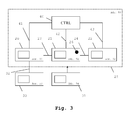
- Fig. 3 shows the embodiment of the radio communication system according to the invention after a communication link between the first subscriber 30 and the radio communication device 20 has been established.
- the communication link 32 is expressly between the subscriber 30 and the radio communication device 20, not between the subscriber 30 and the group 25.
- the communication authorization of the radio communication device 20 expires.
- the control computer 40 transmits the communication authorization 26 to another radio communication device 21.
- the radio communication device 21 thus now has the communication authorization 26.
- the radio communication device 20 notifies the control computer 40 and preferably all other radio communication devices 21, 22 of the radio communication system via the control computer 40 that it has established a communication connection 32 on a specific communication channel.
- the remaining radio communication devices 21, 22 will thus not use this radio communication channel for their communication.
- the second subscriber 31 also wants to contact the group 25, he sends a message with the destination address Addr. 55, which corresponds to the group address. Since the radio communication device 21 now has the communication authorization 26, only it is entitled to respond to this message. It now sends a message with its own address Addr. 51 as a reply address to the second party 31 with the address Addr. 54. Thus, a communication link between the second radio communication device 21 and the second party 31 comes about. The communication privilege 26 is at this moment transmitted by the control computer 40 to the third radio communication device 22 of the group 25, since this is the only radio communication device presently not busy with a communication connection.
- the respectively affected radio communication device notifies the control computer 40 of this.
- the radio communication device that has just become available is thus again available in order to obtain the communication authorization 26 from the control computer 40.
- the communication authorization 26 is preferably assigned according to a predetermined sequence.
- the control computer 40 could also transfer the communication authorization 26 to another free wireless communication device at random.
- the communication authorization 26 is forwarded by the control computer only to a free radio communication device 20-22. If no radio communication device 20-22 is free to establish a communication connection, the control computer 40 waits to assign the communication authorization 26 until a radio communication device 20-22 is free.
- a first step 60 first a group of radio communication devices with a common group address is formed.
- the radio communication devices are connected to each other. This is done via a wiring.
- a second step 61 the radio communication devices of the group receive a message to the group address.
- a third step 62 it is checked whether the authorized radio communication device is available. At the same time, there is only one Radio communication device within the group entitled to receive messages. If the currently authorized radio communication device is currently busy with a communication connection, the authorized radio communication device is not available. In this case, no answer is sent in a fourth step 63. It is then proceeded to the second step 61.
- a communication connection is established with the individual address of the authorized radio communication device. This is done by a response message of the authorized radio communication device to the sender of the message to the group address. In this message, the individual address of the authorized radio communication device is indicated as the return address.
- a sixth step 65 it is then checked whether another radio communication device is available, ie free. That is, it is checked whether a radio communication device belonging to the group is currently not maintaining a communication connection. If this is the case, the communication authorization is forwarded to this radio communication device in a seventh step 66. If several radio communication devices are available, the forwarding takes place according to a defined sequence or randomly. The process continues with the second step 62.
- step 67 it will wait until a radio communication device is available. The process continues with the seventh step 66.
- the radio communication device work with a fixed frequency method.
- To establish a connection all participants in the network synchronously use a constantly changing communication channel according to a defined sequence. As soon as the communication connection has been established, the communication channel is recorded for this communication connection. The remaining subscribers in the network, in particular the radio communication devices of the group, no longer use this communication channel to establish a connection. The channel will continue to be used for data transmission. Although the order of the communication channels is maintained, the already used communication channel is not used to establish another connection.
- a radio communication device establishes a communication connection, this and preferably informs the control computer of the channel used. This forwards the information to all other radio communication devices within the group. This channel is then not used until re-enabled by the other radio communication devices.
- the radio communication device according to the invention, the radio communication system according to the invention and the method according to the invention for radio communication thus work according to the ALE3G protocol.
Landscapes
- Engineering & Computer Science (AREA)
- Computer Networks & Wireless Communication (AREA)
- Signal Processing (AREA)
- Mobile Radio Communication Systems (AREA)
Abstract
Description
- Die Erfindung betrifft eine Funkkommunikationsvorrichtung, ein Funkkommunikationssystem mit mehreren Funkkommunikationsvorrichtungen und ein Verfahren zur Funkkommunikation, welche eine Kommunikation in Gruppen ermöglichen.
- Die deutsche Offenlegungsschrift
DE 10 2009 041 203 A1 zeigt ein Kanalauswahlverfahren zur Kommunikation zwischen Funkgeräten. Ein Punkt-zu-Punkt-Kommunikationsverfahren wird von der Druckschrift jedoch nicht gezeigt. - Um eine Punkt-zu-Punkt-Verbindung herzustellen, ist es notwendig, die Adresse des zu rufenden Teilnehmers zu kennen. Dies ist insbesondere problematisch, wenn eine Station, zum Beispiel eine Küstenstation über eine Mehrzahl von Teilnehmern verfügt. Es ergibt sich dann die Problematik, dass ein beliebiger Teilnehmer der Küstenstation gerufen werden soll, jedoch nicht bekannt ist, welche der Teilnehmer der Küstenstation gerade kommunikationsbereit sind.
- Der Erfindung liegt die Aufgabe zu Grunde, eine Funkkommunikationsvorrichtung, ein Funkkommunikationssystem und ein Verfahren zur Funkkommunikation zu schaffen, welche eine einfache Bedienung bei einer hohen Geschwindigkeit des Verbindungsaufbaus gewährleisten.
- Die Aufgabe wird erfindungsgemäß für die Vorrichtung durch die Merkmale des unabhängigen Anspruchs 1, für das System durch die Merkmale des unabhängigen Anspruchs 9 und für das Verfahren durch die Merkmale des unabhängigen Anspruchs 11 gelöst. Vorteilhafte Weiterbildungen sind Gegenstand der hierauf rückbezogenen Unteransprüche.
- Eine erfindungsgemäße Funkkommunikationsvorrichtung verfügt über eine Steuereinrichtung, welche ausgebildet ist, um Nachrichten an eine der Funkkommunikationsvorrichtung zugewiesene Adresse zu empfangen und zu verarbeiten. Die Funkkommunikationsvorrichtung ist weiterhin ausgebildet, um mit zumindest einer weiteren Funkkommunikationsvorrichtung zu einer Gruppe mit einer Gruppenadresse zusammengefasst zu werden. Die Steuereinrichtung ist dabei ausgebildet, um Nachrichten an die Gruppenadresse zu empfangen und zu verarbeiten. So muss ein Teilnehmer die individuelle Adresse der individuellen Funkkommunikationsvorrichtung nicht kennen, um mit einer Funkkommunikationsvorrichtung aus der Gruppe in Kontakt treten zu können.
- Bevorzugt ist die Steuereinrichtung wie folgt ausgebildet: Nach Empfang einer Nachricht von einem ersten Teilnehmer an die Gruppenadresse wird eine erste Kommunikationsverbindung zu dem ersten Teilnehmer aufgebaut. Zum Verbindungsaufbau wird die Adresse der Funkkommunikationsvorrichtung genutzt. Der Verbindungsaufbau wird nur durchgeführt, wenn gegenwärtig keine Kommunikationsverbindung besteht. So ist die Gruppenadresse weiterhin für Kommunikationsversuche weiterer Teilnehmer frei.
- Die Steuereinrichtung ist vorzugsweise ausgebildet, um den Aufbau der ersten Kommunikationsverbindung sämtlichen Funkkommunikationsvorrichtungen der Gruppe mitzuteilen. So ist sichergestellt, dass diese Funkkommunikationsvorrichtung nicht durch weitere Verbindungsversuche unterbrochen wird.
- Vorteilhafterweise ist die Steuereinrichtung ausgebildet, um einen für den Aufbau der ersten Kommunikationsverbindung genutzten Kommunikationskanal sämtlichen Funkkommunikationsvorrichtungen der Gruppe mitzuteilen. So ist sichergestellt, dass keine weitere Funkkommunikationsvorrichtung denselben Kommunikationskanal für eigene Verbindungen einsetzt.
- Bevorzugt ist die Steuereinrichtung ausgebildet, um von einem Steuerrechner, welcher Teil der Gruppe ist eine innerhalb der Gruppe lediglich einfach vorhandene Kommunikationsberechtigung zu empfangen, und um die erste Kommunikationsverbindung lediglich dann aufzubauen, wenn sie über die Kommunikationsberechtigung verfügt. So ist sichergestellt, dass genau eine Funkkommunikationsvorrichtung jeden eingehenden Ruf beantwortet.
- Nachfolgend wird die Erfindung anhand der Zeichnung, in der ein vorteilhaftes Ausführungsbeispiel der Erfindung dargestellt ist, beispielhaft beschrieben. In der Zeichnung zeigen:
- Fig. 1
- ein Ausführungsbeispiel der erfindungsgemäßen Funkkommunikationsvorrichtung als Blockschaltbild;
- Fig. 2
- ein Ausführungsbeispiel des erfindungsgemäßen Funkkommunikationssystems in einem ersten Status;
- Fig. 3
- das Ausführungsbeispiel des erfindungsgemäßen Funkkommunikationssystems in einem zweiten Status, und
- Fig. 4
- ein Ausführungsbeispiel des erfindungsgemäßen Verfahrens zur Funkkommunikation als Flussdiagramm.
- Zunächst wird anhand der
Fig. 1 der Aufbau und die generelle Funktionsweise eines Ausführungsbeispiels der erfindungsgemäßen Funkkommunikationsvorrichtung erläutert. MittelsFig. 2 - 3 werden anschließend der Aufbau und die Funktionsweise eines Ausführungsbeispiels des erfindungsgemäßen Funkkommunikationssystems gezeigt. Abschließend wird anhand vonFig. 4 im Detail auf die Funktionsweise eines Ausführungsbeispiels des erfindungsgemäßen Verfahrens zur Funkkommunikation eingegangen. Identische Elemente wurden in ähnlichen Abbildungen zum Teil nicht wiederholt dargestellt und beschrieben. - Die Erfindung eignet sich insbesondere für Verbindungen nach dem Standard STANAG 4538 mit einem Kommunikationsverfahren, welches eine digitale Kommunikation zwischen Teilnehmern in einem Kommunikationsnetzwerk ermöglicht.
-
Fig. 1 zeigt ein Ausführungsbeispiel der erfindungsgemäßen Funkkommunikationsvorrichtung 1. Die Funkkommunikationsvorrichtung 1 beinhaltet eine Steuereinrichtung 10, eine Hochfrequenzverarbeitungseinrichtung 11 und eine Antenne 12. Die Steuereinrichtung 10 und die Antenne 12 sind jeweils mit der Hochfrequenzverarbeitungseinrichtung 11 verbunden. Die Steuereinrichtung 10 beinhaltet weiterhin eine Schnittstelle 13 zur Verbindung mit weiteren Funkkommunikationsvorrichtungen eines gemeinsamen Funkkommunikationssystems und zur Verbindung mit einem zentralen Steuerrechner. - Die Steuereinrichtung 10 ist dabei ausgebildet, um Nachrichten aus Daten oder Sprache zu erzeugen und diese an die Hochfrequenzverarbeitungseinrichtung 11 weiterzuleiten. Die Hochfrequenzverarbeitungseinrichtung 11 ist dabei ausgebildet, um aus den Nachrichten Signale zu erzeugen und diese über die Antenne 12 abzustrahlen. Die Antenne 12 ist darüber hinaus ausgebildet, um Signale zu empfangen und an die Hochfrequenzverarbeitungseinrichtung 11 weiterzuleiten. Diese ist weiterhin dazu ausgebildet, um aus den empfangenen Signalen Nachrichten zu erzeugen und diese an die Steuereinrichtung 10 weiterzuleiten. Die Steuereinrichtung 10 ist ausgebildet, um diese Nachrichten weiterzuverarbeiten und daraus erneut Daten oder Sprache zu erzeugen.
- Die in
Fig. 1 dargestellte Funkkommunikationsvorrichtung verfügt über eine Adresse, über welche sie in einem Funkkommunikationssystem erreichbar ist. Empfängt die Hochfrequenzverarbeitungseinrichtung 11 mittels der Antenne 12 ein Signal, so wandelt sie es in eine Nachricht um, welche der Steuereinrichtung 10 zugeführt wird. Die Steuereinrichtung 10 ermittelt, ob die Nachricht an die Adresse dieser Funkkommunikationsvorrichtung gerichtet ist. Ist dies der Fall, so baut die Steuereinrichtung über eine Antwortnachricht, welche durch die Hochfrequenzverarbeitungseinrichtung 11 und die Antenne 12 versendet wird, eine Kommunikationsverbindung zu dem Absender der ursprünglichen Nachricht auf. - War die Nachricht jedoch nicht für die Adresse der Funkkommunikationsvorrichtung bestimmt oder ist die Funkkommunikationsvorrichtung bereits mit einer anderen Kommunikationsverbindung beschäftigt, so sendet sie keine Antwort.
- Die Funkkommunikationsvorrichtung 1 ist dabei weiterhin dazu ausgebildet, über die Schnittstelle 13 mit weiteren erfindungsgemäßen Funkkommunikationsvorrichtungen und einem zentralen Steuerrechner verbunden zu werden. Diese bilden dann gemeinsam eine Gruppe. Die Gruppe verfügt dabei über eine Gruppenadresse. Die Gruppenadresse besteht parallel zu der individuellen Adresse der Funkkommunikationsvorrichtung 1.
- Empfängt die Funkkommunikationsvorrichtung 1 eine Nachricht, welche an die Gruppenadresse adressiert ist, so antwortet sie auf diese Nachricht, als wäre die Nachricht an die individuelle Adresse adressiert. Als Rückantwortadresse gibt die Funkkommunikationsvorrichtung 1 jedoch stets ihre eigene individuelle Adresse und nicht die Gruppenadresse an. Eine Nachricht an die Gruppenadresse wird nur dann beantwortet, wenn die jeweilige Funkkommunikationsvorrichtung 1 nicht bereits mit einer anderen Kommunikationsverbindung beschäftigt ist und wenn sie über eine Kommunikationsberechtigung verfügt.
- Eine Kommunikationsberechtigung liegt innerhalb der Gruppe lediglich ein einziges Mal vor. Das heißt, wenn eine Nachricht adressiert an die Gruppenadresse eingeht, so ist eindeutig, welche Funkkommunikationsvorrichtung der Gruppe auf diese Nachricht antwortet. Auf die Funktion der Gruppe von Funkkommunikationsvorrichtungen wird anhand von
Fig. 2 - Fig. 4 näher eingegangen. - Die Funkkommunikationsvorrichtung 1 ermittelt dabei bevorzugt die Übertragungsbedingungen auf mehreren Kommunikationskanälen. Die gemessenen Übertragungsbedingungen werden dabei an sämtliche der Gruppe angehörenden Funkkommunikationsvorrichtungen übertragen.
-
Fig. 2 zeigt ein Ausführungsbeispiel des erfindungsgemäßen Funkkommunikationssystems in einem ersten Status. Eine erste Funkkommunikationsvorrichtung 20, eine zweite Funkkommunikationsvorrichtung 21, eine dritte Funkkommunikationsvorrichtung 22 und ein Steuerrechner 40 bilden eine Gruppe 25. Das erfindungsgemäße Kommunikationssystem besteht hier aus der Gruppe 25. Die Funkkommunikationsvorrichtungen 20, 21, 22 und der Steuerrechner 40 sind dabei über Verbindungen 23, 24, 41, 42 und 43 miteinander verbunden. Die Verbindungen 23, 24, 41, 42 und 43 erfolgen dabei über die Schnittstelle 13 ausFig. 1 . Hier sind lediglich zwei Verbindungen 23 und 24 zwischen den drei Funkkommunikationsvorrichtungen 20, 21, 22 dargestellt. Im dargestellten Beispiel handelt es sich somit um eine Bus-Verbindung. Alternativ kann auch eine sternförmige Verbindung erfolgen. In diesem Fall ist jede Funkkommunikationsvorrichtung 20 - 22 mit jeder anderen Funkkommunikationsvorrichtung 20 - 22 verbunden. Die Funkkommunikationsvorrichtungen 20, 21, 22 sind dabei logisch sternförmig mit dem Steuerrechner 40 über die Verbindungen 41, 42 und 43 verbunden. Alternativ kann auf die Verbindungen 23 und 24 verzichtet werden. Die Funkkommunikationsvorrichtungen 20 - 22 sind dann lediglich über den Steuerrechner 40 miteinander verbunden. - Innerhalb der Gruppe 25 verfügt gleichzeitig lediglich eine einzelne Funkkommunikationsvorrichtung 20 über eine Kommunikationsberechtigung 26. Bei der Kommunikationsberechtigung 26 handelt es sich lediglich um einen internen Status. Um sicherzustellen, dass lediglich eine der Funkkommunikationsvorrichtungen 20 - 22 über eine Kommunikationsberechtigung 26 verfügt, teilt der Steuerrechner 40 die Kommunikationsberechtigung 26 jeweils zu. Das heißt, damit die Funkkommunikationsvorrichtung 21 über eine Kommunikationsberechtigung verfügen kann, muss der Steuerrechner 40 aktiv ein Signal an die Funkkommunikationsvorrichtung 21 senden, mit welchem die Kommunikationsberechtigung 26 zugewiesen wird.
- In dem hier dargestellten Beispiel bilden die Gruppe 25, ein erster Teilnehmer 30 und ein zweiter Teilnehmer 31 ein gemeinsames Kommunikationsnetzwerk. Die Funkkommunikationsvorrichtungen 20 - 22 verfügen dabei jeweils über eine individuelle Adresse. So verfügt die Funkkommunikationsvorrichtung 20 über die Adresse Adr. 50, die Funkkommunikationsvorrichtung 21 über die Adresse Adr. 51 und die Funkkommunikationsvorrichtung 22 über die Adresse Adr. 52. Weiterhin verfügt die Gruppe 25 über eine Gruppenadresse Adr. 55. Weiterhin verfügen auch die Teilnehmer 30 und 31 jeweils über eine individuelle Adresse. So verfügt der Teilnehmer 30 über die Adresse Adr. 53 und der Teilnehmer 31 über die Andresse Adr. 54. Für die Teilnehmer 30, 31 erscheint die Gruppe 25 als eine individuelle Funkkommunikationsvorrichtung mit der Adresse Adr. 55.
- Um eine Kommunikation zu initiieren, sendet der erste Teilnehmer 30 eine Nachricht an die Gruppenadresse Adr. 55. Da die Funkkommunikationsvorrichtung 20 gegenwärtig über die Kommunikationsberechtigung 26 verfügt, ist nur die Funkkommunikationsvorrichtung 20 berechtigt, auf diese Nachricht zu antworten. Da die Funkkommunikationsvorrichtung 20 darüberhinaus gegenwärtig mit keiner weiteren Kommunikationsverbindung beschäftigt ist, sendet sie eine Antwortnachricht an den Teilnehmer 30. Dabei sendet sie jedoch ihre eigene individuelle Adresse Adr. 50 als Rückantwortadresse.
-
Fig. 3 zeigt das Ausführungsbeispiel des erfindungsgemäßen Funkkommunikationssystems nachdem eine Kommunikationsverbindung zwischen dem ersten Teilnehmer 30 und der Funkkommunikationsvorrichtung 20 aufgebaut wurde. Die Kommunikationsverbindung 32 besteht dabei ausdrücklich zwischen dem Teilnehmer 30 und der Funkkommunikationsvorrichtung 20, nicht zwischen dem Teilnehmer 30 und der Gruppe 25. - Im Moment des Verbindungsaufbaus der Kommunikationsverbindung 32 erlischt die Kommunikationsberechtigung der Funkkommunikationsvorrichtung 20. Der Steuerrechner 40 überträgt die Kommunikationsberechtigung 26 auf eine weitere Funkkommunikationsvorrichtung 21. Die Funkkommunikationsvorrichtung 21 verfügt somit hier nun über die Kommunikationsberechtigung 26.
- Vorteilhafterweise teilt die Funkkommunikationsvorrichtung 20 dem Steuerrechner 40 und bevorzugt sämtlichen weiteren Funkkommunikationsvorrichtungen 21, 22 des Funkkommunikationssystems über den Steuerrechner 40 mit, dass es eine Kommunikationsverbindung 32 auf einem bestimmten Kommunikationskanal aufgebaut hat. Die übrigen Funkkommunikationsvorrichtungen 21, 22 werden somit diesen Funkkommunikationskanal für ihre Kommunikation nicht nutzen.
- Möchte nun der zweite Teilnehmer 31 ebenfalls die Gruppe 25 kontaktieren, so sendet er eine Nachricht mit der Zieladresse Adr. 55, welche der Gruppenadresse entspricht aus. Da die Funkkommunikationsvorrichtung 21 nun über die Kommunikationsberechtigung 26 verfügt, ist nur sie berechtigt, auf diese Nachricht zu antworten. Sie sendet nun also eine Nachricht mit ihrer eigenen Adresse Adr. 51 als Rückantwortadresse an den zweiten Teilnehmer 31 mit der Adresse Adr. 54. Es kommt somit eine Kommunikationsverbindung zwischen der zweiten Funkkommunikationsvorrichtung 21 und dem zweiten Teilnehmer 31 zustande. Die Kommunikationsberechtigung 26 wird in diesem Moment durch den Steuerrechner 40 auf die dritte Funkkommunikationsvorrichtung 22 der Gruppe 25 übertragen, da diese die einzige gegenwärtig nicht mit einer Kommunikationsverbindung beschäftigte Funkkommunikationsvorrichtung ist.
- Sobald eine Kommunikationsverbindung beendet wird, teilt die jeweils betroffene Funkkommunikationsvorrichtung dies dem Steuerrechner 40 mit. Die gerade frei gewordene Funkkommunikationsvorrichtung ist somit erneut verfügbar, um die Kommunikationsberechtigung 26 von dem Steuerrechner 40 zu erhalten.
- Bevorzugt wird dabei bei mehreren verfügbaren Funkkommunikationsvorrichtungen die Kommunikationsberechtigung 26 nach einer vorgegeben Reihenfolge vergeben. Alternativ könnte der Steuerrechner 40 die Kommunikationsberechtigung 26 auch zufällig einer weiteren freien Funkkommunikationsvorrichtung übertragen.
- Ist gerade keine Funkkommunikationsvorrichtung 20 - 22 frei, um eine Kommunikationsverbindung einzugehen, wird keine Antwort auf eine eingehende Nachricht gesendet.
- Die Kommunikationsberechtigung 26 wird durch den Steuerrechner nur an eine freie Funkkommunikationsvorrichtung 20 - 22 weitergeleitet. Ist keine Funkkommunikationsvorrichtung 20 - 22 frei, um eine Kommunikationsverbindung aufzubauen, so wartet der Steuerrechner 40 mit dem Zuweisen der Kommunikationsberechtigung 26 bis eine Funkkommunikationsvorrichtung 20 - 22 frei ist.
- Abschließend wird in
Fig. 4 auf die Funktionsweise des erfindungsgemäßes Verfahrens zur Funkkommunikation eingegangen. In einem ersten Schritt 60 wird zunächst eine Gruppe von Funkkommunikationsvorrichtungen mit einer gemeinsamen Gruppenadresse gebildet. Die Funkkommunikationsvorrichtungen werden dabei miteinander verbunden. Dies erfolgt über eine Verkabelung. - In einem zweiten Schritt 61 empfangen die Funkkommunikationsvorrichtungen der Gruppe eine Nachricht an die Gruppenadresse. In einem dritten Schritt 62 wird überprüft, ob die berechtige Funkkommunikationsvorrichtung verfügbar ist. Gleichzeitig ist lediglich eine einzige Funkkommunikationsvorrichtung innerhalb der Gruppe zum Empfang von Nachrichten berechtigt. Sofern die gegenwärtig berechtigte Funkkommunikationsvorrichtung gegenwärtig mit einer Kommunikationsverbindung beschäftigt ist, ist die berechtigte Funkkommunikationsvorrichtung nicht verfügbar. In diesem Fall wird in einem vierten Schritt 63 keine Antwort gesendet. Es wird anschließend mit dem zweiten Schritt 61 fortgefahren.
- Ist jedoch die berechtigte Funkkommunikationsvorrichtung verfügbar, so wird in einem fünften Schritt 64 eine Kommunikationsverbindung mit der individuellen Adresse der berechtigen Funkkommunikationsvorrichtung aufgebaut. Dies erfolgt durch eine Antwortnachricht der berechtigten Funkkommunikationsvorrichtung an den Absender der Nachricht an die Gruppenadresse. In dieser Nachricht wird die individuelle Adresse der berechtigen Funkkommunikationsvorrichtung als Rückantwortadresse angegeben.
- In einem sechsten Schritt 65 wird anschließend überprüft, ob eine weitere Funkkommunikationsvorrichtung verfügbar, d.h. frei ist. Das heißt es wird überprüft, ob eine zu der Gruppe gehörige Funkkommunikationsvorrichtung gegenwärtig keine Kommunikationsverbindung aufrecht erhält. Ist dies der Fall, so wird in einem siebten Schritt 66 die Kommunikationsberechtigung an diese Funkkommunikationsvorrichtung weitergeleitet. Sind mehrere Funkkommunikationsvorrichtungen verfügbar, so erfolgt die Weiterleitung nach einer festgelegten Reihenfolge oder zufällig. Fortgefahren wird anschließend mit dem zweiten Schritt 62.
- Ist jedoch keine Funkkommunikationsvorrichtung verfügbar, so wird in einem achten Schritt 67 so lange gewartet, bis eine Funkkommunikationsvorrichtung verfügbar ist. Es wird mit dem siebten Schritt 66 fortgefahren.
- Die erfindungsgemäße Funkkommunikationsvorrichtung, das erfindungsgemäße Funkkommunikationssystem und das erfindungsgemäße Verfahren zur Funkkommunikation arbeiten dabei mit einem Festfrequenzverfahren. Zum Verbindungsaufbau verwenden nach einer festgelegten Reihenfolge sämtliche Teilnehmer des Netzwerks synchron einen ständig wechselnden Kommunikationskanal. Sobald die Kommunikationsverbindung aufgebaut wurde, wird für diese Kommunikationsverbindung der Kommunikationskanal festgehalten. Die übrigen Teilnehmer in dem Netzwerk, insbesondere die Funkkommunikationsvorrichtungen der Gruppe, nutzen diesen Kommunikationskanal nun nicht länger zum Verbindungsaufbau. Zur Datenübertragung wird der Kanal weiterhin genutzt. Die Reihenfolge der Kommunikationskanäle wird zwar beibehalten, der bereits genutzte Kommunikationskanal wird jedoch nicht zum Aufbau einer weiteren Verbindung eingesetzt. Sobald eine Funkkommunikationsvorrichtung eine Kommunikationsverbindung aufbaut, teilt dies und bevorzugt den genutzten Kanal dem Steuerrechner mit. Dieser leitet die Information an sämtliche weitere Funkkommunikationsvorrichtungen innerhalb der Gruppe mit. Dieser Kanal wird dann bis zu einer erneuten Freigabe durch die anderen Funkkommunikationsvorrichtungen nicht genutzt. Die erfindungsgemäße Funkkommunikationsvorrichtung, das erfindungsgemäße Funkkommunikationssystem und das erfindungsgemäße Verfahren zur Funkkommunikation arbeiten damit nach dem ALE3G Protokoll.
- Die Erfindung ist nicht auf das dargestellte Ausführungsbeispiel beschränkt. Alle vorstehend beschriebenen Merkmale oder in den Figuren gezeigten Merkmale sind im Rahmen der Erfindung beliebig vorteilhaft miteinander kombinierbar.
Claims (17)
- Funkkommunikationsvorrichtung mit einer Steuereinrichtung (10),
wobei die Steuereinrichtung (10) ausgebildet ist, um Nachrichten an eine der Funkkommunikationsvorrichtung (1, 20, 21, 22) zugewiesene Adresse (Adr. 50, Adr. 51, Adr. 52) zu empfangen und zu verarbeiten,
dadurch gekennzeichnet,
dass die Funkkommunikationsvorrichtung (1, 20, 21, 22) ausgebildet ist, um mit zumindest einer weiteren Funkkommunikationsvorrichtung (1, 20, 21, 22) zu einer Gruppe (25) mit einer Gruppenadresse (Adr. 55) zusammengefasst zu werden, und
dass die Steuereinrichtung (10) ausgebildet ist, um Nachrichten an die Gruppenadresse (Adr. 55) zu empfangen und zu verarbeiten. - Funkkommunikationsvorrichtung nach Anspruch 1
dadurch gekennzeichnet,
dass die Funkkommunikationsvorrichtung (1, 20, 21, 22) über eine Hochfrequenzverarbeitungseinrichtung (11) verfügt,
dass die Hochfrequenzverarbeitungseinrichtung (11) ausgebildet ist, um Hochfrequenzsignale zu empfangen und daraus Nachrichten zu bilden und um aus Nachrichten Hochfrequenzsignale zu erzeugen, und
dass die Steuereinrichtung (10) ausgebildet ist, um Nachrichten von der Hochfrequenzverarbeitungseinrichtung (11) zu empfangen und zu verarbeiten und um Nachrichten zu erzeugen und an die Hochfrequenzverarbeitungseinrichtung (11) zu übertragen. - Funkkommunikationsvorrichtung nach Anspruch 1 oder 2
dadurch gekennzeichnet,
dass die Steuereinrichtung (10) ausgebildet ist, um nach Empfang einer Nachricht von einem ersten Teilnehmer (30, 31) an die Gruppenadresse (Adr. 55), falls gegenwärtig keine Kommunikationsverbindung besteht, mittels der Adresse (Adr. 50, Adr. 51, Adr. 52) der Funkkommunikationsvorrichtung (1, 20, 21, 22) eine erste Kommunikationsverbindung (32) zu dem ersten Teilnehmer (30, 31) aufzubauen. - Funkkommunikationsvorrichtung nach Anspruch 3,
dadurch gekennzeichnet,
dass die Steuereinrichtung (10) ausgebildet ist, um den Aufbau der ersten Kommunikationsverbindung (32) zumindest mittelbar sämtlichen Funkkommunikationsvorrichtungen (1, 20, 21, 22) der Gruppe (25) mitzuteilen. - Funkkommunikationsvorrichtung nach Anspruch 3 oder 4,
dadurch gekennzeichnet,
dass die Steuereinrichtung (10) ausgebildet ist, um einen für den Aufbau der ersten Kommunikationsverbindung (32) genutzten Kommunikationskanal zumindest mittelbar sämtlichen Funkkommunikationsvorrichtungen (1, 20, 21, 22) der Gruppe mitzuteilen. - Funkkommunikationsvorrichtung nach einem der Ansprüche 3 bis 5,
dadurch gekennzeichnet,
dass die Steuereinrichtung (10) ausgebildet ist, um von einem Steuerrechner (40), welcher Teil der Gruppe (25) ist eine innerhalb der Gruppe (25) lediglich einfach vorhandene Kommunikationsberechtigung (26) zu empfangen, und
um die erste Kommunikationsverbindung (32) lediglich dann aufzubauen, wenn sie über die Kommunikationsberechtigung (26) verfügt. - Funkkommunikationsvorrichtung nach einem der Ansprüche 1 bis 6,
dadurch gekennzeichnet,
dass die Steuereinrichtung (10) ausgebildet ist, um nach Empfang einer Nachricht von einem ersten Teilnehmer (30, 31) an die Gruppenadresse (Adr. 55) keine Kommunikationsverbindung zu dem ersten Teilnehmer (30, 31) aufzubauen, falls sie gegenwärtig eine Kommunikationsverbindung (32) aufrechterhält. - Funkkommunikationsvorrichtung nach einem der Ansprüche 1 bis 7,
dadurch gekennzeichnet,
dass die Steuereinrichtung (10) ausgebildet ist, um Übertragungsbedingungen auf mehreren Kommunikationskanälen zu messen, und
um die gemessenen Übertragungsbedingungen zumindest mittelbar an sämtliche der Gruppe (25) angehörende Funkkommunikationsvorrichtungen (1, 20, 21, 22) zu übertragen. - Funkkommunikationssystem mit zumindest einer ersten Funkkommunikationsvorrichtung (20, 21, 22) nach einem der Ansprüche 1 bis 8, einer zweiten Funkkommunikationsvorrichtung (20, 21, 22) nach einem der Ansprüche 1 bis 8 und einem Steuerrechner (40),
wobei die Funkkommunikationsvorrichtungen (20, 21, 22) und der Steuerrechner (40) eine Gruppe (25) bilden, und
wobei der Steuerrechner die Kommunikationsberechtigung (26) an die Funkkommunikationsvorrichtungen (20, 21, 22) vergibt. - Funkkommunikationssystem nach Anspruch 9,
dadurch gekennzeichnet,
dass der Steuerrechner (40) die Funkkommunikationsvorrichtungen (20, 21, 22) derart steuert, dass ein bereits in Benutzung befindlicher Kommunikationskanal durch keine weitere Kommunikationsverbindung genutzt wird. - Verfahren zur Funkkommunikation mittels einer Funkkommunikationsvorrichtung (1, 20, 21 ,22),
wobei Nachrichten an eine der Funkkommunikationsvorrichtung (1, 20, 21, 22) zugewiesene Adresse (Adr. 50, Adr. 51, Adr. 52) empfangen und verarbeitet werden,
dadurch gekennzeichnet,
dass die Funkkommunikationsvorrichtung (1, 20, 21, 22) mit zumindest einer weiteren Funkkommunikationsvorrichtung (1, 20, 21, 22) zu einer Gruppe (25) mit einer Gruppenadresse (Adr. 55) zusammengefasst wird, und
dass Nachrichten an die Gruppenadresse (Adr. 55) von der Funkkommunikationsvorrichtung (1, 20, 21, 22) empfangen und verarbeitet werden. - Verfahren nach Anspruch 11,
dadurch gekennzeichnet,
dass nach Empfang einer Nachricht von einem ersten Teilnehmer (30, 31) an die Gruppenadresse (25), falls gegenwärtig keine Kommunikationsverbindung besteht, mittels der Adresse (Adr. 50, Adr. 51, Adr. 52) der Funkkommunikationsvorrichtung (1, 20, 21, 22) eine erste Kommunikationsverbindung (32) zu dem ersten Teilnehmer (30, 31) aufgebaut wird. - Verfahren nach Anspruch 12,
dadurch gekennzeichnet,
dass der Aufbau der ersten Kommunikationsverbindung (32) sämtlichen Funkkommunikationsvorrichtungen (1, 20, 21, 22) der Gruppe (25) mitgeteilt wird. - Verfahren nach Anspruch 12 oder 13,
dadurch gekennzeichnet,
dass ein für den Aufbau der ersten Kommunikationsverbindung (32) genutzter Kommunikationskanal sämtlichen Funkkommunikationsvorrichtungen (1, 20, 21, 22) der Gruppe (25) mitgeteilt wird. - Verfahren nach einem der Ansprüche 12 bis 14,
dadurch gekennzeichnet,
dass die erste Kommunikationsverbindung (32) lediglich dann aufgebaut wird, wenn die Funkkommunikationsvorrichtung (1, 20, 21, 22) über eine innerhalb der Gruppe (25) lediglich einfach vorhandene Kommunikationsberechtigung (26) verfügt, und
dass die Kommunikationsberechtigung (26) bei Aufbau der ersten Kommunikationsverbindung (32) auf genau eine weitere Funkkommunikationsvorrichtung (1, 20, 21, 22) der Gruppe (25) übertragen wird. - Verfahren nach einem der Ansprüche 12 bis 15,
dadurch gekennzeichnet,
dass nach Empfang einer Nachricht von einem ersten Teilnehmer (30, 31) an die Gruppenadresse (Adr. 55) keine Kommunikationsverbindung zu dem ersten Teilnehmer (30, 31) aufgebaut wird, falls die Funkkommunikationsvorrichtung (1, 20, 21, 22) gegenwärtig eine Kommunikationsverbindung (32) aufrechterhält. - Verfahren nach einem der Ansprüche 12 bis 16,
dadurch gekennzeichnet,
dass Übertragungsbedingungen auf mehreren Kommunikationskanälen gemessen werden, und
um die gemessenen Übertragungsbedingungen an sämtliche der Gruppe (25) angehörenden Funkkommunikationsvorrichtungen (1, 20, 21, 22) übertragen werden.
Applications Claiming Priority (2)
| Application Number | Priority Date | Filing Date | Title |
|---|---|---|---|
| DE102011085364 | 2011-10-28 | ||
| DE102011088796A DE102011088796A1 (de) | 2011-10-28 | 2011-12-16 | Funkkommunikationsvorrichtung, Funkkommunikationssystem und Verfahren zur Funkkommunikation mit Gruppenkommunikation |
Publications (2)
| Publication Number | Publication Date |
|---|---|
| EP2587875A1 true EP2587875A1 (de) | 2013-05-01 |
| EP2587875B1 EP2587875B1 (de) | 2018-02-07 |
Family
ID=46796291
Family Applications (1)
| Application Number | Title | Priority Date | Filing Date |
|---|---|---|---|
| EP12179814.4A Active EP2587875B1 (de) | 2011-10-28 | 2012-08-09 | Kommunikationsberechtigung zum Verteilen von Rufen an eine Gruppe |
Country Status (2)
| Country | Link |
|---|---|
| EP (1) | EP2587875B1 (de) |
| DE (1) | DE102011088796A1 (de) |
Citations (3)
| Publication number | Priority date | Publication date | Assignee | Title |
|---|---|---|---|---|
| US5841854A (en) * | 1994-02-16 | 1998-11-24 | Priority Call Management, Inc. | Wireless telephone integration system and method for call centers and workgroups |
| US20070060182A1 (en) * | 2004-04-02 | 2007-03-15 | De Chen | Method of uplink preemption by users in a trunking group |
| EP2285022A2 (de) * | 2009-08-13 | 2011-02-16 | Rohde & Schwarz GmbH & Co. KG | Verfahren zur automatischen Kanalauswahl für Mehrpunktverbindungen |
Family Cites Families (4)
| Publication number | Priority date | Publication date | Assignee | Title |
|---|---|---|---|---|
| DE3907091A1 (de) * | 1989-03-04 | 1990-09-06 | Bosch Gmbh Robert | Funknetz mit ortsfesten und mobilen funkstationen |
| FI97519C (fi) * | 1993-08-26 | 1996-12-27 | Nokia Telecommunications Oy | Menetelmä tilaaja-asemien ohjaamiseksi radiopuhelinjärjestelmässä, radiopuhelinjärjestelmä ja radiopuhelinjärjestelmän tilaaja-asema |
| FI20045180A0 (fi) * | 2004-05-19 | 2004-05-19 | Nokia Corp | Ryhmä-ääniviestinnän hallinta tietoliikennejärjestelmässä |
| US20100311459A1 (en) * | 2009-05-15 | 2010-12-09 | Tait Electronics Limited | Mobile radio systems having groups with dynamic labels |
-
2011
- 2011-12-16 DE DE102011088796A patent/DE102011088796A1/de not_active Withdrawn
-
2012
- 2012-08-09 EP EP12179814.4A patent/EP2587875B1/de active Active
Patent Citations (4)
| Publication number | Priority date | Publication date | Assignee | Title |
|---|---|---|---|---|
| US5841854A (en) * | 1994-02-16 | 1998-11-24 | Priority Call Management, Inc. | Wireless telephone integration system and method for call centers and workgroups |
| US20070060182A1 (en) * | 2004-04-02 | 2007-03-15 | De Chen | Method of uplink preemption by users in a trunking group |
| EP2285022A2 (de) * | 2009-08-13 | 2011-02-16 | Rohde & Schwarz GmbH & Co. KG | Verfahren zur automatischen Kanalauswahl für Mehrpunktverbindungen |
| DE102009041203A1 (de) | 2009-08-13 | 2011-02-17 | Rohde & Schwarz Gmbh & Co. Kg | Verfahren zur automatischen Kanalauswahl für Mehrpunktverbindungen |
Non-Patent Citations (1)
| Title |
|---|
| KALLGREN D G ET AL: "IP Unicast/Multicast Operation over Stanag 5066", PROCEEDINGS OF THE MILITARY COMMUNICATIONS CONFERENCE (MILCOM), vol. 1, 28 October 2001 (2001-10-28), pages 501 - 505, XP010579062, ISBN: 978-0-7803-7225-2, DOI: 10.1109/MILCOM.2001.985845 * |
Also Published As
| Publication number | Publication date |
|---|---|
| EP2587875B1 (de) | 2018-02-07 |
| DE102011088796A1 (de) | 2013-05-02 |
Similar Documents
| Publication | Publication Date | Title |
|---|---|---|
| DE60102038T2 (de) | Zugriffsanforderungen und Funkrufnachrichten in einem drahtlosen System | |
| DE69228503T2 (de) | Mobiles Kommunikationssystem, in welchem eine Basis-Station eine Zellen-Identifizierung für ein ausgehendes Gespräch an eine andere überträgt | |
| EP0920233A2 (de) | Drahtloses lokales Netzwerk mit Controller und wenigstens einem als Controller einsetzbaren Terminal | |
| CH656275A5 (de) | Verfahren und schaltungsanordnung zum uebertragen von datensignalen zwischen datensignalsendern und datensignalempfaengern. | |
| DE102006030297A1 (de) | Verfahren und Netzwerkknoten zur Broadcast-Übertragung von Daten mit garantierter Datenzustellung | |
| EP2365643A1 (de) | Funkstation-System für ein Drahtlosnetzwerk | |
| DE69830242T2 (de) | Anordnung zur steuerung von netzelementen | |
| DE2333137C3 (de) | Zyklisches Abrufverfahren in einem Datenübertragungssystem | |
| WO2002017662A1 (de) | Verfahren zur zugriffssteuerung in einem funk-kommunikationssystem | |
| EP2587875B1 (de) | Kommunikationsberechtigung zum Verteilen von Rufen an eine Gruppe | |
| EP0782356A2 (de) | Verfahren zum bestätigten Gruppenruf in einem regional gegliederten GSM-Mobilfunknetz | |
| CH656276A5 (de) | Verfahren und schaltungsanordnung zum uebertragen von datensignalen zwischen datenvermittlungseinrichtungen einer datenvermittlungsanlage. | |
| DE69928907T2 (de) | Kanalzuweisungsverfahren in mobilem system sowie entsprechendes mobiles system, basisstation und basisstationssteuerung | |
| EP1308059B1 (de) | Verfahren und basisstationssystem zum aufbau einer verbindung in einem mobilfunksystem | |
| CH656274A5 (de) | Schaltungsanordnung zum uebertragen von datensignalen zwischen jeweils zwei datenendgeraeten einer datenuebertragungsanlage. | |
| EP1287716B1 (de) | Vorrichtung und verfahren für einen weiteren verbindungsaufbau zur datenübertragung über ein mobiles telekommunikationssystem nach beendigung einer ersten verbindung | |
| DE69330811T2 (de) | Lösung von Konflikten zwischen Kommunikationssystemen | |
| DE102021208030A1 (de) | Verfahren und System zur koordinierten Strahlverwaltung in der drahtlosen Fahrzeugkommunikation | |
| EP2478740B1 (de) | Gemeinsame nutzung von zeitschlitzen | |
| DE102007034794B4 (de) | Verfahren zur Inbetriebnahme und zum Betrieb eines Funksystems | |
| EP1139607B1 (de) | Drahtloses Netzwerk mit einem Zeitschlitzsortiermechanismus | |
| DE10046311B4 (de) | Verfahren für eine Zuweisung von Knotennummern zu Netzknoten eines Netzwerks | |
| EP2278758B1 (de) | Prioritätsbasiertes Kommunikationsnetzwerk und Kommunikationsverfahren | |
| DE102005050851B4 (de) | Kommunikationsverfahren in einem Kommunikationsnetzwerk | |
| DE10244981B4 (de) | Verfahren zur Realisierung einer Kommunikationsverbindung, zugehöriges Funkkommunikationsgerät sowie Netzwerkkontrolleinheit |
Legal Events
| Date | Code | Title | Description |
|---|---|---|---|
| PUAI | Public reference made under article 153(3) epc to a published international application that has entered the european phase |
Free format text: ORIGINAL CODE: 0009012 |
|
| 17P | Request for examination filed |
Effective date: 20130226 |
|
| AK | Designated contracting states |
Kind code of ref document: A1 Designated state(s): AL AT BE BG CH CY CZ DE DK EE ES FI FR GB GR HR HU IE IS IT LI LT LU LV MC MK MT NL NO PL PT RO RS SE SI SK SM TR |
|
| AX | Request for extension of the european patent |
Extension state: BA ME |
|
| STAA | Information on the status of an ep patent application or granted ep patent |
Free format text: STATUS: EXAMINATION IS IN PROGRESS |
|
| 17Q | First examination report despatched |
Effective date: 20170217 |
|
| GRAP | Despatch of communication of intention to grant a patent |
Free format text: ORIGINAL CODE: EPIDOSNIGR1 |
|
| STAA | Information on the status of an ep patent application or granted ep patent |
Free format text: STATUS: GRANT OF PATENT IS INTENDED |
|
| RIC1 | Information provided on ipc code assigned before grant |
Ipc: H04W 8/26 20090101ALN20170721BHEP Ipc: H04W 8/18 20090101ALN20170721BHEP Ipc: H04W 76/00 20090101AFI20170721BHEP |
|
| INTG | Intention to grant announced |
Effective date: 20170816 |
|
| GRAS | Grant fee paid |
Free format text: ORIGINAL CODE: EPIDOSNIGR3 |
|
| GRAJ | Information related to disapproval of communication of intention to grant by the applicant or resumption of examination proceedings by the epo deleted |
Free format text: ORIGINAL CODE: EPIDOSDIGR1 |
|
| GRAL | Information related to payment of fee for publishing/printing deleted |
Free format text: ORIGINAL CODE: EPIDOSDIGR3 |
|
| STAA | Information on the status of an ep patent application or granted ep patent |
Free format text: STATUS: EXAMINATION IS IN PROGRESS |
|
| REG | Reference to a national code |
Ref country code: DE Ref legal event code: R079 Ref document number: 502012012115 Country of ref document: DE Free format text: PREVIOUS MAIN CLASS: H04W0072040000 Ipc: H04W0076000000 |
|
| GRAR | Information related to intention to grant a patent recorded |
Free format text: ORIGINAL CODE: EPIDOSNIGR71 |
|
| INTC | Intention to grant announced (deleted) | ||
| STAA | Information on the status of an ep patent application or granted ep patent |
Free format text: STATUS: GRANT OF PATENT IS INTENDED |
|
| GRAA | (expected) grant |
Free format text: ORIGINAL CODE: 0009210 |
|
| STAA | Information on the status of an ep patent application or granted ep patent |
Free format text: STATUS: THE PATENT HAS BEEN GRANTED |
|
| RIC1 | Information provided on ipc code assigned before grant |
Ipc: H04W 8/26 20090101ALN20171204BHEP Ipc: H04W 76/00 20180101AFI20171204BHEP Ipc: H04W 8/18 20090101ALN20171204BHEP |
|
| AK | Designated contracting states |
Kind code of ref document: B1 Designated state(s): AL AT BE BG CH CY CZ DE DK EE ES FI FR GB GR HR HU IE IS IT LI LT LU LV MC MK MT NL NO PL PT RO RS SE SI SK SM TR |
|
| INTG | Intention to grant announced |
Effective date: 20180102 |
|
| REG | Reference to a national code |
Ref country code: GB Ref legal event code: FG4D Free format text: NOT ENGLISH |
|
| REG | Reference to a national code |
Ref country code: AT Ref legal event code: REF Ref document number: 969243 Country of ref document: AT Kind code of ref document: T Effective date: 20180215 Ref country code: CH Ref legal event code: EP |
|
| REG | Reference to a national code |
Ref country code: IE Ref legal event code: FG4D Free format text: LANGUAGE OF EP DOCUMENT: GERMAN |
|
| REG | Reference to a national code |
Ref country code: DE Ref legal event code: R096 Ref document number: 502012012115 Country of ref document: DE |
|
| REG | Reference to a national code |
Ref country code: NL Ref legal event code: MP Effective date: 20180207 |
|
| PG25 | Lapsed in a contracting state [announced via postgrant information from national office to epo] |
Ref country code: ES Free format text: LAPSE BECAUSE OF FAILURE TO SUBMIT A TRANSLATION OF THE DESCRIPTION OR TO PAY THE FEE WITHIN THE PRESCRIBED TIME-LIMIT Effective date: 20180207 Ref country code: HR Free format text: LAPSE BECAUSE OF FAILURE TO SUBMIT A TRANSLATION OF THE DESCRIPTION OR TO PAY THE FEE WITHIN THE PRESCRIBED TIME-LIMIT Effective date: 20180207 Ref country code: NO Free format text: LAPSE BECAUSE OF FAILURE TO SUBMIT A TRANSLATION OF THE DESCRIPTION OR TO PAY THE FEE WITHIN THE PRESCRIBED TIME-LIMIT Effective date: 20180507 Ref country code: CY Free format text: LAPSE BECAUSE OF FAILURE TO SUBMIT A TRANSLATION OF THE DESCRIPTION OR TO PAY THE FEE WITHIN THE PRESCRIBED TIME-LIMIT Effective date: 20180207 Ref country code: FI Free format text: LAPSE BECAUSE OF FAILURE TO SUBMIT A TRANSLATION OF THE DESCRIPTION OR TO PAY THE FEE WITHIN THE PRESCRIBED TIME-LIMIT Effective date: 20180207 Ref country code: LT Free format text: LAPSE BECAUSE OF FAILURE TO SUBMIT A TRANSLATION OF THE DESCRIPTION OR TO PAY THE FEE WITHIN THE PRESCRIBED TIME-LIMIT Effective date: 20180207 Ref country code: NL Free format text: LAPSE BECAUSE OF FAILURE TO SUBMIT A TRANSLATION OF THE DESCRIPTION OR TO PAY THE FEE WITHIN THE PRESCRIBED TIME-LIMIT Effective date: 20180207 |
|
| REG | Reference to a national code |
Ref country code: FR Ref legal event code: PLFP Year of fee payment: 7 |
|
| PG25 | Lapsed in a contracting state [announced via postgrant information from national office to epo] |
Ref country code: IS Free format text: LAPSE BECAUSE OF FAILURE TO SUBMIT A TRANSLATION OF THE DESCRIPTION OR TO PAY THE FEE WITHIN THE PRESCRIBED TIME-LIMIT Effective date: 20180607 Ref country code: SE Free format text: LAPSE BECAUSE OF FAILURE TO SUBMIT A TRANSLATION OF THE DESCRIPTION OR TO PAY THE FEE WITHIN THE PRESCRIBED TIME-LIMIT Effective date: 20180207 Ref country code: LV Free format text: LAPSE BECAUSE OF FAILURE TO SUBMIT A TRANSLATION OF THE DESCRIPTION OR TO PAY THE FEE WITHIN THE PRESCRIBED TIME-LIMIT Effective date: 20180207 Ref country code: GR Free format text: LAPSE BECAUSE OF FAILURE TO SUBMIT A TRANSLATION OF THE DESCRIPTION OR TO PAY THE FEE WITHIN THE PRESCRIBED TIME-LIMIT Effective date: 20180508 Ref country code: PL Free format text: LAPSE BECAUSE OF FAILURE TO SUBMIT A TRANSLATION OF THE DESCRIPTION OR TO PAY THE FEE WITHIN THE PRESCRIBED TIME-LIMIT Effective date: 20180207 Ref country code: RS Free format text: LAPSE BECAUSE OF FAILURE TO SUBMIT A TRANSLATION OF THE DESCRIPTION OR TO PAY THE FEE WITHIN THE PRESCRIBED TIME-LIMIT Effective date: 20180207 Ref country code: BG Free format text: LAPSE BECAUSE OF FAILURE TO SUBMIT A TRANSLATION OF THE DESCRIPTION OR TO PAY THE FEE WITHIN THE PRESCRIBED TIME-LIMIT Effective date: 20180507 |
|
| PG25 | Lapsed in a contracting state [announced via postgrant information from national office to epo] |
Ref country code: MT Free format text: LAPSE BECAUSE OF FAILURE TO SUBMIT A TRANSLATION OF THE DESCRIPTION OR TO PAY THE FEE WITHIN THE PRESCRIBED TIME-LIMIT Effective date: 20180207 |
|
| PG25 | Lapsed in a contracting state [announced via postgrant information from national office to epo] |
Ref country code: RO Free format text: LAPSE BECAUSE OF FAILURE TO SUBMIT A TRANSLATION OF THE DESCRIPTION OR TO PAY THE FEE WITHIN THE PRESCRIBED TIME-LIMIT Effective date: 20180207 Ref country code: IT Free format text: LAPSE BECAUSE OF FAILURE TO SUBMIT A TRANSLATION OF THE DESCRIPTION OR TO PAY THE FEE WITHIN THE PRESCRIBED TIME-LIMIT Effective date: 20180207 Ref country code: AL Free format text: LAPSE BECAUSE OF FAILURE TO SUBMIT A TRANSLATION OF THE DESCRIPTION OR TO PAY THE FEE WITHIN THE PRESCRIBED TIME-LIMIT Effective date: 20180207 Ref country code: EE Free format text: LAPSE BECAUSE OF FAILURE TO SUBMIT A TRANSLATION OF THE DESCRIPTION OR TO PAY THE FEE WITHIN THE PRESCRIBED TIME-LIMIT Effective date: 20180207 |
|
| REG | Reference to a national code |
Ref country code: DE Ref legal event code: R097 Ref document number: 502012012115 Country of ref document: DE |
|
| PG25 | Lapsed in a contracting state [announced via postgrant information from national office to epo] |
Ref country code: DK Free format text: LAPSE BECAUSE OF FAILURE TO SUBMIT A TRANSLATION OF THE DESCRIPTION OR TO PAY THE FEE WITHIN THE PRESCRIBED TIME-LIMIT Effective date: 20180207 Ref country code: CZ Free format text: LAPSE BECAUSE OF FAILURE TO SUBMIT A TRANSLATION OF THE DESCRIPTION OR TO PAY THE FEE WITHIN THE PRESCRIBED TIME-LIMIT Effective date: 20180207 Ref country code: SK Free format text: LAPSE BECAUSE OF FAILURE TO SUBMIT A TRANSLATION OF THE DESCRIPTION OR TO PAY THE FEE WITHIN THE PRESCRIBED TIME-LIMIT Effective date: 20180207 Ref country code: SM Free format text: LAPSE BECAUSE OF FAILURE TO SUBMIT A TRANSLATION OF THE DESCRIPTION OR TO PAY THE FEE WITHIN THE PRESCRIBED TIME-LIMIT Effective date: 20180207 |
|
| PLBE | No opposition filed within time limit |
Free format text: ORIGINAL CODE: 0009261 |
|
| STAA | Information on the status of an ep patent application or granted ep patent |
Free format text: STATUS: NO OPPOSITION FILED WITHIN TIME LIMIT |
|
| 26N | No opposition filed |
Effective date: 20181108 |
|
| PG25 | Lapsed in a contracting state [announced via postgrant information from national office to epo] |
Ref country code: SI Free format text: LAPSE BECAUSE OF FAILURE TO SUBMIT A TRANSLATION OF THE DESCRIPTION OR TO PAY THE FEE WITHIN THE PRESCRIBED TIME-LIMIT Effective date: 20180207 |
|
| PG25 | Lapsed in a contracting state [announced via postgrant information from national office to epo] |
Ref country code: MC Free format text: LAPSE BECAUSE OF FAILURE TO SUBMIT A TRANSLATION OF THE DESCRIPTION OR TO PAY THE FEE WITHIN THE PRESCRIBED TIME-LIMIT Effective date: 20180207 |
|
| REG | Reference to a national code |
Ref country code: CH Ref legal event code: PL |
|
| PG25 | Lapsed in a contracting state [announced via postgrant information from national office to epo] |
Ref country code: LU Free format text: LAPSE BECAUSE OF NON-PAYMENT OF DUE FEES Effective date: 20180809 Ref country code: LI Free format text: LAPSE BECAUSE OF NON-PAYMENT OF DUE FEES Effective date: 20180831 Ref country code: CH Free format text: LAPSE BECAUSE OF NON-PAYMENT OF DUE FEES Effective date: 20180831 |
|
| REG | Reference to a national code |
Ref country code: BE Ref legal event code: MM Effective date: 20180831 |
|
| REG | Reference to a national code |
Ref country code: IE Ref legal event code: MM4A |
|
| PG25 | Lapsed in a contracting state [announced via postgrant information from national office to epo] |
Ref country code: IE Free format text: LAPSE BECAUSE OF NON-PAYMENT OF DUE FEES Effective date: 20180809 |
|
| PG25 | Lapsed in a contracting state [announced via postgrant information from national office to epo] |
Ref country code: BE Free format text: LAPSE BECAUSE OF NON-PAYMENT OF DUE FEES Effective date: 20180831 |
|
| REG | Reference to a national code |
Ref country code: AT Ref legal event code: MM01 Ref document number: 969243 Country of ref document: AT Kind code of ref document: T Effective date: 20180809 |
|
| PG25 | Lapsed in a contracting state [announced via postgrant information from national office to epo] |
Ref country code: AT Free format text: LAPSE BECAUSE OF NON-PAYMENT OF DUE FEES Effective date: 20180809 |
|
| PG25 | Lapsed in a contracting state [announced via postgrant information from national office to epo] |
Ref country code: TR Free format text: LAPSE BECAUSE OF FAILURE TO SUBMIT A TRANSLATION OF THE DESCRIPTION OR TO PAY THE FEE WITHIN THE PRESCRIBED TIME-LIMIT Effective date: 20180207 |
|
| PG25 | Lapsed in a contracting state [announced via postgrant information from national office to epo] |
Ref country code: PT Free format text: LAPSE BECAUSE OF FAILURE TO SUBMIT A TRANSLATION OF THE DESCRIPTION OR TO PAY THE FEE WITHIN THE PRESCRIBED TIME-LIMIT Effective date: 20180207 Ref country code: HU Free format text: LAPSE BECAUSE OF FAILURE TO SUBMIT A TRANSLATION OF THE DESCRIPTION OR TO PAY THE FEE WITHIN THE PRESCRIBED TIME-LIMIT; INVALID AB INITIO Effective date: 20120809 |
|
| PG25 | Lapsed in a contracting state [announced via postgrant information from national office to epo] |
Ref country code: MK Free format text: LAPSE BECAUSE OF NON-PAYMENT OF DUE FEES Effective date: 20180207 |
|
| P01 | Opt-out of the competence of the unified patent court (upc) registered |
Effective date: 20230525 |
|
| PGFP | Annual fee paid to national office [announced via postgrant information from national office to epo] |
Ref country code: DE Payment date: 20250819 Year of fee payment: 14 |
|
| PGFP | Annual fee paid to national office [announced via postgrant information from national office to epo] |
Ref country code: GB Payment date: 20250822 Year of fee payment: 14 |
|
| PGFP | Annual fee paid to national office [announced via postgrant information from national office to epo] |
Ref country code: FR Payment date: 20250821 Year of fee payment: 14 |