EP2569025B1 - Injizierbarer osteoinduktiver knochenzement - Google Patents
Injizierbarer osteoinduktiver knochenzement Download PDFInfo
- Publication number
- EP2569025B1 EP2569025B1 EP11728668.2A EP11728668A EP2569025B1 EP 2569025 B1 EP2569025 B1 EP 2569025B1 EP 11728668 A EP11728668 A EP 11728668A EP 2569025 B1 EP2569025 B1 EP 2569025B1
- Authority
- EP
- European Patent Office
- Prior art keywords
- moles
- composition according
- mbg
- matrix
- composition
- Prior art date
- Legal status (The legal status is an assumption and is not a legal conclusion. Google has not performed a legal analysis and makes no representation as to the accuracy of the status listed.)
- Not-in-force
Links
Images








Classifications
-
- A—HUMAN NECESSITIES
- A61—MEDICAL OR VETERINARY SCIENCE; HYGIENE
- A61L—METHODS OR APPARATUS FOR STERILISING MATERIALS OR OBJECTS IN GENERAL; DISINFECTION, STERILISATION OR DEODORISATION OF AIR; CHEMICAL ASPECTS OF BANDAGES, DRESSINGS, ABSORBENT PADS OR SURGICAL ARTICLES; MATERIALS FOR BANDAGES, DRESSINGS, ABSORBENT PADS OR SURGICAL ARTICLES
- A61L24/00—Surgical adhesives or cements; Adhesives for colostomy devices
- A61L24/0047—Composite materials, i.e. containing one material dispersed in a matrix of the same or different material
- A61L24/0052—Composite materials, i.e. containing one material dispersed in a matrix of the same or different material with an inorganic matrix
- A61L24/0068—Inorganic materials not covered by groups A61L24/0057 or A61L24/0063
-
- A—HUMAN NECESSITIES
- A61—MEDICAL OR VETERINARY SCIENCE; HYGIENE
- A61L—METHODS OR APPARATUS FOR STERILISING MATERIALS OR OBJECTS IN GENERAL; DISINFECTION, STERILISATION OR DEODORISATION OF AIR; CHEMICAL ASPECTS OF BANDAGES, DRESSINGS, ABSORBENT PADS OR SURGICAL ARTICLES; MATERIALS FOR BANDAGES, DRESSINGS, ABSORBENT PADS OR SURGICAL ARTICLES
- A61L24/00—Surgical adhesives or cements; Adhesives for colostomy devices
- A61L24/0047—Composite materials, i.e. containing one material dispersed in a matrix of the same or different material
- A61L24/0052—Composite materials, i.e. containing one material dispersed in a matrix of the same or different material with an inorganic matrix
- A61L24/0063—Phosphorus containing materials, e.g. apatite
-
- A—HUMAN NECESSITIES
- A61—MEDICAL OR VETERINARY SCIENCE; HYGIENE
- A61L—METHODS OR APPARATUS FOR STERILISING MATERIALS OR OBJECTS IN GENERAL; DISINFECTION, STERILISATION OR DEODORISATION OF AIR; CHEMICAL ASPECTS OF BANDAGES, DRESSINGS, ABSORBENT PADS OR SURGICAL ARTICLES; MATERIALS FOR BANDAGES, DRESSINGS, ABSORBENT PADS OR SURGICAL ARTICLES
- A61L27/00—Materials for grafts or prostheses or for coating grafts or prostheses
- A61L27/40—Composite materials, i.e. containing one material dispersed in a matrix of the same or different material
- A61L27/42—Composite materials, i.e. containing one material dispersed in a matrix of the same or different material having an inorganic matrix
- A61L27/425—Composite materials, i.e. containing one material dispersed in a matrix of the same or different material having an inorganic matrix of phosphorus containing material, e.g. apatite
-
- A—HUMAN NECESSITIES
- A61—MEDICAL OR VETERINARY SCIENCE; HYGIENE
- A61L—METHODS OR APPARATUS FOR STERILISING MATERIALS OR OBJECTS IN GENERAL; DISINFECTION, STERILISATION OR DEODORISATION OF AIR; CHEMICAL ASPECTS OF BANDAGES, DRESSINGS, ABSORBENT PADS OR SURGICAL ARTICLES; MATERIALS FOR BANDAGES, DRESSINGS, ABSORBENT PADS OR SURGICAL ARTICLES
- A61L27/00—Materials for grafts or prostheses or for coating grafts or prostheses
- A61L27/40—Composite materials, i.e. containing one material dispersed in a matrix of the same or different material
- A61L27/42—Composite materials, i.e. containing one material dispersed in a matrix of the same or different material having an inorganic matrix
- A61L27/427—Composite materials, i.e. containing one material dispersed in a matrix of the same or different material having an inorganic matrix of other specific inorganic materials not covered by A61L27/422 or A61L27/425
-
- A—HUMAN NECESSITIES
- A61—MEDICAL OR VETERINARY SCIENCE; HYGIENE
- A61L—METHODS OR APPARATUS FOR STERILISING MATERIALS OR OBJECTS IN GENERAL; DISINFECTION, STERILISATION OR DEODORISATION OF AIR; CHEMICAL ASPECTS OF BANDAGES, DRESSINGS, ABSORBENT PADS OR SURGICAL ARTICLES; MATERIALS FOR BANDAGES, DRESSINGS, ABSORBENT PADS OR SURGICAL ARTICLES
- A61L27/00—Materials for grafts or prostheses or for coating grafts or prostheses
- A61L27/50—Materials characterised by their function or physical properties, e.g. injectable or lubricating compositions, shape-memory materials, surface modified materials
-
- A—HUMAN NECESSITIES
- A61—MEDICAL OR VETERINARY SCIENCE; HYGIENE
- A61L—METHODS OR APPARATUS FOR STERILISING MATERIALS OR OBJECTS IN GENERAL; DISINFECTION, STERILISATION OR DEODORISATION OF AIR; CHEMICAL ASPECTS OF BANDAGES, DRESSINGS, ABSORBENT PADS OR SURGICAL ARTICLES; MATERIALS FOR BANDAGES, DRESSINGS, ABSORBENT PADS OR SURGICAL ARTICLES
- A61L27/00—Materials for grafts or prostheses or for coating grafts or prostheses
- A61L27/50—Materials characterised by their function or physical properties, e.g. injectable or lubricating compositions, shape-memory materials, surface modified materials
- A61L27/54—Biologically active materials, e.g. therapeutic substances
-
- A—HUMAN NECESSITIES
- A61—MEDICAL OR VETERINARY SCIENCE; HYGIENE
- A61P—SPECIFIC THERAPEUTIC ACTIVITY OF CHEMICAL COMPOUNDS OR MEDICINAL PREPARATIONS
- A61P19/00—Drugs for skeletal disorders
- A61P19/08—Drugs for skeletal disorders for bone diseases, e.g. rachitism, Paget's disease
-
- A—HUMAN NECESSITIES
- A61—MEDICAL OR VETERINARY SCIENCE; HYGIENE
- A61L—METHODS OR APPARATUS FOR STERILISING MATERIALS OR OBJECTS IN GENERAL; DISINFECTION, STERILISATION OR DEODORISATION OF AIR; CHEMICAL ASPECTS OF BANDAGES, DRESSINGS, ABSORBENT PADS OR SURGICAL ARTICLES; MATERIALS FOR BANDAGES, DRESSINGS, ABSORBENT PADS OR SURGICAL ARTICLES
- A61L2300/00—Biologically active materials used in bandages, wound dressings, absorbent pads or medical devices
- A61L2300/40—Biologically active materials used in bandages, wound dressings, absorbent pads or medical devices characterised by a specific therapeutic activity or mode of action
- A61L2300/44—Radioisotopes, radionuclides
-
- A—HUMAN NECESSITIES
- A61—MEDICAL OR VETERINARY SCIENCE; HYGIENE
- A61L—METHODS OR APPARATUS FOR STERILISING MATERIALS OR OBJECTS IN GENERAL; DISINFECTION, STERILISATION OR DEODORISATION OF AIR; CHEMICAL ASPECTS OF BANDAGES, DRESSINGS, ABSORBENT PADS OR SURGICAL ARTICLES; MATERIALS FOR BANDAGES, DRESSINGS, ABSORBENT PADS OR SURGICAL ARTICLES
- A61L2400/00—Materials characterised by their function or physical properties
- A61L2400/06—Flowable or injectable implant compositions
-
- A—HUMAN NECESSITIES
- A61—MEDICAL OR VETERINARY SCIENCE; HYGIENE
- A61L—METHODS OR APPARATUS FOR STERILISING MATERIALS OR OBJECTS IN GENERAL; DISINFECTION, STERILISATION OR DEODORISATION OF AIR; CHEMICAL ASPECTS OF BANDAGES, DRESSINGS, ABSORBENT PADS OR SURGICAL ARTICLES; MATERIALS FOR BANDAGES, DRESSINGS, ABSORBENT PADS OR SURGICAL ARTICLES
- A61L2430/00—Materials or treatment for tissue regeneration
- A61L2430/02—Materials or treatment for tissue regeneration for reconstruction of bones; weight-bearing implants
Definitions
- the present invention concerns an injectable composition for the use in bone-filling and bone-consolidation in surgery and therapy.
- the invention relates to the field of injectable bone cements, for both treating of fractures caused by osteoporosis or trauma and filling gaps due, for example, to the decrease of bone mass after removal of tumors or cysts.
- this invention may be useful to strengthen the bone structure with a view to the subsequent implant of screws or prostheses.
- Bone cements are generally prepared in the form of pastes that can be injected directly into the fracture site, so that, after hardening, they fill the vacuum (or consolidate the fracture) and support the surrounding bone. It is clear that such bone substitutes must provide a good short-term stability and prevent micro-movements that can delay or inhibit tissue regeneration: thus, the injected material has to harden quickly and to get fixed with the surrounding bone tissue.
- the present invention is related to injectable materials that can be used in various pathological or traumatic conditions in maxillo-facial and orthopedic surgery, as well as in different applications of neurosurgery, such as vertebroplasty and kyphoplasty.
- kyphoplasty aims also to restore the height of the vertebra to as near its pre-fracture physiological level as possible and to correct possible kyphotic deformities caused by the fracture.
- bed rest represents a significant risk factor for "critical" patients, because of the possible associated severe co-morbidity: this population includes patients with limited prognosis ("very old" people, patients affected by not-controlled solid tumors), patients with a potential good prognosis after overcoming the acute phase (patients with severe liver disease awaiting transplant or in the immediate post-transplant, haematological patients receiving chemotherapy or bone marrow transplant).
- prognosis very old people, patients affected by not-controlled solid tumors
- patients with a potential good prognosis after overcoming the acute phase patients with severe liver disease awaiting transplant or in the immediate post-transplant, haematological patients receiving chemotherapy or bone marrow transplant.
- the percutaneous stabilization provided by vertebroplasty or kyphoplasty allows a rapid recovery of standing and walking abilities, avoiding the co-morbidity related to both the bed rest and the use of more painkillers.
- the cement hardens through polymerization and/or crosslinking processes, giving the patient an immediate sense of relief because of the decrease or even elimination of pain due to the stabilization of the vertebral body.
- PMMA is gradually included by a capsule of fibrous scar tissue, that makes the cement fixed with surrounding bone tissue, but it is completely inert, so it will be neither reabsorbed nor osteointegrated.
- the mechanical properties of the vertebral body containing PMMA are different from those of the adjacent vertebrae, resulting in possible consequences that could affect the stability of the surrounding bone (in case of vertebroplasty/kyphoplasty the risk of secondary fractures in the vertebrae adjacent to the treated one is well documented in scientific literature).
- the complications are mainly related to possible cement leakage outside the vertebral body, localized temperature rise produced by hardening of acrylic cements, and, especially in case of seriously immunocompromised patients, infections.
- the hardened cement should be gradually bioresorbed during in vivo osteointegration phenomena, with a resorption rate comparable to the kinetics of healthy bone tissue regeneration.
- cements based on bioinert materials represent a permanent implant which is, therefore, barely indicated for the treatment of patients with long life expectancy.
- US Patent No. 2009/0068272 A1 describes the procedure for the synthesis of mesoporous calcium silicate powders for controlled release of bioactive agents.
- Paragraphs 0024 and 0031 describe particles, whose dimension ranges between 20 nm and 75 nm, obtained through acid treatment on wollastonite powders, that causes the formation of surface mesoporosity.
- the size of nanoparticles and the average diameter of mesopores are determined by the conditions selected for the acid treatment.
- WO 2004/075989 A describes a composition used for embolization, tissue bulking or tissue augmentation, which comprises a biocompatible polymer, e.g. polymethylmethacrylate, a bio compatible solvent, a contrast agent and fumed silica.
- WO 2010/023179 A2 describes an injectable bone substitute comprising a mixture of water and a powdery composition comprising a silica-based porous bioglass and calcium sulphate ⁇ -hemihydrate.
- US 2008/0060382 A1 describes a biological active glass powder comprising 40-70% wt SiO 2 , 5-35% wt CaO and 2-15% wt P 2 O 5 .
- the glass can have additional dopants included therein, such as SrO, Na 2 O or MgO.
- WO02/096391 describes a scaffold of a bioactive glass which is prepared from a foamed sol-gel material and includes an interconnected network with macropores and mesopores. Surfactants are used to obtain uniform foams.
- One object of the present invention is to provide a novel injectable composition, helpful for the above-mentioned purposes, in particular a composition which would result in a rapid bone regeneration.
- a further object of the invention is to provide a composition which can be used as vehicle to carry biologically active substances directly to the injection site.
- object of the invention is an injectable composition having the characteristics defined in the claims that follow, as well as the resulting bone cement.
- composition according to the invention when applied to an affected area of a patient, forms a composite bone cement which comprises a first phase, representing the matrix, and at least one dispersed phase.
- the phase acting as the matrix may be constituted by a biocompatible powder that is able to generate, through the contact with a liquid, a solution from which one or more crystalline phases precipitate.
- the matrix may be constituted by a biocompatible powder material that, when placed in contact with a proper polymerizable liquid, is able to generate a solid material, which is mechanically resistant.
- the matrix material is selected from calcium sulphate hemi-hydrate and polymethylmethacrylate; the preferred material is calcium sulphate hemi-hydrate, preferably ⁇ -calcium sulphate hemi-hydrate, which possibly may include particles of calcium sulphate di-hydrate in order to improve the injectability of the composition.
- Calcium sulphate hemi-hydrate is converted into calcium sulphate di-hydrate through the reaction with water, making the mixture supersaturated with respect to calcium sulphate di-hydrate, which precipitates as needle-like crystals, whose entanglement causes firstly the setting and then the hardening of the injected material.
- a matrix based on calcium sulphate is completely bioresorbable in contact with body fluids in an average period of time of just over a month.
- the injectable composition object of the invention also includes at least a second phase that, in the resulting composite bone cement, acts as dispersed phase.
- This dispersed phase comprises a silica-based material, which contains other oxides, such as CaO and P 2 O 5 , and optionally ZrO 2 and SrO, and which is characterized by an high specific surface area, greater than 100 m 2 /g.
- the dispersed phases are bioactive glasses with controlled mesoporosity, with a pores size variable within the range of mesopores, that is typically from 2 nm to 50 nm.
- Bioactive glasses with controlled mesoporosity represent a special class of nanomaterials, i.e. materials whose properties can be tuned at the nanoscale, whose common specific feature is the presence of uniform nanopores whose size ranges within 2 ⁇ 50 nm.
- this sol-gel method is coupled with a supermolecular self-assembly process of proper amphiphilic molecules, consisting in an organic surfactant.
- the surfactant is introduced into the traditional sol-gel synthesis of bioactive glasses by its addition directly in the solution that forms the "sol", enabling to exploit the contemporary properties of hydrophilicity (tendency to dissolve in polar solvents) and hydrophobicity (tendency to dissolve in apolar environments) of such surfactant.
- surfactant molecules are able to form, through a self-assembly process, supermolecular aggregates, named micellae, whose shape and spatial arrangement can be controlled on the basis of the selection of type and concentration of surfactant.
- MSG mesoporosity
- figure 14 reports the spectrum resulted from X-ray diffraction analysis on MBG powders: diffraction peaks clearly visible within the angular range 1°-2° represent an experimental evidence of the ordered structure typical of the above-described MBGs, whose nanopores are both uniform and with controlled size.
- surfactants both ionic and non-ionic, can be used for MBG synthesis, among which the most common are for example: block copolymers of poly(ethylene glycol)-poly(propylene glycol)-poly(ethylene glycol) (e.g. Pluronic P123 and F127), cetyltrimethylammonium bromide (CTMABr), isononylphenoxy-poly(ethylene) oxide (NONFIX 10).
- the presence of the nanoporous structure inside a bioactive glass increases its exposed surface area, accelerating the complex mechanism of ion exchange with body fluids, which is the base of the bioactivity of these materials (e.g. their ability to establish a strong chemical bond with surrounding bone tissue through the rapid formation of sub-micrometrical hydroxyapatite crystals on their surface).
- the in vivo implant of a MBG is potentially able to stimulate a rapid bone regeneration, enabling a more effective and active patient rehabilitation, which represents a very important feature in case of osteoporotic patients.
- a further advantage consists in the possibility of using MBG nanopores as vehicles for the transport and the controlled release of drugs or other biomolecules in order to relieve pain of patients, reduce inflammation or treat specific diseases.
- specific growth factors or anti-tumoral drugs can be transported.
- MBGs include bioactive glasses with the following composition:
- Preferred specific surface area 300-500 m 2 /g (data calculated from nitrogen sorption curve through BET analysis)
- Preferred/preferable pores size 2-10 nm.
- MBG to which examples from 1 to 7 refer, exhibits a unimodal distribution of pores diameters characterized by a maximum peak value of pores size around 4,7 nm, as shown in figure 19 .
- radio-opacity An essential requirement for vertebral cements consists in the need to have a suitable radio-opacity degree to ensure its visualization under radioscopic guidance, both during the positioning inside the vertebral body in the percutaneous injection procedure (in order to observe any possible leakage) and during the subsequent follow-up checks on the patient. For this reason, in order to impart radio-opacity to the injectable composite material, radio-opaque powders, such as BaSO 4 , are usually added. In addition, radio-opacity can be achieved using dispersed phases which contain also ZrO 2 and/or SrO.
- the invention allows the use of bioactive mesoporous glasses with controlled mesoporosity (MBG) within the range 2 - 50 nm, preferably from 2 nm to 10 nm, containing an inherently radio-opaque oxide (such as ZrO 2 or SrO), named hereafter MBGZ; in this embodiment the invention provides composite cements that combine bioactive properties and radio-opacity in only one dispersed phase, thus avoiding the need of adding a radio-opaque agent as described above: in fact, the added radio-opaque agent would represent a further dispersed phase which would cause the worsening of miscibility, injectability and mechanical properties, especially bending strength and dynamic fatigue performance, of the composite cement.
- MBGZ inherently radio-opaque oxide
- MBGs are characterized by an osteoinductive behaviour, that consists in an extremely high ability to stimulate the nucleation of sub-micronic crystals of hydroxyapatite on their surface.
- preferred size of MBG particles ranges between 5 ⁇ m and 32 ⁇ m (minimum dimension resulting from sieving).
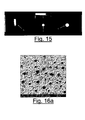
- unexpected experimental evidences have demonstrated that the utilization of a powder granulometry below 32 ⁇ m maximizes the exposure of MBG particles on the surface of the resulting hardened cement, since larger particles have difficulty to emerge from the matrix within they are trapped (this effect is clearly visible comparing figures 16a and 16b ).
- MBG exposure is extremely important, because, with a view to the application of the injectable compositions object of the present invention as bone cements, particles exposed on the surface are those which enable the bioactive and osteoinductive effect after the contact with body fluids, feature that is the main purpose of their use as dispersed phase.
- capillarity tests were carried out to evaluate the capillary absorption ability of fluids from hardened composite cements with polymethylmethacrylate matrix, by varying the dispersed phase: in particular, composite cements prepared according to example 6 were compared to cements characterized by the same matrix and the same composition but containing a different dispersed phase, since the MBG powder was substituted by particles of a traditional not-mesoporous bioactive glass with the same size (sieved below 32 ⁇ m).
- These glasses may be used as a vehicle for the transport of biologically active substances, including drugs, such as antibiotics, anti-inflammatories, painkillers and anti-tumoral agents, as well as growth factors, such as for example morphogenetic proteins.
- drugs such as antibiotics, anti-inflammatories, painkillers and anti-tumoral agents
- growth factors such as for example morphogenetic proteins.
- a further phase may be added to the matrix material of the injectable composition, especially in case of bioresorbable injectable matrices: this further material acts as a dispersed phase in the hardened composition, in order to impart better mechanical properties and to provide support and stabilization to the re-growing physiological tissue.
- This dispersed phase can be in the form of bioresorbable glass powders or fibres, preferably non-porous, having the following composition:
- bioresorbable dispersed phase is useful to induce, during the osteointegration of the injected material, the formation of a porous network that may be helpful for the transport of nutrients and waste products and can also promote the bone regeneration process.
- another glass material can be introduced as a further dispersed phase in the form of powders or fibres, preferably non-porous, whose size ranges preferably within 5 and 100 ⁇ m, having the following composition:
- compositions based on a bioresorbable matrix such as for example calcium sulphate hemi-hydrate
- the addition of one or more dispersed phases has also the advantage of reducing the resorption rate of the matrix, making it more compatible with the kinetics of bone tissue regeneration.
- tests on different cements composed of simple calcium sulphate di-hydrate or composite materials made by the combination of a calcium sulphate di-hydrate matrix and one or more dispersed phases, were carried out in vitro by soaking the samples in an acellular simulated body fluid that aims to mimic the ion concentration of human plasma (Kokubo's SBF), obtaining the following results:
- the percentage of the matrix component is typically from 40% to 95% by weight, referred to the 100% by weight of total amount of matrix and dispersed phase/phases.
- the percentage of the matrix material ranges preferably between 60% and 90% by weight.
- the dry powder constituted by the matrix and the dispersed phases
- an aqueous liquid which also aims to ensure the injectability of the composite paste.
- This liquid phase can be enriched with a radio-opaque agent and optionally with an oily component that facilitates the injection of the composition.
- the aqueous phase is distilled water or a balanced saline solution; the amount of the aqueous liquid mixed with the powders typically ranges from 0,10 to 1 ml per gram of the total dry powder and preferably between 0,45. and 0,60 ml/g.
- the dry powder constituted by the matrix and the dispersed phases
- a liquid mixture of monomer, catalyst and inhibitor that aim at ensuring the injectability and the subsequent hardening of the composite.
- the monomer is typically MMA (methyl-methacrylate)
- the catalyst may be dimethyl toluidine
- the inhibitor may be hydroquinone.
- the volume of the liquid phase mixed with the powders ranges from 0,20 to 0,80 ml per gram of the total dry powder and preferably between 0,30 and 0,60 ml/g.
- the liquid phase can be enriched with a radio-opaque agent and optionally with an oily component that facilitates the injection of the composition.
- the viscosity of the injectable material should be adapted to make it injectable into the bone for 1-10 minutes after the beginning of the mixing procedure of the different components.
- the specific formulation of both the composition and the selected liquid phase should be tuned in order to obtain preferably a setting time that varies between 10 and 30 minutes from the dough injection.
- a retardant agent such as for instance a carboxylic acid (e.g. citric acid, succinic acid, malic acid, tartaric acid), can be added either to the powder resulting from the mixture of matrix and dispersed phases (which represents the composition object of the invention) or to the liquid needed to provide the injectability.
- composition can be marketed in the form of a kit that contains measured amounts of each component - matrix material, dispersed phases, liquid phase - as well as all the accessories that the user needs for the preparation and the injection. Further features and advantages of the composition according to the invention will be apparent from the following examples, that, however, should not be construed as limiting the invention in any way.
- the presence of the second dispersed phase in form of a glass-ceramic material provides an increase in the mechanical properties of the composite in which it is introduced, if compared with the same material characterized by the second dispersed phase in form of a completely amorphous glass. Moreover, an increase in both the strength and the stiffness of the above-mentioned composite materials is observed after the complete evaporation of the excess of water, needed to ensure their injectability;
- the bone cement composition was obtained by adding to the mixture of the above-mentioned powders an amount of water ranging between 0,1 and 1 ml per gram of the total dry powder and preferably between 0,5 and 0,6 ml/g.
- compositions object of the present invention represents an unexpected outcome with respect to what is reported in some publications present in the scientific literature, which describe a decrease of the compressive strength when a dispersed phase is added to composite cements compared with simple polymethylmethacrylate, for instance: Renter ⁇ a-Zamarrón D., Cortés-Hernández D.A., Bretado-Aragón L., Ortega-Lara W., "Mechanical properties and apatite-forming ability of PMMA bone cements", Materials and Design, 2009, vol. 30, pag. 3318-3324 .
- MBGZ was synthesized by using the commercial non-ionic block copolymer Pluronic P123 (EO 20 PO 70 EO 20 , where "EO” is poly(ethylene glycol) and “PO” is poly(propylene glycol)) as organic surfactant, which acts as structure-directing agent for pores formation.
- a synthesis batch is prepared by dissolving P123 (4 g), tetraethylorthosilicate (TEOS, 6,10 g), calcium nitrate tetrahydrate (Ca(NO 3 ) 2 ⁇ 4H 2 O, 1,42 g), triethylphosphate (TEP, 0,73 g), zirconium propoxide (0,92 g), acetylacetone (Acac, which acts as a stabilizer to prevent the zirconium propoxide from uncontrollable hydrolysis and consequent precipitation, 0,10 g) and HCl 0,5 M (1 g) in ethanol (60 g). This synthesis batch is continuously stirred at 35°C for 24 hours.
- the resulting sol is cast into Petri dishes to undergo an ageing phase (24 hours at room temperature and 24 hours at 120°C), during which the evaporation-induced self-assembly (EISA) process occurs.
- the dried gel is, finally, calcined at 750°C for 5 hours to obtain the final MBGZ product.
- MBGZ powder to be used as dispersed phase in the composite cements object of the present invention
- MBGZ is ground and sieved to select particles of the desired size.
Landscapes
- Health & Medical Sciences (AREA)
- Chemical & Material Sciences (AREA)
- Life Sciences & Earth Sciences (AREA)
- Animal Behavior & Ethology (AREA)
- Veterinary Medicine (AREA)
- Public Health (AREA)
- General Health & Medical Sciences (AREA)
- Epidemiology (AREA)
- Engineering & Computer Science (AREA)
- Medicinal Chemistry (AREA)
- Inorganic Chemistry (AREA)
- Dermatology (AREA)
- Materials Engineering (AREA)
- Oral & Maxillofacial Surgery (AREA)
- Transplantation (AREA)
- Composite Materials (AREA)
- Surgery (AREA)
- Physical Education & Sports Medicine (AREA)
- Biomedical Technology (AREA)
- Molecular Biology (AREA)
- Orthopedic Medicine & Surgery (AREA)
- Rheumatology (AREA)
- Bioinformatics & Cheminformatics (AREA)
- Chemical Kinetics & Catalysis (AREA)
- General Chemical & Material Sciences (AREA)
- Nuclear Medicine, Radiotherapy & Molecular Imaging (AREA)
- Organic Chemistry (AREA)
- Pharmacology & Pharmacy (AREA)
- Materials For Medical Uses (AREA)
- Pharmaceuticals Containing Other Organic And Inorganic Compounds (AREA)
Claims (13)
- Injizierbare Zusammensetzung zur Knochenfüllung oder Konsolidierung zur Verwendung in Chirurgie oder Therapie, dadurch gekennzeichnet,
dass es ein biokompatibles Material in Form eines Pulvers, welches aushärtbar oder vernetzbar und ausgewählt ist aus Calciumsulfat-Halbhydrat und
Polymethylmethacrylat, ein Aushärtungs- oder Vernetzungsmittel für das Material und ein poröses Siliziumdioxid-basiertes Material in Form eines Pulvers umfasst, welches eine innere Oberfläche von mehr als 100 m2/g aufweist, welche ein mesoporöses bioaktives Glas umfasst, welches eine Porengröße von 2 bis 50 nm aufweist, welches durch ein Sol-Gel-Verfahren unter Zugabe eines grenzflächenaktiven Stoffs als einem Strukturdirigenten für eine Bildung von Poren, umfassend ein Oxidgemisch, welches enthält:SiO2: von 60 bis 85 Mol-%CaO: von 10 bis 30 Mol-%P2O5: von 2 bis 10 Mol-%wobei die Zusammensetzung, wenn sie an einem betroffenen Bereich eines Patienten angewendet wird, dazu eingerichtet ist, ein Verbundmaterial zu bilden, wobei das aushärtbare oder vernetzbare Material eine Matrix ausbildet, und wobei das mesoporöse bioaktive Glas eine dispergierte Phase in der Matrix ausbildet. - Zusammensetzung nach Anspruch 1, dadurch gekennzeichnet, dass sie ein strahlenundurchlässiges mesoporöses bioaktives Glas umfasst, umfassend ZrO2 oder SrO oder Mischungen davon in einer Menge von 2 bis 15 Mol-% bezogen auf 100% mol der Mischung aus SiO2, CaO und P2O5 Oxiden.
- Zusammensetzung nach Anspruch 1 oder 2, dadurch gekennzeichnet, dass das mesoporöse bioaktive Glas ein Pulver mit einer zwischen 5 und 32 µm liegenden Partikelgröße ist, erhältlich durch Sieben.
- Zusammensetzung nach einem der Ansprüche 1 bis 3, umfassend eine weitere dispergierte Phase mit einer glasartigen Beschaffenheit in Form eines Pulvers oder von Fasern auf Basis von SiO2 und CaO, mit dem optionalen Zusatz von einem oder mehreren Oxiden, welche aus der aus Na2O, MgO, K2O, Al2O3, ZrO2, SrO und TiO2 und Gemischen davon bestehenden Gruppe ausgewählt sind.
- Zusammensetzung nach einem der Ansprüche 1 bis 4, ferner umfassend eine zusätzliche biologisch resorbierbare dispergierte Phase in der Form von Pulvern oder Fasern auf Basis von P2O5 und CaO, enthaltend ein oder mehrere Oxide, welche aus der aus Na2O, MgO, K2O und TiO2 und Mischungen davon bestehenden Gruppe ausgewählt sind.
- Zusammensetzung nach einem der Ansprüche 1 bis 5, dadurch gekennzeichnet, dass das Matrixmaterial ein Pulver von α-Calciumsulfat-Halbhydrat umfasst und dass es ferner ein Mittel zur Verzögerung des Beginns der Härtung, wie Carbonsäuren, umfasst, ausgewählt aus Weinsäure, Zitronensäure, Bernsteinsäure, Äpfelsäure und Mischungen davon.
- Zusammensetzung nach Anspruch 6, umfassend in Kombination mit Calciumsulfat-Halbhydrat als ein Matrixmaterial ein Calciumphosphat oder Calciumphosphate.
- Zusammensetzung nach einem der vorhergehenden Ansprüche, dadurch gekennzeichnet, dass sie 40 Gew.-% bis 95 Gew.-%, vorzugsweise 60 Gew.-% bis 90 Gew.-% von Matrixmaterial bezogen auf 100 Gew.-% des Matrixmaterials und von dispergierten Phasen umfasst.
- Zusammensetzung nach einem der vorhergehenden Ansprüche, umfassend einen wässrigen Träger ausgewählt aus destilliertem Wasser, einem Mineralsalzmedium, welcher optional ein strahlenundurchlässiges Mittel enthält.
- Zusammensetzung nach Anspruch 9, ferner umfassend ein biokompatibles organisches Öl.
- Zusammensetzung nach einem der vorhergehenden Ansprüche, dadurch gekennzeichnet, dass das mesoporöse bioaktive Glas mit biologisch aktiven Substanzen beladen ist, welche aus Antibiotika, entzündungshemmenden Mitteln, Schmerzmitteln, gegen Tumore wirksamen Mitteln und Wachstumsfaktoren, insbesondere morphogenetischen Proteinen, ausgewählt sind.
- Zusammensetzung nach einem der vorhergehenden Ansprüche, dadurch gekennzeichnet, dass das mesoporöse bioaktives Glas eine zwischen 300 m2/g und 500 m2/g liegende innere Oberfläche und eine zwischen 2 nm und 10 nm liegende Porendimension/ -größe aufweist.
- Ein aus einer Zusammensetzung nach einem der Ansprüche 1 bis 12 erhaltener Verbundknochenzement.
Applications Claiming Priority (2)
| Application Number | Priority Date | Filing Date | Title |
|---|---|---|---|
| ITTO2010A000401A IT1400620B1 (it) | 2010-05-13 | 2010-05-13 | Cementi ossei compositi iniettabili, osteoinduttivi ed a rilascio di farmaci |
| PCT/IB2011/052094 WO2011141889A1 (en) | 2010-05-13 | 2011-05-12 | Injectable osteoinductive bone cements |
Publications (2)
| Publication Number | Publication Date |
|---|---|
| EP2569025A1 EP2569025A1 (de) | 2013-03-20 |
| EP2569025B1 true EP2569025B1 (de) | 2015-07-29 |
Family
ID=43242768
Family Applications (1)
| Application Number | Title | Priority Date | Filing Date |
|---|---|---|---|
| EP11728668.2A Not-in-force EP2569025B1 (de) | 2010-05-13 | 2011-05-12 | Injizierbarer osteoinduktiver knochenzement |
Country Status (4)
| Country | Link |
|---|---|
| US (1) | US20130059013A1 (de) |
| EP (1) | EP2569025B1 (de) |
| IT (1) | IT1400620B1 (de) |
| WO (1) | WO2011141889A1 (de) |
Families Citing this family (10)
| Publication number | Priority date | Publication date | Assignee | Title |
|---|---|---|---|---|
| DE102012014418A1 (de) * | 2012-07-20 | 2014-01-23 | Heraeus Medical Gmbh | Pastenförmiger Knochenzement |
| DE102012108320A1 (de) * | 2012-09-07 | 2014-03-13 | Aap Biomaterials Gmbh | Knochenzement sowie unter Verwendung eines Knochenzements hergestellter Formkörper |
| DE102012022134A1 (de) * | 2012-11-13 | 2014-05-15 | Heraeus Medical Gmbh | Polymethylmethacrylat-Knochenzement |
| US20140277505A1 (en) * | 2013-03-15 | 2014-09-18 | Dale Mitchell | Spinal implants with bioactive glass markers |
| TWI651103B (zh) | 2013-12-13 | 2019-02-21 | 萊特醫技股份有限公司 | 多相骨移植替代材料 |
| US10239022B2 (en) * | 2016-06-02 | 2019-03-26 | C-Crete Technologies, Llc | Porous calcium-silicates and method of synthesis |
| CN106075565B (zh) * | 2016-07-05 | 2019-02-15 | 盐城倍尔生生物科技有限公司 | 自固化可降解的生物活性膏剂骨修复材料及应用 |
| CN109939261B (zh) * | 2019-04-24 | 2021-06-11 | 东南大学 | 一种可调控磷酸钙骨水泥注射性的固化液及其制备方法和应用 |
| CN114681666B (zh) * | 2022-02-16 | 2022-12-30 | 中南大学湘雅三医院 | 具备光热抗肿瘤和抗菌作用的骨修复材料及其制备方法 |
| CN115969809B (zh) * | 2022-12-30 | 2025-07-04 | 广西璟炜生物技术有限公司 | 一种复合蛋白包裹的功能微球的制备方法及其在鼻腔黏膜修复的应用 |
Citations (1)
| Publication number | Priority date | Publication date | Assignee | Title |
|---|---|---|---|---|
| WO2002096391A1 (en) * | 2001-05-25 | 2002-12-05 | Imperial College Innovations | Foamed sol-gel and method of manufacturing the same |
Family Cites Families (4)
| Publication number | Priority date | Publication date | Assignee | Title |
|---|---|---|---|---|
| ES2311803T3 (es) * | 2003-02-26 | 2009-02-16 | Micro Therapeutics Inc | Composiciones embolicas de silicie pirogena. |
| DE102005001078A1 (de) * | 2005-01-08 | 2006-07-20 | Schott Ag | Glaspulver, insbesondere biologisch aktives Glaspulver und Verfahren zur Herstellung von Glaspulver, insbesondere biologisch aktivem Glaspulver |
| US8916198B2 (en) * | 2006-04-25 | 2014-12-23 | Washington State University | Mesoporous calcium silicate compositions and methods for synthesis of mesoporous calcium silicate for controlled release of bioactive agents |
| JP2012500693A (ja) * | 2008-08-27 | 2012-01-12 | ノレーカー | 多孔質バイオガラス及び硫酸カルシウムを主成分とする骨代替物 |
-
2010
- 2010-05-13 IT ITTO2010A000401A patent/IT1400620B1/it active
-
2011
- 2011-05-12 EP EP11728668.2A patent/EP2569025B1/de not_active Not-in-force
- 2011-05-12 WO PCT/IB2011/052094 patent/WO2011141889A1/en not_active Ceased
- 2011-05-12 US US13/697,076 patent/US20130059013A1/en not_active Abandoned
Patent Citations (1)
| Publication number | Priority date | Publication date | Assignee | Title |
|---|---|---|---|---|
| WO2002096391A1 (en) * | 2001-05-25 | 2002-12-05 | Imperial College Innovations | Foamed sol-gel and method of manufacturing the same |
Also Published As
| Publication number | Publication date |
|---|---|
| US20130059013A1 (en) | 2013-03-07 |
| IT1400620B1 (it) | 2013-06-14 |
| WO2011141889A1 (en) | 2011-11-17 |
| ITTO20100401A1 (it) | 2011-11-14 |
| EP2569025A1 (de) | 2013-03-20 |
Similar Documents
| Publication | Publication Date | Title |
|---|---|---|
| US20130059013A1 (en) | Injectable osteoinductive bone cements | |
| RU2354408C2 (ru) | Неорганический резорбируемый материал для замены костей | |
| AU2017232233B2 (en) | Injectable, biodegradable bone cements and methods of making and using same | |
| Hesaraki et al. | The influence of the acidic component of the gas‐foaming porogen used in preparing an injectable porous calcium phosphate cement on its properties: Acetic acid versus citric acid | |
| US7025824B2 (en) | Ceramic material and process for manufacturing | |
| Tallia et al. | Zirconia-containing radiopaque mesoporous bioactive glasses | |
| Dadkhah et al. | Preparation and characterisation of an innovative injectable calcium sulphate based bone cement for vertebroplasty application | |
| Masaeli et al. | Efficacy of the biomaterials 3 wt%-nanostrontium-hydroxyapatite-enhanced calcium phosphate cement (nanoSr-CPC) and nanoSr-CPC-incorporated simvastatin-loaded poly (lactic-co-glycolic-acid) microspheres in osteogenesis improvement: An explorative multi-phase experimental in vitro/vivo study | |
| No et al. | Strontium-doped calcium silicate bioceramic with enhanced in vitro osteogenic properties | |
| WO2007121457A1 (en) | Composition of biodegradable glass-ceramic | |
| Ruan et al. | Effects of mesoporous bioglass on physicochemical and biological properties of calcium sulfate bone cements | |
| Engstrand et al. | Polyhedral oligomeric silsesquioxane (POSS)–poly (ethylene glycol)(PEG) hybrids as injectable biomaterials | |
| Graça et al. | Calcium phosphate cements in tissue engineering | |
| ES2708429T3 (es) | Biomaterial poroso a base de hidroxiapatita | |
| Shih et al. | In vivo evaluation of resorbable bone graft substitutes in beagles: histological properties | |
| Mendes et al. | Injectable β-TCP/MCPM cement associated with mesoporous silica for bone regeneration: characterization and toxicity evaluation | |
| US20190282734A1 (en) | Product and process for the preparation of an injectable composition based on chitosan and bioglasses, intended for the regeneration of bone tissue | |
| VITALE et al. | injectable osteoconductive bone cement | |
| JP2023529113A (ja) | 生体材料組成物及びその使用方法 | |
| Schamel | Novel dual setting approaches for mechanically reinforced mineral biocements | |
| WO2025012423A1 (en) | Bone substitute material based on calcium silicate and calcium phosphate | |
| BR102021010041A2 (pt) | Método de preparação de cimento para reparo ósseo incorporado com nanopartículas de hidroxiapatita enriquecida com estrôncio, composição do cimento para reparo ósseo e seu uso | |
| BR102021010041B1 (pt) | Método de preparação de cimento para reparo ósseo incorporado com nanopartículas de hidroxiapatita enriquecida com estrôncio, composição do cimento para reparo ósseo e seu uso | |
| geb Christel | Novel Application Forms and Setting Mechanisms of Mineral Bone Cements | |
| Masaeli et al. | Calcium Phosphate Cement Containing Strontium for Increasing Bone Formation: In Vitro and In Vivo Study |
Legal Events
| Date | Code | Title | Description |
|---|---|---|---|
| PUAI | Public reference made under article 153(3) epc to a published international application that has entered the european phase |
Free format text: ORIGINAL CODE: 0009012 |
|
| 17P | Request for examination filed |
Effective date: 20121205 |
|
| AK | Designated contracting states |
Kind code of ref document: A1 Designated state(s): AL AT BE BG CH CY CZ DE DK EE ES FI FR GB GR HR HU IE IS IT LI LT LU LV MC MK MT NL NO PL PT RO RS SE SI SK SM TR |
|
| DAX | Request for extension of the european patent (deleted) | ||
| 17Q | First examination report despatched |
Effective date: 20140226 |
|
| GRAP | Despatch of communication of intention to grant a patent |
Free format text: ORIGINAL CODE: EPIDOSNIGR1 |
|
| INTG | Intention to grant announced |
Effective date: 20140808 |
|
| GRAS | Grant fee paid |
Free format text: ORIGINAL CODE: EPIDOSNIGR3 |
|
| GRAP | Despatch of communication of intention to grant a patent |
Free format text: ORIGINAL CODE: EPIDOSNIGR1 |
|
| INTG | Intention to grant announced |
Effective date: 20150213 |
|
| GRAA | (expected) grant |
Free format text: ORIGINAL CODE: 0009210 |
|
| AK | Designated contracting states |
Kind code of ref document: B1 Designated state(s): AL AT BE BG CH CY CZ DE DK EE ES FI FR GB GR HR HU IE IS IT LI LT LU LV MC MK MT NL NO PL PT RO RS SE SI SK SM TR |
|
| REG | Reference to a national code |
Ref country code: GB Ref legal event code: FG4D |
|
| REG | Reference to a national code |
Ref country code: CH Ref legal event code: EP |
|
| REG | Reference to a national code |
Ref country code: AT Ref legal event code: REF Ref document number: 738773 Country of ref document: AT Kind code of ref document: T Effective date: 20150815 |
|
| REG | Reference to a national code |
Ref country code: IE Ref legal event code: FG4D |
|
| REG | Reference to a national code |
Ref country code: DE Ref legal event code: R096 Ref document number: 602011018247 Country of ref document: DE |
|
| REG | Reference to a national code |
Ref country code: AT Ref legal event code: MK05 Ref document number: 738773 Country of ref document: AT Kind code of ref document: T Effective date: 20150729 |
|
| REG | Reference to a national code |
Ref country code: LT Ref legal event code: MG4D |
|
| REG | Reference to a national code |
Ref country code: NL Ref legal event code: MP Effective date: 20150729 |
|
| PG25 | Lapsed in a contracting state [announced via postgrant information from national office to epo] |
Ref country code: FI Free format text: LAPSE BECAUSE OF FAILURE TO SUBMIT A TRANSLATION OF THE DESCRIPTION OR TO PAY THE FEE WITHIN THE PRESCRIBED TIME-LIMIT Effective date: 20150729 Ref country code: GR Free format text: LAPSE BECAUSE OF FAILURE TO SUBMIT A TRANSLATION OF THE DESCRIPTION OR TO PAY THE FEE WITHIN THE PRESCRIBED TIME-LIMIT Effective date: 20151030 Ref country code: NO Free format text: LAPSE BECAUSE OF FAILURE TO SUBMIT A TRANSLATION OF THE DESCRIPTION OR TO PAY THE FEE WITHIN THE PRESCRIBED TIME-LIMIT Effective date: 20151029 Ref country code: LT Free format text: LAPSE BECAUSE OF FAILURE TO SUBMIT A TRANSLATION OF THE DESCRIPTION OR TO PAY THE FEE WITHIN THE PRESCRIBED TIME-LIMIT Effective date: 20150729 Ref country code: LV Free format text: LAPSE BECAUSE OF FAILURE TO SUBMIT A TRANSLATION OF THE DESCRIPTION OR TO PAY THE FEE WITHIN THE PRESCRIBED TIME-LIMIT Effective date: 20150729 |
|
| PG25 | Lapsed in a contracting state [announced via postgrant information from national office to epo] |
Ref country code: IS Free format text: LAPSE BECAUSE OF FAILURE TO SUBMIT A TRANSLATION OF THE DESCRIPTION OR TO PAY THE FEE WITHIN THE PRESCRIBED TIME-LIMIT Effective date: 20151129 Ref country code: ES Free format text: LAPSE BECAUSE OF FAILURE TO SUBMIT A TRANSLATION OF THE DESCRIPTION OR TO PAY THE FEE WITHIN THE PRESCRIBED TIME-LIMIT Effective date: 20150729 Ref country code: PT Free format text: LAPSE BECAUSE OF FAILURE TO SUBMIT A TRANSLATION OF THE DESCRIPTION OR TO PAY THE FEE WITHIN THE PRESCRIBED TIME-LIMIT Effective date: 20151130 Ref country code: SE Free format text: LAPSE BECAUSE OF FAILURE TO SUBMIT A TRANSLATION OF THE DESCRIPTION OR TO PAY THE FEE WITHIN THE PRESCRIBED TIME-LIMIT Effective date: 20150729 Ref country code: AT Free format text: LAPSE BECAUSE OF FAILURE TO SUBMIT A TRANSLATION OF THE DESCRIPTION OR TO PAY THE FEE WITHIN THE PRESCRIBED TIME-LIMIT Effective date: 20150729 Ref country code: RS Free format text: LAPSE BECAUSE OF FAILURE TO SUBMIT A TRANSLATION OF THE DESCRIPTION OR TO PAY THE FEE WITHIN THE PRESCRIBED TIME-LIMIT Effective date: 20150729 Ref country code: HR Free format text: LAPSE BECAUSE OF FAILURE TO SUBMIT A TRANSLATION OF THE DESCRIPTION OR TO PAY THE FEE WITHIN THE PRESCRIBED TIME-LIMIT Effective date: 20150729 Ref country code: PL Free format text: LAPSE BECAUSE OF FAILURE TO SUBMIT A TRANSLATION OF THE DESCRIPTION OR TO PAY THE FEE WITHIN THE PRESCRIBED TIME-LIMIT Effective date: 20150729 |
|
| PG25 | Lapsed in a contracting state [announced via postgrant information from national office to epo] |
Ref country code: NL Free format text: LAPSE BECAUSE OF FAILURE TO SUBMIT A TRANSLATION OF THE DESCRIPTION OR TO PAY THE FEE WITHIN THE PRESCRIBED TIME-LIMIT Effective date: 20150729 |
|
| PG25 | Lapsed in a contracting state [announced via postgrant information from national office to epo] |
Ref country code: EE Free format text: LAPSE BECAUSE OF FAILURE TO SUBMIT A TRANSLATION OF THE DESCRIPTION OR TO PAY THE FEE WITHIN THE PRESCRIBED TIME-LIMIT Effective date: 20150729 Ref country code: CZ Free format text: LAPSE BECAUSE OF FAILURE TO SUBMIT A TRANSLATION OF THE DESCRIPTION OR TO PAY THE FEE WITHIN THE PRESCRIBED TIME-LIMIT Effective date: 20150729 Ref country code: SK Free format text: LAPSE BECAUSE OF FAILURE TO SUBMIT A TRANSLATION OF THE DESCRIPTION OR TO PAY THE FEE WITHIN THE PRESCRIBED TIME-LIMIT Effective date: 20150729 Ref country code: DK Free format text: LAPSE BECAUSE OF FAILURE TO SUBMIT A TRANSLATION OF THE DESCRIPTION OR TO PAY THE FEE WITHIN THE PRESCRIBED TIME-LIMIT Effective date: 20150729 |
|
| REG | Reference to a national code |
Ref country code: DE Ref legal event code: R097 Ref document number: 602011018247 Country of ref document: DE |
|
| REG | Reference to a national code |
Ref country code: FR Ref legal event code: PLFP Year of fee payment: 6 |
|
| PG25 | Lapsed in a contracting state [announced via postgrant information from national office to epo] |
Ref country code: RO Free format text: LAPSE BECAUSE OF FAILURE TO SUBMIT A TRANSLATION OF THE DESCRIPTION OR TO PAY THE FEE WITHIN THE PRESCRIBED TIME-LIMIT Effective date: 20150729 |
|
| PLBE | No opposition filed within time limit |
Free format text: ORIGINAL CODE: 0009261 |
|
| STAA | Information on the status of an ep patent application or granted ep patent |
Free format text: STATUS: NO OPPOSITION FILED WITHIN TIME LIMIT |
|
| 26N | No opposition filed |
Effective date: 20160502 |
|
| PG25 | Lapsed in a contracting state [announced via postgrant information from national office to epo] |
Ref country code: SI Free format text: LAPSE BECAUSE OF FAILURE TO SUBMIT A TRANSLATION OF THE DESCRIPTION OR TO PAY THE FEE WITHIN THE PRESCRIBED TIME-LIMIT Effective date: 20150729 Ref country code: BE Free format text: LAPSE BECAUSE OF NON-PAYMENT OF DUE FEES Effective date: 20160531 |
|
| PG25 | Lapsed in a contracting state [announced via postgrant information from national office to epo] |
Ref country code: LU Free format text: LAPSE BECAUSE OF FAILURE TO SUBMIT A TRANSLATION OF THE DESCRIPTION OR TO PAY THE FEE WITHIN THE PRESCRIBED TIME-LIMIT Effective date: 20160512 Ref country code: BE Free format text: LAPSE BECAUSE OF FAILURE TO SUBMIT A TRANSLATION OF THE DESCRIPTION OR TO PAY THE FEE WITHIN THE PRESCRIBED TIME-LIMIT Effective date: 20150729 |
|
| REG | Reference to a national code |
Ref country code: CH Ref legal event code: PL |
|
| PG25 | Lapsed in a contracting state [announced via postgrant information from national office to epo] |
Ref country code: LI Free format text: LAPSE BECAUSE OF NON-PAYMENT OF DUE FEES Effective date: 20160531 Ref country code: CH Free format text: LAPSE BECAUSE OF NON-PAYMENT OF DUE FEES Effective date: 20160531 |
|
| REG | Reference to a national code |
Ref country code: IE Ref legal event code: MM4A |
|
| REG | Reference to a national code |
Ref country code: FR Ref legal event code: PLFP Year of fee payment: 7 |
|
| PG25 | Lapsed in a contracting state [announced via postgrant information from national office to epo] |
Ref country code: IE Free format text: LAPSE BECAUSE OF NON-PAYMENT OF DUE FEES Effective date: 20160512 |
|
| PG25 | Lapsed in a contracting state [announced via postgrant information from national office to epo] |
Ref country code: CY Free format text: LAPSE BECAUSE OF FAILURE TO SUBMIT A TRANSLATION OF THE DESCRIPTION OR TO PAY THE FEE WITHIN THE PRESCRIBED TIME-LIMIT Effective date: 20150729 Ref country code: HU Free format text: LAPSE BECAUSE OF FAILURE TO SUBMIT A TRANSLATION OF THE DESCRIPTION OR TO PAY THE FEE WITHIN THE PRESCRIBED TIME-LIMIT; INVALID AB INITIO Effective date: 20110512 Ref country code: SM Free format text: LAPSE BECAUSE OF FAILURE TO SUBMIT A TRANSLATION OF THE DESCRIPTION OR TO PAY THE FEE WITHIN THE PRESCRIBED TIME-LIMIT Effective date: 20150729 |
|
| REG | Reference to a national code |
Ref country code: FR Ref legal event code: PLFP Year of fee payment: 8 |
|
| PG25 | Lapsed in a contracting state [announced via postgrant information from national office to epo] |
Ref country code: TR Free format text: LAPSE BECAUSE OF FAILURE TO SUBMIT A TRANSLATION OF THE DESCRIPTION OR TO PAY THE FEE WITHIN THE PRESCRIBED TIME-LIMIT Effective date: 20150729 Ref country code: MT Free format text: LAPSE BECAUSE OF NON-PAYMENT OF DUE FEES Effective date: 20160531 Ref country code: MC Free format text: LAPSE BECAUSE OF FAILURE TO SUBMIT A TRANSLATION OF THE DESCRIPTION OR TO PAY THE FEE WITHIN THE PRESCRIBED TIME-LIMIT Effective date: 20150729 Ref country code: MK Free format text: LAPSE BECAUSE OF FAILURE TO SUBMIT A TRANSLATION OF THE DESCRIPTION OR TO PAY THE FEE WITHIN THE PRESCRIBED TIME-LIMIT Effective date: 20150729 |
|
| PG25 | Lapsed in a contracting state [announced via postgrant information from national office to epo] |
Ref country code: BG Free format text: LAPSE BECAUSE OF FAILURE TO SUBMIT A TRANSLATION OF THE DESCRIPTION OR TO PAY THE FEE WITHIN THE PRESCRIBED TIME-LIMIT Effective date: 20150729 |
|
| PGFP | Annual fee paid to national office [announced via postgrant information from national office to epo] |
Ref country code: IT Payment date: 20180508 Year of fee payment: 8 Ref country code: FR Payment date: 20180531 Year of fee payment: 8 |
|
| PG25 | Lapsed in a contracting state [announced via postgrant information from national office to epo] |
Ref country code: AL Free format text: LAPSE BECAUSE OF FAILURE TO SUBMIT A TRANSLATION OF THE DESCRIPTION OR TO PAY THE FEE WITHIN THE PRESCRIBED TIME-LIMIT Effective date: 20150729 |
|
| PGFP | Annual fee paid to national office [announced via postgrant information from national office to epo] |
Ref country code: GB Payment date: 20180518 Year of fee payment: 8 Ref country code: DE Payment date: 20180731 Year of fee payment: 8 |
|
| REG | Reference to a national code |
Ref country code: DE Ref legal event code: R119 Ref document number: 602011018247 Country of ref document: DE |
|
| GBPC | Gb: european patent ceased through non-payment of renewal fee |
Effective date: 20190512 |
|
| PG25 | Lapsed in a contracting state [announced via postgrant information from national office to epo] |
Ref country code: DE Free format text: LAPSE BECAUSE OF NON-PAYMENT OF DUE FEES Effective date: 20191203 Ref country code: GB Free format text: LAPSE BECAUSE OF NON-PAYMENT OF DUE FEES Effective date: 20190512 Ref country code: IT Free format text: LAPSE BECAUSE OF NON-PAYMENT OF DUE FEES Effective date: 20190512 |
|
| PG25 | Lapsed in a contracting state [announced via postgrant information from national office to epo] |
Ref country code: FR Free format text: LAPSE BECAUSE OF NON-PAYMENT OF DUE FEES Effective date: 20190531 |