EP2566901B2 - Particulate superabsorbent polymer having a capacity increase - Google Patents
Particulate superabsorbent polymer having a capacity increase Download PDFInfo
- Publication number
- EP2566901B2 EP2566901B2 EP11719935.6A EP11719935A EP2566901B2 EP 2566901 B2 EP2566901 B2 EP 2566901B2 EP 11719935 A EP11719935 A EP 11719935A EP 2566901 B2 EP2566901 B2 EP 2566901B2
- Authority
- EP
- European Patent Office
- Prior art keywords
- superabsorbent polymer
- particulate superabsorbent
- crc
- retention capacity
- particulate
- Prior art date
- Legal status (The legal status is an assumption and is not a legal conclusion. Google has not performed a legal analysis and makes no representation as to the accuracy of the status listed.)
- Active
Links
Images


Classifications
-
- C—CHEMISTRY; METALLURGY
- C08—ORGANIC MACROMOLECULAR COMPOUNDS; THEIR PREPARATION OR CHEMICAL WORKING-UP; COMPOSITIONS BASED THEREON
- C08F—MACROMOLECULAR COMPOUNDS OBTAINED BY REACTIONS ONLY INVOLVING CARBON-TO-CARBON UNSATURATED BONDS
- C08F230/00—Copolymers of compounds having one or more unsaturated aliphatic radicals, each having only one carbon-to-carbon double bond, and containing phosphorus, selenium, tellurium or a metal
- C08F230/04—Copolymers of compounds having one or more unsaturated aliphatic radicals, each having only one carbon-to-carbon double bond, and containing phosphorus, selenium, tellurium or a metal containing a metal
- C08F230/08—Copolymers of compounds having one or more unsaturated aliphatic radicals, each having only one carbon-to-carbon double bond, and containing phosphorus, selenium, tellurium or a metal containing a metal containing silicon
-
- B—PERFORMING OPERATIONS; TRANSPORTING
- B01—PHYSICAL OR CHEMICAL PROCESSES OR APPARATUS IN GENERAL
- B01J—CHEMICAL OR PHYSICAL PROCESSES, e.g. CATALYSIS OR COLLOID CHEMISTRY; THEIR RELEVANT APPARATUS
- B01J20/00—Solid sorbent compositions or filter aid compositions; Sorbents for chromatography; Processes for preparing, regenerating or reactivating thereof
- B01J20/22—Solid sorbent compositions or filter aid compositions; Sorbents for chromatography; Processes for preparing, regenerating or reactivating thereof comprising organic material
- B01J20/26—Synthetic macromolecular compounds
-
- A—HUMAN NECESSITIES
- A61—MEDICAL OR VETERINARY SCIENCE; HYGIENE
- A61F—FILTERS IMPLANTABLE INTO BLOOD VESSELS; PROSTHESES; DEVICES PROVIDING PATENCY TO, OR PREVENTING COLLAPSING OF, TUBULAR STRUCTURES OF THE BODY, e.g. STENTS; ORTHOPAEDIC, NURSING OR CONTRACEPTIVE DEVICES; FOMENTATION; TREATMENT OR PROTECTION OF EYES OR EARS; BANDAGES, DRESSINGS OR ABSORBENT PADS; FIRST-AID KITS
- A61F13/00—Bandages or dressings; Absorbent pads
- A61F13/15—Absorbent pads, e.g. sanitary towels, swabs or tampons for external or internal application to the body; Supporting or fastening means therefor; Tampon applicators
-
- A—HUMAN NECESSITIES
- A61—MEDICAL OR VETERINARY SCIENCE; HYGIENE
- A61L—METHODS OR APPARATUS FOR STERILISING MATERIALS OR OBJECTS IN GENERAL; DISINFECTION, STERILISATION OR DEODORISATION OF AIR; CHEMICAL ASPECTS OF BANDAGES, DRESSINGS, ABSORBENT PADS OR SURGICAL ARTICLES; MATERIALS FOR BANDAGES, DRESSINGS, ABSORBENT PADS OR SURGICAL ARTICLES
- A61L15/00—Chemical aspects of, or use of materials for, bandages, dressings or absorbent pads
- A61L15/16—Bandages, dressings or absorbent pads for physiological fluids such as urine or blood, e.g. sanitary towels, tampons
- A61L15/22—Bandages, dressings or absorbent pads for physiological fluids such as urine or blood, e.g. sanitary towels, tampons containing macromolecular materials
- A61L15/26—Macromolecular compounds obtained otherwise than by reactions only involving carbon-to-carbon unsaturated bonds; Derivatives thereof
-
- C—CHEMISTRY; METALLURGY
- C08—ORGANIC MACROMOLECULAR COMPOUNDS; THEIR PREPARATION OR CHEMICAL WORKING-UP; COMPOSITIONS BASED THEREON
- C08F—MACROMOLECULAR COMPOUNDS OBTAINED BY REACTIONS ONLY INVOLVING CARBON-TO-CARBON UNSATURATED BONDS
- C08F220/00—Copolymers of compounds having one or more unsaturated aliphatic radicals, each having only one carbon-to-carbon double bond, and only one being terminated by only one carboxyl radical or a salt, anhydride ester, amide, imide or nitrile thereof
- C08F220/02—Monocarboxylic acids having less than ten carbon atoms; Derivatives thereof
- C08F220/04—Acids; Metal salts or ammonium salts thereof
- C08F220/06—Acrylic acid; Methacrylic acid; Metal salts or ammonium salts thereof
-
- C—CHEMISTRY; METALLURGY
- C08—ORGANIC MACROMOLECULAR COMPOUNDS; THEIR PREPARATION OR CHEMICAL WORKING-UP; COMPOSITIONS BASED THEREON
- C08F—MACROMOLECULAR COMPOUNDS OBTAINED BY REACTIONS ONLY INVOLVING CARBON-TO-CARBON UNSATURATED BONDS
- C08F230/00—Copolymers of compounds having one or more unsaturated aliphatic radicals, each having only one carbon-to-carbon double bond, and containing phosphorus, selenium, tellurium or a metal
- C08F230/04—Copolymers of compounds having one or more unsaturated aliphatic radicals, each having only one carbon-to-carbon double bond, and containing phosphorus, selenium, tellurium or a metal containing a metal
- C08F230/08—Copolymers of compounds having one or more unsaturated aliphatic radicals, each having only one carbon-to-carbon double bond, and containing phosphorus, selenium, tellurium or a metal containing a metal containing silicon
- C08F230/085—Copolymers of compounds having one or more unsaturated aliphatic radicals, each having only one carbon-to-carbon double bond, and containing phosphorus, selenium, tellurium or a metal containing a metal containing silicon the monomer being a polymerisable silane, e.g. (meth)acryloyloxy trialkoxy silanes or vinyl trialkoxysilanes
-
- C—CHEMISTRY; METALLURGY
- C08—ORGANIC MACROMOLECULAR COMPOUNDS; THEIR PREPARATION OR CHEMICAL WORKING-UP; COMPOSITIONS BASED THEREON
- C08L—COMPOSITIONS OF MACROMOLECULAR COMPOUNDS
- C08L43/00—Compositions of homopolymers or copolymers of compounds having one or more unsaturated aliphatic radicals, each having only one carbon-to-carbon double bond, and containing boron, silicon, phosphorus, selenium, tellurium or a metal; Compositions of derivatives of such polymers
- C08L43/04—Homopolymers or copolymers of monomers containing silicon
-
- Y—GENERAL TAGGING OF NEW TECHNOLOGICAL DEVELOPMENTS; GENERAL TAGGING OF CROSS-SECTIONAL TECHNOLOGIES SPANNING OVER SEVERAL SECTIONS OF THE IPC; TECHNICAL SUBJECTS COVERED BY FORMER USPC CROSS-REFERENCE ART COLLECTIONS [XRACs] AND DIGESTS
- Y10—TECHNICAL SUBJECTS COVERED BY FORMER USPC
- Y10T—TECHNICAL SUBJECTS COVERED BY FORMER US CLASSIFICATION
- Y10T428/00—Stock material or miscellaneous articles
- Y10T428/249921—Web or sheet containing structurally defined element or component
- Y10T428/249953—Composite having voids in a component [e.g., porous, cellular, etc.]
- Y10T428/249987—With nonvoid component of specified composition
- Y10T428/249991—Synthetic resin or natural rubbers
Definitions
- a superabsorbent polymer is a crosslinked partially neutralized polymer, including crosslinked polyacrylic acids or crosslinked starch-acrylic acid graft polymers, that is capable of absorbing large amounts of aqueous liquids and body fluids, such as urine or blood, with swelling and the formation of hydrogels, and of retaining the aqueous liquids under a certain pressure in accordance with the general definition of superabsorbent polymer.
- Superabsorbent polymer may be formed into particles, generally referred to as particulate superabsorbent polymer, wherein the particulate superabsorbent polymer may be post-treated with surface crosslinking, surface treatment, and other treatment to form particulate superabsorbent polymer.
- SAP may be used in place of superabsorbent polymer, and particles hereof.
- a primary use of superabsorbent polymer and particulate superabsorbent polymer is in sanitary articles, such as babies' diapers, incontinence products, or sanitary towels.
- a comprehensive survey of superabsorbent polymers, and their use and manufacture, is given in F. L. Buchholz and A. T. Graham (editors) in "Modern Superabsorbent Polymer Technology," Wiley-VCR, New York, 1998 .
- Superabsorbent polymers may be prepared by initially polymerizing unsaturated carboxylic acids or derivatives thereof, such as acrylic acid, alkali metal (e.g., sodium and/or potassium) or ammonium salts of acrylic acid, alkyl acrylates, and the like in the presence of relatively small amounts of an internal crosslinker such as a di- or polyfunctional monomers that may include N,N'-methylenebisacrylamide, trimethylolpropane triacrylate, ethylene glycol di(meth)acrylate, or triallylamine.
- the di- or poly-functional monomer materials may serve as covalent internal crosslinking agents to lightly crosslink the polymer chains, thereby rendering them water-insoluble, yet water-swellable.
- These lightly crosslinked superabsorbent polymers contain a multiplicity of carboxyl groups attached to the polymer backbone. These carboxyl groups generate an osmotic driving force for the absorption of body fluids by the crosslinked polymer network.
- ionic internal crosslinking agents have been utilized to prepare superabsorbent polymers as well.
- the ionic internal crosslinking agents are generally coordination compounds comprising polyvalent metal cations, such as Al 3+ and Ca 2+ , as disclosed in U.S. Pat. No. 6,716,929 and U.S. Pat. No. 7,285,614 .
- the superabsorbent polymers disclosed in these patents have a slow rate of absorption, due to the presence of ionic crosslinks. In this context, slow rate may be measured by the Vortex Test and slow rate particulate superabsorbent polymer generally have a vortex time of 180sec or more.
- Superabsorbent polymers and particulate superabsorbent polymers useful as absorbents in absorbent articles such as disposable diapers, need to have adequately high sorption capacity, as well as adequately high gel strength. Sorption capacity needs to be sufficiently high to enable the absorbent polymer to absorb significant amounts of the aqueous body fluids encountered during use of the absorbent article.
- Gel strength relates to the tendency of the swollen polymer particles to deform under an applied stress, and needs to be such that the particles do not deform and fill the capillary void spaces in the absorbent member or article to an unacceptable degree, so-called gel blocking, thereby inhibiting the rate of fluid uptake or the fluid distribution by the member or article.
- gel-blocking occurs, it can substantially impede the distribution of fluids to relatively dry zones or regions in the absorbent article and leakage from the absorbent article can take place well before the particulate superabsorbent polymer in the absorbent article are fully saturated or before the fluid can diffuse or wick past the "blocking" particles into the rest of the absorbent article.
- Gel permeability of particulate superabsorbent polymer is a measure of how rapidly liquid flows through the mass of swollen particulate superabsorbent polymer.
- the gel permeability of a zone, or layer, comprising swollen particulate superabsorbent polymer can be increased by increasing the cross link density of the polymer gel, thereby increasing the gel strength.
- Particulate superabsorbent polymers with relatively high gel permeability can be made by increasing the level of internal crosslinking, which increases the strength of the swollen gel, but this typically also reduces the absorbent capacity of the gel undesirably, as described above.
- particulate superabsorbent polymers In the past decade, significant investments have been made to improve the performance of such particulate superabsorbent polymers, e.g. to provide a higher absorbent capacity per volume, to improve fluid distribution throughout the particulate superabsorbent polymers, and to reduce so-called gel blocking of the particulate superabsorbent polymers.
- One area of focus has been to modify the surface of particulate superabsorbent polymers such that optimum gel permeability is achieved without significantly compromising the absorbent capacity.
- the current trend in absorbent articles including diapers is toward ever thinner core constructions having a reduced or zero cellulose fiber, or fluff, content and an increased particulate superabsorbent polymers content.
- the particulate superabsorbent polymer must possess properties that historically have been supplied by fluff pulp. Since reducing the fiber content between the superabsorbent polymers increases the risk of gel blocking, there is a need to provide thinner cores without much or any fibers, which do not suffer from gel blocking.
- One embodiment of the present invention is a particulate superabsorbent polymer comprising a monomer and a crosslinker composition comprising a covalent internal crosslinking agent wherein the particulate superabsorbent polymer has a Centrifuge Retention Capacity Increase (CRCI) of 2g/g or more, from 2g/g to 50g/g, from 2 g/g to 40g/g, from 3g/g to 30g/g, or from 3g/g to 15g/g, as set forth herein in the Centrifuge Retention Capacity Increase Test.
- CRCI Centrifuge Retention Capacity Increase
- Another embodiment of the present invention includes a superabsorbent polymer including an internal crosslinker composition which contains a silane compound comprising at least one vinyl group or allyl group directly attached to a silicon atom and at least one Si-O bond.
- the silane compound may be selected from one of the following: or wherein
- the silane compound may be selected from vinyltriisopropenoxy silane, vinyltriacetoxysilane, vinyltrimethoxysilane, vinyltriethoxysilane, diethoxymethylvinyl silane, and polysiloxane comprising at least two vinyl groups.
- the superabsorbent polymer of the present invention may further comprise a second internal crosslinker.
- the second internal crosslinker may be selected from the group polyethylene glycol monoallyl ether acrylate, ethoxylated trimethylol propane triacrylate, and polyethylene glycol diacrylate.
- Another embodiment of the current invention is a particulate superabsorbent polymer comprising a superabsorbent polymer comprising at least one monomer, an internal crosslinking composition containing a silane compound comprising at least one vinyl group or allyl group directly attached to a silicon atom and at least one Si-O bond, a salt forming cation, and a surface crosslinking agent wherein the monomer is selected from an ethylenically unsaturated carboxylic acid, ethylenically unsaturated carboxylic acid and hydride, salts or derivatives thereof based on the superabsorbent polymer.
- the internal crosslinking composition is from 0.001wt% to 5wt% by weight based on the monomer
- Another embodiment of the current invention is a method to make a particulate superabsorbent polymer wherein the method comprises the steps of preparing a superabsorbent polymer, polymerizing the components of the superabsorbent polymer into a hydrogel, preparing particulate superabsorbent polymer, surface treating the particulate superabsorbent polymer to make particulate superabsorbent polymer.
- any ranges of values set forth in this specification contemplate all values within the range and are to be construed as support for claims reciting any sub-ranges having endpoints which are real number values within the specified range in question.
- absorbent article refers to devices that absorb and contain body exudates, and, more specifically, refers to devices that are placed against or in proximity to the body of the wearer to absorb and contain the various exudates discharged from the body.
- Absorbent articles may include diapers, training pants, adult incontinence undergarments, feminine hygiene products, breast pads, care mats, bibs, wound dressing products, and the like.
- Absorbent articles may further include floor cleaning articles, food industry articles, and the like.
- body fluids or “body exudates” includes, but is not limited to, urine, blood, vaginal discharges, breast milk, sweat and fecal matter.
- CRC Centrifuge Retention Capacity
- CRC testing may be conducted at an assigned testing temperature for an assigned period of testing time, noted as CRC(testing temperature, testing time).
- testing temperature refers to the temperature of the test solution in which the sample of particulate superabsorbent polymer is wetted.
- testing time refers to the time period that the sample of particulate superabsorbent polymer is wetted in a test solution.
- CRC(rt, 0.5hr) refers to a CRC with a testing temperature of room temperature (rt, 23°C) and a testing time of 0.5 hour.
- CRC Centrifuge Retention Capacity Increase
- CRC Increase Capacity Increase
- first CRC or “initial CRC” generally refers to CRC(rt, 0.5hr), although another CRC value may be used.
- second CRC may be tested at room temperature or higher, preferably from 23°C to 50°C, for at least 1 hour, preferably from 2 hours to 24 hours. The CRC Increase is measured according to the CRC Increase Test Method described hereinbelow.
- CRCIR Centrifuge Retention Capacity Increase Rate
- crosslinked refers to any means for effectively rendering normally water-soluble polymers substantially water-insoluble but swellable.
- a crosslinking means can include, for example, physical entanglement, crystalline domains, covalent bonds, ionic complexes and associations, hydrophilic associations such as hydrogen bonding, hydrophobic associations, or Van der Waals forces.
- internal crosslinker refers to use of a crosslinker in the monomer solution to form the polymer.
- the term "Darcy" is a CGS unit of permeability.
- One Darcy is the permeability of a solid through which one cubic centimeter of fluid, having a viscosity of one centipoise, will flow in one second through a section one centimeter thick and one square centimeter in cross-section, if the pressure difference between the two sides of the solid is one atmosphere. It turns out that permeability has the same units as area; since there is no SI unit of permeability, square meters are used.
- One Darcy is equal to 0.98692 x 10 -12 m 2 or 0.98692 x 10 -8 cm 2 .
- diaper refers to an absorbent article generally worn by infants and incontinent persons the lower torso so as to encircle the waist and legs of the wearer and that is specifically adapted to receive and contain urinary and fecal waste. As used herein, term “diaper” also includes “pants”.
- disposable refers to absorbent articles that are not intended to be laundered or otherwise restored or reused as an absorbent article after a single use.
- Examples of such disposable absorbent articles include, but are not limited to, personal care absorbent articles, health/medical absorbent articles, and household/industrial absorbent articles.
- dry particulate superabsorbent polymer as used herein generally refers to the superabsorbent polymer composition having less than 10% moisture.
- hydrolyzable bonds refers to bonds that can be broken by coming in contact with water, such as anhydrous bonds.
- mass median particle size of a given sample of particles of superabsorbent polymer composition is defined as the particle size, which divides the sample in half on a mass basis, i.e., half of the sample by weight has a particle size greater than the mass median particle size, and half of the sample by mass has a particle size less than the mass median particle size.
- the mass median particle size of a sample of superabsorbent polymer composition particles is 2 ⁇ m if one-half of the sample by weight is measured as more than 2 ⁇ m.
- particle when used with the term “superabsorbent polymer,” refer to the form of discrete units.
- the units can comprise flakes, fibers, agglomerates, granules, powders, spheres, pulverized materials, or the like, as well as combinations thereof.
- the particles can have any desired shape: for example, cubic, rod like polyhedral, spherical or semi-spherical, rounded or semi-rounded, angular, irregular, et cetera. Shapes having a high aspect ratio, like needles, flakes, and fibers, are also contemplated for inclusion herein.
- particle or “particulate” may also include an agglomeration comprising more than one individual particle, particulate, or the like. Additionally, a particle, particulate, or any desired agglomeration thereof may be composed of more than one type of material.
- pillate superabsorbent polymer refer to the form of superabsorbent polymer in discrete form, wherein the “particulate superabsorbent polymer” may have a particle size of less than 1000 ⁇ m, or from 150 ⁇ m to 850 ⁇ m.
- polymer includes, but is not limited to, homopolymers, copolymers, for example, block, graft, random, and alternating copolymers, terpolymers, etc., and blends and modifications thereof. Furthermore, unless otherwise specifically limited, the term “polymer” shall include all possible configurational isomers of the material. These configurations include, but are not limited to isotactic, syndiotactic, and atactic symmetries.
- polyolefin as used herein generally includes, but is not limited to, materials such as polyethylene, polypropylene, polyisobutylene, polystyrene, ethylene vinyl acetate copolymer, and the like, the homopolymers, copolymers, terpolymers, etc., thereof, and blends and modifications thereof.
- polyolefin shall include all possible structures thereof, which include, but are not limited to, isotatic, synodiotactic, and random symmetries. Copolymers include atactic and block copolymers.
- polysiloxane refers to polymerized siloxanes consisting of an inorganic silicon-oxygen backbone (...-Si-O-Si-O-Si-O-%) with organic side groups attached to the silicon atoms, which are four-coordinate. Furthermore, unless otherwise specifically limited, the term “polysiloxane” should include polymers comprising two of more siloxane repeating units.
- superabsorbent polymer refers to water-swellable, water-insoluble organic or inorganic materials including superabsorbent polymers and particulate superabsorbent polymer capable, under the most favorable conditions, of absorbing at least 10 times their weight, or at least 15 times their weight, or at least 25 times their weight in an aqueous solution containing 0.9wt% sodium chloride.
- superabsorbent polymer preproduct refers to a material that is produced by conducting all of the steps for making a superabsorbent polymer as described herein, up to and including drying the material, and coarse grinding in a crusher.
- surface crosslinking refers to the level of functional crosslinks in the vicinity of the surface of the superabsorbent polymer particle, which is generally higher than the level of functional crosslinks in the interior of the superabsorbent polymer particle.
- surface describes the outer-facing boundaries of the particle.
- thermoplastic as used herein describes a material that softens when exposed to heat and which substantially returns to a non-softened condition when cooled to room temperature.
- % by weight or “%wt” as used herein and referring to components of the superabsorbent polymer composition, is to be interpreted as based on the weight of the dry particulate superabsorbent polymer, unless otherwise specified herein.
- the present invention is directed to a particulate superabsorbent polymer having a Centrifuge Retention Capacity Increase(CRCI).
- the capacity increase enables the particulate superabsorbent polymer to have high gel strength and high absorption capacity at the same time.
- An idealized absorption capacity increase is illustrated in FIG. 1 showing a particulate superabsorbent polymer having low absorption capacity initially and capacity increase over the swelling time.
- An embodiment of the present invention includes a particulate superabsorbent polymer comprising a monomer and a covalent internal crosslinking agent wherein the particulate superabsorbent polymer has a CRCI of 2g/g or more, from 2 g/g to 50g/g, or from 2 g/g to 40g/g, or from 3g/g to 30g/g, as set forth herein in the CRCI Test.
- the CRCI may be dependent on the testing time.
- CRC Increase Rate of the particulate superabsorbent polymer of the present invention may be in the range from 0.4g/g/hour to 10g/g/hour, or from 0.6g/g/hour to 8 g/g/hour.
- the testing time may be in the range of from 2hours to 24hours, or from 2hours to 16hours.
- the testing temperature may be in the range of from 23°C to 50°C, preferably either 23°C (room temperature) or 37°C (body temperature).
- the CRC at body temperature (CRC(bt)) is at least 2 g/g, or from 2g/g to 20g/g higher than the CRC at room temperature (CRC(rt)).
- the particulate superabsorbent polymer having CRCI of the present invention may be prepared by using a silane compound as the covalent internal crosslinking agent.
- the silane compound comprises at least one carbon-carbon double bond and at least one Si-O bond.
- Another embodiment of the present invention includes a superabsorbent polymer including an internal crosslinker composition which contains a silane compound comprising at least one vinyl group or allyl group directly attached to a silicon atom and at least one Si-O bond.
- the silane compound may be selected from one of the following: or wherein
- silanes having at least one vinyl group or allyl group directly attached to a silicon atom and a Si-O bond
- vinylalkoxysilanes such as vinyltrimethoxysilane, methylvinyltrimethoxysilane, vinyltriethoxysilane, methylvinyltriethoxysilane, vinylmethyldimethoxysilane, vinylethyldiethoxysilane, and vinyltris(2-methoxyethoxy)silane
- vinylacetoxysilanes such as vinylmethyldiacetoxysilane, vinylethyldiacetoxysilane and vinyltriacetoxysilane
- allylalkoxysilanes such as allyltrimethoxysilane, allylmethyldimethoxysilane, and allyltriethoxysilane
- polysiloxanes having at least one vinyl group or allyl group directly attached to a silicon atom, which may be utilized to provide the structure in formula (II) or (III) above include the polymers and copolymers of silanes having the structure in formula (I).
- Preferred examples include, but not limited to, polysiloxane comprising vinyl and methoxy groups (commercially available from Evonik Degussa Corporation, under the trade designation Dynasylan® 6490), polysiloxane comprising vinyl and ethoxy groups (commercially available from Evonik Degussa Corporation, under the trade designation Dynasylan® 6498), vinylmethylsiloxane homopolymers, vinylmethylsiloxane copolymers, vinyl terminated siloxane homopolymers, and vinyl terminated siloxane copolymers.
- polysiloxanes having vinyl functional groups provide the desired effects are effective crosslinking agents in accordance with the present invention.
- the superabsorbent polymer may include a second internal crosslinker which may comprise polyethylene glycol monoallyl ether acrylate, ethoxylated trimethylol propane triacrylate, and/or polyethylene glycol diacrylate.
- a second internal crosslinker which may comprise polyethylene glycol monoallyl ether acrylate, ethoxylated trimethylol propane triacrylate, and/or polyethylene glycol diacrylate.
- Another embodiment of the particulate superabsorbent polymer of the present invention comprises a process of preparing a particulate superabsorbent polymer, having a CRCI from 2g/g to 50g/g, by polymerizing at least one monomer, selected from an ethylenically unsaturated carboxylic acid, ethylenically unsaturated carboxylic acid and hydride, salts or derivatives thereof based on the superabsorbent polymer, and an internal crosslinking composition from 0.001wt% to 5wt% based on the monomer, where the internal crosslinking composition includes a first and second internal crosslinking composition wherein one of the crosslinking compositions comprises a silane compound, having at least one vinyl group or one allyl group directly attached to a silicon atom, and at least one Si-O bond, into a hydrogel, preparing particulate superabsorbent polymer from the superabsorbent polymer, and treating the superabsorbent polymer particles with surface additives
- Another embodiment of the present invention is an absorbent article, such as diapers, training pants, incontinence products, other personal care or health care garments, including medical garments, or the like, comprising the particulate superabsorbent polymer of the present invention.
- superabsorbent polymer refers to water-swellable, water-insoluble organic or inorganic materials including superabsorbent polymers and superabsorbent polymer compositions capable, under the most favorable conditions, of absorbing at least 10 times their weight, or at least 15 times their weight, or at least 25 times their weight in an aqueous solution containing 0.9wt% sodium chloride.
- a particulate superabsorbent polymer is a superabsorbent polymer that has been granulated into particles such as, for example, particles within the range of 150 to 850 ⁇ m.
- a superabsorbent polymer as set forth in embodiments of the present invention is obtained by the initial polymerization of from 55wt% to 99.9wt% of the superabsorbent polymer of polymerizable unsaturated acid group containing monomer.
- a suitable monomer includes any of those containing carboxyl groups, such as acrylic acid, methacrylic acid, or 2-acrylamido-2-methylpropanesulfonic acid, or mixtures thereof. It is desirable for at least 50wt%, and more desirable for at least 75wt% of the acid groups to be carboxyl groups.
- the acid groups are neutralized to the extent of at least 25mol%, that is, the acid groups are desirably present as sodium, potassium, or ammonium salts.
- the degree of neutralization may be at least 50mol% or may be at least 60mol%.
- the suitable monomer that can be copolymerized with the ethylenically unsaturated monomer may include, but is not limited to acrylamide, methacrylamide, hydroxyethyl acrylate, dimethylaminoalkyl (meth)-acrylate, ethoxylated (meth)-acrylates, dimethylaminopropylacrylamide, or acrylamidopropyltrimethylammonium chloride.
- Such monomer may be present in a range of from 0% to 40wt% of the copolymerized monomer.
- the superabsorbent polymer includes crosslinking points wherein the superabsorbent polymer can be crosslinked with an internal crosslinking agent.
- Suitable internal crosslinker agents in this embodiment may include, but are not limited to a first internal crosslinker agent, which contains a silane compound comprising at least one vinyl group or one allyl group directly attached to a silicon atom, and at least one Si-O bond. Examples of internal silane crosslinkers suitable for the present invention are set forth with their chemical structure in Table 1.
- the superabsorbent polymer of the present invention may include an additional, or a second, internal crosslinking agent, which may be used in conjunction with the silane internal crosslinker.
- the additional, or second internal, crosslinker compositions generally includes at least two ethylenically unsaturated double bonds, or one ethylenically unsaturated double bond and one functional group that is reactive toward acid groups of the polymerizable unsaturated acid group containing monomer, or several functional groups that are reactive towards acid groups can be used as the internal crosslinking component and is desirably present during the polymerization of the polymerizable unsaturated acid group containing a monomer.
- the second internal crosslinker agents may include but are not limited to, aliphatic unsaturated amides, such as methylenebisacryl- ormethacrylamide or ethylenebisacrylamide; aliphatic esters of polyols or alkoxylated polyols with ethylenically unsaturated acids, such as di(meth)acrylates or tri(meth)acrylates of butanediol or ethylene glycol, polyglycols or trimethylolpropane; diand triacrylate esters of trimethylolpropane which may be oxyalkylated, desirably ethoxylated, with 1 to 30moles of alkylene oxide; acrylate and methacrylate esters of glycerol and pentaerythritol and of glycerol and pentaerythritol oxyethylated with desirably 1 to 30mol of ethylene oxide; allyl compounds, such as allyl (meth)acrylate
- Ionic internal crosslinkers such as multivalent metal salts may also be employed.
- the additional, or second internal, crosslinker may be selected from polyethylene glycol monoallyl ether acrylate, ethoxylated trimethylol propane triacrylate, or polyethylene glycol diacrylate. Mixtures of the internal crosslinking agents mentioned can also be employed.
- the content of the internal silane internal crosslinkers and second internal crosslinking agents is from 0.001wt% to 5wt%, or from 0.1wt% to 3%, based on the total amount of the polymerizable unsaturated acid group containing monomer.
- the superabsorbent polymer may include from 9:1 to 1:9, or 7:1: to 1:7, of the internal crosslinker composition comprising silane and the second internal crosslinker.
- initiators can be used for initiation of the free-radical polymerization.
- Suitable initiators include, but are not limited to, azo or peroxo compounds, redox systems or ultraviolet initiators, sensitizers, and/or radiation.
- the superabsorbent polymer is generally formed into superabsorbent polymer particles, or particulate superabsorbent polymer. While superabsorbent polymer particles may be used by way of example of the physical form of superabsorbent polymer composition, the invention is not limited to this form and is applicable to other forms such as fibers, foams, films, beads, rods, and the like.
- the present invention include at least 60wt% of the particles having a particle size from 300 ⁇ m to 600 ⁇ m as measured by screening through a U.S. standard 30 mesh screen and retained on a U.S. standard 50 mesh screen.
- the size distribution of the particulate superabsorbent polymer of the present invention may include less than 30wt% of particles having a size greater than 600 ⁇ m, and less than 30wt% of particles having a size of less than 300 ⁇ m as measured using for example a RO-TAP ® Mechanical Sieve Shaker Model B available from W. S. Tyler, Inc., Mentor Ohio.
- the particulate superabsorbent polymer may then be surface treated with additional chemicals and treatments as set forth herein.
- the surface of the particulate superabsorbent polymer may be crosslinked, generally referred to as surface crosslinked, by the addition of a surface crosslinking agent and heat-treatment.
- surface crosslinking is a process that is believed to increase the crosslink density of the polymer matrix in the vicinity of the particulate superabsorbent polymer surface with respect to the crosslinking density of the particle interior.
- Desirable surface crosslinking agents may include chemicals with one or more functional groups that are reactive toward pendant groups of the polymer chains, typically the acid groups.
- Surface crosslinker agents may include compounds that comprise at least two functional groups which can react with functional groups of a polymer structure in a condensation reaction (condensation crosslinker), in an addition reaction or in a ring opening reaction.
- These compounds may include condensation crosslinkers such as, for example, diethylene glycol, triethylene glycol, polyethylene glycol, glycerine, polyglycerine, propylene glycol, diethanolamine, triethanolamine, polyoxypropylene, oxyethylene-oxypropylene block copolymers, sorbitan fatty acid esters, polyoxyethylene sorbitan fatty acid esters, trimethylolpropane, pentaerythritol, polyvinyl alcohol, sorbitol, 1,3-dioxolan-2-one (ethylene carbonate), 4-methyl-1,3-dioxolan-2-one (propylene carbonate), 4,5-dimethyl-1,3-dioxolan-2-one, 4,4-dimethyl-1,3-dioxolan-2-one, 4-ethyl-1,3-dioxolan-2-one, 4-hydroxymethyl-1,3-dioxolan-2-one, 1,3-dioxan-2-one
- the amount of the surface crosslinking agent may be present in an amount of from 0.01wt% to 5wt% of the dry particulate superabsorbent polymer, and such as from 0.1wt% to 3wt%, and such as from 0.1wt% to 1wt%, based on the weight of the dry particulate superabsorbent polymer.
- the treated particulate superabsorbent polymer are heat treated which may include heating the coated particulate superabsorbent polymer to a temperature of from 50 to 300°C, or from 75 to 275°C, or from 150 to 250°C, so that the outer region of the polymer structures is more strongly crosslinked compared to the inner region (i.e., surface crosslinking).
- the duration of the heat treatment is limited by the risk that the desired property profile of the polymer structures will be destroyed as a result of the effect of heat.
- the particulate superabsorbent polymer is coated or surface-treated with an alkylene carbonate followed by heating to affect surface crosslinking, which can improve the surface crosslinking density and the gel strength characteristics of the superabsorbent polymer particle.
- the surface crosslinking agent is coated on to the super absorbent polymer particulate by mixing the particulate superabsorbent polymer with an aqueous alcoholic solution of the alkylene carbonate surface crosslinking agent.
- the amount of alcohol in the aqueous alcoholic solution may be determined by the solubility of the alkylene carbonate and is kept as low as possible for various reasons, for instance, for protection against explosions.
- Suitable alcohols are methanol, isopropanol, ethanol, butanol, or butyl glycol, as well as mixtures of these alcohols.
- the solvent desirably is water, which typically is used in an amount of 0.3wt% to 5.0wt%, based on the weight of the dry particulate superabsorbent polymer.
- the alkylene carbonate surface crosslinking agent is dissolved in water without any alcohol.
- the alkylene carbonate surface crosslinking agent may be applied from a powder mixture, for example, with an inorganic carrier material, such as silicone dioxide (SiO 2 ), or in a vapor state by sublimation of the alkylene carbonate.
- the alkylene carbonate should be distributed evenly on the particulate superabsorbent polymer.
- mixing is effected in suitable mixers known in the art, such as fluidized bed mixers, paddle mixers, rotary drum mixers, or twin-worm mixers. It is also possible to carry out the coating of the particulate superabsorbent polymer during one of the process steps in the production of the particulate superabsorbent polymer.
- a suitable process for this purpose is the inverse suspension polymerization process.
- the heat treatment which follows the coating treatment of the particulate superabsorbent polymer, may be carried out as follows.
- the heat treatment is at a temperature of from 100°C to 300°C. Lower temperatures are possible if highly reactive epoxide crosslinking agents are used.
- the thermal treatment is suitably at a temperature of from 150°C to 250°C. In this particular aspect, the treatment temperature depends on the dwell time and the kind of alkylene carbonate. For example, at a temperature of 150°C, the thermal treatment is carried out for one hour or longer. In contrast, at a temperature of 250°C, a few minutes (e.g., from 0.5minutes to 5minutes) are sufficient to achieve the desired surface crosslinking properties.
- the thermal treatment may be carried out in conventional dryers or ovens known in the art.
- the particulate superabsorbent polymer may be further surface treated with other chemical compositions.
- the particulate superabsorbent polymer composition of the present invention may be surface treated with from 0wt% to 5wt%, and from 0.001wt% to 5wt%, or from 0.01wt% to 0.5wt% of the dry particulate superabsorbent polymer of a polymeric coating, such as a thermoplastic coating, or a cationic coating, or a combination of a thermoplastic coating and a cationic coating.
- the polymeric coating desirably is a polymer that may be in a solid, emulsion, suspension, colloidal, or solubilized state, or combinations thereof.
- Polymeric coatings suitable for this invention may include, but are not limited to, a thermoplastic coating having a thermoplastic melt temperature wherein the polymeric coating is applied to the particle surface coincident with or followed by a temperature of the treated superabsorbent polymer particle at the thermoplastic melt temperature.
- thermoplastic polymers include polyolefin, polyethylene, polyester, polyamide, polyurethane, styrene polybutadiene, linear low density polyethylene (LLDPE), ethylene acrylic acid copolymer (EAA), ethylene alkyl methacrylate copolymer (EMA), polypropylene (PP), maleated polypropylene, ethylene vinyl acetate copolymer (EVA), polyester, polyamide, and blends of all families of polyolefins, such as blends of PP, EVA, EMA, EEA, EBA, HDPE, MDPE, LDPE, LLDPE, and/or VLDPE, may also be advantageously employed.
- the term polyolefin as used herein is defined above.
- maleated polypropylene is a preferred thermoplastic polymer for use in the present invention.
- a thermoplastic polymer may be functionalized to have additional benefits such as water solubility or dispersability.
- Polymeric coatings of this invention may also include a cationic polymer.
- a cationic polymer as used herein refers to a polymer or mixture of polymers comprising a functional group or groups having a potential of becoming positively charged ions upon ionization in an aqueous solution.
- Suitable functional groups for a cationic polymer include, but are not limited to, primary, secondary, or tertiary amino groups, imino groups, imido groups, amido groups, and quaternary ammonium groups.
- Examples of synthetic cationic polymers include the salts or partial salts of poly(vinyl amines), poly(allylamines), poly(ethylene imine), poly(amino propanol vinyl ethers), poly(acrylamidopropyl trimethyl ammonium chloride), poly(diallyldimethyl ammonium chloride).
- Examples of natural-based cationic polymers include partially deacetylated chitin, chitosan, and chitosan salts.
- Synthetic polypeptides such as polyasparagins, polylysines, polyglutamines, and polyarginines are also suitable cationic polymers.
- the particulate superabsorbent polymer compositions according to the invention may be surface treated with from 0.01% to 2wt%, or from 0.01wt% to 1wt% based on the dry superabsorbent polymer composition of a water-insoluble inorganic metal compound.
- the water-insoluble inorganic metal compound may include a cation selected from aluminum, titanium, calcium, or iron and an anion selected from phosphate, borate, or chromate.
- An example of a water insoluble inorganic metal compound includes aluminum phosphate.
- the inorganic metal compound may have a mass median particle size of less than 2 ⁇ m, and may have a mass median particle size of less than 1 ⁇ m.
- the inorganic metal compound can be applied in the dry physical form to the surface of the particulate superabsorbent polymer composition.
- the particulate superabsorbent polymer composition may be intimately mixed with the finely divided inorganic metal compound.
- the finely divided inorganic metal compound is usually added at room temperature to the superabsorbent polymer particles and mixed in until a homogeneous mixture is present.
- mixing is effected in suitable mixers known in the art, such as fluidized bed mixers, paddle mixers, rotary drum mixers, or twin-worm mixers.
- the mixing of the particulate superabsorbent polymer compositions with the finely divided water insoluble inorganic metal compound may take place before or after any surface crosslinking, for example during the application of the surface crosslinking agent.
- a suspension of a finely divided water insoluble inorganic metal compounds can be prepared and applied to a particulate water absorbent polymer.
- the suspension is applied, for example, by spraying.
- Useful dispersion media for preparing the suspension include water, organic solvents such as alcohols, for example methanol, ethanol, isopropanol, ketones, for example acetone, methyl ethyl ketone, or mixtures of water with the aforementioned organic solvents.
- Other useful dispersion media include dispersion aids, surfactants, protective colloidals, viscosity modifiers, and other auxiliaries to assist in the preparation of the suspension.
- the suspension can be applied in conventional reaction mixers or mixing and drying systems as described above at a temperature in the range from room temperature to less than the boiling point of the dispersion medium, preferably at room temperature. It is appropriate to combine the application of the suspension with a surface crosslinking step by dispersing the finely divided water insoluble metal salt in the solution of the surface crosslinking agent. Alternatively, the suspension can also be applied before or after the surface crosslinking step. The application of the slurry may be followed by a drying step.
- the particulate superabsorbent polymer compositions according to the invention may include from 0wt% to 5wt%, or in the alternative from 0.01wt% to 3wt% of the dry particulate superabsorbent polymer of silica.
- silica include fumed silica, precipitated silica, silicon dioxide, silicic acid, and silicates.
- microscopic noncrystalline silicon dioxide is desirable.
- the particle diameter of the inorganic powder can be 1,000 ⁇ m or smaller, such as 100 ⁇ m or smaller.
- the particulate superabsorbent polymer compositions may also include from 0% to 30wt% of the dry particulate superabsorbent polymer, such as from 0.1wt% to 5wt% of water-soluble polymers based by weight of the dry particulate superabsorbent polymer, such as partly or completely hydrolyzed polyvinyl acetate, polyvinylpyrrolidone, starch or starch derivatives, polyglycols, polyethylene oxides, polypropylene oxides, or polyacrylic acids.
- the dry particulate superabsorbent polymer such as from 0.1wt% to 5wt% of water-soluble polymers based by weight of the dry particulate superabsorbent polymer, such as partly or completely hydrolyzed polyvinyl acetate, polyvinylpyrrolidone, starch or starch derivatives, polyglycols, polyethylene oxides, polypropylene oxides, or polyacrylic acids.
- additional surface additives may optionally be employed with the particulate superabsorbent polymer, including odor-binding substances, such as cyclodextrins, zeolites, inorganic or organic salts, and similar materials; anti-caking additives, flow modification agents, surfactants, viscosity modifiers, and the like.
- surface additives may be employed that perform several roles during surface modifications. For example, a single additive may be a surfactant, viscosity modifier, and may react to crosslink polymer chains.
- the particulate superabsorbent polymer of the present invention may be, after a heat treatment step, treated with water so that the superabsorbent polymer composition has a water content of up to 10wt% of the dry particulate superabsorbent polymer.
- This water may be added, with one or more of the surface additives from above, to the particulate superabsorbent polymer.
- the superabsorbent polymer according to the invention may be desirably prepared by two methods.
- the composition can be prepared continuously or discontinuously in a large-scale industrial manner, the after-crosslinking according to the invention being carried out accordingly.
- the partially neutralized monomer such as acrylic acid
- the gel is converted into a gel by free-radical polymerization in aqueous solution in the presence of crosslinking agents and any further components, and the gel is comminuted, dried, ground, and sieved off to the desired particle size.
- This polymerization can be carried out continuously or discontinuously.
- the size of the high-capacity particulate superabsorbent polymer is dependent on manufacturing processes including milling and sieving. It is well known to those skilled in the art that particle size distribution of the superabsorbent polymer particles resembles a normal distribution or a bell shaped curve. It is also known that for various reasons, the normal distribution of the particle size distribution may be skewed in either direction.
- inverse suspension and emulsion polymerization can also be used for preparation of the products according to the invention.
- an aqueous, partly neutralized solution of monomer such as acrylic acid
- a hydrophobic, organic solvent with the aid of protective colloids and/or emulsifiers, and the polymerization is started by free radical initiators.
- the internal crosslinking agents may be either dissolved in the monomer solution and are metered in together with this, or are added separately and optionally during the polymerization.
- the addition of a water-soluble polymer as the graft base optionally takes place via the monomer solution or by direct introduction into the oily phase.
- Internal crosslinking can be carried out by polymerizing-in a polyfunctional crosslinking agent dissolved in the monomer solution and/or by reaction of suitable crosslinking agents with functional groups of the polymer during the polymerization steps.
- a superabsorbent polymer preproduct as used herein is produced by repeating all of the steps for making the superabsorbent, up to and including drying the material, and coarse grinding in a crusher, and removing particles greater than 85 ⁇ m and smaller than 150 ⁇ m.
- the particulate superabsorbent polymer of the present invention exhibits certain characteristics, or properties, as measured by Centrifuge Retention Capacity(CRC), Centrifuge Retention Capacity Increase(CRCI), Centrifuge Retention Capacity Increase Rate (CRCIR), Absorbency Under Load at 0.9psi (AUL(0.9psi)), and Gel Bed Permeability(GBP).
- the Vortex Time measures the speed of the particulate superabsorbent polymer in absorbing saline solution and is expressed in seconds.
- the resultant CRC is stated as grams of liquid retained per gram weight of the sample (g/g) and may be from 20g/g to 60g/g, from 25g/g to 55g/g, or from 27g/g to 50g/g.
- the CRCI is stated as grams of liquid retained per gram weight of the sample (g/g) and may be from 2g/g to 50g/g or from 3g/g to 40g/g.
- the Centrifuge Retention Capacity Increase Rate (CRCIR) Test measures the rate of Centrifuge Retention Capacity Increase per hour difference between the CRC(initial) Test and the CRC(second) Test and is measured in terms of g/g/hr.
- the CRC Increase Rate may be from 0.4 to 10g/g/hr, or from 0.5 to 5g/g/hr.
- the Absorbency Under Load at 0.9psi may range from 12g/g to 30g/g, or from 15g/g to 25g/g.
- Permeability is a measure of the effective connectedness of a porous structure, be it a mat of fiber, or a slab of foam or, in this case, particulate superabsorbent polymer, and may be specified in terms of the void fraction, and extent of connectedness of the particulate superabsorbent polymer.
- Gel permeability is a property of the mass of particles as a whole and is related to particle size distribution, particle shape, and the connectedness of the open pores between the particles, shear modulus, and surface modification of the swollen gel. In practical terms, the gel permeability of the particulate superabsorbent polymer is a measure of how rapidly liquid flows through the mass of swollen particles.
- Gel Bed Permeability(GBP) may range from 10Darcy to 300Darcy, or from 10Darcy to 200Darcy.
- the Vortex time for the particulate superabsorbent polymer and the particulate superabsorbent polymer composition may be from 20 to 180sec, or from 60 to 130sec, or from 70 to 125sec.
- Fig 1 it is a goal of the present invention to increase the absorption capacity over time, wherein such particulate superabsorbent polymers may offer the advantage of high gel strength in the short term and high absorption capacity in the long term.
- Figure 2 displays CRC(rt) and CRC(bt) of a particulate superabsorbent polymer comprising 0.5% of Dynasylan® 6490. It shows that CRC of the particulate superabsorbent polymer increases over the time either at room temperature or body temperature. In addition, it shows that CRC at body temperature is higher than CRC at room temperature at any specific time. Furthermore, it shows that CRC increases faster at body temperature than at room temperature.
- Figure 3 displays CRC(rt) and CRC(bt) of a surface crosslinked particulate superabsorbent polymer comprising 0.5% of Dynasylan® 6490 as internal crosslinker. It shows that CRC increases over the time either at room temperature or body temperature. In addition, it demonstrates that CRC at body temperature is higher than CRC at room temperature at any specific time. Furthermore, it shows that CRC increases faster at body temperature than at room temperature.
- FIG. 4 Prior Art, displays CRC(rt) and CRC(bt) of a surface crosslinked particulate superabsorbent polymer comprising only conventional internal crosslinker. It shows that CRC was essentially constant over time or at different temperatures.
- the particulate superabsorbent polymer according to the present invention can be employed in many absorbent articles including sanitary towels, diapers, or wound coverings, and they have the property that they rapidly absorb large amounts of menstrual blood, urine, or other body fluids. Since the agents according to the invention retain the absorbed liquids even under pressure and are also capable of distributing further liquid within the construction in the swollen state, they are more desirably employed in higher concentrations, with respect to the hydrophilic fiber material, such as fluff, when compared to conventional current superabsorbent compositions. They are also suitable for use as a homogeneous superabsorber layer without fluff content within the diaper construction, as a result of which particularly thin articles are possible. The polymers are furthermore suitable for use in hygiene articles (incontinence products) for adults.
- Absorbent articles may include (a) a liquid pervious topsheet; (b) a liquid impervious backsheet; (c) a core positioned between (a) and (b) and comprising from 10% to 100%, or from 50wt% to 100%, by weight of the particulate superabsorbent polymer, and from 0% to 90% by weight of hydrophilic fiber material; (d) optionally a tissue layer positioned directly above and below said core (c); and (e) optionally an acquisition layer positioned between (a) and (c).
- the CRC Test measures the ability of the superabsorbent polymer to retain liquid therein after being saturated and subjected to centrifugation under controlled conditions.
- the resultant retention capacity is stated as grams of liquid retained per gram weight of the sample, (g/g).
- the sample to be tested is prepared from particles that are pre-screened through a U.S. standard 30-mesh screen and retained on a U.S. standard 50-mesh screen.
- the particulate superabsorbent polymer sample comprises particles sized in the range of 300 to 600 ⁇ m. The particles can be pre-screened by hand or automatically.
- the retention capacity is measured by placing 0.2 grams of the pre-screened particulate superabsorbent polymer sample into a water-permeable bag that will contain the sample while allowing a test solution (0.9 weight percent sodium chloride in distilled water) to be freely absorbed by the sample.
- a heat-sealable tea bag material such as that available from Dexter Corporation (having a place of business in Windsor Locks, Connecticut, U.S.A.) as model designation 1234T heat sealable filter paper works well for most applications.
- the bag is formed by folding a 5-inch by 3-inch sample of the bag material in half and heat-sealing two of the open edges to form a 2.5-inch by 3-inch rectangular pouch. The heat seals are 0.25 inches inside the edge of the material. After the sample is placed in the pouch, the remaining open edge of the pouch is also heat-sealed. Empty bags are also made to serve as controls. Three samples are prepared for each particulate superabsorbent polymer to be tested.
- the sealed bags are submerged in a pan containing the test solution at an assigned testing temperature, making sure that the bags are held down until they are completely wetted. After wetting, the samples remain in the solution for an assigned period of testing time, at which time they are removed from the solution and temporarily laid on a non-absorbent flat surface.
- the wet bags are then placed into the basket wherein the wet bags are separated from each other and are placed at the outer circumferential edge of the basket, wherein the basket is of a suitable centrifuge capable of subjecting the samples to a g-force of 350.
- a suitable centrifuge is a CLAY ADAMS DYNAC II, model #0103, having a water collection basket, a digital rpm gauge, and a machined drainage basket adapted to hold and drain the flat bag samples. Where multiple samples are centrifuged, the samples are placed in opposing positions within the centrifuge to balance the basket when spinning.
- the bags (including the wet, empty bags) are centrifuged at 1,600rpm (e.g., to achieve a target g-force of 350g force with a variance from 240 to 360g force), for 3 minutes.
- G force is defined as an unit of inertia! force on a body that is subjected to rapid acceleration or gravity, equal to 32 ft/sec 2 at sea level.
- the bags are removed and weighed, with the empty bags (controls) being weighed first, followed by the bags containing the superabsorbent polymer composition samples.
- the three samples are tested, and the results are averaged to determine the CRC of the particulate superabsorbent polymer.
- CRC(rt, 0.5hr) is measured with a testing temperature of 23°C (room temperature) and a testing time of 0.5 hour.
- CRC(rt, 5hr) is measured with a testing temperature of 23°C (room temperature) and a testing time of 5 hours.
- CRC(rt, 16hr) is measured with a testing temperature of 23°C (room temperature) and a testing time of 16 hours.
- CRC(bt, 0.5hr) is measured with a testing temperature of 37°C (body temperature) and a testing time of 0.5 hour.
- CRC(bt, 5hr) is measured with a testing temperature of 37°C (body temperature) and a testing time of 5 hours.
- the CRCIR measures the ability of the particulate superabsorbent polymer to gain additional CRC over the time when contacted with a liquid. It is tested by measuring the CRC and at an assigned testing temperature for two different testing times. The second testing time is at least one hour longer than the first testing time.
- the resultant CRCIR is stated as grams of additional liquid retained per gram weight of the sample per hour (g/g/hour).
- the Free-Swell Gel Bed Permeability Test also referred to as the Gel Bed Permeability (GBP) Under 0 psi Swell Pressure Test, determines the permeability of a swollen bed of particulate superabsorbent polymer (e.g., such as the surface treated particulate superabsorbent polymer prior to being surface treated), under what is commonly referred to as "free swell” conditions.
- the term "free swell” means that the particulate superabsorbent polymer are allowed to swell without a restraining load upon absorbing test solution as will be described.
- a suitable apparatus for conducting the Gel Bed Permeability Test is shown in FIGs 5 , 6 , and 7 and indicated generally as 500.
- the test apparatus assembly 528 comprises a sample container, generally indicated at 530, and a plunger, generally indicated at 536.
- the plunger comprises a shaft 538 having a cylinder hole bored down the longitudinal axis and a head 550 positioned at the bottom of the shaft.
- the shaft hole 562 has a diameter of 16 mm.
- the plunger head is attached to the shaft, such as by adhesion. Twelve holes 544 are bored into the radial axis of the shaft, three positioned at every 90 degrees having diameters of 6.4 mm.
- the shaft 538 is machined from a LEXAN rod or equivalent material and has an outer diameter of 2.2 cm and an inner diameter of 16 mm.
- the plunger head 550 has a concentric inner ring of seven holes 560 and an outer ring of 14 holes 554, all holes having a diameter of 8.8 millimeters as well as a hole of 16 mm aligned with the shaft.
- the plunger head 550 is machined from a LEXAN rod or equivalent material and has a height of approximately 16 mm and a diameter sized such that it fits within the cylinder 534 with minimum wall clearance but still slides freely.
- the total length of the plunger head 550 and shaft 538 is 8.25 cm, but can be machined at the top of the shaft to obtain the desired mass of the plunger 536.
- the plunger 536 comprises a 100 mesh stainless steel cloth screen 564 that is biaxially stretched to tautness and attached to the lower end of the plunger 536.
- the screen is attached to the plunger head 550 using an appropriate solvent that causes the screen to be securely adhered to the plunger head 550. Care must be taken to avoid excess solvent migrating into the open portions of the screen and reducing the open area for liquid flow.
- Acrylic solvent Weld-on 4 from IPS Corporation (having a place of business in Gardena, California, USA) is a suitable solvent.
- the sample container 530 comprises a cylinder 534 and a 400 mesh stainless steel cloth screen 566 that is biaxially stretched to tautness and attached to the lower end of the cylinder 534.
- the screen is attached to the cylinder using an appropriate solvent that causes the screen to be securely adhered to the cylinder. Care must be taken to avoid excess solvent migrating into the open portions of the screen and reducing the open area for liquid flow.
- Acrylic solvent Weld-on 4 from IPS Corporation is a suitable solvent.
- a particulate superabsorbent polymer sample, indicated as 568 in FIG 2 is supported on the screen 566 within the cylinder 534 during testing.
- the cylinder 534 may be bored from a transparent LEXAN rod or equivalent material, or it may be cut from a LEXAN tubing or equivalent material, and has an inner diameter of 6 cm (e.g., a cross-sectional area of 28.27 cm 2 ), a wall thickness of 0.5 cm and a height of approximately 7.95 cm.
- a step is machined into the outer diameter of the cylinder 534 such that a region 534a with an outer diameter of 66 mm exists for the bottom 31 mm of the cylinder 534.
- An o-ring 540 which fits the diameter of region 534a may be placed at the top of the step.
- the annular weight 548 has a counter-bored hole 2.2 cm in diameter and 1.3 cm deep so that it slips freely onto the shaft 538.
- the annular weight also has a thru-bore 548a of 16 mm.
- the annular weight 548 can be made from stainless steel or from other suitable materials resistant to corrosion in the presence of the test solution, which is 0.9 weight percent sodium chloride solution in distilled water.
- the combined weight of the plunger 536 and annular weight 548 equals approximately 596 grams (g), which corresponds to a pressure applied to the sample 568 of 0.3 pounds per square inch (psi), or 20.7 dynes/cm 2 (2.07 kPa), over a sample area of 28.27 cm 2 .
- the sample container 530 When the test solution flows through the test apparatus during testing as described below, the sample container 530 generally rests on a weir 600.
- the purpose of the weir is to divert liquid that overflows the top of the sample container 530 and diverts the overflow liquid to a separate collection device 601.
- the weir can be positioned above a scale 602 with a beaker 603 resting on it to collect saline solution passing through the swollen sample 568.
- the plunger 536 To conduct the Gel Bed Permeability Test under "free swell" conditions, the plunger 536, with the weight 548 seated thereon, is placed in an empty sample container 530 and the height from the top of the weight 548 to the bottom of the sample container 530 is measured using a suitable gauge accurate to 0.01 mm.
- the force the thickness gauge applies during measurement should be as low as possible, preferably less than 0.74 Newtons. It is important to measure the height of each empty sample container 530, plunger 536, and weight 548 combination and to keep track of which plunger 536 and weight 548 is used when using multiple test apparatus.
- the same plunger 536 and weight 548 should be used for measurement when the sample 568 is later swollen following saturation. It is also desirable that the base that the sample cup 530 is resting on is level, and the top surface of the weight 548 is parallel to the bottom surface of the sample cup 530.
- the sample to be tested is prepared from particulate superabsorbent polymer which are prescreened through a U.S. standard 30 mesh screen and retained on a U.S. standard 50 mesh screen.
- the test sample comprises particles sized in the range of 300 to 600 ⁇ m.
- the particulate superabsorbent polymer can be pre-screened with, for example, a RO-TAP Mechanical Sieve Shaker Model B available from W. S. Tyler, Inc., Mentor Ohio. Sieving is conducted for 10 minutes. Approximately 2.0 grams of the sample is placed in the sample container 530 and spread out evenly on the bottom of the sample container.
- the container with 2.0 grams of sample in it, without the plunger 536 and weight 548 therein, is then submerged in the 0.9% saline solution for a time period of 60 minutes to saturate the sample and allow the sample to swell free of any restraining load.
- the sample cup 530 is set on a mesh located in the liquid reservoir so that the sample cup 530 is raised slightly above the bottom of the liquid reservoir. The mesh does not inhibit the flow of saline solution into the sample cup 530.
- a suitable mesh can be obtained as part number 7308 from Eagle Supply and Plastic, having a place of business in Appleton, Wisconsin, U.S.A.
- Saline does not fully cover the superabsorbent polymer composition particles, as would be evidenced by a perfectly flat saline surface in the test cell. Also, saline depth is not allowed to fall so low that the surface within the cell is defined solely by swollen particulate superabsorbent polymer, rather than saline.
- the plunger 536 and weight 548 assembly is placed on the saturated sample 568 in the sample container 530 and then the sample container 530, plunger 536, weight 548, and sample 568 are removed from the solution. After removal and before being measured, the sample container 530, plunger 536, weight 548, and sample 568 are to remain at rest for 30 seconds on a suitable flat, large grid non-deformable plate of uniform thickness.
- the thickness of the saturated sample 568 is determined by again measuring the height from the top of the weight 548 to the bottom of the sample container 530, using the same thickness gauge used previously provided that the zero point is unchanged from the initial height measurement.
- the sample container 530, plunger 536, weight 548, and sample 568 may be placed on a flat, large grid non-deformable plate of uniform thickness that will prevent liquid in the sample container from being released onto a flat surface due to surface tension.
- the plate has an overall dimension of 7.6cm by 7.6cm, and each grid has a cell size dimension of 1.59cm long by 1.59cm wide by 1.12cm deep.
- a suitable flat, large grid non-deformable plate material is a parabolic diffuser panel, catalogue number 1624K27, available from McMaster Carr Supply Company, having a place of business in Chicago, Illinois, U.S.A., which can then be cut to the proper dimensions.
- This flat, large mesh non-deformable plate must also be present when measuring the height of the initial empty assembly.
- the height measurement should be made as soon as practicable after the thickness gauge is engaged.
- the height measurement obtained from measuring the empty sample container 530, plunger 536, and weight 548 is subtracted from the height measurement obtained after saturating the sample 568.
- the resulting value is the thickness, or height "H" of the swollen sample.
- the permeability measurement is initiated by delivering a flow of the 0.9% saline solution into the sample container 530 with the saturated sample 568, plunger 536, and weight 548 inside.
- the flow rate of test solution into the container is adjusted to cause saline solution to overflow the top of the cylinder 534 thereby resulting in a consistent head pressure equal to the height of the sample container 530.
- the test solution may be added by any suitable means that is sufficient to ensure a small, but consistent amount of overflow from the top of the cylinder, such as with a metering pump 604.
- the overflow liquid is diverted into a separate collection device 601.
- the quantity of solution passing through the sample 568 versus time is measured gravimetrically using the scale 602 and beaker 603.
- Data points from the scale 602 are collected every second for at least sixty seconds once the overflow has begun. Data collection may be taken manually or with data collection software.
- the flow rate, Q, through the swollen sample 568 is determined in units of grams/second (g/s) by a linear least-square fit of fluid passing through the sample 568 (in grams) versus time (in seconds).
- K Q ⁇ H ⁇ ⁇ / A * r * P
- K Permeability (cm 2 )
- Q flow rate (g/sec)
- H height of swollen sample (cm)
- ⁇ liquid viscosity (poise) (approximately one centipoise for the test solution used with this Test)
- A cross-sectional area for liquid flow (28.27 cm 2 for the sample container used with this Test)
- p liquid density (g/cm 3 ) (approximately one g/cm 3 , for the test solution used with this Test)
- P hydrostatic pressure (dynes/cm 2 ) (normally approximately 7,797 dynes/cm 2 ).
- the Absorbency Under Load (AUL) Test measures the ability of the particulate superabsorbent polymer to absorb a 0.9 weight percent solution of sodium chloride in distilled water at room temperature (test solution) while the material is under a 0.9 psi load.
- the apparatus for testing AUL consists of:
- This frit is prepared in advance through equilibration in saline (0.9% sodium chloride in distilled water, by weight). In addition to being washed with at least two portions of fresh saline, the frit must be immersed in saline for at least 12 hours prior to AUL measurements.
- the cylinder 412 of the AUL assembly 400 used to contain the particulate superabsorbent polymer 410 is made from one-inch (2.54cm) inside diameter thermoplastic tubing machined-out slightly to be sure of concentricity. After machining, a 400 mesh stainless steel wire cloth 414 is attached to the bottom of the cylinder 412 by heating the steel wire cloth 414 in a flame until red hot, after which the cylinder 412 is held onto the steel wire cloth until cooled. A soldering iron can be utilized to touch up the seal if unsuccessful or if it breaks. Care must be taken to maintain a flat smooth bottom and not distort the inside of the cylinder 412.
- the 4.4g piston (416) is made from one-inch diameter solid material (e.g., PLEXIGLAS ® ) and is machined to closely fit without binding in the cylinder 412.
- a standard 317gm weight 418 is used to provide a 62,053dyne/cm 2 (0.9psi) restraining load.
- the weight is a cylindrical, 1 inch(2.5cm) diameter, stainless steel weight that is machined to closely fit without binding in the cylinder.
- a sample 410 corresponding to a layer of at least 300 gsm. (0.16g) of particulate superabsorbent polymer is utilized for testing the AUL.
- the sample 410 is taken from particulate superabsorbent polymer that are pre-screened through U.S. standard #30 mesh and retained on U.S. std. #50 mesh.
- the superabsorbent polymer composition particles can be pre-screened with, for example, a RO-TAP ® Mechanical Sieve Shaker Model B available from W. S. Tyler, Inc., Mentor Ohio. Sieving is conducted for 10 minutes.
- the inside of the cylinder 412 is wiped with an antistatic cloth prior to placing the particulate superabsorbent polymer particles 410 into the cylinder 412.
- the desired amount of the sample of sieved particulate superabsorbent polymer 410 (0.16g) is weighed out on a weigh paper and evenly distributed on the wire cloth 414 at the bottom of the cylinder 412.
- the weight of the particulate superabsorbent polymer in the bottom of the cylinder is recorded as 'SA,' for use in the AUL calculation described below. Care is taken to be sure no particulate superabsorbent polymer cling to the wall of the cylinder.
- the AUL assembly 400 including the cylinder, piston, weight, and particulate superabsorbent polymer is weighed, and the weight is recorded as weight 'A'.
- a sintered glass frit 424 (described above) is placed in the plastic tray 420, with saline 422 added to a level equal to that of the upper surface of the glass frit 424.
- a single circle of filter paper 426 is placed gently on the glass frit 424, and the AUL assembly 400 with the particulate superabsorbent polymer 410 is then placed on top of the filter paper 426.
- the AUL assembly 400 is then allowed to remain on top of the filter paper 426 for a test period of one hour, with attention paid to keeping the saline level in the tray constant. At the end of the one hour test period, the AUL apparatus is then weighed, with this value recorded as weight 'B.'
- AUL(0.9psi) B ⁇ A / SA
- a minimum of two tests is performed and the results are averaged to determine the AUL value under 0.9psi load.
- the samples are tested at 23°C and 50% relative humidity.
- the vortex test measures the amount of time in seconds required for 2 grams of a particulate superabsorbent polymer to close a vortex created by stirring 50 milliliters of saline solution at 600 revolutions per minute on a magnetic stir plate. The time it takes for the vortex to close is an indication of the free swell absorbing rate of the particulate superabsorbent polymer.
- a superabsorbent polymer of the present invention may be made in the following way. Into a polyethylene container equipped with an agitator and cooling coils was added 482 grams of 50% NaOH and 821 grams of distilled water and cooled to 20°C. 207 grams of glacial acrylic acid was then added to the caustic solution and the solution again cooled to 20°C. Specific amount of internal crosslinkers in accordance with Tables 2 to 3 for Comparative Examples 1 to 7 and Examples 1 to 18, and 413 grams of glacial acrylic acid were added to the first solution, followed by cooling to 4-6°C. Nitrogen was bubbled through the monomer solution for 10 minutes. The cooling coils were removed from the container.
- a particulate superabsorbent polymer may be prepared as follows.
- the resulting hydrogel was chopped and extruded with a Hobart 4M6 commercial extruder, followed by drying in a Procter & Schwartz Model 062 forced air oven at 175°C for 12 minutes with up flow and 6 minutes with down flow air on a 20in X 40in perforated metal tray to a final product moisture level of less than 5wt%.
- the dried particulate superabsorbent polymer was coarse-ground in a Prodeva Model 315-S crusher, milled in an MPI 666-F three-stage roller mill and sieved with a Minox MTS 600DS3V to remove superabsorbent polymer particles greater than 850 ⁇ m and smaller than 150 ⁇ m.
- Comparative examples 1 to 5 demonstrate that silane or silicate compounds without carbon-carbon double bonds are not effective internal crosslinkers for polyacrylate based particulate superabsorbent polymers. In addition, CRC Increase was not observed in these comparative examples of particulate superabsorbent polymer.
- Comparative example 6 demonstrates that 3-trimethoxysily propyl methacrylate is an effective crosslinker for superabsorbent polymers. But CRC Increase was not observed in this case. The crosslinking formed by 3-trimethoxysily propyl methacrylate probably is stable over the time. The chemical structure of 3-trimethoxysily propyl methacrylate is shown below.
- sample comparative example 7 (CE 7) of the particulate superabsorbent polymer which comprises only conventional internal crosslinker, shows essentially constant CRC of the particulate superabsorbent polymer over the time or at different temperatures.
- Comparative Example 8 of a particulate superabsorbent polymer may be prepared as follows. 100g of the product obtained from Comparative Example 7 was blended uniformly with 0.5% of Sipernat ® 22s (commercially available from Evonik-Degussa Corporation), followed by the uniform spray application of a solution containing 1 wt% ethylene carbonate and 4 wt% of water using a finely atomized spray while the particulate superabsorbent polymer are fluidized in air. The coated particulate superabsorbent polymer was then heated at 185°C for 55 minutes at in a convection oven. The product was cooled and sieved to remove particles greater than 850 ⁇ m and smaller than 150 ⁇ m.
- Examples 14-19 of a particulate superabsorbent polymer according to the present invention may be prepared as follows.
- 100g of the particulate superabsorbent polymer obtained from Example 12 was blended uniformly with 0.5% of Sipernat ® 22s, followed by the uniform spray application of a solution containing 1 wt% ethylene carbonate and 4 wt% of water using a finely atomized spray while the SAP particles are fluidized in air.
- the coated particulate superabsorbent polymer was then heated at 185°C for 55 minutes at in a convection oven.
- the particulate superabsorbent polymer was cooled and sieved to remove particles greater than 850 ⁇ m and smaller than 150 ⁇ m.
- Example 14 Similar to Example 14 except the particulate superabsorbent polymer from Example 13 was used as the base polymer and the coated particulate superabsorbent polymer was heated for 40 minutes at 185°C.
- 100g of the particulate superabsorbent polymer obtained from Example 12 was blended uniformly with 0.5wt% of Sipernat ® 22s, followed by the uniform spray application of a solution containing 1wt% ethylene carbonate, 200 ppm of maleated polypropylene, and 4wt% of water using a finely atomized spray while the particulate superabsorbent polymer are fluidized in air.
- the coated particulate superabsorbent polymer was then heated at 185°C for 55 minutes at in a convection oven.
- the particulate superabsorbent polymer was cooled and sieved to remove particles greater than 850 ⁇ m and smaller than 150 ⁇ m.
- 100g of the particulate superabsorbent polymer obtained from Example 12 was blended uniformly with 0.5% of Sipernat ® 22s, followed by the uniform spray application of a solution containing 1wt% ethylene carbonate, 200ppm of maleated polypropylene, 0.25wt% of aluminum phosphate, and 4 wt% of water using a finely atomized spray while the SAP particles are fluidized in air.
- the coated particulate superabsorbent polymer was then heated at 185°C for 55 minutes at in a convection oven.
- the particulate superabsorbent polymer was cooled and sieved to remove particles greater than 850 ⁇ m and smaller than 150 ⁇ m.
- 100g of the particulate superabsorbent polymer obtained from Example 17 was coated with a solution containing 0.2 wt% of polyvinylamine (Lupamin ® 9025), 0.1% of PEG-8000, and 3 wt% of water using a finely atomized spray while the particulate superabsorbent polymer are fluidized in air.
- the coated particulate superabsorbent polymer was relaxed at room temperature for overnight and sieved to remove particles greater than 850 ⁇ m and smaller than 150 ⁇ m.
- 100g of the particulate superabsorbent polymer obtained from Example 12 was coated with a solution containing 1 wt% ethylene carbonate, 1% of aluminum sulfate, 200 ppm of maleated polypropylene, and 4wt% of water using a finely atomized spray while the SAP particles are fluidized in air.
- the coated particulate superabsorbent polymer was then heated at 185°C for 55 minutes at in a convection oven.
- the particulate superabsorbent polymer was cooled and sieved to remove particles greater than 850 ⁇ m and smaller than 150 ⁇ m.
- Table 4 summarizes the results for particulate superabsorbent polymer.
- the CRC(rt,0.5hr), CRC(rt,5hr), CRC(bt,0.5 hr), and CRC(bt,5hr) of the particulate superabsorbent polymer of Ex 14 to 19 increases over the time either at room temperature or body temperature.
- CRC increases with the increase of the testing temperature.
- CRC increases faster at body temperature than at room temperature.
- Table 5 shows the values of the CRCI, CRCIR, and vortex time for CE7-8 and examples 1-19 of the particulate superabsorbent polymer.
- Table 5 Ex CRCI(rt) (g/g) CRCI(bt) (g/g) CRCIR(rt) (g/g/hour) CRCIR(bt) (g/g/hour) Vortex Time (sec) CE 7 0.9 -0.3 0.20 -0.16 87 CE 8 1.4 0.4 0.31 -0.13 85 Ex 1 14.2 51.2 3.15 8.70 105 Ex 2 7.4 17.2 1.65 2.56 115 Ex 3 7.3 17.8 1.62 2.53 n/a Ex 4 6.6 20.3 1.47 3.27 n/a Ex 5 8.3 23.0 1.84 3.49 n/a Ex 6 9.7 11.9 2.16 0.66 97 Ex 7 5.6 9.8 1.25 1.06 85 Ex 8 7.6 18.3 1.68 2.61 120 Ex 9 5.3 12.9 1.17 2.14 85 Ex 10 7.5 15.2 1.66 1.99 112
- the CRCIR(rt) and CRCIR(bt) of the particulate superabsorbent polymer of Examples 1 to 19 are higher than 0.4 g/g/hour, while the increase rates of the comparative particulate superabsorbent polymer of Comparative Examples 7 and 8 are lower than 0.4 g/g/hour.
- particulate superabsorbent polymer of the present invention has Vortex times comparable to conventional particulate superabsorbent polymer.
- laboratory diaper cores containing the present capacity increase particulate superabsorbent polymer were prepared and compared to laboratory diaper cores containing a conventional SAP.
- the following the diaper cores were prepared:
- Handsheets (laboratory diaper cores) were prepared using standard airforming handsheet equipment.
- the resulting handsheet composites had dimensions of 25.4 cm wide by 43.2 cm long.
- the handsheets were produced with the following procedure. A sheet of the forming tissue was placed on the bottom of the former. Then, the particulate superabsorbent polymer and the fluff were each divided into equal portions (i.e. 6 portions of fluff and 5 portions of particulate materials). Each fluff portion and particulate superabsorbent polymer portion was alternatively introduced into the top of the former, allowing the compressed air to mix the fluff and particulate materials while the vacuum drew the material through the forming chamber and onto the forming tissue. This process was continued until the last portion of fluff was consumed, forming a substantially uniform distribution of fluff and particulate materials. This yielded absorbent composites which had a basis weight 500 gsm.
Landscapes
- Chemical & Material Sciences (AREA)
- Health & Medical Sciences (AREA)
- Chemical Kinetics & Catalysis (AREA)
- Organic Chemistry (AREA)
- Medicinal Chemistry (AREA)
- Polymers & Plastics (AREA)
- Animal Behavior & Ethology (AREA)
- Veterinary Medicine (AREA)
- Engineering & Computer Science (AREA)
- Public Health (AREA)
- Epidemiology (AREA)
- Life Sciences & Earth Sciences (AREA)
- Analytical Chemistry (AREA)
- General Health & Medical Sciences (AREA)
- Materials Engineering (AREA)
- Hematology (AREA)
- Biomedical Technology (AREA)
- Heart & Thoracic Surgery (AREA)
- Vascular Medicine (AREA)
- Addition Polymer Or Copolymer, Post-Treatments, Or Chemical Modifications (AREA)
- Processes Of Treating Macromolecular Substances (AREA)
- Compositions Of Macromolecular Compounds (AREA)
- Solid-Sorbent Or Filter-Aiding Compositions (AREA)
- Silicon Polymers (AREA)
- Absorbent Articles And Supports Therefor (AREA)
Description
- The present invention is directed towards a superabsorbent polymer and particulate superabsorbent polymer. A superabsorbent polymer is a crosslinked partially neutralized polymer, including crosslinked polyacrylic acids or crosslinked starch-acrylic acid graft polymers, that is capable of absorbing large amounts of aqueous liquids and body fluids, such as urine or blood, with swelling and the formation of hydrogels, and of retaining the aqueous liquids under a certain pressure in accordance with the general definition of superabsorbent polymer. Superabsorbent polymer may be formed into particles, generally referred to as particulate superabsorbent polymer, wherein the particulate superabsorbent polymer may be post-treated with surface crosslinking, surface treatment, and other treatment to form particulate superabsorbent polymer. The acronym SAP may be used in place of superabsorbent polymer, and particles hereof. A primary use of superabsorbent polymer and particulate superabsorbent polymer is in sanitary articles, such as babies' diapers, incontinence products, or sanitary towels. A comprehensive survey of superabsorbent polymers, and their use and manufacture, is given in F. L. Buchholz and A. T. Graham (editors) in "Modern Superabsorbent Polymer Technology," Wiley-VCR, New York, 1998.
- Superabsorbent polymers may be prepared by initially polymerizing unsaturated carboxylic acids or derivatives thereof, such as acrylic acid, alkali metal (e.g., sodium and/or potassium) or ammonium salts of acrylic acid, alkyl acrylates, and the like in the presence of relatively small amounts of an internal crosslinker such as a di- or polyfunctional monomers that may include N,N'-methylenebisacrylamide, trimethylolpropane triacrylate, ethylene glycol di(meth)acrylate, or triallylamine. The di- or poly-functional monomer materials may serve as covalent internal crosslinking agents to lightly crosslink the polymer chains, thereby rendering them water-insoluble, yet water-swellable. These lightly crosslinked superabsorbent polymers contain a multiplicity of carboxyl groups attached to the polymer backbone. These carboxyl groups generate an osmotic driving force for the absorption of body fluids by the crosslinked polymer network.
- In addition to covalent internal crosslinking agents, ionic internal crosslinking agents have been utilized to prepare superabsorbent polymers as well. The ionic internal crosslinking agents are generally coordination compounds comprising polyvalent metal cations, such as Al3+ and Ca2+, as disclosed in
U.S. Pat. No. 6,716,929 andU.S. Pat. No. 7,285,614 . The superabsorbent polymers disclosed in these patents have a slow rate of absorption, due to the presence of ionic crosslinks. In this context, slow rate may be measured by the Vortex Test and slow rate particulate superabsorbent polymer generally have a vortex time of 180sec or more. - Superabsorbent polymers and particulate superabsorbent polymers, useful as absorbents in absorbent articles such as disposable diapers, need to have adequately high sorption capacity, as well as adequately high gel strength. Sorption capacity needs to be sufficiently high to enable the absorbent polymer to absorb significant amounts of the aqueous body fluids encountered during use of the absorbent article. Gel strength relates to the tendency of the swollen polymer particles to deform under an applied stress, and needs to be such that the particles do not deform and fill the capillary void spaces in the absorbent member or article to an unacceptable degree, so-called gel blocking, thereby inhibiting the rate of fluid uptake or the fluid distribution by the member or article. Once gel-blocking occurs, it can substantially impede the distribution of fluids to relatively dry zones or regions in the absorbent article and leakage from the absorbent article can take place well before the particulate superabsorbent polymer in the absorbent article are fully saturated or before the fluid can diffuse or wick past the "blocking" particles into the rest of the absorbent article.
- Another property of these particulate superabsorbent polymer is what is called gel bed permeability. Gel permeability of particulate superabsorbent polymer is a measure of how rapidly liquid flows through the mass of swollen particulate superabsorbent polymer. In general, the gel permeability of a zone, or layer, comprising swollen particulate superabsorbent polymer can be increased by increasing the cross link density of the polymer gel, thereby increasing the gel strength. Particulate superabsorbent polymers with relatively high gel permeability can be made by increasing the level of internal crosslinking, which increases the strength of the swollen gel, but this typically also reduces the absorbent capacity of the gel undesirably, as described above.
- In the past decade, significant investments have been made to improve the performance of such particulate superabsorbent polymers, e.g. to provide a higher absorbent capacity per volume, to improve fluid distribution throughout the particulate superabsorbent polymers, and to reduce so-called gel blocking of the particulate superabsorbent polymers. One area of focus has been to modify the surface of particulate superabsorbent polymers such that optimum gel permeability is achieved without significantly compromising the absorbent capacity.
- The current trend in absorbent articles including diapers, is toward ever thinner core constructions having a reduced or zero cellulose fiber, or fluff, content and an increased particulate superabsorbent polymers content. As diaper cores become thinner, the particulate superabsorbent polymer must possess properties that historically have been supplied by fluff pulp. Since reducing the fiber content between the superabsorbent polymers increases the risk of gel blocking, there is a need to provide thinner cores without much or any fibers, which do not suffer from gel blocking.
- Hence, there is still a need to improve the absorbent capacity and gel strength of particulate superabsorbent polymer at the same time.
- The present invention includes numerous embodiments, of which some are included herein. One embodiment of the present invention is a particulate superabsorbent polymer comprising a monomer and a crosslinker composition comprising a covalent internal crosslinking agent wherein the particulate superabsorbent polymer has a Centrifuge Retention Capacity Increase (CRCI) of 2g/g or more, from 2g/g to 50g/g, from 2 g/g to 40g/g, from 3g/g to 30g/g, or from 3g/g to 15g/g, as set forth herein in the Centrifuge Retention Capacity Increase Test.
- Another embodiment of the present invention includes a superabsorbent polymer including an internal crosslinker composition which contains a silane compound comprising at least one vinyl group or allyl group directly attached to a silicon atom and at least one Si-O bond. The silane compound may be selected from one of the following:


- R1 represents C2 to C3 alkenyl,
- R2 represents H, C1 to C4 alkyl, C2 to C5 alkenyl, C6 to C8 aryl, C2 to C5 carbonyl,
- R3 represents H, C1 to C4 alkyl, C6 to C8 aryl,
- R4 and R5 independently represent H, C1 to C4 alkyl, C6 to C8 aryl,
- m represents an integer of from 1 to 3, preferably 1 to 2,
- n represents an integer of from 1 to 3, preferably 2 to 3,
- 1 represents an integer of from 0 to 2, preferably 0 to 1,
- m + n + 1 = 4,
- x represents an integer larger than 1, and
- y represents an integer of 0 or larger than 0.
- In one aspect, the silane compound may be selected from vinyltriisopropenoxy silane, vinyltriacetoxysilane, vinyltrimethoxysilane, vinyltriethoxysilane, diethoxymethylvinyl silane, and polysiloxane comprising at least two vinyl groups.
- In a further aspect, the superabsorbent polymer of the present invention may further comprise a second internal crosslinker. The second internal crosslinker may be selected from the group polyethylene glycol monoallyl ether acrylate, ethoxylated trimethylol propane triacrylate, and polyethylene glycol diacrylate.
- Another embodiment of the current invention is a particulate superabsorbent polymer comprising a superabsorbent polymer comprising at least one monomer, an internal crosslinking composition containing a silane compound comprising at least one vinyl group or allyl group directly attached to a silicon atom and at least one Si-O bond, a salt forming cation, and a surface crosslinking agent wherein the monomer is selected from an ethylenically unsaturated carboxylic acid, ethylenically unsaturated carboxylic acid and hydride, salts or derivatives thereof based on the superabsorbent polymer. In another aspect, the internal crosslinking composition is from 0.001wt% to 5wt% by weight based on the monomer
- Another embodiment of the current invention is a method to make a particulate superabsorbent polymer wherein the method comprises the steps of preparing a superabsorbent polymer, polymerizing the components of the superabsorbent polymer into a hydrogel, preparing particulate superabsorbent polymer, surface treating the particulate superabsorbent polymer to make particulate superabsorbent polymer. Numerous other aspects of embodiments, features, and advantages of the present invention will appear from the following detailed description, accompanying drawings, and claims. In the interest of brevity and conciseness, any ranges of values set forth in this specification contemplate all values within the range and are to be construed as support for claims reciting any sub-ranges having endpoints which are real number values within the specified range in question.
- These and other aspects, advantages, and salient features of the present invention will become apparent from the following detailed description, the accompanying drawings, and the appended claims.
- The foregoing and other features, aspects, and advantages of the present invention will become better understood with regard to the following description, appended claims, and accompanying drawings where:
-
FIG. 1 is a graph showing an increase of absorption capacity over time; -
FIG. 2 contains plots of CRC vs. swelling time for particulate SAP preproduct from present invention; -
FIG. 3 contains plots of CRC vs. swelling time for particulate SAP composition from present invention; -
FIG. 4 contains plots of CRC vs. swelling time for prior art particulate SAP composition; -
FIG. 5 is a side view of the test apparatus employed for the Free Swell Gel Bed Permeability Test; -
FIG. 6 is a cross-sectional side view of a cylinder/cup assembly employed in the Free Swell Gel Bed Permeability Test apparatus shown inFIG 5 ; -
FIG. 7 is a top view of a plunger employed in the Free Swell Gel Bed Permeability Test apparatus shown inFIG 5 ; and -
FIG. 8 is a side view of the test apparatus employed for the Absorbency Under Load Test. - It should be noted that, when employed in the present disclosure, the terms "comprises," "comprising," and other derivatives from the root term "comprise" are intended to be open-ended terms that specify the presence of any stated features, elements, integers, steps, or components, and are not intended to preclude the presence or addition of one or more other features, elements, integers, steps, components, or groups thereof.
- The term "absorbent article" as used herein refers to devices that absorb and contain body exudates, and, more specifically, refers to devices that are placed against or in proximity to the body of the wearer to absorb and contain the various exudates discharged from the body. Absorbent articles may include diapers, training pants, adult incontinence undergarments, feminine hygiene products, breast pads, care mats, bibs, wound dressing products, and the like. Absorbent articles may further include floor cleaning articles, food industry articles, and the like. As used herein, the term "body fluids" or "body exudates" includes, but is not limited to, urine, blood, vaginal discharges, breast milk, sweat and fecal matter.
- The term "Centrifuge Retention Capacity (CRC)" as used herein refers to the ability of the particulate superabsorbent polymer to retain liquid therein after being saturated and subjected to centrifugation under controlled conditions and is stated as grams of liquid retained per gram weight of the sample (g/g). CRC testing may be conducted at an assigned testing temperature for an assigned period of testing time, noted as CRC(testing temperature, testing time). As used herein, the term "testing temperature" refers to the temperature of the test solution in which the sample of particulate superabsorbent polymer is wetted. The term "testing time" refers to the time period that the sample of particulate superabsorbent polymer is wetted in a test solution. For example, CRC(rt, 0.5hr) refers to a CRC with a testing temperature of room temperature (rt, 23°C) and a testing time of 0.5 hour.
- The term "Centrifuge Retention Capacity Increase (CRCI)" or "CRC Increase" or "Capacity Increase" is defined as the increase by at least 2g/g in the CRC that occurs and is calculated as the difference between a second CRC and a first CRC. As used herein, the term "first CRC" or "initial CRC" generally refers to CRC(rt, 0.5hr), although another CRC value may be used. The "second CRC" may be tested at room temperature or higher, preferably from 23°C to 50°C, for at least 1 hour, preferably from 2 hours to 24 hours. The CRC Increase is measured according to the CRC Increase Test Method described hereinbelow.
- The term "Centrifuge Retention Capacity Increase Rate" or "CRCIR" as used herein refers to the CRC increase per hour (g/g/hour) and is measured according to the Centrifuge Retention Capacity Increase Rate Test Method described hereinbelow
- The terms "crosslinked", "crosslink", "crosslinker", or "crosslinking" as used herein refers to any means for effectively rendering normally water-soluble polymers substantially water-insoluble but swellable. Such a crosslinking means can include, for example, physical entanglement, crystalline domains, covalent bonds, ionic complexes and associations, hydrophilic associations such as hydrogen bonding, hydrophobic associations, or Van der Waals forces.
- The term "internal crosslinker" as used herein refers to use of a crosslinker in the monomer solution to form the polymer.
- The term "Darcy" is a CGS unit of permeability. One Darcy is the permeability of a solid through which one cubic centimeter of fluid, having a viscosity of one centipoise, will flow in one second through a section one centimeter thick and one square centimeter in cross-section, if the pressure difference between the two sides of the solid is one atmosphere. It turns out that permeability has the same units as area; since there is no SI unit of permeability, square meters are used. One Darcy is equal to 0.98692 x 10⁻¹² m2 or 0.98692 x 10⁻⁸ cm2.
- The term "diaper" as used herein refers to an absorbent article generally worn by infants and incontinent persons the lower torso so as to encircle the waist and legs of the wearer and that is specifically adapted to receive and contain urinary and fecal waste. As used herein, term "diaper" also includes "pants".
- The term "disposable" as used herein refers to absorbent articles that are not intended to be laundered or otherwise restored or reused as an absorbent article after a single use. Examples of such disposable absorbent articles include, but are not limited to, personal care absorbent articles, health/medical absorbent articles, and household/industrial absorbent articles.
- The term "dry particulate superabsorbent polymer" as used herein generally refers to the superabsorbent polymer composition having less than 10% moisture.
- The term "hydrolyzable bonds" as used herein refers to bonds that can be broken by coming in contact with water, such as anhydrous bonds.
- The term "mass median particle size" of a given sample of particles of superabsorbent polymer composition is defined as the particle size, which divides the sample in half on a mass basis, i.e., half of the sample by weight has a particle size greater than the mass median particle size, and half of the sample by mass has a particle size less than the mass median particle size. Thus, for example, the mass median particle size of a sample of superabsorbent polymer composition particles is 2 µm if one-half of the sample by weight is measured as more than 2µm.
- The terms "particle," "particulate," and the like, when used with the term "superabsorbent polymer," refer to the form of discrete units. The units can comprise flakes, fibers, agglomerates, granules, powders, spheres, pulverized materials, or the like, as well as combinations thereof. The particles can have any desired shape: for example, cubic, rod like polyhedral, spherical or semi-spherical, rounded or semi-rounded, angular, irregular, et cetera. Shapes having a high aspect ratio, like needles, flakes, and fibers, are also contemplated for inclusion herein. The terms "particle" or "particulate" may also include an agglomeration comprising more than one individual particle, particulate, or the like. Additionally, a particle, particulate, or any desired agglomeration thereof may be composed of more than one type of material.
- The terms "particulate superabsorbent polymer" refer to the form of superabsorbent polymer in discrete form, wherein the "particulate superabsorbent polymer" may have a particle size of less than 1000µm, or from 150µm to 850µm.
- The term "polymer" includes, but is not limited to, homopolymers, copolymers, for example, block, graft, random, and alternating copolymers, terpolymers, etc., and blends and modifications thereof. Furthermore, unless otherwise specifically limited, the term "polymer" shall include all possible configurational isomers of the material. These configurations include, but are not limited to isotactic, syndiotactic, and atactic symmetries.
- The term "polyolefin" as used herein generally includes, but is not limited to, materials such as polyethylene, polypropylene, polyisobutylene, polystyrene, ethylene vinyl acetate copolymer, and the like, the homopolymers, copolymers, terpolymers, etc., thereof, and blends and modifications thereof. The term "polyolefin" shall include all possible structures thereof, which include, but are not limited to, isotatic, synodiotactic, and random symmetries. Copolymers include atactic and block copolymers.
- The term "polysiloxane" as used herein refers to polymerized siloxanes consisting of an inorganic silicon-oxygen backbone (...-Si-O-Si-O-Si-O-...) with organic side groups attached to the silicon atoms, which are four-coordinate. Furthermore, unless otherwise specifically limited, the term "polysiloxane" should include polymers comprising two of more siloxane repeating units.
- The term "superabsorbent polymer" as used herein refers to water-swellable, water-insoluble organic or inorganic materials including superabsorbent polymers and particulate superabsorbent polymer capable, under the most favorable conditions, of absorbing at least 10 times their weight, or at least 15 times their weight, or at least 25 times their weight in an aqueous solution containing 0.9wt% sodium chloride.
- The term "superabsorbent polymer preproduct" as used herein refers to a material that is produced by conducting all of the steps for making a superabsorbent polymer as described herein, up to and including drying the material, and coarse grinding in a crusher.
- The term "surface crosslinking" as used herein refers to the level of functional crosslinks in the vicinity of the surface of the superabsorbent polymer particle, which is generally higher than the level of functional crosslinks in the interior of the superabsorbent polymer particle. As used herein, "surface" describes the outer-facing boundaries of the particle.
- The term "thermoplastic" as used herein describes a material that softens when exposed to heat and which substantially returns to a non-softened condition when cooled to room temperature.
- The term "% by weight" or "%wt" as used herein and referring to components of the superabsorbent polymer composition, is to be interpreted as based on the weight of the dry particulate superabsorbent polymer, unless otherwise specified herein.
- These terms may be defined with additional language in the remaining portions of the specification.
- While typical aspects of embodiment and/or embodiments have been set forth for the purpose of illustration, this Detailed Description and the accompanying drawings should not be deemed to be a limitation on the scope of the invention. Accordingly, various modifications, adaptations, and alternatives may occur to one skilled in the art without departing from the spirit and scope of the present invention. By way of a hypothetical illustrative example, a disclosure in this specification of a range of from 1 to 5 shall be considered to support claims to any of the following ranges: 1-5; 1-4; 1-3; 1-2; 2-5; 2-4; 2-3; 3-5; 3-4; and 4- 5.
- The present invention is directed to a particulate superabsorbent polymer having a Centrifuge Retention Capacity Increase(CRCI). The capacity increase enables the particulate superabsorbent polymer to have high gel strength and high absorption capacity at the same time. An idealized absorption capacity increase is illustrated in
FIG. 1 showing a particulate superabsorbent polymer having low absorption capacity initially and capacity increase over the swelling time. - An embodiment of the present invention includes a particulate superabsorbent polymer comprising a monomer and a covalent internal crosslinking agent wherein the particulate superabsorbent polymer has a CRCI of 2g/g or more, from 2 g/g to 50g/g, or from 2 g/g to 40g/g, or from 3g/g to 30g/g, as set forth herein in the CRCI Test. In another aspect, the CRCI may be dependent on the testing time.
- CRC Increase Rate of the particulate superabsorbent polymer of the present invention may be in the range from 0.4g/g/hour to 10g/g/hour, or from 0.6g/g/hour to 8 g/g/hour. The testing time may be in the range of from 2hours to 24hours, or from 2hours to 16hours. The testing temperature may be in the range of from 23°C to 50°C, preferably either 23°C (room temperature) or 37°C (body temperature). With the same testing time, the CRC at body temperature (CRC(bt)) is at least 2 g/g, or from 2g/g to 20g/g higher than the CRC at room temperature (CRC(rt)).
- The particulate superabsorbent polymer having CRCI of the present invention may be prepared by using a silane compound as the covalent internal crosslinking agent. The silane compound comprises at least one carbon-carbon double bond and at least one Si-O bond.
- Another embodiment of the present invention includes a superabsorbent polymer including an internal crosslinker composition which contains a silane compound comprising at least one vinyl group or allyl group directly attached to a silicon atom and at least one Si-O bond. The silane compound may be selected from one of the following:


- R1 represents C2 to C3 alkenyl,
- R2 represents H, C1 to C4 alkyl, C2 to C5 alkenyl, C6 to C8 aryl, C2 to C5 carbonyl,
- R3 represents H, C1 to C4 alkyl, C6 to C8 aryl,
- R4 and R5 independently represent H, C1 to C4 alkyl, C6 to C8 aryl,
- m represents an integer of from 1 to 3, preferably 1 to 2,
- n represents an integer of from 1 to 3, preferably 2 to 3,
- 1 represents an integer of from 0 to 2, preferably 0 to 1,
- m + n + 1 = 4,
- x represents an integer larger than 1, and
- y represents an integer of 0 or larger than 0.
- Illustrative of silanes, having at least one vinyl group or allyl group directly attached to a silicon atom and a Si-O bond, which may be utilized to provide the structure in formula (I) above include: vinylalkoxysilanes such as vinyltrimethoxysilane, methylvinyltrimethoxysilane, vinyltriethoxysilane, methylvinyltriethoxysilane, vinylmethyldimethoxysilane, vinylethyldiethoxysilane, and vinyltris(2-methoxyethoxy)silane; vinylacetoxysilanes, such as vinylmethyldiacetoxysilane, vinylethyldiacetoxysilane and vinyltriacetoxysilane; allylalkoxysilanes such as allyltrimethoxysilane, allylmethyldimethoxysilane, and allyltriethoxysilane; divinylalkoxysilanes and divinylacetoxysilanes such as divinyldimethoxysilane, divinyldiethoxysilane and divinyldiacetoxysilane; diallylalkoxysilanes and diallylacetoxysilanes such as diallyldimethoxysilane, diallyldiethoxysilane and diallyldiacetoxysilane; as well as other similar ethylenically unsaturated silane monomers containing one or more hydrolyzable groups. As will be appreciated by one skilled in the art given the present disclosure, use of compounds such as vinyltrichlorosilane in water or alcohol can provide structures in formula (I) above in which, for example, the group R1 can be a vinyl group. It is also possible that more complex structures can be formed, for example, by reaction of vinyl silane with polyethylene glycol.
- Illustrative of polysiloxanes, having at least one vinyl group or allyl group directly attached to a silicon atom, which may be utilized to provide the structure in formula (II) or (III) above include the polymers and copolymers of silanes having the structure in formula (I). Preferred examples include, but not limited to, polysiloxane comprising vinyl and methoxy groups (commercially available from Evonik Degussa Corporation, under the trade designation Dynasylan® 6490), polysiloxane comprising vinyl and ethoxy groups (commercially available from Evonik Degussa Corporation, under the trade designation Dynasylan® 6498), vinylmethylsiloxane homopolymers, vinylmethylsiloxane copolymers, vinyl terminated siloxane homopolymers, and vinyl terminated siloxane copolymers. However, it is contemplated that a wide range of polysiloxanes having vinyl functional groups provide the desired effects are effective crosslinking agents in accordance with the present invention.
- In another embodiment, the superabsorbent polymer may include a second internal crosslinker which may comprise polyethylene glycol monoallyl ether acrylate, ethoxylated trimethylol propane triacrylate, and/or polyethylene glycol diacrylate.
- Another embodiment of the particulate superabsorbent polymer of the present invention comprises a process of preparing a particulate superabsorbent polymer, having a CRCI from 2g/g to 50g/g, by polymerizing at least one monomer, selected from an ethylenically unsaturated carboxylic acid, ethylenically unsaturated carboxylic acid and hydride, salts or derivatives thereof based on the superabsorbent polymer, and an internal crosslinking composition from 0.001wt% to 5wt% based on the monomer, where the internal crosslinking composition includes a first and second internal crosslinking composition wherein one of the crosslinking compositions comprises a silane compound, having at least one vinyl group or one allyl group directly attached to a silicon atom, and at least one Si-O bond, into a hydrogel, preparing particulate superabsorbent polymer from the superabsorbent polymer, and treating the superabsorbent polymer particles with surface additives including a surface crosslinking agent.
- Another embodiment of the present invention is an absorbent article, such as diapers, training pants, incontinence products, other personal care or health care garments, including medical garments, or the like, comprising the particulate superabsorbent polymer of the present invention.
- The term "superabsorbent polymer" as used herein refers to water-swellable, water-insoluble organic or inorganic materials including superabsorbent polymers and superabsorbent polymer compositions capable, under the most favorable conditions, of absorbing at least 10 times their weight, or at least 15 times their weight, or at least 25 times their weight in an aqueous solution containing 0.9wt% sodium chloride. A particulate superabsorbent polymer is a superabsorbent polymer that has been granulated into particles such as, for example, particles within the range of 150 to 850µm.
- A superabsorbent polymer as set forth in embodiments of the present invention is obtained by the initial polymerization of from 55wt% to 99.9wt% of the superabsorbent polymer of polymerizable unsaturated acid group containing monomer. A suitable monomer includes any of those containing carboxyl groups, such as acrylic acid, methacrylic acid, or 2-acrylamido-2-methylpropanesulfonic acid, or mixtures thereof. It is desirable for at least 50wt%, and more desirable for at least 75wt% of the acid groups to be carboxyl groups.
- The acid groups are neutralized to the extent of at least 25mol%, that is, the acid groups are desirably present as sodium, potassium, or ammonium salts. In some aspects, the degree of neutralization may be at least 50mol% or may be at least 60mol%. In some aspects, it is desirable to utilize polymers obtained by polymerization of acrylic acid or methacrylic acid, the carboxyl groups of which are neutralized to the extent of from 50mol% to 80mol%, in the presence of internal crosslinking agents.
- In some aspects, the suitable monomer that can be copolymerized with the ethylenically unsaturated monomer may include, but is not limited to acrylamide, methacrylamide, hydroxyethyl acrylate, dimethylaminoalkyl (meth)-acrylate, ethoxylated (meth)-acrylates, dimethylaminopropylacrylamide, or acrylamidopropyltrimethylammonium chloride. Such monomer may be present in a range of from 0% to 40wt% of the copolymerized monomer.
- The superabsorbent polymer includes crosslinking points wherein the superabsorbent polymer can be crosslinked with an internal crosslinking agent. Suitable internal crosslinker agents in this embodiment may include, but are not limited to a first internal crosslinker agent, which contains a silane compound comprising at least one vinyl group or one allyl group directly attached to a silicon atom, and at least one Si-O bond. Examples of internal silane crosslinkers suitable for the present invention are set forth with their chemical structure in Table 1.
TABLE 1 Chemical Chemical Structure Vinyltriisopropenoxy silane 
Vinyltriacetoxysilane 
Vinyltrimethoxysilane 
Vinyltriethoxysilane 
Diethoxymethylvinyl silane 
Dynasylan® 6490 (reaction vinyl siloxane oligomer, methoxy functional) 
Dynasylan® 6498 (vinyl siloxane concentrate, oligomeric siloxane, ethoxy functional) 
Vinylmethyl polysiloxane 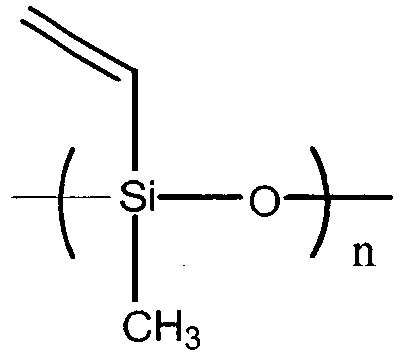
- The superabsorbent polymer of the present invention may include an additional, or a second, internal crosslinking agent, which may be used in conjunction with the silane internal crosslinker. The additional, or second internal, crosslinker compositions generally includes at least two ethylenically unsaturated double bonds, or one ethylenically unsaturated double bond and one functional group that is reactive toward acid groups of the polymerizable unsaturated acid group containing monomer, or several functional groups that are reactive towards acid groups can be used as the internal crosslinking component and is desirably present during the polymerization of the polymerizable unsaturated acid group containing a monomer. The second internal crosslinker agents may include but are not limited to, aliphatic unsaturated amides, such as methylenebisacryl- ormethacrylamide or ethylenebisacrylamide; aliphatic esters of polyols or alkoxylated polyols with ethylenically unsaturated acids, such as di(meth)acrylates or tri(meth)acrylates of butanediol or ethylene glycol, polyglycols or trimethylolpropane; diand triacrylate esters of trimethylolpropane which may be oxyalkylated, desirably ethoxylated, with 1 to 30moles of alkylene oxide; acrylate and methacrylate esters of glycerol and pentaerythritol and of glycerol and pentaerythritol oxyethylated with desirably 1 to 30mol of ethylene oxide; allyl compounds, such as allyl (meth)acrylate, alkoxylated allyl (meth)acrylate reacted with desirably 1 to 30mol of ethylene oxide, triallyl cyanurate, triallyl isocyanurate, maleic acid diallyl ester, poly-allyl esters, tetraallyloxyethane, triallylamine, tetraallylethylenediamine, diols, polyols, hydroxy allyl or acrylate compounds and allyl esters of phosphoric acid or phosphorous acid; and monomers that are capable of crosslinking, such as N-methylol compounds of unsaturated amides, such as of methacrylamide or acrylamide, and the ethers derived therefrom. Ionic internal crosslinkers such as multivalent metal salts may also be employed. The additional, or second internal, crosslinker may be selected from polyethylene glycol monoallyl ether acrylate, ethoxylated trimethylol propane triacrylate, or polyethylene glycol diacrylate. Mixtures of the internal crosslinking agents mentioned can also be employed.
- The content of the internal silane internal crosslinkers and second internal crosslinking agents is from 0.001wt% to 5wt%, or from 0.1wt% to 3%, based on the total amount of the polymerizable unsaturated acid group containing monomer. The superabsorbent polymer may include from 9:1 to 1:9, or 7:1: to 1:7, of the internal crosslinker composition comprising silane and the second internal crosslinker.
- In some aspects, initiators can be used for initiation of the free-radical polymerization. Suitable initiators include, but are not limited to, azo or peroxo compounds, redox systems or ultraviolet initiators, sensitizers, and/or radiation.
- After polymerization, the superabsorbent polymer is generally formed into superabsorbent polymer particles, or particulate superabsorbent polymer. While superabsorbent polymer particles may be used by way of example of the physical form of superabsorbent polymer composition, the invention is not limited to this form and is applicable to other forms such as fibers, foams, films, beads, rods, and the like. The present invention include at least 60wt% of the particles having a particle size from 300µm to 600µm as measured by screening through a U.S. standard 30 mesh screen and retained on a U.S. standard 50 mesh screen. In addition, the size distribution of the particulate superabsorbent polymer of the present invention may include less than 30wt% of particles having a size greater than 600µm, and less than 30wt% of particles having a size of less than 300µm as measured using for example a RO-TAP® Mechanical Sieve Shaker Model B available from W. S. Tyler, Inc., Mentor Ohio.
- In one embodiment, the particulate superabsorbent polymer may then be surface treated with additional chemicals and treatments as set forth herein. In particular, the surface of the particulate superabsorbent polymer may be crosslinked, generally referred to as surface crosslinked, by the addition of a surface crosslinking agent and heat-treatment. In general, surface crosslinking is a process that is believed to increase the crosslink density of the polymer matrix in the vicinity of the particulate superabsorbent polymer surface with respect to the crosslinking density of the particle interior.
- Desirable surface crosslinking agents may include chemicals with one or more functional groups that are reactive toward pendant groups of the polymer chains, typically the acid groups. Surface crosslinker agents may include compounds that comprise at least two functional groups which can react with functional groups of a polymer structure in a condensation reaction (condensation crosslinker), in an addition reaction or in a ring opening reaction. These compounds may include condensation crosslinkers such as, for example, diethylene glycol, triethylene glycol, polyethylene glycol, glycerine, polyglycerine, propylene glycol, diethanolamine, triethanolamine, polyoxypropylene, oxyethylene-oxypropylene block copolymers, sorbitan fatty acid esters, polyoxyethylene sorbitan fatty acid esters, trimethylolpropane, pentaerythritol, polyvinyl alcohol, sorbitol, 1,3-dioxolan-2-one (ethylene carbonate), 4-methyl-1,3-dioxolan-2-one (propylene carbonate), 4,5-dimethyl-1,3-dioxolan-2-one, 4,4-dimethyl-1,3-dioxolan-2-one, 4-ethyl-1,3-dioxolan-2-one, 4-hydroxymethyl-1,3-dioxolan-2-one, 1,3-dioxan-2-one, 4-methyl-1,3-dioxan-2-one, 4,6-dimethyl-1,3-dioxan-2-one as well as 1,3-dioxolan-2-one. The amount of the surface crosslinking agent may be present in an amount of from 0.01wt% to 5wt% of the dry particulate superabsorbent polymer, and such as from 0.1wt% to 3wt%, and such as from 0.1wt% to 1wt%, based on the weight of the dry particulate superabsorbent polymer.
- After the particulate superabsorbent polymer have been brought into contact with the surface crosslinker or with the fluid comprising the surface crosslinker, the treated particulate superabsorbent polymer are heat treated which may include heating the coated particulate superabsorbent polymer to a temperature of from 50 to 300°C, or from 75 to 275°C, or from 150 to 250°C, so that the outer region of the polymer structures is more strongly crosslinked compared to the inner region (i.e., surface crosslinking). The duration of the heat treatment is limited by the risk that the desired property profile of the polymer structures will be destroyed as a result of the effect of heat.
- In one particular aspect of surface crosslinking, the particulate superabsorbent polymer is coated or surface-treated with an alkylene carbonate followed by heating to affect surface crosslinking, which can improve the surface crosslinking density and the gel strength characteristics of the superabsorbent polymer particle. More specifically, the surface crosslinking agent is coated on to the super absorbent polymer particulate by mixing the particulate superabsorbent polymer with an aqueous alcoholic solution of the alkylene carbonate surface crosslinking agent. The amount of alcohol in the aqueous alcoholic solution may be determined by the solubility of the alkylene carbonate and is kept as low as possible for various reasons, for instance, for protection against explosions. Suitable alcohols are methanol, isopropanol, ethanol, butanol, or butyl glycol, as well as mixtures of these alcohols. In some aspects, the solvent desirably is water, which typically is used in an amount of 0.3wt% to 5.0wt%, based on the weight of the dry particulate superabsorbent polymer.
- In other aspects, the alkylene carbonate surface crosslinking agent is dissolved in water without any alcohol. In still other aspects, the alkylene carbonate surface crosslinking agent may be applied from a powder mixture, for example, with an inorganic carrier material, such as silicone dioxide (SiO2), or in a vapor state by sublimation of the alkylene carbonate.
- To achieve the desired surface crosslinking properties, the alkylene carbonate should be distributed evenly on the particulate superabsorbent polymer. For this purpose, mixing is effected in suitable mixers known in the art, such as fluidized bed mixers, paddle mixers, rotary drum mixers, or twin-worm mixers. It is also possible to carry out the coating of the particulate superabsorbent polymer during one of the process steps in the production of the particulate superabsorbent polymer. In one particular aspect, a suitable process for this purpose is the inverse suspension polymerization process.
- The heat treatment, which follows the coating treatment of the particulate superabsorbent polymer, may be carried out as follows. In general, the heat treatment is at a temperature of from 100°C to 300°C. Lower temperatures are possible if highly reactive epoxide crosslinking agents are used. However, if alkylene carbonates are used, then the thermal treatment is suitably at a temperature of from 150°C to 250°C. In this particular aspect, the treatment temperature depends on the dwell time and the kind of alkylene carbonate. For example, at a temperature of 150°C, the thermal treatment is carried out for one hour or longer. In contrast, at a temperature of 250°C, a few minutes (e.g., from 0.5minutes to 5minutes) are sufficient to achieve the desired surface crosslinking properties. The thermal treatment may be carried out in conventional dryers or ovens known in the art.
- In addition to surface crosslinking, the particulate superabsorbent polymer may be further surface treated with other chemical compositions. In some aspects, the particulate superabsorbent polymer composition of the present invention may be surface treated with from 0wt% to 5wt%, and from 0.001wt% to 5wt%, or from 0.01wt% to 0.5wt% of the dry particulate superabsorbent polymer of a polymeric coating, such as a thermoplastic coating, or a cationic coating, or a combination of a thermoplastic coating and a cationic coating. In some particular aspects, the polymeric coating desirably is a polymer that may be in a solid, emulsion, suspension, colloidal, or solubilized state, or combinations thereof. Polymeric coatings suitable for this invention may include, but are not limited to, a thermoplastic coating having a thermoplastic melt temperature wherein the polymeric coating is applied to the particle surface coincident with or followed by a temperature of the treated superabsorbent polymer particle at the thermoplastic melt temperature.
- Examples of thermoplastic polymers include polyolefin, polyethylene, polyester, polyamide, polyurethane, styrene polybutadiene, linear low density polyethylene (LLDPE), ethylene acrylic acid copolymer (EAA), ethylene alkyl methacrylate copolymer (EMA), polypropylene (PP), maleated polypropylene, ethylene vinyl acetate copolymer (EVA), polyester, polyamide, and blends of all families of polyolefins, such as blends of PP, EVA, EMA, EEA, EBA, HDPE, MDPE, LDPE, LLDPE, and/or VLDPE, may also be advantageously employed. The term polyolefin as used herein is defined above. In particular aspects, maleated polypropylene is a preferred thermoplastic polymer for use in the present invention. A thermoplastic polymer may be functionalized to have additional benefits such as water solubility or dispersability.
- Polymeric coatings of this invention may also include a cationic polymer. A cationic polymer as used herein refers to a polymer or mixture of polymers comprising a functional group or groups having a potential of becoming positively charged ions upon ionization in an aqueous solution. Suitable functional groups for a cationic polymer include, but are not limited to, primary, secondary, or tertiary amino groups, imino groups, imido groups, amido groups, and quaternary ammonium groups. Examples of synthetic cationic polymers include the salts or partial salts of poly(vinyl amines), poly(allylamines), poly(ethylene imine), poly(amino propanol vinyl ethers), poly(acrylamidopropyl trimethyl ammonium chloride), poly(diallyldimethyl ammonium chloride). Examples of natural-based cationic polymers include partially deacetylated chitin, chitosan, and chitosan salts. Synthetic polypeptides such as polyasparagins, polylysines, polyglutamines, and polyarginines are also suitable cationic polymers.
- The particulate superabsorbent polymer compositions according to the invention may be surface treated with from 0.01% to 2wt%, or from 0.01wt% to 1wt% based on the dry superabsorbent polymer composition of a water-insoluble inorganic metal compound. The water-insoluble inorganic metal compound may include a cation selected from aluminum, titanium, calcium, or iron and an anion selected from phosphate, borate, or chromate. An example of a water insoluble inorganic metal compound includes aluminum phosphate. The inorganic metal compound may have a mass median particle size of less than 2µm, and may have a mass median particle size of less than 1µm.
- The inorganic metal compound can be applied in the dry physical form to the surface of the particulate superabsorbent polymer composition. For this, the particulate superabsorbent polymer composition may be intimately mixed with the finely divided inorganic metal compound. The finely divided inorganic metal compound is usually added at room temperature to the superabsorbent polymer particles and mixed in until a homogeneous mixture is present. For this purpose, mixing is effected in suitable mixers known in the art, such as fluidized bed mixers, paddle mixers, rotary drum mixers, or twin-worm mixers. The mixing of the particulate superabsorbent polymer compositions with the finely divided water insoluble inorganic metal compound may take place before or after any surface crosslinking, for example during the application of the surface crosslinking agent.
- Alternatively, a suspension of a finely divided water insoluble inorganic metal compounds can be prepared and applied to a particulate water absorbent polymer. The suspension is applied, for example, by spraying. Useful dispersion media for preparing the suspension include water, organic solvents such as alcohols, for example methanol, ethanol, isopropanol, ketones, for example acetone, methyl ethyl ketone, or mixtures of water with the aforementioned organic solvents. Other useful dispersion media include dispersion aids, surfactants, protective colloidals, viscosity modifiers, and other auxiliaries to assist in the preparation of the suspension. The suspension can be applied in conventional reaction mixers or mixing and drying systems as described above at a temperature in the range from room temperature to less than the boiling point of the dispersion medium, preferably at room temperature. It is appropriate to combine the application of the suspension with a surface crosslinking step by dispersing the finely divided water insoluble metal salt in the solution of the surface crosslinking agent. Alternatively, the suspension can also be applied before or after the surface crosslinking step. The application of the slurry may be followed by a drying step.
- In some aspects, the particulate superabsorbent polymer compositions according to the invention may include from 0wt% to 5wt%, or in the alternative from 0.01wt% to 3wt% of the dry particulate superabsorbent polymer of silica. Examples of silica include fumed silica, precipitated silica, silicon dioxide, silicic acid, and silicates. In some particular aspects, microscopic noncrystalline silicon dioxide is desirable. In some aspects, the particle diameter of the inorganic powder can be 1,000µm or smaller, such as 100µm or smaller.
- In some aspects, the particulate superabsorbent polymer compositions may also include from 0% to 30wt% of the dry particulate superabsorbent polymer, such as from 0.1wt% to 5wt% of water-soluble polymers based by weight of the dry particulate superabsorbent polymer, such as partly or completely hydrolyzed polyvinyl acetate, polyvinylpyrrolidone, starch or starch derivatives, polyglycols, polyethylene oxides, polypropylene oxides, or polyacrylic acids.
- In some aspects, additional surface additives may optionally be employed with the particulate superabsorbent polymer, including odor-binding substances, such as cyclodextrins, zeolites, inorganic or organic salts, and similar materials; anti-caking additives, flow modification agents, surfactants, viscosity modifiers, and the like. In addition, surface additives may be employed that perform several roles during surface modifications. For example, a single additive may be a surfactant, viscosity modifier, and may react to crosslink polymer chains.
- In some aspects, the particulate superabsorbent polymer of the present invention may be, after a heat treatment step, treated with water so that the superabsorbent polymer composition has a water content of up to 10wt% of the dry particulate superabsorbent polymer. This water may be added, with one or more of the surface additives from above, to the particulate superabsorbent polymer.
- The superabsorbent polymer according to the invention may be desirably prepared by two methods. The composition can be prepared continuously or discontinuously in a large-scale industrial manner, the after-crosslinking according to the invention being carried out accordingly.
- According to one method, the partially neutralized monomer, such as acrylic acid, is converted into a gel by free-radical polymerization in aqueous solution in the presence of crosslinking agents and any further components, and the gel is comminuted, dried, ground, and sieved off to the desired particle size. This polymerization can be carried out continuously or discontinuously. For the present invention, the size of the high-capacity particulate superabsorbent polymer is dependent on manufacturing processes including milling and sieving. It is well known to those skilled in the art that particle size distribution of the superabsorbent polymer particles resembles a normal distribution or a bell shaped curve. It is also known that for various reasons, the normal distribution of the particle size distribution may be skewed in either direction.
- According to another method, inverse suspension and emulsion polymerization can also be used for preparation of the products according to the invention. According to these processes, an aqueous, partly neutralized solution of monomer, such as acrylic acid, is dispersed in a hydrophobic, organic solvent with the aid of protective colloids and/or emulsifiers, and the polymerization is started by free radical initiators. The internal crosslinking agents may be either dissolved in the monomer solution and are metered in together with this, or are added separately and optionally during the polymerization. The addition of a water-soluble polymer as the graft base optionally takes place via the monomer solution or by direct introduction into the oily phase. The water is then removed azeotropically from the mixture, and the polymer is filtered off and optionally dried. Internal crosslinking can be carried out by polymerizing-in a polyfunctional crosslinking agent dissolved in the monomer solution and/or by reaction of suitable crosslinking agents with functional groups of the polymer during the polymerization steps.
- The result of these methods is a superabsorbent polymer or a superabsorbent polymer preproduct. A superabsorbent polymer preproduct as used herein is produced by repeating all of the steps for making the superabsorbent, up to and including drying the material, and coarse grinding in a crusher, and removing particles greater than 85µm and smaller than 150µm.
- The particulate superabsorbent polymer of the present invention exhibits certain characteristics, or properties, as measured by Centrifuge Retention Capacity(CRC), Centrifuge Retention Capacity Increase(CRCI), Centrifuge Retention Capacity Increase Rate (CRCIR), Absorbency Under Load at 0.9psi (AUL(0.9psi)), and Gel Bed Permeability(GBP). The Vortex Time measures the speed of the particulate superabsorbent polymer in absorbing saline solution and is expressed in seconds.
- The resultant CRC is stated as grams of liquid retained per gram weight of the sample (g/g) and may be from 20g/g to 60g/g, from 25g/g to 55g/g, or from 27g/g to 50g/g.
- The CRCI is stated as grams of liquid retained per gram weight of the sample (g/g) and may be from 2g/g to 50g/g or from 3g/g to 40g/g.
- The Centrifuge Retention Capacity Increase Rate (CRCIR) Test measures the rate of Centrifuge Retention Capacity Increase per hour difference between the CRC(initial) Test and the CRC(second) Test and is measured in terms of g/g/hr. The CRC Increase Rate may be from 0.4 to 10g/g/hr, or from 0.5 to 5g/g/hr.
- The Absorbency Under Load at 0.9psi (AUL(0.9psi)) may range from 12g/g to 30g/g, or from 15g/g to 25g/g.
- Permeability is a measure of the effective connectedness of a porous structure, be it a mat of fiber, or a slab of foam or, in this case, particulate superabsorbent polymer, and may be specified in terms of the void fraction, and extent of connectedness of the particulate superabsorbent polymer. Gel permeability is a property of the mass of particles as a whole and is related to particle size distribution, particle shape, and the connectedness of the open pores between the particles, shear modulus, and surface modification of the swollen gel. In practical terms, the gel permeability of the particulate superabsorbent polymer is a measure of how rapidly liquid flows through the mass of swollen particles. Low gel permeability indicates that liquid cannot flow readily through the particulate superabsorbent polymer, which is generally referred to as gel blocking, and that any forced flow of liquid (such as a second application of urine during use of the diaper) must take an alternate path (e.g., diaper leakage). Gel Bed Permeability(GBP) may range from 10Darcy to 300Darcy, or from 10Darcy to 200Darcy.
- The Vortex time for the particulate superabsorbent polymer and the particulate superabsorbent polymer composition may be from 20 to 180sec, or from 60 to 130sec, or from 70 to 125sec.
- As shown in
Fig 1 , it is a goal of the present invention to increase the absorption capacity over time, wherein such particulate superabsorbent polymers may offer the advantage of high gel strength in the short term and high absorption capacity in the long term. -
Figure 2 displays CRC(rt) and CRC(bt) of a particulate superabsorbent polymer comprising 0.5% of Dynasylan® 6490. It shows that CRC of the particulate superabsorbent polymer increases over the time either at room temperature or body temperature. In addition, it shows that CRC at body temperature is higher than CRC at room temperature at any specific time. Furthermore, it shows that CRC increases faster at body temperature than at room temperature. -
Figure 3 displays CRC(rt) and CRC(bt) of a surface crosslinked particulate superabsorbent polymer comprising 0.5% of Dynasylan® 6490 as internal crosslinker. It shows that CRC increases over the time either at room temperature or body temperature. In addition, it demonstrates that CRC at body temperature is higher than CRC at room temperature at any specific time. Furthermore, it shows that CRC increases faster at body temperature than at room temperature. -
Figure 4 , Prior Art, displays CRC(rt) and CRC(bt) of a surface crosslinked particulate superabsorbent polymer comprising only conventional internal crosslinker. It shows that CRC was essentially constant over time or at different temperatures. - The particulate superabsorbent polymer according to the present invention can be employed in many absorbent articles including sanitary towels, diapers, or wound coverings, and they have the property that they rapidly absorb large amounts of menstrual blood, urine, or other body fluids. Since the agents according to the invention retain the absorbed liquids even under pressure and are also capable of distributing further liquid within the construction in the swollen state, they are more desirably employed in higher concentrations, with respect to the hydrophilic fiber material, such as fluff, when compared to conventional current superabsorbent compositions. They are also suitable for use as a homogeneous superabsorber layer without fluff content within the diaper construction, as a result of which particularly thin articles are possible. The polymers are furthermore suitable for use in hygiene articles (incontinence products) for adults.
- Absorbent articles, like diapers, may include (a) a liquid pervious topsheet; (b) a liquid impervious backsheet; (c) a core positioned between (a) and (b) and comprising from 10% to 100%, or from 50wt% to 100%, by weight of the particulate superabsorbent polymer, and from 0% to 90% by weight of hydrophilic fiber material; (d) optionally a tissue layer positioned directly above and below said core (c); and (e) optionally an acquisition layer positioned between (a) and (c).
- The CRC Test measures the ability of the superabsorbent polymer to retain liquid therein after being saturated and subjected to centrifugation under controlled conditions. The resultant retention capacity is stated as grams of liquid retained per gram weight of the sample, (g/g). The sample to be tested is prepared from particles that are pre-screened through a U.S. standard 30-mesh screen and retained on a U.S. standard 50-mesh screen. As a result, the particulate superabsorbent polymer sample comprises particles sized in the range of 300 to 600µm. The particles can be pre-screened by hand or automatically.
- The retention capacity is measured by placing 0.2 grams of the pre-screened particulate superabsorbent polymer sample into a water-permeable bag that will contain the sample while allowing a test solution (0.9 weight percent sodium chloride in distilled water) to be freely absorbed by the sample. A heat-sealable tea bag material, such as that available from Dexter Corporation (having a place of business in Windsor Locks, Connecticut, U.S.A.) as model designation 1234T heat sealable filter paper works well for most applications. The bag is formed by folding a 5-inch by 3-inch sample of the bag material in half and heat-sealing two of the open edges to form a 2.5-inch by 3-inch rectangular pouch. The heat seals are 0.25 inches inside the edge of the material. After the sample is placed in the pouch, the remaining open edge of the pouch is also heat-sealed. Empty bags are also made to serve as controls. Three samples are prepared for each particulate superabsorbent polymer to be tested.
- The sealed bags are submerged in a pan containing the test solution at an assigned testing temperature, making sure that the bags are held down until they are completely wetted. After wetting, the samples remain in the solution for an assigned period of testing time, at which time they are removed from the solution and temporarily laid on a non-absorbent flat surface.
- The wet bags are then placed into the basket wherein the wet bags are separated from each other and are placed at the outer circumferential edge of the basket, wherein the basket is of a suitable centrifuge capable of subjecting the samples to a g-force of 350. One suitable centrifuge is a CLAY ADAMS DYNAC II, model #0103, having a water collection basket, a digital rpm gauge, and a machined drainage basket adapted to hold and drain the flat bag samples. Where multiple samples are centrifuged, the samples are placed in opposing positions within the centrifuge to balance the basket when spinning. The bags (including the wet, empty bags) are centrifuged at 1,600rpm (e.g., to achieve a target g-force of 350g force with a variance from 240 to 360g force), for 3 minutes. G force is defined as an unit of inertia! force on a body that is subjected to rapid acceleration or gravity, equal to 32 ft/sec2 at sea level. The bags are removed and weighed, with the empty bags (controls) being weighed first, followed by the bags containing the superabsorbent polymer composition samples. The amount of solution retained by the superabsorbent polymer sample, taking into account the solution retained by the bag itself, is the centrifuge retention capacity (CRC) of the superabsorbent polymer, expressed as grams of fluid per gram of superabsorbent polymer. More particularly, the retention capacity is determined by the following equation:

- The three samples are tested, and the results are averaged to determine the CRC of the particulate superabsorbent polymer.
- CRC(rt, 0.5hr) is measured with a testing temperature of 23°C (room temperature) and a testing time of 0.5 hour.
- CRC(rt, 5hr) is measured with a testing temperature of 23°C (room temperature) and a testing time of 5 hours.
- CRC(rt, 16hr) is measured with a testing temperature of 23°C (room temperature) and a testing time of 16 hours.
- CRC(bt, 0.5hr) is measured with a testing temperature of 37°C (body temperature) and a testing time of 0.5 hour.
- CRC(bt, 5hr) is measured with a testing temperature of 37°C (body temperature) and a testing time of 5 hours.
- The Centrifuge Retention Capacity Increase (CRCI) Test measures the increase in the CRC that occurs and is calculated as the difference between the second CRC Test and the first CRC(rt,0.5hr) Test and is determined by the following equation:

- For example, CRCI's in the present invention are determined by the following equations:


- The CRCIR measures the ability of the particulate superabsorbent polymer to gain additional CRC over the time when contacted with a liquid. It is tested by measuring the CRC and at an assigned testing temperature for two different testing times. The second testing time is at least one hour longer than the first testing time. The resultant CRCIR is stated as grams of additional liquid retained per gram weight of the sample per hour (g/g/hour).
- For example, CRCIR in the present invention are determined by the following equations:


- As used herein, the Free-Swell Gel Bed Permeability Test, also referred to as the Gel Bed Permeability (GBP) Under 0 psi Swell Pressure Test, determines the permeability of a swollen bed of particulate superabsorbent polymer (e.g., such as the surface treated particulate superabsorbent polymer prior to being surface treated), under what is commonly referred to as "free swell" conditions. The term "free swell" means that the particulate superabsorbent polymer are allowed to swell without a restraining load upon absorbing test solution as will be described. A suitable apparatus for conducting the Gel Bed Permeability Test is shown in
FIGs 5 ,6 , and7 and indicated generally as 500. Thetest apparatus assembly 528 comprises a sample container, generally indicated at 530, and a plunger, generally indicated at 536. The plunger comprises ashaft 538 having a cylinder hole bored down the longitudinal axis and ahead 550 positioned at the bottom of the shaft. Theshaft hole 562 has a diameter of 16 mm. The plunger head is attached to the shaft, such as by adhesion. Twelveholes 544 are bored into the radial axis of the shaft, three positioned at every 90 degrees having diameters of 6.4 mm. Theshaft 538 is machined from a LEXAN rod or equivalent material and has an outer diameter of 2.2 cm and an inner diameter of 16 mm. - The
plunger head 550 has a concentric inner ring of sevenholes 560 and an outer ring of 14holes 554, all holes having a diameter of 8.8 millimeters as well as a hole of 16 mm aligned with the shaft. Theplunger head 550 is machined from a LEXAN rod or equivalent material and has a height of approximately 16 mm and a diameter sized such that it fits within thecylinder 534 with minimum wall clearance but still slides freely. The total length of theplunger head 550 andshaft 538 is 8.25 cm, but can be machined at the top of the shaft to obtain the desired mass of theplunger 536. Theplunger 536 comprises a 100 mesh stainlesssteel cloth screen 564 that is biaxially stretched to tautness and attached to the lower end of theplunger 536. The screen is attached to theplunger head 550 using an appropriate solvent that causes the screen to be securely adhered to theplunger head 550. Care must be taken to avoid excess solvent migrating into the open portions of the screen and reducing the open area for liquid flow. Acrylic solvent Weld-on 4 from IPS Corporation (having a place of business in Gardena, California, USA) is a suitable solvent. - The
sample container 530 comprises acylinder 534 and a 400 mesh stainlesssteel cloth screen 566 that is biaxially stretched to tautness and attached to the lower end of thecylinder 534. The screen is attached to the cylinder using an appropriate solvent that causes the screen to be securely adhered to the cylinder. Care must be taken to avoid excess solvent migrating into the open portions of the screen and reducing the open area for liquid flow. Acrylic solvent Weld-on 4 from IPS Corporation is a suitable solvent. A particulate superabsorbent polymer sample, indicated as 568 inFIG 2 , is supported on thescreen 566 within thecylinder 534 during testing. - The
cylinder 534 may be bored from a transparent LEXAN rod or equivalent material, or it may be cut from a LEXAN tubing or equivalent material, and has an inner diameter of 6 cm (e.g., a cross-sectional area of 28.27 cm2), a wall thickness of 0.5 cm and a height of approximately 7.95 cm. A step is machined into the outer diameter of thecylinder 534 such that aregion 534a with an outer diameter of 66 mm exists for the bottom 31 mm of thecylinder 534. An o-ring 540 which fits the diameter ofregion 534a may be placed at the top of the step. - The
annular weight 548 has a counter-bored hole 2.2 cm in diameter and 1.3 cm deep so that it slips freely onto theshaft 538. The annular weight also has a thru-bore 548a of 16 mm. Theannular weight 548 can be made from stainless steel or from other suitable materials resistant to corrosion in the presence of the test solution, which is 0.9 weight percent sodium chloride solution in distilled water. The combined weight of theplunger 536 andannular weight 548 equals approximately 596 grams (g), which corresponds to a pressure applied to thesample 568 of 0.3 pounds per square inch (psi), or 20.7 dynes/cm2 (2.07 kPa), over a sample area of 28.27 cm2. - When the test solution flows through the test apparatus during testing as described below, the
sample container 530 generally rests on aweir 600. The purpose of the weir is to divert liquid that overflows the top of thesample container 530 and diverts the overflow liquid to aseparate collection device 601. The weir can be positioned above ascale 602 with abeaker 603 resting on it to collect saline solution passing through theswollen sample 568. - To conduct the Gel Bed Permeability Test under "free swell" conditions, the
plunger 536, with theweight 548 seated thereon, is placed in anempty sample container 530 and the height from the top of theweight 548 to the bottom of thesample container 530 is measured using a suitable gauge accurate to 0.01 mm. The force the thickness gauge applies during measurement should be as low as possible, preferably less than 0.74 Newtons. It is important to measure the height of eachempty sample container 530,plunger 536, andweight 548 combination and to keep track of which plunger 536 andweight 548 is used when using multiple test apparatus. Thesame plunger 536 andweight 548 should be used for measurement when thesample 568 is later swollen following saturation. It is also desirable that the base that thesample cup 530 is resting on is level, and the top surface of theweight 548 is parallel to the bottom surface of thesample cup 530. - The sample to be tested is prepared from particulate superabsorbent polymer which are prescreened through a U.S. standard 30 mesh screen and retained on a U.S. standard 50 mesh screen. As a result, the test sample comprises particles sized in the range of 300 to 600µm. The particulate superabsorbent polymer can be pre-screened with, for example, a RO-TAP Mechanical Sieve Shaker Model B available from W. S. Tyler, Inc., Mentor Ohio. Sieving is conducted for 10 minutes. Approximately 2.0 grams of the sample is placed in the
sample container 530 and spread out evenly on the bottom of the sample container. The container, with 2.0 grams of sample in it, without theplunger 536 andweight 548 therein, is then submerged in the 0.9% saline solution for a time period of 60 minutes to saturate the sample and allow the sample to swell free of any restraining load. During saturation, thesample cup 530 is set on a mesh located in the liquid reservoir so that thesample cup 530 is raised slightly above the bottom of the liquid reservoir. The mesh does not inhibit the flow of saline solution into thesample cup 530. A suitable mesh can be obtained as part number 7308 from Eagle Supply and Plastic, having a place of business in Appleton, Wisconsin, U.S.A. Saline does not fully cover the superabsorbent polymer composition particles, as would be evidenced by a perfectly flat saline surface in the test cell. Also, saline depth is not allowed to fall so low that the surface within the cell is defined solely by swollen particulate superabsorbent polymer, rather than saline. - At the end of this period, the
plunger 536 andweight 548 assembly is placed on the saturatedsample 568 in thesample container 530 and then thesample container 530,plunger 536,weight 548, and sample 568 are removed from the solution. After removal and before being measured, thesample container 530,plunger 536,weight 548, and sample 568 are to remain at rest for 30 seconds on a suitable flat, large grid non-deformable plate of uniform thickness. The thickness of the saturatedsample 568 is determined by again measuring the height from the top of theweight 548 to the bottom of thesample container 530, using the same thickness gauge used previously provided that the zero point is unchanged from the initial height measurement. Thesample container 530,plunger 536,weight 548, andsample 568 may be placed on a flat, large grid non-deformable plate of uniform thickness that will prevent liquid in the sample container from being released onto a flat surface due to surface tension. The plate has an overall dimension of 7.6cm by 7.6cm, and each grid has a cell size dimension of 1.59cm long by 1.59cm wide by 1.12cm deep. A suitable flat, large grid non-deformable plate material is a parabolic diffuser panel, catalogue number 1624K27, available from McMaster Carr Supply Company, having a place of business in Chicago, Illinois, U.S.A., which can then be cut to the proper dimensions. This flat, large mesh non-deformable plate must also be present when measuring the height of the initial empty assembly. The height measurement should be made as soon as practicable after the thickness gauge is engaged. The height measurement obtained from measuring theempty sample container 530,plunger 536, andweight 548 is subtracted from the height measurement obtained after saturating thesample 568. The resulting value is the thickness, or height "H" of the swollen sample. - The permeability measurement is initiated by delivering a flow of the 0.9% saline solution into the
sample container 530 with the saturatedsample 568,plunger 536, andweight 548 inside. The flow rate of test solution into the container is adjusted to cause saline solution to overflow the top of thecylinder 534 thereby resulting in a consistent head pressure equal to the height of thesample container 530. The test solution may be added by any suitable means that is sufficient to ensure a small, but consistent amount of overflow from the top of the cylinder, such as with ametering pump 604. The overflow liquid is diverted into aseparate collection device 601. The quantity of solution passing through thesample 568 versus time is measured gravimetrically using thescale 602 andbeaker 603. Data points from thescale 602 are collected every second for at least sixty seconds once the overflow has begun. Data collection may be taken manually or with data collection software. The flow rate, Q, through theswollen sample 568 is determined in units of grams/second (g/s) by a linear least-square fit of fluid passing through the sample 568 (in grams) versus time (in seconds). - Permeability in cm2 is obtained by the following equation:

- A minimum of two samples is tested and the results are averaged to determine the gel bed permeability of the sample.
- The Absorbency Under Load (AUL) Test measures the ability of the particulate superabsorbent polymer to absorb a 0.9 weight percent solution of sodium chloride in distilled water at room temperature (test solution) while the material is under a 0.9 psi load. The apparatus for testing AUL consists of:
- An AUL assembly including a cylinder, a 4.4g piston, and a standard 317gm weight. The components of this assembly are described in additional detail below.
- A flat-bottomed square plastic tray that is sufficiently broad to allow the glass frits to lay on the bottom without contact with the tray walls. A plastic tray that is 9" by 9"(22.9cm x 22.9cm), with a depth of 0.5 to 1"(1.3cm to 2.5cm) is commonly used for this test method.
- A 12.5 cm diameter sintered glass frit with a 'C' porosity (25-50 microns).
- This frit is prepared in advance through equilibration in saline (0.9% sodium chloride in distilled water, by weight). In addition to being washed with at least two portions of fresh saline, the frit must be immersed in saline for at least 12 hours prior to AUL measurements.
-
Whatman Grade 1, 12.5 cm diameter filter paper circles. - A supply of saline (0.9% sodium chloride in distilled water, by weight).
- Referring to
FIG 8 , thecylinder 412 of theAUL assembly 400 used to contain the particulatesuperabsorbent polymer 410 is made from one-inch (2.54cm) inside diameter thermoplastic tubing machined-out slightly to be sure of concentricity. After machining, a 400 mesh stainlesssteel wire cloth 414 is attached to the bottom of thecylinder 412 by heating thesteel wire cloth 414 in a flame until red hot, after which thecylinder 412 is held onto the steel wire cloth until cooled. A soldering iron can be utilized to touch up the seal if unsuccessful or if it breaks. Care must be taken to maintain a flat smooth bottom and not distort the inside of thecylinder 412. - The 4.4g piston (416) is made from one-inch diameter solid material (e.g., PLEXIGLAS®) and is machined to closely fit without binding in the
cylinder 412. - A
standard 317gm weight 418 is used to provide a 62,053dyne/cm2 (0.9psi) restraining load. The weight is a cylindrical, 1 inch(2.5cm) diameter, stainless steel weight that is machined to closely fit without binding in the cylinder. - Unless specified otherwise, a
sample 410 corresponding to a layer of at least 300 gsm. (0.16g) of particulate superabsorbent polymer is utilized for testing the AUL. Thesample 410 is taken from particulate superabsorbent polymer that are pre-screened throughU.S. standard # 30 mesh and retained on U.S. std. #50 mesh. The superabsorbent polymer composition particles can be pre-screened with, for example, a RO-TAP® Mechanical Sieve Shaker Model B available from W. S. Tyler, Inc., Mentor Ohio. Sieving is conducted for 10 minutes. - The inside of the
cylinder 412 is wiped with an antistatic cloth prior to placing the particulatesuperabsorbent polymer particles 410 into thecylinder 412. - The desired amount of the sample of sieved particulate superabsorbent polymer 410 (0.16g) is weighed out on a weigh paper and evenly distributed on the
wire cloth 414 at the bottom of thecylinder 412. The weight of the particulate superabsorbent polymer in the bottom of the cylinder is recorded as 'SA,' for use in the AUL calculation described below. Care is taken to be sure no particulate superabsorbent polymer cling to the wall of the cylinder. After carefully placing the 4.4g piston 412 and317g weight 418 on the particulatesuperabsorbent polymer 410 in thecylinder 412, theAUL assembly 400 including the cylinder, piston, weight, and particulate superabsorbent polymer is weighed, and the weight is recorded as weight 'A'. - A sintered glass frit 424 (described above) is placed in the
plastic tray 420, withsaline 422 added to a level equal to that of the upper surface of theglass frit 424. A single circle offilter paper 426 is placed gently on theglass frit 424, and theAUL assembly 400 with the particulatesuperabsorbent polymer 410 is then placed on top of thefilter paper 426. TheAUL assembly 400 is then allowed to remain on top of thefilter paper 426 for a test period of one hour, with attention paid to keeping the saline level in the tray constant. At the end of the one hour test period, the AUL apparatus is then weighed, with this value recorded as weight 'B.' - The AUL(0.9psi) is calculated as follows:

- A= Weight of AUL Unit with dry SAP
- B= Weight of AUL Unit with SAP after 60 minutes absorption
- SA = Actual SAP weight
- A minimum of two tests is performed and the results are averaged to determine the AUL value under 0.9psi load. The samples are tested at 23°C and 50% relative humidity.
- General Description: The vortex test measures the amount of time in seconds required for 2 grams of a particulate superabsorbent polymer to close a vortex created by stirring 50 milliliters of saline solution at 600 revolutions per minute on a magnetic stir plate. The time it takes for the vortex to close is an indication of the free swell absorbing rate of the particulate superabsorbent polymer.
-
- 1. Beaker, 100 milliliter
- 2. Programmable magnetic stir plate, capable of providing 600 revolutions per minute (such as that commercially available from PMC Industries as Dataplate®. Model #721).
- 3. Magnetic stir bar without rings, 7.9 millimeters.times.32 millimeters, Teflon. TM. covered (such as that commercially available from Baxter Diagnostics, under the trade designation S/PRIM. brand single pack round stirring bars with removable pivot ring).
- 4. Stopwatch
- 5. Balance, accurate to +/-.0.01 gram
- 6. Saline solution, 0.87 w/w percent, Blood Bank Saline available from Baxter Diagnostics (considered, herein to be the equivalent of 0.9 weight percent saline)
- 7. Weighing paper
- 8. Room with standard condition atmosphere: Temperature=23°C.+/-1°C. and Relative Humidity=50%+/-2%.
-
- 1. Measure 50g+/-0.01 gram of saline solution into the 100 milliliter beaker.
- 2. Place the magnetic stir bar into the beaker.
- 3. Program the magnetic stir plate to 600 revolutions per minute.
- 4. Place the beaker on the center of the magnetic stir plate such that the magnetic stir bar is activated. The bottom of the vortex should be near the top of the stir bar.
- 5. Weigh out 2g+/-0.01 gram of the particulate superabsorbent polymer to be tested on weighing paper.
- NOTE: The particulate superabsorbent polymer is tested as received (i.e. as it would go into an absorbent composite such as those described herein). No screening to a specific particle size is done, though the particle size is known to have an effect on this test.
- 6. While the saline solution is being stirred, quickly pour the particulate superabsorbent polymer to be tested into the saline solution and start the stopwatch. The particulate superabsorbent polymer to be tested should be added to the saline solution between the center of the vortex and the side of the beaker.
- 7. Stop the stopwatch when the surface of the saline solution becomes flat and record the time.
- 8. The time, recorded in seconds, is reported as the Vortex Time.
- The following comparative examples and examples of superabsorbent polymer and particulate superabsorbent polymer of the present invention, and preproduct thereof, are provided to illustrate the present invention and do not limit the scope of the claims. Unless otherwise stated all parts, and percentages are by weight.
- A superabsorbent polymer of the present invention may be made in the following way. Into a polyethylene container equipped with an agitator and cooling coils was added 482 grams of 50% NaOH and 821 grams of distilled water and cooled to 20°C. 207 grams of glacial acrylic acid was then added to the caustic solution and the solution again cooled to 20°C. Specific amount of internal crosslinkers in accordance with Tables 2 to 3 for Comparative Examples 1 to 7 and Examples 1 to 18, and 413 grams of glacial acrylic acid were added to the first solution, followed by cooling to 4-6°C. Nitrogen was bubbled through the monomer solution for 10 minutes. The cooling coils were removed from the container. To the monomer solution was added 20g of 1% by weight of H2O2 aqueous solution, 30g of 2 wt% aqueous sodium persulfate solution, and 18g of 0.5 wt% aqueous sodium erythorbate solution to initiate polymerization reaction. The agitator was stopped and the initiated monomer was allowed to polymerize for 20 minutes.
- A particulate superabsorbent polymer may be prepared as follows. The resulting hydrogel was chopped and extruded with a Hobart 4M6 commercial extruder, followed by drying in a Procter & Schwartz Model 062 forced air oven at 175°C for 12 minutes with up flow and 6 minutes with down flow air on a 20in X 40in perforated metal tray to a final product moisture level of less than 5wt%. The dried particulate superabsorbent polymer was coarse-ground in a Prodeva Model 315-S crusher, milled in an MPI 666-F three-stage roller mill and sieved with a Minox MTS 600DS3V to remove superabsorbent polymer particles greater than 850µm and smaller than 150µm.
- In accordance with Table 2 for Comparative Examples 1 to 6, internal crosslinkers and silicon compounds were added into the monomer solution in the superabsorbent polymer of the SAP Preproduct to prepare particulate superabsorbent polymers of Comparative Examples 1-6.
- Comparative examples 1 to 5 demonstrate that silane or silicate compounds without carbon-carbon double bonds are not effective internal crosslinkers for polyacrylate based particulate superabsorbent polymers. In addition, CRC Increase was not observed in these comparative examples of particulate superabsorbent polymer.
- Comparative example 6 demonstrates that 3-trimethoxysily propyl methacrylate is an effective crosslinker for superabsorbent polymers. But CRC Increase was not observed in this case. The crosslinking formed by 3-trimethoxysily propyl methacrylate probably is stable over the time. The chemical structure of 3-trimethoxysily propyl methacrylate is shown below.

Table 2 - Comparative Examples 1-6 of Particulate Superabsorbent Polymer Sample Second Internal crosslinker Silane Crosslinker CRC(rt,0.5hr) CRC(rt,16hr) CE 10.4% of A* none 47.3 47.8 CE 20.4% of A 1% sodium methylsilicate 48.9 50.2 CE 30.4% of A 1% of methyltrimethoxy silane 49.7 50.8 CE 4 0.4% of A 1% of tetraethoxy orthosilicate 51.9 52.4 CE 50.4% of A 1% of tetraacetoxysilicate 51.8 52.4 CE 6 0.4% of A 0.5% of 3-trimethoxysily propyl methacrylate 25.2 26.0 *Crosslinker A: polyethylene glycol monoallylether acrylate, - In accordance with Table 3 for Comparative Example 7 and Examples 1 to 13, conventional crosslinker(s) and/or silicon crosslinker(s) were added into the monomer solution of the superabsorbent polymer of the SAP Preproduct to prepare particulate superabsorbent polymers.
- The results in Table 3 indicate that the CRC of the particulate superabsorbent polymer of Examples 1 to 13 increases over the time either at room temperature or body temperature. In addition, CRC increases with the increase of the testing temperature. Furthermore, CRC increases faster at body temperature than at room temperature.
- In comparison, sample comparative example 7 (CE 7) of the particulate superabsorbent polymer, which comprises only conventional internal crosslinker, shows essentially constant CRC of the particulate superabsorbent polymer over the time or at different temperatures.
Table 3 - Comparative Example 7 and Examples 1-13 of Particulate Superabsorbent Polymer Ex Second Internal Crosslinker Silane or siloxane crosslinker CRC (rt, 0.5 hr) CRC (rt, 5 hrs) CRC (bt, 0.5 hr) CRC (bt, 5 hrs) CE 7 0.5% of A*, and 0.25% of C*** none 43 43.9 43.4 42.7 Ex 1 none 1% of Dynasylan® 6490 27.1 41.3 39.1 78.3 Ex 2 0.4% of A 1% vinyltriisopropenoxy silane 30.5 37.9 36.2 47.7 Ex 3 0.4% of A 1% vinyltriacetoxy silane 27.4 34.7 33.9 45.2 Ex 4 0.4% of A 1% vinyltrimethoxy silane 20.6 27.2 26.2 40.9 Ex 5 0.4% of A 1% vinyltriethoxy silane 20.5 28.8 27.8 43.5 Ex 6 0.4% of A 1% diethoxymethylvinyl silane 40.4 50.1 49.3 52.3 Ex 7 0.4% of A 1% of Dynasylan® 6498 39.6 45.2 44.6 49.4 Ex 8 0.4% of A 0.5% of Dynasylan® 6490 26.1 33.7 32.6 44.4 Ex 9 0.4% of A 0.375% of Dynasylan® 6490 30.2 35.5 33.5 43.1 Ex 10 0.2% of A, and 0.1% of B** 0.5% of Dynasylan® 6490 26.1 33.6 32.4 41.3 Ex 11 0.2% of A, and 0.1% of C 0.25% of Dynasylan® 6490 41.4 48.2 46.2 56.3 Ex 12 0.2% of A, and 0.1% of C 0.375% of Dynasylan® 6490 35.2 42.2 40.2 52.2 Ex 13 0.2% of A, and 0.1% of C 0.5% of Dynasylan® 6490 31.1 38.9 35.3 48.6 *Crosslinker A: polyethylene glycol monoallylether acrylate, **Crosslinker B: ethoxylated trimethylol propane triacrylate (SARTOMER® 454 product) ***Crosslinker C: polyethylene glycol 300 diacrylate - Comparative Example 8 of a particulate superabsorbent polymer may be prepared as follows. 100g of the product obtained from Comparative Example 7 was blended uniformly with 0.5% of Sipernat® 22s (commercially available from Evonik-Degussa Corporation), followed by the uniform spray application of a solution containing 1 wt% ethylene carbonate and 4 wt% of water using a finely atomized spray while the particulate superabsorbent polymer are fluidized in air. The coated particulate superabsorbent polymer was then heated at 185°C for 55 minutes at in a convection oven. The product was cooled and sieved to remove particles greater than 850µm and smaller than 150µm.
- Examples 14-19 of a particulate superabsorbent polymer according to the present invention may be prepared as follows.
- 100g of the particulate superabsorbent polymer obtained from Example 12 was blended uniformly with 0.5% of Sipernat® 22s, followed by the uniform spray application of a solution containing 1 wt% ethylene carbonate and 4 wt% of water using a finely atomized spray while the SAP particles are fluidized in air. The coated particulate superabsorbent polymer was then heated at 185°C for 55 minutes at in a convection oven. The particulate superabsorbent polymer was cooled and sieved to remove particles greater than 850µm and smaller than 150µm.
- Similar to Example 14 except the particulate superabsorbent polymer from Example 13 was used as the base polymer and the coated particulate superabsorbent polymer was heated for 40 minutes at 185°C.
- 100g of the particulate superabsorbent polymer obtained from Example 12 was blended uniformly with 0.5wt% of Sipernat® 22s, followed by the uniform spray application of a solution containing 1wt% ethylene carbonate, 200 ppm of maleated polypropylene, and 4wt% of water using a finely atomized spray while the particulate superabsorbent polymer are fluidized in air. The coated particulate superabsorbent polymer was then heated at 185°C for 55 minutes at in a convection oven. The particulate superabsorbent polymer was cooled and sieved to remove particles greater than 850µm and smaller than 150µm.
- 100g of the particulate superabsorbent polymer obtained from Example 12 was blended uniformly with 0.5% of Sipernat® 22s, followed by the uniform spray application of a solution containing 1wt% ethylene carbonate, 200ppm of maleated polypropylene, 0.25wt% of aluminum phosphate, and 4 wt% of water using a finely atomized spray while the SAP particles are fluidized in air. The coated particulate superabsorbent polymer was then heated at 185°C for 55 minutes at in a convection oven. The particulate superabsorbent polymer was cooled and sieved to remove particles greater than 850µm and smaller than 150µm.
- 100g of the particulate superabsorbent polymer obtained from Example 17 was coated with a solution containing 0.2 wt% of polyvinylamine (Lupamin® 9025), 0.1% of PEG-8000, and 3 wt% of water using a finely atomized spray while the particulate superabsorbent polymer are fluidized in air. The coated particulate superabsorbent polymer was relaxed at room temperature for overnight and sieved to remove particles greater than 850µm and smaller than 150µm.
- 100g of the particulate superabsorbent polymer obtained from Example 12 was coated with a solution containing 1 wt% ethylene carbonate, 1% of aluminum sulfate, 200 ppm of maleated polypropylene, and 4wt% of water using a finely atomized spray while the SAP particles are fluidized in air. The coated particulate superabsorbent polymer was then heated at 185°C for 55 minutes at in a convection oven. The particulate superabsorbent polymer was cooled and sieved to remove particles greater than 850µm and smaller than 150µm.
- Table 4 summarizes the results for particulate superabsorbent polymer. As we can see from Table 4, the CRC(rt,0.5hr), CRC(rt,5hr), CRC(bt,0.5 hr), and CRC(bt,5hr) of the particulate superabsorbent polymer of Ex 14 to 19 increases over the time either at room temperature or body temperature. In addition, CRC increases with the increase of the testing temperature. Furthermore, CRC increases faster at body temperature than at room temperature.
- In comparison, the particulate superabsorbent polymer of Comparative Example 8 which comprises only conventional internal crosslinker shows essentially constant CRC over the time or at different temperatures.
Table 4 Ex CRC (rt, 0.5 hr) CRC (rt, 5 hrs) CRC (bt,0.5 hr) CRC (bt,5 hrs) AUL(0.9 psi) GBP CE 8 35.5 36.9 36.5 35.9 12.9 23 Ex14 29.0 34.3 33.5 41.2 17.3 54 Ex 15 27.9 34.5 33 41.9 15.8 49 Ex 16 26.8 30.5 30.5 d34.9 19.2 90 Ex 17 26.3 30.2 29.9 34.8 18.9 100 Ex 18 25.6 29.7 29.2 34.1 18.4 118 Ex 19 27.1 31.2 31.2 36.5 19.9 69 - Table 5 shows the values of the CRCI, CRCIR, and vortex time for CE7-8 and examples 1-19 of the particulate superabsorbent polymer.
Table 5 Ex CRCI(rt) (g/g) CRCI(bt) (g/g) CRCIR(rt) (g/g/hour) CRCIR(bt) (g/g/hour) Vortex Time (sec) CE 7 0.9 -0.3 0.20 -0.16 87 CE 8 1.4 0.4 0.31 -0.13 85 Ex 114.2 51.2 3.15 8.70 105 Ex 27.4 17.2 1.65 2.56 115 Ex 37.3 17.8 1.62 2.53 n/a Ex 4 6.6 20.3 1.47 3.27 n/a Ex 58.3 23.0 1.84 3.49 n/a Ex 6 9.7 11.9 2.16 0.66 97 Ex 7 5.6 9.8 1.25 1.06 85 Ex 8 7.6 18.3 1.68 2.61 120 Ex 9 5.3 12.9 1.17 2.14 85 Ex 10 7.5 15.2 1.66 1.99 112 Ex 11 6.8 14.9 1.51 2.24 84 Ex 12 7.0 17.0 1.56 2.67 91 Ex 13 7.8 17.5 1.73 2.96 113 Ex 14 5.3 12.2 1.18 1.71 96 Ex 15 6.6 14.0 1.47 1.98 107 Ex 16 3.8 8.1 0.84 0.99 95 Ex 17 3.9 8.5 0.87 1.09 103 Ex 18 4.1 8.4 0.90 1.07 87 Ex 19 4.1 9.4 0.92 1.18 85 - As shown in Table 5, the CRCIR(rt) and CRCIR(bt) of the particulate superabsorbent polymer of Examples 1 to 19 are higher than 0.4 g/g/hour, while the increase rates of the comparative particulate superabsorbent polymer of Comparative Examples 7 and 8 are lower than 0.4 g/g/hour. As shown in Table 5, particulate superabsorbent polymer of the present invention has Vortex times comparable to conventional particulate superabsorbent polymer.
- To further illustrate that the present capacity increase of particulate superabsorbent polymer having have an improved ability to absorb, retain and distribute liquids in absorbent articles, laboratory diaper cores containing the present capacity increase particulate superabsorbent polymer were prepared and compared to laboratory diaper cores containing a conventional SAP. In particular, the following the diaper cores were prepared:
- Core A-60% of conventional comparative particulate superabsorbent polymer (as in CE 8), and 40% fluff pulp, by weight;
- Core B-60% of capacity increase particulate superabsorbent polymer of the present invention (as in Ex 14), and 40% fluff pulp, by weight.
- Handsheets (laboratory diaper cores) were prepared using standard airforming handsheet equipment. The resulting handsheet composites had dimensions of 25.4 cm wide by 43.2 cm long.
- The handsheets were produced with the following procedure. A sheet of the forming tissue was placed on the bottom of the former. Then, the particulate superabsorbent polymer and the fluff were each divided into equal portions (i.e. 6 portions of fluff and 5 portions of particulate materials). Each fluff portion and particulate superabsorbent polymer portion was alternatively introduced into the top of the former, allowing the compressed air to mix the fluff and particulate materials while the vacuum drew the material through the forming chamber and onto the forming tissue. This process was continued until the last portion of fluff was consumed, forming a substantially uniform distribution of fluff and particulate materials. This yielded absorbent composites which had a
basis weight 500 gsm. Following web formation, another layer of the above forming tissue was placed on top of the formed composite. The resulting handsheet composite was compressed to achieve the desired density of approximately 0.26 g/cc prior to testing, using for example a CARVER PRESS model #4531 (available from Carver, Inc., having a place of business in Wabash, Indiana U.S.A.). Following handsheet preparation and densification, samples were cut to 7.6 cm x 7.6 cm circles for core testing. - Fluid Intake as used in Table 6 was tested according to the Fluid Intake Evaluation Test described in
U.S. Pat. No. 7,073,373 and Core Retention Capacity as used in Table 6 was tested according to the Liquid Saturation Retention Capacity Test described inU.S. Pat. No. 7,073,373 , except the diaper cores were soaked in the test liquid at 37°C for 5 hours. Table 6 contains the test results. The Fluid Intake Evaluation Test includingFIGs. 4 and5 , and the Liquid Saturation Retention Capacity Test includingFIG. 3 , as set forth inU.S. Pat. No. 7,073,373 , are incorporated by reference into the present application.Table 6 Code SAP Insult amount (g) 1st Fluid Intake Time (sec) 2nd Fluid Intake Time (sec) 3rd Fluid Intake Time (sec) 4th Fluid Intake Time (sec) Core Retention Capacity (g/g) Code A CE 8 16.0 20.8 12.3 24.2 44.1 23.8 Code B Ex 14 16.0 19.3 9.8 17.2 32.4 25.6 - The data presented in Table 6 demonstrate that a diaper core of the present invention shows an improved fluid intake time and an increased core retention capacity. The practical result of these improved properties is a core having an improved ability to prevent leakage in gush situations and maintain dryness.
- Notwithstanding that the numerical ranges and parameters setting forth the broad scope of the invention are approximations, the numerical values set forth in the specific examples are reported as precisely as possible. Other than in the operating examples, or where otherwise indicated, all numbers expressing quantities of ingredients, reaction conditions, and so forth used in the specification and claims are to be understood as being modified in all instances by the term "." Any numerical value, however, inherently contain certain errors necessarily resulting from the standard deviation found in their respective testing measurements.
Claims (9)
- A particulate superabsorbent polymer comprising a polymerized monomer selected from an ethylenically unsaturated carboxylic acid, ethylenically unsaturated carboxylic acid anhydride, salts or derivatives thereof, and an internal crosslinker composition comprising a covalent crosslinking agent, wherein the particulate superabsorbent polymer has a Centrifuge Retention Capacity Increase of 2g/g or more as set forth herein in the Centrifuge Retention Capacity Increase Test,
wherein the internal crosslinker composition comprises a silane compound comprising at least one carbon-carbon double bond and at least one Si-O bond,
wherein said silane compound is selected from vinyltriisopropenoxy silane, vinyltriacetoxysilane, vinyltrimethoxysilane, vinyltriethoxysilane, diethoxymethylvinyl silane, and polysiloxane comprising at least two vinyl groups, and wherein internal crosslinking composition is from 0.001% by weight to 5% by weight based on the monomer and wherein at least 60 wt% of the particles having a particle size from 300 µm to 600 µm as measured by screening through a U.S. standard 30 mesh screen and retained on a U.S. standard 50 mesh screen. - The particulate superabsorbent polymer according to any of the preceding claims further comprising a second internal crosslinker.
- The particulate superabsorbent polymer according to any of the preceding claims having a Centrifuge Retention Capacity Increase of from 2g/g to 50g/g.
- The particulate superabsorbent polymer according to any of the preceding claims wherein the polymerized monomer having a neutralization of at least 50mol%.
- The particulate superabsorbent polymer according to any of the preceding claims having a Centrifuge Retention Capacity Increase Rate of from 0.4g/g/hr to 10g/g/hr as set forth herein in the Centrifuge Retention Capacity Increase Rate Test.
- The particulate superabsorbent polymer according to any of the preceding claims having a Centrifuge Retention Capacity measured at body temperature (CRC(bt)) and a Centrifuge Retention Capacity measured at room temperature (CRC(rt)) wherein CRC(bt) and CRC (rt) have the same testing time and CRC(bt) is 2g/g to 20g/g higher than CRC(rt).
- A method to make a particulate superabsorbent polymer comprising the steps of:a) preparing a superabsorbent polymer by the process of polymerizing of at least one monomer selected from an ethylenically unsaturated carboxylic acid, ethylenically unsaturated carboxylic acid anhydride, salts or derivatives thereof based on the
superabsorbent polymer, and from 0.001% by weight to 5% by weight of an internal crosslinking composition comprising a silane compound comprising at least one vinyl group or ally group directly attached to a silicon atom and at least one Si-0 bond,
wherein said silane compound is selected from vinyltriisopropenoxy silane, vinyltriacetoxysilane, vinyltrimethoxysilane, vinyltriethoxysilane, diethoxymethylvinyl silane, and polysiloxane comprising at least two vinyl groupsb) polymerizing the components of a) into a hydrogel;c) preparing particulate superabsorbent polymer from the superabsorbent polymer; d) treating the superabsorbent polymer particles with surface additives including a surface crosslinking agent based on the particulate superabsorbent polymer, wherein said superabsorbent polymer has a Centrifuge Retention Capacity Increase of from 2g/g to 50g/g as set forth herein in the Centrifuge Retention Capacity Increase Test and wherein at least 60 wt% of the particles having a particle size from 300 µm to 600 µm as measured by screening through a U.S. standard 30 mesh screen and retained on a U.S. standard 50 mesh screen. - An absorbent article comprising: (a) a liquid pervious topsheet; (b) a liquid impervious backsheet; (c) a core positioned between (a) and (b), said core comprising 10% to 100% by weight of the particulate superabsorbent polymer according to any of the preceding claims and 0% to 90% by weight of hydrophilic fiber material; (d) optionally a tissue layer positioned directly above and below said core (c); and (e) optionally an acquisition layer positioned between (a) and (c) wherein the particulate superabsorbent polymer comprises a monomer selected from an ethylenically unsaturated carboxylic acid, ethylenically unsaturated carboxylic acid anhydride, salts or derivatives thereof, and a covalent internal crosslinker composition wherein the superabsorbent polymer has a Centrifuge Retention Capacity Increase of 2g/g or more as set forth herein in the Centrifuge Retention Capacity Increase Test, and wherein internal crosslinking composition is from 0.001% by weight to 5% by weight based on the monomer and wherein at least 60 wt% of the particles having a particle size from 300 µm to 600 µm as measured by screening through a U.S. standard 30 mesh screen and retained on a U.S. standard 50 mesh screen.
- The absorbent article of claim 8 wherein the particulate superabsorbent polymer has a Centrifuge Retention Capacity Increase of from 2g/g to 50g/g as set forth herein in the Centrifuge Retention Capacity Increase Test.
Applications Claiming Priority (2)
| Application Number | Priority Date | Filing Date | Title |
|---|---|---|---|
| US12/775,984 US8304369B2 (en) | 2010-05-07 | 2010-05-07 | Superabsorbent polymer having a capacity increase |
| PCT/US2011/034504 WO2011139883A1 (en) | 2010-05-07 | 2011-04-29 | Particulate superabsorbent polymer having a capacity increase |
Publications (3)
| Publication Number | Publication Date |
|---|---|
| EP2566901A1 EP2566901A1 (en) | 2013-03-13 |
| EP2566901B1 EP2566901B1 (en) | 2016-07-13 |
| EP2566901B2 true EP2566901B2 (en) | 2019-11-13 |
Family
ID=44121110
Family Applications (1)
| Application Number | Title | Priority Date | Filing Date |
|---|---|---|---|
| EP11719935.6A Active EP2566901B2 (en) | 2010-05-07 | 2011-04-29 | Particulate superabsorbent polymer having a capacity increase |
Country Status (8)
| Country | Link |
|---|---|
| US (4) | US8304369B2 (en) |
| EP (1) | EP2566901B2 (en) |
| JP (1) | JP5883851B2 (en) |
| KR (1) | KR101598006B1 (en) |
| CN (1) | CN102906135B (en) |
| BR (1) | BR112012028192B8 (en) |
| TW (1) | TWI487717B (en) |
| WO (1) | WO2011139883A1 (en) |
Families Citing this family (44)
| Publication number | Priority date | Publication date | Assignee | Title |
|---|---|---|---|---|
| US8236884B2 (en) | 2007-03-23 | 2012-08-07 | Evonik Stockhausen, Llc | High permeability superabsorbent polymer compositions |
| US8318306B2 (en) | 2008-01-30 | 2012-11-27 | Evonik Stockhausen, Llc | Superabsorbent polymer compositions having a triggering composition |
| CN102149754A (en) * | 2008-09-12 | 2011-08-10 | 巴斯夫欧洲公司 | absorbent material |
| EP2163266A1 (en) * | 2008-09-12 | 2010-03-17 | The Procter & Gamble | Absorbent article comprising water-absorbing material |
| US7910688B2 (en) | 2008-10-22 | 2011-03-22 | Evonik Stockhausen Inc. | Recycling superabsorbent polymer fines |
| US8361926B2 (en) | 2008-11-25 | 2013-01-29 | Evonik Stockhausen, Llc | Water-absorbing polysaccharide and method for producing the same |
| US8304369B2 (en) | 2010-05-07 | 2012-11-06 | Evonik Stockhausen, Llc | Superabsorbent polymer having a capacity increase |
| WO2012016926A1 (en) * | 2010-08-03 | 2012-02-09 | Basf Se | Multivinyl siloxane oligomer-based polymer dispersions and methods of preparing and using same |
| EP2447867B1 (en) * | 2010-10-29 | 2024-12-11 | The Procter & Gamble Company | Method for determining the performances of a superabsorbent polymer material |
| US8802786B2 (en) | 2011-04-21 | 2014-08-12 | Evonik Corporation | Particulate superabsorbent polymer composition having improved performance properties |
| DE102011086516A1 (en) | 2011-11-17 | 2013-05-23 | Evonik Degussa Gmbh | Superabsorbent polymers with fast absorption properties and process for its preparation |
| KR101469267B1 (en) * | 2011-12-28 | 2014-12-08 | 제일모직주식회사 | Composition for getter and organic EL display device comprising the same |
| GB2511528A (en) * | 2013-03-06 | 2014-09-10 | Speciality Fibres And Materials Ltd | Absorbent materials |
| US20140309607A1 (en) * | 2013-04-10 | 2014-10-16 | Kimberly-Clark Worldwide, Inc. | Absorbent Article Containing A Particulate Superabsorbent Polymer Composition Having Improved Stability |
| US9375507B2 (en) * | 2013-04-10 | 2016-06-28 | Evonik Corporation | Particulate superabsorbent polymer composition having improved stability |
| US9302248B2 (en) | 2013-04-10 | 2016-04-05 | Evonik Corporation | Particulate superabsorbent polymer composition having improved stability |
| US9950308B2 (en) | 2013-08-01 | 2018-04-24 | Lg Chem, Ltd. | Superabsorbent polymer |
| WO2015088200A1 (en) * | 2013-12-10 | 2015-06-18 | 주식회사 엘지화학 | Method for preparing super-absorbent resin |
| KR101700907B1 (en) * | 2013-12-10 | 2017-01-31 | 주식회사 엘지화학 | Method for preparing super absorbent polymer |
| WO2015163523A1 (en) * | 2014-04-25 | 2015-10-29 | Songwon Industrial Co., Ltd. | Production of water-absorbent polymer particles employing a blowing agent and surface-crosslinking |
| WO2015163516A1 (en) * | 2014-04-25 | 2015-10-29 | Songwon Industrial Co., Ltd. | Surface-crosslinking and cooling of surface-crosslinked water-absorbent polymer particles in the production thereof |
| WO2015163517A1 (en) * | 2014-04-25 | 2015-10-29 | Songwon Industrial Co., Ltd. | Release of polymer gel from polymerization belt in production of water-absorbent polymer particles |
| AU2014407187B2 (en) | 2014-09-24 | 2018-05-10 | Halliburton Energy Services, Inc. | Silane additives for improved sand strength and conductivity in fracturing applications |
| WO2016089005A1 (en) * | 2014-12-04 | 2016-06-09 | 주식회사 엘지화학 | Super-absorbent resin and method for preparing same |
| KR101805088B1 (en) | 2014-12-18 | 2017-12-05 | 주식회사 엘지화학 | Superabsorbent Polymers By Surface-Modification And Method Of Preparing The Same |
| KR101820051B1 (en) | 2014-12-18 | 2018-01-18 | 주식회사 엘지화학 | Superabsorbent Polymers By Surface-Crosslinked And Method Of Preparing The Same |
| KR101949996B1 (en) * | 2016-01-28 | 2019-02-19 | 주식회사 엘지화학 | Preparation method for super absorbent polymer |
| JP6749116B2 (en) * | 2016-03-24 | 2020-09-02 | 花王株式会社 | Composite water-absorbing polymer and sanitary article containing the same |
| WO2019023060A2 (en) * | 2017-07-28 | 2019-01-31 | Kimberly-Clark Worldwide, Inc. | Nanoporous superabsorbent particles |
| US9884310B2 (en) | 2017-08-21 | 2018-02-06 | Nasrin Moini | Surface treatment of superabsorbents |
| MA51772B1 (en) | 2018-01-29 | 2024-08-30 | Dyno Nobel Inc. | MECHANICALLY GASIZED EMULSION EXPLOSIVES AND ASSOCIATED PROCESSES |
| US20210045939A1 (en) * | 2018-03-20 | 2021-02-18 | Daio Paper Corporation | Tape-type disposable diaper |
| JP6488040B1 (en) * | 2018-03-20 | 2019-03-20 | 大王製紙株式会社 | Tape type disposable diaper |
| GB2588553B (en) | 2018-06-27 | 2022-10-19 | Kimberly Clark Co | Nanoporous Superabsorbent Particles |
| KR20210041070A (en) * | 2018-09-28 | 2021-04-14 | 가부시키가이샤 닛폰 쇼쿠바이 | Method for producing water absorbent resin powder and water absorbent resin powder |
| JP7372594B2 (en) * | 2019-11-29 | 2023-11-01 | 株式会社リコー | Hydrogel precursor liquid for shaping organ models for technique practice, method for producing organ models for technique practice, and organ model for technique practice |
| EP4074764B1 (en) | 2020-03-23 | 2025-10-15 | Lg Chem, Ltd. | Preparation method for super absorbent polymer film |
| EP4074762B1 (en) * | 2020-03-23 | 2026-05-06 | Lg Chem, Ltd. | Super absorbent polymer film and preparation method thereof |
| KR20230035254A (en) * | 2020-05-26 | 2023-03-13 | 자이모켐 인코포레이티드 | Biodegradable High Performance Absorbent Polymers and Methods Thereof |
| WO2022054071A1 (en) | 2020-09-08 | 2022-03-17 | Council Of Scientific And Industrial Research | Flocculant based disinfection process for pathogenic medical waste disposal |
| KR20230098603A (en) | 2020-10-30 | 2023-07-04 | 킴벌리-클라크 월드와이드, 인크. | Nanoporous superabsorbent particles with low non-solvent levels |
| CA3229518A1 (en) | 2021-08-25 | 2023-03-02 | Dyno Nobel Inc. | Mechanically gassed emulsion explosives and related methods and systems |
| CN114349892B (en) * | 2021-12-27 | 2023-05-26 | 万华化学集团股份有限公司 | Anti-caking water-absorbent resin and preparation method thereof |
| MX2024010372A (en) | 2022-02-28 | 2024-09-02 | Kimberly Clark Co | High-capacity superabsorbent materials and methods of making same. |
Citations (3)
| Publication number | Priority date | Publication date | Assignee | Title |
|---|---|---|---|---|
| JPH02199104A (en) † | 1989-01-27 | 1990-08-07 | Nippon Shokubai Kagaku Kogyo Co Ltd | Water-absorptive resin and its production |
| US20040077796A1 (en) † | 2001-01-19 | 2004-04-22 | Thomas Daniel | Water-absorbing agent, method for the production and the utilization thereof |
| WO2008132617A1 (en) † | 2007-04-28 | 2008-11-06 | Kimberly-Clark Worldwide, Inc. | Absorbent composites exhibiting stepped capacity behavior |
Family Cites Families (29)
| Publication number | Priority date | Publication date | Assignee | Title |
|---|---|---|---|---|
| US2985631A (en) | 1959-11-23 | 1961-05-23 | Goodrich Co B F | Cross-linked polymers and method for their preparation |
| US3423376A (en) | 1965-12-28 | 1969-01-21 | Thiokol Chemical Corp | Air-curable sealant and caulking composition |
| DE3682088D1 (en) | 1985-03-18 | 1991-11-28 | Mitsubishi Petrochemical Co | METHOD FOR PRODUCING WATER-ABSORBING POLYMERS. |
| JPS61252212A (en) * | 1985-04-12 | 1986-11-10 | Mitsubishi Petrochem Co Ltd | Production of highly water-absorptive polymer |
| US4988345A (en) * | 1988-05-24 | 1991-01-29 | The Procter & Gamble Company | Absorbent articles with rapid acquiring absorbent cores |
| US6579958B2 (en) | 1999-12-07 | 2003-06-17 | The Dow Chemical Company | Superabsorbent polymers having a slow rate of absorption |
| IT1320087B1 (en) | 2000-11-21 | 2003-11-18 | Atofina | WATER DISPERSIONS OF ACRYLIC POLYMERS. |
| US6998367B2 (en) | 2001-12-06 | 2006-02-14 | Kimberly-Clark Worldwide, Inc. | Absorbent composition containing transitional crosslinking points |
| US6844066B2 (en) * | 2003-05-19 | 2005-01-18 | Rayonier Products And Financial Services Company | Superabsorbent cellulosic fiber and method of making same |
| US7270853B2 (en) | 2003-06-12 | 2007-09-18 | National Starch And Chemical Investment Holding Corporation | Glass adhesion promoter |
| US7285614B2 (en) | 2003-09-12 | 2007-10-23 | Stockhausen, Inc. | Superabsorbent polymer with slow absorption times |
| US7073373B2 (en) | 2003-11-24 | 2006-07-11 | Kimberly-Clark Worldwide, Inc. | Absorbent structure having enhanced intake performance characteristics and method for evaluating such characteristics |
| BRPI0509064B1 (en) * | 2004-03-29 | 2021-07-27 | Nippon Shokubai Co., Ltd | PARTICULATE WATER ABSORPTION AGENT AND ABSORPTION ARTICLE |
| EP1835941A2 (en) | 2004-12-03 | 2007-09-26 | Stockhausen GmbH | Crosslinker for superabsorbent polymers |
| US7335713B2 (en) * | 2005-12-02 | 2008-02-26 | Stockhausen, Inc. | Method for preparing a flexible superabsorbent binder polymer composition |
| US7312286B2 (en) | 2005-12-02 | 2007-12-25 | Stockhausen, Inc. | Flexible superabsorbent binder polymer composition |
| US7812082B2 (en) * | 2005-12-12 | 2010-10-12 | Evonik Stockhausen, Llc | Thermoplastic coated superabsorbent polymer compositions |
| US7547740B2 (en) | 2006-03-17 | 2009-06-16 | Columbia Insurance Company | Emulsion polymer blend coating compositions and methods for increasing chalky substrate adhesion |
| CN101511395A (en) * | 2006-08-31 | 2009-08-19 | 巴斯夫欧洲公司 | Superabsorbent polymers having superior gel integrity, absorption capacity, and permeability |
| DE102006054158A1 (en) | 2006-11-16 | 2008-05-21 | Wacker Chemie Ag | Ultrahydrophobic coatings |
| US8236884B2 (en) * | 2007-03-23 | 2012-08-07 | Evonik Stockhausen, Llc | High permeability superabsorbent polymer compositions |
| JP5424184B2 (en) | 2007-10-11 | 2014-02-26 | 関西ペイント株式会社 | Water-based paint composition |
| WO2009093708A1 (en) * | 2008-01-24 | 2009-07-30 | Nippon Shokubai Co., Ltd. | Water absorbent and process for production thereof |
| US8318306B2 (en) | 2008-01-30 | 2012-11-27 | Evonik Stockhausen, Llc | Superabsorbent polymer compositions having a triggering composition |
| WO2010026097A1 (en) * | 2008-09-02 | 2010-03-11 | Basf Se | Copolymers useful as rheology modifiers and home and personal care compositions |
| US7910688B2 (en) | 2008-10-22 | 2011-03-22 | Evonik Stockhausen Inc. | Recycling superabsorbent polymer fines |
| US8361926B2 (en) | 2008-11-25 | 2013-01-29 | Evonik Stockhausen, Llc | Water-absorbing polysaccharide and method for producing the same |
| US8304369B2 (en) | 2010-05-07 | 2012-11-06 | Evonik Stockhausen, Llc | Superabsorbent polymer having a capacity increase |
| US8802786B2 (en) | 2011-04-21 | 2014-08-12 | Evonik Corporation | Particulate superabsorbent polymer composition having improved performance properties |
-
2010
- 2010-05-07 US US12/775,984 patent/US8304369B2/en active Active
-
2011
- 2011-04-22 TW TW100114023A patent/TWI487717B/en active
- 2011-04-29 KR KR1020127029153A patent/KR101598006B1/en active Active
- 2011-04-29 EP EP11719935.6A patent/EP2566901B2/en active Active
- 2011-04-29 WO PCT/US2011/034504 patent/WO2011139883A1/en not_active Ceased
- 2011-04-29 JP JP2013509128A patent/JP5883851B2/en active Active
- 2011-04-29 BR BR112012028192A patent/BR112012028192B8/en active IP Right Grant
- 2011-04-29 CN CN201180023007.XA patent/CN102906135B/en active Active
-
2012
- 2012-10-04 US US13/644,515 patent/US8403904B2/en active Active
-
2013
- 2013-02-18 US US13/769,657 patent/US8647317B2/en active Active
-
2014
- 2014-01-23 US US14/161,962 patent/US20140155259A1/en not_active Abandoned
Patent Citations (3)
| Publication number | Priority date | Publication date | Assignee | Title |
|---|---|---|---|---|
| JPH02199104A (en) † | 1989-01-27 | 1990-08-07 | Nippon Shokubai Kagaku Kogyo Co Ltd | Water-absorptive resin and its production |
| US20040077796A1 (en) † | 2001-01-19 | 2004-04-22 | Thomas Daniel | Water-absorbing agent, method for the production and the utilization thereof |
| WO2008132617A1 (en) † | 2007-04-28 | 2008-11-06 | Kimberly-Clark Worldwide, Inc. | Absorbent composites exhibiting stepped capacity behavior |
Non-Patent Citations (1)
| Title |
|---|
| FL BUCHOLZ; ET AL: "Modern Superabsorbent Polymer Technology", 1998, article "Absorbency and Superabsorbency", pages: 12,20-24,69 - 103,188, XP055370207 † |
Also Published As
| Publication number | Publication date |
|---|---|
| EP2566901A1 (en) | 2013-03-13 |
| KR101598006B1 (en) | 2016-02-26 |
| JP2013525592A (en) | 2013-06-20 |
| BR112012028192B1 (en) | 2020-04-07 |
| US8647317B2 (en) | 2014-02-11 |
| BR112012028192B8 (en) | 2022-08-30 |
| KR20130096152A (en) | 2013-08-29 |
| TW201141883A (en) | 2011-12-01 |
| US20130045377A1 (en) | 2013-02-21 |
| US8403904B2 (en) | 2013-03-26 |
| US20140155259A1 (en) | 2014-06-05 |
| US20130175472A1 (en) | 2013-07-11 |
| BR112012028192A2 (en) | 2016-08-02 |
| US20110275513A1 (en) | 2011-11-10 |
| WO2011139883A1 (en) | 2011-11-10 |
| JP5883851B2 (en) | 2016-03-15 |
| TWI487717B (en) | 2015-06-11 |
| CN102906135A (en) | 2013-01-30 |
| CN102906135B (en) | 2016-04-27 |
| EP2566901B1 (en) | 2016-07-13 |
| US8304369B2 (en) | 2012-11-06 |
Similar Documents
| Publication | Publication Date | Title |
|---|---|---|
| EP2566901B1 (en) | Particulate superabsorbent polymer having a capacity increase | |
| US9102806B2 (en) | Particulate superabsorbent polymer composition having improved performance properties | |
| US8309682B2 (en) | Recycling superabsorbent polymer fines | |
| US8519041B2 (en) | High permeability superabsorbent polymer compositions | |
| US10307732B2 (en) | Particulate superabsorbent polymer composition having improved stability and fast absorption | |
| EP2984124B1 (en) | Particulate superabsorbent polymer composition having improved stability | |
| EP2797971B1 (en) | Process to make superabsorbent polymers with specific internal crosslinkers | |
| WO2014168871A1 (en) | Absorbent article containing a particulate superabsorbent polymer composition having improved stability and fast absorption |
Legal Events
| Date | Code | Title | Description |
|---|---|---|---|
| PUAI | Public reference made under article 153(3) epc to a published international application that has entered the european phase |
Free format text: ORIGINAL CODE: 0009012 |
|
| 17P | Request for examination filed |
Effective date: 20121018 |
|
| AK | Designated contracting states |
Kind code of ref document: A1 Designated state(s): AL AT BE BG CH CY CZ DE DK EE ES FI FR GB GR HR HU IE IS IT LI LT LU LV MC MK MT NL NO PL PT RO RS SE SI SK SM TR |
|
| DAX | Request for extension of the european patent (deleted) | ||
| RAP1 | Party data changed (applicant data changed or rights of an application transferred) |
Owner name: EVONIK CORPORATION |
|
| 17Q | First examination report despatched |
Effective date: 20141002 |
|
| GRAP | Despatch of communication of intention to grant a patent |
Free format text: ORIGINAL CODE: EPIDOSNIGR1 |
|
| INTG | Intention to grant announced |
Effective date: 20160401 |
|
| GRAS | Grant fee paid |
Free format text: ORIGINAL CODE: EPIDOSNIGR3 |
|
| GRAA | (expected) grant |
Free format text: ORIGINAL CODE: 0009210 |
|
| AK | Designated contracting states |
Kind code of ref document: B1 Designated state(s): AL AT BE BG CH CY CZ DE DK EE ES FI FR GB GR HR HU IE IS IT LI LT LU LV MC MK MT NL NO PL PT RO RS SE SI SK SM TR |
|
| REG | Reference to a national code |
Ref country code: GB Ref legal event code: FG4D |
|
| REG | Reference to a national code |
Ref country code: AT Ref legal event code: REF Ref document number: 812272 Country of ref document: AT Kind code of ref document: T Effective date: 20160715 Ref country code: CH Ref legal event code: EP |
|
| REG | Reference to a national code |
Ref country code: IE Ref legal event code: FG4D |
|
| REG | Reference to a national code |
Ref country code: DE Ref legal event code: R096 Ref document number: 602011028105 Country of ref document: DE |
|
| REG | Reference to a national code |
Ref country code: LT Ref legal event code: MG4D |
|
| REG | Reference to a national code |
Ref country code: NL Ref legal event code: MP Effective date: 20160713 |
|
| REG | Reference to a national code |
Ref country code: AT Ref legal event code: MK05 Ref document number: 812272 Country of ref document: AT Kind code of ref document: T Effective date: 20160713 |
|
| PG25 | Lapsed in a contracting state [announced via postgrant information from national office to epo] |
Ref country code: FI Free format text: LAPSE BECAUSE OF FAILURE TO SUBMIT A TRANSLATION OF THE DESCRIPTION OR TO PAY THE FEE WITHIN THE PRESCRIBED TIME-LIMIT Effective date: 20160713 Ref country code: IT Free format text: LAPSE BECAUSE OF FAILURE TO SUBMIT A TRANSLATION OF THE DESCRIPTION OR TO PAY THE FEE WITHIN THE PRESCRIBED TIME-LIMIT Effective date: 20160713 Ref country code: NL Free format text: LAPSE BECAUSE OF FAILURE TO SUBMIT A TRANSLATION OF THE DESCRIPTION OR TO PAY THE FEE WITHIN THE PRESCRIBED TIME-LIMIT Effective date: 20160713 Ref country code: LT Free format text: LAPSE BECAUSE OF FAILURE TO SUBMIT A TRANSLATION OF THE DESCRIPTION OR TO PAY THE FEE WITHIN THE PRESCRIBED TIME-LIMIT Effective date: 20160713 Ref country code: NO Free format text: LAPSE BECAUSE OF FAILURE TO SUBMIT A TRANSLATION OF THE DESCRIPTION OR TO PAY THE FEE WITHIN THE PRESCRIBED TIME-LIMIT Effective date: 20161013 Ref country code: HR Free format text: LAPSE BECAUSE OF FAILURE TO SUBMIT A TRANSLATION OF THE DESCRIPTION OR TO PAY THE FEE WITHIN THE PRESCRIBED TIME-LIMIT Effective date: 20160713 Ref country code: IS Free format text: LAPSE BECAUSE OF FAILURE TO SUBMIT A TRANSLATION OF THE DESCRIPTION OR TO PAY THE FEE WITHIN THE PRESCRIBED TIME-LIMIT Effective date: 20161113 Ref country code: RS Free format text: LAPSE BECAUSE OF FAILURE TO SUBMIT A TRANSLATION OF THE DESCRIPTION OR TO PAY THE FEE WITHIN THE PRESCRIBED TIME-LIMIT Effective date: 20160713 |
|
| PG25 | Lapsed in a contracting state [announced via postgrant information from national office to epo] |
Ref country code: ES Free format text: LAPSE BECAUSE OF FAILURE TO SUBMIT A TRANSLATION OF THE DESCRIPTION OR TO PAY THE FEE WITHIN THE PRESCRIBED TIME-LIMIT Effective date: 20160713 Ref country code: AT Free format text: LAPSE BECAUSE OF FAILURE TO SUBMIT A TRANSLATION OF THE DESCRIPTION OR TO PAY THE FEE WITHIN THE PRESCRIBED TIME-LIMIT Effective date: 20160713 Ref country code: LV Free format text: LAPSE BECAUSE OF FAILURE TO SUBMIT A TRANSLATION OF THE DESCRIPTION OR TO PAY THE FEE WITHIN THE PRESCRIBED TIME-LIMIT Effective date: 20160713 Ref country code: PT Free format text: LAPSE BECAUSE OF FAILURE TO SUBMIT A TRANSLATION OF THE DESCRIPTION OR TO PAY THE FEE WITHIN THE PRESCRIBED TIME-LIMIT Effective date: 20161114 Ref country code: PL Free format text: LAPSE BECAUSE OF FAILURE TO SUBMIT A TRANSLATION OF THE DESCRIPTION OR TO PAY THE FEE WITHIN THE PRESCRIBED TIME-LIMIT Effective date: 20160713 Ref country code: SE Free format text: LAPSE BECAUSE OF FAILURE TO SUBMIT A TRANSLATION OF THE DESCRIPTION OR TO PAY THE FEE WITHIN THE PRESCRIBED TIME-LIMIT Effective date: 20160713 Ref country code: GR Free format text: LAPSE BECAUSE OF FAILURE TO SUBMIT A TRANSLATION OF THE DESCRIPTION OR TO PAY THE FEE WITHIN THE PRESCRIBED TIME-LIMIT Effective date: 20161014 |
|
| REG | Reference to a national code |
Ref country code: DE Ref legal event code: R026 Ref document number: 602011028105 Country of ref document: DE |
|
| PLBI | Opposition filed |
Free format text: ORIGINAL CODE: 0009260 |
|
| REG | Reference to a national code |
Ref country code: FR Ref legal event code: PLFP Year of fee payment: 7 |
|
| PG25 | Lapsed in a contracting state [announced via postgrant information from national office to epo] |
Ref country code: RO Free format text: LAPSE BECAUSE OF FAILURE TO SUBMIT A TRANSLATION OF THE DESCRIPTION OR TO PAY THE FEE WITHIN THE PRESCRIBED TIME-LIMIT Effective date: 20160713 Ref country code: EE Free format text: LAPSE BECAUSE OF FAILURE TO SUBMIT A TRANSLATION OF THE DESCRIPTION OR TO PAY THE FEE WITHIN THE PRESCRIBED TIME-LIMIT Effective date: 20160713 |
|
| 26 | Opposition filed |
Opponent name: NIPPON SHOKUBAI CO., LTD. Effective date: 20170413 |
|
| PLAX | Notice of opposition and request to file observation + time limit sent |
Free format text: ORIGINAL CODE: EPIDOSNOBS2 |
|
| PG25 | Lapsed in a contracting state [announced via postgrant information from national office to epo] |
Ref country code: SK Free format text: LAPSE BECAUSE OF FAILURE TO SUBMIT A TRANSLATION OF THE DESCRIPTION OR TO PAY THE FEE WITHIN THE PRESCRIBED TIME-LIMIT Effective date: 20160713 Ref country code: SM Free format text: LAPSE BECAUSE OF FAILURE TO SUBMIT A TRANSLATION OF THE DESCRIPTION OR TO PAY THE FEE WITHIN THE PRESCRIBED TIME-LIMIT Effective date: 20160713 Ref country code: CZ Free format text: LAPSE BECAUSE OF FAILURE TO SUBMIT A TRANSLATION OF THE DESCRIPTION OR TO PAY THE FEE WITHIN THE PRESCRIBED TIME-LIMIT Effective date: 20160713 Ref country code: BG Free format text: LAPSE BECAUSE OF FAILURE TO SUBMIT A TRANSLATION OF THE DESCRIPTION OR TO PAY THE FEE WITHIN THE PRESCRIBED TIME-LIMIT Effective date: 20161013 Ref country code: DK Free format text: LAPSE BECAUSE OF FAILURE TO SUBMIT A TRANSLATION OF THE DESCRIPTION OR TO PAY THE FEE WITHIN THE PRESCRIBED TIME-LIMIT Effective date: 20160713 |
|
| PG25 | Lapsed in a contracting state [announced via postgrant information from national office to epo] |
Ref country code: SI Free format text: LAPSE BECAUSE OF FAILURE TO SUBMIT A TRANSLATION OF THE DESCRIPTION OR TO PAY THE FEE WITHIN THE PRESCRIBED TIME-LIMIT Effective date: 20160713 |
|
| PLBB | Reply of patent proprietor to notice(s) of opposition received |
Free format text: ORIGINAL CODE: EPIDOSNOBS3 |
|
| PLAY | Examination report in opposition despatched + time limit |
Free format text: ORIGINAL CODE: EPIDOSNORE2 |
|
| REG | Reference to a national code |
Ref country code: CH Ref legal event code: PL |
|
| GBPC | Gb: european patent ceased through non-payment of renewal fee |
Effective date: 20170429 |
|
| REG | Reference to a national code |
Ref country code: IE Ref legal event code: MM4A |
|
| PG25 | Lapsed in a contracting state [announced via postgrant information from national office to epo] |
Ref country code: MC Free format text: LAPSE BECAUSE OF FAILURE TO SUBMIT A TRANSLATION OF THE DESCRIPTION OR TO PAY THE FEE WITHIN THE PRESCRIBED TIME-LIMIT Effective date: 20160713 |
|
| PLBC | Reply to examination report in opposition received |
Free format text: ORIGINAL CODE: EPIDOSNORE3 |
|
| PG25 | Lapsed in a contracting state [announced via postgrant information from national office to epo] |
Ref country code: LU Free format text: LAPSE BECAUSE OF NON-PAYMENT OF DUE FEES Effective date: 20170429 Ref country code: LI Free format text: LAPSE BECAUSE OF NON-PAYMENT OF DUE FEES Effective date: 20170430 Ref country code: GB Free format text: LAPSE BECAUSE OF NON-PAYMENT OF DUE FEES Effective date: 20170429 Ref country code: CH Free format text: LAPSE BECAUSE OF NON-PAYMENT OF DUE FEES Effective date: 20170430 |
|
| REG | Reference to a national code |
Ref country code: FR Ref legal event code: PLFP Year of fee payment: 8 |
|
| PG25 | Lapsed in a contracting state [announced via postgrant information from national office to epo] |
Ref country code: IE Free format text: LAPSE BECAUSE OF NON-PAYMENT OF DUE FEES Effective date: 20170429 |
|
| PLAY | Examination report in opposition despatched + time limit |
Free format text: ORIGINAL CODE: EPIDOSNORE2 |
|
| PG25 | Lapsed in a contracting state [announced via postgrant information from national office to epo] |
Ref country code: MT Free format text: LAPSE BECAUSE OF NON-PAYMENT OF DUE FEES Effective date: 20170429 |
|
| PG25 | Lapsed in a contracting state [announced via postgrant information from national office to epo] |
Ref country code: AL Free format text: LAPSE BECAUSE OF FAILURE TO SUBMIT A TRANSLATION OF THE DESCRIPTION OR TO PAY THE FEE WITHIN THE PRESCRIBED TIME-LIMIT Effective date: 20160713 |
|
| PLBC | Reply to examination report in opposition received |
Free format text: ORIGINAL CODE: EPIDOSNORE3 |
|
| PG25 | Lapsed in a contracting state [announced via postgrant information from national office to epo] |
Ref country code: HU Free format text: LAPSE BECAUSE OF FAILURE TO SUBMIT A TRANSLATION OF THE DESCRIPTION OR TO PAY THE FEE WITHIN THE PRESCRIBED TIME-LIMIT; INVALID AB INITIO Effective date: 20110429 |
|
| PUAH | Patent maintained in amended form |
Free format text: ORIGINAL CODE: 0009272 |
|
| STAA | Information on the status of an ep patent application or granted ep patent |
Free format text: STATUS: PATENT MAINTAINED AS AMENDED |
|
| PG25 | Lapsed in a contracting state [announced via postgrant information from national office to epo] |
Ref country code: CY Free format text: LAPSE BECAUSE OF NON-PAYMENT OF DUE FEES Effective date: 20160713 |
|
| 27A | Patent maintained in amended form |
Effective date: 20191113 |
|
| AK | Designated contracting states |
Kind code of ref document: B2 Designated state(s): AL AT BE BG CH CY CZ DE DK EE ES FI FR GB GR HR HU IE IS IT LI LT LU LV MC MK MT NL NO PL PT RO RS SE SI SK SM TR |
|
| REG | Reference to a national code |
Ref country code: DE Ref legal event code: R102 Ref document number: 602011028105 Country of ref document: DE |
|
| PG25 | Lapsed in a contracting state [announced via postgrant information from national office to epo] |
Ref country code: MK Free format text: LAPSE BECAUSE OF FAILURE TO SUBMIT A TRANSLATION OF THE DESCRIPTION OR TO PAY THE FEE WITHIN THE PRESCRIBED TIME-LIMIT Effective date: 20160713 |
|
| PG25 | Lapsed in a contracting state [announced via postgrant information from national office to epo] |
Ref country code: TR Free format text: LAPSE BECAUSE OF FAILURE TO SUBMIT A TRANSLATION OF THE DESCRIPTION OR TO PAY THE FEE WITHIN THE PRESCRIBED TIME-LIMIT Effective date: 20160713 |
|
| REG | Reference to a national code |
Ref country code: BE Ref legal event code: PD Owner name: EVONIK SUPERABSORBER LLC; US Free format text: DETAILS ASSIGNMENT: CHANGE OF OWNER(S), ASSIGNMENT; FORMER OWNER NAME: EVONIK CORPORATION Effective date: 20220202 |
|
| REG | Reference to a national code |
Ref country code: DE Ref legal event code: R081 Ref document number: 602011028105 Country of ref document: DE Owner name: EVONIK SUPERABSORBER LLC, GREENSBORO, US Free format text: FORMER OWNER: EVONIK CORPORATION, PARSIPPANY, N.J., US |
|
| P01 | Opt-out of the competence of the unified patent court (upc) registered |
Effective date: 20230525 |
|
| P02 | Opt-out of the competence of the unified patent court (upc) changed |
Effective date: 20230622 |
|
| PGFP | Annual fee paid to national office [announced via postgrant information from national office to epo] |
Ref country code: DE Payment date: 20240418 Year of fee payment: 14 |
|
| REG | Reference to a national code |
Ref country code: DE Ref legal event code: R082 Ref document number: 602011028105 Country of ref document: DE Representative=s name: VOLLMER, CHRISTIAN, DR. RER. NAT., DE Ref country code: DE Ref legal event code: R082 Ref document number: 602011028105 Country of ref document: DE Representative=s name: VOLLMER, CHRISTIAN, DR., DE |
|
| REG | Reference to a national code |
Ref country code: DE Ref legal event code: R119 Ref document number: 602011028105 Country of ref document: DE |
|
| REG | Reference to a national code |
Ref country code: BE Ref legal event code: HC Owner name: STOCKHAUSEN SUPERABSORBER LLC; US Free format text: DETAILS ASSIGNMENT: CHANGE OF OWNER(S), CHANGE OF OWNER(S) NAME; FORMER OWNER NAME: EVONIK SUPERABSORBER LLC Effective date: 20250724 |
|
| PG25 | Lapsed in a contracting state [announced via postgrant information from national office to epo] |
Ref country code: DE Free format text: LAPSE BECAUSE OF NON-PAYMENT OF DUE FEES Effective date: 20251104 |
|
| PGFP | Annual fee paid to national office [announced via postgrant information from national office to epo] |
Ref country code: BE Payment date: 20260317 Year of fee payment: 16 |
|
| PGFP | Annual fee paid to national office [announced via postgrant information from national office to epo] |
Ref country code: FR Payment date: 20260317 Year of fee payment: 16 |