EP2555253A1 - Wavelength-converting solar cell sealing sheet, and solar cell module - Google Patents

Wavelength-converting solar cell sealing sheet, and solar cell module Download PDF

Info

Publication number
EP2555253A1
EP2555253A1 EP11762815A EP11762815A EP2555253A1 EP 2555253 A1 EP2555253 A1 EP 2555253A1 EP 11762815 A EP11762815 A EP 11762815A EP 11762815 A EP11762815 A EP 11762815A EP 2555253 A1 EP2555253 A1 EP 2555253A1
Authority
EP
European Patent Office
Prior art keywords
photovoltaic cell
meth
wavelength conversion
sealing sheet
mass
Prior art date
Legal status (The legal status is an assumption and is not a legal conclusion. Google has not performed a legal analysis and makes no representation as to the accuracy of the status listed.)
Withdrawn
Application number
EP11762815A
Other languages
German (de)
French (fr)
Other versions
EP2555253A4 (en
Inventor
Taku Sawaki
Kaoru Okaniwa
Takeshi Yamashita
Hiroaki Morikawa
Current Assignee (The listed assignees may be inaccurate. Google has not performed a legal analysis and makes no representation or warranty as to the accuracy of the list.)
Mitsubishi Electric Corp
Resonac Corp
Original Assignee
Hitachi Chemical Co Ltd
Mitsubishi Electric Corp
Priority date (The priority date is an assumption and is not a legal conclusion. Google has not performed a legal analysis and makes no representation as to the accuracy of the date listed.)
Filing date
Publication date
Application filed by Hitachi Chemical Co Ltd, Mitsubishi Electric Corp filed Critical Hitachi Chemical Co Ltd
Publication of EP2555253A1 publication Critical patent/EP2555253A1/en
Publication of EP2555253A4 publication Critical patent/EP2555253A4/en
Withdrawn legal-status Critical Current

Links

Images

Classifications

    • HELECTRICITY
    • H10SEMICONDUCTOR DEVICES; ELECTRIC SOLID-STATE DEVICES NOT OTHERWISE PROVIDED FOR
    • H10FINORGANIC SEMICONDUCTOR DEVICES SENSITIVE TO INFRARED RADIATION, LIGHT, ELECTROMAGNETIC RADIATION OF SHORTER WAVELENGTH OR CORPUSCULAR RADIATION
    • H10F19/00Integrated devices, or assemblies of multiple devices, comprising at least one photovoltaic cell covered by group H10F10/00, e.g. photovoltaic modules
    • H10F19/80Encapsulations or containers for integrated devices, or assemblies of multiple devices, having photovoltaic cells
    • HELECTRICITY
    • H10SEMICONDUCTOR DEVICES; ELECTRIC SOLID-STATE DEVICES NOT OTHERWISE PROVIDED FOR
    • H10FINORGANIC SEMICONDUCTOR DEVICES SENSITIVE TO INFRARED RADIATION, LIGHT, ELECTROMAGNETIC RADIATION OF SHORTER WAVELENGTH OR CORPUSCULAR RADIATION
    • H10F77/00Constructional details of devices covered by this subclass
    • H10F77/40Optical elements or arrangements
    • H10F77/496Luminescent members, e.g. fluorescent sheets
    • HELECTRICITY
    • H10SEMICONDUCTOR DEVICES; ELECTRIC SOLID-STATE DEVICES NOT OTHERWISE PROVIDED FOR
    • H10FINORGANIC SEMICONDUCTOR DEVICES SENSITIVE TO INFRARED RADIATION, LIGHT, ELECTROMAGNETIC RADIATION OF SHORTER WAVELENGTH OR CORPUSCULAR RADIATION
    • H10F19/00Integrated devices, or assemblies of multiple devices, comprising at least one photovoltaic cell covered by group H10F10/00, e.g. photovoltaic modules
    • HELECTRICITY
    • H10SEMICONDUCTOR DEVICES; ELECTRIC SOLID-STATE DEVICES NOT OTHERWISE PROVIDED FOR
    • H10FINORGANIC SEMICONDUCTOR DEVICES SENSITIVE TO INFRARED RADIATION, LIGHT, ELECTROMAGNETIC RADIATION OF SHORTER WAVELENGTH OR CORPUSCULAR RADIATION
    • H10F19/00Integrated devices, or assemblies of multiple devices, comprising at least one photovoltaic cell covered by group H10F10/00, e.g. photovoltaic modules
    • H10F19/80Encapsulations or containers for integrated devices, or assemblies of multiple devices, having photovoltaic cells
    • H10F19/804Materials of encapsulations
    • HELECTRICITY
    • H10SEMICONDUCTOR DEVICES; ELECTRIC SOLID-STATE DEVICES NOT OTHERWISE PROVIDED FOR
    • H10FINORGANIC SEMICONDUCTOR DEVICES SENSITIVE TO INFRARED RADIATION, LIGHT, ELECTROMAGNETIC RADIATION OF SHORTER WAVELENGTH OR CORPUSCULAR RADIATION
    • H10F77/00Constructional details of devices covered by this subclass
    • H10F77/40Optical elements or arrangements
    • H10F77/42Optical elements or arrangements directly associated or integrated with photovoltaic cells, e.g. light-reflecting means or light-concentrating means
    • H10F77/45Wavelength conversion means, e.g. by using luminescent material, fluorescent concentrators or up-conversion arrangements
    • YGENERAL TAGGING OF NEW TECHNOLOGICAL DEVELOPMENTS; GENERAL TAGGING OF CROSS-SECTIONAL TECHNOLOGIES SPANNING OVER SEVERAL SECTIONS OF THE IPC; TECHNICAL SUBJECTS COVERED BY FORMER USPC CROSS-REFERENCE ART COLLECTIONS [XRACs] AND DIGESTS
    • Y02TECHNOLOGIES OR APPLICATIONS FOR MITIGATION OR ADAPTATION AGAINST CLIMATE CHANGE
    • Y02EREDUCTION OF GREENHOUSE GAS [GHG] EMISSIONS, RELATED TO ENERGY GENERATION, TRANSMISSION OR DISTRIBUTION
    • Y02E10/00Energy generation through renewable energy sources
    • Y02E10/50Photovoltaic [PV] energy
    • Y02E10/52PV systems with concentrators

Definitions

  • the present invention relates to a wavelength conversion type photovoltaic cell sealing sheet and a photovoltaic cell module using the same. More particularly, the present invention relates to a wavelength conversion type photovoltaic cell sealing sheet which contains no ultraviolet absorber other than a fluorescent substance; and a photovoltaic cell module using the same.
  • Silicon crystal-based photovoltaic cells generally have a low sensitivity to a light in the ultraviolet region. Therefore, it has been attempted to increase a light in a high sensitive wavelength region and improve the conversion efficiency by converting a light in the ultraviolet region to a light having a wavelength in the visible or near-infrared region. So far, in Japanese Patent Application Laid-Open (JP-A) No. 2003-243682 , JP 2003-218379A , Japanese Patent Publication (Kokai) No.
  • JP 2006-303033A proposes a method for incorporating a rare earth complex, which is a fluorescent substance, into a sealing material.
  • ethylene-vinyl acetate copolymers that are imparted with thermosetting property have been widely used as a transparent sealant for photovoltaic cells (see, for example, JP 2005-126708A and JP 2008-159856A ).
  • sealant also referred to as "filler"
  • a resin having an ethylene-vinyl acetate copolymer as a principal component is usually employed and the sealant contains an ultraviolet absorber.
  • This ultraviolet absorber absorbs harmful ultraviolet radiation in the irradiation light to convert it into harmless heat energy within a molecule, thereby preventing a photodegradation-initiating active species in a polymer from becoming excited by ultraviolet radiation.
  • ultraviolet absorbers examples include those of benzophenone-based, benzotriazole-based, triazine-based, salicylic acid-based and cyanoacrylate-based; and in particular, benzophenone-based ultraviolet absorbers are widely used since they are capable of highly preventing the photodegradation of ethylene-vinyl acetate copolymers.
  • transparent sealing films for photovoltaic cells have a low power generation efficiency due to the inclusion of an ultraviolet absorber. This is because the absorption spectrum of the ultraviolet absorber slightly overlaps with the sensitive spectrum of the photovoltaic cell. Yet, there has been a problem that a sealing film containing no ultraviolet absorber has a low anti-weatherability and is thus not practical.
  • the present invention was made in view of the above-described problems and an object of the present invention is to provide a wavelength conversion type photovoltaic cell sealing sheet which improves the power generation efficiency without impairing the anti-weatherability.
  • the present inventors intensively studied and found that, by allowing a wavelength conversion type photovoltaic cell sealing sheet to contain a dispersion medium resin and a fluorescent substance having an absorption wavelength peak at from 300 nm to 450 nm and by controlling the content of an ultraviolet absorber other than the fluorescent substance at 0.15 parts by mass or less with respect to 100 parts by mass of the dispersion medium resin, the power generation efficiency is improved and the above-described fluorescent substance itself functions as an ultraviolet absorber, thereby completing the present invention.
  • the above-described wavelength conversion type photovoltaic cell sealing sheet not only converts, by a fluorescent substance contained therein, a light of the ultraviolet region in the incoming sunlight, which is of a small contribution to photovoltaic power generation, to a light having a wavelength contributing to power generation, but also absorbs ultraviolet light to prevent the photodegradation-initiating active species of a polymer contained in the sealing sheet from becoming excited; therefore, Both a high power generation efficiency and anti-weatherability can be attained. Accordingly, the wavelength conversion type photovoltaic cell sealing sheet according to the present invention can improve the power generation efficiency and prevent a reduction in the anti-weatherability as compared to conventional wavelength conversion type photovoltaic cell sealing sheets. That is, the present invention is as follows.
  • the wavelength conversion type photovoltaic cell sealing sheet according to the present invention contains a dispersion medium resin and a fluorescent material having an absorption wavelength peak at from 300 to 450 nm and has a content of an ultraviolet absorber other than the fluorescent substance of 0.15 parts by mass or less with respect to 100 parts by mass of the dispersion medium resin.
  • the above-described fluorescent substance is preferably a europium complex.
  • the photovoltaic cell module according to the present invention has a photovoltaic cell and the above-described wavelength conversion type photovoltaic cell sealing sheet provided on a light-receiving surface side of the photovoltaic cell.
  • a wavelength conversion type photovoltaic cell sealing sheet which improves the power generation efficiency without impairing the anti-weatherability and a photovoltaic cell module are provided.
  • the wavelength conversion type photovoltaic cell sealing sheet according to the present invention is used on the light-receiving surface side of a photovoltaic cell module.
  • the wavelength conversion type photovoltaic cell sealing sheet according to the present invention contains a dispersion medium resin and a fluorescent substance having an absorption wavelength peak at from 300 to 450 nm and has a content of an ultraviolet absorber other than the fluorescent substance 1 of 0.15 parts by mass or less with respect to 100 parts by mass of the dispersion medium resin.
  • the fluorescent substance used in the present invention has an absorption wavelength peak at from 300 to 450 nm. From the standpoint of effectively preventing a photodegradation-initiating active species of a polymer contained in the wavelength conversion type photovoltaic cell sealing sheet from becoming excited, the fluorescent substance used in the present invention is one which has an absorption wavelength peak at from 300 to 450 nm.
  • the fluorescent substance used in the present invention may be used individually, or two or more thereof may be used in combination.
  • Examples of fluorescent substance suitably used in the present invention include organic complexes of rare earth metals. Thereamong, europium complexes or samarium complexes are preferred, and europium complexes are more preferred.
  • a europium complex as the fluorescent substance, a photovoltaic cell module having a high power generation efficiency may be realized.
  • a europium complex converts a light in the ultraviolet region to a light in the red wavelength region at a high wavelength conversion efficiency and the thus converted light contributes to the power generation in a photovoltaic cell.
  • europium In addition to a central element, europium (Eu), a europium complex requires a molecule which serves as a ligand; however, in the present invention, the type of the ligand is not restricted and the ligand may be any molecule as long as it forms a complex with europium.
  • a fluorescent substance composed of such europium complex for example, a rare earth complex such as Eu(TTA) 3 phen may be employed.
  • Eu(TTA) 3 Phen for example, the one disclosed in Masaya Mitsuishi, Shinji Kikuchi, Tokuji Miyashita, Yutaka Amano, J. Mater. Chem. 2003, 13, 2875-2879 may be referred.
  • the ligand of such complex is not restricted; however, as a neutral ligand, carboxylic acids, nitrogen-containing organic compounds, nitrogen-containing aromatic heterocyclic compounds, ⁇ -diketones or phosphine oxides are preferred.
  • R 1 COCHR 2 COR 3 As the ligand of a rare earth complex, a ⁇ -diketone represented by the formula : R 1 COCHR 2 COR 3 (wherein, R 1 represents an aryl group, an alkyl group, a cycloalkyl group, a cycloalkylalkyl group, an aralkyl group or a substitution product thereof; R 2 represents a hydrogen atom, an alkyl group, a cycloalkyl group, a cycloalkylalkyl group, an aralkyl group or an aryl group; and R 3 represents an aryl group, an alkyl group, a cycloalkyl group, a cycloalkylalkyl group, an aralkyl group or a substitution product thereof) may also be contained.
  • ⁇ -diketone examples include acetylacetone, perfluoroacetylacetone, benzoyl-2-furanoylmethane, 1,3-bis(3-pyridyl)-1,3-propanedione, benzoyltrifluoroacetone, benzoylacetone, 5-chlorosulfonyl-2-thenoyltrifluoroacetone, di(4-bromo)benzoylmethane, dibenzoylmethane, d,d-dicampholylmethane, 1,3-dicyano-1,3-propanedione, p-di(4,4,5,5,6,6,6-heptafluoro-1,3-hexanedinoyl)benzene, 4,4'-dimethoxydibenzoylmethane, 2,6-dimethyl-3,5-heptanedione, dinaphthoylmethane, dipivaloyl
  • nitrogen-containing organic compounds, nitrogen-containing aromatic heterocyclic compounds and phosphine oxides that are used as the neutral ligand of rare earth complex include 1,10-phenanthroline, 2-2'-bipyridyl, 2-2'-6,2"-terpyridyl, 4,7-diphenyl-1,10-phenanthroline, 2-(2-pyridyl)benzimidazole, triphenylphosphine oxide, tri-n-butylphosphine oxide, tri-n-octylphosphine oxide and tri-n-butyl phosphate.
  • the above-described fluorescent substance be enclosed in a resin particle.
  • the monomer compound constituting the above-described resin particle is not particularly restricted; however, from the standpoint of preventing scattering of light, it is preferably a vinyl compound.
  • any conventionally used method may be employed without any particular restriction.
  • the above-described fluorescent substance may be enclosed in a resin particle by preparing a mixture of the fluorescent material and a monomer compound constituting the resin particle and polymerizing the mixture.
  • a fluorescent material for wavelength conversion may be formed as a resin particle in which the fluorescent substance is enclosed.
  • fluorescent material for wavelength conversion refers to one obtained by polymerization of a vinyl compound containing the fluorescent substance.
  • the vinyl compound is not particularly restricted as long as it has at least one ethylenically unsaturated bond, and any acrylic monomer, methacrylic monomer, acrylic oligomer, methacrylic oligomer or the like which can be polymerized by a polymerization reaction into a vinyl resin, particularly into an acrylic resin or a methacrylic resin, may be employed without any particular restriction.
  • acrylic monomers and methacrylic monomers include acrylic monomers and methacrylic monomers.
  • acrylic monomers and methacrylic monomers examples include acrylic acids, methacrylic acids and alkyl esters thereof, and other vinyl compound capable of copolymerizing therewith may also be used in combination. Also, these may be used individually, or two or more thereof may be used in combination.
  • alkyl acrylate and alkyl methacrylate include: unsubstituted alkyl acrylates and unsubstituted alkyl methacrylates such as methyl acrylate, methyl methacrylate, ethyl acrylate, ethyl methacrylate, butyl acrylate, butyl methacrylate, 2-ethylhexyl acrylate and 2-ethylhexyl methacrylate; dicyclopentenyl (meth)acrylates; tetrahydrofurfuryl (meth)acrylates; benzyl (meth)acrylates; compounds obtained by a reaction between a polyhydric alcohol and an ⁇ , ⁇ -unsaturated carboxylic acid (for example, polyethylene glycol di(meth)acrylates (those having 2 to 14 ethylene groups), trimethylolpropane di(meth)acrylates, trimethylolpropane tri(meth)acrylates, trimethylolpropane ethacryl
  • examples of other vinyl compound capable of copolymerizing with an acrylic acid, methacrylic acid, alkyl acrylate or alkyl methacrylate include acrylamides, acrylonitriles, diacetone acrylamides, styrenes and vinyl toluenes. These vinyl monomers may be used individually, or two or more thereof may be used in combination.
  • the vinyl compound in the present invention it is preferred to use at least one selected from alkyl acrylates and alkyl methacrylates; and more preferably at least one selected from methyl acrylate, methyl methacrylate, ethyl acrylate and ethyl methacrylate.
  • radical polymerization initiator for polymerization of the vinyl compound.
  • any conventionally used one may be employed without any particular restriction.
  • Preferred examples of such radical polymerization initiator include peroxides.
  • peroxide for example, ammonium sulfate, sodium persulfate, potassium persulfate, isobutyl peroxide, ⁇ , ⁇ '-bis(neodecanoylperoxy)diisopropylbenzene, cumylperoxy neodecanoate, di-n-propylperoxy dicarbonate, di-s-butylperoxy dicarbonate, 1,1,3,3-tetramethylbutyl neodecanoate, bis(4-t-butylcyclohexyl)peroxy dicarbonate, 1-cyclohexyl-1-methylethylperoxy neodecanoate, di-2-ethoxyethylperoxy dicarbonate, bis(ethylhexylperoxy)dicarbonate, t-hexyl neodecanoate, dimethoxybutylperoxy dicarbonate, bis(3-methyl-3-methoxybutyl
  • the amount of the radical polymerization initiator to be used may be selected as appropriate in accordance with the type of the above-described vinyl compound, the refractive index of the resin particle formed or the like, and the radical polymerization initiator is used in a conventional amount.
  • the radical polymerization initiator may be used in an amount of, for example, from 0.1 to 15 parts by mass, and preferably from 0.5 to 10 parts by mass, with respect to 100 parts by mass of the vinyl compound.
  • the fluorescent material for wavelength conversion of the present invention can be obtained by mixing the above-described fluorescent substance and vinyl compound as well as, as required, a radical polymerization initiator such as a peroxide, a chain transfer agent such as n-octanethiol and the like, dissolving or dispersing the fluorescent substance in the vinyl compound and then polymerizing the resultant.
  • a radical polymerization initiator such as a peroxide
  • a chain transfer agent such as n-octanethiol and the like
  • the content of the fluorescent substance in the wavelength conversion type photovoltaic cell sealing sheet be adjusted as appropriate in accordance with the type of the fluorescent substance and the like.
  • the content of the fluorescent substance in the wavelength conversion type photovoltaic cell sealing sheet is preferably from 0.00001 to 30 parts by mass, more preferably from 0.0005 to 20 parts by mass, and still more preferably from 0.0001 to 10 parts by mass, with respect to 100 parts by mass of the above-described dispersion medium resin.
  • a fluorescent material content of not less than 0.0001 parts by mass a more satisfactory wavelength conversion efficiency may be attained and at a fluorescent material content of not higher than 10 parts by mass, a reduction in the amount of light reaching the photovoltaic cell may be better prevented.
  • the content of an ultraviolet absorber other than the above-described fluorescent substance (hereinafter, may be simply referred to as "ultraviolet absorber”) is 0.15 parts by mass or less with respect to 100 parts by mass of the above-described dispersion medium resin.
  • ultraviolet absorber used herein refers to an ultraviolet absorber having an absorption wavelength peak at from 300 to 450 nm other than the above-described fluorescent substance. Further, “a content of 0.15 parts by mass or less with respect to 100 parts by mass of the dispersion medium resin” encompasses those cases where no ultraviolet absorber is contained.
  • the content of an ultraviolet absorber in the wavelength conversion type photovoltaic cell sealing sheet is not higher than 0.15 parts by mass, and more preferably not higher than 0.1 parts by mass, with respect to 100 parts by mass of the dispersion medium resin, and it is still more preferred that substantially no ultraviolet absorber be contained.
  • the wavelength conversion type photovoltaic cell sealing sheet according to the present invention contains a dispersion medium resin which disperses the above-described fluorescent substance or the above-described fluorescent material for wavelength conversion.
  • the dispersion medium resin include acrylic resins, polycarbonate resins, polystyrene resins, polyolefin resins, polyvinyl chloride resins, polyethersulfone resins, polyarylate resins, polyvinyl acetal-based resins, epoxy resins, silicone resins, fluorine resins and copolymers of these resins.
  • the above-described dispersion medium resins may be used individually, or two or more thereof may be used in combination.
  • acrylic resins examples include (meth)acrylate resins.
  • polyolefin resins examples include polyethylenes and polypropylenes.
  • polyvinyl acetal-based resins examples include polyvinyl formal, polyvinyl butyral (PVB resin) and modified PVB.
  • (meth)acrylate resin means a resin which has a structural unit derived from acrylic ester or (meth)acrylic ester
  • alkyl acrylate and alkyl methacrylate include unsubstituted alkyl acrylates and unsubstituted alkyl methacrylates such as methyl acrylate, methyl methacrylate, ethyl acrylate, ethyl methacrylate, butyl acrylate, butyl methacrylate, 2-ethylhexyl acrylate and 2-ethylhexyl methacrylate; and substituted alkyl acrylates and substituted alkyl methacrylates in which an alkyl groups of the above-described compounds is substituted with a hydroxyl group, epoxy group, halogen group or the like.
  • the acrylic ester or (meth)acrylic ester is preferably an alkyl ester having from 1 to 10 carbon atoms, more preferably an alkyl ester having from 2 to 8 carbon atoms, of acrylic acid or methacrylic acid.
  • Specific examples of the acrylic ester or (meth)acrylic ester include ethyl methacrylate, butyl methacrylate, 2-ethylhexyl methacrylate, 2-hydroxyethyl methacrylate, cyclohexyl methacrylate, phenyl methacrylate, benzyl methacrylate, methyl acrylate, ethyl acrylate, butyl acrylate, 2-ethylhexyl acrylate, 2-hydroxyethyl acrylate, cyclohexyl acrylate, phenyl acrylate and benzyl acrylate.
  • the (meth)acrylate resin may also be made into a copolymer using, in addition to acrylic ester or (meth)acrylic ester, an unsaturated monomer capable of copolymerizing therewith.
  • unsaturated monomer examples include unsaturated acids such as methacrylic acid and acrylic acid, styrenes, ⁇ -methylstyrenes, acrylamides, diacetone acrylamides, acrylonitriles, methacrylonitriles, maleic anhydrides, phenylmaleimide and cyclohexylmaleimides and, as required, two or more of these may be used as well. These unsaturated monomers may be used individually, or two or more thereof may be used in combination.
  • the (meth)acrylate resin those having a structural unit derived from methyl acrylate, ethyl acrylate, isobutyl acrylate, n-butyl acrylate, 2-ethylhexyl acrylate, methyl methacrylate or n-butyl methacrylate are preferred, and from the viewpoint of the durability and versatility, those having a structural unit derived from methyl methacrylate are more preferred.
  • the copolymer resin include (meth)acrylate-styrene copolymers and ethylene-vinyl acetate copolymers (hereinafter, abbreviated as "EVA").
  • EVAs are preferred, and from the viewpoint of the durability and surface hardness, (meth)acrylate resins are preferred. Further, it is more preferable to use an EVA and (meth)acrylate resin in combination from the standpoint of combining their advantages.
  • the content of vinyl acetate unit is preferably from 10 to 50 parts by mass, and from the standpoint of the uniform dispersion of a rare earth complex to a sealing material, the content is preferably from 20 to 35 parts by mass.
  • EVA resin containing no ultraviolet absorber a commercially available product may be appropriately employed, and examples thereof include ULTRATHENE 634 manufactured by Tosoh Corporation, EVAFLEX manufactured by Du Pont-Mitsui Polychemicals Co., Ltd., SUNTEC EVA manufactured by Asahi Kasei Chemicals Corporation, UBE EVA copolymers manufactured by Ube-Maruzen Polyethylene Co. Ltd., EVATATE manufactured by Sumitomo Chemical Co., Ltd. and NOVATEC EVA manufactured by Japan Polyethylene Corporation.
  • SOLAR EVA manufactured by Mitsui Chemical Fabro Inc. which is an ethylene-vinyl acetate copolymer resin (EVA) photovoltaic cell sealing material
  • EVA SAFE manufactured by Bridgestone Corporation which is an EVA resin sealing material
  • the EVA content is preferably not less than 50 parts by mass, and preferably not less than 70 parts by mass, with respect to 100 parts by mass of the total amount of the EVA and methyl methacrylate.
  • the above-described dispersion medium resin may also be allowed to have a cross-linked structure by adding thereto a cross-linkable monomer.
  • the cross-linkable monomer include: dicyclopentenyl (meth)acrylates; tetrahydrofurfuryl (meth)acrylates; benzyl (meth)acrylates; compounds obtained by a reaction between a polyhydric alcohol and an ⁇ , ⁇ -unsaturated carboxylic acid (for example, polyethylene glycol di(meth)acrylates (those having 2 to 14 ethylene groups), trimethylolpropane di(meth)acrylates, trimethylolpropane tri(meth)acrylates, trimethylolpropane ethoxy tri(meth)acrylates, trimethylolpropane propoxy tri(meth)acrylates, tetramethylolmethane tri(meth)acrylates, tetramethylolmethane tetra(meth)acrylates, polypropylene glycol di
  • cross-linkable monomer examples include trimethylolpropane tri(meth)acrylates, dipentaerythritol tetra(meth)acrylates, dipentaerythritol hexa(meth)acrylates and bisphenol A polyoxyethylene di(meth)acrylates. It is noted here that the above-described cross-linkable monomers are used individually, or two or more thereof are used in combination.
  • the above-described resin may be made to have a cross-linked structure by adding a thermal polymerization initiator or a photopolymerization initiator to the above-described monomer and heating or irradiating a light to polymerize the monomer.
  • thermal polymerization initiator examples include 2,5-dimethylhexane-2,5-dihydro peroxide, 2,5-dimethyl-2,5-di(t-butylperoxy)hexane-3, di-t-butyl peroxide, dicumyl peroxide, 2,5-dimethyl-2,5-di(t-butylperoxy)hexane, dicumyl peroxide, ⁇ , ⁇ '-bis(t-butylperoxyisopropyl)benzene, n-butyl-4,4-bis(t-butylperoxy)butane, 2,2-bis(t-butylperoxy)butane, 1,1-bis(t-butylperoxy)cyclohexane, 1,1-bis(t-butylperoxy)3,3,5-trimethyl cyclohexane, t-butylperoxy benzoate and benzoyl peroxide.
  • the content of the thermal polymerization initiator
  • a photoinitiator which forms a free radical when irradiated with ultraviolet radiation or visible light is preferred, and examples thereof include benzoin ethers such as benzoin methyl ether, benzoin ethyl ether, benzoin propyl ether, benzoin isobutyl ether and benzoin phenyl ether; benzophenones such as benzophenone, N,N'-tetramethyl-4,4'-diaminobenzophenone (Michler's ketone) and N,N'-tetraethyl-4,4'-diaminobenzophenone; benzyl ketals such as benzyl dimethyl ketal (manufactured by Ciba Japan Chemicals K.K.; IRGACURE 651) and benzyl diethyl ketal; acetophenones such as 2,2-dimethoxy-2-phenylacetophenone, p-tert
  • examples of photoinitiator which may be used as a photopolymerization initiator include combinations of 2,4,5-triarylimidazole dimer with 2-mercaptobenzoxazole, leuco crystal violet, tris(4-diethylamino-2-methylphenyl)methane or the like.
  • an additive that does not itself have photoinitiating characteristics but, when combined with the above-described substances, functions as a sensitizer system having a higher photoinitiating performance as a whole for example, a tertiary amine for benzophenone such as triethanolamine, may also be used.
  • the content of the photopolymerization initiator is sufficient at 5 parts by mass with respect to the dispersion medium resin.
  • the weight average molecular weight of the above-described dispersion medium resin is preferably from 10,000 to 300,000.
  • the wavelength conversion type photovoltaic cell sealing sheet according to the present invention may also contain, as required, a coupling agent, plasticizer, flame retardant, antioxidant, light stabilizer, corrosion inhibitor, processing aid, colorant and the like.
  • the wavelength conversion type photovoltaic cell sealing sheet according to the present invention can be produced by a known technique. For instance, a method in which at least the above-described fluorescent substance and dispersion medium resin and, as required, other additive(s) are melt-kneaded and molded into a sheet, or a method in which, after making the above-described resin into a varnish and adding thereto the fluorescent substance, the resultant is provided in the form of a sheet and the solvent is then removed may be employed.
  • a sheet can be formed by arranging two mold-releasing sheets to face each other via a spacer, providing the above-described melt-kneaded composition into the gap formed between the two mold-releasing sheets and then heat-pressing the resultant from both sides.
  • the thickness of the wavelength conversion type photovoltaic cell sealing sheet is preferably from 10 ⁇ m to 1,000 ⁇ m, and more preferably from 400 ⁇ m to 600 ⁇ m.
  • the wavelength conversion type photovoltaic cell sealing sheet according to the present invention is constituted in such a manner to reduce a loss of sunlight caused by spectral mismatch and convert a light in the ultraviolet region to a light in a high sensitive wavelength region, so that a high light utilization efficiency may be attained and the power generation efficiency may be improved. Further, the wavelength conversion type photovoltaic cell sealing sheet according to the present invention also functions as an ultraviolet absorber because of the fluorescent substance particle and exhibits comparable anti-weatherability to an EVA resin containing an ultraviolet absorber other than a fluorescent substance (such as trade name: SOLAR EVA manufactured by Mitsui Chemical Fabro Inc.).
  • the photovoltaic cell module according to the present invention has at least a photovoltaic cell and the above-described wavelength conversion type photovoltaic cell sealing sheet provided on the light-receiving surface side of this photovoltaic cell.
  • Fig. 1 is a schematic cross-sectional view showing an example of the photovoltaic cell module.
  • the photovoltaic cell module of Fig. 1 has a protective layer 12 on the light-receiving surface side of a photovoltaic cell 10 and a back film 14 on the back surface side. Further, a sealing layer 16 is provided between the protective layer 12 and the photovoltaic cell 10, and the above-described wavelength conversion type photovoltaic cell sealing sheet is used as this sealing layer 16.
  • a back-surface sealing layer 18 is provided between the back film 14 and the photovoltaic cell 10.
  • the back-surface sealing layer 18 is not particularly restricted as long as it can seal the photovoltaic cell 10 and for example, it is also possible to apply the above-described wavelength conversion type photovoltaic cell sealing sheet not containing the above-described fluorescent substance.
  • the photovoltaic cell module according to the present invention may also have a member which is normally provided in a photovoltaic cell module, such as an anti-reflection film.
  • the power generation efficiency may be improved while preventing a reduction in the anti-weatherability.
  • a fluorescent substance was synthesized.
  • TTA 4,4,4-trifluoro-1-(thienyl)-1,3-butanedione
  • 1M sodium hydroxide 1M sodium hydroxide
  • 3.5 ml of an aqueous solution containing 103 mg of EuCl 3 -6H 2 O was further added to obtain a precipitate. This precipitate was removed by filtration, washed with ethanol and dried to obtain a fluorescent substance, Eu(TTA) 3 Phen.
  • a monomer mixture was prepared by mixing and stirring 0.3 parts by mass of Eu(TTA) 3 Phen, which was obtained in the above as a fluorescent substance, 60 parts by mass of methyl methacrylate as a vinyl compound and 0.012 parts by mass of n-octanethiol as a chain transfer agent. Further, 3.65 parts by mass of sodium alkyl benzene sulfonate (G-15, manufactured by KAO Corporation) was added as a surfactant to 300 parts by mass of ion-exchanged water and to the resultant, and the above-described monomer mixture was added to the resultant to obtain a resulting mixture.
  • the resulting mixture was maintained at 60°C with stirring under nitrogen flow and 0.03 parts by mass of potassium persulfate was added thereto as a radical polymerization initiator.
  • the resultant was subjected to emulsion polymerization for 4 hours and at the end of this process, the temperature was raised to 90°C to complete the polymerization reaction.
  • the resulting fluorescent material for wavelength conversion was in the form of particles having a primary particle diameter of about 100 nm. After appropriately subjecting the fluorescent material for wavelength conversion to a post-treatment with isopropyl alcohol or the like, the resultant was removed by filtration, dried and sieved as appropriate to obtain a particulate fluorescent material for wavelength conversion.
  • EVA ethylene-vinyl acetate resin
  • ULTRATHENE 634 containing no ultraviolet absorber
  • LUPEROX 101 in the present Example, also functioning as a cross-linking agent
  • a silane coupling agent manufactured by Dow Corning Toray Co., Ltd.: SZ6030 and 2 g of the particulate fluorescent material for wavelength conversion obtained in the above were kneaded to obtain a resin composition for wavelength conversion.
  • a back-surface photovoltaic cell sealing sheet was produced in the same manner as in the case of the above-described wavelength conversion type photovoltaic cell sealing sheet, except that the fluorescent material for wavelength conversion was not added.
  • the above-described wavelength conversion type photovoltaic cell sealing sheet was placed on a tempered glass (manufactured by Asahi Glass Co., Ltd.) used as a protective glass, and thereon sequentially placed were a photovoltaic cell from which an electromotive force can be taken out to outside, the back-surface photovoltaic cell sealing sheet and a PET film (manufactured by Toyobo Co., Ltd.; trade name: A-4300) used as a back film.
  • the resultant was laminated using a vacuum laminator to produce a photovoltaic cell module of Example 1.
  • a tempered glass manufactured by Asahi Glass Co., Ltd.
  • an ethylene-vinyl acetate copolymer resin (EVA) photovoltaic cell sealing material manufactured by Mitsui Chemical Fabro Inc., trade name: SOLAR EVA; presumed to contain 0.25 parts by mass of an ultraviolet absorber, 0.04 parts by mass of a light stabilizer, 0.4 parts by mass of a cross-linking aid and 0.5 parts by mass of a silane coupling agent
  • a photovoltaic cell with the light-receiving surface facing down
  • the above-described EVA resin 0.6 mm in thickness
  • a polyethylene terephthalate (PET) film manufactured by Toyobo Co., Ltd., A-4300
  • a tempered glass manufactured by Asahi Glass Co., Ltd.
  • the back-surface photovoltaic cell sealing sheet of Example 1 as a sealing material
  • a photovoltaic cell with the light-receiving surface facing down
  • the above-described back-surface photovoltaic cell sealing sheet and a polyethylene terephthalate (PET) film manufactured by Toyobo Co., Ltd., A-4300
  • PET polyethylene terephthalate
  • the conversion efficiency ⁇ in (%) was -0.02% in Comparative Example 1, while it was 0.56% in Example 1. Therefore, it is understood that the module of Example 1 has an improved conversion efficiency as compared to that of Comparative Example 1.

Landscapes

  • Photovoltaic Devices (AREA)
  • Compositions Of Macromolecular Compounds (AREA)

Abstract

A wavelength conversion type photovoltaic cell sealing sheet of the present invention includes a dispersion medium resin, and a fluorescent material having an absorption wavelength peak at from 300 to 450 nm, wherein a content of an ultraviolet absorber other than the fluorescent substance is 0.15 parts by mass or less with respect to 100 parts by mass of the dispersion medium resin. Furthermore, a photovoltaic cell module of the present invention has a photovoltaic cell and the wavelength conversion type photovoltaic cell sealing sheet.

Description

    Technical Field
  • The present invention relates to a wavelength conversion type photovoltaic cell sealing sheet and a photovoltaic cell module using the same. More particularly, the present invention relates to a wavelength conversion type photovoltaic cell sealing sheet which contains no ultraviolet absorber other than a fluorescent substance; and a photovoltaic cell module using the same.
  • Background Art
  • Silicon crystal-based photovoltaic cells generally have a low sensitivity to a light in the ultraviolet region. Therefore, it has been attempted to increase a light in a high sensitive wavelength region and improve the conversion efficiency by converting a light in the ultraviolet region to a light having a wavelength in the visible or near-infrared region. So far, in Japanese Patent Application Laid-Open (JP-A) No. 2003-243682 , JP 2003-218379A , Japanese Patent Publication (Kokai) No. H08-004147 , JP 2001-094128A , JP 2001-352091A and the like, there have been proposed a number of techniques for providing on the light-receiving surface side of a photovoltaic cell a layer in which a fluorescent substance is used to emit a light in a wavelength region largely contributing to power generation by converting the wavelength of a light in the ultraviolet or infrared region having small contribution to power generation in the solar light spectrum.
  • Further, JP 2006-303033A proposes a method for incorporating a rare earth complex, which is a fluorescent substance, into a sealing material.
    Moreover, conventionally, ethylene-vinyl acetate copolymers that are imparted with thermosetting property have been widely used as a transparent sealant for photovoltaic cells (see, for example, JP 2005-126708A and JP 2008-159856A ).
  • As such sealant (also referred to as "filler"), a resin having an ethylene-vinyl acetate copolymer as a principal component is usually employed and the sealant contains an ultraviolet absorber.
  • This ultraviolet absorber absorbs harmful ultraviolet radiation in the irradiation light to convert it into harmless heat energy within a molecule, thereby preventing a photodegradation-initiating active species in a polymer from becoming excited by ultraviolet radiation.
  • Examples of commonly used ultraviolet absorbers include those of benzophenone-based, benzotriazole-based, triazine-based, salicylic acid-based and cyanoacrylate-based; and in particular, benzophenone-based ultraviolet absorbers are widely used since they are capable of highly preventing the photodegradation of ethylene-vinyl acetate copolymers.
  • DISCLOSURE OF INVENTION Problems to be solved by the present invention
  • However, transparent sealing films for photovoltaic cells have a low power generation efficiency due to the inclusion of an ultraviolet absorber. This is because the absorption spectrum of the ultraviolet absorber slightly overlaps with the sensitive spectrum of the photovoltaic cell. Yet, there has been a problem that a sealing film containing no ultraviolet absorber has a low anti-weatherability and is thus not practical.
  • The present invention was made in view of the above-described problems and an object of the present invention is to provide a wavelength conversion type photovoltaic cell sealing sheet which improves the power generation efficiency without impairing the anti-weatherability.
  • Means for solving problems
  • In order to solve the above-described problems, the present inventors intensively studied and found that, by allowing a wavelength conversion type photovoltaic cell sealing sheet to contain a dispersion medium resin and a fluorescent substance having an absorption wavelength peak at from 300 nm to 450 nm and by controlling the content of an ultraviolet absorber other than the fluorescent substance at 0.15 parts by mass or less with respect to 100 parts by mass of the dispersion medium resin, the power generation efficiency is improved and the above-described fluorescent substance itself functions as an ultraviolet absorber, thereby completing the present invention.
  • The above-described wavelength conversion type photovoltaic cell sealing sheet not only converts, by a fluorescent substance contained therein, a light of the ultraviolet region in the incoming sunlight, which is of a small contribution to photovoltaic power generation, to a light having a wavelength contributing to power generation, but also absorbs ultraviolet light to prevent the photodegradation-initiating active species of a polymer contained in the sealing sheet from becoming excited; therefore, Both a high power generation efficiency and anti-weatherability can be attained.
    Accordingly, the wavelength conversion type photovoltaic cell sealing sheet according to the present invention can improve the power generation efficiency and prevent a reduction in the anti-weatherability as compared to conventional wavelength conversion type photovoltaic cell sealing sheets.
    That is, the present invention is as follows.
  • The wavelength conversion type photovoltaic cell sealing sheet according to the present invention contains a dispersion medium resin and a fluorescent material having an absorption wavelength peak at from 300 to 450 nm and has a content of an ultraviolet absorber other than the fluorescent substance of 0.15 parts by mass or less with respect to 100 parts by mass of the dispersion medium resin. The above-described fluorescent substance is preferably a europium complex.
  • Further, the photovoltaic cell module according to the present invention has a photovoltaic cell and the above-described wavelength conversion type photovoltaic cell sealing sheet provided on a light-receiving surface side of the photovoltaic cell.
  • EFFECTS OF INVENTION
  • According to the present invention, a wavelength conversion type photovoltaic cell sealing sheet which improves the power generation efficiency without impairing the anti-weatherability and a photovoltaic cell module are provided.
  • BRIEF DESCRIPTION OF DRAWINGS
    • [Fig. 1] Fig. 1 is a schematic cross-sectional view showing an example of photovoltaic cell module.
    Best Mode for Carrying Out the Invention
  • Embodiments of the present invention will now be described in detail. It is noted here that those numerical ranges that are stated herein with "to" indicate a range which includes the numerical values stated before and after "to" as the minimum and maximum values, respectively.
  • <Wavelength conversion type photovoltaic cell sealing sheet>
  • The wavelength conversion type photovoltaic cell sealing sheet according to the present invention is used on the light-receiving surface side of a photovoltaic cell module. The wavelength conversion type photovoltaic cell sealing sheet according to the present invention contains a dispersion medium resin and a fluorescent substance having an absorption wavelength peak at from 300 to 450 nm and has a content of an ultraviolet absorber other than the fluorescent substance 1 of 0.15 parts by mass or less with respect to 100 parts by mass of the dispersion medium resin.
  • (Fluorescent substance)
  • The fluorescent substance used in the present invention has an absorption wavelength peak at from 300 to 450 nm. From the standpoint of effectively preventing a photodegradation-initiating active species of a polymer contained in the wavelength conversion type photovoltaic cell sealing sheet from becoming excited, the fluorescent substance used in the present invention is one which has an absorption wavelength peak at from 300 to 450 nm.
    The fluorescent substance used in the present invention may be used individually, or two or more thereof may be used in combination.
  • Examples of fluorescent substance suitably used in the present invention include organic complexes of rare earth metals. Thereamong, europium complexes or samarium complexes are preferred, and europium complexes are more preferred.
    By using a europium complex as the fluorescent substance, a photovoltaic cell module having a high power generation efficiency may be realized. A europium complex converts a light in the ultraviolet region to a light in the red wavelength region at a high wavelength conversion efficiency and the thus converted light contributes to the power generation in a photovoltaic cell.
  • In addition to a central element, europium (Eu), a europium complex requires a molecule which serves as a ligand; however, in the present invention, the type of the ligand is not restricted and the ligand may be any molecule as long as it forms a complex with europium.
  • As a fluorescent substance composed of such europium complex, for example, a rare earth complex such as Eu(TTA)3phen may be employed. As for the production method of Eu(TTA)3Phen, for example, the one disclosed in Masaya Mitsuishi, Shinji Kikuchi, Tokuji Miyashita, Yutaka Amano, J. Mater. Chem. 2003, 13, 2875-2879 may be referred.
  • In the present invention, the ligand of such complex is not restricted; however, as a neutral ligand, carboxylic acids, nitrogen-containing organic compounds, nitrogen-containing aromatic heterocyclic compounds, β-diketones or phosphine oxides are preferred.
    As the ligand of a rare earth complex, a β-diketone represented by the formula : R1COCHR2COR3 (wherein, R1 represents an aryl group, an alkyl group, a cycloalkyl group, a cycloalkylalkyl group, an aralkyl group or a substitution product thereof; R2 represents a hydrogen atom, an alkyl group, a cycloalkyl group, a cycloalkylalkyl group, an aralkyl group or an aryl group; and R3 represents an aryl group, an alkyl group, a cycloalkyl group, a cycloalkylalkyl group, an aralkyl group or a substitution product thereof) may also be contained.
  • Specific examples of the β-diketone include acetylacetone, perfluoroacetylacetone, benzoyl-2-furanoylmethane, 1,3-bis(3-pyridyl)-1,3-propanedione, benzoyltrifluoroacetone, benzoylacetone, 5-chlorosulfonyl-2-thenoyltrifluoroacetone, di(4-bromo)benzoylmethane, dibenzoylmethane, d,d-dicampholylmethane, 1,3-dicyano-1,3-propanedione, p-di(4,4,5,5,6,6,6-heptafluoro-1,3-hexanedinoyl)benzene, 4,4'-dimethoxydibenzoylmethane, 2,6-dimethyl-3,5-heptanedione, dinaphthoylmethane, dipivaloylmethane, di(perfluoro-2-propoxypropionyl)methane, 1,3-di(2-thienyl)-1,3-propanedione, 3-(trifluoroacetyl)-d-camphor, 6,6,6-trifluoro-2,2-dimethyl-3,5-hexanedione, 1,1,1,2,2,6,6,7,7,7-decafluoro-3,5-heptanedione, 6,6,7,7,8,8,8-heptafluoro-2,2-dimethyl-3,5-octanedione, 2-furyltrifluoroacetone, hexafluoroacetylacetone, 3-(heptafluorobutyryl)-d-camphor, 4,4,5,5,6,6,6-heptafluoro-1-(2-thienyl)-1,3-hexanedione, 4-methoxydibenzoylmethane, 4-methoxybenzoyl-2-furanoylmethane, 6-methyl-2,4-heptanedione, 2-naphthoyltrifluoroacetone, 2-(2-pyridyl)benzimidazole, 5,6-dihydroxy-10-phenanthroline, 1-phenyl-3-methyl-4-benzoyl-5-pyrazole, 1-phenyl-3-methyl-4-(4-butylbenzoyl)-5-pyrazole, 1-phenyl-3-methyl-4-isobutyryl-5-pyrazole, 1-phenyl-3-methyl-4-trifluoroacetyl-5-pyrazole, 3-(5-phenyl-1,3,4-oxadiazole-2-yl)-2,4-pentanedione, 3-phenyl-2,4-pentanedione, 3-[3',5'-bis(phenylmethoxy)phenyl]-1-(9-phenanthryl)-1-propane-1,3-dione, 5,5-dimethyl-1,1,1-trifluoro-2,4-hexanedione, 1-phenyl-3-(2-thienyl)-1,3-propanedione, 3-(t-butylhydroxymethylene)-d-camphor, 1,1,1-trifluoro-2,4-pentanedione, 1,1,1,2,2,3,3,7,7,8,8,9,9,9-tetradecafluoro-4,6-nonanedione, 2,2,6,6-tetramethyl-3,5-heptanedione, 4,4,4-trifluoro-1-(2-naphthyl)-1,3-butanedione, 1,1,1-trifluoro-5,5-dimethyl-2,4-hexanedione, 2,2,6,6-tetramethyl-3,5-heptanedione, 2,2,6,6-tetramethyl-3,5-octanedione, 2,2,6-trimethyl-3,5-heptanedione, 2,2,7-trimethyl-3,5-octanedione, 4,4,4-trifluoro-1-(thienyl)-1,3-butanedione (TTA), 1,3-diphenyl-1,3-propanedione, benzoylacetone, dibenzoylacetone, diisobutyloylmethane, dibivaloylmethane, 3-methylpentane-2,4-dione, 2,2-dimethylpentane-3,5-dione, 2-methyl-1,3-butanedione, 1,3-butanedione, 3-phenyl-2,4-pentanedione, 1,1,1-trifluoro-2,4-pentanedione, 1,1,1-trifluoro-5,5-dimethyl-2,4-hexanedione, 2,2,6,6-tetramethyl-3,5-heptanedione, 3-methyl-2,4-pentanedione, 2-acetylcyclopentanone, 2-acetylcyclohexanone, 1-heptafluoropropyl-3-t-butyl-1,3-propanedione, 1,3-diphenyl-2-methyl-1,3-propanedione and 1-ethoxy-1,3-butanedione.
  • Examples of the nitrogen-containing organic compounds, nitrogen-containing aromatic heterocyclic compounds and phosphine oxides that are used as the neutral ligand of rare earth complex include 1,10-phenanthroline, 2-2'-bipyridyl, 2-2'-6,2"-terpyridyl, 4,7-diphenyl-1,10-phenanthroline, 2-(2-pyridyl)benzimidazole, triphenylphosphine oxide, tri-n-butylphosphine oxide, tri-n-octylphosphine oxide and tri-n-butyl phosphate.
  • It is more preferred that the above-described fluorescent substance be enclosed in a resin particle. The monomer compound constituting the above-described resin particle is not particularly restricted; however, from the standpoint of preventing scattering of light, it is preferably a vinyl compound.
    Further, as a method of enclosing the above-described fluorescent substance in a resin particle, any conventionally used method may be employed without any particular restriction. For example, the above-described fluorescent substance may be enclosed in a resin particle by preparing a mixture of the fluorescent material and a monomer compound constituting the resin particle and polymerizing the mixture. Specifically, for example, by preparing a mixture containing the fluorescent substance and a vinyl compound and polymerizing the vinyl compound using a radical polymerization initiator, a fluorescent material for wavelength conversion may be formed as a resin particle in which the fluorescent substance is enclosed. It is noted here that the term "fluorescent material for wavelength conversion" used in the present invention refers to one obtained by polymerization of a vinyl compound containing the fluorescent substance.
  • In the present invention, the vinyl compound is not particularly restricted as long as it has at least one ethylenically unsaturated bond, and any acrylic monomer, methacrylic monomer, acrylic oligomer, methacrylic oligomer or the like which can be polymerized by a polymerization reaction into a vinyl resin, particularly into an acrylic resin or a methacrylic resin, may be employed without any particular restriction. In the present invention, preferred examples thereof include acrylic monomers and methacrylic monomers.
  • Examples of the acrylic monomers and methacrylic monomers include acrylic acids, methacrylic acids and alkyl esters thereof, and other vinyl compound capable of copolymerizing therewith may also be used in combination. Also, these may be used individually, or two or more thereof may be used in combination.
  • Examples of alkyl acrylate and alkyl methacrylate include: unsubstituted alkyl acrylates and unsubstituted alkyl methacrylates such as methyl acrylate, methyl methacrylate, ethyl acrylate, ethyl methacrylate, butyl acrylate, butyl methacrylate, 2-ethylhexyl acrylate and 2-ethylhexyl methacrylate; dicyclopentenyl (meth)acrylates; tetrahydrofurfuryl (meth)acrylates; benzyl (meth)acrylates; compounds obtained by a reaction between a polyhydric alcohol and an α,β-unsaturated carboxylic acid (for example, polyethylene glycol di(meth)acrylates (those having 2 to 14 ethylene groups), trimethylolpropane di(meth)acrylates, trimethylolpropane tri(meth)acrylates, trimethylolpropane ethoxy tri(meth)acrylates, trimethylolpropane propoxy tri(meth)acrylates, tetramethylolmethane tri(meth)acrylates, tetramethylolmethane tetra(meth)acrylates, polypropylene glycol di(meth)acrylates (those having 2 to 14 propylene groups), dipentaerythritol penta(meth)acrylates, dipentaerythritol hexa(meth)acrylates, bisphenol A polyoxyethylene di(meth)acrylates, bisphenol A dioxyethylene di(meth)acrylates, bisphenol A trioxyethylene di(meth)acrylates and bisphenol A decaoxyethylene di(meth)acrylates); compounds obtained by adding an α,β-unsaturated carboxylic acid to a glycidyl group-containing compound (for example, trimethylolpropane triglycidyl ether triacrylate and bisphenol A diglycidyl ether diacrylate); esterification products between a polycarboxylic acid (such as phthalic anhydride) and a substance having a hydroxyl group and an ethylenically unsaturated group (such as β-hydroxyethyl (meth)acrylate); alkyl esters of acrylic acid or methacrylic acid (for example, methyl (meth)acrylate, ethyl (meth)acrylate, butyl (meth)acrylate and 2-ethylhexyl (meth)acrylate); urethane(meth)acrylates (for example, reaction products of tolylene diisocyanate and 2-hydroxyethyl (meth)acrylate and reaction products of trimethylhexamethylene diisocyanate, cyclohexane dimethanol and 2-hydroxyethyl (meth)acrylate); and substituted alkyl acrylates and substituted alkyl methacrylates in which an alkyl group of the above-described compounds is substituted with a hydroxyl group, epoxy group, halogen group or the like.
  • Further, examples of other vinyl compound capable of copolymerizing with an acrylic acid, methacrylic acid, alkyl acrylate or alkyl methacrylate include acrylamides, acrylonitriles, diacetone acrylamides, styrenes and vinyl toluenes. These vinyl monomers may be used individually, or two or more thereof may be used in combination.
  • As the vinyl compound in the present invention, it is preferred to use at least one selected from alkyl acrylates and alkyl methacrylates; and more preferably at least one selected from methyl acrylate, methyl methacrylate, ethyl acrylate and ethyl methacrylate.
  • In the present invention, it is preferred to use a radical polymerization initiator for polymerization of the vinyl compound. As the radical polymerization initiator, any conventionally used one may be employed without any particular restriction. Preferred examples of such radical polymerization initiator include peroxides.
  • As the peroxide, for example, ammonium sulfate, sodium persulfate, potassium persulfate, isobutyl peroxide, α,α'-bis(neodecanoylperoxy)diisopropylbenzene, cumylperoxy neodecanoate, di-n-propylperoxy dicarbonate, di-s-butylperoxy dicarbonate, 1,1,3,3-tetramethylbutyl neodecanoate, bis(4-t-butylcyclohexyl)peroxy dicarbonate, 1-cyclohexyl-1-methylethylperoxy neodecanoate, di-2-ethoxyethylperoxy dicarbonate, bis(ethylhexylperoxy)dicarbonate, t-hexyl neodecanoate, dimethoxybutylperoxy dicarbonate, bis(3-methyl-3-methoxybutylperoxy)dicarbonate, t-butylperoxy neodecanoate, t-hexyl peroxypivalate, 3,5,5-trimethylhexanoyl peroxide, octanoyl peroxide, lauroyl peroxide, stearoyl peroxide, 1,1,3,3-tetramethylbutylperoxy-2-ethylhexanoate, succinic peroxide, 2,5-dimethyl-2,5-di(2-ethylhexanoyl)hexane, 1-cyclohexyl-1-methylethylperoxy-2-ethylhexanoate, t-hexylperoxy-2-ethylhexanoate, 4-methylbenzoyl peroxide, t-butylperoxy-2-ethylhexanoate, m-toluoylbenzoyl peroxide, benzoyl peroxide, t-butylperoxy isobutyrate, 1,1-bis(t-butylperoxy)2-methyl cyclohexane, 1,1-bis(t-hexylperoxy)-3,3,5-trimethyl cyclohexane, 1, 1-bis(t-hexylperoxy)cyclohexane, 1,1-bis(t-butylperoxy)-3,3,5-trimethyl cyclohexane, 1,1-bis(t-butylperoxy)cyclohexanone, 2,2-bis(4,4-dibutylperoxycyclohexyl)propane, 1,1-bis(t-butylperoxy)cyclododecane, t-hexylperoxyisopropyl monocarbonate, t-butylperoxy maleic acid, t-butylperoxy-3,5,5-trimethylhexanoate, t-butylperoxylaurate, 2,5-dimethyl-2,5-bis(m-toluoylperoxy)hexane, t-butylperoxyisopropyl monocarbonate, t-butylperoxy-2-ethylhexyl monocarbonate, t-hexylperoxy benzoate, 2,5-dimethyl-2,5-bis(benzoylperoxy)hexane, t-butylperoxy acetate, 2,2-bis(t-butylperoxy)butane, t-butylperoxy benzoate, n-butyl-4,4-bis(t-butylperoxy)valerate, di-t-butylperoxy isophthalate, α,α'-bis(t-butylperoxy)diisopropylbenzene, dicumyl peroxide, 2,5-dimethyl-2,5-bis(t-butylperoxy)hexane, t-butylcumyl peroxide, di-t-butylperoxy, p-menthane hydroperoxide, 2,5-dimethyl-2,5-bis(t-butylperoxy)hexine, diisopropylbenzene hydroperoxide, t-butyltrimethylsilyl peroxide, 1,1,3,3-tetramethylbutyl hydroperoxide, cumene hydroperoxide, t-hexyl hydroperoxide, t-butyl hydroperoxide and 2,3-dimethyl-2,3-diphenylbutane may be employed.
  • The amount of the radical polymerization initiator to be used may be selected as appropriate in accordance with the type of the above-described vinyl compound, the refractive index of the resin particle formed or the like, and the radical polymerization initiator is used in a conventional amount. Specifically, the radical polymerization initiator may be used in an amount of, for example, from 0.1 to 15 parts by mass, and preferably from 0.5 to 10 parts by mass, with respect to 100 parts by mass of the vinyl compound.
  • The fluorescent material for wavelength conversion of the present invention can be obtained by mixing the above-described fluorescent substance and vinyl compound as well as, as required, a radical polymerization initiator such as a peroxide, a chain transfer agent such as n-octanethiol and the like, dissolving or dispersing the fluorescent substance in the vinyl compound and then polymerizing the resultant. The mixing method is not particularly restricted and the mixing may be performed by, for example, stirring.
  • It is desired that the content of the fluorescent substance in the wavelength conversion type photovoltaic cell sealing sheet be adjusted as appropriate in accordance with the type of the fluorescent substance and the like. Generally, the content of the fluorescent substance in the wavelength conversion type photovoltaic cell sealing sheet is preferably from 0.00001 to 30 parts by mass, more preferably from 0.0005 to 20 parts by mass, and still more preferably from 0.0001 to 10 parts by mass, with respect to 100 parts by mass of the above-described dispersion medium resin. At a fluorescent material content of not less than 0.0001 parts by mass, a more satisfactory wavelength conversion efficiency may be attained and at a fluorescent material content of not higher than 10 parts by mass, a reduction in the amount of light reaching the photovoltaic cell may be better prevented.
  • (Ultraviolet absorber)
  • Further, in the wavelength conversion type photovoltaic cell sealing sheet according to the present invention, the content of an ultraviolet absorber other than the above-described fluorescent substance (hereinafter, may be simply referred to as "ultraviolet absorber") is 0.15 parts by mass or less with respect to 100 parts by mass of the above-described dispersion medium resin. By controlling the ultraviolet absorber content at 0.15 parts by mass or less, the luminous efficiency of a photovoltaic cell module may be improved.
  • The term "ultraviolet absorber" used herein refers to an ultraviolet absorber having an absorption wavelength peak at from 300 to 450 nm other than the above-described fluorescent substance. Further, "a content of 0.15 parts by mass or less with respect to 100 parts by mass of the dispersion medium resin" encompasses those cases where no ultraviolet absorber is contained.
  • The content of an ultraviolet absorber in the wavelength conversion type photovoltaic cell sealing sheet is not higher than 0.15 parts by mass, and more preferably not higher than 0.1 parts by mass, with respect to 100 parts by mass of the dispersion medium resin, and it is still more preferred that substantially no ultraviolet absorber be contained.
  • (Dispersion medium resin)
  • The wavelength conversion type photovoltaic cell sealing sheet according to the present invention contains a dispersion medium resin which disperses the above-described fluorescent substance or the above-described fluorescent material for wavelength conversion. Specific examples of the dispersion medium resin include acrylic resins, polycarbonate resins, polystyrene resins, polyolefin resins, polyvinyl chloride resins, polyethersulfone resins, polyarylate resins, polyvinyl acetal-based resins, epoxy resins, silicone resins, fluorine resins and copolymers of these resins.
    The above-described dispersion medium resins may be used individually, or two or more thereof may be used in combination.
  • Examples of the above-described acrylic resins include (meth)acrylate resins. Examples of the polyolefin resins include polyethylenes and polypropylenes. Examples of the polyvinyl acetal-based resins include polyvinyl formal, polyvinyl butyral (PVB resin) and modified PVB.
  • Further, the term "(meth)acrylate resin" means a resin which has a structural unit derived from acrylic ester or (meth)acrylic ester, and examples of alkyl acrylate and alkyl methacrylate include unsubstituted alkyl acrylates and unsubstituted alkyl methacrylates such as methyl acrylate, methyl methacrylate, ethyl acrylate, ethyl methacrylate, butyl acrylate, butyl methacrylate, 2-ethylhexyl acrylate and 2-ethylhexyl methacrylate; and substituted alkyl acrylates and substituted alkyl methacrylates in which an alkyl groups of the above-described compounds is substituted with a hydroxyl group, epoxy group, halogen group or the like.
  • The acrylic ester or (meth)acrylic ester is preferably an alkyl ester having from 1 to 10 carbon atoms, more preferably an alkyl ester having from 2 to 8 carbon atoms, of acrylic acid or methacrylic acid.
    Specific examples of the acrylic ester or (meth)acrylic ester include ethyl methacrylate, butyl methacrylate, 2-ethylhexyl methacrylate, 2-hydroxyethyl methacrylate, cyclohexyl methacrylate, phenyl methacrylate, benzyl methacrylate, methyl acrylate, ethyl acrylate, butyl acrylate, 2-ethylhexyl acrylate, 2-hydroxyethyl acrylate, cyclohexyl acrylate, phenyl acrylate and benzyl acrylate.
  • The (meth)acrylate resin may also be made into a copolymer using, in addition to acrylic ester or (meth)acrylic ester, an unsaturated monomer capable of copolymerizing therewith.
  • Examples of the above-described unsaturated monomer include unsaturated acids such as methacrylic acid and acrylic acid, styrenes, α-methylstyrenes, acrylamides, diacetone acrylamides, acrylonitriles, methacrylonitriles, maleic anhydrides, phenylmaleimide and cyclohexylmaleimides and, as required, two or more of these may be used as well.
    These unsaturated monomers may be used individually, or two or more thereof may be used in combination.
  • Thereamong, as the (meth)acrylate resin, those having a structural unit derived from methyl acrylate, ethyl acrylate, isobutyl acrylate, n-butyl acrylate, 2-ethylhexyl acrylate, methyl methacrylate or n-butyl methacrylate are preferred, and from the viewpoint of the durability and versatility, those having a structural unit derived from methyl methacrylate are more preferred.
    Examples of the copolymer resin include (meth)acrylate-styrene copolymers and ethylene-vinyl acetate copolymers (hereinafter, abbreviated as "EVA").
  • From the viewpoint of the moisture resistance, cost and versatility, EVAs are preferred, and from the viewpoint of the durability and surface hardness, (meth)acrylate resins are preferred. Further, it is more preferable to use an EVA and (meth)acrylate resin in combination from the standpoint of combining their advantages.
  • As for the EVA, taking the total amount of the EVA as 100 parts by mass, the content of vinyl acetate unit is preferably from 10 to 50 parts by mass, and from the standpoint of the uniform dispersion of a rare earth complex to a sealing material, the content is preferably from 20 to 35 parts by mass.
  • As an EVA resin containing no ultraviolet absorber, a commercially available product may be appropriately employed, and examples thereof include ULTRATHENE 634 manufactured by Tosoh Corporation, EVAFLEX manufactured by Du Pont-Mitsui Polychemicals Co., Ltd., SUNTEC EVA manufactured by Asahi Kasei Chemicals Corporation, UBE EVA copolymers manufactured by Ube-Maruzen Polyethylene Co. Ltd., EVATATE manufactured by Sumitomo Chemical Co., Ltd. and NOVATEC EVA manufactured by Japan Polyethylene Corporation.
  • It is noted here that SOLAR EVA manufactured by Mitsui Chemical Fabro Inc., which is an ethylene-vinyl acetate copolymer resin (EVA) photovoltaic cell sealing material, is estimated to contain an ultraviolet absorber in an amount of 0.25 parts by mass with respect to 100 parts by mass of the resin and that EVA SAFE manufactured by Bridgestone Corporation, which is an EVA resin sealing material, is estimated to contain an ultraviolet absorber in an amount of 0.21 parts by mass with respect to 100 parts by mass of the resin.
  • In cases where an EVA and methyl methacrylate are used in combination, the EVA content is preferably not less than 50 parts by mass, and preferably not less than 70 parts by mass, with respect to 100 parts by mass of the total amount of the EVA and methyl methacrylate.
  • Further, the above-described dispersion medium resin may also be allowed to have a cross-linked structure by adding thereto a cross-linkable monomer.
    Examples of the cross-linkable monomer include: dicyclopentenyl (meth)acrylates; tetrahydrofurfuryl (meth)acrylates; benzyl (meth)acrylates; compounds obtained by a reaction between a polyhydric alcohol and an α,β-unsaturated carboxylic acid (for example, polyethylene glycol di(meth)acrylates (those having 2 to 14 ethylene groups), trimethylolpropane di(meth)acrylates, trimethylolpropane tri(meth)acrylates, trimethylolpropane ethoxy tri(meth)acrylates, trimethylolpropane propoxy tri(meth)acrylates, tetramethylolmethane tri(meth)acrylates, tetramethylolmethane tetra(meth)acrylates, polypropylene glycol di(meth)acrylates (those having 2 to 14 propylene groups), dipentaerythritol penta(meth)acrylates, dipentaerythritol hexa(meth)acrylates, bisphenol A polyoxyethylene di(meth)acrylates, bisphenol A dioxyethylene di(meth)acrylates, bisphenol A trioxyethylene di(meth)acrylates and bisphenol A decaoxyethylene di(meth)acrylates); compounds obtained by adding an α,β-unsaturated carboxylic acid to a glycidyl group-containing compound (for example, trimethylolpropane triglycidyl ether triacrylate and bisphenol A diglycidyl ether diacrylate); esterification products between a polycarboxylic acid (such as phthalic anhydride) and a substance having a hydroxyl group and an ethylenically unsaturated group (such as β-hydroxyethyl (meth)acrylate); alkyl esters of acrylic acid or methacrylic acid (for example, methyl (meth)acrylate, ethyl (meth)acrylate, butyl (meth)acrylate and 2-ethylhexyl (meth)acrylate); and urethane(meth)acrylates (for example, reaction products of tolylene diisocyanate and 2-hydroxyethyl (meth)acrylate and reaction products of trimethylhexamethylene diisocyanate, cyclohexane dimethanol and 2-hydroxyethyl (meth)acrylate).
  • Examples of particularly preferred cross-linkable monomer include trimethylolpropane tri(meth)acrylates, dipentaerythritol tetra(meth)acrylates, dipentaerythritol hexa(meth)acrylates and bisphenol A polyoxyethylene di(meth)acrylates.
    It is noted here that the above-described cross-linkable monomers are used individually, or two or more thereof are used in combination.
  • Alternatively, the above-described resin may be made to have a cross-linked structure by adding a thermal polymerization initiator or a photopolymerization initiator to the above-described monomer and heating or irradiating a light to polymerize the monomer.
  • Examples of the thermal polymerization initiator include 2,5-dimethylhexane-2,5-dihydro peroxide, 2,5-dimethyl-2,5-di(t-butylperoxy)hexane-3, di-t-butyl peroxide, dicumyl peroxide, 2,5-dimethyl-2,5-di(t-butylperoxy)hexane, dicumyl peroxide, α,α'-bis(t-butylperoxyisopropyl)benzene, n-butyl-4,4-bis(t-butylperoxy)butane, 2,2-bis(t-butylperoxy)butane, 1,1-bis(t-butylperoxy)cyclohexane, 1,1-bis(t-butylperoxy)3,3,5-trimethyl cyclohexane, t-butylperoxy benzoate and benzoyl peroxide.
    The content of the thermal polymerization initiator is sufficient at 5 parts by mass with respect to the dispersion medium resin.
  • As the photopolymerization initiator, a photoinitiator which forms a free radical when irradiated with ultraviolet radiation or visible light is preferred, and examples thereof include benzoin ethers such as benzoin methyl ether, benzoin ethyl ether, benzoin propyl ether, benzoin isobutyl ether and benzoin phenyl ether; benzophenones such as benzophenone, N,N'-tetramethyl-4,4'-diaminobenzophenone (Michler's ketone) and N,N'-tetraethyl-4,4'-diaminobenzophenone; benzyl ketals such as benzyl dimethyl ketal (manufactured by Ciba Japan Chemicals K.K.; IRGACURE 651) and benzyl diethyl ketal; acetophenones such as 2,2-dimethoxy-2-phenylacetophenone, p-tert-butyldichloroacetophenone and p-dimethylaminoacetophenone; xanthones such as 2,4-dimethylthioxanthone and 2,4-diisopropylthioxanthone; hydroxycyclohexyl phenyl ketone (manufactured by Ciba Specialty Chemicals K.K.; IRGACURE 184); 1-(4-isopropylphenyl)-2-hydroxy-2-methylpropane-1-one (manufactured by Ciba Japan Chemicals K.K.; DAROCURE 1116); and 2-hydroxy-2-methyl-1-phenylpropane-1-one (manufactured by Merk Co. Ltd.; DAROCURE 1173). These photoinitiators are used individually, or two or more thereof are used in combination.
  • Further, examples of photoinitiator which may be used as a photopolymerization initiator include combinations of 2,4,5-triarylimidazole dimer with 2-mercaptobenzoxazole, leuco crystal violet, tris(4-diethylamino-2-methylphenyl)methane or the like. In addition, such an additive that does not itself have photoinitiating characteristics but, when combined with the above-described substances, functions as a sensitizer system having a higher photoinitiating performance as a whole, for example, a tertiary amine for benzophenone such as triethanolamine, may also be used.
    The content of the photopolymerization initiator is sufficient at 5 parts by mass with respect to the dispersion medium resin.
  • From the viewpoint of the coating film properties, coating film strength and the like, the weight average molecular weight of the above-described dispersion medium resin is preferably from 10,000 to 300,000.
  • In addition to the above-described additive, the wavelength conversion type photovoltaic cell sealing sheet according to the present invention may also contain, as required, a coupling agent, plasticizer, flame retardant, antioxidant, light stabilizer, corrosion inhibitor, processing aid, colorant and the like.
  • (Wavelength conversion type photovoltaic cell sealing sheet)
  • The wavelength conversion type photovoltaic cell sealing sheet according to the present invention can be produced by a known technique. For instance, a method in which at least the above-described fluorescent substance and dispersion medium resin and, as required, other additive(s) are melt-kneaded and molded into a sheet, or a method in which, after making the above-described resin into a varnish and adding thereto the fluorescent substance, the resultant is provided in the form of a sheet and the solvent is then removed may be employed.
    Specifically, for example, a sheet can be formed by arranging two mold-releasing sheets to face each other via a spacer, providing the above-described melt-kneaded composition into the gap formed between the two mold-releasing sheets and then heat-pressing the resultant from both sides.
  • The thickness of the wavelength conversion type photovoltaic cell sealing sheet is preferably from 10 µm to 1,000 µm, and more preferably from 400 µm to 600 µm.
  • The wavelength conversion type photovoltaic cell sealing sheet according to the present invention is constituted in such a manner to reduce a loss of sunlight caused by spectral mismatch and convert a light in the ultraviolet region to a light in a high sensitive wavelength region, so that a high light utilization efficiency may be attained and the power generation efficiency may be improved. Further, the wavelength conversion type photovoltaic cell sealing sheet according to the present invention also functions as an ultraviolet absorber because of the fluorescent substance particle and exhibits comparable anti-weatherability to an EVA resin containing an ultraviolet absorber other than a fluorescent substance (such as trade name: SOLAR EVA manufactured by Mitsui Chemical Fabro Inc.).
  • <Photovoltaic cell module>
  • The photovoltaic cell module according to the present invention has at least a photovoltaic cell and the above-described wavelength conversion type photovoltaic cell sealing sheet provided on the light-receiving surface side of this photovoltaic cell. Fig. 1 is a schematic cross-sectional view showing an example of the photovoltaic cell module.
    The photovoltaic cell module of Fig. 1 has a protective layer 12 on the light-receiving surface side of a photovoltaic cell 10 and a back film 14 on the back surface side. Further, a sealing layer 16 is provided between the protective layer 12 and the photovoltaic cell 10, and the above-described wavelength conversion type photovoltaic cell sealing sheet is used as this sealing layer 16. In addition, a back-surface sealing layer 18 is provided between the back film 14 and the photovoltaic cell 10. The back-surface sealing layer 18 is not particularly restricted as long as it can seal the photovoltaic cell 10 and for example, it is also possible to apply the above-described wavelength conversion type photovoltaic cell sealing sheet not containing the above-described fluorescent substance.
  • Further, although not shown in Fig. 1, the photovoltaic cell module according to the present invention may also have a member which is normally provided in a photovoltaic cell module, such as an anti-reflection film.
  • In the photovoltaic cell module according to the present invention, since the above-described wavelength conversion type photovoltaic cell sealing sheet is provided on the light-receiving surface side, the power generation efficiency may be improved while preventing a reduction in the anti-weatherability.
  • The disclosure of Japanese Patent Application No. 2010-076313 is hereby incorporated by reference in its entirety.
    All publications, patent applications, and technical standards mentioned in this specification are herein incorporated by reference to the same extent as if each individual publication, patent application, or technical standard was specifically and individually indicated to be incorporated by reference.
  • EXAMPLES
  • The present invention will now be described in more detail by way of examples thereof; however, the present invention is not restricted to these examples.
  • [Example 1] (Synthesis of fluorescent substance particle)
  • First, a fluorescent substance was synthesized. To 7 ml of ethanol, 200 mg of 4,4,4-trifluoro-1-(thienyl)-1,3-butanedione (TTA) was dissolved and 1.1 ml of 1M sodium hydroxide was added thereto and the resultant was mixed. After adding 6.2 mg of 1,10-phenanthroline dissolved in 7 ml of ethanol to the thus obtained mixed solution and stirring the resultant for 1 hour, 3.5 ml of an aqueous solution containing 103 mg of EuCl3-6H2O was further added to obtain a precipitate. This precipitate was removed by filtration, washed with ethanol and dried to obtain a fluorescent substance, Eu(TTA)3Phen.
  • (Preparation of resin composition for wavelength conversion)
  • A monomer mixture was prepared by mixing and stirring 0.3 parts by mass of Eu(TTA)3Phen, which was obtained in the above as a fluorescent substance, 60 parts by mass of methyl methacrylate as a vinyl compound and 0.012 parts by mass of n-octanethiol as a chain transfer agent. Further, 3.65 parts by mass of sodium alkyl benzene sulfonate (G-15, manufactured by KAO Corporation) was added as a surfactant to 300 parts by mass of ion-exchanged water and to the resultant, and the above-described monomer mixture was added to the resultant to obtain a resulting mixture. In a flask having a reflux condenser, the resulting mixture was maintained at 60°C with stirring under nitrogen flow and 0.03 parts by mass of potassium persulfate was added thereto as a radical polymerization initiator. The resultant was subjected to emulsion polymerization for 4 hours and at the end of this process, the temperature was raised to 90°C to complete the polymerization reaction. The resulting fluorescent material for wavelength conversion was in the form of particles having a primary particle diameter of about 100 nm. After appropriately subjecting the fluorescent material for wavelength conversion to a post-treatment with isopropyl alcohol or the like, the resultant was removed by filtration, dried and sieved as appropriate to obtain a particulate fluorescent material for wavelength conversion.
  • (Preparation of resin composition for wavelength conversion)
  • Using a roll mill at 90°C, 100 g of an ethylene-vinyl acetate resin (EVA) manufactured by Tosoh Corporation: ULTRATHENE 634 (containing no ultraviolet absorber) as a transparent dispersion medium resin, 1.5 g of a peroxide thermal radical polymerization initiator manufactured by Arekema Yoshitomi, Ltd.: LUPEROX 101 (in the present Example, also functioning as a cross-linking agent), 0.5 g of a silane coupling agent manufactured by Dow Corning Toray Co., Ltd.: SZ6030 and 2 g of the particulate fluorescent material for wavelength conversion obtained in the above were kneaded to obtain a resin composition for wavelength conversion.
  • (Production of wavelength conversion type photovoltaic cell sealing sheet)
  • About 30 g of the thus obtained resin composition for wavelength conversion was sandwiched by mold-releasing sheets and made into the form of a sheet using a 0.6 mm-thick stainless steel spacer and a press having a heating plate adjusted to 80°C, thereby obtaining a wavelength conversion type photovoltaic cell sealing sheet. This wavelength conversion type photovoltaic cell sealing sheet contains no ultraviolet absorber.
  • (Production of back-surface photovoltaic cell sealing sheet)
  • A back-surface photovoltaic cell sealing sheet was produced in the same manner as in the case of the above-described wavelength conversion type photovoltaic cell sealing sheet, except that the fluorescent material for wavelength conversion was not added.
  • (Production of photovoltaic cell module)
  • The above-described wavelength conversion type photovoltaic cell sealing sheet was placed on a tempered glass (manufactured by Asahi Glass Co., Ltd.) used as a protective glass, and thereon sequentially placed were a photovoltaic cell from which an electromotive force can be taken out to outside, the back-surface photovoltaic cell sealing sheet and a PET film (manufactured by Toyobo Co., Ltd.; trade name: A-4300) used as a back film. The resultant was laminated using a vacuum laminator to produce a photovoltaic cell module of Example 1.
  • [Comparative Example 1] (Production of photovoltaic cell module containing ultraviolet absorber)
  • A tempered glass (manufactured by Asahi Glass Co., Ltd.) as a protective glass, an ethylene-vinyl acetate copolymer resin (EVA) photovoltaic cell sealing material (manufactured by Mitsui Chemical Fabro Inc., trade name: SOLAR EVA; presumed to contain 0.25 parts by mass of an ultraviolet absorber, 0.04 parts by mass of a light stabilizer, 0.4 parts by mass of a cross-linking aid and 0.5 parts by mass of a silane coupling agent) as a sealing material, a photovoltaic cell (with the light-receiving surface facing down), the above-described EVA resin (0.6 mm in thickness) and a polyethylene terephthalate (PET) film (manufactured by Toyobo Co., Ltd., A-4300) as a back film were laminated in this order using a vacuum laminator to produce a photovoltaic cell module of Comparative Example 1.
  • [Comparative Example 2] (Production of photovoltaic cell module containing no fluorescent substance)
  • A tempered glass (manufactured by Asahi Glass Co., Ltd.) as a protective glass, the back-surface photovoltaic cell sealing sheet of Example 1 as a sealing material, a photovoltaic cell (with the light-receiving surface facing down), the above-described back-surface photovoltaic cell sealing sheet and a polyethylene terephthalate (PET) film (manufactured by Toyobo Co., Ltd., A-4300) as a back film were laminated in this order using a vacuum laminator to produce a photovoltaic cell module of Comparative Example 2.
  • <Evaluation of photovoltaic cell properties>
  • Using a solar simulator (manufactured by Wacom Electric Co., Ltd.; WXS-155S-10, AM1.5G) to generate a simulated sunlight and an I-V curve tracer (manufactured by EKO Instruments Co., Ltd.; MP-160), the current-voltage characteristics were evaluated by measuring the conditions of each cell before and after sealing the module and taking the difference thereof.
    It is noted here that those values of Jsc (short-circuit current density), Isc (short-circuit current), Voc (open-circuit voltage), Pm (maximum output), Ipm (maximum output operating current), Vpm (maximum output operating voltage), F.F. (fill factor) and ηin (photovoltaic cell module conversion efficiency) that indicate the power generation performance of a photovoltaic cell were obtained by performing measurements in accordance with JIS-C-8913 and JIS-C-8914.
    Table 1 below shows the measurement results for the photovoltaic cell modules of Example 1 and Comparative Example 1.
  • [Table 1]
    Jsc [mA/cm2] Isc [mA] Voc [mV] Pm [mW] Ipm [mA] Vpm [mV] F.F. ηin [%]
    Example 1 Cell 30.97 6968 609.4 2765 6118 451.9 0.651 12.29
    Module 31.57 7104 609.8 2892 6371 453.9 0.667 12.85
    Difference 0.60 136 0.4 127 252 2.0 0.016 0.56
    Comparative Example 1 Cell 31.81 7157 588.8 2773 6411 432.5 0.658 12.32
    Module 31.84 7165 585.6 2767 6418 431.2 0.659 12.30
    Difference 0.03 8 -3.2 -6 7 -1.3 0.001 -0.02
  • As shown in Table 1, the conversion efficiency ηin (%) was -0.02% in Comparative Example 1, while it was 0.56% in Example 1. Therefore, it is understood that the module of Example 1 has an improved conversion efficiency as compared to that of Comparative Example 1.
  • <Evaluation of anti-weatherability of photovoltaic cell modules>
  • For the above-described photovoltaic cell modules of Example 1 and Comparative Examples 1 and 2, using a high-energy xenon weather meter (manufactured by Suga Test Instruments Co., Ltd.; XEL-1WN) and an I-V curve tracer (manufactured by EKO Instruments Co., Ltd.; MP-160), the anti-weatherability was evaluated by measuring and comparing the F.F. (fill factor) values before exposure to light and 168 hours and 336 hours after exposure to light.
    The measurement results are shown in Table 2.
  • [Table 2]
    F.F. Decrease after 336 hours (%)
    0 hour 168 hours 336 hours
    Example 1 0.6726 0.6695 0.6700 0.39
    Comparative Example 1 0.6707 0.6537 0.6693 0.21
    Comparative Example 2 0.6644 0.6636 0.6192 6.8
  • As shown in Table 2, while the decrease in F.F. after 336 hours was 6.8% in Comparative Example 2, it was not greater than 0.5% in Example 1 and Comparative Example 1. Here, as described in the above, the conversion efficiency ηin (%) of Comparative Example 1 was largely inferior to that of Example 1.
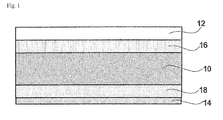
Claims (3)

  1. A wavelength conversion type photovoltaic cell sealing sheet comprising a dispersion medium resin and a fluorescent material having an absorption wavelength peak at from 300 to 450 nm, wherein a content of an ultraviolet absorber other than the fluorescent material is 0.15 parts by mass or less with respect to 100 parts by mass of the dispersion medium resin.
  2. A wavelength conversion type photovoltaic cell sealing sheet according to claim 1, wherein the fluorescent substance is a europium complex.
  3. A photovoltaic cell module comprising a photovoltaic cell and the wavelength conversion type photovoltaic cell sealing sheet according to claim 1 or 2 provided on a light-receiving surface side of said photovoltaic cell.
EP11762815.6A 2010-03-29 2011-03-28 PHOTOVOLTAIC CELL SEALING STRIP WITH WAVE LENGTH CONVERSION AND PHOTOVOLTAIC CELL MODULE Withdrawn EP2555253A4 (en)

Applications Claiming Priority (2)

Application Number Priority Date Filing Date Title
JP2010076313A JP2011210891A (en) 2010-03-29 2010-03-29 Wavelength-converting solar cell sealing sheet, and solar cell module
PCT/JP2011/057724 WO2011122591A1 (en) 2010-03-29 2011-03-28 Wavelength-converting solar cell sealing sheet, and solar cell module

Publications (2)

Publication Number Publication Date
EP2555253A1 true EP2555253A1 (en) 2013-02-06
EP2555253A4 EP2555253A4 (en) 2015-06-03

Family

ID=44712286

Family Applications (1)

Application Number Title Priority Date Filing Date
EP11762815.6A Withdrawn EP2555253A4 (en) 2010-03-29 2011-03-28 PHOTOVOLTAIC CELL SEALING STRIP WITH WAVE LENGTH CONVERSION AND PHOTOVOLTAIC CELL MODULE

Country Status (10)

Country Link
US (1) US20130074928A1 (en)
EP (1) EP2555253A4 (en)
JP (1) JP2011210891A (en)
KR (1) KR101441992B1 (en)
CN (1) CN102844882B (en)
CA (1) CA2794879C (en)
MY (1) MY160834A (en)
SG (1) SG184293A1 (en)
TW (1) TWI474490B (en)
WO (1) WO2011122591A1 (en)

Cited By (2)

* Cited by examiner, † Cited by third party
Publication number Priority date Publication date Assignee Title
CN105189590A (en) * 2013-02-21 2015-12-23 日本化成株式会社 Crosslinking resin composition and sealing medium
EP3157066A4 (en) * 2014-06-13 2017-06-21 Panasonic Intellectual Property Management Co., Ltd. Solar cell module

Families Citing this family (16)

* Cited by examiner, † Cited by third party
Publication number Priority date Publication date Assignee Title
JP5799487B2 (en) * 2010-04-09 2015-10-28 日立化成株式会社 Spherical phosphor for wavelength conversion type solar cell encapsulant, wavelength conversion type solar cell encapsulant, solar cell module and production method thereof
JP5942298B2 (en) * 2011-11-21 2016-06-29 スフェラーパワー株式会社 Fiber structure with semiconductor functional element
CN104823286B (en) 2012-10-03 2017-03-08 株式会社普利司通 Sealing films for solar cell and the solar cell using which
JP2014112642A (en) * 2012-10-03 2014-06-19 Bridgestone Corp Solar cell encapsulation film and solar cell using the same
WO2014065189A1 (en) * 2012-10-24 2014-05-01 株式会社クレハ Rare earth complex and application for same
WO2014065190A1 (en) * 2012-10-24 2014-05-01 株式会社クレハ Rare earth complex and application for same
CN105580143A (en) * 2013-09-26 2016-05-11 株式会社普利司通 Sealing film for solar cells, and solar cell using same
JP2015135884A (en) 2014-01-17 2015-07-27 株式会社ブリヂストン Solar cell sealing film and solar cell using the same
WO2015129177A1 (en) * 2014-02-26 2015-09-03 パナソニックIpマネジメント株式会社 Solar cell module
JP6418934B2 (en) * 2014-12-18 2018-11-07 ソーラーフロンティア株式会社 Solar cell module
US20180016496A1 (en) * 2015-02-09 2018-01-18 Panasonic Intellectual Property Management Co., Ltd. Phosphor, wavelength conversion member, and photovoltaic device
CN108431647A (en) * 2016-09-26 2018-08-21 日立化成株式会社 Solidification compound, wavelength conversion material, back light unit and image display device
KR101905740B1 (en) * 2016-10-27 2018-10-11 한국에너지기술연구원 Photovoltaic cell package and manufacturing method for the same
EP3657141A1 (en) 2018-11-23 2020-05-27 trinamiX GmbH Detector and method for measuring ultraviolet radiation
KR20210088260A (en) 2020-01-06 2021-07-14 최별 Hot Dog Packaging
CN113528052B (en) * 2020-04-20 2024-03-08 宁波大榭开发区综研化学有限公司 Adhesive tape

Family Cites Families (22)

* Cited by examiner, † Cited by third party
Publication number Priority date Publication date Assignee Title
DE3236241A1 (en) * 1982-09-30 1984-04-05 Bayer Ag, 5090 Leverkusen METHOD FOR PRODUCING LIGHT COLLECTORS
WO1995017015A1 (en) * 1993-12-14 1995-06-22 Citizen Watch Co., Ltd. Solar battery device
JPH07202243A (en) * 1993-12-28 1995-08-04 Bridgestone Corp Solar cell module
JP3338616B2 (en) * 1996-09-05 2002-10-28 富士通株式会社 Method for forming phosphor layer and phosphor paste
JP2001094128A (en) 1999-09-22 2001-04-06 Sharp Corp Solar cell module and method of manufacturing the same
JP2001352091A (en) 2000-04-06 2001-12-21 Sumitomo Chem Co Ltd Sheet for solar cell cover
JP4147755B2 (en) * 2001-07-31 2008-09-10 日亜化学工業株式会社 Light emitting device and manufacturing method thereof
JP2003218379A (en) 2002-01-24 2003-07-31 Sumitomo Bakelite Co Ltd Solar battery
JP2003243682A (en) 2002-02-19 2003-08-29 Sumitomo Bakelite Co Ltd Solar cell
US6734466B2 (en) * 2002-03-05 2004-05-11 Agilent Technologies, Inc. Coated phosphor filler and a method of forming the coated phosphor filler
JP4779074B2 (en) 2003-10-03 2011-09-21 三井・デュポンポリケミカル株式会社 Sheet for solar cell encapsulant
US20080231170A1 (en) * 2004-01-26 2008-09-25 Fukudome Masato Wavelength Converter, Light-Emitting Device, Method of Producing Wavelength Converter and Method of Producing Light-Emitting Device
JP2006186233A (en) * 2004-12-28 2006-07-13 Du Pont Mitsui Polychem Co Ltd Solar cell encapsulant
JP2006303033A (en) * 2005-04-18 2006-11-02 National Institute Of Advanced Industrial & Technology Solar cell module
US20080173886A1 (en) * 2006-05-11 2008-07-24 Evident Technologies, Inc. Solid state lighting devices comprising quantum dots
JP2008019380A (en) * 2006-07-14 2008-01-31 Toshiba Corp Luminescent particles, light emitting device, and method for producing the same
KR101096865B1 (en) * 2006-10-18 2011-12-22 산빅 가부시키가이샤 Fluorescent resin composition and solar battery module using the same
JP2008159856A (en) 2006-12-25 2008-07-10 Bridgestone Corp Sealing film for solar battery and solar battery using same sealing film
WO2008110567A1 (en) * 2007-03-13 2008-09-18 Basf Se Photovoltaic modules with improved quantum efficiency
JP2010034502A (en) * 2008-06-30 2010-02-12 Hitachi Chem Co Ltd Wavelength conversion film, solar battery module using same, and method for manufacturing solar battery module
JP5239043B2 (en) * 2008-07-18 2013-07-17 シャープ株式会社 Light emitting device and method for manufacturing light emitting device
JP4586914B2 (en) 2008-09-26 2010-11-24 ブラザー工業株式会社 Image forming apparatus and image forming management system

Cited By (4)

* Cited by examiner, † Cited by third party
Publication number Priority date Publication date Assignee Title
CN105189590A (en) * 2013-02-21 2015-12-23 日本化成株式会社 Crosslinking resin composition and sealing medium
CN105189590B (en) * 2013-02-21 2019-08-06 三菱化学株式会社 Resin composition and encapsulating material for crosslinking
EP3157066A4 (en) * 2014-06-13 2017-06-21 Panasonic Intellectual Property Management Co., Ltd. Solar cell module
US10224448B2 (en) 2014-06-13 2019-03-05 Panasonic Intellectual Property Management Co., Ltd. Solar cell module

Also Published As

Publication number Publication date
US20130074928A1 (en) 2013-03-28
TW201133896A (en) 2011-10-01
KR20120127669A (en) 2012-11-22
SG184293A1 (en) 2012-11-29
MY160834A (en) 2017-03-31
CN102844882A (en) 2012-12-26
JP2011210891A (en) 2011-10-20
EP2555253A4 (en) 2015-06-03
CA2794879C (en) 2016-05-24
KR101441992B1 (en) 2014-09-19
CN102844882B (en) 2016-06-08
WO2011122591A1 (en) 2011-10-06
TWI474490B (en) 2015-02-21
CA2794879A1 (en) 2011-10-06

Similar Documents

Publication Publication Date Title
CA2794879C (en) Wavelength conversion type photovoltaic cell sealing sheet and photovoltaic cell module
EP2557137A1 (en) Spherical phosphor, sealing material for wavelength conversion solar battery, solar battery module and method for producing same
TWI542024B (en) Wavelength conversion type photovoltaic cell packaging material and photovoltaic cell module
JP5716319B2 (en) Spherical phosphor for wavelength conversion type solar cell, wavelength conversion type solar cell encapsulant, solar cell module, and production method thereof
KR101383532B1 (en) Wavelength-converting resin composition for solar cell, and solar cell module
WO2011040391A1 (en) Fluorescent material for converting wavelengths, resin composition for converting wavelengths containing the fluorescent material, solar cell module produced using the fluorescent material or the resin composition, process for producing resin composition for converting wavelengths, and process for producing solar cell module
JP2013087243A (en) Spherical phosphor, sealing material for wavelength conversion type solar battery, solar battery module, and methods for producing them
JP5712550B2 (en) Spherical phosphor, wavelength conversion type solar cell encapsulant, solar cell module, and method for producing them
JP2014060418A (en) Solar battery module
JP2013077705A (en) Wavelength conversion solar cell module and method of manufacturing the same
JP2013087242A (en) Spherical phosphor, wavelength conversion type solar cell sealing material, solar cell module, and method of manufacturing them
JP2013087241A (en) Coating fluorescent material, wavelength conversion type solar cell sealing material, solar cell module, and method of manufacturing them
JP5799487B2 (en) Spherical phosphor for wavelength conversion type solar cell encapsulant, wavelength conversion type solar cell encapsulant, solar cell module and production method thereof
JP2015122511A (en) Solar cell module
JP2012033605A (en) Exothermic heat reduction solar battery sealing sheet and solar battery module using the same
JP5935869B2 (en) Method for manufacturing spherical phosphor, method for manufacturing wavelength conversion type solar cell sealing material, and method for manufacturing solar cell module
JP2013046986A (en) Method of manufacturing wavelength conversion solar cell sealing material and solar cell module

Legal Events

Date Code Title Description
PUAI Public reference made under article 153(3) epc to a published international application that has entered the european phase

Free format text: ORIGINAL CODE: 0009012

17P Request for examination filed

Effective date: 20121002

AK Designated contracting states

Kind code of ref document: A1

Designated state(s): AL AT BE BG CH CY CZ DE DK EE ES FI FR GB GR HR HU IE IS IT LI LT LU LV MC MK MT NL NO PL PT RO RS SE SI SK SM TR

DAX Request for extension of the european patent (deleted)
RA4 Supplementary search report drawn up and despatched (corrected)

Effective date: 20150507

RIC1 Information provided on ipc code assigned before grant

Ipc: H01L 31/048 20140101ALI20150429BHEP

Ipc: H01L 31/055 20140101AFI20150429BHEP

17Q First examination report despatched

Effective date: 20151127

STAA Information on the status of an ep patent application or granted ep patent

Free format text: STATUS: THE APPLICATION IS DEEMED TO BE WITHDRAWN

18D Application deemed to be withdrawn

Effective date: 20160408