EP2552486B1 - Transdermal delivery patch - Google Patents
Transdermal delivery patch Download PDFInfo
- Publication number
- EP2552486B1 EP2552486B1 EP11761826.4A EP11761826A EP2552486B1 EP 2552486 B1 EP2552486 B1 EP 2552486B1 EP 11761826 A EP11761826 A EP 11761826A EP 2552486 B1 EP2552486 B1 EP 2552486B1
- Authority
- EP
- European Patent Office
- Prior art keywords
- agents
- matrix layer
- tocopheryl
- range
- transdermal delivery
- Prior art date
- Legal status (The legal status is an assumption and is not a legal conclusion. Google has not performed a legal analysis and makes no representation as to the accuracy of the status listed.)
- Active
Links
Images






Classifications
-
- C—CHEMISTRY; METALLURGY
- C09—DYES; PAINTS; POLISHES; NATURAL RESINS; ADHESIVES; COMPOSITIONS NOT OTHERWISE PROVIDED FOR; APPLICATIONS OF MATERIALS NOT OTHERWISE PROVIDED FOR
- C09J—ADHESIVES; NON-MECHANICAL ASPECTS OF ADHESIVE PROCESSES IN GENERAL; ADHESIVE PROCESSES NOT PROVIDED FOR ELSEWHERE; USE OF MATERIALS AS ADHESIVES
- C09J7/00—Adhesives in the form of films or foils
- C09J7/20—Adhesives in the form of films or foils characterised by their carriers
- C09J7/22—Plastics; Metallised plastics
-
- A—HUMAN NECESSITIES
- A61—MEDICAL OR VETERINARY SCIENCE; HYGIENE
- A61K—PREPARATIONS FOR MEDICAL, DENTAL OR TOILETRY PURPOSES
- A61K47/00—Medicinal preparations characterised by the non-active ingredients used, e.g. carriers or inert additives; Targeting or modifying agents chemically bound to the active ingredient
- A61K47/30—Macromolecular organic or inorganic compounds, e.g. inorganic polyphosphates
-
- A—HUMAN NECESSITIES
- A61—MEDICAL OR VETERINARY SCIENCE; HYGIENE
- A61K—PREPARATIONS FOR MEDICAL, DENTAL OR TOILETRY PURPOSES
- A61K9/00—Medicinal preparations characterised by special physical form
- A61K9/70—Web, sheet or filament bases ; Films; Fibres of the matrix type containing drug
- A61K9/7023—Transdermal patches and similar drug-containing composite devices, e.g. cataplasms
-
- A—HUMAN NECESSITIES
- A61—MEDICAL OR VETERINARY SCIENCE; HYGIENE
- A61K—PREPARATIONS FOR MEDICAL, DENTAL OR TOILETRY PURPOSES
- A61K31/00—Medicinal preparations containing organic active ingredients
- A61K31/33—Heterocyclic compounds
- A61K31/335—Heterocyclic compounds having oxygen as the only ring hetero atom, e.g. fungichromin
- A61K31/35—Heterocyclic compounds having oxygen as the only ring hetero atom, e.g. fungichromin having six-membered rings with one oxygen as the only ring hetero atom
- A61K31/352—Heterocyclic compounds having oxygen as the only ring hetero atom, e.g. fungichromin having six-membered rings with one oxygen as the only ring hetero atom condensed with carbocyclic rings, e.g. methantheline
- A61K31/353—3,4-Dihydrobenzopyrans, e.g. chroman, catechin
- A61K31/355—Tocopherols, e.g. vitamin E
-
- A—HUMAN NECESSITIES
- A61—MEDICAL OR VETERINARY SCIENCE; HYGIENE
- A61K—PREPARATIONS FOR MEDICAL, DENTAL OR TOILETRY PURPOSES
- A61K47/00—Medicinal preparations characterised by the non-active ingredients used, e.g. carriers or inert additives; Targeting or modifying agents chemically bound to the active ingredient
- A61K47/06—Organic compounds, e.g. natural or synthetic hydrocarbons, polyolefins, mineral oil, petrolatum or ozokerite
- A61K47/24—Organic compounds, e.g. natural or synthetic hydrocarbons, polyolefins, mineral oil, petrolatum or ozokerite containing atoms other than carbon, hydrogen, oxygen, halogen, nitrogen or sulfur, e.g. cyclomethicone or phospholipids
-
- A—HUMAN NECESSITIES
- A61—MEDICAL OR VETERINARY SCIENCE; HYGIENE
- A61K—PREPARATIONS FOR MEDICAL, DENTAL OR TOILETRY PURPOSES
- A61K47/00—Medicinal preparations characterised by the non-active ingredients used, e.g. carriers or inert additives; Targeting or modifying agents chemically bound to the active ingredient
- A61K47/30—Macromolecular organic or inorganic compounds, e.g. inorganic polyphosphates
- A61K47/32—Macromolecular compounds obtained by reactions only involving carbon-to-carbon unsaturated bonds, e.g. carbomers, poly(meth)acrylates, or polyvinyl pyrrolidone
-
- A—HUMAN NECESSITIES
- A61—MEDICAL OR VETERINARY SCIENCE; HYGIENE
- A61K—PREPARATIONS FOR MEDICAL, DENTAL OR TOILETRY PURPOSES
- A61K47/00—Medicinal preparations characterised by the non-active ingredients used, e.g. carriers or inert additives; Targeting or modifying agents chemically bound to the active ingredient
- A61K47/30—Macromolecular organic or inorganic compounds, e.g. inorganic polyphosphates
- A61K47/34—Macromolecular compounds obtained otherwise than by reactions only involving carbon-to-carbon unsaturated bonds, e.g. polyesters, polyamino acids, polysiloxanes, polyphosphazines, copolymers of polyalkylene glycol or poloxamers
-
- A—HUMAN NECESSITIES
- A61—MEDICAL OR VETERINARY SCIENCE; HYGIENE
- A61K—PREPARATIONS FOR MEDICAL, DENTAL OR TOILETRY PURPOSES
- A61K47/00—Medicinal preparations characterised by the non-active ingredients used, e.g. carriers or inert additives; Targeting or modifying agents chemically bound to the active ingredient
- A61K47/30—Macromolecular organic or inorganic compounds, e.g. inorganic polyphosphates
- A61K47/36—Polysaccharides; Derivatives thereof, e.g. gums, starch, alginate, dextrin, hyaluronic acid, chitosan, inulin, agar or pectin
-
- A—HUMAN NECESSITIES
- A61—MEDICAL OR VETERINARY SCIENCE; HYGIENE
- A61K—PREPARATIONS FOR MEDICAL, DENTAL OR TOILETRY PURPOSES
- A61K47/00—Medicinal preparations characterised by the non-active ingredients used, e.g. carriers or inert additives; Targeting or modifying agents chemically bound to the active ingredient
- A61K47/30—Macromolecular organic or inorganic compounds, e.g. inorganic polyphosphates
- A61K47/36—Polysaccharides; Derivatives thereof, e.g. gums, starch, alginate, dextrin, hyaluronic acid, chitosan, inulin, agar or pectin
- A61K47/38—Cellulose; Derivatives thereof
-
- A—HUMAN NECESSITIES
- A61—MEDICAL OR VETERINARY SCIENCE; HYGIENE
- A61K—PREPARATIONS FOR MEDICAL, DENTAL OR TOILETRY PURPOSES
- A61K9/00—Medicinal preparations characterised by special physical form
- A61K9/70—Web, sheet or filament bases ; Films; Fibres of the matrix type containing drug
- A61K9/7023—Transdermal patches and similar drug-containing composite devices, e.g. cataplasms
- A61K9/703—Transdermal patches and similar drug-containing composite devices, e.g. cataplasms characterised by shape or structure; Details concerning release liner or backing; Refillable patches; User-activated patches
-
- A—HUMAN NECESSITIES
- A61—MEDICAL OR VETERINARY SCIENCE; HYGIENE
- A61K—PREPARATIONS FOR MEDICAL, DENTAL OR TOILETRY PURPOSES
- A61K9/00—Medicinal preparations characterised by special physical form
- A61K9/70—Web, sheet or filament bases ; Films; Fibres of the matrix type containing drug
- A61K9/7023—Transdermal patches and similar drug-containing composite devices, e.g. cataplasms
- A61K9/703—Transdermal patches and similar drug-containing composite devices, e.g. cataplasms characterised by shape or structure; Details concerning release liner or backing; Refillable patches; User-activated patches
- A61K9/7038—Transdermal patches of the drug-in-adhesive type, i.e. comprising drug in the skin-adhesive layer
- A61K9/7046—Transdermal patches of the drug-in-adhesive type, i.e. comprising drug in the skin-adhesive layer the adhesive comprising macromolecular compounds
- A61K9/7053—Transdermal patches of the drug-in-adhesive type, i.e. comprising drug in the skin-adhesive layer the adhesive comprising macromolecular compounds obtained by reactions only involving carbon to carbon unsaturated bonds, e.g. polyvinyl, polyisobutylene, polystyrene
-
- A—HUMAN NECESSITIES
- A61—MEDICAL OR VETERINARY SCIENCE; HYGIENE
- A61K—PREPARATIONS FOR MEDICAL, DENTAL OR TOILETRY PURPOSES
- A61K9/00—Medicinal preparations characterised by special physical form
- A61K9/70—Web, sheet or filament bases ; Films; Fibres of the matrix type containing drug
- A61K9/7023—Transdermal patches and similar drug-containing composite devices, e.g. cataplasms
- A61K9/703—Transdermal patches and similar drug-containing composite devices, e.g. cataplasms characterised by shape or structure; Details concerning release liner or backing; Refillable patches; User-activated patches
- A61K9/7038—Transdermal patches of the drug-in-adhesive type, i.e. comprising drug in the skin-adhesive layer
- A61K9/7046—Transdermal patches of the drug-in-adhesive type, i.e. comprising drug in the skin-adhesive layer the adhesive comprising macromolecular compounds
- A61K9/7053—Transdermal patches of the drug-in-adhesive type, i.e. comprising drug in the skin-adhesive layer the adhesive comprising macromolecular compounds obtained by reactions only involving carbon to carbon unsaturated bonds, e.g. polyvinyl, polyisobutylene, polystyrene
- A61K9/7061—Polyacrylates
-
- A—HUMAN NECESSITIES
- A61—MEDICAL OR VETERINARY SCIENCE; HYGIENE
- A61K—PREPARATIONS FOR MEDICAL, DENTAL OR TOILETRY PURPOSES
- A61K9/00—Medicinal preparations characterised by special physical form
- A61K9/70—Web, sheet or filament bases ; Films; Fibres of the matrix type containing drug
- A61K9/7023—Transdermal patches and similar drug-containing composite devices, e.g. cataplasms
- A61K9/703—Transdermal patches and similar drug-containing composite devices, e.g. cataplasms characterised by shape or structure; Details concerning release liner or backing; Refillable patches; User-activated patches
- A61K9/7084—Transdermal patches having a drug layer or reservoir, and one or more separate drug-free skin-adhesive layers, e.g. between drug reservoir and skin, or surrounding the drug reservoir; Liquid-filled reservoir patches
-
- A—HUMAN NECESSITIES
- A61—MEDICAL OR VETERINARY SCIENCE; HYGIENE
- A61L—METHODS OR APPARATUS FOR STERILISING MATERIALS OR OBJECTS IN GENERAL; DISINFECTION, STERILISATION OR DEODORISATION OF AIR; CHEMICAL ASPECTS OF BANDAGES, DRESSINGS, ABSORBENT PADS OR SURGICAL ARTICLES; MATERIALS FOR BANDAGES, DRESSINGS, ABSORBENT PADS OR SURGICAL ARTICLES
- A61L15/00—Chemical aspects of, or use of materials for, bandages, dressings or absorbent pads
-
- A—HUMAN NECESSITIES
- A61—MEDICAL OR VETERINARY SCIENCE; HYGIENE
- A61P—SPECIFIC THERAPEUTIC ACTIVITY OF CHEMICAL COMPOUNDS OR MEDICINAL PREPARATIONS
- A61P25/00—Drugs for disorders of the nervous system
- A61P25/04—Centrally acting analgesics, e.g. opioids
-
- A—HUMAN NECESSITIES
- A61—MEDICAL OR VETERINARY SCIENCE; HYGIENE
- A61P—SPECIFIC THERAPEUTIC ACTIVITY OF CHEMICAL COMPOUNDS OR MEDICINAL PREPARATIONS
- A61P3/00—Drugs for disorders of the metabolism
- A61P3/08—Drugs for disorders of the metabolism for glucose homeostasis
- A61P3/10—Drugs for disorders of the metabolism for glucose homeostasis for hyperglycaemia, e.g. antidiabetics
-
- C—CHEMISTRY; METALLURGY
- C09—DYES; PAINTS; POLISHES; NATURAL RESINS; ADHESIVES; COMPOSITIONS NOT OTHERWISE PROVIDED FOR; APPLICATIONS OF MATERIALS NOT OTHERWISE PROVIDED FOR
- C09D—COATING COMPOSITIONS, e.g. PAINTS, VARNISHES OR LACQUERS; FILLING PASTES; CHEMICAL PAINT OR INK REMOVERS; INKS; CORRECTING FLUIDS; WOODSTAINS; PASTES OR SOLIDS FOR COLOURING OR PRINTING; USE OF MATERIALS THEREFOR
- C09D133/00—Coating compositions based on homopolymers or copolymers of compounds having one or more unsaturated aliphatic radicals, each having only one carbon-to-carbon double bond, and at least one being terminated by only one carboxyl radical, or of salts, anhydrides, esters, amides, imides, or nitriles thereof; Coating compositions based on derivatives of such polymers
- C09D133/02—Homopolymers or copolymers of acids; Metal or ammonium salts thereof
-
- C—CHEMISTRY; METALLURGY
- C09—DYES; PAINTS; POLISHES; NATURAL RESINS; ADHESIVES; COMPOSITIONS NOT OTHERWISE PROVIDED FOR; APPLICATIONS OF MATERIALS NOT OTHERWISE PROVIDED FOR
- C09D—COATING COMPOSITIONS, e.g. PAINTS, VARNISHES OR LACQUERS; FILLING PASTES; CHEMICAL PAINT OR INK REMOVERS; INKS; CORRECTING FLUIDS; WOODSTAINS; PASTES OR SOLIDS FOR COLOURING OR PRINTING; USE OF MATERIALS THEREFOR
- C09D139/00—Coating compositions based on homopolymers or copolymers of compounds having one or more unsaturated aliphatic radicals, each having only one carbon-to-carbon double bond, and at least one being terminated by a single or double bond to nitrogen or by a heterocyclic ring containing nitrogen; Coating compositions based on derivatives of such polymers
- C09D139/04—Homopolymers or copolymers of monomers containing heterocyclic rings having nitrogen as ring member
- C09D139/06—Homopolymers or copolymers of N-vinyl-pyrrolidones
-
- C—CHEMISTRY; METALLURGY
- C08—ORGANIC MACROMOLECULAR COMPOUNDS; THEIR PREPARATION OR CHEMICAL WORKING-UP; COMPOSITIONS BASED THEREON
- C08K—Use of inorganic or non-macromolecular organic substances as compounding ingredients
- C08K5/00—Use of organic ingredients
- C08K5/0008—Organic ingredients according to more than one of the "one dot" groups of C08K5/01 - C08K5/59
- C08K5/0058—Biocides
-
- C—CHEMISTRY; METALLURGY
- C08—ORGANIC MACROMOLECULAR COMPOUNDS; THEIR PREPARATION OR CHEMICAL WORKING-UP; COMPOSITIONS BASED THEREON
- C08K—Use of inorganic or non-macromolecular organic substances as compounding ingredients
- C08K5/00—Use of organic ingredients
- C08K5/49—Phosphorus-containing compounds
-
- C—CHEMISTRY; METALLURGY
- C09—DYES; PAINTS; POLISHES; NATURAL RESINS; ADHESIVES; COMPOSITIONS NOT OTHERWISE PROVIDED FOR; APPLICATIONS OF MATERIALS NOT OTHERWISE PROVIDED FOR
- C09J—ADHESIVES; NON-MECHANICAL ASPECTS OF ADHESIVE PROCESSES IN GENERAL; ADHESIVE PROCESSES NOT PROVIDED FOR ELSEWHERE; USE OF MATERIALS AS ADHESIVES
- C09J2301/00—Additional features of adhesives in the form of films or foils
- C09J2301/40—Additional features of adhesives in the form of films or foils characterized by the presence of essential components
- C09J2301/41—Additional features of adhesives in the form of films or foils characterized by the presence of essential components additives as essential feature of the carrier layer
Definitions
- the present invention relates to a matrix layer suitable for use in a transdermal delivery patch for administration of a biologically active compound, and a transdermal delivery patch comprising the matrix layer.
- Drug delivery is the method or process of administering a pharmaceutical compound to achieve a therapeutic effect in humans and animals.
- Drug delivery technologies have been developed to improve bioavailability, safety, duration, onset or release, of the pharmaceutical compound.
- the present invention relates to a matrix layer suitable for use in a transdermal delivery patch for administration of a biologically active compound, and a transdermal delivery patch comprising the matrix layer.
- a first aspect of the present invention provides a matrix layer suitable for use in a transdermal delivery patch for administration of a biologically active compound, the composition comprising a mixture of a mono-tocopheryl phosphate compound and a di-tocopheryl phosphate compound and a polymer carrier, as defined by the claims.
- composition may be a matrix layer in a transdermal delivery patch.
- the present invention also provides use of the matrix layer in a transdermal delivery patch for administration of a biologically active compound.
- a second aspect of the present invention provides a transdermal delivery patch for administration of a biologically active compound comprising the matrix layer.
- the matrix layer may be a solid or semi-solid layer.
- the transdermal delivery patch may comprise further layers.
- Also disclosed is a method for preparing a transdermal delivery patch for administration of a biologically active compound comprising the steps of:
- the present invention relates to a matrix layer suitable for use in a transdermal delivery patch for administration of a biologically active compound, the matrix layer comprising a mixture of a mono-tocopheryl phosphate compound and a di-tocopheryl phosphate compound and a polymer carrier comprising polymers selected from the group consisting of polyvinyl pyrrolidone, polysiloxanes, polyalkyl acrylates and polymethyl methacrylate, wherein the polymer carrier is present in an amount within the range of 30%w/w to 95%w/w of the total weight of the matrix layer.
- the matrix layer may form part of a transdermal delivery matrix patch. It has been surprisingly found that a transdermal delivery patch comprising this matrix layer can effectively administer biologically active compounds.
- the matrix layer comprises a mixture of a mono-tocopheryl phosphate compound and a di-tocopheryl phosphate compound.
- Vitamin E exists in eight different forms, namely four tocopherols and four tocotrienols. All feature a chroman ring, with a hydroxyl group that can donate a hydrogen atom to reduce free radicals and a hydrophobic side chain which allows for penetration into biological membranes. Such derivatives of vitamin E may be classified as "hydroxy chromans". Both tocopherols and tocotrienols occur in alpha, beta, gamma and delta forms, determined by the number and location of methyl groups on the chroman ring. The tocotrienols differ from the analogous tocopherols by the presence of three double bonds in the hydrophobic side chain.
- vitamin E The various forms of vitamin E are shown by Formula (I): R 1 R 2 R 3 ⁇ -tocopherol CH 3 CH 3 CH 3 ⁇ -tocotrienol ⁇ -tocopherol CH 3 H CH 3 ⁇ -tocothenol ⁇ -tocopherol H CH 3 CH 3 ⁇ -tocotrienol ⁇ -tocopherol H H CH 3 ⁇ -tocothenol
- tocopherol in any of the four forms may be used.
- the alpha form of tocopherol is preferred.
- phosphate compound refers to phosphorylated tocopherol, where a covalent bond is formed between an oxygen atom (typically originating from a hydroxyl group) of the tocopherol compound and the phosphorous atom of a phosphate group (PO 4 ).
- a phosphate compound can be a phosphate mono-ester, phosphate di-ester, phosphate triester, pyrophosphate mono-ester, pyrophosphate di-ester, or a salt or derivative thereof, or a combination thereof.
- the di- and tri-esters can comprise the same tocopherol form or different tocopherol forms.
- salts include metal salts such as alkali or alkaline earth metal salts, for example sodium, magnesium, potassium and calcium salts. Sodium and potassium salts are preferred.
- derivatives include phosphate compounds where one or more phosphate protons are replaced by a substituent.
- Some non-limiting examples of derivatives include phosphatidyl derivatives where a phosphate proton is substituted with an amino-alkyl group, sugar derivatives where a phosphate proton is substituted with a sugar such as glucose.
- amino-alkyl group refers to a group comprising an amino (-NH 2 ) group and an alkyl group.
- alkyl refers to straight chain, branched chain or cyclic hydrocarbon groups having from 1 to 8 carbon atoms. Examples include methyl, ethyl, propyl, isopropyl, butyl, isobutyl, sec-butyl, tert-butyl, pentyl, hexyl, cyclohexyl, heptyl, and octyl. Phosphatidyl choline derivatives are most preferred.
- the mixture of a mono-tocopheryl phosphate compound and a di-tocopheryl phosphate compound may be selected from the group consisting of mono-(tocopheryl) phosphate, mono-(tocopheryl) phosphate monosodium salt, mono-(tocopheryl) phosphate disodium salt, mono-(tocopheryl) phosphate monopotassium salt, mono-(tocopheryl) phosphate dipotassium salt and di-(tocopheryl) phosphate, di-(tocopheryl) phosphate monosodium salt, di-(tocopheryl) phosphate monopotassium salt.
- These phosphate compounds may be derived from the alpha, beta, gamma or delta form of tocopherol, or a combination thereof.
- the ratio (%w/w) is preferably at least 2:1, more preferably within the range of about 4:1 to about 1:4, most preferably within the range of about 6:4 to about 8:2.
- the ratio may be about 2:1, about 6:4, or about 8:2.
- the matrix layer may comprise a phosphate compound of tocopherol in an amount within a range of about 0.01%w/w to about 10%w/w, or about 0.1%w/w to about 5%w/w, about 0.1%w/w to about 3%w/w, about 0.1%w/w to about 2%w/w, about 0.1%w/w to about 1%w/w or about 0.1%w/w to about 0.5%w/w, of the total concentration of the matrix layer.
- the mixture of a mono-tocopheryl phosphate compound and a di-tocopheryl phosphate compound is present in an amount within a range of about 0.5%w/w to about 1.5%w/w, or in an amount of about 0.1%w/w, of the total concentration of the matrix layer.
- the matrix layer also comprises a polymer carrier.
- Polymer carriers suitable for use in the matrix layer of the present invention include polyvinyl pyrrolidone (e.g. PVP K90, MW 360,000Da), polysiloxanes, polyalkyl acrylates (e.g. DuroTak) and polymethyl methacrylate (e.g. Eudragit E100).
- the polymer carrier is polyvinyl pyrrolidone.
- the polymer carrier is polymethyl methacrylate.
- the polymer carrier used in the matrix layer may have sufficient tackiness to enable the transdermal delivery patch to adhere to skin.
- amine-resistant polysiloxanes and combinations thereof can be used in the matrix layer.
- the polysiloxanes may be synthesized from linear bifunctional and branched polyfunctional oligomers. It has been found that the ratio of both types of oligomers determines the physical properties of the polymers.
- a high tack version should be tacky enough for the transdermal delivery patch to adhere to the surface of skin.
- a medium tack version may not be tacky at all but could be useful by providing a softening effect to other components included in the matrix layer.
- a silicone oil e.g. dimethicone
- the matrix layer comprises a polymer carrier in an amount of 30%w/w up to 95%w/w, from 30%w/w up to about 80%w/w, or from about 55%w/w up to about 65%w/w, of the total weight of the matrix layer.
- the matrix layer may comprise a polymer carrier in an amount of from about 85%w/w up to 95%w/w, or from about 90%w/w up to 95%w/w, of the total weight of the matrix layer.
- the polymer carrier may also comprise inert carrier components, such as for example, anti-tacking agents, tackifiers, and plasticizers to achieve appropriate softness, flexibility and "tackiness" for the polymer carrier to enable the matrix layer to adhere to the surface of skin, and thus provide consistent delivery.
- inert carrier components such as for example, anti-tacking agents, tackifiers, and plasticizers to achieve appropriate softness, flexibility and "tackiness" for the polymer carrier to enable the matrix layer to adhere to the surface of skin, and thus provide consistent delivery.
- anti-tacking agents that are solid with no stickiness property (i.e. low ability to retain solvents upon drying) and that can be mixed well (i.e. do not crystallise upon drying) with the polymer carrier may be suitable. The selection would be based on the polymer-type. Many surfactants are suitable for use as an anti-tacking agent with a polymer carrier. A more specific example of an anti-tacking agent is succinic acid. In specific embodiments, the anti-tacking agent may be present in an amount or less than 1%w/w up, up to about 1%w/w, or up to about 5%w/w, of the total weight of the composition, or matrix layer.
- a tackifier or tacking agent
- Tack can be controlled by combining adhesives of varying hardnesses (glass temperature or T g ).
- a tackifier is a polymer which is insoluble in water and composed of a monomer which contains partly or wholly a (meth)acrylic alkyl ester.
- Such types of polymers include, but are not limited to, acrylic, N-butyl-methacrylic copolymer (Primal N580NF, sold by Japan Acrylic Chemical Company, Ltd.), acrylic methyl, acrylic 2-ethylhexyl copolymer (Nikasol TS-6520, sold by Nippon Carbide Industries Company, Ltd), polyacrylic acid (Jurymer AC-IOLPH, sold by Nihon Junyaku Company, Ltd), methacrylic copolymer L (Plastoid L50, sold by Rohm Pharma GmbH), and aminoalkylmethacrylate copolymer E (Plastoid E35L, Plastoid E35M, Plastoid E35H, all sold by Rohm Pharma GmbH).
- Other non-limiting examples include rosin esters, hydrogenated rosins, dipropylene glycol dibenzoate, and/or mixed hydrocarbons, and acrylic copolymers (e.g. Flexbond 150 adhesive by Air Products).
- Plasticizers are additives that increase the plasticity or fluidity of the material to which they are added. Plasticizers may be used in the present invention to soften the final product increasing its flexibility and making it less brittle. Suitable plasticizers include phthalates, esters of polycarboxylic acids with linear or branched aliphatic alcohols of moderate chain length, acetylated monoglycerides, alkyl citrates, triethyl citrate (TEC), acetyl triethyl citrate (ATEC), tributyl citrate (TBC), acetyl tributyl citrate (ATBC), trioctyl citrate (TOC), acetyl trioctyl citrate (ATOC), trihexyl citrate (THC), acetyl trihexyl citrate (ATHC), butyryl trihexyl citrate (BTHC, trihexyl o-butyryl citrate), trimethyl citrate (TMC), methyl laurate,
- Inert carrier components may be present in the matrix layer in an amount of from 0.001%w/w up to about 50%w/w, up to about 40%w/w, up to about 30%w/w, of the total weight of the matrix layer.
- the matrix layer comprises an anti-tacking agent (such as succinic acid) and a plasticizer (such as dibutyl sebacate) in a total amount of about 35%w/w of the total weight of the matrix layer.
- the amount of polymer carrier and optional inert carrier components present in the matrix layer will depend on the specific biologically active compound to be administered. Generally, however, the matrix layer may comprise these components in an amount of from about 50%w/w up to about 99%w/w, from about 80%w/w up to about 98%w/w, from about 90%w/w up to about 98%w/w, of the total weight of the matrix layer. In one embodiment, the matrix layer comprises these components in the amount of about 95%w/w of the total weight of the matrix layer.
- the matrix layer may also optionally further comprise one or more excipients (in addition to the inert carrier components discussed above).
- excipients for inclusion in the matrix layer include, but are not limited to, solvents, thickeners or gelling agents, preservatives, surfactants, stabilizers, buffers, emollients, colours, fragrances, and appearance modifiers. It will be appreciated that any excipients which have been approved for use in pharmaceutical products by the regulatory bodies may be employed in the matrix layer. The amount of a particular excipient or excipients to be used in matrix layer would also be appreciated by a person skilled in the art.
- the matrix layer may form part of a transdermal delivery matrix patch. It has been surprisingly found that a transdermal delivery patch comprising this matrix layer can effectively administer biologically active compounds.
- biologically active compound refers to any chemical substance that has a biological effect in humans or animals for medical, therapeutic, cosmetic and veterinary purposes, and encompasses pharmaceuticals including drugs, cosmeceuticals, nutraceuticals, and nutritional agents. It will be appreciated that some of biologically active compounds can be classified in more than one of these classes.
- a wide range of biologically active compounds may be delivered with the transdermal delivery patch of the present invention.
- cardiovascular drugs in particular antihypertensive agents (e.g. calcium channel blockers or calcium antagonists) and antiarrhythmic agents; congestive heart-failure pharmaceuticals; inotropic agents; vasodilators; ACE inhibitors; diuretics; carbonic anhydrase inhibitors; cardiac glycosides; phosphodiesterase inhibitors; ⁇ blockers; ⁇ -btockers; sodium channel blockers; potassium channel blockers; ⁇ -adrenergic agonists; platelet inhibitors; angiotensin II antagonists; anticoagulants; thrombolytic agents; treatments for bleeding; treatments for anaemia; thrombin inhibitors; antiparasitic agents; antibacterial agents; insulin; human growth hormone and peptides; vaccines; antiinflammatory agents, in particular non-steroidal antiinflammatory agents (NSAIDs), more particularly COX-2 inhibitors; steroidal antiinflammatory agents;
- NSAIDs non
- Suitable biologically active compounds include:
- Particularly preferred biologically active compounds include alprazolam, donepazil, rispiredone, lorazepam, nicotine, lidocaine, diclofenac, felodipine, insulin, ketoralac, prilocaine, halobetasol, hydrocortisol, opioids such as oxycodone or dihydrohydroxycodeinone (oxycodone base).
- pharmaceutically, nutraceutically or cosmeceutically acceptable derivatives includes, but is not limited to, pharmaceutically, nutraceutically or cosmeceutically acceptable salts, esters, salts of such esters, ethers, or any other derivative including prodrugs and metabolites, which upon administration to a subject (e.g. patient, human or animal) in need is capable of providing, directly or indirectly, a biologically active compound as otherwise described herein.
- the term "pharmaceutically, nutraceutically or cosmeceutically acceptable salt” refers to those salts which are, within the scope of sound medical judgment, suitable for use in contact with the tissues of humans and lower animals without undue toxicity, irritation, allergic response and the like, and are commensurate with a reasonable benefit/risk ratio.
- Pharmaceutically, nutraceutically or cosmeceutically acceptable salts are well known in the art. For example, S. M. Berge, et al. describe pharmaceutically, nutraceutically or cosmeceutically acceptable salts in detail in J. Pharmaceutical Sciences, 66:1-19, 1977 .
- Examples of pharmaceutically, nutraceutically or cosmeceutically acceptable nontoxic acid addition salts are salts of an amino group formed with inorganic acids such as hydrochloric acid, hydrobromic acid, phosphoric acid, sulfuric acid and perchloric acid or with organic acids such as acetic acid, oxalic acid, maleic acid, tartaric acid, citric acid, succinic acid, or malonic acid or by using other methods used in the art such as ion exchange.
- inorganic acids such as hydrochloric acid, hydrobromic acid, phosphoric acid, sulfuric acid and perchloric acid
- organic acids such as acetic acid, oxalic acid, maleic acid, tartaric acid, citric acid, succinic acid, or malonic acid or by using other methods used in the art such as ion exchange.
- salts include adipate, alginate, ascorbate, aspartate, benzenesulfonate, benzoate, bisulfate, borate, butyrate, camphorate, camphorsulfonate, citrate, cyclopentanepropionate, digluconate, dodecylsulfate, ethanesulfonate, formate, fumarate, glucoheptonate, glycerophosphate, gluconate, hernisulfate, heptanoate, hexanoate, hydroiodide, 2-hydroxy-ethanesulfonate, lactobionate, lactate, laurate, lauryl sulfate, malate, maleate, malonate, methanesulfonate, 2-naphthalenesulfonate, nicotinate, nitrate, oleate, oxalate, palmitate, pamoate, pectinate,
- alkali or alkaline earth metal salts include sodium, lithium, potassium, calcium, magnesium, and the like.
- Further pharmaceutically acceptable salts include, when appropriate, nontoxic ammonium, quaternary ammonium, and amine cations formed using counterions such as halide, hydroxide, carboxylate, sulfate, phosphate, nitrate, loweralkyl sulfonate, and aryl sulfonate.
- esters which are hydrolysed in vivo and include those that break down readily in the human body to leave the parent compound or a salt thereof.
- Suitable ester groups include, for example, those derived from pharmaceutically, nutraceutically or cosmeceutically acceptable aliphatic carboxylic acids, particularly alkanoic, alkenoic, cycloalkanoic and alkanedioic acids, in which each alkyl or alkenyl moiety advantageously has not more than 6 carbon atoms.
- esters include formates, acetates, propionates, butyrates, acrylates and ethylsuccinates.
- prodrugs refers to those prodrugs of the biologically active compounds which are, within the scope of sound medical judgment, suitable for use in contact with the tissues of a subject with undue toxicity, irritation, allergic response, and the like, commensurate with a reasonable benefit/risk ratio, and effective for their intended use, as well as the zwitterionic forms, where possible, of the compounds.
- prodrug refers to compounds that are rapidly transformed in vivo to yield the parent compound of the above formula, for example by hydrolysis in blood.
- a thorough discussion is provided in T. Higuchi and V. Stella, Pro-drugs as Novel Delivery Systems, Vol. 14 of the A.C.S. Symposium Series , and in Edward B. Roche, ed., Bioreversible Carriers in Drug Design, American Pharmaceutical Association and Pergamon Press, 1987 .
- the biologically active compound may be present in a therapeutically effective amount, that is, an amount necessary to achieve a desired therapeutic effect.
- the biologically active compound will be present in an amount of from about 0.1%w/w up to about 30%w/w, up to about 20%w/w, up to about 10%w/w, of the total concentration of the matrix layer.
- the matrix layer will have a biologically active compound concentration between about 3.0%w/w up to about 15.0%w/w of the total concentration of the matrix layer.
- the ratio of biologically active compound:tocopheryl phosphate (TP) (%w/w) may be between about 5:5 to about 5:0.5, with the most preferred value preferably being about 5:1.
- the polymer carrier:[biologically active compound and TP] may be between about 1:1 to about 3:1, with preferred values preferably being between about 7:6 to about 7:3.
- the matrix layer may form part of a transdermal delivery matrix patch.
- the transdermal delivery patch may be prepared by a variety of techniques.
- One technique involves combining the polymer carrier and any inert carrier components such as an anti-tacking agent and/or plasticizer with a suitable solvent (e.g. 50% water, 50% ethanol). This is combined with a dispersion comprising the biologically active compound and the mixture of a mono-tocopheryl phosphate compound and a di-tocopheryl phosphate compound, and is stirred until complete homogenisation is achieved.
- the composition may then be placed in a suitable mould and dried.
- the composition may be dried by heating up to about 90°C, preferably for 0.5 to 24 hours.
- formulating and/or drying may be conducted at a temperature within the range of about 30°C to about 90°C. It has been found that formulating and/or drying at a temperature of about 75°C results in better delivery of the biologically active compound.
- the composition may be cast on a surface (e.g. a roller) and then dried under heat.
- composition comprising a mixture of a mono-tocopheryl phosphate compound and a di-tocopheryl phosphate compound and a polymer carrier is a matrix layer.
- the matrix layer may be a solid or semi-solid layer.
- the transdermal delivery patch usually would also comprise a backing layer.
- the backing layer acts as a support or substrate for the matrix layer.
- the backing layer When preparing a transdermal delivery patch using a mould, the backing layer would be placed in the mould before addition of the matrix layer.
- the matrix layer essentially has two surfaces: a first surface and a second surface opposite the first surface, where the first surface is in contact with the backing layer and the second surface being adapted to be in diffusional contact with the skin of a subject.
- the subject may be a human or animal.
- the backing layer is occlusive or impermeable to protect the matrix layer from the outer environment.
- a non-occlusive backing layer could also be used, so long as the packaging of the transdermal delivery patch is fully occlusive to prevent degradation of the matrix layer.
- An occlusive backing layer is preferred.
- the backing layer may be of any thickness, however in the art, backing layers typically have a thickness of about 0.0005 inches to about 0.01 inches.
- the transdermal delivery patch may further comprise a liner which is a removable protective or impermeable layer, usually but not necessarily rendered “non-stick" so as not to stick to the matrix layer.
- the liner which may also be referred to as the release liner, protects the transdermal delivery patch during storage. During use, the release liner is to be removed.
- the liner may be made from the same material as the backing layer, however it may also be a metal foil, Mylar (registered trademark), polyethylene terephthalate, siliconized polyester, fumed silica in silicone rubber, polytretrafluoroethylene, cellophane, siliconized paper, aluminized paper, polyvinyl chloride film, composite foils or films containing polyester such as polyester terephthalate, polyester or aluminized polyester, polytetrafluoroethylene, polyether block amide copolymers, polyethylene methyl methacrylate block copolymers, polyurethanes, polyvinylidene chloride, nylon, silicone elastomers, rubber-based polyisobutylene, styrene, styrene-butadiene, and styrene-isoprene copolymers, polyethylene, and polypropylene.
- Mylar registered trademark
- polyethylene terephthalate siliconized polyester
- the release liner may be of any thickness, however in the art, release liners typically have a thickness of about 0.01mm to about 2mm.
- the transdermal delivery patch may also comprise an adhesive layer.
- the adhesive layer may be an additional layer to the matrix layer, or may be included on the outer margin of the backing layer where the backing layer extends beyond the edges of the matrix layer.
- Polymeric adhesives useful for transdermal patches include polyacrylate polymers, rubber-based adhesives and polysiloxane adhesives. These types of materials, as well as others, are described by Van Norstrand (The Handbook of Pressure Sensitive Adhesive Technology Second Edition 1989 ).
- Examples of commercially available adhesives include, but are not limited to, polyacrylate adhesives sold under the trademarks DUROTAK (registered trademark) by National Starch and Chemical Corporation, Bridgewater, NJ, as well as GELVA-MULTIPOLYMER SOLUTION (registered trademark) by Cytek Surface Specialties, Smyrna, GA.
- transdermal delivery patch comprising a matrix layer which comprises a mixture of a mono-tocopheryl phosphate compound and a di-tocopheryl phosphate compound and a polymer carrier as claimed.
- Transdermal delivery options for include, for example, topical creams and gels, and skin patches.
- WO 01/35883 discloses, for example, transdermal delivery systems for alkaloids which can be in the form of topical formulations, liquid reservoir systems or hybrid systems and adhesive matrix patches.
- Creams and gels may present difficulties with compliance and dosage control, and may be considered messy or unpleasant by patients.
- a “reservoir” patch essentially has a liquid or gel compartment containing the drug solution or suspension separated by a membrane and a layer of adhesive.
- the drug dispersion is present in a semi-solid or solid layer, which may or may not also comprise the adhesive material.
- Reservoir patches overcome some of the dosage difficulties with topical creams and gels, however the delivery may be uneven or inconsistent, and there is some risk of perforation of the reservoir.
- An additional issue relates to delivery of prescribed drugs which may be addictive and subject to abuse.
- Gels, creams and reservoir patches provide limited barriers to extraction of the drug substance, whereas incorporation of the drug substance within a matrix layer represents a significant, if not almost impossible barrier to extraction of the drug substance.
- Transdermal delivery provides a non-invasive way of potentially achieving sustained steady state delivery.
- the presence of a mixture of a mono-tocopheryl phosphate compound and a di-tocopheryl phosphate compound is considered to enhance the skin permeation of the biologically active compound. It has also been found that the components of the matrix layer do not formulate well together without the presence of a mixture of a mono-tocopheryl phosphate compound and a di-tocopheryl phosphate compound. It has also been found that the presence of a mixture of a mono-tocopheryl phosphate compound and a di-tocopheryl phosphate compound will act to reduce skin irritation caused by many the biologically active compounds.
- the components were dissolved in a solvent solution (acetone:isopropanol:ethyl alcohol 60:6.6:33.5 by %weight). The resulting solution was then poured into individual casts (containing suitable backing layers) at room temperature and the solvent was allowed to evaporate at 75°C for 1.5 hours.
- a solvent solution acetone:isopropanol:ethyl alcohol 60:6.6:33.5 by %weight.
- All matrix layer components could be combined at a suitable temperature to produce a homogeneous molten mass.
- the molten mass can then be cast on a cold surface (for example, a rotating mill with a suitable backing layer, or sheet, thereon) and allowed to solidify.
- Individual transdermal delivery patches of varying sizes may then be cut.
- FIG. 1 shows an example of a transdermal delivery patch of one embodiment of the present invention.
- Trandermal delivery patches were constructed by dissolving 20%w/w solid mixture of Eudragit E100 granules, dibutyl sebacate, succinic acid ; a combination of mono-(tocopheryl) phosphate and di-(tocopheryl) phosphate in a ratio of 6:4 (TPM); and oxycodone base in 60:6.6:33.4 acetone/isopropyl alcohol/ethyl alcohol. The mixture was then transferred into 6cm 2 circular aluminium cast-lined on the underside with polyester backing (1.66mil, 3M ScotchpakTM, 3M, MN) and the solvent evaporated in an oven at either 45°C overnight or 75°C for 1.5 hours.
- Oxycodone transdermal delivery patches were made according to Example 1 (small scale), testing the variable of the two different heating regimes.
- the transdermal delivery patches were adhered to full thickness human skin applied to a Franz cell with PBS as the receiver solution. Time points were taken at 18, 22, 24, 42, 44, 68 and 75 hours and the receiver solution was tested by HPLC to determine the concentration of oxycodone which had passed through the skin.
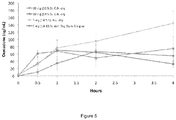
- Transdermal delivery patches were manufactured and the receiver solution tested as in Example 3, with testing time points of 0.5, 1, 3, 4 and 20 hours.
- Table: Parameters in the patches tested Patch Ratio (PC:O:TPM) Oxycodone (mg) Vol. stock (ml) Dry temp./ time Succinic acid Glue C 14:5:1 10 2 75°C/1.5h Yes No D 14:5:1 10 2 75°C/1.5h No Yes * Refers to ratio of polymer carrier:oxycodone:TPM
- This example compares plasma PK parameters using Patch Nos. 1, 2, 4 and 5 from Example 2.
- Transdermal delivery patches were cut from the polyester backing and adhered to the shaved and washed back of a 10-12 week old male Sprague-Dawley rat with a 6x7cm Tegaderm HPTM (3M, MN) adhesive dressing either with the backing layer in place or removed (see Table below). Tegaderm serves to hold the occlusive backing layer in place, or if the backing layer is absent, holds the transdermal delivery patch itself in place.
- the PK parameters quantified were:
- Rats were prepared and dosed similar to Example 6 using Patch Nos. 1, 3 and 5 from Example 2.
- Formulation 1 (1%T80, dbs) %w/w Eudragit 100 60.59 DBS 26.28 Succinic acid 5.46 Oxycodone 5.56 Tocopheryl phosphate 0.67 Di-tocopheryl phosphate 0.44 Tween 80 1.00 100.00
- Formulation 2 (3%ML, 25%T) %w/w Eudragit 100 60.59 Transcutol 24.28 Succinic acid 5.46 Oxycodone 5.56 Tocopheryl phosphate 0.67 Di-tocopheryl phosphate 0.44 Methyl laurate 3.00 100.00
- transdermal delivery patches were adhered to full thickness human skin applied to a Franz cell with PBS as the receiver solution. Time points were taken at 1, 2, and 4 hours and the receiver solution was tested by HPLC to determine the concentration of oxycodone which had passed through the skin.
- transdermal delivery patches were adhered to full thickness human skin applied to a Franz cell with PBS as the receiver solution. Time points were taken at 1, 2, and 4 hours and the receiver solution was tested by HPLC to determine the concentration of oxycodone which had passed through the skin.
- transdermal delivery patches of the present invention were tested against a positive control gel.
- the table below sets out the composition of the matrix layer in each of the four transdermal delivery patches.
- the polyvinylpyrrolidone was found to provide the matrix layer with sufficient "tackiness" to avoid the need to include any inert carrier components.
- the dry weight of each transdermal delivery patch was 60mg.
- the study was a cross-over design to test the effect of transdermal delivery patches of the present invention compared to the gel.
- each animal received four of the five treatments across the course of the study.
- the animals were male and 10-12 weeks of age.
- Each treatment group was 11 animals. All animals were >300g in weight, and had circulating glucose concentrations of >10mmol/L in the fasted state (mean fasted glucose concentration was 21.37 ⁇ 0.85mmol/L).
- the key endpoint of the study was blood glucose levels during a 5-hour insulin tolerance test, conducted as described below.
- STZ streptozotocin
- sodium citrate buffer 0.1mol/L, pH 4.5
- Rats were considered diabetic and included in the study if their blood glucose was greater than 16mmol/L 24 hours after the STZ injection.
- blood glucose measurements were made by obtaining a spot sample from tail tipping. Animals were left for 5 days following STZ administration prior to testing.
- the animals 24 hours before the application of the gel and transdermal delivery patches the animals were anaesthetised and ⁇ 30cm 2 of fur was shaved from the back, avoiding any damage to the skin that could enhance absorption of the formulations.
- the gel was applied at a dose of 12mg/cm 2 across the shaved area.
- the transdermal delivery patches were adhered to the shaved area and protected with the application of a tegaderm dressing.
- the insulin tolerance tests were performed 24 hours after removing the fur. Following each treatment, the animals were allowed to recover for 3 days before the next treatment.
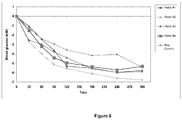
- the gel and the transdermal delivery patches caused significant reductions in blood glucose concentrations in the diabetic rats (see Figures 9 and 10 ). Blood glucose was significantly reduced (p ⁇ 0.05) from starting values 30 min after application and remained lowered for the duration of the experiment. There was no statistically significant difference in the reduction of blood glucose between the patches and gel tested here, as demonstrated by the area under the curve (see Figure 10 ).
- the transdermal delivery patches appear efficacious for the delivery of insulin, however, a transdermal delivery patch provides the many advantages described herein over a gel or other methods of delivery.
- Diclofenac diethylamine transdermal delivery patches were prepared having the following composition: 200mg diclofenac diethylamine 20mg TPM (8:2) 168mg Eudragit 200mg diclofenac diethylamine 168mg Eudragit
- the diclofenac diethylamine transdermal delivery patches had a surface area of 120cm 2 .
- Transdermal delivery patches were cut into circular discs (7cm 2 ) and placed over rat skin.
- Receptor solution was 12ml and had an effective surface with the skin equal to about 1.76cm 2 .
- skin about 7cm 2 was removed, the surface cleaned (excess gel) and extracted with 10ml solvent.
- Example 12 Lidocaine transdermal delivery patches
- Lidocaine transdermal delivery patches were prepared having the following composition: 100mg lidocaine base 20mg TPM (8:2) 168mg Eudragit 100mg lidocaine base 168mg Eudragit
- the lidocaine transdermal delivery patches had a surface area of 120cm 2 .
- Transdermal delivery patches were cut into circular discs (7cm 2 ) and placed over rat skin.
- Receptor solution was 12ml and had an effective surface with the skin equal to about 1.76cm 2 .
- skin about 7cm 2 was removed, the surface cleaned (excess gel) and extracted with 10ml solvent.
Landscapes
- Health & Medical Sciences (AREA)
- Chemical & Material Sciences (AREA)
- Engineering & Computer Science (AREA)
- Life Sciences & Earth Sciences (AREA)
- Bioinformatics & Cheminformatics (AREA)
- Animal Behavior & Ethology (AREA)
- General Health & Medical Sciences (AREA)
- Veterinary Medicine (AREA)
- Public Health (AREA)
- Pharmacology & Pharmacy (AREA)
- Medicinal Chemistry (AREA)
- Epidemiology (AREA)
- Dermatology (AREA)
- Inorganic Chemistry (AREA)
- Organic Chemistry (AREA)
- General Chemical & Material Sciences (AREA)
- Chemical Kinetics & Catalysis (AREA)
- Materials Engineering (AREA)
- Diabetes (AREA)
- Molecular Biology (AREA)
- Biophysics (AREA)
- Oil, Petroleum & Natural Gas (AREA)
- Wood Science & Technology (AREA)
- Nuclear Medicine, Radiotherapy & Molecular Imaging (AREA)
- Proteomics, Peptides & Aminoacids (AREA)
- Neurosurgery (AREA)
- Neurology (AREA)
- Hematology (AREA)
- Biomedical Technology (AREA)
- Pain & Pain Management (AREA)
- Emergency Medicine (AREA)
- Endocrinology (AREA)
- Obesity (AREA)
- Medicinal Preparation (AREA)
- Pharmaceuticals Containing Other Organic And Inorganic Compounds (AREA)
Description
- The present invention relates to a matrix layer suitable for use in a transdermal delivery patch for administration of a biologically active compound, and a transdermal delivery patch comprising the matrix layer.
- In this specification where a document, act or item of knowledge is referred to or discussed, this reference or discussion is not an admission that the document, act or item of knowledge or any combination thereof was at the priority date, publicly available, known to the public, part of common general knowledge; or known to be relevant to an attempt to solve any problem with which this specification is concerned.
- Drug delivery is the method or process of administering a pharmaceutical compound to achieve a therapeutic effect in humans and animals.
- Drug delivery technologies have been developed to improve bioavailability, safety, duration, onset or release, of the pharmaceutical compound.
- When developing drug delivery technologies, problems likely to be encountered include compatibility of the drug delivery system and the pharmaceutical compound, maintaining an adequate and effective duration, potential for side effects, and meeting patient convenience and compliance. As a consequence, many drug delivery technologies fall short of desired improvements and requirements.
- Accordingly, there is still a need for alternate delivery systems that effectively deliver drugs and other biologically active compounds.
- The present invention relates to a matrix layer suitable for use in a transdermal delivery patch for administration of a biologically active compound, and a transdermal delivery patch comprising the matrix layer.
- Accordingly, a first aspect of the present invention provides a matrix layer suitable for use in a transdermal delivery patch for administration of a biologically active compound, the composition comprising a mixture of a mono-tocopheryl phosphate compound and a di-tocopheryl phosphate compound and a polymer carrier, as defined by the claims.
- The composition may be a matrix layer in a transdermal delivery patch.
- The present invention also provides use of the matrix layer in a transdermal delivery patch for administration of a biologically active compound.
- It has surprisingly been found that biologically active compounds can be effectively administered using a transdermal delivery patch.
- A second aspect of the present invention provides a transdermal delivery patch for administration of a biologically active compound comprising the matrix layer. The matrix layer may be a solid or semi-solid layer. The transdermal delivery patch may comprise further layers.
- Also disclosed is a method for preparing a transdermal delivery patch for administration of a biologically active compound comprising the steps of:
- (i) combining a polymer carrier and optional inert carrier components with a suitable solvent;
- (ii) combining (i) with a dispersion comprising a biologically active compound and a mixture of a mono-tocopheryl phosphate compound and a di-tocopheryl phosphate compound;
- (iii) stirring (ii) until complete homogenisation is achieved;
- (iv) placing the composition of (iii) in a suitable mould or casting the composition of (iii) on a surface;
- (v) drying the composition under heat.
- The present invention relates to a matrix layer suitable for use in a transdermal delivery patch for administration of a biologically active compound, the matrix layer comprising a mixture of a mono-tocopheryl phosphate compound and a di-tocopheryl phosphate compound and a polymer carrier comprising polymers selected from the group consisting of polyvinyl pyrrolidone, polysiloxanes, polyalkyl acrylates and polymethyl methacrylate, wherein the polymer carrier is present in an amount within the range of 30%w/w to 95%w/w of the total weight of the matrix layer. The matrix layer, may form part of a transdermal delivery matrix patch. It has been surprisingly found that a transdermal delivery patch comprising this matrix layer can effectively administer biologically active compounds.
- The matrix layer comprises a mixture of a mono-tocopheryl phosphate compound and a di-tocopheryl phosphate compound.
- Vitamin E exists in eight different forms, namely four tocopherols and four tocotrienols. All feature a chroman ring, with a hydroxyl group that can donate a hydrogen atom to reduce free radicals and a hydrophobic side chain which allows for penetration into biological membranes. Such derivatives of vitamin E may be classified as "hydroxy chromans". Both tocopherols and tocotrienols occur in alpha, beta, gamma and delta forms, determined by the number and location of methyl groups on the chroman ring. The tocotrienols differ from the analogous tocopherols by the presence of three double bonds in the hydrophobic side chain. The various forms of vitamin E are shown by Formula (I):

R1 R2 R3 α-tocopherol CH3 CH3 CH3 α-tocotrienol β-tocopherol CH3 H CH3 β-tocothenol γ-tocopherol H CH3 CH3 γ-tocotrienol δ-tocopherol H H CH3 δ-tocothenol - In the present invention, tocopherol in any of the four forms may be used. The alpha form of tocopherol is preferred.
- The term "phosphate compound" refers to phosphorylated tocopherol, where a covalent bond is formed between an oxygen atom (typically originating from a hydroxyl group) of the tocopherol compound and the phosphorous atom of a phosphate group (PO4).
- A phosphate compound can be a phosphate mono-ester, phosphate di-ester, phosphate triester, pyrophosphate mono-ester, pyrophosphate di-ester, or a salt or derivative thereof, or a combination thereof. The di- and tri-esters can comprise the same tocopherol form or different tocopherol forms.
- The "salts" include metal salts such as alkali or alkaline earth metal salts, for example sodium, magnesium, potassium and calcium salts. Sodium and potassium salts are preferred.
- The "derivatives" include phosphate compounds where one or more phosphate protons are replaced by a substituent. Some non-limiting examples of derivatives include phosphatidyl derivatives where a phosphate proton is substituted with an amino-alkyl group, sugar derivatives where a phosphate proton is substituted with a sugar such as glucose.
- The term "amino-alkyl group" refers to a group comprising an amino (-NH2) group and an alkyl group. The term "alkyl" refers to straight chain, branched chain or cyclic hydrocarbon groups having from 1 to 8 carbon atoms. Examples include methyl, ethyl, propyl, isopropyl, butyl, isobutyl, sec-butyl, tert-butyl, pentyl, hexyl, cyclohexyl, heptyl, and octyl. Phosphatidyl choline derivatives are most preferred.
- The mixture of a mono-tocopheryl phosphate compound and a di-tocopheryl phosphate compound may be selected from the group consisting of mono-(tocopheryl) phosphate, mono-(tocopheryl) phosphate monosodium salt, mono-(tocopheryl) phosphate disodium salt, mono-(tocopheryl) phosphate monopotassium salt, mono-(tocopheryl) phosphate dipotassium salt and di-(tocopheryl) phosphate, di-(tocopheryl) phosphate monosodium salt, di-(tocopheryl) phosphate monopotassium salt. These phosphate compounds may be derived from the alpha, beta, gamma or delta form of tocopherol, or a combination thereof.
- For the combination of a mono-phosphate ester and a di-phosphate ester, that is a mono-(tocopheryl) phosphate and di-(tocopheryl) phosphate (which may in some instances herein be referred to as tocopheryl phosphate mixture or simply "TPM"), the ratio (%w/w) is preferably at least 2:1, more preferably within the range of about 4:1 to about 1:4, most preferably within the range of about 6:4 to about 8:2. The ratio may be about 2:1, about 6:4, or about 8:2.
- The matrix layer may comprise a phosphate compound of tocopherol in an amount within a range of about 0.01%w/w to about 10%w/w, or about 0.1%w/w to about 5%w/w, about 0.1%w/w to about 3%w/w, about 0.1%w/w to about 2%w/w, about 0.1%w/w to about 1%w/w or about 0.1%w/w to about 0.5%w/w, of the total concentration of the matrix layer. In some embodiments, the mixture of a mono-tocopheryl phosphate compound and a di-tocopheryl phosphate compound is present in an amount within a range of about 0.5%w/w to about 1.5%w/w, or in an amount of about 0.1%w/w, of the total concentration of the matrix layer.
- The matrix layer also comprises a polymer carrier.
- Polymer carriers suitable for use in the matrix layer of the present invention include polyvinyl pyrrolidone (e.g. PVP K90, MW 360,000Da), polysiloxanes, polyalkyl acrylates (e.g. DuroTak) and polymethyl methacrylate (e.g. Eudragit E100). In one embodiment, the polymer carrier is polyvinyl pyrrolidone. In an alternate embodiment, the polymer carrier is polymethyl methacrylate.
- The polymer carrier used in the matrix layer may have sufficient tackiness to enable the transdermal delivery patch to adhere to skin. For instance, amine-resistant polysiloxanes and combinations thereof can be used in the matrix layer. A combination of a polysiloxane of medium tack and a polysiloxane of high tack is used would be most suitable. The polysiloxanes may be synthesized from linear bifunctional and branched polyfunctional oligomers. It has been found that the ratio of both types of oligomers determines the physical properties of the polymers. More polyfunctional oligomers result in a more cross-linked polymer with a higher cohesion and a reduced tack, less polyfunctional oligomers result in a higher tack and a reduced cohesion. A high tack version should be tacky enough for the transdermal delivery patch to adhere to the surface of skin. A medium tack version, on the other hand, may not be tacky at all but could be useful by providing a softening effect to other components included in the matrix layer. To increase the adhesive power of the matrix layer a silicone oil (e.g. dimethicone) could be added.
- The matrix layer comprises a polymer carrier in an amount of 30%w/w up to 95%w/w, from 30%w/w up to about 80%w/w, or from about 55%w/w up to about 65%w/w, of the total weight of the matrix layer. In some embodiments, the matrix layer may comprise a polymer carrier in an amount of from about 85%w/w up to 95%w/w, or from about 90%w/w up to 95%w/w, of the total weight of the matrix layer.
- The polymer carrier may also comprise inert carrier components, such as for example, anti-tacking agents, tackifiers, and plasticizers to achieve appropriate softness, flexibility and "tackiness" for the polymer carrier to enable the matrix layer to adhere to the surface of skin, and thus provide consistent delivery.
- For polymers which are naturally "tacky" and may need anti-tackiness to have an appropriate consistency, anti-tacking agents that are solid with no stickiness property (i.e. low ability to retain solvents upon drying) and that can be mixed well (i.e. do not crystallise upon drying) with the polymer carrier may be suitable. The selection would be based on the polymer-type. Many surfactants are suitable for use as an anti-tacking agent with a polymer carrier. A more specific example of an anti-tacking agent is succinic acid. In specific embodiments, the anti-tacking agent may be present in an amount or less than 1%w/w up, up to about 1%w/w, or up to about 5%w/w, of the total weight of the composition, or matrix layer.
- In order to enhance the ability of the matrix layer to adhere to the surface of skin, it may optionally contain a tackifier (or tacking agent). Tack can be controlled by combining adhesives of varying hardnesses (glass temperature or Tg). Typically, a tackifier is a polymer which is insoluble in water and composed of a monomer which contains partly or wholly a (meth)acrylic alkyl ester. Such types of polymers include, but are not limited to, acrylic, N-butyl-methacrylic copolymer (Primal N580NF, sold by Japan Acrylic Chemical Company, Ltd.), acrylic methyl, acrylic 2-ethylhexyl copolymer (Nikasol TS-6520, sold by Nippon Carbide Industries Company, Ltd), polyacrylic acid (Jurymer AC-IOLPH, sold by Nihon Junyaku Company, Ltd), methacrylic copolymer L (Plastoid L50, sold by Rohm Pharma GmbH), and aminoalkylmethacrylate copolymer E (Plastoid E35L, Plastoid E35M, Plastoid E35H, all sold by Rohm Pharma GmbH). Other non-limiting examples include rosin esters, hydrogenated rosins, dipropylene glycol dibenzoate, and/or mixed hydrocarbons, and acrylic copolymers (e.g. Flexbond 150 adhesive by Air Products).
- Plasticizers are additives that increase the plasticity or fluidity of the material to which they are added. Plasticizers may be used in the present invention to soften the final product increasing its flexibility and making it less brittle. Suitable plasticizers include phthalates, esters of polycarboxylic acids with linear or branched aliphatic alcohols of moderate chain length, acetylated monoglycerides, alkyl citrates, triethyl citrate (TEC), acetyl triethyl citrate (ATEC), tributyl citrate (TBC), acetyl tributyl citrate (ATBC), trioctyl citrate (TOC), acetyl trioctyl citrate (ATOC), trihexyl citrate (THC), acetyl trihexyl citrate (ATHC), butyryl trihexyl citrate (BTHC, trihexyl o-butyryl citrate), trimethyl citrate (TMC), methyl laurate, lauric acid, lauryl lactate, lauryl alcohol, alkyl sulphonic acid phenyl ester, diethylene glycol monoethyl ether, bis(2-ethylhexyl) phthalate (DEHP), diisooctyl phthalate (DIOP), bis(n-butyl)phthalate (DnBP, DBP), diisobutyl phthalate (DIBP), bis(2-ethylhexyl)adipate (DEHA), dimethyl adipate (DMAD), monomethyl adipate (MMAD), dioctyl adipate (DOA), ethyl oleate, sorbitan monooleate, glycerol monooleate, dibutyl sebacate (DBS), dibutyl maleate (DBM), diisobutyl maleate (DIBM), benzoates, epoxidized vegetable oils, tris(tromethamine), N-ethyl toluene sulfonamide (o/p ETSA), N-(2-hydroxypropyl) benzene sulfonamide (HP BSA), N-(n-butyl) benzene sulfonamide (BBSA-NBBS), tricresyl phosphate (TCP), tributyl phosphate (TBP), triethylene glycol dihexanoate (3G6, 3GH), tetraethylene glycol diheptanoate (4G7), 1,3-butyleneglycol, dipropylene glycol, PEG400, Span 80, and polyvinylpyrrolidone. Dibutyl sebacate (DBS), sorbitan monooleate, methyl laurate and lauric acid are preferred plasticizers.
- Inert carrier components may be present in the matrix layer in an amount of from 0.001%w/w up to about 50%w/w, up to about 40%w/w, up to about 30%w/w, of the total weight of the matrix layer. In one embodiment, the matrix layer comprises an anti-tacking agent (such as succinic acid) and a plasticizer (such as dibutyl sebacate) in a total amount of about 35%w/w of the total weight of the matrix layer.
- The amount of polymer carrier and optional inert carrier components present in the matrix layer will depend on the specific biologically active compound to be administered. Generally, however, the matrix layer may comprise these components in an amount of from about 50%w/w up to about 99%w/w, from about 80%w/w up to about 98%w/w, from about 90%w/w up to about 98%w/w, of the total weight of the matrix layer. In one embodiment, the matrix layer comprises these components in the amount of about 95%w/w of the total weight of the matrix layer.
- The matrix layer may also optionally further comprise one or more excipients (in addition to the inert carrier components discussed above).
- A person skilled in the art of the invention would appreciate what are suitable excipients for inclusion in the matrix layer. Some examples include, but are not limited to, solvents, thickeners or gelling agents, preservatives, surfactants, stabilizers, buffers, emollients, colours, fragrances, and appearance modifiers. It will be appreciated that any excipients which have been approved for use in pharmaceutical products by the regulatory bodies may be employed in the matrix layer. The amount of a particular excipient or excipients to be used in matrix layer would also be appreciated by a person skilled in the art.
- The matrix layer may form part of a transdermal delivery matrix patch. It has been surprisingly found that a transdermal delivery patch comprising this matrix layer can effectively administer biologically active compounds.
- The term "biologically active compound" refers to any chemical substance that has a biological effect in humans or animals for medical, therapeutic, cosmetic and veterinary purposes, and encompasses pharmaceuticals including drugs, cosmeceuticals, nutraceuticals, and nutritional agents. It will be appreciated that some of biologically active compounds can be classified in more than one of these classes.
- A wide range of biologically active compounds may be delivered with the transdermal delivery patch of the present invention. Examples include, but are not limited to, cardiovascular drugs, in particular antihypertensive agents (e.g. calcium channel blockers or calcium antagonists) and antiarrhythmic agents; congestive heart-failure pharmaceuticals; inotropic agents; vasodilators; ACE inhibitors; diuretics; carbonic anhydrase inhibitors; cardiac glycosides; phosphodiesterase inhibitors; α blockers; β-btockers; sodium channel blockers; potassium channel blockers; β-adrenergic agonists; platelet inhibitors; angiotensin II antagonists; anticoagulants; thrombolytic agents; treatments for bleeding; treatments for anaemia; thrombin inhibitors; antiparasitic agents; antibacterial agents; insulin; human growth hormone and peptides; vaccines; antiinflammatory agents, in particular non-steroidal antiinflammatory agents (NSAIDs), more particularly COX-2 inhibitors; steroidal antiinflammatory agents; prophylactic antiinflammatory agents; antiglaucoma agents; mast cell stabilisers; mydriatics; agents affecting the respiratory system; allergic rhinitis pharmaceuticals; alpha-adrenergic agonists; corticosteroids; chronic obstructive pulmonary disease pharmaceuticals; xanthine-oxidase inhibitors; antiarthritis agents; gout treatments; autacoids and autacoid antagonists; antimycobacterial agents; antifungal agents; antiprotozoal agents; anthelmintic agents; antiviral agents especially for respiratory , herpes, cyto-megalovirus, human immunodeficiency virus and hepatitis infections; treatments for leukemia and kaposi's sarcoma; pain management agents in particular opioids, anaesthetics and analgesics; neuroleptics; sympathomimetic pharmaceuticals; adrenergic agonists; drugs affecting neurotransmitter uptake or release; anticholinergic pharmaceuticals; antihaemorrhoid treatments; agents to prevent or treat radiation or chemotherapeutic effects; liopgenisis drugs; fat reducing treatments; anti-obesity peptides; antiobesity agents such as lipase inhibitors; sympathomimetic agents; treatments for gastric ulcers and inflammation such as proton pump inhibitors; prostaglandins; VEGF inhibitors; antihyperlipidemic agents, in particular statins; drugs that affect the central nervous system (CNS) such as antipsychotic, antiepileptic and antiseizure drugs (anticonvulsants), psychoactive drugs, stimulants, antianxiety and hypnotic drugs, antidepressant drugs; antiparkinson's pharmaceuticals; hormones and fragments thereof such as sex hormones; growth hormone antagonists; gonadotropin releasing hormones and analogues thereof; steroid hormones and their antagonists; selective estrogen modulators; growth factors; antidiabetic pharmaceuticals such as insulin, insulin fragments, insulin analogues, glucagon-like peptides and hypoglycaemic agents; H1, H2, H3 and H4 antihistamines; peptide, protein, polypeptide, nucleic acids and oligonucleotide pharmaceuticals; analogues, fragments and varients of natural proteins, polypeptides, oligonucleaotides and nucleic acids and such like compounds; agents used to treat migraine headaches; asthma pharmaceuticals; cholinergic antagonists; glucocorticoids; androgens; antiandrogens; inhibitors of adrenocorticoid biosynthesis; osteoporosis treatments such as biphosphonates; antithyroid pharmaceuticals; suncreens, sun protectants and filters; cytokine agonists; cytokine antagonists; anticancer drugs; antialzheimer drugs; HMGCoA reductase inhibitors; fibrates; cholesterol absorption inhibitors; HDL cholesterol elevating agents; triglyceride reducing agents; antiageing or antiwrinkle agents; precursor molcules for the generation of hormones; proteins such as collagen and elastin; antibacterial agents; anti acne agents; antioxidants; hair treatments and skin whitening agents; suncreens, sun protectants and filters; variants of human apolipoprotein; precursor molecules for generation of hormones; proteins and peptides thereof; amino acids; plant extracts such as grape seed extract; DHEA; isoflavones; nutritional agents including vitamins, phytosterols and iridoid gylcosides, sesquiterpene lactones, terpenes, phenolic glycosides, triterpenes, hydroquinone derivatives, phenylalkanones; antioxidants such as retinol and other retinoids including retinoic acid and co enzyme Q10; omega-3-fatty acids; glucosamine; nucleic acids, oligonucleotides, antisense pharmaceuticals; enzymes; cytokines; cytokine analogues; cytokine agonists; cytokine antagonists; immunoglobulins; antibodies; antibody pharmaceuticals; gene therapies; lipoproteins; erythropoietin; vaccines; small and large molecule therapeutic agents for the treatment, or prevention of human and animal diseases such as allergy/asthma, arthritis, cancer, diabetes, growth impairment, cardiovascular diseases, inflammation, immunological disorders, baldness, pain, ophthalmological diseases, epilepsy, gynaecological disorders, CNS diseases, viral infections, bacterial infections, parasitic infections, GI diseases, obesity, and haemological diseases.
- Some specific non-limiting examples of suitable biologically active compounds include:
- anaesthetics:
including amino-ester and amino-amide anaesthetics such as benzocaine, chloroprocaine, cocaine, reserpine, guanethidine, cyclomethycaine, dimethocaine/larocaine, propoxycaine, procaine/novocaine, proparacaine, tetracaine/amethocaine; articaine, bupivacaine, carticaine, cinchocaine/dibucaine, etidocaine, levobupivacaine, lidocaine/lignocaine, mepivacaine, piperocaine, prilocaine, ropivacaine, trimecaine, propofol, halothane, enflurane barbiturates, benzodiazepines, neostigmine and ketamine - alkylating agents:
including carmustine, cyclophosphamide, ifosfamide, streptozotocin and mechlorethamine - calcium channel blockers:
including amlodipine, aranidipine, azelnidipine, barnidipine, benidipine, cilnidipine, clevidipine, cronidipine, darodipine, dexniguldipine, efonidipine, elnadipine, elgodipine, felodipine, flordipine, furnidipine, iganidipine, isradipine, lacidipine, lemildipine, lercanidipine, manidipine, mesuldipine, nicardipine, nifedipine, niludipine, nilvadipine, nimodipine, nisoldipine, nitrendipine, olradipine, oxodipine, palonidipine, pranidipine, sagandipine, sornidipine, teludipine, tiamdipine, trombodipine, watanidipine, verapamil, gallopamil, benzothiazepine, diltiazem, mibefradil, bepridil, fluspirilene and fendiline - antiarrhythmic and antiangina agents:
including amiodarone, disopyramide, flecainide acetate, quinidine sulphate, nitroglycerine, ranolazine, amiodarone, isosorbide and alteplase - antibacterial, antibiotic and antiacne agents:
including amoxicillin, ampicillin, azithromycin, benethamine penicillin, bleomycin, benzoyl peroxide, cinoxacin, chloramphenicol, daunorubicin, plicamycin, fluoroquinolones, ciprofloxacin, clarithromycin, clindamycin, clindesse, clofazimine, chlorohexidine gluconate, cloxacillin, demeclocycline, doxycycline, erythromycin, ethionamide, imipenem, indomethacin, lymocycline, minocycline, nalidixic acid, nitrofurantoin, penicillin, rifampicin, spiramycin, sodium sulfacetamide, sulphabenzamide, sulphadoxine, sulphamerazine, sulphacetamide, sulphadiazine, sulphafurazole, sulphamethoxazole, sulphapyridine, tetracycline, cephalexin, cefdinir, triclosan, ofloxacin, vancocin, glyburide, mupirocin, cefprozil, cefuroxime axetil, norfloxacin, isoniazid, lupulone, D-penicillamine, levofloxacin, gatifoxacin, and trimethoprim - anticancer:
including doxorubicin, 6-thioguanine, paclitaxel, docetaxel, camptothecin, megestrol acetate, navelbine, cytarabine, fludarabine, 6-mercaptopurine, 5-fluorouracil, teniposide, vinblastine, vincristine, cisplatin, colchicine, carboplatin, procarbazine and etopside - antidepressants, antipsychotics and antianxiety:
including alprazolam, amoxapine, bentazepam, bromazepam, clorazipine, clobazam, clotiazepam, diazepam, lorazepam, flunitrazepam, flurazepam, lormetazepam, medazepam, nitrazepam, oxazepam, temazepam, maprotiline, mianserin, nortriptyline, risperidone, sertraline, trazodone, baloperidol, trimipramine maleate fluoxetine, ondansetron, midazolam, chlorpromazine, haloperidol, triazolam, clozapine, fluopromazine, fluphenazine decanoate, fluanisone, perphenazine, pimozide, prochlorperazine, sulpiride, thioridazine, paroxitine, citalopram, bupropion, phenelzine, olanzapine, divalproex sodium and venlafaxine - tricyclics:
including azothiopine, amitriptyline, famotidine, promethazine, paroxatine, oxcarbazapine and mertazapine - antidiabetics:
including acetohexamide, chlorpropamide, glibenclaraide, gliclazide, glipizide, metformin, tolazamide, glyburide, glimepiride and tolbutamide - antiepileptics:
including beclamide, carbamazepine, gapapentin, tiagabine, vigabatrin, topiramate, clonazepam, ethotoin, methoin, methsuximide, methylphenobarbitone, oxcarbazepine, paramethadione, phenacemide, phenobarbitone, phenyloin, phensuximide, primidone, sulthiamine, phenytoin sodium, nirofurantoin monohydrate, gabapentin, lamotrigine, zonisamide, ethosuximide and valproic acid - hypnotics/sedatives and muscle relaxants:
including zolpidem tartrate, amylobarbitone, barbitone, butobarbitone, pentobarbitone, brotizolam, carbromal, chlordiazepoxide, chlormethiazole, ethinamate, meprobamate, methaqualome, cyclobenzaprene, cyclobenzaprine, tizanidine, baclofen, butalbital, zopiclone, atracurium, tubocurarine and Phenobarbital - antifungal, antiprotazoal and antiparasitic agents:
including amphotericin, butoconazole nitrate, clotrimazole, econazole nitrate, fluconazole, flucytosine, griseofulvin, itraconazole, ketoconazole, miconazole, natamycin, nystatin, sulconazole nitrate, terconazole, tioconazole and undecenoic acid; benznidazole, clioquinol, decoquinate, diiodohydroxyquinoline, diloxanide furoate, dinitolmide, furzolidone, metronidazole, nimorazole, nitrofurazone, ornidazole, terbinafine, clotrimazole, chloroquine, mefloquine, itraconazole, pyrimethamine, praziquantel, quinacrine, mebendazole and tinidazole - antihypertensive and cardiac therapeutic agents:
including candesartan, hydralazine, clonidine, triamterene, felodipine, gemfibrozil, fenofibrate, nifedical, prazosin, mecamylamine, doxazosin, dobutamine and cilexetil - antimigraine agents:
including dihydroergotamine mesylate, ergotamine tartrate, methysergide maleate, pizotifen maleate and sumatriptan succinate - antimuscarinic agents:
including atropine, benzhexol, biperiden, ethopropazine, hyoscyamine, mepenzolate bromide, oxybutynin, oxyphencylcimine and tropicamide - antineoplastic agents (or immunosuppressants):
including aminoglutethimide, amsacrine, azathioprine, busulphan, chlorambucil, cyclosporin, dacarbazine, estramustine, etoposide, lomustine, melphalan, mercaptopurine, methotrexate, mitomycin, mitotane, mitozantrone, procarbazine, tamoxifen citrate, testolactone, tacrolimus, mercaptopurine and sirolimus - antiparkinsonian agents:
including bromocriptine mesylate, levodopa, tolcapone, ropinirole, bromocriptine, hypoglycaemic agents such as sulfonylureas, biguanides, α-glucosidase inhibitors, thaiazolidinediones, cabergoline, carbidopa and lysuride maleate - antithyroid agents:
including carbimazole and propylthiouracil - antiviral drugs:
including amantadine, retinovir, cidofovir, acyclovir, famciclovir, ribavirin, amprenavir, indinavirm, rimantadine and efavirenz, penciclovir, ganciclovir, vidarabine, abacavir, adefovir, apmrenavir, delavirdine, didanosine, stavudine, zalcitabine, zidovudine, enfuvirtide and interferon - cardiac inotropic agents:
including amrinone, milrinone, digitoxin, digoxin, enoximone, lanatoside C and medigoxin - hypo and hyper lipidemic agents:
including fenofibrate, clofibrate, probucol, ezetimibe and torcetrapib - antiinflammatory:
including meoxicam, triamcinolone, cromolyn, nedocromil, hydroxychloroquine, montelukast, zileuton, zafirlukast and meloxicam - antihistamine:
including fexofenadine, chloral hydrate, hydroxyzine, promethazine, cetirazine, cimetidine, clyclizine, meclizine, dimenhydrinate, loratadine, nizatadine and promethazine - antiulcer:
including omeprazole, lansoprazole, pantoprazole and ranitidine - diuretics:
including hydrochlorothiazide, amiloride, acetazolamide, furosemide and torsemide - opioids:
including natural opiates which are alkaloids contained in the resin of the opium poppy such as morphine, codeine and thebaine; semi-synthetic opioids created from natural opiates such as hydromorphone, hydrocodone, oxycodone, oxymorphone, desomorphine, diacetylmorphine (heroin), nicomorphine, dipropanoylmorphine, benzylmorphine and ethylmorphine; fully synthetic opioids such as fentanyl, pethidine, methadone, tramadol and dextropropoxyphene; and, endogenous opioid peptides, produced naturally in the body, such as endorphins, enkephalins, dynorphins, and endomorphins; opioid analgesics including opioid receptor agonists, opioid receptor partial agonists, opioid antagonist or opioid receptor mixed agonist-antagonists; opioid receptor agonists including morphine, depomorphine, etorphine, heroin, hydromorphone, oxymorphone, levorphanol, methadone, levomethadyl, meperidine, fentanyl, sufentanyl, alfentanil, codeine, hydrocodone, oxycodone, and mixtures of the foregoing; opioid receptor antagonists including naloxone and naltrexone; opioid receptor mixed agonist-antagonist which has mixed opioid agonist/antagonist activities, or one that exhibits only partial agonist activity, including buprenorphine, nalbuphine, butorphanol, pentazocine, and mixtures of such compounds; opioids which exhibit partial agonist activity, including ethylketocyclazocine; opium alkaloids including phenanthrenes which are naturally occurring in opium such as codeine, morphine, thebaine and oripavine (the active metabolite of thebaine); synthetic derivatives such as diacetylmorphine (heroin), dihydrocodeine, hydrocodone, hydromorphone, nicomorphine, desmorphine, ethylmorphine, dipropanoylmorphine, oxycodone and oxymorphone; synthetic opioids including anilidopiperidines such as fentanyl, alphamethylfentanyl, alfentanil, sufentanil, remifentanil, carfentanyl and ohmefentanyl, Phenylpiperidines such as pethidine (meperidine), ketobemidone, MPPP, allylprodine, prodine and PEPAP; diphenylpropylamine derivatives such as propoxyphene, dextropropoxyphene, dextromoramide, bezitramide, piritramide, methadone, dipipanone, levomethadyl acetate (LAAM), difenoxin, diphenoxylate and loperamide; benzomorphan derivatives such as dezocine, pentazocine and phenazocine; oripavine derivatives such as buprenorphine, dihydroetorphine and etorphine; morphinan derivatives such as butorphanol, nalbuphine, levorphanol and levomethorphan, and others such as lefetamine, meptazinol, tilidine, tramadol and tapentadol; opioid receptor antagonists including nalmefene, naloxone and naltrexone - NSAIDs:
including arylalkanoic acid sub-group of class which includes diclofenac, aceclofenac, acemetacin, alclofenac, bromfenac, etodolac, indometacin, indometacin farnesil, nabumetone, oxametacin, proglumetacin, sulindac and tolmetin; 2-arylpropionic acid (profens) sub-group of class which includes alminoprofen, benoxaprofen, carprofen, dexibuprofen, dexketoprofen, fenbufen, fenoprofen, flunoxaprofen, flurbiprofen, ibuprofen, ibuproxam, indoprofen, ketoprofen, ketorolac, loxoprofen, miroprofen, naproxen, oxaprozin, pirprofen, suprofen, tarenflurbil and tiaprofenic acid; and N-arylanthranilic acid (fenamic acid) sub-group of class which includes flufenamic acid, meclofenamic acid, mefenamic acid and tolfenamic acid; tromethamine, celecoxib, nepafenac, aspirin, rofecoxib, naproxen, sulindac, piroxicam, pheylbutazone, tolmetin, indomethacin, acetominophen (paracetamol), tramadol and propoxyphene - retinoids:
including first generation retinoids such as retinol, retinal, tretinoin (retinoic acid, Retin-A), isotretinoin and alitretinoin; second generation retinoids such as etretinate and its metabolite acitretin; third generation retinoids such as tazarotene, bexarotene and adapalene - hormones and steroids:
including adrenocorticotrophic hormone (ACTH), antidiruetic hormone (vasopressin), atrial-nartreuretic factor (ANF), atrial-nartreuretic peptide (ANP), beclomethasone, cortisone, scopolamine, dopamine, epinephrine, catecholamines, cholecystokinin, clomiphene citrate, danazol, dexamethasone, diethylstilbestrol (DES), ethinyl estradiol, fludrocortison, finasteride, follicle stimulating hormone, gastrin, hydroxyprogesterone, growth hormone, insulin, leptin, luteinizing hormone, medroxyprogesterone acetate, mestranol, quinestrol, methyltestosterone, nandrolone, norethindrone, norethisterone, norgestrel, estradiol, conjugated oestrogens, oxandrolone, oxytocin, prednisone, progesterone, prolactin, protogalndins, somatostatin, stanozolol, stibestrol, thyroxine, prednisolone phosphate, triamcinolone, mifepristone acetonide, budesonide, levothyroxine, testosterone, testosterone cypionate, fluoxymesterone, flutamide, mometasone furoate, cyproterone, fluromethalone, goserelin, leuprolide, calcitonin, halobetasol, hydrocortisol and tibolone - statins and derivatives:
including atorvastatin, fluvastatin, lovastatin, nystatin, rosuvastatin, pravastatin, orlistat and simvastatin - stimulants:
including amphetamine, phentermine, tyramine, ephedrine, metaraminol, phenylephrine, dexamphetamine, dexfenfluramine, fenfluramine, nicotine, caffeine and mazindol - vasocontrictors:
including desmopressin - vasodilitors:
including carvedilol, terazosin, phentolamine and menthol - antialzheimers:
including levetiracetam, levitiracetam and donepezil - ACE inhibitors:
including benzapril, enalapril, ramipril, fosinopril sodium, lisinopril, minoxidil, isosorbide, rampril and quinapril - beta adrenoreceptor antogonists:
including atenolol, timolol, pindolol, propanolol hydrochloride, bisoprolol, esmolol, metoprolol succinate, metoprolol and metoprolol tartrate - angiotensin II antagonists:
including losartan - platelet inhibitors:
including abciximab, clopidrogel, tirofiban and aspirin - alcohols and phenols:
including tramadol, tramadol hydrochloride, allopurinol, calcitriol, cilostazol, soltalol, urasodiol bromperidol, droperidol, flupenthixol decanoate, albuterol, albuterol sulphate, carisoprodol, chlobetasol, ropinirol, labetalol, and methocarbamol - ketones and esters:
including amioderone, fluticasone, spironolactone, prednisone, triazodone, desoximetasone, methyl prednisdone, benzonatate nabumetone and buspirone - antiemetics:
including metoclopramide - ocular treatments:
including dorzolamide, brimonidine, olopatadine, cyclopentolate, pilocarpine and echothiophate - anticoagulant and antithrombitic agents:
including warfarin, enoxaparin and lepirudin - treatments for gout:
including probenecid and sulfinpyrazone - COPD and asthma treatments:
including ipratropium - treatments for osteoporosis:
including raloxifene, pamidronate and risedronate - cosmetic peptides:
including acetyl hexapeptide-3, acetyl hexapeptide-8, acetyl octapeptide and I-carnosine - vaccines:
including vaccines comprising toxoids (inactivated toxic compounds); proteins, protein subunits and polypeptides; polynucleotides such as DNA and RNA; conjugates; adjuvants such as saponins, virosomes, inorganic and organic adjuvants, for example zostavax - nutraceutical and cosmeceutical actives:
including coenzyme Q10 (or ubiquinone), ubiquinol or resveratrol; a carotenoid such as α, β, or γ-carotene, lycopene, lutein, zeaxanthin and astaxanthin; a phytonutrient, such as lycopene, lutein and seaxanthin; an unsaturated fatty acid such as linoleic acid, conjugated linoleic acid, linolenic acid, omega-3 fatty acids including but not limited to docosahexaenoic acid (DHA) and eicosapentaeonic acid (EPA) and their glycerol-esters; fat-soluble vitamins including vitamin D (D2, D3 and their derivatives), vitamin E (α, β, γ, δ-tocopherols, or α, β, γ, δ-tocotrienols), vitamin A (retinol, retinal, retinoic acid and derivatives), vitamin K (K1, K2, K3 and their derivatives) capric/caprylic triglycerides, folic acid, iron, niacin, glyceryl linoleate, omega 6 fatty acids, vitamin F, selenium, cyanocobalamin, aloe vera, beta glucan, bisabolol, camellia thea (green tea) extract, capric/caprylic triglycerides, centella asiatica (gotu cola) extract, cetearyl olivate, chlorophyll, citrus sinensis (orange) oil, cocoyl proline, dicapryl ether, disodium lauriminodipropionate tocopheryl phosphates (vitamin E phosphates), glycerin, glyceryl oleate, glycyrrhiza glabra (licorice) root extract, hamamelis virgiana (witch hazel) extract, lactic acid, lecithin, lutein, macadamia integrifolia (macadamia) seed oil, matricaria chamomilla (chamomile) extract, oenothera biennis (evening primrose) oil, olea europaea (olive) leaf extract, rice bran oil, persea gratissima (avocado) oil, polygonum multiflorum extract, pomegranate sterols, resveratrol, rosa eglanteria (rose hip) oil, santalum spicatum (sandalwood) oil, titanium dioxide, folic acid, glycerin, glyceryl linoleate (omega 6 fatty acids vitamin F), vitamin A palmitate, vitis vinifera (grapeseed) oil, halobetasol, adenosine, adenosine triphosphate, alpha hydroxy acid, allantoin, hyaluronic acid and derivatives, isolutrol, tranexamic acid, glycolic acid, arginine, ascorbyl glucosamine, ascorbyl palmitate, salicylic acid, carnosic acid, alpha lipoic acid, gamma linolenic acid (GLA), panthenol, retinyl propionate, retinyl pamitate, furfuryladenine, retinaldehyde, copper pepetides, idebenone, dimethylaminoethanol (DMAE), niacinamide, beta-glucan, palmitoyl pentapeptide-4, palmitoyl oligopeptide/ tetrapetide-7, ethocyn, ceramides, phenylalanine, glucuronolactone, L-carnitine, hydroxylapetite, palmitoyl tripetide-3, forskolin, zinc oxide, α-bisabolol, eugenol, silybin, soy isoflavones, aucubin, catalpol, pseudoguaianolide from Arnica chamissonis, rosmarinic acid, rosmanol, salicylates for example salicin, saligenin and salicyclic acid, taxasterol, α-lactucerol, isolactucerol, taraxacoside, ceremides, arbutin, gingerols, shagaols, hypercin, elastin, collagen and peptides thereof. - Particularly preferred biologically active compounds include alprazolam, donepazil, rispiredone, lorazepam, nicotine, lidocaine, diclofenac, felodipine, insulin, ketoralac, prilocaine, halobetasol, hydrocortisol, opioids such as oxycodone or dihydrohydroxycodeinone (oxycodone base).
- It is to be understood that pharmaceutically, nutraceutically or cosmeceutically acceptable derivatives of biologically active compounds can be included.
- The term "pharmaceutically, nutraceutically or cosmeceutically acceptable derivatives" includes, but is not limited to, pharmaceutically, nutraceutically or cosmeceutically acceptable salts, esters, salts of such esters, ethers, or any other derivative including prodrugs and metabolites, which upon administration to a subject (e.g. patient, human or animal) in need is capable of providing, directly or indirectly, a biologically active compound as otherwise described herein.
- As used herein, the term "pharmaceutically, nutraceutically or cosmeceutically acceptable salt" refers to those salts which are, within the scope of sound medical judgment, suitable for use in contact with the tissues of humans and lower animals without undue toxicity, irritation, allergic response and the like, and are commensurate with a reasonable benefit/risk ratio. Pharmaceutically, nutraceutically or cosmeceutically acceptable salts are well known in the art. For example, S. M. Berge, et al. describe pharmaceutically, nutraceutically or cosmeceutically acceptable salts in detail in J. Pharmaceutical Sciences, 66:1-19, 1977. Examples of pharmaceutically, nutraceutically or cosmeceutically acceptable nontoxic acid addition salts are salts of an amino group formed with inorganic acids such as hydrochloric acid, hydrobromic acid, phosphoric acid, sulfuric acid and perchloric acid or with organic acids such as acetic acid, oxalic acid, maleic acid, tartaric acid, citric acid, succinic acid, or malonic acid or by using other methods used in the art such as ion exchange. Other pharmaceutically acceptable salts include adipate, alginate, ascorbate, aspartate, benzenesulfonate, benzoate, bisulfate, borate, butyrate, camphorate, camphorsulfonate, citrate, cyclopentanepropionate, digluconate, dodecylsulfate, ethanesulfonate, formate, fumarate, glucoheptonate, glycerophosphate, gluconate, hernisulfate, heptanoate, hexanoate, hydroiodide, 2-hydroxy-ethanesulfonate, lactobionate, lactate, laurate, lauryl sulfate, malate, maleate, malonate, methanesulfonate, 2-naphthalenesulfonate, nicotinate, nitrate, oleate, oxalate, palmitate, pamoate, pectinate, persulfate, 3-phenylpropionate, phosphate, picrate, pivalate, propionate, stearate, succinate, sulfate, tartrate, thiocyanate, p-toluenesulfonate, undecanoate, valerate salts, and the like. Representative alkali or alkaline earth metal salts include sodium, lithium, potassium, calcium, magnesium, and the like. Further pharmaceutically acceptable salts include, when appropriate, nontoxic ammonium, quaternary ammonium, and amine cations formed using counterions such as halide, hydroxide, carboxylate, sulfate, phosphate, nitrate, loweralkyl sulfonate, and aryl sulfonate.
- The term "pharmaceutically, nutraceutically or cosmeceutically acceptable ester" refers to esters which are hydrolysed in vivo and include those that break down readily in the human body to leave the parent compound or a salt thereof. Suitable ester groups include, for example, those derived from pharmaceutically, nutraceutically or cosmeceutically acceptable aliphatic carboxylic acids, particularly alkanoic, alkenoic, cycloalkanoic and alkanedioic acids, in which each alkyl or alkenyl moiety advantageously has not more than 6 carbon atoms. Examples of particular esters include formates, acetates, propionates, butyrates, acrylates and ethylsuccinates.
- The term "pharmaceutically, nutraceutically or cosmeceutically acceptable prodrugs" as used herein refers to those prodrugs of the biologically active compounds which are, within the scope of sound medical judgment, suitable for use in contact with the tissues of a subject with undue toxicity, irritation, allergic response, and the like, commensurate with a reasonable benefit/risk ratio, and effective for their intended use, as well as the zwitterionic forms, where possible, of the compounds.
- The term "prodrug" refers to compounds that are rapidly transformed in vivo to yield the parent compound of the above formula, for example by hydrolysis in blood. A thorough discussion is provided in T. Higuchi and V. Stella, Pro-drugs as Novel Delivery Systems, Vol. 14 of the A.C.S. Symposium Series, and in Edward B. Roche, ed., Bioreversible Carriers in Drug Design, American Pharmaceutical Association and Pergamon Press, 1987.
- The biologically active compound may be present in a therapeutically effective amount, that is, an amount necessary to achieve a desired therapeutic effect. Typically, the biologically active compound will be present in an amount of from about 0.1%w/w up to about 30%w/w, up to about 20%w/w, up to about 10%w/w, of the total concentration of the matrix layer. In one embodiment, the matrix layer will have a biologically active compound concentration between about 3.0%w/w up to about 15.0%w/w of the total concentration of the matrix layer.
- The ratio of biologically active compound:tocopheryl phosphate (TP) (%w/w) may be between about 5:5 to about 5:0.5, with the most preferred value preferably being about 5:1. The polymer carrier:[biologically active compound and TP] may be between about 1:1 to about 3:1, with preferred values preferably being between about 7:6 to about 7:3.
- The matrix layer may form part of a transdermal delivery matrix patch. The transdermal delivery patch may be prepared by a variety of techniques.
- One technique involves combining the polymer carrier and any inert carrier components such as an anti-tacking agent and/or plasticizer with a suitable solvent (e.g. 50% water, 50% ethanol). This is combined with a dispersion comprising the biologically active compound and the mixture of a mono-tocopheryl phosphate compound and a di-tocopheryl phosphate compound, and is stirred until complete homogenisation is achieved. In one embodiment, the composition may then be placed in a suitable mould and dried. In a preferred method, the composition may be dried by heating up to about 90°C, preferably for 0.5 to 24 hours. However, formulating and/or drying may be conducted at a temperature within the range of about 30°C to about 90°C. It has been found that formulating and/or drying at a temperature of about 75°C results in better delivery of the biologically active compound. In an alternate embodiment, the composition may be cast on a surface (e.g. a roller) and then dried under heat.
- The composition comprising a mixture of a mono-tocopheryl phosphate compound and a di-tocopheryl phosphate compound and a polymer carrier is a matrix layer. The matrix layer may be a solid or semi-solid layer.
- The transdermal delivery patch usually would also comprise a backing layer. The backing layer acts as a support or substrate for the matrix layer. When preparing a transdermal delivery patch using a mould, the backing layer would be placed in the mould before addition of the matrix layer.
- Accordingly, the matrix layer essentially has two surfaces: a first surface and a second surface opposite the first surface, where the first surface is in contact with the backing layer and the second surface being adapted to be in diffusional contact with the skin of a subject. The subject may be a human or animal.
- Preferably, the backing layer is occlusive or impermeable to protect the matrix layer from the outer environment. However, a non-occlusive backing layer could also be used, so long as the packaging of the transdermal delivery patch is fully occlusive to prevent degradation of the matrix layer. An occlusive backing layer is preferred.
- The backing layer may be of any thickness, however in the art, backing layers typically have a thickness of about 0.0005 inches to about 0.01 inches.
- The transdermal delivery patch may further comprise a liner which is a removable protective or impermeable layer, usually but not necessarily rendered "non-stick" so as not to stick to the matrix layer. The liner, which may also be referred to as the release liner, protects the transdermal delivery patch during storage. During use, the release liner is to be removed.
- The liner may be made from the same material as the backing layer, however it may also be a metal foil, Mylar (registered trademark), polyethylene terephthalate, siliconized polyester, fumed silica in silicone rubber, polytretrafluoroethylene, cellophane, siliconized paper, aluminized paper, polyvinyl chloride film, composite foils or films containing polyester such as polyester terephthalate, polyester or aluminized polyester, polytetrafluoroethylene, polyether block amide copolymers, polyethylene methyl methacrylate block copolymers, polyurethanes, polyvinylidene chloride, nylon, silicone elastomers, rubber-based polyisobutylene, styrene, styrene-butadiene, and styrene-isoprene copolymers, polyethylene, and polypropylene.
- The release liner may be of any thickness, however in the art, release liners typically have a thickness of about 0.01mm to about 2mm.
- The transdermal delivery patch may also comprise an adhesive layer. The adhesive layer may be an additional layer to the matrix layer, or may be included on the outer margin of the backing layer where the backing layer extends beyond the edges of the matrix layer. Polymeric adhesives useful for transdermal patches include polyacrylate polymers, rubber-based adhesives and polysiloxane adhesives. These types of materials, as well as others, are described by Van Norstrand (The Handbook of Pressure Sensitive Adhesive Technology Second Edition 1989).
- Examples of commercially available adhesives include, but are not limited to, polyacrylate adhesives sold under the trademarks DUROTAK (registered trademark) by National Starch and Chemical Corporation, Bridgewater, NJ, as well as GELVA-MULTIPOLYMER SOLUTION (registered trademark) by Cytek Surface Specialties, Smyrna, GA.
- It has surprisingly been found that biologically active compounds can be effectively administered using a transdermal delivery patch comprising a matrix layer which comprises a mixture of a mono-tocopheryl phosphate compound and a di-tocopheryl phosphate compound and a polymer carrier as claimed.
- Transdermal delivery options for include, for example, topical creams and gels, and skin patches.
-
WO 01/35883 - Creams and gels may present difficulties with compliance and dosage control, and may be considered messy or unpleasant by patients.
- There are different forms of skin patches, including "reservoir" patches and "matrix" patches. Patches may also be single- or multi-layered. A "reservoir" patch essentially has a liquid or gel compartment containing the drug solution or suspension separated by a membrane and a layer of adhesive. In a "matrix" patch, the drug dispersion is present in a semi-solid or solid layer, which may or may not also comprise the adhesive material.
- Reservoir patches overcome some of the dosage difficulties with topical creams and gels, however the delivery may be uneven or inconsistent, and there is some risk of perforation of the reservoir. An additional issue relates to delivery of prescribed drugs which may be addictive and subject to abuse. Gels, creams and reservoir patches provide limited barriers to extraction of the drug substance, whereas incorporation of the drug substance within a matrix layer represents a significant, if not almost impossible barrier to extraction of the drug substance.
- Delivery of an active orally or by injection typically results in a delivery profile which is nonlinear. Transdermal delivery provides a non-invasive way of potentially achieving sustained steady state delivery.
- Without wishing to be bound by theory, the presence of a mixture of a mono-tocopheryl phosphate compound and a di-tocopheryl phosphate compound is considered to enhance the skin permeation of the biologically active compound. It has also been found that the components of the matrix layer do not formulate well together without the presence of a mixture of a mono-tocopheryl phosphate compound and a di-tocopheryl phosphate compound. It has also been found that the presence of a mixture of a mono-tocopheryl phosphate compound and a di-tocopheryl phosphate compound will act to reduce skin irritation caused by many the biologically active compounds.
- The examples will be described with reference to the accompanying figures in which:
-
Figure 1 is a schematic diagram of a transdermal delivery patch of one embodiment of the present invention; -
Figure 2 is a graph comparing the delivery of oxycodone using a transdermal delivery patches of the present invention prepared with different drying regimes; -
Figure 3 is a graph comparing the delivery of oxycodone using transdermal delivery patches of the present invention prepared with and without a glue layer; -
Figure 4 is a graph comparing the delivery of oxycodone using transdermal delivery patches of the present invention prepared with and without an occlusive backing layer; -
Figure 5 is a graph showing the results of pharmacokinetic testing conducted after application of transdermal delivery patches of the present invention; -
Figure 6 is a graph showing the results of pharmacodynamic testing conducted after application of transdermal delivery patches of the present invention; -
Figure 7 is a graph comparing the delivery of oxycodone using transdermal delivery patches of the present invention comprising different plasticisers; -
Figure 8 is a graph comparing the delivery of oxycodone using transdermal delivery patches of the present invention comprising different plasticisers and polymer carriers; -
Figure 9 is a graph showing the average change in blood glucose after application of transdermal delivery patches of the present invention to each of the animals; -
Figure 10 is a graph showing the area under the curve of the graph ofFigure 9 ; -
Figures 11 and12 are graphs comparing the deposition in skin of two diclofenac transdermal delivery patches; and -
Figure 13 is a graph comparing the permeation of two lidocaine transdermal delivery patches. - Various embodiments/aspects of the present invention will now be described with reference to the following non-limiting examples.
-
Final composition, or matrix layer Components Percentage by weight, after drying A combination of mono-(tocopheryl) phosphate and di-(tocopheryl) phosphate in a ratio of 6:4 1.1%w/w Oxycodone 5.5%w/w Eudragit E100 (polymethyl methacrylate) 60.6%w/w Dibutyl sebacate 27.3%w/w Succinic acid 5.5%w/w - The components were dissolved in a solvent solution (acetone:isopropanol:ethyl alcohol 60:6.6:33.5 by %weight).
The resulting solution was then poured into individual casts (containing suitable backing layers) at room temperature and the solvent was allowed to evaporate at 75°C for 1.5 hours. - All matrix layer components could be combined at a suitable temperature to produce a homogeneous molten mass. The molten mass can then be cast on a cold surface (for example, a rotating mill with a suitable backing layer, or sheet, thereon) and allowed to solidify. Individual transdermal delivery patches of varying sizes may then be cut.
- In both methods, the matrix layer would be relatively thin; however, the thickness of the matrix layer can be varied depending on the desired properties of the transdermal delivery patch.
Figure 1 shows an example of a transdermal delivery patch of one embodiment of the present invention. - Trandermal delivery patches were constructed by dissolving 20%w/w solid mixture of Eudragit E100 granules, dibutyl sebacate, succinic acid ; a combination of mono-(tocopheryl) phosphate and di-(tocopheryl) phosphate in a ratio of 6:4 (TPM); and oxycodone base in 60:6.6:33.4 acetone/isopropyl alcohol/ethyl alcohol. The mixture was then transferred into 6cm2 circular aluminium cast-lined on the underside with polyester backing (1.66mil, 3M Scotchpak™, 3M, MN) and the solvent evaporated in an oven at either 45°C overnight or 75°C for 1.5 hours. Where glue was used, the glue was DuroTak adhesive and in this example succinic acid was omitted from the formulation.
Table: Composition, excipient ratios and manufacture conditions of transdermal delivery patches Patch Ratio (PC:O:TPM) Oxycodone (mg) Vol. stock (ml) Dry temp./ time Succinic acid Glue 1 10:5:1 10 2 45°C overnight Yes No 2 14:5:1 10 2 45°C/ overnight Yes No 3 14:5:1 5 1 45°C/ overnight Yes No 4 14:5:1 5 1 75°C/1.5h Yes No 5 14:10:2 5 0.5 75°C/1.5h No Yes * Refers to ratio of polymer carrier:oxycodone:TPM - Oxycodone transdermal delivery patches were made according to Example 1 (small scale), testing the variable of the two different heating regimes. The transdermal delivery patches were adhered to full thickness human skin applied to a Franz cell with PBS as the receiver solution. Time points were taken at 18, 22, 24, 42, 44, 68 and 75 hours and the receiver solution was tested by HPLC to determine the concentration of oxycodone which had passed through the skin.
Table: Parameters in the patches tested Patch Ratio (PC:O:TPM) Oxycodone (mg) Vol. stock (ml) Dry temp./ time Succinic acid Glue A 14:5:1 10 2 45°C/overnight Yes No B 14:5:1 10 2 75°C/1.5h Yes No * Refers to ratio of polymer carrier:oxycodone:TPM - The results outline in
Figure 2 show that the transdermal delivery patch manufactured using the higher (accelerated) drying temperature has increased transdermal delivery properties compared with the transdermal delivery patch manufactured with drying at a lower temperature. - Transdermal delivery patches were manufactured and the receiver solution tested as in Example 3, with testing time points of 0.5, 1, 3, 4 and 20 hours.
Table: Parameters in the patches tested Patch Ratio (PC:O:TPM) Oxycodone (mg) Vol. stock (ml) Dry temp./ time Succinic acid Glue C 14:5:1 10 2 75°C/1.5h Yes No D 14:5:1 10 2 75°C/1.5h No Yes * Refers to ratio of polymer carrier:oxycodone:TPM - The results of this comparison outlined in
Figure 3 clearly demonstrate that using a transdermal delivery patch which includes an adhesive layer results in reduced transdermal penetration of the oxycodone compared with the transdermal delivery patches formulated to be self-adhesive. - The transdermal delivery patches were manufactured and the receiver solution tested as in Examples 3 and 4, at
time points Table: Parameters in the patches tested Patch Ratio (PC:O:TPM)* Oxycodone (mg) Vol. stock (ml) Dry temp./ time Occlusive backing Glue E 14:5:1 10 2 75°C/1.5h Yes No F 14:5:1 10 2 75°C/1.5h No No Refers to ratio of polymer carrier:oxycodone:TPM - The results outlined in
Figure 4 clearly show that penetration of the oxycodone transdermally is far superior when an occlusive backing layer is used with the patch compared with a patch without the adhesive backing layer. - This example compares plasma PK parameters using Patch Nos. 1, 2, 4 and 5 from Example 2.
- Transdermal delivery patches were cut from the polyester backing and adhered to the shaved and washed back of a 10-12 week old male Sprague-Dawley rat with a 6x7cm Tegaderm HP™ (3M, MN) adhesive dressing either with the backing layer in place or removed (see Table below). Tegaderm serves to hold the occlusive backing layer in place, or if the backing layer is absent, holds the transdermal delivery patch itself in place.
- The day after the transdermal delivery patches were adhered to the shaved section, blood samples removed from the tail tip following ∼1mm tip amputation at specified times. The PK parameters quantified were:
- Cmax: the maximal observed plasma oxycodone concentration.
- AUC0-4: The area under the curve between 0 and 4 hours (the duration of the experiment was 4 hours) and is a measure of the total amount of drug delivered.
- The results in
Figure 5 and Table below demonstrate that the transdermal delivery patches of the present invention in various formulations are able to effectively deliver the oxycodone to the rats as demonstrated by the pharmacokinetic data.Table: Estimated pharmacokinetic parameters of rats administered transdermal delivery patches Patch Oxycodone dose (mg/kg) Occlusive n Cmax (ng/mL) AUC0-4 (ng.mL/min) 1 41.8 ± 0.4 No 17 93 ± 16 13681 ± 2367 2 45.0 ± 2.1 Yes 9 92 ± 27 11959 ± 2910 4 21.7 ± 0.1 Yes 5 144 ± 33 21637 ± 5189 5 18.1 ± 0.3 Yes 5 74 ± 29 11161 ± 4636 'n' = no. of animals - Rats were prepared and dosed similar to Example 6 using Patch Nos. 1, 3 and 5 from Example 2.
- The day after the transdermal delivery patches where adhered to the shaved section, antinociception of the hind-paw was assessed with a plantar analgesiometer with the IR source calibrated to 190Mu/cm2.
The following PD parameters were assessed: - Maximum: The maximum time it took for the rat to remove its paw in response to the heat stimulus. The higher the number, the longer it took for the rat to respond and the deeper the oxycodone induced analgesia.
- AUC: This is a measure of the total analgesia over the observation period as measured by the area under the curve between 0 and 4 hour, and is useful for comparing the response to different treatments.
- The baseline response time is indicated in
Figure 6 at t=(-0.5h) and t=0. - The results outlined in the Table below and
Figure 6 demonstrate that analgesia was effectively administered to the rats using a variety of matrix layers of the present invention.Table: Pharmacodynamic parameters from rats administered different transdermal delivery patches Patch Oxycodone dose (mg/kg) n Max (sec.) AUC0-4 (sec/h) 1 41,0±0.8 5 20.7±3.5 57.6±9.1 3 21,8±0.6 5 22.3±3.3 76.8±13.1 5 21,6±0.5 4 20.5±2.3 64.0±6.4 'n' = no. of animals - The following formulations were prepared as outlined in Example 2.
Formulation 1 was cast onto a die andFormulation 2 was cast onto a plate. The percentages below reflect the composition when the patch is dry.Formulation 1 (1%T80, dbs) %w/ w Eudragit 100 60.59 DBS 26.28 Succinic acid 5.46 Oxycodone 5.56 Tocopheryl phosphate 0.67 Di-tocopheryl phosphate 0.44 Tween 801.00 100.00 Formulation 2 (3%ML, 25%T) %w/ w Eudragit 100 60.59 Transcutol 24.28 Succinic acid 5.46 Oxycodone 5.56 Tocopheryl phosphate 0.67 Di-tocopheryl phosphate 0.44 Methyl laurate 3.00 100.00 - The transdermal delivery patches were adhered to full thickness human skin applied to a Franz cell with PBS as the receiver solution. Time points were taken at 1, 2, and 4 hours and the receiver solution was tested by HPLC to determine the concentration of oxycodone which had passed through the skin.
- The results are outlined in
Figure 7 and demonstrate that delivery of oxycodone can be achieved using alternate plasticisers. - The following formulations were prepared as in Example 1, however with the composition was cast onto a flat surface or plate instead of a die.
20% tran, 3% ML, 1 % Span 20% tran, 1% Lau, 1 % Span 20% tran, 1 % Span 3 % ML 1 % Span 20%w/ w transcutol 20%w/ w transcutol 20%w/ w transcutol 3%w/ w Methyl laurate 1%w/ w Span 803%w/ w Methyl laurate 1% Lauric acid 1%w/ w Span 80DuroTak to 100%w/w DuroTak to 100%w/ w 1%w/ w Span 801%w/ w Span 80DuroTak to 100%w/w 5.5%w/w Oxycodone 5.5%w/w Oxycodone DuroTak to 100%w/w DuroTak to 100%w/w 5.5%w/w Oxycodone 11%w/w TPM 11%w/w TPM 5.5%w/w Oxycodone 5.5%w/w Oxycodone 1.1%w/w TPM 1.1%w/w TPM 1.1%w/w TPM - The transdermal delivery patches were adhered to full thickness human skin applied to a Franz cell with PBS as the receiver solution. Time points were taken at 1, 2, and 4 hours and the receiver solution was tested by HPLC to determine the concentration of oxycodone which had passed through the skin.
- The results are outlined in
Figure 8 and demonstrate that oxycodone can be delivered transdermally using an alternate polymer carrier. - Four transdermal delivery patches of the present invention were tested against a positive control gel.
- The table below sets out the composition of the matrix layer in each of the four transdermal delivery patches. The polyvinylpyrrolidone was found to provide the matrix layer with sufficient "tackiness" to avoid the need to include any inert carrier components. The dry weight of each transdermal delivery patch was 60mg.
Patch TPM Polyvinylpyrrolidone Insulin 1 1.2mg (2%w/w) 548mg (91.33%w/w) 4mg (6.67%w/w) 2 0.6mg (1%w/w) 55.4mg (92.33%w/w) 4mg (6.67%w/w) 3 0.6mg (1%w/w) 56.4mg (94.0%w/w) 3mg (5%w/w) 4 1.2mg (2%w/w) 50.8mg (84.6%w/w) 8mg (13.33%w/w) - The components of the matrix layer were dissolved in a solvent solution (50% water, 50% ethanol). The resulting solution was then poured into individual casts (containing suitable backing layers) at room temperature and the solvent was allowed to evaporate at 75°C for 1.5 hours. 300mg of gel was used as the positive control, which comprised 2.25mg/ml insulin, 2% TPM (2:1), 30% ethanol, 1% carpobol 934 in water adjusted to pH=4.7.
- The study was a cross-over design to test the effect of transdermal delivery patches of the present invention compared to the gel. In this design, each animal received four of the five treatments across the course of the study. The animals were male and 10-12 weeks of age. Each treatment group was 11 animals. All animals were >300g in weight, and had circulating glucose concentrations of >10mmol/L in the fasted state (mean fasted glucose concentration was 21.37±0.85mmol/L). The key endpoint of the study was blood glucose levels during a 5-hour insulin tolerance test, conducted as described below.
- Diabetes was induced by the administration of a single intraperitoneal injection of streptozotocin (STZ) 50mg/kg (Sigma Chemicals) dissolved in sodium citrate buffer (0.1mol/L, pH 4.5) immediately before use. Rats were considered diabetic and included in the study if their blood glucose was greater than 16mmol/L 24 hours after the STZ injection. In all groups blood glucose measurements were made by obtaining a spot sample from tail tipping. Animals were left for 5 days following STZ administration prior to testing.
- 24 hours before the application of the gel and transdermal delivery patches the animals were anaesthetised and ∼30cm2 of fur was shaved from the back, avoiding any damage to the skin that could enhance absorption of the formulations. The gel was applied at a dose of 12mg/cm2 across the shaved area. The transdermal delivery patches were adhered to the shaved area and protected with the application of a tegaderm dressing. The insulin tolerance tests were performed 24 hours after removing the fur. Following each treatment, the animals were allowed to recover for 3 days before the next treatment.
- Animals were fasted for 2 hours prior to the application of insulin or control formulations. Spot blood samples were taken from the tail at 0, 30, 60, 90, 120, 180, 240 and 300 minutes after the application of the gel and transdermal delivery patches. Blood glucose levels were determined at the same time points using glucose sticks (AccuChek, Roche Diagnostics).
- The gel and the transdermal delivery patches caused significant reductions in blood glucose concentrations in the diabetic rats (see
Figures 9 and10 ). Blood glucose was significantly reduced (p<0.05) from startingvalues 30 min after application and remained lowered for the duration of the experiment. There was no statistically significant difference in the reduction of blood glucose between the patches and gel tested here, as demonstrated by the area under the curve (seeFigure 10 ). The transdermal delivery patches appear efficacious for the delivery of insulin, however, a transdermal delivery patch provides the many advantages described herein over a gel or other methods of delivery. - Diclofenac diethylamine transdermal delivery patches were prepared having the following composition:
200mg diclofenac diethylamine 20mg TPM (8:2) 168mg Eudragit 200mg diclofenac diethylamine 168mg Eudragit - The diclofenac diethylamine transdermal delivery patches had a surface area of 120cm2.
- The components listed in the table above were dissolved in 30ml isopropanol:acetone mixture (1:1) at 45°C. The mixture was then casted over a 3M scotch pack, and dried for 90 minutes at 75°C.
- Transdermal delivery patches were cut into circular discs (7cm2) and placed over rat skin. Receptor solution was 12ml and had an effective surface with the skin equal to about 1.76cm2. After the duration of the experiment, skin (about 7cm2) was removed, the surface cleaned (excess gel) and extracted with 10ml solvent.
- The results are reflected in
Figures 11 and12 .Diffusion Dose: 2.92mg/1.76cm2 Skin extraction Dose: 11.78mg/7.06cm2 - Lidocaine transdermal delivery patches were prepared having the following composition:
100mg lidocaine base 20mg TPM (8:2) 168mg Eudragit 100mg lidocaine base 168mg Eudragit - The lidocaine transdermal delivery patches had a surface area of 120cm2.
- The components listed in the table above were dissolved in 30ml isopropanol:acetone mixture (1:1) at 45°C. The mixture was then casted over a 3M scotch pack, and dried for 90 minutes at 75°C.
- Transdermal delivery patches were cut into circular discs (7cm2) and placed over rat skin. Receptor solution was 12ml and had an effective surface with the skin equal to about 1.76cm2. After the duration of the experiment, skin (about 7cm2) was removed, the surface cleaned (excess gel) and extracted with 10ml solvent.
- The results are reflected in
Figure 13 .Diffusion Dose: 1.46mg/1.76cm2 Skin extraction Dose: 5.89mg/7.06cm2 - In this specification, except where the context requires otherwise, the words "comprise", "comprises", and "comprising" mean "include", "includes", and "including" respectively, i.e. when the invention is described or defined as comprising specified features, various embodiments of the same invention may also include additional features.
Claims (14)
- A matrix layer suitable for use in a transdermal delivery patch for administration of a biologically active compound, the matrix layer comprising a mixture of a mono-tocopheryl phosphate compound and a di-tocopheryl phosphate compound and a polymer carrier comprising polymers selected from the group consisting of polyvinyl pyrrolidone, polysiloxanes, polyalkyl acrylates and polymethyl methacrylate, wherein the polymer carrier is present in an amount within the range of 30%w/w to 95%w/w of the total weight of the matrix layer.
- The matrix layer of claim 1, wherein the mono-tocopheryl phosphate compound is selected from the group consisting of mono-(tocopheryl) phosphate, mono-(tocopheryl) phosphate monosodium salt, mono-(tocopheryl) phosphate disodium salt, mono-(tocopheryl) phosphate monopotassium salt and mono-(tocopheryl) phosphate dipotassium salt, and the di-tocopheryl phosphate compound is selected from the group consisting of di-(tocopheryl) phosphate, di-(tocopheryl) phosphate monosodium salt and di-(tocopheryl) phosphate monopotassium salt.
- The matrix layer of claim 1 or claim 2, wherein the ratio as a percentage on a weight for weight basis of the mixture of the mono-tocopheryl phosphate compound and the di-tocopheryl phosphate compound is at least 2:1, within a range of 4:1 to 1:4, within a range of 6:4 to 8:2, 2:1, 6:4, or 8:2.
- The matrix layer of any one of claims 1-3, wherein the mixture of the mono-tocopheryl phosphate compound and the di-tocopheryl phosphate compound is present in an amount within a range of 0.01%w/w to 10%w/w, within the range of 0.1%w/w to 5%w/w, within the range of 0.1%w/w to 3%w/w, within the range of 0.1%w/w to 2%w/w, within the range of 0.1%w/w to 1%w/w or within the range of 0.1%w/w to 0.5%w/w, of the total concentration of the matrix layer.
- The matrix layer of any one of claims 1-3, wherein the mixture of the mono-tocopheryl phosphate compound and the di-tocopheryl phosphate compound is present in an amount within a range of 0.5%w/w to 1.5%w/w, or in an amount of 0.1%w/w, of the total concentration of the matrix layer.
- The matrix layer of any one of claims 1-5, wherein the polymer carrier is present in an amount within the range of 30%w/w to 80%w/w, within the range of 55%w/w to 65%w/w, within the range of 85%w/w to 95%w/w, or within the range of 90%w/w to 95%w/w, of the total weight of the matrix layer.
- The matrix layer of any one of claims 1-6, wherein the polymer carrier further comprises a plasticizer selected from the group consisting of phthalates, esters of polycarboxylic acids with linear or branched aliphatic alcohols of moderate chain length, acetylated monoglycerides, alkyl citrates, triethyl citrate, acetyl triethyl citrate, tributyl citrate, acetyl tributyl citrate, trioctyl citrate, acetyl trioctyl citrate, trihexyl citrate, acetyl trihexyl citrate, butyryl trihexyl citrate, trimethyl citrate, methyl laurate, lauric acid, lauryl lactate, lauryl alcohol, alkyl sulphonic acid phenyl ester, diethylene glycol monoethyl ether, bis(2-ethylhexyl) phthalate, diisooctyl phthalate, bis(n-butyl)phthalate, diisobutyl phthalate, bis(2-ethylhexyl)adipate, dimethyl adipate, monomethyl adipate, dioctyl adipate, ethyl oleate, sorbitan monooleate, glycerol monooleate, dibutyl sebacate, dibutyl maleate, diisobutyl maleate, benzoates, epoxidized vegetable oils, tris(tromethamine), N-ethyltoluene sulfonamide, N-(2-hydroxypropyl) benzene sulfonamide, N-(n-butyl) benzene sulfonamide, tricresyl phosphate, tributyl phosphate, triethylene glycol dihexanoate, tetraethylene glycol diheptanoate, 1,3-butyleneglycol, dipropylene glycol, PEG400, sorbitan monooleate, and polyvinylpyrrolidone.
- A transdermal delivery patch for administration of a biologically active compound comprising a matrix layer as defined in any one of claims 1-7.
- The transdermal delivery patch of claim 8, wherein the matrix layer is a solid or semi-solid layer.
- The transdermal delivery patch of claim 8 or claim 9, wherein the biologically active compound is selected from the group consisting of cardiovascular drugs, in particular antihypertensive agents such as calcium channel blockers or calcium antagonists, and antiarrhythmic agents; congestive heart-failure pharmaceuticals; inotropic agents; vasodilators; ACE inhibitors; diuretics; carbonic anhydrase inhibitors; cardiac glycosides; phosphodiesterase inhibitors; α blockers; β-blockers; sodium channel blockers; potassium channel blockers; β-adrenergic agonists; platelet inhibitors; angiotensin II antagonists; anticoagulants; thrombolytic agents; treatments for bleeding; treatments for anaemia; thrombin inhibitors; antiparasitic agents; antibacterial agents; insulin; human growth hormone and peptides; vaccines; antiinflammatory agents, in particular non-steroidal antiinflammatory agents, more particularly COX-2 inhibitors; steroidal antiinflammatory agents; prophylactic antiinflammatory agents; antiglaucoma agents; mast cell stabilisers; mydriatics; agents affecting the respiratory system; allergic rhinitis pharmaceuticals; alpha-adrenergic agonists; corticosteroids; chronic obstructive pulmonary disease pharmaceuticals; xanthine-oxidase inhibitors; antiarthritis agents; gout treatments; autacoids and autacoid antagonists; antimycobacterial agents; antifungal agents; antiprotozoal agents; anthelmintic agents; antiviral agents especially for respiratory , herpes, cyto-megalovirus, human immunodeficiency virus and hepatitis infections; treatments for leukemia and kaposi's sarcoma; pain management agents in particular opioids, anaesthetics and analgesics; neuroleptics; sympathomimetic pharmaceuticals; adrenergic agonists; drugs affecting neurotransmitter uptake or release; anticholinergic pharmaceuticals; antihaemorrhoid treatments; agents to prevent or treat radiation or chemotherapeutic effects; liopgenisis drugs; fat reducing treatments; anti-obesity peptides; antiobesity agents such as lipase inhibitors; sympathomimetic agents; treatments for gastric ulcers and inflammation such as proton pump inhibitors; prostaglandins; VEGF inhibitors; antihyperlipidemic agents, in particular statins; drugs that affect the central nervous system such as antipsychotic, antiepileptic and antiseizure drugs including anticonvulsants, psychoactive drugs, stimulants, antianxiety and hypnotic drugs, antidepressant drugs; antiparkinson's pharmaceuticals; hormones and fragments thereof such as sex hormones; growth hormone antagonists; gonadotropin releasing hormones and analogues thereof; steroid hormones and their antagonists; selective estrogen modulators; growth factors; antidiabetic pharmaceuticals such as insulin, insulin fragments, insulin analogues, glucagon-like peptides and hypoglycaemic agents; H1, H2, H3 and H4 antihistamines; peptide, protein, polypeptide, nucleic acids and oligonucleotide pharmaceuticals; analogues, fragments and varients of natural proteins, polypeptides, oligonucleaotides and nucleic acids and such like compounds; agents used to treat migraine headaches; asthma pharmaceuticals; cholinergic antagonists; glucocorticoids; androgens; antiandrogens; inhibitors of adrenocorticoid biosynthesis; osteoporosis treatments such as biphosphonates; antithyroid pharmaceuticals; suncreens, sun protectants and filters; cytokine agonists; cytokine antagonists; anticancer drugs; antialzheimer drugs; HMGCoA reductase inhibitors; fibrates; cholesterol absorption inhibitors; HDL cholesterol elevating agents; triglyceride reducing agents; antiageing or antiwrinkle agents; precursor molcules for the generation of hormones; proteins such as collagen and elastin; antibacterial agents; anti acne agents; antioxidants; hair treatments and skin whitening agents; suncreens, sun protectants and filters; variants of human apolipoprotein; precursor molecules for generation of hormones; proteins and peptides thereof; amino acids; plant extracts such as grape seed extract; DHEA; isoflavones; nutritional agents including vitamins, phytosterols and iridoid gylcosides, sesquiterpene lactones, terpenes, phenolic glycosides, triterpenes, hydroquinone derivatives, phenylalkanones; antioxidants such as retinol and other retinoids including retinoic acid and co enzyme Q10; omega-3-fatty acids; glucosamine; nucleic acids, oligonucleotides, antisense pharmaceuticals; enzymes; cytokines; cytokine analogues; cytokine agonists; cytokine antagonists; immunoglobulins; antibodies; antibody pharmaceuticals; gene therapies; lipoproteins; erythropoietin; vaccines; small and large molecule therapeutic agents for the treatment, or prevention of human and animal diseases such as allergy/asthma, arthritis, cancer, diabetes, growth impairment, cardiovascular diseases, inflammation, immunological disorders, baldness, pain, ophthalmological diseases, epilepsy, gynaecological disorders, CNS diseases, viral infections, bacterial infections, parasitic infections, Gl diseases, obesity, and haemological diseases.
- The transdermal delivery patch of claim 10, wherein the biologically active compound is selected from the group consisting of alprazolam, donepazil, rispiredone, lorazepam, nicotine, lidocaine, diclofenac, felodipine, insulin, ketoralac, prilocaine, halobetasol, hydrocortisol, opioids including oxycodone, and dihydrohydroxycodeinone.
- The transdermal delivery patch of any one of claims 8-11, wherein the biologically active compound is present in an amount within the range of 0.1%w/w to 30%w/w, within the range of 0.1%w/w to 20%w/w, within the range of 0.1%w/w to 10%w/w, or within the range of 3.0%w/w to 15.0%w/w, of the total concentration of the matrix layer.
- The transdermal delivery patch of any one of claims 8-12, wherein the ratio as a percentage on a weight for weight basis of biologically active compound:tocopheryl phosphate (TP) is within the range of 5:5 to 5:0.5, or is 5:1.
- The transdermal delivery patch of any one of claims 8-12, wherein the ratio as a percentage on a weight for weight basis of polymer carrier:[biologically active compound and TP] is within the range of 1:1 to 3:1, or within the range of 7:6 to 7:3.
Applications Claiming Priority (3)
| Application Number | Priority Date | Filing Date | Title |
|---|---|---|---|
| US31900710P | 2010-03-30 | 2010-03-30 | |
| US31900210P | 2010-03-30 | 2010-03-30 | |
| PCT/AU2011/000358 WO2011120084A1 (en) | 2010-03-30 | 2011-03-30 | Transdermal delivery patch |
Publications (3)
| Publication Number | Publication Date |
|---|---|
| EP2552486A1 EP2552486A1 (en) | 2013-02-06 |
| EP2552486A4 EP2552486A4 (en) | 2014-07-09 |
| EP2552486B1 true EP2552486B1 (en) | 2020-08-12 |
Family
ID=44711223
Family Applications (1)
| Application Number | Title | Priority Date | Filing Date |
|---|---|---|---|
| EP11761826.4A Active EP2552486B1 (en) | 2010-03-30 | 2011-03-30 | Transdermal delivery patch |
Country Status (17)
| Country | Link |
|---|---|
| US (4) | US8652511B2 (en) |
| EP (1) | EP2552486B1 (en) |
| JP (1) | JP5806287B2 (en) |
| KR (1) | KR20130010473A (en) |
| CN (1) | CN102821791B (en) |
| AU (1) | AU2011235597B2 (en) |
| BR (1) | BR112012024835A2 (en) |
| CA (1) | CA2794734C (en) |
| ES (1) | ES2829386T3 (en) |
| IL (1) | IL222226A (en) |
| MX (1) | MX2012011355A (en) |
| NZ (1) | NZ602572A (en) |
| RU (1) | RU2553350C2 (en) |
| SG (1) | SG184181A1 (en) |
| TW (1) | TWI507193B (en) |
| WO (1) | WO2011120084A1 (en) |
| ZA (1) | ZA201207074B (en) |
Families Citing this family (74)
| Publication number | Priority date | Publication date | Assignee | Title |
|---|---|---|---|---|
| US10071030B2 (en) | 2010-02-05 | 2018-09-11 | Phosphagenics Limited | Carrier comprising non-neutralised tocopheryl phosphate |
| JP5806287B2 (en) * | 2010-03-30 | 2015-11-10 | フォスファジェニクス リミティド | Transdermal delivery patch |
| WO2012092986A1 (en) | 2011-01-07 | 2012-07-12 | Omya Development Ag | Process for water based mineral material slurry surface whitening |
| MX369121B (en) | 2011-03-04 | 2019-10-30 | Gruenenthal Gmbh | Aqueous pharmaceutical formulation of tapentadol for oral administration. |
| US9446008B2 (en) * | 2011-03-04 | 2016-09-20 | Gruenenthal Gmbh | Semisolid aqueous pharmaceutical composition containing tapentadol |
| WO2012122586A1 (en) | 2011-03-15 | 2012-09-20 | Phosphagenics Limited | New composition |
| US20130017259A1 (en) | 2011-07-06 | 2013-01-17 | The Parkinson's Institute | Compositions and Methods for Treatment of Symptoms in Parkinson's Disease Patients |
| CA2790749A1 (en) * | 2011-09-29 | 2013-03-29 | Nitto Denko Corporation | Manufacturing method of patch preparation |
| US9301920B2 (en) | 2012-06-18 | 2016-04-05 | Therapeuticsmd, Inc. | Natural combination hormone replacement formulations and therapies |
| RS62297B1 (en) | 2011-11-23 | 2021-09-30 | Therapeuticsmd Inc | Natural combination hormone replacement formulations and therapies |
| US20130338122A1 (en) | 2012-06-18 | 2013-12-19 | Therapeuticsmd, Inc. | Transdermal hormone replacement therapies |
| US10806697B2 (en) | 2012-12-21 | 2020-10-20 | Therapeuticsmd, Inc. | Vaginal inserted estradiol pharmaceutical compositions and methods |
| US20150196640A1 (en) | 2012-06-18 | 2015-07-16 | Therapeuticsmd, Inc. | Progesterone formulations having a desirable pk profile |
| US10806740B2 (en) | 2012-06-18 | 2020-10-20 | Therapeuticsmd, Inc. | Natural combination hormone replacement formulations and therapies |
| US11246875B2 (en) | 2012-12-21 | 2022-02-15 | Therapeuticsmd, Inc. | Vaginal inserted estradiol pharmaceutical compositions and methods |
| US9180091B2 (en) | 2012-12-21 | 2015-11-10 | Therapeuticsmd, Inc. | Soluble estradiol capsule for vaginal insertion |
| US11266661B2 (en) | 2012-12-21 | 2022-03-08 | Therapeuticsmd, Inc. | Vaginal inserted estradiol pharmaceutical compositions and methods |
| US10537581B2 (en) | 2012-12-21 | 2020-01-21 | Therapeuticsmd, Inc. | Vaginal inserted estradiol pharmaceutical compositions and methods |
| US10471072B2 (en) | 2012-12-21 | 2019-11-12 | Therapeuticsmd, Inc. | Vaginal inserted estradiol pharmaceutical compositions and methods |
| US10568891B2 (en) | 2012-12-21 | 2020-02-25 | Therapeuticsmd, Inc. | Vaginal inserted estradiol pharmaceutical compositions and methods |
| JP6370802B2 (en) * | 2012-12-28 | 2018-08-08 | テイコク ファーマ ユーエスエー インコーポレーテッド | Long-acting buprenorphine transdermal delivery composition and methods of use thereof |
| US9072682B2 (en) | 2012-12-31 | 2015-07-07 | Mylan Inc. | Transdermal dosage form for low-melting point active agent |
| AU2014306759B2 (en) | 2013-08-12 | 2018-04-26 | Pharmaceutical Manufacturing Research Services, Inc. | Extruded immediate release abuse deterrent pill |
| US9492444B2 (en) | 2013-12-17 | 2016-11-15 | Pharmaceutical Manufacturing Research Services, Inc. | Extruded extended release abuse deterrent pill |
| US10172797B2 (en) | 2013-12-17 | 2019-01-08 | Pharmaceutical Manufacturing Research Services, Inc. | Extruded extended release abuse deterrent pill |
| RU2016143081A (en) | 2014-05-22 | 2018-06-26 | Терапьютиксмд, Инк. | NATURAL COMBINED HORMONE SUBSTITUTION COMPOSITIONS AND THERAPIES |
| EP3169315B1 (en) | 2014-07-17 | 2020-06-24 | Pharmaceutical Manufacturing Research Services, Inc. | Immediate release abuse deterrent liquid fill dosage form |
| EP3174542A4 (en) | 2014-07-29 | 2018-01-03 | TherapeuticsMD, Inc. | Transdermal cream |
| KR101688061B1 (en) * | 2014-10-06 | 2017-01-02 | 주식회사한국파마 | Transdermal drug delivery system comprising pilocarpine |
| US20160106737A1 (en) | 2014-10-20 | 2016-04-21 | Pharmaceutical Manufacturing Research Services, Inc. | Extended Release Abuse Deterrent Liquid Fill Dosage Form |
| US10028904B2 (en) | 2014-12-04 | 2018-07-24 | Wisconsin Alumni Research Foundation | Transdermal cannabinoid formulations |
| US9375417B2 (en) | 2014-12-04 | 2016-06-28 | Mary's Medicinals LLC | Transdermal cannabinoid formulations |
| WO2016123406A1 (en) | 2015-01-28 | 2016-08-04 | Chrono Therapeutics Inc. | Drug delivery methods and systems |
| EP3267875A4 (en) | 2015-03-12 | 2018-12-05 | Chrono Therapeutics Inc. | Craving input and support system |
| TW201642843A (en) | 2015-03-27 | 2016-12-16 | 歌林達有限公司 | Stable formulation for parenteral administration of Tapentadol |
| JPWO2016186201A1 (en) * | 2015-05-20 | 2018-03-08 | 昭和電工株式会社 | Tocopherol phosphate ester salt, method for producing the same, and external preparation for skin |
| US10328087B2 (en) | 2015-07-23 | 2019-06-25 | Therapeuticsmd, Inc. | Formulations for solubilizing hormones |
| MX383940B (en) | 2015-12-09 | 2025-03-14 | Phosphagenics Ltd | Pharmaceutical formulation |
| EP3419679A1 (en) * | 2016-02-22 | 2019-01-02 | The Methodist Hospital | Implantable drug delivery systems |
| US10286077B2 (en) | 2016-04-01 | 2019-05-14 | Therapeuticsmd, Inc. | Steroid hormone compositions in medium chain oils |
| US9931349B2 (en) | 2016-04-01 | 2018-04-03 | Therapeuticsmd, Inc. | Steroid hormone pharmaceutical composition |
| EP3481910B1 (en) | 2016-07-06 | 2020-08-19 | Eastman Chemical Company | (meth)acrylic oligomers |
| EP3515412B1 (en) | 2016-09-23 | 2025-04-23 | Grünenthal GmbH | Stable formulation for parenteral administration of tapentadol |
| KR102499141B1 (en) * | 2016-10-31 | 2023-02-13 | 신신제약 주식회사 | Percutaneous absorption system for the treatment of sleep disorders |
| US20200060311A1 (en) * | 2016-12-09 | 2020-02-27 | Avecho Biotechnology Limited | A method for improving performance parameters of an animal |
| JP7198754B2 (en) | 2016-12-21 | 2023-01-04 | アベーチョ バイオテクノロジー リミテッド | Method |
| WO2018129304A1 (en) | 2017-01-06 | 2018-07-12 | Chrono Therapeutics Inc. | Transdermal drug delivery devices and methods |
| MX382197B (en) | 2017-01-23 | 2025-03-13 | Afyx Therapeutics As | METHOD FOR MANUFACTURING A TWO-LAYER PRODUCT BASED ON ELECTROSPUNCHED FIBERS. |
| WO2019004485A1 (en) * | 2017-06-30 | 2019-01-03 | 富士フイルム株式会社 | Pretreatment liquid for impermeable medium printing, substrate for printing, method for manufacturing substrate for printing, image recording method, and ink set |
| JP2020535162A (en) * | 2017-09-27 | 2020-12-03 | アクエスティブ セラピューティクス インコーポレイテッド | Enhanced delivery epinephrine and prodrug compositions |
| US11160744B2 (en) * | 2017-10-11 | 2021-11-02 | Showa Denko K.K. | Gel composition |
| RU2017138097A (en) * | 2017-11-01 | 2019-05-07 | Анастасия Владимировна Серебрянская | TRANSDERMAL THERAPEUTIC PREPARATION |
| JP7404239B2 (en) * | 2017-12-20 | 2023-12-25 | エルテーエス ローマン テラピー-ジステーメ アーゲー | Cold-stable compositions for iontophoretic transdermal delivery of triptan compounds |
| CN108434125B (en) * | 2018-04-25 | 2020-11-03 | 福州大学 | A kind of preparation method of mesoporous silica-insulin nano sustained-release transdermal patch |
| CA3101966A1 (en) | 2018-05-29 | 2019-12-05 | Morningside Venture Investments Limited | Drug delivery methods and systems |
| US12397141B2 (en) | 2018-11-16 | 2025-08-26 | Morningside Venture Investments Limited | Thermally regulated transdermal drug delivery system |
| DE102019120403A1 (en) * | 2019-07-29 | 2021-02-04 | Lts Lohmann Therapie-Systeme Ag | Process for the production of pressure-sensitive adhesives for use in a transdermal therapeutic system |
| CN112057437B (en) * | 2019-12-10 | 2021-08-06 | 江苏一全药业有限公司 | Pharmaceutical preparation containing hyaluronic acid, pharmaceutical transdermal patch and preparation method thereof |
| US11839592B2 (en) | 2020-02-11 | 2023-12-12 | Babak Ghalili | Cannabinoid and menthol transdermal delivery systems and methods |
| CA3175771A1 (en) * | 2020-04-14 | 2021-10-21 | Fotios M. Plakogiannis | Transdermal and/or topical delivery system comprising hydroxychloroquine and/or chloroquine |
| MX2022016533A (en) | 2020-06-17 | 2023-04-05 | Psilo Scientific Ltd | Compositions comprising psychoactive compounds from psychoactive organisms. |
| US12109381B2 (en) | 2020-08-26 | 2024-10-08 | Babak Ghalili | Cannabinoid and menthol transdermal delivery systems and methods |
| US12491166B2 (en) | 2020-08-31 | 2025-12-09 | Wacker Chemie Ag | Method of delivering an active compound and delivery device for use in the same |
| CA3197443C (en) | 2020-12-28 | 2024-10-22 | Psilo Scientific Ltd. | Processes for extracting psychoactive alkaloids and preparation thereof into transmucosal forms |
| WO2022155656A1 (en) | 2021-01-13 | 2022-07-21 | Rodan & Fields, Llc | Cosmetic compositions |
| US11369789B2 (en) | 2021-04-05 | 2022-06-28 | Ishaan Jain | Transdermal drug delivery system |
| KR102908604B1 (en) * | 2022-01-27 | 2026-01-08 | 국립금오공과대학교 산학협력단 | Spot-patch for Freckle treatment using Hydroquinone and Manufacturing method thereof |
| CN114588133A (en) * | 2022-03-14 | 2022-06-07 | 南方医科大学深圳医院 | A kind of skin external application analgesic patch containing oxycodone and preparation method thereof |
| CN114903843B (en) * | 2022-06-02 | 2023-01-13 | 优微(珠海)生物科技有限公司 | Microneedle preparation, microneedle patch and preparation method thereof |
| WO2024030855A2 (en) * | 2022-08-01 | 2024-02-08 | Vitamax Patch Wholesaler Llc | Systems and methods for transdermal patch delivery |
| KR20240068806A (en) * | 2022-10-28 | 2024-05-20 | 주식회사 오가시스 | Skin brightening composition comprising κ-opioid receptor agonist |
| JP2026508602A (en) * | 2023-03-15 | 2026-03-11 | エルテーエス ローマン テラピー-ジステーメ アーゲー | Medical patch containing a skin-irritating active agent |
| CN116832023A (en) * | 2023-06-12 | 2023-10-03 | 沈阳昱杰生物科技有限公司 | Application of small molecular compound in preparing medicament for preventing or treating alopecia and composition thereof |
| CN119837820B (en) * | 2023-12-13 | 2025-10-10 | 上海交通大学 | A protein carrier-based active ingredient transdermal delivery system and its preparation method and application |
Family Cites Families (262)
| Publication number | Priority date | Publication date | Assignee | Title |
|---|---|---|---|---|
| US2407823A (en) | 1946-09-17 | Antihemorrhagic esters and methods | ||
| US2457932A (en) | 1949-01-04 | Salts of tocopheryl phosphoric | ||
| US2667479A (en) | 1951-01-30 | 1954-01-26 | Merck & Co Inc | Benzimidazole phosphate |
| GB778142A (en) | 1953-11-20 | 1957-07-03 | Leo Ab | High-molecular weight derivatives of hydroxyl group-containing steroids and a method of producing them |
| US2913477A (en) | 1957-03-22 | 1959-11-17 | Merck & Co Inc | Antihemorrhagic compounds and processes for preparing the same |
| US3127434A (en) | 1959-10-20 | 1964-03-31 | Hoffmann La Roche | Dihydrovitamin k monophosphate compounds and preparation thereof |
| US3212901A (en) | 1961-06-07 | 1965-10-19 | Eastman Kodak Co | Stabilized tocopherol concentrates and process for preparing the same |
| US3331896A (en) | 1964-09-15 | 1967-07-18 | Gen Aniline & Film Corp | Method of preparing alkali soluble phosphate esters of hydroxylic organic compounds |
| US3607765A (en) | 1968-11-29 | 1971-09-21 | Colgate Polmolive Co | Detergent softener compositions |
| JPS5239013Y2 (en) | 1971-10-11 | 1977-09-03 | ||
| JPS5022535Y2 (en) | 1971-11-08 | 1975-07-08 | ||
| JPS5315381Y1 (en) | 1974-06-06 | 1978-04-22 | ||
| DE2526938C2 (en) | 1975-02-14 | 1982-04-22 | F. Hoffmann-La Roche & Co. AG, 4002 Basel | Vitamin preparations |
| US4141938A (en) | 1976-10-07 | 1979-02-27 | Hoechst Aktiengesellschaft | Production of acid orthophosphoric acid ester mixtures |
| US4444755A (en) | 1978-01-23 | 1984-04-24 | Efamol Limited | Treatment for skin disorders |
| US4299906A (en) | 1979-06-01 | 1981-11-10 | American Hoechst Corporation | Light-sensitive color proofing film with surfactant in a light-sensitive coating |
| SU925961A1 (en) | 1980-08-15 | 1982-05-07 | Московский ордена Трудового Красного Знамени технологический институт пищевой промышленности | Process for producing higher fatty acid phosphorilated glycerides |
| JPS5944375B2 (en) | 1981-07-01 | 1984-10-29 | 日本鉱業株式会社 | Method for selectively removing calcium in solution |
| US4369172A (en) | 1981-12-18 | 1983-01-18 | Forest Laboratories Inc. | Prolonged release therapeutic compositions based on hydroxypropylmethylcellulose |
| IT1157269B (en) | 1982-03-19 | 1987-02-11 | Seuref Ag | NEW PHARMACEUTICAL FORMULATIONS CONTAINING COENZYME Q10 SUITABLE FOR TOPICAL ADMINISTRATION |
| JPS58180410U (en) | 1982-05-28 | 1983-12-02 | 東芝プラント建設株式会社 | plumb bob |
| JPS59157091U (en) | 1983-04-04 | 1984-10-22 | 日本建鐵株式会社 | Packaging for fittings |
| JPS60197621A (en) | 1984-03-19 | 1985-10-07 | Hohnen Oil Co Ltd | Hypocholesterolemic |
| CH661438A5 (en) | 1984-04-09 | 1987-07-31 | Seuref Ag | Pharmaceutical compositions acting antianossica and metabolic brain. |
| US4977282A (en) | 1984-04-17 | 1990-12-11 | Henkel Corporation | Production of d-alpha-tocopherol from natural plant sources |
| US4603142A (en) | 1984-06-01 | 1986-07-29 | Wisconsin Alumni Research Foundation | Cholesterol lowering method of use |
| EP0171009B1 (en) | 1984-08-02 | 1991-05-22 | HENKEL CORPORATION (a Delaware corp.) | Purification of tocopherols by extraction |
| JPS6191137A (en) | 1984-10-11 | 1986-05-09 | Kao Corp | External drug composition |
| JPS6186940U (en) | 1984-11-12 | 1986-06-07 | ||
| JPS6191137U (en) | 1984-11-19 | 1986-06-13 | ||
| JP2540294B2 (en) | 1985-04-09 | 1996-10-02 | 花王株式会社 | Transdermal formulation |
| JPS6220822Y2 (en) | 1985-04-17 | 1987-05-27 | ||
| JPH05946Y2 (en) | 1985-07-30 | 1993-01-12 | ||
| JPS62195393U (en) | 1986-05-29 | 1987-12-11 | ||
| JPS6399150A (en) | 1986-10-14 | 1988-04-30 | Nippon Steel Corp | Two-side inverting device for member |
| JPH0781138B2 (en) | 1986-12-02 | 1995-08-30 | 株式会社資生堂 | Antioxidant |
| JPS6393791U (en) | 1986-12-08 | 1988-06-17 | ||
| DE3702766A1 (en) | 1987-01-30 | 1988-08-11 | Henkel Kgaa | METHOD FOR PRODUCING AND ISOLATING MONOALKYLPHOSPHORIC ACID ESTERS |
| JP3070744B2 (en) | 1987-04-10 | 2000-07-31 | 株式会社日立製作所 | Vector processing equipment |
| US4952495A (en) | 1987-06-08 | 1990-08-28 | Eastman Kodak Company | Hydrolyzable compounds which release electron transfer agents and analytical use of same |
| PH25859A (en) | 1988-01-11 | 1991-12-02 | Takeda Chemical Industries Ltd | Composition for treatment of ischemic disorder |
| US5234957A (en) | 1991-02-27 | 1993-08-10 | Noven Pharmaceuticals, Inc. | Compositions and methods for topical administration of pharmaceutically active agents |
| US5446070A (en) | 1991-02-27 | 1995-08-29 | Nover Pharmaceuticals, Inc. | Compositions and methods for topical administration of pharmaceutically active agents |
| DE3813624A1 (en) | 1988-04-22 | 1989-11-02 | Basf Ag | METHOD FOR PRODUCING D- (ALPHA) -TOCOPHEROL FROM NATURAL PRE-PRODUCTS |
| CA2007643A1 (en) | 1989-02-01 | 1990-08-01 | Donald S. Karanewsky | Combination of an hmg coa reductase inhibitor and a squalene synthetase inhibitor and method for lowering serum cholesterol using such combination |
| US6028105A (en) | 1989-04-06 | 2000-02-22 | Nigra; Thomas P. | Topical drug delivery composition and method |
| US5053222A (en) | 1989-06-07 | 1991-10-01 | Shiseido Company Ltd. | Hair cosmetic composition |
| US5094848A (en) | 1989-06-30 | 1992-03-10 | Neorx Corporation | Cleavable diphosphate and amidated diphosphate linkers |
| DE3927113C2 (en) | 1989-08-17 | 1993-11-25 | Dolorgiet Gmbh & Co Kg | Agent for the treatment of severe pain conditions and process for their preparation |
| JPH03120230A (en) | 1989-10-04 | 1991-05-22 | Nippon Mining Co Ltd | Percutaneous absorbefacient of drug active ingredient and percutaneous absorption type pharmaceutical |
| JP2854631B2 (en) | 1989-11-21 | 1999-02-03 | 千寿製薬株式会社 | Prevention and treatment of diabetic complications and diseases caused by aging |
| IT1236843B (en) | 1989-11-22 | 1993-04-21 | Simes | PROCESS FOR THE PREPARATION OF 4-0-DOPAMINE PHOSPHATES OR ITS DERIVATIVES |
| JPH03206089A (en) | 1990-01-05 | 1991-09-09 | Eisai Co Ltd | New vitamin e derivative and production thereof |
| US5374645A (en) | 1990-01-22 | 1994-12-20 | Ciba-Geigy Corporation | Transdermal administation of ionic pharmaceutically active agents via aqueous isopropanol |
| FR2657526B1 (en) | 1990-01-31 | 1994-10-28 | Lvmh Rech | USE OF AN ALPHA-TOCOPHEROL PHOSPHATE, OR ONE OF ITS DERIVATIVES, FOR THE PREPARATION OF COSMETIC, DERMATOLOGICAL, OR PHARMACEUTICAL COMPOSITIONS; COMPOSITIONS THUS OBTAINED. |
| US5041434A (en) | 1991-08-17 | 1991-08-20 | Virginia Lubkin | Drugs for topical application of sex steroids in the treatment of dry eye syndrome, and methods of preparation and application |
| US5114957A (en) | 1990-05-08 | 1992-05-19 | Biodor U.S. Holding | Tocopherol-based antiviral agents and method of using same |
| NZ238202A (en) | 1990-05-21 | 1994-01-26 | Smith Kline French Lab | Pyridine and benzene derivatives and medicaments. |
| CA2067754C (en) | 1990-08-24 | 2002-06-04 | Gregor Cevc | Preparation for the application of agents in mini-droplets |
| WO1992007544A1 (en) | 1990-10-26 | 1992-05-14 | Shiseido Co., Ltd. | External preparation for skin |
| SE9003665D0 (en) | 1990-11-16 | 1990-11-16 | Kabivitrum Ab | MORPHINE PRODRUGS |
| US5646190A (en) | 1991-03-01 | 1997-07-08 | Warner-Lambert Company | Acne treating-wound healing compositions and methods for preparing and using same |
| FR2679904A1 (en) | 1991-08-01 | 1993-02-05 | Lvmh Rech | Use of a tocopherol phosphate, or of one of its derivatives, in the preparation of cosmetic or pharmaceutical compositions and compositions thus obtained |
| US5643597A (en) | 1991-08-01 | 1997-07-01 | Lvmh Recherche | Use of a tocopherol phosphate or one of its derivatives for the preparation of cosmetic or pharmaceutical compositions and compositions so obtained |
| EP0535283A1 (en) | 1991-10-02 | 1993-04-07 | Merrell Dow Pharmaceuticals Inc. | Cardioprotective tocopherol analogs |
| US5474891A (en) | 1991-10-30 | 1995-12-12 | Thomas Jefferson University | Plasma-based platelet concentrate preparations with additive |
| DE69229506T2 (en) | 1991-11-11 | 1999-10-28 | Hisamitsu Pharmaceutical Co., Inc. | WARM ENVELOPE CONTAINING KETOROLAC |
| CA2124086A1 (en) | 1991-11-22 | 1993-05-27 | Ronald H. Lane | Tocotrienols and tocotrienol-like compounds and methods for their use |
| US5282312A (en) | 1991-12-31 | 1994-02-01 | Tessera, Inc. | Multi-layer circuit construction methods with customization features |
| AU3662093A (en) | 1992-02-14 | 1993-09-03 | Robert Lamb | Phosphate derivatives of vitamin e to protect cells from effects of aging and injury |
| JP3207494B2 (en) | 1992-04-02 | 2001-09-10 | ロート製薬株式会社 | Aqueous suspension formulation |
| JPH05286848A (en) | 1992-04-10 | 1993-11-02 | Senju Pharmaceut Co Ltd | Bathing agent |
| US5731299A (en) | 1992-05-29 | 1998-03-24 | The Procter & Gamble Company | Phosphonosulfonate compounds, pharmaceutical compositions, and methods for treating abnormal calcium and phosphate metabolism |
| GB9212450D0 (en) | 1992-06-11 | 1992-07-22 | Indena Spa | New derivatives of non-steroidal anti-inflammatory,analgesic and/or antipyretic substances,their use and pharmaceutical formulations containing them |
| US5741518A (en) | 1992-08-03 | 1998-04-21 | L'oreal | Composition composed of an aqueous dispersion of stabilized vesicles of nonionic amphiphilic lipids |
| US5773457A (en) | 1995-02-15 | 1998-06-30 | Cesar Roberto Dias Nahoum | Compositions |
| AU5171293A (en) | 1992-10-14 | 1994-05-09 | Regents Of The University Of Colorado, The | Ion-pairing of drugs for improved efficacy and delivery |
| US5348357A (en) | 1992-12-24 | 1994-09-20 | General Motors Corporation | Vehicle closure latch having plastic coated ratchet |
| US6384043B1 (en) | 1993-02-01 | 2002-05-07 | Gholam A. Peyman | Methods of alleviating pain sensations of the denuded eye with opioid analgesics |
| TW252918B (en) | 1993-03-31 | 1995-08-01 | Senju Pharma Co | |
| DE4336557C2 (en) | 1993-05-06 | 1997-07-17 | Lohmann Therapie Syst Lts | Estradiol-containing transdermal therapeutic system, process for its preparation and its use |
| CN1077800C (en) | 1993-07-01 | 2002-01-16 | 韩美药品工业株式会社 | Cyclosporin soft capsule composition |
| GB9318271D0 (en) | 1993-09-03 | 1993-10-20 | Scotia Holdings Plc | Tocopherols |
| CA2129509A1 (en) | 1993-09-10 | 1995-03-11 | Kazumi Ogata | Pharmaceutical composition for renal disorder and a dialysis solution for extracorporeal hemodialysis |
| EP0730439A1 (en) | 1993-11-27 | 1996-09-11 | Knoll AG | Compositions comprising iminium ion scavengers and/or nitrite scavengers |
| JPH07196516A (en) | 1993-12-29 | 1995-08-01 | Senju Pharmaceut Co Ltd | Therapeutic agent for hemorrhoids |
| FR2714595B1 (en) | 1993-12-30 | 1996-02-02 | Oreal | Water in oil emulsion containing retinol, its use and packaging. |
| FR2715565B1 (en) | 1994-01-31 | 1996-03-15 | Oreal | Stabilized cosmetic or dermatological composition containing several precursors of the same active ingredient to maximize its release, its use. |
| EP0669132A1 (en) | 1994-02-23 | 1995-08-30 | van der Kraaij, Antonius Marinus Maria | Pharmaceutical composition of vitamin E and acetylsalicylate for treatment and prevention of atherosclerosis |
| CA2145229A1 (en) | 1994-03-29 | 1995-09-30 | Tetsuya Toge | Suppressory compositions against hepatic metastases of tumors |
| US5554781A (en) | 1994-03-30 | 1996-09-10 | Reierson; Robert L. | Monoalkyl phosphonic acid ester production process |
| JPH07277988A (en) | 1994-04-05 | 1995-10-24 | Senju Pharmaceut Co Ltd | Locally itch-removing and treating agent |
| TW287103B (en) | 1994-04-22 | 1996-10-01 | Senju Pharma Co | |
| JP3362501B2 (en) | 1994-04-28 | 2003-01-07 | 千寿製薬株式会社 | Corneal disorder treatment |
| JP3396953B2 (en) | 1994-05-10 | 2003-04-14 | 千寿製薬株式会社 | Retinal disease prevention / treatment agent |
| GB9409778D0 (en) | 1994-05-16 | 1994-07-06 | Dumex Ltd As | Compositions |
| AU2825295A (en) | 1994-06-13 | 1996-01-05 | Arcturus Pharmaceutical Corporation | Method for the treatment, prevention or minimization of hair loss |
| US5589504A (en) | 1994-07-26 | 1996-12-31 | Cornell Research Foundation, Inc. | Treatment of newborn jaundice |
| CA2152693A1 (en) | 1994-08-05 | 1996-02-06 | Kazumi Ogata | Therapeutic composition for pancreatitis |
| IT1274734B (en) | 1994-08-25 | 1997-07-24 | Prospa Bv | PHARMACEUTICAL COMPOSITIONS CONTAINING POLYUNSATURATED FATTY ACIDS, THEIR ESTERS OR SALTS, WITH VITAMINS OR ANTIOXIDANT PROVITAMINS |
| HU215966B (en) | 1994-11-21 | 1999-07-28 | BIOGAL Gyógyszergyár Rt. | Oral multiple emulsion-preconcentrate containing cyclosporin |
| WO1996017852A1 (en) | 1994-12-09 | 1996-06-13 | Kao Corporation | Process for the preparation of phosophoric monoester |
| DE4444238A1 (en) | 1994-12-13 | 1996-06-20 | Beiersdorf Ag | Cosmetic or dermatological drug combinations of cinnamic acid derivatives and flavone glycosides |
| SE9404568L (en) | 1994-12-30 | 1996-07-01 | Perstorp Ab | Use of inositol trisphosphate for drug preparation |
| WO1996021440A1 (en) | 1995-01-09 | 1996-07-18 | Alpha-Therapeutics, Inc. | Methods for increasing the bioavailability of biological active agents |
| FR2730928B1 (en) | 1995-02-23 | 1997-04-04 | Oreal | COMPOSITION BASED ON LIPIDIC VESICLES WITH ACIDIC PH AND USE THEREOF IN TOPICAL APPLICATION |
| JPH08231564A (en) | 1995-02-28 | 1996-09-10 | Nippon Shokubai Co Ltd | Phosphoric acid ester, its production and phosphoric acid ester polymer |
| GB9505025D0 (en) | 1995-03-13 | 1995-05-03 | Medical Res Council | Chemical compounds |
| EP0766960B1 (en) | 1995-04-21 | 2003-09-17 | Sekisui Kagaku Kogyo Kabushiki Kaisha | External preparations for treating dermatoses |
| US5665389A (en) | 1995-05-24 | 1997-09-09 | University Of Maryland At Baltimore | Oral dosage composition for intestinal delivery and method of treating diabetes |
| US5607968A (en) | 1995-06-07 | 1997-03-04 | Avon Products, Inc. | Topical alkyl-2-O-L-ascorbyl-phosphates |
| KR100423458B1 (en) | 1995-07-12 | 2004-05-17 | 가부시키가이샤 시세이도 | External skin preparation |
| WO1997014705A1 (en) | 1995-10-17 | 1997-04-24 | Showa Denko K.K. | High-purity tocopherol phosphates, process for the preparation thereof, method for analysis thereof, and cosmetics |
| FR2741263B1 (en) | 1995-11-22 | 1997-12-26 | Oreal | COMPOSITION COMPRISING AN AQUEOUS DISPERSION OF LIPID VESICLES ENCAPSULATING AN ACID-FUNCTIONAL UV FILTER AND USES FOR TOPICAL APPLICATION |
| NZ332426A (en) | 1996-03-27 | 2000-09-29 | Univ North Carolina | Method of treating diseases involving dysfunction of ciliary movement such as ciliary dyskinesia and infertility with uridine triphosphates (UTP) and related compounds |
| US6077828A (en) | 1996-04-25 | 2000-06-20 | Abbott Laboratories | Method for the prevention and treatment of cachexia and anorexia |
| US5885595A (en) | 1996-05-13 | 1999-03-23 | Elizabeth Arden Co., Division Of Conopco, Inc. | Cosmetic composition with a retinol fatty acid ester |
| JPH1045783A (en) | 1996-07-29 | 1998-02-17 | Showa Denko Kk | Production of hydroxychromanic acid derivative phosphoric ester |
| CA2209690A1 (en) | 1996-07-31 | 1998-01-31 | Sachiko Matsuura | Therapeutic drug for acne vulgaris |
| JPH1067639A (en) | 1996-08-26 | 1998-03-10 | Shiseido Co Ltd | Vitamin E-Vitamin C phosphoric acid diester / cyclodextrin clathrate and external skin preparation containing the clathrate |
| US6022867A (en) | 1996-11-27 | 2000-02-08 | Showa Denko Kabushiki Kaisha | Method of administering vitamin E to animals and compositions containing tocopheryl phosphates and salts thereof for animals |
| JPH10155429A (en) | 1996-11-27 | 1998-06-16 | Showa Denko Kk | Vitamin E supply method to animal and animal tocopherol phosphate or salt composition thereof |
| US6727280B2 (en) | 1997-01-07 | 2004-04-27 | Sonus Pharmaceuticals, Inc. | Method for treating colorectal carcinoma using a taxane/tocopherol formulation |
| US6458373B1 (en) | 1997-01-07 | 2002-10-01 | Sonus Pharmaceuticals, Inc. | Emulsion vehicle for poorly soluble drugs |
| US5804168A (en) | 1997-01-29 | 1998-09-08 | Murad; Howard | Pharmaceutical compositions and methods for protecting and treating sun damaged skin |
| US6932975B2 (en) | 1997-01-29 | 2005-08-23 | Kao Corporation | Cosmetic composition comprising a phosphoric triester and a skin activating component |
| CZ291842B6 (en) | 1997-03-13 | 2003-06-18 | Hexal Ag | Pharmaceutical formulation |
| US7179486B1 (en) | 1997-04-01 | 2007-02-20 | Nostrum Pharmaceuticals, Inc. | Process for preparing sustained release tablets |
| JP2926046B2 (en) | 1997-06-04 | 1999-07-28 | 株式会社太平洋 | Water-stable L-ascorbic acid derivative, method for producing the same, and whitening cosmetic composition containing the same |
| US5928631A (en) | 1997-06-09 | 1999-07-27 | The Procter & Gamble Company | Methods for controlling environmental odors on the body using compositions comprising uncomplexed cyclodextrins |
| US5906811A (en) | 1997-06-27 | 1999-05-25 | Thione International, Inc. | Intra-oral antioxidant preparations |
| JPH1143436A (en) | 1997-07-25 | 1999-02-16 | Showa Denko Kk | Medicine for preventing/treating periphery blood stream disorder |
| US5776915A (en) | 1997-08-12 | 1998-07-07 | Clarion Pharmaceuticals Inc. | Phosphocholines of retinoids |
| US6096326A (en) | 1997-08-15 | 2000-08-01 | Scandinavian-American Import/Export Corporation | Skin care compositions and use |
| IT1294748B1 (en) | 1997-09-17 | 1999-04-12 | Permatec Tech Ag | FORMULATION FOR A TRANSDERMAL DEVICE |
| JP3950216B2 (en) | 1997-12-26 | 2007-07-25 | 日本メナード化粧品株式会社 | Topical skin preparation |
| US5985856A (en) | 1997-12-31 | 1999-11-16 | University Of Kansas | Water soluble prodrugs of secondary and tertiary amine containing drugs and methods of making thereof |
| JPH11199465A (en) | 1998-01-07 | 1999-07-27 | Nonogawa Shoji Kk | Skin preparation for external use |
| CA2318376A1 (en) | 1998-01-12 | 1999-07-15 | Betagene, Inc. | Compositions and methods for regulated secretion from neuroendocrine cell lines |
| WO1999039716A1 (en) | 1998-02-03 | 1999-08-12 | Senju Pharmaceutical Co., Ltd. | Preventives and remedies for neuron digeneration-associated diseaseas |
| FR2777179A1 (en) | 1998-04-09 | 1999-10-15 | Lvmh Rech | COSMETIC OR DERMATOLOGICAL COMPOSITIONS COMPRISING A VEHICLE BASED ON A HYDROPHOBIC LIQUID |
| US6461623B2 (en) | 1998-04-13 | 2002-10-08 | Kao Corporation | Cosmetic composition |
| US6254853B1 (en) | 1998-05-08 | 2001-07-03 | Vyrex Corporation | Water soluble pro-drugs of propofol |
| JP4208209B2 (en) | 1998-06-22 | 2009-01-14 | フジノン株式会社 | Collimator lens and optical scanning device using the same |
| US6121249A (en) | 1998-07-01 | 2000-09-19 | Donald L. Weissman | Treatment and prevention of cardiovascular diseases with help of aspirin, antioxidants, niacin, and certain B vitamins |
| PT1094781E (en) | 1998-07-07 | 2008-10-08 | Transdermal Technologies Inc | COMPOSITIONS FOR QUICK AND NON-IRRITATING TRANSDÉRMIC ADMINISTRATION OF PHARMACOLOGICALLY ACTIVE AGENTS AND METHODS FOR FORMULATION OF SUCH COMPOSITIONS AND THEIR ADMINISTRATION |
| US6204257B1 (en) | 1998-08-07 | 2001-03-20 | Universtiy Of Kansas | Water soluble prodrugs of hindered alcohols |
| US6703384B2 (en) | 1998-09-23 | 2004-03-09 | Research Development Foundation | Tocopherols, tocotrienols, other chroman and side chain derivatives and uses thereof |
| RU2232758C2 (en) | 1998-09-23 | 2004-07-20 | Рисерч Дивелопмент Фаундейшн | Tocopherols, tocotrienols and other derivatives of chroman and by-side chains and methods for treatment with their using |
| US6770672B1 (en) | 1998-09-23 | 2004-08-03 | Research Development Foundation | Tocopherols, tocotrienols, other chroman and side chain derivatives and uses thereof |
| US6153582A (en) | 1998-11-05 | 2000-11-28 | Bausch & Lomb Surgical, Inc. | Defined serumfree medical solution for ophthalmology |
| IT1303787B1 (en) | 1998-11-25 | 2001-02-23 | Maria Rosa Gasco | "SOLID LIPID NANOSPHERES SUITABLE FOR FAST INTERNALIZATION IN THE CELLS" |
| US6048891A (en) | 1998-12-17 | 2000-04-11 | Loma Linda University Medical Center | Use of γ-tocopherol and its oxidative metabolite LLU-α in the treatment of natriuretic disease |
| AUPP829399A0 (en) | 1999-01-25 | 1999-02-18 | Swig Pty Ltd | Recovery for chroman derivatives |
| AUPQ037499A0 (en) | 1999-05-14 | 1999-06-10 | Swig Pty Ltd | Improved process for phosphorylation and compounds produced by this method |
| JP2000212082A (en) | 1999-01-26 | 2000-08-02 | Showa Denko Kk | Preparation for external use for skin |
| NZ527924A (en) | 1999-01-29 | 2005-01-28 | Mars Uk Ltd | Antioxidant compositions and methods for companion animals |
| US6156354A (en) | 1999-01-29 | 2000-12-05 | Brandeis University | Hyper-absorption of vitamin E dispersed in milks |
| DE19912798C1 (en) | 1999-03-10 | 2000-02-17 | Andreas Jordan | Culturing human cancer cells for molecular biology research comprises culturing fragments of tissue slices |
| WO2000057876A1 (en) | 1999-03-26 | 2000-10-05 | Lipogenics, Inc. | Novel antioxidant formulations and methods for using them |
| US6383471B1 (en) | 1999-04-06 | 2002-05-07 | Lipocine, Inc. | Compositions and methods for improved delivery of ionizable hydrophobic therapeutic agents |
| EP1178994B1 (en) | 1999-05-14 | 2007-10-31 | Vital Health Sciences Pty Ltd. | Improved process for phosphorylation |
| DE19922662C1 (en) * | 1999-05-18 | 2000-12-28 | Sanol Arznei Schwarz Gmbh | Transdermal therapeutic system (TTS) containing tolterodine |
| US6184247B1 (en) | 1999-05-21 | 2001-02-06 | Amway Corporation | Method of increasing cell renewal rate |
| DE19923551A1 (en) | 1999-05-21 | 2000-11-30 | Lohmann Therapie Syst Lts | Pharmaceutical preparation with the active ingredient diamorphine and its use in a method for treating opiate addiction |
| AU5594700A (en) | 1999-06-01 | 2000-12-18 | Ocean Spray Cranberries, Inc. | Cranberry seed oil extract and compositions containing components thereof |
| AU5181200A (en) | 1999-06-04 | 2000-12-28 | General Hospital Corporation, The | Pharmaceutical formulations for treating postmenopausal and perimenopausal women, and their use |
| PL356667A1 (en) | 1999-08-20 | 2004-06-28 | Ferrosan A/S | A pharmaceutical delivery system for vitamin c and vitamin e and use of a combination of vitamin c and e for preventing or treating conditions involving oxidative stress |
| US6669951B2 (en) | 1999-08-24 | 2003-12-30 | Cellgate, Inc. | Compositions and methods for enhancing drug delivery across and into epithelial tissues |
| US6423742B1 (en) | 1999-09-02 | 2002-07-23 | Drake Larson | Compositions for reducing vascular plaque formation and methods of using same |
| GB9921960D0 (en) | 1999-09-16 | 1999-11-17 | Pharmacia & Upjohn Spa | Formulations for parenteral use of estramustine phosphate and amino acids |
| JP2003513019A (en) | 1999-09-27 | 2003-04-08 | ソーナス ファーマシューティカルス,インコーポレイテッド | Composition of tocol-soluble therapeutic agent |
| WO2001035998A1 (en) | 1999-11-12 | 2001-05-25 | Pharmaderm Laboratories, Ltd. | Compositions for transdermal and transmucosal administration of therapeutic agents |
| AU1780101A (en) * | 1999-11-19 | 2001-05-30 | Xel Herbaceuticals | Transdermal delivery system for alkaloids of aconitum species |
| JP2001169731A (en) | 1999-12-17 | 2001-06-26 | Showa Denko Kk | Lipid metabolism improving agent for animal |
| WO2001046204A1 (en) | 1999-12-22 | 2001-06-28 | Merck Frosst Canada & Co. | Aromatic phosphonates as protein tyrosine phosphatase 1b (ptp-1b) inhibitors |
| IT1317736B1 (en) * | 2000-01-26 | 2003-07-15 | A C R Applied Coating Res S A | PATCH FOR LOCAL AND TRANSDERMAL ADMINISTRATION OF PRINCIPIACTIVES EQUIPPED WITH ANIONIC GROUPS AND ELECTRONATTRACTORS. |
| CN1243000C (en) | 2000-02-11 | 2006-02-22 | 研究发展基金会 | Tocopherols, tocotrienols, other chroman and side chain dervative and uses thereof |
| US6635253B2 (en) | 2000-02-29 | 2003-10-21 | Showa Denko Kabushiki Kaisha | Composition for enhancing immunological effects |
| US6346544B2 (en) | 2000-03-02 | 2002-02-12 | Oklahoma Medical Research Foundation | Desmethyl tocopherols for protecting cardiovascular tissue |
| JP2001247585A (en) | 2000-03-03 | 2001-09-11 | Nof Corp | Tocopherol derivative, intermediate for the same, method of producing the same, and application for the same |
| US6444220B2 (en) | 2000-03-16 | 2002-09-03 | Teresa S. Wiley | Method and compositions for changing the contour of skin |
| CA2404370A1 (en) | 2000-03-24 | 2001-10-04 | Baker Norton Pharmaceuticals, Inc. | Taxane-based compositions and methods of use |
| US6361800B1 (en) | 2000-04-13 | 2002-03-26 | Cooper Concepts, Inc. | Multi-vitamin and mineral supplement |
| FR2811546B1 (en) | 2000-07-13 | 2003-09-26 | Oreal | LONG-LASTING MAKEUP KIT AND METHOD |
| US6485950B1 (en) | 2000-07-14 | 2002-11-26 | Council Of Scientific And Industrial Research | Isozyme of autoclavable superoxide dismutase (SOD), a process for the identification and extraction of the SOD in cosmetic, food and pharmaceutical compositions |
| US6362234B1 (en) | 2000-08-15 | 2002-03-26 | Vyrex Corporation | Water-soluble prodrugs of propofol for treatment of migrane |
| KR100365070B1 (en) | 2000-08-29 | 2002-12-16 | 주식회사 태평양 | Tocopherol derivatives and method for preparation thereof |
| JP4818500B2 (en) | 2000-09-05 | 2011-11-16 | 株式会社ペンタプラストア | Tocotrienol derivative and method for producing the same |
| WO2002026238A1 (en) | 2000-09-26 | 2002-04-04 | Vital Health Sciences Pty Ltd. | Phosphate derivative supplements |
| US20030206972A1 (en) | 2000-10-13 | 2003-11-06 | Babish John G. | Compositions containing carotenoids and tocotrienols and having synergistic antioxidant effect |
| AU2002220021A1 (en) | 2000-11-02 | 2002-05-15 | The Regents Of The University Of California | Alpha-tocopherol transfer protein knockout animals |
| KR100576289B1 (en) | 2000-11-14 | 2006-05-04 | 바이탈 헬스 사이언시즈 피티와이 리미티드 | Formulations Containing Phosphate Derivatives of Electron Transfer Agents |
| AUPR549901A0 (en) | 2001-06-06 | 2001-07-12 | Vital Health Sciences Pty Ltd | Topical formulation containing tocopheryl phosphates |
| KR100612398B1 (en) | 2000-11-14 | 2006-08-16 | 바이탈 헬스 사이언시즈 피티와이 리미티드 | Complexes of phosphate derivatives |
| AU2002228648A1 (en) | 2000-11-16 | 2002-05-27 | Pharmacia And Upjohn Company | Combined therapy against tumors comprising estramustine phosphate and lhrh agonists or antagonists |
| CA2430415A1 (en) | 2000-12-15 | 2002-06-20 | Galileo Laboratories, Inc. | Use of tocopherol, metabolites or derivatives thereof or flavonoid metabolites or derivatives thereof in the manufacture of a medicament for the treatment of tissue ischemia |
| US20020151467A1 (en) | 2000-12-21 | 2002-10-17 | Leung Frank K. | Methods and compositions for oral insulin delivery |
| US20020131994A1 (en) | 2001-01-10 | 2002-09-19 | Schur Henry B. | Non-irritating formulation for the transdermal delivery of substances |
| US6849271B2 (en) | 2001-04-27 | 2005-02-01 | Verion, Inc. | Microcapsule matrix microspheres, absorption-enhancing pharmaceutical compositions and methods |
| TW576859B (en) | 2001-05-11 | 2004-02-21 | Shipley Co Llc | Antireflective coating compositions |
| KR100394770B1 (en) | 2001-06-05 | 2003-08-14 | 주식회사 태평양 | Stabilization method of nano-emulsion using tocopheryl derivatives and external application for skin containing the stabilized nano-emulsion |
| AU2002317053B2 (en) | 2001-07-27 | 2004-08-05 | Vital Health Sciences Pty Ltd | Dermal therapy using phosphate derivatives of electron transfer agents |
| AUPR684801A0 (en) | 2001-08-06 | 2001-08-30 | Vital Health Sciences Pty Ltd | Supplement therapy |
| DE60223694T2 (en) * | 2001-09-04 | 2008-10-30 | Trommsdorff Gmbh & Co. Kg Arzneimittel | PLASTER FOR THE TREATMENT OF FUNCTIONAL DISORDERS AND FAILURES OF NAIL GROWTH |
| EP1429739A1 (en) | 2001-09-21 | 2004-06-23 | Egalet A/S | Polymer release system |
| WO2003024430A1 (en) | 2001-09-21 | 2003-03-27 | Egalet A/S | Morphine polymer release system |
| WO2003026673A1 (en) | 2001-09-26 | 2003-04-03 | Vital Health Sciences Pty Ltd. | Modulation of vitamin storage |
| AU2002951045A0 (en) | 2002-08-27 | 2002-09-12 | Vital Health Sciences Pty Ltd | Method of supplementing nascent endogenous storage forms |
| JP4370451B2 (en) | 2001-09-28 | 2009-11-25 | 大塚製薬株式会社 | Pharmaceutical composition |
| JP2003128531A (en) | 2001-10-17 | 2003-05-08 | Nonogawa Shoji Kk | Dermal external agent |
| AU2002352726A1 (en) | 2001-11-15 | 2003-06-10 | Galileo Laboratories, Inc. | Formulations and methods for treatment or amelioration of inflammatory conditions |
| BR0215102A (en) | 2001-12-13 | 2004-11-03 | Vital Health Sciences Pty Ltd | Transdermal transport of compounds, topical formulation, method for improving skin absorption, method for hormone replacement therapy, use of one or more phosphate derivatives of a pharmaceutical hydroxy compound in a transdermal application system, transdermal application system, method for application of a pharmaceutical hydroxy compound to an individual and to improve the effectiveness of a |
| AU2002361812B2 (en) | 2001-12-19 | 2007-11-08 | Research Development Foundation | Liposomal delivery of vitamin E based compounds |
| KR20040078543A (en) | 2002-01-31 | 2004-09-10 | 간사이 티.엘.오 가부시키가이샤 | Compositions for preventing human cancer and method of preventing human cancer |
| WO2003068209A1 (en) | 2002-02-14 | 2003-08-21 | Sonus Pharmaceuticals, Inc. | Metformin salts of lipophilic acids |
| US7074825B2 (en) | 2002-03-07 | 2006-07-11 | Huanbiao Mo | Composition and method for treating cancer |
| US20050220733A1 (en) | 2002-05-09 | 2005-10-06 | Showa Denko K.K. | Skin whitening external preparation |
| AU2003269702A1 (en) | 2002-05-20 | 2003-12-02 | Ranbaxy Laboratories Limited | Fat binding using inter-polymer complex of glucosamine and polyacrylic acid |
| US20040018237A1 (en) | 2002-05-31 | 2004-01-29 | Perricone Nicholas V. | Topical drug delivery using phosphatidylcholine |
| AU2002950713A0 (en) * | 2002-08-09 | 2002-09-12 | Vital Health Sciences Pty Ltd | Carrier |
| US20040067890A1 (en) | 2002-10-04 | 2004-04-08 | Gupta Shyam K. | Ascorbic acid salts of organic bases with enhanced bioavailability for synergictic anti-aging and skin protective cosmetic compositions |
| FR2846651B1 (en) | 2002-10-30 | 2006-06-16 | Rhodia Polyamide Intermediates | PROCESS FOR PRODUCING CARBOXYLIC ACIDS |
| US7399784B2 (en) | 2002-11-26 | 2008-07-15 | Children's Hospital & Research Center At Oakland | Tocopherol and tocotrienol anti-obesity medicaments |
| US6645514B1 (en) | 2002-12-19 | 2003-11-11 | Access Business Group International, Llc | Increasing skin cell renewal with water-soluble Vitamin E |
| CN100551345C (en) | 2002-12-31 | 2009-10-21 | 特兰斯德梅尔生物工艺股份有限公司 | Stable topical drug delivery composition |
| BRPI0406484A (en) | 2003-01-17 | 2005-12-06 | Vital Health Sciences Pty Ltd | Method of inhibiting the occurrence of one or more of the following conditions: monocyte / macrophage proliferation; or the proliferation of smooth muscle cells; or the expression of cd36 receptors; or the absorption of low-density lipoprotein - oxidized ldl, method of relief of symptoms of treatment or prevention of atherosclerosis; diabetes; alzheimer's disease, method of inhibiting the occurrence of plaque formation in the vascular system, method of relieving inflammation associated with the occurrence of one or more of the following conditions: the proliferation of monocytes, the proliferation of smooth muscle cells, the expression oxidized ldl or decontaminating receptor, pharmaceutical composition, use of an effective amount of one or more derivatives or phosphate of one or more electron transfer agents together with a suitable vehicle or diluent, use of an effective amount of one or more (alpha) -tocopherol phosphate derivatives together with an appropriate vehicle or diluent and use of an effective amount of one or more phosphate derivatives from one or more electron transfer agents selected from the group consisting of mono-tocopheryl phosphate, di-tocopheryl phosphate and mixtures of these together with a suitable vehicle or diluent |
| US7033998B2 (en) | 2003-04-11 | 2006-04-25 | All Natural Fmg, Inc. | Alcohol-free transdermal insulin composition and processes for manufacture and use thereof |
| AU2003901812A0 (en) | 2003-04-15 | 2003-05-01 | Vital Health Sciences Pty Ltd | Phosphates of secondary alcohols |
| AU2003901813A0 (en) | 2003-04-15 | 2003-05-01 | Vital Health Sciences Pty Ltd | Pharmaceutical derivatives |
| AU2003901815A0 (en) | 2003-04-15 | 2003-05-01 | Vital Health Sciences Pty Ltd | Phosphate derivatives |
| JP2006199589A (en) | 2003-09-03 | 2006-08-03 | Ltt Bio-Pharma Co Ltd | Nanoparticle containing physiologically active protein or peptide, method for producing the same and external preparation comprising the nanoparticle |
| CN100536845C (en) * | 2003-09-23 | 2009-09-09 | 中国医学科学院药物研究所 | Loratadine paster of penetrating skin |
| US7207669B2 (en) | 2003-12-19 | 2007-04-24 | Arizona Chemical Company | Jet printing inks containing polymerized fatty acid-based polyamides |
| LT2351555T (en) | 2004-02-23 | 2016-12-27 | Euro-Celtique S.A. | Abuse resistance opioid transdermal delivery device |
| CA2557354C (en) | 2004-03-03 | 2013-05-07 | Vital Health Sciences Pty Ltd. | Alkaloid formulations |
| DE602005020638D1 (en) | 2004-06-29 | 2010-05-27 | Japan Science & Tech Agency | SELECTIVE CULTURING METHOD AND SEPARATION METHOD FOR SMALL HEPATOCYTES USING HYALURONIC ACID |
| JP5198858B2 (en) | 2004-08-03 | 2013-05-15 | バイタル ヘルス サイエンシズ プロプライアタリー リミティド | Carrier for enteral administration |
| US20060120979A1 (en) | 2004-12-02 | 2006-06-08 | Joel Rubin | Skin care composition comprising hydroquinone and a substantially anhydrous base |
| WO2006092024A1 (en) | 2005-03-03 | 2006-09-08 | Vital Health Sciences Pty Ltd | Compounds having anti-cancer properties |
| US20090239827A1 (en) | 2005-03-03 | 2009-09-24 | Esra Ogru | Compounds having lipid lowering properties |
| KR20070108383A (en) | 2005-03-03 | 2007-11-09 | 바이탈 헬스 사이언시즈 피티와이 리미티드 | Lipid-lowering compounds |
| JP4270212B2 (en) | 2005-03-29 | 2009-05-27 | セイコーエプソン株式会社 | Substrate spacing adjusting device, substrate spacing adjusting method, and liquid crystal display manufacturing method |
| US20060228395A1 (en) | 2005-04-11 | 2006-10-12 | Robert Lamb | Vitamin E phosphate/phosphatidylcholine liposomes to protect from or ameliorate cell damage |
| CN101247834B (en) * | 2005-06-17 | 2013-10-30 | 生命健康科学公司 | Carriers comprising one or more di- and/or mono-(electron transfer agent) phosphate derivatives or complexes thereof |
| MX2007015949A (en) * | 2005-06-17 | 2008-03-07 | Vital Health Sciences Pty Ltd | A carrier comprising one or more di and/or mono-(electron transfer agent) phosphate derivatives or complexes thereof. |
| KR100764679B1 (en) * | 2005-07-22 | 2007-10-09 | 익수제약 주식회사 | Percutaneous Patches Containing Paroxetine |
| US7446096B2 (en) | 2005-12-19 | 2008-11-04 | Industrial Technology Research Institute | Glutathione based delivery system |
| TW200800223A (en) | 2005-12-21 | 2008-01-01 | Shire Pharmaceuticals Inc | Transdermal delivery of meptazinol |
| WO2007070981A1 (en) | 2005-12-23 | 2007-06-28 | Vital Health Sciences Pty Ltd | Compounds having cytokine modulating properties |
| WO2008034178A1 (en) | 2006-09-21 | 2008-03-27 | Salvatore Iemma | Topical depilating composition |
| RU2373957C2 (en) | 2006-10-13 | 2009-11-27 | Александр Метталинович Тишин | Therapeutic and diagnostic drug and biologically active substance carrier and application thereof for making drugs and method of regulated controlled drug or biologically active substance delivery with regulated desorption |
| JP5201858B2 (en) | 2007-03-26 | 2013-06-05 | 花王株式会社 | Method for producing fats and oils with reduced free fatty acids |
| FR2921259B1 (en) * | 2007-09-26 | 2015-02-13 | Lvmh Rech | COSMETIC USE OF TOCOPHEROL PHOSPHATE AS AN ANTI-AGING SKIN AGENT |
| EP2113242A1 (en) | 2008-05-02 | 2009-11-04 | Pangaea Laboratories Limited | Antioxidant for use in cosmetic, medicated and pharmaceutical preparations |
| US20090297591A1 (en) | 2008-05-30 | 2009-12-03 | Orient Pharma Co., Ltd. | Compositions And Methods For The Transdermal Delivery Of Pharmaceutical Compounds |
| CN102686279B (en) | 2009-12-23 | 2015-07-15 | 磷肌酸有限公司 | Carrier composition |
| KR20120115991A (en) | 2010-02-05 | 2012-10-19 | 포스파제닉스 리미티드 | Carrier composition |
| US10071030B2 (en) | 2010-02-05 | 2018-09-11 | Phosphagenics Limited | Carrier comprising non-neutralised tocopheryl phosphate |
| JP5132700B2 (en) | 2010-02-22 | 2013-01-30 | 三菱電機株式会社 | Hand dryer |
| JP5806287B2 (en) | 2010-03-30 | 2015-11-10 | フォスファジェニクス リミティド | Transdermal delivery patch |
| WO2012122586A1 (en) | 2011-03-15 | 2012-09-20 | Phosphagenics Limited | New composition |
-
2011
- 2011-03-30 JP JP2013501560A patent/JP5806287B2/en active Active
- 2011-03-30 ES ES11761826T patent/ES2829386T3/en active Active
- 2011-03-30 CA CA2794734A patent/CA2794734C/en active Active
- 2011-03-30 WO PCT/AU2011/000358 patent/WO2011120084A1/en not_active Ceased
- 2011-03-30 KR KR1020127025679A patent/KR20130010473A/en not_active Ceased
- 2011-03-30 RU RU2012141586/15A patent/RU2553350C2/en active
- 2011-03-30 NZ NZ602572A patent/NZ602572A/en unknown
- 2011-03-30 SG SG2012069993A patent/SG184181A1/en unknown
- 2011-03-30 MX MX2012011355A patent/MX2012011355A/en active IP Right Grant
- 2011-03-30 AU AU2011235597A patent/AU2011235597B2/en active Active
- 2011-03-30 EP EP11761826.4A patent/EP2552486B1/en active Active
- 2011-03-30 CN CN201180017569.3A patent/CN102821791B/en active Active
- 2011-03-30 US US13/501,500 patent/US8652511B2/en active Active
- 2011-03-30 BR BR112012024835A patent/BR112012024835A2/en not_active IP Right Cessation
- 2011-03-30 TW TW100111019A patent/TWI507193B/en not_active IP Right Cessation
-
2012
- 2012-09-20 ZA ZA2012/07074A patent/ZA201207074B/en unknown
- 2012-09-27 IL IL222226A patent/IL222226A/en active IP Right Grant
-
2013
- 2013-11-21 US US14/086,738 patent/US20140155495A1/en not_active Abandoned
-
2014
- 2014-11-21 US US14/550,514 patent/US9314527B2/en active Active
-
2016
- 2016-03-09 US US15/065,510 patent/US20160184436A1/en not_active Abandoned
Non-Patent Citations (1)
| Title |
|---|
| None * |
Also Published As
| Publication number | Publication date |
|---|---|
| SG184181A1 (en) | 2012-10-30 |
| AU2011235597B2 (en) | 2015-07-16 |
| AU2011235597A1 (en) | 2012-10-18 |
| TWI507193B (en) | 2015-11-11 |
| JP5806287B2 (en) | 2015-11-10 |
| US20120201891A1 (en) | 2012-08-09 |
| MX2012011355A (en) | 2012-11-30 |
| NZ602572A (en) | 2014-11-28 |
| CN102821791B (en) | 2015-06-17 |
| IL222226A0 (en) | 2012-12-31 |
| BR112012024835A2 (en) | 2016-06-07 |
| CA2794734A1 (en) | 2011-10-06 |
| WO2011120084A1 (en) | 2011-10-06 |
| EP2552486A1 (en) | 2013-02-06 |
| US20160184436A1 (en) | 2016-06-30 |
| TW201201796A (en) | 2012-01-16 |
| KR20130010473A (en) | 2013-01-28 |
| JP2013523660A (en) | 2013-06-17 |
| ES2829386T3 (en) | 2021-05-31 |
| RU2012141586A (en) | 2014-04-10 |
| US9314527B2 (en) | 2016-04-19 |
| IL222226A (en) | 2017-04-30 |
| CN102821791A (en) | 2012-12-12 |
| EP2552486A4 (en) | 2014-07-09 |
| RU2553350C2 (en) | 2015-06-10 |
| US8652511B2 (en) | 2014-02-18 |
| CA2794734C (en) | 2017-12-12 |
| US20150148431A1 (en) | 2015-05-28 |
| US20140155495A1 (en) | 2014-06-05 |
| ZA201207074B (en) | 2013-05-29 |
Similar Documents
| Publication | Publication Date | Title |
|---|---|---|
| US9314527B2 (en) | Transdermal delivery patch | |
| CA2788675C (en) | Carrier composition | |
| CZ291656B6 (en) | Transdermal therapeutic system in the form of a plaster containing estradiol and process for preparing thereof | |
| AU2010336018B2 (en) | Carrier composition | |
| US20110244023A1 (en) | Transdermal delivery patch | |
| TW201141522A (en) | Carrier composition | |
| EP2886578A1 (en) | Hydrophilic skin adhesive | |
| CA2579642A1 (en) | Transdermal delivery of hydrophobic bioactive agents | |
| EP2853573A1 (en) | Skin friendly adhesive | |
| HK1181664B (en) | Transdermal delivery patch |
Legal Events
| Date | Code | Title | Description |
|---|---|---|---|
| PUAI | Public reference made under article 153(3) epc to a published international application that has entered the european phase |
Free format text: ORIGINAL CODE: 0009012 |
|
| 17P | Request for examination filed |
Effective date: 20120927 |
|
| AK | Designated contracting states |
Kind code of ref document: A1 Designated state(s): AL AT BE BG CH CY CZ DE DK EE ES FI FR GB GR HR HU IE IS IT LI LT LU LV MC MK MT NL NO PL PT RO RS SE SI SK SM TR |
|
| DAX | Request for extension of the european patent (deleted) | ||
| REG | Reference to a national code |
Ref country code: HK Ref legal event code: DE Ref document number: 1181664 Country of ref document: HK |
|
| A4 | Supplementary search report drawn up and despatched |
Effective date: 20140612 |
|
| RIC1 | Information provided on ipc code assigned before grant |
Ipc: A61P 25/04 20060101ALI20140605BHEP Ipc: A61K 31/355 20060101ALI20140605BHEP Ipc: A61K 47/24 20060101AFI20140605BHEP Ipc: A61P 3/10 20060101ALI20140605BHEP Ipc: A61K 9/70 20060101ALI20140605BHEP |
|
| STAA | Information on the status of an ep patent application or granted ep patent |
Free format text: STATUS: EXAMINATION IS IN PROGRESS |
|
| 17Q | First examination report despatched |
Effective date: 20180118 |
|
| GRAP | Despatch of communication of intention to grant a patent |
Free format text: ORIGINAL CODE: EPIDOSNIGR1 |
|
| STAA | Information on the status of an ep patent application or granted ep patent |
Free format text: STATUS: GRANT OF PATENT IS INTENDED |
|
| INTG | Intention to grant announced |
Effective date: 20200306 |
|
| GRAS | Grant fee paid |
Free format text: ORIGINAL CODE: EPIDOSNIGR3 |
|
| GRAA | (expected) grant |
Free format text: ORIGINAL CODE: 0009210 |
|
| STAA | Information on the status of an ep patent application or granted ep patent |
Free format text: STATUS: THE PATENT HAS BEEN GRANTED |
|
| AK | Designated contracting states |
Kind code of ref document: B1 Designated state(s): AL AT BE BG CH CY CZ DE DK EE ES FI FR GB GR HR HU IE IS IT LI LT LU LV MC MK MT NL NO PL PT RO RS SE SI SK SM TR |
|
| REG | Reference to a national code |
Ref country code: GB Ref legal event code: FG4D |
|
| REG | Reference to a national code |
Ref country code: CH Ref legal event code: EP |
|
| REG | Reference to a national code |
Ref country code: IE Ref legal event code: FG4D |
|
| REG | Reference to a national code |
Ref country code: DE Ref legal event code: R096 Ref document number: 602011068193 Country of ref document: DE |
|
| REG | Reference to a national code |
Ref country code: AT Ref legal event code: REF Ref document number: 1300873 Country of ref document: AT Kind code of ref document: T Effective date: 20200915 |
|
| REG | Reference to a national code |
Ref country code: LT Ref legal event code: MG4D |
|
| REG | Reference to a national code |
Ref country code: NL Ref legal event code: MP Effective date: 20200812 |
|
| PG25 | Lapsed in a contracting state [announced via postgrant information from national office to epo] |
Ref country code: SE Free format text: LAPSE BECAUSE OF FAILURE TO SUBMIT A TRANSLATION OF THE DESCRIPTION OR TO PAY THE FEE WITHIN THE PRESCRIBED TIME-LIMIT Effective date: 20200812 Ref country code: BG Free format text: LAPSE BECAUSE OF FAILURE TO SUBMIT A TRANSLATION OF THE DESCRIPTION OR TO PAY THE FEE WITHIN THE PRESCRIBED TIME-LIMIT Effective date: 20201112 Ref country code: GR Free format text: LAPSE BECAUSE OF FAILURE TO SUBMIT A TRANSLATION OF THE DESCRIPTION OR TO PAY THE FEE WITHIN THE PRESCRIBED TIME-LIMIT Effective date: 20201113 Ref country code: LT Free format text: LAPSE BECAUSE OF FAILURE TO SUBMIT A TRANSLATION OF THE DESCRIPTION OR TO PAY THE FEE WITHIN THE PRESCRIBED TIME-LIMIT Effective date: 20200812 Ref country code: HR Free format text: LAPSE BECAUSE OF FAILURE TO SUBMIT A TRANSLATION OF THE DESCRIPTION OR TO PAY THE FEE WITHIN THE PRESCRIBED TIME-LIMIT Effective date: 20200812 Ref country code: FI Free format text: LAPSE BECAUSE OF FAILURE TO SUBMIT A TRANSLATION OF THE DESCRIPTION OR TO PAY THE FEE WITHIN THE PRESCRIBED TIME-LIMIT Effective date: 20200812 Ref country code: NO Free format text: LAPSE BECAUSE OF FAILURE TO SUBMIT A TRANSLATION OF THE DESCRIPTION OR TO PAY THE FEE WITHIN THE PRESCRIBED TIME-LIMIT Effective date: 20201112 |
|
| REG | Reference to a national code |
Ref country code: AT Ref legal event code: MK05 Ref document number: 1300873 Country of ref document: AT Kind code of ref document: T Effective date: 20200812 |
|
| PG25 | Lapsed in a contracting state [announced via postgrant information from national office to epo] |
Ref country code: LV Free format text: LAPSE BECAUSE OF FAILURE TO SUBMIT A TRANSLATION OF THE DESCRIPTION OR TO PAY THE FEE WITHIN THE PRESCRIBED TIME-LIMIT Effective date: 20200812 Ref country code: RS Free format text: LAPSE BECAUSE OF FAILURE TO SUBMIT A TRANSLATION OF THE DESCRIPTION OR TO PAY THE FEE WITHIN THE PRESCRIBED TIME-LIMIT Effective date: 20200812 Ref country code: PL Free format text: LAPSE BECAUSE OF FAILURE TO SUBMIT A TRANSLATION OF THE DESCRIPTION OR TO PAY THE FEE WITHIN THE PRESCRIBED TIME-LIMIT Effective date: 20200812 Ref country code: NL Free format text: LAPSE BECAUSE OF FAILURE TO SUBMIT A TRANSLATION OF THE DESCRIPTION OR TO PAY THE FEE WITHIN THE PRESCRIBED TIME-LIMIT Effective date: 20200812 Ref country code: IS Free format text: LAPSE BECAUSE OF FAILURE TO SUBMIT A TRANSLATION OF THE DESCRIPTION OR TO PAY THE FEE WITHIN THE PRESCRIBED TIME-LIMIT Effective date: 20201212 |
|
| PG25 | Lapsed in a contracting state [announced via postgrant information from national office to epo] |
Ref country code: EE Free format text: LAPSE BECAUSE OF FAILURE TO SUBMIT A TRANSLATION OF THE DESCRIPTION OR TO PAY THE FEE WITHIN THE PRESCRIBED TIME-LIMIT Effective date: 20200812 Ref country code: CZ Free format text: LAPSE BECAUSE OF FAILURE TO SUBMIT A TRANSLATION OF THE DESCRIPTION OR TO PAY THE FEE WITHIN THE PRESCRIBED TIME-LIMIT Effective date: 20200812 Ref country code: DK Free format text: LAPSE BECAUSE OF FAILURE TO SUBMIT A TRANSLATION OF THE DESCRIPTION OR TO PAY THE FEE WITHIN THE PRESCRIBED TIME-LIMIT Effective date: 20200812 Ref country code: RO Free format text: LAPSE BECAUSE OF FAILURE TO SUBMIT A TRANSLATION OF THE DESCRIPTION OR TO PAY THE FEE WITHIN THE PRESCRIBED TIME-LIMIT Effective date: 20200812 Ref country code: SM Free format text: LAPSE BECAUSE OF FAILURE TO SUBMIT A TRANSLATION OF THE DESCRIPTION OR TO PAY THE FEE WITHIN THE PRESCRIBED TIME-LIMIT Effective date: 20200812 |
|
| REG | Reference to a national code |
Ref country code: DE Ref legal event code: R097 Ref document number: 602011068193 Country of ref document: DE |
|
| PG25 | Lapsed in a contracting state [announced via postgrant information from national office to epo] |
Ref country code: AL Free format text: LAPSE BECAUSE OF FAILURE TO SUBMIT A TRANSLATION OF THE DESCRIPTION OR TO PAY THE FEE WITHIN THE PRESCRIBED TIME-LIMIT Effective date: 20200812 Ref country code: AT Free format text: LAPSE BECAUSE OF FAILURE TO SUBMIT A TRANSLATION OF THE DESCRIPTION OR TO PAY THE FEE WITHIN THE PRESCRIBED TIME-LIMIT Effective date: 20200812 |
|
| REG | Reference to a national code |
Ref country code: ES Ref legal event code: FG2A Ref document number: 2829386 Country of ref document: ES Kind code of ref document: T3 Effective date: 20210531 |
|
| PLBE | No opposition filed within time limit |
Free format text: ORIGINAL CODE: 0009261 |
|
| STAA | Information on the status of an ep patent application or granted ep patent |
Free format text: STATUS: NO OPPOSITION FILED WITHIN TIME LIMIT |
|
| PG25 | Lapsed in a contracting state [announced via postgrant information from national office to epo] |
Ref country code: SK Free format text: LAPSE BECAUSE OF FAILURE TO SUBMIT A TRANSLATION OF THE DESCRIPTION OR TO PAY THE FEE WITHIN THE PRESCRIBED TIME-LIMIT Effective date: 20200812 |
|
| 26N | No opposition filed |
Effective date: 20210514 |
|
| PG25 | Lapsed in a contracting state [announced via postgrant information from national office to epo] |
Ref country code: SI Free format text: LAPSE BECAUSE OF FAILURE TO SUBMIT A TRANSLATION OF THE DESCRIPTION OR TO PAY THE FEE WITHIN THE PRESCRIBED TIME-LIMIT Effective date: 20200812 |
|
| PG25 | Lapsed in a contracting state [announced via postgrant information from national office to epo] |
Ref country code: MC Free format text: LAPSE BECAUSE OF FAILURE TO SUBMIT A TRANSLATION OF THE DESCRIPTION OR TO PAY THE FEE WITHIN THE PRESCRIBED TIME-LIMIT Effective date: 20200812 |
|
| REG | Reference to a national code |
Ref country code: CH Ref legal event code: PL |
|
| REG | Reference to a national code |
Ref country code: BE Ref legal event code: MM Effective date: 20210331 |
|
| PG25 | Lapsed in a contracting state [announced via postgrant information from national office to epo] |
Ref country code: IE Free format text: LAPSE BECAUSE OF NON-PAYMENT OF DUE FEES Effective date: 20210330 Ref country code: LU Free format text: LAPSE BECAUSE OF NON-PAYMENT OF DUE FEES Effective date: 20210330 Ref country code: LI Free format text: LAPSE BECAUSE OF NON-PAYMENT OF DUE FEES Effective date: 20210331 Ref country code: CH Free format text: LAPSE BECAUSE OF NON-PAYMENT OF DUE FEES Effective date: 20210331 |
|
| PG25 | Lapsed in a contracting state [announced via postgrant information from national office to epo] |
Ref country code: BE Free format text: LAPSE BECAUSE OF NON-PAYMENT OF DUE FEES Effective date: 20210331 |
|
| PG25 | Lapsed in a contracting state [announced via postgrant information from national office to epo] |
Ref country code: PT Free format text: LAPSE BECAUSE OF FAILURE TO SUBMIT A TRANSLATION OF THE DESCRIPTION OR TO PAY THE FEE WITHIN THE PRESCRIBED TIME-LIMIT Effective date: 20201214 |
|
| PG25 | Lapsed in a contracting state [announced via postgrant information from national office to epo] |
Ref country code: HU Free format text: LAPSE BECAUSE OF FAILURE TO SUBMIT A TRANSLATION OF THE DESCRIPTION OR TO PAY THE FEE WITHIN THE PRESCRIBED TIME-LIMIT; INVALID AB INITIO Effective date: 20110330 Ref country code: CY Free format text: LAPSE BECAUSE OF FAILURE TO SUBMIT A TRANSLATION OF THE DESCRIPTION OR TO PAY THE FEE WITHIN THE PRESCRIBED TIME-LIMIT Effective date: 20200812 |
|
| PG25 | Lapsed in a contracting state [announced via postgrant information from national office to epo] |
Ref country code: MK Free format text: LAPSE BECAUSE OF FAILURE TO SUBMIT A TRANSLATION OF THE DESCRIPTION OR TO PAY THE FEE WITHIN THE PRESCRIBED TIME-LIMIT Effective date: 20200812 |
|
| PG25 | Lapsed in a contracting state [announced via postgrant information from national office to epo] |
Ref country code: MT Free format text: LAPSE BECAUSE OF FAILURE TO SUBMIT A TRANSLATION OF THE DESCRIPTION OR TO PAY THE FEE WITHIN THE PRESCRIBED TIME-LIMIT Effective date: 20200812 |
|
| PGFP | Annual fee paid to national office [announced via postgrant information from national office to epo] |
Ref country code: ES Payment date: 20250428 Year of fee payment: 15 |
|
| PG25 | Lapsed in a contracting state [announced via postgrant information from national office to epo] |
Ref country code: TR Free format text: LAPSE BECAUSE OF FAILURE TO SUBMIT A TRANSLATION OF THE DESCRIPTION OR TO PAY THE FEE WITHIN THE PRESCRIBED TIME-LIMIT Effective date: 20200812 |
|
| PGFP | Annual fee paid to national office [announced via postgrant information from national office to epo] |
Ref country code: GB Payment date: 20260324 Year of fee payment: 16 |
|
| PGFP | Annual fee paid to national office [announced via postgrant information from national office to epo] |
Ref country code: DE Payment date: 20260319 Year of fee payment: 16 |
|
| PGFP | Annual fee paid to national office [announced via postgrant information from national office to epo] |
Ref country code: IT Payment date: 20260324 Year of fee payment: 16 |
|
| PGFP | Annual fee paid to national office [announced via postgrant information from national office to epo] |
Ref country code: FR Payment date: 20260320 Year of fee payment: 16 |