EP2552449B1 - Compositions comprising brimonidine for the treatment of erythema - Google Patents
Compositions comprising brimonidine for the treatment of erythema Download PDFInfo
- Publication number
- EP2552449B1 EP2552449B1 EP11710199.8A EP11710199A EP2552449B1 EP 2552449 B1 EP2552449 B1 EP 2552449B1 EP 11710199 A EP11710199 A EP 11710199A EP 2552449 B1 EP2552449 B1 EP 2552449B1
- Authority
- EP
- European Patent Office
- Prior art keywords
- composition
- erythema
- topical
- brimonidine
- treatment
- Prior art date
- Legal status (The legal status is an assumption and is not a legal conclusion. Google has not performed a legal analysis and makes no representation as to the accuracy of the status listed.)
- Active
Links
Images

Classifications
-
- A—HUMAN NECESSITIES
- A61—MEDICAL OR VETERINARY SCIENCE; HYGIENE
- A61K—PREPARATIONS FOR MEDICAL, DENTAL OR TOILETRY PURPOSES
- A61K31/00—Medicinal preparations containing organic active ingredients
- A61K31/33—Heterocyclic compounds
- A61K31/395—Heterocyclic compounds having nitrogen as a ring hetero atom, e.g. guanethidine or rifamycins
- A61K31/495—Heterocyclic compounds having nitrogen as a ring hetero atom, e.g. guanethidine or rifamycins having six-membered rings with two or more nitrogen atoms as the only ring heteroatoms, e.g. piperazine or tetrazines
- A61K31/498—Pyrazines or piperazines ortho- and peri-condensed with carbocyclic ring systems, e.g. quinoxaline, phenazine
-
- A—HUMAN NECESSITIES
- A61—MEDICAL OR VETERINARY SCIENCE; HYGIENE
- A61K—PREPARATIONS FOR MEDICAL, DENTAL OR TOILETRY PURPOSES
- A61K31/00—Medicinal preparations containing organic active ingredients
- A61K31/185—Acids; Anhydrides, halides or salts thereof, e.g. sulfur acids, imidic, hydrazonic or hydroximic acids
- A61K31/19—Carboxylic acids, e.g. valproic acid
- A61K31/194—Carboxylic acids, e.g. valproic acid having two or more carboxyl groups, e.g. succinic, maleic or phthalic acid
-
- A—HUMAN NECESSITIES
- A61—MEDICAL OR VETERINARY SCIENCE; HYGIENE
- A61K—PREPARATIONS FOR MEDICAL, DENTAL OR TOILETRY PURPOSES
- A61K45/00—Medicinal preparations containing active ingredients not provided for in groups A61K31/00 - A61K41/00
-
- A—HUMAN NECESSITIES
- A61—MEDICAL OR VETERINARY SCIENCE; HYGIENE
- A61K—PREPARATIONS FOR MEDICAL, DENTAL OR TOILETRY PURPOSES
- A61K45/00—Medicinal preparations containing active ingredients not provided for in groups A61K31/00 - A61K41/00
- A61K45/06—Mixtures of active ingredients without chemical characterisation, e.g. antiphlogistics and cardiaca
-
- A—HUMAN NECESSITIES
- A61—MEDICAL OR VETERINARY SCIENCE; HYGIENE
- A61K—PREPARATIONS FOR MEDICAL, DENTAL OR TOILETRY PURPOSES
- A61K47/00—Medicinal preparations characterised by the non-active ingredients used, e.g. carriers or inert additives; Targeting or modifying agents chemically bound to the active ingredient
- A61K47/06—Organic compounds, e.g. natural or synthetic hydrocarbons, polyolefins, mineral oil, petrolatum or ozokerite
- A61K47/08—Organic compounds, e.g. natural or synthetic hydrocarbons, polyolefins, mineral oil, petrolatum or ozokerite containing oxygen, e.g. ethers, acetals, ketones, quinones, aldehydes, peroxides
- A61K47/10—Alcohols; Phenols; Salts thereof, e.g. glycerol; Polyethylene glycols [PEG]; Poloxamers; PEG/POE alkyl ethers
-
- A—HUMAN NECESSITIES
- A61—MEDICAL OR VETERINARY SCIENCE; HYGIENE
- A61K—PREPARATIONS FOR MEDICAL, DENTAL OR TOILETRY PURPOSES
- A61K9/00—Medicinal preparations characterised by special physical form
- A61K9/0012—Galenical forms characterised by the site of application
- A61K9/0014—Skin, i.e. galenical aspects of topical compositions
-
- A—HUMAN NECESSITIES
- A61—MEDICAL OR VETERINARY SCIENCE; HYGIENE
- A61K—PREPARATIONS FOR MEDICAL, DENTAL OR TOILETRY PURPOSES
- A61K9/00—Medicinal preparations characterised by special physical form
- A61K9/06—Ointments; Bases therefor; Other semi-solid forms, e.g. creams, sticks, gels
-
- A—HUMAN NECESSITIES
- A61—MEDICAL OR VETERINARY SCIENCE; HYGIENE
- A61P—SPECIFIC THERAPEUTIC ACTIVITY OF CHEMICAL COMPOUNDS OR MEDICINAL PREPARATIONS
- A61P17/00—Drugs for dermatological disorders
Definitions
- Erythema is a skin condition characterized by redness of the skin. It occurs with any skin injury, infection, or inflammation. It can also occur as a reaction to medications, illness or emotions. It can further occur for reasons currently unknown. Erythema is difficult to treat. Currently available treatments for erythema mainly treat the underlying diseases and avoid known triggers. These treatments are of limited effectiveness, particularly for erythema with unknown causes.
- Brimonidine a selective ⁇ 2-adrenergic agonist
- IOP intraocular pressure
- OHT ocular hypertension
- the most common side effects associated with brimonidine therapy are dry mouth, fatigue/drowsiness, headache, mild hyperemia, blurred vision and foreign body sensation.
- Hypertension, palpitations and syncope have been reported by less than 3% patients in clinical trials involving brimonidine ophthalmic treatment. See McGhie, Journal of the Pharmacy Society of Wisconsin, May/June 2001, at World Wide Web: pswi.org/professional/pharmaco/brimonidine.pdf , and references therein.
- results from the dose-ranging study in patients with glaucoma or ocular hypertension showed that although 0.5% (w/w) had higher efficacy in the early phase of treatment, the 0.5% (w/w) and 0.2% (w/w) had similar efficacy after two weeks of treatment, and that 0.5% (w/w) had more systemic and ocular side effects than 0.2% (w/w). See, e.g., Walters, Survey of Ophthalmology, 1996, 41: S19-S26 ).
- Ophthalmic formulations containing 0.2% (w/w) brimonidine have been used for chronic applications to treat glaucoma and ocular hypertension, while that containing 0.5% (w/w) brimonidine has been only used for acute therapy for the prevention of postoperative intraocular pressure spikes.
- ophthalmic formulations containing lower concentrations of brimonidine e.g., 0.15% (w/w) or 0.1% (w/w) have been subsequently developed and used for chronic ophthalmic applications.
- Brimonidine has been reported to be useful in treating erythema caused by rosacea. See, e.g., U.S. Ser. No. 10/853,585 and US 2006/0171974 to DeJovin et al. To ensure the safety and avoid unacceptable side effects, a previous clinical study used 0.2% (w/w) brimonidine tartrate as the "high" dosage for treating erythema. See US 2009/0061020 to Theobald et al.
- WO 2005/115395 discloses topical formulations comprising brimonidine or a pharmaceutically acceptable salt thereof; and a pharmaceutically acceptable topical carrier, for the topical treatment or prevention of inflammatory skin disorders including, amongst others, erythema multiforme and erythema nodosum.
- brimonidine topical administration of brimonidine to a skin area affected by erythema or a related symptom resulted in significantly less systemic exposure to brimonidine than topical ophthalmic application of brimonidine. It has been found that although systemic exposure increased with the applied dose of brimonidine, statistical analysis showed that the increase in systemic exposure (C max ) was not dose proportional, e.g., the increase in the mean C max was much less than the increase in the dose.
- brimonidine namely 0.5% (w/w)
- a higher concentration of brimonidine namely 0.5% (w/w)
- the present invention provides a topical composition
- a topical composition comprising, relative to the total weight of the composition, 0.5% brimonidine or a pharmaceutically acceptable salt thereof; 0.20% to 4.0% gelling agent; 5.0% to 30.0% at least one polyol; and a pharmaceutically acceptable carrier, for use in the treatment of erythema in a subject, wherein said composition is to be topically administered to a skin area affected by the erythema.
- the topical administration of the composition effects a serum or plasma profile of brimonidine having a mean C max of about 54 ⁇ 28 pg/mL or less and a mean AUC 0-24hr of about 568 ⁇ 277 pg.hr/mL or less.
- topical composition and instructions for topically administering the composition to a skin area affected by the erythema are provided as a unified packaged product.
- the erythema is erythema of rosacea.
- erythema is intended to encompass any type or classification of abnormal skin redness associated with or resulting from rosacea, e.g., erythema in a patient with rosacea.
- a major symptom of rosacea is erythema, which is a skin disorder that generally affects the cheeks, nose, chin, and forehead of a patient.
- erythema encompasses different degrees or grades of erythema, from mild to severe.
- erythema can be rated by a clinician based on Clinician's Erythema Assessment Score (CEA) on a scale from 0 to 4, with 0 being clear skin with no signs of erythema; 1 being almost clear, slight redness; 2 being mild erythema, definite redness; 3 being moderate redness; and 4 being severe redness.
- CEA Clinician's Erythema Assessment Score
- Erythema can also be rated by a patient based on Patient's Self Assessment (PSA, also called PSA-5 herein) on a scale from 0 to 4, with 0 being no redness; 1 being very mild redness; 2 being mild redness; 3 being moderate redness and 4 being severe redness.
- PSA Patient's Self Assessment
- a skin area that is affected by erythema can be identified using any diagnostic signs or means known in the art, and can be treated by the employment of topical compositions for such use according to embodiments of the present invention.
- the efficacy of the treatment can be measured using method known in the art.
- the efficacy can be measured by the grades of improvement as evaluated by CEA, PSA or the combination of CEA and PSA, and the duration of the improvement.
- brimonidine refers to the compound (5-bromo-quinoxalin-6-yl)-(4,5-dihydro-1H- imidazol-2-yl)-amine having the structure of formula (I): and any pharmaceutically acceptable salt of the compound, including, but not limited to, brimonidine tartrate.
- pharmaceutically acceptable salt(s) means those salts of the compound of interest that are safe and effective for topical use in mammals and that possess the desired biological activity.
- Pharmaceutically acceptable salts include salts of acidic or basic groups present in the specified compound.
- Pharmaceutically acceptable acid addition salts include, but are not limited to, hydrochloride, hydrobromide, hydroiodide, nitrate, sulfate, bisulfate, phosphate, acid phosphate, isonicotinate, acetate, lactate, salicylate, citrate, tartrate, pantothenate, bitartrate, ascorbate, succinate, maleate, gentisinate, fumarate, gluconate, glucaronate, saccharate, formate, benzoate, glutamate, methanesulfonate, ethanesulfonate, benzensulfonate, p-toluenesulfonate and pamoate (i.e., 1,1'-methylene-bis-(2-hydroxy-3-naphthoate)) salts.
- Suitable base salts include, but are not limited to, aluminum, calcium, lithium, magnesium, potassium, sodium, zinc, and diethanolamine salts.
- topically administrable composition means any formulation or composition which is pharmaceutically and/or cosmetically acceptable for topical delivery of the specified compounds according to embodiments of the invention.
- topically administrable composition as used herein, also encompasses locally applied and locally acting formulations such as formulations for use with implants, injections, or patches.
- topically administrable composition will depend on several factors, including, but not limited to, the nature of the symptoms to be treated or prevented, the physiochemical characteristics of the particular compound to be administered and of other excipients present, their stability in the formulation, the aesthetics of any given formulation, available manufacturing equipment, and cost constraints.
- composition is intended to encompass a product comprising the specified ingredient in the specified amount, as well as any product which results, directly or indirectly, from combinations of the specified ingredient in the specified amount.
- the term "subject” means any animal, preferably a mammal, most preferably a human, to whom will be or has been administered topical formulations for use according to embodiments of the invention.
- the term "instructions" when used in the context of a packaged product includes a publication, a recording, a diagram or any other medium of expression which can be used to communicate the usefulness of the packaged product for its designated use.
- the instructions can, for example, be affixed to or included within a container for the packaged product.
- treatment refers to an amelioration, prophylaxis, or reversal of erythema, for example, by lessening or delaying the onset of the redness of the skin affected by the erythema.
- a "safe and effective amount of brimonidine” means the amount of brimonidine that is effective to treat erythema associated therewith, without causing unacceptable drug related adverse events, when administered to a subject.
- unacceptable drug related adverse events shall all mean harm or undesired outcome associated with or caused by a proposed use of a drug, and the harm or undesired outcome reaches such a severity that a regulatory agency deems the drug unacceptable for the proposed use.
- embodiments of the present invention relate to a topical composition
- a topical composition comprising, relative to the total weight of the composition, 0.5% brimonidine or a pharmaceutically acceptable salt thereof; 0.20% to 4.0% gelling agent; 5.0% to 30.0% at least one polyol; and a pharmaceutically acceptable carrier, for use in the treatment of erythema in a subject, wherein said composition is to be topically administered to a skin area affected by the erythema.
- the topical administration effects a serum or plasma profile of brimonidine having a mean C max of about 54 ⁇ 28 pg/mL or less and a mean AUC 0-24h , of about 568 ⁇ 277 pg.hr/mL or less.
- the mean C max and the mean AUC 0-24hr correspond to the serum or plasma profile of brimonidine after ophthalmic treatment with 0.2% (w/w) brimonidine tartrate eye drops as recommended in the label of the ophthalmic product.
- the onset of a noticeable effect i.e., at least 1-grade improvement of the erythema
- the noticeable effect is then progressed to maximum improvement, which includes 2-grade of improvement of the erythema that lasts for a sustained period of time.
- the maximum improvement then declines to noticeable effect, which then disappears.
- the grades of improvement of the erythema can be evaluated by Clinician's Erythema Assessment Score (CEA), a Patient's Self Assessment (PSA), or a combination of CEA and PSA.
- topical administration of a topical composition for use according to an embodiment of the present invention to a skin area affected by erythema results in significantly more effective treatment of the erythema than a vehicle control for reduction of facial erythema associated with rosacea as measured by a 12 hour success profile evaluated on both CEA and PSA scales, without causing any unacceptable adverse effect.
- the 12 hour success profile comprises at least 1-grade improvement of the erythema.
- topical administration of a topical composition for use according to an embodiment of the present invention to a skin area affected by erythema resulted in significantly more reduction of facial erythema associated with rosacea compared to a vehicle control as measured by a 12 hour success profile evaluated on both CEA and PSA scales, without causing any unacceptable adverse effect.
- the 12 hour success profile comprises a noticeable effect of 1-grade improvement of the erythema and about 1 hour to about 8 hours of a 2-grade improvement of the erythema.
- the 2-grade improvement lasts, for example, at least about 6 hours, at least about 5 hours, at least about 4 hours, at least about 3 hours, at least about 2 hours or at least about 1 hour, depending on the applied dose, the particular subject, the severity and complications of erythema being treated, etc.
- the 12 hour success profile comprises a noticeable effect of 1-grade improvement of the erythema or the symptom and about 2 hours to about 7 hours of a 2-grade improvement of the erythema or the symptom.
- the 12 hour success profile comprises a noticeable effect of 1-grade improvement of the erythema and about 3 hours to about 6 hours of a 2-grade improvement of the erythema.
- the 12 hour success profile comprises a noticeable effect of 1-grade improvement of the erythema and about 2 hours to about 5 hours of a 2-grade improvement of the erythema.
- the erythema is erythema of rosacea.
- the topically administrable composition comprises 0.5% by weight of brimonidine, such as brimonidine tartrate.
- the topical composition comprises 0.5% by weight of brimonidine tartrate.
- the topically administrable compositions for use according to the present invention can be topically applied directly to the affected area in any conventional manner known in the art, e.g., by dropper, applicator stick, or cotton swab, as a mist via an aerosol applicator, via an intradermal or transdermal patch, or by simply spreading a formulation of the invention onto the affected area with fingers, a sponge, a pad, or wipes.
- the amount of a topical formulation of the invention applied to the affected skin area ranges from about 0.0001 g/cm 2 of skin surface area to about 0.05 g/cm 2 , preferably, 0.002 g/cm 2 to about 0.005 g/cm 2 of skin surface area.
- one to four applications per day are recommended during the term of treatment.
- the topical composition is to be topically applied to the affected skin area once daily.
- the topical composition for use according to the present invention can be used in conjunction with one or more other treatments and medications for erythema, such as the medications used to treat the underlying disease that causes erythema, antihistamines to control itching, antibiotics, corticosteroids, intravenous immunoglobulins, acetaminophen, etc.
- the other medicament or treatment can be administered to the subject simultaneously with, or in a sequence and within a time interval of, the administration of brimonidine, such that the active ingredients or agents can act together to treat erythema.
- the other medicament or treatment and brimonidine can be administered in the same or separate formulations at the same or different times, i.e., before or after. Any suitable route of administration can be employed to deliver the additional treatment or medication.
- topical composition and instructions for topically administering the composition to a skin area affected by the erythema are provided as a unified packaged product.
- the topical composition may be contained within one suitable container, such as a dropper, a jar, or a tube with a suitable small orifice size, such as an extended tip tube, made of any pharmaceutically suitable material.
- the topical formulations for use according to embodiments of the present invention can be filled and packaged into a plastic squeeze bottle or tube.
- Suitable container-closure systems for packaging topical formulations for use according to the present invention are commercially available for example, from Wheaton Plastic Products, 1101 Wheaton Avenue, Millville, N.J. 08332.
- an applicator can be provided in or attached to the container, or separately from the container.
- the instructions may, for example, be a pamphlet or package label.
- the instructions explain how to administer topical formulations underlying the present invention, in an amount and for a period of time sufficient to provide a safe and effective treatment of erythema.
- the instructions include, for example, the dosage and administration instructions, the topical formulation's composition, the clinical pharmacology, drug resistance, pharmacokinetics, absorption, bioavailability, and contraindications.
- topically administrable compositions are prepared by mixing a pharmaceutically acceptable carrier with the brimonidine according to known methods in the art, for example, methods provided by standard reference texts such as, REMINGTON: THE SCIENCE AND PRACTICE OF PHARMACY 1577-1591, 1672-1673, 866-885(Alfonso R. Gennaro ed. 19th ed. 1995 ); Ghosh, T. K.; et al. TRANSDERMAL AND TOPICAL DRUG DELIVERY SYSTEMS (1997 ).
- Suitable gelling agents known in the art can be used in the present invention.
- suitable gelling agents are disclosed in REMINGTON: THE SCIENCE AND PRACTICE OF PHARMACY 1517-1518 (Alfonso R. Gennaro ed. 19th ed. 1995 ).
- the gelling agents used in embodiments of the present invention include, but are not limited to, one or more hydrophilic and hydroalcoholic gelling agents used in the cosmetic and pharmaceutical industries.
- the hydrophilic or hydroalcoholic gelling agent comprises "CARBOPOL®" (B.F.
- the preferred compositional weight percent range for "CARBOPOL®” is between about 0.5% to about 2%, while the preferred weight percent range for "NATROLSOL®” and “KLUCEL®” is between about 0.5% to about 4%.
- the preferred compositional weight percent range for both "HYPAN®” and “STABILEZE®” is between 0.5% to about 4%.
- Other preferred gelling agents include hydroxyethylcellulose, cellulose gum, MVE/MA decadiene crosspolymer, PVM/MA copolymer, glycerine polyacrylate, or a combination thereof.
- the carbomer is Carbomer 934P or Carbopol® 974P, and Carbopol® 980.
- the amount of the carbomer in the composition is about 0.5%, 0.6%, 0.7%, 0.8%, 0.85%, 0.95%, 1.05%, 1.15%, 1.25%, 1.35%, 1.45%, 1.5%, 1.6%, 1.7%, 1.8%, 1.9% or 2.0% (w/w).
- Polyols in gel formulations can serve one or more functions such as solubilizing agents, moisturizers, emollients, skin humectant, skin-penetration agents, etc.
- Suitable polyols that can be used in embodiments of the present invention include, but are not limited to, glycerine, propylene glycol, dipropylene glycol, hexylene glycol, butylene glycol, and liquid polyethylene glycols, such as polyethylene glycol 200 to 600.
- the amount of the total polyols in the composition is about 5.0% to 30.0% (w/w), for example, about 5.0%, 5.5%, 6.0%, 6.5%, 7.0%, 7.5%, 8.0%, 8.5%, 9.0%, 9.5%, 10.0%, 10.5%, 11.0%, 11.5%, 12.0%, 12.5%, 13.0%, 13.5%, 14.0%, 14.5%, 15.0%, 17%, 20%, 25% or 30% (w/w).
- the topical gel composition comprises a first polyol and a second polyol, such as propylene glycol and glycerine, respectively.
- the amount of each of the first and second polyols in the composition is independently about 4 to 15%, such as 4.5% to 6.5% (w/w), for example, 4.5%, 5.0%, 5.5%, 6.0% or 6.5% (w/w).
- the pH of the topical formulations for use according to the present invention are preferably within a physiologically acceptable pH, e.g., within the range of about 4 to about 8, preferably, of about 6 to about 7.5, and more preferably about 4.5 to 6.5.
- a buffer is included in the aqueous topical formulation in an amount of from about 0.05 to about 1 weight percent of the formulation.
- the topical gel composition underlying the present invention can include one or more other ingredients, such as a protective agent, a cosmetic agent, an adsorbent, a preservative, an antioxidant, a surfactant, a skin-penetration agent, local anesthetics, analgesics etc.
- a protective agent such as a cosmetic agent, an adsorbent, a preservative, an antioxidant, a surfactant, a skin-penetration agent, local anesthetics, analgesics etc.
- a topical gel composition for use according to embodiments of the invention further comprises water dispersible form of titanium dioxide (TiO2), preferably at an amount that is sufficient to mask the color of brimonidine or another colored ingredient in the formulation, but would not cause irritation to the skin.
- TiO2 may cause mild irritation and reddening to the eyes, thus eye contact with the TiO2 - containing topically administrable composition should be avoided.
- Titanium dioxide imparts a whiteness to the topically administrable composition and helps to increase the opacity and reduce the transparency of the composition. Titanium dioxide absorbs, reflects, or scatters light (including ultraviolet radiation in light), which can help protect products from deterioration. Titanium dioxide can also be used as a sunscreen to protect the user from the harmful effects of ultraviolet radiation that is part of sunlight.
- the amount of water dispersible form of titanium dioxide in the composition is about 0.04 to 0.2%, such as 0.04%, 0.0425%, 0.0525%, 0.0625%, 0.0725%, 0.0825%, 0.09%, 0.10%, 0.15%, or 0.20% (w/w).
- Suitable preservatives include, but are not limited to, quaternary ammonium compounds, such as benzalkonium chloride, benzethonium chloride, cetrimide, dequalinium chloride, and cetylpyridinium chloride; alcoholic agents, for example, chlorobutanol, phenylethyl alcohol, and benzyl alcohol; parabens such as methylparaben, ethylparaben, propylparaben, and butylparaben; antibacterial esters, for example, esters of parahydroxybenzoic acid; and other anti-microbial agents such as chlorhexidine, chlorocresol, benzoic acid, polymyxin, and phenoxyethanol.
- the preservative is selected from the group consisting of sodium benzoate, phenoxyethanol, benzyl alcohol, methylparaben, imidazolidinyl urea and diazolidinyl urea.
- the topically administrable composition for use according to embodiments of the present invention can optionally include one or more other pharmaceutically active ingredients, including, but not limited to, medications used to treat the underlying disease that causes erythema, antihistamines to control itching, antibiotics, corticosteroids, intravenous immunoglobulins, acetaminophen, etc.
- topical formulations comprise 0.5% (w/w) brimonidine
- this example illustrates gel topical formulations that underly the present invention.
- Table 1 A first group of gel formulations is described in Table 1 below.
- Table 1 Ingredients % (w/w) % (w/w) % (w/w) Brimonidine tartrate 0.3 - 0.6% 0.6 - 3% 3 - 10% Methylparaben NF 0.15% 0.20% 0.10% Propylparaben NF 0.03% 0.02% 0.04% Hydroxyethylcellulose NF 1.0% 1.25% 1.5% Butylene glycol 1,3 3.0% 6.0% 18.0% Glycerine 2.0% 4.0% 12.0% Disodium Edetate USP 0.05% 0.05% 0.05% Purified Water, USP QS QS QS TOTAL 100% 100% 100% 100% 100% 100%
- the pH of the formulation is adjusted to about 4.5 to 7.0.
- a second group of gel formulations is described in Table 2 below.
- Table 2 Ingredients % (w/w) % (w/w) % (w/w) Brimonidine tartrate 0.3 - 0.6% 0.6 - 3.0% 3.0 - 10% Methylparaben 0.20% 0.20% 0.20% Propylparaben 0.05% 0.05% 0.05% KLUCEL® 2.0% 2.5% 1.0% Propylene glycol 3% 6% 15% Glycerine, USP 3% 6% 15% 10% Titanium dioxide 0.5% 0.6% 0.7% Purified Water, USP QS QS QS TOTAL 100% 100% 100% 100%
- the ingredients are mixed together and aqueous sodium hydroxide is slowly added to the mixture until a pH of about 4.5 to 6.5 is reached and the gel is formed.
- a third group of gel formulations is described in Table 3 below.
- Table 3 Ingredient % (w/w) % (w/w) % (w/w) Brimonidine tartrate 0.3 - 0.6 % 0.6 - 3.0 % 3.0 - 10% Carbomer 934P 1.25% 1.0% 1.5% Methylparaben 0.2% 0.15% 0.20% Phenoxyethanol 0.4% 0.35% 0.4% Glycerol 5.5% 10% 15% Kowet titanium dioxide 0.0625% 0.0725% 0.0825% Propylene glycol 5.5% 10% 15% DI Water QS QS QS TOTAL 100% 100% 100% 100%
- the ingredients are mixed together and aqueous sodium hydroxide is slowly added to the mixture until a pH of about 4.5 to 6.5 is reached and the gel is formed.
- a fourth group of gel formulations is described in Table 4 below.
- Table 4 Ingredients % (w/w) % (w/w) % (w/w) Brimonidine tartrate 0.3 - 0.6% 0.6 - 3.0% 3.0 - 10% Methylparaben 0.15% 0.125% 0.1% Propylparaben 0.05% 0.05% 0.06% Carbopol® 980 1.0% 0.8% 1.5% Glycerin 5.5% 10% 15% 10% Titanium dioxide 0.575% 0.675% 0.775% Polyethylene glycol 4.5% 8% 12% Water QS QS QS TOTAL 100% 100% 100% 100%
- Triethanolamine is added until a pH of about 5.5 to 7.0 is attained.
- compositions comprising 0.5% (w/w) brimonidine tartrate underly present invention
- This study was a randomized, evaluator-blinded, intra-individual comparative pharmacokinetic study of brimonidine tartrate, ophthalmic solution (0.2%) and topical gel (0.07%, 0.18% and 0.50%) applied under maximal use conditions for 29 days in subjects with moderate to severe erythema associated with rosacea.
- Major entrance criteria included clinical diagnosis of moderate to severe facial erythema associated with rosacea, CEA score ⁇ 3, and IOP level 11-21 mmHg.
- Intra-subject comparison of topical to ophthalmic exposure following one day treatment with brimonidine tartrate ophthalmic solution 0.2% was performed.
- a total of 102 subjects were randomized: 24, 26, 25, and 27 subjects in 0.5% Gel QD, 0.18% Gel BID, 0.18% Gel QD, and 0.07% Gel BID, respectively.
- On the Day 1 visit one drop of brimonidine tartrate ophthalmic solution 0.2% was administered to each eye every 8 hours over a 24 hour period.
- one gram of topical gel (0.07%, 0.18%, or 0.50% of brimonidine tartrate) was applied once (QD) or twice daily (BID) to the face of subjects for 4 weeks.
- Blood samples for complete PK profiling were taken during the 24-hour ocular treatment (study Day 1) and during the first day of topical application (study Day 4), fifteen days of topical application (study Day 18) and after the last topical application up to 72 hours post-dose (study Day 32). Additional blood samples were collected before application (Day 10, Day 24). Brimonidine plasma concentrations were determined by using a validated LC-MS/MS method with a lower limit of quantification (LOQ) of 10 pg/mL.
- LOQ lower limit of quantification
- the PK parameters for brimonidine were calculated using standard non-compartmental method and C max , AUC 0-24hr were analyzed statistically using log-transformed data. For both the differences between times administration routes and between treatment groups, the limits of the intervals were back-transformed into exponential to obtain 90% confidence intervals (90% CI) of the ratios of geometric means on the original scale. The statistical analysis was performed using all C max (BLQ values being replaced by the LOQ) and using only quantifiable AUC 0-24h .
- the Ocular/Topical ratios calculated over the entire duration of the topical treatment period were significantly lower than 1.
- the C max mean ratio was 0.2 for 0.07 % BID group, ranged from 0.2 to 0.3 for 0.18 % QD and BID groups and ranged from 0.3 to 0.6 for 0.5 % QD group.
- the upper limit of the 90 % confidence interval did not include 0.8 whatever the dose and dose regimen tested.
- concentrations of brimonidine higher than 0.2% (w/w) can be used for topical administration to an affected skin area for safe and effective treatment of a skin disorder.
- compositions comprising 0.5% (w/w) brimonidine tartrate underly present invention
- Major entrance criteria included clinical diagnosis of moderate to severe facial erythema associated with Rosacea, CEA score ⁇ 3 and PSA-5 score ⁇ 3, presence of no more than 2 facial lesions, and IOP level at least 10 mmHg.
- Qualified subjects were randomized in a 1:1:1:1:1 ratio (block size of 5) to one of the five treatment arms (0.5% QD, 0.18% BID, 0.18% QD, Vehicle BID, Vehicle QD).
- a total of 269 subjects from 17 clinical sites were randomized to Topical Gel or Vehicle Gel: 53, 54, 54, 53, and 55 subjects in the 0.5% QD, 0.18% BID, 0.18% QD, Vehicle BID, and Vehicle QD arms, respectively. All 269 subjects were included in the ITT and Safety population, and 237 subjects were included in the PP population.
- CEA and PSA evaluation data were collected at each clinic visit at Hours 3, 6, 9, and 12 after study drug application. Data collected at 30 minutes after study drug application comprised the secondary endpoints of CEA Initial Effect and PSA Initial Effect. Subject-reported efficacy data were collected at clinic visits and on non-clinic days during the treatment period. Safety were assessed throughout the study.
- the primary endpoint, Composite Success is defined as a 2-grade improvement on both CEA and PSA-5 measured at Hours 3, 6, 9 and 12 on Day 29 after the treatment.
- Statistical analysis was performed to compare each active treatment (0.5% QD, 0.18% BID and QD) vs. the corresponding Vehicle QD or Vehicle BID, respectively. Additional analyses for Composite Success on early treatment visits Day 15 and Day 1 were performed to further investigate the early treatment effect.
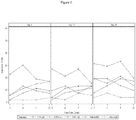
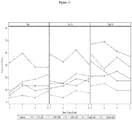
- CEA-Success and PSA-5 Success were also analyzed individually.
- the magnitudes of the CEA-Success ( Figure 2 ) and PSA-5 ( Figure 3 ) Success were greater in all treatment groups compared to Composite Success but the pattern of the relative effects was same as observed in Composite Success. Consistently, 0.5% QD showed the greatest effect for CEA Success and PSA-5 Success; 0.18% QD and BID showed numerically better effect compared to Vehicle QD and BID, respectively.
- AEs related adverse events
- the overall incidence of related adverse events (AEs) for the study was low.
- the number of related AEs was comparable between the treatment groups, and there was no significant difference in incidence of related adverse events between active and vehicle treatment arms.
- No severe related AEs were reported during the study.
- brimonidine Unlike ophthalmic applications of brimonidine, where the chronic use of lower concentration of brimonidine, e.g., 0.1% (w/w), provides improved tolerability while maintaining IOP-lowering efficacy, the present clinical studies unexpectedly discovered that higher concentrations of brimonidine provide significantly improved clinical efficacy in treating erythema, while not causing any observable change in patient safety and tolerability as compared to lower concentrations of brimonidine.
Landscapes
- Health & Medical Sciences (AREA)
- Chemical & Material Sciences (AREA)
- Animal Behavior & Ethology (AREA)
- General Health & Medical Sciences (AREA)
- Veterinary Medicine (AREA)
- Public Health (AREA)
- Medicinal Chemistry (AREA)
- Pharmacology & Pharmacy (AREA)
- Life Sciences & Earth Sciences (AREA)
- Epidemiology (AREA)
- Dermatology (AREA)
- Engineering & Computer Science (AREA)
- General Chemical & Material Sciences (AREA)
- Chemical Kinetics & Catalysis (AREA)
- Oil, Petroleum & Natural Gas (AREA)
- Bioinformatics & Cheminformatics (AREA)
- Nuclear Medicine, Radiotherapy & Molecular Imaging (AREA)
- Organic Chemistry (AREA)
- Pharmaceuticals Containing Other Organic And Inorganic Compounds (AREA)
- Medicinal Preparation (AREA)
Applications Claiming Priority (2)
| Application Number | Priority Date | Filing Date | Title |
|---|---|---|---|
| US28275410P | 2010-03-26 | 2010-03-26 | |
| PCT/EP2011/054596 WO2011117377A2 (en) | 2010-03-26 | 2011-03-25 | Improved methods and compositions for safe and effective treatment of erythema |
Publications (2)
| Publication Number | Publication Date |
|---|---|
| EP2552449A2 EP2552449A2 (en) | 2013-02-06 |
| EP2552449B1 true EP2552449B1 (en) | 2017-04-19 |
Family
ID=44012352
Family Applications (1)
| Application Number | Title | Priority Date | Filing Date |
|---|---|---|---|
| EP11710199.8A Active EP2552449B1 (en) | 2010-03-26 | 2011-03-25 | Compositions comprising brimonidine for the treatment of erythema |
Country Status (16)
| Country | Link |
|---|---|
| US (6) | US8513247B2 (pl) |
| EP (1) | EP2552449B1 (pl) |
| JP (1) | JP5747391B2 (pl) |
| KR (3) | KR20150055082A (pl) |
| CN (2) | CN103298472A (pl) |
| AU (1) | AU2011231543B2 (pl) |
| BR (1) | BR112012024289A2 (pl) |
| CA (1) | CA2792646C (pl) |
| DK (1) | DK2552449T3 (pl) |
| ES (1) | ES2627405T3 (pl) |
| HU (1) | HUE033143T2 (pl) |
| MX (1) | MX2012010824A (pl) |
| PL (1) | PL2552449T3 (pl) |
| PT (1) | PT2552449T (pl) |
| RU (1) | RU2519676C1 (pl) |
| WO (1) | WO2011117377A2 (pl) |
Families Citing this family (15)
| Publication number | Priority date | Publication date | Assignee | Title |
|---|---|---|---|---|
| US7439241B2 (en) * | 2003-05-27 | 2008-10-21 | Galderma Laboratories, Inc. | Compounds, formulations, and methods for treating or preventing rosacea |
| US8410102B2 (en) * | 2003-05-27 | 2013-04-02 | Galderma Laboratories Inc. | Methods and compositions for treating or preventing erythema |
| CA2779063A1 (en) * | 2009-10-26 | 2011-05-05 | Galderma Pharma S.A. | Methods of treating or preventing acute erythema |
| KR20150058551A (ko) | 2010-03-26 | 2015-05-28 | 갈데르마 리써어치 앤드 디벨로프먼트 | 모세혈관 확장증의 안전하고 유효한 치료를 위한 개선된 방법 및 조성물 |
| US8513247B2 (en) | 2010-03-26 | 2013-08-20 | Galderma Laboratories, L.P. | Methods and compositions for safe and effective treatment of erythema |
| CA2811061A1 (en) * | 2010-06-30 | 2012-01-05 | Galderma Research & Development | Method for preventing or treating skin tumor |
| PH12013500738A1 (en) | 2010-10-21 | 2016-08-05 | Galderma Sa | Brimonidine gel compositions and methods of use |
| WO2013010032A1 (en) * | 2011-07-14 | 2013-01-17 | Allergan, Inc. | Gel compositions of oxymetazoline and methods of use |
| MX2014004383A (es) | 2011-10-19 | 2014-11-12 | Galderma Sa | Metodo para reducir el enrojecimiento facial asociado con el uso sistemico de inhibidores de fosfodiesterasa tipo 5. |
| UA109359C2 (xx) * | 2011-11-10 | 2015-08-10 | Лікування захворювань і станів шкіри 7-(1h-імідазол-4-ілметил)-5,6,7,8-тетрагідрохіноліном | |
| US9283217B2 (en) | 2011-11-10 | 2016-03-15 | Allergan, Inc. | Pharmaceutical compositions comprising 7-(1 H-imidazol-4-ylmethyl)-5,6,7,8-tetrahydro-quinoline for treating skin diseases and conditions |
| CN112165934A (zh) | 2018-05-25 | 2021-01-01 | 克劳德布雷克医疗有限责任公司 | 治疗眼充血的组合物及用其治疗眼充血的方法 |
| WO2020044136A1 (en) * | 2018-08-29 | 2020-03-05 | Cellix Bio Private Limited | Ophthalmic compositions and methods for the treatment of eye disorders and skin diseases |
| WO2020222192A1 (en) | 2019-05-01 | 2020-11-05 | Clexio Biosciences Ltd. | Methods of treating pruritus |
| WO2020222188A1 (en) | 2019-05-01 | 2020-11-05 | Clexio Biosciences Ltd. | Methods of treating pruritus |
Family Cites Families (119)
| Publication number | Priority date | Publication date | Assignee | Title |
|---|---|---|---|---|
| US3278447A (en) | 1963-12-02 | 1966-10-11 | Cloro Bac Products Inc | Process for stabilizing chlorine dioxide solution |
| US3560501A (en) | 1966-09-15 | 1971-02-02 | Ciba Geigy Corp | Process for making dihydroquinazolines |
| BG16042A3 (bg) | 1968-11-12 | 1972-05-20 | Nans Ott | Метод за получаване на нови 2(1н)-хиназолинони |
| US3594380A (en) | 1969-02-18 | 1971-07-20 | American Home Prod | Isoquinolin-1(2h)-ones |
| BE766039A (fr) | 1971-04-21 | 1971-09-16 | Labofina Sa | Nouveaux polymeres contenant des unites de pyrazole et procede de preparation de ces polymeres. |
| US3740442A (en) | 1972-01-14 | 1973-06-19 | Sandoz Ag | 2-isopropylaminobenzophenones in treating inflammation |
| BE795970A (fr) | 1972-02-29 | 1973-08-27 | Pfizer | Nouveaux derives de quinoleine, quinoxaline et quinazoline er composition pharmaceutiques les contenant |
| US4029792A (en) | 1972-02-29 | 1977-06-14 | Pfizer Inc. | (2-Imidazolin-2-ylamino) substituted -quinoxalines and -quinazolines as antihypertensive agents |
| US4164570A (en) | 1973-09-24 | 1979-08-14 | David Clough | Stabilized aqueous catecholamine solutions |
| DE2436882A1 (de) | 1974-07-29 | 1976-02-19 | Schering Ag | Neue oxyphenylbutazon-derivate und ihre herstellung |
| DE2436883C2 (de) | 1974-07-29 | 1985-08-22 | Schering AG, 1000 Berlin und 4709 Bergkamen | Benzimidazol-Derivate, Verfahren zu ihrer Herstellung und diese enthaltende Arzneimittel |
| DE2632678C2 (de) | 1976-07-16 | 1986-02-27 | Schering AG, 1000 Berlin und 4709 Bergkamen | 6α-Fluor-12α-Halogen-Kortikoide und Verfahren zu ihrer Herstellung |
| NZ185295A (en) | 1976-10-04 | 1980-04-28 | Schering Ag | 9-chloroprednisolone derivatives and pharmaceutical compositions |
| US4201211A (en) | 1977-07-12 | 1980-05-06 | Alza Corporation | Therapeutic system for administering clonidine transdermally |
| US4285967A (en) | 1978-06-30 | 1981-08-25 | Estee Lauder Inc. | Cosmetic preparation for reducing redness of blemishes |
| US4256763A (en) | 1978-09-19 | 1981-03-17 | Mchugh John E | Treatment of herpes simplex infections and acne |
| US5166331A (en) | 1983-10-10 | 1992-11-24 | Fidia, S.P.A. | Hyaluronics acid fractions, methods for the preparation thereof, and pharmaceutical compositions containing same |
| US4908387A (en) | 1988-06-06 | 1990-03-13 | The Regents Of The University Of California | Use of beta2 antagonists in the treatment of inflammatory diseases, in particular, rheumatoid arthritis |
| IL92351A (en) | 1988-11-29 | 1994-02-27 | Allergan Inc Irvine | Aqueous opthalmic solutions containing stabilized chlorine dioxide and an inorganic salt |
| FR2648709A1 (fr) | 1989-06-23 | 1990-12-28 | Boehringer Ingelheim France | Nouvelle utilisation de derives de 1-phenyl-2-aminoethanol en tant que moyens cicatrisants |
| US5326763A (en) | 1989-10-12 | 1994-07-05 | Allergan, Inc. | Methods for using (2-imidazolin-2-ylamino) quinoxaline derivatives |
| US5198442A (en) | 1989-10-12 | 1993-03-30 | Allergan, Inc. | (2-imidazolin-2-ylamino) quinoxaline derivatives and methods for using same |
| US5112822A (en) | 1989-10-12 | 1992-05-12 | Allergan, Inc. | (2-imidazolin-2-ylamino) quinoxaline derivatives and methods for using same |
| US5077292A (en) | 1989-10-12 | 1991-12-31 | Allergan, Inc. | (2-imidazolin-2-ylamino) tetrahydroquinoxalines and methods for using same |
| US5204347A (en) | 1989-10-12 | 1993-04-20 | Allergan, Inc. | Methods for using (2-imidazolin-2-ylamino) tetrahydroquinoxalines |
| US5021416A (en) | 1989-10-31 | 1991-06-04 | Allergan, Inc. | Method for using (2-imidazolin-2-ylamino) quinoxalines to reduce or maintain intraocular pressure |
| US5130441A (en) | 1990-02-06 | 1992-07-14 | Allergan, Inc. | Method for producing amino-2-imidazoline derivatives |
| US5237072A (en) | 1990-02-06 | 1993-08-17 | Allergan, Inc. | Method for producing amino-2-imidazoline derivatives |
| GB9010526D0 (en) | 1990-05-10 | 1990-07-04 | Unilever Plc | Cosmetic composition |
| US5721237A (en) | 1991-05-10 | 1998-02-24 | Rhone-Poulenc Rorer Pharmaceuticals Inc. | Protein tyrosine kinase aryl and heteroaryl quinazoline compounds having selective inhibition of HER-2 autophosphorylation properties |
| US5736165A (en) | 1993-05-25 | 1998-04-07 | Allergan | In-the-eye use of chlorine dioxide-containing compositions |
| US6323204B1 (en) | 1993-10-13 | 2001-11-27 | Allergan | Methods for using (2-imidazolin-2-ylamino) quinoxaline derivatives |
| JP3683908B2 (ja) | 1993-10-13 | 2005-08-17 | アラーガン、インコーポレイテッド | (2−イミダゾリン−2−イルアミノ)キノキサリン誘導体の使用方法 |
| US6117871A (en) | 1993-12-17 | 2000-09-12 | The Procter & Gamble Company | 6-(2-imidazolinylamino)quinoxaline compounds useful as alpha-2 adrenoceptor agonists |
| US6294563B1 (en) | 1994-10-27 | 2001-09-25 | Allergan Sales, Inc. | Combinations of prostaglandins and brimonidine or derivatives thereof |
| WO1996013267A2 (en) | 1994-10-27 | 1996-05-09 | Allergan | Combinations of prostaglandins and brimonidine or derivatives thereof for the treatment of glaucoma |
| WO2000023066A2 (en) | 1998-10-20 | 2000-04-27 | Omeros Medical Systems, Inc. | Irrigation solution and method for inhibition of pain and inflammation |
| US5696130A (en) | 1994-12-22 | 1997-12-09 | Ligand Pharmaceuticals Incorporated | Tricyclic steroid receptor modulator compounds and methods |
| WO1996025163A1 (en) | 1995-02-14 | 1996-08-22 | Board Of Supervisors Or Louisiana State Universityof Agricultural And Mechanical College Through Itsmedical Center | Treatment of herpes simplex viruses |
| FR2732221B1 (fr) | 1995-03-28 | 1997-04-25 | Oreal | Utilisation d'un antagoniste de cgrp pour traiter les rougeurs cutanees d'origine neurogene et composition obtenue |
| US6194415B1 (en) | 1995-06-28 | 2001-02-27 | Allergan Sales, Inc. | Method of using (2-imidazolin-2-ylamino) quinoxoalines in treating neural injury |
| CA2154979A1 (en) | 1995-07-28 | 1997-01-29 | Kenneth T. Armstrong | Topical phenylephrine preparation |
| US5720962A (en) | 1995-10-04 | 1998-02-24 | Au Pharmaceuticals, Inc. | Analgesic lotion for hemorrhoids and method of making such lotion |
| US6441047B2 (en) | 1995-11-17 | 2002-08-27 | Alcon Manufacturing Ltd.. | Combination therapy for treating glaucoma |
| US5753637A (en) | 1996-10-09 | 1998-05-19 | Ideal Ideas, Inc. | Method of treating acne conditions |
| US5910312A (en) | 1996-10-09 | 1999-06-08 | Ideal Ideas, Inc. | Acne treatment composition with vasoconstrictor |
| US5916574A (en) | 1996-10-09 | 1999-06-29 | Ideal Ideas, Inc. | Method of treating natural poison skin conditions |
| US5888493A (en) | 1996-12-05 | 1999-03-30 | Sawaya; Assad S. | Ophthalmic aqueous gel formulation and related methods |
| WO1998036730A2 (de) | 1997-02-21 | 1998-08-27 | Beiersdorf Ag | Zubereitungen für die behandlung von rosacea |
| US6007846A (en) | 1997-05-16 | 1999-12-28 | Townley Jewelry, Inc. | Scented body gel having particulate matter in the form of glitter with predetermined shapes |
| FR2767691B1 (fr) | 1997-08-27 | 2000-02-18 | Oreal | Utilisation d'une dispersion a base de vehicules lipidiques comme composition anti-inflammatoire |
| US6159944A (en) | 1998-02-27 | 2000-12-12 | Synchroneuron, Llc | Method for treating painful conditions of the anal region and compositions therefor |
| ES2220257T1 (es) | 1998-03-11 | 2004-12-16 | Kabushiki Kaisha Soken | Agentes normalizadores para la piel. |
| US6432934B1 (en) | 1998-08-06 | 2002-08-13 | Advanced Vision Research | Methods and compositions for topical treatment of eye surface inflammation and related dry eye disease |
| US20030087962A1 (en) | 1998-10-20 | 2003-05-08 | Omeros Corporation | Arthroscopic irrigation solution and method for peripheral vasoconstriction and inhibition of pain and inflammation |
| US20020197300A1 (en) | 1999-02-22 | 2002-12-26 | Schultz Clyde L. | Drug delivery system for anti-glaucomatous medication |
| SE9901295D0 (sv) | 1999-04-13 | 1999-04-13 | Jan Hedner | Sätt och medel för att förebygga, behandla och diagnostisera kardiovaskulära komplikationer hos patienter med obstruktiv sömnapné |
| AU5331200A (en) | 1999-06-11 | 2001-01-02 | Ohio State University Research Foundation, The | Methods and compositions for treating raynaud's phenomenon and scleroderma |
| ES2199094T1 (es) | 1999-08-19 | 2004-02-16 | Lavipharm Sa | Polimeros formadores de pelicula, procedimientos de uso y aplicaciones de los mismos. |
| US6147102A (en) | 1999-10-26 | 2000-11-14 | Curatek Pharmaceuticals Holding, Inc. | Clonidine preparations |
| US20030077301A1 (en) | 1999-12-16 | 2003-04-24 | Maibach Howard I. | Topical pharmaceutical composition for the treatment of inflammatory dermatoses |
| US6294553B1 (en) | 2000-02-15 | 2001-09-25 | Allergan Sales, Inc. | Method for treating ocular pain |
| US6284765B1 (en) | 2000-04-27 | 2001-09-04 | The University Of North Texas Health Science Center At Fort Worth | (+) naloxone and epinephrine combination therapy |
| US6444681B1 (en) | 2000-06-09 | 2002-09-03 | The Ohio State University Research Foundation | Methods and compositions for treating Raynaud's Phenomenon and scleroderma |
| US6468989B1 (en) | 2000-07-13 | 2002-10-22 | Dow Pharmaceutical Sciences | Gel compositions containing metronidazole |
| JP4927298B2 (ja) | 2000-07-14 | 2012-05-09 | アラーガン、インコーポレイテッド | α−2−アドレナリンアゴニスト成分を含有する組成物 |
| US6387383B1 (en) | 2000-08-03 | 2002-05-14 | Dow Pharmaceutical Sciences | Topical low-viscosity gel composition |
| US7211267B2 (en) | 2001-04-05 | 2007-05-01 | Collagenex Pharmaceuticals, Inc. | Methods of treating acne |
| US20020198209A1 (en) | 2001-05-03 | 2002-12-26 | Allergan Sales Inc. | Compositions having enhanced pharmacokinetic characteristics |
| TNSN02063A1 (en) | 2001-07-07 | 2005-12-23 | Egyptian Natural Oil Co Natoil | The medical effect of jojoba oil |
| US7115724B2 (en) | 2001-08-22 | 2006-10-03 | Wyeth | Murine genomic polynucleotide sequence encoding a G-protein coupled receptor and methods of use therefor |
| US6680062B2 (en) | 2001-10-05 | 2004-01-20 | Color Access, Inc. | Anti-irritating rosacea treatment |
| US7001615B1 (en) | 2001-12-07 | 2006-02-21 | Alcon, Inc. | Sustained release ophthalmic, otic and nasal suspension |
| US7345065B2 (en) | 2002-05-21 | 2008-03-18 | Allergan, Inc. | Methods and compositions for alleviating pain |
| US20040266776A1 (en) | 2003-06-25 | 2004-12-30 | Gil Daniel W. | Methods of preventing and reducing the severity of stress-associated conditions |
| US20040092482A1 (en) | 2002-11-07 | 2004-05-13 | Gupta Shyam K. | Hydroxy acids based delivery systems for skin resurfacing and anti-aging compositions |
| US20040156873A1 (en) | 2003-02-10 | 2004-08-12 | Gupta Shyam K. | Topically Bioavailable Acne and Rosacea Treatment Compositions |
| US20040220259A1 (en) | 2003-04-04 | 2004-11-04 | Yu Ruey J. | Topical treatment of dermatological disorders associated with reactive or dilated blood vessels |
| AU2004241107A1 (en) | 2003-05-15 | 2004-12-02 | Cutanix Corporation | Compositions containing a combination of a pharmaceutical agent or a cosmetic agent and an oxy group-bearing aromatic aldehyde |
| US7439241B2 (en) | 2003-05-27 | 2008-10-21 | Galderma Laboratories, Inc. | Compounds, formulations, and methods for treating or preventing rosacea |
| US8410102B2 (en) * | 2003-05-27 | 2013-04-02 | Galderma Laboratories Inc. | Methods and compositions for treating or preventing erythema |
| US20050059664A1 (en) | 2003-09-12 | 2005-03-17 | Allergan, Inc. | Novel methods for identifying improved, non-sedating alpha-2 agonists |
| US20050020600A1 (en) | 2003-07-23 | 2005-01-27 | Scherer Warren J. | Methods of treating cutaneous flushing using selective alpha-2-adrenergic receptor agonists |
| US20050059744A1 (en) | 2003-09-12 | 2005-03-17 | Allergan, Inc. | Methods and compositions for the treatment of pain and other alpha 2 adrenergic-mediated conditions |
| US7285544B2 (en) | 2003-11-18 | 2007-10-23 | Bernstein Eric F | Use of nitroxides in treating skin disease |
| US7812049B2 (en) | 2004-01-22 | 2010-10-12 | Vicept Therapeutics, Inc. | Method and therapeutic/cosmetic topical compositions for the treatment of rosacea and skin erythema using α1-adrenoceptor agonists |
| US20050196418A1 (en) | 2004-03-04 | 2005-09-08 | Yu Ruey J. | Bioavailability and improved delivery of alkaline pharmaceutical drugs |
| US8529927B2 (en) | 2004-04-30 | 2013-09-10 | Allergan, Inc. | Alpha-2 agonist polymeric drug delivery systems |
| CN101426502A (zh) * | 2004-05-25 | 2009-05-06 | 桑斯罗萨医药发展公司 | 治疗或预防炎症性皮肤疾病的化合物、制剂及方法 |
| US20070003622A1 (en) | 2004-12-16 | 2007-01-04 | Sovereign Pharmaceuticals, Ltd. | Diphenhydramine containing dosage form |
| US7288263B2 (en) | 2004-09-13 | 2007-10-30 | Evera Laboratories, Llc | Compositions and methods for treatment of skin discoloration |
| US8158161B2 (en) | 2005-01-12 | 2012-04-17 | S.U.L.V.E. Ltd. | Methods and pharmaceutical compositions useful for treating psoriasis |
| AU2006210641A1 (en) | 2005-02-01 | 2006-08-10 | Icagen, Inc. | Imines as ion channel modulators |
| US20070082070A1 (en) | 2005-10-11 | 2007-04-12 | Stookey Evangeline L | Treating skin disorders |
| JP2009528382A (ja) | 2006-03-01 | 2009-08-06 | トリストラータ・インコーポレイテッド | タール応答性皮膚疾患の局所治療のための組成物及び方法 |
| US20070258935A1 (en) | 2006-05-08 | 2007-11-08 | Mcentire Edward Enns | Water dispersible films for delivery of active agents to the epidermis |
| EP2129364B1 (en) | 2006-12-21 | 2020-04-15 | Santen SAS | Process for manufacturing ophthalmic oil-in-water emulsions |
| DE102006062619B4 (de) | 2006-12-29 | 2012-04-26 | Medion Diagnostics Ag | Verfahren zur Bestimmung von minoren Zellpopulationen in heterogenen Zellpopulationen |
| WO2008144399A1 (en) | 2007-05-18 | 2008-11-27 | Bausch & Lomb Incorporated | COMPLEXES COMPRISING α2-ADRENERGIC RECEPTOR AGONISTS AND COMPOSITIONS |
| HRP20140397T1 (hr) | 2007-07-27 | 2014-06-20 | Galderma Laboratories Inc. | Spojevi, formulacije i metode za smanjivanje boranja, mreškanja i opuštanja kože |
| US20090061020A1 (en) * | 2007-08-31 | 2009-03-05 | Theobald Klaus P | Brimonidine Compositions for Treating Erythema |
| EP3498299A1 (en) | 2007-11-16 | 2019-06-19 | Aclaris Therapeutics, Inc. | Compositions and methods for treating purpura |
| WO2009082452A1 (en) * | 2007-12-21 | 2009-07-02 | Dejovin Jack A | Pre-surgical treatment |
| EP2090307A1 (en) | 2008-02-15 | 2009-08-19 | Bone Therapeutics | Pharmaceutical composition for the treatment or prevention of osteoarticular diseases |
| EP2288355A1 (en) * | 2008-05-30 | 2011-03-02 | Fairfield Clinical Trials LLC | Method and composition for skin inflammation and discoloration |
| WO2009158646A1 (en) | 2008-06-27 | 2009-12-30 | Elixir Pharmaceuticals, Inc. | Therapeutic compunds and related methods of use |
| ES2518418T3 (es) | 2008-08-01 | 2014-11-05 | Eye Therapies Llc | Composiciones de vasoconstricción y métodos de uso |
| US8268345B2 (en) | 2008-09-03 | 2012-09-18 | Transdermal Innovations Inc. | Multipurpose hydrogel compositions and products |
| US20100196291A1 (en) | 2009-01-30 | 2010-08-05 | Laurence Halimi | Personal care sunscreen compositions having reduced eye irritation |
| JP5052558B2 (ja) * | 2009-04-03 | 2012-10-17 | ロート製薬株式会社 | ゲル軟膏 |
| US9050246B2 (en) * | 2009-05-29 | 2015-06-09 | Galderma Research & Development | Injectable combination of adrenergic receptor agonists with fillers, for decreasing skin reactions due to injection |
| CA2779063A1 (en) * | 2009-10-26 | 2011-05-05 | Galderma Pharma S.A. | Methods of treating or preventing acute erythema |
| EP2493474B1 (en) | 2009-10-30 | 2019-09-04 | Intratus, Inc. | Methods and compositions for sustained delivery of drugs |
| US8394800B2 (en) | 2009-11-19 | 2013-03-12 | Galderma Laboratories, L.P. | Method for treating psoriasis |
| KR20150058551A (ko) | 2010-03-26 | 2015-05-28 | 갈데르마 리써어치 앤드 디벨로프먼트 | 모세혈관 확장증의 안전하고 유효한 치료를 위한 개선된 방법 및 조성물 |
| US8513247B2 (en) | 2010-03-26 | 2013-08-20 | Galderma Laboratories, L.P. | Methods and compositions for safe and effective treatment of erythema |
| CA2811061A1 (en) | 2010-06-30 | 2012-01-05 | Galderma Research & Development | Method for preventing or treating skin tumor |
| US20120101104A1 (en) | 2010-10-21 | 2012-04-26 | Galderma S.A. | Topical gel compositions and methods of use |
| US8053427B1 (en) | 2010-10-21 | 2011-11-08 | Galderma R&D SNC | Brimonidine gel composition |
-
2011
- 2011-03-25 US US13/072,096 patent/US8513247B2/en active Active
- 2011-03-25 RU RU2012145616/15A patent/RU2519676C1/ru active
- 2011-03-25 CN CN201180025974XA patent/CN103298472A/zh active Pending
- 2011-03-25 AU AU2011231543A patent/AU2011231543B2/en active Active
- 2011-03-25 WO PCT/EP2011/054596 patent/WO2011117377A2/en not_active Ceased
- 2011-03-25 US US13/637,040 patent/US20130071489A1/en not_active Abandoned
- 2011-03-25 PT PT117101998T patent/PT2552449T/pt unknown
- 2011-03-25 KR KR1020157010973A patent/KR20150055082A/ko not_active Ceased
- 2011-03-25 JP JP2013500520A patent/JP5747391B2/ja active Active
- 2011-03-25 DK DK11710199.8T patent/DK2552449T3/en active
- 2011-03-25 KR KR1020127027976A patent/KR101707704B1/ko active Active
- 2011-03-25 ES ES11710199.8T patent/ES2627405T3/es active Active
- 2011-03-25 BR BR112012024289A patent/BR112012024289A2/pt not_active Application Discontinuation
- 2011-03-25 MX MX2012010824A patent/MX2012010824A/es unknown
- 2011-03-25 PL PL11710199T patent/PL2552449T3/pl unknown
- 2011-03-25 HU HUE11710199A patent/HUE033143T2/en unknown
- 2011-03-25 EP EP11710199.8A patent/EP2552449B1/en active Active
- 2011-03-25 CN CN201610591527.5A patent/CN106038476B/zh active Active
- 2011-03-25 CA CA2792646A patent/CA2792646C/en not_active Expired - Fee Related
- 2011-03-25 KR KR1020177003732A patent/KR20170018974A/ko not_active Ceased
-
2012
- 2012-04-26 US US13/456,976 patent/US8513249B2/en active Active
-
2013
- 2013-12-05 US US14/097,912 patent/US20140094469A1/en not_active Abandoned
-
2015
- 2015-04-06 US US14/679,598 patent/US9861631B2/en active Active
- 2015-12-14 US US14/968,104 patent/US9861632B2/en active Active
Non-Patent Citations (1)
| Title |
|---|
| None * |
Also Published As
Similar Documents
| Publication | Publication Date | Title |
|---|---|---|
| US9861632B2 (en) | Methods and compositions for safe and effective treatment of erythema | |
| US8410102B2 (en) | Methods and compositions for treating or preventing erythema | |
| EP2552448B1 (en) | Improved compositions comprising brimonidine for safe and effective treatment of telangiectasia | |
| HK1180208A (en) | Compositions comprising brimonidine for the treatment of erythema | |
| HK1180208B (en) | Compositions comprising brimonidine for the treatment of erythema | |
| AU2016269419A1 (en) | Improved methods and compositions for safe and effective treatment of erythema | |
| AU2015201750A1 (en) | Improved methods and compositions for safe and effective treatment of erythema |
Legal Events
| Date | Code | Title | Description |
|---|---|---|---|
| PUAI | Public reference made under article 153(3) epc to a published international application that has entered the european phase |
Free format text: ORIGINAL CODE: 0009012 |
|
| AK | Designated contracting states |
Kind code of ref document: A2 Designated state(s): AL AT BE BG CH CY CZ DE DK EE ES FI FR GB GR HR HU IE IS IT LI LT LU LV MC MK MT NL NO PL PT RO RS SE SI SK SM TR |
|
| AX | Request for extension of the european patent |
Extension state: BA ME |
|
| R17D | Deferred search report published (corrected) |
Effective date: 20130110 |
|
| RAX | Requested extension states of the european patent have changed |
Extension state: BA Payment date: 20130206 Extension state: ME Payment date: 20130206 |
|
| RBV | Designated contracting states (corrected) |
Designated state(s): AL AT BE BG CH CY CZ DE DK EE ES FI FR GB GR HR HU IE IS IT LI LT LU LV MC MK MT NL NO PL PT RO RS SE SI SK SM TR |
|
| 17P | Request for examination filed |
Effective date: 20130206 |
|
| REG | Reference to a national code |
Ref country code: HK Ref legal event code: DE Ref document number: 1180208 Country of ref document: HK |
|
| 17Q | First examination report despatched |
Effective date: 20150820 |
|
| GRAP | Despatch of communication of intention to grant a patent |
Free format text: ORIGINAL CODE: EPIDOSNIGR1 |
|
| GRAJ | Information related to disapproval of communication of intention to grant by the applicant or resumption of examination proceedings by the epo deleted |
Free format text: ORIGINAL CODE: EPIDOSDIGR1 |
|
| GRAP | Despatch of communication of intention to grant a patent |
Free format text: ORIGINAL CODE: EPIDOSNIGR1 |
|
| INTG | Intention to grant announced |
Effective date: 20160926 |
|
| INTG | Intention to grant announced |
Effective date: 20161010 |
|
| GRAS | Grant fee paid |
Free format text: ORIGINAL CODE: EPIDOSNIGR3 |
|
| GRAA | (expected) grant |
Free format text: ORIGINAL CODE: 0009210 |
|
| AK | Designated contracting states |
Kind code of ref document: B1 Designated state(s): AL AT BE BG CH CY CZ DE DK EE ES FI FR GB GR HR HU IE IS IT LI LT LU LV MC MK MT NL NO PL PT RO RS SE SI SK SM TR |
|
| AX | Request for extension of the european patent |
Extension state: BA ME |
|
| REG | Reference to a national code |
Ref country code: GB Ref legal event code: FG4D |
|
| REG | Reference to a national code |
Ref country code: CH Ref legal event code: EP |
|
| REG | Reference to a national code |
Ref country code: AT Ref legal event code: REF Ref document number: 885284 Country of ref document: AT Kind code of ref document: T Effective date: 20170515 |
|
| REG | Reference to a national code |
Ref country code: IE Ref legal event code: FG4D |
|
| REG | Reference to a national code |
Ref country code: RO Ref legal event code: EPE |
|
| REG | Reference to a national code |
Ref country code: DE Ref legal event code: R096 Ref document number: 602011037096 Country of ref document: DE |
|
| REG | Reference to a national code |
Ref country code: PT Ref legal event code: SC4A Ref document number: 2552449 Country of ref document: PT Date of ref document: 20170612 Kind code of ref document: T Free format text: AVAILABILITY OF NATIONAL TRANSLATION Effective date: 20170531 |
|
| REG | Reference to a national code |
Ref country code: DK Ref legal event code: T3 Effective date: 20170615 |
|
| REG | Reference to a national code |
Ref country code: SE Ref legal event code: TRGR |
|
| REG | Reference to a national code |
Ref country code: NO Ref legal event code: T2 Effective date: 20170419 |
|
| REG | Reference to a national code |
Ref country code: ES Ref legal event code: FG2A Ref document number: 2627405 Country of ref document: ES Kind code of ref document: T3 Effective date: 20170728 |
|
| REG | Reference to a national code |
Ref country code: NL Ref legal event code: FP |
|
| REG | Reference to a national code |
Ref country code: LT Ref legal event code: MG4D |
|
| REG | Reference to a national code |
Ref country code: SK Ref legal event code: T3 Ref document number: E 24068 Country of ref document: SK |
|
| PG25 | Lapsed in a contracting state [announced via postgrant information from national office to epo] |
Ref country code: HR Free format text: LAPSE BECAUSE OF FAILURE TO SUBMIT A TRANSLATION OF THE DESCRIPTION OR TO PAY THE FEE WITHIN THE PRESCRIBED TIME-LIMIT Effective date: 20170419 Ref country code: LT Free format text: LAPSE BECAUSE OF FAILURE TO SUBMIT A TRANSLATION OF THE DESCRIPTION OR TO PAY THE FEE WITHIN THE PRESCRIBED TIME-LIMIT Effective date: 20170419 |
|
| REG | Reference to a national code |
Ref country code: GR Ref legal event code: EP Ref document number: 20170401521 Country of ref document: GR Effective date: 20171023 |
|
| REG | Reference to a national code |
Ref country code: HU Ref legal event code: AG4A Ref document number: E033143 Country of ref document: HU |
|
| PG25 | Lapsed in a contracting state [announced via postgrant information from national office to epo] |
Ref country code: IS Free format text: LAPSE BECAUSE OF FAILURE TO SUBMIT A TRANSLATION OF THE DESCRIPTION OR TO PAY THE FEE WITHIN THE PRESCRIBED TIME-LIMIT Effective date: 20170819 Ref country code: RS Free format text: LAPSE BECAUSE OF FAILURE TO SUBMIT A TRANSLATION OF THE DESCRIPTION OR TO PAY THE FEE WITHIN THE PRESCRIBED TIME-LIMIT Effective date: 20170419 Ref country code: BG Free format text: LAPSE BECAUSE OF FAILURE TO SUBMIT A TRANSLATION OF THE DESCRIPTION OR TO PAY THE FEE WITHIN THE PRESCRIBED TIME-LIMIT Effective date: 20170719 Ref country code: LV Free format text: LAPSE BECAUSE OF FAILURE TO SUBMIT A TRANSLATION OF THE DESCRIPTION OR TO PAY THE FEE WITHIN THE PRESCRIBED TIME-LIMIT Effective date: 20170419 |
|
| REG | Reference to a national code |
Ref country code: DE Ref legal event code: R097 Ref document number: 602011037096 Country of ref document: DE |
|
| PG25 | Lapsed in a contracting state [announced via postgrant information from national office to epo] |
Ref country code: EE Free format text: LAPSE BECAUSE OF FAILURE TO SUBMIT A TRANSLATION OF THE DESCRIPTION OR TO PAY THE FEE WITHIN THE PRESCRIBED TIME-LIMIT Effective date: 20170419 |
|
| PLBE | No opposition filed within time limit |
Free format text: ORIGINAL CODE: 0009261 |
|
| REG | Reference to a national code |
Ref country code: FR Ref legal event code: PLFP Year of fee payment: 8 |
|
| STAA | Information on the status of an ep patent application or granted ep patent |
Free format text: STATUS: NO OPPOSITION FILED WITHIN TIME LIMIT |
|
| PG25 | Lapsed in a contracting state [announced via postgrant information from national office to epo] |
Ref country code: SM Free format text: LAPSE BECAUSE OF FAILURE TO SUBMIT A TRANSLATION OF THE DESCRIPTION OR TO PAY THE FEE WITHIN THE PRESCRIBED TIME-LIMIT Effective date: 20170419 |
|
| 26N | No opposition filed |
Effective date: 20180122 |
|
| REG | Reference to a national code |
Ref country code: HK Ref legal event code: GR Ref document number: 1180208 Country of ref document: HK |
|
| PG25 | Lapsed in a contracting state [announced via postgrant information from national office to epo] |
Ref country code: SI Free format text: LAPSE BECAUSE OF FAILURE TO SUBMIT A TRANSLATION OF THE DESCRIPTION OR TO PAY THE FEE WITHIN THE PRESCRIBED TIME-LIMIT Effective date: 20170419 |
|
| PG25 | Lapsed in a contracting state [announced via postgrant information from national office to epo] |
Ref country code: MC Free format text: LAPSE BECAUSE OF FAILURE TO SUBMIT A TRANSLATION OF THE DESCRIPTION OR TO PAY THE FEE WITHIN THE PRESCRIBED TIME-LIMIT Effective date: 20170419 |
|
| PG25 | Lapsed in a contracting state [announced via postgrant information from national office to epo] |
Ref country code: LU Free format text: LAPSE BECAUSE OF NON-PAYMENT OF DUE FEES Effective date: 20180325 |
|
| REG | Reference to a national code |
Ref country code: AT Ref legal event code: UEP Ref document number: 885284 Country of ref document: AT Kind code of ref document: T Effective date: 20170419 |
|
| PG25 | Lapsed in a contracting state [announced via postgrant information from national office to epo] |
Ref country code: MT Free format text: LAPSE BECAUSE OF NON-PAYMENT OF DUE FEES Effective date: 20180325 |
|
| PG25 | Lapsed in a contracting state [announced via postgrant information from national office to epo] |
Ref country code: MK Free format text: LAPSE BECAUSE OF NON-PAYMENT OF DUE FEES Effective date: 20170419 Ref country code: CY Free format text: LAPSE BECAUSE OF FAILURE TO SUBMIT A TRANSLATION OF THE DESCRIPTION OR TO PAY THE FEE WITHIN THE PRESCRIBED TIME-LIMIT Effective date: 20170419 |
|
| PG25 | Lapsed in a contracting state [announced via postgrant information from national office to epo] |
Ref country code: AL Free format text: LAPSE BECAUSE OF FAILURE TO SUBMIT A TRANSLATION OF THE DESCRIPTION OR TO PAY THE FEE WITHIN THE PRESCRIBED TIME-LIMIT Effective date: 20170419 |
|
| P01 | Opt-out of the competence of the unified patent court (upc) registered |
Effective date: 20230526 |
|
| PGFP | Annual fee paid to national office [announced via postgrant information from national office to epo] |
Ref country code: ES Payment date: 20250428 Year of fee payment: 15 |
|
| PGFP | Annual fee paid to national office [announced via postgrant information from national office to epo] |
Ref country code: CH Payment date: 20250401 Year of fee payment: 15 |
|
| REG | Reference to a national code |
Ref country code: CH Ref legal event code: U11 Free format text: ST27 STATUS EVENT CODE: U-0-0-U10-U11 (AS PROVIDED BY THE NATIONAL OFFICE) Effective date: 20260401 |
|
| PGFP | Annual fee paid to national office [announced via postgrant information from national office to epo] |
Ref country code: SE Payment date: 20260319 Year of fee payment: 16 |
|
| PGFP | Annual fee paid to national office [announced via postgrant information from national office to epo] |
Ref country code: GB Payment date: 20260324 Year of fee payment: 16 |
|
| PGFP | Annual fee paid to national office [announced via postgrant information from national office to epo] |
Ref country code: NO Payment date: 20260323 Year of fee payment: 16 Ref country code: DE Payment date: 20260319 Year of fee payment: 16 Ref country code: DK Payment date: 20260324 Year of fee payment: 16 Ref country code: IE Payment date: 20260319 Year of fee payment: 16 |
|
| PGFP | Annual fee paid to national office [announced via postgrant information from national office to epo] |
Ref country code: AT Payment date: 20260320 Year of fee payment: 16 |
|
| PGFP | Annual fee paid to national office [announced via postgrant information from national office to epo] |
Ref country code: RO Payment date: 20260316 Year of fee payment: 16 Ref country code: BE Payment date: 20260319 Year of fee payment: 16 Ref country code: FI Payment date: 20260323 Year of fee payment: 16 Ref country code: IT Payment date: 20260320 Year of fee payment: 16 |
|
| PGFP | Annual fee paid to national office [announced via postgrant information from national office to epo] |
Ref country code: HU Payment date: 20260323 Year of fee payment: 16 Ref country code: NL Payment date: 20260319 Year of fee payment: 16 |
|
| PGFP | Annual fee paid to national office [announced via postgrant information from national office to epo] |
Ref country code: FR Payment date: 20260320 Year of fee payment: 16 |
|
| PGFP | Annual fee paid to national office [announced via postgrant information from national office to epo] |
Ref country code: TR Payment date: 20260323 Year of fee payment: 16 |
|
| PGFP | Annual fee paid to national office [announced via postgrant information from national office to epo] |
Ref country code: PT Payment date: 20260312 Year of fee payment: 16 Ref country code: CZ Payment date: 20260320 Year of fee payment: 16 |
|
| PGFP | Annual fee paid to national office [announced via postgrant information from national office to epo] |
Ref country code: GR Payment date: 20260320 Year of fee payment: 16 Ref country code: PL Payment date: 20260218 Year of fee payment: 16 |
|
| PGFP | Annual fee paid to national office [announced via postgrant information from national office to epo] |
Ref country code: SK Payment date: 20260317 Year of fee payment: 16 |