EP2548983A1 - Aluminium alloy and high-strength bolt made from aluminium alloy - Google Patents
Aluminium alloy and high-strength bolt made from aluminium alloy Download PDFInfo
- Publication number
- EP2548983A1 EP2548983A1 EP20100847997 EP10847997A EP2548983A1 EP 2548983 A1 EP2548983 A1 EP 2548983A1 EP 20100847997 EP20100847997 EP 20100847997 EP 10847997 A EP10847997 A EP 10847997A EP 2548983 A1 EP2548983 A1 EP 2548983A1
- Authority
- EP
- European Patent Office
- Prior art keywords
- aluminum alloy
- alloy
- treatment
- bolts
- resistance
- Prior art date
- Legal status (The legal status is an assumption and is not a legal conclusion. Google has not performed a legal analysis and makes no representation as to the accuracy of the status listed.)
- Granted
Links
Images

Classifications
-
- C—CHEMISTRY; METALLURGY
- C22—METALLURGY; FERROUS OR NON-FERROUS ALLOYS; TREATMENT OF ALLOYS OR NON-FERROUS METALS
- C22C—ALLOYS
- C22C21/00—Alloys based on aluminium
- C22C21/02—Alloys based on aluminium with silicon as the next major constituent
-
- C—CHEMISTRY; METALLURGY
- C22—METALLURGY; FERROUS OR NON-FERROUS ALLOYS; TREATMENT OF ALLOYS OR NON-FERROUS METALS
- C22C—ALLOYS
- C22C21/00—Alloys based on aluminium
- C22C21/06—Alloys based on aluminium with magnesium as the next major constituent
-
- C—CHEMISTRY; METALLURGY
- C22—METALLURGY; FERROUS OR NON-FERROUS ALLOYS; TREATMENT OF ALLOYS OR NON-FERROUS METALS
- C22C—ALLOYS
- C22C21/00—Alloys based on aluminium
- C22C21/06—Alloys based on aluminium with magnesium as the next major constituent
- C22C21/08—Alloys based on aluminium with magnesium as the next major constituent with silicon
-
- C—CHEMISTRY; METALLURGY
- C22—METALLURGY; FERROUS OR NON-FERROUS ALLOYS; TREATMENT OF ALLOYS OR NON-FERROUS METALS
- C22F—CHANGING THE PHYSICAL STRUCTURE OF NON-FERROUS METALS AND NON-FERROUS ALLOYS
- C22F1/00—Changing the physical structure of non-ferrous metals or alloys by heat treatment or by hot or cold working
- C22F1/04—Changing the physical structure of non-ferrous metals or alloys by heat treatment or by hot or cold working of aluminium or alloys based thereon
- C22F1/043—Changing the physical structure of non-ferrous metals or alloys by heat treatment or by hot or cold working of aluminium or alloys based thereon of alloys with silicon as the next major constituent
-
- C—CHEMISTRY; METALLURGY
- C22—METALLURGY; FERROUS OR NON-FERROUS ALLOYS; TREATMENT OF ALLOYS OR NON-FERROUS METALS
- C22F—CHANGING THE PHYSICAL STRUCTURE OF NON-FERROUS METALS AND NON-FERROUS ALLOYS
- C22F1/00—Changing the physical structure of non-ferrous metals or alloys by heat treatment or by hot or cold working
- C22F1/04—Changing the physical structure of non-ferrous metals or alloys by heat treatment or by hot or cold working of aluminium or alloys based thereon
- C22F1/047—Changing the physical structure of non-ferrous metals or alloys by heat treatment or by hot or cold working of aluminium or alloys based thereon of alloys with magnesium as the next major constituent
-
- C—CHEMISTRY; METALLURGY
- C22—METALLURGY; FERROUS OR NON-FERROUS ALLOYS; TREATMENT OF ALLOYS OR NON-FERROUS METALS
- C22F—CHANGING THE PHYSICAL STRUCTURE OF NON-FERROUS METALS AND NON-FERROUS ALLOYS
- C22F1/00—Changing the physical structure of non-ferrous metals or alloys by heat treatment or by hot or cold working
- C22F1/04—Changing the physical structure of non-ferrous metals or alloys by heat treatment or by hot or cold working of aluminium or alloys based thereon
- C22F1/05—Changing the physical structure of non-ferrous metals or alloys by heat treatment or by hot or cold working of aluminium or alloys based thereon of alloys of the Al-Si-Mg type, i.e. containing silicon and magnesium in approximately equal proportions
-
- F—MECHANICAL ENGINEERING; LIGHTING; HEATING; WEAPONS; BLASTING
- F16—ENGINEERING ELEMENTS AND UNITS; GENERAL MEASURES FOR PRODUCING AND MAINTAINING EFFECTIVE FUNCTIONING OF MACHINES OR INSTALLATIONS; THERMAL INSULATION IN GENERAL
- F16B—DEVICES FOR FASTENING OR SECURING CONSTRUCTIONAL ELEMENTS OR MACHINE PARTS TOGETHER, e.g. NAILS, BOLTS, CIRCLIPS, CLAMPS, CLIPS OR WEDGES; JOINTS OR JOINTING
- F16B35/00—Screw-bolts; Stay-bolts; Screw-threaded studs; Screws; Set screws
Definitions
- the present invention relates to an aluminum alloy used as a material for high strength parts.
- the present invention also pertains to various members or parts made of such an alloy as, for example, forged parts, fastening parts, in particular to aluminum alloy based high strength bolts of high strength above 450Mpa.
- a high strength aluminum alloy screw which is made of forged material of 6000 series aluminum alloy (Al-Mg-Si base), (see e.g., Patent Document 1).
- Patent Document 1 Japanese Patent No. 3939414
- the present invention has been made by focusing on the above problems in a conventional aluminum alloy material represented by fasteners such as bolts, the objective thereof resides in to provide an aluminum alloy for obtaining properties as sufficient heat resistance, tensile strength, and stress corrosion cracking resistance sufficient for use as automotive parts.
- various members of this type consisting of aluminum alloy, for example, forged parts made by forging the above alloy or a high strength aluminum alloy bolts.
- the present inventor in an aim to achieve the above objective, conducted extensive studies regarding alloy compositions and method of heat treatments.
- the present invention is accomplished by confirming the objective being met by specifying the scope of the contents of alloying elements such as Si, Fe, Mn, Zr, and V in specific ranges, respectively.
- the present invention has been made based on the above findings.
- the aluminum alloy according to the present invention is characterized in a composition, by mass, 1.0 to 1.7% Si, 0.05 to 0.5% Fe, 0.8 to 1.5% Cu, 0.6 to 1.2% Mn, 0.9 to 1.5% Mg, 0.05 to 0.5% Zn, 0.05 to 0.3% Zr, and 0.01 to 0.2% V, respectively, and more than 0 and less than 0.05% Ti, if necessary, and more than 0 and 0.7% Ni, for further necessity, and the remainder or balance Al and inevitable impurities.
- forged parts and high strength bolts made of aluminum alloy according to the present inventions are characterized by being composed of the above aluminum alloy according to the present invention, and further characterized in that the above mentioned bolt has a tensile strength more than 450MPa .
- the component elements of aluminum alloy in particular, Si, Fe, Mn, Zr, and V are respectively added within respective, particular ranges and by applying an appropriate heat treatment, the aluminum alloy forged parts and high strength bolts may be obtained with excellent properties such as in heat resistance, tensile strength and stress corrosion cracking resistance.
- Si silicon is one of major elements of the alloy in the present invention, along with Cu and Mg, which contributes to the improvement in strength at room temperature.
- Mg2Si precipitates by artificial aging and alloy strength will be improved, when its content exceeds 1.7%, the stress corrosion cracking resistance and corrosion resistance may exacerbate. In contrast, at less than 1.0% of Si content, such features can not be demonstrated and lack of strength of aluminum alloy occurs.
- Fe is a component that forms a compound with Mn, Al, and Ni etc. to improve heat resistance and machinability. At less than 0.05% content of Fe, no improvement is effected, and poor heat resistance will be exhibited. Meanwhile, if excessively added more than 0.5%, corrosion resistance may be deteriorated. In addition, coarse inclusions may be produced which has a negative impact on the tensile properties and machinability of aluminum alloy involved.
- Cu copper
- Si and Mg contributes to the improvement in a room temperature strength.
- no effect of the addition is available and insufficient strength of the aluminum alloy be appreciated.
- the alloy would be more likely to burning during solution treatment and the corrosion resistance of alloys will be deteriorated with a poor forgibility.
- Mn manganese
- Mn is an element that contributes to solid solution strengthening.
- Mn forms a compound with other elements such as Fe (to form for example Al-Fe-Mn-Si type), with an improved heat resistance and machinability.
- Mn has the effect of improving the seizure resistance with dies during forging.
- the added amount of Mn is less than 0.6%, such an effect is not exerted, and not only not the desired strength is available, but seizure with dies is likely to occur during forging.
- the added amount exceeds 1.2%, coarse inclusions (such as MnAl 6 ) would be generated, and tensile properties (elongation property, in particular) and workability /machinabilty are adversely affected.
- Mg manganesium
- Si and Cu are an elements that, in combination with Si and Cu, contributs to improve a room temperature strength.
- the effect of the addition can not be obtained with insufficient strength.
- the coarse precipitates will produce which do not contribute to improving the strength, stress relaxation property, corrosion resistance and workability are deteriorated.
- Zn (zinc) is an element which contributes to the strengthening of the alloy through precipitation of Al-Mg-Zn based particles during aging. Also, it improves surface treatment properties such as for plating, however, when added in excess, in addition to corrosion resistance decrease strength might be impaired, so that Zn needs to be within the range between 0.05% and 0.5%.
- Zr zirconium
- Zr zirconium
- Zr has a stabilizing effect of grain size.
- the added amount of Zr exceeds 0.3%, coarse inclusions grow and machinability/workability and tensile properties deteriorate.
- V vanadium
- V vanadium
- element such as Al
- V shows the advantage of fewer adverse effects on stress corrosion cracking resistance due to its addition.
- the added amount of V is less than 0.01%, the effect of improving heat resistance might not be enough.
- the addition amount exceeds 0.2%, because of the formation of coarse inclusions, corrosion resistance, castability, and machinability/workability deteriorate.
- Ti titanium is an effective element, as Zr is the case, for preventing the coarsening of the grains. Therefore, Ti may be added as an optional component as needed for the same purpose as Zr. However, an excessive addition may deteriorate machinability/workability and tensile properties, the amount should be in the range of equal to or less than 0.05% as the addition. In order to obtain sufficient grain refining effect, addition of 0.01% or more is desirable.
- Ni nickel is an element, by forming a compound with other elements such as Al, Fe, etc. to improve heat resistance and is therefore regarded as an optional component that can be added as needed for such purposes.
- am excessive addition of more than 0.7% may lead to a production of coarse inclusions, and may adversely affects on stress corrosion cracking resistance, tensile properties, and machinability, the addition must be kept below 0.7%.
- addition of preferably 0.01% or more is desirable.
- the heat treatment method of the aluminum alloy according to the present invention is not particularly limited.
- T6 treatment solution ⁇ artificial aging treatment
- T8 treatment solution ⁇ machining ⁇ artificial aging treatment
- T9 treatment solution ⁇ artificial aging ⁇ cold machining/processing
- the heat treatment includes a heat treatment including an artificial aging processing such as T5 treatment or T7 treatment and T10 treatment which are well known as a heat treatment for aluminum alloy and includes an artificial aging treatment
- a high strength part may be available by appropriately selecting the conditions of heat treatment as well as marching/processing.
- the aluminum alloy according to the present invention can be used, for example, for various raw material for rolling plates or extrusion profiles.
- forged parts forged parts for automobiles, for example, such as suspension members and other body parts, various type of engine and transmission brackets, fastening bolts for engine oil pan or a variety of cases or covers, fastening bolts, screws and nuts for use in transmission, cases for electric vehicle and hybrid vehicle
- the present aluminum alloy may be preferably applied.
- a forging method or process to obtain forged parts according to the present invention no specific restriction is present but a hot forging performed within a range of 400 to 500 °C, for example, or a cold forging such as bolt header processing may be included.
- These components may be manufactured by conventional methods, and by applying the heat treatment as described above, sufficient heat resistance for automotive parts, good tensile properties and stress corrosion cracking resistance may be obtained to contribute to weight reduction.
- these parts show high force relaxation resistance characteristics, they are suitably used for parts of engine, transmission, motor, etc. for automotive use, which are placed in a hot environment.
- use of the high strength aluminum alloy bolts according to the present invention is effective in preventing electrolytic corrosion as well as reducing the number of fastening bolts than a situation in which a conventional aluminum based bolt.
- Figure 4 is a schematic diagram illustrating an embodiment of the forged part according to the present invention.
- Reference numeral 1 denotes a female portion for oil pan mounting provided in a aluminum alloy (for example, ADC12) based cylinder block of an automotive engine.
- Reference numeral 2 denotes a seat surface portion provided in a oil pan made of heat-resistant magnesium ally (for example, MRI153 or AE44 alloys).
- This aluminum alloy bolt 3 is made of aluminum alloy of the invention and has been subjected to the aforementioned heat treatment/process, typically, T6 treatment (solution ⁇ artificial aging), T8 treatment(Solution ⁇ Machining ⁇ artificial aging), or T9 treatment (solution artificial aging ⁇ could machining).
- both the seat surface portion 2, the female portion 1 may be constructed by magnesium alloy, and the portion subjected to small temperature rise may use a conventional magnesium alloy such as AZ91 D.
- the alloy of Comparative Example 22 with a Cu content exceeding the upper limit according to the present invention showed a significant drop in elongation. This is considered to have occurred because of the high Cu content, a liquid phase was formed at the solution treatment temperature, which is known as burning.
- the Comparative Samples showing the tensile strength below 450 MPa are the Comparative Example alloy 19 in which Si, Cu, and Mn contents are below the lower limits and no V is added, the Comparative Example alloy 23 in which Fe, Mn contents are below the lower limit values, the Comparative Example alloy 25 whose Mg contents falls below the lower limit, the Comparative Example alloy 27 whose Zn content exceeds an upper limit, the Comparative Example alloy 28 whose Zr content exceeds upper limit, and the Comparative Example 33 whose Zn content falls below the lower limit, respectively.
- a header processing is made on a bolt head (M8).
- the bolt head has a hexagonal shape as shown in Figure 1 , the flange diameter was of 17mm. Examined visually for the presence of cracks in the flange, evaluation was made based on criteria listed below with the results entered in Table 2.
- the alloys of Embodiments 1 to 18 show a relatively good result for the alloy and the Comparative examples 19,25,27,28,30,33 were extruded (to 13 mm diameter), wire drawn (to 7mm diameter), and header processed in the same manner as described above. Then, the sample alloys were subjected to a solution treatment in which the samples were water-cooled after being maintained for 1 hour at 550 °C, followed by an artificial aging treatment at 180 °C for 6 hours. Finally, by giving the process rolling, as shown in Figure 1 , the bolt with 8mm nominal diameter, and 1.25mm pitch (M8 ⁇ 1.25) was completed.
- the method of manufacturing bolts in the above Embodiments is conventional, yet other methods are applicable such as T8 treatment in which a solution treatment, followed by processing (thread rolling), followed by aging treatment were done.
- T8 treatment in which a solution treatment, followed by processing (thread rolling), followed by aging treatment were done.
- the above embodiments description has been made on bolts, the aluminum alloys according to the present invention is not only applicable to bolts, it can be applied, as described above, such as to rolled plates or extruded parts.
- suspension members, various kind of engine and transmission brackets, as well as fasteners and like including screws and nuts are suitably for use of the subject alloy of present invention.
Landscapes
- Chemical & Material Sciences (AREA)
- Engineering & Computer Science (AREA)
- Mechanical Engineering (AREA)
- Materials Engineering (AREA)
- Metallurgy (AREA)
- Organic Chemistry (AREA)
- Physics & Mathematics (AREA)
- Thermal Sciences (AREA)
- Crystallography & Structural Chemistry (AREA)
- General Engineering & Computer Science (AREA)
- Forging (AREA)
Abstract
Description
- The present invention relates to an aluminum alloy used as a material for high strength parts. The present invention also pertains to various members or parts made of such an alloy as, for example, forged parts, fastening parts, in particular to aluminum alloy based high strength bolts of high strength above 450Mpa.
- In recent years, due to an increasing need for improving fuel efficiency of automobiles, a
reduction in weight of parts is required to improve fuel efficiency. As a concrete measure of lightweight, it is effective to replace steel parts by light alloy such as aluminum alloy or magnesium alloy.
For example, when an automotive engine or transmission case should be constructed by using a magnesium alloy to achieve lightweight, it is desirable to change fastening parts (bolts, for example) made of steel for their fastening for aluminum alloy based parts in view of prevention of electrolytic corrosion and weight reduction. - As the fasteners made of aluminum alloy such as these, a high strength aluminum alloy screw is known which is made of forged material of 6000 series aluminum alloy (Al-Mg-Si base), (see e.g., Patent Document 1).
- Patent Document 1: Japanese Patent No.
3939414 - However, screws made up of the 6000 series aluminum alloy such as those disclosed in
Patent Document 1, since the tensile strength is about in the order of 400MPa at room temperature and anti-heat strength is lower compared to a steel bolt, additional measures will be required such as using a large sized bolt or increasing the number of fastening parts.
Meanwhile, when the existing 7000 series aluminum alloy (Al-Zn type) would be used to produce bolts, although the room temperature strength more than 500 Mpa may be obtained,
the heat resistance is lower than that of the 6000 series alloy, and in addition, because of high susceptibility to stress corrosion cracking, additional measures will be required such as to anodize surface of the parts, which brings about a problem of increasing costs. - The present invention has been made by focusing on the above problems in a conventional aluminum alloy material represented by fasteners such as bolts, the objective thereof resides in to provide an aluminum alloy for obtaining properties as sufficient heat resistance, tensile strength, and stress corrosion cracking resistance sufficient for use as automotive parts. In addition, it is purported to provide various members of this type consisting of aluminum alloy, for example, forged parts made by forging the above alloy or a high strength aluminum alloy bolts.
- The present inventor, in an aim to achieve the above objective, conducted extensive studies regarding alloy compositions and method of heat treatments. The present invention is accomplished by confirming the objective being met by specifying the scope of the contents of alloying elements such as Si, Fe, Mn, Zr, and V in specific ranges, respectively.
- The present invention has been made based on the above findings. The aluminum alloy according to the present invention is characterized in a composition, by mass, 1.0 to 1.7% Si, 0.05 to 0.5% Fe, 0.8 to 1.5% Cu, 0.6 to 1.2% Mn, 0.9 to 1.5% Mg, 0.05 to 0.5% Zn, 0.05 to 0.3% Zr, and 0.01 to 0.2% V, respectively, and more than 0 and less than 0.05% Ti, if necessary, and more than 0 and 0.7% Ni, for further necessity, and the remainder or balance Al and inevitable impurities.
- In addition, forged parts and high strength bolts made of aluminum alloy according to the present inventions are characterized by being composed of the above aluminum alloy according to the present invention, and further characterized in that the above mentioned bolt has a tensile strength more than 450MPa .
- According to the present invention, as the component elements of aluminum alloy, in particular, Si, Fe, Mn, Zr, and V are respectively added within respective, particular ranges and by applying an appropriate heat treatment, the aluminum alloy forged parts and high strength bolts may be obtained with excellent properties such as in heat resistance, tensile strength and stress corrosion cracking resistance.
-
-
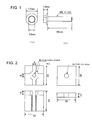
FIG. 1 depicts an explanatory diagram showing the shape and size of a bolt used to evaluate the performance of one embodiment according to the present invention. -
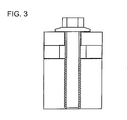
FIG. 2 depicts an explanatory view showing the shape and size of a jig used in the tests of the bolt stress corrosion cracking in an embodiment according to the present invention. -
FIG. 3 depicts an explanatory diagram showing a procedure for a bolt stress corrosion cracking test in an embodiment according to the present invention. -
FIG. 4 depicts a schematic explanatory view showing an example of application of the forged part according to one embodiment according to the present invention. - Hereinafter, the aluminum alloy according to the present invention and parts consisting of such an aluminum alloy are explained in detail together with the effects of alloy contents and reason for their limitation. In this description, "%" shall represent the percentage by weight or mass unless otherwise indicated.
- Si (silicon) is one of major elements of the alloy in the present invention, along with Cu and Mg, which contributes to the improvement in strength at room temperature.
Although Mg2Si precipitates by artificial aging and alloy strength will be improved, when its content exceeds 1.7%, the stress corrosion cracking resistance and corrosion resistance may exacerbate. In contrast, at less than 1.0% of Si content, such features can not be demonstrated and lack of strength of aluminum alloy occurs. - Fe (iron) is a component that forms a compound with Mn, Al, and Ni etc. to improve heat resistance and machinability.
At less than 0.05% content of Fe, no improvement is effected, and poor heat resistance will be exhibited. Meanwhile, if excessively added more than 0.5%, corrosion resistance may be deteriorated. In addition, coarse inclusions may be produced which has a negative impact on the tensile properties and machinability of aluminum alloy involved. - Cu (copper) is an element and, together with Si and Mg, contributes to the improvement in a room temperature strength. However at its content less than 0.8%, no effect of the addition
is available and insufficient strength of the aluminum alloy be appreciated. Conversely, when exceeding 1.5 %, the alloy would be more likely to burning during solution treatment and
the corrosion resistance of alloys will be deteriorated with a poor forgibility. - Mn (manganese) is an element that contributes to solid solution strengthening. In addition, Mn forms a compound with other elements such as Fe (to form for example Al-Fe-Mn-Si type), with an improved heat resistance and machinability. In addition, Mn has the effect of improving the seizure resistance with dies during forging.
When the added amount of Mn is less than 0.6%, such an effect is not exerted, and not only not the desired strength is available, but seizure with dies is likely to occur during forging. On the other hand, when the added amount exceeds 1.2%, coarse inclusions (such as MnAl6) would be generated, and tensile properties (elongation property, in particular) and workability /machinabilty are adversely affected. - Mg (magnesium) is an element that, in combination with Si and Cu, contributs to improve a room
temperature strength. However, at less than 0.9%, the effect of the addition can not be obtained with insufficient strength.
Meanwhile, at more than 1.5%, much of the coarse precipitates will produce which do not contribute to improving the strength, stress relaxation property, corrosion resistance and workability are deteriorated. - Zn (zinc) is an element which contributes to the strengthening of the alloy through precipitation of Al-Mg-Zn based particles during aging. Also, it improves surface treatment properties such as for plating, however, when added in excess, in addition to corrosion resistance decrease strength might be impaired, so that Zn needs to be within the range between 0.05% and 0.5%.
- Zr (zirconium) is effective and prevents coarsening of crystal grains during heat treatment. Moreover, Zr has a stabilizing effect of grain size. However, at the addition amount less than 0.05%, the effect of preventing coarsening is not fully demonstrated, and the tensile properties and stress corrosion cracking resistance worsen due to the grain coarsening, On the other hand, when the added amount of Zr exceeds 0.3%, coarse inclusions grow and machinability/workability and tensile properties deteriorate.
- V (vanadium) improves the heat resistance by forming compounds with element such as Al. Moreover, V shows the advantage of fewer adverse effects on stress corrosion cracking resistance due to its addition.
When the added amount of V is less than 0.01%, the effect of improving heat resistance might not be enough. Conversely, when the addition amount exceeds 0.2%, because of the formation of coarse inclusions, corrosion resistance, castability, and machinability/workability deteriorate. - Ti (titanium) is an effective element, as Zr is the case, for preventing the coarsening of the grains. Therefore, Ti may be added as an optional component as needed for the same purpose as Zr.
However, an excessive addition may deteriorate machinability/workability and tensile properties, the amount should be in the range of equal to or less than 0.05% as the addition. In order to obtain sufficient grain refining effect, addition of 0.01% or more is desirable. - Ni (nickel) is an element, by forming a compound with other elements such as Al, Fe, etc. to improve heat resistance and is therefore regarded as an optional component that can be added as needed for such purposes.
However, am excessive addition of more than 0.7% may lead to a production of coarse inclusions, and may adversely affects on stress corrosion cracking resistance, tensile properties, and machinability, the addition must be kept below 0.7%. Also, to be effective enough to enhance the heat resistance, addition of preferably 0.01% or more is desirable. - The heat treatment method of the aluminum alloy according to the present invention is not particularly limited. However, for example, T6 treatment (solution →artificial aging treatment), T8 treatment (solution→ machining → artificial aging treatment), T9 treatment(solution→ artificial aging→ cold machining/processing) can be employed resulting in a part with tensile strength above 450Mpa, excellent heat resistance properties, tensile resistance property, stress relaxation resistance property, and stress corrosion cracking resistance property. Also, in addition, when the heat treatment includes a heat treatment including an artificial aging processing such as T5 treatment or T7 treatment and T10 treatment which are well known as a heat treatment for aluminum alloy and includes an artificial aging treatment, a high strength part may be available by appropriately selecting the conditions of heat treatment as well as marching/processing.
- The aluminum alloy according to the present invention can be used, for example, for various raw material for rolling plates or extrusion profiles.
- In addition, as forged parts, forged parts for automobiles, for example, such as suspension members and other body parts, various type of engine and transmission brackets, fastening bolts for engine oil pan or a variety of cases or covers, fastening bolts, screws and nuts for use in transmission, cases for electric vehicle and hybrid vehicle, the present aluminum alloy may be preferably applied. Regarding a forging method or process to obtain forged parts according to the present invention, no specific restriction is present but a hot forging performed within a range of 400 to 500 °C, for example, or a cold forging such as bolt header processing may be included.
- These components may be manufactured by conventional methods, and by applying the heat treatment as described above, sufficient heat resistance for automotive parts, good tensile properties and stress corrosion cracking resistance may be obtained to contribute to weight reduction. In addition, these parts show high force relaxation resistance characteristics, they are suitably used for parts of engine, transmission, motor, etc. for automotive use, which are placed in a hot environment.
In particular, if adopted to a magnesium alloy casing for engine or transmission, use of the high strength aluminum alloy bolts according to the present invention is effective in preventing electrolytic corrosion as well as reducing the number of fastening bolts than a situation in which a conventional aluminum based bolt. -
Figure 4 is a schematic diagram illustrating an embodiment of the forged part according to the present invention.Reference numeral 1 denotes a female portion for oil pan mounting provided in a aluminum alloy (for example, ADC12) based cylinder block of an automotive engine.Reference numeral 2 denotes a seat surface portion provided in a oil pan made of heat-resistant magnesium ally (for example, MRI153 or AE44 alloys).
In the present embodiment, by thebolt 3 aluminum alloy as the forged product according to the present invention being inserted through theseat surface portion 2 of the oil pan, and subsequently by being screwed intofemale section 1 of the cylinder block, the oil pan and cylinder block are fastened Thisaluminum alloy bolt 3 is made of aluminum alloy of the invention and has been subjected to the aforementioned heat treatment/process, typically, T6 treatment (solution→ artificial aging), T8 treatment(Solution→ Machining → artificial aging), or T9 treatment (solution artificial aging →could machining). - In this embodiment, since
aluminum alloy bolt 3 ensures a sufficient heat resistance, tensile properties, and stress corrosion cracking resistance, it can contribute to weight reduction of the engine. Moreover, even in high temperature environment of the engine oil pan, it can show a good stress relaxation characteristic. Still further, in addition to prevention of electrolytic corrosion, the number of fastening bolts may be decreased than when using conventional aluminum, and increase in bolt size may be avoided.
Incidentally, this embodiment does not pose specific limitations. For example, both theseat surface portion 2, thefemale portion 1 may be constructed by magnesium alloy, and the portion subjected to small temperature rise may use a conventional magnesium alloy such as AZ91 D. - Although the present invention will be described in more detail based on the embodiments,
the present invention should not be limited to these embodiments. - After the aluminum alloy having the composition shown in Table 1 has been melted in an electric furnace and then cast into billets of diameter 155mm, the ingot obtained has been subjected to homogenization at the temperature of 540 °C for 4 hrs.
Next, extrusions were made at 450 to 500 °C, to obtain a round bar of diameter 13mm for evaluation of drawability of each rod obtained. - The 13mm diameter round bars thus obtained by extrusion were annealed at 350 to 400 °C for 3 hours, and a drawing process is subsequently performed until the diameter is reduced to 9mm for investigation for the presence of a disconnection. The test results are summarized in Table 2, in which, what have been evaluated without disconnection are indicated "o", while the bars on which a disconnection were detected during a drawing process up to 9 mm diameter are indicated "×", respectively.
As a result, inEmbodiments 1 to 18, no disconnection were determined, whereas the aluminum alloys whose Si, Mg, V, and Ti contents exceed respective upper limits, i.e., comparative example alloys 20, 31, and 32 produced a disconnection and these alloys have been confirmed with poor drawability. - After the 13mm diameter rods obtained above have been cut into a predetermined length, a solution treatment was done by holding the samples at 550 °C for 1 hour with a subsequent water-cooling, the process of artificial aging were then performed at 180 °C for 6 hours.
Then, the rods are machined to a tensile specimen geometry (parallel part width of ϕ10mm, gauge length of 50mm) for conducting tensile tests to determine tensile strength, 0.2% yield strength, and elongation at break. Table 2 also shows these results. - As a result, the alloy of Comparative Example 22 with a Cu content exceeding the upper limit according to the present invention showed a significant drop in elongation. This is considered to have occurred because of the high Cu content, a liquid phase was formed at the solution treatment temperature, which is known as burning.
In addition, the Comparative Samples showing the tensile strength below 450 MPa are the Comparative Example alloy 19 in which Si, Cu, and Mn contents are below the lower limits and no V is added, the Comparative Example alloy 23 in which Fe, Mn contents are below the lower limit values, the Comparative Example alloy 25 whose Mg contents falls below the lower limit, the Comparative Example alloy 27 whose Zn content exceeds an upper limit, the Comparative Example alloy 28 whose Zr content exceeds upper limit, and the Comparative Example 33 whose Zn content falls below the lower limit, respectively. - Out of alloys of the above Embodiments and Comparative Examples, for those alloys excluding Comparative Example alloys 20, 31, and 32 in which disconnection were determined and Comparative Example alloys 22 with poor elongation result at tensile testing, the 13mm diameter rods obtained above through extrusion were annealed at 350 to 400 °C for 3 hours and subsequently made to a 7mm diameter wire by a wire drawing process. At this time, the sample alloys which were broken in the middle of the drawing underwent an annealing with the same conditions again. Using a wire thus obtained , processing was carried out to manufacture bolts in accordance with the following manner.
- After the wires obtained were cut, a header processing is made on a bolt head (M8). The bolt head has a hexagonal shape as shown in
Figure 1 , the flange diameter was of 17mm. Examined visually for the presence of cracks in the flange, evaluation was made based on criteria listed below with the results entered in Table 2. - ○: No crack in flange
- Δ:A slight crack in the flange is observed, but may be formable by making suitable die or lubrication adjustments
- ×: Cracking is observed in the flange
- As a result, the aluminum alloys with its Fe, Ni, Mn, Mg and Zr contents exceeding respective upper limits, i.e., Comparative Examples 21,23,26, and 29 and the Comparative Example 23 in which Fe and Mn contents fall below respective lower limits have been confirmed of poor processing or machining properties.
- In past tastings, the alloys of
Embodiments 1 to 18 show a relatively good result for the alloy and the Comparative examples 19,25,27,28,30,33 were extruded (to 13 mm diameter), wire drawn (to 7mm diameter), and header processed in the same manner as described above. Then, the sample alloys were subjected to a solution treatment in which the samples were water-cooled after being maintained for 1 hour at 550 °C, followed by an artificial aging treatment at 180 °C for 6 hours. Finally, by giving the process rolling, as shown inFigure 1 , the bolt with 8mm nominal diameter, and 1.25mm pitch (M8 × 1.25) was completed. - Then, using a creep tester, stress relaxation tests were performed at 150 °C. The initial stress was set for 70% of the yield strength previously obtained and measurements were made of the stress retention rate or percentage after elapsed time of 100 hours. The samples are evaluated with reference to Comparative Example 30 and those exceeding the stress retention of the bolt composed of the alloy consisting of Comparative Example 30 are indicated "○", while that with well below was evaluated as "× ", respectively.
Consequently, as also shown in Table 2, it was confirmed that the bolts consisting of Comparative Examples 19 or 30 with V content, in particular, less than the lower limit were deteriorated in the stress relaxation resistance properties compared to the bolts consisting of other alloy. - The bolts prepared in a similar manner as those used in the above-mentioned relaxation test, were tested for a stress corrosion cracking.
In other words, a jig with a female screw as shown in Figure 2 (a) is prepared, and the above mentioned bolt is fastened thereto as shown inFig.3 with a rectangular piece illustrated in the same Fig. (b) having a 9 mm diameter hole interposed to reach a plastic deformation range. Then, after soaking for 10 minutes in a 10% NaCl solution,
the specimen was held in air (at about 20 °C, 60% relative humidity) for 24 hours after leaving, and finally check for presence of cracks during a torque check procedure was done. - If there is no crack, similar cycles (immersed for 10 minutes, allowed to stand in air for 24 hours) were repeated, and when a week has elapsed, it has been determined that, as also shown in Table 2, only the bolt consisting of the Comparative Example 30 with V content less than a lower limit exhibited cracks occurred in the lower neck, cracks were not observed in the other bolts.
In addition, it should be pointed out that the jig or fixture shown inFigure 2 is made of A6061 series alloy (Al-Mg-Si type) which was first underwent a T6 treatment T6 (solution treatment - artificial aging treatment) and then anodized. - As is apparent from the above results, all the
Embodiments alloys 1 to 18 in which alloy elements or components such as Si, Fe, Mn, Zr, and V are within each specific amount are excellent both in wire-drawability and formability of bolts. Moreover, the bolts made of these alloys, when applied by an artificial aging after solution treatment, exhibit a tensile strength of over 450Mpa or more, 0.2% stress resistance over 400 MPa, and elongation of more than 9%, and thus a good tensile property was confirmed together with an excellent stress relaxation resistance property as well as stress corrosion crack resistance property.
In contrast, in Comparative Example alloys 19 to 33, because any of the above alloy composition is outside of the above specific ranges, one or more properties are insufficient, resulting in a lower overall evaluation - It should be noted that the method of manufacturing bolts in the above Embodiments is conventional, yet other methods are applicable such as T8 treatment in which a solution treatment, followed by processing (thread rolling), followed by aging treatment were done.
Further, the above embodiments, description has been made on bolts, the aluminum alloys according to the present invention is not only applicable to bolts, it can be applied, as described above, such as to rolled plates or extruded parts. Furthermore, as forged parts, suspension members, various kind of engine and transmission brackets, as well as fasteners and like including screws and nuts are suitably for use of the subject alloy of present invention.

Claims (5)
- An aluminum alloy characterized by comprising, by mass, 1.0 to 1.7% of Si, 0.05 to 0.5% of Fe, 0.8 to 1.5% of Cu, 0.6 to 1.2% of Mn, 0.9 to 1.5% of Mg, 0.05 to 0.5% of Zn, 0.05 to 0.3% of Zr, and 0.01 to 0.2% of V, the remainder being Al and unavoidable impurities.
- An aluminum alloy characterized by comprising, by mass, 1.0 to 1.7% of Si, 0.05 to 0.5% of Fe, 0.8 to 1.5% of Cu, 0.6 to 1.2% of Mn, 0.9 to 1.5% of Mg, 0.05 to 0.5% of Zn, 0.05 to 0.3% of Zr, 0.01 to 0.2% of V, and Ti exceeding 0% and not more than 0.05%, the remainder being Al and unavoidable impurities.
- An aluminum alloy characterized by comprising, by mass, 1.0 to 1.7% of Si, 0.05 to 0.5% of Fe, 0.8 to 1.5% of Cu, 0.6 to 1.2% of Mn, 0.9 to 1.5% of Mg, 0.05 to 0.5% of Zn, 0.05 to 0.3% of Zr, 0.01 to 0.2% of V, Ti exceeding 0% and not more than 0.05%, and Ni exceeding 0% and not more than 0.7%, the remainder being Al and unavoidable impurities.
- A forged part characterized by being made of the aluminum alloy claimed in any of claims 1 to 3.
- An aluminum alloy based high strength bolt composed of the aluminum alloy claimed in any of claims 1 to 3 and further having a tensile strength of more than 450 MPa.
Applications Claiming Priority (2)
| Application Number | Priority Date | Filing Date | Title |
|---|---|---|---|
| JP2010057044A JP5495183B2 (en) | 2010-03-15 | 2010-03-15 | Aluminum alloy and high strength bolt made of aluminum alloy |
| PCT/JP2010/072421 WO2011114591A1 (en) | 2010-03-15 | 2010-12-14 | Aluminium alloy and high-strength bolt made from aluminium alloy |
Publications (3)
| Publication Number | Publication Date |
|---|---|
| EP2548983A1 true EP2548983A1 (en) | 2013-01-23 |
| EP2548983A4 EP2548983A4 (en) | 2014-08-20 |
| EP2548983B1 EP2548983B1 (en) | 2016-06-15 |
Family
ID=44648709
Family Applications (1)
| Application Number | Title | Priority Date | Filing Date |
|---|---|---|---|
| EP10847997.3A Active EP2548983B1 (en) | 2010-03-15 | 2010-12-14 | High-strength bolt made from aluminium alloy |
Country Status (5)
| Country | Link |
|---|---|
| US (1) | US8852364B2 (en) |
| EP (1) | EP2548983B1 (en) |
| JP (1) | JP5495183B2 (en) |
| CN (2) | CN102482737A (en) |
| WO (1) | WO2011114591A1 (en) |
Cited By (1)
| Publication number | Priority date | Publication date | Assignee | Title |
|---|---|---|---|---|
| EP3214191A1 (en) | 2016-03-04 | 2017-09-06 | Impol 2000, d. d. | A high-strength al-mg-si aluminium alloy and its manufacturing process |
Families Citing this family (27)
| Publication number | Priority date | Publication date | Assignee | Title |
|---|---|---|---|---|
| JP5802114B2 (en) * | 2011-11-16 | 2015-10-28 | 住友電気工業株式会社 | Aluminum alloy wire for bolt, bolt and method for producing aluminum alloy wire for bolt |
| JP5335056B2 (en) * | 2011-11-16 | 2013-11-06 | 住友電気工業株式会社 | Aluminum alloy wire for bolt, bolt and method for producing the same |
| US20140130637A1 (en) * | 2012-04-16 | 2014-05-15 | Chung-Shan Institute of Science and Technology, Armaments, Bureau, Ministry of National Defense | Method for Making a Strong Aluminum Alloy |
| JP2013234389A (en) * | 2013-07-24 | 2013-11-21 | Sumitomo Electric Ind Ltd | Aluminum alloy wire for bolt, bolt and methods of manufacturing the same |
| JP6368087B2 (en) * | 2013-12-26 | 2018-08-01 | 住友電気工業株式会社 | Aluminum alloy wire, method for producing aluminum alloy wire, and aluminum alloy member |
| CN106164504B (en) * | 2014-03-20 | 2019-05-28 | 日本发条株式会社 | Fastening parts and rod-shaped parts for fastening parts |
| CN104523048A (en) * | 2014-12-19 | 2015-04-22 | 常熟市精诚铝业有限公司 | Arc-edge decorative aluminum profile |
| CN107743526B (en) * | 2015-06-15 | 2020-08-25 | 肯联铝业辛根有限责任公司 | Method of manufacture for obtaining high strength solid extruded products for pulling eyelets made of 6xxx aluminium alloys |
| JP6865171B2 (en) * | 2015-08-28 | 2021-04-28 | 日本発條株式会社 | Fastening member |
| CN108699638A (en) * | 2016-02-19 | 2018-10-23 | 日本发条株式会社 | Aluminium alloy and secure component |
| CN105734365A (en) * | 2016-03-29 | 2016-07-06 | 南通超达装备股份有限公司 | Cast aluminum material |
| CN105734366A (en) * | 2016-04-27 | 2016-07-06 | 谭钰良 | Aluminum foil material for automobile radiator |
| CN106050865A (en) * | 2016-07-07 | 2016-10-26 | 无锡戴尔普机电设备有限公司 | Novel material for set screw of air volume adjusting valve |
| CN106834822A (en) * | 2017-02-13 | 2017-06-13 | 江苏亨通电力特种导线有限公司 | Fastening parts of automobiles high-strength aluminum alloy bar and preparation method thereof |
| JP6795812B2 (en) * | 2017-02-27 | 2020-12-02 | 松本重工業株式会社 | Aluminum alloy bolt |
| CN106929717A (en) * | 2017-03-24 | 2017-07-07 | 淮北津奥铝业有限公司 | Auto parts and components aluminium alloy |
| CN106884112B (en) * | 2017-04-17 | 2018-09-28 | 贵阳白云中航紧固件有限公司 | The process equipment and method of high hardness alloy and preparation method, its manufacture fastener |
| WO2019089736A1 (en) | 2017-10-31 | 2019-05-09 | Arconic Inc. | Improved aluminum alloys, and methods for producing the same |
| EP3556875B1 (en) * | 2018-04-18 | 2020-12-16 | Newfrey LLC | Fastener made of aluminium alloy comprising scandium |
| WO2021085627A1 (en) | 2019-10-31 | 2021-05-06 | 松本重工業株式会社 | Aluminum alloy bolt and method for manufacturing same |
| CN110938765B (en) * | 2019-12-18 | 2022-02-22 | 东北轻合金有限责任公司 | Manufacturing method of high-strength Al-Mg-Si aluminum alloy bar for automobile chassis |
| JP7469072B2 (en) * | 2020-02-28 | 2024-04-16 | 株式会社神戸製鋼所 | Aluminum alloy forgings and their manufacturing method |
| CN112342442A (en) * | 2020-11-23 | 2021-02-09 | 超捷紧固系统(上海)股份有限公司 | Method for manufacturing and preparing materials by using aluminum functional connecting piece and fastening piece |
| CN113403509B (en) * | 2021-06-23 | 2022-11-08 | 上海嘉朗实业南通智能科技有限公司 | High-strength aluminum alloy bolt material and preparation method thereof |
| CN115323226B (en) * | 2022-10-14 | 2023-01-24 | 山东裕航特种合金装备有限公司 | Fastener for ship and preparation method thereof |
| CN117737520A (en) * | 2023-12-28 | 2024-03-22 | 北京工业大学 | High-strength corrosion-resistant aluminum alloy extruded profile and preparation method thereof |
| CN119710375B (en) * | 2024-12-20 | 2026-04-07 | 重庆国创轻合金研究院有限公司 | A highly pitting corrosion resistant aluminum alloy, its preparation method, and an aluminum alloy product thereof. |
Citations (4)
| Publication number | Priority date | Publication date | Assignee | Title |
|---|---|---|---|---|
| EP0173632A1 (en) | 1984-07-31 | 1986-03-05 | Cegedur Societe De Transformation De L'aluminium Pechiney | High-strength aluminium alloy of the A-SG type for extruded or drop-forged products |
| US5858134A (en) | 1994-10-25 | 1999-01-12 | Pechiney Rhenalu | Process for producing alsimgcu alloy products with improved resistance to intercrystalline corrosion |
| US20040062946A1 (en) | 2002-06-24 | 2004-04-01 | Rinze Benedictus | Method of producing a high strength balanced Al-Mg-Si alloy and a weldable product of that alloy |
| WO2006037647A1 (en) | 2004-10-05 | 2006-04-13 | Aleris Aluminum Koblenz Gmbh | High hardness aluminium moulding plate and method for producing said plate |
Family Cites Families (9)
| Publication number | Priority date | Publication date | Assignee | Title |
|---|---|---|---|---|
| JPH01162754A (en) * | 1987-12-17 | 1989-06-27 | Sky Alum Co Ltd | Production of material for conductive parts of electronic and electric apparatus |
| JP3939414B2 (en) | 1997-12-12 | 2007-07-04 | 古河スカイ株式会社 | High-strength aluminum alloy screw and manufacturing method thereof |
| JP3690630B2 (en) * | 1997-12-25 | 2005-08-31 | アイシン軽金属株式会社 | Free-cutting aluminum alloy |
| JP4063388B2 (en) * | 1998-02-20 | 2008-03-19 | 株式会社神戸製鋼所 | Al-Mg-Si-based aluminum alloy plate for forming with excellent surface properties and method for producing the same |
| JP3766357B2 (en) * | 2002-07-12 | 2006-04-12 | 株式会社神戸製鋼所 | Aluminum alloy forging material for strength member and forging material |
| JP4101614B2 (en) * | 2002-11-01 | 2008-06-18 | 住友軽金属工業株式会社 | Method for producing high-strength aluminum alloy extruded material with excellent resistance to corrosion and stress corrosion cracking |
| JP5159196B2 (en) * | 2007-07-20 | 2013-03-06 | 古河スカイ株式会社 | Aluminum alloy for high pressure hydrogen gas storage container |
| CN101386940B (en) * | 2008-10-23 | 2010-12-15 | 中山市金胜铝业有限公司 | Al-Mn-Mg-Cu-Ni-Ce alloy and manufacturing method thereof |
| JP5421613B2 (en) * | 2009-02-20 | 2014-02-19 | 株式会社神戸製鋼所 | High strength aluminum alloy wire rod excellent in softening resistance and manufacturing method thereof |
-
2010
- 2010-03-15 JP JP2010057044A patent/JP5495183B2/en active Active
- 2010-12-14 US US13/393,783 patent/US8852364B2/en active Active
- 2010-12-14 CN CN201080039246XA patent/CN102482737A/en active Pending
- 2010-12-14 EP EP10847997.3A patent/EP2548983B1/en active Active
- 2010-12-14 CN CN201510406437.XA patent/CN104946941A/en active Pending
- 2010-12-14 WO PCT/JP2010/072421 patent/WO2011114591A1/en not_active Ceased
Patent Citations (4)
| Publication number | Priority date | Publication date | Assignee | Title |
|---|---|---|---|---|
| EP0173632A1 (en) | 1984-07-31 | 1986-03-05 | Cegedur Societe De Transformation De L'aluminium Pechiney | High-strength aluminium alloy of the A-SG type for extruded or drop-forged products |
| US5858134A (en) | 1994-10-25 | 1999-01-12 | Pechiney Rhenalu | Process for producing alsimgcu alloy products with improved resistance to intercrystalline corrosion |
| US20040062946A1 (en) | 2002-06-24 | 2004-04-01 | Rinze Benedictus | Method of producing a high strength balanced Al-Mg-Si alloy and a weldable product of that alloy |
| WO2006037647A1 (en) | 2004-10-05 | 2006-04-13 | Aleris Aluminum Koblenz Gmbh | High hardness aluminium moulding plate and method for producing said plate |
Non-Patent Citations (4)
| Title |
|---|
| "AA 6056 Strength and machinability for a low cost solution", ALCAN, vol. AA6056, June 2008 (2008-06-01), pages 1 - 2, XP003033020 |
| GRANDFIELD J. ET AL: "The Impact of Rising Ni and V Impurity Levels in Smelter Grade Aluminium and Potential Control Strategies", MATERIALS SCIENCE FORUM, vol. 630, 2010, pages 129 - 136, XP055096012 |
| See also references of WO2011114591A1 |
| TAYLOR J.A.: "Metal-related castability effects in aluminium foundry alloys", CAST METALS, vol. 8, no. 4, pages 225 - 227, XP003033032 |
Cited By (1)
| Publication number | Priority date | Publication date | Assignee | Title |
|---|---|---|---|---|
| EP3214191A1 (en) | 2016-03-04 | 2017-09-06 | Impol 2000, d. d. | A high-strength al-mg-si aluminium alloy and its manufacturing process |
Also Published As
| Publication number | Publication date |
|---|---|
| CN102482737A (en) | 2012-05-30 |
| WO2011114591A1 (en) | 2011-09-22 |
| US8852364B2 (en) | 2014-10-07 |
| JP5495183B2 (en) | 2014-05-21 |
| US20120156089A1 (en) | 2012-06-21 |
| EP2548983B1 (en) | 2016-06-15 |
| JP2011190493A (en) | 2011-09-29 |
| CN104946941A (en) | 2015-09-30 |
| EP2548983A4 (en) | 2014-08-20 |
Similar Documents
| Publication | Publication Date | Title |
|---|---|---|
| EP2548983B1 (en) | High-strength bolt made from aluminium alloy | |
| JP5421613B2 (en) | High strength aluminum alloy wire rod excellent in softening resistance and manufacturing method thereof | |
| CN103608478B (en) | Aluminum-copper-magnesium alloy with good performance at high temperature | |
| JP6445958B2 (en) | Aluminum alloy forgings for automobiles | |
| US20180112297A1 (en) | High-strength and easily formable AlMg-strip, and method for producing the same | |
| US20190024224A1 (en) | High Strength Aluminum Alloy Extruded Material With Excellent Corrosion Resistance And Favorable Quenching Properties And Manufacturing Method Therefor | |
| JP5385025B2 (en) | Aluminum alloy wire rod for high-strength bolt excellent in formability and manufacturing method thereof, high-strength flange bolt and manufacturing method thereof | |
| JPH10204566A (en) | High-strength wear-resistant aluminum alloy material excellent in anodizing property and method for producing the same | |
| KR20160111919A (en) | 6xxx aluminum alloys | |
| JPWO2019167469A1 (en) | Al-Mg-Si based aluminum alloy material | |
| KR102943545B1 (en) | Aluminum alloy, aluminum alloy wire, aluminum alloy member, and bolt | |
| JP2004084058A (en) | Method for producing aluminum alloy forging for transport structural material and aluminum alloy forging | |
| JP2004292937A (en) | Aluminum alloy forging material for transport carrier structural material, and production method therefor | |
| JP2004315938A (en) | Forged material of aluminum alloy for structural material in transport aircraft, and manufacturing method therefor | |
| JP6577652B2 (en) | Aluminum alloy and fastening member | |
| JP2006274415A (en) | Aluminum alloy forging for high strength structural member | |
| JP5476452B2 (en) | High strength, high toughness aluminum alloy forging material with excellent corrosion resistance, its manufacturing method, and suspension parts | |
| JP2019019373A (en) | Manufacturing method of aluminum alloy-made piston of compressor, and the aluminum alloy for piston | |
| JP5111966B2 (en) | Method for manufacturing aluminum alloy panel | |
| JP2006257505A (en) | Aluminum alloy sheet having excellent extension flange formability | |
| JP2007169699A (en) | High strength, high toughness aluminum alloy forging material with excellent corrosion resistance, its manufacturing method, and suspension parts | |
| JP7496106B1 (en) | Aluminum alloy screw material, aluminum alloy screw, and manufacturing method thereof | |
| JP2008150653A (en) | Weldable forging aluminum alloy with excellent stress corrosion cracking resistance and forged products using the same | |
| JP4933890B2 (en) | Weldable forging aluminum alloy with excellent stress corrosion cracking resistance and forged products using the same | |
| JP2004292892A (en) | High strength aluminum alloy forging material, and forged product obtained by using the same |
Legal Events
| Date | Code | Title | Description |
|---|---|---|---|
| PUAI | Public reference made under article 153(3) epc to a published international application that has entered the european phase |
Free format text: ORIGINAL CODE: 0009012 |
|
| 17P | Request for examination filed |
Effective date: 20120307 |
|
| AK | Designated contracting states |
Kind code of ref document: A1 Designated state(s): AL AT BE BG CH CY CZ DE DK EE ES FI FR GB GR HR HU IE IS IT LI LT LU LV MC MK MT NL NO PL PT RO RS SE SI SK SM TR |
|
| TPAC | Observations filed by third parties |
Free format text: ORIGINAL CODE: EPIDOSNTIPA |
|
| DAX | Request for extension of the european patent (deleted) | ||
| A4 | Supplementary search report drawn up and despatched |
Effective date: 20140723 |
|
| RIC1 | Information provided on ipc code assigned before grant |
Ipc: C22F 1/05 20060101ALI20140714BHEP Ipc: C22C 21/08 20060101ALI20140714BHEP Ipc: F16B 35/00 20060101ALI20140714BHEP Ipc: C22C 21/02 20060101AFI20140714BHEP Ipc: C22C 21/06 20060101ALI20140714BHEP |
|
| 17Q | First examination report despatched |
Effective date: 20150223 |
|
| GRAP | Despatch of communication of intention to grant a patent |
Free format text: ORIGINAL CODE: EPIDOSNIGR1 |
|
| INTG | Intention to grant announced |
Effective date: 20160210 |
|
| GRAS | Grant fee paid |
Free format text: ORIGINAL CODE: EPIDOSNIGR3 |
|
| GRAA | (expected) grant |
Free format text: ORIGINAL CODE: 0009210 |
|
| AK | Designated contracting states |
Kind code of ref document: B1 Designated state(s): AL AT BE BG CH CY CZ DE DK EE ES FI FR GB GR HR HU IE IS IT LI LT LU LV MC MK MT NL NO PL PT RO RS SE SI SK SM TR |
|
| REG | Reference to a national code |
Ref country code: CH Ref legal event code: EP Ref country code: GB Ref legal event code: FG4D |
|
| REG | Reference to a national code |
Ref country code: IE Ref legal event code: FG4D |
|
| REG | Reference to a national code |
Ref country code: AT Ref legal event code: REF Ref document number: 806549 Country of ref document: AT Kind code of ref document: T Effective date: 20160715 |
|
| REG | Reference to a national code |
Ref country code: DE Ref legal event code: R096 Ref document number: 602010034120 Country of ref document: DE |
|
| REG | Reference to a national code |
Ref country code: LT Ref legal event code: MG4D |
|
| REG | Reference to a national code |
Ref country code: NL Ref legal event code: MP Effective date: 20160615 |
|
| PG25 | Lapsed in a contracting state [announced via postgrant information from national office to epo] |
Ref country code: LT Free format text: LAPSE BECAUSE OF FAILURE TO SUBMIT A TRANSLATION OF THE DESCRIPTION OR TO PAY THE FEE WITHIN THE PRESCRIBED TIME-LIMIT Effective date: 20160615 Ref country code: NO Free format text: LAPSE BECAUSE OF FAILURE TO SUBMIT A TRANSLATION OF THE DESCRIPTION OR TO PAY THE FEE WITHIN THE PRESCRIBED TIME-LIMIT Effective date: 20160915 Ref country code: FI Free format text: LAPSE BECAUSE OF FAILURE TO SUBMIT A TRANSLATION OF THE DESCRIPTION OR TO PAY THE FEE WITHIN THE PRESCRIBED TIME-LIMIT Effective date: 20160615 |
|
| REG | Reference to a national code |
Ref country code: FR Ref legal event code: PLFP Year of fee payment: 7 |
|
| REG | Reference to a national code |
Ref country code: AT Ref legal event code: MK05 Ref document number: 806549 Country of ref document: AT Kind code of ref document: T Effective date: 20160615 |
|
| PG25 | Lapsed in a contracting state [announced via postgrant information from national office to epo] |
Ref country code: RS Free format text: LAPSE BECAUSE OF FAILURE TO SUBMIT A TRANSLATION OF THE DESCRIPTION OR TO PAY THE FEE WITHIN THE PRESCRIBED TIME-LIMIT Effective date: 20160615 Ref country code: NL Free format text: LAPSE BECAUSE OF FAILURE TO SUBMIT A TRANSLATION OF THE DESCRIPTION OR TO PAY THE FEE WITHIN THE PRESCRIBED TIME-LIMIT Effective date: 20160615 Ref country code: LV Free format text: LAPSE BECAUSE OF FAILURE TO SUBMIT A TRANSLATION OF THE DESCRIPTION OR TO PAY THE FEE WITHIN THE PRESCRIBED TIME-LIMIT Effective date: 20160615 Ref country code: HR Free format text: LAPSE BECAUSE OF FAILURE TO SUBMIT A TRANSLATION OF THE DESCRIPTION OR TO PAY THE FEE WITHIN THE PRESCRIBED TIME-LIMIT Effective date: 20160615 Ref country code: GR Free format text: LAPSE BECAUSE OF FAILURE TO SUBMIT A TRANSLATION OF THE DESCRIPTION OR TO PAY THE FEE WITHIN THE PRESCRIBED TIME-LIMIT Effective date: 20160916 Ref country code: SE Free format text: LAPSE BECAUSE OF FAILURE TO SUBMIT A TRANSLATION OF THE DESCRIPTION OR TO PAY THE FEE WITHIN THE PRESCRIBED TIME-LIMIT Effective date: 20160615 |
|
| PG25 | Lapsed in a contracting state [announced via postgrant information from national office to epo] |
Ref country code: IT Free format text: LAPSE BECAUSE OF FAILURE TO SUBMIT A TRANSLATION OF THE DESCRIPTION OR TO PAY THE FEE WITHIN THE PRESCRIBED TIME-LIMIT Effective date: 20160615 Ref country code: IS Free format text: LAPSE BECAUSE OF FAILURE TO SUBMIT A TRANSLATION OF THE DESCRIPTION OR TO PAY THE FEE WITHIN THE PRESCRIBED TIME-LIMIT Effective date: 20161015 Ref country code: RO Free format text: LAPSE BECAUSE OF FAILURE TO SUBMIT A TRANSLATION OF THE DESCRIPTION OR TO PAY THE FEE WITHIN THE PRESCRIBED TIME-LIMIT Effective date: 20160615 Ref country code: SK Free format text: LAPSE BECAUSE OF FAILURE TO SUBMIT A TRANSLATION OF THE DESCRIPTION OR TO PAY THE FEE WITHIN THE PRESCRIBED TIME-LIMIT Effective date: 20160615 Ref country code: EE Free format text: LAPSE BECAUSE OF FAILURE TO SUBMIT A TRANSLATION OF THE DESCRIPTION OR TO PAY THE FEE WITHIN THE PRESCRIBED TIME-LIMIT Effective date: 20160615 Ref country code: CZ Free format text: LAPSE BECAUSE OF FAILURE TO SUBMIT A TRANSLATION OF THE DESCRIPTION OR TO PAY THE FEE WITHIN THE PRESCRIBED TIME-LIMIT Effective date: 20160615 |
|
| PG25 | Lapsed in a contracting state [announced via postgrant information from national office to epo] |
Ref country code: BE Free format text: LAPSE BECAUSE OF FAILURE TO SUBMIT A TRANSLATION OF THE DESCRIPTION OR TO PAY THE FEE WITHIN THE PRESCRIBED TIME-LIMIT Effective date: 20160615 Ref country code: ES Free format text: LAPSE BECAUSE OF FAILURE TO SUBMIT A TRANSLATION OF THE DESCRIPTION OR TO PAY THE FEE WITHIN THE PRESCRIBED TIME-LIMIT Effective date: 20160615 Ref country code: AT Free format text: LAPSE BECAUSE OF FAILURE TO SUBMIT A TRANSLATION OF THE DESCRIPTION OR TO PAY THE FEE WITHIN THE PRESCRIBED TIME-LIMIT Effective date: 20160615 Ref country code: PT Free format text: LAPSE BECAUSE OF FAILURE TO SUBMIT A TRANSLATION OF THE DESCRIPTION OR TO PAY THE FEE WITHIN THE PRESCRIBED TIME-LIMIT Effective date: 20161017 Ref country code: PL Free format text: LAPSE BECAUSE OF FAILURE TO SUBMIT A TRANSLATION OF THE DESCRIPTION OR TO PAY THE FEE WITHIN THE PRESCRIBED TIME-LIMIT Effective date: 20160615 Ref country code: SM Free format text: LAPSE BECAUSE OF FAILURE TO SUBMIT A TRANSLATION OF THE DESCRIPTION OR TO PAY THE FEE WITHIN THE PRESCRIBED TIME-LIMIT Effective date: 20160615 |
|
| REG | Reference to a national code |
Ref country code: DE Ref legal event code: R097 Ref document number: 602010034120 Country of ref document: DE |
|
| PLBE | No opposition filed within time limit |
Free format text: ORIGINAL CODE: 0009261 |
|
| STAA | Information on the status of an ep patent application or granted ep patent |
Free format text: STATUS: NO OPPOSITION FILED WITHIN TIME LIMIT |
|
| 26N | No opposition filed |
Effective date: 20170316 |
|
| PG25 | Lapsed in a contracting state [announced via postgrant information from national office to epo] |
Ref country code: DK Free format text: LAPSE BECAUSE OF FAILURE TO SUBMIT A TRANSLATION OF THE DESCRIPTION OR TO PAY THE FEE WITHIN THE PRESCRIBED TIME-LIMIT Effective date: 20160615 |
|
| REG | Reference to a national code |
Ref country code: CH Ref legal event code: PL |
|
| PG25 | Lapsed in a contracting state [announced via postgrant information from national office to epo] |
Ref country code: SI Free format text: LAPSE BECAUSE OF FAILURE TO SUBMIT A TRANSLATION OF THE DESCRIPTION OR TO PAY THE FEE WITHIN THE PRESCRIBED TIME-LIMIT Effective date: 20160615 |
|
| PG25 | Lapsed in a contracting state [announced via postgrant information from national office to epo] |
Ref country code: MC Free format text: LAPSE BECAUSE OF FAILURE TO SUBMIT A TRANSLATION OF THE DESCRIPTION OR TO PAY THE FEE WITHIN THE PRESCRIBED TIME-LIMIT Effective date: 20160615 |
|
| REG | Reference to a national code |
Ref country code: IE Ref legal event code: MM4A |
|
| PG25 | Lapsed in a contracting state [announced via postgrant information from national office to epo] |
Ref country code: CH Free format text: LAPSE BECAUSE OF NON-PAYMENT OF DUE FEES Effective date: 20161231 Ref country code: LU Free format text: LAPSE BECAUSE OF NON-PAYMENT OF DUE FEES Effective date: 20161214 Ref country code: LI Free format text: LAPSE BECAUSE OF NON-PAYMENT OF DUE FEES Effective date: 20161231 |
|
| REG | Reference to a national code |
Ref country code: FR Ref legal event code: PLFP Year of fee payment: 8 |
|
| PG25 | Lapsed in a contracting state [announced via postgrant information from national office to epo] |
Ref country code: IE Free format text: LAPSE BECAUSE OF NON-PAYMENT OF DUE FEES Effective date: 20161214 |
|
| PG25 | Lapsed in a contracting state [announced via postgrant information from national office to epo] |
Ref country code: HU Free format text: LAPSE BECAUSE OF FAILURE TO SUBMIT A TRANSLATION OF THE DESCRIPTION OR TO PAY THE FEE WITHIN THE PRESCRIBED TIME-LIMIT; INVALID AB INITIO Effective date: 20101214 Ref country code: CY Free format text: LAPSE BECAUSE OF FAILURE TO SUBMIT A TRANSLATION OF THE DESCRIPTION OR TO PAY THE FEE WITHIN THE PRESCRIBED TIME-LIMIT Effective date: 20160615 |
|
| PG25 | Lapsed in a contracting state [announced via postgrant information from national office to epo] |
Ref country code: MK Free format text: LAPSE BECAUSE OF FAILURE TO SUBMIT A TRANSLATION OF THE DESCRIPTION OR TO PAY THE FEE WITHIN THE PRESCRIBED TIME-LIMIT Effective date: 20160615 Ref country code: TR Free format text: LAPSE BECAUSE OF FAILURE TO SUBMIT A TRANSLATION OF THE DESCRIPTION OR TO PAY THE FEE WITHIN THE PRESCRIBED TIME-LIMIT Effective date: 20160615 |
|
| PG25 | Lapsed in a contracting state [announced via postgrant information from national office to epo] |
Ref country code: BG Free format text: LAPSE BECAUSE OF FAILURE TO SUBMIT A TRANSLATION OF THE DESCRIPTION OR TO PAY THE FEE WITHIN THE PRESCRIBED TIME-LIMIT Effective date: 20160615 |
|
| PG25 | Lapsed in a contracting state [announced via postgrant information from national office to epo] |
Ref country code: MT Free format text: LAPSE BECAUSE OF NON-PAYMENT OF DUE FEES Effective date: 20161214 |
|
| PG25 | Lapsed in a contracting state [announced via postgrant information from national office to epo] |
Ref country code: AL Free format text: LAPSE BECAUSE OF FAILURE TO SUBMIT A TRANSLATION OF THE DESCRIPTION OR TO PAY THE FEE WITHIN THE PRESCRIBED TIME-LIMIT Effective date: 20160615 |
|
| REG | Reference to a national code |
Ref country code: DE Ref legal event code: R084 Ref document number: 602010034120 Country of ref document: DE |
|
| REG | Reference to a national code |
Ref country code: GB Ref legal event code: 746 Effective date: 20230922 |
|
| PGFP | Annual fee paid to national office [announced via postgrant information from national office to epo] |
Ref country code: DE Payment date: 20251126 Year of fee payment: 16 |
|
| PGFP | Annual fee paid to national office [announced via postgrant information from national office to epo] |
Ref country code: GB Payment date: 20251120 Year of fee payment: 16 |
|
| PGFP | Annual fee paid to national office [announced via postgrant information from national office to epo] |
Ref country code: FR Payment date: 20251120 Year of fee payment: 16 |