EP2548957A1 - Method for producing kluyveromyces marxianus transformant - Google Patents
Method for producing kluyveromyces marxianus transformant Download PDFInfo
- Publication number
- EP2548957A1 EP2548957A1 EP11755806A EP11755806A EP2548957A1 EP 2548957 A1 EP2548957 A1 EP 2548957A1 EP 11755806 A EP11755806 A EP 11755806A EP 11755806 A EP11755806 A EP 11755806A EP 2548957 A1 EP2548957 A1 EP 2548957A1
- Authority
- EP
- European Patent Office
- Prior art keywords
- sequence
- stranded dna
- linear double
- marker gene
- gene expression
- Prior art date
- Legal status (The legal status is an assumption and is not a legal conclusion. Google has not performed a legal analysis and makes no representation as to the accuracy of the status listed.)
- Granted
Links
Images






Classifications
-
- C—CHEMISTRY; METALLURGY
- C12—BIOCHEMISTRY; BEER; SPIRITS; WINE; VINEGAR; MICROBIOLOGY; ENZYMOLOGY; MUTATION OR GENETIC ENGINEERING
- C12N—MICROORGANISMS OR ENZYMES; COMPOSITIONS THEREOF; PROPAGATING, PRESERVING, OR MAINTAINING MICROORGANISMS; MUTATION OR GENETIC ENGINEERING; CULTURE MEDIA
- C12N15/00—Mutation or genetic engineering; DNA or RNA concerning genetic engineering, vectors, e.g. plasmids, or their isolation, preparation or purification; Use of hosts therefor
- C12N15/09—Recombinant DNA-technology
- C12N15/63—Introduction of foreign genetic material using vectors; Vectors; Use of hosts therefor; Regulation of expression
- C12N15/79—Vectors or expression systems specially adapted for eukaryotic hosts
- C12N15/80—Vectors or expression systems specially adapted for eukaryotic hosts for fungi
- C12N15/81—Vectors or expression systems specially adapted for eukaryotic hosts for fungi for yeasts
- C12N15/815—Vectors or expression systems specially adapted for eukaryotic hosts for fungi for yeasts for yeasts other than Saccharomyces
-
- C—CHEMISTRY; METALLURGY
- C07—ORGANIC CHEMISTRY
- C07K—PEPTIDES
- C07K14/00—Peptides having more than 20 amino acids; Gastrins; Somatostatins; Melanotropins; Derivatives thereof
- C07K14/37—Peptides having more than 20 amino acids; Gastrins; Somatostatins; Melanotropins; Derivatives thereof from fungi
-
- C—CHEMISTRY; METALLURGY
- C12—BIOCHEMISTRY; BEER; SPIRITS; WINE; VINEGAR; MICROBIOLOGY; ENZYMOLOGY; MUTATION OR GENETIC ENGINEERING
- C12N—MICROORGANISMS OR ENZYMES; COMPOSITIONS THEREOF; PROPAGATING, PRESERVING, OR MAINTAINING MICROORGANISMS; MUTATION OR GENETIC ENGINEERING; CULTURE MEDIA
- C12N15/00—Mutation or genetic engineering; DNA or RNA concerning genetic engineering, vectors, e.g. plasmids, or their isolation, preparation or purification; Use of hosts therefor
- C12N15/09—Recombinant DNA-technology
- C12N15/63—Introduction of foreign genetic material using vectors; Vectors; Use of hosts therefor; Regulation of expression
- C12N15/64—General methods for preparing the vector, for introducing it into the cell or for selecting the vector-containing host
Definitions
- the present invention relates to, for example, a method for producing a Kluyveromyces marxianus transformant and a method for producing a useful substance using the transformant.
- the technique of connecting the ends of DNA fragments to prepare arbitrary DNA molecules is a basic technique essential for many experimental procedures in the molecular biological field, including cloning.
- a current approach most generally used for ligating DNA fragments involves binding blunt-ended DNA molecules or DNA molecules complementary to each other at their sticky ends using DNA ligase.
- the Cohen-Boyer method (see non-patent document 1) is known as a cloning method based on this approach. This method involves cleaving insert DNA and a vector with their respective restriction enzymes, purifying the fragments, and then ligating the fragments using DNA ligase to prepare the construct of interest, with which E. coli is then transformed, followed by amplification.
- in vitro and in vivo homologous recombination methods have been developed as cloning methods using neither restriction enzymes nor DNA ligase as a substitute for the Cohen-Boyer method.
- the in vitro homologous recombination method connects DNA molecules using specific recombinase and its recognition sequence.
- the Gateway method of Invitrogen Corp. and the In-Fusion cloning method of Takara Bio Inc. are known. These methods, however, require particular DNA sequences present in both ends of insert DNA and in vectors and therefore, are not excellent in versatility.
- the known in vivo homologous recombination method uses E. coli (see non-patent documents 2 and 3) or bakery yeast (see non-patent documents 4 and 5).
- This reaction takes place independently of restriction enzyme sites and therefore allows insertion of a DNA fragment to various positions in a vector sequence.
- Another feature thereof is that cloning efficiency does not vary depending on the length of insert DNA.
- Both of these methods utilize homologous recombination and thus require adding a sequence homologous to a vector to insert DNA.
- the in vivo homologous recombination method using E. coli further requires electroporation for obtaining high transformation efficiency and disadvantageously requires, for example, expensive apparatuses or instruments for the procedures.
- the in vivo homologous recombination method using bakery yeast requires bakery yeast- E . coli shuttle vectors used for transferring cloning vectors to E. coli in the large-scale preparation of DNA. Unfortunately, bakery yeast- E . coli shuttle vectors are not generally used and require time and effort for their preparation.
- a known method for constructing and amplifying circular DNA without using restriction enzymes or DNA ligase involves transforming prokaryotic cells with linear DNA obtained by the rolling circle amplification method and reconstructing circular DNA within the transformed cells (see patent document 1).
- the amplified DNA fragment prepared by the rolling circle amplification method has a specific structure comprising repeating sequences. It is uncertain whether this method can be applied to the circularization of a DNA fragment free from repeating sequences.
- An object of the present invention is to provide, for example, a method for producing a Kluyveromyces marxianus transformant by conveniently and efficiently connecting the ends of DNA fragments without using specific restriction enzymes or their recognition sequences, and a method for producing a useful substance using the transformant.
- Kluyveromyces marxianus a yeast species
- has various excellent properties that are not observed in other yeasts PCT/JP2007/001270 and PCT/JP2009/001214 .
- linear DNA free from a homologous sequence is efficiently integrated into the genomic DNA of Kluyveromyces marxianus ( Nonklang S. et al. Appl Environ Microbiol 74: 7514-7521 (2008 )).
- Kluyveromyces marxianus can be used as a novel tool for molecular biological research, and attempted to develop a novel method for binding DNA fragments using Kluyveromyces marxianus.
- the present inventors have introduced a DNA fragment comprising a sequence from A in the transcriptional start codon ATG to +771 in the URA3 gene and a DNA fragment comprising a sequence from +772 to the stop codon in the URA3 gene into an uracil auxotrophic genetic mutant Kluyveromyces marxianus RAK3605 and cultured the strain in an uracil-deficient medium.
- the present invention relates to (1) a method for producing a transformed yeast comprising a DNA ligation product consisting of two or more linear double-stranded DNA fragments, the method sequentially comprising the following steps (a) and (b):
- a Kluyveromyces marxianus transformant with a ligation product of two or more linear DNA fragments integrated in the genomic DNA can be produced without using specific restriction enzymes or their recognition sequences.
- Kluyveromyces marxianus can be transformed with a desired DNA sequence having an additional sequence encoding Kluyveromyces marxianus ARS to thereby construct a circular DNA ligation product comprising the DNA sequence.
- the desired DNA sequence can be cloned without complicated procedures.
- the method of the present invention for producing a transformed yeast comprising a DNA ligation product consisting of two or more linear double-stranded DNA fragments is not particularly limited as long as the method comprises the following steps (a) and (b) in order:
- the two or more linear double-stranded DNA fragments used in the production method [I] of the present invention are not particularly limited by their sequences, lengths, or terminal shapes, and may further comprise DNA of an arbitrary sequence in addition to arbitrary gene DNA targeted by cloning such as a gene encoding a desired useful substance, or arbitrary gene DNA such as a high-expression promoter-linked gene encoding a desired useful substance.
- the desired DNA ligation product in the production method [I] of the present invention is a DNA ligation product comprising a high-expression promoter sequence, a marker gene-encoding sequence, and an arbitrary nucleotide sequence in order
- the following combinations of two linear double-stranded DNA fragments exemplified in (i) or (ii) can be preferably used:
- a method for preparing the linear double-stranded DNA fragments is not particularly limited as long as the method is known in the art for preparing linear double-stranded DNA fragments.
- Preferable examples thereof can include: methods for preparing relatively short double-stranded DNA fragments, such as a method involving annealing single strands synthesized by the phosphoramidite or phosphite method, and a preparation method based on usual PCR; and methods for preparing long DNA fragments, such as a preparation method based on fusion PCR (see Japanese unexamined Patent Application Publication No. 2009-268360 ).
- PCR is preferable.
- the "linear double-stranded DNA fragment comprising a high-expression promoter sequence and a marker gene-encoding sequence lacking its 3'-terminal region essential for functional marker gene expression” is prepared in advance by PCR, while another "linear double-stranded DNA fragment comprising a sequence encoding the 3'-terminal region essential for functional marker gene expression and an arbitrary downstream nucleotide sequence" can be prepared using a primer set corresponding to the arbitrary nucleotide sequence, i.e., a primer set consisting of a sense (forward) primer comprising the sequence encoding the 3'-terminal region essential for functional marker gene expression and a sequence encoding the 5'-terminal region of the arbitrary nucleotide sequence and an antisense (reverse) primer comprising a sequence complementary to the 3'-terminal region of the arbitrary nucleotide sequence to
- two or more linear double-stranded DNA fragments need only to be introduced directly into a yeast without being ligated.
- a desired DNA ligation product in which these linear double-stranded DNA fragments are ligated can be formed.
- the yeast transformed with the desired ligation product can be further cultured to thereby amplify the desired DNA ligation product.
- efficient gene cloning for example, can be achieved.
- the method of the present invention for producing a transformed yeast comprising a circular DNA ligation product consisting of one linear double-stranded DNA fragment is not particularly limited as long as the method comprises the following steps (a) and (b) in order: (a) introducing one linear double-stranded DNA fragment into Kluyveromyces marxianus, the one linear double-stranded DNA fragment comprising the whole autonomously replicating sequence and the whole sequence necessary for marker gene expression; and (b) selecting, with the marker gene expression as an index, the desired circular DNA ligation product obtained by the step (a) (hereinafter, this method is also referred to as "production method [II]").
- the "one linear double-stranded DNA fragment comprising the whole autonomously replicating sequence and the whole sequence necessary for marker gene expression" used in the production method [II] is not particularly limited by its sequence, length, or terminal shape as long as the linear double-stranded DNA fragment comprises the whole autonomously replicating sequence that is functional within Kluyveromyces marxianus and comprises a sequence that permits marker gene expression within Kluyveromyces marxianus.
- the linear double-stranded DNA fragment may further comprise DNA of an arbitrary sequence in addition to arbitrary gene DNA targeted by cloning, such as a gene encoding a desired useful substance, or arbitrary gene DNA such as a high-expression promoter-linked gene encoding a desired useful substance.
- a method for preparing the linear double-stranded DNA fragment is not particularly limited as long as the method is known in the art for preparing linear double-stranded DNA fragments.
- Preferable examples thereof can include: methods for preparing relatively short double-stranded DNA fragments, such as a method involving annealing single strands synthesized by the phosphoramidite or phosphite method, and a preparation method based on usual PCR; and methods for preparing long DNA fragments, such as a preparation method based on fusion PCR (see Japanese unexamined Patent Application Publication No. 2009-268360 ).
- PCR using primers comprising the autonomously replicating sequence is particularly preferable.
- the desired circular DNA ligation product prepared by the production method [II] can be obtained using a circular DNA extraction method known in the art from the transformant selected by the step (b) of the production method [II].
- a desired circular DNA ligation product can be formed.
- the yeast transformed with the desired circular DNA ligation product can be further cultured to thereby amplify the desired circular DNA ligation product.
- the method of the present invention for producing a transformed yeast comprising a circular DNA ligation product consisting of two or more linear double-stranded DNA fragments is not particularly limited as long as the method comprises the following steps (a) and (b) in order:
- linear double-stranded DNA fragment comprising the whole autonomously replicating sequence and a portion of a sequence necessary for marker gene expression
- the "one or more linear double-stranded DNA fragment(s) different therefrom” used in the production method [III] of the present invention may further comprise DNA of an arbitrary sequence in addition to arbitrary gene DNA targeted by cloning such as a gene encoding a desired useful substance, or arbitrary gene DNA such as a high-expression promoter-linked gene encoding a desired useful substance.
- the "linear double-stranded DNA fragment comprising a partial autonomously replicating sequence and a portion of a sequence necessary for marker gene expression” and the "one or more linear double-stranded DNA fragment(s) different therefrom” used in the production method [IV] of the present invention may further comprise an arbitrary nucleotide sequence such as a nucleotide sequence comprising a gene sequence targeted by cloning or a nucleotide sequence comprising a high-expression promoter and an arbitrary gene sequence linked downstream thereof.
- a method for preparing the linear double-stranded DNA fragments is not particularly limited as long as the method is known in the art for preparing linear double-stranded DNA fragments.
- Preferable examples thereof can include: methods for preparing relatively short double-stranded DNA fragments, such as a method involving annealing single strands synthesized by the phosphoramidite or phosphite method, and a preparation method based on usual PCR; and methods for preparing long DNA fragments, such as a preparation method based on fusion PCR (see Japanese unexamined Patent Application Publication No. 2009-268360 ). PCR using primers comprising the autonomously replicating sequence is particularly preferable.
- the desired circular DNA ligation product prepared by the production method [III] or [IV] can be obtained using a circular DNA extraction method known in the art from the transformant selected by the step (b) of the production method [III] or [IV].
- one linear double-stranded DNA fragment comprising the whole or partial autonomously replicating sequence needs only to be introduced directly into a yeast without being ligated with the other fragment(s).
- a desired circular DNA ligation product can be formed.
- the yeast transformed with the desired circular DNA ligation product can be further cultured to thereby amplify the desired circular DNA ligation product.
- a method for introducing the linear double-stranded DNA fragment(s) into Kluyveromyces marxianus is not particularly limited as long as the method is an approach usually used for yeast transformation.
- Preferable examples thereof can include the lithium acetate method ( J. Bacteriology, 153, p. 163 (1983 ); Proc. Natl. Acad. Sci. USA, 75, p. 1929 (1978 ); and Methods in yeast genetics, 2000 Edition: A Cold Spring Harbor Laboratory Course Manual ), the electroporation method ( Meth. Enzym., 194, p. 182 (1990 )), and the spheroplast method ( Proc. Natl. Acad. Sci.
- the lithium acetate method can be advantageously used.
- the lithium acetate method albeit very convenient, is known to have much lower transformation efficiency than that of other transformation methods.
- Kluyveromyces marxianus used in the present invention allows efficient transformation using linear double-stranded DNA fragments and thus, can achieve sufficient transformation efficiency even in the lithium acetate method.
- the marker gene is not particularly limited as long as the marker gene can be used in yeasts.
- Preferable examples thereof can include auxotrophic marker genes complementing the auxotrophy of host Kluyveromyces marxianus, drug (e.g., antibiotic) resistance marker genes, genes encoding fluorescent proteins such as green fluorescent protein (GFP), and a gene encoding ⁇ -galactosidase.
- auxotrophic marker genes are preferable.
- the auxotrophic marker gene may be, for example, an auxotrophic marker gene complementing the auxotrophy of an amino acid (e.g., tryptophan, arginine, or leucine) auxotrophic mutant or an auxotrophic marker gene complementing the auxotrophy of a nucleic acid (e.g., adenine or uracil) auxotrophic mutant and is particularly preferably URA3 gene complementing the auxotrophy of an uracil auxotrophic mutant.
- two or more marker genes may be used in combination.
- the Kluyveromyces marxianus is not particularly limited and may be a wild-type strain or a mutant having genetic mutation, such as an auxotrophic mutant.
- the auxotrophic mutant is preferable because its transformant can be easily selected with auxotrophic marker gene expression as an index.
- a nucleic acid (e.g., adenine or uracil) auxotrophic mutant is particularly preferable.
- uracil auxotrophic mutant of Kluyveromyces marxianus in the production methods [I] to [IV] of the present invention its combination with the URA3 gene as a marker gene can achieve efficient selection of a transformant comprising the desired DNA ligation product.
- adenine auxotrophic mutant of Kluyveromyces marxianus therein, its combination with the ADE2 gene as a marker gene can achieve efficient selection of such a transformant.
- the uracil auxotrophic mutant can specifically include Kluyveromyces marxianus RAK3605, Kluyveromyces marxianus RAK4071, Kluyveromyces marxianus RAK4076, and Kluyveromyces marxianus RAK4077.
- Preferable examples of the adenine autotrophic mutant can specifically include RAK6038.
- the autonomously replicating sequence used in the present invention is not particularly limited as long as the sequence serves as an autonomous replication origin in Kluyveromyces marxianus.
- the autonomously replicating sequence is preferably, for example, an autonomously replicating sequence KmARS7 (201-250) consisting of the nucleotide sequence represented by SEQ ID NO: 1 (5'-CAAGACTTCTTGAAGTGAAAACCAACTTTCAGTCTTCAAACTAAAAATGA-3'), an autonomously replicating sequence KmARS11 (46-105) consisting of the nucleotide sequence represented by SEQ ID NO: 2 (5'-TCCAAAATTAACTTTCTAAGCTAAATGTCATATTTCGCAATAAAATAATAAGAATATA GA-3'), an autonomously replicating sequence KmARS16 (721-790) consisting of the nucleotide sequence represented by SEQ ID NO: 3 (5'-TTTTATTTTTTTTTAACTCAATTTCCAGTTTAAACACCAAAATACGTTTCCATATAAT TGAAAAAGGAAG-3'), an
- the autonomously replicating sequence comprising the nucleotide sequence represented by any of SEQ ID NOs: 1 to 5 or the autonomously replicating sequence derived from the nucleotide sequence represented by any of SEQ ID NOs: 1 to 5 by the deletion, substitution, or addition of one or more base(s) can be added to an arbitrary DNA fragment by a method known in the art such as PCR to thereby prepare a linear double-stranded DNA fragment comprising the autonomously replicating sequence, which can in turn be used in the production methods [II] to [IV] of the present invention.
- the method of the present invention for producing a useful substance is not particularly limited as long as the method comprises: culturing a yeast transformed with a DNA ligation product comprising a gene encoding a desired useful substance in a medium, the transformed yeast being obtained by any of the production methods [I] to [IV] of the present invention; and collecting the desired useful substance from the cultures.
- the useful substance can include, but not particularly limited to, recombinant pharmaceutical proteins such as antibodies and cytokines. Since Kluyveromyces marxianus is a yeast having high protein productivity and heat resistance ( Biosci. Biotechnol. Biochem. 71: 1170-82, 2007 ), the method of the present invention for producing a useful substance can achieve inexpensive and efficient production of the useful substance.
- kits for production of DNA ligation products or circular DNA ligation products that can be usefully used in the method of the present invention for producing a transformed yeast can include those provided with Kluyveromyces marxianus.
- the Kluyveromyces marxianus may be a wild-type strain or a mutant having genetic mutation, such as an auxotrophic mutant and is preferably an auxotrophic mutant.
- a nucleic acid (e.g., adenine or uracil) auxotrophic mutant is particularly preferable.
- uracil auxotrophic mutant can specifically include Kluyveromyces marxianus RAK3605, and Kluyveromyces marxianus RAK4071, Kluyveromyces marxianus RAK4076, Kluyveromyces marxianus RAK4077.
- adenine autotrophic mutant can specifically include RAK6038.
- the uracil auxotrophic mutant Kluyveromyces marxianus RAK3605 is particularly preferable.
- the kit of the present invention for production of circular DNA ligation products may be further provided with a primer comprising the nucleotide sequence represented by any of SEQ ID NOs: 1 to 5, or a primer comprising an autonomously replicating sequence derived from the nucleotide sequence represented by any of SEQ ID NOs: 1 to 5 by the deletion, substitution, or addition of one or more base(s).
- the kit may further comprise double-stranded DNA comprising the whole or a portion of a sequence encoding a marker gene, a medium for culture of Kluyveromyces marxianus, a buffer solution, etc.
- PCR reaction was performed with Saccharomyces cerevisiae BY4704-derived DNA as a template using KOD-plus polymerase (manufactured by TOYOBO CO., LTD.) to prepare DNA fragments comprising the whole or a portion of the URA3 gene (URA3-290-280c, URA3-290+771c, and URA3+772-280c).
- KOD-plus polymerase manufactured by TOYOBO CO., LTD.
- the sequences of primers used in the PCR reaction are as shown below.
- the DNA fragment URA3-290-280c comprising the whole URA3 was prepared using a forward primer URA3-290 and a reverse primer URA3-280c; the DNA fragment URA3-290+771c comprising a portion (encoding the N-terminal region) of URA3 was prepared using a forward primer URA3-290 and a reverse primer URA3+771c; and the DNA fragment URA3+772-280c comprising a portion (encoding the C-terminal region) of URA3 was prepared using a forward primer URA3+772 and a reverse primer URA3-280c.
- the PCR reaction was performed by initial denaturation at 94°C for 1 minute followed by 30 cycles each involving thermal denaturation at 94°C for 20 seconds, annealing at 55°C for 30 seconds, and elongation reaction at 68°C for 2.5 minutes.
- the PCR reaction solution was prepared as shown below. After the reaction, the DNA concentration of each obtained PCR product was determined, and the concentration of each amplified DNA fragment was adjusted to 10 pM.
- a Kluyveromyces marxianus RAK3605 strain having uracil auxotrophic genetic mutation was inoculated to 10 ml of a YPD medium (1% yeast extracts, 2% polypeptone, and 2% glucose) and cultured at 28°C for 20 hours. The culture solution was collected, transferred to two 15-mL tubes, and centrifuged at 8000 rpm for 3 minutes. The supernatant was discarded, and 300 ⁇ L/tube of a solution for transformation [2000 ⁇ l of 60% PEG3350, 150 ⁇ L of 4 M lithium acetate, 300 ⁇ L of 1 M DTT, and 550 ⁇ L of sterile water] was added to the precipitated cells, followed by stirring with a vortex mixer.
- a YPD medium 1% yeast extracts, 2% polypeptone, and 2% glucose
- the solution was centrifuged again at 8000 rpm for 3 minutes, and the supernatant was discarded. 600 ⁇ L/tube of a solution for transformation was added to the precipitated cells, and the mixture was then dispensed in an amount of 100 ⁇ L/tube to 1.5-mL tubes.
- the DNA fragments (3 ⁇ L each of the fragments) prepared in Example 1 were added alone or in combination thereto and heat-treated at 47°C for 15 minutes. 150 ⁇ L of sterile water was added thereto, and the cells were spread over an uracil-deficient medium and cultured at 28°C for 3 days. The number of grown colonies was counted.
- PCR reaction was performed with Saccharomyces cerevisiae BY4704-derived DNA as a template using KOD-plus polymerase (manufactured by TOYOBO CO., LTD.) to prepare DNA fragments comprising the whole or a portion of the URA3 gene (URA3-290-280c, URA3-290+771c, and URA3+772-280c).
- KOD-plus polymerase manufactured by TOYOBO CO., LTD.
- the sequences of primers used in the PCR reaction are as shown below.
- the DNA fragment URA3-290-280c comprising the whole URA3 was prepared using a forward primer URA3-290 and a reverse primer URA3-280c; the DNA fragment URA3-290+771c comprising a portion (encoding the N-terminal region) of URA3 was prepared using a forward primer URA3-290 and a reverse primer URA3+771c; and the DNA fragment URA3+772-280c comprising a portion (encoding the C-terminal region) of URA3 was prepared using a forward primer URA3+772 and a reverse primer URA3-280c.
- PCR reaction was performed with Kluyveromyces marxianus RAK4960 strain-derived DNA as a template using KOD-plus polymerase (manufactured by TOYOBO CO., LTD.) to prepare DNA fragments comprising a sequence encoding TDH3p and yCLuc (URA3+772TAA+1662c and URA3+772TAA+17+1662c).
- KOD-plus polymerase manufactured by TOYOBO CO., LTD.
- the DNA fragment URA3+772TAA+1662c was prepared using a forward primer URA3+772TAA-TDH-527 and a reverse primer yCLuc+1662c; and the DNA fragment URA3+772TAA+17+1662c was prepared using a forward primer URA3+772TAA+17-TDH-527 and a reverse primer yCLuc+1662c.
- the PCR reaction was performed by initial denaturation at 94°C for 1 minute followed by 30 cycles each involving thermal denaturation at 94°C for 20 seconds, annealing at 55°C for 30 seconds, and elongation reaction at 68°C for 3 minutes.
- the PCR reaction solution was prepared as shown below. After the reaction, the DNA concentration of each obtained PCR product was determined, and the concentration of each amplified DNA fragment was adjusted to 10 pM.
- a Kluyveromyces marxianus RAK3605 strain having uracil auxotrophic genetic mutation was inoculated to 2 ml of a YPD medium (1% yeast extracts, 2% polypeptone, and 2% glucose) and cultured overnight. 1.5 mL of the culture solution was collected, transferred to another tube, and centrifuged at 12000 rpm for 1 minute. The supernatant was discarded, and 200 ⁇ L/tube of a solution for transformation [2000 ⁇ l of 60% PEG3350, 150 ⁇ L of 4 M lithium acetate, 300 ⁇ L of 1 M DTT, and 550 ⁇ L of sterile water] was then added to the precipitated cells, followed by stirring with a vortex mixer.
- a YPD medium 1% yeast extracts, 2% polypeptone, and 2% glucose
- the solution was centrifuged again at 12000 rpm for 1 minute, and the supernatant was discarded.
- 50 ⁇ L of a solution for transformation and the combination of the DNA fragments (3 ⁇ L each of the DNA fragments) prepared in Example 3 were added to the precipitated cells, and the mixture was stirred with a vortex mixer and heat-treated at 47°C for 15 minutes. Then, 150 ⁇ L of sterile water was added thereto, and the cells were spread over an uracil-deficient medium and cultured at 28°C for 3 days. The number of grown colonies was counted.
- PCR reaction was performed with Saccharomyces cerevisiae BY4704-derived DNA as a template using KOD-plus polymerase (manufactured by TOYOBO CO., LTD.) to prepare DNA fragments comprising the whole or a portion of the URA3 gene (URA3-290-280c, URA3-290+771c, URA3+772-280c, URA3+773-280c, URA3+774-280c, URA3+770-280c, and URA3+771-280c).
- KOD-plus polymerase manufactured by TOYOBO CO., LTD.
- the DNA fragment URA3-290-280c was prepared using a forward primer URA3-290 and a reverse primer URA3-280c; the DNA fragment URA3-290+771c was prepared using a forward primer URA3-290 and a reverse primer URA3+771c; the DNA fragment URA3+772-280c was prepared using a forward primer URA3+772 and a reverse primer URA3-280c; the DNA fragment URA3+773-280c was prepared using a forward primer URA3+773 and a reverse primer URA3-280c; the DNA fragment URA3+774-280c was prepared using a forward primer URA3+774 and a reverse primer URA3-280c; the DNA fragment URA3+770-280c was prepared using a forward primer URA3+770 and a reverse primer URA3-280c; and the DNA fragment URA3+771-280c was prepared using a forward primer URA3+771 and a reverse primer URA3-280c.
- the PCR reaction was performed by initial denaturation at 94°C for 1 minute followed by 30 cycles each involving thermal denaturation at 94°C for 20 seconds, annealing at 55°C for 30 seconds, and elongation reaction at 68°C for 2.5 minutes.
- the PCR reaction solution was prepared as shown below. After the reaction, the DNA concentration of each obtained PCR product was determined, and the concentration of each amplified DNA fragment was adjusted to 10 pM.
- a Kluyveromyces marxianus RAK3605 strain having uracil auxotrophic genetic mutation was inoculated to 2 ml of a YPD medium (1% yeast extracts, 2% polypeptone, and 2% glucose) and cultured overnight. 1.5 mL of the culture solution was collected, transferred to another tube, and centrifuged at 12000 rpm for 1 minute. The supernatant was discarded, and 200 ⁇ L/tube of a solution for transformation [2000 ⁇ l of 60% PEG3350, 150 ⁇ L of 4 M lithium acetate, 300 ⁇ L of 1 M DTT, and 550 ⁇ L of sterile water] was then added to the precipitated cells, followed by stirring with a vortex mixer.
- a YPD medium 1% yeast extracts, 2% polypeptone, and 2% glucose
- the solution was centrifuged again at 12000 rpm for 1 minute, and the supernatant was discarded.
- 50 ⁇ L of a solution for transformation and the combination of the DNA fragments (3 ⁇ L each of the DNA fragments) prepared in Example 5 were added to the precipitated cells, and the mixture was stirred with a vortex mixer and heat-treated at 47°C for 15 minutes. Then, 150 ⁇ L of sterile water was added thereto, and the cells were spread over an uracil-deficient medium and cultured at 28°C for 3 days. The number of grown colonies was counted.
- Two combinations of the DNA fragment URA3-290+771c with the DNA fragment URA3+773-280c and the DNA fragment URA3-290+771c with the DNA fragment URA3+774-280c were combinations of the DNA fragments that formed a ligated sequence with in 1 or 2 base(s) defective in the URA3-encoding nucleotide sequence after the binding between the DNA fragments. Even such combinations were each confirmed to produce a small number of colonies (4 and 1 colonies, respectively).
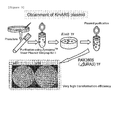
- Kluyveromyces marxianus- derived genomic DNA was digested with restriction enzymes XhoI and EcoRI and inserted to a single-copy vector pRS316 for budding yeast ( Sikorski and Hieter, 1989; Genetics 122, 19-27 ) ( Figure 6 ).
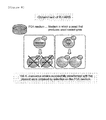
- This vector was introduced into E. coli to obtain 6868 colonies. Plasmids were extracted and purified from these colonies to prepare a Kluyveromyces marxianus genomic DNA library, which was then introduced into Kluyveromyces marxianus ( Figure 7 ). Strains in which URA3 was disrupted were selected using a 5-FOA medium to thereby select only transformed colonies having no genomic integration of the plasmid sequence ( Figure 8 ).
- the sequence contained in the plasmid KmARS7 is shown in SEQ ID NO: 17; the sequence contained in the plasmid KmARS11 is shown in SEQ ID NO: 18; the sequence contained in the plasmid KmARS14 is shown in SEQ ID NO: 19; the sequence contained in the plasmid KmARS16 is shown in SEQ ID NO: 20; the sequence contained in the plasmid KmARS18 is shown in SEQ ID NO: 21; the sequence contained in the plasmid KmARS22 is shown in SEQ ID NO: 22; the sequence contained in the plasmid KmARS36 is shown in SEQ ID NO: 23; the sequence contained in the plasmid KmARS45 is shown in SEQ ID NO: 24; and the sequence contained in the plasmid KmARS51 is shown in SEQ ID NO: 25.
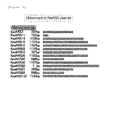
- KmARS was determined to be a region spanning KmARS7 205 to 250 bp (SEQ ID NO: 1), a region spanning KmARS11 46 to 105 bp (SEQ ID NO: 2), a region spanning KmARS16 721 to 700 bp (SEQ ID NO: 3), a region spanning KmARS7 80 to 159 bp (SEQ ID NO: 4), and a region spanning KmARS36 291 to 340 bp (SEQ ID NO: 5).
Landscapes
- Life Sciences & Earth Sciences (AREA)
- Health & Medical Sciences (AREA)
- Genetics & Genomics (AREA)
- Chemical & Material Sciences (AREA)
- Organic Chemistry (AREA)
- Engineering & Computer Science (AREA)
- Bioinformatics & Cheminformatics (AREA)
- Biomedical Technology (AREA)
- Biotechnology (AREA)
- General Engineering & Computer Science (AREA)
- Zoology (AREA)
- Wood Science & Technology (AREA)
- Mycology (AREA)
- Biochemistry (AREA)
- Biophysics (AREA)
- Molecular Biology (AREA)
- General Health & Medical Sciences (AREA)
- Physics & Mathematics (AREA)
- Microbiology (AREA)
- Plant Pathology (AREA)
- Cell Biology (AREA)
- Gastroenterology & Hepatology (AREA)
- Medicinal Chemistry (AREA)
- Proteomics, Peptides & Aminoacids (AREA)
- Micro-Organisms Or Cultivation Processes Thereof (AREA)
- Preparation Of Compounds By Using Micro-Organisms (AREA)
Abstract
Description
- The present invention relates to, for example, a method for producing a Kluyveromyces marxianus transformant and a method for producing a useful substance using the transformant.
- The technique of connecting the ends of DNA fragments to prepare arbitrary DNA molecules is a basic technique essential for many experimental procedures in the molecular biological field, including cloning. A current approach most generally used for ligating DNA fragments involves binding blunt-ended DNA molecules or DNA molecules complementary to each other at their sticky ends using DNA ligase. Also, the Cohen-Boyer method (see non-patent document 1) is known as a cloning method based on this approach. This method involves cleaving insert DNA and a vector with their respective restriction enzymes, purifying the fragments, and then ligating the fragments using DNA ligase to prepare the construct of interest, with which E. coli is then transformed, followed by amplification. Since such a DNA ligation method using restriction enzymes and DNA ligase, however, achieves ligation only between DNA molecules prepared in advance to have corresponding ends, the Cohen-Boyer method requires complicated in vitro procedures such as PCR and restriction enzyme treatment for preparing constructs for transformation and further requires a lot of time for selecting E. coli comprising the construct of interest from among colonies of transformed E. coli. For these reasons, the development of more convenient and efficient methods for ligating DNA molecules has been demanded.
- In vitro and in vivo homologous recombination methods have been developed as cloning methods using neither restriction enzymes nor DNA ligase as a substitute for the Cohen-Boyer method. The in vitro homologous recombination method connects DNA molecules using specific recombinase and its recognition sequence. For example, the Gateway method of Invitrogen Corp. and the In-Fusion cloning method of Takara Bio Inc. are known. These methods, however, require particular DNA sequences present in both ends of insert DNA and in vectors and therefore, are not excellent in versatility. Alternatively, the known in vivo homologous recombination method uses E. coli (see non-patent documents 2 and 3) or bakery yeast (see non-patent documents 4 and 5). These in vivo homologous recombination methods are based on the fact that E. coli strains caused to express a plurality of phage-derived proteins, or bakery yeast has exceedingly high homologous recombination proficiency. Specifically, insert DNA having, at both ends, additional sequences homologous to a cloning vector and a cloning vector from which a homologous recombination site has been cleaved off with restriction enzymes or the like are prepared, and E. coli or bakery yeast can be transformed therewith to thereby obtain an insert DNA-integrated cloning vector as a result of homologous recombination within the transformed cell (in vivo). This reaction takes place independently of restriction enzyme sites and therefore allows insertion of a DNA fragment to various positions in a vector sequence. Another feature thereof is that cloning efficiency does not vary depending on the length of insert DNA. Both of these methods, however, utilize homologous recombination and thus require adding a sequence homologous to a vector to insert DNA. The in vivo homologous recombination method using E. coli further requires electroporation for obtaining high transformation efficiency and disadvantageously requires, for example, expensive apparatuses or instruments for the procedures. Alternatively, the in vivo homologous recombination method using bakery yeast requires bakery yeast-E. coli shuttle vectors used for transferring cloning vectors to E. coli in the large-scale preparation of DNA. Unfortunately, bakery yeast-E. coli shuttle vectors are not generally used and require time and effort for their preparation.
- Alternatively, a known method for constructing and amplifying circular DNA without using restriction enzymes or DNA ligase involves transforming prokaryotic cells with linear DNA obtained by the rolling circle amplification method and reconstructing circular DNA within the transformed cells (see patent document 1). The amplified DNA fragment prepared by the rolling circle amplification method, however, has a specific structure comprising repeating sequences. It is uncertain whether this method can be applied to the circularization of a DNA fragment free from repeating sequences.
-
- Patent Document 1: Japanese unexamined Patent Application Publication No.
2005-229950 -
- Non-patent Document 1: Cohen SN et al., Proc Natl Acad Sci USA. 70, 3240-3244 (1973)
- Non-patent Document 2: Zhang Y et al., Nat Genet. 20, 123-128 (1998)
- Non-patent Document 3: Yu D et al., Proc Natl Acad Sci USA. 97, 5978-5983 (2000)
- Non-patent Document 4: Marykwas DL and Passmore SE, Proc Natl Acad Sci USA. 92, 11701-11705 (1995)
- Non-patent Document 5: Oldenburg KR et al., Nucleic Acids Res. 25, 451-452 (1997)
- An object of the present invention is to provide, for example, a method for producing a Kluyveromyces marxianus transformant by conveniently and efficiently connecting the ends of DNA fragments without using specific restriction enzymes or their recognition sequences, and a method for producing a useful substance using the transformant.
- The present inventors have previously revealed that Kluyveromyces marxianus, a yeast species, has various excellent properties that are not observed in other yeasts (
PCT/JP2007/001270 PCT/JP2009/001214 - Specifically, the present invention relates to (1) a method for producing a transformed yeast comprising a DNA ligation product consisting of two or more linear double-stranded DNA fragments, the method sequentially comprising the following steps (a) and (b):
- (a) introducing two or more linear double-stranded DNA fragments free from an autonomously replicating sequence into Kluyveromyces marxianus, wherein the two or more linear double-stranded DNA fragments are two or more linear double-stranded DNA fragments, each of which does not comprise in itself a whole sequence necessary for marker gene expression and comprises a sequence that enables marker gene expression only when plural double-stranded DNA fragments are linked to form a desired DNA ligation product; and
- (b) selecting a transformant with the desired DNA ligation product integrated in the genomic DNA obtained by the step (a) by using the marker gene expression as an index, (2) a method for producing a transformed yeast comprising a circular DNA ligation product consisting of one linear double-stranded DNA fragment, the method sequentially comprising the following steps (a) and (b):
- (a) introducing one linear double-stranded DNA fragment comprising a whole autonomously replicating sequence and a whole sequence necessary for marker gene expression into Kluyveromyces marxianus; and
- (b) selecting the desired circular DNA ligation product obtained by the step (a) by using the marker gene expression as an index, (3) a method for producing a transformed yeast comprising a circular DNA ligation product consisting of two or more linear double-stranded DNA fragments, the method sequentially comprising the following steps (a) and (b):
- (a) introducing a linear double-stranded DNA fragment comprising a whole autonomously replicating sequence and a portion of a sequence necessary for marker gene expression, in combination with one or more linear double-stranded DNA fragment(s) different therefrom into Kluyveromyces marxianus, wherein the one or more linear double-stranded DNA fragment(s) different therefrom is a linear double-stranded DNA fragment (s), each of which does not comprise in itself the whole sequence necessary for marker gene expression and comprises a sequence that enables marker gene expression only when linked with a linear double-stranded DNA fragment comprising the autonomously replicating sequence and a portion of the marker gene to form a desired circular DNA ligation product ; and
- (b) selecting a transformant comprising the desired circular DNA ligation product obtained by the step (a) by using the marker gene expression as an index; (4) a method for producing a transformed yeast comprising a circular DNA ligation product consisting of two or more linear double-stranded DNA fragments, the method sequentially comprising the following steps (a) and (b):
- (a) introducing a linear double-stranded DNA fragment comprising a portion of autonomously replicating sequence and a portion of a sequence necessary for marker gene expression, in combination with one or more linear double-stranded DNA fragment(s) different therefrom into Kluyveromyces marxianus, wherein the one or more linear double-stranded DNA fragment(s) different therefrom is linear double-stranded DNA fragment(s), each of which does not comprises in itself a whole autonomously replicating sequence- and a whole sequence necessary for marker gene expression, and comprises a sequence that forms the whole autonomously replicating sequence and a sequence that enables marker gene expression only when linked with a linear double-stranded DNA fragment comprising the portion of autonomously replicating sequence and the portion of the sequence necessary for marker gene expression to form a desired circular DNA ligation product; and
- (b) selecting a transformant comprising the desired circular DNA ligation product obtained by the step (a) by using the marker gene expression as an index, (5) the production method according to any one of (2) to (4), wherein the autonomously replicating sequence comprises a nucleotide sequence represented by any of SEQ ID NOs: 1 to 5, (6) the production method according to any one of (1) to (5), wherein the DNA ligation product further comprises a gene encoding a desired useful substance, (7) the production method according to any one of (1) to (6), wherein Kluyveromyces marxianus is Kluyveromyces marxianus RAK3605, and the marker gene is URA3 gene, (8) a transformed yeast obtained by a production method according to (6) or (7), (9) a method for producing a useful substance, comprising culturing a transformed yeast according to (8) in a medium and collecting a desired useful substance from the cultures, and (10) a Kluyveromyces marxianus ARS sequence represented by any of SEQ ID NOs: 1 to 5.
- According to the present invention, a Kluyveromyces marxianus transformant with a ligation product of two or more linear DNA fragments integrated in the genomic DNA can be produced without using specific restriction enzymes or their recognition sequences. Moreover, according to the present invention, Kluyveromyces marxianus can be transformed with a desired DNA sequence having an additional sequence encoding Kluyveromyces marxianus ARS to thereby construct a circular DNA ligation product comprising the DNA sequence. As a result, the desired DNA sequence can be cloned without complicated procedures.
-
- [
Figure 1] Figure 1 is a diagram showing the summary of the method of the present invention for preparing a DNA ligation product using two linear double-stranded DNA fragments. - [
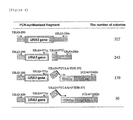
Figure 2] Figure 2 is a diagram showing results of preparing a DNA ligation product encoding URA3 by the method of the present invention. - [
Figure 3] Figure 3 is a diagram showing the summary of the method of the present invention for binding two linear double-stranded DNA fragments. - [
Figure 4] Figure 4 is a diagram showing results of preparing a DNA ligation product encoding URA3, TDH3p, and yCLuc by the method of the present invention. - [
Figure 5] Figure 5 is a diagram showing results of preparing a DNA ligation product encoding URA3 by the method of the present invention. - [
Figure 6] Figure 6 is a diagram showing a plasmid used for obtaining the Kluyveromyces marxianus autonomously replicating sequence (KmARS) of the present invention. - [
Figure 7] Figure 7 is a diagram showing the summary of an experiment for obtaining the Kluyveromyces marxianus autonomously replicating sequence (KmARS) of the present invention. - [
Figure 8] Figure 8 is a diagram showing a method for selecting a transformant in order to obtain the Kluyveromyces marxianus autonomously replicating sequence (KmARS) of the present invention. - [
Figure 9] Figure 9 is a diagram showing a method for obtaining a plasmid comprising the Kluyveromyces marxianus autonomously replicating sequence (KmARS) of the present invention. - [
Figure 10] Figure 10 is a diagram showing a plasmid comprising the Kluyveromyces marxianus autonomously replicating sequence (KmARS) of the present invention. - [
Figure 11] Figure 11 is a diagram showing a deletion mutant for determining the Kluyveromyces marxianus autonomously replicating sequence (KmARS) of the present invention. - [
Figure 12] Figure 12 is a diagram showing the Kluyveromyces marxianus autonomously replicating sequence (KmARS) of the present invention. - [
Figure 13] Figure 13 is a diagram showing the summary of the method of the present invention for preparing a circular DNA ligation product. - The method of the present invention for producing a transformed yeast comprising a DNA ligation product consisting of two or more linear double-stranded DNA fragments is not particularly limited as long as the method comprises the following steps (a) and (b) in order:
- (a) introducing two or more linear double-stranded DNA fragments free from an autonomously replicating sequence into Kluyveromyces marxianus, wherein the two or more linear double-stranded DNA fragments are two or more linear double-stranded DNA fragments, each of which does not comprise in itself the whole sequence necessary for marker gene expression and comprises a sequence that permits marker gene expression only when forming a desired DNA ligation product by the ligation of the double-stranded DNA fragments; and (b) selecting, with the marker gene expression as an index, a transformant with the desired DNA ligation product integrated in the genomic DNA obtained by the step (a) (hereinafter, this method is also referred to as "production method [I]"). In this context, the "two or more linear double-stranded DNA fragments free from an autonomously replicating sequence" mean double-stranded DNA fragments, each of which does not comprise an autonomously replicating sequence and forms a DNA conjugate by its ligation with the other DNA fragment(s) in any order so that the resulting DNA conjugate does not comprise the autonomously replicating sequence. The "two or more linear double-stranded DNA fragments, each of which comprises a sequence that permits marker gene expression only when forming a desired DNA ligation product" mean linear double-stranded DNA fragments, each of which comprises a portion of a sequence necessary for marker gene expression within Kluyveromyces marxianus, but not the whole sequence necessary for marker gene expression within Kluyveromyces marxianus, and comprises a sequence that permits marker gene expression within Kluyveromyces marxianus only when forming a desired DNA ligation product by the ligation of the double-stranded DNA fragments in a desired order, but does not permit marker gene expression within Kluyveromyces marxianus when forming a DNA ligation product different from the desired DNA ligation product by the ligation of the double-stranded DNA fragments in an order different from the desired order.
- The two or more linear double-stranded DNA fragments used in the production method [I] of the present invention are not particularly limited by their sequences, lengths, or terminal shapes, and may further comprise DNA of an arbitrary sequence in addition to arbitrary gene DNA targeted by cloning such as a gene encoding a desired useful substance, or arbitrary gene DNA such as a high-expression promoter-linked gene encoding a desired useful substance. For example, in the case where the desired DNA ligation product in the production method [I] of the present invention is a DNA ligation product comprising a high-expression promoter sequence, a marker gene-encoding sequence, and an arbitrary nucleotide sequence in order, the following combinations of two linear double-stranded DNA fragments exemplified in (i) or (ii) can be preferably used:
- (i) a linear double-stranded DNA fragment comprising a high-expression promoter sequence and a marker gene-encoding sequence lacking its 3'-terminal region essential for functional marker gene expression, and a linear double-stranded DNA fragment comprising a sequence encoding the 3'-terminal region essential for functional marker gene expression and an arbitrary downstream nucleotide sequence such as a DNA sequence encoding the desired useful substance; and
- (ii) a linear double-stranded DNA fragment comprising a high-expression promoter sequence and a sequence encoding a 5'-terminal region comprising the transcription initiation site of a marker gene-encoding sequence, and a linear double-stranded DNA fragment that is free from the 5'-terminal region of the marker gene-encoding sequence and comprises the region of the marker gene-encoding sequence encoding the downstream region of the 5'-terminal region of the marker gene to the 3' end, and an arbitrary downstream nucleotide sequence such as a DNA sequence encoding the desired useful substance.
- A method for preparing the linear double-stranded DNA fragments is not particularly limited as long as the method is known in the art for preparing linear double-stranded DNA fragments. Preferable examples thereof can include: methods for preparing relatively short double-stranded DNA fragments, such as a method involving annealing single strands synthesized by the phosphoramidite or phosphite method, and a preparation method based on usual PCR; and methods for preparing long DNA fragments, such as a preparation method based on fusion PCR (see Japanese unexamined Patent Application Publication No.
2009-268360 - The method of the present invention for producing a transformed yeast comprising a circular DNA ligation product consisting of one linear double-stranded DNA fragment is not particularly limited as long as the method comprises the following steps (a) and (b) in order: (a) introducing one linear double-stranded DNA fragment into Kluyveromyces marxianus, the one linear double-stranded DNA fragment comprising the whole autonomously replicating sequence and the whole sequence necessary for marker gene expression; and (b) selecting, with the marker gene expression as an index, the desired circular DNA ligation product obtained by the step (a) (hereinafter, this method is also referred to as "production method [II]"). The "one linear double-stranded DNA fragment comprising the whole autonomously replicating sequence and the whole sequence necessary for marker gene expression" used in the production method [II] is not particularly limited by its sequence, length, or terminal shape as long as the linear double-stranded DNA fragment comprises the whole autonomously replicating sequence that is functional within Kluyveromyces marxianus and comprises a sequence that permits marker gene expression within Kluyveromyces marxianus. The linear double-stranded DNA fragment may further comprise DNA of an arbitrary sequence in addition to arbitrary gene DNA targeted by cloning, such as a gene encoding a desired useful substance, or arbitrary gene DNA such as a high-expression promoter-linked gene encoding a desired useful substance. A method for preparing the linear double-stranded DNA fragment is not particularly limited as long as the method is known in the art for preparing linear double-stranded DNA fragments. Preferable examples thereof can include: methods for preparing relatively short double-stranded DNA fragments, such as a method involving annealing single strands synthesized by the phosphoramidite or phosphite method, and a preparation method based on usual PCR; and methods for preparing long DNA fragments, such as a preparation method based on fusion PCR (see Japanese unexamined Patent Application Publication No.
2009-268360 - The method of the present invention for producing a transformed yeast comprising a circular DNA ligation product consisting of two or more linear double-stranded DNA fragments is not particularly limited as long as the method comprises the following steps (a) and (b) in order:
- (a) introducing a linear double-stranded DNA fragment comprising the whole autonomously replicating sequence and a portion of a sequence necessary for marker gene expression, in combination with one or more linear double-stranded DNA fragment(s) different therefrom into Kluyveromyces marxianus, wherein the one or more linear double-stranded DNA fragment(s) different therefrom is linear double-stranded DNA fragment(s), each of which does not comprise in itself the whole sequence necessary for marker gene expression and comprises a sequence that permits marker gene expression only when forming a desired circular DNA ligation product by the ligation thereof with the linear double-stranded DNA fragment comprising the autonomously replicating sequence and a portion of the marker gene; and (b) selecting, with the marker gene expression as an index, a transformant comprising the desired circular DNA ligation product obtained by the step (a) (hereinafter, this method is also referred to as "production method [III]"), or comprises the following steps (a) and (b) in order: (a) introducing a linear double-stranded DNA fragment comprising a partial autonomously replicating sequence and a portion of a sequence necessary for marker gene expression, in combination with one or more linear double-stranded DNA fragment(s) different therefrom into Kluyveromyces marxianus, wherein the one or more linear double-stranded DNA fragment(s) different therefrom is linear double-stranded DNA fragment(s), each of which comprises in itself neither the whole autonomously replicating sequence nor the whole sequence necessary for marker gene expression and comprises a sequence that gives the whole autonomously replicating sequence and permits marker gene expression only when forming a desired circular DNA ligation product by the ligation thereof with the linear double-stranded DNA fragment comprising a partial autonomously replicating sequence and a portion of a sequence necessary for marker gene expression; and (b) selecting, with the marker gene expression as an index, a transformant comprising the desired circular DNA ligation product obtained by the step (a) (hereinafter, this method is also referred to as "production method [IV]"). The "linear double-stranded DNA fragment comprising the whole autonomously replicating sequence and a portion of a sequence necessary for marker gene expression" in the production method [III] is not particularly limited as long as the double-stranded DNA fragment comprises the whole autonomously replicating sequence that is functional within Kluyveromyces marxianus and does not comprise the whole sequence necessary for marker gene expression that is functional within Kluyveromyces marxianus. The "one or more linear double-stranded DNA fragment(s) different therefrom" in the production method [III] is not limited by its sequence, length, or terminal shape as long as the double-stranded DNA fragment(s) does not comprise in itself the whole sequence necessary for marker gene expression within Kluyveromyces marxianus and comprises a sequence that permits marker gene expression within Kluyveromyces marxianus only when forming a desired circular DNA ligation product. The "linear double-stranded DNA fragment comprising a partial autonomously replicating sequence and a portion of a sequence necessary for marker gene expression" in the production method [IV] is not particularly limited as long as the double-stranded DNA fragment comprises neither the whole autonomously replicating sequence that is functional within Kluyveromyces marxianus nor the whole sequence necessary for marker gene expression that is functional within Kluyveromyces marxianus. The "one or more linear double-stranded DNA fragment(s) different therefrom" in the production method [IV] is not limited by its sequence, length, or terminal shape as long as the double-stranded DNA fragment(s) comprises in itself neither the whole autonomously replicating sequence that is functional within Kluyveromyces marxianus nor the whole sequence necessary for marker gene expression and forms a desired DNA conjugate only by the ligation thereof with the "linear double-stranded DNA fragment comprising a partial autonomously replicating sequence and a portion of a sequence necessary for marker gene expression" so that the resulting DNA conjugate comprises the autonomously replicating sequence and the sequence necessary for marker gene expression.
- The "linear double-stranded DNA fragment comprising the whole autonomously replicating sequence and a portion of a sequence necessary for marker gene expression" and the "one or more linear double-stranded DNA fragment(s) different therefrom" used in the production method [III] of the present invention may further comprise DNA of an arbitrary sequence in addition to arbitrary gene DNA targeted by cloning such as a gene encoding a desired useful substance, or arbitrary gene DNA such as a high-expression promoter-linked gene encoding a desired useful substance. Also, the "linear double-stranded DNA fragment comprising a partial autonomously replicating sequence and a portion of a sequence necessary for marker gene expression" and the "one or more linear double-stranded DNA fragment(s) different therefrom" used in the production method [IV] of the present invention may further comprise an arbitrary nucleotide sequence such as a nucleotide sequence comprising a gene sequence targeted by cloning or a nucleotide sequence comprising a high-expression promoter and an arbitrary gene sequence linked downstream thereof. A method for preparing the linear double-stranded DNA fragments is not particularly limited as long as the method is known in the art for preparing linear double-stranded DNA fragments. Preferable examples thereof can include: methods for preparing relatively short double-stranded DNA fragments, such as a method involving annealing single strands synthesized by the phosphoramidite or phosphite method, and a preparation method based on usual PCR; and methods for preparing long DNA fragments, such as a preparation method based on fusion PCR (see Japanese unexamined Patent Application Publication No.
2009-268360 - In the production methods [I] to [IV] of the present invention, a method for introducing the linear double-stranded DNA fragment(s) into Kluyveromyces marxianus is not particularly limited as long as the method is an approach usually used for yeast transformation. Preferable examples thereof can include the lithium acetate method (J. Bacteriology, 153, p. 163 (1983); Proc. Natl. Acad. Sci. USA, 75, p. 1929 (1978); and Methods in yeast genetics, 2000 Edition: A Cold Spring Harbor Laboratory Course Manual), the electroporation method (Meth. Enzym., 194, p. 182 (1990)), and the spheroplast method (Proc. Natl. Acad. Sci. USA, 75, p. 1929 (1978)). Among them, the lithium acetate method can be advantageously used. The lithium acetate method, albeit very convenient, is known to have much lower transformation efficiency than that of other transformation methods. However, Kluyveromyces marxianus used in the present invention allows efficient transformation using linear double-stranded DNA fragments and thus, can achieve sufficient transformation efficiency even in the lithium acetate method.
- The marker gene is not particularly limited as long as the marker gene can be used in yeasts. Preferable examples thereof can include auxotrophic marker genes complementing the auxotrophy of host Kluyveromyces marxianus, drug (e.g., antibiotic) resistance marker genes, genes encoding fluorescent proteins such as green fluorescent protein (GFP), and a gene encoding β-galactosidase. Among them, auxotrophic marker genes are preferable. The auxotrophic marker gene may be, for example, an auxotrophic marker gene complementing the auxotrophy of an amino acid (e.g., tryptophan, arginine, or leucine) auxotrophic mutant or an auxotrophic marker gene complementing the auxotrophy of a nucleic acid (e.g., adenine or uracil) auxotrophic mutant and is particularly preferably URA3 gene complementing the auxotrophy of an uracil auxotrophic mutant. In the present invention, two or more marker genes may be used in combination.
- Likewise, the Kluyveromyces marxianus is not particularly limited and may be a wild-type strain or a mutant having genetic mutation, such as an auxotrophic mutant. The auxotrophic mutant is preferable because its transformant can be easily selected with auxotrophic marker gene expression as an index. Among others, a nucleic acid (e.g., adenine or uracil) auxotrophic mutant is particularly preferable. For example, in the case of using an uracil auxotrophic mutant of Kluyveromyces marxianus in the production methods [I] to [IV] of the present invention, its combination with the URA3 gene as a marker gene can achieve efficient selection of a transformant comprising the desired DNA ligation product. Alternatively, in the case of using an adenine auxotrophic mutant of Kluyveromyces marxianus therein, its combination with the ADE2 gene as a marker gene can achieve efficient selection of such a transformant. Preferable examples of the uracil auxotrophic mutant can specifically include Kluyveromyces marxianus RAK3605, Kluyveromyces marxianus RAK4071, Kluyveromyces marxianus RAK4076, and Kluyveromyces marxianus RAK4077. Preferable examples of the adenine autotrophic mutant can specifically include RAK6038.
- The autonomously replicating sequence used in the present invention is not particularly limited as long as the sequence serves as an autonomous replication origin in Kluyveromyces marxianus. The autonomously replicating sequence is preferably, for example, an autonomously replicating sequence KmARS7 (201-250) consisting of the nucleotide sequence represented by SEQ ID NO: 1 (5'-CAAGACTTCTTGAAGTGAAAACCAACTTTCAGTCTTCAAACTAAAAATGA-3'), an autonomously replicating sequence KmARS11 (46-105) consisting of the nucleotide sequence represented by SEQ ID NO: 2 (5'-TCCAAAATTAACTTTCTAAGCTAAATGTCATATTTCGCAATAAAATAATAAGAATATA GA-3'), an autonomously replicating sequence KmARS16 (721-790) consisting of the nucleotide sequence represented by SEQ ID NO: 3 (5'-TTTTATTTTTTTTTAACTCAATTTCCAGTTTAAACACCAAAATACGTTTCCATATAAT TGAAAAAGGAAG-3'), an autonomously replicating sequence KmARS18 (80-159) consisting of the nucleotide sequence represented by SEQ ID NO: 4 (5'-GATTATTATAAGGCATAATGCCAGGAATCTTTCCATAATTTGGAATTGAAAGTCACTT TAGGTTCACTATATAATGAAAA-3'), an autonomously replicating sequence KmARS36 (291-340) consisting of the nucleotide sequence represented by SEQ ID NO: 5 (5'-TCTTTAATATTATTTTTCATTTCAAAAAGTGTGAAATAAAAATTAAAATG-3'), or an autonomously replicating sequence derived from the nucleotide sequence represented by any of SEQ ID NOs: 1 to 5 by the deletion, substitution, or addition of one or more base(s). The autonomously replicating sequence comprising the nucleotide sequence represented by any of SEQ ID NOs: 1 to 5 or the autonomously replicating sequence derived from the nucleotide sequence represented by any of SEQ ID NOs: 1 to 5 by the deletion, substitution, or addition of one or more base(s) can be added to an arbitrary DNA fragment by a method known in the art such as PCR to thereby prepare a linear double-stranded DNA fragment comprising the autonomously replicating sequence, which can in turn be used in the production methods [II] to [IV] of the present invention.
- The method of the present invention for producing a useful substance is not particularly limited as long as the method comprises: culturing a yeast transformed with a DNA ligation product comprising a gene encoding a desired useful substance in a medium, the transformed yeast being obtained by any of the production methods [I] to [IV] of the present invention; and collecting the desired useful substance from the cultures. Preferable examples of the useful substance can include, but not particularly limited to, recombinant pharmaceutical proteins such as antibodies and cytokines. Since Kluyveromyces marxianus is a yeast having high protein productivity and heat resistance (Biosci. Biotechnol. Biochem. 71: 1170-82, 2007), the method of the present invention for producing a useful substance can achieve inexpensive and efficient production of the useful substance.
- Examples of kits for production of DNA ligation products or circular DNA ligation products that can be usefully used in the method of the present invention for producing a transformed yeast can include those provided with Kluyveromyces marxianus. The Kluyveromyces marxianus may be a wild-type strain or a mutant having genetic mutation, such as an auxotrophic mutant and is preferably an auxotrophic mutant. Among others, a nucleic acid (e.g., adenine or uracil) auxotrophic mutant is particularly preferable. Preferable examples of the uracil auxotrophic mutant can specifically include Kluyveromyces marxianus RAK3605, and Kluyveromyces marxianus RAK4071, Kluyveromyces marxianus RAK4076, Kluyveromyces marxianus RAK4077. Preferable examples of the adenine autotrophic mutant can specifically include RAK6038. The uracil auxotrophic mutant Kluyveromyces marxianus RAK3605 is particularly preferable. The kit of the present invention for production of circular DNA ligation products may be further provided with a primer comprising the nucleotide sequence represented by any of SEQ ID NOs: 1 to 5, or a primer comprising an autonomously replicating sequence derived from the nucleotide sequence represented by any of SEQ ID NOs: 1 to 5 by the deletion, substitution, or addition of one or more base(s). Also, the kit may further comprise double-stranded DNA comprising the whole or a portion of a sequence encoding a marker gene, a medium for culture of Kluyveromyces marxianus, a buffer solution, etc.
- Hereinafter, the present invention will be described more specifically with reference to Examples. However, the technical scope of the present invention is not intended to be limited to these Examples.
- PCR reaction was performed with Saccharomyces cerevisiae BY4704-derived DNA as a template using KOD-plus polymerase (manufactured by TOYOBO CO., LTD.) to prepare DNA fragments comprising the whole or a portion of the URA3 gene (URA3-290-280c, URA3-290+771c, and URA3+772-280c). The sequences of primers used in the PCR reaction are as shown below. The DNA fragment URA3-290-280c comprising the whole URA3 was prepared using a forward primer URA3-290 and a reverse primer URA3-280c; the DNA fragment URA3-290+771c comprising a portion (encoding the N-terminal region) of URA3 was prepared using a forward primer URA3-290 and a reverse primer URA3+771c; and the DNA fragment URA3+772-280c comprising a portion (encoding the C-terminal region) of URA3 was prepared using a forward primer URA3+772 and a reverse primer URA3-280c.
-
- URA3-290 (5'-GAGAAGGGCAACGGTTCATCATCTC-3'; SEQ ID NO: 6)
- URA3+772 (5'-GCATATTTGAGAAGATGCGGCCAGC-3'; SEQ ID NO: 7)
-
- URA3+771c (5'-TTCCCAGCCTGCTTTTCTGTAACGT-3'; SEQ ID NO: 8)
- URA3-280c (5'-CAGTCTGTGAAACATCTTTCTACCA-3'; SEQ ID NO: 9)
- The PCR reaction was performed by initial denaturation at 94°C for 1 minute followed by 30 cycles each involving thermal denaturation at 94°C for 20 seconds, annealing at 55°C for 30 seconds, and elongation reaction at 68°C for 2.5 minutes. The PCR reaction solution was prepared as shown below. After the reaction, the DNA concentration of each obtained PCR product was determined, and the concentration of each amplified DNA fragment was adjusted to 10 pM.
-
Template 0.4 µL 10 x Buffer 1.0 µL 2 mM dNTPs 1.0 µL 25 mM MgSO4 0.4 µL Forward primer 0.2 µL Reverse primer 0.2 µL KOD-plus polymerase 0.2 µL Sterile water 6.6 µL - A Kluyveromyces marxianus RAK3605 strain having uracil auxotrophic genetic mutation was inoculated to 10 ml of a YPD medium (1% yeast extracts, 2% polypeptone, and 2% glucose) and cultured at 28°C for 20 hours. The culture solution was collected, transferred to two 15-mL tubes, and centrifuged at 8000 rpm for 3 minutes. The supernatant was discarded, and 300 µL/tube of a solution for transformation [2000 µl of 60% PEG3350, 150 µL of 4 M lithium acetate, 300 µL of 1 M DTT, and 550 µL of sterile water] was added to the precipitated cells, followed by stirring with a vortex mixer. The solution was centrifuged again at 8000 rpm for 3 minutes, and the supernatant was discarded. 600 µL/tube of a solution for transformation was added to the precipitated cells, and the mixture was then dispensed in an amount of 100 µL/tube to 1.5-mL tubes. The DNA fragments (3 µL each of the fragments) prepared in Example 1 were added alone or in combination thereto and heat-treated at 47°C for 15 minutes. 150 µL of sterile water was added thereto, and the cells were spread over an uracil-deficient medium and cultured at 28°C for 3 days. The number of grown colonies was counted.
- The experiment is summarized in
Figure 1 , and the results of three transformation experiments are shown inFigure 2 . 275 colonies on average were obtained from transformation with the DNA fragment URA3-290-280c comprising the whole URA3. 36 colonies on average were obtained from transformation with the combination of the DNA fragment URA3-290+771c comprising a portion (encoding the N-terminal region) of URA3 and the DNA fragment URA3+772-280c comprising a portion (encoding the C-terminal region) of URA3. By contrast, use of the DNA fragment URA3-290+771c or URA3+772-280c alone produced no observable colony. These results demonstrated that the transformant to which URA3-290+771c and URA3+772-280c were introduced in combination expressed full-length URA3 protein as a result of the binding between these two DNA fragments. - PCR reaction was performed with Saccharomyces cerevisiae BY4704-derived DNA as a template using KOD-plus polymerase (manufactured by TOYOBO CO., LTD.) to prepare DNA fragments comprising the whole or a portion of the URA3 gene (URA3-290-280c, URA3-290+771c, and URA3+772-280c). The sequences of primers used in the PCR reaction are as shown below. The DNA fragment URA3-290-280c comprising the whole URA3 was prepared using a forward primer URA3-290 and a reverse primer URA3-280c; the DNA fragment URA3-290+771c comprising a portion (encoding the N-terminal region) of URA3 was prepared using a forward primer URA3-290 and a reverse primer URA3+771c; and the DNA fragment URA3+772-280c comprising a portion (encoding the C-terminal region) of URA3 was prepared using a forward primer URA3+772 and a reverse primer URA3-280c.
-
- URA3-290 (5'-GAGAAGGGCAACGGTTCATCATCTC-3'; SEQ ID NO: 6)
- URA3+772 (5'-GCATATTTGAGAAGATGCGGCCAGC-3'; SEQ ID NO: 7)
-
- URA3+771c (5'-TTCCCAGCCTGCTTTTCTGTAACGT-3'; SEQ ID NO: 8)
- URA3-280c (5'-CAGTCTGTGAAACATCTTTCTACCA-3'; SEQ ID NO: 9)
- Also, PCR reaction was performed with Kluyveromyces marxianus RAK4960 strain-derived DNA as a template using KOD-plus polymerase (manufactured by TOYOBO CO., LTD.) to prepare DNA fragments comprising a sequence encoding TDH3p and yCLuc (URA3+772TAA+1662c and URA3+772TAA+17+1662c). The sequences of primers used in the PCR reaction are as shown below. The DNA fragment URA3+772TAA+1662c was prepared using a forward primer URA3+772TAA-TDH-527 and a reverse primer yCLuc+1662c; and the DNA fragment URA3+772TAA+17+1662c was prepared using a forward primer URA3+772TAA+17-TDH-527 and a reverse primer yCLuc+1662c.
-


-
- yCLuc+1662c (5'-CTACTTGCACTCATCTGGGACC-3'; SEQ ID NO: 12)
- The PCR reaction was performed by initial denaturation at 94°C for 1 minute followed by 30 cycles each involving thermal denaturation at 94°C for 20 seconds, annealing at 55°C for 30 seconds, and elongation reaction at 68°C for 3 minutes. The PCR reaction solution was prepared as shown below. After the reaction, the DNA concentration of each obtained PCR product was determined, and the concentration of each amplified DNA fragment was adjusted to 10 pM.
-
Template 0.4 µL 10 x Buffer 1.0 µL 2 mM dNTPs 1.0 µL 25 mM MgSO4 0.4 µL Forward primer 0.2 µL Reverse primer 0.2 µL KOD-plus polymerase 0.2 µL Sterile water 6.6 µL - A Kluyveromyces marxianus RAK3605 strain having uracil auxotrophic genetic mutation was inoculated to 2 ml of a YPD medium (1% yeast extracts, 2% polypeptone, and 2% glucose) and cultured overnight. 1.5 mL of the culture solution was collected, transferred to another tube, and centrifuged at 12000 rpm for 1 minute. The supernatant was discarded, and 200 µL/tube of a solution for transformation [2000 µl of 60% PEG3350, 150 µL of 4 M lithium acetate, 300 µL of 1 M DTT, and 550 µL of sterile water] was then added to the precipitated cells, followed by stirring with a vortex mixer. The solution was centrifuged again at 12000 rpm for 1 minute, and the supernatant was discarded. 50 µL of a solution for transformation and the combination of the DNA fragments (3 µL each of the DNA fragments) prepared in Example 3 were added to the precipitated cells, and the mixture was stirred with a vortex mixer and heat-treated at 47°C for 15 minutes. Then, 150 µL of sterile water was added thereto, and the cells were spread over an uracil-deficient medium and cultured at 28°C for 3 days. The number of grown colonies was counted.
- The experiment is summarized in
Figure 3 , and the results of the transformation experiment are shown inFigure 4 . 327 colonies were obtained from transformation with the DNA fragment URA3-290-280c comprising the whole URA3, while 243 colonies were obtained from transformation with the DNA fragment URA3-290+771c and the DNA fragment URA3+772-280c in combination. 130 colonies were obtained from transformation with the DNA fragment URA3-290+771c and the DNA fragment URA3+772TAA+1662c in combination, while 95 colonies were obtained from transformation with the DNA fragment URA3-290+771c and the DNA fragment URA3+772TAA+17+1662c in combination. - PCR reaction was performed with Saccharomyces cerevisiae BY4704-derived DNA as a template using KOD-plus polymerase (manufactured by TOYOBO CO., LTD.) to prepare DNA fragments comprising the whole or a portion of the URA3 gene (URA3-290-280c, URA3-290+771c, URA3+772-280c, URA3+773-280c, URA3+774-280c, URA3+770-280c, and URA3+771-280c). The sequences of primers used in the PCR reaction are as shown below. The DNA fragment URA3-290-280c was prepared using a forward primer URA3-290 and a reverse primer URA3-280c; the DNA fragment URA3-290+771c was prepared using a forward primer URA3-290 and a reverse primer URA3+771c; the DNA fragment URA3+772-280c was prepared using a forward primer URA3+772 and a reverse primer URA3-280c; the DNA fragment URA3+773-280c was prepared using a forward primer URA3+773 and a reverse primer URA3-280c; the DNA fragment URA3+774-280c was prepared using a forward primer URA3+774 and a reverse primer URA3-280c; the DNA fragment URA3+770-280c was prepared using a forward primer URA3+770 and a reverse primer URA3-280c; and the DNA fragment URA3+771-280c was prepared using a forward primer URA3+771 and a reverse primer URA3-280c.
-
- URA3-290 (5'-GAGAAGGGCAACGGTTCATCATCTC-3'; SEQ ID NO: 6)
- URA3+772 (5'-GCATATTTGAGAAGATGCGGCCAGC-3'; SEQ ID NO: 7)
- URA3+773 (5'-CATATTtGAGAAGATGCGGCCA-3'; SEQ ID NO: 13)
- URA3+774 (5'-ATATTtGAGAAGATGCGGCCAG-3'; SEQ ID NO: 14)
- URA3+770 (5'-AaGCATATTtGAGAAGATGCGG-3'; SEQ ID NO: 15)
- URA3+771 (5'-aGCATATTtGAGAAGATGCGGC-3'; SEQ ID NO: 16)
-
- URA3+771c (5'-TTCCCAGCCTGCTTTTCTGTAACGT-3'; SEQ ID NO: 8)
- URA3-280c (5'-CAGTCTGTGAAACATCTTTCTACCA-3'; SEQ ID NO: 9)
- The PCR reaction was performed by initial denaturation at 94°C for 1 minute followed by 30 cycles each involving thermal denaturation at 94°C for 20 seconds, annealing at 55°C for 30 seconds, and elongation reaction at 68°C for 2.5 minutes. The PCR reaction solution was prepared as shown below. After the reaction, the DNA concentration of each obtained PCR product was determined, and the concentration of each amplified DNA fragment was adjusted to 10 pM.
-
Template 0.4 µL 10 x Buffer 1.0 µL 2 mM dNTPs 1.0 µL 25 mM MgSO4 0.4 µL Forward primer 0.2 µL Reverse primer 0.2 µL KOD-plus polymerase 0.2 µL Sterile water 6.6 µL - A Kluyveromyces marxianus RAK3605 strain having uracil auxotrophic genetic mutation was inoculated to 2 ml of a YPD medium (1% yeast extracts, 2% polypeptone, and 2% glucose) and cultured overnight. 1.5 mL of the culture solution was collected, transferred to another tube, and centrifuged at 12000 rpm for 1 minute. The supernatant was discarded, and 200 µL/tube of a solution for transformation [2000 µl of 60% PEG3350, 150 µL of 4 M lithium acetate, 300 µL of 1 M DTT, and 550 µL of sterile water] was then added to the precipitated cells, followed by stirring with a vortex mixer. The solution was centrifuged again at 12000 rpm for 1 minute, and the supernatant was discarded. 50 µL of a solution for transformation and the combination of the DNA fragments (3 µL each of the DNA fragments) prepared in Example 5 were added to the precipitated cells, and the mixture was stirred with a vortex mixer and heat-treated at 47°C for 15 minutes. Then, 150 µL of sterile water was added thereto, and the cells were spread over an uracil-deficient medium and cultured at 28°C for 3 days. The number of grown colonies was counted.
- The results of the transformation experiment are shown in
Figure 5 . 329 colonies were obtained from transformation with the DNA fragment URA3-290-280c comprising the whole URA3. 182 colonies were obtained from transformation with the combination of the DNA fragment URA3-290+771c comprising a portion (encoding the N-terminal region) of URA3 and the DNA fragment URA3+772-280c comprising a portion (encoding the C-terminal region) of URA3. Two combinations of the DNA fragment URA3-290+771c with the DNA fragment URA3+773-280c and the DNA fragment URA3-290+771c with the DNA fragment URA3+774-280c were combinations of the DNA fragments that formed a ligated sequence with in 1 or 2 base(s) defective in the URA3-encoding nucleotide sequence after the binding between the DNA fragments. Even such combinations were each confirmed to produce a small number of colonies (4 and 1 colonies, respectively). On the other hand, two combinations of the DNA fragment URA3-290+771c with the DNA fragment URA3+770-280c and the DNA fragment URA3-290+771c with the DNA fragment URA3+771-280c were combinations of the DNA fragments that formed a ligated sequence having a 1- or 2-base overlap in the URA3-encoding nucleotide sequence after the binding between the DNA fragments. As a result of such combinations, 28 and 21 colonies, respectively, were confirmed.
These results demonstrated that an N-terminal region-encoding DNA fragment of the URA3 gene and a DNA fragment provided on the 5' side with a C-terminal region-encoding of the URA3 gene could be prepared and introduced into a Kluyveromyces marxianus RAK3605 strain to thereby obtain a transformant comprising the DNA sequence of interest. - The following experiment was conducted for the purpose of identifying an autonomously replicating sequence (ARS) in Kluyveromyces marxianus: Kluyveromyces marxianus-derived genomic DNA was digested with restriction enzymes XhoI and EcoRI and inserted to a single-copy vector pRS316 for budding yeast (Sikorski and Hieter, 1989; Genetics 122, 19-27) (
Figure 6 ). This vector was introduced into E. coli to obtain 6868 colonies. Plasmids were extracted and purified from these colonies to prepare a Kluyveromyces marxianus genomic DNA library, which was then introduced into Kluyveromyces marxianus (Figure 7 ). Strains in which URA3 was disrupted were selected using a 5-FOA medium to thereby select only transformed colonies having no genomic integration of the plasmid sequence (Figure 8 ). - 168 transformants thus obtained were cultured, and plasmids were purified using Zymoprep Yeast Plasmid Miniprep Kit II (manufactured by Zymo Research) and used in the transformation of E. coli. Plasmids were further extracted and purified from E. coli and used in the transformation of Kluyveromyces marxianus RAK3605 having uracil auxotrophic genetic mutation (
Figure 9 ). As a result, 14 types of plasmids were obtained as shown inFigure 10 . The sequence contained in the plasmid KmARS7 is shown in SEQ ID NO: 17; the sequence contained in the plasmid KmARS11 is shown in SEQ ID NO: 18; the sequence contained in the plasmid KmARS14 is shown in SEQ ID NO: 19; the sequence contained in the plasmid KmARS16 is shown in SEQ ID NO: 20; the sequence contained in the plasmid KmARS18 is shown in SEQ ID NO: 21; the sequence contained in the plasmid KmARS22 is shown in SEQ ID NO: 22; the sequence contained in the plasmid KmARS36 is shown in SEQ ID NO: 23; the sequence contained in the plasmid KmARS45 is shown in SEQ ID NO: 24; and the sequence contained in the plasmid KmARS51 is shown in SEQ ID NO: 25. - Subsequently, a deletion mutant was prepared and used in an experiment for the purpose of determining the KmARS region. The experiment is summarized in
Figure 11 . From the results of the experiment shown inFigure 12 , KmARS was determined to be a region spanning KmARS7 205 to 250 bp (SEQ ID NO: 1), a region spanning KmARS11 46 to 105 bp (SEQ ID NO: 2), a region spanning KmARS16 721 to 700 bp (SEQ ID NO: 3), a region spanning KmARS7 80 to 159 bp (SEQ ID NO: 4), and a region spanning KmARS36 291 to 340 bp (SEQ ID NO: 5).
These results demonstrated that, as shown inFigure 13 , the 50- to 60-bp KmARS identified this time could be added to an arbitrary DNA fragment and introduced into Kluyveromyces marxianus to thereby construct circular DNA within the transformed cell.


Claims (10)
- A method for producing a transformed yeast comprising a DNA ligation product consisting of two or more linear double-stranded DNA fragments, the method sequentially comprising the following steps (a) and (b):(a) introducing two or more linear double-stranded DNA fragments free from an autonomously replicating sequence into Kluyveromyces marxianus, wherein the two or more linear double-stranded DNA fragments are two or more linear double-stranded DNA fragments, each of which does not comprise in itself a whole sequence necessary for marker gene expression and comprises a sequence that enables marker gene expression only when plural double-stranded DNA fragments are linked to form a desired DNA ligation product; and(b) selecting a transformant with the desired DNA ligation product integrated in the genomic DNA obtained by the step (a) by using the marker gene expression as an index.
- A method for producing a transformed yeast comprising a circular DNA ligation product consisting of one linear double-stranded DNA fragment, the method sequentially comprising the following steps (a) and (b):(a) introducing one linear double-stranded DNA fragment comprising a whole autonomously replicating sequence and a whole sequence necessary for marker gene expression into Kluyveromyces marxianus; and(b) selecting the desired circular DNA ligation product obtained by the step (a) by using the marker gene expression as an index.
- A method for producing a transformed yeast comprising a circular DNA ligation product consisting of two or more linear double-stranded DNA fragments, the method sequentially comprising the following steps (a) and (b):(a) introducing a linear double-stranded DNA fragment comprising a whole autonomously replicating sequence and a portion of a sequence necessary for marker gene expression, in combination with one or more linear double-stranded DNA fragment(s) different therefrom into Kluyveromyces marxianus, wherein the one or more linear double-stranded DNA fragment(s) different therefrom is a linear double-stranded DNA fragment(s), each of which does not comprise in itself the whole sequence necessary for marker gene expression and comprises a sequence that enables marker gene expression only when linked with a linear double-stranded DNA fragment comprising the autonomously replicating sequence and a portion of the marker gene to form a desired circular DNA ligation product ; and(b) selecting a transformant comprising the desired circular DNA ligation product obtained by the step (a) by using the marker gene expression as an index.
- A method for producing a transformed yeast comprising a circular DNA ligation product consisting of two or more linear double-stranded DNA fragments, the method sequentially comprising the following steps (a) and (b):(a) introducing a linear double-stranded DNA fragment comprising a portion of autonomously replicating sequence and a portion of a sequence necessary for marker gene expression, in combination with one or more linear double-stranded DNA fragment(s) different therefrom into Kluyveromyces marxianus, wherein the one or more linear double-stranded DNA fragment(s) different therefrom is linear double-stranded DNA fragment(s), each of which does not comprises in itself a whole autonomously replicating sequence and a whole sequence necessary for marker gene expression, and comprises a sequence that forms the whole autonomously replicating sequence and a sequence that enables marker gene expression only when linked with a linear double-stranded DNA fragment comprising the portion of autonomously replicating sequence and the portion of the sequence necessary for marker gene expression to form a desired circular DNA ligation product; and(b) selecting a transformant comprising the desired circular DNA ligation product obtained by the step (a) by using the marker gene expression as an index.
- The production method according to any one of claims 2 to 4, wherein the autonomously replicating sequence comprises a nucleotide sequence represented by any of SEQ ID NOs: 1 to 5.
- The production method according to any one of claims 1 to 5, wherein the DNA ligation product further comprises a gene encoding a desired useful substance.
- The production method according to any one of claims 1 to 6, wherein Kluyveromyces marxianus is Kluyveromyces marxianus RAK3605, and the marker gene is URA3 gene.
- A transformed yeast obtained by a production method according to claim 6 or 7.
- A method for producing a useful substance, comprising culturing a transformed yeast according to claim 8 in a medium and collecting a desired useful substance from the cultures.
- A Kluyveromyces marxianus ARS sequence represented by any of SEQ ID NOs: 1 to 5.
Applications Claiming Priority (2)
| Application Number | Priority Date | Filing Date | Title |
|---|---|---|---|
| JP2010058917 | 2010-03-16 | ||
| PCT/JP2011/000550 WO2011114613A1 (en) | 2010-03-16 | 2011-02-01 | Method for producing kluyveromyces marxianus transformant |
Publications (3)
| Publication Number | Publication Date |
|---|---|
| EP2548957A1 true EP2548957A1 (en) | 2013-01-23 |
| EP2548957A4 EP2548957A4 (en) | 2013-08-28 |
| EP2548957B1 EP2548957B1 (en) | 2017-01-18 |
Family
ID=44648729
Family Applications (1)
| Application Number | Title | Priority Date | Filing Date |
|---|---|---|---|
| EP11755806.4A Not-in-force EP2548957B1 (en) | 2010-03-16 | 2011-02-01 | Method for producing kluyveromyces marxianus transformant |
Country Status (5)
| Country | Link |
|---|---|
| US (1) | US9453233B2 (en) |
| EP (1) | EP2548957B1 (en) |
| JP (1) | JP5804424B2 (en) |
| CN (1) | CN102892884B (en) |
| WO (1) | WO2011114613A1 (en) |
Families Citing this family (4)
| Publication number | Priority date | Publication date | Assignee | Title |
|---|---|---|---|---|
| JP6273753B2 (en) * | 2013-10-11 | 2018-02-07 | 国立大学法人山口大学 | Linear double-stranded DNA for expressing mutant RNA |
| KR20150051081A (en) | 2013-11-01 | 2015-05-11 | 삼성전자주식회사 | Acid resistant increased Kluyveromyces marxianus expressing reprogrammed gene by engineering transcriptional factor |
| JP2015112086A (en) * | 2013-12-13 | 2015-06-22 | 国立大学法人山口大学 | Method for producing transformed cells |
| CN119391748A (en) * | 2024-12-12 | 2025-02-07 | 华中农业大学 | Method for efficiently and stably expressing canine parvovirus VP2 nanoparticles by Kluyveromyces marxianus |
Family Cites Families (2)
| Publication number | Priority date | Publication date | Assignee | Title |
|---|---|---|---|---|
| JP4214230B2 (en) | 2004-02-23 | 2009-01-28 | 独立行政法人農業・食品産業技術総合研究機構 | Method for introducing random mutation into circular DNA |
| BRPI0908930A2 (en) * | 2008-03-18 | 2015-08-04 | Univ Yamaguchi | Flocculent yeast and method for its production |
-
2011
- 2011-02-01 WO PCT/JP2011/000550 patent/WO2011114613A1/en not_active Ceased
- 2011-02-01 US US13/634,891 patent/US9453233B2/en not_active Expired - Fee Related
- 2011-02-01 CN CN201180021394.3A patent/CN102892884B/en not_active Expired - Fee Related
- 2011-02-01 EP EP11755806.4A patent/EP2548957B1/en not_active Not-in-force
- 2011-02-01 JP JP2012505465A patent/JP5804424B2/en active Active
Non-Patent Citations (4)
| Title |
|---|
| KITADA K ET AL: "Isolation of a Candida glabrata centromere and its use in construction of plasmid vectors", GENE, ELSEVIER, AMSTERDAM, NL, vol. 175, no. 1, 10 October 1996 (1996-10-10), pages 105-108, XP004043300, ISSN: 0378-1119, DOI: 10.1016/0378-1119(96)00132-1 * |
| M. L. NIELSEN ET AL: "Transient Marker System for Iterative Gene Targeting of a Prototrophic Fungus", APPLIED AND ENVIRONMENTAL MICROBIOLOGY, vol. 73, no. 22, 15 November 2007 (2007-11-15), pages 7240-7245, XP055071232, ISSN: 0099-2240, DOI: 10.1128/AEM.01839-07 * |
| See also references of WO2011114613A1 * |
| VAN DIJK R ET AL: "The methylotrophic yeast Hansenula polymorpha: a versatile cell factory", ENZYME AND MICROBIAL TECHNOLOGY, STONEHAM, MA, US, vol. 26, no. 9-10, 1 June 2000 (2000-06-01), pages 793-800, XP027457438, ISSN: 0141-0229, DOI: 10.1016/S0141-0229(00)00173-3 [retrieved on 2000-06-01] * |
Also Published As
| Publication number | Publication date |
|---|---|
| US9453233B2 (en) | 2016-09-27 |
| EP2548957A4 (en) | 2013-08-28 |
| EP2548957B1 (en) | 2017-01-18 |
| JPWO2011114613A1 (en) | 2013-06-27 |
| CN102892884B (en) | 2015-02-18 |
| US20130059389A1 (en) | 2013-03-07 |
| WO2011114613A1 (en) | 2011-09-22 |
| JP5804424B2 (en) | 2015-11-04 |
| CN102892884A (en) | 2013-01-23 |
Similar Documents
| Publication | Publication Date | Title |
|---|---|---|
| AU2022201465C1 (en) | Expression constructs and methods of genetically engineering methylotrophic yeast | |
| US20240200103A1 (en) | Synthetic yeast cells and methods of making and using the same | |
| US8846343B2 (en) | High-expression promoter derived from Kluyveromyces marxianus | |
| CN111088275A (en) | Cloning method of DNA large fragment | |
| US9453233B2 (en) | Method for producing Kluyveromyces marxianus transformant | |
| JP4158920B2 (en) | Induction method of genome rearrangement by intracellular activation of thermostable frequent DNA-cleaving enzyme | |
| US20020151058A1 (en) | Vector construction by host cell-mediated recombination | |
| CN117683755B (en) | C-to-G base editing system | |
| JP6864308B2 (en) | Isoamyl Acetate High Productivity, Acetic Acid Productivity Low Productivity and Isoamyl Alcohol High Productivity Method for Producing Brewed Yeast | |
| CN115074361B (en) | Strong promoter derived from fungi and its application | |
| CN116286928A (en) | A gene editing system and application of Lactobacillus paracasei based on endogenous CRISPR-Cas system | |
| JP2014519840A (en) | Cassettes and methods for transformation and selection of yeast transformants by homologous recombination | |
| CN102533741B (en) | Porcine pseudo attp site and use thereof | |
| JP4049364B2 (en) | Multi-copy / genomic insertion vector | |
| JP2022078003A (en) | Synthetic promoter based on acid-resistant yeast gene | |
| JP5013448B2 (en) | Combination of multiple gene disruptions to improve lactate tolerance or productivity of budding yeast | |
| US20250092425A1 (en) | FgTad2-FgTad3-Ame1 EDITING ENZYME SYSTEM, EDITING TOOL, AND EDITING METHOD | |
| CN114752619B (en) | Saccharomyces cerevisiae rDNA site-based multi-copy integrated plasmid kit | |
| CN116515841B (en) | A kind of promoter element derived from fungi and application thereof | |
| JP7694022B2 (en) | Transformation-assisting plasmid, method for producing a transformant using the same, and transformation method | |
| JP4671394B2 (en) | Promoter DNA from Candida utilis | |
| JPH1075793A (en) | Transformation method for conjugative transfer of organelles | |
| US20110033909A1 (en) | Means and methods for cloning nucleic acid sequences | |
| CN121592685A (en) | Method for secretory expression of recombinant mechanical structural protein by using escherichia coli and application | |
| JP2012125164A (en) | Gene defect method acetic acid bacterium not inserted with exogenous dna |
Legal Events
| Date | Code | Title | Description |
|---|---|---|---|
| PUAI | Public reference made under article 153(3) epc to a published international application that has entered the european phase |
Free format text: ORIGINAL CODE: 0009012 |
|
| 17P | Request for examination filed |
Effective date: 20121011 |
|
| AK | Designated contracting states |
Kind code of ref document: A1 Designated state(s): AL AT BE BG CH CY CZ DE DK EE ES FI FR GB GR HR HU IE IS IT LI LT LU LV MC MK MT NL NO PL PT RO RS SE SI SK SM TR |
|
| DAX | Request for extension of the european patent (deleted) | ||
| A4 | Supplementary search report drawn up and despatched |
Effective date: 20130729 |
|
| RIC1 | Information provided on ipc code assigned before grant |
Ipc: C12N 15/09 20060101AFI20130723BHEP Ipc: C12N 15/64 20060101ALN20130723BHEP Ipc: C12P 1/02 20060101ALN20130723BHEP Ipc: C12N 1/19 20060101ALI20130723BHEP Ipc: C12R 1/645 20060101ALI20130723BHEP Ipc: C12N 15/81 20060101ALN20130723BHEP Ipc: C12P 1/00 20060101ALI20130723BHEP |
|
| 17Q | First examination report despatched |
Effective date: 20151109 |
|
| GRAP | Despatch of communication of intention to grant a patent |
Free format text: ORIGINAL CODE: EPIDOSNIGR1 |
|
| RIC1 | Information provided on ipc code assigned before grant |
Ipc: C12N 15/64 20060101ALN20160704BHEP Ipc: C12R 1/645 20060101ALI20160704BHEP Ipc: C12N 1/19 20060101ALI20160704BHEP Ipc: C12N 15/81 20060101ALN20160704BHEP Ipc: C12P 1/00 20060101ALI20160704BHEP Ipc: C12P 1/02 20060101ALN20160704BHEP Ipc: C12N 15/09 20060101AFI20160704BHEP |
|
| INTG | Intention to grant announced |
Effective date: 20160809 |
|
| STAA | Information on the status of an ep patent application or granted ep patent |
Free format text: STATUS: GRANT OF PATENT IS INTENDED |
|
| GRAS | Grant fee paid |
Free format text: ORIGINAL CODE: EPIDOSNIGR3 |
|
| GRAA | (expected) grant |
Free format text: ORIGINAL CODE: 0009210 |
|
| STAA | Information on the status of an ep patent application or granted ep patent |
Free format text: STATUS: THE PATENT HAS BEEN GRANTED |
|
| AK | Designated contracting states |
Kind code of ref document: B1 Designated state(s): AL AT BE BG CH CY CZ DE DK EE ES FI FR GB GR HR HU IE IS IT LI LT LU LV MC MK MT NL NO PL PT RO RS SE SI SK SM TR |
|
| REG | Reference to a national code |
Ref country code: GB Ref legal event code: FG4D |
|
| REG | Reference to a national code |
Ref country code: CH Ref legal event code: EP |
|
| REG | Reference to a national code |
Ref country code: AT Ref legal event code: REF Ref document number: 862947 Country of ref document: AT Kind code of ref document: T Effective date: 20170215 |
|
| REG | Reference to a national code |
Ref country code: FR Ref legal event code: PLFP Year of fee payment: 7 |
|
| REG | Reference to a national code |
Ref country code: IE Ref legal event code: FG4D |
|
| REG | Reference to a national code |
Ref country code: DE Ref legal event code: R096 Ref document number: 602011034492 Country of ref document: DE |
|
| REG | Reference to a national code |
Ref country code: NL Ref legal event code: MP Effective date: 20170118 |
|
| REG | Reference to a national code |
Ref country code: LT Ref legal event code: MG4D |
|
| PG25 | Lapsed in a contracting state [announced via postgrant information from national office to epo] |
Ref country code: BE Free format text: LAPSE BECAUSE OF NON-PAYMENT OF DUE FEES Effective date: 20170228 |
|
| REG | Reference to a national code |
Ref country code: AT Ref legal event code: MK05 Ref document number: 862947 Country of ref document: AT Kind code of ref document: T Effective date: 20170118 |
|
| PG25 | Lapsed in a contracting state [announced via postgrant information from national office to epo] |
Ref country code: NL Free format text: LAPSE BECAUSE OF FAILURE TO SUBMIT A TRANSLATION OF THE DESCRIPTION OR TO PAY THE FEE WITHIN THE PRESCRIBED TIME-LIMIT Effective date: 20170118 |
|
| PG25 | Lapsed in a contracting state [announced via postgrant information from national office to epo] |
Ref country code: FI Free format text: LAPSE BECAUSE OF FAILURE TO SUBMIT A TRANSLATION OF THE DESCRIPTION OR TO PAY THE FEE WITHIN THE PRESCRIBED TIME-LIMIT Effective date: 20170118 Ref country code: HR Free format text: LAPSE BECAUSE OF FAILURE TO SUBMIT A TRANSLATION OF THE DESCRIPTION OR TO PAY THE FEE WITHIN THE PRESCRIBED TIME-LIMIT Effective date: 20170118 Ref country code: GR Free format text: LAPSE BECAUSE OF FAILURE TO SUBMIT A TRANSLATION OF THE DESCRIPTION OR TO PAY THE FEE WITHIN THE PRESCRIBED TIME-LIMIT Effective date: 20170419 Ref country code: NO Free format text: LAPSE BECAUSE OF FAILURE TO SUBMIT A TRANSLATION OF THE DESCRIPTION OR TO PAY THE FEE WITHIN THE PRESCRIBED TIME-LIMIT Effective date: 20170418 Ref country code: IS Free format text: LAPSE BECAUSE OF FAILURE TO SUBMIT A TRANSLATION OF THE DESCRIPTION OR TO PAY THE FEE WITHIN THE PRESCRIBED TIME-LIMIT Effective date: 20170518 Ref country code: LT Free format text: LAPSE BECAUSE OF FAILURE TO SUBMIT A TRANSLATION OF THE DESCRIPTION OR TO PAY THE FEE WITHIN THE PRESCRIBED TIME-LIMIT Effective date: 20170118 |
|
| PG25 | Lapsed in a contracting state [announced via postgrant information from national office to epo] |
Ref country code: AT Free format text: LAPSE BECAUSE OF FAILURE TO SUBMIT A TRANSLATION OF THE DESCRIPTION OR TO PAY THE FEE WITHIN THE PRESCRIBED TIME-LIMIT Effective date: 20170118 Ref country code: PL Free format text: LAPSE BECAUSE OF FAILURE TO SUBMIT A TRANSLATION OF THE DESCRIPTION OR TO PAY THE FEE WITHIN THE PRESCRIBED TIME-LIMIT Effective date: 20170118 Ref country code: ES Free format text: LAPSE BECAUSE OF FAILURE TO SUBMIT A TRANSLATION OF THE DESCRIPTION OR TO PAY THE FEE WITHIN THE PRESCRIBED TIME-LIMIT Effective date: 20170118 Ref country code: RS Free format text: LAPSE BECAUSE OF FAILURE TO SUBMIT A TRANSLATION OF THE DESCRIPTION OR TO PAY THE FEE WITHIN THE PRESCRIBED TIME-LIMIT Effective date: 20170118 Ref country code: PT Free format text: LAPSE BECAUSE OF FAILURE TO SUBMIT A TRANSLATION OF THE DESCRIPTION OR TO PAY THE FEE WITHIN THE PRESCRIBED TIME-LIMIT Effective date: 20170518 Ref country code: LV Free format text: LAPSE BECAUSE OF FAILURE TO SUBMIT A TRANSLATION OF THE DESCRIPTION OR TO PAY THE FEE WITHIN THE PRESCRIBED TIME-LIMIT Effective date: 20170118 Ref country code: BG Free format text: LAPSE BECAUSE OF FAILURE TO SUBMIT A TRANSLATION OF THE DESCRIPTION OR TO PAY THE FEE WITHIN THE PRESCRIBED TIME-LIMIT Effective date: 20170418 Ref country code: SE Free format text: LAPSE BECAUSE OF FAILURE TO SUBMIT A TRANSLATION OF THE DESCRIPTION OR TO PAY THE FEE WITHIN THE PRESCRIBED TIME-LIMIT Effective date: 20170118 |
|
| REG | Reference to a national code |
Ref country code: CH Ref legal event code: PL |
|
| REG | Reference to a national code |
Ref country code: DE Ref legal event code: R097 Ref document number: 602011034492 Country of ref document: DE |
|
| PG25 | Lapsed in a contracting state [announced via postgrant information from national office to epo] |
Ref country code: IT Free format text: LAPSE BECAUSE OF FAILURE TO SUBMIT A TRANSLATION OF THE DESCRIPTION OR TO PAY THE FEE WITHIN THE PRESCRIBED TIME-LIMIT Effective date: 20170118 Ref country code: CZ Free format text: LAPSE BECAUSE OF FAILURE TO SUBMIT A TRANSLATION OF THE DESCRIPTION OR TO PAY THE FEE WITHIN THE PRESCRIBED TIME-LIMIT Effective date: 20170118 Ref country code: SK Free format text: LAPSE BECAUSE OF FAILURE TO SUBMIT A TRANSLATION OF THE DESCRIPTION OR TO PAY THE FEE WITHIN THE PRESCRIBED TIME-LIMIT Effective date: 20170118 Ref country code: EE Free format text: LAPSE BECAUSE OF FAILURE TO SUBMIT A TRANSLATION OF THE DESCRIPTION OR TO PAY THE FEE WITHIN THE PRESCRIBED TIME-LIMIT Effective date: 20170118 Ref country code: RO Free format text: LAPSE BECAUSE OF FAILURE TO SUBMIT A TRANSLATION OF THE DESCRIPTION OR TO PAY THE FEE WITHIN THE PRESCRIBED TIME-LIMIT Effective date: 20170118 Ref country code: CH Free format text: LAPSE BECAUSE OF NON-PAYMENT OF DUE FEES Effective date: 20170228 Ref country code: LI Free format text: LAPSE BECAUSE OF NON-PAYMENT OF DUE FEES Effective date: 20170228 |
|
| PLBE | No opposition filed within time limit |
Free format text: ORIGINAL CODE: 0009261 |
|
| STAA | Information on the status of an ep patent application or granted ep patent |
Free format text: STATUS: NO OPPOSITION FILED WITHIN TIME LIMIT |
|
| REG | Reference to a national code |
Ref country code: IE Ref legal event code: MM4A |
|
| PG25 | Lapsed in a contracting state [announced via postgrant information from national office to epo] |
Ref country code: SM Free format text: LAPSE BECAUSE OF FAILURE TO SUBMIT A TRANSLATION OF THE DESCRIPTION OR TO PAY THE FEE WITHIN THE PRESCRIBED TIME-LIMIT Effective date: 20170118 Ref country code: MC Free format text: LAPSE BECAUSE OF FAILURE TO SUBMIT A TRANSLATION OF THE DESCRIPTION OR TO PAY THE FEE WITHIN THE PRESCRIBED TIME-LIMIT Effective date: 20170118 Ref country code: DK Free format text: LAPSE BECAUSE OF FAILURE TO SUBMIT A TRANSLATION OF THE DESCRIPTION OR TO PAY THE FEE WITHIN THE PRESCRIBED TIME-LIMIT Effective date: 20170118 |
|
| 26N | No opposition filed |
Effective date: 20171019 |
|
| PG25 | Lapsed in a contracting state [announced via postgrant information from national office to epo] |
Ref country code: LU Free format text: LAPSE BECAUSE OF NON-PAYMENT OF DUE FEES Effective date: 20170201 |
|
| REG | Reference to a national code |
Ref country code: BE Ref legal event code: MM Effective date: 20170228 |
|
| REG | Reference to a national code |
Ref country code: FR Ref legal event code: PLFP Year of fee payment: 8 |
|
| PG25 | Lapsed in a contracting state [announced via postgrant information from national office to epo] |
Ref country code: SI Free format text: LAPSE BECAUSE OF FAILURE TO SUBMIT A TRANSLATION OF THE DESCRIPTION OR TO PAY THE FEE WITHIN THE PRESCRIBED TIME-LIMIT Effective date: 20170118 Ref country code: IE Free format text: LAPSE BECAUSE OF NON-PAYMENT OF DUE FEES Effective date: 20170201 |
|
| PG25 | Lapsed in a contracting state [announced via postgrant information from national office to epo] |
Ref country code: MT Free format text: LAPSE BECAUSE OF NON-PAYMENT OF DUE FEES Effective date: 20170201 |
|
| PG25 | Lapsed in a contracting state [announced via postgrant information from national office to epo] |
Ref country code: HU Free format text: LAPSE BECAUSE OF FAILURE TO SUBMIT A TRANSLATION OF THE DESCRIPTION OR TO PAY THE FEE WITHIN THE PRESCRIBED TIME-LIMIT; INVALID AB INITIO Effective date: 20110201 |
|
| PG25 | Lapsed in a contracting state [announced via postgrant information from national office to epo] |
Ref country code: CY Free format text: LAPSE BECAUSE OF NON-PAYMENT OF DUE FEES Effective date: 20170118 |
|
| PG25 | Lapsed in a contracting state [announced via postgrant information from national office to epo] |
Ref country code: MK Free format text: LAPSE BECAUSE OF FAILURE TO SUBMIT A TRANSLATION OF THE DESCRIPTION OR TO PAY THE FEE WITHIN THE PRESCRIBED TIME-LIMIT Effective date: 20170118 |
|
| PG25 | Lapsed in a contracting state [announced via postgrant information from national office to epo] |
Ref country code: TR Free format text: LAPSE BECAUSE OF FAILURE TO SUBMIT A TRANSLATION OF THE DESCRIPTION OR TO PAY THE FEE WITHIN THE PRESCRIBED TIME-LIMIT Effective date: 20170118 |
|
| PG25 | Lapsed in a contracting state [announced via postgrant information from national office to epo] |
Ref country code: AL Free format text: LAPSE BECAUSE OF FAILURE TO SUBMIT A TRANSLATION OF THE DESCRIPTION OR TO PAY THE FEE WITHIN THE PRESCRIBED TIME-LIMIT Effective date: 20170118 |
|
| REG | Reference to a national code |
Ref country code: DE Ref legal event code: R082 Ref document number: 602011034492 Country of ref document: DE Representative=s name: D YOUNG & CO LLP, DE |
|
| PGFP | Annual fee paid to national office [announced via postgrant information from national office to epo] |
Ref country code: GB Payment date: 20220223 Year of fee payment: 12 Ref country code: DE Payment date: 20220217 Year of fee payment: 12 |
|
| PGFP | Annual fee paid to national office [announced via postgrant information from national office to epo] |
Ref country code: FR Payment date: 20220216 Year of fee payment: 12 |
|
| REG | Reference to a national code |
Ref country code: DE Ref legal event code: R119 Ref document number: 602011034492 Country of ref document: DE |
|
| GBPC | Gb: european patent ceased through non-payment of renewal fee |
Effective date: 20230201 |
|
| PG25 | Lapsed in a contracting state [announced via postgrant information from national office to epo] |
Ref country code: GB Free format text: LAPSE BECAUSE OF NON-PAYMENT OF DUE FEES Effective date: 20230201 |
|
| PG25 | Lapsed in a contracting state [announced via postgrant information from national office to epo] |
Ref country code: GB Free format text: LAPSE BECAUSE OF NON-PAYMENT OF DUE FEES Effective date: 20230201 Ref country code: FR Free format text: LAPSE BECAUSE OF NON-PAYMENT OF DUE FEES Effective date: 20230228 Ref country code: DE Free format text: LAPSE BECAUSE OF NON-PAYMENT OF DUE FEES Effective date: 20230901 |