EP2547646B1 - High solvating cyclohexane dicarboxylate diesters plasticizers - Google Patents
High solvating cyclohexane dicarboxylate diesters plasticizers Download PDFInfo
- Publication number
- EP2547646B1 EP2547646B1 EP11708642.1A EP11708642A EP2547646B1 EP 2547646 B1 EP2547646 B1 EP 2547646B1 EP 11708642 A EP11708642 A EP 11708642A EP 2547646 B1 EP2547646 B1 EP 2547646B1
- Authority
- EP
- European Patent Office
- Prior art keywords
- cyclohexane
- dicarboxylate
- plasticizer
- article
- plasticizers
- Prior art date
- Legal status (The legal status is an assumption and is not a legal conclusion. Google has not performed a legal analysis and makes no representation as to the accuracy of the status listed.)
- Active
Links
- 239000004014 plasticizer Substances 0.000 title claims description 46
- -1 cyclohexane dicarboxylate diesters Chemical class 0.000 title description 7
- 229920001944 Plastisol Polymers 0.000 claims description 31
- 239000004999 plastisol Substances 0.000 claims description 31
- 239000000203 mixture Substances 0.000 claims description 25
- 150000001875 compounds Chemical class 0.000 claims description 19
- 238000000034 method Methods 0.000 claims description 16
- PXGZQGDTEZPERC-UHFFFAOYSA-N 1,4-cyclohexanedicarboxylic acid Chemical compound OC(=O)C1CCC(C(O)=O)CC1 PXGZQGDTEZPERC-UHFFFAOYSA-N 0.000 claims description 11
- YXTZOLYEVGISGW-UHFFFAOYSA-N 4-o-benzyl 1-o-butyl cyclohexane-1,4-dicarboxylate Chemical compound C1CC(C(=O)OCCCC)CCC1C(=O)OCC1=CC=CC=C1 YXTZOLYEVGISGW-UHFFFAOYSA-N 0.000 claims description 8
- 239000003054 catalyst Substances 0.000 claims description 7
- 125000001797 benzyl group Chemical group [H]C1=C([H])C([H])=C(C([H])=C1[H])C([H])([H])* 0.000 claims description 5
- 125000000484 butyl group Chemical group [H]C([*])([H])C([H])([H])C([H])([H])C([H])([H])[H] 0.000 claims description 5
- 238000000576 coating method Methods 0.000 claims description 5
- LNGAGQAGYITKCW-UHFFFAOYSA-N dimethyl cyclohexane-1,4-dicarboxylate Chemical compound COC(=O)C1CCC(C(=O)OC)CC1 LNGAGQAGYITKCW-UHFFFAOYSA-N 0.000 claims description 5
- LFQSCWFLJHTTHZ-UHFFFAOYSA-N Ethanol Chemical compound CCO LFQSCWFLJHTTHZ-UHFFFAOYSA-N 0.000 claims description 4
- 238000000465 moulding Methods 0.000 claims description 4
- QWUWMCYKGHVNAV-UHFFFAOYSA-N 1,2-dihydrostilbene Chemical group C=1C=CC=CC=1CCC1=CC=CC=C1 QWUWMCYKGHVNAV-UHFFFAOYSA-N 0.000 claims description 3
- 239000002537 cosmetic Substances 0.000 claims description 3
- QGUFKMSGOYILME-UHFFFAOYSA-N dibutyl cyclohexane-1,4-dicarboxylate Chemical compound CCCCOC(=O)C1CCC(C(=O)OCCCC)CC1 QGUFKMSGOYILME-UHFFFAOYSA-N 0.000 claims description 3
- 238000007598 dipping method Methods 0.000 claims description 3
- 239000004744 fabric Substances 0.000 claims description 3
- 239000006260 foam Substances 0.000 claims description 3
- 239000012528 membrane Substances 0.000 claims description 3
- 239000012939 laminating adhesive Substances 0.000 claims description 2
- 238000004519 manufacturing process Methods 0.000 claims description 2
- 238000007763 reverse roll coating Methods 0.000 claims description 2
- 238000010345 tape casting Methods 0.000 claims description 2
- 239000011248 coating agent Substances 0.000 claims 3
- 239000000853 adhesive Substances 0.000 claims 1
- 230000001070 adhesive effect Effects 0.000 claims 1
- 239000000565 sealant Substances 0.000 claims 1
- 238000005507 spraying Methods 0.000 claims 1
- 239000004800 polyvinyl chloride Substances 0.000 description 21
- 229920000915 polyvinyl chloride Polymers 0.000 description 19
- 230000004927 fusion Effects 0.000 description 12
- 239000000499 gel Substances 0.000 description 11
- 235000019441 ethanol Nutrition 0.000 description 9
- XLYOFNOQVPJJNP-UHFFFAOYSA-N water Substances O XLYOFNOQVPJJNP-UHFFFAOYSA-N 0.000 description 9
- DOIRQSBPFJWKBE-UHFFFAOYSA-N dibutyl phthalate Chemical compound CCCCOC(=O)C1=CC=CC=C1C(=O)OCCCC DOIRQSBPFJWKBE-UHFFFAOYSA-N 0.000 description 8
- 229920005989 resin Polymers 0.000 description 8
- 239000011347 resin Substances 0.000 description 8
- 150000002148 esters Chemical class 0.000 description 7
- 238000002156 mixing Methods 0.000 description 7
- KWYUFKZDYYNOTN-UHFFFAOYSA-M Potassium hydroxide Chemical compound [OH-].[K+] KWYUFKZDYYNOTN-UHFFFAOYSA-M 0.000 description 6
- HEMHJVSKTPXQMS-UHFFFAOYSA-M Sodium hydroxide Chemical compound [OH-].[Na+] HEMHJVSKTPXQMS-UHFFFAOYSA-M 0.000 description 6
- 150000001298 alcohols Chemical class 0.000 description 6
- 238000006243 chemical reaction Methods 0.000 description 6
- 239000006185 dispersion Substances 0.000 description 5
- 239000004615 ingredient Substances 0.000 description 5
- 229920000642 polymer Polymers 0.000 description 5
- OKTJSMMVPCPJKN-UHFFFAOYSA-N Carbon Chemical compound [C] OKTJSMMVPCPJKN-UHFFFAOYSA-N 0.000 description 4
- LQLQDKBJAIILIQ-UHFFFAOYSA-N Dibutyl terephthalate Chemical compound CCCCOC(=O)C1=CC=C(C(=O)OCCCC)C=C1 LQLQDKBJAIILIQ-UHFFFAOYSA-N 0.000 description 4
- LRHPLDYGYMQRHN-UHFFFAOYSA-N N-Butanol Chemical class CCCCO LRHPLDYGYMQRHN-UHFFFAOYSA-N 0.000 description 4
- BZHJMEDXRYGGRV-UHFFFAOYSA-N Vinyl chloride Chemical compound ClC=C BZHJMEDXRYGGRV-UHFFFAOYSA-N 0.000 description 4
- 229910052799 carbon Inorganic materials 0.000 description 4
- 239000000976 ink Substances 0.000 description 4
- 239000000047 product Substances 0.000 description 4
- WVDDGKGOMKODPV-UHFFFAOYSA-N Benzyl alcohol Chemical compound OCC1=CC=CC=C1 WVDDGKGOMKODPV-UHFFFAOYSA-N 0.000 description 3
- 125000006487 butyl benzyl group Chemical group 0.000 description 3
- 238000009472 formulation Methods 0.000 description 3
- 238000001879 gelation Methods 0.000 description 3
- 239000012760 heat stabilizer Substances 0.000 description 3
- 229930195733 hydrocarbon Natural products 0.000 description 3
- 150000002430 hydrocarbons Chemical class 0.000 description 3
- 239000011541 reaction mixture Substances 0.000 description 3
- 239000003039 volatile agent Substances 0.000 description 3
- IRIAEXORFWYRCZ-UHFFFAOYSA-N Butylbenzyl phthalate Chemical compound CCCCOC(=O)C1=CC=CC=C1C(=O)OCC1=CC=CC=C1 IRIAEXORFWYRCZ-UHFFFAOYSA-N 0.000 description 2
- 239000004593 Epoxy Substances 0.000 description 2
- 239000002841 Lewis acid Substances 0.000 description 2
- 239000002879 Lewis base Substances 0.000 description 2
- 239000004952 Polyamide Substances 0.000 description 2
- 239000004793 Polystyrene Substances 0.000 description 2
- 239000004372 Polyvinyl alcohol Substances 0.000 description 2
- RTAQQCXQSZGOHL-UHFFFAOYSA-N Titanium Chemical compound [Ti] RTAQQCXQSZGOHL-UHFFFAOYSA-N 0.000 description 2
- 239000000654 additive Substances 0.000 description 2
- 239000013466 adhesive and sealant Substances 0.000 description 2
- QYQADNCHXSEGJT-UHFFFAOYSA-N cyclohexane-1,1-dicarboxylate;hydron Chemical class OC(=O)C1(C(O)=O)CCCCC1 QYQADNCHXSEGJT-UHFFFAOYSA-N 0.000 description 2
- 239000008367 deionised water Substances 0.000 description 2
- 229910021641 deionized water Inorganic materials 0.000 description 2
- 239000012153 distilled water Substances 0.000 description 2
- 229920001971 elastomer Polymers 0.000 description 2
- 125000003700 epoxy group Chemical group 0.000 description 2
- 239000011888 foil Substances 0.000 description 2
- 238000010438 heat treatment Methods 0.000 description 2
- 150000007517 lewis acids Chemical class 0.000 description 2
- 150000007527 lewis bases Chemical class 0.000 description 2
- 239000007788 liquid Substances 0.000 description 2
- 239000002245 particle Substances 0.000 description 2
- 229920002647 polyamide Polymers 0.000 description 2
- 229920000647 polyepoxide Polymers 0.000 description 2
- 229920000728 polyester Polymers 0.000 description 2
- 229920002223 polystyrene Polymers 0.000 description 2
- 229920002635 polyurethane Polymers 0.000 description 2
- 239000004814 polyurethane Substances 0.000 description 2
- 229920002451 polyvinyl alcohol Polymers 0.000 description 2
- 238000000746 purification Methods 0.000 description 2
- 239000005060 rubber Substances 0.000 description 2
- 238000005070 sampling Methods 0.000 description 2
- 239000000126 substance Substances 0.000 description 2
- BBMCTIGTTCKYKF-UHFFFAOYSA-N 1-heptanol Chemical class CCCCCCCO BBMCTIGTTCKYKF-UHFFFAOYSA-N 0.000 description 1
- 229920006385 Geon Polymers 0.000 description 1
- OKKJLVBELUTLKV-UHFFFAOYSA-N Methanol Chemical class OC OKKJLVBELUTLKV-UHFFFAOYSA-N 0.000 description 1
- AMQJEAYHLZJPGS-UHFFFAOYSA-N N-Pentanol Chemical class CCCCCO AMQJEAYHLZJPGS-UHFFFAOYSA-N 0.000 description 1
- KKEYFWRCBNTPAC-UHFFFAOYSA-N Terephthalic acid Chemical compound OC(=O)C1=CC=C(C(O)=O)C=C1 KKEYFWRCBNTPAC-UHFFFAOYSA-N 0.000 description 1
- NIXOWILDQLNWCW-UHFFFAOYSA-N acrylic acid group Chemical group C(C=C)(=O)O NIXOWILDQLNWCW-UHFFFAOYSA-N 0.000 description 1
- 238000007792 addition Methods 0.000 description 1
- XAGFODPZIPBFFR-UHFFFAOYSA-N aluminium Chemical compound [Al] XAGFODPZIPBFFR-UHFFFAOYSA-N 0.000 description 1
- 229910052782 aluminium Inorganic materials 0.000 description 1
- 125000003118 aryl group Chemical group 0.000 description 1
- 150000001558 benzoic acid derivatives Chemical class 0.000 description 1
- 235000019445 benzyl alcohol Nutrition 0.000 description 1
- ALEROMXYYSQFLX-UHFFFAOYSA-N bis(4-methylpentyl) benzene-1,2-dicarboxylate Chemical compound CC(C)CCCOC(=O)C1=CC=CC=C1C(=O)OCCCC(C)C ALEROMXYYSQFLX-UHFFFAOYSA-N 0.000 description 1
- HORIEOQXBKUKGQ-UHFFFAOYSA-N bis(7-methyloctyl) cyclohexane-1,2-dicarboxylate Chemical compound CC(C)CCCCCCOC(=O)C1CCCCC1C(=O)OCCCCCCC(C)C HORIEOQXBKUKGQ-UHFFFAOYSA-N 0.000 description 1
- 230000000052 comparative effect Effects 0.000 description 1
- 229920001577 copolymer Polymers 0.000 description 1
- 125000004122 cyclic group Chemical group 0.000 description 1
- QSAWQNUELGIYBC-UHFFFAOYSA-N cyclohexane-1,2-dicarboxylic acid Chemical compound OC(=O)C1CCCCC1C(O)=O QSAWQNUELGIYBC-UHFFFAOYSA-N 0.000 description 1
- 150000005690 diesters Chemical class 0.000 description 1
- 150000002028 dodecanols Chemical class 0.000 description 1
- 238000005886 esterification reaction Methods 0.000 description 1
- 239000000945 filler Substances 0.000 description 1
- 238000001914 filtration Methods 0.000 description 1
- 239000012467 final product Substances 0.000 description 1
- 229920005570 flexible polymer Polymers 0.000 description 1
- ZSIAUFGUXNUGDI-UHFFFAOYSA-N hexan-1-ol Chemical class CCCCCCO ZSIAUFGUXNUGDI-UHFFFAOYSA-N 0.000 description 1
- 229920001519 homopolymer Polymers 0.000 description 1
- 238000005984 hydrogenation reaction Methods 0.000 description 1
- 238000004898 kneading Methods 0.000 description 1
- 239000004611 light stabiliser Substances 0.000 description 1
- 239000007791 liquid phase Substances 0.000 description 1
- ZWRUINPWMLAQRD-UHFFFAOYSA-N nonan-1-ol Chemical class CCCCCCCCCO ZWRUINPWMLAQRD-UHFFFAOYSA-N 0.000 description 1
- 239000003960 organic solvent Substances 0.000 description 1
- QQVIHTHCMHWDBS-UHFFFAOYSA-N perisophthalic acid Natural products OC(=O)C1=CC=CC(C(O)=O)=C1 QQVIHTHCMHWDBS-UHFFFAOYSA-N 0.000 description 1
- 239000000049 pigment Substances 0.000 description 1
- 229920003023 plastic Polymers 0.000 description 1
- 239000004033 plastic Substances 0.000 description 1
- 239000002952 polymeric resin Substances 0.000 description 1
- 238000002360 preparation method Methods 0.000 description 1
- BDERNNFJNOPAEC-UHFFFAOYSA-N propan-1-ol Chemical class CCCO BDERNNFJNOPAEC-UHFFFAOYSA-N 0.000 description 1
- 239000011342 resin composition Substances 0.000 description 1
- 238000005096 rolling process Methods 0.000 description 1
- 239000002904 solvent Substances 0.000 description 1
- 235000012424 soybean oil Nutrition 0.000 description 1
- 239000003549 soybean oil Substances 0.000 description 1
- 239000007921 spray Substances 0.000 description 1
- 239000003381 stabilizer Substances 0.000 description 1
- 125000001424 substituent group Chemical group 0.000 description 1
- 239000000725 suspension Substances 0.000 description 1
- 229920003002 synthetic resin Polymers 0.000 description 1
- KKEYFWRCBNTPAC-UHFFFAOYSA-L terephthalate(2-) Chemical compound [O-]C(=O)C1=CC=C(C([O-])=O)C=C1 KKEYFWRCBNTPAC-UHFFFAOYSA-L 0.000 description 1
- 238000005809 transesterification reaction Methods 0.000 description 1
- 125000000391 vinyl group Chemical group [H]C([*])=C([H])[H] 0.000 description 1
- 229920002554 vinyl polymer Polymers 0.000 description 1
Images


Classifications
-
- C—CHEMISTRY; METALLURGY
- C07—ORGANIC CHEMISTRY
- C07C—ACYCLIC OR CARBOCYCLIC COMPOUNDS
- C07C69/00—Esters of carboxylic acids; Esters of carbonic or haloformic acids
- C07C69/74—Esters of carboxylic acids having an esterified carboxyl group bound to a carbon atom of a ring other than a six-membered aromatic ring
- C07C69/75—Esters of carboxylic acids having an esterified carboxyl group bound to a carbon atom of a ring other than a six-membered aromatic ring of acids with a six-membered ring
-
- C—CHEMISTRY; METALLURGY
- C08—ORGANIC MACROMOLECULAR COMPOUNDS; THEIR PREPARATION OR CHEMICAL WORKING-UP; COMPOSITIONS BASED THEREON
- C08K—Use of inorganic or non-macromolecular organic substances as compounding ingredients
- C08K5/00—Use of organic ingredients
- C08K5/0008—Organic ingredients according to more than one of the "one dot" groups of C08K5/01 - C08K5/59
- C08K5/0016—Plasticisers
-
- C—CHEMISTRY; METALLURGY
- C08—ORGANIC MACROMOLECULAR COMPOUNDS; THEIR PREPARATION OR CHEMICAL WORKING-UP; COMPOSITIONS BASED THEREON
- C08K—Use of inorganic or non-macromolecular organic substances as compounding ingredients
- C08K5/00—Use of organic ingredients
- C08K5/04—Oxygen-containing compounds
- C08K5/10—Esters; Ether-esters
- C08K5/12—Esters; Ether-esters of cyclic polycarboxylic acids
-
- C—CHEMISTRY; METALLURGY
- C07—ORGANIC CHEMISTRY
- C07C—ACYCLIC OR CARBOCYCLIC COMPOUNDS
- C07C2601/00—Systems containing only non-condensed rings
- C07C2601/12—Systems containing only non-condensed rings with a six-membered ring
- C07C2601/14—The ring being saturated
Definitions
- the present invention relates to high solvating plasticizers and compositions, such as polyvinylchloride (PVC) plastisols which including the plasticizers, as well as methods of making and using the plasticizers.
- PVC polyvinylchloride
- plasticizers used to produce flexible PVC and other flexible polymers worldwide. These differ in many respects, but all of them must possess certain characteristics.
- the plasticizer must be compatible with the polymer and make the polymer more flexible or softer.
- the plasticizer also assists in the fusion of the PVC formulation to produce the final part; in this process the PVC resin particles dissolve/break apart, intermingle with all the other additives to produce the final homogenously dispersed part.
- Plasticizers that have a high affinity for PVC resin resulting in gelation and fusion at lower temperatures are called high solvating plasticizers.
- Plasticized polymers are used in many different applications such as adhesives and sealants, coated fabrics, wire and cable coatings, foams, footwear, gaskets, inks, cosmetics, and medical.
- PVC based applications include floor coverings, wallpaper, roofing membranes, tubing, inks, toys, gloves, clothing, baby products, and calendared film.
- Polymers that have used plasticizers include PVC, polyurethanes, polyesters, cellulosics, polystyrene, polyvinyl alcohol, epoxies, rubbers, and polyamides.
- GB 851753 discloses resinous mixtures comprising homopolymers or copolymers of vinyl chloride and esters of isophtalic acid or terephtalic acid or both.
- An embodiment of the invention concerns a compound represented by the following structure: wherein R and R' are different and represent a butyl group and a benzyl group, and wherein the compound is butyl benzyl 1,4-cyclohexane dicarboxylate.
- Another embodiment concerns a composition
- a composition comprising a compound as described in the preceding paragraph.
- Another embodiment concerns a plasticizer comprising a compound as described in the preceding paragraph.
- Another embodiment concerns a plastisol comprising the plasticizer described in the preceding paragraph.
- Still another embodiment concerns a method for producing a plasticizer represented by the following structure: wherein R and R' are different and represent a butyl and a benzyl group, wherein the compound is butyl benzyl 1,4-cyclohexane dicarboxylate, the method comprising: reacting a) 1,4-cyclohexane dicarboxylic acid or dimethyl cyclohexane-1,4-dicarboxylate and b) at least one alcohol in the presence of a catalyst to form the plasticizer.
- Yet another embodiment concerns an article comprising a compound according to claim 1:
- This invention relates to compounds which are useful as high solvating plasticizers and compositions, such as polyvinylchloride (PVC) plastisols including the plasticizers, as well as methods of making and using the plasticizers and plastisols.
- PVC polyvinylchloride
- the plasticizers fuse at lower temperatures than expected, gel at lower temperatures, and have lower than expected viscosity.
- each numerical parameter should at least be construed in light of the number of reported significant digits and by applying ordinary rounding techniques.
- the ranges stated in this disclosure and the claims are intended to include the entire range specifically and not just the endpoint(s).
- a range stated to be 0 to 10 is intended to disclose all whole numbers between 0 and 10 such as, for example 1, 2, 3, 4, etc., all fractional numbers between 0 and 10, for example 1.5, 2.3, 4.57, 6.1113, etc., and the endpoints 0 and 10.
- a range associated with chemical substituent groups such as, for example, "C 1 to C 5 hydrocarbons” is intended to specifically include and disclose C 1 and C 5 hydrocarbons as well as C 2 , C 3 , and C 4 hydrocarbons.
- the plasticizers are represented by the following structure: wherein R and R' are different and represent a butyl group and a benzyl group, and wherein the compound is butyl benzyl 1,4-cyclohexane dicarboxylate.
- a plasticizer composition includes a 1,4-cyclohexane dicarboxylate diester.
- These compounds can be derived, for example, via an esterification reaction or a trans-esterification reaction.
- the compounds may be derived from the reaction of 1,4-cyclohexane dicarboxylic acid; and mixtures of alcohols.
- the reaction can result in a mixture of diesters.
- the reaction can result in a mixture of the cis and trans isomers of the mixed ester (i.e. where each ester is different) and the cis and trans isomers of the same esters.
- suitable alcohols include straight chained or branched methanols, ethanols, propanols, butanols, pentanols, hexanols, heptanols, octanols, nonanols, decanols, undecanols, dodecanols, and tridecanols.
- the alcohols can also be aromatic or cyclic.
- the compounds may be derived from the reaction of dimethyl cyclohexane-1,4-dicarboxylate and a mixture of alcohols.
- the composition includes a mixture of 1,4-cyclohexane dicarboxylate molecules.
- the composition could include a mixture of the cis and trans isomers of the mixed ester and the cis and trans isomers of the dibutyl and dibenzyl esters.
- the composition can have mixtures of dibutyl 1,4-cyclohexane dicarboxylate (DBCD), dibenzyl 1,4-cylcohexane dicarboxylate (BZCD) and butyl benzyl 1,4-cyclohexane dicarboxylate (BBCD).
- DBCD dibutyl 1,4-cyclohexane dicarboxylate
- BZCD dibenzyl 1,4-cylcohexane dicarboxylate
- BBCD butyl benzyl 1,4-cyclohexane dicarboxylate
- the various esters can be present in the mixture in various ratios.
- the composition can include a mixture of from 0 to 80 weight % DBCD, from 0 to 50 weight % BZCD, and from 20 to 80 weight % BBCD or 10 to 60 weight % DBCD, from 10 to 40 weight % BZCD, and from 20 to 60 weight % BBCD.
- the compounds can be produced by contacting 1,4-cyclohexane dicarboxylic acid or dimethyl cyclohexane-1,4-dicarboxylate and at least one alcohol in the presence of a catalyst.
- the catalyst can be, for example, a Lewis Acid or Lewis base catalyst such as, for example, a titanate or potassium hydroxide.
- the catalyst can be present in an amount of from 50 ppm to 5000 ppm; from 100 ppm to 4000 ppm; or from 200 ppm to 3000 ppm.
- the reaction mixture can be run at a temperature of from 65° C to 220° C, from 140° C to 210° C or from 170° C to 200° C.
- reaction can be run at a pressure of from 2666,45 Pa [20 torr] to 106658 Pa [800 torr], from 66661,2 Pa [500 torr] to 103991 Pa [780 torr], or from 93325,7 Pa [700 torr] to 101325 Pa [760 torr].
- volatiles can be distilled at a vapor temperature of from 65° C to 130° C. Moreover, after sampling for completion any excess alcohols can be remove at a temperature of from 150 ° C to 220 ° C and a pressure of from 1333,22 Pa [10 torr] to 13332,2 Pa [100 torr].
- the reactor Upon completion of the reaction, the reactor can be adjusted to atmospheric pressure and cooled to a temperature of from 40 ° C to 100 ° C or 40 ° C to 100 ° C.
- the completed reaction mixture can be washed up to three or more times with a wash solution, such as, for example, 2.5% NaOH in water, discarding the lower layer after each wash.
- the completed reaction mixture can also be washed up to three times or more with distilled or deionized water after which any residual water can be removed via, for example, a vacuum. Heat can be applied to the vacuum (up to 150 °C) to facilitate water removal. Additional purification steps include carbon purification and filtration to remove the carbon.
- a plasticizer according to the present invention can be produced by charging 1 Mole of dimethyl cyclohexane-1,4-dicarboxylate to an excess of n-butyl alcohol (3-12 moles) along with 50-5000 ppm of a Lewis Acid or Lewis base catalyst (preferably a titanate or potassium hydroxide). This is heated while distilling volatiles at a vapor temperature of 65-115° C. Benzyl alcohol (2-4 moles) is added and heating is continued while distilling volatiles at a vapor temperature of 118-170° C. After sampling for completion, the excess alcohols are removed at 150° C and 50 torr and the reactor is adjusted to atmospheric pressure.
- a Lewis Acid or Lewis base catalyst preferably a titanate or potassium hydroxide
- the reactor is then cooled to 85° C and three 2.5% NaOH in water washes are added with the lower layer being discarded after each wash. Three washes with distilled or deionized water are then performed after which 6666,12 Pa [50 torr] vacuum is applied to the reactor and the reactor is heated to 150° C to remove residual water. Carbon is added and the mixture is stirred one hour. The mixture is filtered through a filter aid to remove the carbon.
- An embodiment according to the present concerns a plastisol which includes the high solvating plasticizers.
- Plastisols can be prepared using a high, low or combination intensity mixers, such as ribbon blenders, conical screw, planetary, Cowles, Morehouse, or any other suitable mixer.
- Ingredients used in making plastisols include PVC, acrylic or other polymeric resins; primary or secondary plasticizers; fillers; pigments; heat stabilizers; solvents; and other ingredients known in the industry.
- the plasticizers can be added to the plastisols at a range of from 1.0 weight % to about 60 weight %, or at a range of from 5.0 weight % to 40 weight %, or even at a range of from 10.0 weight % to 30 weight % by weight depending on the efficiency of the plasticizer and the desired properties of the final product.
- the order of ingredients, shaft rpm, mixing times, and temperature all play a role to the producing a plastisol with reproducible quality.
- plastisol temperature during mixing is maintained at less than 95° F (35° C), or even less than 80° F (27° C), though in some cases where for instance a higher viscosity is desired, the maximum temperature can be higher.
- Air is both incorporated in the mixing process and may also be introduced from the surface of the dry ingredients. If necessary, it can be removed by deaeration under reduced pressure either during or after mixing. Some of the air will be released if a plastisol is stored.
- the present plasticizers may be incorporated into vinyl chloride resin, along with or without other additions, by any suitable process such as, mixing or kneading of the ingredients.
- a desirable procedure involves forming a vinyl resin dispersion which can be cast in a film or thicker body, and then heated to form a homogeneous body of plasticized resin.
- Such dispersions are suspensions of vinyl chloride resin particles in nonaqueous liquids including the plasticizer which do not dissolve the resin at ordinary temperatures but do at elevated temperatures.
- the dispersion is often termed as "plastisol,” whereas if the dispersing liquid also contains volatile organic solvents or organic components which evaporate upon heating, the dispersion is often termed as "organosol.” Both plastisols and organosols may include other additives, including stabilizers, normally used in vinyl chloride resin compositions.
- plastisol as used herein is intended to include both plastisols and organosols.
- the plasticizers according to this invention may be added at any time and in any convenient manner to the PVC plastisol. If desired, the PVC plastisol and viscosity reducing compounds may be mixed simultaneously, for example, in conventional mixing or blending equipment.
- the plasticizers according to this invention may be used to make numerous products.
- the plasticizers can be used in adhesives and sealants, coated fabrics, wire and cable coatings, foams, footwear, gaskets, inks, cosmetics, and medical.
- PVC based applications include floor coverings, wallpaper, roofing membranes, tubing, inks, calendared film,
- Polymers that have used plasticizers include PVC, polyurethanes, polyesters, cellulosics, polystyrene, polyvinyl alcohol, epoxies, rubbers, and polyamides.
- Products which employ the plasticizers of the present invention can be prepared or manufactured via numerous known processes.
- the products or articles can be made or manufactured by hot or cold dipping, slush molding, or cavity molding; direct or reverse roll coating, knife coating or laminating adhesive; various spray processes or any other process known in the industry.
- Plastisols were prepared using GeonTM 121A PVC resin (1 micron dispersion grade), JenkinolTM epoxidized soybean oil (ESO) or Drapex 6.8 ESO and AkcrostabTM LT4798 heat and light stabilizer and the plasticizer of interest.
- the plastisols 60 parts per hundred (phr) plasticizer and 3 phr ESO and heat stabilizer) were prepared using a FlackTek DAC 150 SpeedMixerTM at 2000 rpm for two 45 sec intervals with a rest period in between such that the plastisol temperature did not exceed 35°C (95°F).
- Plastisol fusion properties were determined on 60 ml of plastisol with an IntelliTorque Plasti-CorderTM 7150 BrabenderTM torque rheometer with conical twin-screw roller blades co-rotating at 32 rpm and a 10°F/min (5.7°C/min) temperature ramp from 95 to 375°F (35-195.5°C) with 1 minute holds at the beginning and end.
- Table 2 contains Brabender data showing the results for a diisononyl orthophthalate (DINP) and the cyclohexane dicarboxylate analogue (DINCH). The orthophthalate fuses and gels at lower temperatures than the cyclohexane dicarboxylate analogue. Gel temperatures were calculated two ways.
- the first uses the temperature at which the tangent to the inflection point on the Brabender curve intersects with the baseline.
- the second gelation temperature method uses a temperature gradient bar and a method very similar to that documented in SPI-VPD method BE146, except that an 8 mil drawdown was used and allowed to sit for 10 minutes before applying the aluminum foil, rolling from the hot end to the cold end and then removing.
- the gel temperature with this method is the temperature of the bar just before where plastisol is observed on the foil.
- Table 3 shows the results for the 1,4-cyclohexane dicarboxylate analogues of the butyl benzyl terephalate, butyl benzyl orthophthalate and dibutyl tere- and ortho-phthalates. Unlike the comparative example for the 1,2 cyclohexane dicarboxylate and orthophthalate, the 1,4-cyclohexane dicarboxylate and terephthalate examples show no difference in fusion or gel temperatures.
- the viscosity of the plastisol containing the 1,4-cyclohexane dicarboxylate (CD) is lower and more stable with respect to increasing shear than that of the analogous orthophthalate.
- the viscosity of a BBP containing plastisol increases dramatically while that for the CD analogue is lower and quite stable with increasing shear rate as shown in Figure 3 .
- the stability with time for the two plastisols is the same and shown in Figure 4 .
- the viscosity of the CD plasticizer is lower than for the analogous orthophthalate.
- BBCD and BBP have viscosities of 3000 and 4300 cP, respectively at shear rates of 10-100 /sec.
- the BBCD containing plastisol is readily deaerated while the analogous one containing BBP is very difficult to deaerate due to the stability of the bubbles.
- the hardness of PVC is a measure of the efficiency of the plasticizer. For equal amounts of plasticizer, a softer PVC indicates it contains a more efficient plasticizer. Shore A hardness of 67 was measured for both a 60 phr BBCD PVC and a 60 phr BBP PVC. Table 1. Formulation for plastisol examples. Component Conc. (PHR) Geon 121A 100 Plasticizer 60 Akrostab LT 4798 3 Jenkinol or Drapex 6.8 ESO 3 Table 2. Di-isononyl 1,2 cyclohexane dicarboxylate fuses and gels at higher temperatures than di-isononyl orthophthalate.
- Butyl benzyl 1,4-cyclohexane dicarboxylate fuses and gels at the same temperatures as butyl benzyl orthophthalate (BBP) and dibutyl 1,4-cyclohexane dicarboxylate (DBCD) (non-inventive) fuses and gels at the same temperatures as dibutyl phthalate (DBP) (non-inventive) or dibutyl terephthalate (DBT) (non-inventive).
Landscapes
- Chemical & Material Sciences (AREA)
- Organic Chemistry (AREA)
- Health & Medical Sciences (AREA)
- Chemical Kinetics & Catalysis (AREA)
- Medicinal Chemistry (AREA)
- Polymers & Plastics (AREA)
- Compositions Of Macromolecular Compounds (AREA)
- Organic Low-Molecular-Weight Compounds And Preparation Thereof (AREA)
- Paints Or Removers (AREA)
- Inks, Pencil-Leads, Or Crayons (AREA)
- Adhesives Or Adhesive Processes (AREA)
Description
- The present invention relates to high solvating plasticizers and compositions, such as polyvinylchloride (PVC) plastisols which including the plasticizers, as well as methods of making and using the plasticizers.
- There are a number of plasticizers used to produce flexible PVC and other flexible polymers worldwide. These differ in many respects, but all of them must possess certain characteristics. The plasticizer must be compatible with the polymer and make the polymer more flexible or softer. In PVC, the plasticizer also assists in the fusion of the PVC formulation to produce the final part; in this process the PVC resin particles dissolve/break apart, intermingle with all the other additives to produce the final homogenously dispersed part. Plasticizers that have a high affinity for PVC resin resulting in gelation and fusion at lower temperatures are called high solvating plasticizers. There are a number of chemical classes of high solvating plasticizers such as benzoates, butyl benzyl phthalate, di-isohexyl phthalate, and others.
DE 199 27 978 A1 describes selected cyclohexane-1,3- and-1,4-dicarboxylic acid esters, their use as plasticizers in plastics and their preparation by hydrogenation of the corresponding isophthalic or terephtalic esters. - Plasticized polymers are used in many different applications such as adhesives and sealants, coated fabrics, wire and cable coatings, foams, footwear, gaskets, inks, cosmetics, and medical. PVC based applications include floor coverings, wallpaper, roofing membranes, tubing, inks, toys, gloves, clothing, baby products, and calendared film. Polymers that have used plasticizers include PVC, polyurethanes, polyesters, cellulosics, polystyrene, polyvinyl alcohol, epoxies, rubbers, and polyamides.
GB 851753 - An embodiment of the invention concerns a compound represented by the following structure:
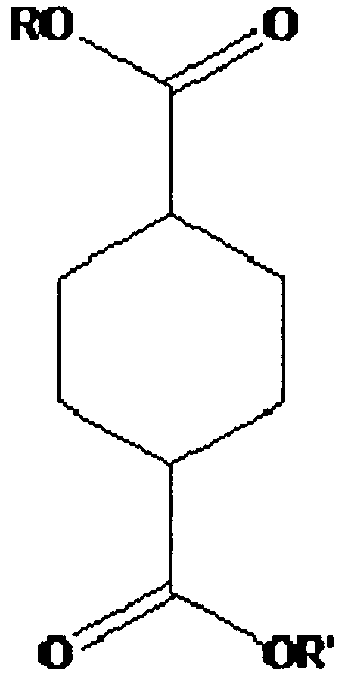
butyl benzyl 1,4-cyclohexane dicarboxylate. - Another embodiment concerns a composition comprising a compound as described in the preceding paragraph.
- Another embodiment concerns a plasticizer comprising a compound as described in the preceding paragraph.
- Another embodiment concerns a plastisol comprising the plasticizer described in the preceding paragraph.
- Still another embodiment concerns a method for producing a plasticizer represented by the following structure:

butyl benzyl 1,4-cyclohexane dicarboxylate, the method comprising: reacting a) 1,4-cyclohexane dicarboxylic acid or dimethyl cyclohexane-1,4-dicarboxylate and b) at least one alcohol in the presence of a catalyst to form the plasticizer. - Yet another embodiment concerns an article comprising a compound according to claim 1:
-
-
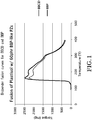
Figure 1 shows Brabender fusion curves for BBCD and BBP; -
Figure 2 shows Brabender fusion curves for DBCD, DBP, DBT and BBP; -
Figure 3 shows the viscosity of BBCD is more stable as the shear rate is changed than BBP; and -
Figure 4 shows the stabiltiy of the plastisol viscosity is the same for BBCD and BBP. - This invention relates to compounds which are useful as high solvating plasticizers and compositions, such as polyvinylchloride (PVC) plastisols including the plasticizers, as well as methods of making and using the plasticizers and plastisols. The plasticizers fuse at lower temperatures than expected, gel at lower temperatures, and have lower than expected viscosity.
- These improved properties come while retaining plasticization efficiency based on Shore A hardness of the fused PVC.
- Each numerical parameter should at least be construed in light of the number of reported significant digits and by applying ordinary rounding techniques. Further, the ranges stated in this disclosure and the claims are intended to include the entire range specifically and not just the endpoint(s). For example, a range stated to be 0 to 10 is intended to disclose all whole numbers between 0 and 10 such as, for example 1, 2, 3, 4, etc., all fractional numbers between 0 and 10, for example 1.5, 2.3, 4.57, 6.1113, etc., and the
endpoints - According to the invention, the plasticizers are represented by the following structure:

butyl benzyl 1,4-cyclohexane dicarboxylate. - Generally, a plasticizer composition includes a 1,4-cyclohexane dicarboxylate diester. These compounds can be derived, for example, via an esterification reaction or a trans-esterification reaction. For example, the compounds may be derived from the reaction of 1,4-cyclohexane dicarboxylic acid; and mixtures of alcohols. The reaction can result in a mixture of diesters. For example, the reaction can result in a mixture of the cis and trans isomers of the mixed ester (i.e. where each ester is different) and the cis and trans isomers of the same esters. Moreover, suitable alcohols include straight chained or branched methanols, ethanols, propanols, butanols, pentanols, hexanols, heptanols, octanols, nonanols, decanols, undecanols, dodecanols, and tridecanols. The alcohols can also be aromatic or cyclic. Alternatively, the compounds may be derived from the reaction of dimethyl cyclohexane-1,4-dicarboxylate and a mixture of alcohols.
- Generally, the composition includes a mixture of 1,4-cyclohexane dicarboxylate molecules. For example, the composition could include a mixture of the cis and trans isomers of the mixed ester and the cis and trans isomers of the dibutyl and dibenzyl esters. For example, the composition can have mixtures of
dibutyl 1,4-cyclohexane dicarboxylate (DBCD),dibenzyl 1,4-cylcohexane dicarboxylate (BZCD) andbutyl benzyl 1,4-cyclohexane dicarboxylate (BBCD). Moreover, the various esters can be
present in the mixture in various ratios. For example, the composition can include a mixture of from 0 to 80 weight % DBCD, from 0 to 50 weight % BZCD, and from 20 to 80 weight % BBCD or 10 to 60 weight % DBCD, from 10 to 40 weight % BZCD, and from 20 to 60 weight % BBCD. - According to one embodiment, the compounds can be produced by contacting 1,4-cyclohexane dicarboxylic acid or dimethyl cyclohexane-1,4-dicarboxylate and at least one alcohol in the presence of a catalyst. The catalyst can be, for example, a Lewis Acid or Lewis base catalyst such as, for example, a titanate or potassium hydroxide. The catalyst can be present in an amount of from 50 ppm to 5000 ppm; from 100 ppm to 4000 ppm; or from 200 ppm to 3000 ppm. The reaction mixture can be run at a temperature of from 65° C to 220° C, from 140° C to 210° C or from 170° C to 200° C. Moreover, the reaction can be run at a pressure of from 2666,45 Pa [20 torr] to 106658 Pa [800 torr], from 66661,2 Pa [500 torr] to 103991 Pa [780 torr], or from 93325,7 Pa [700 torr] to 101325 Pa [760 torr].
- In one embodiment volatiles can be distilled at a vapor temperature of from 65° C to 130° C. Moreover, after sampling for completion any excess alcohols can be remove at a temperature of from 150 ° C to 220 ° C and a pressure of from 1333,22 Pa [10 torr] to 13332,2 Pa [100 torr].
- Upon completion of the reaction, the reactor can be adjusted to atmospheric pressure and cooled to a temperature of from 40 ° C to 100 ° C or 40 ° C to 100 ° C. According to one embodiment, the completed reaction mixture can be washed up to three or more times with a wash solution, such as, for example, 2.5% NaOH in water, discarding the lower layer after each wash. The completed reaction mixture can also be washed up to three times or more with distilled or deionized water after which any residual water can be removed via, for example, a vacuum. Heat can be applied to the vacuum (up to 150 °C) to facilitate water removal. Additional purification steps include carbon purification and filtration to remove the carbon.
For example, a plasticizer according to the present invention can be produced by charging 1 Mole of dimethyl cyclohexane-1,4-dicarboxylate to an excess of n-butyl alcohol (3-12 moles) along with 50-5000 ppm of a Lewis Acid or Lewis base catalyst (preferably a titanate or potassium hydroxide). This is heated while distilling volatiles at a vapor temperature of 65-115° C. Benzyl alcohol (2-4 moles) is added and heating is continued while distilling volatiles at a vapor temperature of 118-170° C. After sampling for completion, the excess alcohols are removed at 150° C and 50 torr and the reactor is adjusted to atmospheric pressure. The reactor is then cooled to 85° C and three 2.5% NaOH in water washes are added with the lower layer being discarded after each wash. Three washes with distilled or deionized water are then performed after which 6666,12 Pa [50 torr] vacuum is applied to the reactor and the reactor is heated to 150° C to remove residual water. Carbon is added and the mixture is stirred one hour. The mixture is filtered through a filter aid to remove the carbon. - An embodiment according to the present concerns a plastisol which includes the high solvating plasticizers. Plastisols can be prepared using a high, low or combination intensity mixers, such as ribbon blenders, conical screw, planetary, Cowles, Morehouse, or any other suitable mixer. Ingredients used in making plastisols include PVC, acrylic or other polymeric resins; primary or secondary plasticizers; fillers; pigments; heat stabilizers; solvents; and other ingredients known in the industry. According to one embodiment, the plasticizers can be added to the plastisols at a range of from 1.0 weight % to about 60 weight %, or at a range of from 5.0 weight % to 40 weight %, or even at a range of from 10.0 weight % to 30 weight % by weight depending on the efficiency of the plasticizer and the desired properties of the final product. The order of ingredients, shaft rpm, mixing times, and temperature all play a role to the producing a plastisol with reproducible quality. Typically plastisol temperature during mixing is maintained at less than 95° F (35° C), or even less than 80° F (27° C), though in some cases where for instance a higher viscosity is desired, the maximum temperature can be higher. Air is both incorporated in
the mixing process and may also be introduced from the surface of the dry ingredients. If necessary, it can be removed by deaeration under reduced pressure either during or after mixing. Some of the air will be released if a plastisol is stored. - In one embodiment, the present plasticizers may be incorporated into vinyl chloride resin, along with or without other additions, by any suitable process such as, mixing or kneading of the ingredients. A desirable procedure involves forming a vinyl resin dispersion which can be cast in a film or thicker body, and then heated to form a homogeneous body of plasticized resin. Such dispersions are suspensions of vinyl chloride resin particles in nonaqueous liquids including the plasticizer which do not dissolve the resin at ordinary temperatures but do at elevated temperatures. If the liquid phase consists only of plasticizer, the dispersion is often termed as "plastisol," whereas if the dispersing liquid also contains volatile organic solvents or organic components which evaporate upon heating, the dispersion is often termed as "organosol." Both plastisols and organosols may include other additives, including stabilizers, normally used in vinyl chloride resin compositions. The term "plastisol" as used herein is intended to include both plastisols and organosols.
- The plasticizers according to this invention may be added at any time and in any convenient manner to the PVC plastisol. If desired, the PVC plastisol and viscosity reducing compounds may be mixed simultaneously, for example, in conventional mixing or blending equipment.
- The plasticizers according to this invention may be used to make numerous products. For example, the plasticizers can be used in adhesives and sealants, coated fabrics, wire and cable coatings, foams, footwear, gaskets, inks, cosmetics, and medical. PVC based applications include floor coverings, wallpaper, roofing membranes, tubing, inks, calendared film, Polymers that have used plasticizers include PVC, polyurethanes, polyesters, cellulosics, polystyrene, polyvinyl alcohol, epoxies, rubbers, and polyamides.
- Products which employ the plasticizers of the present invention can be prepared or manufactured via numerous known processes. For example, the products or articles can be made or manufactured by hot or cold dipping, slush molding, or cavity molding; direct or reverse roll coating, knife coating or laminating adhesive; various spray processes or any other process known in the industry.
- The following examples are submitted for a better understanding of the invention.
- The formulation used in the examples detailed herein for a PVC plastisol is shown in Table 1. Plastisols were prepared using Geon™ 121A PVC resin (1 micron dispersion grade), Jenkinol™ epoxidized soybean oil (ESO) or Drapex 6.8 ESO and Akcrostab™ LT4798 heat and light stabilizer and the plasticizer of interest. The plastisols (60 parts per hundred (phr) plasticizer and 3 phr ESO and heat stabilizer) were prepared using a FlackTek DAC 150 SpeedMixer™ at 2000 rpm for two 45 sec intervals with a rest period in between such that the plastisol temperature did not exceed 35°C (95°F).
- Plastisol fusion properties were determined on 60 ml of plastisol with an IntelliTorque Plasti-Corder™ 7150 Brabender™ torque rheometer with conical twin-screw roller blades co-rotating at 32 rpm and a 10°F/min (5.7°C/min) temperature ramp from 95 to 375°F (35-195.5°C) with 1 minute holds at the beginning and end. Table 2 contains Brabender data showing the results for a diisononyl orthophthalate (DINP) and the cyclohexane dicarboxylate analogue (DINCH). The orthophthalate fuses and gels at lower temperatures than the cyclohexane dicarboxylate analogue. Gel temperatures were calculated two ways. The first uses the temperature at which the tangent to the inflection point on the Brabender curve intersects with the baseline. The second gelation temperature method uses a temperature gradient bar and a method very similar to that documented in SPI-VPD method BE146, except that an 8 mil drawdown was used and allowed to sit for 10 minutes before applying the aluminum foil, rolling from the hot end to the cold end and then removing. The gel temperature with this
method is the temperature of the bar just before where plastisol is observed on the foil. - Table 3 shows the results for the 1,4-cyclohexane dicarboxylate analogues of the butyl benzyl terephalate, butyl benzyl orthophthalate and dibutyl tere- and ortho-phthalates. Unlike the comparative example for the 1,2 cyclohexane dicarboxylate and orthophthalate, the 1,4-cyclohexane dicarboxylate and terephthalate examples show no difference in fusion or gel temperatures.
- The viscosity of the plastisol containing the 1,4-cyclohexane dicarboxylate (CD) is lower and more stable with respect to increasing shear than that of the analogous orthophthalate. The viscosity of a BBP containing plastisol increases dramatically while that for the CD analogue is lower and quite stable with increasing shear rate as shown in
Figure 3 . The stability with time for the two plastisols is the same and shown inFigure 4 . - The viscosity of the CD plasticizer is lower than for the analogous orthophthalate. For instance, BBCD and BBP have viscosities of 3000 and 4300 cP, respectively at shear rates of 10-100 /sec. In addition the BBCD containing plastisol is readily deaerated while the analogous one containing BBP is very difficult to deaerate due to the stability of the bubbles.
- The hardness of PVC is a measure of the efficiency of the plasticizer. For equal amounts of plasticizer, a softer PVC indicates it contains a more efficient plasticizer. Shore A hardness of 67 was measured for both a 60 phr BBCD PVC and a 60 phr BBP PVC.
Table 1. Formulation for plastisol examples. Component Conc. (PHR) Geon 121A 100 Plasticizer 60 Akrostab LT 4798 3 Jenkinol or Drapex 6.8 ESO 3 Table 2. Di- isononyl 1,2 cyclohexane dicarboxylate fuses and gels at higher temperatures than di-isononyl orthophthalate.DINCH DINP Fusion Time (m:s) 20.66 17.83 Fusion Temperature (C) 154 143 Gelation Speed (mg/min) 291 300 Inflection Point (m:s) 17.70 14.87 Inflection Temp (C) 131 115 Gradient plate gel temperature (C) 109 73 Table 3. Butyl benzyl 1,4-cyclohexane dicarboxylate (BBCD) fuses and gels at the same temperatures as butyl benzyl orthophthalate (BBP) anddibutyl 1,4-cyclohexane dicarboxylate (DBCD) (non-inventive) fuses and gels at the same temperatures as dibutyl phthalate (DBP) (non-inventive) or dibutyl terephthalate (DBT) (non-inventive).BBCD BBP DBCD DBP DBT Fusion Time (minutes) 1st peak 7.60 7.47 6.77 7.33 7.43 Fusion Temperature (C) 1st peak 73 72 69 71 71 Fusion time (minutes) 2nd peak 10.03 9.30 10.50 na 10.63 Fusion Temperature (C) 2nd peak 98 93 98 na 101 Inflection Point (minutes) 7.03 6.90 6.73 7.00 6.97 Inflection Temp (C) 64 64 62 63 64 Gel Temp (tangent) (C) 61 61 59 57 60 Gradient plate gel temperature (C) 56 51 51 51 54
Claims (10)
- A compound represented by the following structure:

wherein the compound is butyl benzyl 1,4-cyclohexane dicarboxylate. - A composition comprising a compound according to claim 1.
- The composition according to claim 2, comprising from 10 to 50 weight % dibutyl 1,4-cyclohexane dicarboxylate, from 30 to 60% dibenzyl 1,4-cylcohexane dicarboxylate, and from 20 to 60 weight % butyl benzyl 1,4-cyclohexane dicarboxylate.
- A plasticizer comprising the compound according to claim 1.
- A plastisol comprising the plasticizer according to claim 4.
- A method for producing a plasticizer represented by the following structure:

- An article comprising the compound according to claim 1.
- The article according to claim 7, wherein the article is an adhesive, a sealant, a coated fabric, a wire coating, a cable coating, a foam, footwear, a gasket, an ink, a cosmetic, or a medical device.
- The article according to claim 7, wherein the article is a floor covering, wallpaper, a roofing membrane, a tubing, or a film.
- The article according to claim 7, wherein the article is produced via hot dipping, cold dipping, slush molding, cavity molding, direct roll coating, reverse roll coating, knife coating, laminating adhesive, spraying or a combination thereof.
Applications Claiming Priority (2)
| Application Number | Priority Date | Filing Date | Title |
|---|---|---|---|
| US12/726,801 US7973194B1 (en) | 2010-03-18 | 2010-03-18 | High solvating cyclohexane dicarboxylate diesters plasticizers |
| PCT/US2011/027108 WO2011115757A1 (en) | 2010-03-18 | 2011-03-04 | High solvating cyclohexane dicarboxylate diesters plasticizers |
Publications (2)
| Publication Number | Publication Date |
|---|---|
| EP2547646A1 EP2547646A1 (en) | 2013-01-23 |
| EP2547646B1 true EP2547646B1 (en) | 2018-05-16 |
Family
ID=44121413
Family Applications (1)
| Application Number | Title | Priority Date | Filing Date |
|---|---|---|---|
| EP11708642.1A Active EP2547646B1 (en) | 2010-03-18 | 2011-03-04 | High solvating cyclohexane dicarboxylate diesters plasticizers |
Country Status (6)
| Country | Link |
|---|---|
| US (1) | US7973194B1 (en) |
| EP (1) | EP2547646B1 (en) |
| JP (1) | JP5833625B2 (en) |
| CN (1) | CN102822136A (en) |
| BR (1) | BR112012020507A2 (en) |
| WO (1) | WO2011115757A1 (en) |
Families Citing this family (37)
| Publication number | Priority date | Publication date | Assignee | Title |
|---|---|---|---|---|
| US20110053065A1 (en) * | 2009-08-31 | 2011-03-03 | Xerox Corporation | Plasticizer containing photoconductors |
| WO2012158250A1 (en) | 2011-05-13 | 2012-11-22 | Amyris, Inc. | Plasticizers |
| EP2810982A1 (en) | 2013-06-06 | 2014-12-10 | ExxonMobil Chemical Patents Inc. | Dialkyl esters of 1,4' cyclohexane di-carboxylic acid and their use as plasticisers |
| CN105793341A (en) | 2013-12-06 | 2016-07-20 | 巴斯夫欧洲公司 | Softener composition which contains tetrahydrofuran derivatives and 1,2-cyclohexane dicarboxylic acid esters |
| ES2922949T3 (en) | 2014-01-03 | 2022-09-21 | Tarkett Gdl Sa | Decorative surface coatings of improved phthalate-free polyvinyl chloride plastisol compositions |
| KR20160106657A (en) | 2014-01-09 | 2016-09-12 | 바스프 에스이 | Plasticizer composition containing furan derivatives and 1,2-cyclohexanedicarboxylic ester |
| DE102015206645A1 (en) | 2014-04-16 | 2015-10-22 | Basf Se | Use of modified fatty acid esters as plasticizer |
| DE102015207291A1 (en) | 2014-04-24 | 2016-03-10 | Basf Se | Plasticizer composition containing furan derivatives and 1,2-cyclohexanedicarboxylic acid ester |
| TW201605945A (en) | 2014-07-08 | 2016-02-16 | 巴斯夫歐洲公司 | Molding compounds containing esters of dicarboxylic acids and esters of 1,2-cyclohexanedicarboxylic acid |
| TW201609628A (en) | 2014-07-08 | 2016-03-16 | 巴斯夫歐洲公司 | Plasticizer composition which comprises diesters of aliphatic dicarboxylic acids and dialkylesters of terephthalic acid |
| JP6435483B2 (en) * | 2014-07-31 | 2018-12-12 | 平岡織染株式会社 | Adhesive paste sol composition and method for producing canvas and mesh sheet for industrial materials using the same |
| JP2016074876A (en) * | 2014-10-08 | 2016-05-12 | 新日本理化株式会社 | Plasticizer for vinyl chloride resin comprising 1,4-cyclohexanedicarboxylic acid diester |
| TW201619120A (en) | 2014-10-09 | 2016-06-01 | 巴斯夫歐洲公司 | Plasticizer composition which comprises cycloalkyl esters of saturated dicarboxylic acids and terephthalic esters |
| TW201619119A (en) * | 2014-10-09 | 2016-06-01 | 巴斯夫歐洲公司 | Plasticizer composition which comprises cycloalkyl esters of saturated dicarboxylic acids and 1,2-cyclohexane dicarboxylic esters |
| ES2686726T3 (en) | 2015-02-18 | 2018-10-19 | Evonik Degussa Gmbh | Procedure for the production of ester mixtures by transesterification |
| ES2955608T3 (en) | 2015-02-18 | 2023-12-04 | Evonik Oxeno Gmbh & Co Kg | Production of ester mixtures |
| RU2633963C2 (en) * | 2015-12-29 | 2017-10-20 | Публичное акционерное общество "СИБУР Холдинг" | Plasticiser composition for polyvinyl chloride, plastisol and plastificate on its basis |
| EP3405518B1 (en) * | 2016-01-20 | 2019-11-06 | Basf Se | Plasticiser composition containing aliphatic dicarboxylic acid esters and diesters selected from 1,2-cyclohexane dicarboxylic acid esters and terephthalic acid esters |
| BR112018016894B1 (en) | 2016-03-18 | 2022-06-14 | Akzo Nobel Chemicals International B.V. | AQUEOUS EMULSION, AND USE OF EMULSION |
| KR20180126490A (en) * | 2016-03-30 | 2018-11-27 | 니폰 제온 가부시키가이샤 | A sprayed coating sol, a sprayed vinyl chloride resin molded article with a spray coating layer, a method for producing the same, |
| EP3398987B1 (en) | 2016-09-07 | 2023-04-19 | LG Chem, Ltd. | Plasticizer composition and resin composition comprising same |
| KR102132753B1 (en) | 2016-10-31 | 2020-07-13 | 주식회사 엘지화학 | Vinyl chloride polymer and preparation method thereof |
| KR102073336B1 (en) | 2016-10-31 | 2020-03-02 | 주식회사 엘지화학 | Vinyl chloride polymer and preparation method thereof |
| CN109153813B (en) | 2016-12-12 | 2020-07-03 | 株式会社Lg化学 | Plasticizer composition and resin composition containing the same |
| ES3053345T3 (en) | 2017-01-04 | 2026-01-21 | Lg Chemical Ltd | Plasticizer composition comprising cyclohexane 1,4-diester-based compound, and resin composition comprising same |
| KR102246637B1 (en) | 2017-07-25 | 2021-04-30 | 주식회사 엘지화학 | Preparation method of polyvinyl chloride |
| KR102290954B1 (en) | 2017-07-25 | 2021-08-19 | 주식회사 엘지화학 | Vinyl chloride polymer and preparation method thereof |
| WO2019069777A1 (en) * | 2017-10-04 | 2019-04-11 | 日東化成株式会社 | Antifouling paint composition and coated article having antifouling coating formed using said composition on surface |
| GB2569608B (en) | 2017-12-21 | 2022-10-26 | Altro Ltd | Plasticiser composition |
| KR102092457B1 (en) * | 2018-06-15 | 2020-05-22 | (주)휴이노베이션 | Cyclohexanedimethanol Pitch-based Plasticizer and Resin Composition Comprising the Same |
| CN114096601B (en) * | 2019-06-26 | 2024-03-29 | 伊士曼化工公司 | Cyclohexanedicarboxylate mixed ester composition used as plasticizer |
| WO2020263594A1 (en) | 2019-06-26 | 2020-12-30 | Eastman Chemical Company | Mixed ester terephthalate compositions useful as plasticizers |
| CN114026162B (en) | 2019-06-26 | 2024-04-02 | 伊士曼化工公司 | Non-phthalate plasticizer blend for polyvinyl chloride resin composition |
| CN114008119A (en) | 2019-06-26 | 2022-02-01 | 伊士曼化工公司 | Glycol ether aryl ester plasticizer |
| EP4029885B1 (en) | 2019-09-11 | 2024-12-18 | Lg Chem, Ltd. | Method for producing vinyl chloride-based polymer |
| US12378397B2 (en) | 2019-09-16 | 2025-08-05 | Hanwha Solutions Corporation | Plasticizer composition and vinylchloride resin composition comprising the same |
| CN114085424B (en) * | 2021-12-10 | 2023-07-28 | 福建汇得新材料有限公司 | Plasticizer, and preparation method and application thereof |
Family Cites Families (35)
| Publication number | Priority date | Publication date | Assignee | Title |
|---|---|---|---|---|
| GB1047259A (en) | ||||
| US2189721A (en) * | 1937-10-02 | 1940-02-06 | Wingfoot Corp | Dibenzyl hexahydro phthalate |
| DE1031786B (en) * | 1954-02-22 | 1958-06-12 | Dehydag Gmbh | Process for the preparation of plasticizers containing epoxy groups |
| FR1167476A (en) | 1954-07-29 | 1958-11-25 | Chimiotherapie Lab Franc | New derivative of cortisone acetate and its preparation process |
| US2920119A (en) | 1955-06-02 | 1960-01-05 | Mid Century Corp | Process for producing paraethyltoluene |
| GB817736A (en) | 1955-08-26 | 1959-08-06 | Chimiotherapie Lab Franc | Esters of trans-hexahydroterephthalic acid and of the mono-acid chloride of trans-hexahydroterephthalic acid |
| GB817735A (en) | 1955-08-26 | 1959-08-06 | Lab Francais Chimiotherapie | Improvements in or relating to steroidal compounds |
| GB851753A (en) * | 1956-11-23 | 1960-10-19 | Union Carbide Corp | Vinyl chloride resin compositions |
| US3006928A (en) | 1956-12-10 | 1961-10-31 | Lab Francais Chimiotherapie | 19-nor-testerone-17-transhexahydro-terephthalate |
| NL132671C (en) | 1960-02-09 | |||
| DE1154096B (en) | 1962-02-23 | 1963-09-12 | Witten Gmbh Chem Werke | Process for the preparation of 1,4-cyclohexanedicarboxylic acid dialkyl esters |
| UST864003I4 (en) | 1968-08-01 | 1969-07-15 | Defensive publication | |
| JPS55139448A (en) | 1979-04-17 | 1980-10-31 | Toray Ind Inc | Thermoplastic polyester composition for molding |
| JPS56125342A (en) * | 1980-03-07 | 1981-10-01 | Kanto Kagaku Kk | Preparation of ee-type mono-substituted cyclohexane-1- carboxylic acid ester |
| JPS57159A (en) | 1980-06-02 | 1982-01-05 | Mitsubishi Chem Ind Ltd | Polyester composition |
| US4457924A (en) | 1981-12-22 | 1984-07-03 | Pfizer, Inc. | 1,1-Alkanediol dicarboxylate linked antibacterial agents |
| US4462934A (en) | 1983-03-31 | 1984-07-31 | Pfizer Inc. | Bis-esters of dicarboxylic acids with amoxicillin and certain hydroxymethylpenicillanate 1,1-dioxides |
| JPS62257153A (en) * | 1986-04-30 | 1987-11-09 | Konika Corp | Silver halide color photographic sensitive material containing photographic additive |
| JPH0814690B2 (en) | 1987-09-17 | 1996-02-14 | 富士写真フイルム株式会社 | Silver halide photographic material |
| JPH0234841A (en) | 1988-07-25 | 1990-02-05 | Fuji Photo Film Co Ltd | Silver halide color photographic sensitive material |
| JPH0269443A (en) | 1988-09-02 | 1990-03-08 | Sharp Corp | Fluoroalkyl based compound and liquid crystal composition |
| JPH02223541A (en) | 1989-02-25 | 1990-09-05 | Sharp Corp | Optically active compound, liquid crystal composition containing same and ferroelectric liquid crystal element using same |
| MY129474A (en) | 1997-12-19 | 2007-04-30 | Basf Ag | Method for hydrogenating benzene polycarboxylic acids or derivatives thereof by using a catalyst containing macropores |
| DE19927978A1 (en) * | 1999-06-18 | 2000-12-21 | Basf Ag | New esters of cyclohexane-1,3- and -1,4-dicarboxylic acid, useful as toxicologically acceptable plasticizers, e.g. for PVC, obtained by hydrogenation of corresponding isophthalate and terephthalate esters |
| ATE275617T1 (en) | 1999-07-14 | 2004-09-15 | Firmenich & Cie | ALIPHATIC ESTERS AND THEIR USE AS FRAGRANCE |
| JP4314711B2 (en) | 2000-01-27 | 2009-08-19 | 新日本理化株式会社 | Cyclohexanedicarboxylic acid diester plasticizer, vinyl chloride resin composition, and vinyl chloride resin molded article using the same |
| DE20021356U1 (en) * | 2000-12-18 | 2001-02-22 | Basf Ag, 67063 Ludwigshafen | Polyvinyl chloride with core-hydrogenated phthalate plasticizers |
| EP2258760B1 (en) | 2001-09-25 | 2014-06-25 | ExxonMobil Chemical Patents Inc. | Plasticised polyvinyl chloride |
| EP1873198A1 (en) | 2006-06-30 | 2008-01-02 | Lanxess Deutschland GmbH | Mixtures of alkyl esters and benzyl esters of polycarboxylic acids |
| KR101005704B1 (en) | 2007-10-16 | 2011-01-05 | 주식회사 엘지화학 | 1,4-cyclohexanedicarboxylate composition for polymer resin and method for preparing same |
| WO2009116657A1 (en) | 2008-03-18 | 2009-09-24 | 住友化学株式会社 | Method for producing cycloalkanedicarboxylic acid monoester |
| US20090312470A1 (en) * | 2008-06-11 | 2009-12-17 | Ferro Corporation | Asymmetric Cyclic Diester Compounds |
| US20100113664A1 (en) | 2008-06-11 | 2010-05-06 | Ferro Corporation | Asymmetric Cyclic Diester Compounds |
| KR101099127B1 (en) | 2008-10-16 | 2011-12-26 | 한화케미칼 주식회사 | Method of preparing of 60% or more cis-di(C4-C20)alkyl cyclohexane-1,4-dicarboxylate |
| US20120077914A1 (en) | 2009-06-09 | 2012-03-29 | Sk Global Chemical Co., Ltd. | Novel plasticizer for a polyvinyl chloride resin |
-
2010
- 2010-03-18 US US12/726,801 patent/US7973194B1/en active Active
-
2011
- 2011-03-04 JP JP2013500068A patent/JP5833625B2/en not_active Expired - Fee Related
- 2011-03-04 BR BR112012020507A patent/BR112012020507A2/en not_active IP Right Cessation
- 2011-03-04 EP EP11708642.1A patent/EP2547646B1/en active Active
- 2011-03-04 CN CN2011800145537A patent/CN102822136A/en active Pending
- 2011-03-04 WO PCT/US2011/027108 patent/WO2011115757A1/en not_active Ceased
Non-Patent Citations (1)
| Title |
|---|
| None * |
Also Published As
| Publication number | Publication date |
|---|---|
| EP2547646A1 (en) | 2013-01-23 |
| WO2011115757A1 (en) | 2011-09-22 |
| CN102822136A (en) | 2012-12-12 |
| JP5833625B2 (en) | 2015-12-16 |
| BR112012020507A2 (en) | 2018-04-10 |
| US7973194B1 (en) | 2011-07-05 |
| JP2013522293A (en) | 2013-06-13 |
Similar Documents
| Publication | Publication Date | Title |
|---|---|---|
| US7973194B1 (en) | High solvating cyclohexane dicarboxylate diesters plasticizers | |
| EP2658728B1 (en) | Blends of dibenzoate plasticizers | |
| EP2231763B1 (en) | Co-plasticizer systems | |
| US8669311B2 (en) | C7—C12 secondary alcohol esters of cyclohexanoic acid | |
| EP3964543B1 (en) | Plasticizer composition and resin composition including the same | |
| CN113661206B (en) | Cyclohexanetriester plasticizer composition and resin composition containing the same | |
| CN113785010B (en) | Citrate plasticizer composition and resin composition containing the plasticizer composition | |
| EP2837646A1 (en) | Method for manufacturing ester composition, and resin composition | |
| CN117120533B (en) | Aconitate plasticizer composition and resin composition containing the same | |
| CN113646373B (en) | Plasticizer composition and resin composition comprising the plasticizer composition | |
| CN117062865B (en) | Propane trimethyl ester plasticizer composition and resin composition containing same | |
| CN116997604B (en) | Propane trimethyl ester plasticizer composition and resin composition containing same | |
| TWI903086B (en) | Triester-based plasticizer composition and resin composition comprising the same | |
| KR102856369B1 (en) | Isophthalate based plasticizer composition and resin composition comprising the same | |
| KR102794653B1 (en) | Polyvinyl chloride resin composition and food packaging film using the same | |
| CN112166147B (en) | Cyclohexanetriester plasticizer composition and resin composition containing the same | |
| TWI895554B (en) | Dihexyl benzene dicarboxylate-based plasticizer composition and resin composition comprising the same | |
| JP7852990B2 (en) | Plasticizer composition and resin composition containing the same | |
| EP4484484A1 (en) | Plasticizer composition and resin composition comprising same | |
| KR20230127921A (en) | Plasticizer composition and resin composition comprising the same | |
| JP2025506757A (en) | Plasticizer composition and resin composition containing same | |
| KR20210071221A (en) | Polyvinyl chloride resin composition | |
| JP2001123009A (en) | Plasticizer and vinyl chloride resin composition containing the same |
Legal Events
| Date | Code | Title | Description |
|---|---|---|---|
| PUAI | Public reference made under article 153(3) epc to a published international application that has entered the european phase |
Free format text: ORIGINAL CODE: 0009012 |
|
| 17P | Request for examination filed |
Effective date: 20120928 |
|
| AK | Designated contracting states |
Kind code of ref document: A1 Designated state(s): AL AT BE BG CH CY CZ DE DK EE ES FI FR GB GR HR HU IE IS IT LI LT LU LV MC MK MT NL NO PL PT RO RS SE SI SK SM TR |
|
| DAX | Request for extension of the european patent (deleted) | ||
| 17Q | First examination report despatched |
Effective date: 20151125 |
|
| STAA | Information on the status of an ep patent application or granted ep patent |
Free format text: STATUS: EXAMINATION IS IN PROGRESS |
|
| GRAP | Despatch of communication of intention to grant a patent |
Free format text: ORIGINAL CODE: EPIDOSNIGR1 |
|
| STAA | Information on the status of an ep patent application or granted ep patent |
Free format text: STATUS: GRANT OF PATENT IS INTENDED |
|
| INTG | Intention to grant announced |
Effective date: 20171109 |
|
| GRAS | Grant fee paid |
Free format text: ORIGINAL CODE: EPIDOSNIGR3 |
|
| GRAJ | Information related to disapproval of communication of intention to grant by the applicant or resumption of examination proceedings by the epo deleted |
Free format text: ORIGINAL CODE: EPIDOSDIGR1 |
|
| GRAL | Information related to payment of fee for publishing/printing deleted |
Free format text: ORIGINAL CODE: EPIDOSDIGR3 |
|
| STAA | Information on the status of an ep patent application or granted ep patent |
Free format text: STATUS: EXAMINATION IS IN PROGRESS |
|
| GRAR | Information related to intention to grant a patent recorded |
Free format text: ORIGINAL CODE: EPIDOSNIGR71 |
|
| STAA | Information on the status of an ep patent application or granted ep patent |
Free format text: STATUS: GRANT OF PATENT IS INTENDED |
|
| GRAA | (expected) grant |
Free format text: ORIGINAL CODE: 0009210 |
|
| STAA | Information on the status of an ep patent application or granted ep patent |
Free format text: STATUS: THE PATENT HAS BEEN GRANTED |
|
| INTC | Intention to grant announced (deleted) | ||
| INTG | Intention to grant announced |
Effective date: 20180404 |
|
| AK | Designated contracting states |
Kind code of ref document: B1 Designated state(s): AL AT BE BG CH CY CZ DE DK EE ES FI FR GB GR HR HU IE IS IT LI LT LU LV MC MK MT NL NO PL PT RO RS SE SI SK SM TR |
|
| REG | Reference to a national code |
Ref country code: GB Ref legal event code: FG4D |
|
| REG | Reference to a national code |
Ref country code: CH Ref legal event code: EP |
|
| REG | Reference to a national code |
Ref country code: IE Ref legal event code: FG4D |
|
| REG | Reference to a national code |
Ref country code: DE Ref legal event code: R096 Ref document number: 602011048359 Country of ref document: DE |
|
| REG | Reference to a national code |
Ref country code: AT Ref legal event code: REF Ref document number: 999399 Country of ref document: AT Kind code of ref document: T Effective date: 20180615 |
|
| REG | Reference to a national code |
Ref country code: NL Ref legal event code: MP Effective date: 20180516 |
|
| REG | Reference to a national code |
Ref country code: LT Ref legal event code: MG4D |
|
| PG25 | Lapsed in a contracting state [announced via postgrant information from national office to epo] |
Ref country code: ES Free format text: LAPSE BECAUSE OF FAILURE TO SUBMIT A TRANSLATION OF THE DESCRIPTION OR TO PAY THE FEE WITHIN THE PRESCRIBED TIME-LIMIT Effective date: 20180516 Ref country code: NO Free format text: LAPSE BECAUSE OF FAILURE TO SUBMIT A TRANSLATION OF THE DESCRIPTION OR TO PAY THE FEE WITHIN THE PRESCRIBED TIME-LIMIT Effective date: 20180816 Ref country code: LT Free format text: LAPSE BECAUSE OF FAILURE TO SUBMIT A TRANSLATION OF THE DESCRIPTION OR TO PAY THE FEE WITHIN THE PRESCRIBED TIME-LIMIT Effective date: 20180516 Ref country code: SE Free format text: LAPSE BECAUSE OF FAILURE TO SUBMIT A TRANSLATION OF THE DESCRIPTION OR TO PAY THE FEE WITHIN THE PRESCRIBED TIME-LIMIT Effective date: 20180516 Ref country code: FI Free format text: LAPSE BECAUSE OF FAILURE TO SUBMIT A TRANSLATION OF THE DESCRIPTION OR TO PAY THE FEE WITHIN THE PRESCRIBED TIME-LIMIT Effective date: 20180516 Ref country code: BG Free format text: LAPSE BECAUSE OF FAILURE TO SUBMIT A TRANSLATION OF THE DESCRIPTION OR TO PAY THE FEE WITHIN THE PRESCRIBED TIME-LIMIT Effective date: 20180816 |
|
| PG25 | Lapsed in a contracting state [announced via postgrant information from national office to epo] |
Ref country code: NL Free format text: LAPSE BECAUSE OF FAILURE TO SUBMIT A TRANSLATION OF THE DESCRIPTION OR TO PAY THE FEE WITHIN THE PRESCRIBED TIME-LIMIT Effective date: 20180516 Ref country code: RS Free format text: LAPSE BECAUSE OF FAILURE TO SUBMIT A TRANSLATION OF THE DESCRIPTION OR TO PAY THE FEE WITHIN THE PRESCRIBED TIME-LIMIT Effective date: 20180516 Ref country code: LV Free format text: LAPSE BECAUSE OF FAILURE TO SUBMIT A TRANSLATION OF THE DESCRIPTION OR TO PAY THE FEE WITHIN THE PRESCRIBED TIME-LIMIT Effective date: 20180516 Ref country code: HR Free format text: LAPSE BECAUSE OF FAILURE TO SUBMIT A TRANSLATION OF THE DESCRIPTION OR TO PAY THE FEE WITHIN THE PRESCRIBED TIME-LIMIT Effective date: 20180516 Ref country code: GR Free format text: LAPSE BECAUSE OF FAILURE TO SUBMIT A TRANSLATION OF THE DESCRIPTION OR TO PAY THE FEE WITHIN THE PRESCRIBED TIME-LIMIT Effective date: 20180817 |
|
| REG | Reference to a national code |
Ref country code: AT Ref legal event code: MK05 Ref document number: 999399 Country of ref document: AT Kind code of ref document: T Effective date: 20180516 |
|
| PG25 | Lapsed in a contracting state [announced via postgrant information from national office to epo] |
Ref country code: SK Free format text: LAPSE BECAUSE OF FAILURE TO SUBMIT A TRANSLATION OF THE DESCRIPTION OR TO PAY THE FEE WITHIN THE PRESCRIBED TIME-LIMIT Effective date: 20180516 Ref country code: RO Free format text: LAPSE BECAUSE OF FAILURE TO SUBMIT A TRANSLATION OF THE DESCRIPTION OR TO PAY THE FEE WITHIN THE PRESCRIBED TIME-LIMIT Effective date: 20180516 Ref country code: EE Free format text: LAPSE BECAUSE OF FAILURE TO SUBMIT A TRANSLATION OF THE DESCRIPTION OR TO PAY THE FEE WITHIN THE PRESCRIBED TIME-LIMIT Effective date: 20180516 Ref country code: DK Free format text: LAPSE BECAUSE OF FAILURE TO SUBMIT A TRANSLATION OF THE DESCRIPTION OR TO PAY THE FEE WITHIN THE PRESCRIBED TIME-LIMIT Effective date: 20180516 Ref country code: AT Free format text: LAPSE BECAUSE OF FAILURE TO SUBMIT A TRANSLATION OF THE DESCRIPTION OR TO PAY THE FEE WITHIN THE PRESCRIBED TIME-LIMIT Effective date: 20180516 Ref country code: CZ Free format text: LAPSE BECAUSE OF FAILURE TO SUBMIT A TRANSLATION OF THE DESCRIPTION OR TO PAY THE FEE WITHIN THE PRESCRIBED TIME-LIMIT Effective date: 20180516 Ref country code: PL Free format text: LAPSE BECAUSE OF FAILURE TO SUBMIT A TRANSLATION OF THE DESCRIPTION OR TO PAY THE FEE WITHIN THE PRESCRIBED TIME-LIMIT Effective date: 20180516 |
|
| REG | Reference to a national code |
Ref country code: DE Ref legal event code: R097 Ref document number: 602011048359 Country of ref document: DE |
|
| PG25 | Lapsed in a contracting state [announced via postgrant information from national office to epo] |
Ref country code: SM Free format text: LAPSE BECAUSE OF FAILURE TO SUBMIT A TRANSLATION OF THE DESCRIPTION OR TO PAY THE FEE WITHIN THE PRESCRIBED TIME-LIMIT Effective date: 20180516 Ref country code: IT Free format text: LAPSE BECAUSE OF FAILURE TO SUBMIT A TRANSLATION OF THE DESCRIPTION OR TO PAY THE FEE WITHIN THE PRESCRIBED TIME-LIMIT Effective date: 20180516 |
|
| PLBE | No opposition filed within time limit |
Free format text: ORIGINAL CODE: 0009261 |
|
| STAA | Information on the status of an ep patent application or granted ep patent |
Free format text: STATUS: NO OPPOSITION FILED WITHIN TIME LIMIT |
|
| 26N | No opposition filed |
Effective date: 20190219 |
|
| PG25 | Lapsed in a contracting state [announced via postgrant information from national office to epo] |
Ref country code: SI Free format text: LAPSE BECAUSE OF FAILURE TO SUBMIT A TRANSLATION OF THE DESCRIPTION OR TO PAY THE FEE WITHIN THE PRESCRIBED TIME-LIMIT Effective date: 20180516 |
|
| PG25 | Lapsed in a contracting state [announced via postgrant information from national office to epo] |
Ref country code: MC Free format text: LAPSE BECAUSE OF FAILURE TO SUBMIT A TRANSLATION OF THE DESCRIPTION OR TO PAY THE FEE WITHIN THE PRESCRIBED TIME-LIMIT Effective date: 20180516 |
|
| REG | Reference to a national code |
Ref country code: CH Ref legal event code: PL |
|
| GBPC | Gb: european patent ceased through non-payment of renewal fee |
Effective date: 20190304 |
|
| PG25 | Lapsed in a contracting state [announced via postgrant information from national office to epo] |
Ref country code: AL Free format text: LAPSE BECAUSE OF FAILURE TO SUBMIT A TRANSLATION OF THE DESCRIPTION OR TO PAY THE FEE WITHIN THE PRESCRIBED TIME-LIMIT Effective date: 20180516 Ref country code: LU Free format text: LAPSE BECAUSE OF NON-PAYMENT OF DUE FEES Effective date: 20190304 |
|
| REG | Reference to a national code |
Ref country code: BE Ref legal event code: MM Effective date: 20190331 |
|
| PG25 | Lapsed in a contracting state [announced via postgrant information from national office to epo] |
Ref country code: LI Free format text: LAPSE BECAUSE OF NON-PAYMENT OF DUE FEES Effective date: 20190331 Ref country code: IE Free format text: LAPSE BECAUSE OF NON-PAYMENT OF DUE FEES Effective date: 20190304 Ref country code: GB Free format text: LAPSE BECAUSE OF NON-PAYMENT OF DUE FEES Effective date: 20190304 Ref country code: CH Free format text: LAPSE BECAUSE OF NON-PAYMENT OF DUE FEES Effective date: 20190331 |
|
| PG25 | Lapsed in a contracting state [announced via postgrant information from national office to epo] |
Ref country code: BE Free format text: LAPSE BECAUSE OF NON-PAYMENT OF DUE FEES Effective date: 20190331 |
|
| PG25 | Lapsed in a contracting state [announced via postgrant information from national office to epo] |
Ref country code: TR Free format text: LAPSE BECAUSE OF FAILURE TO SUBMIT A TRANSLATION OF THE DESCRIPTION OR TO PAY THE FEE WITHIN THE PRESCRIBED TIME-LIMIT Effective date: 20180516 |
|
| PG25 | Lapsed in a contracting state [announced via postgrant information from national office to epo] |
Ref country code: MT Free format text: LAPSE BECAUSE OF NON-PAYMENT OF DUE FEES Effective date: 20190304 Ref country code: PT Free format text: LAPSE BECAUSE OF FAILURE TO SUBMIT A TRANSLATION OF THE DESCRIPTION OR TO PAY THE FEE WITHIN THE PRESCRIBED TIME-LIMIT Effective date: 20180917 |
|
| PG25 | Lapsed in a contracting state [announced via postgrant information from national office to epo] |
Ref country code: CY Free format text: LAPSE BECAUSE OF FAILURE TO SUBMIT A TRANSLATION OF THE DESCRIPTION OR TO PAY THE FEE WITHIN THE PRESCRIBED TIME-LIMIT Effective date: 20180516 |
|
| PG25 | Lapsed in a contracting state [announced via postgrant information from national office to epo] |
Ref country code: IS Free format text: LAPSE BECAUSE OF FAILURE TO SUBMIT A TRANSLATION OF THE DESCRIPTION OR TO PAY THE FEE WITHIN THE PRESCRIBED TIME-LIMIT Effective date: 20180916 |
|
| PG25 | Lapsed in a contracting state [announced via postgrant information from national office to epo] |
Ref country code: HU Free format text: LAPSE BECAUSE OF FAILURE TO SUBMIT A TRANSLATION OF THE DESCRIPTION OR TO PAY THE FEE WITHIN THE PRESCRIBED TIME-LIMIT; INVALID AB INITIO Effective date: 20110304 |
|
| PG25 | Lapsed in a contracting state [announced via postgrant information from national office to epo] |
Ref country code: MK Free format text: LAPSE BECAUSE OF FAILURE TO SUBMIT A TRANSLATION OF THE DESCRIPTION OR TO PAY THE FEE WITHIN THE PRESCRIBED TIME-LIMIT Effective date: 20180516 |
|
| P01 | Opt-out of the competence of the unified patent court (upc) registered |
Effective date: 20230522 |
|
| PGFP | Annual fee paid to national office [announced via postgrant information from national office to epo] |
Ref country code: DE Payment date: 20250210 Year of fee payment: 15 |
|
| PGFP | Annual fee paid to national office [announced via postgrant information from national office to epo] |
Ref country code: FR Payment date: 20250210 Year of fee payment: 15 |