EP2513083B1 - Biphotonic photosensitizers, nanoparticles containing the same and their use as drugs - Google Patents
Biphotonic photosensitizers, nanoparticles containing the same and their use as drugs Download PDFInfo
- Publication number
- EP2513083B1 EP2513083B1 EP10790539.0A EP10790539A EP2513083B1 EP 2513083 B1 EP2513083 B1 EP 2513083B1 EP 10790539 A EP10790539 A EP 10790539A EP 2513083 B1 EP2513083 B1 EP 2513083B1
- Authority
- EP
- European Patent Office
- Prior art keywords
- group
- carbon atoms
- branched
- linear
- groups
- Prior art date
- Legal status (The legal status is an assumption and is not a legal conclusion. Google has not performed a legal analysis and makes no representation as to the accuracy of the status listed.)
- Not-in-force
Links
- 0 CCCN(CCC)c1ccc(C=C[C@@]2SC(Bc3ccc4-c5ccc(BC6=C(C)C(*)[C@](C=Cc(cc7)ccc7N(CC*)CC*)S6)cc5C(C)(C)c4c3)=C(**)C2C)cc1 Chemical compound CCCN(CCC)c1ccc(C=C[C@@]2SC(Bc3ccc4-c5ccc(BC6=C(C)C(*)[C@](C=Cc(cc7)ccc7N(CC*)CC*)S6)cc5C(C)(C)c4c3)=C(**)C2C)cc1 0.000 description 5
- WSXSIQXFVQCFLZ-UHFFFAOYSA-N Cc1c2OCCOc2c(C)[s]1 Chemical compound Cc1c2OCCOc2c(C)[s]1 WSXSIQXFVQCFLZ-UHFFFAOYSA-N 0.000 description 1
Images


Classifications
-
- C—CHEMISTRY; METALLURGY
- C07—ORGANIC CHEMISTRY
- C07D—HETEROCYCLIC COMPOUNDS
- C07D333/00—Heterocyclic compounds containing five-membered rings having one sulfur atom as the only ring hetero atom
- C07D333/02—Heterocyclic compounds containing five-membered rings having one sulfur atom as the only ring hetero atom not condensed with other rings
- C07D333/04—Heterocyclic compounds containing five-membered rings having one sulfur atom as the only ring hetero atom not condensed with other rings not substituted on the ring sulphur atom
- C07D333/06—Heterocyclic compounds containing five-membered rings having one sulfur atom as the only ring hetero atom not condensed with other rings not substituted on the ring sulphur atom with only hydrogen atoms, hydrocarbon or substituted hydrocarbon radicals, directly attached to the ring carbon atoms
- C07D333/14—Radicals substituted by singly bound hetero atoms other than halogen
- C07D333/16—Radicals substituted by singly bound hetero atoms other than halogen by oxygen atoms
-
- C—CHEMISTRY; METALLURGY
- C07—ORGANIC CHEMISTRY
- C07F—ACYCLIC, CARBOCYCLIC OR HETEROCYCLIC COMPOUNDS CONTAINING ELEMENTS OTHER THAN CARBON, HYDROGEN, HALOGEN, OXYGEN, NITROGEN, SULFUR, SELENIUM OR TELLURIUM
- C07F7/00—Compounds containing elements of Groups 4 or 14 of the Periodic Table
- C07F7/02—Silicon compounds
- C07F7/08—Compounds having one or more C—Si linkages
- C07F7/18—Compounds having one or more C—Si linkages as well as one or more C—O—Si linkages
- C07F7/1804—Compounds having Si-O-C linkages
-
- A—HUMAN NECESSITIES
- A61—MEDICAL OR VETERINARY SCIENCE; HYGIENE
- A61P—SPECIFIC THERAPEUTIC ACTIVITY OF CHEMICAL COMPOUNDS OR MEDICINAL PREPARATIONS
- A61P35/00—Antineoplastic agents
-
- C—CHEMISTRY; METALLURGY
- C07—ORGANIC CHEMISTRY
- C07D—HETEROCYCLIC COMPOUNDS
- C07D333/00—Heterocyclic compounds containing five-membered rings having one sulfur atom as the only ring hetero atom
- C07D333/02—Heterocyclic compounds containing five-membered rings having one sulfur atom as the only ring hetero atom not condensed with other rings
- C07D333/04—Heterocyclic compounds containing five-membered rings having one sulfur atom as the only ring hetero atom not condensed with other rings not substituted on the ring sulphur atom
- C07D333/06—Heterocyclic compounds containing five-membered rings having one sulfur atom as the only ring hetero atom not condensed with other rings not substituted on the ring sulphur atom with only hydrogen atoms, hydrocarbon or substituted hydrocarbon radicals, directly attached to the ring carbon atoms
- C07D333/14—Radicals substituted by singly bound hetero atoms other than halogen
- C07D333/20—Radicals substituted by singly bound hetero atoms other than halogen by nitrogen atoms
-
- C—CHEMISTRY; METALLURGY
- C07—ORGANIC CHEMISTRY
- C07D—HETEROCYCLIC COMPOUNDS
- C07D409/00—Heterocyclic compounds containing two or more hetero rings, at least one ring having sulfur atoms as the only ring hetero atoms
- C07D409/02—Heterocyclic compounds containing two or more hetero rings, at least one ring having sulfur atoms as the only ring hetero atoms containing two hetero rings
- C07D409/10—Heterocyclic compounds containing two or more hetero rings, at least one ring having sulfur atoms as the only ring hetero atoms containing two hetero rings linked by a carbon chain containing aromatic rings
-
- C—CHEMISTRY; METALLURGY
- C07—ORGANIC CHEMISTRY
- C07D—HETEROCYCLIC COMPOUNDS
- C07D495/00—Heterocyclic compounds containing in the condensed system at least one hetero ring having sulfur atoms as the only ring hetero atoms
- C07D495/02—Heterocyclic compounds containing in the condensed system at least one hetero ring having sulfur atoms as the only ring hetero atoms in which the condensed system contains two hetero rings
- C07D495/04—Ortho-condensed systems
-
- C—CHEMISTRY; METALLURGY
- C07—ORGANIC CHEMISTRY
- C07F—ACYCLIC, CARBOCYCLIC OR HETEROCYCLIC COMPOUNDS CONTAINING ELEMENTS OTHER THAN CARBON, HYDROGEN, HALOGEN, OXYGEN, NITROGEN, SULFUR, SELENIUM OR TELLURIUM
- C07F7/00—Compounds containing elements of Groups 4 or 14 of the Periodic Table
- C07F7/02—Silicon compounds
- C07F7/08—Compounds having one or more C—Si linkages
- C07F7/0801—General processes
-
- C—CHEMISTRY; METALLURGY
- C07—ORGANIC CHEMISTRY
- C07F—ACYCLIC, CARBOCYCLIC OR HETEROCYCLIC COMPOUNDS CONTAINING ELEMENTS OTHER THAN CARBON, HYDROGEN, HALOGEN, OXYGEN, NITROGEN, SULFUR, SELENIUM OR TELLURIUM
- C07F7/00—Compounds containing elements of Groups 4 or 14 of the Periodic Table
- C07F7/02—Silicon compounds
- C07F7/08—Compounds having one or more C—Si linkages
- C07F7/10—Compounds having one or more C—Si linkages containing nitrogen having a Si-N linkage
-
- C—CHEMISTRY; METALLURGY
- C07—ORGANIC CHEMISTRY
- C07H—SUGARS; DERIVATIVES THEREOF; NUCLEOSIDES; NUCLEOTIDES; NUCLEIC ACIDS
- C07H23/00—Compounds containing boron, silicon or a metal, e.g. chelates or vitamin B12
-
- B—PERFORMING OPERATIONS; TRANSPORTING
- B82—NANOTECHNOLOGY
- B82Y—SPECIFIC USES OR APPLICATIONS OF NANOSTRUCTURES; MEASUREMENT OR ANALYSIS OF NANOSTRUCTURES; MANUFACTURE OR TREATMENT OF NANOSTRUCTURES
- B82Y30/00—Nanotechnology for materials or surface science, e.g. nanocomposites
Definitions
- the present invention relates to biphotonic photosensitizers, silica nanoparticles containing at least one of said biphotonic photosensitizers, and the use of said biphotonic photosensitizers and nanoparticles as drugs.
- Photosensitizers are compounds that can absorb irradiation in a defined wavelength range, for example in the visible or near infra-red spectrum.
- the irradiation absorption excites the photosensitizers to an electronic state of higher energy.
- Photosensitizers are able to transfer their excitation energy to other molecules (in particular to molecular oxygen), but energy can also be released through other competitive mechanisms, including fluorescence.
- TPA photodynamic therapy
- TPA chromophores exhibiting very high TPA cross-sections (intense but also broad TPA bands are highly desirable due to the versatility this offers in terms of laser sources), allowing either more efficient excitation or decrease of the excitation intensity (use of less expensive laser sources).
- This also offers a number of advantages for biological or biomedical applications, including the ability for highly selective excitation in biological media, intrinsic three-dimensional resolution, and reduction of photodamage by using lower excitation intensities.
- TPA chromophores have to fulfill different requirements: molecular engineering depends on the desired application, in terms of spectral range and specific additional features. For instance, in the case of biological imaging, high fluorescence quantum yields, photostability and harmless are requested, whereas for PDT high singlet oxygen production is needed.
- Photodynamic therapy relies on photosensitizer.
- Photosensitizers specifically locate in malignant tissues, and transmit their energy to the excess of molecular oxygen in their surrounding, when they are excited by a light source of suitable wavelength in the visible or near infra-red spectrum.
- the activation of the photosensitizer generates reactive oxygen species such as free radicals and singlet oxygen. These reactive oxygen species, and particularly singlet oxygen, are toxic for the cells that surround them, and lead to the destruction of the malignant tissue in their close vicinity. These reactive oxygen species oxidise the cell membranes and lead to irreversible damages of the cells containing the photosensitizer.
- Photodynamic therapy is based on a two-fold selectivity: the selective irradiation of the tissues containing the photosensitizer; and the selectivity of the photosensitizer for the targeted tissues. Without irradiation, the photosensitizers are not toxic, thus their diffusion through the organism is of little consequence.
- a photosensitizer has to show several properties in order to be suitable for in - vivo use. It has to be easily targetable towards cancer cells, to be hydro soluble, to be easy to produce and to functionalize, to be non toxic when not exposed to irradiations, to be stable toward the common enzymes, and to be quickly discarded by healthy tissues.
- most of the molecules belonging to the photosensitizer class are hydrophobic and their introduction, particularly by parenteral injection, in the organism requires elaborate preparations. Such preparations are in particular colloidal suspensions, liposomes, nanoparticles. These formulations enable the stabilisation of the photosensitizers in aqueous medium and allow their transportation to the cancer cells. Targeting of the cancer cells is particularly achieved thanks to specific biotargeting elements.
- Another constrain of these preparations is to keep the potency of the photosensitizers, that means their capacity to generate reactive oxygen species from the molecular oxygen around them.
- Some type of preparation interacts with the excited states of the photosensitizer and decreases the photosensitizer potency.
- One of the aims of the invention is to provide new biphotonic photosensitizers which can be further functionalized.
- Another aim of the invention is to provide new biphotonic photosensitizers which can be incorporated in silica nanoparticles, and covalently linked to said silica nanoparticles.
- One of the aims of the invention is to provide silica nanoparticles functionalized by biphotonic photosensitizers without loss of biphotonic absorption properties of said biphotonic photosensitizers.
- Another aim of the invention is to provide non-toxic silica nanoparticles functionalized by biphotonic photosensitizers.
- Another aim of the invention is to provide silica nanoparticles functionalized by biphotonic photosensitizers, and said silica nanoparticles being also functionalised to target specific cells.
- Another aim of the invention is to provide silica nanoparticles functionalized by biphotonic photosensitizers, and said silica nanoparticles being also functionalised to avoid the monophotonic excitation of said photosensitizers.
- the present invention aims first at combining both fluorescence and singlet oxygen generation in the same biphotonic photosensitizer (i.e. significant fluorescence and singlet oxygen quantum yields) for biomedical applications: targeting, monitoring (fluorescence imaging) and therapy (photosensitized production of singlet oxygen for PDT); second at avoiding leakage of the photosensitizer out of the nanoparticle to keep the full potency of the photosensitizer until irradiation of the cancer cells.
- biphotonic photosensitizer i.e. significant fluorescence and singlet oxygen quantum yields
- chemically reactive group designates a chemical function containing at least one nucleophilic center, wherein said nucleophilic center can be formed of atoms such as oxygen, nitrogen or sulphur.
- a nucleophilic chemical function can be for example an alcohol, an amine, a thiol, an hydrazine, an hydroxylamine.
- molecular clip designates a chemical group containing at least one function susceptible of being incorporated in the structure of a material, and thus links the compound that is functionalised by said molecular clip to the material.
- the alkoxysilane groups ( ⁇ moieties) of the molecular clip groups (V group) act as anchor for the compound toward a type of material, in the present invention said material being silica (silicium oxide).
- the group V is constituted by - ⁇ - ⁇ - ⁇ , wherein ⁇ is a functional linking group.
- ⁇ is a functional linking group.
- the alkyl chains of the terminal tertiary amines of the core having two-photon absorption properties are linked to the V group through the ⁇ group.
- Z 1 is a V group, Z 1 can be represented as:
- the term "functional linking group” designates a chemical function that is substituted by at least two different entities and that creates a covalent link between theses entities. Said functional linking group is obtained through the chemical reaction of at least two chemical functions, each function being carried by one of said entities that are linked to the functional group.
- the compounds of formula (I) can be used as photosensitizers.
- photosensitizer designates a light-absorbing substance that initiates a photochemical or photophysical reaction in another substance (molecule), and is not structurally modified in the reaction.
- the initiated photochemical reaction is the generation of singlet oxygen.
- Singlet dioxygen ( I O 2 ) molecules are obtained from triplet dioxygen molecules ( III O 2 ) by excitation transfer from the excited photosensitizer to the dioxygen molecule in triplet electronic state.
- halogen designates fluorine, chlorine, bromine, iodine, astatine atoms.
- X - is selected among anions that do not totally quench the fluorescence of the compound of formula (I). Total quenching of the fluorescence is achieved when the fluorescence quantum yield is reduced below 5%, particularly 2%, particularly 1%, particularly 0.1%.and is particularly of 0%.
- fluorescence quantum yield designates the ratio of the number of emitted photons to the number of absorbed photons. This yield is the fraction of excited molecules that return to the ground state with emission of fluorescence photons.
- quench the fluorescence designates the decrease of fluorescence intensity of the compound.
- a variety of processes can result in quenching, such as excited state reactions, energy transfer, complex-formation and collisional quenching. As a consequence, quenching is often heavily dependent on pressure and temperature.
- Molecular oxygen and the iodide ion are common chemical quenchers. Quenching by energy transfer to molecular oxygen generate singlet oxygen. Generation of singlet oxygen and other reactive oxygen species is a characteristic of the compounds according to the present invention.
- Compounds according to the present invention are constituted of a large conjugated core having two-photon absorption properties, said core being delimited on its extremities by the ternary nitrogen atoms.
- Said core has the following formula :
- the core is functionalised on the central fluorene ring by side chains Y 1 and Y 2 as defined above, and on the terminal tertiary amine by alkyl groups carrying Z 1 to Z 4 groups.
- Groups Y 1 and Y 2 are important for two reasons:
- the aromatic rings of the compounds according to the present invention are prone to ⁇ staking, which interfere with electronic properties of the compound. Functionalization of Y 1 and Y 2 positions by bulky groups prevents aggregation of the compounds.
- the good solubility of the compound of the present invention in both organic and aqueous medium is important. Functionalization of positions Y 1 and Y 2 by hydrophilic groups such as ammonium salt or polyethylene glycol chains enhances the solubility of the compound in aqueous systems.
- the invention relates to a compound of formula (I) as defined above, wherein at least one of the Z 1 , Z 2 , Z 3 or Z 4 groups represents a W chemical group such as defined above, or a group V used as a molecular clip such as defined above.
- the groups V and W represent two different types of compounds.
- the compounds functionalized by a W group are important milestones in the synthesis of photosensitizers because of their W group which can be further functionalised without decreasing the biphotonic properties of the compound.
- the compounds functionalized by a V group are important because they can be readily incorporated in silica nanoparticles through the alkoxysilane functions of the ⁇ moieties.
- the invention relates to a compound of formula (I) as defined above, wherein at least one of the Z 1 , Z 2 , Z 3 or Z 4 groups represents a W chemical group such as defined above.
- the invention relates to a compound of formula (I) as defined above, wherein at least one of the Z 1 , Z 2 , Z 3 or Z 4 groups represents a group V used as a molecular clip such as defined above. According to an advantageous embodiment, the invention relates to a compound of formula (I) as defined above, wherein the moieties Z 5 and Z 6 represent:
- EDOT groups are stronger electron donor than un-substituted thiophene groups. Electron donor properties of the groups constituting the compound modifies the ⁇ 2 (two-photon absorption cross section) of the said compound.
- the invention relates to a compound of formula (II): wherein Z 1 , Z 2 , Z 3 , Z 4 , Z 5 , Z 6 , Y 1 , Y 2 and B groups are as defined above.
- the invention relates to a compound of formula (II) as defined above, wherein at least one of the Z 1 , Z 2 , Z 3 or Z 4 groups represents a W chemical group or a group V used as a molecular clip such as defined above.
- the invention relates to a compound of formula (II) as defined above, wherein at least one of the Z 1 , Z 2 , Z 3 or Z 4 groups represents a W chemical group such as defined above.
- the invention relates to a compound of formula (II) as defined above, wherein at least one of the Z 1 , Z 2 , Z 3 or Z 4 groups represents a group V used as a molecular clip such as defined above.
- the invention relates to a compound of formula (III): wherein Z 1 , Z 2 , Z 3 , Z 4 , Z 5 , Z 6 , Y 1 , Y 2 and A groups are as defined above.
- the invention relates to a compound of formula (III) as defined above, wherein at least one of the Z 1 , Z 2 , Z 3 or Z 4 groups represents a W chemical group, or a group V used as a molecular clip such as defined above.
- the invention relates to a compound of formula (III) as defined above, wherein at least one of the Z 1 , Z 2 , Z 3 or Z 4 groups represents a W chemical group such as defined above.
- the invention relates to a compound of formula (III) as defined above, wherein at least one of the Z 1 , Z 2 , Z 3 or Z 4 groups represents a group V used as a molecular clip such as defined above.
- the invention relates to a compound of formula (IV): wherein Z 1 , Z 2 , Z 3 , Z 4 , Z 5 , Z 6 , Y 1 , Y 2 and B groups are as defined above.
- the compounds of formula (IV) are particularly well adapted to the present invention, because of the specific arrangement of double and triple bonds which aims at optimizing the two-photon absorption / photostability trade-off of the compounds.
- the invention relates to a compound of formula (IV) as defined above, wherein at least one of the Z 1 , Z 2 , Z 3 or Z 4 groups represents a W chemical group, or a group V used as a molecular clip such as defined above.
- the invention relates to a compound of formula (IV) as defined above, wherein at least one of the Z 1 , Z 2 , Z 3 or Z 4 groups represents a W chemical group as defined above.
- the invention relates to a compound of formula (IV) as defined above, wherein at least one of the Z 1 , Z 2 , Z 3 or Z 4 groups represents a group V used as a molecular clip such as defined above.
- the invention relates to a compound of formula (IV) as defined above, wherein the groups Z 5 and Z 6 represent :
- the invention relates to a compound of formula (IV) as defined above, wherein at least one of the Y 1 and Y 2 groups represents an alkyl group (linear, branched or substituted) carrying from 1 to 9 carbon atoms, and at least one of the Z 1 , Z 2 , Z 3 or Z 4 groups represents a W chemical group as defined above.
- the invention relates to a compound of formula (IV) as defined above, wherein at least one of the Y 1 and Y 2 groups represents an alkyl group (linear, branched or substituted) carrying from 1 to 9 carbon atoms, and at least one of the Z 1 , Z 2 , or Z 4 groups represents a group V used as a molecular clip as defined above.
- the invention relates to a compound of formula (IV) as defined above, wherein the Y 1 and Y 2 groups represent alkyl groups (linear, branched or substituted) carrying from 1 to 9 carbon atoms, and at least one of the Z 1 , Z 2 , Z 3 or Z 4 groups represents a W chemical group as defined above.
- the invention relates to a compound of formula (IV) as defined above, wherein the Y 1 and Y 2 groups represent alkyl groups (linear, branched or substituted) carrying from 1 to 9 carbon atoms, and at least one of the Z 1 , Z 2 , Z 3 or Z 4 groups represents a group V used as a molecular clip as defined above.
- the invention relates to a compound of formula (IV) as defined above, wherein at least one of the Y 1 and Y 2 groups represents a polyethylene glycol chain of formula : -(CH 2 ) n -O-(CH 2 CH 2 O) m CH 3 , wherein n ⁇ 4 and m varies from 1 to 6, and at least one of the Z 1 , Z 2 , Z 3 or Z 4 groups represents a W chemical group as defined above.
- the functionalization of at least one of the Y 1 and Y 2 groups by a polyethylene glycol chain increases the solubility of the compound in aqueous solvents.
- the invention relates to a compound of formula (IV) as defined above, wherein at least one of the Y 1 and Y 2 groups represents a polyethylene glycol chain of formula: -(CH 2 ) n -O-(CH 2 CH 2 O) m CH 3 , wherein n ⁇ 4 and m varies from 1 to 6, and at least one of the Z 1 , Z 2 , Z 3 or Z 4 groups represents a group V used as a molecular clip as defined above.
- the invention relates to a compound of formula (IV) as defined above, wherein the Y 1 and Y 2 groups represent polyethylene glycol chains of formula : -(CH Z ) n -O-(CH 2 CH 2 O) m CH 3 , wherein n ⁇ 4 and m varies from 1 to 6, and at least one of the Z 1 , Z 2 , Z 3 or Z 4 groups represents a W chemical group as defined above.
- the invention relates to a compound of formula (IV) as defined above, wherein the Y 1 and Y 2 groups represent polyethylene glycol chains of formula: -(CH 2 ) n -O-(CH 2 CH 2O ) m CH 3 , wherein n ⁇ 4 and m varies from 1 to 6, and at least one of the Z 1 , Z 2 , Z 3 or Z 4 groups represents a group V used as a molecular clip as defined above.
- the invention relates to a compound as defined above, wherein at least one of the Z 1 , Z 2 , or Z 4 groups represents a W chemical group, consisting in OH, NH 2 , SH functions, said compound having one of the following (V), (VI), (VII), (VIII), or (IX) formula : or or or or or or
- the compounds according to the present invention to contain more than one chemically reactive group (W group), because it allows an increased reactivity of the compounds toward further chemical modifications, and the possibility to functionalise the compound with different functions.
- W group chemically reactive group
- the invention relates to a compound of formula (V), (VI), (VII), (VIII), or (IX) as defined above, wherein the groups Z 5 and Z 6 represent :
- the invention relates to a compound of formula (V), (VI), (VII), (VIII), or (IX) as defined above, wherein at least one of the Y 1 and Y 2 groups represent an alkyl group (linear, branched or substituted) carrying from 1 to 9 carbon atoms.
- the invention relates to a compound of formula (V), (VI), (VII), (VIII), or (IX) as defined above, wherein at least one of the Y 1 and Y 2 groups represent an alkyl group (linear, branched or substituted) carrying from 1 to 9 carbon atoms, and the groups Z 5 and Z 6 represent:
- the invention relates to a compound of formula (V), (VI), (VII), (VIII), or (IX) as defined above, wherein the Y 1 and Y 2 groups represent alkyl groups (linear, branched or substituted) carrying from 1 to 9 carbon atoms.
- the invention relates to a compound of formula (V), (VI), (VII), (VIII), or (IX) as defined above, wherein the Y 1 and Y 2 groups represent alkyl groups (linear, branched or substituted) carrying from 1 to 9 carbon atoms, and the groups Z 5 and Z 6 represent :
- the invention relates to a compound of formula (V), (VI), (VII), (VIII), or (IX) as defined above, wherein at least one of the Y 1 and Y 2 groups represents a polyethylene glycol chain of formula: -(CH 2 ) n -O-(CH 2 CH 2 O) m CH 3 , wherein n ⁇ 4 and m varies from 1 to 6.
- the invention relates to a compound of formula (V), (VI), (VII), (VIII), or (IX) as defined above, wherein at least one of the Y 1 and Y 2 groups represents a polyethylene glycol chain of formula: -(CH 2 ) n -O-(CH 2 CH 2 O) m CH 3 , wherein n ⁇ 4 and m varies from 1 to 6, and the groups Z 5 and Z 6 represent:
- the invention relates to a compound of formula (V), (VI), (VII), (VIII), or (IX) as defined above, wherein the Y 1 and Y 2 groups represents polyethylene glycol chains of formula : -(CH 2 ) n -O-(CH 2 CH 2 O) m CH 3 , wherein n ⁇ 4 and m varies from 1 to 6.
- the invention relates to a compound of formula (V), (VI), (VII), (VIII), or (IX) as defined above, wherein the Y 1 and Y 2 groups represent polyethylene glycol chains of formula : -(CH 2 ) n -O-(CH 2 CH 2 O) m CH 3 , wherein n ⁇ 4 and m varies from 1 to 6, and the groups Z 5 and Z 6 represent:
- the invention relates to a compound as defined above, wherein at least one of the Z 1 , Z 2 , Z 3 or Z 4 groups represents a group V used as a molecular clip as defined above, said compound having one of the following (X), (XI), (XII), (XIII), or (XIV) formula : or or or or or or
- the compounds according to the present invention to contain more than one molecular clip group (V group). Anchoring of the said compounds in the structure of the nanoparticle increases with the number of groups V present in said compounds.
- the invention relates to a compound of formula (X), (XI), (XII), (XIII), or (XIV) as defined above, wherein at least one of the Y 1 and Y 2 groups represents an alkyl group (linear, branched or substituted) carrying from 1 to 9 carbon atoms.
- the invention relates to a compound of formula (X), (XI), (XII), (XIII), or (XIV) as defined above, wherein at least one of the Y 1 and Y 2 groups represents an alkyl group (linear, branched or substituted) carrying from 1 to 9 carbon atoms, and the groups Z 5 and Z 6 represent:
- the invention relates to a compound of formula (X), (XI), (XII), (XIII), or (XIV) as defined above, wherein the Y 1 and Y 2 groups represent alkyl groups (linear, branched or substituted) carrying from 1 to 9 carbon atoms.
- the invention relates to a compound of formula (X), (XI), (XII), (XIII), or (XIV) as defined above, wherein the Y 1 and Y 2 groups represent alkyl groups (linear, branched or substituted) carrying from 1 to 9 carbon atoms, and the groups Z 5 and Z 6 represent :
- the invention relates to a compound of formula (X), (XI), (XII), (XIII), or (XIV) as defined above, wherein at least one of the Y 1 and Y 2 groups represents a polyethylene glycol chain of formula: -(CH Z ) n -O-(CH 2 CH 2 O) m CH 3 , wherein n ⁇ 4 and m varies from 1 to 6.
- the invention relates to a compound of formula (X), (XI), (XII), (XIII), or (XIV) as defined above, wherein at least one of the Y 1 and Y 2 groups represents a polyethylene glycol chain of formula: -(CH 2 ) n -O-(CH 2 CH 2 O) m CH 3 , wherein n ⁇ 4 and m varies from 1 to 6, and the groups Z 5 and Z 6 represent:
- the invention relates to a compound of formula (X), (XI), (XII), (XIII), or (XIV) as defined above, wherein the Y 1 and Y 2 groups represent polyethylene glycol chains of formula : -(CH Z ) n -O-(CH 2 CH 2 O) m CH 3 , wherein n ⁇ 4 and m varies from 1 to 6.
- the invention relates to a compound of formula (X), (XI), (XII), (XIII), or (XIV) as defined above, herein the Y 1 and Y 2 groups represent polyethylene glycol chains of formula : -(CH 2 ) n -O-(CH 2 CH 2 O) m CH 3 , wherein n ⁇ 4 and m varies from 1 to 6, and the groups Z 5 and Z 6 represent:
- the invention relates to a compound of the following formula : wherein Y 1 and Y 2 are similar and represent
- the invention relates to a compound of the following formula: wherein Y 1 and Y 2 are similar and represent -(CH 2 CH 2 )O((CH 2 CH 2 )O) 2 CH 3 groups. wherein Y 1 and Y 2 are similar and represent -(CH 2 CH 2 )O((CH 2 CH 2 )O) 2 CH 3 groups.
- the invention relates to the compounds as defined above, wherein the two-photon absorption cross section is higher than about 300 GM, particularly higher than about 750 GM, for at least one wavelength value ranging from 720 nm to 900 nm.
- Two-photon absorption is the simultaneous absorption of two photons of identical frequencies in order to excite a molecule from one state (usually the ground state) to a higher energy electronic state.
- the energy difference between the involved lower and upper states of the molecule is equal to the sum of the energies of the two photons.
- Two-photon absorption is of many orders of magnitude weaker than linear absorption and is therefore not an everyday phenomenon. It differs from linear absorption in that the strength of absorption depends on the square of the light intensity, thus it is a nonlinear optical process.
- GM designates two-photon absorption cross section unit.
- GM stands for Goeppert-Mayer, 1 GM is 10 -50 cm 4 s photon -1 .
- the two-photon absorption cross section value depends on the wavelength of the excitation photons.
- Compounds according to formula (I) to (XIV) of the present invention are dedicated to biological application, thus it is important to have compounds showing an important cross section for radiation wavelength commonly used in photodynamic therapy.
- the compounds 6a and 6b of formula have two-photon absorption cross section at 720 nm of 1340 GM for 6a, and 1530 GM for 6b.
- the invention relates to a compound as defined above, wherein the quantum yield of singlet oxygen generation in toluene is higher than about 3%, particularly higher than about 5%, particularly higher than about 10%.
- the invention relates to a compound as defined above, wherein the quantum yield of fluorescence in toluene or in ethanol ranges from about 5% to about 95%, particularly from about 10% to about 90%, particularly from about 20% to about 80%.
- Photon absorption increases the energy of the photosensitizer. Dissipation of this excitation energy to restore the ground state can occur through fluorescence, energy transfer or other dissipation process. Fluorescence corresponds to the emission of a photon.
- the excess energy of every excited molecules is dissipated through transfer of said excess energy to triplet oxygen molecules present in the photosensitizer surrounding, and generation of singlet oxygen species.
- the photosensitizers according to the present invention have fluorescence and oxygen generation properties. Singlet oxygen generation quantum yield is not equal to 100% or 0%. Fluorescence quantum yield is not equal to 100% or 0%.
- the invention relates to a compound as defined above, wherein the quantum yield of fluorescence in toluene or in ethanol ranges from about 5% to about 95% and the quantum yield of singlet oxygen generation in toluene is higher than about 3% particularly the quantum yield of fluorescence in toluene or in ethanol ranges from about 10% to about 90% and the quantum yield of singlet oxygen generation in toluene is higher than about 5%, particularly the quantum yield of fluorescence in toluene or in ethanol ranges from about 20% to about 80% and the quantum yield of singlet oxygen generation in toluene is higher than about 10%.
- the invention relates to silica nanoparticle, comprising at least one photosensitizer constituted by at least a compound as defined above, covalently linked to said nanoparticle, and possibly comprising shielding moieties grafted on the surface of said nanoparticle, and possibly comprising biotargeting moieties grafted on the surface of said nanoparticle.
- the photosensitizers according to formula (I) to (XIV) of the present invention are covalently linked to the nanoparticles. Covalent bonding prevents leakage of the photosensitizers from the nanoparticles.
- the photosensitizers are not "trapped" within the silica nanoparticle, but they are a part of the nanoparticle structure. More precisely, they are covalently linked to the walls of the nanoparticle.
- shielding moiety designates a molecule, or a molecule fragment, having monophotonic absorption properties at wavelengths corresponding to the monophotonic absorption wavelengths of the photosensitizer comprised within the silica nanoparticle.
- the monophotonic absorption wavelengths of the shielding moieties are ranging from 190 to 600 nm, particularly 250 to 500 nm, particularly 250 to 400 nm.
- Shielding moieties are covalently linked to the surface of the nanoparticle.
- biotargeting moiety designates a molecule susceptible of interactions with the receptors on the surface of targeted cells.
- Biotargeting moieties enhance the affinity of the nanoparticle for a certain type of cells, and increase the probability of internalization of the nanoparticle within the cell.
- Biotargeting moieties can be saccharide residues, phosphorylated or not, peptides or other small organic molecules.
- Biotargeting moieties are located on the surface of the nanoparticle since the surface of the nanoparticle interacts with cells membrane receptors.
- Biotargeting moieties are linked to the nanoparticle either by direct covalent bonding of the biotargeting moieties to the surface of the silica nanoparticle, or through the shielding moieties.
- Biotargeting moieties linked to the silica nanoparticle through the shielding moieties means that each biotargeting moiety is covalently linked to a shielding moiety, and said shielding moiety is covalently linked to the silica nanoparticle.
- the invention relates to silica nanoparticle, comprising
- the toxicity is located in the cells containing nanoparticles.
- Cancer cells can be specifically targeted if the nanoparticles are coated with biotargeting moieties.
- coated with means "grafted on the surface with”.
- photosensitizers will disseminate slowly in the whole organism, not targeting specifically tumours. Moreover, in this case they are irradiated, nanoparticles targeting cancer cells lose a part of their potency.
- the invention relates to silica nanoparticle, comprising
- biotargeting moieties through the shielding moieties since the entities consisting of the biotargeting and shielding moieties can be prepared separately and grafted in one step on the silica nanoparticle.
- the invention relates to silica nanoparticle, comprising at least one photosensitizer constituted by at least a compound as defined above, covalently linked to said nanoparticle, and devoid of
- biotargeting moieties on the surface of the nanoparticle, because it will increase the passive endocytosis of said nanoparticle in tumour cells, and thus increase the sensibility of said tumour cells to phototherapy.
- the invention relates to silica nanoparticle, comprising
- the invention relates to silica nanoparticle, comprising
- tumour cells are more sensitive to phototherapy, and the patient skin is less sensitive to light. Said sensitivity of the skin to light is one of the main undesirable side effects of phototherapy.
- the invention relates to silica nanoparticle composition, constituted by at least one silica nanoparticle comprising at least one photosensitizer constituted by at least a compound as defined above, covalently linked to said nanoparticle, and possibly comprising shielding moieties grafted on the surface of said nanoparticle, and possibly comprising biotargeting moieties grafted on the surface of said nanoparticle.
- silicon nanoparticles composition refers to a combination of several nanoparticles with the same photosensitizers or different photosensitizers.
- the nanoparticles according to the present invention may contain other elements well known from the man skilled in the art such as stabiliser, preservative, excipient.
- the invention relates to silica nanoparticle composition as defined above, wherein said photosensitizer is excited by a biphotonic irradiation, said biphotonic irradiation wavelength value ranges from about 650 nm to 1200 nm, particularly from about 720 nm to 900 nm.
- the invention relates to silica nanoparticle composition, comprising
- the invention relates to silica nanoparticle composition, comprising
- the invention relates to silica nanoparticle composition, comprising at least one photosensitizer constituted by at least a compound as defined above, covalently linked to said nanoparticle, and devoid of
- the invention relates to silica nanoparticle composition, comprising
- the invention relates to silica nanoparticle composition, comprising
- the invention relates to silica nanoparticle composition as defined above, wherein said silica nanoparticle has an organized porosity.
- the term "organized porosity" designates a regular, tri-dimensional, geometrical, distribution of pores.
- the organized porosity increases the exchange surface of the particle and facilitates the diffusion of oxygen through the particle.
- the invention relates to silica nanoparticle composition as defined above, wherein said silica nanoparticle is mesoporous.
- mesoporous designates materials with an organized porous structure and with pore size between 2 and 10 nm.
- the invention relates to silica nanoparticle composition as defined above, wherein said silica nanoparticle has a pore size ranging from about 0.1 nm to about 10 nm, particularly ranging from about 1 nm to about 5 nm, particularly ranging from about 2 nm to about 2.4 nm
- the size of the pore in the structure of the nanoparticle is important. Pores larger than 10 nm produce a fragile and unstable structure. Pores smaller than 0.1 nm are too small to allow proper diffusion of molecules though the structure; the structure is not porous anymore.
- the invention relates to silica nanoparticle composition as defined above, wherein said silica nanoparticle has a size ranging from about 30 nm to about 300 nm, particularly ranging from about 50 nm to about 150 nm, particularly ranging from about 80 nm to about 100 nm.
- the size of the nanoparticle is important. Particles larger than 300 nm are too large to be integrated into cells through endocytosis. Particles smaller than 30 nm are too small to allow the formation of a mesoporous structure.
- the invention relates to silica nanoparticle composition as defined above, comprising biotargeting moieties grafted on the surface of said nanoparticle which specifically target neoplastic tissues.
- tissue designates an abnormal mass of tissue as a result of an abnormal proliferation of cells. The growth of this clone of cells exceeds, and is uncoordinated with, that of the normal tissues around it. This abnormal mass of tissue may be benign, pre-malignant or malignant.
- the invention relates to silica nanoparticle composition as defined above, wherein biotargeting moieties grafted on the surface of said nanoparticle are sugar derivatives, particularly mannose derivatives.
- saccharides such as glucose, galactose, mannose, sugar analogs such as their deoxy derivatives, for example fucose, rhamnose, their acetylated derivatives such as N-acetylglucosamine, N-acetylgalactosamine, their phosphorylated derivatives such as glucose-6-phosphate or mannose-6-phosphate, or sialyl groups.
- Biotargeting moieties correspond to specific receptors which are over expressed by cancer cells or on the surface of said cancer cells.
- the presence of biotargeting moieties on the surface of the silica nanoparticles increases the affinity of the nanoparticles toward cancer cells
- the invention relates to silica nanoparticle composition as defined above, comprising shielding moieties grafted on the surface of said nanoparticle, and which specifically absorb radiations in the 190 to 600 nm, particularly 250 to 500 nm, particularly 250 to 400 nm wavelengths.
- the invention relates to silica nanoparticle composition as defined above, comprising shielding moieties grafted on the surface of said nanoparticle, said shielding moieties concentration ranges from 0.01 mmol/g to 1 mmol/g, particularly 0.05 mmol/g to 0.5 mmol/g, particularly 0.1 mmol/g to 0.3 mmol/g, said nanoparticle being devoid of biotargeting moieties,
- the concentration of shielding moieties should not be below 0.01 mmol/g, because the shielding effect would be too low and the skin of the patient would be sensitive to natural light.
- the concentration of shielding moieties can not be over 1 mmol/g, because the amount of shielding moieties that can be grafted on the surface of the particle is limited by the surface of said particle.
- the invention relates to silica nanoparticle composition as defined above, comprising shielding moieties grafted on the surface of said nanoparticle, said shielding moieties concentration ranges from 1 ⁇ mol per gram to about 2 mmol per gram, particularly ranges from about 0.01 mmol per gram to about 1 mmol per gram, particularly ranges from about 0.1 mmol per gram to about 0.4 mmol per gram comprising biotargeting moieties directly grafted on the surface of said nanoparticle.
- the invention relates to silica nanoparticle composition as defined above, comprising shielding moieties grafted on the surface of said nanoparticle, said shielding moieties with concentrations ranging from about 1 ⁇ mol per gram to about 2 mmol per gram, particularly ranges from about 0.01 mmol per gram to about 1 mmol per gram, particularly ranges from about 0.1 mmol per gram to about 0.4 mmol per gram comprising biotargeting moieties grafted on the surface of said nanoparticle through said shielding moieties.
- the invention relates to silica nanoparticle composition as defined above, wherein said shielding moieties are phenylaminocyclobutenedione moieties.
- the invention relates to silica nanoparticle composition as defined above, wherein said shielding moieties are phenylaminocyclobutenedione moieties, and wherein said biotargeting moieties are grafted on the nanoparticle trough phenylaminocyclobutenedione moieties.
- the invention relates to silica nanoparticle composition as defined above, wherein the concentration of said photosensitizer as defined above, with respect to the total mass of the nanoparticle comprising said photosensitizer, ranges from about 0.1 micromole per gram to about 100 micromoles per gram, particularly ranges from about 0.5 micromoles per gram to about 30 micromoles per gram, particularly ranges from about 1 micromoles per gram to about 10 micromoles per gram.
- Photosensitizer concentration higher than 100 ⁇ mol/g is not desirable because it would impair the formation and the stability of the nanoparticle.
- Photosensitizer concentration below 0.1 ⁇ mol is not desirable because the amount of photosensitizers contained within the nanoparticle would be too small to have any significant effect in phototherapy.
- the invention relates to silica nanoparticle composition as defined above, wherein the concentration of the biotargeting moieties grafted on the surface of the said nanoparticle, ranges from about 1 ⁇ mol per gram to about 2 mmol per gram, particularly ranges from about 0.01 mmol per gram to about 1 mmol per gram, particularly ranges from about 0.1 mmol per gram to about 0.4 mmol per gram.
- the concentration of the biotargeting moieties grafted on the surface of the nanoparticle should not be below 1 ⁇ mol per gram, or over 1 mmol per gram, because it would impair the biomolecular targeting effect.
- the invention relates to silica nanoparticle composition as defined above, wherein the concentration of the photosensitizer, as defined above, covalently linked to the nanoparticle, ranges from 1 ⁇ mol/g to about 10 ⁇ mol/g, said silica nanoparticle is mesoporous and has a diameter ranging from 80 nm to about 100 nm, and is devoid of biotargeting moieties, and devoid of shielding moieties.
- the invention relates to silica nanoparticle composition as defined above, wherein the concentration of the photosensitizer, as defined above, covalently linked to the nanoparticle, ranges from about 0.1 micromol per gram to about 50 micromol per gram, said silica nanoparticle being mesoporous and having a diameter ranging from about 30 nm to about 300 nm, comprising biotargeting moieties grafted on the surface of said nanoparticle, said biotargeting moieties being in a concentration ranging from about 1 micromol per gram to about 2 mmol per gram, and the said biotargeting moieties being derivatives from mannose, and said nanoparticle being devoid of shielding moieties.
- the invention relates to silica nanoparticle composition as defined above, wherein the concentration of the photosensitizer, as defined above, covalently linked to the nanoparticle, ranges from about 0.1 micromol per gram to about 50 micromol per gram, said silica nanoparticle being mesoporous and having a diameter ranging from about 30 nm to about 300 nm, and said nanoparticle being devoid of biotargeting moieties, and said nanoparticle comprising shielding moieties grafted on its surface, said shielding moieties being phenylaminocyclobutenedione moieties.
- the invention relates to silica nanoparticle composition as defined above, wherein the concentration of the photosensitizer, as defined above, covalently linked to the nanoparticle, ranges from about 0.1 micromol per gram to about 50 micromol per gram, said silica nanoparticle being mesoporous and having a diameter ranging from about 30 nm to about 300 nm, said silica nanoparticle comprising
- the invention relates to silica nanoparticle composition as defined above, wherein the concentration of the photosensitizer, as defined above, covalently linked to the nanoparticle, ranges from about 0.1 micromol per gram to about 50 micromol per gram, said silica nanoparticle being mesoporous and having a diameter ranging from about 30 nm to about 300 nm, said nanoparticle comprising
- the invention relates to pharmaceutical composition
- the invention relates to pharmaceutical composition
- anti-proliferative agent designates chemical compounds which inhibits or slow down the growth or proliferation of tumour cells, or compounds that induce apoptosis of tumour cells.
- Antineoplastic agents are selected among :
- the invention relates to pharmaceutical composition as defined above comprising
- composition thus obtained combines the advantages of the present invention, namely the efficiency and precision of the biphotonic phototherapy, the selective biotargeting of the tumour cells, and the protection of the patient skin through shielding of the nanoparticles, with the classical antineoplastic agent effect.
- the water solubility of the antineoplastic agent is increased when the antineoplastic agent is entrapped within the nanoparticle pores.
- the invention relates to pharmaceutical composition as defined above, comprising
- the invention relates to pharmaceutical composition as defined above, comprising
- the invention relates to pharmaceutical composition as defined above, comprising
- the invention relates to pharmaceutical composition as defined above, comprising
- the invention relates to pharmaceutical composition as defined above, comprising
- the invention relates to pharmaceutical composition as defined above, comprising
- the invention relates to pharmaceutical composition as defined above, comprising at least one silica nanoparticle composition as defined above, and a pharmaceutically acceptable carrier, wherein said nanoparticle is devoid of biotargeting moieties and devoid of shielding moieties.
- the invention relates to pharmaceutical composition as defined above, comprising at least one of the silica nanoparticle composition as defined above, and a pharmaceutically acceptable carrier, wherein said nanoparticle comprising biotargeting moieties grafted on its surface, and said nanoparticle being devoid of shielding moieties.
- the invention relates to pharmaceutical composition as defined above, comprising at least one of the silica nanoparticle composition as defined above, and a pharmaceutically acceptable carrier, wherein the said nanoparticle comprises :
- the invention relates to pharmaceutical composition as defined above, comprising at least one of the nanoparticle composition as defined above, and a pharmaceutically acceptable carrier, wherein said nanoparticle comprises :
- Physiological serum or any other carrier acceptable for intravenous injection may be an acceptable pharmaceutical carrier according to the present invention.
- the pharmaceutical composition may be administrated to a patient by injection, by oral administration, by sub lingual administration, by vaporisation onto the mucosa, or through the skin with a patch.
- the amount of pharmaceutical composition administered may vary from 1 mg/kg (mg of composition per kg of patient body mass) to 1 g/kg, particularly from 10 mg/kg to 100 mg/kg, particularly from 20 mg/kg to 50 mg/kg.
- the tumour is irradiated.
- Administration of the said pharmaceutical composition may be repeated one or several times according to the regression of the tumour.
- the invention relates to the use of at least one compound as defined above, provided none of the groups Z 1 , Z 2 , Z 3 and Z 4 can represent a group V used as a molecular clip, for the preparation of a compound as defined above wherein at least of the group Z 1 , Z 2 , Z 3 , and Z 4 represents a group V used as a molecular clip.
- X - is selected among anions that do not quench totally the fluorescence of the compound of formula (I). Total quenching of the fluorescence is achieved when the fluorescence quantum yield is reduced below 5%, particularly 2%, particularly 1%, particularly 0.1%.and is particularly of 0%.
- the invention relates to the use of the compound having the following formula: wherein Y 1 and Y 2 are similar and represent
- X - is selected among anions that do not quench totally the fluorescence of the compound of formula (I). Total quenching of the fluorescence is achieved when the fluorescence quantum yield is reduced below 5%, particularly 2%, particularly 1%, particularly 0.1%.and is particularly of 0%.
- the invention relates to the use of at least one compound having the following formula: wherein Y 1 and Y 2 are similar and represent
- the invention relates to the use of at least one compound as defined above, provided none of the groups Z 1 , Z 2 , Z 3 , and Z 4 can represent a chemically reactive group W, for the preparation of a nanoparticle as defined above.
- the invention relates to the use of at least one compound having the following formula: wherein Y 1 and Y 2 are similar and represent a -(CH 2 CH 2 )O((CH 2 CH 2 )O) 2 CH 3 groups. for the preparation of a silica nanoparticle composition as defined above.
- the invention relates to the use of at least one compound as defined above, or one silica nanoparticle composition as defined above, for the preparation of a medicament for the treatment of cancer.
- X- is selected among anions that do not quench totally the fluorescence of the compound of formula (I). Total quenching of the fluorescence is achieved when the fluorescence quantum yield is reduced below 5%, particularly 2%, particularly 1%, particularly 0.1%.and is particularly of 0%.
- probe designates a tool used for the detection and localisation of a specific target.
- imaging designates non-invasive techniques and processes used to create images of the human body (or parts and function thereof) for clinical purposes (medical procedures seeking to reveal, diagnose or examine disease) or medical science (including the study of normal anatomy and physiology).
- cancer cells designates a group of cells displaying uncontrolled growth (division beyond the normal limits), invasion (intrusion on and destruction of adjacent tissues), and sometimes metastasis (spread to other locations in the body via lymph or blood).
- Photodynamic therapy with the compositions of the present invention is appropriate to treat all solid cancers, and more particularly cancers with a size inferior to 1 cm and metastasis, and more particularly urological cancers (kidney, bladder, prostate, testicles), and more particularly prostate cancer.
- This therapy is also adapted to gastrointestinal cancers (oesophagus, stomach, liver, pancreas, bile ducts, and colon rectum) and more particularly colorectal cancer.
- This therapy is also adapted to retinoblastoma and breast cancer.
- the human body is not transparent to visible wavelengths. Hence, one photon imaging using fluorescent dyes is not very efficient. If the same dye had good two-photon absorption, then the corresponding excitation would occur at approximately twice the wavelength at which one-photon excitation would have occurred. As a result, it is possible to use excitation in the near infrared region where the human body shows good transparency.
- the invention relates to the use of at least one pharmaceutical composition as defined above, for the implementation of a probe enabling the imaging of cancer cells.
- the invention relates to the use of at least one compound as defined above, or one nanoparticle composition as defined above, or for the preparation of a medicament for the treatment of cancer and medical imaging of tumours.
- the invention relates to the use of a compound or a silica nanoparticle composition as defined above, wherein the irradiation time of the said compound or nanoparticle ranges from about 3 seconds to 60 minutes, particularly from about 3 seconds to 15 minutes, particularly from about 3 seconds to 9 minutes.
- the invention relates to the use of a compound or a silica nanoparticle composition as defined above, wherein said compound used as a photosensitizer is excited by a biphotonic irradiation, said biphotonic irradiation wavelength value ranges from about 650 nm to 1200 nm, particularly from about 720 nm to 900 nm.
- the invention relates to the use of a compound or a silica nanoparticle composition as defined above, wherein the two-photon absorption cross section of said compound used as a photosensitizer is higher than about 300 GM, particularly higher than about 750 GM, for at least one wavelength value ranging from 720 nm to 900 nm.
- the fluorene cores were obtained from the corresponding 9,9-dialkyl-2,7-diiodo-9 H- fluorene by means of a twofold palladium(II)-catalyzed cross-coupling with 2-methyl-3-butyn-2-ol, followed by base-promoted deprotection of the resulting intermediate.
- Photosensitizer 6a (Also referred in the present application as compound CR109).
- the reaction mixture was degassed and heated to 60 °C under argon for 20 hours and then cooled to room temperature. Then the reaction mixture was diluted with 60 mL of CH 2 Cl 2 and 30 mL of water. The organic layer was separated and the aqueous layer was extracted with CH 2 Cl 2 (3 x 15ml). The combined organic layers were washed with water (2 x 50 mL), then washed with 1M HCl (50 ml) and finally with 60 mL of saturated NaCl solution and dried with anhydrous Na 2 SO 4 .
- Photosensitizer 6b (Also referred in the present application as compound SMU33).
- Photosensitizer 6a and 6b show at the same time good photosensitization efficiency in organic medium (22% quantum yield for singulet oxygen generation in toluene) and an interesting fluorescence for the monitoring and the screening in biological environment (65% quantum yield for fluorescence in ethanol, orange emission). Their two photon absorption characteristics in near infra-red, which have been determined in solution, are very interesting (Two photon absorption cross section superior to 1000 GM at maximum and large spectrum enabling an irradiation ranging from 700 to 900 nm with a good two photon excitation efficiency).
- Photophysical properties of compounds 6a and 6b in ethanol Compound ⁇ max abs (nm) ⁇ max (10 5 M -1 cm -1 ) ⁇ max ém (nm) ( ⁇ ) ⁇ max TPA (nm) ⁇ 2 max (GM) 6a 432 1.04 561 0.65 730 1204 6b 434 0.98 575 0.33 730 1530
- Photosensitizer 6a (75 mg, 8.4 10 -2 mmol) was dissolved in freshly distilled THF. Isocyanatopropyltriethoxysilane (2.1 equiv., 1.76 10 -1 mmol) and a few drops of triethylamine were added. The THF solution was refluxed for 3 days. Reaction mixture was evaporated then purified on silica gel, using an elution mixture CH 2 Cl 2 /AcOEt (90/10; rf 0.2). The photosensitizer trialkoxysilane 7a derivative was obtained with a 31% yield.
- Reaction vessel was placed under argon atmosphere in presence of photosensitizer 6b (5.9.10 -5 mol, 62 mg). Freshly distilled THF (5 mL) was added. Then were added isocyanatopropyltriethoxysilane (2.2 equivalent, 1.3 10 -4 mol) and 3 drops of triethylamine as a catalyst. The reaction mixture was stirred for 2 days at 70°C. The end of the reaction was checked by infra-red spectroscopy. The reaction mixture was dried under vacuum, and purified by chromatography on silica gel eluted by a CH 2 Cl 2 /AcOEt mixture (7/3 then 5/5). After drying on MgSO4, filtration and evaporation to dryness, the product was characterized by infra-red, NMR and UV-vis spectroscopy.
- the Photosensitizer 9a (30.3 mg, 3.14 10 -2 mmol) was dissolved in freshly distilled THF. Isocyanatopropyltriethoxysilane (1.1 equiv., 3.45 10 -2 mmol) and a few drops of triethylamine were dissolved in 3ml of THF and was added to the solution. The THF solution was refluxed for 2 days. Reaction mixture was evaporated and use without purification for the next encapsulation step.
- Nanoparticles without a biotargeting moiety without a biotargeting moiety
- the nanoparticles were synthesized by direct micro emulsion (oil in water) in a basic medium.
- Cetyltrimethylammonium bromide (CTAB) (686 mg, 1.8 10 -3 mol) was dissolved in sodium hydroxide (40 mL, 0.2 M) at 25°C.
- Tetraethoxysilane (3.5 mL, 1.57 10 -2 mmol) was added dropwise along with an ethanol solution of the previously synthesised photosensitizer trialkoxysilane derivative 7a (4.7 mg for DB052 and 9.2 mg for DB060). After 40 seconds deionized water (260 mL) was added. The solution was stirred for 6 minutes then was quickly neutralised to pH 7 with HCl (0.2 M, about 50 mL).
- the nanoparticles were recovered through centrifugation (10 minutes, 20000 rotations per minute), stir up in EtOH with ultrasounds, centrifuged.
- the surfactant was extracted upon treatment with a MeOH/NaCl (285 mL, 1.3% in weight) for 3 hours at room temperature. After centrifugation, the extraction was repeated twice, and then the nanoparticles were washed with water and ethanol.
- nanoparticles are mesoporous with a hexagonal type MCM41 network.
- the mesoporosity was about 3 nm.
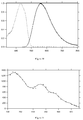
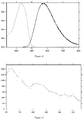
- the presence of encapsulated photosensitizers is demonstrated by UV-visible absorption ( Figure 14 ).
- an important feature of the present invention is the covalent grafting of the photosensitizer to the nanoparticle that avoids photosensitizer leaching from the nanoparticle.
- Table 1 Nanoparticle ⁇ abs max (nm) ⁇ em abs (nm) ⁇ F ⁇ ⁇ 2 max (GM) b DB052 432 542 0.36 1120 DB060 432 547 0.30 1140 ⁇ Fluorescence quantum yield.
- Nanoparticles with a biotargeting moiety with a biotargeting moiety
- a further step in the synthesis of nanoparticles encapsulating photosensitizers is the functionalization of said nanoparticle surface by a biomolecule enabling the biotargeting of cancer cells.
- organic coupling agents were used for this surface grafting.
- Organic coupling agents contain a chloro or alkoxysilane function for anchoring on silica, and an amine, thiol, ICE, hydrazine, semicarbazide, isocyanate, acid or aldehyde function for bonding to the biomolecule.
- biomolecules used for the functionalization of the nanoparticles surface can be of different type, for example mannose, galactose, rhamnose, mannose 6-phosphate, mannose 6-phosphate analogs.
- the nanoparticle surface was functionalized by a trialkoxysilane comprising one amine function (for example aminopropyltriethoxysilane or aminopropyltrimethoxysilane).
- the surface amine functions react with a ⁇ -mannose phenylaminocyclobutenedione derivative. Mannose proportioning was monitored by UV-Vis absorption after reaction with a resorcinol/H 2 SO 4 solution (dosage metric assay).
- APTS Aminopropyltriethoxysilane
- Nanoparticles DB052 or DB060 were suspended by ultrasounds in deionised water (10 mL). APTS (500 ⁇ L) was added dropwise. HCl (0.2 M) was added until pH 6.5. The reaction was stirred for 18 hours, centrifuged (10 minutes, 20000 rotations per minute). The nanoparticles were washed twice with water and three times with ethanol (ultrasounds and centrifuged). The nanoparticles were isolated (350 mg).
- Amine functions were characterized by a quantitative assay with ninhydrin. UV-vis absorption spectrum observed in ethanol showed that photosensitizer were still present and had not been spoilt during the synthesis.
- Nanoparticles DB052 (200 mg) were stirred up by ultrasounds for 30 minutes in ethanol (5 mL). ⁇ -mannose phenylaminocyclobutenedione derivatives (71 mg, 1.8 10 -4 mol, structure here above) was dissolved in an ethanol/water mixture (10 ml, 3/2). The ⁇ -mannose phenylaminocyclobutenedione derivative solution was added dropwisely to the nanoparticle suspension. Triethylamine (500 ⁇ L) was added, and the suspension was stirred for 18 hours. After centrifugation, the nanoparticles were dispersed in water and centrifuged (3 cycles), then dispersed in ethanol and centrifugated (two cycles). Functionalized nanoparticles (DB069) were obtained (200 mg).
- ⁇ -mannose phenylaminocyclobutenedione 250 mg; 0.37 mmol was dissolved in a mixture of Ethanol/H 2 O (3/2) (10 mL) and triethyamine (400 ⁇ L) was added dropwise to the solution of APTS (Aminopropyltriethoxysilane) grafted nanoparticles DB060 (250mg in 10ml of EtOH). The mixture was stirred during 16h. The nanoparticles were then centrifugated and washed with water and ethanol and dried under vacuum to afford 232 mg of grafted nanoparticles.
- the concentration of ⁇ -mannose phenylaminocyclobutenedione grafted on the surface of the DB103 nanoaprticle is 0.089 mmol/g.
- camptothecin CPT
- Mannose derivatives coated nanoparticles 50 mg were dispersed in DMSO (3 mL) containing CPT (5 mg). The suspension was stirred at room temperature for 24 h. After centrifugation, the nanoparticles were washed twice with water and dried under vacuum.
- Camptothectin loaded nanoparticles (4 mg) were suspended and sonicated with DMSO (5 mL), the suspension was centrifuged and the UV-visible spectrum of the supernatant solution containing the releasing CPT molecules was measured. It was determined that 12 ⁇ mol of CPT were loaded per gram of nanoparticles.
- PS photosensibilisators
- ATCC American Type Culture Collection
- nanoparticles DB052 (devoid of shielding or biotargeting moities grafted on their surface) and nanoparticles DB069 (grafted with phenylaminocyclobutenedione and mannose on their surface) have been tested in biphotonic photodynamic therapy on MDA-MB-231 breast cancer ( Maynadier M, Ramirez JM, Cathiard AM, Platet N, Gras D, Gleizes M, Sheikh MS, Nirde P, Garcia M. Unliganded estrogen receptor alpha inhibits breast cancer cell growth through interaction with a cyclin-dependent kinase inhibitor (p21(WAF1)). FASEB J. 2008 Mar;22(3):671-81 . Epub 2007 Oct 2).
- irradiated cells at 770 nm
- non-irradiated cells demonstrates on one hand the absence of cytotoxicity of the nanoparticles when untreated by biphotonic irradiations and also under natural light, and on the other hand the strong cytotoxicity under biphotonic irradiation, said cytotoxicity being enhanced by the presence of a biotargeting (or biomolecule) moiety.
- the photosensitizer is not excitable by one-photon visible irradiation (i.e. natural light) because of the shielding effect of the moieties grafted on the nanoparticle surface.
- This characteristic is particularly important when considering the therapeutical protocol because it should enable the patient to get rid of sensitization issues during the pre-treatment (between injection and irradiation) and/or post-treatment (elimination) which compels the patient to remain in darkness.
- MDA-MB-231 cells were maintained in Dulbecco's modified Eagle's medium (DMEM) added with 10% fetal bovin serum (FBS) (MDA-MB-231 usual medium , in wet atmosphere at 37°C and 5% CO 2 .
- DMEM Dulbecco's modified Eagle's medium
- FBS fetal bovin serum
- MDA-MB-231 cancer cells were incubated 24 h with 20 ⁇ g/ml of nanoparticles. Then medium was removed, cells were washed and maintain in usual medium.
- Two-photon irradiation was performed on a confocal microscope equipped with a mode-locked Ti:sapphire laser generating 100 fs wide pulses at a 80 MHz rate.
- the laser beam is focused by a microscope objective lens (10X, NA 0.4).
- Cells were submitted to two-photon irradiation at 760 nm consisting in 3 scans of 1 s each. Scanned areas were 1.5 x 1.5 mm 2 at the 4 quarts of the well in order to irradiate the totality of the well.
- the average power delivered to the sample was measured with a thermoelectric optical energy meter and was 80 mW.
- Two days after two photon irradiation the percentage of living cells was determined by the MTS enzymatic assay (Cell Titer 96, G3580, Promega).
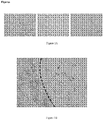
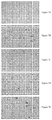
- Figures 1A and 1B show microscope pictures of MDA-MB-231 cells incubated with (or without) MSN or MSN-mannose for 24 hours and treated by two photon irradiation.
- Figures 1A and 1B demonstrate the specificity of the photodynamic therapy with the particles according to the present invention. Cells death is observed and occurs in the irradiated area when the cells have been incubated with nanoparticles according to the present invention.
- Therapeutical efficiency is improved by mannose coating of the nanoparticles surface. Moreover, the absence of toxicity of the unirradiated nanoparticles demonstrates the specificity of the photodynamic therapy with the compounds according to the present invention.
- Example 21 The conditions were the same as these of Example 21 and only differ on incubation time.
- the incubation time was 4 h.
- MCF7 cells ( Maynadier M, Ramirez JM, Cathiard AM, Platet N, Gras D, Gleizes M, Sheikh MS, Nirde P, Garcia M. Unliganded estrogen receptor alpha inhibits breast cancer cell growth through interaction with a cyclin-dependent kinase inhibitor (p21(WAF1)).
- F-12 Dulbecco's modified Eagle's medium F-12 Dulbecco's modified Eagle's medium
- 10% FBS MCF7 usual medium
- cells were plated in a 384 multiwell glass bottom (0.17 mm) with a black polystyrene frame, at the density of 2000 cells/ well in 70 ⁇ l medium.
- MCF7 cancer cells were incubated 2 h or 4 h with 20 ⁇ g/ml of nanoparticles. Then medium was removed, cells were washed and maintain in usual medium.
- Two-photon irradiation was performed on a confocal microscope equipped with a mode-locked Ti:sapphire laser generating 100 fs wide pulses at a 80 MHz rate.
- the laser beam is focused by a microscope objective lens (10X, NA 0.4).
- Cells were submitted to two-photon irradiation at 760 nm consisting in 3 scans of 1 s each. Scanned areas were 1.5 x 1.5 mm 2 at the 4 quarts of the well in order to irradiate the totality of the well.
- the average power delivered to the sample was measured with a thermoelectric optical energy meter and was 80 mW.
- Two days after two photon irradiation the percentage of living cells was determined by the MTS enzymatic assay (Cell Titer 96, G3580, Promega).
- Cell death was induced by photodynamic therapy with nanoparticles according to the present invention.
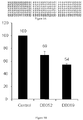
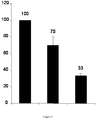
- the efficiency of the therapy is demonstrated by the death of 31% of the cells irradiated and incubated with nanoparticles DB052, and the death of 46% of the cells irradiated and incubated with nanoparticles DB069, after 2 hours of incubation with the said nanoparticles ( Figure 3B ).
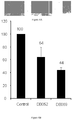
- the efficiency of the therapy is demonstrated by the death of 36% of the cells irradiated and incubated with nanoparticles DB052, and the death of 56% of the cells irradiated and incubated with nanoparticles DB069, after 4 hours of incubation with the said nanoparticles ( Figure 4B ).
- Figures 4A, 4B , 5A and 5B demonstrate an increase in the therapeutical efficiency of nanoparticle surface coated with mannose.
- Example 23 The conditions were the same as those of Example 23 and only differed on incubation time.
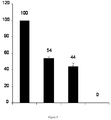
- incubation times with DB069 were 2 h, 4 h and 24 h, induced cell death were respectively of 46%, 56% and 100% ( Figure 5 ).
- Y-79 cells Laville I, Pigaglio S, Blais JC, Doz F, Loock B, Maillard P, Grierson DS, Blais J. Photodynamic efficiency of diethylene glycol-linked glycoconjugated porphyrins in human retinoblastoma cells. J Med Chem. 2006 Apr 20;49(8):2558-67 ) are non adherent cells which were maintained in Roswell Park Memorial Institute culture medium (RPMI 1640) added with 20% FBS (Y-79 usual medium), in wet atmosphere at 37°C and 5% CO 2 .
- RPMI 1640 Roswell Park Memorial Institute culture medium
- FBS Y-79 usual medium
- cells were plated in a 384 multiwell glass bottom (0.17 mm) with a black polystyrene frame, at the density of 2000 cells/ well in 70 ⁇ l medium.
- Y-79 retinoblastoma cells were incubated 24 h with 20 ⁇ g/ml of nanoparticles.
- Two-photon irradiation was performed on a confocal microscope equipped with a mode-locked Ti:sapphire laser generating 100 fs wide pulses at a 80 MHz rate.
- the laser beam is focused by a microscope objective lens (10X, NA 0.4).
- Cells were submitted to two-photon irradiation at 760 nm consisting in 3 scans of 1 s each. Scanned areas were 1.5 x 1.5 mm 2 at the 4 quarts of the well in order to irradiate the totality of the well.
- the average power delivered to the sample was measured with a thermoelectric optical energy meter and was 80 mW.
- Two days after two photon irradiation the percentage of living cells was determined by the MTS enzymatic assay (from Promega).
- HCT-116 cells Zhan Y, Ginanni N, Tota MR, Wu M, Bays NW, Richon VM, Kohl NE, Bachman ES, Strack PR, Krauss S. Control of cell growth and survival by enzymes of the fatty acid synthesis pathway in HCT-116 colon cancer cells. Clin Cancer Res. 2008 Sep 15;14(18):5735-42 .) were maintained in Mac Coy culture medium added with 10% FBS (HCT-116 usual medium), in wet atmosphere at 37°C and 5% CO 2 . For the experiment, cells were plated in a 384 multiwell glass bottom (0.17 mm) with a black polystyrene frame, at the density of 2000 cells/ well in 70 ⁇ l medium.
- HCT-116 cells were incubated 4 h with 20 ⁇ g/ml of nanoparticles functionalized (DB069 ( Fig 7C ), DB103 ( Fig 7E )) or not (DB052 ( Fig 7B ), DB060 ( Fig 7D )) with mannose.
- DB060 and DB103 were characterized by a higher quantity of two photon PS than this of DB052 and DB069.
- Two-photon irradiation was performed on a confocal microscope equipped with a mode-locked Ti:sapphire laser generating 100 fs wide pulses at a 80 MHz rate. The laser beam is focused by a microscope objective lens (10X, NA 0.4).
- Figures 7A to 7E are microscope pictures of HCT-116 cells according to example 26, Figure 7A shows the control cells.
- Figures 7A to 7E show an improved therapeutical efficiency of the nanoparticles containing a larger amount of photosensitizer, and an improved therapeutical efficiency of the mannose coated nanoparticles. Biphotonic irradiation without nanoparticles does not induce cells death.
- MDA-MB-231 and MCF-7 human breast cancer cells were routinely cultured in Dulbecco's modified Eagle's medium (DMEM) supplemented with 10% fetal bovine serum and 50 ⁇ g mL -1 gentamycin.
- DMEM Dulbecco's modified Eagle's medium
- HCT-116 human colorectal cancer cells were routinely cultured in Mac Coy's culture medium supplemented with 10% fetal bovine serum and 50 ⁇ g mL -1 gentamycin. All these cell types were allowed to grow in humidified atmosphere at 37°C under 5% CO2.
- cells were seeded into 96-well plates at 3.10 4 cells/well in 100 ⁇ l of culture medium and allowed to grow for 24 h.
- MTT precipitates were dissolved in 150 ⁇ l ethanol/DMSO (1:1) solution and absorbance was read at 540 nm.
- Table 3 Daylight exposition No light exposition Living cells (%) MCF-7 MDA-MB-231 HCT-116 MCF-7 MDA-MB-231 HCT-116 Control 100 ⁇ 3 100 ⁇ 5 100 ⁇ 9 100 ⁇ 6 100 ⁇ 4 100 ⁇ 6 DB052 107 ⁇ 5 108 ⁇ 4 98 ⁇ 10 97 ⁇ 7 105 ⁇ 10 99 ⁇ 2 DB069 96 ⁇ 3 105 ⁇ 10 99 ⁇ 8 98 ⁇ 8 101 ⁇ 8 98 ⁇ 3
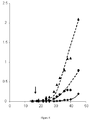
- Figure 8 shows the results for tumours having a starting volume comprised between 0.009 and 0.01 cm 3 .
- Figure 8 demonstrates that tumors react strongly to photodynamic therapy with nanoparticles according to the present invention.
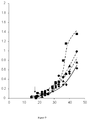
- Figure 9 shows the results for tumours having a starting volume comprised between 0.02 and 0.04 cm 3 .
- Figure 9 demonstrates that tumors react to photodynamic therapy with nanoparticles according to the present invention.
- An infusion of physiological serum added with the nanoparticles of the invention (at the dose of 20 mg/kg) is administered to patients.
- the tumour area is irradiated during 5 to 60 min at the wavelength determined for biphotonic excitation.
- This experiment is repeated one or several times according to the regression of the tumour.
Landscapes
- Chemical & Material Sciences (AREA)
- Organic Chemistry (AREA)
- Health & Medical Sciences (AREA)
- Life Sciences & Earth Sciences (AREA)
- General Health & Medical Sciences (AREA)
- Biotechnology (AREA)
- Engineering & Computer Science (AREA)
- Molecular Biology (AREA)
- Genetics & Genomics (AREA)
- Biochemistry (AREA)
- General Chemical & Material Sciences (AREA)
- Public Health (AREA)
- Veterinary Medicine (AREA)
- Nuclear Medicine, Radiotherapy & Molecular Imaging (AREA)
- Animal Behavior & Ethology (AREA)
- Chemical Kinetics & Catalysis (AREA)
- Medicinal Chemistry (AREA)
- Pharmacology & Pharmacy (AREA)
- Pharmaceuticals Containing Other Organic And Inorganic Compounds (AREA)
- Nitrogen And Oxygen Or Sulfur-Condensed Heterocyclic Ring Systems (AREA)
- Medicinal Preparation (AREA)
- Medicines Containing Antibodies Or Antigens For Use As Internal Diagnostic Agents (AREA)
- Heterocyclic Compounds Containing Sulfur Atoms (AREA)
Priority Applications (1)
| Application Number | Priority Date | Filing Date | Title |
|---|---|---|---|
| EP10790539.0A EP2513083B1 (en) | 2009-12-15 | 2010-12-07 | Biphotonic photosensitizers, nanoparticles containing the same and their use as drugs |
Applications Claiming Priority (3)
| Application Number | Priority Date | Filing Date | Title |
|---|---|---|---|
| EP09306238 | 2009-12-15 | ||
| PCT/EP2010/069035 WO2011073054A1 (en) | 2009-12-15 | 2010-12-07 | Biphotonic photosensitizers, nanoparticles containing the same and their use as drugs |
| EP10790539.0A EP2513083B1 (en) | 2009-12-15 | 2010-12-07 | Biphotonic photosensitizers, nanoparticles containing the same and their use as drugs |
Publications (2)
| Publication Number | Publication Date |
|---|---|
| EP2513083A1 EP2513083A1 (en) | 2012-10-24 |
| EP2513083B1 true EP2513083B1 (en) | 2016-04-06 |
Family
ID=42021128
Family Applications (1)
| Application Number | Title | Priority Date | Filing Date |
|---|---|---|---|
| EP10790539.0A Not-in-force EP2513083B1 (en) | 2009-12-15 | 2010-12-07 | Biphotonic photosensitizers, nanoparticles containing the same and their use as drugs |
Country Status (5)
| Country | Link |
|---|---|
| US (1) | US8709747B2 (enExample) |
| EP (1) | EP2513083B1 (enExample) |
| JP (1) | JP5926685B2 (enExample) |
| CA (1) | CA2784212C (enExample) |
| WO (1) | WO2011073054A1 (enExample) |
Cited By (1)
| Publication number | Priority date | Publication date | Assignee | Title |
|---|---|---|---|---|
| WO2019112519A1 (en) * | 2017-12-08 | 2019-06-13 | Nanyang Technological University | Photodynamically active organosilica nanoparticles and medical uses thereof |
Families Citing this family (5)
| Publication number | Priority date | Publication date | Assignee | Title |
|---|---|---|---|---|
| FR2988721B1 (fr) | 2012-03-27 | 2014-04-04 | Centre Nat Rech Scient | Nanoparticules de silicium poreux fonctionnalisees et leurs utilisations en therapie photodynamique |
| FR3044676B1 (fr) * | 2015-12-04 | 2017-11-24 | Univ Rennes | Dendrimeres photosensibilisateurs biphotoniques, procede de fabrication et utilisations |
| WO2022100750A1 (zh) * | 2020-11-16 | 2022-05-19 | 北京厚燊维康科技有限责任公司 | 可用于光动力治疗或诊断的制剂 |
| CN117327098B (zh) * | 2023-09-28 | 2025-11-11 | 江汉大学 | 一种以用于i型光动力治疗为主的aie型光敏剂的制备方法与应用 |
| WO2025207959A1 (en) | 2024-03-27 | 2025-10-02 | Biogen Ma Inc. | Anti-transferrin receptor antibodies and uses thereof |
Family Cites Families (3)
| Publication number | Priority date | Publication date | Assignee | Title |
|---|---|---|---|---|
| ITFI940095A1 (it) * | 1994-05-23 | 1995-11-23 | Molteni & C | Coniugati fotodinamici aventi proprieta' biocide |
| AU2004207813B8 (en) * | 2003-01-24 | 2010-04-22 | Health Research, Inc. | Use of photodynamic therapy therapeutic agents entrapped in ceramic nanoparticles |
| WO2008030624A2 (en) | 2006-09-08 | 2008-03-13 | The Research Foundation Of State University Of New York | Nanoparticles for two-photon activated photodynamic therapy and imaging |
-
2010
- 2010-12-07 US US13/516,010 patent/US8709747B2/en not_active Expired - Fee Related
- 2010-12-07 EP EP10790539.0A patent/EP2513083B1/en not_active Not-in-force
- 2010-12-07 CA CA2784212A patent/CA2784212C/en active Active
- 2010-12-07 JP JP2012543599A patent/JP5926685B2/ja not_active Expired - Fee Related
- 2010-12-07 WO PCT/EP2010/069035 patent/WO2011073054A1/en not_active Ceased
Cited By (1)
| Publication number | Priority date | Publication date | Assignee | Title |
|---|---|---|---|---|
| WO2019112519A1 (en) * | 2017-12-08 | 2019-06-13 | Nanyang Technological University | Photodynamically active organosilica nanoparticles and medical uses thereof |
Also Published As
| Publication number | Publication date |
|---|---|
| CA2784212A1 (en) | 2011-06-23 |
| WO2011073054A1 (en) | 2011-06-23 |
| US8709747B2 (en) | 2014-04-29 |
| CA2784212C (en) | 2018-01-16 |
| JP2013513632A (ja) | 2013-04-22 |
| JP5926685B2 (ja) | 2016-05-25 |
| US20130065849A1 (en) | 2013-03-14 |
| EP2513083A1 (en) | 2012-10-24 |
Similar Documents
| Publication | Publication Date | Title |
|---|---|---|
| Wang et al. | Hexagonal boron nitride nanomaterials for biomedical applications | |
| Xu et al. | Hypoxia-activated NIR photosensitizer anchoring in the mitochondria for photodynamic therapy | |
| Zhang et al. | Graphene oxide decorated with Ru (II)–polyethylene glycol complex for lysosome-targeted imaging and photodynamic/photothermal therapy | |
| US8709747B2 (en) | Biphotonic photosensitizers, nanoparticles containing the same and their use as drugs | |
| Pan et al. | Near-infrared AIE-active phosphorescent iridium (III) complex for mitochondria-targeted photodynamic therapy | |
| Santos et al. | Enhanced photodynamic therapy effects of graphene quantum dots conjugated with aminoporphyrins | |
| Murugan et al. | Tumor-targeted molybdenum disulfide@ barium titanate core–shell nanomedicine for dual photothermal and chemotherapy of triple-negative breast cancer cells | |
| EP2854948B1 (en) | Metal-based thiophene photodynamic compounds and their use | |
| Zhang et al. | Near infrared light triggered reactive oxygen species responsive nanoparticles for chemo-photodynamic combined therapy | |
| CN111742034B (zh) | 具有高度非辐射衰减抑制的碗烯包裹的aie纳米点用于增强体内癌症光诊疗 | |
| Perumal et al. | Biotin-decorated NIR-absorbing nanosheets for targeted photodynamic cancer therapy | |
| Hu et al. | A thermally activated delayed fluorescence photosensitizer for photodynamic therapy of oral squamous cell carcinoma under low laser intensity | |
| Chen et al. | A mitochondria-localized iridium (III)–chlorin E6 conjugate for synergistic sonodynamic and two-photon photodynamic therapy against melanoma | |
| Xia et al. | Near-infrared organic fluorescent nanoparticles for long-term monitoring and photodynamic therapy of cancer | |
| Zhang et al. | Multifunctional tetracene/pentacene host/guest nanorods for enhanced upconversion photodynamic tumor therapy | |
| Li et al. | Efficient hydroxyl radical generation of an activatable phthalocyanine photosensitizer: oligomer higher than monomer and nanoaggregate | |
| Zhu et al. | More is different: progressive β-thiolation induced-porphyrin aggregation switches singlet oxygen photosensitization | |
| Li et al. | Folate chitosan conjugated doxorubicin and pyropheophorbide acid nanoparticles (FCDP–NPs) for enhance photodynamic therapy | |
| Kim et al. | Triphenylphosphonium-functionalized dimeric BODIPY-based nanoparticles for mitochondria-targeting photodynamic therapy | |
| CN109161013A (zh) | 一种原位活性氧和髓过氧化物酶响应性自发光聚合物材料、制备方法及其应用 | |
| Chansaenpak et al. | Aza-BODIPY-based polymeric nanoparticles for photothermal cancer therapy in a chicken egg tumor model | |
| Hou et al. | GSH-activatable camptothecin prodrug-loaded gold nanostars coated with hyaluronic acid for targeted breast cancer therapy via multiple radiosensitization strategies | |
| Sobhanan et al. | Photosensitizer-singlet oxygen sensor conjugated silica nanoparticles for photodynamic therapy and bioimaging | |
| Yurt et al. | Evaluation of photodynamic therapy and nuclear imaging potential of subphthalocyanine integrated TiO 2 nanoparticles in mammary and cervical tumor cells | |
| US20200140466A1 (en) | Mesoporous organosilica nanoparticles, production method thereof and uses of same |
Legal Events
| Date | Code | Title | Description |
|---|---|---|---|
| PUAI | Public reference made under article 153(3) epc to a published international application that has entered the european phase |
Free format text: ORIGINAL CODE: 0009012 |
|
| 17P | Request for examination filed |
Effective date: 20120611 |
|
| AK | Designated contracting states |
Kind code of ref document: A1 Designated state(s): AL AT BE BG CH CY CZ DE DK EE ES FI FR GB GR HR HU IE IS IT LI LT LU LV MC MK MT NL NO PL PT RO RS SE SI SK SM TR |
|
| RIN1 | Information on inventor provided before grant (corrected) |
Inventor name: RAEHM, LAURENCE Inventor name: BREVET, DAVID Inventor name: MORERE, ALAIN Inventor name: MONGIN, OLIVIER Inventor name: GARCIA, MARCEL Inventor name: BLANCHARD-DESCE, MIREILLE Inventor name: DURAND, JEAN-OLIVIER Inventor name: GARY-BOBO-SABLE-TEYCHENE, MAGALI |
|
| DAX | Request for extension of the european patent (deleted) | ||
| 17Q | First examination report despatched |
Effective date: 20131106 |
|
| GRAP | Despatch of communication of intention to grant a patent |
Free format text: ORIGINAL CODE: EPIDOSNIGR1 |
|
| INTG | Intention to grant announced |
Effective date: 20150724 |
|
| GRAS | Grant fee paid |
Free format text: ORIGINAL CODE: EPIDOSNIGR3 |
|
| GRAA | (expected) grant |
Free format text: ORIGINAL CODE: 0009210 |
|
| AK | Designated contracting states |
Kind code of ref document: B1 Designated state(s): AL AT BE BG CH CY CZ DE DK EE ES FI FR GB GR HR HU IE IS IT LI LT LU LV MC MK MT NL NO PL PT RO RS SE SI SK SM TR |
|
| REG | Reference to a national code |
Ref country code: GB Ref legal event code: FG4D |
|
| REG | Reference to a national code |
Ref country code: AT Ref legal event code: REF Ref document number: 787673 Country of ref document: AT Kind code of ref document: T Effective date: 20160415 Ref country code: CH Ref legal event code: EP |
|
| REG | Reference to a national code |
Ref country code: IE Ref legal event code: FG4D |
|
| REG | Reference to a national code |
Ref country code: DE Ref legal event code: R096 Ref document number: 602010032094 Country of ref document: DE |
|
| REG | Reference to a national code |
Ref country code: LT Ref legal event code: MG4D Ref country code: NL Ref legal event code: MP Effective date: 20160406 |
|
| REG | Reference to a national code |
Ref country code: AT Ref legal event code: MK05 Ref document number: 787673 Country of ref document: AT Kind code of ref document: T Effective date: 20160406 |
|
| PG25 | Lapsed in a contracting state [announced via postgrant information from national office to epo] |
Ref country code: NL Free format text: LAPSE BECAUSE OF FAILURE TO SUBMIT A TRANSLATION OF THE DESCRIPTION OR TO PAY THE FEE WITHIN THE PRESCRIBED TIME-LIMIT Effective date: 20160406 |
|
| PG25 | Lapsed in a contracting state [announced via postgrant information from national office to epo] |
Ref country code: IS Free format text: LAPSE BECAUSE OF FAILURE TO SUBMIT A TRANSLATION OF THE DESCRIPTION OR TO PAY THE FEE WITHIN THE PRESCRIBED TIME-LIMIT Effective date: 20160806 Ref country code: PL Free format text: LAPSE BECAUSE OF FAILURE TO SUBMIT A TRANSLATION OF THE DESCRIPTION OR TO PAY THE FEE WITHIN THE PRESCRIBED TIME-LIMIT Effective date: 20160406 Ref country code: NO Free format text: LAPSE BECAUSE OF FAILURE TO SUBMIT A TRANSLATION OF THE DESCRIPTION OR TO PAY THE FEE WITHIN THE PRESCRIBED TIME-LIMIT Effective date: 20160706 Ref country code: LT Free format text: LAPSE BECAUSE OF FAILURE TO SUBMIT A TRANSLATION OF THE DESCRIPTION OR TO PAY THE FEE WITHIN THE PRESCRIBED TIME-LIMIT Effective date: 20160406 Ref country code: FI Free format text: LAPSE BECAUSE OF FAILURE TO SUBMIT A TRANSLATION OF THE DESCRIPTION OR TO PAY THE FEE WITHIN THE PRESCRIBED TIME-LIMIT Effective date: 20160406 |
|
| REG | Reference to a national code |
Ref country code: FR Ref legal event code: PLFP Year of fee payment: 7 |
|
| PG25 | Lapsed in a contracting state [announced via postgrant information from national office to epo] |
Ref country code: LV Free format text: LAPSE BECAUSE OF FAILURE TO SUBMIT A TRANSLATION OF THE DESCRIPTION OR TO PAY THE FEE WITHIN THE PRESCRIBED TIME-LIMIT Effective date: 20160406 Ref country code: PT Free format text: LAPSE BECAUSE OF FAILURE TO SUBMIT A TRANSLATION OF THE DESCRIPTION OR TO PAY THE FEE WITHIN THE PRESCRIBED TIME-LIMIT Effective date: 20160808 Ref country code: SE Free format text: LAPSE BECAUSE OF FAILURE TO SUBMIT A TRANSLATION OF THE DESCRIPTION OR TO PAY THE FEE WITHIN THE PRESCRIBED TIME-LIMIT Effective date: 20160406 Ref country code: ES Free format text: LAPSE BECAUSE OF FAILURE TO SUBMIT A TRANSLATION OF THE DESCRIPTION OR TO PAY THE FEE WITHIN THE PRESCRIBED TIME-LIMIT Effective date: 20160406 Ref country code: HR Free format text: LAPSE BECAUSE OF FAILURE TO SUBMIT A TRANSLATION OF THE DESCRIPTION OR TO PAY THE FEE WITHIN THE PRESCRIBED TIME-LIMIT Effective date: 20160406 Ref country code: RS Free format text: LAPSE BECAUSE OF FAILURE TO SUBMIT A TRANSLATION OF THE DESCRIPTION OR TO PAY THE FEE WITHIN THE PRESCRIBED TIME-LIMIT Effective date: 20160406 Ref country code: AT Free format text: LAPSE BECAUSE OF FAILURE TO SUBMIT A TRANSLATION OF THE DESCRIPTION OR TO PAY THE FEE WITHIN THE PRESCRIBED TIME-LIMIT Effective date: 20160406 Ref country code: GR Free format text: LAPSE BECAUSE OF FAILURE TO SUBMIT A TRANSLATION OF THE DESCRIPTION OR TO PAY THE FEE WITHIN THE PRESCRIBED TIME-LIMIT Effective date: 20160707 |
|
| PG25 | Lapsed in a contracting state [announced via postgrant information from national office to epo] |
Ref country code: BE Free format text: LAPSE BECAUSE OF FAILURE TO SUBMIT A TRANSLATION OF THE DESCRIPTION OR TO PAY THE FEE WITHIN THE PRESCRIBED TIME-LIMIT Effective date: 20160406 Ref country code: IT Free format text: LAPSE BECAUSE OF FAILURE TO SUBMIT A TRANSLATION OF THE DESCRIPTION OR TO PAY THE FEE WITHIN THE PRESCRIBED TIME-LIMIT Effective date: 20160406 |
|
| REG | Reference to a national code |
Ref country code: DE Ref legal event code: R097 Ref document number: 602010032094 Country of ref document: DE |
|
| PG25 | Lapsed in a contracting state [announced via postgrant information from national office to epo] |
Ref country code: EE Free format text: LAPSE BECAUSE OF FAILURE TO SUBMIT A TRANSLATION OF THE DESCRIPTION OR TO PAY THE FEE WITHIN THE PRESCRIBED TIME-LIMIT Effective date: 20160406 Ref country code: SK Free format text: LAPSE BECAUSE OF FAILURE TO SUBMIT A TRANSLATION OF THE DESCRIPTION OR TO PAY THE FEE WITHIN THE PRESCRIBED TIME-LIMIT Effective date: 20160406 Ref country code: DK Free format text: LAPSE BECAUSE OF FAILURE TO SUBMIT A TRANSLATION OF THE DESCRIPTION OR TO PAY THE FEE WITHIN THE PRESCRIBED TIME-LIMIT Effective date: 20160406 Ref country code: RO Free format text: LAPSE BECAUSE OF FAILURE TO SUBMIT A TRANSLATION OF THE DESCRIPTION OR TO PAY THE FEE WITHIN THE PRESCRIBED TIME-LIMIT Effective date: 20160406 Ref country code: CZ Free format text: LAPSE BECAUSE OF FAILURE TO SUBMIT A TRANSLATION OF THE DESCRIPTION OR TO PAY THE FEE WITHIN THE PRESCRIBED TIME-LIMIT Effective date: 20160406 |
|
| PLBE | No opposition filed within time limit |
Free format text: ORIGINAL CODE: 0009261 |
|
| STAA | Information on the status of an ep patent application or granted ep patent |
Free format text: STATUS: NO OPPOSITION FILED WITHIN TIME LIMIT |
|
| PG25 | Lapsed in a contracting state [announced via postgrant information from national office to epo] |
Ref country code: SM Free format text: LAPSE BECAUSE OF FAILURE TO SUBMIT A TRANSLATION OF THE DESCRIPTION OR TO PAY THE FEE WITHIN THE PRESCRIBED TIME-LIMIT Effective date: 20160406 |
|
| 26N | No opposition filed |
Effective date: 20170110 |
|
| PG25 | Lapsed in a contracting state [announced via postgrant information from national office to epo] |
Ref country code: SI Free format text: LAPSE BECAUSE OF FAILURE TO SUBMIT A TRANSLATION OF THE DESCRIPTION OR TO PAY THE FEE WITHIN THE PRESCRIBED TIME-LIMIT Effective date: 20160406 |
|
| REG | Reference to a national code |
Ref country code: CH Ref legal event code: PL |
|
| PG25 | Lapsed in a contracting state [announced via postgrant information from national office to epo] |
Ref country code: MC Free format text: LAPSE BECAUSE OF FAILURE TO SUBMIT A TRANSLATION OF THE DESCRIPTION OR TO PAY THE FEE WITHIN THE PRESCRIBED TIME-LIMIT Effective date: 20160406 |
|
| REG | Reference to a national code |
Ref country code: IE Ref legal event code: MM4A |
|
| PG25 | Lapsed in a contracting state [announced via postgrant information from national office to epo] |
Ref country code: CH Free format text: LAPSE BECAUSE OF NON-PAYMENT OF DUE FEES Effective date: 20161231 Ref country code: LU Free format text: LAPSE BECAUSE OF NON-PAYMENT OF DUE FEES Effective date: 20161207 Ref country code: LI Free format text: LAPSE BECAUSE OF NON-PAYMENT OF DUE FEES Effective date: 20161231 |
|
| PG25 | Lapsed in a contracting state [announced via postgrant information from national office to epo] |
Ref country code: IE Free format text: LAPSE BECAUSE OF NON-PAYMENT OF DUE FEES Effective date: 20161207 |
|
| REG | Reference to a national code |
Ref country code: FR Ref legal event code: PLFP Year of fee payment: 8 |
|
| PG25 | Lapsed in a contracting state [announced via postgrant information from national office to epo] |
Ref country code: CY Free format text: LAPSE BECAUSE OF FAILURE TO SUBMIT A TRANSLATION OF THE DESCRIPTION OR TO PAY THE FEE WITHIN THE PRESCRIBED TIME-LIMIT Effective date: 20160406 Ref country code: HU Free format text: LAPSE BECAUSE OF FAILURE TO SUBMIT A TRANSLATION OF THE DESCRIPTION OR TO PAY THE FEE WITHIN THE PRESCRIBED TIME-LIMIT; INVALID AB INITIO Effective date: 20101207 |
|
| PG25 | Lapsed in a contracting state [announced via postgrant information from national office to epo] |
Ref country code: TR Free format text: LAPSE BECAUSE OF FAILURE TO SUBMIT A TRANSLATION OF THE DESCRIPTION OR TO PAY THE FEE WITHIN THE PRESCRIBED TIME-LIMIT Effective date: 20160406 Ref country code: MK Free format text: LAPSE BECAUSE OF FAILURE TO SUBMIT A TRANSLATION OF THE DESCRIPTION OR TO PAY THE FEE WITHIN THE PRESCRIBED TIME-LIMIT Effective date: 20160406 |
|
| PG25 | Lapsed in a contracting state [announced via postgrant information from national office to epo] |
Ref country code: BG Free format text: LAPSE BECAUSE OF FAILURE TO SUBMIT A TRANSLATION OF THE DESCRIPTION OR TO PAY THE FEE WITHIN THE PRESCRIBED TIME-LIMIT Effective date: 20160406 |
|
| PG25 | Lapsed in a contracting state [announced via postgrant information from national office to epo] |
Ref country code: MT Free format text: LAPSE BECAUSE OF NON-PAYMENT OF DUE FEES Effective date: 20161207 |
|
| PG25 | Lapsed in a contracting state [announced via postgrant information from national office to epo] |
Ref country code: AL Free format text: LAPSE BECAUSE OF FAILURE TO SUBMIT A TRANSLATION OF THE DESCRIPTION OR TO PAY THE FEE WITHIN THE PRESCRIBED TIME-LIMIT Effective date: 20160406 |
|
| PGFP | Annual fee paid to national office [announced via postgrant information from national office to epo] |
Ref country code: FR Payment date: 20211231 Year of fee payment: 12 Ref country code: GB Payment date: 20211220 Year of fee payment: 12 Ref country code: DE Payment date: 20211210 Year of fee payment: 12 |
|
| REG | Reference to a national code |
Ref country code: DE Ref legal event code: R119 Ref document number: 602010032094 Country of ref document: DE |
|
| GBPC | Gb: european patent ceased through non-payment of renewal fee |
Effective date: 20221207 |
|
| PG25 | Lapsed in a contracting state [announced via postgrant information from national office to epo] |
Ref country code: GB Free format text: LAPSE BECAUSE OF NON-PAYMENT OF DUE FEES Effective date: 20221207 Ref country code: DE Free format text: LAPSE BECAUSE OF NON-PAYMENT OF DUE FEES Effective date: 20230701 |
|
| PG25 | Lapsed in a contracting state [announced via postgrant information from national office to epo] |
Ref country code: FR Free format text: LAPSE BECAUSE OF NON-PAYMENT OF DUE FEES Effective date: 20221231 |