EP2507210B1 - Cyclohexane derivatives as inhibitors of acetyl-coa carboxylase (acc) - Google Patents
Cyclohexane derivatives as inhibitors of acetyl-coa carboxylase (acc) Download PDFInfo
- Publication number
- EP2507210B1 EP2507210B1 EP10782331.2A EP10782331A EP2507210B1 EP 2507210 B1 EP2507210 B1 EP 2507210B1 EP 10782331 A EP10782331 A EP 10782331A EP 2507210 B1 EP2507210 B1 EP 2507210B1
- Authority
- EP
- European Patent Office
- Prior art keywords
- alkyl
- amino
- ethyl
- group
- independently selected
- Prior art date
- Legal status (The legal status is an assumption and is not a legal conclusion. Google has not performed a legal analysis and makes no representation as to the accuracy of the status listed.)
- Not-in-force
Links
- 239000003112 inhibitor Substances 0.000 title claims description 29
- 102000000452 Acetyl-CoA carboxylase Human genes 0.000 title description 24
- 108010016219 Acetyl-CoA carboxylase Proteins 0.000 title description 24
- 108010018763 Biotin carboxylase Proteins 0.000 title description 23
- 125000000113 cyclohexyl group Chemical class [H]C1([H])C([H])([H])C([H])([H])C([H])(*)C([H])([H])C1([H])[H] 0.000 title description 4
- -1 carboxy, formyl Chemical group 0.000 claims description 261
- 150000001875 compounds Chemical class 0.000 claims description 257
- 150000003839 salts Chemical class 0.000 claims description 72
- 125000000623 heterocyclic group Chemical group 0.000 claims description 68
- 208000037265 diseases, disorders, signs and symptoms Diseases 0.000 claims description 67
- 125000004432 carbon atom Chemical group C* 0.000 claims description 54
- 229910052739 hydrogen Inorganic materials 0.000 claims description 51
- 239000001257 hydrogen Substances 0.000 claims description 51
- 208000001072 type 2 diabetes mellitus Diseases 0.000 claims description 43
- 125000005843 halogen group Chemical group 0.000 claims description 42
- 125000002924 primary amino group Chemical group [H]N([H])* 0.000 claims description 40
- 201000010099 disease Diseases 0.000 claims description 39
- 125000000217 alkyl group Chemical group 0.000 claims description 36
- 125000001495 ethyl group Chemical group [H]C([H])([H])C([H])([H])* 0.000 claims description 30
- 238000011282 treatment Methods 0.000 claims description 30
- 208000035475 disorder Diseases 0.000 claims description 28
- 239000008194 pharmaceutical composition Substances 0.000 claims description 25
- 125000004435 hydrogen atom Chemical group [H]* 0.000 claims description 24
- UFHFLCQGNIYNRP-UHFFFAOYSA-N Hydrogen Chemical compound [H][H] UFHFLCQGNIYNRP-UHFFFAOYSA-N 0.000 claims description 23
- 125000001072 heteroaryl group Chemical group 0.000 claims description 23
- 125000002887 hydroxy group Chemical group [H]O* 0.000 claims description 23
- NOESYZHRGYRDHS-UHFFFAOYSA-N insulin Chemical compound N1C(=O)C(NC(=O)C(CCC(N)=O)NC(=O)C(CCC(O)=O)NC(=O)C(C(C)C)NC(=O)C(NC(=O)CN)C(C)CC)CSSCC(C(NC(CO)C(=O)NC(CC(C)C)C(=O)NC(CC=2C=CC(O)=CC=2)C(=O)NC(CCC(N)=O)C(=O)NC(CC(C)C)C(=O)NC(CCC(O)=O)C(=O)NC(CC(N)=O)C(=O)NC(CC=2C=CC(O)=CC=2)C(=O)NC(CSSCC(NC(=O)C(C(C)C)NC(=O)C(CC(C)C)NC(=O)C(CC=2C=CC(O)=CC=2)NC(=O)C(CC(C)C)NC(=O)C(C)NC(=O)C(CCC(O)=O)NC(=O)C(C(C)C)NC(=O)C(CC(C)C)NC(=O)C(CC=2NC=NC=2)NC(=O)C(CO)NC(=O)CNC2=O)C(=O)NCC(=O)NC(CCC(O)=O)C(=O)NC(CCCNC(N)=N)C(=O)NCC(=O)NC(CC=3C=CC=CC=3)C(=O)NC(CC=3C=CC=CC=3)C(=O)NC(CC=3C=CC(O)=CC=3)C(=O)NC(C(C)O)C(=O)N3C(CCC3)C(=O)NC(CCCCN)C(=O)NC(C)C(O)=O)C(=O)NC(CC(N)=O)C(O)=O)=O)NC(=O)C(C(C)CC)NC(=O)C(CO)NC(=O)C(C(C)O)NC(=O)C1CSSCC2NC(=O)C(CC(C)C)NC(=O)C(NC(=O)C(CCC(N)=O)NC(=O)C(CC(N)=O)NC(=O)C(NC(=O)C(N)CC=1C=CC=CC=1)C(C)C)CC1=CN=CN1 NOESYZHRGYRDHS-UHFFFAOYSA-N 0.000 claims description 23
- 125000003917 carbamoyl group Chemical group [H]N([H])C(*)=O 0.000 claims description 20
- 206010012601 diabetes mellitus Diseases 0.000 claims description 20
- 229910052799 carbon Inorganic materials 0.000 claims description 19
- 125000004178 (C1-C4) alkyl group Chemical group 0.000 claims description 16
- 125000001997 phenyl group Chemical group [H]C1=C([H])C([H])=C(*)C([H])=C1[H] 0.000 claims description 16
- 208000001145 Metabolic Syndrome Diseases 0.000 claims description 15
- 201000000690 abdominal obesity-metabolic syndrome Diseases 0.000 claims description 15
- 150000001413 amino acids Chemical class 0.000 claims description 15
- 206010022489 Insulin Resistance Diseases 0.000 claims description 14
- 125000003178 carboxy group Chemical group [H]OC(*)=O 0.000 claims description 14
- 238000002360 preparation method Methods 0.000 claims description 13
- 125000000999 tert-butyl group Chemical group [H]C([H])([H])C(*)(C([H])([H])[H])C([H])([H])[H] 0.000 claims description 13
- KFZMGEQAYNKOFK-UHFFFAOYSA-N Isopropanol Chemical group CC(C)O KFZMGEQAYNKOFK-UHFFFAOYSA-N 0.000 claims description 12
- 150000002431 hydrogen Chemical group 0.000 claims description 12
- WQZGKKKJIJFFOK-GASJEMHNSA-N Glucose Natural products OC[C@H]1OC(O)[C@H](O)[C@@H](O)[C@@H]1O WQZGKKKJIJFFOK-GASJEMHNSA-N 0.000 claims description 11
- 150000001721 carbon Chemical group 0.000 claims description 11
- 125000004093 cyano group Chemical group *C#N 0.000 claims description 11
- 239000003814 drug Substances 0.000 claims description 11
- 125000001424 substituent group Chemical group 0.000 claims description 11
- 208000011580 syndromic disease Diseases 0.000 claims description 11
- 102000004877 Insulin Human genes 0.000 claims description 10
- 108090001061 Insulin Proteins 0.000 claims description 10
- PVNIIMVLHYAWGP-UHFFFAOYSA-N Niacin Chemical compound OC(=O)C1=CC=CN=C1 PVNIIMVLHYAWGP-UHFFFAOYSA-N 0.000 claims description 10
- 206010067584 Type 1 diabetes mellitus Diseases 0.000 claims description 10
- 230000003247 decreasing effect Effects 0.000 claims description 10
- 239000008103 glucose Substances 0.000 claims description 10
- 229940125396 insulin Drugs 0.000 claims description 10
- 239000003446 ligand Substances 0.000 claims description 10
- 125000002023 trifluoromethyl group Chemical group FC(F)(F)* 0.000 claims description 10
- 125000001313 C5-C10 heteroaryl group Chemical group 0.000 claims description 9
- DTHNMHAUYICORS-KTKZVXAJSA-N Glucagon-like peptide 1 Chemical compound C([C@@H](C(=O)N[C@@H]([C@@H](C)CC)C(=O)N[C@@H](C)C(=O)N[C@@H](CC=1C2=CC=CC=C2NC=1)C(=O)N[C@@H](CC(C)C)C(=O)N[C@@H](C(C)C)C(=O)N[C@@H](CCCCN)C(=O)NCC(=O)N[C@@H](CCCNC(N)=N)C(N)=O)NC(=O)[C@H](CCC(O)=O)NC(=O)[C@H](CCCCN)NC(=O)[C@H](C)NC(=O)[C@H](C)NC(=O)[C@H](CCC(N)=O)NC(=O)CNC(=O)[C@H](CCC(O)=O)NC(=O)[C@H](CC(C)C)NC(=O)[C@H](CC=1C=CC(O)=CC=1)NC(=O)[C@H](CO)NC(=O)[C@H](CO)NC(=O)[C@@H](NC(=O)[C@H](CC(O)=O)NC(=O)[C@H](CO)NC(=O)[C@@H](NC(=O)[C@H](CC=1C=CC=CC=1)NC(=O)[C@@H](NC(=O)CNC(=O)[C@H](CCC(O)=O)NC(=O)[C@H](C)NC(=O)[C@@H](N)CC=1N=CNC=1)[C@@H](C)O)[C@@H](C)O)C(C)C)C1=CC=CC=C1 DTHNMHAUYICORS-KTKZVXAJSA-N 0.000 claims description 9
- 125000001797 benzyl group Chemical group [H]C1=C([H])C([H])=C(C([H])=C1[H])C([H])([H])* 0.000 claims description 8
- 230000037396 body weight Effects 0.000 claims description 8
- 125000001153 fluoro group Chemical group F* 0.000 claims description 8
- 125000000449 nitro group Chemical group [O-][N+](*)=O 0.000 claims description 8
- 125000004043 oxo group Chemical group O=* 0.000 claims description 8
- 239000000546 pharmaceutical excipient Substances 0.000 claims description 8
- 102000016267 Leptin Human genes 0.000 claims description 7
- 108010092277 Leptin Proteins 0.000 claims description 7
- NRYBAZVQPHGZNS-ZSOCWYAHSA-N leptin Chemical compound O=C([C@H](CO)NC(=O)[C@H](CC(C)C)NC(=O)[C@H](CC(O)=O)NC(=O)[C@H](CC(C)C)NC(=O)[C@H](CCC(N)=O)NC(=O)[C@H](CC=1C2=CC=CC=C2NC=1)NC(=O)[C@H](CC(C)C)NC(=O)[C@@H](NC(=O)[C@H](CC(O)=O)NC(=O)[C@H](CCC(N)=O)NC(=O)[C@H](CC(C)C)NC(=O)[C@H](CO)NC(=O)CNC(=O)[C@H](CCC(N)=O)NC(=O)[C@@H](N)CC(C)C)CCSC)N1CCC[C@H]1C(=O)NCC(=O)N[C@@H](CS)C(O)=O NRYBAZVQPHGZNS-ZSOCWYAHSA-N 0.000 claims description 7
- 125000006552 (C3-C8) cycloalkyl group Chemical group 0.000 claims description 6
- OKTJSMMVPCPJKN-UHFFFAOYSA-N Carbon Chemical compound [C] OKTJSMMVPCPJKN-UHFFFAOYSA-N 0.000 claims description 6
- 125000001559 cyclopropyl group Chemical group [H]C1([H])C([H])([H])C1([H])* 0.000 claims description 6
- 239000003937 drug carrier Substances 0.000 claims description 6
- 125000005844 heterocyclyloxy group Chemical group 0.000 claims description 6
- 229940039781 leptin Drugs 0.000 claims description 6
- 235000001968 nicotinic acid Nutrition 0.000 claims description 6
- 239000011664 nicotinic acid Substances 0.000 claims description 6
- 229960003512 nicotinic acid Drugs 0.000 claims description 6
- 125000004423 acyloxy group Chemical group 0.000 claims description 5
- 125000000229 (C1-C4)alkoxy group Chemical group 0.000 claims description 4
- 125000006272 (C3-C7) cycloalkyl group Chemical group 0.000 claims description 4
- BSYNRYMUTXBXSQ-UHFFFAOYSA-N Aspirin Chemical compound CC(=O)OC1=CC=CC=C1C(O)=O BSYNRYMUTXBXSQ-UHFFFAOYSA-N 0.000 claims description 4
- 229940123208 Biguanide Drugs 0.000 claims description 4
- 102100038495 Bile acid receptor Human genes 0.000 claims description 4
- 208000002249 Diabetes Complications Diseases 0.000 claims description 4
- 206010012655 Diabetic complications Diseases 0.000 claims description 4
- 102100025012 Dipeptidyl peptidase 4 Human genes 0.000 claims description 4
- 229940121710 HMGCoA reductase inhibitor Drugs 0.000 claims description 4
- 125000002777 acetyl group Chemical group [H]C([H])([H])C(*)=O 0.000 claims description 4
- 229960001138 acetylsalicylic acid Drugs 0.000 claims description 4
- 229940125753 fibrate Drugs 0.000 claims description 4
- 125000002467 phosphate group Chemical group [H]OP(=O)(O[H])O[*] 0.000 claims description 4
- 108090000765 processed proteins & peptides Proteins 0.000 claims description 4
- 229940077274 Alpha glucosidase inhibitor Drugs 0.000 claims description 3
- 229920001268 Cholestyramine Polymers 0.000 claims description 3
- 229940122199 Insulin secretagogue Drugs 0.000 claims description 3
- 229940122355 Insulin sensitizer Drugs 0.000 claims description 3
- 102000018692 Sulfonylurea Receptors Human genes 0.000 claims description 3
- 108010091821 Sulfonylurea Receptors Proteins 0.000 claims description 3
- 239000003888 alpha glucosidase inhibitor Substances 0.000 claims description 3
- 125000001887 cyclopentyloxy group Chemical group C1(CCCC1)O* 0.000 claims description 3
- 125000003754 ethoxycarbonyl group Chemical group C(=O)(OCC)* 0.000 claims description 3
- 125000005223 heteroarylcarbonyl group Chemical group 0.000 claims description 3
- 239000002471 hydroxymethylglutaryl coenzyme A reductase inhibitor Substances 0.000 claims description 3
- 125000002883 imidazolyl group Chemical group 0.000 claims description 3
- 230000002473 insulinotropic effect Effects 0.000 claims description 3
- 125000001449 isopropyl group Chemical group [H]C([H])([H])C([H])(*)C([H])([H])[H] 0.000 claims description 3
- 125000002971 oxazolyl group Chemical group 0.000 claims description 3
- 125000000951 phenoxy group Chemical group [H]C1=C([H])C([H])=C(O*)C([H])=C1[H] 0.000 claims description 3
- 125000003373 pyrazinyl group Chemical group 0.000 claims description 3
- 125000003226 pyrazolyl group Chemical group 0.000 claims description 3
- 125000002098 pyridazinyl group Chemical group 0.000 claims description 3
- 125000004076 pyridyl group Chemical group 0.000 claims description 3
- 125000000714 pyrimidinyl group Chemical group 0.000 claims description 3
- 125000000168 pyrrolyl group Chemical group 0.000 claims description 3
- 239000004059 squalene synthase inhibitor Substances 0.000 claims description 3
- 125000003831 tetrazolyl group Chemical group 0.000 claims description 3
- 125000000335 thiazolyl group Chemical group 0.000 claims description 3
- 125000004504 1,2,4-oxadiazolyl group Chemical group 0.000 claims description 2
- 125000000022 2-aminoethyl group Chemical group [H]C([*])([H])C([H])([H])N([H])[H] 0.000 claims description 2
- 125000000143 2-carboxyethyl group Chemical group [H]OC(=O)C([H])([H])C([H])([H])* 0.000 claims description 2
- XNCOSPRUTUOJCJ-UHFFFAOYSA-N Biguanide Chemical compound NC(N)=NC(N)=N XNCOSPRUTUOJCJ-UHFFFAOYSA-N 0.000 claims description 2
- 125000000041 C6-C10 aryl group Chemical group 0.000 claims description 2
- 102000007399 Nuclear hormone receptor Human genes 0.000 claims description 2
- 108020005497 Nuclear hormone receptor Proteins 0.000 claims description 2
- 102000003728 Peroxisome Proliferator-Activated Receptors Human genes 0.000 claims description 2
- 108090000029 Peroxisome Proliferator-Activated Receptors Proteins 0.000 claims description 2
- 125000004202 aminomethyl group Chemical group [H]N([H])C([H])([H])* 0.000 claims description 2
- 125000002057 carboxymethyl group Chemical group [H]OC(=O)C([H])([H])[*] 0.000 claims description 2
- 239000004026 insulin derivative Substances 0.000 claims description 2
- 125000006626 methoxycarbonylamino group Chemical group 0.000 claims description 2
- 125000001064 morpholinomethyl group Chemical group [H]C([H])(*)N1C([H])([H])C([H])([H])OC([H])([H])C1([H])[H] 0.000 claims description 2
- 102100025101 GATA-type zinc finger protein 1 Human genes 0.000 claims 1
- 101710198884 GATA-type zinc finger protein 1 Proteins 0.000 claims 1
- 101000684208 Homo sapiens Prolyl endopeptidase FAP Proteins 0.000 claims 1
- 239000000543 intermediate Substances 0.000 description 318
- XEKOWRVHYACXOJ-UHFFFAOYSA-N Ethyl acetate Chemical compound CCOC(C)=O XEKOWRVHYACXOJ-UHFFFAOYSA-N 0.000 description 253
- 238000000034 method Methods 0.000 description 189
- YMWUJEATGCHHMB-UHFFFAOYSA-N Dichloromethane Chemical compound ClCCl YMWUJEATGCHHMB-UHFFFAOYSA-N 0.000 description 171
- 235000019439 ethyl acetate Nutrition 0.000 description 107
- 239000011541 reaction mixture Substances 0.000 description 106
- IMNFDUFMRHMDMM-UHFFFAOYSA-N N-Heptane Chemical compound CCCCCCC IMNFDUFMRHMDMM-UHFFFAOYSA-N 0.000 description 94
- 238000006243 chemical reaction Methods 0.000 description 90
- 239000007787 solid Substances 0.000 description 83
- WYURNTSHIVDZCO-UHFFFAOYSA-N Tetrahydrofuran Chemical group C1CCOC1 WYURNTSHIVDZCO-UHFFFAOYSA-N 0.000 description 82
- 239000000203 mixture Substances 0.000 description 82
- XLYOFNOQVPJJNP-UHFFFAOYSA-N water Substances O XLYOFNOQVPJJNP-UHFFFAOYSA-N 0.000 description 80
- 238000004895 liquid chromatography mass spectrometry Methods 0.000 description 78
- OCKGFTQIICXDQW-ZEQRLZLVSA-N 5-[(1r)-1-hydroxy-2-[4-[(2r)-2-hydroxy-2-(4-methyl-1-oxo-3h-2-benzofuran-5-yl)ethyl]piperazin-1-yl]ethyl]-4-methyl-3h-2-benzofuran-1-one Chemical compound C1=C2C(=O)OCC2=C(C)C([C@@H](O)CN2CCN(CC2)C[C@H](O)C2=CC=C3C(=O)OCC3=C2C)=C1 OCKGFTQIICXDQW-ZEQRLZLVSA-N 0.000 description 71
- 239000007858 starting material Substances 0.000 description 70
- OKKJLVBELUTLKV-UHFFFAOYSA-N Methanol Chemical compound OC OKKJLVBELUTLKV-UHFFFAOYSA-N 0.000 description 69
- 239000000243 solution Substances 0.000 description 69
- 239000000047 product Substances 0.000 description 60
- WEVYAHXRMPXWCK-UHFFFAOYSA-N Acetonitrile Chemical compound CC#N WEVYAHXRMPXWCK-UHFFFAOYSA-N 0.000 description 59
- 238000005160 1H NMR spectroscopy Methods 0.000 description 48
- RTZKZFJDLAIYFH-UHFFFAOYSA-N Diethyl ether Chemical compound CCOCC RTZKZFJDLAIYFH-UHFFFAOYSA-N 0.000 description 46
- YLQBMQCUIZJEEH-UHFFFAOYSA-N tetrahydrofuran Natural products C=1C=COC=1 YLQBMQCUIZJEEH-UHFFFAOYSA-N 0.000 description 43
- CSNNHWWHGAXBCP-UHFFFAOYSA-L Magnesium sulfate Chemical compound [Mg+2].[O-][S+2]([O-])([O-])[O-] CSNNHWWHGAXBCP-UHFFFAOYSA-L 0.000 description 42
- HEMHJVSKTPXQMS-UHFFFAOYSA-M sodium hydroxide Inorganic materials [OH-].[Na+] HEMHJVSKTPXQMS-UHFFFAOYSA-M 0.000 description 41
- VEXZGXHMUGYJMC-UHFFFAOYSA-N Hydrochloric acid Chemical compound Cl VEXZGXHMUGYJMC-UHFFFAOYSA-N 0.000 description 38
- ZMXDDKWLCZADIW-UHFFFAOYSA-N N,N-Dimethylformamide Chemical compound CN(C)C=O ZMXDDKWLCZADIW-UHFFFAOYSA-N 0.000 description 38
- QTBSBXVTEAMEQO-UHFFFAOYSA-N Acetic acid Chemical compound CC(O)=O QTBSBXVTEAMEQO-UHFFFAOYSA-N 0.000 description 37
- YXFVVABEGXRONW-UHFFFAOYSA-N Toluene Chemical compound CC1=CC=CC=C1 YXFVVABEGXRONW-UHFFFAOYSA-N 0.000 description 36
- 239000000463 material Substances 0.000 description 36
- DTQVDTLACAAQTR-UHFFFAOYSA-N Trifluoroacetic acid Chemical compound OC(=O)C(F)(F)F DTQVDTLACAAQTR-UHFFFAOYSA-N 0.000 description 32
- 239000003921 oil Substances 0.000 description 32
- 235000019198 oils Nutrition 0.000 description 32
- LFQSCWFLJHTTHZ-UHFFFAOYSA-N Ethanol Chemical compound CCO LFQSCWFLJHTTHZ-UHFFFAOYSA-N 0.000 description 31
- 239000012044 organic layer Substances 0.000 description 29
- KDLHZDBZIXYQEI-UHFFFAOYSA-N Palladium Chemical compound [Pd] KDLHZDBZIXYQEI-UHFFFAOYSA-N 0.000 description 27
- JGFZNNIVVJXRND-UHFFFAOYSA-N N,N-Diisopropylethylamine (DIPEA) Chemical compound CCN(C(C)C)C(C)C JGFZNNIVVJXRND-UHFFFAOYSA-N 0.000 description 25
- 239000002253 acid Substances 0.000 description 25
- 238000004128 high performance liquid chromatography Methods 0.000 description 23
- 239000000725 suspension Substances 0.000 description 23
- 239000003795 chemical substances by application Substances 0.000 description 22
- 229910052943 magnesium sulfate Inorganic materials 0.000 description 21
- 101000677540 Homo sapiens Acetyl-CoA carboxylase 2 Proteins 0.000 description 20
- 208000008589 Obesity Diseases 0.000 description 20
- 238000003818 flash chromatography Methods 0.000 description 20
- 235000020824 obesity Nutrition 0.000 description 20
- 102100021641 Acetyl-CoA carboxylase 2 Human genes 0.000 description 19
- 101000894929 Homo sapiens Bcl-2-related protein A1 Proteins 0.000 description 19
- VYPSYNLAJGMNEJ-UHFFFAOYSA-N Silicium dioxide Chemical compound O=[Si]=O VYPSYNLAJGMNEJ-UHFFFAOYSA-N 0.000 description 19
- 150000001412 amines Chemical class 0.000 description 19
- 125000003118 aryl group Chemical group 0.000 description 19
- PNZXMIKHJXIPEK-UHFFFAOYSA-N cyclohexanecarboxamide Chemical compound NC(=O)C1CCCCC1 PNZXMIKHJXIPEK-UHFFFAOYSA-N 0.000 description 19
- 239000002904 solvent Substances 0.000 description 19
- UIIMBOGNXHQVGW-UHFFFAOYSA-M Sodium bicarbonate Chemical compound [Na+].OC([O-])=O UIIMBOGNXHQVGW-UHFFFAOYSA-M 0.000 description 18
- PMZURENOXWZQFD-UHFFFAOYSA-L Sodium Sulfate Chemical compound [Na+].[Na+].[O-]S([O-])(=O)=O PMZURENOXWZQFD-UHFFFAOYSA-L 0.000 description 17
- 239000002585 base Substances 0.000 description 17
- 239000012267 brine Substances 0.000 description 17
- 230000005764 inhibitory process Effects 0.000 description 17
- 229910052938 sodium sulfate Inorganic materials 0.000 description 17
- HPALAKNZSZLMCH-UHFFFAOYSA-M sodium;chloride;hydrate Chemical compound O.[Na+].[Cl-] HPALAKNZSZLMCH-UHFFFAOYSA-M 0.000 description 17
- ZMANZCXQSJIPKH-UHFFFAOYSA-N Triethylamine Chemical compound CCN(CC)CC ZMANZCXQSJIPKH-UHFFFAOYSA-N 0.000 description 16
- 235000011152 sodium sulphate Nutrition 0.000 description 16
- 0 CCC(OC(N=C(OC1(C)C)OC1=C)OCC)=* Chemical compound CCC(OC(N=C(OC1(C)C)OC1=C)OCC)=* 0.000 description 15
- 150000001408 amides Chemical class 0.000 description 15
- 239000000706 filtrate Substances 0.000 description 15
- 208000008338 non-alcoholic fatty liver disease Diseases 0.000 description 14
- 229940002612 prodrug Drugs 0.000 description 14
- 239000000651 prodrug Substances 0.000 description 14
- 229940024606 amino acid Drugs 0.000 description 13
- 235000001014 amino acid Nutrition 0.000 description 13
- 239000010410 layer Substances 0.000 description 13
- RIOQSEWOXXDEQQ-UHFFFAOYSA-N triphenylphosphine Substances C1=CC=CC=C1P(C=1C=CC=CC=1)C1=CC=CC=C1 RIOQSEWOXXDEQQ-UHFFFAOYSA-N 0.000 description 13
- 238000004587 chromatography analysis Methods 0.000 description 12
- 239000013058 crude material Substances 0.000 description 12
- 206010020772 Hypertension Diseases 0.000 description 11
- 239000004480 active ingredient Substances 0.000 description 11
- 230000000694 effects Effects 0.000 description 11
- 150000002148 esters Chemical class 0.000 description 11
- 230000001965 increasing effect Effects 0.000 description 11
- VHYFNPMBLIVWCW-UHFFFAOYSA-N 4-Dimethylaminopyridine Chemical compound CN(C)C1=CC=NC=C1 VHYFNPMBLIVWCW-UHFFFAOYSA-N 0.000 description 10
- 201000001320 Atherosclerosis Diseases 0.000 description 10
- IJGRMHOSHXDMSA-UHFFFAOYSA-N Atomic nitrogen Chemical compound N#N IJGRMHOSHXDMSA-UHFFFAOYSA-N 0.000 description 10
- 241000124008 Mammalia Species 0.000 description 10
- CDBYLPFSWZWCQE-UHFFFAOYSA-L Sodium Carbonate Chemical compound [Na+].[Na+].[O-]C([O-])=O CDBYLPFSWZWCQE-UHFFFAOYSA-L 0.000 description 10
- 239000000556 agonist Substances 0.000 description 10
- 125000003277 amino group Chemical group 0.000 description 10
- 150000001732 carboxylic acid derivatives Chemical class 0.000 description 10
- HVYWMOMLDIMFJA-DPAQBDIFSA-N cholesterol Chemical compound C1C=C2C[C@@H](O)CC[C@]2(C)[C@@H]2[C@@H]1[C@@H]1CC[C@H]([C@H](C)CCCC(C)C)[C@@]1(C)CC2 HVYWMOMLDIMFJA-DPAQBDIFSA-N 0.000 description 10
- 238000005859 coupling reaction Methods 0.000 description 10
- 239000012043 crude product Substances 0.000 description 10
- 125000000753 cycloalkyl group Chemical group 0.000 description 10
- DYHSDKLCOJIUFX-UHFFFAOYSA-N tert-butoxycarbonyl anhydride Chemical compound CC(C)(C)OC(=O)OC(=O)OC(C)(C)C DYHSDKLCOJIUFX-UHFFFAOYSA-N 0.000 description 10
- LTYOQGRJFJAKNA-KKIMTKSISA-N Malonyl CoA Natural products S(C(=O)CC(=O)O)CCNC(=O)CCNC(=O)[C@@H](O)C(CO[P@](=O)(O[P@](=O)(OC[C@H]1[C@@H](OP(=O)(O)O)[C@@H](O)[C@@H](n2c3ncnc(N)c3nc2)O1)O)O)(C)C LTYOQGRJFJAKNA-KKIMTKSISA-N 0.000 description 9
- WQZGKKKJIJFFOK-VFUOTHLCSA-N beta-D-glucose Chemical compound OC[C@H]1O[C@@H](O)[C@H](O)[C@@H](O)[C@@H]1O WQZGKKKJIJFFOK-VFUOTHLCSA-N 0.000 description 9
- UAOMVDZJSHZZME-UHFFFAOYSA-N diisopropylamine Chemical compound CC(C)NC(C)C UAOMVDZJSHZZME-UHFFFAOYSA-N 0.000 description 9
- 230000002401 inhibitory effect Effects 0.000 description 9
- 150000002632 lipids Chemical class 0.000 description 9
- LTYOQGRJFJAKNA-DVVLENMVSA-N malonyl-CoA Chemical compound O[C@@H]1[C@H](OP(O)(O)=O)[C@@H](COP(O)(=O)OP(O)(=O)OCC(C)(C)[C@@H](O)C(=O)NCCC(=O)NCCSC(=O)CC(O)=O)O[C@H]1N1C2=NC=NC(N)=C2N=C1 LTYOQGRJFJAKNA-DVVLENMVSA-N 0.000 description 9
- VLKZOEOYAKHREP-UHFFFAOYSA-N n-Hexane Chemical compound CCCCCC VLKZOEOYAKHREP-UHFFFAOYSA-N 0.000 description 9
- 239000000843 powder Substances 0.000 description 9
- 238000002953 preparative HPLC Methods 0.000 description 9
- 238000004366 reverse phase liquid chromatography Methods 0.000 description 9
- QGCLEUGNYRXBMZ-ZCFIWIBFSA-N (1r)-1-(4-fluorophenyl)ethanamine Chemical compound C[C@@H](N)C1=CC=C(F)C=C1 QGCLEUGNYRXBMZ-ZCFIWIBFSA-N 0.000 description 8
- OZDCZHDOIBUGAJ-UHFFFAOYSA-N 4-(trifluoromethyl)benzenesulfonyl chloride Chemical compound FC(F)(F)C1=CC=C(S(Cl)(=O)=O)C=C1 OZDCZHDOIBUGAJ-UHFFFAOYSA-N 0.000 description 8
- NLXLAEXVIDQMFP-UHFFFAOYSA-N Ammonia chloride Chemical compound [NH4+].[Cl-] NLXLAEXVIDQMFP-UHFFFAOYSA-N 0.000 description 8
- OKKJLVBELUTLKV-MZCSYVLQSA-N Deuterated methanol Chemical compound [2H]OC([2H])([2H])[2H] OKKJLVBELUTLKV-MZCSYVLQSA-N 0.000 description 8
- 208000032928 Dyslipidaemia Diseases 0.000 description 8
- QUSNBJAOOMFDIB-UHFFFAOYSA-N Ethylamine Chemical compound CCN QUSNBJAOOMFDIB-UHFFFAOYSA-N 0.000 description 8
- 238000005481 NMR spectroscopy Methods 0.000 description 8
- CSKNSYBAZOQPLR-UHFFFAOYSA-N benzenesulfonyl chloride Chemical compound ClS(=O)(=O)C1=CC=CC=C1 CSKNSYBAZOQPLR-UHFFFAOYSA-N 0.000 description 8
- 230000015572 biosynthetic process Effects 0.000 description 8
- 210000004027 cell Anatomy 0.000 description 8
- 238000004440 column chromatography Methods 0.000 description 8
- 150000002430 hydrocarbons Chemical group 0.000 description 8
- ZCSHNCUQKCANBX-UHFFFAOYSA-N lithium diisopropylamide Chemical compound [Li+].CC(C)[N-]C(C)C ZCSHNCUQKCANBX-UHFFFAOYSA-N 0.000 description 8
- 210000004185 liver Anatomy 0.000 description 8
- CTSLXHKWHWQRSH-UHFFFAOYSA-N oxalyl chloride Chemical compound ClC(=O)C(Cl)=O CTSLXHKWHWQRSH-UHFFFAOYSA-N 0.000 description 8
- DHHVAGZRUROJKS-UHFFFAOYSA-N phentermine Chemical compound CC(C)(N)CC1=CC=CC=C1 DHHVAGZRUROJKS-UHFFFAOYSA-N 0.000 description 8
- RAHZWNYVWXNFOC-UHFFFAOYSA-N sulfur dioxide Inorganic materials O=S=O RAHZWNYVWXNFOC-UHFFFAOYSA-N 0.000 description 8
- 239000003826 tablet Substances 0.000 description 8
- QAEDZJGFFMLHHQ-UHFFFAOYSA-N trifluoroacetic anhydride Chemical compound FC(F)(F)C(=O)OC(=O)C(F)(F)F QAEDZJGFFMLHHQ-UHFFFAOYSA-N 0.000 description 8
- FAKPSIGKWYUNJZ-VIFPVBQESA-N (1s)-1-amino-2-methyl-1-phenylpropan-2-ol Chemical compound CC(C)(O)[C@@H](N)C1=CC=CC=C1 FAKPSIGKWYUNJZ-VIFPVBQESA-N 0.000 description 7
- 208000024172 Cardiovascular disease Diseases 0.000 description 7
- IAZDPXIOMUYVGZ-WFGJKAKNSA-N Dimethyl sulfoxide Chemical compound [2H]C([2H])([2H])S(=O)C([2H])([2H])[2H] IAZDPXIOMUYVGZ-WFGJKAKNSA-N 0.000 description 7
- 208000017170 Lipid metabolism disease Diseases 0.000 description 7
- 239000005557 antagonist Substances 0.000 description 7
- 238000010168 coupling process Methods 0.000 description 7
- 238000010511 deprotection reaction Methods 0.000 description 7
- 235000014113 dietary fatty acids Nutrition 0.000 description 7
- 239000003085 diluting agent Substances 0.000 description 7
- 229930195729 fatty acid Natural products 0.000 description 7
- 239000000194 fatty acid Substances 0.000 description 7
- 150000004665 fatty acids Chemical class 0.000 description 7
- 229930195733 hydrocarbon Natural products 0.000 description 7
- 125000002950 monocyclic group Chemical group 0.000 description 7
- 229910052757 nitrogen Inorganic materials 0.000 description 7
- AHLBNYSZXLDEJQ-FWEHEUNISA-N orlistat Chemical compound CCCCCCCCCCC[C@H](OC(=O)[C@H](CC(C)C)NC=O)C[C@@H]1OC(=O)[C@H]1CCCCCC AHLBNYSZXLDEJQ-FWEHEUNISA-N 0.000 description 7
- 230000008569 process Effects 0.000 description 7
- 238000000746 purification Methods 0.000 description 7
- 238000003756 stirring Methods 0.000 description 7
- 238000003786 synthesis reaction Methods 0.000 description 7
- FPGGTKZVZWFYPV-UHFFFAOYSA-M tetrabutylammonium fluoride Chemical compound [F-].CCCC[N+](CCCC)(CCCC)CCCC FPGGTKZVZWFYPV-UHFFFAOYSA-M 0.000 description 7
- 210000001519 tissue Anatomy 0.000 description 7
- XSQUKJJJFZCRTK-UHFFFAOYSA-N urea group Chemical group NC(=O)N XSQUKJJJFZCRTK-UHFFFAOYSA-N 0.000 description 7
- 102100022089 Acyl-[acyl-carrier-protein] hydrolase Human genes 0.000 description 6
- QGZKDVFQNNGYKY-UHFFFAOYSA-N Ammonia Chemical compound N QGZKDVFQNNGYKY-UHFFFAOYSA-N 0.000 description 6
- VHUUQVKOLVNVRT-UHFFFAOYSA-N Ammonium hydroxide Chemical compound [NH4+].[OH-] VHUUQVKOLVNVRT-UHFFFAOYSA-N 0.000 description 6
- 239000004215 Carbon black (E152) Substances 0.000 description 6
- 108010039731 Fatty Acid Synthases Proteins 0.000 description 6
- 239000007821 HATU Substances 0.000 description 6
- 208000031226 Hyperlipidaemia Diseases 0.000 description 6
- WMFOQBRAJBCJND-UHFFFAOYSA-M Lithium hydroxide Chemical compound [Li+].[OH-] WMFOQBRAJBCJND-UHFFFAOYSA-M 0.000 description 6
- SECXISVLQFMRJM-UHFFFAOYSA-N N-Methylpyrrolidone Chemical compound CN1CCCC1=O SECXISVLQFMRJM-UHFFFAOYSA-N 0.000 description 6
- 206010028980 Neoplasm Diseases 0.000 description 6
- NQRYJNQNLNOLGT-UHFFFAOYSA-N Piperidine Chemical compound C1CCNCC1 NQRYJNQNLNOLGT-UHFFFAOYSA-N 0.000 description 6
- KWYUFKZDYYNOTN-UHFFFAOYSA-M Potassium hydroxide Chemical compound [OH-].[K+] KWYUFKZDYYNOTN-UHFFFAOYSA-M 0.000 description 6
- HEDRZPFGACZZDS-MICDWDOJSA-N Trichloro(2H)methane Chemical compound [2H]C(Cl)(Cl)Cl HEDRZPFGACZZDS-MICDWDOJSA-N 0.000 description 6
- 239000002830 appetite depressant Substances 0.000 description 6
- WGQKYBSKWIADBV-UHFFFAOYSA-N benzylamine Chemical compound NCC1=CC=CC=C1 WGQKYBSKWIADBV-UHFFFAOYSA-N 0.000 description 6
- 125000002619 bicyclic group Chemical group 0.000 description 6
- 125000004452 carbocyclyl group Chemical group 0.000 description 6
- 239000003054 catalyst Substances 0.000 description 6
- 239000003153 chemical reaction reagent Substances 0.000 description 6
- 230000034994 death Effects 0.000 description 6
- 231100000517 death Toxicity 0.000 description 6
- 239000003480 eluent Substances 0.000 description 6
- 239000007789 gas Substances 0.000 description 6
- RAXXELZNTBOGNW-UHFFFAOYSA-N imidazole Natural products C1=CNC=N1 RAXXELZNTBOGNW-UHFFFAOYSA-N 0.000 description 6
- 238000001727 in vivo Methods 0.000 description 6
- 150000002500 ions Chemical class 0.000 description 6
- 230000001404 mediated effect Effects 0.000 description 6
- 229960001243 orlistat Drugs 0.000 description 6
- 125000006239 protecting group Chemical group 0.000 description 6
- 230000009467 reduction Effects 0.000 description 6
- 238000006722 reduction reaction Methods 0.000 description 6
- 230000002829 reductive effect Effects 0.000 description 6
- 238000010992 reflux Methods 0.000 description 6
- 229910000030 sodium bicarbonate Inorganic materials 0.000 description 6
- 208000024891 symptom Diseases 0.000 description 6
- RQEUFEKYXDPUSK-SSDOTTSWSA-N (1R)-1-phenylethanamine Chemical compound C[C@@H](N)C1=CC=CC=C1 RQEUFEKYXDPUSK-SSDOTTSWSA-N 0.000 description 5
- RYHBNJHYFVUHQT-UHFFFAOYSA-N 1,4-Dioxane Chemical compound C1COCCO1 RYHBNJHYFVUHQT-UHFFFAOYSA-N 0.000 description 5
- QCQCHGYLTSGIGX-GHXANHINSA-N 4-[[(3ar,5ar,5br,7ar,9s,11ar,11br,13as)-5a,5b,8,8,11a-pentamethyl-3a-[(5-methylpyridine-3-carbonyl)amino]-2-oxo-1-propan-2-yl-4,5,6,7,7a,9,10,11,11b,12,13,13a-dodecahydro-3h-cyclopenta[a]chrysen-9-yl]oxy]-2,2-dimethyl-4-oxobutanoic acid Chemical compound N([C@@]12CC[C@@]3(C)[C@]4(C)CC[C@H]5C(C)(C)[C@@H](OC(=O)CC(C)(C)C(O)=O)CC[C@]5(C)[C@H]4CC[C@@H]3C1=C(C(C2)=O)C(C)C)C(=O)C1=CN=CC(C)=C1 QCQCHGYLTSGIGX-GHXANHINSA-N 0.000 description 5
- 101800000224 Glucagon-like peptide 1 Proteins 0.000 description 5
- 201000001431 Hyperuricemia Diseases 0.000 description 5
- 208000018262 Peripheral vascular disease Diseases 0.000 description 5
- ZLMJMSJWJFRBEC-UHFFFAOYSA-N Potassium Chemical compound [K] ZLMJMSJWJFRBEC-UHFFFAOYSA-N 0.000 description 5
- 102100040918 Pro-glucagon Human genes 0.000 description 5
- 239000000908 ammonium hydroxide Substances 0.000 description 5
- 239000007864 aqueous solution Substances 0.000 description 5
- 230000008901 benefit Effects 0.000 description 5
- 239000000872 buffer Substances 0.000 description 5
- 239000012141 concentrate Substances 0.000 description 5
- 235000008504 concentrate Nutrition 0.000 description 5
- 230000008878 coupling Effects 0.000 description 5
- 238000001914 filtration Methods 0.000 description 5
- 235000011167 hydrochloric acid Nutrition 0.000 description 5
- 125000002496 methyl group Chemical group [H]C([H])([H])* 0.000 description 5
- 239000011591 potassium Substances 0.000 description 5
- 229910052700 potassium Inorganic materials 0.000 description 5
- 229960003975 potassium Drugs 0.000 description 5
- 239000002244 precipitate Substances 0.000 description 5
- 239000003755 preservative agent Substances 0.000 description 5
- 102000005962 receptors Human genes 0.000 description 5
- 108020003175 receptors Proteins 0.000 description 5
- 229920006395 saturated elastomer Polymers 0.000 description 5
- 239000002002 slurry Substances 0.000 description 5
- 229910000029 sodium carbonate Inorganic materials 0.000 description 5
- 239000003381 stabilizer Substances 0.000 description 5
- 238000002560 therapeutic procedure Methods 0.000 description 5
- IJXJGQCXFSSHNL-MRVPVSSYSA-N (2s)-2-amino-2-phenylethanol Chemical compound OC[C@@H](N)C1=CC=CC=C1 IJXJGQCXFSSHNL-MRVPVSSYSA-N 0.000 description 4
- HZAXFHJVJLSVMW-UHFFFAOYSA-N 2-Aminoethan-1-ol Chemical compound NCCO HZAXFHJVJLSVMW-UHFFFAOYSA-N 0.000 description 4
- UIPQZZJYCHEWEL-UHFFFAOYSA-N 4-(1,3-oxazol-4-yl)benzenesulfonyl chloride Chemical compound C1=CC(S(=O)(=O)Cl)=CC=C1C1=COC=N1 UIPQZZJYCHEWEL-UHFFFAOYSA-N 0.000 description 4
- VJPPLCNBDLZIFG-ZDUSSCGKSA-N 4-[(3S)-3-(but-2-ynoylamino)piperidin-1-yl]-5-fluoro-2,3-dimethyl-1H-indole-7-carboxamide Chemical compound C(C#CC)(=O)N[C@@H]1CN(CCC1)C1=C2C(=C(NC2=C(C=C1F)C(=O)N)C)C VJPPLCNBDLZIFG-ZDUSSCGKSA-N 0.000 description 4
- JRNNYBPPOSWFCO-UHFFFAOYSA-N 4-ethoxy-3-methylbenzenesulfonyl chloride Chemical compound CCOC1=CC=C(S(Cl)(=O)=O)C=C1C JRNNYBPPOSWFCO-UHFFFAOYSA-N 0.000 description 4
- 101710190443 Acetyl-CoA carboxylase 1 Proteins 0.000 description 4
- PAYRUJLWNCNPSJ-UHFFFAOYSA-N Aniline Chemical compound NC1=CC=CC=C1 PAYRUJLWNCNPSJ-UHFFFAOYSA-N 0.000 description 4
- CIWBSHSKHKDKBQ-JLAZNSOCSA-N Ascorbic acid Chemical compound OC[C@H](O)[C@H]1OC(=O)C(O)=C1O CIWBSHSKHKDKBQ-JLAZNSOCSA-N 0.000 description 4
- 102100021334 Bcl-2-related protein A1 Human genes 0.000 description 4
- UHOVQNZJYSORNB-UHFFFAOYSA-N Benzene Chemical compound C1=CC=CC=C1 UHOVQNZJYSORNB-UHFFFAOYSA-N 0.000 description 4
- IUWRWZRMLAWQGM-QGPMSJSTSA-N C1=C(O)C(OC)=CC(S(=O)(=O)N[C@@H]2CC[C@H](CC2)C(=O)N[C@H](C)C=2C=CC(F)=CC=2)=C1 Chemical compound C1=C(O)C(OC)=CC(S(=O)(=O)N[C@@H]2CC[C@H](CC2)C(=O)N[C@H](C)C=2C=CC(F)=CC=2)=C1 IUWRWZRMLAWQGM-QGPMSJSTSA-N 0.000 description 4
- VTYYLEPIZMXCLO-UHFFFAOYSA-L Calcium carbonate Chemical compound [Ca+2].[O-]C([O-])=O VTYYLEPIZMXCLO-UHFFFAOYSA-L 0.000 description 4
- ROSDSFDQCJNGOL-UHFFFAOYSA-N Dimethylamine Chemical compound CNC ROSDSFDQCJNGOL-UHFFFAOYSA-N 0.000 description 4
- ZHNUHDYFZUAESO-UHFFFAOYSA-N Formamide Chemical compound NC=O ZHNUHDYFZUAESO-UHFFFAOYSA-N 0.000 description 4
- 208000002705 Glucose Intolerance Diseases 0.000 description 4
- 108010010234 HDL Lipoproteins Proteins 0.000 description 4
- 102000015779 HDL Lipoproteins Human genes 0.000 description 4
- NTYJJOPFIAHURM-UHFFFAOYSA-N Histamine Chemical compound NCCC1=CN=CN1 NTYJJOPFIAHURM-UHFFFAOYSA-N 0.000 description 4
- 241000282412 Homo Species 0.000 description 4
- OAKJQQAXSVQMHS-UHFFFAOYSA-N Hydrazine Chemical compound NN OAKJQQAXSVQMHS-UHFFFAOYSA-N 0.000 description 4
- DGAQECJNVWCQMB-PUAWFVPOSA-M Ilexoside XXIX Chemical compound C[C@@H]1CC[C@@]2(CC[C@@]3(C(=CC[C@H]4[C@]3(CC[C@@H]5[C@@]4(CC[C@@H](C5(C)C)OS(=O)(=O)[O-])C)C)[C@@H]2[C@]1(C)O)C)C(=O)O[C@H]6[C@@H]([C@H]([C@@H]([C@H](O6)CO)O)O)O.[Na+] DGAQECJNVWCQMB-PUAWFVPOSA-M 0.000 description 4
- AYCPARAPKDAOEN-LJQANCHMSA-N N-[(1S)-2-(dimethylamino)-1-phenylethyl]-6,6-dimethyl-3-[(2-methyl-4-thieno[3,2-d]pyrimidinyl)amino]-1,4-dihydropyrrolo[3,4-c]pyrazole-5-carboxamide Chemical compound C1([C@H](NC(=O)N2C(C=3NN=C(NC=4C=5SC=CC=5N=C(C)N=4)C=3C2)(C)C)CN(C)C)=CC=CC=C1 AYCPARAPKDAOEN-LJQANCHMSA-N 0.000 description 4
- GLUUGHFHXGJENI-UHFFFAOYSA-N Piperazine Chemical compound C1CNCCN1 GLUUGHFHXGJENI-UHFFFAOYSA-N 0.000 description 4
- NBBJYMSMWIIQGU-UHFFFAOYSA-N Propionic aldehyde Chemical compound CCC=O NBBJYMSMWIIQGU-UHFFFAOYSA-N 0.000 description 4
- JUJWROOIHBZHMG-UHFFFAOYSA-N Pyridine Chemical compound C1=CC=NC=C1 JUJWROOIHBZHMG-UHFFFAOYSA-N 0.000 description 4
- JYVXNLLUYHCIIH-ZCFIWIBFSA-N R-mevalonolactone, (-)- Chemical class C[C@@]1(O)CCOC(=O)C1 JYVXNLLUYHCIIH-ZCFIWIBFSA-N 0.000 description 4
- YASAKCUCGLMORW-UHFFFAOYSA-N Rosiglitazone Chemical compound C=1C=CC=NC=1N(C)CCOC(C=C1)=CC=C1CC1SC(=O)NC1=O YASAKCUCGLMORW-UHFFFAOYSA-N 0.000 description 4
- 150000007513 acids Chemical class 0.000 description 4
- 125000003342 alkenyl group Chemical group 0.000 description 4
- 229940125709 anorectic agent Drugs 0.000 description 4
- 239000000883 anti-obesity agent Substances 0.000 description 4
- 229940125710 antiobesity agent Drugs 0.000 description 4
- BVCRERJDOOBZOH-UHFFFAOYSA-N bicyclo[2.2.1]heptanyl Chemical group C1C[C+]2CC[C-]1C2 BVCRERJDOOBZOH-UHFFFAOYSA-N 0.000 description 4
- SNPPWIUOZRMYNY-UHFFFAOYSA-N bupropion Chemical compound CC(C)(C)NC(C)C(=O)C1=CC=CC(Cl)=C1 SNPPWIUOZRMYNY-UHFFFAOYSA-N 0.000 description 4
- FJDQFPXHSGXQBY-UHFFFAOYSA-L caesium carbonate Chemical compound [Cs+].[Cs+].[O-]C([O-])=O FJDQFPXHSGXQBY-UHFFFAOYSA-L 0.000 description 4
- RYYVLZVUVIJVGH-UHFFFAOYSA-N caffeine Chemical compound CN1C(=O)N(C)C(=O)C2=C1N=CN2C RYYVLZVUVIJVGH-UHFFFAOYSA-N 0.000 description 4
- 235000013877 carbamide Nutrition 0.000 description 4
- 239000011203 carbon fibre reinforced carbon Substances 0.000 description 4
- 235000012000 cholesterol Nutrition 0.000 description 4
- 239000010779 crude oil Substances 0.000 description 4
- 238000002425 crystallisation Methods 0.000 description 4
- 230000008025 crystallization Effects 0.000 description 4
- 125000004122 cyclic group Chemical group 0.000 description 4
- AUELWJRRASQDKI-UHFFFAOYSA-N cyclohexyl carbamate Chemical compound NC(=O)OC1CCCCC1 AUELWJRRASQDKI-UHFFFAOYSA-N 0.000 description 4
- SNRCKKQHDUIRIY-UHFFFAOYSA-L cyclopenta-1,4-dien-1-yl(diphenyl)phosphane;dichloromethane;dichloropalladium;iron(2+) Chemical compound [Fe+2].ClCCl.Cl[Pd]Cl.C1=C[CH-]C(P(C=2C=CC=CC=2)C=2C=CC=CC=2)=C1.C1=C[CH-]C(P(C=2C=CC=CC=2)C=2C=CC=CC=2)=C1 SNRCKKQHDUIRIY-UHFFFAOYSA-L 0.000 description 4
- 230000007547 defect Effects 0.000 description 4
- 238000011161 development Methods 0.000 description 4
- XBDQKXXYIPTUBI-UHFFFAOYSA-N dimethylselenoniopropionate Natural products CCC(O)=O XBDQKXXYIPTUBI-UHFFFAOYSA-N 0.000 description 4
- AUZONCFQVSMFAP-UHFFFAOYSA-N disulfiram Chemical compound CCN(CC)C(=S)SSC(=S)N(CC)CC AUZONCFQVSMFAP-UHFFFAOYSA-N 0.000 description 4
- 238000010828 elution Methods 0.000 description 4
- 238000005516 engineering process Methods 0.000 description 4
- 125000001301 ethoxy group Chemical group [H]C([H])([H])C([H])([H])O* 0.000 description 4
- 230000004136 fatty acid synthesis Effects 0.000 description 4
- 238000009472 formulation Methods 0.000 description 4
- 230000014509 gene expression Effects 0.000 description 4
- 201000001421 hyperglycemia Diseases 0.000 description 4
- 235000019341 magnesium sulphate Nutrition 0.000 description 4
- 239000002609 medium Substances 0.000 description 4
- 230000003647 oxidation Effects 0.000 description 4
- 238000007254 oxidation reaction Methods 0.000 description 4
- 229910052760 oxygen Inorganic materials 0.000 description 4
- 229910052763 palladium Inorganic materials 0.000 description 4
- 229960003562 phentermine Drugs 0.000 description 4
- HYAFETHFCAUJAY-UHFFFAOYSA-N pioglitazone Chemical compound N1=CC(CC)=CC=C1CCOC(C=C1)=CC=C1CC1C(=O)NC(=O)S1 HYAFETHFCAUJAY-UHFFFAOYSA-N 0.000 description 4
- BWHMMNNQKKPAPP-UHFFFAOYSA-L potassium carbonate Chemical compound [K+].[K+].[O-]C([O-])=O BWHMMNNQKKPAPP-UHFFFAOYSA-L 0.000 description 4
- 229940044551 receptor antagonist Drugs 0.000 description 4
- 239000002464 receptor antagonist Substances 0.000 description 4
- 239000000377 silicon dioxide Substances 0.000 description 4
- MFRIHAYPQRLWNB-UHFFFAOYSA-N sodium tert-butoxide Chemical compound [Na+].CC(C)(C)[O-] MFRIHAYPQRLWNB-UHFFFAOYSA-N 0.000 description 4
- 239000012453 solvate Substances 0.000 description 4
- 150000003456 sulfonamides Chemical class 0.000 description 4
- YBBRCQOCSYXUOC-UHFFFAOYSA-N sulfuryl dichloride Chemical compound ClS(Cl)(=O)=O YBBRCQOCSYXUOC-UHFFFAOYSA-N 0.000 description 4
- 230000000699 topical effect Effects 0.000 description 4
- GETQZCLCWQTVFV-UHFFFAOYSA-N trimethylamine Chemical compound CN(C)C GETQZCLCWQTVFV-UHFFFAOYSA-N 0.000 description 4
- 239000003643 water by type Substances 0.000 description 4
- DBGIVFWFUFKIQN-VIFPVBQESA-N (+)-Fenfluramine Chemical compound CCN[C@@H](C)CC1=CC=CC(C(F)(F)F)=C1 DBGIVFWFUFKIQN-VIFPVBQESA-N 0.000 description 3
- MZQZXSHFWDHNOW-APPZFPTMSA-N (1r,2r)-1-phenylpropane-1,2-diol Chemical compound C[C@@H](O)[C@H](O)C1=CC=CC=C1 MZQZXSHFWDHNOW-APPZFPTMSA-N 0.000 description 3
- KWTSXDURSIMDCE-QMMMGPOBSA-N (S)-amphetamine Chemical compound C[C@H](N)CC1=CC=CC=C1 KWTSXDURSIMDCE-QMMMGPOBSA-N 0.000 description 3
- KZPYGQFFRCFCPP-UHFFFAOYSA-N 1,1'-bis(diphenylphosphino)ferrocene Chemical compound [Fe+2].C1=CC=C[C-]1P(C=1C=CC=CC=1)C1=CC=CC=C1.C1=CC=C[C-]1P(C=1C=CC=CC=1)C1=CC=CC=C1 KZPYGQFFRCFCPP-UHFFFAOYSA-N 0.000 description 3
- LMDZBCPBFSXMTL-UHFFFAOYSA-N 1-Ethyl-3-(3-dimethylaminopropyl)carbodiimide Substances CCN=C=NCCCN(C)C LMDZBCPBFSXMTL-UHFFFAOYSA-N 0.000 description 3
- UUUHXMGGBIUAPW-UHFFFAOYSA-N 1-[1-[2-[[5-amino-2-[[1-[5-(diaminomethylideneamino)-2-[[1-[3-(1h-indol-3-yl)-2-[(5-oxopyrrolidine-2-carbonyl)amino]propanoyl]pyrrolidine-2-carbonyl]amino]pentanoyl]pyrrolidine-2-carbonyl]amino]-5-oxopentanoyl]amino]-3-methylpentanoyl]pyrrolidine-2-carbon Chemical compound C1CCC(C(=O)N2C(CCC2)C(O)=O)N1C(=O)C(C(C)CC)NC(=O)C(CCC(N)=O)NC(=O)C1CCCN1C(=O)C(CCCN=C(N)N)NC(=O)C1CCCN1C(=O)C(CC=1C2=CC=CC=C2NC=1)NC(=O)C1CCC(=O)N1 UUUHXMGGBIUAPW-UHFFFAOYSA-N 0.000 description 3
- NGNBDVOYPDDBFK-UHFFFAOYSA-N 2-[2,4-di(pentan-2-yl)phenoxy]acetyl chloride Chemical compound CCCC(C)C1=CC=C(OCC(Cl)=O)C(C(C)CCC)=C1 NGNBDVOYPDDBFK-UHFFFAOYSA-N 0.000 description 3
- TVHXQQJDMHKGGK-UHFFFAOYSA-N 4-(trifluoromethyl)benzenesulfonamide Chemical compound NS(=O)(=O)C1=CC=C(C(F)(F)F)C=C1 TVHXQQJDMHKGGK-UHFFFAOYSA-N 0.000 description 3
- KXMRDHPZQHAXML-UHFFFAOYSA-N 4-[(2-methylpropan-2-yl)oxycarbonylamino]cyclohexane-1-carboxylic acid Chemical compound CC(C)(C)OC(=O)NC1CCC(C(O)=O)CC1 KXMRDHPZQHAXML-UHFFFAOYSA-N 0.000 description 3
- XYWIPYBIIRTJMM-IBGZPJMESA-N 4-[[(2S)-2-[4-[5-chloro-2-[4-(trifluoromethyl)triazol-1-yl]phenyl]-5-methoxy-2-oxopyridin-1-yl]butanoyl]amino]-2-fluorobenzamide Chemical compound CC[C@H](N1C=C(OC)C(=CC1=O)C1=C(C=CC(Cl)=C1)N1C=C(N=N1)C(F)(F)F)C(=O)NC1=CC(F)=C(C=C1)C(N)=O XYWIPYBIIRTJMM-IBGZPJMESA-N 0.000 description 3
- OQAGRMJUDXFAPZ-UHFFFAOYSA-N 4-[[4-(trifluoromethyl)phenyl]sulfonylamino]cyclohexane-1-carboxylic acid Chemical compound C1CC(C(=O)O)CCC1NS(=O)(=O)C1=CC=C(C(F)(F)F)C=C1 OQAGRMJUDXFAPZ-UHFFFAOYSA-N 0.000 description 3
- NSWFPGQFJNVOLN-UHFFFAOYSA-N 4-amino-1-hydroxy-n-(1-phenylethyl)cyclohexane-1-carboxamide Chemical compound C=1C=CC=CC=1C(C)NC(=O)C1(O)CCC(N)CC1 NSWFPGQFJNVOLN-UHFFFAOYSA-N 0.000 description 3
- 229960000549 4-dimethylaminophenol Drugs 0.000 description 3
- ONPOEQZOHWEQIX-UHFFFAOYSA-N 4-ethoxy-3-methyl-n-(4-oxocyclohexyl)benzenesulfonamide Chemical compound C1=C(C)C(OCC)=CC=C1S(=O)(=O)NC1CCC(=O)CC1 ONPOEQZOHWEQIX-UHFFFAOYSA-N 0.000 description 3
- NTFMLYSGIKHECT-UHFFFAOYSA-N 4-phenyl-1,3-oxazole Chemical compound O1C=NC(C=2C=CC=CC=2)=C1 NTFMLYSGIKHECT-UHFFFAOYSA-N 0.000 description 3
- HBAQYPYDRFILMT-UHFFFAOYSA-N 8-[3-(1-cyclopropylpyrazol-4-yl)-1H-pyrazolo[4,3-d]pyrimidin-5-yl]-3-methyl-3,8-diazabicyclo[3.2.1]octan-2-one Chemical class C1(CC1)N1N=CC(=C1)C1=NNC2=C1N=C(N=C2)N1C2C(N(CC1CC2)C)=O HBAQYPYDRFILMT-UHFFFAOYSA-N 0.000 description 3
- WFDIJRYMOXRFFG-UHFFFAOYSA-N Acetic anhydride Chemical compound CC(=O)OC(C)=O WFDIJRYMOXRFFG-UHFFFAOYSA-N 0.000 description 3
- CSCPPACGZOOCGX-UHFFFAOYSA-N Acetone Chemical compound CC(C)=O CSCPPACGZOOCGX-UHFFFAOYSA-N 0.000 description 3
- GUBGYTABKSRVRQ-XLOQQCSPSA-N Alpha-Lactose Chemical compound O[C@@H]1[C@@H](O)[C@@H](O)[C@@H](CO)O[C@H]1O[C@@H]1[C@@H](CO)O[C@H](O)[C@H](O)[C@H]1O GUBGYTABKSRVRQ-XLOQQCSPSA-N 0.000 description 3
- XKRFYHLGVUSROY-UHFFFAOYSA-N Argon Chemical compound [Ar] XKRFYHLGVUSROY-UHFFFAOYSA-N 0.000 description 3
- 229910021591 Copper(I) chloride Inorganic materials 0.000 description 3
- IAZDPXIOMUYVGZ-UHFFFAOYSA-N Dimethylsulphoxide Chemical compound CS(C)=O IAZDPXIOMUYVGZ-UHFFFAOYSA-N 0.000 description 3
- 102000004190 Enzymes Human genes 0.000 description 3
- 108090000790 Enzymes Proteins 0.000 description 3
- UGJMXCAKCUNAIE-UHFFFAOYSA-N Gabapentin Chemical compound OC(=O)CC1(CN)CCCCC1 UGJMXCAKCUNAIE-UHFFFAOYSA-N 0.000 description 3
- 108010016122 Ghrelin Receptors Proteins 0.000 description 3
- 101000930822 Giardia intestinalis Dipeptidyl-peptidase 4 Proteins 0.000 description 3
- DHMQDGOQFOQNFH-UHFFFAOYSA-N Glycine Chemical compound NCC(O)=O DHMQDGOQFOQNFH-UHFFFAOYSA-N 0.000 description 3
- 101000603876 Homo sapiens Bile acid receptor Proteins 0.000 description 3
- 208000013016 Hypoglycemia Diseases 0.000 description 3
- GUBGYTABKSRVRQ-QKKXKWKRSA-N Lactose Natural products OC[C@H]1O[C@@H](O[C@H]2[C@H](O)[C@@H](O)C(O)O[C@@H]2CO)[C@H](O)[C@@H](O)[C@H]1O GUBGYTABKSRVRQ-QKKXKWKRSA-N 0.000 description 3
- ZPXSCAKFGYXMGA-UHFFFAOYSA-N Mazindol Chemical compound N12CCN=C2C2=CC=CC=C2C1(O)C1=CC=C(Cl)C=C1 ZPXSCAKFGYXMGA-UHFFFAOYSA-N 0.000 description 3
- 241001465754 Metazoa Species 0.000 description 3
- YEGYZXWHHKVKPR-DJIMGWMZSA-N N([C@H](C)C=1C=CC=CC=1)C(=O)[C@H]1CC[C@H](NC(=O)OC(C)(C)C)CC1 Chemical compound N([C@H](C)C=1C=CC=CC=1)C(=O)[C@H]1CC[C@H](NC(=O)OC(C)(C)C)CC1 YEGYZXWHHKVKPR-DJIMGWMZSA-N 0.000 description 3
- MZRVEZGGRBJDDB-UHFFFAOYSA-N N-Butyllithium Chemical compound [Li]CCCC MZRVEZGGRBJDDB-UHFFFAOYSA-N 0.000 description 3
- SJRJJKPEHAURKC-UHFFFAOYSA-N N-Methylmorpholine Chemical compound CN1CCOCC1 SJRJJKPEHAURKC-UHFFFAOYSA-N 0.000 description 3
- 102000003729 Neprilysin Human genes 0.000 description 3
- 108090000028 Neprilysin Proteins 0.000 description 3
- 206010033307 Overweight Diseases 0.000 description 3
- MUBZPKHOEPUJKR-UHFFFAOYSA-N Oxalic acid Chemical compound OC(=O)C(O)=O MUBZPKHOEPUJKR-UHFFFAOYSA-N 0.000 description 3
- 102000004270 Peptidyl-Dipeptidase A Human genes 0.000 description 3
- 108090000882 Peptidyl-Dipeptidase A Proteins 0.000 description 3
- OFOBLEOULBTSOW-UHFFFAOYSA-N Propanedioic acid Natural products OC(=O)CC(O)=O OFOBLEOULBTSOW-UHFFFAOYSA-N 0.000 description 3
- RWRDLPDLKQPQOW-UHFFFAOYSA-N Pyrrolidine Chemical compound C1CCNC1 RWRDLPDLKQPQOW-UHFFFAOYSA-N 0.000 description 3
- 229920002472 Starch Polymers 0.000 description 3
- 235000021355 Stearic acid Nutrition 0.000 description 3
- QAOWNCQODCNURD-UHFFFAOYSA-N Sulfuric acid Chemical compound OS(O)(=O)=O QAOWNCQODCNURD-UHFFFAOYSA-N 0.000 description 3
- 229940121373 acetyl-coa carboxylase inhibitor Drugs 0.000 description 3
- 239000002671 adjuvant Substances 0.000 description 3
- 239000000783 alginic acid Substances 0.000 description 3
- 235000010443 alginic acid Nutrition 0.000 description 3
- 229920000615 alginic acid Polymers 0.000 description 3
- 229960001126 alginic acid Drugs 0.000 description 3
- 150000004781 alginic acids Chemical class 0.000 description 3
- 125000003545 alkoxy group Chemical group 0.000 description 3
- 125000004414 alkyl thio group Chemical group 0.000 description 3
- 125000002947 alkylene group Chemical group 0.000 description 3
- 229910021529 ammonia Inorganic materials 0.000 description 3
- 235000019270 ammonium chloride Nutrition 0.000 description 3
- 150000004945 aromatic hydrocarbons Chemical class 0.000 description 3
- 125000004429 atom Chemical group 0.000 description 3
- QVGXLLKOCUKJST-UHFFFAOYSA-N atomic oxygen Chemical group [O] QVGXLLKOCUKJST-UHFFFAOYSA-N 0.000 description 3
- 239000008280 blood Substances 0.000 description 3
- 210000004369 blood Anatomy 0.000 description 3
- 125000001246 bromo group Chemical group Br* 0.000 description 3
- 229960001058 bupropion Drugs 0.000 description 3
- 239000004202 carbamide Substances 0.000 description 3
- 125000002843 carboxylic acid group Chemical group 0.000 description 3
- 239000000969 carrier Substances 0.000 description 3
- 239000000460 chlorine Substances 0.000 description 3
- 125000001309 chloro group Chemical group Cl* 0.000 description 3
- KRKNYBCHXYNGOX-UHFFFAOYSA-N citric acid Chemical compound OC(=O)CC(O)(C(O)=O)CC(O)=O KRKNYBCHXYNGOX-UHFFFAOYSA-N 0.000 description 3
- 239000003086 colorant Substances 0.000 description 3
- 238000001816 cooling Methods 0.000 description 3
- OXBLHERUFWYNTN-UHFFFAOYSA-M copper(I) chloride Chemical compound [Cu]Cl OXBLHERUFWYNTN-UHFFFAOYSA-M 0.000 description 3
- 229960004597 dexfenfluramine Drugs 0.000 description 3
- JXTHNDFMNIQAHM-UHFFFAOYSA-N dichloroacetic acid Chemical compound OC(=O)C(Cl)Cl JXTHNDFMNIQAHM-UHFFFAOYSA-N 0.000 description 3
- 229940043279 diisopropylamine Drugs 0.000 description 3
- 239000002934 diuretic Substances 0.000 description 3
- 229940030606 diuretics Drugs 0.000 description 3
- 239000002552 dosage form Substances 0.000 description 3
- 239000000839 emulsion Substances 0.000 description 3
- 229940088598 enzyme Drugs 0.000 description 3
- MHABFKYDKFVBIQ-QDEBKDIKSA-N ethyl 1-[(e)-prop-1-enyl]-4-[[4-(trifluoromethyl)phenyl]sulfonylamino]cyclohexane-1-carboxylate Chemical compound C1CC(C(=O)OCC)(\C=C\C)CCC1NS(=O)(=O)C1=CC=C(C(F)(F)F)C=C1 MHABFKYDKFVBIQ-QDEBKDIKSA-N 0.000 description 3
- RKAZOQNUZMINIU-UHFFFAOYSA-N ethyl 4-hydroxy-1-methylcyclohexane-1-carboxylate Chemical compound CCOC(=O)C1(C)CCC(O)CC1 RKAZOQNUZMINIU-UHFFFAOYSA-N 0.000 description 3
- ZJXZSIYSNXKHEA-UHFFFAOYSA-N ethyl dihydrogen phosphate Chemical compound CCOP(O)(O)=O ZJXZSIYSNXKHEA-UHFFFAOYSA-N 0.000 description 3
- 239000006260 foam Substances 0.000 description 3
- 235000003599 food sweetener Nutrition 0.000 description 3
- 239000007903 gelatin capsule Substances 0.000 description 3
- 239000011521 glass Substances 0.000 description 3
- 125000001188 haloalkyl group Chemical group 0.000 description 3
- 125000005842 heteroatom Chemical group 0.000 description 3
- 230000001771 impaired effect Effects 0.000 description 3
- 238000000338 in vitro Methods 0.000 description 3
- JJWLVOIRVHMVIS-UHFFFAOYSA-N isopropylamine Chemical compound CC(C)N JJWLVOIRVHMVIS-UHFFFAOYSA-N 0.000 description 3
- 150000002576 ketones Chemical class 0.000 description 3
- 239000008101 lactose Substances 0.000 description 3
- 230000000670 limiting effect Effects 0.000 description 3
- 102000004311 liver X receptors Human genes 0.000 description 3
- 108090000865 liver X receptors Proteins 0.000 description 3
- 239000000314 lubricant Substances 0.000 description 3
- 238000004519 manufacturing process Methods 0.000 description 3
- 229960000299 mazindol Drugs 0.000 description 3
- 208000030159 metabolic disease Diseases 0.000 description 3
- 230000002503 metabolic effect Effects 0.000 description 3
- 125000001160 methoxycarbonyl group Chemical group [H]C([H])([H])OC(*)=O 0.000 description 3
- FFKGMXGWLOPOAO-UHFFFAOYSA-N methyl 4-aminocyclohexane-1-carboxylate Chemical compound COC(=O)C1CCC(N)CC1 FFKGMXGWLOPOAO-UHFFFAOYSA-N 0.000 description 3
- 150000004702 methyl esters Chemical class 0.000 description 3
- PNRCGZFYUXRBLX-UHFFFAOYSA-N n-(4-amino-4-cyanocyclohexyl)-4-(trifluoromethyl)benzenesulfonamide Chemical compound C1CC(N)(C#N)CCC1NS(=O)(=O)C1=CC=C(C(F)(F)F)C=C1 PNRCGZFYUXRBLX-UHFFFAOYSA-N 0.000 description 3
- HTSIIRZSCMDAQF-UHFFFAOYSA-N n-(4-amino-4-cyanocyclohexyl)-4-ethoxy-3-methylbenzenesulfonamide Chemical compound C1=C(C)C(OCC)=CC=C1S(=O)(=O)NC1CCC(N)(C#N)CC1 HTSIIRZSCMDAQF-UHFFFAOYSA-N 0.000 description 3
- SUPXHKAWKVSXLW-ZZJLNTIPSA-N n-[(1r)-1-(4-fluorophenyl)ethyl]-1,4-dihydroxycyclohexane-1-carboxamide Chemical compound N([C@H](C)C=1C=CC(F)=CC=1)C(=O)C1(O)CCC(O)CC1 SUPXHKAWKVSXLW-ZZJLNTIPSA-N 0.000 description 3
- YOCGLABHGMBHAO-UHFFFAOYSA-N n-[1-cyano-4-[(4-ethoxy-3-methylphenyl)sulfonylamino]cyclohexyl]acetamide Chemical compound C1=C(C)C(OCC)=CC=C1S(=O)(=O)NC1CCC(C#N)(NC(C)=O)CC1 YOCGLABHGMBHAO-UHFFFAOYSA-N 0.000 description 3
- SYSQUGFVNFXIIT-UHFFFAOYSA-N n-[4-(1,3-benzoxazol-2-yl)phenyl]-4-nitrobenzenesulfonamide Chemical class C1=CC([N+](=O)[O-])=CC=C1S(=O)(=O)NC1=CC=C(C=2OC3=CC=CC=C3N=2)C=C1 SYSQUGFVNFXIIT-UHFFFAOYSA-N 0.000 description 3
- VBTWODPJICQUJW-UHFFFAOYSA-N n-benzyl-4-(1,3-oxazol-4-yl)benzenesulfonamide Chemical compound C=1C=C(C=2N=COC=2)C=CC=1S(=O)(=O)NCC1=CC=CC=C1 VBTWODPJICQUJW-UHFFFAOYSA-N 0.000 description 3
- UIFUSUJONXGTPC-UHFFFAOYSA-N n-benzyl-4-(trifluoromethyl)benzenesulfonamide Chemical compound C1=CC(C(F)(F)F)=CC=C1S(=O)(=O)NCC1=CC=CC=C1 UIFUSUJONXGTPC-UHFFFAOYSA-N 0.000 description 3
- BDERNNFJNOPAEC-UHFFFAOYSA-N n-propyl alcohol Natural products CCCO BDERNNFJNOPAEC-UHFFFAOYSA-N 0.000 description 3
- 206010053219 non-alcoholic steatohepatitis Diseases 0.000 description 3
- 125000006574 non-aromatic ring group Chemical group 0.000 description 3
- QIQXTHQIDYTFRH-UHFFFAOYSA-N octadecanoic acid Chemical compound CCCCCCCCCCCCCCCCCC(O)=O QIQXTHQIDYTFRH-UHFFFAOYSA-N 0.000 description 3
- OQCDKBAXFALNLD-UHFFFAOYSA-N octadecanoic acid Natural products CCCCCCCC(C)CCCCCCCCC(O)=O OQCDKBAXFALNLD-UHFFFAOYSA-N 0.000 description 3
- 150000007530 organic bases Chemical class 0.000 description 3
- 230000001575 pathological effect Effects 0.000 description 3
- 125000006684 polyhaloalkyl group Polymers 0.000 description 3
- 201000009104 prediabetes syndrome Diseases 0.000 description 3
- 230000002265 prevention Effects 0.000 description 3
- VVWRJUBEIPHGQF-MDZDMXLPSA-N propan-2-yl (ne)-n-propan-2-yloxycarbonyliminocarbamate Chemical compound CC(C)OC(=O)\N=N\C(=O)OC(C)C VVWRJUBEIPHGQF-MDZDMXLPSA-N 0.000 description 3
- 235000019260 propionic acid Nutrition 0.000 description 3
- 230000002441 reversible effect Effects 0.000 description 3
- 150000003335 secondary amines Chemical class 0.000 description 3
- UNAANXDKBXWMLN-UHFFFAOYSA-N sibutramine Chemical compound C=1C=C(Cl)C=CC=1C1(C(N(C)C)CC(C)C)CCC1 UNAANXDKBXWMLN-UHFFFAOYSA-N 0.000 description 3
- 229960004425 sibutramine Drugs 0.000 description 3
- 239000000741 silica gel Substances 0.000 description 3
- 229910002027 silica gel Inorganic materials 0.000 description 3
- 239000011734 sodium Substances 0.000 description 3
- 229910052708 sodium Inorganic materials 0.000 description 3
- 235000017557 sodium bicarbonate Nutrition 0.000 description 3
- 229910000104 sodium hydride Inorganic materials 0.000 description 3
- 241000894007 species Species 0.000 description 3
- 239000007921 spray Substances 0.000 description 3
- 235000019698 starch Nutrition 0.000 description 3
- 239000008117 stearic acid Substances 0.000 description 3
- 229910052717 sulfur Inorganic materials 0.000 description 3
- 239000003765 sweetening agent Substances 0.000 description 3
- QGYPFAPLCWTQQG-QXBKPAQHSA-N tert-butyl n-[4-(benzylamino)-1-[[(1r)-1-(4-fluorophenyl)ethyl]carbamoyl]cyclohexyl]carbamate Chemical compound N([C@H](C)C=1C=CC(F)=CC=1)C(=O)C(CC1)(NC(=O)OC(C)(C)C)CCC1NCC1=CC=CC=C1 QGYPFAPLCWTQQG-QXBKPAQHSA-N 0.000 description 3
- JMRGLLDGPFNULH-UHFFFAOYSA-N tert-butyl n-[4-(trifluoromethyl)phenyl]sulfonylcarbamate Chemical compound CC(C)(C)OC(=O)NS(=O)(=O)C1=CC=C(C(F)(F)F)C=C1 JMRGLLDGPFNULH-UHFFFAOYSA-N 0.000 description 3
- 125000005931 tert-butyloxycarbonyl group Chemical group [H]C([H])([H])C(OC(*)=O)(C([H])([H])[H])C([H])([H])[H] 0.000 description 3
- 230000001225 therapeutic effect Effects 0.000 description 3
- ITMCEJHCFYSIIV-UHFFFAOYSA-M triflate Chemical compound [O-]S(=O)(=O)C(F)(F)F ITMCEJHCFYSIIV-UHFFFAOYSA-M 0.000 description 3
- UCPYLLCMEDAXFR-UHFFFAOYSA-N triphosgene Chemical compound ClC(Cl)(Cl)OC(=O)OC(Cl)(Cl)Cl UCPYLLCMEDAXFR-UHFFFAOYSA-N 0.000 description 3
- 239000000080 wetting agent Substances 0.000 description 3
- DBGIVFWFUFKIQN-UHFFFAOYSA-N (+-)-Fenfluramine Chemical compound CCNC(C)CC1=CC=CC(C(F)(F)F)=C1 DBGIVFWFUFKIQN-UHFFFAOYSA-N 0.000 description 2
- JYVXNLLUYHCIIH-UHFFFAOYSA-N (+/-)-mevalonolactone Natural products CC1(O)CCOC(=O)C1 JYVXNLLUYHCIIH-UHFFFAOYSA-N 0.000 description 2
- KWGRBVOPPLSCSI-WPRPVWTQSA-N (-)-ephedrine Chemical compound CN[C@@H](C)[C@H](O)C1=CC=CC=C1 KWGRBVOPPLSCSI-WPRPVWTQSA-N 0.000 description 2
- JETBVOLWZWPMKR-UHFFFAOYSA-N (1-carboxy-2-methylpropyl)azanium;chloride Chemical compound Cl.CC(C)C(N)C(O)=O JETBVOLWZWPMKR-UHFFFAOYSA-N 0.000 description 2
- BEODVLWLUQCZAU-SNVBAGLBSA-N (1r)-3-methoxy-1-phenylpropan-1-amine Chemical compound COCC[C@@H](N)C1=CC=CC=C1 BEODVLWLUQCZAU-SNVBAGLBSA-N 0.000 description 2
- AAEOXZIUGCXWTF-VXNVDRBHSA-N (1s,2r)-1-amino-1-phenylpropan-2-ol Chemical compound C[C@@H](O)[C@@H](N)C1=CC=CC=C1 AAEOXZIUGCXWTF-VXNVDRBHSA-N 0.000 description 2
- ITKAZHQBVWGVAV-VXNVDRBHSA-N (1s,2r)-1-azido-1-phenylpropan-2-ol Chemical compound [N-]=[N+]=N[C@H]([C@H](O)C)C1=CC=CC=C1 ITKAZHQBVWGVAV-VXNVDRBHSA-N 0.000 description 2
- UFYBTLOLWSABAU-UHFFFAOYSA-N (2-methylpyridin-4-yl)boronic acid Chemical compound CC1=CC(B(O)O)=CC=N1 UFYBTLOLWSABAU-UHFFFAOYSA-N 0.000 description 2
- QBYIENPQHBMVBV-HFEGYEGKSA-N (2R)-2-hydroxy-2-phenylacetic acid Chemical compound O[C@@H](C(O)=O)c1ccccc1.O[C@@H](C(O)=O)c1ccccc1 QBYIENPQHBMVBV-HFEGYEGKSA-N 0.000 description 2
- CABVTRNMFUVUDM-VRHQGPGLSA-N (3S)-3-hydroxy-3-methylglutaryl-CoA Chemical compound O[C@@H]1[C@H](OP(O)(O)=O)[C@@H](COP(O)(=O)OP(O)(=O)OCC(C)(C)[C@@H](O)C(=O)NCCC(=O)NCCSC(=O)C[C@@](O)(CC(O)=O)C)O[C@H]1N1C2=NC=NC(N)=C2N=C1 CABVTRNMFUVUDM-VRHQGPGLSA-N 0.000 description 2
- DGOLJYXTOMTIEE-ZCFIWIBFSA-N (5s)-5-propan-2-ylmorpholin-3-one Chemical compound CC(C)[C@H]1COCC(=O)N1 DGOLJYXTOMTIEE-ZCFIWIBFSA-N 0.000 description 2
- RTHCYVBBDHJXIQ-MRXNPFEDSA-N (R)-fluoxetine Chemical compound O([C@H](CCNC)C=1C=CC=CC=1)C1=CC=C(C(F)(F)F)C=C1 RTHCYVBBDHJXIQ-MRXNPFEDSA-N 0.000 description 2
- MIOPJNTWMNEORI-GMSGAONNSA-N (S)-camphorsulfonic acid Chemical compound C1C[C@@]2(CS(O)(=O)=O)C(=O)C[C@@H]1C2(C)C MIOPJNTWMNEORI-GMSGAONNSA-N 0.000 description 2
- BJEPYKJPYRNKOW-REOHCLBHSA-N (S)-malic acid Chemical compound OC(=O)[C@@H](O)CC(O)=O BJEPYKJPYRNKOW-REOHCLBHSA-N 0.000 description 2
- UKGJZDSUJSPAJL-YPUOHESYSA-N (e)-n-[(1r)-1-[3,5-difluoro-4-(methanesulfonamido)phenyl]ethyl]-3-[2-propyl-6-(trifluoromethyl)pyridin-3-yl]prop-2-enamide Chemical compound CCCC1=NC(C(F)(F)F)=CC=C1\C=C\C(=O)N[C@H](C)C1=CC(F)=C(NS(C)(=O)=O)C(F)=C1 UKGJZDSUJSPAJL-YPUOHESYSA-N 0.000 description 2
- WQADWIOXOXRPLN-UHFFFAOYSA-N 1,3-dithiane Chemical compound C1CSCSC1 WQADWIOXOXRPLN-UHFFFAOYSA-N 0.000 description 2
- RTDOBHOKDSPGOV-UHFFFAOYSA-N 1,4-dihydroxy-n-(1-phenylethyl)cyclohexane-1-carboxamide Chemical compound C=1C=CC=CC=1C(C)NC(=O)C1(O)CCC(O)CC1 RTDOBHOKDSPGOV-UHFFFAOYSA-N 0.000 description 2
- LOZWAPSEEHRYPG-UHFFFAOYSA-N 1,4-dithiane Chemical compound C1CSCCS1 LOZWAPSEEHRYPG-UHFFFAOYSA-N 0.000 description 2
- KFNNPQDSPLWLCX-UHFFFAOYSA-N 1-[1-(4-chlorophenyl)cyclobutyl]-n,n,3-trimethylbutan-1-amine;hydron;chloride;hydrate Chemical compound O.Cl.C=1C=C(Cl)C=CC=1C1(C(N(C)C)CC(C)C)CCC1 KFNNPQDSPLWLCX-UHFFFAOYSA-N 0.000 description 2
- GQEXBJOPGJUKIL-UHFFFAOYSA-N 1-aminocyclohexane-1-carboxamide Chemical compound NC(=O)C1(N)CCCCC1 GQEXBJOPGJUKIL-UHFFFAOYSA-N 0.000 description 2
- FCEHBMOGCRZNNI-UHFFFAOYSA-N 1-benzothiophene Chemical compound C1=CC=C2SC=CC2=C1 FCEHBMOGCRZNNI-UHFFFAOYSA-N 0.000 description 2
- VBICKXHEKHSIBG-UHFFFAOYSA-N 1-monostearoylglycerol Chemical compound CCCCCCCCCCCCCCCCCC(=O)OCC(O)CO VBICKXHEKHSIBG-UHFFFAOYSA-N 0.000 description 2
- WXTMDXOMEHJXQO-UHFFFAOYSA-N 2,5-dihydroxybenzoic acid Chemical compound OC(=O)C1=CC(O)=CC=C1O WXTMDXOMEHJXQO-UHFFFAOYSA-N 0.000 description 2
- AQTUACKQXJNHFQ-UHFFFAOYSA-N 2-[(2-methylpropan-2-yl)oxycarbonylamino]pentanedioic acid Chemical compound CC(C)(C)OC(=O)NC(C(O)=O)CCC(O)=O AQTUACKQXJNHFQ-UHFFFAOYSA-N 0.000 description 2
- IZHVBANLECCAGF-UHFFFAOYSA-N 2-hydroxy-3-(octadecanoyloxy)propyl octadecanoate Chemical compound CCCCCCCCCCCCCCCCCC(=O)OCC(O)COC(=O)CCCCCCCCCCCCCCCCC IZHVBANLECCAGF-UHFFFAOYSA-N 0.000 description 2
- WPHUUIODWRNJLO-UHFFFAOYSA-N 2-nitrobenzenesulfonyl chloride Chemical compound [O-][N+](=O)C1=CC=CC=C1S(Cl)(=O)=O WPHUUIODWRNJLO-UHFFFAOYSA-N 0.000 description 2
- 125000003903 2-propenyl group Chemical group [H]C([*])([H])C([H])=C([H])[H] 0.000 description 2
- YEKUNAGQKGXFEN-UHFFFAOYSA-N 3-chloro-4-(trifluoromethyl)benzenesulfonyl chloride Chemical compound FC(F)(F)C1=CC=C(S(Cl)(=O)=O)C=C1Cl YEKUNAGQKGXFEN-UHFFFAOYSA-N 0.000 description 2
- CANZBRDGRHNSGZ-UHFFFAOYSA-N 3-methyl-2-(phenylmethoxycarbonylamino)butanoic acid Chemical compound CC(C)C(C(O)=O)NC(=O)OCC1=CC=CC=C1 CANZBRDGRHNSGZ-UHFFFAOYSA-N 0.000 description 2
- UNASHADUPOGICI-UHFFFAOYSA-N 4-(1,3-dioxoisoindol-2-yl)-1-methylcyclohexane-1-carbonyl chloride Chemical compound C1CC(C)(C(Cl)=O)CCC1N1C(=O)C2=CC=CC=C2C1=O UNASHADUPOGICI-UHFFFAOYSA-N 0.000 description 2
- JNXBQALBGZNWDD-UHFFFAOYSA-N 4-(1,3-dioxoisoindol-2-yl)-1-methylcyclohexane-1-carboxylic acid Chemical compound C1CC(C)(C(O)=O)CCC1N1C(=O)C2=CC=CC=C2C1=O JNXBQALBGZNWDD-UHFFFAOYSA-N 0.000 description 2
- JBUYBQJKRNHOAV-UHFFFAOYSA-N 4-(1,3-oxazol-2-yl)benzenesulfonyl chloride Chemical compound C1=CC(S(=O)(=O)Cl)=CC=C1C1=NC=CO1 JBUYBQJKRNHOAV-UHFFFAOYSA-N 0.000 description 2
- VMMAHJDRFPRSKZ-UHFFFAOYSA-N 4-[tert-butyl(dimethyl)silyl]oxy-1-hydroxycyclohexane-1-carboxylic acid Chemical compound CC(C)(C)[Si](C)(C)OC1CCC(O)(C(O)=O)CC1 VMMAHJDRFPRSKZ-UHFFFAOYSA-N 0.000 description 2
- OUJFLCGXWLWHGJ-AZOSJMHDSA-N 4-[tert-butyl(dimethyl)silyl]oxy-n-[(1r)-1-(4-fluorophenyl)ethyl]-1-hydroxycyclohexane-1-carboxamide Chemical compound N([C@H](C)C=1C=CC(F)=CC=1)C(=O)C1(O)CCC(O[Si](C)(C)C(C)(C)C)CC1 OUJFLCGXWLWHGJ-AZOSJMHDSA-N 0.000 description 2
- QCXJEYYXVJIFCE-UHFFFAOYSA-N 4-acetamidobenzoic acid Chemical compound CC(=O)NC1=CC=C(C(O)=O)C=C1 QCXJEYYXVJIFCE-UHFFFAOYSA-N 0.000 description 2
- SEWNAJIUKSTYOP-UHFFFAOYSA-N 4-chloro-3-nitrobenzenesulfonyl chloride Chemical compound [O-][N+](=O)C1=CC(S(Cl)(=O)=O)=CC=C1Cl SEWNAJIUKSTYOP-UHFFFAOYSA-N 0.000 description 2
- YAEHVAKGZJOJJY-UHFFFAOYSA-N 4-ethoxy-3-methyl-n-(2-methyl-4-oxo-1,3-diazaspiro[4.5]dec-1-en-8-yl)benzenesulfonamide Chemical compound C1=C(C)C(OCC)=CC=C1S(=O)(=O)NC1CCC2(C(NC(C)=N2)=O)CC1 YAEHVAKGZJOJJY-UHFFFAOYSA-N 0.000 description 2
- NKOHRVBBQISBSB-UHFFFAOYSA-N 5-[(4-hydroxyphenyl)methyl]-1,3-thiazolidine-2,4-dione Chemical compound C1=CC(O)=CC=C1CC1C(=O)NC(=O)S1 NKOHRVBBQISBSB-UHFFFAOYSA-N 0.000 description 2
- ODHCTXKNWHHXJC-VKHMYHEASA-N 5-oxo-L-proline Chemical compound OC(=O)[C@@H]1CCC(=O)N1 ODHCTXKNWHHXJC-VKHMYHEASA-N 0.000 description 2
- ZCYVEMRRCGMTRW-UHFFFAOYSA-N 7553-56-2 Chemical compound [I] ZCYVEMRRCGMTRW-UHFFFAOYSA-N 0.000 description 2
- 208000004611 Abdominal Obesity Diseases 0.000 description 2
- IKHGUXGNUITLKF-UHFFFAOYSA-N Acetaldehyde Chemical compound CC=O IKHGUXGNUITLKF-UHFFFAOYSA-N 0.000 description 2
- 208000010444 Acidosis Diseases 0.000 description 2
- QGZKDVFQNNGYKY-UHFFFAOYSA-O Ammonium Chemical compound [NH4+] QGZKDVFQNNGYKY-UHFFFAOYSA-O 0.000 description 2
- 208000031104 Arterial Occlusive disease Diseases 0.000 description 2
- 208000036864 Attention deficit/hyperactivity disease Diseases 0.000 description 2
- 210000002237 B-cell of pancreatic islet Anatomy 0.000 description 2
- 206010065687 Bone loss Diseases 0.000 description 2
- 102000004219 Brain-derived neurotrophic factor Human genes 0.000 description 2
- 108090000715 Brain-derived neurotrophic factor Proteins 0.000 description 2
- FERIUCNNQQJTOY-UHFFFAOYSA-M Butyrate Chemical compound CCCC([O-])=O FERIUCNNQQJTOY-UHFFFAOYSA-M 0.000 description 2
- 239000004072 C09CA03 - Valsartan Substances 0.000 description 2
- QTNYKIMRTTVABG-FRFSOERESA-N C1=C(Br)C(OC)=NC=C1S(=O)(=O)N[C@@H]1CC[C@@H](C(=O)N[C@H](C)C=2C=CC(F)=CC=2)CC1 Chemical compound C1=C(Br)C(OC)=NC=C1S(=O)(=O)N[C@@H]1CC[C@@H](C(=O)N[C@H](C)C=2C=CC(F)=CC=2)CC1 QTNYKIMRTTVABG-FRFSOERESA-N 0.000 description 2
- MKDAERZKGZZGFH-HAQNSBGRSA-N C1=C(Cl)C(NCC)=CC(S(=O)(=O)N[C@@H]2CC[C@H](CC2)C(=O)OC)=C1 Chemical compound C1=C(Cl)C(NCC)=CC(S(=O)(=O)N[C@@H]2CC[C@H](CC2)C(=O)OC)=C1 MKDAERZKGZZGFH-HAQNSBGRSA-N 0.000 description 2
- DDRQSGFCZVSFNC-OZOXKJRCSA-N C1=CC(COC)=CC=C1S(=O)(=O)N[C@@H]1CC[C@@H](C(=O)N[C@H](C)C=2C=CC(F)=CC=2)CC1 Chemical compound C1=CC(COC)=CC=C1S(=O)(=O)N[C@@H]1CC[C@@H](C(=O)N[C@H](C)C=2C=CC(F)=CC=2)CC1 DDRQSGFCZVSFNC-OZOXKJRCSA-N 0.000 description 2
- 206010006895 Cachexia Diseases 0.000 description 2
- OYPRJOBELJOOCE-UHFFFAOYSA-N Calcium Chemical compound [Ca] OYPRJOBELJOOCE-UHFFFAOYSA-N 0.000 description 2
- 241000282472 Canis lupus familiaris Species 0.000 description 2
- CURLTUGMZLYLDI-UHFFFAOYSA-N Carbon dioxide Chemical compound O=C=O CURLTUGMZLYLDI-UHFFFAOYSA-N 0.000 description 2
- KZBUYRJDOAKODT-UHFFFAOYSA-N Chlorine Chemical compound ClCl KZBUYRJDOAKODT-UHFFFAOYSA-N 0.000 description 2
- HEDRZPFGACZZDS-UHFFFAOYSA-N Chloroform Chemical compound ClC(Cl)Cl HEDRZPFGACZZDS-UHFFFAOYSA-N 0.000 description 2
- 108010005939 Ciliary Neurotrophic Factor Proteins 0.000 description 2
- 102100031614 Ciliary neurotrophic factor Human genes 0.000 description 2
- RGHNJXZEOKUKBD-SQOUGZDYSA-N D-gluconic acid Chemical compound OC[C@@H](O)[C@@H](O)[C@H](O)[C@@H](O)C(O)=O RGHNJXZEOKUKBD-SQOUGZDYSA-N 0.000 description 2
- FEWJPZIEWOKRBE-JCYAYHJZSA-N Dextrotartaric acid Chemical compound OC(=O)[C@H](O)[C@@H](O)C(O)=O FEWJPZIEWOKRBE-JCYAYHJZSA-N 0.000 description 2
- XBPCUCUWBYBCDP-UHFFFAOYSA-N Dicyclohexylamine Chemical compound C1CCCCC1NC1CCCCC1 XBPCUCUWBYBCDP-UHFFFAOYSA-N 0.000 description 2
- QOSSAOTZNIDXMA-UHFFFAOYSA-N Dicylcohexylcarbodiimide Chemical compound C1CCCCC1N=C=NC1CCCCC1 QOSSAOTZNIDXMA-UHFFFAOYSA-N 0.000 description 2
- DKMROQRQHGEIOW-UHFFFAOYSA-N Diethyl succinate Chemical compound CCOC(=O)CCC(=O)OCC DKMROQRQHGEIOW-UHFFFAOYSA-N 0.000 description 2
- LTMHDMANZUZIPE-AMTYYWEZSA-N Digoxin Natural products O([C@H]1[C@H](C)O[C@H](O[C@@H]2C[C@@H]3[C@@](C)([C@@H]4[C@H]([C@]5(O)[C@](C)([C@H](O)C4)[C@H](C4=CC(=O)OC4)CC5)CC3)CC2)C[C@@H]1O)[C@H]1O[C@H](C)[C@@H](O[C@H]2O[C@@H](C)[C@H](O)[C@@H](O)C2)[C@@H](O)C1 LTMHDMANZUZIPE-AMTYYWEZSA-N 0.000 description 2
- 208000010228 Erectile Dysfunction Diseases 0.000 description 2
- 241000282326 Felis catus Species 0.000 description 2
- 206010016654 Fibrosis Diseases 0.000 description 2
- VZCYOOQTPOCHFL-OWOJBTEDSA-N Fumaric acid Chemical compound OC(=O)\C=C\C(O)=O VZCYOOQTPOCHFL-OWOJBTEDSA-N 0.000 description 2
- 102000001267 GSK3 Human genes 0.000 description 2
- DSLZVSRJTYRBFB-UHFFFAOYSA-N Galactaric acid Natural products OC(=O)C(O)C(O)C(O)C(O)C(O)=O DSLZVSRJTYRBFB-UHFFFAOYSA-N 0.000 description 2
- 108010010803 Gelatin Proteins 0.000 description 2
- 102000000393 Ghrelin Receptors Human genes 0.000 description 2
- 108010014905 Glycogen Synthase Kinase 3 Proteins 0.000 description 2
- AEMRFAOFKBGASW-UHFFFAOYSA-N Glycolic acid Chemical compound OCC(O)=O AEMRFAOFKBGASW-UHFFFAOYSA-N 0.000 description 2
- XLYOFNOQVPJJNP-ZSJDYOACSA-N Heavy water Chemical compound [2H]O[2H] XLYOFNOQVPJJNP-ZSJDYOACSA-N 0.000 description 2
- CPELXLSAUQHCOX-UHFFFAOYSA-N Hydrogen bromide Chemical compound Br CPELXLSAUQHCOX-UHFFFAOYSA-N 0.000 description 2
- MHAJPDPJQMAIIY-UHFFFAOYSA-N Hydrogen peroxide Chemical compound OO MHAJPDPJQMAIIY-UHFFFAOYSA-N 0.000 description 2
- 208000035150 Hypercholesterolemia Diseases 0.000 description 2
- 206010060378 Hyperinsulinaemia Diseases 0.000 description 2
- XEEYBQQBJWHFJM-UHFFFAOYSA-N Iron Chemical compound [Fe] XEEYBQQBJWHFJM-UHFFFAOYSA-N 0.000 description 2
- LPHGQDQBBGAPDZ-UHFFFAOYSA-N Isocaffeine Natural products CN1C(=O)N(C)C(=O)C2=C1N(C)C=N2 LPHGQDQBBGAPDZ-UHFFFAOYSA-N 0.000 description 2
- 108010044467 Isoenzymes Proteins 0.000 description 2
- 208000007976 Ketosis Diseases 0.000 description 2
- HNDVDQJCIGZPNO-YFKPBYRVSA-N L-histidine Chemical compound OC(=O)[C@@H](N)CC1=CN=CN1 HNDVDQJCIGZPNO-YFKPBYRVSA-N 0.000 description 2
- 208000007177 Left Ventricular Hypertrophy Diseases 0.000 description 2
- FYYHWMGAXLPEAU-UHFFFAOYSA-N Magnesium Chemical compound [Mg] FYYHWMGAXLPEAU-UHFFFAOYSA-N 0.000 description 2
- TWRXJAOTZQYOKJ-UHFFFAOYSA-L Magnesium chloride Chemical compound [Mg+2].[Cl-].[Cl-] TWRXJAOTZQYOKJ-UHFFFAOYSA-L 0.000 description 2
- 102000029828 Melanin-concentrating hormone receptor Human genes 0.000 description 2
- 108010047068 Melanin-concentrating hormone receptor Proteins 0.000 description 2
- 102000004378 Melanocortin Receptors Human genes 0.000 description 2
- 108090000950 Melanocortin Receptors Proteins 0.000 description 2
- 206010027417 Metabolic acidosis Diseases 0.000 description 2
- AFVFQIVMOAPDHO-UHFFFAOYSA-N Methanesulfonic acid Chemical compound CS(O)(=O)=O AFVFQIVMOAPDHO-UHFFFAOYSA-N 0.000 description 2
- 102100031545 Microsomal triglyceride transfer protein large subunit Human genes 0.000 description 2
- 238000006751 Mitsunobu reaction Methods 0.000 description 2
- YNAVUWVOSKDBBP-UHFFFAOYSA-N Morpholine Chemical compound C1COCCN1 YNAVUWVOSKDBBP-UHFFFAOYSA-N 0.000 description 2
- 241000699670 Mus sp. Species 0.000 description 2
- QAEWTMWXTKYTHX-IDHHARJASA-N N([C@H]1CC[C@@H](CC1)C(=O)N[C@H](C)C=1C=CC(F)=CC=1)S(=O)(=O)C1=CC=C(Br)C=C1 Chemical compound N([C@H]1CC[C@@H](CC1)C(=O)N[C@H](C)C=1C=CC(F)=CC=1)S(=O)(=O)C1=CC=C(Br)C=C1 QAEWTMWXTKYTHX-IDHHARJASA-N 0.000 description 2
- AUQRPBVHNZZRQN-XNRPHZJLSA-N N([C@H]1CC[C@@H](CC1)C(=O)N[C@H](C)C=1C=CC(F)=CC=1)S(=O)(=O)C1=CN=C(Cl)C(Br)=C1 Chemical compound N([C@H]1CC[C@@H](CC1)C(=O)N[C@H](C)C=1C=CC(F)=CC=1)S(=O)(=O)C1=CN=C(Cl)C(Br)=C1 AUQRPBVHNZZRQN-XNRPHZJLSA-N 0.000 description 2
- QIAFMBKCNZACKA-UHFFFAOYSA-N N-benzoylglycine Chemical compound OC(=O)CNC(=O)C1=CC=CC=C1 QIAFMBKCNZACKA-UHFFFAOYSA-N 0.000 description 2
- UEEJHVSXFDXPFK-UHFFFAOYSA-N N-dimethylaminoethanol Chemical compound CN(C)CCO UEEJHVSXFDXPFK-UHFFFAOYSA-N 0.000 description 2
- GIYXAJPCNFJEHY-UHFFFAOYSA-N N-methyl-3-phenyl-3-[4-(trifluoromethyl)phenoxy]-1-propanamine hydrochloride (1:1) Chemical compound Cl.C=1C=CC=CC=1C(CCNC)OC1=CC=C(C(F)(F)F)C=C1 GIYXAJPCNFJEHY-UHFFFAOYSA-N 0.000 description 2
- 108010015847 Non-Receptor Type 1 Protein Tyrosine Phosphatase Proteins 0.000 description 2
- 235000019502 Orange oil Nutrition 0.000 description 2
- 208000001132 Osteoporosis Diseases 0.000 description 2
- 102000004316 Oxidoreductases Human genes 0.000 description 2
- 108090000854 Oxidoreductases Proteins 0.000 description 2
- NBIIXXVUZAFLBC-UHFFFAOYSA-N Phosphoric acid Chemical compound OP(O)(O)=O NBIIXXVUZAFLBC-UHFFFAOYSA-N 0.000 description 2
- 239000002202 Polyethylene glycol Substances 0.000 description 2
- LCTONWCANYUPML-UHFFFAOYSA-N Pyruvic acid Chemical compound CC(=O)C(O)=O LCTONWCANYUPML-UHFFFAOYSA-N 0.000 description 2
- SMWDFEZZVXVKRB-UHFFFAOYSA-N Quinoline Chemical compound N1=CC=CC2=CC=CC=C21 SMWDFEZZVXVKRB-UHFFFAOYSA-N 0.000 description 2
- IWYDHOAUDWTVEP-UHFFFAOYSA-N R-2-phenyl-2-hydroxyacetic acid Natural products OC(=O)C(O)C1=CC=CC=C1 IWYDHOAUDWTVEP-UHFFFAOYSA-N 0.000 description 2
- 241000700159 Rattus Species 0.000 description 2
- KEAYESYHFKHZAL-UHFFFAOYSA-N Sodium Chemical compound [Na] KEAYESYHFKHZAL-UHFFFAOYSA-N 0.000 description 2
- PXIPVTKHYLBLMZ-UHFFFAOYSA-N Sodium azide Chemical compound [Na+].[N-]=[N+]=[N-] PXIPVTKHYLBLMZ-UHFFFAOYSA-N 0.000 description 2
- WQDUMFSSJAZKTM-UHFFFAOYSA-N Sodium methoxide Chemical compound [Na+].[O-]C WQDUMFSSJAZKTM-UHFFFAOYSA-N 0.000 description 2
- PPBRXRYQALVLMV-UHFFFAOYSA-N Styrene Chemical compound C=CC1=CC=CC=C1 PPBRXRYQALVLMV-UHFFFAOYSA-N 0.000 description 2
- 229940100389 Sulfonylurea Drugs 0.000 description 2
- 238000006069 Suzuki reaction reaction Methods 0.000 description 2
- FEWJPZIEWOKRBE-UHFFFAOYSA-N Tartaric acid Natural products [H+].[H+].[O-]C(=O)C(O)C(O)C([O-])=O FEWJPZIEWOKRBE-UHFFFAOYSA-N 0.000 description 2
- DKGAVHZHDRPRBM-UHFFFAOYSA-N Tert-Butanol Chemical compound CC(C)(C)O DKGAVHZHDRPRBM-UHFFFAOYSA-N 0.000 description 2
- MUMGGOZAMZWBJJ-DYKIIFRCSA-N Testostosterone Chemical compound O=C1CC[C@]2(C)[C@H]3CC[C@](C)([C@H](CC4)O)[C@@H]4[C@@H]3CCC2=C1 MUMGGOZAMZWBJJ-DYKIIFRCSA-N 0.000 description 2
- 208000007536 Thrombosis Diseases 0.000 description 2
- KJADKKWYZYXHBB-XBWDGYHZSA-N Topiramic acid Chemical compound C1O[C@@]2(COS(N)(=O)=O)OC(C)(C)O[C@H]2[C@@H]2OC(C)(C)O[C@@H]21 KJADKKWYZYXHBB-XBWDGYHZSA-N 0.000 description 2
- 102100033001 Tyrosine-protein phosphatase non-receptor type 1 Human genes 0.000 description 2
- NQPDZGIKBAWPEJ-UHFFFAOYSA-N Valeric acid Natural products CCCCC(O)=O NQPDZGIKBAWPEJ-UHFFFAOYSA-N 0.000 description 2
- HCHKCACWOHOZIP-UHFFFAOYSA-N Zinc Chemical compound [Zn] HCHKCACWOHOZIP-UHFFFAOYSA-N 0.000 description 2
- PNEWSPZYCKCNKE-UHFFFAOYSA-N [4-[(2-methylpropan-2-yl)oxycarbonylamino]-1-(2-phenylethylcarbamoyl)cyclohexyl] acetate Chemical compound C=1C=CC=CC=1CCNC(=O)C1(OC(=O)C)CCC(NC(=O)OC(C)(C)C)CC1 PNEWSPZYCKCNKE-UHFFFAOYSA-N 0.000 description 2
- 230000005856 abnormality Effects 0.000 description 2
- WETWJCDKMRHUPV-UHFFFAOYSA-N acetyl chloride Chemical compound CC(Cl)=O WETWJCDKMRHUPV-UHFFFAOYSA-N 0.000 description 2
- 239000012346 acetyl chloride Substances 0.000 description 2
- ZSLZBFCDCINBPY-ZSJPKINUSA-N acetyl-CoA Chemical compound O[C@@H]1[C@H](OP(O)(O)=O)[C@@H](COP(O)(=O)OP(O)(=O)OCC(C)(C)[C@@H](O)C(=O)NCCC(=O)NCCSC(=O)C)O[C@H]1N1C2=NC=NC(N)=C2N=C1 ZSLZBFCDCINBPY-ZSJPKINUSA-N 0.000 description 2
- 125000005073 adamantyl group Chemical group C12(CC3CC(CC(C1)C3)C2)* 0.000 description 2
- WNLRTRBMVRJNCN-UHFFFAOYSA-N adipic acid Chemical compound OC(=O)CCCCC(O)=O WNLRTRBMVRJNCN-UHFFFAOYSA-N 0.000 description 2
- 239000000048 adrenergic agonist Substances 0.000 description 2
- 239000000443 aerosol Substances 0.000 description 2
- 229910052783 alkali metal Inorganic materials 0.000 description 2
- 125000004453 alkoxycarbonyl group Chemical group 0.000 description 2
- 125000004390 alkyl sulfonyl group Chemical group 0.000 description 2
- 125000005281 alkyl ureido group Chemical group 0.000 description 2
- BJEPYKJPYRNKOW-UHFFFAOYSA-N alpha-hydroxysuccinic acid Natural products OC(=O)C(O)CC(O)=O BJEPYKJPYRNKOW-UHFFFAOYSA-N 0.000 description 2
- 125000006242 amine protecting group Chemical group 0.000 description 2
- VZTDIZULWFCMLS-UHFFFAOYSA-N ammonium formate Chemical compound [NH4+].[O-]C=O VZTDIZULWFCMLS-UHFFFAOYSA-N 0.000 description 2
- 208000022531 anorexia Diseases 0.000 description 2
- 239000003472 antidiabetic agent Substances 0.000 description 2
- 229940030600 antihypertensive agent Drugs 0.000 description 2
- 239000002220 antihypertensive agent Substances 0.000 description 2
- 210000000709 aorta Anatomy 0.000 description 2
- 229910052786 argon Inorganic materials 0.000 description 2
- 125000002029 aromatic hydrocarbon group Chemical group 0.000 description 2
- 210000001367 artery Anatomy 0.000 description 2
- 150000008378 aryl ethers Chemical class 0.000 description 2
- 125000004104 aryloxy group Chemical group 0.000 description 2
- 235000010323 ascorbic acid Nutrition 0.000 description 2
- 239000011668 ascorbic acid Substances 0.000 description 2
- 229960005070 ascorbic acid Drugs 0.000 description 2
- 238000003556 assay Methods 0.000 description 2
- 239000011324 bead Substances 0.000 description 2
- WPYMKLBDIGXBTP-UHFFFAOYSA-N benzoic acid Chemical compound OC(=O)C1=CC=CC=C1 WPYMKLBDIGXBTP-UHFFFAOYSA-N 0.000 description 2
- AGEZXYOZHKGVCM-UHFFFAOYSA-N benzyl bromide Chemical compound BrCC1=CC=CC=C1 AGEZXYOZHKGVCM-UHFFFAOYSA-N 0.000 description 2
- UCMIRNVEIXFBKS-UHFFFAOYSA-N beta-alanine Chemical compound NCCC(O)=O UCMIRNVEIXFBKS-UHFFFAOYSA-N 0.000 description 2
- 150000004283 biguanides Chemical class 0.000 description 2
- 239000011230 binding agent Substances 0.000 description 2
- 229940077737 brain-derived neurotrophic factor Drugs 0.000 description 2
- OZVBMTJYIDMWIL-AYFBDAFISA-N bromocriptine Chemical compound C1=CC(C=2[C@H](N(C)C[C@@H](C=2)C(=O)N[C@]2(C(=O)N3[C@H](C(N4CCC[C@H]4[C@]3(O)O2)=O)CC(C)C)C(C)C)C2)=C3C2=C(Br)NC3=C1 OZVBMTJYIDMWIL-AYFBDAFISA-N 0.000 description 2
- 229960002802 bromocriptine Drugs 0.000 description 2
- ZTQSAGDEMFDKMZ-UHFFFAOYSA-N butyric aldehyde Natural products CCCC=O ZTQSAGDEMFDKMZ-UHFFFAOYSA-N 0.000 description 2
- 229910000024 caesium carbonate Inorganic materials 0.000 description 2
- 229960001948 caffeine Drugs 0.000 description 2
- VJEONQKOZGKCAK-UHFFFAOYSA-N caffeine Natural products CN1C(=O)N(C)C(=O)C2=C1C=CN2C VJEONQKOZGKCAK-UHFFFAOYSA-N 0.000 description 2
- 239000011575 calcium Substances 0.000 description 2
- 229910052791 calcium Inorganic materials 0.000 description 2
- 229910000019 calcium carbonate Inorganic materials 0.000 description 2
- 235000010216 calcium carbonate Nutrition 0.000 description 2
- 239000001506 calcium phosphate Substances 0.000 description 2
- 229910000389 calcium phosphate Inorganic materials 0.000 description 2
- 235000011010 calcium phosphates Nutrition 0.000 description 2
- 201000011510 cancer Diseases 0.000 description 2
- FFGPTBGBLSHEPO-UHFFFAOYSA-N carbamazepine Chemical compound C1=CC2=CC=CC=C2N(C(=O)N)C2=CC=CC=C21 FFGPTBGBLSHEPO-UHFFFAOYSA-N 0.000 description 2
- BVKZGUZCCUSVTD-UHFFFAOYSA-N carbonic acid Chemical compound OC(O)=O BVKZGUZCCUSVTD-UHFFFAOYSA-N 0.000 description 2
- XMPZTFVPEKAKFH-UHFFFAOYSA-P ceric ammonium nitrate Chemical compound [NH4+].[NH4+].[Ce+4].[O-][N+]([O-])=O.[O-][N+]([O-])=O.[O-][N+]([O-])=O.[O-][N+]([O-])=O.[O-][N+]([O-])=O.[O-][N+]([O-])=O XMPZTFVPEKAKFH-UHFFFAOYSA-P 0.000 description 2
- 239000003354 cholesterol ester transfer protein inhibitor Substances 0.000 description 2
- OEYIOHPDSNJKLS-UHFFFAOYSA-N choline Chemical compound C[N+](C)(C)CCO OEYIOHPDSNJKLS-UHFFFAOYSA-N 0.000 description 2
- 229960001231 choline Drugs 0.000 description 2
- 238000009833 condensation Methods 0.000 description 2
- 230000005494 condensation Effects 0.000 description 2
- 238000007796 conventional method Methods 0.000 description 2
- 208000029078 coronary artery disease Diseases 0.000 description 2
- 239000006071 cream Substances 0.000 description 2
- 125000000000 cycloalkoxy group Chemical group 0.000 description 2
- 125000001995 cyclobutyl group Chemical group [H]C1([H])C([H])([H])C([H])(*)C1([H])[H] 0.000 description 2
- NZNMSOFKMUBTKW-UHFFFAOYSA-M cyclohexanecarboxylate Chemical compound [O-]C(=O)C1CCCCC1 NZNMSOFKMUBTKW-UHFFFAOYSA-M 0.000 description 2
- NZNMSOFKMUBTKW-UHFFFAOYSA-N cyclohexanecarboxylic acid Chemical compound OC(=O)C1CCCCC1 NZNMSOFKMUBTKW-UHFFFAOYSA-N 0.000 description 2
- 125000001511 cyclopentyl group Chemical group [H]C1([H])C([H])([H])C([H])([H])C([H])(*)C1([H])[H] 0.000 description 2
- KWGRBVOPPLSCSI-UHFFFAOYSA-N d-ephedrine Natural products CNC(C)C(O)C1=CC=CC=C1 KWGRBVOPPLSCSI-UHFFFAOYSA-N 0.000 description 2
- GHVNFZFCNZKVNT-UHFFFAOYSA-N decanoic acid Chemical compound CCCCCCCCCC(O)=O GHVNFZFCNZKVNT-UHFFFAOYSA-N 0.000 description 2
- 206010061428 decreased appetite Diseases 0.000 description 2
- 230000001419 dependent effect Effects 0.000 description 2
- 238000001514 detection method Methods 0.000 description 2
- 235000005911 diet Nutrition 0.000 description 2
- 230000037213 diet Effects 0.000 description 2
- FAMRKDQNMBBFBR-BQYQJAHWSA-N diethyl azodicarboxylate Substances CCOC(=O)\N=N\C(=O)OCC FAMRKDQNMBBFBR-BQYQJAHWSA-N 0.000 description 2
- HPNMFZURTQLUMO-UHFFFAOYSA-N diethylamine Chemical compound CCNCC HPNMFZURTQLUMO-UHFFFAOYSA-N 0.000 description 2
- XXEPPPIWZFICOJ-UHFFFAOYSA-N diethylpropion Chemical compound CCN(CC)C(C)C(=O)C1=CC=CC=C1 XXEPPPIWZFICOJ-UHFFFAOYSA-N 0.000 description 2
- 229960004890 diethylpropion Drugs 0.000 description 2
- LTMHDMANZUZIPE-PUGKRICDSA-N digoxin Chemical compound C1[C@H](O)[C@H](O)[C@@H](C)O[C@H]1O[C@@H]1[C@@H](C)O[C@@H](O[C@@H]2[C@H](O[C@@H](O[C@@H]3C[C@@H]4[C@]([C@@H]5[C@H]([C@]6(CC[C@@H]([C@@]6(C)[C@H](O)C5)C=5COC(=O)C=5)O)CC4)(C)CC3)C[C@@H]2O)C)C[C@@H]1O LTMHDMANZUZIPE-PUGKRICDSA-N 0.000 description 2
- 229960005156 digoxin Drugs 0.000 description 2
- LTMHDMANZUZIPE-UHFFFAOYSA-N digoxine Natural products C1C(O)C(O)C(C)OC1OC1C(C)OC(OC2C(OC(OC3CC4C(C5C(C6(CCC(C6(C)C(O)C5)C=5COC(=O)C=5)O)CC4)(C)CC3)CC2O)C)CC1O LTMHDMANZUZIPE-UHFFFAOYSA-N 0.000 description 2
- 125000004982 dihaloalkyl group Chemical group 0.000 description 2
- DLNKOYKMWOXYQA-UHFFFAOYSA-N dl-pseudophenylpropanolamine Natural products CC(N)C(O)C1=CC=CC=C1 DLNKOYKMWOXYQA-UHFFFAOYSA-N 0.000 description 2
- POULHZVOKOAJMA-UHFFFAOYSA-N dodecanoic acid Chemical compound CCCCCCCCCCCC(O)=O POULHZVOKOAJMA-UHFFFAOYSA-N 0.000 description 2
- 239000003136 dopamine receptor stimulating agent Substances 0.000 description 2
- 229940079593 drug Drugs 0.000 description 2
- 230000009977 dual effect Effects 0.000 description 2
- 230000002526 effect on cardiovascular system Effects 0.000 description 2
- 239000003995 emulsifying agent Substances 0.000 description 2
- 150000002118 epoxides Chemical class 0.000 description 2
- WEQZSGGESPOONG-UHFFFAOYSA-N ethyl 1-(2-oxoethyl)-4-[(4-pyrazol-1-ylphenyl)sulfonylamino]cyclohexane-1-carboxylate Chemical compound C1CC(C(=O)OCC)(CC=O)CCC1NS(=O)(=O)C1=CC=C(N2N=CC=C2)C=C1 WEQZSGGESPOONG-UHFFFAOYSA-N 0.000 description 2
- QVHYNOCWDZKYHW-UHFFFAOYSA-N ethyl 1-(2-oxoethyl)-4-[[4-(trifluoromethyl)phenyl]sulfonylamino]cyclohexane-1-carboxylate Chemical compound C1CC(C(=O)OCC)(CC=O)CCC1NS(=O)(=O)C1=CC=C(C(F)(F)F)C=C1 QVHYNOCWDZKYHW-UHFFFAOYSA-N 0.000 description 2
- HMSRXMQQWKSEFQ-UHFFFAOYSA-N ethyl 1-formyl-4-[(4-pyrazol-1-ylphenyl)sulfonylamino]cyclohexane-1-carboxylate Chemical compound C1CC(C(=O)OCC)(C=O)CCC1NS(=O)(=O)C1=CC=C(N2N=CC=C2)C=C1 HMSRXMQQWKSEFQ-UHFFFAOYSA-N 0.000 description 2
- ZTHDWPWRHYHITA-UHFFFAOYSA-N ethyl 1-formyl-4-[[4-(trifluoromethyl)phenyl]sulfonylamino]cyclohexane-1-carboxylate Chemical compound C1CC(C(=O)OCC)(C=O)CCC1NS(=O)(=O)C1=CC=C(C(F)(F)F)C=C1 ZTHDWPWRHYHITA-UHFFFAOYSA-N 0.000 description 2
- HNULXDMNOGMJLB-UHFFFAOYSA-N ethyl 4-(1,3-dioxoisoindol-2-yl)-1-methylcyclohexane-1-carboxylate Chemical compound C1CC(C(=O)OCC)(C)CCC1N1C(=O)C2=CC=CC=C2C1=O HNULXDMNOGMJLB-UHFFFAOYSA-N 0.000 description 2
- RWFSJXLYNZKEPV-UHFFFAOYSA-N ethyl 4-[tert-butyl(dimethyl)silyl]oxy-1-hydroxycyclohexane-1-carboxylate Chemical compound CCOC(=O)C1(O)CCC(O[Si](C)(C)C(C)(C)C)CC1 RWFSJXLYNZKEPV-UHFFFAOYSA-N 0.000 description 2
- NRBYAIZPMBCNBW-UHFFFAOYSA-N ethyl 4-[tert-butyl(dimethyl)silyl]oxy-1-methylcyclohexane-1-carboxylate Chemical compound CCOC(=O)C1(C)CCC(O[Si](C)(C)C(C)(C)C)CC1 NRBYAIZPMBCNBW-UHFFFAOYSA-N 0.000 description 2
- VFEJEBVELPDVHI-UHFFFAOYSA-N ethyl 4-[tert-butyl(dimethyl)silyl]oxycyclohexane-1-carboxylate Chemical compound CCOC(=O)C1CCC(O[Si](C)(C)C(C)(C)C)CC1 VFEJEBVELPDVHI-UHFFFAOYSA-N 0.000 description 2
- VEUUMBGHMNQHGO-UHFFFAOYSA-N ethyl chloroacetate Chemical compound CCOC(=O)CCl VEUUMBGHMNQHGO-UHFFFAOYSA-N 0.000 description 2
- FAMRKDQNMBBFBR-UHFFFAOYSA-N ethyl n-ethoxycarbonyliminocarbamate Chemical compound CCOC(=O)N=NC(=O)OCC FAMRKDQNMBBFBR-UHFFFAOYSA-N 0.000 description 2
- 229960001582 fenfluramine Drugs 0.000 description 2
- 239000012065 filter cake Substances 0.000 description 2
- 239000012467 final product Substances 0.000 description 2
- 239000000796 flavoring agent Substances 0.000 description 2
- 229960002464 fluoxetine Drugs 0.000 description 2
- 238000001640 fractional crystallisation Methods 0.000 description 2
- DSLZVSRJTYRBFB-DUHBMQHGSA-N galactaric acid Chemical compound OC(=O)[C@H](O)[C@@H](O)[C@@H](O)[C@H](O)C(O)=O DSLZVSRJTYRBFB-DUHBMQHGSA-N 0.000 description 2
- 210000001035 gastrointestinal tract Anatomy 0.000 description 2
- 239000008273 gelatin Substances 0.000 description 2
- 229920000159 gelatin Polymers 0.000 description 2
- 235000019322 gelatine Nutrition 0.000 description 2
- 235000011852 gelatine desserts Nutrition 0.000 description 2
- 229960004580 glibenclamide Drugs 0.000 description 2
- ZNNLBTZKUZBEKO-UHFFFAOYSA-N glyburide Chemical compound COC1=CC=C(Cl)C=C1C(=O)NCCC1=CC=C(S(=O)(=O)NC(=O)NC2CCCCC2)C=C1 ZNNLBTZKUZBEKO-UHFFFAOYSA-N 0.000 description 2
- KWIUHFFTVRNATP-UHFFFAOYSA-N glycine betaine Chemical compound C[N+](C)(C)CC([O-])=O KWIUHFFTVRNATP-UHFFFAOYSA-N 0.000 description 2
- 239000008187 granular material Substances 0.000 description 2
- IPCSVZSSVZVIGE-UHFFFAOYSA-N hexadecanoic acid Chemical compound CCCCCCCCCCCCCCCC(O)=O IPCSVZSSVZVIGE-UHFFFAOYSA-N 0.000 description 2
- FUZZWVXGSFPDMH-UHFFFAOYSA-N hexanoic acid Chemical compound CCCCCC(O)=O FUZZWVXGSFPDMH-UHFFFAOYSA-N 0.000 description 2
- 229960001340 histamine Drugs 0.000 description 2
- HNDVDQJCIGZPNO-UHFFFAOYSA-N histidine Natural products OC(=O)C(N)CC1=CN=CN1 HNDVDQJCIGZPNO-UHFFFAOYSA-N 0.000 description 2
- 150000004677 hydrates Chemical class 0.000 description 2
- NPZTUJOABDZTLV-UHFFFAOYSA-N hydroxybenzotriazole Substances O=C1C=CC=C2NNN=C12 NPZTUJOABDZTLV-UHFFFAOYSA-N 0.000 description 2
- 208000006575 hypertriglyceridemia Diseases 0.000 description 2
- 230000002218 hypoglycaemic effect Effects 0.000 description 2
- 239000005457 ice water Substances 0.000 description 2
- 201000001881 impotence Diseases 0.000 description 2
- 239000003701 inert diluent Substances 0.000 description 2
- 238000002347 injection Methods 0.000 description 2
- 239000007924 injection Substances 0.000 description 2
- 150000007529 inorganic bases Chemical class 0.000 description 2
- UEXQBEVWFZKHNB-UHFFFAOYSA-N intermediate 29 Natural products C1=CC(N)=CC=C1NC1=NC=CC=N1 UEXQBEVWFZKHNB-UHFFFAOYSA-N 0.000 description 2
- 229910052740 iodine Inorganic materials 0.000 description 2
- 239000011630 iodine Substances 0.000 description 2
- 125000002346 iodo group Chemical group I* 0.000 description 2
- SUMDYPCJJOFFON-UHFFFAOYSA-N isethionic acid Chemical compound OCCS(O)(=O)=O SUMDYPCJJOFFON-UHFFFAOYSA-N 0.000 description 2
- KQNPFQTWMSNSAP-UHFFFAOYSA-N isobutyric acid Chemical compound CC(C)C(O)=O KQNPFQTWMSNSAP-UHFFFAOYSA-N 0.000 description 2
- QWTDNUCVQCZILF-UHFFFAOYSA-N isopentane Chemical compound CCC(C)C QWTDNUCVQCZILF-UHFFFAOYSA-N 0.000 description 2
- 230000004140 ketosis Effects 0.000 description 2
- 208000017169 kidney disease Diseases 0.000 description 2
- 102000005861 leptin receptors Human genes 0.000 description 2
- 108010019813 leptin receptors Proteins 0.000 description 2
- 230000003902 lesion Effects 0.000 description 2
- 239000007788 liquid Substances 0.000 description 2
- 238000001294 liquid chromatography-tandem mass spectrometry Methods 0.000 description 2
- 239000012280 lithium aluminium hydride Substances 0.000 description 2
- 210000005228 liver tissue Anatomy 0.000 description 2
- PCZOHLXUXFIOCF-BXMDZJJMSA-N lovastatin Chemical compound C([C@H]1[C@@H](C)C=CC2=C[C@H](C)C[C@@H]([C@H]12)OC(=O)[C@@H](C)CC)C[C@@H]1C[C@@H](O)CC(=O)O1 PCZOHLXUXFIOCF-BXMDZJJMSA-N 0.000 description 2
- 239000011777 magnesium Substances 0.000 description 2
- 229910052749 magnesium Inorganic materials 0.000 description 2
- HQKMJHAJHXVSDF-UHFFFAOYSA-L magnesium stearate Chemical compound [Mg+2].CCCCCCCCCCCCCCCCCC([O-])=O.CCCCCCCCCCCCCCCCCC([O-])=O HQKMJHAJHXVSDF-UHFFFAOYSA-L 0.000 description 2
- 239000001630 malic acid Substances 0.000 description 2
- 235000011090 malic acid Nutrition 0.000 description 2
- 229960002510 mandelic acid Drugs 0.000 description 2
- 229960003105 metformin Drugs 0.000 description 2
- XZWYZXLIPXDOLR-UHFFFAOYSA-N metformin Chemical compound CN(C)C(=N)NC(N)=N XZWYZXLIPXDOLR-UHFFFAOYSA-N 0.000 description 2
- BDAGIHXWWSANSR-UHFFFAOYSA-N methanoic acid Natural products OC=O BDAGIHXWWSANSR-UHFFFAOYSA-N 0.000 description 2
- RCUHEYOGXNRVCO-NSHDSACASA-N methyl (2s)-2-[(2-methylpropan-2-yl)oxycarbonylamino]-2-phenylacetate Chemical compound CC(C)(C)OC(=O)N[C@H](C(=O)OC)C1=CC=CC=C1 RCUHEYOGXNRVCO-NSHDSACASA-N 0.000 description 2
- VUQWOGXJKIQDIZ-UHFFFAOYSA-N methyl 4-[[4-(trifluoromethyl)phenyl]sulfonylamino]adamantane-1-carboxylate Chemical compound C1C(C(=O)OC)(CC2C3)CC3CC1C2NS(=O)(=O)C1=CC=C(C(F)(F)F)C=C1 VUQWOGXJKIQDIZ-UHFFFAOYSA-N 0.000 description 2
- VZAVRIRCYSCULG-UHFFFAOYSA-N methyl 4-[[4-(trifluoromethyl)phenyl]sulfonylamino]bicyclo[2.2.2]octane-1-carboxylate Chemical compound C1CC(C(=O)OC)(CC2)CCC12NS(=O)(=O)C1=CC=C(C(F)(F)F)C=C1 VZAVRIRCYSCULG-UHFFFAOYSA-N 0.000 description 2
- 125000004170 methylsulfonyl group Chemical group [H]C([H])([H])S(*)(=O)=O 0.000 description 2
- 229940057061 mevalonolactone Drugs 0.000 description 2
- 239000001788 mono and diglycerides of fatty acids Substances 0.000 description 2
- 125000006682 monohaloalkyl group Chemical group 0.000 description 2
- 210000003205 muscle Anatomy 0.000 description 2
- 208000010125 myocardial infarction Diseases 0.000 description 2
- AZIKGYOQGMMLOD-UHFFFAOYSA-N n-(4-cyanocyclohexyl)-4-(trifluoromethyl)benzenesulfonamide Chemical compound C1=CC(C(F)(F)F)=CC=C1S(=O)(=O)NC1CCC(C#N)CC1 AZIKGYOQGMMLOD-UHFFFAOYSA-N 0.000 description 2
- GRLXEKANYYNJIV-UHFFFAOYSA-N n-(4-oxocyclohexyl)-4-(trifluoromethyl)benzenesulfonamide Chemical compound C1=CC(C(F)(F)F)=CC=C1S(=O)(=O)NC1CCC(=O)CC1 GRLXEKANYYNJIV-UHFFFAOYSA-N 0.000 description 2
- DUWWHGPELOTTOE-UHFFFAOYSA-N n-(5-chloro-2,4-dimethoxyphenyl)-3-oxobutanamide Chemical compound COC1=CC(OC)=C(NC(=O)CC(C)=O)C=C1Cl DUWWHGPELOTTOE-UHFFFAOYSA-N 0.000 description 2
- XTEGVFVZDVNBPF-UHFFFAOYSA-N naphthalene-1,5-disulfonic acid Chemical compound C1=CC=C2C(S(=O)(=O)O)=CC=CC2=C1S(O)(=O)=O XTEGVFVZDVNBPF-UHFFFAOYSA-N 0.000 description 2
- 125000001624 naphthyl group Chemical group 0.000 description 2
- 150000002825 nitriles Chemical class 0.000 description 2
- 239000012299 nitrogen atmosphere Substances 0.000 description 2
- WWZKQHOCKIZLMA-UHFFFAOYSA-N octanoic acid Chemical compound CCCCCCCC(O)=O WWZKQHOCKIZLMA-UHFFFAOYSA-N 0.000 description 2
- KVWDHTXUZHCGIO-UHFFFAOYSA-N olanzapine Chemical compound C1CN(C)CCN1C1=NC2=CC=CC=C2NC2=C1C=C(C)S2 KVWDHTXUZHCGIO-UHFFFAOYSA-N 0.000 description 2
- 230000003287 optical effect Effects 0.000 description 2
- 239000003538 oral antidiabetic agent Substances 0.000 description 2
- 229940127209 oral hypoglycaemic agent Drugs 0.000 description 2
- 239000010502 orange oil Substances 0.000 description 2
- PXQPEWDEAKTCGB-UHFFFAOYSA-N orotic acid Chemical compound OC(=O)C1=CC(=O)NC(=O)N1 PXQPEWDEAKTCGB-UHFFFAOYSA-N 0.000 description 2
- 125000003566 oxetanyl group Chemical group 0.000 description 2
- 239000001301 oxygen Substances 0.000 description 2
- WURFKUQACINBSI-UHFFFAOYSA-M ozonide Chemical compound [O]O[O-] WURFKUQACINBSI-UHFFFAOYSA-M 0.000 description 2
- HUPQYPMULVBQDL-UHFFFAOYSA-N pentanoic acid Chemical compound CCCCC(O)=O.CCCCC(O)=O HUPQYPMULVBQDL-UHFFFAOYSA-N 0.000 description 2
- 208000033808 peripheral neuropathy Diseases 0.000 description 2
- DGTNSSLYPYDJGL-UHFFFAOYSA-N phenyl isocyanate Chemical compound O=C=NC1=CC=CC=C1 DGTNSSLYPYDJGL-UHFFFAOYSA-N 0.000 description 2
- DLNKOYKMWOXYQA-APPZFPTMSA-N phenylpropanolamine Chemical compound C[C@@H](N)[C@H](O)C1=CC=CC=C1 DLNKOYKMWOXYQA-APPZFPTMSA-N 0.000 description 2
- 229960000395 phenylpropanolamine Drugs 0.000 description 2
- XKJCHHZQLQNZHY-UHFFFAOYSA-N phthalimide Chemical compound C1=CC=C2C(=O)NC(=O)C2=C1 XKJCHHZQLQNZHY-UHFFFAOYSA-N 0.000 description 2
- 229960005095 pioglitazone Drugs 0.000 description 2
- 229920001223 polyethylene glycol Polymers 0.000 description 2
- SCVFZCLFOSHCOH-UHFFFAOYSA-M potassium acetate Chemical compound [K+].CC([O-])=O SCVFZCLFOSHCOH-UHFFFAOYSA-M 0.000 description 2
- IUBQJLUDMLPAGT-UHFFFAOYSA-N potassium bis(trimethylsilyl)amide Chemical compound C[Si](C)(C)N([K])[Si](C)(C)C IUBQJLUDMLPAGT-UHFFFAOYSA-N 0.000 description 2
- 229910000027 potassium carbonate Inorganic materials 0.000 description 2
- 238000001556 precipitation Methods 0.000 description 2
- 230000000069 prophylactic effect Effects 0.000 description 2
- AQHHHDLHHXJYJD-UHFFFAOYSA-N propranolol Chemical compound C1=CC=C2C(OCC(O)CNC(C)C)=CC=CC2=C1 AQHHHDLHHXJYJD-UHFFFAOYSA-N 0.000 description 2
- UMJSCPRVCHMLSP-UHFFFAOYSA-N pyridine Natural products COC1=CC=CN=C1 UMJSCPRVCHMLSP-UHFFFAOYSA-N 0.000 description 2
- 229940044601 receptor agonist Drugs 0.000 description 2
- 239000000018 receptor agonist Substances 0.000 description 2
- 238000006268 reductive amination reaction Methods 0.000 description 2
- 230000001105 regulatory effect Effects 0.000 description 2
- 239000002461 renin inhibitor Substances 0.000 description 2
- 229940086526 renin-inhibitors Drugs 0.000 description 2
- 208000037803 restenosis Diseases 0.000 description 2
- 238000004007 reversed phase HPLC Methods 0.000 description 2
- RAPZEAPATHNIPO-UHFFFAOYSA-N risperidone Chemical compound FC1=CC=C2C(C3CCN(CC3)CCC=3C(=O)N4CCCCC4=NC=3C)=NOC2=C1 RAPZEAPATHNIPO-UHFFFAOYSA-N 0.000 description 2
- 229960004586 rosiglitazone Drugs 0.000 description 2
- YGSDEFSMJLZEOE-UHFFFAOYSA-N salicylic acid Chemical compound OC(=O)C1=CC=CC=C1O YGSDEFSMJLZEOE-UHFFFAOYSA-N 0.000 description 2
- CXMXRPHRNRROMY-UHFFFAOYSA-N sebacic acid Chemical compound OC(=O)CCCCCCCCC(O)=O CXMXRPHRNRROMY-UHFFFAOYSA-N 0.000 description 2
- 230000028327 secretion Effects 0.000 description 2
- 238000000926 separation method Methods 0.000 description 2
- QZAYGJVTTNCVMB-UHFFFAOYSA-N serotonin Chemical compound C1=C(O)C=C2C(CCN)=CNC2=C1 QZAYGJVTTNCVMB-UHFFFAOYSA-N 0.000 description 2
- RYMZZMVNJRMUDD-HGQWONQESA-N simvastatin Chemical compound C([C@H]1[C@@H](C)C=CC2=C[C@H](C)C[C@@H]([C@H]12)OC(=O)C(C)(C)CC)C[C@@H]1C[C@@H](O)CC(=O)O1 RYMZZMVNJRMUDD-HGQWONQESA-N 0.000 description 2
- 210000000329 smooth muscle myocyte Anatomy 0.000 description 2
- QDRKDTQENPPHOJ-UHFFFAOYSA-N sodium ethoxide Chemical compound [Na+].CC[O-] QDRKDTQENPPHOJ-UHFFFAOYSA-N 0.000 description 2
- 239000012312 sodium hydride Substances 0.000 description 2
- VWDWKYIASSYTQR-UHFFFAOYSA-N sodium nitrate Chemical compound [Na+].[O-][N+]([O-])=O VWDWKYIASSYTQR-UHFFFAOYSA-N 0.000 description 2
- LPXPTNMVRIOKMN-UHFFFAOYSA-M sodium nitrite Chemical compound [Na+].[O-]N=O LPXPTNMVRIOKMN-UHFFFAOYSA-M 0.000 description 2
- 159000000000 sodium salts Chemical class 0.000 description 2
- GEHJYWRUCIMESM-UHFFFAOYSA-L sodium sulfite Chemical compound [Na+].[Na+].[O-]S([O-])=O GEHJYWRUCIMESM-UHFFFAOYSA-L 0.000 description 2
- 239000012321 sodium triacetoxyborohydride Substances 0.000 description 2
- 238000000638 solvent extraction Methods 0.000 description 2
- 239000011877 solvent mixture Substances 0.000 description 2
- 230000006641 stabilisation Effects 0.000 description 2
- 238000011105 stabilization Methods 0.000 description 2
- 239000008107 starch Substances 0.000 description 2
- 239000000758 substrate Substances 0.000 description 2
- 229940124530 sulfonamide Drugs 0.000 description 2
- 239000000829 suppository Substances 0.000 description 2
- 230000002195 synergetic effect Effects 0.000 description 2
- 239000000454 talc Substances 0.000 description 2
- 235000012222 talc Nutrition 0.000 description 2
- 229910052623 talc Inorganic materials 0.000 description 2
- 239000011975 tartaric acid Substances 0.000 description 2
- 235000002906 tartaric acid Nutrition 0.000 description 2
- 229960001367 tartaric acid Drugs 0.000 description 2
- IKBKZGMPCYNSLU-RGVLZGJSSA-N tegaserod Chemical compound C1=C(OC)C=C2C(/C=N/NC(=N)NCCCCC)=CNC2=C1 IKBKZGMPCYNSLU-RGVLZGJSSA-N 0.000 description 2
- 229960002876 tegaserod Drugs 0.000 description 2
- RMMXLENWKUUMAY-UHFFFAOYSA-N telmisartan Chemical compound CCCC1=NC2=C(C)C=C(C=3N(C4=CC=CC=C4N=3)C)C=C2N1CC(C=C1)=CC=C1C1=CC=CC=C1C(O)=O RMMXLENWKUUMAY-UHFFFAOYSA-N 0.000 description 2
- WYVFPGFWUKBXPZ-UHFFFAOYSA-N tert-butyl n-(4-oxocyclohexyl)carbamate Chemical compound CC(C)(C)OC(=O)NC1CCC(=O)CC1 WYVFPGFWUKBXPZ-UHFFFAOYSA-N 0.000 description 2
- OOXOUHMCKVRJNU-CYBMUJFWSA-N tert-butyl n-[(1r)-3-methoxy-1-phenylpropyl]carbamate Chemical compound CC(C)(C)OC(=O)N[C@H](CCOC)C1=CC=CC=C1 OOXOUHMCKVRJNU-CYBMUJFWSA-N 0.000 description 2
- OYDJATLQOLBHSV-LBPRGKRZSA-N tert-butyl n-[(1s)-2-hydroxy-2-methyl-1-phenylpropyl]carbamate Chemical compound CC(C)(C)OC(=O)N[C@H](C(C)(C)O)C1=CC=CC=C1 OYDJATLQOLBHSV-LBPRGKRZSA-N 0.000 description 2
- UBEJJZQIWCNBQU-ZYHUDNBSSA-N tert-butyl n-[(1s,2r)-2-hydroxy-1-phenylpropyl]carbamate Chemical compound CC(C)(C)OC(=O)N[C@H]([C@H](O)C)C1=CC=CC=C1 UBEJJZQIWCNBQU-ZYHUDNBSSA-N 0.000 description 2
- JDDFVVHNXYBCJP-CYBMUJFWSA-N tert-butyl n-[1-[[(1r)-1-(4-fluorophenyl)ethyl]carbamoyl]-4-oxocyclohexyl]carbamate Chemical compound N([C@H](C)C=1C=CC(F)=CC=1)C(=O)C1(NC(=O)OC(C)(C)C)CCC(=O)CC1 JDDFVVHNXYBCJP-CYBMUJFWSA-N 0.000 description 2
- NMRZZJGCAFKPQX-UHFFFAOYSA-N tert-butyl n-[4-(1,3-oxazol-4-yl)phenyl]sulfonylcarbamate Chemical compound C1=CC(S(=O)(=O)NC(=O)OC(C)(C)C)=CC=C1C1=COC=N1 NMRZZJGCAFKPQX-UHFFFAOYSA-N 0.000 description 2
- SWWYOGFFHBNCHK-BZOOQXSSSA-N tert-butyl n-[4-[[(1r)-1-(4-fluorophenyl)ethyl]carbamoyl]cyclohexyl]carbamate Chemical compound N([C@H](C)C=1C=CC(F)=CC=1)C(=O)C1CCC(NC(=O)OC(C)(C)C)CC1 SWWYOGFFHBNCHK-BZOOQXSSSA-N 0.000 description 2
- FOFUNAHIVUODIU-UHFFFAOYSA-N tert-butyl n-benzyl-n-[4-(1,3-oxazol-4-yl)phenyl]sulfonylcarbamate Chemical compound C=1C=C(C=2N=COC=2)C=CC=1S(=O)(=O)N(C(=O)OC(C)(C)C)CC1=CC=CC=C1 FOFUNAHIVUODIU-UHFFFAOYSA-N 0.000 description 2
- SDCRLYRSCIIKCH-UHFFFAOYSA-N tert-butyl n-benzyl-n-[4-(trifluoromethyl)phenyl]sulfonylcarbamate Chemical compound C=1C=C(C(F)(F)F)C=CC=1S(=O)(=O)N(C(=O)OC(C)(C)C)CC1=CC=CC=C1 SDCRLYRSCIIKCH-UHFFFAOYSA-N 0.000 description 2
- 238000012360 testing method Methods 0.000 description 2
- DPKBAXPHAYBPRL-UHFFFAOYSA-M tetrabutylazanium;iodide Chemical compound [I-].CCCC[N+](CCCC)(CCCC)CCCC DPKBAXPHAYBPRL-UHFFFAOYSA-M 0.000 description 2
- YAPQBXQYLJRXSA-UHFFFAOYSA-N theobromine Chemical compound CN1C(=O)NC(=O)C2=C1N=CN2C YAPQBXQYLJRXSA-UHFFFAOYSA-N 0.000 description 2
- 229940124597 therapeutic agent Drugs 0.000 description 2
- ZMZDMBWJUHKJPS-UHFFFAOYSA-N thiocyanic acid Chemical compound SC#N ZMZDMBWJUHKJPS-UHFFFAOYSA-N 0.000 description 2
- FYSNRJHAOHDILO-UHFFFAOYSA-N thionyl chloride Chemical compound ClS(Cl)=O FYSNRJHAOHDILO-UHFFFAOYSA-N 0.000 description 2
- 201000005665 thrombophilia Diseases 0.000 description 2
- 102000004217 thyroid hormone receptors Human genes 0.000 description 2
- 108090000721 thyroid hormone receptors Proteins 0.000 description 2
- JOXIMZWYDAKGHI-UHFFFAOYSA-N toluene-4-sulfonic acid Chemical compound CC1=CC=C(S(O)(=O)=O)C=C1 JOXIMZWYDAKGHI-UHFFFAOYSA-N 0.000 description 2
- 229960004394 topiramate Drugs 0.000 description 2
- VZCYOOQTPOCHFL-UHFFFAOYSA-N trans-butenedioic acid Natural products OC(=O)C=CC(O)=O VZCYOOQTPOCHFL-UHFFFAOYSA-N 0.000 description 2
- QORWJWZARLRLPR-UHFFFAOYSA-H tricalcium bis(phosphate) Chemical compound [Ca+2].[Ca+2].[Ca+2].[O-]P([O-])([O-])=O.[O-]P([O-])([O-])=O QORWJWZARLRLPR-UHFFFAOYSA-H 0.000 description 2
- UFTFJSFQGQCHQW-UHFFFAOYSA-N triformin Chemical compound O=COCC(OC=O)COC=O UFTFJSFQGQCHQW-UHFFFAOYSA-N 0.000 description 2
- 241000701447 unidentified baculovirus Species 0.000 description 2
- 150000003672 ureas Chemical class 0.000 description 2
- 229960004699 valsartan Drugs 0.000 description 2
- SJSNUMAYCRRIOM-QFIPXVFZSA-N valsartan Chemical compound C1=CC(CN(C(=O)CCCC)[C@@H](C(C)C)C(O)=O)=CC=C1C1=CC=CC=C1C1=NN=N[N]1 SJSNUMAYCRRIOM-QFIPXVFZSA-N 0.000 description 2
- 230000002792 vascular Effects 0.000 description 2
- SYOKIDBDQMKNDQ-XWTIBIIYSA-N vildagliptin Chemical compound C1C(O)(C2)CC(C3)CC1CC32NCC(=O)N1CCC[C@H]1C#N SYOKIDBDQMKNDQ-XWTIBIIYSA-N 0.000 description 2
- 125000000391 vinyl group Chemical group [H]C([*])=C([H])[H] 0.000 description 2
- 229920002554 vinyl polymer Polymers 0.000 description 2
- 239000003039 volatile agent Substances 0.000 description 2
- CXNIUSPIQKWYAI-UHFFFAOYSA-N xantphos Chemical compound C=12OC3=C(P(C=4C=CC=CC=4)C=4C=CC=CC=4)C=CC=C3C(C)(C)C2=CC=CC=1P(C=1C=CC=CC=1)C1=CC=CC=C1 CXNIUSPIQKWYAI-UHFFFAOYSA-N 0.000 description 2
- UGOMMVLRQDMAQQ-UHFFFAOYSA-N xphos Chemical group CC(C)C1=CC(C(C)C)=CC(C(C)C)=C1C1=CC=CC=C1P(C1CCCCC1)C1CCCCC1 UGOMMVLRQDMAQQ-UHFFFAOYSA-N 0.000 description 2
- MVWVFYHBGMAFLY-UHFFFAOYSA-N ziprasidone Chemical compound C1=CC=C2C(N3CCN(CC3)CCC3=CC=4CC(=O)NC=4C=C3Cl)=NSC2=C1 MVWVFYHBGMAFLY-UHFFFAOYSA-N 0.000 description 2
- AHOUBRCZNHFOSL-YOEHRIQHSA-N (+)-Casbol Chemical compound C1=CC(F)=CC=C1[C@H]1[C@H](COC=2C=C3OCOC3=CC=2)CNCC1 AHOUBRCZNHFOSL-YOEHRIQHSA-N 0.000 description 1
- ZAIZDXVMSSDZFA-UHFFFAOYSA-N (1-carboxy-2-phenylethyl)azanium;chloride Chemical compound Cl.OC(=O)C(N)CC1=CC=CC=C1 ZAIZDXVMSSDZFA-UHFFFAOYSA-N 0.000 description 1
- XKZZNHPZEPVUQK-UHFFFAOYSA-N (1-carboxy-3-methylbutyl)azanium;chloride Chemical compound Cl.CC(C)CC(N)C(O)=O XKZZNHPZEPVUQK-UHFFFAOYSA-N 0.000 description 1
- XFQNWPYGEGCIMF-HCUGAJCMSA-N (1e,4e)-1,5-diphenylpenta-1,4-dien-3-one;palladium Chemical compound [Pd].[Pd].[Pd].[Pd].C=1C=CC=CC=1\C=C\C(=O)\C=C\C1=CC=CC=C1.C=1C=CC=CC=1\C=C\C(=O)\C=C\C1=CC=CC=C1.C=1C=CC=CC=1\C=C\C(=O)\C=C\C1=CC=CC=C1.C=1C=CC=CC=1\C=C\C(=O)\C=C\C1=CC=CC=C1.C=1C=CC=CC=1\C=C\C(=O)\C=C\C1=CC=CC=C1.C=1C=CC=CC=1\C=C\C(=O)\C=C\C1=CC=CC=C1 XFQNWPYGEGCIMF-HCUGAJCMSA-N 0.000 description 1
- IQVQNBXPYJGNEA-ZCFIWIBFSA-N (1r)-1-pyridin-3-ylethanamine Chemical compound C[C@@H](N)C1=CC=CN=C1 IQVQNBXPYJGNEA-ZCFIWIBFSA-N 0.000 description 1
- CRVBQABBEKLFIN-MRVPVSSYSA-N (1s)-1-phenylethane-1,2-diamine Chemical compound NC[C@@H](N)C1=CC=CC=C1 CRVBQABBEKLFIN-MRVPVSSYSA-N 0.000 description 1
- DZCAUMADOBDJJH-ZETCQYMHSA-N (1s)-2,2,2-trifluoro-1-phenylethanamine Chemical compound FC(F)(F)[C@@H](N)C1=CC=CC=C1 DZCAUMADOBDJJH-ZETCQYMHSA-N 0.000 description 1
- XUFXOAAUWZOOIT-SXARVLRPSA-N (2R,3R,4R,5S,6R)-5-[[(2R,3R,4R,5S,6R)-5-[[(2R,3R,4S,5S,6R)-3,4-dihydroxy-6-methyl-5-[[(1S,4R,5S,6S)-4,5,6-trihydroxy-3-(hydroxymethyl)-1-cyclohex-2-enyl]amino]-2-oxanyl]oxy]-3,4-dihydroxy-6-(hydroxymethyl)-2-oxanyl]oxy]-6-(hydroxymethyl)oxane-2,3,4-triol Chemical compound O([C@H]1O[C@H](CO)[C@H]([C@@H]([C@H]1O)O)O[C@H]1O[C@@H]([C@H]([C@H](O)[C@H]1O)N[C@@H]1[C@@H]([C@@H](O)[C@H](O)C(CO)=C1)O)C)[C@@H]1[C@@H](CO)O[C@@H](O)[C@H](O)[C@H]1O XUFXOAAUWZOOIT-SXARVLRPSA-N 0.000 description 1
- MTCFGRXMJLQNBG-REOHCLBHSA-N (2S)-2-Amino-3-hydroxypropansäure Chemical compound OC[C@H](N)C(O)=O MTCFGRXMJLQNBG-REOHCLBHSA-N 0.000 description 1
- BOOOLEGQBVUTKC-NVQSDHBMSA-N (2e,4e)-3-methyl-5-[(1s,2s)-2-methyl-2-(5,5,8,8-tetramethyl-6,7-dihydronaphthalen-2-yl)cyclopropyl]penta-2,4-dienoic acid Chemical compound OC(=O)\C=C(/C)\C=C\[C@@H]1C[C@]1(C)C1=CC=C2C(C)(C)CCC(C)(C)C2=C1 BOOOLEGQBVUTKC-NVQSDHBMSA-N 0.000 description 1
- FONCZICQWCUXEB-RUZDIDTESA-N (2r)-2-[4-(9-bromo-2,3-dimethylbenzo[f][1]benzothiol-4-yl)-2,6-dimethylphenoxy]-3-phenylpropanoic acid Chemical compound C([C@@H](OC1=C(C)C=C(C=C1C)C=1C2=CC=CC=C2C(Br)=C2SC(=C(C2=1)C)C)C(O)=O)C1=CC=CC=C1 FONCZICQWCUXEB-RUZDIDTESA-N 0.000 description 1
- OBETXYAYXDNJHR-SSDOTTSWSA-M (2r)-2-ethylhexanoate Chemical compound CCCC[C@@H](CC)C([O-])=O OBETXYAYXDNJHR-SSDOTTSWSA-M 0.000 description 1
- DNISEZBAYYIQFB-PHDIDXHHSA-N (2r,3r)-2,3-diacetyloxybutanedioic acid Chemical compound CC(=O)O[C@@H](C(O)=O)[C@H](C(O)=O)OC(C)=O DNISEZBAYYIQFB-PHDIDXHHSA-N 0.000 description 1
- LPUDGHQMOAHMMF-JBACZVJFSA-N (2s)-2-[[[(2s)-6-amino-2-(methanesulfonamido)hexanoyl]amino]methyl]-3-[1-[[(1s)-1-carboxy-2-(4-hydroxyphenyl)ethyl]carbamoyl]cyclopentyl]propanoic acid Chemical compound N([C@@H](CC=1C=CC(O)=CC=1)C(O)=O)C(=O)C1(C[C@@H](CNC(=O)[C@H](CCCCN)NS(=O)(=O)C)C(O)=O)CCCC1 LPUDGHQMOAHMMF-JBACZVJFSA-N 0.000 description 1
- QXIHYHUYKPDZLT-REOHCLBHSA-N (2s)-3,3,3-trifluoropropane-1,2-diamine Chemical compound NC[C@H](N)C(F)(F)F QXIHYHUYKPDZLT-REOHCLBHSA-N 0.000 description 1
- BIDNLKIUORFRQP-XYGFDPSESA-N (2s,4s)-4-cyclohexyl-1-[2-[[(1s)-2-methyl-1-propanoyloxypropoxy]-(4-phenylbutyl)phosphoryl]acetyl]pyrrolidine-2-carboxylic acid Chemical compound C([P@@](=O)(O[C@H](OC(=O)CC)C(C)C)CC(=O)N1[C@@H](C[C@H](C1)C1CCCCC1)C(O)=O)CCCC1=CC=CC=C1 BIDNLKIUORFRQP-XYGFDPSESA-N 0.000 description 1
- ZGGHKIMDNBDHJB-NRFPMOEYSA-M (3R,5S)-fluvastatin sodium Chemical compound [Na+].C12=CC=CC=C2N(C(C)C)C(\C=C\[C@@H](O)C[C@@H](O)CC([O-])=O)=C1C1=CC=C(F)C=C1 ZGGHKIMDNBDHJB-NRFPMOEYSA-M 0.000 description 1
- IWZSHWBGHQBIML-ZGGLMWTQSA-N (3S,8S,10R,13S,14S,17S)-17-isoquinolin-7-yl-N,N,10,13-tetramethyl-2,3,4,7,8,9,11,12,14,15,16,17-dodecahydro-1H-cyclopenta[a]phenanthren-3-amine Chemical compound CN(C)[C@H]1CC[C@]2(C)C3CC[C@@]4(C)[C@@H](CC[C@@H]4c4ccc5ccncc5c4)[C@@H]3CC=C2C1 IWZSHWBGHQBIML-ZGGLMWTQSA-N 0.000 description 1
- SEQXIQNPMQTBGN-SECBINFHSA-N (3r)-3-amino-3-phenylpropan-1-ol Chemical compound OCC[C@@H](N)C1=CC=CC=C1 SEQXIQNPMQTBGN-SECBINFHSA-N 0.000 description 1
- ICNOQWMTDGMVGW-SSDOTTSWSA-N (3s)-3-propan-2-ylmorpholine Chemical compound CC(C)[C@H]1COCCN1 ICNOQWMTDGMVGW-SSDOTTSWSA-N 0.000 description 1
- VDSBXXDKCUBMQC-HNGSOEQISA-N (4r,6s)-6-[(e)-2-[2-(4-fluoro-3-methylphenyl)-4,4,6,6-tetramethylcyclohexen-1-yl]ethenyl]-4-hydroxyoxan-2-one Chemical compound C1=C(F)C(C)=CC(C=2CC(C)(C)CC(C)(C)C=2\C=C\[C@H]2OC(=O)C[C@H](O)C2)=C1 VDSBXXDKCUBMQC-HNGSOEQISA-N 0.000 description 1
- QDMNNMIOWVJVLY-MRVPVSSYSA-N (4s)-4-phenyl-1,3-oxazolidin-2-one Chemical compound C1OC(=O)N[C@H]1C1=CC=CC=C1 QDMNNMIOWVJVLY-MRVPVSSYSA-N 0.000 description 1
- YBUPWRYTXGAWJX-RXMQYKEDSA-N (4s)-4-propan-2-yl-1,3-oxazolidin-2-one Chemical compound CC(C)[C@H]1COC(=O)N1 YBUPWRYTXGAWJX-RXMQYKEDSA-N 0.000 description 1
- KZEDPVFJLQLDIZ-UHFFFAOYSA-N (5-diphenylphosphanyl-9,9-dimethylxanthen-4-yl)-diphenylphosphane Chemical compound C=12OC3=C(P(C=4C=CC=CC=4)C=4C=CC=CC=4)C=CC=C3C(C)(C)C2=CC=CC=1P(C=1C=CC=CC=1)C1=CC=CC=C1.C=12OC3=C(P(C=4C=CC=CC=4)C=4C=CC=CC=4)C=CC=C3C(C)(C)C2=CC=CC=1P(C=1C=CC=CC=1)C1=CC=CC=C1 KZEDPVFJLQLDIZ-UHFFFAOYSA-N 0.000 description 1
- REONQWGHSQHTAC-UHFFFAOYSA-N (5-methylpyridin-3-yl)boronic acid Chemical compound CC1=CN=CC(B(O)O)=C1 REONQWGHSQHTAC-UHFFFAOYSA-N 0.000 description 1
- DMJWENQHWZZWDF-PKOBYXMFSA-N (6aS,13bR)-11-chloro-7-methyl-5,6,6a,8,9,13b-hexahydronaphtho[1,2-a][3]benzazepin-12-ol Chemical compound CN1CCC2=CC(Cl)=C(O)C=C2[C@H]2C3=CC=CC=C3CC[C@H]12 DMJWENQHWZZWDF-PKOBYXMFSA-N 0.000 description 1
- 125000004169 (C1-C6) alkyl group Chemical group 0.000 description 1
- WRIDQFICGBMAFQ-UHFFFAOYSA-N (E)-8-Octadecenoic acid Natural products CCCCCCCCCC=CCCCCCCC(O)=O WRIDQFICGBMAFQ-UHFFFAOYSA-N 0.000 description 1
- IJXJGQCXFSSHNL-QMMMGPOBSA-N (R)-(-)-2-Phenylglycinol Chemical compound OC[C@H](N)C1=CC=CC=C1 IJXJGQCXFSSHNL-QMMMGPOBSA-N 0.000 description 1
- METKIMKYRPQLGS-GFCCVEGCSA-N (R)-atenolol Chemical compound CC(C)NC[C@@H](O)COC1=CC=C(CC(N)=O)C=C1 METKIMKYRPQLGS-GFCCVEGCSA-N 0.000 description 1
- TWBNMYSKRDRHAT-RCWTXCDDSA-N (S)-timolol hemihydrate Chemical compound O.CC(C)(C)NC[C@H](O)COC1=NSN=C1N1CCOCC1.CC(C)(C)NC[C@H](O)COC1=NSN=C1N1CCOCC1 TWBNMYSKRDRHAT-RCWTXCDDSA-N 0.000 description 1
- NYPYHUZRZVSYKL-UHFFFAOYSA-N -3,5-Diiodotyrosine Natural products OC(=O)C(N)CC1=CC(I)=C(O)C(I)=C1 NYPYHUZRZVSYKL-UHFFFAOYSA-N 0.000 description 1
- WBYWAXJHAXSJNI-VOTSOKGWSA-M .beta-Phenylacrylic acid Natural products [O-]C(=O)\C=C\C1=CC=CC=C1 WBYWAXJHAXSJNI-VOTSOKGWSA-M 0.000 description 1
- SCYULBFZEHDVBN-UHFFFAOYSA-N 1,1-Dichloroethane Chemical compound CC(Cl)Cl SCYULBFZEHDVBN-UHFFFAOYSA-N 0.000 description 1
- MASDFXZJIDNRTR-UHFFFAOYSA-N 1,3-bis(trimethylsilyl)urea Chemical compound C[Si](C)(C)NC(=O)N[Si](C)(C)C MASDFXZJIDNRTR-UHFFFAOYSA-N 0.000 description 1
- KEQGZUUPPQEDPF-UHFFFAOYSA-N 1,3-dichloro-5,5-dimethylimidazolidine-2,4-dione Chemical compound CC1(C)N(Cl)C(=O)N(Cl)C1=O KEQGZUUPPQEDPF-UHFFFAOYSA-N 0.000 description 1
- VDFVNEFVBPFDSB-UHFFFAOYSA-N 1,3-dioxane Chemical compound C1COCOC1 VDFVNEFVBPFDSB-UHFFFAOYSA-N 0.000 description 1
- WNXJIVFYUVYPPR-UHFFFAOYSA-N 1,3-dioxolane Chemical compound C1COCO1 WNXJIVFYUVYPPR-UHFFFAOYSA-N 0.000 description 1
- IMLSAISZLJGWPP-UHFFFAOYSA-N 1,3-dithiolane Chemical compound C1CSCS1 IMLSAISZLJGWPP-UHFFFAOYSA-N 0.000 description 1
- SLYRGJDSFOCAAI-UHFFFAOYSA-N 1,3-thiazolidin-2-one Chemical class O=C1NCCS1 SLYRGJDSFOCAAI-UHFFFAOYSA-N 0.000 description 1
- DYQPAVDDRLNLKW-UHFFFAOYSA-N 1-(4-chlorophenyl)ethane-1,2-diamine Chemical compound NCC(N)C1=CC=C(Cl)C=C1 DYQPAVDDRLNLKW-UHFFFAOYSA-N 0.000 description 1
- VXNZUUAINFGPBY-UHFFFAOYSA-N 1-Butene Chemical group CCC=C VXNZUUAINFGPBY-UHFFFAOYSA-N 0.000 description 1
- ASOKPJOREAFHNY-UHFFFAOYSA-N 1-Hydroxybenzotriazole Chemical compound C1=CC=C2N(O)N=NC2=C1 ASOKPJOREAFHNY-UHFFFAOYSA-N 0.000 description 1
- LFRYGIDGYXKHNS-UHFFFAOYSA-N 1-[(2-methylpropan-2-yl)oxycarbonylamino]-4-oxocyclohexane-1-carboxylic acid Chemical compound CC(C)(C)OC(=O)NC1(C(O)=O)CCC(=O)CC1 LFRYGIDGYXKHNS-UHFFFAOYSA-N 0.000 description 1
- CRRUGYDDEMGVDY-UHFFFAOYSA-N 1-bromoethylbenzene Chemical compound CC(Br)C1=CC=CC=C1 CRRUGYDDEMGVDY-UHFFFAOYSA-N 0.000 description 1
- CKDBKOJXPOMJDP-UHFFFAOYSA-N 1-cyano-4-[[4-(trifluoromethyl)phenyl]sulfonylamino]cyclohexane-1-carboxylic acid Chemical compound C1CC(C(=O)O)(C#N)CCC1NS(=O)(=O)C1=CC=C(C(F)(F)F)C=C1 CKDBKOJXPOMJDP-UHFFFAOYSA-N 0.000 description 1
- VXJJOIAYAMCYNO-MMPATGFWSA-N 1-cyano-n-[(1s)-2-hydroxy-2-methyl-1-phenylpropyl]-4-[[4-(trifluoromethyl)phenyl]sulfonylamino]cyclohexane-1-carboxamide Chemical compound N([C@H](C(C)(O)C)C=1C=CC=CC=1)C(=O)C(CC1)(C#N)CCC1NS(=O)(=O)C1=CC=C(C(F)(F)F)C=C1 VXJJOIAYAMCYNO-MMPATGFWSA-N 0.000 description 1
- AFFLGGQVNFXPEV-UHFFFAOYSA-N 1-decene Chemical group CCCCCCCCC=C AFFLGGQVNFXPEV-UHFFFAOYSA-N 0.000 description 1
- SJJCQDRGABAVBB-UHFFFAOYSA-N 1-hydroxy-2-naphthoic acid Chemical compound C1=CC=CC2=C(O)C(C(=O)O)=CC=C21 SJJCQDRGABAVBB-UHFFFAOYSA-N 0.000 description 1
- 125000004066 1-hydroxyethyl group Chemical group [H]OC([H])([*])C([H])([H])[H] 0.000 description 1
- KCCAPMXVCPVFEH-UHFFFAOYSA-N 1-isocyanoethylbenzene Chemical compound [C-]#[N+]C(C)C1=CC=CC=C1 KCCAPMXVCPVFEH-UHFFFAOYSA-N 0.000 description 1
- RTBFRGCFXZNCOE-UHFFFAOYSA-N 1-methylsulfonylpiperidin-4-one Chemical compound CS(=O)(=O)N1CCC(=O)CC1 RTBFRGCFXZNCOE-UHFFFAOYSA-N 0.000 description 1
- BBQGYMNWZZAWHO-ROUUACIJSA-N 1-o-tert-butyl 5-o-[(4s)-5-[(2-methylpropan-2-yl)oxy]-4-[(2-methylpropan-2-yl)oxycarbonylamino]-5-oxopentanoyl] (2s)-2-[(2-methylpropan-2-yl)oxycarbonylamino]pentanedioate Chemical compound CC(C)(C)OC(=O)N[C@H](C(=O)OC(C)(C)C)CCC(=O)OC(=O)CC[C@@H](C(=O)OC(C)(C)C)NC(=O)OC(C)(C)C BBQGYMNWZZAWHO-ROUUACIJSA-N 0.000 description 1
- CRVBQABBEKLFIN-UHFFFAOYSA-N 1-phenylethane-1,2-diamine Chemical compound NCC(N)C1=CC=CC=C1 CRVBQABBEKLFIN-UHFFFAOYSA-N 0.000 description 1
- RQEUFEKYXDPUSK-UHFFFAOYSA-N 1-phenylethylamine Chemical compound CC(N)C1=CC=CC=C1 RQEUFEKYXDPUSK-UHFFFAOYSA-N 0.000 description 1
- PRCXGQJVEKZKQR-UHFFFAOYSA-N 1-phenylpropane-1,2-diamine Chemical compound CC(N)C(N)C1=CC=CC=C1 PRCXGQJVEKZKQR-UHFFFAOYSA-N 0.000 description 1
- XPDQPUMHMFMAHK-UHFFFAOYSA-N 1-phenylpyrazole;sulfuryl dichloride Chemical compound ClS(Cl)(=O)=O.C1=CC=NN1C1=CC=CC=C1 XPDQPUMHMFMAHK-UHFFFAOYSA-N 0.000 description 1
- FRPZMMHWLSIFAZ-UHFFFAOYSA-N 10-undecenoic acid Chemical compound OC(=O)CCCCCCCCC=C FRPZMMHWLSIFAZ-UHFFFAOYSA-N 0.000 description 1
- HEWZVZIVELJPQZ-UHFFFAOYSA-N 2,2-dimethoxypropane Chemical compound COC(C)(C)OC HEWZVZIVELJPQZ-UHFFFAOYSA-N 0.000 description 1
- 125000003562 2,2-dimethylpentyl group Chemical group [H]C([H])([H])C([H])([H])C([H])([H])C(C([H])([H])[H])(C([H])([H])[H])C([H])([H])* 0.000 description 1
- JVSFQJZRHXAUGT-UHFFFAOYSA-N 2,2-dimethylpropanoyl chloride Chemical compound CC(C)(C)C(Cl)=O JVSFQJZRHXAUGT-UHFFFAOYSA-N 0.000 description 1
- JKTCBAGSMQIFNL-UHFFFAOYSA-N 2,3-dihydrofuran Chemical compound C1CC=CO1 JKTCBAGSMQIFNL-UHFFFAOYSA-N 0.000 description 1
- IWWLVWWEZSOTJH-UHFFFAOYSA-N 2,3-dihydroxy-4-(4-methylbenzoyl)oxy-4-oxobutanoic acid Chemical compound CC1=CC=C(C(=O)OC(=O)C(O)C(O)C(O)=O)C=C1 IWWLVWWEZSOTJH-UHFFFAOYSA-N 0.000 description 1
- 125000003660 2,3-dimethylpentyl group Chemical group [H]C([H])([H])C([H])([H])C([H])(C([H])([H])[H])C([H])(C([H])([H])[H])C([H])([H])* 0.000 description 1
- SGTNSNPWRIOYBX-UHFFFAOYSA-N 2-(3,4-dimethoxyphenyl)-5-{[2-(3,4-dimethoxyphenyl)ethyl](methyl)amino}-2-(propan-2-yl)pentanenitrile Chemical compound C1=C(OC)C(OC)=CC=C1CCN(C)CCCC(C#N)(C(C)C)C1=CC=C(OC)C(OC)=C1 SGTNSNPWRIOYBX-UHFFFAOYSA-N 0.000 description 1
- XHBVYYMFLQGIJX-UHFFFAOYSA-N 2-(4-nitrophenyl)-1,3-oxazole Chemical compound C1=CC([N+](=O)[O-])=CC=C1C1=NC=CO1 XHBVYYMFLQGIJX-UHFFFAOYSA-N 0.000 description 1
- CHPRFKYDQRKRRK-UHFFFAOYSA-N 2-(methoxymethyl)pyrrolidine Chemical compound COCC1CCCN1 CHPRFKYDQRKRRK-UHFFFAOYSA-N 0.000 description 1
- QWCKQJZIFLGMSD-UHFFFAOYSA-N 2-Aminobutanoic acid Natural products CCC(N)C(O)=O QWCKQJZIFLGMSD-UHFFFAOYSA-N 0.000 description 1
- XMQODGUTLZXUGZ-RPBOFIJWSA-N 2-[(3s)-3-[[1-[(2r)-2-ethoxycarbonyl-4-phenylbutyl]cyclopentanecarbonyl]amino]-2-oxo-4,5-dihydro-3h-1-benzazepin-1-yl]acetic acid Chemical compound C([C@@H](C(=O)OCC)CC1(CCCC1)C(=O)N[C@@H]1C(N(CC(O)=O)C2=CC=CC=C2CC1)=O)CC1=CC=CC=C1 XMQODGUTLZXUGZ-RPBOFIJWSA-N 0.000 description 1
- JKMHFZQWWAIEOD-UHFFFAOYSA-N 2-[4-(2-hydroxyethyl)piperazin-1-yl]ethanesulfonic acid Chemical compound OCC[NH+]1CCN(CCS([O-])(=O)=O)CC1 JKMHFZQWWAIEOD-UHFFFAOYSA-N 0.000 description 1
- ZNOVTXRBGFNYRX-UHFFFAOYSA-N 2-[[4-[(2-amino-5-methyl-4-oxo-1,6,7,8-tetrahydropteridin-6-yl)methylamino]benzoyl]amino]pentanedioic acid Chemical compound C1NC=2NC(N)=NC(=O)C=2N(C)C1CNC1=CC=C(C(=O)NC(CCC(O)=O)C(O)=O)C=C1 ZNOVTXRBGFNYRX-UHFFFAOYSA-N 0.000 description 1
- 102100025271 2-acylglycerol O-acyltransferase 2 Human genes 0.000 description 1
- 101710186725 2-acylglycerol O-acyltransferase 2 Proteins 0.000 description 1
- MSWZFWKMSRAUBD-IVMDWMLBSA-N 2-amino-2-deoxy-D-glucopyranose Chemical compound N[C@H]1C(O)O[C@H](CO)[C@@H](O)[C@@H]1O MSWZFWKMSRAUBD-IVMDWMLBSA-N 0.000 description 1
- JJWFIVDAMOFNPS-UHFFFAOYSA-N 2-amino-3-(4-hydroxyphenyl)propanoic acid;hydrochloride Chemical compound Cl.OC(=O)C(N)CC1=CC=C(O)C=C1 JJWFIVDAMOFNPS-UHFFFAOYSA-N 0.000 description 1
- STMOVTSFWYRCOB-UHFFFAOYSA-N 2-amino-3-hydroxypropanoic acid;hydrochloride Chemical compound Cl.OCC(N)C(O)=O STMOVTSFWYRCOB-UHFFFAOYSA-N 0.000 description 1
- KMGUEILFFWDGFV-UHFFFAOYSA-N 2-benzoyl-2-benzoyloxy-3-hydroxybutanedioic acid Chemical compound C=1C=CC=CC=1C(=O)C(C(C(O)=O)O)(C(O)=O)OC(=O)C1=CC=CC=C1 KMGUEILFFWDGFV-UHFFFAOYSA-N 0.000 description 1
- AXHRGVJWDJDYPO-UHFFFAOYSA-N 2-bromo-1h-imidazole Chemical compound BrC1=NC=CN1 AXHRGVJWDJDYPO-UHFFFAOYSA-N 0.000 description 1
- BFSVOASYOCHEOV-UHFFFAOYSA-N 2-diethylaminoethanol Chemical compound CCN(CC)CCO BFSVOASYOCHEOV-UHFFFAOYSA-N 0.000 description 1
- 229940013085 2-diethylaminoethanol Drugs 0.000 description 1
- FWWOWPGPERBCNJ-UHFFFAOYSA-N 2-hydroxy-4-(2-hydroxyethoxy)-4-oxobutanoic acid Chemical compound OCCOC(=O)CC(O)C(O)=O FWWOWPGPERBCNJ-UHFFFAOYSA-N 0.000 description 1
- YOETUEMZNOLGDB-UHFFFAOYSA-N 2-methylpropyl carbonochloridate Chemical compound CC(C)COC(Cl)=O YOETUEMZNOLGDB-UHFFFAOYSA-N 0.000 description 1
- KPGXRSRHYNQIFN-UHFFFAOYSA-N 2-oxoglutaric acid Chemical compound OC(=O)CCC(=O)C(O)=O KPGXRSRHYNQIFN-UHFFFAOYSA-N 0.000 description 1
- 125000004105 2-pyridyl group Chemical group N1=C([*])C([H])=C([H])C([H])=C1[H] 0.000 description 1
- RSEBUVRVKCANEP-UHFFFAOYSA-N 2-pyrroline Chemical compound C1CC=CN1 RSEBUVRVKCANEP-UHFFFAOYSA-N 0.000 description 1
- 125000000175 2-thienyl group Chemical group S1C([*])=C([H])C([H])=C1[H] 0.000 description 1
- LQJBNNIYVWPHFW-UHFFFAOYSA-N 20:1omega9c fatty acid Natural products CCCCCCCCCCC=CCCCCCCCC(O)=O LQJBNNIYVWPHFW-UHFFFAOYSA-N 0.000 description 1
- COESHZUDRKCEPA-ZETCQYMHSA-N 3,5-dibromo-L-tyrosine Chemical compound OC(=O)[C@@H](N)CC1=CC(Br)=C(O)C(Br)=C1 COESHZUDRKCEPA-ZETCQYMHSA-N 0.000 description 1
- NYPYHUZRZVSYKL-ZETCQYMHSA-N 3,5-diiodo-L-tyrosine Chemical compound OC(=O)[C@@H](N)CC1=CC(I)=C(O)C(I)=C1 NYPYHUZRZVSYKL-ZETCQYMHSA-N 0.000 description 1
- GYJREHMTTLYKRJ-UHFFFAOYSA-N 3-(2-fluorophenyl)-2-(phenylmethoxycarbonylamino)propanoic acid Chemical compound C=1C=CC=CC=1COC(=O)NC(C(=O)O)CC1=CC=CC=C1F GYJREHMTTLYKRJ-UHFFFAOYSA-N 0.000 description 1
- NCSTWHYWOVZDOC-UHFFFAOYSA-N 3-(4-bromophenyl)propanoic acid Chemical compound OC(=O)CCC1=CC=C(Br)C=C1 NCSTWHYWOVZDOC-UHFFFAOYSA-N 0.000 description 1
- FPQQSJJWHUJYPU-UHFFFAOYSA-N 3-(dimethylamino)propyliminomethylidene-ethylazanium;chloride Chemical compound Cl.CCN=C=NCCCN(C)C FPQQSJJWHUJYPU-UHFFFAOYSA-N 0.000 description 1
- YGYGASJNJTYNOL-CQSZACIVSA-N 3-[(4r)-2,2-dimethyl-1,1-dioxothian-4-yl]-5-(4-fluorophenyl)-1h-indole-7-carboxamide Chemical compound C1CS(=O)(=O)C(C)(C)C[C@@H]1C1=CNC2=C(C(N)=O)C=C(C=3C=CC(F)=CC=3)C=C12 YGYGASJNJTYNOL-CQSZACIVSA-N 0.000 description 1
- LTYOQGRJFJAKNA-LKXGWKNDSA-N 3-[2-[3-[[(2R)-4-[[[(2R,3S,4R,5R)-5-(6-aminopurin-9-yl)-4-hydroxy-3-phosphonooxyoxolan-2-yl]methoxy-hydroxyphosphoryl]oxy-hydroxyphosphoryl]oxy-2-hydroxy-3,3-dimethylbutanoyl]amino]propanoylamino]ethylsulfanyl]-3-oxo(1,2,3-13C3)propanoic acid Chemical compound [13C]([13CH2][13C](=O)O)(=O)SCCNC(CCNC([C@@H](C(COP(OP(OC[C@@H]1[C@H]([C@H]([C@@H](O1)N1C=NC=2C(N)=NC=NC1=2)O)OP(=O)(O)O)(=O)O)(=O)O)(C)C)O)=O)=O LTYOQGRJFJAKNA-LKXGWKNDSA-N 0.000 description 1
- PDLNHDSYGLTYDS-UHFFFAOYSA-N 3-aminopropanoic acid;hydrochloride Chemical compound Cl.NCCC(O)=O PDLNHDSYGLTYDS-UHFFFAOYSA-N 0.000 description 1
- BMYNFMYTOJXKLE-UHFFFAOYSA-N 3-azaniumyl-2-hydroxypropanoate Chemical compound NCC(O)C(O)=O BMYNFMYTOJXKLE-UHFFFAOYSA-N 0.000 description 1
- UOQHWNPVNXSDDO-UHFFFAOYSA-N 3-bromoimidazo[1,2-a]pyridine-6-carbonitrile Chemical compound C1=CC(C#N)=CN2C(Br)=CN=C21 UOQHWNPVNXSDDO-UHFFFAOYSA-N 0.000 description 1
- KZAMRRANXJVDCD-UHFFFAOYSA-N 3-chloro-4-(trifluoromethyl)aniline Chemical compound NC1=CC=C(C(F)(F)F)C(Cl)=C1 KZAMRRANXJVDCD-UHFFFAOYSA-N 0.000 description 1
- GNYVVCRRZRVBDD-UHFFFAOYSA-N 3-chloro-4-methylbenzenesulfonyl chloride Chemical compound CC1=CC=C(S(Cl)(=O)=O)C=C1Cl GNYVVCRRZRVBDD-UHFFFAOYSA-N 0.000 description 1
- RIZIYJOVNPJCDN-UHFFFAOYSA-N 3-hydroxy-4-phosphonobutanoic acid Chemical class OC(=O)CC(O)CP(O)(O)=O RIZIYJOVNPJCDN-UHFFFAOYSA-N 0.000 description 1
- LLAKGSVMNLYWAQ-UHFFFAOYSA-N 3-methyl-2-(methylamino)butanoic acid;hydrochloride Chemical compound Cl.CNC(C(C)C)C(O)=O LLAKGSVMNLYWAQ-UHFFFAOYSA-N 0.000 description 1
- 125000003469 3-methylhexyl group Chemical group [H]C([H])([H])C([H])([H])C([H])([H])C([H])(C([H])([H])[H])C([H])([H])C([H])([H])* 0.000 description 1
- UIAGMCDKSXEBJQ-IBGZPJMESA-N 3-o-(2-methoxyethyl) 5-o-propan-2-yl (4s)-2,6-dimethyl-4-(3-nitrophenyl)-1,4-dihydropyridine-3,5-dicarboxylate Chemical compound COCCOC(=O)C1=C(C)NC(C)=C(C(=O)OC(C)C)[C@H]1C1=CC=CC([N+]([O-])=O)=C1 UIAGMCDKSXEBJQ-IBGZPJMESA-N 0.000 description 1
- 125000001541 3-thienyl group Chemical group S1C([H])=C([*])C([H])=C1[H] 0.000 description 1
- QXZBMSIDSOZZHK-DOPDSADYSA-N 31362-50-2 Chemical compound C([C@@H](C(=O)N[C@@H](CC(C)C)C(=O)N[C@@H](CCSC)C(N)=O)NC(=O)CNC(=O)[C@@H](NC(=O)[C@H](C)NC(=O)[C@H](CC=1C2=CC=CC=C2NC=1)NC(=O)[C@H](CCC(N)=O)NC(=O)[C@H](CC(N)=O)NC(=O)CNC(=O)[C@H](CC(C)C)NC(=O)[C@H](CCCNC(N)=N)NC(=O)[C@H](CCC(N)=O)NC(=O)[C@H]1NC(=O)CC1)C(C)C)C1=CNC=N1 QXZBMSIDSOZZHK-DOPDSADYSA-N 0.000 description 1
- QCGUTLAPXWBIMM-UHFFFAOYSA-N 4-(1,3-oxazol-5-yl)benzenesulfonyl chloride Chemical compound C1=CC(S(=O)(=O)Cl)=CC=C1C1=CN=CO1 QCGUTLAPXWBIMM-UHFFFAOYSA-N 0.000 description 1
- OSWFIVFLDKOXQC-UHFFFAOYSA-N 4-(3-methoxyphenyl)aniline Chemical compound COC1=CC=CC(C=2C=CC(N)=CC=2)=C1 OSWFIVFLDKOXQC-UHFFFAOYSA-N 0.000 description 1
- SWLAMJPTOQZTAE-UHFFFAOYSA-N 4-[2-[(5-chloro-2-methoxybenzoyl)amino]ethyl]benzoic acid Chemical class COC1=CC=C(Cl)C=C1C(=O)NCCC1=CC=C(C(O)=O)C=C1 SWLAMJPTOQZTAE-UHFFFAOYSA-N 0.000 description 1
- OJVQZWUNWGPJLZ-UHFFFAOYSA-N 4-[[4-(trifluoromethyl)phenyl]sulfonylamino]adamantane-1-carboxylic acid Chemical compound C1C(C(=O)O)(CC2C3)CC3CC1C2NS(=O)(=O)C1=CC=C(C(F)(F)F)C=C1 OJVQZWUNWGPJLZ-UHFFFAOYSA-N 0.000 description 1
- NMBRSYQKDUMVDX-UHFFFAOYSA-N 4-[[4-(trifluoromethyl)phenyl]sulfonylamino]bicyclo[2.2.2]octane-1-carboxylic acid Chemical compound C1CC(C(=O)O)(CC2)CCC12NS(=O)(=O)C1=CC=C(C(F)(F)F)C=C1 NMBRSYQKDUMVDX-UHFFFAOYSA-N 0.000 description 1
- UIOHPHJJSLIDGR-UHFFFAOYSA-N 4-[[4-(trifluoromethyl)phenyl]sulfonylamino]cyclohexane-1-carboxamide Chemical compound C1CC(C(=O)N)CCC1NS(=O)(=O)C1=CC=C(C(F)(F)F)C=C1 UIOHPHJJSLIDGR-UHFFFAOYSA-N 0.000 description 1
- ULNHAZOBVSRUQB-OLQXHTCTSA-N 4-amino-n-[(1r)-1-(4-fluorophenyl)ethyl]-1-methylcyclohexane-1-carboxamide Chemical compound N([C@H](C)C=1C=CC(F)=CC=1)C(=O)C1(C)CCC(N)CC1 ULNHAZOBVSRUQB-OLQXHTCTSA-N 0.000 description 1
- WUBBRNOQWQTFEX-UHFFFAOYSA-N 4-aminosalicylic acid Chemical compound NC1=CC=C(C(O)=O)C(O)=C1 WUBBRNOQWQTFEX-UHFFFAOYSA-N 0.000 description 1
- KMMHZIBWCXYAAH-UHFFFAOYSA-N 4-bromobenzenesulfonyl chloride Chemical compound ClS(=O)(=O)C1=CC=C(Br)C=C1 KMMHZIBWCXYAAH-UHFFFAOYSA-N 0.000 description 1
- AZVDTCOPWNGZSF-UHFFFAOYSA-N 4-ethoxy-3-methyl-n-(4-oxo-1,3-diazaspiro[4.5]dec-1-en-8-yl)benzenesulfonamide Chemical compound C1=C(C)C(OCC)=CC=C1S(=O)(=O)NC1CCC2(C(NC=N2)=O)CC1 AZVDTCOPWNGZSF-UHFFFAOYSA-N 0.000 description 1
- PDZVWPDQHDXVRI-UHFFFAOYSA-N 4-ethoxy-3-methyl-n-[2-methyl-4-oxo-3-(1-phenylethyl)-1,3-diazaspiro[4.5]dec-1-en-8-yl]benzenesulfonamide Chemical compound C1=C(C)C(OCC)=CC=C1S(=O)(=O)NC1CCC2(C(N(C(C)C=3C=CC=CC=3)C(C)=N2)=O)CC1 PDZVWPDQHDXVRI-UHFFFAOYSA-N 0.000 description 1
- 125000001255 4-fluorophenyl group Chemical group [H]C1=C([H])C(*)=C([H])C([H])=C1F 0.000 description 1
- FCQVTARNBRAROU-UHFFFAOYSA-N 4-hydroxy-3-methoxybenzenesulfonyl chloride Chemical compound COC1=CC(S(Cl)(=O)=O)=CC=C1O FCQVTARNBRAROU-UHFFFAOYSA-N 0.000 description 1
- OQFYBGANSUNUAO-UHFFFAOYSA-N 4-methyl-3-nitrobenzenesulfonyl chloride Chemical compound CC1=CC=C(S(Cl)(=O)=O)C=C1[N+]([O-])=O OQFYBGANSUNUAO-UHFFFAOYSA-N 0.000 description 1
- ALBQXDHCMLLQMB-UHFFFAOYSA-N 4-phenylbenzenesulfonyl chloride Chemical compound C1=CC(S(=O)(=O)Cl)=CC=C1C1=CC=CC=C1 ALBQXDHCMLLQMB-UHFFFAOYSA-N 0.000 description 1
- RZTAMFZIAATZDJ-HNNXBMFYSA-N 5-o-ethyl 3-o-methyl (4s)-4-(2,3-dichlorophenyl)-2,6-dimethyl-1,4-dihydropyridine-3,5-dicarboxylate Chemical compound CCOC(=O)C1=C(C)NC(C)=C(C(=O)OC)[C@@H]1C1=CC=CC(Cl)=C1Cl RZTAMFZIAATZDJ-HNNXBMFYSA-N 0.000 description 1
- IBOZOWZSXZNIHI-UHFFFAOYSA-N 6-(trifluoromethyl)pyridin-3-amine Chemical compound NC1=CC=C(C(F)(F)F)N=C1 IBOZOWZSXZNIHI-UHFFFAOYSA-N 0.000 description 1
- NSGLNIQAWVNZFB-UHFFFAOYSA-N 6-(trifluoromethyl)pyridine-3-sulfonyl chloride Chemical compound FC(F)(F)C1=CC=C(S(Cl)(=O)=O)C=N1 NSGLNIQAWVNZFB-UHFFFAOYSA-N 0.000 description 1
- VNACOBVZDCLAEV-GXKRWWSZSA-N 6-[2-[[2-[(2s)-2-cyanopyrrolidin-1-yl]-2-oxoethyl]amino]ethylamino]pyridine-3-carbonitrile;dihydrochloride Chemical compound Cl.Cl.N1([C@@H](CCC1)C#N)C(=O)CNCCNC1=CC=C(C#N)C=N1 VNACOBVZDCLAEV-GXKRWWSZSA-N 0.000 description 1
- MXXBRYVSNYZVLB-UHFFFAOYSA-N 8-(2-phenylethenyl)-1-prop-2-ynyl-3,7-dihydropurine-2,6-dione Chemical class N1C=2C(=O)N(CC#C)C(=O)NC=2N=C1C=CC1=CC=CC=C1 MXXBRYVSNYZVLB-UHFFFAOYSA-N 0.000 description 1
- QSBYPNXLFMSGKH-UHFFFAOYSA-N 9-Heptadecensaeure Natural products CCCCCCCC=CCCCCCCCC(O)=O QSBYPNXLFMSGKH-UHFFFAOYSA-N 0.000 description 1
- 239000005541 ACE inhibitor Substances 0.000 description 1
- 241000251468 Actinopterygii Species 0.000 description 1
- 208000009304 Acute Kidney Injury Diseases 0.000 description 1
- 229920001817 Agar Polymers 0.000 description 1
- 102000054930 Agouti-Related Human genes 0.000 description 1
- 101710127426 Agouti-related protein Proteins 0.000 description 1
- 208000007848 Alcoholism Diseases 0.000 description 1
- JBMKAUGHUNFTOL-UHFFFAOYSA-N Aldoclor Chemical class C1=C(Cl)C(S(=O)(=O)N)=CC2=C1NC=NS2(=O)=O JBMKAUGHUNFTOL-UHFFFAOYSA-N 0.000 description 1
- PQSUYGKTWSAVDQ-ZVIOFETBSA-N Aldosterone Chemical compound C([C@@]1([C@@H](C(=O)CO)CC[C@H]1[C@@H]1CC2)C=O)[C@H](O)[C@@H]1[C@]1(C)C2=CC(=O)CC1 PQSUYGKTWSAVDQ-ZVIOFETBSA-N 0.000 description 1
- PQSUYGKTWSAVDQ-UHFFFAOYSA-N Aldosterone Natural products C1CC2C3CCC(C(=O)CO)C3(C=O)CC(O)C2C2(C)C1=CC(=O)CC2 PQSUYGKTWSAVDQ-UHFFFAOYSA-N 0.000 description 1
- 229940123338 Aldosterone synthase inhibitor Drugs 0.000 description 1
- UXOWGYHJODZGMF-QORCZRPOSA-N Aliskiren Chemical compound COCCCOC1=CC(C[C@@H](C[C@H](N)[C@@H](O)C[C@@H](C(C)C)C(=O)NCC(C)(C)C(N)=O)C(C)C)=CC=C1OC UXOWGYHJODZGMF-QORCZRPOSA-N 0.000 description 1
- 239000005995 Aluminium silicate Substances 0.000 description 1
- 208000002679 Alveolar Bone Loss Diseases 0.000 description 1
- USFZMSVCRYTOJT-UHFFFAOYSA-N Ammonium acetate Chemical compound N.CC(O)=O USFZMSVCRYTOJT-UHFFFAOYSA-N 0.000 description 1
- 239000005695 Ammonium acetate Substances 0.000 description 1
- 244000144730 Amygdalus persica Species 0.000 description 1
- 206010002383 Angina Pectoris Diseases 0.000 description 1
- 102400000345 Angiotensin-2 Human genes 0.000 description 1
- 101800000733 Angiotensin-2 Proteins 0.000 description 1
- 108010064733 Angiotensins Proteins 0.000 description 1
- 102000015427 Angiotensins Human genes 0.000 description 1
- 102000005666 Apolipoprotein A-I Human genes 0.000 description 1
- 108010059886 Apolipoprotein A-I Proteins 0.000 description 1
- 101710095342 Apolipoprotein B Proteins 0.000 description 1
- 102100040202 Apolipoprotein B-100 Human genes 0.000 description 1
- 102000018616 Apolipoproteins B Human genes 0.000 description 1
- 108010027006 Apolipoproteins B Proteins 0.000 description 1
- 101100460776 Arabidopsis thaliana NPY2 gene Proteins 0.000 description 1
- 101100460782 Arabidopsis thaliana NPY4 gene Proteins 0.000 description 1
- 101100460788 Arabidopsis thaliana NPY5 gene Proteins 0.000 description 1
- 239000004475 Arginine Substances 0.000 description 1
- 241000416162 Astragalus gummifer Species 0.000 description 1
- XUKUURHRXDUEBC-KAYWLYCHSA-N Atorvastatin Chemical compound C=1C=CC=CC=1C1=C(C=2C=CC(F)=CC=2)N(CC[C@@H](O)C[C@@H](O)CC(O)=O)C(C(C)C)=C1C(=O)NC1=CC=CC=C1 XUKUURHRXDUEBC-KAYWLYCHSA-N 0.000 description 1
- XUKUURHRXDUEBC-UHFFFAOYSA-N Atorvastatin Natural products C=1C=CC=CC=1C1=C(C=2C=CC(F)=CC=2)N(CCC(O)CC(O)CC(O)=O)C(C(C)C)=C1C(=O)NC1=CC=CC=C1 XUKUURHRXDUEBC-UHFFFAOYSA-N 0.000 description 1
- 208000006096 Attention Deficit Disorder with Hyperactivity Diseases 0.000 description 1
- 241000271566 Aves Species 0.000 description 1
- XPCFTKFZXHTYIP-PMACEKPBSA-N Benazepril Chemical compound C([C@@H](C(=O)OCC)N[C@@H]1C(N(CC(O)=O)C2=CC=CC=C2CC1)=O)CC1=CC=CC=C1 XPCFTKFZXHTYIP-PMACEKPBSA-N 0.000 description 1
- 239000005711 Benzoic acid Substances 0.000 description 1
- 102100034159 Beta-3 adrenergic receptor Human genes 0.000 description 1
- BVKZGUZCCUSVTD-UHFFFAOYSA-M Bicarbonate Chemical compound OC([O-])=O BVKZGUZCCUSVTD-UHFFFAOYSA-M 0.000 description 1
- LSNNMFCWUKXFEE-UHFFFAOYSA-M Bisulfite Chemical compound OS([O-])=O LSNNMFCWUKXFEE-UHFFFAOYSA-M 0.000 description 1
- 108010051479 Bombesin Proteins 0.000 description 1
- 102000013585 Bombesin Human genes 0.000 description 1
- 241000283690 Bos taurus Species 0.000 description 1
- 206010006187 Breast cancer Diseases 0.000 description 1
- 208000026310 Breast neoplasm Diseases 0.000 description 1
- GEUVRHXLMCUMJB-IUMFQGNOSA-N C/C(/CCC(O)=O)=C\C=C(/C)\Br Chemical compound C/C(/CCC(O)=O)=C\C=C(/C)\Br GEUVRHXLMCUMJB-IUMFQGNOSA-N 0.000 description 1
- 239000002083 C09CA01 - Losartan Substances 0.000 description 1
- 239000002080 C09CA02 - Eprosartan Substances 0.000 description 1
- 239000002947 C09CA04 - Irbesartan Substances 0.000 description 1
- 239000002053 C09CA06 - Candesartan Substances 0.000 description 1
- 239000005537 C09CA07 - Telmisartan Substances 0.000 description 1
- KNWUVSQCPQXEBX-AZSVPQILSA-N C1=C(Cl)C(NCC)=CC(S(=O)(=O)N[C@@H]2CC[C@H](CC2)C(=O)N2[C@H](CN(CC2)C(=O)OC(C)(C)C)C=2C=CC=CC=2)=C1 Chemical compound C1=C(Cl)C(NCC)=CC(S(=O)(=O)N[C@@H]2CC[C@H](CC2)C(=O)N2[C@H](CN(CC2)C(=O)OC(C)(C)C)C=2C=CC=CC=2)=C1 KNWUVSQCPQXEBX-AZSVPQILSA-N 0.000 description 1
- KEHDMFKONXCKPH-YOSAUDMPSA-N C1=C(Cl)C(NCC)=CC(S(=O)(=O)N[C@@H]2CC[C@H](CC2)C(=O)N2[C@H](CNCC2)C=2C=CC=CC=2)=C1 Chemical compound C1=C(Cl)C(NCC)=CC(S(=O)(=O)N[C@@H]2CC[C@H](CC2)C(=O)N2[C@H](CNCC2)C=2C=CC=CC=2)=C1 KEHDMFKONXCKPH-YOSAUDMPSA-N 0.000 description 1
- QAUAYLJRGPUSAF-XYPYZODXSA-N C1=C(Cl)C(NCC)=CC(S(=O)(=O)N[C@@H]2CC[C@H](CC2)C(O)=O)=C1 Chemical compound C1=C(Cl)C(NCC)=CC(S(=O)(=O)N[C@@H]2CC[C@H](CC2)C(O)=O)=C1 QAUAYLJRGPUSAF-XYPYZODXSA-N 0.000 description 1
- DZVSRBHOKCRNBS-SZVBFZGTSA-N C1=C(N(C)C)C(OC)=NC=C1S(=O)(=O)N[C@@H]1CC[C@@H](C(=O)N[C@H](C)C=2C=CC(F)=CC=2)CC1 Chemical compound C1=C(N(C)C)C(OC)=NC=C1S(=O)(=O)N[C@@H]1CC[C@@H](C(=O)N[C@H](C)C=2C=CC(F)=CC=2)CC1 DZVSRBHOKCRNBS-SZVBFZGTSA-N 0.000 description 1
- YKTSEWGHDJIWBB-YFVAEKQCSA-N C1=C(OC(C)C)C(OC)=CC(S(=O)(=O)N[C@@H]2CC[C@H](CC2)C(=O)N[C@H](C)C=2C=CC(F)=CC=2)=C1 Chemical compound C1=C(OC(C)C)C(OC)=CC(S(=O)(=O)N[C@@H]2CC[C@H](CC2)C(=O)N[C@H](C)C=2C=CC(F)=CC=2)=C1 YKTSEWGHDJIWBB-YFVAEKQCSA-N 0.000 description 1
- WUZKJIHBPZGFEG-YVWKXTFCSA-N C1=CC(C(F)(F)F)=CC=C1S(=O)(=O)N[C@@H]1CC[C@@H](C(=O)N2C(OC[C@@H]2C=2C=CC=CC=2)=O)CC1 Chemical compound C1=CC(C(F)(F)F)=CC=C1S(=O)(=O)N[C@@H]1CC[C@@H](C(=O)N2C(OC[C@@H]2C=2C=CC=CC=2)=O)CC1 WUZKJIHBPZGFEG-YVWKXTFCSA-N 0.000 description 1
- FJUYOEDLYCAFNN-JOCQHMNTSA-N C1C[C@@H](C(=O)O)CC[C@@H]1NS(=O)(=O)C1=CC=C(C=2N=COC=2)C=C1 Chemical compound C1C[C@@H](C(=O)O)CC[C@@H]1NS(=O)(=O)C1=CC=C(C=2N=COC=2)C=C1 FJUYOEDLYCAFNN-JOCQHMNTSA-N 0.000 description 1
- CUPGUYZGBWNIFO-XYPYZODXSA-N C1C[C@@H](C(=O)O)CC[C@@H]1NS(=O)(=O)C1=CC=CC=C1 Chemical compound C1C[C@@H](C(=O)O)CC[C@@H]1NS(=O)(=O)C1=CC=CC=C1 CUPGUYZGBWNIFO-XYPYZODXSA-N 0.000 description 1
- UBGAHSWSKIYGII-MGCOHNPYSA-N C1C[C@@H](C(=O)O)CC[C@@H]1NS(=O)(=O)C1=CC=CC=N1 Chemical compound C1C[C@@H](C(=O)O)CC[C@@H]1NS(=O)(=O)C1=CC=CC=N1 UBGAHSWSKIYGII-MGCOHNPYSA-N 0.000 description 1
- WBUAGCSHBKMXGR-HAQNSBGRSA-N C1C[C@@H](C(=O)OC)CC[C@@H]1NS(=O)(=O)C1=CC=C(C)C(N)=C1 Chemical compound C1C[C@@H](C(=O)OC)CC[C@@H]1NS(=O)(=O)C1=CC=C(C)C(N)=C1 WBUAGCSHBKMXGR-HAQNSBGRSA-N 0.000 description 1
- ROYOEJRJVGLSTD-HAQNSBGRSA-N C1C[C@@H](C(=O)OC)CC[C@@H]1NS(=O)(=O)C1=CC=C(C)C([N+]([O-])=O)=C1 Chemical compound C1C[C@@H](C(=O)OC)CC[C@@H]1NS(=O)(=O)C1=CC=C(C)C([N+]([O-])=O)=C1 ROYOEJRJVGLSTD-HAQNSBGRSA-N 0.000 description 1
- AWQLMRBCESABOJ-MGCOHNPYSA-N C1C[C@@H](C(=O)OC)CC[C@@H]1NS(=O)(=O)C1=CC=C(Cl)C(N)=C1 Chemical compound C1C[C@@H](C(=O)OC)CC[C@@H]1NS(=O)(=O)C1=CC=C(Cl)C(N)=C1 AWQLMRBCESABOJ-MGCOHNPYSA-N 0.000 description 1
- GPLNXFYFBKGBKI-MGCOHNPYSA-N C1C[C@@H](C(=O)OC)CC[C@@H]1NS(=O)(=O)C1=CC=C(Cl)C([N+]([O-])=O)=C1 Chemical compound C1C[C@@H](C(=O)OC)CC[C@@H]1NS(=O)(=O)C1=CC=C(Cl)C([N+]([O-])=O)=C1 GPLNXFYFBKGBKI-MGCOHNPYSA-N 0.000 description 1
- 125000000882 C2-C6 alkenyl group Chemical group 0.000 description 1
- 125000003601 C2-C6 alkynyl group Chemical group 0.000 description 1
- WZQOVZJEWJVWIZ-UHFFFAOYSA-N CC(C)(C(C)(C)O1)OB1S1OC(C)(C)C(C)(C)O1 Chemical compound CC(C)(C(C)(C)O1)OB1S1OC(C)(C)C(C)(C)O1 WZQOVZJEWJVWIZ-UHFFFAOYSA-N 0.000 description 1
- BLDFNWSWASDKBS-QMJFYHBOSA-N CC(C)(C)OC(N(CC1)CC(c2ccccc2)N1C([C@H](CC1)CC[C@@H]1NS(c1ccc(C(F)(F)F)cc1)(=O)=O)=O)=O Chemical compound CC(C)(C)OC(N(CC1)CC(c2ccccc2)N1C([C@H](CC1)CC[C@@H]1NS(c1ccc(C(F)(F)F)cc1)(=O)=O)=O)=O BLDFNWSWASDKBS-QMJFYHBOSA-N 0.000 description 1
- XSPGAUBTRUIHNE-UHFFFAOYSA-N CC(C)(C)OC(NS(c(cc1)ccc1-[n]1nccc1)(=O)=O)=O Chemical compound CC(C)(C)OC(NS(c(cc1)ccc1-[n]1nccc1)(=O)=O)=O XSPGAUBTRUIHNE-UHFFFAOYSA-N 0.000 description 1
- BRGSNZFWTYXXIL-WPNAQCQQSA-N CC(C)([C@H](C1C=CC=CC1)NC([C@H](CC1)CC[C@@H]1NS(c(cc1)ccc1-c1cc(O)ncc1)(=O)=O)=O)O Chemical compound CC(C)([C@H](C1C=CC=CC1)NC([C@H](CC1)CC[C@@H]1NS(c(cc1)ccc1-c1cc(O)ncc1)(=O)=O)=O)O BRGSNZFWTYXXIL-WPNAQCQQSA-N 0.000 description 1
- FOOUINZOESLWAC-UHFFFAOYSA-N CC(CC1)(CCC1N=O)O Chemical compound CC(CC1)(CCC1N=O)O FOOUINZOESLWAC-UHFFFAOYSA-N 0.000 description 1
- BHTRSVQOSORZJE-UHFFFAOYSA-N CC(CC1)(CCC1NS(c(cc1)cc([N+]([O-])=O)c1Cl)(=O)=O)C(O)=O Chemical compound CC(CC1)(CCC1NS(c(cc1)cc([N+]([O-])=O)c1Cl)(=O)=O)C(O)=O BHTRSVQOSORZJE-UHFFFAOYSA-N 0.000 description 1
- MMQFAHIAAOOZPG-UHFFFAOYSA-N CC(CC1)(CCC1NS(c(cc1)ccc1-c1c[o]cn1)(=O)=O)C(O)=O Chemical compound CC(CC1)(CCC1NS(c(cc1)ccc1-c1c[o]cn1)(=O)=O)C(O)=O MMQFAHIAAOOZPG-UHFFFAOYSA-N 0.000 description 1
- SPDVUGQZLFXGAM-UGRGRIKXSA-N CC1C=C([C@@H](CNCC2)N2C([C@H](CC2)CC[C@@H]2NS(c(cc2)ccc2-c(cc2)ccc2C(O)=O)(=O)=O)=O)C=CC1 Chemical compound CC1C=C([C@@H](CNCC2)N2C([C@H](CC2)CC[C@@H]2NS(c(cc2)ccc2-c(cc2)ccc2C(O)=O)(=O)=O)=O)C=CC1 SPDVUGQZLFXGAM-UGRGRIKXSA-N 0.000 description 1
- IXHQGEWCUKGEQY-UHFFFAOYSA-N CC1C=CC=CC1N=O Chemical compound CC1C=CC=CC1N=O IXHQGEWCUKGEQY-UHFFFAOYSA-N 0.000 description 1
- FGMBXZFXOUIKOT-UHFFFAOYSA-N CC1NCCNC1c1ccccc1 Chemical compound CC1NCCNC1c1ccccc1 FGMBXZFXOUIKOT-UHFFFAOYSA-N 0.000 description 1
- BJHBGXINRMKIHT-DNRQZRRGSA-N CCCNc(cc(cc1)S(N[C@H](CC2)CC[C@@H]2C(N(CCNC2)[C@H]2c2ccccc2)=O)(=O)=O)c1Cl Chemical compound CCCNc(cc(cc1)S(N[C@H](CC2)CC[C@@H]2C(N(CCNC2)[C@H]2c2ccccc2)=O)(=O)=O)c1Cl BJHBGXINRMKIHT-DNRQZRRGSA-N 0.000 description 1
- KOUCOPYSRGATRY-UHFFFAOYSA-O CCNc(cc(cc1)SOC(CC(CC2)C(O)=O)C2[NH3+])c1Cl Chemical compound CCNc(cc(cc1)SOC(CC(CC2)C(O)=O)C2[NH3+])c1Cl KOUCOPYSRGATRY-UHFFFAOYSA-O 0.000 description 1
- ULWZCJMMMQPTRB-UHFFFAOYSA-O CCNc(cc(cc1)[SH+]O)c1Cl Chemical compound CCNc(cc(cc1)[SH+]O)c1Cl ULWZCJMMMQPTRB-UHFFFAOYSA-O 0.000 description 1
- SFUWORPDBYYOIE-UHFFFAOYSA-N CCOC(C(CC1)CCC1O[S+](C)C(C)(C)C)=O Chemical compound CCOC(C(CC1)CCC1O[S+](C)C(C)(C)C)=O SFUWORPDBYYOIE-UHFFFAOYSA-N 0.000 description 1
- JJOYCHKVKWDMEA-UHFFFAOYSA-N CCOC(C1CCCCC1)=O Chemical compound CCOC(C1CCCCC1)=O JJOYCHKVKWDMEA-UHFFFAOYSA-N 0.000 description 1
- XZYAOUPTBSVJHM-VNWVOAPUSA-N CCOC([C@](C)(CC1)CC[C@@H]1NS(c1ccc(C(F)(F)F)cc1)=O)=O Chemical compound CCOC([C@](C)(CC1)CC[C@@H]1NS(c1ccc(C(F)(F)F)cc1)=O)=O XZYAOUPTBSVJHM-VNWVOAPUSA-N 0.000 description 1
- QKVQMQGFRDAHLF-HMXCVIKNSA-N CCOc(cc1)c(C)cc1S(N[C@H](CC1)CC[C@@H]1C(N[C@H](C)c1ccccc1)=O)(=O)=O Chemical compound CCOc(cc1)c(C)cc1S(N[C@H](CC1)CC[C@@H]1C(N[C@H](C)c1ccccc1)=O)(=O)=O QKVQMQGFRDAHLF-HMXCVIKNSA-N 0.000 description 1
- VUFGOMDMOREIBJ-QGPMSJSTSA-N CCOc(ncc(S(N[C@H](CC1)CC[C@@H]1C(N[C@H](C)c(cc1)ccc1F)=O)(=O)=O)c1)c1N Chemical compound CCOc(ncc(S(N[C@H](CC1)CC[C@@H]1C(N[C@H](C)c(cc1)ccc1F)=O)(=O)=O)c1)c1N VUFGOMDMOREIBJ-QGPMSJSTSA-N 0.000 description 1
- SNAMMFAVTHJHBZ-KDDGLUCOSA-N CN(C)c(nc1)ccc1S(NC(CC1)CCC1C(N[C@@H](c(cc1)ccc1F)S)=O)(=O)=O Chemical compound CN(C)c(nc1)ccc1S(NC(CC1)CCC1C(N[C@@H](c(cc1)ccc1F)S)=O)(=O)=O SNAMMFAVTHJHBZ-KDDGLUCOSA-N 0.000 description 1
- FFKGMXGWLOPOAO-UHFFFAOYSA-O COC(C(CC1)CCC1[NH3+])=O Chemical compound COC(C(CC1)CCC1[NH3+])=O FFKGMXGWLOPOAO-UHFFFAOYSA-O 0.000 description 1
- PXVIIQJIUDKKLK-SYYKKAFVSA-N COC1=CC(S(=O)(=O)N[C@@H]2CC[C@H](CC2)C(=O)N[C@H](C)C=2C=CC(F)=CC=2)=CC=C1OC1CCCC1 Chemical compound COC1=CC(S(=O)(=O)N[C@@H]2CC[C@H](CC2)C(=O)N[C@H](C)C=2C=CC(F)=CC=2)=CC=C1OC1CCCC1 PXVIIQJIUDKKLK-SYYKKAFVSA-N 0.000 description 1
- CQSMDHBKKDBVAV-MOIGZSARSA-N C[C@H](C(C=C1)=CCC1F)NC([C@H](CC1)CC[C@@H]1NS(c(cc1)ccc1-c1c(C)nc(C)[nH]1)=O)=O Chemical compound C[C@H](C(C=C1)=CCC1F)NC([C@H](CC1)CC[C@@H]1NS(c(cc1)ccc1-c1c(C)nc(C)[nH]1)=O)=O CQSMDHBKKDBVAV-MOIGZSARSA-N 0.000 description 1
- WLEHQNYMPGJOJD-VUCGHTKXSA-N C[C@H]([C@H](C1C=CC=CC1)NC([C@H](CC1)CC[C@@H]1NS(c(cc1)ccc1-c1c[o]cn1)(=O)=O)=O)O Chemical compound C[C@H]([C@H](C1C=CC=CC1)NC([C@H](CC1)CC[C@@H]1NS(c(cc1)ccc1-c1c[o]cn1)(=O)=O)=O)O WLEHQNYMPGJOJD-VUCGHTKXSA-N 0.000 description 1
- RTCBOZYCDZTKOJ-LLVKDONJSA-N C[C@H](c(cc1)ccc1F)NC(C1(CCCCC1)N)=O Chemical compound C[C@H](c(cc1)ccc1F)NC(C1(CCCCC1)N)=O RTCBOZYCDZTKOJ-LLVKDONJSA-N 0.000 description 1
- UXDASHPVLKRJHS-SPYBWZPUSA-N C[C@H](c(cc1)ccc1F)NC(C[C@H](CC1)CC[C@@H]1NS(c(ccc(C(F)(F)F)c1)c1F)(=O)=O)=O Chemical compound C[C@H](c(cc1)ccc1F)NC(C[C@H](CC1)CC[C@@H]1NS(c(ccc(C(F)(F)F)c1)c1F)(=O)=O)=O UXDASHPVLKRJHS-SPYBWZPUSA-N 0.000 description 1
- UTXJWFGMQAFSSE-LTXKTGAMSA-N C[C@H](c(cc1)ccc1F)NC([C@H](CC1)CC[C@@H]1NS(/C(/C#C)=C/C=C(\C)/c1cc(CN2CCOCC2)ccc1)(=O)=O)=O Chemical compound C[C@H](c(cc1)ccc1F)NC([C@H](CC1)CC[C@@H]1NS(/C(/C#C)=C/C=C(\C)/c1cc(CN2CCOCC2)ccc1)(=O)=O)=O UTXJWFGMQAFSSE-LTXKTGAMSA-N 0.000 description 1
- ORQKHXVIECUTSY-CWLQISBFSA-N C[C@H](c(cc1)ccc1F)NC([C@H](CC1)CC[C@@H]1NS(C(C(C)C1)=CC=C1c1cc(OC)ncc1)=O)=O Chemical compound C[C@H](c(cc1)ccc1F)NC([C@H](CC1)CC[C@@H]1NS(C(C(C)C1)=CC=C1c1cc(OC)ncc1)=O)=O ORQKHXVIECUTSY-CWLQISBFSA-N 0.000 description 1
- FBCVVJUWCQUSNQ-QGPMSJSTSA-N C[C@H](c(cc1)ccc1F)NC([C@H](CC1)CC[C@@H]1NS(c(cc1)cc(F)c1OC)(=O)=O)=O Chemical compound C[C@H](c(cc1)ccc1F)NC([C@H](CC1)CC[C@@H]1NS(c(cc1)cc(F)c1OC)(=O)=O)=O FBCVVJUWCQUSNQ-QGPMSJSTSA-N 0.000 description 1
- AAYIMDYITIAFQU-NQSCKRDGSA-N C[C@H](c(cc1)ccc1F)NC([C@H](CC1)CC[C@@H]1NS(c(cc1)ccc1-c1cccnc1F)(=O)=O)=O Chemical compound C[C@H](c(cc1)ccc1F)NC([C@H](CC1)CC[C@@H]1NS(c(cc1)ccc1-c1cccnc1F)(=O)=O)=O AAYIMDYITIAFQU-NQSCKRDGSA-N 0.000 description 1
- NIIKBFBVVRQENJ-NQSCKRDGSA-N C[C@H](c(cc1)ccc1F)NC([C@H](CC1)CC[C@@H]1NS(c(cc1)ccc1-c1ncc[n]1C)(=O)=O)=O Chemical compound C[C@H](c(cc1)ccc1F)NC([C@H](CC1)CC[C@@H]1NS(c(cc1)ccc1-c1ncc[n]1C)(=O)=O)=O NIIKBFBVVRQENJ-NQSCKRDGSA-N 0.000 description 1
- JAIQXPIECTYFLY-IDHHARJASA-N C[C@H](c(cc1)ccc1F)NC([C@H](CC1)CC[C@@H]1NS(c(cc1)ccc1Cl)(=O)=O)=O Chemical compound C[C@H](c(cc1)ccc1F)NC([C@H](CC1)CC[C@@H]1NS(c(cc1)ccc1Cl)(=O)=O)=O JAIQXPIECTYFLY-IDHHARJASA-N 0.000 description 1
- GEEUMBVWWGJGQR-YFVAEKQCSA-N C[C@H](c(cc1)ccc1F)NC([C@H](CC1)CC[C@@H]1NS(c1cc(C)cc(C)c1)(=O)=O)=O Chemical compound C[C@H](c(cc1)ccc1F)NC([C@H](CC1)CC[C@@H]1NS(c1cc(C)cc(C)c1)(=O)=O)=O GEEUMBVWWGJGQR-YFVAEKQCSA-N 0.000 description 1
- YJJULZITIOFWRU-GPMSIDNRSA-N C[C@H](c1c[n+2]ccc1)NC[C@H](CC1)CC[C@@H]1NS(c1ccc(C(F)(F)[I-])cc1)(O)=O Chemical compound C[C@H](c1c[n+2]ccc1)NC[C@H](CC1)CC[C@@H]1NS(c1ccc(C(F)(F)[I-])cc1)(O)=O YJJULZITIOFWRU-GPMSIDNRSA-N 0.000 description 1
- KSVUFJPTXQEHPT-OLLUBJOZSA-N C[C@H](c1cccnc1)NC([C@H](CC1)CC[C@@H]1NS(c(cc1)ccc1-c1ccc(CCC(N=O)=O)cc1)(=O)=O)=O Chemical compound C[C@H](c1cccnc1)NC([C@H](CC1)CC[C@@H]1NS(c(cc1)ccc1-c1ccc(CCC(N=O)=O)cc1)(=O)=O)=O KSVUFJPTXQEHPT-OLLUBJOZSA-N 0.000 description 1
- 229940127291 Calcium channel antagonist Drugs 0.000 description 1
- LSPHULWDVZXLIL-UHFFFAOYSA-N Camphoric acid Natural products CC1(C)C(C(O)=O)CCC1(C)C(O)=O LSPHULWDVZXLIL-UHFFFAOYSA-N 0.000 description 1
- 102100033868 Cannabinoid receptor 1 Human genes 0.000 description 1
- 101710187010 Cannabinoid receptor 1 Proteins 0.000 description 1
- 241000283707 Capra Species 0.000 description 1
- 239000005632 Capric acid (CAS 334-48-5) Substances 0.000 description 1
- 239000005635 Caprylic acid (CAS 124-07-2) Substances 0.000 description 1
- OKTJSMMVPCPJKN-OUBTZVSYSA-N Carbon-13 Chemical compound [13C] OKTJSMMVPCPJKN-OUBTZVSYSA-N 0.000 description 1
- BVKZGUZCCUSVTD-UHFFFAOYSA-L Carbonate Chemical compound [O-]C([O-])=O BVKZGUZCCUSVTD-UHFFFAOYSA-L 0.000 description 1
- 206010007558 Cardiac failure chronic Diseases 0.000 description 1
- 206010007559 Cardiac failure congestive Diseases 0.000 description 1
- 102000002666 Carnitine O-palmitoyltransferase Human genes 0.000 description 1
- 108010018424 Carnitine O-palmitoyltransferase Proteins 0.000 description 1
- 102000014914 Carrier Proteins Human genes 0.000 description 1
- 208000002177 Cataract Diseases 0.000 description 1
- LTINASMFSXJWCP-DGWZTRNLSA-N Cc([n](C)nc1C)c1-c(cc1)ccc1S(N[C@H](CC1)CC[C@@H]1C(N(CC(NC1)=O)[C@H]1c1ccccc1)=O)(=O)=O Chemical compound Cc([n](C)nc1C)c1-c(cc1)ccc1S(N[C@H](CC1)CC[C@@H]1C(N(CC(NC1)=O)[C@H]1c1ccccc1)=O)(=O)=O LTINASMFSXJWCP-DGWZTRNLSA-N 0.000 description 1
- 206010065941 Central obesity Diseases 0.000 description 1
- 241001247437 Cerbera odollam Species 0.000 description 1
- 241000282693 Cercopithecidae Species 0.000 description 1
- VEXZGXHMUGYJMC-UHFFFAOYSA-M Chloride anion Chemical compound [Cl-] VEXZGXHMUGYJMC-UHFFFAOYSA-M 0.000 description 1
- ZAMOUSCENKQFHK-UHFFFAOYSA-N Chlorine atom Chemical compound [Cl] ZAMOUSCENKQFHK-UHFFFAOYSA-N 0.000 description 1
- JZUFKLXOESDKRF-UHFFFAOYSA-N Chlorothiazide Chemical compound C1=C(Cl)C(S(=O)(=O)N)=CC2=C1NCNS2(=O)=O JZUFKLXOESDKRF-UHFFFAOYSA-N 0.000 description 1
- ZCKAMNXUHHNZLN-UHFFFAOYSA-N Chlorphentermine Chemical compound CC(C)(N)CC1=CC=C(Cl)C=C1 ZCKAMNXUHHNZLN-UHFFFAOYSA-N 0.000 description 1
- WBYWAXJHAXSJNI-SREVYHEPSA-N Cinnamic acid Chemical compound OC(=O)\C=C/C1=CC=CC=C1 WBYWAXJHAXSJNI-SREVYHEPSA-N 0.000 description 1
- SUGYRMQGBSNPBT-SRVRJAHMSA-N Cl.N([C@H](C)C=1C=CC(F)=CC=1)C(=O)[C@H]1CC[C@H](N)CC1 Chemical compound Cl.N([C@H](C)C=1C=CC(F)=CC=1)C(=O)[C@H]1CC[C@H](N)CC1 SUGYRMQGBSNPBT-SRVRJAHMSA-N 0.000 description 1
- GJSURZIOUXUGAL-UHFFFAOYSA-N Clonidine Chemical compound ClC1=CC=CC(Cl)=C1NC1=NCCN1 GJSURZIOUXUGAL-UHFFFAOYSA-N 0.000 description 1
- 208000028698 Cognitive impairment Diseases 0.000 description 1
- 206010009900 Colitis ulcerative Diseases 0.000 description 1
- 102000008186 Collagen Human genes 0.000 description 1
- 108010035532 Collagen Proteins 0.000 description 1
- 206010010071 Coma Diseases 0.000 description 1
- 206010010904 Convulsion Diseases 0.000 description 1
- RYGMFSIKBFXOCR-UHFFFAOYSA-N Copper Chemical compound [Cu] RYGMFSIKBFXOCR-UHFFFAOYSA-N 0.000 description 1
- QPLDLSVMHZLSFG-UHFFFAOYSA-N Copper oxide Chemical compound [Cu]=O QPLDLSVMHZLSFG-UHFFFAOYSA-N 0.000 description 1
- 229920002261 Corn starch Polymers 0.000 description 1
- 102100021752 Corticoliberin Human genes 0.000 description 1
- 108010022152 Corticotropin-Releasing Hormone Proteins 0.000 description 1
- 239000000055 Corticotropin-Releasing Hormone Substances 0.000 description 1
- XDTMQSROBMDMFD-UHFFFAOYSA-N Cyclohexane Chemical compound C1CCCCC1 XDTMQSROBMDMFD-UHFFFAOYSA-N 0.000 description 1
- FBPFZTCFMRRESA-FSIIMWSLSA-N D-Glucitol Natural products OC[C@H](O)[C@H](O)[C@@H](O)[C@H](O)CO FBPFZTCFMRRESA-FSIIMWSLSA-N 0.000 description 1
- FBPFZTCFMRRESA-KVTDHHQDSA-N D-Mannitol Chemical compound OC[C@@H](O)[C@@H](O)[C@H](O)[C@H](O)CO FBPFZTCFMRRESA-KVTDHHQDSA-N 0.000 description 1
- QWCKQJZIFLGMSD-GSVOUGTGSA-N D-alpha-aminobutyric acid Chemical compound CC[C@@H](N)C(O)=O QWCKQJZIFLGMSD-GSVOUGTGSA-N 0.000 description 1
- FBPFZTCFMRRESA-JGWLITMVSA-N D-glucitol Chemical compound OC[C@H](O)[C@@H](O)[C@H](O)[C@H](O)CO FBPFZTCFMRRESA-JGWLITMVSA-N 0.000 description 1
- RGHNJXZEOKUKBD-UHFFFAOYSA-N D-gluconic acid Natural products OCC(O)C(O)C(O)C(O)C(O)=O RGHNJXZEOKUKBD-UHFFFAOYSA-N 0.000 description 1
- XUIIKFGFIJCVMT-GFCCVEGCSA-N D-thyroxine Chemical compound IC1=CC(C[C@@H](N)C(O)=O)=CC(I)=C1OC1=CC(I)=C(O)C(I)=C1 XUIIKFGFIJCVMT-GFCCVEGCSA-N 0.000 description 1
- 229940123780 DNA topoisomerase I inhibitor Drugs 0.000 description 1
- 229940124087 DNA topoisomerase II inhibitor Drugs 0.000 description 1
- FMGSKLZLMKYGDP-UHFFFAOYSA-N Dehydroepiandrosterone Natural products C1C(O)CCC2(C)C3CCC(C)(C(CC4)=O)C4C3CC=C21 FMGSKLZLMKYGDP-UHFFFAOYSA-N 0.000 description 1
- 206010012289 Dementia Diseases 0.000 description 1
- YZCKVEUIGOORGS-OUBTZVSYSA-N Deuterium Chemical compound [2H] YZCKVEUIGOORGS-OUBTZVSYSA-N 0.000 description 1
- 208000007342 Diabetic Nephropathies Diseases 0.000 description 1
- 208000032131 Diabetic Neuropathies Diseases 0.000 description 1
- 208000008960 Diabetic foot Diseases 0.000 description 1
- 206010012689 Diabetic retinopathy Diseases 0.000 description 1
- BUDQDWGNQVEFAC-UHFFFAOYSA-N Dihydropyran Chemical compound C1COC=CC1 BUDQDWGNQVEFAC-UHFFFAOYSA-N 0.000 description 1
- 206010061818 Disease progression Diseases 0.000 description 1
- JRWZLRBJNMZMFE-UHFFFAOYSA-N Dobutamine Chemical compound C=1C=C(O)C(O)=CC=1CCNC(C)CCC1=CC=C(O)C=C1 JRWZLRBJNMZMFE-UHFFFAOYSA-N 0.000 description 1
- 102000016942 Elastin Human genes 0.000 description 1
- 108010014258 Elastin Proteins 0.000 description 1
- 206010014486 Elevated triglycerides Diseases 0.000 description 1
- 108010061435 Enalapril Proteins 0.000 description 1
- 206010048554 Endothelial dysfunction Diseases 0.000 description 1
- 241000283086 Equidae Species 0.000 description 1
- PIICEJLVQHRZGT-UHFFFAOYSA-N Ethylenediamine Chemical compound NCCN PIICEJLVQHRZGT-UHFFFAOYSA-N 0.000 description 1
- 108010011459 Exenatide Proteins 0.000 description 1
- PXGOKWXKJXAPGV-UHFFFAOYSA-N Fluorine Chemical compound FF PXGOKWXKJXAPGV-UHFFFAOYSA-N 0.000 description 1
- IAJILQKETJEXLJ-UHFFFAOYSA-N Galacturonsaeure Natural products O=CC(O)C(O)C(O)C(O)C(O)=O IAJILQKETJEXLJ-UHFFFAOYSA-N 0.000 description 1
- 102400001370 Galanin Human genes 0.000 description 1
- 101800002068 Galanin Proteins 0.000 description 1
- 102000011392 Galanin receptor Human genes 0.000 description 1
- 108050001605 Galanin receptor Proteins 0.000 description 1
- 206010017711 Gangrene Diseases 0.000 description 1
- HEMJJKBWTPKOJG-UHFFFAOYSA-N Gemfibrozil Chemical compound CC1=CC=C(C)C(OCCCC(C)(C)C(O)=O)=C1 HEMJJKBWTPKOJG-UHFFFAOYSA-N 0.000 description 1
- FAEKWTJYAYMJKF-QHCPKHFHSA-N GlucoNorm Chemical compound C1=C(C(O)=O)C(OCC)=CC(CC(=O)N[C@@H](CC(C)C)C=2C(=CC=CC=2)N2CCCCC2)=C1 FAEKWTJYAYMJKF-QHCPKHFHSA-N 0.000 description 1
- 206010018429 Glucose tolerance impaired Diseases 0.000 description 1
- WHUUTDBJXJRKMK-UHFFFAOYSA-N Glutamic acid Natural products OC(=O)C(N)CCC(O)=O WHUUTDBJXJRKMK-UHFFFAOYSA-N 0.000 description 1
- 239000004471 Glycine Substances 0.000 description 1
- 108010046163 Glycogen Phosphorylase Proteins 0.000 description 1
- 102000007390 Glycogen Phosphorylase Human genes 0.000 description 1
- 102100039256 Growth hormone secretagogue receptor type 1 Human genes 0.000 description 1
- 239000007995 HEPES buffer Substances 0.000 description 1
- 206010019280 Heart failures Diseases 0.000 description 1
- 101000928179 Homo sapiens Agouti-related protein Proteins 0.000 description 1
- 241000725303 Human immunodeficiency virus Species 0.000 description 1
- LCWXJXMHJVIJFK-UHFFFAOYSA-N Hydroxylysine Natural products NCC(O)CC(N)CC(O)=O LCWXJXMHJVIJFK-UHFFFAOYSA-N 0.000 description 1
- 102000004286 Hydroxymethylglutaryl CoA Reductases Human genes 0.000 description 1
- 108090000895 Hydroxymethylglutaryl CoA Reductases Proteins 0.000 description 1
- WRYCSMQKUKOKBP-UHFFFAOYSA-N Imidazolidine Chemical compound C1CNCN1 WRYCSMQKUKOKBP-UHFFFAOYSA-N 0.000 description 1
- 208000031773 Insulin resistance syndrome Diseases 0.000 description 1
- 206010022562 Intermittent claudication Diseases 0.000 description 1
- 208000032382 Ischaemic stroke Diseases 0.000 description 1
- VQTUBCCKSQIDNK-UHFFFAOYSA-N Isobutene Chemical group CC(C)=C VQTUBCCKSQIDNK-UHFFFAOYSA-N 0.000 description 1
- XUJNEKJLAYXESH-REOHCLBHSA-N L-Cysteine Chemical compound SC[C@H](N)C(O)=O XUJNEKJLAYXESH-REOHCLBHSA-N 0.000 description 1
- ONIBWKKTOPOVIA-BYPYZUCNSA-N L-Proline Chemical compound OC(=O)[C@@H]1CCCN1 ONIBWKKTOPOVIA-BYPYZUCNSA-N 0.000 description 1
- QNAYBMKLOCPYGJ-REOHCLBHSA-N L-alanine Chemical compound C[C@H](N)C(O)=O QNAYBMKLOCPYGJ-REOHCLBHSA-N 0.000 description 1
- ODKSFYDXXFIFQN-BYPYZUCNSA-P L-argininium(2+) Chemical compound NC(=[NH2+])NCCC[C@H]([NH3+])C(O)=O ODKSFYDXXFIFQN-BYPYZUCNSA-P 0.000 description 1
- CKLJMWTZIZZHCS-REOHCLBHSA-N L-aspartic acid Chemical compound OC(=O)[C@@H](N)CC(O)=O CKLJMWTZIZZHCS-REOHCLBHSA-N 0.000 description 1
- WHUUTDBJXJRKMK-VKHMYHEASA-N L-glutamic acid Chemical compound OC(=O)[C@@H](N)CCC(O)=O WHUUTDBJXJRKMK-VKHMYHEASA-N 0.000 description 1
- ZDXPYRJPNDTMRX-VKHMYHEASA-N L-glutamine Chemical compound OC(=O)[C@@H](N)CCC(N)=O ZDXPYRJPNDTMRX-VKHMYHEASA-N 0.000 description 1
- AGPKZVBTJJNPAG-WHFBIAKZSA-N L-isoleucine Chemical compound CC[C@H](C)[C@H](N)C(O)=O AGPKZVBTJJNPAG-WHFBIAKZSA-N 0.000 description 1
- ROHFNLRQFUQHCH-YFKPBYRVSA-N L-leucine Chemical compound CC(C)C[C@H](N)C(O)=O ROHFNLRQFUQHCH-YFKPBYRVSA-N 0.000 description 1
- KDXKERNSBIXSRK-YFKPBYRVSA-N L-lysine Chemical compound NCCCC[C@H](N)C(O)=O KDXKERNSBIXSRK-YFKPBYRVSA-N 0.000 description 1
- FFEARJCKVFRZRR-BYPYZUCNSA-N L-methionine Chemical compound CSCC[C@H](N)C(O)=O FFEARJCKVFRZRR-BYPYZUCNSA-N 0.000 description 1
- COLNVLDHVKWLRT-QMMMGPOBSA-N L-phenylalanine Chemical compound OC(=O)[C@@H](N)CC1=CC=CC=C1 COLNVLDHVKWLRT-QMMMGPOBSA-N 0.000 description 1
- AYFVYJQAPQTCCC-GBXIJSLDSA-N L-threonine Chemical compound C[C@@H](O)[C@H](N)C(O)=O AYFVYJQAPQTCCC-GBXIJSLDSA-N 0.000 description 1
- QIVBCDIJIAJPQS-VIFPVBQESA-N L-tryptophane Chemical compound C1=CC=C2C(C[C@H](N)C(O)=O)=CNC2=C1 QIVBCDIJIAJPQS-VIFPVBQESA-N 0.000 description 1
- OUYCCCASQSFEME-QMMMGPOBSA-N L-tyrosine Chemical compound OC(=O)[C@@H](N)CC1=CC=C(O)C=C1 OUYCCCASQSFEME-QMMMGPOBSA-N 0.000 description 1
- KZSNJWFQEVHDMF-BYPYZUCNSA-N L-valine Chemical compound CC(C)[C@H](N)C(O)=O KZSNJWFQEVHDMF-BYPYZUCNSA-N 0.000 description 1
- 239000005517 L01XE01 - Imatinib Substances 0.000 description 1
- 108010028554 LDL Cholesterol Proteins 0.000 description 1
- 108010007622 LDL Lipoproteins Proteins 0.000 description 1
- 102000007330 LDL Lipoproteins Human genes 0.000 description 1
- 239000005639 Lauric acid Substances 0.000 description 1
- 240000007472 Leucaena leucocephala Species 0.000 description 1
- 235000010643 Leucaena leucocephala Nutrition 0.000 description 1
- ROHFNLRQFUQHCH-UHFFFAOYSA-N Leucine Natural products CC(C)CC(N)C(O)=O ROHFNLRQFUQHCH-UHFFFAOYSA-N 0.000 description 1
- 229910010084 LiAlH4 Inorganic materials 0.000 description 1
- 229940127470 Lipase Inhibitors Drugs 0.000 description 1
- 229940086609 Lipase inhibitor Drugs 0.000 description 1
- 102000004895 Lipoproteins Human genes 0.000 description 1
- 108090001030 Lipoproteins Proteins 0.000 description 1
- 108010007859 Lisinopril Proteins 0.000 description 1
- WHXSMMKQMYFTQS-UHFFFAOYSA-N Lithium Chemical compound [Li] WHXSMMKQMYFTQS-UHFFFAOYSA-N 0.000 description 1
- KDXKERNSBIXSRK-UHFFFAOYSA-N Lysine Natural products NCCCCC(N)C(O)=O KDXKERNSBIXSRK-UHFFFAOYSA-N 0.000 description 1
- 239000004472 Lysine Substances 0.000 description 1
- 208000035180 MODY Diseases 0.000 description 1
- 108010000410 MSH receptor Proteins 0.000 description 1
- 208000002720 Malnutrition Diseases 0.000 description 1
- 229930195725 Mannitol Natural products 0.000 description 1
- 238000003820 Medium-pressure liquid chromatography Methods 0.000 description 1
- 102400001132 Melanin-concentrating hormone Human genes 0.000 description 1
- 101800002739 Melanin-concentrating hormone Proteins 0.000 description 1
- 102100034216 Melanocyte-stimulating hormone receptor Human genes 0.000 description 1
- 101710151321 Melanostatin Proteins 0.000 description 1
- 208000029725 Metabolic bone disease Diseases 0.000 description 1
- 102000029749 Microtubule Human genes 0.000 description 1
- 108091022875 Microtubule Proteins 0.000 description 1
- 102000003979 Mineralocorticoid Receptors Human genes 0.000 description 1
- 108090000375 Mineralocorticoid Receptors Proteins 0.000 description 1
- UWWDHYUMIORJTA-HSQYWUDLSA-N Moexipril Chemical compound C([C@@H](C(=O)OCC)N[C@@H](C)C(=O)N1[C@@H](CC2=CC(OC)=C(OC)C=C2C1)C(O)=O)CC1=CC=CC=C1 UWWDHYUMIORJTA-HSQYWUDLSA-N 0.000 description 1
- PCZOHLXUXFIOCF-UHFFFAOYSA-N Monacolin X Natural products C12C(OC(=O)C(C)CC)CC(C)C=C2C=CC(C)C1CCC1CC(O)CC(=O)O1 PCZOHLXUXFIOCF-UHFFFAOYSA-N 0.000 description 1
- 208000007101 Muscle Cramp Diseases 0.000 description 1
- ZMVWIGRDSAQVLC-MPKXVKKWSA-N N([C@H](C)C=1C=CC(F)=CC=1)C(=O)[C@H]1CC[C@H](N)CC1 Chemical compound N([C@H](C)C=1C=CC(F)=CC=1)C(=O)[C@H]1CC[C@H](N)CC1 ZMVWIGRDSAQVLC-MPKXVKKWSA-N 0.000 description 1
- UVFUBJNOCCZMJE-IHLLOCCUSA-N N([C@H]1CC[C@@H](CC1)C(=O)N[C@H](C)C=1C=CC(F)=CC=1)S(=O)(=O)C(C=C1)=CC=C1C1=CC=NC=C1 Chemical compound N([C@H]1CC[C@@H](CC1)C(=O)N[C@H](C)C=1C=CC(F)=CC=1)S(=O)(=O)C(C=C1)=CC=C1C1=CC=NC=C1 UVFUBJNOCCZMJE-IHLLOCCUSA-N 0.000 description 1
- RXBBSPQRQBQMES-OPJGWUQDSA-N N([C@H]1CC[C@@H](CC1)C(=O)N[C@H](C)C=1C=CC(F)=CC=1)S(=O)(=O)C(C=C1)=CC=C1C1=CN=CC(C)=C1 Chemical compound N([C@H]1CC[C@@H](CC1)C(=O)N[C@H](C)C=1C=CC(F)=CC=1)S(=O)(=O)C(C=C1)=CC=C1C1=CN=CC(C)=C1 RXBBSPQRQBQMES-OPJGWUQDSA-N 0.000 description 1
- MQNHLTFPHUTHKI-OZOXKJRCSA-N N([C@H]1CC[C@@H](CC1)C(=O)N[C@H](C)C=1C=CC(F)=CC=1)S(=O)(=O)C(C=C1)=CC=C1C1=COC=N1 Chemical compound N([C@H]1CC[C@@H](CC1)C(=O)N[C@H](C)C=1C=CC(F)=CC=1)S(=O)(=O)C(C=C1)=CC=C1C1=COC=N1 MQNHLTFPHUTHKI-OZOXKJRCSA-N 0.000 description 1
- WZSKBQGPRGOSHO-OZOXKJRCSA-N N([C@H]1CC[C@@H](CC1)C(=O)N[C@H](C)C=1C=CC(F)=CC=1)S(=O)(=O)C(C=C1)=CC=C1C1=NC=CN1 Chemical compound N([C@H]1CC[C@@H](CC1)C(=O)N[C@H](C)C=1C=CC(F)=CC=1)S(=O)(=O)C(C=C1)=CC=C1C1=NC=CN1 WZSKBQGPRGOSHO-OZOXKJRCSA-N 0.000 description 1
- DMZWNRUUGRCZOR-YFVAEKQCSA-N N([C@H]1CC[C@@H](CC1)C(=O)N[C@H](C)C=1C=CC(F)=CC=1)S(=O)(=O)C(C=C1)=CC=C1N1C=CN=C1 Chemical compound N([C@H]1CC[C@@H](CC1)C(=O)N[C@H](C)C=1C=CC(F)=CC=1)S(=O)(=O)C(C=C1)=CC=C1N1C=CN=C1 DMZWNRUUGRCZOR-YFVAEKQCSA-N 0.000 description 1
- SFIVPZXRGKPSAS-ZILOHOTNSA-N N([C@H]1CC[C@@H](CC1)C(=O)N[C@H](C)C=1C=CC(F)=CC=1)S(=O)(=O)C(C=C1)=CC=C1NC(=O)N1CCCCC1 Chemical compound N([C@H]1CC[C@@H](CC1)C(=O)N[C@H](C)C=1C=CC(F)=CC=1)S(=O)(=O)C(C=C1)=CC=C1NC(=O)N1CCCCC1 SFIVPZXRGKPSAS-ZILOHOTNSA-N 0.000 description 1
- LAOJNBDLRCZNNS-KIFXHHALSA-N N([C@H]1CC[C@@H](CC1)C(=O)N[C@H](C)C=1C=CC(F)=CC=1)S(=O)(=O)C(C=C1C)=CC=C1C1=CC=NC=C1C Chemical compound N([C@H]1CC[C@@H](CC1)C(=O)N[C@H](C)C=1C=CC(F)=CC=1)S(=O)(=O)C(C=C1C)=CC=C1C1=CC=NC=C1C LAOJNBDLRCZNNS-KIFXHHALSA-N 0.000 description 1
- IVJIYFXVIUZPTG-SYYKKAFVSA-N N([C@H]1CC[C@@H](CC1)C(=O)N[C@H](C)C=1C=CC(F)=CC=1)S(=O)(=O)C(C=C1Cl)=CC=C1C1=CC=NC=C1C Chemical compound N([C@H]1CC[C@@H](CC1)C(=O)N[C@H](C)C=1C=CC(F)=CC=1)S(=O)(=O)C(C=C1Cl)=CC=C1C1=CC=NC=C1C IVJIYFXVIUZPTG-SYYKKAFVSA-N 0.000 description 1
- IAFSFDJHAYZYBV-YVWKXTFCSA-N N([C@H]1CC[C@@H](CC1)C(=O)N[C@H](C)C=1C=CC(F)=CC=1)S(=O)(=O)C(C=N1)=CC=C1N1C=CC=N1 Chemical compound N([C@H]1CC[C@@H](CC1)C(=O)N[C@H](C)C=1C=CC(F)=CC=1)S(=O)(=O)C(C=N1)=CC=C1N1C=CC=N1 IAFSFDJHAYZYBV-YVWKXTFCSA-N 0.000 description 1
- MKDITZUPISXOPD-FRFSOERESA-N N([C@H]1CC[C@@H](CC1)C(=O)N[C@H](C)C=1C=CC(F)=CC=1)S(=O)(=O)C1=CC=C(Br)C(Cl)=C1 Chemical compound N([C@H]1CC[C@@H](CC1)C(=O)N[C@H](C)C=1C=CC(F)=CC=1)S(=O)(=O)C1=CC=C(Br)C(Cl)=C1 MKDITZUPISXOPD-FRFSOERESA-N 0.000 description 1
- IWFLVZBVQTXXKK-XFQXTVEOSA-N N([C@H]1CC[C@@H](CC1)C(=O)N[C@H](C)C=1C=CC(F)=CC=1)S(=O)(=O)C1=CC=C(C(=O)CBr)C=C1 Chemical compound N([C@H]1CC[C@@H](CC1)C(=O)N[C@H](C)C=1C=CC(F)=CC=1)S(=O)(=O)C1=CC=C(C(=O)CBr)C=C1 IWFLVZBVQTXXKK-XFQXTVEOSA-N 0.000 description 1
- IPHJQGXQXDJKBV-QFIXIFRTSA-N N([C@H]1CC[C@@H](CC1)C(=O)N[C@H](C)C=1C=CC(F)=CC=1)S(=O)(=O)C1=CC=C(C(C)=O)C=C1 Chemical compound N([C@H]1CC[C@@H](CC1)C(=O)N[C@H](C)C=1C=CC(F)=CC=1)S(=O)(=O)C1=CC=C(C(C)=O)C=C1 IPHJQGXQXDJKBV-QFIXIFRTSA-N 0.000 description 1
- FDNAPMYHARDOLE-SZVBFZGTSA-N N([C@H]1CC[C@@H](CC1)C(=O)N[C@H](C)C=1C=CC(F)=CC=1)S(=O)(=O)C1=CC=C(C)C(N)=C1 Chemical compound N([C@H]1CC[C@@H](CC1)C(=O)N[C@H](C)C=1C=CC(F)=CC=1)S(=O)(=O)C1=CC=C(C)C(N)=C1 FDNAPMYHARDOLE-SZVBFZGTSA-N 0.000 description 1
- XEIAIFAOVBHEPR-XFQXTVEOSA-N N([C@H]1CC[C@@H](CC1)C(=O)N[C@H](C)C=1C=CC(F)=CC=1)S(=O)(=O)C1=CC=C(CBr)C=C1 Chemical compound N([C@H]1CC[C@@H](CC1)C(=O)N[C@H](C)C=1C=CC(F)=CC=1)S(=O)(=O)C1=CC=C(CBr)C=C1 XEIAIFAOVBHEPR-XFQXTVEOSA-N 0.000 description 1
- LZJPYASGHUUCGY-FRFSOERESA-N N([C@H]1CC[C@@H](CC1)C(=O)N[C@H](C)C=1C=CC(F)=CC=1)S(=O)(=O)C1=CC=C(Cl)N=C1 Chemical compound N([C@H]1CC[C@@H](CC1)C(=O)N[C@H](C)C=1C=CC(F)=CC=1)S(=O)(=O)C1=CC=C(Cl)N=C1 LZJPYASGHUUCGY-FRFSOERESA-N 0.000 description 1
- WXKSEWQEOAATCZ-QGPMSJSTSA-N N([C@H]1CC[C@@H](CC1)C(=O)N[C@H](C)C=1C=CC(F)=CC=1)S(=O)(=O)C1=CC=C([N+]([O-])=O)C=C1 Chemical compound N([C@H]1CC[C@@H](CC1)C(=O)N[C@H](C)C=1C=CC(F)=CC=1)S(=O)(=O)C1=CC=C([N+]([O-])=O)C=C1 WXKSEWQEOAATCZ-QGPMSJSTSA-N 0.000 description 1
- XFKGJEHNBZZADU-QGPMSJSTSA-N N([C@H]1CC[C@@H](CC1)C(=O)N[C@H](C)C=1C=CC(F)=CC=1)S(=O)(=O)C1=CN=C(N(C)C)C(Br)=C1 Chemical compound N([C@H]1CC[C@@H](CC1)C(=O)N[C@H](C)C=1C=CC(F)=CC=1)S(=O)(=O)C1=CN=C(N(C)C)C(Br)=C1 XFKGJEHNBZZADU-QGPMSJSTSA-N 0.000 description 1
- FXHOOIRPVKKKFG-UHFFFAOYSA-N N,N-Dimethylacetamide Chemical compound CN(C)C(C)=O FXHOOIRPVKKKFG-UHFFFAOYSA-N 0.000 description 1
- HTLZVHNRZJPSMI-UHFFFAOYSA-N N-ethylpiperidine Chemical compound CCN1CCCCC1 HTLZVHNRZJPSMI-UHFFFAOYSA-N 0.000 description 1
- AHLBNYSZXLDEJQ-UHFFFAOYSA-N N-formyl-L-leucylester Natural products CCCCCCCCCCCC(OC(=O)C(CC(C)C)NC=O)CC1OC(=O)C1CCCCCC AHLBNYSZXLDEJQ-UHFFFAOYSA-N 0.000 description 1
- MBBZMMPHUWSWHV-BDVNFPICSA-N N-methylglucamine Chemical compound CNC[C@H](O)[C@@H](O)[C@H](O)[C@H](O)CO MBBZMMPHUWSWHV-BDVNFPICSA-N 0.000 description 1
- IMLXLGZJLAOKJN-UHFFFAOYSA-N NC(CC1)CCC1O Chemical compound NC(CC1)CCC1O IMLXLGZJLAOKJN-UHFFFAOYSA-N 0.000 description 1
- HGEOUBFZBIVJDJ-UHFFFAOYSA-N NC(CO)C(OCC(c1ccccc1)NC(C(CC1)CCC1NS(c1ccc(C(F)(F)F)cc1)(=O)=O)=O)=O Chemical compound NC(CO)C(OCC(c1ccccc1)NC(C(CC1)CCC1NS(c1ccc(C(F)(F)F)cc1)(=O)=O)=O)=O HGEOUBFZBIVJDJ-UHFFFAOYSA-N 0.000 description 1
- 101150027439 NPY1 gene Proteins 0.000 description 1
- 101150111774 NPY5R gene Proteins 0.000 description 1
- UDPBBKMADGQOBX-IZLXSQMJSA-N N[C@H]1CC[C@H](C(N)=O)CC1 Chemical compound N[C@H]1CC[C@H](C(N)=O)CC1 UDPBBKMADGQOBX-IZLXSQMJSA-N 0.000 description 1
- 239000007832 Na2SO4 Substances 0.000 description 1
- WJBLNOPPDWQMCH-MBPVOVBZSA-N Nalmefene Chemical compound N1([C@@H]2CC3=CC=C(C=4O[C@@H]5[C@](C3=4)([C@]2(CCC5=C)O)CC1)O)CC1CC1 WJBLNOPPDWQMCH-MBPVOVBZSA-N 0.000 description 1
- 206010028851 Necrosis Diseases 0.000 description 1
- 208000012902 Nervous system disease Diseases 0.000 description 1
- 208000025966 Neurological disease Diseases 0.000 description 1
- 102000030937 Neuromedin U receptor Human genes 0.000 description 1
- 108010002741 Neuromedin U receptor Proteins 0.000 description 1
- 102400000064 Neuropeptide Y Human genes 0.000 description 1
- ZBBHBTPTTSWHBA-UHFFFAOYSA-N Nicardipine Chemical compound COC(=O)C1=C(C)NC(C)=C(C(=O)OCCN(C)CC=2C=CC=CC=2)C1C1=CC=CC([N+]([O-])=O)=C1 ZBBHBTPTTSWHBA-UHFFFAOYSA-N 0.000 description 1
- GRYLNZFGIOXLOG-UHFFFAOYSA-N Nitric acid Chemical compound O[N+]([O-])=O GRYLNZFGIOXLOG-UHFFFAOYSA-N 0.000 description 1
- 238000010934 O-alkylation reaction Methods 0.000 description 1
- STDDYUBZHVGSES-UHFFFAOYSA-N O=C1NCC(c(cc2)ccc2Cl)NC1 Chemical compound O=C1NCC(c(cc2)ccc2Cl)NC1 STDDYUBZHVGSES-UHFFFAOYSA-N 0.000 description 1
- IKVRNMMVIWKZCS-LAVGQFJYSA-N OC(CCc(cc1)ccc1-c(cc1)ccc1S(N[C@H](CC1)CC[C@@H]1C(N(CCOC1)C1c1ccccc1)=O)(=O)=O)=O Chemical compound OC(CCc(cc1)ccc1-c(cc1)ccc1S(N[C@H](CC1)CC[C@@H]1C(N(CCOC1)C1c1ccccc1)=O)(=O)=O)=O IKVRNMMVIWKZCS-LAVGQFJYSA-N 0.000 description 1
- GJJNHCQBCQLZEN-LKJMEBJVSA-N OC([C@H](CC1)CC[C@@H]1NS(c(cc1)ccc1-c1cnc[o]1)(=O)=O)N(CCNC1)[C@H]1c1ccccc1 Chemical compound OC([C@H](CC1)CC[C@@H]1NS(c(cc1)ccc1-c1cnc[o]1)(=O)=O)N(CCNC1)[C@H]1c1ccccc1 GJJNHCQBCQLZEN-LKJMEBJVSA-N 0.000 description 1
- IDRGFNPZDVBSSE-UHFFFAOYSA-N OCCN1CCN(CC1)c1ccc(Nc2ncc3cccc(-c4cccc(NC(=O)C=C)c4)c3n2)c(F)c1F Chemical compound OCCN1CCN(CC1)c1ccc(Nc2ncc3cccc(-c4cccc(NC(=O)C=C)c4)c3n2)c(F)c1F IDRGFNPZDVBSSE-UHFFFAOYSA-N 0.000 description 1
- 206010030113 Oedema Diseases 0.000 description 1
- 239000005642 Oleic acid Substances 0.000 description 1
- ZQPPMHVWECSIRJ-UHFFFAOYSA-N Oleic acid Natural products CCCCCCCCC=CCCCCCCCC(O)=O ZQPPMHVWECSIRJ-UHFFFAOYSA-N 0.000 description 1
- 102000002512 Orexin Human genes 0.000 description 1
- 229940123730 Orexin receptor antagonist Drugs 0.000 description 1
- 241000283973 Oryctolagus cuniculus Species 0.000 description 1
- 208000010191 Osteitis Deformans Diseases 0.000 description 1
- 208000003076 Osteolysis Diseases 0.000 description 1
- 206010049088 Osteopenia Diseases 0.000 description 1
- CBENFWSGALASAD-UHFFFAOYSA-N Ozone Chemical compound [O-][O+]=O CBENFWSGALASAD-UHFFFAOYSA-N 0.000 description 1
- 108010055723 PDGF receptor tyrosine kinase Proteins 0.000 description 1
- 229910019142 PO4 Inorganic materials 0.000 description 1
- 108010015181 PPAR delta Proteins 0.000 description 1
- 108010016731 PPAR gamma Proteins 0.000 description 1
- 102000000536 PPAR gamma Human genes 0.000 description 1
- 208000027868 Paget disease Diseases 0.000 description 1
- 208000002193 Pain Diseases 0.000 description 1
- 235000021314 Palmitic acid Nutrition 0.000 description 1
- 206010033645 Pancreatitis Diseases 0.000 description 1
- AHOUBRCZNHFOSL-UHFFFAOYSA-N Paroxetine hydrochloride Natural products C1=CC(F)=CC=C1C1C(COC=2C=C3OCOC3=CC=2)CNCC1 AHOUBRCZNHFOSL-UHFFFAOYSA-N 0.000 description 1
- 229910002666 PdCl2 Inorganic materials 0.000 description 1
- 235000019483 Peanut oil Nutrition 0.000 description 1
- 241001494479 Pecora Species 0.000 description 1
- 208000005764 Peripheral Arterial Disease Diseases 0.000 description 1
- 208000030831 Peripheral arterial occlusive disease Diseases 0.000 description 1
- 206010034620 Peripheral sensory neuropathy Diseases 0.000 description 1
- 229940080774 Peroxisome proliferator-activated receptor gamma agonist Drugs 0.000 description 1
- MFOCDFTXLCYLKU-CMPLNLGQSA-N Phendimetrazine Chemical compound O1CCN(C)[C@@H](C)[C@@H]1C1=CC=CC=C1 MFOCDFTXLCYLKU-CMPLNLGQSA-N 0.000 description 1
- YGYAWVDWMABLBF-UHFFFAOYSA-N Phosgene Chemical compound ClC(Cl)=O YGYAWVDWMABLBF-UHFFFAOYSA-N 0.000 description 1
- OAICVXFJPJFONN-UHFFFAOYSA-N Phosphorus Chemical compound [P] OAICVXFJPJFONN-UHFFFAOYSA-N 0.000 description 1
- 239000004793 Polystyrene Substances 0.000 description 1
- TUZYXOIXSAXUGO-UHFFFAOYSA-N Pravastatin Natural products C1=CC(C)C(CCC(O)CC(O)CC(O)=O)C2C(OC(=O)C(C)CC)CC(O)C=C21 TUZYXOIXSAXUGO-UHFFFAOYSA-N 0.000 description 1
- 241000288906 Primates Species 0.000 description 1
- 102000035554 Proglucagon Human genes 0.000 description 1
- 108010058003 Proglucagon Proteins 0.000 description 1
- ONIBWKKTOPOVIA-UHFFFAOYSA-N Proline Natural products OC(=O)C1CCCN1 ONIBWKKTOPOVIA-UHFFFAOYSA-N 0.000 description 1
- 208000000236 Prostatic Neoplasms Diseases 0.000 description 1
- 108010029485 Protein Isoforms Proteins 0.000 description 1
- 102000001708 Protein Isoforms Human genes 0.000 description 1
- 102000001253 Protein Kinase Human genes 0.000 description 1
- 102000016611 Proteoglycans Human genes 0.000 description 1
- 108010067787 Proteoglycans Proteins 0.000 description 1
- 235000006040 Prunus persica var persica Nutrition 0.000 description 1
- WTKZEGDFNFYCGP-UHFFFAOYSA-N Pyrazole Chemical compound C=1C=NNC=1 WTKZEGDFNFYCGP-UHFFFAOYSA-N 0.000 description 1
- ODHCTXKNWHHXJC-GSVOUGTGSA-N Pyroglutamic acid Natural products OC(=O)[C@H]1CCC(=O)N1 ODHCTXKNWHHXJC-GSVOUGTGSA-N 0.000 description 1
- 208000033626 Renal failure acute Diseases 0.000 description 1
- 208000017442 Retinal disease Diseases 0.000 description 1
- 206010038923 Retinopathy Diseases 0.000 description 1
- 229910021604 Rhodium(III) chloride Inorganic materials 0.000 description 1
- RYMZZMVNJRMUDD-UHFFFAOYSA-N SJ000286063 Natural products C12C(OC(=O)C(C)(C)CC)CC(C)C=C2C=CC(C)C1CCC1CC(O)CC(=O)O1 RYMZZMVNJRMUDD-UHFFFAOYSA-N 0.000 description 1
- AJLFOPYRIVGYMJ-UHFFFAOYSA-N SJ000287055 Natural products C12C(OC(=O)C(C)CC)CCC=C2C=CC(C)C1CCC1CC(O)CC(=O)O1 AJLFOPYRIVGYMJ-UHFFFAOYSA-N 0.000 description 1
- 229940083324 Selective androgen receptor modulator Drugs 0.000 description 1
- MTCFGRXMJLQNBG-UHFFFAOYSA-N Serine Natural products OCC(N)C(O)=O MTCFGRXMJLQNBG-UHFFFAOYSA-N 0.000 description 1
- 208000000453 Skin Neoplasms Diseases 0.000 description 1
- UIIMBOGNXHQVGW-DEQYMQKBSA-M Sodium bicarbonate-14C Chemical class [Na+].O[14C]([O-])=O UIIMBOGNXHQVGW-DEQYMQKBSA-M 0.000 description 1
- 208000005392 Spasm Diseases 0.000 description 1
- 208000006011 Stroke Diseases 0.000 description 1
- KDYFGRWQOYBRFD-UHFFFAOYSA-N Succinic acid Natural products OC(=O)CCC(O)=O KDYFGRWQOYBRFD-UHFFFAOYSA-N 0.000 description 1
- CZMRCDWAGMRECN-UGDNZRGBSA-N Sucrose Chemical compound O[C@H]1[C@H](O)[C@@H](CO)O[C@@]1(CO)O[C@@H]1[C@H](O)[C@@H](O)[C@H](O)[C@@H](CO)O1 CZMRCDWAGMRECN-UGDNZRGBSA-N 0.000 description 1
- 229930006000 Sucrose Natural products 0.000 description 1
- NINIDFKCEFEMDL-UHFFFAOYSA-N Sulfur Chemical compound [S] NINIDFKCEFEMDL-UHFFFAOYSA-N 0.000 description 1
- 239000005864 Sulphur Substances 0.000 description 1
- 239000000150 Sympathomimetic Substances 0.000 description 1
- 102000003673 Symporters Human genes 0.000 description 1
- 108090000088 Symporters Proteins 0.000 description 1
- DHXVGJBLRPWPCS-UHFFFAOYSA-N Tetrahydropyran Chemical compound C1CCOCC1 DHXVGJBLRPWPCS-UHFFFAOYSA-N 0.000 description 1
- 108010036928 Thiorphan Proteins 0.000 description 1
- AYFVYJQAPQTCCC-UHFFFAOYSA-N Threonine Natural products CC(O)C(N)C(O)=O AYFVYJQAPQTCCC-UHFFFAOYSA-N 0.000 description 1
- 239000004473 Threonine Substances 0.000 description 1
- 229940122388 Thrombin inhibitor Drugs 0.000 description 1
- 206010043903 Tobacco abuse Diseases 0.000 description 1
- 239000000365 Topoisomerase I Inhibitor Substances 0.000 description 1
- 239000000317 Topoisomerase II Inhibitor Substances 0.000 description 1
- NGBFQHCMQULJNZ-UHFFFAOYSA-N Torsemide Chemical compound CC(C)NC(=O)NS(=O)(=O)C1=CN=CC=C1NC1=CC=CC(C)=C1 NGBFQHCMQULJNZ-UHFFFAOYSA-N 0.000 description 1
- 229920001615 Tragacanth Polymers 0.000 description 1
- VXFJYXUZANRPDJ-WTNASJBWSA-N Trandopril Chemical compound C([C@@H](C(=O)OCC)N[C@@H](C)C(=O)N1[C@@H](C[C@H]2CCCC[C@@H]21)C(O)=O)CC1=CC=CC=C1 VXFJYXUZANRPDJ-WTNASJBWSA-N 0.000 description 1
- 208000032109 Transient ischaemic attack Diseases 0.000 description 1
- GSEJCLTVZPLZKY-UHFFFAOYSA-N Triethanolamine Chemical compound OCCN(CCO)CCO GSEJCLTVZPLZKY-UHFFFAOYSA-N 0.000 description 1
- QIVBCDIJIAJPQS-UHFFFAOYSA-N Tryptophan Natural products C1=CC=C2C(CC(N)C(O)=O)=CNC2=C1 QIVBCDIJIAJPQS-UHFFFAOYSA-N 0.000 description 1
- 239000006035 Tryptophane Substances 0.000 description 1
- 208000025865 Ulcer Diseases 0.000 description 1
- 201000006704 Ulcerative Colitis Diseases 0.000 description 1
- 108010059705 Urocortins Proteins 0.000 description 1
- 102000005630 Urocortins Human genes 0.000 description 1
- KZSNJWFQEVHDMF-UHFFFAOYSA-N Valine Natural products CC(C)C(N)C(O)=O KZSNJWFQEVHDMF-UHFFFAOYSA-N 0.000 description 1
- 241000700605 Viruses Species 0.000 description 1
- DTHMTBUWTGVEFG-QRPNPIFTSA-N [(1s)-2-methoxy-2-oxo-1-phenylethyl]azanium;chloride Chemical compound Cl.COC(=O)[C@@H](N)C1=CC=CC=C1 DTHMTBUWTGVEFG-QRPNPIFTSA-N 0.000 description 1
- BXNCIERBDJYIQT-PRDVQWLOSA-N [(2r,3s,4s,5r,6s)-6-[2-[3-(1-benzofuran-5-yl)propanoyl]-3-hydroxy-5-methylphenoxy]-3,4,5-trihydroxyoxan-2-yl]methyl methyl carbonate Chemical compound O[C@@H]1[C@@H](O)[C@H](O)[C@@H](COC(=O)OC)O[C@H]1OC1=CC(C)=CC(O)=C1C(=O)CCC1=CC=C(OC=C2)C2=C1 BXNCIERBDJYIQT-PRDVQWLOSA-N 0.000 description 1
- AOFJUWLGHBSFEK-VXKWHMMOSA-N [(2s)-3-methyl-2-(phenylmethoxycarbonylamino)butanoyl] (2s)-3-methyl-2-(phenylmethoxycarbonylamino)butanoate Chemical compound N([C@@H](C(C)C)C(=O)OC(=O)[C@@H](NC(=O)OCC=1C=CC=CC=1)C(C)C)C(=O)OCC1=CC=CC=C1 AOFJUWLGHBSFEK-VXKWHMMOSA-N 0.000 description 1
- AEDMQUAPBVOJNN-UHFFFAOYSA-N [3-[2-[4-[2-(trifluoromethyl)phenoxy]piperidin-1-yl]-1,3-thiazol-5-yl]-1,2,4-oxadiazol-5-yl]methanol Chemical compound O1C(CO)=NC(C=2SC(=NC=2)N2CCC(CC2)OC=2C(=CC=CC=2)C(F)(F)F)=N1 AEDMQUAPBVOJNN-UHFFFAOYSA-N 0.000 description 1
- MZVWEOFTTHLOHW-UHFFFAOYSA-N [4-[(2-methylpropan-2-yl)oxycarbonylamino]-1-(1-phenylethylcarbamoyl)cyclohexyl] acetate Chemical compound C=1C=CC=CC=1C(C)NC(=O)C1(OC(C)=O)CCC(NC(=O)OC(C)(C)C)CC1 MZVWEOFTTHLOHW-UHFFFAOYSA-N 0.000 description 1
- SORGEQQSQGNZFI-UHFFFAOYSA-N [azido(phenoxy)phosphoryl]oxybenzene Chemical compound C=1C=CC=CC=1OP(=O)(N=[N+]=[N-])OC1=CC=CC=C1 SORGEQQSQGNZFI-UHFFFAOYSA-N 0.000 description 1
- 230000002159 abnormal effect Effects 0.000 description 1
- 239000002250 absorbent Substances 0.000 description 1
- 230000002745 absorbent Effects 0.000 description 1
- 238000010521 absorption reaction Methods 0.000 description 1
- AFCGFAGUEYAMAO-UHFFFAOYSA-N acamprosate Chemical compound CC(=O)NCCCS(O)(=O)=O AFCGFAGUEYAMAO-UHFFFAOYSA-N 0.000 description 1
- 229960004047 acamprosate Drugs 0.000 description 1
- BUVGWDNTAWHSKI-UHFFFAOYSA-L acamprosate calcium Chemical compound [Ca+2].CC(=O)NCCCS([O-])(=O)=O.CC(=O)NCCCS([O-])(=O)=O BUVGWDNTAWHSKI-UHFFFAOYSA-L 0.000 description 1
- 229960002632 acarbose Drugs 0.000 description 1
- XUFXOAAUWZOOIT-UHFFFAOYSA-N acarviostatin I01 Natural products OC1C(O)C(NC2C(C(O)C(O)C(CO)=C2)O)C(C)OC1OC(C(C1O)O)C(CO)OC1OC1C(CO)OC(O)C(O)C1O XUFXOAAUWZOOIT-UHFFFAOYSA-N 0.000 description 1
- 238000009825 accumulation Methods 0.000 description 1
- GOEMGAFJFRBGGG-UHFFFAOYSA-N acebutolol Chemical compound CCCC(=O)NC1=CC=C(OCC(O)CNC(C)C)C(C(C)=O)=C1 GOEMGAFJFRBGGG-UHFFFAOYSA-N 0.000 description 1
- 229960002122 acebutolol Drugs 0.000 description 1
- DHKHKXVYLBGOIT-UHFFFAOYSA-N acetaldehyde Diethyl Acetal Chemical group CCOC(C)OCC DHKHKXVYLBGOIT-UHFFFAOYSA-N 0.000 description 1
- 150000001241 acetals Chemical group 0.000 description 1
- DPXJVFZANSGRMM-UHFFFAOYSA-N acetic acid;2,3,4,5,6-pentahydroxyhexanal;sodium Chemical compound [Na].CC(O)=O.OCC(O)C(O)C(O)C(O)C=O DPXJVFZANSGRMM-UHFFFAOYSA-N 0.000 description 1
- 102000005421 acetyltransferase Human genes 0.000 description 1
- 108020002494 acetyltransferase Proteins 0.000 description 1
- 150000008065 acid anhydrides Chemical class 0.000 description 1
- ODHCTXKNWHHXJC-UHFFFAOYSA-N acide pyroglutamique Natural products OC(=O)C1CCC(=O)N1 ODHCTXKNWHHXJC-UHFFFAOYSA-N 0.000 description 1
- 230000002378 acidificating effect Effects 0.000 description 1
- 230000009471 action Effects 0.000 description 1
- 239000013543 active substance Substances 0.000 description 1
- 230000001154 acute effect Effects 0.000 description 1
- 201000011040 acute kidney failure Diseases 0.000 description 1
- 208000012998 acute renal failure Diseases 0.000 description 1
- 125000002252 acyl group Chemical group 0.000 description 1
- 229940047812 adderall Drugs 0.000 description 1
- 229940121359 adenosine receptor antagonist Drugs 0.000 description 1
- 239000001361 adipic acid Substances 0.000 description 1
- 235000011037 adipic acid Nutrition 0.000 description 1
- 229960000250 adipic acid Drugs 0.000 description 1
- 210000000577 adipose tissue Anatomy 0.000 description 1
- 229940126157 adrenergic receptor agonist Drugs 0.000 description 1
- 239000003463 adsorbent Substances 0.000 description 1
- 239000008272 agar Substances 0.000 description 1
- 235000010419 agar Nutrition 0.000 description 1
- 238000013019 agitation Methods 0.000 description 1
- QNAYBMKLOCPYGJ-UHFFFAOYSA-M alaninate Chemical compound CC(N)C([O-])=O QNAYBMKLOCPYGJ-UHFFFAOYSA-M 0.000 description 1
- 235000004279 alanine Nutrition 0.000 description 1
- 201000007930 alcohol dependence Diseases 0.000 description 1
- 125000006241 alcohol protecting group Chemical group 0.000 description 1
- 208000029650 alcohol withdrawal Diseases 0.000 description 1
- 150000001298 alcohols Chemical class 0.000 description 1
- 150000001299 aldehydes Chemical class 0.000 description 1
- IAJILQKETJEXLJ-QTBDOELSSA-N aldehydo-D-glucuronic acid Chemical compound O=C[C@H](O)[C@@H](O)[C@H](O)[C@H](O)C(O)=O IAJILQKETJEXLJ-QTBDOELSSA-N 0.000 description 1
- 229960002478 aldosterone Drugs 0.000 description 1
- 229960004601 aliskiren Drugs 0.000 description 1
- 150000001340 alkali metals Chemical class 0.000 description 1
- 150000001341 alkaline earth metal compounds Chemical class 0.000 description 1
- 125000002355 alkine group Chemical group 0.000 description 1
- 239000002168 alkylating agent Substances 0.000 description 1
- 229940100198 alkylating agent Drugs 0.000 description 1
- 125000000304 alkynyl group Chemical group 0.000 description 1
- IYABWNGZIDDRAK-UHFFFAOYSA-N allene Chemical group C=C=C IYABWNGZIDDRAK-UHFFFAOYSA-N 0.000 description 1
- BHELZAPQIKSEDF-UHFFFAOYSA-N allyl bromide Chemical compound BrCC=C BHELZAPQIKSEDF-UHFFFAOYSA-N 0.000 description 1
- 150000001371 alpha-amino acids Chemical class 0.000 description 1
- OBETXYAYXDNJHR-UHFFFAOYSA-N alpha-ethylcaproic acid Natural products CCCCC(CC)C(O)=O OBETXYAYXDNJHR-UHFFFAOYSA-N 0.000 description 1
- 229910000147 aluminium phosphate Inorganic materials 0.000 description 1
- 235000012211 aluminium silicate Nutrition 0.000 description 1
- SNAAJJQQZSMGQD-UHFFFAOYSA-N aluminum magnesium Chemical compound [Mg].[Al] SNAAJJQQZSMGQD-UHFFFAOYSA-N 0.000 description 1
- 229940000806 amaryl Drugs 0.000 description 1
- XSDQTOBWRPYKKA-UHFFFAOYSA-N amiloride Chemical compound NC(=N)NC(=O)C1=NC(Cl)=C(N)N=C1N XSDQTOBWRPYKKA-UHFFFAOYSA-N 0.000 description 1
- 229960002576 amiloride Drugs 0.000 description 1
- 229960004909 aminosalicylic acid Drugs 0.000 description 1
- 125000004397 aminosulfonyl group Chemical group NS(=O)(=O)* 0.000 description 1
- HTIQEAQVCYTUBX-UHFFFAOYSA-N amlodipine Chemical compound CCOC(=O)C1=C(COCCN)NC(C)=C(C(=O)OC)C1C1=CC=CC=C1Cl HTIQEAQVCYTUBX-UHFFFAOYSA-N 0.000 description 1
- 229960000528 amlodipine Drugs 0.000 description 1
- 235000019257 ammonium acetate Nutrition 0.000 description 1
- 229940043376 ammonium acetate Drugs 0.000 description 1
- 150000003863 ammonium salts Chemical class 0.000 description 1
- 238000012870 ammonium sulfate precipitation Methods 0.000 description 1
- 229940025084 amphetamine Drugs 0.000 description 1
- 238000002266 amputation Methods 0.000 description 1
- 238000012435 analytical chromatography Methods 0.000 description 1
- 229960002932 anastrozole Drugs 0.000 description 1
- YBBLVLTVTVSKRW-UHFFFAOYSA-N anastrozole Chemical compound N#CC(C)(C)C1=CC(C(C)(C#N)C)=CC(CN2N=CN=C2)=C1 YBBLVLTVTVSKRW-UHFFFAOYSA-N 0.000 description 1
- 238000002399 angioplasty Methods 0.000 description 1
- 239000002333 angiotensin II receptor antagonist Substances 0.000 description 1
- 229940125364 angiotensin receptor blocker Drugs 0.000 description 1
- 229940044094 angiotensin-converting-enzyme inhibitor Drugs 0.000 description 1
- JFCQEDHGNNZCLN-UHFFFAOYSA-N anhydrous glutaric acid Natural products OC(=O)CCCC(O)=O JFCQEDHGNNZCLN-UHFFFAOYSA-N 0.000 description 1
- 150000001448 anilines Chemical class 0.000 description 1
- 238000005349 anion exchange Methods 0.000 description 1
- 238000005571 anion exchange chromatography Methods 0.000 description 1
- 229940098194 antabuse Drugs 0.000 description 1
- 230000002221 antabuse Effects 0.000 description 1
- 125000002178 anthracenyl group Chemical group C1(=CC=CC2=CC3=CC=CC=C3C=C12)* 0.000 description 1
- 230000000879 anti-atherosclerotic effect Effects 0.000 description 1
- 229940046836 anti-estrogen Drugs 0.000 description 1
- 230000001833 anti-estrogenic effect Effects 0.000 description 1
- 229940121363 anti-inflammatory agent Drugs 0.000 description 1
- 239000002260 anti-inflammatory agent Substances 0.000 description 1
- 230000003579 anti-obesity Effects 0.000 description 1
- 229940124604 anti-psychotic medication Drugs 0.000 description 1
- 239000000935 antidepressant agent Substances 0.000 description 1
- 229940005513 antidepressants Drugs 0.000 description 1
- 229940125708 antidiabetic agent Drugs 0.000 description 1
- 239000003524 antilipemic agent Substances 0.000 description 1
- 239000002246 antineoplastic agent Substances 0.000 description 1
- 239000002814 antineoplastic antimetabolite Substances 0.000 description 1
- 239000003963 antioxidant agent Substances 0.000 description 1
- 235000006708 antioxidants Nutrition 0.000 description 1
- VMWNQDUVQKEIOC-CYBMUJFWSA-N apomorphine Chemical compound C([C@H]1N(C)CC2)C3=CC=C(O)C(O)=C3C3=C1C2=CC=C3 VMWNQDUVQKEIOC-CYBMUJFWSA-N 0.000 description 1
- 229960004046 apomorphine Drugs 0.000 description 1
- 230000006907 apoptotic process Effects 0.000 description 1
- 235000019789 appetite Nutrition 0.000 description 1
- 230000036528 appetite Effects 0.000 description 1
- ODKSFYDXXFIFQN-UHFFFAOYSA-N arginine Natural products OC(=O)C(N)CCCNC(N)=N ODKSFYDXXFIFQN-UHFFFAOYSA-N 0.000 description 1
- 229960003121 arginine Drugs 0.000 description 1
- 239000012300 argon atmosphere Substances 0.000 description 1
- 239000003886 aromatase inhibitor Substances 0.000 description 1
- 229940046844 aromatase inhibitors Drugs 0.000 description 1
- 125000006615 aromatic heterocyclic group Chemical group 0.000 description 1
- 208000021328 arterial occlusion Diseases 0.000 description 1
- 206010003246 arthritis Diseases 0.000 description 1
- 150000001502 aryl halides Chemical class 0.000 description 1
- 125000004391 aryl sulfonyl group Chemical group 0.000 description 1
- 235000003704 aspartic acid Nutrition 0.000 description 1
- 229960005261 aspartic acid Drugs 0.000 description 1
- 229960002274 atenolol Drugs 0.000 description 1
- 239000012298 atmosphere Substances 0.000 description 1
- LUCXVPAZUDVVBT-UNTBIKODSA-N atomoxetine hydrochloride Chemical compound Cl.O([C@H](CCNC)C=1C=CC=CC=1)C1=CC=CC=C1C LUCXVPAZUDVVBT-UNTBIKODSA-N 0.000 description 1
- 229960005370 atorvastatin Drugs 0.000 description 1
- 108010014210 axokine Proteins 0.000 description 1
- 230000004888 barrier function Effects 0.000 description 1
- 150000007514 bases Chemical class 0.000 description 1
- 210000000227 basophil cell of anterior lobe of hypophysis Anatomy 0.000 description 1
- 230000006399 behavior Effects 0.000 description 1
- 229960004530 benazepril Drugs 0.000 description 1
- UPABQMWFWCMOFV-UHFFFAOYSA-N benethamine Chemical compound C=1C=CC=CC=1CNCCC1=CC=CC=C1 UPABQMWFWCMOFV-UHFFFAOYSA-N 0.000 description 1
- 125000000043 benzamido group Chemical group [H]N([*])C(=O)C1=C([H])C([H])=C([H])C([H])=C1[H] 0.000 description 1
- RFRXIWQYSOIBDI-UHFFFAOYSA-N benzarone Chemical compound CCC=1OC2=CC=CC=C2C=1C(=O)C1=CC=C(O)C=C1 RFRXIWQYSOIBDI-UHFFFAOYSA-N 0.000 description 1
- JUHORIMYRDESRB-UHFFFAOYSA-N benzathine Chemical compound C=1C=CC=CC=1CNCCNCC1=CC=CC=C1 JUHORIMYRDESRB-UHFFFAOYSA-N 0.000 description 1
- SRSXLGNVWSONIS-UHFFFAOYSA-N benzenesulfonic acid Chemical compound OS(=O)(=O)C1=CC=CC=C1 SRSXLGNVWSONIS-UHFFFAOYSA-N 0.000 description 1
- 229940092714 benzenesulfonic acid Drugs 0.000 description 1
- 229940049706 benzodiazepine Drugs 0.000 description 1
- 150000001557 benzodiazepines Chemical class 0.000 description 1
- 235000010233 benzoic acid Nutrition 0.000 description 1
- 229960004365 benzoic acid Drugs 0.000 description 1
- 125000003236 benzoyl group Chemical group [H]C1=C([H])C([H])=C(C([H])=C1[H])C(*)=O 0.000 description 1
- YXKTVDFXDRQTKV-HNNXBMFYSA-N benzphetamine Chemical compound C([C@H](C)N(C)CC=1C=CC=CC=1)C1=CC=CC=C1 YXKTVDFXDRQTKV-HNNXBMFYSA-N 0.000 description 1
- 229960002837 benzphetamine Drugs 0.000 description 1
- KKBIUAUSZKGNOA-HNAYVOBHSA-N benzyl (2s)-2-[[(2s)-2-(acetylsulfanylmethyl)-3-(1,3-benzodioxol-5-yl)propanoyl]amino]propanoate Chemical compound O=C([C@@H](NC(=O)[C@@H](CSC(C)=O)CC=1C=C2OCOC2=CC=1)C)OCC1=CC=CC=C1 KKBIUAUSZKGNOA-HNAYVOBHSA-N 0.000 description 1
- YLMXBLNHRHWZHV-UHFFFAOYSA-N benzyl 4-chloro-4-oxobutanoate Chemical compound ClC(=O)CCC(=O)OCC1=CC=CC=C1 YLMXBLNHRHWZHV-UHFFFAOYSA-N 0.000 description 1
- NHOWLEZFTHYCTP-UHFFFAOYSA-N benzylhydrazine Chemical compound NNCC1=CC=CC=C1 NHOWLEZFTHYCTP-UHFFFAOYSA-N 0.000 description 1
- UIEATEWHFDRYRU-UHFFFAOYSA-N bepridil Chemical compound C1CCCN1C(COCC(C)C)CN(C=1C=CC=CC=1)CC1=CC=CC=C1 UIEATEWHFDRYRU-UHFFFAOYSA-N 0.000 description 1
- 229960003665 bepridil Drugs 0.000 description 1
- 102000012740 beta Adrenergic Receptors Human genes 0.000 description 1
- 108010079452 beta Adrenergic Receptors Proteins 0.000 description 1
- 239000002876 beta blocker Substances 0.000 description 1
- 229940097320 beta blocking agent Drugs 0.000 description 1
- 108010014502 beta-3 Adrenergic Receptors Proteins 0.000 description 1
- MSWZFWKMSRAUBD-UHFFFAOYSA-N beta-D-galactosamine Natural products NC1C(O)OC(CO)C(O)C1O MSWZFWKMSRAUBD-UHFFFAOYSA-N 0.000 description 1
- 229940000635 beta-alanine Drugs 0.000 description 1
- 150000001576 beta-amino acids Chemical class 0.000 description 1
- OQFSQFPPLPISGP-UHFFFAOYSA-N beta-carboxyaspartic acid Natural products OC(=O)C(N)C(C(O)=O)C(O)=O OQFSQFPPLPISGP-UHFFFAOYSA-N 0.000 description 1
- 229960003237 betaine Drugs 0.000 description 1
- 229960004324 betaxolol Drugs 0.000 description 1
- CHDPSNLJFOQTRK-UHFFFAOYSA-N betaxolol hydrochloride Chemical compound [Cl-].C1=CC(OCC(O)C[NH2+]C(C)C)=CC=C1CCOCC1CC1 CHDPSNLJFOQTRK-UHFFFAOYSA-N 0.000 description 1
- 125000002527 bicyclic carbocyclic group Chemical group 0.000 description 1
- 108091008324 binding proteins Proteins 0.000 description 1
- 230000004071 biological effect Effects 0.000 description 1
- 239000012620 biological material Substances 0.000 description 1
- 230000031018 biological processes and functions Effects 0.000 description 1
- 230000002051 biphasic effect Effects 0.000 description 1
- IPWKHHSGDUIRAH-UHFFFAOYSA-N bis(pinacolato)diboron Chemical compound O1C(C)(C)C(C)(C)OB1B1OC(C)(C)C(C)(C)O1 IPWKHHSGDUIRAH-UHFFFAOYSA-N 0.000 description 1
- 229960002781 bisoprolol Drugs 0.000 description 1
- VHYCDWMUTMEGQY-UHFFFAOYSA-N bisoprolol Chemical compound CC(C)NCC(O)COC1=CC=C(COCCOC(C)C)C=C1 VHYCDWMUTMEGQY-UHFFFAOYSA-N 0.000 description 1
- 210000000988 bone and bone Anatomy 0.000 description 1
- ZADPBFCGQRWHPN-UHFFFAOYSA-N boronic acid Chemical compound OBO ZADPBFCGQRWHPN-UHFFFAOYSA-N 0.000 description 1
- BRTFVKHPEHKBQF-UHFFFAOYSA-N bromocyclopentane Chemical compound BrC1CCCC1 BRTFVKHPEHKBQF-UHFFFAOYSA-N 0.000 description 1
- 239000006172 buffering agent Substances 0.000 description 1
- KDYFGRWQOYBRFD-NUQCWPJISA-N butanedioic acid Chemical compound O[14C](=O)CC[14C](O)=O KDYFGRWQOYBRFD-NUQCWPJISA-N 0.000 description 1
- 239000000480 calcium channel blocker Substances 0.000 description 1
- 229940043430 calcium compound Drugs 0.000 description 1
- 150000001674 calcium compounds Chemical class 0.000 description 1
- 159000000007 calcium salts Chemical class 0.000 description 1
- LSPHULWDVZXLIL-QUBYGPBYSA-N camphoric acid Chemical compound CC1(C)[C@H](C(O)=O)CC[C@]1(C)C(O)=O LSPHULWDVZXLIL-QUBYGPBYSA-N 0.000 description 1
- 229940058898 campral Drugs 0.000 description 1
- SGZAIDDFHDDFJU-UHFFFAOYSA-N candesartan Chemical compound CCOC1=NC2=CC=CC(C(O)=O)=C2N1CC(C=C1)=CC=C1C1=CC=CC=C1C1=NN=N[N]1 SGZAIDDFHDDFJU-UHFFFAOYSA-N 0.000 description 1
- 229960000932 candesartan Drugs 0.000 description 1
- 239000003555 cannabinoid 1 receptor antagonist Substances 0.000 description 1
- KHAVLLBUVKBTBG-UHFFFAOYSA-N caproleic acid Natural products OC(=O)CCCCCCCC=C KHAVLLBUVKBTBG-UHFFFAOYSA-N 0.000 description 1
- 239000002775 capsule Substances 0.000 description 1
- 229960000830 captopril Drugs 0.000 description 1
- FAKRSMQSSFJEIM-RQJHMYQMSA-N captopril Chemical compound SC[C@@H](C)C(=O)N1CCC[C@H]1C(O)=O FAKRSMQSSFJEIM-RQJHMYQMSA-N 0.000 description 1
- 229960000623 carbamazepine Drugs 0.000 description 1
- 125000001589 carboacyl group Chemical group 0.000 description 1
- 150000001720 carbohydrates Chemical class 0.000 description 1
- 235000014633 carbohydrates Nutrition 0.000 description 1
- 150000004649 carbonic acid derivatives Chemical class 0.000 description 1
- 239000001768 carboxy methyl cellulose Substances 0.000 description 1
- 150000001244 carboxylic acid anhydrides Chemical class 0.000 description 1
- 125000006244 carboxylic acid protecting group Chemical group 0.000 description 1
- 150000001735 carboxylic acids Chemical class 0.000 description 1
- 201000011529 cardiovascular cancer Diseases 0.000 description 1
- 230000007211 cardiovascular event Effects 0.000 description 1
- 210000001715 carotid artery Anatomy 0.000 description 1
- 230000015556 catabolic process Effects 0.000 description 1
- 238000006555 catalytic reaction Methods 0.000 description 1
- 150000001768 cations Chemical class 0.000 description 1
- 230000001413 cellular effect Effects 0.000 description 1
- 239000001913 cellulose Substances 0.000 description 1
- 229920002678 cellulose Polymers 0.000 description 1
- 210000001627 cerebral artery Anatomy 0.000 description 1
- 208000026106 cerebrovascular disease Diseases 0.000 description 1
- 229960005110 cerivastatin Drugs 0.000 description 1
- SEERZIQQUAZTOL-ANMDKAQQSA-N cerivastatin Chemical compound COCC1=C(C(C)C)N=C(C(C)C)C(\C=C\[C@@H](O)C[C@@H](O)CC(O)=O)=C1C1=CC=C(F)C=C1 SEERZIQQUAZTOL-ANMDKAQQSA-N 0.000 description 1
- GPUADMRJQVPIAS-QCVDVZFFSA-M cerivastatin sodium Chemical compound [Na+].COCC1=C(C(C)C)N=C(C(C)C)C(\C=C\[C@@H](O)C[C@@H](O)CC([O-])=O)=C1C1=CC=C(F)C=C1 GPUADMRJQVPIAS-QCVDVZFFSA-M 0.000 description 1
- MVCQKIKWYUURMU-UHFFFAOYSA-N cetilistat Chemical compound C1=C(C)C=C2C(=O)OC(OCCCCCCCCCCCCCCCC)=NC2=C1 MVCQKIKWYUURMU-UHFFFAOYSA-N 0.000 description 1
- 229950002397 cetilistat Drugs 0.000 description 1
- 230000008859 change Effects 0.000 description 1
- JUFFVKRROAPVBI-PVOYSMBESA-N chembl1210015 Chemical compound C([C@@H](C(=O)N[C@@H]([C@@H](C)CC)C(=O)N[C@@H](CCC(O)=O)C(=O)N[C@@H](CC=1C2=CC=CC=C2NC=1)C(=O)N[C@@H](CC(C)C)C(=O)N[C@@H](CCCCN)C(=O)N[C@@H](CC(=O)N[C@H]1[C@@H]([C@@H](O)[C@H](O[C@H]2[C@@H]([C@@H](O)[C@@H](O)[C@@H](CO[C@]3(O[C@@H](C[C@H](O)[C@H](O)CO)[C@H](NC(C)=O)[C@@H](O)C3)C(O)=O)O2)O)[C@@H](CO)O1)NC(C)=O)C(=O)NCC(=O)NCC(=O)N1[C@@H](CCC1)C(=O)N[C@@H](CO)C(=O)N[C@@H](CO)C(=O)NCC(=O)N[C@@H](C)C(=O)N1[C@@H](CCC1)C(=O)N1[C@@H](CCC1)C(=O)N1[C@@H](CCC1)C(=O)N[C@@H](CO)C(N)=O)NC(=O)[C@H](CC(C)C)NC(=O)[C@H](CCCNC(N)=N)NC(=O)[C@@H](NC(=O)[C@H](C)NC(=O)[C@H](CCC(O)=O)NC(=O)[C@H](CCC(O)=O)NC(=O)[C@H](CCC(O)=O)NC(=O)[C@H](CCSC)NC(=O)[C@H](CCC(N)=O)NC(=O)[C@H](CCCCN)NC(=O)[C@H](CO)NC(=O)[C@H](CC(C)C)NC(=O)[C@H](CC(O)=O)NC(=O)[C@H](CO)NC(=O)[C@@H](NC(=O)[C@H](CC=1C=CC=CC=1)NC(=O)[C@@H](NC(=O)CNC(=O)[C@H](CCC(O)=O)NC(=O)CNC(=O)[C@@H](N)CC=1NC=NC=1)[C@@H](C)O)[C@@H](C)O)C(C)C)C1=CC=CC=C1 JUFFVKRROAPVBI-PVOYSMBESA-N 0.000 description 1
- DGLFSNZWRYADFC-UHFFFAOYSA-N chembl2334586 Chemical compound C1CCC2=CN=C(N)N=C2C2=C1NC1=CC=C(C#CC(C)(O)C)C=C12 DGLFSNZWRYADFC-UHFFFAOYSA-N 0.000 description 1
- 239000007795 chemical reaction product Substances 0.000 description 1
- 239000012069 chiral reagent Substances 0.000 description 1
- 229910052801 chlorine Inorganic materials 0.000 description 1
- 150000001805 chlorine compounds Chemical class 0.000 description 1
- 125000004218 chloromethyl group Chemical group [H]C([H])(Cl)* 0.000 description 1
- XTHPWXDJESJLNJ-UHFFFAOYSA-N chlorosulfonic acid Substances OS(Cl)(=O)=O XTHPWXDJESJLNJ-UHFFFAOYSA-N 0.000 description 1
- 229950007046 chlorphentermine Drugs 0.000 description 1
- 230000001906 cholesterol absorption Effects 0.000 description 1
- 239000000544 cholinesterase inhibitor Substances 0.000 description 1
- 238000013375 chromatographic separation Methods 0.000 description 1
- 230000001684 chronic effect Effects 0.000 description 1
- 208000020832 chronic kidney disease Diseases 0.000 description 1
- 208000022831 chronic renal failure syndrome Diseases 0.000 description 1
- NCNFDKWULDWJDS-OAHLLOKOSA-N cilansetron Chemical compound CC1=NC=CN1C[C@@H]1C(=O)C(C=2C=3N4CCCC=3C=CC=2)=C4CC1 NCNFDKWULDWJDS-OAHLLOKOSA-N 0.000 description 1
- 229960002099 cilansetron Drugs 0.000 description 1
- 230000001886 ciliary effect Effects 0.000 description 1
- 235000013985 cinnamic acid Nutrition 0.000 description 1
- 229930016911 cinnamic acid Natural products 0.000 description 1
- 230000007882 cirrhosis Effects 0.000 description 1
- 208000019425 cirrhosis of liver Diseases 0.000 description 1
- DCSUBABJRXZOMT-IRLDBZIGSA-N cisapride Chemical compound C([C@@H]([C@@H](CC1)NC(=O)C=2C(=CC(N)=C(Cl)C=2)OC)OC)N1CCCOC1=CC=C(F)C=C1 DCSUBABJRXZOMT-IRLDBZIGSA-N 0.000 description 1
- DCSUBABJRXZOMT-UHFFFAOYSA-N cisapride Natural products C1CC(NC(=O)C=2C(=CC(N)=C(Cl)C=2)OC)C(OC)CN1CCCOC1=CC=C(F)C=C1 DCSUBABJRXZOMT-UHFFFAOYSA-N 0.000 description 1
- 229960005132 cisapride Drugs 0.000 description 1
- 238000003776 cleavage reaction Methods 0.000 description 1
- TZWKUQDQKPYNLL-UHFFFAOYSA-N cloforex Chemical compound CCOC(=O)NC(C)(C)CC1=CC=C(Cl)C=C1 TZWKUQDQKPYNLL-UHFFFAOYSA-N 0.000 description 1
- 229950008294 cloforex Drugs 0.000 description 1
- 229960002896 clonidine Drugs 0.000 description 1
- GKTWGGQPFAXNFI-HNNXBMFYSA-N clopidogrel Chemical compound C1([C@H](N2CC=3C=CSC=3CC2)C(=O)OC)=CC=CC=C1Cl GKTWGGQPFAXNFI-HNNXBMFYSA-N 0.000 description 1
- 229960003958 clopidogrel bisulfate Drugs 0.000 description 1
- HXCXASJHZQXCKK-UHFFFAOYSA-N clortermine Chemical compound CC(C)(N)CC1=CC=CC=C1Cl HXCXASJHZQXCKK-UHFFFAOYSA-N 0.000 description 1
- 229950000649 clortermine Drugs 0.000 description 1
- 229940126523 co-drug Drugs 0.000 description 1
- 238000000576 coating method Methods 0.000 description 1
- 208000010877 cognitive disease Diseases 0.000 description 1
- 230000007370 cognitive improvement Effects 0.000 description 1
- 229920001436 collagen Polymers 0.000 description 1
- 239000012230 colorless oil Substances 0.000 description 1
- 238000004891 communication Methods 0.000 description 1
- 230000000052 comparative effect Effects 0.000 description 1
- 239000002299 complementary DNA Substances 0.000 description 1
- 229940112502 concerta Drugs 0.000 description 1
- 208000018631 connective tissue disease Diseases 0.000 description 1
- 239000000470 constituent Substances 0.000 description 1
- 230000001276 controlling effect Effects 0.000 description 1
- 229910052802 copper Inorganic materials 0.000 description 1
- 239000010949 copper Substances 0.000 description 1
- 239000008120 corn starch Substances 0.000 description 1
- 210000004351 coronary vessel Anatomy 0.000 description 1
- 239000002537 cosmetic Substances 0.000 description 1
- 229940111134 coxibs Drugs 0.000 description 1
- 239000013078 crystal Substances 0.000 description 1
- 238000011461 current therapy Methods 0.000 description 1
- 239000000625 cyclamic acid and its Na and Ca salt Substances 0.000 description 1
- 150000004292 cyclic ethers Chemical class 0.000 description 1
- VZFUCHSFHOYXIS-UHFFFAOYSA-N cycloheptane carboxylic acid Natural products OC(=O)C1CCCCCC1 VZFUCHSFHOYXIS-UHFFFAOYSA-N 0.000 description 1
- 125000000596 cyclohexenyl group Chemical group C1(=CCCCC1)* 0.000 description 1
- LHQRDAIAWDPZGH-UHFFFAOYSA-N cyclohexylhydrazine Chemical compound NNC1CCCCC1 LHQRDAIAWDPZGH-UHFFFAOYSA-N 0.000 description 1
- 125000002933 cyclohexyloxy group Chemical group C1(CCCCC1)O* 0.000 description 1
- HCAJEUSONLESMK-UHFFFAOYSA-N cyclohexylsulfamic acid Chemical compound OS(=O)(=O)NC1CCCCC1 HCAJEUSONLESMK-UHFFFAOYSA-N 0.000 description 1
- 239000003255 cyclooxygenase 2 inhibitor Substances 0.000 description 1
- 125000002433 cyclopentenyl group Chemical group C1(=CCCC1)* 0.000 description 1
- 235000018417 cysteine Nutrition 0.000 description 1
- XUJNEKJLAYXESH-UHFFFAOYSA-N cysteine Natural products SCC(N)C(O)=O XUJNEKJLAYXESH-UHFFFAOYSA-N 0.000 description 1
- 229940127089 cytotoxic agent Drugs 0.000 description 1
- 229950003040 dalvastatin Drugs 0.000 description 1
- 230000006378 damage Effects 0.000 description 1
- DEZRYPDIMOWBDS-UHFFFAOYSA-N dcm dichloromethane Chemical compound ClCCl.ClCCl DEZRYPDIMOWBDS-UHFFFAOYSA-N 0.000 description 1
- 229960002887 deanol Drugs 0.000 description 1
- 230000007850 degeneration Effects 0.000 description 1
- 238000006731 degradation reaction Methods 0.000 description 1
- FMGSKLZLMKYGDP-USOAJAOKSA-N dehydroepiandrosterone Chemical compound C1[C@@H](O)CC[C@]2(C)[C@H]3CC[C@](C)(C(CC4)=O)[C@@H]4[C@@H]3CC=C21 FMGSKLZLMKYGDP-USOAJAOKSA-N 0.000 description 1
- 230000003111 delayed effect Effects 0.000 description 1
- YSMODUONRAFBET-UHFFFAOYSA-N delta-DL-hydroxylysine Natural products NCC(O)CCC(N)C(O)=O YSMODUONRAFBET-UHFFFAOYSA-N 0.000 description 1
- 230000036576 dermal application Effects 0.000 description 1
- 238000013461 design Methods 0.000 description 1
- 229910052805 deuterium Inorganic materials 0.000 description 1
- 239000008121 dextrose Substances 0.000 description 1
- 208000033679 diabetic kidney disease Diseases 0.000 description 1
- 150000001982 diacylglycerols Chemical class 0.000 description 1
- 229940120124 dichloroacetate Drugs 0.000 description 1
- 125000006003 dichloroethyl group Chemical group 0.000 description 1
- 125000004774 dichlorofluoromethyl group Chemical group FC(Cl)(Cl)* 0.000 description 1
- 125000004772 dichloromethyl group Chemical group [H]C(Cl)(Cl)* 0.000 description 1
- ZBCBWPMODOFKDW-UHFFFAOYSA-N diethanolamine Chemical compound OCCNCCO ZBCBWPMODOFKDW-UHFFFAOYSA-N 0.000 description 1
- 125000006001 difluoroethyl group Chemical group 0.000 description 1
- 125000001028 difluoromethyl group Chemical group [H]C(F)(F)* 0.000 description 1
- 150000004683 dihydrates Chemical class 0.000 description 1
- JMRYOSQOYJBDOI-UHFFFAOYSA-N dilithium;di(propan-2-yl)azanide Chemical compound [Li+].CC(C)[N-]C(C)C.CC(C)N([Li])C(C)C JMRYOSQOYJBDOI-UHFFFAOYSA-N 0.000 description 1
- HSUGRBWQSSZJOP-RTWAWAEBSA-N diltiazem Chemical compound C1=CC(OC)=CC=C1[C@H]1[C@@H](OC(C)=O)C(=O)N(CCN(C)C)C2=CC=CC=C2S1 HSUGRBWQSSZJOP-RTWAWAEBSA-N 0.000 description 1
- 229960004166 diltiazem Drugs 0.000 description 1
- AFABGHUZZDYHJO-UHFFFAOYSA-N dimethyl butane Natural products CCCC(C)C AFABGHUZZDYHJO-UHFFFAOYSA-N 0.000 description 1
- 229940113088 dimethylacetamide Drugs 0.000 description 1
- UXGNZZKBCMGWAZ-UHFFFAOYSA-N dimethylformamide dmf Chemical compound CN(C)C=O.CN(C)C=O UXGNZZKBCMGWAZ-UHFFFAOYSA-N 0.000 description 1
- 229940090124 dipeptidyl peptidase 4 (dpp-4) inhibitors for blood glucose lowering Drugs 0.000 description 1
- MKRTXPORKIRPDG-UHFFFAOYSA-N diphenylphosphoryl azide Chemical compound C=1C=CC=CC=1P(=O)(N=[N+]=[N-])C1=CC=CC=C1 MKRTXPORKIRPDG-UHFFFAOYSA-N 0.000 description 1
- 231100000676 disease causative agent Toxicity 0.000 description 1
- 230000005750 disease progression Effects 0.000 description 1
- 239000007884 disintegrant Substances 0.000 description 1
- 239000002270 dispersing agent Substances 0.000 description 1
- 238000009826 distribution Methods 0.000 description 1
- 229960002563 disulfiram Drugs 0.000 description 1
- 108010083220 ditekiren Proteins 0.000 description 1
- 229950010513 ditekiren Drugs 0.000 description 1
- CETRZFQIITUQQL-UHFFFAOYSA-N dmso dimethylsulfoxide Chemical compound CS(C)=O.CS(C)=O CETRZFQIITUQQL-UHFFFAOYSA-N 0.000 description 1
- 229960001089 dobutamine Drugs 0.000 description 1
- MOTZDAYCYVMXPC-UHFFFAOYSA-N dodecyl hydrogen sulfate Chemical compound CCCCCCCCCCCCOS(O)(=O)=O MOTZDAYCYVMXPC-UHFFFAOYSA-N 0.000 description 1
- XWAIAVWHZJNZQQ-UHFFFAOYSA-N donepezil hydrochloride Chemical compound [H+].[Cl-].O=C1C=2C=C(OC)C(OC)=CC=2CC1CC(CC1)CCN1CC1=CC=CC=C1 XWAIAVWHZJNZQQ-UHFFFAOYSA-N 0.000 description 1
- 229960003135 donepezil hydrochloride Drugs 0.000 description 1
- 229940052760 dopamine agonists Drugs 0.000 description 1
- 229940005501 dopaminergic agent Drugs 0.000 description 1
- 238000009510 drug design Methods 0.000 description 1
- 229940112141 dry powder inhaler Drugs 0.000 description 1
- 239000000975 dye Substances 0.000 description 1
- 229950009714 ecopipam Drugs 0.000 description 1
- 229920002549 elastin Polymers 0.000 description 1
- 238000002330 electrospray ionisation mass spectrometry Methods 0.000 description 1
- 229960000873 enalapril Drugs 0.000 description 1
- GBXSMTUPTTWBMN-XIRDDKMYSA-N enalapril Chemical compound C([C@@H](C(=O)OCC)N[C@@H](C)C(=O)N1[C@@H](CCC1)C(O)=O)CC1=CC=CC=C1 GBXSMTUPTTWBMN-XIRDDKMYSA-N 0.000 description 1
- 238000003821 enantio-separation Methods 0.000 description 1
- 230000008694 endothelial dysfunction Effects 0.000 description 1
- 238000007824 enzymatic assay Methods 0.000 description 1
- 238000001952 enzyme assay Methods 0.000 description 1
- 229960002179 ephedrine Drugs 0.000 description 1
- JUKPWJGBANNWMW-VWBFHTRKSA-N eplerenone Chemical compound C([C@@H]1[C@]2(C)C[C@H]3O[C@]33[C@@]4(C)CCC(=O)C=C4C[C@H]([C@@H]13)C(=O)OC)C[C@@]21CCC(=O)O1 JUKPWJGBANNWMW-VWBFHTRKSA-N 0.000 description 1
- 229960001208 eplerenone Drugs 0.000 description 1
- OROAFUQRIXKEMV-LDADJPATSA-N eprosartan Chemical compound C=1C=C(C(O)=O)C=CC=1CN1C(CCCC)=NC=C1\C=C(C(O)=O)/CC1=CC=CS1 OROAFUQRIXKEMV-LDADJPATSA-N 0.000 description 1
- 229960004563 eprosartan Drugs 0.000 description 1
- YSMODUONRAFBET-UHNVWZDZSA-N erythro-5-hydroxy-L-lysine Chemical compound NC[C@H](O)CC[C@H](N)C(O)=O YSMODUONRAFBET-UHNVWZDZSA-N 0.000 description 1
- 238000010931 ester hydrolysis Methods 0.000 description 1
- 229940011871 estrogen Drugs 0.000 description 1
- 239000000262 estrogen Substances 0.000 description 1
- 239000000328 estrogen antagonist Substances 0.000 description 1
- OLAMWIPURJGSKE-UHFFFAOYSA-N et2o diethylether Chemical compound CCOCC.CCOCC OLAMWIPURJGSKE-UHFFFAOYSA-N 0.000 description 1
- AVOLMBLBETYQHX-UHFFFAOYSA-N etacrynic acid Chemical compound CCC(=C)C(=O)C1=CC=C(OCC(O)=O)C(Cl)=C1Cl AVOLMBLBETYQHX-UHFFFAOYSA-N 0.000 description 1
- 229960003199 etacrynic acid Drugs 0.000 description 1
- AFAXGSQYZLGZPG-UHFFFAOYSA-N ethanedisulfonic acid Chemical compound OS(=O)(=O)CCS(O)(=O)=O AFAXGSQYZLGZPG-UHFFFAOYSA-N 0.000 description 1
- CCIVGXIOQKPBKL-UHFFFAOYSA-M ethanesulfonate Chemical compound CCS([O-])(=O)=O CCIVGXIOQKPBKL-UHFFFAOYSA-M 0.000 description 1
- 150000002170 ethers Chemical class 0.000 description 1
- AXKZFUNNOKCAHV-QDEBKDIKSA-N ethyl 1-[(e)-prop-1-enyl]-4-[[4-(2h-pyrazin-1-yl)phenyl]sulfonylamino]cyclohexane-1-carboxylate Chemical compound C1CC(C(=O)OCC)(\C=C\C)CCC1NS(=O)(=O)C1=CC=C(N2C=CN=CC2)C=C1 AXKZFUNNOKCAHV-QDEBKDIKSA-N 0.000 description 1
- MIWMJEQHXUSLJO-UHFFFAOYSA-N ethyl 4-(1,3-dioxoisoindol-2-yl)-1-(2-oxopropyl)cyclohexane-1-carboxylate Chemical compound C1CC(C(=O)OCC)(CC(C)=O)CCC1N1C(=O)C2=CC=CC=C2C1=O MIWMJEQHXUSLJO-UHFFFAOYSA-N 0.000 description 1
- MYXMRHFPVYYGHZ-QDEBKDIKSA-N ethyl 4-(1,3-dioxoisoindol-2-yl)-1-[(e)-prop-1-enyl]cyclohexane-1-carboxylate Chemical compound C1CC(C(=O)OCC)(\C=C\C)CCC1N1C(=O)C2=CC=CC=C2C1=O MYXMRHFPVYYGHZ-QDEBKDIKSA-N 0.000 description 1
- IZJXXEFGZFYEBB-UHFFFAOYSA-N ethyl 4-[[4-(1,3-oxazol-4-yl)phenyl]sulfonylamino]-1-(2-oxopropyl)cyclohexane-1-carboxylate Chemical compound C1CC(C(=O)OCC)(CC(C)=O)CCC1NS(=O)(=O)C1=CC=C(C=2N=COC=2)C=C1 IZJXXEFGZFYEBB-UHFFFAOYSA-N 0.000 description 1
- YDLSAPCZDAOLRX-UHFFFAOYSA-N ethyl 4-[tert-butyl(dimethyl)silyl]oxy-1-prop-2-enylcyclohexane-1-carboxylate Chemical compound CCOC(=O)C1(CC=C)CCC(O[Si](C)(C)C(C)(C)C)CC1 YDLSAPCZDAOLRX-UHFFFAOYSA-N 0.000 description 1
- CVQLTOJJWCJQAW-UHFFFAOYSA-N ethyl 4-amino-1-(2-oxopropyl)cyclohexane-1-carboxylate Chemical compound CCOC(=O)C1(CC(C)=O)CCC(N)CC1 CVQLTOJJWCJQAW-UHFFFAOYSA-N 0.000 description 1
- HCJCVOZZALIWNS-XVNBXDOJSA-N ethyl 4-amino-1-[(e)-prop-1-enyl]cyclohexane-1-carboxylate Chemical compound CCOC(=O)C1(\C=C\C)CCC(N)CC1 HCJCVOZZALIWNS-XVNBXDOJSA-N 0.000 description 1
- BZKQJSLASWRDNE-UHFFFAOYSA-N ethyl 4-hydroxycyclohexane-1-carboxylate Chemical compound CCOC(=O)C1CCC(O)CC1 BZKQJSLASWRDNE-UHFFFAOYSA-N 0.000 description 1
- DEQYTNZJHKPYEZ-UHFFFAOYSA-N ethyl acetate;heptane Chemical compound CCOC(C)=O.CCCCCCC DEQYTNZJHKPYEZ-UHFFFAOYSA-N 0.000 description 1
- WUDNUHPRLBTKOJ-UHFFFAOYSA-N ethyl isocyanate Chemical compound CCN=C=O WUDNUHPRLBTKOJ-UHFFFAOYSA-N 0.000 description 1
- NPTDXPDGUHAFKC-UHFFFAOYSA-N ethynylcyclopropane Chemical group C#CC1CC1 NPTDXPDGUHAFKC-UHFFFAOYSA-N 0.000 description 1
- OJCSPXHYDFONPU-UHFFFAOYSA-N etoac etoac Chemical compound CCOC(C)=O.CCOC(C)=O OJCSPXHYDFONPU-UHFFFAOYSA-N 0.000 description 1
- 230000007717 exclusion Effects 0.000 description 1
- 229960001519 exenatide Drugs 0.000 description 1
- OLNTVTPDXPETLC-XPWALMASSA-N ezetimibe Chemical compound N1([C@@H]([C@H](C1=O)CC[C@H](O)C=1C=CC(F)=CC=1)C=1C=CC(O)=CC=1)C1=CC=C(F)C=C1 OLNTVTPDXPETLC-XPWALMASSA-N 0.000 description 1
- ZZCHHVUQYRMYLW-HKBQPEDESA-N farglitazar Chemical compound N([C@@H](CC1=CC=C(C=C1)OCCC=1N=C(OC=1C)C=1C=CC=CC=1)C(O)=O)C1=CC=CC=C1C(=O)C1=CC=CC=C1 ZZCHHVUQYRMYLW-HKBQPEDESA-N 0.000 description 1
- 229950005203 fasidotril Drugs 0.000 description 1
- 208000010706 fatty liver disease Diseases 0.000 description 1
- 229960003580 felodipine Drugs 0.000 description 1
- 229940087476 femara Drugs 0.000 description 1
- 230000004761 fibrosis Effects 0.000 description 1
- 235000019634 flavors Nutrition 0.000 description 1
- 239000011737 fluorine Substances 0.000 description 1
- 229910052731 fluorine Inorganic materials 0.000 description 1
- 125000004216 fluoromethyl group Chemical group [H]C([H])(F)* 0.000 description 1
- 229960000389 fluoxetine hydrochloride Drugs 0.000 description 1
- 229960003765 fluvastatin Drugs 0.000 description 1
- CJOFXWAVKWHTFT-XSFVSMFZSA-N fluvoxamine Chemical compound COCCCC\C(=N/OCCN)C1=CC=C(C(F)(F)F)C=C1 CJOFXWAVKWHTFT-XSFVSMFZSA-N 0.000 description 1
- 229960004038 fluvoxamine Drugs 0.000 description 1
- 239000011888 foil Substances 0.000 description 1
- 235000013355 food flavoring agent Nutrition 0.000 description 1
- 235000019264 food flavour enhancer Nutrition 0.000 description 1
- 235000019253 formic acid Nutrition 0.000 description 1
- GFAUNYMRSKVDJL-UHFFFAOYSA-N formyl chloride Chemical compound ClC=O GFAUNYMRSKVDJL-UHFFFAOYSA-N 0.000 description 1
- 229960002490 fosinopril Drugs 0.000 description 1
- 239000012634 fragment Substances 0.000 description 1
- 238000004108 freeze drying Methods 0.000 description 1
- 239000000446 fuel Substances 0.000 description 1
- 239000001530 fumaric acid Substances 0.000 description 1
- 125000000524 functional group Chemical group 0.000 description 1
- ZZUFCTLCJUWOSV-UHFFFAOYSA-N furosemide Chemical compound C1=C(Cl)C(S(=O)(=O)N)=CC(C(O)=O)=C1NCC1=CC=CO1 ZZUFCTLCJUWOSV-UHFFFAOYSA-N 0.000 description 1
- 229960003883 furosemide Drugs 0.000 description 1
- 125000002541 furyl group Chemical group 0.000 description 1
- 229960002870 gabapentin Drugs 0.000 description 1
- 239000000499 gel Substances 0.000 description 1
- 229960005219 gentisic acid Drugs 0.000 description 1
- 229940003380 geodon Drugs 0.000 description 1
- 208000004104 gestational diabetes Diseases 0.000 description 1
- WIGIZIANZCJQQY-RUCARUNLSA-N glimepiride Chemical group O=C1C(CC)=C(C)CN1C(=O)NCCC1=CC=C(S(=O)(=O)NC(=O)N[C@@H]2CC[C@@H](C)CC2)C=C1 WIGIZIANZCJQQY-RUCARUNLSA-N 0.000 description 1
- ZJJXGWJIGJFDTL-UHFFFAOYSA-N glipizide Chemical compound C1=NC(C)=CN=C1C(=O)NCCC1=CC=C(S(=O)(=O)NC(=O)NC2CCCCC2)C=C1 ZJJXGWJIGJFDTL-UHFFFAOYSA-N 0.000 description 1
- 229960001381 glipizide Drugs 0.000 description 1
- 206010061989 glomerulosclerosis Diseases 0.000 description 1
- 239000003877 glucagon like peptide 1 receptor agonist Substances 0.000 description 1
- 229940124750 glucocorticoid receptor agonist Drugs 0.000 description 1
- 239000000174 gluconic acid Substances 0.000 description 1
- 235000012208 gluconic acid Nutrition 0.000 description 1
- 229960002442 glucosamine Drugs 0.000 description 1
- 230000004153 glucose metabolism Effects 0.000 description 1
- 208000018914 glucose metabolism disease Diseases 0.000 description 1
- 229940097043 glucuronic acid Drugs 0.000 description 1
- 235000013922 glutamic acid Nutrition 0.000 description 1
- 239000004220 glutamic acid Substances 0.000 description 1
- ZDXPYRJPNDTMRX-UHFFFAOYSA-N glutamine Natural products OC(=O)C(N)CCC(N)=O ZDXPYRJPNDTMRX-UHFFFAOYSA-N 0.000 description 1
- 229940074045 glyceryl distearate Drugs 0.000 description 1
- 229940075507 glyceryl monostearate Drugs 0.000 description 1
- 230000012010 growth Effects 0.000 description 1
- 229940093915 gynecological organic acid Drugs 0.000 description 1
- 150000004820 halides Chemical class 0.000 description 1
- 150000008282 halocarbons Chemical class 0.000 description 1
- 229910052736 halogen Inorganic materials 0.000 description 1
- 125000001475 halogen functional group Chemical group 0.000 description 1
- 150000002367 halogens Chemical class 0.000 description 1
- 239000007902 hard capsule Substances 0.000 description 1
- 230000036541 health Effects 0.000 description 1
- 208000019622 heart disease Diseases 0.000 description 1
- 230000002440 hepatic effect Effects 0.000 description 1
- 125000006343 heptafluoro propyl group Chemical group 0.000 description 1
- 229960002885 histidine Drugs 0.000 description 1
- 239000003667 hormone antagonist Substances 0.000 description 1
- 102000047784 human ACACB Human genes 0.000 description 1
- 102000055839 human AGRP Human genes 0.000 description 1
- XGIHQYAWBCFNPY-AZOCGYLKSA-N hydrabamine Chemical compound C([C@@H]12)CC3=CC(C(C)C)=CC=C3[C@@]2(C)CCC[C@@]1(C)CNCCNC[C@@]1(C)[C@@H]2CCC3=CC(C(C)C)=CC=C3[C@@]2(C)CCC1 XGIHQYAWBCFNPY-AZOCGYLKSA-N 0.000 description 1
- 229960002003 hydrochlorothiazide Drugs 0.000 description 1
- 230000007062 hydrolysis Effects 0.000 description 1
- 238000006460 hydrolysis reaction Methods 0.000 description 1
- JUMYIBMBTDDLNG-OJERSXHUSA-N hydron;methyl (2r)-2-phenyl-2-[(2r)-piperidin-2-yl]acetate;chloride Chemical compound Cl.C([C@@H]1[C@H](C(=O)OC)C=2C=CC=CC=2)CCCN1 JUMYIBMBTDDLNG-OJERSXHUSA-N 0.000 description 1
- 150000004679 hydroxides Chemical class 0.000 description 1
- QJHBJHUKURJDLG-UHFFFAOYSA-N hydroxy-L-lysine Natural products NCCCCC(NO)C(O)=O QJHBJHUKURJDLG-UHFFFAOYSA-N 0.000 description 1
- 230000035879 hyperinsulinaemia Effects 0.000 description 1
- 230000003451 hyperinsulinaemic effect Effects 0.000 description 1
- 201000008980 hyperinsulinism Diseases 0.000 description 1
- WQYVRQLZKVEZGA-UHFFFAOYSA-N hypochlorite Chemical compound Cl[O-] WQYVRQLZKVEZGA-UHFFFAOYSA-N 0.000 description 1
- 229940126904 hypoglycaemic agent Drugs 0.000 description 1
- KTUFNOKKBVMGRW-UHFFFAOYSA-N imatinib Chemical compound C1CN(C)CCN1CC1=CC=C(C(=O)NC=2C=C(NC=3N=C(C=CN=3)C=3C=NC=CC=3)C(C)=CC=2)C=C1 KTUFNOKKBVMGRW-UHFFFAOYSA-N 0.000 description 1
- 229960002411 imatinib Drugs 0.000 description 1
- 150000002460 imidazoles Chemical class 0.000 description 1
- MTNDZQHUAFNZQY-UHFFFAOYSA-N imidazoline Chemical compound C1CN=CN1 MTNDZQHUAFNZQY-UHFFFAOYSA-N 0.000 description 1
- 125000001841 imino group Chemical group [H]N=* 0.000 description 1
- 238000011065 in-situ storage Methods 0.000 description 1
- 125000003454 indenyl group Chemical class C1(C=CC2=CC=CC=C12)* 0.000 description 1
- 125000003387 indolinyl group Chemical group N1(CCC2=CC=CC=C12)* 0.000 description 1
- 208000015181 infectious disease Diseases 0.000 description 1
- 239000004615 ingredient Substances 0.000 description 1
- 239000007972 injectable composition Substances 0.000 description 1
- 239000004041 inotropic agent Substances 0.000 description 1
- 230000003914 insulin secretion Effects 0.000 description 1
- 208000021156 intermittent vascular claudication Diseases 0.000 description 1
- PNDPGZBMCMUPRI-UHFFFAOYSA-N iodine Chemical compound II PNDPGZBMCMUPRI-UHFFFAOYSA-N 0.000 description 1
- 239000003456 ion exchange resin Substances 0.000 description 1
- 229920003303 ion-exchange polymer Polymers 0.000 description 1
- 229960002198 irbesartan Drugs 0.000 description 1
- YCPOHTHPUREGFM-UHFFFAOYSA-N irbesartan Chemical compound O=C1N(CC=2C=CC(=CC=2)C=2C(=CC=CC=2)C=2[N]N=NN=2)C(CCCC)=NC21CCCC2 YCPOHTHPUREGFM-UHFFFAOYSA-N 0.000 description 1
- 229910052742 iron Inorganic materials 0.000 description 1
- 208000028867 ischemia Diseases 0.000 description 1
- 125000000959 isobutyl group Chemical group [H]C([H])([H])C([H])(C([H])([H])[H])C([H])([H])* 0.000 description 1
- 239000012948 isocyanate Substances 0.000 description 1
- 150000002513 isocyanates Chemical class 0.000 description 1
- AGPKZVBTJJNPAG-UHFFFAOYSA-N isoleucine Natural products CCC(C)C(N)C(O)=O AGPKZVBTJJNPAG-UHFFFAOYSA-N 0.000 description 1
- 229960000310 isoleucine Drugs 0.000 description 1
- QXJSBBXBKPUZAA-UHFFFAOYSA-N isooleic acid Natural products CCCCCCCC=CCCCCCCCCC(O)=O QXJSBBXBKPUZAA-UHFFFAOYSA-N 0.000 description 1
- 125000001972 isopentyl group Chemical group [H]C([H])([H])C([H])(C([H])([H])[H])C([H])([H])C([H])([H])* 0.000 description 1
- FMKOJHQHASLBPH-UHFFFAOYSA-N isopropyl iodide Chemical compound CC(C)I FMKOJHQHASLBPH-UHFFFAOYSA-N 0.000 description 1
- 125000002183 isoquinolinyl group Chemical group C1(=NC=CC2=CC=CC=C12)* 0.000 description 1
- 125000001786 isothiazolyl group Chemical group 0.000 description 1
- 239000000644 isotonic solution Substances 0.000 description 1
- 239000007951 isotonicity adjuster Substances 0.000 description 1
- 125000000842 isoxazolyl group Chemical group 0.000 description 1
- NLYAJNPCOHFWQQ-UHFFFAOYSA-N kaolin Chemical compound O.O.O=[Al]O[Si](=O)O[Si](=O)O[Al]=O NLYAJNPCOHFWQQ-UHFFFAOYSA-N 0.000 description 1
- 125000000468 ketone group Chemical group 0.000 description 1
- NWYYWIJOWOLJNR-RXMQYKEDSA-N l-valinol Chemical compound CC(C)[C@H](N)CO NWYYWIJOWOLJNR-RXMQYKEDSA-N 0.000 description 1
- 229940099563 lactobionic acid Drugs 0.000 description 1
- 208000001921 latent autoimmune diabetes in adults Diseases 0.000 description 1
- HPJKCIUCZWXJDR-UHFFFAOYSA-N letrozole Chemical compound C1=CC(C#N)=CC=C1C(N1N=CN=C1)C1=CC=C(C#N)C=C1 HPJKCIUCZWXJDR-UHFFFAOYSA-N 0.000 description 1
- 230000037356 lipid metabolism Effects 0.000 description 1
- 230000004132 lipogenesis Effects 0.000 description 1
- 230000003520 lipogenic effect Effects 0.000 description 1
- 229940057995 liquid paraffin Drugs 0.000 description 1
- 229960002394 lisinopril Drugs 0.000 description 1
- CZRQXSDBMCMPNJ-ZUIPZQNBSA-N lisinopril dihydrate Chemical compound O.O.C([C@H](N[C@@H](CCCCN)C(=O)N1[C@@H](CCC1)C(O)=O)C(O)=O)CC1=CC=CC=C1 CZRQXSDBMCMPNJ-ZUIPZQNBSA-N 0.000 description 1
- 229910052744 lithium Inorganic materials 0.000 description 1
- 208000019423 liver disease Diseases 0.000 description 1
- 230000003908 liver function Effects 0.000 description 1
- 238000011068 loading method Methods 0.000 description 1
- 239000002171 loop diuretic Substances 0.000 description 1
- 229940063720 lopid Drugs 0.000 description 1
- 229960004773 losartan Drugs 0.000 description 1
- KJJZZJSZUJXYEA-UHFFFAOYSA-N losartan Chemical compound CCCCC1=NC(Cl)=C(CO)N1CC1=CC=C(C=2C(=CC=CC=2)C=2[N]N=NN=2)C=C1 KJJZZJSZUJXYEA-UHFFFAOYSA-N 0.000 description 1
- 208000028755 loss of height Diseases 0.000 description 1
- 239000006210 lotion Substances 0.000 description 1
- 229960004844 lovastatin Drugs 0.000 description 1
- QLJODMDSTUBWDW-UHFFFAOYSA-N lovastatin hydroxy acid Natural products C1=CC(C)C(CCC(O)CC(O)CC(O)=O)C2C(OC(=O)C(C)CC)CC(C)C=C21 QLJODMDSTUBWDW-UHFFFAOYSA-N 0.000 description 1
- 239000007937 lozenge Substances 0.000 description 1
- 229960003646 lysine Drugs 0.000 description 1
- 208000029791 lytic metastatic bone lesion Diseases 0.000 description 1
- 210000002540 macrophage Anatomy 0.000 description 1
- 208000002780 macular degeneration Diseases 0.000 description 1
- 229910001629 magnesium chloride Inorganic materials 0.000 description 1
- 159000000003 magnesium salts Chemical class 0.000 description 1
- 235000019359 magnesium stearate Nutrition 0.000 description 1
- FODOUIXGKGNSMR-UHFFFAOYSA-L magnesium;2-oxidooxycarbonylbenzoate;hexahydrate Chemical compound O.O.O.O.O.O.[Mg+2].[O-]OC(=O)C1=CC=CC=C1C([O-])=O FODOUIXGKGNSMR-UHFFFAOYSA-L 0.000 description 1
- NXPHGHWWQRMDIA-UHFFFAOYSA-M magnesium;carbanide;bromide Chemical compound [CH3-].[Mg+2].[Br-] NXPHGHWWQRMDIA-UHFFFAOYSA-M 0.000 description 1
- 230000014759 maintenance of location Effects 0.000 description 1
- VZCYOOQTPOCHFL-UPHRSURJSA-N maleic acid Chemical compound OC(=O)\C=C/C(O)=O VZCYOOQTPOCHFL-UPHRSURJSA-N 0.000 description 1
- 239000011976 maleic acid Substances 0.000 description 1
- 230000001071 malnutrition Effects 0.000 description 1
- 235000000824 malnutrition Nutrition 0.000 description 1
- 208000027202 mammary Paget disease Diseases 0.000 description 1
- 239000000594 mannitol Substances 0.000 description 1
- 235000010355 mannitol Nutrition 0.000 description 1
- 238000004949 mass spectrometry Methods 0.000 description 1
- 239000011159 matrix material Substances 0.000 description 1
- 201000006950 maturity-onset diabetes of the young Diseases 0.000 description 1
- HHRZAEJMHSGZNP-UHFFFAOYSA-N mebanazine Chemical compound NNC(C)C1=CC=CC=C1 HHRZAEJMHSGZNP-UHFFFAOYSA-N 0.000 description 1
- 230000007246 mechanism Effects 0.000 description 1
- 229950004994 meglitinide Drugs 0.000 description 1
- ORRDHOMWDPJSNL-UHFFFAOYSA-N melanin concentrating hormone Chemical compound N1C(=O)C(C(C)C)NC(=O)C(CCCNC(N)=N)NC(=O)CNC(=O)C(C(C)C)NC(=O)C(CCSC)NC(=O)C(NC(=O)C(CCCNC(N)=N)NC(=O)C(NC(=O)C(NC(=O)C(N)CC(O)=O)C(C)O)CCSC)CSSCC(C(=O)NC(CC=2C3=CC=CC=C3NC=2)C(=O)NC(CCC(O)=O)C(=O)NC(C(C)C)C(O)=O)NC(=O)C2CCCN2C(=O)C(CCCNC(N)=N)NC(=O)C1CC1=CC=C(O)C=C1 ORRDHOMWDPJSNL-UHFFFAOYSA-N 0.000 description 1
- 229960004640 memantine Drugs 0.000 description 1
- LDDHMLJTFXJGPI-UHFFFAOYSA-N memantine hydrochloride Chemical compound Cl.C1C(C2)CC3(C)CC1(C)CC2(N)C3 LDDHMLJTFXJGPI-UHFFFAOYSA-N 0.000 description 1
- 239000012528 membrane Substances 0.000 description 1
- COTNUBDHGSIOTA-UHFFFAOYSA-N meoh methanol Chemical compound OC.OC COTNUBDHGSIOTA-UHFFFAOYSA-N 0.000 description 1
- 229940045623 meridia Drugs 0.000 description 1
- 108020004999 messenger RNA Proteins 0.000 description 1
- 230000006371 metabolic abnormality Effects 0.000 description 1
- 229910052751 metal Inorganic materials 0.000 description 1
- 239000002184 metal Substances 0.000 description 1
- 150000002736 metal compounds Chemical class 0.000 description 1
- 208000037819 metastatic cancer Diseases 0.000 description 1
- 208000011575 metastatic malignant neoplasm Diseases 0.000 description 1
- 229940098779 methanesulfonic acid Drugs 0.000 description 1
- 229930182817 methionine Natural products 0.000 description 1
- BHFLUDRTVIDDOR-QMMMGPOBSA-N methyl (2s)-2-amino-2-phenylacetate Chemical compound COC(=O)[C@@H](N)C1=CC=CC=C1 BHFLUDRTVIDDOR-QMMMGPOBSA-N 0.000 description 1
- VKQFCGNPDRICFG-UHFFFAOYSA-N methyl 2-methylpropyl 2,6-dimethyl-4-(2-nitrophenyl)-1,4-dihydropyridine-3,5-dicarboxylate Chemical compound COC(=O)C1=C(C)NC(C)=C(C(=O)OCC(C)C)C1C1=CC=CC=C1[N+]([O-])=O VKQFCGNPDRICFG-UHFFFAOYSA-N 0.000 description 1
- FKPYNBFWCSTPOT-UHFFFAOYSA-N methyl 3-(4-bromophenyl)propanoate Chemical compound COC(=O)CCC1=CC=C(Br)C=C1 FKPYNBFWCSTPOT-UHFFFAOYSA-N 0.000 description 1
- IXBLQWDWMIYKKE-UHFFFAOYSA-N methyl 4-aminoadamantane-1-carboxylate Chemical compound C1C(C2)CC3CC1(C(=O)OC)CC2C3N IXBLQWDWMIYKKE-UHFFFAOYSA-N 0.000 description 1
- HDIKFAFEMDBXOS-UHFFFAOYSA-N methyl 4-aminobicyclo[2.2.2]octane-1-carboxylate Chemical compound C1CC2(N)CCC1(C(=O)OC)CC2 HDIKFAFEMDBXOS-UHFFFAOYSA-N 0.000 description 1
- 229920000609 methyl cellulose Polymers 0.000 description 1
- XMJHPCRAQCTCFT-UHFFFAOYSA-N methyl chloroformate Chemical compound COC(Cl)=O XMJHPCRAQCTCFT-UHFFFAOYSA-N 0.000 description 1
- HAMGRBXTJNITHG-UHFFFAOYSA-N methyl isocyanate Chemical compound CN=C=O HAMGRBXTJNITHG-UHFFFAOYSA-N 0.000 description 1
- WBYWAXJHAXSJNI-UHFFFAOYSA-N methyl p-hydroxycinnamate Natural products OC(=O)C=CC1=CC=CC=C1 WBYWAXJHAXSJNI-UHFFFAOYSA-N 0.000 description 1
- 239000001923 methylcellulose Substances 0.000 description 1
- 235000010981 methylcellulose Nutrition 0.000 description 1
- UAEPNZWRGJTJPN-UHFFFAOYSA-N methylcyclohexane Chemical compound CC1CCCCC1 UAEPNZWRGJTJPN-UHFFFAOYSA-N 0.000 description 1
- JUMYIBMBTDDLNG-UHFFFAOYSA-N methylphenidate hydrochloride Chemical compound [Cl-].C=1C=CC=CC=1C(C(=O)OC)C1CCCC[NH2+]1 JUMYIBMBTDDLNG-UHFFFAOYSA-N 0.000 description 1
- 229960002237 metoprolol Drugs 0.000 description 1
- IUBSYMUCCVWXPE-UHFFFAOYSA-N metoprolol Chemical compound COCCC1=CC=C(OCC(O)CNC(C)C)C=C1 IUBSYMUCCVWXPE-UHFFFAOYSA-N 0.000 description 1
- AJLFOPYRIVGYMJ-INTXDZFKSA-N mevastatin Chemical compound C([C@H]1[C@@H](C)C=CC2=CCC[C@@H]([C@H]12)OC(=O)[C@@H](C)CC)C[C@@H]1C[C@@H](O)CC(=O)O1 AJLFOPYRIVGYMJ-INTXDZFKSA-N 0.000 description 1
- 229950009116 mevastatin Drugs 0.000 description 1
- BOZILQFLQYBIIY-UHFFFAOYSA-N mevastatin hydroxy acid Natural products C1=CC(C)C(CCC(O)CC(O)CC(O)=O)C2C(OC(=O)C(C)CC)CCC=C21 BOZILQFLQYBIIY-UHFFFAOYSA-N 0.000 description 1
- 108010038232 microsomal triglyceride transfer protein Proteins 0.000 description 1
- 210000004688 microtubule Anatomy 0.000 description 1
- PZRHRDRVRGEVNW-UHFFFAOYSA-N milrinone Chemical compound N1C(=O)C(C#N)=CC(C=2C=CN=CC=2)=C1C PZRHRDRVRGEVNW-UHFFFAOYSA-N 0.000 description 1
- 229960003574 milrinone Drugs 0.000 description 1
- 150000007522 mineralic acids Chemical class 0.000 description 1
- 230000002438 mitochondrial effect Effects 0.000 description 1
- 238000002156 mixing Methods 0.000 description 1
- 230000004048 modification Effects 0.000 description 1
- 238000012986 modification Methods 0.000 description 1
- 239000003607 modifier Substances 0.000 description 1
- 229960005170 moexipril Drugs 0.000 description 1
- SLZIZIJTGAYEKK-CIJSCKBQSA-N molport-023-220-247 Chemical compound C([C@@H](C(=O)N[C@@H](C)C(=O)N[C@@H]([C@@H](C)CC)C(=O)N[C@@H](CC(O)=O)C(=O)N[C@@H](CC(N)=O)C(=O)N[C@@H](CC=1N=CNC=1)C(=O)N[C@@H](CCCNC(N)=N)C(=O)N[C@@H](CO)C(=O)N[C@@H](CC=1C=CC=CC=1)C(=O)N[C@@H](CC=1N=CNC=1)C(=O)N[C@@H](CC(O)=O)C(=O)N[C@@H](CCCCN)C(=O)N[C@@H](CC=1C=CC(O)=CC=1)C(=O)NCC(=O)N[C@@H](CC(C)C)C(=O)N[C@@H](C)C(N)=O)NC(=O)[C@H]1N(CCC1)C(=O)CNC(=O)[C@H](CC(C)C)NC(=O)[C@H](CC(C)C)NC(=O)[C@H](CC=1C=CC(O)=CC=1)NC(=O)CNC(=O)[C@H](C)NC(=O)[C@H](CO)NC(=O)[C@H](CC(N)=O)NC(=O)[C@H](CC(C)C)NC(=O)[C@@H](NC(=O)[C@H](CC=1C2=CC=CC=C2NC=1)NC(=O)CN)[C@@H](C)O)C1=CNC=N1 SLZIZIJTGAYEKK-CIJSCKBQSA-N 0.000 description 1
- 238000012544 monitoring process Methods 0.000 description 1
- 230000000407 monoamine reuptake Effects 0.000 description 1
- 150000004682 monohydrates Chemical class 0.000 description 1
- IWBXTHCDTSJVRV-UHFFFAOYSA-N n-(2-methyl-4-oxo-1,3-diazaspiro[4.5]dec-1-en-8-yl)-4-(trifluoromethyl)benzenesulfonamide Chemical compound O=C1NC(C)=NC11CCC(NS(=O)(=O)C=2C=CC(=CC=2)C(F)(F)F)CC1 IWBXTHCDTSJVRV-UHFFFAOYSA-N 0.000 description 1
- WQEPLUUGTLDZJY-UHFFFAOYSA-N n-Pentadecanoic acid Natural products CCCCCCCCCCCCCCC(O)=O WQEPLUUGTLDZJY-UHFFFAOYSA-N 0.000 description 1
- RDMCOINOAGNIAZ-UHFFFAOYSA-N n-[1-cyano-4-[(4-ethoxy-3-methylphenyl)sulfonylamino]cyclohexyl]formamide Chemical compound C1=C(C)C(OCC)=CC=C1S(=O)(=O)NC1CCC(C#N)(NC=O)CC1 RDMCOINOAGNIAZ-UHFFFAOYSA-N 0.000 description 1
- KFJBWPWXFKDFFI-UHFFFAOYSA-N n-[1-cyano-4-[[4-(trifluoromethyl)phenyl]sulfonylamino]cyclohexyl]acetamide Chemical compound C1CC(NC(=O)C)(C#N)CCC1NS(=O)(=O)C1=CC=C(C(F)(F)F)C=C1 KFJBWPWXFKDFFI-UHFFFAOYSA-N 0.000 description 1
- CYCQHMRZFCJTSS-VSZORKFZSA-N n-[1-oxo-2-[(1r)-1-phenylethyl]-2-azaspiro[4.5]decan-8-yl]-4-pyrazol-1-ylbenzenesulfonamide Chemical compound O=C1N([C@H](C)C=2C=CC=CC=2)CCC1(CC1)CCC1NS(=O)(=O)C(C=C1)=CC=C1N1C=CC=N1 CYCQHMRZFCJTSS-VSZORKFZSA-N 0.000 description 1
- 125000004108 n-butyl group Chemical group [H]C([H])([H])C([H])([H])C([H])([H])C([H])([H])* 0.000 description 1
- WOOWBQQQJXZGIE-UHFFFAOYSA-N n-ethyl-n-propan-2-ylpropan-2-amine Chemical compound CCN(C(C)C)C(C)C.CCN(C(C)C)C(C)C WOOWBQQQJXZGIE-UHFFFAOYSA-N 0.000 description 1
- 125000003136 n-heptyl group Chemical group [H]C([H])([H])C([H])([H])C([H])([H])C([H])([H])C([H])([H])C([H])([H])C([H])([H])* 0.000 description 1
- 125000001280 n-hexyl group Chemical group C(CCCCC)* 0.000 description 1
- 125000000740 n-pentyl group Chemical group [H]C([H])([H])C([H])([H])C([H])([H])C([H])([H])C([H])([H])* 0.000 description 1
- 125000004123 n-propyl group Chemical group [H]C([H])([H])C([H])([H])C([H])([H])* 0.000 description 1
- VWPOSFSPZNDTMJ-UCWKZMIHSA-N nadolol Chemical compound C1[C@@H](O)[C@@H](O)CC2=C1C=CC=C2OCC(O)CNC(C)(C)C VWPOSFSPZNDTMJ-UCWKZMIHSA-N 0.000 description 1
- 229960004255 nadolol Drugs 0.000 description 1
- 229960005297 nalmefene Drugs 0.000 description 1
- DQCKKXVULJGBQN-XFWGSAIBSA-N naltrexone Chemical compound N1([C@@H]2CC3=CC=C(C=4O[C@@H]5[C@](C3=4)([C@]2(CCC5=O)O)CC1)O)CC1CC1 DQCKKXVULJGBQN-XFWGSAIBSA-N 0.000 description 1
- 229960003086 naltrexone Drugs 0.000 description 1
- KVBGVZZKJNLNJU-UHFFFAOYSA-N naphthalene-2-sulfonic acid Chemical compound C1=CC=CC2=CC(S(=O)(=O)O)=CC=C21 KVBGVZZKJNLNJU-UHFFFAOYSA-N 0.000 description 1
- 239000003887 narcotic antagonist Substances 0.000 description 1
- OELFLUMRDSZNSF-BRWVUGGUSA-N nateglinide Chemical compound C1C[C@@H](C(C)C)CC[C@@H]1C(=O)N[C@@H](C(O)=O)CC1=CC=CC=C1 OELFLUMRDSZNSF-BRWVUGGUSA-N 0.000 description 1
- 229960000698 nateglinide Drugs 0.000 description 1
- 230000017074 necrotic cell death Effects 0.000 description 1
- 230000001338 necrotic effect Effects 0.000 description 1
- 125000001971 neopentyl group Chemical group [H]C([*])([H])C(C([H])([H])[H])(C([H])([H])[H])C([H])([H])[H] 0.000 description 1
- 230000004770 neurodegeneration Effects 0.000 description 1
- 208000015122 neurodegenerative disease Diseases 0.000 description 1
- 229940072228 neurontin Drugs 0.000 description 1
- 239000004090 neuroprotective agent Substances 0.000 description 1
- 230000007935 neutral effect Effects 0.000 description 1
- 238000006386 neutralization reaction Methods 0.000 description 1
- 230000003472 neutralizing effect Effects 0.000 description 1
- 229960001783 nicardipine Drugs 0.000 description 1
- 229960002715 nicotine Drugs 0.000 description 1
- SNICXCGAKADSCV-UHFFFAOYSA-N nicotine Natural products CN1CCCC1C1=CC=CN=C1 SNICXCGAKADSCV-UHFFFAOYSA-N 0.000 description 1
- 238000002670 nicotine replacement therapy Methods 0.000 description 1
- HYIMSNHJOBLJNT-UHFFFAOYSA-N nifedipine Chemical compound COC(=O)C1=C(C)NC(C)=C(C(=O)OC)C1C1=CC=CC=C1[N+]([O-])=O HYIMSNHJOBLJNT-UHFFFAOYSA-N 0.000 description 1
- 229960001597 nifedipine Drugs 0.000 description 1
- HHZIURLSWUIHRB-UHFFFAOYSA-N nilotinib Chemical compound C1=NC(C)=CN1C1=CC(NC(=O)C=2C=C(NC=3N=C(C=CN=3)C=3C=NC=CC=3)C(C)=CC=2)=CC(C(F)(F)F)=C1 HHZIURLSWUIHRB-UHFFFAOYSA-N 0.000 description 1
- 229960000715 nimodipine Drugs 0.000 description 1
- 229960000227 nisoldipine Drugs 0.000 description 1
- 229910017604 nitric acid Inorganic materials 0.000 description 1
- PSACHCMMPFMFAJ-UHFFFAOYSA-N nmm n-methylmorpholine Chemical compound CN1CCOCC1.CN1CCOCC1 PSACHCMMPFMFAJ-UHFFFAOYSA-N 0.000 description 1
- 231100000252 nontoxic Toxicity 0.000 description 1
- 230000003000 nontoxic effect Effects 0.000 description 1
- 239000002767 noradrenalin uptake inhibitor Substances 0.000 description 1
- 230000002474 noradrenergic effect Effects 0.000 description 1
- 229940127221 norepinephrine reuptake inhibitor Drugs 0.000 description 1
- URPYMXQQVHTUDU-OFGSCBOVSA-N nucleopeptide y Chemical compound C([C@@H](C(=O)N[C@@H]([C@@H](C)CC)C(=O)N[C@@H](CC(N)=O)C(=O)N[C@@H](CC(C)C)C(=O)N[C@@H]([C@@H](C)CC)C(=O)N[C@@H]([C@@H](C)O)C(=O)N[C@@H](CCCNC(N)=N)C(=O)N[C@@H](CCC(N)=O)C(=O)N[C@@H](CCCNC(N)=N)C(=O)N[C@@H](CC=1C=CC(O)=CC=1)C(N)=O)NC(=O)[C@H](CC=1NC=NC=1)NC(=O)[C@H](CCCNC(N)=N)NC(=O)[C@H](CC(C)C)NC(=O)[C@H](C)NC(=O)[C@H](CO)NC(=O)[C@H](CC=1C=CC(O)=CC=1)NC(=O)[C@H](CC=1C=CC(O)=CC=1)NC(=O)[C@H](CCCNC(N)=N)NC(=O)[C@H](C)NC(=O)[C@H](CC(C)C)NC(=O)[C@H](CC(O)=O)NC(=O)[C@H](CCC(O)=O)NC(=O)[C@H](C)NC(=O)[C@H]1N(CCC1)C(=O)[C@H](C)NC(=O)[C@H](CC(O)=O)NC(=O)[C@H](CCC(O)=O)NC(=O)CNC(=O)[C@H]1N(CCC1)C(=O)[C@H](CC(N)=O)NC(=O)[C@H](CC(O)=O)NC(=O)[C@H]1N(CCC1)C(=O)[C@H](CCCCN)NC(=O)[C@H](CO)NC(=O)[C@H]1N(CCC1)C(=O)[C@@H](N)CC=1C=CC(O)=CC=1)C1=CC=C(O)C=C1 URPYMXQQVHTUDU-OFGSCBOVSA-N 0.000 description 1
- 235000016709 nutrition Nutrition 0.000 description 1
- 208000015380 nutritional deficiency disease Diseases 0.000 description 1
- 229960002446 octanoic acid Drugs 0.000 description 1
- 239000002674 ointment Substances 0.000 description 1
- 229960005017 olanzapine Drugs 0.000 description 1
- ZQPPMHVWECSIRJ-KTKRTIGZSA-N oleic acid Chemical compound CCCCCCCC\C=C/CCCCCCCC(O)=O ZQPPMHVWECSIRJ-KTKRTIGZSA-N 0.000 description 1
- 229960002969 oleic acid Drugs 0.000 description 1
- 239000004006 olive oil Substances 0.000 description 1
- 235000008390 olive oil Nutrition 0.000 description 1
- LVRLSYPNFFBYCZ-VGWMRTNUSA-N omapatrilat Chemical compound C([C@H](S)C(=O)N[C@H]1CCS[C@H]2CCC[C@H](N2C1=O)C(=O)O)C1=CC=CC=C1 LVRLSYPNFFBYCZ-VGWMRTNUSA-N 0.000 description 1
- 229950000973 omapatrilat Drugs 0.000 description 1
- 108060005714 orexin Proteins 0.000 description 1
- 210000000056 organ Anatomy 0.000 description 1
- 150000007524 organic acids Chemical class 0.000 description 1
- 235000005985 organic acids Nutrition 0.000 description 1
- 239000003960 organic solvent Substances 0.000 description 1
- 229960005010 orotic acid Drugs 0.000 description 1
- 230000003204 osmotic effect Effects 0.000 description 1
- 201000008482 osteoarthritis Diseases 0.000 description 1
- 230000002018 overexpression Effects 0.000 description 1
- 235000006408 oxalic acid Nutrition 0.000 description 1
- 229940116315 oxalic acid Drugs 0.000 description 1
- IVMHDOBGNQOUHO-UHFFFAOYSA-N oxathiane Chemical compound C1CCSOC1 IVMHDOBGNQOUHO-UHFFFAOYSA-N 0.000 description 1
- OOFGXDQWDNJDIS-UHFFFAOYSA-N oxathiolane Chemical compound C1COSC1 OOFGXDQWDNJDIS-UHFFFAOYSA-N 0.000 description 1
- 150000002916 oxazoles Chemical class 0.000 description 1
- QMLWSAXEQSBAAQ-UHFFFAOYSA-N oxetan-3-ol Chemical compound OC1COC1 QMLWSAXEQSBAAQ-UHFFFAOYSA-N 0.000 description 1
- 230000001590 oxidative effect Effects 0.000 description 1
- 239000006174 pH buffer Substances 0.000 description 1
- 238000004806 packaging method and process Methods 0.000 description 1
- PIBWKRNGBLPSSY-UHFFFAOYSA-L palladium(II) chloride Chemical compound Cl[Pd]Cl PIBWKRNGBLPSSY-UHFFFAOYSA-L 0.000 description 1
- NFHFRUOZVGFOOS-UHFFFAOYSA-N palladium;triphenylphosphane Chemical compound [Pd].C1=CC=CC=C1P(C=1C=CC=CC=1)C1=CC=CC=C1.C1=CC=CC=C1P(C=1C=CC=CC=1)C1=CC=CC=C1.C1=CC=CC=C1P(C=1C=CC=CC=1)C1=CC=CC=C1.C1=CC=CC=C1P(C=1C=CC=CC=1)C1=CC=CC=C1 NFHFRUOZVGFOOS-UHFFFAOYSA-N 0.000 description 1
- 229940098695 palmitic acid Drugs 0.000 description 1
- WLJNZVDCPSBLRP-UHFFFAOYSA-N pamoic acid Chemical compound C1=CC=C2C(CC=3C4=CC=CC=C4C=C(C=3O)C(=O)O)=C(O)C(C(O)=O)=CC2=C1 WLJNZVDCPSBLRP-UHFFFAOYSA-N 0.000 description 1
- FJKROLUGYXJWQN-UHFFFAOYSA-N papa-hydroxy-benzoic acid Natural products OC(=O)C1=CC=C(O)C=C1 FJKROLUGYXJWQN-UHFFFAOYSA-N 0.000 description 1
- 238000007911 parenteral administration Methods 0.000 description 1
- 229960002296 paroxetine Drugs 0.000 description 1
- 239000004031 partial agonist Substances 0.000 description 1
- 239000002245 particle Substances 0.000 description 1
- 239000006072 paste Substances 0.000 description 1
- 239000000312 peanut oil Substances 0.000 description 1
- 235000019371 penicillin G benzathine Nutrition 0.000 description 1
- 125000006340 pentafluoro ethyl group Chemical group FC(F)(F)C(F)(F)* 0.000 description 1
- 208000028169 periodontal disease Diseases 0.000 description 1
- 229940021222 peritoneal dialysis isotonic solution Drugs 0.000 description 1
- LIGACIXOYTUXAW-UHFFFAOYSA-N phenacyl bromide Chemical compound BrCC(=O)C1=CC=CC=C1 LIGACIXOYTUXAW-UHFFFAOYSA-N 0.000 description 1
- 229960000436 phendimetrazine Drugs 0.000 description 1
- COLNVLDHVKWLRT-UHFFFAOYSA-N phenylalanine Natural products OC(=O)C(N)CC1=CC=CC=C1 COLNVLDHVKWLRT-UHFFFAOYSA-N 0.000 description 1
- NBIIXXVUZAFLBC-UHFFFAOYSA-K phosphate Chemical compound [O-]P([O-])([O-])=O NBIIXXVUZAFLBC-UHFFFAOYSA-K 0.000 description 1
- 239000010452 phosphate Substances 0.000 description 1
- ACVYVLVWPXVTIT-UHFFFAOYSA-N phosphinic acid Chemical class O[PH2]=O ACVYVLVWPXVTIT-UHFFFAOYSA-N 0.000 description 1
- 150000003904 phospholipids Chemical class 0.000 description 1
- 229910052698 phosphorus Inorganic materials 0.000 description 1
- 239000011574 phosphorus Substances 0.000 description 1
- 230000026731 phosphorylation Effects 0.000 description 1
- 238000006366 phosphorylation reaction Methods 0.000 description 1
- NAYYNDKKHOIIOD-UHFFFAOYSA-N phthalamide Chemical compound NC(=O)C1=CC=CC=C1C(N)=O NAYYNDKKHOIIOD-UHFFFAOYSA-N 0.000 description 1
- 125000005543 phthalimide group Chemical group 0.000 description 1
- 230000004962 physiological condition Effects 0.000 description 1
- PZJBWSQQDMRZHY-UHFFFAOYSA-N picilorex Chemical compound CC1NC(C2CC2)CC1C1=CC=C(Cl)C=C1 PZJBWSQQDMRZHY-UHFFFAOYSA-N 0.000 description 1
- 229950003624 picilorex Drugs 0.000 description 1
- 239000006187 pill Substances 0.000 description 1
- 229960002797 pitavastatin Drugs 0.000 description 1
- VGYFMXBACGZSIL-MCBHFWOFSA-N pitavastatin Chemical compound OC(=O)C[C@H](O)C[C@H](O)\C=C\C1=C(C2CC2)N=C2C=CC=CC2=C1C1=CC=C(F)C=C1 VGYFMXBACGZSIL-MCBHFWOFSA-N 0.000 description 1
- 239000013612 plasmid Substances 0.000 description 1
- 239000004033 plastic Substances 0.000 description 1
- 229920003023 plastic Polymers 0.000 description 1
- BASFCYQUMIYNBI-UHFFFAOYSA-N platinum Chemical class [Pt] BASFCYQUMIYNBI-UHFFFAOYSA-N 0.000 description 1
- 229920000768 polyamine Polymers 0.000 description 1
- 208000030683 polygenic disease Diseases 0.000 description 1
- 229920002223 polystyrene Polymers 0.000 description 1
- 239000004810 polytetrafluoroethylene Substances 0.000 description 1
- 229920001343 polytetrafluoroethylene Polymers 0.000 description 1
- 239000001267 polyvinylpyrrolidone Substances 0.000 description 1
- 229920000036 polyvinylpyrrolidone Polymers 0.000 description 1
- 235000013855 polyvinylpyrrolidone Nutrition 0.000 description 1
- LZMJNVRJMFMYQS-UHFFFAOYSA-N poseltinib Chemical compound C1CN(C)CCN1C(C=C1)=CC=C1NC1=NC(OC=2C=C(NC(=O)C=C)C=CC=2)=C(OC=C2)C2=N1 LZMJNVRJMFMYQS-UHFFFAOYSA-N 0.000 description 1
- 230000000291 postprandial effect Effects 0.000 description 1
- 235000011056 potassium acetate Nutrition 0.000 description 1
- XAEFZNCEHLXOMS-UHFFFAOYSA-M potassium benzoate Chemical compound [K+].[O-]C(=O)C1=CC=CC=C1 XAEFZNCEHLXOMS-UHFFFAOYSA-M 0.000 description 1
- 239000011736 potassium bicarbonate Substances 0.000 description 1
- 229910000028 potassium bicarbonate Inorganic materials 0.000 description 1
- 239000001508 potassium citrate Substances 0.000 description 1
- 229960002635 potassium citrate Drugs 0.000 description 1
- QEEAPRPFLLJWCF-UHFFFAOYSA-K potassium citrate (anhydrous) Chemical compound [K+].[K+].[K+].[O-]C(=O)CC(O)(CC([O-])=O)C([O-])=O QEEAPRPFLLJWCF-UHFFFAOYSA-K 0.000 description 1
- 235000011082 potassium citrates Nutrition 0.000 description 1
- NNFCIKHAZHQZJG-UHFFFAOYSA-N potassium cyanide Chemical compound [K+].N#[C-] NNFCIKHAZHQZJG-UHFFFAOYSA-N 0.000 description 1
- TYJJADVDDVDEDZ-UHFFFAOYSA-M potassium hydrogencarbonate Chemical compound [K+].OC([O-])=O TYJJADVDDVDEDZ-UHFFFAOYSA-M 0.000 description 1
- 239000012286 potassium permanganate Substances 0.000 description 1
- WSHYKIAQCMIPTB-UHFFFAOYSA-M potassium;2-oxo-3-(3-oxo-1-phenylbutyl)chromen-4-olate Chemical compound [K+].[O-]C=1C2=CC=CC=C2OC(=O)C=1C(CC(=O)C)C1=CC=CC=C1 WSHYKIAQCMIPTB-UHFFFAOYSA-M 0.000 description 1
- 229960002847 prasterone Drugs 0.000 description 1
- 229960002965 pravastatin Drugs 0.000 description 1
- TUZYXOIXSAXUGO-PZAWKZKUSA-N pravastatin Chemical compound C1=C[C@H](C)[C@H](CC[C@@H](O)C[C@@H](O)CC(O)=O)[C@H]2[C@@H](OC(=O)[C@@H](C)CC)C[C@H](O)C=C21 TUZYXOIXSAXUGO-PZAWKZKUSA-N 0.000 description 1
- 239000002243 precursor Substances 0.000 description 1
- 229960001233 pregabalin Drugs 0.000 description 1
- AYXYPKUFHZROOJ-ZETCQYMHSA-N pregabalin Chemical compound CC(C)C[C@H](CN)CC(O)=O AYXYPKUFHZROOJ-ZETCQYMHSA-N 0.000 description 1
- 238000004237 preparative chromatography Methods 0.000 description 1
- 230000002335 preservative effect Effects 0.000 description 1
- 150000003141 primary amines Chemical class 0.000 description 1
- MFDFERRIHVXMIY-UHFFFAOYSA-N procaine Chemical compound CCN(CC)CCOC(=O)C1=CC=C(N)C=C1 MFDFERRIHVXMIY-UHFFFAOYSA-N 0.000 description 1
- 229960004919 procaine Drugs 0.000 description 1
- 102000004196 processed proteins & peptides Human genes 0.000 description 1
- 230000035755 proliferation Effects 0.000 description 1
- 230000002035 prolonged effect Effects 0.000 description 1
- NPUSXSOBPNHOPH-UHFFFAOYSA-N propan-2-yl 4-(2-chlorophenyl)-1-ethyl-2-methyl-5-oxo-4,7-dihydrofuro[3,4-b]pyridine-3-carboxylate Chemical compound CC(C)OC(=O)C1=C(C)N(CC)C(COC2=O)=C2C1C1=CC=CC=C1Cl NPUSXSOBPNHOPH-UHFFFAOYSA-N 0.000 description 1
- KJAQRHMKLVGSCG-UHFFFAOYSA-N propan-2-ylhydrazine Chemical compound CC(C)NN KJAQRHMKLVGSCG-UHFFFAOYSA-N 0.000 description 1
- 239000003380 propellant Substances 0.000 description 1
- 229960003712 propranolol Drugs 0.000 description 1
- 125000004805 propylene group Chemical group [H]C([H])([H])C([H])([*:1])C([H])([H])[*:2] 0.000 description 1
- 210000002307 prostate Anatomy 0.000 description 1
- 230000004952 protein activity Effects 0.000 description 1
- 229940076372 protein antagonist Drugs 0.000 description 1
- 108060006633 protein kinase Proteins 0.000 description 1
- 229940035613 prozac Drugs 0.000 description 1
- KWGRBVOPPLSCSI-WCBMZHEXSA-N pseudoephedrine Chemical compound CN[C@@H](C)[C@@H](O)C1=CC=CC=C1 KWGRBVOPPLSCSI-WCBMZHEXSA-N 0.000 description 1
- 229960003908 pseudoephedrine Drugs 0.000 description 1
- 239000000296 purinergic P1 receptor antagonist Substances 0.000 description 1
- 150000003212 purines Chemical class 0.000 description 1
- 125000000561 purinyl group Chemical group N1=C(N=C2N=CNC2=C1)* 0.000 description 1
- 150000003217 pyrazoles Chemical class 0.000 description 1
- ILVXOBCQQYKLDS-UHFFFAOYSA-N pyridine N-oxide Chemical compound [O-][N+]1=CC=CC=C1 ILVXOBCQQYKLDS-UHFFFAOYSA-N 0.000 description 1
- JQJOGAGLBDBMLU-UHFFFAOYSA-N pyridine-2-sulfonyl chloride Chemical compound ClS(=O)(=O)C1=CC=CC=N1 JQJOGAGLBDBMLU-UHFFFAOYSA-N 0.000 description 1
- 150000003222 pyridines Chemical class 0.000 description 1
- UAGFTQCWTTYZKO-UHFFFAOYSA-N pyrrolidine-2-carboxylic acid;hydrochloride Chemical compound Cl.OC(=O)C1CCCN1 UAGFTQCWTTYZKO-UHFFFAOYSA-N 0.000 description 1
- ZVJHJDDKYZXRJI-UHFFFAOYSA-N pyrroline Natural products C1CC=NC1 ZVJHJDDKYZXRJI-UHFFFAOYSA-N 0.000 description 1
- 229940107700 pyruvic acid Drugs 0.000 description 1
- 229960001455 quinapril Drugs 0.000 description 1
- JSDRRTOADPPCHY-HSQYWUDLSA-N quinapril Chemical compound C([C@@H](C(=O)OCC)N[C@@H](C)C(=O)N1[C@@H](CC2=CC=CC=C2C1)C(O)=O)CC1=CC=CC=C1 JSDRRTOADPPCHY-HSQYWUDLSA-N 0.000 description 1
- IUVKMZGDUIUOCP-BTNSXGMBSA-N quinbolone Chemical compound O([C@H]1CC[C@H]2[C@H]3[C@@H]([C@]4(C=CC(=O)C=C4CC3)C)CC[C@@]21C)C1=CCCC1 IUVKMZGDUIUOCP-BTNSXGMBSA-N 0.000 description 1
- 125000002943 quinolinyl group Chemical group N1=C(C=CC2=CC=CC=C12)* 0.000 description 1
- 229960003401 ramipril Drugs 0.000 description 1
- HDACQVRGBOVJII-JBDAPHQKSA-N ramipril Chemical compound C([C@@H](C(=O)OCC)N[C@@H](C)C(=O)N1[C@@H](C[C@@H]2CCC[C@@H]21)C(O)=O)CC1=CC=CC=C1 HDACQVRGBOVJII-JBDAPHQKSA-N 0.000 description 1
- 239000000376 reactant Substances 0.000 description 1
- 239000011535 reaction buffer Substances 0.000 description 1
- 229940124617 receptor tyrosine kinase inhibitor Drugs 0.000 description 1
- 238000001953 recrystallisation Methods 0.000 description 1
- 238000006476 reductive cyclization reaction Methods 0.000 description 1
- 230000008085 renal dysfunction Effects 0.000 description 1
- 229960002354 repaglinide Drugs 0.000 description 1
- 239000011347 resin Substances 0.000 description 1
- 229920005989 resin Polymers 0.000 description 1
- 230000004044 response Effects 0.000 description 1
- 206010039073 rheumatoid arthritis Diseases 0.000 description 1
- SONJTKJMTWTJCT-UHFFFAOYSA-K rhodium(iii) chloride Chemical compound [Cl-].[Cl-].[Cl-].[Rh+3] SONJTKJMTWTJCT-UHFFFAOYSA-K 0.000 description 1
- 239000002151 riboflavin Substances 0.000 description 1
- 229940106887 risperdal Drugs 0.000 description 1
- 229960001534 risperidone Drugs 0.000 description 1
- 229940099204 ritalin Drugs 0.000 description 1
- 229960000672 rosuvastatin Drugs 0.000 description 1
- BPRHUIZQVSMCRT-VEUZHWNKSA-N rosuvastatin Chemical compound CC(C)C1=NC(N(C)S(C)(=O)=O)=NC(C=2C=CC(F)=CC=2)=C1\C=C\[C@@H](O)C[C@@H](O)CC(O)=O BPRHUIZQVSMCRT-VEUZHWNKSA-N 0.000 description 1
- 238000001896 rotating frame Overhauser effect spectroscopy Methods 0.000 description 1
- 229960004889 salicylic acid Drugs 0.000 description 1
- 229950001780 sampatrilat Drugs 0.000 description 1
- QGJUIPDUBHWZPV-SGTAVMJGSA-N saxagliptin Chemical compound C1C(C2)CC(C3)CC2(O)CC13[C@H](N)C(=O)N1[C@H](C#N)C[C@@H]2C[C@@H]21 QGJUIPDUBHWZPV-SGTAVMJGSA-N 0.000 description 1
- 229960004937 saxagliptin Drugs 0.000 description 1
- 108010033693 saxagliptin Proteins 0.000 description 1
- 229940116353 sebacic acid Drugs 0.000 description 1
- 125000002914 sec-butyl group Chemical group [H]C([H])([H])C([H])([H])C([H])(*)C([H])([H])[H] 0.000 description 1
- 208000037921 secondary disease Diseases 0.000 description 1
- 239000000849 selective androgen receptor modulator Substances 0.000 description 1
- 229940095743 selective estrogen receptor modulator Drugs 0.000 description 1
- 239000000333 selective estrogen receptor modulator Substances 0.000 description 1
- 201000005572 sensory peripheral neuropathy Diseases 0.000 description 1
- 229940076279 serotonin Drugs 0.000 description 1
- 239000000952 serotonin receptor agonist Substances 0.000 description 1
- 239000003772 serotonin uptake inhibitor Substances 0.000 description 1
- VGKDLMBJGBXTGI-SJCJKPOMSA-N sertraline Chemical compound C1([C@@H]2CC[C@@H](C3=CC=CC=C32)NC)=CC=C(Cl)C(Cl)=C1 VGKDLMBJGBXTGI-SJCJKPOMSA-N 0.000 description 1
- 229960002073 sertraline Drugs 0.000 description 1
- 239000012679 serum free medium Substances 0.000 description 1
- XGVXKJKTISMIOW-ZDUSSCGKSA-N simurosertib Chemical compound N1N=CC(C=2SC=3C(=O)NC(=NC=3C=2)[C@H]2N3CCC(CC3)C2)=C1C XGVXKJKTISMIOW-ZDUSSCGKSA-N 0.000 description 1
- 229960002855 simvastatin Drugs 0.000 description 1
- MFFMDFFZMYYVKS-SECBINFHSA-N sitagliptin Chemical compound C([C@H](CC(=O)N1CC=2N(C(=NN=2)C(F)(F)F)CC1)N)C1=CC(F)=C(F)C=C1F MFFMDFFZMYYVKS-SECBINFHSA-N 0.000 description 1
- 229960004034 sitagliptin Drugs 0.000 description 1
- 210000002027 skeletal muscle Anatomy 0.000 description 1
- 201000000849 skin cancer Diseases 0.000 description 1
- 208000017520 skin disease Diseases 0.000 description 1
- 229910001467 sodium calcium phosphate Inorganic materials 0.000 description 1
- 235000019812 sodium carboxymethyl cellulose Nutrition 0.000 description 1
- 229920001027 sodium carboxymethylcellulose Polymers 0.000 description 1
- 239000004317 sodium nitrate Substances 0.000 description 1
- 235000010344 sodium nitrate Nutrition 0.000 description 1
- 235000010288 sodium nitrite Nutrition 0.000 description 1
- 239000001488 sodium phosphate Substances 0.000 description 1
- 235000010265 sodium sulphite Nutrition 0.000 description 1
- 239000007901 soft capsule Substances 0.000 description 1
- 238000003797 solvolysis reaction Methods 0.000 description 1
- 239000000600 sorbitol Substances 0.000 description 1
- ZBMZVLHSJCTVON-UHFFFAOYSA-N sotalol Chemical compound CC(C)NCC(O)C1=CC=C(NS(C)(=O)=O)C=C1 ZBMZVLHSJCTVON-UHFFFAOYSA-N 0.000 description 1
- 229960002370 sotalol Drugs 0.000 description 1
- LXMSZDCAJNLERA-ZHYRCANASA-N spironolactone Chemical class C([C@@H]1[C@]2(C)CC[C@@H]3[C@@]4(C)CCC(=O)C=C4C[C@H]([C@@H]13)SC(=O)C)C[C@@]21CCC(=O)O1 LXMSZDCAJNLERA-ZHYRCANASA-N 0.000 description 1
- 208000010110 spontaneous platelet aggregation Diseases 0.000 description 1
- 230000000087 stabilizing effect Effects 0.000 description 1
- 238000010186 staining Methods 0.000 description 1
- 238000010561 standard procedure Methods 0.000 description 1
- 229960004274 stearic acid Drugs 0.000 description 1
- 230000001954 sterilising effect Effects 0.000 description 1
- 238000004659 sterilization and disinfection Methods 0.000 description 1
- 229940012488 strattera Drugs 0.000 description 1
- 239000000126 substance Substances 0.000 description 1
- 239000005720 sucrose Substances 0.000 description 1
- 150000003462 sulfoxides Chemical class 0.000 description 1
- 230000001629 suppression Effects 0.000 description 1
- 239000004094 surface-active agent Substances 0.000 description 1
- 239000000375 suspending agent Substances 0.000 description 1
- 230000002459 sustained effect Effects 0.000 description 1
- 229940127230 sympathomimetic drug Drugs 0.000 description 1
- 230000002194 synthesizing effect Effects 0.000 description 1
- 239000006188 syrup Substances 0.000 description 1
- 235000020357 syrup Nutrition 0.000 description 1
- 229960005187 telmisartan Drugs 0.000 description 1
- UZQBKCWYZBHBOW-YIPNQBBMSA-N terlakiren Chemical compound C([C@@H](C(=O)N[C@@H](CSC)C(=O)N[C@@H](CC1CCCCC1)[C@@H](O)C(=O)OC(C)C)NC(=O)N1CCOCC1)C1=CC=CC=C1 UZQBKCWYZBHBOW-YIPNQBBMSA-N 0.000 description 1
- 108010069247 terlakiren Proteins 0.000 description 1
- 229950003204 terlakiren Drugs 0.000 description 1
- SASWSEQJAITMKS-JJNNLWIXSA-N tert-butyl (2s)-2-[[(2s)-1-[[(2s)-1-[[(4s,5s,7s)-5-hydroxy-2,8-dimethyl-7-[[(2s,3s)-3-methyl-1-oxo-1-(pyridin-2-ylmethylamino)pentan-2-yl]carbamoyl]nonan-4-yl]amino]-3-(1h-imidazol-5-yl)-1-oxopropan-2-yl]-methylamino]-1-oxo-3-phenylpropan-2-yl]carbamoyl]p Chemical compound C([C@@H](C(=O)N[C@@H](CC(C)C)[C@@H](O)C[C@H](C(=O)N[C@@H]([C@@H](C)CC)C(=O)NCC=1N=CC=CC=1)C(C)C)N(C)C(=O)[C@H](CC=1C=CC=CC=1)NC(=O)[C@H]1N(CCC1)C(=O)OC(C)(C)C)C1=CN=CN1 SASWSEQJAITMKS-JJNNLWIXSA-N 0.000 description 1
- SMEMODSNLZWKBF-GFCCVEGCSA-N tert-butyl n-[(1r)-3-hydroxy-1-phenylpropyl]carbamate Chemical compound CC(C)(C)OC(=O)N[C@H](CCO)C1=CC=CC=C1 SMEMODSNLZWKBF-GFCCVEGCSA-N 0.000 description 1
- UKNMOCJZOBEOPU-CETSPDHXSA-N tert-butyl n-[4-amino-1-[[(1r)-1-(4-fluorophenyl)ethyl]carbamoyl]cyclohexyl]carbamate Chemical compound N([C@H](C)C=1C=CC(F)=CC=1)C(=O)C1(NC(=O)OC(C)(C)C)CCC(N)CC1 UKNMOCJZOBEOPU-CETSPDHXSA-N 0.000 description 1
- YLEAYGYGUAUGMR-UHFFFAOYSA-N tert-butyl n-[4-hydroxy-4-(1-phenylethylcarbamoyl)cyclohexyl]carbamate Chemical compound C=1C=CC=CC=1C(C)NC(=O)C1(O)CCC(NC(=O)OC(C)(C)C)CC1 YLEAYGYGUAUGMR-UHFFFAOYSA-N 0.000 description 1
- BCNZYOJHNLTNEZ-UHFFFAOYSA-N tert-butyldimethylsilyl chloride Chemical compound CC(C)(C)[Si](C)(C)Cl BCNZYOJHNLTNEZ-UHFFFAOYSA-N 0.000 description 1
- 125000001981 tert-butyldimethylsilyl group Chemical group [H]C([H])([H])[Si]([H])(C([H])([H])[H])[*]C(C([H])([H])[H])(C([H])([H])[H])C([H])([H])[H] 0.000 description 1
- 150000003512 tertiary amines Chemical class 0.000 description 1
- 238000010998 test method Methods 0.000 description 1
- 229960003604 testosterone Drugs 0.000 description 1
- SFLXUZPXEWWQNH-UHFFFAOYSA-K tetrabutylazanium;tribromide Chemical compound [Br-].[Br-].[Br-].CCCC[N+](CCCC)(CCCC)CCCC.CCCC[N+](CCCC)(CCCC)CCCC.CCCC[N+](CCCC)(CCCC)CCCC SFLXUZPXEWWQNH-UHFFFAOYSA-K 0.000 description 1
- 150000004685 tetrahydrates Chemical class 0.000 description 1
- WHRNULOCNSKMGB-UHFFFAOYSA-N tetrahydrofuran thf Chemical compound C1CCOC1.C1CCOC1 WHRNULOCNSKMGB-UHFFFAOYSA-N 0.000 description 1
- WROMPOXWARCANT-UHFFFAOYSA-N tfa trifluoroacetic acid Chemical compound OC(=O)C(F)(F)F.OC(=O)C(F)(F)F WROMPOXWARCANT-UHFFFAOYSA-N 0.000 description 1
- 229960004559 theobromine Drugs 0.000 description 1
- 229940083085 thiazide derivative acting on arteriolar smooth muscle Drugs 0.000 description 1
- BRNULMACUQOKMR-UHFFFAOYSA-N thiomorpholine Chemical compound C1CSCCN1 BRNULMACUQOKMR-UHFFFAOYSA-N 0.000 description 1
- 150000003577 thiophenes Chemical class 0.000 description 1
- LJJKNPQAGWVLDQ-SNVBAGLBSA-N thiorphan Chemical compound OC(=O)CNC(=O)[C@@H](CS)CC1=CC=CC=C1 LJJKNPQAGWVLDQ-SNVBAGLBSA-N 0.000 description 1
- 239000003868 thrombin inhibitor Substances 0.000 description 1
- 239000003749 thyromimetic agent Substances 0.000 description 1
- 229940034208 thyroxine Drugs 0.000 description 1
- XUIIKFGFIJCVMT-UHFFFAOYSA-N thyroxine-binding globulin Natural products IC1=CC(CC([NH3+])C([O-])=O)=CC(I)=C1OC1=CC(I)=C(O)C(I)=C1 XUIIKFGFIJCVMT-UHFFFAOYSA-N 0.000 description 1
- 229960004605 timolol Drugs 0.000 description 1
- 239000012443 tonicity enhancing agent Substances 0.000 description 1
- 229960005461 torasemide Drugs 0.000 description 1
- 239000000196 tragacanth Substances 0.000 description 1
- 235000010487 tragacanth Nutrition 0.000 description 1
- 229940116362 tragacanth Drugs 0.000 description 1
- 229960002051 trandolapril Drugs 0.000 description 1
- 201000010875 transient cerebral ischemia Diseases 0.000 description 1
- 125000001425 triazolyl group Chemical group 0.000 description 1
- 125000003866 trichloromethyl group Chemical group ClC(Cl)(Cl)* 0.000 description 1
- 125000000165 tricyclic carbocycle group Chemical group 0.000 description 1
- 125000002827 triflate group Chemical group FC(S(=O)(=O)O*)(F)F 0.000 description 1
- PBIMIGNDTBRRPI-UHFFFAOYSA-N trifluoro borate Chemical compound FOB(OF)OF PBIMIGNDTBRRPI-UHFFFAOYSA-N 0.000 description 1
- 150000004684 trihydrates Chemical class 0.000 description 1
- 125000000026 trimethylsilyl group Chemical group [H]C([H])([H])[Si]([*])(C([H])([H])[H])C([H])([H])[H] 0.000 description 1
- YFTHZRPMJXBUME-UHFFFAOYSA-N tripropylamine Chemical compound CCCN(CCC)CCC YFTHZRPMJXBUME-UHFFFAOYSA-N 0.000 description 1
- LENZDBCJOHFCAS-UHFFFAOYSA-N tris Chemical compound OCC(N)(CO)CO LENZDBCJOHFCAS-UHFFFAOYSA-N 0.000 description 1
- RYFMWSXOAZQYPI-UHFFFAOYSA-K trisodium phosphate Chemical compound [Na+].[Na+].[Na+].[O-]P([O-])([O-])=O RYFMWSXOAZQYPI-UHFFFAOYSA-K 0.000 description 1
- GXPHKUHSUJUWKP-UHFFFAOYSA-N troglitazone Chemical compound C1CC=2C(C)=C(O)C(C)=C(C)C=2OC1(C)COC(C=C1)=CC=C1CC1SC(=O)NC1=O GXPHKUHSUJUWKP-UHFFFAOYSA-N 0.000 description 1
- 229960001641 troglitazone Drugs 0.000 description 1
- GXPHKUHSUJUWKP-NTKDMRAZSA-N troglitazone Natural products C([C@@]1(OC=2C(C)=C(C(=C(C)C=2CC1)O)C)C)OC(C=C1)=CC=C1C[C@H]1SC(=O)NC1=O GXPHKUHSUJUWKP-NTKDMRAZSA-N 0.000 description 1
- 229960004418 trolamine Drugs 0.000 description 1
- 229960000281 trometamol Drugs 0.000 description 1
- 229960004799 tryptophan Drugs 0.000 description 1
- 210000004881 tumor cell Anatomy 0.000 description 1
- OUYCCCASQSFEME-UHFFFAOYSA-N tyrosine Natural products OC(=O)C(N)CC1=CC=C(O)C=C1 OUYCCCASQSFEME-UHFFFAOYSA-N 0.000 description 1
- 230000036269 ulceration Effects 0.000 description 1
- 229960002703 undecylenic acid Drugs 0.000 description 1
- 210000002700 urine Anatomy 0.000 description 1
- 239000000777 urocortin Substances 0.000 description 1
- 239000004474 valine Substances 0.000 description 1
- 229960001722 verapamil Drugs 0.000 description 1
- 229960001254 vildagliptin Drugs 0.000 description 1
- 238000005406 washing Methods 0.000 description 1
- 208000016261 weight loss Diseases 0.000 description 1
- 230000004580 weight loss Effects 0.000 description 1
- 238000009736 wetting Methods 0.000 description 1
- 239000012224 working solution Substances 0.000 description 1
- 229940002552 xenical Drugs 0.000 description 1
- ZXIBCJHYVWYIKI-PZJWPPBQSA-N ximelagatran Chemical compound C1([C@@H](NCC(=O)OCC)C(=O)N2[C@@H](CC2)C(=O)NCC=2C=CC(=CC=2)C(\N)=N\O)CCCCC1 ZXIBCJHYVWYIKI-PZJWPPBQSA-N 0.000 description 1
- 229960001522 ximelagatran Drugs 0.000 description 1
- 229940051223 zetia Drugs 0.000 description 1
- 229910052725 zinc Inorganic materials 0.000 description 1
- 239000011701 zinc Substances 0.000 description 1
- 229960000607 ziprasidone Drugs 0.000 description 1
- 229940018503 zyban Drugs 0.000 description 1
- 229940039925 zyprexa Drugs 0.000 description 1
Classifications
-
- C—CHEMISTRY; METALLURGY
- C07—ORGANIC CHEMISTRY
- C07D—HETEROCYCLIC COMPOUNDS
- C07D413/00—Heterocyclic compounds containing two or more hetero rings, at least one ring having nitrogen and oxygen atoms as the only ring hetero atoms
- C07D413/02—Heterocyclic compounds containing two or more hetero rings, at least one ring having nitrogen and oxygen atoms as the only ring hetero atoms containing two hetero rings
- C07D413/10—Heterocyclic compounds containing two or more hetero rings, at least one ring having nitrogen and oxygen atoms as the only ring hetero atoms containing two hetero rings linked by a carbon chain containing aromatic rings
-
- A—HUMAN NECESSITIES
- A61—MEDICAL OR VETERINARY SCIENCE; HYGIENE
- A61P—SPECIFIC THERAPEUTIC ACTIVITY OF CHEMICAL COMPOUNDS OR MEDICINAL PREPARATIONS
- A61P3/00—Drugs for disorders of the metabolism
-
- A—HUMAN NECESSITIES
- A61—MEDICAL OR VETERINARY SCIENCE; HYGIENE
- A61P—SPECIFIC THERAPEUTIC ACTIVITY OF CHEMICAL COMPOUNDS OR MEDICINAL PREPARATIONS
- A61P3/00—Drugs for disorders of the metabolism
- A61P3/04—Anorexiants; Antiobesity agents
-
- A—HUMAN NECESSITIES
- A61—MEDICAL OR VETERINARY SCIENCE; HYGIENE
- A61P—SPECIFIC THERAPEUTIC ACTIVITY OF CHEMICAL COMPOUNDS OR MEDICINAL PREPARATIONS
- A61P3/00—Drugs for disorders of the metabolism
- A61P3/08—Drugs for disorders of the metabolism for glucose homeostasis
- A61P3/10—Drugs for disorders of the metabolism for glucose homeostasis for hyperglycaemia, e.g. antidiabetics
-
- A—HUMAN NECESSITIES
- A61—MEDICAL OR VETERINARY SCIENCE; HYGIENE
- A61P—SPECIFIC THERAPEUTIC ACTIVITY OF CHEMICAL COMPOUNDS OR MEDICINAL PREPARATIONS
- A61P9/00—Drugs for disorders of the cardiovascular system
-
- A—HUMAN NECESSITIES
- A61—MEDICAL OR VETERINARY SCIENCE; HYGIENE
- A61P—SPECIFIC THERAPEUTIC ACTIVITY OF CHEMICAL COMPOUNDS OR MEDICINAL PREPARATIONS
- A61P9/00—Drugs for disorders of the cardiovascular system
- A61P9/12—Antihypertensives
-
- C—CHEMISTRY; METALLURGY
- C07—ORGANIC CHEMISTRY
- C07C—ACYCLIC OR CARBOCYCLIC COMPOUNDS
- C07C311/00—Amides of sulfonic acids, i.e. compounds having singly-bound oxygen atoms of sulfo groups replaced by nitrogen atoms, not being part of nitro or nitroso groups
- C07C311/15—Sulfonamides having sulfur atoms of sulfonamide groups bound to carbon atoms of six-membered aromatic rings
- C07C311/20—Sulfonamides having sulfur atoms of sulfonamide groups bound to carbon atoms of six-membered aromatic rings having the nitrogen atom of at least one of the sulfonamide groups bound to a carbon atom of a ring other than a six-membered aromatic ring
-
- C—CHEMISTRY; METALLURGY
- C07—ORGANIC CHEMISTRY
- C07C—ACYCLIC OR CARBOCYCLIC COMPOUNDS
- C07C311/00—Amides of sulfonic acids, i.e. compounds having singly-bound oxygen atoms of sulfo groups replaced by nitrogen atoms, not being part of nitro or nitroso groups
- C07C311/22—Sulfonamides, the carbon skeleton of the acid part being further substituted by singly-bound oxygen atoms
- C07C311/29—Sulfonamides, the carbon skeleton of the acid part being further substituted by singly-bound oxygen atoms having the sulfur atom of at least one of the sulfonamide groups bound to a carbon atom of a six-membered aromatic ring
-
- C—CHEMISTRY; METALLURGY
- C07—ORGANIC CHEMISTRY
- C07C—ACYCLIC OR CARBOCYCLIC COMPOUNDS
- C07C311/00—Amides of sulfonic acids, i.e. compounds having singly-bound oxygen atoms of sulfo groups replaced by nitrogen atoms, not being part of nitro or nitroso groups
- C07C311/30—Sulfonamides, the carbon skeleton of the acid part being further substituted by singly-bound nitrogen atoms, not being part of nitro or nitroso groups
- C07C311/37—Sulfonamides, the carbon skeleton of the acid part being further substituted by singly-bound nitrogen atoms, not being part of nitro or nitroso groups having the sulfur atom of at least one of the sulfonamide groups bound to a carbon atom of a six-membered aromatic ring
-
- C—CHEMISTRY; METALLURGY
- C07—ORGANIC CHEMISTRY
- C07C—ACYCLIC OR CARBOCYCLIC COMPOUNDS
- C07C311/00—Amides of sulfonic acids, i.e. compounds having singly-bound oxygen atoms of sulfo groups replaced by nitrogen atoms, not being part of nitro or nitroso groups
- C07C311/30—Sulfonamides, the carbon skeleton of the acid part being further substituted by singly-bound nitrogen atoms, not being part of nitro or nitroso groups
- C07C311/45—Sulfonamides, the carbon skeleton of the acid part being further substituted by singly-bound nitrogen atoms, not being part of nitro or nitroso groups at least one of the singly-bound nitrogen atoms being part of any of the groups, X being a hetero atom, Y being any atom, e.g. N-acylaminosulfonamides
- C07C311/46—Y being a hydrogen or a carbon atom
-
- C—CHEMISTRY; METALLURGY
- C07—ORGANIC CHEMISTRY
- C07C—ACYCLIC OR CARBOCYCLIC COMPOUNDS
- C07C311/00—Amides of sulfonic acids, i.e. compounds having singly-bound oxygen atoms of sulfo groups replaced by nitrogen atoms, not being part of nitro or nitroso groups
- C07C311/30—Sulfonamides, the carbon skeleton of the acid part being further substituted by singly-bound nitrogen atoms, not being part of nitro or nitroso groups
- C07C311/45—Sulfonamides, the carbon skeleton of the acid part being further substituted by singly-bound nitrogen atoms, not being part of nitro or nitroso groups at least one of the singly-bound nitrogen atoms being part of any of the groups, X being a hetero atom, Y being any atom, e.g. N-acylaminosulfonamides
- C07C311/47—Y being a hetero atom
-
- C—CHEMISTRY; METALLURGY
- C07—ORGANIC CHEMISTRY
- C07D—HETEROCYCLIC COMPOUNDS
- C07D207/00—Heterocyclic compounds containing five-membered rings not condensed with other rings, with one nitrogen atom as the only ring hetero atom
- C07D207/02—Heterocyclic compounds containing five-membered rings not condensed with other rings, with one nitrogen atom as the only ring hetero atom with only hydrogen or carbon atoms directly attached to the ring nitrogen atom
- C07D207/04—Heterocyclic compounds containing five-membered rings not condensed with other rings, with one nitrogen atom as the only ring hetero atom with only hydrogen or carbon atoms directly attached to the ring nitrogen atom having no double bonds between ring members or between ring members and non-ring members
- C07D207/06—Heterocyclic compounds containing five-membered rings not condensed with other rings, with one nitrogen atom as the only ring hetero atom with only hydrogen or carbon atoms directly attached to the ring nitrogen atom having no double bonds between ring members or between ring members and non-ring members with radicals, containing only hydrogen and carbon atoms, attached to ring carbon atoms
-
- C—CHEMISTRY; METALLURGY
- C07—ORGANIC CHEMISTRY
- C07D—HETEROCYCLIC COMPOUNDS
- C07D207/00—Heterocyclic compounds containing five-membered rings not condensed with other rings, with one nitrogen atom as the only ring hetero atom
- C07D207/02—Heterocyclic compounds containing five-membered rings not condensed with other rings, with one nitrogen atom as the only ring hetero atom with only hydrogen or carbon atoms directly attached to the ring nitrogen atom
- C07D207/04—Heterocyclic compounds containing five-membered rings not condensed with other rings, with one nitrogen atom as the only ring hetero atom with only hydrogen or carbon atoms directly attached to the ring nitrogen atom having no double bonds between ring members or between ring members and non-ring members
- C07D207/08—Heterocyclic compounds containing five-membered rings not condensed with other rings, with one nitrogen atom as the only ring hetero atom with only hydrogen or carbon atoms directly attached to the ring nitrogen atom having no double bonds between ring members or between ring members and non-ring members with hydrocarbon radicals, substituted by hetero atoms, attached to ring carbon atoms
-
- C—CHEMISTRY; METALLURGY
- C07—ORGANIC CHEMISTRY
- C07D—HETEROCYCLIC COMPOUNDS
- C07D207/00—Heterocyclic compounds containing five-membered rings not condensed with other rings, with one nitrogen atom as the only ring hetero atom
- C07D207/02—Heterocyclic compounds containing five-membered rings not condensed with other rings, with one nitrogen atom as the only ring hetero atom with only hydrogen or carbon atoms directly attached to the ring nitrogen atom
- C07D207/18—Heterocyclic compounds containing five-membered rings not condensed with other rings, with one nitrogen atom as the only ring hetero atom with only hydrogen or carbon atoms directly attached to the ring nitrogen atom having one double bond between ring members or between a ring member and a non-ring member
- C07D207/22—Heterocyclic compounds containing five-membered rings not condensed with other rings, with one nitrogen atom as the only ring hetero atom with only hydrogen or carbon atoms directly attached to the ring nitrogen atom having one double bond between ring members or between a ring member and a non-ring member with hetero atoms or with carbon atoms having three bonds to hetero atoms with at the most one bond to halogen, e.g. ester or nitrile radicals, directly attached to ring carbon atoms
- C07D207/24—Oxygen or sulfur atoms
- C07D207/26—2-Pyrrolidones
- C07D207/263—2-Pyrrolidones with only hydrogen atoms or radicals containing only hydrogen and carbon atoms directly attached to other ring carbon atoms
-
- C—CHEMISTRY; METALLURGY
- C07—ORGANIC CHEMISTRY
- C07D—HETEROCYCLIC COMPOUNDS
- C07D211/00—Heterocyclic compounds containing hydrogenated pyridine rings, not condensed with other rings
- C07D211/04—Heterocyclic compounds containing hydrogenated pyridine rings, not condensed with other rings with only hydrogen or carbon atoms directly attached to the ring nitrogen atom
- C07D211/06—Heterocyclic compounds containing hydrogenated pyridine rings, not condensed with other rings with only hydrogen or carbon atoms directly attached to the ring nitrogen atom having no double bonds between ring members or between ring members and non-ring members
- C07D211/08—Heterocyclic compounds containing hydrogenated pyridine rings, not condensed with other rings with only hydrogen or carbon atoms directly attached to the ring nitrogen atom having no double bonds between ring members or between ring members and non-ring members with hydrocarbon or substituted hydrocarbon radicals directly attached to ring carbon atoms
- C07D211/10—Heterocyclic compounds containing hydrogenated pyridine rings, not condensed with other rings with only hydrogen or carbon atoms directly attached to the ring nitrogen atom having no double bonds between ring members or between ring members and non-ring members with hydrocarbon or substituted hydrocarbon radicals directly attached to ring carbon atoms with radicals containing only carbon and hydrogen atoms attached to ring carbon atoms
- C07D211/16—Heterocyclic compounds containing hydrogenated pyridine rings, not condensed with other rings with only hydrogen or carbon atoms directly attached to the ring nitrogen atom having no double bonds between ring members or between ring members and non-ring members with hydrocarbon or substituted hydrocarbon radicals directly attached to ring carbon atoms with radicals containing only carbon and hydrogen atoms attached to ring carbon atoms with acylated ring nitrogen atom
-
- C—CHEMISTRY; METALLURGY
- C07—ORGANIC CHEMISTRY
- C07D—HETEROCYCLIC COMPOUNDS
- C07D211/00—Heterocyclic compounds containing hydrogenated pyridine rings, not condensed with other rings
- C07D211/04—Heterocyclic compounds containing hydrogenated pyridine rings, not condensed with other rings with only hydrogen or carbon atoms directly attached to the ring nitrogen atom
- C07D211/06—Heterocyclic compounds containing hydrogenated pyridine rings, not condensed with other rings with only hydrogen or carbon atoms directly attached to the ring nitrogen atom having no double bonds between ring members or between ring members and non-ring members
- C07D211/08—Heterocyclic compounds containing hydrogenated pyridine rings, not condensed with other rings with only hydrogen or carbon atoms directly attached to the ring nitrogen atom having no double bonds between ring members or between ring members and non-ring members with hydrocarbon or substituted hydrocarbon radicals directly attached to ring carbon atoms
- C07D211/18—Heterocyclic compounds containing hydrogenated pyridine rings, not condensed with other rings with only hydrogen or carbon atoms directly attached to the ring nitrogen atom having no double bonds between ring members or between ring members and non-ring members with hydrocarbon or substituted hydrocarbon radicals directly attached to ring carbon atoms with substituted hydrocarbon radicals attached to ring carbon atoms
-
- C—CHEMISTRY; METALLURGY
- C07—ORGANIC CHEMISTRY
- C07D—HETEROCYCLIC COMPOUNDS
- C07D213/00—Heterocyclic compounds containing six-membered rings, not condensed with other rings, with one nitrogen atom as the only ring hetero atom and three or more double bonds between ring members or between ring members and non-ring members
- C07D213/02—Heterocyclic compounds containing six-membered rings, not condensed with other rings, with one nitrogen atom as the only ring hetero atom and three or more double bonds between ring members or between ring members and non-ring members having three double bonds between ring members or between ring members and non-ring members
- C07D213/04—Heterocyclic compounds containing six-membered rings, not condensed with other rings, with one nitrogen atom as the only ring hetero atom and three or more double bonds between ring members or between ring members and non-ring members having three double bonds between ring members or between ring members and non-ring members having no bond between the ring nitrogen atom and a non-ring member or having only hydrogen or carbon atoms directly attached to the ring nitrogen atom
- C07D213/24—Heterocyclic compounds containing six-membered rings, not condensed with other rings, with one nitrogen atom as the only ring hetero atom and three or more double bonds between ring members or between ring members and non-ring members having three double bonds between ring members or between ring members and non-ring members having no bond between the ring nitrogen atom and a non-ring member or having only hydrogen or carbon atoms directly attached to the ring nitrogen atom with substituted hydrocarbon radicals attached to ring carbon atoms
- C07D213/36—Radicals substituted by singly-bound nitrogen atoms
- C07D213/40—Acylated substituent nitrogen atom
-
- C—CHEMISTRY; METALLURGY
- C07—ORGANIC CHEMISTRY
- C07D—HETEROCYCLIC COMPOUNDS
- C07D213/00—Heterocyclic compounds containing six-membered rings, not condensed with other rings, with one nitrogen atom as the only ring hetero atom and three or more double bonds between ring members or between ring members and non-ring members
- C07D213/02—Heterocyclic compounds containing six-membered rings, not condensed with other rings, with one nitrogen atom as the only ring hetero atom and three or more double bonds between ring members or between ring members and non-ring members having three double bonds between ring members or between ring members and non-ring members
- C07D213/04—Heterocyclic compounds containing six-membered rings, not condensed with other rings, with one nitrogen atom as the only ring hetero atom and three or more double bonds between ring members or between ring members and non-ring members having three double bonds between ring members or between ring members and non-ring members having no bond between the ring nitrogen atom and a non-ring member or having only hydrogen or carbon atoms directly attached to the ring nitrogen atom
- C07D213/60—Heterocyclic compounds containing six-membered rings, not condensed with other rings, with one nitrogen atom as the only ring hetero atom and three or more double bonds between ring members or between ring members and non-ring members having three double bonds between ring members or between ring members and non-ring members having no bond between the ring nitrogen atom and a non-ring member or having only hydrogen or carbon atoms directly attached to the ring nitrogen atom with hetero atoms or with carbon atoms having three bonds to hetero atoms with at the most one bond to halogen, e.g. ester or nitrile radicals, directly attached to ring carbon atoms
- C07D213/62—Oxygen or sulfur atoms
- C07D213/70—Sulfur atoms
- C07D213/71—Sulfur atoms to which a second hetero atom is attached
-
- C—CHEMISTRY; METALLURGY
- C07—ORGANIC CHEMISTRY
- C07D—HETEROCYCLIC COMPOUNDS
- C07D241/00—Heterocyclic compounds containing 1,4-diazine or hydrogenated 1,4-diazine rings
- C07D241/02—Heterocyclic compounds containing 1,4-diazine or hydrogenated 1,4-diazine rings not condensed with other rings
- C07D241/04—Heterocyclic compounds containing 1,4-diazine or hydrogenated 1,4-diazine rings not condensed with other rings having no double bonds between ring members or between ring members and non-ring members
-
- C—CHEMISTRY; METALLURGY
- C07—ORGANIC CHEMISTRY
- C07D—HETEROCYCLIC COMPOUNDS
- C07D241/00—Heterocyclic compounds containing 1,4-diazine or hydrogenated 1,4-diazine rings
- C07D241/02—Heterocyclic compounds containing 1,4-diazine or hydrogenated 1,4-diazine rings not condensed with other rings
- C07D241/06—Heterocyclic compounds containing 1,4-diazine or hydrogenated 1,4-diazine rings not condensed with other rings having one or two double bonds between ring members or between ring members and non-ring members
- C07D241/08—Heterocyclic compounds containing 1,4-diazine or hydrogenated 1,4-diazine rings not condensed with other rings having one or two double bonds between ring members or between ring members and non-ring members with oxygen atoms directly attached to ring carbon atoms
-
- C—CHEMISTRY; METALLURGY
- C07—ORGANIC CHEMISTRY
- C07D—HETEROCYCLIC COMPOUNDS
- C07D265/00—Heterocyclic compounds containing six-membered rings having one nitrogen atom and one oxygen atom as the only ring hetero atoms
- C07D265/28—1,4-Oxazines; Hydrogenated 1,4-oxazines
- C07D265/30—1,4-Oxazines; Hydrogenated 1,4-oxazines not condensed with other rings
-
- C—CHEMISTRY; METALLURGY
- C07—ORGANIC CHEMISTRY
- C07D—HETEROCYCLIC COMPOUNDS
- C07D277/00—Heterocyclic compounds containing 1,3-thiazole or hydrogenated 1,3-thiazole rings
- C07D277/02—Heterocyclic compounds containing 1,3-thiazole or hydrogenated 1,3-thiazole rings not condensed with other rings
- C07D277/20—Heterocyclic compounds containing 1,3-thiazole or hydrogenated 1,3-thiazole rings not condensed with other rings having two or three double bonds between ring members or between ring members and non-ring members
- C07D277/22—Heterocyclic compounds containing 1,3-thiazole or hydrogenated 1,3-thiazole rings not condensed with other rings having two or three double bonds between ring members or between ring members and non-ring members with only hydrogen atoms, hydrocarbon or substituted hydrocarbon radicals, directly attached to ring carbon atoms
- C07D277/26—Radicals substituted by sulfur atoms
-
- C—CHEMISTRY; METALLURGY
- C07—ORGANIC CHEMISTRY
- C07D—HETEROCYCLIC COMPOUNDS
- C07D279/00—Heterocyclic compounds containing six-membered rings having one nitrogen atom and one sulfur atom as the only ring hetero atoms
- C07D279/10—1,4-Thiazines; Hydrogenated 1,4-thiazines
- C07D279/12—1,4-Thiazines; Hydrogenated 1,4-thiazines not condensed with other rings
-
- C—CHEMISTRY; METALLURGY
- C07—ORGANIC CHEMISTRY
- C07D—HETEROCYCLIC COMPOUNDS
- C07D295/00—Heterocyclic compounds containing polymethylene-imine rings with at least five ring members, 3-azabicyclo [3.2.2] nonane, piperazine, morpholine or thiomorpholine rings, having only hydrogen atoms directly attached to the ring carbon atoms
- C07D295/04—Heterocyclic compounds containing polymethylene-imine rings with at least five ring members, 3-azabicyclo [3.2.2] nonane, piperazine, morpholine or thiomorpholine rings, having only hydrogen atoms directly attached to the ring carbon atoms with substituted hydrocarbon radicals attached to ring nitrogen atoms
- C07D295/08—Heterocyclic compounds containing polymethylene-imine rings with at least five ring members, 3-azabicyclo [3.2.2] nonane, piperazine, morpholine or thiomorpholine rings, having only hydrogen atoms directly attached to the ring carbon atoms with substituted hydrocarbon radicals attached to ring nitrogen atoms substituted by singly bound oxygen or sulfur atoms
- C07D295/084—Heterocyclic compounds containing polymethylene-imine rings with at least five ring members, 3-azabicyclo [3.2.2] nonane, piperazine, morpholine or thiomorpholine rings, having only hydrogen atoms directly attached to the ring carbon atoms with substituted hydrocarbon radicals attached to ring nitrogen atoms substituted by singly bound oxygen or sulfur atoms with the ring nitrogen atoms and the oxygen or sulfur atoms attached to the same carbon chain, which is not interrupted by carbocyclic rings
- C07D295/088—Heterocyclic compounds containing polymethylene-imine rings with at least five ring members, 3-azabicyclo [3.2.2] nonane, piperazine, morpholine or thiomorpholine rings, having only hydrogen atoms directly attached to the ring carbon atoms with substituted hydrocarbon radicals attached to ring nitrogen atoms substituted by singly bound oxygen or sulfur atoms with the ring nitrogen atoms and the oxygen or sulfur atoms attached to the same carbon chain, which is not interrupted by carbocyclic rings to an acyclic saturated chain
-
- C—CHEMISTRY; METALLURGY
- C07—ORGANIC CHEMISTRY
- C07D—HETEROCYCLIC COMPOUNDS
- C07D401/00—Heterocyclic compounds containing two or more hetero rings, having nitrogen atoms as the only ring hetero atoms, at least one ring being a six-membered ring with only one nitrogen atom
- C07D401/02—Heterocyclic compounds containing two or more hetero rings, having nitrogen atoms as the only ring hetero atoms, at least one ring being a six-membered ring with only one nitrogen atom containing two hetero rings
- C07D401/06—Heterocyclic compounds containing two or more hetero rings, having nitrogen atoms as the only ring hetero atoms, at least one ring being a six-membered ring with only one nitrogen atom containing two hetero rings linked by a carbon chain containing only aliphatic carbon atoms
-
- C—CHEMISTRY; METALLURGY
- C07—ORGANIC CHEMISTRY
- C07B—GENERAL METHODS OF ORGANIC CHEMISTRY; APPARATUS THEREFOR
- C07B2200/00—Indexing scheme relating to specific properties of organic compounds
- C07B2200/05—Isotopically modified compounds, e.g. labelled
-
- C—CHEMISTRY; METALLURGY
- C07—ORGANIC CHEMISTRY
- C07C—ACYCLIC OR CARBOCYCLIC COMPOUNDS
- C07C2601/00—Systems containing only non-condensed rings
- C07C2601/02—Systems containing only non-condensed rings with a three-membered ring
-
- C—CHEMISTRY; METALLURGY
- C07—ORGANIC CHEMISTRY
- C07C—ACYCLIC OR CARBOCYCLIC COMPOUNDS
- C07C2601/00—Systems containing only non-condensed rings
- C07C2601/06—Systems containing only non-condensed rings with a five-membered ring
- C07C2601/08—Systems containing only non-condensed rings with a five-membered ring the ring being saturated
-
- C—CHEMISTRY; METALLURGY
- C07—ORGANIC CHEMISTRY
- C07C—ACYCLIC OR CARBOCYCLIC COMPOUNDS
- C07C2601/00—Systems containing only non-condensed rings
- C07C2601/12—Systems containing only non-condensed rings with a six-membered ring
- C07C2601/14—The ring being saturated
-
- C—CHEMISTRY; METALLURGY
- C07—ORGANIC CHEMISTRY
- C07C—ACYCLIC OR CARBOCYCLIC COMPOUNDS
- C07C2602/00—Systems containing two condensed rings
- C07C2602/36—Systems containing two condensed rings the rings having more than two atoms in common
- C07C2602/44—Systems containing two condensed rings the rings having more than two atoms in common the bicyclo ring system containing eight carbon atoms
-
- C—CHEMISTRY; METALLURGY
- C07—ORGANIC CHEMISTRY
- C07C—ACYCLIC OR CARBOCYCLIC COMPOUNDS
- C07C2603/00—Systems containing at least three condensed rings
- C07C2603/56—Ring systems containing bridged rings
- C07C2603/58—Ring systems containing bridged rings containing three rings
- C07C2603/70—Ring systems containing bridged rings containing three rings containing only six-membered rings
- C07C2603/74—Adamantanes
Definitions
- Acetyl-CoA carboxylase exists as two isozymes.
- ACC1 is generally expressed in all tissues but its expression is higher in lipogenic tissues such as liver and adipose tissue.
- ACC2 is highly expressed in muscle tissue and to a lesser extent in liver tissue.
- ACC has a central role in lipid metabolism.
- Malonyl-CoA the product of the ACC-catalyzed reaction, inhibits mitochondrial fatty acid oxidation through direct inhibition of carnitine palmitoyltransferase 1 (CPT-1), and so controls the switch between carbohydrate and fatty acid oxidative utilization in liver and skeletal muscle.
- Malonyl-CoA is also a key intermediate in the de novo synthesis of lipids.
- ACC is turned off by phosphorylation and the consequential reduction of levels of malonyl-CoA leads to generation of ATP by increasing fatty acid oxidation and decreasing consumption of ATP for fatty acid synthesis.
- reduction in malonyl-CoA levels through ACC inhibition may provide a mechanism for increasing fatty acid utilization.
- a well-tolerated agent that effectively and simultaneously treats the multiple risk factors associated with metabolic syndrome would have a significant impact on the prevention and treatment of the cardiovascular disease associated with obesity, hypertension, diabetes and atherosclerosis.
- Metabolic syndrome (a.k.a. insulin resistance syndrome, syndrome X) is a common clinical disorder that is defined as the presence of increased insulin concentrations in association with other disorders including visceral obesity, hyperlipidemia and dyslipidemia, hyperglycemia, hypertension, and sometimes hyperuricemia and renal dysfunction.
- Metabolic syndrome is considered by many as a common basic defect for type 2 diabetes, android obesity, dyslipidemia, and hypertension, leading to a clustering of these diseases. This syndrome has particular significance since it has been shown to be an antecedent of both type-2 diabetes and atherosclerosis, with cardiovascular events accounting for the majority of deaths in both populations.
- Type 2 diabetes is a severe and prevalent disease in the Western world that affects roughly 13 million persons in the U.S., along with 5 million presumed to have undiagnosed type 2 diabetes and another 14 million with impaired glucose tolerance.
- Type 2 diabetes will increase to over 25 million by 2010 in the U.S., and to over 300 million worldwide by 2025.
- the annual direct medical cost associated with type 2 diabetes in the United States is significant, primarily due to the costs of hyperglycemia-related complications, such as retinopathy, nephropathy, peripheral neuropathy, and cardiovascular, peripheral vascular and cerebrovascular disease.
- hyperglycemia-related complications such as retinopathy, nephropathy, peripheral neuropathy, and cardiovascular, peripheral vascular and cerebrovascular disease.
- type 2 diabetes have not yet been identified, it is well established that it is a polygenic disease characterized by multiple defects in insulin action in muscle, adipose, and liver, and defects in pancreatic insulin secretion.
- pancreatic insulin secretion the relative importance of each of these defects to the etiology of type 2 diabetes is not clear.
- Type 2 diabetes usually consists of a combination of diet, exercise, oral hypoglycemic agents, e.g., thiazolidenediones, and in more severe cases, insulin.
- oral hypoglycemic agents e.g., thiazolidenediones
- insulin in more severe cases, insulin.
- the clinically available hypoglycemic agents can have side effects that limit their use.
- as few as 26% of patients with type 2 diabetes achieve target control using current therapies.
- Obesity is a major health risk that leads to increased mortality and incidence of Type 2 diabetes mellitus, hypertension and dystipidemia. It is the second leading cause of preventable death in the United States, and contributes to >300,000 deaths per year. In the U.S., more than 50% of the adult population is overweight, and almost 1/4 of the population is considered to be obese (BMI greater than or equal to 30). Furthermore, the prevalence of obesity in the United States has increased by about 50% in the past 10 years. The prevalence of obesity in adults is 10%-25% in most countries of Western Europe. While the vast majority of obesity occurs in the industrialized world, particularly in US and Europe, the prevalence of obesity is also increasing in Japan. The rise in the incidence of obesity has prompted the WHO to recognize obesity as a significant disease.
- Non-alcoholic fatty liver disease and the more pathologic liver disorder, non-alcoholic steatohepatitis (NASH), develop from fat accumulation in the liver.
- NAFLD non-alcoholic steatohepatitis
- Some degree of NAFLD affects up to one third of the general population.
- insulin resistance type 2 diabetes, obesity, hypertriglyceridemia, and female gender are independently associated with NAFLD.
- NAFLD is found in 30-100% of subjects with one or more metabolic abnormalities and is found in the majority of subject with type 2 diabetes.
- NAFLD is not only found in adults, but is also present in obese/diabetic children and adolescents. Patients with, or being treated for, human immunodeficiency virus are also at a much greater risk of developing NAFLD.
- de novo lipogenesis may contribute up to 25% of total liver lipid. It has been noted that patients with NAFLD have substantially increased mRNA levels of both ACC1 and ACC2, compared to control subjects.
- Atherosclerosis a disease of the arteries, is recognized to be the leading cause of death in the United States and Western Europe.
- the pathological sequence leading to atherosclerosis and occlusive heart disease is well known. The earliest stage in this sequence is the formation of "fatty streaks" in the carotid, coronary and cerebral arteries and in the aorta. These lesions are yellow in color due to the presence of lipid deposits found principally within smooth muscle cells and in macrophages of the intima layer of the arteries and aorta.
- fibrous plaque which consists of accumulated intimal smooth muscle cells laden with lipid and surrounded by extra-cellular lipid, collagen, elastin and proteoglycans. These cells plus matrix form a fibrous cap that covers a deeper deposit of cell debris and more extracellular lipid.
- the lipid is primarily free and esterified cholesterol.
- the fibrous plaque forms slowly, and is likely in time to become calcified and necrotic, advancing to a "complicated lesion,” which accounts for arterial occlusion and a tendency toward mural thrombosis and arterial muscle spasm that characterize advanced atherosclerosis.
- Hyperlipidemia has been established as a primary risk factor in causing cardiovascular disease (CVD) due to atherosclerosis.
- CVD cardiovascular disease
- leaders of the medical profession have placed renewed emphasis on lowering plasma cholesterol levels, and low density lipoprotein cholesterol in particular, as an essential step in prevention of CVD.
- the upper limits of "normal” are now known to be significantly lower than heretofore appreciated.
- Additional independent risk factors include glucose intolerance, left ventricular hypertrophy, hypertension, and being of the male sex.
- Cardiovascular disease is especially prevalent among diabetic subjects, at least in part because of the existence of multiple independent risk factors in this population. Successful treatment of hyperlipidemia in the general population, and in diabetic subjects in particular, is therefore of exceptional medical importance.
- FAS fatty acid synthase
- WO 2009/082346 discloses ACC inhibitors and the use of such inhibitors in the treatment of obesity and diabetes mellitus.
- This invention relates to compounds which are Acetyl-Coenzyme A Carboxylase (ACC) inhibitors, pharmaceutical compositions containing such inhibitors and the use of such inhibitors to treat, for example, metabolic syndrome, diabetes, obesity, fatty liver disease, atherosclerosis, cardiovascular disease and cancer in mammals, including humans.
- ACC Acetyl-Coenzyme A Carboxylase
- inhibition of ACC means inhibitions exclusively of ACC2, inhibitions exclusively of ACC1 or inhibition of both ACC1 and ACC2. Inhibition of either isozyme of ACC should beneficially affect the abnormalities associated with metabolic syndrome. Preferably an ACC inhibitor should inhibit both isoforms of the enzyme.
- the invention provides compounds of formula (I): or a pharmaceutically acceptable salt thereof, wherein:
- the invention relates to pharmaceutical compositions, comprising a compound according to formula (I), or a pharmaceutically acceptable salt thereof; and a pharmaceutically acceptable excipient or carrier.
- the invention relates to the use of this pharmaceutical composition as a medicament.
- the medicament is used for the treatment of a disorder or disease in a subject mediated by the inhibition of acetyl CoA carboxylase.
- the invention relates to pharmaceutical compositions, comprising a therapeutically effective amount of a compound according to formula (I), or a pharmaceutically acceptable salt thereof, in combination with a therapeutically effective amount of insulin, an insulin derivative or mimetic; an insulin secretagogue; an insulinotropic sulfonylurea receptor ligand; a PPAR ligand; an insulin sensitizer; a biguanide; an alpha-glucosidase inhibitors; a GLP-1, GLP-1 analog or mimetic; a DPPIV inhibitor; a HMG-CoA reductase inhibitor; a squalene synthase inhibitor; a FXR or a LXR ligand; a cholestyramine; a fibrates; a nicotinic acid; or aspirin.
- the invention relates to the use of this pharmaceutical composition as a medicament.
- the medicament is used for the treatment of a disorder or disease in a subject
- the invention in another aspect, relates to a method of inhibiting Acetyl CoA carboxylase activity, comprising contacting a source of acetyl CoA carboxylase with a compound according to formula (I), or a pharmaceutically acceptable salt thereof.
- the invention relates to a method of treating a disease or condition mediated by the inhibition of acetyl CoA carboxylase in a mammal, comprising administering to the mammal in need thereof a therapeutically effective amount of a compound according to formula (I), or a pharmaceutically acceptable salt thereof.
- the disease or condition is metabolic syndrome, Syndrome X, diabetes, insulin resistance, decreased glucose tolerance, non-insulin-dependent diabetes mellitus, Type II diabetes, Type I diabetes, diabetic complications, body weight disorders, or leptin related diseases.
- the disease or condition is insulin resistance, decreased glucose tolerance, non-insulin-dependent diabetes mellitus, Type II diabetes, or Type I diabetes.
- the disease or condition is a metabolic syndrome wherein the the metabolic syndrome is dyslipidemia, obesity, insulin resistance, hypertension, microalbuminemia, hyperuricaemia, or hypercoagulability.
- the disease or condition is a bodyweight disorder and the bodyweight disorder is obesity, overweight, cachexia or anorexia.
- the invention relates to the use of a compound of Formula (I), or a pharmaceutically acceptable salt thereof, for use as a medicament.
- the invention relates to the use of a compound of Formula (I), or a pharmaceutically acceptable salt thereof, for the preparation of a pharmaceutical composition for the treatment of a disorder or disease in a subject mediated by the inhibition of acetyl CoA carboxylase.
- the requisite number of carbon atoms in a group is represented by using the prefix C 1-6 , C 1-4 , etc.
- C 1-6 alkyl an alkyl group which may have from one to six carbons
- C 6-10 aryl an aryl group having from six to ten carbon atom.
- alkyl refers to a fully saturated branched or unbranched hydrocarbon moiety having from 1 to 20 carbon atoms. In one embodiment, alkyl refers to hydrocarbon moieties having 1 to 16 carbon atoms, 1 to 10 carbon atoms, 1 to 7 carbon atoms, or 1 to 4 carbon atoms.
- alkyl include, but are not limited to, methyl, ethyl, n -propyl, iso -propyl, n -butyl, sec -butyl, iso -butyl, tert- butyl, n -pentyl, isopentyl, neopentyl, n -hexyl, 3-methylhexyl, 2,2- dimethylpentyl, 2,3-dimethylpentyl, n -heptyl, n -octyl, n -nonyl, n -decyl and the like.
- alkylene refers to divalent alkyl group as defined herein above having 1 to 20 carbon atoms.
- an alkylene refers to moieties having 1 to 16 carbon atoms, 1 to 10 carbon atoms, 1 to 7 carbon atoms, or 1 to 4 carbon atoms.
- alkylene examples include, but are not limited to, methylene, ethylene, n -propylene, iso -propylene, n -butylene, sec -butylene, iso -butylene, tert -butylene, n -pentylene, isopentylene, neopentylene, n -hexylene, 3-methylhexylene, 2,2- dimethylpentylene, 2,3-dimethylpentylene, n -heptylene, n -octylene, n -nonylene, n- decylene and the like.
- haloalkyl refers to an alkyl as defined herein that is substituted by one or more halo groups as defined herein.
- the haloalkyl can be monohaloalkyl, dihaloalkyl or polyhaloalkyl including perhaloalkyl.
- a monohaloalkyl can have one iodo, bromo, chloro or fluoro within the alkyl group.
- Dihaloalky and polyhaloalkyl groups can have two or more of the same halo atoms or a combination of different halo groups within the alkyl.
- the polyhaloalkyl contains up to 12, or 10, or 8, or 6, or 4, or 3, or 2 halo groups.
- Non-limiting examples of haloalkyl include fluoromethyl, difluoromethyl, trifluoromethyl, chloromethyl, dichloromethyl, trichloromethyl, pentafluoroethyl, heptafluoropropyl, difluorochloromethyl, dichlorofluoromethyl, difluoroethyl, difluoropropyl, dichloroethyl and dichloropropyl.
- a perhaloalkyl refers to an alkyl having all hydrogen atoms replaced with halo atoms.
- alkenyl refers to a monovalent hydrocarbon which can be branched or unbranched and which has at least one carbon-carbon double bond.
- C 2 -C 6 alkenyl refers to a monovalent hydrocarbon having two to six carbon atoms and comprising at least one carbon-carbon double bond.
- alkenyl groups include ethenyl, prop-2-en-1-yl, and 1-methyl-prop-1-en-1-yl.
- alkynyl refers to a monovalent hydrocarbon which may be branched or unbranched and which has at least one carbon-carbon triple bond.
- C 2 C 6 -alkynyl refers to a monovalent hydrocarbon having two to six carbon atoms and comprising at least one carbon-carbon triple bond.
- An example of an alkyne group is acetylenyl.
- aryl refers to an aromatic hydrocarbon group having 6-20 carbon atoms in the ring portion. Typically, aryl is monocyclic, bicyclic or tricyclic. In one embodiment, an aryl group is mono- or bicyclic and contains 6 to 10 carbon atoms. Examples of aryl groups include phenyl, naphthyl, and anthracenyl. An aryl group also includes an aromatic hydrocarbon which is fused to another ring which is not aromatic if the point of attachment to another moiety is on the aromatic ring, such as 1,2,3,4-tetrahydronaphth-5-yl, 1H-inden-5-yl, and 1,2,3,4-tetrahydroquinolin-7-yl.
- alkoxy refers to alkyl-O-, wherein alkyl is defined herein above.
- Representative examples of alkoxy groups include, but are not limited to, methoxy, ethoxy, propoxy, 2-propoxy, n-butoxy, tert -butoxy, n-pentyloxy, n-hexyloxy, 2-methyl-propoxy, and the like.
- alkoxy groups typically have about 1-7, more preferably about 1-4 carbons.
- alkylthio refers to alkyl-S-, wherein alkyl is defined herein above.
- Representative examples of alkylthio groups include, but are not limited to, methylthio, ethylthio, propylthio, 2-propylthio, n-butylthio, tert -butylthio, n-pentylthio, n-hexylthio, 2-methyl-propylthio, and the like.
- alkylthio groups have about 1-7, more preferably about 1-4 carbons.
- heterocyclyl refers to a saturated or unsaturated non-aromatic ring or ring system, e.g., which is a 3-, 4-, 5-, 6-, or 7-membered monocyclic, 7-, 8-, 9-, 10-, 11-, or 12-membered bicyclic or 10-, 11-, 12-, 13-, 14- or 15-membered tricyclic ring system and contains at least one heteroatom selected from O, S and N, where the N and S can also optionally be oxidized to various oxidation states.
- a heterocyclyl has 3- to 10- ring members.
- the heterocyclic group can be attached at a heteroatom or a carbon atom.
- the heterocyclyl can include fused or bridged rings as well as spirocyclic rings.
- heterocycles include tetrahydrofuran (THF), dihydrofuran, 1,4-dioxane, morpholine, 1,4-dithiane, piperazine, piperidine, 1,3-dioxolane, imidazolidine, imidazoline, pyrroline, pyrrolidine, tetrahydropyran, dihydropyran, oxathiolane, dithiolane, 1,3-dioxane, 1,3-dithiane, oxathiane, thiomorpholine, and the like.
- a heterocyclyl also includes a non-aromatic heterocyclic ring system which is fused to another ring which is aromatic if the point of attachment to another moiety is on the non-aromatic ring, such as 1,2,3,4-tetrahydroquinoxalin-1-yl an 1,2,3,4-tetrahydropyrido[3,2-b]pyrazin-1-yl.
- carbocyclyl refers to saturated or unsaturated monocyclic, bicyclic or tricyclic non-aromatic hydrocarbon groups which have 3-12 carbon atoms.
- carbocyclyl refers to cyclic hydrocarbon groups having between 3 and 9 ring carbon atoms or between 3 and 7 ring carbon atoms.
- a carbocyclyl is a monocyclic hydrocarbon having from 3 to 7 carbon atoms.
- Exemplary monocyclic carbocyclyl groups include, but are not limited to, cyclopropyl, cyclobutyl, cyclopentyl, cyclopentenyl, cyclohexyl and cyclohexenyl and the like.
- Exemplary bicyclic carbocyclic groups include bicyclo[2.2.1]heptanyl, decahydronaphthyl, bicyclo[2.1.1]hexanyl, bicyclo[2.2.1]heptanyl, bicyclo[2.2.1]heptenyl, bicyclo[2.2.2]octyl and the like.
- Exemplary tricyclic carbocyclic groups include adamantyl, dodecahydros-indacene, and the like.
- a carbocyclyl also includes a non-aromatic hydrocarbon ring which is fused to an aromatic ring if the point of attachment to another moiety is on the non-aromatic ring, such as 1,2,3,4-tetrahydronaphth-1-yl, 1H-inden-2-yl, and 5,6,7,8-tetrahydroquinolin-5-yl.
- Carbocyclyl encompasses cycloalkyl groups.
- cycloalkyl refers to a saturated monocyclic, bicyclic or tricyclic hydrocarbon groups which have 3-12 carbon atoms.
- cycloalkyl refers to a saturated cyclic hydrocarbon groups having between 3 and 9 ring carbon atoms or between 3 and 7 ring carbon atoms.
- a cycloalkyl is a monocyclic hydrocarbon having from 3 to 7 carbon atoms.
- Exemplary monocyclic cycloalkyl groups include, but are not limited to, cyclopropyl, cyclobutyl, cyclopentyl, cyclohexyl, and the like.
- Exemplary bicyclic cycloalkyl groups include bicyclo[2.2.1]heptanyl, decahydronaphthyl, bicyclo[2.1.1]hexanyl, bicyclo[2.2.1]heptanyl, bicyclo[2.2.2]octyl and the like.
- Exemplary tricyclic cycloalkyl groups include adamantyl, dodecahydros-indacene, and the like.
- heteroaryl refers to a 5-14 membered monocyclic- or bicyclic- or tricyclic-aromatic ring system, having 1 to 8 heteroatoms selected from N, O or S.
- the heteroaryl is a 5-10 membered ring system (e.g., 5-7 membered monocycle or an 8-10 memberred bicycle).
- Typical heteroaryl groups include 2- or 3-thienyl, furanyl, pyrrolyl, imidazolyl, pyrazolyl, thiazolyl, isothiazolyl, oxazolyl, isoxazolyl, triazolyl, tetrazolyl, 2-, 3-, or pyridyl, pyridazinyl, pyrazinyl, pyrimidinyl, quinolinyl, isoquinolinyl, purinyl, indolinyl, benzo[b]thiophene, benzofuran, and the like.
- a heteroaryl group also includes an aromatic heteroaryl ring which is fused to another ring which is not aromatic if the point of attachment to another moiety is on the heteroaromatic ring, such as 5,6,7,8-tetrahydroquinolin-4-yl and 1,2,3,4-tetrahydropyrido[2,3-b]pyrazin-8-yl.
- halogen refers to fluoro, chloro, bromo, and iodo.
- aryloxy refers to aryl-O-, wherein aryl is defined herein above.
- An example of an aryloxy is phenoxy.
- cycloalkoxy refers to cycloalkyl-O-, wherein cycloalkyl is defined herein above.
- Representative examples of cycloalkoxy groups include cyclopentyloxy and cyclohexyloxy.
- heterocyclyloxy refers to heterocyclyl-O-, wherein heterocyclyl is defined herein above.
- Representative examples of heterocyclcyloxy groups include piperadin-4-yloxy, piperazin-3-yloxy, and the like.
- N-alkylamino refers to an amino group in which one hydrogen is replaced by an alkyl group.
- N-C 1-7 alkylamino refers to an amino group in which one of the hydrogens has been replaced with an alkyl group having from 1 to 7 carbon atoms.
- Representative N-C 1-7 alkylamino groups include N-methylamino, N-ethylamino, N-isopropylamino and the like.
- N,N-di-(alkyl)amino refers to an amino group in which both hydrogens have been replaced by an alkyl group which may be the same or different.
- N,N-di-(C 1-7 alkyl)amino refers to an amino group in which both of the hydrogens have been replaced with an alkyl group which may be the same or different having from 1 to 7 carbon atoms.
- Representative N,N-di-(C 1-7 alkyl)amino groups include N,N-dimethylamino, N-methyl-N-ethyl-amino, N-isopropyl-N-ethyl-amino, and the like.
- a “carbamoyl” group as used herein refers to -C(O)NH 2 .
- the term "N-(alkyl)-carbamoyl” refers to a carbamoyl group in which one hydrogen is replaced by an alkyl group.
- N-(C 1-7 alkyl)-carbamoyl refers to a carbamoyl group in which one of the hydrogens has been replaced with an alkyl group having from 1 to 7 carbon atoms.
- Representative N-(C 1-7 alkyl)-carbamoyl include N-methylcarbamoyl, N-isopropyl-carbamoyl, and the like.
- N,N-di-(alkyl)-carbamoyl refers to a carbamoyl group in which both hydrogens have been replaced by an alkyl group which may be the same or different.
- N,N-di-(C 1-7 alkyl)-carbamoyl refers to a carbamoyl group in which both of the hydrogens have been replaced with an alkyl group which may be the same or different having from 1 to 7 carbon atoms.
- Representative N,N-di-(C 1-7 alkyl)-carbamoyl include N,N-dimethylcarbamoyl, N-methyl-N-isopropyl-carbamoyl, and the like.
- alkylamido refers to a group having the formula -NHC(O)-R i , wherein R i is an alkyl group.
- R i is an alkyl group.
- C 1-7 alkylamido refers to an alkylamido group which has from one to seven carbon atoms, such as butyramido, and the like.
- arylamido refers to a group having the formula -NHC(O)-R ii , wherein R ii is an aryl group.
- R ii is an aryl group.
- C 6-10 arylamido refers to an arylamido group which has from six to ten carbon atoms, such as benzamido, and the like.
- heterocyclylamido refers to a group having the formula -NHC(O)-R iii , wherein R iii is an heterocycyl group.
- R iii is an heterocycyl group.
- heterocyclylamido groups include piperidine-1-carboxamido, piperidine-3-carboxamido, and the like.
- alkanoyl refers to a group having the formula -C( O)-R i , wherein R i is an alkyl group.
- R i is an alkyl group.
- C 1-7 alkanoyl refers to an alkanoyl group which has from one to seven carbon atoms, such as acetyl, isopropyl-carbonyl, and the like.
- alkanoyloxy refers to a group having the formula -OC(O)-R i , wherein R i is an alkyl group.
- R i is an alkyl group.
- C 1-7 alkanoyl refers to an alkanoyloxy group which has from one to seven carbon atoms, such as ethoxycarbonyloxy, isopropoxycarbonyloxy, and the like.
- alkoxycarbonyl refers to a group having the formula -C(O)-OR i , wherein R i is an alkyl group.
- R i is an alkyl group.
- C 1-7 alkoxycarbonyl refers to an alkoxycarbonyl group which has from one to seven carbon atoms, such as methoxycarbonyl, tert-butoxycarbonyl, and the like.
- alkoxyamido refers to a group having the formula -NHC(O)-OR i , wherein R i is an alkyl group.
- R i is an alkyl group.
- C 1-7 alkoxamido refers to an alkoxyamido group which has from one to seven carbon atoms, such as methoxycarbonylamino, tert-butoxycarbonylamino, and the like.
- alkylureido refers to a group having the formula -NHC(O)-NHR i , wherein R i is an alkyl group.
- R i is an alkyl group.
- C 1-7 alkylureido refers to an alkylureido group which has from one to seven carbon atoms, such as N'-methylureido, N'-(tert-butyl)-ureido, and the like.
- arylureido refers to a group having the formula -NHC(O)-NHR ii , wherein R" is an aryl group.
- C 6-10 arylureido refers to an arylureido group which has from six to ten carbon atoms, such as N'-phenylureido, N'-(naphth-3-yl)-ureido, and the like.
- alkylsulfonyl refers to a group having the formula -S(O) 2 R i , wherein R i is an alkyl group.
- R i is an alkyl group.
- C 1-7 alkylsulfonyl refers to an alkylsulfonyl group which has from one to seven carbon atoms, such as mesyl, tert-butylsulfonyl, and the like.
- phosphonooxy refers to a group having the following formula: which may be neutral (as shown) or a mono- or di- anion depending on the pH of the media in which it is formed or in which it is dissolved in.
- amino acid includes natural and synthetic ⁇ - or ⁇ -amino acids, such as alanine, cysteine, 3,5-dibromotyrosine, 3,5-diiodotyrosine, glutamine, glycine, gemdimethylglycine, histidine, hydroxylysine, isoleucine, leucine, methionine, phenylalanine, proline, serine, threonine, thyroxine, tryptophane, tyrosine, valine, ⁇ -aminobutyric acid, ⁇ -alanine,.
- the side-chain may be from either the D or L isomer of the amino acid.
- amino acid sidechain to a sidechain of a naturally occurring amino acid.
- Formula (I) encompasses Formulas (II) through (V) and (IA) through (IVA).
- the phrase "a compound of Formula (I)” includes compounds of Formulas (II) through (V) and (IA) through (IVA).
- Prodrugs is meant to indicate a compound that may be converted under physiological conditions or by solvolysis to a biologically active compound of the invention.
- prodrug refers to a metabolic precursor of a compound of the invention that is pharmaceutically acceptable.
- a prodrug may be inactive when administered to a subject in need thereof, but is converted in vivo to an active compound of the invention.
- Prodrugs are typically rapidly transformed in vivo to yield the parent compound of the invention, for example, by hydrolysis in blood or conversion in the gut or liver.
- the prodrug compound often offers advantages of solubility, tissue compatibility or delayed release in a mammalian organism (see, Bundgard, H., Design of Prodrugs (1985), pp. 7-9, 21-24 (Elsevier, Amsterd am)).
- prodrugs as Novel Delivery Systems
- A.C.S. Symposium Series Vol. 14
- Bioreversible Carriers in Drug Design ed. Edward B. Roche, Anglican Pharmaceutical Association arid Pergamon Press, 1987 .
- “Pharmaceutically acceptable carrier, diluent or excipient” includes without limitation any adjuvant, carrier, excipient, glidant, sweetening agent, diluent, preservative, dye/colorant, flavor enhancer, surfactant, wetting agent, dispersing agent, suspending agent, stabilizer, isotonic agent, solvent, or emulsifier which has been approved by the United States Food and Drug Administration as being acceptable for use in humans or domestic animals.
- “Pharmaceutically acceptable salt” includes both acid and base addition salts.
- “Pharmaceutically acceptable acid addition salt” refers to those salts which retain the biological effectiveness and properties of the free bases, which are not biologically or otherwise undesirable, and which are formed with inorganic acids such as, but not limited to, hydrochloric acid, hydrobromic acid, sulfuric acid, nitric acid, phosphoric acid and the like, and organic acids such as, but not limited to, acetic acid, 2,2-dichloroacetic acid, adipic acid, alginic acid, ascorbic acid, aspartic acid, benzenesulfonic acid, benzoic acid, 4-acetamidobenzoic acid, camphoric acid, camphor-10-sulfonic acid, capric acid, caproic acid, caprylic acid, carbonic acid, cinnamic acid, citric acid, cyclamic acid, dodecylsulfuric acid, ethane-1,2-disulfonic acid, ethanesulfonic acid, 2-hydroxyethanesulfonic acid
- “Pharmaceutically acceptable base addition salt” refers to those salts which retain the biological effectiveness and properties of the free acids, which are not biologically or otherwise undesirable. These salts are prepared from addition of an inorganic base or an organic base to the free acid. Salts derived from inorganic bases include, but are not limited to, the sodium, potassium, lithium, ammonium, calcium, magnesium, iron, zinc, copper, manganese, aluminum salts and the like. Preferred inorganic salts are the ammonium, sodium, potassium, calcium, and magnesium salts.
- Salts derived from organic bases include, but are not limited to, salts of primary, secondary, and tertiary amines, substituted amines including naturally occurring substituted amines, cyclic amines and basic ion exchange resins, such as ammonia, isopropylamine, trimethylamine, diethylamine, triethylamine, tripropylamine, diethanolamine, ethanolamine, deanol, 2-dimethylaminoethanol, 2-diethylaminoethanol, dicyclohexylamine, lysine, arginine, histidine, caffeine, procaine, hydrabamine, choline, betaine, benethamine, benzathine, ethylenediamine, glucosamine, methylglucamine, theobromine, triethanolamine, tromethamine, purines, piperazine, piperidine, N-ethylpiperidine, polyamine resins and the like.
- Particularly preferred organic bases are isoprop
- solvate refers to an aggregate that comprises one or more molecules of a compound of the invention with one or more molecules of solvent.
- the solvent may be water, in which case the solvate may be a hydrate.
- the solvent may be an organic solvent.
- the compounds of the present invention may exist as a hydrate, including a monohydrate, dihydrate, hemihydrate, sesquihydrate, trihydrate, tetrahydrate and the like, as well as the corresponding solvated forms.
- the compound of the invention may be true solvates, while in other cases, the compound of the invention may merely retain adventitious water or be a mixture of water plus some adventitious solvent.
- Compounds of the present invention are either obtained in the free form, as a salt thereof, or as prodrug derivatives thereof.
- the compounds of the present invention may also form internal salts, e.g., zwitterionic molecules.
- the compounds of the present invention can also be obtained in the form of their hydrates, or include other solvents used for their crystallization.
- a “pharmaceutical composition” refers to a formulation of a compound of the invention and a medium generally accepted in the art for the delivery of the biologically active compound to mammals, e.g., humans.
- a medium includes all pharmaceutically acceptable carriers, diluents or excipients thereof.
- the compounds of the invention, or their pharmaceutically acceptable salts may contain one or more asymmetric centers and may thus give rise to enantiomers, diastereomers, and other stereoisomeric forms that may be defined, in terms of absolute stereochemistry, as (R)- or (S)- or, as (D)- or (L)- for amino acids.
- the present invention is meant to include all such possible isomers, as well as their racemic and optically pure forms.
- Optically active (+) and (-), (R)- and (S)-, or (D)- and (L)- isomers may be prepared using chiral synthons or chiral reagents, or resolved using conventional techniques.
- Any resulting racemates of final products or intermediates can be resolved into the optical antipodes by known methods, e.g ., by separation of the diastereomeric salts thereof, obtained with an optically active acid or base, and liberating the optically active acidic or basic compound.
- a basic moiety may thus be employed to resolve the compounds of the present invention into their optical antipodes, e.g ., by fractional crystallization of a salt formed with an optically active acid, e.g ., tartaric acid, dibenzoyl tartaric acid, diacetyl tartaric acid, di-O, O'- p -toluoyl tartaric acid, mandelic acid, malic acid or camphor-10-sulfonic acid. Racemic products can also be resolved by chiral chromatography, e.g ., high pressure liquid chromatography (HPLC) using a chiral adsorbent.
- HPLC high pressure liquid chromatography
- stereoisomer refers to a compound made up of the same atoms bonded by the same bonds but having different three-dimensional structures, which are not interchangeable.
- the present invention contemplates various stereoisomers and mixtures thereof and includes “enantiomers”, which refers to two stereoisomers whose molecules are nonsuperimposeable mirror images of one another.
- the present invention includes all pharmaceutically acceptable isotopicallylabeled compounds of Formula (I) wherein one or more atoms are labeled with an atom having the same atomic number, but an atomic mass or mass number different from the atomic mass or mass number usually found in nature.
- isotopes suitable for inclusion in the compounds of the invention comprises isotopes of hydrogen, such as 2 H and 3 H, carbon, such as 11 C, 13 C and 14 C, chlorine, such as 36 Cl, fluorine, such as 18 F, iodine, such as 123 I and 125 I, nitrogen, such as 13 N and 15 N, oxygen, such as 15 O, 17 O and 18 O, phosphorus, such as 32 P, and sulphur, such as 35 S.
- isotopes such as deuterium, i.e . 2 H, may afford certain therapeutic advantages resulting from greater metabolic stability, for example, increased in vivo half-life or reduced dosage requirements, and hence may be preferred in some circumstances.
- Isotopically-labeled compounds of Formula (I) can generally be prepared by conventional techniques known to those skilled in the art or by processes analogous to those described in the accompanying Examples and Preparations Sections using an appropriate isotopically-labeled reagent in place of the non-labeled reagent previously employed.
- the terms “disease” and “condition” may be used interchangeably or may be different in that the particular malady or condition may not have a known causative agent (so that etiology has not yet been worked out) and it is therefore not yet recognized as a disease but only as an undesirable condition or syndrome, wherein a more or less specific set of symptoms have been identified by clinicians.
- a therapeutically effective amount of a compound of the present invention refers to an amount of the compound of the present invention that will elicit the biological or medical response of a subject, for example, reduction or inhibition of an enzyme or a protein activity, or ameliorate symptoms, alleviate conditions, slow or delay disease progression, or prevent a disease, etc.
- a therapeutically effective amount refers to the amount of the compound of the present invention that, when administered to a subject, is effective to (1) at least partially alleviating, inhibiting, preventing and/or ameliorating a condition, or a disorder or a disease (i) mediated by ACC2, or (ii) associated with ACC2 activity, or (iii) characterized by abnormal activity of ACC2; or (2) reducing or inhibiting the activity of ACC2 (3) reducing or inhibiting the expression of ACC2.
- a therapeutically effective amount refers to the amount of the compound of the present invention that, when administered to a cell, or a tissue, or a non-cellular biological material, or a medium, is effective to at least partially reducing or inhibiting the activity of ACC2; or at least partially reducing or inhibiting the expression of ACC2.
- the term "patient” refers to an animal.
- the animal is a mammal.
- a subject also refers to for example, primates ( e.g ., humans), cows, sheep, goats, horses, dogs, cats, rabbits, rats, mice, fish, birds and the like.
- the subject is a human.
- the term “inhibition” or “inhibiting” refers to the reduction or suppression of a given condition, symptom, or disorder, or disease, or a significant decrease in the baseline activity of a biological activity or process.
- treating refers in one embodiment, to ameliorating the disease or disorder (i.e., slowing or arresting or reducing the development of the disease or at least one of the clinical symptoms thereof).
- treating refers to alleviating or ameliorating at least one physical parameter including those which may not be discernible by the patient.
- treating or “treatment” refers to modulating the disease or disorder, either physically, ( e.g ., stabilization of a discernible symptom), physiologically, ( e.g ., stabilization of a physical parameter), or both.
- “treating” or “treatment” refers to preventing or delaying the onset or development or progression of the disease or disorder.
- the invention provides compounds of formula (I): or a pharmaceutically acceptable salt thereof, wherein:
- the compounds of Formula (I) are represented by Formula (III): wherein
- the compounds of Formula (I) have the stereochemcal configuration of formula (IA):
- the compounds of Formula (II) have the stereochemcal configuration of formula (IIA):
- the compounds of Formula (III) have the stereochemcal configuration of formula (IIIA):
- the compounds of Formula (I) have the stereochemcal configuration of formula (IVA):
- R 1 for each occurrence, is independently selected from fluoro, chloro, bromo, methyl, ethyl, isopropyl, tert -butyl, methoxy, ethoxy, isopropoxy, phenoxy, methoxymethyl, cyclopentoxy, trifluoromethyl, trifluoromethoxy, 1-hydroxy-1-methyl-ethyl, nitro, amino, N-methylamino, N,N-dimethylamino, N-(trideuteromethyl)-N-(2-hydroxyethyl)-amino, N-ethylamino, N-propylamino, n-propylamino, 2-aminoethylthio, phenylamido, 2-cyanophenyl-ethynyl, 3-hydroxy-but-1-yn-1-yl
- ring A is selected from: each of which may be optionally substituted with from one to three independently selected R 17 .
- R 17 for each occurrence, is independently selected from halo, C 1-4 alkyl, C 1-4 alkoxy, haloC 1-4 alkyl, carboxy-(CR'R") a -, C 1-4 alkoxycarbony-(CR'R") a -, hydroxy-(CR'R") a -, cyano-(CR'R") a -, -(CR'R") a -NR 18 R 19 , carboxy-(CR'R") a -O-, C 1-4 alkoxycarbony-(CR'R") a -O-, hydroxy-(CR'R") a -O-, -O-(CR'R”) a -NR 18 R 19 , carbamoyl, N-(C 1-4 alkyl)carbamoyl, N,
- R 17 for each occurrence is independently selected from fluoro, chloro, methyl, methoxy, hydroxymethyl, carboxy, ethoxycarbonyl, carboxymethyl, 2-carboxyethyl, 2-(ethoxycarbonyl)-ethyl, 2-carboxy-2-methylpropyl, carboxymethoxy, 2-carboxy-2-amino-ethyl, amino-(methoxycarbonyl)-methyl, N,N-dimethylamino, carbamoyl, trifluoromethyl, 3-methyl-oxetan-3-yl, 1-hydroxy-1-methyl-ethyl, 1-aminocyclopropyl, cyano-difluoro-methyl, aminomethyl, 2-aminoethyl, 2-amino-1,1-difluoro-ethy
- R 6 is hydrogen and R 4 is an unsubstituted C 1-7 alkyl.
- R 6 is hydrogen and R 4 is a C 1-7 alkyl which is substituted with a hydroxy.
- R 6 is hydrogen and R 4 is 1-hydroxy-ethyl or 1-hydroxy-1-methyl-ethyl.
- R 6 is hydrogen and R 4 is a C 1-7 alkyl which is substituted with from one to three substituents which are independently selected from deutero, halo, amino, carboxy, methoxycarbonyl, tert -butoxycarbonyl, and C 1-4 alkoxy.
- R 15 for each occurrence, is independently selected from hydroxy, oxo, methyl, carboxy, and methoxycarbonyl.
- R 16 for each occurrence, is independently selected from pyridin-2-yl, acetyl, benzoyl, pyridin-2-ylcarbonyl, pyridin-3-ylcarbonyl, pyridin-4-ylcarbonyl, 1-oxo-4-carboxy-butan-1-yl, 1-oxo-3,3-dimethyl-4-carboxy-butan-1-yl, N,N-dimethylamino-acetyl, ethoxycarbonyl, tert- butoxycarbonyl, and methylsulfonyl.
- R 3 is substituted with one R 14 ; and R 14 is selected from the group consisting of fluoro, chloro, and bromo.
- R 3 is 4-fluorophenyl.
- X is CH.
- X is CR 1 .
- the compounds of Formula (I) have the stereochemcal configuration of formula (IA):
- the compounds of Formula (I) have the stereochemcal configuration of formula (IIA):
- the compounds of Formula (I) have the stereochemcal configuration of formula (IIIA):
- the compounds of Formula (I) have the stereochemcal configuration of formula (IVA):
- a compound of Formula (I) is selected from the examples, or a pharmaceutically acceptable salt thereof.
- the compounds of the present invention are useful as both prophylactic and therapeutic treatments for diseases or conditions related to the inhibition of ACC2.
- the invention relates to a method for treating a disease or condition related to the inhibition of ACC2, comprising administration of an effective therapeutic amount of a compound of formula (I), (II), (III), (IV), (V), (IA), (IIA), (IIIA) or (IVA), or a pharmaceutically acceptable salt thereof.
- Compounds of formula (I), (II), (III), (IV), (V), (IA), (IIA), (IIIA) or (IVA), or a pharmaceutically acceptable salt thereof, may be useful in the treatment of metabolic disorders, or conditions, metabolic acidosis or ketosis, reactive hypoglycaemia, hyperinsulinaemia, glucose metabolic disorder, insulin resistance, metabolic syndrome, dyslipidaemias of different origins, atherosclerosis and related diseases, obesity, high blood pressure, chronic heart failure, edema and hyperuricaemia.
- Compounds of formula (I), (II), (III), (IV), (V), (IA), (IIA), (IIIA) or (IVA), or a pharmaceutically acceptable salt thereof may, for example, be used to treat various diseases or disorders such as type 1 diabetes, type 2 diabetes mellitus, hyperlipidemia, idiopathic type 1 diabetes, latent autoimmune diabetes in adults, early-onset type 2 diabetes, youth-onset atypical diabetes, maturity onset diabetes of the young, malnutrition-related diabetes and gestational diabetes, coronary heart disease, ischemic stroke, restenosis after angioplasty, peripheral vascular disease, arterial occlusive disease, intermittent claudication, myocardial infarction, dyslipidemia, mixed dyslipidemia, post-prandial lipemia, conditions of impaired glucose tolerance, conditions of impaired fasting plasma glucose, metabolic acidosis, ketosis, arthritis, osteoporosis, diabetic hypertension, familial chylomicromia syndrome, congestive heart failure, left ventricular hypertrophy, peripheral
- osteopenia osteoporosis
- rheumatoid arthritis osteoarthritis
- periodontal disease alveolar bone loss
- osteotomy loss childhood idiopathic bone loss
- Paget's disease bone loss due to metastatic cancer, osteolytic lesions, curvature of the spine, and loss of height
- neurodegenerative disease neurological disorders, seizure, peripheral sensory neuropathy, lipid disorders, cognitive impairment (learning and memory conditions) and dementia.
- compounds of formula (I), (II), (III), (IV), (V), (IA), (IIA), (IIIA) or (IVA), or a pharmaceutically acceptable salt thereof may be useful for treating a disorder selected from type 1 and type 2 diabetes mellitus, or complications of diabetes.
- the invention provides a method for treating a metabolic syndrome, such as Syndrome X, diabetes, insulin resistance, decreased glucose tolerance, non-insulin-dependent diabetes mellitus, Type II diabetes, Type I diabetes, diabetic complications, body weight disorders, or leptin related diseases, comprising administering to a mammal in need thereof a therapeutically effective amount of a compound according to formula (I), (II), (III), (IV), (V), (IA), (IIA), (IIIA) or (IVA), or a pharmaceutically acceptable salt thereof.
- the metabolic syndrome is dyslipidemia, obesity, insulin resistance, hypertension, microalbuminemia, hyperuricaemia, or hypercoagulability.
- the invention provides a method for treating insulin resistance, decreased glucose tolerance, non-insulin-dependent diabetes mellitus, Type II diabetes, or Type I diabetes, comprising administering to a mammal in need thereof a therapeutically effective amount of a compound according to formula (I), (II), (III), (IV), (V), (IA), (IIA), (IIIA) or (IVA), or a pharmaceutically acceptable salt thereof.
- the invention provides a method for treating a bodyweight disorder such as obesity, overweight, cachexia or anorexia, comprising administering to a mammal in need thereof a therapeutically effective amount of a compound according to formula (I), (II), (III), (IV), (V), (IA), (IIA), (IIIA) or (IVA), or a pharmaceutically acceptable salt thereof.
- Compounds of formula (I), (II), (III), (IV), (V), (IA), (IIA), (IIIA) or (IVA), or a pharmaceutically acceptable salt thereof, may be also suitable for preventing beta-cell degeneration such as apoptosis or necrosis of pancreatic beta cells, for improving or restoring the functionality of pancreatic cells, increasing the number and size of pancreatic beta cells, for use as diuretics or antihypertensives and for the prevention and treatment of acute renal failure.
- malonyl CoA is a substrate for FAS, and it is expected that inhibition of ACC will result in either, the selective destruction of, or a reduction in proliferation of, cancerous cells, particularly tumors containing cells overexpressing FAS or ACC, including prostate and breast cancers.
- a compound of formula (I), (II), (III), (IV), (V), (IA), (IIA), (IIIA) or (IVA), or a pharmaceutically acceptable salt thereof may be usefully combined with another pharmacologically active compound, or with two or more other pharmacologically active compounds, for use in therapy.
- a compound of the formula (I), (II), (III), (IV), (V), (IA), (IIA), (IIIA) or (IVA), or a pharmaceutically acceptable salt thereof may be administered simultaneously, sequentially or separately in combination with one or more agents for the treatment of disorders previously listed.
- the other therapeutic agent is another anti-obesity agents, anorectic agents, appetite suppressant and related agents. Diet and/or exercise can also have synergistic effects.
- Anti-obesity agents include, but are not limited to, apolipoprotein-B secretion/microsomal triglyceride transfer protein (apo-B/MTP) inhibitors, MCR-4 agonists, cholescystokinin-A (CCK-A) agonists, serotonin and norepinephrine reuptake inhibitors (for example, sibutramine), sympathomimetic agents, ⁇ 3 adrenergic receptor agonists, dopamine agonists (for example, bromocriptine), melanocyte-stimulating hormone receptor analogs, cannabinoid 1 receptor antagonists [for example, compounds described in WO2006/047516 ), melanin concentrating hormone antagonists, leptons (the OB protein), leptin analogues, leptin receptor
- a combined preparation or pharmaceutical composition can comprise a compound of the invention as defined above or a pharmaceutical acceptable salt thereof and at least one additional active ingredient selected from:
- the other therapeutic agent is selected from DPP4 inhibitors, renin inhibitors, angiotensin 2 receptor blockers, HMG-co-A reductase inhibitors, GLP mimetics, PPAR-agonists, beta-2 angiotensin receptor blockers, ACE inhibitors, niacin, glyburide, exendin, metformin and diuretics.
- Such combinations may offer significant advantages, including synergistic activity, in therapy.
- the present invention is also in relation to a pharmaceutical composition
- a pharmaceutical composition comprising a compound of formulas (I), (II), (III), (IV), (V), (IA), (IIA), (IIIA) or (IVA), or a pharmaceutically acceptable salt thereof, and pharmaceutically acceptable excipients.
- the present invention provides a pharmaceutical composition
- a pharmaceutical composition comprising a compound of formulas (I), (II), (III), (IV), (V), (IA), (IIA), (IIIA) or (IVA), or a pharmaceutically acceptable salt thereof, and a pharmaceutically acceptable carrier.
- the pharmaceutical composition can be formulated for particular routes of administration such as oral administration, parenteral administration, and rectal administration, etc.
- the pharmaceutical compositions of the present invention can be made up in a solid form including capsules, tablets, pills, granules, powders or suppositories, or in a liquid form including solutions, suspensions or emulsions.
- compositions can be subjected to conventional pharmaceutical operations such as sterilization and/or can contain conventional inert diluents, lubricating agents, or buffering agents, as well as adjuvants, such as preservatives, stabilizers, wetting agents, emulsifers and buffers etc.
- the pharmaceutical compositions are tablets and gelatin capsules comprising the active ingredient together with
- Tablets may be either film coated or enteric coated according to methods known in the art.
- compositions for oral administration include an effective amount of a compound of the invention in the form of tablets, lozenges, aqueous or oily suspensions, dispersible powders or granules, emulsion, hard or soft capsules, or syrups or elixirs.
- Compositions intended for oral use are prepared according to any method known in the art for the manufacture of pharmaceutical compositions and such compositions can contain one or more agents selected from the group consisting of sweetening agents, flavoring agents, coloring agents and preserving agents in order to provide pharmaceutically elegant and palatable preparations. Tablets contain the active ingredient in admixture with nontoxic pharmaceutically acceptable excipients which are suitable for the manufacture of tablets.
- excipients are, for example, inert diluents, such as calcium carbonate, sodium carbonate, lactose, calcium phosphate or sodium phosphate; granulating and disintegrating agents, for example, corn starch, or alginic acid; binding agents, for example, starch, gelatin or acacia; and lubricating agents, for example magnesium stearate, stearic acid or talc.
- the tablets are uncoated or coated by known techniques to delay disintegration and absorption in the gastrointestinal tract and thereby provide a sustained action over a longer period.
- a time delay material such as glyceryl monostearate or glyceryl distearate can be employed.
- Formulations for oral use can be presented as hard gelatin capsules wherein the active ingredient is mixed with an inert solid diluent, for example, calcium carbonate, calcium phosphate or kaolin, or as soft gelatin capsules wherein the active ingredient is mixed with water or an oil medium, for example, peanut oil, liquid paraffin or olive oil.
- an inert solid diluent for example, calcium carbonate, calcium phosphate or kaolin
- water or an oil medium for example, peanut oil, liquid paraffin or olive oil.
- compositions are aqueous isotonic solutions or suspensions, and suppositories are advantageously prepared from fatty emulsions or suspensions.
- Said compositions may be sterilized and/or contain adjuvants, such as preserving, stabilizing, wetting or emulsifying agents, solution promoters, salts for regulating the osmotic pressure and/or buffers. In addition, they may also contain other therapeutically valuable substances.
- Said compositions are prepared according to conventional mixing, granulating or coating methods, respectively, and contain about 0.1-75%, or contain about 1-50%, of the active ingredient.
- compositions for transdermal application include an effective amount of a compound of the invention with carrier.
- Carriers include absorbable pharmacologically acceptable solvents to assist passage through the skin of the host.
- transdermal devices are in the form of a bandage comprising a backing member, a reservoir containing the compound optionally with carriers, optionally a rate controlling barrier to deliver the compound of the skin of the host at a controlled and predetermined rate over a prolonged period of time, and means to secure the device to the skin.
- compositions for topical application include aqueous solutions, suspensions, ointments, creams, gels or sprayable formulations, e . g ., for delivery by aerosol or the like.
- Such topical delivery systems will in particular be appropriate for dermal application, e . g ., for the treatment of skin cancer, e . g ., for prophylactic use in sun creams, lotions, sprays and the like. They are thus particularly suited for use in topical, including cosmetic, formulations well-known in the art.
- Such may contain solubilizers, stabilizers, tonicity enhancing agents, buffers and preservatives.
- a topical application may also pertain to an inhalation or to an intranasal application. They are conveniently delivered in the form of a dry powder (either alone, as a mixture, for example a dry blend with lactose, or a mixed component particle, for example with phospholipids) from a dry powder inhaler or an aerosol spray presentation from a pressurised container, pump, spray, atomizer or nebuliser, with or without the use of a suitable propellant.
- a dry powder either alone, as a mixture, for example a dry blend with lactose, or a mixed component particle, for example with phospholipids
- the present invention further provides anhydrous pharmaceutical compositions and dosage forms comprising the compounds of the present invention as active ingredients, since water may facilitate the degradation of certain compounds.
- Anhydrous pharmaceutical compositions and dosage forms of the invention can be prepared using anhydrous or low moisture containing ingredients and low moisture or low humidity conditions.
- An anhydrous pharmaceutical composition may be prepared and stored such that its anhydrous nature is maintained.
- anhydrous compositions are preferably packaged using materials known to prevent exposure to water such that they can be included in suitable formulary kits. Examples of suitable packaging include, but are not limited to, hermetically sealed foils, plastics, unit dose containers ( e . g ., vials), blister packs, and strip packs.
- compositions and dosage forms that comprise one or more agents that reduce the rate by which the compound of the present invention as an active ingredient will decompose.
- agents which are referred to herein as “stabilizers,” include, but are not limited to, antioxidants such as ascorbic acid, pH buffers, or salt buffers, etc.
- the pharmaceutical composition or combination of the present invention can be in unit dosage of about 1-1000 mg of active ingredient(s) for a subject of about 50-70 kg, or about 1-500 mg or about 1-250 mg or about 1-150 mg or about 0.5-100 mg, or about 1-50 mg of active ingredients.
- the therapeutically effective dosage of a compound, the pharmaceutical composition, or the combinations thereof is dependent on the species of the subject, the body weight, age and individual condition, the disorder or disease or the severity thereof being treated. A physician, clinician or veterinarian of ordinary skill can readily determine the effective amount of each of the active ingredients necessary to prevent, treat or inhibit the progress of the disorder or disease.
- the above-cited dosage properties are demonstrable in vitro and in vivo tests using advantageously mammals, e . g ., mice, rats, dogs, monkeys or isolated organs, tissues and preparations thereof.
- the compounds of the present invention can be applied in vitro in the form of solutions, e . g ., preferably aqueous solutions, and in vivo either enterally, parenterally, advantageously intravenously, e . g ., as a suspension or in aqueous solution.
- the dosage in vitro may range between about 10 -3 molar and 10 -9 molar concentrations.
- a therapeutically effective amount in vivo may range depending on the route of administration, between about 0.1-500 mg/kg, or between about 1-100 mg/kg.
- protecting group a readily removable group that is not a constituent of the particular desired end product of the compounds of the present invention.
- the protection of functional groups by such protecting groups, the protecting groups themselves, and their cleavage reactions are described for example in standard reference works, such as J. F. W. McOmie, "Protective Groups in Organic Chemistry", Plenum Press, London and New York 1973 .
- Salts of compounds of the present invention having at least one salt-forming group may be prepared in a manner known per se.
- salts of compounds of the present invention having acid groups may be formed, for example, by treating the compounds with metal compounds, such as alkali metal salts of suitable organic carboxylic acids, e . g . the sodium salt of 2-ethylhexanoic acid, with organic alkali metal or alkaline earth metal compounds, such as the corresponding hydroxides, carbonates or hydrogen carbonates, such as sodium or potassium hydroxide, carbonate or hydrogen carbonate, with corresponding calcium compounds or with ammonia or a suitable organic amine, stoichiometric amounts or only a small excess of the salt-forming agent preferably being used.
- metal compounds such as alkali metal salts of suitable organic carboxylic acids, e . g . the sodium salt of 2-ethylhexanoic acid
- organic alkali metal or alkaline earth metal compounds such as the corresponding hydroxides, carbonates or hydrogen
- Acid addition salts of compounds of the present invention are obtained in customary manner, e . g . by treating the compounds with an acid or a suitable anion exchange reagent.
- Internal salts of compounds of the present invention containing acid and basic salt-forming groups, e . g . a free carboxy group and a free amino group, may be formed, e . g . by the neutralisation of salts, such as acid addition salts, to the isoelectric point, e . g . with weak bases, or by treatment with ion exchangers.
- Salts can be converted in customary manner into the free compounds; metal and ammonium salts can be converted, for example, by treatment with suitable acids, and acid addition salts, for example, by treatment with a suitable basic agent.
- diastereoisomers can be separated in a manner known per se into the individual isomers; diastereoisomers can be separated, for example, by partitioning between polyphasic solvent mixtures, recrystallisation and/or chromatographic separation, for example over silica gel or by e.g. medium pressure liquid chromatography over a reversed phase column, and racemates can be separated, for example, by the formation of salts with optically pure salt-forming reagents and separation of the mixture of diastereoisomers so obtainable, for example by means of fractional crystallisation, or by chromatography over optically active column materials.
- Intermediates and final products can be worked up and/or purified according to standard methods, e.g. using chromatographic methods, distribution methods, (re-) crystallization, and the like.
- All the above-mentioned process steps can be carried out under reaction conditions that are known per se, including those mentioned specifically, in the absence or, customarily, in the presence of solvents or diluents, including, for example, solvents or diluents that are inert towards the reagents used and dissolve them, in the absence or presence of catalysts, condensation or neutralizing agents, for example ion exchangers, such as cation exchangers, e . g .
- mixtures of isomers that are formed can be separated into the individual isomers, for example diastereoisomers or enantiomers, or into any desired mixtures of isomers, for example racemates or mixtures of diastereoisomers, for example analogously to the methods described under "Additional process steps”.
- solvents from which those solvents that are suitable for any particular reaction may be selected include those mentioned specifically or, for example, water, esters, such as lower alkyl-lower alkanoates, for example ethyl acetate, ethers, such as aliphatic ethers, for example diethyl ether, or cyclic ethers, for example tetrahydrofuran or dioxane, liquid aromatic hydrocarbons, such as benzene or toluene, alcohols, such as methanol, ethanol or 1- or 2-propanol, nitriles, such as acetonitrile, halogenated hydrocarbons, such as methylene chloride or chloroform, acid amides, such as dimethylformamide or dimethyl acetamide, bases, such as heterocyclic nitrogen bases, for example pyridine or N -methylpyrrolidin-2-one, carboxylic acid anhydrides, such as lower alkanoic acid anhydrides, for example acetic anhydride,
- the compounds, including their salts, may also be obtained in the form of hydrates, or their crystals may, for example, include the solvent used for crystallization. Different crystalline forms may be present.
- the invention relates also to those forms of the process in which a compound obtainable as an intermediate at any stage of the process is used as starting material and the remaining process steps are carried out, or in which a starting material is formed under the reaction conditions or is used in the form of a derivative, for example in a protected form or in the form of a salt, or a compound obtainable by the process according to the invention is produced under the process conditions and processed further in situ.
- starting materials, building blocks, reagents, acids, bases, dehydrating agents, solvents and catalysts utilized to synthesize the compounds of the present invention are either commercially available or can be produced by organic synthesis methods known to one of ordinary skill in the art ( Houben-Weyl 4th Ed. 1952, Methods of Organic Synthesis, Thieme, Volume 21 ).
- the compounds of formula (I), (II), (III), (IV), (V), (IA), (IIA), (IIIA) or (IVA) can be prepared according to the Schemes provided infra.
- the invention provides, in another aspect, a process for preparing a compound of formula (I).
- the schemes detailed below show general schemes for synthesizing compounds of formula (I).
- any reactive group present such as hydroxyl, amino, carbonyl or imino groups may be protected during the reaction by conventional protecting groups such as trimethylsilyl, tert-butyldimethylsilyl, benzyl, acetal, ketal etc., which are cleaved again after the reaction.
- Scheme I provides a method of preparing compounds of the invention in which L 1 is -SO 2 NH- and R 2' is a hydrogen or R 2 or R 2' and one or more R 2 groups form a C 1-4 alkylene bridge.
- a trans-aminocyclohexane carboxylic acid (i) in which the amino group is protected with an amine protecting group such as a Boc protecting group is condensed with an amine (ii) using standard amide forming conditions to produce an amino-protected trans-aminocyclohexane carboxamide (iii).
- the amine protecting group is removed to provide a trans-aminocyclohexane carboxamide (iv) which is then condensed with an appropriate benzene sulfonyl chloride (v) in the presense of a base to yield a compound of the invention (Ia).
- the sulfonyl chloride in this scheme is either commercially available or is prepared from a commercially available sulfonic acid or aniline as shown in Scheme 3.
- R 1 or R 3 - R 5 in the final product may be prepared via an amine protected (e.g., Boc) followed by deprotection as a final step or may be present as a nitro group which can be reduced to an amine in the final step.
- R 1 or R 3 - R 5 in the final product contain a carboxylic acid may be prepared from the corresponding ester followed by ester hydrolysis as a final step. This variation may apply for any of the following general synthetic schemes.
- Scheme II provides an alternative method of preparing compounds of the invention in which L 1 is -SO 2 NH- and R 2' is a hydrogen or R 2 or R 2' and one or more R 2 groups form a C 1-4 alkylene bridge.
- a benzene sulfonyl chloride (v) is condensed with a trans-aminocyclohexane carboxylic acid in which the carboxylic acid group is protected (vi) (e.g., as an ester, such as a methyl ester) to form a sulfonamide (vii).
- the sulfonamide (vii) is treated to remove the carboxylic acid protecting group (for example an ester can be treated with a base to form a carboxylic acid) to form a carboxylic acid (viii).
- the carboxylic acid (viii) is then condensed with an amine (ii) using standard amide forming conditions to form a compound of the invention (Ia).
- Anilines (ix) may be converted into bezenesulfonyl chlorides (v) by treating the aniline with sodium nitrate in acetic acid/HCl/H2O followed by treatment sulfur dioxide/acetic acid and CuCl at 0°C.
- Ureas may be formed according to Scheme 4 by reacting a nitrobenzenesulfonyl chloride (x) with trans-aminocyclohexane carboxamide (iv).
- a salt such as the hydrochloride salt of the aminocyclohexane carboxamide (iv) can be used to form a compound of formula (Ib) in which one of R 1 is a nitro group.
- the nitro group can be converted to an amino group by treating the compound of formula (Ib) with ammonium formate in ethanol in the presence of a palladium on carbon catalyst to form a compound of formula (Ic) in which one of R 1 is an amine.
- the amine compound (Ic) is then treated with an isocyanate to form a compound of formula (Id) in which one of R 1 is a urea.
- a compound of the invention in which one R 1 is an amine group (Ic) can be converted to a compound of the invention in which one R 1 is a urea (Ie) by treating the the amine (Ic) with triphosgene (i.e., bis(trichloromethyl) carbonate) followed by treatment with a primary or secondary amine to form the urea (Ie).
- triphosgene i.e., bis(trichloromethyl) carbonate
- a halo or triflate R 1 substituent of a compound of the invention (If) can be converted to an alkenyl, aryl or heteroaryl using a Suzuki coupling reaction.
- the compound of the invention having the halo or triflate group (If) is treated with an boronic acid or boronic ester having an aryl, heteroaryl or alkenyl substituent (xl) in the presence of a palladium catalyst and a base to form a compound of the invention which has an aryl, heteroaryl or alkenyl substituent (Ig).
- a halo or triflate R 1 substituent of a compound of the invention (If) can also be converted to a boronic ester by treating it with a bis(boronic ester) in the presence of a palladium catalyst and a base.
- the boronic ester can then be treated with an aryl halide, heteroaryl halide or a vinyl halide to form a compound of the invention which has an aryl, heteroaryl or alkenyl substituent (Ig).
- a halo or triflate R 1 substituent of a compound of the invention (If) can also be converted a compound of the invention having an alkynyl substituent (Ih) by treating the halide with a 1-alkyne in the presence of a palladium catalyst and a base.
- Compound (xiv) is converted to an amine via Mitsunobu reaction with phthalimide, followed by deprotection of the carboxylic acid to form compound (xv).
- the carboxylic acid of compound (xv) is converted to an acid chloride by treatment with oxalyl chloride.
- the acid chloride (xvi) is coupled with an amine (ii) to form an amide (xvii) which is treated hydrazine to remove the phthalimide group and for the free amine (xviii).
- Condensation of the resulting amine with an aryl sulfonyl chloride as described for previous schemes provides compounds of the invention.
- compounds of the invention in which R 2' is a cyano group can be prepared by converting a carboxylic acid of formula (xix) to an amide (xx) with HATU and ammonium chloride.
- the amide (xx) can be converted to a cyano group by treating it with trifluoroacetic anhydride to for compound (xxi).
- a carboxylic acid group can be added to compound (xxi) by treating it with CO 2 in the presence of a strong base to form compound (xxii).
- Compound (xxii) can be coupled with an amine (ii) using a standard amide couple reaction to form a compound of the invention in which R 2' is a cyano (Ij).
- compounds of the invention which are spirolactam analogues may be constructed by conversion of an allyl intermediate (xxiii) to an appropriate aldehyde or ketone (xxiv) using ozone and polystyrene-triphenylphosphine. Reductive amination and cyclization of compound (xxiv) then can be used to form the spirolactam of the invention (Ik).
- Spirolactone analogues may be constructed by treating a cyclohexanecarboxylate ester (xxv) with a strong base such as LDA to form an enolate which can add to an epoxide (xxvi) then cyclize to form compound (xvii) as shown in Scheme 12.
- a strong base such as LDA
- the resulting protected alcohol can be deprotected and converted to an amine as shown in Scheme 9.
- the amine can be coupled with a sulfonyl chloride compound as shown in Scheme 1 to form a compound of the invention.
- Zinc dust 1345 mg, 20.57 mmol was added to a room temperature solution of methyl trans-4-(4-chloro-3-nitrophenyisulfonamido)cyclohexanecarboxylate (Intermediate 1, 775 mg, 2.057 mmol) in acetic acid (15.200 ml). The reaction was heated to 50°C overnight, the filtered over celite and rinsed with acetic acid. The acetic acid was removed in vacuo at 60°C, and the residue was partitioned between EtOAc/sat'd NaHCO 3 .
- Methyl trans-4-(3-amino-4-methyl-phenylsulfonamido)cyclohexane-carboxylate was prepared by a method analogous to the method used to prepare Intermediate 10 using methyl trans-4-(3-nitro-4-methyl-phenylsulfonamido)cyclohexane-carboxylate (Intermediate 5) as the starting material.
- 4-(Oxazol-2-yl)-analine was prepared from 1-nitro-4-(oxazol-2-yl)-benzene by the method described for Intermediate 10.
- 4-Oxazol-2-yl-benzenesulfonyl chloride was prepared from 4-(oxazol-2-yl)-analine using the method described for Intermediate 39.
- Trans-4-tert-butoxycarbonylamino-cyclohexanecarboxylic acid (5g, 20.5mmol) was dissolved in THF, to which triethylamine (3mL) was added.
- the reaction mixture was cooled to 0 °C and a solution of isobutyl chloroformate (2.8g, 20.7 mmol) in THF was added dropwise.
- the resulting white suspension was stirred at room temperature for 30 min, after which a solution of (R)-1-phenylethanamine (2.9g, 20.5mmol) in THF was added dropwise.
- the reaction mixture was then stirred at room temperature for 4 h, after which LC-MS showed one major peak corresponding to desired product.
- reaction mixture warmed up slightly and some gas evolution was observed.
- the reaction mixture was stirred at room temperature for 30 minutes following which it was diluted with toluene (250 ml). The solvent was removed on the rotary evaporator to afford a sticky white crystalline solid. This was triturated with 10% EtOAc/Heptane (200 mL) and stirred overnight. The suspension was the filtered through a glass frit. The solid was washed with cold 10% EtOAc/heptane (2 X 50 mL) and then dried under house vacuum to afford a white solid (34.5 g, 87%).
- AD Mix beta (Aldrich cat. No. 392766) (6.44 g, 4.60 mmol) was suspended in water (50 ml) and t- buOH (50 ml) and resulting slurry was cooled to 0°C.
- Trans-methyl beta styrene (Aldrich) (0.6 ml, 4.60 mmol) was then added directly and the reaction mixture was stirred at 0 °C for 6 hours with carefully monitoring of the temperature. TLC at this point showed 2 spots, one of which corresponded to the starting material (visible by UV, Rf 0.8 in 1:1 EtOAc/Hept). The other, more polar spot (visible by KMnO 4 , Rf 0.35 in 1:1 EtOAc/Hept) was weaker.
- reaction mixture was left to warm to room temperature overnight. TLC at this point showed only the more polar spot.
- the reaction mixture was quenched via addition of solid sodium sulfite (6g). Water was then added to dilute the solids at bottom of mixture. The pH of this solution was 14. The aqueous solution was extracted with EtOAc (x3). Combined organic layers were washed with brine, dried over MgSO 4 , fltered and concentrated to afford a clear mobile oil. This material was purified via Biotage automated flash column chromatography 40M, eluting with 10-100% EtOAc/Hept. Relevant fractions were pooled and concentrated to afford a clear, sticky oil, which was dried under high vacuum.
- reaction mixture was filtered through a syringe filter and filtrate was concentrated to afford a clear oil, which started to solidify.
- Intermediate 81 can be prepared by a method analogous to the method used to prepare intermediate 80 from Intermediate 79 using 1-phenyl-ethylamine as the starting material.
- (1,4-Dihydroxy-N-(1-phenylethyl)cyclohexanecarboxamide can be prepared by a method analogous to the method used to prepare Intermediate 82 using Intermediate 81 instead of Intermediate 72 as the starting material.
- N-Benzyl-4-(oxazol-4-yl)benzenesulfonamide can be prepared by a method analogous to the method used to prepare Intermediate 84 using Intermediate 26 as the starting material.
- tert -Butyl benzyl(4-(oxazol-4-yl)phenylsulfonyl)carbamate can be prepared by a method analogous to the method used to prepare Intermediate 86 using Intermediate 85 as the starting material.
- tert -Butyl 4-(trifluoromethyl)phenylsulfonylcarbamate was prepared by a method analogous to the method disclosed in Tet. Lett. 2004, 45, 8483-8487 .
- tert-Butyl benzyl(4-(trifluoromethyl)phenylsulfonyl)carbamate (Intermediate 86, 520mg) was hydrogenated (1 atm H 2 ) over 20 wt% Pd(OH) 2 (52 mg) in 1:1:1 methanol:ethanol:ethyl acetate (8 ml) for 16 hours. The reaction was filtered over celite and concentrated to yield the title compound (407mg). MS M-H 324.3
- tert-Butyl 4-(oxazol-4-yl)phenylsulfonylcarbamate can be prepared by a method analogous to the method used to prepare Intermediate 88 using Intermediate 87 as the starting material.
- Triphenylphosphine (79 mg) then diethyl azodicarboxylate (DEAD), 40 wt% in toluene (131 mg) were added to room slurry of tert-butyl 4-(trifluoromethyl)phenylsulfonyl-carbamate (intermediate 88, 75mg) and 1,4-dihydroxy-cyclohexanecarboxylic acid [(R)-1-(4-fluoro-phenyl)-ethyl]-amide (Intermediate 82, 65mg), and the reaction was stirred 16 hours.
- Step 1 5N Sodium hydroxide (2.86 ml) was added to a solution of 4-(tert-Butoxycarbonylamino)-1-(phenylethylcarbamoyl)cyclo-hexyl acetate (Intermediate 91, 390mg) in methanol (5 ml).
- methanol 5 ml
- the reaction was judged to be complete by LCMS, it was quenched to pH 7 with 1 N HCl then extracted with ethyl acetate. The organics were dried over over sodium sulfate, filtered and concentrated to 328mg of a crude solid.
- the crude product was used in the next step without further purification.
- LCMS M+H 363.1.
- Step 2 Trifluoroacetic acid (1.5ml) was added to a solution of crude [4-hydroxy-4-(1-phenyl-ethylcarbamoyl)-cyclohexyl]-carbamic acid tert-butyl ester (320 mg) in dichloromethane (6.0 ml). The reaction was judged to be complete by LCMS in less than 90 minutes. The reaction was diluted with dichloromethane and quenched to pH 12 using 5N sodium hydroxide.
- the cis/trans isomers (390mg) were separated by reverse-phase preparative chromatography over several injections using Phenomenex Gemini Axia C18 30x100mm 30-100% acetonitrile in water containing 5mM ammonium hydroxide at 40ml/min.
- the first isomer (“cis") eluted at approximately 7.00 minutes and the second isomer at 7.65 minutes.
- the desired fractions were lyophilized to dryness and stereochemistry assigned based on NMR studies.
- H-15 display through space coupling to axial protons H-2/H-6 indicating it is axial.
- H-2/H-6 exhibit quartet line shape with large J-coupling, indicating H-1 is also axial. Yielded 92 mg "cis” isomer and 178 mg "trans” isomer.
- MS M+ 470.4 for both the "cis” and "trans” isomers)
- Intermediate 112 can be prepared from Intermediate 111 using a method analogous to the method used to prepare Intermediate 77.
- Intermediate 113 can be prepared by a method analogous to the method used to prepare Intermediate 1 using Intermediate 112 and Intermediate 26 as the starting materials.
- Trifluoroacetic acid 13.13 ml, 170 mmol was added via addition funnel to solution of tert-butyl 4-oxocyclohexylcarbamate (1.817 g, 8.52 mmol) in DCM (34.1 ml) at room temperature. The reaction was stirred 3.5 hours then concentrated and the resiude was placed under vacuum for 30 minutes. The residue was suspended in DCM (34.1 ml) and cooled in ice/water bath. N-methylmorpholine (20.61 ml, 187 mmol) was added followed by solid 4-ethoxy-3-methylbenzenesulfonyl chloride (2.0 g, 8.52 mmol) and the ice/water bath was removed.
- Intermediate 123 was prepared by a method analogous to the method of preparing Intermediate 122 using 4-trifluoromethyl benzensulfonyl chloride instead of 4-ethoxy-3-methylbenzenesulfonyl chloride.
- Intermediate 125 was prepared by a method analogous to the method of preparing Intermediate 124 using 4-(trifluoromethyl)-N-(4-oxocyclohexyl)benzenesulfonamide (Intermediate 123) as the starting material.
- Carbon-13 NMR displayed a characteristic signature for nitrile at 119.1 ppm along with a signal at 110.7 ppm for the aromatic carbon ortho to aryl ether; in addition the peaks at 169.7 ppm and 160.97 ppm represent the amide and ipso-carbon of the aryl ether (no assignment implied).
- LCMS [M+H] 380.2.
- Intermediate 127 was prepared by a method analogous to the method of preparing Intermediate 126 using N-(4-amino-4-cyanocyclohexyl)-4-trifluoromethyl benzenesulfonamide (Intermediate 125) as the starting material.
- Intermediate 128 was prepared from Intermediate 124 by a method analogous to the method of preparing Intermediate 126 using formyl chloride instead of acetyl chloride as the starting material.
- Methyl 4-(4-(trifluoromethyl)phenylsulfonamido)bicyclo[2.2.2]octane-1-carboxylate was prepared from 4-aminobicyclo[2.2.2]octane-1-carboxylic acid methyl ester and 4-trifluoromethylbenzene sulfonamide using a method analogous to the method used to prepare Intermediate 1.
- Methyl 4-(4-(trifluoromethyl)phenylsulfonamido)-adamantane-1-carboxylate was prepared from 4-amino-adamantane-1-carboxylic acid methyl ester and 4-trifluoromethylbenzene sulfonamide using a method analogous to the method used to prepare Intermediate 1.
- Particular compounds of the invention can be prepared via an amide coupling reaction by coupling a trans-4-(phenylsulfonamido)cyclohexane-carboxylic acid or trans-4-(pyridinylsulfonamido)cyclohexane-carboxylic acid with a primary or secondary amine, as shown in Example 1.
- the following examples are comparative examples: 15, 24, 25, 27, 32, 35, 40, 56, 61, 62, 88, 89, 96-98, 128, 142, 194, 199, 200, 267, 276, 313, 326, 411, 412, 421, 425, 465, 467, 470 and 471-473.
- particular compounds of the invention can be prepared by coupling trans -4-amino-cyclohexanecarboxamide with a benzene sulfonyl chloride or pyridinyl sulfonyl chloride, as shown in Example 2 (Method A) or Example 2 (Method B).
- N,N'-Bis-trimethylsilylurea (209mg, 1.02mmol) was added to solution of 4-hydroxy-3-methxoybenzenesulfonyl chloride (445mg, 2.0mmol) in dichloromethane (6ml). The reaction was stirred 30 minutes at room temperature, then diluted with dichloromethane (6ml)) and filtered. To the filtrate was added N,N-diisopropylethylamine followed by trans -4-amino-cyclohexanecarboxylic acid [(R)-1-(4-fluoro-phenyl)-ethyl]-amide (Intermediate 45, 529mg, 2.0mmol).
- Example Structure Method of MS 3 Example 1 595.3 4 Example 1 507.0 5 Example 1 507.0 6 Example 1 513.0 7 Example 1 513.0 8 Example 1 493.0 9 Example 1 493.0 10 Example 1 509.0 11 Example 1 481.0 12 Example 1 511.0 13 Example 1 511.0 14 Example 1 497.0 15 Example 1 447.0 16 Example 1 499.0 17 Example 1 499.0 18 Example 1 496.0 19 Example 1 531.0 20 Example 1 487.0 21 Example 1 538.0 22 Example 1 613.0 23 Example 1 610.0 24 Example 1 473.0 25 Example 1 471.1 26 Example 1 581.0 27 Example 1 461.0 28 Example 1 568.0 29 Example 1 585.0 30 Example 1 596.0 31 Example 1 596.0 32 Example 1 548.0 33 Example 1 630.0 34 Example 1 586.0 35 Example 1 605.0 (M+NN 4 ) + 36 Example 1 495.0 37 Example 1 525.0 38 Example 1 525.0 39 Example 1 496.0 40 Example 1 523.0 41 Example 1 638.0 42 Example 1 539.0 43 Example 1 507.1 44 Example 1 600.0 45
- Example 171 (1r,4S)-N-((1S,2R)-2-Hydroxy-1-phenylpropyl)-4-(4-(trifluoromethyl)phenylsulfonamido)cyclohexancarboxamide
- Example 76 The title compound was prepared by treating Example 76 with aqueous NaOH using a method analogous to the method used to prepare Intermediate 58. MS 499.0.
- the title compound was prepared by reducing Example 173 with LiAlH 4 .
- Examples 175 and 176 in the table below were prepared by stirring the indicated starting material with concentrated HBr in acetic acid and then evaporate to dryness.
- Example Structure S.M. MS MH+ 175 Example 68 470.0 176
- Example 69 460.0
- Example 201 N-(trans-4-((S)-2-oxo-4-phenyloxazolidine-3-carbonyl)cyclohexyl)-4-(trifluoromethyl)benzenesulfonamide
- Example 202 N- trans -4-((S)-4-Isopropyl-2-oxooxazolidine-3-carbonyl)cyclohexyl-4-(trifluoromethyl)benzenesulfonamide
- Examples 212 and 213 were prepared using standard amide forming conditions from the starting materials indicated. Ex. Structure S.M. MS 212 Example 205 462.3 213 Example 205 524.4
- Triphosgene (0.011g, 0.0357mmol) was dissolved in dioxane (5ml), to which a solution of trans-4-(4aminophenylsulfonamido)-N-((R)-1-(4-fluorophenyl)ethylcyclohexane-carboxamide (Example 203, 0.05g, 0.119mmol) and DIPEA (0.041ml, 0.238mmol) in dioxane (5ml) was added. The reaction mixture was stirred at room temperature for 5 mins, after which piperidine (0.012ml), 0.119mmol) was added, and the mixture was heated under reflux overnight.
- Example Structure S.M. MS 216 Example 204 & ethyl isocyanate 491.1 217
- Example 205 & phenyl isocyanate 539.2 218 Example 207 & methyl isocyanate 478.1 219
- Example 220 Trans-4-(4-Cyclopentyloxy-3-methoxy-benzenesulfonylamino)-cyclohexanecarboxylic acid [(R)-1-(4-fluoro-phenyl)-ethyl]-amide
- Example 221 Trans -N-((R)-1-(4-Fluorophenyl)ethyl)-4-(4-isopropoxy-3-methoxyphenylsulfonamido)cyclohexanecarboxamide
- Trans-N-((R)-1-(4-fluorophenyl)ethyl)-4-(4-(methoxymethyl)phenyl-sulfonamido)cyclohexanecarboxamide was prepared from trans-N-((R)-1-(4-fluorophenyl)ethyl)-4-(4-(bromomethyl)phenylsulfonamido)cyclohexanecarboxamide (Example 153) using the method disclosed in Synthetic Communications 1993, 23(6), 749-756, B. Ortiz , et al. MS MH + 449.2
- Example Structure S.M. MS MH+ 224 Example 105 & NaOEt 484.0 225
- Examples 226 and 227 were prepared using a method analogous to the method used to prepare Example 235 using the starting materials indicated.
- Example Structure S.M. MS MH+ 226 Example 105 & ethylamine 483.0 227
- Example 228 was prepared by displacment of a fluorine group of Example 109 by 3-hydroxy-oxetane.
- Example Structure S.M. MS MH+ 228 Example 109 477.1
- Example 229 was prepared by a Buchwald coupling reaction using the starting material indicated.
- Example Structure S.M. MS MH+ 229 Example 114 491.2
- Example 230 (1r,4R)-4-(5,6-Divinylpyridine-3-sulfonamido)-N-((R)-1-(4-fluorophenyl)ethyl)cyclohexanecarboxamide
- Example 238 Trans - 4 -( 4 -( 3 - methyl - pyridin - 4 - yl )- 3 - methyl - benzenesulfonylamino )- cyclohexanecarboxylic acid [( R )- 1 -( 4 - fluoro - phenyl )- ethyl ]- amide
- Example 240 Trans-4-(6-(pyrazol-1-yl)-pyridine-3-sulfonylamino)-cyclohexanecarboxylic acid [(R)-1-(4-fluoro-phenyl)-ethyl]-amide
- Example 241 Trans-4-(4-(imidazol-1-yl)-benzenesulfonylamino)-cyclohexanecarboxylic acid [(R)-1-(4-fluoro-phenyl)-ethyl]-amide
- Example 242 Trans - 4 -( 4 -( imidazol - 2 - yl )- benzenesulfonylamino )- cyclohexanecarboxylic acid [(R)-1-(4-fluoro-phenyl)-ethyl]-amide
- Example 440 Trans-4-[4-(2-Bromo-acetyl)-benzenesulfanylamino]-cyclohexanecarboxylic acid [(R)-1-(4-fluoro-phenyl)-ethyl]-amide
- Tetrabutylammonium-tribromide (216mg, 0.447mmol) was added to solution of trans-4-(4-acetyl-benzenesulfonylamino)-cyclohexanecarboxylic acid [(R)-1-(4-fluoro-phenyl)-ethyl]-amide (Example 104, 194mg, 0.434mmol) in DCM/MeOH (2/1, 1.45ml) at room temperature. The reaction was stirred 16-40 hours, then concentrated and partitioned between ethyl acetate and saturated sodium bicarbonate.
- Example 442 4-(4-(N-(trans-4-((R)-1-(4-fluorophenyl)ethyicarbamoyl)cyclohexyl)sulfamoyl)phenyl)pyridine 1-oxide
- Examples 460 and 461 where prepared by a method analogous to the method used to prepare Example 1 using the starting material indicated.
- Example 462 in the table below was prepared from Intermediate 139 and (R)-1-(4-fluorophenyl)ethanamine using a method analogous to the method used to prepare Example 1.
- Example Structure S.M. MS MH+ 464 Intermediate 115 and (R)-1-phenyl-ethanamine 481.1 465 Intermediate 114 and isopropyl amine 417.1
- Example in the following Table can be prepared by a method analogous to the method used to prepare Example 463 using the starting materials indicated.
- Example Structure S.M. MS MH+ 466 Intermediate 113 and (R)-1-phenyl-ethanamine 494.2
- Example Structure S.M. MS MH+ 468 Intermediate 121 and benzyl hydrazine 464.0 469 Intermediate 121 and 1-phenyl-ethyl hydrazine 478.2 470 Intermediate 121 and isopropyl hydrazine 416.3
- Example 472 was prepared from Intermediate 128 by a method analogous to the method used to prepare Example 471.
- Example 473 was prepared from Intermediate 127 by a method analogous to the method used to prepare Example 471.
- Example 473 & benzyl bromide 476 Example 472 & benzyl bromide
- Examples 477 through 490 are examples of prodrugs of the invention.
- Example 478 (S)-2-Phenyl-2-((1r,4S)-4-(4-(triftuoromethyl)phenylsulfonamido)cyctohexanecarboxamido)ethyl dihydrogen phosphate (as a di-potasium salt)
- This material was adsorbed onto silica and purified via Biotage automated flash column chromatography (40g isco column), eluting with 50-100% EtOAc/Heptane and then 0-20% MeOH/EtOAc. Relevant fractions were pooled and concentrated to afford a white solid - 151 mg. This material was then dissolved in THF (10 ml), to which HCl (2M in ether) (5 ml, 10.00 mmol) was added. No precipitation occurred, therefore the mixture was concentrated and the residue was dried under high vacuum for 30 mins.
- Prodrugs in Examples 480-488 were prepared by a method analogous to the method used to prepare Example 479 using the appropriate CBZ protected amino acid.
- Example 482 (S)-((S)-2-phenyl-2-((1r,4S)-4-(4-(trifluoromethyl)phenylsulfonamido) cyclohexanecarboxamido)ethyl) 2-amino-4-methylpentanoate hydrochloride
- Example 484 (S)-((S)-2-phenyl-2-((1r,4S)-4-(4-(trifluoromethyl)phenylsulfonamido) cyclohexanecarboxamido)ethyl) 2-amino-3-(4-hydroxyphenyl)propanoate hydrochloride
- Example 486 (S)-((S)-2-phenyl-2-((1r,4S)-4-(4-(trifluoromethyl)phenylsulfonamido) cyclohexanecarboxamido)ethyl)((S)-2-amino-3-methylbutanamido)-3-methybutanoate hydrochloride
- Step 1 (1r,4S)-N-(S)-2-hydroxy-1-phenylethyl)-4-(4-(trifluoromethyl)phenylsulfonamido)cyclohexanecarboxamide (Example 66, 100 mg, 0.212 mmol) was suspended in THF (5ml), to which a solution of (S)-5-tert-butoxy-4-(tert-butoxycarbonylamino)-5-oxopentanoic anhydride (88 mg, 0.149 mmol, prepared as described in Molecules (2008) 13: 348-359 ) in THF (5ml) and then DMAP (1.708 mg, 0.014 mmol) were added.
- Step 2 (S)-1-tert-butyl 5-((S)-2-phenyl-2-((1r,4S)-4-(4-(trifluoromethyl)phenylsulfonamido)cyclohexanecarboxamido)ethyl) 2-(tert-butoxycarbonylamino)pentanedioate (140 mg, 0.185 mmol) was dissolved in DCM (5 ml) to which TFA (1 mL, 12.98 mmol) was added. The reaction mixture was stirred at room temperature overnight, then concentrated and the residue purified via prep HPLC using a gradient of 20-100% MeCN/water/0.1% TFA (150mm C8Luna column).
- the prodrug in Example 490 was prepared by a method analogous to the method used to prepare Example 489 using the appropriate Boc protected amino acid.
- the inhibitory effect of compounds on the acetyl-CoA carboxylase enzyme may be demonstrated using the following test procedures.
- the cDNA encoding amino acids 144 to 2458 of human acetyl-CoA carboxylase 2 was cloned into the SalI and NotI sites of pFastBac1 (Invitrogen; Carlsbad, CA). The resulting plasmid was used to generate a recombinant ACC2 baculovirus that was amplified and titered according to the protocols in the Bac-to-Bac baculovirus expression system manual (Invitrogen). The titered virus was used to infect Sf9 cells grown in Ex-Cell 420 serum-free medium (JRH Biosciences; Lenexa, Kansas). At 48 hours post-infection, the cells were harvested and stored at -80 °C until purification. ACC2 was purified using ammonium sulfate precipitation and anion exchange chromatography.
- reaction buffer 100 mM HEPES pH 7.5, 20 mM MgCl 2 , 20 mM potassium citrate, 2 mM DTT
- ACC2 protein 10 ⁇ L of a 50 nM working solution
- substrate solution 50 ⁇ M acetyl-CoA, 120 ⁇ M ATP, 2 mM KHCO 3
- ACC catalyzed malonyl-CoA formation was detected by LC/MS/MS using a Cohesive Technologies LX Series multiplex LC/MS/MS system configured with four binary pumps (Agilent Technologies; Palo Alto, CA), a dual arm autosampler (Leap Technologies; Cary, NC), and one Quattro Micro triple quadrupole mass spectrometer (Waters, Milford, MA), all run by Aria Software version 1.5 (Cohesive Technologies; Franklin, MA).
- Argon was used as the collision gas and the following species were monitored via MRM detection: malonyl-CoA (853.8 > 346.9), internal standard (A: [ 13 C3]-malonyl-CoA, 857 > 350).
- the lower limit of detection is 0.3uM for malonyl-CoA in this assay.
- the compounds according to the invention may for example have IC 50 values below 1000 nM, particularly below 100 nM, most preferably below 10 nM.
- IC 50 values below 1000 nM, particularly below 100 nM, most preferably below 10 nM.
- the Examples in the Table below were evaluated in the above described assay, the results of which are collated below.
- Example IC50 ( ⁇ M) 1 0.025 72 0.094 171 0.090 339 0.025 359 0.052 370 0.010 378 0.010 385 0.010 395 0.010 406 0.055 410 0.090 414 0.010 419 0.025 428 0.770 448 0.040
- the compounds of the invention are useful as inhibitors of ACC2 and therefore useful in the treatment of diseases and conditions mediated by ACC2 such as the metabolic disorders disclosed herein.
Landscapes
- Chemical & Material Sciences (AREA)
- Organic Chemistry (AREA)
- Health & Medical Sciences (AREA)
- Life Sciences & Earth Sciences (AREA)
- General Health & Medical Sciences (AREA)
- Diabetes (AREA)
- Chemical Kinetics & Catalysis (AREA)
- General Chemical & Material Sciences (AREA)
- Medicinal Chemistry (AREA)
- Nuclear Medicine, Radiotherapy & Molecular Imaging (AREA)
- Bioinformatics & Cheminformatics (AREA)
- Pharmacology & Pharmacy (AREA)
- Engineering & Computer Science (AREA)
- Animal Behavior & Ethology (AREA)
- Veterinary Medicine (AREA)
- Public Health (AREA)
- Hematology (AREA)
- Obesity (AREA)
- Heart & Thoracic Surgery (AREA)
- Cardiology (AREA)
- Emergency Medicine (AREA)
- Endocrinology (AREA)
- Child & Adolescent Psychology (AREA)
- Pharmaceuticals Containing Other Organic And Inorganic Compounds (AREA)
- Organic Low-Molecular-Weight Compounds And Preparation Thereof (AREA)
Description
- In mammals, Acetyl-CoA carboxylase (ACC) exists as two isozymes. ACC1 is generally expressed in all tissues but its expression is higher in lipogenic tissues such as liver and adipose tissue. ACC2 is highly expressed in muscle tissue and to a lesser extent in liver tissue.
- ACC has a central role in lipid metabolism. Malonyl-CoA, the product of the ACC-catalyzed reaction, inhibits mitochondrial fatty acid oxidation through direct inhibition of carnitine palmitoyltransferase 1 (CPT-1), and so controls the switch between carbohydrate and fatty acid oxidative utilization in liver and skeletal muscle. Malonyl-CoA is also a key intermediate in the de novo synthesis of lipids. When metabolic fuel is low, ACC is turned off by phosphorylation and the consequential reduction of levels of malonyl-CoA leads to generation of ATP by increasing fatty acid oxidation and decreasing consumption of ATP for fatty acid synthesis. Thus, in addition to inhibition of fatty acid synthesis, reduction in malonyl-CoA levels through ACC inhibition may provide a mechanism for increasing fatty acid utilization.
- By decreasing de novo fatty acid synthesis and increasing fatty acid oxidation in liver, chronic administration of an ACC inhibitor may deplete liver triglyceride and other pathological lipid species, leading to improved liver function and hepatic insulin sensitivity. One might also expect a reduction in the secretion of triglyceride rich lipoprotein (VLDL), so reducing the risk of atherosclerosis.
- Therefore, a well-tolerated agent that effectively and simultaneously treats the multiple risk factors associated with metabolic syndrome would have a significant impact on the prevention and treatment of the cardiovascular disease associated with obesity, hypertension, diabetes and atherosclerosis.
- Metabolic syndrome (a.k.a. insulin resistance syndrome, syndrome X) is a common clinical disorder that is defined as the presence of increased insulin concentrations in association with other disorders including visceral obesity, hyperlipidemia and dyslipidemia, hyperglycemia, hypertension, and sometimes hyperuricemia and renal dysfunction.
- Metabolic syndrome is considered by many as a common basic defect for type 2 diabetes, android obesity, dyslipidemia, and hypertension, leading to a clustering of these diseases. This syndrome has particular significance since it has been shown to be an antecedent of both type-2 diabetes and atherosclerosis, with cardiovascular events accounting for the majority of deaths in both populations.
- It is estimated that more than 100 million people in the U.S. alone suffer from some form of metabolic syndrome.
- Type 2 diabetes is a severe and prevalent disease in the Western world that affects roughly 13 million persons in the U.S., along with 5 million presumed to have undiagnosed type 2 diabetes and another 14 million with impaired glucose tolerance.
- Projections indicate that the incidence of type 2 diabetes will increase to over 25 million by 2010 in the U.S., and to over 300 million worldwide by 2025. The annual direct medical cost associated with type 2 diabetes in the United States is significant, primarily due to the costs of hyperglycemia-related complications, such as retinopathy, nephropathy, peripheral neuropathy, and cardiovascular, peripheral vascular and cerebrovascular disease. Although the causes of type 2 diabetes have not yet been identified, it is well established that it is a polygenic disease characterized by multiple defects in insulin action in muscle, adipose, and liver, and defects in pancreatic insulin secretion. However, the relative importance of each of these defects to the etiology of type 2 diabetes is not clear.
- In spite of the early discovery of insulin and its subsequent widespread use in the treatment of diabetes, and the later discovery of and use of sulfonylureas, biguanides and thiazolidenediones, such as troglitazone, rosiglitazone or pioglitazone, as oral hypoglycemic agents, the treatments for diabetes are currently believed to be inadequate. The use of insulin typically requires multiple daily doses. Determination of the proper dosage of insulin requires frequent estimations of the sugar in urine or blood. The administration of an excess dose of insulin causes hypoglycemia, with effects ranging from mild abnormalities in blood glucose to coma, or even death. Treatment of type 2 diabetes usually consists of a combination of diet, exercise, oral hypoglycemic agents, e.g., thiazolidenediones, and in more severe cases, insulin. However, the clinically available hypoglycemic agents can have side effects that limit their use. Moreover as few as 26% of patients with type 2 diabetes achieve target control using current therapies.
- Obesity is a major health risk that leads to increased mortality and incidence of Type 2 diabetes mellitus, hypertension and dystipidemia. It is the second leading cause of preventable death in the United States, and contributes to >300,000 deaths per year. In the U.S., more than 50% of the adult population is overweight, and almost 1/4 of the population is considered to be obese (BMI greater than or equal to 30). Furthermore, the prevalence of obesity in the United States has increased by about 50% in the past 10 years. The prevalence of obesity in adults is 10%-25% in most countries of Western Europe. While the vast majority of obesity occurs in the industrialized world, particularly in US and Europe, the prevalence of obesity is also increasing in Japan. The rise in the incidence of obesity has prompted the WHO to recognize obesity as a significant disease. Two recently marketed anti-obesity agents, Xenical (Orlistat/Roche) and Meridia (Reductil/BASF) exhibit only modest efficace (Orlistat) and have safety/side effect concerns (Orlistat-gastrointestinal and Meridia-hypertensive effects, respectively), that limit their use.
- Thus, although there are a variety of anti-atherosclerosis, obesity and diabetes therapies, there is a continuing need and a continuing search in this field of art for alternative therapies.
- Non-alcoholic fatty liver disease (NAFLD), and the more pathologic liver disorder, non-alcoholic steatohepatitis (NASH), develop from fat accumulation in the liver. Some degree of NAFLD affects up to one third of the general population. In particular insulin resistance, type 2 diabetes, obesity, hypertriglyceridemia, and female gender are independently associated with NAFLD. NAFLD is found in 30-100% of subjects with one or more metabolic abnormalities and is found in the majority of subject with type 2 diabetes. NAFLD is not only found in adults, but is also present in obese/diabetic children and adolescents. Patients with, or being treated for, human immunodeficiency virus are also at a much greater risk of developing NAFLD. Recent studies indicate that the progression of NAFLD to NASH can result in the development of fibrous tissue in the liver (fibrosis) in up to 40% of patients or cirrhosis in 5-10% of patients. Current treatments are limited, relying largely on exercise and weight loss.
- Moreover, in patients with NAFLD and insulin resistance, de novo lipogenesis may contribute up to 25% of total liver lipid. It has been noted that patients with NAFLD have substantially increased mRNA levels of both ACC1 and ACC2, compared to control subjects.
- Atherosclerosis, a disease of the arteries, is recognized to be the leading cause of death in the United States and Western Europe. The pathological sequence leading to atherosclerosis and occlusive heart disease is well known. The earliest stage in this sequence is the formation of "fatty streaks" in the carotid, coronary and cerebral arteries and in the aorta. These lesions are yellow in color due to the presence of lipid deposits found principally within smooth muscle cells and in macrophages of the intima layer of the arteries and aorta. Further, it is postulated that most of the cholesterol found within the fatty streaks, in turn, gives rise to development of the "fibrous plaque," which consists of accumulated intimal smooth muscle cells laden with lipid and surrounded by extra-cellular lipid, collagen, elastin and proteoglycans. These cells plus matrix form a fibrous cap that covers a deeper deposit of cell debris and more extracellular lipid. The lipid is primarily free and esterified cholesterol. The fibrous plaque forms slowly, and is likely in time to become calcified and necrotic, advancing to a "complicated lesion," which accounts for arterial occlusion and a tendency toward mural thrombosis and arterial muscle spasm that characterize advanced atherosclerosis. Hyperlipidemia has been established as a primary risk factor in causing cardiovascular disease (CVD) due to atherosclerosis. In recent years, leaders of the medical profession have placed renewed emphasis on lowering plasma cholesterol levels, and low density lipoprotein cholesterol in particular, as an essential step in prevention of CVD. The upper limits of "normal" are now known to be significantly lower than heretofore appreciated. As a result, large segments of Western populations are now realized to be at particularly high risk. Additional independent risk factors include glucose intolerance, left ventricular hypertrophy, hypertension, and being of the male sex. Cardiovascular disease is especially prevalent among diabetic subjects, at least in part because of the existence of multiple independent risk factors in this population. Successful treatment of hyperlipidemia in the general population, and in diabetic subjects in particular, is therefore of exceptional medical importance.
- More than half a century ago it was first demonstrated that fatty acid synthesis in tumor tissues occurs at a very high rates. A number of studies have demonstrated that in tumor cells almost all fatty acids derive from de novo synthesis despite adequate nutritional supply. In addition, tumors overexpressing fatty acid synthase (FAS), the enzyme responsible for de novo synthesis of fatty acids, display aggressive biologic behavior compared to those tumors with normal FAS levels, suggesting that FAS overexpression confers a selective growth advantage.
-
WO 2009/082346 discloses ACC inhibitors and the use of such inhibitors in the treatment of obesity and diabetes mellitus. - This invention relates to compounds which are Acetyl-Coenzyme A Carboxylase (ACC) inhibitors, pharmaceutical compositions containing such inhibitors and the use of such inhibitors to treat, for example, metabolic syndrome, diabetes, obesity, fatty liver disease, atherosclerosis, cardiovascular disease and cancer in mammals, including humans.
- For the purposes of this invention inhibition of ACC means inhibitions exclusively of ACC2, inhibitions exclusively of ACC1 or inhibition of both ACC1 and ACC2. Inhibition of either isozyme of ACC should beneficially affect the abnormalities associated with metabolic syndrome. Preferably an ACC inhibitor should inhibit both isoforms of the enzyme.
- Accordingly, in one aspect, the invention provides compounds of formula (I):
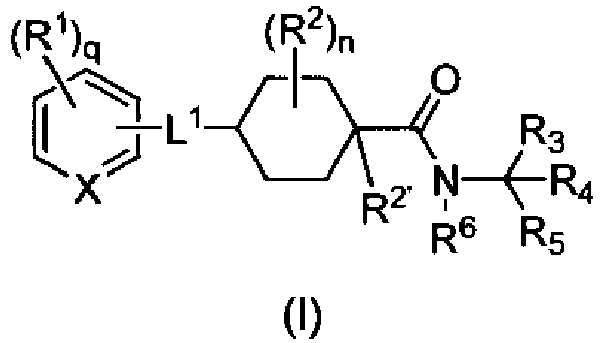
- X is CH, CR1, or N;
- q and n are each, independently, 0, 1, 2, 3, or 4;
- L1 is -NHSO2-, -SO2NH-, -NHSO2NH- or-NHC(O)NH-;
- R1, for each occurrence, is independently hydroxy, nitro, halo, carboxy, formyl, C1-7alkyl, C3-8cycloalkyl, C2-7alkenyl, C2-7alkynyl, C1-7alkoxy, C1-7alkylthio, C3-8cycloalkoxy, heterocyclyloxy, C6-10aryloxy, amino, C1-7alkylamino, di-(C1-7alkyl)amino, C6-10aryl, 3- to 10-membered heterocyclyl, 5- to 10-membered heteroaryl, C1-7alkanoyl, C1-7alkoxycarbonyl, C1-7alkanoyloxy, C1-7alkylamido, C6-10arylamido, heterocyclylamido, carbamoyl, N-C1-7alkylcarbamoyl, N,N-di-(C1-7alkyl)carbamoyl, C1-7alkoxyamido, C1-7alkylureido, and C6-10arylureido, wherein R1 is optionally substituted on one or more carbon atom with one or more independently selected R13; and wherein when R1 comprises a heterocyclyl or a heteroaryl comprising -NH-, the hydrogen of the -NH-group may be optionally replaced with a C1-7alkyl; and wherein when R1 comprises a heterocyclyl or a heteroaryl comprising -N=, -S- or both, the -N= may be substituted with -O- and the -S- group may be substituted with one or two =O groups;
- R2, for each occurrence, is independently selected from the group consisting of hydroxy, cyano, C1-7alkyl, C1-7alkoxy, C2-7alkenyl, amino, C1-7alkylamino, di-(C1-7alkyl)amino, C1-7alkylamido, C1-7alkoxycarbonylamino, or two or more R2 groups on non-adjacent carbon atoms together form a C1-4alkylene bridge; wherein R2, for each occurrence, may be independently optionally substituted with one or more halo;
- R2' is hydrogen or R2; or
- R2' and one or more R2 groups form a C1-4alkylene bridge; or
- R2' and R6, may be linked to form a 5-membered heterocyclyl spirocyclic ring which may be optionally substituted with one or more C1-7alkyl;
- R3 is phenyl, wherein R is optionally substituted on one or more carbon atom with one to three independently selected R14;
- R4 is hydrogen, a C1-7alkyl, or carbamoyl, wherein the alkyl may be optionally substituted with one or more substituent which may be independently selected from the group consisting of duetero, hydroxy, amino, halo, carboxy, C1-7alkoxy, C1-7alkoxycarbonyl, phosphonooxy, a peptide having from 1 to 3 amino acids and C1-7alkanoyloxy wherein the alkanoyloxy may be optionally substituted with one or more carboxy, amino, N-C1-6alkylamino, N,N-di-(C1-6alkyl)amino, or amino acid sidechain;
- R5 is hydrogen or a C1-7 alkyl;
- R6 is hydrogen or C1-7 alkyl; or
- R6 and any one of R4 or R5 may be linked to form a 3- to 7-membered heterocyclyl, wherein the heterocyclyl may be optionally substituted on one or more carbon with one or more R15; and wherein when the heterocyclyl comprises -NH-, the hydrogen of the -NH- group may be optionally replaced with R16; and wherein when the heterocyclyl comprises -N=, -S- or both, the -N= may be substituted with -O- and the-S- group may be substituted with one or two =O groups;
- R13, for each occurrence, is independently deutero, halo, hydroxy, oxo, carboxy, C1-7alkyl, C3-8cycloalkyl, C1-7alkoxy, C6-10aryl, 3- to 10-membered heterocyclyl, 5- to 10-membered heteroaryl, amino, C1-7alkylamino, di-(C1-7alkyl)amino, C1-7alkoxycarbonyl, carbamoyl, wherein R13 is optionally substituted on one or more carbon atom with one or more independently selected R17; and wherein when R13 is a heterocyclyl or a heteroaryl comprising -NH-, the hydrogen of the -NH- group may be optionally replaced with a C1-7alkyl; and wherein when R13 is a heterocyclyl or heteroaryl comprising -N=, -S- or both, the -N= may be substituted with -O- and the -S- group may be substituted with one or two =O groups;
- R14, for each occurrence, is independently halo;
- R15, for each occurrence, is independently selected from the group consisting of hydroxy, oxo, carboxy, C1-7alkyl, and C1-7alkoxycarbonyl; or two R15 on adjacent carbon atoms may form a fused phenyl;
- R16, for each occurrence, is independently selected from the group consisting of C1-7alkanoyl, C6-10arylcarbonyl, heteroarylcarbonyl, C1-7alkoxycarbonyl, 5- to 10-membered heteroaryl, and C1-7alkylsulfonyl, wherein R16 may be optionally substituted with one or more substituent independently selected from the group consisting of carboxy, amino, C1-7alkylamino, di-(C1-7alkyl)amino, and C1-7alkoxycarbonyl; and
- R17, for each occurrence, is independently selected from cyano, halo, hydroxy, carboxy, C1-7alkyl, C1-7alkoxy, amino, C1-7alkylamino, di-(C1-7alkyl)amino, C1-7alkoxycarbonyl, 3- to 10-membered heterocyclyl, wherein R17 may be optionally substituted on one or more carbon atoms with one or more independently selected halo, trifluoromethyl, carboxy, or C1-4alkyoxycarbonyl; and wherein when R17 is a heterocyclyl comprising -NH-, the hydrogen of the -NH- group may be optionally replaced with a C1-7alkyl; and wherein when R17 is a heterocyclyl comprising -N=, -S- or both, the -N= may be substituted with -O- and the -S- group may be substituted with one or two =O groups.
- In another aspect, the invention relates to pharmaceutical compositions, comprising a compound according to formula (I), or a pharmaceutically acceptable salt thereof; and a pharmaceutically acceptable excipient or carrier. In another aspect, the invention relates to the use of this pharmaceutical composition as a medicament. In one embodiment, the medicament is used for the treatment of a disorder or disease in a subject mediated by the inhibition of acetyl CoA carboxylase.
- In another aspect, the invention relates to pharmaceutical compositions, comprising a therapeutically effective amount of a compound according to formula (I), or a pharmaceutically acceptable salt thereof, in combination with a therapeutically effective amount of insulin, an insulin derivative or mimetic; an insulin secretagogue; an insulinotropic sulfonylurea receptor ligand; a PPAR ligand; an insulin sensitizer; a biguanide; an alpha-glucosidase inhibitors; a GLP-1, GLP-1 analog or mimetic; a DPPIV inhibitor; a HMG-CoA reductase inhibitor; a squalene synthase inhibitor; a FXR or a LXR ligand; a cholestyramine; a fibrates; a nicotinic acid; or aspirin. In another aspect, the invention relates to the use of this pharmaceutical composition as a medicament. In one embodiment, the medicament is used for the treatment of a disorder or disease in a subject mediated by the inhibition of acetyl CoA carboxylase.
- In another aspect, the invention relates to a method of inhibiting Acetyl CoA carboxylase activity, comprising contacting a source of acetyl CoA carboxylase with a compound according to formula (I), or a pharmaceutically acceptable salt thereof.
- In another aspect, the invention relates to a method of treating a disease or condition mediated by the inhibition of acetyl CoA carboxylase in a mammal, comprising administering to the mammal in need thereof a therapeutically effective amount of a compound according to formula (I), or a pharmaceutically acceptable salt thereof. In one embodiment, the disease or condition is metabolic syndrome, Syndrome X, diabetes, insulin resistance, decreased glucose tolerance, non-insulin-dependent diabetes mellitus, Type II diabetes, Type I diabetes, diabetic complications, body weight disorders, or leptin related diseases. In another embodiment, the disease or condition is insulin resistance, decreased glucose tolerance, non-insulin-dependent diabetes mellitus, Type II diabetes, or Type I diabetes. In another embodiment, the disease or condition is a metabolic syndrome wherein the the metabolic syndrome is dyslipidemia, obesity, insulin resistance, hypertension, microalbuminemia, hyperuricaemia, or hypercoagulability. In another embodiment, the disease or condition is a bodyweight disorder and the bodyweight disorder is obesity, overweight, cachexia or anorexia.
- In another aspect, the invention relates to the use of a compound of Formula (I), or a pharmaceutically acceptable salt thereof, for use as a medicament.
- In another aspect, the invention relates to the use of a compound of Formula (I), or a pharmaceutically acceptable salt thereof, for the preparation of a pharmaceutical composition for the treatment of a disorder or disease in a subject mediated by the inhibition of acetyl CoA carboxylase.
- For purposes of interpreting this specification, the following definitions will apply unless specified otherwise and whenever appropriate, terms used in the singular will also include the plural and vice versa.
- The requisite number of carbon atoms in a group is represented by using the prefix C1-6, C1-4, etc. For example, an alkyl group which may have from one to six carbons can be designated "C1-6alkyl." Likewise, an aryl group having from six to ten carbon atom can be designated C6-10aryl.
- As used herein, the term "alkyl" refers to a fully saturated branched or unbranched hydrocarbon moiety having from 1 to 20 carbon atoms. In one embodiment, alkyl refers to hydrocarbon moieties having 1 to 16 carbon atoms, 1 to 10 carbon atoms, 1 to 7 carbon atoms, or 1 to 4 carbon atoms. Representative examples of alkyl include, but are not limited to, methyl, ethyl, n-propyl, iso-propyl, n-butyl, sec-butyl, iso-butyl, tert-butyl, n-pentyl, isopentyl, neopentyl, n-hexyl, 3-methylhexyl, 2,2- dimethylpentyl, 2,3-dimethylpentyl, n-heptyl, n-octyl, n-nonyl, n-decyl and the like.
- As used herein, the term "alkylene" refers to divalent alkyl group as defined herein above having 1 to 20 carbon atoms. In one embodiment, an alkylene refers to moieties having 1 to 16 carbon atoms, 1 to 10 carbon atoms, 1 to 7 carbon atoms, or 1 to 4 carbon atoms. Representative examples of alkylene include, but are not limited to, methylene, ethylene, n-propylene, iso-propylene, n-butylene, sec-butylene, iso-butylene, tert-butylene, n-pentylene, isopentylene, neopentylene, n-hexylene, 3-methylhexylene, 2,2- dimethylpentylene, 2,3-dimethylpentylene, n-heptylene, n-octylene, n-nonylene, n-decylene and the like.
- As used herein, the term "haloalkyl" refers to an alkyl as defined herein that is substituted by one or more halo groups as defined herein. The haloalkyl can be monohaloalkyl, dihaloalkyl or polyhaloalkyl including perhaloalkyl. A monohaloalkyl can have one iodo, bromo, chloro or fluoro within the alkyl group. Dihaloalky and polyhaloalkyl groups can have two or more of the same halo atoms or a combination of different halo groups within the alkyl. Typically the polyhaloalkyl contains up to 12, or 10, or 8, or 6, or 4, or 3, or 2 halo groups. Non-limiting examples of haloalkyl include fluoromethyl, difluoromethyl, trifluoromethyl, chloromethyl, dichloromethyl, trichloromethyl, pentafluoroethyl, heptafluoropropyl, difluorochloromethyl, dichlorofluoromethyl, difluoroethyl, difluoropropyl, dichloroethyl and dichloropropyl. A perhaloalkyl refers to an alkyl having all hydrogen atoms replaced with halo atoms.
- The term "alkenyl" refers to a monovalent hydrocarbon which can be branched or unbranched and which has at least one carbon-carbon double bond. The term "C2-C6alkenyl" refers to a monovalent hydrocarbon having two to six carbon atoms and comprising at least one carbon-carbon double bond. Non-limiting examples of alkenyl groups include ethenyl, prop-2-en-1-yl, and 1-methyl-prop-1-en-1-yl.
- The term "alkynyl" refers to a monovalent hydrocarbon which may be branched or unbranched and which has at least one carbon-carbon triple bond. The term "C2C6-alkynyl" refers to a monovalent hydrocarbon having two to six carbon atoms and comprising at least one carbon-carbon triple bond. An example of an alkyne group is acetylenyl.
- The term "aryl" refers to an aromatic hydrocarbon group having 6-20 carbon atoms in the ring portion. Typically, aryl is monocyclic, bicyclic or tricyclic. In one embodiment, an aryl group is mono- or bicyclic and contains 6 to 10 carbon atoms. Examples of aryl groups include phenyl, naphthyl, and anthracenyl. An aryl group also includes an aromatic hydrocarbon which is fused to another ring which is not aromatic if the point of attachment to another moiety is on the aromatic ring, such as 1,2,3,4-tetrahydronaphth-5-yl, 1H-inden-5-yl, and 1,2,3,4-tetrahydroquinolin-7-yl.
- As used herein, the term "alkoxy" refers to alkyl-O-, wherein alkyl is defined herein above. Representative examples of alkoxy groups include, but are not limited to, methoxy, ethoxy, propoxy, 2-propoxy, n-butoxy, tert-butoxy, n-pentyloxy, n-hexyloxy, 2-methyl-propoxy, and the like. Typically, alkoxy groups have about 1-7, more preferably about 1-4 carbons.
- As used herein, the term "alkylthio" refers to alkyl-S-, wherein alkyl is defined herein above. Representative examples of alkylthio groups include, but are not limited to, methylthio, ethylthio, propylthio, 2-propylthio, n-butylthio, tert-butylthio, n-pentylthio, n-hexylthio, 2-methyl-propylthio, and the like. Typically, alkylthio groups have about 1-7, more preferably about 1-4 carbons.
- As used herein, the term "heterocyclyl" or "heterocyclo" refers to a saturated or unsaturated non-aromatic ring or ring system, e.g., which is a 3-, 4-, 5-, 6-, or 7-membered monocyclic, 7-, 8-, 9-, 10-, 11-, or 12-membered bicyclic or 10-, 11-, 12-, 13-, 14- or 15-membered tricyclic ring system and contains at least one heteroatom selected from O, S and N, where the N and S can also optionally be oxidized to various oxidation states. In one embodiment, a heterocyclyl has 3- to 10- ring members. The heterocyclic group can be attached at a heteroatom or a carbon atom. The heterocyclyl can include fused or bridged rings as well as spirocyclic rings. Examples of heterocycles include tetrahydrofuran (THF), dihydrofuran, 1,4-dioxane, morpholine, 1,4-dithiane, piperazine, piperidine, 1,3-dioxolane, imidazolidine, imidazoline, pyrroline, pyrrolidine, tetrahydropyran, dihydropyran, oxathiolane, dithiolane, 1,3-dioxane, 1,3-dithiane, oxathiane, thiomorpholine, and the like. A heterocyclyl also includes a non-aromatic heterocyclic ring system which is fused to another ring which is aromatic if the point of attachment to another moiety is on the non-aromatic ring, such as 1,2,3,4-tetrahydroquinoxalin-1-yl an 1,2,3,4-tetrahydropyrido[3,2-b]pyrazin-1-yl.
- As used herein, the term "carbocyclyl" refers to saturated or unsaturated monocyclic, bicyclic or tricyclic non-aromatic hydrocarbon groups which have 3-12 carbon atoms. In one embodiment, carbocyclyl refers to cyclic hydrocarbon groups having between 3 and 9 ring carbon atoms or between 3 and 7 ring carbon atoms. In a preferred embodiment, a carbocyclyl is a monocyclic hydrocarbon having from 3 to 7 carbon atoms. Exemplary monocyclic carbocyclyl groups include, but are not limited to, cyclopropyl, cyclobutyl, cyclopentyl, cyclopentenyl, cyclohexyl and cyclohexenyl and the like. Exemplary bicyclic carbocyclic groups include bicyclo[2.2.1]heptanyl, decahydronaphthyl, bicyclo[2.1.1]hexanyl, bicyclo[2.2.1]heptanyl, bicyclo[2.2.1]heptenyl, bicyclo[2.2.2]octyl and the like. Exemplary tricyclic carbocyclic groups include adamantyl, dodecahydros-indacene, and the like. A carbocyclyl also includes a non-aromatic hydrocarbon ring which is fused to an aromatic ring if the point of attachment to another moiety is on the non-aromatic ring, such as 1,2,3,4-tetrahydronaphth-1-yl, 1H-inden-2-yl, and 5,6,7,8-tetrahydroquinolin-5-yl.
- The term "carbocyclyl" encompasses cycloalkyl groups. The term "cycloalkyl" refers to a saturated monocyclic, bicyclic or tricyclic hydrocarbon groups which have 3-12 carbon atoms. In one embodiment, cycloalkyl refers to a saturated cyclic hydrocarbon groups having between 3 and 9 ring carbon atoms or between 3 and 7 ring carbon atoms. In a preferred embodiment, a cycloalkyl is a monocyclic hydrocarbon having from 3 to 7 carbon atoms. Exemplary monocyclic cycloalkyl groups include, but are not limited to, cyclopropyl, cyclobutyl, cyclopentyl, cyclohexyl, and the like. Exemplary bicyclic cycloalkyl groups include bicyclo[2.2.1]heptanyl, decahydronaphthyl, bicyclo[2.1.1]hexanyl, bicyclo[2.2.1]heptanyl, bicyclo[2.2.2]octyl and the like. Exemplary tricyclic cycloalkyl groups include adamantyl, dodecahydros-indacene, and the like.
- As used herein, the term "heteroaryl" refers to a 5-14 membered monocyclic- or bicyclic- or tricyclic-aromatic ring system, having 1 to 8 heteroatoms selected from N, O or S. Typically, the heteroaryl is a 5-10 membered ring system (e.g., 5-7 membered monocycle or an 8-10 memberred bicycle). Typical heteroaryl groups include 2- or 3-thienyl, furanyl, pyrrolyl, imidazolyl, pyrazolyl, thiazolyl, isothiazolyl, oxazolyl, isoxazolyl, triazolyl, tetrazolyl, 2-, 3-, or pyridyl, pyridazinyl, pyrazinyl, pyrimidinyl, quinolinyl, isoquinolinyl, purinyl, indolinyl, benzo[b]thiophene, benzofuran, and the like. A heteroaryl group also includes an aromatic heteroaryl ring which is fused to another ring which is not aromatic if the point of attachment to another moiety is on the heteroaromatic ring, such as 5,6,7,8-tetrahydroquinolin-4-yl and 1,2,3,4-tetrahydropyrido[2,3-b]pyrazin-8-yl.
- As used herein, the term "halogen" or "halo" refers to fluoro, chloro, bromo, and iodo.
- As used herein, the term "aryloxy" refers to aryl-O-, wherein aryl is defined herein above. An example of an aryloxy is phenoxy.
- As used herein, the term "cycloalkoxy" refers to cycloalkyl-O-, wherein cycloalkyl is defined herein above. Representative examples of cycloalkoxy groups include cyclopentyloxy and cyclohexyloxy.
- As used herein, the term "heterocyclyloxy" refers to heterocyclyl-O-, wherein heterocyclyl is defined herein above. Representative examples of heterocyclcyloxy groups include piperadin-4-yloxy, piperazin-3-yloxy, and the like.
- An "amino" group as used herein refers to -NH2. The term "N-alkylamino" refers to an amino group in which one hydrogen is replaced by an alkyl group. For example, N-C1-7alkylamino refers to an amino group in which one of the hydrogens has been replaced with an alkyl group having from 1 to 7 carbon atoms. Representative N-C1-7alkylamino groups include N-methylamino, N-ethylamino, N-isopropylamino and the like. The term "N,N-di-(alkyl)amino" refers to an amino group in which both hydrogens have been replaced by an alkyl group which may be the same or different. For example, N,N-di-(C1-7alkyl)amino refers to an amino group in which both of the hydrogens have been replaced with an alkyl group which may be the same or different having from 1 to 7 carbon atoms. Representative N,N-di-(C1-7alkyl)amino groups include N,N-dimethylamino, N-methyl-N-ethyl-amino, N-isopropyl-N-ethyl-amino, and the like.
- A "carbamoyl" group as used herein refers to -C(O)NH2. The term "N-(alkyl)-carbamoyl" refers to a carbamoyl group in which one hydrogen is replaced by an alkyl group. For example, N-(C1-7alkyl)-carbamoyl refers to a carbamoyl group in which one of the hydrogens has been replaced with an alkyl group having from 1 to 7 carbon atoms. Representative N-(C1-7alkyl)-carbamoyl include N-methylcarbamoyl, N-isopropyl-carbamoyl, and the like. The term "N,N-di-(alkyl)-carbamoyl" refers to a carbamoyl group in which both hydrogens have been replaced by an alkyl group which may be the same or different. For example, N,N-di-(C1-7alkyl)-carbamoyl refers to a carbamoyl group in which both of the hydrogens have been replaced with an alkyl group which may be the same or different having from 1 to 7 carbon atoms. Representative N,N-di-(C1-7alkyl)-carbamoyl include N,N-dimethylcarbamoyl, N-methyl-N-isopropyl-carbamoyl, and the like.
- The term "alkylamido" refers to a group having the formula -NHC(O)-Ri, wherein Ri is an alkyl group. For example, C1-7alkylamido refers to an alkylamido group which has from one to seven carbon atoms, such as butyramido, and the like.
- The term "arylamido" refers to a group having the formula -NHC(O)-Rii, wherein Rii is an aryl group. For example, C6-10arylamido refers to an arylamido group which has from six to ten carbon atoms, such as benzamido, and the like.
- The term "heterocyclylamido" refers to a group having the formula -NHC(O)-Riii, wherein Riii is an heterocycyl group. Example of heterocyclylamido groups include piperidine-1-carboxamido, piperidine-3-carboxamido, and the like.
- The term "alkanoyl" refers to a group having the formula -C( O)-Ri, wherein Ri is an alkyl group. For example, C1-7alkanoyl refers to an alkanoyl group which has from one to seven carbon atoms, such as acetyl, isopropyl-carbonyl, and the like.
- The term "alkanoyloxy" refers to a group having the formula -OC(O)-Ri, wherein Ri is an alkyl group. For example, C1-7alkanoyl refers to an alkanoyloxy group which has from one to seven carbon atoms, such as ethoxycarbonyloxy, isopropoxycarbonyloxy, and the like.
- The term "alkoxycarbonyl" refers to a group having the formula -C(O)-ORi, wherein Ri is an alkyl group. For example, C1-7alkoxycarbonyl refers to an alkoxycarbonyl group which has from one to seven carbon atoms, such as methoxycarbonyl, tert-butoxycarbonyl, and the like.
- The term "alkoxyamido" refers to a group having the formula -NHC(O)-ORi, wherein Ri is an alkyl group. For example, C1-7alkoxamido refers to an alkoxyamido group which has from one to seven carbon atoms, such as methoxycarbonylamino, tert-butoxycarbonylamino, and the like.
- The term "alkylureido" refers to a group having the formula -NHC(O)-NHRi, wherein Ri is an alkyl group. For example, C1-7alkylureido refers to an alkylureido group which has from one to seven carbon atoms, such as N'-methylureido, N'-(tert-butyl)-ureido, and the like.
- The term "arylureido" refers to a group having the formula -NHC(O)-NHRii, wherein R" is an aryl group. For example, C6-10arylureido refers to an arylureido group which has from six to ten carbon atoms, such as N'-phenylureido, N'-(naphth-3-yl)-ureido, and the like.
- The term "alkylsulfonyl" refers to a group having the formula -S(O)2Ri, wherein Ri is an alkyl group. For example, C1-7alkylsulfonyl refers to an alkylsulfonyl group which has from one to seven carbon atoms, such as mesyl, tert-butylsulfonyl, and the like.
- The term "oxo" refers to a double bonded oxygen substituent (i.e. =O).
- The term "phosphonooxy" refers to a group having the following formula:

- The term "amino acid" includes natural and synthetic α- or β-amino acids, such as alanine, cysteine, 3,5-dibromotyrosine, 3,5-diiodotyrosine, glutamine, glycine, gemdimethylglycine, histidine, hydroxylysine, isoleucine, leucine, methionine, phenylalanine, proline, serine, threonine, thyroxine, tryptophane, tyrosine, valine, α-aminobutyric acid, β-alanine,. In addition, wherein the amino acid has a chiral center, the side-chain may be from either the D or L isomer of the amino acid. The term "amino acid sidechain" to a sidechain of a naturally occurring amino acid.
- Formula (I) encompasses Formulas (II) through (V) and (IA) through (IVA). Thus, the phrase "a compound of Formula (I)" includes compounds of Formulas (II) through (V) and (IA) through (IVA).
- "Prodrugs" is meant to indicate a compound that may be converted under physiological conditions or by solvolysis to a biologically active compound of the invention. Thus, the term "prodrug" refers to a metabolic precursor of a compound of the invention that is pharmaceutically acceptable. A prodrug may be inactive when administered to a subject in need thereof, but is converted in vivo to an active compound of the invention. Prodrugs are typically rapidly transformed in vivo to yield the parent compound of the invention, for example, by hydrolysis in blood or conversion in the gut or liver. The prodrug compound often offers advantages of solubility, tissue compatibility or delayed release in a mammalian organism (see, Bundgard, H., Design of Prodrugs (1985), pp. 7-9, 21-24 (Elsevier, Amsterdam)).
- A discussion of prodrugs is provided in Higuchi, T., et al., "Pro-drugs as Novel Delivery Systems," A.C.S. Symposium Series, Vol. 14, and in Bioreversible Carriers in Drug Design, ed. Edward B. Roche, Anglican Pharmaceutical Association arid Pergamon Press, 1987.
- "Pharmaceutically acceptable carrier, diluent or excipient" includes without limitation any adjuvant, carrier, excipient, glidant, sweetening agent, diluent, preservative, dye/colorant, flavor enhancer, surfactant, wetting agent, dispersing agent, suspending agent, stabilizer, isotonic agent, solvent, or emulsifier which has been approved by the United States Food and Drug Administration as being acceptable for use in humans or domestic animals.
- "Pharmaceutically acceptable salt" includes both acid and base addition salts.
- "Pharmaceutically acceptable acid addition salt" refers to those salts which retain the biological effectiveness and properties of the free bases, which are not biologically or otherwise undesirable, and which are formed with inorganic acids such as, but not limited to, hydrochloric acid, hydrobromic acid, sulfuric acid, nitric acid, phosphoric acid and the like, and organic acids such as, but not limited to, acetic acid, 2,2-dichloroacetic acid, adipic acid, alginic acid, ascorbic acid, aspartic acid, benzenesulfonic acid, benzoic acid, 4-acetamidobenzoic acid, camphoric acid, camphor-10-sulfonic acid, capric acid, caproic acid, caprylic acid, carbonic acid, cinnamic acid, citric acid, cyclamic acid, dodecylsulfuric acid, ethane-1,2-disulfonic acid, ethanesulfonic acid, 2-hydroxyethanesulfonic acid, formic acid, fumaric acid, galactaric acid, gentisic acid, glucoheptonic acid, gluconic acid, glucuronic acid, glutamic acid, glutaric acid, 2-oxo-glutaric acid, glycerophosphorirc acid, glycolic acid, hippuric acid, isobutyric acid, tactic acid, lactobionic acid, lauric acid, maleic acid, malic acid, malonic acid, mandelic acid, methanesulfonic acid, mucic acid, naphthalene-1,5-disulfonic acid, naphthalene-2-sulfonic acid, 1-hydroxy-2-naphthoic acid, nicotinic acid, oleic acid, orotic acid, oxalic acid, palmitic acid, pamoic acid, propionic acid, pyroglutamic acid, pyruvic acid, salicylic acid, 4-aminosalicylic acid, sebacic acid, stearic acid, succinic acid, tartaric acid, thiocyanic acid, p-toluenesulfonic acid, trifluoroacetic acid, undecylenic acid, and the like.
- "Pharmaceutically acceptable base addition salt" refers to those salts which retain the biological effectiveness and properties of the free acids, which are not biologically or otherwise undesirable. These salts are prepared from addition of an inorganic base or an organic base to the free acid. Salts derived from inorganic bases include, but are not limited to, the sodium, potassium, lithium, ammonium, calcium, magnesium, iron, zinc, copper, manganese, aluminum salts and the like. Preferred inorganic salts are the ammonium, sodium, potassium, calcium, and magnesium salts. Salts derived from organic bases include, but are not limited to, salts of primary, secondary, and tertiary amines, substituted amines including naturally occurring substituted amines, cyclic amines and basic ion exchange resins, such as ammonia, isopropylamine, trimethylamine, diethylamine, triethylamine, tripropylamine, diethanolamine, ethanolamine, deanol, 2-dimethylaminoethanol, 2-diethylaminoethanol, dicyclohexylamine, lysine, arginine, histidine, caffeine, procaine, hydrabamine, choline, betaine, benethamine, benzathine, ethylenediamine, glucosamine, methylglucamine, theobromine, triethanolamine, tromethamine, purines, piperazine, piperidine, N-ethylpiperidine, polyamine resins and the like. Particularly preferred organic bases are isopropylamine, diethylamine, ethanolamine, trimethylamine, dicyclohexylamine, choline and caffeine.
- Often crystallizations produce a solvate of the compound of the invention. As used herein, the term "solvate" refers to an aggregate that comprises one or more molecules of a compound of the invention with one or more molecules of solvent. The solvent may be water, in which case the solvate may be a hydrate. Alternatively, the solvent may be an organic solvent. Thus, the compounds of the present invention may exist as a hydrate, including a monohydrate, dihydrate, hemihydrate, sesquihydrate, trihydrate, tetrahydrate and the like, as well as the corresponding solvated forms. The compound of the invention may be true solvates, while in other cases, the compound of the invention may merely retain adventitious water or be a mixture of water plus some adventitious solvent.
- Compounds of the present invention are either obtained in the free form, as a salt thereof, or as prodrug derivatives thereof. When both a basic group and an acid group are present in the same molecule, the compounds of the present invention may also form internal salts, e.g., zwitterionic molecules.
- Furthermore, the compounds of the present invention, including their salts, can also be obtained in the form of their hydrates, or include other solvents used for their crystallization.
- A "pharmaceutical composition" refers to a formulation of a compound of the invention and a medium generally accepted in the art for the delivery of the biologically active compound to mammals, e.g., humans. Such a medium includes all pharmaceutically acceptable carriers, diluents or excipients thereof.
- The compounds of the invention, or their pharmaceutically acceptable salts may contain one or more asymmetric centers and may thus give rise to enantiomers, diastereomers, and other stereoisomeric forms that may be defined, in terms of absolute stereochemistry, as (R)- or (S)- or, as (D)- or (L)- for amino acids. The present invention is meant to include all such possible isomers, as well as their racemic and optically pure forms. Optically active (+) and (-), (R)- and (S)-, or (D)- and (L)- isomers may be prepared using chiral synthons or chiral reagents, or resolved using conventional techniques. Any resulting racemates of final products or intermediates can be resolved into the optical antipodes by known methods, e.g., by separation of the diastereomeric salts thereof, obtained with an optically active acid or base, and liberating the optically active acidic or basic compound. In particular, a basic moiety may thus be employed to resolve the compounds of the present invention into their optical antipodes, e.g., by fractional crystallization of a salt formed with an optically active acid, e.g., tartaric acid, dibenzoyl tartaric acid, diacetyl tartaric acid, di-O, O'-p-toluoyl tartaric acid, mandelic acid, malic acid or camphor-10-sulfonic acid. Racemic products can also be resolved by chiral chromatography, e.g., high pressure liquid chromatography (HPLC) using a chiral adsorbent.
- A "stereoisomer" refers to a compound made up of the same atoms bonded by the same bonds but having different three-dimensional structures, which are not interchangeable. The present invention contemplates various stereoisomers and mixtures thereof and includes "enantiomers", which refers to two stereoisomers whose molecules are nonsuperimposeable mirror images of one another.
- When the compounds described herein contain olefinic double bonds or other centers of geometric asymmetry, and unless specified otherwise, it is intended that the compounds include both E and Z geometric isomers. Likewise, all tautomeric forms are also intended to be included.
- The present invention includes all pharmaceutically acceptable isotopicallylabeled compounds of Formula (I) wherein one or more atoms are labeled with an atom having the same atomic number, but an atomic mass or mass number different from the atomic mass or mass number usually found in nature.
- Examples of isotopes suitable for inclusion in the compounds of the invention comprises isotopes of hydrogen, such as 2H and 3H, carbon, such as 11C, 13C and 14C, chlorine, such as 36Cl, fluorine, such as 18F, iodine, such as 123I and 125I, nitrogen, such as 13N and 15N, oxygen, such as 15O, 17O and 18O, phosphorus, such as 32P, and sulphur, such as 35S. Enrichment with heavier isotopes such as deuterium, i.e. 2H, may afford certain therapeutic advantages resulting from greater metabolic stability, for example, increased in vivo half-life or reduced dosage requirements, and hence may be preferred in some circumstances. Isotopically-labeled compounds of Formula (I) can generally be prepared by conventional techniques known to those skilled in the art or by processes analogous to those described in the accompanying Examples and Preparations Sections using an appropriate isotopically-labeled reagent in place of the non-labeled reagent previously employed.
- As used herein, the terms "disease" and "condition" may be used interchangeably or may be different in that the particular malady or condition may not have a known causative agent (so that etiology has not yet been worked out) and it is therefore not yet recognized as a disease but only as an undesirable condition or syndrome, wherein a more or less specific set of symptoms have been identified by clinicians.
- The term "a therapeutically effective amount" of a compound of the present invention refers to an amount of the compound of the present invention that will elicit the biological or medical response of a subject, for example, reduction or inhibition of an enzyme or a protein activity, or ameliorate symptoms, alleviate conditions, slow or delay disease progression, or prevent a disease, etc. In one non-limiting embodiment, the term "a therapeutically effective amount" refers to the amount of the compound of the present invention that, when administered to a subject, is effective to (1) at least partially alleviating, inhibiting, preventing and/or ameliorating a condition, or a disorder or a disease (i) mediated by ACC2, or (ii) associated with ACC2 activity, or (iii) characterized by abnormal activity of ACC2; or (2) reducing or inhibiting the activity of ACC2 (3) reducing or inhibiting the expression of ACC2. In another non-limiting embodiment, the term "a therapeutically effective amount" refers to the amount of the compound of the present invention that, when administered to a cell, or a tissue, or a non-cellular biological material, or a medium, is effective to at least partially reducing or inhibiting the activity of ACC2; or at least partially reducing or inhibiting the expression of ACC2.
- As used herein, the term "patient" refers to an animal. Preferably, the animal is a mammal. A subject also refers to for example, primates (e.g., humans), cows, sheep, goats, horses, dogs, cats, rabbits, rats, mice, fish, birds and the like. In a preferred embodiment, the subject is a human.
- As used herein, the term "inhibition" or "inhibiting" refers to the reduction or suppression of a given condition, symptom, or disorder, or disease, or a significant decrease in the baseline activity of a biological activity or process.
- As used herein, the term "treating" or "treatment" of any disease or disorder refers in one embodiment, to ameliorating the disease or disorder (i.e., slowing or arresting or reducing the development of the disease or at least one of the clinical symptoms thereof). In another embodiment "treating" or "treatment" refers to alleviating or ameliorating at least one physical parameter including those which may not be discernible by the patient. In yet another embodiment, "treating" or "treatment" refers to modulating the disease or disorder, either physically, (e.g., stabilization of a discernible symptom), physiologically, (e.g., stabilization of a physical parameter), or both. In yet another embodiment, "treating" or "treatment" refers to preventing or delaying the onset or development or progression of the disease or disorder.
- As used herein, the term "a," "an," "the" and similar terms used in the context of the present invention (especially in the context of the claims) are to be construed to cover both the singular and plural unless otherwise indicated herein or clearly contradicted by the context.
- All methods described herein can be performed in any suitable order unless otherwise indicated herein or otherwise clearly contradicted by context. The use of any and all examples, or exemplary language (e.g. "such as") provided herein is intended merely to better illuminate the invention and does not pose a limitation on the scope of the invention otherwise claimed.
- Throughout this specification and in the claims that follow, unless the context requires otherwise, the word "comprise", or variations such as "comprises" or "comprising", will be understood to imply the inclusion of a stated integer or step or group of integers or steps but not the exclusion of any other integer or step or group of integers or steps.
- In one aspect, the invention provides compounds of formula (I):

- X is CH, CR1, or N;
- q and n are each, independently, 0, 1, 2, 3, or 4;
- L1 is -NHSO2-, -SO2NH-, -NHSO2NH- or -NHC(O)NH-;
- R1, for each occurrence, is independently hydroxy, nitro, halo, carboxy, formyl, C1-7alkyl, C3-8cycloalkyl, C2-7alkenyl, C2-7alkynyl, C1-7alkoxy, C1-7alkylthio, C3-8cycloalkoxy, heterocyclyloxy, C6-10aryloxy, amino, C1-7alkylamino, di-(C1-7alkyl)amino, C6-10aryl, 3- to 10-membered heterocyclyl, 5- to 10-membered heteroaryl, C1-7alkanoyl, C1-7alkoxycarbonyl, C1-7alkanoyloxy, C1-7alkylamido, C6-10arylamido, heterocyclylamido, carbamoyl, N-C1-7alkylcarbamoyl, N,N-di-(C1-7alkyl)carbamoyl, C1-7alkoxyamido, C1-7alkylureido, and C6-10arylureido, wherein R1 is optionally substituted on one or more carbon atom with one or more independently selected R13; and wherein when R1 comprises a heterocyclyl or a heteroaryl comprising -NH-, the hydrogen of the -NH-group may be optionally replaced with a C1-7alkyl; and wherein when R1 comprises a heterocyclyl or a heteroaryl comprising -N=, -S- or both, the -N= may be substituted with -O- and the -S- group may be substituted with one or two =O groups;
- R2, for each occurrence, is independently selected from the group consisting of hydroxy, cyano, C1-7alkyl, C1-7alkoxy, C2-7alkenyl, amino, C1-7alkylamino, di-(C1-7alkyl)amino, C1-7alkylamido, C1-7alkoxycarbonylamino, or two or more R2 groups on non-adjacent carbon atoms together form a C1-4alkylene bridge; wherein R2, for each occurrence, may be independently optionally substituted with one or more halo;
- R2 is hydrogen or R2; or
- R2 and one or more R2 groups form a C1-4alkylene bridge; or
- R2 and R6, may be linked to form a 5-membered heterocyclyl spirocyclic ring which may be optionally substituted with one or more C1-7alkyl;
- R3 is phenyl, wherein R3 is optionally substituted on one or more carbon atom with one to three independently selected R14;
- R4 is hydrogen, a C1-7alkyl, or carbamoyl, wherein the alkyl may be optionally substituted with one or more substituent which may be independently selected from the group consisting of duetero, hydroxy, amino, halo, carboxy, C1-7alkoxy, C1-7alkoxycarbonyl, phosphonooxy, a peptide having from 1 to 3 amino acids and C1-7alkanoyloxy wherein the alkanoyloxy may be optionally substituted with one or more carboxy, amino, N-C1-6alkylamino, N,N-di-(C1-6alkyl)amino, or amino acid sidechain;
- R5 is hydrogen or a C1-7alkyl;
- R6 is hydrogen or C1-7 alkyl; or
- R6 and any one of R4 or R5 may be linked to form a 3- to 7-membered heterocyclyl, wherein the heterocyclyl may be optionally substituted on one or more carbon with one or more R15 ; and wherein when the heterocyclyl comprises -NH-, the hydrogen of the -NH- group may be optionally replaced with R16; and wherein when the heterocyclyl comprises -N=, -S- or both, the -N= may be substituted with -O- and the - S- group may be substituted with one or two =O groups;
- R13, for each occurrence, is independently deutero, halo, hydroxy, oxo, carboxy, C1-7alkyl, C3-8cycloalkyl, C1-7alkoxy, C6-10aryl, 3- to 10-membered heterocyclyl, 5- to 10-membered heteroaryl, amino, C1-7alkylamino, di-(C1-7alkyl)amino, C1-7alkoxycarbonyl, carbamoyl, wherein R13 is optionally substituted on one or more carbon atom with one or more independently selected R17 ; and wherein when R13 is a heterocyclyl or a heteroaryl comprising -NH-, the hydrogen of the -NH- group may be optionally replaced with a C1-7alkyl; and wherein when R13 is a heterocyclyl or heteroaryl comprising -N=, -S- or both, the -N= may be substituted with -O- and the -S- group may be substituted with one or two =O groups;
- R14, for each occurrence, is independently halo;
- R15, for each occurrence, is independently selected from the group consisting of hydroxy, oxo, carboxy, C1-7alkyl, and C1-7alkoxycarbonyl; or two R15 on adjacent carbon atoms may form a fused phenyl;
- R16, for each occurrence, is independently selected from the group consisting of C1-7alkanoyl, C6-10arylcarbonyl, heteroarylcarbonyl, C1-7alkoxycarbonyl, 5- to 10-membered heteroaryl, and C1-7alkylsulfonyl, wherein R16 may be optionally substituted with one or more substituent independently selected from the group consisting of carboxy, amino, C1-7alkylamino, di-(C1-7alkyl)amino, and C1-7alkoxycarbonyl; and
- R17, for each occurrence, is independently selected from cyano, halo, hydroxy, carboxy, C1-7alkyl, C1-7alkoxy, amino, C1-7alkylamino, di-(C1-7alkyl)amino, C1-7alkoxycarbonyl, 3- to 10-membered heterocyclyl, wherein R17 may be optionally substituted on one or more carbon atoms with one or more independently selected halo, trifluoromethyl, carboxy, or C1-4alkyoxycarbonyl; and wherein when R17 is a heterocyclyl comprising -NH-, the hydrogen of the -NH- group may be optionally replaced with a C1-7alkyl; and wherein when R17 is a heterocyclyl comprising -N=, -S- or both, the -N= may be substituted with -O- and the -S- group may be substituted with one or two =O groups.
- In one embodiment, the compounds of Formula (I) are represented by Formula (II):

- R1, for each occurrence, is independently selected from halo, hydroxy, nitro, C1-7alkyl, C1-7alkoxy, -NH-C(O)R9, C2-7alkynyl, C3-7cycloalkyl, C3-7cycloalkoxy, C1-7alkoxycarbonyl, C1-7alkanoyl, C1-7alkylamido, amino, N-C1-7alkylamino, N,N-di-(C1-7alkyl)amino, C1-7alkoxycarbonylamino, phenoxy, 3- to 7-membered heterocyclyl, 3- to 7-membered heterocyclyloxy, 3- to 7-membered heterocyclylamido, -NH-C(O)NHR10, and C1-7alkylthio; wherein R1 may be optionally substituted on one or more carbon atoms with from one to three independently selected R13;
- R2a, for each occurrence, is independently selected from cyano, amino, hydroxy, C1-4alkyl, and C2-4alkenyl;
- n is 0 or 1;
- R2a' is hydrogen, cyano, amino, hydroxy, C1-4alkyl, or C2-4alkenyl;
- R9, for each occurrence, is independently selected from C1-7alkyl, phenyl, and benzyl, wherein R9 may be optionally substituted on one or more carbon atoms with from one to three independently selected R13;
- R10, for each occurrence, is independently selected from hydrogen, C1-7alkyl, phenyl, and benzyl, wherein R10 may be optionally substituted on one or more carbon atoms with from one to three independently selected R13;
- R13, for each occurrence, is independently selected from the group consisting of halo, duetero, hydroxy, oxo, amino, C1-7alkyl, C1-7alkoxy, C1-7alkoxycarbonyl, C3-7cycloalkyl, C1-7alkoxyC1-7alkyl, C1-7alkylsulfonyl, and phenyl which is optionally substituted with halo, cyano; and
- the remaining variables are defined as for formula (I);
- In one embodiment, the compounds of Formula (I) are represented by Formula (III):

- ring A is a C6-10 aryl or a C1-10 heteroaryl, wherein ring A may be optionally substituted with one to three independently selected R17; and when ring A is a heterocyclyl comprising -NH-, the hydrogen of the -NH- group may be optionally replaced with a C1-7alkyl; and wherein when ring A is a heterocyclyl comprising -N=, -S-or both, the -N= may be substituted with -O- and the -S- group may be substituted with one or two =O groups;
- q is 0 or 1;
- R1a is halo, C1-4alkyl, or C1-4alkoxy;
- R2a, for each occurrence, is independently selected from cyano, amino, hydroxy, C1-4alkyl, and C2-4alkenyl;
- n is 0 or 1;
- R2a' is hydrogen, cyano, amino, hydroxy, C1-4alkyl, or C2-4alkenyl; and
- the remaining variables are defined as for formula (I);
- In one embodiment, the compounds of Formula (I) are represented by Formula (IV):

- ring B is a C2-10 heterocyclyl ring which is optionally substituted on one or more carbon atoms with one to three independently selected R15 ; and wherein when the heterocyclyl comprises -NH-, the hydrogen of the -NH- group may be optionally replaced with R16; and wherein when the heterocyclyl comprises -N=, -S- or both, the - N= may be substituted with -O- and the -S- group may be substituted with one or two =O groups;
- R2a, for each occurrence, is independently selected from cyano, amino, hydroxy, C1-4alkyl, and C2-4alkenyl;
- n is 0 or 1; and
- the remaining variables are defined as for formula (I);
- In one embodiment, the compounds of Formula (I) are represented by Formula (V):

- the dashed line is a single or double bond;
- U and V are each, independently N, CR11R12 or CR11;
- R11 and R12, for each occurrence, are independently hydrogen or a C1-7alkyl; and the remaining variables are defined as for formula (I);
- In one embodiment, the compounds of Formula (I) have the stereochemcal configuration of formula (IA):

- In one embodiment, the compounds of Formula (II) have the stereochemcal configuration of formula (IIA):

- In one embodiment, the compounds of Formula (III) have the stereochemcal configuration of formula (IIIA):
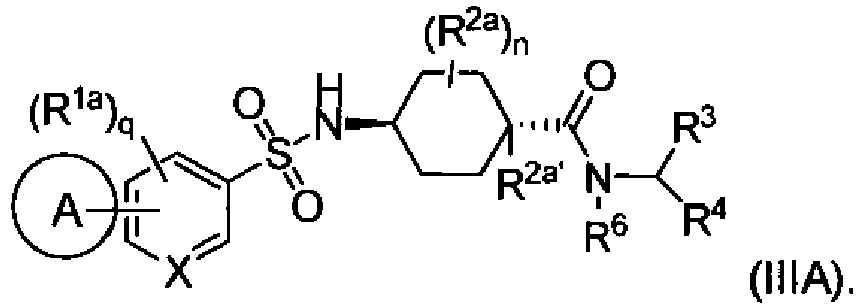
- In one embodiment, the compounds of Formula (I) have the stereochemcal configuration of formula (IVA):

- In one embodiment, of the compounds of Formula (I), (II), (IV), (V), (IA), (IIA), or (IVA), R1, for each occurrence, is independently selected from fluoro, chloro, bromo, methyl, ethyl, isopropyl, tert-butyl, methoxy, ethoxy, isopropoxy, phenoxy, methoxymethyl, cyclopentoxy, trifluoromethyl, trifluoromethoxy, 1-hydroxy-1-methyl-ethyl, nitro, amino, N-methylamino, N,N-dimethylamino, N-(trideuteromethyl)-N-(2-hydroxyethyl)-amino, N-ethylamino, N-propylamino, n-propylamino, 2-aminoethylthio, phenylamido, 2-cyanophenyl-ethynyl, 3-hydroxy-but-1-yn-1-yl, 4-hydroxy-pent-1-yn-1-yl, 5-hydroxy-pent-1-yn-1-yl, acetyl, acetamido, carbamoyl, ethoxycarbonyl, methoxycarbonylamino, (t-butoxycarbonyl)-methoxy, 3-methyl-oxetan-3-yl, oxetan-3-yloxy, N'-methyl-ureido, N'-ethyl-ureido, N'-phenyl-ureido, N'-(1-phenyl-ethyl)-ureido, piperidine-1-carboxamido, cyclopropyl-ethynyl, 2-oxopyrrolidino, 2-methoxymethylpyrrolidino, 2-(methoxycarbonyl)-ethyl, 2-methoxy-ethoxy, methoxycarbonyl-methoxy, and cyclopropyl.
- In another embodiment, of the compounds of Formula (I), (II), (IV), (V), (IA), (IIA), or (IVA), q is 1 and R1 is trifluoromethyl.
- In one embodiment, of the compounds of Formula (III) or (IIIA), ring A is phenyl, pyrazolyl, pyridinyl, oxazolyl, pyrimidinyl, thiazolyl, pyrrolyl, tetrazolyl, imidazolyl, pyridazinyl, pyrazinyl, or 1,2,4-oxadiazolyl, each of which may be optionally substituted with one to three independently selected R17 ; and when ring A is a heterocyclyl comprising -NH-, the hydrogen of the -NH- group may be optionally replaced with a C1-7alkyl; and wherein when ring A is a heterocyclyl comprising -N=, -S- or both, the -N= may be substituted with -O- and the -S- group may be substituted with one or two =O groups.
- In another embodiment, of the compounds of Formula (III) or (IIIA), ring A is selected from:

- In one embodiment, of the compounds of Formula (I), (II), (III), (IV), (V), (IA), (IIA), (IIIA), or (IVA), R17, for each occurrence, is independently selected from halo, C1-4alkyl, C1-4alkoxy, haloC1-4alkyl, carboxy-(CR'R")a-, C1-4alkoxycarbony-(CR'R")a-, hydroxy-(CR'R")a-, cyano-(CR'R")a-, -(CR'R")a-NR18R19, carboxy-(CR'R")a-O-, C1-4alkoxycarbony-(CR'R")a-O-, hydroxy-(CR'R")a-O-, -O-(CR'R")a-NR18R19, carbamoyl, N-(C1-4alkyl)carbamoyl, N,N-di-(C1-4alkyl)carbamoyl, oxetanyl, cyclopropyl, pyrrolidino-C1-4alkyl, pyrrolidino-C1-4alkoxy, morpholino-C1-4alkyl, morpholino-C1-4alkoxy, S,S-dioxothiomorpholino-C1-4alkyl, piperazino-C1-4alkyl, wherein oxetanyl, cyclopropyl, pyrrolidino, morpholino, thiomorpholino, and piperazino, for each occurrence may be optionally substituted with one to three substituents that are independently selected from amino, halo, C1-4alkyl, trifluoromethyl, carboxy, ethoxycarbonyl, and methoxycarbonyl;
R' and R", for each occurrence, is independently hydrogen, a halo, a C1-4alkyl or amino;
R18 and R19, for each occurrence, are independently selected from hydrogen, C1-4alkyl, C1-4alkoxycarbonylC1-4alkyl, and carboxyC1-4alkyl;
a is 0, 1, 2, or 3. - In another embodiment, of the compounds of Formula (I), (II), (III), (IV), (V), (IA), (IIA), (IIIA), or (IVA), R17, for each occurrence is independently selected from fluoro, chloro, methyl, methoxy, hydroxymethyl, carboxy, ethoxycarbonyl, carboxymethyl, 2-carboxyethyl, 2-(ethoxycarbonyl)-ethyl, 2-carboxy-2-methylpropyl, carboxymethoxy, 2-carboxy-2-amino-ethyl, amino-(methoxycarbonyl)-methyl, N,N-dimethylamino, carbamoyl, trifluoromethyl, 3-methyl-oxetan-3-yl, 1-hydroxy-1-methyl-ethyl, 1-aminocyclopropyl, cyano-difluoro-methyl, aminomethyl, 2-aminoethyl, 2-amino-1,1-difluoro-ethyl, 3,3-difluoropyrrolidinomethyl, morpholinomethyl, 2-morpholino-ethyl, 2-morpholino-ethoxy, 2-(3,3-difluoropyrrolidino)-ethyl, 2-(3,3-difluoropyrrolidino)-ethoxy, 2-(2-carboxy-pyrrolidino)-ethoxy, 2-[2-(ethoxycarbonyl)-pyrrolidino]-ethoxy,N-(ethoxycarbonylmethyl)-N-methyl-amino-methyl, 2-[N-(ethoxycarbonylmethyl)-N-methyl-amino]-ethyl, N-(carboxymethyl)-amino-methyl, N-(carboxymethyl)-N-methyl-amino-methyl, 2-[N-(carboxymethyl)-N-methyl-amino]-ethyl, 2-[N-(carboxymethyl)-amino]-ethyl, 2-(N,N-dimethylamino)-ethoxy, S,S-dioxo-thiomorpholino-methyl, 2-(S,S-dioxothiomorpholino)-ethyl, 2-(S,S-dioxo-thiomorpholino)-ethoxy, 2-(3-trifluoromethylpiperazino)-ethyl, and 2-(3-trifluoromethyl-piperazino)-ethoxy.
- In one embodiment, of the compounds of Formula (I), (II), (III), (V), (IA), (IIA), or (IIIA), R6 is hydrogen and R4 is an unsubstituted C1-7alkyl.
- In another embodiment, of the compounds of Formula (I), (II), (III), (V), (IA), (IIA), or (IIIA), R6 is hydrogen and R4 is a C1-7alkyl which is substituted with a hydroxy.
- In another embodiment, of the compounds of Formula (I), (II), (III), (V), (IA), (IIA), or (IIIA), R6 is hydrogen and R4 is 1-hydroxy-ethyl or 1-hydroxy-1-methyl-ethyl.
- In another embodiment, of the compounds of Formula (I), (II), (III), (V), (IA), (IIA), or (IIIA), R6 is hydrogen and R4 is a C1-7alkyl which is substituted with from one to three substituents which are independently selected from deutero, halo, amino, carboxy, methoxycarbonyl, tert-butoxycarbonyl, and C1-4alkoxy.
- In one embodiment, of the compounds of Formula (IV) or (IVA), ring B is


- In one embodiment, of the compounds of Formula (IV) or (IVA), R15, for each occurrence, is independently selected from hydroxy, oxo, methyl, carboxy, and methoxycarbonyl.
- In one embodiment, of the compounds of Formula (IV) or (IVA), R16, for each occurrence, is independently selected from pyridin-2-yl, acetyl, benzoyl, pyridin-2-ylcarbonyl, pyridin-3-ylcarbonyl, pyridin-4-ylcarbonyl, 1-oxo-4-carboxy-butan-1-yl, 1-oxo-3,3-dimethyl-4-carboxy-butan-1-yl, N,N-dimethylamino-acetyl, ethoxycarbonyl, tert-butoxycarbonyl, and methylsulfonyl.
- In one embodiment, of the compounds of Formula (I), (II), (III), (IV), (V), (IA), (IIA), (IIIA), or (IVA), R3 is substituted with one R14 ; and R14 is selected from the group consisting of fluoro, chloro, and bromo.
- In another embodiment, of the compounds of Formula (I), (II), (III), (IV), (V), (IA), (IIA), (IIIA), or (IVA), R3 is 4-fluorophenyl.
- In one embodiment, of the compounds of Formula (I), (II), (III), (IV), (V), (IA), (IIA), (IIIA), or (IVA), X is CH.
- In another embodiment, of the compounds of Formula (I), (II), (III), (IV), (V), (IA), (IIA), (IIIA), or (IVA), X is CR1.
- In another embodiment, of the compounds of Formula (I), (II), (III), (IV), (V), (IA), (IIA), (IIIA), or (IVA), X is N.
- In one embodiment, of the compounds of Formula (I), the compounds have the stereochemcal configuration of formula (IA):

- In another embodiment, of the compounds of Formula (I), the compounds have the stereochemcal configuration of formula (IIA):

- In another embodiment, of the compounds of Formula (I), the compounds have the stereochemcal configuration of formula (IIIA):

- In another embodiment, of the compounds of Formula (I), the compounds have the stereochemcal configuration of formula (IVA):

- In another embodiment, of a compound of Formula (I) is selected from the examples, or a pharmaceutically acceptable salt thereof.
- The compounds of the present invention are useful as both prophylactic and therapeutic treatments for diseases or conditions related to the inhibition of ACC2.
- Thus, as a further aspect, the invention relates to a method for treating a disease or condition related to the inhibition of ACC2, comprising administration of an effective therapeutic amount of a compound of formula (I), (II), (III), (IV), (V), (IA), (IIA), (IIIA) or (IVA), or a pharmaceutically acceptable salt thereof.
- Compounds of formula (I), (II), (III), (IV), (V), (IA), (IIA), (IIIA) or (IVA), or a pharmaceutically acceptable salt thereof, may be useful in the treatment of metabolic disorders, or conditions, metabolic acidosis or ketosis, reactive hypoglycaemia, hyperinsulinaemia, glucose metabolic disorder, insulin resistance, metabolic syndrome, dyslipidaemias of different origins, atherosclerosis and related diseases, obesity, high blood pressure, chronic heart failure, edema and hyperuricaemia.
- Compounds of formula (I), (II), (III), (IV), (V), (IA), (IIA), (IIIA) or (IVA), or a pharmaceutically acceptable salt thereof, may, for example, be used to treat various diseases or disorders such as type 1 diabetes, type 2 diabetes mellitus, hyperlipidemia, idiopathic type 1 diabetes, latent autoimmune diabetes in adults, early-onset type 2 diabetes, youth-onset atypical diabetes, maturity onset diabetes of the young, malnutrition-related diabetes and gestational diabetes, coronary heart disease, ischemic stroke, restenosis after angioplasty, peripheral vascular disease, arterial occlusive disease, intermittent claudication, myocardial infarction, dyslipidemia, mixed dyslipidemia, post-prandial lipemia, conditions of impaired glucose tolerance, conditions of impaired fasting plasma glucose, metabolic acidosis, ketosis, arthritis, osteoporosis, diabetic hypertension, familial chylomicromia syndrome, congestive heart failure, left ventricular hypertrophy, peripheral arterial disease, diabetic retinopathy, other ophthalmic complications of diabetes, macular degeneration, cataract, diabetic nephropathy, diabetic foot ulcer, glomerulosclerosis, chronic renal failure, diabetic neuropathy, peripheral angiopathy, peripheral angiopathy gangrene, microangiopathic changes that result in amputation, cancer, cancer deaths, metabolic syndrome, syndrome X, Reaven syndrome, coronary heart disease, other acute and subacute forms of coronary ischemia, angina pectoris, thrombosis, atherosclerosis, myocardial infarction, transient ischemic attacks, stroke, vascular restenosis, hypoglycemia, hyperglycemia, hyperuricemia, hyperinsulinemia, hyperlipidemia, hypertryglyceridemia, hypercholesterolemia, high blood pressure, excessive cardiovascular morbidity, and cardiosvascular mortality in diabetics, elevated non-HDL cholesterol, decreased HDL cholesterol, elevated triglycerides, low high density lipoprotein, high low density lipoprotein, pancreatitis, insulin resistance, impaired glucose metabolism, conditions of impaired glucose tolerance, obesity, central obesity, nonalcoholic fatty liver disease, erectile dysfunction, skin and connective tissue disorders, foot ulcerations and ulcerative colitis, endothelial dysfunction and impaired vascular compliance, conditions characterized by low bone mass (e.g. osteopenia, osteoporosis, rheumatoid arthritis, osteoarthritis, periodontal disease, alveolar bone loss, osteotomy loss, childhood idiopathic bone loss, Paget's disease, bone loss due to metastatic cancer, osteolytic lesions, curvature of the spine, and loss of height), neurodegenerative disease, neurological disorders, seizure, peripheral sensory neuropathy, lipid disorders, cognitive impairment (learning and memory conditions) and dementia.
- It is also well-established that metabolic diseases exert a negative influence on other physiological systems. Thus, there is often the codevelopment of multiple disease states (e.g. type I diabetes, type II diabetes, inadequate glucose tolerance, insulin resistance, hyperglycemia, hyperlipidemia, hypertriglyceridemia, hypercholesterolemia, dyslipidemia, obesity or cardiovascular disease in "Syndrome X") or secondary diseases which clearly occur secondary to diabetes (e.g. kidney disease, peripheral neuropathy). Thus, it is expected that effective treatment of the diabetic condition will in turn be of benefit to such interconnected disease states.
- In one embodiment, compounds of formula (I), (II), (III), (IV), (V), (IA), (IIA), (IIIA) or (IVA), or a pharmaceutically acceptable salt thereof, may be useful for treating a disorder selected from type 1 and type 2 diabetes mellitus, or complications of diabetes.
- In another embodiment, the invention provides a method for treating a metabolic syndrome, such as Syndrome X, diabetes, insulin resistance, decreased glucose tolerance, non-insulin-dependent diabetes mellitus, Type II diabetes, Type I diabetes, diabetic complications, body weight disorders, or leptin related diseases, comprising administering to a mammal in need thereof a therapeutically effective amount of a compound according to formula (I), (II), (III), (IV), (V), (IA), (IIA), (IIIA) or (IVA), or a pharmaceutically acceptable salt thereof. In another embodiment, the metabolic syndrome is dyslipidemia, obesity, insulin resistance, hypertension, microalbuminemia, hyperuricaemia, or hypercoagulability.
- In another embodiment, the invention provides a method for treating insulin resistance, decreased glucose tolerance, non-insulin-dependent diabetes mellitus, Type II diabetes, or Type I diabetes, comprising administering to a mammal in need thereof a therapeutically effective amount of a compound according to formula (I), (II), (III), (IV), (V), (IA), (IIA), (IIIA) or (IVA), or a pharmaceutically acceptable salt thereof.
- In another embodiment, the invention provides a method for treating a bodyweight disorder such as obesity, overweight, cachexia or anorexia, comprising administering to a mammal in need thereof a therapeutically effective amount of a compound according to formula (I), (II), (III), (IV), (V), (IA), (IIA), (IIIA) or (IVA), or a pharmaceutically acceptable salt thereof.
- Compounds of formula (I), (II), (III), (IV), (V), (IA), (IIA), (IIIA) or (IVA), or a pharmaceutically acceptable salt thereof, may be also suitable for preventing beta-cell degeneration such as apoptosis or necrosis of pancreatic beta cells, for improving or restoring the functionality of pancreatic cells, increasing the number and size of pancreatic beta cells, for use as diuretics or antihypertensives and for the prevention and treatment of acute renal failure.
- As the product of the ACC reaction, malonyl CoA, is a substrate for FAS, and it is expected that inhibition of ACC will result in either, the selective destruction of, or a reduction in proliferation of, cancerous cells, particularly tumors containing cells overexpressing FAS or ACC, including prostate and breast cancers.
- A compound of formula (I), (II), (III), (IV), (V), (IA), (IIA), (IIIA) or (IVA), or a pharmaceutically acceptable salt thereof, may be usefully combined with another pharmacologically active compound, or with two or more other pharmacologically active compounds, for use in therapy. For example, a compound of the formula (I), (II), (III), (IV), (V), (IA), (IIA), (IIIA) or (IVA), or a pharmaceutically acceptable salt thereof, may be administered simultaneously, sequentially or separately in combination with one or more agents for the treatment of disorders previously listed.
- In one embodiment, the other therapeutic agent is another anti-obesity agents, anorectic agents, appetite suppressant and related agents. Diet and/or exercise can also have synergistic effects. Anti-obesity agents include, but are not limited to, apolipoprotein-B secretion/microsomal triglyceride transfer protein (apo-B/MTP) inhibitors, MCR-4 agonists, cholescystokinin-A (CCK-A) agonists, serotonin and norepinephrine reuptake inhibitors (for example, sibutramine), sympathomimetic agents, β3 adrenergic receptor agonists, dopamine agonists (for example, bromocriptine), melanocyte-stimulating hormone receptor analogs, cannabinoid 1 receptor antagonists [for example, compounds described in
WO2006/047516 ), melanin concentrating hormone antagonists, leptons (the OB protein), leptin analogues, leptin receptor agonists, galanin antagonists, lipase inhibitors (such as tetrahydrolipstatin, i.e., Orlistat), anorectic agents (such as a bombesin agonist), Neuropeptide-Y antagonists, thyromimetic agents, dehydroepiandrosterone or an analogue thereof, glucocorticoid receptor agonists or antagonists, orexin receptor antagonists, urocortin binding protein antagonists, glucagon-like peptide- 1 receptor agonists, ciliary neutrotrophic factors (such as Axokine™), human agouti-related proteins (AGRP), ghrelin receptor antagonists, histamine 3 receptor antagonists or reverse agonists, neuromedin U receptor agonists, noradrenergic anorectic agents (for example, phentermine, mazindol and the like) and appetite suppressants (for example, bupropion). - Where compounds of the invention are administered in conjunction with other therapies, dosages of the co-administered compounds will of course vary depending on the type of co-drug employed, on the specific drug employed, on the condition being treated and so forth. A combined preparation or pharmaceutical composition can comprise a compound of the invention as defined above or a pharmaceutical acceptable salt thereof and at least one additional active ingredient selected from:
- a) anti-diabetic agents such as insulin, insulin derivatives and mimetics; insulin secretagogues such as the sulfonylureas, e.g., Glipizide, glyburide and Amaryl; insulinotropic sulfonylurea receptor ligands such as meglitinides, e.g., nateglinide and repaglinide; insulin sensitizer such as protein tyrosine phosphatase-1B (PTP-1B) inhibitors such as PTP-112; GSK3 (glycogen synthase kinase-3) inhibitors such as SB-517955, SB-4195052, SB-216763, NN-57-05441 and NN-57-05445; cholesterylester transfer protein inhibitors (CETP inhibitors); RXR ligands such as GW-0791 and AGN-194204; sodium-dependent glucose co-transporter inhibitors such as T-1095; glycogen phosphorylase A inhibitors such as BAY R3401; biguanides such as metformin; alpha-glucosidase inhibitors such as acarbose; GLP-1 (glucagon like peptide-1), GLP-1 analogs such as Exendin-4 and GLP-1 mimetics; DPPIV (dipeptidyl peptidase IV) inhibitors such as DPP728, LAF237 (vildagliptin - Example 1 of
WO 00/34241 WO 03/043985 WO 2005044250 ,WO 2005013907 ,WO 2004094618 andWO 2004047755 ; - b) hypolipidemic agents such as 3-hydroxy-3-methyl-glutaryl coenzyme A (HMG-CoA) reductase inhibitors, e.g., lovastatin and related compounds such as those disclosed in
U.S. Pat. No. 4,231,938 , pitavastatin, simvastatin and related compounds such as those disclosed inU.S. Pat. Nos. 4,448,784 and4,450,171 , pravastatin and related compounds such as those disclosed inU.S. Pat. No.4,346,227 , cerivastatin, mevastatin and related compounds such as those disclosed inU.S. Pat. No. 3,983,140 , velostatin, fluvastatin, dalvastatin, atorvastatin, rosuvastatin and related statin compounds disclosed inU.S. Pat. No. 5,753,675 , rivastatin, pyrazole analogs of mevalonolactone derivatives as disclosed inU.S. Pat. No. 4,613,610 , indene analogs of mevalonolactone derivatives as disclosed inPCT application WO 86/03488 U.S. Pat. No. 4,647,576 , Searle's SC-45355 (a 3- substituted pentanedioic acid derivative) dichloroacetate, imidazole analogs of mevalonolactone as disclosed inPCT application WO 86/07054 2,596,393 0221025 , naphthyl analogs of mevalonolactone as disclosed inU.S. Pat. No. 4,686,237 , octahydronaphthalenes such as disclosed inU.S. Pat. No. 4, 499,289 , keto analogs of mevinolin (lovastatin) as disclosed in European Patent Application No.0,142,146 A2 , and quinoline and pyridine derivatives disclosed inU.S. Pat. Nos. 5,506,219 and5,691,322 . In addition, phosphinic acid compounds useful in inhibiting HMG CoA reductase suitable for use herein are disclosed inGB 2205837 - c) an anti-obesity agent or appetite regulating agent such as a CB1 activity modulator, melanocortin receptor (MC4R) agonists, melanin-concentrating hormone receptor (MCHR) antagonists, growth hormone secretagogue receptor (GHSR) antagonists, galanin receptor modulators, orexin antagonists, CCK agonists, GLP-1 agonists, and other Pre-proglucagon-derived peptides; NPY1 or NPY5 antagonsist, NPY2 and NPY4 modulators, corticotropin releasing factor agonists, histamine receptor-3 (H3) modulators, aP2 inhibitors, PPAR gamma modulators, PPAR delta modulators, acetyl-CoA carboxylase (ACC) inihibitors, 11-β-HSD-1 inhibitors, adinopectin receptor modulators; beta 3 adrenergic agonists, such as AJ9677 (Takeda/Dainippon), L750355 (Merck), or CP331648 (Pfizer) or other known beta 3 agonists as disclosed in
U.S. Pat. Nos. 5,541,204 ,5,770,615 ,5, 491,134 ,5,776,983 and5,488,064 , a thyroid receptor beta modulator, such as a thyroid receptor ligand as disclosed inWO 97/21993 WO 99/00353 GB98/284425 WO2005011655 , a lipase inhibitor, such as orlistat or ATL-962 (Alizyme), serotonin receptor agonists, (e.g., BVT- 933 (Biovitrum)), monoamine reuptake inhibitors or releasing agents, such as fenfluramine, dexfenfluramine, fluvoxamine, fluoxetine, paroxetine, sertraline, chlorphentermine, cloforex, clortermine, picilorex, sibutramine, dexamphetamine, phentermine, phenylpropanolamine or mazindol, anorectic agents such as topiramate (Johnson & Johnson), CNTF (ciliary neurotrophic factor)/Axokine® (Regeneron), BDNF (brain-derived neurotrophic factor), leptin and leptin receptor modulators, phentermine, leptin, bromocriptine, dexamphetamine, amphetamine, fenfluramine, dexfenfluramine, sibutramine, orlistat, dexfenfluramine, mazindol, phentermine, phendimetrazine, diethylpropion, fluoxetine, bupropion, topiramate, diethylpropion, benzphetamine, phenylpropanolamine or ecopipam, ephedrine, pseudoephedrine; - d) anti-hypertensive agents such as loop diuretics such as ethacrynic acid, furosemide and torsemide; diuretics such as thiazide derivatives, chlorithiazide, hydrochlorothiazide, amiloride; angiotensin converting enzyme (ACE) inhibitors such as benazepril, captopril, enalapril, fosinopril, lisinopril, moexipril, perinodopril, quinapril, ramipril and trandolapril; inhibitors of the Na-K-ATPase membrane pump such as digoxin; neutralendopeptidase (NEP) inhibitors e.g. thiorphan, terteo-thiorphan, SQ29072; ECE inhibitors e.g. SLV306; ACE/NEP inhibitors such as omapatrilat, sampatrilat and fasidotril; angiotensin It antagonists such as candesartan, eprosartan, irbesartan, losartan, telmisartan and valsartan, in particular valsartan; renin inhibitors such as aliskiren, terlakiren, ditekiren, RO 66-1132, RO-66-1168; beta-adrenergic receptor blockers such as acebutolol, atenolol, betaxolol, bisoprolol, metoprolol, nadolol, propranolol, sotalol and timolol; inotropic agents such as digoxin, dobutamine and milrinone; calcium channel blockers such as amlodipine, bepridil, diltiazem, felodipine, nicardipine, nimodipine, nifedipine, nisoldipine and verapamil; aldosterone receptor antagonists; aldosterone synthase inhibitors; and dual ET/AII antagonist such as those disclosed in
WO 00/01389 - e) a HDL increasing compound, such as niacin, fibrates (e.g., Lopid, others) and statins;
- f) Cholesterol absorption modulator such as Zetia® and KT6-971;
- g) Apo-A1 analogues and mimetics;
- h) thrombin inhibitors such as Ximelagatran;
- i) aldosterone inhibitors such as anastrazole, fadrazole, eplerenone;
- j) Inhibitors of platelet aggregation such as aspirin, clopidogrel bisulfate;
- k) estrogen, testosterone, a selective estrogen receptor modulator, a selective androgen receptor modulator;
- l) a chemotherapeutic agent such as aromatase inhibitors e.g. femara, antiestrogens, topoisomerase I inhibitors, topoisomerase II inhibitors, microtubule active agents, alkylating agents, antineoplastic antimetabolites, platin compounds, compounds decreasing the protein kinase activity such as a PDGF receptor tyrosine kinase inhibitor preferably Imatinib ({N-{5-[4-(4-methyl-piperazino-methyl)-benzoylamido]-2-methylphenyl}-4-(3-pyridyl)-2-pyrimidine-amine}) described in the European patent application
EP-A-0 564 409 as example 21 or 4-Methyl-N-[3-(4-methyl-imidazol-1-yl)-5-trifluoromethyl-phenyl]-3-(4-pyridin-3-yl-pyrimidin-2-ylamino)-benzamide described in the patent applicationWO 04/005281 - m) an agent interacting with a 5-HT3 receptor and/or an agent interacting with 5-HT4 receptor such as tegaserod described in the
US patent No. 5510353 as example 13, tegaserod hydrogen maleate, cisapride, cilansetron; - n) an agent for treating tobacco abuse, e.g., nicotine receptor partial agonists, bupropion hypochloride (also known under the tradename Zyban®) and nicotine replacement therapies;
- o) an agent for treating erectile dysfunction, e.g., dopaminergic agents, such as apomorphine), ADD/ADHD agents (e.g., Ritalin®, Strattera®, Concerta® and Adderall®);
- p) an agent for treating alcoholism, such as opioid antagonists (e.g., naltrexone (also known under the tradename ReVa®) and nalmefene), disulfiram (also known under the tradename Antabuse®), and acamprosate (also known under the tradename Campral®)). In addition, agents for reducing alcohol withdrawal symptoms may also be co-administered, such as benzodiazepines, beta- blockers, clonidine, carbamazepine, pregabalin, and gabapentin (Neurontin®);
- q) other agents that are useful including anti-inflammatory agents (e.g., COX-2 inhibitors) ; antidepressants (e.g., fluoxetine hydrochloride (Prozac®)); cognitive improvement agents (e.g., donepezil hydrochloride (Aircept®) and other acetylcholinesterase inhibitors); neuroprotective agents (e.g., memantine) ; antipsychotic medications (e.g., ziprasidone (Geodon®), risperidone (Risperdal®), and olanzapine (Zyprexa®));
- In one embodiment, the other therapeutic agent is selected from DPP4 inhibitors, renin inhibitors, angiotensin 2 receptor blockers, HMG-co-A reductase inhibitors, GLP mimetics, PPAR-agonists, beta-2 angiotensin receptor blockers, ACE inhibitors, niacin, glyburide, exendin, metformin and diuretics.
- Such combinations may offer significant advantages, including synergistic activity, in therapy.
- The present invention is also in relation to a pharmaceutical composition comprising a compound of formulas (I), (II), (III), (IV), (V), (IA), (IIA), (IIIA) or (IVA), or a pharmaceutically acceptable salt thereof, and pharmaceutically acceptable excipients.
- In another aspect, the present invention provides a pharmaceutical composition comprising a compound of formulas (I), (II), (III), (IV), (V), (IA), (IIA), (IIIA) or (IVA), or a pharmaceutically acceptable salt thereof, and a pharmaceutically acceptable carrier. The pharmaceutical composition can be formulated for particular routes of administration such as oral administration, parenteral administration, and rectal administration, etc. In addition, the pharmaceutical compositions of the present invention can be made up in a solid form including capsules, tablets, pills, granules, powders or suppositories, or in a liquid form including solutions, suspensions or emulsions. The pharmaceutical compositions can be subjected to conventional pharmaceutical operations such as sterilization and/or can contain conventional inert diluents, lubricating agents, or buffering agents, as well as adjuvants, such as preservatives, stabilizers, wetting agents, emulsifers and buffers etc.
- Typically, the pharmaceutical compositions are tablets and gelatin capsules comprising the active ingredient together with
- a) diluents, e.g., lactose, dextrose, sucrose, mannitol, sorbitol, cellulose and/or glycine;
- b) lubricants, e.g., silica, talcum, stearic acid, its magnesium or calcium salt and/or polyethyleneglycol; for tablets also
- c) binders, e.g., magnesium aluminum silicate, starch paste, gelatin, tragacanth, methylcellulose, sodium carboxymethylcellulose and/or polyvinylpyrrolidone; if desired
- d) disintegrants, e.g., starches, agar, alginic acid or its sodium salt, or effervescent mixtures; and/or
- e) absorbents, colorants, flavors and sweeteners.
- Tablets may be either film coated or enteric coated according to methods known in the art.
- Suitable compositions for oral administration include an effective amount of a compound of the invention in the form of tablets, lozenges, aqueous or oily suspensions, dispersible powders or granules, emulsion, hard or soft capsules, or syrups or elixirs. Compositions intended for oral use are prepared according to any method known in the art for the manufacture of pharmaceutical compositions and such compositions can contain one or more agents selected from the group consisting of sweetening agents, flavoring agents, coloring agents and preserving agents in order to provide pharmaceutically elegant and palatable preparations. Tablets contain the active ingredient in admixture with nontoxic pharmaceutically acceptable excipients which are suitable for the manufacture of tablets. These excipients are, for example, inert diluents, such as calcium carbonate, sodium carbonate, lactose, calcium phosphate or sodium phosphate; granulating and disintegrating agents, for example, corn starch, or alginic acid; binding agents, for example, starch, gelatin or acacia; and lubricating agents, for example magnesium stearate, stearic acid or talc. The tablets are uncoated or coated by known techniques to delay disintegration and absorption in the gastrointestinal tract and thereby provide a sustained action over a longer period. For example, a time delay material such as glyceryl monostearate or glyceryl distearate can be employed. Formulations for oral use can be presented as hard gelatin capsules wherein the active ingredient is mixed with an inert solid diluent, for example, calcium carbonate, calcium phosphate or kaolin, or as soft gelatin capsules wherein the active ingredient is mixed with water or an oil medium, for example, peanut oil, liquid paraffin or olive oil.
- Certain injectable compositions are aqueous isotonic solutions or suspensions, and suppositories are advantageously prepared from fatty emulsions or suspensions. Said compositions may be sterilized and/or contain adjuvants, such as preserving, stabilizing, wetting or emulsifying agents, solution promoters, salts for regulating the osmotic pressure and/or buffers. In addition, they may also contain other therapeutically valuable substances. Said compositions are prepared according to conventional mixing, granulating or coating methods, respectively, and contain about 0.1-75%, or contain about 1-50%, of the active ingredient.
- Suitable compositions for transdermal application include an effective amount of a compound of the invention with carrier. Carriers include absorbable pharmacologically acceptable solvents to assist passage through the skin of the host. For example, transdermal devices are in the form of a bandage comprising a backing member, a reservoir containing the compound optionally with carriers, optionally a rate controlling barrier to deliver the compound of the skin of the host at a controlled and predetermined rate over a prolonged period of time, and means to secure the device to the skin.
- Suitable compositions for topical application, e.g., to the skin and eyes, include aqueous solutions, suspensions, ointments, creams, gels or sprayable formulations, e.g., for delivery by aerosol or the like. Such topical delivery systems will in particular be appropriate for dermal application, e.g., for the treatment of skin cancer, e.g., for prophylactic use in sun creams, lotions, sprays and the like. They are thus particularly suited for use in topical, including cosmetic, formulations well-known in the art. Such may contain solubilizers, stabilizers, tonicity enhancing agents, buffers and preservatives.
- As used herein a topical application may also pertain to an inhalation or to an intranasal application. They are conveniently delivered in the form of a dry powder (either alone, as a mixture, for example a dry blend with lactose, or a mixed component particle, for example with phospholipids) from a dry powder inhaler or an aerosol spray presentation from a pressurised container, pump, spray, atomizer or nebuliser, with or without the use of a suitable propellant.
- The present invention further provides anhydrous pharmaceutical compositions and dosage forms comprising the compounds of the present invention as active ingredients, since water may facilitate the degradation of certain compounds.
- Anhydrous pharmaceutical compositions and dosage forms of the invention can be prepared using anhydrous or low moisture containing ingredients and low moisture or low humidity conditions. An anhydrous pharmaceutical composition may be prepared and stored such that its anhydrous nature is maintained. Accordingly, anhydrous compositions are preferably packaged using materials known to prevent exposure to water such that they can be included in suitable formulary kits. Examples of suitable packaging include, but are not limited to, hermetically sealed foils, plastics, unit dose containers (e.g., vials), blister packs, and strip packs.
- The invention further provides pharmaceutical compositions and dosage forms that comprise one or more agents that reduce the rate by which the compound of the present invention as an active ingredient will decompose. Such agents, which are referred to herein as "stabilizers," include, but are not limited to, antioxidants such as ascorbic acid, pH buffers, or salt buffers, etc.
- The pharmaceutical composition or combination of the present invention can be in unit dosage of about 1-1000 mg of active ingredient(s) for a subject of about 50-70 kg, or about 1-500 mg or about 1-250 mg or about 1-150 mg or about 0.5-100 mg, or about 1-50 mg of active ingredients. The therapeutically effective dosage of a compound, the pharmaceutical composition, or the combinations thereof, is dependent on the species of the subject, the body weight, age and individual condition, the disorder or disease or the severity thereof being treated. A physician, clinician or veterinarian of ordinary skill can readily determine the effective amount of each of the active ingredients necessary to prevent, treat or inhibit the progress of the disorder or disease.
- The above-cited dosage properties are demonstrable in vitro and in vivo tests using advantageously mammals, e.g., mice, rats, dogs, monkeys or isolated organs, tissues and preparations thereof. The compounds of the present invention can be applied in vitro in the form of solutions, e.g., preferably aqueous solutions, and in vivo either enterally, parenterally, advantageously intravenously, e.g., as a suspension or in aqueous solution. The dosage in vitro may range between about 10-3 molar and 10-9 molar concentrations. A therapeutically effective amount in vivo may range depending on the route of administration, between about 0.1-500 mg/kg, or between about 1-100 mg/kg.
- Within the scope of this text, only a readily removable group that is not a constituent of the particular desired end product of the compounds of the present invention is designated a "protecting group", unless the context indicates otherwise. The protection of functional groups by such protecting groups, the protecting groups themselves, and their cleavage reactions are described for example in standard reference works, such as J. F. W. McOmie, "Protective Groups in Organic Chemistry", Plenum Press, London and New York 1973.
- Salts of compounds of the present invention having at least one salt-forming group may be prepared in a manner known per se. For example, salts of compounds of the present invention having acid groups may be formed, for example, by treating the compounds with metal compounds, such as alkali metal salts of suitable organic carboxylic acids, e.g. the sodium salt of 2-ethylhexanoic acid, with organic alkali metal or alkaline earth metal compounds, such as the corresponding hydroxides, carbonates or hydrogen carbonates, such as sodium or potassium hydroxide, carbonate or hydrogen carbonate, with corresponding calcium compounds or with ammonia or a suitable organic amine, stoichiometric amounts or only a small excess of the salt-forming agent preferably being used. Acid addition salts of compounds of the present invention are obtained in customary manner, e.g. by treating the compounds with an acid or a suitable anion exchange reagent. Internal salts of compounds of the present invention containing acid and basic salt-forming groups, e.g. a free carboxy group and a free amino group, may be formed, e.g. by the neutralisation of salts, such as acid addition salts, to the isoelectric point, e.g. with weak bases, or by treatment with ion exchangers.
- Salts can be converted in customary manner into the free compounds; metal and ammonium salts can be converted, for example, by treatment with suitable acids, and acid addition salts, for example, by treatment with a suitable basic agent.
- Mixtures of isomers obtainable according to the invention can be separated in a manner known per se into the individual isomers; diastereoisomers can be separated, for example, by partitioning between polyphasic solvent mixtures, recrystallisation and/or chromatographic separation, for example over silica gel or by e.g. medium pressure liquid chromatography over a reversed phase column, and racemates can be separated, for example, by the formation of salts with optically pure salt-forming reagents and separation of the mixture of diastereoisomers so obtainable, for example by means of fractional crystallisation, or by chromatography over optically active column materials.
- Intermediates and final products can be worked up and/or purified according to standard methods, e.g. using chromatographic methods, distribution methods, (re-) crystallization, and the like.
- The following applies in general to all processes mentioned herein before and hereinafter.
- All the above-mentioned process steps can be carried out under reaction conditions that are known per se, including those mentioned specifically, in the absence or, customarily, in the presence of solvents or diluents, including, for example, solvents or diluents that are inert towards the reagents used and dissolve them, in the absence or presence of catalysts, condensation or neutralizing agents, for example ion exchangers, such as cation exchangers, e.g. in the H+ form, depending on the nature of the reaction and/or of the reactants at reduced, normal or elevated temperature, for example in a temperature range of from about -100 °C to about 190 °C, including, for example, from approximately -80 °C to approximately 150 °C, for example at from -80 to -60 °C, at room temperature, at from -20 to 40 °C or at reflux temperature, under atmospheric pressure or in a closed vessel, where appropriate under pressure, and/or in an inert atmosphere, for example under an argon or nitrogen atmosphere.
- At all stages of the reactions, mixtures of isomers that are formed can be separated into the individual isomers, for example diastereoisomers or enantiomers, or into any desired mixtures of isomers, for example racemates or mixtures of diastereoisomers, for example analogously to the methods described under "Additional process steps".
- The solvents from which those solvents that are suitable for any particular reaction may be selected include those mentioned specifically or, for example, water, esters, such as lower alkyl-lower alkanoates, for example ethyl acetate, ethers, such as aliphatic ethers, for example diethyl ether, or cyclic ethers, for example tetrahydrofuran or dioxane, liquid aromatic hydrocarbons, such as benzene or toluene, alcohols, such as methanol, ethanol or 1- or 2-propanol, nitriles, such as acetonitrile, halogenated hydrocarbons, such as methylene chloride or chloroform, acid amides, such as dimethylformamide or dimethyl acetamide, bases, such as heterocyclic nitrogen bases, for example pyridine or N-methylpyrrolidin-2-one, carboxylic acid anhydrides, such as lower alkanoic acid anhydrides, for example acetic anhydride, cyclic, linear or branched hydrocarbons, such as cyclohexane, hexane or isopentane, methycyclohexane, or mixtures of those solvents, for example aqueous solutions, unless otherwise indicated in the description of the processes. Such solvent mixtures may also be used in working up, for example by chromatography or partitioning.
- The compounds, including their salts, may also be obtained in the form of hydrates, or their crystals may, for example, include the solvent used for crystallization. Different crystalline forms may be present.
- The invention relates also to those forms of the process in which a compound obtainable as an intermediate at any stage of the process is used as starting material and the remaining process steps are carried out, or in which a starting material is formed under the reaction conditions or is used in the form of a derivative, for example in a protected form or in the form of a salt, or a compound obtainable by the process according to the invention is produced under the process conditions and processed further in situ.
- In general, starting materials, building blocks, reagents, acids, bases, dehydrating agents, solvents and catalysts utilized to synthesize the compounds of the present invention are either commercially available or can be produced by organic synthesis methods known to one of ordinary skill in the art (Houben-Weyl 4th Ed. 1952, Methods of Organic Synthesis, Thieme, Volume 21).
- Typically, the compounds of formula (I), (II), (III), (IV), (V), (IA), (IIA), (IIIA) or (IVA) can be prepared according to the Schemes provided infra.
- The invention provides, in another aspect, a process for preparing a compound of formula (I). The schemes detailed below show general schemes for synthesizing compounds of formula (I). In the reactions described in the schemes herein below, any reactive group present, such as hydroxyl, amino, carbonyl or imino groups may be protected during the reaction by conventional protecting groups such as trimethylsilyl, tert-butyldimethylsilyl, benzyl, acetal, ketal etc., which are cleaved again after the reaction.
- The following schemes represent general procedures used to synthesize compounds in this application.


- Scheme I provides a method of preparing compounds of the invention in which L1 is -SO2NH- and R2' is a hydrogen or R2 or R2' and one or more R2 groups form a C1-4alkylene bridge. In Scheme I, a trans-aminocyclohexane carboxylic acid (i) in which the amino group is protected with an amine protecting group such as a Boc protecting group, is condensed with an amine (ii) using standard amide forming conditions to produce an amino-protected trans-aminocyclohexane carboxamide (iii). The amine protecting group is removed to provide a trans-aminocyclohexane carboxamide (iv) which is then condensed with an appropriate benzene sulfonyl chloride (v) in the presense of a base to yield a compound of the invention (Ia). The sulfonyl chloride in this scheme is either commercially available or is prepared from a commercially available sulfonic acid or aniline as shown in Scheme 3.
- Examples in which R1 or R3 - R5 in the final product contain a free basic NH2 may be prepared via an amine protected (e.g., Boc) followed by deprotection as a final step or may be present as a nitro group which can be reduced to an amine in the final step. Examples in which R1 or R3 - R5 in the final product contain a carboxylic acid may be prepared from the corresponding ester followed by ester hydrolysis as a final step. This variation may apply for any of the following general synthetic schemes.


- Scheme II provides an alternative method of preparing compounds of the invention in which L1 is -SO2NH- and R2' is a hydrogen or R2 or R2' and one or more R2 groups form a C1-4alkylene bridge. In Scheme II, a benzene sulfonyl chloride (v) is condensed with a trans-aminocyclohexane carboxylic acid in which the carboxylic acid group is protected (vi) (e.g., as an ester, such as a methyl ester) to form a sulfonamide (vii). The sulfonamide (vii) is treated to remove the carboxylic acid protecting group (for example an ester can be treated with a base to form a carboxylic acid) to form a carboxylic acid (viii). The carboxylic acid (viii) is then condensed with an amine (ii) using standard amide forming conditions to form a compound of the invention (Ia).
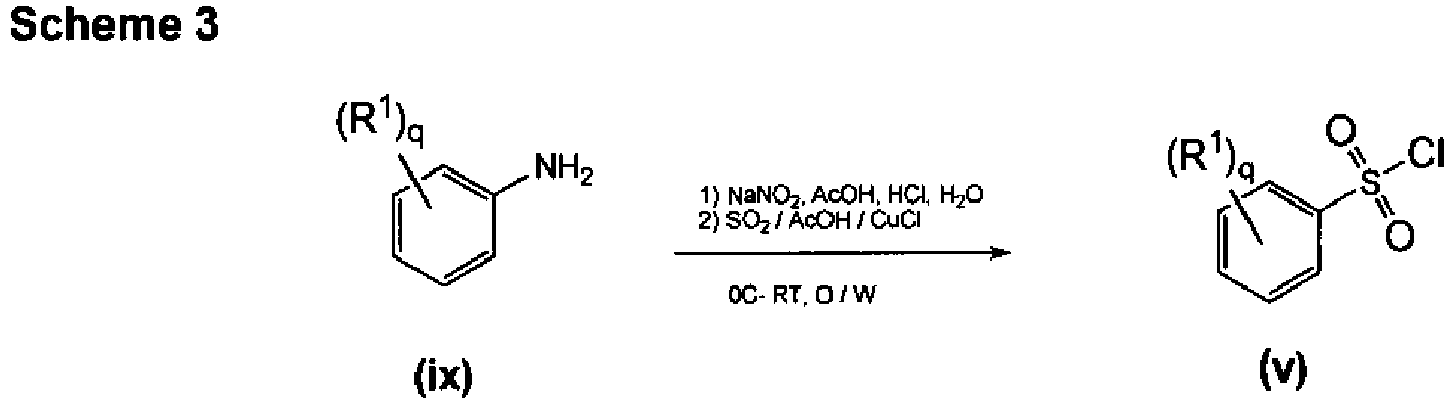
- Anilines (ix) may be converted into bezenesulfonyl chlorides (v) by treating the aniline with sodium nitrate in acetic acid/HCl/H2O followed by treatment sulfur dioxide/acetic acid and CuCl at 0°C.

- Ureas may be formed according to Scheme 4 by reacting a nitrobenzenesulfonyl chloride (x) with trans-aminocyclohexane carboxamide (iv). In one embodiment a salt, such as the hydrochloride salt of the aminocyclohexane carboxamide (iv) can be used to form a compound of formula (Ib) in which one of R1 is a nitro group. The nitro group can be converted to an amino group by treating the compound of formula (Ib) with ammonium formate in ethanol in the presence of a palladium on carbon catalyst to form a compound of formula (Ic) in which one of R1 is an amine. The amine compound (Ic) is then treated with an isocyanate to form a compound of formula (Id) in which one of R1 is a urea.

- As shown in Scheme 5, a compound of the invention in which one R1 is an amine group (Ic) can be converted to a compound of the invention in which one R1 is a urea (Ie) by treating the the amine (Ic) with triphosgene (i.e., bis(trichloromethyl) carbonate) followed by treatment with a primary or secondary amine to form the urea (Ie).

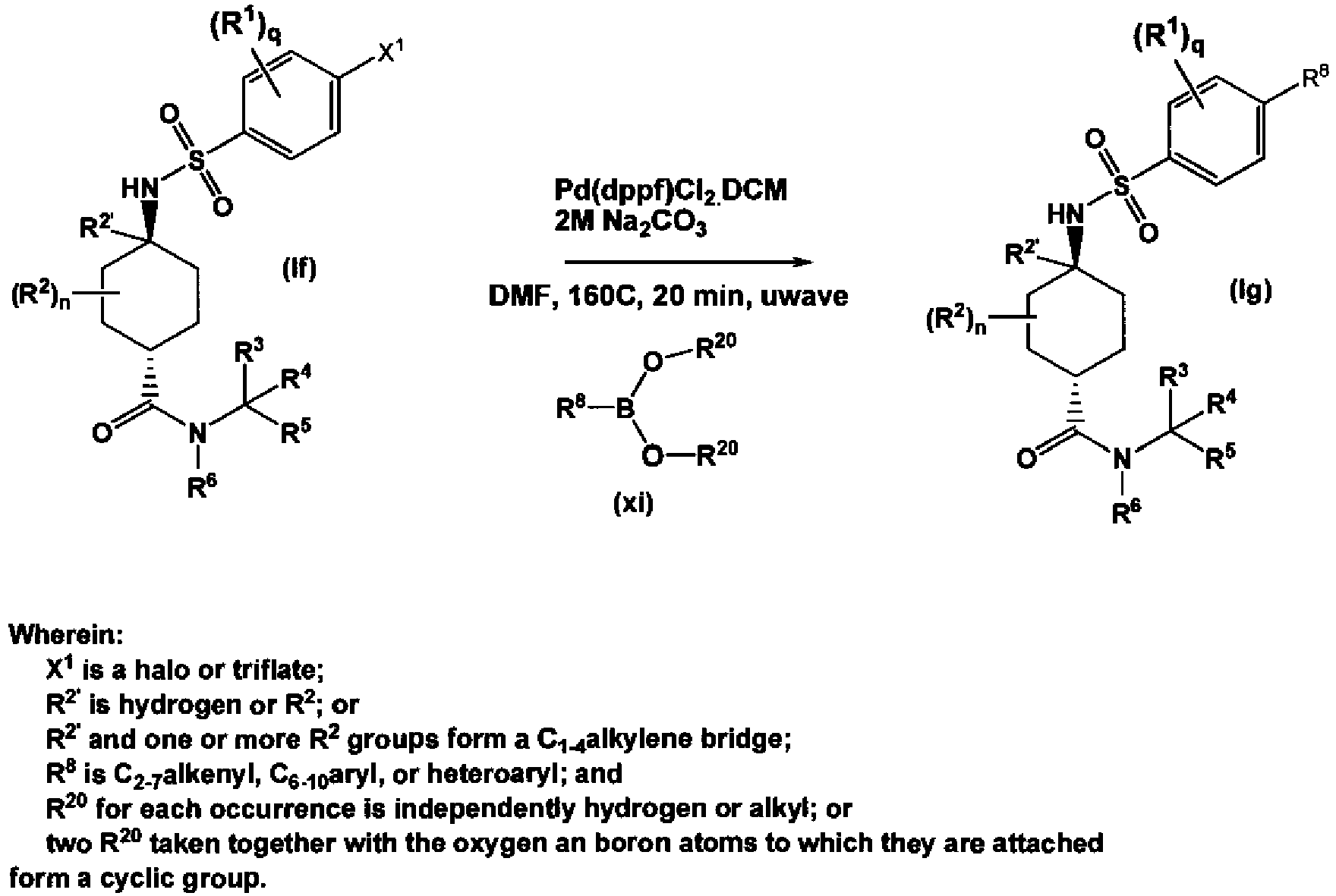
- A halo or triflate R1 substituent of a compound of the invention (If) can be converted to an alkenyl, aryl or heteroaryl using a Suzuki coupling reaction. In one method shown in Scheme 6, the compound of the invention having the halo or triflate group (If) is treated with an boronic acid or boronic ester having an aryl, heteroaryl or alkenyl substituent (xl) in the presence of a palladium catalyst and a base to form a compound of the invention which has an aryl, heteroaryl or alkenyl substituent (Ig).

- As shown in Scheme 7, a halo or triflate R1 substituent of a compound of the invention (If) can also be converted to a boronic ester by treating it with a bis(boronic ester) in the presence of a palladium catalyst and a base. The boronic ester can then be treated with an aryl halide, heteroaryl halide or a vinyl halide to form a compound of the invention which has an aryl, heteroaryl or alkenyl substituent (Ig).

- As shown in Scheme 8, a halo or triflate R1 substituent of a compound of the invention (If) can also be converted a compound of the invention having an alkynyl substituent (Ih) by treating the halide with a 1-alkyne in the presence of a palladium catalyst and a base.


- Compounds of the invention which have an R2' subsituent that is an alkyl or an alkenyl can be prepared using the sulfonyl chloride coupling reaction described above from the intermediate prepared in Scheme 9. A 4-hydroxycyclohexanecarboxylic acid in which the alcohol and the carboxylic acid group are protected (xiii) is deprotonated with a strong base (e.g., LDA) and the resulting ester enolate is alkylated with an alkyl or allyl halide. The alcohol is then deprotected to form compound (xiv). Compound (xiv) is converted to an amine via Mitsunobu reaction with phthalimide, followed by deprotection of the carboxylic acid to form compound (xv). The carboxylic acid of compound (xv) is converted to an acid chloride by treatment with oxalyl chloride. The acid chloride (xvi) is coupled with an amine (ii) to form an amide (xvii) which is treated hydrazine to remove the phthalimide group and for the free amine (xviii). Condensation of the resulting amine with an aryl sulfonyl chloride as described for previous schemes provides compounds of the invention.


- As seen in Scheme 10, compounds of the invention in which R2' is a cyano group can be prepared by converting a carboxylic acid of formula (xix) to an amide (xx) with HATU and ammonium chloride. The amide (xx) can be converted to a cyano group by treating it with trifluoroacetic anhydride to for compound (xxi). A carboxylic acid group can be added to compound (xxi) by treating it with CO2 in the presence of a strong base to form compound (xxii). Compound (xxii) can be coupled with an amine (ii) using a standard amide couple reaction to form a compound of the invention in which R2' is a cyano (Ij).


- As shown in Scheme 11, compounds of the invention which are spirolactam analogues may be constructed by conversion of an allyl intermediate (xxiii) to an appropriate aldehyde or ketone (xxiv) using ozone and polystyrene-triphenylphosphine. Reductive amination and cyclization of compound (xxiv) then can be used to form the spirolactam of the invention (Ik).

- Spirolactone analogues may be constructed by treating a cyclohexanecarboxylate ester (xxv) with a strong base such as LDA to form an enolate which can add to an epoxide (xxvi) then cyclize to form compound (xvii) as shown in Scheme 12. The resulting protected alcohol can be deprotected and converted to an amine as shown in Scheme 9. The amine can be coupled with a sulfonyl chloride compound as shown in Scheme 1 to form a compound of the invention.


- Compounds of the invention in which R2' is a hydroxy can be prepared as shown in Scheme 13. A 4-hydroxycyclohexanecarboxylate ester in which the alcohol is protected (xxviii) is treated with a strong base such as LDA and 10-(camphorylsulfonyl)oxaziridine to add the hydroxy group and form compound (xxix). The ester of compound (xxix) is hydrolyzed to an acid and an amide is for using methods described above, followed by removal of the alcohol protecting group to form compound (xxx). A benzene sulfonyl chloride (v) is reacted with benzyl amine, followed by reaction with Boc anhydride then removal of the benzyl group to form compound (xxxi). Compound (xxx) is then coupled with compound (xxxi) via Mitsunobu reaction, followed by removal of the Boc group to form a compound of the invention in which R2' is a hydroxy group.
- The following specific examples are intended to illustrate the invention without limiting the scope thereof.
- Compounds prepared by these methods were analyzed by a variety of methods to determine identity and purity. These methods included NMR, mass spectroscopy, and HPLC. A variety of HPLC methods were used, and these are described in the following table.
Table 1: HPLC Methods Method Description A Column SunFire C18 20x4.6 mm, 3.5 □m Column Temperature 40 °C, Eluents A: H2O, B: acetonitrile, both containing 0.1% TFA Flow Rate 3.0 mL/min Gradient 5-100% B in 4.0 min (A1) or 15-90% B in 4.0 min (A2) B Column SunFire C18 20x4.6 mm, 3.5 □m Column Temperature RT Eluents A: H2O, B: acetonitrile, both containing 0.1% TFA Flow Rate 3.0 mL/min Gradient 5-50% B in 4.0 min (B1) or 10-70% B in 4.0 min (B2) C Column Waters X Terra C18 30x3 mm, 2.5 □m Column Temperature RT Eluents A: H2O (containing 5% acetonitrile and 0.05% TFA), B: acetonitrile (containing 0.05% TFA) Flow Rate 0.7 mL/min Gradient 10-95% B in 1.5 min, then 95% B for 1 min D Column Phenomenex Luna C8 50x5 mm, 4.6 □m Column Temperature RT Eluents A: H2O, B: acetonitrile, both containing 0.1% TFA Flow Rate 3 mL/min Gradient 10-100% B in 15 min E Column Waters Atlantis C18 150x4.6 mm, 5.0 □m Column Temperature RT Eluents A: H2O, B: acetonitrile, both containing 0.1% TFA Flow Rate 1.4 mL/min Gradient 0-95% B in 19 min Table 2: Commonly Used Abbreviations Abbreviation Description AcCN acetonitrile Bn Benzyl Boc Tert-butoxycarbonyl CAN Ceric ammonium nitrate DCC 1,3-Dicyclohexylcarbodiimide DCE Dichloroethane DCM Dichloromethane Pd(dppf)Cl2 1,1'-bis(diphenylphosphino)ferrocene paladium dichloride DIAD Diisopropylazodicarboxylate DIPEA Diisopropylethylamine DMAP N,N-dimethylpyridin-4-amine DMF N,N-dimethylformamide DMSO Dimethyl sulfoxide EDCI 1-Ethyl-3-(3-dimethylaminopropyl)carbodiimide Et2O Diethyl ether EtOAc Ethyl acetate Ex. Example h Hour(s) HATU 2-(1H-7-azabenzotriazol-1-yl)-1,1, 3,3,-tetramethyluronium hexafluorophosphate HOBt N-Hydroxybenzotriazole HPLC High performance liquid chromatography HV High vacuum Intermed. Intermediate LC-MS or LCMS Liquid chromatography - mass spectrometry LDA Lithium diisopropylamide MeOH methanol min Minute(s) mL Milliliter(s) MS-Es Electrospray mass spectrometry NMM N-methylmorpholine O/N Overnight Pd2(dba)3 Tris(dibenzylideneacetone)dipalladium(0) Phos X 2-Dicyclohexylphosphino-2',4',6'-triisopropylbiphenyl rt Room temperature sat'd saturated S.M. Starting Material TBAF Tetrabutylammonium fluoride TFA Trifluoroacetic acid TFAA Trifluoroacetic anhydride THF Tetrahyd rofu ran tR Retention time Xphos 2-Dicyclohexylphosphino-2',4',6'-triisopropylbiphenyl Xantphos 4,5-Bis(diphenylphosphino)-9,9-dimethylxanthene -

- Sodium bicarbonate (521 mg, 6.20 mmol) in the minimum amount of water to dissolve it was added to aTHF slurry of trans-amino-methylester cyclohexane HCl salt (600 mg, 3.10 mmol). The mixture was stirred for a couple minutes then 4-chloro-3-nitrobenzenesulfonyl chloride (793 mg, 3.10 mmol) was added, and the reaction was stirred over the weekend. The reaction was diluted with EtOAc and adjust pH to 9 with 1 N NaOH. The layers were separated and the organic layer was washed 1 x brine then dried over magnesium sulfate, filter, and concentrate to yield the title compound as a tan solid (1042 mg, 2.77 mmol, 89 % yield). [M-H]= 375.1
- The Intermediates listed in the Table below were prepared by a method analogous to the method used to prepare Intermediate 1 using trans-amino-methylester cyclohexane HCl salt and the strarting benzenesulfonyl chloride indicated.
Intermed. Structure S.M. MS 2 
4-Bromo-benzenesulfonyl chloride M-H = 376.2 3 
4-trifluoromethyl-benzenesulfonyl chloride M+H = 366.0 M-H = 364.3 4 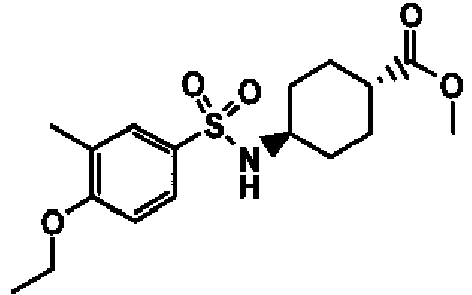
4-ethoxy-3-methyl-benzenesulfonyl chloride M+H = 356.1 5 
4-methyl-3-nitro-benzenesulfonyl chloride M-H= 355.2 6 
4-(oxazol-2-yl)-benzenesulfonyl chloride (Intermediate 26) M+H = 365.0 7 
4-(oxazol-5-yl)-benzenesulfonyl chloride M+H = 365.2 8 
4-(trifluoromethyl)-3-chloro-benzenesulfonyl chloride - 9 
4-methyl-3-chloro-benzenesulfonyl chloride - -

- Zinc dust (1345 mg, 20.57 mmol) was added to a room temperature solution of methyl trans-4-(4-chloro-3-nitrophenyisulfonamido)cyclohexanecarboxylate (Intermediate 1, 775 mg, 2.057 mmol) in acetic acid (15.200 ml). The reaction was heated to 50°C overnight, the filtered over celite and rinsed with acetic acid. The acetic acid was removed in vacuo at 60°C, and the residue was partitioned between EtOAc/sat'd NaHCO3. The aqueous layer was extracted with a second portion EtOAc, and the organic layers were combined then rinsed 1 x brine, dry over MgSO4, filter, and concentrated to give the title compound as a solid (670 mg, 1.932 mmol, 94 % yield). MS MH+ 347.1
-
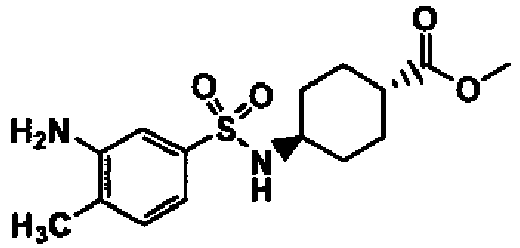
- Methyl trans-4-(3-amino-4-methyl-phenylsulfonamido)cyclohexane-carboxylate was prepared by a method analogous to the method used to prepare Intermediate 10 using methyl trans-4-(3-nitro-4-methyl-phenylsulfonamido)cyclohexane-carboxylate (Intermediate 5) as the starting material. MS MH+ 327.2
-

- A round bottom flask was charged with methyl trans-4-(3-amino-4-chlorophenylsulfonamido)cyclohexamecarboxylate (Intermediate 10, 333 mg, 0.922 mmol) and acetaldehyde (52.1 µl, 0.922 mmol) followed by sodium triacetoxyborohydride (293 mg, 1.383 mmol) in DCE (9217 µl) and the reaction was stirred overnight. The reaction was diluted with DCM/sat'd NaHCO3, and the organic layer was separated and dried over MgSO4, then filtered and chromatographed on a Biotage 25S column to yield yield the title compound (224 mg, 0.598 mmol, 64.8 % yield). Rf(50% EtOAc/heptane): sm = 0.43; product = 0.58. MS MH+ = 375.2
- The intermediates in the following Table were prepared by a method analogous to the method used to prepare Intermediate 12 using the starting materials indicated.
Intermed. Structure S.M. MS MH+ 13 
Propionaldehyde & Intermediate 10 389.2 14 
Propionaldehyde & Intermediate 11 369.3 -

- Methyl trans-4-(4-chloro-3-(ethylamino)phenylsulfonamido)cyclohexane-carboxylate (Intermediate 12, 220mg, 0.552mmol) in 1/1/1 THF/MeOH/1N LiOH was warmed to 45°C overnight. The reaction was cooled to room temperature, then acidified to pH 3 with 1 N HCl and extracted with multiple volumes EtOAc. The combined organic layers were dried over sodium sulfate, filtered and concentrated to give the title compound as colorless solid (169 mg, 0.468 mmol, 85 % yield). MS MH+ 361.2
- The Intermediates listed in the Table below were prepared by a method analogous to the method used to prepare Intermediate 15 using the ester indicated.
Intermed. Structure S.M. MS 16 
Intermediate 1 [M-H]= 361.2 17 
Intermediate 2 M+2H = 364.1 18 
Intermediate 3 M+H = 362.0 19 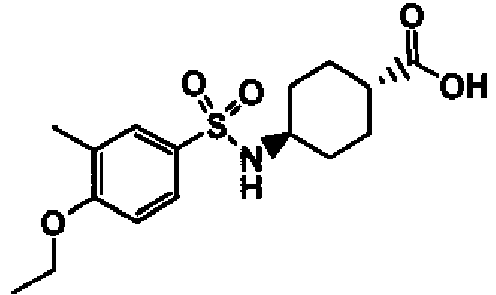
Intermediate 4 [M+H]= 342.1 20 
Intermediate 6 351.0 21 
Intermediate 15 355.2 22 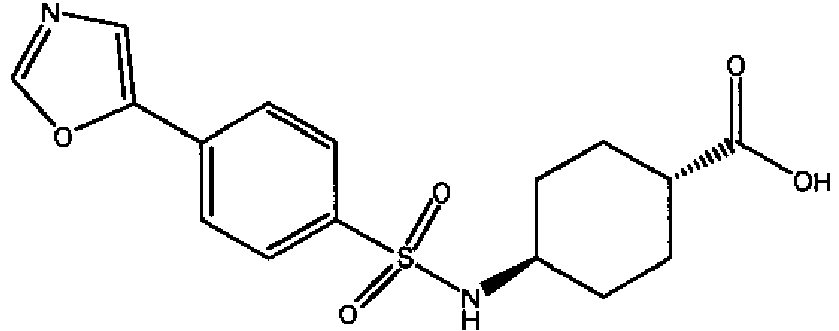
Intermediate 9 351.2 23 
Intermediate 13 375.2 24 
Intermediate 12 361.2 -

- Bromoacetophenone (595 mg, 2.99 mmol) and formamide (1781 µl, 44.8 mmol) were combined and heated at 130°C for 90min. The reaction was cooled then dilute with ethyl acetate and water and extracted with ethyl acetate. The organic layer was dried over sodium sulfate, filtered, and concentrated. The concentrate was purified by chromatography on a Biotage 25M column using a 5-8% ethyl acetate in heptane gradiant to yield 4-phenyl-oxazole (170mg, 1.17mmol). TLC (5% ethyl acetate in heptane) of product: Rf= 0.28.
-

- 4-Phenyl-oxazole (Intermediate 25, 550 mg, 3.79 mmol) was dissolved in a minimum of dichloromethane and was added slowly to chlorosulfonic acid (2.537 mL, 37.9 mmol) at 0°C. The reaction mixture was stirred for 20 min 0-5°C then warmed to room temperature then to 45°C and stirred for 2h. The reaction mixture was cooled to room temperature and cautiously poured on ice water. The aqueous layer was extracted with ethyl acetate, dried over sodium sulfate, and concentrated to crude 4-oxazol-4-yl-benzenesulfonyl chloride. The starting material and product have Rf values in 20% EtOAc/heptane of Rf =0.47 and Rf=0.23, respectively. The crude product was purifed by chromatography on a Biotage 25M column eluting ethyl acetate/heptane to yield 4-oxazol-4-yl-benzenesulfonyl chloride (212mg, 0.870mmol). MH+ = 244.2.
-

- 4-(Oxazol-2-yl)-analine was prepared from 1-nitro-4-(oxazol-2-yl)-benzene by the method described for Intermediate 10. 4-Oxazol-2-yl-benzenesulfonyl chloride was prepared from 4-(oxazol-2-yl)-analine using the method described for Intermediate 39. MS MH+ 244.2.
-

- 4-Oxazol-4-yl-benzenesulfonyl chloride (Intermediate 26, 203 mg, 0.833 mmol) in 1.0ml THF was added to a slurry of trans-4-amino-cyclohexanecarboxylic acid methyl ester (161 mg, 0.833 mmol) and sodium bicarbonate (140 mg, 1.666 mmol) in ca 2.5 mL 3:1 THF:H2O. The reaction was stirred at room temperature for 16h then LCMS indicated that the reaction was complete and yielded a single compound having a mass ion of MH+ 365.2 indicating that it was the desired methyl-ester. 1M LiOH (4166 µl, 4.17 mmol) was added, and the reaction heated 50°C overnight. LCMS indicates the methyl ester was hydrolyzed to a single compound having a mass ion of MH+ 351.2 consistent with the desired carboxylic acid. The pH was adjusted to 3 with 1 N HCl and the reaction was extracted with ethyl acetate. The organic layers were dried over sodium sulfate, filtered and concentrated to trans-4-((4-Oxazol-4-yl)-phenyisulfonamido)-cyclohexanecarboxylic acid (245 mg, 0.699 mmol). LCMS [M+H] = 351.0
-

- To an ice-cold, stirred suspension of sodium hydride (2.59 g, 64.8 mmol) in toluene (90 mL) was added dropwise a solution of (S)-2-amino-3-methylbutan-1-ol (3 g, 29.1 mmol) in toluene (60 mL). The reaction was then warmed to room temperature and a solution of ethyl chloroacetate (3.56 g, 29.1 mmol) in toluene (16 mL) was added dropwise. The resulting mixture was heated to reflux for 20 h under nitrogen and then concentrated under vacuum. The residue was purified by flash chromatography to afford 2.8 g of product. MS MH+=144.20
- The intermediates in the following Table were prepared by a method analogous to the method for preparing Intermediate 33 using ethyl chloroacetate and the starting material indicated.
Intermed. Structure S.M. MS MH+ 30 
(S)-2-amino-2-phenylethanol - 31 
1-phenylethane-1,2-diamine 177.1 32 
(S)-1-phenylethane-1,2-diamine 177.1 33 
1-(4-chloro-phenyl)ethane-1,2-diamine - 34 
(S)-3,3,3-trifluoropropane-1,2-diamine 191.1 35 
1-phenylpropane-1,2-diamine - 36 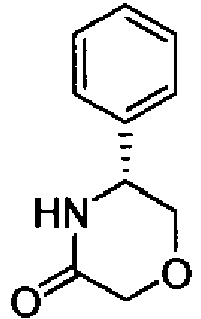
(R)-2-amino-2-phenylethanol - -

- (S)-5-Isopropylmorpholin-3-one (Intermediate 29, 2.8 g, 19.56 mmol) in THF (12 mL) was added dropwise over 20 min. to a solution of lithium aluminum hydride (2M in THF, 19.5 mL, 39.1 mmol) in THF (30 mL) at 0 °C. Following the addition, the ice bath was removed, and the reaction was heated to reflux for 18 h. The reaction was cooled in an ice bath and quenched with water (1.5 mL) and 2M aq. sodium hydroxide (3 mL). The resulting mixture was stirred at room temperature for 1 h and filtered. The solid was washed with ethyl acetate, and the organic solution was concentrated under vacuum to give product (2.13 g) as an oil. MS MH+=130.30
- The intermediates in the following Table were prepared by a method analogous to the method for preparing Intermediate 37 using the starting material indicated.
Intermed. Structure S.M. 38 
Intermediate 39 -

- 3-Chloro-4-(trifluoromethyl)aniline (1 g, 5.11 mmol) was dissolved in AcOH (72 ml) and concentrated HCl (12M) (19.6 ml). The reaction was cooled to 0 °C then sodium nitrite (0.353 g, 5.11 mmol) in H2O (5.2 ml) was added and the reaction mixture was stirred for 10 min at 0 °C then added slowly to a cold solution of AcOH/SO2/CuCl (175 ml). The reaction mixture turned bright green after the addition, then faded to a lighter colour after 1h. The reaction was left to stir over the weekend then concentrated in vacuo to a yellow crude oil which was taken up in EtOAc (300ml) and washed with H2O (2 x 300ml). The EtOAc layer was concentrated in vacuo and purified via normal phase chromatography on a biotage SP1 column 40+M with a gradient 5-20% EtOAc in heptane to yield the title compound as a light yellow oil (680mg, 43.8%). LCMS (R-SO3-) = 259.1
-

- The title compoud was prepared by a method analogous to the method used to prepare Intermediate 39 using 6-(trifluoromethyl)pyridin-3-amine as the starting material. LCMS (R-SO3-) = 226.2.
-
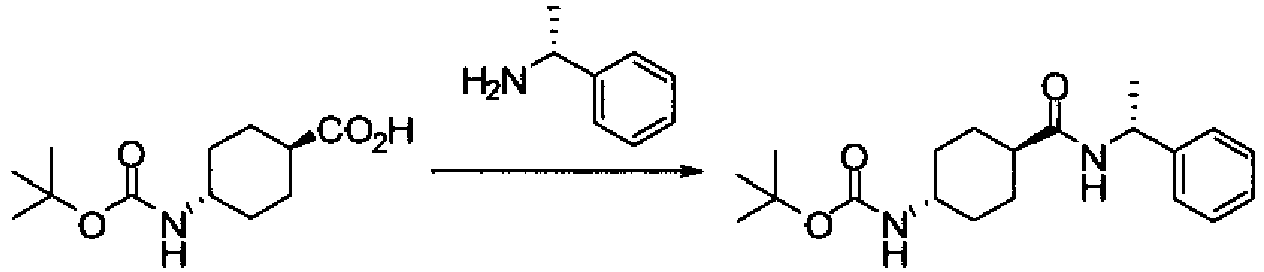
- Trans-4-tert-butoxycarbonylamino-cyclohexanecarboxylic acid (5g, 20.5mmol) was dissolved in THF, to which triethylamine (3mL) was added. The reaction mixture was cooled to 0 °C and a solution of isobutyl chloroformate (2.8g, 20.7 mmol) in THF was added dropwise. The resulting white suspension was stirred at room temperature for 30 min, after which a solution of (R)-1-phenylethanamine (2.9g, 20.5mmol) in THF was added dropwise. The reaction mixture was then stirred at room temperature for 4 h, after which LC-MS showed one major peak corresponding to desired product. The reaction mixture was concentrated, and the residue was diluted with water (250mL). The resulting white precipitate was filtered, washing with ether, to afford a dry white solid tert-butyl trans-4-((R)-1-phenylethylcarbamoyl)cyclohexylcarbamate (5.2g).
-

- Trans-4-(tert-Butoxycabonylamino)cyclohexanecarboxylic acid (10.2g, 42mmol), HATU (24g, 63mmol) and N,N-diisopropylethylamine (22ml, 126mmol) were dissolved in THF (350ml). The reaction mixture was stirred for 30 min at room temperature, then (R)-1-(4-Fluoro-phenyl)-ethylamine 6.3ml, 46mmol) was added. The reaction was stirred overnight at room temperature. LCMS indicated that the reaction was complete, and it was concentrated in vacuo. The concentrate was taken up in 1 M NaOH (500ml) and EtOAc (100ml) and was stirred for 1 hr. The precipitate that formed was collected by filtration and washed with 1 M NaOH : EtOAc (4:1) and dried to give the title compound as a white solid (14.8g, 97%). LCMS [M+H] = 365.3
- Intermediate 43 was prepared by a method analogous to the method of preparing Intermediate 42.
Intermed Structure S.M. MS MH+ 43 
(R)-1-(pyridin-3-yl)-ethanamine 348.2 -

- tert-Butyl trans-4-((R)-1-phenylethylcarbamoyl)cyclohexylcarbamate (Intermediate 41, 5.2g) was dissolved in DCM (50 mL) to which TFA was added. The resulting mixture was stirred for 45 min at room temperature. LC-MS of material showed one major peak which corresponded to desired product. The reaction mixture was then concentrated to give a clear oil. The oil was then dissolved in diethyl ether (200 mL) to which HCl (2M solution in ether) (20mL) was added. The resulting mixture was stirred at room temperature for 2 h, resulting in a white precipitate that was collected by filtration and washed with diethyl ether (4.1 g).
-

- tert-Butyl trans-4-((R)-1-(4-fluorophenyl)ethylcarbamoyl)cyclohexylcarbamate (Intermediate 42, 1.74g, 4.77mmol) was dissolved in DCM (45 ml) and TFA (5ml) was added. The reaction mixture was stirred overnight at room temperature. LCMS indicated that the reaction was complete and it was in vacuo. Crude material was dissolved in ether (200 ml), then 2M HCl (in ether, 20ml) were added, and the mixture was stirred at room temperature for 2 hr. The precipitate that formed was collected by filtration and washed with ether to afford the title compound as a white powder (1.24g, 87%). LCMS [M+H] = 265.3
-

- Intermediate 46 was prepared using a method analogous to the method used to prepare Intermediates 44 and 45 using Intermediate 43 as the starting material.
-

- A stirred suspension of (S)-phenylglycine methyl ester hydrochloride (30.0 g, 149.0 mmol) in anhydrous methylene chloride (300 mL) was cooled to 5 °C in an ice-water bath. Ammonia was bubbled through the suspension for ca. 10 minutes. The reaction mixture was stirred at room temperature for 20 minutes following which the suspension was filtered through a celite pad. The celite pad was washed with methylene chloride (2 X 100 mL). The combined filtrate was concentrated to afford a slightly cloudy oil. The oil was dissolved in anhydrous acetonitrile (250 mL) and to this was added Boc2O (35.7 g, 164 mmol). The reaction mixture warmed up slightly and some gas evolution was observed. The reaction mixture was stirred at room temperature for 30 minutes following which it was diluted with toluene (250 ml). The solvent was removed on the rotary evaporator to afford a sticky white crystalline solid. This was triturated with 10% EtOAc/Heptane (200 mL) and stirred overnight. The suspension was the filtered through a glass frit. The solid was washed with cold 10% EtOAc/heptane (2 X 50 mL) and then dried under house vacuum to afford a white solid (34.5 g, 87%).
-

- A solution of (S)-methyl 2-(tert-butoxycarbonylamino)-2-phenylacetate (Intermediate 47, 25.0 g, 94.0 mmol) in anhydrous THF (300 mL) was cooled to 0 °C in an ice bath under a nitrogen atmosphere. To this stirred, slightly cloudy solution was added dropwise via an addition funnel, MeMgBr (377.0 mL, 377.0 mmol). The reaction mixture was stirred at 0 °C for 10 minutes following which the cooling bath was removed, and the reaction mixture was stirrred at room temperature. After 3h, the reaction mixture was quenched with sat. aqueous NH4Cl solution (25 mL), and the resulting suspension was stirred at room temperature. The suspension was filtered through a celite pad which was subsequently washed with THF (3 X 50 mL). The combined filtrate was concentrated to afford a pale yellow solid. This solid was taken up in EtOAc (25 mL) and warmed to ca. 50 °C. Most of the solid dissolved. With vigorous agitation, heptane (250 mL) was added in a slow, steady stream via an addition funnel over 30 minutes. The resulting suspension was slowly cooled to room temperature and then further diluted with heptane (250 mL). The suspension was stirred at 0 °C for 3h, then filtered through a glass frit. The filtercake was broken and washed with cold 5% EtOAc/Heptane (2 X 100 mL). The solid was dried under vacuum to afford a white solid (18.0 g, 72%).
-

- To a stirred suspension (S)-tert-butyl 2-hydroxy-2-methyl-1-phenylpropylcarbamate (Intermediate 48, 17.0 g, 64.1 mmol) in toluene (85 mL) was added, conc. HCl (26.3 mL, 320.0 mmol). The reaction mixture was warmed to ca. 55 °C. Within minutes, the reaction mixture turned brown and the solid slowly went into solution. The biphasic solution was stirred at 55 °C for 2h following which the reaction mixture was concentrated to afford a brown solid. This was triturated with 5% isopropyl alcohol in ether (200 mL) and the suspension was stirred at room temperature overnight. The resulting suspension was filtered through a glass frit. The filtercake was broken and washed with ether (2 X 25 mL) and then dried under house vacuum to afford the product as an off-white solid (12.2 g, 94%).
-

- The preparation of (S)-1-amino-2-methyl-1-phenylpropan-2-ol from (S)-methyl 2-amino-2-phenylacetate was carried out according to the procedure for the preparation of this compound in Rikimaru, K., et al., Synthesis, 2004 (6), 909-917. MS MH+ 166.2
-

- AD Mix beta (Aldrich cat. No. 392766) (6.44 g, 4.60 mmol) was suspended in water (50 ml) and t- buOH (50 ml) and resulting slurry was cooled to 0°C. Trans-methyl beta styrene (Aldrich) (0.6 ml, 4.60 mmol) was then added directly and the reaction mixture was stirred at 0 °C for 6 hours with carefully monitoring of the temperature. TLC at this point showed 2 spots, one of which corresponded to the starting material (visible by UV, Rf 0.8 in 1:1 EtOAc/Hept). The other, more polar spot (visible by KMnO4, Rf 0.35 in 1:1 EtOAc/Hept) was weaker. Therefore, the reaction mixture was left to warm to room temperature overnight. TLC at this point showed only the more polar spot. The reaction mixture was quenched via addition of solid sodium sulfite (6g). Water was then added to dilute the solids at bottom of mixture. The pH of this solution was 14. The aqueous solution was extracted with EtOAc (x3). Combined organic layers were washed with brine, dried over MgSO4, fltered and concentrated to afford a clear mobile oil. This material was purified via Biotage automated flash column chromatography 40M, eluting with 10-100% EtOAc/Hept. Relevant fractions were pooled and concentrated to afford a clear, sticky oil, which was dried under high vacuum. Mass of dry material = 1.67g (quantitative yield plus solvent).
1H NMR (400 MHz, DMSO-d 6) δ ppm 0.82 (d, J=6.32 Hz, 3 H) 3.57 - 3.70 (m, J=6.28, 6.28, 6.28, 6.28, 4.42 Hz, 1 H) 4.28 (dd, J=6.19, 4.17 Hz, 1 H) 4.60 (d, J=4.29 Hz, 1 H) 5.17 (d, J=4.04 Hz, 1 H) 7.17 - 7.27 (m, 2 H) 7.27 - 7.38 (m, 3 H) -

- (1R,2R)-1-Phenylpropane-1,2-diol (Intermediate 51, 5.46 g, 35.9 mmol) was dissolved in triethylamine (15 ml, 108 mmol) and DCM (75ml). This mixture was cooled to 0°C. Thionyl chloride (3.93 ml, 53.8 mmol) in DCM (25ml) was then added dropwise, upon which addition the reaction mixture became a brown colour and there was vigorous with gas evolution. The mixture was stirred at 0°C for 45 mins. TLC in 1:1 heptane/EtOAc at this point showed another more non-polar spot than the starting material, therefore the reaction mixture was concentrated to remove majority of DCM, and the residue was partitioned between cold water and Et2O. The organic layer was washed with 1 M HCl, saturated NaHCO3 solution and brine, then dried over MgSO4, filtered and concentrated to afford a brown oil. This material was purified via Biotage automated flash column chromatography (330g column), eluting with 2-50% EtOAc/Heptane. Relevant fractions were pooled and concentrated to afford a brown mobile oil, which was dried under high vacuum. Mass of dry material was 6.98g (98% yield). Material was a 1:1 mix of diastereoisomers around the sulfoxide.
1H NMR (400 MHz, DMSO-d 6) δ ppm 1.44 (dd, J=12.00, 6.19 Hz, 3 H) 4.63 (dq, J=8.97, 6.19 Hz, 0.5 H) 4.76 - 4.88 (m, 0.5 H) 5.23 (d, J=9.60 Hz, 0.5 H) 5.60 (d, J=9.09 Hz, 0.5 H) 7.42 - 7.51 (m, 3 H) 7.53 - 7.57 (m, 2 H) -
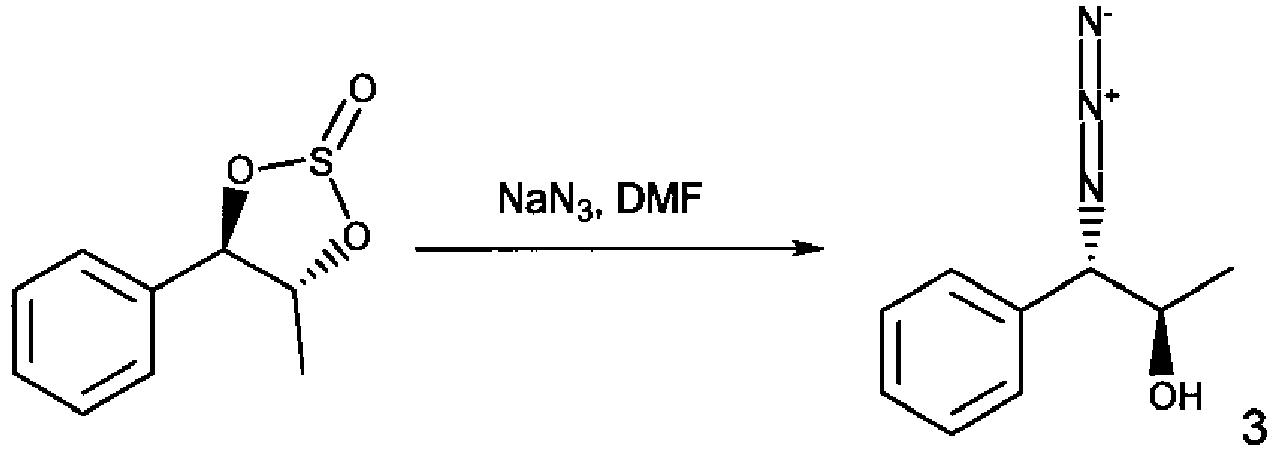
- Intermediate 52 (1.57 g, 7.92 mmol) was dissolved in DMF and solid sodium azide (2.059 g, 31.7 mmol) was added. The reaction mixture was heated at 80 °C for 6h. TLC showed 2 spots, one of which corresponded to the starting material and another more polar spot. The reaction mixture was poured into water and extracted with Et2O (x3). The combined organic layers were washed with brine, dried over MgSO4, filtered and concentrated to afford a yellow oil, which was stored in the fridge overnight. The oil was purified via Biotage automated flash column chromatography 40M, eluting with 10-100% EtOAc/Heptane. Relevant fractions were pooled and concentrated to afford a clear oil, which was dried under high vacuum. Mass of dry material was 1.26g (90% yield).
1H NMR (400 MHz, CHLOROFORM-d) δ ppm 1.21 (d, J=6.32 Hz, 3 H) 1.71 (s, 1H) 3.96 - 4.04 (m, 1 H) 4.50 (d, J=5.81 Hz, 1 H) 7.35 - 7.46 (m, 5 H) -

- (1S,2R)-1-Azido-1-phenylpropan-2-ol (Intermediate 53, 132 mg, 0.745 mmol) was dissolved in MeOH (5 ml), to which Boc2O (0.346 ml, 1.490 mmol) was added. The reaction mixture was stirred at room temperature for 5 mins, after it was flushed with N2. Pd/C (50 mg, 0.470 mmol) was then added and reaction mixture was flushed with N2 once more, then placed under a balloon of H2 and stirred vigorously overnight. LC-MS at this point showed one major peak corresponding to desired product. Therefore, the reaction mixture was filtered through a syringe filter and filtrate was concentrated to afford a clear oil, which started to solidify. This material was purified via Biotage automated flash column chromatography 12M, eluting with 10-100% EtOAc/Heptane. Relevant fractions were pooled and concentrated to afford a fluffy white solid, which was dried under high vacuum. Mass of dry material = 134mg (71% yield).
1H NMR (400 MHz, DMSO-d 6) δ ppm 1.44 (dd, J=12.00, 6.19 Hz, 3 H) 4.63 (dq, J=8.97, 6.19 Hz, 0.5 H) 4.76 - 4.88 (m, 0.5 H) 5.23 (d, J=9.60 Hz, 0.5 H) 5.60 (d, J=9.09 Hz, 0.5 H) 7.42 - 7.51 (m, 3 H) 7.53 - 7.57 (m, 2 H) t-butyl group is in a rotameric relationship with peak at 4.32 which has proportional peak to its right as weak multiplet at 4.15 but is integrated as 1 with 4.32 multiplet. -

- tert-Butyl (1S,2R)-2-hydroxy-1-phenylpropylcarbamate (Intermediate 54,134 mg, 0.533 mmol) was dissolved in DCM (5 ml), to which TFA (1ml), 12.98 mmol) was added. The reaction mixture was stirred at room temperature for 30 mins, after which LC-MS showed one major peak corresponding to desired product. The reaction mixture was therefore concentrated and the residue was dried under high vacuum to remove majority of TFA. The resulting oil was dissolved in THF (5 ml), to which an HCl solution (2M in ether) (1 ml, 32.9 mmol) was added. No precipitation occurred, therefore the mixture was concentrated to afford a white solid. This material was dried under high vacuum and then dissolved in water and lyopholized. Mass of dry material was 63 mg (63% yield).
1H NMR (400 MHz, DMSO-d 6) δ ppm 0.93 (d, J=6.06 Hz, 3 H) 4.16 (d, J=4.80 Hz, 2 H) 5.38 (br. s., 1 H) 7.34 - 7.52 (m, 5 H) 8.65 (br. s., 2 H) -

- (1r,4r)-4-(tert-Butoxycarbonylamino)cyclohexanecarboxylic acid (25g, 103mmol) was dissolved in MeOH (250ml), to which 2,2-dimethoxypropane (10.70g, 12.63ml, 103mmol) and then 2M HCl in ether (51ml, 103mmol) were added. The reaction mixture was stirred at room temperature overnight, then concentrated and the residue was treated with ether (100 ml). The resulting white suspension was filtered then dried to afford a white powder (16.8g, 84% yield).
1H NMR (400 MHz, DMSO-d 6) δ ppm 1.31 - 1.42 (m, 4 H) 1.89 - 2.01 (m, 4 H) 2.20 - 2.31 (m, 1 H) 2.95 (br. s., 1 H) 3.59 (s, 3 H) 8.13 (br. s., 2 H) -

- (1r,4r)-Methyl 4-aminocyclohexanecarboxylate (Intermediate 56, 9.5g, 49mmol) was dissolved in DCM (100ml), to which, DIPEA (21.42ml, 15.85g, 123mmol) was added. The reaction mixture was stirred for five minutes then 4-(trifluoromethyl)benzene-1-sulfonyl chloride (12g, 49mmol) was then added, and the mixture was stirred at room temperature for 2 hrs, then concentrated to remove the DCM. 1M HCl was then added and the reaction mixture was extracted with EtOAc. The organic layer was washed with saturated NaHCO3, brine, dried over MgSO4 filtered and concentrated to afford a light yellow solid (15.4g - 86% yield).
1H NMR (400 MHz, DMSO-d 6) δ ppm 1.14 (d, J=3.28 Hz, 1 H) 1.16 - 1.24 (m, 2 H) 1.25 - 1.35 (m, 1 H) 1.65 (dd, J=12.88, 2.78 Hz, 2 H) 1.79 (d, J=2.53 Hz, 1 H) 1.82 (br. s., 1 H) 2.18- 2.33 (tt, J=11.62, 3.54 Hz, 1 H) 2.92 - 3.05 (m, J=11.01, 11.01, 7.36, 3.88, 3.88 Hz, 1 H) 3.49 - 3.60 (m, 3 H) 7.94 - 8.06 (m, 5 H) -

1H NMR (400 MHz, DMSO-d 6) δ ppm 1.14 - 1.24 (m, 2 H) 1.26 (d, J=2.78 Hz, 1 H) 1.30 (d, J=2.78 Hz, 1 H) 1.55 - 1.66 (m, 2 H) 1.73 - 1.85 (m, 2 H) 2.00 - 2.11 (m, 1 H) 2.91 - 3.03 (m, J=10.91, 10.91, 7.23, 3.79, 3.79 Hz, 1 H) 7.93 - 8.06 (m, 5 H) 12.04 (br. s., 1H) -
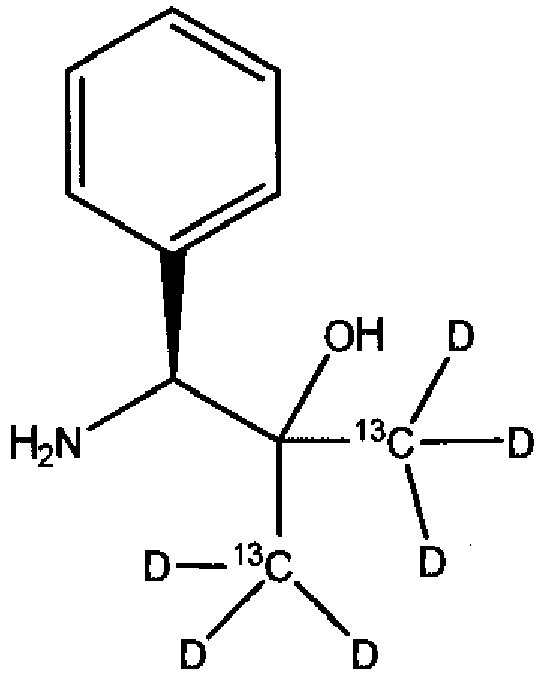
- Isotopically labelled (S)-1-Amino-2-methyl-1-phenylpropan-2-ol was prepared by a method analogous to the method used to prepare Intermediate 50 using the corresponding isotopically labelled starting material. MS MH+ 174.3
-

- (R)-3-amino-3-phenylpropan-1-ol (500mg, 2.66 mmol) and Et3N (741 ul, 5.32 mmol) was dissolved in DCM (15ml). Di-tert-butyl dicarbonate was added and the reaction mixture was stirred overnight at RT. When the reaction was complete as indicated by LCMS, it was concentrated in vacuo, and purified via column chromatography using a biotage SP1 25 + S column with a gradient 50% EtOAc in heptane calculated from TLC. Product fractions were combined and concentrated to give the title compound as a clear oil (578mg, 87%). LCMS = [M+H] = 252.29
-

- (R)-tert-Butyl 3-hydroxy-1-phenylpropylcarbamate (Intermediate 60, 258mg, 1.03mmol) was dissolved in THF under nitrogen at 0 °C. NaH was added and the reaction mixture was stirred at 0 °C for 10 min. Mel was added and the reaction mixture was stirred at room temperature for 30 min. then quenched with sat. aq. Na2SO4 and extracted with Et2O. The organic layer was dried over MgSO4, filtered and concentrated in vacuo. The crude material was purified via column chromatography using a biotage SP1 25 + M column with a gradient 50% EtOAc in heptane calculated from TLC. Product fractions were combined and concentrated to give the title compound as a white solid (78mg, 29%). LCMS = [M+H] = 266
-

- (R)-tert-Butyl 3-methoxy-1-phenylpropylcarbamate (Intermediate 61, 78mg, 0.294mmol) was dissolved in DCM (4.5 ml) and TFA (0.5ml) was added. The reaction mixture was stirred for 1 h at room temperature when LCMS indicated that the reaction was complete. The reaction mixture was concentrated in vacuo, and the crude product was taken onto next step without further purification (0.294mmol). LCMS [M+H] = 166
-

- HCl in dioxane (4M, 61.1 mL) was added to a solution of 3-(4-bromophenyl)propanoic acid in methanol (60 mL) at room temperature. The reaction was stirred 18 h and then concentrated under vacuum. The crude product was purified by flash chromatography on silica gel using a 0-50% ethyl acetate-n-heptane gradient to afford 5.1 g of product as a colorless oil.
-
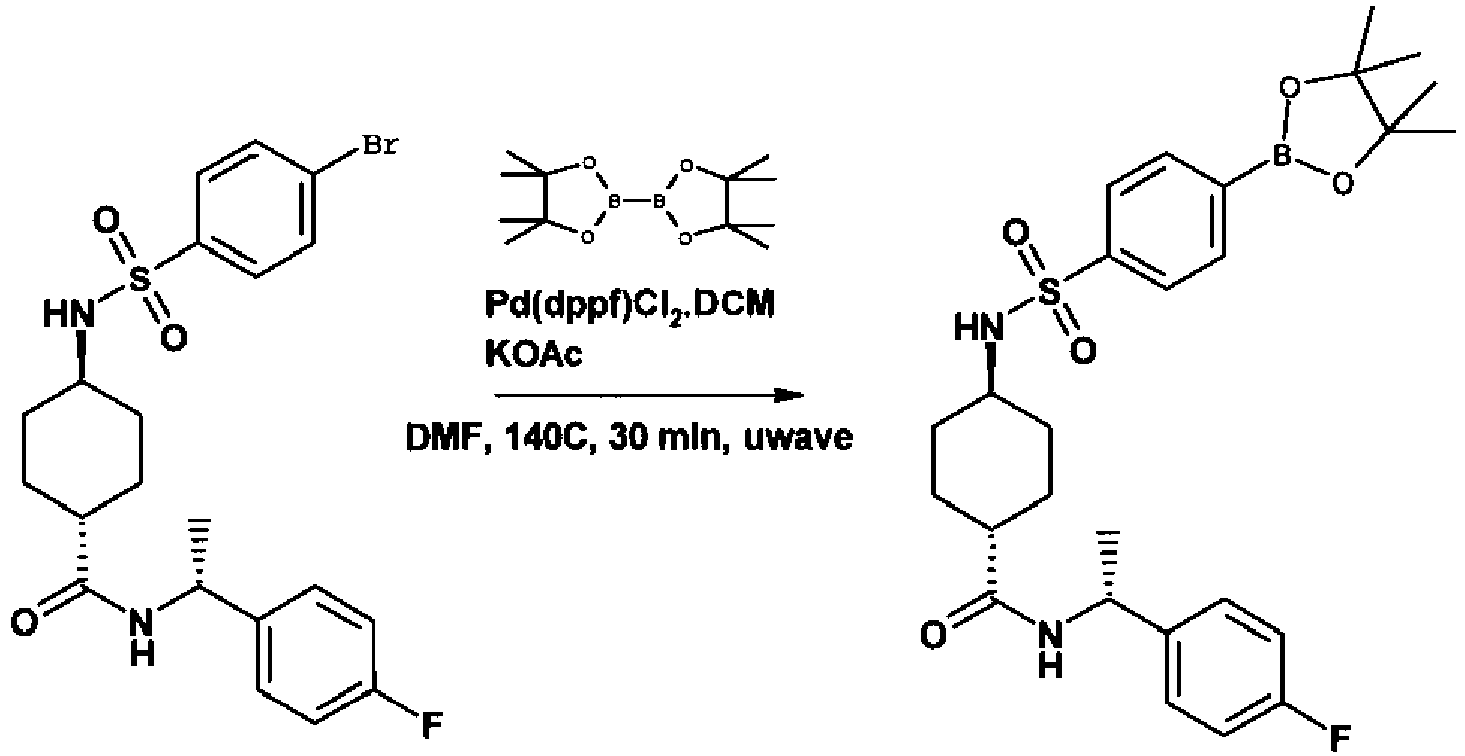
- Trans-4-(4-Bromo-benzenesuifonyfamino)-cyclohexanecarboxylic acid [(R)-1-(4-fluoro-phenyl)-ethyl]-amide (Example 115, 100mg, 0.206mmol), Pd(dppf)Cl2.DCM (8.5mg, 0.01mmol), potassium acetate (61mg, 0.618mmol) and 4,4,5,5,4',4',5',5'-octamethyl-[2,2']bi[[1,3,2]dioxaborolanyl] (54mg, 0.207mmol) were dissolved in DMF (2-3ml) under N2 and the mixture was microwaved at 140 °C for 30 min., after which LCMS indicated that the reaction was complete. The crude reaction mixture was taken onto next step with assumption of 100% conversion to desired product (0.206mmol).
-

- 4-Hydroxy cyclohexane carboxylic acid ethyl ester (Aldrich) (10 g, 58.1 mmol) was dissolved in DMF (75 ml) to which t-butyldimethylsilyl chloride (TBSCI, 9.63 g, 63.9 mmol) and then imidazole (4.74 g, 69.7 mmol) were added as solids in portions. The reaction mixture was stirred at room temperature overnight, then poured into water and extracted with EtOAc (x2). The combined organics were washed with brine and then dried over MgSO4, filtered and concentrated to afford a clear oil. This material was purified via flash column chromatography 65i, eluting with 2-20% EtOAc/Hept. Relevant fractions were pooled and concentrated to afford a clear oil, which was dried under high vacuum overnight.
Mass of dry material = 2.34g (14% yield).
1H NMR (400 MHz, DMSO-d 6) δ ppm -0.04 - 0.05 (m, 9 H) 0.77 - 0.89 (m, 13 H) 1.07 - 1.17 (m, 5 H) 1.18 - 1.28 (m, 1 H) 1.29 - 1.41 (m, 1 H) 1.43 - 1.56 (m, 6 H) 1.68 - 1.85 (m, 4 H) 2.19 (tt, J=11.37, 3.60 Hz, 0.5 H) 2.30 (tt, J=9.92, 3.66 Hz, 1 H) 3.48 - 3.60 (m, 0.5 H) 3.80 - 3.90 (m, 1 H) 3.96 - 4.06 (m, 3 H) (unknown mixture of cis and trans isomers) -

- Diisopropylamine (2.91 ml, 20.42 mmol) was dissolved in THF (20ml) and cooled to - 78°C under N2. An nBuLi (2.7M in Hexane) (7.56 ml, 20.42 mmol) solution was then added slowly and the resulting LDA solution was stirred at -78°C for 10 mins. A solution of (1r,4r)-ethyl 4-(2,3,3-trimethylbutan-2-yloxy)cyclohexanecarboxylate (Intermediate 65, 2.34 g, 8.17 mmol) in THF (30ml) was then added fast dropwise and the reaction mixture was stirred at -78°C for 1 hour. Mel (1.788 ml, 28.6 mmol) was then added directly via syringe and the reaction mixture was allowed to warm to room temperature overnight, then quenched by adding it to a saturated ammonium chloride solution. The resulting mixture was extracted with EtOAc (x2). The combined organics were washed with brine, dried over MgSO4, filtered and concentrated to afford a pink oil, which was dried under high vacuum for 1h. Mass of dry material was 1.32g (53% yield).
1 H NMR (400 MHz, DMSO-d 6) δ ppm -0.06 - 0.05 (m, 8 H) 0.77 - 0.89 (m, 11 H) 1.03 - 1.10 (m, 4 H) 1.13 - 1.23 (m, 8 H) 1.39 - 1.56 (m, 1 H) 1.65 (t, J=3.92 Hz, 1 H) 1.96 (br. s., 0.5 H) 2.00 (t, J=3.92 Hz, 2 H) 3.62 (br. s., 1 H) 3.75 - 3.81 (m, 0.5 H) 4.07 (q, J=7.16 Hz, 3 H) (unknown mixture of cis and trans isomers)
LCMS [M+H] = 301.3 -

- Ethyl 4-(tert-butyldimethylsilyloxy)-1-methylcyclohexanecarboxylate (Intermediate 66, 1.32 g, 4.39 mmol) was dissolved in THF (25 ml), to which tetrabutylammonium fluoride (TBAF, 1 M solution in THF) (7.34 ml, 7.34 mmol) was added. The reaction mixture was stirred at room temperature overnight, then concentrated and the residue was partitioned between EtOAc/water. The aqueous layer was back extracted and combined organics were dried over MgSO4, filtered and concentrated to afford a brown oil. This material was purified via flash column chromatography, eluting with 2-50% EtOAc/Hept. Relevant fractions were pooled and concentrated to afford a clear oil - 797mg (97% yield).
1H NMR (400 MHz, DMSO-d 6) δ ppm 1.06 (s, 3 H) 1.18 (t, J=7.07 Hz, 3 H) 1.12 - 1.20 (m, 2 H) 1.21 - 1.32 (m, 2 H) 1.61 - 1.73 (m, 2 H) 1.96 - 2.06 (m, 2 H) 3.36 (dt, J=9.47, 4.74 Hz, 1 H) 4.08 (q, J=7.07 Hz, 2 H) 4.45 (br. s., 1 H)
LCMS [M+H] = 187.4 -
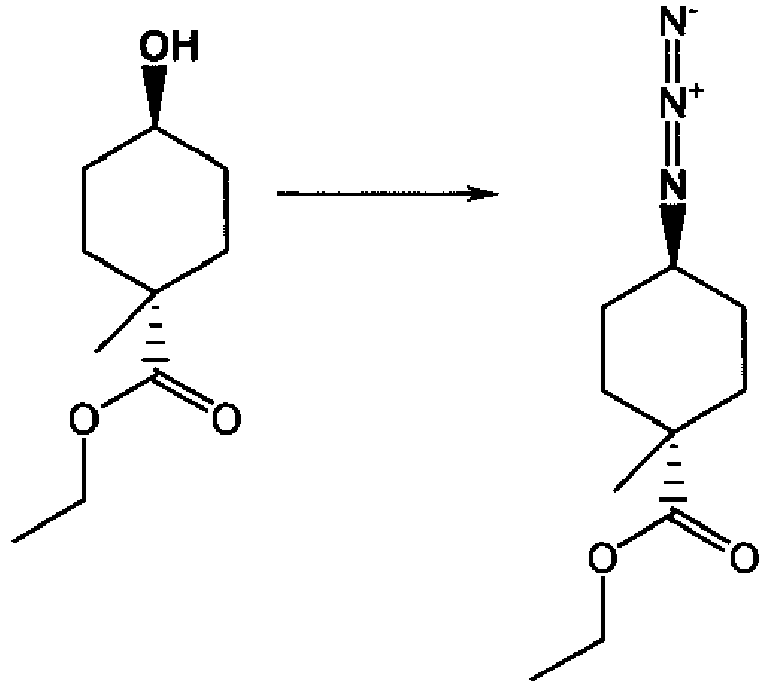
- Ethyl 4-hydroxy-1-methylcyclohexanecarboxylate (Intermediate 67, 272 mg, 1.460 mmol) was dissolved in THF (10ml), to which triphenylphosphine (804 mg, 3.07 mmol), DIAD (0.596 ml, 3.07 mmol) and a solution of diphenylphosphoryl azide (DPPA, 844 mg, 3.07 mmol) in THF (10ml) were added. The reaction mixture was heated at 40°C overnight, then concentrated and purified directly via flash column chromatography, eluting with 10-50% EtOAc/Hept. Relevant fractions were pooled and concentrated to afford a yellow/orange oil = 153mg (50% yield).
1H NMR (400 MHz, CHLOROFORM-d) δ ppm 1.21 (s, 3 H) 1.27 (t, J=7.07 Hz, 3 H) 1.54 - 1.63 (m, 2 H) 1.64 - 1.78 (m, 4 H) 1.89 (d, J=4.04 Hz, 1 H) 1.93 (dd, J=11.87, 5.31 Hz,
1 H) 3.63 (d, J=3.54 Hz, 1 H) 4.16 (q, J=7.07 Hz, 2 H) -

- (1 r,4r)-Ethyl 4-azido-1-methylcyclohexanecarboxylate (Intermediate 68, 1 g, 4.73 mmol) was suspended in MeOH (50 ml) and 1M HCl (15 ml), to which Pd/C (500 mg, 4.70 mmol) was then added. The reaction mixture was flushed with N2 and then stirred vigourously under a balloon of H2 for 2h. After 2 h, the reaction mixture was filtered through a syringe filter and the filtrate was concentrated to remove majority of the MeOH. Remaining water was frozen and lyopholized to a sticky pink solid having a mass of 949mg (90% yield).
1H NMR (400 MHz, DMSO-d 6) δ ppm 1.12 - 1.15 (m, 3 H) 1.17 (t, J=7.07 Hz, 3 H) 1.56 - 1.71 (m, 2 H) 1.65 (d, J=7.71 Hz, 4 H) 1.75 - 1.79 (m, 2 H) 3.02 (br. s., 1 H) 4.07 (q, J=7.16 Hz, 2 H) 8.20 (br. s., 2 H) -
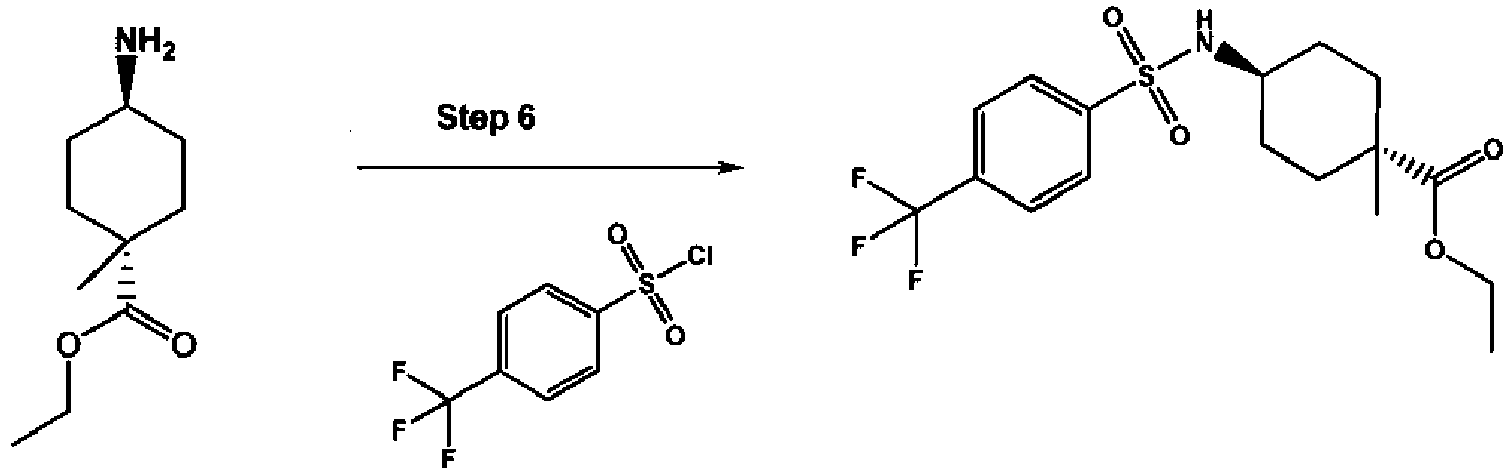
- (1r,4r)-Ethyl 4-amino-1-methylcyclohexanecarboxylate (Intermediate 69, 949 mg, 4.28 mmol) was suspended in DCM (50ml), to which DIPEA (2.243 ml, 12.84 mmol) was added. A solution of p-trifluoromethylbenzene sulfonyl chloride (Oakwood) (1047 mg, 4.28 mmol) in DCM (50ml) was added. The reaction mixture was stirred at room temperature overnight, then concentrated and residue was adsorbed onto silica and purified via flash column chromatography, eluting with 10-100% EtOAc/Hept. Relevant fractions were pooled and concentrated to afford a clear oily sticky solid, which was dried under high vacuum. Mass of dry material was 738mg (44% yield).
1H NMR (400 MHz, DMSO-d 6) δ ppm 1.07 (s, 3 H) 1.13 (t, J=7.07 Hz, 3 H) 1.31 - 1.53 (m, 6 H) 1.58 - 1.68 (m, 2 H) 3.11 (d, J=7.58 Hz, 1 H) 4.02 (q, J=7.16 Hz, 2 H) 7.94 - 8.07 (m, 5 H) -

- (1r,4r)-Ethyl 1-methyl-4-(4-(trifluoromethyl)phenylsulfonamido)cyclohexancarboxylate (Intermediate 70, 738 mg, 1.876 mmol) was dissolved in EtOH (5 ml), to which NaOH (1 M solution) (9.38 ml, 9.38 mmol) was added. The reaction mixture was heated at 50°C overnight, then concentrated, and the residue was acidified to pH 1 via addition of 1 M HCl. The aqueous mixture was extracted with EtOAc (x2), and the combined organics were dried over MgSO4, filtered and concentrated to afford a white solid (603mg - 88% yield).
1H NMR (400 MHz, DMSO-d 6) δ ppm 1.06 (s, 3 H) 1.36 (t, J=8.53 Hz, 1 H) 1.30- 1.39 (m, 1 H) 1.40 (br. s., 1 H) 1.40 - 1.50 (m, 4 H) 1.55 - 1.66 (m, 1 H) 3.11 (dt, J=7.36, 3.58 Hz, 1 H) 7.90 - 8.05 (m, 5 H) 12.13 (br. s., 1 H) -

- Ethyl 4-hydroxy-1-methylcyclohexanecarboxylate (Intermediate 67, 930 mg, 4.99 mmol), triphenylphosphine (3.143g, 11.98 mmol), and phthalimide (882 mg, 5.99 mmol) were dissolved in 60 mL of THF. DIAD (2.33 mL, 11.98 mmol) was then added and the reaction mixture was stirred overnight at room temperature. The mixture was concentrated under vacuum, and the residue was chromatographed on silica gel using an ethyl acetate/heptane gradient. The title compound (1g) was obtained as a clear oil.
LCMS [M+H] = 316.3 -

- The title compound was prepared by a method analogous to the method used to prepare Intermediate 72 using ethyl 1-allyl-4-hydroxycyclohexanecarboxylate (Intermediate 99) as the starting material.
-
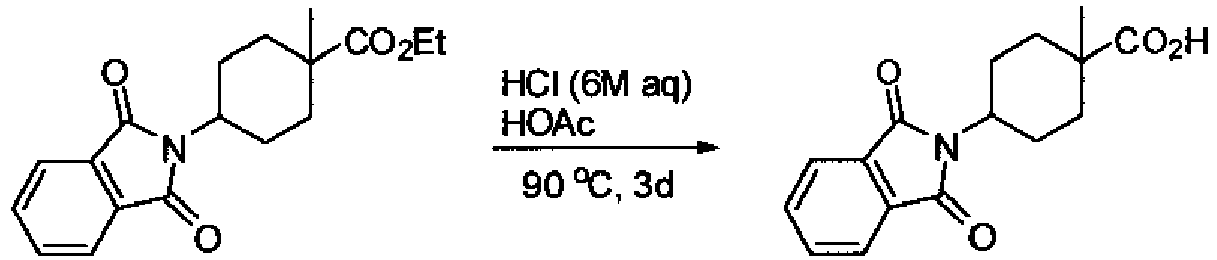
- Ethyl 4-(1,3-dioxoisoindolin-2-yl)-1-methylcyclohexanecarboxylate (Intermediate 72, 900 mg, 2.85 mmol) was added to 6M aq. hydrochloric acid (0.951 mL, 5.71 mmol) in acetic acid (5 mL). The reaction mixture was heated to 90 °C for 48h and then concentrated under vacuum. The residue was taken up in a minimal volume of ethyl acetate and a white solid precipitated. The solid was collected by filtration, washed with acetonitrile and dried to provide the product acid (475 mg) as a white solid. LCMS [M-H] = 286.3
-

- 4-(1,3-Dioxoisoindolin-2-yl)-1-methylcyclohexanecarboxylic acid (Intermediate 74, 220 mg, 0.786 mmol) was dissolved in DCM (5 mL), and oxalyl chloride (146 mg, 0.1 mL, 1.149 mmol) was added slowly, followed by addition of a drop of DMF. The mixture was stirred at room temperature for 20 min, then concentrated under vacuum to provide the product as a yellow solid that was used as is in the next step.
-

- (R)-1-(4-Fluorophenyl)ethylamine (0.335 ml, 2.477 mmol) and Hunig's Base (1.442 ml, 8.26 mmol) were dissolved in DCM (10 ml). The mixture was stirred for 10 min, then 4-(1,3-dioxoisoindolin-2-yl)-1-methylcyclohexanecarbonyl chloride (Intermediate 69, 505 mg, 1.652 mmol) in DCM was added. The reaction mixture was stirred at room temperature for 24 hr. LCMS indicated that the reaction was complete. Therefore, the mixture was washed with H2O, brine and DCM concentrated in vacuo. Crude material purified via normal phase chromatography on SP1 Biotage, column 40+S, with calculated TLC conditions of 40% EtOAc in heptane to yield the product as a white solid (345mg, 51%). LCMS [M+H] = 409.2
-

- Hydrazine (0.207 ml, 4.22 mmol) was added to a solution of (R)-4-(1,2-dioxoisoindolin-2-yl)-N-(1-(4-fluorophenyl)ethyl)-methylcyclohexancarboxamide (Intermediate 76, 345mg, 0.845 mmol) in EtOH (50 ml) and the reaction mixture was refluxed 80 °C. under N2 for 24 hr. LCMS indicated that the reaction was complete and the mixture was cooled to room temperature. A white solid crashed out on cooling. The mixture was concentrated in vacuo to a white solid, and the crude material was taken up in DCM and filtered through sinter funnel. The white solid was washed with DCM multiple times to yield the product as a creamy white solid (213mg, 91%). LCMS [M-H] = 277.4
-
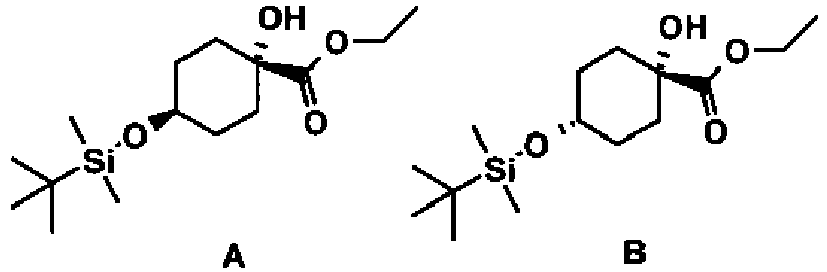
- An enolate of ethyl 4-(tert-butyldimethylsilyloxy)cyclohexanecarboxylate (2.5g) was prepared as described in the procedure for preparing Intermediate 66, followed by treatment with (1R)-(-)-(10)-(camphorylsulfonyl)oxaziridine (3.0g) per conditions described in Franklin Davis, et al. J.Am.Chem.Soc. 1990, 112, 6679; Tet. Lett. 1990, 31(47), 6823. Chromatography using gradient elution 0-10% ethyl acetate in heptane yielded a 3:2 mixture (A:B) of diastereomers (58%). MS MH+ 303.4
-

- 4-(tert-Butyl-dimethyl-silanyloxy)-1-hydroxy-cyclohexanecarboxylic acid ethyl ester (Intermediate 78, 1.35g) was hydrolyzed to an acid by adding it to 45 ml of a solution of 1 M LiOH in 1:1 THF:MeOH: at room temperature. The pH was adjusted to 3 and the mixture was extracted with ethyl acetate. The organic layer was dried over sodium sulfate, filtered, and concentrated to give the title compound. MS MH+ 275.4
-

- 4-(tert-Butyl-dimethyl-silanyloxy)-1-hydroxy-cyclohexanecarboxylic acid (Intermediate 79, 1.15g) and with (R)-1-(4-Fluoro-phenyl)-ethylamine (640mg) were coupled using the standard HATU coupling procedure as described in Example 1 to yield a 3:2 mixture (A:B) of diastereomers the title compound (44%).
-
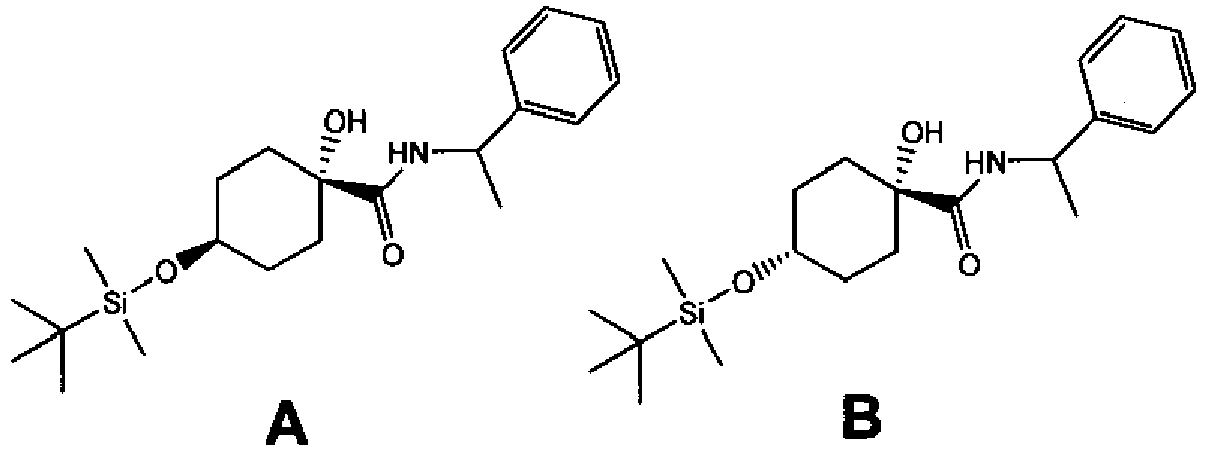
- Intermediate 81 can be prepared by a method analogous to the method used to prepare intermediate 80 from Intermediate 79 using 1-phenyl-ethylamine as the starting material.
-

- 4-(tert-Butyl-dimethyl-silanyloxy)-1-hydroxy-cyclohexanecarboxylic acid [(R)-1-(4-fluoro-phenyl)-ethyl]-amide (Intermediate 80, 700mg) was treated with 1.0M TBAF in THF (3.0ml) for 16 hours. The reaction was concentrated to reduce the volume of THF, then diluted with ethyl acetate. The organic layer was washed once with water followed by brine, then filtered and dried over sodium sulfate. The resulting residue was suspended in a minimum of dichloromethane and the resulting precipitate was isolated by filtration to yield a single diastereomer of 1,4-dihydroxy-cyclohexanecarboxylic acid [(R)-1-(4-fluoro-phenyl)-ethyl]-amide (132mg). MS MH+ 282.4
- Stereochemistry was assigned based on NMR. H-1 did not demonstrate axial J-coupling therefore, it must be in the equatorial position. ROESY demonstrated a through space correlation from H-10 to axial H-2/H-6 indicating that the hydroxyl group is axial.
-

- (1,4-Dihydroxy-N-(1-phenylethyl)cyclohexanecarboxamide can be prepared by a method analogous to the method used to prepare Intermediate 82 using Intermediate 81 instead of Intermediate 72 as the starting material.
-

- 4-(Trifluoromethyl)benzene-1-sulfonyl chloride (1gm) was coupled to benzylamine using conditions analogous to those used to prepare intermediate 1. Purification by chromatography yielded N-benzyl-4-(trifluoromethyl)benzenesulfonamide (770mg). Rf = 0.38 by TLC eluting with 30% ethyl acetate in heptane. MS MH+ 316.2
-
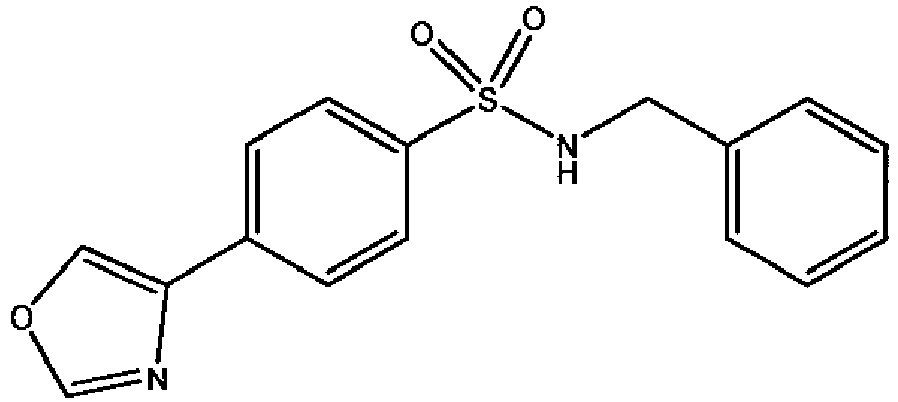
- N-Benzyl-4-(oxazol-4-yl)benzenesulfonamide can be prepared by a method analogous to the method used to prepare Intermediate 84 using Intermediate 26 as the starting material.
-

- A solution on N-benzyl-4-(trifluoromethyl)benzenesulfonamide (Intermediate 84, 768 mg) in THF (8ml) at 0°C was treated with di-tert-butyl dicarbonate (877mg) followed by 4-dimethylaminopyridine (45mg). The ice/water bath was removed and solution stirred 18 hours. The volatiles were removed and crude chromatographed in 20-100% ethyl acetate in heptane to afford the title compound (990mg). MS MH+ 360.2 (minus Boc fragment).
-
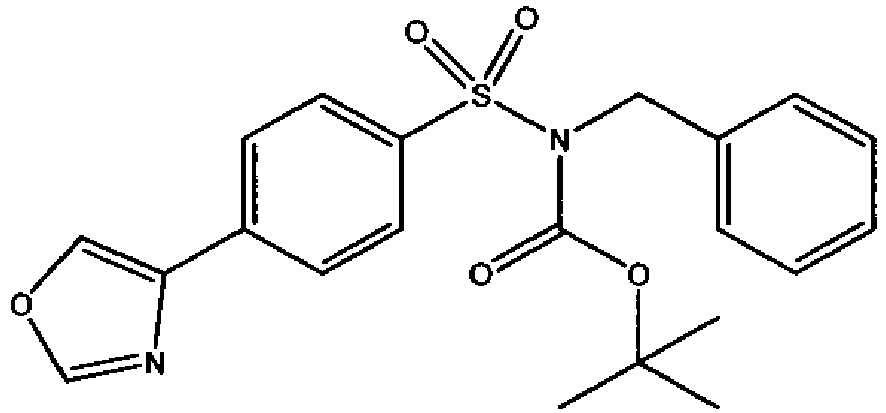
- tert-Butyl benzyl(4-(oxazol-4-yl)phenylsulfonyl)carbamate can be prepared by a method analogous to the method used to prepare Intermediate 86 using Intermediate 85 as the starting material.
-

- tert-Butyl 4-(trifluoromethyl)phenylsulfonylcarbamate was prepared by a method analogous to the method disclosed in Tet. Lett. 2004, 45, 8483-8487. tert-Butyl benzyl(4-(trifluoromethyl)phenylsulfonyl)carbamate (Intermediate 86, 520mg) was hydrogenated (1 atm H2) over 20 wt% Pd(OH)2 (52 mg) in 1:1:1 methanol:ethanol:ethyl acetate (8 ml) for 16 hours. The reaction was filtered over celite and concentrated to yield the title compound (407mg). MS M-H 324.3
-

- tert-Butyl 4-(oxazol-4-yl)phenylsulfonylcarbamate can be prepared by a method analogous to the method used to prepare Intermediate 88 using Intermediate 87 as the starting material.
-
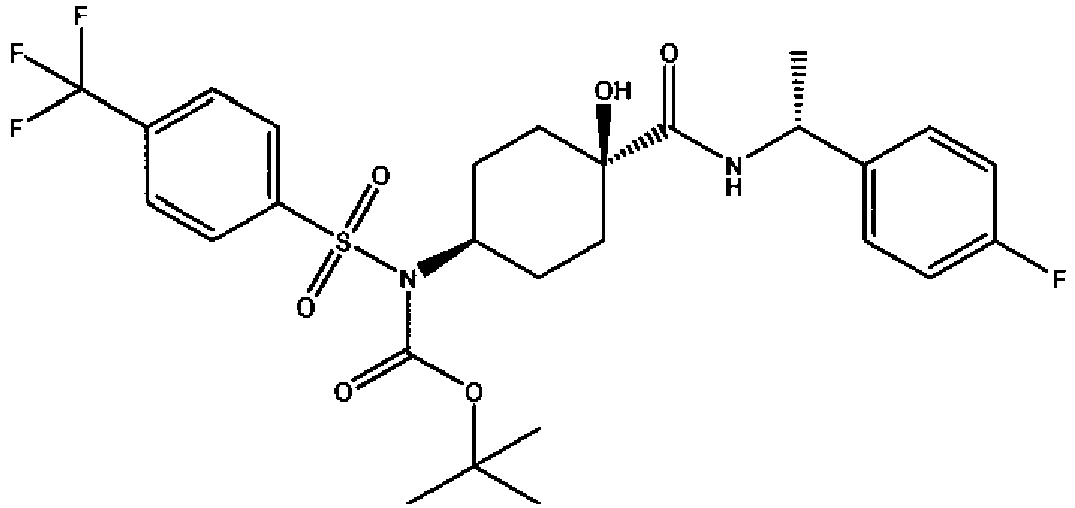
- Triphenylphosphine (79 mg) then diethyl azodicarboxylate (DEAD), 40 wt% in toluene (131 mg) were added to room slurry of tert-butyl 4-(trifluoromethyl)phenylsulfonyl-carbamate (intermediate 88, 75mg) and 1,4-dihydroxy-cyclohexanecarboxylic acid [(R)-1-(4-fluoro-phenyl)-ethyl]-amide (Intermediate 82, 65mg), and the reaction was stirred 16 hours. The reaction was concentrated and chromatographed with gradient elution 20-100% ethyl acetate in heptane to yield mixed fractions containing the desired product (55mg). The crude was suspended in 2.0 mL 10% water in acetonitrile and subject to reverse-phase 25-100% AcCN in water on Phenomenx Gemini Axia C18 30x100mm over a 12 minute run. Desired fractions were lyophilized to yield the title compound (4mg). MS M-H 586.96
-

- Acetic acid (0.107 ml, 1.87 mmol) then alpha-methyl benzyl isocyanide (0.248 g, 1.87 mmol) were added to a solution of (4-oxo-cyclohexyl)-carbamic acid tert-butyl ester (0.400g, 1.87 mmol) in dichloromethane (18.7ml) and the mixture was stirred 3 days at ambient temperature. [per Osipova, et al, Synthesis (2007) 131, compound 15j ] Volatiles removed and the residue was chromatographed on normal phase Biotage using 20% ethyl acetate in heptane to yield acetic acid 4-tert-butoxycarbonylamino-1-(1-phenyl-ethylcarbamoyl)-cyclohexyl ester (390mg) LCMS M+H = 405.3.
-

- Step 1: 5N Sodium hydroxide (2.86 ml) was added to a solution of 4-(tert-Butoxycarbonylamino)-1-(phenylethylcarbamoyl)cyclo-hexyl acetate (Intermediate 91, 390mg) in methanol (5 ml). When the reaction was judged to be complete by LCMS, it was quenched to pH 7 with 1 N HCl then extracted with ethyl acetate. The organics were dried over over sodium sulfate, filtered and concentrated to 328mg of a crude solid. The major spot had an Rf = 0.36 by TLC using 50% ethyl acetate in heptane. The crude product was used in the next step without further purification. LCMS M+H = 363.1.
- Step 2: Trifluoroacetic acid (1.5ml) was added to a solution of crude [4-hydroxy-4-(1-phenyl-ethylcarbamoyl)-cyclohexyl]-carbamic acid tert-butyl ester (320 mg) in dichloromethane (6.0 ml). The reaction was judged to be complete by LCMS in less than 90 minutes. The reaction was diluted with dichloromethane and quenched to pH 12 using 5N sodium hydroxide. The crude product was extracted with two volumes of dichloromethane, dried over sodium sulfate, filtered and concentrated to 4-amino-1-hydroxy-cyclohexanecarboxylic acid (1-phenyl-ethyl)-amide (210 mg). LCMS M+H = 263.2.
-

- 1-(tert-Butoxycarbonylamino)-4-oxocyclohexanecarboxylic acid (750mg) was coupled with (R)-1-(4-fluorophenyl)ethanamine using the HATU procedure as described in Example 1. The crude was chromatographed with gradient elution 15-80% ethyl acetate in heptane to yield the title compound (900mg). MS MH+ 379.3
-
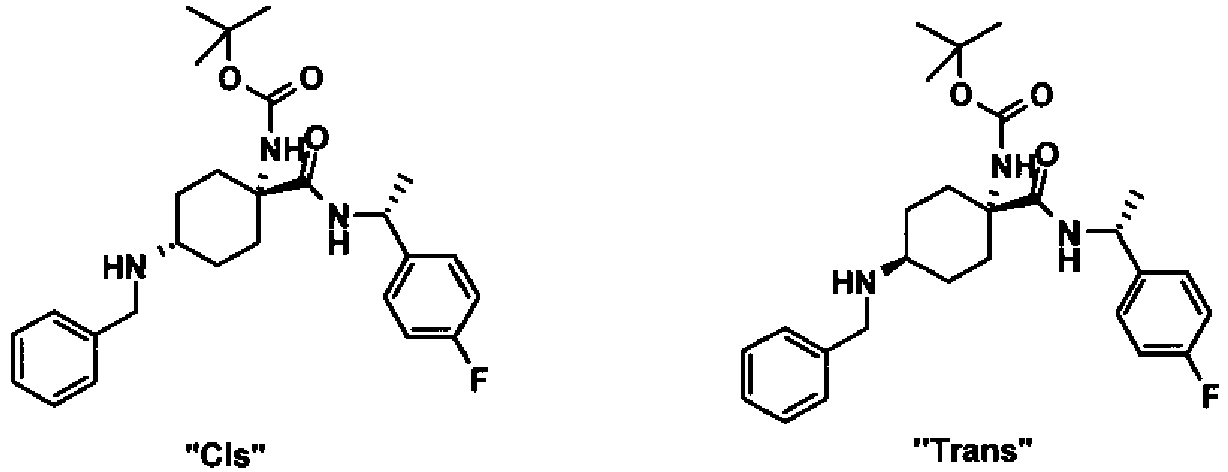
- (R)-tert-butyl 1-(1-(4-fluorophenyl)ethylcarbamoyl)-4-oxocyclohexylcarbamate (Intermediate 93, 400mg) was subjected to reductive amination using benyzlamine, acetic acid, and sodium triacetoxyborohydride by know methods (J. Org. Chem. 1996, 61, 3849). The crude product was chromatographed using a gradient elution of 0 to 8% methanol in dichloromethane containng 0.5% ammonium hydroxide as modifier. The desired fractions were concentrated to a 2:1 mixture of cis : trans isomers of (R)-tert-butyl 4-(benzylamino)-1-(1-(4-fluorophenyl) ethylcarbamoyl)cyclohexylcarbamate (395mg).
- The cis/trans isomers (390mg) were separated by reverse-phase preparative chromatography over several injections using Phenomenex Gemini Axia C18 30x100mm 30-100% acetonitrile in water containing 5mM ammonium hydroxide at 40ml/min. The first isomer ("cis") eluted at approximately 7.00 minutes and the second isomer at 7.65 minutes. The desired fractions were lyophilized to dryness and stereochemistry assigned based on NMR studies. For example, in the "cis" isomer shown below: H-15 display through space coupling to axial protons H-2/H-6 indicating it is axial. H-2/H-6 exhibit quartet line shape with large J-coupling, indicating H-1 is also axial. Yielded 92 mg "cis" isomer and 178 mg "trans" isomer. MS M+ : 470.4 for both the "cis" and "trans" isomers)
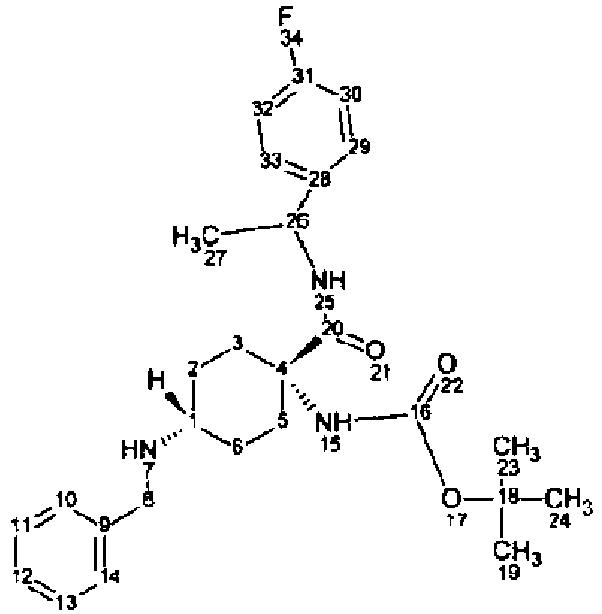
-

- (R)-tert-butyl 4-(benzylamino)-1-(1-(4-fluorophenyl) ethylcarbamoyl) cyclohexylcarbamate (Intermediate 94, the "cis" isomer, 87 mg) was hydrogenated at 1 atm hydrogen gas using 10% Pd/C (26mg, Degussa type E101 NE/W 50% wet) for 16 hours. The reaction was filtered over celite to yield {4-Amino-1-[(R)-1-(4-fluoro-phenyl)-ethylcarbamoyl]-cyclohexyl}-carbamic acid tert-butyl ester (70mg). MS MH+380.4
-

- tert-Butyl (1s,4S)-1-((R)-1-(4-fluorophenyl)ethylcarbamoyl)-4-(4-(trifluoromethyl)phenylsulfonamido)cyclohexylcarbamate was prepared from Intermediate 95 and 4-trifluoromethyl benzene sulfonyl chloride using the sulfonyl chloride coupling procedure described for Intermediate 1. MS M-H+588.3
-

- tert-Butyl (1s,4S)-1-((R)-1-(4-fluorophenyl)ethylcarbamoyl)-4-(4-(oxazol-4-yl)phenylsulfonamido)cyclohexylcarbamate was prepared using a method analogous to the method used to prepare Intermediate 96 using Intermediate 95 and Intermediate 26 as the starting materials. MS MH+587.4
-
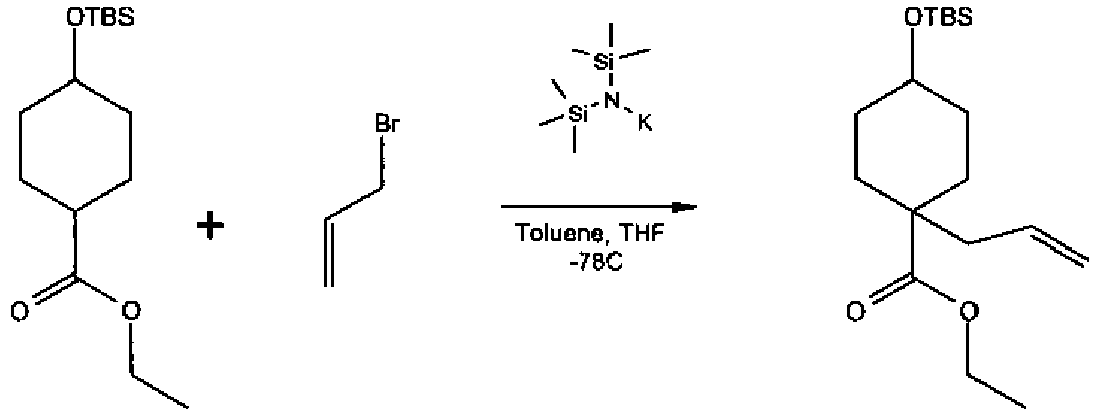
- 4-(tert-Butyl-dimethyl-silanyloxy)-cyclohexanecarboxylic acid ethyl ester (5.3g, 18.50 mmol) in THF (56 ml) was cooled to -78 °C and then potassium hexamethyldisilazide (KHMDS) (74.0 ml, 37.0 mmol) (0.5M in toluene) was added slowly and reaction mixture was stirred at -78 °C for 10min., then warmed to 0 °C for 5 mins and cooled back down to -78 °C. 3-Bromo-propene (2.401 ml, 27.8 mmol) was added via syringe, and the reaction mixture was kept at -78 °C for another 10 mins before it was allowed to warm to room temperature overnight. The reaction mixture was quenched with aqueous ammonium chloride, and volatile solvents were removed under reduced pressure. The product was extracted from water with ether and concentrated. The crude oil was purified on biotage SP1, on column 65i, using gradient 5-35% EtOAc in heptane, with 25X150 tubes. Since the product as not UV active, it was detected by iodine staining. The product was a clear oil (4.88g, 71%). LCMS [M+H] = 327.2
-

- 1-Allyl-4-hydroxy-cyclohexanecarboxylic acid ethyl ester was prepared by deprotecting Intermediate 98 using a method analogous to the method used to prepare Intermediate 67.
- The intermediates in the following Table can be prepared by a method analogous to the method used to prepare Intermediate 84 using benzyl amine and the starting materials indicated.
Intermed. Structure S.M. 100 
4-pyrazolo-benzene sulfonyl chloride 101 
4-phenyl-benzene sulfonyl chloride - The intermediates in the following Table can be prepared by a method analogous to the method used to prepare Intermediate 86 using the starting materials indicated.
Intermed. Structure S.M. 102 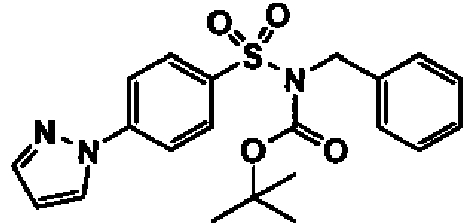
Intermediate 100 103 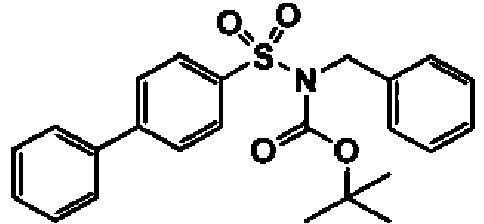
Intermediate 101 - The intermediates in the following Table can be prepared by a method analogous to the method used to prepare Intermediate 88 using the starting materials indicated.
Intermed. Structure S.M. 104 
Intermediate 102 105 
Intermediate 103 - The intermediates in the following Table can be prepared by a method analogous to the method used to prepare Intermediate 90 using the starting materials indicated.
Intermed. Structure S.M. 106 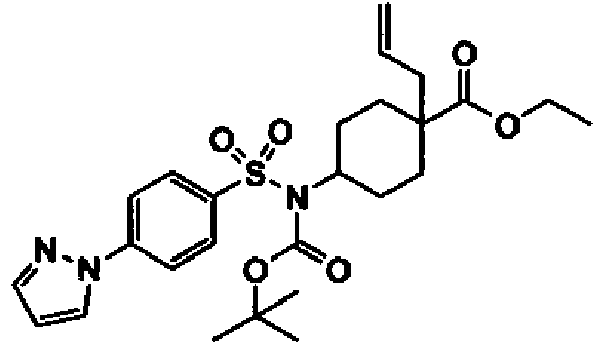
Intermediate 99 and Intermediate 104 107 
Intermediate 99 and Intermediate 88 -

- Intermediate 106 was deprotected using standard TFA in dichloromethane conditions (see Example 177) to afford the title compound. LCMS [M+H] = 418.0
- The intermediates in the following Table was prepared by a method analogous to the method used to prepare Intermediate 108 using the starting materials indicated.
Intermed. Structure S.M. MS 109 
Intermediate 99 and Intermediate 88 M-H = 418.0 110 
Intermediate 99 and Intermediate 89 M+H = 419.2 -

- A mixture of CuCl (147 mg, 1.484 mmol) and PdCl2 (46.1 mg, 0.26 mmol) in DMF (24 ml) and water (4 ml) was stirred under an oxygen (balloon) for 3 hours. A solution of 1-Allyl-4-(1,3-dioxo-1,3-dihydro-isoindol-2-yl)-cyclohexanecarboxylic acid ethyl ester (Intermediate 73, 362 mg, 1.06 mmol) in DMF (16 ml) was added and the mixture was stirred at room temperature for 66 hr under O2. LCMS shows 100% conversion to product and the reaction mixture was diluted with water and 1M HCl, then extracted with ethyl acetate (x3). The organic layers were washed with water, brine, dried (MgSO4), filtered and concentrated in vacuo to give the title compound as a yellow oil (410mg, >100%) which was taken to the next step without further purification. LCMS [M+H] = 358.3
-
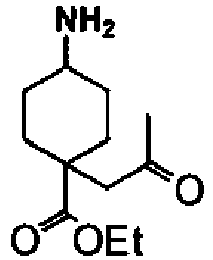
- Intermediate 112 can be prepared from Intermediate 111 using a method analogous to the method used to prepare Intermediate 77.
-

- Intermediate 113 can be prepared by a method analogous to the method used to prepare Intermediate 1 using Intermediate 112 and Intermediate 26 as the starting materials.
-

- O3 was passed through a solution of ethyl 4-(4-(1H-pyrazol-1-yl)phenylsulfonamido)-1-allycyclohexanecarboxylate (Intermediate 108, 285 mg, 0.683 mmol) in DCM (5.988 ml) at -78 °C until a blue colour appeared. The solution was kept at -78 °C and O2 gas was passed through until the colour faded to colourless (about 20 min.) The reaction mixture was left to warm for 15 mins. and TLC (20% EtOAc in Heptane, Iodine stain) indicated that the reaction was complete. The ozonide was then quenched/reduced by adding polystyrene triphenyl phosphine (PS-PPh3, 4982 mg, 6.83 mmol) and the reaction mixture was left to shake overnight, then filtered through a fritt and beads washed with DCM. The DCM filtrate and wash was collected and concentrated in vacuo to yield the title compound as a white solid (286mg, 100%). LCMS [M+H] = 420.1
-

- 1-(2-Oxo-ethyl)-4-(4-trifluoromethyl-benzenesulfonylamino)-cyclohexanecarboxylic acid ethyl ester was prepared by a method analogous to the method used to prepare Intermediate 114 using Intermediate 109 as the starting material. LCMS [M-H] = 420.0
-
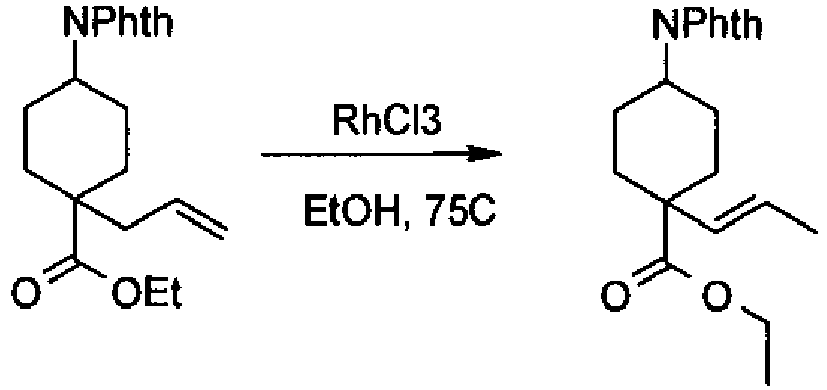
- 1-Allyl-4-(1,3-dioxo-1,3-dihydro-isoindol-2-yi)-cyclohexanecarboxylic acid ethyl ester (Intermediate 73, 975 mg, 2.86 mmol) was dissolved in ethanol (13.900 mL) in a roundbottom flask with reflux condensor. The flask was charged with rhodium(III) chloride (32.5 mg, 0.143 mmol), and the reaction mixture was heated to 75 °C and stirred for 18 hr, then filtered and concentrated in vacuo to yield the title compound as a brown oil (965mg, 99%) which was taken to the next step without further purification.
-

- Intermediate 117 was prepared from Intermediate 116 using standard phthalamide deprotection conditions analogous to the conditions used to prepare Intermediate 77.
-

- Intermediate 118 was prepared by a method analogous to the method used to prepare Intermediate 1 using Intermediate 117 and 4-trifluoromethyl benzene sulfonyl chloride as the starting materials. LCMS [M+H] = 420.2
-

- 1-((E)-Propenyl)-4-(4-pyrazin-1-yl-benzenesulfonylamino)-cyclohexanecarboxylic acid ethyl ester was prepared by a method analogous to the method used to prepare Intermediate 118 using Intermediate 117 and 4-pyrazol-1yl-bezene sulfonyl chloride as the starting materials. LCMS [M-H] = 418.3
-

- O3 was passed through a solution of 1-((E)-Propenyl)-4-(4-trifluoromethyl-benzenesulfonylamino)-cyclohexanecarboxylic acid ethyl ester (Intermediate 118, 965 mg, 2.83 mmol) in DCM (30 ml) at -78 °C for 12 min. The solution was kept at -78 °C and O2 gas was passed through it for 10 min. The reaction was monitored by LCMS. When no starting material was present, the reaction mixture was left to warm for 15 mins. The ozonide was then quenched/reduced by adding PS-PPh3 (loading = 2.34mmol/g) (6040 mg, 14.13 mmol) and the solution was left to shake overnight. The reaction was filtered through a fritt and beads and washed with DCM. The DCM filtrate and wash were concentrated in vacuo to yield the title compound as a tan solid (850mg, 91%). LCMS [M-H] = 406.2
-
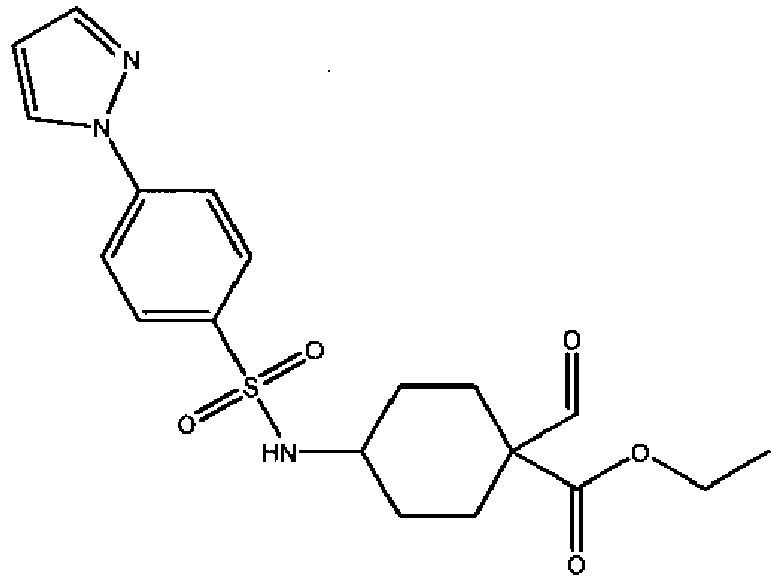
- 1-Formyl-4-(4-pyrazol-1-yl-benzenesulfonylamino)-cyclohexanecarboxylic acid ethyl ester was prepared by a method analogous to the method used to prepare Intermediate 120 using Intermediate 119 as the starting material. LCMS [M-H] = 404.2
-

- Trifluoroacetic acid (13.13 ml, 170 mmol) was added via addition funnel to solution of tert-butyl 4-oxocyclohexylcarbamate (1.817 g, 8.52 mmol) in DCM (34.1 ml) at room temperature. The reaction was stirred 3.5 hours then concentrated and the resiude was placed under vacuum for 30 minutes. The residue was suspended in DCM (34.1 ml) and cooled in ice/water bath. N-methylmorpholine (20.61 ml, 187 mmol) was added followed by solid 4-ethoxy-3-methylbenzenesulfonyl chloride (2.0 g, 8.52 mmol) and the ice/water bath was removed. After stirring for 70 hours, LCMS indicated some product mass. The reaction was placed in water bath and pH adjust to 3 using 3N hydrochloric acid (aq). The resulting layers were separated, and the aqueous extracted second time with dichloromethane. The combined organics were dried over sodium sulfate to yield 2.9g of a crude oil. TLC (50% ethyl acetate in heptane): indicated a major product at Rf=0.40, with minor spots at Rf=0.58 and Rf=0.12. The crude was chromatograph on Biotage 40M by TLC generated gradient to yield 4-ethoxy-3-methyl-N-(4-oxocyclohexyl)benzenesulfonamide (650 mg, 2.087 mmol). LCMS [M+H] = 312.3.
-

- Intermediate 123 was prepared by a method analogous to the method of preparing Intermediate 122 using 4-trifluoromethyl benzensulfonyl chloride instead of 4-ethoxy-3-methylbenzenesulfonyl chloride.
-

- A 1:1 mixture of concentrated aqueous ammonium hydroxide (28-30%): water (1606 µl, 6.26 mmol) followed by ammonium chloride (223 mg, 4.17 mmol) was added to 4-ethoxy-3-methyl-N-(4-oxocyclohexyl)benzenesulfonamide (Intermediate 122, 650 mg, 2.087 mmol) in methanol. The reaction was stirred for a few minutes then potassium cyanide (272 mg, 4.17 mmol) was added in one portion. After 18 hours the reaction was diluted with dichloromethane and 5N sodium hydroxide followed by water was added to make the aqueous layer pH 12. The aqueous layer was extracted fives times with dichloromethane. TLC (50% ethyl acetate in heptane) suggested a small amount starting material was present, but a major UV spot was just off baseline. Combined organic layers were dried over sodium sulfate, filtered, and concentrated, to yield crude N-(4-amino-4-cyanocyclohexyl)-4-ethoxy-3-methylbenzenesulfonamide (770 mg, 2.282 mmol) which was used without further purification. LCMS [M+H] = 338.3.
-

- Intermediate 125 was prepared by a method analogous to the method of preparing Intermediate 124 using 4-(trifluoromethyl)-N-(4-oxocyclohexyl)benzenesulfonamide (Intermediate 123) as the starting material.
-

- Acetyl chloride (0.106 g, 1.356 mmol) in dichloromethane (1ml) was added to room temperature solution of N-(4-amino-4-cyanocyclohexyl)-4-ethoxy-3-methylbenzenesulfonamide (Intermediate 124, 0.366 g, 1.085 mmol) in dichloromethane (9ml) and the reaction was stirred 18 hours. The reaction was diluted with dichloromethane and rinsed with two volumes of saturated sodium bicarbonate. The organics were dried over magnesium sulfate, filtered, and concentrated to yield 464mg of a crude film. TLC (50% ethyl acetate in heptane) indicated a major spot Rf=0.07 by UV. The crude product was chromatographed on Biotage 25S by TLC generated gradient to yield N-(1-cyano-4-(4-ethoxy-3-methylphenylsulfonamido)cyclohexyl)-acetamide (320 mg, 0.843 mmol) as a colorless solid. Carbon-13 NMR displayed a characteristic signature for nitrile at 119.1 ppm along with a signal at 110.7 ppm for the aromatic carbon ortho to aryl ether; in addition the peaks at 169.7 ppm and 160.97 ppm represent the amide and ipso-carbon of the aryl ether (no assignment implied). LCMS [M+H] = 380.2.
-

- Intermediate 127 was prepared by a method analogous to the method of preparing Intermediate 126 using N-(4-amino-4-cyanocyclohexyl)-4-trifluoromethyl benzenesulfonamide (Intermediate 125) as the starting material.
-

- Intermediate 128 was prepared from Intermediate 124 by a method analogous to the method of preparing Intermediate 126 using formyl chloride instead of acetyl chloride as the starting material.
- The Intermediates in the table below were prepared by a method analogous to the method used to prepare intermediate 1 using intermediate 69 and the starting materials indicated.
Intermed. Structure S.M. 129 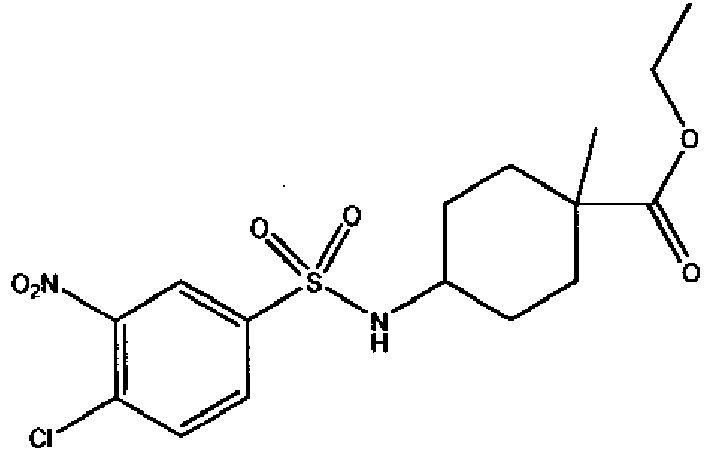
4-chloro-3-nitrobenzene sulfonyl chloride 130 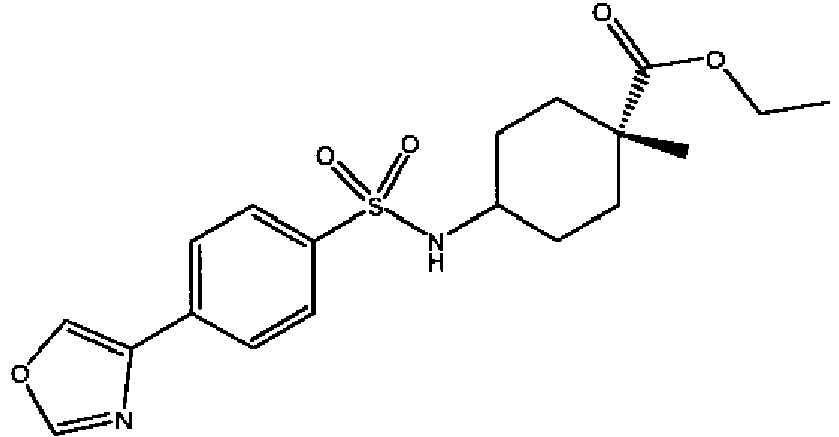
Intermediate 26 - The Intermediates in the table below can be prepared by a method analogous to the method used to prepare Intermediate 1 using Intermediate 69 and the starting materials indicated.
Intermed. Structure S.M. 131 
4-ethoxy-3-methyl-benzene sulfonyl chloride 132 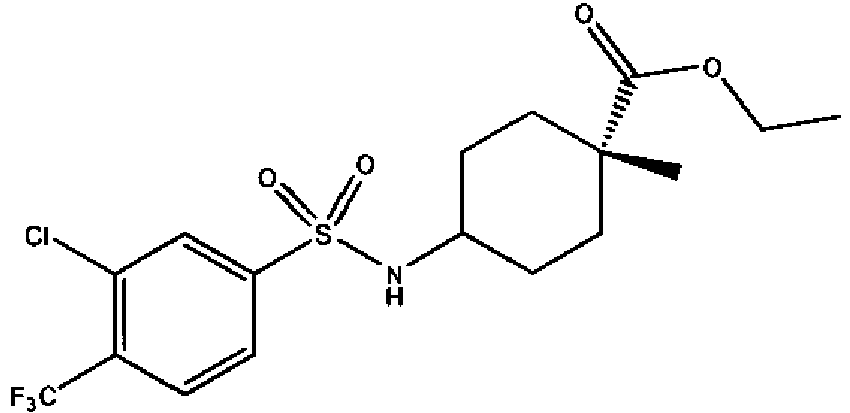
Intermediate 39 133 
4-(pyrazol-1-yl)-benzene sulfonyl chloride - The Intermediates in the table below were prepared by a method analogous to the method used to prepare Intermediate 58 using the starting materials indicated.
Intermed. Structure S.M. MS 134 
Intermediate 129 135 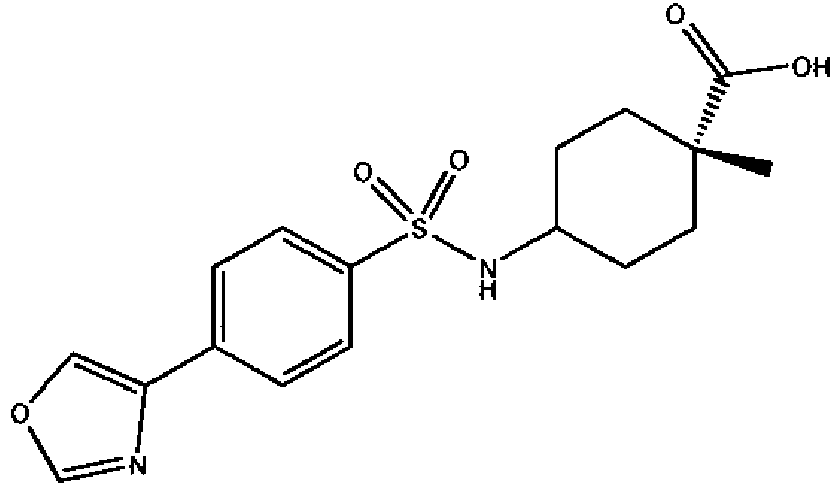
Intermediate 132 136 
Intermediate 118 [M+H] = 392.2 137 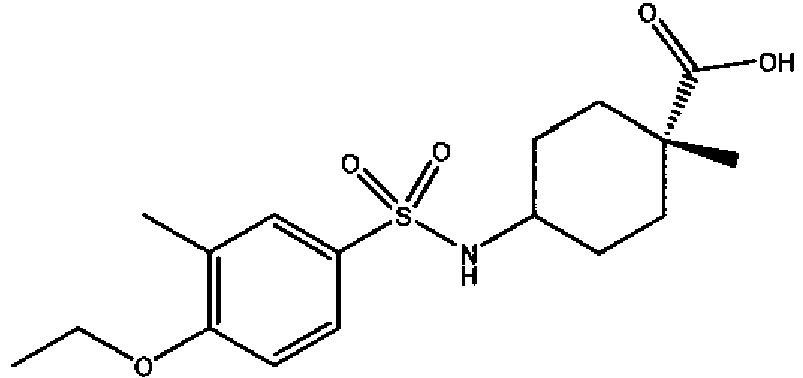
Intermediate 130 138 
Intermediate 131 139 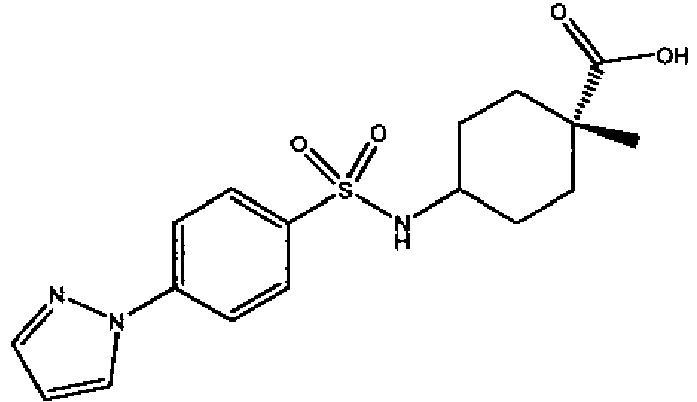
Intermediate 133 -

- 4-(4-Trifluoromethyl-benzenesulfonylamino)-cyclohexanecarboxylic acid amide was prepared according to the method in Example 1. MS MH+ 351.2
-

- To 4-(4-Trifluoromethyl-benzenesulfonylamino)-cyclohexanecarboxylic acid (Intermediate 140, 80 mg, 0.228 mmol) in 1 mL THF was added trifluoroacetic anhydride (0.097 ml, 0.685 mmol) and the reaction was stirred at room temperature for 30 min. Water was added and the mixture was extracted with ether. The organic layer was dried over sodium sulfate, filtered and concentrated to afford 76 mg (100%) N-(4-Cyano-cyclohexyl)-4-trifluoromethyl-benzenesulfonamide MS MH- 331.2
-

- To diisopropylamine (71.7 µl, 0.503 mmol) in 1 mL THF under N2 at -78 °C was added n-butyllithium (1.6M THF) (314 µl, 0.503 mmol). The mixture was stirred at -78 °C for 30 min. A solution of N-(4-cyano-cyclohexyl)-4-trifluoromethyl-benzenesulfonamide (Intermediate 141, 76 mg, 0.229 mmol) in 1 mL THF was added to the mixture at -78°C and allowed to warm to 0 °C, then stiirred for 30 min at 0 °C. The mixture was cooled to -78 °C and CO2 gas was bubbled at -78 °C for 30 min (needle outgas from septa). LCMS was consistent with 1:1 ratio of starting material to target products in a 3:1 ratio. The solvent was removed under vacuum and 5 mL ether was added followed by 10 mL 1 N HCl. The mixture was extracted with EtOAc and washed with brine. The organic layers were dried over sodium sulfate, filtered and concentrated on vacuum, the taken up in 2 mL acetonitrile with 0.5mL water and filterd with 0.45µ PTFE filter and purified by HPLC on a C8 column eluting with 5-100% ACN/H2O (0.1% NH4OH) to yield 2 isomers (30 mg of the first eluting peak and 4 mg the second eluting peak) of 1-Cyano-4-(4-trifluoromethyl-benzenesulfonylamino)-cyclohexanecarboxylic acid MS MH- 374.9
-

- Methyl 4-(4-(trifluoromethyl)phenylsulfonamido)bicyclo[2.2.2]octane-1-carboxylate was prepared from 4-aminobicyclo[2.2.2]octane-1-carboxylic acid methyl ester and 4-trifluoromethylbenzene sulfonamide using a method analogous to the method used to prepare Intermediate 1.
-
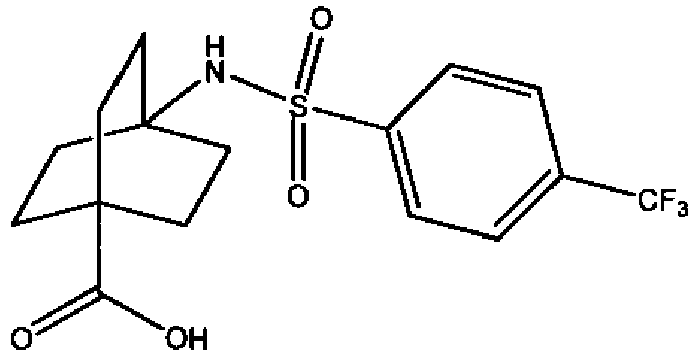
- Intermediate 144 was prepared using the method described for the preparation of intermediate 15 using Intermediate 143 as the starting material.
-

- Methyl 4-(4-(trifluoromethyl)phenylsulfonamido)-adamantane-1-carboxylate was prepared from 4-amino-adamantane-1-carboxylic acid methyl ester and 4-trifluoromethylbenzene sulfonamide using a method analogous to the method used to prepare Intermediate 1.
-

- Intermediate 146 was prepared using the method described for the preparation of Intermediate 15 using Intermediate 145 as the starting material.
- Particular compounds of the invention can be prepared via an amide coupling reaction by coupling a trans-4-(phenylsulfonamido)cyclohexane-carboxylic acid or trans-4-(pyridinylsulfonamido)cyclohexane-carboxylic acid with a primary or secondary amine, as shown in Example 1.
- The following examples are comparative examples: 15, 24, 25, 27, 32, 35, 40, 56, 61, 62, 88, 89, 96-98, 128, 142, 194, 199, 200, 267, 276, 313, 326, 411, 412, 421, 425, 465, 467, 470 and 471-473.
- Alternatively, particular compounds of the invention can be prepared by coupling trans-4-amino-cyclohexanecarboxamide with a benzene sulfonyl chloride or pyridinyl sulfonyl chloride, as shown in Example 2 (Method A) or Example 2 (Method B).
-

- (1r,4r)-4-(4-(Trifluoromethyl)phenylsulfonamido)-cyclohexancarboxylic acid (Intermediate 58, 4g, 11.38mmol), the hydrochloride salt of (S)-1-amino-2-methyl-1-phenylpropan-2-ol (Intermediate 49, 2.342g, 11.61mmol) and DIPEA (3.24g, 4.37ml, 25.05mmol) were dissolved in DMF (20ml) and cooled to 0 °C. HATU (5.19g, 13.66mmol) was then added as a solid and the reaction mixture was allowed to warm to room temperature for over 3 hours. The reaction mixture was then slowly poured into 0.5M HCl (250ml) and extracted twice with EtOAc. Combined organics were washed with water and brine, then dried over MgSO4. Resulting material was purified via flash column chromatography eluting with acetone/heptane. Relevant fractions were pooled and concentrated to afford a white solid (3.5g - 61% yield).
1H NMR (400 MHz, DMSO-d 6) δ ppm 0.95 (s, 3 H) 1.04 (s, 3 H) 1.10 - 1.32 (m, 4 H) 1.34 (br. s., 1 H) 1.53 (d, J=12.38 Hz, 1 H) 1.71 (d, J=6.06 Hz, 1 H) 1.66 (d, J=16.67 Hz, 2 H) 2.18 (t, J=11.49 Hz, 1 H) 2.96 (dd, J=11.12, 3.79 Hz, 1 H) 4.43 (br. s., 1 H) 4.66 (d, J=9.60 Hz, 1 H) 7.15 - 7.31 (m, 5 H) 7.88 - 8.04 (m, 6 H)
M + H = 499.3 -
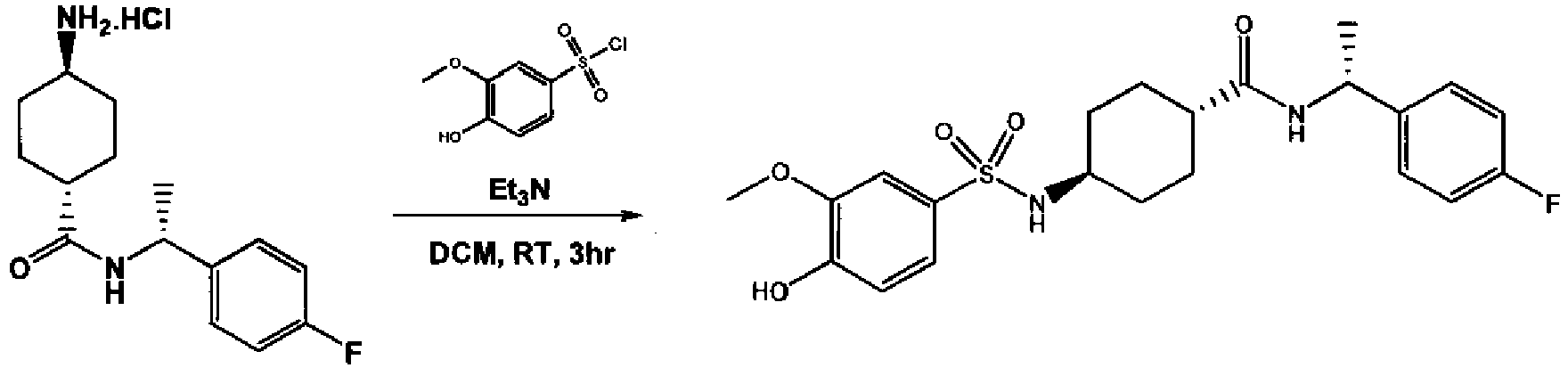
- Trans-4-Amino-N-((R)-1-(4-fluorophenyl)ethyl)cyclohexanecarboxamide hydrochloride (Intermediate 45, 200mg, 0.66mmol) and Et3N (371ul, 2.66mmol) were dissolved in DCM (10 ml). 4-Hydroxy-3-methoxy-benzenesulphonyl chloride (178mg, 0.798mmol) was added, and the reaction mixture was stirred for 3 hr at room temperature, after which LCMS indicated that the reaction was complete. The mixture was concentrated in vacuo, and the crude material was purified via reverse phase chromatography on prep-HPLC (150mm, C8 luna, 15-20 min run, 10%-100% MeCN in water containing 0.1% TFA). Fractions containing the product were lyophilized to yield the title compound as a white solid (14mg, 0.031mmol). MS MH+ 451.1
-

- N,N'-Bis-trimethylsilylurea (209mg, 1.02mmol) was added to solution of 4-hydroxy-3-methxoybenzenesulfonyl chloride (445mg, 2.0mmol) in dichloromethane (6ml). The reaction was stirred 30 minutes at room temperature, then diluted with dichloromethane (6ml)) and filtered. To the filtrate was added N,N-diisopropylethylamine followed by trans-4-amino-cyclohexanecarboxylic acid [(R)-1-(4-fluoro-phenyl)-ethyl]-amide (Intermediate 45, 529mg, 2.0mmol). The reaction was allowed to stir at room temperature overnight, then saturated sodium bicarbonate solution was added and the mixture was stirred for 10 minutes. The reaction was diluted with additional dichloromethane and the layers were separated. The organic layer was dried over MgSO4, filter and concentrated to yield a crude residue. The crude was chromatographed on a Biotage 40S column using a stepwise gradient (0%, 1.5%, 3%) to yield the title compound. MS MH+ 451.1
- The compounds in the Table below were prepared by a method analogous to the method described in Example 1, Example 2 (method A) or Example 2 (method B) as indicated in the Table below using the appropriate starting materials. In the tables below, mass ions are given in the protonated form (MH+) unless otherwise noted.
Example Structure Method of MS 3 
Example 1 595.3 4 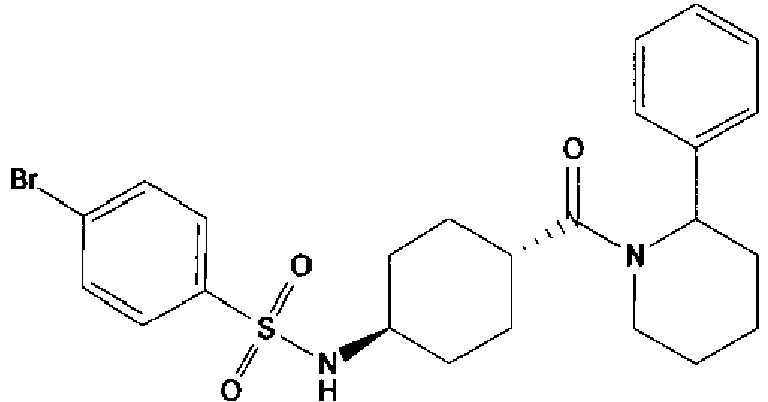
Example 1 507.0 5 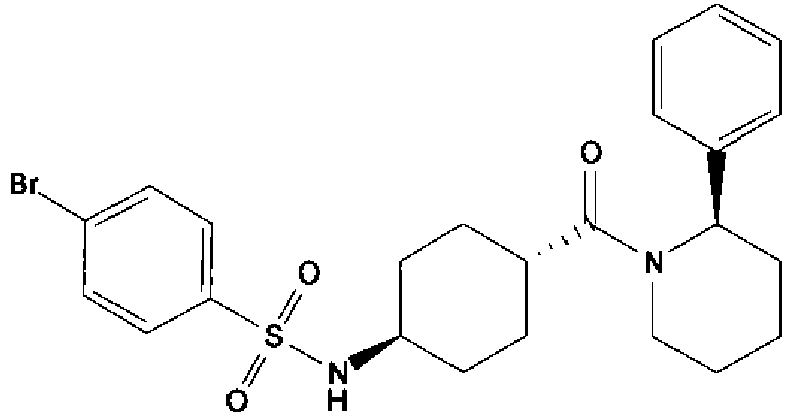
Example 1 507.0 6 
Example 1 513.0 7 
Example 1 513.0 8 
Example 1 493.0 9 
Example 1 493.0 10 
Example 1 509.0 11 
Example 1 481.0 12 
Example 1 511.0 13 
Example 1 511.0 14 
Example 1 497.0 15 
Example 1 447.0 16 
Example 1 499.0 17 
Example 1 499.0 18 
Example 1 496.0 19 
Example 1 531.0 20 
Example 1 487.0 21 
Example 1 538.0 22 
Example 1 613.0 23 
Example 1 610.0 24 
Example 1 473.0 25 
Example 1 471.1 26 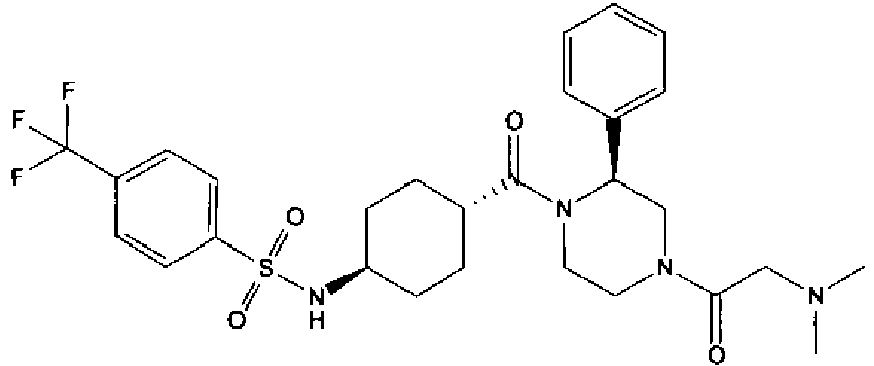
Example 1 581.0 27 
Example 1 461.0 28 
Example 1 568.0 29 
Example 1 585.0 30 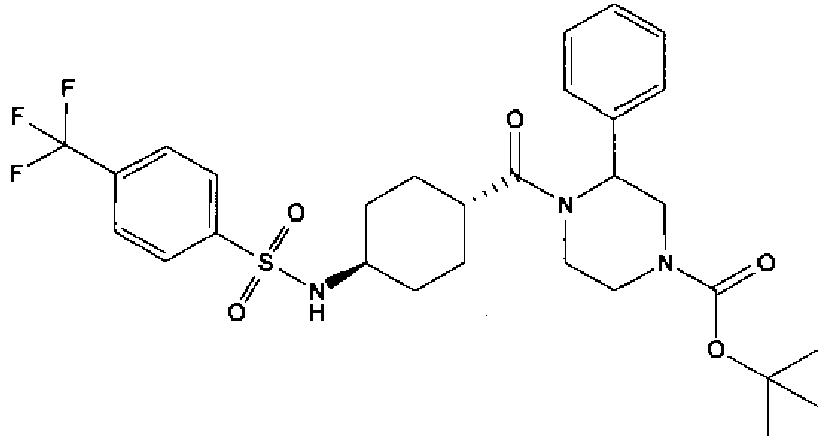
Example 1 596.0 31 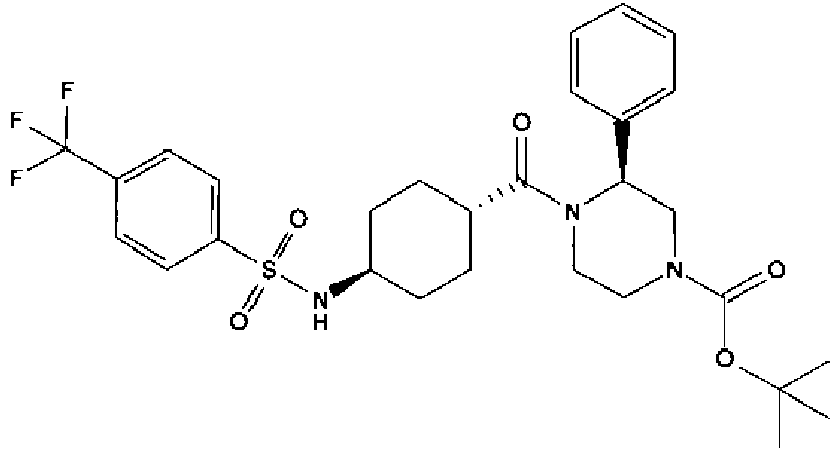
Example 1 596.0 32 
Example 1 548.0 33 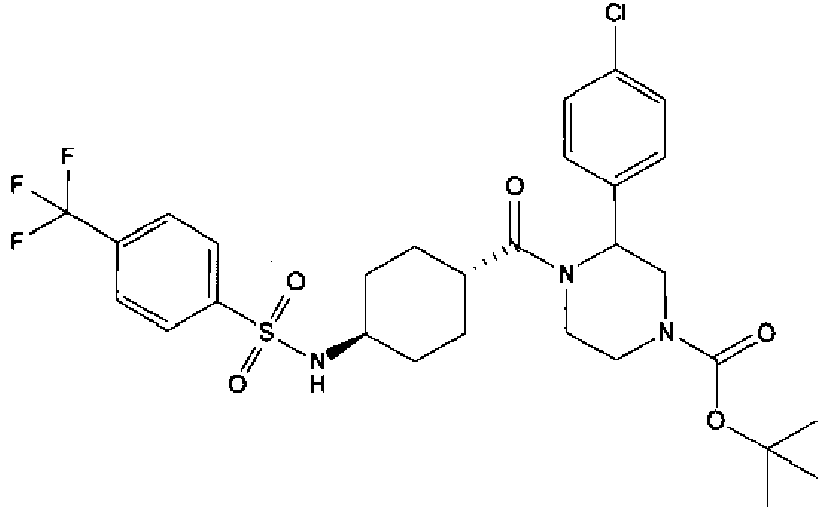
Example 1 630.0 34 
Example 1 586.0 35 
Example 1 605.0 (M+NN4)+ 36 
Example 1 495.0 37 
Example 1 525.0 38 
Example 1 525.0 39 
Example 1 496.0 40 
Example 1 523.0 41 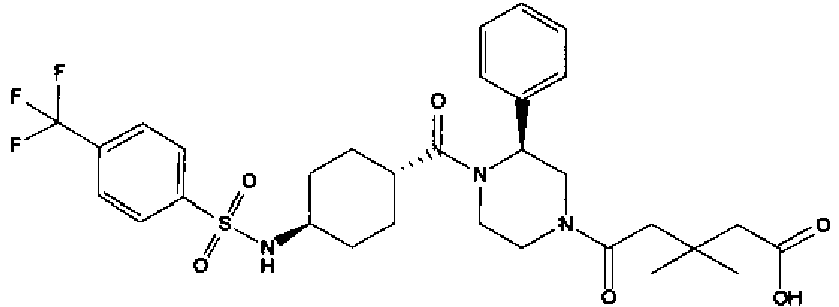
Example 1 638.0 42 
Example 1 539.0 43 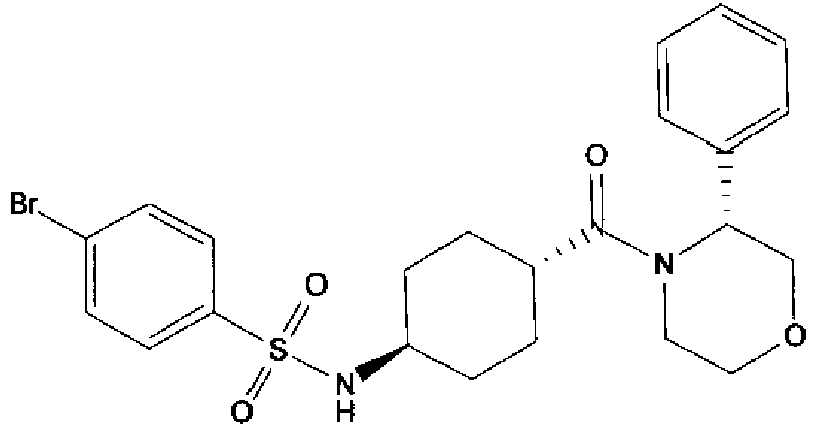
Example 1 507.1 44 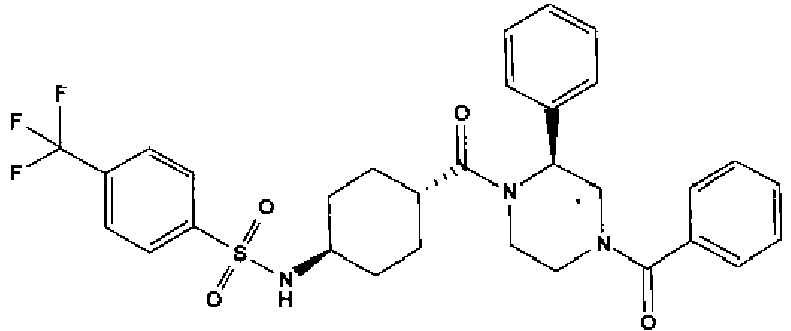
Example 1 600.0 45 
Example 1 601.0 46 
Example 1 601.0 47 
Example 1 601.0 48 
Example 1 574.0 49 
Example 1 527.0 50 
Example 1 573.0 51 
Example 1 537.0 52 
Example 1 539.0 53 
Example 1 525.0 54 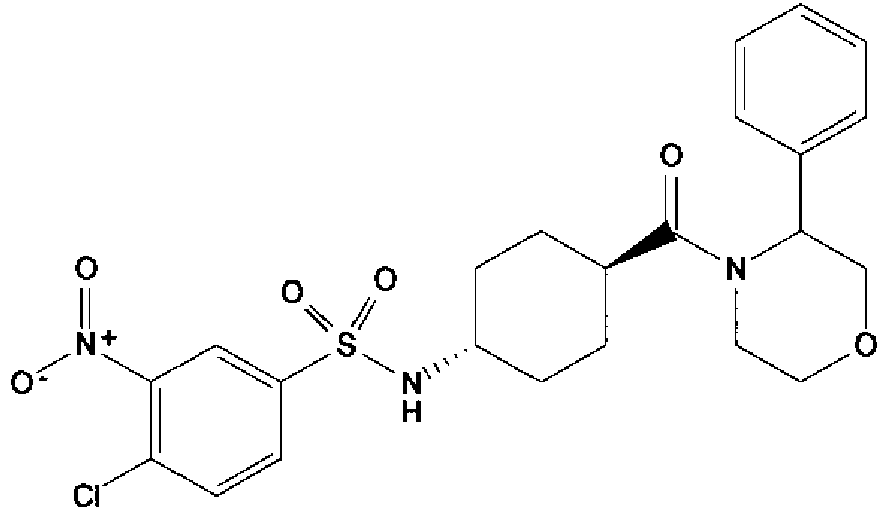
Example 1 - 55 
Example 1 514.0 56 
Example 1 472.2 57 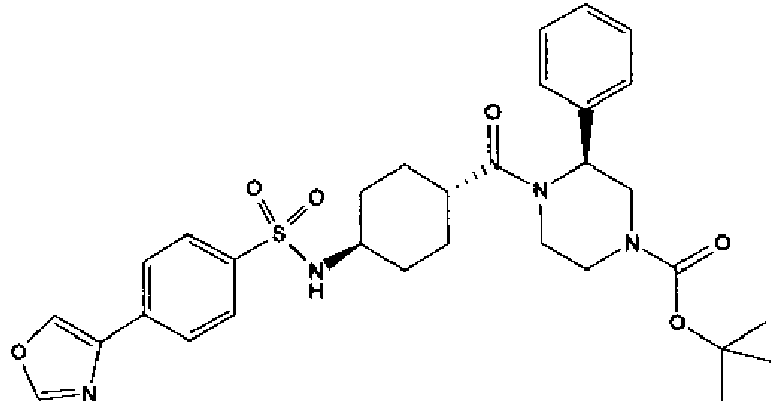
Example 1 595.3 58 
Example 1 480.3 59 
Example 1 595.0 60 
Example 1 496.2 61 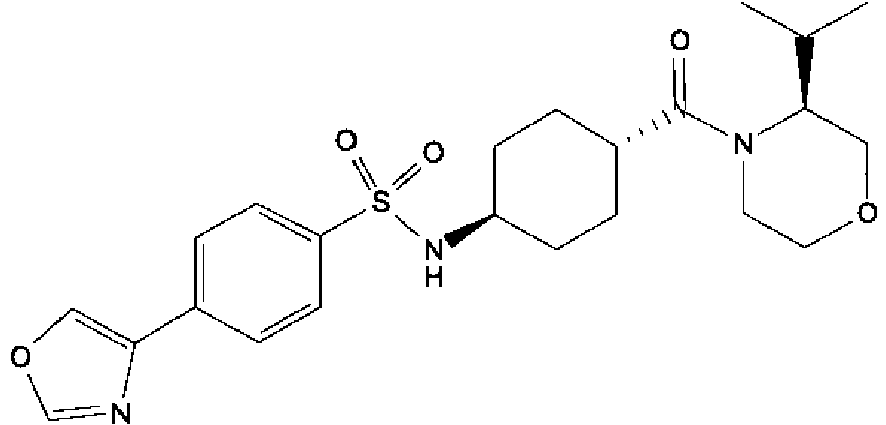
Example 1 462.1 62 
Example 1 487.0 63 
Example 1 515.0 64 
Example 1 - 65 
Example 1 - 66 
Example 1 471.2 67 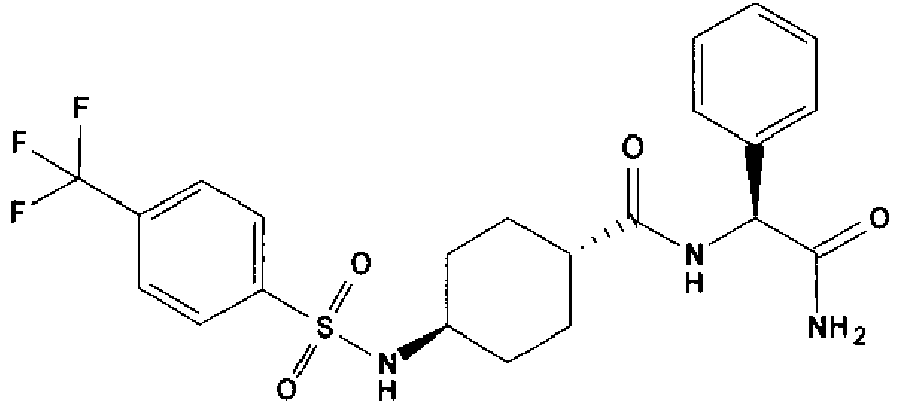
Example 1 484.0 68 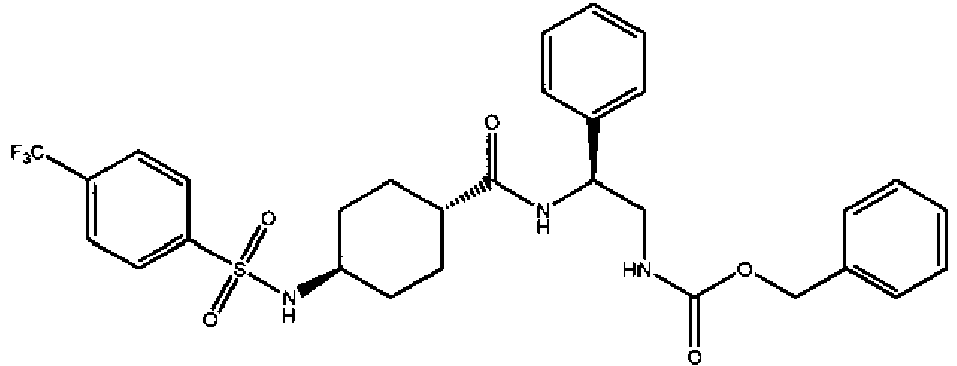
Example 1 - 69 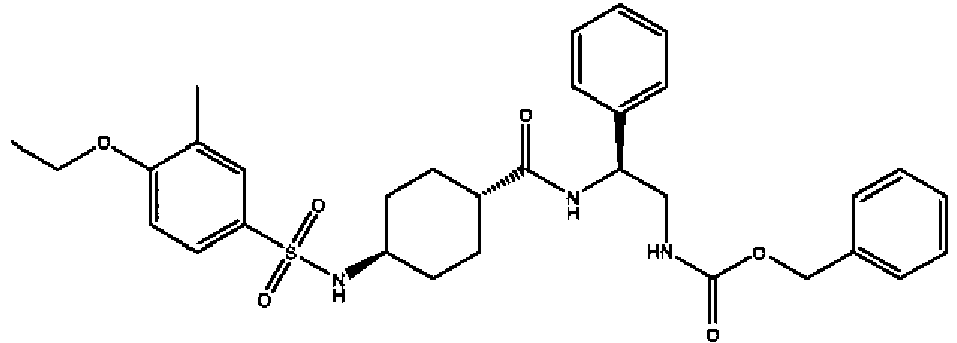
Example 1 - 70 
Example 1 535.0 71 
Example 1 489.0 72 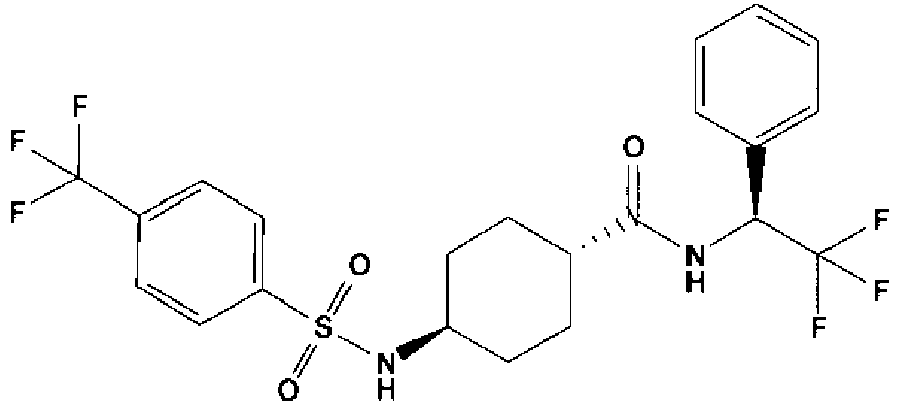
Example 1 509.0 73 
Example 1 483.0 74 
Example 2A 450.0 75 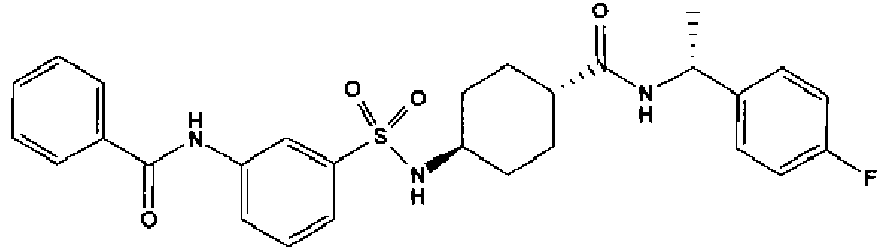
Example 2A 524.0 76 
Example 1 555.0 77 
Example 1 533.0 78 
Example 2A - 79 
Example 2A - 81 
Example 2A - 83 
Example 1 - 84 
Example 1 541.2 85 
Example 2A 449.2 86 
Example 2A 491.4 87 
Example 2A 453.1 88 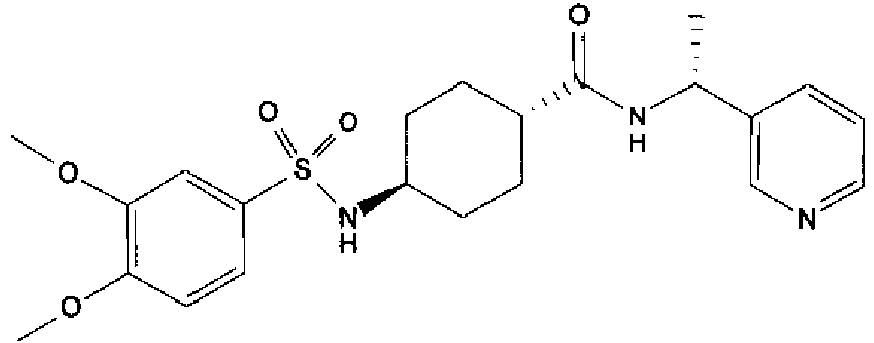
Example 2A 448.1 89 
Example 2A 432.1 90 
Example 2A 453.0 91 
Example 2A 472.9 92 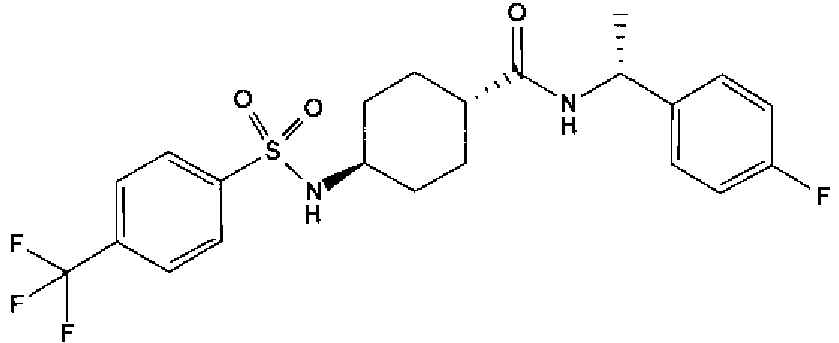
Example 2A 473.1 93 
Example 2A 463.1 94 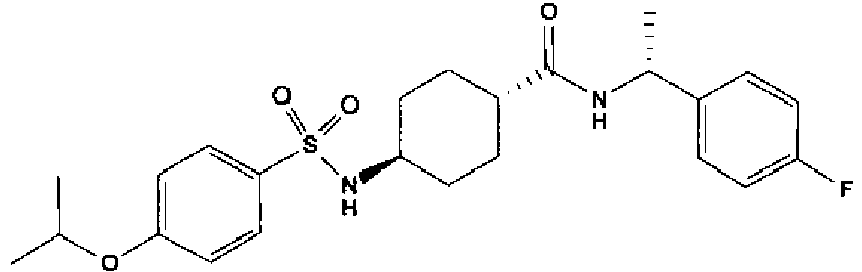
Example 2A 463.1 95 
Example 2A 437.1 96 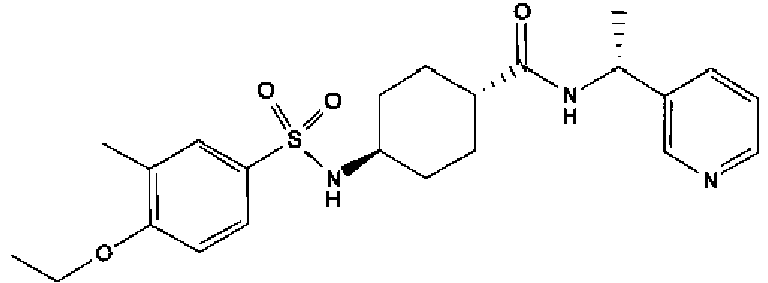
Example 2A 446.1 97 
Example 2A 436.1 98 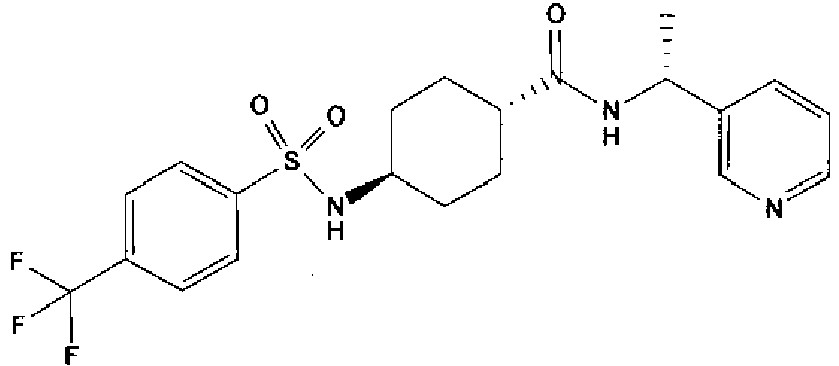
Example 2A 456.0 99 
Example 2A 564.2 (M+ ion) 100 
Example 2A 523.0 101 
Example 2A 477.2 102 
Example 2A 433.1 103 
Example 2A 447.1 104 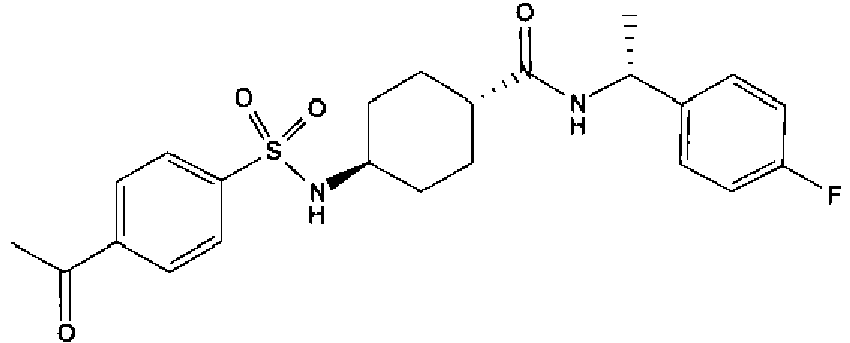
Example 2A 447.1 105 
Example 24 - 106 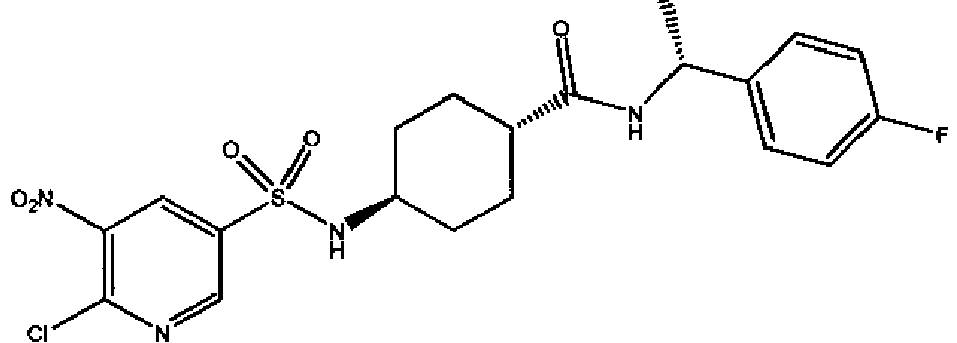
Example 2A - 107 
Example 2A 476.1 108 
Example 2A - 109 
Example 2A - 110 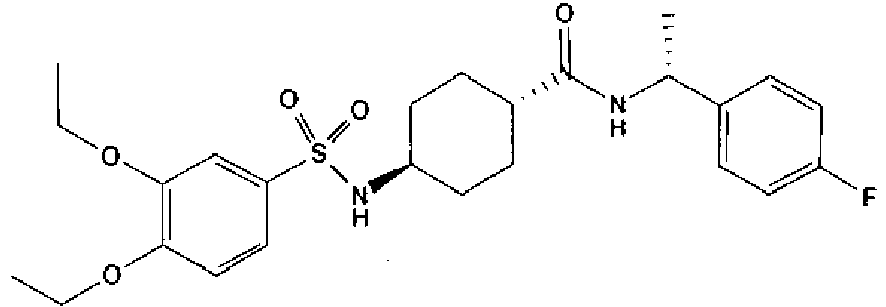
Example 2A 493.1 111 
Example 1 497.1 112 
Example 2A 462.3 113 
Example 2A 450.2 114 
Example 2A [M+H] = 440.02 115 
Example 2A [M+H] = 484.90 116 
Example 2A 433.2 117 
Example 2A 433.2 118 
Example 2A 489.1 119 
Example 2A 488.2 120 
Example 2A 491.2 121 
Example 2A 483.1 122 
Example 2A 479.1 123 
Example 2A 507.0 124 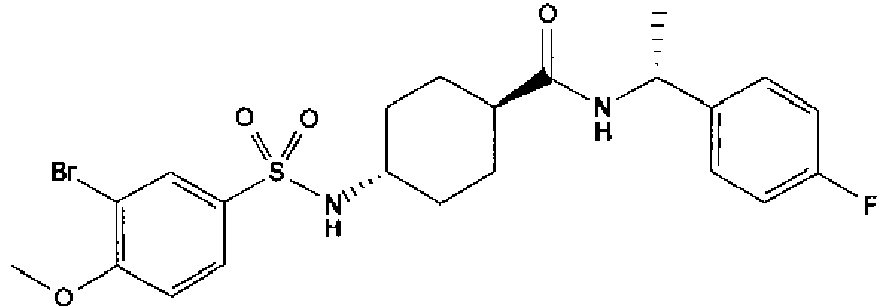
Example 2A 514.9 125 
Example 2A 464.1 126 
Example 2A 478.1 127 
Example 2A 496.0 128 
Example 2A 446.1 129 
Example 2A 503.0 130 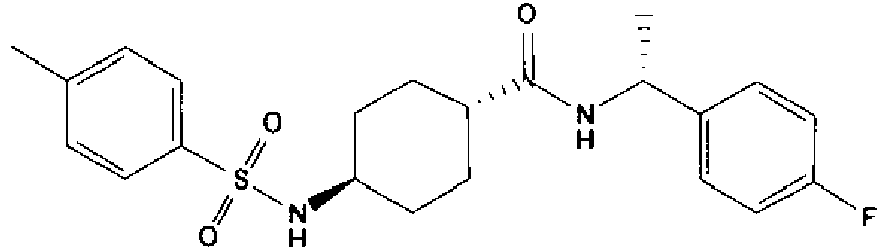
Example 2A 419.1 131 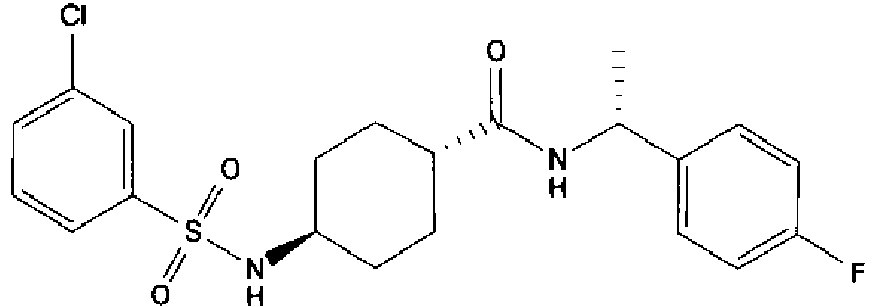
Example 2A 439.0 132 
Example 2A 419.1 133 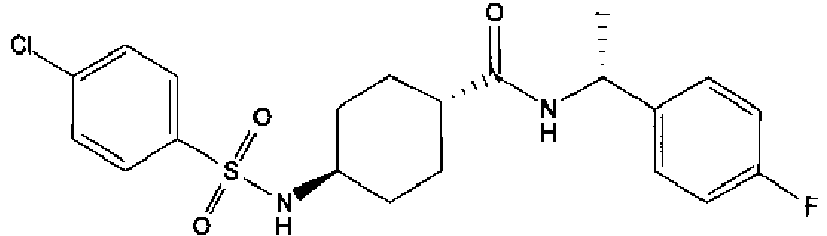
Example 2A 439.0 134 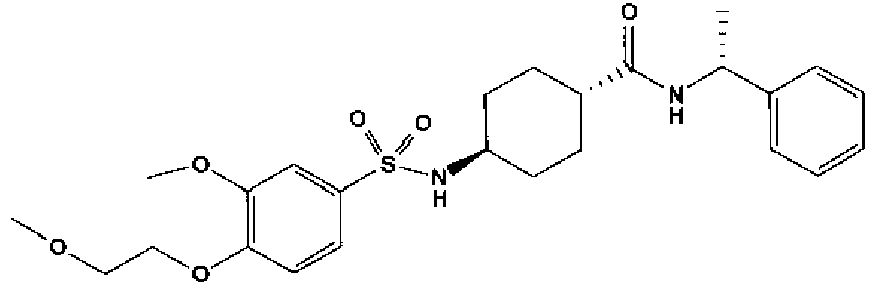
Example 2A 491.1 135 
Example 2A 462.2 136 
Example 2A 507.1 137 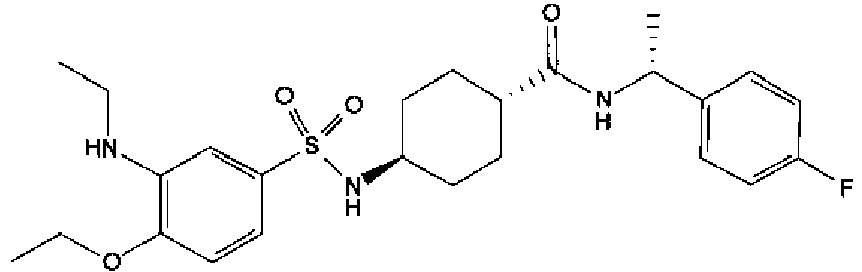
Example 2A 492.1 138 
Example 1 422.1 139 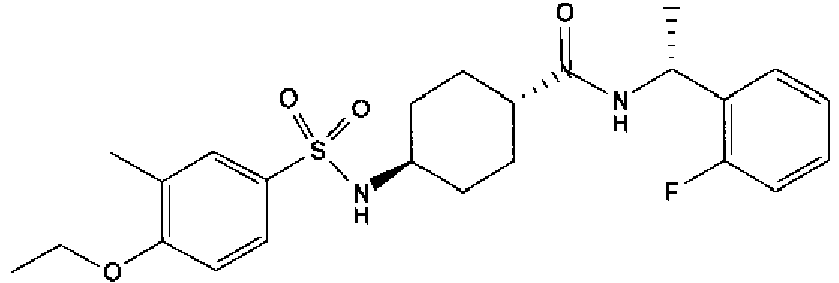
Example 1 463.3 140 
Example 2A 445.3 141 
Example 2A 475.3 142 
Example 2A - 143 
Example 2A 465.0 144 
Example 2A 520.0 145 
Example 2A 435.0 146 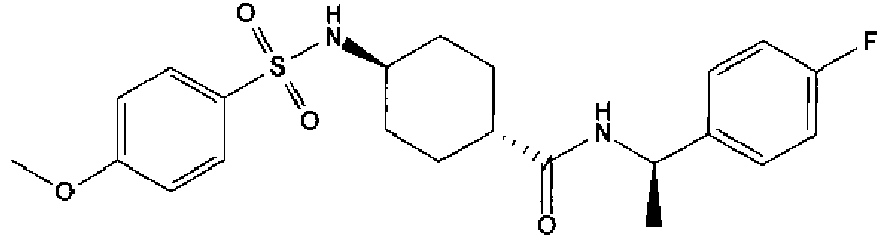
Example 2A 435.0 147 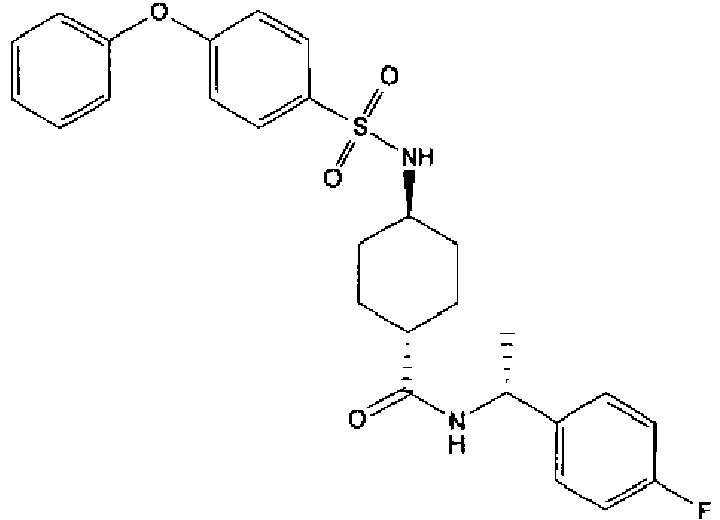
Example 2A 492.0 148 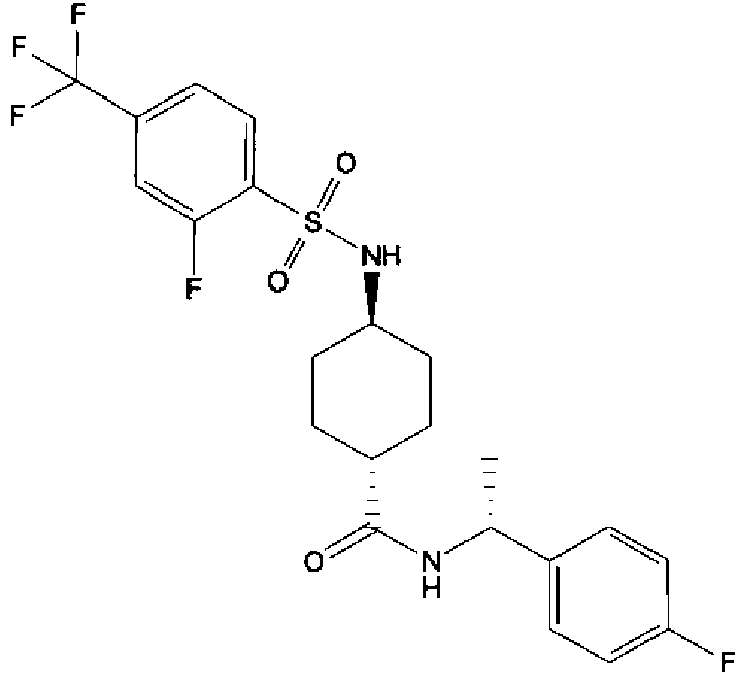
Example 2A 491.0 149 
Example 2A - 150 
Example 2A 445.0 151 
Example 2A 541.0 152 
Example 1 507.0 153 
Example 2A 497.1 154 
Example 2A [M+H] = 498.9 155 
Example 2A [M+H] = 518.9 156 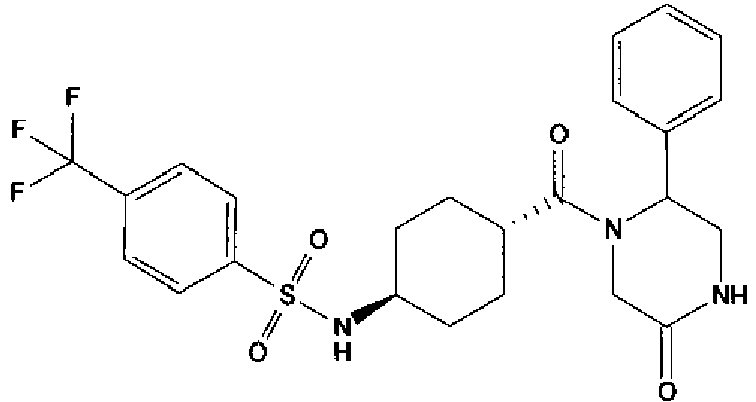
Example 1 510.0 157 
Example 1 510.0 158 
Example 1 500.0 159 
Example 1 509.3 160 
Example 1 522.0 161 
Example 1 524.0 162 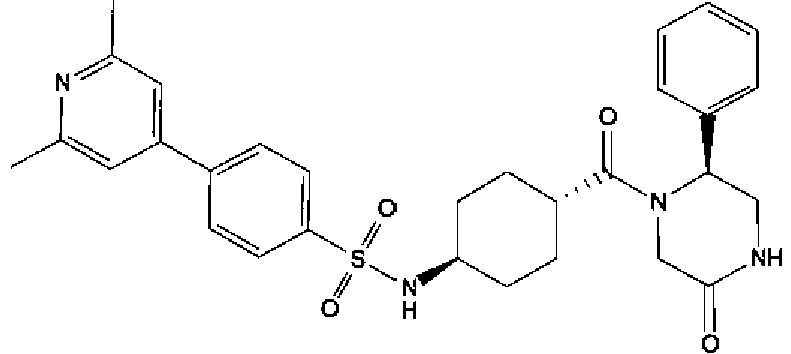
Example 1 547.0 163 
Example 1 470.3 164 
Example 1 484.2 165 
Example 1 498.3 166 
Example 1 484.0 167 
Example 1 484.0 168 
Example 1 482.0 169 
Example 1 476.1 170 
Example 1 - -

- (1r,4r)-4-(4-(Trifluoromethyl)phenylsulfonamido)-cyclohexancarboxylic acid (Intermediate 58, 5g, 14mmol) was suspended in DCM (150ml), to which 2M oxalyl chloride solution (10.67ml, 21mmol) and 2 drops DMF were added. The reaction mixture was heated at 35 °C for 1 hr. The initial white, foamy suspension became a clear, light yellow solution (about 30-45 min). The reaction mixture was then cooled and concentrated to a light yellow waxy solid. This material was taken up in 30-40 ml DCM and added dropwise to a solution of the hydrochloride salt of (1S,2R)-1-amino-1-phenylpropan-2-ol (Intermediate 55, 2.67g, 14mmol) and DIPEA (7.36g, 9.94ml, 56mmol) in 150 ml DCM at 0 °C. Upon complete addition, the ice bath was removed and the reaction stirred 1 hr at room temperature. The reaction mixture was then concentrated and residue treated with ethyl acetate, then washed with 1M HCl(aq), then sat NaHCO3(aq), and brine. The combined organics were dried over MgSO4, filtered and concentrated to afford a gummy solid. This material was purified via flash chromatography eluting with neat ethyl acetate to afford a white foam. This material was triturated with ether and filtered to afford a white powder (3.82g, 50% yield).
1H NMR (400 MHz, DMSO-d 6) δ ppm 0.97 (d, J=6.32 Hz, 3 H) 1.09 - 1.31 (m, 4 H) 1.54 - 1.70 (m, 4 H) 2.09 (ddd, J=11.62, 8.46, 3.16 Hz, 1 H) 2.95 (td, J=7.26, 3.66 Hz, 1 H) 3.75 (d, J=6.06 Hz, 1 H) 4.60 (d, J=5.56 Hz, 2 H) 7.18 (td, J=5.49, 3.16 Hz, 1 H) 7.23 - 7.28 (m, 4 H) 7.94 (d, J=7.33 Hz, 1 H) 7.96 - 8.04 (m, 5 H)
M+H=485.3 -
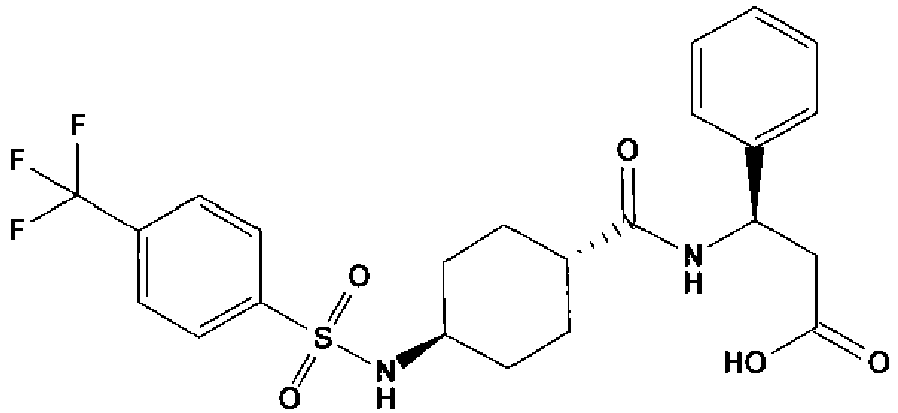
- The title compound was prepared by treating Example 76 with aqueous NaOH using a method analogous to the method used to prepare Intermediate 58. MS 499.0.
-

- The title compound was prepared by treating Example 84 with aqueous using a method analogous to the method used to prepare Intermediate 58. MS MH+ 527.2
-

- The title compound was prepared by reducing Example 173 with LiAlH4.
- Examples 175 and 176 in the table below were prepared by stirring the indicated starting material with concentrated HBr in acetic acid and then evaporate to dryness.
Example Structure S.M. MS MH+ 175 
Example 68 470.0 176 
Example 69 460.0 -

- (S)-tert-Butyl 4-(trans-4-(4-chloro-3-(ethylamino)phenylsulfonamido)cyclo-hexanecarbonyl)-3-phenylpiperazine-1-carboxylate (Example 1, 77mg, 0.127mmol) was stirred in 20% v/v TFA/DCM overnight. The reaction was dilutee with DCM and water and the pH was adjusted to 13 with 1 N NaOH. The layers were separated, and the organic layer was concentrated and chromatographed on reverse phase Phenomenex Gemini Axia C18 30x100mm column using a gradient of 15-100% AcCN in water containing 5mM ammonium hydroxide. The product was lyophilized to yield the title compound (31.5mg, 0.62mmol). MS MH+ 505.4.
- The compounds in the Table below were prepared by a method analogous to the Boc deprotection as described in Example 177 from the appropriate Boc protected starting material.
Example Structure MS 178 
495.2 179 
530.0 180 
530.0 181 
486.0 182 
496.0 183 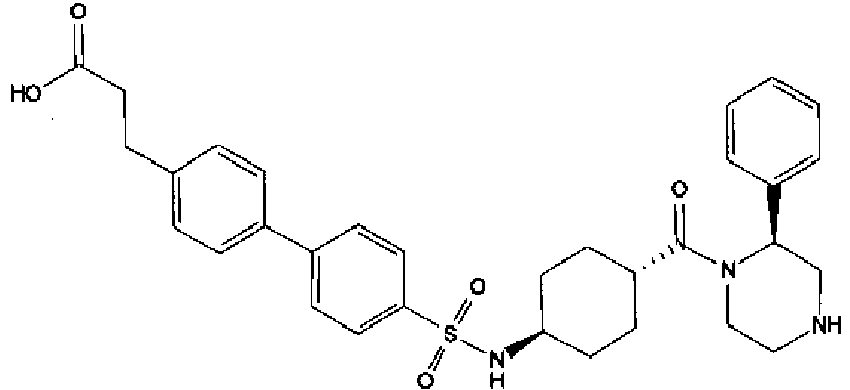
576.0 184 
605.0 185 
457.2 186 
485.4 187 
499.4 188 
495.2 189 
495.2 190 
505.4 191 
519.4 192 
477.1 193 
495.0 194 
511.4 195 
- 196 
548.0 197 
576.0 198 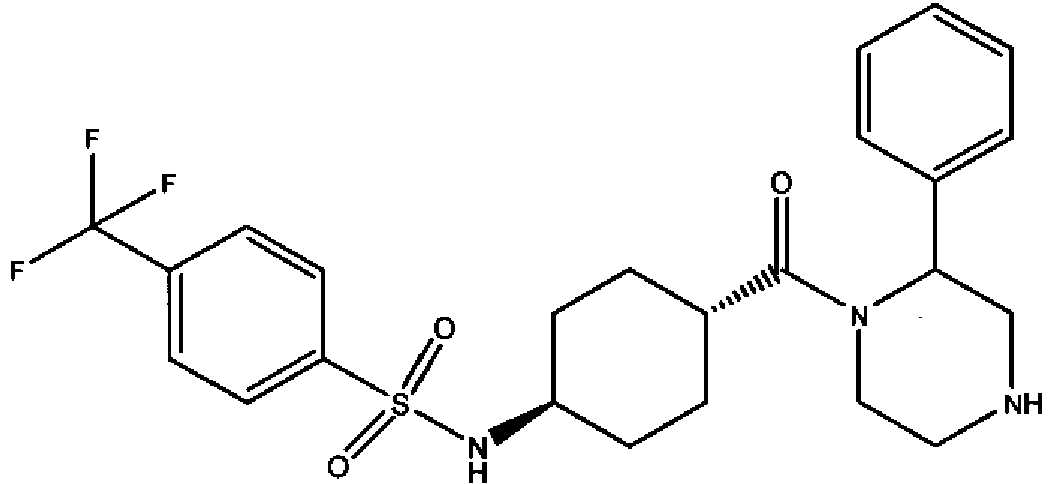
496.0 199 
448.2 200 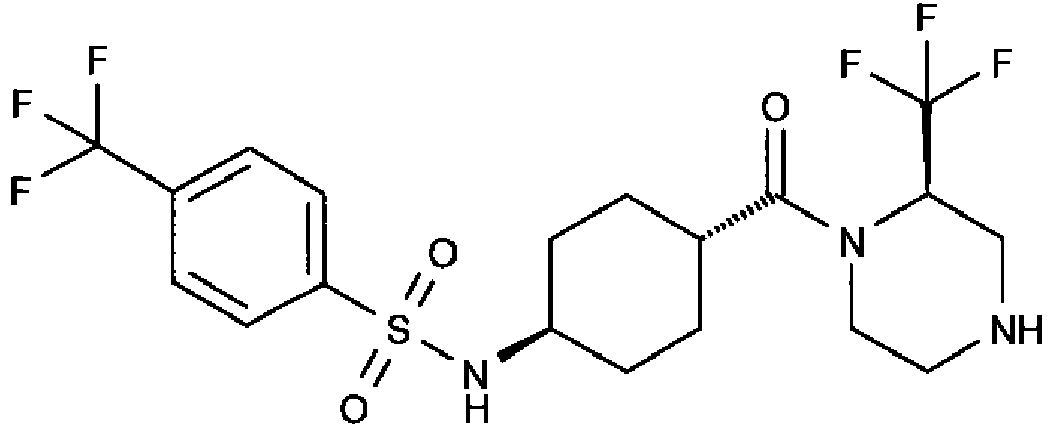
488.1 -

- To a mixture of trans-4-(4-(trifluoromethyl)phenylsulfonamido)cyclohexanecarboxylic acid (Intermediate 18, 110 mg, 0.313 mmol,), (S)-4-phenyloxazolidin-2-one (25.5 mg, 0.157 mmol) in toluene (2 ml) was added triethylamine (0.087 ml, 0.626 mmol). The mixture was heated to 80°C to obtain a solution. Pivaloyl chloride (0.039 ml, 0.313 mmol) in toluene (1 ml) was added to the reaction mixture, and it was heated to 110 °C with stirring for 18 hr. The reaction mixture was then diluted with 1M HCl and extracted with DCM. The DCM layer was dried (MgSO4), then filtered and concentrated in vacuo to a tanned solid. The crude material was purified via normal phase chromatography on biotage SP1, using 25+M column and a calculated gradient from 50% EtOAc in heptane, to yield the title compound as a white solid (8mg, 10%). MS MH+ 497.2
-

- The title compound was prepared by a method analogous to the method used to prepare Example 138 using trans-4-(4-(trifluoromethyl)phenylsulfonamido)cyclohexanecarboxylic acid (Intermediate 18) and (S)-4-isopropyloxazolidin-2-one as the starting material. MS MH+ 463.1
-

- Trans-4-(4-nitro-benzenesulfonylamino)-cyclohexanecarboxylic acid [(R)-1-(4-fluoro-phenyl)-ethyl]-amide (Example 113, 0.3g, 0.667mmol) was suspended in EtOH (15ml), to which ammonium formate (0.253g, 4.0mmol) and then Pd/C (0.15g) were added. The reaction mixture was heated under reflux for 2 hours, at which point LC-MS showed one peak corresponding to desired product. The reaction mixture was filtered through celite and the filtrate was concentrated to afford the title compound as a white solid (0.249g - 89% yield).
- The compounds in the Table below were prepared by a method analogous to the method used to prepare Example 203 using the starting materials indicated.
Example Structure S.M. MS MH+ 204 
Example 74 - 205 
Example 225 464.1 206 
Example 108 434.1 207 
Example 106 - 208 
Example 79 - 209 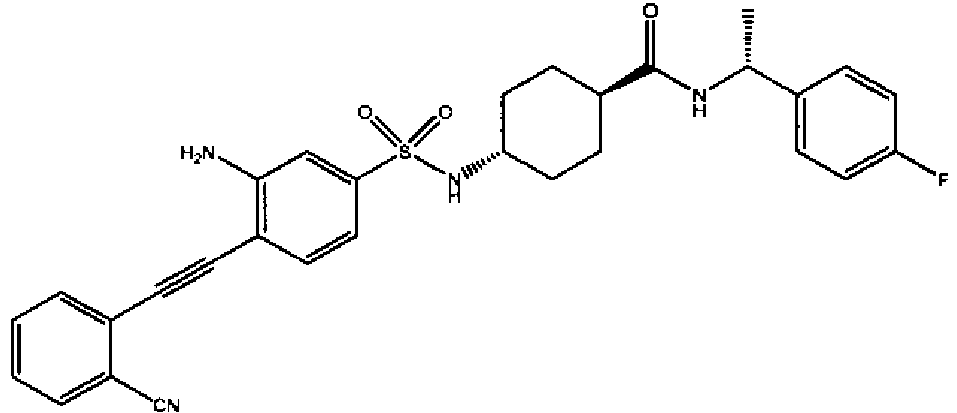
Example 78 - 210 
Example 81 - -

- Methyl chloroformate (13.08 mg, 0.138 mmol) was added to 0°C solution of trans-4-(3-amino-4-methyl-benzenesulfonylamino)-cyclohexanecarboxylic acid [(R)-1-(4-fluoro-phenyl)-ethyl]-amide (Example 206, 50 mg, 0.115 mmol) and pyridine (12.13 µl, 0.150 mmol) in DCM. The reaction was stirred for five minutes then the cooling bath was removed and the reaction was allowed to stir at room temperature 16 hours. The reaction was concentrated to a residue which was diluted with ethyl acetate. The ethyl acetate solution was washed successively with 1 N HCl, saturated sodium bicarbonate, and brine then the organic layer was dried over sodium sulfate, filtered and concentrated to yield the title compound (27mg). MS MH+ 492.1
- Examples 212 and 213 were prepared using standard amide forming conditions from the starting materials indicated.
Ex. Structure S.M. MS 212 
Example 205 462.3 213 
Example 205 524.4 -

- Trans-4-(4aminophenylsulfonamido)-N-((R)-1-(4-fluorophenyl)ethylcyclohexane-carboxamide (Example 203, 0.045g, 0.107mmol) was dissolved in DCM (5ml), to which DIPEA (0.037ml, 0.215mmol) and then phenyl isocyanate (0.011ml, 0.107mmol) were added. The reaction mixture was stirred at room temperature for 1 hour, after which LC-MS showed one major peak corresponding to desired product. The reaction mixture was concentrated and the residue was purified via Biotage automated flash column chromatography (12M, eluting with 10-100% EtOAc/Hept). Relevant fractions were pooled and concentrated to afford the title compound as a tan solid (0.01266g - 15% yield). MS MH+ 539.4
-

- Triphosgene (0.011g, 0.0357mmol) was dissolved in dioxane (5ml), to which a solution of trans-4-(4aminophenylsulfonamido)-N-((R)-1-(4-fluorophenyl)ethylcyclohexane-carboxamide (Example 203, 0.05g, 0.119mmol) and DIPEA (0.041ml, 0.238mmol) in dioxane (5ml) was added. The reaction mixture was stirred at room temperature for 5 mins, after which piperidine (0.012ml), 0.119mmol) was added, and the mixture was heated under reflux overnight. LC-MS indicated one major peak corresponding to desired product, and the reaction mixture was concentrated to a residue. The residue was purified via prep HPLC (10-80-100% ACN/water/0.1% TFA) and relevant fractions were frozen and lyophilized to afford the title compound as a white powder (0.00475g - 10% yield). MS MH+ 531.2
- The following urea derivatives were prepared by a method analogous to the method used to prepare Example 214 or 215 using the starting material indicated.
Example Structure S.M. MS 216 
Example 204 & ethyl isocyanate 491.1 217 
Example 205 & phenyl isocyanate 539.2 218 
Example 207 & methyl isocyanate 478.1 219 
Example 205, phosgene & (R)-1-phenyl-ethanamine 567.0 -

- Cyclopentylbromide (10.45mg, 0.07mmol) was added to solution of trans-4-(4-hydroxy-3-methoxy-benzenesulfonylamino)-cyclohexanecarboxylic acid [(R)-1-(4-fluoro-phenyl)-ethyl]-amide (Example 2, 31.6mg, 0.07mmol) and potassium carbonate (19.4mg, 0.14mmol) in dimethylformamide(700ul). The reaction was heated 50°C for 16h, cooled to room temperature, diluted with ethyl acetate and rinsed with 1:1 water:brine. The organic layer was concentrated and purified by reverse-phase chromatography followed by lyophilization to yield title compound (18mg, 0.035mmol). MS MH+ 519.1
-

- Trans-N-((R)-1-(4-Fluorophenyl)ethyl)-4-(4-hydroxy-3-methoxyphenylsulfonamido)cyclohexanecarboxamide (Example 2, 14mg, 0.031mmol), 2-iodopropane (4ul, 0.037mmol), K2CO3 (21 mg, 0.155mmol) and tetrabutylammonium iodide (TBAI, 3mg, cat) were dissolved in DMF (0.5 ml) and the reaction was stirred at room temperature for 15 hr under nitrogen. LCMS indicated that the reaction was complete, and the crude material was purified via reverse phase chromatography on prep-HPLC (150mm, C8 luna, 15-20 min run, 10%-100% MeCN in water containing 0.1% TFA). Fractions containing the product were lyophilized to yield the title compound as a white solid (6.4mg, 42%). MS MH+ 493.1
-

- Trans-N-((R)-1-(4-fluorophenyl)ethyl)-4-(4-(methoxymethyl)phenyl-sulfonamido)cyclohexanecarboxamide was prepared from trans-N-((R)-1-(4-fluorophenyl)ethyl)-4-(4-(bromomethyl)phenylsulfonamido)cyclohexanecarboxamide (Example 153) using the method disclosed in Synthetic Communications 1993, 23(6), 749-756, B. Ortiz, et al. MS MH+ 449.2
-

- Trans-4-(5-Bromo-6-chloro-pyridine-3-sulfonylamino)-cyclohexanecarboxylic acid [(R)-1-(4-fluoro-phenyl)-ethyl]-amide (Example 144, 484mg, 0.933mmol) was dissolved in a solution of NaOMe in MeOH (0.5M, 28ml, 13.99mmol). The reaction mixture was stirred overnight at room temperature. LCMS indicated that the reaction was complete and it was concentrated in vacuo then taken up in EtOAc and purified via column chromatography using a biotage SP1, 40+M column, with 50% EtOAc in heptane as calculated gradient to yield the title compound as a white solid (313mg, 65%). [M+H] = 516.0
- The compounds in the table below were prepared by a method analogous to the method of preparing Example 223 using the starting materials indicated.
Example Structure S.M. MS MH+ 224 
Example 105 & NaOEt 484.0 225 
Example 106 & NaOEt 494.1 - Examples 226 and 227 were prepared using a method analogous to the method used to prepare Example 235 using the starting materials indicated.
Example Structure S.M. MS MH+ 226 
Example 105 & ethylamine 483.0 227 
Example 114 & 2-methoxymet hylpyrrolidine - - Example 228 was prepared by displacment of a fluorine group of Example 109 by 3-hydroxy-oxetane.
Example Structure S.M. MS MH+ 228 
Example 109 477.1 - Example 229 was prepared by a Buchwald coupling reaction using the starting material indicated.
Example Structure S.M. MS MH+ 229 
Example 114 491.2 -

- (1r,4R)-4-(5-bromo-6-chioropyridine-3-sulfonamido)-N-((R)-1-(4-fluorophenyl)ethyl)cyclohexanecarboxamide (Example 144, 0.5g, 0.967mmol), Pd(dppf)Cl2 (0.071 g, 0.0967mmol), Cs2CO3 (1.26g, 3.87mmol) and potassium vinyl trifluoroborate (0.194g, 1.45mmol) were dissolved in DME (8ml) and water (4ml). The reaction mixture was heated at 130 °C for 10 minutes in the microwave. LC-MS showed a number of peaks, one of which corresponded to desired product. The reaction mixture was filtered and filtrate was concentrated and dried under high vacuum overnight. The resulting brown solid was purified via flash column chromatography, eluting with 50-100% EtOAc/Heptane. Relevant fractions were pooled and concentrated to afford a peach foam (0.074g).
-

- (1r,4R)-4-(5,6-Divinylpyridine-3-sulfonamido)-N-((R)-1-(4-fluorophenyl)ethyl)cyclohexanecarboxamide (Example 230, 74 mg, 0.162 mmol) was dissolved in EtOH (15 ml) and flushed with N2. Palladium on carbon (50 mg, 0.047 mmol) was added and reaction mixture was flushed with N2 once more. The reaction mixture was then placed under a balloon of H2 and stirred vigorously for 45 mins. LC-MS showed one major peak corresponding to desired product, therefore the reaction mixture was filtered through a syringe filter and the filtrate was concentrated to afford a yellow oil. The oil was purified via reverse phase HPLC, eluting with 10-100% MeCN/0.1% TFA over 20 mins. The relevant fractions were frozen and lyophilized to give 44mg (47.3% yield). MS MH+ 462.1
-

- (1r,4R-4-(4-bromophenylsulfonamido)-N-((R)-1-(4-fluorophenyl)ethyl)cyclohexanecarboxamide (Example 115, 100 mg, 0.207 mmol), Pd(PPh3)2Cl2 (14.52 mg, 0.021 mmol) and CuI (5.91 mg, 0.031 mmol) were added to a microwave vial, to which a solution of cyclopropyl acetylene (16.41 mg, 0.248 mmol) in 2 methyl THF (3ml) was added. Diisopropylamine (2 ml, 14.03 mmol) was then added and reaction mixture was heated at 90 °C for 10 min in microwave. LC-MS showed that the majority of the mixture was still starting material, but there was a small product peak also. Therefore, the reaction mixture was heated at 90 °C for a further 30 mins. LC-MS showed no further change, therefore the reaction mixture was filtered and filtrate was concentrated to afford a deep brown oil. This material was adsorbed onto silica and purified via Biotage automated flash column chromatography 12M, eluting with 10-100% EtOAc/Heptane. Relevant fractions were pooled and concentrated to afford a tan solid, which was dried under high vacuum. LC-MS of this material showed it to be a mixture of the starting material and the product, therefore material was re-purified via reverse phase HPLC, eluting with 40-75-100% MeCN/0.1% TFA over 20 mins (C8 Luna 150mm). Relevant fractions were frozen and freeze dried to give 8.88mg (9% yield) of the desired product. MS MH+ 469.1
-

- Trans-4-(5-Bromo-6-methoxy-pyridine-3-sulfonylamino)-cyclohexanecarboxylic acid [(R)-1-(4-fluoro-phenyl)-ethyl]-amide (Example 223, 65mg, 0.126mmol), dimethylamine in THF (2M, 630ul, 1.26mmol), Pd2(dba)3 (12mg, 0.013mmol), X-phos (6mg, 0.013mmol), sodium tert-butoxide (61 mg, 0.63mmol) were dissolved in DMF (2ml). The reaction mixture was microwaved at 180 °C for 15 min., after which LCMS indicated the reaction was complete. The mixture was diluted with H2O and extracted with EtOAc (x3). The combined organic layers were concentrated in vacuo to a yellow oil which was purified via column chromatography using a biotage SP1, 25+M column, with 80% EtOAc in heptane as an isocratic gradient. Product containing fractions were concentrated in vacuo and repurified via reverse phase chromatography on prep-HPLC (150mm, C8 luna, 15-20 min run, 10%-100% MeCN in water containing 0.1% TFA). Product containing fractions were collected and lyophilized to yield the title compound as a white solid (25.3mg, 28%). MS MH+ 479.1
- The compound in the Table below was prepared by a method analogous to the method used to prepare Example 233 from the starting materials indicated.
Example Structure S.M. MS MH+ 234 
Example 223 465.2 -

- Trans-4-(5-Bromo-6-chloro-pyridine-3-sulfonylamino)-cyclohexanecarboxylic acid [(R)-1-(4-fluoro-phenyl)-ethyl]-amide (Example 241, 300mg, 0.580mmol) was dissolved in NMP (3ml). DIPEA (202ul, 1.16mmol) was added followed by dimethylamine in THF (2M, 0.87ml, 1.74mmol). The reaction mixture was microwaved at 160 °C for 15min., after which LCMS indicated that the reaction was complete. The mixture was diluted with EtOAc and washed H2O. The organic layer was concentrated in vacuo and purified via column chromatography using a biotage SP1, 12+M column, with 50% EtOAc in heptane as calculated gradient to yield the title compound as a white solid (258mg, 84%). MS MH+ 529.9
- The compound in the Table below was prepared by a method analogous to the method used to prepare Example 235 from the starting materials indicated.
Example Structure S.M. MS MH+ 235 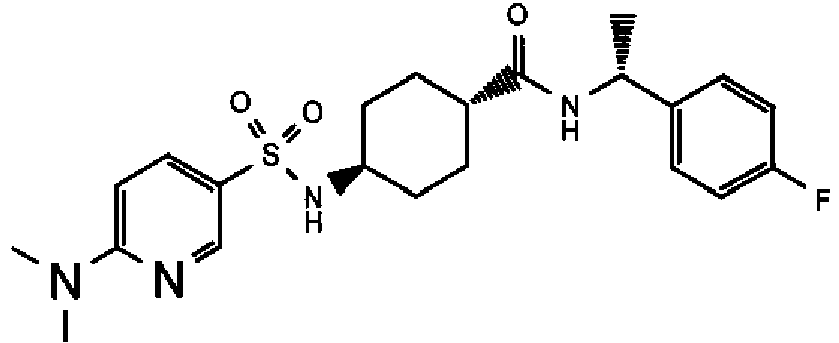
Example 114 449.1 -

- Trans-4-(4-Bromo-benzenesulfonylamino)-cyclohexanecarboxylic acid [(R)-1-(4-fluorophenyl)-ethyl]-amide (Example 115, 100mg, 0.206mmol), Pd(dppf)Cl2.DCM (34mg, 0.04mmol), 2M Na2CO3 (1ml, 2.06 mmol) and 5-methyl-3-pyridine boronic acid (51 mg, 0.37mmol) were dissolved in DMF (1-2ml) under N2. The reaction mixture was microwaved at 160 °C for 20 min., after which LCMS indicated that the reaction was complete. The mixture was diluted with EtOAc and washed with H2O (x2). The organic layer was concentrated in vacuo, and the crude material purified via column chromatography using a biotage SP1 25+ S column with a gradient of 80-100% EtOAc in heptane. Product fractions combined and concentrated to give the title compound as a white solid (44mg, 43%). MS MH+ 496.1
-

- Trans-4-(4-Bromo-3-methyl-benzenesulfonyiamino)-cyclohexanecarboxylic acid [(R)-1-(4-fluoro-phenyl)-ethyl]-amide (Example 154, 100mg, 0.201 mmol), Pd(dppf)Cl2.DCM (33mg, 0.04mmol), 2M Na2CO3 (1ml, 2.01 mmol) and 2-methyl-4-pyridine boronic acid (41 mg, 0.302mmol) were dissolved in DMF (1ml) under N2. The reaction mixture was microwaved at 160 °C for 20 min., after which LCMS indicated that the reaction was complete. The mixture was diluted with EtOAc and washed with H2O (x2). The organic layer was concentrated in vacuo, and the crude material was purified via column chromatography using a biotage SP1 25+ S column with a gradient 100% EtOAc. Product fractions combined and concentrated to give the title compound as a white solid (31mg, 30%). MS MH+ 510.1
-

- Trans-4-(4-Bromo-3-chloro-benzenesulfonylamino)-cyclohexanecarboxylic acid [(R)-1-(4-fluoro-phenyl)-ethyl]-amide (Example 155, 100mg, 0.193mmol), Pd tetrakis (45mg, 0.039mmol), Na2CO3 (52mg, 4.83mmol) and 2-methyl-4-pyridine boronic acid (34mg, 0.251mmol) was dissolved in EtOH (4ml) and toluene (4ml) under N2 and the mixture was refluxed overnight. LCMS indicated that the reaction was complete, and it was concentrated in vacuo. then taken up in EtOAc and washed with H2O (x2). The organic layer was concentrated in vacuo, and the crude material was purified via column chromatography using a biotage SP1 25+S column with a gradient 80%-100% EtOAc in heptane. Product fractions were combined and repurified on prep-HPLC (150mm, C8 luna, 15-20 min run, 10%-100% MeCN in water containing 0.1% TFA), then lyophilized to yield the title compound as a white solid (27mg, 22%). MS MH+ 530.1
-

- Trans-4-(6-Chloro-pyridine-3-sulfonylamino)-cyclohexanecarboxylic acid [(R)-1-(4-fluoro-phenyl)-ethyl]-amide (Example 114, 100mg, 0.225mmol), pyrazole (70mg, 0.91mmol), Pd2(dba)3 (25mg, 0.025mmol), Xantphos (20mg, 0.05mmol), sodium tert-butoxide (108 mg, 1.125mmol) were dissolved in toluene (1ml) and tert-butanol (3ml). The reaction mixture was microwaved at 160 °C for 5 min., after which LCMS indicated that the reaction was complete. The reaction was diluted with DCM and MeCN and filtered through a syringe, the concentrated in vacuo to a yellow oil. The crude material was purified via reverse phase chromatography and lyophilized to yield the title compound as a white solid (15mg, 14%). [M+H] = 472.08
-

- Trans-4-(4-Bromo-benzenesulfonylamino)-cyclohexanecarboxylic acid [(R)-1-(4-fluoro-phenyl)-ethyl]-amide (Example 115,80mag, 0.166mmol), imidazole (14mg, 0.199mmol), polyethylene glycol (30mg), Cs2CO3 (76 mg, 0.232 mmol), and Copper II oxide (2mg, 0.01mmol) were weighed into a microwave vial. The vial was flushed with N2, NMP was added and the reacction mixture was microwaved at 200 °C. After 20 min. the reaction mixture was diluted with EtOAc (50ml) and filtered through celite. The filtrate was concentrated in vacuo and the residue was passed through a 25+S biotage column with an isocratic gradient of 10% MeOH in EtOAc. Product fractions combined and concentrated. The crude product was repurified via reverse phase chromatography on prep-HPLC (150mm, C8 luna, 15-20 min run, 10%-100% MeCN in water containing 0.1% TFA) and the fractions containing the product were lyophilized to yield the title compound as a white solid (6.3mg). MS MH+ 471.1
-

- Trans-N-((R)-1-(4-fluorophenyl)ethyl)-4-(4,4,5,5-tetramethyl-1,3,2-dioxaborolan-2-yl)phenylsulfonamido)cyclohexanecaboxamide (Intermediate 64, 0.206mmol), Pd(dppf)Cl2.DCM (19mg, 0.023mmol), 2M Na2CO3 (0.57ml, 1.14mmol) and 2-bromo-imidazole (17mg, 0.114mmol) dissolved in DMF (2ml) under N2, and the mixture was microwaved at 160 °C for 20 min., after which LCMS indicated that the reaction was complete. The mixture was diluted with DCM and MeOH and filtered through a syringe filter. The filtrate was then passed through a 40+S biotage column with an isocratic gradient of 10% MeOH in EtOAc and the product fractions were combined and concentrated. Crude product was repurified via reverse phase chromatography on prep-HPLC (150mm, C8 luna, 15-20 min run, 10%-100% MeCN in water containing 0.1% TFA) and the product containing fractions were lyophilized to yield the title compound as a white solid (4.2mg, 3%). MS MH+ 471.1
- The compounds in the Table below were prepared using a method analogous to the Suzuki coupling reactions shown in Examples 237 through 242.
Ex. Structure LCMS 243 
516.1 244 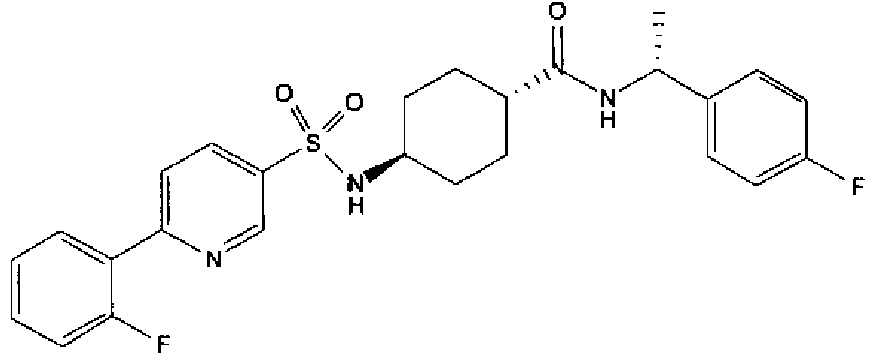
500.0 245 
500.0 246 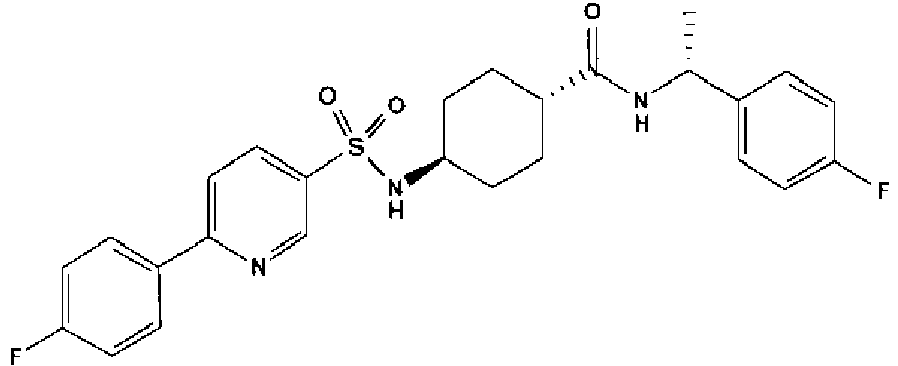
500.2 247 
512.2 248 
525.0 249 
539.2 250 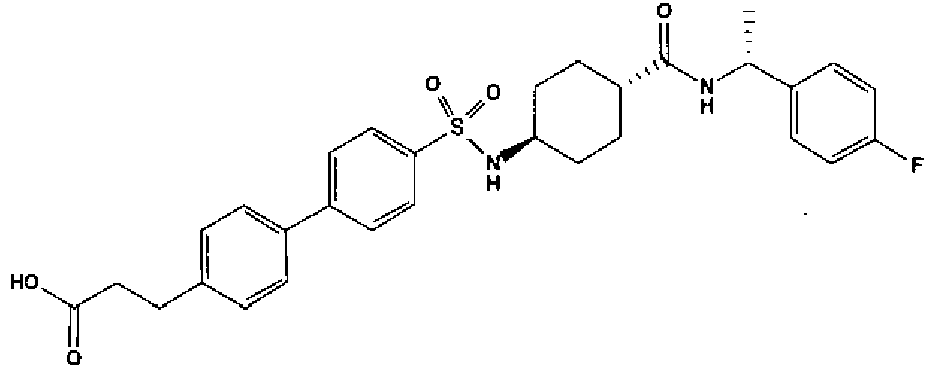
553.2 251 
525.0 252 
553.0 253 
555.2 254 
512.2 255 
- 256 
486.0 257 
479.0 258 
464.0 259 
479.0 260 
497.0 261 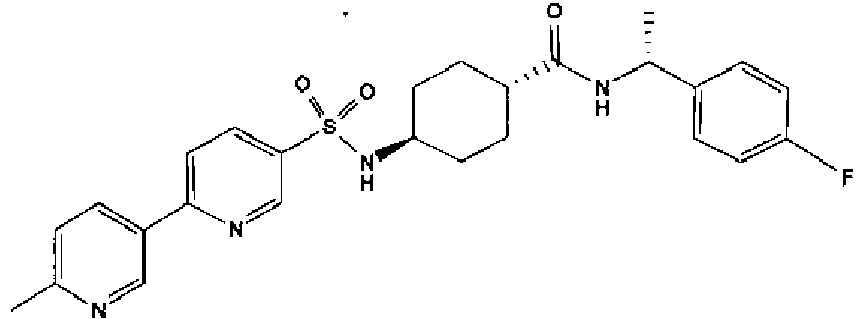
497.0 262 
482.0 263 
555.0 264 
578.0 265 
567.0 266 
568.0 267 
536.0 268 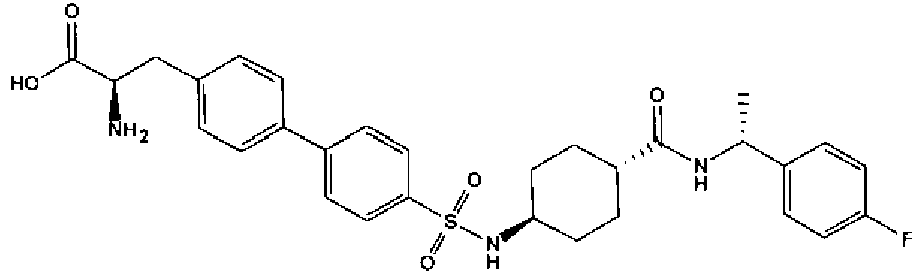
568.0 269 
568.0 270 
568.0 271 
579.0 272 
581.0 273 
607.0 274 
563.0 275 
505.0 276 
485.1 277 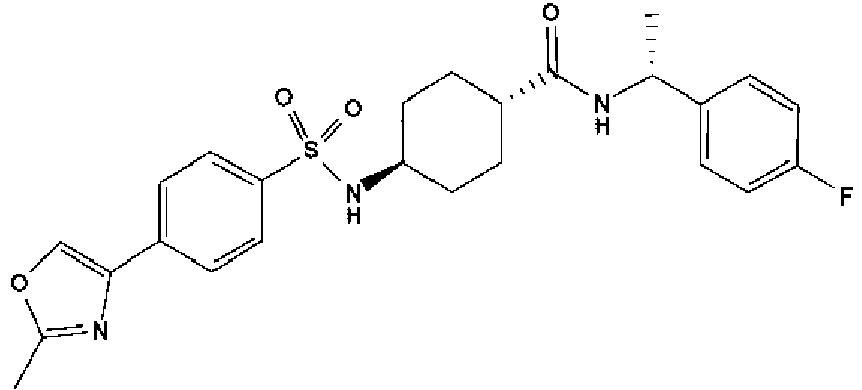
486.1 278 
472.2 279 
498.3 280 
508.0 281 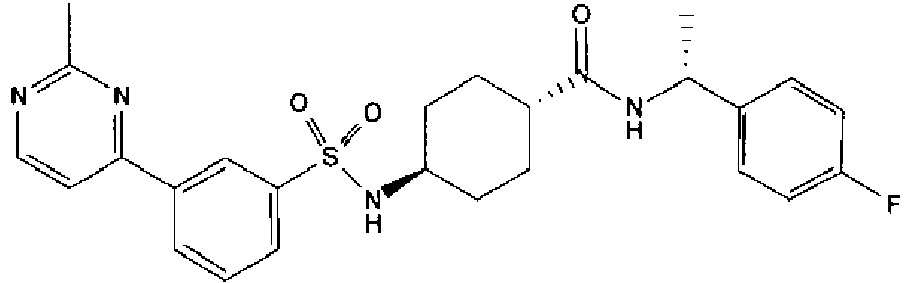
497.2 282 
471.1 283 
502.1 284 
482.1 285 
470.1 286 
473.1 287 
472.1 288 
482.2 289 
496.1 290 
500.2 291 
496.1 292 
512.1 293 
496.1 294 
496.2 295 
525.1 296 
500.1 297 
485.1 298 
485.2 299 
512.1 300 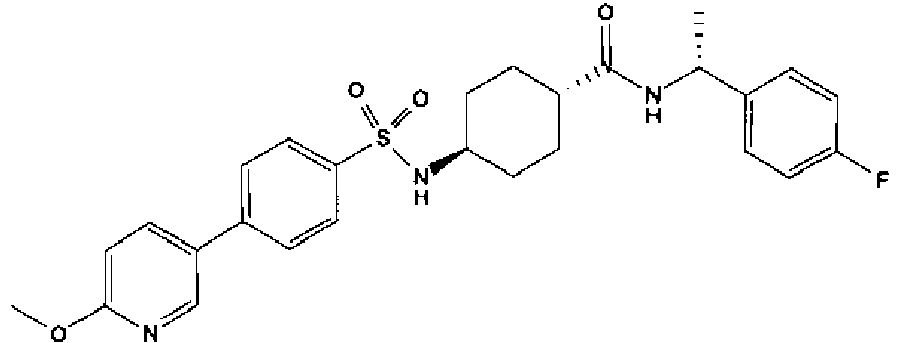
512.1 301 
525.1 302 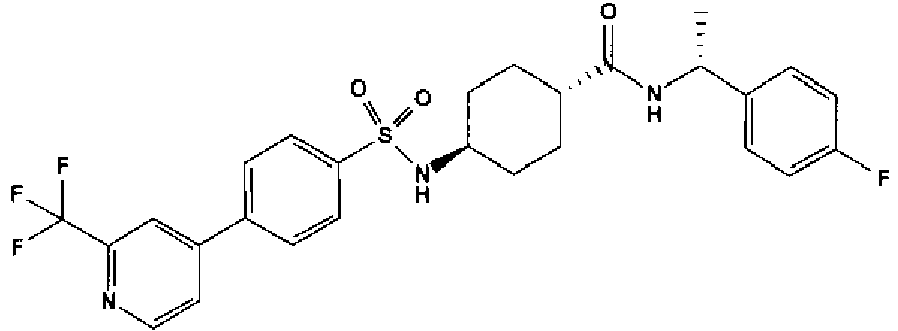
550.1 303 
482.1 304 
485.2 305 
478.1 306 
496.1 307 
488.2 308 
516.0 309 
500.1 310 
514.1 311 
510.2 312 
514.1 313 
479.2 314 
494.0 315 
494.0 316 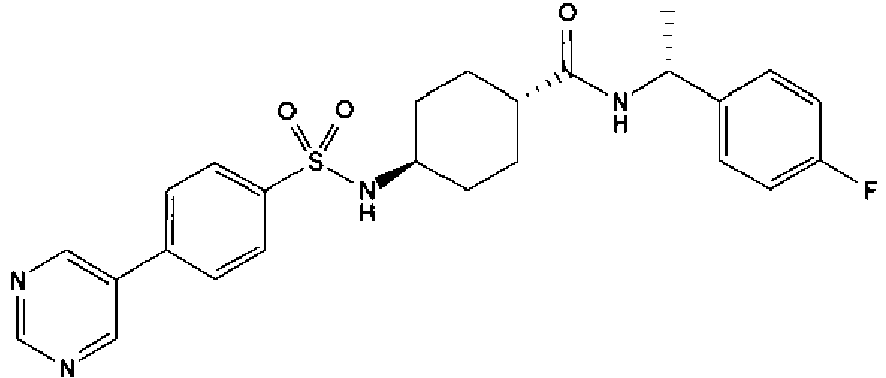
483.2 317 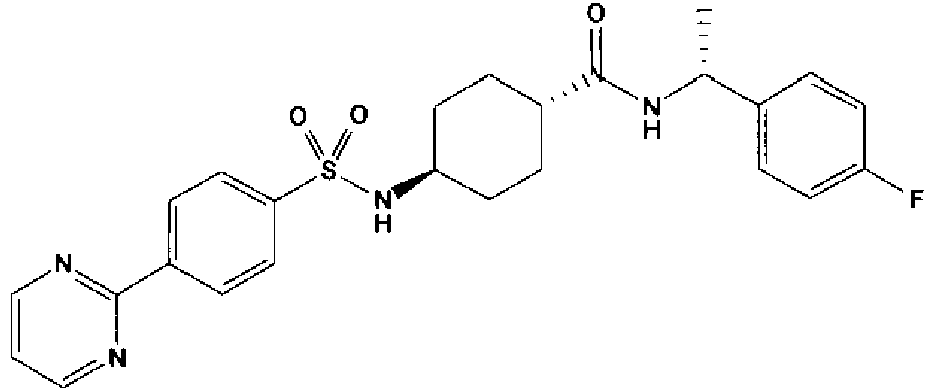
483.2 318 
483.2 319 
483.3 320 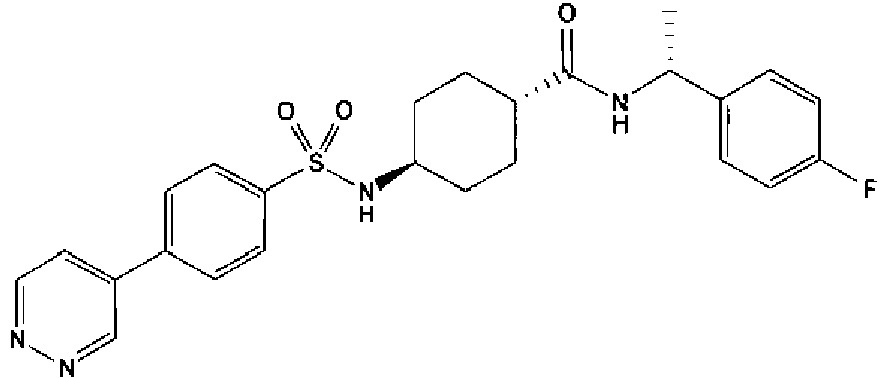
483.2 321 
497.2 322 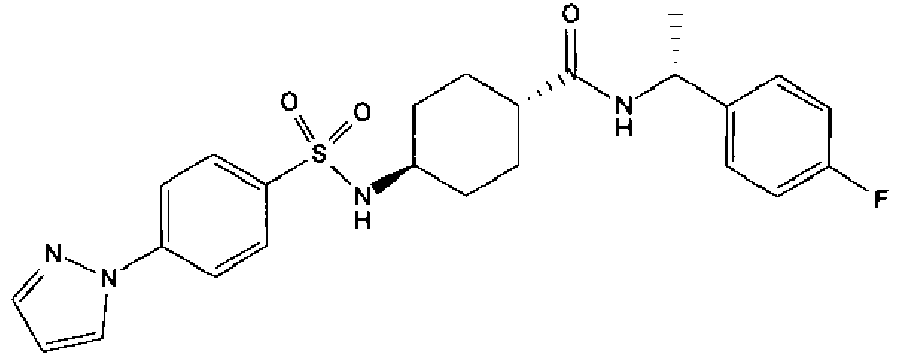
471.1 323 
502.1 324 
482.1 325 
553.1 326 
454.2 327 
502.0 328 
487.0 329 
482.2 330 
511.2 331 
551.0 332 
540.0 333 
534.0 334 
531.0 335 
531.0 336 
485.0 337 
537.0 338 
485.0 339 
485.0 340 
499.0 341 
485.0 342 
499.0 343 
499.0 344 
499.0 345 
499.0 346 
485.0 347 
556.0 348 
510.0 349 
524.0 350 
481.0 351 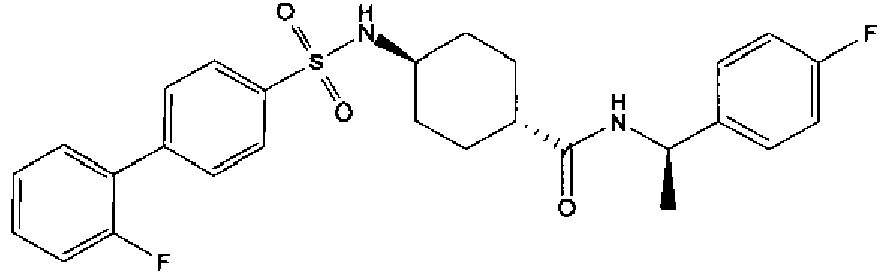
499.0 352 
510.0 353 
560.0 354 
600.0 355 
560.0 356 
580.0 357 
600.0 358 
614.0 359 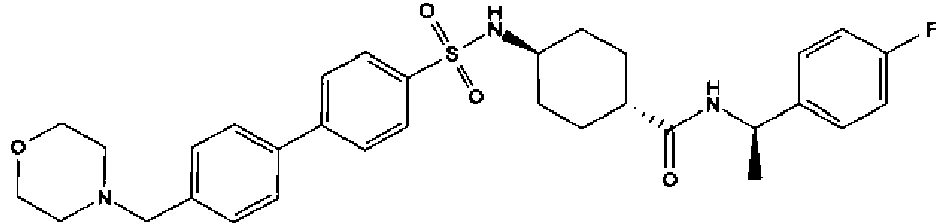
580.0 360 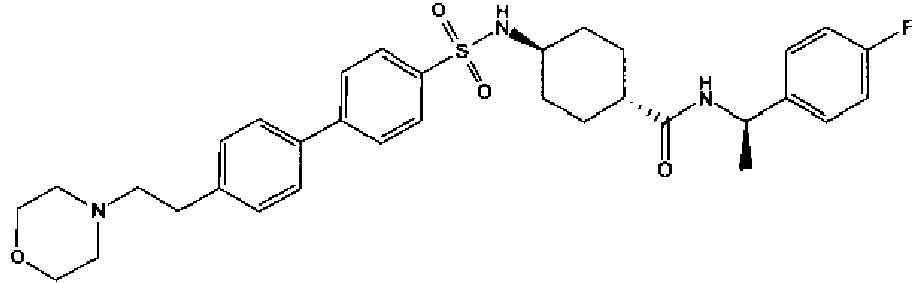
595.0 361 
595.0 362 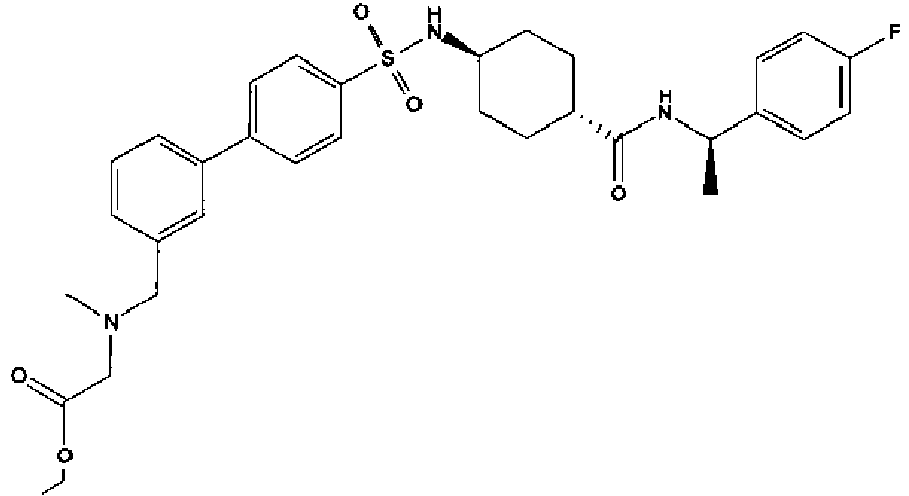
611.0 363 
611.0 364 
568.0 365 
569.0 366 
610.0 367 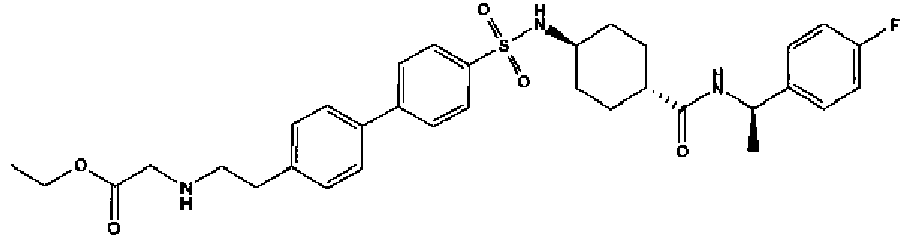
611.0 368 
582.0 369 
582.0 370 
568.0 371 
568.0 372 
582.0 373 
583.0 374 
642.0 375 
662.0 376 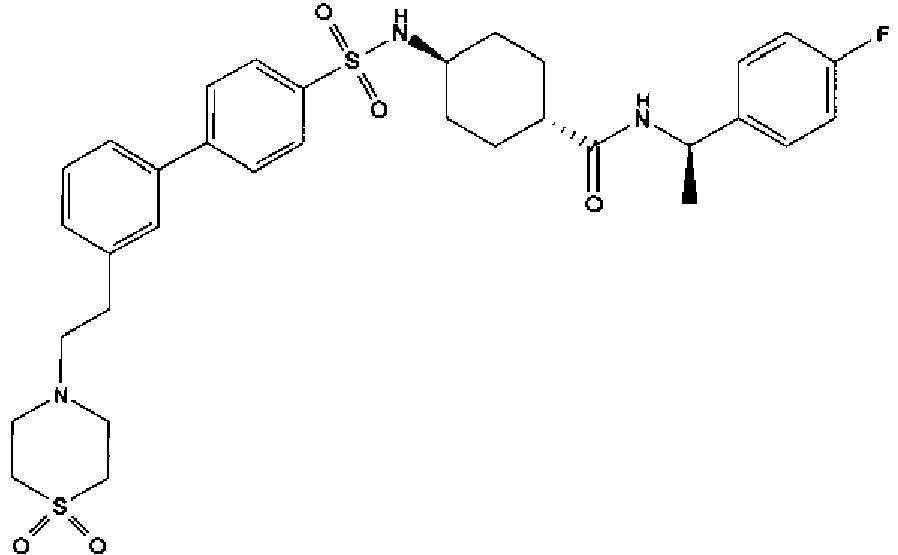
642.0 377 
662.0 378 
524.0 379 
596.0 380 
629.0 381 
630.0 382 
658.0 383 
678.0 384 
601.0 385 
611.0 386 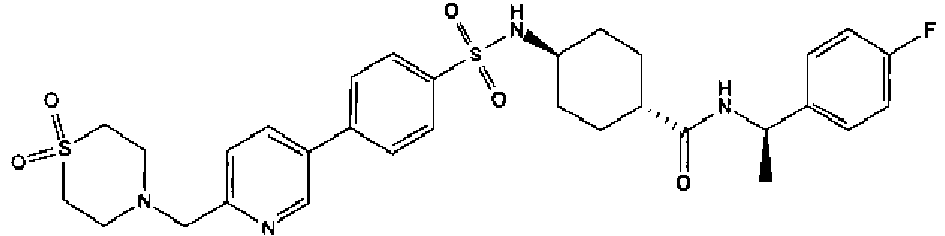
629.0 387 
601.0 388 
629.0 389 
581.0 390 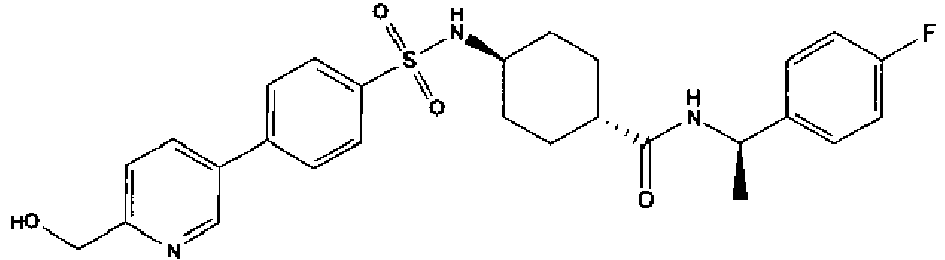
512.0 391 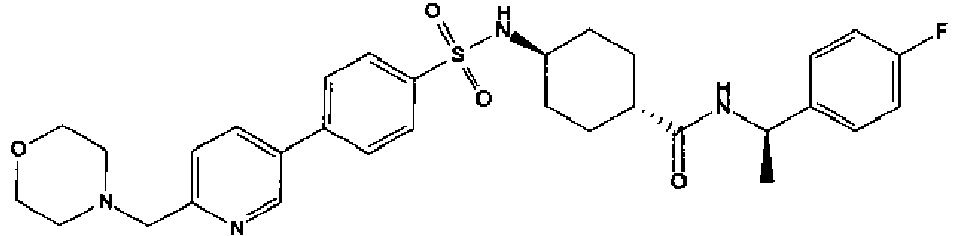
581.0 392 
639.0 393 
667.0 394 
667.0 395 
507.0 396 
525.0 397 
522.0 398 
522.0 399 
538.0 400 
525.0 401 
539.0 402 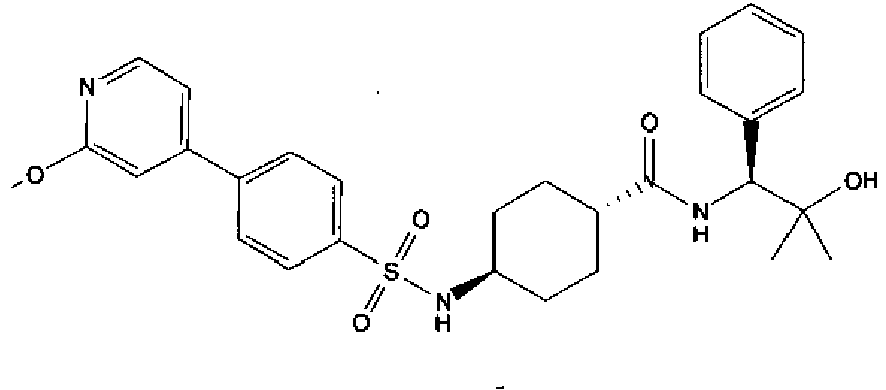
538.0 403 
508.0 404 
511.0 405 
536.0 406 
577.4 407 
576.0 408 
562.0 409 
561.0 410 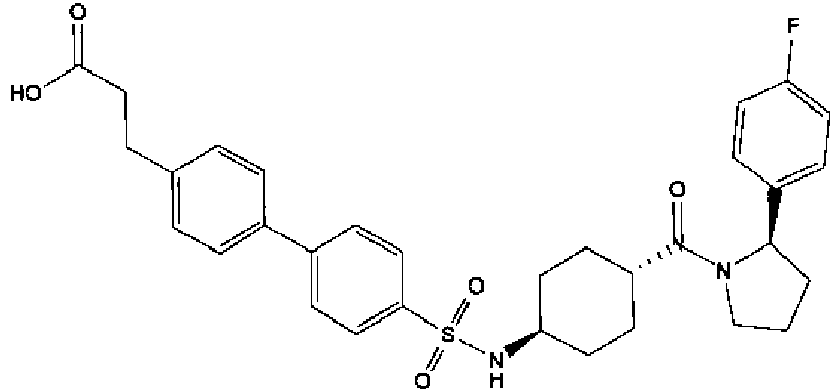
579.0 411 
562.0 412 
542.0 413 
682.0 414 
654.0 415 
674.6 (M-H) 416 
594.0 417 
577.0 418 
577.0 419 
577.0 420 
595.0 421 
577.0 422 
605.0 423 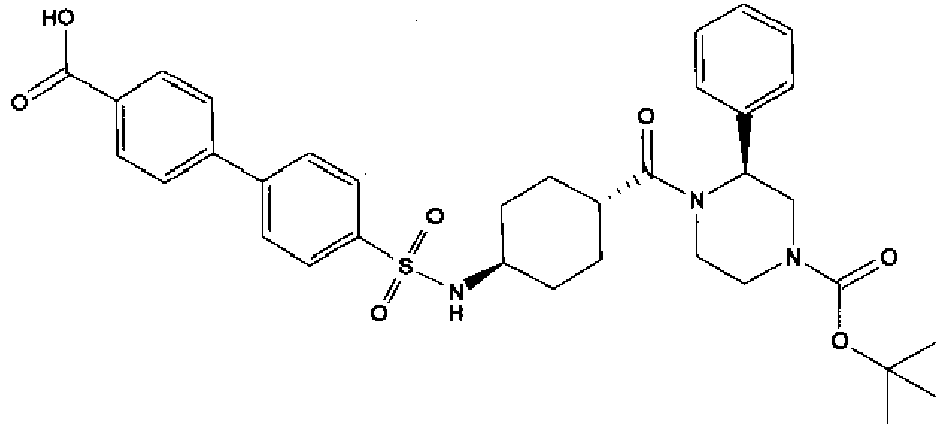
646 (M-H) 424 
704.3 425 
- 426 
676.3 427 
532.0 428 
518.0 429 
519.0 430 
536.0 431 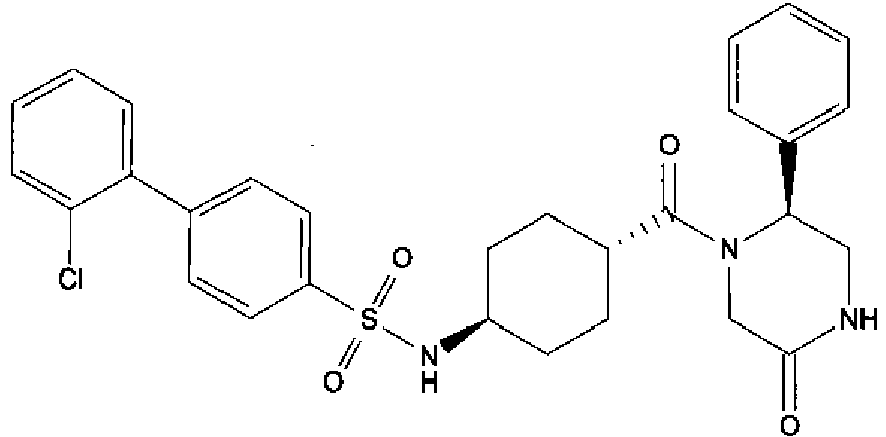
552.0 432 
533.0 433 
533.0 434 
549.0 435 
549.0 436 
536.0 437 
550.0 438 
522.0 439 
532.0 -

- Tetrabutylammonium-tribromide (216mg, 0.447mmol) was added to solution of trans-4-(4-acetyl-benzenesulfonylamino)-cyclohexanecarboxylic acid [(R)-1-(4-fluoro-phenyl)-ethyl]-amide (Example 104, 194mg, 0.434mmol) in DCM/MeOH (2/1, 1.45ml) at room temperature. The reaction was stirred 16-40 hours, then concentrated and partitioned between ethyl acetate and saturated sodium bicarbonate. The organic layer was dried over magnesium sulfate and concentrated to crude product which was chromatographed on a Biotage 40S column using ethyl acetate/heptane as the eluent to give the title compound (122mg, 0.232mmol).
-

- A slurry of trans-4-[4-(2-bromo-acetyl)-benzenesulfonylamino]-cyclohexanecarboxylic acid [(R)-1-(4-fluoro-phenyl)-ethyl]-amide (Example 440, 45mg, 0.086mmol) in formamide (57.9mg, 1.285mmol) was prepared and immersed in 130°C oil for 90 minutes. The reaction was cooled to room temperature and the residue was diluted in 10% water in acetonitrile and chromatographed under basic reverse phase conditions on Phenomenex Gemini Axia C18 30x100mm 15-100% over 12 minutes; tr 7.05 minutes. Product containing fractions were lyophilized overnight to yield the title compound (16mg, 0.034mmol).
-

- Magnesium monoperoxyphthalate hexahydrate (66.8 mg, 0.135 mmol) was suspended in MeOH (0.5 ml) and cooled to 0 °C. Trans-4-(4-pyridin-4-yl-benzenesulfonylamino)-cyclohexanecarboxylic acid [(R)-1-(4-fluoro-phenyl)-ethyl]-amide (Example 284, 50 mg, 0.097 mmol) in DCM (0.5 ml) was added dropwise and the reaction mixture was left to stir overnight at 23 °C. LCMS indicated that the reaction was complete, and the mixture was concentrated in vacuo to a residue which was purified by reverse phase chromatography on prep-HPLC (150mm, C8 luna, 15-20 min run, 10%-100% MeCN in water containing 0.1°C TFA). Product containing fractions were lyophilized to yield the title compound (10mg, 21%). MS MH+ 498.1
-

- tert-Butyl (1S,4s)-4-((R)-1-(-4-fluorophenyl)ethylcarbamoyl)-4-hydroxycyclohexyl(4-(trifluoromethyl)phenylsulfonyl)cabamate (Intermediate 90, 4mg) was deprotected using standard TFA in dichloromethane conditions (see Example 177) to afford the title compound (2.4mg). MS MH+488.9
-
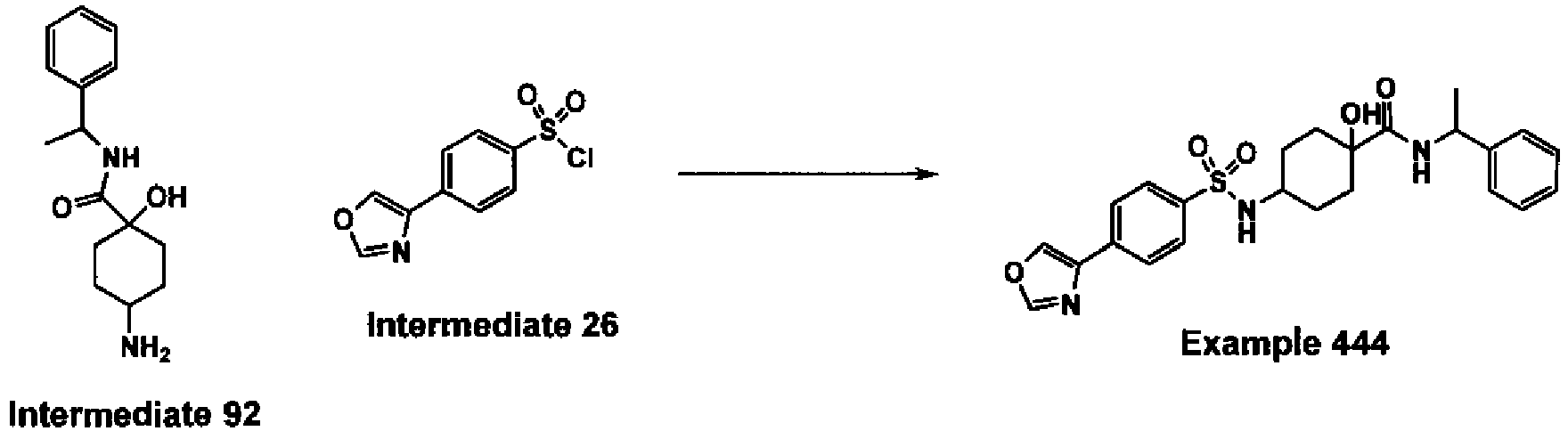
- 4-Oxazol-4-yl-benzenesulfonyl chloride (Intermediate 26, 71.5 mg) was added to solution of 4-amino-1-hydroxy-N-(1-phenylethyl)cyclohexanecarboxamide (Intermediate 92, 70 mg) and diisopropylethylamine (0.103ml) in dichloromethane (2.7ml). After 16 hours the reaction was diluted with dichloromethane, rinse once using 1 N hydrochloric acid followed by once using saturated aqueous sodium bicarbonate. The organics were dried over sodium sulfate, filtered and concentrate to 126mg crude solid. The title compound was isolated by preparative basic reverse-phase chromatography to yield two isomeric samples of 1-hydroxy-4-(4-(oxazol-4-yl)phenyisulfonamido)-N-(1-phenylethyl)cyclohexanecarboxamide. Yield 4.5mg.
- Basic reverse-phase analytical chromatography using Waters Xbridge C18 100x4.6mm 40-75°C methanol in water containing 5mM ammonium hydroxide over 8 minutes indicated > 97% purity.
LCMS M+H = 470.0 - The compound in the following Table was prepared by a method analogous to the method used to prepare Exmaple 444 using the starting materials indicated.
Example Structure S.M. MS 445 
Intermediate 92 & 4-trifluoromethyl-benzensulfonyl chloride 470.9 -

- (1s,4S)-1-Amino-N-((R)-1-(4-fluorophenyl)ethyl)-4-(4-(trifluoromethyl)phenylsulfonamido)cyclohexanecarboxamide was prepared from Intermediate 96 using the Boc-deprotection method described in Example 177. MS MH+ 488.3
-

- (1 s,4S)-1-Amino-N-((R)-1-(4-fluorophenyl)ethyl)-4-(4-(oxazol-4-yl)phenylsulfonamido)cyclohexanecarboxamide was prepared from Intermediate 97 using the Boc-deprotection method described in Example 177. MS MH+ 487.3
-

- (1r,4r)-1-Methyl-4-(4-(trifluoromethyl)phenylsulfonamido)cyclohexancarboxylic acid (Intermediate 71, 603 mg, 1.650 mmol) was suspended in DCM (10ml), to which oxalyl chloride (2M solution in DCM) (0.825 ml, 1.650 mmol) and then 1 drop of DMF were added. The reaction mixture was stirred at room temperature for approximately 15 mins. The reaction mixture was then concentrated to afford a yellow solid, which was dried under high vacuum. This material was then redissolved in DCM (10ml), to which a solution of (S)-1-amino-2-methyl-1-phenylpropan-2-ol (Intermediate 49, 359 mg, 1.650 mmol) and DIPEA (0.865 ml, 4.95 mmol) in DCM (10ml) was added. The reaction mixture was stirred at room temperature for 1 h, then concentrated and the residue was purified via flash column chromatography, eluting with 10-100% EtOAc/Hept. Relevant fractions were pooled and concentrated to afford a white foam, which was dried under high vacuum overnight. This material was then triturated with hexane and filtered to afford a white powder (419mg - 50% yield).
1H NMR (400 MHz, DMSO-d 6) δ ppm 0.91 (s, 3 H) 1.05 (s, 3 H) 1.11 (s, 3 H) 1.33 (d, J=9.98 Hz, 2 H) 1.41 (br. s., 2 H) 1.50 (br. s., 2 H) 1.62 (t, J=9.47 Hz, 2 H) 3.09 (d, J=0.76 Hz, 1 H) 4.61 (s, 1 H) 4.66 (d, J=8.84 Hz, 1 H) 7.15 - 7.30 (m, 6 H) 7.94 (d, J=7.20 Hz, 1 H) 7.96 - 8.05 (m, 4 H)
M+H=513.3 - The compounds in the table below were prepared by a method analogous to the method used to prepare Example 448 using the appropriate starting materials.
Example Structure S.M. MS 449 
Intermed. 71 & (S)-2,2,2-trifluoro-1-phenyleth anamine 523.0 450 
Intermed. 134 & (R)-1-(4-fluorophen yl)ethana mine - 451 
Intermed. 71 & (R)-1-(4-fluorophen yl)ethana mine 487.1 452 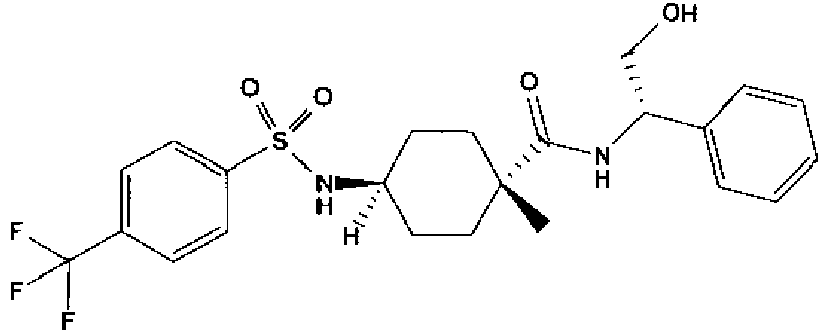
Intermed. 71 & (S)-2-amino-2-phenyleth anol 486.0 453 
Intermed. 135 &(R)-1-(4-fluorophen yl)ethana mine 484.0 454 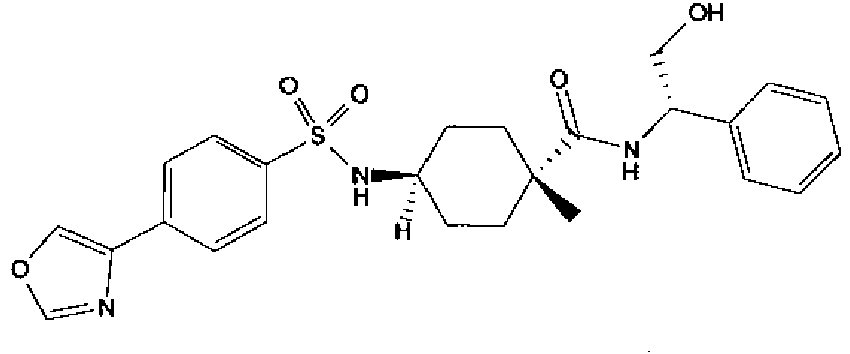
Intermed. 135 & (S)-2-amino-2-phenyleth anol 484.0 455 
Intermed. 135 & (S)-2-amino-2-phenyleth anol 483.4 - The compounds in the table below can be prepared by a method analogous to the method used to prepare Example 448 using the appropriate starting materials.
Example Structure S.M. MS 456 
Intermed. 137 & (R)-1-(4-fluorophen yl)ethana mine 477.3 457 
Intermed. 138 & (R)-1-(4-fluorophen yl)ethana mine 521.1 458 
Intermed. 139 & (R)-1-(4-fluorophen yl)ethana mine 485.2 -

- 1-Cyano-4-(4-trifluoromethyl-benzenesulfonylamino)-cyclohexanecarboxylic acid ((S)-2-hydroxy-2-methyl-1-phenyl-propyl)-amide was prepared according to the method in Example 1 using Intermediate 142 as the starting material. MS MH- 522.0
- Examples 460 and 461 where prepared by a method analogous to the method used to prepare Example 1 using the starting material indicated.
Example Structure S.M. MS 460 
Intermed. 144 499.1 461 
Intermed. 146 525.0 - Example 462 in the table below was prepared from Intermediate 139 and (R)-1-(4-fluorophenyl)ethanamine using a method analogous to the method used to prepare Example 1.
Example Structure S.M. MS 462 
513.2 -

- 1-(2-Oxo-ethyl)-4-(4-pyrazol-1-yl-benzenesulfonylamino)-cyclohexanecarboxylic acid ethyl ester (Intermediate 114, 40 mg, 0.095 mmol) and (R)-1-phenylethanamine (0.036 ml, 0.286 mmol) were dissolved in DCE (2 ml). MgSO4 was added (20-30mg) followed by NaBH(OAc)3 (60.6 mg, 0.286 mmol). The reaction mixture was stirred overnight at room tempereature, then further DCE was added, and the reaction mixture was heated at 50 °C overnight. The reaction mixtrure was concentrated in vacuo, and the crude material taken up in DCM, and washed with water (x2). The organic layer was concentrated in vacuo, and the resultan crude oil was purified via normal phase chromatography using biotage SP1, with 25+S column, using a calculated gradient from TLC of 50% EtOAc in heptane to yield the title compound as a white solid (29mg, 64%) as a mixture of 95% "trans" (as shown above): 5% "cis". MS MH+ 479.1
- The Examples in the following Table were prepared by a method analogous to the method used to prepare Example 463 using the starting materials indicated.
Example Structure S.M. MS MH+ 464 
Intermediate 115 and (R)-1-phenyl-ethanamine 481.1 465 
Intermediate 114 and isopropyl amine 417.1 - The Example in the following Table can be prepared by a method analogous to the method used to prepare Example 463 using the starting materials indicated.
Example Structure S.M. MS MH+ 466 
Intermediate 113 and (R)-1-phenyl-ethanamine 494.2 -

- 1-Formyl-4-(4-trifluoromethyl-benzenesulfonylamino)-cyclohexanecarboxylic acid ethyl ester (Intermediate 120, 100 mg, 0.245 mmol) and cyclohexyl hydrazine (111 mg, 0.736 mmol) were dissolved in 2-propanol (2 ml) and concentrated H2SO4 (2.000 ml). The mixture was stirred for 18 hr at 70 °C, and the product observed by LCMS. The reaction mixture was basified with NaOH (1 M), and extracted with DCM (x2). The DCM layers were combined and concentrated in vacuo to a tanned solid which was purified via normal phase chromatography on biotage SP1, 25+M column, using 50% EtOAc in heptane calculated gradient to yield the title compound as a white solid (12mg, 11%) which was a 9:1 mixture of diastereoisomers. [M+H] = 458.2
- The Examples in the following Table was prepared by a method analogous to the method used to prepare Example 467 using the starting materials indicated.
Example Structure S.M. MS MH+ 468 
Intermediate 121 and benzyl hydrazine 464.0 469 
Intermediate 121 and 1-phenyl-ethyl hydrazine 478.2 470 
Intermediate 121 and isopropyl hydrazine 416.3 -

- 5N Sodium hydroxide (320ul, 1.59mmol) followed by 50% aqueous hydrogen peroxide (157ul, 2.55mmol) were added to solution of N-(1-cyano-4-(4-ethoxy-3-methylphenylsulfonamido)cyclohexyl)acetamide (Intermediate 126, 242mg, 0.638mmol) in ethanol (6.4ml). The reaction was heated to 80°C for three hours. LCMS indicated approximately 3:1 product:starting material by co-injection. The reaction was diluted with water and extract with four volumes ethyl acetate. The combined organics were dried over sodium sulfate, filtered and concentrate to 226mg crude. TLC (10% methanol in ethyl acetate): Rf starting material 0.66; major spot Rf = 0.25. The crude was chromatographed on Biotage 12M eluting 0-100% ethyl acetate in (10% methanol in ethyl acetate) to give the product as an off-white solid (117 mg, 0.308 mmol). LCMS [M+H] = 380.2.
-

- Example 472 was prepared from Intermediate 128 by a method analogous to the method used to prepare Example 471.
-
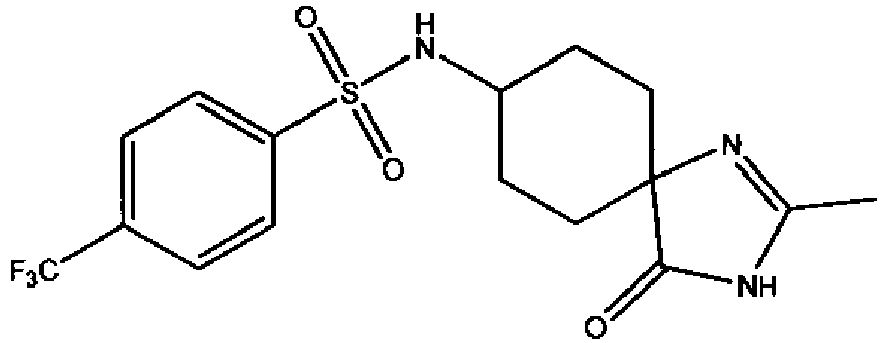
- Example 473 was prepared from Intermediate 127 by a method analogous to the method used to prepare Example 471.
-

- Sodium hydride (4.74 mg, 0.119 mmol) was added at room temperature to 4-ethoxy-3-methyl-N-(2-methyl-4-oxo-1,3-diazaspiro[4.5]dec-1-en-8-yl)benzenesulfonamide (Example 471, 30 mg, 0.079 mmol) in DMF (988 µl). The reaction was stirred five minutes then a solution of (1-bromoethyl)benzene (16.18 µl, 0.119 mmol) in 200ul DMF was added and the reaction stirred overnight at room temperature. After 16 hours, LCMS and HPLC indicated approximately 4:1 product:smarting material. The reaction was diluted with saturated sodium bicarbonate and extracted with multiple volumes ethyl acetate. The combined organics were rinsed 1 x brine and dried over sodium sulfate. TLC (ethyl acetate) gave a product Rf 0.38 and starting material on the baseline. The crude was chromatographed on Biotage 12S by manual step gradient 7-100% EtOAc/heptane to yield the product as an off-white solid (21 mg). LCMS [M+H] = 484.2.
- The examples in the table below were prepared by a method analogous to the method used to prepare Example 473 using the starting materials indicated
Example Structure S.M. 475 
Example 473 & benzyl bromide 476 
Example 472 & benzyl bromide -

- Benzyl 4-chloro-4-oxobutanoate (48.2 mg, 0.213 mmol) was dissolved in DCM (5ml), to which a suspension of (1r,4S)-N-((S)-2-hydroxy-1-phenylethyl)-4-(4-(trifluoromethyl)phenylsulfonamido)cyclohexanecarboxamide (Example 66, 100 mg, 0.213 mmol) and DIPEA (74.2 µl, 0.425 mmol) in DCM (5ml) was added. The resulting suspension was stirred at room temperature for 1 h. LC-MS at this point showed one major peak corresponding to the starting material, therefore 2ml acetonitrile were added, upon which all material went into solution. The reaction mixture was stirred at room temperature over the weekend and was then concentrated and the residue was purified via Biotage automated flash column chromatography 12M, eluting with 10-100% EtOAc/Hept. Relevant fractions were pooled and concentrated to afford benzyl (S)-2-phenyl-2-((1r,4S)-4-(4-(trifluoromethyl)phenylsulfonamido)cyclohexanecarboxamido)ethyl succinate as a white sticky solid, which was dried under high vacuum. Mass of dry material = 24 mg (17% yield).
M+H=661.1
1H NMR (400 MHz, DMSO-d 6) δ ppm 1.11 - 1.33 (m, 6 H) 1.66 (d, J=9.09 Hz, 4 H) 2.06 (td, J=11.75, 3.28 Hz, 1 H) 2.53 - 2.61 (m, 3 H) 2.96 (td, J=7.45, 3.54 Hz, 1 H) 4.02 - 4.18 (m, 2 H) 5.02 - 5.10 (m, 3 H) 7.23 - 7.39 (m, 10 H) 7.94 (s, 1 H) 7.95 - 8.04 (m, 4 H) 8.23 (d, J=8.59 Hz, 1 H) - Benzyl (S)-2-phenyl-2-((1r,4S)-4-(4-(trifluoromethyl)phenylsulfonamido)cyclohexanecarboxamido)ethyl succinate (24 mg, 0.036 mmol) was dissolved in MeOH (10 ml) and flushed with N2. Pd/C (10 mg, 0.094 mmol) was then added and the reaction mixture was flushed with N2 once more, then placed under a balloon of H2 and stirred vigorously for 30 mins. The reaction mixture was then filtered through a syringe filter and filtrate was concentrated to afford a clear sticky solid. This material (16mg, 0.028mmol) was then suspended in water (2 ml), to which KOH (0.1M solution) (0.280 ml, 0.028 mmol) was added. The mixture was sonicated for 5 mins, after which it was frozen and lyopholyzed to afford potassium 4-oxo-4-((S)-2-phenyl-2-((1r,4S)-4-(4-(trifluoromethyl)phenylsulfonamido)cyclohexanecarboxamido)ethoxy)butanoate as a fluffy solid -12.37mg (72% yield).
1H NMR (400 MHz, DMSO-d 6) δ ppm 1.10 - 1.31 (m, 2 H) 1.20 (dd, J=16.55, 10.23 Hz, 2 H) 1.59 (br. s., 1 H) 1.62 (d, J=2.53 Hz, 3 H) 2.06 (td, J=6.25, 3.16 Hz, 2 H) 2.15 - 2.29 (m, 3 H) 2.93 (d, J=3.54 Hz, 1 H) 3.83 (dd, J=10.99, 4.67 Hz, 1 H) 4.52 (dd, J=10.99, 3.92 Hz, 1 H) 5.06 (dt, J=8.59, 4.29 Hz, 1 H) 7.22 (d, J=7.33 Hz, 1 H) 7.28 (t, J=7.45 Hz, 2 H) 7.33 - 7.39 (m, 2 H) 7.90 - 8.04 (m, 5 H) 9.05 (d, J=8.84 Hz, 1 H)
M+H=571.0
HPLC (Luna 10-100) RT = 8.928 mins -

- The title compound was prepared as described in Miller, Christa et al. Water-Soluble Phosphate Prodrugs of 1-Propargyl-8-styrylxanthine Derivatives, A-Selective Adenosine ReceptorAntagonists. Journal of Medicinal Chemistry. 43(3): 440-448, 2000.
- 1H NMR (400 MHz, DMSO-d 6) δ ppm 1.09 - 1.27 (m, 4 H) 1.33 (d, J=9.85 Hz, 18 H) 1.36 (d, J=2.27 Hz, 1 H) 1.65 (d, J=8.84 Hz, 3 H) 2.07 (td, J=11.68, 2.91 Hz, 1 H) 2.97 (td, J=7.26, 3.66 Hz, 1 H) 3.92 (qd, J=6.65, 3.79 Hz, 2 H) 5.03 (d, J=8.08 Hz, 1 H) 7.22 - 7.35 (m, 5 H) 7.94 (d, J=7.33 Hz, 1 H) 7.96 - 8.04 (m, 4 H) 8.26 (d, J=8.34 Hz, 1 H)
- Example 478: (S)-2-phenyl-2-((1r,4S)-4-(4-(trifluoromethyl)phenylsulfonamido)cyclohexanecarboxamido)ethyl dihydrogen phosphate (as a di potassium salt)
M+H=551.1
1H NMR (400 MHz, DEUTERIUM OXIDE) δ ppm 1.11 - 1.33 (m, 6 H) 1.65 (s, 1 H) 1.67 (d, J=3.79 Hz, 1 H) 1.75 (br. s., 2 H) 2.23 (t, J=3.28 Hz, 1 H) 2.78 (d, J=4.04 Hz, 1 H) 3.81 (ddd, J=10.93, 7.26, 6.32 Hz, 1 H) 3.92 (ddd, J=10.80, 5.24, 4.93 Hz, 1 H) 7.24 - 7.37 (m, 6 H) 7.79 (d, J=8.34 Hz, 2 H) 7.90 (d, J=8.34 Hz, 2 H) HPLC (Luna 10-100) RT = 7.68 mins -

- (1r,4S)-N-((S)-2-hydroxy-1-phenylethyl)-4-(4-(trifluoromethyl)phenylsulfonamido) cyclohexanecarboxamide (Example 66, 250 mg, 0.531 mmol) was suspended in THF (5ml), to which a solution of (S)-2-(benzyloxycarbonylamino)-3-methylbutanoic anhydride (515 mg, 1.063 mmol, prepared as described in Molecules (2008) 13: 348-359) in THF (5ml) and then DMAP (0.649 mg, 5.31 µmol) were added. The reaction mixture was stirred at room temperature overnight, then concentrated and the residue was purified via Biotage automated flash column chromatography (40g isco column), eluting with 10-100% EtOAc/Hept. Relevant fractions were pooled and concentrated to afford (S)-((S)-2-phenyl-2-((1r,4S)-4-(4-(trifluoromethyl)phenylsulfonamido)cyclohexanecarboxamido) ethyl) 2-(benzyloxycarbonylamino)-3-methylbutanoate as a white solid - 311 mg (83% yield).
M+H=704.5
1H NMR (400 MHz, DMSO-d 6) δ ppm 0.77 (dd, J=12.25, 6.95 Hz, 5 H) 0.88 (t, J=7.07 Hz, 1H) 1.09 - 1.31 (m, 4 H) 1.36 (br. s., 1 H) 1.64 (d, J=10.86 Hz, 4 H) 1.94 (dq, J=13.26, 6.61 Hz, 1 H) 2.05 (t, J=13.14 Hz, 1 H) 2.92 (br. s., 1 H) 2.96 (dd, J=11.24, 3.66 Hz, 1 H) 3.93 (dd, J=8.34, 6.06 Hz, 1 H) 4.13 (d, J=4.80 Hz, 1 H) 4.98 - 5.06 (m, 1 H) 5.02 (d, J=4.04 Hz, 1 H) 5.11 (td, J=8.08, 5.05 Hz, 1 H) 7.22 - 7.39 (m, 10 H) 7.62 (d, J=8.34 Hz, 1 H) 7.93 - 8.04 (m, 4 H) 8.25 (d, J=8.59 Hz, 1 H) - ((1r,4S)-4-(4-(Trifluoromethyl)phenylsulfonamido)cyclohexanecarboxamido)ethyl) 2-(benzyloxycarbonylamino)-3-methylbutanoate (Intermediate B, 311 mg, 0.442 mmol) was suspended in EtOAc (20 ml) and flushed with N2. Pd/C (100 mg, 0.940 mmol) was then added slowly and reaction mixture was flushed with N2 once more, then stirred vigorously under a balloon of H2 for 2h. The reaction mixture was then filtered through a syringe filter and filtrate was concentrated to afford an off white solid. This material was adsorbed onto silica and purified via Biotage automated flash column chromatography (40g isco column), eluting with 50-100% EtOAc/Heptane and then 0-20% MeOH/EtOAc. Relevant fractions were pooled and concentrated to afford a white solid - 151 mg. This material was then dissolved in THF (10 ml), to which HCl (2M in ether) (5 ml, 10.00 mmol) was added. No precipitation occurred, therefore the mixture was concentrated and the residue was dried under high vacuum for 30 mins. This material was then dissolved in water/ACN, frozen and lyopholized to afford (S)-((S)-2-phenyl-2-((1r,4S)-4-(4-(trifluoromethyl)phenylsulfonamido)cyclohexanecarboxamido)ethyl) 2-amino-3-methylbutanoate hydrochloride as a white fluffy solid - 120mg (45% yield).
1H NMR (400 MHz, DMSO-d 6) δ ppm 0.86 (t, J=7.07 Hz, 6 H) 1.11 - 1.35 (m, 4 H) 1.66 (d, J=10.61 Hz, 4 H) 2.05 (dd, J=13.89, 2.53 Hz, 1 H) 1.99 - 2.07 (m, 1 H) 2.08 (d, J=1.77 Hz, 1 H) 2.96 (d, J=7.33 Hz, 1 H) 4.37 (dd, J=10.99, 8.46 Hz, 1 H) 5.16 (td, J=8.46, 5.05 Hz, 1 H) 7.25 - 7.37 (m, 5 H) 7.96 (s, 1 H) 7.97 - 8.05 (m, 2 H) 7.98 (d, J=8.34 Hz, 2 H) 8.29 (br. s., 1 H) 8.34 (s, 1 H) 8.31 (d, J=9.09 Hz, 2 H) M+H=570.3
HPLC (Luna) RT = 8.053 mins - Prodrugs in Examples 480-488 were prepared by a method analogous to the method used to prepare Example 479 using the appropriate CBZ protected amino acid.
-

1H NMR (400 MHz, DMSO-d 6) δ ppm 0.90 (dd, J=18.57, 6.95 Hz, 6 H) 1.12 - 1.36 (m, 5 H) 1.66 (d, J=11.62 Hz, 4 H) 2.06 - 2.24 (m, 2 H) 2.94 (br. s., 1H) 2.97 (dd, J=10.74, 3.41 Hz, 1 H) 3.89 (br. s., 1 H) 4.28 - 4.39 (m, 2 H) 5.21 (td, J=8.34, 5.05 Hz, 1 H) 7.25-7.41 (m, 5 H) 7.96 - 8.05 (m, 5 H) 8.45 (d, J=8.84 Hz, 1 H) 9.15 (br. s., 2 H)
HPLC (Luna 10-100) RT = 8.021 mins -

1H NMR (400 MHz, DMSO-d 6) δ ppm 1.11 - 1.35 (m, 3 H) 1.28 (d, J=7.07 Hz, 4 H) 1.59-1.73 (m, 4 H) 1.99 - 2.14 (m, 1 H) 2.96 (br. s., 1 H) 4.03 (q, J=7.16 Hz, 1 H) 4.23 (d, J=5.05 Hz, 1 H) 4.34 (dd, J=11.12, 7.83 Hz, 1 H) 5.15 (td, J=8.15, 4.93 Hz, 1 H) 7.23 - 7.37 (m, 4 H) 7.23 - 7.37 (m, J=8.78, 4.33, 4.33, 4.04 Hz, 1 H) 7.93 - 8.05 (m, 2 H) 8.01 (d, J=9.85 Hz, 3 H) 8.33 (d, J=8.59 Hz, 3 H)
HPLC (Luna 10-100) RT = 7.712 mins -

1H NMR (400 MHz, DMSO-d 6) δ ppm 0.76 (dd, J=6.57, 5.31 Hz, 3 H) 0.88 (dd, J=11.87, 6.57 Hz, 3 H) 0.81 - 0.91 (m, 2H) 1.10 - 1.33 (m, 5 H) 1.54 - 1.73 (m, 4 H) 1.99 - 2.13 (m, 1 H) 2.96 (br. s., 1 H) 3.21 (dd, J=8.59, 5.81 Hz, 1 H) 4.02 - 4.18 (m, 2 H) 5.10 (td, J=8.40, 5.18 Hz, 1 H) 7.22 - 7.35 (m, 5 H) 7.94 (br. s., 1 H) 7.95 - 8.04 (m, 4 H) 8.20 (br. s., 2 H) 8.25 (d, J=8.59 Hz, 1 H)
HPLC (Luna 10-100) RT = 8.235 mins -

1H NMR (400 MHz, DMSO-d 6) δ ppm 1.11 - 1.26 (m, 3 H) 1.35 (d, J=1.52 Hz, 6 H) 1.27 - 1.37 (m, 1 H) 1.66 (t, J=12.38 Hz, 4 H) 2.11 (t, J=11.87 Hz, 1 H) 2.97 (dd, J=10.99, 3.66 Hz, 1 H) 4.24 - 4.34 (m, 2 H) 5.20 (s, 1 H) 7.24 - 7.31 (m, 1 H) 7.34 (d, J=4.55 Hz, 3 H) 7.31 - 7.36 (m, 1 H) 7.96 - 8.05 (m, 5 H) 8.40 (d, J=8.84 Hz, 1 H) 8.47 (br. s., 2 H)
HPLC (Luna 10-100) RT = 7.787 mins -

1H NMR (400 MHz, DMSO-d 6) δ ppm 1.15 (br. s., 4 H) 1.64 (br. s., 4 H) 2.09 (br. s., 1 H) 2.87 (dd, J=9.22, 6.44 Hz, 2 H) 2.97 (m, 1 H) 4.15 (br. s., 1 H) 4.25 (dd, J=5.81, 3.28 Hz, 2 H) 5.15 (d, J=8.84 Hz, 1 H) 6.66 (d, J=8.34 Hz, 2 H) 6.85 (d, J=8.34 Hz, 2 H) 7.25 - 7.37 (m, 2 H) 7.33 (d, J=2.02 Hz, 3 H) 7.95- 8.05 (m, 5 H) 8.17 - 8.25 (br. s., 2H) 8.32 (d, J=8.59 Hz, 1 H) 9.40 (s, 1 H)
HPLC (Luna 10-100) RT = 8.021 mins -

1H NMR (400 MHz, DMSO-d 6) δ ppm 1.10-1.35 (m., 4 H) 1.64 (d, J=9.85 Hz, 4 H) 2.02 - 2.11 (m, 1 H) 2.90-3.05(m, 3 H) 4.25 (d, J=6.32 Hz, 3 H) 5.09 - 5.15 (m, 1 H) 7.08 (dd, J=7.20, 1.89 Hz, 2H) 7.25 - 7.37 (m, 8 H) 7.93 - 8.05 (m, 5 H) 8.31 (d, J=8.84 Hz, 1 H) 8.35 (br s., 2H).
HPLC (Luna 10-100) RT = 8.437 mins -

1H NMR (400 MHz, DMSO-d 6) δ ppm 0.73 - 0.85 (m, 6H) 0.86-0.98 (m, 6 H) 1.10-1.35 (m, 4 H) 1.65 (br. s., 4 H) 1.95 - 2.10 (m, 3 H) 2.96 (br. s., 1 H) 3.67 - 3.76 (m, 1 H) 4.08-4.35 (m, 3H) 5.02 - 5.14 (m, 1 H) 7.24 - 7.36 (m, 5 H) 7.95 - 8.12 (m, 7 H) 8.28 (d, J = 8.59 Hz, 0.5H) 8.38 (d, J=8.34 Hz, 0.5 H) 8.52 (d, J=7.83 Hz, 0.5 H) 8.72 (d, J=8.08 Hz, 0.5 H).
HPLC (Luna 10-100) RT = 8.373 mins -

1H NMR (400 MHz, DMSO-d 6) δ ppm 1.10-1.35 (m, 4H) 1.66 (m, 4 H) 1.78 - 1.91 (m, 3 H) 2.06 - 2.19 (m, 2 H) 2.97 (d, J=7.33 Hz, 1 H) 3.12 - 3.23 (m, 2 H) 4.24 - 4.37 (m, 3 H) 5.15 (td, J=8.02, 5.43 Hz, 1 H) 7.20 - 7.30 (m, 1 H) 7.30 - 7.40 (m, 4 H) 7.93 - 8.06 (m, 6 H) 8.37 (d, J=8.59 Hz, 1 H)
HPLC (Luna 10-100) RT = 7.819 mins -

1H NMR (400 MHz, DMSO-d 6) δ ppm 1.14 - 1.35 (m, 4H) 1.61 - 1.73 (m, 4 H) 2.03 - 2.15 (m, 1 H) 2.97 (dd, J=10.86, 3.79 Hz, 1 H) 3.72 (t, J=4.17 Hz, 2 H) 4.07 (br. s., 1 H) 4.21 - 4.32 (m, 2 H) 5.07 - 5.19 (m, 1 H) 5.57 (t, J=4.93 Hz, 1 H) 7.23 - 7.31 (m, 1 H) 7.31 - 7.38 (m, 4 H) 7.94 - 8.06 (m, 4 H) 8.33 - 8.45 (m, 4 H)
HPLC (Atlantis 0-95) RT = 10.11 mins -

- Step 1: (1r,4S)-N-(S)-2-hydroxy-1-phenylethyl)-4-(4-(trifluoromethyl)phenylsulfonamido)cyclohexanecarboxamide (Example 66, 100 mg, 0.212 mmol) was suspended in THF (5ml), to which a solution of (S)-5-tert-butoxy-4-(tert-butoxycarbonylamino)-5-oxopentanoic anhydride (88 mg, 0.149 mmol, prepared as described in Molecules (2008) 13: 348-359) in THF (5ml) and then DMAP (1.708 mg, 0.014 mmol) were added. The reaction mixture was stirred at room temperature overnight, then concentrated and residue purified via Biotage automated flash column chromatography (40g isco column), eluting with 10-100% EtOAc/Heptane. Relevant fractions were pooled and concentrated to afford (S)-1-tert-butyl 5-((S)-2-phenyl-2-((1r,4S)-4-(4-(trifluoromethyl)phenylsulfonamido)cyclohexanecarboxamido)ethyl) 2-(tert-butoxycarbonylamino)pentanedioate as a white solid - 140mg (87% yield).
M+H=756.5
1H NMR (400 MHz, DMSO-d 6) δ ppm 1.11 - 1.30 (m, 6 H) 1.36 (d, J=3.28 Hz, 18 H) 1.59 - 1.76 (m, 4 H) 1.85 (dd, J=8.59, 7.07 Hz, 1 H) 2.21 - 2.40 (m, 3 H) 2.89 - 3.02 (m, 1 H) 3.80 (dd, J=7.96, 3.66 Hz, 1 H) 4.00 - 4.10 (m, 1 H) 4.03 (d, J=7.07 Hz, 1 H) 5.07 (td, J=8.59, 5.05 Hz, 1 H) 7.16 (d, J=7.83 Hz, 1 H) 7.26 (dd, J=6.06, 2.53 Hz, 1 H) 7.28 - 7.35 (m, 4 H) 7.95 (s, 1 H) 7.96 - 8.04 (m, 1 H) 8.00 (d, J=9.60 Hz, 2 H) 8.23 (d, J=8.59 Hz, 1 H) - Step 2: (S)-1-tert-butyl 5-((S)-2-phenyl-2-((1r,4S)-4-(4-(trifluoromethyl)phenylsulfonamido)cyclohexanecarboxamido)ethyl) 2-(tert-butoxycarbonylamino)pentanedioate (140 mg, 0.185 mmol) was dissolved in DCM (5 ml) to which TFA (1 mL, 12.98 mmol) was added. The reaction mixture was stirred at room temperature overnight, then concentrated and the residue purified via prep HPLC using a gradient of 20-100% MeCN/water/0.1% TFA (150mm C8Luna column). Fractions that contained product were frozen and lyopholized to afford a white fluffy solid. This material was dissolved in a minimal amount of THF and 2M HCl in ether was added. The mixture was concentrated and the residue dissolved in water, frozen and lyopholized to afford (R)-2-amino-5-oxo-5-((S)-2-phenyl-2-((1r,4S)-4-(4-(trifluoromethyl)phenylsulfonamido)cyclohexanecarboxamido)ethoxy)pentanoic acid hydrochloride as a white solid (35mg - 30% yield).
M+H=600.3
1H NMR (400 MHz, DMSO-d 6) δ ppm 1.13 - 1.37 (m, 4 H) 1.57 - 1.75 (m, 4 H) 1.90 - 2.12 (m, 3 H) 2.42 (dd, J=9.35, 6.32 Hz, 2 H) 2.97 (d, J=7.07 Hz, 1 H) 3.93 (br. s., 1 H) 4.11 (d, J=8.34 Hz, 1 H) 4.17 (d, J=5.05 Hz, 1 H) 5.08 (td, J=8.34, 5.31 Hz, 1 H) 7.23 - 7.36 (m, 5 H) 7.96 - 8.05 (m, 2 H) 7.98 (d, J=8.84 Hz, 3 H) 8.27 - 8.43 (m, 3 H) 13.92 (br. s., 1 H)
HPLC (Luna 10-100) RT = 7.701 mins - The prodrug in Example 490 was prepared by a method analogous to the method used to prepare Example 489 using the appropriate Boc protected amino acid.
-

1H NMR (400 MHz, DMSO-d 6) δ ppm 1.13 - 1.36 (m, 4 H) 1.67 (br. s., 4 H) 2.02 - 2.13 (m, 1 H) 2.60 (t, J=7.20 Hz, 2 H) 2.97 (d, J=5.56 Hz, 3 H) 4.11 (dd, J=10.86, 8.34 Hz, 1 H) 4.17 - 4.27 (m, 1 H) 5.11 (td, J=8.40, 5.18 Hz, 1 H) 7.24 - 7.37 (m, 5 H) 7.80 (br. s., 2 H) 7.93 - 8.05 (m, 5 H) 8.31 (d, J=8.59 Hz, 1 H)
HPLC (Luna 10-100) RT = 7.659 mins - The table below lists H1 NMR data for specific compounds of the invention.
Example H1 NMR 72 1H NMR (400 MHz, CDCl3) d ppm 1.1 (m, 2H), 1.7-2.1 (m, 5H), 3.1 (m, 3H), 4.35 (d, 1H), 5.6 (m, 1H), 5.95 (d, 1H), 7.25-7.45 (m, 5H), 7.73 (d, 2H), 7.95 (d, 2H) 339 1H NMR (400 MHz, d6-DMSO) d ppm 1.08-1.30 (m, 7H), 1.60-1.70 (m, 4H), 1.97-2.03 (m, 1H), 2.43 (s, 3H), 2.85-2.91 (m, 1H), 4.79-4.86 (m, 1H), 7.07-7.12 (m, 2H), 7.25-7.28 (m, 2H), 7.61 (s, 1H), 7.77-7.83 (m, 4H), 8.08-8.10 (m, 1H). 359 1H NMR (400 MHz, d6-DMSO) d ppm 1.15-1.31 (m, 7H), 1.61-1.73 (m, 4H), 1.99-2.05 (m, 1H), 2.86-2.97 (m, 1H), 3.10-3.19 (m, 2H), 3.63-3.69 (t, 2H), 3.96-3.99 (m, 2H), 4.41-4.42 (m, 2H), 4.79-4.86 (m, 1H), 7.08-7.12 (m, 2H), 7.25-7.29 (m, 2H), 7.65-7.66 (m, 1H), 7.73-7.75 (m, 1H), 7.88-7.94 (m, 6H), 8.11-8.13 (m, 1H), 10.09 (br, 1H). 370 1H NMR (400 MHz, d6-DMSO) d ppm 1.15-1.24 (m, 4H), 1.27 (d, 3H), 1.6-1.7 (m, 4H), 2.2 (m, 1H), 2.9 (m, 2H), 3.8 (m, 1H), 4.7 (m, 1H), 7.07-7.12 (m, 2H), 7.25-7.28 (m, 2H), 7.44-7.46 (m, 2H), 7.70-7.72 (m, 2H), 7.87-7.88 (m, 4H), 8.1 (d, 2H). 378 1H NMR (400 MHz, d6-DMSO) d ppm 1.14-1.31 (m, 7H), 1.61-1.72 (m, 4H), 1.99-2.05 (m, 1H), 2.89-2.93 (m, 3H), 3.08-3.12 (m, 2H), 4.79-4.86 (m,1H), 7.08-7.12 (m, 2H), 7.25-7.29 (m, 2H), 7.40-7.42 (m, 2H), 7.70-7.79 (m, 6H), 7.87 (m, 4H), 8.10-8.12 (m, 1H). 385 1H NMR (400 MHz, d6-DMSO) d ppm 1.15-1.24 (m, 4H), 1.24-1.26 (d, 3H), 1.63-1.67 (m, 4H), 2.32-2.34 (m, 2H), 2.90 (m, 2H), 3.25 (m, 1H), 3.5 (m, 2H), 3.7 (m, 2H), 4.0 (m, 2H), 4.4 (br s, 1H), 4.83 (m, 1H), 7.08-7.16 (m, 4H), 7.25-7.28 (m, 2H), 7.68-7.69 (d, 2H), 7.75-7.77 (d, 2H), 8.10-8.12 (d, 2H), 9.85 (br s, 1H) 395 1H NMR (400 MHz, d6-DMSO) d ppm 0.94 (s, 3H), 1.04 (s, 3H), 1.1-1.4 (m, 4H), 1.5-1.7 (m, 4H), 2.2 (m, 1H), 2.9 (m, 1H), 4.4 (s, 1H), 4.6 (m, 1H), 7.15 (m, 1H), 7.25 (m, 2H), 7.30 (m, 2H), 7.45 (m, 2H), 7.52 (m, 2H), 7,7 (m, 1H), 7.77 (m, 2H), 7.9 (m, 2H) 406 1H NMR (400 MHz, CD3OD) d ppm 1.24-1.43 (m, 2H), 1.43-1.70 (m, 4H), 1.70-1.95 (m, 4H), 2.40-2.52 (m, 2H), 2.56 (t, 2H), 2.60-2.71 (m, 2H), 4..09 (d, 1H), 4.45 (d, 1H), 5.27 (br s, 1H), 5.84 (br s, 1H), 7.11-7.25 (m, 3H), 7.28-7.41 (m, 4H), 7.61 (d, 2H), 7.79 (d, 2H), 7.87-7.99 (m, 2H) 410 1H NMR (400 MHz, CD3OD) d ppm 0.77-0.79 (m, 2H), 1.01-1.18 (m, 2H), 1.25-1.48 (m, 3H), 1.53 (d, 1H), 1.71-1.98 (m, 3H), 2.03-2.14 (m, 1H), 2.21-2.33 (m, 1H), 2.35-2.55 (m, 1H), 2.64 (t, 2H), 2.97 (t, 2H), 3.58-3.85 (m, 2H), 5.08 (dd, 1H), 6.98 (t, 1H), 7.05-7.16 (m, 2H), 7.19-7.22 (m, 1H), 7.36 (d, 2H), 7.60-7.65 (m, 2H), 7.78 (t, 2H), 7.85-7.92 (m, 2H) 414 1H NMR (400 MHz, CD3OD) d ppm 0.83-1.75 (m, 4H), 1.75-1.95 (m, 2H), 2.06 (s, 2H), 2.28-2.80 (m, 2H), 2.99 (t, 2H), 3.15-3.24 (m, 2H), 3.51 (t, 2H), 3.64-4.15 (m, 2H), 5.31-5.77 (m, 1H), 6.61-6.75 (m, 2H), 6.75-6.85 (m, 1H), 7.18-7.47 (m, 6H), 7.50-7.68 (m, 2H), 7.68-8.00 (m, 2H), 8.02-8.17 (m, 1H) 419 1H NMR (400 MHz, CD3OD) d ppm 1.24-1.39 (m, 2H), 1.39-1.58 (m, 2H), 1.68-1.85 (m, 4H), 2.51-2.55 (m, 4H), 2.94-2.98 (m, 2H), 3.07 (m, 1H), 3.47-3.56 (m, 1H), 3.67-3.77 (m, 2H), 3.84-3.88 (m, 1H), 4.43-4.46 (m, 1H), 5.55 (br s, 1H), 7.15-7.37 (m, 5H), 7.58-7.60 (m, 2H), 7.77-7.79 (m, 2H) 7.90-7.92 (m, 2H) 1H NMR (400 MHz, CDCl3) d ppm 1.4 (m, 4H), 1.9 (m, 4H), 2.3 (m, 1H), 2.4 (m, 1H), 3.0 (m, 2H), 3.26 (m, 2H), 3.4 (m, 1H), 3.6 (m, 1H), 3.75 (m, 1H), 4.0-4.2 (m, 1H), 4.6 (m, 1H), 4.7 (m, 1H), 5.1 (br s, 1 H), 5.4 (br s, 1H), 6.0 (br s, 1H), 6.8 (br s, 1H), 7.55-7.68 (m, 7H), 7.82-7.84 (m, 2H), 7.97-7.99 (m, 2H), 8.18-8.20 (m, 2H) 428 1H NMR (400 MHz, d6-DMSO) d ppm 0.82-1.73 (m, 8H), 2.24-2.29 (m, 1H), 2.86-2.96 (m, 1H), 3.54 (m, 2H), 3.68-3.94 (m, 1H), 4.15-4.34 (m, 1H), 5.36-5.55 (m, 1H), 7.15-7.45 (m, 6H), 7.49-7.53 (m, 2H), 7.69 (br, 1H), 7.74-7.77 (m, 2H), 7.86-7.89 (m, 4H), 8.02-8.06 (m, 1H). - The inhibitory effect of compounds on the acetyl-CoA carboxylase enzyme may be demonstrated using the following test procedures.
- The cDNA encoding amino acids 144 to 2458 of human acetyl-CoA carboxylase 2 (ACC2, GenBank Accession # NM_001093) was cloned into the SalI and NotI sites of pFastBac1 (Invitrogen; Carlsbad, CA). The resulting plasmid was used to generate a recombinant ACC2 baculovirus that was amplified and titered according to the protocols in the Bac-to-Bac baculovirus expression system manual (Invitrogen). The titered virus was used to infect Sf9 cells grown in Ex-Cell 420 serum-free medium (JRH Biosciences; Lenexa, Kansas). At 48 hours post-infection, the cells were harvested and stored at -80 °C until purification. ACC2 was purified using ammonium sulfate precipitation and anion exchange chromatography.
- The enzymatic assay was run as follows: 30 µL of reaction buffer (100 mM HEPES pH 7.5, 20 mM MgCl2, 20 mM potassium citrate, 2 mM DTT) was added to a 384-well microtiter plate followed by 2 µL of the test compound (or 100% DMSO control). ACC2 protein (10 µL of a 50 nM working solution) was added to plate, which was incubated at room temperature for 15 minutes. A 30 µL addition of substrate solution (50 µM acetyl-CoA, 120 µM ATP, 2 mM KHCO3) was used to initiate the reactions which were quenched with 6% acetic acid (40 µL). ACC catalyzed malonyl-CoA formation was detected by LC/MS/MS using a Cohesive Technologies LX Series multiplex LC/MS/MS system configured with four binary pumps (Agilent Technologies; Palo Alto, CA), a dual arm autosampler (Leap Technologies; Cary, NC), and one Quattro Micro triple quadrupole mass spectrometer (Waters, Milford, MA), all run by Aria Software version 1.5 (Cohesive Technologies; Franklin, MA). Four samples were injected (20 µL) onto four Phenosphere NEXT C18 30x2 mm 5 µm columns (Phenomenex; Torrance, CA), eluted by four separate pumps, running identical gradients, through a column switching manifold with the one outlet fitted to the electrospray (ESI) source. Malonyl-CoA was eluted with 5 mM ammonium acetate, pH 4.5 (Buffer A) and 100% acetonitrile (Buffer B) via a step gradient. Argon was used as the collision gas and the following species were monitored via MRM detection: malonyl-CoA (853.8 > 346.9), internal standard (A: [13C3]-malonyl-CoA, 857 > 350). The lower limit of detection is 0.3uM for malonyl-CoA in this assay.
- The compounds according to the invention may for example have IC50 values below 1000 nM, particularly below 100 nM, most preferably below 10 nM. The Examples in the Table below were evaluated in the above described assay, the results of which are collated below.
Example IC50 (µM) 1 0.025 72 0.094 171 0.090 339 0.025 359 0.052 370 0.010 378 0.010 385 0.010 395 0.010 406 0.055 410 0.090 414 0.010 419 0.025 428 0.770 448 0.040 - It can be seen that the compounds of the invention are useful as inhibitors of ACC2 and therefore useful in the treatment of diseases and conditions mediated by ACC2 such as the metabolic disorders disclosed herein.
- It will be understood that the invention has been described by way of example only and modifications may be made whilst remaining within the scope and spirit of the invention.
Claims (14)
- A compound of formula (I):
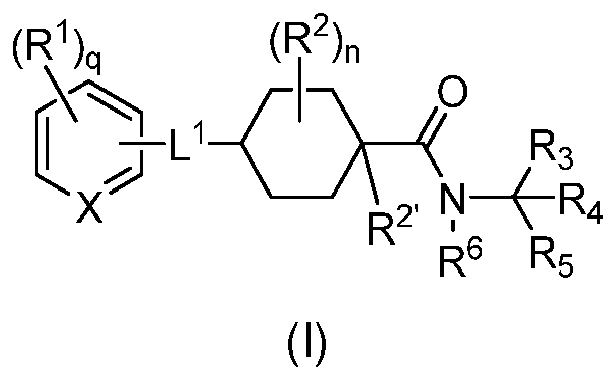 X is CH, CR1, or N;q and n are each, independently, 0, 1, 2, 3, or 4;L1 is -NHSO2-, -SO2NH-, -NHSO2NH- or -NHC(O)NH-;R1, for each occurrence, is independently hydroxy, nitro, halo, carboxy, formyl, C1-7alkyl, C3-8cycloalkyl, C2-7alkenyl, C2-7alkynyl, C1-7alkoxy, C1-7alkylthio, C3-8cycloalkoxy, heterocyclyloxy, C6-10aryloxy, amino, C1-7alkylamino, di-(C1-7alkyl)amino, C6-10aryl, 3- to 10-membered heterocyclyl, 5- to 10-membered heteroaryl, C1-7alkanoyl, C1-7alkoxycarbonyl, C1-7alkanoyloxy, C1-7alkylamido, C6-10arylamido, heterocyclylamido, carbamoyl, N-C1-7alkylcarbamoyl, N,N-di-(C1-7alkyl)carbamoyl, C1-7alkoxyamido, C1-7alkylureido, and C6-10arylureido, wherein R1 is optionally substituted on one or more carbon atom with one or more independently selected R13; and wherein when R1 comprises a heterocyclyl or a heteroaryl comprising -NH-, the hydrogen of the -NH-group may be optionally replaced with a C1-7alkyl; and wherein when R1 comprises a heterocyclyl or a heteroaryl comprising -N=, -S- or both, the -N= may be substituted with -O- and the -S- group may be substituted with one or two =O groups;R2, for each occurrence, is independently selected from the group consisting of hydroxy, cyano, C1-7alkyl, C1-7alkoxy, C2-7alkenyl, amino, C1-7alkylamino, di-(C1-7alkyl)amino, C1-7alkylamido, C1-7alkoxycarbonylamino, or two or more R2 groups on non-adjacent carbon atoms together form a C1-4alkylene bridge; wherein R2, for each occurrence, may be independently optionally substituted with one or more halo;R2 is hydrogen or R2; orR2 and one or more R2 groups form a C1-4alkylene bridge; orR2 and R6, may be linked to form a 5-membered heterocyclyl spirocyclic ring which may be optionally substituted with one or more C1-7alkyl;
, wherein R3 is phenyl,
wherein R3 is optionally substituted on one or more carbon atom with one to three independently selected R14;R4 is hydrogen, a C1-7alkyl, or carbamoyl, wherein the alkyl may be optionally substituted with one or more substituent which may be independently selected from the group consisting of duetero, hydroxy, amino, halo, carboxy, C1-7alkoxy, C1-7alkoxycarbonyl, phosphonooxy, a peptide having from 1 to 3 amino acids and C1-7alkanoyloxy wherein the alkanoyloxy may be optionally substituted with one or more carboxy, amino, N-C1-6alkylamino, N,N-di-(C1-6alkyl)amino, or amino acid sidechain;R5 is hydrogen or a C1-7 alkyl;R6 is hydrogen or C1-7 alkyl; orR6 and any one of R4 or R5 may be linked to form a 3- to 7-membered heterocyclyl, wherein the heterocyclyl may be optionally substituted on one or more carbon with one or more R15 ; and wherein when the heterocyclyl comprises -NH-, the hydrogen of the -NH- group may be optionally replaced with R16 ; and wherein when the heterocyclyl comprises -N=, -S- or both, the -N= may be substituted with -O- and the - S- group may be substituted with one or two =O groups;R13, for each occurrence, is independently deutero, halo, hydroxy, oxo, carboxy, C1-7alkyl, C3-8cycloalkyl, C1-7alkoxy, C6-10aryl, 3- to 10-membered heterocyclyl, 5- to 10-membered heteroaryl, amino, C1-7alkylamino, di-(C1-7alkyl)amino, C1-7alkoxycarbonyl, carbamoyl, wherein R13 is optionally substituted on one or more carbon atom with one or more independently selected R17 ; and wherein when R13 is a heterocyclyl or a heteroaryl comprising -NH-, the hydrogen of the -NH- group may be optionally replaced with a C1-7alkyl; and wherein when R13 is a heterocyclyl or heteroaryl comprising -N=, -S- or both, the -N= may be substituted with -O- and the -S- group may be substituted with one or two =O groups;R14, for each occurrence, is independently halo;R15, for each occurrence, is independently selected from the group consisting of hydroxy, oxo, carboxy, C1-7alkyl, and C1-7alkoxycarbonyl; or two R15 on adjacent carbon atoms may form a fused phenyl;R16, for each occurrence, is independently selected from the group consisting of C1-7alkanoyl, C6-10arylcarbonyl, heteroarylcarbonyl, C1-7alkoxycarbonyl, 5- to 10-membered heteroaryl, and C1-7alkylsulfonyl, wherein R16 may be optionally substituted with one or more substituent independently selected from the group consisting of carboxy, amino, C1-7alkylamino, di-(C1-7alkyl)amino, and C1-7alkoxycarbonyl; andR17, for each occurrence, is independently selected from cyano, halo, hydroxy, carboxy, C1-7alkyl, C1-7alkoxy, amino, C1-7alkylamino, di-(C1-7alkyl)amino, C1-7alkoxycarbonyl, 3- to 10-membered heterocyclyl, wherein R17 may be optionally substituted on one or more carbon atoms with one or more independently selected halo, trifluoromethyl, carboxy, or C1-4alkyoxycarbonyl; and wherein when R17 is a heterocyclyl comprising -NH-, the hydrogen of the -NH- group may be optionally replaced with a C1-7alkyl; and wherein when R17 is a heterocyclyl comprising -N=, -S- or both, the -N= may be substituted with -O- and the -S- group may be substituted with one or two =O groups. - The compound according to claim 1, wherein the compound is according to Formula (II):
 R1, for each occurrence, is independently selected from halo, hydroxy, nitro, C1-7alkyl, C1-7alkoxy, -NH-C(O)R9, C2-7alkynyl, C3-7cycloalkyl, C3-7cycloalkoxy, C1-7alkoxycarbonyl, C1-7alkanoyl, C1-7alkylamido, amino, N-C1-7alkylamino, N,N-di-(C1-7alkyl)amino, C1-7alkoxycarbonylamino, phenoxy, 3- to 7-membered heterocyclyl, 3- to 7-membered heterocyclyloxy, 3- to 7-membered heterocyclylamido, -NH-C(O)NHR10, and C1-7alkylthio; wherein R1 may be optionally substituted on one or more carbon atoms with from one to three independently selected R13;R2a, for each occurrence, is independently selected from cyano, amino, hydroxy, C1-4alkyl, and C2-4alkenyl;n is 0 or 1;R2a' is hydrogen, cyano, amino, hydroxy, C1-4alkyl, or C2-4alkenyl;R9, for each occurrence, is independently selected from C1-7alkyl, phenyl, and benzyl, wherein R9 may be optionally substituted on one or more carbon atoms with from one to three independently selected R13;R10, for each occurrence, is independently selected from hydrogen, C1-7alkyl, phenyl, and benzyl, wherein R10 may be optionally substituted on one or more carbon atoms with from one to three independently selected R13; andR13, for each occurrence, is independently selected from the group consisting of halo, duetero, hydroxy, oxo, amino, C1-7alkyl, C1-7alkoxy, C1-7alkoxycarbonyl, C3-7cycloalkyl, C1-7alkoxyC,-7alkyl, C1-7alkylsulfonyl, and phenyl which is optionally substituted with halo, cyano;or a pharmaceutically acceptable salt thereof.
 - The compound according to Claim 1 or 2, or a pharmaceutically acceptable salt thereof, wherein R1, for each occurrence, is independently selected from fluoro, chloro, bromo, methyl, ethyl, isopropyl, tert-butyl, methoxy, ethoxy, isopropoxy, phenoxy, methoxymethyl, cyclopentoxy, trifluoromethyl, trifluoromethoxy, 1-hydroxy-1-methyl-ethyl, nitro, amino, N-methylamino, N,N-dimethylamino, N-(trideuteromethyl)-N-(2-hydroxyethyl)-amino, N-ethylamino, N-propylamino, n-propylamino, 2-aminoethylthio, phenylamido, 2-cyanophenyl-ethynyl, 3-hydroxy-but-1-yn-1-yl, 4-hydroxy-pent-1-yn-1-yl, 5-hydroxy-pent-1-yn-1-yl, acetyl, acetamido, carbamoyl, ethoxycarbonyl, methoxycarbonylamino, (t-butoxycarbonyl)-methoxy, 3-methyl-oxetan-3-yl, oxetan-3-yloxy, N'-methyl-ureido, N'-ethyl-ureido, N'-phenyl-ureido, N'-(1-phenyl-ethyl)-ureido, piperidine-1-carboxamido, cyclopropyl-ethynyl, 2-oxopyrrolidino, 2-methoxymethyl-pyrrolidino, 2-(methoxycarbonyl)-ethyl, 2-methoxy-ethoxy, methoxycarbonyl-methoxy, and cyclopropyl.
- The compound according to Claim 1, wherein the compound is according to Formula (III):
 ring A is a C6-10 aryl or a C1-10 heteroaryl, wherein ring A may be optionally substituted with one to three independently selected R17; and when ring A is a heterocyclyl comprising -NH-, the hydrogen of the -NH- group may be optionally replaced with a C1-7alkyl; and wherein when ring A is a heterocyclyl comprising -N=, -S-or both, the -N= may be substituted with -O- and the -S- group may be substituted with one or two =O groups;q is 0 or 1;R1a is halo, C1-4alkyl, or C1-4alkoxy;R2a, for each occurrence, is independently selected from cyano, amino, hydroxy, C1-4alkyl, and C2-4alkenyl;n is 0 or 1; andR2a' is hydrogen, cyano, amino, hydroxy, C1-4alkyl, or C2-4alkenyl;or a pharmaceutically acceptable salt thereof.
 - The compound according to Claim 4, or a pharmaceutically acceptable salt thereof, wherein ring A is phenyl, pyrazolyl, pyridinyl, oxazolyl, pyrimidinyl, thiazolyl, pyrrolyl, tetrazolyl, imidazolyl, pyridazinyl, pyrazinyl, or 1,2,4-oxadiazolyl, each of which may be optionally substituted with one to three independently selected R17; and when ring A is a heterocyclyl comprising -NH-, the hydrogen of the -NH- group may be optionally replaced with a C1-7alkyl; and wherein when ring A is a heterocyclyl comprising -N=, -S- or both, the -N= may be substituted with -O- and the -S- group may be substituted with one or two =O groups.
- The compound according to any one of Claims 4 and 5, or a pharmaceutically acceptable salt thereof, wherein R17, for each occurrence is independently selected from fluoro, chloro, methyl, methoxy, hydroxymethyl, carboxy, ethoxycarbonyl, carboxymethyl, 2-carboxyethyl, 2-(ethoxycarbonyl)-ethyl, 2-carboxy-2-methylpropyl, carboxymethoxy, 2-carboxy-2-amino-ethyl, amino-(methoxycarbonyl)-methyl, N,N-dimethylamino, carbamoyl, trifluoromethyl, 3-methyl-oxetan-3-yl, 1-hydroxy-1-methyl-ethyl, 1-aminocyclopropyl, cyano-difluoro-methyl, aminomethyl, 2-aminoethyl, 2-amino-1,1-difluoro-ethyl, 3,3-difluoropyrrolidinomethyl, morpholinomethyl, 2-morpholino-ethyl, 2-morpholino-ethoxy, 2-(3,3-difluoropyrrolidino)-ethyl, 2-(3,3-difluoropyrrolidino)-ethoxy, 2-(2-carboxy-pyrrolidino)-ethoxy, 2-[2-(ethoxycarbonyl)-pyrrolidino]-ethoxy,N-(ethoxycarbonylmethyl)-N-methyl-amino-methyl, 2-[N-(ethoxycarbonylmethyl)-N-methylamino]-ethyl, N-(carboxymethyl)-amino-methyl, N-(carboxymethyl)-N-methyl-aminomethyl, 2-[N-(carboxymethyl)-N-methyl-amino]-ethyl, 2-[N-(carboxymethyl)-amino]-ethyl, 2-(N,N-dimethylamino)-ethoxy, S,S-dioxo-thiomorpholino-methyl, 2-(S,S-dioxo-thiomorpholino)-ethyl, 2-(S,S-dioxo-thiomorpholino)-ethoxy, 2-(3-trifluoromethyl-piperazino)-ethyl, and 2-(3-trifluoromethyl-piperazino)-ethoxy.
- The compound according to any one of the preceding claims, or a pharmaceutically acceptable salt thereof, wherein R6 is hydrogen and R4 is an unsubstituted C1-7alkyl.
- The compound according to any one of Claims 1 through 6, or a pharmaceutically acceptable salt thereof, wherein R6 is hydrogen and R4 is a C1-7alkyl which is substituted with a hydroxy.
- The compound according to any one of Claims 1-6, wherein the compound is according to formula (IV):
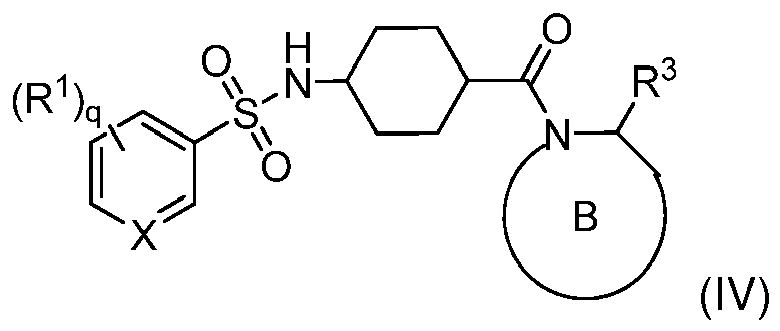 ring B is a C2-10 heterocyclyl ring which is optionally substituted on one or more carbon atoms with one to three independently selected R15; and wherein when the heterocyclyl comprises -NH-, the hydrogen of the -NH- group may be optionally replaced with R16; and wherein when the heterocyclyl comprises -N=, -S- or both, the - N= may be substituted with -O- and the -S- group may be substituted with one or two =O groups;R2a, for each occurrence, is independently selected from cyano, amino, hydroxy, C1-4alkyl, and C2-4alkenyl; andn is 0 or 1;or a pharmaceutically acceptable salt thereof.
 - A pharmaceutical composition, comprising:a compound according to any one of Claims 1 through 9, or a pharmaceutically acceptable salt thereof; anda pharmaceutically acceptable excipient or carrier.
- A pharmaceutical composition, comprising a therapeutically effective amount of a compound according to anyone of Claims 1 through 9, or a pharmaceutically acceptable salt thereof, in combination with a therapeutically effective amount of insulin, insulin derivative or mimetic; insulin secretagogue; insulinotropic sulfonylurea receptor ligand; PPAR ligand; insulin sensitizer; biguanide; alpha-glucosidase inhibitors; GLP-1, GLP-1 analog or mimetic; DPPIV inhibitor; HMG-CoA reductase inhibitor; squalene synthase inhibitor; FXR or LXR ligand; cholestyramine; fibrates; nicotinic acid; or aspirin.
- Use of a compound of Formula (I) according to any one of Claim 1 through 9, or a pharmaceutically acceptable salt thereof, for the preparation of a pharmaceutical composition for the treatment of a disorder or disease, wherein the disorder or disease is metabolic syndrome, Syndrome X, diabetes, insulin resistance, decreased glucose tolerance, non- insulin-dependent diabetes mellitus, Type II diabetes, Type I diabetes, diabetic complications, body weight disorders, or leptin related diseases.
- A compound of Formula (I) according to any one of Claim 1 through 9, or a pharmaceutically acceptable salt thereof, for use as a medicament.
- Use of a pharmaceutical composition according to Claim 10 or 11 for the preparation of a medicament for the treatment of a disorder or disease, wherein the disorder or disease is metabolic syndrome, Syndrome X, diabetes, insulin resistance, decreased glucose tolerance, non-insulin-dependent diabetes mellitus, Type II diabetes, Type I diabetes, diabetic complications, body weight disorders, or leptin related diseases.
Applications Claiming Priority (2)
| Application Number | Priority Date | Filing Date | Title |
|---|---|---|---|
| US26628809P | 2009-12-03 | 2009-12-03 | |
| PCT/EP2010/068677 WO2011067306A1 (en) | 2009-12-03 | 2010-12-01 | Cyclohexane derivatives as inhibitors of acetyl-coa carboxylase (acc) |
Publications (2)
| Publication Number | Publication Date |
|---|---|
| EP2507210A1 EP2507210A1 (en) | 2012-10-10 |
| EP2507210B1 true EP2507210B1 (en) | 2015-04-08 |
Family
ID=43735726
Family Applications (1)
| Application Number | Title | Priority Date | Filing Date |
|---|---|---|---|
| EP10782331.2A Not-in-force EP2507210B1 (en) | 2009-12-03 | 2010-12-01 | Cyclohexane derivatives as inhibitors of acetyl-coa carboxylase (acc) |
Country Status (6)
| Country | Link |
|---|---|
| US (1) | US8394858B2 (en) |
| EP (1) | EP2507210B1 (en) |
| AR (1) | AR079236A1 (en) |
| TW (1) | TW201125858A (en) |
| UY (1) | UY33075A (en) |
| WO (1) | WO2011067306A1 (en) |
Families Citing this family (22)
| Publication number | Priority date | Publication date | Assignee | Title |
|---|---|---|---|---|
| WO2012108478A1 (en) * | 2011-02-09 | 2012-08-16 | 武田薬品工業株式会社 | Monocyclic compound |
| US8765959B2 (en) | 2011-12-23 | 2014-07-01 | Boehringer Ingelheim International Gmbh | Piperidine derivatives |
| JP6139272B2 (en) * | 2012-06-01 | 2017-05-31 | 株式会社半導体エネルギー研究所 | Method for manufacturing light-emitting element |
| US8461179B1 (en) | 2012-06-07 | 2013-06-11 | Deciphera Pharmaceuticals, Llc | Dihydronaphthyridines and related compounds useful as kinase inhibitors for the treatment of proliferative diseases |
| EP2928471B1 (en) | 2012-12-06 | 2020-10-14 | Celgene Quanticel Research, Inc. | Histone demethylase inhibitors |
| WO2014134391A1 (en) | 2013-02-28 | 2014-09-04 | Bristol-Myers Squibb Company | Phenylpyrazole derivatives as potent rock1 and rock2 inhibitors |
| AR094929A1 (en) | 2013-02-28 | 2015-09-09 | Bristol Myers Squibb Co | DERIVATIVES OF PHENYLPIRAZOL AS POWERFUL INHIBITORS OF ROCK1 AND ROCK2 |
| RU2549566C2 (en) * | 2013-06-04 | 2015-04-27 | Федеральное государственное бюджетное образовательное учреждение высшего профессионального образования "Пермский государственный национальный исследовательский университет" | Method for producing methyl 1-[(1,3-dioxo-2,3-dihydro-1h-inden-2-yl)-(4-methylphenyl)methyl]cyclohexane carboxylate showing analgesic activity |
| HK1217448A1 (en) | 2013-09-12 | 2017-01-13 | 辉瑞大药厂 | Use of acetyl-coa carboxylase inhibitors for treating acne vulgaris |
| WO2015063746A1 (en) * | 2013-11-04 | 2015-05-07 | The South African Nuclear Energy Corporation Limited | Pharmaceutical composition |
| CN104672219A (en) * | 2015-02-13 | 2015-06-03 | 佛山市赛维斯医药科技有限公司 | Glucokinase activators containing glucosamide structure and application thereof |
| CN104672218A (en) * | 2015-02-13 | 2015-06-03 | 佛山市赛维斯医药科技有限公司 | Glucokinase activator containing glucosamide structure, preparation method and application of glucokinase activator to treatment of type II diabetes mellitus |
| CN106580956B (en) * | 2015-11-09 | 2019-07-19 | 李佩盈 | Application of the Suo Lafen A in ischemic brain damage |
| KR102708177B1 (en) | 2018-01-31 | 2024-09-23 | 데시페라 파마슈티칼스, 엘엘씨. | Combination therapy for the treatment of gastrointestinal stromal tumors |
| IL276398B2 (en) | 2018-01-31 | 2026-03-01 | Deciphera Pharmaceuticals Llc | Combination therapy for the treatment of mastocytosis |
| EP3938363A1 (en) | 2019-03-11 | 2022-01-19 | Teva Pharmaceuticals International GmbH | Solid state forms of ripretinib |
| PT4013412T (en) | 2019-08-12 | 2026-03-18 | Deciphera Pharmaceuticals Llc | RIPRETINIB FOR THE TREATMENT OF GASTROINTESTINAL STROMAL TUMORS |
| LT4013412T (en) | 2019-08-12 | 2026-03-25 | Deciphera Pharmaceuticals, Llc | Ripretinib for treating gastrointestinal stromal tumors |
| CN115243681B (en) | 2019-12-30 | 2024-08-16 | 德西费拉制药有限责任公司 | Compositions of 1-(4-bromo-5-(1-ethyl-7-(methylamino)-2-oxo-1,2-dihydro-1,6-naphthyridin-3-yl)-2-fluorophenyl)-3-phenylurea |
| HRP20231699T1 (en) | 2019-12-30 | 2024-05-10 | Deciphera Pharmaceuticals, Llc | Amorphous kinase inhibitor formulations and methods of use thereof |
| CN114478424B (en) * | 2022-01-21 | 2023-09-26 | 浙江工业大学 | Preparation method of azlactone derivative with cycloalkenyl substituted at beta position |
| US11779572B1 (en) | 2022-09-02 | 2023-10-10 | Deciphera Pharmaceuticals, Llc | Methods of treating gastrointestinal stromal tumors |
Family Cites Families (69)
| Publication number | Priority date | Publication date | Assignee | Title |
|---|---|---|---|---|
| GB284425A (en) | 1926-11-22 | 1928-02-02 | James Last | Improvements in and relating to sand or like moulds for making castings |
| JPS5612114B2 (en) | 1974-06-07 | 1981-03-18 | ||
| US4231938A (en) | 1979-06-15 | 1980-11-04 | Merck & Co., Inc. | Hypocholesteremic fermentation products and process of preparation |
| MX7065E (en) | 1980-06-06 | 1987-04-10 | Sankyo Co | A MICROBIOLOGICAL PROCEDURE FOR PREPARING DERIVATIVES OF ML-236B |
| US4450171A (en) | 1980-08-05 | 1984-05-22 | Merck & Co., Inc. | Antihypercholesterolemic compounds |
| US4448784A (en) | 1982-04-12 | 1984-05-15 | Hoechst-Roussel Pharmaceuticals, Inc. | 1-(Aminoalkylphenyl and aminoalkylbenzyl)-indoles and indolines and analgesic method of use thereof |
| US4499289A (en) | 1982-12-03 | 1985-02-12 | G. D. Searle & Co. | Octahydronapthalenes |
| CA1327360C (en) | 1983-11-14 | 1994-03-01 | William F. Hoffman | Oxo-analogs of mevinolin-like antihypercholesterolemic agents |
| US4613610A (en) | 1984-06-22 | 1986-09-23 | Sandoz Pharmaceuticals Corp. | Cholesterol biosynthesis inhibiting pyrazole analogs of mevalonolactone and its derivatives |
| US4686237A (en) | 1984-07-24 | 1987-08-11 | Sandoz Pharmaceuticals Corp. | Erythro-(E)-7-[3'-C1-3 alkyl-1'-(3",5"-dimethylphenyl)naphth-2'-yl]-3,5-dihydroxyhept-6-enoic acids and derivatives thereof |
| US4647576A (en) | 1984-09-24 | 1987-03-03 | Warner-Lambert Company | Trans-6-[2-(substitutedpyrrol-1-yl)alkyl]-pyran-2-one inhibitors of cholesterol synthesis |
| EP0216785B1 (en) | 1984-12-04 | 1991-01-30 | Sandoz Ag | Indene analogs of mevalonolactone and derivatives thereof |
| US4668794A (en) | 1985-05-22 | 1987-05-26 | Sandoz Pharm. Corp. | Intermediate imidazole acrolein analogs |
| HUT48208A (en) | 1985-10-25 | 1989-05-29 | Sandoz Ag | Process for producing heterocyclic analogues of mevalolactone derivatives and pharmaceutical compositions comprising such compounds |
| FR2596393B1 (en) | 1986-04-01 | 1988-06-03 | Sanofi Sa | HYDROXY-3 DIHYDROXYOXOPHOSPHORIO-4 BUTANOIC ACID DERIVATIVES, THEIR PREPARATION PROCESS, THEIR USE AS MEDICAMENTS AND THE COMPOSITIONS CONTAINING THEM |
| FI89493C (en) | 1987-05-22 | 1993-10-11 | Squibb & Sons Inc | Process for the preparation of therapeutically active, phosphorus-containing inhibitors of HMG-CoA reductase and the process useful for novel intermediates |
| US5506219A (en) | 1988-08-29 | 1996-04-09 | E. R. Squibb & Sons, Inc. | Pyridine anchors for HMG-CoA reductase inhibitors |
| US5753675A (en) | 1989-03-03 | 1998-05-19 | Novartis Pharmaceuticals Corporation | Quinoline analogs of mevalonolactone and derivatives thereof |
| HUT64023A (en) | 1991-03-22 | 1993-11-29 | Sandoz Ag | Process for producing aminoguanidine derivatives and pharmaceutical compositions comprising such compounds |
| TW225528B (en) | 1992-04-03 | 1994-06-21 | Ciba Geigy Ag | |
| DE4341666A1 (en) | 1993-12-07 | 1995-06-08 | Basf Ag | Substituted cycloalkane carboxylic acid derivatives, their preparation and use |
| US5776983A (en) | 1993-12-21 | 1998-07-07 | Bristol-Myers Squibb Company | Catecholamine surrogates useful as β3 agonists |
| US5488064A (en) | 1994-05-02 | 1996-01-30 | Bristol-Myers Squibb Company | Benzo 1,3 dioxole derivatives |
| US5491134A (en) | 1994-09-16 | 1996-02-13 | Bristol-Myers Squibb Company | Sulfonic, phosphonic or phosphiniic acid β3 agonist derivatives |
| US5541204A (en) | 1994-12-02 | 1996-07-30 | Bristol-Myers Squibb Company | Aryloxypropanolamine β 3 adrenergic agonists |
| JP3216457B2 (en) | 1994-12-28 | 2001-10-09 | 富士レビオ株式会社 | Amide derivatives |
| AU717743B2 (en) | 1995-12-13 | 2000-03-30 | Regents Of The University Of California, The | Nuclear receptor ligands and ligand binding domains |
| US5770615A (en) | 1996-04-04 | 1998-06-23 | Bristol-Myers Squibb Company | Catecholamine surrogates useful as β3 agonists |
| JP3347330B2 (en) | 1996-08-28 | 2002-11-20 | ザ プロクター アンド ギャンブル カンパニー | 1,3-diheterocyclic metalloprotease inhibitors |
| GB9713739D0 (en) | 1997-06-27 | 1997-09-03 | Karobio Ab | Thyroid receptor ligands |
| WO2000001389A1 (en) | 1998-07-06 | 2000-01-13 | Bristol-Myers Squibb Co. | Biphenyl sulfonamides as dual angiotensin endothelin receptor antagonists |
| WO2000005214A2 (en) | 1998-07-24 | 2000-02-03 | Pfizer Inc. | Isoquinolines as urokinase inhibitors |
| CO5150173A1 (en) | 1998-12-10 | 2002-04-29 | Novartis Ag | COMPOUNDS N- (REPLACED GLYCLE) -2-DIPEPTIDYL-IV PEPTIDASE INHIBITING CYANOPIRROLIDINS (DPP-IV) WHICH ARE EFFECTIVE IN THE TREATMENT OF CONDITIONS MEDIATED BY DPP-IV INHIBITION |
| GB9913079D0 (en) | 1999-06-04 | 1999-08-04 | Novartis Ag | Organic compounds |
| CA2389681C (en) | 1999-11-26 | 2010-11-02 | Shionogi & Co., Ltd. | Npy y5 antagonist |
| GB0112834D0 (en) | 2001-05-25 | 2001-07-18 | Smithkline Beecham Plc | Medicaments |
| TW200303742A (en) | 2001-11-21 | 2003-09-16 | Novartis Ag | Organic compounds |
| TW200406413A (en) | 2002-06-26 | 2004-05-01 | Glaxo Group Ltd | Compounds |
| GB0215676D0 (en) | 2002-07-05 | 2002-08-14 | Novartis Ag | Organic compounds |
| EP1558606A4 (en) | 2002-10-02 | 2008-05-07 | Bristol Myers Squibb Co | Lactam-containing diaminoalkyl, beta-aminoacids, alpha-aminoacids and derivatives thereof as factor xa inhibitors |
| KR100772297B1 (en) | 2002-11-22 | 2007-11-02 | 니뽄 다바코 산교 가부시키가이샤 | Fused Bicyclic Nitrogen-Containing Heterocycles |
| US20040185559A1 (en) | 2003-03-21 | 2004-09-23 | Isis Pharmaceuticals Inc. | Modulation of diacylglycerol acyltransferase 1 expression |
| TW200524849A (en) | 2003-07-02 | 2005-08-01 | Hoffmann La Roche | Hydroxyalkylamide derivatives |
| EP1648874B1 (en) | 2003-07-30 | 2011-10-05 | Xenon Pharmaceuticals Inc. | Piperazine derivatives and their use as therapeutic agents |
| EP1653969A4 (en) | 2003-08-07 | 2006-12-20 | Japan Tobacco Inc | Pyrrolo 1,2-b pyridazine derivatives |
| CN100402495C (en) | 2003-09-22 | 2008-07-16 | 弗·哈夫曼-拉罗切有限公司 | Aminoalkyl amide substituted cyclohexyl derivatives |
| JP2005119987A (en) | 2003-10-15 | 2005-05-12 | Ajinomoto Co Inc | Acylsulfonamide derivative |
| GB0325192D0 (en) | 2003-10-29 | 2003-12-03 | Astrazeneca Ab | Method of use |
| GB0325956D0 (en) | 2003-11-06 | 2003-12-10 | Addex Pharmaceuticals Sa | Novel compounds |
| US20050197336A1 (en) | 2004-03-08 | 2005-09-08 | Miikana Therapeutics Corporation | Inhibitors of histone deacetylase |
| US7345043B2 (en) | 2004-04-01 | 2008-03-18 | Miikana Therapeutics | Inhibitors of histone deacetylase |
| WO2005105777A1 (en) | 2004-05-05 | 2005-11-10 | Pharmacia & Upjohn Company Llc | Substituted thiophene amide compounds for the treatment of inflammation |
| EP1655283A1 (en) | 2004-11-08 | 2006-05-10 | Evotec OAI AG | 11beta-HSD1 Inhibitors |
| US20090264533A1 (en) | 2005-03-30 | 2009-10-22 | Richard Neubig | Methods and Compositions for Modulating RHO-Mediated Gene Transcription |
| JP4502280B2 (en) | 2005-03-31 | 2010-07-14 | 塩野義製薬株式会社 | Method for producing sulfaminecarboxylic acid derivative |
| GB0510139D0 (en) | 2005-05-18 | 2005-06-22 | Addex Pharmaceuticals Sa | Novel compounds B1 |
| GB0513747D0 (en) | 2005-07-06 | 2005-08-10 | Merck Sharp & Dohme | Therapeutic compounds |
| WO2007033002A1 (en) | 2005-09-14 | 2007-03-22 | Amgen Inc. | Conformationally constrained 3- (4-hydroxy-phenyl) - substituted-propanoic acids useful for treating metabolic disorders |
| CA2626005A1 (en) | 2005-10-13 | 2007-10-25 | Waratah Pharmaceuticals Inc. | Inositol derivatives and their uses in the treatment of diseases characterized by abnormal protein folding or aggregation or amyloid formation, deposition, accumulation or persistence |
| AU2006325746A1 (en) | 2005-12-14 | 2007-06-21 | Bristol-Myers Squibb Company | Six-membered heterocycles useful as serine protease inhibitors |
| AU2007206997B2 (en) | 2006-01-23 | 2011-11-24 | F. Hoffmann-La Roche Ag | Cyclohexyl sulfonamide derivatives having H3 receptor activity |
| JP2009539806A (en) | 2006-06-08 | 2009-11-19 | シュペーデル・エクスペリメンタ・アーゲー | 2,5-disubstituted piperidine |
| CA2657120A1 (en) | 2006-08-01 | 2008-02-07 | Arete Therapeutics, Inc. | Soluble epoxide hydrolase inhibitors |
| WO2008038640A1 (en) | 2006-09-28 | 2008-04-03 | Shionogi & Co., Ltd. | Method for producing salt of 4-sulfinylamino-1-cyclohexanecarboxylic acid |
| KR20080052024A (en) * | 2006-12-07 | 2008-06-11 | (주)아모레퍼시픽 | Triazolopyridazine derivatives having inhibitory activity against acetyl-coa carboxylase |
| WO2009035928A1 (en) | 2007-09-11 | 2009-03-19 | Arete Therapeutics, Inc. | Soluble epoxide hydrolase inhibitors |
| PE20091309A1 (en) * | 2007-12-21 | 2009-09-30 | Astrazeneca Ab | CYCLOHEXYL DERIVATIVES AS ACETYL COENZYME CARBOXYLASE INHIBITORS |
| US20090298834A1 (en) | 2008-06-02 | 2009-12-03 | Hassan Pajouhesh | 4-(aminomethyl)cyclohexanamine derivatives as calcium channel blockers |
| GB0817207D0 (en) * | 2008-09-19 | 2008-10-29 | Pimco 2664 Ltd | therapeutic apsac compounds and their use |
-
2010
- 2010-11-30 US US12/956,146 patent/US8394858B2/en not_active Expired - Fee Related
- 2010-12-01 AR ARP100104441A patent/AR079236A1/en unknown
- 2010-12-01 EP EP10782331.2A patent/EP2507210B1/en not_active Not-in-force
- 2010-12-01 WO PCT/EP2010/068677 patent/WO2011067306A1/en not_active Ceased
- 2010-12-02 TW TW099141930A patent/TW201125858A/en unknown
- 2010-12-02 UY UY0001033075A patent/UY33075A/en not_active Application Discontinuation
Also Published As
| Publication number | Publication date |
|---|---|
| US20110136735A1 (en) | 2011-06-09 |
| US8394858B2 (en) | 2013-03-12 |
| TW201125858A (en) | 2011-08-01 |
| WO2011067306A1 (en) | 2011-06-09 |
| UY33075A (en) | 2011-06-30 |
| AR079236A1 (en) | 2012-01-04 |
| EP2507210A1 (en) | 2012-10-10 |
Similar Documents
| Publication | Publication Date | Title |
|---|---|---|
| EP2507210B1 (en) | Cyclohexane derivatives as inhibitors of acetyl-coa carboxylase (acc) | |
| US9789118B2 (en) | Bicyclic acetyl-CoA carboxylase inhibitors and uses thereof | |
| JP7628587B2 (en) | (2S)-N-[(1S)-1-cyano-2-phenylethyl]-1,4-oxazepane-2-carboxamides as dipeptidyl peptidase 1 inhibitors | |
| RU2695133C1 (en) | Oxadiazolamine derivatives as histone deacetylase 6 inhibitor and pharmaceutical composition containing them | |
| US11572374B2 (en) | N-cyano-7-azanorbornane derivatives and uses thereof | |
| US10562870B2 (en) | Prodrugs of riluzole and their method of use | |
| JP4576386B2 (en) | Benzyl ether and benzylamino β-secretase inhibitors for the treatment of Alzheimer's disease | |
| CN104684899B (en) | Substituted sulfonamide compounds | |
| MX2010009204A (en) | Compounds and compositions as modulators of gpr119 activity. | |
| RS62974B1 (en) | Aminoimidazopyridazines as kinase inhibitors | |
| US12473296B2 (en) | Perk inhibiting compounds | |
| US20100222396A1 (en) | 4-aryl-butane-1,3-diamides | |
| TW202333663A (en) | Rxfp1 agonists | |
| US20240140933A1 (en) | Oxoindoline compound for the treatment of inflammatory diseases or cancer | |
| WO2016024598A1 (en) | Novel tetrahydro pyridopyrimidinone derivative | |
| US20240342185A1 (en) | SMALL MOLECULES INHIBITORS OF CYCLIC GMP-AMP SYNTHASE (cGAS) | |
| HK40100308A (en) | Oxoindoline compound for the treatment of inflammatory diseases or cancer | |
| WO2018098344A1 (en) | Prodrugs of lanicemine and their method of use | |
| HK1210146B (en) | Substituted sulfonamide compounds | |
| HK1229820A1 (en) | Serine derivatives as ghrelin receptor agonists |
Legal Events
| Date | Code | Title | Description |
|---|---|---|---|
| PUAI | Public reference made under article 153(3) epc to a published international application that has entered the european phase |
Free format text: ORIGINAL CODE: 0009012 |
|
| 17P | Request for examination filed |
Effective date: 20120703 |
|
| AK | Designated contracting states |
Kind code of ref document: A1 Designated state(s): AL AT BE BG CH CY CZ DE DK EE ES FI FR GB GR HR HU IE IS IT LI LT LU LV MC MK MT NL NO PL PT RO RS SE SI SK SM TR |
|
| DAX | Request for extension of the european patent (deleted) | ||
| GRAP | Despatch of communication of intention to grant a patent |
Free format text: ORIGINAL CODE: EPIDOSNIGR1 |
|
| INTG | Intention to grant announced |
Effective date: 20141030 |
|
| GRAS | Grant fee paid |
Free format text: ORIGINAL CODE: EPIDOSNIGR3 |
|
| GRAA | (expected) grant |
Free format text: ORIGINAL CODE: 0009210 |
|
| AK | Designated contracting states |
Kind code of ref document: B1 Designated state(s): AL AT BE BG CH CY CZ DE DK EE ES FI FR GB GR HR HU IE IS IT LI LT LU LV MC MK MT NL NO PL PT RO RS SE SI SK SM TR |
|
| REG | Reference to a national code |
Ref country code: GB Ref legal event code: FG4D |
|
| REG | Reference to a national code |
Ref country code: CH Ref legal event code: EP |
|
| REG | Reference to a national code |
Ref country code: IE Ref legal event code: FG4D |
|
| REG | Reference to a national code |
Ref country code: AT Ref legal event code: REF Ref document number: 720452 Country of ref document: AT Kind code of ref document: T Effective date: 20150515 |
|
| REG | Reference to a national code |
Ref country code: DE Ref legal event code: R096 Ref document number: 602010023833 Country of ref document: DE Effective date: 20150521 |
|
| REG | Reference to a national code |
Ref country code: AT Ref legal event code: MK05 Ref document number: 720452 Country of ref document: AT Kind code of ref document: T Effective date: 20150408 |
|
| REG | Reference to a national code |
Ref country code: NL Ref legal event code: VDEP Effective date: 20150408 |
|
| REG | Reference to a national code |
Ref country code: LT Ref legal event code: MG4D |
|
| PG25 | Lapsed in a contracting state [announced via postgrant information from national office to epo] |
Ref country code: NL Free format text: LAPSE BECAUSE OF FAILURE TO SUBMIT A TRANSLATION OF THE DESCRIPTION OR TO PAY THE FEE WITHIN THE PRESCRIBED TIME-LIMIT Effective date: 20150408 |
|
| PG25 | Lapsed in a contracting state [announced via postgrant information from national office to epo] |
Ref country code: NO Free format text: LAPSE BECAUSE OF FAILURE TO SUBMIT A TRANSLATION OF THE DESCRIPTION OR TO PAY THE FEE WITHIN THE PRESCRIBED TIME-LIMIT Effective date: 20150708 Ref country code: ES Free format text: LAPSE BECAUSE OF FAILURE TO SUBMIT A TRANSLATION OF THE DESCRIPTION OR TO PAY THE FEE WITHIN THE PRESCRIBED TIME-LIMIT Effective date: 20150408 Ref country code: LT Free format text: LAPSE BECAUSE OF FAILURE TO SUBMIT A TRANSLATION OF THE DESCRIPTION OR TO PAY THE FEE WITHIN THE PRESCRIBED TIME-LIMIT Effective date: 20150408 Ref country code: PT Free format text: LAPSE BECAUSE OF FAILURE TO SUBMIT A TRANSLATION OF THE DESCRIPTION OR TO PAY THE FEE WITHIN THE PRESCRIBED TIME-LIMIT Effective date: 20150810 Ref country code: HR Free format text: LAPSE BECAUSE OF FAILURE TO SUBMIT A TRANSLATION OF THE DESCRIPTION OR TO PAY THE FEE WITHIN THE PRESCRIBED TIME-LIMIT Effective date: 20150408 Ref country code: FI Free format text: LAPSE BECAUSE OF FAILURE TO SUBMIT A TRANSLATION OF THE DESCRIPTION OR TO PAY THE FEE WITHIN THE PRESCRIBED TIME-LIMIT Effective date: 20150408 |
|
| REG | Reference to a national code |
Ref country code: FR Ref legal event code: PLFP Year of fee payment: 6 |
|
| PG25 | Lapsed in a contracting state [announced via postgrant information from national office to epo] |
Ref country code: IS Free format text: LAPSE BECAUSE OF FAILURE TO SUBMIT A TRANSLATION OF THE DESCRIPTION OR TO PAY THE FEE WITHIN THE PRESCRIBED TIME-LIMIT Effective date: 20150808 Ref country code: RS Free format text: LAPSE BECAUSE OF FAILURE TO SUBMIT A TRANSLATION OF THE DESCRIPTION OR TO PAY THE FEE WITHIN THE PRESCRIBED TIME-LIMIT Effective date: 20150408 Ref country code: AT Free format text: LAPSE BECAUSE OF FAILURE TO SUBMIT A TRANSLATION OF THE DESCRIPTION OR TO PAY THE FEE WITHIN THE PRESCRIBED TIME-LIMIT Effective date: 20150408 Ref country code: GR Free format text: LAPSE BECAUSE OF FAILURE TO SUBMIT A TRANSLATION OF THE DESCRIPTION OR TO PAY THE FEE WITHIN THE PRESCRIBED TIME-LIMIT Effective date: 20150709 Ref country code: LV Free format text: LAPSE BECAUSE OF FAILURE TO SUBMIT A TRANSLATION OF THE DESCRIPTION OR TO PAY THE FEE WITHIN THE PRESCRIBED TIME-LIMIT Effective date: 20150408 |
|
| REG | Reference to a national code |
Ref country code: DE Ref legal event code: R097 Ref document number: 602010023833 Country of ref document: DE |
|
| PG25 | Lapsed in a contracting state [announced via postgrant information from national office to epo] |
Ref country code: DK Free format text: LAPSE BECAUSE OF FAILURE TO SUBMIT A TRANSLATION OF THE DESCRIPTION OR TO PAY THE FEE WITHIN THE PRESCRIBED TIME-LIMIT Effective date: 20150408 Ref country code: EE Free format text: LAPSE BECAUSE OF FAILURE TO SUBMIT A TRANSLATION OF THE DESCRIPTION OR TO PAY THE FEE WITHIN THE PRESCRIBED TIME-LIMIT Effective date: 20150408 |
|
| PLBE | No opposition filed within time limit |
Free format text: ORIGINAL CODE: 0009261 |
|
| STAA | Information on the status of an ep patent application or granted ep patent |
Free format text: STATUS: NO OPPOSITION FILED WITHIN TIME LIMIT |
|
| PG25 | Lapsed in a contracting state [announced via postgrant information from national office to epo] |
Ref country code: CZ Free format text: LAPSE BECAUSE OF FAILURE TO SUBMIT A TRANSLATION OF THE DESCRIPTION OR TO PAY THE FEE WITHIN THE PRESCRIBED TIME-LIMIT Effective date: 20150408 Ref country code: RO Free format text: LAPSE BECAUSE OF NON-PAYMENT OF DUE FEES Effective date: 20150408 Ref country code: SK Free format text: LAPSE BECAUSE OF FAILURE TO SUBMIT A TRANSLATION OF THE DESCRIPTION OR TO PAY THE FEE WITHIN THE PRESCRIBED TIME-LIMIT Effective date: 20150408 Ref country code: PL Free format text: LAPSE BECAUSE OF FAILURE TO SUBMIT A TRANSLATION OF THE DESCRIPTION OR TO PAY THE FEE WITHIN THE PRESCRIBED TIME-LIMIT Effective date: 20150408 |
|
| 26N | No opposition filed |
Effective date: 20160111 |
|
| PG25 | Lapsed in a contracting state [announced via postgrant information from national office to epo] |
Ref country code: IT Free format text: LAPSE BECAUSE OF FAILURE TO SUBMIT A TRANSLATION OF THE DESCRIPTION OR TO PAY THE FEE WITHIN THE PRESCRIBED TIME-LIMIT Effective date: 20150408 |
|
| PG25 | Lapsed in a contracting state [announced via postgrant information from national office to epo] |
Ref country code: BE Free format text: LAPSE BECAUSE OF NON-PAYMENT OF DUE FEES Effective date: 20151231 Ref country code: SI Free format text: LAPSE BECAUSE OF FAILURE TO SUBMIT A TRANSLATION OF THE DESCRIPTION OR TO PAY THE FEE WITHIN THE PRESCRIBED TIME-LIMIT Effective date: 20150408 |
|
| PG25 | Lapsed in a contracting state [announced via postgrant information from national office to epo] |
Ref country code: LU Free format text: LAPSE BECAUSE OF FAILURE TO SUBMIT A TRANSLATION OF THE DESCRIPTION OR TO PAY THE FEE WITHIN THE PRESCRIBED TIME-LIMIT Effective date: 20151201 Ref country code: MC Free format text: LAPSE BECAUSE OF FAILURE TO SUBMIT A TRANSLATION OF THE DESCRIPTION OR TO PAY THE FEE WITHIN THE PRESCRIBED TIME-LIMIT Effective date: 20150408 |
|
| REG | Reference to a national code |
Ref country code: CH Ref legal event code: PL |
|
| PG25 | Lapsed in a contracting state [announced via postgrant information from national office to epo] |
Ref country code: BE Free format text: LAPSE BECAUSE OF FAILURE TO SUBMIT A TRANSLATION OF THE DESCRIPTION OR TO PAY THE FEE WITHIN THE PRESCRIBED TIME-LIMIT Effective date: 20150408 |
|
| REG | Reference to a national code |
Ref country code: IE Ref legal event code: MM4A |
|
| PG25 | Lapsed in a contracting state [announced via postgrant information from national office to epo] |
Ref country code: LI Free format text: LAPSE BECAUSE OF NON-PAYMENT OF DUE FEES Effective date: 20151231 Ref country code: IE Free format text: LAPSE BECAUSE OF NON-PAYMENT OF DUE FEES Effective date: 20151201 Ref country code: CH Free format text: LAPSE BECAUSE OF NON-PAYMENT OF DUE FEES Effective date: 20151231 |
|
| REG | Reference to a national code |
Ref country code: FR Ref legal event code: PLFP Year of fee payment: 7 |
|
| PG25 | Lapsed in a contracting state [announced via postgrant information from national office to epo] |
Ref country code: SM Free format text: LAPSE BECAUSE OF FAILURE TO SUBMIT A TRANSLATION OF THE DESCRIPTION OR TO PAY THE FEE WITHIN THE PRESCRIBED TIME-LIMIT Effective date: 20150408 Ref country code: BG Free format text: LAPSE BECAUSE OF FAILURE TO SUBMIT A TRANSLATION OF THE DESCRIPTION OR TO PAY THE FEE WITHIN THE PRESCRIBED TIME-LIMIT Effective date: 20150408 Ref country code: HU Free format text: LAPSE BECAUSE OF FAILURE TO SUBMIT A TRANSLATION OF THE DESCRIPTION OR TO PAY THE FEE WITHIN THE PRESCRIBED TIME-LIMIT; INVALID AB INITIO Effective date: 20101201 |
|
| PG25 | Lapsed in a contracting state [announced via postgrant information from national office to epo] |
Ref country code: SE Free format text: LAPSE BECAUSE OF FAILURE TO SUBMIT A TRANSLATION OF THE DESCRIPTION OR TO PAY THE FEE WITHIN THE PRESCRIBED TIME-LIMIT Effective date: 20150408 Ref country code: CY Free format text: LAPSE BECAUSE OF FAILURE TO SUBMIT A TRANSLATION OF THE DESCRIPTION OR TO PAY THE FEE WITHIN THE PRESCRIBED TIME-LIMIT Effective date: 20150408 |
|
| PG25 | Lapsed in a contracting state [announced via postgrant information from national office to epo] |
Ref country code: MT Free format text: LAPSE BECAUSE OF FAILURE TO SUBMIT A TRANSLATION OF THE DESCRIPTION OR TO PAY THE FEE WITHIN THE PRESCRIBED TIME-LIMIT Effective date: 20150408 |
|
| REG | Reference to a national code |
Ref country code: FR Ref legal event code: PLFP Year of fee payment: 8 |
|
| PG25 | Lapsed in a contracting state [announced via postgrant information from national office to epo] |
Ref country code: TR Free format text: LAPSE BECAUSE OF FAILURE TO SUBMIT A TRANSLATION OF THE DESCRIPTION OR TO PAY THE FEE WITHIN THE PRESCRIBED TIME-LIMIT Effective date: 20150408 Ref country code: MK Free format text: LAPSE BECAUSE OF FAILURE TO SUBMIT A TRANSLATION OF THE DESCRIPTION OR TO PAY THE FEE WITHIN THE PRESCRIBED TIME-LIMIT Effective date: 20150408 |
|
| PG25 | Lapsed in a contracting state [announced via postgrant information from national office to epo] |
Ref country code: AL Free format text: LAPSE BECAUSE OF FAILURE TO SUBMIT A TRANSLATION OF THE DESCRIPTION OR TO PAY THE FEE WITHIN THE PRESCRIBED TIME-LIMIT Effective date: 20150408 |
|
| PGFP | Annual fee paid to national office [announced via postgrant information from national office to epo] |
Ref country code: DE Payment date: 20181120 Year of fee payment: 9 |
|
| PGFP | Annual fee paid to national office [announced via postgrant information from national office to epo] |
Ref country code: GB Payment date: 20181128 Year of fee payment: 9 Ref country code: FR Payment date: 20181127 Year of fee payment: 9 |
|
| REG | Reference to a national code |
Ref country code: DE Ref legal event code: R119 Ref document number: 602010023833 Country of ref document: DE |
|
| GBPC | Gb: european patent ceased through non-payment of renewal fee |
Effective date: 20191201 |
|
| PG25 | Lapsed in a contracting state [announced via postgrant information from national office to epo] |
Ref country code: GB Free format text: LAPSE BECAUSE OF NON-PAYMENT OF DUE FEES Effective date: 20191201 Ref country code: DE Free format text: LAPSE BECAUSE OF NON-PAYMENT OF DUE FEES Effective date: 20200701 Ref country code: FR Free format text: LAPSE BECAUSE OF NON-PAYMENT OF DUE FEES Effective date: 20191231 |