EP2505432A1 - Altert system for wheeled vehicles - Google Patents
Altert system for wheeled vehicles Download PDFInfo
- Publication number
- EP2505432A1 EP2505432A1 EP11305361A EP11305361A EP2505432A1 EP 2505432 A1 EP2505432 A1 EP 2505432A1 EP 11305361 A EP11305361 A EP 11305361A EP 11305361 A EP11305361 A EP 11305361A EP 2505432 A1 EP2505432 A1 EP 2505432A1
- Authority
- EP
- European Patent Office
- Prior art keywords
- vehicle
- alert system
- amplifier
- audio signal
- wheel
- Prior art date
- Legal status (The legal status is an assumption and is not a legal conclusion. Google has not performed a legal analysis and makes no representation as to the accuracy of the status listed.)
- Withdrawn
Links
- 230000005236 sound signal Effects 0.000 claims abstract description 25
- 238000005096 rolling process Methods 0.000 claims abstract description 16
- 238000000034 method Methods 0.000 claims abstract description 10
- 230000004044 response Effects 0.000 claims abstract description 10
- 238000002485 combustion reaction Methods 0.000 claims description 4
- 230000009849 deactivation Effects 0.000 claims 1
- 230000000694 effects Effects 0.000 description 5
- 230000033001 locomotion Effects 0.000 description 3
- 241001465754 Metazoa Species 0.000 description 2
- 230000008901 benefit Effects 0.000 description 2
- 230000008859 change Effects 0.000 description 2
- 238000013500 data storage Methods 0.000 description 2
- 238000001914 filtration Methods 0.000 description 2
- 230000003321 amplification Effects 0.000 description 1
- 239000010426 asphalt Substances 0.000 description 1
- 230000009286 beneficial effect Effects 0.000 description 1
- 230000005540 biological transmission Effects 0.000 description 1
- 239000004568 cement Substances 0.000 description 1
- 230000008878 coupling Effects 0.000 description 1
- 238000010168 coupling process Methods 0.000 description 1
- 238000005859 coupling reaction Methods 0.000 description 1
- 230000001419 dependent effect Effects 0.000 description 1
- 238000010586 diagram Methods 0.000 description 1
- 230000005674 electromagnetic induction Effects 0.000 description 1
- 238000005516 engineering process Methods 0.000 description 1
- 230000007613 environmental effect Effects 0.000 description 1
- 239000000835 fiber Substances 0.000 description 1
- 230000010354 integration Effects 0.000 description 1
- 230000015654 memory Effects 0.000 description 1
- 238000003199 nucleic acid amplification method Methods 0.000 description 1
- 230000010355 oscillation Effects 0.000 description 1
- 230000001105 regulatory effect Effects 0.000 description 1
- 238000009420 retrofitting Methods 0.000 description 1
- 230000035945 sensitivity Effects 0.000 description 1
- 230000035939 shock Effects 0.000 description 1
- 238000001228 spectrum Methods 0.000 description 1
- 230000007480 spreading Effects 0.000 description 1
- 238000004381 surface treatment Methods 0.000 description 1
- 239000000725 suspension Substances 0.000 description 1
- 239000002699 waste material Substances 0.000 description 1
Images

Classifications
-
- B—PERFORMING OPERATIONS; TRANSPORTING
- B60—VEHICLES IN GENERAL
- B60Q—ARRANGEMENT OF SIGNALLING OR LIGHTING DEVICES, THE MOUNTING OR SUPPORTING THEREOF OR CIRCUITS THEREFOR, FOR VEHICLES IN GENERAL
- B60Q5/00—Arrangement or adaptation of acoustic signal devices
- B60Q5/005—Arrangement or adaptation of acoustic signal devices automatically actuated
- B60Q5/008—Arrangement or adaptation of acoustic signal devices automatically actuated for signaling silent vehicles, e.g. for warning that a hybrid or electric vehicle is approaching
Definitions
- the invention relates to an alert system fr wheeled vehicles.
- electric vehicle warning sounds are a series of sounds designed to alert pedestrians to the presence of electric drive vehicles such as hybrid electric vehicles (HEVs), plug-in hybrid electric vehicles (PHEVs), and all-electric vehicles (EVs) travelling at low speeds. Since vehicles operating in all-electric mode generate less noise than traditional combustion engine vehicles, they can make it more difficult for pedestrians, the blind, and others, to become aware of their presence.
- HEVs hybrid electric vehicles
- PHEVs plug-in hybrid electric vehicles
- EVs all-electric vehicles
- a conventional electric vehicle warning sound may be produced by emitting a series of warning chirps or low tones from the vehicle horn, enough to provide an alert but not to startle. Some advanced systems are configured to project such warning sound in the direction of travel.
- an alert system which may allow for reduced noise pollution.
- noise pollution is any excessive, displeasing machine-created environmental noise that disrupts the activity or balance of human or animal life.
- a method is disclosed that may be applied to alert a nearby pedestrian of an approaching wheeled vehicle to make him or her aware of its presence.
- a wheeled vehicle is any land vehicle that is designed or used to transport people or cargo and that employs a wheel or wheels to apply steering and driving forces against the ground.
- a wheel in turn is any device that allows heavy objects to be moved easily through rotating on an axle through its center, facilitating movement or transportation while supporting the load imposed by the vehicle.
- An alert system comprises a microphone.
- a microphone is any acoustic-to-electric transducer or sensor that converts sound into an electrical signal.
- the resulting signal is commonly referred to as an audio signal, that is, a representation of sound pressure waves in a different form.
- the audio signal would take the form of a time-varying electrical voltage or current, but may as well be based on radio frequency waves, when broadcast through radio, or even pulses of light, when transmitted through a fiber optic cable such as TOSLINK.
- the microphone is arranged to generate its audio signal based on rolling noise produced by a wheel of the vehicle.
- Such alert system further comprises an amplifier, that is, a device for increasing the power of the audio signal.
- the audio signal being an electrical signal
- the amplifier takes the form of an electronic amplifier.
- the amplifier controls its output to match the input signal shape while increasing its amplitude. In this context, this amplitude is proportional to the change in atmospheric pressure, whose oscillation constitutes the rolling noise.
- the alert system comprises a loudspeaker, sometimes called a speaker, that is, an electro-acoustic transducer that produces sound in response to an electrical audio signal input.
- the audio signal output of the amplifier constitutes the audio signal input of the loudspeaker.
- the loudspeaker may employ more than one transducer, commonly called a driver in this context.
- a method of, according to another embodiment of the invention, alerting a pedestrian of an approaching wheeled vehicle comprises the initial step of generating an audio signal that is based on rolling noise which in turn is produced by a wheel of the vehicle.
- the resulting audio signal then is amplified and, ultimately, sound is produced in response to this amplified audio signal.
- rolling noise is produced by a wheel 21 of the vehicle.
- rolling noise is any noise caused by friction between the wheel 21 or its tires and the pavement underneath.
- rolling noise takes the form of a deeply resounding, reverberant hum.
- its volume is expected to be highly dependent on pavement surface treatment. For instance, a chip-seat paved road would generally, but not imperatively, lead to a higher sound level than asphalt or cement concrete.
- the amount of rolling noise produced by currently marketed tires varies greatly.
- a tire In the context of road vehicles, a tire is any ring-shaped covering that fits around the wheel rim, that is, the wheel's outer circular design, usually to protect it or enable better vehicle performance by providing a flexible cushion that absorbs shock while keeping the wheel 21 in close contact with the ground.
- a microphone 22 In a second step 12, a microphone 22 generates an audio signal based on the rolling noise of the first step 11.
- the microphone 22 of the current embodiment uses electromagnetic induction, capacitance change, piezoelectric generation, or light modulation from mechanical vibration caused by the rolling noise.
- the microphone 22 is mounted near a fender or fender skirt of the vehicle, such as in the wheel well framed by such fender, or attached to some other panel in proximity of the wheel arches.
- the microphone 22 may be integrated with a dynamo, which in turn can be used to power the amplifier 23.
- the directional characteristics of the microphone 22 may be adapted according to its relative position to the pavement-facing side of the wheel 21. Furthermore, to eliminate the need for physical cabling of the microphone 22 to connect it to its associated amplifying equipment, the microphone 22 may take the form of a wireless microphone, also known as a radio microphone, containing a radio transmitter. Such wireless setup is particularly beneficial where the embodiment is designed for retrofitting or upgrading a conventional vehicle.
- the audio signal generated in the second step 12 may take the form of an electrical voltage signal.
- the microphone sensitivity in this case usually expressed in millivolts per pascal, preferably is selected according to the expected rolling noise level.
- an amplifier 23 amplifies the audio signal generated in the second step 12.
- the amplifier 23 takes the form of an audio amplifier, sometimes called audio-frequency amplifier, that is, an electronic circuit for amplification of signals within, and in some cases above, the audible range of frequencies. This range is commonly called the bandwidth of the amplifier 23.
- the amplifier 23 is adapted to perform satisfactorily for frequencies between 20 Hz and 20 kHz.
- the amplifier 23 may employ input and/or output filtering to sharply limit frequency responses beyond this range. Such filtering bears the additional advantage of reducing the waste of output power on infrasonic and ultrasonic frequencies.
- the former may take the form of a programmable gain amplifier (PGA), that is, an electronic amplifier whose gain can be controlled by external digital or analog signals.
- PGA programmable gain amplifier
- gain is a measure of the ability of a circuit ⁇ here, the amplifier ⁇ to increase the power or amplitude of a signal from its input to its output.
- the associated control unit may be connected, inter alia, to a tachometer of the vehicle.
- a tachometer sometimes called revolution counter, is any instrument that measures the rotation speed of a shaft or disk, as in a motor or other machine.
- the tachometer may be configured to measure the rotation speed of the wheel 21 and deactivate the amplifier 23 in response to that speed exceeding a predetermined threshold.
- a predetermined threshold would correspond to a traveling speed of the vehicle between 32 and 40 km/h at which normal motion and rotation noises become audible, such as produced by the road, suspension, and, where applicable, motor.
- the tachometer may be mounted on the rear of the transmission and designed to deliver a series of electronic pulses whose frequency corresponds to the rotational speed of the driveshaft.
- an alternative embodiment may rely on, for example, pulses originating from the anti-lock braking system (ABS) wheel sensors.
- ABS anti-lock braking system
- a similar effect may be achieved by coupling the control unit with a positional speedometer based on a global positioning system (GPS) device.
- GPS global positioning system
- an advanced embodiment may further allow an operator of the vehicle to manually control the amplifier 23.
- a loudspeaker 24 produces sound in response to the audio signal amplified in the third step 13.
- the loudspeaker 24 is positioned near an opening in the vehicle body.
- this opening is covered by a grille, that is, an arrangement in the vehicle body of several slits side by side. Where the vehicle features a combustion engine, such grille may double as a radiator grille.
- the loudspeaker 24 employs a woofer, that is, a driver designed to produce sounds in the approximate range of 40 Hz to 1 kHz or higher, to emphasize the typically low frequency of the rolling noise.
- the loudspeaker 24 may make use of directional sound, that is, create fields of sound spreading less than would be expected in most traditional loudspeakers.
- the grille is preferably located at the front of the vehicle such as, in the case of an automobile, below a front bumper, adjacent to an engine hood, or near the front fender.
- An improved vehicle featuring an optional reverse gear may comprise an additional loudspeaker at its tail, such as on a rear deck lid.
- the loudspeaker preferably forms part of a dimensionally large speaker panel, speaker array, or dome.
- all speakers would then be driven together in phase to obtain a sound source with equivalent directivity to a single large loudspeaker.
- the drivers may be arrayed on a parabolic surface, constituting what is known in the field of loudspeaker technology as a parabolic loudspeaker.
- the resulting beam of sound may travel farther, thus being able to focus on distant pedestrians 25 to alert them of the approaching vehicle in good time before the latter passes their position.
- Yet another embodiment may achieve a similar effect by reflecting sound output from the loudspeaker 24 to a parabolic reflector aimed in the direction of travel.
- an electric vehicle also referred to as an electric drive vehicle, is any vehicle that uses one or more electric motors for propulsion.
- electric wheeled vehicles include, but are not limited to, electric cars, electric buses, electric trucks, electric motorcycles, and electric trains.
- HEV hybrid electric vehicle
- ICE internal combustion engine
- the amplifier may be configured to deactivate whenever the ICE is engaged, as the operating noise inherent to the ICE would typically redundantize any further warning sound.
- program storage devices e.g., digital data storage media, which are machine or computer readable and encode machine-executable or computer-executable programs of instructions, wherein said instructions perform some or all of the steps of said above-described methods.
- the program storage devices may be, e.g., digital memories, magnetic storage media such as a magnetic disks and magnetic tapes, hard drives, or optically readable digital data storage media.
- the embodiments are also intended to cover computers programmed to perform said steps of the above-described methods.
Landscapes
- Physics & Mathematics (AREA)
- Acoustics & Sound (AREA)
- Engineering & Computer Science (AREA)
- Mechanical Engineering (AREA)
- Fittings On The Vehicle Exterior For Carrying Loads, And Devices For Holding Or Mounting Articles (AREA)
Abstract
Description
- The invention relates to an alert system fr wheeled vehicles.
- This section introduces aspects that may be helpful in facilitating a better understanding of the invention. Accordingly, the statements of this section are to be read in this light and are not to be understood as admissions about what is in the prior art or what is not in the prior art.
- In the field of warning systems, electric vehicle warning sounds are a series of sounds designed to alert pedestrians to the presence of electric drive vehicles such as hybrid electric vehicles (HEVs), plug-in hybrid electric vehicles (PHEVs), and all-electric vehicles (EVs) travelling at low speeds. Since vehicles operating in all-electric mode generate less noise than traditional combustion engine vehicles, they can make it more difficult for pedestrians, the blind, and others, to become aware of their presence.
- A conventional electric vehicle warning sound may be produced by emitting a series of warning chirps or low tones from the vehicle horn, enough to provide an alert but not to startle. Some advanced systems are configured to project such warning sound in the direction of travel.
- In one embodiment of the present invention, an alert system is disclosed which may allow for reduced noise pollution. In this context, noise pollution is any excessive, displeasing machine-created environmental noise that disrupts the activity or balance of human or animal life.
- In another embodiment of the present invention, a method is disclosed that may be applied to alert a nearby pedestrian of an approaching wheeled vehicle to make him or her aware of its presence. In the field of transport, a wheeled vehicle is any land vehicle that is designed or used to transport people or cargo and that employs a wheel or wheels to apply steering and driving forces against the ground. A wheel in turn is any device that allows heavy objects to be moved easily through rotating on an axle through its center, facilitating movement or transportation while supporting the load imposed by the vehicle.
- An alert system according to an embodiment of the invention comprises a microphone. Herein, a microphone is any acoustic-to-electric transducer or sensor that converts sound into an electrical signal. The resulting signal is commonly referred to as an audio signal, that is, a representation of sound pressure waves in a different form. Typically, the audio signal would take the form of a time-varying electrical voltage or current, but may as well be based on radio frequency waves, when broadcast through radio, or even pulses of light, when transmitted through a fiber optic cable such as TOSLINK. In this embodiment, the microphone is arranged to generate its audio signal based on rolling noise produced by a wheel of the vehicle.
- Such alert system further comprises an amplifier, that is, a device for increasing the power of the audio signal. In the embodiment at hand, the audio signal being an electrical signal, the amplifier takes the form of an electronic amplifier. To obtain the desired effect, the amplifier controls its output to match the input signal shape while increasing its amplitude. In this context, this amplitude is proportional to the change in atmospheric pressure, whose oscillation constitutes the rolling noise.
- Finally, the alert system comprises a loudspeaker, sometimes called a speaker, that is, an electro-acoustic transducer that produces sound in response to an electrical audio signal input. In the present embodiment, the audio signal output of the amplifier constitutes the audio signal input of the loudspeaker. To adequately reproduce the potentially wide range of frequencies characterizing the rolling noise, the loudspeaker may employ more than one transducer, commonly called a driver in this context.
- A method of, according to another embodiment of the invention, alerting a pedestrian of an approaching wheeled vehicle comprises the initial step of generating an audio signal that is based on rolling noise which in turn is produced by a wheel of the vehicle. The resulting audio signal then is amplified and, ultimately, sound is produced in response to this amplified audio signal.
- Further embodiments of the invention can be gathered from the following entirety of the herein application.
- Some embodiments of apparatus and/or methods in accordance with embodiments of the present invention are now described, by way of example only, and with reference to the accompanying drawings, in which:
-
Figure 1 is a flowchart of a method according to an embodiment of the present invention; and -
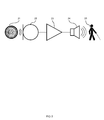
Figure 2 is a block diagram of an alert system according to another embodiment of the present invention. - In a
first step 11, rolling noise is produced by awheel 21 of the vehicle. Here, rolling noise is any noise caused by friction between thewheel 21 or its tires and the pavement underneath. Typically, such rolling noise takes the form of a deeply resounding, reverberant hum. For the purpose of this embodiment, its volume is expected to be highly dependent on pavement surface treatment. For instance, a chip-seat paved road would generally, but not imperatively, lead to a higher sound level than asphalt or cement concrete. Similarly, the amount of rolling noise produced by currently marketed tires varies greatly. In the context of road vehicles, a tire is any ring-shaped covering that fits around the wheel rim, that is, the wheel's outer circular design, usually to protect it or enable better vehicle performance by providing a flexible cushion that absorbs shock while keeping thewheel 21 in close contact with the ground. - In a
second step 12, amicrophone 22 generates an audio signal based on the rolling noise of thefirst step 11. To this end, themicrophone 22 of the current embodiment uses electromagnetic induction, capacitance change, piezoelectric generation, or light modulation from mechanical vibration caused by the rolling noise. Preferably, but not necessarily, themicrophone 22 is mounted near a fender or fender skirt of the vehicle, such as in the wheel well framed by such fender, or attached to some other panel in proximity of the wheel arches. In the case of a human-powered vehicle such as a bicycle, themicrophone 22 may be integrated with a dynamo, which in turn can be used to power theamplifier 23. - To suppress any background noise caused by interference factors such as airflow through the wheel well, the directional characteristics of the
microphone 22 may be adapted according to its relative position to the pavement-facing side of thewheel 21. Furthermore, to eliminate the need for physical cabling of themicrophone 22 to connect it to its associated amplifying equipment, themicrophone 22 may take the form of a wireless microphone, also known as a radio microphone, containing a radio transmitter. Such wireless setup is particularly beneficial where the embodiment is designed for retrofitting or upgrading a conventional vehicle. - For ease of integration with conventional amplifying equipment, the audio signal generated in the
second step 12 may take the form of an electrical voltage signal. The microphone sensitivity, in this case usually expressed in millivolts per pascal, preferably is selected according to the expected rolling noise level. - In a
third step 13, anamplifier 23 amplifies the audio signal generated in thesecond step 12. To cater for the frequency range of the audio signal, theamplifier 23 takes the form of an audio amplifier, sometimes called audio-frequency amplifier, that is, an electronic circuit for amplification of signals within, and in some cases above, the audible range of frequencies. This range is commonly called the bandwidth of theamplifier 23. In the embodiment at hand, to reflect the range of normal human hearing as may be imputed to apedestrian 25, theamplifier 23 is adapted to perform satisfactorily for frequencies between 20 Hz and 20 kHz. To avoid disrupting the activity or balance of animal life, theamplifier 23 may employ input and/or output filtering to sharply limit frequency responses beyond this range. Such filtering bears the additional advantage of reducing the waste of output power on infrasonic and ultrasonic frequencies. - To integrate the
amplifier 23 with an external control unit, the former may take the form of a programmable gain amplifier (PGA), that is, an electronic amplifier whose gain can be controlled by external digital or analog signals. In electronics, gain is a measure of the ability of a circuit―here, the amplifier―to increase the power or amplitude of a signal from its input to its output. The associated control unit may be connected, inter alia, to a tachometer of the vehicle. In the field of measuring instruments, a tachometer, sometimes called revolution counter, is any instrument that measures the rotation speed of a shaft or disk, as in a motor or other machine. In this scenario, the tachometer may be configured to measure the rotation speed of thewheel 21 and deactivate theamplifier 23 in response to that speed exceeding a predetermined threshold. Typically, such threshold would correspond to a traveling speed of the vehicle between 32 and 40 km/h at which normal motion and rotation noises become audible, such as produced by the road, suspension, and, where applicable, motor. To this end, the tachometer may be mounted on the rear of the transmission and designed to deliver a series of electronic pulses whose frequency corresponds to the rotational speed of the driveshaft. In the case of a motor vehicle, an alternative embodiment may rely on, for example, pulses originating from the anti-lock braking system (ABS) wheel sensors. A similar effect may be achieved by coupling the control unit with a positional speedometer based on a global positioning system (GPS) device. Subject to regulatory requirements, an advanced embodiment may further allow an operator of the vehicle to manually control theamplifier 23. - Finally, in a
fourth step 14, aloudspeaker 24 produces sound in response to the audio signal amplified in thethird step 13. To limit noise pollution within the vehicle's passenger compartment to a minimum, theloudspeaker 24 is positioned near an opening in the vehicle body. To protect theloudspeaker 24 and other subassemblies of the vehicle, this opening is covered by a grille, that is, an arrangement in the vehicle body of several slits side by side. Where the vehicle features a combustion engine, such grille may double as a radiator grille. - Preferably, the
loudspeaker 24 employs a woofer, that is, a driver designed to produce sounds in the approximate range of 40 Hz to 1 kHz or higher, to emphasize the typically low frequency of the rolling noise. To further reduce noise pollution by projecting the sound only in the direction of travel of the vehicle, theloudspeaker 24 may make use of directional sound, that is, create fields of sound spreading less than would be expected in most traditional loudspeakers. To this end, reflecting the characteristic forward motion of the vehicle, the grille is preferably located at the front of the vehicle such as, in the case of an automobile, below a front bumper, adjacent to an engine hood, or near the front fender. An improved vehicle featuring an optional reverse gear may comprise an additional loudspeaker at its tail, such as on a rear deck lid. For optimum directivity even in the case of the relatively low frequency spectrum inherent to the rolling noise, the loudspeaker preferably forms part of a dimensionally large speaker panel, speaker array, or dome. In the case of a speaker array, all speakers would then be driven together in phase to obtain a sound source with equivalent directivity to a single large loudspeaker. Alternatively to a line array, that is, an arrangement coupled together in a line segment to create a near-line source of sound, the drivers may be arrayed on a parabolic surface, constituting what is known in the field of loudspeaker technology as a parabolic loudspeaker. Due to reduced dissipation in air, the resulting beam of sound may travel farther, thus being able to focus ondistant pedestrians 25 to alert them of the approaching vehicle in good time before the latter passes their position. Yet another embodiment may achieve a similar effect by reflecting sound output from theloudspeaker 24 to a parabolic reflector aimed in the direction of travel. - Due to its typically quiet and smooth operation, resulting in reduced noise and vibration, an electric vehicle may particularly benefit from an alert system as described above. In this context, an electric vehicle (EV), also referred to as an electric drive vehicle, is any vehicle that uses one or more electric motors for propulsion. Examples of electric wheeled vehicles include, but are not limited to, electric cars, electric buses, electric trucks, electric motorcycles, and electric trains. In the specific case of a hybrid electric vehicle (HEV) combining a conventional internal combustion engine (ICE) with an electric propulsion system, the amplifier may be configured to deactivate whenever the ICE is engaged, as the operating noise inherent to the ICE would typically redundantize any further warning sound.
- A person of skill in the art would readily recognize that steps of various above-described methods can be performed by programmed computers. Herein, some embodiments are also intended to cover program storage devices, e.g., digital data storage media, which are machine or computer readable and encode machine-executable or computer-executable programs of instructions, wherein said instructions perform some or all of the steps of said above-described methods. The program storage devices may be, e.g., digital memories, magnetic storage media such as a magnetic disks and magnetic tapes, hard drives, or optically readable digital data storage media. The embodiments are also intended to cover computers programmed to perform said steps of the above-described methods.
- The description merely illustrates the principles of the invention. It will thus be appreciated that those skilled in the art will be able to devise various arrangements that, although not explicitly described or shown herein, embody the principles of the invention and are included within its spirit and scope. Furthermore, all examples recited herein are principally intended expressly to be only for pedagogical purposes to aid the reader in understanding the principles of the invention and the concepts contributed by the inventor(s) to furthering the art, and are to be construed as being without limitation to such specifically recited examples and conditions. Moreover, all statements herein reciting principles, aspects, and embodiments of the invention, as well as specific examples thereof, are intended to encompass equivalents thereof.
Claims (15)
- An alert system for a wheeled vehicle comprising a microphone (22) for generating an audio signal based on rolling noise produced by a wheel (21) of the vehicle, an amplifier (23) for amplifying the audio signal, and a loudspeaker (24) for producing sound in response to the amplified audio signal.
- An alert system as in claim 1 wherein the microphone (22) is adapted for mounting in a wheel well of the vehicle.
- An alert system as in claim 1 wherein the microphone (22) is adapted for attachment to a fender of the vehicle.
- An alert system as in any of the preceding claims wherein the amplifier (23) takes the form of a programmable gain amplifier.
- An alert system as in claim 4 further comprising a control unit for controlling a gain of the programmable gain amplifier.
- An alert system as in claim 5 wherein the control unit is adapted for connection to a tachometer of the vehicle, wherein the tachometer is configured to measure a rotation speed of the wheel (21).
- An alert system as in claim 6 wherein the control unit is configured to deactivate the amplifier (23) in response to the rotation speed exceeding a threshold.
- An alert system as in claim 7 wherein the threshold corresponds to a traveling speed of between 32 km/h and 40 km/h.
- An alert system as in any of claims 5 to 8 wherein the control unit comprises a manual control element configured for use by an operator of the vehicle.
- An alert system as in any of the preceding claims wherein the vehicle takes the form of an electric vehicle.
- An alert system as in claim 10 wherein the electric vehicle takes the form of a hybrid electric vehicle and the amplifier (23) is configured for deactivation in response to engagement of a combustion engine of the vehicle.
- An alert system as in any of claims 1 to 9 wherein the vehicle takes the form of a bicycle.
- An alert system as in any of the preceding claims wherein the amplifier (23) is adapted for connection to a dynamo of the vehicle.
- A wheeled vehicle comprising an alert system according to any of the preceding claims.
- A method of alerting a pedestrian (25) of an approaching wheeled vehicle, which method comprises the steps of generating (12) an audio signal based on rolling noise produced (11) by a wheel of the vehicle, amplifying (13) the audio signal, and producing sound (14) in response to the amplified audio signal.
Priority Applications (1)
| Application Number | Priority Date | Filing Date | Title |
|---|---|---|---|
| EP11305361A EP2505432A1 (en) | 2011-03-31 | 2011-03-31 | Altert system for wheeled vehicles |
Applications Claiming Priority (1)
| Application Number | Priority Date | Filing Date | Title |
|---|---|---|---|
| EP11305361A EP2505432A1 (en) | 2011-03-31 | 2011-03-31 | Altert system for wheeled vehicles |
Publications (1)
| Publication Number | Publication Date |
|---|---|
| EP2505432A1 true EP2505432A1 (en) | 2012-10-03 |
Family
ID=44343799
Family Applications (1)
| Application Number | Title | Priority Date | Filing Date |
|---|---|---|---|
| EP11305361A Withdrawn EP2505432A1 (en) | 2011-03-31 | 2011-03-31 | Altert system for wheeled vehicles |
Country Status (1)
| Country | Link |
|---|---|
| EP (1) | EP2505432A1 (en) |
Cited By (1)
| Publication number | Priority date | Publication date | Assignee | Title |
|---|---|---|---|---|
| US9294365B2 (en) | 2013-05-08 | 2016-03-22 | Vringo, Inc. | Cognitive radio system and cognitive radio carrier device |
Citations (3)
| Publication number | Priority date | Publication date | Assignee | Title |
|---|---|---|---|---|
| KR100859329B1 (en) * | 2007-07-06 | 2008-09-19 | (주)뷔셸 | Car sound monitoring and alarm system |
| AT508606A2 (en) * | 2010-04-16 | 2011-02-15 | Bdp Sicherheitstechnologien Gmbh | SPEED DEPENDENT PLAY OF MOTOR NOISE BY SOUND GENERATOR OF HYBRID / ELECTRIC CARS |
| DE102009040898A1 (en) * | 2009-09-11 | 2011-03-17 | Volkswagen Ag | Vehicle with an audio system for generating an engine noise |
-
2011
- 2011-03-31 EP EP11305361A patent/EP2505432A1/en not_active Withdrawn
Patent Citations (3)
| Publication number | Priority date | Publication date | Assignee | Title |
|---|---|---|---|---|
| KR100859329B1 (en) * | 2007-07-06 | 2008-09-19 | (주)뷔셸 | Car sound monitoring and alarm system |
| DE102009040898A1 (en) * | 2009-09-11 | 2011-03-17 | Volkswagen Ag | Vehicle with an audio system for generating an engine noise |
| AT508606A2 (en) * | 2010-04-16 | 2011-02-15 | Bdp Sicherheitstechnologien Gmbh | SPEED DEPENDENT PLAY OF MOTOR NOISE BY SOUND GENERATOR OF HYBRID / ELECTRIC CARS |
Cited By (4)
| Publication number | Priority date | Publication date | Assignee | Title |
|---|---|---|---|---|
| US9294365B2 (en) | 2013-05-08 | 2016-03-22 | Vringo, Inc. | Cognitive radio system and cognitive radio carrier device |
| US9300724B2 (en) | 2013-05-08 | 2016-03-29 | Vringo, Inc. | Server function for device-to-device based content delivery |
| US9374280B2 (en) | 2013-05-08 | 2016-06-21 | Vringo Infrastructure Inc. | Device-to-device based content delivery for time-constrained communications |
| US9401850B2 (en) | 2013-05-08 | 2016-07-26 | Vringo Infrastructure Inc. | Cognitive radio system and cognitive radio carrier device |
Similar Documents
| Publication | Publication Date | Title |
|---|---|---|
| US9699535B2 (en) | Sounding body and audio reproduction device using same, and mobile device | |
| KR102717039B1 (en) | System and method for external sound synthesis of a vehicle | |
| CN102126466B (en) | Vehicle presence notification apparatus | |
| US8862299B2 (en) | Branding of electrically propelled vehicles via the generation of specific operating output | |
| US8537030B2 (en) | Pedestrian alert system and method | |
| CN202106908U (en) | Pedestrian protecting device | |
| JP6083347B2 (en) | Vehicle approach notification device | |
| US8680964B2 (en) | Vehicle presence notification apparatus | |
| JP4798271B2 (en) | Vehicle presence notification device | |
| CN110758235A (en) | Pedestrian warning device system and pedestrian warning method | |
| US12377782B2 (en) | Battery electric vehicle active sound and vibration enhancement systems | |
| KR20130118388A (en) | Device and method for generating noise for a motor vehicle | |
| US20140121864A1 (en) | Vehicle presence notification system | |
| CN109552169B (en) | Accelerometer-based external sound monitoring during low-speed maneuvers | |
| JP5750994B2 (en) | Alarm sound generator for vehicles | |
| EP2505432A1 (en) | Altert system for wheeled vehicles | |
| JP2013091369A (en) | Presence informing system of vehicle | |
| JP4955839B2 (en) | Pseudo-sound generator and pseudo-sound generation method | |
| JP6131752B2 (en) | Vehicle ambient environment notification system | |
| CN1960579A (en) | Device inside automobile wheelhouse for monitoring horn sounds of other vehicles | |
| JP2012144209A (en) | Device for generating alarm sound of electric mobile object | |
| KR20110122529A (en) | Identification warning sound generating device of electric motor driving vehicle and identification warning sound generating method using same | |
| JP2011183964A (en) | Alarm sound generator of electric automobile | |
| KR20220118949A (en) | Method and system for active noise control within vehicles | |
| WO2023086310A1 (en) | Active sound and vibration enhancement systems for battery electric vehicle |
Legal Events
| Date | Code | Title | Description |
|---|---|---|---|
| PUAI | Public reference made under article 153(3) epc to a published international application that has entered the european phase |
Free format text: ORIGINAL CODE: 0009012 |
|
| 17P | Request for examination filed |
Effective date: 20110825 |
|
| AK | Designated contracting states |
Kind code of ref document: A1 Designated state(s): AL AT BE BG CH CY CZ DE DK EE ES FI FR GB GR HR HU IE IS IT LI LT LU LV MC MK MT NL NO PL PT RO RS SE SI SK SM TR |
|
| AX | Request for extension of the european patent |
Extension state: BA ME |
|
| 111Z | Information provided on other rights and legal means of execution |
Free format text: AL AT BE BG CH CY CZ DE DK EE ES FI FR GB GR HR HU IE IS IT LI LT LU LV MC MK MT NL NO PL PT RO RS SE SI SK SM TR Effective date: 20130410 |
|
| RAP1 | Party data changed (applicant data changed or rights of an application transferred) |
Owner name: ALCATEL LUCENT |
|
| D11X | Information provided on other rights and legal means of execution (deleted) | ||
| 17Q | First examination report despatched |
Effective date: 20160208 |
|
| STAA | Information on the status of an ep patent application or granted ep patent |
Free format text: STATUS: THE APPLICATION IS DEEMED TO BE WITHDRAWN |
|
| 18D | Application deemed to be withdrawn |
Effective date: 20160621 |