EP2504429B1 - Chimeric endonucleases and uses thereof - Google Patents
Chimeric endonucleases and uses thereof Download PDFInfo
- Publication number
- EP2504429B1 EP2504429B1 EP10832740.4A EP10832740A EP2504429B1 EP 2504429 B1 EP2504429 B1 EP 2504429B1 EP 10832740 A EP10832740 A EP 10832740A EP 2504429 B1 EP2504429 B1 EP 2504429B1
- Authority
- EP
- European Patent Office
- Prior art keywords
- sequence
- chimeric
- endonuclease
- dna
- seq
- Prior art date
- Legal status (The legal status is an assumption and is not a legal conclusion. Google has not performed a legal analysis and makes no representation as to the accuracy of the status listed.)
- Not-in-force
Links
Images





Classifications
-
- C—CHEMISTRY; METALLURGY
- C12—BIOCHEMISTRY; BEER; SPIRITS; WINE; VINEGAR; MICROBIOLOGY; ENZYMOLOGY; MUTATION OR GENETIC ENGINEERING
- C12N—MICROORGANISMS OR ENZYMES; COMPOSITIONS THEREOF; PROPAGATING, PRESERVING, OR MAINTAINING MICROORGANISMS; MUTATION OR GENETIC ENGINEERING; CULTURE MEDIA
- C12N9/00—Enzymes; Proenzymes; Compositions thereof; Processes for preparing, activating, inhibiting, separating or purifying enzymes
- C12N9/14—Hydrolases (3)
- C12N9/16—Hydrolases (3) acting on ester bonds (3.1)
- C12N9/22—Ribonucleases [RNase]; Deoxyribonucleases [DNase]
-
- C—CHEMISTRY; METALLURGY
- C07—ORGANIC CHEMISTRY
- C07K—PEPTIDES
- C07K14/00—Peptides having more than 20 amino acids; Gastrins; Somatostatins; Melanotropins; Derivatives thereof
- C07K14/435—Peptides having more than 20 amino acids; Gastrins; Somatostatins; Melanotropins; Derivatives thereof from animals; from humans
- C07K14/46—Peptides having more than 20 amino acids; Gastrins; Somatostatins; Melanotropins; Derivatives thereof from animals; from humans from vertebrates
- C07K14/47—Peptides having more than 20 amino acids; Gastrins; Somatostatins; Melanotropins; Derivatives thereof from animals; from humans from vertebrates from mammals
- C07K14/4701—Peptides having more than 20 amino acids; Gastrins; Somatostatins; Melanotropins; Derivatives thereof from animals; from humans from vertebrates from mammals not used
- C07K14/4702—Regulators; Modulating activity
-
- C—CHEMISTRY; METALLURGY
- C12—BIOCHEMISTRY; BEER; SPIRITS; WINE; VINEGAR; MICROBIOLOGY; ENZYMOLOGY; MUTATION OR GENETIC ENGINEERING
- C12N—MICROORGANISMS OR ENZYMES; COMPOSITIONS THEREOF; PROPAGATING, PRESERVING, OR MAINTAINING MICROORGANISMS; MUTATION OR GENETIC ENGINEERING; CULTURE MEDIA
- C12N15/00—Mutation or genetic engineering; DNA or RNA concerning genetic engineering, vectors, e.g. plasmids, or their isolation, preparation or purification; Use of hosts therefor
- C12N15/09—Recombinant DNA-technology
- C12N15/10—Processes for the isolation, preparation or purification of DNA or RNA
- C12N15/102—Mutagenizing nucleic acids
-
- C—CHEMISTRY; METALLURGY
- C12—BIOCHEMISTRY; BEER; SPIRITS; WINE; VINEGAR; MICROBIOLOGY; ENZYMOLOGY; MUTATION OR GENETIC ENGINEERING
- C12N—MICROORGANISMS OR ENZYMES; COMPOSITIONS THEREOF; PROPAGATING, PRESERVING, OR MAINTAINING MICROORGANISMS; MUTATION OR GENETIC ENGINEERING; CULTURE MEDIA
- C12N15/00—Mutation or genetic engineering; DNA or RNA concerning genetic engineering, vectors, e.g. plasmids, or their isolation, preparation or purification; Use of hosts therefor
- C12N15/09—Recombinant DNA-technology
- C12N15/63—Introduction of foreign genetic material using vectors; Vectors; Use of hosts therefor; Regulation of expression
- C12N15/79—Vectors or expression systems specially adapted for eukaryotic hosts
- C12N15/82—Vectors or expression systems specially adapted for eukaryotic hosts for plant cells, e.g. plant artificial chromosomes (PACs)
- C12N15/8201—Methods for introducing genetic material into plant cells, e.g. DNA, RNA, stable or transient incorporation, tissue culture methods adapted for transformation
- C12N15/8213—Targeted insertion of genes into the plant genome by homologous recombination
Definitions
- the invention relates to chimeric endonucleases, comprising an endonuclease and a heterologous DNA binding domain comprising one or more Zn 2 C 6 zinc fingers, as well as methods of targeted integration, targeted deletion or targeted mutation of polynucleotides using such chimeric endonucleases.
- Genome engineering is a common term to summarize different techniques to insert, delete, substitute or otherwise manipulate specific genetic sequences within a genome and has numerous therapeutic and biotechnological applications. More or less all genome engineering techniques use recombinases, integrases or endonucleases to create DNA double strand breaks at predetermined sites in order to promote homologous recombination.
- nucleases with specificity for a sequence that is sufficiently large to be present at only a single site within a genome. Nucleases recognizing such large DNA sequences of about 15 to 30 nucleotides are therefore called “meganucleases” or “homing endonucleases” and are frequently associated with parasitic DNA elements, such as group 1 self-splicing introns and inteins commonly found in the genomes of plants and fungi. Meganucleases are commonly grouped into four families: the LAGLIDADG family, the GIY-YIG family, the His-Cys box family and the HNH family. These families are characterized by structural motifs, which affect catalytic activity and the sequence of their DNA recognition sequences.
- Natural meganucleases from the LAGLIDADG family have been used to effectively promote site-specific genome modifications in insect and mammalian cell cultures, as well as in many organisms, such as plants, yeast or mice, but this approach has been limited to the modification of either homologous genes that conserve the DNA recognition sequence or to preengineered genomes into which a recognition sequence has been introduced. In order to avoid these limitations and to promote the systematic implementation of DNA double strand break stimulated gene modification new types of nucleases have been created.
- One type of new nucleases consists of artificial combinations of unspecific nucleases to a higly specific DNA binding domain. The effectiveness of this strategy has been demonstrated in a variety of organisms using chimeric fusions between an engineered zinc finger DNA-binding domain and the non-specific nuclease domain of the Fokl restriction enzyme (e.g.
- WO03/089452 a variation of this approach is to use an inactive variant of a meganuclease as DNA binding domain fused to an unspecific nuclease like Fokl as disclosed in Lippow et al., "Creation of a type IIS restriction endonuclease with a long recognition sequence", Nucleic Acid Research (2009), Vol.37, No.9, pages 3061 to 3073 .
- An alternative approach is to genetically engineer natural meganucleases in order to customize their DNA binding regions to bind existing sites in a genome, thereby creating engineered meganucleases having new specificities (e.g WO07093918 , WO2008/093249 , WO09114321 ).
- engineered meganucleases having new specificities (e.g WO07093918 , WO2008/093249 , WO09114321 ).
- many meganucleases which have been engineered with respect to DNA cleavage specificity have a decreased cleavage activity relative to the naturally occurring meganucleases from which they are derived ( US2010/0071083 ).
- Most meganucleases do also act on sequences similar to their optimal binding site, which may lead to unintended or even detrimental off-target effects.
- the invention provides chimeric endonucleases comprising at least one LAGLIDADG endonuclease having DNA double strand break inducing activity and at least 80% amino acid sequence identity to a polypeptide described by SEQ ID NO: 1, 2, 3, 122, 123, 124 or 165 and at least one heterologous DNA binding domain comprising one or more Zn 2 C 6 zinc fingers.
- the chimeric endonuclease comprises at least one LAGLIDADG endonuclease comprising an amino acid sequence having at least 80% amino acid sequence identity to a polypeptide described by any one of SEQ ID NOs: 1, 2, 3, 122, 123, 124, or 165.
- the chimeric endonuclease comprises at least one LAGLIDADG endonuclease having DNA double strand break inducing activity and at least 80% amino acid sequence identity to a polypeptide described by SEQ ID NO: 1, 2, 3, 122, 123, 124 or 165, which is an engineered or optimized endonuclease or an optimized version of an engineered endonuclease, preferably an optimized endonuclease or an optimized version of an engineered endonuclease.
- the chimeric endonuclease comprises a heterologous DNA binding domain comprising one or more Zn 2 C 6 zinc fingers derived from a transcription factor.
- the chimeric endonuclease comprises a heterologous DNA binding domain comprising at least one polypeptide having at least 80% amino acid sequence identity to a polypeptide described by any one of SEQ ID NOs: 57, 58, 59, 60, 61, 62, 63, 64, 65, 66, 67, 68, 69, 70, 71, 72, 73, 74, 75, 76, 77, 78, 79, 80,81, 82, 83, 84, 85, 86, 87, 88, 89, 90, 91, 92, 93, 94, 95, 96, 97, 98, 99, 100, 101, 102, 103, 104, 105, 106, 107, 108, 109, 110,111, 11
- the chimeric endonucleases described herein may or may not comprise a linker to connect at least one endonuclease with at least one heterologous DNA binding domain.
- the linker (synonymous "linker polypeptide") consists of at least 3 amino acids and wherein the at least one third of the amino acids in the amino acid sequence of this linker polypeptide are glycine or serine or alanine or a combination of glycine, serine and alanine.
- the chimeric endonucleases comprise at least one NLS-sequence and or a SecIII or SecIV secretion signal.
- the invention provides further for isolated polynucleotides comprising a nucleotide sequence, which codes for a chimeric endonuclease of the invention.
- the isolated polynucleotide is codon opitimized or has a low content of RNA instability motives or has a low content of codon repeats, or has a low content of cryptic splice sites, or has a low content of alternative start codons, has a low content of restriction sites, or has a low content of RNA secondary structures or has any combination of those features.
- Another embodiment of the invention is an expression cassette comprising an isolated polynucleotide as described above in functional combination with a promoter and a terminator sequence.
- isolated polynucleotides comprising a chimeric recognition sequence having a length of about 15 to about 300 nucleotides and comprising a recognition sequence of a LAGLIDADG endonuclease endonuclease having DNA double strand break inducing activity and at least 80% amino acid sequence identity to a polypeptide described by SEQ ID NO: 1, 2, 3, 122, 123, 124 or 165 and a recognition sequence of a heterologous DNA binding domain comprising one or more Zn 2 C 6 zinc fingers.
- the recognition sequence of the heterologous DNA binding domain can be bound by at least one Zn 2 C 6 zinc fingercomprising an amino acid sequence described by any one of SEQ IDNOs: 57, 58, 59, 60, 61, 62, 63, 64, 65, 66, 67, 68, 69, 70, 71, 72, 73, 74, 75, 76, 77, 78, 79, 80,81, 82, 83, 84, 85, 86, 87, 88, 89, 90, 91, 92, 93, 94, 95, 96, 97, 98, 99, 100, 101, 102, 103, 104, 105, 106, 107, 108, 109, 110,111, 112, 113, 114, 115, 116, 117, 118, 119, 120, 121.
- the invention does also provide for isolated polynucleotides comprising a chimeric recognition sequence, preferably the chimeric recognition sequence is comprised in en expression cassette, or close to the 5'- or 3'-end or close to both ends, wherein the expression cassette comprises a promoter, a terminator and a sequence capable to be expressed by the promoter, preferably the sequence being capable to be expressed codes for a marker gene.
- the invention does further provide a chimeric recognition sequence comprising a DNA recognition sequence of I-Scel and a recognition sequence, which can be bound by at least one Zn 2 C 6 zinc finger comprising an amino acid sequence described by any one of SEQ ID NOs: 57, 58, 59, 60, 61, 62, 63, 64, 65, 66, 67, 68, 69, 70, 71, 72, 73, 74, 75, 76, 77, 78, 79, 80,81, 82, 83, 84, 85, 86, 87, 88, 89, 90, 91, 92, 93, 94, 95, 96, 97, 98, 99, 100, 101, 102, 103, 104, 105, 106, 107, 108, 109, 110,111, 112, 113, 114, 115, 116, 117, 118, 119, 120, 121, being directly connected or being connected by a sequence of 1 to 10 nu
- the chimeric recognition sequence comprises a DNA recognition sequence of I-SceI and a recognition sequence of AIcR, or AIcR (1-60) being directly connected or being connected by a sequence of 1 to 10 nucleotides.
- the isolated polynucleotide comprises a chimeric recognition sequence, comprising a polynucleotide sequence as described by any one of SEQ ID NO: 13, 14, 15, 16, 43, 44, 45 or 46.
- inventions are vectors, host cells or non human organisms comprising a polynucleotide coding for a chimeric endonuclease, or an isolated polynucleotide coding for a chimeric endonuclease or or an isolated polynucleotide comprising an chimeric recognition sequence, or an expression cassette comprising a polynucleotide coding for a chimeric endonuclease or an chimeric recognition sequence, and vectors, host cells or non human organisms comprising a combination of the chimeric endonucleases, isolated polynucleotides and expression cassettes described above.
- the non-human organism is a plant.
- the invention provides methods of using the chimeric endonucleases and chimeric recognition sequences described above to induce or facilitate homologous recombination or end joining events, preferably in methods for targeted integration or excision of sequences.
- sequences being excised are marker genes.
- a method for providing a chimeric endonuclease comprising the steps of: a) providing at least one endonuclease coding region, b) providing at least one heterologous DNA binding domain coding region, c) providing a polynucleotide having a potential DNA recognition sequence or potential DNA recognition sequences of the endonuclease or endonucleases of step a) and having a potential recognition sequence or having potential recognition sequences of the heterologous DNA binding domain or heterologous DNA binding domains of step b), d) creating a translational fusion of the coding regions of all endonucleases of step b) and all heterologous DNA binding domains of step c), e) expressing a chimeric endonuclease from the translational fusion created in step d), f) testing the chimeric endonuclease expressed in step e) for cleavage of the polynucleotide of step c).
- the invention does further provide a method for homologous recombination of polynucleotides comprising the following steps: a) providing a cell competent for homologous recombination, b) providing a polynucleotide comprising a chimieric recognition site flanked by a sequence A and a sequence B, c) providing a polynucleotide comprising sequences A' and B', which are sufficiently long and homologous to sequence A and sequence B, to allow for homologous recombination in said cell and d) providing a chimeric endonuclease as described above or an expression cassette as described above, e) combining b), c) and d) in said cell and f) detecting recombined polynucleotides of b) and c), or selecting for or growing cells comprising recombined polynucleotides of b) and c).
- the method for homologous recombination of polynucleotides leads to a homologous recombination, wherein a polynucleotide sequence comprised in the competent cell of step a) is deleted from the genome of the growing cells of step f).
- a further method of the invention is a method for targeted mutation comprising the following steps: a) providing a cell comprising a polynucleotide comprising a chimeric recognition site of an chimeric endonuclease as described above, b) providing an chimeric endonuclease as described above and being able to cleave the chimeric recognition site of step a), c) combining a) and b) in said cell and d) detecting mutated polynucleotides, or selecting for growing cells comprising mutated polynucleotides.
- the methods described above comprise a step, wherein the chimeric endonuclease and the chimeric recogntition site are combined in at least one cell via crossing of organisms, via transformation or via transport mediated via a Sec III or SecIV peptide fused to the chimeric endonuclease.
- the invention provides chimeric LAGLIDADG endonucleases, comprising at least one LAGLIDADG endonuclease having DNA double strand break inducing activity and at least 80% amino acid sequence identity to a polypeptide described by SEQ ID NO: 1, 2, 3, 122, 123, 124 or 165 and one heterologous DNA binding domain comprising one or more Zn 2 C 6 zinc fingers.
- LAGLIDADG endonucleases can be found in the genomes of algae, fungi, yeasts, protozoan, chloroplasts, mitochondria, bacteria and archaea.
- LAGLIDADG endonucleases comprise at least one conserved LAGLIDADG motif.
- the name of the LAGLIDADG motif is based on a characteristic amino acid sequence appearing in all LAGLIDADG endonucleases.
- LAGLIDADG is an acronym of this amino acid sequence according to the one-letter-code as described in the STANDARD ST.25 i.e. the standard adopted by the PCIPI Executive Coordination Committee for the presentation of nucleotide and amino acid sequence listings in patent applications.
- LAGLIDADG motif is not fully conserved in all LAGLIDADG endonucleases, (see for example Chevalier et al. (2001), Nucleic Acids Res. 29(18): 3757 to 3774 , or Dalgaard et al. (1997), Nucleic Acids Res. 25(22): 4626 to 4638 ), so that some LAGLIDADG endonucleases comprise some one or several amino acid changes in their LAGLIDADG motif.
- LAGLIDADG endonucleases comprising only one LAGLIDADG motif act usually as homo- or heterodimers.
- LAGLIDADG endonucleases comprising two LAGLIDADG motifs act as monomers and comprise usually a pseudo-dimeric structure.
- LAGLIDADG endonucleases can be isolated from polynucleotides of organisms mentioned for exemplary purposes in Table 1 to 6, or de novo synthesized by techniques known in the art, e.g. using sequence information available in public databases known to the person skilled in the art, for example Genbank ( Benson (2010)), Nucleic Acids Res 38:D46-51 or Swissprot ( Boeckmann (2003), Nucleic Acids Res 31:365-70 )
- LAGLIDADG endonucleases can be found in the PFAM-Database for protein families.
- the PFAM-Database accession number PF00961 describes the LAGLIDADG 1 protein family, which comprises about 800 protein sequences.
- PFAM-Database accession number PF03161 describes members of the LAGLIDADG 2 protein family, comprising about 150 protein sequences.
- An alternative collection of LAGLIDADG endonucleases can be found in the In-terPro data base, e.g. InterPro accession number IPR004860.
- LAGLIDADG endonucleases shall also encompass artificial homo- und heterodimeric LAGLIDADG endonucleases, which can be created by modifying the protein-protein interaction regions of the monomers in order to promote homo- or heterodimer formation.
- artificial heterodimeric LAGLIDADG endonuclease comprising the LAGLIDADG endonuclease I- Dmo I as one domain can be found for example in WO2009/074842 and WO2009/074873 .
- LAGLIDADG endonucleases shall also encompass artificial single chain endonucleases, which can be created by making translational fusions of monomers of homo- or heterodimeric LAGLIDADG endonucleases.
- LAGLIDADG endonucleases are: I -Ani I , I-Sce I, I-Chu I, I-Dmo I, I-Cre I, I-Csm I, PI-Sce I, PI-TIi I, PI-Mtu I, I-Ceu I, I-Sce II, I-Sce III, HO, PI-Civ I, PI Ctr I, PI-Aae I, PI-Bsu I, PI-Dha I, PI-Dra I, PI-Mav I, PI-Mch I, PI-Mfu I, PI-MfI I, PI-Mga I, PI-Mgo I, PI-Min I, PI-Mka I, PI-Mle I, PI-Mma I, PI-Msh I, PI-Msm I, I- Mso I, PI-Mth I, PI-Mtu I
- LAGLIDADG endonucleases examples include the LAGLIDADG endonucleases mentioned in Tables 1 and homologs of these having at least 80%, 85%, 90%, 92%, 93%, 94%, 95%, 96%, 97%, 98% or 99% sequence identity on amino acid level.
- Alternative LAGLIDADG endonucleases are artificial single chain LAGLIDADG endonucleases, which may comprise two sub-units of the same LAGLIDADG endonuclease, such as single-chain I-Cre, single-chain I-Ceu I or single-chain I-Ceu II as disclosed in WO03078619 , or which may comprise two sub-units of different LAGLIDADG endonucleases.
- Artificial single chain LAGLIDADG endonucleases, which comprise two sub-units of different LAGLIDADG endonucleases are called hybrid meganucleases.
- Examples of artificial single chain LAGLIDADG endonucleases are single-chain I-Crel, single-chain I-Ceul or single-chain I-Ceull and hybrid meganucleases like: I-Sce/I-Chu I, I-Sce/PI-Pfu I, I-Chu/I-Sce I, I-Chu/PI-Pfu I, I-Sce/I-Dmo I, I Dmo I/I-See I, I-Dmo I/PI-Pfu I, I-Dmo I/I-Cre I, I-Cre I/I-Dmo I, I-Cre I/PI-Pfu I, I-Sce I/I-Csm I, I-Sce I/I-Cre I, I-Sce I/PI-Sce I, I-Sce I/PI-TIi I, I-Sce I/PI-Mtu I, I-Sce I/ I-Ceu I, I-Cre
- Examples of dimeric LAGLIDADG endonucleases are: I- Cre I, I -Ceu I, I -Sce II, I -Mso I and I- Csm I and homologs of any one these having at least 49%, 51%, 58%, 60%, 70%, 80%, 85%, 90%, 92%, 93%, 94%, 95%, 96%, 97%, 98% or 99% sequence identity on amino acid level.
- Examples of heterodimeric LAGLIDADG endonucleases are disclosed in WO 07/034262 , WO 07/047859 and WO08093249 .
- Homologs of LAGLIDADG endonucleases can be cloned from other organisms or can be created by mutating LAGLIDADG endonucleases, e.g. by replacing, adding or deleting amino acids of the amino acid sequence of a given LAGLIDADG endonuclease, which preferably have no effect on its DNA-binding-affinity, its dimer formation affinity or which will change its DNA recognition sequence.
- DNA-binding affinity means the tendency of a meganuclease or LAGLIDADG endonuclease to non-covalently associate with a reference DNA molecule (e.g., a DNA recognition sequence or an arbitrary sequence). Binding affinity is measured by a dissociation constant, K D (e.g., the K D of I-Crel for the WT DNA recognition sequence is approximately 0.1 nM).
- a meganuclease has "altered" binding affinity if the K D of the recombinant meganuclease for a reference DNA recognition sequence is increased or decreased by a statistically significant (p ⁇ 0.05) amount relative to a reference meganuclease or or LAGLIDADG endonuclease.
- affinity for dimer formation means the tendency of a monomer to non-covalently associate with a reference meganuclease monomer or LAGLIDADG endonuclease monomer.
- the affinity for dimer formation can be measured with the same monomer (i.e., homodimer formation) or with a different monomer (i.e., heterodimer formation) such as a reference wild-type meganuclease or a reference LAGLIDADG endonuclease. Binding affinity is measured by a dissociation constant, K D .
- a meganuclease has "altered" affinity for dimer formation, if the K D of the recombinant meganuclease monomer or the recombinant LAGLIDADG endonuclease monomer for a reference meganuclease monomer or for a reference LAGLIDADG endonuclease is increased or decreased by a statistically significant (p ⁇ 0.05) amount relative to a reference meganuclease monomer or the reference LAGLIDADG endonuclease monomer.
- the term "enzymatic activity” refers to the rate at which a meganuclease e.g. a LAGLIDADG endonuclease cleaves a particular DNA recognition sequence. Such activity is a measurable enzymatic reaction, involving the hydrolysis of phospho-diester-bonds of doublestranded DNA.
- the activity of a meganuclease acting on a particular DNA substrate is affected by the affinity or avidity of the meganuclease for that particular DNA substrate which is, in turn, affected by both sequence-specific and non-sequence-specific interactions with the DNA.
- nuclear localization signals to the amino acid sequence of a LAGLIDADG endonuclease and/or change one or more amino acids and/or delete parts of its sequence, e.g. parts of the N-terminus or parts of its C-terminus.
- the homologs of LAGLIDADG endonucleases are being selected from the groups of artificial single chain LAGLIDADG endonucleases, including or not including hybrid meganucleases, homologs which can be cloned from other organisms, engineered endonucleases or optimized nucleases.
- the LAGLIDADG endonuclease is selected from the group comprising: I- Sce I and homologs of I-SceI as described in Table 1, and homologs of any one these having at least 80%, 85%, 90%, 92%, 93%, 94%, 95%, 96%, 97%, 98% or 99% sequence identity on amino acid level.
- Table 1 Exemplary homologs of I-SceI, which can be cloned from other organisms. Uni-Prot Accession Nr. Organism SEQ ID NO: Amino Acid Sequence Identity to I-SceI A7LCP1 S. cerevisiae 1 100 Q36760 S. cerevisiae 122 98 063264 Z.
- Tabel 2 Exemplary homologs of I-CreI, which can be cloned from other organisms.
- Tabel 3 Exemplary homologs of PI-SceI, which can be cloned from other organisms. Uni-Prot Accession Nr.
- Homologs of endonucleases which are cloned from other organisms might have a different enzymatic activity, DNA-binding-affinity, dimer formation affinity or changes in its DNA recognition sequence, when compared to the reference endonucleases, like I-SceI (SEQ ID NO: 1) for homologs described in Table 1, I-CreI (SEQ ID NO: 126) for homologs described in Table 2, PI-Scel (SEQ ID NO: 145) for homologs described in Table 3, I-CeuI (SEQ ID NO: 131) for homologs described in Table 4, I-ChuI (SEQ ID NO: 136) for homologs described in Table 5, or I-Dmol (SEQ ID NO: 141) for homologs described in Table 6.
- the I-MsoI homolog described by SEQ ID NO: 151 might have a different enzymatic activity, DNA-binding-affinity, dimer formation affinity or changes in its DNA recognition sequence, when compared to the reference endonuclease of I-MsoI as described by SEQ ID NO: 150.
- Another preferred endonulcease is I- Ani I (SEQ ID NO: 161), preferably comprising the activity enhancing mutations: F13Y and S111Y, or F13Y, S111Y and K222R, or F13Y, I55V, F91I, S92T and S111Y.
- the chimeric endonuclease comprises at least one LAGLIDADG endonuclease comprising an amino acid sequence having at least 80%, 81%, 82%, 83%, 84%, 85%,86%, 87%, 88%, 89%, 90%, 91%, 92%, 93%, 94%, 95%, 96%, 97%, 98% or 99% amino acid sequence identity to a polypeptide described by any one of SEQ ID NOs: 1, 2, 3, 122, 123, 124, or 165.
- chimeric endonucleases comprise at least one LAGLIDADG endonuclease comprising an amino acid sequence having at least 80%, 81%, 82%, 83%, 84%, 85%,86%, 87%, 88%, 89%, 90%, 91%, 92%, 93%, 94%, 95%, 96%, 97%, 98% or 99% amino acid sequence identity to a polypeptide described by any one of SEQ ID NOs: 126, 127, 128, 129, or 130.
- Further chimeric endonucleases comprise at least one LAGLIDADG endonuclease comprising an amino acid sequence having at least 80%, 81%, 82%, 83%, 84%, 85%,86%, 87%, 88%, 89%, 90%, 91%, 92%, 93%, 94%, 95%, 96%, 97%, 98% or 99% amino acid sequence identity to a polypeptide described by any one of SEQ ID NOs: 131, 132, 133, 134 or 135.
- Alternative chimeric endonucleases comprise at least one LAGLIDADG endonuclease comprising an amino acid sequence having at least 80%, 81%, 82%, 83%, 84%, 85%,86%, 87%, 88%, 89%, 90%, 91%, 92%, 93%, 94%, 95%, 96%, 97%, 98% or 99% amino acid sequence identity to a polypeptide described by any one of SEQ ID NOs: 136, 137, 138, 139 or 140.
- chimeric endonucleases comprise at least one LAGLIDADG endonuclease comprising an amino acid sequence having at least 80%, 81%, 82%, 83%, 84%, 85%,86%, 87%, 88%, 89%, 90%, 91%, 92%, 93%, 94%, 95%, 96%, 97%, 98% or 99% amino acid sequence identity to a polypeptide described by any one of SEQ ID NOs: 141, 142, 143, or 144.
- chimeric endonucleases comprise at least one LAGLIDADG endonuclease comprising an amino acid sequence having at least 80%, 81%, 82%, 83%, 84%, 85%,86%, 87%, 88%, 89%, 90%, 91%, 92%, 93%, 94%, 95%, 96%, 97%, 98% or 99% amino acid sequence identity to a polypeptide described by any one of SEQ ID NOs: 145, 146, 147, 148 or 149.
- Alternative chimeric endonucleases comprise at least one LAGLIDADG endonuclease comprising an amino acid sequence having at least 80%, 81%, 82%, 83%, 84%, 85%,86%, 87%, 88%, 89%, 90%, 91%, 92%, 93%, 94%, 95%, 96%, 97%, 98% or 99% amino acid sequence identity to a polypeptide described by any one of SEQ ID NOs: 150 or 151.
- chimeric endonucleases comprise at least one LAGLIDADG endonuclease comprising an amino acid sequence having at least 80%, 81%, 82%, 83%, 84%, 85%,86%, 87%, 88%, 89%, 90%, 91%, 92%, 93%, 94%, 95%, 96%, 97%, 98% or 99% amino acid sequence identity to a polypeptide described by any one of SEQ ID NOs: 161, preferably comprising the activity enhancing mutations: F13Y and S111Y, or F13Y, S111Y and K222R, or F13Y, I55V, F91I, S92T and S111Y.
- the chimeric endonuclease comprises at least one LAGLIDADG endonuclease comprising an amino acid sequence having at least 80% amino acid sequence identity to a poly-peptide described by SEQ ID NO: 1, 2, 3 or 165.
- LAGLIDADG endonucleases for which exact protein crystal structures have been determined, like I -Dmo I, H -Dre I, I -Sce I, I -Cre I,and homologs of any one these having at least 49%, 51%, 58%, 60%, 70%, 80%, 85%, 90%, 92%, 93%, 94%, 95%, 96%, 97%, 98% or 99% sequence identity on amino acid level and which can easily be modeled on crystal structures of I -Dmo I, H -Dre I, I -Sce I, I -Cre I.
- I -Mso I ( Chevalier et al., Flexible DNA Target Site Recognition by Divergent Homing Endonuclease Isoschizomers I-CreI and I-MsoI, J. Mol. Biol. (2003) 329, pages 253-269 ).
- Another way to create homologs of LAGLIDADG endonucleases is to mutate the amino acid sequence of a LAGLIDADG endonuclease in order to modify its DNA binding affinity, its dimer formation affinity or to change its DNA recognition sequence.
- Homologs of LAGLIDADG endonucleases which have been mutated in order to modify their DNA binding affinity, its dimer formation affinity or to change its DNA recognition sites are called engineered endonucleases.
- One approach to create engineered endonucleases is to employ molecular evolution. Polynucleotides encoding a candidate endonuclease enzyme can, for example, be modulated with DNA shuffling protocols.
- DNA shuffling is a process of recursive recombination and mutation, performed by random fragmentation of a pool of related genes, followed by reassembly of the fragments by a polymerase chain reaction-like process. See, e.g., Stemmer (1994) Proc Natl Acad Sci USA 91:10747-10751 ; Stemmer (1994) Nature 370:389-391 ; and US 5,605,793 , US 5,837,458 , US 5,830,721 and US 5, 811,238 .
- Engineered endonucleases can also be created by using rational design, based on further knowledge of the crystal structure of a given endonuclease see for example Fajardo-Sanchez et al., "Computer design of obligate heterodimer meganucleases allows efficient cutting of custom DNA sequences", Nucleic Acids Research, 2008, Vol. 36, No. 7 2163-2173 .
- the determination of protein structure as well as sequence alignments of homologs of LAGLIDADG endonucleases allows for rational choices concerning the amino acids, that can be changed to affect its enzymatic activity, its DNA-binding-affinity, its dimer formation affinity or to change its DNA recognition sequence.
- engineered endonucleases as well as their respective DNA recognition sites are known in the art and are disclosed for example in: WO 2005/105989 , WO 2007/034262 , WO 2007/047859 , WO 2007/093918 , WO 2008/093249 , WO 2008/102198 , WO 2008/152524 , WO 2009/001159 , WO 2009/059195 , WO 2009/076292 , WO 2009/114321 , or WO 2009/134714 and WO 10/001189 .
- Engineered versions of I-SceI, I-CreI, I-MsoI and I-CeuI having an increased or decreased DNA-binding affinity are for example disclosed in WO07/047859 and WO09/076292 . If not explicitly mentioned otherwise, all mutants will be named according to the amino acid numbers of the wildtype amino acid sequences of the respective endonuclease, e.g. the mutant L19 of I-Scel will have an amino acid exchange of leucine at position 19 of the wildtype I-Scel amino acid sequence, as described by SEQ ID NO: 1. The L19H mutant of I-Scel, will have a replacement of the amino acid leucine at position 19 of the wildtype I-Scel amino acid sequence with hystidine.
- the DNA-binding affinity of I-Scel can be increased by at least one modification corresponding to a substitution selected from the group consisting of:
- an important DNA recognition site of I-Scel has the follwing sequence (described by SEQ ID NO: 12): sense: 5'- T T A C C C T G T T T A T C C C T A G - 3' base position: 1 2 3 4 5 6 7 8 9 10 11 12 13 14 15 16 17 18 antisense 3'- A A T G G G A C A A T A G G G A T C-5'
- the following mutations of I-Scel will change the preference for C at position 4 to A: K50
- the following mutations of I-Scel will keep the preference for C at position 4: K50
- CE57 The following mutations of I-SceI will change the preference for C at position 4 to G: E50, R57, K57.
- the following mutations of I-Scel will change the preference for C at position 4 to T:K57, M57, Q50.
- the following mutations of I-Scel will change the preference for C at position 5 to A: K48, Q102.
- the following mutations of I-Scel will keep the preference for C at position 5: R48, K48, E102, E59
- the following mutations of I-Scel will change the preference for C at position 5 to G: E48, K102, R102.
- the following mutations of I-Scel will change the preference for C at position 5 to T: Q48, C102, L102, V102.
- I-SceI will change the preference for C at position 6 to A: K59.
- the following mutations of I-Scel will keep the preference for C at position 6: R59, K59.
- the following mutations of I-Scel will change the preference for C at position 6 to G: K84, E59.
- the following mutations of I-Scel will change the preference for C at position 6 to T: Q59, Y46.
- the following mutations of I-Scel will change the preference for T at position 7 to A: C46, L46, V46.
- the following mutations of I-Scel will change the preference for T at position 7 to C: R46, K46, E86.
- the following mutations of I-Scel will change the preference for T at position 7 to G: K86, R86, E46.
- the following mutations of I-Scel will keep the preference for T at position 7: K68, C86, L86, Q46*.
- the following mutations of I-SceI will change the preference for G at position 8 to A: K61, S61, V61, A61, L61.
- the following mutations of I-Scel will change the preference for G at position 8: E88, R61, H61.
- the following mutations of I-Scel will keep the preference for G at position 8: E61, R88, K88.
- the following mutations of I-Scel will change the preference for G at position 8 to T: K88, Q61, H61.
- the following mutations of I-SceI will change the preference for T at position 9 to A: T98, C98, V98, L9B.
- the following mutations of I-SceI will change the preference for T at position 9 to C: R98, K98.
- the following mutations of I-SceI will change the preference for T at position 9 to G: E98, D98.
- the following mutations of I-SceI will keep the preference for T at position 9: Q98.
- the following mutations of I-SceI will change the preference for T at position 10 to A: V96, C96, A96.
- the following mutations of I-SceI will change the preference for T at position 10 to C: K96, R96.
- the following mutations of I-SceI will change the preference for T at position 10 to G: D96, E96.
- the following mutations of I-SceI will keep the preference for T at position 10: Q96.
- the following mutations of I-SceI will keep the preference for A at position 11: C90, L90.
- the following mutations of I-SceI will change the preference for A at position 11 to C: K90, R90.
- the following mutations of I-SceI will change the preference for A at position 11 to G: E90.
- the following mutations of I-SceI will change the preference for A at position 11 to T: Q90.
- the following mutations of I-SceI will change the preference for T at position 12 to A: Q193.
- the following mutations of I-SceI will change the preference for T at position 12 to C: E165, E193, D193.
- the following mutations of I-SceI will change the preference for T at position 12 to G: K165, R165.
- the following mutations of I-SceI will keep the preference for T at position 12: C165, L165, C193, V193, A193, T193, S193.
- the following mutations of I-SceI will change the preference for C at position 13 to A: C193, L193.
- the following mutations of I-SceI will keep the preference for C at position 13: K193, R193, D192.
- the following mutations of I-SceI will change the preference for C at position 13 to G: E193, D193, K163, R192.
- the following mutations of I-SceI will change the preference for C at position 13 to T: Q193, C163, L163.
- the following mutations of I-SceI will change the preference for C at position 14 to A: L192, C192.
- the following mutations of I-SceI will keep the preference for C at position 14: E161, R192, K192.
- the following mutations of I-SceI will change the preference for C at position 14 to G: K147, K161, R161, R197, D192, E192.
- the following mutations of I-SceI will change the preference for C at position 14 to T: K161, Q192.
- the following mutations of I-SceI will keep the preference for C at position 15: E151.
- the following mutations of I-SceI will change the preference for C at position 15 to G: K151.
- the following mutations of I-SceI will change the preference for C at position 15 to T: C151, L151, K151.
- the following mutations of I-SceI will keep the preference for A at position 17: N152, S152, C150, L150, V150, T150.
- the following mutations of I-SceI will change the preference for A at position 17 to C: K152, K150.
- the following mutations of I-SceI will change the preference for A at position 17 to G: N152, S152, D152, D150, E150.
- the following mutations of I-SceI will change the preference for A at position 17 to T: Q152, Q150.
- the following mutations of I-SceI will change the preference for G at position 18 to A: K155, C155.
- the following mutations of I-SceI will change the preference for G at position 18: R155, K155.
- the following mutations of I-SceI will keep the preference for G at position 18: E155.
- the following mutations of I-SceI will change the preference for G at position 18 to T: H155, Y155.
- Combinations of several mutations may enhance the effect.
- One example is the triple mutant W149G, D150C and N152K, which will change the preference of I-SceI for A at position 17 to G.
- Engineered endonuclease variants of I -Ani I (SEQ ID NO: 161), having high enzymatic activity can be found in Takeuchi et al., Nucleic Acid Res.(2009), 73(3): 877 to 890 .
- Preferred engineered endonuclease variants of I -Ani I comprise the following mutations: F13Y and S111Y, or F13Y, S111Y and K222R, or F13Y, I55V, F91I, S92T and S111Y.
- Mutations which alter the DNA-binding-affinity, the dimer formation affinity or change the DNA recognition sequence of a given endonuclease may be combined to create an engineered endonuclease, e.g. an engineered endonuclease based on I-SceI and having an altered DNA-binding-affinity and/or a changed DNA recognition sequence, when compared to I-SceI as described by SEQ ID NO: 1.
- Nucleases can be optimized for example by inserting mutations to change their DNA binding specificity, e.g to make their DNA recognition site more or less specific, or by adapting the polynucleotide sequence coding for the nuclease to the codon usage of the organism, in which the endonuclease is intended to be expressed, or by deleting alternative start codons, or by deleting cryptic polyadenylation signals or cryptic splice sites or cryptic miRNA targets from the polynucleotide sequence coding for the endonuclease.
- Mutations and changes in order to create optimized nucleases may be combined with the mutations used to create engineered endonucleases, for example, a homologue of I-SceI may be an optimized nuclease as described herein, but may also comprise mutations used to alter its DNA-binding-affinity and/or change its DNA recognition sequence.
- nucleases may enhance protein stability. Accordingly optimized nucleases do not comprise, or have a reduced number of:
- PEST Sequences are defined as hydrophilic stretches of at least 12 amino acids length with required to contain at least one proline (P), one aspartate (D) or glutamate (E) and at least one serine (S) or threonine(T). Negatively charged amino acids are clustered within these motifs while positively charged amino acids, arginine (R), histidine (H) and lysine (K) are generally forbidden. PEST Sequences are for example described in Rechsteiner M, Rogers SW. "PEST sequences and regulation by proteolysis.” Trends Biochem. Sci. 1996; 21(7), pages 267 to271 .
- the amino acid consensus sequence of a KEN-box is: KENXXX(N/D)
- the amino acid consensus sequence of a A-box is: AQRXLXXSXXXQRVL
- the amino acid consensus sequence of a D-box is: RXXL
- a further way to stabilize nucleases against degradation is to optimize the amino acid sequence of the N-terminus of the respective endonuclease according to the N-end rule.
- Nucleases which are optimized for the expression in eucaryotes comprise either methionine, valine, glycine, threonine, serine, alanine or cysteine after the start methionine of their amino acid sequence.
- Nucleases which are optimized for the expression in procaryotes comprise either methionine, valine, glycine, threonine, serine, alanine, cysteine, glutamic acid, glutamine, aspartic acid, asparagine, isoleucine or histidine after the start methionine of their amino acid sequence.
- Nucleases may further be optimized by deleting 50, 40, 30, 20, 10, 9, 8, 7, 6, 5, 4, 3, 2, or 1 amino acids of its amino acid sequence, without destroying its endonuclease activity.
- a LAGLIDADG endonuclease is deleted, it is important to retain the LAGLIDADG endonuclease motif described above. It is preferred to delete PEST sequences or other destabilizing motifs like KEN-box, D-box and A-box. Those motifs can also be destroyed by indroduction of single amino acid exchanges, e.g introduction of a positively charged aminoacid (arginine, histidine and lysine) into the PEST sequence.
- nuclear localization signals are added to the amino acid sequence of the nuclease.
- a nuclear localization signal as described by SEQ ID NO: 4.
- Optimized nucleases may comprise a combination of the methods and features described above, e.g. they may comprise a nuclear localization signal, comprise a glycine as the second N-terminal amino acid, or a deletion at the C-terminus or a combination of these features. Examples of optimized nucleases having a combination of the methods and features described above are for example described by SEQ ID NOs: 2, 3 and 5.
- the optimized nuclease is an optimized I-Sce-I, which does not comprise an amino acid sequence described by the sequence: HVCLLYDQWVLSPPH, LAYWFMDDGGK, KTIPNNLVENYLTPMSLAYWFMDDGGK, KPIIYIDSMSYLIFYNLIK, KLPNTISSETFLK or TISSETFLK, or which does not comprise an amino acid sequence described by the sequence: HVCL-LYDQWVLSPPH, LAYWFMDDGGK, KPIIYIDSMSYLIFYNLIK, KLPNTISSETFLK or TISSETFLK, or which does not comprise an amino acid sequence described by the sequence: HVCL-LYDQWVLSPPH, LAYWFMDDGGK, KLPNTISSETFLK or TISSETFLK, or which does not comprise an amino acid sequence described by the sequence: LAYWFMDDGGK, KLPNTISSETFLK or TISSETFLK, or which does not comprise an amino acid sequence described
- the optimized nuclease is I-Scel, or its homologs having at least 80%, 85%, 90%, 92%, 93%, 94%, 95%, 96%, 97%, 98% or 99% sequence identity on amino acid level in which the amino acid sequence TISSETFLK at the C-terminus of wildtype I-Scel or its homologs having at least 80%, 85%, 90%, 92%, 93%, 94%, 95%, 96%, 97%, 98% or 99% sequence identity on amino acid level and having an amino acid sequence TISSETFLK at the C-terminus, is deleted or mutated.
- the amino acid sequence TISSETFLK may be deleted or mutated, by deleting or mutating at least 1, 2, 3, 4, 5, 6, 7, 8 or 9 amino acids of the C-terminus of wildtype I-SceI or its homologs having at least 80%, 85%, 90%, 92%, 93%, 94%, 95%, 96%, 97%, 98% or 99% sequence identity on amino acid level and having an amino acid sequence TISSETFLK at the C-terminus.
- Table 7 Different examples for deletions of the TISSETFLK amino acid sequence in wildtype I-Scel Wildtype and optimized I-Scel Amino Acid Sequence on C-terminus I-SceI wildtype TISSETFLK I-SceI -1 TISSETFL I-SceI -2 TISSETF I-SceI -3 TISSET I-SceI -4 TISSE I-SceI -5 TISS I-SceI -6 TIS I-SceI -7 TI I-SceI -8 T I-SceI -9 all 9 amino acids on C-terminus of wt I-Scel deleted
- amino acid sequence TISSETFLK may be mutated, e.g. to the amino acid sequence: TIKSETFLK (SEQ ID NO: 37), or AIANQAFLK (SEQ ID NO: 38).
- Equally preferred is to mutate serine at position 229 of the amino acid sequence of wildtype I-SceI as disclosed in SEQ ID No. 1 (being amino acid 230 if referenced to SEQ ID No. 2) to Lys, Ala, Pro, Gly, Glu, Gln, Asp, Asn, Cys, Tyr or Thr.
- I-SceI mutants S229K, S229A, S229P, S229G, S229E, S229Q, S229D, S229N, S229C, S229Y, or S229T (amino acids are numbered according to SEQ ID No. 1.
- the amino acid methionine at position 203 of the amino acid sequence of wildtype I-SceI as disclosed in SEQ ID No. 1 is mutated to Lys, His or Arg.
- I-SceI mutant M202K, M202H and M202R is created by creating the I-SceI mutant M202K, M202H and M202R.
- I-Scel Preferred optimized versions of I-Scel are the deletions I-SceI -1, I-SceI -2, I-SceI -3, I-SceI - 4, I-SceI -5, I-SceI -6, I-SceI -7, I-SceI -8, I-SceI -9 and the mutants S229K and S229H, S229R even more preferred are the deletions I-SceI -1, I-SceI -2, I-SceI -3, I-SceI -4, I-SceI -5, I-SceI -6 and the mutant S229K.
- deletions and mutations described above e.g. by combining the deletion I-SceI -1 with the mutant S229K, thereby creating the amino acid sequence TIKSETFL at the C-terminus.
- deletions and mutations described above e.g. by combining the deletion I-SceI -1 with the mutant S229A, thereby creating the amino acid sequence TIASETFL at the C-terminus.
- I-SceI is the deletions I-SceI -1, I-SceI -2, I-SceI -3, I-SceI -4, I-SceI -5, I-SceI -6, I-SceI -7, I-SceI -8, I-SceI -9 or the mutants S229K and S229H, S229R, in combination with the mutation M203K, M203H, M203R.
- Even more preferred are the deletions I-SceI -1, I-SceI -2, I-SceI -3, I-SceI -4, I-SceI -5, I-SceI-6 or the mutant S229K in combination with the mutation M203K.
- the amino acids glutamine at position 75, glutamic acid at position 130, or tyrosine at position 199 of the amino acid sequence of wildtype I-SceI as disclosed in SEQ ID No. 1 are mutated to Lys, His or Arg.
- I-SceI mutants Q75K, Q75H, Q75R, E130K, E130H, E130R, Y199K, Y199H and Y199R are created by creating the I-SceI mutants Q75K, Q75H, Q75R, E130K, E130H, E130R, Y199K, Y199H and Y199R.
- deletions and mutations described above will also be applicable to homologs of I-SceI having at least 80%, 85%, 90%, 92%, 93%, 94%, 95%, 96%, 97%, 98% or 99% sequence identity on amino acid level and having an amino acid sequence TISSETFLK at the C-terminus.
- the optimized endonuclease is an optimized version of I-SceI or one of its homologs having at least 80%, 85%, 90%, 92%, 93%, 94%, 95%, 96%, 97%, 98% or 99% sequence identity on amino acid level, and having one or more of the mutations or deletions selected from the group of: I-SceI -1, I-SceI -2, I-SceI -3, I-SceI -4, I-SceI -5, I-SceI -6, I-SceI -7, I-SceI -8, I-SceI -9, S229K, S229A, S229P, S229G, S229E, S229Q, S229D, S229N, S229C, S229Y, S229T, M203K, M203H, M203R, Q77K, Q77H, Q77R, E130K, E130H,
- the optimized endonuclease is an optimized version of I-SceI or one of its homologs having at least 80%, 85%, 90%, 92%, 93%, 94%, 95%, 96%, 97%, 98% or 99% sequence identity on amino acid level, and having one or more of the mutations or deletions selected from the group of: I-SceI -1, I-SceI -2, I-SceI -3, I-SceI -4, I-SceI -5, I-SceI -6, S229K and M203K, wherin the amino acid numbers are referenced to the amino acid sequence as described by SEQ ID NO: 1.
- a particular preferred optimized endonuclease is a wildtype or engineered version of I-SceI, as described by SEQ ID NO: 1 or one of its homologs having at least 80%, 85%, 90%, 92%, 93%, 94%, 95%, 96%, 97%, 98% or 99% sequence identity on amino acid level and having one or more mutations selected from the groups of:
- the chimeric endonuclease of the invention comprises at least one heterologous DNA binding domain comprising one or more Zn 2 C 6 zinc fingers.
- Zn 2 C 6 zinc fingers form a unique group of DNA binding domains, which are more or less exclusively found in transcription factors of yeasts and fungi. They are characterized by a shared structure in which two Zinc ions are complexed by an amino acid motif described by the general formula:
- Zn 2 C 6 zinc fingers bind in the majority of cases to DNA binding sites having trinucleotides of guanine and cysteine in their core region, e.g CGG or CGA; however, other terminal trinucleotides are found in some binding sites, such as GGG or GGA, or even TCC, TCG, GCC or GCA.
- Zn 2 C 6 zinc fingers in or as their DNA binding domains have been described in the art, e.g. in WO 02/24865 .
- Non limiting examples of Zn 2 C 6 zinc finger comprising transcription factors are proteins described by SEQ ID NO: 166, 167, 168, 169, 170, 171, 172, 173, 174, 175, 176, 177, 177, 178, 179, 180, 181, 182, 183, 184 and 185.
- Preferred heterologous DNA binding domains comprise transcription factors or their DNA binding domains comprising Zn 2 C 6 zinc fingers domains, which form additional contacts via N-terminal or C-terminal repeats of basic amino acids like argine or lysine (R or K in one letter code) and/or have the capacity to bind as monomers to DNA.
- Zn 2 C 6 zinc finger transcription factors are AfIR, ArgR, Hap1 or Leu3.
- the heterologous DNA binding domain of the chimeric LAGLIDADG endonuclease comprises AIcR as described by SEQ ID NO: 6 and homologs of AIcR having at least 50%, 60%, 70%, 80%, 85%, 90%, 92%, 93%, 94%, 95%, 96%, 97%, 98% or 99% of sequence identity on amino acid level.
- AIcR as described by SEQ ID NO: 6 and homologs of AIcR having at least 50%, 60%, 70%, 80%, 85%, 90%, 92%, 93%, 94%, 95%, 96%, 97%, 98% or 99% of sequence identity on amino acid level.
- the full length sequence of the transcription factor comprising one or more Zn 2 C 6 zinc finger or a large fragment thereof, e.g. in cases where the DNA binding activity of the transcription factor or its fragment is inducible.
- the DNA binding activity of AIcR is inducible by ethanol, acetaldehyde, threonine, ethylamine,
- At least one heterologous DNA binding domain of the chimeric LAGLIDADG endonuclease comprises a Zn 2 C 6 zinc finger transcription factor, or a larger fragment thereof.
- a larger fragment of Zn 2 C 6 zinc finger transcription factor means a fragment of at least 30%, 40%, 50%, 60%, 70%, 80%, 90%, 95%, 97% or 98% of the amino acid sequence of the wildtype Zn 2 C 6 zinc finger transcription factor.
- at least one heterologous DNA binding domain of the chimeric LAGLIDADG endonuclease comprises a Zn 2 C 6 zinc finger transcription factor having an inducible DNA binding activity.
- At least one heterologous DNA binding domain of the chimeric LAGLIDADG endonuclease comprises AIcR, AfIR, Hap1, Leu3, or a homolog of any one of these having at least 50%, 60%, 70%, 80%, 85%, 90%, 92%, 93%, 94%, 95%, 96%, 97%, 98% or 99% of sequence identity on amino acid level.
- At least one heterologous DNA binding domain of the chimeric LAGLIDADG endonuclease comprises a larger fragment of AIcR, AfIR, Hap1, Leu3, or a homolog of any one of these having at least 50%, 60%, 70%, 80%, 85%, 90%, 92%, 93%, 94%, 95%, 96%, 97%, 98% or 99% of sequence identity on amino acid level.
- the heterologous DNA binding domain comprises more or less only the DNA binding domain of a Zn 2 C 6 zinc finger comprising transcription factor i.e. a DNA binding domain fragment.
- the heterologous DNA binding domain of the chimeric LAGLIDADG endonuclease comprises a DNA binding domain fragment of AlcR (AlcR 1 to 60) as described by SEQ ID NO: 70 and homologs of AIcR (1-60) having at least 50%, 60%, 70%, 80%, 85%, 90%, 92%, 93%, 94%, 95%, 96%, 97%, 98% or 99% of sequence identity on amino acid level.
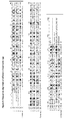
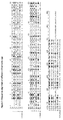
- the DNA binding domain fragment of AIcR belongs to a group of homologs, which can be described by the consensus sequence shown in Figure 3 .
- Exemplary members of this group comprise an amino acid sequence as described by any one of SEQ ID NOs: 71, 72, 73, 74, 75, 76, 77, 78, 79, 80, 81, 82, 83, 84, 85, 86, 87, 88, 89, 90, 91, 92, 93 and 94.
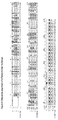
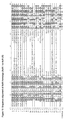
- Further DNA binding domain fragments of Zn 2 C 6 zinc finger comprising transcription factors, as well as their consensus sequences are described by Figures 4 , 5 and 6 .
- the heterologous DNA binding domain of the chimeric LAGLIDADG endonuclease comprises an amino acid sequence selected from the group of sequences described by SEQ ID NO: 57, 58, 59, 60, 61, 62, 63, 64, 65, 66, 67, 68, 69, 70, 71, 72, 73, 74, 75, 76, 77, 78, 79, 80, 81, 82, 83, 84, 85, 86, 87, 88, 89, 90, 91, 92, 93, 94, 95, 96, 97, 98, 99, 100, 101, 102, 103, 104, 105, 106, 107, 108, 109, 110, 111, 112, 113, 114, 115, 116, 117, 118, 119, 120 and 121 or homologs of any one of these having at least 50%, 60%, 70%, 80%, 85%, 90%,
- the chimeric endonuclease comprises a heterologous DNA binding domain comprising at least one polypeptide having at least 80%, 81%, 82%, 83%, 84%, 85%,86%, 87%, 88%, 89%, 90%, 91 %, 92%, 93%, 94%, 95%, 96%, 97%, 98%, 99% amino acid sequence identity to a polypeptide described by any one of SEQ ID NOs: 57, 58, 59, 60, 61, 62, 63, 64, 65, 66, 67, 68, 69, 70, 71, 72, 73, 74, 75, 76, 77, 78, 79, 80,81, 82, 83, 84, 85, 86, 87, 88, 89, 90, 91, 92, 93, 94, 95, 96, 97, 98, 99, 100, 101, 102, 103, 104, 105, 106, 107
- the chimeric endonuclease comprises a heterologous DNA binding domain comprising at least one polypeptide having at least 80%, 81 %, 82%, 83%, 84%, 85%,86%, 87%, 88%, 89%, 90%, 91 %, 92%, 93%, 94%, 95%, 96%, 97%, 98%, 99% amino acid sequence identity to a polypeptide described by any one of SEQ ID NOs: 57, 58, 59, 60, 61, 62, 63, 64, 65, 66, 67, 68 or 69.
- the chimeric endonuclease comprises a heterologous DNA binding domain comprising at least one polypeptide having at least 80%, 81 %, 82%, 83%, 84%, 85%,86%, 87%, 88%, 89%, 90%, 91%, 92%, 93%, 94%, 95%, 96%, 97%, 98%, 99% amino acid sequence identity to a polypeptide described by any one of SEQ ID NOs: 70, 71, 72, 73, 74, 75, 76, 77, 78, 79, 80,81, 82, 83, 84, 85, 86, 87, 88, 89, 90, 91, 92, 93 or 94.
- the chimeric endonuclease comprises a heterologous DNA binding domain comprising at least one polypeptide having at least 80%, 81 %, 82%, 83%, 84%, 85%,86%, 87%, 88%, 89%, 90%, 91 %, 92%, 93%, 94%, 95%, 96%, 97%, 98%, 99% amino acid sequence identity to a polypeptide described by any one of SEQ ID NOs: 95, 96, 97, 98, 99, 100, 101, 102, 103, 104, 105, 106 or 107.
- the chimeric endonuclease comprises a heterologous DNA binding domain comprising at least one polypeptide having at least 80%, 81 %, 82%, 83%, 84%, 85%,86%, 87%, 88%, 89%, 90%, 91%, 92%, 93%, 94%, 95%, 96%, 97%, 98%, 99% amino acid sequence identity to a polypeptide described by any one of SEQ ID NOs: 108, 109, 110, 111, 112, 113, 114, 115, 116, 117, 118, 119, 120 or 121.
- the chimeric endonuclease comprises a heterologous DNA binding domain comprising at least one polypeptide having at least 80%, 81 %, 82%, 83%, 84%, 85%,86%, 87%, 88%, 89%, 90%, 91%, 92%, 93%, 94%, 95%, 96%, 97%, 98%, 99% amino acid sequence identity to a polypeptide described by any one of SEQ ID NOs: 57, 58, 59, 60, 61, 62, 63, 64, 65, 66, 67, 68, 69, 70, 71, 72, 73, 74 or 75.
- the heterolgous DNA-binding domain is selected from the group consisting of: AlcR, and homologs of any one these having at least 50%, 60%, 70%, 80%, 85%, 90%, 92%, at 93%, 94%, 95%, 96%, 97%, 98% or 99% of sequence identity on amino acid level, or the DNA binding domain fragment of AlcR, and homologs of any one these having at least 50%, 60%, 70%, 80%, 85%, 90%, 92%, at 93%, 94%, 95%, 96%, 97%, 98% or 99% of sequence identity on amino acid level.
- a preferred DNA binding domain fragment are amino acids 1 to 60 of AlcR or its homologs having at least 50%, 60%, 70%, 80%, 85%, 90%, 92%, at 93%, 94%, 95%, 96%, 97%, 98% or 99% of sequence identity on amino acid level.
- LAGLIDADG endonucleases and heterologous DNA binding domains can be combined in many alternative ways.
- LAGLIDADG endonuclease with one or more heterologous DNA binding domains or to combine more than one heterologous DNA binding domain with one LAGLIDADG endonuclease. It is also possible to combine more than one LAGLIDADG endonuclease with more than one heterologous DNA binding domains.
- heterologous DNA-binding domain or the heterologous DNA-binding-domains can be fused at the N-terminal or at the C-terminal end of the LAGLIDADG endonuclease. It is also possible, to fuse one or more heterologous DNA binding domains at the N-terminal end and one or more heterologous DNA binding domains at the C-terminal end of the LAGLIDADG endonuclease. It is also possible to make alternating combinations of LAGLIDADG endonucleases and heterologous DNA binding domains.
- the chimeric endonuclease comprises more than one LAGLIDADG endonuclease or more than one heterologous DNA binding domain
- a preferred embodiment of the invention is an N- or C-terminal fusion of AlcR or amino acids 1 to 60 of AlcR (AlcR 1 to 60) with I-Scel. Even more preferred is a C-terminal fusion of AlcR or amino acids 1 to 60 of AlcR with I-Scel.
- Preferred examples are C-terminal fusion of AlcR or amino acids 1 to 60 of AlcR with I-Scel comprising only one lysine as linker sequence, e. g. as described by VC-SAH 48, 49, 50 and 51, having the amino acid sequence described by SEQ ID No: 7, 8, 8 and 10.
- the chimeric endonucleases can be constructed in many ways and combinations. Examples are given by the following structure:
- the chimeric LAGLIDADG endonuclease is preferably expressed as a fusion protein with a nuclear localization sequence (NLS).
- NLS nuclear localization sequence
- This NLS sequence enables facilitated transport into the nucleus and increases the efficacy of the recombination system.
- a variety of NLS sequences are known to the skilled worker and described, inter alia, by Jicks GR and Raikhel NV (1995) Annu. Rev. Cell Biol. 11:155-188 .
- Preferred for plant organisms is, for example, the NLS sequence of the SV40 large antigen. Examples are provided in WO 03/060133 included herein by reference.
- the NLS may be heterologous to the endonuclease and/or the DNA binding domain or may be naturally comprised within the endonuclease and/or DNA binding domain.
- Chimeric LAGLIDADG endonucleases having a nuclear localization signal are for example described by SEQ ID NOs: 8, 10, 50, 51, 52, 53.
- the sequences encoding the chimeric LAGLIDADG endonucleases are modified by insertion of an intron sequence.
- expression of a functional enzyme is realized, since plants are able to recognize and "splice" out introns.
- introns are inserted in the homing endonuclease I-Scel.
- the amino acid sequences of the chimeric LAGLIDADG endonuclease can be modified by adding a Sec IV secretion signal to the N-, or C-Terminus of the chimeric LAGLIDADG endonuclease.
- the SecIV secretion signal is a SecIV secretion signal comprised in Vir proteins of Agrobacterium. Examples of such Sec IV secretion signals as well as methods how to apply these are disclosed in WO 01/89283 , in Vergunst et al, Positive charge is an important feature of the C-terminal transport signal of the VirB/D4-translocated proteins of Agrobacterium, PNAS 2005, 102, 03, pages 832 to 837 included herein by reference.
- a Sec IV secretion signal might also be added, by adding fragments of a Vir protein or even a complete Vir protein, for example a complete VirE2 protein to an endonuclease or chimeric endonuclease, in a similar way as described in the description of WO01/38504 included herein by reference, which describes a RecA/VirE2 fusion protein.
- the amino acid sequences of the chimeric LAGLIDADG endonuclease can be modified by adding a Sec III secretion signal to the N-, or C-Terminus of the chimeric LAGLIDADG endonuclease.
- Suitable Seclll secretion signals are for example disclosed in WO 00/02996 , included herein by reference.
- a Seclll secretion signal it can be of advantage, to express this chimeric LAGLIDADG endonuclease in a cell, which does also comprise a recombinant construct encoding parts of, or a complete functional type III secretion system, in order to overexpress or complement parts or the complete functional type III secretion system in such cell.
- Recombinant constructs encoding parts or a complete functional type III secretion system are for example disclosed in WO 00/02996 and WO05/085417 .
- a SecIV secretion signal is added to the chimeric LAGLIDADG endonuclease and the chimeric LAGLIDADG endonuclease is intended to be expressed for example in Agrobacterium rhizogenes or in Agrobacterium tumefaciens, it is of advantage to adapt the DNA sequence coding for the chimeric LAGLIDADG endonuclease to the codon usage of the expressing organism.
- the chimeric LAGLIDADG endonuclease does not have or has only few DNA recognition sequences in the genome of the expressing organism.
- the selected chimeric LAGLIDADG endonuclease does not have a DNA recognition sequence or less preferred DNA recognition sequence in the Agrobacterium genome.
- the nuclease or chimeric nuclease encoding sequence must not have an intron.
- the LAGLIDADG endonuclease and the heterologous DNA binding domain are connected via a linker polypeptide (linker).
- linker polypeptide consists of 1 to 30 amino acids, more preferred 1 to 20 and even more preferred 1 to 10 amino acids.
- the linker polypeptide can be composed of a plurality of residues selected from the group consisting of glycine, serine, threonine, cysteine, asparagine, glutamine, and proline.
- the linker polypeptide is designed to lack secondary structures under physiological conditions and is preferably hydrophilic. Charged or non polar residues may be included, but they may interact to form secondary structures or may reduce solubility and are therefore less preferred.
- the linker polypeptide consists essentially of a plurality of residues selected from glycine and serine. Exaples of such linkers have the amino acid sequence (in one letter code): GS, or GGS, or GSGS, or GSGSGS, or GGSGG, or GGSGGSGG, or GSGSGGSG. In case the linker consists of at least 3 amino acids, it is preferred that the amino acid sequence of the linker polypeptide comprises at least one third Glycines or Alanines or Glycines and Alanines. In one preferred embodiment, the linker sequence has the amino acid sequence GSGS or GSGSGS.
- the polypeptide linker is rationally designed using bioinformatic tools, capable of modeling both the the LAGLIDADG endonuclease and the respective DNA recognition site, as well as the heterologous DNA-binding domain and the respective DNA binding site.
- bioinformatic tools are for example described in Desjarlais & Berg, (1994), PNAS, 90, 2256 to 2260 and in Desjarlais & Berg (1994), PNAS, 91, 11099 to 11103 .
- DNA recognition sequences of chimeric endonucleases (chimeric recognition sequences):
- the chimeric endonucleases bind to DNA sequences being combinations of the DNA recognition sequence of the endonuclease and the recognition sequence of the heterologous DNA binding domain.
- the chimeric endonuclease comprises more than one endonuclease or more than one heterologous DNA binding domain the DNA the chimeric endonuclease will bind to DNA sequences being a combination of the DNA recognition sequence of the endonucleases used and the DNA binding sequences of the heterologous DNA binding domains used. It is obvious, that the sequence of the DNA, which is bound by the chimeric endonuclease will reflect the order, in which the endonuclease and the heterologous DNA binding domains are combined.
- DNA recognition sequence and DNA recognition site are used synonymously and refer to a polynucleotide of a particular sequence which can be bound and cut by a given endonuclease.
- a polynucleotide of a given sequence may therefore be a DNA recognition sequence or DNA recognition site for one endonuclease, but may or may not be a DNA recognition sequence or DNA recognition site for another endonuclease. Examples of polynucleotide sequences which can be bound and cut by endonucleases, i.e.
- Tabel 8 Endonuclease Organism of origin DNA recognition sequence I-Crel Chlamydomonas reinhardtii 5'- CAAAACGTCGTGAGACAGTTTC -3' (SEQ ID NO: 157) I-Ceul Chlamydomonas eugametos 5'- ATAACGGTCCTAAGGTAGCGAA -3' (SEQ ID NO: 158) I-Dmol Desulfurococcus mobilis 5'-ATGCCTTGCCGGGTAAGTTCCGGCGCGCAT-3' (SEQ ID NO: 159) I-Msol Monomastix spec.
- Endonucleases do not have stringently-defined DNA recognition sequences, so that single base changes do not abolish cleavage but may reduce its efficiency to variable extents.
- a DNA recognition sequence listed herein for a given endonuclease represents only one site that is known to be recognized and cleaved.
- Examples for deviations of a DNA recognition site are for example disclosed in Chevelier et al. (2003), J.Mol.Biol. 329, 253 to 269 , in Marcaida et al. (2008), PNAS, 105 (44), 16888 to 16893 and in the Supporting Information to Marcaida et al. 10.1073/pnas.0804795105, in Doyon et al. (2006), J. AM. CHEM. SOC. 128, 2477 to 2484 , in Argast et al, (1998), J.Mol.Biol. 280, 345 to 353 , in Spiegel et al. (2006), Structure, 14, 869 to 880 , in Posey et al. (2004), Nucl. Acids Res. 32 (13), 3947 to 3956 , or in Chen et al. (2009), Protein Engineering, Design & Selection, 22 (4), 249 to 256 .
- a naturally occurring endonuclease having a predetermined polynucleotide sequence as a DNA recognition sequence.
- Methods to identify naturally occurring endonucleases, their genes and their DNA recognition sequences are disclosed for example in WO 2009/101625 .
- the cleavage specificity or respectively its degeneration of its DNA recognition sequence can be tested by testing its activity on different substrates. Suitable in vivo techniques are for example disclosed in WO09074873 .
- in vitro tests can be used, for example by employing labeled polynucleotides spotted on arrays, wherein different spots comprise essentially only polynucleotides of a particular sequence, which differs from the polynucleotides of different spots and which may or may not be DNA recognition sequences of the endonuclease to be tested for its activity.
- a similar technique is disclosed for example in US 2009/0197775 .
- DNA recognition sites of engineered endonucleases are known in the art and are disclosed for example in WO 2005/105989 , WO 2007/034262 , WO 2007/047859 , WO 2007/093918 , WO 2008/093249 , WO 2008/102198 , WO 2008/152524 , WO 2009/001159 , WO 2009/059195 , WO 2009/076292 , WO 2009/114321 , or WO 2009/134714 WO 10/001189 , and WO 10/009147 . Therefore it is also possible to create an engineered endonuclease which will have a DNA recognition sequence identical to a particular predetermined polynucleotide sequence.
- the DNA recognition sequence of the endonuclease and the operator sequence are separated by 1, 2, 3, 4, 5, 6, 7, 8, 9, 10 or more base pairs. Preferably they are separated by 1 to 10, 1 to 8, 1 to 6, 1 to 4, 1 to 3, or 2 base pairs.
- the amount of base pairs used to separate the DNA recognition sequence of the nuclease and the recognition sequence of the heterologous DNA binding domain depends on the distance of the DNA binding regions of the nuclease and the DNA binding region of the heterologous DNA binding domain in the chimeric endonuclease.
- a larger distance between the DNA binding regions of the nuclease and the DNA binding region of the heterologous DNA binding domain will be reflected by a higher amount of base pairs separating the DNA recognition sequence of the nuclease and the recognition sequence of the heterologous DNA binding domain.
- the optimal amount of separating base pairs can be determined by using computer models or by testing the binding and cutting efficiency of a given chimeric endonuclease on several polynucleotides comprising a varying amount of base pairs between the DNA recognition sequence of the nuclease and the recognition sequence of the heterologous DNA binding domain.
- DNA recognition sequences of chimeric endonucleases are: A chimeric endonuclease having the structure: I-Scel - AlcR or I-Scel AlcR (1 to 60), preferably having an amino acid sequence described by SEQ ID NO: 7, 8, 9, 10, 50, 51, 52 and 53.
- Zn 2 C 6 zinc finger domains homologous to the Zn 2 C 6 zinc finger domains of AlcR, AfIR, Hap1, Leu3 comprising transcription factors and fragments thereof comprising the Zn 2 C 6 zinc fingers will bind to the same or very similar binding sites, like AlcR (1-60) binds to the same or similar recogntition sequences as AlcR.
- the invention does also comprise isolated polynucleotides coding for the chimeric endonucleases described above.
- isolated polynucleotides are isolated polynucleotides coding for amino acid sequences having at least 80%, 90% 91 %, 92%, 93%, 94%, 95%, 96%, 97%, 98% or 99% amino acid sequence identity to any one of the amino acid sequences described by SEQ ID NO: 7, 8, 9, 10, 50, 51, 52, 53, 54, 55 and 56.
- the isolated polynucleotide has a optimized codon usage for expression in a particular host organism, or has a low content of RNA instability motifs, or has a low content of codon repeats, or has a low contend of cryptic splice sites, or has a low contend of cryptic polyA sites, or has a low contend of cryptic miRNA targets, or has a low content of alternative start codons, or has a low content of restriction sites, or has a low content of RNA secondary structures or has any combination of these features.
- the codon usage of the isolated polypeptide may be optimized e.g. for the expression in plants, preferably in a plant selected from the group comprising: rice, corn, wheat, rape seed, sugar cane, sunflower, sugar beet, tobacco.
- the isolated polynucleotide is combined with a promoter sequence and a terminator sequence suitable to form a functional expression cassette for expression of the chimeric endonuclease in a particular host organism.
- Suitable promoters are for example constitutive, heat- or pathogen-inducible, or seed, pollen, flower or fruit specific promoters. The person skilled in the art knows numerous promoters having those features.
- constitutive promoters in plants are known. Most of them are derived from viral or bacterial sources such as the nopaline synthase (nos) promoter ( Shaw et al. (1984) Nucleic Acids Res. 12 (20) : 7831-7846 ), the mannopine synthase (mas) promoter ( Co-mai et al.
- nos nopaline synthase
- mas mannopine synthase
- Another viral promoter for constitutive expression is the Sugarcane bacilliform badnavirus (ScBV) promoter ( Schenk et al. (1999) Plant Mol Biol 39 (6):1221-1230 ).
- ScBV Sugarcane bacilliform badnavirus
- Several plant constitutive promoters are described such as the ubiquitin promoter from Arabidopsis thaliana ( Callis et al. (1990) J Biol Chem 265:12486- 12493 ; Holtorf S et al.
- a comparison of specificity and expression level of the CaMV 35S, the barley thionine promoter, and the Arabidopsis ubiquitin promoter based on stably transformed Arabidopsis plants demonstrates a high expression rate for the CaMV 35S promoter, while the thionine promoter was inactive in most lines and the ubi1 promoter from Arabisopsis resulted only in moderate expression activity ( Holtorf et al. (1995) Plant Mol Biol 29 (4):637-6469 ).
- the invention does also comprise isolated polynucleotides comprising a chimeric recognition sequence, having a length of about 15 to about 300, or of about 20 to about 200 or of about 25 to about 100 nucleotides, comprising a recognition sequence of an endonuclease and a recognition sequence of a heterologous DNA binding domain.
- Isolated polynucleotides comprise a DNA recognition sequence of a LAGLIDADG endonuclease having DNA double strand break inducing activity and at least 80% amino acid sequence identity to a polypeptide described by SEQ ID NO: 1, 2, 3, 122, 123, 124 or 165.
- the isolated polynucleotide comprises a DNA recognition sequence of I-Scel.
- the recognition sequence of a heterologous Zn 2 C 6 zinc finger DNA binding domain comprised in the isolated polynucleotide is a recognition sequence of a transcription factor. More preferably the recognition sequence is the recognition sequence of the transcription factor AlcR.
- the isolated polynucleotide comprises a DNA recognition sequence of I-Scel and a linker sequence of 0 to 10 polynucleotides and a recognition sequence of AlcR.
- the isolated polynucleotide comprise a sequence of a DNA recognition site or a chimeric recognition site selected from the group comprising: SEQ ID NO: 13, 14, 15, 16, 43, 44, 45 and 46.
- the isolated polynucleotides may comprise a combination of a chimeric recognition site and a polynucleotide sequence coding for a chimeric nuclease.
- polynucleotides described above may be comprised in a DNA vector suitable for transformation, transfection, cloning or overexpression.
- the polynucleotides described above are comprised in a vector for transformation of non-human organisms or cells, preferably the non-human organisms are plants or plant cells.
- the vectors of the invention usually comprise further functional elements, which may include but shall not be limited to:
- marker sequence is to be understood in the broad sense to include all nucleotide sequences (and/or polypeptide sequences translated therefrom) which facilitate detection, identification, or selection of transformed cells, tissues or organism (e.g., plants).
- sequence allowing selection of a transformed plant material "selection marker” or “selection marker gene” or “selection marker protein” or “marker” have essentially the same meaning.
- Markers may include (but are not limited to) selectable marker and screenable marker.
- a selectable marker confers to the cell or organism a phenotype resulting in a growth or viability difference.
- the selectable marker may interact with a selection agent (such as a herbicide or antibiotic or pro-drug) to bring about this phenotype.
- a screenable marker confers to the cell or organism a readily detectable phenotype, preferably a visibly detectable phenotype such a color or staining.
- the screenable marker may interact with a screening agent (such as a dye) to bring about this phenotype.
- Selectable marker (or selectable marker sequences) comprise but are not limited to
- Counter-selection marker may be employed to verify successful excision of a sequence (comprising said counter-selection marker) from a genome.
- Screenable marker sequences include but are not limited to reporter genes (e. g. luciferase, glucuronidase, chloramphenicol acetyl transferase (CAT, etc.).
- Preferred marker sequences include but shall not be limited to:
- negative selection markers are useful for selecting cells which have success-fully undergone transformation.
- the negative selection marker which has been introduced with the DNA construct of the invention, may confer resistance to a biocide or phytotoxic agent (for example a herbicide such as phosphinothricin, glyphosate or bromoxynil), a metabolism inhibitor such as 2-deoxyglucose-6-phosphate ( WO 98/45456 ) or an antibiotic such as, for example, tetracyclin, ampicillin, kanamycin, G 418, neomycin, bleomycin or hygromycin to the cells which have successfully under-gone transformation.
- the negative selection marker permits the selection of the transformed cells from untransformed cells ( McCormick et al.
- Negative selection marker in a vector of the invention may be employed to confer resistance in more than one organism.
- a vector of the invention may comprise a selection marker for amplification in bacteria (such as E.coli or Agrobacterium) and plants.
- selectable markers for E. coli include: genes specifying resistance to antibiotics, i.e., ampicillin, tetracycline, kanamycin, erythromycin, or genes conferring other types of selectable enzymatic activities such as galactosidase, or the lactose operon.
- Suitable selectable markers for use in mammalian cells include, for example, the dihydrofolate reductase gene (DHFR), the thymidine kinase gene (TK), or prokaryotic genes conferring drug resistance, gpt (xanthine-guanine phosphoribosyltransferase, which can be selected for with mycophenolic acid; neo (neomycin phosphotransferase), which can be selected for with G418, hygromycin, or puromycin; and DHFR (dihydrofolate reductase), which can be selected for with methotrexate ( Mulligan & Berg (1981) Proc Natl Acad Sci USA 78:2072 ; Southern & Berg (1982) J Mol Appl Genet 1: 327 ).
- DHFR dihydrofolate reductase gene
- TK thymidine kinase gene
- prokaryotic genes conferring drug resistance
- Selection markers for plant cells often confer resistance to a biocide or an antibiotic, such as, for example, kanamycin, G 418, bleomycin, hygromycin, or chloramphenicol, or herbicide resistance, such as resistance to chlorsulfuron or Basta.
- an antibiotic such as, for example, kanamycin, G 418, bleomycin, hygromycin, or chloramphenicol
- herbicide resistance such as resistance to chlorsulfuron or Basta.
- Especially preferred negative selection markers are those which confer resistance to herbicides.
- Examples of negative selection markers are:
- Positive selection marker comprise but are not limited to growth stimulating selection marker genes like isopentenyltransferase from Agrobacterium tumefaciens (strain: PO22; Genbank Acc.-No.: AB025109) may - as a key enzyme of the cytokinin biosynthesis - facilitate regeneration of transformed plants (e.g., by selection on cytokinin-free medium).
- growth stimulating selection marker genes like isopentenyltransferase from Agrobacterium tumefaciens (strain: PO22; Genbank Acc.-No.: AB025109) may - as a key enzyme of the cytokinin biosynthesis - facilitate regeneration of transformed plants (e.g., by selection on cytokinin-free medium).
- Corresponding selection methods are described ( Ebinuma H et al. (2000) Proc Natl Acad Sci USA 94:2117-2121 ; Ebinuma H et al.
- Growth stimulation selection markers may include (but shall not be limited to) beta-Glucuronidase (in combination with e.g., a cytokinin glucuronide), mannose-6-phosphate isomerase (in combination with mannose), UDP-galactose-4-epimerase (in combination with e.g., galactose), wherein mannose-6-phosphate isomerase in combination with mannose is especially preferred.
- beta-Glucuronidase in combination with e.g., a cytokinin glucuronide
- mannose-6-phosphate isomerase in combination with mannose
- UDP-galactose-4-epimerase in combination with e.g., galactose
- Counter-selection marker enable the selection of organisms with successfully deleted sequences ( Koprek T et al. (1999) Plant J 19(6):719-726 ).
- the excision cassette includes at least one of said counter-selection markers to distinguish plant cells or plants with successfully excised sequences from plant which still contain these.
- the excision cassette of the invention comprises a dual-function marker i.e. a marker with can be employed as both a negative and a counter selection marker depending on the substrate employed in the selection scheme.
- a dual-function marker is the daol gene (EC: 1.4. 3. 3: GenBank Acc.-No.: U60066) from the yeast Rhodotorula gracilis, which can be employed as negative selection marker with D-amino acids such as D-alanine and D-serine, and as counter-selection marker with D-amino acids such as D-isoleucine and D-valine (see European Patent Appl. No.: 04006358.8 )
- Screenable marker (such as reporter genes) encode readily quantifiable or detectable proteins and which, via intrinsic color or enzyme activity, ensure the assessment of the transformation efficacy or of the location or timing of expression.
- reporter genes encode readily quantifiable or detectable proteins and which, via intrinsic color or enzyme activity, ensure the assessment of the transformation efficacy or of the location or timing of expression.
- genes encoding reporter proteins see also Schenborn E, Groskreutz D. (1999) Mol Biotechnol 13(1):29-44 ) such as
- any organism suitable for transformation or delivery of chimeric endonuclease can be used as target organism.
- This includes prokaryotes, eukaryotes, and archaea, in particular non-human organisms, plants, fungi or yeasts, but also human or animal cells.
- the target organism is a plant.
- plant includes whole plants, shoot vegetative organs/structures (e. g. leaves, stems and tubers), roots, flowers and floral organs/structures (e. g. bracts, sepals, petals, stamens, carpels, anthers and ovules), seeds (including embryo, endosperm, and seed coat) and fruits (the mature ovary), plant tissues (e. g.
- the class of plants that can be used in the method of the invention is generally as broad as the class of higher and lower plants amenable to transformation techniques, including angiosperms (monocotyledonous and dicotyledonous plants), gymnosperms, ferns, and multicellular algae. It includes plants of a variety of ploidy levels, including aneuploid, polyploid, diploid, haploid and hemizygous.
- Said plant may include - but shall not be limited to - bryophytes such as, for example, Hepaticae (hepaticas) and Musci (mosses); pteridophytes such as ferns, horsetail and club-mosses; gymnosperms such as conifers, cycads, ginkgo and Gnetaeae; algae such as Chlorophyceae, Phaeophpyceae, Rhodophyceae, Myxophyceae, Xanthophyceae, Bacillariophyceae (diatoms) and Euglenophyceae.
- - bryophytes such as, for example, Hepaticae (hepaticas) and Musci (mosses); pteridophytes such as ferns, horsetail and club-mosses; gymnosperms such as conifers, cycads, ginkgo and Gnetaeae
- algae such as Chlorophyceae,
- Plants for the purposes of the invention may comprise the families of the Rosaceae such as rose, Ericaceae such as rhododendrons and azaleas, Euphorbiaceae such as poinsettias and croton, Caryophyllaceae such as pinks, Solanaceae such as petunias, Gesneriaceae such as African violet, Balsaminaceae such as touch-me-not, Orchidaceae such as orchids, Iridaceae such as gladioli, iris, freesia and crocus, Compositae such as marigold, Geraniaceae such as geraniums, Liliaceae such as drachaena, Moraceae such as ficus, Araceae such as philodendron and many others.
- Rosaceae such as rose, Ericaceae such as rhododendrons and azaleas
- Euphorbiaceae such as poinsettias and
- the transgenic plants according to the invention are furthermore selected in particular from among dicotyledonous crop plants such as, for example, from the families of the Leguminosae such as pea, alfalfa and soybean; Solanaceae such as tobacco and and many others; the family of the Umbelliferae, particularly the genus Daucus (very particularly the species carota (carrot)) and Apium (very particularly the species graveolens dulce (celery)) and many others; the family of the Solanaceae, particularly the genus Lycopersicon, very particularly the species esculentum (tomato) and the genus Solanum, very particularly the species tuberosum (potato) and melongena (aubergine) and many others; and the genus Capsicum, very particularly the species annum (pepper) and many others; the family of the Leguminosae, particularly the genus Glycine, very particularly the species max (soybean) and many others; and the family of
- the transgenic plants according to the invention are selected in particular among monocotyledonous crop plants, such as, for example, cereals such as wheat, barley, sorghum and millet, rye, triticale, maize, rice or oats and sugar cane.
- cereals such as wheat, barley, sorghum and millet
- rye triticale
- maize rice or oats and sugar cane.
- Arabidopsis thaliana Especially preferred are Arabidopsis thaliana, Nicotiana tabacum, oilseed rape, soybean, corn (maize), wheat, linseed, potato and tagetes.
- Plant organisms are furthermore, for the purposes of the invention, other organisms which are capable of photosynthetic activity, such as, for example, algae or cyanobacteria and also mosses.
- Preferred algae are green algae, such as, for example, algae of the genus Haematococcus, Phaedactylum tricornatum, Volvox or Dunaliella.
- Genetically modified plants according to the invention which can be consumed by humans or animals can also be used as food or feedstuffs, for example directly or following processing known in the art.
- polynucleotide constructs to be introduced into non-human organism or cells, e.g. plants or plant cells are prepared using transgene expression techniques.
- Recombinant expression techniques involve the construction of recombinant nucleic acids and the expression of genes in transfected cells.
- Molecular cloning techniques to achieve these ends are known in the art.
- a wide variety of cloning and in vitro amplification methods suitable for the construction of recombinant nucleic acids are well-known to persons of skill in the art.
- the DNA constructs employed in the invention are generated by joining the abovementioned essential constituents of the DNA construct together in the abovementioned sequence using the recombination and cloning techniques with which the skilled worker is familiar.
- polynucleotide constructs generally requires the use of vectors able to replicate in bacteria.
- kits are commercially available for the purification of plasmids from bacteria.
- the isolated and purified plasmids can then be further manipulated to produce other plasmids, used to transfect cells or incorporated into Agrobacterium tumefaciens or Agrobacterium rhizogenes to infect and transform plants.
- Agrobacterium is the means of transformation, shuttle vectors are constructed.
- a DNA construct employed in the invention may advantageously be introduced into cells using vectors into which said DNA construct is inserted.
- vectors may be plasmids, cosmids, phages, viruses, retroviruses or agrobacteria.
- the expression cassette is introduced by means of plasmid vectors.
- Preferred vectors are those which enable the stable integration of the expression cassette into the host genome.
- a DNA construct can be introduced into the target plant cells and/or organisms by any of the several means known to those of skill in the art, a procedure which is termed transformation (see also Keown et al. (1990) Meth Enzymol 185:527-537 ).
- the DNA constructs can be introduced into cells, either in culture or in the organs of a plant by a variety of conventional techniques.
- the DNA constructs can be introduced directly to plant cells using ballistic methods, such as DNA particle bombardment, or the DNA construct can be introduced using techniques such as electroporation and microinjection of cells.
- Particle-mediated transformation techniques also known as "biolistics" are described in, e.g., Klein et al.
- the cell can be permeabilized chemically, for example using polyethylene glycol, so that the DNA can enter the cell by diffusion.
- the DNA can also be introduced by protoplast fusion with other DNA-containing units such as minicells, cells, lysosomes or liposomes.
- PEG polyethylene glycol
- Liposome-based gene delivery is e.g., described in WO 93/24640 ; Mannino and Gould-Fogerite (1988) BioTechniques 6(7):682-691 ; US 5,279,833 ; WO 91/06309 ; and Felgner et al. (1987) Proc Natl Acad Sci USA 84:7413-7414 ).
- Another suitable method of introducing DNA is electroporation, where the cells are permeabilized reversibly by an electrical pulse. Electroporation techniques are described in Fromm et al. (1985) Proc Natl Acad Sci USA 82:5824 . PEG-mediated transformation and electroporation of plant protoplasts are also discussed in Lazzeri P (1995) Methods Mol Biol 49:95-106 . Preferred general methods which may be mentioned are the calcium-phosphate-mediated transfection, the DEAE-dextran-mediated transfection, the cationic lipid-mediated transfection, electroporation, transduction and infection. Such methods are known to the skilled worker and described, for example, in Davis et al., Basic Methods In Molecular Biology (1986 ). For a review of gene transfer methods for plant and cell cultures, see, Fisk et al. (1993) Scientia Horticulturae 55:5-36 and Potrykus (1990) CIBA Found Symp 154:198 .
- Transformation of monocots in particular can use various techniques including electroporation (e.g., Shimamoto et al. (1992) Nature 338:274-276 ; biolistics (e.g., EP-A1 270,356 ); and Agrobacterium (e.g., Bytebier et al. (1987) Proc Natl Acad Sci USA 84:5345-5349 ).
- Suitable methods are especially protoplast transformation by means of poly-ethylene-glycol-induced DNA uptake, biolistic methods such as the gene gun ("particle bombardment” method), electroporation, the incubation of dry embryos in DNA-containing solution, sonication and microinjection, and the transformation of intact cells or tissues by micro- or macroinjection into tissues or embryos, tissue electroporation, or vacuum infiltration of seeds.
- biolistic methods such as the gene gun ("particle bombardment" method), electroporation, the incubation of dry embryos in DNA-containing solution, sonication and microinjection, and the transformation of intact cells or tissues by micro- or macroinjection into tissues or embryos, tissue electroporation, or vacuum infiltration of seeds.
- the plasmid used does not need to meet any particular requirement. Simple plasmids such as those of the pUC series may be used. If intact plants are to be regenerated from the transformed cells, the presence of an additional selectable marker gene on the plasmid is useful.
- transformation can also be carried out by bacterial infection by means of Agrobacterium tumefaciens or Agrobacterium rhizogenes. These strains contain a plasmid (Ti or Ri plasmid). Part of this plasmid, termed T-DNA (transferred DNA), is transferred to the plant following Agrobacterium infection and integrated into the genome of the plant cell.
- a DNA construct of the invention may be combined with suitable T-DNA flanking regions and introduced into a conventional Agrobacterium tumefaciens host vector.
- the virulence functions of the A. tumefaciens host will direct the insertion of a transgene and adjacent marker gene(s) (if present) into the plant cell DNA when the cell is infected by the bacteria.
- Agrobacterium tumefaciens-mediated transformation techniques are well described in the scientific literature. See, for example, Horsch et al. (1984) Science 233:496-498 , Fraley et al.
- a DNA construct of the invention is preferably integrated into specific plasmids, either into a shuttle, or intermediate, vector or into a binary vector). If, for example, a Ti or Ri plasmid is to be used for the transformation, at least the right border, but in most cases the right and the left border, of the Ti or Ri plasmid T-DNA is linked with the expression cassette to be introduced as a flanking region.
- Binary vectors are preferably used. Binary vectors are capable of replication both in E. coli and in Agrobacterium. As a rule, they contain a selection marker gene and a linker or polylinker flanked by the right or left T-DNA flanking sequence. They can be transformed directly into Agrobacterium ( Holsters et al.
- the selection marker gene permits the selection of transformed agrobacteria and is, for example, the nptll gene, which imparts resistance to kanamycin.
- the Agrobacterium which acts as host organism in this case, should already contain a plasmid with the vir region. The latter is required for transferring the T-DNA to the plant cell. An Agrobacterium thus transformed can be used for transforming plant cells.
- strains of Agrobacterium tumefaciens are capable of transferring genetic material - for example a DNA constructs according to the invention -, such as, for example, the strains EHA101(pEHA101) ( Hood EE et al. (1996) J Bacteriol 168(3):1291-1301 ), EHA105(pEHA105) ( Hood et al. 1993, Transgenic Research 2, 208-218 ), LBA4404(pAL4404) ( Hoekema et al.
- the agrobacterial strain employed for the transformation comprises, in addition to its disarmed Ti plasmid, a binary plasmid with the T-DNA to be transferred, which, as a rule, comprises a gene for the selection of the transformed cells and the gene to be transferred. Both genes must be equipped with transcriptional and translational initiation and termination signals.
- the binary plasmid can be transferred into the agrobacterial strain for example by electroporation or other transformation methods ( Mozo & Hooykaas (1991) Plant Mol Biol 16:917-918 ). Coculture of the plant explants with the agrobacterial strain is usually performed for two to three days.
- a variety of vectors could, or can, be used. In principle, one differentiates between those vectors which can be employed for the Agrobacterium-mediated transformation or agroinfection, i.e. which comprise a DNA construct of the invention within a T-DNA, which indeed permits stable integration of the T-DNA into the plant genome. Moreover, border-sequence-free vectors may be employed, which can be transformed into the plant cells for example by particle bombardment, where they can lead both to transient and to stable expression.
- plant explants are cocultured with Agrobacterium tumefaciens or Agrobacterium rhizogenes.
- Agrobacterium tumefaciens or Agrobacterium rhizogenes Starting from infected plant material (for example leaf, root or stalk sections, but also protoplasts or suspensions of plant cells), intact plants can be regenerated using a suitable medium which may contain, for example, antibiotics or biocides for selecting transformed cells.
- the plants obtained can then be screened for the presence of the DNA introduced, in this case a DNA construct according to the invention.
- the genotype in question is, as a rule, stable and the insertion in question is also found in the subsequent generations.
- the expression cassette integrated contains a selection marker which confers a resistance to a biocide (for example a herbicide) or an antibiotic such as kanamycin, G 418, bleomycin, hygromycin or phosphinotricin and the like to the transformed plant.
- the selection marker permits the selection of transformed cells ( McCormick et al., Plant Cell Reports 5 (1986), 81-84 ).
- the plants obtained can be cultured and hybridized in the customary fashion. Two or more generations should be grown in order to ensure that the genomic integration is stable and hereditary.
- the abovementioned methods are described, for example, in B. Jenes et al., Techniques for Gene Transfer, in: Transgenic Plants, Vol. 1, Engineering and Utilization, edited by SD Kung and R Wu, Academic Press (1993), 128-143 and in Potrykus (1991) Annu Rev Plant Physiol Plant Molec Biol 42:205-225 ).
- the construct to be expressed is preferably cloned into a vector which is suitable for the transformation of Agrobacterium tumefaciens, for example pBin19 ( Bevan et al. (1984) Nucl Acids Res 12:8711 ).
- DNA construct of the invention can be used to confer desired traits on essentially any plant.
- One of skill will recognize that after DNA construct is stably incorporated in transgenic plants and confirmed to be operable, it can be introduced into other plants by sexual crossing. Any of a number of standard breeding techniques can be used, depending upon the species to be crossed.
- the nucleases or chimeric endonuclease may alternatively be expressed transiently.
- the chimeric endonuclease may be transiently expressed as a DNA or RNA delivered into the target cell and/or may be delivered as a protein. Delivery as a protein may be achieved with the help of cell penetrating peptides or by fusion with SEciV signal peptides fused to the nucleases or chimeric endonucleases, which mediate the secretion from a delivery organism into a cell of a target organism e.g. from Agrobacterium rhizogenes or Agrobacterium tumefaciens to a plant cell.
- Transformed cells i.e. those which comprise the DNA integrated into the DNA of the host cell, can be selected from untransformed cells if a selectable marker is part of the DNA introduced.
- a marker can be, for example, any gene which is capable of conferring a resistance to antibiotics or herbicides (for examples see above).
- Transformed cells which express such a marker gene are capable of surviving in the presence of concentrations of a suitable antibiotic or herbicide which kill an untransformed wild type.
- an intact plant can be obtained using methods known to the skilled worker. For example, callus cultures are used as starting material. The formation of shoot and root can be induced in this as yet undifferentiated cell biomass in the known fashion. The shoots obtained can be planted and cultured.
- Transformed plant cells can be cultured to regenerate a whole plant which possesses the transformed genotype and thus the desired phenotype.
- Such regeneration techniques rely on manipulation of certain phytohormones in a tissue culture growth medium, typically relying on a biocide and/or herbicide marker that has been introduced together with the desired nucleotide sequences. Plant regeneration from cultured protoplasts is described in Evans et al., Protoplasts Isolation and Culture, Handbook of Plant Cell Culture, pp. 124176, Macmillian Publishing Company, New York (1983 ); and in Binding, Regeneration of Plants, Plant Protoplasts, pp. 21-73, CRC Press, Boca Raton, (1985 ).
- Regeneration can also be obtained from plant callus, explants, somatic embryos ( Dandekar et al. (1989) J Tissue Cult Meth 12:145 ; McGranahan et al. (1990) Plant Cell Rep 8:512 ), organs, or parts thereof. Such regeneration techniques are described generally in Klee et al. (1987) Ann Rev Plant Physiol 38:467-486 .
- the efficacy of the recombination system is increased by combination with systems which promote homologous recombination.
- systems which promote homologous recombination.
- Such systems are described and encompass, for example, the expression of proteins such as RecA or the treatment with PARP inhibitors.
- PARP inhibitors Puchta H et al. (1995) Plant J. 7:203-210 ).
- the homologous recombination rate in the recombination cassette after induction of the sequence-specific DNA double-strand break, and thus the efficacy of the deletion of the transgene sequences, can be increased further.
- Various PARP inhibitors may be employed for this purpose.
- inhibitors such as 3-aminobenzamide, 8-hydroxy-2-methylquinazolin-4-one (NU1025), 1,11 b-dihydro-(2H)benzopyrano(4,3,2-de)isoquinolin-3-one (GPI 6150), 5-aminoisoquino-linone, 3,4-dihydro-5-(4-(1-piperidinyl)butoxy)-1(2H)-isoquinolinone, or the compounds described in WO 00/26192 , WO 00/29384 , WO 00/32579 , WO 00/64878 , WO 00/68206 , WO 00/67734 , WO 01/23386 and WO 01/23390 .
- a further increase in the efficacy of the recombination system might be achieved by the simultaneous expression of the RecA gene or other genes which increase the homologous recombination efficacy ( Shalev G et al. (1999) Proc Natl Acad Sci USA 96(13):7398-402 ).
- the above-stated systems for promoting homologous recombination can also be advantageously employed in cases where the recombination construct is to be introduced in a site-directed fashion into the genome of a eukaryotic organism by means of homologous recombination.
- Chimeric endonucleases can be provided by a method as described below. The method comprises the steps of:
- the method steps a), b), c) and d) can be used in varying order.
- the method can be used to provide a particular combination of at least one LAGLIDADG endonuclease and at least one heterologous DNA binding domain and providing thereafter a polynucleotide comprising potential DNA recognition sites and potential recognition sites reflecting the order in which the at least one LAGLIDADG nuclease and the at least one heterologous DNA binding site were arranged in the translational fusion, and testing the chimeric LAGLIDADG endonuclease for cleaving activity on a polynucleotide having potential DNA recognition sites and potential recognition sites for the LAGLIDADG nucleases and heterologous DNA binding domains comprised by the chimeric LAGLIDADG endonuclease and selecting at least one polynucleotide that is cut by the chimeric LAGLIDADG endonuclease.
- the method can also be used to design a chimeric LAGLIDADG endonuclease for cleaving activity on a preselected polynucleotide, by first providing a polynucleotide having a specific sequence, thereafter selecting at least one LAGLIDADG endonuclease and at least one heterologous DNA binding domain having non-overlapping potential DNA recognition sites and potential recognition sites in the nucleotide sequence of the polynucleotide, creating a translational fusion of the at least one LAGLIDADG endonuclease and the at least one heterologous DNA binding domain, expressing the chimeric LAGLIDADG endonuclease encoded by said translational fusion and testing the chimeric LAGLIDADG endonuclease of cleavage activity on the preselected polynucleotide sequence, and selecting a chimeric LAGLIDADG endonuclease having such cleavage activity.
- This method can be used to design a chimeric LAGLIDADG endonuclease having an enhanced cleavage activity on a specific polynucleotide, for example, if a polynucleotide comprises a DNA recognition site of a nuclease it will be possible to identify a potential recognition site of a heterologous DNA binding domain, which can be used to create a chimeric LAGLIDADG endonuclease comprising the nuclease and the heterologous DNA binding domain. Alternatively, this method can also be used to create a chimeric LAGLIDADG endonuclease having cleavage activity on a specific polynucleotide comprising a recognition site of a heterolgous DNA binding domain.
- the specific polynucleotide is known to be bound by a heterologous DNA binding domain
- By creating a translational fusion and expressing the chimeric LAGLIDADG endonuclease comprising the identified LAGLIDADG endonuclease and the heterologous DNA binding domain it will be possible to test the chimeric LAGLIDADG endonuclease for cleavage activity on said preselected polynucleotide.
- Suitable endonucleases and heterologous DNA binding domains can be identified by searching databases comprising DNA recognition sites of LAGLIDADG endonucleases and recognition sites of DNA binding proteins like Zn 2 C 6 transcription factors. Further, it is possible to mutate the amino acid sequence of LAGLIDADG endonuclease I-Scel to create new binding and DNA cleavage activity.
- chimeric LAGLIDADG endonucleases comprising endonucleases having DNA double strand break inducing activity and at least 80% amino acid sequence identity to a polypeptide described by SEQ ID NO: 1, 2, 3, 122, 123, 124 or 165 and heterologous Zn 2 C 6 zinc finger DNA binding domains it is possible to create chimeric LAGLIDADG endonucleases which will bind and cleave such preselected polypeptides.
- the current invention provides a method for homologous recombination of polynucleotides comprising:
- the polynucleotide provided in step b) comprises at least one chimeric recognition site, preferably a chimeric recognition site selected from the group of sequences described by SEQ ID NO: 13, 14, 15, 16, 43, 44, 45 or 46.
- the polynucleotide provided in step c) comprises at least one chimeric recognition site, preferably selected from the group of sequences described by SEQ ID NO: SEQ ID NO: 13, 14, 15, 16, 43, 44, 45 or 46.
- the polynucleotide provided in step b) and the polynucleotide provided in step c) comprise at least one chimeric recognition site, preferably selected from the group of sequences described by SEQ ID NO: 13, 14, 15, 1643, 44, 45 or 46.
- step e) leads to deletion of a polynucleotide comprised in the polynucleotide provided in step c).
- the deleted polynucleotide comprised in the polynucleotide provided in step c) codes for a marker gene or parts of a marker gene.
- the polynucleotide provided in step b) comprises at least one expression cassette. In one embodiment of the invention, the polynucleotide provided in step b) comprises at least one expression cassette. leading to expression of a selection marker gene or a reporter gene. In one embodiment of the invention, the polynucleotide provided in step b) comprises at least one expression cassette. leading to expression of a selection marker gene or a reporter gene and comprises at least one DNA recognition site or at least one chimeric recognition site.
- the invention provides in another embodiment a method for homologous recombination as described above or a method for targeted mutation of polynucleotides as described above, comprising:
- oligonucleotides can be effected for example in the known manner using the phosphoamidite method ( Voet, Voet, 2nd edition, Wiley Press New York, pages 896-897 ).
- the cloning steps carried out for the purposes of the present invention such as, for example, restriction cleavages, agarose gel electrophoresis, purification of DNA fragments, the transfer of nucleic acids to nitrocellulose and nylon membranes, the linkage of DNA fragments, the transformation of E. coli cells, bacterial cultures, the propagation of phages and the sequence analysis of recombinant DNA are carried out as described by Sambrook et al. (1989) Cold Spring Harbor Laboratory Press; ISBN 0-87969-309-6.
- Recombinant DNA molecules were sequenced using an ALF Express laser fluorescence DNA sequencer (Pharmacia, Upsala [sic], Sweden) following the method of Sanger ( Sanger et al., Proc. Natl. Acad. Sci. USA 74 (1977), 5463-5467 ).
- Example 1 Constructs harboring sequence specific DNA-endonuclease expression cassettes for expression in E.coli
- a vector suitable for transformation in E. coli.
- This general outline of the vector comprises an ampicillin resistance gene for selection, a replication origin for E. coli and the gene araC, which encodes an Arabinose inducible transcription regulator.
- a sequence stretch of "NNNNNNNNNN” in sequences of the sequence protocoll is meant to be a placeholder for genes encoding the different versions of the sequence specific DNA-endonuclease.
- the different genes can be expressed from the Arabinose inducible pBAD promoter ( Guzman et al., J Bacteriol 177: 4121-4130(1995 )), the sequences of the genes encoding the different nuclease versions are given in the following examples.
- Example 1b I-Scel - AlcR fusion constructs
- Felenbok et al. described the AlcR Protein as a transcriptional activator in A. nidulans.
- the AlcR encoding sequence was fused to the C terminus of the I-Scel sequence, with a single lysine as linker.
- the linker was designed in a way that the resulting fusion protein recognizes a cognate binding site, which represents a combination of the binding sites of I-Scel and AlcR.
- AlcR function can be regulated by the addition of ethanol. This could provide the potential to regulate the activity or DNA binding affinity of the fusion protein in the same manner.
- the resulting plasmid was called VC-SAH51-40.
- the sequence of the construct is identical to the sequence of construct I, whereas the sequence "NNNNNNNN” was replaced by the sequence described by SEQ ID NO: 19.
- a similar construct was generated, which in addition to the latter contains a NLS sequence.
- the resulting plasmid was called VC-SAH50-37.
- the sequence of the construct is identical to the sequence of construct I, whereas the sequence "NNNNNNNNNN” was replaced by the sequence described by SEQ ID NO: 20.
- the first 60 amino acids of AlcR are represent the DNA binding domain of the protein, so another construct was generated, where only those first 60 amino acids are fused to the C terminus of I-Scel to create an I-Scel - AlcR (1-60) fusion.
- the resulting plasmid was called VC-SAH49-1.
- the sequence of the construct is identical to the sequence of construct I, whereas the sequence "NNNNNNNN” was replaced by the sequence described by SEQ ID NO: 21.
- a similar construct was generated, which in addition to the latter contains a NLS sequence.
- the resulting plasmid was called VC-SAH48-8.
- the sequence of the construct is identical to the sequence of construct I, whereas the sequence "NNNNNNNNNN” was replaced by the sequence described by SEQ ID NO: 22.
- Example 2 Constructs harboring nuclease recognition sequences/target sites to monitor I-Scel activity in E.coli
- a vector named "Construct II” suitable for transformation in E. coli.
- This general outline of the vector comprises a Kanamycin resistance gene for selection, a replication origin for E. coli, which is compatible with the ori of Construct I.
- SEQ ID NO: 23 shows a sequence stretch of "NNNNNNNNNN”. This is meant to be a placeholder for different recognition/ target sites for the diverse versions and protein fusions of the sequence specific DNA-endonucleases.
- the control construct in which the placeholder is replaced by a sequence stretch encompassing the native target sequence of I-Scel (SEQ ID NO: 24), was called VC-SAH6-1.
- a control plasmid without a target site was called VC-SAH7-1 (SEQ ID NO 25)
- the different combined target sites are given in the following examples.
- Example 2b target sites combined of I-Scel recognition sequence and AlcR binding sequence
- Example 3 Cotransformation of DNA endonuclease encoding constructs and constructs harboring nuclease recognition sequences
- A. thaliana plants were grown in soil until they flowered.
- Agrobacterium tumefaciens (strain C58C1 [pMP90]) transformed with the construct of interest was grown in 500 mL in liquid YEB medium (5 g/L Beef extract, 1 g/L Yeast Extract (Duchefa), 5 g/L Peptone (Duchefa), 5 g/L sucrose (Duchefa), 0,49 g/L MgSO 4 (Merck)) until the culture reached an OD 600 0.8-1.0.
- the bacterial cells were harvested by centrifugation (15 minutes, 5,000 rpm) and resuspended in 500 mL infiltration solution (5% sucrose, 0.05% SILWET L-77 [distributed by Lehle seeds, Cat.No. VIS-02]). Flowering plants were dipped for 10-20 seconds into the Agrobacterium solution. Afterwards the plants were kept in the dark for one day and then in the greenhouse until seeds could be harvested.
- infiltration solution 5% sucrose, 0.05% SILWET L-77 [distributed by Lehle seeds, Cat.No. VIS-02]
- Transgenic seeds were selected by plating surface sterilized seeds on growth medium A (4.4g/L MS salts [Sigma-Aldrich], 0.5g/L MES [Duchefa]; 8g/L Plant Agar [Duchefa]) supplemented with 50 mg/L kanamycin for plants carrying the nptll resistance marker gene, and 10 mg/L Phosphinotricin for plants carrying the pat gene, respectively. Surviving plants were transferred to soil and grown in the greenhouse.
- growth medium A 4.4g/L MS salts [Sigma-Aldrich], 0.5g/L MES [Duchefa]; 8g/L Plant Agar [Duchefa]
- 50 mg/L kanamycin for plants carrying the nptll resistance marker gene
- 10 mg/L Phosphinotricin for plants carrying the pat gene
- Example 6 Constructs harbouring sequence specific DNA-endonuclease expression cassettes for A. thaliana
- This general outline of the binary vector comprises a T-DNA with a p-Mas1del100::cBAR:: t-Ocs1 cassette, which enables selection on Phosphinotricin, when integrated into the plant genome.
- SEQ ID NO: 31 shows a sequence stretch of "NNNNNNNNNN”. This is meant to be a placeholder for genes encoding the different versions of the sequence specific DNA-endonuclease. The sequence of the latter is given in the following examples.
- Example 6b I-Scel - AlcR fusion constructs
- Example 7 Constructs harboring nuclease recognition sequences/target sites to monitor nuclease activity in A. thaliana
- Construct V suitable for transformation in A. thaliana.
- This general outline of the vector comprises a T-DNA with a nos-promoter::nptll::nos-terminator cassette, which confers kanamycin resistance when integrated into the plant genome.
- the T-DNA also comprises a partial uidA (GUS) gene (called “GU”) and another partial uidA gene (called “US”).
- GUS partial uidA
- US another partial uidA gene
- the sequences of the different target sites are given in the following examples. If the recognition sequence is cut by the respective nuclease, the partially overlapping and non-functional halves of the GUS gene (GU and US) will be restored as a result of intrachromosomal homologous recombination (ICHR). This can be monitored by histochemical GUS staining Jefferson et al. (1987) EMBO J 6:3901-3907 ).
- Example 7b Target sites combined of nuclease recognition sequence and AlcR binding sequence
- Combined target sites were generated, that consist of the target site of the nuclease I-Scel and AlcR. Different combined target sites with varying distances of the single sites were generated. The goal was to identify the one that is best recognized by the cognate I-Scel fusion protein.
- the resulting plasmids were/are called VC-SAH52-21, VC-SAH111, VC-SAH112, VC-SAH55-22.
- the sequence of the constructs is identical to the sequence of construct V, whereas the sequence "NNNNNNNN” was replaced by the sequences described by SEQ ID NO: 33, NO: 34, NO: 35, NO: 36 respectively.
- Example 8 Transformation of sequence-specific DNA endonuclease encoding constructs into A. thaliana
- Plasmids VC-SAH87-4, VC-SAH91-1, VC-SAH92-1, VC-SAH103-3, VC-SAH105, VC-SAH140, VC-SAH139-20, VC-SAH89-10, VC-SAH90 were/ are transformed into A. thaliana according to the protocol described in Example 5.
- Selected transgenic lines (T1 generation) were/ are grown in the greenhouse and some flowers were/ are used for crossings (see below).
- Plasmids VC-SAH52-21, VC-SAH 111, VC-SAH 112, VC-SAH55-22, VC-SAH 113, VC-SAH 114, VC-SAH 115, VC-SAH16-4, VC-SAH 17-8, VC-SAH18-7 and VC-SAH 19-15 were/ are transformed into A. thaliana according to the protocol described in Example 5.
- Selected transgenic lines (T1 generation) were/ are grown in the greenhouse and some flowers were used for crossings (see Example 10).
- Example 10 Monitoring activity of the nuclease fusions in A. thaliana
- Transgenic lines of Arabidopsis harboring a T-DNA encoding a sequence-specific DNA endonuclease were/ are crossed with lines of Arabidopsis harboring the T-DNA carrying a GU-US reporter construct with a corresponding combined target site.
- I-Scel activity on the target site a functional GUS gene will be restored by homologous intrachromosomal recombination (ICHR). This can be monitored by histochemical GUS staining ( Jefferson et al.
- transgenic lines of Arabidopsis harboring the T-DNA of the nuclease encoding constructs VC-SAH91-1 and VC-SAH87-4 were crossed with lines of Arabidopsis harboring the T-DNA of constructs VC-SAH52-21, VC-SAH55-22 and VC-SCB734-4, harboring the target sites.
- transgenic lines of Arabidopsis harboring the T-DNA of the nuclease encoding constructs VC-SAH91-1, VC-SAH92-1 and VC-SAH103-3 were crossed with lines of Arabidopsis harboring the T-DNA of constructs VC-SCB743-4, VC-SAH52-21 and VC-SAH55-22, harboring the target sites.
- F1 seeds of the crosses were harvested. The seeds were surface sterilized and grown on medium A supplemented with the respective antibiotics and/or herbicides. Leafs were/ are harvested and used for histochemical GUS staining.
- the percentage of plants showing blue staining is an indicator of the frequency of ICHR and therefore for I-Scel activity.
- Activity of the different fusion proteins is determined by comparison of the number ICHR events of these crossings. An increase in specificity of the I-Scel fusions with respect to the native nuclease can be observed by comparing these results with control crosses.
- For these all transgenic lines of Arabidopsis harboring the T-DNA of constructs encoding the different fusions of I-Scel were crossed with lines of Arabidopsis harboring the T-DNA of the construct carrying the native I-Scel target site (VC-SAH743-4). The next generation of these plants is analyzed for fully blue seedlings.
- Three independent lines harbouring the T-DNA of the nuclease encoding construct VC-SAH91-1 were crossed with tree independent lines harbouring the T-DNA of the nuclease encoding construct VC-SAH743-4 (native I-Scel site) and with tree independent lines harbouring the T-DNA of the nuclease encoding construct VC-SAH55-22 (target site I-Scel - AlcR).
- Leafs were harvested and used for histochemical GUS staining.
- Example 20 stabilized versions of I-Scel fused to AlcR
- fusion proteins were generated between AlcR and versions of I-Scel, where the proposed C-terminal PEST sequence (amino acids 228-236) is altered.
- C term mod #1 the C terminus was replaced by the SEQ ID NO: 37
- C term mod #2 the C terminus was replaced by the SEQ ID NO: 38.
- the resulting plasmids are based on the construct described in Example 1a), where the placeholder was replaced by genes encoding the different I-Scel fusions.
- NNNNNN was replaced by NLS - I-Scel C term mod #1 AlcR (1-60) (SEQ ID NO:39).
- NNNNNN was replaced by NLS - I-Scel C term mod #2 AlcR (1-60) (SEQ ID NO:40). Also plasmids with full length versions of AlcR are generated.
- VC-SAH130-30 where NNNNNN was replaced by NLS - I-Scel C term mod #1 AlcR (SEQ ID NO:41) and VC-SAH131-6, where NNNNNN was replaced by NLS - I-Scel C term mod #2 AlcR (SEQ ID NO:42).
- Similar constructs were generated, which encode a fusion of AlcR(1-60) to the N terminus of I-Scel, which has a deletion of the C terminal PEST sequence (amino acids 228-236). Tree variants were generated: VC-SAH186-5 a direct fusion, VC-SAH185-1 a version with one amino acid linker and VC-SAH187-10 a version with a linker of 3 amino acids (SEQ ID NO: 47, 48 and 49). To tests these N terminal fusions of AlcR to I-Scel, additional target sites had to be created.
- the resulting target vectors were the following: VC-SAH181-1 (CGTGCGGATCATTACCCTGTTATCCCTA) (SEQ ID NO:43) VC-SAH182-2 (CGTGCGGATCNATTACCCTGTTATCCCTA) (SEQ ID NO:44) VC-SAH183-3 (CGTGCGGATCNNATTACCCTGTTATCCCTA) (SEQ ID NO:45) VC-SAH184-2 (CGTGCGGATCNNNATTACCCTGTTATCCCTA) (SEQ ID NO:46)
- nuclease versions with a C terminal fusion of AlcR, encoded by plasmids described in example 20a were cotransformed in E. coli with vectors VC-SAH56-1, VC-SAH57-2, VC-SAH58-2, VC-SAH59-1, encoding the combined target sites.
- the activity and specificity of these versions of I-Scel was analyzed as described in Example 3 and 4.
- Example 20a the C terminal I-Scel - AlcR Fusions described in Example 20a behaved comparable to VC-SAH48 to VC-SAH51, which are shown in Example 4, table1.
- VC-SAH137-1 where NNNNNN waas replaced by NLS - I-Scel C term mod #1 AlcR (SEQ ID NO:41)
- VC-SAH138-2 where NNNNNN was replaced by NLS - I-Scel C term mod #2 AlcR (SEQ ID NO:42).
- Plasmids SAH126-1 and VC-SAH127-1 were transformed in A. thaliana as described in Example 5). Plants were crossed with lines carrying the T-DNA with a reporter construct encompassing cognate target sites, as described in Example 7b). Similarly, VC-SAH137-1 and VC-SAH138-2 were transformed in A. thaliana. Plants were crossed with lines carrying the T-DNA with a reporter construct encompassing cognate target sites, as described in Example 7b). Activity and specificity of these versions of the nuclease is analyzed as described in Example 10.
- Transgenic lines of Arabidopsis harboring a T-DNA encoding a sequence-specific DNA endonuclease are crossed with lines of Arabidopsis harboring the T-DNA carrying a GU-US reporter construct with a corresponding combined target site.
- I-Scel activity on the target site a functional GUS gene will be restored by homologous intrachromosomal recombination (ICHR). This can be monitored by histochemical GUS staining Jefferson et al. (1987) EMBO J 6:3901-3907 ).
- transgenic lines of Arabidopsis harboring the T-DNA of the nuclease encoding constructs SAH126-1 and VC-SAH127-1 were crossed with lines of Arabidopsis harboring the T-DNA of constructs VC-SAH55-22 and VC-SCB734-4, harboring the target sites.
- F1 seeds of the crosses were harvested. The seeds were surface sterilized and grown on medium A supplemented with the respective antibiotics and/or herbicides.
- Leafs were harvested and used for histochemical GUS staining. The percentage of plants showing blue staining is an indicator of the frequency of ICHR and therefore for I-Scel activity.
- Activity of the different fusion proteins is determined by comparison of the number ICHR events of these crossings. An increase in specificity of the I-Scel fusions with respect to the native nuclease was observed by comparing these results with control crosses. All transgenic lines of Arabidopsis harboring the T-DNA of constructs encoding the different fusions of I-Scel tested so far, were also crossed with lines of Arabidopsis harboring the T-DNA of the construct carrying the native I-Scel target site (VC-SAH743-4). The next generation of these plants was analyzed for fully blue seedlings.
- NLS - I-Scel C term mod #1 - AlcR(1-60),alternatively called I-Scel#1 -AlcR(1-60)), with the combined target site (SAH55-22 alternatively called #55) resulted in 100% blue plants, whereas the crossing to the native I-Scel gave 0% blue plants.
- the combination of NLS - I-Scel C term mod #2 - AlcR(1-60)),alternatively called I-Scel#2-AlcR(1-60)), with the combined target site (SAH55-22) resulted in 76% blue plants, whereas the crossing to the native I-Scel gave 0% blue plants. See Figure 2
Landscapes
- Health & Medical Sciences (AREA)
- Life Sciences & Earth Sciences (AREA)
- Chemical & Material Sciences (AREA)
- Genetics & Genomics (AREA)
- Engineering & Computer Science (AREA)
- Organic Chemistry (AREA)
- Zoology (AREA)
- Bioinformatics & Cheminformatics (AREA)
- Wood Science & Technology (AREA)
- Biotechnology (AREA)
- Biomedical Technology (AREA)
- Molecular Biology (AREA)
- General Engineering & Computer Science (AREA)
- General Health & Medical Sciences (AREA)
- Biochemistry (AREA)
- Biophysics (AREA)
- Microbiology (AREA)
- Medicinal Chemistry (AREA)
- Physics & Mathematics (AREA)
- Plant Pathology (AREA)
- Toxicology (AREA)
- Gastroenterology & Hepatology (AREA)
- Cell Biology (AREA)
- Proteomics, Peptides & Aminoacids (AREA)
- Crystallography & Structural Chemistry (AREA)
- Micro-Organisms Or Cultivation Processes Thereof (AREA)
- Enzymes And Modification Thereof (AREA)
- Breeding Of Plants And Reproduction By Means Of Culturing (AREA)
- Medicines That Contain Protein Lipid Enzymes And Other Medicines (AREA)
Description
- The invention relates to chimeric endonucleases, comprising an endonuclease and a heterologous DNA binding domain comprising one or more Zn2C6 zinc fingers, as well as methods of targeted integration, targeted deletion or targeted mutation of polynucleotides using such chimeric endonucleases.
- Genome engineering is a common term to summarize different techniques to insert, delete, substitute or otherwise manipulate specific genetic sequences within a genome and has numerous therapeutic and biotechnological applications. More or less all genome engineering techniques use recombinases, integrases or endonucleases to create DNA double strand breaks at predetermined sites in order to promote homologous recombination.
- In spite of the fact that numerous methods have been employed to create DNA double strand breaks, the development of effective means to create DNA double strand breaks at higly specific sites in a genome remains a major goal in gene therapy, agrotechnology, and synthetic biology.
- One approach to achieve this goal is to use nucleases with specificity for a sequence that is sufficiently large to be present at only a single site within a genome. Nucleases recognizing such large DNA sequences of about 15 to 30 nucleotides are therefore called "meganucleases" or "homing endonucleases" and are frequently associated with parasitic DNA elements, such as
group 1 self-splicing introns and inteins commonly found in the genomes of plants and fungi. Meganucleases are commonly grouped into four families: the LAGLIDADG family, the GIY-YIG family, the His-Cys box family and the HNH family. These families are characterized by structural motifs, which affect catalytic activity and the sequence of their DNA recognition sequences. Natural meganucleases from the LAGLIDADG family have been used to effectively promote site-specific genome modifications in insect and mammalian cell cultures, as well as in many organisms, such as plants, yeast or mice, but this approach has been limited to the modification of either homologous genes that conserve the DNA recognition sequence or to preengineered genomes into which a recognition sequence has been introduced. In order to avoid these limitations and to promote the systematic implementation of DNA double strand break stimulated gene modification new types of nucleases have been created. - One type of new nucleases consists of artificial combinations of unspecific nucleases to a higly specific DNA binding domain. The effectiveness of this strategy has been demonstrated in a variety of organisms using chimeric fusions between an engineered zinc finger DNA-binding domain and the non-specific nuclease domain of the Fokl restriction enzyme (e.g.
WO03/089452 - An alternative approach is to genetically engineer natural meganucleases in order to customize their DNA binding regions to bind existing sites in a genome, thereby creating engineered meganucleases having new specificities (e.g
WO07093918 WO2008/093249 ,WO09114321 US2010/0071083 ). Most meganucleases do also act on sequences similar to their optimal binding site, which may lead to unintended or even detrimental off-target effects. Despite the fact, that several approaches have already been taken to enhance the efficiency of meganuclease induced homologous recombination e.g. by fusing nucleases to the ligand binding domain of the rat Glucocorticoid Receptor in order to promote or even induce the transport of this modified nuclease to the cell nucleus and therefore its target sites by the addition of dexamethasone or similar compounds (WO2007/135022 ), there is still a need in the art to develop meganucleases having high induction rates of homologous recombination and/or a high specificity in regard to their binding site, thereby limiting the risk of off-target effects. - The invention provides chimeric endonucleases comprising at least one LAGLIDADG endonuclease having DNA double strand break inducing activity and at least 80% amino acid sequence identity to a polypeptide described by SEQ ID NO: 1, 2, 3, 122, 123, 124 or 165 and at least one heterologous DNA binding domain comprising one or more Zn2C6 zinc fingers. Preferably the chimeric endonuclease comprises at least one LAGLIDADG endonuclease comprising an amino acid sequence having at least 80% amino acid sequence identity to a polypeptide described by any one of SEQ ID NOs: 1, 2, 3, 122, 123, 124, or 165. Preferably having at least 80% amino acid sequence identity to a polypeptide described by SEQ ID NO: 1, 2 or 3. In one preferred embodiment, the chimeric endonuclease comprises at least one LAGLIDADG endonuclease having DNA double strand break inducing activity and at least 80% amino acid sequence identity to a polypeptide described by SEQ ID NO: 1, 2, 3, 122, 123, 124 or 165, which is an engineered or optimized endonuclease or an optimized version of an engineered endonuclease, preferably an optimized endonuclease or an optimized version of an engineered endonuclease. In a further embodiment, the chimeric endonuclease comprises a heterologous DNA binding domain comprising one or more Zn2C6 zinc fingers derived from a transcription factor. In an preferred embodiment, the chimeric endonuclease comprises a heterologous DNA binding domain comprising at least one polypeptide having at least 80% amino acid sequence identity to a polypeptide described by any one of SEQ ID NOs: 57, 58, 59, 60, 61, 62, 63, 64, 65, 66, 67, 68, 69, 70, 71, 72, 73, 74, 75, 76, 77, 78, 79, 80,81, 82, 83, 84, 85, 86, 87, 88, 89, 90, 91, 92, 93, 94, 95, 96, 97, 98, 99, 100, 101, 102, 103, 104, 105, 106, 107, 108, 109, 110,111, 112, 113, 114, 115, 116, 117, 118, 119, 120 or 121. The chimeric endonucleases described herein may or may not comprise a linker to connect at least one endonuclease with at least one heterologous DNA binding domain. Preferaby the linker (synonymous "linker polypeptide") consists of at least 3 amino acids and wherein the at least one third of the amino acids in the amino acid sequence of this linker polypeptide are glycine or serine or alanine or a combination of glycine, serine and alanine. Preferably the chimeric endonucleases comprise at least one NLS-sequence and or a SecIII or SecIV secretion signal. The invention provides further for isolated polynucleotides comprising a nucleotide sequence, which codes for a chimeric endonuclease of the invention. Preferably the isolated polynucleotide is codon opitimized or has a low content of RNA instability motives or has a low content of codon repeats, or has a low content of cryptic splice sites, or has a low content of alternative start codons, has a low content of restriction sites, or has a low content of RNA secondary structures or has any combination of those features. Another embodiment of the invention is an expression cassette comprising an isolated polynucleotide as described above in functional combination with a promoter and a terminator sequence.
- Further embodiment of the invention are isolated polynucleotides comprising a chimeric recognition sequence having a length of about 15 to about 300 nucleotides and comprising a recognition sequence of a LAGLIDADG endonuclease endonuclease having DNA double strand break inducing activity and at least 80% amino acid sequence identity to a polypeptide described by SEQ ID NO: 1, 2, 3, 122, 123, 124 or 165 and a recognition sequence of a heterologous DNA binding domain comprising one or more Zn2C6 zinc fingers. Preferably the recognition sequence of the heterologous DNA binding domain can be bound by at least one Zn2C6 zinc fingercomprising an amino acid sequence described by any one of SEQ IDNOs: 57, 58, 59, 60, 61, 62, 63, 64, 65, 66, 67, 68, 69, 70, 71, 72, 73, 74, 75, 76, 77, 78, 79, 80,81, 82, 83, 84, 85, 86, 87, 88, 89, 90, 91, 92, 93, 94, 95, 96, 97, 98, 99, 100, 101, 102, 103, 104, 105, 106, 107, 108, 109, 110,111, 112, 113, 114, 115, 116, 117, 118, 119, 120, 121.
- The invention does also provide for isolated polynucleotides comprising a chimeric recognition sequence, preferably the chimeric recognition sequence is comprised in en expression cassette, or close to the 5'- or 3'-end or close to both ends, wherein the expression cassette comprises a promoter, a terminator and a sequence capable to be expressed by the promoter, preferably the sequence being capable to be expressed codes for a marker gene.
- The invention does further provide a chimeric recognition sequence comprising a DNA recognition sequence of I-Scel and a recognition sequence, which can be bound by at least one Zn2C6 zinc finger comprising an amino acid sequence described by any one of SEQ ID NOs: 57, 58, 59, 60, 61, 62, 63, 64, 65, 66, 67, 68, 69, 70, 71, 72, 73, 74, 75, 76, 77, 78, 79, 80,81, 82, 83, 84, 85, 86, 87, 88, 89, 90, 91, 92, 93, 94, 95, 96, 97, 98, 99, 100, 101, 102, 103, 104, 105, 106, 107, 108, 109, 110,111, 112, 113, 114, 115, 116, 117, 118, 119, 120, 121, being directly connected or being connected by a sequence of 1 to 10 nucleotides. In one embodiment the chimeric recognition sequence comprises a DNA recognition sequence of I-SceI and a recognition sequence of AIcR, or AIcR (1-60) being directly connected or being connected by a sequence of 1 to 10 nucleotides. In one embodiment of the invention, the isolated polynucleotide comprises a chimeric recognition sequence, comprising a polynucleotide sequence as described by any one of SEQ ID NO: 13, 14, 15, 16, 43, 44, 45 or 46.
- Other embodiments of the invention are vectors, host cells or non human organisms comprising a polynucleotide coding for a chimeric endonuclease, or an isolated polynucleotide coding for a chimeric endonuclease or or an isolated polynucleotide comprising an chimeric recognition sequence, or an expression cassette comprising a polynucleotide coding for a chimeric endonuclease or an chimeric recognition sequence, and vectors, host cells or non human organisms comprising a combination of the chimeric endonucleases, isolated polynucleotides and expression cassettes described above. Preferably the non-human organism is a plant.
- The invention provides methods of using the chimeric endonucleases and chimeric recognition sequences described above to induce or facilitate homologous recombination or end joining events, preferably in methods for targeted integration or excision of sequences. Preferably the sequences being excised are marker genes.
- Also disclosed is a method for providing a chimeric endonuclease, comprising the steps of: a) providing at least one endonuclease coding region, b) providing at least one heterologous DNA binding domain coding region, c) providing a polynucleotide having a potential DNA recognition sequence or potential DNA recognition sequences of the endonuclease or endonucleases of step a) and having a potential recognition sequence or having potential recognition sequences of the heterologous DNA binding domain or heterologous DNA binding domains of step b), d) creating a translational fusion of the coding regions of all endonucleases of step b) and all heterologous DNA binding domains of step c), e) expressing a chimeric endonuclease from the translational fusion created in step d), f) testing the chimeric endonuclease expressed in step e) for cleavage of the polynucleotide of step c).
- The invention does further provide a method for homologous recombination of polynucleotides comprising the following steps: a) providing a cell competent for homologous recombination, b) providing a polynucleotide comprising a chimieric recognition site flanked by a sequence A and a sequence B, c) providing a polynucleotide comprising sequences A' and B', which are sufficiently long and homologous to sequence A and sequence B, to allow for homologous recombination in said cell and d) providing a chimeric endonuclease as described above or an expression cassette as described above, e) combining b), c) and d) in said cell and f) detecting recombined polynucleotides of b) and c), or selecting for or growing cells comprising recombined polynucleotides of b) and c). Preferably the method for homologous recombination of polynucleotides leads to a homologous recombination, wherein a polynucleotide sequence comprised in the competent cell of step a) is deleted from the genome of the growing cells of step f). A further method of the invention is a method for targeted mutation comprising the following steps: a) providing a cell comprising a polynucleotide comprising a chimeric recognition site of an chimeric endonuclease as described above, b) providing an chimeric endonuclease as described above and being able to cleave the chimeric recognition site of step a), c) combining a) and b) in said cell and d) detecting mutated polynucleotides, or selecting for growing cells comprising mutated polynucleotides. In another preferred embodiment of the invention, the methods described above comprise a step, wherein the chimeric endonuclease and the chimeric recogntition site are combined in at least one cell via crossing of organisms, via transformation or via transport mediated via a Sec III or SecIV peptide fused to the chimeric endonuclease.
-
-
Figure 1 depicts a model of a chimeric nuclease comprising I-SceI as N-terminal andamino acids 1 to 60 of AIcR as a C-terminal domain. -
Figure 2 is a graphical representation of the experimental results of Examples 10 and 20d as described herein. Thereby providing a comparison of the capability of wildtype I-SceI and three different variants of chimeric endonucleases to induce homologous recombination in plants. The frequency of induced homologous recombination is represented by the percentage of plants showing GUS-activity after homologous recombination (% blue plants).Figure 2 does also comprise the polynucleotide sequence of the DNA recognition sequence of wildtype I-SceI, called wt target site, as well as the polynucleotide sequence of the chimeric recognition site of the chimeric endonucleases (I-SceI-AlcR(1-60), I-SceI#2-AlcR(1-60) and I-SceI#1-AlcR(1-60)). -
Figure 2 provides further the amino acid sequence showing the c-terminus of I-SceI, comprising different mutations, the lysine (L) used as linker and the first six amino acids of the former N-terminus of AIcR (1-60) used to create the chimeric endonucleases. The different mutations on the former C-terminus of wt I-Scel change the wildtype amino acid sequence "TISSETFLK" to "TIKSEETFLK" in the chimeric endonuclease I-SceI#1-AlcR(1-60) and to "AIANQAFLK" in the chimeric endonuclease I-SceI#2-AlcR(1-60). -
Figure 3 depicts a sequence alignment of different I-SceI homologs, wherein 1 is SEQ ID NO: 1, 2 is SEQ ID NO: 122, 3 is SEQ ID NO: 123, 4 is SEQ ID NO: 124, 5 is SEQ ID NO: 125. -
Figure 4 depicts a sequence alignment of different I-CreI homologs, wherein 1 is SEQ ID NO: 126, 2 is SEQ ID NO: 127, 3 is SEQ ID NO: 128, 4 is SEQ ID NO: 129, 5 is SEQ ID NO: 130. -
Figures 5a to 5c depicts a sequence alignment of different PI-SceI homologs, wherein 1 is SEQ ID NO: 145, 2 is SEQ ID NO: 146, 3 is SEQ ID NO: 147, 4 is SEQ ID NO: 148, 5 is SEQ ID NO: 149. -
Figure 6 depicts a sequence alignment of different I-CeuI homologs, wherein 1 is SEQ ID NO: 131, 2 is SEQ ID NO: 132, 3 is SEQ ID NO: 133, 4 is SEQ ID NO: 134, 5 is SEQ ID NO: 135. -
Figure 7 depicts a sequence alignment of different I-ChuI homologs, wherein 1 is SEQ ID NO: 136, 2 is SEQ ID NO: 137, 3 is SEQ ID NO: 138, 4 is SEQ ID NO: 139, 5 is SEQ ID NO: 140. -
Figure 8 depicts a sequence alignment of different I-DmoI homologs, wherein 1 is SEQ ID NO: 141, 2 is SEQ ID NO: 142, 3 is SEQ ID NO: 143, 4 is SEQ ID NO: 144. -
Figure 9 depicts a sequence alignment of different I-MsoI homologs, wherein 1 is SEQ ID NO: 150 and 2 is SEQ ID NO: 151. -
Figure 10 shows a sequence alignment of different Zn2C6 domains homologous to the DNA binding domain of AIcR (AlcR 1 to 60). The Consensus sequence shows amino acids being conserved in those homologs (AIcR 1 to 60 consensus sequence). Sequence No. 1, 2, 3, 4, 5, 6, 7, 8, 9, 10, 11, 12, 13, 14, 15, 16, 17, 18, 19, 20, 21, 22, 23, 24 and 25 refer to SEQ ID NO: 70, 71, 72 74, 75, 76, 77, 78, 79, 80, 81, 82, 83, 84, 85, 86, 87, 88, 89, 90, 91, 92, 93 and 94, respectively. -
Figure 11 shows a sequence alignment of different Zn2C6 domains homologous to the DNA binding domain of AfIR. The Consensus sequence shows amino acids being conserved in those homologs (AfIR consensus sequence). Sequence No. 1, 2, 3, 4, 5, 6, 7, 8, 9, 10, 11 and 12 refer to SEQ ID NO: 57, 58, 59, 60, 61, 62, 63, 64, 65, 66, 67, 68 and 69, respectively. -
Figure 12 shows a sequence alignment of different Zn2C6 domains homologous to the DNA binding domain of Hap1. The Consensus sequence shows amino acids being conserved in those homologs (Hap1 consensus sequence). Sequence No. 1, 2, 3, 4, 5, 6, 7, 8, 9, 10, 11, 12 and 13 refer to SEQ ID NO: 95, 96, 97, 98, 99, 100, 101, 102, 103, 104, 105, 106 and 107, respectively. -
Figure 13 shows a sequence alignment of different Zn2C6 domains homologous to the DNA binding domain of Leu3. The Consensus sequence shows amino acids being conserved in those homologs (Leu3 consensus sequence). Sequence No. 1, 2, 3, 4, 5, 6, 7, 8, 9, 10, 11, 12, 13 and 14 refer to SEQ ID NO: 108, 109, 110, 111, 112, 113, 114, 115, 116, 117, 118, 119, 120 and 121, respectively. - The invention provides chimeric LAGLIDADG endonucleases, comprising at least one LAGLIDADG endonuclease having DNA double strand break inducing activity and at least 80% amino acid sequence identity to a polypeptide described by SEQ ID NO: 1, 2, 3, 122, 123, 124 or 165 and one heterologous DNA binding domain comprising one or more Zn2C6 zinc fingers.
- LAGLIDADG endonucleases can be found in the genomes of algae, fungi, yeasts, protozoan, chloroplasts, mitochondria, bacteria and archaea. LAGLIDADG endonucleases comprise at least one conserved LAGLIDADG motif. The name of the LAGLIDADG motif is based on a characteristic amino acid sequence appearing in all LAGLIDADG endonucleases. The term LAGLIDADG is an acronym of this amino acid sequence according to the one-letter-code as described in the STANDARD ST.25 i.e. the standard adopted by the PCIPI Executive Coordination Committee for the presentation of nucleotide and amino acid sequence listings in patent applications.
- However, the LAGLIDADG motif is not fully conserved in all LAGLIDADG endonucleases, (see for example Chevalier et al. (2001), Nucleic Acids Res. 29(18): 3757 to 3774, or Dalgaard et al. (1997), Nucleic Acids Res. 25(22): 4626 to 4638), so that some LAGLIDADG endonucleases comprise some one or several amino acid changes in their LAGLIDADG motif. LAGLIDADG endonucleases comprising only one LAGLIDADG motif act usually as homo- or heterodimers. LAGLIDADG endonucleases comprising two LAGLIDADG motifs act as monomers and comprise usually a pseudo-dimeric structure.
- LAGLIDADG endonucleases can be isolated from polynucleotides of organisms mentioned for exemplary purposes in Table 1 to 6, or de novo synthesized by techniques known in the art, e.g. using sequence information available in public databases known to the person skilled in the art, for example Genbank (Benson (2010)), Nucleic Acids Res 38:D46-51 or Swissprot (Boeckmann (2003), Nucleic Acids Res 31:365-70)
- A collection of LAGLIDADG endonucleases can be found in the PFAM-Database for protein families. The PFAM-Database accession number PF00961 describes the
LAGLIDADG 1 protein family, which comprises about 800 protein sequences. PFAM-Database accession number PF03161 describes members of theLAGLIDADG 2 protein family, comprising about 150 protein sequences. An alternative collection of LAGLIDADG endonucleases can be found in the In-terPro data base, e.g. InterPro accession number IPR004860. - The term LAGLIDADG endonucleases shall also encompass artificial homo- und heterodimeric LAGLIDADG endonucleases, which can be created by modifying the protein-protein interaction regions of the monomers in order to promote homo- or heterodimer formation. Examples of artificial heterodimeric LAGLIDADG endonuclease comprising the LAGLIDADG endonuclease I-Dmo I as one domain can be found for example in
WO2009/074842 andWO2009/074873 .
In addition to that, the term LAGLIDADG endonucleases shall also encompass artificial single chain endonucleases, which can be created by making translational fusions of monomers of homo- or heterodimeric LAGLIDADG endonucleases. - Examples of LAGLIDADG endonucleases are: I-AniI, I-Sce I, I-Chu I, I-Dmo I, I-Cre I, I-Csm I, PI-Sce I, PI-TIi I, PI-Mtu I, I-Ceu I, I-Sce II, I-Sce III, HO, PI-Civ I, PI Ctr I, PI-Aae I, PI-Bsu I, PI-Dha I, PI-Dra I, PI-Mav I, PI-Mch I, PI-Mfu I, PI-MfI I, PI-Mga I, PI-Mgo I, PI-Min I, PI-Mka I, PI-Mle I, PI-Mma I, PI-Msh I, PI-Msm I, I-Mso I, PI-Mth I, PI-Mtu I, PI-Mxe I, PI-Npu I, PI-Pfu I, PI-Rma I, PI-Spb I, PI-Ssp I, PI-Fac I, PI-Mja I, PI-Pho I, PI-Tag I, PI-Thy I, PI-Tko I, and PI-Tsp I and homologs of any one of these having at least 49%, 51%, 58%, 60%, 70%, 80%, 85%, 90%, 92%, 93%, 94%, 95%, 96%, 97%, 98% or 99% sequence identity on amino acid level; LAGLIDADG endonucleases of the inventionare: I-Sce I, and homologs of I-Scel having at least 80%, 85%, 90%, 92%, 93%, 94%, 95%, 96%, 97%, 98% or 99% sequence identity on amino acid level;
- Examples of these LAGLIDADG endonucleases are the LAGLIDADG endonucleases mentioned in Tables 1 and homologs of these having at least 80%, 85%, 90%, 92%, 93%, 94%, 95%, 96%, 97%, 98% or 99% sequence identity on amino acid level.
- Alternative LAGLIDADG endonucleases are artificial single chain LAGLIDADG endonucleases, which may comprise two sub-units of the same LAGLIDADG endonuclease, such as single-chain I-Cre, single-chain I-Ceu I or single-chain I-Ceu II as disclosed in
WO03078619 - Examples of artificial single chain LAGLIDADG endonucleases are single-chain I-Crel, single-chain I-Ceul or single-chain I-Ceull and hybrid meganucleases like: I-Sce/I-Chu I, I-Sce/PI-Pfu I, I-Chu/I-Sce I, I-Chu/PI-Pfu I, I-Sce/I-Dmo I, I Dmo I/I-See I, I-Dmo I/PI-Pfu I, I-Dmo I/I-Cre I, I-Cre I/I-Dmo I, I-Cre I/PI-Pfu I, I-Sce I/I-Csm I, I-Sce I/I-Cre I, I-Sce I/PI-Sce I, I-Sce I/PI-TIi I, I-Sce I/PI-Mtu I, I-Sce I/ I-Ceu I, I-Cre I/I-Ceu I, I-Chu I/I-Cre I, I-Chu I/I-Dmo I, I-Chu I/I-Csm I, I-Chu I/PI-Sce I, I-Chu I/PI-TIi I, I-Chu I/PI-Mtu I, I-Cre I/I-Chu I, I-Cre I/I-Csm I, I-Cre I/PI-Sce I,I Cre I/PI-TIi I, I-Cre I/PI-Mtu I, I-Cre I/I-Sce I, I-Dmo I/I-Chu I, I-Dmo I/I-Csm I, I Dmo I/ PI-Sce I, I-Dmo I/PI-TIi I, I-Dmo I/PI-Mtu I, I-Csm I/I-Chu I, I-Csm I/PI-Pfu I, I-Csm I/I-Cre I, I-Csm I/I-Dmo I, I-Csm I/PI-Sce I, I-Csm I/PI-TIi I, I-Csm I/PI-Mtu I, I-Csm I/I-Sce I, PI-Sce I/I-Chu I, PI-Sce I/I-Pfu I, PI-Sce I/I-Cre I, PI-Sce I/I Dmo I, PI-Sce I/I-Csm I, PI-Sce I/PI-TIi I, PI-Sce I/PI-Mtu I, PI-Sce I/ I-Sce I, PI-TIi I/I Chu I, PI-TIi I/PI-Pfu I, PI-TIi I/I-Cre I, PI-TIi I/I-Dmo I, PI-TIi I/I-Csm I, PI-TIi I/PI Sce I, PI-TIi I/PI-Mtu I, PI-TIi I/I-Sce I, PI-Mtu I/I-Chu I, PI-Mtu I/PI-Pfu I, PI-Mtu I/I-Cre I, PI-Mtu I/I-Dmo I, PI-Mtu I/I-Csm I, PI-Mtu I/ I-Sce I, PI-Mtu I/PI-TIi I, and PI-Mtu I/I-Scel disclosed in
WO03078619 WO09/074842 WO2009/059195 and inWO09/074873 WO09/006297
A particular preferred single chain LAGLIDADG endonuclease is single-chain I-Cre I. - Examples of dimeric LAGLIDADG endonucleases are: I-Cre I, I-Ceu I, I-Sce II, I-Mso I and I-Csm I and homologs of any one these having at least 49%, 51%, 58%, 60%, 70%, 80%, 85%, 90%, 92%, 93%, 94%, 95%, 96%, 97%, 98% or 99% sequence identity on amino acid level. Examples of heterodimeric LAGLIDADG endonucleases are disclosed in
WO 07/034262 WO 07/047859 WO08093249 - Homologs of LAGLIDADG endonucleases can be cloned from other organisms or can be created by mutating LAGLIDADG endonucleases, e.g. by replacing, adding or deleting amino acids of the amino acid sequence of a given LAGLIDADG endonuclease, which preferably have no effect on its DNA-binding-affinity, its dimer formation affinity or which will change its DNA recognition sequence.
- As used herein, the term "DNA-binding affinity" means the tendency of a meganuclease or LAGLIDADG endonuclease to non-covalently associate with a reference DNA molecule (e.g., a DNA recognition sequence or an arbitrary sequence). Binding affinity is measured by a dissociation constant, KD (e.g., the KD of I-Crel for the WT DNA recognition sequence is approximately 0.1 nM). As used herein, a meganuclease has "altered" binding affinity if the KD of the recombinant meganuclease for a reference DNA recognition sequence is increased or decreased by a statistically significant (p < 0.05) amount relative to a reference meganuclease or or LAGLIDADG endonuclease.
- As used herein with respect to meganuclease monomers or LAGLIDADG endonuclease monomers, the term "affinity for dimer formation" means the tendency of a monomer to non-covalently associate with a reference meganuclease monomer or LAGLIDADG endonuclease monomer. The affinity for dimer formation can be measured with the same monomer (i.e., homodimer formation) or with a different monomer (i.e., heterodimer formation) such as a reference wild-type meganuclease or a reference LAGLIDADG endonuclease. Binding affinity is measured by a dissociation constant, KD. As used herein, a meganuclease has "altered" affinity for dimer formation, if the KD of the recombinant meganuclease monomer or the recombinant LAGLIDADG endonuclease monomer for a reference meganuclease monomer or for a reference LAGLIDADG endonuclease is increased or decreased by a statistically significant (p < 0.05) amount relative to a reference meganuclease monomer or the reference LAGLIDADG endonuclease monomer.
- As used herein, the term "enzymatic activity" refers to the rate at which a meganuclease e.g. a LAGLIDADG endonuclease cleaves a particular DNA recognition sequence. Such activity is a measurable enzymatic reaction, involving the hydrolysis of phospho-diester-bonds of doublestranded DNA. The activity of a meganuclease acting on a particular DNA substrate is affected by the affinity or avidity of the meganuclease for that particular DNA substrate which is, in turn, affected by both sequence-specific and non-sequence-specific interactions with the DNA.
- For example, it is possible to add nuclear localization signals to the amino acid sequence of a LAGLIDADG endonuclease and/or change one or more amino acids and/or delete parts of its sequence, e.g. parts of the N-terminus or parts of its C-terminus.
- For example, it is possible to create a homolog LAGLIDADG endonuclease of I-SceI, by mutating amino acids of its amino acid sequence.
Mutations which have little effect on the DNA binding affinity of I-SceI, or will change its DNA recognition sequence are for example, but not excluding others,: A36G, L40M, L40V, I41S, I41N, L43A, H91A and I123L.
In one embodiment of the invention, the homologs of LAGLIDADG endonucleases are being selected from the groups of artificial single chain LAGLIDADG endonucleases, including or not including hybrid meganucleases, homologs which can be cloned from other organisms, engineered endonucleases or optimized nucleases. - In one embodiment, the LAGLIDADG endonuclease is selected from the group comprising: I-Sce I and homologs of I-SceI as described in Table 1, and homologs of any one these having at least 80%, 85%, 90%, 92%, 93%, 94%, 95%, 96%, 97%, 98% or 99% sequence identity on amino acid level.
Table 1: Exemplary homologs of I-SceI, which can be cloned from other organisms. Uni-Prot Accession Nr. Organism SEQ ID NO: Amino Acid Sequence Identity to I-SceI A7LCP1 S. cerevisiae 1 100 Q36760 S. cerevisiae 122 98 063264 Z. bisporus 123 72 Q34839 K. thermotolerans 124 71 Tabel 2: Exemplary homologs of I-CreI, which can be cloned from other organisms. Uni-Prot Accession Nr. Organism SEQ ID NO: Amino Acid Sequence Identity to I-CreI P05725 C. reinhardtii 126 100 Q8SMM1 C. lunzensis 127 56 Q8SML7 C. olivieri 128 58 Q1KVQ8 S. obliquus 129 49 Tabel 3: Exemplary homologs of PI-SceI, which can be cloned from other organisms. Uni-Prot Accession Nr. Organism SEQ ID NO: Amino Acid Sequence Identity to PI-SceI P17255 S. cerevisiae 145 100 Q874G9 S. cerevisiae 146 99 Q874F9 S. pastorianus 147 97 Q8J0H1 S. cariocanus 148 87 Q8J0G4 Z. bailii 149 61 Table 4: Exemplary homologs of I-CeuI, which can be cloned from other organisms. Uni-Prot Accession Nr. Organism SEQ ID NO: Amino Acid Sequence Identity to I-CeuI P32761 C. moe wusii 131 100% Q8WKZ1 C. echinozygotum 132 63% Q8WL12 C. elongatum 133 58% Q8WL11 A. stipitatus 134 55% Q8WKX7 C. monadina 135 51% Table 5: Exemplary homologs of I-ChuI, which can be cloned from other organisms. Uni-Prot Accession Nr. Organism SEQ ID NO: Amino Acid Sequence Identity to I-Ceul Q53X18 C. humicola 136 100% Q8WL03 C. zebra 137 67% Q8WKX6 C. monadina 138 62% Q8WL10 A. stipitatus 139 58% Q8SMI6 N. aquatica 140 54% Table 6: Exemplary homologs of I-DmoI, which can be cloned from other organisms. Uni-Prot Accession Nr. Organism SEQ ID NO: Amino Acid Sequence Identity to I-CeuI P21505 D. mobilis 141 100% Q6L6Z4 Thermoproteus sp. 142 51% Q6L6Z5 Thermoproteus sp. 143 50% A3MXB6 P. calidifontis 144 49% - Homologs of endonucleases, which are cloned from other organisms might have a different enzymatic activity, DNA-binding-affinity, dimer formation affinity or changes in its DNA recognition sequence, when compared to the reference endonucleases, like I-SceI (SEQ ID NO: 1) for homologs described in Table 1, I-CreI (SEQ ID NO: 126) for homologs described in Table 2, PI-Scel (SEQ ID NO: 145) for homologs described in Table 3, I-CeuI (SEQ ID NO: 131) for homologs described in Table 4, I-ChuI (SEQ ID NO: 136) for homologs described in Table 5, or I-Dmol (SEQ ID NO: 141) for homologs described in Table 6. The I-MsoI homolog described by SEQ ID NO: 151, might have a different enzymatic activity, DNA-binding-affinity, dimer formation affinity or changes in its DNA recognition sequence, when compared to the reference endonuclease of I-MsoI as described by SEQ ID NO: 150. Another preferred endonulcease is I-AniI (SEQ ID NO: 161), preferably comprising the activity enhancing mutations: F13Y and S111Y, or F13Y, S111Y and K222R, or F13Y, I55V, F91I, S92T and S111Y.
- Accordingly, in one embodiment of the invention the chimeric endonuclease comprises at least one LAGLIDADG endonuclease comprising an amino acid sequence having at least 80%, 81%, 82%, 83%, 84%, 85%,86%, 87%, 88%, 89%, 90%, 91%, 92%, 93%, 94%, 95%, 96%, 97%, 98% or 99% amino acid sequence identity to a polypeptide described by any one of SEQ ID NOs: 1, 2, 3, 122, 123, 124, or 165.
Other chimeric endonucleases comprise at least one LAGLIDADG endonuclease comprising an amino acid sequence having at least 80%, 81%, 82%, 83%, 84%, 85%,86%, 87%, 88%, 89%, 90%, 91%, 92%, 93%, 94%, 95%, 96%, 97%, 98% or 99% amino acid sequence identity to a polypeptide described by any one of SEQ ID NOs: 126, 127, 128, 129, or 130.
Further chimeric endonucleases comprise at least one LAGLIDADG endonuclease comprising an amino acid sequence having at least 80%, 81%, 82%, 83%, 84%, 85%,86%, 87%, 88%, 89%, 90%, 91%, 92%, 93%, 94%, 95%, 96%, 97%, 98% or 99% amino acid sequence identity to a polypeptide described by any one of SEQ ID NOs: 131, 132, 133, 134 or 135.
Alternative chimeric endonucleases comprise at least one LAGLIDADG endonuclease comprising an amino acid sequence having at least 80%, 81%, 82%, 83%, 84%, 85%,86%, 87%, 88%, 89%, 90%, 91%, 92%, 93%, 94%, 95%, 96%, 97%, 98% or 99% amino acid sequence identity to a polypeptide described by any one of SEQ ID NOs: 136, 137, 138, 139 or 140. - Other chimeric endonucleases comprise at least one LAGLIDADG endonuclease comprising an amino acid sequence having at least 80%, 81%, 82%, 83%, 84%, 85%,86%, 87%, 88%, 89%, 90%, 91%, 92%, 93%, 94%, 95%, 96%, 97%, 98% or 99% amino acid sequence identity to a polypeptide described by any one of SEQ ID NOs: 141, 142, 143, or 144.
Other chimeric endonucleases comprise at least one LAGLIDADG endonuclease comprising an amino acid sequence having at least 80%, 81%, 82%, 83%, 84%, 85%,86%, 87%, 88%, 89%, 90%, 91%, 92%, 93%, 94%, 95%, 96%, 97%, 98% or 99% amino acid sequence identity to a polypeptide described by any one of SEQ ID NOs: 145, 146, 147, 148 or 149.
Alternative chimeric endonucleases comprise at least one LAGLIDADG endonuclease comprising an amino acid sequence having at least 80%, 81%, 82%, 83%, 84%, 85%,86%, 87%, 88%, 89%, 90%, 91%, 92%, 93%, 94%, 95%, 96%, 97%, 98% or 99% amino acid sequence identity to a polypeptide described by any one of SEQ ID NOs: 150 or 151.
Other chimeric endonucleases comprise at least one LAGLIDADG endonuclease comprising an amino acid sequence having at least 80%, 81%, 82%, 83%, 84%, 85%,86%, 87%, 88%, 89%, 90%, 91%, 92%, 93%, 94%, 95%, 96%, 97%, 98% or 99% amino acid sequence identity to a polypeptide described by any one of SEQ ID NOs: 161, preferably comprising the activity enhancing mutations: F13Y and S111Y, or F13Y, S111Y and K222R, or F13Y, I55V, F91I, S92T and S111Y.
In another embodiment of the invention the chimeric endonuclease comprises at least one LAGLIDADG endonuclease comprising an amino acid sequence having at least 80% amino acid sequence identity to a poly-peptide described by SEQ ID NO: 1, 2, 3 or 165. - Well known are LAGLIDADG endonucleases for which exact protein crystal structures have been determined, like I-Dmo I, H-Dre I, I-Sce I, I-Cre I,and homologs of any one these having at least 49%, 51%, 58%, 60%, 70%, 80%, 85%, 90%, 92%, 93%, 94%, 95%, 96%, 97%, 98% or 99% sequence identity on amino acid level and which can easily be modeled on crystal structures of I-Dmo I, H-Dre I, I-Sce I, I-Cre I. One example, of an endonuclease, which can be modeled on the crystal structure of I-Cre I, is I-Mso I (Chevalier et al., Flexible DNA Target Site Recognition by Divergent Homing Endonuclease Isoschizomers I-CreI and I-MsoI, J. Mol. Biol. (2003) 329, pages 253-269).
- Another way to create homologs of LAGLIDADG endonucleases is to mutate the amino acid sequence of a LAGLIDADG endonuclease in order to modify its DNA binding affinity, its dimer formation affinity or to change its DNA recognition sequence.
Homologs of LAGLIDADG endonucleases, which have been mutated in order to modify their DNA binding affinity, its dimer formation affinity or to change its DNA recognition sites are called engineered endonucleases.
One approach to create engineered endonucleases is to employ molecular evolution. Polynucleotides encoding a candidate endonuclease enzyme can, for example, be modulated with DNA shuffling protocols. DNA shuffling is a process of recursive recombination and mutation, performed by random fragmentation of a pool of related genes, followed by reassembly of the fragments by a polymerase chain reaction-like process. See, e.g., Stemmer (1994) Proc Natl Acad Sci USA 91:10747-10751; Stemmer (1994) Nature 370:389-391; andUS 5,605,793 ,US 5,837,458 ,US 5,830,721 andUS 5, 811,238 - Numerous examples of engineered endonucleases, as well as their respective DNA recognition sites are known in the art and are disclosed for example in:
WO 2005/105989 ,WO 2007/034262 ,WO 2007/047859 ,WO 2007/093918 ,WO 2008/093249 ,WO 2008/102198 ,WO 2008/152524 ,WO 2009/001159 ,WO 2009/059195 ,WO 2009/076292 ,WO 2009/114321 , orWO 2009/134714 andWO 10/001189 - Engineered versions of I-SceI, I-CreI, I-MsoI and I-CeuI having an increased or decreased DNA-binding affinity are for example disclosed in
WO07/047859 WO09/076292
If not explicitly mentioned otherwise, all mutants will be named according to the amino acid numbers of the wildtype amino acid sequences of the respective endonuclease, e.g. the mutant L19 of I-Scel will have an amino acid exchange of leucine atposition 19 of the wildtype I-Scel amino acid sequence, as described by SEQ ID NO: 1. The L19H mutant of I-Scel, will have a replacement of the amino acid leucine atposition 19 of the wildtype I-Scel amino acid sequence with hystidine. - For example, the DNA-binding affinity of I-Scel can be increased by at least one modification corresponding to a substitution selected from the group consisting of:
- (a) substitution of D201, L19, L80, L92, Y151, Y188, 1191, Y199 or Y222 with H, N, Q, S, T, K or R; or
- (b) substitution of N15, N17, S81, H84, N94, N120, T156, N157, S159, N163, Q165, S166, N194 or S202 with K or R.
- (a) substitution of K20, K23, K63, K122, K148, K153, K190, K193, K195 or K223 with H, N, Q, S, T, D or E; or
- (b) substitution of L19, L80, L92, Y151, Y188, I191, Y199, Y222, N15, N17, S81, H84, N94, N120, T156, N157, S159, N163, Q165, S166, N194 or S202 with D or E.
- Engineered versions of I-SceI, I-CreI, I-MsoI and I-CeuI having a changed DNA recognition sequence are disclosed for example in
WO07/047859 WO09/076292 - For example, an important DNA recognition site of I-Scel has the follwing sequence (described by SEQ ID NO: 12):
sense: 5'- T T A C C C T G T T A T C C C T A G - 3' base position: 1 2 3 4 5 6 7 8 9 10 11 12 13 14 15 16 17 18 antisense 3'- A A T G G G A C A A T A G G G A T C-5' - The following mutations of I-Scel will change the preference for C at
position 4 to A: K50
The following mutations of I-Scel will keep the preference for C at position 4: K50, CE57
The following mutations of I-SceI will change the preference for C atposition 4 to G: E50, R57, K57.
The following mutations of I-Scel will change the preference for C atposition 4 to T:K57, M57, Q50. - The following mutations of I-Scel will change the preference for C at
position 5 to A: K48, Q102. The following mutations of I-Scel will keep the preference for C at position 5: R48, K48, E102, E59
The following mutations of I-Scel will change the preference for C atposition 5 to G: E48, K102, R102.
The following mutations of I-Scel will change the preference for C atposition 5 to T: Q48, C102, L102, V102. - The following mutations of I-SceI will change the preference for C at
position 6 to A: K59.
The following mutations of I-Scel will keep the preference for C at position 6: R59, K59.
The following mutations of I-Scel will change the preference for C atposition 6 to G: K84, E59. The following mutations of I-Scel will change the preference for C atposition 6 to T: Q59, Y46. - The following mutations of I-Scel will change the preference for T at
position 7 to A: C46, L46, V46.
The following mutations of I-Scel will change the preference for T atposition 7 to C: R46, K46, E86.
The following mutations of I-Scel will change the preference for T atposition 7 to G: K86, R86, E46.
The following mutations of I-Scel will keep the preference for T at position 7: K68, C86, L86, Q46*. - The following mutations of I-SceI will change the preference for G at
position 8 to A: K61, S61, V61, A61, L61.
The following mutations of I-Scel will change the preference for G at position 8: E88, R61, H61.
The following mutations of I-Scel will keep the preference for G at position 8: E61, R88, K88.
The following mutations of I-Scel will change the preference for G atposition 8 to T: K88, Q61, H61. - The following mutations of I-SceI will change the preference for T at
position 9 to A: T98, C98, V98, L9B.
The following mutations of I-SceI will change the preference for T atposition 9 to C: R98, K98.
The following mutations of I-SceI will change the preference for T atposition 9 to G: E98, D98.
The following mutations of I-SceI will keep the preference for T at position 9: Q98. - The following mutations of I-SceI will change the preference for T at
position 10 to A: V96, C96, A96.
The following mutations of I-SceI will change the preference for T atposition 10 to C: K96, R96.
The following mutations of I-SceI will change the preference for T atposition 10 to G: D96, E96.
The following mutations of I-SceI will keep the preference for T at position 10: Q96. - The following mutations of I-SceI will keep the preference for A at position 11: C90, L90.
The following mutations of I-SceI will change the preference for A atposition 11 to C: K90, R90.
The following mutations of I-SceI will change the preference for A atposition 11 to G: E90.
The following mutations of I-SceI will change the preference for A atposition 11 to T: Q90. - The following mutations of I-SceI will change the preference for T at
position 12 to A: Q193.
The following mutations of I-SceI will change the preference for T atposition 12 to C: E165, E193, D193.
The following mutations of I-SceI will change the preference for T atposition 12 to G: K165, R165.
The following mutations of I-SceI will keep the preference for T at position 12: C165, L165, C193, V193, A193, T193, S193. - The following mutations of I-SceI will change the preference for C at
position 13 to A: C193, L193.
The following mutations of I-SceI will keep the preference for C at position 13: K193, R193, D192.
The following mutations of I-SceI will change the preference for C atposition 13 to G: E193, D193, K163, R192.
The following mutations of I-SceI will change the preference for C atposition 13 to T: Q193, C163, L163. - The following mutations of I-SceI will change the preference for C at
position 14 to A: L192, C192.
The following mutations of I-SceI will keep the preference for C at position 14: E161, R192, K192.
The following mutations of I-SceI will change the preference for C atposition 14 to G: K147, K161, R161, R197, D192, E192.
The following mutations of I-SceI will change the preference for C atposition 14 to T: K161, Q192. - The following mutations of I-SceI will keep the preference for C at position 15: E151.
The following mutations of I-SceI will change the preference for C atposition 15 to G: K151.
The following mutations of I-SceI will change the preference for C atposition 15 to T: C151, L151, K151. - The following mutations of I-SceI will keep the preference for A at position 17: N152, S152, C150, L150, V150, T150.
The following mutations of I-SceI will change the preference for A atposition 17 to C: K152, K150.
The following mutations of I-SceI will change the preference for A atposition 17 to G: N152, S152, D152, D150, E150.
The following mutations of I-SceI will change the preference for A atposition 17 to T: Q152, Q150. - The following mutations of I-SceI will change the preference for G at
position 18 to A: K155, C155.
The following mutations of I-SceI will change the preference for G at position 18: R155, K155.
The following mutations of I-SceI will keep the preference for G at position 18: E155.
The following mutations of I-SceI will change the preference for G atposition 18 to T: H155, Y155. - Combinations of several mutations may enhance the effect. One example is the triple mutant W149G, D150C and N152K, which will change the preference of I-SceI for A at
position 17 to G. - In order to preserve the enzymatic activity of the LAGLIDADG endonucleases the following mutations should be avoided:
- For I-Sce I: I38S, I38N, G39D, G39R, L40Q, L42R, D44E, D44G, D44H, D44S, A45E, A45D, Y46D, I47R, I47N, D144E, D145E, D145N and G146E.
- for I-CreI: Q47E,
- for I-CeuI E66Q,
- for I-MsoI D22N,
- for PI-SceI mutations in D218, D229, D326 or T341.
- Engineered endonuclease variants of I-AniI (SEQ ID NO: 161), having high enzymatic activity can be found in Takeuchi et al., Nucleic Acid Res.(2009), 73(3): 877 to 890. Preferred engineered endonuclease variants of I-Ani I comprise the following mutations: F13Y and S111Y, or F13Y, S111Y and K222R, or F13Y, I55V, F91I, S92T and S111Y.
- Mutations which alter the DNA-binding-affinity, the dimer formation affinity or change the DNA recognition sequence of a given endonuclease, e.g. a LAGLIDADG endonuclease, may be combined to create an engineered endonuclease, e.g. an engineered endonuclease based on I-SceI and having an altered DNA-binding-affinity and/or a changed DNA recognition sequence, when compared to I-SceI as described by SEQ ID NO: 1.
- Nucleases can be optimized for example by inserting mutations to change their DNA binding specificity, e.g to make their DNA recognition site more or less specific, or by adapting the polynucleotide sequence coding for the nuclease to the codon usage of the organism, in which the endonuclease is intended to be expressed, or by deleting alternative start codons, or by deleting cryptic polyadenylation signals or cryptic splice sites or cryptic miRNA targets from the polynucleotide sequence coding for the endonuclease.
- Mutations and changes in order to create optimized nucleases may be combined with the mutations used to create engineered endonucleases, for example, a homologue of I-SceI may be an optimized nuclease as described herein, but may also comprise mutations used to alter its DNA-binding-affinity and/or change its DNA recognition sequence.
- Further optimization of nucleases may enhance protein stability. Accordingly optimized nucleases do not comprise, or have a reduced number of:
- a) PEST-Sequences,
- b) KEN-boxes
- c) A-boxes,
- d) D-boxes, or
- e) comprise an optimized N-terminal end for stability according to the N-end rule,
- f) comprise a glycin as the second N-terminal amino acid, or
- g) any combination of a), b), c) d), e) and f) when compared to the amino acid sequence of the non optimized nuclease.
- PEST Sequences are defined as hydrophilic stretches of at least 12 amino acids length with required to contain at least one proline (P), one aspartate (D) or glutamate (E) and at least one serine (S) or threonine(T). Negatively charged amino acids are clustered within these motifs while positively charged amino acids, arginine (R), histidine (H) and lysine (K) are generally forbidden. PEST Sequences are for example described in Rechsteiner M, Rogers SW. "PEST sequences and regulation by proteolysis." Trends Biochem. Sci. 1996; 21(7), pages 267 to271.
The amino acid consensus sequence of a KEN-box is: KENXXX(N/D)
The amino acid consensus sequence of a A-box is: AQRXLXXSXXXQRVL
The amino acid consensus sequence of a D-box is: RXXL - A further way to stabilize nucleases against degradation is to optimize the amino acid sequence of the N-terminus of the respective endonuclease according to the N-end rule. Nucleases which are optimized for the expression in eucaryotes comprise either methionine, valine, glycine, threonine, serine, alanine or cysteine after the start methionine of their amino acid sequence. Nucleases which are optimized for the expression in procaryotes comprise either methionine, valine, glycine, threonine, serine, alanine, cysteine, glutamic acid, glutamine, aspartic acid, asparagine, isoleucine or histidine after the start methionine of their amino acid sequence.
- Nucleases may further be optimized by deleting 50, 40, 30, 20, 10, 9, 8, 7, 6, 5, 4, 3, 2, or 1 amino acids of its amino acid sequence, without destroying its endonuclease activity. For example, in case parts of the amino acid sequence of a LAGLIDADG endonuclease is deleted, it is important to retain the LAGLIDADG endonuclease motif described above.
It is preferred to delete PEST sequences or other destabilizing motifs like KEN-box, D-box and A-box. Those motifs can also be destroyed by indroduction of single amino acid exchanges, e.g introduction of a positively charged aminoacid (arginine, histidine and lysine) into the PEST sequence. - Another way to optimize nucleases is to add nuclear localization signals to the amino acid sequence of the nuclease. For example a nuclear localization signal as described by SEQ ID NO: 4.
- Optimized nucleases may comprise a combination of the methods and features described above, e.g. they may comprise a nuclear localization signal, comprise a glycine as the second N-terminal amino acid, or a deletion at the C-terminus or a combination of these features. Examples of optimized nucleases having a combination of the methods and features described above are for example described by SEQ ID NOs: 2, 3 and 5.
- In one embodiment the optimized nuclease is an optimized I-Sce-I, which does not comprise an amino acid sequence described by the sequence: HVCLLYDQWVLSPPH, LAYWFMDDGGK, KTIPNNLVENYLTPMSLAYWFMDDGGK, KPIIYIDSMSYLIFYNLIK, KLPNTISSETFLK or TISSETFLK,
or which does not comprise an amino acid sequence described by the sequence: HVCL-LYDQWVLSPPH, LAYWFMDDGGK, KPIIYIDSMSYLIFYNLIK, KLPNTISSETFLK or TISSETFLK,
or which does not comprise an amino acid sequence described by the sequence: HVCL-LYDQWVLSPPH, LAYWFMDDGGK, KLPNTISSETFLK or TISSETFLK,
or which does not comprise an amino acid sequence described by the sequence: LAYWFMDDGGK, KLPNTISSETFLK or TISSETFLK,
or which does not comprise an amino acid sequence described by the sequence: KLPNTISSETFLK or TISSETFLK, - In one embodiment the optimized nuclease is I-Scel, or its homologs having at least 80%, 85%, 90%, 92%, 93%, 94%, 95%, 96%, 97%, 98% or 99% sequence identity on amino acid level in which the amino acid sequence TISSETFLK at the C-terminus of wildtype I-Scel or its homologs having at least 80%, 85%, 90%, 92%, 93%, 94%, 95%, 96%, 97%, 98% or 99% sequence identity on amino acid level and having an amino acid sequence TISSETFLK at the C-terminus, is deleted or mutated.
- The amino acid sequence TISSETFLK may be deleted or mutated, by deleting or mutating at least 1, 2, 3, 4, 5, 6, 7, 8 or 9 amino acids of the C-terminus of wildtype I-SceI or its homologs having at least 80%, 85%, 90%, 92%, 93%, 94%, 95%, 96%, 97%, 98% or 99% sequence identity on amino acid level and having an amino acid sequence TISSETFLK at the C-terminus.
Table 7: Different examples for deletions of the TISSETFLK amino acid sequence in wildtype I-Scel Wildtype and optimized I-Scel Amino Acid Sequence on C-terminus I-SceI wildtype TISSETFLK I-SceI -1 TISSETFL I-SceI -2 TISSETF I-SceI -3 TISSET I-SceI -4 TISSE I-SceI -5 TISS I-SceI -6 TIS I-SceI -7 TI I-SceI -8 T I-SceI -9 all 9 amino acids on C-terminus of wt I-Scel deleted - Alternatively the amino acid sequence TISSETFLK may be mutated, e.g. to the amino acid sequence: TIKSETFLK (SEQ ID NO: 37), or AIANQAFLK (SEQ ID NO: 38).
- Equally preferred, is to mutate serine at position 229 of the amino acid sequence of wildtype I-SceI as disclosed in SEQ ID No. 1 (being
amino acid 230 if referenced to SEQ ID No. 2) to Lys, Ala, Pro, Gly, Glu, Gln, Asp, Asn, Cys, Tyr or Thr. Thereby creating the I-SceI mutants S229K, S229A, S229P, S229G, S229E, S229Q, S229D, S229N, S229C, S229Y, or S229T (amino acids are numbered according to SEQ ID No. 1. - In another embodiment of the invention, the amino acid methionine at position 203 of the amino acid sequence of wildtype I-SceI as disclosed in SEQ ID No. 1 (being amino acid 204 if referenced to SEQ ID No. 2), is mutated to Lys, His or Arg. Thereby creating the I-SceI mutant M202K, M202H and M202R.
- Preferred optimized versions of I-Scel are the deletions I-SceI -1, I-SceI -2, I-SceI -3, I-SceI - 4, I-SceI -5, I-SceI -6, I-SceI -7, I-SceI -8, I-SceI -9 and the mutants S229K and S229H, S229R even more preferred are the deletions I-SceI -1, I-SceI -2, I-SceI -3, I-SceI -4, I-SceI -5, I-SceI -6 and the mutant S229K.
- It is also possible to combine the deletions and mutations described above, e.g. by combining the deletion I-SceI -1 with the mutant S229K, thereby creating the amino acid sequence TIKSETFL at the C-terminus.
- It is also possible to combine the deletions and mutations described above, e.g. by combining the deletion I-SceI -1 with the mutant S229A, thereby creating the amino acid sequence TIASETFL at the C-terminus.
- Further preferred optimized versions of I-SceI are the deletions I-SceI -1, I-SceI -2, I-SceI -3, I-SceI -4, I-SceI -5, I-SceI -6, I-SceI -7, I-SceI -8, I-SceI -9 or the mutants S229K and S229H, S229R, in combination with the mutation M203K, M203H, M203R.
Even more preferred are the deletions I-SceI -1, I-SceI -2, I-SceI -3, I-SceI -4, I-SceI -5, I-SceI-6 or the mutant S229K in combination with the mutation M203K. - In another embodiment of the invention, the amino acids glutamine at
position 75, glutamic acid atposition 130, or tyrosine at position 199 of the amino acid sequence of wildtype I-SceI as disclosed in SEQ ID No. 1 (beingamino acids 76, 131 and 120 if referenced to SEQ ID No. 2), are mutated to Lys, His or Arg. Thereby creating the I-SceI mutants Q75K, Q75H, Q75R, E130K, E130H, E130R, Y199K, Y199H and Y199R. - The deletions and mutations described above will also be applicable to homologs of I-SceI having at least 80%, 85%, 90%, 92%, 93%, 94%, 95%, 96%, 97%, 98% or 99% sequence identity on amino acid level and having an amino acid sequence TISSETFLK at the C-terminus.
- Accordingly, in one embodiment of the invention, the optimized endonuclease, is an optimized version of I-SceI or one of its homologs having at least 80%, 85%, 90%, 92%, 93%, 94%, 95%, 96%, 97%, 98% or 99% sequence identity on amino acid level, and having one or more of the mutations or deletions selected from the group of: I-SceI -1, I-SceI -2, I-SceI -3, I-SceI -4, I-SceI -5, I-SceI -6, I-SceI -7, I-SceI -8, I-SceI -9, S229K, S229A, S229P, S229G, S229E, S229Q, S229D, S229N, S229C, S229Y, S229T, M203K, M203H, M203R, Q77K, Q77H, Q77R, E130K, E130H, E130R, Y199K, Y199H and Y199R, wherin the amino acid numbers are referenced to the amino acid sequence as described by SEQ ID NO: 1.
- In a further embodiment of the invention, the optimized endonuclease, is an optimized version of I-SceI or one of its homologs having at least 80%, 85%, 90%, 92%, 93%, 94%, 95%, 96%, 97%, 98% or 99% sequence identity on amino acid level, and having one or more of the mutations or deletions selected from the group of: I-SceI -1, I-SceI -2, I-SceI -3, I-SceI -4, I-SceI -5, I-SceI -6, S229K and M203K, wherin the amino acid numbers are referenced to the amino acid sequence as described by SEQ ID NO: 1.
- A particular preferred optimized endonuclease is a wildtype or engineered version of I-SceI, as described by SEQ ID NO: 1 or one of its homologs having at least 80%, 85%, 90%, 92%, 93%, 94%, 95%, 96%, 97%, 98% or 99% sequence identity on amino acid level and having one or more mutations selected from the groups of:
- a) I-SceI -1, I-SceI -2, I-SceI -3, I-SceI -4, I-SceI -5, I-SceI -6, I-SceI -7, I-SceI -8 and I-SceI -9;
- b) S229K, S229A, S229P, S229G, S229E, S229Q, S229D, S229N, S229C, S229Y, S229T, M203K, M203H, M203R, Q77K, Q77H, Q77R, E130K, E130H, E130R, Y199K, Y199H and Y199R;
- c) a methionine, valine, glycine, threonine, serine, alanine, cysteine, glutamic acid, glutamine, aspartic acid, asparagine, isoleucine or histidine after the start methionine of their amino acid sequence; or
- d) a combination of one or more mutations selected from a) and b), a) and c), b) and c) or a), b) and c) above.
- The chimeric endonuclease of the invention comprises at least one heterologous DNA binding domain comprising one or more Zn2C6 zinc fingers.
- Zn2C6 zinc fingers form a unique group of DNA binding domains, which are more or less exclusively found in transcription factors of yeasts and fungi. They are characterized by a shared structure in which two Zinc ions are complexed by an amino acid motif described by the general formula:
- -Cys-(X)2-Cys-(X)6-Cys-(X)5-41-Cys-(X)2-Cys-(X)6-8-Cys-,
- Zn2C6 zinc fingers bind in the majority of cases to DNA binding sites having trinucleotides of guanine and cysteine in their core region, e.g CGG or CGA; however, other terminal trinucleotides are found in some binding sites, such as GGG or GGA, or even TCC, TCG, GCC or GCA.
- Many transcription factors comprising Zn2C6 zinc fingers in or as their DNA binding domains have been described in the art, e.g. in
WO 02/24865 - Preferred heterologous DNA binding domains comprise transcription factors or their DNA binding domains comprising Zn2C6 zinc fingers domains, which form additional contacts via N-terminal or C-terminal repeats of basic amino acids like argine or lysine (R or K in one letter code) and/or have the capacity to bind as monomers to DNA. Examples for those types of Zn2C6 zinc finger transcription factors are AfIR, ArgR, Hap1 or Leu3.
- In a preferred embodiment, the heterologous DNA binding domain of the chimeric LAGLIDADG endonuclease comprises AIcR as described by SEQ ID NO: 6 and homologs of AIcR having at least 50%, 60%, 70%, 80%, 85%, 90%, 92%, 93%, 94%, 95%, 96%, 97%, 98% or 99% of sequence identity on amino acid level.
In some embodiments of the invention it will be of advantage to use the full length sequence of the transcription factor comprising one or more Zn2C6 zinc finger or a large fragment thereof, e.g. in cases where the DNA binding activity of the transcription factor or its fragment is inducible. For Example, the DNA binding activity of AIcR is inducible by ethanol, acetaldehyde, threonine, ethylamine, propan-1-ol and butan-2-ol. - Accordingly, in one embodiment of the invention, at least one heterologous DNA binding domain of the chimeric LAGLIDADG endonuclease comprises a Zn2C6 zinc finger transcription factor, or a larger fragment thereof.
A larger fragment of Zn2C6 zinc finger transcription factor means a fragment of at least 30%, 40%, 50%, 60%, 70%, 80%, 90%, 95%, 97% or 98% of the amino acid sequence of the wildtype Zn2C6 zinc finger transcription factor.
In one embodiment of the invention, at least one heterologous DNA binding domain of the chimeric LAGLIDADG endonuclease comprises a Zn2C6 zinc finger transcription factor having an inducible DNA binding activity.
In one embodiment of the invention, at least one heterologous DNA binding domain of the chimeric LAGLIDADG endonuclease comprises AIcR, AfIR, Hap1, Leu3, or a homolog of any one of these having at least 50%, 60%, 70%, 80%, 85%, 90%, 92%, 93%, 94%, 95%, 96%, 97%, 98% or 99% of sequence identity on amino acid level.
In one embodiment of the invention, at least one heterologous DNA binding domain of the chimeric LAGLIDADG endonuclease comprises a larger fragment of AIcR, AfIR, Hap1, Leu3, or a homolog of any one of these having at least 50%, 60%, 70%, 80%, 85%, 90%, 92%, 93%, 94%, 95%, 96%, 97%, 98% or 99% of sequence identity on amino acid level. - However, in other cases it will be preferable to use one or several small heterologous DNA binding domains. Accordingly in one embodiment of the invention, the heterologous DNA binding domain comprises more or less only the DNA binding domain of a Zn2C6 zinc finger comprising transcription factor i.e. a DNA binding domain fragment.
Accordingly, in an equally preferred embodiment, the heterologous DNA binding domain of the chimeric LAGLIDADG endonuclease comprises a DNA binding domain fragment of AlcR (AlcR 1 to 60) as described by SEQ ID NO: 70 and homologs of AIcR (1-60) having at least 50%, 60%, 70%, 80%, 85%, 90%, 92%, 93%, 94%, 95%, 96%, 97%, 98% or 99% of sequence identity on amino acid level.
The DNA binding domain fragment of AIcR belongs to a group of homologs, which can be described by the consensus sequence shown inFigure 3 . Exemplary members of this group comprise an amino acid sequence as described by any one of SEQ ID NOs: 71, 72, 73, 74, 75, 76, 77, 78, 79, 80, 81, 82, 83, 84, 85, 86, 87, 88, 89, 90, 91, 92, 93 and 94.
Further DNA binding domain fragments of Zn2C6 zinc finger comprising transcription factors, as well as their consensus sequences are described byFigures 4 ,5 and6 . - Accordingly in another embodiment of the invention, the heterologous DNA binding domain of the chimeric LAGLIDADG endonuclease comprises an amino acid sequence selected from the group of sequences described by SEQ ID NO: 57, 58, 59, 60, 61, 62, 63, 64, 65, 66, 67, 68, 69, 70, 71, 72, 73, 74, 75, 76, 77, 78, 79, 80, 81, 82, 83, 84, 85, 86, 87, 88, 89, 90, 91, 92, 93, 94, 95, 96, 97, 98, 99, 100, 101, 102, 103, 104, 105, 106, 107, 108, 109, 110, 111, 112, 113, 114, 115, 116, 117, 118, 119, 120 and 121 or homologs of any one of these having at least 50%, 60%, 70%, 80%, 85%, 90%, 92%, 93%, 94%, 95%, 96%, 97%, 98% or 99% of sequence identity on amino acid level.
In an preferred embodiment, the chimeric endonuclease comprises a heterologous DNA binding domain comprising at least one polypeptide having at least 80%, 81%, 82%, 83%, 84%, 85%,86%, 87%, 88%, 89%, 90%, 91 %, 92%, 93%, 94%, 95%, 96%, 97%, 98%, 99% amino acid sequence identity to a polypeptide described by any one of SEQ ID NOs: 57, 58, 59, 60, 61, 62, 63, 64, 65, 66, 67, 68, 69, 70, 71, 72, 73, 74, 75, 76, 77, 78, 79, 80,81, 82, 83, 84, 85, 86, 87, 88, 89, 90, 91, 92, 93, 94, 95, 96, 97, 98, 99, 100, 101, 102, 103, 104, 105, 106, 107, 108, 109, 110,111, 112, 113, 114, 115, 116, 117, 118, 119, 120 or 121.
In another preferred embodiment, the chimeric endonuclease comprises a heterologous DNA binding domain comprising at least one polypeptide having at least 80%, 81 %, 82%, 83%, 84%, 85%,86%, 87%, 88%, 89%, 90%, 91 %, 92%, 93%, 94%, 95%, 96%, 97%, 98%, 99% amino acid sequence identity to a polypeptide described by any one of SEQ ID NOs: 57, 58, 59, 60, 61, 62, 63, 64, 65, 66, 67, 68 or 69.
In another preferred embodiment, the chimeric endonuclease comprises a heterologous DNA binding domain comprising at least one polypeptide having at least 80%, 81 %, 82%, 83%, 84%, 85%,86%, 87%, 88%, 89%, 90%, 91%, 92%, 93%, 94%, 95%, 96%, 97%, 98%, 99% amino acid sequence identity to a polypeptide described by any one of SEQ ID NOs: 70, 71, 72, 73, 74, 75, 76, 77, 78, 79, 80,81, 82, 83, 84, 85, 86, 87, 88, 89, 90, 91, 92, 93 or 94.
In another preferred embodiment, the chimeric endonuclease comprises a heterologous DNA binding domain comprising at least one polypeptide having at least 80%, 81 %, 82%, 83%, 84%, 85%,86%, 87%, 88%, 89%, 90%, 91 %, 92%, 93%, 94%, 95%, 96%, 97%, 98%, 99% amino acid sequence identity to a polypeptide described by any one of SEQ ID NOs: 95, 96, 97, 98, 99, 100, 101, 102, 103, 104, 105, 106 or 107.
In another preferred embodiment, the chimeric endonuclease comprises a heterologous DNA binding domain comprising at least one polypeptide having at least 80%, 81 %, 82%, 83%, 84%, 85%,86%, 87%, 88%, 89%, 90%, 91%, 92%, 93%, 94%, 95%, 96%, 97%, 98%, 99% amino acid sequence identity to a polypeptide described by any one of SEQ ID NOs: 108, 109, 110, 111, 112, 113, 114, 115, 116, 117, 118, 119, 120 or 121.
In another preferred embodiment, the chimeric endonuclease comprises a heterologous DNA binding domain comprising at least one polypeptide having at least 80%, 81 %, 82%, 83%, 84%, 85%,86%, 87%, 88%, 89%, 90%, 91%, 92%, 93%, 94%, 95%, 96%, 97%, 98%, 99% amino acid sequence identity to a polypeptide described by any one of SEQ ID NOs: 57, 58, 59, 60, 61, 62, 63, 64, 65, 66, 67, 68, 69, 70, 71, 72, 73, 74 or 75. - In a further embodiment of the invention, the heterolgous DNA-binding domain is selected from the group consisting of: AlcR, and homologs of any one these having at least 50%, 60%, 70%, 80%, 85%, 90%, 92%, at 93%, 94%, 95%, 96%, 97%, 98% or 99% of sequence identity on amino acid level, or the DNA binding domain fragment of AlcR, and homologs of any one these having at least 50%, 60%, 70%, 80%, 85%, 90%, 92%, at 93%, 94%, 95%, 96%, 97%, 98% or 99% of sequence identity on amino acid level.
- A preferred DNA binding domain fragment are
amino acids 1 to 60 of AlcR or its homologs having at least 50%, 60%, 70%, 80%, 85%, 90%, 92%, at 93%, 94%, 95%, 96%, 97%, 98% or 99% of sequence identity on amino acid level. - LAGLIDADG endonucleases and heterologous DNA binding domains can be combined in many alternative ways.
- For example, it is possible, to combine more than one LAGLIDADG endonuclease with one or more heterologous DNA binding domains or to combine more than one heterologous DNA binding domain with one LAGLIDADG endonuclease. It is also possible to combine more than one LAGLIDADG endonuclease with more than one heterologous DNA binding domains.
- The heterologous DNA-binding domain or the heterologous DNA-binding-domains can be fused at the N-terminal or at the C-terminal end of the LAGLIDADG endonuclease. It is also possible, to fuse one or more heterologous DNA binding domains at the N-terminal end and one or more heterologous DNA binding domains at the C-terminal end of the LAGLIDADG endonuclease. It is also possible to make alternating combinations of LAGLIDADG endonucleases and heterologous DNA binding domains.
In case the chimeric endonuclease comprises more than one LAGLIDADG endonuclease or more than one heterologous DNA binding domain, it is possible to use several copies of the same heterologous DNA binding domain or LAGLIDADG endonuclease or to use different heterologous DNA binding domains or LAGLIDADG endonucleases. - It is also possible to apply the methods and features described for optimized nucleases above, to the full sequence of chimeric endonucleases, e.g. by adding a nuclear localization signal to a chimeric LAGLIDADG endonuclease or by reducing the number of:
- a) PEST-Sequences,
- b) KEN-boxes
- c) A-boxes,
- d) D-boxes, or
- e) comprise an optimized N-terminal end for stability according to the N-end rule,
- f) comprise a glycin as the second N-terminal amino acid, or
- g) any combination of a), b), c) d), e) and f) of the entire amino acid sequence of the chimeric endonuclease.
- A preferred embodiment of the invention is an N- or C-terminal fusion of AlcR or
amino acids 1 to 60 of AlcR (AlcR 1 to 60) with I-Scel.
Even more preferred is a C-terminal fusion of AlcR oramino acids 1 to 60 of AlcR with I-Scel. - Preferred examples are C-terminal fusion of AlcR or
amino acids 1 to 60 of AlcR with I-Scel comprising only one lysine as linker sequence, e. g. as described by VC-SAH 48, 49, 50 and 51, having the amino acid sequence described by SEQ ID No: 7, 8, 8 and 10.
The chimeric endonucleases can be constructed in many ways and combinations. Examples are given by the following structure: - N-terminus- LAGLIDADG endonuclease- Zn2C6 zinc finger - C-terminus,
- N-terminus- Zn2C6 zinc finger- LAGLIDADG endonuclease - C-terminus
- N-terminus- Zn2C6 zinc finger - LAGLIDADG endonuclease - Zn2C6 zinc finger - C-terminus, other combinations will be possible, wherein one chimeric endonuclease might comprise one or more Zn2C6 zinc finger at the N- or C-terminus.
- In another embodiment of the invention the chimeric LAGLIDADG endonucleases have the following structure:
- N-terminus-I-Scel - AlcR - C-terminus, or
N-terminus-I-Scel - AlcR (1 to 60) - C-terminus, or - N-terminus- AlcR - I-Scel- C-terminus, or
N-terminus- AlcR (1 to 60)-I-Scel - C-terminus, or - The chimeric LAGLIDADG endonuclease is preferably expressed as a fusion protein with a nuclear localization sequence (NLS). This NLS sequence enables facilitated transport into the nucleus and increases the efficacy of the recombination system. A variety of NLS sequences are known to the skilled worker and described, inter alia, by Jicks GR and Raikhel NV (1995) Annu. Rev. Cell Biol. 11:155-188. Preferred for plant organisms is, for example, the NLS sequence of the SV40 large antigen. Examples are provided in
WO 03/060133
Chimeric LAGLIDADG endonucleases having a nuclear localization signal are for example described by SEQ ID NOs: 8, 10, 50, 51, 52, 53. - In a preferred embodiment, the sequences encoding the chimeric LAGLIDADG endonucleases are modified by insertion of an intron sequence. This prevents expression of a functional enzyme in procaryotic host organisms and thereby facilitates cloning and transformations procedures (e.g., based on E.coli or Agrobacterium). In eukaryotic organisms, for example plant organisms, expression of a functional enzyme is realized, since plants are able to recognize and "splice" out introns. Preferably, introns are inserted in the homing endonuclease I-Scel.
- In another preferred embodiment, the amino acid sequences of the chimeric LAGLIDADG endonuclease can be modified by adding a Sec IV secretion signal to the N-, or C-Terminus of the chimeric LAGLIDADG endonuclease.
In a preferred embodiment the SecIV secretion signal is a SecIV secretion signal comprised in Vir proteins of Agrobacterium. Examples of such Sec IV secretion signals as well as methods how to apply these are disclosed inWO 01/89283
A Sec IV secretion signal might also be added, by adding fragments of a Vir protein or even a complete Vir protein, for example a complete VirE2 protein to an endonuclease or chimeric endonuclease, in a similar way as described in the description ofWO01/38504 - In another preferred embodiment the amino acid sequences of the chimeric LAGLIDADG endonuclease can be modified by adding a Sec III secretion signal to the N-, or C-Terminus of the chimeric LAGLIDADG endonuclease. Suitable Seclll secretion signals are for example disclosed in
WO 00/02996
In case a Seclll secretion signal is added, it can be of advantage, to express this chimeric LAGLIDADG endonuclease in a cell, which does also comprise a recombinant construct encoding parts of, or a complete functional type III secretion system, in order to overexpress or complement parts or the complete functional type III secretion system in such cell. Recombinant constructs encoding parts or a complete functional type III secretion system are for example disclosed inWO 00/02996 WO05/085417 - If a SecIV secretion signal is added to the chimeric LAGLIDADG endonuclease and the chimeric LAGLIDADG endonuclease is intended to be expressed for example in Agrobacterium rhizogenes or in Agrobacterium tumefaciens, it is of advantage to adapt the DNA sequence coding for the chimeric LAGLIDADG endonuclease to the codon usage of the expressing organism. Preferably the chimeric LAGLIDADG endonuclease does not have or has only few DNA recognition sequences in the genome of the expressing organism. It is of even greater advantage, if the selected chimeric LAGLIDADG endonuclease does not have a DNA recognition sequence or less preferred DNA recognition sequence in the Agrobacterium genome. In case the chimeric LAGLIDADG endonuclease is intended to be expressed in a prokaryotic organism the nuclease or chimeric nuclease encoding sequence must not have an intron.
- In one embodiment the LAGLIDADG endonuclease and the heterologous DNA binding domain are connected via a linker polypeptide (linker). Preferably the linker polypeptide consists of 1 to 30 amino acids, more preferred 1 to 20 and even more preferred 1 to 10 amino acids.
For example, the linker polypeptide can be composed of a plurality of residues selected from the group consisting of glycine, serine, threonine, cysteine, asparagine, glutamine, and proline.
Preferably the linker polypeptide is designed to lack secondary structures under physiological conditions and is preferably hydrophilic. Charged or non polar residues may be included, but they may interact to form secondary structures or may reduce solubility and are therefore less preferred.
In some embodiments the linker polypeptide consists essentially of a plurality of residues selected from glycine and serine. Exaples of such linkers have the amino acid sequence (in one letter code): GS, or GGS, or GSGS, or GSGSGS, or GGSGG, or GGSGGSGG, or GSGSGGSG.
In case the linker consists of at least 3 amino acids, it is preferred that the amino acid sequence of the linker polypeptide comprises at least one third Glycines or Alanines or Glycines and Alanines.
In one preferred embodiment, the linker sequence has the amino acid sequence GSGS or GSGSGS. - Preferably the polypeptide linker is rationally designed using bioinformatic tools, capable of modeling both the the LAGLIDADG endonuclease and the respective DNA recognition site, as well as the heterologous DNA-binding domain and the respective DNA binding site. Suitable bioinformatic tools are for example described in Desjarlais & Berg, (1994), PNAS, 90, 2256 to 2260 and in Desjarlais & Berg (1994), PNAS, 91, 11099 to 11103.
- The chimeric endonucleases bind to DNA sequences being combinations of the DNA recognition sequence of the endonuclease and the recognition sequence of the heterologous DNA binding domain. In case the chimeric endonuclease comprises more than one endonuclease or more than one heterologous DNA binding domain the DNA the chimeric endonuclease will bind to DNA sequences being a combination of the DNA recognition sequence of the endonucleases used and the DNA binding sequences of the heterologous DNA binding domains used. It is obvious, that the sequence of the DNA, which is bound by the chimeric endonuclease will reflect the order, in which the endonuclease and the heterologous DNA binding domains are combined.
- Endonucleases known in the art cut a huge variety of different polynucleotide sequences.
The terms DNA recognition sequence and DNA recognition site are used synonymously and refer to a polynucleotide of a particular sequence which can be bound and cut by a given endonuclease. A polynucleotide of a given sequence may therefore be a DNA recognition sequence or DNA recognition site for one endonuclease, but may or may not be a DNA recognition sequence or DNA recognition site for another endonuclease.
Examples of polynucleotide sequences which can be bound and cut by endonucleases, i.e. which represent a DNA recognition sequence or DNA recognition site for this endonuclease, are described in Table 8: "^" indicates the cleavage site of the sequence specific DNA-endonuclease within a DNA recognition sequence, the letter N represents any nucleotide, and can be replaced by A, T, G or C).Tabel 8Endonuclease Organism of origin DNA recognition sequence I-Crel Chlamydomonas reinhardtii 5'- CAAAACGTCGTGAGACAGTTTC -3' (SEQ ID NO: 157) I-Ceul Chlamydomonas eugametos 5'- ATAACGGTCCTAAGGTAGCGAA -3' (SEQ ID NO: 158) I-Dmol Desulfurococcus mobilis 5'-ATGCCTTGCCGGGTAAGTTCCGGCGCGCAT-3' (SEQ ID NO: 159) I-Msol Monomastix spec. 5'-CAGAACGTCGTGAGACAGTTCC-3' (SEQ ID NO: 162) PI-Scel S.cerevisiae 5'-ATCTATGTCGGGTGCGGAGAAAGAGGTAAT-3' (SEQ ID NO: 163) I-Anil Emericella nidulans (former Aspergillus nidulans) 5'-GCGCGCTGAGGAGGTTTCTCTGTAAAGCGCA-3' (SEQ ID NO: 160) - Endonucleases do not have stringently-defined DNA recognition sequences, so that single base changes do not abolish cleavage but may reduce its efficiency to variable extents. A DNA recognition sequence listed herein for a given endonuclease represents only one site that is known to be recognized and cleaved.
- Examples for deviations of a DNA recognition site are for example disclosed in Chevelier et al. (2003), J.Mol.Biol. 329, 253 to 269, in Marcaida et al. (2008), PNAS, 105 (44), 16888 to 16893 and in the Supporting Information to Marcaida et al. 10.1073/pnas.0804795105, in Doyon et al. (2006), J. AM. CHEM. SOC. 128, 2477 to 2484, in Argast et al, (1998), J.Mol.Biol. 280, 345 to 353, in Spiegel et al. (2006), Structure, 14, 869 to 880, in Posey et al. (2004), Nucl. Acids Res. 32 (13), 3947 to 3956, or in Chen et al. (2009), Protein Engineering, Design & Selection, 22 (4), 249 to 256.
- It is therefore possible to identify a naturally occurring endonuclease having a predetermined polynucleotide sequence as a DNA recognition sequence.
Methods to identify naturally occurring endonucleases, their genes and their DNA recognition sequences are disclosed for example inWO 2009/101625 .
The cleavage specificity or respectively its degeneration of its DNA recognition sequence can be tested by testing its activity on different substrates. Suitable in vivo techniques are for example disclosed inWO09074873
Alternatively, in vitro tests can be used, for example by employing labeled polynucleotides spotted on arrays, wherein different spots comprise essentially only polynucleotides of a particular sequence, which differs from the polynucleotides of different spots and which may or may not be DNA recognition sequences of the endonuclease to be tested for its activity. A similar technique is disclosed for example inUS 2009/0197775 . - However, it is possible to mutate the amino acid sequence of a given LAGLIDADG endonuclease, to bind and cut new polynucleotides, i.e. creating an engineered endonuclease having a changed DNA recognition site.
Numerous examples DNA recognition sites of engineered endonucleases are known in the art and are disclosed for example inWO 2005/105989 ,WO 2007/034262 ,WO 2007/047859 ,WO 2007/093918 ,WO 2008/093249 ,WO 2008/102198 ,WO 2008/152524 ,WO 2009/001159 ,WO 2009/059195 ,WO 2009/076292 ,WO 2009/114321 , orWO 2009/134714 WO 10/001189 WO 10/009147
Therefore it is also possible to create an engineered endonuclease which will have a DNA recognition sequence identical to a particular predetermined polynucleotide sequence. - Preferably the DNA recognition sequence of the endonuclease and the operator sequence are separated by 1, 2, 3, 4, 5, 6, 7, 8, 9, 10 or more base pairs. Preferably they are separated by 1 to 10, 1 to 8, 1 to 6, 1 to 4, 1 to 3, or 2 base pairs.
The amount of base pairs used to separate the DNA recognition sequence of the nuclease and the recognition sequence of the heterologous DNA binding domain depends on the distance of the DNA binding regions of the nuclease and the DNA binding region of the heterologous DNA binding domain in the chimeric endonuclease. A larger distance between the DNA binding regions of the nuclease and the DNA binding region of the heterologous DNA binding domain will be reflected by a higher amount of base pairs separating the DNA recognition sequence of the nuclease and the recognition sequence of the heterologous DNA binding domain. The optimal amount of separating base pairs can be determined by using computer models or by testing the binding and cutting efficiency of a given chimeric endonuclease on several polynucleotides comprising a varying amount of base pairs between the DNA recognition sequence of the nuclease and the recognition sequence of the heterologous DNA binding domain. - Examples for DNA recognition sequences of chimeric endonucleases (chimeric regcognition site or target site of the respective chimeric endonuclease) are:
A chimeric endonuclease having the structure: I-Scel - AlcR or I-Scel AlcR (1 to 60), preferably having an amino acid sequence described by SEQ ID NO: 7, 8, 9, 10, 50, 51, 52 and 53.I-Scel AlcR or I-Scel AlcR (1 to 60) target site 1cgtgcggatctagggataacagggtaat (SEQ ID NO: 13) I-Scel AlcR or I-Scel AlcR (1 to 60) target site 2cgtgcggatcctagggataacagggtaat (SEQ ID NO: 14) I-Scel AlcR or I-Scel AlcR (1 to 60) target site 3cgtgcggatcgctagggataacagggtaat (SEQ ID NO: 15) I-Scel AlcR or I-Scel AlcR (1 to 60) target site 4cgtgcggatccgctagggataacagggtaat (SEQ ID NO: 16)
A chimeric endonuclease having the structure: AlcR(1 to 60)-I-Scel, preferably having an amino acid sequence described by SEQ ID NO: 54, 55 and 56AlcR (1-60) I-Scel or AlcR-I- Scel target site 1cgtgcggatcattaccctgttatcccta (SEQ ID NO: 43) AlcR (1-60) I-Scel or AlcR-I- Scel target site 2cgtgcggatcnattaccctgttatcccta (SEQ ID NO: 44) AlcR (1-60) I-Scel or AlcR-I- Scel target site 3cgtgcggatcnnattaccctgttatcccta (SEQ ID NO: 45) AlcR (1-60) I-Scel or AlcR-I- Scel target site 4cgtgcggatcnnnattaccctgttatcccta (SEQ ID NO: 46)
Examples of recognition sequences of heterologous DNA binding domains are:AlcR and AlcR (1-60) 5'- WGCGG-3' AfIR 5'-TCGNNNNNCGA-3' (SEQ ID NO: 164) Hap1 5'-CGGNNNTA-3' Leu3 5'-RGCCG-3' - Zn2C6 zinc finger domains homologous to the Zn2C6 zinc finger domains of AlcR, AfIR, Hap1, Leu3 comprising transcription factors and fragments thereof comprising the Zn2C6 zinc fingers will bind to the same or very similar binding sites, like AlcR (1-60) binds to the same or similar recogntition sequences as AlcR.
- The invention does also comprise isolated polynucleotides coding for the chimeric endonucleases described above.
- Examples of such isolated polynucleotides are isolated polynucleotides coding for amino acid sequences having at least 80%, 90% 91 %, 92%, 93%, 94%, 95%, 96%, 97%, 98% or 99% amino acid sequence identity to any one of the amino acid sequences described by SEQ ID NO: 7, 8, 9, 10, 50, 51, 52, 53, 54, 55 and 56.
- Preferably the isolated polynucleotide has a optimized codon usage for expression in a particular host organism, or has a low content of RNA instability motifs, or has a low content of codon repeats, or has a low contend of cryptic splice sites, or has a low contend of cryptic polyA sites, or has a low contend of cryptic miRNA targets, or has a low content of alternative start codons, or has a low content of restriction sites, or has a low content of RNA secondary structures or has any combination of these features.
The codon usage of the isolated polypeptide may be optimized e.g. for the expression in plants, preferably in a plant selected from the group comprising: rice, corn, wheat, rape seed, sugar cane, sunflower, sugar beet, tobacco. - Preferably the isolated polynucleotide is combined with a promoter sequence and a terminator sequence suitable to form a functional expression cassette for expression of the chimeric endonuclease in a particular host organism.
- Suitable promoters are for example constitutive, heat- or pathogen-inducible, or seed, pollen, flower or fruit specific promoters.
The person skilled in the art knows numerous promoters having those features. - For example several constitutive promoters in plants are known. Most of them are derived from viral or bacterial sources such as the nopaline synthase (nos) promoter (Shaw et al. (1984) Nucleic Acids Res. 12 (20) : 7831-7846), the mannopine synthase (mas) promoter (Co-mai et al. (1990) Plant Mol Biol 15(3):373-381), or the octopine synthase (ocs) pro-moter (Leisner and Gelvin (1988) Proc Natl Acad Sci USA 85 (5) :2553-2557) from Agrobacterium tumefaciens or the CaMV35S promote from the Cauliflower Mosaic Vi-rus (
US 5,352, 605 ). The latter was most frequently used in constitutive expression of transgenes in plants (Odell et al. (1985) Nature 313:810-812; Battraw and Hall (1990) Plant Mol Biol 15:527-538; Benfey et al. (1990) EMBO J 9(69):1677-1684;US 5,612,472 ). However, the CaMV 35S promoter demonstrates variability not only in dif-ferent plant species but also in different plant tissues (Atanassova et al. (1998) Plant Mol Biol 37:275-85; Battraw and Hall (1990) Plant Mol Biol 15:527-538; Holtorf et al. (1995) Plant Mol Biol 29:637-646; Jefferson et al. (1987) EMBO J 6:3901-3907). An additional disadvantage is an interference of the transcription regulating activity of the 35S promoter with wild-type CaMV virus (Al-Kaff et al. (2000) Nature Biotechnology 18:995-99). Another viral promoter for constitutive expression is the Sugarcane bacilliform badnavirus (ScBV) promoter (Schenk et al. (1999) Plant Mol Biol 39 (6):1221-1230).
Several plant constitutive promoters are described such as the ubiquitin promoter from Arabidopsis thaliana (Callis et al. (1990) J Biol Chem 265:12486- 12493; Holtorf S et al. (1995) Plant Mol Biol 29:637-747), which - however - is reported to be unable to regulate expression of selection markers (WO03102198 US 5,510,474 ;US 6,020, 190 ;US 6,054574 - The invention does also comprise isolated polynucleotides comprising a chimeric recognition sequence, having a length of about 15 to about 300, or of about 20 to about 200 or of about 25 to about 100 nucleotides, comprising a recognition sequence of an endonuclease and a recognition sequence of a heterologous DNA binding domain.
- Isolated polynucleotides comprise a DNA recognition sequence of a LAGLIDADG endonuclease having DNA double strand break inducing activity and at least 80% amino acid sequence identity to a polypeptide described by SEQ ID NO: 1, 2, 3, 122, 123, 124 or 165.
- In one embodiment the isolated polynucleotide comprises a DNA recognition sequence of I-Scel.
- Preferably the recognition sequence of a heterologous Zn2C6 zinc finger DNA binding domain comprised in the isolated polynucleotide is a recognition sequence of a transcription factor. More preferably the recognition sequence is the recognition sequence of the transcription factor AlcR.
- In one embodiment the isolated polynucleotide comprises a DNA recognition sequence of I-Scel and a linker sequence of 0 to 10 polynucleotides and a recognition sequence of AlcR.
- In one embodiment the isolated polynucleotide comprise a sequence of a DNA recognition site or a chimeric recognition site selected from the group comprising: SEQ ID NO: 13, 14, 15, 16, 43, 44, 45 and 46.
- The isolated polynucleotides may comprise a combination of a chimeric recognition site and a polynucleotide sequence coding for a chimeric nuclease.
- The polynucleotides described above may be comprised in a DNA vector suitable for transformation, transfection, cloning or overexpression.
- In one example, the polynucleotides described above are comprised in a vector for transformation of non-human organisms or cells, preferably the non-human organisms are plants or plant cells.
- The vectors of the invention usually comprise further functional elements, which may include but shall not be limited to:
- i) Origins of replication which ensure replication of the expression cassettes or vectors according to the invention in, for example, E. coli. Examples which may be mentioned are ORI (origin of DNA replication), the pBR322 ori or the P15A ori (Sam-brook et al.: Molecular Cloning. A Laboratory Manual, 2nd ed. Cold Spring Harbor Laboratory Press, Cold Spring Harbor, NY, 1989).
- ii) Multiple cloning sites (MCS) to enable and facilitate the insertion of one or more nucleic acid sequences.
- iii) Sequences which make possible homologous recombination or insertion into the genome of a host organism.
- iv) Elements, for example border sequences, which make possible the Agrobacterium-mediated transfer in plant cells for the transfer and integration into the plant genome, such as, for example, the right or left border of the T-DNA or the vir region.
- The term "marker sequence" is to be understood in the broad sense to include all nucleotide sequences (and/or polypeptide sequences translated therefrom) which facilitate detection, identification, or selection of transformed cells, tissues or organism (e.g., plants). The terms "sequence allowing selection of a transformed plant material", "selection marker" or "selection marker gene" or "selection marker protein" or "marker" have essentially the same meaning.
- Markers may include (but are not limited to) selectable marker and screenable marker. A selectable marker confers to the cell or organism a phenotype resulting in a growth or viability difference. The selectable marker may interact with a selection agent (such as a herbicide or antibiotic or pro-drug) to bring about this phenotype. A screenable marker confers to the cell or organism a readily detectable phenotype, preferably a visibly detectable phenotype such a color or staining. The screenable marker may interact with a screening agent (such as a dye) to bring about this phenotype.
- Selectable marker (or selectable marker sequences) comprise but are not limited to
- a) negative selection marker, which confers resistance against one or more toxic (in case of plants phytotoxic) agents such as antibiotica, herbicides or other biocides,
- b) counter selection marker, which confer a sensitivity against certain chemical compounds (e.g., by converting a non-toxic compound into a toxic compound), and
- c) positive selection marker, which confer a growth advantage (e.g., by expression of key elements of the cytokinin or hormone biosynthesis leading to the production of a plant hormone e. g., auxins, gibberllins, cytokinins, abscisic acid and ethylene; Ebi-numa H et al. (2000) Proc Natl Acad Sci USA 94:2117-2121).
- When using negative selection markers, only cells or plants are selected which comprise said negative selection marker. When using counter selection marker, only cells or plants are selected which lack said counter-selection marker. Counter-selection marker may be employed to verify successful excision of a sequence (comprising said counter-selection marker) from a genome. Screenable marker sequences include but are not limited to reporter genes (e. g. luciferase, glucuronidase, chloramphenicol acetyl transferase (CAT, etc.). Preferred marker sequences include but shall not be limited to:
- As a rule, negative selection markers are useful for selecting cells which have success-fully undergone transformation. The negative selection marker, which has been introduced with the DNA construct of the invention, may confer resistance to a biocide or phytotoxic agent (for example a herbicide such as phosphinothricin, glyphosate or bromoxynil), a metabolism inhibitor such as 2-deoxyglucose-6-phosphate (
WO 98/45456 - Especially preferred negative selection markers are those which confer resistance to herbicides. Examples of negative selection markers are:
- DNA sequences which encode phosphinothricin acetyltransferases (PAT), which acetylates the free amino group of the glutamine synthase inhibitor phosphinothricin (PPT) and thus brings about detoxification of PPT (de Block et al. (1987) EMBO J 6:2513-2518) (also referred to as Bialophos- resistence gene bar;
EP 242236 - 5-enolpyruvylshikimate-3-phosphate synthase genes (EPSP synthase genes), which confer resistence to Glyphosate- (N-(phosphonomethyl)glycine),
- the gox gene, which encodes the Glyphosate-degrading enzyme Glyphosate oxidoreductase,
- the deh gene (encoding a dehalogenase which inactivates Dalapon-),
- acetolactate synthases which confer resistance to sulfonylurea and imidazolinone,
- bxn genes which encode Bromoxynil--degrading nitrilase enzymes,
- the kanamycin, or G418, resistence gene (NPTII). The NPTII gene encodes a neomycin phosphotransferase which reduces the inhibitory effect of kanamycin, neomycin, G418 and paromomycin owing to a phosphorylation reaction (Beck et al (1982) Gene 19: 327),
- the DOGR1 gene. The DOGR1 gene has been isolated from the yeast Saccharomyces cerevisiae (
EP 0 807 836 ). It encodes a 2-deoxyglucose-6-phosphate phosphatase which confers resistence to 2-DOG (Randez-Gil et al. (1995) Yeast 11:1233-1240). - the hyg gene, which codes for the enzyme hygromycin phosphotransferase and confers resistance to the antibiotic hygromycin (Gritz and Davies (1983) Gene 25: 179);
- especially preferred are negative selection markers that confer resistance against the toxic effects imposed by D-amino acids like e.g., D-alanine and D-serine (
WO 03/060133 - Positive selection marker comprise but are not limited to growth stimulating selection marker genes like isopentenyltransferase from Agrobacterium tumefaciens (strain: PO22; Genbank Acc.-No.: AB025109) may - as a key enzyme of the cytokinin biosynthesis - facilitate regeneration of transformed plants (e.g., by selection on cytokinin-free medium). Corresponding selection methods are described (Ebinuma H et al. (2000) Proc Natl Acad Sci USA 94:2117-2121; Ebinuma H et al. (2000) Selection of Marker-free transgenic plants using the oncogenes (ipt, rol A, B, C) of Agrobacterium as selectable markers, In Molecular Biology of Woody Plants. Kluwer Academic Publishers). Additional positive selection markers, which confer a growth advantage to a transformed plant in comparison with a non-transformed one, are described e.g., in
EP-A 0 601 092 . Growth stimulation selection markers may include (but shall not be limited to) beta-Glucuronidase (in combination with e.g., a cytokinin glucuronide), mannose-6-phosphate isomerase (in combination with mannose), UDP-galactose-4-epimerase (in combination with e.g., galactose), wherein mannose-6-phosphate isomerase in combination with mannose is especially preferred. - Counter-selection marker enable the selection of organisms with successfully deleted sequences (Koprek T et al. (1999) Plant J 19(6):719-726). TK thymidine kinase (TK) and diphtheria toxin A fragment (DT-A), codA gene encoding a cytosine deaminase (Gleve AP et al. (1999) Plant Mol Biol 40(2):223-35; Pereat RI et al. (1993) Plant Mol Biol 23(4):793-799; Stougaard J (1993) Plant J 3:755-761), the cytochrome P450 gene (Koprek et al. (1999) Plant J 16:719-726), genes encoding a haloalkane dehalogenase (Naested H (1999) Plant J 18:571-576), the iaaH gene (Sundaresan V et al. (1995) Genes & Development 9:1797-1810), the tms2 gene (Fedoroff NV & Smith DL (1993) Plant J 3:273- 289), and D-amino acid oxidases causing toxic effects by conversion of D-amino acids (
WO 03/060133
In a preferred embodiment the excision cassette includes at least one of said counter-selection markers to distinguish plant cells or plants with successfully excised sequences from plant which still contain these. In a more preferred embodiment the excision cassette of the invention comprises a dual-function marker i.e. a marker with can be employed as both a negative and a counter selection marker depending on the substrate employed in the selection scheme. An example for a dual-function marker is the daol gene (EC: 1.4. 3. 3: GenBank Acc.-No.: U60066) from the yeast Rhodotorula gracilis, which can be employed as negative selection marker with D-amino acids such as D-alanine and D-serine, and as counter-selection marker with D-amino acids such as D-isoleucine and D-valine (seeEuropean Patent Appl. No.: 04006358.8 - Screenable marker (such as reporter genes) encode readily quantifiable or detectable proteins and which, via intrinsic color or enzyme activity, ensure the assessment of the transformation efficacy or of the location or timing of expression. Especially preferred are genes encoding reporter proteins (see also Schenborn E, Groskreutz D. (1999) Mol Biotechnol 13(1):29-44) such as
- "green fluorescence protein" (GFP) (Chui WL et al. (1996) Curr Biol 6:325-330; Lef-fel SM et al. (1997) Biotechniques 23(5):912-8; Sheen et al. (1995) Plant J 8(5):777-784; Haseloff et al. (1997) Proc Natl Acad Sci USA 94(6):2122-2127; Reichel et al. (1996) Proc Natl Acad Sci USA 93(12):5888-5893; Tian et al. (1997) Plant Cell Rep 16:267-271;
WO 97/41228 - Chloramphenicol transferase,
- luciferase (Millar et al. (1992) Plant Mol Biol Rep 10:324-414; Ow et al. (1986) Science 234:856-859) permits selection by detection of bioluminescence,
- beta -galactosidase, encodes an enzyme for which a variety of chromogenic substrates are available,
- beta-glucuronidase (GUS) (Jefferson et al. (1987) EMBO J 6:3901-3907) or the uidA gene, which encodes an enzyme for a variety of chromogenic substrates,
- R locus gene product: protein which regulates the production of anthocyanin pigments (red coloration) in plant tissue and thus makes possible the direct analysis of the promoter activity without the addition of additional adjuvants or chromogenic substrates (Dellaporta et al. (1988) In: Chromosome Structure and Function: Impact of New Concepts, 18th Stadler Genetics Symposium, 11:263-282,),
- beta-lactamase (Sutcliffe (1978) Proc Natl Acad Sci USA 75:3737-3741), enzyme for a variety of chromogenic substrates (for example PADAC, a chromogenic cephalosporin),
- xylE gene product (Zukowsky et al. (1983) Proc Natl Acad Sci USA 80:1101-1105), catechol dioxygenase capable of converting chromogenic catechols,
- alpha-amylase (Ikuta et al. (1990) Bio/technol. 8:241-242),
- tyrosinase (Katz et al.(1983) J Gene Microbiol 129:2703-2714), enzyme which oxidizes tyrosine to give DOPA and dopaquinone which subsequently form melanine, which is readily detectable,
- aequorin (Prasher et al.(1985) Biochem Biophys Res Commun 126(3):1259-1268), can be used in the calcium-sensitive bioluminescence detection.
- Any organism suitable for transformation or delivery of chimeric endonuclease can be used as target organism. This includes prokaryotes, eukaryotes, and archaea, in particular non-human organisms, plants, fungi or yeasts, but also human or animal cells.
In one embodiment the target organism is a plant.
The term "plant" includes whole plants, shoot vegetative organs/structures (e. g. leaves, stems and tubers), roots, flowers and floral organs/structures (e. g. bracts, sepals, petals, stamens, carpels, anthers and ovules), seeds (including embryo, endosperm, and seed coat) and fruits (the mature ovary), plant tissues (e. g. vascular tissue, ground tissue, and the like) and cells (e. g. guard cells, egg cells, trichomes and the like), and progeny of same. The class of plants that can be used in the method of the invention is generally as broad as the class of higher and lower plants amenable to transformation techniques, including angiosperms (monocotyledonous and dicotyledonous plants), gymnosperms, ferns, and multicellular algae. It includes plants of a variety of ploidy levels, including aneuploid, polyploid, diploid, haploid and hemizygous. - Included within the scope of the invention are all genera and species of higher and lower plants of the plant kingdom. Included are furthermore the mature plants, seed, shoots and seedlings, and parts, propagation material (for example seeds and fruit) and cultures, for example cell cultures, derived therefrom.
- Preferred are plants and plant materials of the following plant families: Amaranthaceae, Brassicaceae, Carophyllaceae, Chenopodiaceae, Compositae, Cucurbitaceae, Labiatae, Leguminosae, Papilionoideae, Liliaceae, Linaceae, Malvaceae, Rosaceae, Saxifragaceae, Scrophulariaceae, Solanaceae, Tetragoniaceae.
- Annual, perennial, monocotyledonous and dicotyledonous plants are preferred host organisms for the generation of transgenic plants. The use of the recombination system, or method according to the invention is furthermore advantageous in all ornamental plants, useful or ornamental trees, flowers, cut flowers, shrubs or turf. Said plant may include - but shall not be limited to - bryophytes such as, for example, Hepaticae (hepaticas) and Musci (mosses); pteridophytes such as ferns, horsetail and club-mosses; gymnosperms such as conifers, cycads, ginkgo and Gnetaeae; algae such as Chlorophyceae, Phaeophpyceae, Rhodophyceae, Myxophyceae, Xanthophyceae, Bacillariophyceae (diatoms) and Euglenophyceae.
- Plants for the purposes of the invention may comprise the families of the Rosaceae such as rose, Ericaceae such as rhododendrons and azaleas, Euphorbiaceae such as poinsettias and croton, Caryophyllaceae such as pinks, Solanaceae such as petunias, Gesneriaceae such as African violet, Balsaminaceae such as touch-me-not, Orchidaceae such as orchids, Iridaceae such as gladioli, iris, freesia and crocus, Compositae such as marigold, Geraniaceae such as geraniums, Liliaceae such as drachaena, Moraceae such as ficus, Araceae such as philodendron and many others.
- The transgenic plants according to the invention are furthermore selected in particular from among dicotyledonous crop plants such as, for example, from the families of the Leguminosae such as pea, alfalfa and soybean; Solanaceae such as tobacco and and many others; the family of the Umbelliferae, particularly the genus Daucus (very particularly the species carota (carrot)) and Apium (very particularly the species graveolens dulce (celery)) and many others; the family of the Solanaceae, particularly the genus Lycopersicon, very particularly the species esculentum (tomato) and the genus Solanum, very particularly the species tuberosum (potato) and melongena (aubergine) and many others; and the genus Capsicum, very particularly the species annum (pepper) and many others; the family of the Leguminosae, particularly the genus Glycine, very particularly the species max (soybean) and many others; and the family of the Cruciferae, particularly the genus Brassica, very particularly the species napus (oilseed rape), campestris (beet), oleracea cv Tastie (cabbage), oleracea cv Snowball Y (cauliflower) and oleracea cv Emperor (broccoli); and the genus Arabidopsis, very particularly the species thaliana and many others; the family of the Compositae, particularly the genus Lactuca, very particularly the species sativa (lettuce) and many others.
- The transgenic plants according to the invention are selected in particular among monocotyledonous crop plants, such as, for example, cereals such as wheat, barley, sorghum and millet, rye, triticale, maize, rice or oats and sugar cane.
Especially preferred are Arabidopsis thaliana, Nicotiana tabacum, oilseed rape, soybean, corn (maize), wheat, linseed, potato and tagetes. - Plant organisms are furthermore, for the purposes of the invention, other organisms which are capable of photosynthetic activity, such as, for example, algae or cyanobacteria and also mosses. Preferred algae are green algae, such as, for example, algae of the genus Haematococcus, Phaedactylum tricornatum, Volvox or Dunaliella.
- Genetically modified plants according to the invention which can be consumed by humans or animals can also be used as food or feedstuffs, for example directly or following processing known in the art.
- Typically, polynucleotide constructs (e.g., for an expression cassette) to be introduced into non-human organism or cells, e.g. plants or plant cells are prepared using transgene expression techniques. Recombinant expression techniques involve the construction of recombinant nucleic acids and the expression of genes in transfected cells. Molecular cloning techniques to achieve these ends are known in the art. A wide variety of cloning and in vitro amplification methods suitable for the construction of recombinant nucleic acids are well-known to persons of skill in the art. Examples of these techniques and instructions sufficient to direct persons of skill in the art through many cloning exercises are found in Berger and Kimmel, Guide to Molecular Cloning Techniques, Methods in Enzymology, Vol.152, Academic Press, hic., San Diego, CA (Berger) ; Current Protocols in Molecular Biology, F. M. Ausubel et al., eds., Current Protocols, a joint venture between Greene Publish-ing Associates, Inc. and John Wiley & Sons, Inc., (1998 Supplement), T. Maniatis, E.F. Fritsch and J. Sambrook, Molecular Cloning: A Laboratory Manual, Cold Spring Harbor Laboratory, Cold Spring Harbor, NY (1989), in T.J. Silhavy, M.L. Berman and L.W. Enquist, Experiments with Gene Fusions, Cold Spring Harbor Laboratory, Cold Spring Harbor, NY (1984). Preferably, the DNA constructs employed in the invention are generated by joining the abovementioned essential constituents of the DNA construct together in the abovementioned sequence using the recombination and cloning techniques with which the skilled worker is familiar.
- The construction of polynucleotide constructs generally requires the use of vectors able to replicate in bacteria. A plethora of kits are commercially available for the purification of plasmids from bacteria. The isolated and purified plasmids can then be further manipulated to produce other plasmids, used to transfect cells or incorporated into Agrobacterium tumefaciens or Agrobacterium rhizogenes to infect and transform plants. Where Agrobacterium is the means of transformation, shuttle vectors are constructed.
- A DNA construct employed in the invention may advantageously be introduced into cells using vectors into which said DNA construct is inserted. Examples of vectors may be plasmids, cosmids, phages, viruses, retroviruses or agrobacteria. In an advantageous embodiment, the expression cassette is introduced by means of plasmid vectors. Preferred vectors are those which enable the stable integration of the expression cassette into the host genome.
- A DNA construct can be introduced into the target plant cells and/or organisms by any of the several means known to those of skill in the art, a procedure which is termed transformation (see also Keown et al. (1990) Meth Enzymol 185:527-537). For instance, the DNA constructs can be introduced into cells, either in culture or in the organs of a plant by a variety of conventional techniques. For example, the DNA constructs can be introduced directly to plant cells using ballistic methods, such as DNA particle bombardment, or the DNA construct can be introduced using techniques such as electroporation and microinjection of cells. Particle-mediated transformation techniques (also known as "biolistics") are described in, e.g., Klein et al. (1987) Nature 327:70-73; Vasil V et al. (1993) BiolTechnol 11:1553-1558; and Becker D et al. (1994) Plant J 5:299-307. These methods involve penetration of cells by small particles with the nucleic acid either within the matrix of small beads or particles, or on the surface. The biolistic PDS-1000 Gene Gun (Biorad, Hercules, CA) uses helium pressure to accelerate DNA-coated gold or tungsten microcarriers toward target cells. The process is applicable to a wide range of tissues and cells from organisms, including plants. Other transformation methods are also known to those of skill in the art.
- Microinjection techniques are known in the art and are well described in the scientific and patent literature. Also, the cell can be permeabilized chemically, for example using polyethylene glycol, so that the DNA can enter the cell by diffusion. The DNA can also be introduced by protoplast fusion with other DNA-containing units such as minicells, cells, lysosomes or liposomes. The introduction of DNA constructs using polyethylene glycol (PEG) precipitation is described in Paszkowski et al. (1984) EMBO J 3:2717. Liposome-based gene delivery is e.g., described in
WO 93/24640 US 5,279,833 ;WO 91/06309 - Another suitable method of introducing DNA is electroporation, where the cells are permeabilized reversibly by an electrical pulse. Electroporation techniques are described in Fromm et al. (1985) Proc Natl Acad Sci USA 82:5824. PEG-mediated transformation and electroporation of plant protoplasts are also discussed in Lazzeri P (1995) Methods Mol Biol 49:95-106. Preferred general methods which may be mentioned are the calcium-phosphate-mediated transfection, the DEAE-dextran-mediated transfection, the cationic lipid-mediated transfection, electroporation, transduction and infection. Such methods are known to the skilled worker and described, for example, in Davis et al., Basic Methods In Molecular Biology (1986). For a review of gene transfer methods for plant and cell cultures, see, Fisk et al. (1993) Scientia Horticulturae 55:5-36 and Potrykus (1990) CIBA Found Symp 154:198.
- Methods are known for introduction and expression of heterologous genes in both monocot and dicot plants. See, e.g.,
US 5,633,446 ,US 5,317,096 ,US 5,689,052 ,US 5,159,135 , andUS 5,679,558 ; Weising et al. (1988) Ann. Rev. Genet. 22: 421-477. Transformation of monocots in particular can use various techniques including electroporation (e.g., Shimamoto et al. (1992) Nature 338:274-276; biolistics (e.g.,EP-A1 270,356 - In plants, methods for transforming and regenerating plants from plant tissues or plant cells with which the skilled worker is familiar are exploited for transient or stable transformation. Suitable methods are especially protoplast transformation by means of poly-ethylene-glycol-induced DNA uptake, biolistic methods such as the gene gun ("particle bombardment" method), electroporation, the incubation of dry embryos in DNA-containing solution, sonication and microinjection, and the transformation of intact cells or tissues by micro- or macroinjection into tissues or embryos, tissue electroporation, or vacuum infiltration of seeds. In the case of injection or electroporation of DNA into plant cells, the plasmid used does not need to meet any particular requirement. Simple plasmids such as those of the pUC series may be used. If intact plants are to be regenerated from the transformed cells, the presence of an additional selectable marker gene on the plasmid is useful.
- In addition to these "direct" transformation techniques, transformation can also be carried out by bacterial infection by means of Agrobacterium tumefaciens or Agrobacterium rhizogenes. These strains contain a plasmid (Ti or Ri plasmid). Part of this plasmid, termed T-DNA (transferred DNA), is transferred to the plant following Agrobacterium infection and integrated into the genome of the plant cell.
- For Agrobacterium-mediated transformation of plants, a DNA construct of the invention may be combined with suitable T-DNA flanking regions and introduced into a conventional Agrobacterium tumefaciens host vector. The virulence functions of the A. tumefaciens host will direct the insertion of a transgene and adjacent marker gene(s) (if present) into the plant cell DNA when the cell is infected by the bacteria. Agrobacterium tumefaciens-mediated transformation techniques are well described in the scientific literature. See, for example, Horsch et al. (1984) Science 233:496-498, Fraley et al. (1983) Proc Natl Acad Sci USA 80:4803-4807, Hooykaas (1989) Plant Mol Biol 13:327-336, Horsch RB (1986) Proc Natl Acad Sci USA 83(8):2571-2575), Bevans et al. (1983) Nature 304:184-187, Bechtold et al. (1993) Comptes Rendus De L'Academie Des Sciences Serie III-Sciences De La Vie-Life Sciences 316:1194-1199, Valvekens et al. (1988) Proc Natl Acad Sci USA 85:5536-5540.
- A DNA construct of the invention is preferably integrated into specific plasmids, either into a shuttle, or intermediate, vector or into a binary vector). If, for example, a Ti or Ri plasmid is to be used for the transformation, at least the right border, but in most cases the right and the left border, of the Ti or Ri plasmid T-DNA is linked with the expression cassette to be introduced as a flanking region. Binary vectors are preferably used. Binary vectors are capable of replication both in E. coli and in Agrobacterium. As a rule, they contain a selection marker gene and a linker or polylinker flanked by the right or left T-DNA flanking sequence. They can be transformed directly into Agrobacterium (Holsters et al. (1978) Mol Gen Genet 163:181-187). The selection marker gene permits the selection of transformed agrobacteria and is, for example, the nptll gene, which imparts resistance to kanamycin. The Agrobacterium, which acts as host organism in this case, should already contain a plasmid with the vir region. The latter is required for transferring the T-DNA to the plant cell. An Agrobacterium thus transformed can be used for transforming plant cells.
- Many strains of Agrobacterium tumefaciens are capable of transferring genetic material - for example a DNA constructs according to the invention -, such as, for example, the strains EHA101(pEHA101) (Hood EE et al. (1996) J Bacteriol 168(3):1291-1301), EHA105(pEHA105) (Hood et al. 1993, ), LBA4404(pAL4404) (Hoekema et al. (1983) Nature 303:179-181), C58C1(pMP90) (Koncz and Schell (1986) Mol Gen Genet 204,383-396) and C58C1(pGV2260) (De-blaere et al. (1985) Nucl Acids Res. 13, 4777-4788).
- The agrobacterial strain employed for the transformation comprises, in addition to its disarmed Ti plasmid, a binary plasmid with the T-DNA to be transferred, which, as a rule, comprises a gene for the selection of the transformed cells and the gene to be transferred. Both genes must be equipped with transcriptional and translational initiation and termination signals. The binary plasmid can be transferred into the agrobacterial strain for example by electroporation or other transformation methods (Mozo & Hooykaas (1991) Plant Mol Biol 16:917-918). Coculture of the plant explants with the agrobacterial strain is usually performed for two to three days.
- A variety of vectors could, or can, be used. In principle, one differentiates between those vectors which can be employed for the Agrobacterium-mediated transformation or agroinfection, i.e. which comprise a DNA construct of the invention within a T-DNA, which indeed permits stable integration of the T-DNA into the plant genome. Moreover, border-sequence-free vectors may be employed, which can be transformed into the plant cells for example by particle bombardment, where they can lead both to transient and to stable expression.
- The use of T-DNA for the transformation of plant cells has been studied and described intensively (
EP- A1 120 516 - To transfer the DNA to the plant cell, plant explants are cocultured with Agrobacterium tumefaciens or Agrobacterium rhizogenes. Starting from infected plant material (for example leaf, root or stalk sections, but also protoplasts or suspensions of plant cells), intact plants can be regenerated using a suitable medium which may contain, for example, antibiotics or biocides for selecting transformed cells. The plants obtained can then be screened for the presence of the DNA introduced, in this case a DNA construct according to the invention. As soon as the DNA has integrated into the host genome, the genotype in question is, as a rule, stable and the insertion in question is also found in the subsequent generations. As a rule, the expression cassette integrated contains a selection marker which confers a resistance to a biocide (for example a herbicide) or an antibiotic such as kanamycin, G 418, bleomycin, hygromycin or phosphinotricin and the like to the transformed plant. The selection marker permits the selection of transformed cells (McCormick et al., Plant Cell Reports 5 (1986), 81-84). The plants obtained can be cultured and hybridized in the customary fashion. Two or more generations should be grown in order to ensure that the genomic integration is stable and hereditary.
- The abovementioned methods are described, for example, in B. Jenes et al., Techniques for Gene Transfer, in: Transgenic Plants, Vol. 1, Engineering and Utilization, edited by SD Kung and R Wu, Academic Press (1993), 128-143 and in Potrykus (1991) Annu Rev Plant Physiol Plant Molec Biol 42:205-225). The construct to be expressed is preferably cloned into a vector which is suitable for the transformation of Agrobacterium tumefaciens, for example pBin19 (Bevan et al. (1984) Nucl Acids Res 12:8711).
- The DNA construct of the invention can be used to confer desired traits on essentially any plant. One of skill will recognize that after DNA construct is stably incorporated in transgenic plants and confirmed to be operable, it can be introduced into other plants by sexual crossing. Any of a number of standard breeding techniques can be used, depending upon the species to be crossed.
- The nucleases or chimeric endonuclease may alternatively be expressed transiently. The chimeric endonuclease may be transiently expressed as a DNA or RNA delivered into the target cell and/or may be delivered as a protein. Delivery as a protein may be achieved with the help of cell penetrating peptides or by fusion with SEciV signal peptides fused to the nucleases or chimeric endonucleases, which mediate the secretion from a delivery organism into a cell of a target organism e.g. from Agrobacterium rhizogenes or Agrobacterium tumefaciens to a plant cell.
- Transformed cells, i.e. those which comprise the DNA integrated into the DNA of the host cell, can be selected from untransformed cells if a selectable marker is part of the DNA introduced. A marker can be, for example, any gene which is capable of conferring a resistance to antibiotics or herbicides (for examples see above). Transformed cells which express such a marker gene are capable of surviving in the presence of concentrations of a suitable antibiotic or herbicide which kill an untransformed wild type. As soon as a transformed plant cell has been generated, an intact plant can be obtained using methods known to the skilled worker. For example, callus cultures are used as starting material. The formation of shoot and root can be induced in this as yet undifferentiated cell biomass in the known fashion. The shoots obtained can be planted and cultured.
- Transformed plant cells, derived by any of the above transformation techniques, can be cultured to regenerate a whole plant which possesses the transformed genotype and thus the desired phenotype. Such regeneration techniques rely on manipulation of certain phytohormones in a tissue culture growth medium, typically relying on a biocide and/or herbicide marker that has been introduced together with the desired nucleotide sequences. Plant regeneration from cultured protoplasts is described in Evans et al., Protoplasts Isolation and Culture, Handbook of Plant Cell Culture, pp. 124176, Macmillian Publishing Company, New York (1983); and in Binding, Regeneration of Plants, Plant Protoplasts, pp. 21-73, CRC Press, Boca Raton, (1985). Regeneration can also be obtained from plant callus, explants, somatic embryos (Dandekar et al. (1989) J Tissue Cult Meth 12:145; McGranahan et al. (1990) Plant Cell Rep 8:512), organs, or parts thereof. Such regeneration techniques are described generally in Klee et al. (1987) Ann Rev Plant Physiol 38:467-486.
- In a further preferred embodiment, the efficacy of the recombination system is increased by combination with systems which promote homologous recombination. Such systems are described and encompass, for example, the expression of proteins such as RecA or the treatment with PARP inhibitors. It has been demonstrated that the intrachromosomal homologous recombination in tobacco plants can be increased by using PARP inhibitors (Puchta H et al. (1995) Plant J. 7:203-210). Using these inhibitors, the homologous recombination rate in the recombination cassette after induction of the sequence-specific DNA double-strand break, and thus the efficacy of the deletion of the transgene sequences, can be increased further. Various PARP inhibitors may be employed for this purpose. Preferably encompassed are inhibitors such as 3-aminobenzamide, 8-hydroxy-2-methylquinazolin-4-one (NU1025), 1,11 b-dihydro-(2H)benzopyrano(4,3,2-de)isoquinolin-3-one (GPI 6150), 5-aminoisoquino-linone, 3,4-dihydro-5-(4-(1-piperidinyl)butoxy)-1(2H)-isoquinolinone, or the compounds described in
WO 00/26192 WO 00/29384 WO 00/32579 WO 00/64878 WO 00/68206 WO 00/67734 WO 01/23386 WO 01/23390 - In addition, it was possible to increase the frequency of various homologous recombination reactions in plants by expressing the E. coli RecA gene (Reiss B et al. (1996) Proc Natl Acad Sci USA 93(7):3094-3098). Also, the presence of the protein shifts the ratio between homologous and illegitimate DSB repair in favor of homologous repair (Reiss B et al. (2000) Proc Natl Acad Sci USA 97(7):3358-3363). Reference may also be made to the methods described in
WO 97/08331 - Chimeric endonucleases can be provided by a method as described below.
The method comprises the steps of: - a. providing at least one LAGLIDADG endonuclease coding region
- b. providing at least one heterologous DNA binding domain coding region,
- c. providing a polynucleotide having a potential DNA recognition sequence or potential DNA recognition sequences of the LAGLIDADG endonuclease or LAGLIDADG endonucleases of step a) and having a potential recognition sequence or having potential recognition sequences of the heterologous DNA binding domain or heterologous DNA binding domains of step b),
- d. creating a translational fusion of all LAGLIDADG endonuclease coding regions of step b) and all heterologous DNA binding domains of step c),
- e. expressing a chimeric LAGLIDADG endonuclease from the translational fusion created in step d),
- f. testing the chimeric LAGLIDADG endonuclease expressed in step e) for cleavage of the polynucleotide of step c).
- Depending on the intended purpose, the method steps a), b), c) and d) can be used in varying order. For example, the method can be used to provide a particular combination of at least one LAGLIDADG endonuclease and at least one heterologous DNA binding domain and providing thereafter a polynucleotide comprising potential DNA recognition sites and potential recognition sites reflecting the order in which the at least one LAGLIDADG nuclease and the at least one heterologous DNA binding site were arranged in the translational fusion, and testing the chimeric LAGLIDADG endonuclease for cleaving activity on a polynucleotide having potential DNA recognition sites and potential recognition sites for the LAGLIDADG nucleases and heterologous DNA binding domains comprised by the chimeric LAGLIDADG endonuclease and selecting at least one polynucleotide that is cut by the chimeric LAGLIDADG endonuclease.
- The method can also be used to design a chimeric LAGLIDADG endonuclease for cleaving activity on a preselected polynucleotide, by first providing a polynucleotide having a specific sequence, thereafter selecting at least one LAGLIDADG endonuclease and at least one heterologous DNA binding domain having non-overlapping potential DNA recognition sites and potential recognition sites in the nucleotide sequence of the polynucleotide, creating a translational fusion of the at least one LAGLIDADG endonuclease and the at least one heterologous DNA binding domain, expressing the chimeric LAGLIDADG endonuclease encoded by said translational fusion and testing the chimeric LAGLIDADG endonuclease of cleavage activity on the preselected polynucleotide sequence, and selecting a chimeric LAGLIDADG endonuclease having such cleavage activity.
- This method can be used to design a chimeric LAGLIDADG endonuclease having an enhanced cleavage activity on a specific polynucleotide, for example, if a polynucleotide comprises a DNA recognition site of a nuclease it will be possible to identify a potential recognition site of a heterologous DNA binding domain, which can be used to create a chimeric LAGLIDADG endonuclease comprising the nuclease and the heterologous DNA binding domain.
Alternatively, this method can also be used to create a chimeric LAGLIDADG endonuclease having cleavage activity on a specific polynucleotide comprising a recognition site of a heterolgous DNA binding domain. For example, in case the specific polynucleotide is known to be bound by a heterologous DNA binding domain, it is possible to identify a LAGLIDADG endonuclease having a potential DNA recognition site close to but not overlapping with the recognition site of the identified heterologous DNA binding domain. By creating a translational fusion and expressing the chimeric LAGLIDADG endonuclease comprising the identified LAGLIDADG endonuclease and the heterologous DNA binding domain, it will be possible to test the chimeric LAGLIDADG endonuclease for cleavage activity on said preselected polynucleotide. - Suitable endonucleases and heterologous DNA binding domains can be identified by searching databases comprising DNA recognition sites of LAGLIDADG endonucleases and recognition sites of DNA binding proteins like Zn2C6 transcription factors.
Further, it is possible to mutate the amino acid sequence of LAGLIDADG endonuclease I-Scel to create new binding and DNA cleavage activity. By creating chimeric LAGLIDADG endonucleases comprising endonucleases having DNA double strand break inducing activity and at least 80% amino acid sequence identity to a polypeptide described by SEQ ID NO: 1, 2, 3, 122, 123, 124 or 165 and heterologous Zn2C6 zinc finger DNA binding domains it is possible to create chimeric LAGLIDADG endonucleases which will bind and cleave such preselected polypeptides. - The current invention provides a method for homologous recombination of polynucleotides comprising:
- a. providing a cell competent for homologous recombination,
- b. providing a polynucleotide comprising a recombinant polynucleotide flanked by a sequence A and a sequence B,
- c. providing a polynucleotide comprising sequences A' and B', which are sufficiently long and homologous to sequence A and sequence B, to allow for homologous recombination in said cell and
- d. providing a chimeric LAGLIDADG endonuclease having DNA double strand break inducing activity and at least 80% amino acid sequence identity to a polypeptide described by SEQ ID NO: 1, 2, 3, 122, 123, 124 or 165 and a heterologous DNA-binding domain comprising one or more Zn2C6 zinc fingers or an expression cassette coding for a chimeric LAGLIDADG endonuclease having DNA double strand break inducing activity and at least 80% amino acid sequence identity to a polypeptide described by SEQ ID NO: 1, 2, 3, 122, 123, 124 or 165 and a heterologous DNA-binding domain comprising one or more Zn2C6 zinc fingers,
- e. combining b), c) and d) in said cell and
- f. detecting recombined polynucleotides of b) and c), or selecting for or growing cells comprising recombined polynucleotides of b) and c).
- In one embodiment of the invention, the polynucleotide provided in step b) comprises at least one chimeric recognition site, preferably a chimeric recognition site selected from the group of sequences described by SEQ ID NO: 13, 14, 15, 16, 43, 44, 45 or 46.
In one embodiment of the invention, the polynucleotide provided in step c) comprises at least one chimeric recognition site, preferably selected from the group of sequences described by SEQ ID NO: SEQ ID NO: 13, 14, 15, 16, 43, 44, 45 or 46.
In one embodiment of the invention, the polynucleotide provided in step b) and the polynucleotide provided in step c) comprise at least one chimeric recognition site, preferably selected from the group of sequences described by SEQ ID NO: 13, 14, 15, 1643, 44, 45 or 46. - In one embodiment of the invention, step e) leads to deletion of a polynucleotide comprised in the polynucleotide provided in step c).
In one embodiment of the invention the deleted polynucleotide comprised in the polynucleotide provided in step c) codes for a marker gene or parts of a marker gene. - In one embodiment of the invention, the polynucleotide provided in step b) comprises at least one expression cassette.
In one embodiment of the invention, the polynucleotide provided in step b) comprises at least one expression cassette. leading to expression of a selection marker gene or a reporter gene.
In one embodiment of the invention, the polynucleotide provided in step b) comprises at least one expression cassette. leading to expression of a selection marker gene or a reporter gene and comprises at least one DNA recognition site or at least one chimeric recognition site. - A further embodiment of the invention provides a method for targeted mutation of polynucleotides comprising:
- a. providing a cell comprising a polynucleotide comprising a chimeric recognition site, preferably selected from the group of sequences described by SEQ ID NO: 13, 14, 15, 16, 43, 44, 45 or 46.
- b. providing a chimeric endonuclease, e.g. an chimeric endonuclease comprising an endonuclease having a sequence selected from the group of sequences described by SEQ ID NO: 7, 8, 9, 10, 50, 51, 52, 53, 54, 55, and 56 and being able to cleave the chimeric recognition site of step a),
- c. combining a) and b) in said cell and
- d. detecting mutated polynucleotides, or selecting for growing cells comprising mutated polynucleotides.
- The invention provides in another embodiment a method for homologous recombination as described above or a method for targeted mutation of polynucleotides as described above, comprising:
- combining the chimeric endonuclease and the chimeric recognition site via crossing of organisms, via transformation of cells or via a SecIV peptide fused to the chimeric endonuclease and contacting the cell comprising the chimeric recognition site with an organism expressing the chimeric endonuclease and expressing a SecIV transport complex able to recognize the SecIV peptide fused to the chimeric endonuclease.
- The chemical synthesis of oligonucleotides can be effected for example in the known manner using the phosphoamidite method (Voet, Voet, 2nd edition, Wiley Press New York, pages 896-897). The cloning steps carried out for the purposes of the present invention, such as, for example, restriction cleavages, agarose gel electrophoresis, purification of DNA fragments, the transfer of nucleic acids to nitrocellulose and nylon membranes, the linkage of DNA fragments, the transformation of E. coli cells, bacterial cultures, the propagation of phages and the sequence analysis of recombinant DNA are carried out as described by Sambrook et al. (1989) Cold Spring Harbor Laboratory Press; ISBN 0-87969-309-6. Recombinant DNA molecules were sequenced using an ALF Express laser fluorescence DNA sequencer (Pharmacia, Upsala [sic], Sweden) following the method of Sanger (Sanger et al., Proc. Natl. Acad. Sci. USA 74 (1977), 5463-5467).
- In this example we present the general outline of a vector, named "Construct" suitable for transformation in E. coli. This general outline of the vector comprises an ampicillin resistance gene for selection, a replication origin for E. coli and the gene araC, which encodes an Arabinose inducible transcription regulator. A sequence stretch of "NNNNNNNNNN" in sequences of the sequence protocoll is meant to be a placeholder for genes encoding the different versions of the sequence specific DNA-endonuclease. The different genes can be expressed from the Arabinose inducible pBAD promoter (Guzman et al., J Bacteriol 177: 4121-4130(1995)), the sequences of the genes encoding the different nuclease versions are given in the following examples.
The control construct, in which the placeholder is replaced by the sequence of I-Scel (SEQ ID NO: 18), was called VC-SAH40-4. - In Gene 73 (2), 385-396 (1988) Felenbok et al. described the AlcR Protein as a transcriptional activator in A. nidulans. The AlcR encoding sequence was fused to the C terminus of the I-Scel sequence, with a single lysine as linker. The linker was designed in a way that the resulting fusion protein recognizes a cognate binding site, which represents a combination of the binding sites of I-Scel and AlcR. AlcR function can be regulated by the addition of ethanol. This could provide the potential to regulate the activity or DNA binding affinity of the fusion protein in the same manner. The resulting plasmid was called VC-SAH51-40. The sequence of the construct is identical to the sequence of construct I, whereas the sequence "NNNNNNNNNN" was replaced by the sequence described by SEQ ID NO: 19.
A similar construct was generated, which in addition to the latter contains a NLS sequence. The resulting plasmid was called VC-SAH50-37. The sequence of the construct is identical to the sequence of construct I, whereas the sequence "NNNNNNNNNN" was replaced by the sequence described by SEQ ID NO: 20.
The first 60 amino acids of AlcR are represent the DNA binding domain of the protein, so another construct was generated, where only those first 60 amino acids are fused to the C terminus of I-Scel to create an I-Scel - AlcR (1-60) fusion. The resulting plasmid was called VC-SAH49-1. The sequence of the construct is identical to the sequence of construct I, whereas the sequence "NNNNNNNNNN" was replaced by the sequence described by SEQ ID NO: 21.
A similar construct was generated, which in addition to the latter contains a NLS sequence. The resulting plasmid was called VC-SAH48-8. The sequence of the construct is identical to the sequence of construct I, whereas the sequence "NNNNNNNNNN" was replaced by the sequence described by SEQ ID NO: 22. - In this example we present the general outline of a vector, named "Construct II" suitable for transformation in E. coli. This general outline of the vector comprises a Kanamycin resistance gene for selection, a replication origin for E. coli, which is compatible with the ori of Construct I. SEQ ID NO: 23 shows a sequence stretch of "NNNNNNNNNN". This is meant to be a placeholder for different recognition/ target sites for the diverse versions and protein fusions of the sequence specific DNA-endonucleases. The control construct, in which the placeholder is replaced by a sequence stretch encompassing the native target sequence of I-Scel (SEQ ID NO: 24), was called VC-SAH6-1. A control plasmid without a target site was called VC-SAH7-1 (SEQ ID NO 25)
The different combined target sites are given in the following examples. - In
Structure 9, 827-36 (2001) Cahuzac - Two plasmids with different selection markers and identical concentrations were transformed in chemical competent E. coli Top10 cells, according to the manufacturer description. The cells were plated on LB with the respective antibiotics for selection, and grown over night at 37°C. With this method constructs harboring sequence specific DNA-endonuclease expression cassettes and cognate constructs harboring nuclease recognition sequences/target sites were combined in the same transformant to allow monitoring of the nuclease activity.
- Cotransformants which carry the combination of two plasmids, one encoding a nuclease or a nuclease-fusion (Construct I) and the other one harboring a compatible target site (Construct II) were grown over night in LB with Ampicillin and Kanamycin. The cultures were diluted 1:100 and grown until they reached OD600=0.5. The expression of the fusion protein from Construct I was induced by addition of Arabinose for 3 to 4 hours. The pBAD promoter is described to be dose dependent (Guzman 1995), therefore the culture was divided in different aliquots and protein expression was induced with Arabinose concentrations varying from 0.2% to 0.0002%. 5 µl of each aliquot were plated on LB solid media, supplemented with Ampicillin and Kanamycin. The plates were incubated over night at 37 °C and cell growth was analyzed semi quantitatively. Active nuclease fusions did cut the constructs, which harbor the target site. This led to the loss of Construct II or Construct III, which confer Kanamycin resistance. Therefore, activity of the fusion protein was observed due to the lost ability of the cotransformants to grow on Kanamycin containing medium.
- The result are simplified and summarized in Table 9. ++ and + represent very strong and strong growth, which indicates no or little activity of the expressed nuclease towards the respective target site. - and -- represent reduced or no growth, which indicates high or very high activity of the nuclease towards the respective target site.
Table 9: I-Scel-AlcR fusions: E. coli growth assay indicates endonuclease activity (enzymatic acitivity) against the respective target sites. VC-SAH40-4 VC-SAH48-8 VC-SAH49-1 VC-SAH50-37 VC-SAH51-40 VC-SAH7-1 ++ ++ ++ ++ ++ VC-SAH6-1 -- + x + + VC-SAH56-1 + + + - VC-SAH57-2 - - - - VC-SAH58-2 na na - -- VC-SAH59-1 -- -- -- -- - A. thaliana plants were grown in soil until they flowered. Agrobacterium tumefaciens (strain C58C1 [pMP90]) transformed with the construct of interest was grown in 500 mL in liquid YEB medium (5 g/L Beef extract, 1 g/L Yeast Extract (Duchefa), 5 g/L Peptone (Duchefa), 5 g/L sucrose (Duchefa), 0,49 g/L MgSO4 (Merck)) until the culture reached an OD600 0.8-1.0. The bacterial cells were harvested by centrifugation (15 minutes, 5,000 rpm) and resuspended in 500 mL infiltration solution (5% sucrose, 0.05% SILWET L-77 [distributed by Lehle seeds, Cat.No. VIS-02]). Flowering plants were dipped for 10-20 seconds into the Agrobacterium solution. Afterwards the plants were kept in the dark for one day and then in the greenhouse until seeds could be harvested. Transgenic seeds were selected by plating surface sterilized seeds on growth medium A (4.4g/L MS salts [Sigma-Aldrich], 0.5g/L MES [Duchefa]; 8g/L Plant Agar [Duchefa]) supplemented with 50 mg/L kanamycin for plants carrying the nptll resistance marker gene, and 10 mg/L Phosphinotricin for plants carrying the pat gene, respectively. Surviving plants were transferred to soil and grown in the greenhouse.
- In this example we present the general outline of a binary vector, named "Construct IV" suitable for plant transformation. This general outline of the binary vector comprises a T-DNA with a p-Mas1del100::cBAR:: t-Ocs1 cassette, which enables selection on Phosphinotricin, when integrated into the plant genome. SEQ ID NO: 31 shows a sequence stretch of "NNNNNNNNNN". This is meant to be a placeholder for genes encoding the different versions of the sequence specific DNA-endonuclease. The sequence of the latter is given in the following examples.
- The sequence stretch of "NNNNNNNNNN" of "Construct IV" was separately replaced by genes encoding three different versions of I-Scel -AlcR fusions, described in Example 1 b. The resulting plasmids were called VC-SAH91-1 (NLS - I-Scel - AlcR(1-60)), VC-SAH92-1 (I-Scel - AlcR(1-60)), VC-SAH103-3 (NLS - I-Scel - AlcR) and VC-SAH104-22 (I-Scel - AlcR).
- In this example we present the general outline of a binary vector, named "Construct V", suitable for transformation in A. thaliana. This general outline of the vector comprises a T-DNA with a nos-promoter::nptll::nos-terminator cassette, which confers kanamycin resistance when integrated into the plant genome.
The T-DNA also comprises a partial uidA (GUS) gene (called "GU") and another partial uidA gene (called "US"). Between GU and US a stretch of "NNNNNNNNNN" is shown in SEQ ID NO: 32. This is meant to be a placeholder for different recognition/ target sites for the diverse versions and protein fusions of the sequence specific DNA-endonucleases. The sequences of the different target sites are given in the following examples.
If the recognition sequence is cut by the respective nuclease, the partially overlapping and non-functional halves of the GUS gene (GU and US) will be restored as a result of intrachromosomal homologous recombination (ICHR). This can be monitored by histochemical GUS staining Jefferson et al. (1987) EMBO J 6:3901-3907). - Combined target sites were generated, that consist of the target site of the nuclease I-Scel and AlcR. Different combined target sites with varying distances of the single sites were generated.
The goal was to identify the one that is best recognized by the cognate I-Scel fusion protein. The resulting plasmids were/are called VC-SAH52-21, VC-SAH111, VC-SAH112, VC-SAH55-22. The sequence of the constructs is identical to the sequence of construct V, whereas the sequence "NNNNNNNNNN" was replaced by the sequences described by SEQ ID NO: 33, NO: 34, NO: 35, NO: 36 respectively. - Plasmids VC-SAH87-4, VC-SAH91-1, VC-SAH92-1, VC-SAH103-3, VC-SAH105, VC-SAH140, VC-SAH139-20, VC-SAH89-10, VC-SAH90 were/ are transformed into A. thaliana according to the protocol described in Example 5. Selected transgenic lines (T1 generation) were/ are grown in the greenhouse and some flowers were/ are used for crossings (see below).
- Plasmids VC-SAH52-21, VC-SAH 111, VC-SAH 112, VC-SAH55-22, VC-SAH 113, VC-SAH 114, VC-SAH 115, VC-SAH16-4, VC-SAH 17-8, VC-SAH18-7 and VC-SAH 19-15 were/ are transformed into A. thaliana according to the protocol described in Example 5. Selected transgenic lines (T1 generation) were/ are grown in the greenhouse and some flowers were used for crossings (see Example 10).
- Transgenic lines of Arabidopsis harboring a T-DNA encoding a sequence-specific DNA endonuclease were/ are crossed with lines of Arabidopsis harboring the T-DNA carrying a GU-US reporter construct with a corresponding combined target site. As a result of I-Scel activity on the target site a functional GUS gene will be restored by homologous intrachromosomal recombination (ICHR). This can be monitored by histochemical GUS staining (Jefferson et al. (1987) EM-BO J 6:3901-3907)
To visualize I-Scel activity of the AlcR fusions, transgenic lines of Arabidopsis harboring the T-DNA of the nuclease encoding constructs VC-SAH91-1 and VC-SAH87-4 were crossed with lines of Arabidopsis harboring the T-DNA of constructs VC-SAH52-21, VC-SAH55-22 and VC-SCB734-4, harboring the target sites. To visualize the activity of additional AlcR fusions, transgenic lines of Arabidopsis harboring the T-DNA of the nuclease encoding constructs VC-SAH91-1, VC-SAH92-1 and VC-SAH103-3 were crossed with lines of Arabidopsis harboring the T-DNA of constructs VC-SCB743-4, VC-SAH52-21 and VC-SAH55-22, harboring the target sites.
F1 seeds of the crosses were harvested. The seeds were surface sterilized and grown on medium A supplemented with the respective antibiotics and/or herbicides. Leafs were/ are harvested and used for histochemical GUS staining. The percentage of plants showing blue staining is an indicator of the frequency of ICHR and therefore for I-Scel activity.
Activity of the different fusion proteins is determined by comparison of the number ICHR events of these crossings. An increase in specificity of the I-Scel fusions with respect to the native nuclease can be observed by comparing these results with control crosses. For these all transgenic lines of Arabidopsis harboring the T-DNA of constructs encoding the different fusions of I-Scel were crossed with lines of Arabidopsis harboring the T-DNA of the construct carrying the native I-Scel target site (VC-SAH743-4).
The next generation of these plants is analyzed for fully blue seedlings. - Three independent lines harbouring the T-DNA of the nuclease encoding construct VC-SAH91-1 (NLS-I-Scel - AlcR(1-60)) were crossed with tree independent lines harbouring the T-DNA of the nuclease encoding construct VC-SAH743-4 (native I-Scel site) and with tree independent lines harbouring the T-DNA of the nuclease encoding construct VC-SAH55-22 (target site I-Scel - AlcR).
Leafs were harvested and used for histochemical GUS staining. The combination of NLS - I-Scel - AlcR(1-60), alternatively called I-Scel -AlcR(1-60), with the combined target site (SAH55-22 also called #55) resulted in 49% blue plants, whereas the crossing to the native I-Scel site resulted only in 3% blue plants.
In contrast, the native version of the nuclease I-Scel, alternatively called wt I-Scel, showed only very little recombinant activity (0% for the native (wt) target site and 8% for the native target site comprised in the combined target site SAH55-22).
SeeFigure: 2 - To generate I-Scel variants with an increased specificity and stability, fusion proteins were generated between AlcR and versions of I-Scel, where the proposed C-terminal PEST sequence (amino acids 228-236) is altered. Two different alterations of the C terminus were chosen, in the first one (C term mod #1) the C terminus was replaced by the SEQ ID NO: 37, in the second one (C term mod #2) the C terminus was replaced by the SEQ ID NO: 38.
The resulting plasmids are based on the construct described in Example 1a), where the placeholder was replaced by genes encoding the different I-Scel fusions. In the plasmid named VC-SAH128-3, NNNNNN was replaced by NLS - I-Scel Cterm mod # 1 AlcR (1-60) (SEQ ID NO:39). In the plasmid named VC-SAH129-1, NNNNNN was replaced by NLS - I-Scel Cterm mod # 2 AlcR (1-60) (SEQ ID NO:40).
Also plasmids with full length versions of AlcR are generated. These are named VC-SAH130-30, where NNNNNN was replaced by NLS - I-Scel Cterm mod # 1 AlcR (SEQ ID NO:41) and VC-SAH131-6, where NNNNNN was replaced by NLS - I-Scel Cterm mod # 2 AlcR (SEQ ID NO:42). - Similar constructs were generated, which encode a fusion of AlcR(1-60) to the N terminus of I-Scel, which has a deletion of the C terminal PEST sequence (amino acids 228-236).
Tree variants were generated: VC-SAH186-5 a direct fusion, VC-SAH185-1 a version with one amino acid linker and VC-SAH187-10 a version with a linker of 3 amino acids (SEQ ID NO: 47, 48 and 49).
To tests these N terminal fusions of AlcR to I-Scel, additional target sites had to be created. The resulting target vectors were the following:VC-SAH181-1 (CGTGCGGATCATTACCCTGTTATCCCTA) (SEQ ID NO:43) VC-SAH182-2 (CGTGCGGATCNATTACCCTGTTATCCCTA) (SEQ ID NO:44) VC-SAH183-3 (CGTGCGGATCNNATTACCCTGTTATCCCTA) (SEQ ID NO:45) VC-SAH184-2 (CGTGCGGATCNNNATTACCCTGTTATCCCTA) (SEQ ID NO:46) - The nuclease versions with a C terminal fusion of AlcR, encoded by plasmids described in example 20a, were cotransformed in E. coli with vectors VC-SAH56-1, VC-SAH57-2, VC-SAH58-2, VC-SAH59-1, encoding the combined target sites. The activity and specificity of these versions of I-Scel was analyzed as described in Example 3 and 4.
- In E. coli, the C terminal I-Scel - AlcR Fusions described in Example 20a) behaved comparable to VC-SAH48 to VC-SAH51, which are shown in Example 4, table1.
VC-SAH 128-3, VC-SAH 129-1, VC-SAH130-30, SAH131-6 did all cut the combined target site encoded by VC-SAH59-1 with highest efficiency. Whereas the activity on the native I-Scel target site was much lower than by the native nuclease. - The versions of I-Scel -AlcR fusions described in Example 20a were cloned into Construct IV. In the plasmid named VC-SAH126-1, the placeholder was replaced by NLS - I-Scel C
term mod # 1 AlcR (1-60) (SEQ ID NO:39). In the plasmid named VC-SAH127-1, NNNNNN was replaced by NLS - I-Scel Cterm mod # 2 AlcR (1-60) (SEQ ID NO:40).
Also plasmids with full length versions of AlcR were generated. These are named VC-SAH137-1, where NNNNNN waas replaced by NLS - I-Scel Cterm mod # 1 AlcR (SEQ ID NO:41) and VC-SAH138-2, where NNNNNN was replaced by NLS - I-Scel Cterm mod # 2 AlcR (SEQ ID NO:42). - Plasmids SAH126-1 and VC-SAH127-1 were transformed in A. thaliana as described in Example 5). Plants were crossed with lines carrying the T-DNA with a reporter construct encompassing cognate target sites, as described in Example 7b). Similarly, VC-SAH137-1 and VC-SAH138-2 were transformed in A. thaliana. Plants were crossed with lines carrying the T-DNA with a reporter construct encompassing cognate target sites, as described in Example 7b). Activity and specificity of these versions of the nuclease is analyzed as described in Example 10. Transgenic lines of Arabidopsis harboring a T-DNA encoding a sequence-specific DNA endonuclease are crossed with lines of Arabidopsis harboring the T-DNA carrying a GU-US reporter construct with a corresponding combined target site. As a result of I-Scel activity on the target site a functional GUS gene will be restored by homologous intrachromosomal recombination (ICHR). This can be monitored by histochemical GUS staining Jefferson et al. (1987) EMBO J 6:3901-3907).
To visualize I-Scel activity of the AlcR fusions, transgenic lines of Arabidopsis harboring the T-DNA of the nuclease encoding constructs SAH126-1 and VC-SAH127-1 were crossed with lines of Arabidopsis harboring the T-DNA of constructs VC-SAH55-22 and VC-SCB734-4, harboring the target sites.
F1 seeds of the crosses were harvested. The seeds were surface sterilized and grown on medium A supplemented with the respective antibiotics and/or herbicides. Leafs were harvested and used for histochemical GUS staining. The percentage of plants showing blue staining is an indicator of the frequency of ICHR and therefore for I-Scel activity.
Activity of the different fusion proteins is determined by comparison of the number ICHR events of these crossings. An increase in specificity of the I-Scel fusions with respect to the native nuclease was observed by comparing these results with control crosses. All transgenic lines of Arabidopsis harboring the T-DNA of constructs encoding the different fusions of I-Scel tested so far, were also crossed with lines of Arabidopsis harboring the T-DNA of the construct carrying the native I-Scel target site (VC-SAH743-4).
The next generation of these plants was analyzed for fully blue seedlings. - Three independent lines harbouring the T-DNA of the nuclease encoding construct SAH126-1 (NLS - I-Scel C
term mod # 1 AlcR (1-60)) and three independent lines harbouring the T-DNA of the nuclease encoding construct SAH127-1 (NLS - I-Scel Cterm mod # 2 AlcR (1-60)) were crossed with tree independent lines harbouring the T-DNA of the nuclease encoding construct VC-SAH743-4 (native I-Scel site) and with tree independent lines harbouring the T-DNA of the nuclease encoding construct VC-SAH55-22 (target site I-Scel - AlcR).
Leafs were harvested and used for histochemical GUS staining. The combination of NLS - I-Scel C term mod #1 - AlcR(1-60),alternatively called I-Scel#1 -AlcR(1-60)), with the combined target site (SAH55-22 alternatively called #55) resulted in 100% blue plants, whereas the crossing to the native I-Scel gave 0% blue plants.
The combination of NLS - I-Scel C term mod #2 - AlcR(1-60)),alternatively called I-Scel#2-AlcR(1-60)), with the combined target site (SAH55-22) resulted in 76% blue plants, whereas the crossing to the native I-Scel gave 0% blue plants.
SeeFigure 2 -
- <110> BASF Plant Science Company GmbH
- <120> Chimeric Endonucleases and Uses Thereof
- <130> PF 71689
- <150>
09177375.4
<151> 2009-11-27 - <150>
61/264715
<151> 2009-11-27 - <150>
10170164.7
<151> 2010-07-20 - <150>
61/365809
<151> 2010-07-20 - <160> 185
- <170> PatentIn version 3.5
- <210> 1
<211> 235
<212> PRT
<213> Saccharomyces cerevisiae - <400> 1


- <210> 2
<211> 236
<212> PRT
<213> Artificial Sequence - <220>
<223> derived from I-Scel sequence - <400> 2


- <210> 3
<211> 227
<212> PRT
<213> Artificial Sequence - <220>
<223> derived from I-SceI sequence - <400> 3


- <210> 4
<211> 7
<212> PRT
<213> SV40 - <400> 4

- <210> 5
<211> 234
<212> PRT
<213> Artificial Sequence - <220>
<223> derived from I-SceI sequence ; S. cerevisiae - <400> 5


- <210> 6
<211> 821
<212> PRT
<213> Aspergillus nidulans - <400> 6


- <210> 7
<211> 1058
<212> PRT
<213> Artificial Sequence - <220>
<223> chimeric protein - <400> 7


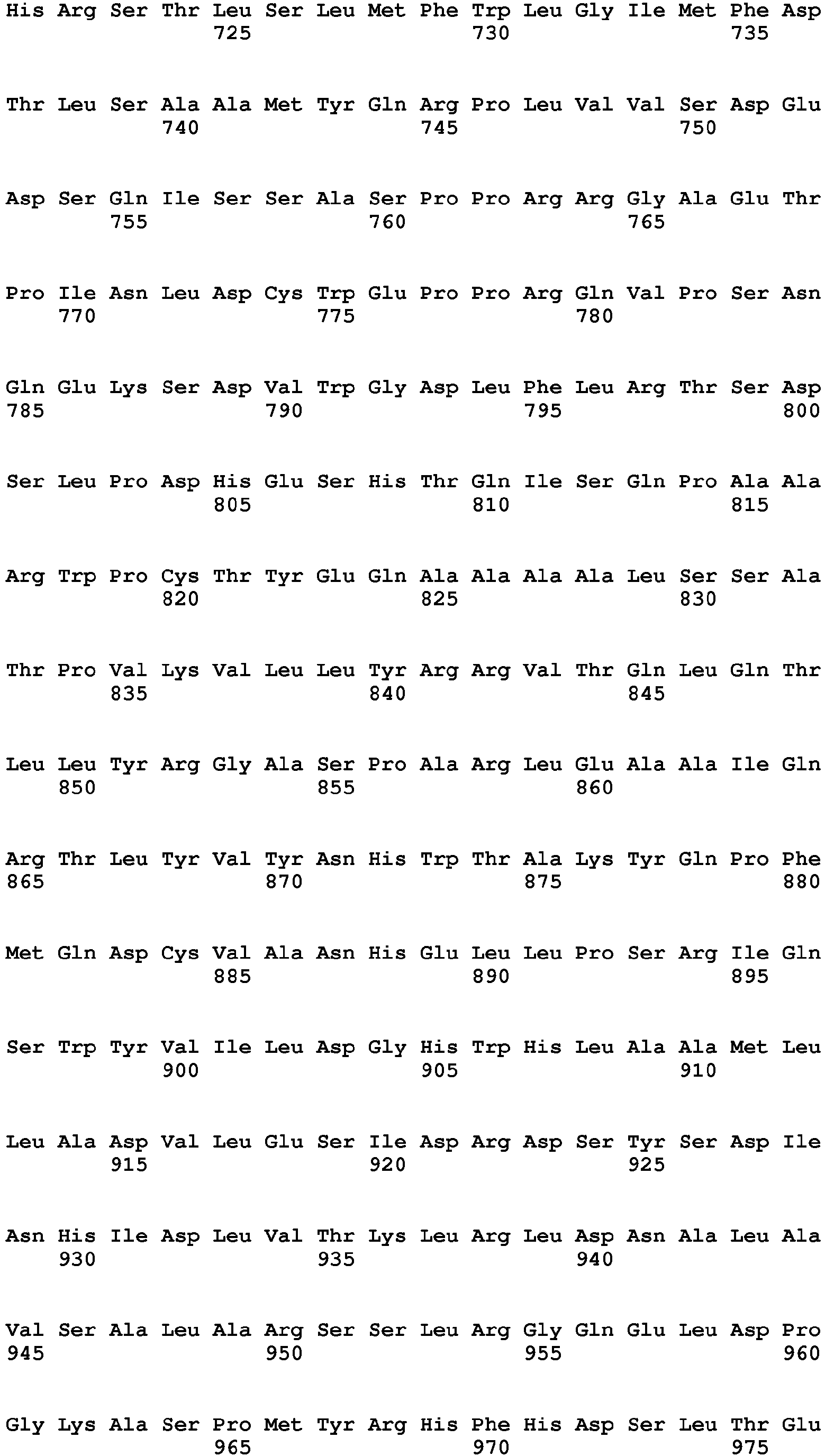

- <210> 8
<211> 1065
<212> PRT
<213> Artificial Sequence - <220>
<223> chimeric protein - <400> 8


- <210> 9
<211> 297
<212> PRT
<213> Artificial Sequence - <220>
<223> chimeric protein - <400> 9


- <210> 10
<211> 304
<212> PRT
<213> Artificial Sequence - <220>
<223> chimeric protein - <400> 10


- <210> 11
<211> 30
<212> PRT
<213> Artificial Sequence - <220>
<223> linker peptide - <400> 11

- <210> 12
<211> 18
<212> DNA
<213> Artificial Sequence - <220>
<223> chimeric recognition site - <400> 12
tagggataac agggtaat 18 - <210> 13
<211> 28
<212> DNA
<213> Artificial Sequence - <220>
<223> chimeric recognition site - <400> 13
cgtgcggatc tagggataac agggtaat 28 - <210> 14
<211> 29
<212> DNA
<213> Artificial Sequence - <220>
<223> chimeric recognition site - <400> 14
cgtgcggatc ctagggataa cagggtaat 29 - <210> 15
<211> 30
<212> DNA
<213> Artificial Sequence - <220>
<223> chimeric recognition site - <400> 15
cgtgcggatc gctagggata acagggtaat 30 - <210> 16
<211> 31
<212> DNA
<213> Artificial Sequence - <220>
<223> chimeric recognition site - <400> 16
cgtgcggatc cgctagggat aacagggtaa t 31 - <210> 17
<211> 4065
<212> DNA
<213> Artificial Sequence - <220>
<223> plasmid - <220>
<221> misc_feature
<222> (3)..(12)
<223> n is a, c, g, or t - <400> 17


- <210> 18
<211> 711
<212> DNA
<213> Artificial Sequence - <220>
<223> Insert of VC-SAH40-4 - <400> 18


- <210> 19
<211> 3177
<212> DNA
<213> Artificial Sequence - <220>
<223> Insert of VC-SAH51-40 - <400> 19

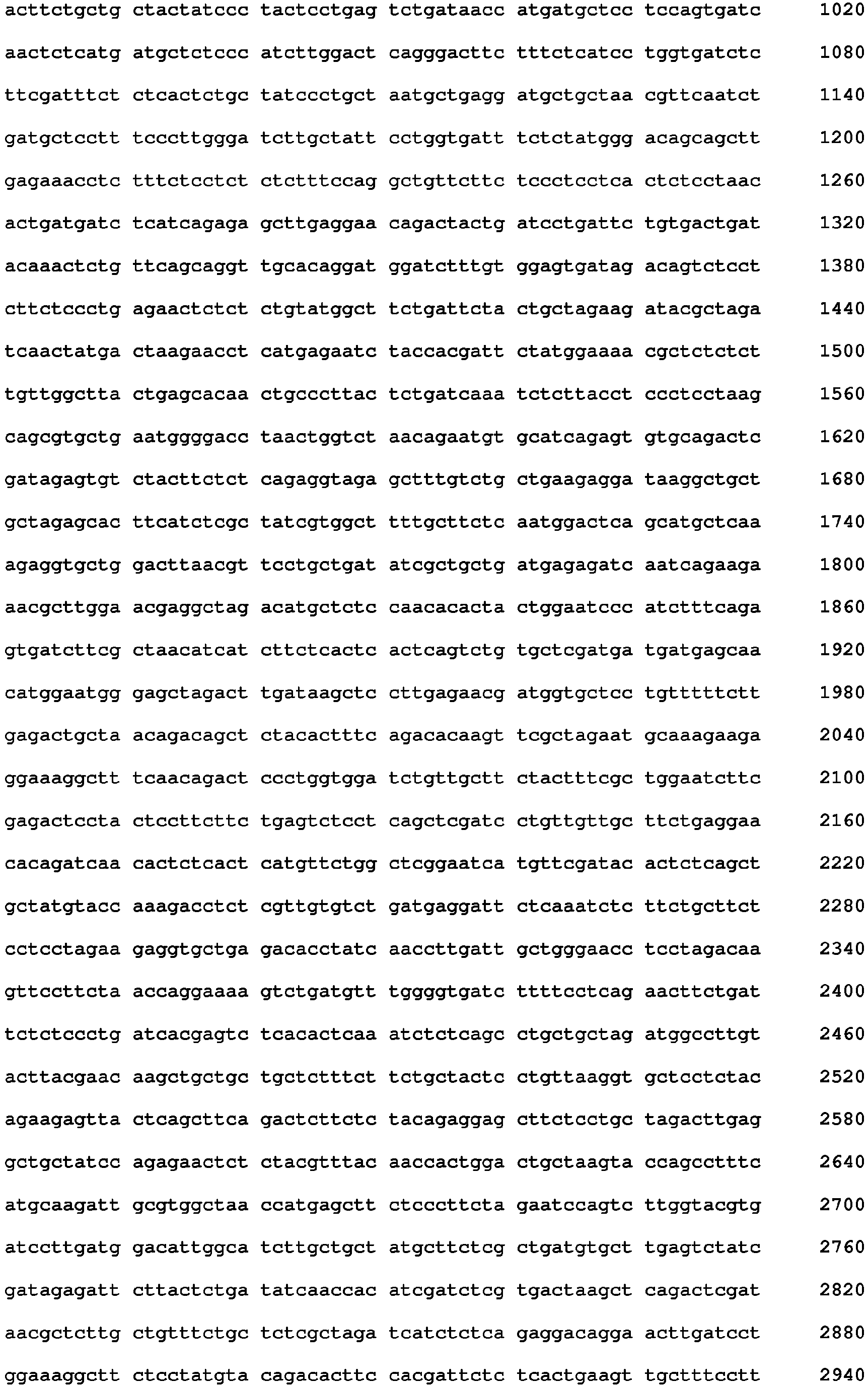

- <210> 20
<211> 3198
<212> DNA
<213> Artificial Sequence - <220>
<223> Insert of VC-SAH50-37 - <400> 20


- <210> 21
<211> 894
<212> DNA
<213> Artificial Sequence - <220>
<223> Insert of VC-SAH49-1 - <400> 21

- <210> 22
<211> 915
<212> DNA
<213> Artificial Sequence - <220>
<223> Insert of VC-SAH48-8 - <400> 22


- <210> 23
<211> 4905
<212> DNA
<213> Artificial Sequence - <220>
<223> Construct II - <220>
<221> misc_feature
<222> (1218)..(1227)
<223> n is a, c, g, or t - <400> 23


- <210> 24
<211> 260
<212> DNA
<213> Artificial Sequence - <220>
<223> Insert of VC-SAH6-1 - <400> 24

- <210> 25
<211> 4580
<212> DNA
<213> Artificial Sequence - <220>
<223> VC-SAH7-1 - <400> 25


- <210> 26
<211> 32
<212> DNA
<213> Artificial Sequence - <220>
<223> Insert of VX-SAH56-1 - <400> 26
cgtgcggatc tagggataac agggtaatat ag 32 - <210> 27
<211> 33
<212> DNA
<213> Artificial Sequence - <220>
<223> Insert of VX-SAH57-2 - <400> 27
cgtgcggatc ctagggataa cagggtaata tag 33 - <210> 28
<211> 34
<212> DNA
<213> Artificial Sequence - <220>
<223> Insert of VX-SAH58-2 - <400> 28
cgtgcggatc gctagggata acagggtaat atag 34 - <210> 29
<211> 35
<212> DNA
<213> Artificial Sequence - <220>
<223> Insert of VX-SAH59-1 - <400> 29
cgtgcggatc cgctagggat aacagggtaa tatag 35 - <210> 30
<211> 5221
<212> DNA
<213> Artificial Sequence - <220>
<223> Construct III - <220>
<221> misc_feature
<222> (1557)..(1566)
<223> n is a, c, g, or t - <400> 30


- <210> 31
<211> 8885
<212> DNA
<213> Artificial Sequence - <220>
<223> Construct IV - <220>
<221> misc_feature
<222> (3)..(12)
<223> n is a, c, g, or t - <400> 31


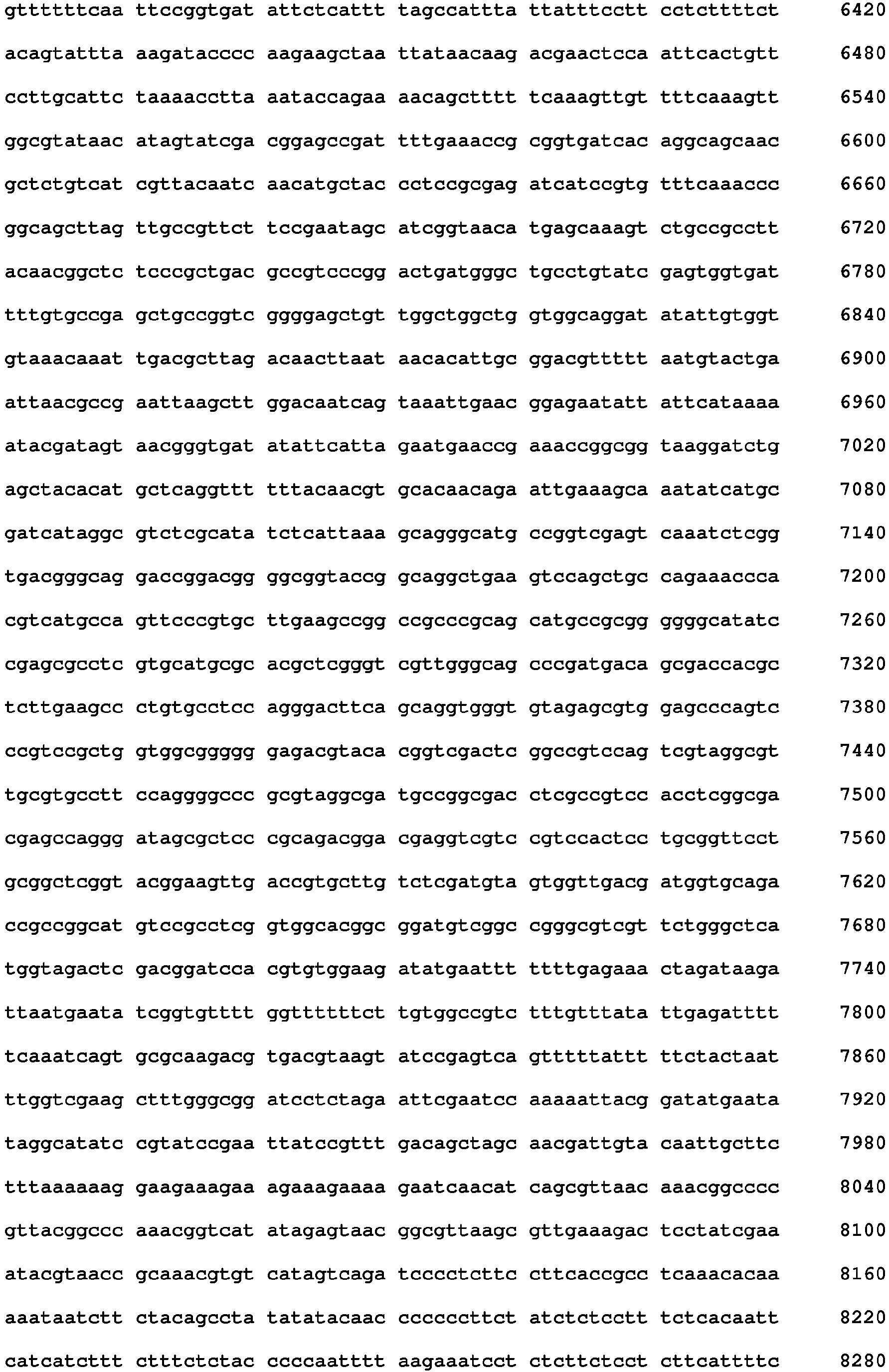

- <210> 32
<211> 10934
<212> DNA
<213> Artificial Sequence - <220>
<223> Construct V - <220>
<221> misc_feature
<222> (612)..(621)
<223> n is a, c, g, or t - <400> 32
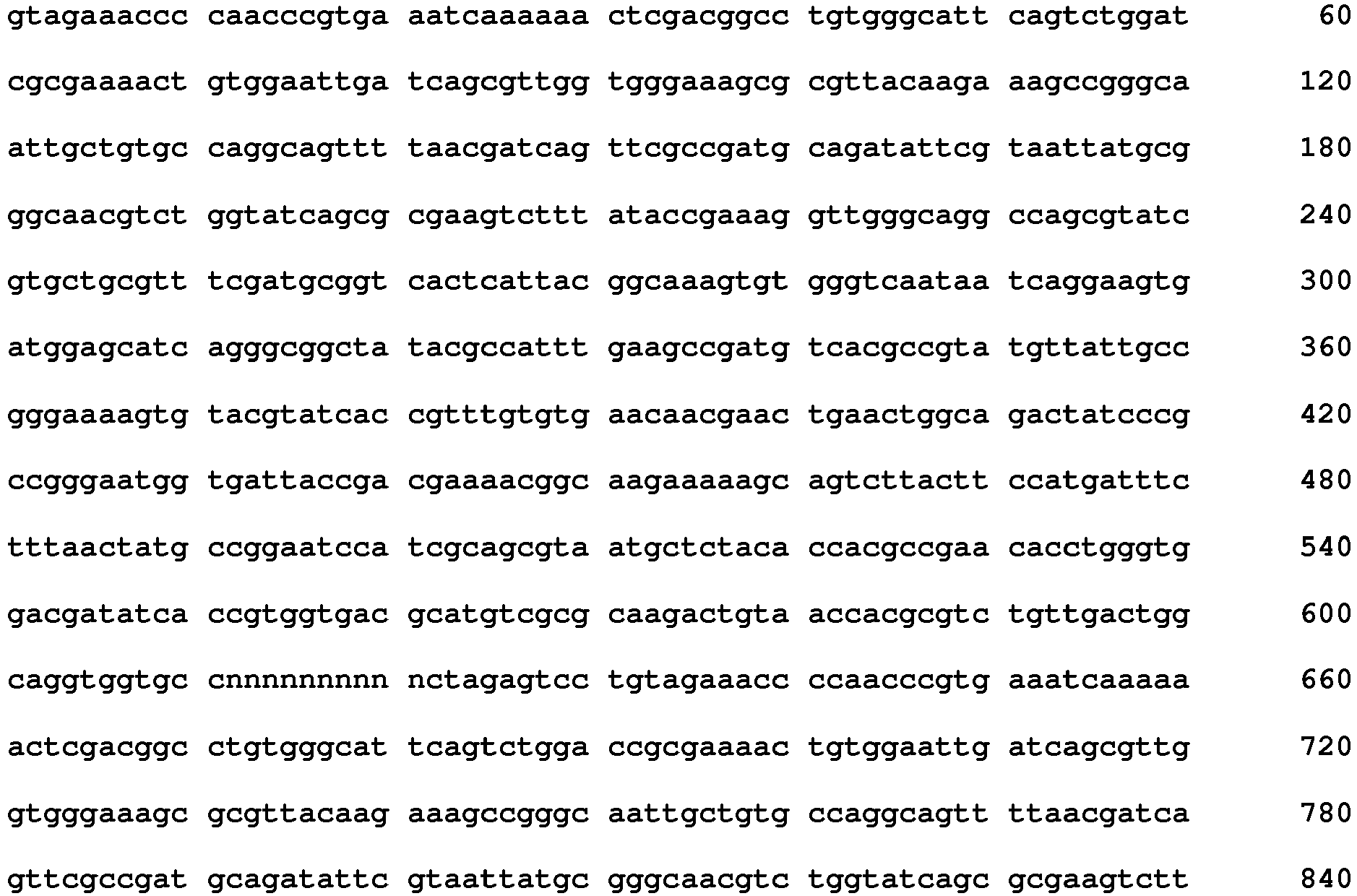

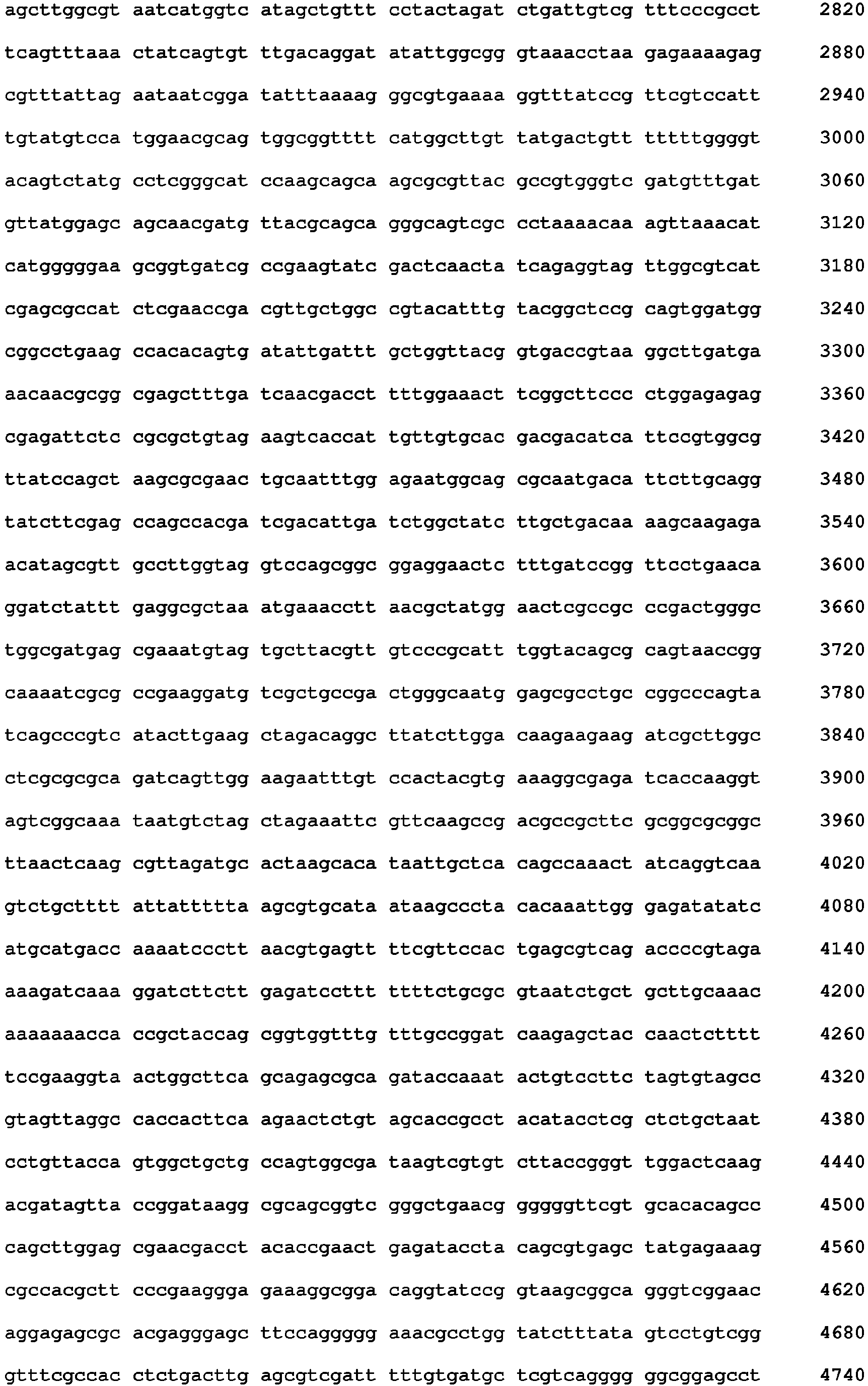


- <210> 33
<211> 200
<212> DNA
<213> Artificial Sequence - <220>
<223> I-SceI AlrcR target site insert in VC-SAH52-21 - <400> 33

- <210> 34
<211> 197
<212> DNA
<213> Artificial Sequence - <220>
<223> I-SceI AlrcR target site insert in VC-SAH111 - <400> 34

- <210> 35
<211> 198
<212> DNA
<213> Artificial Sequence - <220>
<223> I-SceI AlrcR target site insert in VC-SAH112 - <400> 35


- <210> 36
<211> 221
<212> DNA
<213> Artificial Sequence - <220>
<223> I-SceI AlrcR target site insert in VC-SAH55-22 - <400> 36

- <210> 37
<211> 9
<212> PRT
<213> Artificial Sequence - <220>
<223> C term mod No1 - <400> 37

- <210> 38
<211> 9
<212> PRT
<213> Artificial Sequence - <220>
<223> C-term mod No2 - <400> 38

- <210> 39
<211> 915
<212> DNA
<213> Artificial Sequence - <220>
<223> insert of VC-SAH128-3 - <400> 39


- <210> 40
<211> 915
<212> DNA
<213> Artificial Sequence - <220>
<223> insert of VX-SAH129-1 - <400> 40


- <210> 41
<211> 3198
<212> DNA
<213> Artificial Sequence - <220>
<223> Insert of VC-SAH130-30 NLS - I-SceI Cterm mod # 1 AlcR - <400> 41


- <210> 42
<211> 3198
<212> DNA
<213> Artificial Sequence - <220>
<223> insert of VX-SAH 131-6 NLS - I-SceI Cterm mod # 2 AlcR - <400> 42


- <210> 43
<211> 28
<212> DNA
<213> Artificial Sequence - <220>
<223> insert of VC-SAH181-1, AlcR (1-60) I-SceI target site fusion - <400> 43
cgtgcggatc attaccctgt tatcccta 28 - <210> 44
<211> 29
<212> DNA
<213> Artificial Sequence - <220>
<223> insert of VC-SAH182-2, AlcR (1-60) I-SceI target site fusion - <220>
<221> misc_feature
<222> (11)..(11)
<223> n is a, c, g, or t - <400> 44
cgtgcggatc nattaccctg ttatcccta 29 - <210> 45
<211> 30
<212> DNA
<213> Artificial Sequence - <220>
<223> insert of VC-SAH183-3, AlcR (1-60) I-SceI target site fusion - <220>
<221> misc_feature
<222> (11)..(12)
<223> n is a, c, g, or t - <400> 45
cgtgcggatc nnattaccct gttatcccta 30 - <210> 46
<211> 31
<212> DNA
<213> Artificial Sequence - <220>
<223> insert of VC-SAH184-2, AlcR (1-60) I-SceI target site fusion - <220>
<221> misc_feature
<222> (11)..(13)
<223> n is a, c, g, or t - <400> 46
cgtgcggatc nnnattaccc tgttatccct a 31 - <210> 47
<211> 861
<212> DNA
<213> Artificial Sequence - <220>
<223> AlcR(1-60) I-SceI -C-term del - <400> 47


- <210> 48
<211> 879
<212> DNA
<213> Artificial Sequence - <220>
<223> AlcR(1-60) I-Scel -C-term del with one amino acid linker - <400> 48

- <210> 49
<211> 873
<212> DNA
<213> Artificial Sequence - <220>
<223> AlcR(l-60) I-SceI -C-term del with three amino acid linker - <400> 49

- <210> 50
<211> 304
<212> PRT
<213> Artificial Sequence - <220>
<223> NLS - I-SceI Cterm mod # 1 AlcR (1-60) - <400> 50


- <210> 51
<211> 304
<212> PRT
<213> Artificial Sequence - <220>
<223> NLS - I-SceI Cterm mod # 2 AlcR (1-60) - <400> 51


- <210> 52
<211> 1065
<212> PRT
<213> Artificial Sequence - <220>
<223> NLS - I-SceI Cterm mod # 1 AlcR - <400> 52


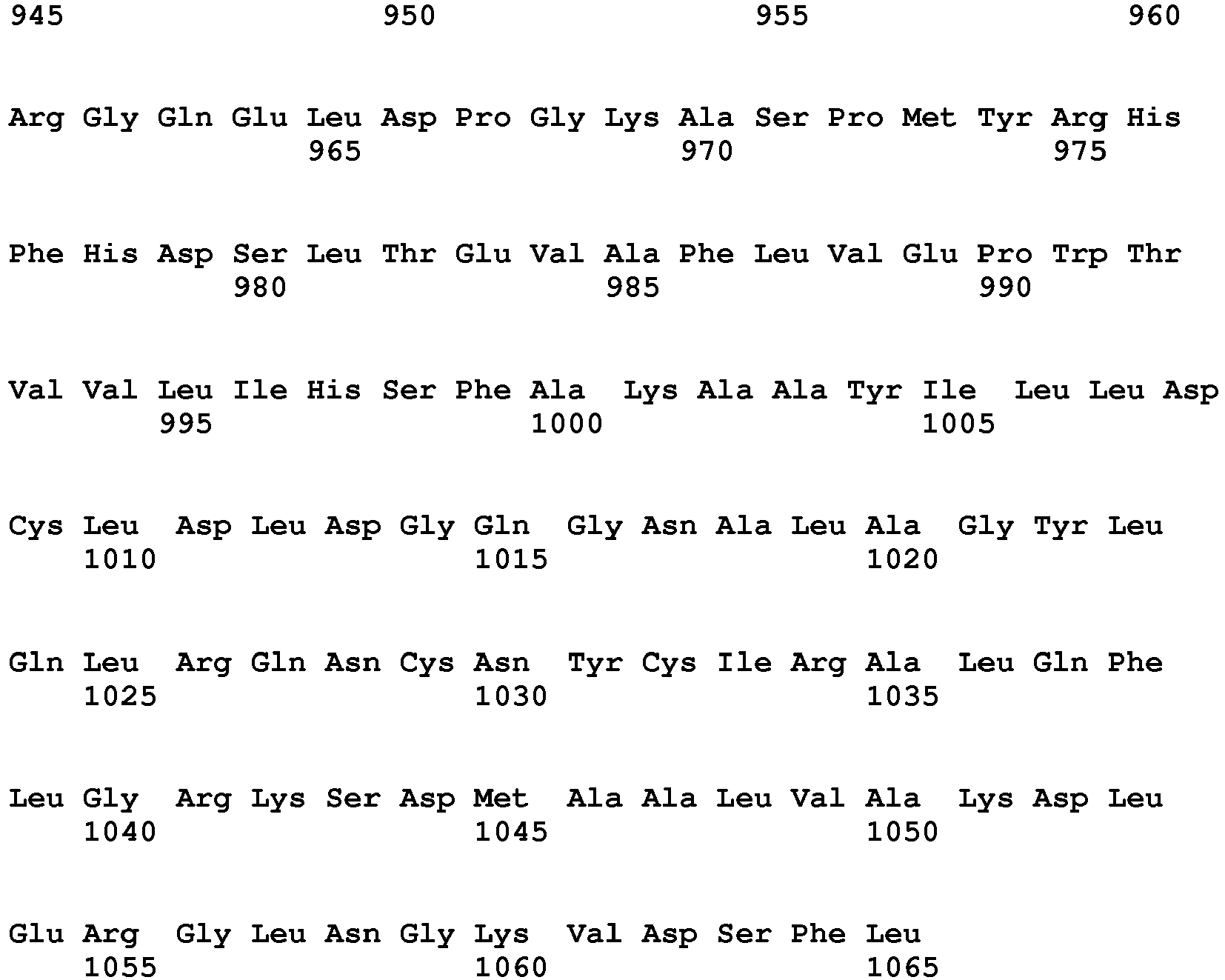
- <210> 53
<211> 1065
<212> PRT
<213> Artificial Sequence - <220>
<223> NLS - I-SceI Cterm mod # 2 AlcR - <400> 53
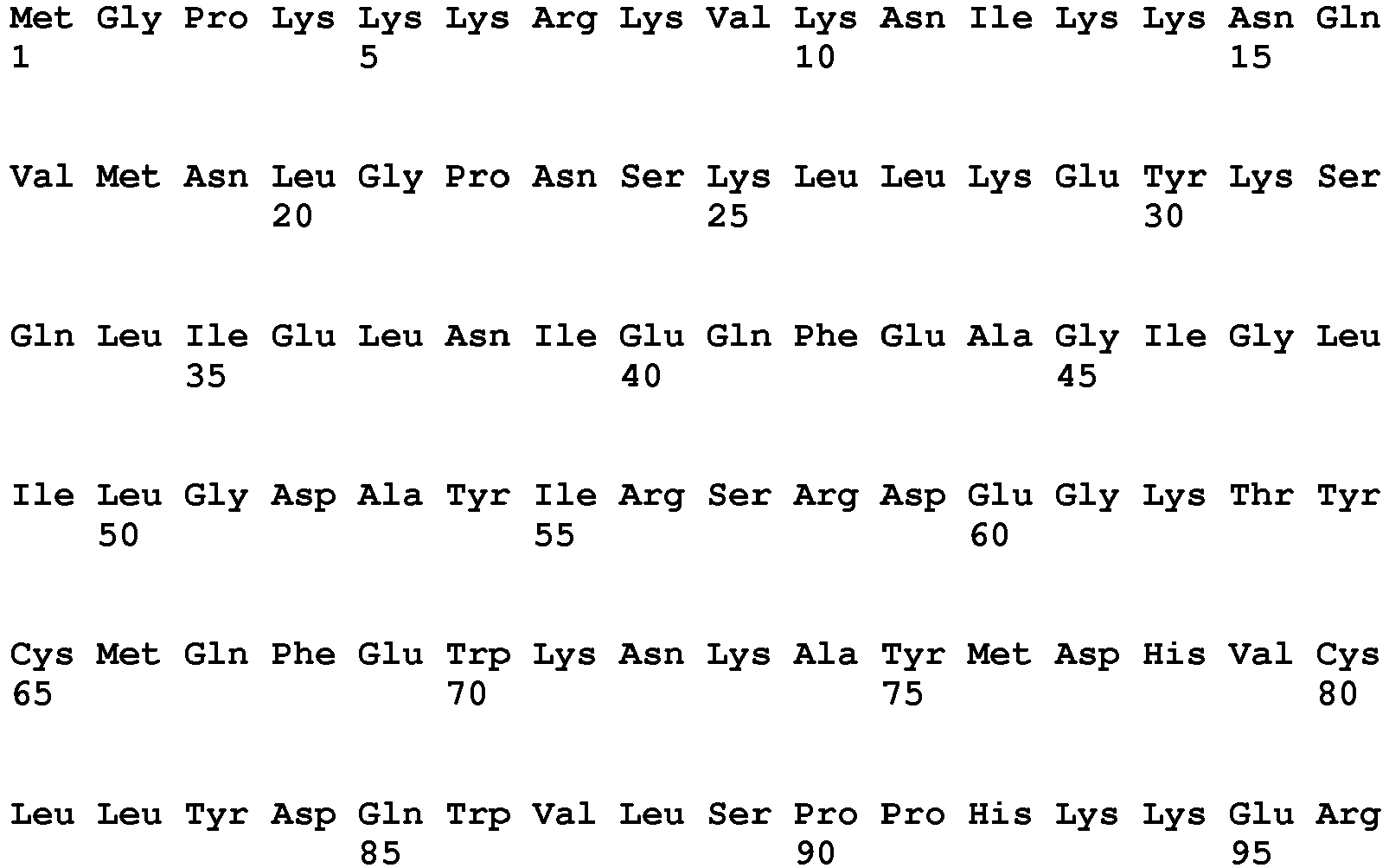


- <210> 54
<211> 286
<212> PRT
<213> Artificial Sequence - <220>
<223> AlcR(1-60) I-SceI -C-term del - <400> 54


- <210> 55
<211> 290
<212> PRT
<213> Artificial Sequence - <220>
<223> AlcR(1-60) I-SceI -C-term del with one amino acid linker - <400> 55


- <210> 56
<211> 292
<212> PRT
<213> Artificial Sequence - <220>
<223> AlcR(1-60) I-SceI -C-term del - <400> 56


- <210> 57
<211> 50
<212> PRT
<213> Artificial Sequence - <220>
<223> from accession number C8VDU4, Aspergillus nidulans - <400> 57


- <210> 58
<211> 50
<212> PRT
<213> Artificial Sequence - <220>
<223> from accession number Q8TG25, Aspergillus ochraceoroseus - <400> 58

- <210> 59
<211> 45
<212> PRT
<213> Artificial Sequence - <220>
<223> from accession number C8VAC4, Aspergillus nidulans - <400> 59

- <210> 60
<211> 45
<212> PRT
<213> Artificial Sequence - <220>
<223> from accession number B2B6C3, Podospora anserina - <400> 60


- <210> 61
<211> 44
<212> PRT
<213> Artificial Sequence - <220>
<223> from accession number Q8TG77, Aspergillus nomius - <400> 61

- <210> 62
<211> 44
<212> PRT
<213> Artificial Sequence - <220>
<223> from accession number Q2NNI0, Aspergillus parasiticus - <400> 62

- <210> 63
<211> 44
<212> PRT
<213> Artificial Sequence - <220>
<223> from accession number 8TG76 Aspergillus pseudotamarii - <400> 63


- <210> 64
<211> 44
<212> PRT
<213> Artificial Sequence - <220>
<223> from accession number Q8TG74, Aspergillus flavus - <400> 64
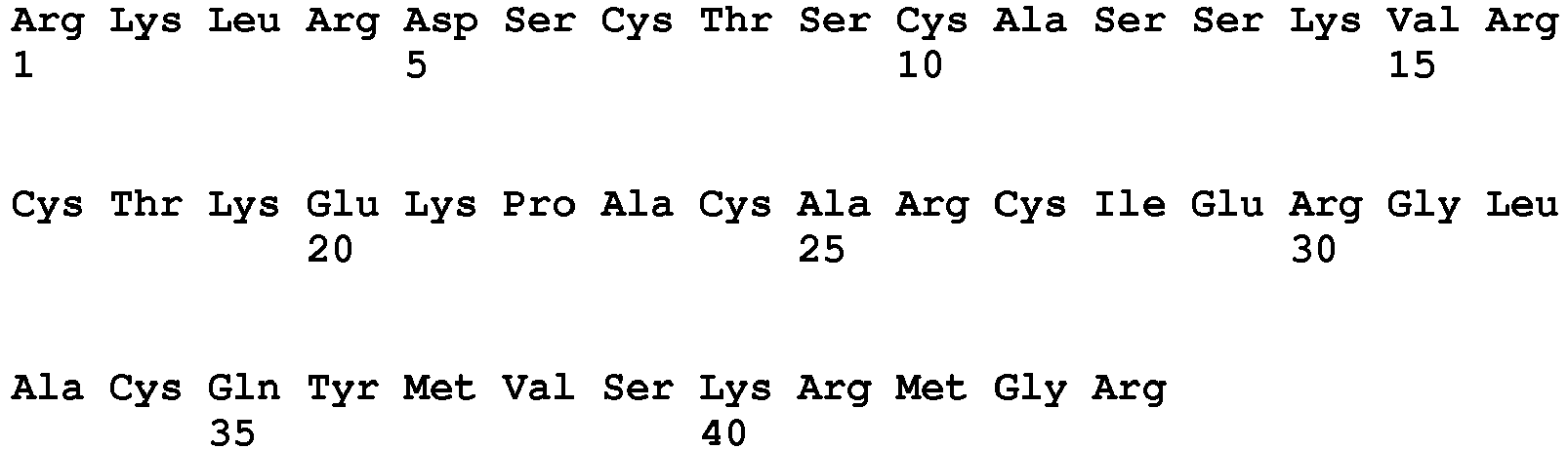
- <210> 65
<211> 44
<212> PRT
<213> Artificial Sequence - <220>
<223> from accession number Q8TG75, Aspergillus pseudotamarii - <400> 65

- <210> 66
<211> 47
<212> PRT
<213> Artificial Sequence - <220>
<223> from accession number B8MBB2, Talaromyces stipitatus - <400> 66


- <210> 67
<211> 44
<212> PRT
<213> Artificial Sequence - <220>
<223> from accession number B2VZ88, Pyrenophora tritici-repentis - <400> 67
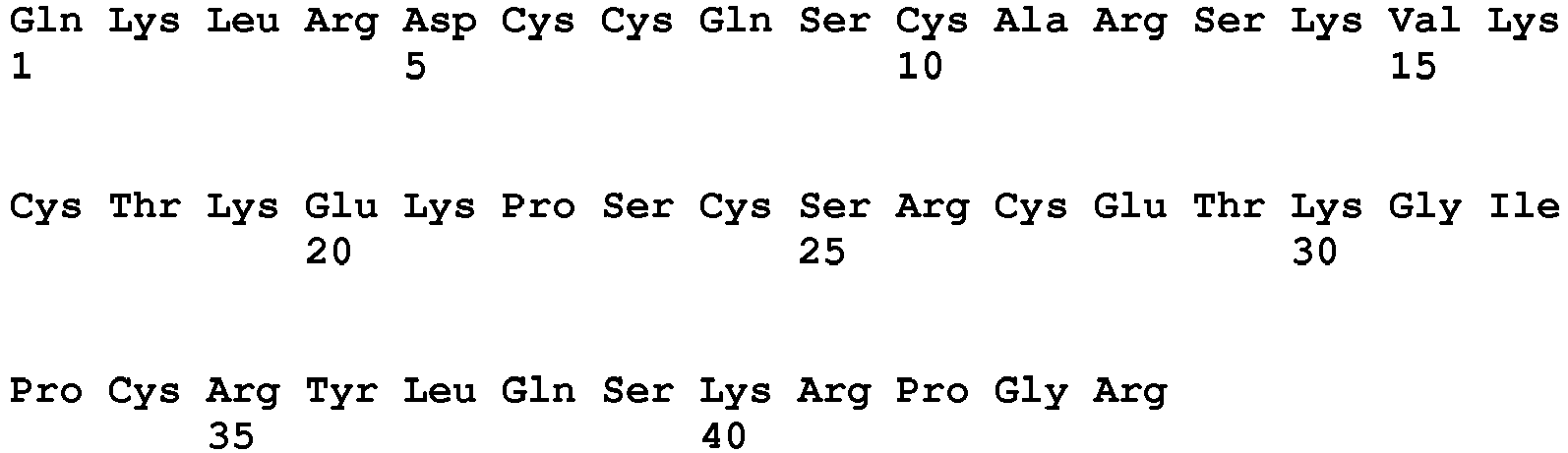
- <210> 68
<211> 45
<212> PRT
<213> Artificial Sequence - <220>
<223> from accession number A0ST46, Cercospora nicotianae - <400> 68

- <210> 69
<211> 46
<212> PRT
<213> Artificial Sequence - <220>
<223> from accession number Q0CCY1, Aspergillus terreus - <400> 69
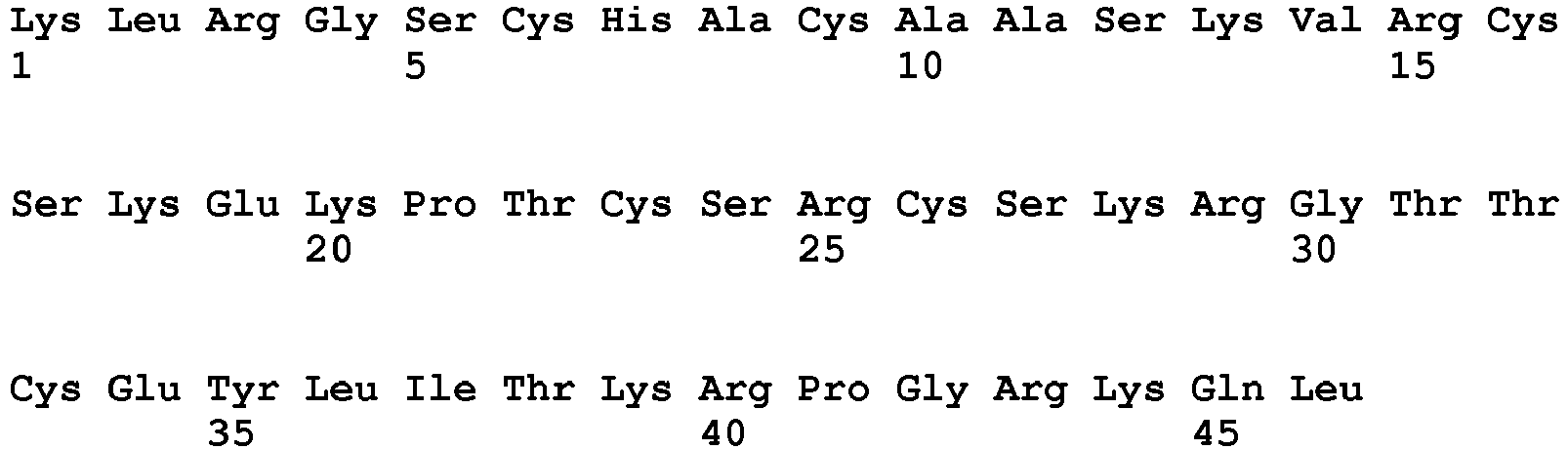
- <210> 70
<211> 60
<212> PRT
<213> Artificial Sequence - <220>
<223> from accession number C8VL74, Aspergillus nidulans - <400> 70

- <210> 71
<211> 70
<212> PRT
<213> Artificial Sequence - <220>
<223> from accession number A1CA83, Aspergillus clavatus - <400> 71


- <210> 72
<211> 69
<212> PRT
<213> Artificial Sequence - <220>
<223> from accession number Q4WU81, Aspergillus fumigatus - <400> 72

- <210> 73
<211> 82
<212> PRT
<213> Artificial Sequence - <220>
<223> from accession number BOY3Q7, Aspergillus fumigatus - <400> 73
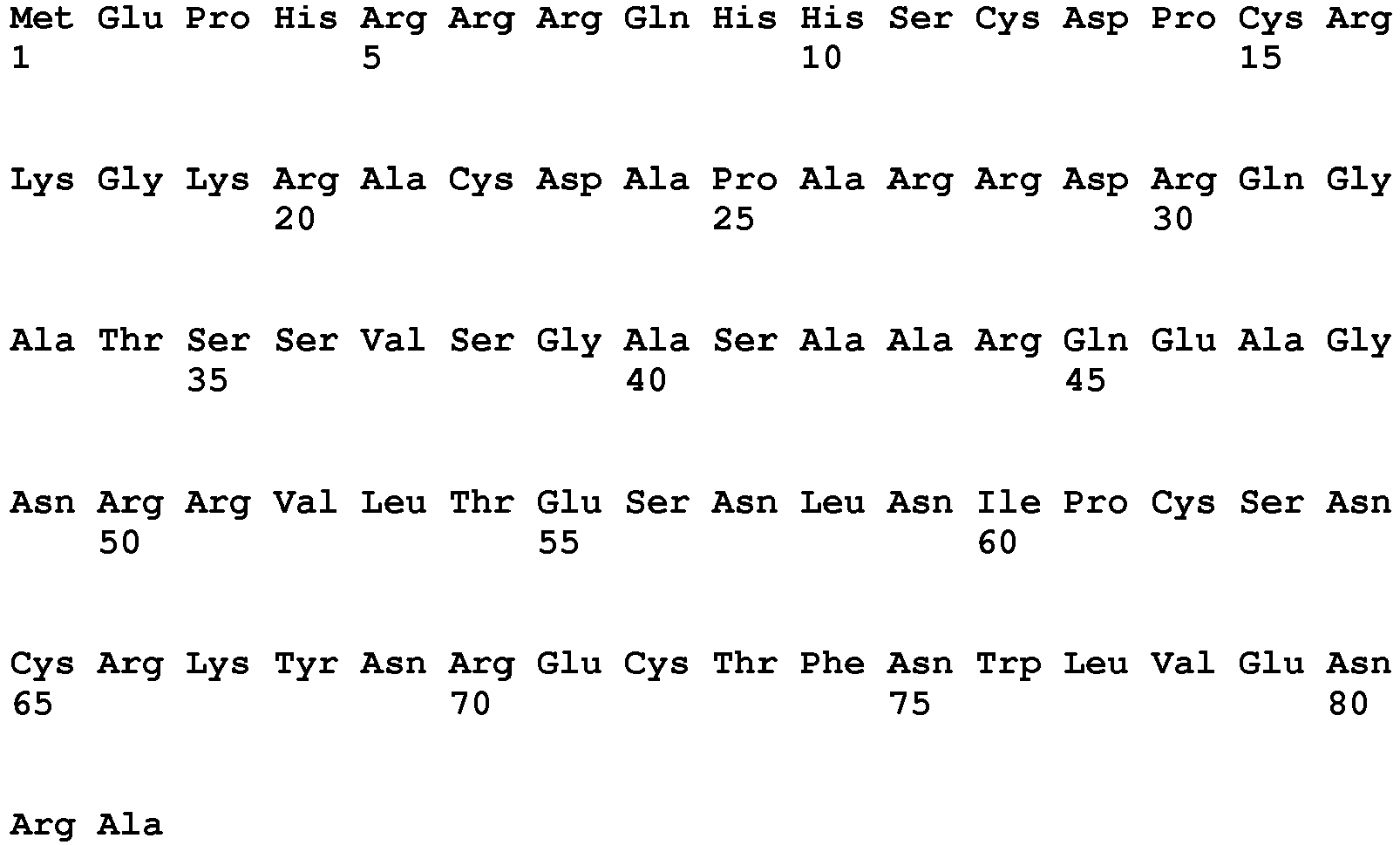
- <210> 74
<211> 82
<212> PRT
<213> Artificial Sequence - <220>
<223> from accession number A1DF77, Neosartorya fischeri - <400> 74

- <210> 75
<211> 50
<212> PRT
<213> Artificial Sequence - <220>
<223> from accession number B6HNY2, Penicillium chrysogenum - <400> 75

- <210> 76
<211> 61
<212> PRT
<213> Artificial Sequence - <220>
<223> from accession number Q2UDT6, Aspergillus oryzae - <400> 76

- <210> 77
<211> 54
<212> PRT
<213> Artificial Sequence - <220>
<223> from accession number Q4P8J5, Ustilago maydis - <400> 77

- <210> 78
<211> 53
<212> PRT
<213> Artificial Sequence - <220>
<223> from accession number B8NDE7, Aspergillus flavus - <400> 78


- <210> 79
<211> 58
<212> PRT
<213> Artificial Sequence - <220>
<223> from accession number Q0CCZ6, Aspergillus terreus - <400> 79

- <210> 80
<211> 77
<212> PRT
<213> Artificial Sequence - <220>
<223> from accession number C7Z9E1, Nectria haematococca - <400> 80

- <210> 81
<211> 60
<212> PRT
<213> Artificial Sequence - <220>
<223> from accession number A4R044, Magnaporthe grisea - <400> 81

- <210> 82
<211> 53
<212> PRT
<213> Artificial Sequence - <220>
<223> from accession number Q2U8Y1, Aspergillus oryzae - <400> 82

- <210> 83
<211> 53
<212> PRT
<213> Artificial Sequence - <220>
<223> from accession number B6HLG1, Penicillium chrysogenum - <400> 83


- <210> 84
<211> 60
<212> PRT
<213> Artificial Sequence - <220>
<223> from accession number Q2UDT6, Aspergillus oryzae - <400> 84

- <210> 85
<211> 53
<212> PRT
<213> Artificial Sequence - <220>
<223> from accession number B6HLG1, Penicillium chrysogenum - <400> 85

- <210> 86
<211> 44
<212> PRT
<213> Artificial Sequence - <220>
<223> from accession number B6JZK8, Schizosaccharomyces spec. - <400> 86

- <210> 87
<211> 48
<212> PRT
<213> Artificial Sequence - <220>
<223> from accession number Q2GSZ4, Chaetomium globosum - <400> 87

- <210> 88
<211> 48
<212> PRT
<213> Artificial Sequence - <220>
<223> from accession number C1GS25, Paracoccidioides spec. - <400> 88

- <210> 89
<211> 47
<212> PRT
<213> Artificial Sequence - <220>
<223> from accession number C5JNJ4, Ajellomyces spec. - <400> 89

- <210> 90
<211> 71
<212> PRT
<213> Artificial Sequence - <220>
<223> from accession number B6QQE4, Penicillium marneffei - <400> 90

- <210> 91
<211> 47
<212> PRT
<213> Artificial Sequence - <220>
<223> from accession number Q0UKN2, Phaeosphaeria nodorum - <400> 91


- <210> 92
<211> 69
<212> PRT
<213> Artificial Sequence - <220>
<223> from accession number C7ZD87, Nectria haematococca - <400> 92

- <210> 93
<211> 42
<212> PRT
<213> Artificial Sequence - <220>
<223> from accession number B6HCV2, Penicillium chrysogenum - <400> 93

- <210> 94
<211> 48
<212> PRT
<213> Artificial Sequence - <220>
<223> from accession number 059744, Schizosaccharomyces pombe - <400> 94

- <210> 95
<211> 70
<212> PRT
<213> Artificial Sequence - <220>
<223> from accession number P0CE41, Saccharomyces cerevisiae - <400> 95
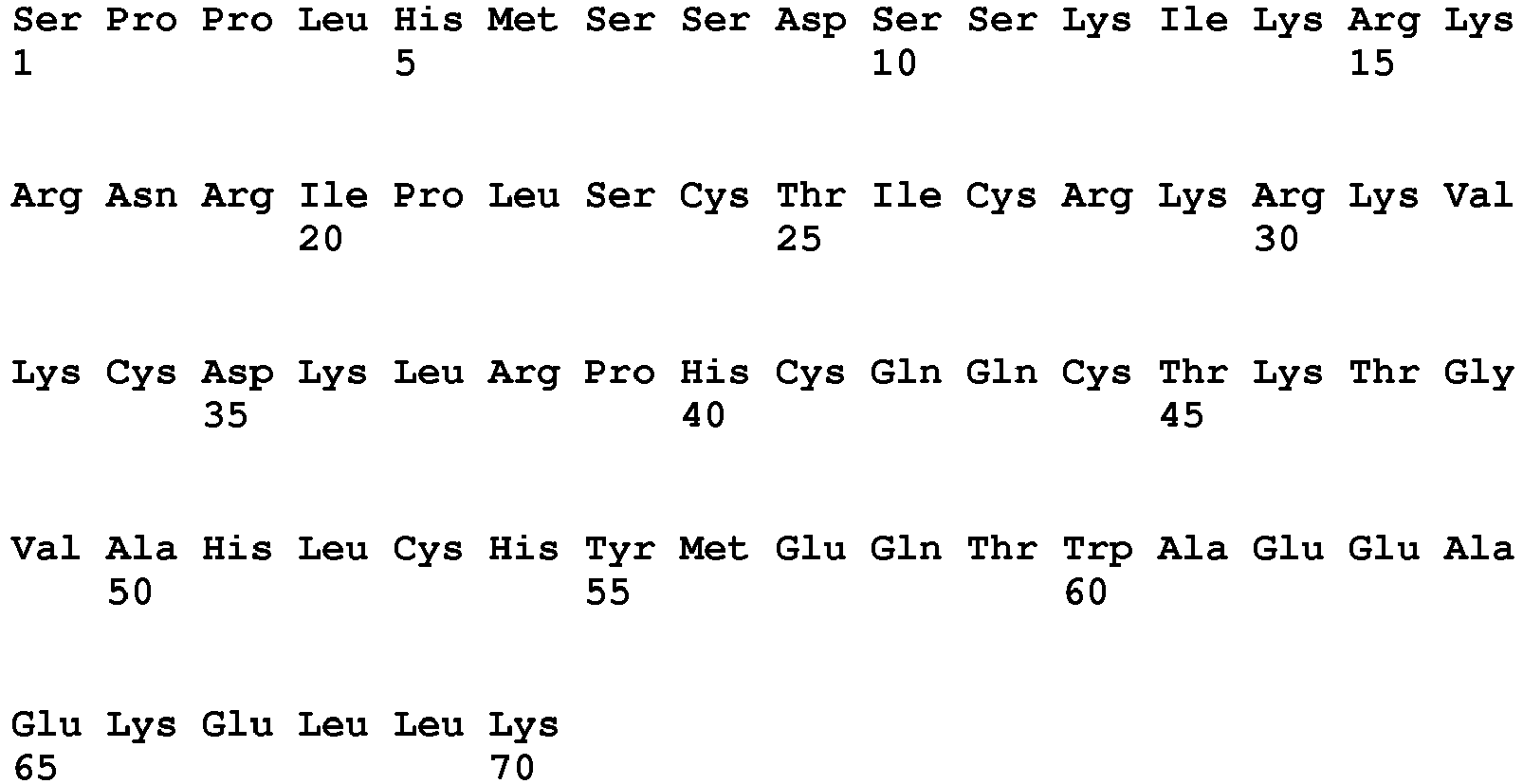
- <210> 96
<211> 60
<212> PRT
<213> Artificial Sequence - <220>
<223> from accession number A7TQE5, Vanderwaltozyma polyspora - <400> 96


- <210> 97
<211> 60
<212> PRT
<213> Artificial Sequence - <220>
<223> from accession number C5E399, Lachancea thermotolerans - <400> 97

- <210> 98
<211> 65
<212> PRT
<213> Artificial Sequence - <220>
<223> from accession number Q754F3, Ashbya gossypii - <400> 98

- <210> 99
<211> 61
<212> PRT
<213> Artificial Sequence - <220>
<223> from accession number C5E4F0, Zygosaccharomyces rouxii - <400> 99

- <210> 100
<211> 57
<212> PRT
<213> Artificial Sequence - <220>
<223> from accession number Q6EWQ5, Kluyveromyces lactis - <400> 100

- <210> 101
<211> 59
<212> PRT
<213> Artificial Sequence - <220>
<223> from accession number Q6FMR4, Candida glabrata - <400> 101


- <210> 102
<211> 57
<212> PRT
<213> Artificial Sequence - <220>
<223> from accession number Q6FXJ5, Candida glabrata - <400> 102

- <210> 103
<211> 57
<212> PRT
<213> Artificial Sequence - <220>
<223> from accession number A7TJF2, Vanderwaltozyma polyspora - <400> 103

- <210> 104
<211> 55
<212> PRT
<213> Artificial Sequence - <220>
<223> from accession number C4R144, Pichia pastoris - <400> 104

- <210> 105
<211> 51
<212> PRT
<213> Artificial Sequence - <220>
<223> from accession number A3LR46, Pichia stipitis - <400> 105

- <210> 106
<211> 48
<212> PRT
<213> Artificial Sequence - <220>
<223> from accession number Q6BPI3, Debaryomyces hansenii - <400> 106


- <210> 107
<211> 58
<212> PRT
<213> Artificial Sequence - <220>
<223> from accession number C5M8G2, Candida tropicalis - <400> 107

- <210> 108
<211> 50
<212> PRT
<213> Artificial Sequence - <220>
<223> from accession number C8ZE58, Saccharomyces cerevisiae - <400> 108

- <210> 109
<211> 50
<212> PRT
<213> Artificial Sequence - <220>
<223> from accession number C5DUV2, Zygosaccharomyces rouxii - <400> 109

- <210> 110
<211> 48
<212> PRT
<213> Artificial Sequence - <220>
<223> from accession number Q75D49, Ashbya gossypii - <400> 110

- <210> 111
<211> 50
<212> PRT
<213> Artificial Sequence - <220>
<223> from accession number Q6FSH9, Candida glabrata - <400> 111


- <210> 112
<211> 49
<212> PRT
<213> Artificial Sequence - <220>
<223> from accession number C5DJQ9, Lachancea thermotolerans - <400> 112

- <210> 113
<211> 50
<212> PRT
<213> Artificial Sequence - <220>
<223> from accession number Q6CRA6, Kluyveromyces lactis - <400> 113

- <210> 114
<211> 50
<212> PRT
<213> Artificial Sequence - <220>
<223> from accession number B9WHE2, Candida dubliniensis - <400> 114

- <210> 115
<211> 50
<212> PRT
<213> Artificial Sequence - <220>
<223> from accession number B5RTY8, Debaryomyces hansenii - <400> 115

- <210> 116
<211> 48
<212> PRT
<213> Artificial Sequence - <220>
<223> from accession number A5E2U7, Lodderomyces elongisporus - <400> 116


- <210> 117
<211> 50
<212> PRT
<213> Artificial Sequence - <220>
<223> from accession number A3LVE3, Pichia stipitis - <400> 117

- <210> 118
<211> 50
<212> PRT
<213> Artificial Sequence - <220>
<223> from accession number A5DQ60, Pichia guilliermondii - <400> 118

- <210> 119
<211> 50
<212> PRT
<213> Artificial Sequence - <220>
<223> from accession number C4Y9T2, Clavispora lusitaniae - <400> 119

- <210> 120
<211> 49
<212> PRT
<213> Artificial Sequence - <220>
<223> from accession number Q4WZZ2, Aspergillus fumigatus - <400> 120

- <210> 121
<211> 49
<212> PRT
<213> Artificial Sequence - <220>
<223> from accession number A2QTW6, Aspergillus niger - <400> 121

- <210> 122
<211> 235
<212> PRT
<213> Saccharomyces cerevisiae - <400> 122


- <210> 123
<211> 238
<212> PRT
<213> Zygosaccharomyces bisporus - <400> 123


- <210> 124
<211> 228
<212> PRT
<213> Lachancea thermotolerans - <400> 124


- <210> 125
<211> 230
<212> PRT
<213> Pichia canadensis - <400> 125


- <210> 126
<211> 163
<212> PRT
<213> Chlamydomonas reinhardtii - <400> 126

- <210> 127
<211> 171
<212> PRT
<213> Carteria lunzensis - <400> 127

- <210> 128
<211> 182
<212> PRT
<213> Carteria olivieri - <400> 128
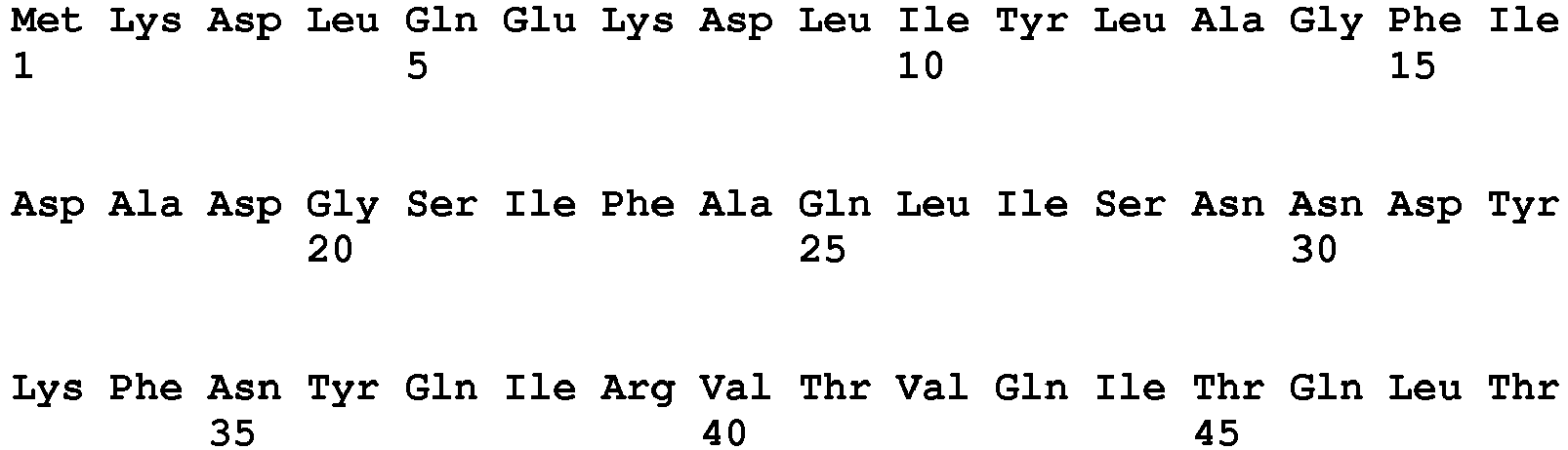

- <210> 129
<211> 167
<212> PRT
<213> Scenedesmus obliquus - <400> 129


- <210> 130
<211> 166
<212> PRT
<213> Haematococcus lacustris - <400> 130
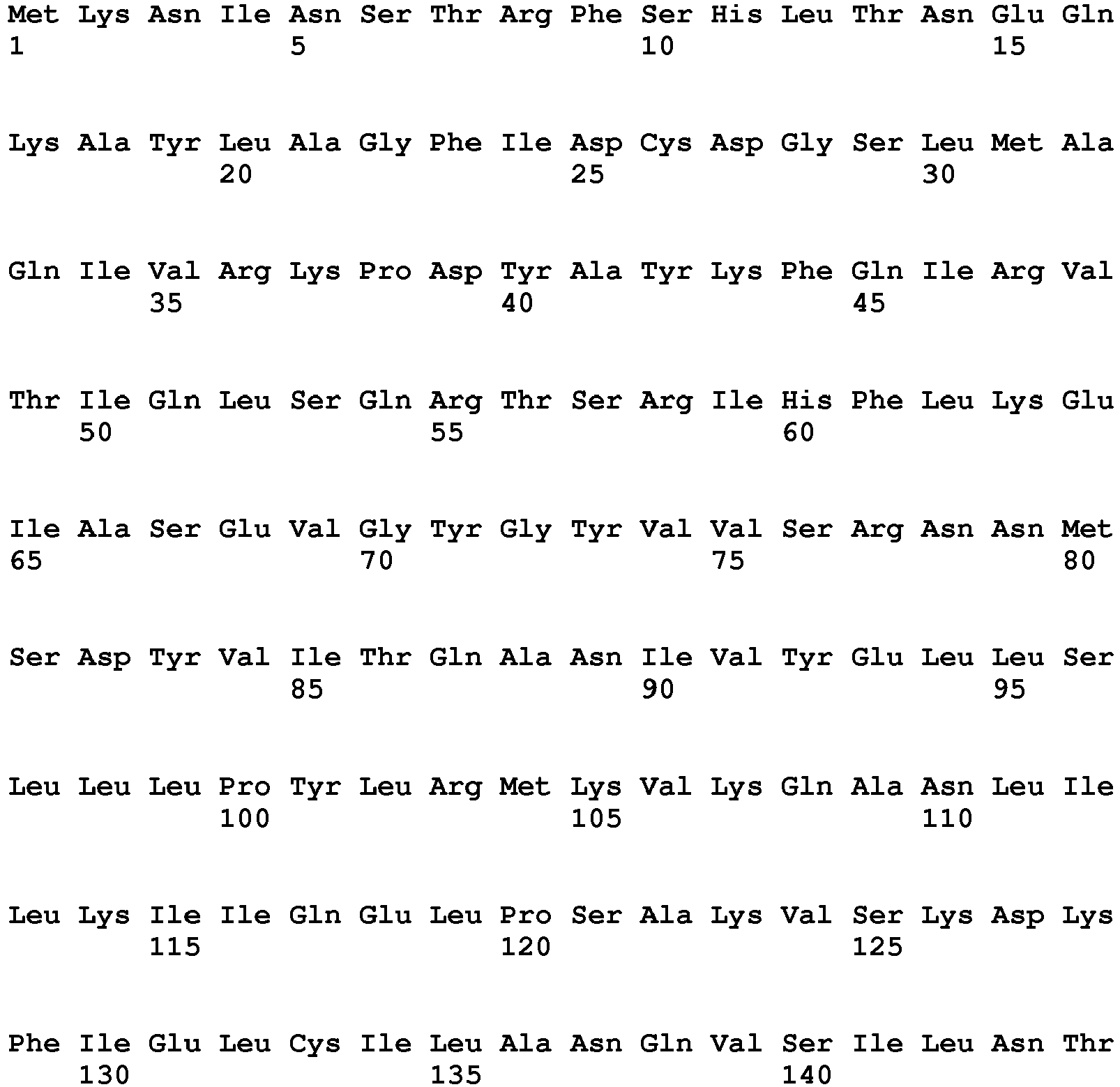

- <210> 131
<211> 218
<212> PRT
<213> Chlamydomonas moewusii - <400> 131


- <210> 132
<211> 213
<212> PRT
<213> Chlorococcum echinozygotum - <400> 132


- <210> 133
<211> 229
<212> PRT
<213> Chlorogonium elongatum - <400> 133


- <210> 134
<211> 244
<212> PRT
<213> Ankistrodesmus stipitatus - <400> 134


- <210> 135
<211> 216
<212> PRT
<213> Chlamydomonas monadina - <400> 135


- <210> 136
<211> 218
<212> PRT
<213> Chlamydomonas humicola - <400> 136


- <210> 137
<211> 218
<212> PRT
<213> Chlamydomonas zebra - <400> 137


- <210> 138
<211> 222
<212> PRT
<213> Chlamydomonas monadina - <400> 138


- <210> 139
<211> 242
<212> PRT
<213> Ankistrodesmus stipitatus - <400> 139


- <210> 140
<211> 222
<212> PRT
<213> Neochloris aquatica - <400> 140


- <210> 141
<211> 194
<212> PRT
<213> Desulfurococcus mobilis - <400> 141


- <210> 142
<211> 234
<212> PRT
<213> Thermoproteus sp. - <220>
<221> misc_feature
<222> (185)..(185)
<223> Xaa can be any naturally occurring amino acid - <400> 142


- <210> 143
<211> 234
<212> PRT
<213> Thermoproteus sp. - <400> 143


- <210> 144
<211> 235
<212> PRT
<213> Pyrobaculum calidifontis - <400> 144


- <210> 145
<211> 1071
<212> PRT
<213> Saccharomyces cerevisiae - <400> 145


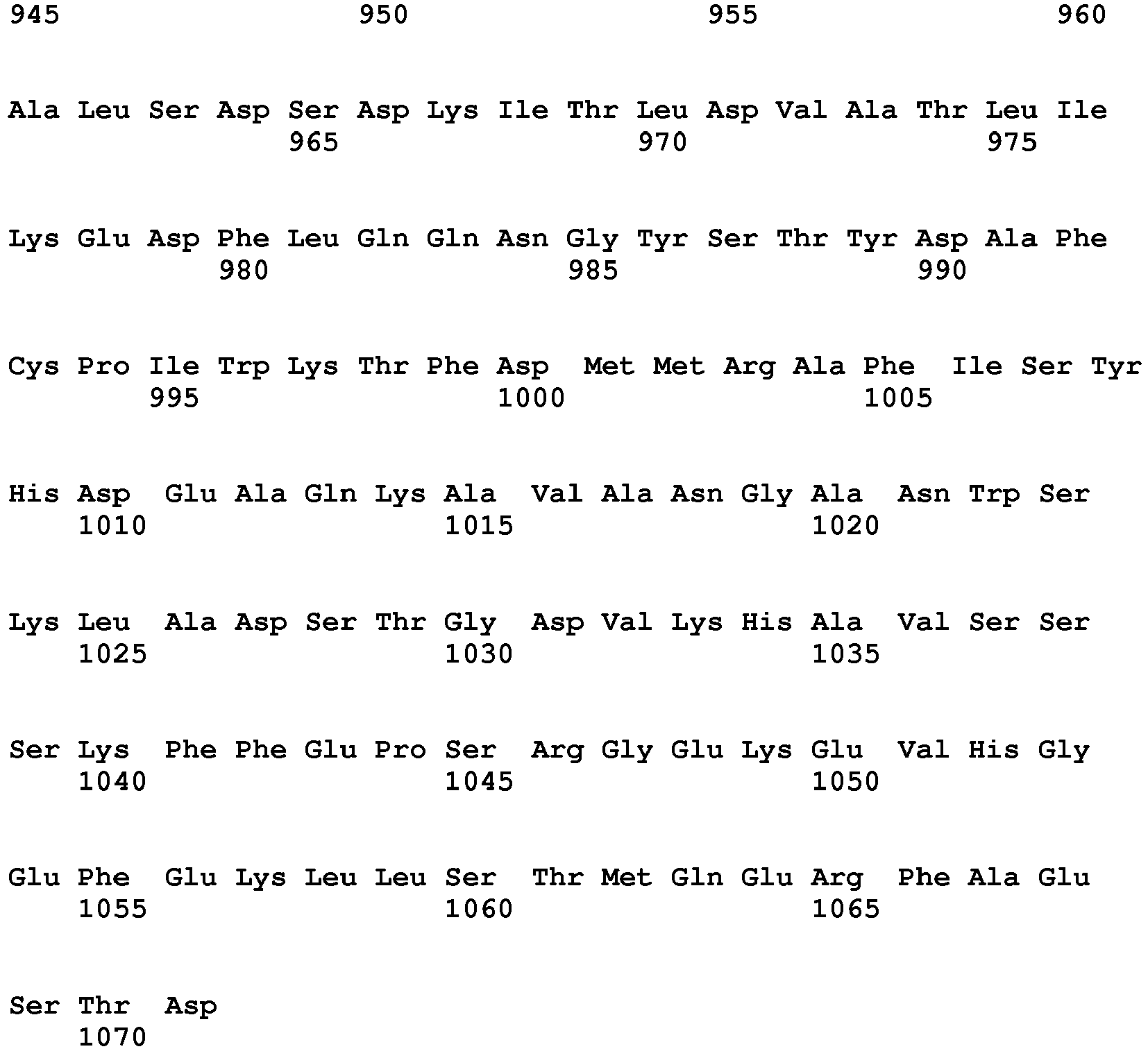
- <210> 146
<211> 1022
<212> PRT
<213> Saccharomyces cerevisiae - <220>
<221> misc_feature
<222> (318)..(318)
<223> Xaa can be any naturally occurring amino acid - <400> 146


- <210> 147
<211> 1045
<212> PRT
<213> Saccharomyces pastorianus - <400> 147


- <210> 148
<211> 545
<212> PRT
<213> Saccharomyces cariocanus - <220>
<221> misc_feature
<222> (291)..(291)
<223> Xaa can be any naturally occurring amino acid - <400> 148
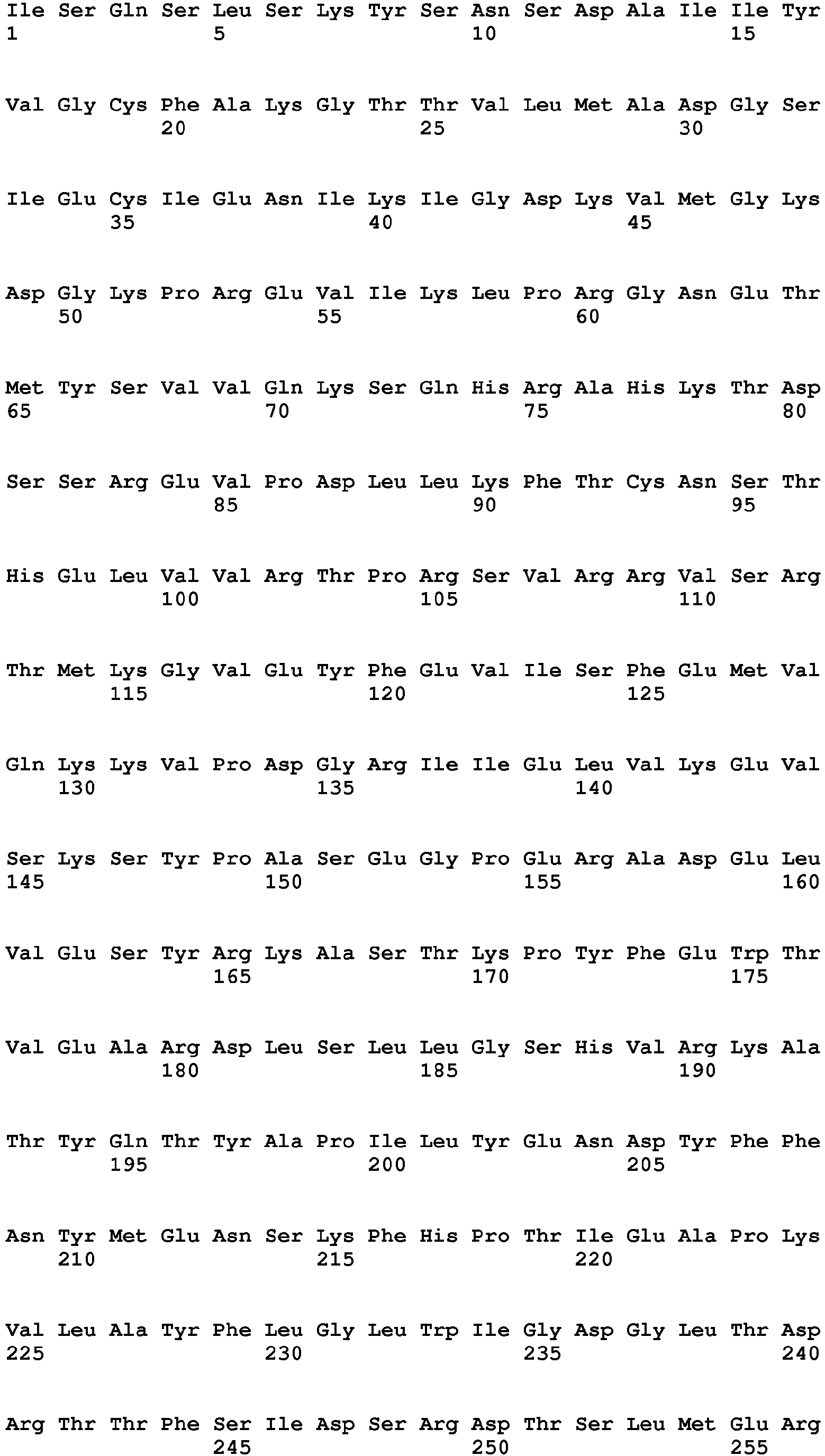


- <210> 149
<211> 547
<212> PRT
<213> Zygosaccharomyces bailii - <220>
<221> misc_feature
<222> (185)..(185)
<223> Xaa can be any naturally occurring amino acid - <400> 149


- <210> 150
<211> 170
<212> PRT
<213> Monomastix spec. - <400> 150


- <210> 151
<211> 167
<212> PRT
<213> Monomastix spec. - <400> 151


- <210> 152
<211> 15
<212> PRT
<213> Artificial Sequence - <220>
<223> sequence fragment comprised in I-SceI - <400> 152

- <210> 153
<211> 11
<212> PRT
<213> Artificial Sequence - <220>
<223> sequence motive comprised in I-SceI - <400> 153

- <210> 154
<211> 27
<212> PRT
<213> Artificial Sequence - <220>
<223> sequence motive comprised in I-SceI - <400> 154

- <210> 155
<211> 19
<212> PRT
<213> Artificial Sequence - <220>
<223> sequence motive comprised in I-SceI - <400> 155


- <210> 156
<211> 13
<212> PRT
<213> Artificial Sequence - <220>
<223> sequence motive comprised in I-SceI - <400> 156

- <210> 157
<211> 30
<212> DNA
<213> Artificial Sequence - <220>
<223> DNA recognition site of I-CreI - <400> 157
ctgggttcaa aacgtcgtga gacagtttgg 30 - <210> 158
<211> 22
<212> DNA
<213> Artificial Sequence - <220>
<223> DNA recognition site of I-CeuI - <400> 158
ataacggtcc taaggtagcgaa 22 - <210> 159
<211> 30
<212> DNA
<213> Artificial Sequence - <220>
<223> DNA recognition site of I-DmoI - <400> 159
atgccttgcc gggtaagttc cggcgcgcat 30 - <210> 160
<211> 31
<212> DNA
<213> Artificial Sequence - <220>
<223> cutting site of I-AniI - <400> 160
gcgcgctgag gaggtttctc tgtaaagcgc a 31 - <210> 161
<211> 254
<212> PRT
<213> Emericella nidulans - <400> 161


- <210> 162
<211> 22
<212> DNA
<213> Artificial Sequence - <220>
<223> cutting site of I-MsoI - <400> 162
cagaacgtcg tgagacagttcc 22 - <210> 163
<211> 30
<212> DNA
<213> Artificial Sequence - <220>
<223> cutting site of Pi-Scel - <400> 163
atctatgtcg ggtgcggaga aagaggtaat 30 - <210> 164
<211> 11
<212> DNA
<213> Artificial Sequence - <220>
<223> binding site of transcription factor AflR - <220>
<221> misc_feature
<222> (4)..(8)
<223> n is a, c, g, or t - <400> 164
tcgnnnnncg a 11 - <210> 165
<211> 238
<212> PRT
<213> Artificial Sequence - <220>
<223> I-SceI comprising a deletion of 5 amino acids at the C-terminus - <400> 165


- <210> 166
<211> 455
<212> PRT
<213> Fusarium solani - <400> 166


- <210> 167
<211> 517
<212> PRT
<213> Candida albicans - <400> 167


- <210> 168
<211> 865
<212> PRT
<213> Neurospora crassa - <400> 168


- <210> 169
<211> 595
<212> PRT
<213> Neurospora crassa - <400> 169


- <210> 170
<211> 491
<212> PRT
<213> Aspergillus parasiticus - <400> 170


- <210> 171
<211> 974
<212> PRT
<213> Pyricularia grisea - <400> 171

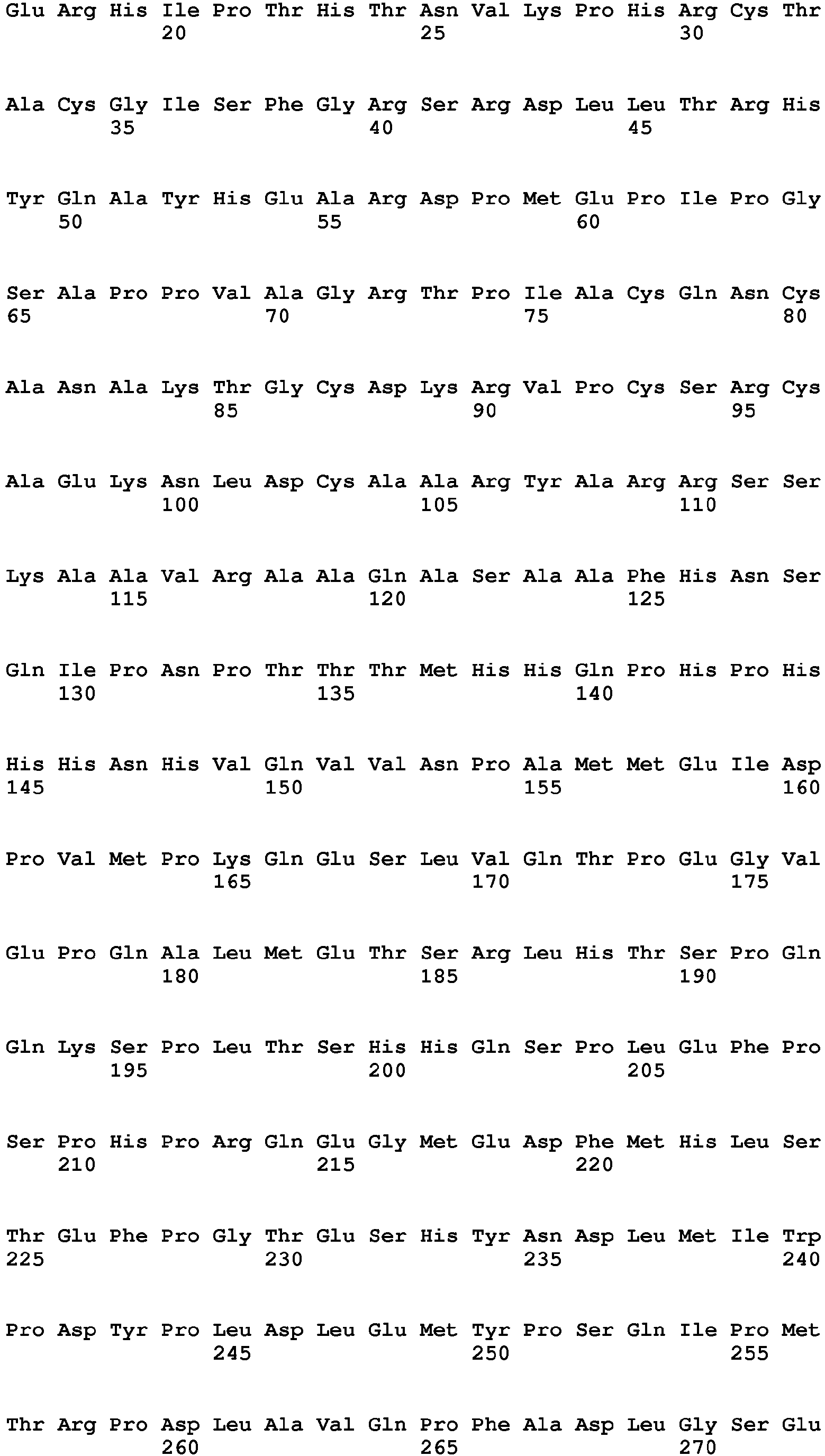


- <210> 172
<211> 437
<212> PRT
<213> Aspergillus flavus - <400> 172


- <210> 173
<211> 433
<212> PRT
<213> Aspergillus nidulans - <400> 173


- <210> 174
<211> 384
<212> PRT
<213> Aspergillus oryzae - <400> 174


- <210> 175
<211> 444
<212> PRT
<213> Aspergilluls parasiticus - <400> 175


- <210> 176
<211> 821
<212> PRT
<213> Aspergillus nidulans - <400> 176



- <210> 177
<211> 765
<212> PRT
<213> Aspergillus nidulans - <400> 177


- <210> 178
<211> 735
<212> PRT
<213> Aspergillus oryzae - <400> 178

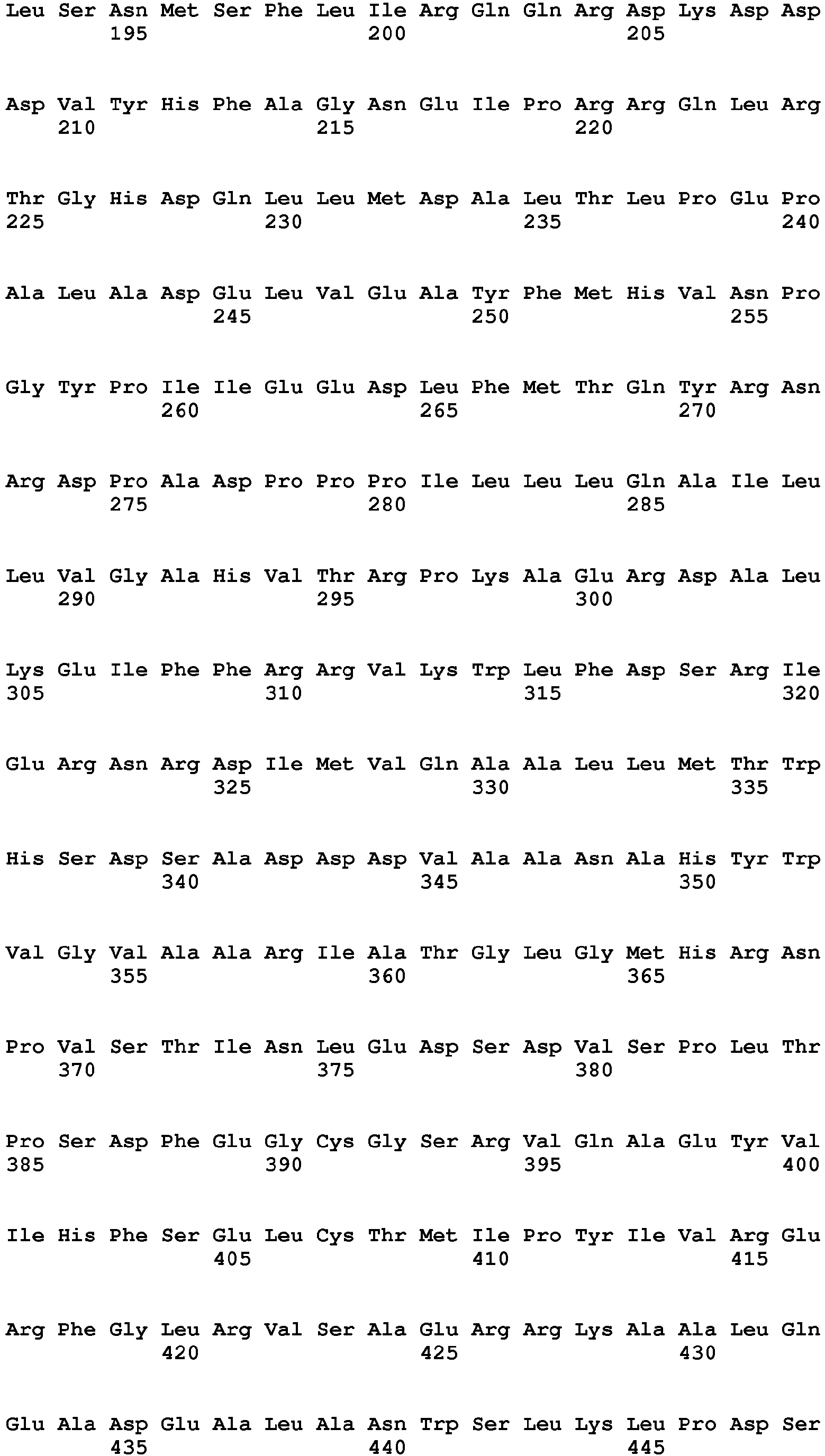


- <210> 179
<211> 579
<212> PRT
<213> Aspergillus niger - <400> 179


- <210> 180
<211> 662
<212> PRT
<213> Aspergillus nidulans - <400> 180


- <210> 181
<211> 604
<212> PRT
<213> Aspergillus oryzae - <400> 181

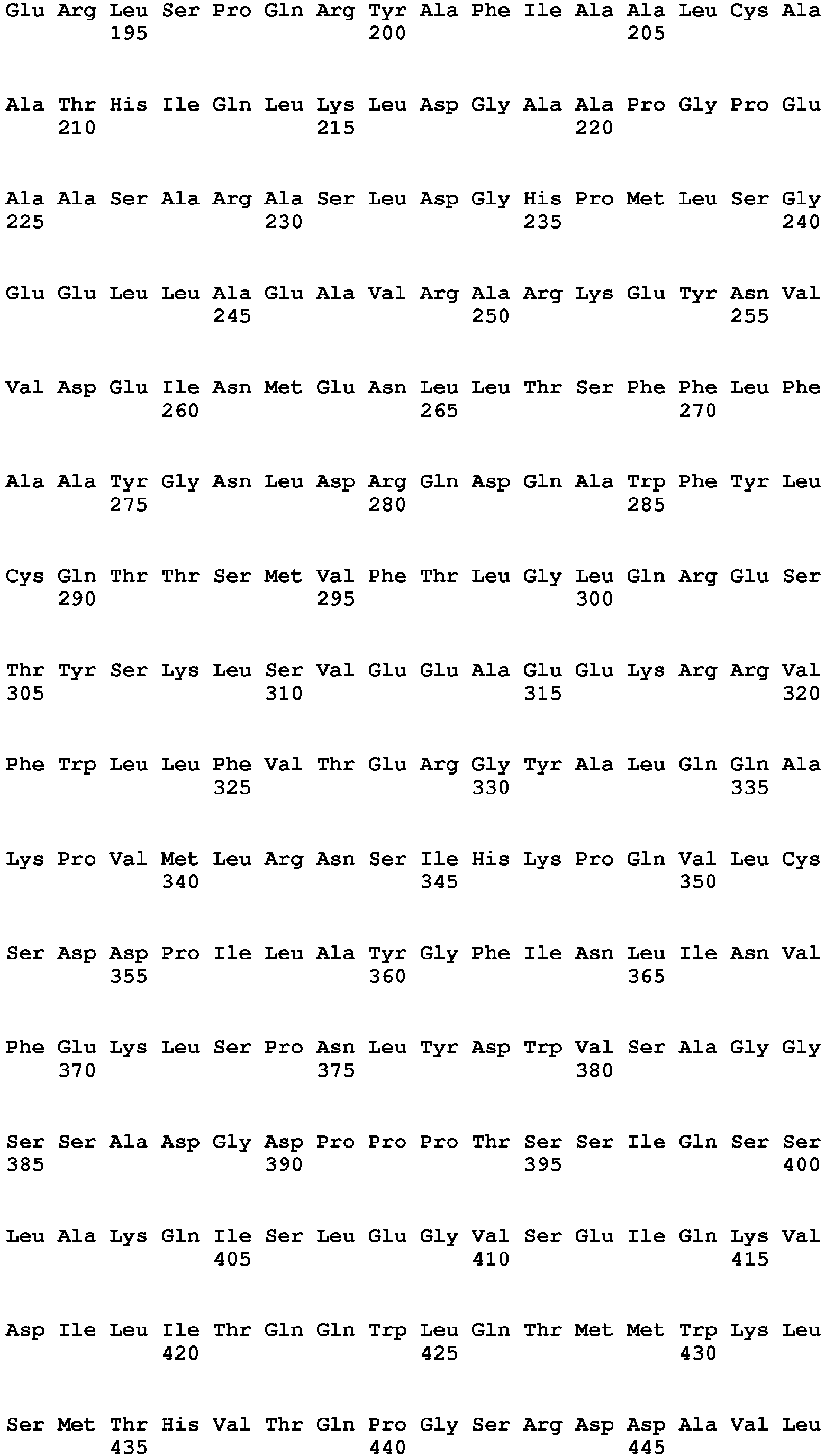

- <210> 182
<211> 311
<212> PRT
<213> Aspergillus nidulans - <400> 182


- <210> 183
<211> 880
<212> PRT
<213> Saccharomyces cerevisiae - <400> 183


- <210> 184
<211> 879
<212> PRT
<213> Saccharomyces cerevisiae - <400> 184


- <210> 185
<211> 738
<212> PRT
<213> Schizosaccharomyces pombe - <400> 185
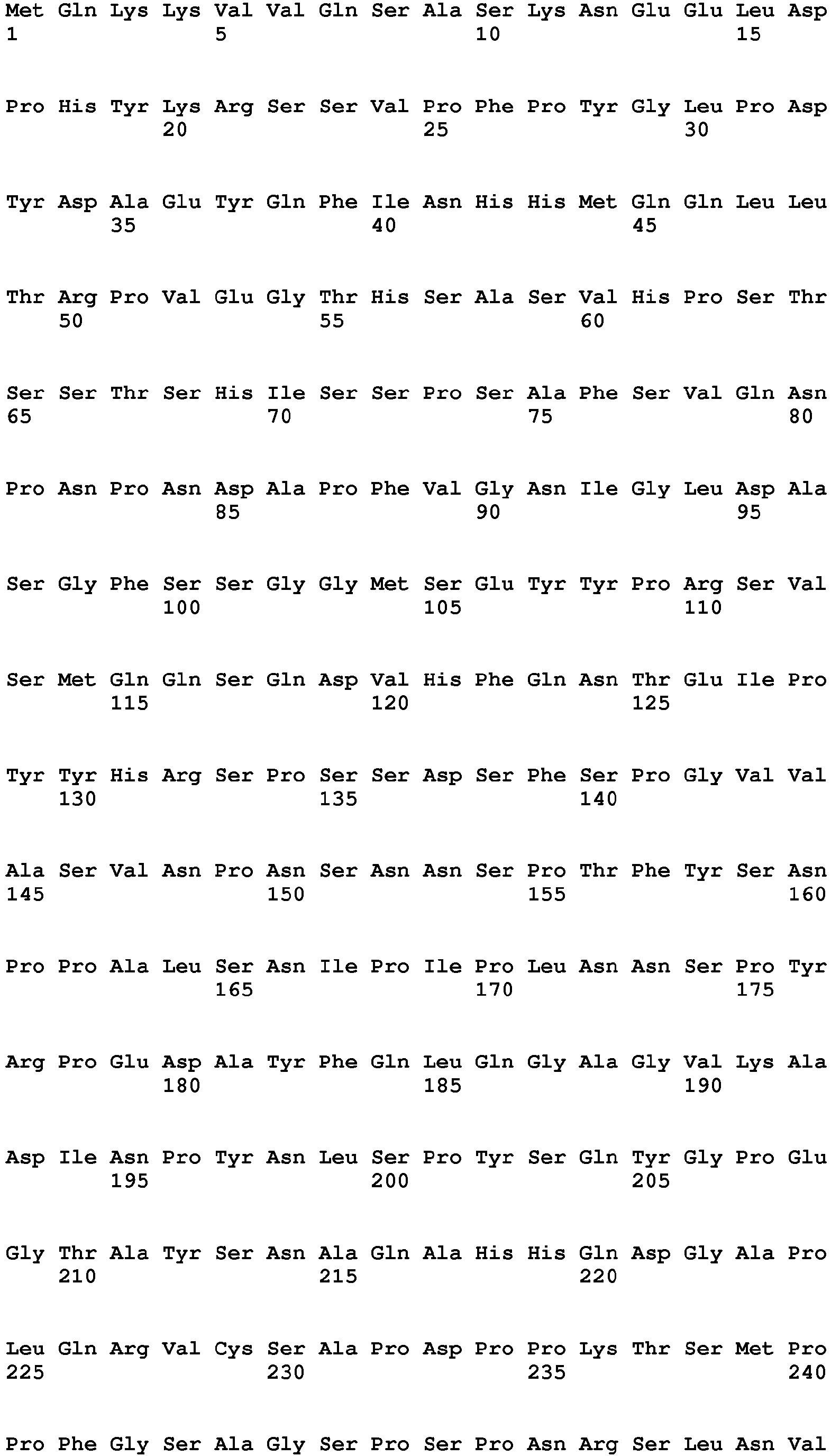


Mutational analysis of the 6 Cysteines, which are spaced by two, six, five to fourty one, two and six to eight other amino acids, has shown that all of them are necessary for complexation of the two Zinc ions, which in turn will facilitate correct folding of a cloverleaf-shaped structure. Basic residues usually predominate at the first, third, fourth, and sixth residues between the second and third cysteines. Nonconservative mutations in either of the third or the fourth of these residues frequently abolish the DNA binding capacity of this DNA binding domain. Amino acid residues between the second and third cysteines are usually basic, in particular at the first, third, fourth, and sixth position. Structural studies have shown that these basic residues frequently form contacts to the DNA. The loop region between the third and fourth Cysteine shows variability in length and sequence and is known as a variable subregion (see
In this variable subregion a proline residue is found in many cases one or two residues N-terminal to the fourth cysteine. This proline it thought to support a turn of the amino acid chain, which is necessary for correct folding, however the conserved proline is not absolutely required and can in many cases be replaced for example with leucine, glutamine, or arginine, in particular, if other prolines are present in the variable subregion.
Because of their structure, Zn2C6 zinc fingers can be easily distinguished from other zinc comprising DNA binding domains e.g. of the C2H2- or the CCHC-type, which are disclosed for example in
Claims (16)
- A chimeric endonuclease comprisinga) at least one LAGLIDADG endonuclease having DNA double strand break inducing activity and at least 80% amino acid sequence identity to a polypeptide described by SEQ ID NO: 1, 2, 3, 122, 123, 124 or 165 andb) one heterologous DNA binding domain comprising one or more Zn2C6 zinc fingers.
- A chimeric endonuclease as claimed in claim 1, wherein the LAGLIDADG endonuclease has at least 80% amino acid sequence identity to a polypeptide described by SEQ ID NO: 1, 2 or 3.
- A chimeric endonuclease as claimed in any one of claims 1 or 2, comprising a heterologous DNA binding domain comprising one or more Zn2C6 zinc fingers derived from a transcription factor.
- A chimeric endonuclease as claimed in any one of claims 1 to 3, wherein at least one heterologous DNA binding domain comprises at least one polypeptide having at least 80% amino acid sequence identity to a polypeptide described by any one of SEQ ID NOs: 57, 58, 59, 60, 61, 62, 63, 64, 65, 66, 67, 68, 69, 70, 71, 72, 73, 74, 75, 76, 77, 78, 79, 80,81, 82, 83, 84, 85, 86, 87, 88, 89, 90, 91, 92, 93, 94, 95, 96, 97, 98, 99, 100, 101, 102, 103, 104, 105, 106, 107, 108, 109, 110, 111, 112, 113, 114, 115, 116, 117, 118, 119, 120 or 121.
- A chimeric endonuclease as claimed in any one of claims 1 to 4, wherein at least one heterologous DNA binding domain comprises at least one polypeptide having at least 80% amino acid sequence identity to a polypeptide described by any one of SEQ ID NOs: 70, 71, 72, 74, 75, 76, 77, 78, 79, 80, 81, 82, 83, 84, 85, 86, 87, 88, 89, 90, 91, 92, 93 and 94.
- A chimeric endonuclease as claimed in any one of claims 1 to 5, wherein the LAGLIDADG endonuclease does not comprise an amino acid sequence described by the sequence TISSETFLK.
- An isolated polynucleotide comprising a nucleotide sequence, which codes for a chimeric endonuclease as claimed in any one of claims 1 to 6.
- An expression cassette comprising an isolated polynucleotide as claimed in claim 7 in functional combination with a promoter and a terminator sequence.
- An isolated polynucleotide comprising a chimeric recognition sequence having a length of about 15 to about 300 nucleotides and comprisinga. a recognition sequence of a LAGLIDADG endonuclease of claim 1 andb. a recognition sequence of a heterologous DNA binding domain comprising one or more Zn2C6 zinc fingers.
- An isolated polynucleotide comprising a chimeric recognition sequence comprising a DNA recognition sequence of I-SceI and a recognition sequence, which can be bound by at least one DNA binding domain comprising an amino acid sequence described by any one of SEQ ID NOs: 57, 58, 59, 60, 61, 62, 63, 64, 65, 66, 67, 68, 69, 70, 71, 72, 73, 74, 75, 76, 77, 78, 79, 80, 81, 82, 83, 84, 85, 86, 87, 88, 89, 90, 91, 92, 93, 94, 95, 96, 97, 98, 99, 100, 101, 102, 103, 104, 105, 106, 107, 108, 109, 110, 111, 112, 113, 114, 115, 116, 117, 118, 119, 120, 121, being directly connected or being connected by a sequence of 1 to 10 nucleotides.
- An isolated polynucleotide comprising a chimeric recognition sequence as claimed in any one of claims 9 or 10, comprisinga. a DNA recognition sequence of I-Scel,b. a recognition sequence of AlcR or AlcR (1-60) being directly connected or being connected by a sequence of 1 to 10 nucleotides.
- An isolated polynucleotide comprising a chimeric recognition sequence as claimed in any one of claims 9 to 11, comprising a polynucleotide sequence as described by any one of SEQ ID NO: 13, 14, 15, 16, 43, 44, 45 or 46.
- A vector, host cell or non-human organism comprisinga. a polynucleotide coding for a chimeric endonuclease as claimed in any of claims 1 to 6, orb. an expression cassette as claimed in claim 8, orc. an isolated polynucleotide comprising a chimeric recognition sequence as claimed in claims 9, 10, 11 or 12, ord. any combination of a), b), c) and d).
- A method for homologous recombination of polynucleotides comprising:a. providing a cell competent for homologous recombination,b. providing a polynucleotide comprising an isolated polynucleotide as claimed in any one of claims 9, 10, 11 or 12flanked by a sequence A and a sequence B,c. providing a polynucleotide comprising sequences A' and B', which are sufficiently long and homologous to sequence A and sequence B, to allow for homologous recombination in said cell andd. providing a chimeric endonuclease as claimed in any one of claims 1 to 6 or an expression cassette as claimed in claim 8,e. combining the polynucleotides of b), c) and the chimeric endonuclease of d) in said cell andf. detecting recombined polynucleotides of b) and c), or selecting for and/or growing cells comprising recombined polynucleotides of b) and c).
- A method for targeted mutation of polynucleotides comprising:a. providing a cell comprising a polynucleotide comprising a chimeric recognition site or a DNA recognition site,b. providing a chimeric endonuclease as claimed in any one of claims 1 to 6 or an expression cassette as claimed in claim 8 and being able to cleave the chimeric recognition site or the DNA recognition site of step a),c. combining the polynucleotide of a) and the chimeric endonuclease of b) in said cell andd. detecting mutated polynucleotides, or selecting for or growing cells comprising mutated polynucleotides.
- A method for homologous recombination or targeted mutation as claimed in claims 14 or 15, wherein the chimeric endonuclease and the chimeric recognition site are combined in at least one cell via crossing of organisms, via transformation or via transport mediated via a Seclll or SecIV peptide fused to the chimeric endonuclease.
Priority Applications (1)
| Application Number | Priority Date | Filing Date | Title |
|---|---|---|---|
| EP10832740.4A EP2504429B1 (en) | 2009-11-27 | 2010-11-26 | Chimeric endonucleases and uses thereof |
Applications Claiming Priority (6)
| Application Number | Priority Date | Filing Date | Title |
|---|---|---|---|
| US26471509P | 2009-11-27 | 2009-11-27 | |
| EP09177375 | 2009-11-27 | ||
| US36580910P | 2010-07-20 | 2010-07-20 | |
| EP10170164 | 2010-07-20 | ||
| EP10832740.4A EP2504429B1 (en) | 2009-11-27 | 2010-11-26 | Chimeric endonucleases and uses thereof |
| PCT/IB2010/055452 WO2011064750A1 (en) | 2009-11-27 | 2010-11-26 | Chimeric endonucleases and uses thereof |
Publications (3)
| Publication Number | Publication Date |
|---|---|
| EP2504429A1 EP2504429A1 (en) | 2012-10-03 |
| EP2504429A4 EP2504429A4 (en) | 2013-06-05 |
| EP2504429B1 true EP2504429B1 (en) | 2016-04-20 |
Family
ID=44065919
Family Applications (1)
| Application Number | Title | Priority Date | Filing Date |
|---|---|---|---|
| EP10832740.4A Not-in-force EP2504429B1 (en) | 2009-11-27 | 2010-11-26 | Chimeric endonucleases and uses thereof |
Country Status (10)
| Country | Link |
|---|---|
| US (1) | US10316304B2 (en) |
| EP (1) | EP2504429B1 (en) |
| JP (1) | JP5922029B2 (en) |
| CN (2) | CN102686726B (en) |
| AU (1) | AU2010325563B2 (en) |
| BR (1) | BR112012012747A2 (en) |
| CA (1) | CA2781693C (en) |
| DE (1) | DE112010004583T5 (en) |
| WO (1) | WO2011064750A1 (en) |
| ZA (1) | ZA201204698B (en) |
Families Citing this family (27)
| Publication number | Priority date | Publication date | Assignee | Title |
|---|---|---|---|---|
| US12612435B2 (en) | 2009-01-12 | 2026-04-28 | Ulla Bonas | Modular DNA-binding domains and methods of use |
| US20110239315A1 (en) | 2009-01-12 | 2011-09-29 | Ulla Bonas | Modular dna-binding domains and methods of use |
| EP2206723A1 (en) | 2009-01-12 | 2010-07-14 | Bonas, Ulla | Modular DNA-binding domains |
| DE112010004582T5 (en) | 2009-11-27 | 2012-11-29 | Basf Plant Science Company Gmbh | Optimized endonucleases and applications thereof |
| NO2510096T3 (en) | 2009-12-10 | 2015-03-21 | ||
| EP3156062A1 (en) | 2010-05-17 | 2017-04-19 | Sangamo BioSciences, Inc. | Novel dna-binding proteins and uses thereof |
| AU2012299691B2 (en) | 2011-08-22 | 2015-01-29 | BASF Agricultural Solutions Seed US LLC | Methods and means to modify a plant genome |
| EP2612918A1 (en) | 2012-01-06 | 2013-07-10 | BASF Plant Science Company GmbH | In planta recombination |
| US20150225734A1 (en) | 2012-06-19 | 2015-08-13 | Regents Of The University Of Minnesota | Gene targeting in plants using dna viruses |
| MX367031B (en) | 2012-11-01 | 2019-08-02 | Cellectis | Plants for production of therapeutic proteins. |
| PL2934097T3 (en) | 2012-12-21 | 2018-11-30 | Cellectis | Potatoes with reduced cold-induced sweetening |
| CN103173491A (en) * | 2013-03-15 | 2013-06-26 | 中国人民解放军第三军医大学 | Application of fusion protein NLS-I-SceI (Nuclear Localization Sequence-I-endonuclease) in preparing reagent for mediating mammal gene transfer |
| US10113162B2 (en) | 2013-03-15 | 2018-10-30 | Cellectis | Modifying soybean oil composition through targeted knockout of the FAD2-1A/1B genes |
| CA2952906A1 (en) | 2014-06-20 | 2015-12-23 | Cellectis | Potatoes with reduced granule-bound starch synthase |
| US10837024B2 (en) | 2015-09-17 | 2020-11-17 | Cellectis | Modifying messenger RNA stability in plant transformations |
| EP4646936A3 (en) | 2016-02-02 | 2025-11-19 | Cellectis | Modifying soybean oil composition through targeted knockout of the fad3a/b/c genes |
| US11312972B2 (en) | 2016-11-16 | 2022-04-26 | Cellectis | Methods for altering amino acid content in plants through frameshift mutations |
| CN108315340A (en) * | 2017-01-18 | 2018-07-24 | 李燕强 | A kind of method that efficient DNA is edited |
| ES2977620T3 (en) | 2017-04-25 | 2024-08-27 | Cellectis | Alfalfa with reduced lignin composition |
| EP3630962A4 (en) | 2017-05-25 | 2021-01-20 | Bluebird Bio, Inc. | CBLB ENDONUCLEASE VARIANTS, COMPOSITIONS AND METHODS OF USE |
| DK3806903T5 (en) | 2018-06-14 | 2024-08-19 | 2Seventy Bio Inc | CD79A CHIMERIC ANTIGEN RECEPTORS |
| CN113286880A (en) | 2018-08-28 | 2021-08-20 | 旗舰先锋创新Vi有限责任公司 | Methods and compositions for regulating a genome |
| WO2020072059A1 (en) | 2018-10-04 | 2020-04-09 | Bluebird Bio, Inc. | Cblb endonuclease variants, compositions, and methods of use |
| WO2020157164A1 (en) | 2019-01-30 | 2020-08-06 | Enobraq | Modified plant with improved rubisco activity |
| EP4114937A4 (en) | 2020-03-04 | 2024-09-04 | Flagship Pioneering Innovations VI, LLC | METHODS AND COMPOSITIONS FOR MODULATING A GENOME |
| KR20260037664A (en) | 2021-09-08 | 2026-03-18 | 플래그쉽 파이어니어링 이노베이션스 브이아이, 엘엘씨 | Method and composition for regulating the genome |
| CN117330755B (en) * | 2023-08-25 | 2024-03-26 | 广东省农业科学院农业生物基因研究中心 | Method for quantitatively detecting DNA-protein interaction based on enzyme-catalyzed biological fluorescence |
Family Cites Families (72)
| Publication number | Priority date | Publication date | Assignee | Title |
|---|---|---|---|---|
| US5352605A (en) | 1983-01-17 | 1994-10-04 | Monsanto Company | Chimeric genes for transforming plant cells using viral promoters |
| NL8300698A (en) | 1983-02-24 | 1984-09-17 | Univ Leiden | METHOD FOR BUILDING FOREIGN DNA INTO THE NAME OF DIABIC LOBAL PLANTS; AGROBACTERIUM TUMEFACIENS BACTERIA AND METHOD FOR PRODUCTION THEREOF; PLANTS AND PLANT CELLS WITH CHANGED GENETIC PROPERTIES; PROCESS FOR PREPARING CHEMICAL AND / OR PHARMACEUTICAL PRODUCTS. |
| US5254799A (en) | 1985-01-18 | 1993-10-19 | Plant Genetic Systems N.V. | Transformation vectors allowing expression of Bacillus thuringiensis endotoxins in plants |
| DE3765449D1 (en) | 1986-03-11 | 1990-11-15 | Plant Genetic Systems Nv | PLANT CELLS RESISTED BY GENE TECHNOLOGY AND RESISTANT TO GLUTAMINE SYNTHETASE INHIBITORS. |
| US5004863B2 (en) | 1986-12-03 | 2000-10-17 | Agracetus | Genetic engineering of cotton plants and lines |
| IL84459A (en) | 1986-12-05 | 1993-07-08 | Agracetus | Apparatus and method for the injection of carrier particles carrying genetic material into living cells |
| ES2060765T3 (en) | 1988-05-17 | 1994-12-01 | Lubrizol Genetics Inc | UBIQUITINE PROMOTING SYSTEM IN PLANTS. |
| EP0452457B1 (en) | 1989-11-03 | 1997-08-20 | Vanderbilt University | Method of in vivo delivery of functioning foreign genes |
| US5279833A (en) | 1990-04-04 | 1994-01-18 | Yale University | Liposomal transfection of nucleic acids into animal cells |
| US5633446A (en) | 1990-04-18 | 1997-05-27 | Plant Genetic Systems, N.V. | Modified Bacillus thuringiensis insecticidal-crystal protein genes and their expression in plant cells |
| DK152291D0 (en) | 1991-08-28 | 1991-08-28 | Danisco | PROCEDURE AND CHEMICAL RELATIONS |
| US5612472A (en) | 1992-01-09 | 1997-03-18 | Sandoz Ltd. | Plant promoter |
| US5679558A (en) | 1992-04-15 | 1997-10-21 | Plant Genetic Systems, N.V. | Transformation of monocot cells |
| WO1993024640A2 (en) | 1992-06-04 | 1993-12-09 | The Regents Of The University Of California | Methods and compositions for in vivo gene therapy |
| US5689052A (en) | 1993-12-22 | 1997-11-18 | Monsanto Company | Synthetic DNA sequences having enhanced expression in monocotyledonous plants and method for preparation thereof |
| US5837458A (en) | 1994-02-17 | 1998-11-17 | Maxygen, Inc. | Methods and compositions for cellular and metabolic engineering |
| US5605793A (en) | 1994-02-17 | 1997-02-25 | Affymax Technologies N.V. | Methods for in vitro recombination |
| ATE544776T1 (en) * | 1994-12-29 | 2012-02-15 | Massachusetts Inst Technology | CHIMERIC DNA BINDING PROTEINS |
| ATE329047T1 (en) | 1995-08-30 | 2006-06-15 | Basf Plant Science Gmbh | STIMULATION OF HOMOLOGUE RECOMBINATION IN PLANT ORGANISMS USING RECOMBINATION-PROMOTING ENZYMES |
| AR006928A1 (en) | 1996-05-01 | 1999-09-29 | Pioneer Hi Bred Int | AN ISOLATED DNA MOLECULA CODING A GREEN FLUORESCENT PROTEIN AS A TRACEABLE MARKER FOR TRANSFORMATION OF PLANTS, A METHOD FOR THE PRODUCTION OF TRANSGENIC PLANTS, A VECTOR OF EXPRESSION, A TRANSGENIC PLANT AND CELLS OF SUCH PLANTS. |
| DE19619353A1 (en) | 1996-05-14 | 1997-11-20 | Bosch Gmbh Robert | Method for producing an integrated optical waveguide component and arrangement |
| IL120241A0 (en) * | 1997-02-17 | 1997-06-10 | B G Negev Technologies And App | DNA segments encoding a domain of ho-endonuclease |
| EP0870836A1 (en) | 1997-04-09 | 1998-10-14 | IPK Gatersleben | 2-Deoxyglucose-6-Phosphate (2-DOG-6-P) Phosphatase DNA sequences for use as selectionmarker in plants |
| WO2000002996A2 (en) | 1998-07-10 | 2000-01-20 | Cornell Research Foundation, Inc. | Recombinant constructs and systems for secretion of proteins via type iii secretion systems |
| EP1391457B1 (en) | 1998-11-03 | 2013-12-25 | AbbVie Deutschland GmbH & Co KG | Substituted 2-Phenylbenzimidazoles and their use as PARP inhibitors |
| AU755694B2 (en) | 1998-11-17 | 2002-12-19 | Basf Aktiengesellschaft | 2-phenylbenzimidazoles and 2-phenylindoles, and production and use thereof |
| USRE39608E1 (en) | 1998-11-27 | 2007-05-01 | Abbott Gmbh & Co. Kg | Substituted benzimidazoles and their use as PARP inhibitors |
| DE19918211A1 (en) | 1999-04-22 | 2000-10-26 | Basf Ag | New 2-carbocyclyl-benzimidazole-carboxamide derivatives, are PARP inhibitors useful e.g. for treating neurodegenerative disease, epilepsy, ischemia, tumors, inflammation or diabetes |
| DE19920936A1 (en) | 1999-05-07 | 2000-11-09 | Basf Ag | Heterocyclically substituted benzimidazoles, their preparation and use |
| DE19921567A1 (en) | 1999-05-11 | 2000-11-16 | Basf Ag | Use of phthalazine derivatives |
| DE19946289A1 (en) | 1999-09-28 | 2001-03-29 | Basf Ag | Benzodiazepine derivatives, their production and use |
| BR0007174A (en) | 1999-09-28 | 2001-09-04 | Basf Ag | Compound, pharmaceutical preparation and use of compounds |
| WO2001038504A2 (en) | 1999-11-23 | 2001-05-31 | Maxygen, Inc. | Homologous recombination in plants |
| NL1015252C2 (en) | 2000-05-19 | 2001-11-20 | Univ Leiden | Method for effecting a change in a cell, and a vector. |
| US20030082561A1 (en) | 2000-07-21 | 2003-05-01 | Takashi Sera | Zinc finger domain recognition code and uses thereof |
| WO2002024865A2 (en) | 2000-09-19 | 2002-03-28 | Microbia, Inc. | Modulation of secondary metabolite production by zinc binuclear cluster proteins |
| DE10130555B4 (en) | 2001-06-25 | 2005-03-10 | Knorr Bremse Systeme | Closure body for breathing openings of housings |
| GB0201043D0 (en) | 2002-01-17 | 2002-03-06 | Swetree Genomics Ab | Plants methods and means |
| AU2003215869B2 (en) | 2002-03-15 | 2008-04-24 | Cellectis | Hybrid and single chain meganucleases and use thereof |
| CA2482597C (en) | 2002-04-17 | 2014-09-30 | Sangamo Biosciences, Inc. | Compositions and methods for regulation of plant gamma-tocopherol methyltransferase |
| DE10224889A1 (en) | 2002-06-04 | 2003-12-18 | Metanomics Gmbh & Co Kgaa | Process for the stable expression of nucleic acids in transgenic plants |
| AU2003290518A1 (en) * | 2002-09-06 | 2004-04-23 | Fred Hutchinson Cancer Research Center | Methods and compositions concerning designed highly-specific nucleic acid binding proteins |
| DE102004010023A1 (en) | 2004-03-02 | 2005-09-22 | Martin-Luther-Universität Halle-Wittenberg | Bacterial system for protein transport into eukaryotic cells |
| EP1727906B1 (en) | 2004-03-17 | 2012-02-22 | BASF Plant Science GmbH | Improved constructs for marker excision based on dual-function selection marker |
| EP1591521A1 (en) | 2004-04-30 | 2005-11-02 | Cellectis | I-Dmo I derivatives with enhanced activity at 37 degrees C and use thereof |
| WO2007034262A1 (en) | 2005-09-19 | 2007-03-29 | Cellectis | Heterodimeric meganucleases and use thereof |
| WO2007014275A2 (en) | 2005-07-26 | 2007-02-01 | Sangamo Biosciences, Inc. | Targeted integration and expression of exogenous nucleic acid sequences |
| EP2650366B1 (en) | 2005-10-18 | 2017-03-22 | Precision Biosciences | Rationally designed meganucleases with altered sequence specificity and DNA-binding affinity |
| WO2007093836A1 (en) | 2006-02-13 | 2007-08-23 | Cellectis | Meganuclease variants cleaving a dna target sequence from a xp gene and uses thereof |
| EP2316954B1 (en) | 2006-05-18 | 2013-10-30 | Biogemma | Method for performing homologous recombination in plants |
| ES2465996T3 (en) | 2006-05-25 | 2014-06-09 | Sangamo Biosciences, Inc. | Methods and compositions for genetic inactivation |
| WO2009001159A1 (en) | 2007-06-25 | 2008-12-31 | Cellectis | Method for enhancing the cleavage activity of i-crei derived meganucleases |
| ES2586210T3 (en) | 2006-12-14 | 2016-10-13 | Sangamo Biosciences, Inc. | Optimized non-canon zinc finger proteins |
| WO2008093152A1 (en) | 2007-02-01 | 2008-08-07 | Cellectis | Obligate heterodimer meganucleases and uses thereof |
| US20100086533A1 (en) | 2007-02-19 | 2010-04-08 | Cellectis | Laglidadg homing endonuclease variants having novel substrate specificity and use thereof |
| WO2008130629A2 (en) | 2007-04-19 | 2008-10-30 | Codon Devices, Inc. | Engineered nucleases and their uses for nucleic acid assembly |
| EP2770052A1 (en) | 2007-06-06 | 2014-08-27 | Cellectis | Method for enhancing the cleavage activity of I-CreI derived meganucleases |
| BRPI0816750A2 (en) | 2007-06-29 | 2015-09-29 | Pioneer Hi Bred Int | methods for altering the genome of a monocotyledonous plant cell and for modifying a specific endogenous genomic target sequence and maize plant |
| EP2188384B1 (en) * | 2007-09-27 | 2015-07-15 | Sangamo BioSciences, Inc. | Rapid in vivo identification of biologically active nucleases |
| US20090197775A1 (en) | 2007-10-08 | 2009-08-06 | Eppendorf Ag | Nuclease on chip |
| EP2215223B1 (en) | 2007-10-31 | 2013-05-01 | Precision Biosciences, Inc. | Rationally-designed single-chain meganucleases with non-palindromic recognition sequences |
| EP2215252A4 (en) | 2007-12-07 | 2011-01-26 | Prec Biosciences Inc | MEGANUCLEASES DESIGNED RATIONALLY WITH IDENTIFICATION SEQUENCES FOUND IN HUMAN GENOME DNAASE HYPERSENSIVE REGIONS |
| WO2009074842A1 (en) | 2007-12-13 | 2009-06-18 | Cellectis | Improved chimeric meganuclease enzymes and uses thereof |
| WO2009101625A2 (en) | 2008-02-12 | 2009-08-20 | Ramot At Tel-Aviv University Ltd. | Method for searching for homing endonucleases, their genes and their targets |
| WO2009114321A2 (en) | 2008-03-11 | 2009-09-17 | Precision Biosciencs, Inc. | Rationally-designed meganucleases for maize genome engineering |
| US20100071083A1 (en) | 2008-03-12 | 2010-03-18 | Smith James J | Temperature-dependent meganuclease activity |
| JP2011518555A (en) | 2008-04-14 | 2011-06-30 | サンガモ バイオサイエンシーズ, インコーポレイテッド | Linear donor constructs for targeted integration |
| AU2009241351A1 (en) | 2008-04-28 | 2009-11-05 | Precision Biosciences, Inc. | Fusion molecules of rationally-designed DNA-binding proteins and effector domains |
| WO2010001189A1 (en) | 2008-07-03 | 2010-01-07 | Cellectis | The crystal structure of i-dmoi in complex with its dna target, improved chimeric meganucleases and uses thereof |
| DK2313498T3 (en) | 2008-07-14 | 2017-05-22 | Prec Biosciences Inc | RECOGNITION SEQUENCES FOR I-CREI-DERIVED MECHANUCLEASES AND APPLICATIONS THEREOF |
| DE112010004582T5 (en) | 2009-11-27 | 2012-11-29 | Basf Plant Science Company Gmbh | Optimized endonucleases and applications thereof |
| JP2013511979A (en) | 2009-11-27 | 2013-04-11 | ビーエーエスエフ プラント サイエンス カンパニー ゲーエムベーハー | Chimeric endonuclease and use thereof |
-
2010
- 2010-11-26 EP EP10832740.4A patent/EP2504429B1/en not_active Not-in-force
- 2010-11-26 CN CN201080053667.8A patent/CN102686726B/en not_active Expired - Fee Related
- 2010-11-26 JP JP2012540533A patent/JP5922029B2/en active Active
- 2010-11-26 CN CN201510849933.2A patent/CN105384827A/en active Pending
- 2010-11-26 CA CA2781693A patent/CA2781693C/en not_active Expired - Fee Related
- 2010-11-26 WO PCT/IB2010/055452 patent/WO2011064750A1/en not_active Ceased
- 2010-11-26 AU AU2010325563A patent/AU2010325563B2/en not_active Ceased
- 2010-11-26 US US13/512,202 patent/US10316304B2/en not_active Expired - Fee Related
- 2010-11-26 BR BR112012012747A patent/BR112012012747A2/en not_active IP Right Cessation
- 2010-11-26 DE DE112010004583T patent/DE112010004583T5/en not_active Withdrawn
-
2012
- 2012-06-25 ZA ZA2012/04698A patent/ZA201204698B/en unknown
Also Published As
| Publication number | Publication date |
|---|---|
| CN105384827A (en) | 2016-03-09 |
| AU2010325563A1 (en) | 2012-07-05 |
| CN102686726B (en) | 2015-12-16 |
| CA2781693C (en) | 2018-12-18 |
| BR112012012747A2 (en) | 2015-09-29 |
| ZA201204698B (en) | 2013-09-25 |
| JP2013511978A (en) | 2013-04-11 |
| AU2010325563B2 (en) | 2017-02-02 |
| US10316304B2 (en) | 2019-06-11 |
| DE112010004583T5 (en) | 2012-10-18 |
| EP2504429A1 (en) | 2012-10-03 |
| EP2504429A4 (en) | 2013-06-05 |
| US20120284877A1 (en) | 2012-11-08 |
| CA2781693A1 (en) | 2011-06-03 |
| CN102686726A (en) | 2012-09-19 |
| WO2011064750A1 (en) | 2011-06-03 |
| JP5922029B2 (en) | 2016-05-24 |
Similar Documents
| Publication | Publication Date | Title |
|---|---|---|
| US10316304B2 (en) | Chimeric endonucleases and uses thereof | |
| EP2504439B1 (en) | Optimized endonucleases and uses thereof | |
| US20120324603A1 (en) | Chimeric Endonucleases and Uses Thereof | |
| US7736886B2 (en) | Recombination systems and methods for eliminating nucleic acid sequences from the genome of eukaryotic organisms | |
| AU2011207769B2 (en) | Targeted genomic alteration | |
| CA2747124A1 (en) | Targeted integration into the zp15 locus | |
| EP1727906B1 (en) | Improved constructs for marker excision based on dual-function selection marker | |
| ZA200400871B (en) | Recombination systems and a method for removing nucleic acid sequences from the genome of eukaryotic organisms |
Legal Events
| Date | Code | Title | Description |
|---|---|---|---|
| PUAI | Public reference made under article 153(3) epc to a published international application that has entered the european phase |
Free format text: ORIGINAL CODE: 0009012 |
|
| 17P | Request for examination filed |
Effective date: 20120627 |
|
| AK | Designated contracting states |
Kind code of ref document: A1 Designated state(s): AL AT BE BG CH CY CZ DE DK EE ES FI FR GB GR HR HU IE IS IT LI LT LU LV MC MK MT NL NO PL PT RO RS SE SI SK SM TR |
|
| DAX | Request for extension of the european patent (deleted) | ||
| A4 | Supplementary search report drawn up and despatched |
Effective date: 20130507 |
|
| RIC1 | Information provided on ipc code assigned before grant |
Ipc: C12N 15/82 20060101ALI20130429BHEP Ipc: C12N 9/22 20060101AFI20130429BHEP Ipc: C12N 15/62 20060101ALI20130429BHEP Ipc: C12N 15/52 20060101ALI20130429BHEP Ipc: C12N 15/10 20060101ALI20130429BHEP |
|
| 17Q | First examination report despatched |
Effective date: 20140130 |
|
| GRAP | Despatch of communication of intention to grant a patent |
Free format text: ORIGINAL CODE: EPIDOSNIGR1 |
|
| INTG | Intention to grant announced |
Effective date: 20151117 |
|
| GRAS | Grant fee paid |
Free format text: ORIGINAL CODE: EPIDOSNIGR3 |
|
| GRAA | (expected) grant |
Free format text: ORIGINAL CODE: 0009210 |
|
| AK | Designated contracting states |
Kind code of ref document: B1 Designated state(s): AL AT BE BG CH CY CZ DE DK EE ES FI FR GB GR HR HU IE IS IT LI LT LU LV MC MK MT NL NO PL PT RO RS SE SI SK SM TR |
|
| REG | Reference to a national code |
Ref country code: GB Ref legal event code: FG4D |
|
| REG | Reference to a national code |
Ref country code: CH Ref legal event code: EP |
|
| REG | Reference to a national code |
Ref country code: AT Ref legal event code: REF Ref document number: 792497 Country of ref document: AT Kind code of ref document: T Effective date: 20160515 |
|
| REG | Reference to a national code |
Ref country code: IE Ref legal event code: FG4D |
|
| REG | Reference to a national code |
Ref country code: DE Ref legal event code: R096 Ref document number: 602010032680 Country of ref document: DE |
|
| REG | Reference to a national code |
Ref country code: NL Ref legal event code: FP |
|
| REG | Reference to a national code |
Ref country code: LT Ref legal event code: MG4D |
|
| REG | Reference to a national code |
Ref country code: AT Ref legal event code: MK05 Ref document number: 792497 Country of ref document: AT Kind code of ref document: T Effective date: 20160420 |
|
| PG25 | Lapsed in a contracting state [announced via postgrant information from national office to epo] |
Ref country code: PL Free format text: LAPSE BECAUSE OF FAILURE TO SUBMIT A TRANSLATION OF THE DESCRIPTION OR TO PAY THE FEE WITHIN THE PRESCRIBED TIME-LIMIT Effective date: 20160420 Ref country code: FI Free format text: LAPSE BECAUSE OF FAILURE TO SUBMIT A TRANSLATION OF THE DESCRIPTION OR TO PAY THE FEE WITHIN THE PRESCRIBED TIME-LIMIT Effective date: 20160420 Ref country code: NO Free format text: LAPSE BECAUSE OF FAILURE TO SUBMIT A TRANSLATION OF THE DESCRIPTION OR TO PAY THE FEE WITHIN THE PRESCRIBED TIME-LIMIT Effective date: 20160720 Ref country code: LT Free format text: LAPSE BECAUSE OF FAILURE TO SUBMIT A TRANSLATION OF THE DESCRIPTION OR TO PAY THE FEE WITHIN THE PRESCRIBED TIME-LIMIT Effective date: 20160420 |
|
| REG | Reference to a national code |
Ref country code: FR Ref legal event code: PLFP Year of fee payment: 7 |
|
| PG25 | Lapsed in a contracting state [announced via postgrant information from national office to epo] |
Ref country code: PT Free format text: LAPSE BECAUSE OF FAILURE TO SUBMIT A TRANSLATION OF THE DESCRIPTION OR TO PAY THE FEE WITHIN THE PRESCRIBED TIME-LIMIT Effective date: 20160822 Ref country code: SE Free format text: LAPSE BECAUSE OF FAILURE TO SUBMIT A TRANSLATION OF THE DESCRIPTION OR TO PAY THE FEE WITHIN THE PRESCRIBED TIME-LIMIT Effective date: 20160420 Ref country code: RS Free format text: LAPSE BECAUSE OF FAILURE TO SUBMIT A TRANSLATION OF THE DESCRIPTION OR TO PAY THE FEE WITHIN THE PRESCRIBED TIME-LIMIT Effective date: 20160420 Ref country code: AT Free format text: LAPSE BECAUSE OF FAILURE TO SUBMIT A TRANSLATION OF THE DESCRIPTION OR TO PAY THE FEE WITHIN THE PRESCRIBED TIME-LIMIT Effective date: 20160420 Ref country code: GR Free format text: LAPSE BECAUSE OF FAILURE TO SUBMIT A TRANSLATION OF THE DESCRIPTION OR TO PAY THE FEE WITHIN THE PRESCRIBED TIME-LIMIT Effective date: 20160721 Ref country code: LV Free format text: LAPSE BECAUSE OF FAILURE TO SUBMIT A TRANSLATION OF THE DESCRIPTION OR TO PAY THE FEE WITHIN THE PRESCRIBED TIME-LIMIT Effective date: 20160420 Ref country code: ES Free format text: LAPSE BECAUSE OF FAILURE TO SUBMIT A TRANSLATION OF THE DESCRIPTION OR TO PAY THE FEE WITHIN THE PRESCRIBED TIME-LIMIT Effective date: 20160420 Ref country code: HR Free format text: LAPSE BECAUSE OF FAILURE TO SUBMIT A TRANSLATION OF THE DESCRIPTION OR TO PAY THE FEE WITHIN THE PRESCRIBED TIME-LIMIT Effective date: 20160420 |
|
| PG25 | Lapsed in a contracting state [announced via postgrant information from national office to epo] |
Ref country code: IT Free format text: LAPSE BECAUSE OF FAILURE TO SUBMIT A TRANSLATION OF THE DESCRIPTION OR TO PAY THE FEE WITHIN THE PRESCRIBED TIME-LIMIT Effective date: 20160420 |
|
| REG | Reference to a national code |
Ref country code: DE Ref legal event code: R097 Ref document number: 602010032680 Country of ref document: DE |
|
| PG25 | Lapsed in a contracting state [announced via postgrant information from national office to epo] |
Ref country code: RO Free format text: LAPSE BECAUSE OF FAILURE TO SUBMIT A TRANSLATION OF THE DESCRIPTION OR TO PAY THE FEE WITHIN THE PRESCRIBED TIME-LIMIT Effective date: 20160420 Ref country code: DK Free format text: LAPSE BECAUSE OF FAILURE TO SUBMIT A TRANSLATION OF THE DESCRIPTION OR TO PAY THE FEE WITHIN THE PRESCRIBED TIME-LIMIT Effective date: 20160420 Ref country code: SK Free format text: LAPSE BECAUSE OF FAILURE TO SUBMIT A TRANSLATION OF THE DESCRIPTION OR TO PAY THE FEE WITHIN THE PRESCRIBED TIME-LIMIT Effective date: 20160420 Ref country code: EE Free format text: LAPSE BECAUSE OF FAILURE TO SUBMIT A TRANSLATION OF THE DESCRIPTION OR TO PAY THE FEE WITHIN THE PRESCRIBED TIME-LIMIT Effective date: 20160420 Ref country code: CZ Free format text: LAPSE BECAUSE OF FAILURE TO SUBMIT A TRANSLATION OF THE DESCRIPTION OR TO PAY THE FEE WITHIN THE PRESCRIBED TIME-LIMIT Effective date: 20160420 |
|
| PGFP | Annual fee paid to national office [announced via postgrant information from national office to epo] |
Ref country code: CH Payment date: 20161125 Year of fee payment: 7 |
|
| PLBE | No opposition filed within time limit |
Free format text: ORIGINAL CODE: 0009261 |
|
| STAA | Information on the status of an ep patent application or granted ep patent |
Free format text: STATUS: NO OPPOSITION FILED WITHIN TIME LIMIT |
|
| PG25 | Lapsed in a contracting state [announced via postgrant information from national office to epo] |
Ref country code: SM Free format text: LAPSE BECAUSE OF FAILURE TO SUBMIT A TRANSLATION OF THE DESCRIPTION OR TO PAY THE FEE WITHIN THE PRESCRIBED TIME-LIMIT Effective date: 20160420 |
|
| 26N | No opposition filed |
Effective date: 20170123 |
|
| PG25 | Lapsed in a contracting state [announced via postgrant information from national office to epo] |
Ref country code: SI Free format text: LAPSE BECAUSE OF FAILURE TO SUBMIT A TRANSLATION OF THE DESCRIPTION OR TO PAY THE FEE WITHIN THE PRESCRIBED TIME-LIMIT Effective date: 20160420 |
|
| REG | Reference to a national code |
Ref country code: IE Ref legal event code: MM4A |
|
| PG25 | Lapsed in a contracting state [announced via postgrant information from national office to epo] |
Ref country code: LU Free format text: LAPSE BECAUSE OF NON-PAYMENT OF DUE FEES Effective date: 20161130 |
|
| REG | Reference to a national code |
Ref country code: FR Ref legal event code: PLFP Year of fee payment: 8 |
|
| PG25 | Lapsed in a contracting state [announced via postgrant information from national office to epo] |
Ref country code: IE Free format text: LAPSE BECAUSE OF NON-PAYMENT OF DUE FEES Effective date: 20161126 |
|
| PG25 | Lapsed in a contracting state [announced via postgrant information from national office to epo] |
Ref country code: HU Free format text: LAPSE BECAUSE OF FAILURE TO SUBMIT A TRANSLATION OF THE DESCRIPTION OR TO PAY THE FEE WITHIN THE PRESCRIBED TIME-LIMIT; INVALID AB INITIO Effective date: 20101126 Ref country code: CY Free format text: LAPSE BECAUSE OF FAILURE TO SUBMIT A TRANSLATION OF THE DESCRIPTION OR TO PAY THE FEE WITHIN THE PRESCRIBED TIME-LIMIT Effective date: 20160420 |
|
| PG25 | Lapsed in a contracting state [announced via postgrant information from national office to epo] |
Ref country code: IS Free format text: LAPSE BECAUSE OF FAILURE TO SUBMIT A TRANSLATION OF THE DESCRIPTION OR TO PAY THE FEE WITHIN THE PRESCRIBED TIME-LIMIT Effective date: 20160420 Ref country code: MK Free format text: LAPSE BECAUSE OF FAILURE TO SUBMIT A TRANSLATION OF THE DESCRIPTION OR TO PAY THE FEE WITHIN THE PRESCRIBED TIME-LIMIT Effective date: 20160420 Ref country code: MC Free format text: LAPSE BECAUSE OF FAILURE TO SUBMIT A TRANSLATION OF THE DESCRIPTION OR TO PAY THE FEE WITHIN THE PRESCRIBED TIME-LIMIT Effective date: 20160420 Ref country code: TR Free format text: LAPSE BECAUSE OF FAILURE TO SUBMIT A TRANSLATION OF THE DESCRIPTION OR TO PAY THE FEE WITHIN THE PRESCRIBED TIME-LIMIT Effective date: 20160420 |
|
| PG25 | Lapsed in a contracting state [announced via postgrant information from national office to epo] |
Ref country code: LI Free format text: LAPSE BECAUSE OF NON-PAYMENT OF DUE FEES Effective date: 20171130 Ref country code: CH Free format text: LAPSE BECAUSE OF NON-PAYMENT OF DUE FEES Effective date: 20171130 Ref country code: BG Free format text: LAPSE BECAUSE OF FAILURE TO SUBMIT A TRANSLATION OF THE DESCRIPTION OR TO PAY THE FEE WITHIN THE PRESCRIBED TIME-LIMIT Effective date: 20160420 |
|
| PG25 | Lapsed in a contracting state [announced via postgrant information from national office to epo] |
Ref country code: MT Free format text: LAPSE BECAUSE OF NON-PAYMENT OF DUE FEES Effective date: 20161126 |
|
| PG25 | Lapsed in a contracting state [announced via postgrant information from national office to epo] |
Ref country code: AL Free format text: LAPSE BECAUSE OF FAILURE TO SUBMIT A TRANSLATION OF THE DESCRIPTION OR TO PAY THE FEE WITHIN THE PRESCRIBED TIME-LIMIT Effective date: 20160420 |
|
| PGFP | Annual fee paid to national office [announced via postgrant information from national office to epo] |
Ref country code: NL Payment date: 20181126 Year of fee payment: 9 |
|
| PGFP | Annual fee paid to national office [announced via postgrant information from national office to epo] |
Ref country code: BE Payment date: 20181121 Year of fee payment: 9 Ref country code: GB Payment date: 20181130 Year of fee payment: 9 Ref country code: FR Payment date: 20181127 Year of fee payment: 9 |
|
| PGFP | Annual fee paid to national office [announced via postgrant information from national office to epo] |
Ref country code: DE Payment date: 20190131 Year of fee payment: 9 |
|
| REG | Reference to a national code |
Ref country code: DE Ref legal event code: R119 Ref document number: 602010032680 Country of ref document: DE |
|
| REG | Reference to a national code |
Ref country code: NL Ref legal event code: MM Effective date: 20191201 |
|
| REG | Reference to a national code |
Ref country code: BE Ref legal event code: MM Effective date: 20191130 |
|
| GBPC | Gb: european patent ceased through non-payment of renewal fee |
Effective date: 20191126 |
|
| PG25 | Lapsed in a contracting state [announced via postgrant information from national office to epo] |
Ref country code: NL Free format text: LAPSE BECAUSE OF NON-PAYMENT OF DUE FEES Effective date: 20191201 |
|
| PG25 | Lapsed in a contracting state [announced via postgrant information from national office to epo] |
Ref country code: FR Free format text: LAPSE BECAUSE OF NON-PAYMENT OF DUE FEES Effective date: 20191130 Ref country code: DE Free format text: LAPSE BECAUSE OF NON-PAYMENT OF DUE FEES Effective date: 20200603 Ref country code: GB Free format text: LAPSE BECAUSE OF NON-PAYMENT OF DUE FEES Effective date: 20191126 |
|
| PG25 | Lapsed in a contracting state [announced via postgrant information from national office to epo] |
Ref country code: BE Free format text: LAPSE BECAUSE OF NON-PAYMENT OF DUE FEES Effective date: 20191130 |