EP2502983A1 - Arthrospira-based compositions and uses thereof - Google Patents
Arthrospira-based compositions and uses thereof Download PDFInfo
- Publication number
- EP2502983A1 EP2502983A1 EP12157835A EP12157835A EP2502983A1 EP 2502983 A1 EP2502983 A1 EP 2502983A1 EP 12157835 A EP12157835 A EP 12157835A EP 12157835 A EP12157835 A EP 12157835A EP 2502983 A1 EP2502983 A1 EP 2502983A1
- Authority
- EP
- European Patent Office
- Prior art keywords
- arthrospira
- amycot
- subject
- effective amount
- physiologically
- Prior art date
- Legal status (The legal status is an assumption and is not a legal conclusion. Google has not performed a legal analysis and makes no representation as to the accuracy of the status listed.)
- Granted
Links
Images








Classifications
-
- A—HUMAN NECESSITIES
- A61—MEDICAL OR VETERINARY SCIENCE; HYGIENE
- A61K—PREPARATIONS FOR MEDICAL, DENTAL OR TOILETRY PURPOSES
- A61K35/00—Medicinal preparations containing materials or reaction products thereof with undetermined constitution
- A61K35/66—Microorganisms or materials therefrom
- A61K35/74—Bacteria
- A61K35/748—Cyanobacteria, i.e. blue-green bacteria or blue-green algae, e.g. spirulina
-
- A—HUMAN NECESSITIES
- A01—AGRICULTURE; FORESTRY; ANIMAL HUSBANDRY; HUNTING; TRAPPING; FISHING
- A01N—PRESERVATION OF BODIES OF HUMANS OR ANIMALS OR PLANTS OR PARTS THEREOF; BIOCIDES, e.g. AS DISINFECTANTS, AS PESTICIDES OR AS HERBICIDES; PEST REPELLANTS OR ATTRACTANTS; PLANT GROWTH REGULATORS
- A01N63/00—Biocides, pest repellants or attractants, or plant growth regulators containing microorganisms, viruses, microbial fungi, animals or substances produced by, or obtained from, microorganisms, viruses, microbial fungi or animals, e.g. enzymes or fermentates
-
- A—HUMAN NECESSITIES
- A01—AGRICULTURE; FORESTRY; ANIMAL HUSBANDRY; HUNTING; TRAPPING; FISHING
- A01N—PRESERVATION OF BODIES OF HUMANS OR ANIMALS OR PLANTS OR PARTS THEREOF; BIOCIDES, e.g. AS DISINFECTANTS, AS PESTICIDES OR AS HERBICIDES; PEST REPELLANTS OR ATTRACTANTS; PLANT GROWTH REGULATORS
- A01N63/00—Biocides, pest repellants or attractants, or plant growth regulators containing microorganisms, viruses, microbial fungi, animals or substances produced by, or obtained from, microorganisms, viruses, microbial fungi or animals, e.g. enzymes or fermentates
- A01N63/20—Bacteria; Substances produced thereby or obtained therefrom
-
- A—HUMAN NECESSITIES
- A61—MEDICAL OR VETERINARY SCIENCE; HYGIENE
- A61K—PREPARATIONS FOR MEDICAL, DENTAL OR TOILETRY PURPOSES
- A61K31/00—Medicinal preparations containing organic active ingredients
- A61K31/13—Amines
- A61K31/135—Amines having aromatic rings, e.g. ketamine, nortriptyline
- A61K31/137—Arylalkylamines, e.g. amphetamine, epinephrine, salbutamol, ephedrine or methadone
-
- A—HUMAN NECESSITIES
- A61—MEDICAL OR VETERINARY SCIENCE; HYGIENE
- A61K—PREPARATIONS FOR MEDICAL, DENTAL OR TOILETRY PURPOSES
- A61K31/00—Medicinal preparations containing organic active ingredients
- A61K31/21—Esters, e.g. nitroglycerine, selenocyanates
- A61K31/27—Esters, e.g. nitroglycerine, selenocyanates of carbamic or thiocarbamic acids, meprobamate, carbachol, neostigmine
-
- A—HUMAN NECESSITIES
- A61—MEDICAL OR VETERINARY SCIENCE; HYGIENE
- A61K—PREPARATIONS FOR MEDICAL, DENTAL OR TOILETRY PURPOSES
- A61K31/00—Medicinal preparations containing organic active ingredients
- A61K31/33—Heterocyclic compounds
- A61K31/395—Heterocyclic compounds having nitrogen as a ring hetero atom, e.g. guanethidine or rifamycins
- A61K31/41—Heterocyclic compounds having nitrogen as a ring hetero atom, e.g. guanethidine or rifamycins having five-membered rings with two or more ring hetero atoms, at least one of which being nitrogen, e.g. tetrazole
- A61K31/415—1,2-Diazoles
-
- A—HUMAN NECESSITIES
- A61—MEDICAL OR VETERINARY SCIENCE; HYGIENE
- A61K—PREPARATIONS FOR MEDICAL, DENTAL OR TOILETRY PURPOSES
- A61K31/00—Medicinal preparations containing organic active ingredients
- A61K31/33—Heterocyclic compounds
- A61K31/395—Heterocyclic compounds having nitrogen as a ring hetero atom, e.g. guanethidine or rifamycins
- A61K31/41—Heterocyclic compounds having nitrogen as a ring hetero atom, e.g. guanethidine or rifamycins having five-membered rings with two or more ring hetero atoms, at least one of which being nitrogen, e.g. tetrazole
- A61K31/4164—1,3-Diazoles
-
- A—HUMAN NECESSITIES
- A61—MEDICAL OR VETERINARY SCIENCE; HYGIENE
- A61K—PREPARATIONS FOR MEDICAL, DENTAL OR TOILETRY PURPOSES
- A61K31/00—Medicinal preparations containing organic active ingredients
- A61K31/33—Heterocyclic compounds
- A61K31/395—Heterocyclic compounds having nitrogen as a ring hetero atom, e.g. guanethidine or rifamycins
- A61K31/41—Heterocyclic compounds having nitrogen as a ring hetero atom, e.g. guanethidine or rifamycins having five-membered rings with two or more ring hetero atoms, at least one of which being nitrogen, e.g. tetrazole
- A61K31/4164—1,3-Diazoles
- A61K31/4174—Arylalkylimidazoles, e.g. oxymetazolin, naphazoline, miconazole
-
- A—HUMAN NECESSITIES
- A61—MEDICAL OR VETERINARY SCIENCE; HYGIENE
- A61K—PREPARATIONS FOR MEDICAL, DENTAL OR TOILETRY PURPOSES
- A61K31/00—Medicinal preparations containing organic active ingredients
- A61K31/33—Heterocyclic compounds
- A61K31/395—Heterocyclic compounds having nitrogen as a ring hetero atom, e.g. guanethidine or rifamycins
- A61K31/495—Heterocyclic compounds having nitrogen as a ring hetero atom, e.g. guanethidine or rifamycins having six-membered rings with two or more nitrogen atoms as the only ring heteroatoms, e.g. piperazine or tetrazines
- A61K31/496—Non-condensed piperazines containing further heterocyclic rings, e.g. rifampin, thiothixene or sparfloxacin
-
- A—HUMAN NECESSITIES
- A61—MEDICAL OR VETERINARY SCIENCE; HYGIENE
- A61K—PREPARATIONS FOR MEDICAL, DENTAL OR TOILETRY PURPOSES
- A61K35/00—Medicinal preparations containing materials or reaction products thereof with undetermined constitution
- A61K35/66—Microorganisms or materials therefrom
- A61K35/74—Bacteria
-
- A—HUMAN NECESSITIES
- A61—MEDICAL OR VETERINARY SCIENCE; HYGIENE
- A61P—SPECIFIC THERAPEUTIC ACTIVITY OF CHEMICAL COMPOUNDS OR MEDICINAL PREPARATIONS
- A61P17/00—Drugs for dermatological disorders
-
- A—HUMAN NECESSITIES
- A61—MEDICAL OR VETERINARY SCIENCE; HYGIENE
- A61P—SPECIFIC THERAPEUTIC ACTIVITY OF CHEMICAL COMPOUNDS OR MEDICINAL PREPARATIONS
- A61P17/00—Drugs for dermatological disorders
- A61P17/02—Drugs for dermatological disorders for treating wounds, ulcers, burns, scars, keloids, or the like
-
- A—HUMAN NECESSITIES
- A61—MEDICAL OR VETERINARY SCIENCE; HYGIENE
- A61P—SPECIFIC THERAPEUTIC ACTIVITY OF CHEMICAL COMPOUNDS OR MEDICINAL PREPARATIONS
- A61P17/00—Drugs for dermatological disorders
- A61P17/04—Antipruritics
-
- A—HUMAN NECESSITIES
- A61—MEDICAL OR VETERINARY SCIENCE; HYGIENE
- A61P—SPECIFIC THERAPEUTIC ACTIVITY OF CHEMICAL COMPOUNDS OR MEDICINAL PREPARATIONS
- A61P17/00—Drugs for dermatological disorders
- A61P17/06—Antipsoriatics
-
- A—HUMAN NECESSITIES
- A61—MEDICAL OR VETERINARY SCIENCE; HYGIENE
- A61P—SPECIFIC THERAPEUTIC ACTIVITY OF CHEMICAL COMPOUNDS OR MEDICINAL PREPARATIONS
- A61P17/00—Drugs for dermatological disorders
- A61P17/10—Anti-acne agents
-
- A—HUMAN NECESSITIES
- A61—MEDICAL OR VETERINARY SCIENCE; HYGIENE
- A61P—SPECIFIC THERAPEUTIC ACTIVITY OF CHEMICAL COMPOUNDS OR MEDICINAL PREPARATIONS
- A61P31/00—Antiinfectives, i.e. antibiotics, antiseptics, chemotherapeutics
- A61P31/04—Antibacterial agents
-
- A—HUMAN NECESSITIES
- A61—MEDICAL OR VETERINARY SCIENCE; HYGIENE
- A61P—SPECIFIC THERAPEUTIC ACTIVITY OF CHEMICAL COMPOUNDS OR MEDICINAL PREPARATIONS
- A61P31/00—Antiinfectives, i.e. antibiotics, antiseptics, chemotherapeutics
- A61P31/10—Antimycotics
-
- C—CHEMISTRY; METALLURGY
- C12—BIOCHEMISTRY; BEER; SPIRITS; WINE; VINEGAR; MICROBIOLOGY; ENZYMOLOGY; MUTATION OR GENETIC ENGINEERING
- C12N—MICROORGANISMS OR ENZYMES; COMPOSITIONS THEREOF; PROPAGATING, PRESERVING, OR MAINTAINING MICROORGANISMS; MUTATION OR GENETIC ENGINEERING; CULTURE MEDIA
- C12N1/00—Microorganisms; Compositions thereof; Processes of propagating, maintaining or preserving microorganisms or compositions thereof; Processes of preparing or isolating a composition containing a microorganism; Culture media therefor
- C12N1/005—Microorganisms; Compositions thereof; Processes of propagating, maintaining or preserving microorganisms or compositions thereof; Processes of preparing or isolating a composition containing a microorganism; Culture media therefor after treatment of microbial biomass not covered by C12N1/02 - C12N1/08
-
- C—CHEMISTRY; METALLURGY
- C12—BIOCHEMISTRY; BEER; SPIRITS; WINE; VINEGAR; MICROBIOLOGY; ENZYMOLOGY; MUTATION OR GENETIC ENGINEERING
- C12N—MICROORGANISMS OR ENZYMES; COMPOSITIONS THEREOF; PROPAGATING, PRESERVING, OR MAINTAINING MICROORGANISMS; MUTATION OR GENETIC ENGINEERING; CULTURE MEDIA
- C12N1/00—Microorganisms; Compositions thereof; Processes of propagating, maintaining or preserving microorganisms or compositions thereof; Processes of preparing or isolating a composition containing a microorganism; Culture media therefor
- C12N1/06—Lysis of microorganisms
- C12N1/066—Lysis of microorganisms by physical processes
-
- C—CHEMISTRY; METALLURGY
- C12—BIOCHEMISTRY; BEER; SPIRITS; WINE; VINEGAR; MICROBIOLOGY; ENZYMOLOGY; MUTATION OR GENETIC ENGINEERING
- C12N—MICROORGANISMS OR ENZYMES; COMPOSITIONS THEREOF; PROPAGATING, PRESERVING, OR MAINTAINING MICROORGANISMS; MUTATION OR GENETIC ENGINEERING; CULTURE MEDIA
- C12N1/00—Microorganisms; Compositions thereof; Processes of propagating, maintaining or preserving microorganisms or compositions thereof; Processes of preparing or isolating a composition containing a microorganism; Culture media therefor
- C12N1/12—Unicellular algae; Culture media therefor
-
- C—CHEMISTRY; METALLURGY
- C12—BIOCHEMISTRY; BEER; SPIRITS; WINE; VINEGAR; MICROBIOLOGY; ENZYMOLOGY; MUTATION OR GENETIC ENGINEERING
- C12N—MICROORGANISMS OR ENZYMES; COMPOSITIONS THEREOF; PROPAGATING, PRESERVING, OR MAINTAINING MICROORGANISMS; MUTATION OR GENETIC ENGINEERING; CULTURE MEDIA
- C12N1/00—Microorganisms; Compositions thereof; Processes of propagating, maintaining or preserving microorganisms or compositions thereof; Processes of preparing or isolating a composition containing a microorganism; Culture media therefor
- C12N1/20—Bacteria; Culture media therefor
-
- C—CHEMISTRY; METALLURGY
- C12—BIOCHEMISTRY; BEER; SPIRITS; WINE; VINEGAR; MICROBIOLOGY; ENZYMOLOGY; MUTATION OR GENETIC ENGINEERING
- C12N—MICROORGANISMS OR ENZYMES; COMPOSITIONS THEREOF; PROPAGATING, PRESERVING, OR MAINTAINING MICROORGANISMS; MUTATION OR GENETIC ENGINEERING; CULTURE MEDIA
- C12N9/00—Enzymes; Proenzymes; Compositions thereof; Processes for preparing, activating, inhibiting, separating or purifying enzymes
- C12N9/14—Hydrolases (3)
- C12N9/24—Hydrolases (3) acting on glycosyl compounds (3.2)
- C12N9/2402—Hydrolases (3) acting on glycosyl compounds (3.2) hydrolysing O- and S- glycosyl compounds (3.2.1)
- C12N9/2405—Glucanases
- C12N9/2434—Glucanases acting on beta-1,4-glucosidic bonds
-
- C—CHEMISTRY; METALLURGY
- C12—BIOCHEMISTRY; BEER; SPIRITS; WINE; VINEGAR; MICROBIOLOGY; ENZYMOLOGY; MUTATION OR GENETIC ENGINEERING
- C12N—MICROORGANISMS OR ENZYMES; COMPOSITIONS THEREOF; PROPAGATING, PRESERVING, OR MAINTAINING MICROORGANISMS; MUTATION OR GENETIC ENGINEERING; CULTURE MEDIA
- C12N9/00—Enzymes; Proenzymes; Compositions thereof; Processes for preparing, activating, inhibiting, separating or purifying enzymes
- C12N9/14—Hydrolases (3)
- C12N9/24—Hydrolases (3) acting on glycosyl compounds (3.2)
- C12N9/2402—Hydrolases (3) acting on glycosyl compounds (3.2) hydrolysing O- and S- glycosyl compounds (3.2.1)
- C12N9/2405—Glucanases
- C12N9/2434—Glucanases acting on beta-1,4-glucosidic bonds
- C12N9/2442—Chitinase (3.2.1.14)
-
- C—CHEMISTRY; METALLURGY
- C12—BIOCHEMISTRY; BEER; SPIRITS; WINE; VINEGAR; MICROBIOLOGY; ENZYMOLOGY; MUTATION OR GENETIC ENGINEERING
- C12N—MICROORGANISMS OR ENZYMES; COMPOSITIONS THEREOF; PROPAGATING, PRESERVING, OR MAINTAINING MICROORGANISMS; MUTATION OR GENETIC ENGINEERING; CULTURE MEDIA
- C12N9/00—Enzymes; Proenzymes; Compositions thereof; Processes for preparing, activating, inhibiting, separating or purifying enzymes
- C12N9/14—Hydrolases (3)
- C12N9/78—Hydrolases (3) acting on carbon to nitrogen bonds other than peptide bonds (3.5)
- C12N9/80—Hydrolases (3) acting on carbon to nitrogen bonds other than peptide bonds (3.5) acting on amide bonds in linear amides (3.5.1)
-
- C—CHEMISTRY; METALLURGY
- C12—BIOCHEMISTRY; BEER; SPIRITS; WINE; VINEGAR; MICROBIOLOGY; ENZYMOLOGY; MUTATION OR GENETIC ENGINEERING
- C12Y—ENZYMES
- C12Y302/00—Hydrolases acting on glycosyl compounds, i.e. glycosylases (3.2)
- C12Y302/01—Glycosidases, i.e. enzymes hydrolysing O- and S-glycosyl compounds (3.2.1)
- C12Y302/01014—Chitinase (3.2.1.14)
-
- C—CHEMISTRY; METALLURGY
- C12—BIOCHEMISTRY; BEER; SPIRITS; WINE; VINEGAR; MICROBIOLOGY; ENZYMOLOGY; MUTATION OR GENETIC ENGINEERING
- C12Y—ENZYMES
- C12Y302/00—Hydrolases acting on glycosyl compounds, i.e. glycosylases (3.2)
- C12Y302/01—Glycosidases, i.e. enzymes hydrolysing O- and S-glycosyl compounds (3.2.1)
- C12Y302/01132—Chitosanase (3.2.1.132)
-
- C—CHEMISTRY; METALLURGY
- C12—BIOCHEMISTRY; BEER; SPIRITS; WINE; VINEGAR; MICROBIOLOGY; ENZYMOLOGY; MUTATION OR GENETIC ENGINEERING
- C12Y—ENZYMES
- C12Y305/00—Hydrolases acting on carbon-nitrogen bonds, other than peptide bonds (3.5)
- C12Y305/01—Hydrolases acting on carbon-nitrogen bonds, other than peptide bonds (3.5) in linear amides (3.5.1)
- C12Y305/01041—Chitin deacetylase (3.5.1.41)
Definitions
- the present invention relates to a composition comprising Arthrospira and the use of the composition as a biocide and/or therapeutic.
- Arthrospira (formerly known as Spirulina ) is a cyanobacteria that is grown primarily for use as a food and/or protein source. Therapeutic uses for Arthrospira have also been described, including use as an anti-viral agent, anti-cancer agent, reducer of cholesterol, reducer of diabetes, reducer of hypertension and immunomodulator. See, for example, the references cited at the Spirulina Source.com website at http://www.spirulinasource.com/library.html.
- An object of the present invention is to provide an Arthrospira composition for use as a biocide and/or therapeutic.
- Arthrospira when physiologically stressed, produces at least one type of bioactive agent that is active against fungi, bacteria and presumably viruses.
- Arthrospira can be physiologically stressed, for example, by depriving the organism of nutrients or light, or by dehydrating/drying the organism.
- a sign of an Arthrospira filament (trachoma) being "physiologically stressed” is when it enters an anabiotic state, in which state the filament rounds up and a thick mucoid coating is produced.
- the filament and/or thick mucoid coating is believed by the inventors to contain one or more bioactive agents that protect the organism against predators.
- One or more of the bioactives may break down the cell wall or exoskeleton of a predatory organism.
- One or more of the bioactive agents may be, for example, a lytic or modifying agent such as a chitinase, chitosanase or chitin deacetylase, that digests chitin, a chitin derivative (such as chitosan) or other cell wall polymer having, for example, N-acetylglucosamine or D-glucosamine as a polymer subunit.
- a lytic or modifying agent such as a chitinase, chitosanase or chitin deacetylase, that digests chitin, a chitin derivative (such as chitosan) or other cell wall polymer having, for example, N-acetylglucosamine or D-glucosamine as a polymer subunit.
- Peptidoglycan of Gram-positive bacteria is one such polymer, comprising N-acetylglucosamine and N-acetylmura
- compositions for digesting or modifying chitin, a chitin derivative or a polymer having N-acetyl-D-glucosamine as a polymer subunit comprising physiologically stressed Arthrospira.
- a method for digesting or modifying chitin, a chitin derivative or a polymer having N- acetyl-D-glucosamine as a polymer subunit comprising the step of contacting chitin, chitin derivative or a polymer having N-acetyl-D-glucosamine as a polymer subunit with a composition comprising physiologically stressed Arthrospira.
- the chitin, chitin derivative or polymer can be in any suitable form.
- the chitin, chitin derivative or polymer can be in a substantially purified form or can be part of an organism such the cell wall of a fungus or Gram-positive bacteria, or part of the exoskeleton of an insect.
- a method for identifying a bioactive agent from Arthrospira comprising the steps of:
- test substrate Any suitable type of test substrate can be used. Assaying for modification of the test substrate can be carried out in any suitable way. High throughput screening, however, is preferred.
- the bioactive agent is a chitinase, chitosanase or chitin deacetylase and the test substrate is chitin, a chitin derivative or a polymer having N-acetyl-D-glucosamine as a polymer subunit.
- respirometry is used to assay modification (ie. degradation) of the chitin, chitin derivative or other polymer.
- the method can further comprise the step of purifying the bioactive agent. Purification can be carried out in any suitable way.
- the method can also comprise the steps of cloning and expressing the gene/s of the bioactive agent. These steps can be carried out in any suitable way. For instance, the steps can be as described in Maniatis, et al., Molecular Cloning: A Laboratory Manual, Cold Spring Harbor Laboratory, 1982, the entire contents of which are incorporated herein by cross reference.
- Chitin, chitin derivatives and glucosamine containing polymers are found throughout nature, usually as a component of a cell wall or exoskeleton of, for instance: algae, fungi, protozoans, ciliates, coelenterates, bryozoans, molluscs, annelids, arthropods, branchiopods, phoronida, pogonophora, and bacteria (Gram- positive bacteria and Rhizobia ).
- Biocide refers to either the killing of an organism or inhibition of the growth or replication of an organism (ie. the organism may not actually be killed). It is to be appreciated that some applications of the biocide will be for therapeutic purposes.
- compositions for use as a biocide and/or therapeutic comprising an effective amount of physiologically stressed Arthrospira.
- a method for preventing or treating an infection or infestation of a subject by an organism comprising the step of administering to the subject an effective amount of a composition comprising physiologically stressed Arthrospira.
- the method comprises the step of identifying a subject in need of such treatment or requiring such prevention.
- the inventors have found that taking Arthrospira from its growth environment may be enough for physiological stressing to occur and for inducing expression of one or more bioactive agents having biocidal activity. That is, steps for physiologically stressing Ar throspira as taught in the specifications of New Zealand Patents No. 336620 and 336619 need not be carried out and the Arthrospira need not be further processed (disrupted, explosively decompressed, potentiated, milled, rehydrated in sodium bicarbonate or freeze dried) in order for there to be biocidal activity.
- the Arthrospira can be any suitable species, or mixture of species or Arthrospira variants including, but not limited to, A. maxima. It is to be pointed out that Arthrospira and Spirulina are two separate genera. The separation between these two genera has been repeatedly affirmed on the basis of many characteristics including: helicity and trichome size, cell wall structure and pore pattern, gas vacuoles, thylakoid pattern, trichome motility and fragmentation, GC content, oligonucleotide catalogue of 16S rRNA, and mutations in the cpcB-cpcA locus. See, for instance, J. F. Manen and J.
- the composition can comprise intact Arthrospira filaments, segments of the filaments, disrupted/lysed segments or extracts/fractions thereof.
- the composition can comprise Arthrospira that is alive or that is not alive.
- the composition comprises disrupted Arthrospira filaments and segments.
- the Arthrospira -based composition can be prepared in any suitable way, provided that the biocidal activity is not compromised. Normally, this would involve the steps of: (I) growing Arthrospira in any suitable way; (II) harvesting the grown Arthrospira in any suitable way; and (III) drying the Arthrospira in any suitable way.
- Optional steps include: additionally physiologically stressing the Arthrospira in any suitable way; disrupting the filaments and segments in any suitable way, sterilising the organism in any suitable way, decolourising the Arthrospira in any suitable way, removing or degrading the chlorophyll in any suitable way, and milling the dried Arthrospira.
- stressing can be carried out at the time of harvest by either depriving the Arthrospira of essential nutrients (nutrient diminution) or light for a period sufficient to stress it but not kill it by management of the growing conditions. Stressing can also be by partial desiccation or by harvesting the Arthrospira and keeping it alive in damp conditions until stressed but not dead.
- Arthrospira can be spray dried to form a fine powder of disrupted cells. Spray drying may take place, for example, at 50-190 °C for a few seconds.
- drying can be carried out in any suitable way, including by cyclonic drying, heat pump drying, heat tube drying, refractory drying or thermal drying under about 67 °C for short periods of time.
- filaments can be disrupted using milling or explosive decompression as described in New Zealand Patents No. 328013 and No. 328740 , the entire contents of which are incorporated herein by cross reference.
- the concentration of Arthrospira in the composition can vary depending on the application, e. g. anywhere from about 0.01 % to about 100 %.
- the composition can include any suitable solvent, carrier, base, excipient, filler, binder, plasticiser, emulsifier, stabiliser, lubricant, buffering agent, emollient, solubilising agent, suspending agent, thickener, fragrance, colourant and preservative.
- the composition can further comprise one or more actives not derived from Arthrospira, such as antimicrobials (e.g. bactericides or antifungals), therapeutic agents (e.g. wound healers, steroids) or general nutrients (e.g. amino acids, vitamins).
- actives are well known in the art.
- the composition can be in any suitable form.
- the composition can be administered or applied in any suitable way.
- the composition can be a liquid, gel or solid, or a mixture thereof.
- the composition can be a liquid culture of Arthrospira which is applied as a spray.
- the composition can be a powder which is evenly distributed over a target site by shake or puffer application.
- the infected or infested subject can be dipped into a bath containing a liquid form of the composition.
- the composition and method of application or administration can be as described in the specifications of New Zealand Patents No. 336620 and 336619 .
- the composition can be administered or applied, for example, orally, parenterally, by inhalation spray, topically, rectally, nasally, buccally or vaginally.
- the composition can be a tablet, solution, aerosol, spray, cream, ointment, lotion, emulsion, gel or powder.
- the composition can be in the form of an Arthrospira -impregnated bandage, dressing, adhesive plaster, suppository, pessary or poultice.
- the biocide is active against fungi, Gram-positive bacteria, protozoa, viruses, crustaceans, acari and insects, some of which are addressed in more detail below.
- a method for preparing an Arthrospira -based composition for use as a biocide and/or therapeutic comprising the steps of:
- a method for preparing an Arthrospira -based composition for use as a biocide and/or therapeutic comprising the steps:
- the above methods exclude specific steps of explosive decompression and/or freeze drying the physiologically stressing Arthrospira prior to adding the carrier, solvent, base or excipient.
- compositions for use as an antifungal comprising an effective amount of physiologically stressed Arthrospira.
- a method for preventing or treating a fungal infection or infestation of a subject comprising the step of administering to the subject an effective amount of a composition comprising physiologically stressed Arthrospira.
- the method comprises the step of identifying a subject in need of such treatment or requiring such prevention.
- Physiologically stressed Arthrospira may be used to treat at least the following types of fungi: Zygomycotina; Ascomycotina; Fungi Imperfecta, Malassezia; Microsporum; Trichophyton; and Epidermophyton.
- the subject is a human or an animal such as, mammal or vertebrate.
- the composition can be used to treat:
- the composition can be used to treat, for example, ring worm, hoof infections (Candida, Malassezia), dermatitis and folliculitis (Microsporum, Trichophyton, Alternaria, Fusarium).
- Topical fungal conditions in animals are usually caused by the same fungi as in humans.
- the subject is an agricultural or horticultural product such as a plant, flower, fruit, vegetable, cereal, grain, pulse, mushroom spawn, pasture or lawn.
- the composition can be used to treat, for example, head blight and crown rot (Fusarium), facial eczema (Pithomyces chartarum), botrytis (Botrytis cineria), leaf spot (Septoria, Alteria, Bipolaris), powdery mildew (Sphaerotheca macularis, Erysiplae, Sphaerotheca pannosa), brown rot (Monilinia fruiticola) and leaf/stem rust (Puccinia).
- the subject is soil, timber, building material or a building.
- the composition can be used, for instance, in or on buildings for the treatment of mould, and on building materials and power poles for the treatment of fungal wood rot.
- physiologically stressed Arthrospira interacts synergistically with monographed anti-fungal actives (fungi-static agents) to provide superior broad spectrum antifungal activity.
- stressed Arthrospira can inhibit the growth of fungi, kill fungi and prevent regrowth of fungi.
- an antifungal composition comprising a synergistic combination of physiologically stressed Arthrospira and at least one fungi-static agent.
- a method for preventing or treating a fungal infection or infestation of a subject comprising the step of administering to the subject an effective amount of a composition comprising a synergistic combination of physiologically stressed Arthrospira and at least one fungi-static agent.
- the method comprises the step of identifying a subject in need of such treatment or requiring such prevention.
- Any suitable fungi-static agent can be used, such as terbinafme, bifonazole, clotrimazole, miconazole, econazole, ketoconazole or tolnaftate. Any suitable concentration of monographed active can be used and will depend on the intended use for the composition.
- Physiologically stressed Arthrospira has been found by the inventors to be an effective antibacterial against Gram-positive bacteria.
- the mode of antibacterial action is not clearly understood.
- cell walls of Gram-positive bacteria are lysed or otherwise modified by one or more bioactives from Arthrospira.
- the cell walls contain peptidoglycan (comprising N-acetylglucosamine and N-acetylmuramic acid) and peptidoglycan may be digestible by one or more of the bioactives.
- compositions for use as an antibacterial comprising an effective amount of physiologically stressed Arthrospira.
- a method for preventing or treating a bacterial infection or infestation of a subject comprising the step of administering to the subject an effective amount of a composition comprising physiologically stressed Arthrospira.
- the method comprises the step of identifying a subject in need of such treatment or requiring such prevention.
- the bacteria is Gram-positive bacteria and may be, for example, Bacilli, Clostridia, Staphylococci or Pneumococci.
- the bacteria is preferably Propionibacterium acne, the causative agent of acne.
- the subject is a human or an animal such as a mammal or vertebrate.
- the composition can be used to treat acne, dermatitis, ulcers or wounds caused by or infected with Gram-positive bacteria.
- the composition can be used to treat internal infections, such as those in the airways, in the mouth, in the digestive and in genitourinary tracts (e.g. strep throat, middle ear infections).
- the subject is an agricultural or horticultural product such as a plant, flower, fruit, vegetable, cereal, grain, pulse or mushroom spawn.
- the subject is, for example, soil, a man-made structure, or a waterway in which bacteria can grow.
- compositions for use as a pesticide comprising an effective amount of physiologically stressed Arthrospira.
- a method for suppressing or removing a pest comprising administering or applying an effective amount of a composition comprising physiologically stressed Arthrospira.
- the pesticide can be directed to pests such as crustacean and acari.
- the pesticide can be directed to insects such as flies (e. g. Simulidae - black flies), wasps, mosquitoes and termites.
- the pesticide can be used to stop the transmission of parasites, such as those causing malaria, and other insects-borne diseases.
- the composition can be formulated as an insect repellent or bait.
- the composition can be applied to an agricultural or horticultural product such as a plant, flower, fruit, vegetable, cereal, grain, pulse or mushroom spawn.
- the composition can be applied to, for example, soil, a man-made structure, a building, building material, a stream, a lake or wetlands.
- Arthrospira When using physiologically stressed Arthrospira as a biocide and/or therapeutic on skin, the inventors have found that one or more other substituents of Arthrospira interact synergistically with the one or more bioactive agents to promote healing of the skin.
- These other substituents are likely to include: beta-carotene, which provides nourishment to the skin; phycocyanin, which is an anti-inflammatory; other proteins; and other nutrients, including vitamins, minerals, trace elements, anti-oxidants, essential oils and carbohydrates.
- the stressed Arthrospira inhibits or kills the microbe - be it a fungus, bacteria or virus - and then other substituents of Arthrospira repair the damage caused by the microbe.
- Arthrospira has therapeutic qualities even when not physiologically stressed, such as in the treatment of skin conditions and in skin repair.
- compositions for repairing or preventing a defect of the skin of a mammal comprising an effective amount of Arthrospira.
- the composition comprises physiologically stressed Arthrospira.
- a method of repairing or preventing a defect of the skin of a mammal comprising the application of an effective amount of a composition comprising Arthrospira.
- the composition comprises physiologically stressed Arthrospira.
- the method comprises the step of identifying a mammal in need of such treatment or requiring such prevention.
- Arthrospira preferably physiologically stressed Arthrospira
- a medicament for repairing or preventing a defect of the skin of a mammal.
- compositions according to the sixteenth and seventeenth aspects of the invention can have one or more ingredients or properties as described for the compositions according to the other aspects of the invention that have been defined.
- compositions according to the sixteenth and seventeenth aspects of the invention are preferably prepared by any of the methods described above.
- the skin defect can be, for example, a pit, acne damage, rosacea, a reddened area, a crack, a burn, a blister, psoriasis, eczema, scaling, wrinkles, a papule, a stomatitis, a lesion, a pustule, a wound, cradle cap, diaper rash, an ulcer, a cold sore, shaving rash, chicken pox, dermatitis, cracked heels and elbows.
- the composition can be used to treat burns, insect and animal bites, and to remove inflammation of the skin.
- the composition can be used to reduce itchiness of the skin.
- the composition can be used to repair scar tissue, sun-damaged skin, and dry and scaly skin that has lost its elasticity.
- a culture of Arthrospira maxima (obtainable from Biovite Australia Pty Ltd) was stressed by nutrient diminution or partial desiccation.
- the Arthrospira was dewatered and dried to form an "unprocessed” powder.
- Dried Arthrospira was then explosively decompressed (potentiated) using the method described in New Zealand Patents No. 328013 and No. 328740 .
- the Arthrospira was re-hydrated, decolourised, dried and milled to form a dry "premix powder".
- the premix powder was then dispersed in a suitable carrier (eg. commercially available aqueous British Pharmacopoeia cream or water).
- the premix powder is referred to as "AMYCOT (R) premix powder".
- physiologically stressed Arthrospira is capable of modifying or lysing substrates comprising chitin, chitosan and/or N-acetyl-D- glucosamine.
- Standard amounts of AMYCOT (R) premix powder and the unprocessed powder were separately reacted with four-unit polymer BHD chitin (Sigma, catalogue number C7170) in a Warburg Respirometer using standard techniques. Each composition was mixed together with chitin and the quantity of gas evolved was measured. The reaction was monitored for one-hour following equilibration for 30 minutes. The same composition, but pre-boiled in a water bath for five minutes, did not produce any gas which suggested that the activity could be enzymic and could be due to one or more types of denaturable proteins.
- the results are plotted in Figure 1 .
- the rate of activity (presumably enzymatic activity) of unprocessed powder was 694.9 ml/g cellular material/g substrate/hour.
- the rate of activity of AMYCOT (R) premix powder was 729.65 ml/g cellular material /g substrate/hour.
- AMYCOT (R) premix powder (0.02 g and 0.06 g) was incubated with chitin (0.02 g) at 20 °C, 30 °C, 33 °C and 40 °C.
- AMYCOT (R) premix powder in a cream based (0.05 g) was also incubated with chitin (0.02, g) at those temperatures. The results are plotted in Figure 29 .
- the optimum temperature for the activity in each case was determined to be 33 °C.
- AMYCOT (R) premix powder (0.02 g) was suspended in buffers of varying pH (60 - 70 % ethanol, 30 - 40 % water, 0 - 0.05 % phenolphthalein, 0 - 0.03 % bromothymol blue, 0 - 0.02 % methyl red, sodium salt, 0 - 0.01 % sodium hydroxide and 0 - 0.01 % methyl orange, sodium salt, at pH 5, 7, 9 and 11) and was incubated with chitin (0.02 g) at 33 °C. The results are plotted in Figure 30 . The optimum pH for activity was determined to be 6.
- bioactive agent or agents should have activity when topically applied to skin as skin has a similar temperature and pH.
- AMYCOT (R) premix powder (0.02g) was separately incubated with N-acetyl-D- glucosamine (0.02g, Sigma catalogue number A8625-5G) and chitosan (0.02g, Sigma catalogue number C3646) substrates in a Warburg Respirometer at 33 °C. Each reaction was monitored for one-hour following equilibration for 30 minutes.
- physiologically stressed Arthrospira has one or more bioactive agents that lyse or modify chitin, chitosan and/or N-acetyl-D-glucosamine, or possibly another type of polymer having N-acetyl-D-glucosamine as a polymer subunit.
- the bioactive agent could be, for instance, a chitinase, chitosanase or chitin deacetylase.
- a uniform lawn of each pathogen was grown on a dish containing Potato Dextrose Agar (PDA) medium. After 3-4 days of incubation, four wells were cut in the PDA medium with a sterile 8 mm diameter cork borer. Measured amounts of AMYCOT (R) premix powder and control creams/powders were placed in each well. The dishes were cultured at conditions appropriate for the respective pathogen and the dishes were inspected daily.
- PDA Potato Dextrose Agar
- the zonal distance ZD
- the radius of the zones is a non-linear measure of the efficacy of the biocidal agent/s against the pathogen in vitro.
- Table 5 ACM No. Pathogen Result Size of Clearance zone (ZD) (mm) Size of Affected Zone (mm) 5068 Trichophyton mentagrophytes Clearance 6 10 4574 Clearance 6,5 - 5109 Propionibacterium acne(cultured anaerobically) No clearance - - ATCC No. 4808 Trichophyton Mentagrophytes Clearance 5 8 9533 Trichophyton Mentagrophytes Clearance 6 10 753 Candida Albicans Clearance 6,5 - 25746 Propionibacterium acne (cultured anaerobically) No clearance - - Isolate No. SN01 Trichophyton rubrum Clearance 6 - SN02 Epidermophyton floccosum Clearance 5 8 301 Tinea pedis- Isolat Clearance 6 10 307 Jockey itch isolate Clearance 6 10
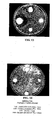
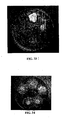
- FIG 2 shows clearance of Canada albicans (ACM 4574) using AMYCOT (R) , which is evidence of the efficacy of one or more biocidal agents against the condition thrush.
- AMYCOT (R) premix powder is at the 6 o'clock position and a "human trial cream" having 12.5 % w/w AMYCOT® in an aqueous cream is at the 12 o'clock position (ZD of 9 mm).
- AMYCOT (R) has antibacterial activity against P. acne.
- AMYCOT (R) premix powder (0.02 g) and 5g "human trial cream" comprising 12.5% w/w AMYCOT (R) were separately reacted with a broth of the anaerobic acne-causing organism P. acne (ACM No. 5109) in a Warburg Respirometer in the presence or absence of oxygen.
- the results were compared with those of a control comprising P. acne broth devoid of AMYCOT (R) . In the absence of oxygen, no gas was liberated. In the presence of oxygen, gas was liberated and each composition had antibacterial activity.
- the results for AMYCOT (R) and human trial cream in the presence of oxygen are plotted in Figure 3 .
- the (presumably enzymatic) rate of AMYCOT (R) premix powder was 626.00 ml/g cellular material/g substrate/hour.
- the rate of human trial cream was 12.00 ml/g cellular material/g substrate/hour.
- At least one of the biocidal agents may be an oxidase.
- biocidal agents against fungi may lyse or modify the cellular wall of fungi.
- an agent may be a chitinase, chitosanase or chitin deacetylase.
- P. acne and other Gram-positive bacteria are not believed to have chitin or chitosan in their cellular walls, it is suspected that one or more biocidal agents lyse or modify N-acetyl-D-glucosamine/peptidoglycans in the bacterial cell wall.
- Arthrospira (Spirulina) powders were obtained from the following suppliers:
- Each powder was mixed in an aqueous cream using 12.5% w/w concentration. Each cream was then decolourised. A uniform lawn of T. rubrum was grown on PDA medium in a dish. After 3-4 days of incubation, wells were cut in the PDA medium with a sterile cork borer. Measured amounts of each cream were placed in a respective well, the dishes were then incubated for 2 - 4 days.
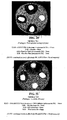
- Figure 4 shows the antifungal activities of 12.5% w/w Siam Algae Co. (3 o'clock position), 12.5% w/w Life Stream (6 o'clock position), and 12.5% w/w China Spirulina (9 o'clock position).
- AMYCOT(R) The antifungal activity of AMYCOT(R) was tested in vitro against different fungal diseases of mammals.
- the following pathogens were sourced from the Department of Primary Industries, Department of Agriculture, ACM and nurseries:
- a uniform lawn of each pathogen was grown on PDA medium. After 1-2 days of incubation, wells were cut in the PDA medium with a sterile 8 mm diameter cork borer. Measured amounts of AMYCOT (R) were placed in each well. The plates were cultured at an appropriate temperature depending on the pathogen. The welled plates were inspected daily. The clearance was measured after 2 - 3 days. Measurement of the zone is taken from the perimeter of the well to the outside perimeter of the zone.
- This zone was void of live fungal cells proving efficacy of AMYCOT (R) against the target pathogens.
- 12.5 % w/w AMYCOT (R) cream produced a clearance of 8 mm of the pathogen T. rubrum.
- T. rubrum is a causal agent of hoof infections and ring worm.
- 12.5 % w/w AMYCOT (R) cream produced a clearance of 15 mm of the pathogen T . mentagrophytes.
- T. mentagrophytes is a causal agent of hoof infections and ring worm.
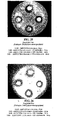
- Figure 6 shows a well of 12.5% w/w AMYCOT(R) cream produced a clearance of 3 mm of the pathogen, M canis.
- M canis is a causal agent of hoof infections and ring worm.
- 12.5 % w/w AMYCOT (R) cream produced a clearance of 3 mm of the pathogen E. floccosum.
- E. floccosum is a casual agent of hoof infections and ring worm.
- 12.5 % w/w AMYCOT (R) cream produced a clearance of 4.5 mm of the pathogen C . albicans.
- C. albicans is a causal agent of ring worm and dermatitis.
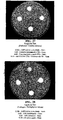
- Figure 7 shows a well of 12.5 % w/w AMYCOT (R) cream produced a clearance of 12 mm of the pathogen F. graminearum.
- F. graminearum is a causal agent of hoof infections.
- Figure 8 shows that wells of 12.5 % w/w AMYCOT (R) cream produced clearances of M . furfur.
- M. furfur is a causal agent of dandruff.
- Figure 9a shows a well of 5 % w/w AMYCOT (R) shampoo produced a clearance of 3 mm of the pathogen T. rubrum.
- Figure 9b shows a well of 5 % w/w AMYCOT (R) shampoo produced a clearance of 4 mm of the pathogen C . albicans.
- AMYCOT The antifungal activity of AMYCOT (R) was tested in vitro against different fungal diseases of plants.
- the following pathogens were sourced from the Department of Primary Industries, Department of Agriculture, ACM and nurseries:
- a uniform lawn of each pathogen was grown on PDA medium. After 1-2 days of incubation, wells were cut in the PDA medium with a sterile 8 mm diameter cork borer. Measured amounts of AMYCOT (R) were placed in each well. The plates were cultured at an appropriate temperature depending on the pathogen. The welled plates were inspected daily.
- the clearance was measured after 2-3 days. Measurement of the zone was taken from the perimeter of the well to the outside perimeter of the zone.
- the zone was void of live fungal cells proving efficacy of AMYCOT(R) against the target pathogens.
- 12.5 % w/w AMYCOT (R) cream produced a clearance of 13 mm of the pathogen F . graminearum.
- F. graminearum is a causal agent of head blight and crown rot in small grain.
- Figure 10 shows a well of 12.5 % w/w AMYCOT(R) cream produced a clearance of 10 mm of the pathogen P. chartarum.
- P. chartarum is a causal agent of facial eczema in sheep cattle.
- 12.5 % w/w AMYCOT (R) cream produced a clearance of 8 mm of the pathogen B. cinerea.
- B. cinerea is a causal agent of botrytis in fruit.
- 12.5 % w/w AMYCOT (R) cream produced a clearance of 9 mm of the pathogen Alternaria sp, the casual agent of leaf spot in fruit.
- AMYCOT (R) in the form of an antifungal spray was tested in vitro against a common plant pathogen, Botrytis cinerea. 5% w/w AMYCOT(R) powder was hydrated with water, but was only sparingly soluble.
- a uniform lawn of B. cinerea was grown on PDA medium in a dish.
- the right-hand side of the dish was then sprayed with the spray and allowed to sit at room temperature for 24 hours.
- the left-hand side of the dish was not sprayed.
- Figure 11 shows that the sprayed side of the dish had dead fungi. The spray was effective in eliminating botrytis and inhibiting further sporulation.
- TM Lamisil
- TM Dakta Gold
- TM Canesten
- TM Tinaderm
- TM Daktarin
- TM Tripod Labs
- TM Resolve Tinea
- TM Resolve Balm
- TM Resolve Plus
- Clearasil TM
- TM Benzac W
- AMYCOT AMYCOT
- Antifungals such as miconazole, tolnaftate, bifonazole and clotrimazole work by inhibiting specific protein production, preventing normal functions such as reproduction.
- the antifungal terbinafme works by preventing the formation of vital sterols.
- the first aim of these in vitro tests was to determine the efficacies of various over- the-counter creams or their actives as fungal inhibitors and to compare the efficacy of AMYCOT (R) .
- the second aim was to determine the efficacy of AMYCOT (R) in combination with one or more of the over-the-counter creams or their actives as fungal inhibitors.
- Sabouraud's liquid medium was inoculated with the chosen pathogen. The broths were then incubated for one week at 28 °C. A sterile swab was dipped into a broth of the pathogen, and a PDA medium plate was inoculated by streaking the plate at right angles, insuring that the plate had an even lawn.
- Monographed actives not already in a cream base were mixed with a respective cream base.
- a select cream was placed onto a 10 mm diameter filter paper disc and the disc was placed onto a newly inoculated plate. Up to four different discs were placed on a plate. The plate was then incubated for 24 - 48 hours at the appropriate temperature depending on the pathogen. Photos were then taken at the completion of the 24 - 48 hours.
- the monographed actives in Figure 21 are in an aqueous cream base as opposed to a spirit base which is normally used.
- the third aim of these in vitro tests was to determine the efficacies of various over- the-counter creams or their actives as fungicides and to compare the efficacy of AMYCOT ® .
- the fourth aim was to determine the efficacy of AMYCOT ® in combination with monographed actives.
- the fungicidal test involved growing a lawn of the pathogen on PDA medium plates over a 2-3 day period and then exposing the mature pathogen to the antifungals. This was done by cutting wells into the lawned agar, and removing the agar and filling the wells with cream.
- the monographed actives in Figure 28 are in an aqueous cream base as opposed to a spirit base which is normally used.
- the combination cream of AMYCOT ® and miconazole was more efficacious as a broad spectrum product than either due to the inhibitory nature of miconazole and both the inhibitory and fungicidal activities of AMYCOT ® .
- biocidal agents eg. chitinase, chitosanase, chitin deacetylase
- chitinase chitosanase
- chitin deacetylase chitin deacetylase
- Example 5 supported that commercial preparations of dried Arthrospira were likely to have some level of antifungal activity without requiring an additional stressing step or post-harvest processing step such as filament disruption.
- Example 12 further supports this finding.
- a dried preparation of Arthrospira maxima was sourced from a commercial grower. The preparation was blended with an over-the-counter aqueous cream at a concentration of 12.5% w/w without further processing, and was tested for antifungal activity against T. mentagrophytes , T. rubrum and M. fructicola (as described in Example 5).
- the cream produced a clearance against T. mentagrophytes at the 12, 3, 6 and 9 o'clock positions.
- This example further supports that the post-harvesting step of explosive decompression (potentiation) is not required in order to produce Arthrospira having fungicidal activity.
- a dry preparation of Arthrospira maxima was sourced from a commercial grower.
- dried Arthrospira was disrupted by explosive decompression (potentiated) using the method described in New Zealand Patents No. 328013 and No. 328740 .
- the Arthrospira was re-hydrated, decolourised, dried and milled to form a dry "premix powder".
- the premix powder was then suspended in a suitable carrier (12.5%) and will be referred to as "potentiated AMYCOT ® ".
- the preparation excluded the explosive decompression method described in New Zealand Patents No. 328013 and No. 328740 , and this preparation will be referred to as "original AMYCOT ® ".
- both "original AMYCOT ®” and “potentiated AMYCOT ®” produced almost equal clearances against Alternaria sp. at the 12 and 7 o'clock positions, respectively.
- explosive decompression is not an essential post-harvest step for producing Arthrospira having fungicidal activity.
- the invention relates to a composition for digesting or modifying chitin, a chitin derivative or a polymer having N-acetyl-D-glucosamine as a polymer subunit, said composition comprising physiologically stressed Arthrospira .
- the invention relates to a method for digesting or modifying chitin, a chitin derivative or a polymer having N-acetyl-D-glucosamine as a polymer subunit, said method comprising the step of contacting chitin, chitin derivative or a polymer havingN-acetyl-D- glucosamine as a polymer subunit with a composition comprising physiologically stressed Arthrospira .
- the invention relates to a method for identifying a bioactive agent from Arthrospira , said method comprising the steps of:
- the bioactive agent is a chitinase, chitosanase or chitin deacetylase and the test substrate is chitin, a chitin derivative or a polymer having N-acetyl-D-glucosamine as a polymer subunit.
- the invention also relates to a composition for use as a biocide and/or therapeutic, said composition comprising an effective amount of physiologically stressed Arthrospira .
- the invention relates to a method for preventing or treating an infection or infestation of a subject by an organism, said method comprising the step of administering to the subject an effective amount of a composition comprising physiologically stressed Arthrospira .
- a preferred embodiment of the above method further comprises the step of initially identifying a subject in need of such treatment or requiring such prevention.
- the invention relates to a method for preparing an Arthrospira -based composition for use as a biocide and/or therapeutic, said method comprising the steps of:
- the invention relates to an Arthrospira -based composition when prepared by the above method.
- the invention also relates to a method for preparing an Arthrospira -based composition for use as a biocide and/or therapeutic, said method comprising the steps:
- the above method excludes the steps of explosively decompressing the physiologically stressed Arthrospira and/or freeze drying the physiologically stressing Arthrospira prior to adding the carrier, solvent, base or excipient.
- the invention related to an Arthrospira -based composition when prepared by the above method.
- the invention also relates to a composition for use as an antifungal, said composition comprising an effective amount of physiologically stressed Arthrospira .
- the invention relates to a method for preventing or treating a fungal infection or infestation of a subject, said method comprising the step of administering to the subject an effective amount of a composition comprising physiologically stressed Arthrospira .
- said method further comprises the step of initially identifying a subject in need of such treatment or requiring such prevention.
- the subject is selected from the group consisting of a human, an animal, an agricultural or horticultural product, soil, a man-made structure, and a waterway.
- the invention also relates to an antifungal composition
- an antifungal composition comprising a synergistic combination of physiologically stressed Arthrospira and at least one fungi-static agent.
- the fungi-static agent is selected from the group consisting of terbinafine, bifonazole, clotrimazole, miconazole, econazole, ketoconazole and tolnaftate.
- the invention relates to a method for preventing or treating a fungal infection or infestation of a subject, said method comprising the step of administering to the subject an effective amount of a composition comprising a synergistic combination of physiologically stressed Arthrospira and at least one fungi-static agent.
- Said method in a preferred embodiment, may further comprise the step of initially identifying a subject in need of such treatment or requiring such prevention.
- the fungi-static agent is selected from the group consisting of terbinafme, bifonazole, clotrimazole, miconazole, econazole, ketoconazole and tolnaftate.
- the invention is directed to a method for preparing the above antifungal composition comprising a synergistic combination of physiologically stressed Arthrospira and at least one fungi-static agent, said method comprising the steps of:
- Said method in a preferred embodiment, excludes the steps of explosively decompressing the physiologically stressed Arthrospira and/or freeze drying the physiologically stressing Arthrospira prior to adding the carrier, solvent, base or excipient.
- the invention also relates to a composition for use as an antibacterial, said composition comprising an effective amount of physiologically stressed Arthrospira .
- the invention relates to a method for preventing or treating a bacterial infection or infestation of a subject, said method comprising the step of administering to the subject an effective amount of a composition comprising physiologically stressed Arthrospira .
- Said method in a preferred embodiment, further comprises the step of initially identifying a subject in need of such treatment or requiring such prevention.
- the bacterium is Propionibacterium acne .
- the subject is selected from the group consisting of a human, an animal, an agricultural or horticultural product, soil, a man-made structure, and a waterway.
- the invention is further directed to a method for preparing the above composition for use as an antibacterial and comprising an effective amount of physiologically stressed Arthrospira , said method comprising the steps of:
- the invention also relates to a composition for use as a pesticide, said composition comprising an effective amount of physiologically stressed Arthrospira.
- the invention relates to a method for suppressing or removing a pest, said method comprising administering or applying an effective amount of a composition comprising physiologically stressed Arthrospira .
- the pest is selected from the group consisting of a crustacean, acari, insect and parasite.
- the invention also relates to a method for preparing a composition for use as a pesticide and comprising an effective amount of physiologically stressed Arthrospira , said method comprising the steps of:
- the invention relates to a composition for repairing or preventing a defect of the skin of a mammal, said composition comprising an effective amount of Arthrospira .
- the composition comprises physiologically stressed Arthrospira.
- the invention in addition, relates to a method of repairing or preventing a defect of the skin of a mammal, said method comprising the application of an effective amount of a composition comprising Arthrospira.
- the composition comprises physiologically stressed Arthraspira .
- the above method of further comprises the step of initially identifying a mammal in need of such treatment or requiring such prevention.
- the invention also relates to a method for preparing a composition comprising physiologically stressed Arthrospira , which comprises the steps of:
- the skin defect is selected from the group consisting of a pit, acne damage, rosacea, a reddened area, a crack, a burn, a blister, psoriasis, eczema, scaling, wrinkles, a papule, a stomatitis, a lesion, a pustule, a wound, cradle cap, diaper rash, an ulcer, a cold sore, shaving rash, chicken pox, dermatitis, and cracked heels and elbows.
- the Arthrospira preferably is A. maxima .
- the invention relates to method for preparing an Arthrospira -based composition for topical use on a subject, said method comprising the steps of:
- the invention also relates to an Arthrospira -based composition when prepared by the above method.
- the invention also relates to a method for preparing an Arthrospira -based composition for topical use as a fungicide or bactericide on a subject, said method comprising the steps of:
- the invention in addition, relates to a topical Arthrospira -based composition when prepared by the above method.
- the invention is also directed to a topical fungicidal composition
- a topical fungicidal composition comprising a fungicidally effective amount of physiologically stressed Arthrospira and a carrier, solvent, base or excipient suitable for topical administration to the subject, wherein the Arthrospira has not been freeze dried.
- the invention relates to a method for preventing or treating a topical fungal infection or infestation of a subject, said method comprising the step of topically administering to the subject a fungicidally effective amount of a composition comprising physiologically stressed Arthrospira and a carrier, solvent, base or excipient suitable for topical administration to the subject, wherein the Arthrospira has not been freeze dried.
- the above method further comprises the step of initially identifying a subject in need of such treatment or requiring such prevention.
- the subject is a human, an animal, an agricultural or horticultural product, soil or a man-made structure.
- the invention relates to a method for preparing a topical fungicidal composition, said method comprising the steps of:
- the invention is also directed to a topical fungicidal composition
- a topical fungicidal composition comprising a synergistic combination of a fungicidally effective amount of physiologically stressed Arthrospira and at least one fungi-static agent and a carrier, solvent, base or excipient suitable for topical administration to a subject, wherein the Arthrospira has not been freeze dried.
- the fungi-static agent is selected from the group consisting of terbinafine, bifonazole, clotrimazole, miconazole, econazole, ketoconazole and tolnaftate.
- the invention also relates to a method for preventing or treating a topical fungal infection or infestation of a subject, said method comprising the step of administering topically to the subject a composition comprising a fungicidally effective amount of physiologically stressed Arthrospira and at least one fungi-static agent, and a carrier, solvent, base or excipient suitable for topical administration to the subject, wherein the Arthrospira has not been freeze dried.
- the fungi-static agent is selected from the group consisting of terbinafine, bifonazole, clotrimazole, miconazole, econazole, ketoconazole and tolnaftate.
- the invention is directed to a method for preparing a topical fungicidal composition, said method comprising the steps of:
- the invention also relates to a topical bactericidal composition
- a topical bactericidal composition comprising a bactericidally effective amount of physiologically stressed Arthrospira and a carrier, solvent, base or excipient suitable for topical administration to a subject, wherein the Arthrospira has not been freeze dried.
- Subject of the invention is also a method for preventing or treating a topical bacterial infection or infestation of a subject, said method comprising the step of topically administering to the subject a composition comprising a bactericidally effective amount of physiologically stressed Arthrospira and a carrier, solvent, base or excipient suitable for topical administration to the subject, wherein the Arthrospira has not been freeze dried.
- the method further comprises the step of initially identifying a subject in need of such treatment or requiring such prevention.
- the bacterial infection is caused by Propionibacterium acne .
- the subject is human.
- the invention also relates to a method for preparing a topical bactericidal composition, said method comprising the steps of:
- the invention is also directed to a topical composition for repairing or preventing a defect of the skin of a mammal, said composition comprising a bactericidally or fungicidally effective amount of physiologically stressed Arthrospira and a carrier, solvent, base or excipient suitable for topical administration to the mammal, wherein the Arthrospira has not been freeze dried.
- the invention is directed to a method of repairing or preventing a defect of the skin of a mammal, said method comprising the step of topically administering to the mammal a composition comprising a bactericidally or fungicidally effective amount of physiologically stressed Arthrospira and a carrier, solvent, base or excipient suitable for topical administration to the mammal, wherein the Arthrospira has not been freeze dried.
- the method further comprises the step of initially identifying a mammal in need of such treatment or requiring such prevention.
- the skin defect is selected from the group consisting of a pit, acne damage, rosacea, a reddened area, a crack, a burn, a blister, psoriasis, eczema, scaling, wrinkles, a papule, a stomatitis, a lesion, a pustule, a wound, cradle cap, diaper rash, an ulcer, a cold sore, shaving rash, chicken pox, dermatitis, and cracked heels and elbows.
- the Arthrospira is A. maxima.
Landscapes
- Health & Medical Sciences (AREA)
- Life Sciences & Earth Sciences (AREA)
- Chemical & Material Sciences (AREA)
- Engineering & Computer Science (AREA)
- General Health & Medical Sciences (AREA)
- Organic Chemistry (AREA)
- Bioinformatics & Cheminformatics (AREA)
- Zoology (AREA)
- Wood Science & Technology (AREA)
- Medicinal Chemistry (AREA)
- Genetics & Genomics (AREA)
- Biotechnology (AREA)
- Animal Behavior & Ethology (AREA)
- Public Health (AREA)
- Veterinary Medicine (AREA)
- Pharmacology & Pharmacy (AREA)
- Biochemistry (AREA)
- Microbiology (AREA)
- General Engineering & Computer Science (AREA)
- Biomedical Technology (AREA)
- Epidemiology (AREA)
- Virology (AREA)
- Tropical Medicine & Parasitology (AREA)
- Molecular Biology (AREA)
- Nuclear Medicine, Radiotherapy & Molecular Imaging (AREA)
- General Chemical & Material Sciences (AREA)
- Chemical Kinetics & Catalysis (AREA)
- Dermatology (AREA)
- Mycology (AREA)
- Emergency Medicine (AREA)
- Dentistry (AREA)
- Environmental Sciences (AREA)
- Sustainable Development (AREA)
- Botany (AREA)
- Cell Biology (AREA)
- Agronomy & Crop Science (AREA)
- Pest Control & Pesticides (AREA)
- Plant Pathology (AREA)
- Communicable Diseases (AREA)
- Oncology (AREA)
Abstract
Description
- The present invention relates to a composition comprising Arthrospira and the use of the composition as a biocide and/or therapeutic.
- Arthrospira (formerly known as Spirulina) is a cyanobacteria that is grown primarily for use as a food and/or protein source. Therapeutic uses for Arthrospira have also been described, including use as an anti-viral agent, anti-cancer agent, reducer of cholesterol, reducer of diabetes, reducer of hypertension and immunomodulator. See, for example, the references cited at the Spirulina Source.com website at http://www.spirulinasource.com/library.html.
- An object of the present invention is to provide an Arthrospira composition for use as a biocide and/or therapeutic.
- The present inventors have discovered that Arthrospira, when physiologically stressed, produces at least one type of bioactive agent that is active against fungi, bacteria and presumably viruses. Arthrospira can be physiologically stressed, for example, by depriving the organism of nutrients or light, or by dehydrating/drying the organism. A sign of an Arthrospira filament (trachoma) being "physiologically stressed" is when it enters an anabiotic state, in which state the filament rounds up and a thick mucoid coating is produced. The filament and/or thick mucoid coating is believed by the inventors to contain one or more bioactive agents that protect the organism against predators. One or more of the bioactives may break down the cell wall or exoskeleton of a predatory organism. One or more of the bioactive agents may be, for example, a lytic or modifying agent such as a chitinase, chitosanase or chitin deacetylase, that digests chitin, a chitin derivative (such as chitosan) or other cell wall polymer having, for example, N-acetylglucosamine or D-glucosamine as a polymer subunit. Peptidoglycan of Gram-positive bacteria is one such polymer, comprising N-acetylglucosamine and N-acetylmuramic acid.
- According to a first aspect of the present invention, there is provided a composition for digesting or modifying chitin, a chitin derivative or a polymer having N-acetyl-D-glucosamine as a polymer subunit, said composition comprising physiologically stressed Arthrospira.
- According to a second aspect of the present invention, there is provided a method for digesting or modifying chitin, a chitin derivative or a polymer having N- acetyl-D-glucosamine as a polymer subunit, said method comprising the step of contacting chitin, chitin derivative or a polymer having N-acetyl-D-glucosamine as a polymer subunit with a composition comprising physiologically stressed Arthrospira.
- The chitin, chitin derivative or polymer can be in any suitable form. The chitin, chitin derivative or polymer can be in a substantially purified form or can be part of an organism such the cell wall of a fungus or Gram-positive bacteria, or part of the exoskeleton of an insect.
- According to a third aspect of the present invention, there is provided a method for identifying a bioactive agent from Arthrospira, said method comprising the steps of:
- (I) combining a composition comprising physiologically stressed Arthrospira with at least one test substrate modifiable by a bioactive agent from Arthrospira; and
- (II) assaying for modification of the test substrate.
- Any suitable type of test substrate can be used. Assaying for modification of the test substrate can be carried out in any suitable way. High throughput screening, however, is preferred.
- Preferably, the bioactive agent is a chitinase, chitosanase or chitin deacetylase and the test substrate is chitin, a chitin derivative or a polymer having N-acetyl-D-glucosamine as a polymer subunit. Preferably, respirometry is used to assay modification (ie. degradation) of the chitin, chitin derivative or other polymer.
- The method can further comprise the step of purifying the bioactive agent. Purification can be carried out in any suitable way. The method can also comprise the steps of cloning and expressing the gene/s of the bioactive agent. These steps can be carried out in any suitable way. For instance, the steps can be as described in Maniatis, et al., Molecular Cloning: A Laboratory Manual, Cold Spring Harbor Laboratory, 1982, the entire contents of which are incorporated herein by cross reference.
- Chitin, chitin derivatives and glucosamine containing polymers are found throughout nature, usually as a component of a cell wall or exoskeleton of, for instance: algae, fungi, protozoans, ciliates, coelenterates, bryozoans, molluscs, annelids, arthropods, branchiopods, phoronida, pogonophora, and bacteria (Gram- positive bacteria and Rhizobia).
- Hence, physiologically stressed Arthrospira having lytic or modifying activity against chitin, chitin derivatives and glucosamine containing polymers is potentially capable of being used as a biocide against a broad range of organisms. "Biocide" as used herein refers to either the killing of an organism or inhibition of the growth or replication of an organism (ie. the organism may not actually be killed). It is to be appreciated that some applications of the biocide will be for therapeutic purposes.
- According to a fourth aspect of the present invention, there is provided a composition for use as a biocide and/or therapeutic, said composition comprising an effective amount of physiologically stressed Arthrospira.
- According to a fifth aspect of the present invention, there is provided a method for preventing or treating an infection or infestation of a subject by an organism, said method comprising the step of administering to the subject an effective amount of a composition comprising physiologically stressed Arthrospira.
- Preferably, the method comprises the step of identifying a subject in need of such treatment or requiring such prevention.
- There is also provided the use of physiologically stressed Arthrospira in the preparation of a medicament for the prevention or treatment of an infection or infestation of a subject by an organism.
- Surprisingly, the inventors have found that taking Arthrospira from its growth environment may be enough for physiological stressing to occur and for inducing expression of one or more bioactive agents having biocidal activity. That is, steps for physiologically stressing Arthrospira as taught in the specifications of New Zealand Patents No.
336620 336619 - Furthermore, all commercially available preparations (tablets, capsules and powders) of Arthrospira that have thus far been tested by the inventors have been found to have activity against a substrate, and that activity is believed to be indicative of biocidal activity. Such preparations are usually prepared by harvesting the Arthrospira, washing and drying the Arthrospira, without a step for specifically stressing the organism. In fact, commercial growers of Arthrospira tend to minimise stressing of the organism as much as possible as the thick mucoid coating tends to clog machinery for processing the organism.
- For any one or more of the compositions described herein, the Arthrospira can be any suitable species, or mixture of species or Arthrospira variants including, but not limited to, A. maxima. It is to be pointed out that Arthrospira and Spirulina are two separate genera. The separation between these two genera has been repeatedly affirmed on the basis of many characteristics including: helicity and trichome size, cell wall structure and pore pattern, gas vacuoles, thylakoid pattern, trichome motility and fragmentation, GC content, oligonucleotide catalogue of 16S rRNA, and mutations in the cpcB-cpcA locus. See, for instance, J. F. Manen and J. Falquet (2002) "The cpcB- cpcA locus as a tool for the genetic characterization of the genus Arthrospira (Cyanobacteria): evidence for horizontal transfer". International Journal of Systematic and Evolutionary Microbiology, VoI 52, 861-867; and, Chapter 1: Morphology, Ultrastructure and Taxonomy of Arthrospira (Spirulina) Maxima and Arthrospira (Spirulina) Platensis by Luisa Tomaselli, of Spirulina platensis (Arthrospira): Physiology, Cell-biology and Biotechnology. Taylor and Francis. Avigad Vonshak (Ed) 1997. The compositions described in this specification exclude species of the Spirulina genus.
- The composition can comprise intact Arthrospira filaments, segments of the filaments, disrupted/lysed segments or extracts/fractions thereof. The composition can comprise Arthrospira that is alive or that is not alive. Preferably, the composition comprises disrupted Arthrospira filaments and segments.
- The Arthrospira-based composition can be prepared in any suitable way, provided that the biocidal activity is not compromised. Normally, this would involve the steps of: (I) growing Arthrospira in any suitable way; (II) harvesting the grown Arthrospira in any suitable way; and (III) drying the Arthrospira in any suitable way. Optional steps include: additionally physiologically stressing the Arthrospira in any suitable way; disrupting the filaments and segments in any suitable way, sterilising the organism in any suitable way, decolourising the Arthrospira in any suitable way, removing or degrading the chlorophyll in any suitable way, and milling the dried Arthrospira.
- Some of the above steps are described, for example, in the specifications of New Zealand Patents No.
336620 336619 328013 328740 - The concentration of Arthrospira in the composition can vary depending on the application, e. g. anywhere from about 0.01 % to about 100 %. The composition can include any suitable solvent, carrier, base, excipient, filler, binder, plasticiser, emulsifier, stabiliser, lubricant, buffering agent, emollient, solubilising agent, suspending agent, thickener, fragrance, colourant and preservative.
- Depending on the intended use, the composition can further comprise one or more actives not derived from Arthrospira, such as antimicrobials (e.g. bactericides or antifungals), therapeutic agents (e.g. wound healers, steroids) or general nutrients (e.g. amino acids, vitamins). Such actives are well known in the art.
- The composition can be in any suitable form. The composition can be administered or applied in any suitable way. The composition can be a liquid, gel or solid, or a mixture thereof. The composition can be a liquid culture of Arthrospira which is applied as a spray. Alternatively, the composition can be a powder which is evenly distributed over a target site by shake or puffer application. The infected or infested subject can be dipped into a bath containing a liquid form of the composition. The composition and method of application or administration can be as described in the specifications of New Zealand Patents No.
336620 336619 - For therapeutic use, the composition can be administered or applied, for example, orally, parenterally, by inhalation spray, topically, rectally, nasally, buccally or vaginally. The composition can be a tablet, solution, aerosol, spray, cream, ointment, lotion, emulsion, gel or powder. The composition can be in the form of an Arthrospira-impregnated bandage, dressing, adhesive plaster, suppository, pessary or poultice.
- Preferably, the biocide is active against fungi, Gram-positive bacteria, protozoa, viruses, crustaceans, acari and insects, some of which are addressed in more detail below.
- According to a sixth aspect of the present invention, there is provided a method for preparing an Arthrospira-based composition for use as a biocide and/or therapeutic, said method comprising the steps of:
- (1) physiologically stressing Arthrospira; and
- (2) combining the stressed Arthrospira of (1) with a suitable carrier, solvent, base or excipient.
- According to a seventh aspect of the present invention, there is provided a method for preparing an Arthrospira-based composition for use as a biocide and/or therapeutic, said method comprising the steps:
- (1) physiologically stressing Arthrospira by removing up to about 80% of liquid within which the Arthrospira is being grown;
- (2) washing the stressed Arthrospira in order to remove contaminants;
- (3) drying the washed Arthrospira; and
- (4) combining the washed Arthrospira with a suitable carrier, solvent, base or excipient.
- Either of the above methods can be used to prepare one or more of the compositions described herein.
- Preferably, the above methods exclude specific steps of explosive decompression and/or freeze drying the physiologically stressing Arthrospira prior to adding the carrier, solvent, base or excipient.
- According to an eighth aspect of the present invention, there is provided a composition for use as an antifungal, said composition comprising an effective amount of physiologically stressed Arthrospira.
- According to a ninth aspect of the present invention, there is provided a method for preventing or treating a fungal infection or infestation of a subject, said method comprising the step of administering to the subject an effective amount of a composition comprising physiologically stressed Arthrospira.
- Preferably, the method comprises the step of identifying a subject in need of such treatment or requiring such prevention.
- There is also provided the use of physiologically stressed Arthrospira in the preparation of a medicament for the prevention or treatment of a fungal infection or infestation of a subject.
- Physiologically stressed Arthrospira may be used to treat at least the following types of fungi: Zygomycotina; Ascomycotina; Fungi Imperfecta, Malassezia; Microsporum; Trichophyton; and Epidermophyton.
- In a first embodiment, the subject is a human or an animal such as, mammal or vertebrate. In human subjects, the composition can be used to treat:
- tinea (e.g. athlete's foot, jock itch, ringworm, deep nail bed infection) which is caused chiefly by species of Microsporum, Trichophyton, Candida and Epidermophyton;
- thrush, which is caused by Candida;
- dandruff, which is caused by Malassezia;
- tropical mycetoma - a granular spreading growth in the skin, muscle tissue and lymph nodes - which is caused by Madurella;
- sporothricosis - a granular spreading growth in skin and lymph nodes - which is caused by Sporothrix schenkii; and
- histoplasmosis - a chronic pneumonia with spreading systemic infection - which is caused by Histoplasma capsulatum.
- In animal subjects, the composition can be used to treat, for example, ring worm, hoof infections (Candida, Malassezia), dermatitis and folliculitis (Microsporum, Trichophyton, Alternaria, Fusarium). Topical fungal conditions in animals are usually caused by the same fungi as in humans.
- In a second embodiment, the subject is an agricultural or horticultural product such as a plant, flower, fruit, vegetable, cereal, grain, pulse, mushroom spawn, pasture or lawn. The composition can be used to treat, for example, head blight and crown rot (Fusarium), facial eczema (Pithomyces chartarum), botrytis (Botrytis cineria), leaf spot (Septoria, Alteria, Bipolaris), powdery mildew (Sphaerotheca macularis, Erysiplae, Sphaerotheca pannosa), brown rot (Monilinia fruiticola) and leaf/stem rust (Puccinia).
- In a third embodiment, the subject is soil, timber, building material or a building. The composition can be used, for instance, in or on buildings for the treatment of mould, and on building materials and power poles for the treatment of fungal wood rot.
- Surprisingly, the present inventors have found that physiologically stressed Arthrospira interacts synergistically with monographed anti-fungal actives (fungi-static agents) to provide superior broad spectrum antifungal activity. The inventors have found that stressed Arthrospira can inhibit the growth of fungi, kill fungi and prevent regrowth of fungi.
- According to a tenth aspect of the present invention, there is provided an antifungal composition comprising a synergistic combination of physiologically stressed Arthrospira and at least one fungi-static agent.
- According to an eleventh aspect of the present invention, there is provided a method for preventing or treating a fungal infection or infestation of a subject, said method comprising the step of administering to the subject an effective amount of a composition comprising a synergistic combination of physiologically stressed Arthrospira and at least one fungi-static agent.
- Preferably, the method comprises the step of identifying a subject in need of such treatment or requiring such prevention.
- There is also provided the use of physiologically stressed Arthrospira in combination with at least one fungi-static agent in the preparation of a medicament for the prevention or treatment of a fungal infection or infestation of a subject.
- Any suitable fungi-static agent (monographed active) can be used, such as terbinafme, bifonazole, clotrimazole, miconazole, econazole, ketoconazole or tolnaftate. Any suitable concentration of monographed active can be used and will depend on the intended use for the composition.
- Physiologically stressed Arthrospira has been found by the inventors to be an effective antibacterial against Gram-positive bacteria. The mode of antibacterial action is not clearly understood. It is possible that cell walls of Gram-positive bacteria are lysed or otherwise modified by one or more bioactives from Arthrospira. The cell walls contain peptidoglycan (comprising N-acetylglucosamine and N-acetylmuramic acid) and peptidoglycan may be digestible by one or more of the bioactives.
- According to a twelfth aspect of the present invention, there is provided a composition for use as an antibacterial, said composition comprising an effective amount of physiologically stressed Arthrospira.
- According to a thirteenth aspect of the present invention, there is provided a method for preventing or treating a bacterial infection or infestation of a subject, said method comprising the step of administering to the subject an effective amount of a composition comprising physiologically stressed Arthrospira.
- Preferably, the method comprises the step of identifying a subject in need of such treatment or requiring such prevention.
- There is also provided the use of physiologically stressed Arthrospira in the preparation of a medicament for the prevention or treatment of a bacterial infection or infestation of a subject.
- Preferably, the bacteria is Gram-positive bacteria and may be, for example, Bacilli, Clostridia, Staphylococci or Pneumococci. The bacteria is preferably Propionibacterium acne, the causative agent of acne.
- In a first embodiment, the subject is a human or an animal such as a mammal or vertebrate. In human subjects, the composition can be used to treat acne, dermatitis, ulcers or wounds caused by or infected with Gram-positive bacteria. The composition can be used to treat internal infections, such as those in the airways, in the mouth, in the digestive and in genitourinary tracts (e.g. strep throat, middle ear infections).
- In a second embodiment, the subject is an agricultural or horticultural product such as a plant, flower, fruit, vegetable, cereal, grain, pulse or mushroom spawn.
- In a third embodiment, the subject is, for example, soil, a man-made structure, or a waterway in which bacteria can grow.
- According to a fourteenth aspect of the present invention, there is provided a composition for use as a pesticide, said composition comprising an effective amount of physiologically stressed Arthrospira.
- According to a fifteenth aspect of the present invention, there is provided a method for suppressing or removing a pest, said method comprising administering or applying an effective amount of a composition comprising physiologically stressed Arthrospira.
- The pesticide can be directed to pests such as crustacean and acari. The pesticide can be directed to insects such as flies (e. g. Simulidae - black flies), wasps, mosquitoes and termites. The pesticide can be used to stop the transmission of parasites, such as those causing malaria, and other insects-borne diseases.
- In a first embodiment, the composition can be formulated as an insect repellent or bait.
- In a second embodiment, the composition can be applied to an agricultural or horticultural product such as a plant, flower, fruit, vegetable, cereal, grain, pulse or mushroom spawn.
- In a third embodiment, the composition can be applied to, for example, soil, a man-made structure, a building, building material, a stream, a lake or wetlands.
- When using physiologically stressed Arthrospira as a biocide and/or therapeutic on skin, the inventors have found that one or more other substituents of Arthrospira interact synergistically with the one or more bioactive agents to promote healing of the skin. These other substituents are likely to include: beta-carotene, which provides nourishment to the skin; phycocyanin, which is an anti-inflammatory; other proteins; and other nutrients, including vitamins, minerals, trace elements, anti-oxidants, essential oils and carbohydrates.
- First, the stressed Arthrospira inhibits or kills the microbe - be it a fungus, bacteria or virus - and then other substituents of Arthrospira repair the damage caused by the microbe.
- The present inventors have found that Arthrospira has therapeutic qualities even when not physiologically stressed, such as in the treatment of skin conditions and in skin repair.
- According to a sixteenth aspect of the present invention, there is provided a composition for repairing or preventing a defect of the skin of a mammal, said composition comprising an effective amount of Arthrospira.
- Preferably, the composition comprises physiologically stressed Arthrospira.
- According to a seventeenth aspect of the present invention, there is provided a method of repairing or preventing a defect of the skin of a mammal, said method comprising the application of an effective amount of a composition comprising Arthrospira.
- Preferably, the composition comprises physiologically stressed Arthrospira.
- Preferably, the method comprises the step of identifying a mammal in need of such treatment or requiring such prevention.
- There is also provided the use of Arthrospira, preferably physiologically stressed Arthrospira, in the preparation of a medicament for repairing or preventing a defect of the skin of a mammal.
- The compositions according to the sixteenth and seventeenth aspects of the invention can have one or more ingredients or properties as described for the compositions according to the other aspects of the invention that have been defined.
- The compositions according to the sixteenth and seventeenth aspects of the invention are preferably prepared by any of the methods described above.
- The skin defect can be, for example, a pit, acne damage, rosacea, a reddened area, a crack, a burn, a blister, psoriasis, eczema, scaling, wrinkles, a papule, a stomatitis, a lesion, a pustule, a wound, cradle cap, diaper rash, an ulcer, a cold sore, shaving rash, chicken pox, dermatitis, cracked heels and elbows. The composition can be used to treat burns, insect and animal bites, and to remove inflammation of the skin. The composition can be used to reduce itchiness of the skin. The composition can be used to repair scar tissue, sun-damaged skin, and dry and scaly skin that has lost its elasticity.
- Other aspects and embodiments of the invention will become apparent from the following detailed description thereof.
-
-
Figure 1 shows activity of physiologically stressed Arthrospira (AWCOT(R) and unprocessed powder) on chitin as assessed by Respirometry; -
Figure 2 shows antifungal activity of AMYCOT(R) on C. albicans; -
Figure 3 shows antibacterial activity of AMYCOT(R) on P. acne as assessed by respirometry; -
Figure 4 shows the antifungal activity of different commercial preparations of Arthrospira (Spirulina) on T. rubrum; -
Figure 5 shows antifungal activity of a commercial preparation (Life Stream) of Arthrospira on A. niger; -
Figure 6 shows antifungal activity of AMYCOT(R) on M. canis; -
Figure 7 shows antifungal activity of AMYCOT(R) on F. graminearum; -
Figure 8 shows antifungal activity of AMYCOT(R) on M. furfur, -
Figure 9a shows antifungal activity of shampoo AMYCOT(R) on T. rubrum; -
Figure 9b shows antifungal activity of shampoo AMYCOT(R) on C. albicans; -
Figure 10 shows antifungal activity of AMYCOT(R) on P. claartarum; -
Figure 11 shows antifungal activity of AMYCOT(R) on B. cinerea; -
Figure 12 shows T. rubrum inhibitory results using AMYCOT(R) and various monographed anti-fungal actives; -
Figure 13 shows T. mentagrophytes inhibitory results using AMYCOT(R) and various monographed actives; -
Figure 14 shows C. albicans inhibitory results using AMYCOT(R) and various monographed actives; -
Figure 15 shows C. albicans inhibitory results using a monographed active; -
Figure 16 shows T. mentagrophytes inhibitory results using AMYCOT(R) in combination with a monographed active and various monographed actives; -
Figure 17 shows C. albicans inhibitory results using AMYCOT(R) in combination with a mono graphed active and various monographed actives; -
Figure 18 shows T. mentagrophytes inhibitory results using AMYCOT(R) in combination with monographed actives; -
Figure 19 shows T. mentagrophytes inhibitory results using AMYCOT(R) in combination with monographed actives; -
Figure 20 shows T. mentagrophytes inhibitory results using AMYCOT(R) in combination with a monographed active and various monographed actives; -
Figure 21 shows C. albicans inhibitory results using AMYCOT(R) in combination with a monographed active and various monographed actives; -
Figure 22 shows T. mentagrophytes fungicidal results using AMYCOT(R) in combination with monographed actives; -
Figure 23 shows T. rubrum fungicidal results using AMYCOT(R) in combination with monographed actives; -
Figure 24 shows T. mentagrophytes fungicidal results using AMYCOT(R) in combination with monographed actives; -
Figure 25 shows T. mentagrophytes fungicidal results using AMYCOT(R) in combination with monographed actives; -
Figure 26 shows T. mentagrophytes fungicidal results using AMYCOT(R) in combination with monographed actives; -
Figure 27 shows C. albicans fungicidal results using AMYCOT(R) in combination with a monographed active and various monographed actives; -
Figure 28 shows T. rubrum fungicidal results using AMYCOT(R) and monographed actives; -
Figure 29 shows activity of physiologically stressed Arthrospira (AMYCOT(R)) on chitin at different temperatures as assessed by respirometry; -
Figure 30 shows activity of physiologically stressed Arthrospira (AMYCOT(R)) on chitin at various pH conditions as assessed by respirometry; -
Figure 31 shows antifungal activity of Arthrospira on T. mentagrophytes; -
Figure 32 shows antifungal activity of Arthrospira on T. rubrum; -
Figure 33 shows antifungal activity of Arthrospira on M. fructicola; and -
Figure 34 shows antifungal activity of "potentiated AMYCOT(R)" and "original AMYCOT(R)" on Alternaria sp. - By way of illustration only, preferred embodiments of the present invention are described in detail, with reference to the following series of examples.
- A culture of Arthrospira maxima (obtainable from Biovite Australia Pty Ltd) was stressed by nutrient diminution or partial desiccation. The Arthrospira was dewatered and dried to form an "unprocessed" powder. Dried Arthrospira was then explosively decompressed (potentiated) using the method described in New Zealand Patents No.
328013 328740 - The results of respirometry suggest that physiologically stressed Arthrospira is capable of modifying or lysing substrates comprising chitin, chitosan and/or N-acetyl-D- glucosamine.
- Standard amounts of AMYCOT(R) premix powder and the unprocessed powder were separately reacted with four-unit polymer BHD chitin (Sigma, catalogue number C7170) in a Warburg Respirometer using standard techniques. Each composition was mixed together with chitin and the quantity of gas evolved was measured. The reaction was monitored for one-hour following equilibration for 30 minutes. The same composition, but pre-boiled in a water bath for five minutes, did not produce any gas which suggested that the activity could be enzymic and could be due to one or more types of denaturable proteins.
- The results are plotted in
Figure 1 . The rate of activity (presumably enzymatic activity) of unprocessed powder was 694.9 ml/g cellular material/g substrate/hour. The rate of activity of AMYCOT(R) premix powder was 729.65 ml/g cellular material /g substrate/hour. - Respirometry was also used to identify the optimum temperature for the activity. AMYCOT(R) premix powder (0.02 g and 0.06 g) was incubated with chitin (0.02 g) at 20 °C, 30 °C, 33 °C and 40 °C. AMYCOT(R) premix powder in a cream based (0.05 g) was also incubated with chitin (0.02, g) at those temperatures. The results are plotted in
Figure 29 . The optimum temperature for the activity in each case was determined to be 33 °C. - Respirometry was also used to identify the optimum pH for the activity. AMYCOT(R) premix powder (0.02 g) was suspended in buffers of varying pH (60 - 70 % ethanol, 30 - 40 % water, 0 - 0.05 % phenolphthalein, 0 - 0.03 % bromothymol blue, 0 - 0.02 % methyl red, sodium salt, 0 - 0.01 % sodium hydroxide and 0 - 0.01 % methyl orange, sodium salt, at
pH Figure 30 . The optimum pH for activity was determined to be 6. - These results suggest that the bioactive agent or agents should have activity when topically applied to skin as skin has a similar temperature and pH.
- AMYCOT(R) premix powder (0.02g) was separately incubated with N-acetyl-D- glucosamine (0.02g, Sigma catalogue number A8625-5G) and chitosan (0.02g, Sigma catalogue number C3646) substrates in a Warburg Respirometer at 33 °C. Each reaction was monitored for one-hour following equilibration for 30 minutes.
- The results for AMYCOT(R) plus N-acetyl-D-glucosamine are presented in the table below.
Table 1 - AMYCOT ® + N-Acetyl-D-glucosamine Time (min) mm of gas mm of gas mm of gas 0 0 0 0 5 9 6 7 10 12 9 11 30 12 10 11 60 12 10 11 - The results for AMYCOT(R) plus chitosan are presented in the table below.
Table 2 - AMYCOT ® + Chitosan Time (min) mm of gas mm of gas mm of gas 0 0 0 0 5 12 10 10 10 14 12 14 30 17 13 15 60 17 14 16 - For comparison, results for AMYCOT® (0.02g) plus chitin (0.02g), incubated at 33 °C, are presented in the table below.
Table 3 - AMYCOT ® + Chitin Time (min) mm of gas mm of gas mm of gas 0 0 0 0 5 12 10 15 10 18 18 20 30 19 18 21 60 19 19 21 - These results suggest that physiologically stressed Arthrospira has one or more bioactive agents that lyse or modify chitin, chitosan and/or N-acetyl-D-glucosamine, or possibly another type of polymer having N-acetyl-D-glucosamine as a polymer subunit. The bioactive agent could be, for instance, a chitinase, chitosanase or chitin deacetylase.
- The biocidal activity of AMYCOT(R) premix powder was tested in vitro on live fungi and Gram-positive bacteria.
- Live cultures of target pathogens were sourced from the American Type Culture Collection (ATCC), the Australian Collection of Microorganisms (ACM) and Sullivan Niccolaides. The cultures that were tested are shown in Table 4.
Table 4 Pathogen ATCC No. ACM No. Isolates Trichophyton Mentagrophytes 4808,9533 5068 Candida albicans 753 4574 Trichophyton rubrum SN01 (Sullivan Niccolaides) Epidermophyton floccosum SN02 (Sullivan Niccolaides) Propionibacterium acne 25746 5109 - A uniform lawn of each pathogen was grown on a dish containing Potato Dextrose Agar (PDA) medium. After 3-4 days of incubation, four wells were cut in the PDA medium with a sterile 8 mm diameter cork borer. Measured amounts of AMYCOT(R) premix powder and control creams/powders were placed in each well. The dishes were cultured at conditions appropriate for the respective pathogen and the dishes were inspected daily.
- After 2-4 days two concentric zones around the well were evident:
- 1. A smaller transparent circular "clearance" zone around a well. This is an area where fungi have been destroyed, leaving only residual dry cytoplasmic matter (as seen by light and electron microscopy).
- 2. A larger semitransparent "affected" zone extending from the perimeter of the clearance zone. The affected zone is recognised by the lesser height of the lawn, its lesser density and greater transparency compared with unaffected lawn. This is an area where fungi cell walls have been largely destroyed, but that some are still present, often as rounded cytoplasmic spheres (as seen by light and electron microscopy).
- Measurement of the zones is taken from the outside perimeter of the well to the outside perimeter of the zone in each case. This measurement is referred to as the zonal distance (ZD). The radius of the zones is a non-linear measure of the efficacy of the biocidal agent/s against the pathogen in vitro.
- The in vitro control results are shown in Table 5.
Table 5 ACM No. Pathogen Result Size of Clearance zone (ZD) (mm) Size of Affected Zone (mm) 5068 Trichophyton mentagrophytes Clearance 6 10 4574 Clearance 6,5 - 5109 Propionibacterium acne(cultured anaerobically) No clearance - - ATCC No. 4808 Trichophyton Mentagrophytes Clearance 5 8 9533 Trichophyton Mentagrophytes Clearance 6 10 753 Candida Albicans Clearance 6,5 - 25746 Propionibacterium acne(cultured anaerobically) No clearance - - Isolate No. SN01 Trichophyton rubrum Clearance 6 - SN02 Epidermophyton floccosum Clearance 5 8 301 Tinea pedis- Isolat Clearance 6 10 307 Jockey itch isolate Clearance 6 10 -
Figure 2 shows clearance of Canada albicans (ACM 4574) using AMYCOT(R), which is evidence of the efficacy of one or more biocidal agents against the condition thrush. AMYCOT(R) premix powder is at the 6 o'clock position and a "human trial cream" having 12.5 % w/w AMYCOT® in an aqueous cream is at the 12 o'clock position (ZD of 9 mm). - In the case of the anaerobic acne-causing bacteria Propionibacterium acne, no clearance was obtained when tested under anaerobic conditions. An explanation for this is provided in Example 4.
- Respirometry showed that AMYCOT(R) has antibacterial activity against P. acne. AMYCOT(R) premix powder (0.02 g) and 5g "human trial cream" comprising 12.5% w/w AMYCOT(R) were separately reacted with a broth of the anaerobic acne-causing organism P. acne (ACM No. 5109) in a Warburg Respirometer in the presence or absence of oxygen. The results were compared with those of a control comprising P. acne broth devoid of AMYCOT(R). In the absence of oxygen, no gas was liberated. In the presence of oxygen, gas was liberated and each composition had antibacterial activity.
- The results for AMYCOT(R) and human trial cream in the presence of oxygen are plotted in
Figure 3 . The (presumably enzymatic) rate of AMYCOT(R) premix powder was 626.00 ml/g cellular material/g substrate/hour. The rate of human trial cream was 12.00 ml/g cellular material/g substrate/hour. - The results showed that in order for the composition to work as an antibacterial on P. acne in vivo, the presence of oxygen is required. Therefore, at least one of the biocidal agents may be an oxidase.
- The inventors suspect that one or more of the biocidal agents against fungi may lyse or modify the cellular wall of fungi. Such an agent may be a chitinase, chitosanase or chitin deacetylase.
- Although P. acne and other Gram-positive bacteria are not believed to have chitin or chitosan in their cellular walls, it is suspected that one or more biocidal agents lyse or modify N-acetyl-D-glucosamine/peptidoglycans in the bacterial cell wall.
- Commercial preparations of dried Arthrospira (powders, tablets and capsules) were sourced from different suppliers in different jurisdictions and tested for antifungal activity. The powders are typically prepared by harvesting Arthrospira, washing the harvested Arthrospira, and drying the washed Arthrospira. Some suppliers mill the Arthrospira whilst wet. Preparation does not entail the step of specifically stressing Arthrospira post-harvest such that the Arthrospira enter the anabiotic state. In fact, as mentioned before, commercial growers of Arthrospira tend to minimise stressing of the organism as much as possible as the thick mucoid coating tends to clog machinery for processing the organism.
- Arthrospira (Spirulina) powders were obtained from the following suppliers:
- 1. China Spirulina - Jiangsu Cibainian Nutrition Food Co., Ltd., China;
- 2. Febico - Far East Biotech Co. Ltd., Taiwan;
- 3. Life Stream/Earthrise - DIC. California, U.S.A.;
- 4. Pacifica - Cyanotech. Hawaii, U.S.A.;
- 5. Siam Algae Co. - DIC, Thailand;
- 6. Spirin -Yunnan Spirin Co. Ltd., China;
- 7. Synergy-DIC, China.
- Each powder was mixed in an aqueous cream using 12.5% w/w concentration. Each cream was then decolourised. A uniform lawn of T. rubrum was grown on PDA medium in a dish. After 3-4 days of incubation, wells were cut in the PDA medium with a sterile cork borer. Measured amounts of each cream were placed in a respective well, the dishes were then incubated for 2 - 4 days.
-
Figure 4 shows the antifungal activities of 12.5% w/w Siam Algae Co. (3 o'clock position), 12.5% w/w Life Stream (6 o'clock position), and 12.5% w/w China Spirulina (9 o'clock position). - The results showed that all commercial powders tested had some antifungal activity. Respirometry confirmed that all commercial powders tested also had activity (presumably enzymatic) when incubated with chitin (results not shown). One powder (Life Stream) was randomly selected for blending with an over-the-counter aqueous cream at a concentration of 12.5% w/w without further processing and tested for antifungal activity against Aspergillus niger. The cream produced a clearance of 4 mm, as seen in
Figure 5 at the 12, 3, 6 and 9 o'clock positions. This indicated that possibly all commercial preparations of dried Arthrospira were likely to have some level of antifungal activity, without requiring an additional stressing step or further processing step such as filament disruption. - The antifungal activity of AMYCOT(R) was tested in vitro against different fungal diseases of mammals. The following pathogens were sourced from the Department of Primary Industries, Department of Agriculture, ACM and nurseries:
- - Candida albicans;
- - Microsporum canis;
- - Trichophyton mentagrophytes;
- - Trichophyton rubrum;
- - Epidermophyton floccosum;
- - Fusarium graminearum;
- - Alternaria sp.;
- - Malassezia furfur.
- A uniform lawn of each pathogen was grown on PDA medium. After 1-2 days of incubation, wells were cut in the PDA medium with a sterile 8 mm diameter cork borer. Measured amounts of AMYCOT(R) were placed in each well. The plates were cultured at an appropriate temperature depending on the pathogen. The welled plates were inspected daily. The clearance was measured after 2 - 3 days. Measurement of the zone is taken from the perimeter of the well to the outside perimeter of the zone.
- This zone was void of live fungal cells proving efficacy of AMYCOT(R) against the target pathogens.
12.5 % w/w AMYCOT(R) cream produced a clearance of 8 mm of the pathogen T. rubrum. T. rubrum is a causal agent of hoof infections and ring worm.
12.5 % w/w AMYCOT(R) cream produced a clearance of 15 mm of the pathogen T. mentagrophytes. T. mentagrophytes is a causal agent of hoof infections and ring worm.
Figure 6 shows a well of 12.5% w/w AMYCOT(R) cream produced a clearance of 3 mm of the pathogen, M canis. M canis is a causal agent of hoof infections and ring worm.
12.5 % w/w AMYCOT(R) cream produced a clearance of 3 mm of the pathogen E. floccosum. E. floccosum is a casual agent of hoof infections and ring worm.
12.5 % w/w AMYCOT(R) cream produced a clearance of 4.5 mm of the pathogen C. albicans. C. albicans is a causal agent of ring worm and dermatitis. -
Figure 7 shows a well of 12.5 % w/w AMYCOT(R) cream produced a clearance of 12 mm of the pathogen F. graminearum. F. graminearum is a causal agent of hoof infections. -
Figure 8 shows that wells of 12.5 % w/w AMYCOT(R) cream produced clearances of M. furfur. M. furfur is a causal agent of dandruff. -
Figure 9a shows a well of 5 % w/w AMYCOT(R) shampoo produced a clearance of 3 mm of the pathogen T. rubrum. -
Figure 9b shows a well of 5 % w/w AMYCOT(R) shampoo produced a clearance of 4 mm of the pathogen C. albicans. - The antifungal activity of AMYCOT(R) was tested in vitro against different fungal diseases of plants. The following pathogens were sourced from the Department of Primary Industries, Department of Agriculture, ACM and nurseries:
- - Fusarium graminearum;
- - Pithomyces Chartarum;
- - Botrytis cinerea;
- - Alternaria sp..
- A uniform lawn of each pathogen was grown on PDA medium. After 1-2 days of incubation, wells were cut in the PDA medium with a sterile 8 mm diameter cork borer. Measured amounts of AMYCOT(R) were placed in each well. The plates were cultured at an appropriate temperature depending on the pathogen. The welled plates were inspected daily.
- The clearance was measured after 2-3 days. Measurement of the zone was taken from the perimeter of the well to the outside perimeter of the zone.
- The zone was void of live fungal cells proving efficacy of AMYCOT(R) against the target pathogens.
12.5 % w/w AMYCOT(R) cream produced a clearance of 13 mm of the pathogen F. graminearum. F. graminearum is a causal agent of head blight and crown rot in small grain. -
Figure 10 shows a well of 12.5 % w/w AMYCOT(R) cream produced a clearance of 10 mm of the pathogen P. chartarum. P. chartarum is a causal agent of facial eczema in sheep cattle.
12.5 % w/w AMYCOT(R) cream produced a clearance of 8 mm of the pathogen B. cinerea. B. cinerea is a causal agent of botrytis in fruit.
12.5 % w/w AMYCOT(R) cream produced a clearance of 9 mm of the pathogen Alternaria sp, the casual agent of leaf spot in fruit. - AMYCOT(R) in the form of an antifungal spray was tested in vitro against a common plant pathogen, Botrytis cinerea. 5% w/w AMYCOT(R) powder was hydrated with water, but was only sparingly soluble.
- A uniform lawn of B. cinerea was grown on PDA medium in a dish. The right-hand side of the dish was then sprayed with the spray and allowed to sit at room temperature for 24 hours. The left-hand side of the dish was not sprayed.
Figure 11 shows that the sprayed side of the dish had dead fungi. The spray was effective in eliminating botrytis and inhibiting further sporulation. - The antifungal and antibacterial activities of various over-the-counter fungal and antibacterial creams (including Lamisil(TM), Dakta Gold(TM), Canesten(TM), Tinaderm(TM), Daktarin(TM), Tripod Labs(TM), Resolve Tinea(TM), Resolve Balm(TM), Resolve Plus(TM), Clearasil(TM), Benzac W(TM)) and AMYCOT(R) were tested in this and other examples.
- In this example, the antifungal and antibacterial activities of various over-the-counter creams and AMYCOT(R) were tested by an independent laboratory (ConMac Laboratory Services) against the target pathogens Trichophyton mentagrophytes, Epidermophyton floccosum, Trichophyton rubrum and Propionibacterium acne. The results are shown in Table 6.
- The results show that only AMYCOT(R) was active against each pathogen. The only other instance of a cream showing activity was Lamisil(TM) against T. rubrum.
Table 6 Target Pathogen Test Cream Clearance Day 1 Clearance Day 2Clearance Day 3Trichophyton mentagrophytes 1) Control Nil detected Nil detected Nil detected 2) Amycot® 0.5-1mm not clear Round 4 mm not clear round 1-2 mm clear round 3-4 mm not clear round 3) Lamisil Nil detected Nil detected Nil detected 4) Dakta Gold Nil detected Nil detected Nil detected Epidermophyton floccosum 1) Control Nil detected Nil detected Nil detected 2) Amycot® 1 mm clear, round 2,5 mm clear, round 2,5 mm clear, round 5 mm not clear round 3) Canesten Nil detected Nil detected Nil detected 4) Lamisil Nil detected Nil detected Nil detected Trichophyton rubrum 1) Control Nil detected Nil detected Nil detected 2) Amycot® 1 mm clear, round 5,5 mm clear, round 5,5 mm clear, round 4 mm not clear round 3) Tinaderm Nil detected Nil detected Nil detected 4) Lamisil Nil detected 1 mm clear irregular 1,5 mm clear Irregular Propionibacterium acnes 1) Control Nil detected Nil detected Nil detected 2) Amycot® Nil detected Nil detected Nil detected 3) Clerasil Nil detected Nil detected Nil detected 4)Benzac W Nil detected Nil detected Nil detected - Antifungals such as miconazole, tolnaftate, bifonazole and clotrimazole work by inhibiting specific protein production, preventing normal functions such as reproduction. The antifungal terbinafme works by preventing the formation of vital sterols.
- The first aim of these in vitro tests was to determine the efficacies of various over- the-counter creams or their actives as fungal inhibitors and to compare the efficacy of AMYCOT(R). The second aim was to determine the efficacy of AMYCOT(R) in combination with one or more of the over-the-counter creams or their actives as fungal inhibitors.
- Sabouraud's liquid medium was inoculated with the chosen pathogen. The broths were then incubated for one week at 28 °C. A sterile swab was dipped into a broth of the pathogen, and a PDA medium plate was inoculated by streaking the plate at right angles, insuring that the plate had an even lawn.
- Monographed actives not already in a cream base were mixed with a respective cream base. A select cream was placed onto a 10 mm diameter filter paper disc and the disc was placed onto a newly inoculated plate. Up to four different discs were placed on a plate. The plate was then incubated for 24 - 48 hours at the appropriate temperature depending on the pathogen. Photos were then taken at the completion of the 24 - 48 hours.
- The inhibitory test results are shown in
Figures 12 - 21 and in Tables 7 - 16 below.Table 7 - Inhibitory Test ( Figure 12 )Pathogen: Trichophyton rubrum Position Agent Size of clearance (mm) 12:00 AMYCOT® 12.5 % cream 8 03:00 Tinaderm (tolnaftate 2 %) 0 06:00 Placebo 0 09:00 Daktarin (miconazol 2 %) 15 Table 8 - Inhibitory Test ( Figure 13 )Pathogen: Trichophyton mentagrophytes Position Agent Size of clearance (mm) 12:00 AMYCOT® 12.5 % cream 4 03:00 Tinaderm (tolnaftate 2 %) 1 06:00 Placebo 0 09:00 Daktarin (miconazol 2 %) 11 Table 9 - Inhibitory Test ( Figure 14 )Pathogen: Candida albicans Position Agent Size of clearance (mm) 12:00 AMYCOT® 12.5 % cream 2 03:00 Tinaderm (tolnaftate 2 %) 3 06:00 Placebo 0 09:00 Daktarin (miconazole 2 %) 15 Table 10 - inhibitory Test ( Figure 15 )Pathogen: Candida albicans Agent Size of clearance (mm) Tripod Labs (clotrimazole 1 % + tea tree oil) 10 Table 11- Inhibitory Test ( Figure 16 )Pathogen: Trichophyton mentagrophytes Position Agent Size of clearance (mm) 12:00 50 % AMYCOT® 12.5 % cream + 50 % Daktarin (miconazole 2 %) 10 03:00 Resolve Tinea (miconazole 2 %) 10 06:00 Resolve Balm (miconazole 2 %) 7 09:00 Resolve Plus (miconazole 2 %) 11 Table 12 - Inhibitory Test ( Figure 17 )Pathogen: Candida albicans Position Agent Size of clearance (mm) 12:00 AMYCOT® + Daktarin 10 03:00 Resolve Tinea (miconazole 2 %) 6 06:00 Resolve Balm (miconazole 2 %) 7 09:00 Resolve Plus (miconazole 2 %) 11 Table 13 - Inhibitory Test ( Figure 18 )Pathogen: Trichophyton mentagrophytes Position Agent Size of clearance (mm) 12:00 AMYCOT® 12.5 % cream 1 03:00 AMYCOT® 12 % + clotrimazole 10 % 13 06:00 AMYCOT® 12% + terbinafine 1 % 1 09:00 AMYCOT® 12 % + tolnaftate 10 % Table 14- Inhibitory Test ( Figure 19 )Pathogen: Trichophyton mentagrophytes Position Agent Size of clearance (mm) 12:00 AMYCOT® 12.5 % cream 1 03:00 AMYCOT® 12 % + clotrimazole 10 % 11 06:00 AMYCOT® 12 % + terbinafine 1 % 2 09:00 AMYCOT® 12 % + tolnaftate 10 % 4 Table 15- Inhibitory Test ( Figure 20 )Pathogen: Trichophyton mentagrophytes Position Agent Size of clearance (mm) 12:00 AMYCOT® 12.5 % cream + miconazol 2 % 11 03:00 Placebo 0 06:00 Resolve Balm (miconazole 2 %) 7 09:00 Resolve Plus (miconazole 2 %) 7 Table 16- Inhibitory Test ( Figure 21 )Pathogen: Candida albicans Position Agent Size of clearance (mm) 12:00 50 % AMYCOT® 12.5 % cream + 50 % Daktarin (miconazole 2 %) 14 03:00 1 % clotrimazole 4 06:00 10 % tolnaftate 0 09:00 2 % miconazole 9 - The monographed actives in
Figure 21 are in an aqueous cream base as opposed to a spirit base which is normally used. - In the in vitro tests miconazole and clotrimazole were seen as being the most effective inhibitors of pathological fungi, (see
Figures 12-21 ).Figures 16 and 17 and Tables 11 and 12 establish that miconazole is an effective fungal inhibitor. AMYCOT® also acts as an inhibitor, but is only approximately 40 % as effective as clotrimazole and miconazole (seeFigures 12-14 ).Figures 18-21 and Tables 13-16 suggest that the combinations of AMYCOT® plus miconazole and AMYCOT® plus clotrimazole are the most effective fungal inhibitors in vitro when compared to terbinafine and tolnaftate. - The third aim of these in vitro tests was to determine the efficacies of various over- the-counter creams or their actives as fungicides and to compare the efficacy of AMYCOT®. The fourth aim was to determine the efficacy of AMYCOT® in combination with monographed actives.
- The fungicidal test involved growing a lawn of the pathogen on PDA medium plates over a 2-3 day period and then exposing the mature pathogen to the antifungals. This was done by cutting wells into the lawned agar, and removing the agar and filling the wells with cream.
- The fungicidal test results are shown in
Figures 22-28 and Tables 17-23 below.Table 17- Inhibitory Test ( Figure 22 )Pathogen: Trichophyton mentagrophytes Position Agent Size of clearance (mm) 12:00 AMYCOT® 12.5 % cream 6 03:00 AMYCOT® 12.5 % cream + 1 % terbinafine 6 06:00 AMYCOT® 12.5 % cream + 10 % tolnaftate 6 09:00 AMYCOT® 12.5 % cream + 10 % clotrimazole 5 Table 18- Inhibitory Test ( Figure 23 )Pathogen: Trichophyton rubrum Position Agent Size of clearance (mm) 12:00 AMYCOT® 12.5 % cream 9 03:00 AMYCOT® 12 % + 10 % clotrimazole 7 06:00 AMYCOT® 12 % + 1 % miconazole 8 09:00 Placebo 0 Table 19- Inhibitory Test ( Figure 24 )Pathogen: Trichophyton mentagrophytes Position Agent Size of clearance (mm) 12:00 AMYCOT® 12.5 % cream 6 03:00 AMYCOT® 12.5 % cream + 1 % terbinafine 5 06:00 AMYCOT® 12.5 % cream + 10 % tolnaftate 5 09:00 AMYCOT® 12.5 % cream + 10 % clotrimazole 4 Table 20- Inhibitory Test ( Figure 25 )Pathogen: Trichophyton mentagrophytes Position Agent Size of clearance (mm) 12:00 AMYCOT® 12.5 % cream 8 03:00 AMYCOT® 12.5 % cream + 1 % terbinafine 7 06:00 AMYCOT® 12.5 % cream + 10 % tolnaftate 5 09:00 AMYCOT® 12.5 % cream + 10 % clotrimazole 4 Table 21- Inhibitory Test ( Figure 26 )Pathogen: Trichophyton mentagrophytes Position Agent Size of clearance (mm) 12:00 AMYCOT® 12.5 % cream 9 03:00 AMYCOT® 12.5 % cream + 1 % terbinafine 4 06:00 AMYCOT® 12.5 % cream + 10 % tolnaftate 5 09:00 AMYCOT® 12.5 % cream + 10 % clotrimazole 5 Table 22- Inhibitory Test ( Figure 27 )Pathogen: Candida albicans Position Agent Size of clearance (mm) 12:00 AMYCOT® 12.5 % cream 8 03:00 Daktarin (miconazole 2 %) 0 06:00 Canesten (clotrimazole 1 %) 0 09:00 AMYCOT® 12.5 % cream + clotrimazole 1 % 5 Table 23- Inhibitory Test ( Figure 28 )Pathogen: Trichophyton rubrum Position Agent Size of clearance (mm) 12:00 AMYCOT® 12.5 % cream 6 03:00 10 % clotrimazole 0 06:00 10 % tolnaftate 0 09:00 2 % miconazole 0 - The monographed actives in
Figure 28 are in an aqueous cream base as opposed to a spirit base which is normally used. - The results support that the present over-the-counter antifungals and monographed actives are fungi-static agents and not fungicides.
Figures 22-28 and Tables 17-23 demonstrate that AMYCOT(R) is an efficacious fungicide, even when combined with monographed actives. - The combination of AMYCOT(R) with either miconazole or clotrimazole did not greatly reduce the efficacies of either. The combination increased the inhibitory effect (see
Figures 17-21 ). This created a very effective broad spectrum product. The combination of AMYCOT® with clotrimazole slightly inhibited the antifungal activity of AMYCOT® (seeFigures 22-28 ), but the combination of AMYCOT® with miconazole had no great detrimental effects on the inhibitory or the fungicidal activity of the combination cream (seeFigures 17-26 ). - The combination cream of AMYCOT® and miconazole was more efficacious as a broad spectrum product than either due to the inhibitory nature of miconazole and both the inhibitory and fungicidal activities of AMYCOT®.
- The combination cream acted as an inhibitor and then "held its ground", while clearances achieved with miconazole alone became encroached by regrowth as in the case of the pathogen T mentagrophytes (see
Figure 20 ). It was also found that the combination cream AMYCOT® and 2% miconazole restricted regrowth of the pathogen after a clearance was made around the wells. - A subject had advanced athlete's foot, with deep lesions between the toes. The subject reported that itching caused by the fungus stopped within 15 minutes of first applying 12.5% w/w AMYCOT® cream. Inflammation reduced and in some cases disappeared completely in 12 hours. The lesions began closing within 24 hours and completely healed within 4-5 days.
- These observations were repeated in the case of acne with subjects recording that the associated inflammation disappeared and that their skin returned to normal colour and became soft and pliable like new skin. The pustules also dried out.
- It is the belief of the inventors that one or more biocidal agents (eg. chitinase, chitosanase, chitin deacetylase) interact synergistically with other components of Arthrospira to give rise to the therapeutic effects. The itching in fungal infections is an indication of the release of digestive enzymes or metabolites from the fungi. Once normal fungal metabolism is disrupted as the cell wall is disrupted, itching ceases.
- Similar results were obtained when using the cream for conditions unrelated to fungus, on dry and cracked heels and elbows, rosacea, eczema, sun damaged skin and psoriasis. Subjects reported almost immediate relief from itching in dermatitis.
- Example 5 supported that commercial preparations of dried Arthrospira were likely to have some level of antifungal activity without requiring an additional stressing step or post-harvest processing step such as filament disruption. Example 12 further supports this finding.
- A dried preparation of Arthrospira maxima was sourced from a commercial grower. The preparation was blended with an over-the-counter aqueous cream at a concentration of 12.5% w/w without further processing, and was tested for antifungal activity against T. mentagrophytes, T. rubrum and M. fructicola (as described in Example 5).
- As seen in
Figure 31 , the cream produced a clearance against T. mentagrophytes at the 12, 3, 6 and 9 o'clock positions. - As seen in
Figure 32 , the cream produced a clearance against T. rubrum at the 6 o'clock position. - As seen in
Figure 33 , the cream produced a clearance against M. fructicola at the 6 o'clock position. - These findings support that post-harvest steps such as explosive decompression, dry freezing, decolourisation and milling need not be carried out in order to produce Arthrospira having fungicidal activity.
- This example further supports that the post-harvesting step of explosive decompression (potentiation) is not required in order to produce Arthrospira having fungicidal activity.
- A dry preparation of Arthrospira maxima was sourced from a commercial grower. In one instance, dried Arthrospira was disrupted by explosive decompression (potentiated) using the method described in New Zealand Patents No.
328013 328740 - In another instance, the preparation excluded the explosive decompression method described in New Zealand Patents No.
328013 328740 - As seen in
Figure 34 , both "original AMYCOT®" and "potentiated AMYCOT®" produced almost equal clearances against Alternaria sp. at the 12 and 7 o'clock positions, respectively. Hence, explosive decompression is not an essential post-harvest step for producing Arthrospira having fungicidal activity. - It will be further appreciated that many changes can be made to the compositions, methods of use and preparation exemplified above without departing from the broad ambit and scope of the invention.
- The term "comprise" and variants of the term such as "comprises" or "comprising" are used herein to denote the inclusion of a stated integer or stated integers but not to exclude any other integer or any other integers, unless in the context or usage an exclusive interpretation of the term is required.
- Any reference to publications cited herein is not an admission that the disclosures constitute common general knowledge in Australia.
- Hence, the invention relates to a composition for digesting or modifying chitin, a chitin derivative or a polymer having N-acetyl-D-glucosamine as a polymer subunit, said composition comprising physiologically stressed Arthrospira.
- Furthermore, the invention relates to a method for digesting or modifying chitin, a chitin derivative or a polymer having N-acetyl-D-glucosamine as a polymer subunit, said method comprising the step of contacting chitin, chitin derivative or a polymer havingN-acetyl-D- glucosamine as a polymer subunit with a composition comprising physiologically stressed Arthrospira.
- Moreover, the invention relates to a method for identifying a bioactive agent from Arthrospira, said method comprising the steps of:
- (I) combining a composition comprising physiologically stressed Arthrospira with at least one test substrate modifiable by a bioactive agent from Arthrospira; and
- (II) assaying for modification of the test substrate.
- In an embodiment of the above method, the bioactive agent is a chitinase, chitosanase or chitin deacetylase and the test substrate is chitin, a chitin derivative or a polymer having N-acetyl-D-glucosamine as a polymer subunit.
- The invention also relates to a composition for use as a biocide and/or therapeutic, said composition comprising an effective amount of physiologically stressed Arthrospira.
- In addition, the invention relates to a method for preventing or treating an infection or infestation of a subject by an organism, said method comprising the step of administering to the subject an effective amount of a composition comprising physiologically stressed Arthrospira.
- A preferred embodiment of the above method further comprises the step of initially identifying a subject in need of such treatment or requiring such prevention.
- Additionally, the invention relates to a method for preparing an Arthrospira-based composition for use as a biocide and/or therapeutic, said method comprising the steps of:
- (1) physiologically stressing Arthrospira; and
- (2) combining the stressed Arthrospira of (1) with a suitable carrier, solvent, base or excipient. In a preferred embodiment, the method excludes the steps of explosively decompressing the physiologically stressed Arthrospira and/or freeze drying the physiologically stressing Arthrospira prior to adding the carrier, solvent, base or excipient.
- Moreover, the invention relates to an Arthrospira-based composition when prepared by the above method.
- The invention also relates to a method for preparing an Arthrospira-based composition for use as a biocide and/or therapeutic, said method comprising the steps:
- (1) physiologically stressing Arthrospira by removing up to about 80 % of liquid within which the Arthrospira is being grown;
- (2) washing the stressed Arthrospira in order to remove contaminants;
- (3) drying the washed Arthrospira; and
- (4) combining the washed Arthrospira with a suitable carrier, solvent, base or excipient.
- In a preferred embodiment, the above method excludes the steps of explosively decompressing the physiologically stressed Arthrospira and/or freeze drying the physiologically stressing Arthrospira prior to adding the carrier, solvent, base or excipient.
- Moreover, the invention related to an Arthrospira-based composition when prepared by the above method.
- The invention also relates to a composition for use as an antifungal, said composition comprising an effective amount of physiologically stressed Arthrospira.
- In addition, the invention relates to a method for preventing or treating a fungal infection or infestation of a subject, said method comprising the step of administering to the subject an effective amount of a composition comprising physiologically stressed Arthrospira.
- In a preferred embodiment, said method further comprises the step of initially identifying a subject in need of such treatment or requiring such prevention.
- In another preferred embodiment of the above method, the subject is selected from the group consisting of a human, an animal, an agricultural or horticultural product, soil, a man-made structure, and a waterway.
- The invention also relates to an antifungal composition comprising a synergistic combination of physiologically stressed Arthrospira and at least one fungi-static agent.
- In a preferred embodiment of said antifungal composition, the fungi-static agent is selected from the group consisting of terbinafine, bifonazole, clotrimazole, miconazole, econazole, ketoconazole and tolnaftate.
- Moreover, the invention relates to a method for preventing or treating a fungal infection or infestation of a subject, said method comprising the step of administering to the subject an effective amount of a composition comprising a synergistic combination of physiologically stressed Arthrospira and at least one fungi-static agent.
- Said method, in a preferred embodiment, may further comprise the step of initially identifying a subject in need of such treatment or requiring such prevention.
- In another preferred embodiment of said method, the fungi-static agent is selected from the group consisting of terbinafme, bifonazole, clotrimazole, miconazole, econazole, ketoconazole and tolnaftate.
- Furthermore, the invention is directed to a method for preparing the above antifungal composition comprising a synergistic combination of physiologically stressed Arthrospira and at least one fungi-static agent, said method comprising the steps of:
- (1) physiologically stressing Arthrospira; and
- (2) combining the stressed Arthrospira of (1) with the at least one fungi-static agent and a suitable carrier, solvent, base or excipient.
- Said method, in a preferred embodiment, excludes the steps of explosively decompressing the physiologically stressed Arthrospira and/or freeze drying the physiologically stressing Arthrospira prior to adding the carrier, solvent, base or excipient.
- The invention also relates to a composition for use as an antibacterial, said composition comprising an effective amount of physiologically stressed Arthrospira.
- Additionally, the invention relates to a method for preventing or treating a bacterial infection or infestation of a subject, said method comprising the step of administering to the subject an effective amount of a composition comprising physiologically stressed Arthrospira.
- Said method, in a preferred embodiment, further comprises the step of initially identifying a subject in need of such treatment or requiring such prevention.
- In another preferred embodiment of said method, the bacterium is Propionibacterium acne. Further preferred is another embodiment of said method, wherein the subject is selected from the group consisting of a human, an animal, an agricultural or horticultural product, soil, a man-made structure, and a waterway.
- The invention is further directed to a method for preparing the above composition for use as an antibacterial and comprising an effective amount of physiologically stressed Arthrospira, said method comprising the steps of:
- (1) physiologically stressing Arthrospira; and
- (2) combining the stressed Arthrospira of (1) with a suitable carrier, solvent, base or excipient. In a preferred embodiment of the above method, said method excludes the steps of explosively decompressing the physiologically stressed Arthrospira and/or freeze drying the physiologically stressing Arthrospira prior to adding the carrier, solvent, base or excipient.
- The invention also relates to a composition for use as a pesticide, said composition comprising an effective amount of physiologically stressed Arthrospira.
- Furthermore, the invention relates to a method for suppressing or removing a pest, said method comprising administering or applying an effective amount of a composition comprising physiologically stressed Arthrospira.
- In a preferred embodiment of said method, the pest is selected from the group consisting of a crustacean, acari, insect and parasite.
- The invention also relates to a method for preparing a composition for use as a pesticide and comprising an effective amount of physiologically stressed Arthrospira, said method comprising the steps of:
- (1) physiologically stressing Arthrospira; and
- (2) combining the stressed Arthrospira of (1) with a suitable carrier, solvent, base or excipient. In the above method, it is preferred that the method excludes the steps of explosively decompressing the physiologically stressed Arthrospira and/or freeze drying the physiologically stressing Arthrospira prior to adding the carrier, solvent, base or excipient.
- Moreover, the invention relates to a composition for repairing or preventing a defect of the skin of a mammal, said composition comprising an effective amount of Arthrospira.
- In a preferred embodiment, the composition comprises physiologically stressed Arthrospira. The invention, in addition, relates to a method of repairing or preventing a defect of the skin of a mammal, said method comprising the application of an effective amount of a composition comprising Arthrospira.
- In a preferred embodiment of the above method, the composition comprises physiologically stressed Arthraspira.
- It is preferred that the above method of further comprises the step of initially identifying a mammal in need of such treatment or requiring such prevention.
- The invention also relates to a method for preparing a composition comprising physiologically stressed Arthrospira, which comprises the steps of:
- (1) physiologically stressing Arthrospira; and
- (2) combining the stressed Arthrospira of (1) with a suitable carrier, solvent, base or excipient. In a preferred embodiment of the invention, the method excludes the steps of explosively decompressing the physiologically stressed Arthrospira and/or freeze drying the physiologically stressing Arthrospira prior to adding the carrier, solvent, base or excipient.
- In said method of the invention, it is preferred that the skin defect is selected from the group consisting of a pit, acne damage, rosacea, a reddened area, a crack, a burn, a blister, psoriasis, eczema, scaling, wrinkles, a papule, a stomatitis, a lesion, a pustule, a wound, cradle cap, diaper rash, an ulcer, a cold sore, shaving rash, chicken pox, dermatitis, and cracked heels and elbows. In the method of the invention, the Arthrospira preferably is A. maxima.
- Furthermore, the invention relates to method for preparing an Arthrospira-based composition for topical use on a subject, said method comprising the steps of:
- (1) physiologically stressing Arthrospira but not freeze drying the Arthrospira; and
- (2) combining a fungicidally or bactericidally effective amount of the stressed Arthrospira of (1) with a carrier, solvent, base or excipient suitable for topical administration to the subject.
- The invention also relates to an Arthrospira-based composition when prepared by the above method.
- The invention also relates to a method for preparing an Arthrospira-based composition for topical use as a fungicide or bactericide on a subject, said method comprising the steps of:
- (1) physiologically stressing Arthrospira by removing up to about 80 % of liquid within which the Arthrospira is being grown;
- (2) washing the stressed Arthrospira in order to remove contaminants;
- (3) drying the washed Arthrospira; and
- (4) combining a fungicidally or bactericidally effective amount of the washed Arthrospira with a carrier, solvent, base or excipient suitable for topical administration to the subject, wherein the Arthrospira has not been freeze dried.
- The invention, in addition, relates to a topical Arthrospira-based composition when prepared by the above method.
- The invention is also directed to a topical fungicidal composition comprising a fungicidally effective amount of physiologically stressed Arthrospira and a carrier, solvent, base or excipient suitable for topical administration to the subject, wherein the Arthrospira has not been freeze dried.
- In addition, the invention relates to a method for preventing or treating a topical fungal infection or infestation of a subject, said method comprising the step of topically administering to the subject a fungicidally effective amount of a composition comprising physiologically stressed Arthrospira and a carrier, solvent, base or excipient suitable for topical administration to the subject, wherein the Arthrospira has not been freeze dried.
- In a preferred embodiment of the invention, the above method further comprises the step of initially identifying a subject in need of such treatment or requiring such prevention.
- In another preferred embodiment of the method, the subject is a human, an animal, an agricultural or horticultural product, soil or a man-made structure.
- Moreover, the invention relates to a method for preparing a topical fungicidal composition, said method comprising the steps of:
- (1) physiologically stressing Arthrospira; and
- (2) combining a fungicidally effective amount of the stressed Arthrospira of (1) with a carrier, solvent, base or excipient suitable for topical administration to a subject,
wherein the Arthrospira has not been freeze dried. - The invention is also directed to a topical fungicidal composition comprising a synergistic combination of a fungicidally effective amount of physiologically stressed Arthrospira and at least one fungi-static agent and a carrier, solvent, base or excipient suitable for topical administration to a subject, wherein the Arthrospira has not been freeze dried.
- In a preferred embodiment of the above topical fungicidal composition, the fungi-static agent is selected from the group consisting of terbinafine, bifonazole, clotrimazole, miconazole, econazole, ketoconazole and tolnaftate.
- The invention also relates to a method for preventing or treating a topical fungal infection or infestation of a subject, said method comprising the step of administering topically to the subject a composition comprising a fungicidally effective amount of physiologically stressed Arthrospira and at least one fungi-static agent, and a carrier, solvent, base or excipient suitable for topical administration to the subject, wherein the Arthrospira has not been freeze dried.
- In a preferred embodiment of the above method, the fungi-static agent is selected from the group consisting of terbinafine, bifonazole, clotrimazole, miconazole, econazole, ketoconazole and tolnaftate.
- In addition, the invention is directed to a method for preparing a topical fungicidal composition, said method comprising the steps of:
- (1) physiologically stressing Arthrospira; and
- (2) combining a fungicidally effective amount of the stressed Arthrospira of (1) with at least one fungi-static agent and a carrier, solvent, base or excipient suitable for topical administration to a subject, wherein the Arthrospira has not been freeze dried.
- The invention also relates to a topical bactericidal composition comprising a bactericidally effective amount of physiologically stressed Arthrospira and a carrier, solvent, base or excipient suitable for topical administration to a subject, wherein the Arthrospira has not been freeze dried.
- Subject of the invention is also a method for preventing or treating a topical bacterial infection or infestation of a subject, said method comprising the step of topically administering to the subject a composition comprising a bactericidally effective amount of physiologically stressed Arthrospira and a carrier, solvent, base or excipient suitable for topical administration to the subject, wherein the Arthrospira has not been freeze dried.
- In a preferred embodiment of the invention, the method further comprises the step of initially identifying a subject in need of such treatment or requiring such prevention.
- In another preferred embodiment of the invention, the bacterial infection is caused by Propionibacterium acne. In an even more preferred embodiment of said method, the subject is human.
- The invention also relates to a method for preparing a topical bactericidal composition, said method comprising the steps of:
- (1) physiologically stressing Arthrospira; and
- (2) combining a bactericidally effective amount of the stressed Arthrospira of (1) with a carrier, solvent, base or excipient suitable for topical administration to a subject, wherein the Arthrospira has not been freeze dried.
- The invention is also directed to a topical composition for repairing or preventing a defect of the skin of a mammal, said composition comprising a bactericidally or fungicidally effective amount of physiologically stressed Arthrospira and a carrier, solvent, base or excipient suitable for topical administration to the mammal, wherein the Arthrospira has not been freeze dried.
- In addition, the invention is directed to a method of repairing or preventing a defect of the skin of a mammal, said method comprising the step of topically administering to the mammal a composition comprising a bactericidally or fungicidally effective amount of physiologically stressed Arthrospira and a carrier, solvent, base or excipient suitable for topical administration to the mammal, wherein the Arthrospira has not been freeze dried.
- In preferred embodiments of the invention, the method further comprises the step of initially identifying a mammal in need of such treatment or requiring such prevention.
- In a method of preferred embodiments of the invention, the skin defect is selected from the group consisting of a pit, acne damage, rosacea, a reddened area, a crack, a burn, a blister, psoriasis, eczema, scaling, wrinkles, a papule, a stomatitis, a lesion, a pustule, a wound, cradle cap, diaper rash, an ulcer, a cold sore, shaving rash, chicken pox, dermatitis, and cracked heels and elbows.
- Finally, in particularly preferred embodiments of the invention, the Arthrospira is A. maxima.
Claims (15)
- A biocidally effective amount of non-freeze dried, physiologically stressed Arthrospira and a carrier, solvent, base or excipient for preventing or treating a viral infection, preventing or treating a fungal infection or infestation, preventing or treating a bacterial infection or infestation, suppressing or removing a pest, or repairing or preventing a skin defect of a subject.
- The biocidally effective amount of non-freeze dried, physiologically stressed Arthrospira of claim 1, wherein the subject is a human, an animal, an agricultural or horticultural product, soil, a man-made structure, or a waterway.
- The biocidally effective amount of non-freeze dried, physiologically stressed Arthrospira of claim 1 or claim 2, wherein the subject is a human and the bacterial infection is caused by Propionibacterium acne.
- The biocidally effective amount of non-freeze dried, physiologically stressed Arthrospira of any one of claims 1 to 3, in combination with at least one fungistatic agent for preventing or treating a fungal infection or infestation of a subject, wherein the fungistatic agent is selected from the group consisting of terbinafine, bifonazole, clotrimazole, miconazole, econazole, ketoconazole and tolnaftate.
- The biocidally effective amount of non-freeze dried, physiologically stressed Arthrospira of claim 1 or claim 2, for repairing or preventing a skin defect of a subject, preferably of a human, wherein the skin defect is selected from the group consisting of a pit, acne damage, rosacea, a reddened area, a crack, a burn, a blister, psoriasis, eczema, scaling, wrinkles, a papule, a stomatitis, a lesion, a pustule, a wound, cradle cap, diaper rash, an ulcer, a cold sore, shaving rash, chicken pox, a wart or verruca, dermatitis, and cracked heels and elbows.
- A biocidal composition comprising a biocidally effective amount of non-freeze dried, physiologically stressed Arthrospira and a carrier, solvent, base or excipient suitable for administration to a subject, wherein the biocidally effective amount of said non-freeze dried, physiologically stressed Arthrospira is effective against fungi, bacteria, viruses, pests or skin defects.
- The biocidal composition of claim 6, wherein the subject is a human, an animal, an agricultural or horticultural product, soil, a man-made structure, or a waterway.
- The biocidal composition of claim 6 or claim 7, wherein the skin defect is selected from the group consisting of a pit, acne damage, rosacea, a reddened area, a crack, a burn, a blister, psoriasis, eczema, scaling, wrinkles, a papule, a stomatitis, a lesion, a pustule, a wound, cradle cap, diaper rash, an ulcer, a cold sore, shaving rash, chicken pox, a wart or verruca, dermatitis, and cracked heels and elbows.
- The biocidal composition of any one of claims 6 to 8, wherein the composition further comprises at least one fungistatic agent selected from the group consisting of terbinafine, bifonazole, clotrimazole, miconazole, econazole, ketoconazole and tolnaftate.
- A method for preparing a biocidal composition, said method comprising the steps of:(1) physiologically stressing Arthrospira, but not freeze drying the Arthrospira; and(2) combining a biocidally effective amount of the stressed Arthrospira of (1) with a carrier, solvent, base or excipient suitable for administration to a subject, wherein the biocidally effective amount of non-freeze dried, physiologically stressed Arthrospira is effective against fungi, bacteria, viruses, pests, or skin defects.
- The method of claim 10, wherein the step of physiologically stressing Arthrospira comprises removing up to about 80% of liquid within which the Arthrospira is being grown; and step (2) is preceded by steps (1a) and (1b) as follows:(1a) washing the stressed Arthrospira in order to remove contaminants; and(1b) drying the washed Arthrospira.
- The method of claim 10 or claim 11, wherein step (2) further comprises combining at least one fungistatic agent selected from the group consisting of terbinafine, bifonazole, clotrimazole, miconazole, econazole, ketoconazole and tolnaftate, with the biocidally effective amount of the stressed Arthrospira and the carrier, solvent, base or excipient.
- The method of any one of claims 10 to 12, wherein the carrier, solvent, base or excipient suitable for an administration to a subject is a carrier, solvent, base or excipient suitable for an administration to a human, an animal, an agricultural or horticultural product, soil, a man-made structure, or a waterway.
- The method of any one of claims 10 to 13, wherein the skin defect is selected from the group consisting of a pit, acne damage, rosacea, a reddened area, a crack, a burn, a blister, psoriasis, eczema, scaling, wrinkles, a papule, a stomatitis, a lesion, a pustule, a wound, cradle cap, diaper rash, an ulcer, a cold sore, shaving rash, chicken pox, a wart or verruca, dermatitis, and cracked heels and elbows.
- The biocidally effective amount of non-freeze dried, physiologically stressed Arthrospira of any of the claims 1 to 5 and/or the biocidal composition comprising a biocidally effective amount of non-freeze dried, physiologically stressed Arthrospira of any of the claims 6 to 9 and/or the method for preparing a biocidal composition of any one of claims 10 to 14, wherein the Arthrospira is A. maxima.
Priority Applications (1)
| Application Number | Priority Date | Filing Date | Title |
|---|---|---|---|
| PL12157835T PL2502983T3 (en) | 2004-11-03 | 2005-11-03 | Arthrospira-based compositions and uses thereof |
Applications Claiming Priority (2)
| Application Number | Priority Date | Filing Date | Title |
|---|---|---|---|
| AU2004906317A AU2004906317A0 (en) | 2004-11-03 | Arthrospira-based Compositions and Uses Thereof | |
| EP05799363.6A EP1814977B1 (en) | 2004-11-03 | 2005-11-03 | Arthrospira-based compositions and uses thereof |
Related Parent Applications (2)
| Application Number | Title | Priority Date | Filing Date |
|---|---|---|---|
| EP05799363.6A Division-Into EP1814977B1 (en) | 2004-11-03 | 2005-11-03 | Arthrospira-based compositions and uses thereof |
| EP05799363.6A Division EP1814977B1 (en) | 2004-11-03 | 2005-11-03 | Arthrospira-based compositions and uses thereof |
Publications (2)
| Publication Number | Publication Date |
|---|---|
| EP2502983A1 true EP2502983A1 (en) | 2012-09-26 |
| EP2502983B1 EP2502983B1 (en) | 2017-06-07 |
Family
ID=36318829
Family Applications (2)
| Application Number | Title | Priority Date | Filing Date |
|---|---|---|---|
| EP05799363.6A Expired - Lifetime EP1814977B1 (en) | 2004-11-03 | 2005-11-03 | Arthrospira-based compositions and uses thereof |
| EP12157835.5A Expired - Lifetime EP2502983B1 (en) | 2004-11-03 | 2005-11-03 | Arthrospira-based compositions and uses thereof |
Family Applications Before (1)
| Application Number | Title | Priority Date | Filing Date |
|---|---|---|---|
| EP05799363.6A Expired - Lifetime EP1814977B1 (en) | 2004-11-03 | 2005-11-03 | Arthrospira-based compositions and uses thereof |
Country Status (16)
| Country | Link |
|---|---|
| US (1) | US8808706B2 (en) |
| EP (2) | EP1814977B1 (en) |
| JP (1) | JP5117193B2 (en) |
| KR (1) | KR101350764B1 (en) |
| CN (1) | CN101068917B (en) |
| CA (1) | CA2627187C (en) |
| CY (1) | CY1115690T1 (en) |
| DK (2) | DK1814977T3 (en) |
| ES (2) | ES2503340T3 (en) |
| NZ (1) | NZ554897A (en) |
| PL (2) | PL1814977T3 (en) |
| PT (1) | PT1814977E (en) |
| RU (1) | RU2412990C2 (en) |
| SI (1) | SI1814977T1 (en) |
| WO (1) | WO2006047830A1 (en) |
| ZA (1) | ZA200704295B (en) |
Families Citing this family (15)
| Publication number | Priority date | Publication date | Assignee | Title |
|---|---|---|---|---|
| JP2637203B2 (en) | 1988-12-06 | 1997-08-06 | 科研製薬株式会社 | Coating method and equipment used therefor |
| RU2412990C2 (en) | 2004-11-03 | 2011-02-27 | Байовайт Оустрэйлиа Пти Лтд | Arthrospira-based compositions and their application |
| JP5195395B2 (en) * | 2008-12-19 | 2013-05-08 | 株式会社リコー | Image processing apparatus, image processing method, image processing program, and recording medium |
| GB2472790A (en) * | 2009-08-18 | 2011-02-23 | Laurence Christian Hayes | Dermatological preparations comprising microbes. |
| DE102011107307A1 (en) | 2011-07-06 | 2013-01-10 | Ocean Research & Development Gmbh | Process for the preparation of a pharmaceutically active extract from Arthrospira spec. |
| US9610282B2 (en) | 2013-03-12 | 2017-04-04 | Nbip, Llc | Compositions and methods for preventing infection of a wound and for advancing the healing process |
| WO2015067594A1 (en) * | 2013-11-05 | 2015-05-14 | Nestec S.A. | Use of glucosamine-enriched plant compositions |
| DE102013112696A1 (en) * | 2013-11-18 | 2015-05-21 | Ocean Research & Development Gmbh | Use of an extract from Arthrospira spec. against methicillin-resistant Staphylococcus aureus strains |
| EP3086797B1 (en) | 2013-12-23 | 2018-05-23 | Medical Brands Research B.V. | Dermatological composition based on algae and olive leaf extracts |
| FR3025213A1 (en) * | 2014-08-28 | 2016-03-04 | Algobiotech | PROCESS FOR INDUCING THE SYNTHESIS OF PHYCOBILIPROTEINS |
| KR20200035235A (en) * | 2017-05-23 | 2020-04-02 | 바이오바이트 오스트레일리아 피티와이 엘티디 | Extracts from Arturospira and uses thereof |
| JP2019092413A (en) * | 2017-11-21 | 2019-06-20 | 株式会社タベルモ | Algal-containing composition for food and drink and method for producing the same |
| CN107823106A (en) * | 2017-11-28 | 2018-03-23 | 广东易康正道大健康生命科技有限公司 | A kind of shaving emulsion for promoting facial microcirculation and epidermis reparation and preparation method thereof |
| IL298707A (en) | 2020-06-03 | 2023-02-01 | Biovite Australia Pty Ltd | Anti-microbial and anti-inflammatory composition comprising arthrospira extracts and an organic acid |
| EP3967318A1 (en) * | 2020-09-14 | 2022-03-16 | Bionou Research, S.L. | Probiotic compositions for the treatment of acne |
Citations (5)
| Publication number | Priority date | Publication date | Assignee | Title |
|---|---|---|---|---|
| EP0629397A1 (en) * | 1993-06-15 | 1994-12-21 | LABORATOIRES Dr. N.G. PAYOT | Cosmetic or pharmaceutical composition for topical application active against free radicals |
| JPH0967265A (en) * | 1995-08-31 | 1997-03-11 | Nippon Oil Co Ltd | Antiviral agent against fish pathogenic virus |
| WO1998025470A1 (en) * | 1996-12-09 | 1998-06-18 | Kelvin Winston Duncan | A method of biological control |
| WO1998054987A1 (en) * | 1997-06-04 | 1998-12-10 | Cellular Improvements Ltd | Method and apparatus for disruption of biological material |
| NZ328013A (en) | 1997-06-04 | 1999-06-29 | Cellular Improvements Ltd Subs | Method and apparatus for preparing an homogenous mixture of disrupted biological cells by using a rapid pressure change of an inert gas |
Family Cites Families (15)
| Publication number | Priority date | Publication date | Assignee | Title |
|---|---|---|---|---|
| FR90002E (en) | 1963-08-16 | 1967-09-29 | Inst Francais Du Petrole | Process for cultivating algae in a synthetic medium |
| US3403471A (en) * | 1965-02-18 | 1968-10-01 | Inst Francais Du Petrole | Method of culturing algae in an artificial medium |
| FR1557635A (en) | 1967-04-20 | 1969-02-21 | ||
| JPS5221336A (en) * | 1975-08-12 | 1977-02-17 | Kanto Taale Seihin Kk | Cosmetic utilizing spirulina alga |
| JPS5231836A (en) | 1975-09-05 | 1977-03-10 | Ryuzo Yoshida | Beauty packs containing spirulina platensis |
| JPS54140737A (en) * | 1978-04-24 | 1979-11-01 | Kimiko Horiie | Hair tonic |
| JPH05112461A (en) * | 1991-07-01 | 1993-05-07 | Nippon Oil Co Ltd | Antivlral extract |
| US5443844A (en) * | 1992-12-03 | 1995-08-22 | Mcdaniel; William R. | Linoleic acid preparations for topical treatment of acne vulgaris |
| JPH08301772A (en) * | 1995-05-01 | 1996-11-19 | Nippon Oil Co Ltd | Antiviral agent comprising a calcium salt of a sulfated polysaccharide |
| FR2768744B1 (en) * | 1997-09-19 | 2000-10-13 | Quoc Kiet Pham | PROCESS FOR THE MIXOTROPHIC CULTURE OF SPIRULINS FOR THE PRODUCTION OF A BIOMASS RICH IN OMEGA 6 POLYUNSATURATED FATTY ACIDS AND / OR SULFOLIPIDS |
| DE10059107A1 (en) | 1999-12-23 | 2001-06-28 | Henkel Kgaa | Blue algae extract Spirulina and its use in cosmetic and dermatological products for skin and body care |
| JP2001224332A (en) * | 2000-02-15 | 2001-08-21 | Minoru Yoneda | Food dealing with periodontosis |
| RU2230560C2 (en) * | 2002-06-11 | 2004-06-20 | Объединенный Институт Ядерных Исследований | Method for preparing chrome-containing spirulina preparation |
| MD2516C2 (en) | 2004-04-07 | 2005-03-31 | Валериу РУДИК | Anti-inflammatory, antiseptic and antimycotic medicament in the form of gel |
| RU2412990C2 (en) | 2004-11-03 | 2011-02-27 | Байовайт Оустрэйлиа Пти Лтд | Arthrospira-based compositions and their application |
-
2005
- 2005-11-03 RU RU2007120514/10A patent/RU2412990C2/en active
- 2005-11-03 DK DK05799363.6T patent/DK1814977T3/en active
- 2005-11-03 JP JP2007539420A patent/JP5117193B2/en not_active Expired - Fee Related
- 2005-11-03 CN CN2005800414152A patent/CN101068917B/en not_active Expired - Lifetime
- 2005-11-03 DK DK12157835.5T patent/DK2502983T3/en active
- 2005-11-03 US US11/718,247 patent/US8808706B2/en active Active
- 2005-11-03 SI SI200531888T patent/SI1814977T1/en unknown
- 2005-11-03 ES ES05799363.6T patent/ES2503340T3/en not_active Expired - Lifetime
- 2005-11-03 NZ NZ554897A patent/NZ554897A/en not_active IP Right Cessation
- 2005-11-03 EP EP05799363.6A patent/EP1814977B1/en not_active Expired - Lifetime
- 2005-11-03 PT PT57993636T patent/PT1814977E/en unknown
- 2005-11-03 WO PCT/AU2005/001693 patent/WO2006047830A1/en not_active Ceased
- 2005-11-03 CA CA2627187A patent/CA2627187C/en not_active Expired - Lifetime
- 2005-11-03 EP EP12157835.5A patent/EP2502983B1/en not_active Expired - Lifetime
- 2005-11-03 PL PL05799363T patent/PL1814977T3/en unknown
- 2005-11-03 ES ES12157835.5T patent/ES2639821T3/en not_active Expired - Lifetime
- 2005-11-03 PL PL12157835T patent/PL2502983T3/en unknown
- 2005-11-03 KR KR1020077012318A patent/KR101350764B1/en not_active Expired - Fee Related
-
2007
- 2007-05-25 ZA ZA200704295A patent/ZA200704295B/en unknown
-
2014
- 2014-09-11 CY CY20141100737T patent/CY1115690T1/en unknown
Patent Citations (8)
| Publication number | Priority date | Publication date | Assignee | Title |
|---|---|---|---|---|
| EP0629397A1 (en) * | 1993-06-15 | 1994-12-21 | LABORATOIRES Dr. N.G. PAYOT | Cosmetic or pharmaceutical composition for topical application active against free radicals |
| JPH0967265A (en) * | 1995-08-31 | 1997-03-11 | Nippon Oil Co Ltd | Antiviral agent against fish pathogenic virus |
| WO1998025470A1 (en) * | 1996-12-09 | 1998-06-18 | Kelvin Winston Duncan | A method of biological control |
| WO1998025471A1 (en) * | 1996-12-09 | 1998-06-18 | Kelvin Winston Duncan | A method of biological control |
| NZ336619A (en) | 1996-12-09 | 1999-09-29 | Kelvin Winston Duncan | A method of biological control with a spirulina compound useful for treating skin defects |
| NZ336620A (en) | 1996-12-09 | 2001-02-23 | Kelvin Winston Duncan | Suppressing fungal contaminants with a Spirulina compound |
| WO1998054987A1 (en) * | 1997-06-04 | 1998-12-10 | Cellular Improvements Ltd | Method and apparatus for disruption of biological material |
| NZ328013A (en) | 1997-06-04 | 1999-06-29 | Cellular Improvements Ltd Subs | Method and apparatus for preparing an homogenous mixture of disrupted biological cells by using a rapid pressure change of an inert gas |
Non-Patent Citations (13)
| Title |
|---|
| ARMIDA HERNÁNDEZ-CORONA ET AL: "Antiviral activity of Spirulina maxima against herpes simplex virus type 2", ANTIVIRAL RESEARCH, ELSEVIER BV, NL, vol. 56, no. 3, 1 December 2002 (2002-12-01), pages 279 - 285, XP009121553, ISSN: 0166-3542, [retrieved on 20021002], DOI: 10.1016/S0166-3542(02)00132-8 * |
| AVIGAD VONSHAK: "Spirulina platensis (Arthrospira): Physiology, Cell-biology and Biotechnology", part Chapter 1 1997, TAYLOR & FRANCIS, Great Britain, article TOMASELLI, LUISA: "Morphology, Ultrastructure and Taxonomy of Arthrospira (Spirulina) maxima and Arthrospira (Spirulina) platensis", pages: 1 - 15, XP002681814 * |
| DESMORIEUX H. AND HERNANDEZ F.: "Biochemical and Physical criteria of Spirulina after different drying processes", DRYING 2004 - PROCEEDINGS OF THE 14TH INTERNATIONAL DRYING SYMPOSIUM (IDS 2004), vol. B, 2004, pages 900 - 907, XP002681813 * |
| HIDENORI SHIMAMATSU: "Mass production of Spirulina, an edible microalga", HYDROBIOLOGIA, KLUWER ACADEMIC PUBLISHERS, DO, vol. 512, no. 1-3, 1 January 2004 (2004-01-01), pages 39 - 44, XP019244647, ISSN: 1573-5117 * |
| J. F. MANEN: "The cpcB--cpcA locus as a tool for the genetic characterization of the genus Arthrospira (Cyanobacteria): evidence for horizontal transfer", INTERNATIONAL JOURNAL OF SYSTEMATIC AND EVOLUTIONARY MICROBIOLOGY, vol. 52, no. 3, 1 May 2002 (2002-05-01), pages 861 - 867, XP055035378, ISSN: 1466-5026, DOI: 10.1099/ijs.0.01981-0 * |
| J. F. MANEN; J. FALQUET: "The cpcB- cpcA locus as a tool for the genetic characterization of the genus Arthrospira (Cyanobacteria): evidence for horizontal transfer", INTERNATIONAL JOURNAL OF SYSTEMATIC AND EVOLUTIONARY MICROBIOLOGY, vol. 52, 2002, pages 861 - 867, XP055035378, DOI: doi:10.1099/ijs.0.01981-0 |
| JOHN D. BARANOWSKI ET AL: "Effects of drying on selected qualities of Spirulina platensis protein", JOURNAL OF AGRICULTURAL AND FOOD CHEMISTRY, vol. 32, no. 6, 1 November 1984 (1984-11-01), pages 1385 - 1387, XP055035140, ISSN: 0021-8561, DOI: 10.1021/jf00126a042 * |
| KONTOYIANNIS D P ET AL: "Combination chemotherapy for invasive fungal infections: What laboratory and clinical studies tell us so far", DRUG RESISTANCE UPDATES 200310 GB, vol. 6, no. 5, October 2003 (2003-10-01), pages 257 - 269, XP002541991, ISSN: 1368-7646 * |
| KONTOYIANNIS D P ET AL: "Toward more effective antifungal therapy: The prospects of combination therapy", BRITISH JOURNAL OF HAEMATOLOGY 200407 GB, vol. 126, no. 2, July 2004 (2004-07-01), pages 165 - 175, XP009121633, ISSN: 0007-1048 * |
| LUISA TOMASELLI: "Spirulina platensis (Arthrospira): Physiology, Cell-biology and Biotechnology", 1997, TAYLOR AND FRANCIS, article "Morphology, Ultrastructure and Taxonomy of Arthrospira (Spirulina) Maxima and Arthrospira (Spirulina) Platensis" |
| MANIATIS ET AL.: "Molecular Cloning: A Laboratory Manual", 1982, COLD SPRING HARBOR LABORATORY |
| TADROS M G ET AL: "Yield and quality of cyanobacteria Spirulina maxima in continuous culture in response to sodium chloride", APPLIED BIOCHEMISTRY AND BIOTECHNOLOGY, HUMANA PRESS, INC, UNITED STATES, vol. 51-52, 1 January 1995 (1995-01-01), pages 275 - 281, XP009121554, ISSN: 0273-2289, DOI: 10.1007/BF02933430 * |
| WIKIPEDIA: "Spirulina", 11 August 2009 (2009-08-11), Internet, XP002541990, Retrieved from the Internet <URL:http://en.wikipedia.org/wiki/Spirulina_(dietary_supplement)> [retrieved on 20090818] * |
Also Published As
| Publication number | Publication date |
|---|---|
| EP1814977B1 (en) | 2014-06-18 |
| RU2007120514A (en) | 2008-12-10 |
| CA2627187C (en) | 2015-12-08 |
| ES2503340T3 (en) | 2014-10-06 |
| NZ554897A (en) | 2008-11-28 |
| KR101350764B1 (en) | 2014-02-19 |
| CN101068917A (en) | 2007-11-07 |
| CY1115690T1 (en) | 2017-01-25 |
| EP2502983B1 (en) | 2017-06-07 |
| HK1114876A1 (en) | 2008-11-14 |
| WO2006047830A1 (en) | 2006-05-11 |
| PL2502983T3 (en) | 2017-11-30 |
| JP5117193B2 (en) | 2013-01-09 |
| ES2639821T3 (en) | 2017-10-30 |
| CA2627187A1 (en) | 2006-05-11 |
| DK2502983T3 (en) | 2017-09-25 |
| JP2008518977A (en) | 2008-06-05 |
| EP1814977A4 (en) | 2009-11-11 |
| EP1814977A1 (en) | 2007-08-08 |
| US8808706B2 (en) | 2014-08-19 |
| PL1814977T3 (en) | 2014-12-31 |
| ZA200704295B (en) | 2008-08-27 |
| CN101068917B (en) | 2010-12-15 |
| US20090123429A1 (en) | 2009-05-14 |
| DK1814977T3 (en) | 2014-09-29 |
| KR20070092214A (en) | 2007-09-12 |
| SI1814977T1 (en) | 2014-11-28 |
| RU2412990C2 (en) | 2011-02-27 |
| PT1814977E (en) | 2014-09-23 |
Similar Documents
| Publication | Publication Date | Title |
|---|---|---|
| CA2627187C (en) | Arthrospira-based compositions and uses thereof | |
| Yu et al. | Effect of chitin on the antagonistic activity of Cryptococcus laurentii against Penicillium expansum in pear fruit | |
| Moon et al. | Biological control of fall webworm larva (Hyphantria cunea Drury) and growth promotion of poplar seedlings (Populus× canadensis Moench) with Bacillus licheniformis PR2 | |
| CN103060234A (en) | Biocontrol strain KMXU28 for controlling paris rhizome root rot and biocontrol agent thereof | |
| Riaz et al. | Impacts of Metarhizium anisopliae on mortality, energy reserves, and carbohydrase of Trogoderma granarium | |
| AU2005301101B2 (en) | Arthrospira-based compositions and uses thereof | |
| US6890545B2 (en) | Fungicide and method for producing the same | |
| CA2920768C (en) | Sea lice treatment | |
| EP1871395B1 (en) | Garlic extract and chitosan compositions, and uses thereof | |
| CN109997876B (en) | A kind of compound biological insecticide and its preparation method and application | |
| KR102587295B1 (en) | Feed additive composition comprising an antibacterial insect powder extract | |
| EP3211999B1 (en) | Use of bismuth subsalicylate or one of the derivatives thereof as a phytopharmaceutical agent | |
| CN115644187A (en) | Butterflybush and metarhizium anisopliae composite microbial inoculum and application thereof | |
| CN102851244B (en) | Bacillus used for controlling banana crown rot, and application thereof | |
| KR20230100890A (en) | Method for producing spores of microbial agent for preventing fungal diseases of plant | |
| HK1114876B (en) | Arthrospira-based compositions and uses thereof | |
| Zhang et al. | Inhibition effect of preservatives or disinfectants on F. concentricum from postharvest asparagus (Asparagus officinalis L.) spear in vitro and in vivo | |
| CN108077272B (en) | Resveratrol is preventing and treating the application in grape grey mould as the synergetic effect additive of pyrimethanil | |
| CN105052989A (en) | Bactericidal agent for edible funguses | |
| Siqueira et al. | Effect of chitosan on the mycelial growth of Fusarium oxysporum, Rhizoctonia solani and Trichoderma spp. | |
| JP2009007220A (en) | Anti-virulence and/or insect pest repelling organic fermentative bacterial fertilizer | |
| CN115812740A (en) | Composition of MT211 and Metarhizium anisopliae and its application in the control of cotton aphid | |
| KR20200027482A (en) | Novel chitinase-producing Salinivibrio sp. Kostichola BAO1801 strain and use thereof |
Legal Events
| Date | Code | Title | Description |
|---|---|---|---|
| PUAI | Public reference made under article 153(3) epc to a published international application that has entered the european phase |
Free format text: ORIGINAL CODE: 0009012 |
|
| AC | Divisional application: reference to earlier application |
Ref document number: 1814977 Country of ref document: EP Kind code of ref document: P |
|
| AK | Designated contracting states |
Kind code of ref document: A1 Designated state(s): AT BE BG CH CY CZ DE DK EE ES FI FR GB GR HU IE IS IT LI LT LU LV MC NL PL PT RO SE SI SK TR |
|
| RIN1 | Information on inventor provided before grant (corrected) |
Inventor name: JOHNSTON, PETER OWEN Inventor name: BROWN, ASHLEY MICHAEL Inventor name: DUNCAN, KELVIN WINSTON |
|
| 17P | Request for examination filed |
Effective date: 20130326 |
|
| 17Q | First examination report despatched |
Effective date: 20131122 |
|
| REG | Reference to a national code |
Ref country code: DE Ref legal event code: R079 Ref document number: 602005052110 Country of ref document: DE Free format text: PREVIOUS MAIN CLASS: C12N0001000000 Ipc: C12N0001120000 |
|
| GRAP | Despatch of communication of intention to grant a patent |
Free format text: ORIGINAL CODE: EPIDOSNIGR1 |
|
| RIC1 | Information provided on ipc code assigned before grant |
Ipc: A61K 35/748 20150101ALI20160527BHEP Ipc: C12N 9/42 20060101ALI20160527BHEP Ipc: A61K 31/4174 20060101ALI20160527BHEP Ipc: C12N 1/06 20060101ALI20160527BHEP Ipc: A61K 31/496 20060101ALI20160527BHEP Ipc: C12N 1/12 20060101AFI20160527BHEP Ipc: A61K 31/137 20060101ALI20160527BHEP Ipc: A61K 31/4164 20060101ALI20160527BHEP Ipc: A61K 31/415 20060101ALI20160527BHEP Ipc: A61K 31/27 20060101ALI20160527BHEP Ipc: C12N 9/80 20060101ALI20160527BHEP Ipc: C12N 1/00 20060101ALI20160527BHEP Ipc: A01N 63/00 20060101ALI20160527BHEP |
|
| INTG | Intention to grant announced |
Effective date: 20160620 |
|
| GRAS | Grant fee paid |
Free format text: ORIGINAL CODE: EPIDOSNIGR3 |
|
| GRAJ | Information related to disapproval of communication of intention to grant by the applicant or resumption of examination proceedings by the epo deleted |
Free format text: ORIGINAL CODE: EPIDOSDIGR1 |
|
| GRAL | Information related to payment of fee for publishing/printing deleted |
Free format text: ORIGINAL CODE: EPIDOSDIGR3 |
|
| GRAP | Despatch of communication of intention to grant a patent |
Free format text: ORIGINAL CODE: EPIDOSNIGR1 |
|
| STAA | Information on the status of an ep patent application or granted ep patent |
Free format text: STATUS: GRANT OF PATENT IS INTENDED |
|
| INTC | Intention to grant announced (deleted) | ||
| INTG | Intention to grant announced |
Effective date: 20161116 |
|
| GRAA | (expected) grant |
Free format text: ORIGINAL CODE: 0009210 |
|
| STAA | Information on the status of an ep patent application or granted ep patent |
Free format text: STATUS: THE PATENT HAS BEEN GRANTED |
|
| AC | Divisional application: reference to earlier application |
Ref document number: 1814977 Country of ref document: EP Kind code of ref document: P |
|
| AK | Designated contracting states |
Kind code of ref document: B1 Designated state(s): AT BE BG CH CY CZ DE DK EE ES FI FR GB GR HU IE IS IT LI LT LU LV MC NL PL PT RO SE SI SK TR |
|
| REG | Reference to a national code |
Ref country code: GB Ref legal event code: FG4D |
|
| GRAA | (expected) grant |
Free format text: ORIGINAL CODE: 0009210 |
|
| REG | Reference to a national code |
Ref country code: CH Ref legal event code: EP Ref country code: AT Ref legal event code: REF Ref document number: 899245 Country of ref document: AT Kind code of ref document: T Effective date: 20170615 |
|
| REG | Reference to a national code |
Ref country code: IE Ref legal event code: FG4D |
|
| REG | Reference to a national code |
Ref country code: DE Ref legal event code: R096 Ref document number: 602005052110 Country of ref document: DE |
|
| REG | Reference to a national code |
Ref country code: NL Ref legal event code: FP |
|
| REG | Reference to a national code |
Ref country code: DK Ref legal event code: T3 Effective date: 20170919 |
|
| REG | Reference to a national code |
Ref country code: SE Ref legal event code: TRGR |
|
| REG | Reference to a national code |
Ref country code: LT Ref legal event code: MG4D |
|
| REG | Reference to a national code |
Ref country code: ES Ref legal event code: FG2A Ref document number: 2639821 Country of ref document: ES Kind code of ref document: T3 Effective date: 20171030 |
|
| PG25 | Lapsed in a contracting state [announced via postgrant information from national office to epo] |
Ref country code: GR Free format text: LAPSE BECAUSE OF FAILURE TO SUBMIT A TRANSLATION OF THE DESCRIPTION OR TO PAY THE FEE WITHIN THE PRESCRIBED TIME-LIMIT Effective date: 20170908 Ref country code: FI Free format text: LAPSE BECAUSE OF FAILURE TO SUBMIT A TRANSLATION OF THE DESCRIPTION OR TO PAY THE FEE WITHIN THE PRESCRIBED TIME-LIMIT Effective date: 20170607 Ref country code: LT Free format text: LAPSE BECAUSE OF FAILURE TO SUBMIT A TRANSLATION OF THE DESCRIPTION OR TO PAY THE FEE WITHIN THE PRESCRIBED TIME-LIMIT Effective date: 20170607 |
|
| REG | Reference to a national code |
Ref country code: AT Ref legal event code: MK05 Ref document number: 899245 Country of ref document: AT Kind code of ref document: T Effective date: 20170607 |
|
| REG | Reference to a national code |
Ref country code: FR Ref legal event code: PLFP Year of fee payment: 13 |
|
| PG25 | Lapsed in a contracting state [announced via postgrant information from national office to epo] |
Ref country code: LV Free format text: LAPSE BECAUSE OF FAILURE TO SUBMIT A TRANSLATION OF THE DESCRIPTION OR TO PAY THE FEE WITHIN THE PRESCRIBED TIME-LIMIT Effective date: 20170607 Ref country code: BG Free format text: LAPSE BECAUSE OF FAILURE TO SUBMIT A TRANSLATION OF THE DESCRIPTION OR TO PAY THE FEE WITHIN THE PRESCRIBED TIME-LIMIT Effective date: 20170907 |
|
| PG25 | Lapsed in a contracting state [announced via postgrant information from national office to epo] |
Ref country code: EE Free format text: LAPSE BECAUSE OF FAILURE TO SUBMIT A TRANSLATION OF THE DESCRIPTION OR TO PAY THE FEE WITHIN THE PRESCRIBED TIME-LIMIT Effective date: 20170607 Ref country code: AT Free format text: LAPSE BECAUSE OF FAILURE TO SUBMIT A TRANSLATION OF THE DESCRIPTION OR TO PAY THE FEE WITHIN THE PRESCRIBED TIME-LIMIT Effective date: 20170607 Ref country code: SK Free format text: LAPSE BECAUSE OF FAILURE TO SUBMIT A TRANSLATION OF THE DESCRIPTION OR TO PAY THE FEE WITHIN THE PRESCRIBED TIME-LIMIT Effective date: 20170607 Ref country code: CZ Free format text: LAPSE BECAUSE OF FAILURE TO SUBMIT A TRANSLATION OF THE DESCRIPTION OR TO PAY THE FEE WITHIN THE PRESCRIBED TIME-LIMIT Effective date: 20170607 Ref country code: RO Free format text: LAPSE BECAUSE OF FAILURE TO SUBMIT A TRANSLATION OF THE DESCRIPTION OR TO PAY THE FEE WITHIN THE PRESCRIBED TIME-LIMIT Effective date: 20170607 |
|
| PG25 | Lapsed in a contracting state [announced via postgrant information from national office to epo] |
Ref country code: IS Free format text: LAPSE BECAUSE OF FAILURE TO SUBMIT A TRANSLATION OF THE DESCRIPTION OR TO PAY THE FEE WITHIN THE PRESCRIBED TIME-LIMIT Effective date: 20171007 |
|
| REG | Reference to a national code |
Ref country code: DE Ref legal event code: R097 Ref document number: 602005052110 Country of ref document: DE |
|
| PLBE | No opposition filed within time limit |
Free format text: ORIGINAL CODE: 0009261 |
|
| STAA | Information on the status of an ep patent application or granted ep patent |
Free format text: STATUS: NO OPPOSITION FILED WITHIN TIME LIMIT |
|
| 26N | No opposition filed |
Effective date: 20180308 |
|
| PG25 | Lapsed in a contracting state [announced via postgrant information from national office to epo] |
Ref country code: SI Free format text: LAPSE BECAUSE OF FAILURE TO SUBMIT A TRANSLATION OF THE DESCRIPTION OR TO PAY THE FEE WITHIN THE PRESCRIBED TIME-LIMIT Effective date: 20170607 |
|
| PG25 | Lapsed in a contracting state [announced via postgrant information from national office to epo] |
Ref country code: MC Free format text: LAPSE BECAUSE OF FAILURE TO SUBMIT A TRANSLATION OF THE DESCRIPTION OR TO PAY THE FEE WITHIN THE PRESCRIBED TIME-LIMIT Effective date: 20170607 |
|
| PG25 | Lapsed in a contracting state [announced via postgrant information from national office to epo] |
Ref country code: LU Free format text: LAPSE BECAUSE OF NON-PAYMENT OF DUE FEES Effective date: 20171103 |
|
| REG | Reference to a national code |
Ref country code: BE Ref legal event code: MM Effective date: 20171130 |
|
| PG25 | Lapsed in a contracting state [announced via postgrant information from national office to epo] |
Ref country code: BE Free format text: LAPSE BECAUSE OF NON-PAYMENT OF DUE FEES Effective date: 20171130 |
|
| PG25 | Lapsed in a contracting state [announced via postgrant information from national office to epo] |
Ref country code: HU Free format text: LAPSE BECAUSE OF FAILURE TO SUBMIT A TRANSLATION OF THE DESCRIPTION OR TO PAY THE FEE WITHIN THE PRESCRIBED TIME-LIMIT; INVALID AB INITIO Effective date: 20051103 |
|
| PG25 | Lapsed in a contracting state [announced via postgrant information from national office to epo] |
Ref country code: CY Free format text: LAPSE BECAUSE OF NON-PAYMENT OF DUE FEES Effective date: 20170607 |
|
| PG25 | Lapsed in a contracting state [announced via postgrant information from national office to epo] |
Ref country code: TR Free format text: LAPSE BECAUSE OF FAILURE TO SUBMIT A TRANSLATION OF THE DESCRIPTION OR TO PAY THE FEE WITHIN THE PRESCRIBED TIME-LIMIT Effective date: 20170607 |
|
| PG25 | Lapsed in a contracting state [announced via postgrant information from national office to epo] |
Ref country code: PT Free format text: LAPSE BECAUSE OF FAILURE TO SUBMIT A TRANSLATION OF THE DESCRIPTION OR TO PAY THE FEE WITHIN THE PRESCRIBED TIME-LIMIT Effective date: 20170607 |
|
| PGFP | Annual fee paid to national office [announced via postgrant information from national office to epo] |
Ref country code: SE Payment date: 20220531 Year of fee payment: 17 |
|
| PGFP | Annual fee paid to national office [announced via postgrant information from national office to epo] |
Ref country code: CH Payment date: 20220531 Year of fee payment: 17 |
|
| PGFP | Annual fee paid to national office [announced via postgrant information from national office to epo] |
Ref country code: ES Payment date: 20220906 Year of fee payment: 17 |
|
| REG | Reference to a national code |
Ref country code: CH Ref legal event code: PL |
|
| REG | Reference to a national code |
Ref country code: SE Ref legal event code: EUG |
|
| PG25 | Lapsed in a contracting state [announced via postgrant information from national office to epo] |
Ref country code: LI Free format text: LAPSE BECAUSE OF NON-PAYMENT OF DUE FEES Effective date: 20221130 Ref country code: CH Free format text: LAPSE BECAUSE OF NON-PAYMENT OF DUE FEES Effective date: 20221130 |
|
| PG25 | Lapsed in a contracting state [announced via postgrant information from national office to epo] |
Ref country code: SE Free format text: LAPSE BECAUSE OF NON-PAYMENT OF DUE FEES Effective date: 20221104 |
|
| REG | Reference to a national code |
Ref country code: ES Ref legal event code: FD2A Effective date: 20231227 |
|
| PG25 | Lapsed in a contracting state [announced via postgrant information from national office to epo] |
Ref country code: ES Free format text: LAPSE BECAUSE OF NON-PAYMENT OF DUE FEES Effective date: 20221104 |
|
| PG25 | Lapsed in a contracting state [announced via postgrant information from national office to epo] |
Ref country code: ES Free format text: LAPSE BECAUSE OF NON-PAYMENT OF DUE FEES Effective date: 20221104 |
|
| PGFP | Annual fee paid to national office [announced via postgrant information from national office to epo] |
Ref country code: NL Payment date: 20241014 Year of fee payment: 20 |
|
| PGFP | Annual fee paid to national office [announced via postgrant information from national office to epo] |
Ref country code: DE Payment date: 20241014 Year of fee payment: 20 |
|
| PGFP | Annual fee paid to national office [announced via postgrant information from national office to epo] |
Ref country code: DK Payment date: 20241015 Year of fee payment: 20 |
|
| PGFP | Annual fee paid to national office [announced via postgrant information from national office to epo] |
Ref country code: PL Payment date: 20241009 Year of fee payment: 20 |
|
| PGFP | Annual fee paid to national office [announced via postgrant information from national office to epo] |
Ref country code: GB Payment date: 20241030 Year of fee payment: 20 |
|
| PGFP | Annual fee paid to national office [announced via postgrant information from national office to epo] |
Ref country code: FR Payment date: 20241030 Year of fee payment: 20 |
|
| PGFP | Annual fee paid to national office [announced via postgrant information from national office to epo] |
Ref country code: IE Payment date: 20241030 Year of fee payment: 20 |
|
| PGFP | Annual fee paid to national office [announced via postgrant information from national office to epo] |
Ref country code: IT Payment date: 20241014 Year of fee payment: 20 |
|
| REG | Reference to a national code |
Ref country code: DE Ref legal event code: R071 Ref document number: 602005052110 Country of ref document: DE |
|
| REG | Reference to a national code |
Ref country code: NL Ref legal event code: MK Effective date: 20251102 |
|
| REG | Reference to a national code |
Ref country code: DK Ref legal event code: EUP Expiry date: 20251103 |
|
| REG | Reference to a national code |
Ref country code: GB Ref legal event code: PE20 Expiry date: 20251102 |
|
| REG | Reference to a national code |
Ref country code: IE Ref legal event code: MK9A |
|
| PG25 | Lapsed in a contracting state [announced via postgrant information from national office to epo] |
Ref country code: IE Free format text: LAPSE BECAUSE OF EXPIRATION OF PROTECTION Effective date: 20251103 |