EP2491887A1 - Dental implant abutment made of titanium - Google Patents
Dental implant abutment made of titanium Download PDFInfo
- Publication number
- EP2491887A1 EP2491887A1 EP12001075A EP12001075A EP2491887A1 EP 2491887 A1 EP2491887 A1 EP 2491887A1 EP 12001075 A EP12001075 A EP 12001075A EP 12001075 A EP12001075 A EP 12001075A EP 2491887 A1 EP2491887 A1 EP 2491887A1
- Authority
- EP
- European Patent Office
- Prior art keywords
- dental implant
- titanium
- implant abutment
- gingiva
- value
- Prior art date
- Legal status (The legal status is an assumption and is not a legal conclusion. Google has not performed a legal analysis and makes no representation as to the accuracy of the status listed.)
- Withdrawn
Links
- 239000004053 dental implant Substances 0.000 title claims abstract description 91
- RTAQQCXQSZGOHL-UHFFFAOYSA-N Titanium Chemical compound [Ti] RTAQQCXQSZGOHL-UHFFFAOYSA-N 0.000 title claims abstract description 39
- 229910052719 titanium Inorganic materials 0.000 title claims abstract description 39
- 239000010936 titanium Substances 0.000 title claims abstract description 39
- 210000004195 gingiva Anatomy 0.000 claims abstract description 30
- 230000000149 penetrating effect Effects 0.000 claims description 2
- 238000000034 method Methods 0.000 abstract description 12
- 230000000052 comparative effect Effects 0.000 description 6
- 238000004040 coloring Methods 0.000 description 5
- 210000000214 mouth Anatomy 0.000 description 4
- 230000000694 effects Effects 0.000 description 3
- 230000003647 oxidation Effects 0.000 description 3
- 238000007254 oxidation reaction Methods 0.000 description 3
- 229910001069 Ti alloy Inorganic materials 0.000 description 2
- MCMNRKCIXSYSNV-UHFFFAOYSA-N Zirconium dioxide Chemical compound O=[Zr]=O MCMNRKCIXSYSNV-UHFFFAOYSA-N 0.000 description 2
- 230000001771 impaired effect Effects 0.000 description 2
- 239000007943 implant Substances 0.000 description 2
- 238000005121 nitriding Methods 0.000 description 2
- 238000005498 polishing Methods 0.000 description 2
- 239000011347 resin Substances 0.000 description 2
- 229920005989 resin Polymers 0.000 description 2
- 241000237509 Patinopecten sp. Species 0.000 description 1
- 239000000919 ceramic Substances 0.000 description 1
- 238000005520 cutting process Methods 0.000 description 1
- 230000007774 longterm Effects 0.000 description 1
- 238000003754 machining Methods 0.000 description 1
- 238000004519 manufacturing process Methods 0.000 description 1
- 239000000463 material Substances 0.000 description 1
- 238000005375 photometry Methods 0.000 description 1
- 235000020637 scallop Nutrition 0.000 description 1
- 230000003595 spectral effect Effects 0.000 description 1
Images


Classifications
-
- A—HUMAN NECESSITIES
- A61—MEDICAL OR VETERINARY SCIENCE; HYGIENE
- A61C—DENTISTRY; APPARATUS OR METHODS FOR ORAL OR DENTAL HYGIENE
- A61C8/00—Means to be fixed to the jaw-bone for consolidating natural teeth or for fixing dental prostheses thereon; Dental implants; Implanting tools
- A61C8/0012—Means to be fixed to the jaw-bone for consolidating natural teeth or for fixing dental prostheses thereon; Dental implants; Implanting tools characterised by the material or composition, e.g. ceramics, surface layer, metal alloy
- A61C8/0013—Means to be fixed to the jaw-bone for consolidating natural teeth or for fixing dental prostheses thereon; Dental implants; Implanting tools characterised by the material or composition, e.g. ceramics, surface layer, metal alloy with a surface layer, coating
-
- A—HUMAN NECESSITIES
- A61—MEDICAL OR VETERINARY SCIENCE; HYGIENE
- A61C—DENTISTRY; APPARATUS OR METHODS FOR ORAL OR DENTAL HYGIENE
- A61C8/00—Means to be fixed to the jaw-bone for consolidating natural teeth or for fixing dental prostheses thereon; Dental implants; Implanting tools
- A61C8/0012—Means to be fixed to the jaw-bone for consolidating natural teeth or for fixing dental prostheses thereon; Dental implants; Implanting tools characterised by the material or composition, e.g. ceramics, surface layer, metal alloy
- A61C8/0013—Means to be fixed to the jaw-bone for consolidating natural teeth or for fixing dental prostheses thereon; Dental implants; Implanting tools characterised by the material or composition, e.g. ceramics, surface layer, metal alloy with a surface layer, coating
- A61C8/0015—Means to be fixed to the jaw-bone for consolidating natural teeth or for fixing dental prostheses thereon; Dental implants; Implanting tools characterised by the material or composition, e.g. ceramics, surface layer, metal alloy with a surface layer, coating being a conversion layer, e.g. oxide layer
-
- A—HUMAN NECESSITIES
- A61—MEDICAL OR VETERINARY SCIENCE; HYGIENE
- A61C—DENTISTRY; APPARATUS OR METHODS FOR ORAL OR DENTAL HYGIENE
- A61C8/00—Means to be fixed to the jaw-bone for consolidating natural teeth or for fixing dental prostheses thereon; Dental implants; Implanting tools
- A61C8/0048—Connecting the upper structure to the implant, e.g. bridging bars
- A61C8/005—Connecting devices for joining an upper structure with an implant member, e.g. spacers
- A61C8/006—Connecting devices for joining an upper structure with an implant member, e.g. spacers with polygonal positional means, e.g. hexagonal or octagonal
-
- A—HUMAN NECESSITIES
- A61—MEDICAL OR VETERINARY SCIENCE; HYGIENE
- A61C—DENTISTRY; APPARATUS OR METHODS FOR ORAL OR DENTAL HYGIENE
- A61C8/00—Means to be fixed to the jaw-bone for consolidating natural teeth or for fixing dental prostheses thereon; Dental implants; Implanting tools
- A61C8/0048—Connecting the upper structure to the implant, e.g. bridging bars
- A61C8/005—Connecting devices for joining an upper structure with an implant member, e.g. spacers
- A61C8/0068—Connecting devices for joining an upper structure with an implant member, e.g. spacers with an additional screw
Definitions
- the present invention relates to a dental implant abutment made of titanium which does not remarkably impair aesthetic property even when an intraoral portion of a dental implant abutment is seen through gingiva, in a dental implant treatment as a treatment method to recover lost oral function of a lost tooth part.
- the dental implant treatment is to fix a dental prosthesis on the intraoral side of a dental implant fixture.
- the dental implant fixture is embedded in a jawbone of the lost tooth part, is bonded to the jawbone, and comes to be an artificial tooth root.
- a dental implant abutment to penetrate through gingiva is disposed on the intraoral side of the dental implant fixture, and the dental prosthesis is disposed on the intraoral side of the dental implant abutment (for example, refer to Japanese Patent Application Laid-Open Nos. H07-80003 and 2003-325552 , and US Patent No. 5674072 ).
- a conventional dental implant abutment is made of titanium or titanium alloy in view of biocompatibility and the like.
- the portion is darkly seen by the titanium or titanium alloy having metallic color. So, there is a fault that aesthetic property is remarkably impaired.
- a method for producing the dental implant abutment in which a block made of zirconia is cut out to form, has been widely used.
- the method has excellent aesthetic property, a brittle material including ceramic as a main component is used, so that strength is low. Therefore, the method has a problem as well in long-term reliability of the dental implant abutment which has the danger of breaking.
- the present applicant has proposed a dental implant abutment in which the color of a portion hiding in gingiva is red (for example, refer to Japanese Patent Application Laid-Open No. 2009-082171 ).
- the red-colored dental implant abutment shows unnatural dark red or black in many cases, so that the method is yet insufficient for having excellent aesthetic property.
- an objective of the present invention is to provide a dental implant abutment made of titanium, which does not impair aesthetic property rather than a conventional dental implant abutment made of titanium even if a subgingival portion is seen through gingiva.
- a dental implant abutment made of titanium is mounted on the intraoral side of a dental implant fixture, which is embedded in a jawbone and comes to be an artificial tooth root, penetrates through gingiva, and comes to be a base of an upper structure. Since the surface of the dental implant abutment made of titanium is colored to have the values of L*, a* and b* within specific ranges represented by L*a*b* color system, a reflected light from the abutment, which is incident to an oral cavity, sharpens the gingiva.
- the ranges of L*, a* and b* represented by L*a*b* color system mean the color having a value of L* within a range from 40 to 44, a value of a* within a range from 21 to 40, and a value of b* within a range from -20 to 10.
- a dental implant abutment made of titanium according to the present invention is a dental implant abutment made of titanium which does not impair aesthetic property rather than a conventional dental implant abutment made of titanium even if a subgingival portion is seen through gingiva.
- the surface color tone has a value of L* within a range from 40 to 44, a value of a* within a range from 21 to 40, and a value of b* within a range from -20 to 10 represented by L*a*b* color system.
- the L*a*b* color system is to analyze the color tone with three factors of L* showing lightness (brightness), a* showing hue (the degree of red and green), and b* showing chroma (the degree of yellow and blue), and to express the color tone with three values of L*, a*, and b*.
- L* showing lightness (brightness) is 40 to 44.
- a reason of this is that if the value of L* is less than 40, the abutment itself is too dark.
- the gingiva is irradiated by the reflected light, the gingiva looks black, so that it is not preferable.
- the value of L* is more than 44, the abutment is too light conversely. As a result, the gingiva looks unnaturally, so that it is not preferable.
- it is more preferable that the value of L* is 41 to 43.5.
- the value of a* showing hue is 21 to 40.
- a reason of this is that if the value of a* is less than 21, green is too strong. As a result, when the gingiva is irradiated by the reflected light, the gingiva looks black, so that it is not preferable. If the value of a* is more than 40, redness is too strong. As a result, the gingiva looks rather unnaturally, so that it is not preferable. Particularly, it is more preferable that the value of a* is 21 to 37.
- the value of b* showing chroma (the degree of yellow and blue) is -20 to 10.
- a reason of this is that if the value of b* is less than -20, yellow is too weak, so that the effect of object of the present invention is hardly obtained. If the value of b* is more than 10, yellow is too strong. As a result, when gingiva is irradiated by the reflected light, the gingiva looks rather unhealthy, so that it is not preferable. Particularly, it is preferable that the value of b* is -16 to 10.
- coloring the titanium surface of the dental implant abutment made of titanium As a method for coloring the titanium surface of the dental implant abutment made of titanium according to the present invention, conventionally known coloring methods such as anodic oxidation treatment, nitriding treatment, and the like can be used. In addition, since a colored layer formed by such coloring methods for the surface of the dental implant abutment made of titanium is thin, processing the surface after the coloring treatment is not preferable.
- a dental implant fixture 1 is embedded in a jawbone of a lost tooth part, is bonded to the jawbone, and comes to be an artificial tooth root, in the dental implant treatment to recover the lost oral function of a lost tooth part.
- the dental implant fixture 1 has an approximately pillar shape as shown in Japanese Patent Application Laid-Open No. H7-80003 , or has an approximately pillar shape and a male screw screwed on the outer periphery of the pillar as shown in Japanese Patent Application Laid-Open No. 2003-325552 .
- the dental implant fixture 1 has a female screw 1 a screwed in the axial direction of a center thereof.
- the dental implant fixture 1 has, on the intraoral side thereof, an engagement part 1b for engaging a dental implant abutment 2 made of titanium according to the present invention, which will be described below, so as not to rotate the dental implant abutment 2.
- an engagement part 2a provided on the side of the dental implant fixture 1 of the dental implant abutment 2 has a prismatic shape such as hexagon or the like as illustrated in Figs. 1 and 3
- the engagement part 1 b has, in a transverse section thereof, a concave part having a shape fitting to the prismatic shape.
- the engagement part 1b has a pillar shape fitting to the angular shape.
- the engagement part 2a provided on the side of the dental implant fixture 1 of the dental implant abutment 2 has protrusions on an outer periphery of a pillar shape at specific intervals as illustrated in Fig. 6
- the engagement part 1 b has a transverse section having recessions on an outer periphery of a round shape at specific intervals.
- a through hole communicating to the female screw 1 a is formed at the engagement part 1 b.
- a dental implant abutment made of titanium 2 according to the present invention is mounted on the intraoral side of the dental implant fixture 1 embedded in a jawbone and coming to be an artificial tooth root.
- the dental implant abutment penetrates gingiva, and comes to be a base of an upper structure.
- the surface color tone of the dental implant abutment which is represented by L*a*b* color system, has a vale of L* within a range from 40 to 44, a value of a* within a range from 21 to 40, and a value of b* within a range from -20 to 10.
- the surface of the dental implant abutment is colored by the coloring method such as anodic oxidation treatment, nitriding treatment, or the like so as to have a color with the value of L* within a range from 40 to 44, the value of a* within a range from 21 to 40, and the value of b* within a range from -20 to 10 represented by L*a*b* color system.
- the coloring method such as anodic oxidation treatment, nitriding treatment, or the like so as to have a color with the value of L* within a range from 40 to 44, the value of a* within a range from 21 to 40, and the value of b* within a range from -20 to 10 represented by L*a*b* color system.
- an engagement part 2a is provided on the side opposite to the intraoral side to engage with the engagement part 1b provided on the intraoral side of the dental implant fixture 1.
- the engagement part 2a has a shape, which includes a prismatic shape such as hexagon, or the like as illustrated in Figs. 1 and 3 , includes a transverse section having a concave part with an angular shape such as hexagon, or the like as illustrated in Fig. 5 , or includes protrusions on an outer periphery of a pillar shape at specific intervals as illustrated in Fig. 6 .
- an intraoral side engagement part 2b is provided on the intraoral side and engaged with a prosthesis forming member so as not to rotate the prosthesis forming member, wherein the prosthesis forming member is made of a different member from the dental implant abutment 2, as illustrated in Figs. 1 and 2 , and Japanese Patent Application Laid-Open No. H07-80003 .
- a prosthesis fixing portion 2c having an approximately truncated-conical outer surface shape is formed integrally on the intraoral side of a portion penetrating gingiva as illustrated in Figs. 4 , 5 and 6 and Japanese Patent Application Laid-Open No. 2003-325552 .
- a prosthesis fixing portion 2c having a shape fitting to the shape of a dental prosthesis to be formed is integrally formed as illustrated in Fig. 7 .
- a portion 2d hiding in gingiva when the dental implant abutment made of titanium 2 is mounted on the dental implant fixture 1 by engaging the engagement part 2a with the intraoral side of the dental implant fixture 1, the portion 2d can have a shape expanding to the intraoral side from an outer face on the intraoral side of the dental implant fixture 1 as illustrated in Figs. 1 and 2 and Japanese Patent Application Laid-Open Nos. H7-80003 and 2003-325552 .
- the portion 2d can have a shape expanding to the intraoral side from the more inner side than an outer periphery of an end face on the intraoral side of the dental implant fixture 1 as illustrated in Fig. 4 and US Patent No. 5674072 .
- the portion 2d can have a plane shape of an end part on the intraoral side expanding to the intraoral side from the intraoral side surface of the dental implant fixture 1.
- the portion 2d can have a scallop structure in which the interdental papillae part side is more projected on the intraoral side, considering an interdental papillae part, as illustrated in Fig. 7 .
- a dental implant abutment having a shape illustrated in Fig. 1 was made from a titanium block body by a cutting machining. Then, a dental implant abutment made of titanium (Examples 1 to 3) was produced by subjecting the whole dental implant abutment to a polishing operation which was usually used in a dental field, and subjecting the dental implant abutment to electrolytic polishing and anodic oxidation treatment, while applying voltage shown in Table 1 to the dental implant abutment.
- Comparative examples 1 and 2 of the dental implant abutments made of titanium were produced by applying different voltage and processing time from the aforementioned treatment.
- Comparative example 3 of a dental implant abutment made of titanium was produced by not being subjected to the treatment.
- a dental hard resin product name; GRADIA GUM, produced by GC Corporation
- GRADIA GUM produced by GC Corporation
- the test piece was visually observed from the side of the dental hard resin in a human oral cavity. The effects were shown in Table 1 based on the measured results.
Landscapes
- Health & Medical Sciences (AREA)
- Oral & Maxillofacial Surgery (AREA)
- Orthopedic Medicine & Surgery (AREA)
- Dentistry (AREA)
- Epidemiology (AREA)
- Life Sciences & Earth Sciences (AREA)
- Animal Behavior & Ethology (AREA)
- General Health & Medical Sciences (AREA)
- Public Health (AREA)
- Veterinary Medicine (AREA)
- Engineering & Computer Science (AREA)
- Ceramic Engineering (AREA)
- Dental Prosthetics (AREA)
Abstract
To provide a dental implant abutment (2) made of titanium, which is mounted on the intraoral side of a dental implant fixture (1) embedded in a jawbone and coming to be an artificial tooth root, penetrates through gingiva, and comes to be a base of an upper structure. The dental implant abutment made of titanium does not remarkably impair aesthetic property even when the intraoral portion of the dental implant abutment is seen through gingiva in a dental implant treatment as a treatment method to recover lost oral function of a lost tooth part. The dental implant abutment made of titanium is mounted on the intraoral side of a dental implant fixture being embedded in a jawbone and coming to be an artificial tooth root, penetrates through gingiva, and comes to be a base of an upper structure. The surface of the dental implant abutment made of titanium is colored to have the value of L* within a range from 40 to 44, the value of a* within a range from 21 to 40 and the value of b* within a range from -20 to 10, which are represented by L*a*b* color system.
Description
- The present invention relates to a dental implant abutment made of titanium which does not remarkably impair aesthetic property even when an intraoral portion of a dental implant abutment is seen through gingiva, in a dental implant treatment as a treatment method to recover lost oral function of a lost tooth part.
- As a treatment method to recover lost oral function of a lost tooth part, a dental implant treatment has been widely used. The dental implant treatment is to fix a dental prosthesis on the intraoral side of a dental implant fixture. The dental implant fixture is embedded in a jawbone of the lost tooth part, is bonded to the jawbone, and comes to be an artificial tooth root. Conventionally, in the usual dental implant treatment, a dental implant abutment to penetrate through gingiva is disposed on the intraoral side of the dental implant fixture, and the dental prosthesis is disposed on the intraoral side of the dental implant abutment (for example, refer to Japanese Patent Application Laid-Open Nos.
H07-80003 2003-325552 US Patent No. 5674072 ). - However, in such a dental implant treatment, if a thickness of gingiva of a patient is thin, the dental implant abutment disposed on the intraoral side of the dental implant fixture may be seen through the gingiva after the dental implant treatment.
- A conventional dental implant abutment is made of titanium or titanium alloy in view of biocompatibility and the like. Thus, when an intraoral side portion of the dental implant abutment is seen through gingiva, the portion is darkly seen by the titanium or titanium alloy having metallic color. So, there is a fault that aesthetic property is remarkably impaired.
- Furthermore, since a dental CAD/CAM technique has been advanced in recent years, a method for producing the dental implant abutment, in which a block made of zirconia is cut out to form, has been widely used. However, although the method has excellent aesthetic property, a brittle material including ceramic as a main component is used, so that strength is low. Therefore, the method has a problem as well in long-term reliability of the dental implant abutment which has the danger of breaking.
- To solve the aforementioned problems, the present applicant has proposed a dental implant abutment in which the color of a portion hiding in gingiva is red (for example, refer to Japanese Patent Application Laid-Open No.
2009-082171 - Accordingly, an objective of the present invention is to provide a dental implant abutment made of titanium, which does not impair aesthetic property rather than a conventional dental implant abutment made of titanium even if a subgingival portion is seen through gingiva.
- The present inventors carried our earnest works to solve the aforementioned problems and, as a result, they found the following to complete the present invention. That is, when a color tone of a dental implant abutment made of titanium, which is represented by L*a*b* color system, is made to have a value of L* within a range from 40 to 44, a value of a* within a range from 21 to 40, and a value of b* within a range from -20 to 10, a reflected light from the implant abutment sharpens gingiva. As a result, aesthetic property is not remarkably impaired as compared with the conventional implant abutment made of titanium.
- According to an aspect of the present invention, a dental implant abutment made of titanium is mounted on the intraoral side of a dental implant fixture, which is embedded in a jawbone and comes to be an artificial tooth root, penetrates through gingiva, and comes to be a base of an upper structure. Since the surface of the dental implant abutment made of titanium is colored to have the values of L*, a* and b* within specific ranges represented by L*a*b* color system, a reflected light from the abutment, which is incident to an oral cavity, sharpens the gingiva.
- Namely, the ranges of L*, a* and b* represented by L*a*b* color system mean the color having a value of L* within a range from 40 to 44, a value of a* within a range from 21 to 40, and a value of b* within a range from -20 to 10.
- A dental implant abutment made of titanium according to the present invention is a dental implant abutment made of titanium which does not impair aesthetic property rather than a conventional dental implant abutment made of titanium even if a subgingival portion is seen through gingiva.
-
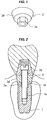
Fig. 1 is a perspective view of one example of a dental implant abutment made of titanium according to the present invention. -
Fig. 2 is a longitudinal cross-sectional view illustrating a state after completing a dental implant treatment using the dental implant abutment illustrated inFig. 1 . -
Fig. 3 is a perspective view of another example of a dental implant abutment made of titanium according to the present invention. -
Fig. 4 is a longitudinal cross-sectional view illustrating a state after completing a dental implant treatment using the dental implant abutment illustrated inFig. 3 . -
Fig. 5 is a perspective view of other example of a dental implant abutment made of titanium according to the present invention. -
Fig. 6 is a perspective view of other example of a dental implant abutment made of titanium according to the present invention. -
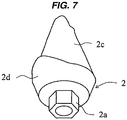
Fig. 7 is a perspective view of other example of a dental implant abutment made of titanium according to the present invention. - According to an aspect of a dental implant abutment made of titanium of the present invention, the surface color tone has a value of L* within a range from 40 to 44, a value of a* within a range from 21 to 40, and a value of b* within a range from -20 to 10 represented by L*a*b* color system.
- Namely, the L*a*b* color system is to analyze the color tone with three factors of L* showing lightness (brightness), a* showing hue (the degree of red and green), and b* showing chroma (the degree of yellow and blue), and to express the color tone with three values of L*, a*, and b*. It is necessary that the value of L* showing lightness (brightness) is 40 to 44. A reason of this is that if the value of L* is less than 40, the abutment itself is too dark. As a result, when the gingiva is irradiated by the reflected light, the gingiva looks black, so that it is not preferable. If the value of L* is more than 44, the abutment is too light conversely. As a result, the gingiva looks unnaturally, so that it is not preferable. Particularly, it is more preferable that the value of L* is 41 to 43.5.
- Further, it is necessary that the value of a* showing hue (the degree of red and green) is 21 to 40. A reason of this is that if the value of a* is less than 21, green is too strong. As a result, when the gingiva is irradiated by the reflected light, the gingiva looks black, so that it is not preferable. If the value of a* is more than 40, redness is too strong. As a result, the gingiva looks rather unnaturally, so that it is not preferable. Particularly, it is more preferable that the value of a* is 21 to 37.
- Furthermore, it is necessary that the value of b* showing chroma (the degree of yellow and blue) is -20 to 10. A reason of this is that if the value of b* is less than -20, yellow is too weak, so that the effect of object of the present invention is hardly obtained. If the value of b* is more than 10, yellow is too strong. As a result, when gingiva is irradiated by the reflected light, the gingiva looks rather unhealthy, so that it is not preferable. Particularly, it is preferable that the value of b* is -16 to 10.
- As a method for coloring the titanium surface of the dental implant abutment made of titanium according to the present invention, conventionally known coloring methods such as anodic oxidation treatment, nitriding treatment, and the like can be used. In addition, since a colored layer formed by such coloring methods for the surface of the dental implant abutment made of titanium is thin, processing the surface after the coloring treatment is not preferable.
- The dental implant abutment made of titanium according to the present invention will be described in detail below with reference to the drawings.
- In the drawings, a
dental implant fixture 1 is embedded in a jawbone of a lost tooth part, is bonded to the jawbone, and comes to be an artificial tooth root, in the dental implant treatment to recover the lost oral function of a lost tooth part. Thedental implant fixture 1 has an approximately pillar shape as shown in Japanese Patent Application Laid-Open No.H7-80003 2003-325552 dental implant fixture 1 has a female screw 1 a screwed in the axial direction of a center thereof. Thedental implant fixture 1 has, on the intraoral side thereof, anengagement part 1b for engaging adental implant abutment 2 made of titanium according to the present invention, which will be described below, so as not to rotate thedental implant abutment 2. When anengagement part 2a provided on the side of thedental implant fixture 1 of thedental implant abutment 2 has a prismatic shape such as hexagon or the like as illustrated inFigs. 1 and3 , theengagement part 1 b has, in a transverse section thereof, a concave part having a shape fitting to the prismatic shape. When theengagement part 2a provided on the side of thedental implant fixture 1 of thedental implant abutment 2 has, in a transverse section thereof, an angular concave part of hexagon or the like as illustrated inFig. 5 , theengagement part 1b has a pillar shape fitting to the angular shape. Further, when theengagement part 2a provided on the side of thedental implant fixture 1 of thedental implant abutment 2 has protrusions on an outer periphery of a pillar shape at specific intervals as illustrated inFig. 6 , theengagement part 1 b has a transverse section having recessions on an outer periphery of a round shape at specific intervals. Furthermore, when theengagement part 1b has a pillar shape, a through hole communicating to the female screw 1 a is formed at theengagement part 1 b. - A dental implant abutment made of
titanium 2 according to the present invention is mounted on the intraoral side of thedental implant fixture 1 embedded in a jawbone and coming to be an artificial tooth root. The dental implant abutment penetrates gingiva, and comes to be a base of an upper structure. The surface color tone of the dental implant abutment, which is represented by L*a*b* color system, has a vale of L* within a range from 40 to 44, a value of a* within a range from 21 to 40, and a value of b* within a range from -20 to 10. More particularly, the surface of the dental implant abutment is colored by the coloring method such as anodic oxidation treatment, nitriding treatment, or the like so as to have a color with the value of L* within a range from 40 to 44, the value of a* within a range from 21 to 40, and the value of b* within a range from -20 to 10 represented by L*a*b* color system. - As for the dental implant abutment made of
titanium 2 according to the present invention, the following embodiments can be used. In an embodiment, anengagement part 2a is provided on the side opposite to the intraoral side to engage with theengagement part 1b provided on the intraoral side of thedental implant fixture 1. Theengagement part 2a has a shape, which includes a prismatic shape such as hexagon, or the like as illustrated inFigs. 1 and3 , includes a transverse section having a concave part with an angular shape such as hexagon, or the like as illustrated inFig. 5 , or includes protrusions on an outer periphery of a pillar shape at specific intervals as illustrated inFig. 6 . Further, in the embodiment, an intraoralside engagement part 2b is provided on the intraoral side and engaged with a prosthesis forming member so as not to rotate the prosthesis forming member, wherein the prosthesis forming member is made of a different member from thedental implant abutment 2, as illustrated inFigs. 1 and 2 , and Japanese Patent Application Laid-Open No.H07-80003 prosthesis fixing portion 2c having an approximately truncated-conical outer surface shape is formed integrally on the intraoral side of a portion penetrating gingiva as illustrated inFigs. 4 ,5 and 6 and Japanese Patent Application Laid-Open No.2003-325552 prosthesis fixing portion 2c having a shape fitting to the shape of a dental prosthesis to be formed is integrally formed as illustrated inFig. 7 . Further, as for aportion 2d hiding in gingiva, when the dental implant abutment made oftitanium 2 is mounted on thedental implant fixture 1 by engaging theengagement part 2a with the intraoral side of thedental implant fixture 1, theportion 2d can have a shape expanding to the intraoral side from an outer face on the intraoral side of thedental implant fixture 1 as illustrated inFigs. 1 and 2 and Japanese Patent Application Laid-Open Nos.H7-80003 2003-325552 portion 2d can have a shape expanding to the intraoral side from the more inner side than an outer periphery of an end face on the intraoral side of thedental implant fixture 1 as illustrated inFig. 4 andUS Patent No. 5674072 . Furthermore, theportion 2d can have a plane shape of an end part on the intraoral side expanding to the intraoral side from the intraoral side surface of thedental implant fixture 1. Furthermore, theportion 2d can have a scallop structure in which the interdental papillae part side is more projected on the intraoral side, considering an interdental papillae part, as illustrated inFig. 7 . - A dental implant abutment having a shape illustrated in
Fig. 1 was made from a titanium block body by a cutting machining. Then, a dental implant abutment made of titanium (Examples 1 to 3) was produced by subjecting the whole dental implant abutment to a polishing operation which was usually used in a dental field, and subjecting the dental implant abutment to electrolytic polishing and anodic oxidation treatment, while applying voltage shown in Table 1 to the dental implant abutment. - Furthermore, Comparative examples 1 and 2 of the dental implant abutments made of titanium were produced by applying different voltage and processing time from the aforementioned treatment. Comparative example 3 of a dental implant abutment made of titanium was produced by not being subjected to the treatment.
- The values of L*, a* and b* represented by L*a*b* color system of these dental implant abutments made of titanium were measured by a measuring method according to JIS Z8722, 2009 and a spectral photometry device (product name: CM-700d, produced by KONICA MINOLTA HOLDINGS, INC). These results were shown in Table 1.
- Furthermore, a dental hard resin (product name; GRADIA GUM, produced by GC Corporation) imitating gingiva of a patient is bonded to each hiding portion in the gingiva of the dental implant abutments made of titanium of Examples 1 to 3 and Comparative examples 1 and 2, and polymerized to become a test piece. The test piece was visually observed from the side of the dental hard resin in a human oral cavity. The effects were shown in Table 1 based on the measured results.
- Good: The reflected light from an abutment, which was incident to an oral cavity, sharpened gingiva.
- Bad: The reflected light from an abutment, which was incident to an oral cavity, seldom sharpened gingiva.
- Very Bad: Metallic color of an abutment attracted attention.
Table 1 Applied Voltage Treating Time L* a* b* Effects Example 1 60V 3 min. 43.2 21.2 10.0 Good Example 2 60V 5 min. 41.8 26.0 9.5 Good Example 3 65V 3 min. 40.2 37.1 -16.5 Good Comparative example 1 55V 3 min. 56.6 2.9 45.1 Bad Comparative example 2 65V 1 min. 46.2 23.4 -7.4 Bad (There are some color irregularities) Comparative example 3 Not treated Not treated 52.2 0.4 2.3 Very Bad
Claims (1)
- A dental implant abutment made of titanium mounted on the intraoral side of a dental implant fixture, said fixture being embedded in a jawbone as an artificial tooth root, penetrating through gingiva, and coming to be a base of an upper structure,
wherein a color tone represented by L*a*b* color system on the surface of the dental implant abutment made of titanium satisfies the following requirement:L* being in the range of 40 to 44,a* being in the range of 21 to 40, andb* being in the range of -20 to 10.
Applications Claiming Priority (1)
| Application Number | Priority Date | Filing Date | Title |
|---|---|---|---|
| JP2011036988A JP2012170723A (en) | 2011-02-23 | 2011-02-23 | Dental implant abutment made of titanium |
Publications (1)
| Publication Number | Publication Date |
|---|---|
| EP2491887A1 true EP2491887A1 (en) | 2012-08-29 |
Family
ID=45655097
Family Applications (1)
| Application Number | Title | Priority Date | Filing Date |
|---|---|---|---|
| EP12001075A Withdrawn EP2491887A1 (en) | 2011-02-23 | 2012-02-17 | Dental implant abutment made of titanium |
Country Status (3)
| Country | Link |
|---|---|
| US (1) | US20120214132A1 (en) |
| EP (1) | EP2491887A1 (en) |
| JP (1) | JP2012170723A (en) |
Cited By (1)
| Publication number | Priority date | Publication date | Assignee | Title |
|---|---|---|---|---|
| CN110420066A (en) * | 2014-02-05 | 2019-11-08 | 奥菲尔·弗罗蒙维奇 | Bone Implants and Implant Abutments |
Families Citing this family (13)
| Publication number | Priority date | Publication date | Assignee | Title |
|---|---|---|---|---|
| JP5834136B2 (en) * | 2011-05-16 | 2015-12-16 | バイオメット・3アイ・エルエルシー | Temporary prosthesis assembly |
| EP2662051A1 (en) * | 2012-05-11 | 2013-11-13 | Dentsply IH AB | Medical device having a surface comprising nanoparticles |
| USD731655S1 (en) | 2013-03-15 | 2015-06-09 | Benedict Lui | Dental implant abutment |
| KR101499067B1 (en) * | 2013-08-05 | 2015-03-06 | 오스템임플란트(주) | Dental implant assembly |
| USD732169S1 (en) | 2013-09-16 | 2015-06-16 | Benedict Lui | Dental implant abutment |
| EP2862542B1 (en) * | 2013-10-15 | 2016-05-25 | ZL Microdent-Attachment GmbH & Co. KG | Retention matrix and dental implant system |
| KR101669893B1 (en) * | 2015-02-13 | 2016-10-28 | 주식회사 워랜텍 | The dual structure abutments of the implant |
| JP2017074312A (en) * | 2015-10-16 | 2017-04-20 | 有限会社アトキンス | Shade guide for abutment of dental implant, and usage thereof |
| ES2951021T3 (en) * | 2020-01-13 | 2023-10-17 | Ivoclar Vivadent Ag | Dental milling machine and dental milling procedure |
| KR102311246B1 (en) * | 2021-01-28 | 2021-10-14 | 이노덴 주식회사 | Movable type abutment for dental and implant having the same |
| KR102427069B1 (en) * | 2021-08-04 | 2022-07-29 | 덴탈오케이 주식회사 | Implant crown fastening structure and fastening method |
| KR102594042B1 (en) * | 2022-12-29 | 2023-10-25 | (주)덴탈릭스 | Implant with double separable abutment |
| US20260076783A1 (en) * | 2024-09-16 | 2026-03-19 | Evollution Ip Holdings, Inc. | Anatomical and scannable healing abutments |
Citations (5)
| Publication number | Priority date | Publication date | Assignee | Title |
|---|---|---|---|---|
| JPH0780003A (en) | 1993-09-17 | 1995-03-28 | G C:Kk | Dental prosthetic appliance maintaining device |
| US5674072A (en) | 1994-10-17 | 1997-10-07 | Degussa Aktiengesellschaft | Two-phase tooth implant |
| JP2003325552A (en) | 2002-05-16 | 2003-11-18 | Man Yong Kim | Structure for dental implant |
| US20080274440A1 (en) * | 2004-03-12 | 2008-11-06 | Ivoclar Vivadent Ag | Dental Implant Abutment |
| JP2009082171A (en) | 2007-09-27 | 2009-04-23 | Gc Corp | Dental implant abutment |
Family Cites Families (2)
| Publication number | Priority date | Publication date | Assignee | Title |
|---|---|---|---|---|
| US8506296B2 (en) * | 2005-06-17 | 2013-08-13 | Zimmer Dental, Inc. | Dental restorative system and components |
| WO2009111041A1 (en) * | 2008-03-05 | 2009-09-11 | New York University | Metallic dental implants and prosthetic appliances having colored ceramic surfaces |
-
2011
- 2011-02-23 JP JP2011036988A patent/JP2012170723A/en not_active Withdrawn
-
2012
- 2012-02-17 EP EP12001075A patent/EP2491887A1/en not_active Withdrawn
- 2012-02-22 US US13/402,185 patent/US20120214132A1/en not_active Abandoned
Patent Citations (5)
| Publication number | Priority date | Publication date | Assignee | Title |
|---|---|---|---|---|
| JPH0780003A (en) | 1993-09-17 | 1995-03-28 | G C:Kk | Dental prosthetic appliance maintaining device |
| US5674072A (en) | 1994-10-17 | 1997-10-07 | Degussa Aktiengesellschaft | Two-phase tooth implant |
| JP2003325552A (en) | 2002-05-16 | 2003-11-18 | Man Yong Kim | Structure for dental implant |
| US20080274440A1 (en) * | 2004-03-12 | 2008-11-06 | Ivoclar Vivadent Ag | Dental Implant Abutment |
| JP2009082171A (en) | 2007-09-27 | 2009-04-23 | Gc Corp | Dental implant abutment |
Cited By (2)
| Publication number | Priority date | Publication date | Assignee | Title |
|---|---|---|---|---|
| CN110420066A (en) * | 2014-02-05 | 2019-11-08 | 奥菲尔·弗罗蒙维奇 | Bone Implants and Implant Abutments |
| CN110420066B (en) * | 2014-02-05 | 2022-05-06 | 施特劳曼控股股份公司 | Bone implant and implant abutment |
Also Published As
| Publication number | Publication date |
|---|---|
| JP2012170723A (en) | 2012-09-10 |
| US20120214132A1 (en) | 2012-08-23 |
Similar Documents
| Publication | Publication Date | Title |
|---|---|---|
| US20120214132A1 (en) | Dental implant abutment made of titanium | |
| EP2042122A1 (en) | Dental implant abutment | |
| EP2362759B1 (en) | Dental implant abutment | |
| US10010384B2 (en) | Dental component for the individual prosthetic reconstruction of a tooth | |
| US5810592A (en) | Anatomical restoration dental implant system with healing abutment member and matching abutment member | |
| KR101160121B1 (en) | dental implant | |
| US10617493B2 (en) | Detachable implant-coupling prosthesis | |
| US20030068599A1 (en) | Esthetic profile endosseous root-formed dental implant | |
| RU2676972C1 (en) | Dental implant | |
| US8491301B2 (en) | Guide block for a dental implant procedure and guide block assembly, and implant procedural technique using same | |
| US20160008103A1 (en) | Dental Prosthesis and a Dental Implant Including Same | |
| WO2015025656A1 (en) | Prosthesis | |
| AU701795B2 (en) | Dental root implant | |
| JP2011200570A (en) | Ceramic-made dental implant abutment | |
| US20180092720A1 (en) | Dual hued dental implant and method of making same | |
| KR20200003654A (en) | Hybrid healing abutment and method for fabricating the same | |
| US20100216094A1 (en) | Dental implant fixture | |
| EP2907473B1 (en) | Palatal implant for overdenture | |
| AU2008218242A1 (en) | Integrated dental abutment block | |
| WO2005089250A2 (en) | Abutment for dental implant | |
| JP2013063316A (en) | Dental implant repair system | |
| KR101265969B1 (en) | Manufacturing method of customized abutment for implant having enhanced adatation | |
| KR102019873B1 (en) | Coupling Structure of non_hexa abutment and fixture | |
| JP2012196363A (en) | Method for manufacturing titanium dental implant abutment | |
| US20190029777A1 (en) | Fixture having hexagonal female screw part |
Legal Events
| Date | Code | Title | Description |
|---|---|---|---|
| PUAI | Public reference made under article 153(3) epc to a published international application that has entered the european phase |
Free format text: ORIGINAL CODE: 0009012 |
|
| AK | Designated contracting states |
Kind code of ref document: A1 Designated state(s): AL AT BE BG CH CY CZ DE DK EE ES FI FR GB GR HR HU IE IS IT LI LT LU LV MC MK MT NL NO PL PT RO RS SE SI SK SM TR |
|
| AX | Request for extension of the european patent |
Extension state: BA ME |
|
| 17P | Request for examination filed |
Effective date: 20130227 |
|
| STAA | Information on the status of an ep patent application or granted ep patent |
Free format text: STATUS: THE APPLICATION HAS BEEN WITHDRAWN |
|
| 18W | Application withdrawn |
Effective date: 20150123 |