EP2491007B1 - Inhibiteurs de la prostaglandine E2 synthase microsomale - Google Patents
Inhibiteurs de la prostaglandine E2 synthase microsomale Download PDFInfo
- Publication number
- EP2491007B1 EP2491007B1 EP10765442.8A EP10765442A EP2491007B1 EP 2491007 B1 EP2491007 B1 EP 2491007B1 EP 10765442 A EP10765442 A EP 10765442A EP 2491007 B1 EP2491007 B1 EP 2491007B1
- Authority
- EP
- European Patent Office
- Prior art keywords
- alkyl
- optionally substituted
- groups
- fluoro
- cycloalkyl
- Prior art date
- Legal status (The legal status is an assumption and is not a legal conclusion. Google has not performed a legal analysis and makes no representation as to the accuracy of the status listed.)
- Not-in-force
Links
- 0 Cc(nc1*)c(C(N*)=O)c(*)c1NC(c1c(*)c(*)c(*)c(CNC=C=CN)c1*)=* Chemical compound Cc(nc1*)c(C(N*)=O)c(*)c1NC(c1c(*)c(*)c(*)c(CNC=C=CN)c1*)=* 0.000 description 58
- DQCWRLIWQGSWTC-UHFFFAOYSA-N CC(C)(C)C(NCc(cc1)cc(C(Nc(cc2C(NC3CC3)=O)ccc2Cl)=O)c1Cl)=O Chemical compound CC(C)(C)C(NCc(cc1)cc(C(Nc(cc2C(NC3CC3)=O)ccc2Cl)=O)c1Cl)=O DQCWRLIWQGSWTC-UHFFFAOYSA-N 0.000 description 2
- GRNLTMSBRPSKRM-UHFFFAOYSA-N C(C1)C1(CCNC1)C1C1C2NCCC12 Chemical compound C(C1)C1(CCNC1)C1C1C2NCCC12 GRNLTMSBRPSKRM-UHFFFAOYSA-N 0.000 description 1
- GCQZRSVHYPEACN-UHFFFAOYSA-N C=C1OCCC1 Chemical compound C=C1OCCC1 GCQZRSVHYPEACN-UHFFFAOYSA-N 0.000 description 1
- OZQOZSPANWIBRL-UHFFFAOYSA-N CC(C(F)(F)F)C(NCc(cc1)cc(C(Nc(cc2C(Nc(cc3)ccc3Br)=O)ccc2OC)=O)c1Cl)=O Chemical compound CC(C(F)(F)F)C(NCc(cc1)cc(C(Nc(cc2C(Nc(cc3)ccc3Br)=O)ccc2OC)=O)c1Cl)=O OZQOZSPANWIBRL-UHFFFAOYSA-N 0.000 description 1
- YIZMHCBPICGYME-UHFFFAOYSA-N CC(C(F)(F)F)NC(c(cc(cc1)NC(c(c(Cl)c(CNC(C(C)(C)C(F)(F)F)=O)cc2)c2Cl)=O)c1OCC(F)F)=O Chemical compound CC(C(F)(F)F)NC(c(cc(cc1)NC(c(c(Cl)c(CNC(C(C)(C)C(F)(F)F)=O)cc2)c2Cl)=O)c1OCC(F)F)=O YIZMHCBPICGYME-UHFFFAOYSA-N 0.000 description 1
- VBOHKIDGTQGPTC-UHFFFAOYSA-N CC(C)(C(F)(F)F)C(NCc(cc1)cc(C(Nc(cc2)cc(C(NC)=O)c2OCC(F)F)=O)c1Cl)=O Chemical compound CC(C)(C(F)(F)F)C(NCc(cc1)cc(C(Nc(cc2)cc(C(NC)=O)c2OCC(F)F)=O)c1Cl)=O VBOHKIDGTQGPTC-UHFFFAOYSA-N 0.000 description 1
- TYYOQCFBWIXTSD-UHFFFAOYSA-N CC(C)(C(F)(F)F)C(NCc(ccc(Cl)c1C(Nc(cc2)cc(C(NCC3CC3)=O)c2OCC(F)F)=O)c1Cl)=O Chemical compound CC(C)(C(F)(F)F)C(NCc(ccc(Cl)c1C(Nc(cc2)cc(C(NCC3CC3)=O)c2OCC(F)F)=O)c1Cl)=O TYYOQCFBWIXTSD-UHFFFAOYSA-N 0.000 description 1
- TXIWZODAAZXERB-UHFFFAOYSA-N CC(C)(C(F)(F)F)C(NCc(ccc(Cl)c1C(Nc(cc2)cc(C(NCCC(F)(F)F)=O)c2OCC(F)F)=O)c1Cl)=O Chemical compound CC(C)(C(F)(F)F)C(NCc(ccc(Cl)c1C(Nc(cc2)cc(C(NCCC(F)(F)F)=O)c2OCC(F)F)=O)c1Cl)=O TXIWZODAAZXERB-UHFFFAOYSA-N 0.000 description 1
- XAEGOLPWJJFONH-UHFFFAOYSA-N CC(C)(C(F)(F)F)C(NCc(ccc(Cl)c1C(Nc(cc2)cc(C(Nc(cc3Cl)ccc3F)=O)c2OCC(F)F)=O)c1F)=O Chemical compound CC(C)(C(F)(F)F)C(NCc(ccc(Cl)c1C(Nc(cc2)cc(C(Nc(cc3Cl)ccc3F)=O)c2OCC(F)F)=O)c1F)=O XAEGOLPWJJFONH-UHFFFAOYSA-N 0.000 description 1
- IKPNZTDXUFVHOW-UHFFFAOYSA-N CC(C)(C(F)(F)F)C(NCl)=O Chemical compound CC(C)(C(F)(F)F)C(NCl)=O IKPNZTDXUFVHOW-UHFFFAOYSA-N 0.000 description 1
- RFJQJPMSXOCWRV-UHFFFAOYSA-N CC(C)(C(NCc(cc1)cc(C(Nc(cc2)cc(C(Nc(cc3)ccc3Br)=O)c2OCC(F)F)=O)c1Cl)=O)O Chemical compound CC(C)(C(NCc(cc1)cc(C(Nc(cc2)cc(C(Nc(cc3)ccc3Br)=O)c2OCC(F)F)=O)c1Cl)=O)O RFJQJPMSXOCWRV-UHFFFAOYSA-N 0.000 description 1
- PTSHLERAJGIIAN-UHFFFAOYSA-N CC(C)(C)C(C(Cc(ccc(C)c1C(C(c(cc2C(C(C(CC3)CCC3C(C)(C)N)=[IH])=O)ccc2OCC(N)N)=[IH])=O)c1N)=[IH])=O Chemical compound CC(C)(C)C(C(Cc(ccc(C)c1C(C(c(cc2C(C(C(CC3)CCC3C(C)(C)N)=[IH])=O)ccc2OCC(N)N)=[IH])=O)c1N)=[IH])=O PTSHLERAJGIIAN-UHFFFAOYSA-N 0.000 description 1
- LKDAEUDOCCZVDK-UHFFFAOYSA-N CC(C)(C)C(C1C(Cc(cc2)cc(C([O]=C)=O)c2N)C1)=O Chemical compound CC(C)(C)C(C1C(Cc(cc2)cc(C([O]=C)=O)c2N)C1)=O LKDAEUDOCCZVDK-UHFFFAOYSA-N 0.000 description 1
- NWNZQVBYWIUAQB-UHFFFAOYSA-N CC(C)(C)C(CC1)CCC1NC(c(cc(cc1)NC(c(cc(CNC(C(C)(C)C(F)(F)F)=O)cc2)c2Cl)=O)c1OCC(F)F)=O Chemical compound CC(C)(C)C(CC1)CCC1NC(c(cc(cc1)NC(c(cc(CNC(C(C)(C)C(F)(F)F)=O)cc2)c2Cl)=O)c1OCC(F)F)=O NWNZQVBYWIUAQB-UHFFFAOYSA-N 0.000 description 1
- VPTZOENVWJAISO-UHFFFAOYSA-N CC(C)(C)C(NCc(cc1)cc(C(Nc(cc2)cc(C(NC(CC3)CCC3C(F)(F)F)=O)c2N(C)C)=O)c1Cl)=O Chemical compound CC(C)(C)C(NCc(cc1)cc(C(Nc(cc2)cc(C(NC(CC3)CCC3C(F)(F)F)=O)c2N(C)C)=O)c1Cl)=O VPTZOENVWJAISO-UHFFFAOYSA-N 0.000 description 1
- JTDUVVTXSQWLNC-UHFFFAOYSA-N CC(C)(C)C(NCc(cc1)cc(C(Nc(cc2C(NC3CC3)=O)ccc2OC)=O)c1Cl)=O Chemical compound CC(C)(C)C(NCc(cc1)cc(C(Nc(cc2C(NC3CC3)=O)ccc2OC)=O)c1Cl)=O JTDUVVTXSQWLNC-UHFFFAOYSA-N 0.000 description 1
- YFQGXIHVHCEKFN-UHFFFAOYSA-N CC(C)(C)C(NCc(cc1)cc(C(Nc(cc2C(Nc(cc3)ccc3Br)=O)ccc2Cl)=O)c1Cl)=O Chemical compound CC(C)(C)C(NCc(cc1)cc(C(Nc(cc2C(Nc(cc3)ccc3Br)=O)ccc2Cl)=O)c1Cl)=O YFQGXIHVHCEKFN-UHFFFAOYSA-N 0.000 description 1
- FBIBTSGLLFCMQQ-UHFFFAOYSA-N CC(C)(C)C(NCc(cc1)cc(C(Nc(cc2C(Nc(cc3)ccc3Br)=O)ccc2F)=O)c1Cl)=O Chemical compound CC(C)(C)C(NCc(cc1)cc(C(Nc(cc2C(Nc(cc3)ccc3Br)=O)ccc2F)=O)c1Cl)=O FBIBTSGLLFCMQQ-UHFFFAOYSA-N 0.000 description 1
- HFFPMZYTSMOLIY-UHFFFAOYSA-N CC(C)(C)C(NCc(cc1C(Nc(cc2C(CCCC(CC3)CCC3C(F)(F)F)=O)ccc2OCC(F)(F)F)=O)ccc1Cl)=O Chemical compound CC(C)(C)C(NCc(cc1C(Nc(cc2C(CCCC(CC3)CCC3C(F)(F)F)=O)ccc2OCC(F)(F)F)=O)ccc1Cl)=O HFFPMZYTSMOLIY-UHFFFAOYSA-N 0.000 description 1
- JLSGLXQRILMGGV-UHFFFAOYSA-N CC(C)(C)C(NCc(ccc(Cl)c1C(Nc(cn2)cc(C(CC(CC3)CCC3C(F)(F)F)=O)c2OCC(F)F)=O)c1Cl)=O Chemical compound CC(C)(C)C(NCc(ccc(Cl)c1C(Nc(cn2)cc(C(CC(CC3)CCC3C(F)(F)F)=O)c2OCC(F)F)=O)c1Cl)=O JLSGLXQRILMGGV-UHFFFAOYSA-N 0.000 description 1
- CAUXQOLTFGCRKD-UHFFFAOYSA-N CC(C)(CC1)CCC1N Chemical compound CC(C)(CC1)CCC1N CAUXQOLTFGCRKD-UHFFFAOYSA-N 0.000 description 1
- OMEMAPDMQXGFEY-UHFFFAOYSA-N CC(C)C(C(NCc(cc1)cc(C(Nc(cc2)cc(C(Nc(cc3)ccc3Br)=O)c2OCC(F)F)=O)c1Cl)=O)O Chemical compound CC(C)C(C(NCc(cc1)cc(C(Nc(cc2)cc(C(Nc(cc3)ccc3Br)=O)c2OCC(F)F)=O)c1Cl)=O)O OMEMAPDMQXGFEY-UHFFFAOYSA-N 0.000 description 1
- AWGRZLROKQHUFV-UHFFFAOYSA-N CC(CC1)CCC1NC(c(cc(cc1)NC(c(cc(CNC(C(C)(C)C(C)(F)F)=O)cc2)c2Cl)=O)c1OCC(F)F)=O Chemical compound CC(CC1)CCC1NC(c(cc(cc1)NC(c(cc(CNC(C(C)(C)C(C)(F)F)=O)cc2)c2Cl)=O)c1OCC(F)F)=O AWGRZLROKQHUFV-UHFFFAOYSA-N 0.000 description 1
- RNKSFVKBQHAUAS-UHFFFAOYSA-N CC1(CCCCC1)C(NCc1ccc(C)c(C(Nc(cc2C(NC)=O)ccc2Cl)=O)c1)=O Chemical compound CC1(CCCCC1)C(NCc1ccc(C)c(C(Nc(cc2C(NC)=O)ccc2Cl)=O)c1)=O RNKSFVKBQHAUAS-UHFFFAOYSA-N 0.000 description 1
- RSBMBMBHNGYNHD-UHFFFAOYSA-N CCC(C)(CC)C(NCc(cc1)cc(C(Nc(cc2C(Nc(cc3)ccc3Br)=O)ccc2OC)=O)c1Cl)=O Chemical compound CCC(C)(CC)C(NCc(cc1)cc(C(Nc(cc2C(Nc(cc3)ccc3Br)=O)ccc2OC)=O)c1Cl)=O RSBMBMBHNGYNHD-UHFFFAOYSA-N 0.000 description 1
- QDEJKHGYTPSFFH-UHFFFAOYSA-N CCOC(c(cc(cc1)N[O-])c1F)=O Chemical compound CCOC(c(cc(cc1)N[O-])c1F)=O QDEJKHGYTPSFFH-UHFFFAOYSA-N 0.000 description 1
- WWPYCCFQICYTEN-UHFFFAOYSA-N CCOC(c1cc(CN)ccc1Cl)=O Chemical compound CCOC(c1cc(CN)ccc1Cl)=O WWPYCCFQICYTEN-UHFFFAOYSA-N 0.000 description 1
- HDKROJJLUDYIJJ-UHFFFAOYSA-N COc(c(C(Nc(cc1)ccc1Br)=O)c1)ccc1NC(c(cc(CNS(C1CC1)(=O)=O)cc1)c1Cl)=O Chemical compound COc(c(C(Nc(cc1)ccc1Br)=O)c1)ccc1NC(c(cc(CNS(C1CC1)(=O)=O)cc1)c1Cl)=O HDKROJJLUDYIJJ-UHFFFAOYSA-N 0.000 description 1
- SNHCIQPWWCADQC-UHFFFAOYSA-N COc(c(C(Nc(cc1)ccc1Br)=O)c1)ccc1NC(c1cc(CNC(C2(CC2)O)=O)ccc1Cl)=O Chemical compound COc(c(C(Nc(cc1)ccc1Br)=O)c1)ccc1NC(c1cc(CNC(C2(CC2)O)=O)ccc1Cl)=O SNHCIQPWWCADQC-UHFFFAOYSA-N 0.000 description 1
- UTOWYFJWQPQMTL-ZMFCMNQTSA-N C[C@H](Cc1cc(C(Cc(cc2)cc(C(Nc(ccc(C)c3)c3Cl)=O)c2OCC(C)F)=O)c(C)cc1)C(C(C)(C)C(F)(F)F)=O Chemical compound C[C@H](Cc1cc(C(Cc(cc2)cc(C(Nc(ccc(C)c3)c3Cl)=O)c2OCC(C)F)=O)c(C)cc1)C(C(C)(C)C(F)(F)F)=O UTOWYFJWQPQMTL-ZMFCMNQTSA-N 0.000 description 1
- YFQKOOJYQYRSTI-UHFFFAOYSA-N NCc(cc1)cc(C(O)=O)c1Cl Chemical compound NCc(cc1)cc(C(O)=O)c1Cl YFQKOOJYQYRSTI-UHFFFAOYSA-N 0.000 description 1
- CRNZPUUGHRGZGM-UHFFFAOYSA-N O=C(C1CC1)NCc(cc1)cc(C(Nc(cc2C(NC3CC3)=O)ccc2Cl)=O)c1Cl Chemical compound O=C(C1CC1)NCc(cc1)cc(C(Nc(cc2C(NC3CC3)=O)ccc2Cl)=O)c1Cl CRNZPUUGHRGZGM-UHFFFAOYSA-N 0.000 description 1
- CUTTYILYNZAKTP-UHFFFAOYSA-N O=S(C(c1ccc(C=CS2(=O)=O)c2c1)=Cc1c2)c1ccc2-c1cc2ccccc2[s]1 Chemical compound O=S(C(c1ccc(C=CS2(=O)=O)c2c1)=Cc1c2)c1ccc2-c1cc2ccccc2[s]1 CUTTYILYNZAKTP-UHFFFAOYSA-N 0.000 description 1
- UMHFSEWKWORSLP-UHFFFAOYSA-N O=S1(C=CC=C1)=O Chemical compound O=S1(C=CC=C1)=O UMHFSEWKWORSLP-UHFFFAOYSA-N 0.000 description 1
- MFCHPVAHSLFZLO-UHFFFAOYSA-N O=S1(C=CNC1)=O Chemical compound O=S1(C=CNC1)=O MFCHPVAHSLFZLO-UHFFFAOYSA-N 0.000 description 1
- WUXNQNXSTVVMSU-UHFFFAOYSA-N O=S1(C=COC1)=O Chemical compound O=S1(C=COC1)=O WUXNQNXSTVVMSU-UHFFFAOYSA-N 0.000 description 1
- BCAFVEKQMGZIDA-UHFFFAOYSA-N O=S1(C=NCC1)=O Chemical compound O=S1(C=NCC1)=O BCAFVEKQMGZIDA-UHFFFAOYSA-N 0.000 description 1
- VORVHWJDEJFDAZ-UHFFFAOYSA-N O=S1(CN=CC1)=O Chemical compound O=S1(CN=CC1)=O VORVHWJDEJFDAZ-UHFFFAOYSA-N 0.000 description 1
- IOEQIVZQJVKJCS-UHFFFAOYSA-N O=S1C(c2ccc[s]2)=CC=C1 Chemical compound O=S1C(c2ccc[s]2)=CC=C1 IOEQIVZQJVKJCS-UHFFFAOYSA-N 0.000 description 1
- MBVUVOZGHXIZSC-UHFFFAOYSA-N O=S1C=COC1 Chemical compound O=S1C=COC1 MBVUVOZGHXIZSC-UHFFFAOYSA-N 0.000 description 1
- GVLRTOYGRNLSDW-UHFFFAOYSA-N c1n[nH]c2c1cccn2 Chemical compound c1n[nH]c2c1cccn2 GVLRTOYGRNLSDW-UHFFFAOYSA-N 0.000 description 1
- JXKMQJKZBLPDAR-UHFFFAOYSA-N c1nc(cc(-c2nc3cccnc3[nH]2)nc2)c2[nH]1 Chemical compound c1nc(cc(-c2nc3cccnc3[nH]2)nc2)c2[nH]1 JXKMQJKZBLPDAR-UHFFFAOYSA-N 0.000 description 1
Classifications
-
- C—CHEMISTRY; METALLURGY
- C07—ORGANIC CHEMISTRY
- C07D—HETEROCYCLIC COMPOUNDS
- C07D213/00—Heterocyclic compounds containing six-membered rings, not condensed with other rings, with one nitrogen atom as the only ring hetero atom and three or more double bonds between ring members or between ring members and non-ring members
- C07D213/02—Heterocyclic compounds containing six-membered rings, not condensed with other rings, with one nitrogen atom as the only ring hetero atom and three or more double bonds between ring members or between ring members and non-ring members having three double bonds between ring members or between ring members and non-ring members
- C07D213/04—Heterocyclic compounds containing six-membered rings, not condensed with other rings, with one nitrogen atom as the only ring hetero atom and three or more double bonds between ring members or between ring members and non-ring members having three double bonds between ring members or between ring members and non-ring members having no bond between the ring nitrogen atom and a non-ring member or having only hydrogen or carbon atoms directly attached to the ring nitrogen atom
- C07D213/60—Heterocyclic compounds containing six-membered rings, not condensed with other rings, with one nitrogen atom as the only ring hetero atom and three or more double bonds between ring members or between ring members and non-ring members having three double bonds between ring members or between ring members and non-ring members having no bond between the ring nitrogen atom and a non-ring member or having only hydrogen or carbon atoms directly attached to the ring nitrogen atom with hetero atoms or with carbon atoms having three bonds to hetero atoms with at the most one bond to halogen, e.g. ester or nitrile radicals, directly attached to ring carbon atoms
- C07D213/78—Carbon atoms having three bonds to hetero atoms, with at the most one bond to halogen, e.g. ester or nitrile radicals
- C07D213/81—Amides; Imides
- C07D213/82—Amides; Imides in position 3
-
- A—HUMAN NECESSITIES
- A61—MEDICAL OR VETERINARY SCIENCE; HYGIENE
- A61P—SPECIFIC THERAPEUTIC ACTIVITY OF CHEMICAL COMPOUNDS OR MEDICINAL PREPARATIONS
- A61P11/00—Drugs for disorders of the respiratory system
- A61P11/06—Antiasthmatics
-
- A—HUMAN NECESSITIES
- A61—MEDICAL OR VETERINARY SCIENCE; HYGIENE
- A61P—SPECIFIC THERAPEUTIC ACTIVITY OF CHEMICAL COMPOUNDS OR MEDICINAL PREPARATIONS
- A61P19/00—Drugs for skeletal disorders
- A61P19/02—Drugs for skeletal disorders for joint disorders, e.g. arthritis, arthrosis
-
- A—HUMAN NECESSITIES
- A61—MEDICAL OR VETERINARY SCIENCE; HYGIENE
- A61P—SPECIFIC THERAPEUTIC ACTIVITY OF CHEMICAL COMPOUNDS OR MEDICINAL PREPARATIONS
- A61P29/00—Non-central analgesic, antipyretic or antiinflammatory agents, e.g. antirheumatic agents; Non-steroidal antiinflammatory drugs [NSAID]
-
- A—HUMAN NECESSITIES
- A61—MEDICAL OR VETERINARY SCIENCE; HYGIENE
- A61P—SPECIFIC THERAPEUTIC ACTIVITY OF CHEMICAL COMPOUNDS OR MEDICINAL PREPARATIONS
- A61P43/00—Drugs for specific purposes, not provided for in groups A61P1/00-A61P41/00
-
- C—CHEMISTRY; METALLURGY
- C07—ORGANIC CHEMISTRY
- C07C—ACYCLIC OR CARBOCYCLIC COMPOUNDS
- C07C237/00—Carboxylic acid amides, the carbon skeleton of the acid part being further substituted by amino groups
- C07C237/28—Carboxylic acid amides, the carbon skeleton of the acid part being further substituted by amino groups having the carbon atom of at least one of the carboxamide groups bound to a carbon atom of a non-condensed six-membered aromatic ring of the carbon skeleton
- C07C237/42—Carboxylic acid amides, the carbon skeleton of the acid part being further substituted by amino groups having the carbon atom of at least one of the carboxamide groups bound to a carbon atom of a non-condensed six-membered aromatic ring of the carbon skeleton having nitrogen atoms of amino groups bound to the carbon skeleton of the acid part, further acylated
-
- C—CHEMISTRY; METALLURGY
- C07—ORGANIC CHEMISTRY
- C07C—ACYCLIC OR CARBOCYCLIC COMPOUNDS
- C07C237/00—Carboxylic acid amides, the carbon skeleton of the acid part being further substituted by amino groups
- C07C237/28—Carboxylic acid amides, the carbon skeleton of the acid part being further substituted by amino groups having the carbon atom of at least one of the carboxamide groups bound to a carbon atom of a non-condensed six-membered aromatic ring of the carbon skeleton
- C07C237/44—Carboxylic acid amides, the carbon skeleton of the acid part being further substituted by amino groups having the carbon atom of at least one of the carboxamide groups bound to a carbon atom of a non-condensed six-membered aromatic ring of the carbon skeleton having carbon atoms of carboxamide groups, amino groups and singly-bound oxygen atoms bound to carbon atoms of the same non-condensed six-membered aromatic ring
-
- C—CHEMISTRY; METALLURGY
- C07—ORGANIC CHEMISTRY
- C07C—ACYCLIC OR CARBOCYCLIC COMPOUNDS
- C07C255/00—Carboxylic acid nitriles
- C07C255/01—Carboxylic acid nitriles having cyano groups bound to acyclic carbon atoms
- C07C255/23—Carboxylic acid nitriles having cyano groups bound to acyclic carbon atoms containing cyano groups and carboxyl groups, other than cyano groups, bound to the same unsaturated acyclic carbon skeleton
-
- C—CHEMISTRY; METALLURGY
- C07—ORGANIC CHEMISTRY
- C07C—ACYCLIC OR CARBOCYCLIC COMPOUNDS
- C07C255/00—Carboxylic acid nitriles
- C07C255/49—Carboxylic acid nitriles having cyano groups bound to carbon atoms of six-membered aromatic rings of a carbon skeleton
- C07C255/58—Carboxylic acid nitriles having cyano groups bound to carbon atoms of six-membered aromatic rings of a carbon skeleton containing cyano groups and singly-bound nitrogen atoms, not being further bound to other hetero atoms, bound to the carbon skeleton
- C07C255/60—Carboxylic acid nitriles having cyano groups bound to carbon atoms of six-membered aromatic rings of a carbon skeleton containing cyano groups and singly-bound nitrogen atoms, not being further bound to other hetero atoms, bound to the carbon skeleton at least one of the singly-bound nitrogen atoms being acylated
-
- C—CHEMISTRY; METALLURGY
- C07—ORGANIC CHEMISTRY
- C07C—ACYCLIC OR CARBOCYCLIC COMPOUNDS
- C07C311/00—Amides of sulfonic acids, i.e. compounds having singly-bound oxygen atoms of sulfo groups replaced by nitrogen atoms, not being part of nitro or nitroso groups
- C07C311/14—Sulfonamides having sulfur atoms of sulfonamide groups bound to carbon atoms of rings other than six-membered aromatic rings
-
- C—CHEMISTRY; METALLURGY
- C07—ORGANIC CHEMISTRY
- C07D—HETEROCYCLIC COMPOUNDS
- C07D205/00—Heterocyclic compounds containing four-membered rings with one nitrogen atom as the only ring hetero atom
- C07D205/02—Heterocyclic compounds containing four-membered rings with one nitrogen atom as the only ring hetero atom not condensed with other rings
- C07D205/04—Heterocyclic compounds containing four-membered rings with one nitrogen atom as the only ring hetero atom not condensed with other rings having no double bonds between ring members or between ring members and non-ring members
-
- C—CHEMISTRY; METALLURGY
- C07—ORGANIC CHEMISTRY
- C07D—HETEROCYCLIC COMPOUNDS
- C07D207/00—Heterocyclic compounds containing five-membered rings not condensed with other rings, with one nitrogen atom as the only ring hetero atom
- C07D207/02—Heterocyclic compounds containing five-membered rings not condensed with other rings, with one nitrogen atom as the only ring hetero atom with only hydrogen or carbon atoms directly attached to the ring nitrogen atom
- C07D207/04—Heterocyclic compounds containing five-membered rings not condensed with other rings, with one nitrogen atom as the only ring hetero atom with only hydrogen or carbon atoms directly attached to the ring nitrogen atom having no double bonds between ring members or between ring members and non-ring members
- C07D207/10—Heterocyclic compounds containing five-membered rings not condensed with other rings, with one nitrogen atom as the only ring hetero atom with only hydrogen or carbon atoms directly attached to the ring nitrogen atom having no double bonds between ring members or between ring members and non-ring members with hetero atoms or with carbon atoms having three bonds to hetero atoms with at the most one bond to halogen, e.g. ester or nitrile radicals, directly attached to ring carbon atoms
-
- C—CHEMISTRY; METALLURGY
- C07—ORGANIC CHEMISTRY
- C07D—HETEROCYCLIC COMPOUNDS
- C07D207/00—Heterocyclic compounds containing five-membered rings not condensed with other rings, with one nitrogen atom as the only ring hetero atom
- C07D207/02—Heterocyclic compounds containing five-membered rings not condensed with other rings, with one nitrogen atom as the only ring hetero atom with only hydrogen or carbon atoms directly attached to the ring nitrogen atom
- C07D207/18—Heterocyclic compounds containing five-membered rings not condensed with other rings, with one nitrogen atom as the only ring hetero atom with only hydrogen or carbon atoms directly attached to the ring nitrogen atom having one double bond between ring members or between a ring member and a non-ring member
- C07D207/22—Heterocyclic compounds containing five-membered rings not condensed with other rings, with one nitrogen atom as the only ring hetero atom with only hydrogen or carbon atoms directly attached to the ring nitrogen atom having one double bond between ring members or between a ring member and a non-ring member with hetero atoms or with carbon atoms having three bonds to hetero atoms with at the most one bond to halogen, e.g. ester or nitrile radicals, directly attached to ring carbon atoms
-
- C—CHEMISTRY; METALLURGY
- C07—ORGANIC CHEMISTRY
- C07D—HETEROCYCLIC COMPOUNDS
- C07D207/00—Heterocyclic compounds containing five-membered rings not condensed with other rings, with one nitrogen atom as the only ring hetero atom
- C07D207/02—Heterocyclic compounds containing five-membered rings not condensed with other rings, with one nitrogen atom as the only ring hetero atom with only hydrogen or carbon atoms directly attached to the ring nitrogen atom
- C07D207/30—Heterocyclic compounds containing five-membered rings not condensed with other rings, with one nitrogen atom as the only ring hetero atom with only hydrogen or carbon atoms directly attached to the ring nitrogen atom having two double bonds between ring members or between ring members and non-ring members
- C07D207/34—Heterocyclic compounds containing five-membered rings not condensed with other rings, with one nitrogen atom as the only ring hetero atom with only hydrogen or carbon atoms directly attached to the ring nitrogen atom having two double bonds between ring members or between ring members and non-ring members with hetero atoms or with carbon atoms having three bonds to hetero atoms with at the most one bond to halogen, e.g. ester or nitrile radicals, directly attached to ring carbon atoms
-
- C—CHEMISTRY; METALLURGY
- C07—ORGANIC CHEMISTRY
- C07D—HETEROCYCLIC COMPOUNDS
- C07D209/00—Heterocyclic compounds containing five-membered rings, condensed with other rings, with one nitrogen atom as the only ring hetero atom
- C07D209/02—Heterocyclic compounds containing five-membered rings, condensed with other rings, with one nitrogen atom as the only ring hetero atom condensed with one carbocyclic ring
- C07D209/04—Indoles; Hydrogenated indoles
- C07D209/08—Indoles; Hydrogenated indoles with only hydrogen atoms or radicals containing only hydrogen and carbon atoms, directly attached to carbon atoms of the hetero ring
-
- C—CHEMISTRY; METALLURGY
- C07—ORGANIC CHEMISTRY
- C07D—HETEROCYCLIC COMPOUNDS
- C07D211/00—Heterocyclic compounds containing hydrogenated pyridine rings, not condensed with other rings
- C07D211/04—Heterocyclic compounds containing hydrogenated pyridine rings, not condensed with other rings with only hydrogen or carbon atoms directly attached to the ring nitrogen atom
- C07D211/06—Heterocyclic compounds containing hydrogenated pyridine rings, not condensed with other rings with only hydrogen or carbon atoms directly attached to the ring nitrogen atom having no double bonds between ring members or between ring members and non-ring members
- C07D211/08—Heterocyclic compounds containing hydrogenated pyridine rings, not condensed with other rings with only hydrogen or carbon atoms directly attached to the ring nitrogen atom having no double bonds between ring members or between ring members and non-ring members with hydrocarbon or substituted hydrocarbon radicals directly attached to ring carbon atoms
- C07D211/10—Heterocyclic compounds containing hydrogenated pyridine rings, not condensed with other rings with only hydrogen or carbon atoms directly attached to the ring nitrogen atom having no double bonds between ring members or between ring members and non-ring members with hydrocarbon or substituted hydrocarbon radicals directly attached to ring carbon atoms with radicals containing only carbon and hydrogen atoms attached to ring carbon atoms
- C07D211/14—Heterocyclic compounds containing hydrogenated pyridine rings, not condensed with other rings with only hydrogen or carbon atoms directly attached to the ring nitrogen atom having no double bonds between ring members or between ring members and non-ring members with hydrocarbon or substituted hydrocarbon radicals directly attached to ring carbon atoms with radicals containing only carbon and hydrogen atoms attached to ring carbon atoms with hydrocarbon or substituted hydrocarbon radicals attached to the ring nitrogen atom
-
- C—CHEMISTRY; METALLURGY
- C07—ORGANIC CHEMISTRY
- C07D—HETEROCYCLIC COMPOUNDS
- C07D211/00—Heterocyclic compounds containing hydrogenated pyridine rings, not condensed with other rings
- C07D211/04—Heterocyclic compounds containing hydrogenated pyridine rings, not condensed with other rings with only hydrogen or carbon atoms directly attached to the ring nitrogen atom
- C07D211/06—Heterocyclic compounds containing hydrogenated pyridine rings, not condensed with other rings with only hydrogen or carbon atoms directly attached to the ring nitrogen atom having no double bonds between ring members or between ring members and non-ring members
- C07D211/08—Heterocyclic compounds containing hydrogenated pyridine rings, not condensed with other rings with only hydrogen or carbon atoms directly attached to the ring nitrogen atom having no double bonds between ring members or between ring members and non-ring members with hydrocarbon or substituted hydrocarbon radicals directly attached to ring carbon atoms
- C07D211/10—Heterocyclic compounds containing hydrogenated pyridine rings, not condensed with other rings with only hydrogen or carbon atoms directly attached to the ring nitrogen atom having no double bonds between ring members or between ring members and non-ring members with hydrocarbon or substituted hydrocarbon radicals directly attached to ring carbon atoms with radicals containing only carbon and hydrogen atoms attached to ring carbon atoms
- C07D211/16—Heterocyclic compounds containing hydrogenated pyridine rings, not condensed with other rings with only hydrogen or carbon atoms directly attached to the ring nitrogen atom having no double bonds between ring members or between ring members and non-ring members with hydrocarbon or substituted hydrocarbon radicals directly attached to ring carbon atoms with radicals containing only carbon and hydrogen atoms attached to ring carbon atoms with acylated ring nitrogen atom
-
- C—CHEMISTRY; METALLURGY
- C07—ORGANIC CHEMISTRY
- C07D—HETEROCYCLIC COMPOUNDS
- C07D211/00—Heterocyclic compounds containing hydrogenated pyridine rings, not condensed with other rings
- C07D211/04—Heterocyclic compounds containing hydrogenated pyridine rings, not condensed with other rings with only hydrogen or carbon atoms directly attached to the ring nitrogen atom
- C07D211/06—Heterocyclic compounds containing hydrogenated pyridine rings, not condensed with other rings with only hydrogen or carbon atoms directly attached to the ring nitrogen atom having no double bonds between ring members or between ring members and non-ring members
- C07D211/08—Heterocyclic compounds containing hydrogenated pyridine rings, not condensed with other rings with only hydrogen or carbon atoms directly attached to the ring nitrogen atom having no double bonds between ring members or between ring members and non-ring members with hydrocarbon or substituted hydrocarbon radicals directly attached to ring carbon atoms
- C07D211/18—Heterocyclic compounds containing hydrogenated pyridine rings, not condensed with other rings with only hydrogen or carbon atoms directly attached to the ring nitrogen atom having no double bonds between ring members or between ring members and non-ring members with hydrocarbon or substituted hydrocarbon radicals directly attached to ring carbon atoms with substituted hydrocarbon radicals attached to ring carbon atoms
-
- C—CHEMISTRY; METALLURGY
- C07—ORGANIC CHEMISTRY
- C07D—HETEROCYCLIC COMPOUNDS
- C07D211/00—Heterocyclic compounds containing hydrogenated pyridine rings, not condensed with other rings
- C07D211/04—Heterocyclic compounds containing hydrogenated pyridine rings, not condensed with other rings with only hydrogen or carbon atoms directly attached to the ring nitrogen atom
- C07D211/06—Heterocyclic compounds containing hydrogenated pyridine rings, not condensed with other rings with only hydrogen or carbon atoms directly attached to the ring nitrogen atom having no double bonds between ring members or between ring members and non-ring members
- C07D211/36—Heterocyclic compounds containing hydrogenated pyridine rings, not condensed with other rings with only hydrogen or carbon atoms directly attached to the ring nitrogen atom having no double bonds between ring members or between ring members and non-ring members with hetero atoms or with carbon atoms having three bonds to hetero atoms with at the most one bond to halogen, e.g. ester or nitrile radicals, directly attached to ring carbon atoms
- C07D211/38—Halogen atoms or nitro radicals
-
- C—CHEMISTRY; METALLURGY
- C07—ORGANIC CHEMISTRY
- C07D—HETEROCYCLIC COMPOUNDS
- C07D213/00—Heterocyclic compounds containing six-membered rings, not condensed with other rings, with one nitrogen atom as the only ring hetero atom and three or more double bonds between ring members or between ring members and non-ring members
- C07D213/02—Heterocyclic compounds containing six-membered rings, not condensed with other rings, with one nitrogen atom as the only ring hetero atom and three or more double bonds between ring members or between ring members and non-ring members having three double bonds between ring members or between ring members and non-ring members
- C07D213/04—Heterocyclic compounds containing six-membered rings, not condensed with other rings, with one nitrogen atom as the only ring hetero atom and three or more double bonds between ring members or between ring members and non-ring members having three double bonds between ring members or between ring members and non-ring members having no bond between the ring nitrogen atom and a non-ring member or having only hydrogen or carbon atoms directly attached to the ring nitrogen atom
- C07D213/24—Heterocyclic compounds containing six-membered rings, not condensed with other rings, with one nitrogen atom as the only ring hetero atom and three or more double bonds between ring members or between ring members and non-ring members having three double bonds between ring members or between ring members and non-ring members having no bond between the ring nitrogen atom and a non-ring member or having only hydrogen or carbon atoms directly attached to the ring nitrogen atom with substituted hydrocarbon radicals attached to ring carbon atoms
- C07D213/36—Radicals substituted by singly-bound nitrogen atoms
- C07D213/40—Acylated substituent nitrogen atom
-
- C—CHEMISTRY; METALLURGY
- C07—ORGANIC CHEMISTRY
- C07D—HETEROCYCLIC COMPOUNDS
- C07D213/00—Heterocyclic compounds containing six-membered rings, not condensed with other rings, with one nitrogen atom as the only ring hetero atom and three or more double bonds between ring members or between ring members and non-ring members
- C07D213/02—Heterocyclic compounds containing six-membered rings, not condensed with other rings, with one nitrogen atom as the only ring hetero atom and three or more double bonds between ring members or between ring members and non-ring members having three double bonds between ring members or between ring members and non-ring members
- C07D213/04—Heterocyclic compounds containing six-membered rings, not condensed with other rings, with one nitrogen atom as the only ring hetero atom and three or more double bonds between ring members or between ring members and non-ring members having three double bonds between ring members or between ring members and non-ring members having no bond between the ring nitrogen atom and a non-ring member or having only hydrogen or carbon atoms directly attached to the ring nitrogen atom
- C07D213/60—Heterocyclic compounds containing six-membered rings, not condensed with other rings, with one nitrogen atom as the only ring hetero atom and three or more double bonds between ring members or between ring members and non-ring members having three double bonds between ring members or between ring members and non-ring members having no bond between the ring nitrogen atom and a non-ring member or having only hydrogen or carbon atoms directly attached to the ring nitrogen atom with hetero atoms or with carbon atoms having three bonds to hetero atoms with at the most one bond to halogen, e.g. ester or nitrile radicals, directly attached to ring carbon atoms
- C07D213/72—Nitrogen atoms
- C07D213/75—Amino or imino radicals, acylated by carboxylic or carbonic acids, or by sulfur or nitrogen analogues thereof, e.g. carbamates
-
- C—CHEMISTRY; METALLURGY
- C07—ORGANIC CHEMISTRY
- C07D—HETEROCYCLIC COMPOUNDS
- C07D213/00—Heterocyclic compounds containing six-membered rings, not condensed with other rings, with one nitrogen atom as the only ring hetero atom and three or more double bonds between ring members or between ring members and non-ring members
- C07D213/02—Heterocyclic compounds containing six-membered rings, not condensed with other rings, with one nitrogen atom as the only ring hetero atom and three or more double bonds between ring members or between ring members and non-ring members having three double bonds between ring members or between ring members and non-ring members
- C07D213/04—Heterocyclic compounds containing six-membered rings, not condensed with other rings, with one nitrogen atom as the only ring hetero atom and three or more double bonds between ring members or between ring members and non-ring members having three double bonds between ring members or between ring members and non-ring members having no bond between the ring nitrogen atom and a non-ring member or having only hydrogen or carbon atoms directly attached to the ring nitrogen atom
- C07D213/60—Heterocyclic compounds containing six-membered rings, not condensed with other rings, with one nitrogen atom as the only ring hetero atom and three or more double bonds between ring members or between ring members and non-ring members having three double bonds between ring members or between ring members and non-ring members having no bond between the ring nitrogen atom and a non-ring member or having only hydrogen or carbon atoms directly attached to the ring nitrogen atom with hetero atoms or with carbon atoms having three bonds to hetero atoms with at the most one bond to halogen, e.g. ester or nitrile radicals, directly attached to ring carbon atoms
- C07D213/78—Carbon atoms having three bonds to hetero atoms, with at the most one bond to halogen, e.g. ester or nitrile radicals
- C07D213/81—Amides; Imides
-
- C—CHEMISTRY; METALLURGY
- C07—ORGANIC CHEMISTRY
- C07D—HETEROCYCLIC COMPOUNDS
- C07D215/00—Heterocyclic compounds containing quinoline or hydrogenated quinoline ring systems
- C07D215/02—Heterocyclic compounds containing quinoline or hydrogenated quinoline ring systems having no bond between the ring nitrogen atom and a non-ring member or having only hydrogen atoms or carbon atoms directly attached to the ring nitrogen atom
- C07D215/16—Heterocyclic compounds containing quinoline or hydrogenated quinoline ring systems having no bond between the ring nitrogen atom and a non-ring member or having only hydrogen atoms or carbon atoms directly attached to the ring nitrogen atom with hetero atoms or with carbon atoms having three bonds to hetero atoms with at the most one bond to halogen, e.g. ester or nitrile radicals, directly attached to ring carbon atoms
- C07D215/38—Nitrogen atoms
- C07D215/42—Nitrogen atoms attached in position 4
-
- C—CHEMISTRY; METALLURGY
- C07—ORGANIC CHEMISTRY
- C07D—HETEROCYCLIC COMPOUNDS
- C07D237/00—Heterocyclic compounds containing 1,2-diazine or hydrogenated 1,2-diazine rings
- C07D237/26—Heterocyclic compounds containing 1,2-diazine or hydrogenated 1,2-diazine rings condensed with carbocyclic rings or ring systems
- C07D237/30—Phthalazines
-
- C—CHEMISTRY; METALLURGY
- C07—ORGANIC CHEMISTRY
- C07D—HETEROCYCLIC COMPOUNDS
- C07D277/00—Heterocyclic compounds containing 1,3-thiazole or hydrogenated 1,3-thiazole rings
- C07D277/02—Heterocyclic compounds containing 1,3-thiazole or hydrogenated 1,3-thiazole rings not condensed with other rings
- C07D277/20—Heterocyclic compounds containing 1,3-thiazole or hydrogenated 1,3-thiazole rings not condensed with other rings having two or three double bonds between ring members or between ring members and non-ring members
- C07D277/32—Heterocyclic compounds containing 1,3-thiazole or hydrogenated 1,3-thiazole rings not condensed with other rings having two or three double bonds between ring members or between ring members and non-ring members with hetero atoms or with carbon atoms having three bonds to hetero atoms with at the most one bond to halogen, e.g. ester or nitrile radicals, directly attached to ring carbon atoms
- C07D277/38—Nitrogen atoms
- C07D277/44—Acylated amino or imino radicals
- C07D277/46—Acylated amino or imino radicals by carboxylic acids, or sulfur or nitrogen analogues thereof
-
- C—CHEMISTRY; METALLURGY
- C07—ORGANIC CHEMISTRY
- C07D—HETEROCYCLIC COMPOUNDS
- C07D277/00—Heterocyclic compounds containing 1,3-thiazole or hydrogenated 1,3-thiazole rings
- C07D277/02—Heterocyclic compounds containing 1,3-thiazole or hydrogenated 1,3-thiazole rings not condensed with other rings
- C07D277/20—Heterocyclic compounds containing 1,3-thiazole or hydrogenated 1,3-thiazole rings not condensed with other rings having two or three double bonds between ring members or between ring members and non-ring members
- C07D277/32—Heterocyclic compounds containing 1,3-thiazole or hydrogenated 1,3-thiazole rings not condensed with other rings having two or three double bonds between ring members or between ring members and non-ring members with hetero atoms or with carbon atoms having three bonds to hetero atoms with at the most one bond to halogen, e.g. ester or nitrile radicals, directly attached to ring carbon atoms
- C07D277/56—Carbon atoms having three bonds to hetero atoms with at the most one bond to halogen
-
- C—CHEMISTRY; METALLURGY
- C07—ORGANIC CHEMISTRY
- C07D—HETEROCYCLIC COMPOUNDS
- C07D277/00—Heterocyclic compounds containing 1,3-thiazole or hydrogenated 1,3-thiazole rings
- C07D277/60—Heterocyclic compounds containing 1,3-thiazole or hydrogenated 1,3-thiazole rings condensed with carbocyclic rings or ring systems
-
- C—CHEMISTRY; METALLURGY
- C07—ORGANIC CHEMISTRY
- C07D—HETEROCYCLIC COMPOUNDS
- C07D277/00—Heterocyclic compounds containing 1,3-thiazole or hydrogenated 1,3-thiazole rings
- C07D277/60—Heterocyclic compounds containing 1,3-thiazole or hydrogenated 1,3-thiazole rings condensed with carbocyclic rings or ring systems
- C07D277/62—Benzothiazoles
- C07D277/68—Benzothiazoles with hetero atoms or with carbon atoms having three bonds to hetero atoms with at the most one bond to halogen, e.g. ester or nitrile radicals, directly attached in position 2
- C07D277/82—Nitrogen atoms
-
- C—CHEMISTRY; METALLURGY
- C07—ORGANIC CHEMISTRY
- C07D—HETEROCYCLIC COMPOUNDS
- C07D295/00—Heterocyclic compounds containing polymethylene-imine rings with at least five ring members, 3-azabicyclo [3.2.2] nonane, piperazine, morpholine or thiomorpholine rings, having only hydrogen atoms directly attached to the ring carbon atoms
- C07D295/04—Heterocyclic compounds containing polymethylene-imine rings with at least five ring members, 3-azabicyclo [3.2.2] nonane, piperazine, morpholine or thiomorpholine rings, having only hydrogen atoms directly attached to the ring carbon atoms with substituted hydrocarbon radicals attached to ring nitrogen atoms
- C07D295/14—Heterocyclic compounds containing polymethylene-imine rings with at least five ring members, 3-azabicyclo [3.2.2] nonane, piperazine, morpholine or thiomorpholine rings, having only hydrogen atoms directly attached to the ring carbon atoms with substituted hydrocarbon radicals attached to ring nitrogen atoms substituted by carbon atoms having three bonds to hetero atoms with at the most one bond to halogen, e.g. ester or nitrile radicals
- C07D295/145—Heterocyclic compounds containing polymethylene-imine rings with at least five ring members, 3-azabicyclo [3.2.2] nonane, piperazine, morpholine or thiomorpholine rings, having only hydrogen atoms directly attached to the ring carbon atoms with substituted hydrocarbon radicals attached to ring nitrogen atoms substituted by carbon atoms having three bonds to hetero atoms with at the most one bond to halogen, e.g. ester or nitrile radicals with the ring nitrogen atoms and the carbon atoms with three bonds to hetero atoms attached to the same carbon chain, which is not interrupted by carbocyclic rings
- C07D295/15—Heterocyclic compounds containing polymethylene-imine rings with at least five ring members, 3-azabicyclo [3.2.2] nonane, piperazine, morpholine or thiomorpholine rings, having only hydrogen atoms directly attached to the ring carbon atoms with substituted hydrocarbon radicals attached to ring nitrogen atoms substituted by carbon atoms having three bonds to hetero atoms with at the most one bond to halogen, e.g. ester or nitrile radicals with the ring nitrogen atoms and the carbon atoms with three bonds to hetero atoms attached to the same carbon chain, which is not interrupted by carbocyclic rings to an acyclic saturated chain
-
- C—CHEMISTRY; METALLURGY
- C07—ORGANIC CHEMISTRY
- C07D—HETEROCYCLIC COMPOUNDS
- C07D295/00—Heterocyclic compounds containing polymethylene-imine rings with at least five ring members, 3-azabicyclo [3.2.2] nonane, piperazine, morpholine or thiomorpholine rings, having only hydrogen atoms directly attached to the ring carbon atoms
- C07D295/04—Heterocyclic compounds containing polymethylene-imine rings with at least five ring members, 3-azabicyclo [3.2.2] nonane, piperazine, morpholine or thiomorpholine rings, having only hydrogen atoms directly attached to the ring carbon atoms with substituted hydrocarbon radicals attached to ring nitrogen atoms
- C07D295/14—Heterocyclic compounds containing polymethylene-imine rings with at least five ring members, 3-azabicyclo [3.2.2] nonane, piperazine, morpholine or thiomorpholine rings, having only hydrogen atoms directly attached to the ring carbon atoms with substituted hydrocarbon radicals attached to ring nitrogen atoms substituted by carbon atoms having three bonds to hetero atoms with at the most one bond to halogen, e.g. ester or nitrile radicals
- C07D295/155—Heterocyclic compounds containing polymethylene-imine rings with at least five ring members, 3-azabicyclo [3.2.2] nonane, piperazine, morpholine or thiomorpholine rings, having only hydrogen atoms directly attached to the ring carbon atoms with substituted hydrocarbon radicals attached to ring nitrogen atoms substituted by carbon atoms having three bonds to hetero atoms with at the most one bond to halogen, e.g. ester or nitrile radicals with the ring nitrogen atoms and the carbon atoms with three bonds to hetero atoms separated by carbocyclic rings or by carbon chains interrupted by carbocyclic rings
-
- C—CHEMISTRY; METALLURGY
- C07—ORGANIC CHEMISTRY
- C07D—HETEROCYCLIC COMPOUNDS
- C07D307/00—Heterocyclic compounds containing five-membered rings having one oxygen atom as the only ring hetero atom
- C07D307/02—Heterocyclic compounds containing five-membered rings having one oxygen atom as the only ring hetero atom not condensed with other rings
- C07D307/04—Heterocyclic compounds containing five-membered rings having one oxygen atom as the only ring hetero atom not condensed with other rings having no double bonds between ring members or between ring members and non-ring members
- C07D307/18—Heterocyclic compounds containing five-membered rings having one oxygen atom as the only ring hetero atom not condensed with other rings having no double bonds between ring members or between ring members and non-ring members with hetero atoms or with carbon atoms having three bonds to hetero atoms with at the most one bond to halogen, e.g. ester or nitrile radicals, directly attached to ring carbon atoms
- C07D307/20—Oxygen atoms
-
- C—CHEMISTRY; METALLURGY
- C07—ORGANIC CHEMISTRY
- C07D—HETEROCYCLIC COMPOUNDS
- C07D307/00—Heterocyclic compounds containing five-membered rings having one oxygen atom as the only ring hetero atom
- C07D307/02—Heterocyclic compounds containing five-membered rings having one oxygen atom as the only ring hetero atom not condensed with other rings
- C07D307/04—Heterocyclic compounds containing five-membered rings having one oxygen atom as the only ring hetero atom not condensed with other rings having no double bonds between ring members or between ring members and non-ring members
- C07D307/18—Heterocyclic compounds containing five-membered rings having one oxygen atom as the only ring hetero atom not condensed with other rings having no double bonds between ring members or between ring members and non-ring members with hetero atoms or with carbon atoms having three bonds to hetero atoms with at the most one bond to halogen, e.g. ester or nitrile radicals, directly attached to ring carbon atoms
- C07D307/24—Carbon atoms having three bonds to hetero atoms with at the most one bond to halogen
-
- C—CHEMISTRY; METALLURGY
- C07—ORGANIC CHEMISTRY
- C07D—HETEROCYCLIC COMPOUNDS
- C07D309/00—Heterocyclic compounds containing six-membered rings having one oxygen atom as the only ring hetero atom, not condensed with other rings
- C07D309/02—Heterocyclic compounds containing six-membered rings having one oxygen atom as the only ring hetero atom, not condensed with other rings having no double bonds between ring members or between ring members and non-ring members
- C07D309/08—Heterocyclic compounds containing six-membered rings having one oxygen atom as the only ring hetero atom, not condensed with other rings having no double bonds between ring members or between ring members and non-ring members with hetero atoms or with carbon atoms having three bonds to hetero atoms with at the most one bond to halogen, e.g. ester or nitrile radicals, directly attached to ring carbon atoms
- C07D309/10—Oxygen atoms
- C07D309/12—Oxygen atoms only hydrogen atoms and one oxygen atom directly attached to ring carbon atoms, e.g. tetrahydropyranyl ethers
-
- C—CHEMISTRY; METALLURGY
- C07—ORGANIC CHEMISTRY
- C07D—HETEROCYCLIC COMPOUNDS
- C07D309/00—Heterocyclic compounds containing six-membered rings having one oxygen atom as the only ring hetero atom, not condensed with other rings
- C07D309/02—Heterocyclic compounds containing six-membered rings having one oxygen atom as the only ring hetero atom, not condensed with other rings having no double bonds between ring members or between ring members and non-ring members
- C07D309/08—Heterocyclic compounds containing six-membered rings having one oxygen atom as the only ring hetero atom, not condensed with other rings having no double bonds between ring members or between ring members and non-ring members with hetero atoms or with carbon atoms having three bonds to hetero atoms with at the most one bond to halogen, e.g. ester or nitrile radicals, directly attached to ring carbon atoms
- C07D309/14—Nitrogen atoms not forming part of a nitro radical
-
- C—CHEMISTRY; METALLURGY
- C07—ORGANIC CHEMISTRY
- C07D—HETEROCYCLIC COMPOUNDS
- C07D333/00—Heterocyclic compounds containing five-membered rings having one sulfur atom as the only ring hetero atom
- C07D333/02—Heterocyclic compounds containing five-membered rings having one sulfur atom as the only ring hetero atom not condensed with other rings
- C07D333/04—Heterocyclic compounds containing five-membered rings having one sulfur atom as the only ring hetero atom not condensed with other rings not substituted on the ring sulphur atom
- C07D333/26—Heterocyclic compounds containing five-membered rings having one sulfur atom as the only ring hetero atom not condensed with other rings not substituted on the ring sulphur atom with hetero atoms or with carbon atoms having three bonds to hetero atoms with at the most one bond to halogen, e.g. ester or nitrile radicals, directly attached to ring carbon atoms
- C07D333/38—Carbon atoms having three bonds to hetero atoms with at the most one bond to halogen, e.g. ester or nitrile radicals
-
- C—CHEMISTRY; METALLURGY
- C07—ORGANIC CHEMISTRY
- C07D—HETEROCYCLIC COMPOUNDS
- C07D335/00—Heterocyclic compounds containing six-membered rings having one sulfur atom as the only ring hetero atom
- C07D335/02—Heterocyclic compounds containing six-membered rings having one sulfur atom as the only ring hetero atom not condensed with other rings
-
- C—CHEMISTRY; METALLURGY
- C07—ORGANIC CHEMISTRY
- C07D—HETEROCYCLIC COMPOUNDS
- C07D417/00—Heterocyclic compounds containing two or more hetero rings, at least one ring having nitrogen and sulfur atoms as the only ring hetero atoms, not provided for by group C07D415/00
- C07D417/02—Heterocyclic compounds containing two or more hetero rings, at least one ring having nitrogen and sulfur atoms as the only ring hetero atoms, not provided for by group C07D415/00 containing two hetero rings
- C07D417/04—Heterocyclic compounds containing two or more hetero rings, at least one ring having nitrogen and sulfur atoms as the only ring hetero atoms, not provided for by group C07D415/00 containing two hetero rings directly linked by a ring-member-to-ring-member bond
-
- C—CHEMISTRY; METALLURGY
- C07—ORGANIC CHEMISTRY
- C07C—ACYCLIC OR CARBOCYCLIC COMPOUNDS
- C07C2601/00—Systems containing only non-condensed rings
- C07C2601/02—Systems containing only non-condensed rings with a three-membered ring
-
- C—CHEMISTRY; METALLURGY
- C07—ORGANIC CHEMISTRY
- C07C—ACYCLIC OR CARBOCYCLIC COMPOUNDS
- C07C2601/00—Systems containing only non-condensed rings
- C07C2601/04—Systems containing only non-condensed rings with a four-membered ring
-
- C—CHEMISTRY; METALLURGY
- C07—ORGANIC CHEMISTRY
- C07C—ACYCLIC OR CARBOCYCLIC COMPOUNDS
- C07C2601/00—Systems containing only non-condensed rings
- C07C2601/06—Systems containing only non-condensed rings with a five-membered ring
- C07C2601/08—Systems containing only non-condensed rings with a five-membered ring the ring being saturated
-
- C—CHEMISTRY; METALLURGY
- C07—ORGANIC CHEMISTRY
- C07C—ACYCLIC OR CARBOCYCLIC COMPOUNDS
- C07C2601/00—Systems containing only non-condensed rings
- C07C2601/12—Systems containing only non-condensed rings with a six-membered ring
- C07C2601/14—The ring being saturated
Definitions
- This invention relates to novel compounds, which are inhibitors of the microsomal prostaglandin E 2 synthase-1 (mPGES-1), pharmaceutical compositions containing them, and their use as medicaments for the treatment and/or prevention of inflammatory diseases and associated conditions such as inflammatory/nociceptive pain.
- mPGES-1 microsomal prostaglandin E 2 synthase-1
- rheumatoid diseases e.g. rheumatoid arthritis, osteoarthritis, diseases of the visceral system e.g. inflammatory bowel syndrome, autoimmune diseases, e.g. lupus erythematodes, lung diseases like asthma and COPD.
- Current treatment with non-steroidal anti-inflammatory drugs (NSAIDs) and cyclooxygenase (COX)-2 inhibitors are efficacious, but show a prevalence for gastrointestinal and cardiovascular side effects. There is a high need for new treatment options showing equivalent efficacy with an improved side effect profile.
- mPGES inhibitors may show such an improved side effect profile because they block the generation of PGE 2 in a more specific manner as described below.
- COX cyclooxygenase
- COX-1 cyclooxygenase
- COX-2 cyclooxygenase
- COX-1 cyclooxygenase
- COX-2 cyclooxygenase
- COX-1 cyclooxygenase
- COX-2 cyclooxygenase
- COX-1 cyclooxygenase
- COX-2 cyclooxygenase
- COXs metabolise arachidonic acid to the unstable intermediate prostaglandin H 2 (PGH 2 ).
- PGH 2 is further metabolized to other prostaglandins including PGE 2 , PGF 2 ⁇ , PGD 2 , prostacyclin and thromboxane A 2 .
- PGE 2 arachidonic acid metabolites are known to have pronounced physiological and pathophysiological activity including pro-inflammatory effects.
- PGE 2 in particular is known to be a strong pro-inflammatory mediator, and is also known to induce fever, inflammation and pain. Consequently, numerous drugs were developed with a view to inhibiting the formation of PGE 2 , including "NSAIDs” (non-steroidal antiinflammatory drugs) and “coxibs” (selective COX-2 inhibitors). These drugs act predominantly by inhibition of COX-1 and/or COX-2, thereby reducing the formation of PGE 2 .
- the inhibition of COXs has the disadvantage that it results in the reduction of the formation of all metabolites downstream of PGH 2 , some of which are known to have beneficial properties. In view of this, drugs which act by inhibition of COXs are therefore known/ suspected to cause adverse biological effects.
- the non-selective inhibition of COXs by NSAIDs may give rise to gastrointestinal side-effects and affect platelet and renal function.
- Even the selective inhibition of COX-2 by coxibs, whilst reducing such gastrointestinal side-effects, is believed to give rise to cardiovascular problems.
- PGH 2 may be transformed to PGE 2 by prostaglandin E synthases (PGES).
- PGES prostaglandin E synthases
- mPGES-1 and mPGES-2 Two microsomal prostaglandin E synthases
- cPGES cytosolic prostaglandin E synthase
- mPGES-1 is proposed to be closely linked to COX-2 and both enzyme's are upregulated during e.g. inflammation.
- agents that are capable of inhibiting the action of mPGES-1 and thereby reducing the formation of PGE 2 are likely to be of benefit for the treatment of inflammation and more general acute and chronic pain conditions.
- Inhibitors of the microsomal prostaglandine E2 synthase-1 are disclosed in Current Medicinal Chemistry, 2009, 16, 4274-4296 .
- the present invention provides a compound of formula I, in which
- C 1-6 -alkyl means an alkyl group or radical having 1 to 6 carbon atoms.
- the last named subgroup is the radical attachment point, for example, the substituent "aryl-C 1-3 -alkyl-" means an aryl group which is bound to a C 1-3 -alkyl-group, the latter of which is bound to the core or to the group to which the substituent is attached.
- An asterisk may be used in sub-formulas to indicate the bond which is connected to the core molecule as defined.
- a given chemical formula or name shall encompass tautomers and all stereo, optical and geometrical isomers (e.g. enantiomers, diastereomers, E/Z isomers etc%) and racemates thereof as well as mixtures in different proportions of the separate enantiomers, mixtures of diastereomers, or mixtures of any of the foregoing forms where such isomers and enantiomers exist, as well as salts, including pharmaceutically acceptable salts thereof and solvates thereof such as for instance hydrates including solvates of the free compounds or solvates of a salt of the compound.
- phrases "pharmaceutically acceptable” is employed herein to refer to those compounds, materials, compositions, and/or dosage forms which are, within the scope of sound medical judgment, suitable for use in contact with the tissues of human beings and animals without excessive toxicity, irritation, allergic response, or other problem or complication, and commensurate with a reasonable benefit/risk ratio.
- pharmaceutically acceptable salts refer to derivatives of the disclosed compounds wherein the parent compound is modified by making acid or base salts thereof.
- examples of pharmaceutically acceptable salts include, but are not limited to, mineral or organic acid salts of basic residues such as amines; alkali or organic salts of acidic residues such as carboxylic acids; and the like.
- such salts include salts from ammonia, L-arginine, betaine, benethamine, benzathine, calcium hydroxide, choline, deanol, diethanolamine (2,2'-iminobis(ethanol)), diethylamine, 2-(diethylamino)-ethanol, 2-aminoethanol, ethylenediamine, N-ethyl-glucamine, hydrabamine, 1H-imidazole, lysine, magnesium hydroxide, 4-(2-hydroxyethyl)-morpholine, piperazine, potassium hydroxide, 1-(2-hydroxy-ethyl)-pyrrolidine, sodium hydroxide, triethanolamine (2,2',2"-nitrilotris(ethanol)), trometh-amine, zinc hydroxide, acetic acid, 2.2-dichloro-acetic acid, adipic acid, alginic acid, ascorbic acid, L-aspartic acid, benzenesulfonic
- salts can be formed with cations from metals like aluminium, calcium, lithium, magnesium, potassium, sodium, zinc and the like. (also see Pharmaceutical salts, Berge, S.M. et al., J. Pharm. Sci., (1977), 66, 1-19 ).
- the pharmaceutically acceptable salts of the present invention can be synthesized from the parent compound which contains a basic or acidic moiety by conventional chemical methods. Generally, such salts can be prepared by reacting the free acid or base forms of these compounds with a sufficient amount of the appropriate base or acid in water or in an organic diluent like ether, ethyl acetate, ethanol, isopropanol, or acetonitrile, or a mixture thereof.
- Salts of other acids than those mentioned above which for example are useful for purifying or isolating the compounds of the present invention e.g. trifluoro acetate salts
- Salts of other acids than those mentioned above which for example are useful for purifying or isolating the compounds of the present invention also comprise a part of the invention.
- halogen generally denotes fluorine, chlorine, bromine and iodine.
- C 1-n -alkyl wherein n is an integer from 2 to n, either alone or in combination with another radical denotes an acyclic, saturated, branched or linear hydrocarbon radical with 1 to n C atoms.
- C 1-5 -alkyl embraces the radicals H 3 C-, H 3 C-CH 2 -, H 3 C-CH 2 -CH 2 -, H 3 C-CH(CH 3 )-, H 3 C-CH 2 -CH 2 -CH 2 -, H 3 C-CH 2 -CH(CH 3 )-, H 3 C-CH(CH 3 )-CH 2 -, H 3 C-C(CH 3 ) 2 -, H 3 C-CH 2 -CH 2 -CH 2 -CH 2 -, H 3 C-CH 2 -CH 2 -CH(CH 3 )-, H 3 C-CH 2 -CH(CH 3 )-CH 2 -, H 3 C-CH(CH 3 )-CH 2 -, H 3
- C 2-n -alkenyl is used for a group as defined in the definition for "C 1-n -alkyl” with at least two carbon atoms, if at least two of those carbon atoms of said group are bound to each other by a double bond.
- Alkenyl groups may exist as E (ent ought) and Z ( 1966 ) geometric isomers about each individual double bond. All such isomers and mixtures thereof are included within the scope of the invention.
- alkenyl groups include ethenyl, 1-propenyl, 2-propenyl, 1-butenyl, 2-butenyl, 3-butenyl, 1-pentenyl, 2-pentenyl, 3-pentenyl, 4-pentenyl, 1-hexenyl, 2-hexenyl, 3-hexenyl, 4-hexenyl, 5-hexenyl, etc..
- C 2-n -alkynyl is used for a group as defined in the definition for "C 1-n -alkyl” with at least two carbon atoms, if at least two of those carbon atoms of said group are bound to each other by a triple bond.
- alkynyl groups include ethynyl, 1-propynyl, 2-propynyl, 1-butynyl, 2-butynyl, 3-butynyl, 1-pentynyl, 2-pentynyl, 3-pentynyl, 4-pentynyl, 1-hexynyl, 2-hexynyl, 3-hexynyl, 4-hexynyl, 5-hexynyl, etc.
- C 3-n -cycloalkyl wherein n is an integer 3 to n, either alone or in combination with another radical denotes a cyclic hydrocarbon radical with 3 to n C atoms.
- cycloalkyl also includes bi-, tri- or tetra-cyclic ring structures consisting only of carbon and containing between one and four rings wherein such rings may be attached together in a pendent manner or may be fused.
- cycloalkyl additionally encompasses spiro systems, and bridged systems.
- the term cyclic hydrocarbon radical may also be fused to an phenyl ring.
- cycloalkyl includes the following exemplary structures which are not depicted as radicals as each form may be attached through a covalent bond to any atom of the cyclalkyl ring fragment as long as appropriate valencies are maintained:
- C 3-n -heterocycloalkyl wherein n is an integer > 3, either alone or in combination with another radical denotes a cyclic non-aromatic mono-, bi-, tri- or spirocyclic radical with 3 to n ring atoms wherein at least one ring atom is selected from nitrogen, oxygen or sulphur and wherein n is the upper limit of ring atoms.
- n is an integer > 3
- heterocycloalkyl groups with five or more ring atoms may contain one or two double bonds, forming for example a C 5-q heterocycloalkenyl group (where q is the upper limit of the range) e.g. a 3-pyrrolinyl group.
- an aromatic or heteroaromatic ring system can be fused to the heterocycloalkyl radical.
- heterocycloalkyl groups may, where appropriate, be located on any atom in the ring system including a heteroatom.
- heterocycloalkyl radicals may be via any atom in the non-aromatic ring system including (where appropriate) a heteroatom (such as a nitrogen atom) and also including an atom on any fused non-aromatic carbocyclic ring fragment that may be present as part of the ring system.
- heterocycloalkyl includes the following exemplary structures which are not depicted as radicals as each form may be attached through a covalent bond to any atom as long as appropriate valencies are maintained:
- aryl denotes a carbocyclic aromatic monocyclic group containing 6 carbon atoms which may be further fused to a second or third 5- or 6-membered carbo- or heterocyclic group which may be aromatic, saturated or unsaturated.
- Aryl includes, but is not limited to, phenyl, indanyl, indenyl, fluorenyl, naphthyl, anthracenyl, phenanthrenyl, tetrahydronaphthyl and dihydronaphthyl.
- aryl includes the following exemplary structures which are not depicted as radicals as each form may be attached through a covalent bond to any atom of the aromatic ring as long as appropriate valencies are maintained:
- heteroaryl as used herein, either alone or in combination with another radical, denotes an aromatic monocyclic group containing 5 or 6 atoms wherein at least one ring atom is selected from nitrogen, oxygen or sulphur. This ring system may be further fused to a second and third 5- to 7-membered carbo- or heterocyclic group which may be aromatic, saturated or unsaturated to generate a bi- or tricyclic ring system with not more than 14 ring atoms.
- heteroaryl is intended to include all the possible isomeric forms.
- heteroaryl includes the following exemplary structures which are not depicted as radicals as each form may be attached through a covalent bond to any atom of the mono-, bi- or tricyclic aromatic ring system as long as appropriate valencies are maintained (this explicitly includes also attachment via a carbon atom of the benzo-part of a bi- or tricycle):
- heteroaryl groups may, where appropriate, be located on any atom in the ring system including a heteroatom.
- the point of attachment of heteroaryl groups may be via any atom in the ring system including (where appropriate) a heteroatom (such as a nitrogen atom), or an atom on any fused aromatic ring that may be present as part of the ring system.
- compounds of formula I that are the subject of this invention include those that are stable. That is, compounds of the invention include those that are sufficiently robust to survive isolation from e.g. a reaction mixture to a useful degree of purity.
- the invention provides compounds of formula I in which
- the invention provides compounds of formula I as described above and in which
- the invention provides compounds of formula I according to any of the preceding embodiments and in which
- the invention provides compounds of formula I according to any of the preceding embodiments and in which
- the invention provides compounds of formula I according to any of the preceding embodiments and in which
- the invention provides compounds of formula I according to any of the preceding embodiments and in which
- the invention provides compounds of formula I according to any of the preceding embodiments and in which
- the invention provides compounds of formula I according to any of the preceding embodiments and in which
- the invention provides compounds of formula I according to any of the preceding embodiments and in which
- the invention provides compounds of formula I according to any of the preceding embodiments and in which
- the invention provides compounds of formula I according to any of the preceding embodiments and in which
- the invention provides compounds of formula I according to any of the preceding embodiments and in which
- the invention provides compounds of formula I according to any of the preceding embodiments and in which
- the invention provides compounds of formula I according to any of the preceding embodiments and in which
- the invention provides compounds of formula Ia or Ib in which:
- the invention provides compounds of formula Ia or Ib in which
- the invention provides compounds of formula Ic in which
- the invention provides compounds namely those of the examples described hereinafter.
- L 1 , L 2 or L 3 in the acyl building blocks III , V and VII respectively represent OH or Cl or O-C 1-2 alkyl and wherein II, IV and VI are the corresponding amine coupling partners.
- a suitable coupling reagent for example 1,1'-carbonyldiimidazole, N,N '-dicyclohexylcarbodiimide, N,N -diisopropylcarbodiimide, 1-(3-dimethylamino-propyl)-3-ethylcarbodiimide (or salt, e.g.
- a suitable base e.g. sodium hydride, sodium bicarbonate, potassium carbonate, pyrrolidinopyridine, pyridine, triethylamine, tributylamine, trimethylamine, dimethylaminopyridine, diisopropylamine, diisopropylethylamine, 1,8-diazabicyclo[5.4.0]undec-7-ene, sodium hydroxide, N -ethyldiisopro-pylamine, N -(methylpolystyrene)-4-(methylamino)pyridine, potassium bis(trimethylsilyl)-amide, sodium bis(trimethylsilyl)amide, potassium tert -butoxide, lithium diisopropylamide, lithium 2,2,6,6-tetramethylpiperidine or mixtures thereof) and in an appropriate solvent (e.g.
- a suitable base e.g. sodium hydride, sodium bicarbonate, potassium carbonate, pyrrolidinopyridine,
- compounds III, V , VII wherein L 1 , L 2 , L 3 represents OH may first be activated by treatment with a suitable reagent (e.g.
- oxalyl chloride thionyl chloride, phosphorous pentachloride, phosphorous oxychloride, 1-chloro-N,N,2-trimethyl-propenylamine or the like, or mixtures thereof
- an appropriate solvent e.g. dichloromethane, THF, acetonitrile, dimethylformamide, dimethylsulfoxide, toluene or benzene
- a suitable catalyst e.g. DMF
- step a, b or c when L 1 , L 2 , L 3 in III, V and VII represent chloro the following reaction conditions known to those skilled in the art can be used for step a, b or c: the reaction may be performed at around room temperature or above (e.g. up to 40-180°C), optionally in the presence of a suitable base (e.g.
- L 1 , L 2 , L 3 in III, V and VII represent O-C 1-2 alkyl step a
- b and c can be performed in the presence of, e.g. trimethylaluminium, optionally in the presence of a suitable solvent (e.g. dichloromethane or tetrahydrofuran) under an inert atmosphere.
- a suitable solvent e.g. dichloromethane or tetrahydrofuran
- Precursor II can be prepared according to a reaction sequence depicted in scheme d) wherein L 2a in VIII represents OH or chloro and PG amino in compound VIII and IX represents an amino-protecting group [e.g. a tert.-butyloxy carbonyl group, a benzyloxycarbonyl group, an allyloxycarbonyl group, a fluorenylmethyloxycarbonyl group, a trifluoracetyl group or other amino protecting groups which are known to those skilled in the art, for example mentioned in " Protective Groups in Organic Synthesis", 3rd edition, T.W. Greene & P.G.M. Wutz, Wiley-Interscience (1999 ).]:
- step d the compounds IV and VIII are coupled under amide coupling conditions as described above to furnish IX.
- step e the protecting group is removed according to standard conditions for example under acidic conditions (e.g. with HCl, H 2 SO 4 , trifluoro acetic acid etc.), under hydrogenolytic conditions with a suitable catalyst (e.g. Pd on charcoal, Pd black etc.), under basic conditions with a suitable base (e.g. NaOH, Ba(OH) 2 , piperidine, diisopropylethylamine etc.) or under thermal conditions (e.g at 150°C) in a suitable solvent (e.g.
- acidic conditions e.g. with HCl, H 2 SO 4 , trifluoro acetic acid etc.
- a suitable catalyst e.g. Pd on charcoal, Pd black etc.
- basic conditions e.g. NaOH, Ba(OH) 2 , piperidine, diisopropylethylamine etc.
- thermal conditions e.g at 150°C
- a suitable solvent e.g.
- step f the compounds X and V are coupled as described above for step a-c to furnish XI.
- the saponification step g wherein the ester XI is converted to the corresponding acid VIIa can be performed for example under acidic conditions (e.g. with HCl, H 2 SO 4 , trifluoro acetic acid etc.), under hydrogenolytic conditions with a suitable catalyst (e.g. Pd on charcoal, Pd-black etc.) or under basic conditions with a suitable base (e.g. LiOH, NaOH, KOH, Ba(OH) 2 ) to furnish the corresponding carboxylic acid VIIa, which can be directly used in the coupling step c described above using the coupling reagents mentioned before.
- acidic conditions e.g. with HCl, H 2 SO 4 , trifluoro acetic acid etc.
- a suitable catalyst e.g. Pd on charcoal, Pd-black etc.
- a suitable base e.g. LiOH, NaOH, KOH
- the carboxylic acid can be transformed in step h into the corresponding acid chloride VIIb by using for example thionyl chloride, oxalyl chloride or 1-chloro-N,N,2-trimethyl-propenylamine in a suitable solvent (e.g. DMF, THF, acetonitrile etc.) or without a solvent preferably at temperatures between 0°C-100°C.
- a suitable solvent e.g. DMF, THF, acetonitrile etc.
- Precursor IV can be prepared according to reaction sequence depicted in scheme f) wherein L 4 in XII is a suitable leaving group as defined for L 2 above (for example OH or Cl or O-C 1-2 alkyl).
- step i the compounds XII and VI are coupled as described above for step a-c to furnish XIII.
- the reduction of the nitro group in XIII in step j can be performed with H 2 /Raney-Nickel, H 2 /Palladium on carbon, Fe-powder/aqueous NH 4 Cl, Fe/HCl, Zn/HCl, Na 2 S 2 O SnCl 2 /HCl, Zn/HCl or NaBH 4 /CuCl or according to procedures described in the literature for example R. Larock, Comprehensive Organic Transformations, VCH Verlagstician, Weinheim (1989 ).
- Appropriate solvent for this step is for example dichloromethane, tetrahydrofuran (THF), acetonitrile, dimethylformamide (DMF), dimethylacetamide, N methylpyrrolidone, ethanol, methanol, isopropanol or mixtures of the above mentioned solvents.
- Precursor V can be prepared according to one of the reaction sequences depicted in schemes g) - i).
- precursor V and Va wherein L 5 represents OH can be prepared according to scheme g, wherein R acyl represents a C 1-6 alkyl group which might be substituted by one or more fluorine atoms (preferably a CF 3 group).
- reaction of XXI with XXII in step k is performed under strong acidic conditions (e.g. in conc. H 2 SO 4 ) preferably at room temperature.
- step I the amino function in XXIII is liberated under standard conditions for example under basic conditions (e.g with NaOH, KOH, KOtBu) in an appropriate solvent (e.g. THF, methanol or ethanol) or under acidic conditions (e.g. with HCl, H 2 SO 4 ) at room temperature.
- basic conditions e.g with NaOH, KOH, KOtBu
- an appropriate solvent e.g. THF, methanol or ethanol
- acidic conditions e.g. with HCl, H 2 SO 4
- step m The amine XXIV can then be directly coupled in step m with III under standard amide coupling conditions as described above for step a,b or c to furnish compound Va.
- precursor V can also be prepared according to scheme h, wherein L 6 is preferably OH or OC 1-2 alkyl, and LG1 is a standard leaving group, preferably chloro, bromo, iodo, a CH 3 S(O) 2 -O-group or a CF 3 S(O) 2 -O-group.
- L 6 is preferably OH or OC 1-2 alkyl
- LG1 is a standard leaving group, preferably chloro, bromo, iodo, a CH 3 S(O) 2 -O-group or a CF 3 S(O) 2 -O-group.
- step p the amino group is introduced in a nucleophilic substitution reaction preferably with an excess of the amine R 7 -NH 2 at around room temperature or above (e.g. up to 40-180°C), optionally in the presence of a suitable base (e.g.
- step q amine XXVII is converted into V using conditions already described above.
- precursor V can also be prepared according to scheme h, wherein L 6 is preferably OH or OC 1-2 alkyl, and LG1 is a standard leaving group, preferably a chloro, bromo, iodo, a CH 3 S(O) 2 -O-group or a CF 3 S(O) 2 -O-group or -OH.
- L 6 is preferably OH or OC 1-2 alkyl
- LG1 is a standard leaving group, preferably a chloro, bromo, iodo, a CH 3 S(O) 2 -O-group or a CF 3 S(O) 2 -O-group or -OH.
- step r compound XXX wherein LG 1 is a standard leaving group is carefully reacted with an azide source (e.g. NaN 3 ) in a suitable solvent (e.g DMSO, DMF, acetonitrile, toluene etc) preferably at room temperature or below, or when LG 1 is -OH the reaction may also be performed with diphenyl phosphoryl azide in a suitable solvent (e.g DMSO, DMF, acetonitrile, toluene etc) preferably at room temperature or below, optionally in presence of a suitable base (e.g. 1,8-diazabicyclo-[5,4,0]undec-7-ene).
- a suitable solvent e.g DMSO, DMF, acetonitrile, toluene etc
- a suitable base e.g. 1,8-diazabicyclo-[5,4,0]undec-7-ene
- step s the azide XXXI is converted into the amine XXXII under standard conditions for example with triphenyl phosphine/ammonia in a suitable solvent like THF, via hydrogenation with a suitable catalyst like palladium-on-charcoal or PtO 2 or according to procedures described in the literature for example R. Larock, Comprehensive Organic Transformations, VCH Verlagstician, Weinheim (1989 ).
- Protecting groups may be removed in accordance with techniques that are well known to those skilled in the art and as described hereinafter. For example, protected compounds / intermediates described herein may be converted chemically to unprotected compounds using standard deprotection techniques.
- the esterification reaction is optionally carried out in a solvent such as methylene chloride, N,N-dimethylformamide, benzene, toluene, chlorobenzene, tetrahydrofuran, 1,4-dioxane, or mixtures thereof or particularly advantageously in the corresponding alcohol optionally in the presence of an acid, e.g. hydrochloric acid, or a dehydrating agent, e.g.
- a solvent such as methylene chloride, N,N-dimethylformamide, benzene, toluene, chlorobenzene, tetrahydrofuran, 1,4-dioxane, or mixtures thereof or particularly advantageously in the corresponding alcohol optionally in the presence of an acid, e.g. hydrochloric acid, or a dehydrating agent, e.g.
- the ester formation may also be carried out by reacting a compound which contains a carboxy group with a corresponding alkyl halide in the presence of a base.
- the subsequent alkylation is optionally carried out in methylene chloride, N,N-dimethylformamide, benzene, toluene, chlorobenzene, tetrahydrofuran, 1,4-dioxane, or mixtures thereof with an alkylating agent such as a corresponding halide or sulfonic acid ester, e.g. methyl iodide, ethyl bromide, dimethyl sulfate, or benzyl chloride, optionally in the presence of a tertiary organic base or an inorganic base at temperatures between 0 and 150 °C, preferably between 0 and 100°C.
- an alkylating agent such as a corresponding halide or sulfonic acid ester, e.g. methyl iodide, ethyl bromide, dimethyl sulfate, or benzyl chloride, optionally in the presence of a tertiary organic base or
- chlorine, bromine, or iodine atom into an aromatic substructure may be carried out by reacting the aromatic compound with an appropriate electrophile of the respective halogen atom.
- Suited chlorine and bromine electrophiles may be e.g. N-halosuccinimide, HOCl, HOBr, tert-BuOCl, tert-BuOBr, chlorine, bromine, dibromoisocyanuric acid, pyridinium dichlorobromate, pyridinium tribromide, or sulfuryl chloride that may be used alone or in combination with an acid, e.g.
- hydrochloric acid hydrobromic acid, tetrafluoroboric acid, triflic acid, sulfuric acid, or acetic acid, or a Lewis acid, e.g. iron(III) halide, boron trifluoride hydrate, boron trifluoride etherate, or aluminum halide.
- Lewis acid e.g. iron(III) halide, boron trifluoride hydrate, boron trifluoride etherate, or aluminum halide.
- Further useful combinations may be LiBr and ceric ammonium nitrate, KCl or KBr with Oxone®, or KBr and sodium perborate.
- Suited iodine electrophiles may be generated from iodine and an oxidizing agent such as nitric acid, sulfur trioxide, manganese dioxide, HlO 3 , hydrogen peroxide, sodium periodate, peroxydisulfates, and Oxone®.
- Further suited iodine electrophiles may be e.g. iodine chloride, dichloroiodates, and N-iodosuccinimide. These iodine electrophiles are optionally used without an additive or in the presence of an acid such as acetic acid, trifluoroacetic acid, or sulfuric acid or a Lewis acid such as boron trifluoride hydrate or copper salts.
- nitro electrophile sources may be, for instance, nitric acid, acetyl nitrate, ceric ammonium nitrate, sodium nitrate, N 2 O 5 , alkyl nitrate, and nitronium tetrafluoroborate.
- Some of these reagents may be used without an additive, though, several of them are better used in combination with an acid, e.g. sulfuric acid or triflic acid, acetic anhydride, trifluoroacetic anhydride, Lewis acid, e.g. ytterbium triflate or iron acetate, P 2 O 5 , or a base.
- the SO 3 H group may be introduced by reacting the aromatic compound with, for example, concentrated sulfuric acid, SO 3 , CISO 3 H, or CISO 2 NMe 2 combined with indium triflate. Reacting the aromatic compound with CISO 3 H gives the corresponding chlorosulfonylated derivative that may be hydrolyzed to the sulfonic acid. Acylating the aromatic part is conducted using an acyl electrophile that may be generated from the respective acyl halide, e.g.
- the formyl group is preferably introduced using the so-called Vilsmeier or Vilsmeier-Haack conditions: dialkylformamide combined with phosgene, thionyl chloride, POCl 3 , or oxalyl chloride.
- Preferred solvents for the electrophilic substitutions described may differ depending on the electrophile employed; in the following some more generally applicable are mentioned: methylene chloride, 1,2-dichloroethane, chlorobenzene, dichlorobenzene, ether, 1,4-dioxane, fluorinated hydrocarbons, hexanes, quinoline, and acetonitrile. Temperatures preferably applied range from 0 to 180°C.
- a nitrous acid or nitrosonium source or equivalent such as a nitrite salt combined with an acid, e.g. sodium nitrite and hydrochloric acid, nitrosonium tetrafluoroborate, or an alkylnitrite, e.g. tert-butyl nitrite or iso-amyl nitrite.
- the diazotization is optionally carried out in methylene chloride, 1,2-dichloroethane, N,N-dimethylformamide, N-methylpyrrolidinone, benzene, toluene, chlorobenzene, tetrahydrofuran, water, ethyl acetate, alcohol, ether, 1,2-dimethoxyethane, 1,4-dioxane, or mixtures thereof at temperatures between -10 and 100°C (diazotization of amino groups is detailed in, for example, Angew. Chem. Int. Ed. 1976, 15, 251 ).
- the subsequent displacement of the diazo group with a cyano group, chlorine, or bromine atom using copper cyanide, chloride, or bromide, respectively, is known as the Sandmeyer reaction (see e.g. March's Advanced Organic Chemistry, Michael B. Smith and Jerry March, John Wiley & Sons Inc., 6. Ed., New Jersey, 2007 and references quoted therein); the reaction is optionally conducted between -10 and 120°C in one of the solvents or mixtures mentioned above.
- the replacement of the diazo group with a fluorine atom may be achieved with a tetrafluoroborate salt or tetrafluoroboric acid and heating to 20 to 160°C; the reaction is known as the Schiemann reaction.
- Iodine may be introduced by treatment of the diazo compound with an iodide salt, e.g. sodium iodide, preferably using water or an aqueous solvent mixture at temperatures between 0 and 120 °C.
- the diazo group is replaced with hydroxy using water or an aqueous solvent mixture at temperatures between 0 and 180°C.
- the reaction usually works without further additives but the addition of copper oxide or strong acid may be advantageous.
- Mercapto or alkylmercapto may be introduced via their corresponding disulfide salts or dialkyldisulfides at temperatures between 0 and 120°C; depending on the sulfur species used an inert solvent or aqueous solvent system may be preferred (see e.g. Synth. Commun. 2001, 31, 1857 and references quoted therein).
- the subsequent replacement of an aromatic amino group by an aryl group may be accomplished via the corresponding diazo compound obtainable as described above.
- the reaction with an aryl nucleophile, preferably an aryl boronic acid, boronic ester, trifluoroborate, zinc halide, or stannane is conducted in the presence of a transition metal species derived from palladium, nickel, rhodium, copper, or iron, preferably palladium.
- the active catalyst may be a complex of the transition metal with ligands such as e.g.
- phosphines phosphites, imdiazole carbenes, imidazolidine carbenes, dibenzylideneacetone, allyl, or nitriles, an elemental form of the transition metal such as palladium on carbon or nanoparticles, or salts such as chloride, bromide, acetate, or trifluoroacetate.
- the diazo compound is preferably employed as its tetrafluoroborate salt optionally in water, N-methylpyrrolidinone, N,N-dimethylformamide, methylene chloride, benzene, toluene, tetrahydrofuran, ethyl acetate, alcohol, ether, 1,2-dimethoxyethane, 1,4-dioxane, or mixtures thereof at temperatures between 10 and 180 °C, preferably between 20 and 140 °C.
- the subsequent replacement of an aromatic chloro, bromo, or iodo atom or an aromatic trifluoromethylsulfonyloxy, mesyloxy, or tosyloxy group with an amino, aryl, alkenyl, alkynyl, or alkyl residue is preferably mediated by a transition metal species derived from palladium, nickel, copper, or iron.
- the active catalyst may be a complex of the transition metal with ligands such as phosphines, e.g.
- tri-tert-butylphosphine tricyclohexylphosphine, 2-(substituted phenyl)phenyl-dicyclohexylphosphines, 2-(substituted phenyl)phenyl-di-tert-butylphosphines, 1,1'-bis(diphenylphosphino)ferrocene, triphenylphosphine, tritolylphosphine, or trifuryl-phosphine, phosphites, 1,3-disubstituted imdiazole carbenes, 1,3-disubstituted imidazolidine carbenes, dibenzylideneacetone, allyl, or nitriles, an elemental form of the transition metal such as palladium on carbon or nanoparticles of iron or palladium, or a salt such as fluoride, chloride, bromide, acetate, triflate, or trifluoro
- the replacement reaction is preferably conducted with a trifluoroborate, boronic acid, or boronic ester (Suzuki or Suzuki-type reaction), zinc halide (Negishi or Negishi-type reaction), stannane (Stille or Stille-type reaction), silane (Hiyama or Hiyama-type reaction), magnesium halide (Kumada or Kumada-type reaction) of the aryl, alkenyl, or alkyl residue to be introduced.
- the terminal alkyne is preferably used as such or as its zinc acetylide derivative.
- additives such as halide salts, e.g.
- lithium chloride, potassium fluoride, tetrabutylammonium fluoride, hydroxide sources such as potassium hydroxide or potassium carbonate, silver salts such as silver oxide or triflate, and/or copper salts such as copper chloride or copper thiophene-2-carboxylate may be advantageous or even essential.
- Copper iodide is a preferred additive in the coupling with terminal alkynes (Sonogashira reaction).
- the coupling reactions are preferably conducted in benzene, toluene, ether, tetrahydrofuran, 1,2-dimethoxyethane, 1,4-dioxane, N,N-dimethylformamide, N,N-dimethylacetamide, N-methylpyrrolidinone, alcohol, water, or mixtures thereof, though, depending on the nucleophile some of them are less or not suited at all.
- Preferred temperatures are in the range from -10 to 180 °C.
- transition metals may be derived from palladium, nickel, platinum, rhodium, or ruthenium such as palladium on charcoal, palladium hydroxide, platinum oxide, or Raney nickel that may be used in solvents such as ethyl acetate, alcohols, e.g. methanol or ethanol, dichloromethane, tetrahydrofuran, ether, benzene, toluene, N,N-dimethylformamide, or N-methylpyrrolidinone at hydrogen pressures between 1 and 10 bar and at temperatures between 0 and 160 °C.
- solvents such as ethyl acetate, alcohols, e.g. methanol or ethanol, dichloromethane, tetrahydrofuran, ether, benzene, toluene, N,N-dimethylformamide, or N-methylpyrrolidinone at hydrogen pressures between 1 and 10 bar and at temperatures between 0 and 160 °C.
- Additives such as acids may be beneficial for the reduction with transition metal catalysts.
- acids e.g. hydrochloric acid, methanesulfonic acid, sulfuric acid, or acetic acid
- hydride sources e.g. borohydrides, e.g. sodium borohydride, potassium tri-sec-butylborohydride, borane, or lithium triethylborohydride, and alanates, e.g. lithium aluminum hydride or diisobutylaluminum hydride.
- Some of these reagents are best used in combination with nickel chloride or cobalt chloride as sodium borohydride. These reagents may be used in e.g.
- reaction temperatures range from -80 to 160 °C, more preferred from -40 to 80 °C.
- the subsequent transformation of a carboxylic ester into a tertiary hydroxy group is preferably conducted with two or more equivalents of a carbon nucleophile, e.g. alkyl, allyl, alkenyl, aryl, or alkynyl lithium, magnesium, or cerium compound, in tetrahydrofuran, ether, 1,4-dioxane, 1,2-dimethoxyethane, toluene, hexanes, or mixtures thereof, at temperatures of -80 to 80 °C.
- a carbon nucleophile e.g. alkyl, allyl, alkenyl, aryl, or alkynyl lithium, magnesium, or cerium compound
- the basis of the assay used is to measure the inhibition of microsomal prostaglandin E 2 synthase-1 (mPGES-1) dependent prostaglandin (PG) E 2 formation from PGH 2 by different compounds.
- mPGES-1 microsomal prostaglandin E 2 synthase-1
- PG prostaglandin
- Microsomes from Rosetta E.coli bacteria expressing recombinant human mPGES-1 can be derived as described below:
- HTRF time resolved fluorescent
- the extent of the specific HTRF is measured as a ratio of the emission intensity at 665 nm vs. that at 620 nm.
- a standard curve using synthetic PGE 2 is used to quantify the amount of PGE 2 in unknown samples. The degree of inhibition can be calculated as percent inhibition by dividing the amount of PGE 2 formed in unknown samples by the amount of PGE 2 formed in control samples.
- Assay B mPGES-1 enzyme assay (modified)
- the aim of this assay is to determine the affinity of a test compound for the mPGES-1 enzyme.
- the samples are diluted between 1:25 in PBS (Phosphate Buffered Saline). 10 ⁇ l of the diluted samples are transferred to 384-well low volume plate.
- a homogenous time resolved fluorescent (HTRF) detecting of PGE 2 has been performed using a commercially available kit from Cisbio according to the manufactures recommendation. This HTRF -based assay has been described in detail (see: Goedken et al., J Biomol Screen, 2008, 13(7), 619-625 ). Briefly, the diluted samples are mixed with 5 ⁇ l PGE 2 -d2 conjungate and 5 ⁇ l anti-PGE 2 cryptate conjungate. After an incubation period of the plates over night, the fluorescence is measured by the use of an appropriate microplate reader.
- the extent of the specific HTRF is measured as a ratio of the emission intensity at 665 nm vs. that at 620 nm at an excitation puls of 320 nm.
- the quantification plate contains also wells with different concentrations of PGE 2 as calibration curve for the calculation of the PAGE 2 concentrations from the HTRF ratio values.
- Table 1 demonstrates the mPGES-1 inhibitory effect (IC 50 ) measured for selected examples in the HTRF assays as described above. These data reflect a successful mPGES-1 inhibition for the given compound examples.
- Table 1. mPGES-1 inhibitory effect (IC 50 values in nM) of compounds of the invention in the biological assays A (compounds 1-41, 54, 55, 62, 73) or biological assay B (all other compounds) example IC50 [nM] example IC50 [nM] example IC50 [nM] example IC50 [nM] 1 ⁇ 1600 11 4 21 ⁇ 1800 31 2 2 4 12 3 22 2 32 2 3 22 13 13 23 1 33 2 4 1 14 4 24 2 34 2 5 2 15 2 25 1 35 ⁇ 500 6 2 16 14 26 3 36 6 7 4 17 16 27 2 37 1 8 7 18 2 28 4 38 4 9 2 19 4 29 2 39 18 10 ⁇ 900 20 ⁇ 3000 30 1 40 5 41 3 51 5 61 5 71 10 42 3 52 4 62 11
- the present invention relates to compounds of formula I which are useful in the prevention and/or treatment of a disease and/or condition in which the inhibition of prostaglandin E synthases, in particular that of the microsomal prostaglandin E 2 synthase-1 (mPGES-1) is of therapeutic benefit, including but not limited to the treatment and/or prevention of inflammatory diseases and/or associated conditions.
- mPGES-1 microsomal prostaglandin E 2 synthase-1
- inflammation will be understood to include any inflammatory disease, disorder or condition per se, any condition that has an inflammatory component associated with it, and/or any condition characterised by inflammation as a symptom, including inter alia acute, chronic, ulcerative, specific, allergic and necrotic inflammation, and other forms of inflammation known to those skilled in the art.
- the term thus also includes, for the purposes of this invention, inflammatory pain, pain generally and/or fever.
- condition has an inflammatory component associated with it, or a condition characterised by inflammation as a symptom
- compounds of the invention may be useful in the treatment of the inflammatory symptoms and/or the inflammation associated with the condition.
- Compounds of the invention may also have effects that are not linked to inflammatory mechanisms, such as in the reduction of bone loss in a subject.
- Such conditions include osteoporosis, osteoarthritis, Paget's disease and/or periodontal diseases.
- a further aspect of the present invention relates to a compound of formula I as a medicament.
- Another aspect of the present invention is the use of compounds of formula I for the treatment and/or prevention of a disease and/or condition in which the inhibition of the mPGES-1 is of therapeutic benefit.
- a further aspect of the present invention is the use of a compound of formula I for the treatment and/or prevention of inflammatory diseases and/or associated conditions.
- the present invention also relates to the use of compounds of formula I for the treatment and/or prevention of the following diseases and conditions:
- Preferred according to the present invention is the use of a compound of formula I for the treatment and/or prevention of pain; in particular pain that is associated with any one of the diseases or conditions listed above.
- Another aspect of the present invention is a method for the treatment and/or prevention of above mentioned diseases and conditions, which method comprises the administration of an effective amount of a compound of formula I to a human being.
- the dose range of the compounds of formula I applicable per day is usually from 0.01 to 5000 mg, preferably from 1 to 2000 mg, more preferably from 5 to 500 mg, most preferably 10 to 250 mg.
- Each dosage unit may conveniently contain from 2 to 500 mg, preferably 5 to 250 mg.
- the actual pharmaceutically effective amount or therapeutic dosage will of course depend on factors known by those skilled in the art such as age and weight of the patient, route of administration and severity of disease. In any case the combination will be administered at dosages and in a manner which allows a pharmaceutically effective amount to be delivered based upon patient's unique condition.
- Suitable preparations for administering the compounds of formula will be apparent to those with ordinary skill in the art and include for example tablets, pills, capsules, suppositories, lozenges, troches, solutions, syrups, elixirs, sachets, injectables, inhalatives and powders etc.
- the content of the pharmaceutically active compound(s) should be in the range from 1 to 99 wt.%, preferably 10 to 90 wt.%, more preferably 20 to 70 wt.-%, of the composition as a whole.
- Suitable tablets may be obtained, for example, by mixing one or more compounds according to formula I with known excipients, for example inert diluents, carriers, disintegrants, adjuvants, surfactants, binders and/or lubricants.
- the tablets may also consist of several layers.
- a further aspect of the invention is a pharmaceutical formulation including a compound of formula I in admixture with a pharmaceutically acceptable adjuvant, diluent or carrier.
- the compounds according to the present invention can be combined with other treatment options known to be used in the art in connection with a treatment of any of the indications the treatment of which is in the focus of the present invention.
- Combination therapy is also possible with new principles for the treatment of pain e.g. P2X3 antagonists, VR1 antagonists, NK1 and NK2 antagonists, NMDA antagonists, mGluR antagonists and the like.
- the combination of compounds is preferably a synergistic combination.
- Synergy as described for example by Chou and Talalay, Adv. Enzyme Regul. 22:27-55 (1984 ), occurs when the effect of the compounds when administered in combination is greater than the additive effect of the compounds when administered alone as a single agent. In general, a synergistic effect is most clearly demonstrated at suboptimal concentrations of the compounds. Synergy can be in terms of lower cytotoxicity, increased pharmacological effect, or some other beneficial effect of the combination compared with the individual components.
- the TLC data was obtained by using the following tlc plates
- Flash chromatography purifications were performed using silica gel from Millipore (MATREX TM , 35 bis 70 ⁇ m) or Alox (E. Merck, Darmstadt, Aluminiumoxid 90 standardinstrument, 63 bis 200 ⁇ m, sacred-Nr: 1.01097.9050).
- HPLC/MS data were obtained under the following conditions for the methods MC-1 to MC-9 and A.
- the diode array detection took place in a wavelength range from 210-550 nm
- Range of mass-spectrometric detection m/z 120 to m/z 1000
- HP1100 HPLC + DAD (Wavelength range: 210nm to 500nm)
- Gilson 215 Autosampler RP-HPLC MS analyses were performed on a Waters ZQ2000 mass spectrometer.
- the diode array detection took place in a wavelength range from 210-500 nm (Range of mass-spectrometric detection: m/z 120 to m/z 820).
- HATU 43 mg, 0.11 mmol was added to N-[4-(2,2-difluoroethyl)oxy-3-hydroxycarbonyl-phenyl]-2-chloro-5-(tert-butylcarbonylamino)methyl-benzamide (50.0 mg, 0.107 mmol) in 5.0 mL THF, followed by 52 ⁇ L TEA and the mixture was stirred for 15 min. Then 3-chloro-4-fluoroaniline (15.5 mg, 0.107 mmol) was added and it was stirred for 4h at rt. The crude mixture was concentrated, EtOAc was added and the organic phase was washed with satd. aq. NaHCO 3 -solution, water and satd.
- Example 4c Prepared analogously to Example 4c from N-(4-bromophenyl)-2-(4-methyl-piperidin-1-yl)-5-amino-benzoic acid amide and 2-chloro-5-(tert-butylcarbonylamino)methyl-benzoic acid with TBTU and TEA in THF. Purification via chromatography (silica gel, eluent PE:EtOAc 6:4) Yield: 120 mg (46%).
- n-(Hydroxymethyl)trifluoroacetamide (11,23 g; 78,5 mmol) was added to a mixture of 2,6-dichlorobenzoic acid (15 g; 78,5 mmol) in conc. H 2 SO 4 (180 mL) and it was stirred at rt overnight. The mixture was poured into 1,8 L crushed ice/H 2 O, the precipitate was filtered off and dried. The crude was diluted with 150 mL MeOH and 80 mL 2 M aq. NaOH solution and stirred at rt for 2 h. The solvent was removed, the residue was diluted with H 2 O and extracted 2x with DCM. The aq.
- the crude mixture was first purified by MPLC (210 mL SiO 2 ; Eluents: PE/EtOAc 100/0 -> 25/75) and the regioisomeric were seperated on a prep. chiral HPLC (Daicel IC; 250 mm x 4,6mm; 4 mL/min; 10 min; 30% MeOH with a few drops (CH 3 ) 2 NH).
- Step i) Prepared analogously to example 8 with 5-[5-(tert-butoxycarbonylamino-methyl)-2-chioro-benzoytamino]-2-(2-methoxy-ethoxy)-benzoic acid (190 mg; 0,4 mmol); trans-4-(trifluoromethyl)cyclohexylamine hydrochloride (89 mg; 0,44 mmol);1-chloro-N,N,2-trimethylpropenylamine (79 ⁇ L; 0,6 mmol); pyridine (94 ⁇ L; 1,19 mmol) in 5 mL MeCN.
- Step i) 1-Chloro-N,N,2-trimethylpropenylamine (3,35 mL; 25,4 mmol) was added to a mixture of 2-chloro-5-[(2,2,2-trifluoro-1,1-dimethyl-ethyl)carbonylamino]methyl-benzoic acid (5,47 g; 16,9 mmol) in 100 mL MeCN and it was stirred at rt for 10 min.
- Step ii) The residue was mixed with 50 mL MeOH and 50 mL 2 M aq NaOH, stirred for 3 d at rt, concentrated and the residue was acidified with 4M aq. HCl, filtered and dried.
- Step i) A mixture of 5-nitro-2-(2,2-difluoroethyl)oxy-benzoic acid (5 g; 20,2 mmol) in 50 mL SOCl 2 was stirred at reflux for 2 h and concentrated.
- Step ii) The residue was diluted with 100 mL THF and dropped under ice cooling to a mixture of NaOtBu (2,916 g; 30,35 mmol) in 100 mL THF, and it was stirred at rt for 3 h. After concentration, the residue was diluted with 100 mL DCM, washed with water, dried with Na 2 SO 4 and concentrated i.vac..
- Step i) Prepared analogously to example 6b with 2,6-dichloro-3-[(2,2,2-trifluoro-1,1-dimethylethyl)carbonylamino]methyl-benzoic acid (2,293 g; 5,76 mmol) in 100 mL SOCl 2 .
- Step ii) The acid chloride was mixed with 100 mL MeCN and dropped to a mixture of 5-amino-2-(2,2-difluoroethyl)oxy-benzoic acid tert-butyl ester (1,5 g; 5,49 mmol); DIPEA (2,833 mL; 16,47 mmol) in 100 mL MeCN, and it was stirred at rt for 3h and concentrated.
- Step i) prepared analogously to example 53c with 5-(tert-butoxycarbonylamino-methyl)-2-chloro-benzoic acid (1,8 g; 6,3 mmol); 1-chloro-N,N,2-trimethylpropenylamine (1,25 mL; 9,45 mmol); 5-amino-N-bromophenyl-2-(2,2-difluoroethoxy)-benzamide (2,33 g; 6,3 mmol); pyridine (1,49 mL; 18,9 mmol) in 20 mL MeCN.
Landscapes
- Chemical & Material Sciences (AREA)
- Organic Chemistry (AREA)
- Health & Medical Sciences (AREA)
- Medicinal Chemistry (AREA)
- Chemical Kinetics & Catalysis (AREA)
- General Chemical & Material Sciences (AREA)
- Nuclear Medicine, Radiotherapy & Molecular Imaging (AREA)
- Pharmacology & Pharmacy (AREA)
- Life Sciences & Earth Sciences (AREA)
- Animal Behavior & Ethology (AREA)
- General Health & Medical Sciences (AREA)
- Public Health (AREA)
- Veterinary Medicine (AREA)
- Engineering & Computer Science (AREA)
- Bioinformatics & Cheminformatics (AREA)
- Rheumatology (AREA)
- Pulmonology (AREA)
- Pain & Pain Management (AREA)
- Immunology (AREA)
- Orthopedic Medicine & Surgery (AREA)
- Physical Education & Sports Medicine (AREA)
- Pharmaceuticals Containing Other Organic And Inorganic Compounds (AREA)
- Indole Compounds (AREA)
- Pyrrole Compounds (AREA)
- Plural Heterocyclic Compounds (AREA)
- Acyclic And Carbocyclic Compounds In Medicinal Compositions (AREA)
- Heterocyclic Compounds Containing Sulfur Atoms (AREA)
- Quinoline Compounds (AREA)
- Hydrogenated Pyridines (AREA)
- Pyridine Compounds (AREA)
- Organic Low-Molecular-Weight Compounds And Preparation Thereof (AREA)
- Thiazole And Isothizaole Compounds (AREA)
- Furan Compounds (AREA)
- Pyrane Compounds (AREA)
Claims (16)
- Composés de formule I,

Z2, Z4, Z5 et Z6 représentent respectivement -C(RZ2) =, -C(RZ4) =, -C(RZ5) =, -C(RZ6) = ;
ou
Z2 et Z4 représentent respectivement -C(RZ2) = et -C(RZ4) =, et
n'importe lequel de Z5 ou Z6 ou les deux représentent -N= ;
Q3, Q4 et Q6 représentent respectivement -C(R3) =, -C(R4) = et -C(R6) = ;R1 représente hydrogène ou alkyle en C1-C3 qui est éventuellement substitué par un ou plusieurs atomes de fluor ;R2 représente halo, CN, -N (Ry1) Ry2, - ORy10 ;
alkyle en C1-C7, alcényle en C2-C7, alcynyle en C2-C7, cycloalkyle en C3-C8-alkyle en C0-C2-, hétérocycloalkyle en C3-C8-alkyle en C0-C2, les cinq derniers groupes étant éventuellement substitués par un ou plusieurs substituants choisis indépendamment parmi Ralkyle ;R3, R4 et R6 : représentent indépendamment hydrogène, halo, -CN,-N(Ry1)Ry2, -ORy10 ;ou n'importe quelle paire adjacente de R2, R3 et R4, à savoir, R2 et R3 ou R3 et R4 peuvent être liés ensemble pour former, conjointement avec les atomes de carbone essentiels du cycle contenant Q3 auxquels ils sont nécessairement liés, un autre cycle ayant 5 à 7 membres, contenant éventuellement un à trois hétéroatomes, lequel cycle peut contenir une ou deux autres insaturations et est éventuellement substitué par un ou plusieurs substituants alkyle en C1-C3 et/ou =0 ;
alkyle en C1-C7, alcényle en C2-C7, alcynyle en C2-C7, cycloalkyle en C3-C8-alkyle en C0-C2, hétérocycloalkyle en C3-C8-alkyle en C0-C2, les cinq derniers groupes étant éventuellement substitués par un ou plusieurs substituants choisis indépendamment parmi Ralkyle ;chaque RZ2, RZ4 et RZ5 représente indépendamment hydrogène, halo, -N(Ry1)Ry2,-ORy10,
alkyle en C1-C7, alcényle en C2-C7, alcynyle en C2-C7, cycloalkyle en C3-C8-alkyle en C0-C2, hétérocycloalkyle en C3-C8-alkyle en C0-C2, les cinq derniers groupes étant éventuellement substitués par un ou plusieurs substituants choisis indépendamment parmi Ralkyle ;
aryl-alkyle en C0-C2 ou hétéroaryle-alkyle en C0-C2, les deux derniers groupes aromatiques étant éventuellement substitués par un ou plusieurs substituants choisis parmi Raryle ;RZ6 représente hydrogène, halo, -N (Ry1) Ry2, -OH, -O-alkyle en C1-C6, -0-alcényle en C2-C6, -O-alcynyle en C3-C6, -O-cycloalkyle en C3-C8, -0-hétérocycloalkyle en C4-C8, alkyle en C1-C7, alcényle en C2-C7, alcynyle en C2-C7, cycloalkyle en C3-C8, hétérocycloalkyle en C4-C8, les dix derniers groupes étant éventuellement substitués par un ou plusieurs substituants choisis parmi fluoro, -CN, =O, -N(Ry1)Ry2, -ORy10, -N(Ry3)-C(O)-Ry4, -N(Ry5)-S(O)2-Ry6, -C(O)ORy7, -C(O)N(Ry8)Ry9, -S(O)0-2-Ry11,-S(O)2O-Ry12, -S(O)2N(Ry13)Ry14, -C(O)Ry15, alkyle en C1-C7, alcényle en C2-C7, alcynyle en C2-C7, cycloalkyle en C3-C6, hétérocycloalkyle en C4-C6, les cinq derniers groupes étant éventuellement substitués par un ou plusieurs substituants choisis parmi Ralkyle, aryle et hétéroaryle, les deux derniers groupes aromatiques étant éventuellement substitués par un ou plusieurs substituants choisis indépendamment parmi Raryle ; ou
aryle ou hétéroaryle, 0-aryle, 0-hétéroaryle,-N(Ry1)aryle, -N(Ry1)hétaryle, les six derniers groupes aromatiques étant éventuellement substitués par un ou plusieurs substituants choisis indépendamment parmi Raryle ;A représente hétérocycloalkyle en C3-C10-alkyle en C0-C3, cycloalkyle en C3-C10-alkyle en C0-C3, alkyle en C1-C12, alcényle en C3-C12 ou alcynyle en C3-C12, les cinq derniers groupes étant éventuellement substitués par un ou plusieurs substituants choisis parmi R8 ;
ou
aryle-alkyle en C0-C3 ou hétéroaryle-alkyle en C0-C3, les deux derniers groupes étant éventuellement substitués dans le fragment aryle par un ou plusieurs substituants choisis parmi R9 ;Ra et Rb représentent indépendamment hydrogène, alkyle en C1-C3 qui est éventuellement substitué par un ou plusieurs atomes de fluor ;
ou Ra et Rb conjointement avec l'atome de carbone auquel ils sont attachés, peuvent être liés ensemble pour former un cycle cycloalkylène de 3 à 6 membres, dans lequel un groupe méthylène peut être oxydé en un groupe -C(=O)- et lequel cycle est éventuellement substitué par un ou plusieurs substituants alkyle en C1-C3 ou atomes de fluorW représente -C(=O)-, -S(=O)- ou -S(=O)2-,M représente alkyle en C1-C9, alcényle en C2-C9, alcynyle en C2-C9, cycloalkyle en C3-C10, hétérocycloalkyle en C3-C10, l'ensemble des groupes étant éventuellement substitués par un ou plusieurs groupes choisis parmi fluoro, =O, -ORy10, -CN, -N(Ry1)Ry2, aryle, hétéroaryle, les deux derniers groupes aromatiques étant éventuellement substitués par un ou plusieurs substituants choisis indépendamment parmi Raryle, alkyle en C1-C7, alcynyle en C2-C7, cycloalkyle en C3-C7-alkyle en C0-C2, hétérocycloalkyle en C3-C7-alkyle en C0-C2, les quatre derniers groupes étant éventuellement substitués par un ou plusieurs substituants choisis indépendamment parmi Ralkyle ;
ou
aryle, hétéroaryle, les deux groupes étant éventuellement substitués par un ou plusieurs substituants choisis indépendamment parmi halo, -ORy10, -CN, -N(Ry1)Ry2, aryle, hétéroaryle, O-phényle, O-benzyle, les quatre derniers groupes aromatiques étant éventuellement substitués par un ou plusieurs substituants choisis indépendamment parmi Raryle, alkyle en C1-C7, alcynyle en C2-C7, cycloalkyle en C3-C7-alkyle en C0-C2, hétérocycloalkyle en C3-C7-alkyle en C0-C2, les quatre derniers groupes étant éventuellement substitués par un ou plusieurs substituants choisis indépendamment parmi Ralkyle ;Ralkyle représente fluoro, -CN, =O, -N(Ry1)Ry2, -OH, -O-alkyle en C1-C3, alkyle en C1-C3 (les deux derniers groupes étant éventuellement substitués par un ou plusieurs atomes de fluor)Raryle représente halo, CN, -N(Ry1)Ry2, OH, -O-alkyle en C1-C3, alkyle en C1-C3 (les deux derniers groupes étant éventuellement substitués par un ou plusieurs atomes de fluor)R7 représente hydrogène ou alkyle en C1-C3 qui est éventuellement substitué par un ou plusieurs atomes de fluor ;R8 représente fluoro, =O, -CN, -N(Ry1)Ry2, -N(Ry3)-C(O)-Ry4, -N(Ry5)-S(O)2-Ry6, -C(O)ORy7, -C(O)N(Ry8)Ry9, -ORy10,-S(O)0-2-Ry11, -S(O)2N(Ry13)Ry14 et -C(O)Ry15;
alkyle en C1-C7, alcényle en C2-C7, alcynyle en C2-C7, cycloalkyle en C3-C6-alkyle en C0-C2, hétérocycloalkyle en C3-C6-alkyle en C0-C2, les cinq derniers groupes étant éventuellement substitués par un ou plusieurs substituants choisis parmi Ralkyle ;
ou
aryle ou hétéroaryle, les deux derniers groupes étant éventuellement substitués par un ou plusieurs substituants choisis indépendamment parmi halo, -CN ,-ORy10, alkyle en C1-C7, alcényle en C2-C7, alcynyle en C2-C7, cycloalkyle en C3-C6-alkyle en C0-C2, hétérocycloalkyle en C3-C6-alkyle en C0-C2, les cinq derniers groupes étant éventuellement substitués par un ou plusieurs substituants choisis indépendamment parmi fluoro et -ORy10;
ou
deux quelconques substituants R8 :
lorsqu'ils sont fixés aux atomes adjacents du groupe non aromatique ou dans le cas où les substituants R8 sont attachés au même atome de carbone,
peuvent être liés ensemble pour former, conjointement avec l'atome ou les atomes essentiel (s) du groupe non-aromatique auquel ces substituants R8 sont nécessairement attachés, un autre cycle ayant 3 à 8 membres, contenant éventuellement un ou deux autres hétéroatomes, lequel autre anneau contient éventuellement une ou deux insaturations et est éventuellement substitué par un ou plusieurs substituants alkyle en C1-C3 et/ou =0 ;R9 représente halo, -CN, -N(Ry1)Ry2, -N(Ry3)-C(O)-Ry4,-N(Ry5)-S(O)2-Ry6, -C(O)ORy7, -C(O)N(Ry8)Ry9, -ORy10, -S(O)02-Ry11, -S(O)2O-Ry12, -S(O)2N(Ry13)Ry14 et -C(O)Ry15 ;
alkyle en C1-C7, alcényle en C2-C7, alcynyle en C2-C7, cycloalkyle en C3-C6-alkyle en C0-C2, hétérocycloalkyle en C3-C6-alkyle en C0-C2, les cinq derniers groupes étant éventuellement substitués par un ou plusieurs substituants choisis parmi fluoro, =O, -CN , -N(Ry1)Ry2, -N(Ry3)-C(O)-Ry4, -C(O)ORy7, -C(O)N(Ry8)Ry9, -ORy10 et-C(O)Ry15 ; ou
aryle ou hétéroaryle, les deux derniers groupes étant éventuellement substitués par un ou plusieurs substituants choisis parmi halo, -CN, alkyle en C1-C7, alcényle en C2-C7, alcynyle en C2-C7, cycloalkyle en C3-C6-alkyle en C0-C2, hétérocycloalkyle en C3-C6-alkyle en C0-C2, les cinq derniers groupes étant éventuellement substitués par un ou plusieurs substituants choisis parmi fluoro et -ORy10, -O-alkyle en C1-C7, -0-alcényle en C2-C7, -0-alcynyle en C3-C7, -O-alkyle en C0-C2-cycloalkyle en C3-C6, -O-alkyle en C0-C2-hétérocycloalkyle en C3-C6, les cinq derniers groupes étant éventuellement substitués par un ou plusieurs atomes de fluor ;
ou
deux quelconques substituants R9 :
lorsqu'ils sont attachés aux atomes adjacents du groupe aryle ou hétéroaryle peuvent être liés ensemble pour former, conjointement avec les atomes essentiels du groupe aryle auquel les substituants R9 appropriés sont attachés, un autre cycle de 5 à 8 membres, contenant éventuellement un ou deux autres hétéroatomes, lequel autre cycle contient éventuellement une ou deux insaturations et est éventuellement substitué par un ou plusieurs substituants alkyle en C1-C3 et/ou =O ;chaque Ry4, Ry6, Ry11 et Ry15 : représentent indépendamment alkyle en C1-C7, alcényle en C2-C7, alcynyle en C2-C7, cycloalkyle en C3-C6, les quatre derniers groupes étant éventuellement substitués par un ou plusieurs atomes de fluor ;chaque Ry1, Ry2, Ry3, Ry5, Ry7, Ry8, Ry9, Ry10, Ry12, Ry13 et Ry14 : représentent indépendamment hydrogène ou alkyle en C1-C7, alcényle en C2-C7, alcynyle en C3-C7, cycloalkyle en C4-C6, hétérocycloalkyle en C4-C6, les cinq derniers groupes étant éventuellement substitués par un ou plusieurs substituants choisis parmi fluoro, alkyle en C1-C3 et -O-alkyle en C1-C3, les deux derniers groupes étant éventuellement substitués par un ou plusieurs atomes de fluor ;deux quelconques groupes, lorsqu'ils sont attachés au même atome d'azote, à savoir, Ry1 et Ry2, peuvent, conjointement avec cet atome d'azote auquel ils sont nécessairement attachés, être liés ensemble pour former un cycle de 3 à 8 membres, contenant éventuellement un ou deux autres hétéroatomes, lequel cycle contient éventuellement une ou deux insaturations et est éventuellement substitué par un ou plusieurs alkyle en C1-C3 et/ou =0 substituants ou un ou plusieurs atomes de fluor,
ou
ou sel pharmaceutiquement acceptable de ceux-ci. - Composés selon la revendication 1, dans lesquelsZ2, Z4 et Z6 représentent respectivement -C(RZ2) = -C(RZ4) = et -C(RZ6) =, etZ5 représente -N=.
- Composés selon l'une quelconque des revendications précédentes, dans lesquelsR2 représente fluoro, chloro, bromo, CN, -O-alkyle en C1-C3 et alkyle en C1-C3, les deux derniers groupes étant éventuellement substitués par un ou plusieurs atomes de fluor.
- Composés selon l'une quelconque des revendications précédentes, dans lesquelsR1 et/ou R7 représentent hydrogène.
- Composés selon l'une quelconque des revendications précédentes, dans lesquelsR3, R4 et R6 : représentent indépendamment hydrogène, fluoro, chloro, bromo, CN, -O-alkyle en C1-C3 et alkyle en C1-C3 [les deux derniers groupes étant éventuellement substitués par un ou plusieurs atomes de fluor].
- Composés selon l'une quelconque des revendications précédentes, dans lesquelsRZ2, RZ4 et RZ5 représentent indépendamment hydrogène, fluoro, chloro, bromo, CN, -O-alkyle en C1-C3 et alkyle en C1-C3, les deux derniers groupes étant éventuellement substitués par un ou plusieurs atomes de fluor.
- Composés selon l'une quelconque des revendications précédentes, dans lesquelsRa et Rb représentent indépendamment hydrogène ou CH3.
- Composés selon l'une quelconque des revendications précédentes, dans lesquelsM représente alkyle en C1-C9, alcynyle en C3-C9, ou cycloalkyle en C3-C8 choisi parmi :ou un des groupes hétérocycloalkyle en C4-C6 suivants qui sont tous liés via un atome de carbone au groupe W correspondant :


fluoro, -ORy10, -CN, -N(Ry1)Ry2,
phényle, pyridyle, thiényle, thiazolyle, oxazolyle, isoxazolyle, les six derniers groupes aromatiques étant éventuellement substitués par un ou plusieurs substituants choisis parmi CN, halo, alkyle en C1-C3,-O-alkyle en C1-C3, les deux derniers groupes étant éventuellement substitués par un ou plusieurs atomes de fluor,
alkyle en C1-C5, alcynyle en C2-C5, cycloalkyle en C3-C5-alkyle en C0-C2, hétérocycloalkyle en C4-C5-alkyle en C0-C2, les quatre derniers groupes étant éventuellement substitués par un ou plusieurs substituants choisis parmi fluoro ou alkyle en C1-C3 éventuellement substitué par un ou plusieurs atomes de fluor ;
ou
aryle choisi parmi


alkyle en C1-C5, cycloalkyle en C3-C5-alkyle en C0-C2, les deux derniers groupes étant éventuellement substitués par un ou plusieurs atomes de fluor. - Composés selon l'une quelconque des revendications précédentes, dans lesquelsRZ6 représente halo, -N(Ry1)Ry2, -OH,
-O-alkyle en C1-C4, -O-alcynyle en C3-C6, -O-cycloalkyle en C3-C6, -0-hétérocycloalkyle en C4-C6, alkyle en C1-C4, alcynyle en C2-C4, cycloalkyle en C3-C6, hétérocycloalkyle en C4-C6, les huit derniers groupes étant éventuellement substitués par un ou plusieurs substituants choisis parmi fluoro, -CN, =O, -NH (alkyle en C1-C3) , -N (alkyle en C1-C3)2, -O-alkyle en C1-C3, alkyle en C1-C3, cycloalkyle en C3-C5, hétérocycloalkyle en C4-C6, les six derniers groupes étant éventuellement substitués par un ou plusieurs atomes de fluor, phényle, pyridyle, thiényle, thiazolyle, oxazolyle, isoxazolyle, les six derniers groupes aromatiques étant éventuellement substitués par un ou plusieurs substituants choisis parmi CN, halo, -O-alkyle en C1-C3, alkyle en C1-C3, les deux derniers groupes étant éventuellement substitués par un ou plusieurs atomes de fluor ;
ou
phényle, pyridyle, thiényle, thiazolyle, oxazolyle, isoxazolyle, -O-phényle, -O-pyridyle, -N(Ry1)phényle, - N(Ry1) pyridyle, -N(Ry1) thiényle, -N (Ry1) thiazolyle, - N(Ry1)oxazolyle, -N(Ry1)isoxazolyle, les quatorze derniers groupes aromatiques étant éventuellement substitués par un ou plusieurs substituants choisis parmi CN, halo, -O-alkyle en C1-C3, alkyle en C1-C3, les deux derniers groupes étant éventuellement substitués par un ou plusieurs atomes de fluor. - Composés selon l'une quelconque des revendications précédentes, à savoir composés de formule Ia ou Ib

 R2 représente fluoro, chloro, bromo, CN, -O-alkyle en C1-C3 et alkyle en C1-C3, les deux derniers groupes étant éventuellement substitués par un ou plusieurs atomes de fluor ;R3, R4 et R6: représentent indépendamment hydrogène, fluoro, chloro, bromo, CN, -O-alkyle en C1-C3 et alkyle en C1-C3, les deux derniers groupes étant éventuellement substitués par un ou plusieurs atomes de fluor ;RZ2, RZ4 et RZ5 représentent indépendamment hydrogène, fluoro, chloro, bromo, CN, -O-alkyle en C1-C3 et alkyle en C1-C3, les deux derniers groupes étant éventuellement substitués par un ou plusieurs atomes de fluor ;RZ6 représente fluoro, chloro, bromo, -OH,
alkyle en C1-C4, alcynyle en C2-C4, cycloalkyle en C3-C6, -O-alkyle en C1-C4, -O-cycloalkyle en C3-C6, -O-oxétan-3-yle, -O-tétrahydrofuran-3-yle, -O-pyrrolidin-3-yle,-NH (alkyle en C1-C3) , -N (alkyle en C1-C3)2, pipéridinyle, pyrrolidinyle, les douze derniers groupes étant éventuellement substitués par un ou plusieurs substituants choisis parmi fluoro ou alkyle en C1-C3, le dernier groupe alkyle étant éventuellement substitué par un ou plusieurs atomes de fluor ;W représente -C(=O)-, -(S=O)- ou -S(=O)2-,M représente alkyle en C1-C6, alcynyle en C3-C6, ou
cycloalkyle en C3-C7 choisi parmi :

ou
phényle ou hétéroaryle choisi parmi A représente cycloalkyle en C3-C7-alkyle en C0-C2, alkyle en C1-C8 ou alcynyle en C3-C6, les trois derniers groupes étant éventuellement substitués par un ou plusieurs substituants choisis parmi fluoro, -CN, =O,-OH, -NH2, -NH(alkyle en C1-C3), -N(alkyle en C1-C3)2, -O-alkyle en C1-C3, alkyle en C1-C3, les quatre derniers groupes étant éventuellement substitués par un ou plusieurs atomes de fluor,
ou
aryle-alkyle en C0-C3 ou hétéroaryle-alkyle en C0-C3, dans lesquels deux derniers groupes, les groupes aryle sont éventuellement substitués par un ou plusieurs substituants choisis parmi halo, -CN, -OH, -NH2,-NH (alkyle en C1-C3), -N (alkyle en C1-C3)2, -O-alkyle en C1-C3, alkyle en C1-C3, les quatre derniers groupes étant éventuellement substitués par un ou plusieurs atomes de fluor. - Composés selon l'une quelconque des revendications précédentes, à savoir composés de formule Ic
 R2 représente fluoro, chloro, bromo et alkyle en C1-C3, le dernier groupe alkyle étant éventuellement substitué par un ou plusieurs atomes de fluor ;R6 représente fluoro, chloro, bromo et alkyle en C1-C3, le dernier groupe alkyle étant éventuellement substitué par un ou plusieurs atomes de fluor ;RZ6 représente fluoro, chloro,
alkyle en C1-C4, -O-alkyle en C1-C4, -O-cycloalkyle en C3-C6, -O-oxétan-3-yle, -O-tétrahydrofuran-3-yle,-NH (alkyle en C1-C3), -N (alkyle en C1-C3)2, pipéridinyle, pyrrolidinyle, les douze derniers groupes étant éventuellement substitués par un ou plusieurs substituants choisis parmi fluoro ou alkyle en C1-C3, le dernier groupe alkyle étant éventuellement substitué par un ou plusieurs atomes de fluor ;M représente alkyle en C1-C6 ou
cycloalkyle en C3-C7 choisi parmi :

ou
phényle ou hétéroaryle choisi parmi A représente cycloalkyle en C3-C7-alkyle en C0-C2, alkyle en C1-C6 ou 1-phényl-propin-3-yle, les trois derniers groupes étant éventuellement substitués par un ou plusieurs substituants choisis parmi fluoro, -OH, -O-alkyle en C1-C3 ou alkyle en C1-C3, les deux derniers groupes alkyle étant éventuellement substitués par un ou plusieurs atomes de fluor,
ou
phényle-alkyle en C0-C1 ou


- Composés selon l'une quelconque des revendications précédentes, à savoir
# Structure # Structure 1 
2 
3 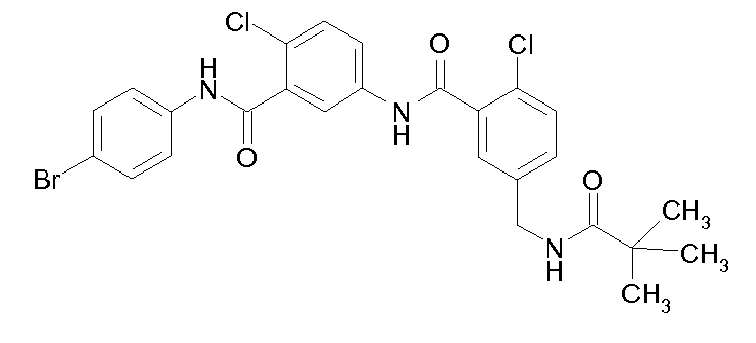
4 
5 
6 
7 
8 
9 
10 
11 
12 
13 
14 
15 
16 
17 
18 
19 
20 
21 
22 
23 
24 
25 
26 
27 
28 
29 
30 
31 
32 
33 
34 
35 
36 
37 
38 
39 
40 
41 
42 
43 
44 
45 
46 
47 
48 
49 
50 
51 
52 
53 
54 
55 
56 
57 
58 
59 
60 
61 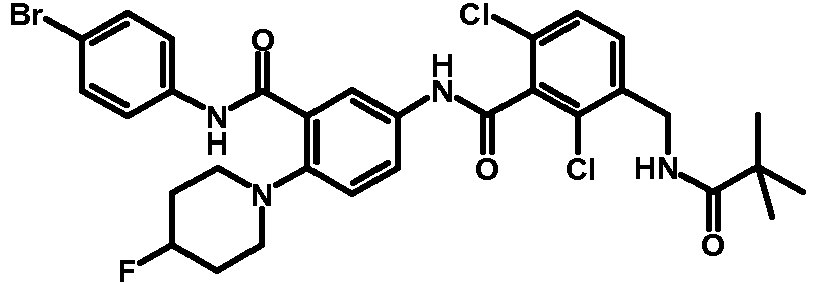
62 
63 
64 
65 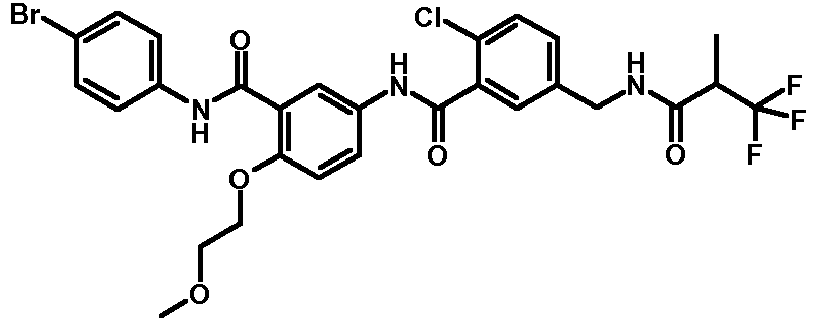
66 
67 
68 
69 
70 
71 
72 
73 
74 
75 
76 
77 
78 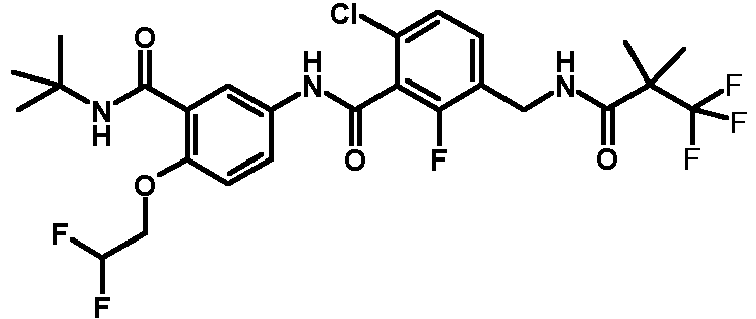
79 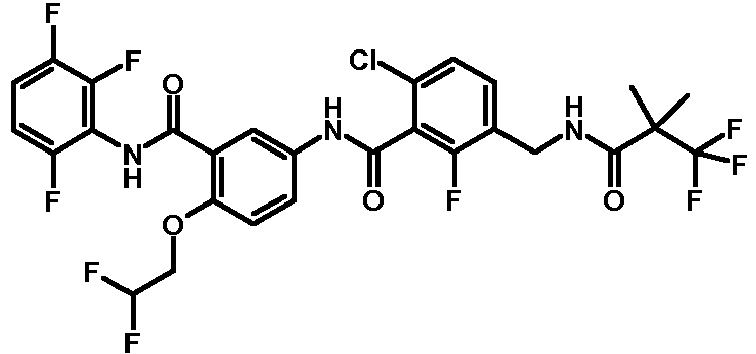
80 
81 
82 
83 
84 
85 
86 
87 
88 
89 
90 
91 
92 
93 
94 
95 
96 
97 
98 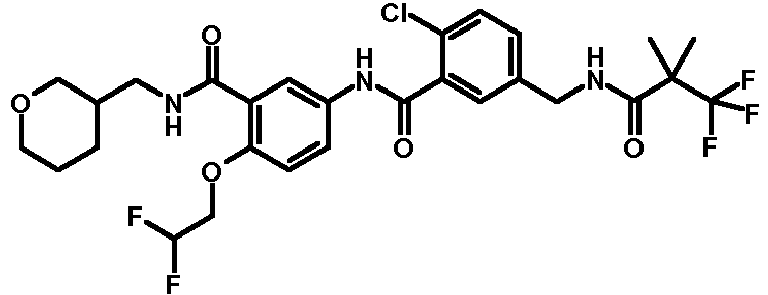
99 
100 
101 
102 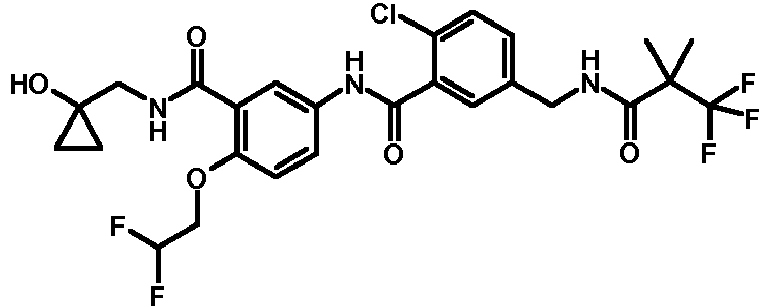
103 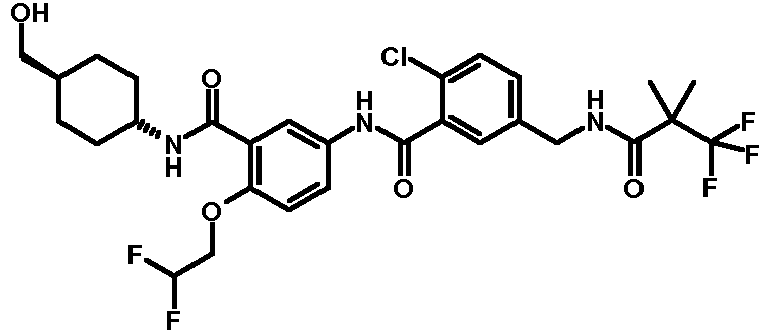
104 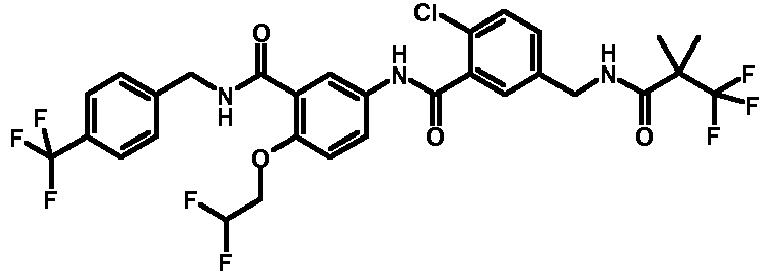
105 
106 
107 
108 
109 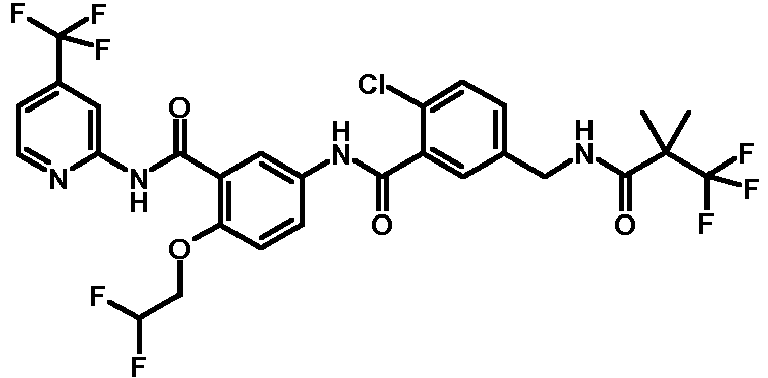
110 
111 
112 
113 
114 
115 
116 
117 
118 
119 
120 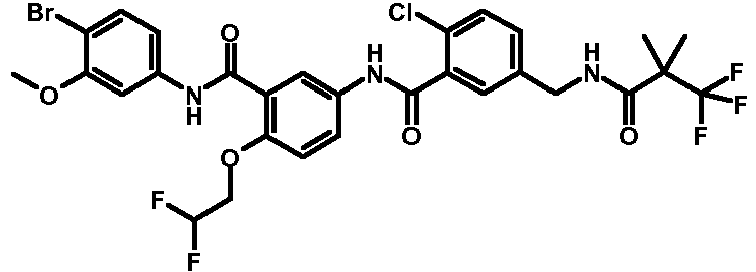
121 
122 
123 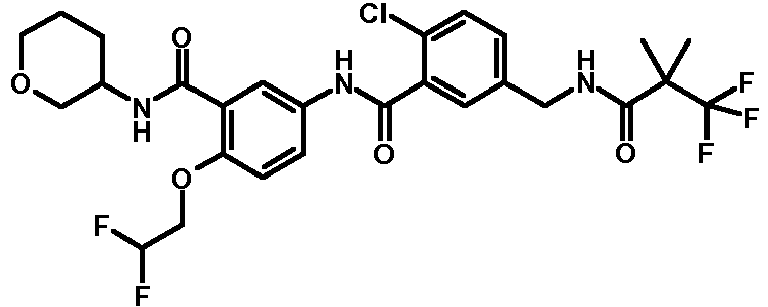
124 
125 
126 
127 
128 
129 
130 
131 
132 
133 
134 
135 
136 
137 
138 
139 
140 
141 
142 
143 
144 
145 
146 
147 
148 
149 
150 
151 
152 
153 
154 
155 
156 
157 
158 
159 
160 
161 
162 
163 
164 
165 
166 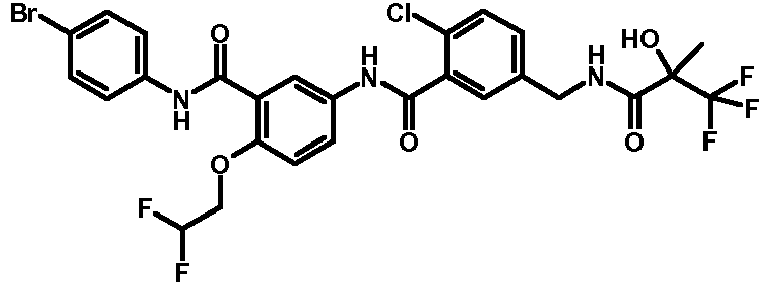
167 
168 
169 
170 
171 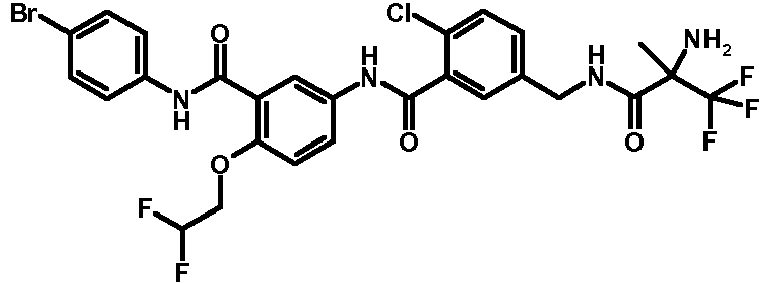
172 
173 
174 
175 
176 
177 
178 
179 
180 
181 
. - Composé selon l'une quelconque des revendications précédentes pour son utilisation comme médicament.
- Composition pharmaceutique comprenant au moins un composé selon l'une quelconque des revendications 1 à 12 ou sel pharmaceutiquement acceptable de celui-ci en mélange avec un adjuvant, diluant et/ou support pharmaceutiquement acceptable.
- Composé selon l'une quelconque des revendications 1 à 12 ou sel pharmaceutiquement acceptable de celui-ci pour son utilisation dans le traitement de maladies inflammatoires ou états associés.
- Composé pour son utilisation selon la revendication 15, dans lequel l'état à traiter est la douleur.
Priority Applications (1)
| Application Number | Priority Date | Filing Date | Title |
|---|---|---|---|
| EP10765442.8A EP2491007B1 (fr) | 2009-10-23 | 2010-10-14 | Inhibiteurs de la prostaglandine E2 synthase microsomale |
Applications Claiming Priority (3)
| Application Number | Priority Date | Filing Date | Title |
|---|---|---|---|
| EP09173872 | 2009-10-23 | ||
| EP10765442.8A EP2491007B1 (fr) | 2009-10-23 | 2010-10-14 | Inhibiteurs de la prostaglandine E2 synthase microsomale |
| PCT/EP2010/065414 WO2011048004A1 (fr) | 2009-10-23 | 2010-10-14 | Inhibiteurs de la prostaglandine e2 synthase-1 microsomale |
Publications (2)
| Publication Number | Publication Date |
|---|---|
| EP2491007A1 EP2491007A1 (fr) | 2012-08-29 |
| EP2491007B1 true EP2491007B1 (fr) | 2013-09-25 |
Family
ID=41716501
Family Applications (1)
| Application Number | Title | Priority Date | Filing Date |
|---|---|---|---|
| EP10765442.8A Not-in-force EP2491007B1 (fr) | 2009-10-23 | 2010-10-14 | Inhibiteurs de la prostaglandine E2 synthase microsomale |
Country Status (6)
| Country | Link |
|---|---|
| US (1) | US8951999B2 (fr) |
| EP (1) | EP2491007B1 (fr) |
| JP (1) | JP5579862B2 (fr) |
| AR (1) | AR078744A1 (fr) |
| TW (1) | TW201125560A (fr) |
| WO (1) | WO2011048004A1 (fr) |
Families Citing this family (51)
| Publication number | Priority date | Publication date | Assignee | Title |
|---|---|---|---|---|
| AR084174A1 (es) | 2010-12-21 | 2013-04-24 | Lilly Co Eli | Compuestos de imidazol-2-benzamida utiles para el tratamiento de osteoartritis y una composicion farmaceutica |
| US8455518B2 (en) | 2010-12-28 | 2013-06-04 | Avon Products, Inc. | Method of treating skin with microRNA modulators |
| AR086254A1 (es) * | 2011-05-26 | 2013-11-27 | Lilly Co Eli | Derivados de imidazol utiles para el tratamiento de artritis |
| SI2746265T1 (sl) * | 2011-08-18 | 2016-03-31 | Nippon Shinyaku Co., Ltd. | Heterociklični derivat kot zaviralec mikrosomske prostaglandin-e sintaze (mpges) |
| WO2013072825A1 (fr) * | 2011-11-16 | 2013-05-23 | Glenmark Pharmaceuticals S.A. | Dérivés de phtalazinone en tant qu'inhibiteurs de mpges-1 |
| WO2014167444A1 (fr) * | 2013-04-08 | 2014-10-16 | Glenmark Pharmaceuticals S.A. | Composés bicycliques substitués utilisés en tant qu'inhibiteurs de mpges-1 |
| TWI651310B (zh) | 2014-02-20 | 2019-02-21 | 日商日本煙草產業股份有限公司 | 三化合物及其醫藥用途 |
| MX368504B (es) * | 2014-04-14 | 2019-10-04 | Shanghai hengrui pharmaceutical co ltd | Derivados de amidas y sales farmaceuticamente aceptables de los mismos, método de preparación de los mismos y aplicación médica de los mismos. |
| JO3581B1 (ar) * | 2014-10-29 | 2020-07-05 | Lilly Co Eli | مركبات ميثيل-بيبيريدين جديدة مفيدة لتثبيط إنزيم سينثاز -1 بروستاجلاندين e2 ميكروسومي |
| AR102361A1 (es) | 2014-10-29 | 2017-02-22 | Lilly Co Eli | Compuestos de metil-quinolina útiles para inhibir la sintasa-1 de prostaglandina microsomal e2 |
| TWI704139B (zh) | 2015-08-17 | 2020-09-11 | 日商日本煙草產業股份有限公司 | 羥基三化合物及其醫藥用途 |
| WO2019067530A1 (fr) * | 2017-09-26 | 2019-04-04 | The Broad Institute, Inc. | Compositions et méthodes de traitement d'une maladie intestinale inflammatoire |
| AU2020301161B2 (en) | 2019-06-25 | 2023-10-26 | Gilead Sciences, Inc. | FLT3L-Fc fusion proteins and methods of use |
| KR102902719B1 (ko) | 2019-10-18 | 2025-12-24 | 포티 세븐, 엘엘씨 | 골수이형성 증후군 및 급성 골수성 백혈병을 치료하기 위한 조합 치료 |
| CA3153636A1 (fr) | 2019-10-31 | 2021-05-06 | Forty Seven, Inc. | Traitement d'un cancer du sang base sur une therapie anti-cd47 et anti-cd20 |
| TWI778443B (zh) | 2019-11-12 | 2022-09-21 | 美商基利科學股份有限公司 | Mcl1抑制劑 |
| EP4445902A3 (fr) | 2019-12-24 | 2024-12-18 | Carna Biosciences, Inc. | Composés modulant la diacylglycérol kinase |
| MX2022007936A (es) | 2019-12-25 | 2022-10-27 | Nippon Shinyaku Co Ltd | Agente profilactico y/o terapeutico para la prostatitis cronica/sindrome de dolor pelvico cronico. |
| CN117964757A (zh) | 2020-02-14 | 2024-05-03 | 吉利德科学公司 | 与ccr8结合的抗体和融合蛋白及其用途 |
| US12110294B2 (en) | 2020-05-01 | 2024-10-08 | Gilead Sciences, Inc. | CD73 compounds |
| TW202302145A (zh) | 2021-04-14 | 2023-01-16 | 美商基利科學股份有限公司 | CD47/SIRPα結合及NEDD8活化酶E1調節次單元之共抑制以用於治療癌症 |
| TW202313094A (zh) | 2021-05-18 | 2023-04-01 | 美商基利科學股份有限公司 | 使用FLT3L—Fc融合蛋白之方法 |
| US11932634B2 (en) | 2021-06-23 | 2024-03-19 | Gilead Sciences, Inc. | Diacylglycerol kinase modulating compounds |
| WO2022271650A1 (fr) | 2021-06-23 | 2022-12-29 | Gilead Sciences, Inc. | Composés de modulation de la diacylglycérol kinase |
| EP4359415A1 (fr) | 2021-06-23 | 2024-05-01 | Gilead Sciences, Inc. | Composés modulant les diacylglycérol kinases |
| WO2022271659A1 (fr) | 2021-06-23 | 2022-12-29 | Gilead Sciences, Inc. | Composés modulant les diacylglycérol kinases |
| AU2022375782B2 (en) | 2021-10-28 | 2026-02-26 | Gilead Sciences, Inc. | Pyridizin-3(2h)-one derivatives |
| AU2022376954B2 (en) | 2021-10-29 | 2026-04-23 | Gilead Sciences, Inc. | Cd73 compounds |
| AU2022419982B2 (en) | 2021-12-22 | 2026-04-16 | Gilead Sciences, Inc. | Ikaros zinc finger family degraders and uses thereof |
| CA3237577A1 (fr) | 2021-12-22 | 2023-06-29 | Gilead Sciences, Inc. | Agents de degradation des doigts de zinc de la famille ikaros et leurs utilisations |
| EP4458810A4 (fr) | 2021-12-28 | 2025-12-17 | Nippon Shinyaku Co Ltd | Composé d'indazole et produit pharmaceutique |
| TW202340168A (zh) | 2022-01-28 | 2023-10-16 | 美商基利科學股份有限公司 | Parp7抑制劑 |
| EP4493554A1 (fr) | 2022-03-17 | 2025-01-22 | Gilead Sciences, Inc. | Agents de dégradation des doigts de zinc de la famille ikaros et leurs utilisations |
| WO2023183817A1 (fr) | 2022-03-24 | 2023-09-28 | Gilead Sciences, Inc. | Polythérapie pour le traitement de cancers exprimant trop -2 |
| TWI876305B (zh) | 2022-04-05 | 2025-03-11 | 美商基利科學股份有限公司 | 用於治療結腸直腸癌之組合療法 |
| CR20240451A (es) | 2022-04-21 | 2024-12-04 | Gilead Sciences Inc | Compuestos de modulación de kras g12d |
| PE20250758A1 (es) | 2022-07-01 | 2025-03-13 | Gilead Sciences Inc | Compuestos de cd73 |
| WO2024064668A1 (fr) | 2022-09-21 | 2024-03-28 | Gilead Sciences, Inc. | POLYTHÉRAPIE ANTICANCÉREUSE PAR RAYONNEMENT IONISANT FOCAL ET PERTURBATION CD47/SIRPα |
| CN120225509A (zh) | 2022-12-22 | 2025-06-27 | 吉利德科学公司 | Prmt5抑制剂及其用途 |
| AU2024252725A1 (en) | 2023-04-11 | 2025-11-06 | Gilead Sciences, Inc. | Kras modulating compounds |
| PE20260121A1 (es) | 2023-04-21 | 2026-01-16 | Gilead Sciences Inc | Inhibidores de prmt5 y usos de los mismos |
| AU2024306338A1 (en) | 2023-06-30 | 2026-01-08 | Gilead Sciences, Inc. | Kras modulating compounds |
| KR20260046403A (ko) | 2023-07-26 | 2026-04-07 | 길리애드 사이언시즈, 인코포레이티드 | Parp7 저해제 |
| WO2025024811A1 (fr) | 2023-07-26 | 2025-01-30 | Gilead Sciences, Inc. | Inhibiteurs de parp7 |
| AU2024337913A1 (en) | 2023-09-08 | 2026-03-26 | Gilead Sciences, Inc. | Pyrimidine-containing polycyclic derivatives as kras g12d modulating compounds |
| US20250101042A1 (en) | 2023-09-08 | 2025-03-27 | Gilead Sciences, Inc. | Kras g12d modulating compounds |
| US20250154172A1 (en) | 2023-11-03 | 2025-05-15 | Gilead Sciences, Inc. | Prmt5 inhibitors and uses thereof |
| WO2025137640A1 (fr) | 2023-12-22 | 2025-06-26 | Gilead Sciences, Inc. | Inhibiteurs azaspiro de wrn |
| WO2025245003A1 (fr) | 2024-05-21 | 2025-11-27 | Gilead Sciences, Inc. | Inhibiteurs de prmt5 et leurs utilisations |
| WO2026039365A1 (fr) | 2024-08-12 | 2026-02-19 | Gilead Sciences, Inc. | Composés de modulation de kras |
| WO2026089992A1 (fr) | 2024-10-21 | 2026-04-30 | Gilead Sciences, Inc. | Inhibiteurs de prmt5 et leurs utilisations |
Family Cites Families (7)
| Publication number | Priority date | Publication date | Assignee | Title |
|---|---|---|---|---|
| US5039805A (en) * | 1988-12-08 | 1991-08-13 | Hoffmann-La Roche Inc. | Novel benzoic and phenylacetic acid derivatives |
| US6444849B1 (en) * | 1997-06-25 | 2002-09-03 | Mitsubishi Chemical Corporation | Amide derivatives |
| FR2772025B1 (fr) * | 1997-12-10 | 2000-03-03 | Guerbet Sa | Chelates metalliques de macrocycles polyaminocarboxyliques et leur application a l'imagerie par resonance magnetique |
| JP4929472B2 (ja) * | 2000-08-22 | 2012-05-09 | 小野薬品工業株式会社 | カルボン酸誘導体、それらの製造方法およびそれらを有効成分として含有する薬剤 |
| JPWO2003024484A1 (ja) * | 2001-09-14 | 2004-12-24 | 小野薬品工業株式会社 | 掻痒症治療剤 |
| CA2565628A1 (fr) * | 2004-05-03 | 2005-11-10 | Astellas Pharma Inc. | Combinaison d'un antagoniste au recepteur e2 a la prostaglandine et d'un inhibiteur du systeme renine-angiotensine pour traiter des maladies renales |
| WO2006070878A1 (fr) * | 2004-12-28 | 2006-07-06 | Astellas Pharma Inc. | Derive d'acide carboxylique ou sel de ce derive |
-
2010
- 2010-10-14 JP JP2012534630A patent/JP5579862B2/ja not_active Expired - Fee Related
- 2010-10-14 EP EP10765442.8A patent/EP2491007B1/fr not_active Not-in-force
- 2010-10-14 WO PCT/EP2010/065414 patent/WO2011048004A1/fr not_active Ceased
- 2010-10-20 US US12/908,172 patent/US8951999B2/en not_active Expired - Fee Related
- 2010-10-22 AR ARP100103888A patent/AR078744A1/es unknown
- 2010-10-22 TW TW099136190A patent/TW201125560A/zh unknown
Also Published As
| Publication number | Publication date |
|---|---|
| JP2013508325A (ja) | 2013-03-07 |
| EP2491007A1 (fr) | 2012-08-29 |
| WO2011048004A1 (fr) | 2011-04-28 |
| AR078744A1 (es) | 2011-11-30 |
| JP5579862B2 (ja) | 2014-08-27 |
| TW201125560A (en) | 2011-08-01 |
| US8951999B2 (en) | 2015-02-10 |
| US20110263556A1 (en) | 2011-10-27 |
Similar Documents
| Publication | Publication Date | Title |
|---|---|---|
| US8951999B2 (en) | Compounds | |
| US8921405B2 (en) | Compounds | |
| DK2606036T3 (en) | 2-ANILINOBENZIMIDAZOLE-6-CARBOXAMIDES AS ANTI-INFLAMMATORY AGENTS | |
| EP2649052B1 (fr) | Dérivés de 2-amino-benzimidazole utiles dans le traitement d'inflammation | |
| US8586604B2 (en) | Inhibitors of the microsomal prostaglandin E2 synthase-1 | |
| US8486968B2 (en) | Compounds | |
| KR20130143076A (ko) | 6아미노2페닐아미노1h벤즈이미다졸5카복스아미드 유도체 및 마이크로솜 프로스타글란딘 e2 신타제1 억제제로서의 이들의 용도 | |
| AU2015345070A1 (en) | Morpholine and 1,4-oxazepane amides as somatostatin receptor subtype 4 (SSTR4) agonists | |
| OA16323A (en) | New compounds. |
Legal Events
| Date | Code | Title | Description |
|---|---|---|---|
| PUAI | Public reference made under article 153(3) epc to a published international application that has entered the european phase |
Free format text: ORIGINAL CODE: 0009012 |
|
| 17P | Request for examination filed |
Effective date: 20120523 |
|
| AK | Designated contracting states |
Kind code of ref document: A1 Designated state(s): AL AT BE BG CH CY CZ DE DK EE ES FI FR GB GR HR HU IE IS IT LI LT LU LV MC MK MT NL NO PL PT RO RS SE SI SK SM TR |
|
| DAX | Request for extension of the european patent (deleted) | ||
| GRAP | Despatch of communication of intention to grant a patent |
Free format text: ORIGINAL CODE: EPIDOSNIGR1 |
|
| GRAS | Grant fee paid |
Free format text: ORIGINAL CODE: EPIDOSNIGR3 |
|
| GRAA | (expected) grant |
Free format text: ORIGINAL CODE: 0009210 |
|
| AK | Designated contracting states |
Kind code of ref document: B1 Designated state(s): AL AT BE BG CH CY CZ DE DK EE ES FI FR GB GR HR HU IE IS IT LI LT LU LV MC MK MT NL NO PL PT RO RS SE SI SK SM TR |
|
| REG | Reference to a national code |
Ref country code: GB Ref legal event code: FG4D |
|
| REG | Reference to a national code |
Ref country code: CH Ref legal event code: EP |
|
| REG | Reference to a national code |
Ref country code: AT Ref legal event code: REF Ref document number: 633652 Country of ref document: AT Kind code of ref document: T Effective date: 20131015 |
|
| REG | Reference to a national code |
Ref country code: IE Ref legal event code: FG4D |
|
| REG | Reference to a national code |
Ref country code: DE Ref legal event code: R096 Ref document number: 602010010569 Country of ref document: DE Effective date: 20131128 |
|
| PG25 | Lapsed in a contracting state [announced via postgrant information from national office to epo] |
Ref country code: HR Free format text: LAPSE BECAUSE OF FAILURE TO SUBMIT A TRANSLATION OF THE DESCRIPTION OR TO PAY THE FEE WITHIN THE PRESCRIBED TIME-LIMIT Effective date: 20130925 Ref country code: LT Free format text: LAPSE BECAUSE OF FAILURE TO SUBMIT A TRANSLATION OF THE DESCRIPTION OR TO PAY THE FEE WITHIN THE PRESCRIBED TIME-LIMIT Effective date: 20130925 Ref country code: NO Free format text: LAPSE BECAUSE OF FAILURE TO SUBMIT A TRANSLATION OF THE DESCRIPTION OR TO PAY THE FEE WITHIN THE PRESCRIBED TIME-LIMIT Effective date: 20131225 Ref country code: SE Free format text: LAPSE BECAUSE OF FAILURE TO SUBMIT A TRANSLATION OF THE DESCRIPTION OR TO PAY THE FEE WITHIN THE PRESCRIBED TIME-LIMIT Effective date: 20130925 |
|
| REG | Reference to a national code |
Ref country code: AT Ref legal event code: MK05 Ref document number: 633652 Country of ref document: AT Kind code of ref document: T Effective date: 20130925 |
|
| REG | Reference to a national code |
Ref country code: NL Ref legal event code: VDEP Effective date: 20130925 |
|
| REG | Reference to a national code |
Ref country code: LT Ref legal event code: MG4D |
|
| PG25 | Lapsed in a contracting state [announced via postgrant information from national office to epo] |
Ref country code: LV Free format text: LAPSE BECAUSE OF FAILURE TO SUBMIT A TRANSLATION OF THE DESCRIPTION OR TO PAY THE FEE WITHIN THE PRESCRIBED TIME-LIMIT Effective date: 20130925 Ref country code: SI Free format text: LAPSE BECAUSE OF FAILURE TO SUBMIT A TRANSLATION OF THE DESCRIPTION OR TO PAY THE FEE WITHIN THE PRESCRIBED TIME-LIMIT Effective date: 20130925 Ref country code: FI Free format text: LAPSE BECAUSE OF FAILURE TO SUBMIT A TRANSLATION OF THE DESCRIPTION OR TO PAY THE FEE WITHIN THE PRESCRIBED TIME-LIMIT Effective date: 20130925 Ref country code: GR Free format text: LAPSE BECAUSE OF FAILURE TO SUBMIT A TRANSLATION OF THE DESCRIPTION OR TO PAY THE FEE WITHIN THE PRESCRIBED TIME-LIMIT Effective date: 20131226 Ref country code: RS Free format text: LAPSE BECAUSE OF FAILURE TO SUBMIT A TRANSLATION OF THE DESCRIPTION OR TO PAY THE FEE WITHIN THE PRESCRIBED TIME-LIMIT Effective date: 20130925 |
|
| PG25 | Lapsed in a contracting state [announced via postgrant information from national office to epo] |
Ref country code: BE Free format text: LAPSE BECAUSE OF FAILURE TO SUBMIT A TRANSLATION OF THE DESCRIPTION OR TO PAY THE FEE WITHIN THE PRESCRIBED TIME-LIMIT Effective date: 20130925 |
|
| PG25 | Lapsed in a contracting state [announced via postgrant information from national office to epo] |
Ref country code: EE Free format text: LAPSE BECAUSE OF FAILURE TO SUBMIT A TRANSLATION OF THE DESCRIPTION OR TO PAY THE FEE WITHIN THE PRESCRIBED TIME-LIMIT Effective date: 20130925 Ref country code: NL Free format text: LAPSE BECAUSE OF FAILURE TO SUBMIT A TRANSLATION OF THE DESCRIPTION OR TO PAY THE FEE WITHIN THE PRESCRIBED TIME-LIMIT Effective date: 20130925 Ref country code: SK Free format text: LAPSE BECAUSE OF FAILURE TO SUBMIT A TRANSLATION OF THE DESCRIPTION OR TO PAY THE FEE WITHIN THE PRESCRIBED TIME-LIMIT Effective date: 20130925 Ref country code: CZ Free format text: LAPSE BECAUSE OF FAILURE TO SUBMIT A TRANSLATION OF THE DESCRIPTION OR TO PAY THE FEE WITHIN THE PRESCRIBED TIME-LIMIT Effective date: 20130925 Ref country code: IS Free format text: LAPSE BECAUSE OF FAILURE TO SUBMIT A TRANSLATION OF THE DESCRIPTION OR TO PAY THE FEE WITHIN THE PRESCRIBED TIME-LIMIT Effective date: 20140125 Ref country code: RO Free format text: LAPSE BECAUSE OF FAILURE TO SUBMIT A TRANSLATION OF THE DESCRIPTION OR TO PAY THE FEE WITHIN THE PRESCRIBED TIME-LIMIT Effective date: 20130925 |
|
| PG25 | Lapsed in a contracting state [announced via postgrant information from national office to epo] |
Ref country code: PL Free format text: LAPSE BECAUSE OF FAILURE TO SUBMIT A TRANSLATION OF THE DESCRIPTION OR TO PAY THE FEE WITHIN THE PRESCRIBED TIME-LIMIT Effective date: 20130925 Ref country code: AT Free format text: LAPSE BECAUSE OF FAILURE TO SUBMIT A TRANSLATION OF THE DESCRIPTION OR TO PAY THE FEE WITHIN THE PRESCRIBED TIME-LIMIT Effective date: 20130925 Ref country code: CY Free format text: LAPSE BECAUSE OF FAILURE TO SUBMIT A TRANSLATION OF THE DESCRIPTION OR TO PAY THE FEE WITHIN THE PRESCRIBED TIME-LIMIT Effective date: 20130925 Ref country code: ES Free format text: LAPSE BECAUSE OF FAILURE TO SUBMIT A TRANSLATION OF THE DESCRIPTION OR TO PAY THE FEE WITHIN THE PRESCRIBED TIME-LIMIT Effective date: 20130925 |
|
| REG | Reference to a national code |
Ref country code: DE Ref legal event code: R097 Ref document number: 602010010569 Country of ref document: DE |
|
| PG25 | Lapsed in a contracting state [announced via postgrant information from national office to epo] |
Ref country code: PT Free format text: LAPSE BECAUSE OF FAILURE TO SUBMIT A TRANSLATION OF THE DESCRIPTION OR TO PAY THE FEE WITHIN THE PRESCRIBED TIME-LIMIT Effective date: 20140127 Ref country code: MC Free format text: LAPSE BECAUSE OF FAILURE TO SUBMIT A TRANSLATION OF THE DESCRIPTION OR TO PAY THE FEE WITHIN THE PRESCRIBED TIME-LIMIT Effective date: 20130925 |
|
| REG | Reference to a national code |
Ref country code: IE Ref legal event code: MM4A |
|
| PLBE | No opposition filed within time limit |
Free format text: ORIGINAL CODE: 0009261 |
|
| STAA | Information on the status of an ep patent application or granted ep patent |
Free format text: STATUS: NO OPPOSITION FILED WITHIN TIME LIMIT |
|
| PG25 | Lapsed in a contracting state [announced via postgrant information from national office to epo] |
Ref country code: IT Free format text: LAPSE BECAUSE OF FAILURE TO SUBMIT A TRANSLATION OF THE DESCRIPTION OR TO PAY THE FEE WITHIN THE PRESCRIBED TIME-LIMIT Effective date: 20130925 |
|
| 26N | No opposition filed |
Effective date: 20140626 |
|
| PG25 | Lapsed in a contracting state [announced via postgrant information from national office to epo] |
Ref country code: DK Free format text: LAPSE BECAUSE OF FAILURE TO SUBMIT A TRANSLATION OF THE DESCRIPTION OR TO PAY THE FEE WITHIN THE PRESCRIBED TIME-LIMIT Effective date: 20130925 |
|
| REG | Reference to a national code |
Ref country code: DE Ref legal event code: R097 Ref document number: 602010010569 Country of ref document: DE Effective date: 20140626 |
|
| PG25 | Lapsed in a contracting state [announced via postgrant information from national office to epo] |
Ref country code: IE Free format text: LAPSE BECAUSE OF NON-PAYMENT OF DUE FEES Effective date: 20131014 |
|
| PGFP | Annual fee paid to national office [announced via postgrant information from national office to epo] |
Ref country code: FR Payment date: 20141022 Year of fee payment: 5 Ref country code: GB Payment date: 20141021 Year of fee payment: 5 Ref country code: DE Payment date: 20141022 Year of fee payment: 5 |
|
| PG25 | Lapsed in a contracting state [announced via postgrant information from national office to epo] |
Ref country code: SM Free format text: LAPSE BECAUSE OF FAILURE TO SUBMIT A TRANSLATION OF THE DESCRIPTION OR TO PAY THE FEE WITHIN THE PRESCRIBED TIME-LIMIT Effective date: 20130925 |
|
| REG | Reference to a national code |
Ref country code: CH Ref legal event code: PL |
|
| PG25 | Lapsed in a contracting state [announced via postgrant information from national office to epo] |
Ref country code: LI Free format text: LAPSE BECAUSE OF NON-PAYMENT OF DUE FEES Effective date: 20141031 Ref country code: LU Free format text: LAPSE BECAUSE OF NON-PAYMENT OF DUE FEES Effective date: 20131014 Ref country code: MK Free format text: LAPSE BECAUSE OF FAILURE TO SUBMIT A TRANSLATION OF THE DESCRIPTION OR TO PAY THE FEE WITHIN THE PRESCRIBED TIME-LIMIT Effective date: 20130925 Ref country code: BG Free format text: LAPSE BECAUSE OF FAILURE TO SUBMIT A TRANSLATION OF THE DESCRIPTION OR TO PAY THE FEE WITHIN THE PRESCRIBED TIME-LIMIT Effective date: 20130925 Ref country code: CH Free format text: LAPSE BECAUSE OF NON-PAYMENT OF DUE FEES Effective date: 20141031 Ref country code: HU Free format text: LAPSE BECAUSE OF FAILURE TO SUBMIT A TRANSLATION OF THE DESCRIPTION OR TO PAY THE FEE WITHIN THE PRESCRIBED TIME-LIMIT; INVALID AB INITIO Effective date: 20101014 |
|
| PG25 | Lapsed in a contracting state [announced via postgrant information from national office to epo] |
Ref country code: MT Free format text: LAPSE BECAUSE OF FAILURE TO SUBMIT A TRANSLATION OF THE DESCRIPTION OR TO PAY THE FEE WITHIN THE PRESCRIBED TIME-LIMIT Effective date: 20130925 |
|
| REG | Reference to a national code |
Ref country code: DE Ref legal event code: R119 Ref document number: 602010010569 Country of ref document: DE |
|
| GBPC | Gb: european patent ceased through non-payment of renewal fee |
Effective date: 20151014 |
|
| PG25 | Lapsed in a contracting state [announced via postgrant information from national office to epo] |
Ref country code: TR Free format text: LAPSE BECAUSE OF FAILURE TO SUBMIT A TRANSLATION OF THE DESCRIPTION OR TO PAY THE FEE WITHIN THE PRESCRIBED TIME-LIMIT Effective date: 20130925 Ref country code: GB Free format text: LAPSE BECAUSE OF NON-PAYMENT OF DUE FEES Effective date: 20151014 Ref country code: DE Free format text: LAPSE BECAUSE OF NON-PAYMENT OF DUE FEES Effective date: 20160503 |
|
| REG | Reference to a national code |
Ref country code: FR Ref legal event code: ST Effective date: 20160630 |
|
| PG25 | Lapsed in a contracting state [announced via postgrant information from national office to epo] |
Ref country code: FR Free format text: LAPSE BECAUSE OF NON-PAYMENT OF DUE FEES Effective date: 20151102 |
|
| PG25 | Lapsed in a contracting state [announced via postgrant information from national office to epo] |
Ref country code: AL Free format text: LAPSE BECAUSE OF FAILURE TO SUBMIT A TRANSLATION OF THE DESCRIPTION OR TO PAY THE FEE WITHIN THE PRESCRIBED TIME-LIMIT Effective date: 20130925 |