EP2488158B1 - Improved medicinal aerosol formulations - Google Patents
Improved medicinal aerosol formulations Download PDFInfo
- Publication number
- EP2488158B1 EP2488158B1 EP10768922.6A EP10768922A EP2488158B1 EP 2488158 B1 EP2488158 B1 EP 2488158B1 EP 10768922 A EP10768922 A EP 10768922A EP 2488158 B1 EP2488158 B1 EP 2488158B1
- Authority
- EP
- European Patent Office
- Prior art keywords
- weight
- formulation
- propellant
- hfa
- fluticasone propionate
- Prior art date
- Legal status (The legal status is an assumption and is not a legal conclusion. Google has not performed a legal analysis and makes no representation as to the accuracy of the status listed.)
- Revoked
Links
Images

Classifications
-
- A—HUMAN NECESSITIES
- A61—MEDICAL OR VETERINARY SCIENCE; HYGIENE
- A61K—PREPARATIONS FOR MEDICAL, DENTAL OR TOILETRY PURPOSES
- A61K31/00—Medicinal preparations containing organic active ingredients
- A61K31/56—Compounds containing cyclopenta[a]hydrophenanthrene ring systems; Derivatives thereof, e.g. steroids
- A61K31/58—Compounds containing cyclopenta[a]hydrophenanthrene ring systems; Derivatives thereof, e.g. steroids containing heterocyclic rings, e.g. danazol, stanozolol, pancuronium or digitogenin
-
- A—HUMAN NECESSITIES
- A61—MEDICAL OR VETERINARY SCIENCE; HYGIENE
- A61K—PREPARATIONS FOR MEDICAL, DENTAL OR TOILETRY PURPOSES
- A61K31/00—Medicinal preparations containing organic active ingredients
- A61K31/13—Amines
- A61K31/135—Amines having aromatic rings, e.g. ketamine, nortriptyline
- A61K31/137—Arylalkylamines, e.g. amphetamine, epinephrine, salbutamol, ephedrine or methadone
-
- A—HUMAN NECESSITIES
- A61—MEDICAL OR VETERINARY SCIENCE; HYGIENE
- A61K—PREPARATIONS FOR MEDICAL, DENTAL OR TOILETRY PURPOSES
- A61K31/00—Medicinal preparations containing organic active ingredients
- A61K31/16—Amides, e.g. hydroxamic acids
- A61K31/165—Amides, e.g. hydroxamic acids having aromatic rings, e.g. colchicine, atenolol, progabide
- A61K31/167—Amides, e.g. hydroxamic acids having aromatic rings, e.g. colchicine, atenolol, progabide having the nitrogen of a carboxamide group directly attached to the aromatic ring, e.g. lidocaine, paracetamol
-
- A—HUMAN NECESSITIES
- A61—MEDICAL OR VETERINARY SCIENCE; HYGIENE
- A61K—PREPARATIONS FOR MEDICAL, DENTAL OR TOILETRY PURPOSES
- A61K31/00—Medicinal preparations containing organic active ingredients
- A61K31/56—Compounds containing cyclopenta[a]hydrophenanthrene ring systems; Derivatives thereof, e.g. steroids
-
- A—HUMAN NECESSITIES
- A61—MEDICAL OR VETERINARY SCIENCE; HYGIENE
- A61K—PREPARATIONS FOR MEDICAL, DENTAL OR TOILETRY PURPOSES
- A61K45/00—Medicinal preparations containing active ingredients not provided for in groups A61K31/00 - A61K41/00
- A61K45/06—Mixtures of active ingredients without chemical characterisation, e.g. antiphlogistics and cardiaca
-
- A—HUMAN NECESSITIES
- A61—MEDICAL OR VETERINARY SCIENCE; HYGIENE
- A61K—PREPARATIONS FOR MEDICAL, DENTAL OR TOILETRY PURPOSES
- A61K47/00—Medicinal preparations characterised by the non-active ingredients used, e.g. carriers or inert additives; Targeting or modifying agents chemically bound to the active ingredient
- A61K47/06—Organic compounds, e.g. natural or synthetic hydrocarbons, polyolefins, mineral oil, petrolatum or ozokerite
- A61K47/08—Organic compounds, e.g. natural or synthetic hydrocarbons, polyolefins, mineral oil, petrolatum or ozokerite containing oxygen, e.g. ethers, acetals, ketones, quinones, aldehydes, peroxides
- A61K47/10—Alcohols; Phenols; Salts thereof, e.g. glycerol; Polyethylene glycols [PEG]; Poloxamers; PEG/POE alkyl ethers
-
- A—HUMAN NECESSITIES
- A61—MEDICAL OR VETERINARY SCIENCE; HYGIENE
- A61K—PREPARATIONS FOR MEDICAL, DENTAL OR TOILETRY PURPOSES
- A61K47/00—Medicinal preparations characterised by the non-active ingredients used, e.g. carriers or inert additives; Targeting or modifying agents chemically bound to the active ingredient
- A61K47/06—Organic compounds, e.g. natural or synthetic hydrocarbons, polyolefins, mineral oil, petrolatum or ozokerite
- A61K47/22—Heterocyclic compounds, e.g. ascorbic acid, tocopherol or pyrrolidones
-
- A—HUMAN NECESSITIES
- A61—MEDICAL OR VETERINARY SCIENCE; HYGIENE
- A61K—PREPARATIONS FOR MEDICAL, DENTAL OR TOILETRY PURPOSES
- A61K9/00—Medicinal preparations characterised by special physical form
- A61K9/0012—Galenical forms characterised by the site of application
- A61K9/007—Pulmonary tract; Aromatherapy
- A61K9/0073—Sprays or powders for inhalation; Aerolised or nebulised preparations generated by other means than thermal energy
- A61K9/008—Sprays or powders for inhalation; Aerolised or nebulised preparations generated by other means than thermal energy comprising drug dissolved or suspended in liquid propellant for inhalation via a pressurized metered dose inhaler [MDI]
-
- A—HUMAN NECESSITIES
- A61—MEDICAL OR VETERINARY SCIENCE; HYGIENE
- A61K—PREPARATIONS FOR MEDICAL, DENTAL OR TOILETRY PURPOSES
- A61K9/00—Medicinal preparations characterised by special physical form
- A61K9/10—Dispersions; Emulsions
- A61K9/12—Aerosols; Foams
- A61K9/124—Aerosols; Foams characterised by the propellant
-
- A—HUMAN NECESSITIES
- A61—MEDICAL OR VETERINARY SCIENCE; HYGIENE
- A61P—SPECIFIC THERAPEUTIC ACTIVITY OF CHEMICAL COMPOUNDS OR MEDICINAL PREPARATIONS
- A61P11/00—Drugs for disorders of the respiratory system
-
- A—HUMAN NECESSITIES
- A61—MEDICAL OR VETERINARY SCIENCE; HYGIENE
- A61P—SPECIFIC THERAPEUTIC ACTIVITY OF CHEMICAL COMPOUNDS OR MEDICINAL PREPARATIONS
- A61P11/00—Drugs for disorders of the respiratory system
- A61P11/02—Nasal agents, e.g. decongestants
-
- A—HUMAN NECESSITIES
- A61—MEDICAL OR VETERINARY SCIENCE; HYGIENE
- A61P—SPECIFIC THERAPEUTIC ACTIVITY OF CHEMICAL COMPOUNDS OR MEDICINAL PREPARATIONS
- A61P11/00—Drugs for disorders of the respiratory system
- A61P11/06—Antiasthmatics
-
- A—HUMAN NECESSITIES
- A61—MEDICAL OR VETERINARY SCIENCE; HYGIENE
- A61P—SPECIFIC THERAPEUTIC ACTIVITY OF CHEMICAL COMPOUNDS OR MEDICINAL PREPARATIONS
- A61P11/00—Drugs for disorders of the respiratory system
- A61P11/08—Bronchodilators
-
- A—HUMAN NECESSITIES
- A61—MEDICAL OR VETERINARY SCIENCE; HYGIENE
- A61P—SPECIFIC THERAPEUTIC ACTIVITY OF CHEMICAL COMPOUNDS OR MEDICINAL PREPARATIONS
- A61P11/00—Drugs for disorders of the respiratory system
- A61P11/14—Antitussive agents
-
- A—HUMAN NECESSITIES
- A61—MEDICAL OR VETERINARY SCIENCE; HYGIENE
- A61P—SPECIFIC THERAPEUTIC ACTIVITY OF CHEMICAL COMPOUNDS OR MEDICINAL PREPARATIONS
- A61P25/00—Drugs for disorders of the nervous system
- A61P25/02—Drugs for disorders of the nervous system for peripheral neuropathies
-
- A—HUMAN NECESSITIES
- A61—MEDICAL OR VETERINARY SCIENCE; HYGIENE
- A61P—SPECIFIC THERAPEUTIC ACTIVITY OF CHEMICAL COMPOUNDS OR MEDICINAL PREPARATIONS
- A61P29/00—Non-central analgesic, antipyretic or antiinflammatory agents, e.g. antirheumatic agents; Non-steroidal antiinflammatory drugs [NSAID]
-
- A—HUMAN NECESSITIES
- A61—MEDICAL OR VETERINARY SCIENCE; HYGIENE
- A61P—SPECIFIC THERAPEUTIC ACTIVITY OF CHEMICAL COMPOUNDS OR MEDICINAL PREPARATIONS
- A61P37/00—Drugs for immunological or allergic disorders
-
- A—HUMAN NECESSITIES
- A61—MEDICAL OR VETERINARY SCIENCE; HYGIENE
- A61P—SPECIFIC THERAPEUTIC ACTIVITY OF CHEMICAL COMPOUNDS OR MEDICINAL PREPARATIONS
- A61P37/00—Drugs for immunological or allergic disorders
- A61P37/08—Antiallergic agents
-
- A—HUMAN NECESSITIES
- A61—MEDICAL OR VETERINARY SCIENCE; HYGIENE
- A61P—SPECIFIC THERAPEUTIC ACTIVITY OF CHEMICAL COMPOUNDS OR MEDICINAL PREPARATIONS
- A61P43/00—Drugs for specific purposes, not provided for in groups A61P1/00-A61P41/00
Definitions
- the present invention relates to medicinal aerosol formulations for use with pressurised metered dose inhalers (abbreviated pMDI or MDI), and especially improved medicinal aerosol formulations suitable for aerosol administration.
- pMDI pressurised metered dose inhalers
- Drugs for the treatment of respiratory diseases and disorders are frequently administered directly to the lungs via inhalation.
- Administration via inhalation can increase the therapeutic index and reduce side effects of the drugs compared to administration by other routes, such as orally or intravenously.
- Administration by inhalation can be in the form of either dry powders or aerosol formulations which are inhaled by the patient either through use of an inhalation device or as a spray.
- MDIs are known devices for the administration of aerosol medicinal formulations to the respiratory tract through inhalation by the patient.
- the term MDI is used to describe a metered dose inhaler, of which a standard unit comprises a canister filled with the medicinal formulation, a drug metering valve and a mouthpiece.
- the MDI may be selectively activated by the user to deliver successive individual doses of drug by actuation of the metering valve, such that an accurately metered dose of the formulation is expelled via the actuator mouthpiece for delivery into the patient's respiratory tract.
- MDI formulations are an advantageous delivery method for many reasons, including that they deliver the drug instantaneously and do not rely on the inhalation capacity of the user. This is particularly important when considering the type of condition to be treated with the drug, such as an asthma attack. Since MDI devices usually contain a sufficient amount of the medicinal formulation for multiple unit doses, it is important that the formulation is such that it may be successfully and repeatedly used with a MDI device. The formulation must be delivered in a reliable manner and in the correctly calculated dose. The formulation must also comply with the requirements for pharmaceutical quality, stability and robustness set out by regulatory bodies.
- MDIs typically use a propellant to expel droplets or particles of the formulation as an aerosol, containing the drug, to the respiratory tract.
- the propellant gases used were fluorochlorohydrocarbons which are commonly called Freons or CFCs, such as CCl 3 F (Freon 11 or CFC-11), CCl 2 F 2 (Freon 12 of CFC-12), and CCClF 2 -CClF 2 (Freon 114 of CFC-114).
- CFCs fluorochlorohydrocarbons which are commonly called Freons or CFCs
- CCl 3 F Freon 11 or CFC-11
- CCl 2 F 2 Freon 12 of CFC-12
- CCClF 2 -CClF 2 Freon 114 of CFC-114
- Hydrofluoroalkanes also known as hydro-fluorocarbons (HFCs)
- HFCs hydro-fluorocarbons
- HFA 134a 1,1,1,2-tetratluoroethane
- HFA 227) 1,1,1,2,3,3,3-heptafluoropropane
- Formulations administered via MDIs can be in the form of solutions or suspensions.
- suspension formulations the drug is manufactured as a fine particle powder which is then suspended in a liquefied propellant or propellant blend.
- the suspension formulation can be stored in a sealed canister with sufficient pressure to maintain the propellant in liquid form.
- the vapour pressure for a HF A227 formulation may typically be around 1.96 bar at 0°C, 3.90 bar at 20 °C and 7.03 bar at 40°C.
- the drug is solubilised in the liquefied propellant phase. When the metering valve is actuated, a dose is delivered in rapidly deployed fine droplets.
- Suspension formulations are usually preferred because of generally improved chemical stability of the suspended particles in comparison to solubilised drugs. Stability problems associated with the chemical degradation of solubilised drug compounds are known in the art.
- the particle size of the deployed aerosol must be small enough that it can be inhaled into the lungs of the users, be that a grown adult, child or elderly/infirm person. Therefore, the particles of the suspension formulation need to be microfine with a mean aerodynamic particle diameter (measured as Mass Median Aerodynamic Diameter (MMAD)) of about 1 to 10 ⁇ m, and preferably 1 to 6 ⁇ m. Micronised particles of this size can be obtained by various methods known in the art, for example mechanical grinding or spray drying.
- MMAD Mass Median Aerodynamic Diameter
- the amount of active drug deployed in fine, inhalable particles is called the fine particle dose (FPD) or the fine particle fraction (FPF), which is defined as the percentage of the fine particle dose relative to the total amount of released active compound. Both are determined by the measurement of the aerodynamic particle size distribution with a cascade impactor or liquid impingers. These are routine tests for which the methods and apparatus are described in the pharmacopeias. For example, formulations of the present invention meet the requirement set out in Chapter ⁇ 601> of the United States Pharmacopeia (USP) 32 or in the inhalants monograph 2.9.18 of the European Pharmacopeia (Ph.Eur.), 6th edition 2009 .
- USP United States Pharmacopeia
- Ph.Eur. European Pharmacopeia
- Microfine particles for use in suspension formulations do, however, have some associated drawbacks. They have a large surface area and therefore an unfavourable ratio of surface area to volume or mass. This ratio results in strong interaction forces between the particles and undesirable powder cohesion and adhesion tendencies. This in turn can lead to difficult handling due to poor flow rate of the powdered drug during manufacture and poor suspension properties of the MDI formulation. Such powders are therefore difficult to formulate for use with a MDI device, difficult to handle and are strongly influenced by electrostatic charge, processing methods, humidity, etc.
- Formoterol fumarate dihydrate (hereafter called formoterol) is a long acting ⁇ 2 -agonist bronchodilator ( ⁇ -sympathomimetic) commonly used for the relief of asthma symptoms.
- Fluticasone propionate (hereafter called fluticasone) is a potent synthetic corticosteroid which is also often prescribed as a treatment for asthma, chronic obstructive pulmonary disease and allergic rhinitis. Both are examples of drugs which can be individually delivered via a MDI product.
- Formoterol and fluticasone are each notoriously difficult compounds to be formulated for use with MDIs.
- One reason for this is because the potency of these drugs means that only a very small dose should be delivered in each case and the concentration of the drug within the HFA formulation is therefore very low. This exacerbates the problems highlighted above with regard to the manufacture of the aerosol formulation and the pharmaceutical quality, stability and robustness of the aerosol formulation, as required by the regulatory authorities, can therefore be compromised.
- Robustness of the formulation may be determined when handled by the patient, under different conditions of use, upon prolonged storage or upon storage under stress conditions (e.g. freeze-thaw cycles). Due to the low concentration of drug present within the formulation, fluctuations in the local homogeneity of the drug suspended in the propellant (i.e., in a volume range of about 50 ⁇ L) can result in deviation in the delivered dose.
- HFA formulations are particularly a problem when bronchodilator ⁇ 2 -agonists, such as formoterol, are used owing to their susceptibility to oxidative and hydrolytic conditions.
- Hydrolysis is one of the major identified factors affecting degradation of formoterol under stress conditions (e.g. 40°C/ 75% relative humidity) because such formulations are usually sensitive to moisture and are susceptible to the ingress of moisture from the surrounding air.
- This reduction may be caused by strong adsorption of drug particles to internal surfaces of the container closure system (canister and metering valve) and by agglomeration of microfine particles as a result of imperfect suspension stability. It is found that water molecules, which may accumulate in the MDI formulation during long term storage and use, are particularly detrimental to the suspension since they interact with the polar drug particles and result in a stronger binding between the particles.
- Cromolyn sodium is an excellent internal moisture scavenger and a suspension enabler. It has been used for administration via the inhalation route and has been demonstrated to be clinically safe. However, it has been shown that cromolyn sodium itself has a biological pharmacological effect and so its use in the HFA formulations described above has previously been avoided so that an effect over and above that of the fluticasone and formoterol is not seen.
- the type of propellant used also has an effect on the actuation of the metered dose inhaler.
- the use of HFA propellants instead of CFC propellants has led to a further problem with the fine particles of suspended drug. This is because the HFA propellants have a higher polarity than the CFC propellants previously used, which causes the HFA suspension formulations to be comparatively more susceptible to physical stability problems.
- active agents When active agents are used that have a density lower than that of the liquid in which they are placed then they have a tendency to float and cream which can lead to an irregularity in the dosage delivered.
- the drugs also frequently adhere to the inside surface of the device and the dosage mechanism.
- This deposition on the walls of the metering valve has been found to be significantly increased compared to the CFC propellant. This deposition can lead to a reduction in the actual dose dispensed. This adherence can also lead to the device failing owing to a clogging of the internal mechanisms of the canister or blockage of the metering valve.
- Coating the internal surfaces of the containers to prevent adsorption also causes problems with regard to the use of certain metals for the canister.
- the most commonly used metals for the canister are aluminium alloys.
- the plastics coating must undergo heat treatment in order to be cured which results in the strength of the container being compromised because the metal canister layer becomes softer and malleable from the heat.
- the plastics coating material itself can also lead to contamination of the medicinal formulation because there is the potential for leachable compounds to find their way into the formulation contained within the canister. Such leachable compounds can lead to degradation of the drug compound within the medicinal formulation and a less effective and less robust product. The shelf-life of the product may also be compromised with degradation of the active ingredients upon storage.
- the present application seeks to alleviate at least some of the aforementioned problems with the prior art.
- a first aspect of the present invention is directed to a medicinal aerosol suspension formulation for MDI administration, comprising (a) micronised formoterol fumarate or a pharmaceutically acceptable salt thereof, (b) micronised fluticasone propionate or a pharmaceutically acceptable salt thereof, (c) a sub-therapeutic quantity of a moisture-scavenger excipient comprising sodium cromolyn, and (d) a HFA propellant; wherein (a), (b) and (c) and their respective relative amounts are selected such that they associate to form floccules having an average density the same as that of the HFA propellant ⁇ 0.2 g/cm 3 .
- floccules also known as flocs, flocculi or flocculates.
- Floccules comprise a loosely held mass or aggregation of discrete fine particles held together in a network-like fragile structure, suspended in solution.
- the aggregates formed by the floccules tend to break up easily under the application of small amounts of sheer stress, such as gentle agitation of the canister, and reform an extended network of particles after the force is removed.
- Flocculation therefore, imparts a structure to the suspension with virtually no increase in viscosity.
- the floccules will settle rapidly, usually to a high sediment volume and may be easily re-suspended even after standing for prolonged periods of storage, for example after 3, 6, 9 or 12, 18 months or longer.
- the floccules of the present formulation have a density to match that of the density of the propellant in which they are placed. This gives the floccules the ability to remain in suspension without the tendency to cream, float or sink.
- the suspension formulation of the present invention may therefore remain in a viable formulation for an extended period of time and results in a robust product with an extended shelf life and improved reliability of the end product.
- the tendency to form these floccules may provide enhanced uniformity in the suspension and less fluctuation in the local homogeneity which then results in a product which may have reduced deviation in the delivered dose.
- the floccules afford an increased stability to the suspension formulation.
- This increased stability of the suspension means that the ingredients associate together in preference to associating with the internal surfaces of the canister or metering valve of the inhaler. Therefore there is a reduced tendency to adhere to the inside of the container or the metering valve of the canister through which the suspension formulation must pass. This may lead to an increase in the reliability of the delivered dose.
- suspension formulations especially MDI suspension formulations using HFA propellants are inherently physically unstable.
- the formulations form two phases, a liquid propellant phase and a suspended particulate phase, which segregate as a result of gravitational force.
- areas having different concentrations of suspended particles may also exist as a result of small temperature fluctuations inside the canister which leads to thermal motion of particles.
- the tendency of formulations according to the present invention to associate to form floccules results in all the active ingredients remaining associated right up until the moment they are dispensed from the MDI and enter the patient's respiratory system. This provides for a formulation with an improved quality and improved ability to adhere to a calculated dose.
- HFA propellant is HFA 227.
- HFA 227 is an inert propellant with low toxicity and is suitable for use in metered-dose inhalers.
- HFA 227 propellant, when combined with a small amount of ethanol to form the liquid propellant phase has a calculated density, over a range of temperatures, as follows: Temp. Calculated density of [g/ml] 10 °C 1.45 15 °C 1.43 20 °C 1.41 22 °C 1.40 25 °C 1.39 30 °C 1.36
- the average density of the floccules (comprising the micronised formoterol fumarate, micronised fluticasone propionate and sodium cromolyn) is substantially the same as the density of the propellant ⁇ 0.2 g/cm 3 , preferably ⁇ 0.1gcm 3 , more preferably ⁇ 0.05 g/cm 3 of the propellant.
- the average density of the floccules may be calculated using any standard technique, for example by determining the true particle density of each solid component by helium pycnometry.
- the density of the floccules may therefore substantially match that of the density of the propellant over a range of temperatures of 10°C to 30°C under which a MDI would usually be operated by a user.
- the fluticasone propionate or a pharmaceutically acceptable salt thereof is advantageously present in an amount of 0.01-0.6% by weight; preferably between 0.02 -0.5% by weight; and more preferably 0.03-0.4 % by weight, based on the total weight of the formulation. This is the advantageous amount in order to be effective in use and also to form the correct density of floccules for suspension in the propellant
- the fluticasone propionate or a pharmaceutically acceptable salt thereof preferably has a defined particle size of less than 10 ⁇ m for 100%, less than 6 ⁇ m for 90%, less than 3 ⁇ m for 50%, and less than 2 ⁇ m for 10% of the particles.
- the formoterol fumarate dihydrate or a pharmaceutically acceptable salt thereof is preferably present in an amount of 0.003-0.04% by weight; preferably 0.004-0.03% by weight; and more preferably 0.005-0.02% by weight, based on the total weight of the formulation.
- formoterol fumarate dihydrate may be employed in an amount of 0.003-0.008% by weight, based on the total weight of the formulation.
- formoterol fumarate dihydrate may be employed in an amount of 0.01-0.04% by weight, based on the total weight of the formulation.
- this is the advantageous amount of ⁇ 2 -agonist in order to be able to be effective in use and also to form the correct density of floccules for suspension in the propellant.
- the formoterol fumarate dihydrate or a pharmaceutically acceptable salt thereof preferably has a defined particle size of less than 10 ⁇ m for 100%, less than 6 ⁇ m for 90%, less than 3 ⁇ m for 50%, and less than 2 ⁇ m for 10% of the particles.
- the moisture scavenger excipient sodium cromolyn (DSCG) is advantageously present at sub-therapeutic levels such that it does not exert a biological effect itself and is pharmaceutically inactive.
- the sodium cromolyn is therefore suitably present in an amount of 0.01-0.1% by weight; preferably 0.016-0.09% by weight; more preferably 0.02-0.08% by weight; more preferably 0.025-0.07% by weight; more preferably 0.03-0.05% by weight; more preferably 0.03-0.04% by weight, based on the total weight of the formulation.
- the sodium cromolyn preferably has a defined particle size of less than 10 ⁇ m for 100%, less than 6 ⁇ m for 90%, less than 3 ⁇ m for 50%, and less than 2 ⁇ m for 10% of the particles.
- DSCG is an excellent suspension enabling agent when used in formulations including a HFA propellant.
- DSCG itself consists of particles which encourage and allow the formation of heterogeneous floccules with the active agents.
- DSCG acts to aid stabilisation of the formulation, particularly against hydrolysis by competitive water absorption.
- DSCG exists as a single crystal form that is non-stoichiometric with regard to water content and adsorbs or desorbs water rapidly in response to changes in relative humidity.
- DSCG crystals are universal in the extent of reversible water absorption without collapse of the crystal lattice and can absorb up to 9 molecules of water per mol, which is about 24 % w/w.
- the crystal structure analysis by X-ray diffraction reveals the existence of channels that are capable of reversibly accommodating a variable number of water molecules (depending on the ambient relative humidity) with only small dimensional changes within the lattice.
- DSCG is not deliquescent (like, for example, sodium sulphate) but is solid in the range of 10 to 90 % r.h..
- DSCG acts to stabilize the fine particle fraction (FPF) in the formulation by competitively binding free (i.e. molecular dissolved) water present within the propellant phase.
- there is a reduced tendency to adhere to surfaces which allows the medicinal formulation to be used with an uncoated canister instead of a canister which has its internal surfaces coated with a polymer.
- the medicinal aerosol suspension formulation further comprises a wetting agent; more preferably the wetting agent is a dehydrated alcohol; and most preferably the wetting agent is ethanol which may be present in an amount of 0.01-3% by weight; preferably 0.05-2.5 % by weight; and more preferably 1.0-2.0% by weight, based on the total weight of the formulation.
- a wetting agent more preferably the wetting agent is a dehydrated alcohol; and most preferably the wetting agent is ethanol which may be present in an amount of 0.01-3% by weight; preferably 0.05-2.5 % by weight; and more preferably 1.0-2.0% by weight, based on the total weight of the formulation.
- a wetting agent facilitates the wetting of the active agents within the liquefied propellant and thus the suspension manufacture such that the active agents do not become partially solubilised.
- the addition of such agents requires a delicate balancing act between allowing the active agents to become wetted without being partially solubilised and causing them to be partially solubilised such that Ostwald ripening, particle growth and, eventually, stability failures occur.
- Ethanol can be added in small quantities as it also helps to prevent the deposition of the active agents on the walls of the canisters and mechanical parts.
- the formulation of the present invention therefore comprises as pharmaceutically active ingredients formoterol and fluticasone and as pharmaceutically inactive ingredients sodium cromolyn, HFA 227 and ethanol.
- a second aspect of the present invention is directed to a pharmaceutical composition
- a pharmaceutical composition comprising, a) 0.01-0.6% by weight of micronised fluticasone propionate; b) 0.003-0.04% by weight of micronised formoterol fumarate dihydrate; c) 0.01-0.1% by weight of sodium cromolyn; and d) the remainder comprising HFA propellant; wherein a), b) and c) and their respective relative amounts are selected such that they associate to form floccules having an average density the same as that of the HFA propellant ⁇ 0.2 g/cm 3 , preferably the same ⁇ 0.1 g/cm 3 ; more preferably the same ⁇ 0.05 g/cm 3 .
- the pharmaceutical composition further comprises a wetting agent, more preferably the wetting agent is a dehydrated alcohol, most preferably ethanol.
- the wetting agent is present in an amount of 0.01-3% by weight; preferably 0.05-2.5 % by weight; and more preferably 1.0-2.0% by weight, based on the total weight of the formulation.
- a third aspect of the present invention is directed to a pharmaceutical suspension formulation
- a pharmaceutical suspension formulation comprising a) 0.003-0.04% by weight formoterol fumarate dihydrate,; b) 0.01-0.06% by weight fluticasone propionate; c) 0.01-0.1% by weight sodium cromolyn; d) 0.01-3% by weight dehydrated alcohol; and e) the remainder comprising HFA propellant; wherein a), b) and c) and their respective relative amounts are selected such that they associate to form floccules having an average density the same as that of the HFA propellant ⁇ 0.2 g/cm 3 , preferably ⁇ 0.1 g/cm 3 ; more preferably ⁇ 0.05 g/cm 3 .
- Sodium cromolyn acts as a suspension agent which allows the active agents to remain in the suspension state for a prolonged period of time. This improves the shelf-life of the product as it can be effective for a longer time after production.
- DSCG acts as a 'bulking agent', since its use increases the concentration of particles suspended in the formulation, therefore minimising inherent concentration changes in the suspension without the need for the addition of other excipients.
- DSCG also provides the usual benefits of bulking agents, namely affording the preparation of a more homogeneous suspension, which leads to improved accuracy of the dose.
- a further aspect of the present invention is directed to the medicinal aerosol suspension of the first aspect, the pharmaceutical composition of the second aspect or the pharmaceutical suspension formulation of the third aspect of the invention for use in the treatment of inflammation and preferably for the treatment of asthma and allergic rhinitis.
- a further aspect of the present invention is directed to the use of sodium cromolyn in the preparation of a pharmaceutical suspension formulation in HFA propellant comprising fluticasone propionate and formoterol fumarate dihydrate microparticles for forming floccules of fluticasone propionate, formoterol fumarate dihydrate and sodium cromolyn having an average density the same as that of the HFA propellant ⁇ 0.2 g/cm 3 .
- a pharmaceutical suspension formulation in HFA propellant comprising 0.01 to 0.6% by weight fluticasone propionate and 0.003 to 0.04% by weight of formoterol fumarate dihydrate microparticles for forming floccules of fluticasone propionate, formoterol fumarate dihydrate and sodium cromolyn having an average density the same as that of the HFA propellant ⁇ 0.2 g/cm 3 .
- the average density of the floccules is substantially the same as the density of the HFA propellant ⁇ 0.2 g/cm 3 , preferably ⁇ 0. 1gcm 3 , more preferably ⁇ 0.05g/cm 3 of the propellant.
- the pharmaceutical suspension formulation additionally comprises a wetting agent, preferably a dehydrated alcohol, preferably ethanol.
- a wetting agent preferably a dehydrated alcohol, preferably ethanol.
- a method of increasing the stability of a medicinal aerosol suspension formulation of a micronised ⁇ 2 -agonist and a micronised corticosteroid in HFA propellant over a prolonged period of storage comprising the addition of a sub-therapeutic amount of sodium cromoglycate, wherein the respective relative amounts of the micronised ⁇ 2 -agonist, micronised corticosteroid and sodium cromoglycate are selected such that they associate to form floccules having a density the same as that of the HFA propellant ⁇ 0.2 g/cm 3 .
- the prolonged storage is for 3, 6, 9, 12 or 18 months.
- the water content of the suspension formulation after prolonged storage is in the range of 500ppm to 800ppm, preferably 600ppm to 700ppm.
- compositions shown below in Table 2 were made up and the density of the floccules of fluticasone, formoterol and cromolyn sodium were calculated and compared to the calculated density of the liquid phase (comprising 1.43% w/w of anhydrous ethanol and HFA 227) over a range of temperatures.
- Table 2 Compositions of pharmaceutical formulations.
- the density of the liquid phase was determined based on the thermodynamic laws on ideal mixtures. However, in practice the liquid mixtures are likely to behave as non-ideal mixtures and the "true" densities may be slightly different to the calculated values.
- the average density of the floccules was determined by measuring the true particle density of each solid component by helium pycometry.
- Table 3 Calculated density of liquid phase. Temp. Calculated density of liquid phase [g/ml] 10 °C 1.45 15 °C 1.43 20 °C 1.41 22 °C 1.40 25 °C 1.39 30 °C 1.36
- Table 4 Calculated density of floccules Composition Calculated density of floccules(g/ml) Fluticasone/formoterol 25/5 (25 ⁇ g fluticasone and 5 ⁇ g of formoterol per actuation) 1.47 Fluticasone/formoterol 50/5 1.43 Fluticasone/formoterol 125/5 1.40 Fluticasone/formoterol 250/5 1.38 Fluticasone/formoterol 250/10 1.38
- Table 5 Composition of Batch 1 and Batch 2.
- Batch 1 Batch 2 Description Fluticasone/formoterol formulation (nominal dose 100 ⁇ g fluticasone/10 ⁇ g formoterol) Fluticasone/formoterol formulation without DSCG (for comparison, not part of the present invention) Composition % w/w g % w/w g Fluticasone propionate 0.0714 2.340 0.0714 2.340 Formoterol fumarate dihydrate 0.0071 0.234 0.0071 0.234 Cromolyn sodium (DSCG) 0.0343 1.123 0.0000 0.000 Ethanol 1.43 46.8 1.43 46.8 HFA 227 qs to 100.0 3225.5 qs to 100.0 3226.6
- the size of each batch was 3.3kg (approximately 300 units). Ethanol 96.5 % w/w (97.75 % v/v) was used to challenge the formulation with a water level which was about similar to the amount contained in the formulation at the end of the envisaged shelf-life.
- the water content of all raw materials except HFA 227 was determined by Karl-Fischer analysis prior to preparation of the suspension.
- micronised active substances were weighed and transferred into the batching vessel.
- the appropriate amount of sodium cromolyn, (DSCG) was added and the vessel closed.
- the propellant mixture of HFA 227 (apaflurane) with 1.45 % alcohol was made in a separate vessel and transferred into the batching vessel.
- the solid materials were dispersed in the liquefied propellant by use of a rotor-stator homogenizer at 2900 rpm for 30 min.
- the homogeneous bulk suspension was cooled to 4 °C and re-circulated between the vessel and the Pamasol aerosol filling machine P2001.
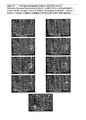
- Glass vials were filled in addition to the above canisters with the fluticasone/formoterol formulations of Batch 1 and Batch 2 HFA-MDI to assess suspension stability visually and by time lapse photography, see Figure 2 .
- the glass vials were shaken and photographs were taken 15 seconds, 30 seconds, 45 seconds, 1 minute, 1 minute 30 seconds, 2 minutes, 3 minutes, 5 minutes and 2 hours after this agitation.
- Table 7 shows the water content of the batches when ethanol 96.5% w/w was included in the formulation, thereby adding 500ppm to the formulation in addition to the moisture typically present due to the manufacture process itself.
- the slightly higher value for Batch 1 may have been due to the presence of DCSG.
- the water level found in the two batches is that as would typically be expected after long-term storage of the product or after shorter term storage in humid conditions (e.g., 75 %RH or higher).
- Table 8 shows the results of testing dose delivery from 10 inhalers for each Batch. The inclusion of DCSG within the formulation is shown to deliver a higher dose of both drugs (e.g. 92% with DCSG in comparison to 79% without for fluticasone).
- Table 9 Dose content uniformity through canister life of Fluticasone/formoterol formulation 100/10 batches 1 (Fluticasone/formoterol formulation 100/10 with DSCG) and 2 (without DSCG) upon release from the MDI. Batch No.
- Figure 1 shows the aerodynamic particle size distribution results of tests performed on five inhalers for each batch. Similar to the dose delivery results in Tables 4 and 5, less fluticasone and formoterol were delivered from the actuator for Batch 2 in comparison to Batch 1.
- Figure 2 shows the results of time-lapse photography for glass vials containing formulations of the two batches. The glass vials were also visually examined and the following differences in suspension stability were found.
- Batch 1 (with DSCG) exhibited large loose floccules soon after cessation of agitation (this result was different from that seen when the formulation is not challenged with water) while Batch 2 (without DSCG) remained more disperse and more homogeneous.
- Fluticasone/formoterol formulation with DSCG (Batch 1) floccules more rapidly than the same formulation when not challenged by additional water, but remained homogeneous long enough to provide a satisfactory and consistent dose uniformity.
- the formulation without DSCG prepared for comparison (Batch 2) creamed rapidly and resulted in drug deposition on the glass vial surface at the liquid-gas interface.
- Table 12 Results of Andersen Cascade Impactor of fluticasone/formoterol formulation (250 ⁇ g fluticasone /12 ⁇ g formoterol) at release and after 1 to 6 months storage at 40 °C / 75 % RH.
- Fine particle dose [ ⁇ g, 2 actuations] 102 (8.5%) 79.7 83.7 80.0 86.0 102.7 73.4 Fine particle fraction [% based on delivered dose] 52.0 46.1 43.7 43.3 42.2 54.3 42.2 Fine particle fraction [% based on metered dose] 48.5 40.2 40.4 39.1 39.7 44.7 n.d.
- Formoterol Delivered dose [ ⁇ g, 2 actuations] 9.5 (5.1%) 8.6 9.5 9.8 10.5 8.4 7.9 Metered dose [ ⁇ g, 2 actuations] 10.9 (5.3%) 11.5 11.3 12.7 12.5 10.5 n.d.
- Fine particle dose [ ⁇ g, 2 actuations] 5.6 (8.3%) 5.3 5.7 5.6 6.0 5.4 3.8
- Fine particle fraction [% based on delivered dose] 58.4 61.6 60.0 56.4 57.2 63.6 48.6 Fine particle fraction [% based on metered dose] 51.1 46.0 50.6 43.6 47.8 51.3 n.d.
- Table 13 Results of delivered dose uniformity test through inhaler life of fluticasone/formoterol formulation (250 ⁇ g fluticasone /12 ⁇ g formoterol) at release and after 1 to 6 months storage at 40 °C / 75 % RH.
- Tables 15 and 16 Summary of ACI results of fluticasone/formoterol formulation Flutiform 250/10 (Batch 4) up to 12 months at 25 °C / 60 %RH and 40 °C / 75 %RH. Each result is the mean of 6 determinations (beginning and end of 3 canisters).
Landscapes
- Health & Medical Sciences (AREA)
- Chemical & Material Sciences (AREA)
- Medicinal Chemistry (AREA)
- Veterinary Medicine (AREA)
- Pharmacology & Pharmacy (AREA)
- Life Sciences & Earth Sciences (AREA)
- Animal Behavior & Ethology (AREA)
- General Health & Medical Sciences (AREA)
- Public Health (AREA)
- Engineering & Computer Science (AREA)
- Epidemiology (AREA)
- Bioinformatics & Cheminformatics (AREA)
- Chemical Kinetics & Catalysis (AREA)
- General Chemical & Material Sciences (AREA)
- Nuclear Medicine, Radiotherapy & Molecular Imaging (AREA)
- Organic Chemistry (AREA)
- Pulmonology (AREA)
- Pain & Pain Management (AREA)
- Otolaryngology (AREA)
- Dispersion Chemistry (AREA)
- Oil, Petroleum & Natural Gas (AREA)
- Immunology (AREA)
- Emergency Medicine (AREA)
- Neurosurgery (AREA)
- Rheumatology (AREA)
- Neurology (AREA)
- Biomedical Technology (AREA)
- Pharmaceuticals Containing Other Organic And Inorganic Compounds (AREA)
- Medicinal Preparation (AREA)
- Acyclic And Carbocyclic Compounds In Medicinal Compositions (AREA)
- Medicines That Contain Protein Lipid Enzymes And Other Medicines (AREA)
Priority Applications (7)
| Application Number | Priority Date | Filing Date | Title |
|---|---|---|---|
| HRP20150174TT HRP20150174T1 (hr) | 2009-10-16 | 2010-10-15 | Poboljšane medicinske aerosolne formulacije |
| SI201030889T SI2488158T1 (sl) | 2009-10-16 | 2010-10-15 | Izboljšane medicinske aerosolne formulacije |
| PL10768922T PL2488158T3 (pl) | 2009-10-16 | 2010-10-15 | Ulepszone lecznicze preparaty aerozolowe |
| EP14199881.5A EP2881108B1 (en) | 2009-10-16 | 2010-10-15 | Improved medicinal aerosol formulations |
| DK14199881.5T DK2881108T3 (da) | 2009-10-16 | 2010-10-15 | Forbedrede medicinske aerosolformuleringer |
| EP23219752.5A EP4327807A3 (en) | 2009-10-16 | 2010-10-15 | Improved medicinal aerosol formulations |
| CY20151100253T CY1116109T1 (el) | 2009-10-16 | 2015-03-13 | Βελτιωμενα φαρμακευτικα σκευασματα αερολυματος |
Applications Claiming Priority (2)
| Application Number | Priority Date | Filing Date | Title |
|---|---|---|---|
| GBGB0918149.6A GB0918149D0 (en) | 2009-10-16 | 2009-10-16 | Improved medicinal aerosol formulation |
| PCT/EP2010/065573 WO2011045432A1 (en) | 2009-10-16 | 2010-10-15 | Improved medicinal aerosol formulations |
Related Child Applications (2)
| Application Number | Title | Priority Date | Filing Date |
|---|---|---|---|
| EP23219752.5A Division EP4327807A3 (en) | 2009-10-16 | 2010-10-15 | Improved medicinal aerosol formulations |
| EP14199881.5A Division EP2881108B1 (en) | 2009-10-16 | 2010-10-15 | Improved medicinal aerosol formulations |
Publications (2)
| Publication Number | Publication Date |
|---|---|
| EP2488158A1 EP2488158A1 (en) | 2012-08-22 |
| EP2488158B1 true EP2488158B1 (en) | 2014-12-24 |
Family
ID=41462450
Family Applications (3)
| Application Number | Title | Priority Date | Filing Date |
|---|---|---|---|
| EP10768922.6A Revoked EP2488158B1 (en) | 2009-10-16 | 2010-10-15 | Improved medicinal aerosol formulations |
| EP14199881.5A Active EP2881108B1 (en) | 2009-10-16 | 2010-10-15 | Improved medicinal aerosol formulations |
| EP23219752.5A Pending EP4327807A3 (en) | 2009-10-16 | 2010-10-15 | Improved medicinal aerosol formulations |
Family Applications After (2)
| Application Number | Title | Priority Date | Filing Date |
|---|---|---|---|
| EP14199881.5A Active EP2881108B1 (en) | 2009-10-16 | 2010-10-15 | Improved medicinal aerosol formulations |
| EP23219752.5A Pending EP4327807A3 (en) | 2009-10-16 | 2010-10-15 | Improved medicinal aerosol formulations |
Country Status (26)
| Country | Link |
|---|---|
| US (3) | US20120282189A1 (enExample) |
| EP (3) | EP2488158B1 (enExample) |
| JP (6) | JP2013507430A (enExample) |
| CN (1) | CN102665675B (enExample) |
| AU (1) | AU2010305698C9 (enExample) |
| BR (1) | BR112012008983A2 (enExample) |
| CA (1) | CA2776359C (enExample) |
| CL (1) | CL2012000947A1 (enExample) |
| CY (1) | CY1116109T1 (enExample) |
| DK (2) | DK2881108T3 (enExample) |
| ES (2) | ES2533372T3 (enExample) |
| FI (1) | FI2881108T3 (enExample) |
| GB (1) | GB0918149D0 (enExample) |
| HR (2) | HRP20240402T1 (enExample) |
| HU (1) | HUE065583T2 (enExample) |
| IL (1) | IL219161B (enExample) |
| LT (1) | LT2881108T (enExample) |
| MX (1) | MX2012004337A (enExample) |
| NZ (1) | NZ599901A (enExample) |
| PL (2) | PL2488158T3 (enExample) |
| PT (2) | PT2488158E (enExample) |
| RS (2) | RS65391B1 (enExample) |
| SI (2) | SI2488158T1 (enExample) |
| SM (2) | SMT202400119T1 (enExample) |
| WO (1) | WO2011045432A1 (enExample) |
| ZA (1) | ZA201202452B (enExample) |
Families Citing this family (5)
| Publication number | Priority date | Publication date | Assignee | Title |
|---|---|---|---|---|
| DE50211045D1 (de) * | 2001-03-30 | 2007-11-22 | Jagotec Ag | Medizinische aerosolformulierungen |
| GB0323684D0 (en) | 2003-10-09 | 2003-11-12 | Jagotec Ag | Improvements in or relating to organic compounds |
| GB0918149D0 (en) * | 2009-10-16 | 2009-12-02 | Jagotec Ag | Improved medicinal aerosol formulation |
| TWI495466B (zh) * | 2010-09-23 | 2015-08-11 | Intech Biopharm Ltd | 用於氣喘之吸入性複方組合物 |
| GB201515310D0 (en) * | 2015-08-27 | 2015-10-14 | Jagotec Ag | Pharmaceutical composition |
Citations (2)
| Publication number | Priority date | Publication date | Assignee | Title |
|---|---|---|---|---|
| US6475467B1 (en) | 1998-08-04 | 2002-11-05 | Jago Research Ag | Medicinal aerosol formulations |
| WO2005034911A1 (en) | 2003-10-09 | 2005-04-21 | Jagotec Ag | Aerosol formulations comprising formoterol fumarate dihydrate, a propellant,ethanol and optionally a steroid,where the formoterol fumarate dihydrate has a water content of 4.8-4.28% by weight |
Family Cites Families (52)
| Publication number | Priority date | Publication date | Assignee | Title |
|---|---|---|---|---|
| DE2503962A1 (de) | 1975-01-31 | 1976-08-05 | Thomae Gmbh Dr K | Spruehbare mittel in suspensionsform zur anwendung auf der haut |
| FR2420972A1 (fr) | 1978-03-31 | 1979-10-26 | Roussel Uclaf | Application du peroxyde de thenoyle a titre de medicament |
| JPS5529524A (en) | 1978-08-21 | 1980-03-01 | Toyo Aerosol Kogyo Kk | Powdery aerosol composition |
| DE2914181C2 (de) | 1979-04-07 | 1982-06-16 | Kernforschungsanlage Jülich GmbH, 5170 Jülich | Verfahren und Vorrichtung zum Trocknen temperaturempfindlicher Güter der Pharma- und Nahrungsmittelindustrie |
| JPS6135815A (ja) | 1984-07-28 | 1986-02-20 | Sanshin Seisakusho:Kk | 上部集液式加圧ろ過機に於ける機体内液の脱液方法及び同装置 |
| FR2666962B1 (fr) | 1990-09-26 | 1996-06-14 | Oreal | Composition antifongique sous forme de spray sec. |
| US5874063A (en) | 1991-04-11 | 1999-02-23 | Astra Aktiebolag | Pharmaceutical formulation |
| SE9101090D0 (sv) | 1991-04-11 | 1991-04-11 | Astra Ab | Process for conditioning of water-soluble substances |
| SE9302777D0 (sv) | 1993-08-27 | 1993-08-27 | Astra Ab | Process for conditioning substances |
| DE69218455T2 (de) * | 1991-12-18 | 1997-10-23 | Minnesota Mining And Mfg. Co., Saint Paul, Minn. | Aerosolzusammensetzungen für arzneimittelsuspensionen |
| DE4321288A1 (de) | 1993-06-26 | 1995-01-05 | Solvay Fluor & Derivate | Zusammensetzungen mit chlorfreien, gegebenenfalls wasserstoffhaltigen Fluorkohlenwasserstoffen |
| US6596260B1 (en) | 1993-08-27 | 2003-07-22 | Novartis Corporation | Aerosol container and a method for storage and administration of a predetermined amount of a pharmaceutically active aerosol |
| ATE233544T1 (de) | 1993-12-02 | 2003-03-15 | Abbott Lab | Aerosole als darreichungsform mit cfc-freiem treibmittel |
| AP979A (en) | 1995-04-14 | 2001-06-28 | Glaxo Wellcome Inc | Metered dose imhaler for salmeterol. |
| JP3707107B2 (ja) | 1995-09-18 | 2005-10-19 | 鈴木油脂工業株式会社 | 薬剤分散液及びその製造方法 |
| US6054488A (en) | 1996-06-11 | 2000-04-25 | 3M Innovative Properties Company | Medicinal aerosol formulations of formoterol |
| US6361938B1 (en) | 1996-11-08 | 2002-03-26 | Elan Corporation, Plc | Peptides which enhance transport across tissues and methods of identifying and using the same |
| ATE290368T1 (de) | 1997-01-30 | 2005-03-15 | Alltracel Dev Services Ltd | Blutstillende aerosol-zubereitung |
| NZ337065A (en) | 1997-02-05 | 2001-02-23 | Jago Pharma Ag | Medical aerosol formulations containing carbon dioxide, a hydrofluoroalkane, a cosolvent and a beta-mimetic / corticoid / anticholinergic / spasmolytic / analgesic agent |
| US6086376A (en) | 1998-01-30 | 2000-07-11 | Rtp Pharma Inc. | Dry aerosol suspension of phospholipid-stabilized drug microparticles in a hydrofluoroalkane propellant |
| US6451285B2 (en) | 1998-06-19 | 2002-09-17 | Baker Norton Pharmaceuticals, Inc. | Suspension aerosol formulations containing formoterol fumarate and a fluoroalkane propellant |
| DE59911149D1 (de) | 1998-07-24 | 2004-12-30 | Jago Res Ag Muttenz | Medizinische aerosolformulierungen |
| US7521068B2 (en) | 1998-11-12 | 2009-04-21 | Elan Pharma International Ltd. | Dry powder aerosols of nanoparticulate drugs |
| ATE382386T1 (de) | 1998-11-13 | 2008-01-15 | Jagotec Ag | Multidosis-trockenpulverinhalator mit pulverreservoir |
| US7074388B2 (en) * | 1998-12-10 | 2006-07-11 | Kos Life Science, Inc. | Water stabilized medicinal aerosol formulation |
| US6926911B1 (en) | 1998-12-22 | 2005-08-09 | The University Of North Carolina At Chapel Hill | Compounds and methods for the treatment of airway diseases and for the delivery of airway drugs |
| WO2000047203A1 (en) | 1999-02-12 | 2000-08-17 | Mqs, Inc. | Formulation and system for intra-oral delivery of pharmaceutical agents |
| GB9903759D0 (en) | 1999-02-18 | 1999-04-14 | Novartis Ag | Organic compounds |
| GB9904919D0 (en) | 1999-03-03 | 1999-04-28 | Novartis Ag | Organic compounds |
| GB0012260D0 (en) | 2000-05-19 | 2000-07-12 | Astrazeneca Ab | Novel composition |
| GB0012261D0 (en) | 2000-05-19 | 2000-07-12 | Astrazeneca Ab | Novel process |
| US20060257324A1 (en) * | 2000-05-22 | 2006-11-16 | Chiesi Farmaceutici S.P.A. | Pharmaceutical solution formulations for pressurised metered dose inhalers |
| BR0015884A (pt) | 2000-05-22 | 2003-07-08 | Chiesi Farma Spa | Formulações de soluções farmacêuticas estáveis para inaladores de dose medida pressurizados |
| AU2001247123A1 (en) * | 2000-07-19 | 2002-02-05 | Aeropharm Technology, Inc. | A medicinal aerosol formulation |
| WO2002011711A2 (en) | 2000-08-04 | 2002-02-14 | Longwood Pharmaceutical Research, Inc. | Formulations of mometasone and a bronchodilator for pulmonary administration |
| JP5021149B2 (ja) | 2000-10-09 | 2012-09-05 | スリーエム イノベイティブ プロパティズ カンパニー | 医療用エアロゾル調合物 |
| DE50211045D1 (de) * | 2001-03-30 | 2007-11-22 | Jagotec Ag | Medizinische aerosolformulierungen |
| US6455028B1 (en) | 2001-04-23 | 2002-09-24 | Pharmascience | Ipratropium formulation for pulmonary inhalation |
| GB0208742D0 (en) | 2002-04-17 | 2002-05-29 | Bradford Particle Design Ltd | Particulate materials |
| AR036358A1 (es) | 2001-08-28 | 2004-09-01 | Schering Corp | Un inhalador de dosis medidas que contiene una formulacion de suspension en aerosol para inhalacion, un proceso para la produccion de la formulacion, el producto y el uso de una formulacion para la manufactura de un medicamento de asma |
| GB0201400D0 (en) | 2002-01-22 | 2002-03-13 | Glaxo Group Ltd | Novel apparatus and process |
| HUE044926T2 (hu) | 2002-03-01 | 2019-11-28 | Chiesi Farm Spa | Szuperfinom formoterolkészítmény |
| GB0207899D0 (en) | 2002-04-05 | 2002-05-15 | 3M Innovative Properties Co | Formoterol and cielesonide aerosol formulations |
| US7582284B2 (en) | 2002-04-17 | 2009-09-01 | Nektar Therapeutics | Particulate materials |
| EP2319583A1 (en) * | 2002-08-29 | 2011-05-11 | Cipla Ltd. | Pharmaceutical products and compositions comprising salmeterol, budesonide and ipratropium |
| US20060193610A1 (en) | 2003-07-12 | 2006-08-31 | Jong-Hun Han | Aromatic emitting apparatus for using cigarjack |
| CA2539051C (en) | 2003-09-19 | 2014-08-12 | Penwest Pharmaceuticals Co. | Delayed release dosage forms |
| GB0323685D0 (en) * | 2003-10-09 | 2003-11-12 | Jagotec Ag | Improvements in or relating to organic compounds |
| CA2581999C (en) * | 2004-10-12 | 2013-04-23 | Generics (Uk) Limited | Preparation of suspension aerosol formulations |
| GB0918150D0 (en) * | 2009-10-16 | 2009-12-02 | Jagotec Ag | Improved formulations |
| GB0918149D0 (en) * | 2009-10-16 | 2009-12-02 | Jagotec Ag | Improved medicinal aerosol formulation |
| JP2015036045A (ja) * | 2013-08-12 | 2015-02-23 | 株式会社泉技研 | 骨質改善のための超音波音響システム及び超音波音響機器の作動方法 |
-
2009
- 2009-10-16 GB GBGB0918149.6A patent/GB0918149D0/en not_active Ceased
-
2010
- 2010-10-15 EP EP10768922.6A patent/EP2488158B1/en not_active Revoked
- 2010-10-15 EP EP14199881.5A patent/EP2881108B1/en active Active
- 2010-10-15 PL PL10768922T patent/PL2488158T3/pl unknown
- 2010-10-15 HR HRP20240402TT patent/HRP20240402T1/hr unknown
- 2010-10-15 FI FIEP14199881.5T patent/FI2881108T3/fi active
- 2010-10-15 RS RS20240366A patent/RS65391B1/sr unknown
- 2010-10-15 SM SM20240119T patent/SMT202400119T1/it unknown
- 2010-10-15 RS RS20150160A patent/RS53883B1/sr unknown
- 2010-10-15 BR BR112012008983A patent/BR112012008983A2/pt not_active Application Discontinuation
- 2010-10-15 SI SI201030889T patent/SI2488158T1/sl unknown
- 2010-10-15 HR HRP20150174TT patent/HRP20150174T1/hr unknown
- 2010-10-15 PL PL14199881.5T patent/PL2881108T3/pl unknown
- 2010-10-15 LT LTEP14199881.5T patent/LT2881108T/lt unknown
- 2010-10-15 MX MX2012004337A patent/MX2012004337A/es active IP Right Grant
- 2010-10-15 PT PT10768922T patent/PT2488158E/pt unknown
- 2010-10-15 ES ES10768922.6T patent/ES2533372T3/es active Active
- 2010-10-15 CN CN201080046310.7A patent/CN102665675B/zh active Active
- 2010-10-15 DK DK14199881.5T patent/DK2881108T3/da active
- 2010-10-15 US US13/503,245 patent/US20120282189A1/en not_active Abandoned
- 2010-10-15 PT PT141998815T patent/PT2881108T/pt unknown
- 2010-10-15 CA CA2776359A patent/CA2776359C/en active Active
- 2010-10-15 ES ES14199881T patent/ES2973882T3/es active Active
- 2010-10-15 WO PCT/EP2010/065573 patent/WO2011045432A1/en not_active Ceased
- 2010-10-15 DK DK10768922T patent/DK2488158T3/en active
- 2010-10-15 AU AU2010305698A patent/AU2010305698C9/en active Active
- 2010-10-15 JP JP2012533650A patent/JP2013507430A/ja active Pending
- 2010-10-15 NZ NZ599901A patent/NZ599901A/xx unknown
- 2010-10-15 SI SI201032141T patent/SI2881108T1/sl unknown
- 2010-10-15 EP EP23219752.5A patent/EP4327807A3/en active Pending
- 2010-10-15 HU HUE14199881A patent/HUE065583T2/hu unknown
-
2012
- 2012-04-04 ZA ZA2012/02452A patent/ZA201202452B/en unknown
- 2012-04-13 CL CL2012000947A patent/CL2012000947A1/es unknown
- 2012-04-15 IL IL219161A patent/IL219161B/en active IP Right Grant
-
2014
- 2014-05-16 US US14/279,751 patent/US20140314684A1/en not_active Abandoned
-
2015
- 2015-02-26 JP JP2015036045A patent/JP2015129162A/ja active Pending
- 2015-03-06 SM SM201500052T patent/SMT201500052B/xx unknown
- 2015-03-13 CY CY20151100253T patent/CY1116109T1/el unknown
-
2016
- 2016-09-14 US US15/265,467 patent/US10471077B2/en active Active
- 2016-12-27 JP JP2016252909A patent/JP6568511B2/ja active Active
-
2019
- 2019-08-02 JP JP2019142684A patent/JP7203701B2/ja active Active
-
2022
- 2022-12-27 JP JP2022209895A patent/JP2023026517A/ja active Pending
-
2025
- 2025-07-31 JP JP2025127827A patent/JP2025148616A/ja active Pending
Patent Citations (2)
| Publication number | Priority date | Publication date | Assignee | Title |
|---|---|---|---|---|
| US6475467B1 (en) | 1998-08-04 | 2002-11-05 | Jago Research Ag | Medicinal aerosol formulations |
| WO2005034911A1 (en) | 2003-10-09 | 2005-04-21 | Jagotec Ag | Aerosol formulations comprising formoterol fumarate dihydrate, a propellant,ethanol and optionally a steroid,where the formoterol fumarate dihydrate has a water content of 4.8-4.28% by weight |
Also Published As
Similar Documents
| Publication | Publication Date | Title |
|---|---|---|
| JP7203701B2 (ja) | 改善された医薬エアゾール製剤 | |
| US20100095963A1 (en) | Pharmaceutical compositions | |
| EP2488157B1 (en) | Improved formulations | |
| HK40107344A (en) | Improved medicinal aerosol formulations | |
| HK1173077B (en) | Improved medicinal aerosol formulations | |
| HK1211207B (en) | Improved medicinal aerosol formulations | |
| AU2013201071A1 (en) | Improved medicinal aerosol formulations | |
| EP1785156B1 (en) | Metered dose inhaler containing an aerosol suspension formulation | |
| HK1173076B (en) | Improved formulations | |
| HK1173076A (en) | Improved formulations |
Legal Events
| Date | Code | Title | Description |
|---|---|---|---|
| PUAI | Public reference made under article 153(3) epc to a published international application that has entered the european phase |
Free format text: ORIGINAL CODE: 0009012 |
|
| 17P | Request for examination filed |
Effective date: 20120510 |
|
| AK | Designated contracting states |
Kind code of ref document: A1 Designated state(s): AL AT BE BG CH CY CZ DE DK EE ES FI FR GB GR HR HU IE IS IT LI LT LU LV MC MK MT NL NO PL PT RO RS SE SI SK SM TR |
|
| DAX | Request for extension of the european patent (deleted) | ||
| REG | Reference to a national code |
Ref country code: HK Ref legal event code: DE Ref document number: 1173077 Country of ref document: HK |
|
| 17Q | First examination report despatched |
Effective date: 20130923 |
|
| 17Q | First examination report despatched |
Effective date: 20130930 |
|
| REG | Reference to a national code |
Ref country code: DE Ref legal event code: R079 Ref document number: 602010021280 Country of ref document: DE Free format text: PREVIOUS MAIN CLASS: A61K0009000000 Ipc: A61K0031167000 |
|
| GRAP | Despatch of communication of intention to grant a patent |
Free format text: ORIGINAL CODE: EPIDOSNIGR1 |
|
| INTG | Intention to grant announced |
Effective date: 20140718 |
|
| RIC1 | Information provided on ipc code assigned before grant |
Ipc: A61K 31/167 20060101AFI20140704BHEP Ipc: A61K 31/56 20060101ALI20140704BHEP |
|
| GRAS | Grant fee paid |
Free format text: ORIGINAL CODE: EPIDOSNIGR3 |
|
| GRAA | (expected) grant |
Free format text: ORIGINAL CODE: 0009210 |
|
| AK | Designated contracting states |
Kind code of ref document: B1 Designated state(s): AL AT BE BG CH CY CZ DE DK EE ES FI FR GB GR HR HU IE IS IT LI LT LU LV MC MK MT NL NO PL PT RO RS SE SI SK SM TR |
|
| REG | Reference to a national code |
Ref country code: GB Ref legal event code: FG4D |
|
| REG | Reference to a national code |
Ref country code: CH Ref legal event code: EP |
|
| REG | Reference to a national code |
Ref country code: IE Ref legal event code: FG4D |
|
| REG | Reference to a national code |
Ref country code: AT Ref legal event code: REF Ref document number: 702767 Country of ref document: AT Kind code of ref document: T Effective date: 20150115 |
|
| REG | Reference to a national code |
Ref country code: NL Ref legal event code: T3 |
|
| REG | Reference to a national code |
Ref country code: CH Ref legal event code: NV Representative=s name: BOHEST AG, CH |
|
| REG | Reference to a national code |
Ref country code: HR Ref legal event code: TUEP Ref document number: P20150174 Country of ref document: HR |
|
| REG | Reference to a national code |
Ref country code: DE Ref legal event code: R096 Ref document number: 602010021280 Country of ref document: DE Effective date: 20150219 |
|
| REG | Reference to a national code |
Ref country code: SE Ref legal event code: TRGR |
|
| REG | Reference to a national code |
Ref country code: RO Ref legal event code: EPE |
|
| REG | Reference to a national code |
Ref country code: PT Ref legal event code: SC4A Free format text: AVAILABILITY OF NATIONAL TRANSLATION Effective date: 20150309 |
|
| REG | Reference to a national code |
Ref country code: DK Ref legal event code: T3 Effective date: 20150316 |
|
| REG | Reference to a national code |
Ref country code: ES Ref legal event code: FG2A Ref document number: 2533372 Country of ref document: ES Kind code of ref document: T3 Effective date: 20150409 |
|
| REG | Reference to a national code |
Ref country code: EE Ref legal event code: FG4A Ref document number: E010233 Country of ref document: EE Effective date: 20150226 |
|
| REG | Reference to a national code |
Ref country code: GR Ref legal event code: EP Ref document number: 20150400310 Country of ref document: GR Effective date: 20150318 |
|
| REG | Reference to a national code |
Ref country code: NO Ref legal event code: T2 Effective date: 20141224 |
|
| REG | Reference to a national code |
Ref country code: HR Ref legal event code: T1PR Ref document number: P20150174 Country of ref document: HR |
|
| REG | Reference to a national code |
Ref country code: SK Ref legal event code: T3 Ref document number: E 18199 Country of ref document: SK |
|
| REG | Reference to a national code |
Ref country code: PL Ref legal event code: T3 |
|
| REG | Reference to a national code |
Ref country code: HK Ref legal event code: GR Ref document number: 1173077 Country of ref document: HK |
|
| REG | Reference to a national code |
Ref country code: DE Ref legal event code: R026 Ref document number: 602010021280 Country of ref document: DE |
|
| PLBI | Opposition filed |
Free format text: ORIGINAL CODE: 0009260 |
|
| PLAX | Notice of opposition and request to file observation + time limit sent |
Free format text: ORIGINAL CODE: EPIDOSNOBS2 |
|
| REG | Reference to a national code |
Ref country code: FR Ref legal event code: PLFP Year of fee payment: 6 |
|
| 26 | Opposition filed |
Opponent name: GENERICS (U.K.) LIMITED Effective date: 20150924 |
|
| REG | Reference to a national code |
Ref country code: HU Ref legal event code: AG4A Ref document number: E024314 Country of ref document: HU |
|
| PLAF | Information modified related to communication of a notice of opposition and request to file observations + time limit |
Free format text: ORIGINAL CODE: EPIDOSCOBS2 |
|
| REG | Reference to a national code |
Ref country code: AT Ref legal event code: UEP Ref document number: 702767 Country of ref document: AT Kind code of ref document: T Effective date: 20141224 |
|
| PLAF | Information modified related to communication of a notice of opposition and request to file observations + time limit |
Free format text: ORIGINAL CODE: EPIDOSCOBS2 |
|
| PLAF | Information modified related to communication of a notice of opposition and request to file observations + time limit |
Free format text: ORIGINAL CODE: EPIDOSCOBS2 |
|
| PLBB | Reply of patent proprietor to notice(s) of opposition received |
Free format text: ORIGINAL CODE: EPIDOSNOBS3 |
|
| REG | Reference to a national code |
Ref country code: FR Ref legal event code: PLFP Year of fee payment: 7 |
|
| PLAB | Opposition data, opponent's data or that of the opponent's representative modified |
Free format text: ORIGINAL CODE: 0009299OPPO |
|
| R26 | Opposition filed (corrected) |
Opponent name: GENERICS (U.K.) LIMITED Effective date: 20150924 |
|
| REG | Reference to a national code |
Ref country code: FR Ref legal event code: PLFP Year of fee payment: 8 |
|
| APBM | Appeal reference recorded |
Free format text: ORIGINAL CODE: EPIDOSNREFNO |
|
| APBP | Date of receipt of notice of appeal recorded |
Free format text: ORIGINAL CODE: EPIDOSNNOA2O |
|
| APAH | Appeal reference modified |
Free format text: ORIGINAL CODE: EPIDOSCREFNO |
|
| REG | Reference to a national code |
Ref country code: HR Ref legal event code: ODRP Ref document number: P20150174 Country of ref document: HR Payment date: 20181004 Year of fee payment: 10 |
|
| REG | Reference to a national code |
Ref country code: FR Ref legal event code: PLFP Year of fee payment: 9 |
|
| APBQ | Date of receipt of statement of grounds of appeal recorded |
Free format text: ORIGINAL CODE: EPIDOSNNOA3O |
|
| REG | Reference to a national code |
Ref country code: HR Ref legal event code: ODRP Ref document number: P20150174 Country of ref document: HR Payment date: 20200921 Year of fee payment: 11 |
|
| RAP2 | Party data changed (patent owner data changed or rights of a patent transferred) |
Owner name: JAGOTEC AG |
|
| PGFP | Annual fee paid to national office [announced via postgrant information from national office to epo] |
Ref country code: HR Payment date: 20210917 Year of fee payment: 12 Ref country code: LT Payment date: 20210920 Year of fee payment: 12 Ref country code: CZ Payment date: 20210917 Year of fee payment: 12 |
|
| REG | Reference to a national code |
Ref country code: HR Ref legal event code: ODRP Ref document number: P20150174 Country of ref document: HR Payment date: 20210917 Year of fee payment: 12 |
|
| PGFP | Annual fee paid to national office [announced via postgrant information from national office to epo] |
Ref country code: PL Payment date: 20210920 Year of fee payment: 12 Ref country code: RO Payment date: 20210922 Year of fee payment: 12 Ref country code: TR Payment date: 20210924 Year of fee payment: 12 Ref country code: SK Payment date: 20210917 Year of fee payment: 12 Ref country code: RS Payment date: 20210920 Year of fee payment: 12 |
|
| REG | Reference to a national code |
Ref country code: DE Ref legal event code: R103 Ref document number: 602010021280 Country of ref document: DE Ref country code: DE Ref legal event code: R064 Ref document number: 602010021280 Country of ref document: DE |
|
| APBU | Appeal procedure closed |
Free format text: ORIGINAL CODE: EPIDOSNNOA9O |
|
| PGFP | Annual fee paid to national office [announced via postgrant information from national office to epo] |
Ref country code: MK Payment date: 20210917 Year of fee payment: 12 Ref country code: PT Payment date: 20210922 Year of fee payment: 12 Ref country code: NL Payment date: 20211020 Year of fee payment: 12 |
|
| PGFP | Annual fee paid to national office [announced via postgrant information from national office to epo] |
Ref country code: SM Payment date: 20211012 Year of fee payment: 12 Ref country code: SE Payment date: 20211018 Year of fee payment: 12 Ref country code: DE Payment date: 20211025 Year of fee payment: 12 Ref country code: CY Payment date: 20210915 Year of fee payment: 12 Ref country code: AT Payment date: 20211021 Year of fee payment: 12 Ref country code: BG Payment date: 20211027 Year of fee payment: 12 Ref country code: NO Payment date: 20211018 Year of fee payment: 12 Ref country code: LU Payment date: 20211020 Year of fee payment: 12 Ref country code: MC Payment date: 20211028 Year of fee payment: 12 Ref country code: IE Payment date: 20211019 Year of fee payment: 12 Ref country code: GB Payment date: 20211022 Year of fee payment: 12 Ref country code: DK Payment date: 20211025 Year of fee payment: 12 Ref country code: EE Payment date: 20211026 Year of fee payment: 12 Ref country code: FI Payment date: 20211018 Year of fee payment: 12 Ref country code: ES Payment date: 20211115 Year of fee payment: 12 |
|
| PGFP | Annual fee paid to national office [announced via postgrant information from national office to epo] |
Ref country code: SI Payment date: 20210923 Year of fee payment: 12 Ref country code: LV Payment date: 20211022 Year of fee payment: 12 Ref country code: IT Payment date: 20211021 Year of fee payment: 12 Ref country code: IS Payment date: 20211025 Year of fee payment: 12 Ref country code: HU Payment date: 20210925 Year of fee payment: 12 Ref country code: GR Payment date: 20211026 Year of fee payment: 12 Ref country code: FR Payment date: 20211015 Year of fee payment: 12 Ref country code: CH Payment date: 20211021 Year of fee payment: 12 Ref country code: BE Payment date: 20211020 Year of fee payment: 12 |
|
| RDAF | Communication despatched that patent is revoked |
Free format text: ORIGINAL CODE: EPIDOSNREV1 |
|
| STAA | Information on the status of an ep patent application or granted ep patent |
Free format text: STATUS: PATENT REVOKED |
|
| RDAG | Patent revoked |
Free format text: ORIGINAL CODE: 0009271 |
|
| REG | Reference to a national code |
Ref country code: CH Ref legal event code: PL |
|
| PGFP | Annual fee paid to national office [announced via postgrant information from national office to epo] |
Ref country code: MT Payment date: 20211014 Year of fee payment: 12 |
|
| REG | Reference to a national code |
Ref country code: LT Ref legal event code: MM9A Effective date: 20301015 |
|
| REG | Reference to a national code |
Ref country code: FI Ref legal event code: MGE |
|
| 27W | Patent revoked |
Effective date: 20211209 |
|
| GBPR | Gb: patent revoked under art. 102 of the ep convention designating the uk as contracting state |
Effective date: 20211209 |
|
| REG | Reference to a national code |
Ref country code: HR Ref legal event code: PNEV Ref document number: P20150174 Country of ref document: HR |
|
| REG | Reference to a national code |
Ref country code: SK Ref legal event code: MC4A Ref document number: E 18199 Country of ref document: SK Effective date: 20211209 |
|
| REG | Reference to a national code |
Ref country code: GR Ref legal event code: NF Ref document number: 20150400310 Country of ref document: GR Effective date: 20220509 |
|
| PGFP | Annual fee paid to national office [announced via postgrant information from national office to epo] |
Ref country code: AL Payment date: 20211004 Year of fee payment: 12 |
|
| REG | Reference to a national code |
Ref country code: EE Ref legal event code: MF4A Ref document number: E010233 Country of ref document: EE Effective date: 20220630 Ref country code: AT Ref legal event code: MA03 Ref document number: 702767 Country of ref document: AT Kind code of ref document: T Effective date: 20210109 |
|
| REG | Reference to a national code |
Ref country code: SE Ref legal event code: ECNC |
|
| REG | Reference to a national code |
Ref country code: NO Ref legal event code: MMEP |
|
| REG | Reference to a national code |
Ref country code: SI Ref legal event code: KO00 Effective date: 20230629 |
|
| PG25 | Lapsed in a contracting state [announced via postgrant information from national office to epo] |
Ref country code: RS Free format text: THE PATENT HAS BEEN ANNULLED BY A DECISION OF A NATIONAL AUTHORITY; INVALID AB INITIO Effective date: 20101015 |