EP2486928A1 - Method for the treatment of amyloidoses - Google Patents
Method for the treatment of amyloidoses Download PDFInfo
- Publication number
- EP2486928A1 EP2486928A1 EP12167045A EP12167045A EP2486928A1 EP 2486928 A1 EP2486928 A1 EP 2486928A1 EP 12167045 A EP12167045 A EP 12167045A EP 12167045 A EP12167045 A EP 12167045A EP 2486928 A1 EP2486928 A1 EP 2486928A1
- Authority
- EP
- European Patent Office
- Prior art keywords
- globulomer
- calcium channel
- agonist
- type voltage
- presynaptic calcium
- Prior art date
- Legal status (The legal status is an assumption and is not a legal conclusion. Google has not performed a legal analysis and makes no representation as to the accuracy of the status listed.)
- Withdrawn
Links
Images












Classifications
-
- A—HUMAN NECESSITIES
- A61—MEDICAL OR VETERINARY SCIENCE; HYGIENE
- A61K—PREPARATIONS FOR MEDICAL, DENTAL OR TOILETRY PURPOSES
- A61K31/00—Medicinal preparations containing organic active ingredients
- A61K31/01—Hydrocarbons
- A61K31/015—Hydrocarbons carbocyclic
-
- A—HUMAN NECESSITIES
- A61—MEDICAL OR VETERINARY SCIENCE; HYGIENE
- A61K—PREPARATIONS FOR MEDICAL, DENTAL OR TOILETRY PURPOSES
- A61K31/00—Medicinal preparations containing organic active ingredients
- A61K31/045—Hydroxy compounds, e.g. alcohols; Salts thereof, e.g. alcoholates
- A61K31/05—Phenols
-
- A—HUMAN NECESSITIES
- A61—MEDICAL OR VETERINARY SCIENCE; HYGIENE
- A61K—PREPARATIONS FOR MEDICAL, DENTAL OR TOILETRY PURPOSES
- A61K31/00—Medicinal preparations containing organic active ingredients
- A61K31/33—Heterocyclic compounds
- A61K31/395—Heterocyclic compounds having nitrogen as a ring hetero atom, e.g. guanethidine or rifamycins
- A61K31/495—Heterocyclic compounds having nitrogen as a ring hetero atom, e.g. guanethidine or rifamycins having six-membered rings with two or more nitrogen atoms as the only ring heteroatoms, e.g. piperazine or tetrazines
- A61K31/505—Pyrimidines; Hydrogenated pyrimidines, e.g. trimethoprim
- A61K31/519—Pyrimidines; Hydrogenated pyrimidines, e.g. trimethoprim ortho- or peri-condensed with heterocyclic rings
-
- A—HUMAN NECESSITIES
- A61—MEDICAL OR VETERINARY SCIENCE; HYGIENE
- A61P—SPECIFIC THERAPEUTIC ACTIVITY OF CHEMICAL COMPOUNDS OR MEDICINAL PREPARATIONS
- A61P25/00—Drugs for disorders of the nervous system
-
- A—HUMAN NECESSITIES
- A61—MEDICAL OR VETERINARY SCIENCE; HYGIENE
- A61P—SPECIFIC THERAPEUTIC ACTIVITY OF CHEMICAL COMPOUNDS OR MEDICINAL PREPARATIONS
- A61P25/00—Drugs for disorders of the nervous system
- A61P25/28—Drugs for disorders of the nervous system for treating neurodegenerative disorders of the central nervous system, e.g. nootropic agents, cognition enhancers, drugs for treating Alzheimer's disease or other forms of dementia
-
- A—HUMAN NECESSITIES
- A61—MEDICAL OR VETERINARY SCIENCE; HYGIENE
- A61P—SPECIFIC THERAPEUTIC ACTIVITY OF CHEMICAL COMPOUNDS OR MEDICINAL PREPARATIONS
- A61P3/00—Drugs for disorders of the metabolism
-
- A—HUMAN NECESSITIES
- A61—MEDICAL OR VETERINARY SCIENCE; HYGIENE
- A61K—PREPARATIONS FOR MEDICAL, DENTAL OR TOILETRY PURPOSES
- A61K39/00—Medicinal preparations containing antigens or antibodies
- A61K39/395—Antibodies; Immunoglobulins; Immune serum, e.g. antilymphocytic serum
- A61K39/39533—Antibodies; Immunoglobulins; Immune serum, e.g. antilymphocytic serum against materials from animals
- A61K39/3955—Antibodies; Immunoglobulins; Immune serum, e.g. antilymphocytic serum against materials from animals against proteinaceous materials, e.g. enzymes, hormones, lymphokines
Definitions
- the present invention relates to a method for the treatment of an amyloidosis such as Alzheimer's disease.
- AD Alzheimer's disease
- a ⁇ amyloid ⁇ peptides
- APP ⁇ -amyloid precursor protein
- Alzheimer's disease and Down's syndrome are jointly termed "amyloidoses”.
- a ⁇ globulomers rather than the eponymous insoluble amyloid deposits, are the causative agents for the impairment of higher-level functions, such as memory function, as indicated by its suppressing effect on long-term potentiation ( WO2004/067561 ; Barghorn S. et al., J. Neurochem. 95 : 834 - 847 (2005 ); WO2006/094724 ).
- a ⁇ globulomer here refers to a particular soluble, globular, non-covalent association of A ⁇ peptides, possessing homogeneity and distinct physical characteristics.
- a ⁇ globulomers are stable, non-fibrillar, oligomeric assemblies of A ⁇ peptides which are obtainable by incubation with anionic detergents, in particular as described in WO2004/067561 .
- anionic detergents in particular as described in WO2004/067561 .
- these globulomers are characterized by defined assembly numbers of subunits ( WO2004/067561 ).
- the globulomers have a characteristic three-dimensional globular type structure ("molten globule", see Barghorn et al., J. Neurochem. 95 : 834 - 847 (2005 )). They have been shown to closely mimic the properties, behaviour and effects of naturally occurring soluble A ⁇ oligomers.
- Soluble A ⁇ oligomer was found to impair the functioning of the central nervous system even before the onset of cytotoxicity.
- the exact mechanisms whereby soluble A ⁇ oligomer causes memory failure in amyloidoses has not been elucidated so far, and a lack of understanding of such mechanisms has so far hampered the development of rational therapeutic approaches for inhibiting the further progression of the disease or compensating the damage already done.
- amyloidoses such as Alzheimer's disease
- rehabilitating treatment such as the restoration of cognitive abilities in amyloidoses such as Alzheimer's disease.
- a ⁇ globulomer exerts its detrimental effects essentially by hampering normal ion fluxes through the P/Q type presynaptic calcium channel, reducing presynaptic neurotransmitter release and inhibiting spontaneous synaptic activity and thereby interfering with the proper functioning of the central nervous system even before the onset of manifest neural cytotoxicity, and that activation of the P/Q type presynaptic calcium channel is therefore effective in compensating these effects (increasing the extracellular Ca 2+ concentration (P/Q type presynaptic calcium channel agonism) was effective in reversing the inhibitory effect of A ⁇ globulomer on the P/Q type voltage-gated presynaptic calcium channel).
- the present invention thus relates to a method for the treatment of an amyloidosis, preferably Alzheimer's disease, in a subject in need thereof, comprising administering an agonist of the P/Q type voltage-gated presynaptic calcium channel to said subject.
- the P/Q type voltage-gated presynaptic calcium channel (the channel is also referred to as Ca v 2.1 channel and the associated currents as P/Q type currents) belongs to the group of voltage-gated calcium channels which mediate the influx of calcium ions into excitable cells.
- the opening state of a voltage-gated channel is controlled by the electrical state of the surrounding membrane; however, the responsiveness of the P/Q type voltage-gated presynaptic calcium channel to membrane depolarization is extensively modulated, both qualitatively and quantitatively, by and/or through its interaction partners.
- a "P/Q type voltage-gated presynaptic calcium channel” is a voltage-gated calcium channel that is functionally characterized by its sensitivity towards ⁇ -agatoxin IVA (a well-known funnel web spider venom).
- P/Q type voltage-gated presynaptic calcium channels according to the present invention may be characterized by one or more than one of the following features:
- the P/Q type voltage-gated presynaptic calcium channel comprises an ⁇ 1 subunit.
- the ⁇ 1 subunit has an amino acid sequence with at least 70 %, advantageously at least 80 %, preferably at least 90 %, more preferably at least 95 % and in particular at least 98 %, e. g. at least 99 %, amino acid sequence identity with the sequence SEQ ID NO:1.
- the ⁇ 1 subunit incorporates the conduction pore, the voltage sensor and gating apparatus, and sites of channel regulation by second messengers, drugs, and toxins.
- the P/Q type voltage-gated presynaptic calcium channel also comprises an ⁇ 2- ⁇ subunit and a ⁇ subunit. It may also comprise an ⁇ subunit.
- the ⁇ 2- ⁇ subunit when present, has at least 70 %, advantageously at least 80 %, preferably at least 90 %, more preferably at least 95 % and in particular at least 98 %, e. g. at least 99 %, amino acid sequence identity with the sequence SEQ ID NO:2.
- the ⁇ subunit when present, has at least 70 %, advantageously at least 80 %, preferably at least 90 %, more preferably at least 95 % and in particular at least 98 %, e. g. at least 99 %, amino acid sequence identity with the sequence SEQ ID NO:3.
- an "agonist of the P/Q type voltage-gated presynaptic calcium channel” is any substance that increases the flow of calcium ions through the P/Q type voltage-gated presynaptic calcium channel.
- the agonist of the invention increases the open probability of the channel.
- the agonist of the invention directly interacts with the closed channel to open it.
- the agonist of the invention increases the duration of the open state once the channel has been opened.
- the agonist of the invention interacts with the time constants of voltage-gated activation, voltage-gated inactivation and voltage-gated de-inactivation in a way which results in an increased net calcium flux under physiological conditions and which may be voltage-dependent in itself.
- the agonist of the invention changes one or more transition probabilities between the different states of the channel (closed, open, inactivated).
- an agonist of the P/Q type voltage-gated presynaptic calcium channel will increase ion flux through the P/Q type voltage-gated presynaptic calcium channel.
- the agonist of the P/Q type voltage-gated presynaptic calcium channel is preferably a partial or complete agonist of the P/Q type voltage-gated presynaptic calcium channel, and more preferably a complete agonist of the P/Q type voltage-gated presynaptic calcium channel.
- a "partial agonist of the P/Q type voltage-gated presynaptic calcium channel” is an agonist which is not capable even at high concentration of causing the maximal activating effect of the P/Q type voltage-gated presynaptic calcium channel, as defined above.
- a partial agonist does not lead to maximal calcium flow through the P/Q type voltage-gated presynaptic calcium channel at saturating concentration.
- a "complete agonist of the P/Q type voltage-gated presynaptic calcium channel” is an agonist which is capable of inducing, at suitable concentrations, maximal activation of the P/Q type voltage-gated presynaptic calcium channel, as defined above.
- an agonist of the P/Q type voltage-gated presynaptic calcium channel may either bind directly to the P/Q type voltage-gated presynaptic calcium channel, i. e. by binding the calcium channel molecule, e. g. by forming a covalent or non-covalent attachment to said calcium channel molecule, or exert its effect on the ion channel predominantly without direct physical contact between the agonist and said calcium channel, the effect being mediated, in this case, by any of a wide range of go-betweens.
- an agonist of the P/Q type voltage-gated presynaptic calcium channel may bind to both the P/Q type voltage-gated presynaptic calcium channel and components of its environment, thereby influencing the mutual interaction. In all of these cases, under otherwise identical conditions the behaviour of said calcium channel in the presence of an effective amount of the agonist will be detectably different from that in the absence of said agonist.
- bind is used generically to denote any immediate association between two molecules, which may be covalent or non-covalent, thus including covalent bonds, hydrogen bridges, ionic interactions, hydrophobic associations, van der Waals forces, etc. It will thus be understood that the term also extends to the temporary association of a first molecule with a catalytically active second molecule, wherein said second molecule performs modifications on said first molecule which, and consequently whose effects, outlast the actual contact between said first and said second molecule, e. g. generation or removal of covalent bonds.
- the agonist increases net calcium flux through the P/Q type voltage-gated presynaptic calcium channel with an EC50 of less than 120 ⁇ M, preferably of less than 10 ⁇ M, and in particular of less than 1 ⁇ M.
- the EC50 is the agonist concentration required for obtaining 50% of a maximum effect of this agonist determined using the patch-clamp method for whole-cell recording of channel activity.
- the standard method employed here for all determinations of Ca ++ currents is a patch-clamp method using 120 mM NMG ⁇ Cl, 10 mM TEA ⁇ Cl, 14 mM creatine phosphate, 6 mM MgCl 2 , 1 mM CaCl 2 10 mM NMG ⁇ HEPES, 5 mM Tris 2 ⁇ ATP and 11 NMG 2 ⁇ EGTA as internal, and 30 mM BaCl 2 , 100 mM NMG ⁇ Cl, 10 mM NMG ⁇ HEPES and 15 mM glucose as external solution, both adjusted to a pH of about 7.2 - 7.3, for measuring stably transfected BHK (Baby Hamster Kidney) cells expressing the ⁇ 1 component together with the ⁇ 2 ⁇ and ⁇ IB components of the P/Q type voltage-gated presynaptic calcium channel.
- presynaptic calcium channels such as the N and R type voltage-gated presynaptic calcium channels
- these types of channels may all be present in parallel at any given synapse, or one of them may be dominant in terms of abundance and thus account for the major part of the Ca ++ influx. It is thus, in the interest of reducing side effects, advantageous to employ in the method of the present invention an agonist which specifically affects the P/Q type voltage-gated presynaptic calcium channel only.
- the agonist affects the P/Q type voltage-gated presynaptic calcium channel with lower EC50 than either the N type or the R type, or both the N and the R type voltage-gated presynaptic calcium channels.
- the agonist of the P/Q type voltage-gated presynaptic calcium channel thus increases net calcium flux through the L type voltage-gated presynaptic calcium channel with an EC50 of more than 54 ⁇ M, preferably of more than 100 ⁇ M, and in particular of more than 1000 ⁇ M, using the standard method as defined above.
- it increases net calcium flux through the N type voltage-gated presynaptic calcium channel with an EC50 of more than 54 ⁇ M, preferably of more than 100 ⁇ M, and in particular of more than 1000 ⁇ M, using the standard method as defined above. In a further particular embodiment of the invention, it increases net calcium flux through the R type voltage-gated presynaptic calcium channel with an EC50 of more than 54 ⁇ M, preferably of more than 100 ⁇ M, and in particular of more than 1000 ⁇ M, using the standard method as defined above.
- CDKs cyclin-dependant kinases
- CDKs cyclin-dependant kinases
- kinases are known to be crucial elements of the cell cycle, inhibits dedifferentiation and proliferation and thereby stimulates neurons to increase their expression of ion channels such as voltage-gated presynaptic calcium channels.
- CDKs cyclin-dependant kinases
- the agonists for use in the methods of the present invention do not exert any significant inhibitory effect on CDKs such as CDK2 (cyclin A) and CDK5 (p35).
- the agonist thus has an IC50 for CDK5, in particular for human CDK5, of more than 0.2 ⁇ M, preferably of more than 10 ⁇ M, and in particular of more than 100 ⁇ M.
- the agonist thus has an IC50 for CDK2, in particular for human CDK2, of more than 0.7 ⁇ M, preferably of more than 10 ⁇ M, and in particular of more than 100 ⁇ M.
- the agonist has an IC50 for any CDK, in particular for any human CDK, of more than 0.5 ⁇ M, preferably of more than 10 ⁇ M, and in particular of more than 100 ⁇ M.
- IC50 values all refer to the activity of the respective CDK/cyclin complex in a radioactive kinase assay using 15 ⁇ M of [y- 32 P]ATP as phosphate donor and an appropriate phosphorylation target protein (1 mg/ml histone H1 or retinoblastoma protein complexed with glutathione-S-transferase, respectively) as acceptor in a reaction buffer comprising 60 mM glycerol-2-phosphate, 15 mM p-nitrophenyl phosphate, 25 mM MOPS pH 7.2, 5 mM EGTA, 15 mM MgCl 2 and 1 mM dithiotreitol, as described by Meijer et al., Eur. J. Biochem. 234 : 527 - 536 (1997 ).
- the metabolism of APP and its products such as A ⁇ is complex and not yet fully understood. Therefore, in a particular embodiment of the invention, the agonist as such does not alter APP expression, A ⁇ formation or processing, e. g. soluble A ⁇ oligomer or A ⁇ fibril formation, in the central nervous system.
- a suitable treatment e. g. a treatment to suppress the formation of soluble A ⁇ oligomers and/or to promote their degradation and/or elimination from the central nervous system; essentially any such treatment may be combined with the methods of the present invention.
- Roscovitine has been described as an agonist of the P/Q type voltage-gated presynaptic calcium channel ( Yan Z, Chi P, Bibb JA, Ryan TA and Greengard P., J. Physiol. 540 : 761 - 770 (2002 )).
- the term "roscovitine” denotes the compound (1-ethyl-2-hydroxyethylamino)-6-benzylamino-9-isopropylpurine and any of its isomers, in particular 2-(R)-(1-ethyl-2-hydroxyethylamino)-6-benzylamino-9-isopropylpurine.
- roscovitine is known to reduce APP formation by binding to and inhibiting the action of human CDKs, in particular CDK5, thereby being prone to the adverse effects outlined above. Therefore, agonists other than roscovitine or any pharmacologically useful salt or derivative of roscovitine, in particular such as may be readily converted to roscovitine in vivo (prodrug), are preferred.
- suitable agonists of the P/Q type voltage-gated presynaptic calcium channel of the invention are selected among the roscovitine analogues of formula (Ia): wherein
- suitable agonists of the P/Q type voltage-gated presynaptic calcium channel of the invention are selected among the roscovitine analogues of formula (Ib): wherein
- suitable agonists of the P/Q type voltage-gated presynaptic calcium channel of the invention are selected among isoproterenol and isoproterenol analogues of formula (II): wherein R 1 is C 1 -C 6 -alkyl or C 3 -C 8 -cycloalkyl; R 2a R 2b R 2c R 2d R 2e are independently hydrogen, halogen, C 1 -C 4 -alkyl, optionally substituted phenyl, OH, SH, CN, CF 3 , O-CF 3 , C 1 -C 4 -alkoxy, NH 2 , NH-C 1 -C 4 -alkyl, N-(C 1 -C 4 -alkyl) 2 , or R 2b and R 2c or R 2c and R 2d together with the carbon atoms to which they are attached form an optionally substituted anellated C 5 -C 7 carbocyclic ring
- the compounds of the formulae (Ia), (Ib) and (II) exist in different spatial arrangements, for example if they possess one or more centers of asymmetry, polysubstituted rings or double bonds, or as different tautomers, it is also possible to use enantiomeric mixtures, in particular racemates, diastereomeric mixtures and tautomeric mixtures, preferably, however, the respective essentially pure enantiomers, diastereomers and tautomers of the compounds of formulae (Ia), (Ib) and (II) and/or of their salts.
- the pharmacologically useful salts of the compounds of the formulae (Ia), (Ib) and (II) are especially acid addition salts with physiologically tolerated acids.
- suitable physiologically tolerated organic and inorganic acids are hydrochloric acid, hydrobromic acid, phosphoric acid, sulfuric acid, C 1 -C 4 -alkylsulfonic acids, such as methanesulfonic acid, cycloaliphatic sulfonic acids, such as S-(+)-10-campher sulfonic acid, aromatic sulfonic acids, such as benzenesulfonic acid and toluenesulfonic acid, di- and tricarboxylic acids and hydroxycarboxylic acids having 2 to 10 carbon atoms, such as oxalic acid, malonic acid, maleic acid, fumaric acid, lactic acid, tartaric acid, citric acid, glycolic acid, adipic acid and benzoic acid.
- Other utilizable acids are described,
- the organic moieties mentioned in the above definitions of the variables are - like the term halogen - collective terms for individual listings of the individual group members.
- the prefix C n -C m indicates in each case the possible number of carbon atoms in the group.
- substituted means that a radical may be substituted with 1, 2 or 3, especially 1 or 2, substituent selected from the group consisting of halogen, C 1 -C 4 -alkyl, OH, SH, CN, CF 3 , O-CF 3 , C 1 -C 4 -alkoxy, NH-C 1 -C 4 -alkyl, N-(C 1 -C 4 -alkyl) 2 , in particular with 1, 2 oder 3 substiuents selected from the group consisting of halogen, methyl, OH, CN, CF 3 , O-CF 3 , methoxy, NH 2 , NH-CH 3 , and N-(CH 3 ) 2 .
- halogen denotes in each case fluorine, bromine, chlorine or iodine, in particular fluorine or chlorine.
- C 1 -C 4 -Alkyl is a straight-chain or branched alkyl group having from 1 to 4 carbon atoms.
- Examples of an alkyl group are methyl, C 2 -C 4 -alkyl such as ethyl, n-propyl, isopropyl, n-butyl, 2-butyl, iso-butyl or tert-butyl.
- C 1 -C 2 -Alkyl is methyl or ethyl
- C 1 -C 3 -alkyl is additionally n-propyl or isopropyl.
- C 1 -C 6 -Alkyl is a straight-chain or branched alkyl group having from 1 to 6 carbon atoms. Examples include methyl, C 2 -C 4 -alkyl as mentioned herein and also pentyl, 1-methylbutyl, 2-methylbutyl, 3-methylbutyl, 2,2-dimethylpropyl, 1-ethylpropyl, hexyl, 1,1-dimethylpropyl, 1,2-dimethylpropyl, 1-methylpentyl, 2-methylpentyl, 3-methylpentyl, 4-methylpentyl, 1,1-dimethylbutyl, 1,2-dimethylbutyl, 1,3-dimethylbutyl, 2,2-dimethylbutyl, 2,3-dimethylbutyl, 3,3-dimethylbutyl, 1-ethylbutyl, 2-ethylbutyl, 1,1,2-trimethylpropyl, 1,2,2-trimethylpropyl, 1-ethyl-1-methyl
- C 3 -C 8 -Cycloalkyl is a cycloaliphatic radical having from 3 to 12 carbon atoms.
- 3 to 6 carbon atoms form the cyclic structure, such as cyclopropyl, cyclobutyl, cyclopentyl and cyclohexyl.
- the cyclic structure may be unsubstituted or may carry 1, 2, 3 or 4 C 1 -C 4 alkyl radicals, preferably one or more methyl radicals.
- C 6 -C 12 -aryl-C 1 -C 4 -alkyl is a straight-chain or branched alkyl group having 1 to 4 carbon atoms, preferably 1 to 3 carbon atoms, more preferably 1 or 2 carbon atoms, in particular 1 or two carbon atoms, wherein one hydrogen atom is replaced by C 6 -C 12 -aryl, such as in benzyl.
- C 2 -C 6 -Alkenyl is a singly unsaturated hydrocarbon radical having 2, 3, 4, 5 or 6 carbon atoms, e.g. vinyl, allyl (2-propen-1-yl), 1-propen-1-yl, 2-propen-2-yl, methallyl(2-methylprop-2-en-1-yl) and the like.
- C 3 -C 4 -Alkenyl is, in particular, allyl, 1-methylprop-2-en-1-yl, 2-buten-1-yl, 3-buten-1-yl, methallyl, 2-penten-1-yl, 3-penten-1-yl, 4-penten-1-yl, 1-methylbut-2-en-1-yl or 2-ethylprop-2-en-1-yl.
- C 6 -C 12 -Aryl is a 6- to 12-membered, in particular 6- to 10-membered, aromatic cyclic radical. Examples include phenyl and naphthyl.
- C 2 -C 7 -Alkylene is straight-chain or branched alkylene group having from 2 to 7 carbon atoms. Examples include ethylene, 1,3-propylene, 1,4-butylene and 1,5-pentylene.
- R 1 in formula (Ia) and formula (Ib) is hydrogen or C 1 -C 3 -alkyl.
- C 1 -C 3 -alkyl is in particular ethyl or isopropyl.
- R 2a and R 2b in formula (Ia) and formula (Ib) are independently hydrogen, C 1 -C 3 -alkyl, in particular ethyl, C 2 -C 3 -alkenyl, in particular allyl, C 3 -C 8 -cycloalkyl, in particular cyclohexyl, optionally substituted phenyl or optionally substituted benzyl.
- Substituted phenyl is in particular phenyl substituted with 1, 2 or 3 substituent which are independently selected from the group consisting of halogen, methyl, methoxy and NH 2 .
- R 2a is hydrogen and R 2b is as defined.
- R 2a and R 2b in formula (Ia) and formula (Ib) together are C 2 -C 7 -alkylene, in particular 1,5-pentylene, and thus form a 3- to 8-membered, in particular 6-membered, ring including the nitrogen atom to which they are attached.
- R 3 in formula (Ia) and formula (Ib) is C 1 -C 6 -alkyl, in particular C 1 -C 3 -alkyl, or optionally substituted C 6 -C 12 -aryl, in particular optionally substituted phenyl.
- X is N
- Y is CR 5 (in particular CH) and Q is NR 3 (in particular N(C 1 -C 3 -alkyl), e.g. NCH 3 , NCH 2 CH 3 or NCH(CH 3 ) 2 , or N(phenyl)); or
- X is CR 4 (in particular CH)
- Y is N and Q is NR 3 (in particular N(C 1 -C 3 -alkyl) or N(phenyl)).
- X is N
- Y is CR 5 (in particular CH)
- Q is NR 3 (in particular NCH 3 ).
- Roscovitine analogues according to the present invention, in particular, include the following compounds and their pharmacologically useful salts.
- the roscovitine analogue is (1-ethyl-2-hydro-xyethylamino)-6-(2-hydroxybenzyl)amino-9-isopropylpurine (hereinafter referred to as roscovitine analogue A).
- This roscovitine analogue is capable of reversing the inhibitory effect of A ⁇ globulomer on synaptic transmission.
- the agonists of the P/Q type voltage-gated presynaptic calcium channel of formula (II) is isoproterenol.
- Isoproterenol has been described as an agonist of the P/Q type voltage-gated presynaptic calcium channel ( Huang C.-C., et al., The Journal of Neuroscience, 1996, 16(3): 1026-1033 , Huang C.-C., et al., The Journal of Neuroscience, 1998, 18(6): 2276-2282 ).
- isoproterenol also known as isoprenaline
- isoprenaline denotes 4-[1-hydroxy-2-(1-methylethylamino)ethyl]benzene-1,2-diol.
- Isoproterenol is capable of reversing the inhibitory effect of A ⁇ globulomer on spontaneous synaptic activity, which is mediated by suppression of the P/Q type voltage-gated presynaptic calcium channel.
- R 1 in formula (II) is C 1 -C 4 -alkyl or C 3 -C 6 -cycloalkyl.
- C 1 -C 4 -alkyl is in particular methyl, ethyl, n-propyl, isopropyl, n-butyl, sec-butyl or tert-butyl.
- C 3 -C 6 -cycloalkyl is in particular cyclopropyl or cyclohexyl.
- At least one, two or three of R 2a , R 2b , R 2c , R 2d , R 2e in formula (II) is/are different from hydrogen.
- at least one of R 2a , R 2b , R 2c , R 2d is different from hydrogen.
- R 2a , R 2b , R 2c , R 2d , R 2e are independently hydrogen, halogen, methyl, optionally substituted phenyl, OH, methoxy, CN or NH 2 , or R 2b and R 2c or R 2c and R 2d together with the carbon atoms to which they are attached form an optionally substituted anellated carbocyclic ring.
- the carbocyclic ring may be partially unsaturated (due to the benezene moiety to which R 2b , R 2c and R 2d are attached) or aromatic.
- R 2b and R 2c or R 2c and R 2d together with the benzene moiety to which they are attached form an optionally substituted 1,2,3,4-tetrahydronaphthalene or naphthalene moiety.
- Isopreterenol analogues according to the present invention include the following compounds and their pharmacologically useful salts.
- a method for determining whether any candidate compound is an agonist at the P/Q type voltage-gated presynaptic calcium channel comprises the steps of
- the P/Q type voltage-gated presynaptic calcium channel is known per se (see, e. g., WO98/13490 ; Qian J and Noebels JL. J Neurosci 21: 3721-3728, 2001 ; Yan Z, et al., 2002, supra).
- WO98/13490 in particular discloses the cDNA sequence for the human P/Q type voltage-gated presynaptic calcium channel, encoding a protein of 2261 amino acids.
- Methods for expressing a protein from a cDNA in vertebrate cells are well-documented in the art; e. g. WO96/39512 discloses a process for generating cell lines expressing voltage-gated calcium channels. It is thus within the ken of the skilled person to provide the P/Q type voltage-gated presynaptic calcium channel.
- the P/Q type voltage-gated presynaptic calcium channel is provided on a living cell, which cell may be either in its natural environment (in situ) or separated therefrom (ex vivo).
- the cell to be used in the screening method is of a type that naturally expresses the P/Q type voltage-gated presynaptic calcium channel, e. g. a neuronal cell such as a hippocampal neuronal cell.
- the cell to be used in the screening method expresses the P/Q type voltage-gated presynaptic calcium channel as a foreign gene. In this embodiment, it is preferred that the cell naturally does not express any other voltage-gated presynaptic calcium channels, e.
- a non-neural cell e. g. a Xenopus oocyte.
- expression of the P/Q type voltage-gated presynaptic calcium channel in the cells is verified using standard methology, e. g. by Northern blotting, RT-PCR, Western blotting, cytometry, binding of P/Q-specific ligands such as ⁇ -agatoxin, or pharmacological characterization, i. e. reduction of calcium current after agatoxin application.
- said living cell further comprises an agent for the in situ detection of calcium ion levels (i. e. a calcium sensor agent), e. g. a protein with a calcium-dependent luminescence or fluorescence, such as aequorin or cameleon ( Putney PW. Calcium Signaling. CRC Press Inc, 2005 ).
- a calcium sensor agent e. g. a protein with a calcium-dependent luminescence or fluorescence, such as aequorin or cameleon ( Putney PW. Calcium Signaling. CRC Press Inc, 2005 ).
- a calcium sensor agent e. g. a protein with a calcium-dependent luminescence or fluorescence, such as aequorin or cameleon ( Putney PW. Calcium Signaling. CRC Press Inc, 2005 ).
- Such calcium sensor agents are well-known to the skilled person, and essentially any of them may be used in the present invention.
- the conformation of the molecule changes in a manner that depends on the local concentration of Ca ++ , thereby hampering or facilitating physical processes, such as inter- or intramolecular energy transfers, that may be detected and correlated with calcium channel function by the experimentator.
- the fluorescence or luminescence of said calcium sensor agents is indicative of the local (e. g. intracellular) calcium levels.
- Suitable methods for the direct determination of ion fluxes are likewise known in the art (Sakmann B and Neher E. Single-Channel Recording. Springer US, 97 A.D.). Essentially, conductive microconnections with the inside and the outside of the cell membrane are established, and the electrical reactivity of the system under different conditions is observed.
- irrelevant ion channels are blocked using inhibitors specific for said irrelevant channels ("pharmacological isolation" of the relevant channel or channels), eliminating the dependencies of the electrical status of the membrane on all channels except the one or ones of interest (i. e. the P/Q channel).
- An activator of the P/Q type voltage-gated presynaptic calcium channel and hence an agent suitable for the treatment of amyloidoses according to the present invention, as mentioned above, will thus be identified as an enhancer of Ca ++ flux when only the P/Q type voltage-gated presynaptic calcium channel is expressed, or when all other calcium channels are blocked.
- an agent for the treatment of amyloidoses such as Alzheimer's disease can be identified by determining the effect of said agent on a cell comprising at least the P/Q type voltage-gated presynaptic calcium channel, in particular the effect on the Ca ++ flux through the P/Q type voltage-gated presynaptic calcium channel of said living cell, wherein an agonist at the P/Q type voltage-gated presynaptic calcium channel is potentially a suitable agent for the treatment of amyloidoses according to the present invention.
- agonists identified thereby such as those having an affinity to the N type voltage-gated presynaptic calcium channel of less than any particularly desired value may be readily selected using methods essentially known in the art, e. g. by employing the methods for detection of Ca ++ fluxes disclosed above in combination with known blockers for non-N type voltage-gated presynaptic calcium channels.
- Suitable methods for determining affinity between molecules are generally well-known to the person skilled the art and comprise, without being limited to, determining radiation-free energy transfer, radiolabelling of ligands and co-immunoprecipitation.
- the skilled person is familiar with suitable methods for determining the inhibitory effect of a compound on any given enzyme, and will thus be able to readily select among the agonist identified as described above such as have an IC50 for any CDK, such as CDK5, of more than any particularly desired value.
- administering is used to denote delivering an agent to a subject, especially a human subject.
- any route of administration known in the art e. g. buccal, sublingual, oral, rectal, transdermal, subcutaneous, intramuscular, intravenous, intraarterial, intraperitoneal, intrathecal, intralumbaginal or intradural, and any dosage regimen, e. g. as bolus or as continuous supply, may be employed to administer the agent.
- the agent may be delivered simply as such or, preferably, in combination with any of a wide range of carriers and excipients, as known in the art, thereby forming a pharmaceutical composition. If desired, a convenient drug targeting and/or delivery system may be used. Expediently, the agent and at least one carrier are combined into a dosage form as known per se to those skilled in the art, e. g. into a controlled or sustained release system. Basically, any carrier and/or excipient compatible with the agent and any kind of dosage form may be used in the methods of the present invention. Suitable compounds and methods are known in the art.
- amyloidoses according to the present invention comprise Alzheimer's disease and Down's syndrome.
- the treatment is a rehabilitating and/or symptomatic treatment.
- a "rehabilitating" treatment is, in particular, for providing a benefit with regard to the patient's overall quality of life.
- a "benefit” is any amelioration in relevant clinical parameters or decrease in subjective suffering of the subject amenable to scoring that can be causally connected to a particular therapeutic measure.
- the benefit is measured by comparing the relevant clinical parameters or the subjective suffering of the subject at a time point before treatment and at least one time point during or after treatment, and expressed in terms of a gain in quality-adjusted life years or disability-adjusted life years (QALYs and DALYs).
- a benefit is preferably an increase in the aforementioned index factor.
- the treatment is hence for providing a benefit to a subject suffering from an amyloidosis.
- a “symptomatic” treatment is, in particular, a treatment directed to the abatement or relief of the symptoms of the disease.
- the present invention relates to a method for the restoration of A ⁇ -impaired synaptic function and/or plasticity, in particular long-term potentiation, in the subject.
- the present invention relates to a method for the restoration of cognitive abilities, memory function and/or performance of activities of daily life (ADL) capacity in the subject.
- ADL daily life
- cognitive abilities As used herein, the terms "cognitive abilities”, “synaptic function”, “long-term potentiation” and “memory function” have the meanings as are widely known and used in the art, and their quantificable values are considered as “normal” or “restored” when within the range which is commonly to be expected, e. g. based on long-standing medical practice, appropriate clinical trials and/or biochemical analysis, for the individual subject under consideration when compared to a representative population of other subjects whose essential parameters otherwise agree with those of said subject under consideration (peers of said subject).
- memory function is considered normal in a subject when said subject upon investigation by suitable means, e. g.
- ADL activities of daily living
- aphasia domains of language
- skilled movements impairment being known as “apraxia” and potentially leading to total loss of control over the body in the final stages of the disease
- cognitive abilities such as recognition (impairment being known as “agnosia”, often accompanied by disorientation and disinhibition, and sometimes also with behavioural changes) and higher-level intellectual functions (such as decision-making and planning).
- MMSE mini-mental state examination
- AMTS abbreviated mental test score
- JHFI John Hopkins Functioning Inventory
- amyloidoses such as Alzheimer's disease the impairment of ADL capacity is dominated, in particular in its early and middle stages, by impairment of the intellectual rather than of motoric or sensory functions, and that even the latter, when found, is due to central rather than peripheral disturbances (e. g. "forgetting how to walk” rather than genuine organic paralysis).
- the present invention relates to a method for identifying an agent for the treatment of amyloidoses such as Alzheimer's disease, said method comprising determining whether a candidate compound exerts an agonistic effect on the P/Q type voltage-gated presynaptic calcium channel, as disclosed above.
- PSCs spontaneous postsynaptic currents
- influx of Ca ++ through presynaptic ion channels such as the N, P/Q and R type voltage-gated presynaptic calcium channels is what causes the release of neurotransmitter from preformed vesicles in presynaptic terminals.
- the measured signal reflects the current response of the postsynaptic cell to the release of such transmitters, e.g. gamma-aminobutyric acid or glutamate.
- Electrodes were produced by pulling from borosilicate capillaries (available from Science Products) with a horizontal pipette pulling device (P-97 from Sutter Instruments). After filling with the intracellular solution, the final resistance of the electrodes was from 2 to 5 M ⁇ .
- the intracellular solution consisted of either (for recordings of miniature PSCs) 100 mM KCl, 10 mM NaCl, 0.25 mM CaCl 2 , 5 mM EGTA, 40 mM glucose, 4 mM MgATP and 0.1 mM NaGTP at a pH of 7.3, or (for recording of calcium currents) 110 mM CsCl, 10 mM EGTA, 25 mM HEPES, 10 mM tris-phosphocreatine, 20 U/ml creatine phosphokinase, 4 mM MgATP and 0.3 mM NaGTP.
- test compounds were applied either by bath perfusion or by addition to the bath by means of a micropump connected to a manually guided pipette.
- TTX tetrodotoxin
- the extracellular solution contained 140 mM TEA-Cl (to block K + -channels) 10 mM BaCl 2 , 0.5 ⁇ M TTX, 10 mM HEPES and 20 mM glucose at a pH 7.3.
- ⁇ -conotoxin MVIIA (available from Alomone Labs, Jerusalem, Israel) was added to a final concentration of 0.5 ⁇ M to block N type voltage-gated presynaptic Ca ++ channels, thereby "pharmacologically isolating" the ion fluxes through the P/Q type voltage-gated presynaptic calcium channel. If necessary, L-type voltage-gated calcium channels were blocked by addition of 10 ⁇ M nifedipine.
- ⁇ -agatoxin IVA available from Alomone Labs, Jerusalem, Israel was added to a final concentration of 0.5 ⁇ M to specifically block the P/Q type voltage-gated presynaptic Ca ++ channels of the sample cell.
- sPSCs and mPSCs Whole-cell patch-clamp recordings (sPSCs and mPSCs) were conducted in a manner essentially known per se (see, e.g., Sakmann B and Neher E. Single-Channel Recording. Springer US, 97 A.D.) at a holding potential of -70 mV using an EPC7 amplifier (available from HEKA Electronics). Signals were filtered at 3 kHz and sampled at 20 kHz.
- the cells were activated in a manner known per se (see Yan et al., 2002, supra) by a voltage protocol, where the cells were excited by depolarization to -10 mV for 50 ms every 20 sec. After the formation of the whole-cell configuration, currents increased steadily until they had reached a stable amplitude level. After this stable amplitude level had been established, the effects of different test compounds on the rate of ion flux were observed and expressed in terms of the normalized mean P/Q amplitude and standard error of the mean SEM. Frequency and amplitude of synaptic currents were calculated offline using a template-based algorithm (custom made routine within the Signal and Spike software, purchased from CED Inc., Cambridge, UK).
- the measurement was evaluated at several timepoints and optionally after a washout. Student's t-test was applied to determine significance, p ⁇ 0.05 being considered as indicative of significant differences.
- a ⁇ (1-42) globulomer preparation with an apparent molecular weight of 38 / 48 kDa as determined by SDS-PAGE was obtained as described in Example 6b of WO2004/067561 .
- a ⁇ monomer was pretreated with HFIP for dissolving hydrogen bonds, then diluted and further incubated in the presence of 0.2% SDS, followed by isolation of the thus formed globulomer.
- a total of 200 ⁇ l A ⁇ -globulomer solvent buffer comprising a A ⁇ (1-42) globulomer concentration corresponding to approximately 2 ⁇ M of A ⁇ monomer was added to the bath (previous volume 200 ⁇ l), resulting in a final A ⁇ (1-42) globulomer concentration corresponding to approximately 1 ⁇ M of A ⁇ monomer. Based on the assumption that the A ⁇ (1-42) globulomer consists of 12 A ⁇ (1-42) monomers a final A ⁇ (1-42) globulomer concentration of approximately 83 nM can be calculated. Measurements of synaptic activity were then taken.
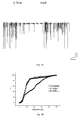
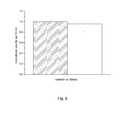
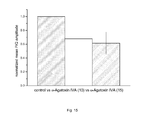
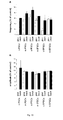
- Results are shown in figs. 1 - 7 , demonstrating that the A ⁇ globulomer inhibits the frequency of spontaneous synaptic events with an efficiency approaching that of the strong P/Q inhibitor ⁇ -agatoxin but has no or little effect on the amplitude of the synaptic events.
- a ⁇ (1-42) globulomer reduces synaptic activity, most likely by a presynaptic mechanism, which shares crucial elements with the effect of ⁇ -agatoxin.
- EXAMPLE 4 Rescue of spontaneous synaptic activity by roscovitine.
- Roscovitine was used at a final concentration of 20 ⁇ M, by adding it simultaneously with A ⁇ (1-42) globulomer (final concentration of A ⁇ globulomer corresponding to approximately 1 ⁇ M of A ⁇ monomer). Roscovitine is known ( Zhen Yan et al., J. Physiol. 540 : 761 - 770 (2002 )) to slow down the inactivation of the P/Q type voltage-gated presynaptic calcium channel, i. e. to extend the time for which a channel, once opened, remains in the open state, thereby increasing the calcium ion flow through the P/Q type voltage-gated presynaptic calcium channel.
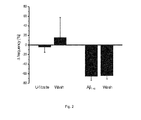
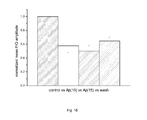
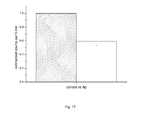
- Results are shown in figs. 10 and 11 , demonstrating that a P/Q type voltage-gated presynaptic calcium channel activator is capable of restoring the frequency of spontaneous synaptic events under the influence of A ⁇ globulomer to almost that of untreated cells, i. e., that a P/Q activator may be used to reverse the detrimental effects of A ⁇ globulomer.
- REFERENCE EXAMPLE 5 Direct determination of the activity of the P/Q type voltage-gated presynaptic calcium channel, and of inhibitory and activating influences, by the voltage-clamp method.
- Blocking of the irrelevant channels was achieved using the following additions to the bath or electrode solution: Compound Concentration Channel blocked TEA-Cl 140 mM I[K + ] BaCl 2 10 mM CsCl (in the pipette) 110 mM Nifedipine 10 mM L-type Ca ++ channel ⁇ -conotoxin MVIIA 0.5 mM N-type Ca ++ channel Tetrodotoxin 0.5 Na + channels
- the Ba ++ also served as the charge carrier (i. e. substrate replacement) for the P/Q type voltage-gated presynaptic Ca ++ channel, with the additional advantage that conductance through this channel and hence the sensitivity of the assay were thereby increased to approximately tenfold. This made it possible to directly detect ion fluxes through P/Q-channels in somatic recordings.
- the electrode solution also comprised, in addition to the substances listed above, 10 mM tris-phosphocreatinine and 20 U/ml creatine phosphokinase, which together served as an ATP regenerating system preventing "run-down", i.e. decline due to a gradual loss of channel conductance, of the observed currents.
- ATP is needed to maintain the conductance of the calcium channels over time intervals longer than several minutes, allowing to conduct the described pharmacological experiments with sufficiently stable calcium currents.
- EXAMPLE 6 Direct effect of A ⁇ globulomer on the P/Q type voltage-gated presynaptic calcium channel in cultured cells.
- EXAMPLE 7 Direct effect of A ⁇ globulomer on the P/Q type voltage-gated presynaptic calcium channel in situ.
- Electrode solution contained (in mM/I): NaCl 10, KCl 100, CaCl 2 0.25, EGTA 5, HEPES 10, glucose 40 (pH set at 7.3) when used for recordings of synaptic events.
- a low-chloride solution was used for experiments in which GABA induced currents were elicited, which consists of (mM): Cs-gluconate 130, CsCl 10, CaCl 2 0.5, MgCl 2 2, EGTA 10, HEPES 10, Mg-ATP 2 (pH: 7.3). Using this solution the calculated equilibrium potential for chloride-ions was -54 mV.
- a ⁇ (1-42) globulomer (164 nM in respect to the 12mer complex) was added to the bath by means of a micro pump, yielding a final concentration of 82 nM.
- TTX, ⁇ -agatoxin IVA, ⁇ -conotoxin MVIIA, roscovitine (Alomone Labs, Jerusalem, Israel), and nifedipine (Sigma, Deisenhofen, Germany) were added directly to the bath solution at the concentrations indicated.
- F represents the Faraday constant
- R the gas constant
- P 0 is the maximal permeability
- T the absolute temperature.
- the intracellular concentration of Ba 2+ was assumed to be 0.01 ⁇ M. Assuming higher values of up to 0.1 mM did not significantly change the resulting values of the parameters.
- N V I V I max
- I V I max 1 + exp V h - V V c
- N(V) is the level of steady state inactivation determined from the current amplitude I(V) normalized to I max
- V is the pre-pulse potential
- V h is the potential of half maximal inactivation
- V c is a factor proportional to the slope of the curve at V h .
- EXAMPLE 13 A ⁇ (1-42) globulomer reduces spontaneous synaptic activity in hippocampal cell cultures
- Suppression of synaptic currents by an agent may be caused by changes in neuronal activity or, alternatively, by specific synaptic interactions. It was therefore tested for effects of A ⁇ (1-42) globulomer on active discharge properties by recording action potentials in current clamp mode. Action potentials elicited by current injection showed no difference in amplitude, shape or kinetics when compared before and after A ⁇ (1-42) globulomer application.
- the threshold for firing was -22.5 ⁇ 8.2 mV vs. -24.2 ⁇ 9.8mV
- the amplitude of the AP (baseline to peak) amounted to 119.9 ⁇ 11.2 vs. 110.9 ⁇ 16.7 mV.
- Pharmacologically naive synaptic currents reflect a mixture of glutamatergic (excitatory) and GABAergic (inhibitory) events.
- inhibitory postsynaptic currents were isolated by adding CNQX (20 ⁇ M) and DL-APV (30 ⁇ M) to the bath solution.
- EPCs excitatory synaptic currents
- Presynaptic vesicle release is triggered by an influx of calcium into the presynaptic terminal. Therefore, A ⁇ (1-42) globulomer might act on presynaptic calcium signalling.
- a common pathway for release of both, glutamatergic and GABAergic vesicles is presynaptic calcium influx via N-type or P/Q-type calcium channels. Therefore, the effects of A ⁇ (1-42) on whole-cell calcium currents in cultured hippocampal neurons were analyzed. Typical P/Q channel-mediated currents could be reliably elicited in somatic whole-cell recordings under our culture conditions. In these experiments, 10 mM Ba 2+ was used as charge carrier in the extracellular solution (see methods).
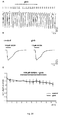
- a ⁇ (1-42) globulomer reduces the current amplitude without affecting its voltage-dependent activation or inactivation.
- a ⁇ (1-42) globulomer reduces the frequency of spontaneous and miniature synaptic currents by suppression of presynaptic calcium influx via P/Q-type calcium channels.
- EXAMPLE 19 Rescue of spontaneous synaptic activity by isoproterenol.
- Isoproterenol was used at a final concentration of 15 ⁇ M, by adding it simultaneously with A ⁇ (1-42) globulomer (final concentration of A ⁇ globulomer corresponding to approximately 1 ⁇ M of A ⁇ monomer).
- Isoproterenol is known ( Huang C.-C., et al., The Journal of Neuroscience, 1996, 16(3): 1026-1033 , Huang C.-C., et al., The Journal of Neuroscience, 1998, 18(6): 2276-2282 ) to increase the Ca 2+ influx through the P/Q type voltage-gated presynaptic calcium channel.
- the P/Q type voltage-gated presynaptic calcium channel activator isoproterenol is capable of restoring the frequency of spontaneous synaptic events under the influence of A ⁇ globulomer to that of untreated cells, i. e., that the P/Q activator may be used to reverse the detrimental effects of A ⁇ globulomer.
- EXAMPLE 20 Enhancing P/Q calcium currents by roscovitine prevents/reverses chronic Aß globulomer-induced deficits on evoked synaptic tranmission in hippocampal tissue
- Rat hippocampal slice cultures (9 days old Wistar rats; 15-17 DIV) were incubated over night with either A ⁇ (1-42) globulomer (at a concentration corresponding to approximately 1 ⁇ M of A ⁇ monomer), A ⁇ (1-42) globulomer (at a concentration corresponding to approximately 1 ⁇ M of A ⁇ monomer) + 20 ⁇ M roscovitine, or control (SDS). Recordings were performed (in artificial cerebrospinal fluid) from CA1 stratum radiatum after stimulation of the Schaffer collateral at different intensities.
- EXAMPLE 21 Enhancing P/Q calcium currents by roscovitine analogue A prevents/reverses chronic A ⁇ globulomer-induced deficits on evoked synaptic tranmission in hippocampal tissue
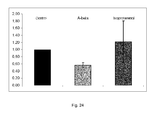
- Rat hippocampal slice cultures (11 days old Wistar rats; 23-24 DIV) were incubated over night with either A ⁇ (1-42) globulomer (at a concentration corresponding to approximately 1 ⁇ M of A ⁇ monomer), A ⁇ (1-42) globulomer (at a concentration corresponding to approximately 1 ⁇ M of A ⁇ monomer) + 20 ⁇ M roscovitine analogue A, or control (SDS). Recordings were performed (in artificial cerebrospinal fluid) from CA1 stratum radiatum after stimulation of the Schaffer collateral at different intensities. Results are shown in Fig. 26 , demonstrating that the application of globulomer strongly suppresses synaptic transmission. Co-application of 20 ⁇ M roscivitine analogue A completely prevents/reverses the globulomer-induced deficit.
- a ⁇ (1-42) globulomer at a concentration corresponding to approximately 1 ⁇ M of A ⁇ monomer was assessed by comparing spontaneously occurring postsynaptic currents (sPSCs) in single cells in 5 min intervals in the presence or absence of globulomer in bath solution containing 1 mM Ca 2+ .
- sPSCs spontaneously occurring postsynaptic currents
- Currents recorded prior to the addition of the globulomer served as control describing basal synaptic transmission.
- Currents recorded in the interval immediately after application were analysed with respect to the control data.
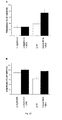
- extracellular Ca 2+ was elevated from 1 mM to 4 mM (leaving the concentration of globulomer unchanged). Currents in the following 5 min recording interval were again analysed with respect to control data.
- Basal frequency of sPSCs in 1 mM Ca 2+ was 4.2 ⁇ 1.2 Hz.
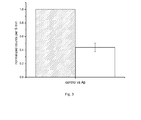
- sPSC frequency partially recovered to 77 ⁇ 13 % of control ( Fig 27 B) .
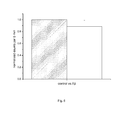
- sPSC frequency increased, whereas it remained unaltered in the other 2 cells ( Fig. 27 C) .
Landscapes
- Health & Medical Sciences (AREA)
- Chemical & Material Sciences (AREA)
- Medicinal Chemistry (AREA)
- Pharmacology & Pharmacy (AREA)
- Life Sciences & Earth Sciences (AREA)
- Animal Behavior & Ethology (AREA)
- General Health & Medical Sciences (AREA)
- Public Health (AREA)
- Veterinary Medicine (AREA)
- Epidemiology (AREA)
- Engineering & Computer Science (AREA)
- Bioinformatics & Cheminformatics (AREA)
- Organic Chemistry (AREA)
- Biomedical Technology (AREA)
- Neurosurgery (AREA)
- Chemical Kinetics & Catalysis (AREA)
- General Chemical & Material Sciences (AREA)
- Nuclear Medicine, Radiotherapy & Molecular Imaging (AREA)
- Neurology (AREA)
- Hematology (AREA)
- Hospice & Palliative Care (AREA)
- Diabetes (AREA)
- Obesity (AREA)
- Psychiatry (AREA)
- Medicines That Contain Protein Lipid Enzymes And Other Medicines (AREA)
- Pharmaceuticals Containing Other Organic And Inorganic Compounds (AREA)
- Acyclic And Carbocyclic Compounds In Medicinal Compositions (AREA)
Abstract
Description
- The present invention relates to a method for the treatment of an amyloidosis such as Alzheimer's disease.
- Alzheimer's disease (AD), the most frequent cause for dementia among the aged with an incidence of about 10 % of the population above 65 years, is a dementing disorder characterized by a progressive loss of cognitive abilities and by characteristic neuro-pathological features comprising extracellular amyloid deposits, intracellular neuro-fibrillary tangles and neuronal loss in several brain regions (Mattson, M. P. Pathways towards and away from Alzheimer's disease. Nature 430, 631 - 639 (2004); Hardy, J. & Selkoe, D. J. The amyloid hypothesis of Alzheimer's disease: progress and problems on the road to therapeutics. Science 297, 353 - 356 (2002)). The principal constituents of the amyloid deposits are amyloid β peptides (Aβ) which arise from the β-amyloid precursor protein (APP) by proteolytic cleavage.
- Both cerebral amyloid deposits and cognitive impairments very similar to those observed in Alzheimer's disease are also hallmarks of Down's syndrome (trisomy 21), which occurs at a frequency of about 1 in 800 births. Hence, Alzheimer's disease and Down's syndrome are jointly termed "amyloidoses".
- Recently, however, it was shown that in amyloidoses soluble, globular Aβ oligomers (hereinafter referred to as Aβ globulomers), rather than the eponymous insoluble amyloid deposits, are the causative agents for the impairment of higher-level functions, such as memory function, as indicated by its suppressing effect on long-term potentiation (
WO2004/067561 ; Barghorn S. et al., J. Neurochem. 95 : 834 - 847 (2005);WO2006/094724 ). - The term "Aβ globulomer" here refers to a particular soluble, globular, non-covalent association of Aβ peptides, possessing homogeneity and distinct physical characteristics. Aβ globulomers are stable, non-fibrillar, oligomeric assemblies of Aβ peptides which are obtainable by incubation with anionic detergents, in particular as described in
WO2004/067561 . In contrast to Aβ monomer and fibrils, these globulomers are characterized by defined assembly numbers of subunits (WO2004/067561 ). The globulomers have a characteristic three-dimensional globular type structure ("molten globule", see Barghorn et al., J. Neurochem. 95 : 834 - 847 (2005)). They have been shown to closely mimic the properties, behaviour and effects of naturally occurring soluble Aβ oligomers. - Soluble Aβ oligomer was found to impair the functioning of the central nervous system even before the onset of cytotoxicity. However, the exact mechanisms whereby soluble Aβ oligomer causes memory failure in amyloidoses has not been elucidated so far, and a lack of understanding of such mechanisms has so far hampered the development of rational therapeutic approaches for inhibiting the further progression of the disease or compensating the damage already done.
- It was thus an object of the present invention to provide a new approach to the treatment of amyloidoses such as Alzheimer's disease, in particular to rehabilitating treatment such as the restoration of cognitive abilities in amyloidoses such as Alzheimer's disease.
- Surprisingly, it was now found that Aβ globulomer exerts its detrimental effects essentially by hampering normal ion fluxes through the P/Q type presynaptic calcium channel, reducing presynaptic neurotransmitter release and inhibiting spontaneous synaptic activity and thereby interfering with the proper functioning of the central nervous system even before the onset of manifest neural cytotoxicity, and that activation of the P/Q type presynaptic calcium channel is therefore effective in compensating these effects (increasing the extracellular Ca2+ concentration (P/Q type presynaptic calcium channel agonism) was effective in reversing the inhibitory effect of Aβ globulomer on the P/Q type voltage-gated presynaptic calcium channel).
- The present invention thus relates to a method for the treatment of an amyloidosis, preferably Alzheimer's disease, in a subject in need thereof, comprising administering an agonist of the P/Q type voltage-gated presynaptic calcium channel to said subject.
- The P/Q type voltage-gated presynaptic calcium channel (the channel is also referred to as Cav2.1 channel and the associated currents as P/Q type currents) belongs to the group of voltage-gated calcium channels which mediate the influx of calcium ions into excitable cells. The opening state of a voltage-gated channel is controlled by the electrical state of the surrounding membrane; however, the responsiveness of the P/Q type voltage-gated presynaptic calcium channel to membrane depolarization is extensively modulated, both qualitatively and quantitatively, by and/or through its interaction partners.
- As used herein, a "P/Q type voltage-gated presynaptic calcium channel" is a voltage-gated calcium channel that is functionally characterized by its sensitivity towards ω-agatoxin IVA (a well-known funnel web spider venom).
- According to a particular embodiment, ω-agatoxin IVA acts as a gating modifier of the P/Q type voltage-gated presynaptic calcium channel (e.g., P type Kd = 1-3 nM; Q type Kd = 100-200 nM). Further, P/Q type voltage-gated presynaptic calcium channels according to the present invention may be characterized by one or more than one of the following features:
- (i) requires strong depolarization for activation (high-voltage activation); and
- (ii) no or slow inactivation.
- The P/Q type voltage-gated presynaptic calcium channel according to the present invention comprises an α1 subunit. According to a particular embodiment of the invention, the α1 subunit has an amino acid sequence with at least 70 %, advantageously at least 80 %, preferably at least 90 %, more preferably at least 95 % and in particular at least 98 %, e. g. at least 99 %, amino acid sequence identity with the sequence SEQ ID NO:1. The α1 subunit incorporates the conduction pore, the voltage sensor and gating apparatus, and sites of channel regulation by second messengers, drugs, and toxins.
- Usually, the P/Q type voltage-gated presynaptic calcium channel also comprises an α2-δ subunit and a β subunit. It may also comprise an γ subunit. In a particular embodiment of the invention, the α2-δ subunit, when present, has at least 70 %, advantageously at least 80 %, preferably at least 90 %, more preferably at least 95 % and in particular at least 98 %, e. g. at least 99 %, amino acid sequence identity with the sequence SEQ ID NO:2. In a further particular embodiment of the invention, the β subunit, when present, has at least 70 %, advantageously at least 80 %, preferably at least 90 %, more preferably at least 95 % and in particular at least 98 %, e. g. at least 99 %, amino acid sequence identity with the sequence SEQ ID NO:3.
- Further characteristic features of P/Q type voltage-gated presynaptic calcium channels are described in Catterall WA, Perez-Reyes E, Snutch TP, Striessnig J. International Union of Pharmacology. XLVIII. Nomenclature and structure-function relationships of voltage-gated calcium channels. Pharmacol Rev. 57: 411-25 (2005), which is herein incorporated by reference in its entirety.
- As used herein, an "agonist of the P/Q type voltage-gated presynaptic calcium channel" is any substance that increases the flow of calcium ions through the P/Q type voltage-gated presynaptic calcium channel.
- According to a particular embodiment, the agonist of the invention increases the open probability of the channel.
- According to a further particular embodiment, the agonist of the invention directly interacts with the closed channel to open it.
- According to a further particular embodiment, the agonist of the invention increases the duration of the open state once the channel has been opened.
- According to a further particular embodiment, the agonist of the invention interacts with the time constants of voltage-gated activation, voltage-gated inactivation and voltage-gated de-inactivation in a way which results in an increased net calcium flux under physiological conditions and which may be voltage-dependent in itself.
- According to a further particular embodiment, the agonist of the invention changes one or more transition probabilities between the different states of the channel (closed, open, inactivated).
- Hence an agonist of the P/Q type voltage-gated presynaptic calcium channel will increase ion flux through the P/Q type voltage-gated presynaptic calcium channel.
- The agonist of the P/Q type voltage-gated presynaptic calcium channel is preferably a partial or complete agonist of the P/Q type voltage-gated presynaptic calcium channel, and more preferably a complete agonist of the P/Q type voltage-gated presynaptic calcium channel.
- As used herein, a "partial agonist of the P/Q type voltage-gated presynaptic calcium channel" is an agonist which is not capable even at high concentration of causing the maximal activating effect of the P/Q type voltage-gated presynaptic calcium channel, as defined above. In a particular embodiment a partial agonist does not lead to maximal calcium flow through the P/Q type voltage-gated presynaptic calcium channel at saturating concentration.
- As used herein, a "complete agonist of the P/Q type voltage-gated presynaptic calcium channel" is an agonist which is capable of inducing, at suitable concentrations, maximal activation of the P/Q type voltage-gated presynaptic calcium channel, as defined above.
- The person skilled in the art will understand that an agonist of the P/Q type voltage-gated presynaptic calcium channel may either bind directly to the P/Q type voltage-gated presynaptic calcium channel, i. e. by binding the calcium channel molecule, e. g. by forming a covalent or non-covalent attachment to said calcium channel molecule, or exert its effect on the ion channel predominantly without direct physical contact between the agonist and said calcium channel, the effect being mediated, in this case, by any of a wide range of go-betweens. These include but are not limited to molecules with a capacity of complexing said calcium channel that is modified in the presence of the agonist; catalytically active molecules which regulate said calcium channel in a way that is influenced by the presence of the agonist; and physico-chemical effects, in particular membrane effects, subject to influences of the agonist, such as shifts in the molecular arrangement, fluidity, conductivity, etc. of the membrane. In particular, an agonist of the P/Q type voltage-gated presynaptic calcium channel may bind to both the P/Q type voltage-gated presynaptic calcium channel and components of its environment, thereby influencing the mutual interaction. In all of these cases, under otherwise identical conditions the behaviour of said calcium channel in the presence of an effective amount of the agonist will be detectably different from that in the absence of said agonist.
- In the context of the present invention, the term "bind" is used generically to denote any immediate association between two molecules, which may be covalent or non-covalent, thus including covalent bonds, hydrogen bridges, ionic interactions, hydrophobic associations, van der Waals forces, etc. It will thus be understood that the term also extends to the temporary association of a first molecule with a catalytically active second molecule, wherein said second molecule performs modifications on said first molecule which, and consequently whose effects, outlast the actual contact between said first and said second molecule, e. g. generation or removal of covalent bonds.
- In a particular embodiment of the invention, the agonist increases net calcium flux through the P/Q type voltage-gated presynaptic calcium channel with an EC50 of less than 120 µM, preferably of less than 10 µM, and in particular of less than 1 µM. Here the EC50 is the agonist concentration required for obtaining 50% of a maximum effect of this agonist determined using the patch-clamp method for whole-cell recording of channel activity.
- The standard method employed here for all determinations of Ca++ currents is a patch-clamp method using 120 mM NMG·Cl, 10 mM TEA·Cl, 14 mM creatine phosphate, 6 mM MgCl2, 1
mM CaCl 2 10 mM NMG·HEPES, 5 mM Tris2·ATP and 11 NMG2·EGTA as internal, and 30 mM BaCl2, 100 mM NMG·Cl, 10 mM NMG·HEPES and 15 mM glucose as external solution, both adjusted to a pH of about 7.2 - 7.3, for measuring stably transfected BHK (Baby Hamster Kidney) cells expressing the α1 component together with the α2δ and βIB components of the P/Q type voltage-gated presynaptic calcium channel. - Further details of said standard method have been described by Zafir Buraei et al., Roscovitine differentially affects CaV2 and Kv channels by binding to the open state, Neuropharmacology (2006), doi:10.1016/j.neuropharm.2006.10.006 (corresponds to issue 52, 2007, pages 883-894), which is herein incorporated by reference in its entirety.
- Unexpectedly, it was further found that other presynaptic calcium channels, such as the N and R type voltage-gated presynaptic calcium channels, are not susceptible to Aβ, in particular to Aβ globulomer, and it is known to the skilled person that these types of channels may all be present in parallel at any given synapse, or one of them may be dominant in terms of abundance and thus account for the major part of the Ca++ influx. It is thus, in the interest of reducing side effects, advantageous to employ in the method of the present invention an agonist which specifically affects the P/Q type voltage-gated presynaptic calcium channel only. Thus, it is advantageous if the agonist affects the P/Q type voltage-gated presynaptic calcium channel with lower EC50 than either the N type or the R type, or both the N and the R type voltage-gated presynaptic calcium channels. In a particular embodiment of the invention, the agonist of the P/Q type voltage-gated presynaptic calcium channel thus increases net calcium flux through the L type voltage-gated presynaptic calcium channel with an EC50 of more than 54 µM, preferably of more than 100 µM, and in particular of more than 1000 µM, using the standard method as defined above. In a further particular embodiment of the invention, it increases net calcium flux through the N type voltage-gated presynaptic calcium channel with an EC50 of more than 54 µM, preferably of more than 100 µM, and in particular of more than 1000 µM, using the standard method as defined above. In a further particular embodiment of the invention, it increases net calcium flux through the R type voltage-gated presynaptic calcium channel with an EC50 of more than 54 µM, preferably of more than 100 µM, and in particular of more than 1000 µM, using the standard method as defined above.
- It has been reported that inhibition of CDKs (cyclin-dependant kinases), which kinases are known to be crucial elements of the cell cycle, inhibits dedifferentiation and proliferation and thereby stimulates neurons to increase their expression of ion channels such as voltage-gated presynaptic calcium channels. However, due to the naturally highly pleiotropic effects of CDK inhibitors and in particularly their propensity to induce apoptosis, which is expected to outweigh the benefits due to the neurotoxicity caused thereby, it is preferred that the agonists for use in the methods of the present invention do not exert any significant inhibitory effect on CDKs such as CDK2 (cyclin A) and CDK5 (p35). In a particular embodiment of the invention, the agonist thus has an IC50 for CDK5, in particular for human CDK5, of more than 0.2 µM, preferably of more than 10 µM, and in particular of more than 100 µM. In a further particular embodiment of the invention, the agonist thus has an IC50 for CDK2, in particular for human CDK2, of more than 0.7 µM, preferably of more than 10 µM, and in particular of more than 100 µM. Preferably, the agonist has an IC50 for any CDK, in particular for any human CDK, of more than 0.5 µM, preferably of more than 10 µM, and in particular of more than 100 µM. These IC50 values all refer to the activity of the respective CDK/cyclin complex in a radioactive kinase assay using 15 µM of [y-32P]ATP as phosphate donor and an appropriate phosphorylation target protein (1 mg/ml histone H1 or retinoblastoma protein complexed with glutathione-S-transferase, respectively) as acceptor in a reaction buffer comprising 60 mM glycerol-2-phosphate, 15 mM p-nitrophenyl phosphate, 25 mM MOPS pH 7.2, 5 mM EGTA, 15 mM MgCl2 and 1 mM dithiotreitol, as described by Meijer et al., Eur. J. Biochem. 234 : 527 - 536 (1997).
- The metabolism of APP and its products such as Aβ is complex and not yet fully understood. Therefore, in a particular embodiment of the invention, the agonist as such does not alter APP expression, Aβ formation or processing, e. g. soluble Aβ oligomer or Aβ fibril formation, in the central nervous system. In another particular embodiment, however, its use may be combined with a suitable treatment, e. g. a treatment to suppress the formation of soluble Aβ oligomers and/or to promote their degradation and/or elimination from the central nervous system; essentially any such treatment may be combined with the methods of the present invention.
- Roscovitine has been described as an agonist of the P/Q type voltage-gated presynaptic calcium channel (Yan Z, Chi P, Bibb JA, Ryan TA and Greengard P., J. Physiol. 540 : 761 - 770 (2002)). As used herein, the term "roscovitine" denotes the compound (1-ethyl-2-hydroxyethylamino)-6-benzylamino-9-isopropylpurine and any of its isomers, in particular 2-(R)-(1-ethyl-2-hydroxyethylamino)-6-benzylamino-9-isopropylpurine.
- However, roscovitine is known to reduce APP formation by binding to and inhibiting the action of human CDKs, in particular CDK5, thereby being prone to the adverse effects outlined above. Therefore, agonists other than roscovitine or any pharmacologically useful salt or derivative of roscovitine, in particular such as may be readily converted to roscovitine in vivo (prodrug), are preferred.
- According to a particular embodiment, suitable agonists of the P/Q type voltage-gated presynaptic calcium channel of the invention are selected among the roscovitine analogues of formula (Ia):

- R1 R2a R2b
- is hydrogen or C1-C6-alkyl; are independently hydrogen, C1-C6-alkyl, C2-C6-alkenyl, C3-C8-cycloalkyl, optionally substituted C6-C12-aryl or optionally substituted C6-C12-aryl-C1-C4-alkyl, or
- R2a R2b
- together are C2-C5-alkylene;
- Q
- is NR3;
- R3
- is hydrogen, C1-C6-alkyl or optionally substituted C6-C12-aryl;
- X
- is N or CR4;
- R4
- is hydrogen or C1-C6-alkyl,
- Y
- is N or CR5; and
- R5
- is hydrogen or C1-C6-alkyl,
- According to a further particular embodiment, suitable agonists of the P/Q type voltage-gated presynaptic calcium channel of the invention are selected among the roscovitine analogues of formula (Ib):

- R1
- is hydrogen or C1-C6-alkyl;
- R2a, R2b
- are independently hydrogen, C1-C6-alkyl, C2-C6-alkenyl, C3-C8-cycloalkyl, optionally substituted C6-C12-aryl or optionally substituted C6-C12-aryl-C1-C4-alkyl, or
- R2a, R2b
- together are C2-C5-alkylene;
- Q
- is NR3;
- R3
- is hydrogen, C1-C6-alkyl or optionally substituted C6-C12-aryl;
- X
- is N or CR4;
- R4
- is hydrogen or C1-C6-alkyl,
- Y
- is N or CR5; and
- R5
- is hydrogen or C1-C6-alkyl,
- According to a further particular embodiment, suitable agonists of the P/Q type voltage-gated presynaptic calcium channel of the invention are selected among isoproterenol and isoproterenol analogues of formula (II):

R1 is C1-C6-alkyl or C3-C8-cycloalkyl;
R2a R2b R2c R2d R2e
are independently hydrogen, halogen, C1-C4-alkyl, optionally substituted phenyl, OH, SH, CN, CF3, O-CF3, C1-C4-alkoxy, NH2, NH-C1-C4-alkyl, N-(C1-C4-alkyl)2, or
R2b and R2c or R2c and R2d
together with the carbon atoms to which they are attached form an optionally substituted anellated C5-C7 carbocyclic ring;
and the pharmacologically useful salts thereof. - Provided that the compounds of the formulae (Ia), (Ib) and (II) exist in different spatial arrangements, for example if they possess one or more centers of asymmetry, polysubstituted rings or double bonds, or as different tautomers, it is also possible to use enantiomeric mixtures, in particular racemates, diastereomeric mixtures and tautomeric mixtures, preferably, however, the respective essentially pure enantiomers, diastereomers and tautomers of the compounds of formulae (Ia), (Ib) and (II) and/or of their salts.
- The pharmacologically useful salts of the compounds of the formulae (Ia), (Ib) and (II) are especially acid addition salts with physiologically tolerated acids. Examples of suitable physiologically tolerated organic and inorganic acids are hydrochloric acid, hydrobromic acid, phosphoric acid, sulfuric acid, C1-C4-alkylsulfonic acids, such as methanesulfonic acid, cycloaliphatic sulfonic acids, such as S-(+)-10-campher sulfonic acid, aromatic sulfonic acids, such as benzenesulfonic acid and toluenesulfonic acid, di- and tricarboxylic acids and hydroxycarboxylic acids having 2 to 10 carbon atoms, such as oxalic acid, malonic acid, maleic acid, fumaric acid, lactic acid, tartaric acid, citric acid, glycolic acid, adipic acid and benzoic acid. Other utilizable acids are described, e.g., in Fortschritte der Arzneimittelforschung [Advances in drug research], .
- The organic moieties mentioned in the above definitions of the variables are - like the term halogen - collective terms for individual listings of the individual group members. The prefix Cn-Cm indicates in each case the possible number of carbon atoms in the group.
- Unless specified, the term "substituted" means that a radical may be substituted with 1, 2 or 3, especially 1 or 2, substituent selected from the group consisting of halogen, C1-C4-alkyl, OH, SH, CN, CF3, O-CF3, C1-C4-alkoxy, NH-C1-C4-alkyl, N-(C1-C4-alkyl)2, in particular with 1, 2
oder 3 substiuents selected from the group consisting of halogen, methyl, OH, CN, CF3, O-CF3, methoxy, NH2, NH-CH3, and N-(CH3)2. - The term halogen denotes in each case fluorine, bromine, chlorine or iodine, in particular fluorine or chlorine.
- C1-C4-Alkyl is a straight-chain or branched alkyl group having from 1 to 4 carbon atoms. Examples of an alkyl group are methyl, C2-C4-alkyl such as ethyl, n-propyl, isopropyl, n-butyl, 2-butyl, iso-butyl or tert-butyl. C1-C2-Alkyl is methyl or ethyl, C1-C3-alkyl is additionally n-propyl or isopropyl.
- C1-C6-Alkyl is a straight-chain or branched alkyl group having from 1 to 6 carbon atoms. Examples include methyl, C2-C4-alkyl as mentioned herein and also pentyl, 1-methylbutyl, 2-methylbutyl, 3-methylbutyl, 2,2-dimethylpropyl, 1-ethylpropyl, hexyl, 1,1-dimethylpropyl, 1,2-dimethylpropyl, 1-methylpentyl, 2-methylpentyl, 3-methylpentyl, 4-methylpentyl, 1,1-dimethylbutyl, 1,2-dimethylbutyl, 1,3-dimethylbutyl, 2,2-dimethylbutyl, 2,3-dimethylbutyl, 3,3-dimethylbutyl, 1-ethylbutyl, 2-ethylbutyl, 1,1,2-trimethylpropyl, 1,2,2-trimethylpropyl, 1-ethyl-1-methylpropyl and 1-ethyl-2-methylpropyl.
- C3-C8-Cycloalkyl is a cycloaliphatic radical having from 3 to 12 carbon atoms. In particular, 3 to 6 carbon atoms form the cyclic structure, such as cyclopropyl, cyclobutyl, cyclopentyl and cyclohexyl. The cyclic structure may be unsubstituted or may carry 1, 2, 3 or 4 C1-C4 alkyl radicals, preferably one or more methyl radicals. C6-C12-aryl-C1-C4-alkyl is a straight-chain or branched alkyl group having 1 to 4 carbon atoms, preferably 1 to 3 carbon atoms, more preferably 1 or 2 carbon atoms, in particular 1 or two carbon atoms, wherein one hydrogen atom is replaced by C6-C12-aryl, such as in benzyl.
- C2-C6-Alkenyl is a singly unsaturated hydrocarbon radical having 2, 3, 4, 5 or 6 carbon atoms, e.g. vinyl, allyl (2-propen-1-yl), 1-propen-1-yl, 2-propen-2-yl, methallyl(2-methylprop-2-en-1-yl) and the like. C3-C4-Alkenyl is, in particular, allyl, 1-methylprop-2-en-1-yl, 2-buten-1-yl, 3-buten-1-yl, methallyl, 2-penten-1-yl, 3-penten-1-yl, 4-penten-1-yl, 1-methylbut-2-en-1-yl or 2-ethylprop-2-en-1-yl.
- C6-C12-Aryl is a 6- to 12-membered, in particular 6- to 10-membered, aromatic cyclic radical. Examples include phenyl and naphthyl.
- C2-C7-Alkylene is straight-chain or branched alkylene group having from 2 to 7 carbon atoms. Examples include ethylene, 1,3-propylene, 1,4-butylene and 1,5-pentylene.
- Particular roscovitine analogues are defined as follows.
- According to a particular embodiment, R1 in formula (Ia) and formula (Ib) is hydrogen or C1-C3-alkyl. C1-C3-alkyl is in particular ethyl or isopropyl.
- According to a further particular embodiment, R2a and R2b in formula (Ia) and formula (Ib) are independently hydrogen, C1-C3-alkyl, in particular ethyl, C2-C3-alkenyl, in particular allyl, C3-C8-cycloalkyl, in particular cyclohexyl, optionally substituted phenyl or optionally substituted benzyl. Substituted phenyl is in particular phenyl substituted with 1, 2 or 3 substituent which are independently selected from the group consisting of halogen, methyl, methoxy and NH2. According to a further particular embodiment, R2a is hydrogen and R2b is as defined. Alternatively, R2a and R2b in formula (Ia) and formula (Ib) together are C2-C7-alkylene, in particular 1,5-pentylene, and thus form a 3- to 8-membered, in particular 6-membered, ring including the nitrogen atom to which they are attached.
- According to a further particular embodiment, R3 in formula (Ia) and formula (Ib) is C1-C6-alkyl, in particular C1-C3-alkyl, or optionally substituted C6-C12-aryl, in particular optionally substituted phenyl.
- According to a further particular embodiment of formula (Ia), X is N, Y is CR5 (in particular CH) and Q is NR3 (in particular N(C1-C3-alkyl), e.g. NCH3, NCH2CH3 or NCH(CH3)2, or N(phenyl)); or X is CR4 (in particular CH), Y is N and Q is NR3 (in particular N(C1-C3-alkyl) or N(phenyl)).
- According to a further particular embodiment of formula (Ib), X is N, Y is CR5 (in particular CH) and Q is NR3 (in particular NCH3).
- Roscovitine analogues according to the present invention, in particular, include the following compounds

- According to a particular embodiment, the roscovitine analogue is (1-ethyl-2-hydro-xyethylamino)-6-(2-hydroxybenzyl)amino-9-isopropylpurine (hereinafter referred to as roscovitine analogue A). This roscovitine analogue is capable of reversing the inhibitory effect of Aβ globulomer on synaptic transmission.
- According to a particular embodiment, the agonists of the P/Q type voltage-gated presynaptic calcium channel of formula (II) is isoproterenol. Isoproterenol has been described as an agonist of the P/Q type voltage-gated presynaptic calcium channel (Huang C.-C., et al., The Journal of Neuroscience, 1996, 16(3): 1026-1033, Huang C.-C., et al., The Journal of Neuroscience, 1998, 18(6): 2276-2282). As used herein, the term "isoproterenol" (also known as isoprenaline) denotes 4-[1-hydroxy-2-(1-methylethylamino)ethyl]benzene-1,2-diol. Isoproterenol is capable of reversing the inhibitory effect of Aβ globulomer on spontaneous synaptic activity, which is mediated by suppression of the P/Q type voltage-gated presynaptic calcium channel.
- Particular isopreterenol analogues are defined as follows.
- According to a further particular embodiment, R1 in formula (II) is C1-C4-alkyl or C3-C6-cycloalkyl. C1-C4-alkyl is in particular methyl, ethyl, n-propyl, isopropyl, n-butyl, sec-butyl or tert-butyl. C3-C6-cycloalkyl is in particular cyclopropyl or cyclohexyl.
- According to a further particular embodiment, at least one, two or three of R2a, R2b, R2c, R2d, R2e in formula (II) is/are different from hydrogen. In particular at least one of R2a, R2b, R2c, R2d is different from hydrogen.
- According to a further particular embodiment, R2a, R2b, R2c , R2d, R2e are independently hydrogen, halogen, methyl, optionally substituted phenyl, OH, methoxy, CN or NH2, or R2b and R2c or R2c and R2d together with the carbon atoms to which they are attached form an optionally substituted anellated carbocyclic ring. The carbocyclic ring may be partially unsaturated (due to the benezene moiety to which R2b, R2c and R2d are attached) or aromatic. According to a particular embodiment, R2b and R2c or R2c and R2d together with the benzene moiety to which they are attached form an optionally substituted 1,2,3,4-tetrahydronaphthalene or naphthalene moiety.
- Isopreterenol analogues according to the present invention, in particular, include the following compounds


- The compounds of the formula (Ia), (Ib) or (II) can be prepared by analogy to methods which are well known in the art. Many of said compounds are commercially available. Further agonists of the P/Q type voltage-gated presynaptic calcium channel may be identified among compounds known per se by screening for their capacity to act as agonists of the P/Q type voltage-gated presynaptic calcium channel, preferably by screening using a method comprising determining the effect of a candidate compound on the opening state of the P/Q type voltage-gated presynaptic calcium channel, most conveniently by determining the effect of said compound on the Ca++ flux through the P/Q type voltage-gated presynaptic calcium channel. Suitable means for determining ion fluxes such as Ca++ fluxes through the P/Q type voltage-gated presynaptic calcium channel have been described in the art (Yan Z, et al., 2002, supra; Buraei et al 2006, supra).
- A method for determining whether any candidate compound is an agonist at the P/Q type voltage-gated presynaptic calcium channel comprises the steps of
- (I) providing the P/Q type voltage-gated presynaptic calcium channel; and
- (II) determining Ca++ fluxes through said P/Q type voltage-gated presynaptic calcium channel in the presence and in the absence of the candidate compound; wherein an increase of the Ca++ flux through the P/Q type voltage-gated presynaptic calcium channel in the presence relative to the Ca++ flux through the P/Q type voltage-gated presynaptic calcium channel in the absence of the candidate compound is indicative of an agonistic effect of the candidate compound at the P/Q type voltage-gated presynaptic calcium channel. Alternatively, the agonistic effect can be assessed by measuring Ba++ currents through P/Q type voltage-gated presynaptic calcium channels using methods well-known to the skilled artisan.
- The P/Q type voltage-gated presynaptic calcium channel is known per se (see, e. g.,
WO98/13490 WO98/13490 WO96/39512 - Expediently, the P/Q type voltage-gated presynaptic calcium channel is provided on a living cell, which cell may be either in its natural environment (in situ) or separated therefrom (ex vivo). In a particular embodiment, the cell to be used in the screening method is of a type that naturally expresses the P/Q type voltage-gated presynaptic calcium channel, e. g. a neuronal cell such as a hippocampal neuronal cell. In another embodiment, the cell to be used in the screening method expresses the P/Q type voltage-gated presynaptic calcium channel as a foreign gene. In this embodiment, it is preferred that the cell naturally does not express any other voltage-gated presynaptic calcium channels, e. g. a non-neural cell, e. g. a Xenopus oocyte. Conveniently, expression of the P/Q type voltage-gated presynaptic calcium channel in the cells is verified using standard methology, e. g. by Northern blotting, RT-PCR, Western blotting, cytometry, binding of P/Q-specific ligands such as ω-agatoxin, or pharmacological characterization, i. e. reduction of calcium current after agatoxin application.
- In a further particular embodiment, said living cell further comprises an agent for the in situ detection of calcium ion levels (i. e. a calcium sensor agent), e. g. a protein with a calcium-dependent luminescence or fluorescence, such as aequorin or cameleon (Putney PW. Calcium Signaling. CRC Press Inc, 2005). Such calcium sensor agents are well-known to the skilled person, and essentially any of them may be used in the present invention. Without wishing to be bound by theory, it is believed that in suitable agents the conformation of the molecule changes in a manner that depends on the local concentration of Ca++, thereby hampering or facilitating physical processes, such as inter- or intramolecular energy transfers, that may be detected and correlated with calcium channel function by the experimentator. Thus, the fluorescence or luminescence of said calcium sensor agents is indicative of the local (e. g. intracellular) calcium levels.
- Hence, when the only functional calcium channel of the cell is the P/Q type voltage-gated presynaptic calcium channel, increases in intracellular calcium concentrations indicate calcium fluxes through the P/Q type voltage-gated presynaptic calcium channel. Therefore, a rise in said increase

- Suitable methods for the direct determination of ion fluxes, such as the voltage-clamp method, are likewise known in the art (Sakmann B and Neher E. Single-Channel Recording. Springer US, 97 A.D.). Essentially, conductive microconnections with the inside and the outside of the cell membrane are established, and the electrical reactivity of the system under different conditions is observed.
- Preferably, prior to the measurement irrelevant ion channels are blocked using inhibitors specific for said irrelevant channels ("pharmacological isolation" of the relevant channel or channels), eliminating the dependencies of the electrical status of the membrane on all channels except the one or ones of interest (i. e. the P/Q channel). An activator of the P/Q type voltage-gated presynaptic calcium channel and hence an agent suitable for the treatment of amyloidoses according to the present invention, as mentioned above, will thus be identified as an enhancer of Ca++ flux when only the P/Q type voltage-gated presynaptic calcium channel is expressed, or when all other calcium channels are blocked.
- As all these methods for the determination of Ca++ fluxes are essentially quantitative, they are also suitable for the identification of an agonist with any particularly desired strength of agonistic effect on the P/Q type voltage-gated presynaptic calcium channel, wherein the strength of the agonistic effect is the increase in calcium influx induced by the agonist under the conditions selected.
- Thus, an agent for the treatment of amyloidoses such as Alzheimer's disease can be identified by determining the effect of said agent on a cell comprising at least the P/Q type voltage-gated presynaptic calcium channel, in particular the effect on the Ca++ flux through the P/Q type voltage-gated presynaptic calcium channel of said living cell, wherein an agonist at the P/Q type voltage-gated presynaptic calcium channel is potentially a suitable agent for the treatment of amyloidoses according to the present invention.
- Among the agonists identified thereby, such as those having an affinity to the N type voltage-gated presynaptic calcium channel of less than any particularly desired value may be readily selected using methods essentially known in the art, e. g. by employing the methods for detection of Ca++ fluxes disclosed above in combination with known blockers for non-N type voltage-gated presynaptic calcium channels.
- Suitable methods for determining affinity between molecules are generally well-known to the person skilled the art and comprise, without being limited to, determining radiation-free energy transfer, radiolabelling of ligands and co-immunoprecipitation. Likewise, the skilled person is familiar with suitable methods for determining the inhibitory effect of a compound on any given enzyme, and will thus be able to readily select among the agonist identified as described above such as have an IC50 for any CDK, such as CDK5, of more than any particularly desired value.
- As used herein, the term "administering" is used to denote delivering an agent to a subject, especially a human subject. Basically, any route of administration known in the art, e. g. buccal, sublingual, oral, rectal, transdermal, subcutaneous, intramuscular, intravenous, intraarterial, intraperitoneal, intrathecal, intralumbaginal or intradural, and any dosage regimen, e. g. as bolus or as continuous supply, may be employed to administer the agent.
- The agent may be delivered simply as such or, preferably, in combination with any of a wide range of carriers and excipients, as known in the art, thereby forming a pharmaceutical composition. If desired, a convenient drug targeting and/or delivery system may be used. Expediently, the agent and at least one carrier are combined into a dosage form as known per se to those skilled in the art, e. g. into a controlled or sustained release system. Basically, any carrier and/or excipient compatible with the agent and any kind of dosage form may be used in the methods of the present invention. Suitable compounds and methods are known in the art.
- Thus, the present invention will be understood to also relate to the methods and uses relating to the manufacture of pharmaceutical compositions useful in the treatment of amyloidoses. In particular, amyloidoses according to the present invention comprise Alzheimer's disease and Down's syndrome.
- In a particular embodiment of the invention, the treatment is a rehabilitating and/or symptomatic treatment.
- A "rehabilitating" treatment, as used herein, is, in particular, for providing a benefit with regard to the patient's overall quality of life.
- As used herein, a "benefit" is any amelioration in relevant clinical parameters or decrease in subjective suffering of the subject amenable to scoring that can be causally connected to a particular therapeutic measure. Expediently, the benefit is measured by comparing the relevant clinical parameters or the subjective suffering of the subject at a time point before treatment and at least one time point during or after treatment, and expressed in terms of a gain in quality-adjusted life years or disability-adjusted life years (QALYs and DALYs).
- The concept of "quality-adjusted life years" and "disability-adjusted life years" is used extensively in the art to evaluate agents and methods, in particular in the context of those diseases where morbidity and disability are medically and socially more of a concern than mortality is, such as dementing diseases. Essentially, each year the life time following treatment is multiplied with an index factor which ranges from 1.0 to indicate perfect quality of life, or zero disability, to 0.0 to indicate death, or complete disability, and the sum of these products is compared to the value obtainable without treatment. Suitable definitions and methods for determining gains and losses in QALYs and DALYs, in particular with regard to dementing diseases such as amyloidoses, have been described in the art.
- Thus, a benefit is preferably an increase in the aforementioned index factor. In a particular embodiment of the invention, the treatment is hence for providing a benefit to a subject suffering from an amyloidosis.
- A "symptomatic" treatment, as used herein, is, in particular, a treatment directed to the abatement or relief of the symptoms of the disease.
- In a particular embodiment the present invention relates to a method for the restoration of Aβ-impaired synaptic function and/or plasticity, in particular long-term potentiation, in the subject.
- In a further particular embodiment the present invention relates to a method for the restoration of cognitive abilities, memory function and/or performance of activities of daily life (ADL) capacity in the subject.
- As used herein, the terms "cognitive abilities", "synaptic function", "long-term potentiation" and "memory function" have the meanings as are widely known and used in the art, and their quantificable values are considered as "normal" or "restored" when within the range which is commonly to be expected, e. g. based on long-standing medical practice, appropriate clinical trials and/or biochemical analysis, for the individual subject under consideration when compared to a representative population of other subjects whose essential parameters otherwise agree with those of said subject under consideration (peers of said subject). In particular, memory function is considered normal in a subject when said subject upon investigation by suitable means, e. g. short- and/or long-time learning tests, shows no significant deficiencies with regard to memory in function in comparison to a control group matched in species, age, gender and optionally other factors acknowledged as relevant to mental health, which are well-known to those skilled in the art, e. g. blood cholesterol levels, and/or psycho-social factors, e. g. educational and/or occupational background.
- As used herein, the term "activities of daily living", abbreviated "ADL", is used to denote the essential manual and mental tasks and chores of everyday life, in particular those involving domains of language (impairment thereof being known as "aphasia"), skilled movements (impairment being known as "apraxia" and potentially leading to total loss of control over the body in the final stages of the disease), and the use of cognitive abilities such as recognition (impairment being known as "agnosia", often accompanied by disorientation and disinhibition, and sometimes also with behavioural changes) and higher-level intellectual functions (such as decision-making and planning). These capacities can be assessed e. g. using questionnaire-based tests well-known in the art, such as the Hodgkinson test (aka. "mini-mental state examination" or MMSE, comprising the recital of basic facts of everyday life) and the Folstein test (aka. "abbreviated mental test score" or AMTS, comprising remembering the time and place of the test, repeating lists of words, arithmetic, language use and comprehension, and copying a simple drawing) for basic mental functions and the John Hopkins Functioning Inventory (aka. JHFI) for basically motoric or movement-related abilities such as sitting, standing, walking, eating, washing, dressing etc.
- The skilled person will be aware that in amyloidoses such as Alzheimer's disease the impairment of ADL capacity is dominated, in particular in its early and middle stages, by impairment of the intellectual rather than of motoric or sensory functions, and that even the latter, when found, is due to central rather than peripheral disturbances (e. g. "forgetting how to walk" rather than genuine organic paralysis).
- According to another aspect, the present invention relates to a method for identifying an agent for the treatment of amyloidoses such as Alzheimer's disease, said method comprising determining whether a candidate compound exerts an agonistic effect on the P/Q type voltage-gated presynaptic calcium channel, as disclosed above.
- The invention will now be further illustrated by way of reference to the following nonlimiting examples and figures. Unless stated otherwise, the terms "A-Beta", "Aβ1+42", "Aβ", "aβ", "glob" all denote the Aβ(1-42) globulomer described in reference example 2. "Kontrolle" means "control".
-
- FIG. 1:
- Effect of Aβ(1-42) globulomer on spontaneous synaptic activity as recorded from rat primary cultured hippocampal neurons by voltage clamp: (A) and (C) are recordings of spontaneously occurring synaptic currents in a cultured hippocampal neuron (downward deflections indicate the postsynaptic currents which are elicited by neurotransmitter release from one or more presynaptic neurons; application of the globulomer and washout (top trace) are indicated); (B) and (D) are the cumulative probability functions.
- FIG. 2:
- Effect of Aβ(1-42) globulomer on the frequency of synaptic currents.
- FIG. 3:
- Effect of Aβ(1-42) globulomer on the frequency of mIPSCs in of cells cultivated with 0.5 µM ω-conotoxin MVIIA to achieve synaptic P/Q predominance (n=6): Number of synaptic events during 5 min relative to non-Aβ globulomer treated cells. Left to right: (1) non-Aβ globulomer treated P/Q-dominated cells = reference, (2) P/Q-dominated cells treated with Aβ globulomer (at a concentration corresponding to approximately 1 µM of Aβ monomer).
- FIG. 4:
- Aβ(1-42) globulomer has no effect on the amplitude of mIPSCs of cells cultivated with ω-conotoxin MVIIA to achieve synaptic P/Q predominance: Average amplitude of synaptic events relative to non-Aβ globulomer treated cells. Left to right: (1) non-Aβ globulomer treated P/Q-dominated cells = reference, (2) P/Q-dominated cells treated with Aβ globulomer (at a concentration corresponding to approximately 1 µM of Aβ monomer).
- FIG. 5:
- Effect of ω-agatoxin on the frequency of mIPSCs in of cells cultivated with 0.5 µM ω-conotoxin MVIIA to achieve synaptic P/Q predominance (n=3): Number of synaptic events during 5 min relative to non-ω-agatoxin treated cells. Left to right: (1) non-ω-agatoxin treated P/Q-dominated cells = reference, (2) P/Q-dominated cells treated with 0.5 µM ω-agatoxin.
- FIG. 6:
- No additive effect on the frequency of mIPSCs in of cells cultivated with 0.5 µM ω-conotoxin MVIIA to achieve synaptic P/Q predominance after blockade of P/Q-channels by ω-agatoxin (n=6): Number of synaptic events during 5 min relative to non-Aβ globulomer treated cells. Left to right: (1) non-Aβ globulomer treated P/Q-dominated cells (ω-agatoxin only) = reference, (2) P/Q-dominated cells treated with Aβ globulomer (at a concentration corresponding to approximately 1 µM of Aβ monomer) after pre-treatment with 0.5 µM ω-agatoxin.
- FIG. 7:
- No effect of globulomer on the amplitude of mIPSCs when P/Q channels of P/Q-dominated cells are already blocked by 0.5 µM ω-agatoxin IVA (n=6): Number of synaptic events during 5 min relative to non-Aβ globulomer treated cells. Left to right: (1) non-Aβ globulomer treated P/Q-dominated cells (ω-agatoxin only) = reference, (2) P/Q-dominated cells treated with Aβ globulomer (at a concentration corresponding to approximately 1 µM of Aβ monomer) after pre-treatment with 0.5 µM ω-agatoxin.
- FIG. 8:
- Agatoxin does not impair spontaneous synaptic activity in cultures that lack functional P/Q-type Ca++ channels: Number of synaptic events during 5 min was set to 100% for each cell analysed. The right bar indicates the relative number of synaptic events in each cell after application of 0.5 µM ω-agatoxin.
- FIG. 9:
- Globulomer does not impair spontaneous synaptic activity in cultures that lack functional P/Q-type Ca++ channels: Number of synaptic events during 5 min relative to non-Aβ globulomer treated cells was set to 100% for each cell analysed. The right bar indicates the relative number of synaptic events in each cell after application of Aβ globulomer (at a concentration corresponding to approximately 1 µM of Aβ monomer).
- FIG. 10:
- Suppression of spontaneous synaptic currents by Aβ(1-42) globulomer and its reversal by the P/Q channel agonist roscovitine: Number of synaptic events during 5 min relative to non-Aβ globulomer treated P/Q-dominated cells. Left to right: (1) non-Aβ globulomer treated P/Q-dominated same cells = reference, (2) P/Q-dominated same cells treated with Aβ globulomer (at a concentration corresponding to approximately 1 µM of Aβ monomer), (3) P/Q-dominated same cells treated simultaneously with Aβ globulomer (at a concentration corresponding to approximately 1 µM of Aβ monomer) and 20 µM roscovitine.
- FIG. 11:
- No effect on the amplitude of spontaneous synaptic currents of the P/Q channel agonist roscovitine: Average amplitude of synaptic events relative to non-Aβ globulomer treated P/Q-dominated cells. Left to right: (1) non-Aβ globulomer treated P/Q-dominated same cells = reference, (2) P/Q-dominated same cells treated with Aβ globulomer (at a concentration corresponding to approximately 1 µM of Aβ monomer), (3) P/Q-dominated same cells treated simultaneously with Aβ globulomer (at a concentration corresponding to approximately 1 µM of Aβ monomer) and 20 µM roscovitine.
- FIG. 12:
- The effect of Aβ(1-42) globulomer on spontaneous synaptic activity of P/Q-dominated cells can be reversed by the P/Q channel agonist roscovitine: Synaptic potentials over time. Arrows indicate the time points when Aβ globulomer (at a concentration corresponding to approximately 1 µM of Aβ monomer) and 20 µM roscovitine, respectively, were added.
- FIG. 13:
- Reducing effect of Aβ globulomer on the amplitude of pharmacologically isolated P/Q-type calcium channels: Traces represent membrane currents after activation of P/Q-type channels by a depolarizing voltage step. Left to right: (1) P/Q-current under control conditions, (2) P/Q-current of the same cell after application of Aβ globulomer (at a concentration corresponding to approximately 1 µM of Aβ monomer), (3) P/Q-current of the same cell after washout of Aβ globulomer.
- FIG. 14:
- Effect of Aβ(1-42) globulomer on the pharmacologically isolated P/Q current at different time points: Average amplitude of P/Q-mediated current amplitude relative to non-Aβ globulomer treated P/Q-dominated cells. Left to right: (1) non-Aβ globulomer treated same cells = reference, (2)
same cells 10 min after treatment with Aβ globulomer (at a concentration corresponding to approximately 1 µM of Aβ monomer), (3)same cells 15 min after treatment with Aβ globulomer (at a concentration corresponding to approximately 1 µM of Aβ monomer). - FIG. 15:
- Effect of 0.5 µM ω-agatoxin IVA on the pharmacologically isolated P/Q current at different time points: Average amplitude of P/Q currents relative to non-ω-agatoxin treated P/Q-dominated same cells. Left to right: (1) non-ω-agatoxin treated P/Q-dominated same cells = reference, (2) P/Q-dominated
cells 10 min after treatment with 0.5 µM ω-agatoxin, (3) P/Q-dominatedcells 15 min after treatment with 0.5 µM ω-agatoxin. - FIG. 16:
- Effect of Aβ on the pharmacologically isolated P/Q current at different time points, revealing the effect of washing out the Aβ globulomer: Average amplitude of P/Q-mediated current relative to non-Aβ globulomer treated P/Q-dominated cells. Left to right: (1) non-Aβ globulomer treated P/Q-dominated cells = reference, (2) P/Q-dominated
cells 10 min after treatment with Aβ globulomer (at a concentration corresponding to approximately 1 µM of Aβ monomer), (3) P/Q-dominatedcells 15 min after treatment with Aβ globulomer (at a concentration corresponding to approximately 1 µM of Aβ monomer), (4) P/Q-dominated cells treated with Aβ globulomer (at a concentration corresponding to approximately 1 µM of Aβ monomer) after washing out the Aβ globulomer. - FIG. 17:
- Effect of Aβ on spontaneous synaptic activity in the hippocampal slice: Number of synaptic events during 5 min relative to non-Aβ globulomer treated tissue. Left to right: (1) non-Aβ globulomer treated same slice = reference, (2) same slice treated with Aβ globulomer (at a concentration corresponding to approximately 1 µM of Aβ monomer).
- FIG. 18:
- Spontaneous synaptic activity is reversibly suppressed by Aβ(1-42) globulomer. Original recording of spontaneously occurring synaptic currents in a cultured hippocampal neuron before (top), during (middle) and after (bottom) application of Aβ(1-42) globulomer.
- FIG. 19:
- Effects of Aβ(1-42) globulomer on different types of synaptic currents in cultured hippocampal neurons. White bars: effect of Aβ(1-42) globulomer; black bars: washout for at least 10 min. A: Reduction of event frequency as percentage of previously recorded control currents (1.0). B: Effects of Aβ(1-42) globulomer on median amplitude of the respective currents. sPSCs: spontaneously occurring pharmacologically naive postsynaptic currents; mPSCs: pharmacologically naive miniature postsynaptic currents recorded in the presence of TTX; mIPSCs: miniature inhibitory postsynaptic currents; sEPSCs: spontaneously occurring excitatory postsynaptic currents; mEPSCs: miniature excitatory postsynaptic currents.
- FIG. 20:
- Stability of GABAA receptor-mediated currents towards Aβ(1-42) globulomer. A: Repetitive application of 100 µM GABA to a cultured hippocampal neuron yields stable inward current before, during, and after application of the oligomer. B: Enlarged view of current traces marked with * in A. Note the stability of response in the absence (left) and presence (right) of Aβ(1-42) globulomer. C: Time course of GABA-induced currents from 5 cells recorded in control solution (dashed line) and from 3 neurons where Aβ(1-42) globulomer was applied (continuous line, time of application indicated by bar). Amplitudes normalized to the last GABA-induced current before application of Aβ(1-42) globulomer.
- Fig. 21
- Suppression of P/Q-type calcium currents by Aβ(1-42) globulomer. A: Time course of current amplitudes upon application of globulomer. Currents were elicited by voltage steps to -10 mV. B: Example traces of P/Q-type currents before, during and after globulomer.
- Fig. 22
- Steady-state activation and inactivation parameters of P/Q currents. A: Current/voltage relationship before globulomer (squares) and during Aβ1-42 (triangles). A reduction of the current amplitudes over the entire voltage-range, were the current could be activated, was observed following application of the globulomer. B & C: No difference in steady-state activation (B) and inactivation curves (C) for P/Q channel-mediated barium currents in the absence and presence of Aβ(1-42) globulomer. D: A significant decrease in maximal conductance (gmax) of the P/Q channels was induced by Aβ(1-42) globulomer.
- Fig. 23
- Pharmacological modulation of the effect of Aβ(1-42) globulomer by agents interacting with P/Q-type calcium channels. A: Effects of Aβ(1-42) globulomer on frequency of mixed synaptic currents. B: Effects on median amplitude. Values are given relative to data in control solution. Note suppression of the effect by ω-agatoxin and partial recovery of event frequency by roscovitine.
- Fig. 24
- Pharmacological modulation of the effect of Aβ(1-42) globulomer by agents interacting with P/Q-type calcium channels. Left to right: (1) frequency of mixed synaptic currents of non-Aβ(1-42) globulomer treated cultivated hippocampal cells, (2) frequency of mixed synaptic currents after application of Aβ(1-42) globulomer (at a concentration corresponding to approximately 1 µM of Aβ monomer), (3) frequency of mixed synaptic currents after application of Aβ(1-42) globulomer (at a concentration corresponding to approximately 1 µM of Aβ monomer) and 15 µM isoproterenol.
- Fig. 25
- Enhancing P/Q calcium currents by roscovitine prevents/reverses chronic Aβ globulomer-induced deficits on evoked synaptic transmission in hippocampal tissue (slice cultures). Recordings were performed after incubation with Aβ(1-42) globulomer (at a concentration corresponding to approximately 1 µM of Aβ monomer), Aβ(1-42) globulomer (at a concentration corresponding to approximately 1 µM of Aβ monomer) + 20 µM roscovitine, or control (SDS).
- Fig. 26
- Enhancing P/Q calcium currents by a roscovitine analogue prevents/reverses chronic Aβ globulomer-induced deficits on evoked synaptic tranmission in hippocampal tissue (slice cultures). Recordings were performed after incubation with Aβ(1-42) globulomer (at a concentration corresponding to approximately 1 µM of Aβ monomer), Aβ(1-42) globulomer (at a concentration corresponding to approximately 1 µM of Aβ monomer) + 20 µM roscovitine analogue A, or control (SDS).
- Fig. 27
- Effect of extracellular Ca2+ on sPSC frequency after treatment with Aβ(1-42) globulomer: Original recording of sPSCs before (control in 1 mM Ca2+), after addition of Aβ(1-42) globulomer (glob in 1mM Ca2+) and after subsequent elevation of Ca2+-concentration (glob in 4 mM Ca2+). B: Reduction of event frequency after application of Aβ(1-42) globulomer (p < 0.05; n=6) and partial recovery after elevation of Ca2+ from 1 mM to 4 mM. Values are given as percentage of control currents. C: Event frequency of single cells (n=6) after application of Aβ(1-42) globulomer and after subsequent elevation of Ca2+ from 1 mM to 4 mM. Values are given as percentage of control currents. D: No difference in median amplitude after application of Aβ(1-42) globulomer (n=6) and after subsequent elevation of Ca2+. Values are given as percentage of control currents. E: Original recordings of massive discharges directly after Ca2+ elevation for the cell shown in A. These currents were rejected from analysis.
- Neuronal cells from the rat hippocampus were obtained and cultured in accordance with methods known per se in the art (Banker GA, Cowan WM, Brain Res. 1977 May 13;126(3):397-42). Cultured neurons show spontaneous postsynaptic currents (PSCs), i. e. spontaneous PSCs and, in the presence of the sodium channel blocker tetrodotoxin, miniature PSCs. As mentioned above, the influx of Ca++ through presynaptic ion channels such as the N, P/Q and R type voltage-gated presynaptic calcium channels is what causes the release of neurotransmitter from preformed vesicles in presynaptic terminals. The measured signal reflects the current response of the postsynaptic cell to the release of such transmitters, e.g. gamma-aminobutyric acid or glutamate.
- For measurements, primary cell cultures were transferred to a recording chamber mounted on a microscope (Olympus CKX1) and were immersed at room temperature into a buffered solution consisting of 156 mM NaCl, 2 mM KCl, 2 mM CaCl2, 1 mM MgCl2, 16.5 mM glucose and 10 mM HEPES at a pH of 7.3. The osmolarity of the solution was 330 mosmol.
- Electrodes were produced by pulling from borosilicate capillaries (available from Science Products) with a horizontal pipette pulling device (P-97 from Sutter Instruments). After filling with the intracellular solution, the final resistance of the electrodes was from 2 to 5 MΩ. The intracellular solution consisted of either (for recordings of miniature PSCs) 100 mM KCl, 10 mM NaCl, 0.25 mM CaCl2, 5 mM EGTA, 40 mM glucose, 4 mM MgATP and 0.1 mM NaGTP at a pH of 7.3, or (for recording of calcium currents) 110 mM CsCl, 10 mM EGTA, 25 mM HEPES, 10 mM tris-phosphocreatine, 20 U/ml creatine phosphokinase, 4 mM MgATP and 0.3 mM NaGTP.
- All test compounds were applied either by bath perfusion or by addition to the bath by means of a micropump connected to a manually guided pipette.
- All recordings of miniature PSCs were made in the presence of 0.5 µM tetrodotoxin (TTX; available from Tocris Bioscience) to block the Na+ and K+ channels in the neuronal cell membrane which would otherwise also influence the electrical status of the membrane. For calcium current recordings the extracellular solution contained 140 mM TEA-Cl (to block K+-channels) 10 mM BaCl2, 0.5 µM TTX, 10 mM HEPES and 20 mM glucose at a pH 7.3. When required, ω-conotoxin MVIIA (available from Alomone Labs, Jerusalem, Israel) was added to a final concentration of 0.5 µM to block N type voltage-gated presynaptic Ca++ channels, thereby "pharmacologically isolating" the ion fluxes through the P/Q type voltage-gated presynaptic calcium channel. If necessary, L-type voltage-gated calcium channels were blocked by addition of 10 µM nifedipine.
- To mimic the effect of Aβ globulomer as P/Q type blocker, ω-agatoxin IVA (available from Alomone Labs, Jerusalem, Israel) was added to a final concentration of 0.5 µM to specifically block the P/Q type voltage-gated presynaptic Ca++ channels of the sample cell.
- All substances were stored as lyophilized powders at -20 °C. Stock solutions were prepared with vehicles appropriate for the solubility (i. e. immersion solution). Vehicle was destilled water or standard extracellular solution for all drugs except nifedipine, which was dissolved in ethanol, and roscovitine, which was dissolved in dimethyl sulfoxide (DMSO). The final concentration of the solvents in the Aβ-globulomer solvent buffer which was applied to neurons was < 1‰ and the final concentration of DMSO was < 1.5‰.
- Whole-cell patch-clamp recordings (sPSCs and mPSCs) were conducted in a manner essentially known per se (see, e.g., Sakmann B and Neher E. Single-Channel Recording. Springer US, 97 A.D.) at a holding potential of -70 mV using an EPC7 amplifier (available from HEKA Electronics). Signals were filtered at 3 kHz and sampled at 20 kHz.
- After formation of a seal, rupture of the membrane by the electrode and establishment of the whole-cell configuration, the perfusion of the bath was stopped, and the substances to be tested were injected into the bath using a custom-made syringe pump. The sPSCs or mPSCs were then recorded for 10 minutes giving the control values before any toxins were added.
- For the selective determination of P/Q type voltage-gated presynaptic calcium channel currents, the cells were activated in a manner known per se (see Yan et al., 2002, supra) by a voltage protocol, where the cells were excited by depolarization to -10 mV for 50 ms every 20 sec. After the formation of the whole-cell configuration, currents increased steadily until they had reached a stable amplitude level. After this stable amplitude level had been established, the effects of different test compounds on the rate of ion flux were observed and expressed in terms of the normalized mean P/Q amplitude and standard error of the mean SEM. Frequency and amplitude of synaptic currents were calculated offline using a template-based algorithm (custom made routine within the Signal and Spike software, purchased from CED Inc., Cambridge, UK).
- When desired, the measurement was evaluated at several timepoints and optionally after a washout. Student's t-test was applied to determine significance, p < 0.05 being considered as indicative of significant differences.
- An Aβ(1-42) globulomer preparation with an apparent molecular weight of 38 / 48 kDa as determined by SDS-PAGE was obtained as described in Example 6b of
WO2004/067561 . Essentially, Aβ monomer was pretreated with HFIP for dissolving hydrogen bonds, then diluted and further incubated in the presence of 0.2% SDS, followed by isolation of the thus formed globulomer. - Using acute application of the P/Q channel blocker ω-agatoxin as a negative control and cells untreated with regard to the P/Q type voltage-gated presynaptic calcium channel as a positive control, the effects of Aβ(1-42) globulomer on the frequency of spontaneous synaptic events in cultured hippocampal neurons treated with ω-conotoxin to achieve synaptic dominance of the P/Q type channel, as described in Reference Example 1, were observed.
- Aβ globulomer, obtained as described in Reference Example 2, was tested according to the procedure described in Reference Example 1 for channel function inhibitors such as ω-agatoxin. In the presence of ω-agatoxin , Aβ globulomer had no further effect on synaptic activity, indicating that the effects of both agents involved a common mechanism. A total of 200 µl Aβ-globulomer solvent buffer comprising a Aβ(1-42) globulomer concentration corresponding to approximately 2 µM of Aβ monomer was added to the bath (
previous volume 200 µl), resulting in a final Aβ(1-42) globulomer concentration corresponding to approximately 1 µM of Aβ monomer. Based on the assumption that the Aβ(1-42) globulomer consists of 12 Aβ(1-42) monomers a final Aβ(1-42) globulomer concentration of approximately 83 nM can be calculated. Measurements of synaptic activity were then taken. - Results are shown in
figs. 1 - 7 , demonstrating that the Aβ globulomer inhibits the frequency of spontaneous synaptic events with an efficiency approaching that of the strong P/Q inhibitor ω-agatoxin but has no or little effect on the amplitude of the synaptic events. Thus, Aβ(1-42) globulomer reduces synaptic activity, most likely by a presynaptic mechanism, which shares crucial elements with the effect of ω-agatoxin. - These results were verified by subjecting the Aβ(1-42) globulomer containing Aβ-globulomer solvent buffer to ultrafiltration with a filter having a molecular cutoff size of 5 kDa for globular proteins. The resulting solvent buffer contained no detectable amounts of Aβ globulomer protein prior to bringing it into contact with the cells. The ultrafiltrate had no effect on the synaptic events (see
Fig 2 ), indicating that the agent responsible for reducing the frequency of spontaneous synaptic events was unable to pass ultrafilters. - Furthermore, the effect of Aβ(1-42) globulomer is absent in cells predominantly expressing presynaptic N-type calcium channels. Results are shown in
figs. 8 and9 , demonstrating that in the N-dominated cells no reduction of the frequency nor any reduction in amplitude is achieved by either ω-agatoxin or Aβ globulomer, i. e. that both ω-agatoxin and Aβ globulomer target the P/Q type voltage-gated presynaptic calcium channel. - Using the Aβ(1-42) globulomer of Reference Example 2 as a negative control and cells untreated with regard to the P/Q type voltage-gated presynaptic calcium channel as a positive control, the effects of the P/Q type voltage-gated presynaptic calcium channel activator roscovitine on the Aβ globulomer-induced reduction of the frequency of spontaneous synaptic events in cultured hippocampal neurons treated with ω-conotoxin, as described in Reference Example 1, were observed.
- Roscovitine was used at a final concentration of 20 µM, by adding it simultaneously with Aβ(1-42) globulomer (final concentration of Aβ globulomer corresponding to approximately 1 µM of Aβ monomer). Roscovitine is known (Zhen Yan et al., J. Physiol. 540 : 761 - 770 (2002)) to slow down the inactivation of the P/Q type voltage-gated presynaptic calcium channel, i. e. to extend the time for which a channel, once opened, remains in the open state, thereby increasing the calcium ion flow through the P/Q type voltage-gated presynaptic calcium channel.
- Results are shown in
figs. 10 and11 , demonstrating that a P/Q type voltage-gated presynaptic calcium channel activator is capable of restoring the frequency of spontaneous synaptic events under the influence of Aβ globulomer to almost that of untreated cells, i. e., that a P/Q activator may be used to reverse the detrimental effects of Aβ globulomer. - REFERENCE EXAMPLE 5: Direct determination of the activity of the P/Q type voltage-gated presynaptic calcium channel, and of inhibitory and activating influences, by the voltage-clamp method.
- Cells were prepared and subjected to measurement of membrane currents by the voltage-clamp method basically as described in Reference Example 1, the difference being essentially that all irrelevant (non-P/Q type) ion channels of the cells were blocked chemically, thereby allowing for direct determination of the ion fluxes rather than of the resulting IPSCs. Blocking of the irrelevant channels was achieved using the following additions to the bath or electrode solution:
Compound Concentration Channel blocked TEA- Cl 140 mM I[K+] BaCl2 10 mM CsCl (in the pipette) 110 mM Nifedipine 10 mM L-type Ca++ channel ω-conotoxin MVIIA 0.5 mM N-type Ca++ channel Tetrodotoxin 0.5 Na+ channels - The Ba++ also served as the charge carrier (i. e. substrate replacement) for the P/Q type voltage-gated presynaptic Ca++ channel, with the additional advantage that conductance through this channel and hence the sensitivity of the assay were thereby increased to approximately tenfold. This made it possible to directly detect ion fluxes through P/Q-channels in somatic recordings.
- In order to prevent the "run down" of Ca++ currents in the samples, the electrode solution also comprised, in addition to the substances listed above, 10 mM tris-phosphocreatinine and 20 U/ml creatine phosphokinase, which together served as an ATP regenerating system preventing "run-down", i.e. decline due to a gradual loss of channel conductance, of the observed currents. ATP is needed to maintain the conductance of the calcium channels over time intervals longer than several minutes, allowing to conduct the described pharmacological experiments with sufficiently stable calcium currents.
- EXAMPLE 6: Direct effect of Aβ globulomer on the P/Q type voltage-gated presynaptic calcium channel in cultured cells.
- Using ω-agatoxin as a negative control and cells untreated with regard to the P/Q type voltage-gated presynaptic calcium channel as a positive control, the effects of Aβ(1-42) globulomer of Reference Example 2 (at a concentration corresponding to approximately 1 µM of Aβ(1-42) monomers) on calcium flux in hippocampal neurons treated with ω-conotoxin were directly observed as described in Reference Example 5.
- Recordings were taken at 10 min and 15 min and optionally after a washout. Typical results are shown in
figs. 13-16 . These findings demonstrate that Aβ globulomer directly inhibits the activity of the P/Q type voltage-gated presynaptic calcium channel and cannot be readily washed out after binding to the P/Q type voltage-gated presynaptic calcium channel. They further demonstrate that Aβ globulomer impedes, by decreasing the amplitude of the calcium flux, the initiation of synaptic currents. - EXAMPLE 7: Direct effect of Aβ globulomer on the P/Q type voltage-gated presynaptic calcium channel in situ.
- To verify whether the effect of the globulomer on neurons in cell cultures also takes place in the more organotypic slice-preparation of the hippocampus, synaptic currents were determined in this tissue.
- 400 µm thick slices were prepared from freshly dissected hippocampi of the mouse using a method known per se (Dingledine R. Brain Slices. New York: Plenum Press, 1983). CA1 pyramidal cells were patched and spontaneous synaptical currents were recorded prior and after application of Aβ(1-42) globulomer via an Eppendorff pipette.
- Typical results are shown in
fig. 17 . These findings demonstrate that the mechanism for Aβ globulomer mediated inhibition disclosed herein is also valid in situ. - Primary hippocampal cell cultures were prepared from Wistar rat embryos at the embryonic age E19 in accordance with the protocol described earlier by Banker and Cowan (1977). Briefly, pregnant rats were deeply anesthetized by ether narcosis and decapitated. Embryos were rapidly removed and brains were dissected under constant cooling with chilled (~4°C) phosphate buffered saline (PBS). Then both hippocampi were taken out and washed twice with ice-cold PBS followed by a wash with PBS at room temperature. Hippocampi were triturated using three siliconized pipettes with decreasing tip diameters. Cells were then plated on coverslips (density 60000 cells/coverslip) coated with 0.01% poly-L-lysine solution and stored at 37°C in an incubator gassed with 5%CO2 in normal air. The culture medium contained 0.25% penicilline/streptomycine, 2% B27, 0.25% L-glutamine (Gibco, Karlsruhe, Germany). Throughout culturing, we added 0.5 µM/L ω-conotoxin MVIIA to the culture medium to block N-type calcium channels and to stabilize the expression of P/Q-type currents. Cells were cultured for 14 to 28 days until used for experiments.
- Currents were measured under whole-cell voltage-clamp conditions at room temperature using borosilicate pipettes of 2-4 MΩ resistance. Electrode solution contained (in mM/I):
NaCl 10,KCl 100, CaCl2 0.25,EGTA 5,HEPES 10, glucose 40 (pH set at 7.3) when used for recordings of synaptic events. A low-chloride solution was used for experiments in which GABA induced currents were elicited, which consists of (mM): Cs-gluconate 130,CsCl 10, CaCl2 0.5,MgCl 2 2,EGTA 10,HEPES 10, Mg-ATP 2 (pH: 7.3). Using this solution the calculated equilibrium potential for chloride-ions was -54 mV. During calcium current measurements the solution contained in (mM): CsCl 110,EGTA 10,HEPES 25, tris-phosphocreatine 10, Mg-ATP 4, Na-GTP 0.3 and 20 units/ml creatine-phosphokinase at pH 7.3. Osmolarity was adjusted to 295 mosmol/l, when necessary, by adding glucose. Bath solutions contained (in mM): NaCl 156,KCl 2,CaCl 2 2, MgCl2, Glucose 16.5, HEPES 10 (pH set to 7.3) for recordings of synaptic events and TEA-CL 140, BaCl2, 10,HEPES 10, andGlucose 20 at a pH: 7.3 for calcium currents, respectively. The bath perfusion was stopped for 10 min prior to the application of the Aβ(1-42) globulomer and baseline activity was recorded. Subsequently, Aβ(1-42) globulomer (164 nM in respect to the 12mer complex) was added to the bath by means of a micro pump, yielding a final concentration of 82 nM. TTX, ω-agatoxin IVA, ω-conotoxin MVIIA, roscovitine (Alomone Labs, Jerusalem, Israel), and nifedipine (Sigma, Deisenhofen, Germany) were added directly to the bath solution at the concentrations indicated. - Currents were measured with an Axopatch 200B (Axon Instruments, Union City, US) or an EPC-7 amplifier (HEKA, Lambrecht, Germany), digitized by a CED 1401 micro analog/digital converter (CED, Cambridge, UK) and stored on a PC (
sample frequency 20 kHz). All recorded currents were low-pass filtered with a cut-off frequency of 3 kHz. Capacitive transients and series resistances were compensated on-line (- 50-60 % compensation) during the calcium current measurements. No compensation was performed during recordings of synaptic events. Data were evaluated off-line using Spike5 and Signal3 software (CED, Cambridge, UK). All calcium current traces were corrected for aspecific linear leak (reversal potential 0 mV) determined at holding potential using ± 5mV potential steps. - All cells were voltage clamped at a holding potential of -80 mV, and calcium ions were substituted by Barium ions to increase the amplitude of the current flow through the calcium channels. Peak amplitudes of the currents (I) evoked with the activation protocol were plotted as a function of membrane potential (V). The resulting IV-relations were fitted with a combination of a first order Boltzmann activation function and the Goldman-Hodgkin-Katz (GHK) current-voltage relation (Kortekaas and Wadman, 1997):

with α = F/RT and gmax = α FP0 [Ba+]out,
where gmax is the maximal membrane conductance (which is proportional to the maximal permeability and the extracellular concentration of barium), Vh is the potential of half maximal activation and Vc is proportional to the slope of the curve at Vh. F represents the Faraday constant, R the gas constant, P0 is the maximal permeability, and T the absolute temperature. The intracellular concentration of Ba2+ was assumed to be 0.01 µM. Assuming higher values of up to 0.1 mM did not significantly change the resulting values of the parameters. - The voltage dependence of steady state inactivation of the barium current was estimated from the relation of peak current amplitude versus the pre-potential. This relation was well described by a Boltzmann function, which normalized the current:

where N(V) is the level of steady state inactivation determined from the current amplitude I(V) normalized to Imax, V is the pre-pulse potential, Vh is the potential of half maximal inactivation and Vc is a factor proportional to the slope of the curve at Vh. - For these recordings, all cells were voltage clamped at a holding potential of -70 mV. Synaptic events triggered by the release of GABA were inwardly directed (ECl ~ -10 mV) due to the use of high chloride concentrations in the pipette and the bath. Routinely, 10 min of baseline activity was acquired, serving as control data, before any drug application was started. Synaptic events were then analyzed off-line for frequency and amplitude, using a custom-made, template based algorithm.
- Values are presented as the mean ± standard error of the mean (SEM). Statistical comparisons were made with Student's t-test. A p-value <0.05 was used to indicate significant differences.
- Spontaneous synaptic was measured activity in cultured hippocampal neurons using whole-cell voltage clamp techniques (Vhold = -70 mV). Under our ionic conditions, all synaptic events appeared as inward currents (spontaneous postsynaptic currents; sPSCs) with a mean frequency of 189 ± 63 /min (n = 13). Bath-application of 82 nM Aβ(1-42) globulomer (globulomer molarities calculated with respect to the 12mer complex) rapidly reduced the frequency of sPSCs to 38 ± 5 % of control (p < 0.05; n=13;
Fig. 18 ). This effect was partially reversible upon washout in 2 of 3 cells tested (61 ± 16 %). The median amplitude of events was 310 ± 168 pA and was reduced to 84 ± 10 % under Aβ(1-42) globulomer (p < 0.05; n = 14;Fig 19 ). Similar - but slightly weaker - effects were seen after application of 8.2 nM Aβ(1-42) globulomer (frequency reduced to 63 ± 9 %; p<0.05; median amplitude 94 ± 5 % of control, n = 8, n.s.). Thus, the suppression of spontaneous synaptic activity by Aβ(1-42) globulomer is dose-dependent and starts at low nanomolar concentrations. Input resistance was not affected by Aβ(1-42) globulomer (control: 120.9 ± 13.6 MΩ); Aβ(1-42): 131.6 ± 13.7 MΩ). - Suppression of synaptic currents by an agent may be caused by changes in neuronal activity or, alternatively, by specific synaptic interactions. It was therefore tested for effects of Aβ(1-42) globulomer on active discharge properties by recording action potentials in current clamp mode. Action potentials elicited by current injection showed no difference in amplitude, shape or kinetics when compared before and after Aβ(1-42) globulomer application. In detail, the threshold for firing was -22.5 ± 8.2 mV vs. -24.2 ± 9.8mV, and the amplitude of the AP (baseline to peak) amounted to 119.9 ± 11.2 vs. 110.9 ± 16.7 mV. Likewise, kinetic parameters did not differ: values for the half-width time were 3.5 ± 1.6 ms vs. 4.0 ± 2.9 ms, maximal rate of rise 100.5 ± 46.4 V/s vs. 84.2 ± 50.0 V/s and maximal rate of repolarization 46.0 ± 18.6 V/s vs. 47.4 ± 19.3 V/s (n = 16 action potentials from 4 cells before and after Aβ(1-42) globulomer respectively. It thus appears that the alteration of synaptic activity by Aβ(1-42) globulomer may be caused by a direct interaction with pre- or postsynaptic proteins, rather than by an unspecific alteration of cellular excitability.
- This hypothesis was corroborated by recordings of spontaneously occurring miniature postsynaptic currents (mPSCs) in the presence of TTX. Similar to spontaneous "macroscopic" PSCs, these currents were reduced in frequency by 82 nM Aβ(1-42) globulomer (yielding 56 ± 9 % of control; p < 0.05;
Fig. 19 ). However, the amplitude of mPSCs was unaltered (median amplitude 31.1 ± 4.0 pA under control conditions vs. 30.2 ± 5.2 pA in the presence of Aβ(1-42) globulomer, n=6). Upon washout for 10 minutes, the effect on event frequency recovered partially to 77 ± 7.6 % of control, n=6, wash: 4/6). Together, these data suggest that Aβ(1-42) globulomer interferes with the presynaptic machinery of transmitter release. - Pharmacologically naive synaptic currents reflect a mixture of glutamatergic (excitatory) and GABAergic (inhibitory) events. In order to differentiate between these components, inhibitory postsynaptic currents were isolated by adding CNQX (20 µM) and DL-APV (30 µM) to the bath solution. The frequency of spontaneously occurring IPSCs was suppressed by Aβ(1-42) globulomer (yielding 64 ± 5 % of control; p < 0.05; n=12) and the median amplitude was reduced to 82 ± 2 % of control (p < 0.05). These reductions could be reversed to some degree following withdrawal of the globulomer (frequency: 90 ± 12 %; amplitude: 94 ± 2 %). Miniature inhibitory postsynaptic currents (mIPSCs, recorded in 0.5 µM TTX) did also show a similar reduction of frequency after application of Aβ(1-42) globulomer (52 ± 10 % of control; p < 0.05; n=6). This effect was partially reversible upon washout, yielding 68 ± 12 % of control (
Fig. 19 ). In addition, a reduction of mIPSC amplitude was observed (81 ± 6 % of control; p<0.05; no washout in 3/3 cells (85 ± 6 %)). - In order to test for potential effects of Aβ(1-42) globulomer on postsynaptic GABAA receptors, a high (100 µM) concentration of GABA was applied by brief pressure-pulses directly onto the cell. Repetitive application of GABA to cultured cells elicited large (> 1 nA) inward currents which showed only minor rundown with time. This behaviour was unaltered after application of Aβ(1-42) globulomer for 5 min, indicating that GABAA receptors are not affected by the agent (
Fig. 20 ). - Finally, excitatory synaptic currents (EPSCs) were isolated in the presence of 5 µM gabazine (a GABAA receptor antagonist). Basal frequency of these events was 386 ± 124 /min. Their frequency was reduced by Aβ(1-42) globulomer to 14 ± 4 % of control (p < 0.05; n=6;
Fig 19 ). Likewise, the amplitude was reduced to 79 ± 4 % of control (n=6; p < 0.05;Fig. 19 ). The effect was partially reversible during washout (frequency increasing to 52 ± 19 % of control, amplitude to 96 ± 6 %; n=6). The frequency of miniature EPSCs was likewise suppressed to 57 ± 9 % of control (n=6; p<0.05), while the amplitude of mEPSCs remained stable (96 ± 3 % of control). The frequency suppression did not recover upon wash-out (54 ± 8%; n=6). - Together, these data indicate that Aβ(1-42) globulomer depresses vesicular release at GABAergic and glutamatergic synapses, most likely by decreasing the probability of vesicle exocytosis from presynaptic terminals.
- Presynaptic vesicle release is triggered by an influx of calcium into the presynaptic terminal. Therefore, Aβ(1-42) globulomer might act on presynaptic calcium signalling. A common pathway for release of both, glutamatergic and GABAergic vesicles is presynaptic calcium influx via N-type or P/Q-type calcium channels. Therefore, the effects of Aβ(1-42) on whole-cell calcium currents in cultured hippocampal neurons were analyzed. Typical P/Q channel-mediated currents could be reliably elicited in somatic whole-cell recordings under our culture conditions. In these experiments, 10 mM Ba2+ was used as charge carrier in the extracellular solution (see methods). Measurements were performed in the presence of 10 µM nifedipine (a L-type calcium channel blocker), ω-conotoxin MVIIA (a N-type calcium channel blocker) and blockers of other voltage-gated ion channels (TTX 0.5 µM,
TEA 140 mM, Cs+-based intracellular solution). Rundown of these currents was avoided by adding 20 U/ml phosphocreatine kinase and 10 mM tris-phosphocreatine to the pipette solution. Under these conditions, P/Q-type currents were evoked by a depolarizing voltage step to -10 mV (mean amplitude 1015 ± 145 pA;Fig. 21 ). Aβ(1-42) globulomer reduced the amplitude of these currents to 62 ± 7 % of control (n=10). This effect was partially reversible in 3/3 cells. - If the effect of Aβ(1-42) globulomer on synaptic currents is mediated by block of P/Q-type calcium channels, it should be mimicked and occluded by the selective P/Q-type calcium channel blocker ω-Agatoxin IVA. Indeed, this toxin (0.5 µM) reduced the frequency of miniature PSCs to 27 ± 7 % (n=3; amplitude 90 ± 7 %), similar to the effect of Aβ(1-42) globulomer. Following pre-incubation with ω-Agatoxin IVA, Aβ(1-42) globulomer had no additional effect on the synaptic currents (n=6, frequency 108 ± 15 %; amplitude 102 ± 7% of currents after ω-Agatoxin IVA control;
Fig 23 ). These data suggest that ω-Agatoxin IVA and Aβ(1-42) globulomer share the same molecular mechanism. - The effect of Aβ(1-42) globulomer on P/Q-type calcium currents was further characterized by steady-state activation and -inactivation protocols (see methods). Maximal conductance (gmax) was 61.7 ± 2.4 nS (control) versus 27.2 ± 3.2 nS (Aβ(1-42) globulomer; p<0.05; n=6;
Fig 22 ). Thus, Aβ(1-42) globulomer reduces the current amplitude without affecting its voltage-dependent activation. In contrast to this marked reduction in conductance (and current amplitude), other kinetic parameters were not affected by Aβ(1-42) globulomer. Steady-state activation was characterized by Vh = - 15.4 ± 1.1 mV which was not changed after application of Aβ(1-42) globulomer (Vh = -17.3 ± 1.3 mV; n=6). The slope of the fitted first-order Boltzmann-equation Vc was -7.8 ± 0.3 mV in control solution and -10.8 ± 0.5 mV in Aβ(1-42) globulomer (not different, n=6). Likewise, steady-state inactivation was not affected by Aβ(1-42) globulomer, as indicated by stable values for the voltage at half-maximal inactivation (29.2 ± 0.6 mV in control; 32.4 ± 1.2 mV in Aβ(1-42) globulomer; n=4) and for the slope Vc (-11.0 ± 0.9 mV versus -12.6 ± 1.1 mV;Fig 22 ).). Thus, Aβ(1-42) globulomer reduces the current amplitude without affecting its voltage-dependent activation or inactivation. - In addition the effects of Aβ(1-42) globulomer on N- and L-type calcium currents were analyzed. Besides blockers for Na+- and K+-channels (see above) 0.5 µM ω-agatoxin IVA were added to block P/Q-channels. L-type calcium currents were isolated by addition of 0.5 µM ω-conotoxin MVIIA. Voltage pulses from -80 mV to -10 mV elicited inward currents of 597.7 ± 230.9 pA amplitude which remained stable after addition of Aβ(1-42) globulomer (573.0 ± 225.6 pA; n = 3). When N-type currents were isolated by adding nifedipine (10 µM) instead of ω-conotoxin, the same voltage clamp protocol elicited inward currents which were, again, insensitive to Aβ(1-42) globulomer (amplitude in control solution 1368.9 ± 332.8; amplitude in Aβ(1-42) globulomer 1399.8 ± 376.4 pA; n = 3). When all blockers were added together, the remaining calcium current (possibly R-type) was too small for a detailed analysis (< 100 pA), indicating that this component was only marginally expressed in the cultured hippocampal neurons.
- Application of roscovitine in the presence of Aβ(1-42) globulomer did indeed partially recover the frequency of synaptic currents. While in these experiments Aβ(1-42) globulomer reduced the frequency of spontaneous PSCs to 38 ± 10 % of control, application of roscovitine (20 µM) brought this parameter back to 75 ± 13 % (n=5;
Fig 23 ). - Together, these data indicate that Aβ(1-42) globulomer reduces the frequency of spontaneous and miniature synaptic currents by suppression of presynaptic calcium influx via P/Q-type calcium channels.
- Isoproterenol was used at a final concentration of 15 µM, by adding it simultaneously with Aβ(1-42) globulomer (final concentration of Aβ globulomer corresponding to approximately 1 µM of Aβ monomer). Isoproterenol is known (Huang C.-C., et al., The Journal of Neuroscience, 1996, 16(3): 1026-1033, Huang C.-C., et al., The Journal of Neuroscience, 1998, 18(6): 2276-2282) to increase the Ca2+ influx through the P/Q type voltage-gated presynaptic calcium channel.
- Application of isoproterenol in the presence of Aβ(1-42) globulomer did indeed recover the frequency of synaptic currents. While in these experiments Aβ(1-42) globulomer reduced the frequency of spontaneous IPSCs to 57 ± 7 % of control, application of isoproterenol (15 µM) brought this parameter back to 122 ± 58 % (n=6;
Fig 24 ). - This demonstrates that the P/Q type voltage-gated presynaptic calcium channel activator isoproterenol is capable of restoring the frequency of spontaneous synaptic events under the influence of Aβ globulomer to that of untreated cells, i. e., that the P/Q activator may be used to reverse the detrimental effects of Aβ globulomer.
- Rat hippocampal slice cultures (9 days old Wistar rats; 15-17 DIV) were incubated over night with either Aβ(1-42) globulomer (at a concentration corresponding to approximately 1 µM of Aβ monomer), Aβ(1-42) globulomer (at a concentration corresponding to approximately 1 µM of Aβ monomer) + 20 µM roscovitine, or control (SDS). Recordings were performed (in artificial cerebrospinal fluid) from CA1 stratum radiatum after stimulation of the Schaffer collateral at different intensities.
- Results are shown in
Fig. 25 , demonstrating that the application of globulomer strongly suppresses synaptic transmission. Co-application of 20 µM roscivitine completely prevents/reverses the globulomer-induced deficit. - Rat hippocampal slice cultures (11 days old Wistar rats; 23-24 DIV) were incubated over night with either Aβ(1-42) globulomer (at a concentration corresponding to approximately 1 µM of Aβ monomer), Aβ(1-42) globulomer (at a concentration corresponding to approximately 1 µM of Aβ monomer) + 20 µM roscovitine analogue A, or control (SDS). Recordings were performed (in artificial cerebrospinal fluid) from CA1 stratum radiatum after stimulation of the Schaffer collateral at different intensities. Results are shown in
Fig. 26 , demonstrating that the application of globulomer strongly suppresses synaptic transmission. Co-application of 20 µM roscivitine analogue A completely prevents/reverses the globulomer-induced deficit. - Spontaneous synaptic activity was measured in cultured hippocampal neurons using whole-cell voltage clamp techniques (Vhold = -70 mV). Under the ionic conditions used (ECl ~ -10 mV) all synaptic events appeared as inward currents.
- The effects of Aβ(1-42) globulomer (at a concentration corresponding to approximately 1 µM of Aβ monomer) were assessed by comparing spontaneously occurring postsynaptic currents (sPSCs) in single cells in 5 min intervals in the presence or absence of globulomer in bath solution containing 1 mM Ca2+. Currents recorded prior to the addition of the globulomer served as control describing basal synaptic transmission. Currents recorded in the interval immediately after application were analysed with respect to the control data. Afterwards, extracellular Ca2+ was elevated from 1 mM to 4 mM (leaving the concentration of globulomer unchanged). Currents in the following 5 min recording interval were again analysed with respect to control data.
- Basal frequency of sPSCs in 1 mM Ca2+ was 4.2 ± 1.2 Hz. Bath-application of Aβ(1-42) globulomer rapidly reduced the sPSC frequency to 63 ± 7 % of control (p < 0.05; n=6;
Fig. 27 A+B). After elevation of extracellular Ca2+ to 4 mM, sPSC frequency partially recovered to 77 ± 13 % of control (Fig 27 B) . In 4 of 6 cells tested, sPSC frequency increased, whereas it remained unaltered in the other 2 cells (Fig. 27 C) . - Median amplitude of sPSCs under control conditions was 27.7 ± 2.2 pA and remained unaltered after addition of Aβ(1-42) globulomer (97 ± 5 %;
Fig.27 D) or subsequent elevation of extracellular Ca2+ (98 ± 6 %). - In most cases, prominent currents with amplitudes up to 2000 pA occurred directly after elevation of extracellular Ca2+-concentration. These currents with multiple peaks (see
Fig. 27 E) were rejected from analysis. - This clearly demonstrates that the principle of activating the P/Q type presynaptic calcium channel is effective in compensating the detrimental effects exerted by Aβ globulomer.

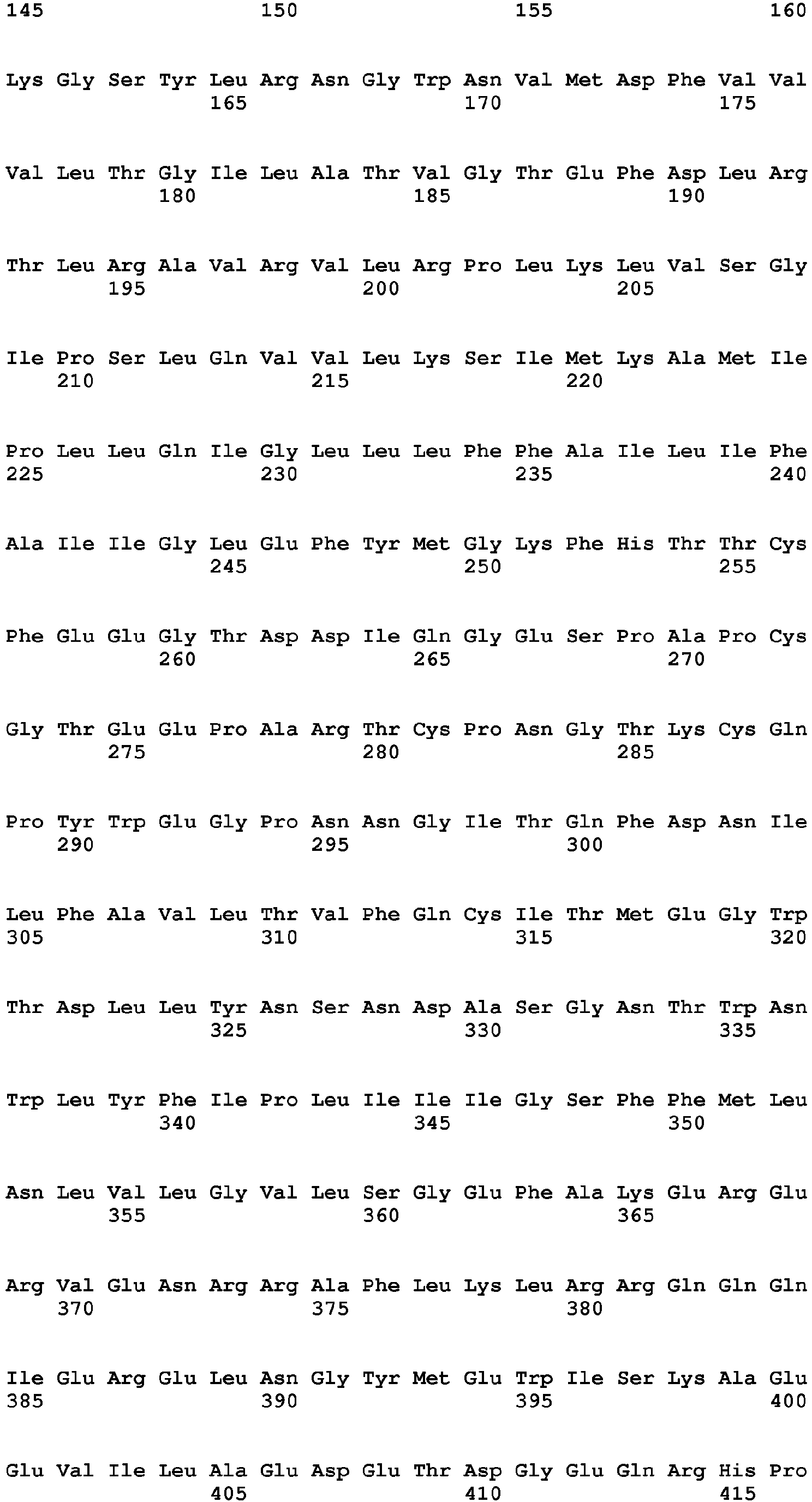
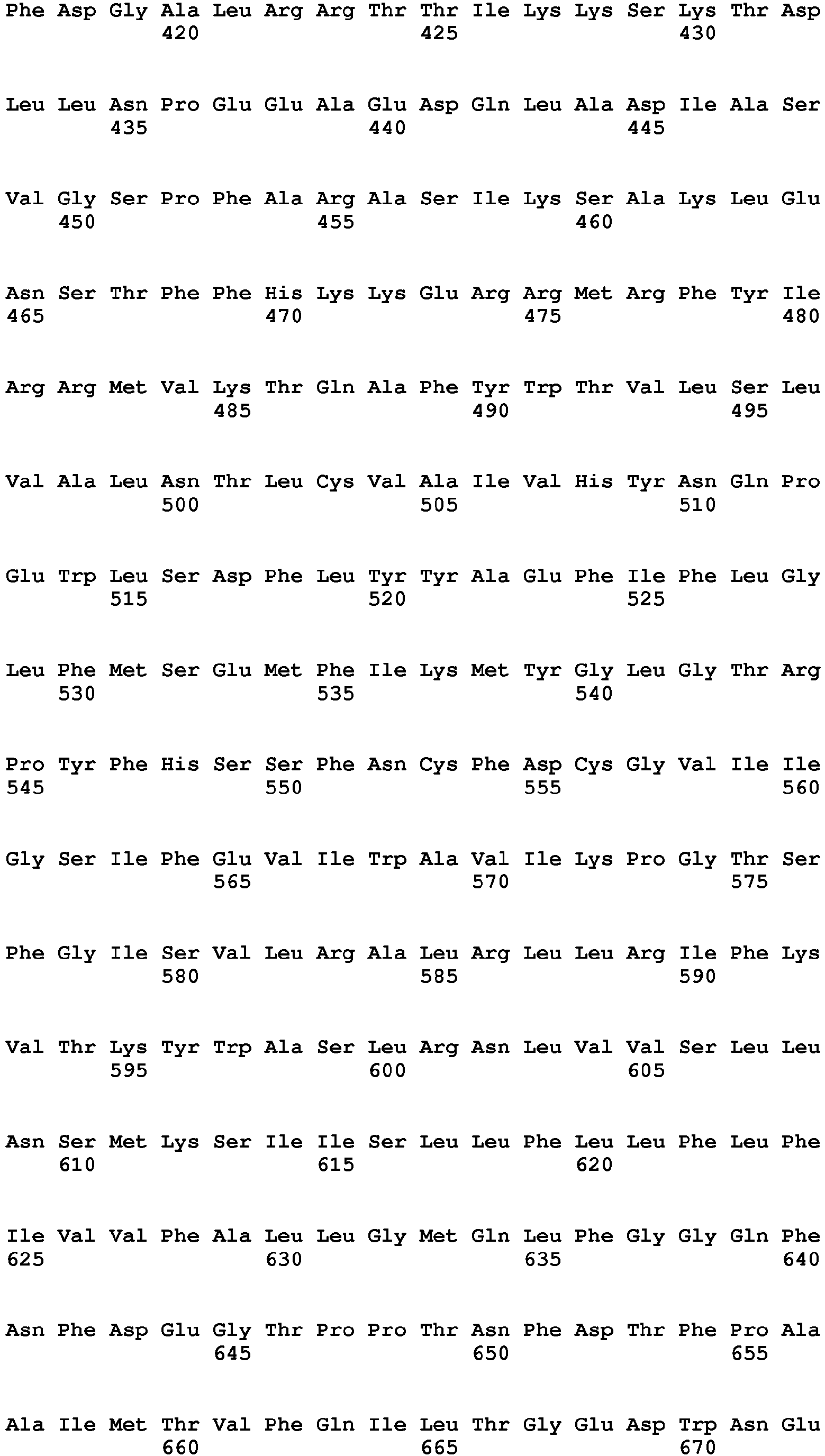


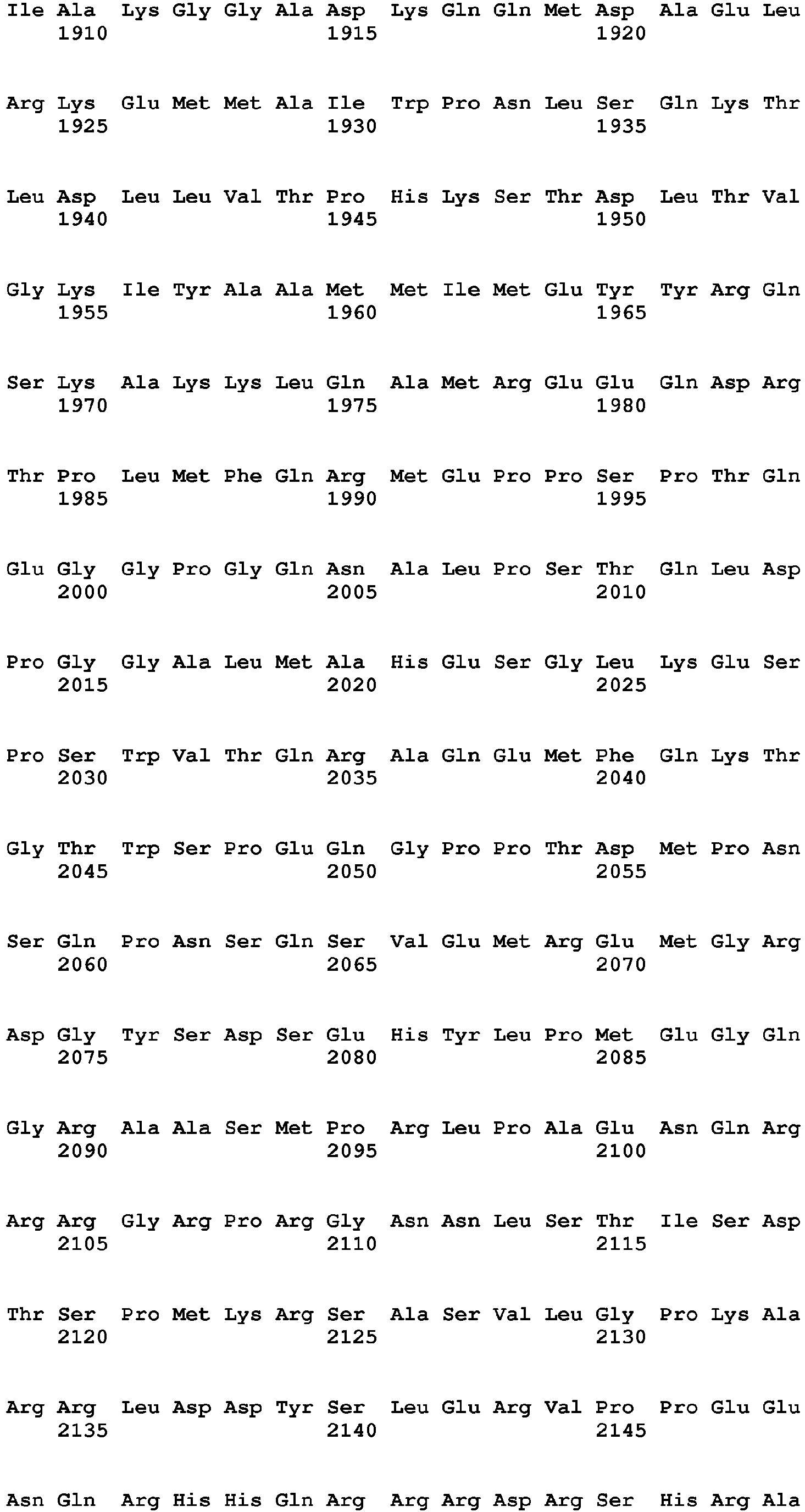
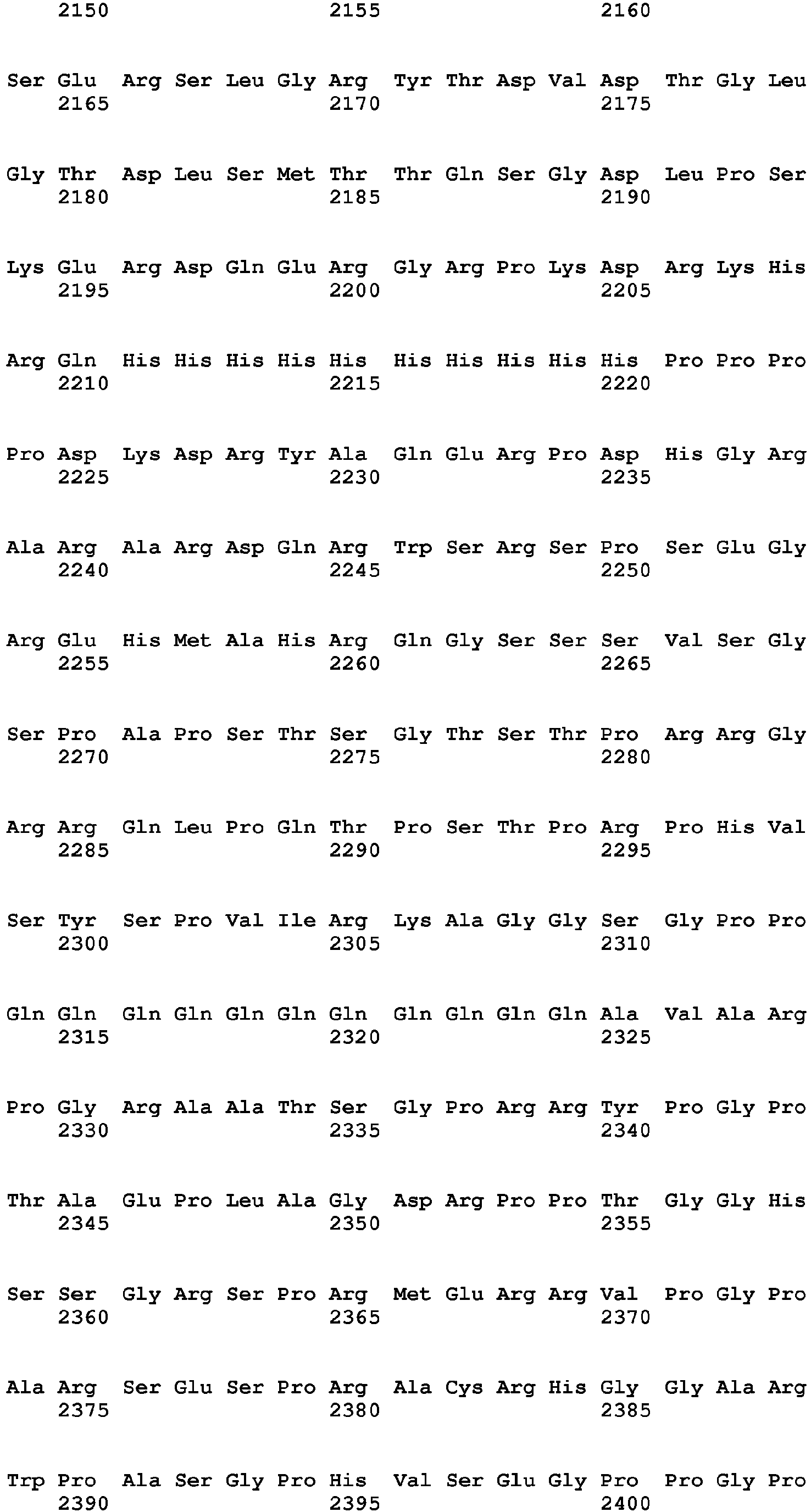


Claims (12)
- An agonist of the P/Q type voltage-gated presynaptic calcium channel for use in the treatment of an amyloidosis, wherein the agonist is a compound of formula (II):

wherein
R1 is C1C6-alkyl or C3-C8-cycloalkyl;
R2a, R2b, R2c, R2d, R2e
are independently hydrogen, halogen, C1-C4-alkyl, optionally substituted phenyl, OH, SH, CN, CF3, O-CF3, C1-C4-alkoxy, NH2, NH-C1-C4-alkyl, N-(C1-C4-alkyl)2, or
R2b and R2c or R2c and R2d
together with the carbon atoms to which they are attached form an optionally substituted anellated C5-C7 carbocyclic ring. - An agonist of the P/Q type voltage-gated presynaptic calcium channel for use in the treatment of an amyloidosis.
- The agonist of the P/Q type voltage-gated presynaptic calcium channel for use according to claim 1 or 2, wherein the amyloidosis is Alzheimer's disease.
- The agonist of the P/Q type voltage-gated presynaptic calcium channel for use according to any one of claims 1 to 3, wherein the agonist binds to the P/Q type voltage-gated presynaptic calcium channel.
- The agonist of the P/Q type voltage-gated presynaptic calcium channel for use according to any of claims 1 to 4, wherein the agonist affects the P/Q type voltage-gated presynaptic calcium channel with an EC50 of less than 120 µM.
- The agonist of the P/Q type voltage-gated presynaptic calcium channel for use according to any of claims 1 to 5, wherein the agonist affects the P/Q type voltage-gated presynaptic calcium channel with an EC50 that is lower than the EC50 with which it affects the N and/or R type presynaptic calcium channel.
- The agonist of the P/Q type voltage-gated presynaptic calcium channel for use according to any of claims 1 to 6, wherein the agonist affects the N and/or R type presynaptic calcium channel with an EC50 of more than 54 µM.
- The agonist of the P/Q type voltage-gated presynaptic calcium channel for use according to any of claims 1 to 7, wherein the treatment is for providing a gain in quality-adjusted life years or disability-adjusted life years.
- The agonist of the P/Q type voltage-gated presynaptic calcium channel for use according to any of claims 1 to 8, wherein the treatment is for the restoration of synaptic function and/or plasticity.
- The agonist of the P/Q type voltage-gated presynaptic calcium channel for use according to any of claims 1 to 9, wherein the treatment is for the restoration of long-term potentiation.
- The agonist of the P/Q type voltage-gated presynaptic calcium channel for use according to any of claims 1 to 10, wherein the treatment is for the restoration of memory function.
- The agonist of the P/Q type voltage-gated presynaptic calcium channel for use according to any of claims 1 to 11, wherein the treatment is for the restoration of performance of activities of daily living (ADL) capacity in the subject.
Priority Applications (1)
| Application Number | Priority Date | Filing Date | Title |
|---|---|---|---|
| EP12167045A EP2486928A1 (en) | 2007-02-27 | 2008-02-27 | Method for the treatment of amyloidoses |
Applications Claiming Priority (5)
| Application Number | Priority Date | Filing Date | Title |
|---|---|---|---|
| US90370007P | 2007-02-27 | 2007-02-27 | |
| EP07020257 | 2007-10-16 | ||
| EP08000325 | 2008-01-09 | ||
| EP08716082A EP2124952A2 (en) | 2007-02-27 | 2008-02-27 | Method for the treatment of amyloidoses |
| EP12167045A EP2486928A1 (en) | 2007-02-27 | 2008-02-27 | Method for the treatment of amyloidoses |
Related Parent Applications (1)
| Application Number | Title | Priority Date | Filing Date |
|---|---|---|---|
| EP08716082.6 Division | 2008-02-27 |
Publications (1)
| Publication Number | Publication Date |
|---|---|
| EP2486928A1 true EP2486928A1 (en) | 2012-08-15 |
Family
ID=39529434
Family Applications (2)
| Application Number | Title | Priority Date | Filing Date |
|---|---|---|---|
| EP08716082A Withdrawn EP2124952A2 (en) | 2007-02-27 | 2008-02-27 | Method for the treatment of amyloidoses |
| EP12167045A Withdrawn EP2486928A1 (en) | 2007-02-27 | 2008-02-27 | Method for the treatment of amyloidoses |
Family Applications Before (1)
| Application Number | Title | Priority Date | Filing Date |
|---|---|---|---|
| EP08716082A Withdrawn EP2124952A2 (en) | 2007-02-27 | 2008-02-27 | Method for the treatment of amyloidoses |
Country Status (3)
| Country | Link |
|---|---|
| US (2) | US20100311767A1 (en) |
| EP (2) | EP2124952A2 (en) |
| WO (1) | WO2008104386A2 (en) |
Families Citing this family (14)
| Publication number | Priority date | Publication date | Assignee | Title |
|---|---|---|---|---|
| DE10303974A1 (en) | 2003-01-31 | 2004-08-05 | Abbott Gmbh & Co. Kg | Amyloid β (1-42) oligomers, process for their preparation and their use |
| BRPI0619249A2 (en) | 2005-11-30 | 2011-09-20 | Abbott Lab | anti-globulin-ß antibodies, antigen-binding fractions thereof, corresponding hybridomas, nucleic acids, vectors, host cells, methods of making said antibodies, compositions comprising said antibodies, uses of said antibodies and methods of using said antibodies |
| PT1976877E (en) | 2005-11-30 | 2014-04-29 | Abbvie Inc | Monoclonal antibodies against amyloid beta protein and uses thereof |
| US8455626B2 (en) | 2006-11-30 | 2013-06-04 | Abbott Laboratories | Aβ conformer selective anti-aβ globulomer monoclonal antibodies |
| EP2124952A2 (en) | 2007-02-27 | 2009-12-02 | Abbott GmbH & Co. KG | Method for the treatment of amyloidoses |
| US8048420B2 (en) | 2007-06-12 | 2011-11-01 | Ac Immune S.A. | Monoclonal antibody |
| US8613923B2 (en) | 2007-06-12 | 2013-12-24 | Ac Immune S.A. | Monoclonal antibody |
| EP2586795B1 (en) | 2007-10-05 | 2018-05-16 | Genentech, Inc. | Use of anti-amyloid beta antibody in ocular diseases |
| EP2558494B1 (en) | 2010-04-15 | 2018-05-23 | AbbVie Inc. | Amyloid-beta binding proteins |
| AU2011282536B2 (en) | 2010-07-30 | 2015-12-24 | Ac Immune S.A. | Safe and functional humanized anti beta-amyloid antibody |
| CN105348387B (en) | 2010-08-14 | 2020-08-25 | Abbvie 公司 | Amyloid beta binding proteins |
| WO2014189830A1 (en) | 2013-05-20 | 2014-11-27 | University Of Pittsburgh-Of The Commonwealth System Of Higher Education | Calcium channel agonists |
| JP7673255B2 (en) | 2021-06-11 | 2025-05-08 | ギリアード サイエンシーズ, インコーポレイテッド | Combination of MCL-1 inhibitors with antibody drug conjugates |
| TWI910028B (en) | 2021-06-11 | 2025-12-21 | 美商基利科學股份有限公司 | Combination mcl-1 inhibitors with anti-cancer agents |
Citations (6)
| Publication number | Priority date | Publication date | Assignee | Title |
|---|---|---|---|---|
| WO1996039512A2 (en) | 1995-06-06 | 1996-12-12 | Warner-Lambert Company | A cell line for the rapid expression of functional calcium channels |
| WO1998009523A1 (en) * | 1996-09-05 | 1998-03-12 | Massachusetts Institute Of Technology | Compositions and methods for treatment of neurological disorders and neurodegenerative diseases |
| WO1998013490A2 (en) | 1996-09-27 | 1998-04-02 | Rijksuniversiteit Te Leiden | A gene related to migraine in man |
| WO2004067561A1 (en) | 2003-01-31 | 2004-08-12 | Abbott Gmbh & Co. Kg | Amyloid-$g(b)(1-42) oligomers, derivatives thereof, antibodies for the same, method for production and use therof |
| US20050096385A1 (en) * | 2003-06-23 | 2005-05-05 | Xianqi Kong | Methods and compositions for treating amyloid-related diseases |
| WO2006094724A2 (en) | 2005-03-05 | 2006-09-14 | Abbott Gmbh & Co. Kg | Screening method, process for purifying of non-diffusible a-beta oligomers, selective antibodies against said non-diffusible a-beta oligomers and a process for manufacturing of said antibodies |
Family Cites Families (710)
| Publication number | Priority date | Publication date | Assignee | Title |
|---|---|---|---|---|
| DE2500076C3 (en) | 1975-01-02 | 1982-11-18 | SCHURA Blutderivate GmbH & Co KG, 4150 Krefeld | Process for the production of intravenously tolerated gamma globulins |
| US5179017A (en) | 1980-02-25 | 1993-01-12 | The Trustees Of Columbia University In The City Of New York | Processes for inserting DNA into eucaryotic cells and for producing proteinaceous materials |
| US4634665A (en) | 1980-02-25 | 1987-01-06 | The Trustees Of Columbia University In The City Of New York | Processes for inserting DNA into eucaryotic cells and for producing proteinaceous materials |
| US4399216A (en) | 1980-02-25 | 1983-08-16 | The Trustees Of Columbia University | Processes for inserting DNA into eucaryotic cells and for producing proteinaceous materials |
| NO812612L (en) | 1980-08-06 | 1982-02-08 | Ferring Pharma Ltd | ENZYME inhibitor. |
| JPS57501692A (en) | 1980-09-24 | 1982-09-16 | ||
| ATE53862T1 (en) | 1982-01-22 | 1990-06-15 | Cetus Corp | METHODS FOR THE CHARACTERIZATION OF HLA AND THE CDNS TEST AGENTS USED THEREIN. |
| US4582788A (en) | 1982-01-22 | 1986-04-15 | Cetus Corporation | HLA typing method and cDNA probes used therein |
| US4510245A (en) | 1982-11-18 | 1985-04-09 | Chiron Corporation | Adenovirus promoter system |
| GB8308235D0 (en) | 1983-03-25 | 1983-05-05 | Celltech Ltd | Polypeptides |
| US4816567A (en) | 1983-04-08 | 1989-03-28 | Genentech, Inc. | Recombinant immunoglobin preparations |
| US4526039A (en) | 1983-06-23 | 1985-07-02 | The United States Of America As Represented By The Secretary Of Transportation | Removable strain gauge fixture and method for measuring accumulated strain in a material |
| US4683194A (en) | 1984-05-29 | 1987-07-28 | Cetus Corporation | Method for detection of polymorphic restriction sites and nucleic acid sequences |
| US5807715A (en) | 1984-08-27 | 1998-09-15 | The Board Of Trustees Of The Leland Stanford Junior University | Methods and transformed mammalian lymphocyte cells for producing functional antigen-binding protein including chimeric immunoglobulin |
| US5128326A (en) | 1984-12-06 | 1992-07-07 | Biomatrix, Inc. | Drug delivery systems based on hyaluronans derivatives thereof and their salts and methods of producing same |
| US5168062A (en) | 1985-01-30 | 1992-12-01 | University Of Iowa Research Foundation | Transfer vectors and microorganisms containing human cytomegalovirus immediate-early promoter-regulatory DNA sequence |
| US4683202A (en) | 1985-03-28 | 1987-07-28 | Cetus Corporation | Process for amplifying nucleic acid sequences |
| DE3546807C2 (en) | 1985-03-30 | 1991-03-28 | Marc Genf/Geneve Ch Ballivet | |
| US6492107B1 (en) | 1986-11-20 | 2002-12-10 | Stuart Kauffman | Process for obtaining DNA, RNA, peptides, polypeptides, or protein, by recombinant DNA technique |
| US4666829A (en) | 1985-05-15 | 1987-05-19 | University Of California | Polypeptide marker for Alzheimer's disease and its use for diagnosis |
| US4980286A (en) | 1985-07-05 | 1990-12-25 | Whitehead Institute For Biomedical Research | In vivo introduction and expression of foreign genetic material in epithelial cells |
| US5618920A (en) | 1985-11-01 | 1997-04-08 | Xoma Corporation | Modular assembly of antibody genes, antibodies prepared thereby and use |
| US4968615A (en) | 1985-12-18 | 1990-11-06 | Ciba-Geigy Corporation | Deoxyribonucleic acid segment from a virus |
| DE3600905A1 (en) | 1986-01-15 | 1987-07-16 | Ant Nachrichtentech | METHOD FOR DECODING BINARY SIGNALS AND VITERBI DECODERS AND APPLICATIONS |
| CA1284931C (en) | 1986-03-13 | 1991-06-18 | Henry A. Erlich | Process for detecting specific nucleotide variations and genetic polymorphisms present in nucleic acids |
| US5225539A (en) | 1986-03-27 | 1993-07-06 | Medical Research Council | Recombinant altered antibodies and methods of making altered antibodies |
| GB8607679D0 (en) | 1986-03-27 | 1986-04-30 | Winter G P | Recombinant dna product |
| US5107065A (en) | 1986-03-28 | 1992-04-21 | Calgene, Inc. | Anti-sense regulation of gene expression in plant cells |
| CA1338457C (en) | 1986-08-22 | 1996-07-16 | Henry A. Erlich | Purified thermostable enzyme |
| US5231170A (en) | 1986-08-27 | 1993-07-27 | Paul Averback | Antibodies to dense microspheres |
| US5525339A (en) | 1986-08-27 | 1996-06-11 | Dms Pharmaceutical Inc. | Isolated components of dense microspheres derived from mammalian brain tissue and antibodies thereto |
| US4946778A (en) | 1987-09-21 | 1990-08-07 | Genex Corporation | Single polypeptide chain binding molecules |
| US5811310A (en) | 1986-09-30 | 1998-09-22 | Albert Einstein College Of Medicine Of Yeshiva Univ. | The Alz-50 monoclonal antibody and diagnostic assay for alzheimer's disease |
| JPS63240797A (en) | 1986-10-14 | 1988-10-06 | Shin Etsu Chem Co Ltd | Monoclonal antibody, production thereof and diagnostic containing said antibody |
| EP0274826B1 (en) | 1986-11-17 | 1998-08-12 | Scios Inc. | Recombinant Alzheimer's amyloid protein |
| DE3702789A1 (en) | 1987-01-30 | 1988-08-18 | Bayer Ag | PROCUREMENT PROTEIN OF APC POLYPEPTIDE, FOR CODING DNA AND DIAGNOSTIC USE OF DNA AND PROTEIN |
| EP0307434B2 (en) | 1987-03-18 | 1998-07-29 | Scotgen Biopharmaceuticals, Inc. | Altered antibodies |
| JPS63245689A (en) | 1987-03-31 | 1988-10-12 | Suntory Ltd | Human amyloid-related protein monoclonal antibody |
| US5258498A (en) | 1987-05-21 | 1993-11-02 | Creative Biomolecules, Inc. | Polypeptide linkers for production of biosynthetic proteins |
| US4880078A (en) | 1987-06-29 | 1989-11-14 | Honda Giken Kogyo Kabushiki Kaisha | Exhaust muffler |
| CA1340802C (en) | 1987-08-15 | 1999-10-26 | Yasuyuki Takahashi | Senile amyloid precursor protein and an antibody specific for the same |
| US5004697A (en) | 1987-08-17 | 1991-04-02 | Univ. Of Ca | Cationized antibodies for delivery through the blood-brain barrier |
| CA1339014C (en) | 1987-10-08 | 1997-03-25 | Ronald E. Majocha | Antibodies to a4 amyloid peptide |
| US5231000A (en) | 1987-10-08 | 1993-07-27 | The Mclean Hospital | Antibodies to A4 amyloid peptide |
| WO1989006689A1 (en) | 1988-01-13 | 1989-07-27 | The Mclean Hospital Corporation | Genetic constructs containing the alzheimer brain amyloid gene |
| AU3204689A (en) | 1988-02-10 | 1989-09-06 | Children's Medical Center Corporation | Amyloid protein precursors, genetic probes, antibodies, and methods of use |
| US5134062A (en) | 1988-03-22 | 1992-07-28 | Cornell Research Foundation, Inc. | Diagnosis of neuronal disorders and screening potential therapeutic agents therefor |
| US5015570A (en) | 1988-05-13 | 1991-05-14 | Molecular Therapeutics, Inc. | Molecular diagnosis of Alzheimer Disease |
| US6287793B1 (en) | 1988-08-19 | 2001-09-11 | Elan Pharmaceuticals, Inc. | Diagnostic methods for alzheimer's disease |
| US5223409A (en) | 1988-09-02 | 1993-06-29 | Protein Engineering Corp. | Directed evolution of novel binding proteins |
| EP0768377A1 (en) | 1988-09-02 | 1997-04-16 | Protein Engineering Corporation | Generation and selection of recombinant varied binding proteins |
| ES2052027T5 (en) | 1988-11-11 | 2005-04-16 | Medical Research Council | IMMUNOGLOBULINE VARIABLE DOMAIN SEQUENCE CLONING. |
| US20030229208A1 (en) | 1988-12-28 | 2003-12-11 | Protein Design Labs, Inc. | Humanized immunoglobulins |
| US5530101A (en) | 1988-12-28 | 1996-06-25 | Protein Design Labs, Inc. | Humanized immunoglobulins |
| US5231020A (en) | 1989-03-30 | 1993-07-27 | Dna Plant Technology Corporation | Genetic engineering of novel plant phenotypes |
| US5262332A (en) | 1989-04-05 | 1993-11-16 | Brigham And Women's Hospital | Diagnostic method for Alzheimer's disease: examination of non-neural tissue |
| AU5525090A (en) | 1989-04-14 | 1990-11-16 | Research Foundation For Mental Hygiene, Inc. | Monoclonal antibody to amyloid peptide |
| EP0478627A4 (en) | 1989-05-16 | 1992-08-19 | William D. Huse | Co-expression of heteromeric receptors |
| CA2016841C (en) | 1989-05-16 | 1999-09-21 | William D. Huse | A method for producing polymers having a preselected activity |
| CA2016842A1 (en) | 1989-05-16 | 1990-11-16 | Richard A. Lerner | Method for tapping the immunological repertoire |
| US5234814A (en) | 1989-06-01 | 1993-08-10 | Du Pont Merck Pharmaceutical Company | Diagnostic assay for alzheimer's disease |
| EP0415801A1 (en) | 1989-07-05 | 1991-03-06 | N.V. Innogenetics S.A. | Monoclonal antibodies against activated microglial cells |
| EP0411974A1 (en) | 1989-07-05 | 1991-02-06 | N.V. Innogenetics S.A. | Monoclonal antibodies to a neurofibrillary tangle antigen |
| AU6430190A (en) | 1989-10-10 | 1991-05-16 | Pitman-Moore, Inc. | Sustained release composition for macromolecular proteins |
| WO1991006287A1 (en) | 1989-11-06 | 1991-05-16 | Enzytech, Inc. | Protein microspheres and methods of using them |
| GB8928874D0 (en) | 1989-12-21 | 1990-02-28 | Celltech Ltd | Humanised antibodies |
| US5780225A (en) | 1990-01-12 | 1998-07-14 | Stratagene | Method for generating libaries of antibody genes comprising amplification of diverse antibody DNAs and methods for using these libraries for the production of diverse antigen combining molecules |
| AU7247191A (en) | 1990-01-11 | 1991-08-05 | Molecular Affinities Corporation | Production of antibodies using gene libraries |
| US6075181A (en) | 1990-01-12 | 2000-06-13 | Abgenix, Inc. | Human antibodies derived from immunized xenomice |
| ES2284161T3 (en) | 1990-01-12 | 2007-11-01 | Amgen Fremont Inc. | GENERATION OF XENOGENIC ANTIBODIES. |
| AU7121191A (en) | 1990-02-26 | 1991-10-10 | Albert Einstein College Of Medicine Of Yeshiva University | Diagnostic assay for alzheimer's disease |
| US5753624A (en) | 1990-04-27 | 1998-05-19 | Milkhaus Laboratory, Inc. | Materials and methods for treatment of plaquing disease |
| US5427908A (en) | 1990-05-01 | 1995-06-27 | Affymax Technologies N.V. | Recombinant library screening methods |
| GB9015198D0 (en) | 1990-07-10 | 1990-08-29 | Brien Caroline J O | Binding substance |
| CA2109602C (en) | 1990-07-10 | 2002-10-01 | Gregory P. Winter | Methods for producing members of specific binding pairs |
| DE4022247A1 (en) | 1990-07-12 | 1992-01-16 | Hoechst Ag | METHOD FOR EXTRACTIVELY SEPARATING 2-ALKYLTHIO-5-PHENYLPYRIMIDINES FROM THEIR REACTION MIXTURES |
| CA2090126C (en) | 1990-08-02 | 2002-10-22 | John W. Schrader | Methods for the production of proteins with a desired function |
| US5633425A (en) | 1990-08-29 | 1997-05-27 | Genpharm International, Inc. | Transgenic non-human animals capable of producing heterologous antibodies |
| US5625126A (en) | 1990-08-29 | 1997-04-29 | Genpharm International, Inc. | Transgenic non-human animals for producing heterologous antibodies |
| US5877397A (en) | 1990-08-29 | 1999-03-02 | Genpharm International Inc. | Transgenic non-human animals capable of producing heterologous antibodies of various isotypes |
| US6255458B1 (en) | 1990-08-29 | 2001-07-03 | Genpharm International | High affinity human antibodies and human antibodies against digoxin |
| US5545806A (en) | 1990-08-29 | 1996-08-13 | Genpharm International, Inc. | Ransgenic non-human animals for producing heterologous antibodies |
| US5814318A (en) | 1990-08-29 | 1998-09-29 | Genpharm International Inc. | Transgenic non-human animals for producing heterologous antibodies |
| AU8507191A (en) | 1990-08-29 | 1992-03-30 | Genpharm International, Inc. | Transgenic non-human animals capable of producing heterologous antibodies |
| US5661016A (en) | 1990-08-29 | 1997-08-26 | Genpharm International Inc. | Transgenic non-human animals capable of producing heterologous antibodies of various isotypes |
| US5770429A (en) | 1990-08-29 | 1998-06-23 | Genpharm International, Inc. | Transgenic non-human animals capable of producing heterologous antibodies |
| US5698426A (en) | 1990-09-28 | 1997-12-16 | Ixsys, Incorporated | Surface expression libraries of heteromeric receptors |
| ES2113940T3 (en) | 1990-12-03 | 1998-05-16 | Genentech Inc | ENRICHMENT METHOD FOR PROTEIN VARIANTS WITH ALTERED UNION PROPERTIES. |
| DE69233769D1 (en) | 1991-03-01 | 2009-09-24 | Dyax Corp | Chimeric protein with microprotein having two or more disulfide bonds and embodiments thereof |
| AU662148B2 (en) | 1991-04-10 | 1995-08-24 | Scripps Research Institute, The | Heterodimeric receptor libraries using phagemids |
| ATE221379T1 (en) | 1991-05-01 | 2002-08-15 | Jackson H M Found Military Med | METHOD FOR TREATING INFECTIOUS RESPIRATORY DISEASES |
| JPH04342883A (en) | 1991-05-17 | 1992-11-30 | Sanden Corp | Variable delivery swash plate type compressor |
| DE69233482T2 (en) | 1991-05-17 | 2006-01-12 | Merck & Co., Inc. | Method for reducing the immunogenicity of antibody variable domains |
| WO1992022324A1 (en) | 1991-06-14 | 1992-12-23 | Xoma Corporation | Microbially-produced antibody fragments and their conjugates |
| DE4122599C2 (en) | 1991-07-08 | 1993-11-11 | Deutsches Krebsforsch | Phagemid for screening antibodies |
| US5565332A (en) | 1991-09-23 | 1996-10-15 | Medical Research Council | Production of chimeric antibodies - a combinatorial approach |
| DK0610330T3 (en) | 1991-10-25 | 1998-01-26 | Innogenetics Nv | Monoclonal antibodies against microtubule-associated protein tau |
| EP0613560B2 (en) | 1991-11-12 | 2006-06-21 | Prana Biotechnology Ltd | A method for assaying and treating alzheimer's disease |
| US20020009443A1 (en) | 1991-12-02 | 2002-01-24 | Vanitha Ramakrishman | Inhibitory immunoglobulin polypeptides to human pdgf beta receptor |
| PT1696031E (en) | 1991-12-02 | 2010-06-25 | Medical Res Council | Production of anti-self antibodies from antibody segment repertoires and displayed on phage |
| US7408027B1 (en) | 1991-12-06 | 2008-08-05 | Max-Planck-Gesellschaft Zur Forderung Der Wissenchaften | Tools for the diagnosis and treatment of Alzheimer's disease |
| WO1993011231A1 (en) | 1991-12-06 | 1993-06-10 | MAX-PLANCK-Gesellschaft zur Förderung der Wissenschaften e.V. | Tools for the diagnosis and treatment of alzheimer's disease |
| JP4157160B2 (en) | 1991-12-13 | 2008-09-24 | ゾーマ テクノロジー リミテッド | Methods for the preparation of modified antibody variable regions |
| US20010029293A1 (en) | 1992-01-27 | 2001-10-11 | Icos Corporation | Icam-related protein |
| US5538845A (en) | 1992-02-05 | 1996-07-23 | Athena Neurosciences, Inc. | Beta-amyloid peptide production inhibitors and methods for their identification |
| US5714350A (en) | 1992-03-09 | 1998-02-03 | Protein Design Labs, Inc. | Increasing antibody affinity by altering glycosylation in the immunoglobulin variable region |
| US5912015A (en) | 1992-03-12 | 1999-06-15 | Alkermes Controlled Therapeutics, Inc. | Modulated release from biocompatible polymers |
| US5733743A (en) | 1992-03-24 | 1998-03-31 | Cambridge Antibody Technology Limited | Methods for producing members of specific binding pairs |
| US5912120A (en) | 1992-04-09 | 1999-06-15 | The United States Of America As Represented By The Department Of Health And Human Services, | Cloning, expression and diagnosis of human cytochrome P450 2C19: the principal determinant of s-mephenytoin metabolism |
| US5604102A (en) | 1992-04-15 | 1997-02-18 | Athena Neurosciences, Inc. | Methods of screening for β-amyloid peptide production inhibitors |
| US5441870A (en) | 1992-04-15 | 1995-08-15 | Athena Neurosciences, Inc. | Methods for monitoring cellular processing of β-amyloid precursor protein |
| US5455169A (en) | 1992-06-04 | 1995-10-03 | Alzheimer's Institute Of America, Inc. | Nucleic acids for diagnosing and modeling Alzheimer's disease |
| US5766846A (en) | 1992-07-10 | 1998-06-16 | Athena Neurosciences | Methods of screening for compounds which inhibit soluble β-amyloid peptide production |
| US5837672A (en) | 1992-07-10 | 1998-11-17 | Athena Neurosciences, Inc. | Methods and compositions for the detection of soluble β-amyloid peptide |
| US6610493B1 (en) | 1993-06-17 | 2003-08-26 | Brigham And Women's Hospital | Screening compounds for the ability to alter the production of amyloid-β peptide |
| ES2301158T3 (en) | 1992-07-24 | 2008-06-16 | Amgen Fremont Inc. | XENOGENIC ANTIBODY PRODUCTION. |
| US5639641A (en) | 1992-09-09 | 1997-06-17 | Immunogen Inc. | Resurfacing of rodent antibodies |
| TW258789B (en) | 1992-09-28 | 1995-10-01 | Rohm & Haas | |
| US5605811A (en) | 1992-10-26 | 1997-02-25 | Athena Neurosciences, Inc. | Methods and compositions for monitoring cellular processing of beta-amyloid precursor protein |
| US5891623A (en) | 1992-11-09 | 1999-04-06 | Consorzio Per Le Biotecnologie | Diagnosis and treatment of AIDS onset |
| ZA938243B (en) | 1992-11-12 | 1995-05-04 | Hybritech Inc | Altered affinity polypeptides of metal chelate binding antibodies |
| US6010913A (en) | 1992-12-14 | 2000-01-04 | N.V. Innogenetics S.A. | Isolated human tau peptide |
| EP0683234B2 (en) | 1993-01-25 | 2007-06-06 | Takeda Chemical Industries, Ltd. | Antibody against beta-amyloid or their derivative and use thereof |
| US5955317A (en) | 1993-01-25 | 1999-09-21 | Takeda Chemical Industries, Ltd. | Antibodies to β-amyloids or their derivatives and use thereof |
| US5934272A (en) | 1993-01-29 | 1999-08-10 | Aradigm Corporation | Device and method of creating aerosolized mist of respiratory drug |
| CA2115900A1 (en) | 1993-02-22 | 1994-08-23 | Gerald W. Becker | Pharmaceutical screens and antibodies |
| US5840294A (en) | 1993-03-29 | 1998-11-24 | Queen's University At Kingston | Method for treating amyloidosis |
| JP3926839B2 (en) | 1993-09-14 | 2007-06-06 | エピミューン,インコーポレイティド | Modification of immune response using universal DR-binding peptides |
| DE69429925T2 (en) | 1993-10-20 | 2002-10-02 | Duke University, Durham | METHOD FOR BINDING MATERIAL TO THE Beta-AMYLOID PEPTIDE |
| US5565352A (en) | 1993-11-24 | 1996-10-15 | Arch Development Corporation | Deubiquitinating enzyme: compositions and methods |
| JPH09506262A (en) | 1993-12-08 | 1997-06-24 | ジェンザイム・コーポレイション | Method for producing specific antibody |
| AU1397495A (en) | 1993-12-13 | 1995-07-03 | Uab Research Foundation, The | Diagnostic tests and reagents for detecting risk of alzheimer's disease and stroke |
| US6620915B2 (en) | 1993-12-23 | 2003-09-16 | Icos Corporation | Monoclonal antibodies specific for integrin α-d subunit |
| US6251395B1 (en) | 1993-12-23 | 2001-06-26 | W. Michael Gallatin | Methods of inhibiting inflammation at the site of a central nervous system injury with alphaD-specific antibodies |
| US6432404B1 (en) | 1993-12-23 | 2002-08-13 | Icos Corporation | Methods of inhibiting locomotor damage following spinal cord injury with α D-specific antibodies |
| US5877399A (en) | 1994-01-27 | 1999-03-02 | Johns Hopkins University | Transgenic mice expressing APP-Swedish mutation develop progressive neurologic disease |
| PT744958E (en) | 1994-01-31 | 2003-11-28 | Univ Boston | BANKS OF POLYCLONE ANTIBODIES |
| JPH07238096A (en) | 1994-02-25 | 1995-09-12 | S R L:Kk | Anti-polyubiquitin monoclonal antibody and method for measuring polyubiquitin |
| US7473423B2 (en) | 1994-04-29 | 2009-01-06 | Mayo Foundation For Medical Education And Research | Human IgM antibodies, and diagnostic and therapeutic uses thereof particularly in the central nervous system |
| US5516637A (en) | 1994-06-10 | 1996-05-14 | Dade International Inc. | Method involving display of protein binding pairs on the surface of bacterial pili and bacteriophage |
| US6018021A (en) | 1994-10-19 | 2000-01-25 | The Research Foundation Of State University Of New York | Human transaldolase: an autoantigen with a function in metabolism |
| US6114133A (en) | 1994-11-14 | 2000-09-05 | Elan Pharmaceuticals, Inc. | Methods for aiding in the diagnosis of Alzheimer's disease by measuring amyloid-β peptide (x-≧41) |
| ATE252894T1 (en) | 1995-01-05 | 2003-11-15 | Univ Michigan | SURFACE-MODIFIED NANOPARTICLES AND METHODS FOR THEIR PRODUCTION AND USE |
| US5786180A (en) | 1995-02-14 | 1998-07-28 | Bayer Corporation | Monoclonal antibody 369.2B specific for β A4 peptide |
| US6091001A (en) | 1995-03-29 | 2000-07-18 | Abgenix, Inc. | Production of antibodies using Cre-mediated site-specific recombination |
| US6130364A (en) | 1995-03-29 | 2000-10-10 | Abgenix, Inc. | Production of antibodies using Cre-mediated site-specific recombination |
| US5705330A (en) | 1995-04-14 | 1998-01-06 | Abbott Laboratories | Chemiluminescent immunoassay for antibody detection |
| US6019968A (en) | 1995-04-14 | 2000-02-01 | Inhale Therapeutic Systems, Inc. | Dispersible antibody compositions and methods for their preparation and use |
| AU705616B2 (en) | 1995-04-21 | 1999-05-27 | Cell Genesys, Inc. | Generation of large genomic DNA deletions |
| EP0822830B1 (en) | 1995-04-27 | 2008-04-02 | Amgen Fremont Inc. | Human anti-IL-8 antibodies, derived from immunized xenomice |
| WO1996034096A1 (en) | 1995-04-28 | 1996-10-31 | Abgenix, Inc. | Human antibodies derived from immunized xenomice |
| AU6255096A (en) | 1995-06-07 | 1996-12-30 | Mount Sinai School Of Medicine Of The City University Of New York, The | Pegylated modified proteins |
| US6717031B2 (en) | 1995-06-07 | 2004-04-06 | Kate Dora Games | Method for selecting a transgenic mouse model of alzheimer's disease |
| US6127977A (en) | 1996-11-08 | 2000-10-03 | Cohen; Nathan | Microstrip patch antenna with fractal structure |
| ATE219517T1 (en) | 1995-08-18 | 2002-07-15 | Morphosys Ag | PROTEIN/(POLY)PEPTIDE LIBRARIES |
| AU710347B2 (en) | 1995-08-31 | 1999-09-16 | Alkermes Controlled Therapeutics, Inc. | Composition for sustained release of an agent |
| EP1416280A3 (en) | 1995-09-14 | 2005-08-10 | The Regents of the University of California | Antibodies specific for native PrPsc |
| FR2740454B1 (en) | 1995-10-26 | 1997-11-21 | Rhone Poulenc Rorer Sa | PEPTIDES CAPABLE OF INHIBITING APP ENDOCYTOSIS AND CORRESPONDING NUCLEOTIDE SEQUENCES |
| AUPN649395A0 (en) | 1995-11-10 | 1995-12-07 | Ramsay Health Care Pty Ltd | A method for diagnosing alzheimer's disease |
| FR2741881B1 (en) * | 1995-12-01 | 1999-07-30 | Centre Nat Rech Scient | NOVEL PURINE DERIVATIVES HAVING IN PARTICULAR ANTI-PROLIFERATIVE PRORIETES AND THEIR BIOLOGICAL APPLICATIONS |
| EP0816492A1 (en) | 1995-12-12 | 1998-01-07 | Kyowa Hakko Kogyo Co., Ltd. | Novel dnas, novel polypeptides and novel antibodies |
| JPH09178743A (en) | 1995-12-27 | 1997-07-11 | Oriental Yeast Co Ltd | Method for quantifying soluble APP |
| ATE219247T1 (en) | 1996-01-19 | 2002-06-15 | Res Corp Technologies Inc | METHODS FOR DETECTING ALZHEIMER'S DISEASE |
| JP2978435B2 (en) | 1996-01-24 | 1999-11-15 | チッソ株式会社 | Method for producing acryloxypropyl silane |
| ATE364627T1 (en) | 1996-01-30 | 2007-07-15 | Scripps Research Inst | G-PROTEIN COUPLED RECEPTOR WITH ENLARGED, EXTRACELLULAR DOMAIN |
| HU230048B1 (en) | 1996-02-09 | 2015-06-29 | Abbvie Biotechnology Ltd | Use of human tnf-alpha binding antibodies |
| AU2063197A (en) | 1996-03-04 | 1997-09-22 | Massachusetts Institute Of Technology | Materials and methods for enhancing cellular internalization |
| US5714352A (en) | 1996-03-20 | 1998-02-03 | Xenotech Incorporated | Directed switch-mediated DNA recombination |
| US5882644A (en) | 1996-03-22 | 1999-03-16 | Protein Design Labs, Inc. | Monoclonal antibodies specific for the platelet derived growth factor β receptor and methods of use thereof |
| US5985309A (en) | 1996-05-24 | 1999-11-16 | Massachusetts Institute Of Technology | Preparation of particles for inhalation |
| US5855913A (en) | 1997-01-16 | 1999-01-05 | Massachusetts Instite Of Technology | Particles incorporating surfactants for pulmonary drug delivery |
| US5874064A (en) | 1996-05-24 | 1999-02-23 | Massachusetts Institute Of Technology | Aerodynamically light particles for pulmonary drug delivery |
| US6699658B1 (en) | 1996-05-31 | 2004-03-02 | Board Of Trustees Of The University Of Illinois | Yeast cell surface display of proteins and uses thereof |
| US6300065B1 (en) | 1996-05-31 | 2001-10-09 | Board Of Trustees Of The University Of Illinois | Yeast cell surface display of proteins and uses thereof |
| WO1997046678A1 (en) | 1996-06-06 | 1997-12-11 | Bayer Corporation | Nucleic acids and polypeptides related to presenilin |
| WO1999009150A1 (en) | 1996-08-15 | 1999-02-25 | Bayer Corporation | Method of introducing modifications into a gene |
| CA2183901A1 (en) | 1996-08-22 | 1998-02-23 | Johanna E. Bergmann | Targets for therapy and diagnosis of alzheimer's disease and down syndrome in humans |
| US7521531B2 (en) | 1996-08-28 | 2009-04-21 | Immunomedics, Inc. | Methods for the purification of stable radioiodine conjugates |
| JPH1075781A (en) | 1996-08-30 | 1998-03-24 | Sumitomo Electric Ind Ltd | Human proteasome subunit P58 protein and antibodies specific thereto |
| US5916771A (en) | 1996-10-11 | 1999-06-29 | Abgenix, Inc. | Production of a multimeric protein by cell fusion method |
| WO1998022120A1 (en) | 1996-11-19 | 1998-05-28 | The Wistar Institute Of Anatomy & Biology | Diagnostic and therapeutic reagents for alzheimer's disease |
| ATE549918T1 (en) | 1996-12-03 | 2012-04-15 | Amgen Fremont Inc | HUMAN ANTIBODIES THAT EXPRESSLY BIND HUMAN TNF ALPHA |
| US5919687A (en) | 1996-12-24 | 1999-07-06 | John Hopkins University | Recombinant N-SMases and nucleic acids encoding same |
| ES2236832T3 (en) | 1997-01-16 | 2005-07-16 | Massachusetts Institute Of Technology | PREPARATION OF PARTICLES FOR INHALATION. |
| DK0971946T3 (en) | 1997-01-21 | 2006-10-30 | Gen Hospital Corp | Selection of proteins using RNA-protein fusions |
| JPH10210982A (en) | 1997-01-31 | 1998-08-11 | Fuji Yakuhin Kogyo Kk | Novel protein |
| US20030068316A1 (en) | 1997-02-05 | 2003-04-10 | Klein William L. | Anti-ADDL antibodies and uses thereof |
| US6218506B1 (en) | 1997-02-05 | 2001-04-17 | Northwestern University | Amyloid β protein (globular assembly and uses thereof) |
| US6413940B1 (en) | 1997-02-07 | 2002-07-02 | Nymox Corporation | Pharmaceutically active agents that impede the formation of amyloid by impeding the genesis of DMS |
| US7226730B1 (en) | 1997-02-26 | 2007-06-05 | The General Hospital Corporation | Transgenic animals and cell lines for screening drugs effective for the treatment or prevention of Alzheimer's Disease |
| US7045531B1 (en) | 1997-03-11 | 2006-05-16 | The General Hospital Corporation | Composition comprising a metal chelator and a method of treating amyloidosis by administering the metal chelator |
| DK1017379T3 (en) | 1997-03-17 | 2015-02-16 | Btg Int Ltd | Therapeutic compositions comprising ketone compounds and precursors thereof |
| EP0985033A4 (en) | 1997-04-04 | 2005-07-13 | Biosite Inc | Polyvalent and polyclonal libraries |
| US20020086847A1 (en) | 1997-04-09 | 2002-07-04 | Mindset Biopharmaceuticals (Usa) | Recombinant antibodies specific for beta-amyloid ends, DNA encoding and methods of use thereof |
| US8173127B2 (en) | 1997-04-09 | 2012-05-08 | Intellect Neurosciences, Inc. | Specific antibodies to amyloid beta peptide, pharmaceutical compositions and methods of use thereof |
| WO1998049286A2 (en) | 1997-05-01 | 1998-11-05 | Board Of Regents, The University Of Texas System | Directed evolution of enzymes and antibodies |
| US6235883B1 (en) | 1997-05-05 | 2001-05-22 | Abgenix, Inc. | Human monoclonal antibodies to epidermal growth factor receptor |
| EP1860187B1 (en) | 1997-05-15 | 2011-07-13 | Genentech, Inc. | Apo-2 receptor |
| AU758455B2 (en) | 1997-07-21 | 2003-03-20 | Arpi Matossian-Rogers | Ligands, including antibodies, showing reactivity against endocrine cells |
| IT1293511B1 (en) | 1997-07-30 | 1999-03-01 | Gentili Ist Spa | MONOCLONAL CATALYTIC ANTIBODIES WITH PROTEASIC ACTIVITY FOR THE SELECTIVE LYSIS OF THE PROTEIN COMPONENT OF PLATES AND RELATED AGGREGATES |
| US7923216B2 (en) | 1997-08-14 | 2011-04-12 | Institut Pasteur | In vivo modulation of neuronal transport |
| DE69836982T2 (en) | 1997-08-14 | 2007-10-31 | Institut Pasteur | Hybrid tetanus toxin proteins migrating retrograde and trans-synaptically into the CNS |
| EP1007092B1 (en) | 1997-08-26 | 2006-08-09 | Amgen Fremont Inc. | A process for inhibiting complement activation via the alternative pathway |
| US6666935B1 (en) | 1997-09-09 | 2003-12-23 | The Regents Of The University Of California | Sol-gel manufactured energetic materials |
| FR2768346B1 (en) | 1997-09-15 | 2002-04-19 | Fond Jean Dausset Ceph | COMPOUND FOR INHIBITION OF PRESENILINE 1 FOR THE PREPARATION OF A MEDICAMENT AND DIAGNOSTIC AGENT |
| US20040185039A1 (en) | 2002-08-30 | 2004-09-23 | Heinz Kohler | Therapeutic applications of noncovalent dimerizing antibodies |
| US5989463A (en) | 1997-09-24 | 1999-11-23 | Alkermes Controlled Therapeutics, Inc. | Methods for fabricating polymer-based controlled release devices |
| SE512663C2 (en) | 1997-10-23 | 2000-04-17 | Biogram Ab | Active substance encapsulation process in a biodegradable polymer |
| WO1999022024A1 (en) | 1997-10-24 | 1999-05-06 | Cornell Research Foundation, Inc. | Detection of neurodegenerative diseases |
| US6787523B1 (en) | 1997-12-02 | 2004-09-07 | Neuralab Limited | Prevention and treatment of amyloidogenic disease |
| US6905686B1 (en) | 1997-12-02 | 2005-06-14 | Neuralab Limited | Active immunization for treatment of alzheimer's disease |
| US6761888B1 (en) | 2000-05-26 | 2004-07-13 | Neuralab Limited | Passive immunization treatment of Alzheimer's disease |
| US6913745B1 (en) | 1997-12-02 | 2005-07-05 | Neuralab Limited | Passive immunization of Alzheimer's disease |
| US6710226B1 (en) | 1997-12-02 | 2004-03-23 | Neuralab Limited | Transgenic mouse assay to determine the effect of Aβ antibodies and Aβ Fragments on alzheimer's disease characteristics |
| US6750324B1 (en) | 1997-12-02 | 2004-06-15 | Neuralab Limited | Humanized and chimeric N-terminal amyloid beta-antibodies |
| US7964192B1 (en) | 1997-12-02 | 2011-06-21 | Janssen Alzheimer Immunotherapy | Prevention and treatment of amyloidgenic disease |
| TWI239847B (en) | 1997-12-02 | 2005-09-21 | Elan Pharm Inc | N-terminal fragment of Abeta peptide and an adjuvant for preventing and treating amyloidogenic disease |
| US7179892B2 (en) | 2000-12-06 | 2007-02-20 | Neuralab Limited | Humanized antibodies that recognize beta amyloid peptide |
| EP1033998B1 (en) | 1997-12-03 | 2005-10-19 | Neuralab, Ltd. | Suppressing beta-amyloid-related changes in alzheimer's disease |
| CA2314909A1 (en) | 1997-12-15 | 1999-06-24 | Kyowa Hakko Kogyo Co., Ltd. | Human nap1 protein |
| US6730778B2 (en) | 1997-12-19 | 2004-05-04 | Pharmacia And Upjohn Company | Human sel-10 polypeptides and polynucleotides that encode them |
| US6436989B1 (en) | 1997-12-24 | 2002-08-20 | Vertex Pharmaceuticals, Incorporated | Prodrugs of aspartyl protease inhibitors |
| US7189703B2 (en) | 1998-01-09 | 2007-03-13 | Intracell, Llc | Treatment and diagnosis of alzheimer's disease |
| MXPA00007815A (en) | 1998-02-11 | 2002-04-24 | Neurochem Inc | Method for modulating macrophage activation. |
| AU2978899A (en) | 1998-03-03 | 1999-09-20 | Abgenix, Inc. | Cd147 binding molecules as therapeutics |
| US20050112543A1 (en) | 1998-03-11 | 2005-05-26 | The General Hospital Corporation | Method of screening for drugs useful in treating Alzheimer's disease |
| US6323218B1 (en) | 1998-03-11 | 2001-11-27 | The General Hospital Corporation | Agents for use in the treatment of Alzheimer's disease |
| US20050059591A1 (en) | 1998-04-07 | 2005-03-17 | Neuralab Limited | Prevention and treatment of amyloidogenic disease |
| US20050059802A1 (en) | 1998-04-07 | 2005-03-17 | Neuralab Ltd | Prevention and treatment of amyloidogenic disease |
| US20020029391A1 (en) | 1998-04-15 | 2002-03-07 | Claude Geoffrey Davis | Epitope-driven human antibody production and gene expression profiling |
| NO314086B1 (en) | 1998-05-08 | 2003-01-27 | Gemvax As | Peptides and pharmaceutical compositions containing them, nucleic acid sequences encoding such peptides, plasmids and virus vectors encompassing such DNA sequences and their use for the preparation of pharmaceutical preparations for |
| WO1999058157A1 (en) | 1998-05-08 | 1999-11-18 | Cramer Donald V | Method for inhibiting antibody-mediated rejection of xenogeneic tissues |
| WO1999059571A1 (en) | 1998-05-15 | 1999-11-25 | Neurochem, Inc. | Use of amyloid inhibitors for modulating neuronal cell death |
| US20030147882A1 (en) | 1998-05-21 | 2003-08-07 | Alan Solomon | Methods for amyloid removal using anti-amyloid antibodies |
| WO1999062505A2 (en) | 1998-06-01 | 1999-12-09 | Ortho-Mcneil Pharmaceutical, Inc. | Method for treating neurodegenerative disorders |
| JP2000050885A (en) | 1998-06-02 | 2000-02-22 | Fuji Chemical Industries Ltd | Antibodies to cathepsins and their use |
| CA2336139C (en) | 1998-06-24 | 2008-10-14 | Advanced Inhalation Research, Inc. | Large porous particles emitted from an inhaler |
| CA2332131C (en) | 1998-07-02 | 2007-05-15 | Fuso Pharmaceutical Industries, Ltd. | Serine protease-specific monoclonal antibody and utilization thereof |
| EP1105427A2 (en) | 1998-08-17 | 2001-06-13 | Abgenix, Inc. | Generation of modified molecules with increased serum half-lives |
| US20030187191A1 (en) | 1998-09-01 | 2003-10-02 | Genentech, Inc. | Secreted and transmembrane polypeptides and nucleic acids encoding the same |
| AU767878B2 (en) | 1998-09-17 | 2003-11-27 | Otsuka Pharmaceutical Co., Ltd. | LY6H gene |
| US7083950B2 (en) | 1998-09-25 | 2006-08-01 | Regeneron Pharmaceuticals, Inc. | High affinity fusion proteins and therapeutic and diagnostic methods for use |
| AU5999199A (en) | 1998-09-29 | 2000-04-17 | Kyowa Hakko Kogyo Co. Ltd. | Novel antibodies, drugs containing these antibodies and methods for screening compounds by using these antibodies |
| US6660843B1 (en) | 1998-10-23 | 2003-12-09 | Amgen Inc. | Modified peptides as therapeutic agents |
| EP1731913A3 (en) | 1998-12-02 | 2007-01-17 | The Trustees Of The University Of Pennsylvania | Methods and compositions for determining lipid peroxidation levels in oxidant stress syndromes and diseases |
| EP1135519A4 (en) | 1998-12-02 | 2004-11-24 | Univ Pennsylvania | METHODS AND COMPOSITIONS FOR DETERMINING LIPID PEROXIDATION IN OXIDANT STRESS-RELATED SYNDROMES AND DISEASES |
| CN1660911A (en) | 1998-12-14 | 2005-08-31 | 迈阿密大学 | Connective tissue growth factor fragments and methods and uses thereof |
| HRP20130077A2 (en) | 1998-12-23 | 2013-07-31 | Pfizer Inc. | HUMAN MONOCLONAL ANTIBODIES FOR CTLA-4 |
| DE19902550A1 (en) | 1999-01-22 | 2000-07-27 | Memorec Medical Molecular Rese | A novel aspartate protease, coding sequence, inhibitors and antibodies, useful for treatment and diagnosis of Alzheimer's disease |
| US20030185826A1 (en) | 1999-02-24 | 2003-10-02 | Tobinick Edward L. | Cytokine antagonists for the treatment of localized disorders |
| EP2168984B1 (en) | 1999-03-25 | 2012-08-29 | Abbott GmbH & Co. KG | Human antibodies that bind human IL-12 and methods for producing |
| FR2791263B1 (en) | 1999-03-26 | 2001-04-27 | Halina Zofia Malina | DRUG PREPARATIONS BASED ON AN IMMUNE RESPONSE AGAINST ACCUMULATION OF XANTHURENIC ACID MODIFIED PROTEINS |
| PT1176195E (en) | 1999-04-09 | 2013-07-18 | Kyowa Hakko Kirin Co Ltd | Method for controlling the activity of immunologically functional molecule |
| US7527787B2 (en) | 2005-10-19 | 2009-05-05 | Ibc Pharmaceuticals, Inc. | Multivalent immunoglobulin-based bioactive assemblies |
| US6787637B1 (en) | 1999-05-28 | 2004-09-07 | Neuralab Limited | N-Terminal amyloid-β antibodies |
| UA81216C2 (en) | 1999-06-01 | 2007-12-25 | Prevention and treatment of amyloid disease | |
| PE20010212A1 (en) | 1999-06-01 | 2001-02-22 | Neuralab Ltd | COMPOSITIONS OF THE A-BETA PEPTIDE AND PROCESSES TO PRODUCE THEM |
| US20030134430A1 (en) | 1999-06-03 | 2003-07-17 | Curagen Corporation | Novel amino acid sequences for human caenorhabditis elegans-like protein polypeptides |
| JP2000354487A (en) | 1999-06-15 | 2000-12-26 | Takashi Muramatsu | Midkine receptor |
| ES2312348T3 (en) | 1999-06-16 | 2009-03-01 | Boston Biomedical Research Institute | IMMUNOLOGICAL CONTROL OF LEVELS OF BETA-AMILOIDE IN VIVO. |
| US20020002270A1 (en) | 1999-06-16 | 2002-01-03 | Raymond P. Zinkowski | Purified antigen for alzheimer's disease, and methods of obtaining and using same |
| EP1571158B1 (en) | 1999-08-04 | 2009-10-14 | University Of Southern California | Globular assembly of amyloid beta protein and uses thereof |
| CN102766210B (en) | 1999-08-24 | 2015-07-08 | E.R.施贵宝&圣斯有限责任公司 | Human CTLA-4 antibodies and uses thereof |
| US7605238B2 (en) | 1999-08-24 | 2009-10-20 | Medarex, Inc. | Human CTLA-4 antibodies and their uses |
| ATE283487T1 (en) | 1999-09-01 | 2004-12-15 | Evotec Neurosciences Gmbh | METHOD FOR DIAGNOSIS OR PROGNOSIS OF AGE-RELATED MACULAR DEGENERATION |
| ES2344189T3 (en) | 1999-09-03 | 2010-08-20 | RAMOT UNIVERSITY AUTHORITY FOR APPLIED RESEARCH & INDUSTRIAL DEVELOPMENT LTD. | AGENTS, COMPOSITIONS AND METHODS THAT USE THEM USEFUL IN THE TREATMENT OR PREVENTION OF ALZHEIMER'S DISEASE. |
| US20040013647A1 (en) | 1999-09-03 | 2004-01-22 | Ramot At Tel-Aviv University Ltd. | Methods and compositions for treating a plaque-forming disease |
| US6294171B2 (en) | 1999-09-14 | 2001-09-25 | Milkhaus Laboratory, Inc. | Methods for treating disease states comprising administration of low levels of antibodies |
| JP2001122900A (en) | 1999-10-21 | 2001-05-08 | Yasukazu Tanuma | Anti-DNase γ antibody and production and use thereof |
| EP1230269A2 (en) | 1999-11-03 | 2002-08-14 | Maxygen, Inc. | Antibody diversity generation |
| NZ540564A (en) | 1999-11-29 | 2007-04-27 | Neurochem Int Ltd | Vaccine for the prevention and treatment of Alzheimer's and amyloid related diseases |
| US20070135337A2 (en) | 1999-11-29 | 2007-06-14 | Neurochem (International) Limited | Vaccine for the Prevention and Treatment of Alzheimer's and Amyloid Related Diseases |
| US20020094335A1 (en) | 1999-11-29 | 2002-07-18 | Robert Chalifour | Vaccine for the prevention and treatment of alzheimer's and amyloid related diseases |
| CN101935352A (en) | 1999-12-08 | 2011-01-05 | 智力神经系统学公司 | As immunogenic chimeric peptide and antibody thereof, and utilize chimeric peptide or antibody to carry out the method for immunity |
| EP1752472A3 (en) | 1999-12-08 | 2007-04-25 | Intellect Neurosciences, Inc. | Chimeric amyloid beta peptides |
| JP2001231578A (en) | 1999-12-09 | 2001-08-28 | Kyowa Hakko Kogyo Co Ltd | Protein belonging to IL-1 family |
| WO2001085093A2 (en) | 1999-12-23 | 2001-11-15 | Neurochem, Inc. | Compounds and methods for modulating cerebral amyloid angiopathy |
| US20030077757A1 (en) | 2000-01-11 | 2003-04-24 | Andrews William H. | Method of treating aging-related disorders |
| CA2397049A1 (en) | 2000-01-17 | 2001-07-26 | Corning O.T.I. S.P.A. | Attenuator integrated with modulator and transmitting module for wdm system using the same |
| US6806254B2 (en) | 2000-02-03 | 2004-10-19 | Nuvelo, Inc. | Methods and materials relating to alpha-2-macroglobulin-like polypeptides and polynucleotides |
| US20020182660A1 (en) | 2000-02-18 | 2002-12-05 | Fong Kei-Lai L. | N- and C-terminus specific immunoassays for full length beta-amyloid peptide-Abeta(1-40), Abeta(1-39), Abeta(1-40), Abeta(1-42) , and Abeta(1-43) |
| MXPA02007796A (en) | 2000-02-21 | 2003-12-08 | Pharmexa As | Novel method for down regulation of amyloid. |
| US20030086938A1 (en) | 2000-02-21 | 2003-05-08 | Jensen Martin Roland | Novel methods for down-regulation of amyloid |
| IL151378A0 (en) | 2000-02-24 | 2003-04-10 | Univ Washington | Humanized antibodies that sequester amyloid beta peptide |
| EP1130032A1 (en) | 2000-02-28 | 2001-09-05 | Gesellschaft für biotechnologische Forschung mbH (GBF) | Single-chain antibodies recognizing the human vascular endothelial growth factor receptor-2 (VEGFR-2/KDR) |
| GB0006398D0 (en) | 2000-03-16 | 2000-05-03 | Novartis Ag | Organic compounds |
| AU2001257903A1 (en) | 2000-03-22 | 2001-10-03 | The General Hospital Corporation | Method for treatment of neurodegenerative diseases |
| US6664442B2 (en) | 2000-03-30 | 2003-12-16 | Elan Pharmaceuticals, Inc. | Selecting compounds to reduce inflammation associated with Alzheimer's disease |
| AU2001249835A1 (en) | 2000-04-03 | 2001-10-15 | Oxford Glycosciences (Uk) Ltd. | Diagnosis and treatment of alzheimer's disease |
| US7371365B2 (en) | 2000-04-04 | 2008-05-13 | Mayo Foundation For Medical Education And Research | Methods for detecting parenchymal plaques in vivo |
| AUPQ712000A0 (en) | 2000-04-27 | 2000-05-18 | Medvet Science Pty. Ltd. | Antigenic peptide fragments of VapA protein, and uses thereof |
| US20080009467A1 (en) | 2000-05-01 | 2008-01-10 | Accera, Inc. | Combinations of medium chain triglycerides and therapeutic agents for the treatment and prevention of alzheimers disease and other diseases resulting from reduced neuronal metabolism |
| AU5943201A (en) | 2000-05-03 | 2001-11-12 | Amgen Inc | Modified peptides as therapeutic agents |
| NZ521939A (en) | 2000-05-22 | 2004-04-30 | Univ New York | Inducing an immune response to amyloid beta peptides and amyloid deposits using a synthetic non-amylogenic but immunogenic peptide |
| IL153375A0 (en) | 2000-06-22 | 2003-07-06 | Genentech Inc | Agonist anti-trk-c monoclonal antibodies |
| JP4252195B2 (en) | 2000-06-27 | 2009-04-08 | 新日本無線株式会社 | High frequency line converter |
| US7449308B2 (en) | 2000-06-28 | 2008-11-11 | Glycofi, Inc. | Combinatorial DNA library for producing modified N-glycans in lower eukaryotes |
| ATE440959T1 (en) | 2000-06-28 | 2009-09-15 | Glycofi Inc | METHOD FOR PRODUCING MODIFIED GLYCOPROTEINS |
| JP2004501204A (en) | 2000-06-28 | 2004-01-15 | プラナ バイオテクノロジー リミティッド | Neurotoxin oligomer |
| US6686449B2 (en) | 2000-06-30 | 2004-02-03 | Pharmacia & Upjohn Company | Mutant presenilin 1 polypeptides |
| AU2001269127A1 (en) | 2000-07-06 | 2002-01-14 | Vlaams Interuniversitair Instituut Voor Biotechnologie Vzw | A novel app mutation associated with an unusual alzheimer's disease pathology |
| AU2007200047B2 (en) | 2000-07-07 | 2009-11-26 | Bioarctic Neuroscience Ab | Prevention and treatment of Alzheimer's disease |
| EP2082749A3 (en) | 2000-07-07 | 2010-06-30 | Bioarctic Neuroscience AB | Prevention and treatment of Alzheimer's disease |
| US6524819B1 (en) | 2000-07-11 | 2003-02-25 | Incyte Genomics, Inc. | Down syndrome critical region 1-like proteins |
| EP1172378A1 (en) | 2000-07-12 | 2002-01-16 | Richard Dr. Dodel | Human beta-amyloid antibody and use thereof for treatment of alzheimer's disease |
| US20020009445A1 (en) | 2000-07-12 | 2002-01-24 | Yansheng Du | Human beta-amyloid antibody and use thereof for treatment of alzheimer's disease |
| JP2002040023A (en) | 2000-07-28 | 2002-02-06 | Mitsubishi Chemicals Corp | Methods for detecting Alzheimer's disease |
| US20070009931A1 (en) | 2000-08-04 | 2007-01-11 | Kirsch Wolff M | Negative correlation between IRP-2 and Transferrin receptor expression as a diagnostic of Alzheimer's disease |
| WO2002021141A2 (en) | 2000-09-06 | 2002-03-14 | Aventis Pharma S.A. | Methods and compositions for diseases associated with amyloidosis |
| GB0024446D0 (en) | 2000-10-05 | 2000-11-22 | Glaxo Group Ltd | Protein |
| IT1319277B1 (en) | 2000-10-24 | 2003-09-26 | Chiesi Farma Spa | MELTING PROTEINS USEFUL FOR ALZHEIMER'S MILK IMMUNIZATION TREATMENT. |
| US6962793B2 (en) | 2000-10-27 | 2005-11-08 | Mount Sinai Hospital | Methods for detecting Alzheimers disease |
| EP1363939A2 (en) | 2000-11-01 | 2003-11-26 | Insight Biotechnology Limited | Peptides for use in the treatment of alzheimer's disease |
| DE10055703A1 (en) | 2000-11-02 | 2002-05-08 | Peter F Pascoe | Ex vivo blood lavage with oligomeric carbohydrates for removal of pathogens, hapten-containing antibody aggregates and amyloids, useful in treatment of e.g. multiple sclerosis and Alzheimer's disease |
| WO2002094870A2 (en) | 2000-11-02 | 2002-11-28 | Curagen Corporation | Proteins and nucleic acids encoding same |
| WO2002035987A2 (en) | 2000-11-03 | 2002-05-10 | Massachusetts Institute Of Technology | METHODS FOR IDENTIFYING TREATMENTS FOR NEUROTOXICITY IN ALZHEIMER'S DISEASE CAUSED BY β-AMYLOID PEPTIDES |
| US20060062786A1 (en) | 2000-11-08 | 2006-03-23 | Human Genome Sciences, Inc. | Antibodies that immunospecifically bind to TRAIL receptors |
| WO2002042462A2 (en) | 2000-11-27 | 2002-05-30 | Praecis Pharmaceuticals Inc. | Therapeutic agents and methods of use thereof for treating an amyloidogenic disease |
| TWI255272B (en) | 2000-12-06 | 2006-05-21 | Guriq Basi | Humanized antibodies that recognize beta amyloid peptide |
| GB0100110D0 (en) | 2001-01-04 | 2001-02-14 | Univ Leeds | Modulation of calcium channel activity |
| DE10101430B4 (en) | 2001-01-13 | 2008-10-02 | Fraunhofer-Gesellschaft zur Förderung der angewandten Forschung e.V. | Soluble cyclic analogues for the modulation of amyloidogenesis |
| US20020132758A1 (en) | 2001-01-18 | 2002-09-19 | Shell John W. | Method for identifying compounds to treat medical pathologies associated with molecular crystallization |
| US7320793B2 (en) | 2001-01-19 | 2008-01-22 | Cytos Biotechnology Ag | Molecular antigen array |
| AT500379B8 (en) | 2001-02-02 | 2009-08-15 | Axon Neuroscience | TAU PROTEINS |
| US7175988B2 (en) | 2001-02-09 | 2007-02-13 | Human Genome Sciences, Inc. | Human G-protein Chemokine Receptor (CCR5) HDGNR10 |
| US20040191264A1 (en) | 2001-02-19 | 2004-09-30 | Nielsen Klaus Gregorius | Synthetic vaccine agents |
| JP4659236B2 (en) | 2001-03-01 | 2011-03-30 | 大塚製薬株式会社 | Method for measuring cytotoxic activity |
| FR2822238B1 (en) | 2001-03-16 | 2003-08-29 | Gemac | METHOD AND KIT FOR MONITORING NEURODEGENERATIVE DISEASES |
| US6815175B2 (en) | 2001-03-16 | 2004-11-09 | Cornell Research Foundation, Inc. | Anti-amyloid peptide antibody based diagnosis and treatment of a neurological disease or disorder |
| DE10117281A1 (en) | 2001-04-06 | 2002-10-24 | Inst Molekulare Biotechnologie | Peptide for the diagnosis and therapy of Alzheimer's dementia |
| CA2443770A1 (en) | 2001-04-23 | 2002-10-31 | Curagen Corporation | Proteins and nucleic acids encoding same |
| US6451547B1 (en) | 2001-04-25 | 2002-09-17 | Syn X Pharma | Process for differential diagnosis of Alzheimer's dementia and device therefor |
| ES2318006T3 (en) | 2001-04-30 | 2009-05-01 | Eli Lilly And Company | HUMANIZED ANTIBODIES RECOGNIZING THE BETA-AMYLOID PEPTIDE. |
| ES2312569T3 (en) | 2001-04-30 | 2009-03-01 | Eli Lilly And Company | HUMANIZED ANTIBODIES. |
| US7196163B2 (en) | 2001-05-22 | 2007-03-27 | Merk & Co., Inc. | Assays using amyloid precursor proteins with modified β-secretase cleavage sites to monitor β-secretase activity |
| CA2448142A1 (en) | 2001-05-22 | 2002-11-28 | Merck & Co., Inc. | Beta-secretase substrates and uses thereof |
| US6906169B2 (en) | 2001-05-25 | 2005-06-14 | United Biomedical, Inc. | Immunogenic peptide composition comprising measles virus Fprotein Thelper cell epitope (MUFThl-16) and N-terminus of β-amyloid peptide |
| ES2228697T3 (en) | 2001-06-12 | 2005-04-16 | Wiltfang, Jens | MONOCLONAL ANTIBODY, MAB 1E8, WHICH IS SPECIFIC FOR THE FIRST TWO AMINO ACIDS OF BETA-AMILOID PEPTIDES AND ITS USE IN THE BETA-AMILOID AND / OR SAPP ALFA PEPTIDES DETECTION. |
| US7595378B2 (en) | 2001-06-13 | 2009-09-29 | Genmab A/S | Human monoclonal antibodies to epidermal growth factor receptor (EGFR) |
| WO2002100348A2 (en) | 2001-06-13 | 2002-12-19 | Genmab A/S | Human monoclonal antibodies to epidermal growth factor receptor (egfr) |
| WO2003000714A2 (en) | 2001-06-22 | 2003-01-03 | Panacea Pharmaceuticals, Inc. | Compositions and methods for preventing protein aggregation in neurodegenerative diseases |
| US7094884B2 (en) | 2001-06-22 | 2006-08-22 | Roche Diagnostics Corporation | Soluble complexes of amylod β peptide and peptidyl prolyl isomerase chaperone and methods of making and using them |
| CN1396183A (en) | 2001-07-13 | 2003-02-12 | 张小如 | Human fusion antibody for reducing cerebral amyloid fibers associated with senile dementia |
| AU2002326412A1 (en) | 2001-07-20 | 2003-03-03 | Oregon Health And Science University | Novel human nucleic acids encoding a pantothenate kinase and methods of use |
| JP4729717B2 (en) | 2001-08-03 | 2011-07-20 | 株式会社医学生物学研究所 | Antibody that recognizes GM1 ganglioside-binding amyloid β protein, and DNA encoding the antibody |
| JP4320694B2 (en) | 2001-08-08 | 2009-08-26 | 株式会社オーク製作所 | Multiple exposure drawing apparatus and multiple exposure drawing method |
| EP1424892A4 (en) | 2001-08-10 | 2006-08-23 | Univ South Florida | MODULATION OF ANGIOGENESIS BY A-BETA-PEPTIDE |
| EP1416965B8 (en) | 2001-08-17 | 2008-02-13 | Washington University | Assay method for alzheimer's disease |
| WO2003015691A2 (en) | 2001-08-17 | 2003-02-27 | Eli Lilly And Company | RAPID IMPROVEMENT OF COGNITION IN CONDITIONS RELATED TO A$g(b) |
| CA2451998A1 (en) | 2001-08-17 | 2003-02-27 | Eli Lilly And Company | Anti-a.beta. antibodies |
| US7771722B2 (en) | 2001-08-17 | 2010-08-10 | Eli Lilly And Company | Assay method for alzheimer's disease |
| JP2005500389A (en) | 2001-08-17 | 2005-01-06 | イーライ・リリー・アンド・カンパニー | Use of antibodies with high affinity for soluble Aβ to treat Aβ-related conditions and diseases |
| MY144532A (en) | 2001-08-20 | 2011-09-30 | Lundbeck & Co As H | Novel method for down-regulation of amyloid |
| US20030082191A1 (en) | 2001-08-29 | 2003-05-01 | Poduslo Joseph F. | Treatment for central nervous system disorders |
| WO2003029456A1 (en) | 2001-10-01 | 2003-04-10 | Dyax Corp. | Multi-chain eukaryotic display vectors and uses thereof |
| WO2003028543A2 (en) | 2001-10-03 | 2003-04-10 | Pfizer Products Inc. | Nucleic acid molecules, polypeptides and uses therefor, including diagnosis and treatment of alzheimer's disease |
| CA2462682A1 (en) | 2001-10-04 | 2003-04-10 | Protein Therapeutics, Inc. | The use of gammaglobulin for the treatment of immune-mediated diseases |
| JP4153873B2 (en) | 2001-10-04 | 2008-09-24 | 株式会社 免疫生物研究所 | Alzheimer risk factor detection reagent, detection kit, and Alzheimer risk factor detection method using the same |
| GB0124317D0 (en) | 2001-10-10 | 2001-11-28 | Celltech R&D Ltd | Biological products |
| KR100988949B1 (en) | 2001-10-25 | 2010-10-20 | 제넨테크, 인크. | Glycoprotein Composition |
| WO2003039467A2 (en) | 2001-11-02 | 2003-05-15 | Diagenics International Corporation | Monoclonal antibodies specific for beta-amyloid. |
| CA2466841A1 (en) | 2001-11-21 | 2003-06-05 | New York University | Synthetic immunogenic but non-deposit-forming polypeptides and peptides homologous to amyloid .beta., prion protein, amylin, .alpha.-synuclein, or polyglutamine repeats for induction of an immune response thereto |
| US7026129B2 (en) | 2001-11-23 | 2006-04-11 | Syn X Pharma, Inc. | IG lambda biopolymer markers predictive of Alzheimers disease |
| US7179606B2 (en) | 2001-11-23 | 2007-02-20 | Syn X Pharma, Inc. | IG heavy chain, IG kappa, IG lambda biopolymer markers predictive of Alzheimer's disease |
| DE10158180A1 (en) | 2001-11-28 | 2003-09-11 | Biovision Ag | Method for the detection of Alzheimer's disease and to differentiate Alzheimer's disease from other dementia diseases, associated peptides and their use |
| AU2002363861A1 (en) | 2001-11-30 | 2003-06-10 | Crucell Holland B.V. | Antigen presenting cell targeting conjugate, an intigen presenting cell contacted with such conjugate, their use for vaccination or as medicament, and methods for their production or generation |
| WO2003047499A2 (en) | 2001-12-04 | 2003-06-12 | Ben Gurion University Of The Negev Research And Development Authority | Amphiphilic compounds and vesicles/liposomes for organ-specific drug targeting |
| WO2003051374A2 (en) | 2001-12-17 | 2003-06-26 | New York State Office Of Mental Health | SEQUESTRATION OF Aβ IN THE PERIPHERY IN THE ABSENCE OF IMMUNOMODULATING AGENT AS A THERAPEUTIC APPROACH FOR THE TREATMENT OR PREVENTION OF BETA-AMYLOID RELATED DISEASES |
| EP1975179A1 (en) | 2001-12-26 | 2008-10-01 | Araclon Biotech, S.L. | Polyclonal antibodies, preparation method thereof and use of same |
| US7781396B2 (en) | 2002-01-31 | 2010-08-24 | Tel Aviv University Future Technology Development L.P. | Peptides directed for diagnosis and treatment of amyloid-associated disease |
| US20050153381A1 (en) | 2002-02-14 | 2005-07-14 | Marusich Michael F. | Immunocapture of mitochondrial protein complexes |
| AR038568A1 (en) | 2002-02-20 | 2005-01-19 | Hoffmann La Roche | ANTI-A BETA ANTIBODIES AND ITS USE |
| AU2003209446B2 (en) | 2002-03-01 | 2008-09-25 | Immunomedics, Inc. | Bispecific antibody point mutations for enhancing rate of clearance |
| AU2003213718A1 (en) | 2002-03-01 | 2003-09-16 | Szu-Yi Chou | Method of producing antigens |
| ES2392247T3 (en) | 2002-03-05 | 2012-12-07 | Ramot At Tel-Aviv University Ltd. | Immunizing compound and method for inducing an immune response against the cleavage site of amyloid precursor protein beta-secretase |
| MY139983A (en) | 2002-03-12 | 2009-11-30 | Janssen Alzheimer Immunotherap | Humanized antibodies that recognize beta amyloid peptide |
| AU2003210060B2 (en) | 2002-03-22 | 2010-02-25 | Aprogen, Inc. | Humanized antibody and process for preparing same |
| US20030190689A1 (en) | 2002-04-05 | 2003-10-09 | Cell Signaling Technology,Inc. | Molecular profiling of disease and therapeutic response using phospho-specific antibodies |
| US7122374B1 (en) | 2002-04-09 | 2006-10-17 | Takaomi Saido | Amyloid beta-protein 3(pE)-42 antibodies and uses thereof |
| US20070134247A9 (en) | 2002-04-12 | 2007-06-14 | Ramot At Tel Aviv University Ltd. | Prevention of brain inflammation as a result of induced autoimmune response |
| CN100360555C (en) | 2002-04-19 | 2008-01-09 | 多伦多大学董事局 | Immunological methods and compositions for treating Alzheimer's disease |
| WO2003091734A1 (en) | 2002-04-24 | 2003-11-06 | Evotec Neurosciences Gmbh | Diagnostic and therapeutic use of ensadin-0477 gene and protein for neurodegenerative diseases |
| ES2318123T3 (en) | 2002-04-25 | 2009-05-01 | Eli Lilly And Company | PROCEDURE TO TREAT ANXIETY IN SUBJECTS OF ADVANCED AGE. |
| US20060257420A1 (en) | 2002-04-26 | 2006-11-16 | Cel-Sci Corporation | Methods of preparation and composition of peptide constructs useful for treatment of autoimmune and transplant related host versus graft conditions |
| DE10221052A1 (en) | 2002-05-10 | 2003-12-04 | Transmit Technologietransfer | Active substances for therapy, diagnostics and prophylaxis of diseases in which abnormal protein structures occur |
| WO2003100419A1 (en) | 2002-05-27 | 2003-12-04 | Bioceros B.V. | Methods for using the cd163 pathway for modulating an immune response |
| AU2003241131A1 (en) | 2002-06-14 | 2003-12-31 | Brainsgate Ltd. | Methods and systems for management of alzheimer's disease |
| WO2004001422A2 (en) | 2002-06-20 | 2003-12-31 | Evotec Neurosciences Gmbh | Diagnostic and therapeutic use of ras-gtpase-activating sh3-domain-binding protein 2 (g3bp2) for neurodegenerative diseases |
| WO2004003563A2 (en) | 2002-06-27 | 2004-01-08 | Evotec Neurosciences Gmbh | Diagnostic and therapeutic use of ensadin-0581 gene and protein for neurodegenerative diseases |
| EP1600459A3 (en) | 2002-06-28 | 2005-12-07 | Domantis Limited | Ligand |
| JP4414332B2 (en) | 2002-07-12 | 2010-02-10 | アクソン・ニューロサイエンス・フォルシュングス−ウント・エントヴィックルングス・ゲゼルシャフト・ミット・ベシュレンクテル・ハフツング | Transgenic animal expressing Alzheimer tau protein |
| US20040091945A1 (en) | 2002-07-17 | 2004-05-13 | Cheryl Fitzer-Attas | Peptides and methods of screening immunogenic peptide vaccines against Alzheimer's Disease |
| EP1544210A4 (en) | 2002-07-18 | 2006-01-25 | Masayasu Okochi | Novel notch-origin polypeptides and biomarkers and reagents using the same |
| DE60336902D1 (en) | 2002-07-19 | 2011-06-09 | Cytos Biotechnology Ag | VACCINE COMPOSITIONS CONTAINING AMYLOID BETA 1-6 ANTIGENARRAYS |
| PL218992B1 (en) | 2002-07-19 | 2015-02-27 | Abbott Biotech Ltd | Neutralising, a high-affinity anti-TNF-alpha isolated human antibody, use of this antibody, crystal containing the anti-TNF-alpha human antibody and a preparation containing the crystal |
| EP1523499A2 (en) | 2002-07-24 | 2005-04-20 | Innogenetics N.V. | Fragments of beta-amyloid as targets for vaccination against alzheimer disease |
| US7250551B2 (en) * | 2002-07-24 | 2007-07-31 | President And Fellows Of Harvard College | Transgenic mice expressing inducible human p25 |
| SE0202880D0 (en) | 2002-07-26 | 2002-09-30 | Wieslab Ab | Complement system deficiency assay |
| DE60326153D1 (en) | 2002-07-30 | 2009-03-26 | David Gladstone Inst | PROCESS FOR THE DIAGNOSIS OF MORBUS ALZHEIMER |
| US20040138296A1 (en) | 2002-08-12 | 2004-07-15 | Pharmacia Corporation | Amyloid immunization and Cox-2 inhibitors for the treatment of alzheimer's disease |
| WO2004014296A2 (en) | 2002-08-13 | 2004-02-19 | U.S. Department Of Veterans Affairs | Method of detecting and preventing alzheimer’s disease, particularly at prodromal and early stages |
| ES2352668T3 (en) | 2002-08-14 | 2011-02-22 | Mitsubishi Chemical Medience Corporation | SPECIFIC ANTIBODY FOR A TAU PROTEIN OF THE CENTRAL NERVOUS SYSTEM. |
| AU2003259965A1 (en) | 2002-08-20 | 2004-03-11 | Neurogenetics, Inc. | Methods and compositions for modulating amyloid beta |
| WO2004019045A2 (en) | 2002-08-23 | 2004-03-04 | Proteosys Ag | Method for the diagnosis of alzheimer disease |
| ATE506072T1 (en) | 2002-09-12 | 2011-05-15 | Univ California | IMMUNOGENIC AND CORRESPONDING ANTIBODIES SPECIFIC TO COMMON HIGH MOLECULAR AGGREGATION INTERMEDIATE PRODUCTS OF AMYLOIDS FROM PROTEINS OF DIFFERENT SEQUENCE |
| US20070010657A1 (en) | 2002-09-13 | 2007-01-11 | Rainer Klocke | Cytoplasmic dynein heavy chain 1 genes, expression products, non-human animal model uses in human neurological diseases |
| US7238488B2 (en) | 2002-09-13 | 2007-07-03 | Grace Maresh | Therapeutic and diagnostic applications of perlecan domain I splice variants |
| US20040127471A1 (en) * | 2002-09-17 | 2004-07-01 | Barry Reisberg | Methods of treating age associated memory impairment (AAMI), mild cognitive impairment (MCI), and dementias with cell cycle inhibitors |
| JP4242128B2 (en) | 2002-09-18 | 2009-03-18 | 武田薬品工業株式会社 | Screening method for cerebral amyloidosis preventive and therapeutic drug |
| WO2004029629A1 (en) | 2002-09-27 | 2004-04-08 | Janssen Pharmaceutica N.V. | N-11 truncated amyloid-beta nomoclonal antibodies, compositions, methods and uses |
| US7541440B2 (en) | 2002-09-30 | 2009-06-02 | Immunomedics, Inc. | Chimeric, human and humanized anti-granulocyte antibodies and methods of use |
| US20070213512A1 (en) | 2002-10-01 | 2007-09-13 | Krafft Grant A | Amyloid beta peptide analogs and assemblies thereof |
| EP1545582A4 (en) | 2002-10-01 | 2008-09-17 | Univ Northwestern | DIFFUSABLE LIGANDS (ADDLS) DERIVED FROM AMYOLIDE BETA, ADDL REAGENTS, ADDL-BINDING MOLECULES AND USES THEREOF |
| WO2004031241A1 (en) | 2002-10-04 | 2004-04-15 | Techno Network Shikoku Co., Ltd. | Monoclonal antibody against subtilisin-like proprotein convertase pace4 and utilization thereof |
| AU2003282575A1 (en) | 2002-10-09 | 2004-05-04 | Activx Biosciences, Inc. | Activity-based probes, and methods of their preparation and use |
| EP1633786A4 (en) | 2002-10-09 | 2007-07-25 | Rinat Neuroscience Corp | Methods of treating alzheimer s disease using antibodies directed against amyloid beta peptide and compositions thereof |
| WO2004038411A2 (en) | 2002-10-24 | 2004-05-06 | Evotec Neurosciences Gmbh | Diagnostic and therapeutic use of ensadin-0289 gene and protein for neurodegenerative diseases |
| TW200509968A (en) | 2002-11-01 | 2005-03-16 | Elan Pharm Inc | Prevention and treatment of synucleinopathic disease |
| US20080014194A1 (en) | 2003-10-31 | 2008-01-17 | Elan Pharmaceuticals, Inc. | Prevention and Treatment of Synucleinopathic and Amyloidogenic Disease |
| FR2846667B1 (en) | 2002-11-06 | 2004-12-31 | Pasteur Institut | VARIABLE FRAGMENTS OF SINGLE-CHAIN CAMELIDE ANTIBODIES DIRECTED AGAINST BETA-AMYLOID PEPTIDE 1-42 AND THEIR APPLICATIONS FOR DIAGNOSIS AND TREATMENT OF NEUROAGREGATIVE DISEASES |
| AU2003295411A1 (en) | 2002-11-07 | 2004-06-03 | Celltech R & D | Human monoclonal antibodies to heparanase |
| US7964194B2 (en) | 2002-11-15 | 2011-06-21 | Morehouse School Of Medicine | Anti-chemokine and associated receptor antibodies and uses for inhibition of inflammation |
| CN100450551C (en) | 2002-11-29 | 2009-01-14 | 中国医学科学院基础医学研究所 | Recombinant adeno-associated virus gene vaccine for treating and preventing Alzheimer's disease and its application |
| DE10256900A1 (en) | 2002-11-29 | 2004-06-24 | Nemod Immuntherapie Ag | Tumor-specific recognition molecules |
| EP1578947A4 (en) | 2002-12-02 | 2006-12-06 | Abgenix Inc | ANTIBODIES AGAINST A2 PHOSPHOLIPASE AND USES |
| US20070010435A1 (en) | 2002-12-19 | 2007-01-11 | New York University | Method for treating amyloid disease |
| US20050031651A1 (en) | 2002-12-24 | 2005-02-10 | Francine Gervais | Therapeutic formulations for the treatment of beta-amyloid related diseases |
| WO2004058239A1 (en) | 2002-12-24 | 2004-07-15 | Neurochem (International) Limited | Therapeutic formulations for the treatment of beta-amyloid related diseases |
| GB0230203D0 (en) | 2002-12-27 | 2003-02-05 | Domantis Ltd | Fc fusion |
| AT413945B (en) | 2003-01-14 | 2006-07-15 | Mattner Frank Dr | Use of a compound having a binding capacity to an antibody specific for the natural N-terminal AB42 sequence, for preparing a vaccine for preventing and treating Alzheimer's disease |
| WO2004065419A1 (en) | 2003-01-22 | 2004-08-05 | Takeda Pharmaceutical Company Limited | Antibody and use thereof |
| WO2004065569A2 (en) | 2003-01-23 | 2004-08-05 | The Regents Of The University Of California | Multi-functional antibodies |
| WO2004072286A1 (en) | 2003-01-23 | 2004-08-26 | Ono Pharmaceutical Co., Ltd. | Substance specific to human pd-1 |
| MXPA05008156A (en) | 2003-02-01 | 2005-09-30 | Neuralab Ltd | ACTIVE IMMUNIZATION TO GENERATE ANTIBODIES FOR BETA-A SOLUBLE. |
| JP2006517109A (en) | 2003-02-07 | 2006-07-20 | プロテイン デザイン ラブス インコーポレイテッド | Amphiregulin antibodies and their use to treat cancer and psoriasis |
| US7575747B2 (en) | 2003-02-10 | 2009-08-18 | Applied Molecular Evolution | Aβ binding molecules |
| US20040242845A1 (en) | 2003-02-21 | 2004-12-02 | Nicolau Yves Claude | Methods and compositions comprising supramolecular antigenic constructs and antibodies elicited against them |
| US8663650B2 (en) | 2003-02-21 | 2014-03-04 | Ac Immune Sa | Methods and compositions comprising supramolecular constructs |
| WO2004074837A1 (en) | 2003-02-24 | 2004-09-02 | Digitalbiotech Co., Ltd. | Method for measuring the level of anti-beta-amyloid antibody in body fluids and diagnostic kit for alzheimer’s disease using same |
| US20040223970A1 (en) | 2003-02-28 | 2004-11-11 | Daniel Afar | Antibodies against SLC15A2 and uses thereof |
| US7767429B2 (en) | 2003-03-05 | 2010-08-03 | Halozyme, Inc. | Soluble hyaluronidase glycoprotein (sHASEGP), process for preparing the same, uses and pharmaceutical compositions comprising thereof |
| US20060104968A1 (en) | 2003-03-05 | 2006-05-18 | Halozyme, Inc. | Soluble glycosaminoglycanases and methods of preparing and using soluble glycosaminogly ycanases |
| WO2004085712A2 (en) | 2003-03-24 | 2004-10-07 | Penn State Research Foundation | Multi-functional polymeric materials and their uses |
| JP4939929B2 (en) | 2003-03-26 | 2012-05-30 | ポール,サッドヒル | Proteolytic and covalent antibodies |
| EP1613657A2 (en) | 2003-03-28 | 2006-01-11 | Centocor, Inc. | Anti-amyloid antibodies, compositions, methods and uses |
| CN1189210C (en) | 2003-03-28 | 2005-02-16 | 万选才 | Conjugates of CB and biologically active polypeptides and their medicinal uses |
| US7632816B2 (en) | 2003-03-28 | 2009-12-15 | New York University | Treatment of Alzheimer amyloid deposition |
| DK1625402T3 (en) | 2003-04-09 | 2014-03-10 | Canadian Blood Services | Detection, characterization and treatment of viral infection, and methods therefor |
| EP1469312A1 (en) | 2003-04-18 | 2004-10-20 | Friedrich-Alexander-Universität Erlangen-Nürnberg | Diagnosis of Alzheimer's disease |
| AU2003276107A1 (en) | 2003-04-24 | 2004-11-19 | Universitat Zurich | Method of monitoring immunotherapy |
| EP1633316A4 (en) | 2003-05-06 | 2008-04-02 | Human Genome Sciences Inc | ANTIBODIES BINDING IMMUNOSPECIFICALLY TO TRAIL RECEPTORS |
| US20040223912A1 (en) | 2003-05-07 | 2004-11-11 | Montalto Michael Christopher | Compositions and methods for non-invasive imaging of soluble beta-amyloid |
| ES2246105B1 (en) | 2003-05-08 | 2007-03-01 | Araclon Biotech, S.L. | USE OF ANTIBODIES FOR THE TREATMENT OF AMYLOID DISEASES. |
| EP1480041A1 (en) | 2003-05-22 | 2004-11-24 | Innogenetics N.V. | Method for the prediction, diagnosis and differential diagnosis of Alzheimer's disease |
| WO2005018536A2 (en) | 2003-05-23 | 2005-03-03 | Human Genome Sciences, Inc. | Agonist antibodies that specifically bind the glucagon like peptide-1 receptor |
| PE20050627A1 (en) | 2003-05-30 | 2005-08-10 | Wyeth Corp | HUMANIZED ANTIBODIES THAT RECOGNIZE THE BETA AMYLOID PEPTIDE |
| CA2528182A1 (en) | 2003-06-06 | 2005-06-16 | Oncomax Acquisition Corp. | Antibodies specific for cancer associated antigen sm5-1 and uses thereof |
| US7892751B2 (en) | 2003-06-09 | 2011-02-22 | Redox-Reactive Reagents Llc | Method of detecting or diagnosing of a neurodegenerative disease or condition |
| JP4888876B2 (en) | 2003-06-13 | 2012-02-29 | 田平 武 | Recombinant adeno-associated virus vector for the treatment of Alzheimer's disease |
| RU2006101702A (en) | 2003-06-23 | 2006-09-10 | Дженетикс Инститьют, Ллс (Us) | ANTIBODIES AGAINST INTERLEUKIN-22 AND THEIR APPLICATION |
| CN101415724B (en) | 2003-06-30 | 2015-12-02 | 特拉维夫大学未来科技开发有限公司 | Peptide, anti-peptide antibody and carry out the method for Diagnosis and Treat diseases associated with amyloid protein with them |
| US20050009110A1 (en) | 2003-07-08 | 2005-01-13 | Xiao-Jia Chang | Methods of producing antibodies for diagnostics and therapeutics |
| ATE444946T1 (en) | 2003-07-15 | 2009-10-15 | Ono Pharmaceutical Co | BRANCHED CARBOXYLIC ACID COMPOUND AND USE THEREOF |
| WO2005012330A2 (en) | 2003-07-30 | 2005-02-10 | Brigham And Women's Hospital, Inc. | AMYLOID β-PEPTIDE AND METHODS OF USE |
| WO2005011599A2 (en) | 2003-08-01 | 2005-02-10 | Northwestern University | Antibodies specific for toxic amyloid beta protein oligomers |
| US20050079184A1 (en) | 2003-08-08 | 2005-04-14 | Immunomedics, Inc. | Bispecific antibodies for inducing apoptosis of tumor and diseased cells |
| JP4239750B2 (en) | 2003-08-13 | 2009-03-18 | セイコーエプソン株式会社 | Microlens and microlens manufacturing method, optical device, optical transmission device, laser printer head, and laser printer |
| WO2005018424A2 (en) | 2003-08-18 | 2005-03-03 | Research Foundation For Mental Hygiene, Inc. | Antibodies specific for fibrillar amyloid and a procedure to detect fibrillar amyloid deposits |
| JP2007528723A (en) | 2003-08-22 | 2007-10-18 | メディミューン,インコーポレーテッド | Antibody humanization |
| WO2005025616A1 (en) | 2003-09-09 | 2005-03-24 | Takeda Pharmaceutical Company Limited | Use of antibody |
| AU2004272112A1 (en) | 2003-09-12 | 2005-03-24 | The Regents Of The University Of California | Monoclonal antibodies specific for conformational epitopes of prefibrillar aggregates |
| EP1516930A1 (en) | 2003-09-16 | 2005-03-23 | Georg-August Universität Göttingen | Cellular model of tauopathies for lead identification and drug discovery |
| EP1670510A1 (en) | 2003-09-24 | 2006-06-21 | Peter Krammer | Antibodies against annexins, use thereof for therapy and diagnosis. use of annexins for therapy and diagnosis. |
| IL158287A0 (en) | 2003-10-07 | 2004-05-12 | Yeda Res & Dev | Antibodies to nik, their preparation and use |
| WO2005033145A1 (en) | 2003-10-07 | 2005-04-14 | Yeda Research And Development Co. Ltd. | Antibodies to nik, their preparation and use |
| WO2005037209A2 (en) | 2003-10-14 | 2005-04-28 | University Of South Florida | A method for the separation anti-amyloid beta antibody with amyloid beta peptide |
| DE602004022575D1 (en) | 2003-10-15 | 2009-09-24 | Sekisui Medical Co Ltd | METHOD FOR SELECTIVELY TESTING ADIPONECTINMULTIMERS |
| CA2543058A1 (en) | 2003-10-20 | 2005-05-12 | Envivo Pharmaceuticals, Inc. | Transgenic flies expressing mutant a.beta.42 |
| WO2005040212A2 (en) | 2003-10-24 | 2005-05-06 | Istituto Di Ricerche Di Biologia Molecolare P Angeletti Spa | Orthogonal gene switches |
| JP4746552B2 (en) | 2003-11-04 | 2011-08-10 | ノバルティス バクシンズ アンド ダイアグノスティックス,インコーポレーテッド | Use of antagonist anti-CD40 antibodies for the treatment of autoimmune and inflammatory diseases and organ transplant rejection |
| ATE551357T1 (en) | 2003-11-05 | 2012-04-15 | Immuno Biological Lab Co Ltd | MARKER PEPTIDE FOR ALZHEIMER'S DISEASE |
| EP1682171A4 (en) | 2003-11-07 | 2008-02-27 | Univ Rochester | COMPOSITIONS AND METHODS FOR TREATING NERVOUS DISEASES |
| EP2369348A1 (en) | 2003-11-07 | 2011-09-28 | Ciphergen Biosystems, Inc. | Biomarkers for Alzheimer's disease |
| WO2005047860A2 (en) | 2003-11-08 | 2005-05-26 | Elan Pharmaceuticals, Inc. | Antibodies to alpha-synuclein |
| KR100556660B1 (en) | 2003-11-11 | 2006-03-10 | 국립암센터 | Neutralizable epitopes of HWF and neutralizing antibodies that bind to them |
| US20050226863A1 (en) | 2003-11-20 | 2005-10-13 | Massachusetts Institute Of Technology | Single-domain antibodies and uses thereof |
| GB2408508A (en) | 2003-11-28 | 2005-06-01 | Astrazeneca Ab | Apolipoprotein antibodies |
| JP4870348B2 (en) | 2003-12-04 | 2012-02-08 | 株式会社ペルセウスプロテオミクス | Antibody acquisition and antigen identification against cell surface antigens |
| KR101374514B1 (en) | 2003-12-10 | 2014-03-13 | 메다렉스, 인코포레이티드 | Ip-10 antibodies and their uses |
| UA93854C2 (en) | 2003-12-17 | 2011-03-25 | Вайет Ллк | Immunogenic peptide carrier conjugates and methods of producing same |
| US7988964B2 (en) | 2003-12-22 | 2011-08-02 | Glaxo Group Limited | NOGO-a neutralising immunoglobulin for treatment of neurological diseases |
| US20080254033A1 (en) | 2004-01-21 | 2008-10-16 | Kristen Pierce | Pharmaceutical Compositions Containing Antagonists to Lrp4, Lrp8 or Megalin for Treatment of Diseases |
| JP2007522119A (en) | 2004-01-28 | 2007-08-09 | キュリックス エーピーエス | Conjugates of amyloid protein as vaccines for amyloid-related diseases |
| WO2005080986A1 (en) | 2004-02-18 | 2005-09-01 | University Of Iowa Research Foundation | Antibodies to phosphorylated tau, methods of making and methods of use |
| WO2005080435A1 (en) | 2004-02-20 | 2005-09-01 | Immuno-Biological Laboratories Co., Ltd. | Monoclonal antibody and use thereof |
| AU2005217596B2 (en) | 2004-02-23 | 2012-01-19 | Eli Lilly And Company | Anti-ABeta antibody |
| CA2559809A1 (en) | 2004-03-12 | 2005-11-10 | Human Genome Sciences, Inc. | Antibodies against human g-protein chemokine receptor (ccr5) hdgnr10 |
| WO2005090971A1 (en) | 2004-03-18 | 2005-09-29 | Applied Research Systems Ars Holding N.V. | Anti-lipid rafts antibodies |
| CN1314805C (en) | 2004-03-26 | 2007-05-09 | 中国人民解放军军事医学科学院放射与辐射医学研究所 | A novel APO and antibody thereof and preparation and use |
| SI1730191T1 (en) | 2004-03-30 | 2011-11-30 | Glaxo Group Ltd | Immunoglobulin binding hosm |
| EP1743170A2 (en) | 2004-04-02 | 2007-01-17 | Merck & Co., Inc. | Methods for detecting substances which bind to the amyloid precursor protein or beta amyloid fragments, and binding compounds |
| US20060099211A1 (en) | 2004-04-12 | 2006-05-11 | Carmen Monthe | Safer, more potent human immunoglobulin preparations for treating Alzheimer's disease |
| EP1737969B2 (en) | 2004-04-15 | 2018-09-12 | GlycoFi, Inc. | Production of galactosylated glycoproteins in lower eukaryotes |
| EP1755605A2 (en) | 2004-04-15 | 2007-02-28 | Samaritan Pharmaceuticals, Inc. | Use of (4-alkylpiperazinyl)(phenyl) methanones in the treatment of alzheimer's disease |
| US7763249B2 (en) | 2004-04-27 | 2010-07-27 | Juridical Foundation The Chemo-Sero-Therapeutic Research Institute | Human anti-amyloid β peptide antibody and fragment of said antibody |
| ITRM20040212A1 (en) | 2004-04-30 | 2004-07-30 | Lay Line Genomics Spa | NON-HUMAN TRANSGENIC ANIMAL AS A MODEL FOR NEURODEGENERATIVE DISEASES AND THEIR EARLY DIAGNOSIS. |
| GR1005016B (en) | 2004-05-14 | 2005-10-11 | BIOMENTIKA@ΛΑΙΦ@ΣΑΙΕΝΣΙΣ@ΑΝΩΝΥΜΗ@ΕΤΑΙΡΕΙΑ@ΦΑΡΜΑΚΕΥΑΤΙΚΩΝ@ΠΡΟΙΟΝΤΩΝ@(συμμετέχει@σε@ποσοστό@50%)@Α | IgG & IgY ANTIBODIES DEVELOPED VERSUS THE HUMANIN SPECIALLY-SYNTHESIZED EPITOPE DERIVATIVE (BIO-ACTIVE 24-PEPTIDE) RELATED TO THE ALZHEIMER' S DISEASE AND DETECTION OF SAID BIO-ACTIVE 24- PEPTIDE BYSAME ANTIBODIES |
| US20080306074A1 (en) | 2004-05-14 | 2008-12-11 | Lacor Pascale N | Compositions Comprising Addl Receptors, Related Compositions, and Related Methods |
| EP1766396B1 (en) | 2004-06-07 | 2010-08-11 | Ramot at Tel-Aviv University Ltd. | Method of passive immunization against disease or disorder characterized by amyloid aggregation with diminished risk of neuroinflammation |
| WO2005123776A1 (en) | 2004-06-10 | 2005-12-29 | Omeros Corporation | Methods for treating conditions associated with lectin-dependent complement activation |
| US20050276806A1 (en) | 2004-06-15 | 2005-12-15 | Advanced Biotherapy, Inc. | Treatment of autism |
| US20080124343A1 (en) | 2004-06-18 | 2008-05-29 | He Xu | Treatment of Inappropriate Immune Responses |
| SE0401601D0 (en) | 2004-06-21 | 2004-06-21 | Bioarctic Neuroscience Ab | Protofibril specific antibodies and uses thereof |
| EP1769002A1 (en) | 2004-07-02 | 2007-04-04 | Northwestern University | Monolocal antibodies that target pathological assemblies of amyloid beta; (abeta) |
| WO2006005588A1 (en) | 2004-07-12 | 2006-01-19 | Geneprot, Inc. | Polypeptide species useful for the treatment of neurological disorders |
| AT500483B1 (en) | 2004-07-13 | 2006-01-15 | Mattner Frank Dr | Kit for prevention or treatment of Alzheimer's disease comprises means for inducing sequestration of amyloid beta in plasma and apheresis apparatus which exhibits an amyloid beta precursor protein receptor |
| AT413946B (en) | 2004-07-13 | 2006-07-15 | Mattner Frank Dr | VACCINE AGAINST THE ALZHEIMER DISEASE |
| CN1721437A (en) | 2004-07-13 | 2006-01-18 | 中南大学 | A kind of polypeptide antigen and antibody related to Tau protein |
| US20090156471A1 (en) | 2004-07-15 | 2009-06-18 | Ramot At Tel Aviv University Ltd. | Use of anti-amyloid agents for treating and typing pathogen infections |
| WO2006014638A2 (en) | 2004-07-19 | 2006-02-09 | The General Hospital Corporation | ANTIBODIES TO CROSS-LINKED AMYLOID β OLIGOMERS |
| WO2006014944A1 (en) | 2004-07-28 | 2006-02-09 | Schering Corporation | Macrocyclic beta-secretase inhibitors |
| GEP20115195B (en) | 2004-07-30 | 2011-04-11 | Rinat Neuroscience Corp | Antibodies directed against amyloid-beta peptide and use thereof |
| CA2575300A1 (en) | 2004-08-09 | 2006-02-16 | Cellzome Ag | Treatment of neurodegenerative diseases by the use of degs inhibitors |
| US8168188B1 (en) | 2004-08-11 | 2012-05-01 | Kyoto University | Antibody and utilization of the same |
| JP2008508893A (en) | 2004-08-11 | 2008-03-27 | エボテツク・ニユーロサイエンシーズ・ゲー・エム・ベー・ハー | Diagnosis and treatment of plasma membrane ATPase |
| DE102004039326A1 (en) | 2004-08-12 | 2006-02-16 | Abbott Gmbh & Co. Kg | Treatment of neurodegenerative diseases, specifically Alzheimer's disease and Down syndrome, uses a chemical/biological substance which inhibits fatty acid amide hydrolase without inhibiting cyclooxygenase-1 and/or 2 |
| TWI374935B (en) | 2004-08-27 | 2012-10-21 | Pfizer Ireland Pharmaceuticals | Production of α-abeta |
| EP1799260A4 (en) | 2004-09-29 | 2011-09-28 | Centocor Inc | ANTIAMYLOIDE ANTIBODIES, COMPOSITIONS, METHODS AND USES |
| WO2006039327A2 (en) | 2004-10-01 | 2006-04-13 | Merck & Co., Inc. | Methods of treatment or prophylaxis of amyloidogenic diseases of the eye or optic nerve |
| JP2008520186A (en) | 2004-10-01 | 2008-06-19 | マックス−プランク−ゲゼルシャフト・ツア・フェルデルング・デア・ヴィッセンシャフテン・エー・ファオ | Novel antibody against mammalian EAG1 ion channel protein |
| CA2582194A1 (en) | 2004-10-05 | 2006-04-20 | Neuralab Limited | Methods and compositions for improving recombinant protein production |
| MX2007004149A (en) | 2004-10-06 | 2007-09-11 | Hiroshi Mori | Mutated amyloid protein. |
| WO2006040153A2 (en) | 2004-10-13 | 2006-04-20 | Ablynx N.V. | Single domain camelide anti -amyloid beta antibodies and polypeptides comprising the same for the treatment and diagnosis of degenarative neural diseases such as alzheimer's disease |
| US20080044356A1 (en) | 2004-10-22 | 2008-02-21 | Regents Of The University Of Minnesota | Assemblies of Oligomeric Amyloid Beta Protein and Uses Thereof |
| AU2005306997B2 (en) | 2004-10-25 | 2012-07-05 | Merck Sharp & Dohme Corp. | Anti-ADDL antibodies and uses thereof |
| WO2006047670A2 (en) | 2004-10-26 | 2006-05-04 | Wyeth | Methods for assessing antibodies to neurodegenerative disease-associated antigens |
| US20080199879A1 (en) | 2004-10-28 | 2008-08-21 | Sanko Junyaku Co., Ltd. | Method of Assaying Alzheimer's Disease and Diagnostic Reagent |
| WO2006050041A2 (en) | 2004-10-28 | 2006-05-11 | Ramot At Tel Aviv University Ltd. | Methods for reducing or inhibiting brain inflammation or for promoting neurogenesis |
| US7709208B2 (en) | 2004-11-08 | 2010-05-04 | New York University | Methods for diagnosis of major depressive disorder |
| AU2005304707A1 (en) | 2004-11-08 | 2006-05-18 | Nanobac Pharmaceuticals Incorporated | Methods and compositions for protein-hydroxy apatite complexes and their application in testing and modulating immunological system including a novel in vitro test for the detection of antibodies against calcium binding protein-hydroxy apatite complexes |
| CN1772766A (en) | 2004-11-12 | 2006-05-17 | 中国科学院上海生命科学研究院 | Acetylcholinesterase monoclonal antibody related to resisting apoptosis and its use |
| US20060189582A1 (en) | 2004-11-17 | 2006-08-24 | Mclaurin Joanne | Compositions and methods for treatment of disorders of protein aggregation |
| PE20061329A1 (en) | 2004-12-15 | 2006-12-08 | Neuralab Ltd | HUMANIZED AB ANTIBODIES TO IMPROVE COGNITION |
| US20060153772A1 (en) | 2004-12-15 | 2006-07-13 | Wyeth | Contextual fear conditioning for predicting immunotherapeutic efficacy |
| WO2006066233A1 (en) | 2004-12-15 | 2006-06-22 | Neuralab Limited | An immunoprecipitation-based assay for predicting in vivo efficacy of beta-amyloid antibodies |
| ES2396555T3 (en) | 2004-12-15 | 2013-02-22 | Janssen Alzheimer Immunotherapy | Antibodies that recognize beta amyloid peptide |
| US20060257396A1 (en) | 2004-12-15 | 2006-11-16 | Jacobsen Jack S | Abeta antibodies for use in improving cognition |
| JP2006166879A (en) | 2004-12-20 | 2006-06-29 | Japan Health Science Foundation | AB-DIP and prophylactic and therapeutic agent for Alzheimer's disease |
| MY146381A (en) | 2004-12-22 | 2012-08-15 | Amgen Inc | Compositions and methods relating relating to anti-igf-1 receptor antibodies |
| WO2006069081A2 (en) | 2004-12-22 | 2006-06-29 | Washington University In St. Louis | USE OF ANTI-Aβ ANTIBODY TO TREAT TRAUMATIC BRAIN INJURY |
| WO2006067792A2 (en) | 2004-12-22 | 2006-06-29 | Yeda Research And Development Co. Ltd. At The Weizmann Institute Of Science | Aldolase autoantigens useful in diagnosis and treatment of alzheimer's disease |
| EP1676859A1 (en) | 2004-12-30 | 2006-07-05 | Pevion Biotech Ltd. | Immunogenic compositions of cyclic peptides derived from the beta-amyloid peptide |
| EP1853299A4 (en) | 2005-01-14 | 2009-11-11 | Univ California | COMPOSITIONS AND METHODS FOR INHIBITING DRUSEN FORMATION AND METHODS FOR DIAGNOSING OR TREATING DRUSEN RELATED PATHOLOGIES |
| CA2589860A1 (en) | 2005-01-24 | 2006-08-03 | Amgen Inc. | Humanized anti-amyloid antibody |
| GT200600031A (en) | 2005-01-28 | 2006-08-29 | ANTI-BETA ANTIBODY FORMULATION | |
| JP2006213621A (en) | 2005-02-02 | 2006-08-17 | Japan Health Science Foundation | Adoplin protein and use thereof |
| US20070082350A1 (en) | 2005-02-09 | 2007-04-12 | Philip Landfield | Assay and method for diagnosing and treating alzheimer's disease |
| US7700099B2 (en) | 2005-02-14 | 2010-04-20 | Merck & Co., Inc. | Non-immunostimulatory antibody and compositions containing the same |
| US7731962B2 (en) | 2005-02-14 | 2010-06-08 | Merck & Co., Inc. | Anti-ADDL monoclonal antibody and use thereof |
| GB0503434D0 (en) | 2005-02-18 | 2005-03-30 | Senexis Ltd | Amyloid-binding peptides, analogues and uses thereof |
| ES2829566T3 (en) | 2005-03-03 | 2021-06-01 | Immunomedics Inc | Humanized L243 Antibodies |
| JP2008531060A (en) | 2005-03-04 | 2008-08-14 | バイオジェン・アイデック・エムエイ・インコーポレイテッド | A method for humanizing immunoglobulin variable regions via rational modification of complementarity determining residues |
| US20080152644A1 (en) | 2005-03-07 | 2008-06-26 | Ho-Juhn Song | Genes Involved in Neurodegenerative Conditions |
| ES2259270B1 (en) | 2005-03-09 | 2007-11-01 | Consejo Superior De Investigaciones Cientificas | IN VITRO DIAGNOSTIC METHOD OF ALZHEIMER'S DISEASE BY A MONOCLONAL ANTIBODY. |
| WO2006099543A2 (en) | 2005-03-15 | 2006-09-21 | The Regents Of The University Of California | Methods for assessing antibody-mediated cytotoxicity |
| WO2006100679A2 (en) | 2005-03-22 | 2006-09-28 | Quark Pharmaceuticals, Inc. | Recombinant antibodies against human type ii transglutaminase and uses thereof |
| JP2006265189A (en) | 2005-03-24 | 2006-10-05 | Kyoto Univ | β-amyloid peptide, and method for screening Alzheimer's disease therapeutic or prophylactic agent using the same |
| ES2318918B1 (en) | 2005-04-01 | 2010-02-16 | Biotherapix Molecular Medicines, S.L.U. | HUMAN ANTIBODIES WITH CAPACITY OF UNION TO THE BETA-AMYLOID PEPTIDE AND ITS APPLICATIONS. |
| WO2006110748A2 (en) | 2005-04-08 | 2006-10-19 | The University Of Maryland, Baltimore | Response gene to complement 32 (rgc-32) in disease |
| US20060241038A1 (en) | 2005-04-20 | 2006-10-26 | Eisai Co., Ltd. | Therapeutic agent for Abeta related disorders |
| WO2006116369A2 (en) | 2005-04-22 | 2006-11-02 | Genentech, Inc. | Method for treating dementia or alzheimer's disease with a cd20 antibody |
| PE20061323A1 (en) | 2005-04-29 | 2007-02-09 | Rinat Neuroscience Corp | ANTIBODIES TARGETED AGAINST AMYLOID BETA PEPTIDE AND METHODS USING THEM |
| WO2006119449A2 (en) | 2005-05-04 | 2006-11-09 | Vectorlogics, Inc. | Modified adenovirus containing a stabilized antibody |
| AU2006246382A1 (en) | 2005-05-05 | 2006-11-16 | Merck Sharp & Dohme Corp. | Peptide conjugate compositions and methods for the prevention and treatment of Alzheimer's disease |
| WO2006125830A2 (en) | 2005-05-27 | 2006-11-30 | Evotec Neurosciences Gmbh | Kcnn3 as diagnostic and therapeutic target for neurodegenerative diseases |
| WO2006128163A2 (en) | 2005-05-27 | 2006-11-30 | Memory Pharmaceuticals Corp. | Transgenic alzheimer's mouse model vectors and uses thereof |
| EP2298813A3 (en) | 2005-06-06 | 2012-03-21 | Wyeth LLC | Anti-TRKB monoclonal antibodies and uses thereof |
| BRPI0611600B8 (en) | 2005-06-17 | 2021-05-25 | Wyeth Corp | method for purifying a protein having an fc region from a source liquid comprising the protein and one or more impurities, and kit |
| EP1921137A4 (en) | 2005-06-21 | 2011-01-26 | Med & Biological Lab Co Ltd | Antibody having inhibitory effect on amyloid fibril formation |
| TW200726774A (en) | 2005-06-30 | 2007-07-16 | Merck & Co Inc | Composition and method for producing stable amyloid beta oligomers |
| TW200726482A (en) | 2005-06-30 | 2007-07-16 | Merck & Co Inc | Method for preparing a covalently cross linked oligomer of amyloid beta peptides |
| CA2902070A1 (en) | 2005-07-08 | 2007-01-18 | Biogen Idec Ma Inc. | Sp35 antibodies and uses thereof |
| CA2615386A1 (en) | 2005-07-13 | 2007-01-25 | Coimmune Inc. | Catalytic immunoglobulins |
| WO2007011834A2 (en) | 2005-07-15 | 2007-01-25 | The Regents Of The University Of California | Compounds and method for the diagnosis and treatment of amyloid associated diseases |
| EP1922083A2 (en) | 2005-08-10 | 2008-05-21 | Oklahoma Medical Research Foundation | Truncated memapsin 2 for use for treating alzheimer's disease |
| GB2429013C (en) | 2005-08-11 | 2012-11-28 | Arpi Matossian-Rogers | Peptides for treatment and diagnosis of autoimmunedisease |
| JP2009504685A (en) | 2005-08-15 | 2009-02-05 | アラーナ・テラピューティクス・リミテッド | Engineered antibodies using the New World primate framework region |
| CA2619725C (en) | 2005-08-18 | 2016-06-07 | Ramot At Tel Aviv University Ltd. | Single chain antibodies against beta-amyloid peptide |
| US7612181B2 (en) | 2005-08-19 | 2009-11-03 | Abbott Laboratories | Dual variable domain immunoglobulin and uses thereof |
| JP2007077103A (en) | 2005-09-16 | 2007-03-29 | Yokohama City Univ | Preventive or therapeutic agent for Alzheimer's disease |
| WO2007040437A1 (en) | 2005-10-03 | 2007-04-12 | Astrazeneca Ab | Fusion proteins having a modulated half-life in plasma |
| JP5686953B2 (en) | 2005-10-11 | 2015-03-18 | アムゲン リサーチ (ミュンヘン) ゲーエムベーハー | Compositions comprising cross-species-specific antibodies and uses of the compositions |
| MX2008004693A (en) | 2005-10-21 | 2008-09-03 | Catalyst Biosciences Inc | Modified proteases that inhibit complement activation. |
| US20070092508A1 (en) | 2005-10-21 | 2007-04-26 | Recombiant Technologies, Llc | Detoxification depot for Alzheimer's disease |
| RU2008120027A (en) | 2005-10-21 | 2009-11-27 | Мерк энд Ко., Инк. (US) | ANTI-ADDL MONOCLONAL ANTIBODY AND ITS APPLICATION |
| JP2009513712A (en) | 2005-11-01 | 2009-04-02 | ノバルティス アーゲー | Use of anti-CD40 antibodies |
| WO2007059135A2 (en) | 2005-11-10 | 2007-05-24 | Satoris, Inc. | Methods of treating alzheimer's disease |
| US8316104B2 (en) | 2005-11-15 | 2012-11-20 | California Institute Of Technology | Method and apparatus for collaborative system |
| EP1951892A4 (en) | 2005-11-22 | 2009-01-14 | Univ Pennsylvania | ANTIBODY TREATMENT OF MORBUS ALZHEIMER AND RELATED DISEASES |
| BRPI0619249A2 (en) | 2005-11-30 | 2011-09-20 | Abbott Lab | anti-globulin-ß antibodies, antigen-binding fractions thereof, corresponding hybridomas, nucleic acids, vectors, host cells, methods of making said antibodies, compositions comprising said antibodies, uses of said antibodies and methods of using said antibodies |
| PT1976877E (en) | 2005-11-30 | 2014-04-29 | Abbvie Inc | Monoclonal antibodies against amyloid beta protein and uses thereof |
| WO2007064917A2 (en) | 2005-11-30 | 2007-06-07 | Abbott Laboratories | Methods of preparation of recombinant forms of human beta-amyloid protein and uses of these proteins |
| WO2007064919A2 (en) | 2005-12-02 | 2007-06-07 | Genentech, Inc. | Binding polypeptides with restricted diversity sequences |
| WO2007067512A2 (en) | 2005-12-08 | 2007-06-14 | Merck & Co., Inc. | Method for identifying modulators of adprh useful for treating alzheimer's disease |
| SG172617A1 (en) | 2005-12-12 | 2011-07-28 | Ac Immune Sa | Therapeutic vaccine |
| MX2008007477A (en) | 2005-12-12 | 2008-09-03 | Ac Immune Sa | A beta 1-42 specific monoclonal antibodies with therapeutic properties. |
| CA2632828C (en) | 2005-12-12 | 2012-07-10 | F. Hoffmann-La Roche Ag | Antibodies against amyloid beta with glycosylation in the variable region |
| CN103396485B (en) | 2005-12-15 | 2016-08-10 | 健泰科生物技术公司 | The method and composition of targeting polyubiquitin |
| US20080058276A1 (en) | 2006-01-13 | 2008-03-06 | Cornell Research Foundation, Inc. | Alzheimer's disease therapeutics based on pin-1 catalyzed conformational changes in phosphorylated amyloid precursor protein |
| EP1811304A1 (en) | 2006-01-18 | 2007-07-25 | Friedrich-Alexander-Universität Erlangen-Nürnberg | Large Aß-peptide binding particles (LAPS) in diagnosis and therapy of Alzheimer's dementia |
| CN1329413C (en) | 2006-01-23 | 2007-08-01 | 南京医科大学 | Antibody for treating or preventing senile dementia, its expression vector and application in drug preparation |
| US8852585B2 (en) | 2006-01-30 | 2014-10-07 | Grifols Therapeutics Inc. | Method of treatment and prophylaxis of diseases related to amyloid deposition using IgM |
| GB0601976D0 (en) | 2006-02-01 | 2006-03-15 | Merck Sharp & Dohme | Proteins |
| WO2007088712A1 (en) | 2006-02-02 | 2007-08-09 | National University Corporation Nagoya University | Neuronal cell death inhibitor and screening method |
| US20080045499A1 (en) | 2006-02-06 | 2008-02-21 | Elan Pharmaceuticals, Inc. | Preferential Inhibition of Presenilin-1 |
| CN101370826A (en) | 2006-02-09 | 2009-02-18 | 诺瓦提斯公司 | Antibody against Secreted Frizzled-Related Protein-4 (SFRP-4) |
| WO2007098417A2 (en) | 2006-02-21 | 2007-08-30 | Oklahoma Medical Research Foundation | Treatment of alzheimer's disease with inhibitors of apoe binding to apoe receptor |
| US8034353B2 (en) | 2006-02-22 | 2011-10-11 | Kabushiki Kaisha Hayashibara Seibutsu Kagaku Kenkyujo | Peptide vaccine for inducing the production of anti-amyloid β-peptide antibody |
| US20070196367A1 (en) | 2006-02-22 | 2007-08-23 | Valentin Dinu | Methods of preventing and treating Alzheimer's disease, age related macular degeneration and other diseases involving extra-cellular debris through the inhibition of the complement system |
| EP1996227A2 (en) | 2006-02-24 | 2008-12-03 | CHIESI FARMACEUTICI S.p.A. | Anti-amyloid immunogenic compositions, methods and uses |
| US20100196932A1 (en) | 2006-03-02 | 2010-08-05 | The Board Of Trustees Of The University Of Illinois | Yeast Reporter System |
| DK2514823T3 (en) | 2006-03-03 | 2018-07-23 | Promis Neurosciences Inc | Methods and compositions for treating and detecting failed SOD1-mediated diseases |
| WO2007109107A2 (en) | 2006-03-17 | 2007-09-27 | The Trustees Of Columbia University In The City Of New York | Atf4 as a therapeutic target in alzheimers disease and other neurological disorders |
| EP2001907A2 (en) | 2006-03-21 | 2008-12-17 | Wyeth a Corporation of the State of Delaware | Methods and compositions for antagonism of rage |
| US20100029654A1 (en) | 2006-03-23 | 2010-02-04 | Mount Sinai School Of Medicine | Cardiovascular compositions and use of the same for the treatment of alzheimer's disease |
| BRPI0709050B1 (en) | 2006-03-23 | 2018-12-26 | Bioarctic Neuroscience Ab | antibody or fragment thereof, composition, methods for detecting ab protofibrils in vitro, and use of the antibody |
| CA2541522A1 (en) | 2006-03-28 | 2007-09-28 | E. Rick Preddie | A double elisa for alzheimer's disease (ad) with applications for therapeutic vaccines to stop the disease |
| FR2899107B1 (en) * | 2006-03-30 | 2008-06-13 | Neurokin Entpr Unipersonnelle | USE OF (S) -ROSCOVITINE FOR THE MANUFACTURE OF A MEDICINAL PRODUCT |
| DK2177536T3 (en) | 2006-03-30 | 2014-07-14 | Glaxo Group Ltd | Antibodies to amyloid beta peptide |
| EP2005174A4 (en) | 2006-03-31 | 2009-04-15 | Univ California | METHODS AND COMPOSITIONS FOR TREATING NEURODEGENERATIVE DISEASES, IN PARTICULAR ALZHEIMER'S DISEASE, AND IMPROVING NORMAL MEMORY |
| US20090291453A1 (en) | 2006-04-13 | 2009-11-26 | Shigeo Takayama | Method for Testing Alzheimer's Disease by Measuring Degradation Rate of B-Amyloid in Blood and Diagnostic Reagent |
| JP5164971B2 (en) | 2006-04-21 | 2013-03-21 | ピープルバイオ,アイ エヌ シー | A method for differential detection of multimers from monomers of multimer-forming polypeptides using three-dimensional interactions |
| CN101058608B (en) | 2006-04-21 | 2011-02-23 | 杜如昱 | Human anti-Abeta(1-32) amyloid antibody, purifying method and use thereof |
| US20090220524A1 (en) | 2006-04-25 | 2009-09-03 | The University Of Tokyo | Therapeutic agents for alzheimer's disease and cancer |
| WO2007127393A2 (en) | 2006-04-27 | 2007-11-08 | The Mclean Hospital Corporation | Treatment and screening methods for promoting neurogenesis |
| GB0608386D0 (en) | 2006-04-27 | 2006-06-07 | Senexis Ltd | Compounds |
| WO2007127448A2 (en) | 2006-04-28 | 2007-11-08 | Northwestern University | Salts of pyridazine compounds |
| JP2007300856A (en) | 2006-05-11 | 2007-11-22 | Hiroshi Mori | Amyloid protein imitation |
| US20070292895A1 (en) | 2006-05-19 | 2007-12-20 | Xiao-Ping Shi | Assays and methods to detect beta-secretase and its activity in body fluids and tissue extracts |
| CA2653628C (en) | 2006-06-01 | 2015-07-14 | Elan Pharmaceuticals, Inc. | Neuroactive fragments of app |
| JP4933159B2 (en) | 2006-06-02 | 2012-05-16 | 国立大学法人金沢大学 | Diagnostic method for Alzheimer's disease |
| US7427342B2 (en) | 2006-06-02 | 2008-09-23 | General Electric Company | Method and apparatus for shifting current distribution in electrodeionization systems |
| US7479550B2 (en) | 2006-06-02 | 2009-01-20 | The Board Of Regents Of The University Of Texas System | Amyloid β gene vaccines |
| EP2032597A2 (en) | 2006-06-16 | 2009-03-11 | UMC Utrecht Holding B.V. | Fplr-1 inhibitors for use in diseases involving amyloid-induced inflammatory events (flipr and flipr-like) and immunecomplex-mediated diseases |
| TW200815469A (en) | 2006-06-23 | 2008-04-01 | Astrazeneca Ab | Compounds |
| EP2043687A4 (en) | 2006-06-29 | 2010-03-17 | Centocor Ortho Biotech Inc | Anti-amyloid antibodies, compositions, methods and uses |
| CA2655029A1 (en) | 2006-07-06 | 2008-01-10 | Roskamp Research, Llc | Compounds and combinations thereof for inhibiting beta-amyloid production and methods of use thereof |
| GB2454837A (en) | 2006-07-13 | 2009-05-27 | Parker Hannifin Corp | Emi absorbing gap filling material |
| WO2008060364A2 (en) | 2006-10-02 | 2008-05-22 | Ac Immune S.A | Humani zed antibody against amyloid beta |
| NZ574188A (en) | 2006-07-14 | 2012-05-25 | Ac Immune Sa | Humanized antibody against amyloid beta |
| WO2008008463A2 (en) | 2006-07-14 | 2008-01-17 | Trustees Of Columbia University In The City Of New York | METHODS AND COMPOSITIONS FOR DETECTING AND QUANTIFYING SAPPβ |
| DE602006005806D1 (en) | 2006-07-28 | 2009-04-30 | Vista Ventures Gmbh | Method for detecting the amyloid-beta oligomers in body fluids |
| US7705475B2 (en) | 2006-08-03 | 2010-04-27 | Stats Chippac Ltd. | Integrated circuit package system |
| KR20090047470A (en) | 2006-08-04 | 2009-05-12 | 론자 바이올로직스 피엘씨 | How to predict protein aggregation and design aggregation inhibitors |
| WO2008021296A2 (en) | 2006-08-14 | 2008-02-21 | Thymon, L.L.C. | Compositions and methods for the treatment and prophylaxis of alzheimer's disease |
| JP5959795B2 (en) | 2006-08-18 | 2016-08-02 | アーメイゲン・テクノロジーズ・インコーポレイテッドArmagen Technologies, Inc. | Substances for blood-brain barrier delivery |
| WO2008051326A2 (en) | 2006-08-21 | 2008-05-02 | President And Fellows Of Harvard College | Identification of contactins and l1- cams as ligands for the amyloid precursor protein |
| WO2008070229A2 (en) | 2006-08-28 | 2008-06-12 | Case Western Reserve University | Detection of pathogenic aggregates of protein in a sample by homologous elisa |
| US8372399B2 (en) | 2006-08-31 | 2013-02-12 | Cardiac Pacemakers, Inc. | Bispecific antibodies and agents to enhance stem cell homing |
| WO2008027526A1 (en) | 2006-08-31 | 2008-03-06 | Biogen Idec Ma Inc. | Methods relating to peripheral administration of nogo receptor polypeptides |
| WO2008030973A2 (en) | 2006-09-06 | 2008-03-13 | The Board Of Regents Of The University Of Texas System | Methods and compositions for the detection of protein folding disorders |
| CA2662723A1 (en) | 2006-09-08 | 2008-03-13 | Vib Vzw | Means and methods for the production of amyloid oligomers |
| WO2008030251A1 (en) | 2006-09-08 | 2008-03-13 | Georgetown University | Deglycosylated anti-amyloid beta antibodies |
| ES2307396B1 (en) | 2006-09-14 | 2009-09-30 | Fundacion Para Investigaciones Neurologicas (Fin) | SYSTEMS FOR THE ELIMINATION OF NEUROTOXIC SUBSTANCES CAUSING NEURODEGENERATIVE DISEASES THROUGH THEIR SELECTIVE ATTACKING BY IMMUNOFINITY IN THE CIRCULATING CEPHALO-RAQUIDEO LIQUID. |
| US7375190B2 (en) | 2006-09-19 | 2008-05-20 | National Yang-Ming University | Recombinant protein and method of screening for agents that modulate polypeptide aggregation |
| US9382327B2 (en) | 2006-10-10 | 2016-07-05 | Vaccinex, Inc. | Anti-CD20 antibodies and methods of use |
| WO2008045962A2 (en) | 2006-10-10 | 2008-04-17 | Mayo Foundation For Medical Education And Research | Methods and materials related to anti-a (beta) antibodies |
| JP5153114B2 (en) | 2006-10-12 | 2013-02-27 | 知宏 千葉 | Novel method for detecting Alzheimer's disease |
| US20080113444A1 (en) | 2006-10-17 | 2008-05-15 | Pray Todd R | Method for detecting oligermization of soluble amyloid beta oligomers |
| GB0620735D0 (en) | 2006-10-18 | 2006-11-29 | Ares Trading Sa | Proteins |
| KR100883132B1 (en) | 2006-10-24 | 2009-02-10 | 재단법인서울대학교산학협력재단 | Cleavage Agents Acting Selectively on Soluble Aggregates of Amyloid-forming Peptides or Proteins |
| NZ613356A (en) | 2006-10-27 | 2015-02-27 | Abbvie Biotechnology Ltd | Crystalline anti-htnfalpha antibodies |
| WO2008064244A2 (en) | 2006-11-20 | 2008-05-29 | The Trustees Of Columbia University In The City Of New York | Phosphoinositide modulation for the treatment of neurodegenerative diseases |
| US20100056487A1 (en) | 2006-11-20 | 2010-03-04 | Satori Pharmaceuticals, Inc. | Modulators of amyloid-beta production |
| BRPI0719379A2 (en) | 2006-11-24 | 2014-02-11 | Ac Immune Sa | COMPOUND, PHARMACEUTICAL COMPOSITION, USE OF COMPOUND, MIXTURE, METHODS TO COLLECT DATA FOR THE DIAGNOSIS OF A DISEASE OR CONDITION ASSOCIATED WITH AMYLOID IN A SAMPLE OR PATIENT, TO DETERMINE THE EXTENSION OF A FLUID / PLUGIDE CARGO BODY TO COLLECT DATA TO DETERMINE THE PREDISPOSITION TO A DISEASE OR CONDITION ASSOCIATED WITH AMYLOID IN A PATIENT, TO COLLECT DATA TO MONITOR MINIMUM RESIDUAL DISEASE IN A PATIENT FOLLOWING THE TREATMENT WITH A PREPARATION AND COMPOSITION DIAGNOSIS A PATIENT'S RESPONSIBILITY TREATED WITH AN ANTIBODY OR VACCINE COMPOSITION, AND, TEST KIT |
| US8455626B2 (en) | 2006-11-30 | 2013-06-04 | Abbott Laboratories | Aβ conformer selective anti-aβ globulomer monoclonal antibodies |
| EP2094730A4 (en) | 2006-12-07 | 2010-08-04 | Mayo Foundation | METHODS AND MATERIALS ASSOCIATED WITH ANTI-AMYLOID ANTIBODIES |
| CN101553504A (en) | 2006-12-11 | 2009-10-07 | 豪夫迈·罗氏有限公司 | Abeta antibody parenteral formulation |
| AU2008204335B2 (en) | 2007-01-11 | 2013-06-13 | Michael Bacher | Diagnosis and treatment of Alzheimer's and other neurodementing diseases |
| US20080220449A1 (en) | 2007-02-08 | 2008-09-11 | Oligomerix, Inc. | Biomarkers and assays for Alzheimer's disease |
| KR100806914B1 (en) | 2007-02-14 | 2008-02-22 | 경북대학교 산학협력단 | Novel Use of Lipocalin 2 for the Prevention and Treatment of Degenerative Neurological Diseases |
| EP2125015A1 (en) | 2007-02-27 | 2009-12-02 | Abbott GmbH & Co. KG | Method for the treatment of amyloidoses |
| EP2124952A2 (en) | 2007-02-27 | 2009-12-02 | Abbott GmbH & Co. KG | Method for the treatment of amyloidoses |
| GB0704394D0 (en) | 2007-03-07 | 2007-04-11 | Senexis Ltd | Compounds |
| US20090022728A1 (en) | 2007-03-09 | 2009-01-22 | Rinat Neuroscience Corporation | Methods of treating ophthalmic diseases |
| EP1978035A1 (en) | 2007-04-05 | 2008-10-08 | Hans-Knöll-Institut Leibniz-Institut für Naturstoff-Forschung | Anti-amyloid antibodies and their use in diagnosis and therapy of amyloid diseases |
| EP2148667B1 (en) | 2007-04-12 | 2013-05-22 | Waratah Pharmaceuticals, Inc. | Use of cyclohexanehexol derivatives in the treatment of ocular diseases |
| EP2146746A4 (en) | 2007-04-18 | 2011-03-23 | Janssen Alzheimer Immunotherap | Prevention and treatment of cerebral amyloid angiopathy |
| WO2008129023A2 (en) | 2007-04-19 | 2008-10-30 | Vib Vzw | Oligonucleotide compositions for the treatment of alzheimer's disease |
| CA2719878C (en) | 2007-04-26 | 2017-08-29 | Yale University | Prion protein as a receptor for amyloid-beta oligomers |
| US20100178658A1 (en) | 2007-05-30 | 2010-07-15 | The Regents Of The University Of Michigan | Screening assays for inhibitors of beta amyloid peptide ion channel formation |
| PE20090329A1 (en) | 2007-05-30 | 2009-03-27 | Abbott Lab | HUMANIZED ANTIBODIES AGAINST GLOBULOMER AB (20-42) AND ITS USES |
| US20090232801A1 (en) | 2007-05-30 | 2009-09-17 | Abbot Laboratories | Humanized Antibodies Which Bind To AB (1-42) Globulomer And Uses Thereof |
| EP2527366B1 (en) | 2007-06-12 | 2017-08-16 | AC Immune S.A. | Monoclonal anti beta amyloid antibody |
| DK2170389T3 (en) | 2007-06-12 | 2015-01-19 | Ac Immune Sa | Humanized antibodies against amyloid beta |
| EP2009445A1 (en) | 2007-06-29 | 2008-12-31 | Institut Pasteur | Use of a camelid single-domain antibody for detecting an oligomeric form of an amyloid beta peptide and its applications |
| CN101084909A (en) | 2007-07-03 | 2007-12-12 | 福建医科大学附属协和医院 | New use of ginsenoside Rg1 |
| MX2010000370A (en) | 2007-07-12 | 2010-07-02 | Acumen Pharmaceuticals Inc | METHODS OF INHIBITING THE FORMATION OF AMYLOID-beta DIFFUSABLE LIGANDS USING A ACYLHYDRAZIDE COMPOUDS. |
| MX2010000369A (en) | 2007-07-12 | 2010-07-02 | Acumen Pharmaceuticals Inc | Methods of enhancing cognitive function using non-peptidic compounds. |
| US8962677B2 (en) | 2007-07-12 | 2015-02-24 | Acumen Pharmaceuticals, Inc. | Methods of restoring cognitive ability using non-peptidic compounds |
| EP2170322B1 (en) | 2007-07-12 | 2013-02-13 | Acumen Pharmaceuticals, Inc. | METHODS OF MODIFYING AMYLOID ß OLIGOMERS USING NON-PEPTIDIC COMPOUNDS |
| EP2650308A3 (en) | 2007-10-05 | 2014-11-12 | Genentech, Inc. | Use of anti-amyloid beta antibody in ocular diseases |
| GB0719559D0 (en) | 2007-10-05 | 2007-11-14 | Senexis Ltd | Compounds |
| EP2586795B1 (en) | 2007-10-05 | 2018-05-16 | Genentech, Inc. | Use of anti-amyloid beta antibody in ocular diseases |
| EP2205631B1 (en) | 2007-10-05 | 2016-11-23 | Genentech, Inc. | Methods and compositions for diagnosis and treatment of amyloidosis |
| CN101152576A (en) | 2007-10-15 | 2008-04-02 | 王延江 | Medicament for preventing and controlling alzheimer's disease |
| WO2010011947A2 (en) | 2008-07-25 | 2010-01-28 | Abbott Laboratories | AMYLOID ß PEPTIDE ANALOGUES, OLIGOMERS THEREOF, PROCESSES FOR PREPARING AND COMPOSITIONS COMPRISING SAID ANALOGUES OR OLIGOMERS, AND THEIR USES |
| WO2010010469A2 (en) | 2008-07-25 | 2010-01-28 | Abbott Gmbh & Co. Kg | Abeta (x-38..43) oligomers, and processes, compositions, and uses thereof |
| SG174161A1 (en) | 2009-02-25 | 2011-11-28 | Tsewen Chang | ANTI-CemX ANTIBODIES CAPABLE OF BINDING TO HUMAN mIgE ON B LYMPHOCYTES |
| EP2558494B1 (en) | 2010-04-15 | 2018-05-23 | AbbVie Inc. | Amyloid-beta binding proteins |
-
2008
- 2008-02-27 EP EP08716082A patent/EP2124952A2/en not_active Withdrawn
- 2008-02-27 US US12/529,331 patent/US20100311767A1/en not_active Abandoned
- 2008-02-27 US US12/529,467 patent/US8895004B2/en active Active
- 2008-02-27 EP EP12167045A patent/EP2486928A1/en not_active Withdrawn
- 2008-02-27 WO PCT/EP2008/001549 patent/WO2008104386A2/en not_active Ceased
Patent Citations (6)
| Publication number | Priority date | Publication date | Assignee | Title |
|---|---|---|---|---|
| WO1996039512A2 (en) | 1995-06-06 | 1996-12-12 | Warner-Lambert Company | A cell line for the rapid expression of functional calcium channels |
| WO1998009523A1 (en) * | 1996-09-05 | 1998-03-12 | Massachusetts Institute Of Technology | Compositions and methods for treatment of neurological disorders and neurodegenerative diseases |
| WO1998013490A2 (en) | 1996-09-27 | 1998-04-02 | Rijksuniversiteit Te Leiden | A gene related to migraine in man |
| WO2004067561A1 (en) | 2003-01-31 | 2004-08-12 | Abbott Gmbh & Co. Kg | Amyloid-$g(b)(1-42) oligomers, derivatives thereof, antibodies for the same, method for production and use therof |
| US20050096385A1 (en) * | 2003-06-23 | 2005-05-05 | Xianqi Kong | Methods and compositions for treating amyloid-related diseases |
| WO2006094724A2 (en) | 2005-03-05 | 2006-09-14 | Abbott Gmbh & Co. Kg | Screening method, process for purifying of non-diffusible a-beta oligomers, selective antibodies against said non-diffusible a-beta oligomers and a process for manufacturing of said antibodies |
Non-Patent Citations (22)
| Title |
|---|
| "Fortschritte der Arzneimittelforschung", vol. 10, 1966, BIRKHAUSER VERLAG, pages: 224 FF |
| BANKER GA; COWAN WM, BRAIN RES., vol. 126, no. 3, 13 May 1977 (1977-05-13), pages 397 - 42 |
| BARGHORN ET AL., J. NEUROCHEM., vol. 95, 2005, pages 834 - 847 |
| BARGHORN S. ET AL., J. NEUROCHEM., vol. 95, 2005, pages 834 - 847 |
| CATTERALL WA; PEREZ-REYES E; SNUTCH TP; STRIESSNIG J: "International Union of Pharmacology. XLVIII. Nomenclature and structure-function relationships of voltage-gated calcium channels", PHARMACOL REV., vol. 57, 2005, pages 411 - 25 |
| DINGLEDINE R.: "Brain Slices", 1983, PLENUM PRESS |
| HARDY, J.; SELKOE, D. J.: "The amyloid hypothesis of Alzheimer's disease: progress and problems on the road to therapeutics", SCIENCE, vol. 297, 2002, pages 353 - 356 |
| HUANG C -C ET AL: "Isoproterenol potentiates synaptic transmission primarily by enhancing presynaptic calcium influx via P- and/or Q-type calcium channels in the rat amygdala", JOURNAL OF NEUROSCIENCE 19960201 US, vol. 16, no. 3, 1 February 1996 (1996-02-01), pages 1026 - 1033, XP002486000, ISSN: 0270-6474 * |
| HUANG C.-C. ET AL., THE JOURNAL OF NEUROSCIENCE, vol. 16, no. 3, 1996, pages 1026 - 1033 |
| HUANG C.-C. ET AL., THE JOURNAL OF NEUROSCIENCE, vol. 18, no. 6, 1998, pages 2276 - 2282 |
| MATTSON, M. P.: "Pathways towards and away from Alzheimer's disease", NATURE, vol. 430, 2004, pages 631 - 639 |
| MEI- JER ET AL., EUR. J. BIOCHEM., vol. 234, 1997, pages 527 - 536 |
| MUELLER W ET AL: "APOLIPOPROTEIN E ISOFORMS INCREASE INTRACELLULAR CA2+ DIFFERENTIALLY THROUGH A OMEGA-AGATOXIN IVA-SENSITIVE CA2+-CHANNEL", BRAIN PATHOLOGY, ZUERICH, CH, vol. 8, no. 4, 1 October 1998 (1998-10-01), pages 641 - 653, XP001051606, ISSN: 1015-6305 * |
| MULLER W ET AL: "Impaired Ca-signaling in astrocytes from the Ts16 mouse model of Down syndrome", NEUROSCIENCE LETTERS 19970221 IE, vol. 223, no. 2, 21 February 1997 (1997-02-21), pages 81 - 84, XP002485998, ISSN: 0304-3940 * |
| NIMMRICH V ET AL: "Amyloid [beta] oligomers (A[beta]1-42 globulomer) suppress spontaneous synaptic activity by inhibition of P/Q-type calcium currents", JOURNAL OF NEUROSCIENCE 20080123 US, vol. 28, no. 4, 23 January 2008 (2008-01-23), pages 788 - 797, XP009102243 * |
| PUTNEY PW.: "Calcium Signaling.", 2005, CRC PRESS INC |
| QIAN J; NOEBELS JL., J NEUROSCI, vol. 21, 2001, pages 3721 - 3728 |
| SAKMANN B; NEHER E.: "Single-Channel Recording", SPRINGER |
| SUN L ET AL: "Bilateral injection of isoproterenol into hippocampus induces Alzheimer-like hyperphosphorylation of tau and spatial memory deficit in rat", FEBS LETTERS, ELSEVIER, AMSTERDAM, NL, vol. 579, no. 1, 3 January 2005 (2005-01-03), pages 251 - 258, XP027697021, ISSN: 0014-5793, [retrieved on 20050103] * |
| YAN Z; CHI P; BIBB JA; RYAN TA; GREENGARD P., J. PHYSIOL., vol. 540, 2002, pages 761 - 770 |
| ZAFIR BURAEI ET AL.: "Roscovitine differentially affects CaV2 and Kv channels by binding to the open state", NEUROPHARMACOLOGY, 2006 |
| ZHEN YAN ET AL., J. PHYSIOL., vol. 540, 2002, pages 761 - 770 |
Also Published As
| Publication number | Publication date |
|---|---|
| WO2008104386A2 (en) | 2008-09-04 |
| EP2124952A2 (en) | 2009-12-02 |
| US20100311767A1 (en) | 2010-12-09 |
| US20110130549A1 (en) | 2011-06-02 |
| US8895004B2 (en) | 2014-11-25 |
| WO2008104386A3 (en) | 2009-02-12 |
Similar Documents
| Publication | Publication Date | Title |
|---|---|---|
| US20100311767A1 (en) | Method for the treatment of amyloidoses | |
| Yang et al. | Small molecule, non-peptide p75NTR ligands inhibit Aβ-induced neurodegeneration and synaptic impairment | |
| Dell'Orco et al. | Neuronal atrophy early in degenerative ataxia is a compensatory mechanism to regulate membrane excitability | |
| US11376229B2 (en) | Method of treating or preventing neurodegeneration | |
| Ward et al. | Ageing, neuroinflammation and neurodegeneration | |
| US20150079096A1 (en) | Method for the treatment of amyloidoses | |
| WO2007105823A1 (en) | Prophylactic/therapeutic agent for alzheimer's disease | |
| KR101915016B1 (en) | Compound for enhancing autophagy and its use | |
| Li et al. | A neuroprotective role of Ufmylation through Atg9 in the aging brain of Drosophila | |
| JP6353110B2 (en) | Tau aggregation inhibitor | |
| Mellow et al. | Effects of daily oral m-chlorophenylpiperazine in elderly depressed patients initial experience with a serotonin agonist | |
| JP6458016B2 (en) | {4- [5- (3-Chloro-phenoxy) -oxazolo [5,4-D] pyrimidin-2-yl] -2,6-dimethyl-phenoxy}-for use in the prevention or treatment of acute kidney injury Acetic acid | |
| US20120329879A1 (en) | Beta-adrenergic receptor agonists and uses thereof | |
| KR101938982B1 (en) | Pharmaceutical composition comprising compound enhancing autophagy for treating metabolic disease | |
| WO2025019870A1 (en) | Use of neuronal nitric oxide synthase inhibitors in alzheimer's disease | |
| WO2018012769A1 (en) | Autophagy improving material and use thereof | |
| CA3226189A1 (en) | Vcp inhibitors and uses thereof for treatment | |
| Lee | Pharmacological WNK Kinase Inhibition Enhances KCC2 Activity and Limits Seizure Events In Vivo | |
| Pike et al. | Dopamine Signaling Modulates Microglial NLRP3 In ammasome Activation: Implications for Parkinson’s Disease | |
| Collins et al. | D1 or D2 receptor-induced purposeless chewing in rats is differentially modulated by cholinergic drugs. | |
| JP2008266161A (en) | Potassium channel-opening drug |
Legal Events
| Date | Code | Title | Description |
|---|---|---|---|
| PUAI | Public reference made under article 153(3) epc to a published international application that has entered the european phase |
Free format text: ORIGINAL CODE: 0009012 |
|
| AC | Divisional application: reference to earlier application |
Ref document number: 2124952 Country of ref document: EP Kind code of ref document: P |
|
| AK | Designated contracting states |
Kind code of ref document: A1 Designated state(s): AT BE BG CH CY CZ DE DK EE ES FI FR GB GR HR HU IE IS IT LI LT LU LV MC MT NL NO PL PT RO SE SI SK TR |
|
| AX | Request for extension of the european patent |
Extension state: AL BA MK RS |
|
| RIN1 | Information on inventor provided before grant (corrected) |
Inventor name: DRAGUHN, ANDREAS Inventor name: GRIMM, CHRISTIANE Inventor name: EBERT, ULRICH Inventor name: GROSS, GERHARD Inventor name: BRUEHL, CLAUS Inventor name: HILLEN, HEINZ Inventor name: KRANTZ, CARSTEN Inventor name: NIMMRICH, VOLKER Inventor name: BARGHORN, STEFAN |
|
| STAA | Information on the status of an ep patent application or granted ep patent |
Free format text: STATUS: THE APPLICATION IS DEEMED TO BE WITHDRAWN |
|
| 18D | Application deemed to be withdrawn |
Effective date: 20130216 |