EP2476592A1 - Antivol de direction pour véhicule automobile - Google Patents
Antivol de direction pour véhicule automobile Download PDFInfo
- Publication number
- EP2476592A1 EP2476592A1 EP20110150893 EP11150893A EP2476592A1 EP 2476592 A1 EP2476592 A1 EP 2476592A1 EP 20110150893 EP20110150893 EP 20110150893 EP 11150893 A EP11150893 A EP 11150893A EP 2476592 A1 EP2476592 A1 EP 2476592A1
- Authority
- EP
- European Patent Office
- Prior art keywords
- steering column
- bolt
- motor
- output shaft
- toothed wheel
- Prior art date
- Legal status (The legal status is an assumption and is not a legal conclusion. Google has not performed a legal analysis and makes no representation as to the accuracy of the status listed.)
- Granted
Links
- 230000002093 peripheral effect Effects 0.000 claims description 4
- 238000013459 approach Methods 0.000 claims description 3
- 230000000903 blocking effect Effects 0.000 claims description 3
- 238000006073 displacement reaction Methods 0.000 description 2
- 235000010627 Phaseolus vulgaris Nutrition 0.000 description 1
- 244000046052 Phaseolus vulgaris Species 0.000 description 1
- 239000000470 constituent Substances 0.000 description 1
- 238000010276 construction Methods 0.000 description 1
- 230000014759 maintenance of location Effects 0.000 description 1
- 230000035515 penetration Effects 0.000 description 1
Images



Classifications
-
- B—PERFORMING OPERATIONS; TRANSPORTING
- B60—VEHICLES IN GENERAL
- B60R—VEHICLES, VEHICLE FITTINGS, OR VEHICLE PARTS, NOT OTHERWISE PROVIDED FOR
- B60R25/00—Fittings or systems for preventing or indicating unauthorised use or theft of vehicles
- B60R25/01—Fittings or systems for preventing or indicating unauthorised use or theft of vehicles operating on vehicle systems or fittings, e.g. on doors, seats or windscreens
- B60R25/02—Fittings or systems for preventing or indicating unauthorised use or theft of vehicles operating on vehicle systems or fittings, e.g. on doors, seats or windscreens operating on the steering mechanism
- B60R25/021—Fittings or systems for preventing or indicating unauthorised use or theft of vehicles operating on vehicle systems or fittings, e.g. on doors, seats or windscreens operating on the steering mechanism restraining movement of the steering column or steering wheel hub, e.g. restraining means controlled by ignition switch
- B60R25/0215—Fittings or systems for preventing or indicating unauthorised use or theft of vehicles operating on vehicle systems or fittings, e.g. on doors, seats or windscreens operating on the steering mechanism restraining movement of the steering column or steering wheel hub, e.g. restraining means controlled by ignition switch using electric means, e.g. electric motors or solenoids
- B60R25/02156—Fittings or systems for preventing or indicating unauthorised use or theft of vehicles operating on vehicle systems or fittings, e.g. on doors, seats or windscreens operating on the steering mechanism restraining movement of the steering column or steering wheel hub, e.g. restraining means controlled by ignition switch using electric means, e.g. electric motors or solenoids comprising a locking member axially moved along the steering column
-
- B—PERFORMING OPERATIONS; TRANSPORTING
- B60—VEHICLES IN GENERAL
- B60R—VEHICLES, VEHICLE FITTINGS, OR VEHICLE PARTS, NOT OTHERWISE PROVIDED FOR
- B60R25/00—Fittings or systems for preventing or indicating unauthorised use or theft of vehicles
- B60R25/01—Fittings or systems for preventing or indicating unauthorised use or theft of vehicles operating on vehicle systems or fittings, e.g. on doors, seats or windscreens
- B60R25/02—Fittings or systems for preventing or indicating unauthorised use or theft of vehicles operating on vehicle systems or fittings, e.g. on doors, seats or windscreens operating on the steering mechanism
- B60R25/021—Fittings or systems for preventing or indicating unauthorised use or theft of vehicles operating on vehicle systems or fittings, e.g. on doors, seats or windscreens operating on the steering mechanism restraining movement of the steering column or steering wheel hub, e.g. restraining means controlled by ignition switch
- B60R25/0215—Fittings or systems for preventing or indicating unauthorised use or theft of vehicles operating on vehicle systems or fittings, e.g. on doors, seats or windscreens operating on the steering mechanism restraining movement of the steering column or steering wheel hub, e.g. restraining means controlled by ignition switch using electric means, e.g. electric motors or solenoids
-
- Y—GENERAL TAGGING OF NEW TECHNOLOGICAL DEVELOPMENTS; GENERAL TAGGING OF CROSS-SECTIONAL TECHNOLOGIES SPANNING OVER SEVERAL SECTIONS OF THE IPC; TECHNICAL SUBJECTS COVERED BY FORMER USPC CROSS-REFERENCE ART COLLECTIONS [XRACs] AND DIGESTS
- Y10—TECHNICAL SUBJECTS COVERED BY FORMER USPC
- Y10T—TECHNICAL SUBJECTS COVERED BY FORMER US CLASSIFICATION
- Y10T70/00—Locks
- Y10T70/50—Special application
- Y10T70/5611—For control and machine elements
- Y10T70/5646—Rotary shaft
- Y10T70/565—Locked stationary
Definitions
- the invention relates to steering column locks of electrically powered type.
- steering column locks comprising a motor and a gear which causes a locking bolt by a cam or a slope associated with the gear wheel, in which the gear wheel is rotatable about an axis which is parallel to an output axis of the electric motor, or in which the toothed wheel is rotatable about an axis which is perpendicular to the output axis of the electric motor.
- the bolt then circulates in sliding approaching the steering column under the action of a cam or a slope formed by the toothed wheel to engage a peripheral ring of the steering column.
- Known power steering column locks still have excessive space requirements for certain arrangements with high spatial constraints, such as arrangements in a lower part of the steering column, for example in proximity or in an integrated manner to a module. motorized assistance to the rotation of the steering column.
- the object of the invention is to overcome the disadvantages of known electric engine locks is in particular to provide a steering lock configuration that can be housed in a restricted space in the lower part of the steering column.
- a motorized motor vehicle steering column antitheft device comprising a bolt movable between a locking position and an unlocking position of the column as well as an electric motor driving the bolt between the unlocking position and the locking position, characterized in that the bolt is mounted to approach the steering column in a direction parallel to the steering column.
- the lock represented on the figure 1 comprises an electric motor 10 provided with an output shaft forming a worm 15, a gear wheel 20 meshing with the worm 15, and a bolt 30 slidably mounted, these various elements being arranged in a housing 40.
- the toothed wheel 20 is rotatably mounted about an axis 21 which extends perpendicular to the output shaft of the motor 10 so that the output shaft of the motor is coincident in the geometric plane of the wheel.
- the wheel 20 has a first face 22, facing a steering column, not shown, which is provided with a cam 23 in the disk portion which cooperates in thrust with the bolt.
- the bolt 30 has, in addition to a main bar 31, a lateral appendage 35 adapted to be interposed in the path of the cam 23 when it pivots with the toothed wheel 20 to move closer to an outer ring of the steering column.
- the bolt is advantageously biased in the locking position by a spring.
- This lateral appendix has an S shape whose upper curvature forms a bearing wall for the cam 23 of the toothed wheel and whose lower curvature receives within it a retaining element in the unlocked position as will be described later.
- the bolt 30 slidably travels in a plane parallel to the main plane of the toothed wheel.
- the gear wheel 20 being here oriented so that it lies in a plane parallel to the steering column, the bolt therefore circulates itself parallel to the main direction of the steering column.
- the steering column In order to be locked when the bolt is in the final position, the steering column has a lateral appendix cooperating with the bolt, here a ring gear 80 whose teeth have interstices between them receiving the bolt in its extended locking position.
- the lateral appendage may be a simple radially oriented finger relative to the main direction of the steering column, or a transverse plate provided with a series of through orifices and able to receive. the bolt in multiple angular positions of the steering column.
- the toothed wheel 20 has on its side facing away from the column a circular arc track 24 constituted here in the form of an extra thickness outside the face of the wheel 20.
- the track 24 extends over three quarters of the angular extent around the axis of the wheel 20 and has at each of its ends a sliding chamfer which joins the main plane of the face 22.
- the track 22 cooperates with a shuttle 60 mounted to slide transversely to the main plane of the wheel and more specifically here slidably mounted on the axis of rotation of the wheel.
- This shuttle has a radial extension 62 in the direction of the bolt 30 and comes, by a finger 64 oriented transversely to the main plane of the toothed wheel 20, extend inside the bolt 30 and selectively as will be explained below.
- the shuttle 60 is in fact bearing against the track 22 by means of a slider 65 formed in relief on the face of the shuttle facing the wheel and the shuttle is thus held in abutment against the track 22 transversely to the gear wheel 20 by a spring not shown.
- the shuttle thereby undergoes a displacement transverse to the toothed wheel as it pivots on itself when the slide 65 ascends or descends from the overthicked track 24.
- the shuttle 60 is held at the same time. against a pivoting about the axis of rotation of the toothed wheel by cooperation of a finger not shown from the casing of the lock and engaged in a through orifice of the shuttle 60.
- the overthicked track 24 is arranged in such a way that when the bolt is in the locking position of the column the shuttle is spaced apart from the toothed wheel, that is to say that the slide 65 bears on the runway 24 and the locking finger of the shuttle does not engage the bolt.
- the thickened track is arranged in such a way that the shuttle 60 is close to the gear wheel, that is to say that the slide 65 is off the track 24 when the bolt is in the unlocking position and that the shuttle then comes secure by the overlock finger the bolt in the unlocked position.
- the S-shaped formed by the bolt has its curvature proximal to the main body of the bolt vis-à-vis the overlock finger when the bolt is in the unlocked position, allowing the penetration of the overlock finger in the curvature proximal to the S.
- the finger is then positioned as an obstacle on the return path of the bolt and more specifically the proximal curvature of the S, thus preventing an inadvertent return of the bolt to its locking position.
- the extra thickness presented by the track 24 goes is increasing during the course of the track, so that a first end of the arc described by the track is close to a main plane of the wheel and another end of the arc described by the track 22 is further away laterally from the main plane of the wheel 20.
- the casing 50 of the antitheft is advantageously arranged in the form of a liquor basin, that is to say in extension in the main direction of the steering column is in a cross section in the form of a bean, that is to say between two transverse limits in an arc of radius of respectively lower and upper radius.
- the steering column antithe then marries a cylinder contour of the steering column to occupy only a small radial space in the column.
- Such bulk is particularly advantageous in the present case where the antitheft steering column is a constituent element of a motor assistance module to the rotation of the steering column.
- the fact of integrating the antitheft into a motorized assistance module to the pivoting of the steering column provides an advantage in terms of safety since the antitheft is then in a particularly low part of the column, at particularly great distance from the dashboard where a thief acts by predilection and in a particularly inaccessible part of the vehicle.
- the motor assistance module comprises an assistance motor 70 which is oriented so that its output shaft 75 extends parallel to the steering column.
- the output shaft 75 of the motor 70 has a peripheral toothing which meshes with a ring gear 80 surrounding the steering column in order to drive the latter in rotation.
- the ring gear 80 is advantageously the ring in which the bolt 30 engages so that a single ring gear is used for the two driving and locking functions, further reducing the space required for the implementation of the module. described assistance.
- the antitheft and the assistance motor 70 are arranged radially opposite to the steering column, so that the bolt 30 and the shaft so the assistance engine do not interfere.
- the motorized assistance module advantageously comprises the same electronic control unit of the assistance to pivoting and control of the blocking of the column, which ensures that no assistance command is applied to the assistance engine when the antitheft is in locked position.
- the common steering unit motorized assistance and the locking of the column is advantageously equipped with a control logic implementing a slight rotational movement of the steering column when it simultaneously controls a driving force in unlocking the bolt.
- a possible frictional retention is eliminated between the bolt and the steering column, for example between the bolt and a lateral edge of a tooth of the ring gear 80 and the bolt loosely circulates in a reliable manner. each time the vehicle is put into tension.
- the control unit is advantageously implemented in the form of an electronic circuit placed in a common housing 90 of the assistance engine 70 and the lock.
- the electronic circuit is advantageously positioned outside the casing 50 of the lock.
- this control unit takes into account the positioning of the bolt which is indicated by the receipt of output signals of positioning sensors of the bolt disposed in the lock.
- These two sensors, referenced 35 and 36 are here magnetic sensors activated by a magnet disposed on the bolt but which may alternatively be mechanical sensors activated by a boss of the bolt. Alternatively these may be sensors associated with the toothed wheel, the locking shuttle or any other body of the lock.
- the signals delivered by these sensors are advantageously directly read by the control unit.
Landscapes
- Engineering & Computer Science (AREA)
- Mechanical Engineering (AREA)
- Lock And Its Accessories (AREA)
Abstract
Description
- L'invention concerne les antivols de colonne de direction de type motorisés électriquement.
- On connaît de multiples constructions d'antivols de colonne de direction. Ainsi, on a proposé des antivols de colonne de direction comprenant un moteur et une roue dentée laquelle entraîne un pêne de verrouillage par une came ou une pente associée à la roue dentée, dans lesquels la roue dentée est rotative autour d'un axe qui est parallèle à un axe de sortie du moteur électrique, ou encore dans lesquels la roue dentée est rotative autour d'un axe qui est perpendiculaire à l'axe de sortie du moteur électrique.
- Le pêne circule alors en coulissement en rapprochement de la colonne de direction sous l'action d'une came ou d'une pente formée par la roue dentée jusqu'à venir engager une couronne périphérique de la colonne de direction.
- Les antivols de colonne de direction à motorisation électrique connus présentent encore un encombrement trop important pour certaines dispositions à fortes contraintes spatiales, comme des disposition dans une partie basse de la colonne de direction, par exemple à proximité ou de manière intégrée à un module d'assistance motorisée à la rotation de la colonne de direction.
- Le but de l'invention est de pallier aux inconvénients des antivols à motorisation électrique connus est notamment de proposer une configuration d'antivol de direction pouvant être logé dans un espace restreint en partie basse de la colonne de direction.
- Ce but est atteint selon l'invention grâce à un antivol motorisé de colonne de direction de véhicule automobile comprenant un pêne mobile entre une position de verrouillage et une position de déverrouillage de la colonne ainsi qu'un moteur électrique d'entraînement du pêne entre la position de déverrouillage et la position de verrouillage, caractérisé en ce que le pêne est monté de manière à aborder la colonne de direction selon une direction parallèle à la colonne de direction.
- D'autres caractéristiques, buts et avantages de l'invention apparaîtront à la lecture de la description détaillée qui va suivre, faite en référence aux figures annexées sur lesquelles :
- la
figure 1 est une vue d'ensemble d'un antivol selon un mode de réalisation préféré de l'invention ; - la
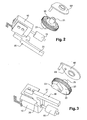
figure 2 est une vue éclatée en perspective de dessus de ce même antivol ; - la
figure 3 est une vue éclatée en perspective de dessous de ce même antivol ; - la
figure 4 est une vue partielle de ce même antivol en position de déverrouillage et bloquée de ce même antivol ; - la
figure 5 la position est une vue partielle de ce même antivol en position de verrouillage et non bloquée de ce même antivol ; - la
figure 6 est une vue partielle sans navette et de dessous de ce même antivol en position de déverrouillage et bloquée ; - la
figure 7 est une vue partielle sans navette et de dessous de ce même antivol en position de verrouillage et non bloquée - la
figure 8 est une vue partielle sans navette et de dessus de ce même antivol en position de déverrouillage. - La
figure 9 représente un ensemble constitué d'une colonne de direction et un module d'assistance au pivotement d'une colonne de direction lequel module inclut un antivol conforme à un mode de réalisation de l'invention. - L'antivol représenté sur la
figure 1 comprend un moteur électrique 10 muni d'un arbre de sortie formant une vis sans fin 15, une roue dentée 20 engrenée sur la vis sans fin 15, et un pêne 30 monté à coulissement, ces différents éléments étant disposés dans un boîtier 40. - La roue dentée 20 est montée à rotation autour d'un axe 21 lequel s'étend perpendiculairement à l'arbre de sortie du moteur 10 de sorte que l'arbre de sortie du moteur se trouve confondu dans le plan géométrique de la roue.
- La roue 20 présent un première face 22 , tournée vers une colonne de direction non représentée, laquelle est munie d'une came 23 en portion de disque laquelle coopère en poussée avec le pêne. A cet effet, le pêne 30 présente, outre un barreau principal 31, un appendice latéral 35 apte à venir s'interposer sur le trajet de la came 23 lorsque celle-ci pivote avec la roue dentée 20 pour se rapprocher d'une couronne extérieure de la colonne de direction. Le pêne est avantageusement rappelé en position de verrouillage par un ressort.
- Cet appendice latéral présente une forme en S dont la courbure supérieure forme une paroi d'appui pour la came 23 de la roue dentée et dont la courbure inférieure reçoit en son sein un élément de retenue en position déverrouillée comme on le décrira par la suite.
- Ainsi, lorsque la roue dentée 20 est entraînée en rotation, le pêne 30 circule en coulissement dans un plan parallèle au plan principal de la roue dentée. La roue dentée 20 étant ici orientée de sorte qu'elle se trouve dans un plan parallèle à la colonne de direction, le pêne circule donc lui-même parallèlement à la direction principale de la colonne de direction.
- Afin d'être verrouillée lorsque le pêne est en position finale, la colonne de direction présente un appendice latéral coopérant avec le pêne, ici une couronne dentée 80 dont les dents présentent entre elles des interstices recevant le pêne dans sa position étendue de verrouillage.
- Dans un autre mode de réalisation, l'appendice latéral peut être un simple doigt d'orientation radiale par rapport à la direction principale de la colonne de direction, ou encore un plateau transversal muni d'une série d'orifices traversants et aptes à recevoir le pêne en de multiples positions angulaires de la colonne de direction.
- La roue dentée 20 présente sur sa face orientée en éloignement de la colonne une piste en arc de cercle 24 constituée ici sous la forme d'une surépaisseur hors de la face de la roue 20.
- La piste 24 s'étend sur trois quarts de l'étendue angulaire autour de l'axe de la roue 20 et présente à chacune de ses extrémités un chanfrein de glissement lequel rejoint le plan principal de la face 22.
- La piste 22 coopère avec une navette 60 monté mobile à coulissement transversal au plan principal de la roue et plus spécifiquement ici montée à coulissement sur l'axe de rotation de la roue.
- Cette navette présente une extension radiale 62 en direction du pêne 30 et vient, par un doigt 64 orienté transversalement au plan principal de la roue dentée 20, s'étendre à l'intérieur du pêne 30 et ce de manière sélective comme on l'expliquera ci-après.
- La navette 60 vient en effet en appui contre la piste 22 par le biais d'un coulisseau 65 formé en relief sur la face de la navette tournée vers la roue et la navette est maintenue ainsi en appui contre la piste 22 transversalement à la roue dentée 20 par un ressort non représenté. La navette subit de ce fait un déplacement transversal à la roue dentée alors que celle-ci pivote sur elle-même lorsque le coulisseau 65 monte ou descend de la piste en surépaisseur 24. Au cours de ce mouvement, la navette 60 est maintenue à l'encontre d'un pivotement autour de l'axe de rotation de la roue dentée par coopération d'un doigt non représenté venu du boîtier de l'antivol et engagé dans un orifice traversant de la navette 60.
- Tel que représenté sur la
figure 8 , la piste en surépaisseur 24 est disposée de telle manière que lorsque le pêne est en position de verrouillage de la colonne la navette se trouve écartée de la roue dentée c'est-à-dire que le coulisseau 65 est en appui sur la piste 24 et le doigt de surverrouillage de la navette n'engage alors pas le pêne. A l'opposé, la piste en surépaisseur est disposée de telle manière que la navette 60 se trouve rapprochée de la roue dentée c'est à dire que e coulisseau 65 se trouve hors de la piste 24 lorsque le pêne est en position de déverrouillage et que la navette vient alors sécuriser par le doigt de surverrouillage le pêne en position de déverrouillage. A cet effet la forme en S constituée par le pêne présente sa courbure proximale au corps principal du pêne en vis-à-vis du doigt de surverrouillage lorsque le pêne est en position de déverrouillage, autorisant ainsi la pénétration du doigt de surverrouillage dans la courbure proximale du S. Le doigt est alors positionné en obstacle sur le trajet de retour du pêne et plus spécifiquement de la courbure proximale du S, empêchant ainsi un retour inadvertant du pêne vers sa position de verrouillage. - En alternative la surépaisseur présentée par la piste 24 va est croissante au cours du parcours de la piste, de telle sorte qu'une première extrémité de l'arc de cercle décrit par la piste se trouve proche d'un plan principal de la roue et une autre extrémité de l'arc de cercle décrit par la piste 22 se trouve plus éloignée latéralement du plan principal de la roue 20.
- Grâce à la présente orientation du pêne en déplacement parallèle à la colonne de direction, qu'il soit entraîné par une roue ainsi positionnée ou positionnée différemment par exemple perpendiculairement à la colonne de direction, on obtient un encombrement global de l'antivol de colonne de direction particulièrement faible et notamment selon la direction radiale à la colonne de direction.
- Cet encombrement faible est particulièrement notable dans le cas où la roue dentée est orientée parallèlement à la colonne de direction, mais un gain d'encombrement est déjà facilement obtenu par une telle orientation du déplacement du pêne même lorsque la roue dentée est perpendiculaire à la colonne de direction.
- En outre, bien qu'un pêne à coulissement parallèle à la colonne de direction est préféré en termes d'encombrement, un gain d'encombrement est déjà obtenu lorsque la partie du pêne qui engage la colonne de direction aborde la colonne de direction selon un direction sensiblement parallèle à la colonne, que le pêne soit coulissant ou rotatif auquel cas un mouvement de l'extrémité du pêne sensiblement tangentielle donc parallèle à la colonne ou un appendice latéral de celle-ci apporte un avantage important en termes d'encombrement de l'antivol.
- Dans le présent exemple, le boîtier 50 de l'antivol est avantageusement aménagé en forme de vasque à liqueur, c'est-à-dire en extension selon la direction principale de la colonne de direction est selon une section transversale en forme de haricot, c'est-à-dire comprise entre deux limités transversales en arc de cercle de rayon respectivement inférieur et supérieur.
- L'antivol de colonne de direction épouse alors un contour en cylindre de la colonne de direction pour n'occuper qu'un faible espace radial à la colonne. Un tel encombrement s'avère particulièrement avantageux dans le présent cas où l'antivol de colonne de direction est un élément constitutif d'un module d'assistance motorisée à la rotation de la colonne de direction. Le fait d'intégrer l'antivol dans un module d'assistance motorisée au pivotement de la colonne de direction apporte un avantage en termes de sécurité puisque l'antivol se trouve alors dans une partie particulièrement basse de la colonne, à distance particulièrement grande du tableau de bord où un voleur agit par prédilection et dans une partie particulièrement inaccessible du véhicule.
- Dans le présent cas et tel que représenté sur la
figure 9 , le module d'assistance motorisée comprend un moteur d'assistance 70 lequel est orienté de telle sorte que son arbre de sortie 75 s'étend parallèlement à la colonne de direction. L'arbre de sortie 75 du moteur 70 présente une denture périphérique laquelle engrène une couronne dentée 80 entourant la colonne de direction afin d'entraîner celle-ci en rotation. La couronne dentée 80 est avantageusement la couronne dans laquelle s'engage le pêne 30 de sorte qu'une seule couronne dentée est utilisée pour les deux fonctions d'entraînement et de blocage, réduisant encore l'encombrement nécessaire à l'implémentation du module d'assistance décrit. - Avantageusement, l'antivol et le moteur d'assistance 70 sont disposés de manière radialement opposée à la colonne de direction, de sorte que le pêne 30 et l'arbre de sorte du moteur d'assistance n'interfèrent pas. Le module d'assistance motorisée comprend avantageusement une même unité électronique de pilotage de l'assistance au pivotement et de commande du blocage de la colonne, laquelle assure qu'aucune commande d'assistance n'est appliquée au moteur d'assistance lorsque l'antivol est en position verrouillée.
- Par le fait que l'antivol de colonne de direction est une partie du module d'assistance motorisée à la rotation colonne de direction, l'unité de pilotage commune de l'assistance motorisée et du verrouillage de la colonne est avantageusement équipée d'une logique de commande mettant en oeuvre un léger mouvement de rotation de la colonne de direction lorsqu'elle commande simultanément un effort d'entraînement en déverrouillage du pêne. Ainsi, par ce léger mouvement, une éventuelle retenue en frottement est supprimée entre le pêne et la colonne de direction, par exemple entre le pêne et une bordure latérale d'une dent de la couronne dentée 80 et le pêne circule en coulissement de manière fiabilisée à chaque mise en tension du véhicule.
- L'unité de pilotage est avantageusement implémentée sous forme d'un circuit électronique place dans un boîtier commun 90 du moteur d'assistance 70 et de l'antivol. Le circuit électronique est avantageusement positionné en dehors du boîtier 50 de l'antivol. Outre la mise en oeuvre du pilotage de l'antivol par cette unité de pilotage prend notamment ici en compte le positionnement du pêne qui lui est indiqué par la réception de signaux de sortie de capteurs de positionnement du pêne disposés dans l'antivol. Ces deux capteurs, référencés 35 et 36, sont ici des capteurs magnétiques activés par un aimant disposé sur le pêne mais qui peuvent être en variante des capteurs mécaniques activés par un bossage du pêne. En alternative il peut s'agir de capteurs associés à la roue dentée, la navette de blocage ou tout autre organe de l'antivol. Les signaux délivrés par ces capteurs sont avantageusement directement lus par l'unité de pilotage.
Claims (10)
- Antivol motorisé de colonne de direction de véhicule automobile comprenant un pêne (30) mobile entre une position de verrouillage et une position de déverrouillage de la colonne ainsi qu'un moteur électrique (10) d'entraînement du pêne entre la position de déverrouillage et la position de verrouillage, caractérisé en ce que le pêne est monté de manière à aborder la colonne de direction selon une direction parallèle à la colonne de direction.
- Antivol motorisé de colonne de direction selon la revendication 1, dans lequel le moteur électrique (10) présente un axe de sortie et une vis (15) disposée sur l'arbre de sortie ainsi qu'une roue dentée (20) dans laquelle est engrenée la vis de l'arbre de sortie du moteur, la roue dentée (20) étant orientée dans un plan parallèle à la colonne de direction.
- Antivol selon la revendication 1 ou la revendication 2, dans lequel le moteur est orienté de manière à ce que son arbre de sortie se trouve dans un plan parallèle à la colonne de direction.
- Antivol selon l'une quelconque des revendications 1 à 3, caractérisé en ce que le pêne (30) est monté à coulissement dans l'antivol selon une direction de coulissement parallèle à la colonne de direction.
- Antivol selon l'une quelconque des revendications précédentes, caractérisé en ce qu'il comporte un élément (60) mobile entre une position de blocage du pêne en position déverrouillée et une position de déblocage du pêne.
- Antivol selon la revendication précédente dans lequel le moteur électrique (10) présente un arbre de sortie et une vis (15) disposée sur l'arbre de sortie ainsi qu'une roue dentée (20) dans laquelle et engrenée la vis de l'arbre de sortie du moteur et l'élément mobile de blocage du pêne est en appui sur une portion de la roue dentée laquelle repousse l'élément mobile de blocage en éloignement du pêne lorsque la roue dentée est entraînée en rotation.
- Antivol selon la revendication précédente, caractérisé en ce que la roue dentée présente une piste (24) en arc de cercle à éloignement progressif latéral à la roue dentée et l'élément mobile (60) de blocage est en appui contre la piste de manière à se rapprocher et s'éloigner lorsque la roue dentée est entraînée en rotation.
- Module d'assistance à la rotation d'une colonne de direction comprenant un moteur d'assistance appliquant une force de pivotement à la colonne de direction, caractérisé en ce qu'il comprend un antivol selon l'une quelconque des revendications précédentes.
- Ensemble constitué d'une colonne de direction de véhicule automobile et d'un antivol selon l'une quelconque des revendications 1 à 7
- Ensemble combiné d'une colonne de direction de véhicule automobile et d'un module d'assistance à la rotation de la colonne de direction selon la revendication 8, dans lequel la colonne de direction comprend un couronne périphérique dans laquelle s'engage le pêne en position de verrouillage et laquelle couronne périphérique reçoit une force de pivotement de colonne de direction délivrée par le moteur d'assistance.
Priority Applications (5)
| Application Number | Priority Date | Filing Date | Title |
|---|---|---|---|
| EP11150893.3A EP2476592B1 (fr) | 2011-01-13 | 2011-01-13 | Antivol de direction pour véhicule automobile |
| CN201180069271.7A CN103492239A (zh) | 2011-01-13 | 2011-12-21 | 用于机动车辆的转向锁定装置 |
| PCT/EP2011/073549 WO2012095246A1 (fr) | 2011-01-13 | 2011-12-21 | Antivol de direction pour vehicule automobile |
| JP2013548769A JP2014505624A (ja) | 2011-01-13 | 2011-12-21 | 自動車のステアリングコラムロック装置 |
| US13/979,228 US9085274B2 (en) | 2011-01-13 | 2011-12-21 | Steering lock for a motor vehicle |
Applications Claiming Priority (1)
| Application Number | Priority Date | Filing Date | Title |
|---|---|---|---|
| EP11150893.3A EP2476592B1 (fr) | 2011-01-13 | 2011-01-13 | Antivol de direction pour véhicule automobile |
Publications (2)
| Publication Number | Publication Date |
|---|---|
| EP2476592A1 true EP2476592A1 (fr) | 2012-07-18 |
| EP2476592B1 EP2476592B1 (fr) | 2020-04-08 |
Family
ID=44148655
Family Applications (1)
| Application Number | Title | Priority Date | Filing Date |
|---|---|---|---|
| EP11150893.3A Not-in-force EP2476592B1 (fr) | 2011-01-13 | 2011-01-13 | Antivol de direction pour véhicule automobile |
Country Status (5)
| Country | Link |
|---|---|
| US (1) | US9085274B2 (fr) |
| EP (1) | EP2476592B1 (fr) |
| JP (1) | JP2014505624A (fr) |
| CN (1) | CN103492239A (fr) |
| WO (1) | WO2012095246A1 (fr) |
Cited By (1)
| Publication number | Priority date | Publication date | Assignee | Title |
|---|---|---|---|---|
| US20150251632A1 (en) * | 2012-10-04 | 2015-09-10 | U-Shin Deutschland Zugangssysteme Gmbh | Electrical steering column lock for an automotive vehicle |
Families Citing this family (6)
| Publication number | Priority date | Publication date | Assignee | Title |
|---|---|---|---|---|
| US8424348B2 (en) * | 2010-01-27 | 2013-04-23 | Strattec Security Corporation | Steering lock |
| EP2479073B1 (fr) * | 2011-01-21 | 2014-01-15 | VALEO Sicherheitssysteme GmbH | Antivol de direction pour véhicule automobile |
| TWI458882B (zh) * | 2012-05-15 | 2014-11-01 | Wfe Technology Corp | 電子鎖之作動馬達組 |
| DE102013217735A1 (de) * | 2012-09-07 | 2014-03-13 | Strattec Security Corporation | Lenkschloss |
| JP7240150B2 (ja) | 2017-11-27 | 2023-03-15 | Ntn株式会社 | 電動アクチュエータ |
| DE102020132224A1 (de) * | 2020-12-03 | 2022-06-09 | Eto Magnetic Gmbh | Schnellschaltende Aktorvorrichtung |
Citations (3)
| Publication number | Priority date | Publication date | Assignee | Title |
|---|---|---|---|---|
| US5454238A (en) * | 1994-07-25 | 1995-10-03 | General Motors Corporation | Anti-theft apparatus for motor vehicle steering column |
| EP0846603A1 (fr) * | 1996-12-05 | 1998-06-10 | Valeo Securite Habitacle | Actionneur, notamment pour un antivol électrique de véhicule automobile |
| FR2799709A1 (fr) * | 1999-10-19 | 2001-04-20 | Valeo Securite Habitacle | Antivol electrique de direction de vehicule automobile |
Family Cites Families (26)
| Publication number | Priority date | Publication date | Assignee | Title |
|---|---|---|---|---|
| FR2483867A1 (fr) * | 1980-06-06 | 1981-12-11 | Antivols Simplex Sa | Antivol de direction pour vehicule automobile |
| US5016454A (en) * | 1988-07-13 | 1991-05-21 | Al Sheikh Edward G | Motor vehicle supplementary locking mechanism |
| US5360254A (en) * | 1992-02-26 | 1994-11-01 | Honda Giken Kogyo Kabushiki Kaisha | Automobile with movable roof storable in trunk lid |
| GB9507810D0 (en) * | 1995-04-18 | 1995-05-31 | Marshall Wolverhampton | Automotive steering security arrangement |
| FR2756795B1 (fr) * | 1996-12-05 | 1999-01-22 | Valeo Securite Habitacle | Antivol a engrenage pour une colonne de direction de vehicule automobile |
| US6107694A (en) * | 1996-12-12 | 2000-08-22 | Mostrom; Lloyd C. | Baffler--Model A --an automobile anti-theft device |
| US6034442A (en) * | 1997-02-18 | 2000-03-07 | Mostrom; Lloyd C. | Frustrator--Model E |
| US5906120A (en) * | 1998-04-09 | 1999-05-25 | Ford Global Technologies, Inc. | Automotive vehicle steering column lock mechanism |
| FR2788479B1 (fr) * | 1999-01-15 | 2001-04-06 | Valeo Securite Habitacle | Dispositif d'antivol comportant un interrupteur electrique pour la detection de l'introduction d'une clef |
| JP3810327B2 (ja) * | 2002-02-27 | 2006-08-16 | 株式会社ジェイテクト | 操舵軸のロック装置 |
| DE10247802B3 (de) * | 2002-10-14 | 2004-02-05 | Huf Hülsbeck & Fürst Gmbh & Co. Kg | Vorrichtung zum Sperren der Lenkspindel eines Kraftfahrzeugs |
| US6748774B2 (en) * | 2002-10-15 | 2004-06-15 | Delphi Technologies, Inc. | Forward firing shaft lock mechanism |
| CN100448723C (zh) * | 2003-02-18 | 2009-01-07 | 富兰克林·费迪南德·尼德里希 | 用于通过车把操纵车辆的防盗装置 |
| DE10320138B3 (de) * | 2003-05-06 | 2005-01-13 | Huf Hülsbeck & Fürst Gmbh & Co. Kg | Vorrichtung zum Sperren der Lenkspindel eines Kraftfahrzeugs |
| US7062944B2 (en) * | 2003-11-26 | 2006-06-20 | Delphi Technologies, Inc. | Dual taper steering column lock bolt |
| US20050120761A1 (en) * | 2003-12-03 | 2005-06-09 | Rouleau James E. | Column assembly of a vehicle having a steering column to be locked and unlocked |
| JP2006131043A (ja) * | 2004-11-04 | 2006-05-25 | Tokai Rika Co Ltd | ステアリングロック装置 |
| DE102004053438A1 (de) * | 2004-11-05 | 2006-05-11 | Valeo Sicherheitssysteme Gmbh | Lenkschloß |
| JP4624912B2 (ja) * | 2005-11-30 | 2011-02-02 | 株式会社アルファ | 電動ステアリングロック装置 |
| DE102007034476B4 (de) * | 2007-07-20 | 2009-05-20 | Zf Friedrichshafen Ag | Vorrichtung zur Diebstahlsicherung eines Kraftfahrzeuges |
| US7596976B2 (en) * | 2007-11-30 | 2009-10-06 | Alpha Corporation | Electric steering lock device |
| WO2009100620A1 (fr) * | 2008-02-14 | 2009-08-20 | Jian-Jhong Fong | Dispositif de verrouillage antivol pour volant de véhicule |
| JP2010006112A (ja) * | 2008-06-24 | 2010-01-14 | Tokai Rika Co Ltd | ステアリングロック装置 |
| JP5229551B2 (ja) * | 2008-08-29 | 2013-07-03 | 株式会社ジェイテクト | 車両用操舵装置 |
| JP5260358B2 (ja) * | 2009-03-06 | 2013-08-14 | 株式会社ユーシン | 電動ステアリングロック装置 |
| JP5887711B2 (ja) * | 2010-11-16 | 2016-03-16 | 株式会社ジェイテクト | ロック装置及び電動パワーステアリング装置 |
-
2011
- 2011-01-13 EP EP11150893.3A patent/EP2476592B1/fr not_active Not-in-force
- 2011-12-21 US US13/979,228 patent/US9085274B2/en active Active
- 2011-12-21 JP JP2013548769A patent/JP2014505624A/ja active Pending
- 2011-12-21 CN CN201180069271.7A patent/CN103492239A/zh active Pending
- 2011-12-21 WO PCT/EP2011/073549 patent/WO2012095246A1/fr not_active Ceased
Patent Citations (3)
| Publication number | Priority date | Publication date | Assignee | Title |
|---|---|---|---|---|
| US5454238A (en) * | 1994-07-25 | 1995-10-03 | General Motors Corporation | Anti-theft apparatus for motor vehicle steering column |
| EP0846603A1 (fr) * | 1996-12-05 | 1998-06-10 | Valeo Securite Habitacle | Actionneur, notamment pour un antivol électrique de véhicule automobile |
| FR2799709A1 (fr) * | 1999-10-19 | 2001-04-20 | Valeo Securite Habitacle | Antivol electrique de direction de vehicule automobile |
Cited By (4)
| Publication number | Priority date | Publication date | Assignee | Title |
|---|---|---|---|---|
| US20150251632A1 (en) * | 2012-10-04 | 2015-09-10 | U-Shin Deutschland Zugangssysteme Gmbh | Electrical steering column lock for an automotive vehicle |
| US20150266449A1 (en) * | 2012-10-04 | 2015-09-24 | U-Shin Deutschland Zugangssysteme Gmbh | Electrical steering column lock for an automotive vehicle |
| US10017152B2 (en) * | 2012-10-04 | 2018-07-10 | U-Shin Deutschland Zugangssyteme GmbH | Electrical steering column lock for an automotive vehicle |
| US10112578B2 (en) * | 2012-10-04 | 2018-10-30 | U-Shin Deutschland Zugangssysteme Gmbh | Electrical steering column lock for an automotive vehicle |
Also Published As
| Publication number | Publication date |
|---|---|
| CN103492239A (zh) | 2014-01-01 |
| JP2014505624A (ja) | 2014-03-06 |
| US20140069155A1 (en) | 2014-03-13 |
| WO2012095246A1 (fr) | 2012-07-19 |
| US9085274B2 (en) | 2015-07-21 |
| EP2476592B1 (fr) | 2020-04-08 |
Similar Documents
| Publication | Publication Date | Title |
|---|---|---|
| EP2476592B1 (fr) | Antivol de direction pour véhicule automobile | |
| EP2479073B1 (fr) | Antivol de direction pour véhicule automobile | |
| FR3060630B1 (fr) | Commande d'ouverture affleurante a ejection et retraction mecanique ou electrique. | |
| FR2706846A1 (fr) | ||
| FR2979881A1 (fr) | Colonne de direction comprenant un mecanisme de blocage en profondeur ameliore. | |
| FR3029489A1 (fr) | Mecanisme de colonne de direction ajustable en profondeur a butee escamotable | |
| FR2632585A1 (fr) | Retroviseur exterieur pour vehicules automobiles | |
| FR2777523A1 (fr) | Antivol de colonne de direction comportant des moyens perfectionnes de blocage du pene | |
| EP3041715B1 (fr) | Antivol pour colonne de direction de vehicule automobile | |
| FR2739072A1 (fr) | Antivol motorise de direction de vehicule automobile | |
| EP1477378B1 (fr) | Verrou électrique d'un arbre de direction de véhicule automobile | |
| FR2523532A1 (fr) | Dispositif antivol pour un arbre tournant, notamment pour la colonne de direction d'un vehicule automobile | |
| FR2678314A1 (fr) | Dispositif d'assistance a la fermeture pour portiere de vehicule automobile. | |
| FR3142156A1 (fr) | Dispositif de direction de véhicule comprenant une structure mobile et un dispositif de verrouillage de la structure mobile | |
| EP0846603B1 (fr) | Actionneur, notamment pour un antivol électrique de véhicule automobile | |
| FR2766441A1 (fr) | Antivol electrique comportant des moyens complementaires de blocage du pene | |
| EP2736773B1 (fr) | Dispositif antivol pour une colonne de direction de véhicule automobile | |
| FR2474573A1 (fr) | Dispositif d'actionnement electrique pour un organe de manoeuvre de serrures et objets analogues | |
| FR2889142A1 (fr) | Dispositif antivol permettant de commander le verrouillage d'une colonne de direction d'un vehicule automobile | |
| EP2072353B1 (fr) | Antivol pour colonne de direction | |
| EP2460171B1 (fr) | Interrupteur de demarrage adaptable | |
| WO2004028870A1 (fr) | Dispositif antivol pour vehicule automobile avec direction assistee hydraulique | |
| FR2873075A1 (fr) | Verrou electrique decale d'un arbre de direction de vehicule automobile | |
| FR2805560A1 (fr) | Module de serrure electrique pour une porte d'un vehicule | |
| WO2014202548A1 (fr) | Antivol de colonne de direction et vehicule automobile |
Legal Events
| Date | Code | Title | Description |
|---|---|---|---|
| PUAI | Public reference made under article 153(3) epc to a published international application that has entered the european phase |
Free format text: ORIGINAL CODE: 0009012 |
|
| AK | Designated contracting states |
Kind code of ref document: A1 Designated state(s): AL AT BE BG CH CY CZ DE DK EE ES FI FR GB GR HR HU IE IS IT LI LT LU LV MC MK MT NL NO PL PT RO RS SE SI SK SM TR |
|
| AX | Request for extension of the european patent |
Extension state: BA ME |
|
| 17P | Request for examination filed |
Effective date: 20130117 |
|
| RAP1 | Party data changed (applicant data changed or rights of an application transferred) |
Owner name: U-SHIN DEUTSCHLAND ZUGANGSSYSTEME GMBH |
|
| STAA | Information on the status of an ep patent application or granted ep patent |
Free format text: STATUS: EXAMINATION IS IN PROGRESS |
|
| 17Q | First examination report despatched |
Effective date: 20170201 |
|
| GRAP | Despatch of communication of intention to grant a patent |
Free format text: ORIGINAL CODE: EPIDOSNIGR1 |
|
| STAA | Information on the status of an ep patent application or granted ep patent |
Free format text: STATUS: GRANT OF PATENT IS INTENDED |
|
| INTG | Intention to grant announced |
Effective date: 20200103 |
|
| GRAS | Grant fee paid |
Free format text: ORIGINAL CODE: EPIDOSNIGR3 |
|
| GRAA | (expected) grant |
Free format text: ORIGINAL CODE: 0009210 |
|
| STAA | Information on the status of an ep patent application or granted ep patent |
Free format text: STATUS: THE PATENT HAS BEEN GRANTED |
|
| AK | Designated contracting states |
Kind code of ref document: B1 Designated state(s): AL AT BE BG CH CY CZ DE DK EE ES FI FR GB GR HR HU IE IS IT LI LT LU LV MC MK MT NL NO PL PT RO RS SE SI SK SM TR |
|
| REG | Reference to a national code |
Ref country code: GB Ref legal event code: FG4D Free format text: NOT ENGLISH |
|
| REG | Reference to a national code |
Ref country code: AT Ref legal event code: REF Ref document number: 1253966 Country of ref document: AT Kind code of ref document: T Effective date: 20200415 Ref country code: CH Ref legal event code: EP |
|
| REG | Reference to a national code |
Ref country code: IE Ref legal event code: FG4D Free format text: LANGUAGE OF EP DOCUMENT: FRENCH |
|
| REG | Reference to a national code |
Ref country code: DE Ref legal event code: R096 Ref document number: 602011066082 Country of ref document: DE |
|
| REG | Reference to a national code |
Ref country code: NL Ref legal event code: MP Effective date: 20200408 |
|
| REG | Reference to a national code |
Ref country code: LT Ref legal event code: MG4D |
|
| PG25 | Lapsed in a contracting state [announced via postgrant information from national office to epo] |
Ref country code: FI Free format text: LAPSE BECAUSE OF FAILURE TO SUBMIT A TRANSLATION OF THE DESCRIPTION OR TO PAY THE FEE WITHIN THE PRESCRIBED TIME-LIMIT Effective date: 20200408 Ref country code: IS Free format text: LAPSE BECAUSE OF FAILURE TO SUBMIT A TRANSLATION OF THE DESCRIPTION OR TO PAY THE FEE WITHIN THE PRESCRIBED TIME-LIMIT Effective date: 20200808 Ref country code: NL Free format text: LAPSE BECAUSE OF FAILURE TO SUBMIT A TRANSLATION OF THE DESCRIPTION OR TO PAY THE FEE WITHIN THE PRESCRIBED TIME-LIMIT Effective date: 20200408 Ref country code: PT Free format text: LAPSE BECAUSE OF FAILURE TO SUBMIT A TRANSLATION OF THE DESCRIPTION OR TO PAY THE FEE WITHIN THE PRESCRIBED TIME-LIMIT Effective date: 20200817 Ref country code: NO Free format text: LAPSE BECAUSE OF FAILURE TO SUBMIT A TRANSLATION OF THE DESCRIPTION OR TO PAY THE FEE WITHIN THE PRESCRIBED TIME-LIMIT Effective date: 20200708 Ref country code: SE Free format text: LAPSE BECAUSE OF FAILURE TO SUBMIT A TRANSLATION OF THE DESCRIPTION OR TO PAY THE FEE WITHIN THE PRESCRIBED TIME-LIMIT Effective date: 20200408 Ref country code: GR Free format text: LAPSE BECAUSE OF FAILURE TO SUBMIT A TRANSLATION OF THE DESCRIPTION OR TO PAY THE FEE WITHIN THE PRESCRIBED TIME-LIMIT Effective date: 20200709 Ref country code: LT Free format text: LAPSE BECAUSE OF FAILURE TO SUBMIT A TRANSLATION OF THE DESCRIPTION OR TO PAY THE FEE WITHIN THE PRESCRIBED TIME-LIMIT Effective date: 20200408 |
|
| REG | Reference to a national code |
Ref country code: AT Ref legal event code: MK05 Ref document number: 1253966 Country of ref document: AT Kind code of ref document: T Effective date: 20200408 |
|
| PG25 | Lapsed in a contracting state [announced via postgrant information from national office to epo] |
Ref country code: RS Free format text: LAPSE BECAUSE OF FAILURE TO SUBMIT A TRANSLATION OF THE DESCRIPTION OR TO PAY THE FEE WITHIN THE PRESCRIBED TIME-LIMIT Effective date: 20200408 Ref country code: BG Free format text: LAPSE BECAUSE OF FAILURE TO SUBMIT A TRANSLATION OF THE DESCRIPTION OR TO PAY THE FEE WITHIN THE PRESCRIBED TIME-LIMIT Effective date: 20200708 Ref country code: LV Free format text: LAPSE BECAUSE OF FAILURE TO SUBMIT A TRANSLATION OF THE DESCRIPTION OR TO PAY THE FEE WITHIN THE PRESCRIBED TIME-LIMIT Effective date: 20200408 Ref country code: HR Free format text: LAPSE BECAUSE OF FAILURE TO SUBMIT A TRANSLATION OF THE DESCRIPTION OR TO PAY THE FEE WITHIN THE PRESCRIBED TIME-LIMIT Effective date: 20200408 |
|
| PG25 | Lapsed in a contracting state [announced via postgrant information from national office to epo] |
Ref country code: AL Free format text: LAPSE BECAUSE OF FAILURE TO SUBMIT A TRANSLATION OF THE DESCRIPTION OR TO PAY THE FEE WITHIN THE PRESCRIBED TIME-LIMIT Effective date: 20200408 |
|
| REG | Reference to a national code |
Ref country code: DE Ref legal event code: R097 Ref document number: 602011066082 Country of ref document: DE |
|
| PG25 | Lapsed in a contracting state [announced via postgrant information from national office to epo] |
Ref country code: IT Free format text: LAPSE BECAUSE OF FAILURE TO SUBMIT A TRANSLATION OF THE DESCRIPTION OR TO PAY THE FEE WITHIN THE PRESCRIBED TIME-LIMIT Effective date: 20200408 Ref country code: SM Free format text: LAPSE BECAUSE OF FAILURE TO SUBMIT A TRANSLATION OF THE DESCRIPTION OR TO PAY THE FEE WITHIN THE PRESCRIBED TIME-LIMIT Effective date: 20200408 Ref country code: AT Free format text: LAPSE BECAUSE OF FAILURE TO SUBMIT A TRANSLATION OF THE DESCRIPTION OR TO PAY THE FEE WITHIN THE PRESCRIBED TIME-LIMIT Effective date: 20200408 Ref country code: DK Free format text: LAPSE BECAUSE OF FAILURE TO SUBMIT A TRANSLATION OF THE DESCRIPTION OR TO PAY THE FEE WITHIN THE PRESCRIBED TIME-LIMIT Effective date: 20200408 Ref country code: EE Free format text: LAPSE BECAUSE OF FAILURE TO SUBMIT A TRANSLATION OF THE DESCRIPTION OR TO PAY THE FEE WITHIN THE PRESCRIBED TIME-LIMIT Effective date: 20200408 Ref country code: ES Free format text: LAPSE BECAUSE OF FAILURE TO SUBMIT A TRANSLATION OF THE DESCRIPTION OR TO PAY THE FEE WITHIN THE PRESCRIBED TIME-LIMIT Effective date: 20200408 Ref country code: RO Free format text: LAPSE BECAUSE OF FAILURE TO SUBMIT A TRANSLATION OF THE DESCRIPTION OR TO PAY THE FEE WITHIN THE PRESCRIBED TIME-LIMIT Effective date: 20200408 Ref country code: CZ Free format text: LAPSE BECAUSE OF FAILURE TO SUBMIT A TRANSLATION OF THE DESCRIPTION OR TO PAY THE FEE WITHIN THE PRESCRIBED TIME-LIMIT Effective date: 20200408 |
|
| PLBE | No opposition filed within time limit |
Free format text: ORIGINAL CODE: 0009261 |
|
| STAA | Information on the status of an ep patent application or granted ep patent |
Free format text: STATUS: NO OPPOSITION FILED WITHIN TIME LIMIT |
|
| PG25 | Lapsed in a contracting state [announced via postgrant information from national office to epo] |
Ref country code: PL Free format text: LAPSE BECAUSE OF FAILURE TO SUBMIT A TRANSLATION OF THE DESCRIPTION OR TO PAY THE FEE WITHIN THE PRESCRIBED TIME-LIMIT Effective date: 20200408 Ref country code: SK Free format text: LAPSE BECAUSE OF FAILURE TO SUBMIT A TRANSLATION OF THE DESCRIPTION OR TO PAY THE FEE WITHIN THE PRESCRIBED TIME-LIMIT Effective date: 20200408 |
|
| 26N | No opposition filed |
Effective date: 20210112 |
|
| PG25 | Lapsed in a contracting state [announced via postgrant information from national office to epo] |
Ref country code: SI Free format text: LAPSE BECAUSE OF FAILURE TO SUBMIT A TRANSLATION OF THE DESCRIPTION OR TO PAY THE FEE WITHIN THE PRESCRIBED TIME-LIMIT Effective date: 20200408 |
|
| PG25 | Lapsed in a contracting state [announced via postgrant information from national office to epo] |
Ref country code: MC Free format text: LAPSE BECAUSE OF FAILURE TO SUBMIT A TRANSLATION OF THE DESCRIPTION OR TO PAY THE FEE WITHIN THE PRESCRIBED TIME-LIMIT Effective date: 20200408 |
|
| REG | Reference to a national code |
Ref country code: CH Ref legal event code: PL |
|
| GBPC | Gb: european patent ceased through non-payment of renewal fee |
Effective date: 20210113 |
|
| PG25 | Lapsed in a contracting state [announced via postgrant information from national office to epo] |
Ref country code: LU Free format text: LAPSE BECAUSE OF NON-PAYMENT OF DUE FEES Effective date: 20210113 |
|
| REG | Reference to a national code |
Ref country code: BE Ref legal event code: MM Effective date: 20210131 |
|
| PG25 | Lapsed in a contracting state [announced via postgrant information from national office to epo] |
Ref country code: GB Free format text: LAPSE BECAUSE OF NON-PAYMENT OF DUE FEES Effective date: 20210113 Ref country code: CH Free format text: LAPSE BECAUSE OF NON-PAYMENT OF DUE FEES Effective date: 20210131 Ref country code: LI Free format text: LAPSE BECAUSE OF NON-PAYMENT OF DUE FEES Effective date: 20210131 |
|
| PG25 | Lapsed in a contracting state [announced via postgrant information from national office to epo] |
Ref country code: IE Free format text: LAPSE BECAUSE OF NON-PAYMENT OF DUE FEES Effective date: 20210113 |
|
| PG25 | Lapsed in a contracting state [announced via postgrant information from national office to epo] |
Ref country code: BE Free format text: LAPSE BECAUSE OF NON-PAYMENT OF DUE FEES Effective date: 20210131 |
|
| PGFP | Annual fee paid to national office [announced via postgrant information from national office to epo] |
Ref country code: FR Payment date: 20230125 Year of fee payment: 13 |
|
| PG25 | Lapsed in a contracting state [announced via postgrant information from national office to epo] |
Ref country code: HU Free format text: LAPSE BECAUSE OF FAILURE TO SUBMIT A TRANSLATION OF THE DESCRIPTION OR TO PAY THE FEE WITHIN THE PRESCRIBED TIME-LIMIT; INVALID AB INITIO Effective date: 20110113 Ref country code: CY Free format text: LAPSE BECAUSE OF FAILURE TO SUBMIT A TRANSLATION OF THE DESCRIPTION OR TO PAY THE FEE WITHIN THE PRESCRIBED TIME-LIMIT Effective date: 20200408 |
|
| PGFP | Annual fee paid to national office [announced via postgrant information from national office to epo] |
Ref country code: DE Payment date: 20230112 Year of fee payment: 13 |
|
| PG25 | Lapsed in a contracting state [announced via postgrant information from national office to epo] |
Ref country code: MK Free format text: LAPSE BECAUSE OF FAILURE TO SUBMIT A TRANSLATION OF THE DESCRIPTION OR TO PAY THE FEE WITHIN THE PRESCRIBED TIME-LIMIT Effective date: 20200408 |
|
| PG25 | Lapsed in a contracting state [announced via postgrant information from national office to epo] |
Ref country code: TR Free format text: LAPSE BECAUSE OF FAILURE TO SUBMIT A TRANSLATION OF THE DESCRIPTION OR TO PAY THE FEE WITHIN THE PRESCRIBED TIME-LIMIT Effective date: 20200408 |
|
| REG | Reference to a national code |
Ref country code: DE Ref legal event code: R119 Ref document number: 602011066082 Country of ref document: DE |
|
| PG25 | Lapsed in a contracting state [announced via postgrant information from national office to epo] |
Ref country code: MT Free format text: LAPSE BECAUSE OF FAILURE TO SUBMIT A TRANSLATION OF THE DESCRIPTION OR TO PAY THE FEE WITHIN THE PRESCRIBED TIME-LIMIT Effective date: 20200408 |
|
| PG25 | Lapsed in a contracting state [announced via postgrant information from national office to epo] |
Ref country code: DE Free format text: LAPSE BECAUSE OF NON-PAYMENT OF DUE FEES Effective date: 20240801 |
|
| PG25 | Lapsed in a contracting state [announced via postgrant information from national office to epo] |
Ref country code: FR Free format text: LAPSE BECAUSE OF NON-PAYMENT OF DUE FEES Effective date: 20240131 |
|
| PG25 | Lapsed in a contracting state [announced via postgrant information from national office to epo] |
Ref country code: FR Free format text: LAPSE BECAUSE OF NON-PAYMENT OF DUE FEES Effective date: 20240131 Ref country code: DE Free format text: LAPSE BECAUSE OF NON-PAYMENT OF DUE FEES Effective date: 20240801 |