EP2467433B1 - Fluoreszierende perylenderivate zur direkten detektion von heparin - Google Patents
Fluoreszierende perylenderivate zur direkten detektion von heparin Download PDFInfo
- Publication number
- EP2467433B1 EP2467433B1 EP20100748072 EP10748072A EP2467433B1 EP 2467433 B1 EP2467433 B1 EP 2467433B1 EP 20100748072 EP20100748072 EP 20100748072 EP 10748072 A EP10748072 A EP 10748072A EP 2467433 B1 EP2467433 B1 EP 2467433B1
- Authority
- EP
- European Patent Office
- Prior art keywords
- heparin
- perylene diimide
- derivative
- diimide derivative
- perylene
- Prior art date
- Legal status (The legal status is an assumption and is not a legal conclusion. Google has not performed a legal analysis and makes no representation as to the accuracy of the status listed.)
- Active
Links
Images


Classifications
-
- C—CHEMISTRY; METALLURGY
- C09—DYES; PAINTS; POLISHES; NATURAL RESINS; ADHESIVES; COMPOSITIONS NOT OTHERWISE PROVIDED FOR; APPLICATIONS OF MATERIALS NOT OTHERWISE PROVIDED FOR
- C09B—ORGANIC DYES OR CLOSELY-RELATED COMPOUNDS FOR PRODUCING DYES, e.g. PIGMENTS; MORDANTS; LAKES
- C09B5/00—Dyes with an anthracene nucleus condensed with one or more heterocyclic rings with or without carbocyclic rings
- C09B5/62—Cyclic imides or amidines of peri-dicarboxylic acids of the anthracene, benzanthrene, or perylene series
-
- A—HUMAN NECESSITIES
- A61—MEDICAL OR VETERINARY SCIENCE; HYGIENE
- A61P—SPECIFIC THERAPEUTIC ACTIVITY OF CHEMICAL COMPOUNDS OR MEDICINAL PREPARATIONS
- A61P7/00—Drugs for disorders of the blood or the extracellular fluid
- A61P7/04—Antihaemorrhagics; Procoagulants; Haemostatic agents; Antifibrinolytic agents
-
- Y—GENERAL TAGGING OF NEW TECHNOLOGICAL DEVELOPMENTS; GENERAL TAGGING OF CROSS-SECTIONAL TECHNOLOGIES SPANNING OVER SEVERAL SECTIONS OF THE IPC; TECHNICAL SUBJECTS COVERED BY FORMER USPC CROSS-REFERENCE ART COLLECTIONS [XRACs] AND DIGESTS
- Y10—TECHNICAL SUBJECTS COVERED BY FORMER USPC
- Y10T—TECHNICAL SUBJECTS COVERED BY FORMER US CLASSIFICATION
- Y10T436/00—Chemistry: analytical and immunological testing
- Y10T436/14—Heterocyclic carbon compound [i.e., O, S, N, Se, Te, as only ring hetero atom]
- Y10T436/142222—Hetero-O [e.g., ascorbic acid, etc.]
- Y10T436/143333—Saccharide [e.g., DNA, etc.]
Definitions
- the present invention relates to perylene diimide derivatives of formulae I, II and III, and to a method for preparing the same.
- the invention also relates to an in vitro method for detecting heparin in a sample, to a diagnostic kit for detecting heparin and to certain uses of the perylene diimide derivatives of formulae I, II and III.
- Heparin is a naturally occurring polyanionic polysaccharide, consisting of alternating uronic acids and glucosamines. Dependent on the length of the saccharide chain, heparin occurs with molecular weights of 6.000 to 30.000 g/mol. It is naturally produced in mast cells and basophile granulocytes to function as the bodies own coagulants. Most importantly, Heparin reduces blood clotting by activating antithrombin, inhibiting blood clotting factors such as Xa and IIa and by inhibiting thrombocyte aggregation.
- heparin is used for preventing thrombosis or embolism in the course of surgeries, for reducing thrombotic or embolic reactions associated with extracorporeal cardiovascular systems and for treating acute phase heart insufficiency. Due to the high molecular weight and the anionic properties, heparin must be applied intravenously or subcutaneously. Heparin acts immediately upon administration, but, because it is digested rapidly within the organism, its effect lasts only for a few hours.
- heparin is provided as unfractionated heparin and as low molecular weight heparin (LMWH).
- the unfractionated heparin is obtained from animal intestine mucosa or lung and mostly contains long chain molecules which are digested rapidly. Moreover, only 30 % of the unfractionated heparin is pharmaceutically effective.
- LMWH in contrast, is obtained by restricted digestion of native heparin, it is digested slower within the organism and contains a higher fraction of pharmacologically effective molecules. However, it cannot be antagonized by administration of antidotes such as protamine sulfate, bearing the risk of bleedings resulting from over dosage.
- the present invention relates to a perylene diimide derivative of formula I wherein X1 and X2, are the same or different and are selected from the group consisting of S and O, R1 and R2 are the same or different and are ((CA 2 ) m -NA 2 ) n , R3 and R4 are the same or different and are ((CA 2 ) o -NA) p -((CA 2 ) q -NA) r -(CA 2 ) s -NA 2 , A is selected from the group consisting of H and CH 3 , and m, n, o, p, q, r, and s are the same or different 1 to 10, preferably 1 to 5.
- the present invention relates to the perylene diimide derivative of formula II wherein R5 and R6 are the same or different and are selected from the group consisting of S-(CH 2 ) 2 -NH 2 and O-(CH 2 ) 3 -NH 2 .
- a further aspect of the present invention relates to an in vitro method for detecting heparin in a sample, comprising providing a solution comprising a perylene diimide derivative of formula I, adding the sample to be tested for its heparin content to the solution to provide a mixture, measuring a fluorescent signal of the mixture, and comparing the fluorescent signal of the mixture to the fluorescent signal of the solution, wherein an interaction of the perylene diimide derivative with heparin modulates the intensity of the fluorescent signal of the mixture, compared to the solution.
- a further aspect of the present invention relates to a method for preparing a perylene diimide derivative of formula I, comprising the steps of converting perylene 3,4,9,10-tetra-carboxylic acid dianhydrid to its 1,7 di-bromo derivative, reacting the 1,7 di-bromo derivative with tris-Boc protected amine residues, replacing bromo by nucleophilic amine residues, and de-protecting the amine residues with hydrochloric acid.
- the nucleophilic amine residues are selected from the group consisting of S-(CH 2 ) 2 -NH 2 and O-(CH 2 ) 3 -NH 2 , and the amine residues are ((CH 2 ) 3 -NH)-((CH 2 ) 4 -NH)-(CH 2 ) 3 -NH 2 .
- a further aspect of the invention relates to the use of a perylene diimide derivative for detecting heparin in a sample in vitro, preferably for determining the concentration of heparin.
- a further aspect of the present invention relates to the use of a perylene diimide derivative for monitoring heparin levels of a patient in vitro, for manufacturing a diagnostic kit for detecting heparin in a sample, for preparing blood preservations, and/or for controlling the quality of heparin by detecting contaminations.
- the present invention relates to a perylene diimide derivative of formula I for use in neutralizing the anticoagulant activity of heparin.
- the present invention relates to the use of a perylene diimide derivative for manufacturing a pharmaceutical composition for antagonizing heparin.
- a perylene diimide derivative for manufacturing a pharmaceutical composition for antagonizing heparin.
- the present invention relates to a perylene diimide derivative of formula I wherein X1 and X2, are the same or different and are selected from the group consisting of S and O, R1 and R2 are the same or different and are ((CA 2 ) m -NA 2 ) n , R3 and R4 are the same or different and are ((CA 2 ) o -NA) p -((CA 2 ) q -NA) r -(CA 2 ) s -NA 2 , A is selected from the group consisting of H and CH 3 , and m, n, o, p, q, r, and s are the same or different 1 to 10, preferably 1 to 5.
- the perylene diimide derivative of the invention is strongly fluorescent due to a high molar absorbidity and good quantum yields.
- the perylene diimide derivative comprises substitutions at the positions C2 and C6 (bay positions) linked to the perylene diimide derivative by an element selected from the group consisting of oxigen and sulphur.
- the substitutions at the positions C2 and C6 and the element linking them influence the photophysical properties of the perylene diimide derivative and shift its fluorescence to longer wavelengths.
- the strong fluorescence of the perylene diimide derivative is in accordance with its reduced tendency to form nonfluorescent aggregates, due to good solubilisation and electrostatic repulsion.
- substitutions binding to the nitrogens of the perylene diimide derivative comprise several, at least 3 amine groups which mediate the interaction with heparin. Upon interaction of the amino groups with heparin, the photophysical properties of the perylene diimide derivative are modulated.
- the perylene diimide derivative is in the form of its ammonium salt, preferably its ammonium chloride salt, more preferred its quaternary ammonium salt obtained by methylation of tertiary ammonium groups.
- the positive charges of the salt support the binding of the perylene diimide derivative to heparin.
- R3 and R4 are (CH 2 ) 3 -NH-(CH 2 ) 4 -NH-(CH 2 ) 3 -NH 2 .
- the invention relates to the perylene diimide derivative of formula II wherein R5 and R6 are the same or different and are selected from the group consisting of S-(CH 2 ) 2 -NH 2 and O-(CH 2 ) 3 -NH 2 .
- the invention relates to a composition of perylene diimide derivatives, comprising a perylene diimide derivative of formula II and a perylene diimide derivative of formula III, wherein R5, R6, R7 and R8 are the same or different and are selected from the group consisting of S-(CH 2 ) 2 -NH 2 and O-(CH 2 ) 3 -NH 2 .
- the perylene diimide derivatives of formula II and III may evolve during the same production process and can be isolated as a 2:1 mixture. However, since both isomers share similar fluorescence properties and binding affinities to heparin, they do not have to be isolated from each other, reducing costs of purification.
- heparin refers to polyanionic polysaccharides, consisting of alternating uronic acids and glucosamines, with molecular weights of 6.000 to 30.000 g/mol. These polysaccharides are naturally occurring and artificially obtained disaccharide derivatives, such as glucosamine-N-sulfate-, glucosamine-O-sulfate-, glucuronacid-O-sulfate mucopolysaccharides or repeating disaccharides exhibiting properties related to those of heparin. Further comprised is natural, unfractionated heparin, artificial heparin as well as processed heparin as e.g.
- LMWH low molecular weight heparin
- Heparinoids are commonly used as anticoagulants for patients showing intolerance for native heparin or suffering from heparin induced thrombocytopenia.
- fluorescent signal refers to a luminescence phenomenon in which an electron de-excitation occurs almost spontaneously, and in which emission from the luminescent substance ceases when the exciting source is removed.
- the electrons of the fluorescent molecule or moiety absorb a quantum of energy carried by a photon, enter an excited state and emit the energy as a photon of a larger wavelength and of reduced energy.
- the difference in wavelenghts is called the stokes shift and the time taken to emit the photon is called a lifetime ( ⁇ ).
- the quantum yield ( ⁇ number of photons emitted / number of photons excited) indicates the efficiency of the fluorescence molecule or moiety.
- reaction refers to any chemical binding between two atoms or molecules, comprising ionic bonding, electrovalence, covalent bonding, van der Waals bonding, metallic bonding, electrostatic interactions and hydrogen bonds. Further comprised are chemical reactions between two or more molecules, repulsion and attraction of molecules, and the exchange of kinetic energy between the same or different molecules.
- the perylene diimide derivative is water soluble, such that the solution can be directly mixed with aqueous samples.
- the perylene diimide derivative has an emission maximum at a wavelength above the background fluorescence of blood, preferably above 550 nm, more preferred above 600 nm.
- an emission maximum is particularly advantageous because it increases the signal to background ratio, thereby improving the detection of the perylene diimide derivative in samples of blood or blood derivatives.
- background fluorescence refers to a compounds, compositions or samples own fluorescence, i.e. autofluorescence or primary fluorescence.
- Blood for example, and samples derived from blood, show an autofluorescence upon excitation at 480 nm at wavelengths in the range of 480 - 560 nm. At longer wavelengths the bloods autofluorescence is reduced e.g. by 25 %, 11 %, and 3 % at 620 nm, 650 nm and 700 nm, respectively.
- the perylene diimide derivative comprises at least 3, preferably at least 6, more preferred at least 8 amino groups.
- the multiple ammonium groups strengthen the electrostatic interaction between the perylene diimide derivative and heparin.
- At least 30%, preferably at least 50 % of the amino groups of the perylene diimide derivative are protonated.
- the amino groups When isolated in the form of its ammonium salt (H 8 -perylene diimide derivative)Cl 8 at a pH 7,0, at least 6 of the 8 amino groups of the perylene diimide derivative are protonated. In their protonated state, the amino groups function as donators of protons for the negatively charged heparin, thereby strengthening the interaction between both, by inducing hydrogen bonds.
- the perylene diimide derivative has the formula I, II or III.
- the solution comprises a mixture of perylene diimide derivative isomers, avoiding cost intensive isolation processes.
- the solution comprises a mixture of the perylene diimide derivatives of formulae II and III.
- both perylene diimide derivative share common photophysical properties and heparin binding characteristics, the molecules can be used in mixture and do not have to be isolated.
- the perylene diimide derivative has a concentration of 0,1 ⁇ M to 100 ⁇ M.
- the sensitivity of the method for detecting heparin can be adjusted to the heparin concentration expected to be contained in the sample, by modulating the concentration of the perylene diimide derivative in the solution. Solutions comprising the perylene diimide derivative in low concentrations are particularly useful to accurately measure low concentrations of heparin, e.g. as used during cardiovascular surgery.
- the solution further comprises sodium dodecyl sulfate (SDS), anionic hydrotropes and/or a fluorescence quencher.
- SDS sodium dodecyl sulfate
- anionic hydrotropes and/or a fluorescence quencher.
- the sensitivity of the method for detecting heparin can be improved by adding further components to the solution comprising the perylene diimide derivative.
- the addition of SDS increases the intensity of the fluorescent signal of the perylene diimide derivative, permitting a more accurate detection of low concentrations of heparin.
- anionic hydrotropes in the solution comprising the perylene diimide derivative increases both the fluorescent signal and the selectivity of the perylene diimide derivative for heparin compared to other glycosaminoglycans.
- fluorescence quencher refers to polyanionic compounds, which are themselves fluorescent or highly coloured, and form a weakly or non fluorescent complex with the perylene diimide derivative.
- polyanionic compounds are polycarboxylaters or polysulphates which associate with the perylene diimide derivative. Examples include porphyrin derivatives such as tetraphenyl-porphin-4,4',4",4"'-tetrasulfonic acid tetrasodium salt (TPPS), and anionic perylene diimide derivatives.
- TPPS tetraphenyl-porphin-4,4',4",4"'-tetrasulfonic acid tetrasodium salt
- TPPS for example, shows very intense 405 nm absorbance and 650 nm fluorescence which are abolished when the porphyrin associates with the perylene diimide derivatives.
- the later binds to heparin and the former is released. Consequently, both, absorbance and fluorescence of the porphyrin, are restored, allowing the quantification of heparin by measuring either 405 nm absorbance or 650 nm fluorescence.
- the 405 nm absorbance of the porphyrin can be monitored using common photometric devices, usually available in medical facilities. Therefore the method according to the invention provides a fast and reliable detection of heparin which can be applied in most facilities immediately, without further financial investments.
- the sample is selected from the group consisting of whole blood, blood plasma, blood serum and aqueous solutions.
- the method for detecting heparin is also suited for the analysis of blood preservations, processed blood and other biological matrices.
- Aqueous solutions are e.g. used for titration methods or medical compositions used e.g. in haemodialysis, haemofiltration, haemoperfusion, surgery, and/or treatments requiring heparinization.
- the interaction of the perylene diimide derivative with heparin is reversible, preferably a reversible chemical bond. Due to the reversibility of the interaction between the perylene diimide derivative and heparin, the addition of other molecules interacting with the perylene diimide derivative or heparin in a competitive manner can be used to restore the fluorescence of the perylene diimide derivative, providing useful applications for control tests and samples.
- the interaction of the perylene diimide derivative with heparin reduces the intensity of the fluorescent signal of the mixture compared to the solution.
- the interaction with heparin changes the photophysical properties of the perylene diimide derivative such that the fluorescent intensity of the perylene diimide derivative is reduced or abolished.
- the reduction of the intensity of the fluorescent signal is linear to the concentration of heparin in the sample. Therefore, in a preferred embodiment the method according to the invention is suited to determine the concentration of heparin in a sample.
- the linear dependence of the fluorescence simplifies the determination of the concentration of heparin, since an simultaneous analysis of standardized samples is not required.
- the fluorescence signal is detected by measuring emission with a fluorometric device, preferably a portable fluorometer, equipped with a suitable emission and absorbance filter device.
- a fluorometric device preferably a portable fluorometer, equipped with a suitable emission and absorbance filter device.
- the fluorescent signal of the perylene diimide derivative, the solution containing the perylene diimide derivative, the sample and/or the mixture can be detected using fluorometric devices such as spectrofluorometer, micro plate spectrofluorometer, filterfluorometer, preferably portable fluorometer, fluorometric devices and point-of-care devices on fluorescence detection.
- the method for detecting heparin further comprises the step of generating a titration standard e.g. by determining the reduction of the intensity of the fluorescence signal of the solution upon adding distinct concentrations of heparin.
- a titration standard permits an immediate quantitative determination of the heparin concentration e.g. in a blood sample.
- the concentration of heparin in the sample is determined by further comparing the fluorescent signal of the mixture to the titration standard.
- a direct comparison to a titration standard provides a fast and easy way to obtain an accurate result about the concentration of heparin, particularly advantageous for emergency medicine or point-of-care diagnostics.
- the invention relates to a method for preparing a perylene diimide derivative of formula I, comprising the steps of
- a commercially available perylene-3,4,9,10-tetracarboxylic acid dianhydride is converted to its 1,7-dibromo derivative and reacted with tris-Boc protected spermine.
- the nucleophilic amine residues are added to the bis-spermidine diimide by nucleophilic aromatic substitution reactions, replacing the bromo moieties. These reactions are followed by a de-protection with hydrochloric acid, removing the tris-Boc moieties and recovering the reactive residues of the molecule.
- molecules can be generated from available precursors showing distinct photophysical properties and, due to the spermine residues a characteristic interaction with heparin.
- the nucleophilic amine residues are O-R or S-R, wherein R is either a monoamine or a polyamine. These residues lead to a shift of the excitation and emission maxima of the perylene diimide derivative to particularly long fluorescence wavelengths.
- the nucleophilic amine residues are selected from the group consisting of S-(CH 2 ) 2 -NH 2 and O-(CH 2 ) 3 -NH 2 , and the amine residues are ((CH 2 ) 3 -NH)-((CH 2 ) 4 -NH)-(CH 2 ) 3 -NH 2 .
- These particular residues cause an emission maximum of the perylene diimide derivative of 625 nm and 570 nm, respectively.
- the invention in a seventh aspect relates to a diagnostic kit for detecting heparin in a sample in vitro comprising a perylene diimide derivative.
- the invention provides fast and easy means for testing samples for heparin.
- the kit further comprises SDS, anionic hydrotropes, a fluorescence quencher and/or a titration standard, thereby providing means for point-of-care detection e.g. during haemodialysis or haemofiltration.
- the kit further comprises a portable fluorometer or photometer, such that laboratory equipment is not essentially required and an immediate readout is provided, especially for emergency medicine aid and constant heparin monitoring e.g. during surgeries that require complete anticoagulation.
- the invention relates to the use of a perylene diimide derivative for detecting heparin in a sample in vitro, preferably for determining the concentration of heparin.
- a perylene diimide derivative of the invention heparin can be detected or its concentration can be determined in a fast and direct way. This is particularly important when assessing e.g the coagulation state of a patient during medication or surgery.
- the invention relates to the use of a perylene diimide derivative for monitoring heparin levels of a patient in vitro. Since heparin acts fast, but is degraded rapidly in the organism, a constant monitoring of the heparin levels in the blood of a patient, provided by an immediate readout, is required for medical care. Such monitoring is needed e.g. during the application of extracorporeal cardiovascular systems, haemodialysis and/or haemofiltration, and it is particularly important for treatments or surgeries requiring complete anticoagulation or for patients suffering from diseases such as kidney insufficiency.
- the heparin levels are monitored before, during and/or after medical treatment and/or surgery.
- the treatment is selected from a group consisting of extracorporeal cardiovascular system, heamodialysis, haemofiltration, interventional cardiology and intensive care units. These treatments need high to absolute anticoagulation of the patient's blood. However, an uncontrolled reduction of the coagulation properties of the blood bare the risk of undesired and dangerous bleedings. Therefore these treatments are a particularly important field of application of the perylene diimide derivative of the invention.
- the invention provides the use of a perylene diimide derivative for manufacturing a diagnostic kit for detecting heparin in a sample.
- the invention provides the use of a perylene diimide derivative for preparing blood preservation, since this requires the addition of anticoagulants for preservation.
- the invention relates to the use of a perylene diimide derivative for controlling the quality of heparin by detecting contaminations of e.g. a heparin comprising composition with other glycosaminoglycanes such as chondroitin sulfate and/or oversulfated chondroitin sulfate (OSCS).
- a heparin comprising composition with other glycosaminoglycanes
- Such glycosaminoglycanes are contained in particularly high concentrations in unfractionated heparin, but do not share their pharmacological effect.
- OSCS has been identified as the contaminant in tainted heparin samples that lead to more than 100 deaths due to severe adverse reactions in the years 2007/2008.
- heparin monographs were revised and require tests for OSCS with sophisticated analytical instrumentation.
- OSCS oversulfated chondroitin sulfate
- a perylene diimide derivative is used for rapid and selective detection and/or quantification of OSCS in a heparin sample in the presence or absence of additional molecules, without the need of high definition instruments.
- the presence and/or amount of OSCS can be measured for example by a portable fluorimeter.
- a polycationic perylene diimide derivative is combined with a fluorescent polyanionic compound or polyanionic perylene diimide derivative to form a nonfluorescent aggregate.
- OSCS selectively disrupts the aggregate by forming a strong complex with the polycationic perylene diimide derivative, and the fluorescence of the polyanionic perylene diimide derivative is restored.
- Heparin samples that contain the contaminant oversulfated chondroitin sulfate (OSCS) or other oversulfated glycosaminoglycans are readily identified by the formation of a microprecipitate on mixing with a perylene diimide derivative.
- the microprecipitae may be visualized by centrifugation/ sedimentation or by a filter spot test.
- the invention relates to a perylene diimide derivative of formula I for use in neutralizing the anticoagulant activity of heparin.
- This aspect is particularly important since LMWH and most heparinoids cannot be antagonized with common heparin antidotes as e.g. protamine sulfate.
- the binding of a perylene diimide derivative, particularly in the presence of hydrotropes, neutralizes the anticoagulant activity of synthetic pentasaccharides such as fondaparinux or idraparinux. Therefore, in a particularly preferred embodiment the perylene diimide derivative is used for manufacturing a pharmaceutical composition for antagonizing heparin.
- the inventors generated perylene diimide derivatives to which they attached multiple ammonium groups for strengthening electrostatic probe-target interactions.
- the inventors introduced O- or S-substitutions at the perylene skeleton. By these substitutions the fluorescence of the perylene diimide derivative was shifted to long wavelengths (red fluorescence). Loss of the fluorescence in aqueous media, due to aggregation, was prevented by attachment of multiple charged substitutions.
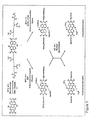
- a new water soluble bis-spermidine diimide of 1,7-dibromo perylene-3,4,9,10-tetracarboxylic acid was prepared by a two-step reaction, starting from commercially available perylene-3,4,9,10-tetracarboxylic acid dianhydride which was converted to the 1,7-dibromo derivative, followed by a reaction with tris-Boc protected spermine.
- the aminoalkoxy-derivative and aminothiol-derivative were obtained by nucleophilic aromatic substitution reactions of the bis-spermidine diimide with N-Boc protected 3-aminopropanol and 2-aminothioethanol respectively, followed by de-protection with hydrochloric acid.
- FIG. 1 A schematic diagram of the production steps is depicted in figure 1 .
- the substitutions at the bay positions had significant influence on the photophysical properties of the perylene diimide derivative.
- the aminoalkoxy- and the aminothiol-derivative were highly fluorescent in buffered water (pH 7,0) with emission maxima at 625 nm and 570 nm, respectively ( figure 2 ).
- the red-shifted fluorescence emission was advantageous for the application to heparin detection in serum because the background fluorescence of blood serum is significantly high at 400-600 nm but strongly decreases above 600 nm.
- Perylene diimide derivatives were isolated as a 2:1 mixture of two isomers (perylene diimide derivative of formula II and III) of the same perylene diimide derivative with respect to the position (1,7 or 1,6) of the substitutions. Only the major 1,7-isomers are shown in figure 1 . Small quantities of the isomers could be isolated by semipreparative HPLC.
- the perylene diimide derivative of formula III were shown to have similar properties regarding fluorescence emission and heparin interaction as the perylene diimide derivative of formula II. In particular the fluorescence emission response to LMWH in blood serum or blood plasma samples were similar for perylene diimide derivatives of formula II and III, suggesting that both, individually and in combination, are suited to detect heparin.
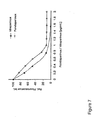
- a titration of the aminoalkoxy-derivative and the aminothiol-derivative, respectively, with LMWH was performed in buffered aqueous solution at a pH of 7,0 (10 ⁇ M aminoalkoxy-derivative or aminothiol-derivative, 10 mM MOPS, 50 mM NaCl).
- the perylene diimide derivatives were excited at a wavelength of 485 nm and the fluorescence was measured by detecting the emission fluorescence above 665 nm, using an appropriate filter system.
- the decrease of fluorescence of a 10 ⁇ M solution of the aminoalkoxy-derivative and the aminothiol-derivative, respectively, on titration with heparin is shown in figure 3a .
- the intensity of the fluorescence signal of the perylene diimide derivative decreased above 665 nm with increasing heparin levels. Fluorescence was quenched completely at a sugar to perylene ratio of 3.9. The strongest changes of fluorescence were observed towards the end point of the titration, allowing a very precise quantification.
- the concentration of the perylene diimide derivative used to detect heparin could be adjusted to optimize detection of low or high concentrations of heparin.
- heparin is administered at therapeutic dosing levels of 2 to 8 U/mL -1 (17 to 67 ⁇ M) during cardiovascular surgery and of 0,2 to 1,2 U/mL -1 (1,7 to 10 ⁇ M) in post-operative and long term care.
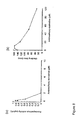
- Responses of the aminothiol-derivative to heparin within the different clinical important ranges are shown in figure 4a and 4b .
- the fluorescence of a solution comprising the aminothiol-derivative at a concentration of 10 ⁇ M (a) or 5 ⁇ M (b) in buffered water (pH 7,0), containing 50% human blood serum was measured in the presence of various concentrations of LMWH.
- the fluorescence emission was measured above 665 nm using an appropriate filter system.
- concentration of 10 ⁇ M the fluorescence of the aminothiol-derivative was linearly dependent on heparin concentrations, allowing an accurate readout in the range of 0,5 to 4,0 U/mL heparin ( figure 4a ).
- a lower concentration range of heparin (0,25 to 2,0 U/mL) was addressed when the aminothiol-derivative was applied in lower concentrations ( figure 4b ).
- the response of the perylene diimide derivative to heparin was additionally studied using Dalteparin sodium (0,4 - 0,8 IU/mL), a clinically important LMWH preparation with a mean molecular weight of 5000 g/mol. Fluorescence was recorded with a portable fluorometer, equipped with a 485 nm excitation filter and a 665 nm cutoff emission filter. The latter filter offered good signal-to-background ratio since serum/plasma autofluorescence is very low above 665 nm. The fluorescence of the perylene diimide derivative decreased approximately linearly ( figure 4c ) with increasing LMWH concentration, in buffered solution.
- the binding ration was calculated to be one perylene diimide derivative / 2 disaccharides of heparin. Solutions containing 20 vol% serum or plasma required an only slightly larger (about 1.1-fold) LMWH concentration to trigger the same relative fluorescence decrease as observed in buffered solution. The response of the perylene diimide derivative to LMWH was fast in all media and binding was reversible since fluorescence was restored on addition of protamine, a strongly heparin-binding polypeptide. Apparently, the perylene diimide derivative associated with LMWH in a highly selective manner, with minimal interference by serum or plasma components.
- Additives were used to significantly improve the fluorescence signal to fluorescence background ratio for heparin detection in serum and plasma samples.
- the anionic SDS increased the fluorescence of the aminoalkoxy-derivative and the aminothiol-derivative in serum containing samples by a factor of 5 (in the absence of heparin), thus allowing a more accurate quantification of heparin in particular in a lower concentration range.
- TPPS tetraphenyl-porphin-4,4,4,4-tetrasulfonic acid tetrasodium salt
- the sensitivity of the fluoro- and photometric detection of heparin is improved by applying a mixture of both compounds.
- the perylene diimide derivative associates with heparin and TPPS is released.
- the 405 nm absorbance of TPPS increases linearly with increasing heparin concentration and can be detected by photometric devices.
- the 650 nm fluorescence of TPPS is restored on addition of herparin and can be detected by fluorometric devices.
- the sensitivity of this modified assay is high enough for accurate detection of heparin at concentrations as low as 0,1 U/ml.
- An absorbance at a wavelength of 405 nm can be measured by photometric instrumentation widely used for factor Xa assays.
- Hydrotropes strongly increase the fluorescence of the aminoalkoxy-derivative in serum, in the absence of heparin, without affecting the significant decrease of fluorescence on addition of heparin. Therefore, hydrotropes increase the signal to background ratio and the sensitivity of the heparin detection assay.
- the titration of the aminothiol-derivative at a concentration of 1 ⁇ M was performed in the presence of different glycosaminoglycans in buffered aqueous solution (60 mM MOPS, pH 7,0, 200 mM pTSNa) containing 25 vol% human blood serum, and the decrease of the intensity of the fluorescence signal above 635 nm was measured. Only LMWH, which has the highest charge to mass ratio, triggered a significant decrease of fluorescence, while the latter remained nearly unchanged for chondroitin sulfate, dermatan sulfate and hyaluronic acid.
- Traces of chondroitin sulfate impurity in a heparin sample could thus be identified by incubating the aminoalkoxy-derivative with the heparin sample in a buffered solution adding a solution of anionic hydrotropes (100 mM) and measuring the fluorescence emission at 610 nm (excitation at 550 nm).
- the emission intensity of the solution containing a heparin sample contaminated with chondroitin sulfate or other less sulfonated glycosaminoglycanes was higher compared to the control sample with pure heparin. By this, as little as 5 m/m% of contamination could be detected.
- Heparin acts by increasing the clotting time of human plasma by interacting with the plasma proteins.
- the effect of 1 IU/ml LMWH could be neutralized by the addition of the aminoalkoxy-derivative or the aminothiol-derivative ( figure 6 ).
- the effect is comparable to that of protamine sulfate, a polyanionic molecule which strongly binds heparin and is therefore used as an antidote.
- Example 6 analysis of heparin-spiked serum samples from patients
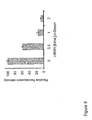
- Figure 9 shows the relative fluorescence of solutions containing the perylene diimide derivative (1 ⁇ M), after addition of LMWH-piked (0-2 IU/mL) human blood serum of five different individuals.
- the fluorescence intensity was measured in heparin-free serum samples and serum samples spiked with 0,5 IU/mL, 1,0 IU/mL LMWH or 2,0 IU/mL.
- the coefficient of variation CV (standard deviation)/mean x 100 for the five patients at 0,5 IU/mL was 7%.
- the established clinical method for LMWH quantification the CV even for within-run precision (same sample measured repeatedly) was, depending on instrumentation, in the range 5-18 % for comparable heparin levels.
Landscapes
- Chemical & Material Sciences (AREA)
- Organic Chemistry (AREA)
- Health & Medical Sciences (AREA)
- Medicinal Chemistry (AREA)
- Engineering & Computer Science (AREA)
- Diabetes (AREA)
- Chemical Kinetics & Catalysis (AREA)
- General Chemical & Material Sciences (AREA)
- Bioinformatics & Cheminformatics (AREA)
- Nuclear Medicine, Radiotherapy & Molecular Imaging (AREA)
- Hematology (AREA)
- Pharmacology & Pharmacy (AREA)
- Life Sciences & Earth Sciences (AREA)
- Animal Behavior & Ethology (AREA)
- General Health & Medical Sciences (AREA)
- Public Health (AREA)
- Veterinary Medicine (AREA)
- Investigating Or Analysing Materials By The Use Of Chemical Reactions (AREA)
- Investigating Or Analysing Biological Materials (AREA)
Claims (15)
- Perylendiimid-Derivat der Formel I
 wobei X1 und X2 gleich oder unterschiedlich sind und aus der Gruppe bestehend aus S und O ausgewählt sind;R1 und R2 gleich oder unterschiedlich sind und ((CA2)m-NA2)n sind;R3 und R4 gleich oder unterschiedlich sind und ((CA2)o-NA)p-((CA2)q-NA)r-(CA2)s-NA2 sind;A aus der Gruppe bestehend aus H und CH3 ausgewählt ist, undm, n, o, p, q, r, und s gleich oder unterschiedlich 1 bis 10, vorzugsweise 1 bis 5 sind.
 - Perylendiimid-Derivat nach Anspruch 1, wobei das Perylendiimid-Derivat in Form seines Ammoniumsalzes, vorzugsweise seines Ammoniumchloridsalzes, weiter bevorzugt seines quartären Ammoniumsalzes vorliegt.
- Perylendiimid-Derivat nach Anspruch 1 oder 2, wobei R3 und R4 (CH2)3-NH-(CH2)4-NH-(CH2)3-NH2 sind.
- Perylendiimid-Derivat nach einem der Ansprüche 1 bis 3 der Formel II

- In vitro Verfahren zum Nachweisen von Heparin in einer Probe, umfassend die Schrittea) Bereitstellen einer Lösung, die ein Perylendiimid-Derivat der Formel I umfasst,b) Hinzufügen der Probe, deren Heparingehalt zu testen ist, zu der Lösung, um ein Gemisch bereit zu stellen,c) Messen eines Fluoreszenzsignals des Gemischs, undd) Vergleichen des Fluoreszenzsignals des Gemischs mit dem Fluoreszenzsignal der Lösung,wobei eine Interaktion des Perylendiimid-Derivats mit Heparin die Intensität des Fluoreszenzsignals des Gemischs verglichen mit der Lösung moduliert.
- Verfahren nach Anspruch 5, wobei das Perylendiimid-Derivat ein Emissionsmaximum bei einer Wellenlänge oberhalb der Hintergrundfluoreszenz von Blut, vorzugsweise oberhalb von 550 nm, weiter bevorzugt oberhalb von 600 nm aufweist.
- Verfahren nach Anspruch 5 oder 6, wobei das Perylendiimid-Derivat mindestens 3, vorzugsweise mindestens 6, weiter bevorzugt mindestens 8 Aminogruppen umfasst.
- Verfahren nach Anspruch 7, wobei mindestens 30%, vorzugsweise mindestens 50% der Aminogruppen des Perylendiimid-Derivats protoniert sind.
- Verfahren nach einem der Ansprüche 5 bis 8, wobei die Lösung weiter Natriumdodecylsulfat, anionische Hydrotropika und/oder einen Fluoreszenz-Quencher umfasst.
- Verfahren nach einem der Ansprüche 5 bis 9, wobei die Probe aus der Gruppe bestehend aus Vollblut, Blutplasma, Blutserum und wässrigen Lösungen ausgewählt ist.
- Verfahren nach einem der Ansprüche 5 bis 10, wobei die Interaktion des Perylendiimid-Derivats mit Heparin die Intensität des Fluoreszenzsignals des Gemischs verglichen mit der Lösung verringert.
- Verfahren zum Herstellen eines Perylendiimid-Derivats der Formel I, umfassend die Schritte:a) Umwandeln von Perylen-3,4,9,10-tetracarboxylsäure-Dianhydrid zu seinem 1,7-Dibrom-Derivat,b) Reagieren des 1,7-Dibrom-Derivats mit Tris-Boc geschützten Aminresten,c) Ersetzen von Brom durch nukleophile Aminreste, undd) Entschützen der Aminreste mit Salzsäure.
- Verfahren nach Anspruch 12, wobei die nukleophilen Aminreste aus der Gruppe bestehend aus S-(CH2)2-NH2 und O-(CH2)3-NH2 ausgewählt sind, und die Aminreste ((CH2)3-NH)-((CH2)4-NH)-(CH2)3-NH2 sind.
- Diagnostisches Kit zum Nachweisen von Heparin in einer Probe in vitro, umfassend ein Perylendiimid-Derivat.
- Perylendiimid-Derivat der Formel I zur Verwendung beim Neutralisieren der gerinnungshemmenden Wirkung von Heparin.
Priority Applications (1)
| Application Number | Priority Date | Filing Date | Title |
|---|---|---|---|
| EP20100748072 EP2467433B1 (de) | 2009-08-20 | 2010-08-19 | Fluoreszierende perylenderivate zur direkten detektion von heparin |
Applications Claiming Priority (3)
| Application Number | Priority Date | Filing Date | Title |
|---|---|---|---|
| EP20090168292 EP2295502A1 (de) | 2009-08-20 | 2009-08-20 | Fluoreszierende Perylenderivate zur direkten Detektion von Heparin |
| PCT/EP2010/062118 WO2011020887A1 (en) | 2009-08-20 | 2010-08-19 | Fluorescent perylene derivatives for direct detection of heparin |
| EP20100748072 EP2467433B1 (de) | 2009-08-20 | 2010-08-19 | Fluoreszierende perylenderivate zur direkten detektion von heparin |
Publications (2)
| Publication Number | Publication Date |
|---|---|
| EP2467433A1 EP2467433A1 (de) | 2012-06-27 |
| EP2467433B1 true EP2467433B1 (de) | 2014-10-08 |
Family
ID=41789073
Family Applications (2)
| Application Number | Title | Priority Date | Filing Date |
|---|---|---|---|
| EP20090168292 Withdrawn EP2295502A1 (de) | 2009-08-20 | 2009-08-20 | Fluoreszierende Perylenderivate zur direkten Detektion von Heparin |
| EP20100748072 Active EP2467433B1 (de) | 2009-08-20 | 2010-08-19 | Fluoreszierende perylenderivate zur direkten detektion von heparin |
Family Applications Before (1)
| Application Number | Title | Priority Date | Filing Date |
|---|---|---|---|
| EP20090168292 Withdrawn EP2295502A1 (de) | 2009-08-20 | 2009-08-20 | Fluoreszierende Perylenderivate zur direkten Detektion von Heparin |
Country Status (3)
| Country | Link |
|---|---|
| US (1) | US9006261B2 (de) |
| EP (2) | EP2295502A1 (de) |
| WO (1) | WO2011020887A1 (de) |
Families Citing this family (6)
| Publication number | Priority date | Publication date | Assignee | Title |
|---|---|---|---|---|
| EP2471945A1 (de) * | 2010-12-30 | 2012-07-04 | Siemens Healthcare Diagnostics Products GmbH | Verfahren zur Bestimmung von Inhibitoren der Gerinnung |
| CN104152137A (zh) * | 2014-05-06 | 2014-11-19 | 上海大学 | 芴-苝酰亚胺分子内能量转移荧光分化合物及其制备方法 |
| CN105928912B (zh) * | 2016-04-14 | 2019-03-26 | 安徽师范大学 | 一种肝素的检测方法 |
| CN115219444A (zh) * | 2022-07-14 | 2022-10-21 | 河南宇宙人工晶状体研制有限公司 | 肝素表面处理非球面人工晶状体的肝素含量检测方法 |
| CN115181065B (zh) * | 2022-08-08 | 2023-07-21 | 河南大学 | 一种苝酰亚胺衍生物及应用 |
| CN115436335B (zh) * | 2022-09-16 | 2023-08-25 | 遵义医科大学 | 一种基于苝衍生物探针免标记检测凝血酶的方法 |
Family Cites Families (3)
| Publication number | Priority date | Publication date | Assignee | Title |
|---|---|---|---|---|
| WO1997025314A1 (en) * | 1996-01-11 | 1997-07-17 | Florida State University | Novel dicationic perylene dye and use for precipitation and quantitation of dna |
| WO2001069254A2 (en) * | 2000-03-14 | 2001-09-20 | Genigma Corporation | Visually detectable dye labelled biomolecules for analysis |
| DE10308940A1 (de) * | 2003-02-28 | 2004-09-23 | MAX-PLANCK-Gesellschaft zur Förderung der Wissenschaften e.V. | Wasserlösliche, fluoreszierende Perylentetracarbonsäurebisimide |
-
2009
- 2009-08-20 EP EP20090168292 patent/EP2295502A1/de not_active Withdrawn
-
2010
- 2010-08-19 US US13/390,799 patent/US9006261B2/en active Active
- 2010-08-19 WO PCT/EP2010/062118 patent/WO2011020887A1/en not_active Ceased
- 2010-08-19 EP EP20100748072 patent/EP2467433B1/de active Active
Also Published As
| Publication number | Publication date |
|---|---|
| US20120220617A1 (en) | 2012-08-30 |
| US9006261B2 (en) | 2015-04-14 |
| EP2295502A1 (de) | 2011-03-16 |
| WO2011020887A1 (en) | 2011-02-24 |
| EP2467433A1 (de) | 2012-06-27 |
Similar Documents
| Publication | Publication Date | Title |
|---|---|---|
| US9006261B2 (en) | Fluorescent perylene derivatives for direct detection of heparin | |
| Baguley et al. | Quenching of DNA-ethidium fluorescence by amsacrine and other antitumor agents: a possible electron-transfer effect | |
| Wu et al. | New sensing mechanisms for design of fluorescent chemosensors emerging in recent years | |
| Wang et al. | The convenient fluorescence turn-on detection of heparin with a silole derivative featuring an ammonium group | |
| Zheng et al. | Highly sensitive fluorescence detection of heparin based on aggregation-induced emission of a tetraphenylethene derivative | |
| Kim et al. | Ratiometric detection of nanomolar concentrations of heparin in serum and plasma samples using a fluorescent chemosensor based on peptides | |
| HUT58738A (en) | Process for producing fluorescet colours and utilizing them for colouring nucleinic acids | |
| Deng et al. | A new FRET probe for ratiometric fluorescence detecting mitochondria-localized drug activation and imaging endogenous hydroxyl radicals in zebrafish | |
| Wang et al. | Discovery of heparin chemosensors through diversity oriented fluorescence library approach | |
| US20080108141A1 (en) | Diaminorhodamine derivative | |
| US20120276649A1 (en) | Thiol detection | |
| US7982056B2 (en) | Substantially pure fluorescein | |
| US20170059573A1 (en) | Method of detecting peroxynitrite using a complex of a saccharide and an arylboronate-based fluorescent probe | |
| Gupta et al. | A fluorescent “Turn-ON” probe with rapid and differential response to HSA and BSA: quantitative detection of HSA in urine | |
| Valk et al. | The chemical estimation of epinephrine and norepinephrine in human and canine plasma. I. A critique of the ethylenediamine condensation method | |
| Yang et al. | A novel water-soluble AIE-based fluorescence probe with red emission for the sensitive detection of heparin in aqueous solution and human serum samples | |
| WO2006094104A2 (en) | Chemical probe compounds that become fluorescent upon reduction, and methods for their use | |
| Zhou et al. | A cationic on–off fluorescent sensor with AIE properties for heparin and protamine detection | |
| Wang et al. | Efficient access to the non-reducing end of low molecular weight heparin for fluorescent labeling | |
| Guo et al. | Micelle-enhanced and terbium-sensitized spectrofluorimetric determination of gatifloxacin and its interaction mechanism | |
| Wei et al. | Spectrofluorimetric determination of trace heparin using lomefloxacin-terbium probe | |
| CN108863961A (zh) | 一种三氮唑类蒽醌衍生物银离子荧光探针及其制备方法和应用 | |
| Mirau et al. | Unusual proton exchange properties of Z-form poly [d (GC)] | |
| CN105928912A (zh) | 一种肝素的检测方法 | |
| Miao et al. | Determination of heparin using ciprofloxacin-Tb3+ as a fluorescence probe |
Legal Events
| Date | Code | Title | Description |
|---|---|---|---|
| PUAI | Public reference made under article 153(3) epc to a published international application that has entered the european phase |
Free format text: ORIGINAL CODE: 0009012 |
|
| 17P | Request for examination filed |
Effective date: 20120315 |
|
| AK | Designated contracting states |
Kind code of ref document: A1 Designated state(s): AL AT BE BG CH CY CZ DE DK EE ES FI FR GB GR HR HU IE IS IT LI LT LU LV MC MK MT NL NO PL PT RO SE SI SK SM TR |
|
| RIN1 | Information on inventor provided before grant (corrected) |
Inventor name: KRAEMER, ROLAND Inventor name: SZELKE, HELGA Inventor name: HARENBERG, JOB Inventor name: POECK, ARMIN |
|
| RAP1 | Party data changed (applicant data changed or rights of an application transferred) |
Owner name: KRAEMER, ROLAND Owner name: POECK, ARMIN Owner name: HARENBERG, JOB Owner name: SZELKE, HELGA |
|
| DAX | Request for extension of the european patent (deleted) | ||
| 17Q | First examination report despatched |
Effective date: 20131210 |
|
| GRAP | Despatch of communication of intention to grant a patent |
Free format text: ORIGINAL CODE: EPIDOSNIGR1 |
|
| INTG | Intention to grant announced |
Effective date: 20140530 |
|
| GRAS | Grant fee paid |
Free format text: ORIGINAL CODE: EPIDOSNIGR3 |
|
| GRAA | (expected) grant |
Free format text: ORIGINAL CODE: 0009210 |
|
| RIN1 | Information on inventor provided before grant (corrected) |
Inventor name: HARENBERG, JOB Inventor name: SZELKE, HELGA Inventor name: POECK, ARMIN Inventor name: KRAEMER, ROLAND |
|
| AK | Designated contracting states |
Kind code of ref document: B1 Designated state(s): AL AT BE BG CH CY CZ DE DK EE ES FI FR GB GR HR HU IE IS IT LI LT LU LV MC MK MT NL NO PL PT RO SE SI SK SM TR |
|
| REG | Reference to a national code |
Ref country code: GB Ref legal event code: FG4D |
|
| REG | Reference to a national code |
Ref country code: AT Ref legal event code: REF Ref document number: 690580 Country of ref document: AT Kind code of ref document: T Effective date: 20141015 Ref country code: CH Ref legal event code: EP |
|
| REG | Reference to a national code |
Ref country code: IE Ref legal event code: FG4D |
|
| REG | Reference to a national code |
Ref country code: DE Ref legal event code: R096 Ref document number: 602010019421 Country of ref document: DE Effective date: 20141120 |
|
| REG | Reference to a national code |
Ref country code: CH Ref legal event code: NV Representative=s name: RENTSCH PARTNER AG, CH |
|
| REG | Reference to a national code |
Ref country code: NL Ref legal event code: VDEP Effective date: 20141008 |
|
| REG | Reference to a national code |
Ref country code: AT Ref legal event code: MK05 Ref document number: 690580 Country of ref document: AT Kind code of ref document: T Effective date: 20141008 |
|
| REG | Reference to a national code |
Ref country code: LT Ref legal event code: MG4D |
|
| PG25 | Lapsed in a contracting state [announced via postgrant information from national office to epo] |
Ref country code: NL Free format text: LAPSE BECAUSE OF FAILURE TO SUBMIT A TRANSLATION OF THE DESCRIPTION OR TO PAY THE FEE WITHIN THE PRESCRIBED TIME-LIMIT Effective date: 20141008 |
|
| PG25 | Lapsed in a contracting state [announced via postgrant information from national office to epo] |
Ref country code: PT Free format text: LAPSE BECAUSE OF FAILURE TO SUBMIT A TRANSLATION OF THE DESCRIPTION OR TO PAY THE FEE WITHIN THE PRESCRIBED TIME-LIMIT Effective date: 20150209 Ref country code: ES Free format text: LAPSE BECAUSE OF FAILURE TO SUBMIT A TRANSLATION OF THE DESCRIPTION OR TO PAY THE FEE WITHIN THE PRESCRIBED TIME-LIMIT Effective date: 20141008 Ref country code: FI Free format text: LAPSE BECAUSE OF FAILURE TO SUBMIT A TRANSLATION OF THE DESCRIPTION OR TO PAY THE FEE WITHIN THE PRESCRIBED TIME-LIMIT Effective date: 20141008 Ref country code: IS Free format text: LAPSE BECAUSE OF FAILURE TO SUBMIT A TRANSLATION OF THE DESCRIPTION OR TO PAY THE FEE WITHIN THE PRESCRIBED TIME-LIMIT Effective date: 20150208 Ref country code: LT Free format text: LAPSE BECAUSE OF FAILURE TO SUBMIT A TRANSLATION OF THE DESCRIPTION OR TO PAY THE FEE WITHIN THE PRESCRIBED TIME-LIMIT Effective date: 20141008 Ref country code: NO Free format text: LAPSE BECAUSE OF FAILURE TO SUBMIT A TRANSLATION OF THE DESCRIPTION OR TO PAY THE FEE WITHIN THE PRESCRIBED TIME-LIMIT Effective date: 20150108 |
|
| PG25 | Lapsed in a contracting state [announced via postgrant information from national office to epo] |
Ref country code: HR Free format text: LAPSE BECAUSE OF FAILURE TO SUBMIT A TRANSLATION OF THE DESCRIPTION OR TO PAY THE FEE WITHIN THE PRESCRIBED TIME-LIMIT Effective date: 20141008 Ref country code: AT Free format text: LAPSE BECAUSE OF FAILURE TO SUBMIT A TRANSLATION OF THE DESCRIPTION OR TO PAY THE FEE WITHIN THE PRESCRIBED TIME-LIMIT Effective date: 20141008 Ref country code: CY Free format text: LAPSE BECAUSE OF FAILURE TO SUBMIT A TRANSLATION OF THE DESCRIPTION OR TO PAY THE FEE WITHIN THE PRESCRIBED TIME-LIMIT Effective date: 20141008 Ref country code: GR Free format text: LAPSE BECAUSE OF FAILURE TO SUBMIT A TRANSLATION OF THE DESCRIPTION OR TO PAY THE FEE WITHIN THE PRESCRIBED TIME-LIMIT Effective date: 20150109 Ref country code: SE Free format text: LAPSE BECAUSE OF FAILURE TO SUBMIT A TRANSLATION OF THE DESCRIPTION OR TO PAY THE FEE WITHIN THE PRESCRIBED TIME-LIMIT Effective date: 20141008 Ref country code: PL Free format text: LAPSE BECAUSE OF FAILURE TO SUBMIT A TRANSLATION OF THE DESCRIPTION OR TO PAY THE FEE WITHIN THE PRESCRIBED TIME-LIMIT Effective date: 20141008 Ref country code: LV Free format text: LAPSE BECAUSE OF FAILURE TO SUBMIT A TRANSLATION OF THE DESCRIPTION OR TO PAY THE FEE WITHIN THE PRESCRIBED TIME-LIMIT Effective date: 20141008 |
|
| REG | Reference to a national code |
Ref country code: DE Ref legal event code: R097 Ref document number: 602010019421 Country of ref document: DE |
|
| PG25 | Lapsed in a contracting state [announced via postgrant information from national office to epo] |
Ref country code: CZ Free format text: LAPSE BECAUSE OF FAILURE TO SUBMIT A TRANSLATION OF THE DESCRIPTION OR TO PAY THE FEE WITHIN THE PRESCRIBED TIME-LIMIT Effective date: 20141008 Ref country code: DK Free format text: LAPSE BECAUSE OF FAILURE TO SUBMIT A TRANSLATION OF THE DESCRIPTION OR TO PAY THE FEE WITHIN THE PRESCRIBED TIME-LIMIT Effective date: 20141008 Ref country code: EE Free format text: LAPSE BECAUSE OF FAILURE TO SUBMIT A TRANSLATION OF THE DESCRIPTION OR TO PAY THE FEE WITHIN THE PRESCRIBED TIME-LIMIT Effective date: 20141008 Ref country code: SK Free format text: LAPSE BECAUSE OF FAILURE TO SUBMIT A TRANSLATION OF THE DESCRIPTION OR TO PAY THE FEE WITHIN THE PRESCRIBED TIME-LIMIT Effective date: 20141008 Ref country code: RO Free format text: LAPSE BECAUSE OF FAILURE TO SUBMIT A TRANSLATION OF THE DESCRIPTION OR TO PAY THE FEE WITHIN THE PRESCRIBED TIME-LIMIT Effective date: 20141008 |
|
| PLBE | No opposition filed within time limit |
Free format text: ORIGINAL CODE: 0009261 |
|
| STAA | Information on the status of an ep patent application or granted ep patent |
Free format text: STATUS: NO OPPOSITION FILED WITHIN TIME LIMIT |
|
| REG | Reference to a national code |
Ref country code: FR Ref legal event code: PLFP Year of fee payment: 6 |
|
| PG25 | Lapsed in a contracting state [announced via postgrant information from national office to epo] |
Ref country code: IT Free format text: LAPSE BECAUSE OF FAILURE TO SUBMIT A TRANSLATION OF THE DESCRIPTION OR TO PAY THE FEE WITHIN THE PRESCRIBED TIME-LIMIT Effective date: 20141008 |
|
| 26N | No opposition filed |
Effective date: 20150709 |
|
| REG | Reference to a national code |
Ref country code: DE Ref legal event code: R082 Ref document number: 602010019421 Country of ref document: DE Representative=s name: PATERIS THEOBALD ELBEL FISCHER, PATENTANWAELTE, DE Ref country code: DE Ref legal event code: R081 Ref document number: 602010019421 Country of ref document: DE Owner name: REDPROBES UG (HAFTUNGSBESCHRAENKT), DE Free format text: FORMER OWNERS: HARENBERG, JOB, 69126 HEIDELBERG, DE; KRAEMER, ROLAND, 69126 HEIDELBERG, DE; POECK, ARMIN, 69123 HEIDELBERG, DE; SZELKE, HELGA, AARAU, CH |
|
| REG | Reference to a national code |
Ref country code: CH Ref legal event code: PUE Owner name: REDPROBES UG (HAFTUNGSBESCHRAENKT), DE Free format text: FORMER OWNER: KRAEMER, ROLAND, DE |
|
| REG | Reference to a national code |
Ref country code: GB Ref legal event code: 732E Free format text: REGISTERED BETWEEN 20151008 AND 20151014 |
|
| REG | Reference to a national code |
Ref country code: FR Ref legal event code: TP Owner name: REDPROBES UG (HAFTUNGSBESCHRANKT), DE Effective date: 20151223 |
|
| PG25 | Lapsed in a contracting state [announced via postgrant information from national office to epo] |
Ref country code: SI Free format text: LAPSE BECAUSE OF FAILURE TO SUBMIT A TRANSLATION OF THE DESCRIPTION OR TO PAY THE FEE WITHIN THE PRESCRIBED TIME-LIMIT Effective date: 20141008 |
|
| PG25 | Lapsed in a contracting state [announced via postgrant information from national office to epo] |
Ref country code: LU Free format text: LAPSE BECAUSE OF FAILURE TO SUBMIT A TRANSLATION OF THE DESCRIPTION OR TO PAY THE FEE WITHIN THE PRESCRIBED TIME-LIMIT Effective date: 20150819 Ref country code: MC Free format text: LAPSE BECAUSE OF FAILURE TO SUBMIT A TRANSLATION OF THE DESCRIPTION OR TO PAY THE FEE WITHIN THE PRESCRIBED TIME-LIMIT Effective date: 20141008 |
|
| REG | Reference to a national code |
Ref country code: IE Ref legal event code: MM4A |
|
| PG25 | Lapsed in a contracting state [announced via postgrant information from national office to epo] |
Ref country code: IE Free format text: LAPSE BECAUSE OF NON-PAYMENT OF DUE FEES Effective date: 20150819 |
|
| REG | Reference to a national code |
Ref country code: FR Ref legal event code: PLFP Year of fee payment: 7 |
|
| PG25 | Lapsed in a contracting state [announced via postgrant information from national office to epo] |
Ref country code: MT Free format text: LAPSE BECAUSE OF FAILURE TO SUBMIT A TRANSLATION OF THE DESCRIPTION OR TO PAY THE FEE WITHIN THE PRESCRIBED TIME-LIMIT Effective date: 20141008 |
|
| PG25 | Lapsed in a contracting state [announced via postgrant information from national office to epo] |
Ref country code: SM Free format text: LAPSE BECAUSE OF FAILURE TO SUBMIT A TRANSLATION OF THE DESCRIPTION OR TO PAY THE FEE WITHIN THE PRESCRIBED TIME-LIMIT Effective date: 20141008 Ref country code: BG Free format text: LAPSE BECAUSE OF FAILURE TO SUBMIT A TRANSLATION OF THE DESCRIPTION OR TO PAY THE FEE WITHIN THE PRESCRIBED TIME-LIMIT Effective date: 20141008 Ref country code: HU Free format text: LAPSE BECAUSE OF FAILURE TO SUBMIT A TRANSLATION OF THE DESCRIPTION OR TO PAY THE FEE WITHIN THE PRESCRIBED TIME-LIMIT; INVALID AB INITIO Effective date: 20100819 |
|
| REG | Reference to a national code |
Ref country code: FR Ref legal event code: PLFP Year of fee payment: 8 |
|
| PG25 | Lapsed in a contracting state [announced via postgrant information from national office to epo] |
Ref country code: TR Free format text: LAPSE BECAUSE OF FAILURE TO SUBMIT A TRANSLATION OF THE DESCRIPTION OR TO PAY THE FEE WITHIN THE PRESCRIBED TIME-LIMIT Effective date: 20141008 |
|
| PG25 | Lapsed in a contracting state [announced via postgrant information from national office to epo] |
Ref country code: BE Free format text: LAPSE BECAUSE OF FAILURE TO SUBMIT A TRANSLATION OF THE DESCRIPTION OR TO PAY THE FEE WITHIN THE PRESCRIBED TIME-LIMIT Effective date: 20141008 |
|
| REG | Reference to a national code |
Ref country code: CH Ref legal event code: PCAR Free format text: NEW ADDRESS: BELLERIVESTRASSE 203 POSTFACH, 8034 ZUERICH (CH) |
|
| PG25 | Lapsed in a contracting state [announced via postgrant information from national office to epo] |
Ref country code: MK Free format text: LAPSE BECAUSE OF FAILURE TO SUBMIT A TRANSLATION OF THE DESCRIPTION OR TO PAY THE FEE WITHIN THE PRESCRIBED TIME-LIMIT Effective date: 20141008 |
|
| REG | Reference to a national code |
Ref country code: FR Ref legal event code: PLFP Year of fee payment: 9 |
|
| PG25 | Lapsed in a contracting state [announced via postgrant information from national office to epo] |
Ref country code: AL Free format text: LAPSE BECAUSE OF FAILURE TO SUBMIT A TRANSLATION OF THE DESCRIPTION OR TO PAY THE FEE WITHIN THE PRESCRIBED TIME-LIMIT Effective date: 20141008 |
|
| PGFP | Annual fee paid to national office [announced via postgrant information from national office to epo] |
Ref country code: FR Payment date: 20200819 Year of fee payment: 11 |
|
| PGFP | Annual fee paid to national office [announced via postgrant information from national office to epo] |
Ref country code: CH Payment date: 20200825 Year of fee payment: 11 |
|
| REG | Reference to a national code |
Ref country code: CH Ref legal event code: PL |
|
| PG25 | Lapsed in a contracting state [announced via postgrant information from national office to epo] |
Ref country code: LI Free format text: LAPSE BECAUSE OF NON-PAYMENT OF DUE FEES Effective date: 20210831 Ref country code: CH Free format text: LAPSE BECAUSE OF NON-PAYMENT OF DUE FEES Effective date: 20210831 |
|
| PG25 | Lapsed in a contracting state [announced via postgrant information from national office to epo] |
Ref country code: FR Free format text: LAPSE BECAUSE OF NON-PAYMENT OF DUE FEES Effective date: 20210831 |
|
| PGFP | Annual fee paid to national office [announced via postgrant information from national office to epo] |
Ref country code: DE Payment date: 20250817 Year of fee payment: 16 |
|
| PGFP | Annual fee paid to national office [announced via postgrant information from national office to epo] |
Ref country code: GB Payment date: 20250822 Year of fee payment: 16 |