EP2465656A1 - Verfahren und Vorrichtung zum Abtrennen von Fremdpolymeren aus einem Polymergemisch - Google Patents
Verfahren und Vorrichtung zum Abtrennen von Fremdpolymeren aus einem Polymergemisch Download PDFInfo
- Publication number
- EP2465656A1 EP2465656A1 EP20110186506 EP11186506A EP2465656A1 EP 2465656 A1 EP2465656 A1 EP 2465656A1 EP 20110186506 EP20110186506 EP 20110186506 EP 11186506 A EP11186506 A EP 11186506A EP 2465656 A1 EP2465656 A1 EP 2465656A1
- Authority
- EP
- European Patent Office
- Prior art keywords
- pet particles
- foreign polymers
- polymer mixture
- separating
- particles
- Prior art date
- Legal status (The legal status is an assumption and is not a legal conclusion. Google has not performed a legal analysis and makes no representation as to the accuracy of the status listed.)
- Granted
Links
- 229920000642 polymer Polymers 0.000 title claims abstract description 107
- 229920002959 polymer blend Polymers 0.000 title claims abstract description 66
- 238000000034 method Methods 0.000 title claims abstract description 39
- 239000002245 particle Substances 0.000 claims abstract description 119
- 238000000926 separation method Methods 0.000 claims abstract description 49
- 238000010438 heat treatment Methods 0.000 claims abstract description 23
- 238000002425 crystallisation Methods 0.000 claims abstract description 12
- 230000008025 crystallization Effects 0.000 claims abstract description 12
- 239000002184 metal Substances 0.000 claims abstract description 6
- 238000004064 recycling Methods 0.000 claims description 12
- 229920000139 polyethylene terephthalate Polymers 0.000 abstract description 130
- 239000005020 polyethylene terephthalate Substances 0.000 abstract description 130
- 238000004519 manufacturing process Methods 0.000 abstract description 2
- 229920008790 Amorphous Polyethylene terephthalate Polymers 0.000 abstract 2
- 230000001131 transforming effect Effects 0.000 abstract 1
- 239000000463 material Substances 0.000 description 30
- 239000004698 Polyethylene Substances 0.000 description 4
- 239000004743 Polypropylene Substances 0.000 description 4
- 229920000573 polyethylene Polymers 0.000 description 4
- 229920001155 polypropylene Polymers 0.000 description 4
- 239000004800 polyvinyl chloride Substances 0.000 description 4
- 239000004952 Polyamide Substances 0.000 description 3
- 229920002647 polyamide Polymers 0.000 description 3
- -1 polypropylene Polymers 0.000 description 3
- 229920000915 polyvinyl chloride Polymers 0.000 description 3
- 239000007787 solid Substances 0.000 description 3
- 239000004793 Polystyrene Substances 0.000 description 2
- 238000007796 conventional method Methods 0.000 description 2
- 239000004626 polylactic acid Substances 0.000 description 2
- 239000000126 substance Substances 0.000 description 2
- VEXZGXHMUGYJMC-UHFFFAOYSA-M Chloride anion Chemical compound [Cl-] VEXZGXHMUGYJMC-UHFFFAOYSA-M 0.000 description 1
- 229920006125 amorphous polymer Polymers 0.000 description 1
- 235000013361 beverage Nutrition 0.000 description 1
- 230000015556 catabolic process Effects 0.000 description 1
- 229920001577 copolymer Polymers 0.000 description 1
- 238000000354 decomposition reaction Methods 0.000 description 1
- 238000006731 degradation reaction Methods 0.000 description 1
- 238000001514 detection method Methods 0.000 description 1
- 238000001125 extrusion Methods 0.000 description 1
- 230000009477 glass transition Effects 0.000 description 1
- 239000012535 impurity Substances 0.000 description 1
- 230000002452 interceptive effect Effects 0.000 description 1
- 239000007788 liquid Substances 0.000 description 1
- 238000002844 melting Methods 0.000 description 1
- 230000008018 melting Effects 0.000 description 1
- 239000000203 mixture Substances 0.000 description 1
- 238000004806 packaging method and process Methods 0.000 description 1
- 230000000704 physical effect Effects 0.000 description 1
- 229920000747 poly(lactic acid) Polymers 0.000 description 1
- 229920005644 polyethylene terephthalate glycol copolymer Polymers 0.000 description 1
- 229920000098 polyolefin Polymers 0.000 description 1
- 229920002223 polystyrene Polymers 0.000 description 1
- 238000000746 purification Methods 0.000 description 1
- 238000001953 recrystallisation Methods 0.000 description 1
- 238000004513 sizing Methods 0.000 description 1
- 238000013517 stratification Methods 0.000 description 1
- 230000008646 thermal stress Effects 0.000 description 1
- 238000007669 thermal treatment Methods 0.000 description 1
Images

Classifications
-
- B—PERFORMING OPERATIONS; TRANSPORTING
- B29—WORKING OF PLASTICS; WORKING OF SUBSTANCES IN A PLASTIC STATE IN GENERAL
- B29B—PREPARATION OR PRETREATMENT OF THE MATERIAL TO BE SHAPED; MAKING GRANULES OR PREFORMS; RECOVERY OF PLASTICS OR OTHER CONSTITUENTS OF WASTE MATERIAL CONTAINING PLASTICS
- B29B17/00—Recovery of plastics or other constituents of waste material containing plastics
- B29B17/02—Separating plastics from other materials
-
- B—PERFORMING OPERATIONS; TRANSPORTING
- B29—WORKING OF PLASTICS; WORKING OF SUBSTANCES IN A PLASTIC STATE IN GENERAL
- B29B—PREPARATION OR PRETREATMENT OF THE MATERIAL TO BE SHAPED; MAKING GRANULES OR PREFORMS; RECOVERY OF PLASTICS OR OTHER CONSTITUENTS OF WASTE MATERIAL CONTAINING PLASTICS
- B29B17/00—Recovery of plastics or other constituents of waste material containing plastics
- B29B17/02—Separating plastics from other materials
- B29B2017/0203—Separating plastics from plastics
-
- B—PERFORMING OPERATIONS; TRANSPORTING
- B29—WORKING OF PLASTICS; WORKING OF SUBSTANCES IN A PLASTIC STATE IN GENERAL
- B29B—PREPARATION OR PRETREATMENT OF THE MATERIAL TO BE SHAPED; MAKING GRANULES OR PREFORMS; RECOVERY OF PLASTICS OR OTHER CONSTITUENTS OF WASTE MATERIAL CONTAINING PLASTICS
- B29B17/00—Recovery of plastics or other constituents of waste material containing plastics
- B29B17/02—Separating plastics from other materials
- B29B2017/0213—Specific separating techniques
- B29B2017/0217—Mechanical separating techniques; devices therefor
- B29B2017/0227—Vibratory or shaking tables
-
- B—PERFORMING OPERATIONS; TRANSPORTING
- B29—WORKING OF PLASTICS; WORKING OF SUBSTANCES IN A PLASTIC STATE IN GENERAL
- B29B—PREPARATION OR PRETREATMENT OF THE MATERIAL TO BE SHAPED; MAKING GRANULES OR PREFORMS; RECOVERY OF PLASTICS OR OTHER CONSTITUENTS OF WASTE MATERIAL CONTAINING PLASTICS
- B29B17/00—Recovery of plastics or other constituents of waste material containing plastics
- B29B17/02—Separating plastics from other materials
- B29B2017/0213—Specific separating techniques
- B29B2017/0217—Mechanical separating techniques; devices therefor
- B29B2017/0234—Mechanical separating techniques; devices therefor using gravity, e.g. separating by weight differences in a wind sifter
-
- B—PERFORMING OPERATIONS; TRANSPORTING
- B29—WORKING OF PLASTICS; WORKING OF SUBSTANCES IN A PLASTIC STATE IN GENERAL
- B29B—PREPARATION OR PRETREATMENT OF THE MATERIAL TO BE SHAPED; MAKING GRANULES OR PREFORMS; RECOVERY OF PLASTICS OR OTHER CONSTITUENTS OF WASTE MATERIAL CONTAINING PLASTICS
- B29B17/00—Recovery of plastics or other constituents of waste material containing plastics
- B29B17/02—Separating plastics from other materials
- B29B2017/0213—Specific separating techniques
- B29B2017/0255—Specific separating techniques using different melting or softening temperatures of the materials to be separated
- B29B2017/0258—Specific separating techniques using different melting or softening temperatures of the materials to be separated using heated surfaces for selective softening or melting of at least one plastic ingredient
-
- B—PERFORMING OPERATIONS; TRANSPORTING
- B29—WORKING OF PLASTICS; WORKING OF SUBSTANCES IN A PLASTIC STATE IN GENERAL
- B29B—PREPARATION OR PRETREATMENT OF THE MATERIAL TO BE SHAPED; MAKING GRANULES OR PREFORMS; RECOVERY OF PLASTICS OR OTHER CONSTITUENTS OF WASTE MATERIAL CONTAINING PLASTICS
- B29B17/00—Recovery of plastics or other constituents of waste material containing plastics
- B29B17/02—Separating plastics from other materials
- B29B2017/0213—Specific separating techniques
- B29B2017/0279—Optical identification, e.g. cameras or spectroscopy
-
- B—PERFORMING OPERATIONS; TRANSPORTING
- B29—WORKING OF PLASTICS; WORKING OF SUBSTANCES IN A PLASTIC STATE IN GENERAL
- B29K—INDEXING SCHEME ASSOCIATED WITH SUBCLASSES B29B, B29C OR B29D, RELATING TO MOULDING MATERIALS OR TO MATERIALS FOR MOULDS, REINFORCEMENTS, FILLERS OR PREFORMED PARTS, e.g. INSERTS
- B29K2027/00—Use of polyvinylhalogenides or derivatives thereof as moulding material
- B29K2027/06—PVC, i.e. polyvinylchloride
-
- B—PERFORMING OPERATIONS; TRANSPORTING
- B29—WORKING OF PLASTICS; WORKING OF SUBSTANCES IN A PLASTIC STATE IN GENERAL
- B29K—INDEXING SCHEME ASSOCIATED WITH SUBCLASSES B29B, B29C OR B29D, RELATING TO MOULDING MATERIALS OR TO MATERIALS FOR MOULDS, REINFORCEMENTS, FILLERS OR PREFORMED PARTS, e.g. INSERTS
- B29K2067/00—Use of polyesters or derivatives thereof, as moulding material
- B29K2067/003—PET, i.e. poylethylene terephthalate
-
- B—PERFORMING OPERATIONS; TRANSPORTING
- B29—WORKING OF PLASTICS; WORKING OF SUBSTANCES IN A PLASTIC STATE IN GENERAL
- B29K—INDEXING SCHEME ASSOCIATED WITH SUBCLASSES B29B, B29C OR B29D, RELATING TO MOULDING MATERIALS OR TO MATERIALS FOR MOULDS, REINFORCEMENTS, FILLERS OR PREFORMED PARTS, e.g. INSERTS
- B29K2067/00—Use of polyesters or derivatives thereof, as moulding material
- B29K2067/04—Polyesters derived from hydroxycarboxylic acids
- B29K2067/046—PLA, i.e. polylactic acid or polylactide
-
- B—PERFORMING OPERATIONS; TRANSPORTING
- B29—WORKING OF PLASTICS; WORKING OF SUBSTANCES IN A PLASTIC STATE IN GENERAL
- B29K—INDEXING SCHEME ASSOCIATED WITH SUBCLASSES B29B, B29C OR B29D, RELATING TO MOULDING MATERIALS OR TO MATERIALS FOR MOULDS, REINFORCEMENTS, FILLERS OR PREFORMED PARTS, e.g. INSERTS
- B29K2995/00—Properties of moulding materials, reinforcements, fillers, preformed parts or moulds
- B29K2995/0037—Other properties
- B29K2995/0039—Amorphous
-
- B—PERFORMING OPERATIONS; TRANSPORTING
- B29—WORKING OF PLASTICS; WORKING OF SUBSTANCES IN A PLASTIC STATE IN GENERAL
- B29K—INDEXING SCHEME ASSOCIATED WITH SUBCLASSES B29B, B29C OR B29D, RELATING TO MOULDING MATERIALS OR TO MATERIALS FOR MOULDS, REINFORCEMENTS, FILLERS OR PREFORMED PARTS, e.g. INSERTS
- B29K2995/00—Properties of moulding materials, reinforcements, fillers, preformed parts or moulds
- B29K2995/0037—Other properties
- B29K2995/004—Semi-crystalline
-
- Y—GENERAL TAGGING OF NEW TECHNOLOGICAL DEVELOPMENTS; GENERAL TAGGING OF CROSS-SECTIONAL TECHNOLOGIES SPANNING OVER SEVERAL SECTIONS OF THE IPC; TECHNICAL SUBJECTS COVERED BY FORMER USPC CROSS-REFERENCE ART COLLECTIONS [XRACs] AND DIGESTS
- Y02—TECHNOLOGIES OR APPLICATIONS FOR MITIGATION OR ADAPTATION AGAINST CLIMATE CHANGE
- Y02W—CLIMATE CHANGE MITIGATION TECHNOLOGIES RELATED TO WASTEWATER TREATMENT OR WASTE MANAGEMENT
- Y02W30/00—Technologies for solid waste management
- Y02W30/50—Reuse, recycling or recovery technologies
- Y02W30/52—Mechanical processing of waste for the recovery of materials, e.g. crushing, shredding, separation or disassembly
-
- Y—GENERAL TAGGING OF NEW TECHNOLOGICAL DEVELOPMENTS; GENERAL TAGGING OF CROSS-SECTIONAL TECHNOLOGIES SPANNING OVER SEVERAL SECTIONS OF THE IPC; TECHNICAL SUBJECTS COVERED BY FORMER USPC CROSS-REFERENCE ART COLLECTIONS [XRACs] AND DIGESTS
- Y02—TECHNOLOGIES OR APPLICATIONS FOR MITIGATION OR ADAPTATION AGAINST CLIMATE CHANGE
- Y02W—CLIMATE CHANGE MITIGATION TECHNOLOGIES RELATED TO WASTEWATER TREATMENT OR WASTE MANAGEMENT
- Y02W30/00—Technologies for solid waste management
- Y02W30/50—Reuse, recycling or recovery technologies
- Y02W30/62—Plastics recycling; Rubber recycling
Definitions
- the invention relates to a method and a device for separating foreign polymers from a polymer mixture which comprises amorphous PET particles and crystalline PET particles, and in particular the purification of polymer flakes from PET bottle wastes.
- the collected bottle material is first crushed into so-called flakes, which have particle diameters in the range of about 1 to 10 mm.
- About 70% to 90% of the flakes are made of crystalline PET material from the bottle wall, which have a wall thickness of less than 0.5 mm.
- About 10% to 30% of the flakes are made of amorphous PET material from the neck and bottom areas of the bottles or from ground preforms with wall thicknesses or particle sizes of about 1 mm or more.
- the flakes usually contain impurities such as foreign polymers, e.g. Polyvinyl chloride (PVC), polyamide (PA), polyolefins such as polypropylene (PP) or polyethylene (PE), polylactic acid (PLA) or polystyrene (PS).
- Conventional separation methods are e.g. Methods which are based on differences in specific material density, which include polymers with lower density than PET, e.g. PP or PE, can be separated well. However, it can be used e.g. PVC is insufficiently separated from PET.
- the disadvantage of these conventional methods is that the required operating temperatures are also above the softening point of the amorphous PET flakes, and thereby also adhere to the contact body. This in turn reduces the yield of purified PET material, ie the conventional processes are very ineffective.
- the object of the present invention is to provide a method and an apparatus for separating foreign polymers from a polymer mixture comprising amorphous PET particles and crystalline PET particles, which require high quality of the resulting PET material, and with which foreign polymers are effectively separated can be reduced without reducing the yield of resulting PET material.
- amorphous PET particles refers to PET particles which comprise no or only very small amounts of crystalline regions, preferably less than 1% crystalline regions, in particular to PET flakes made of material from neck and bottom regions of PET bottles or from ground preforms.
- crystalline PET particles refers to crystalline and semicrystalline PET particles which have a crystallinity of at least> 5%, preferably> 25%, more preferably> 40%, ie in particular on PET Flakes of wall material from PET bottles which have been subjected to cold crystallization by biaxial stretching.
- PET polyethylene terephthalate copolymers which may comprise other conventional copolymers, in particular PET material for the production of packaging containers such as e.g. Beverage bottles.
- foreign polymer includes all sorts of other polymers present in the polymer blend, especially PVC, PP, PE, PS, PET-G, PA or PLA.
- softening point is meant the temperature at which the polymer changes from a solid to a liquid state, i. the softening point corresponds to the glass transition point for amorphous polymers and to the melting point for (partly) crystalline polymers.
- Separating the amorphous PET particles from the polymer mixture i.
- the separation of the amorphous PET particles from the crystalline PET particles may be effected in any manner, e.g. due to differences in the density, crystallinity or size (wall thickness) of the particles.
- the resulting polymer mixture is heated to a temperature which is between the softening point of the foreign polymers and that of the crystalline particles, i. in particular to a temperature between 100 and 190 ° C, preferably between 130 and 170 ° C.
- Heating the polymer mixture to a temperature only above the softening point of the foreign polymers causes the separability of the softened foreign particles from the solid crystalline PET particles.
- the softening of the foreign polymers results in a change in their physical properties, e.g. the plasticity or adhesion tendency and surfaces that can be exploited for the separation of the foreign polymers.
- the foreign polymers are heated to a temperature above their softening point, at least partial decomposition takes place, which darkens the foreign polymers, which in turn can be exploited for the separation step.
- the method requires a high quality of the resulting PET material, since interfering foreign polymers can be effectively separated.
- the proportion of foreign polymers in the resulting PET material is preferably less than 100 ppm, more preferably less than 10 ppm.
- the amorphous PET particles are separated from the foreign substances, which are then available for the recycling process, in contrast to conventional methods, i.
- the present process does not reduce the yield of PET material.
- a step of recycling the amorphous PET particles to the crystalline PET particles can take place so that the resulting PET material can be further processed jointly and effectively.
- the step of separating the amorphous PET particles from the polymer mixture comprises an air separation process.
- Air separation processes separate amorphous PET particles from crystalline PET particles due to differences in wall thickness, shape, density or diameter.
- the air sifting can take place via a so-called zigzag sifting process, an air sorter sorting process or a sizing table sorting process.
- Corresponding processes are known in the art, and will not be further explained here.
- amorphous PET particles can be effectively removed from the polymer blend, i. from the crystalline PET particles, separate.
- Foreign polymers are separated from the polymer mixture to a very small extent by a wind stratification process, i. stay there for the most part.
- the method as the step of separating the foreign polymers, comprises the step of contacting the resulting polymer mixture with a mechanical contact body, wherein the contact body is preferably a rotating metal roller.
- the contact body is preferably a rotating metal roller.
- the foreign polymers adhere due to the fact that they have been heated above their softening point and thus their tendency to adhesion is increased compared to the solid crystalline PET particles.
- the step of heating the polymer mixture by heating the mechanical Contact body takes place, ie that the energy input is necessary to heat the polymer mixture, via the heated contact body. Such a separation can effectively separate foreign polymers from the polymer mixture.
- the step of heating causes a color change, particularly preferably a dark color, of the foreign polymers due to heating.
- the foreign polymers can be made from the resulting polymer mixture by detecting and sorting out the foreign polymers due to the color change.
- foreign polymers can be effectively removed from the polymer blend.
- the method preferably comprises a step in which the separated, amorphous PET particles are converted into thermally crystallized PET particles by thermal crystallization before the step of recycling to the crystalline PET particles.
- the yield of crystalline PET particles can be maximized.
- this thermal treatment causes a color change, preferably a darkening, of residual foreign polymers in the separated, amorphous PET particles.
- the method comprises the step of producing purified, thermally crystallized PET particles via the separation of the foreign polymers by detecting and sorting them out of the thermally crystallized PET particles due to this color change. This additional separation step ensures a particularly high quality of resulting PET material.
- the combination of the first separation unit and the second separation unit enables the device to operate effectively due to the prior separation of the amorphous PET particles from the polymer mixture prior to separation of the foreign polymers. Next can be ensured with the device, a high quality of the resulting PET material.
- the device comprises a recycling unit for recycling the amorphous PET particles to the crystalline PET particles after separation of the foreign polymers.
- a recycling unit for recycling the amorphous PET particles to the crystalline PET particles after separation of the foreign polymers.
- the first separation unit for separating the amorphous PET particles from the polymer mixture comprises an air classifier, preferably a zigzag classifier, air curtain sorter or a separating table sorter.
- an air classifier preferably a zigzag classifier, air curtain sorter or a separating table sorter.
- Corresponding devices are known in the art and will not be further explained here. With these separation units can be effectively amorphous PET particles of crystalline PET particles, especially material from the neck or bottom area of the wall material of PET flakes of bottle material, separated.
- the second separation unit for separating the foreign polymers from the resulting polymer mixture is preferably a mechanical contact body, particularly preferably a rotating metal roller, to which the foreign polymers adhere.
- the mechanical contact body comprises a heating device which heats the polymer mixture after separating the amorphous PET particles to a temperature which is between the softening point of the foreign polymers and that of the crystalline PET particles.
- the second separation unit for separating the foreign polymers from the resulting polymer mixture is a color sorting unit for detecting and sorting out foreign polymers from the resulting polymer mixture.
- This color sorting unit can effectively dark-colored foreign polymers, due to the heating on a Temperature, which is above the softening point, were formed, separating and thus ensure a high quality of the resulting PET material.
- the apparatus may comprise a crystallization unit for producing thermally crystallized PET particles from the separated amorphous PET particles.
- This crystallization unit can be used to increase the amount of purified crystalline PET particles and to make the device particularly effective.
- the device comprises a color sorting unit for detecting and sorting out remaining foreign polymers from the thermally crystallized PET particles and for producing purified, thermally crystallized PET particles.
- a color sorting unit for detecting and sorting out remaining foreign polymers from the thermally crystallized PET particles and for producing purified, thermally crystallized PET particles.
- About such a color sorting unit can be any remaining foreign polymers from the separated amorphous PET particles separated, which further increases the quality of the resulting PET material.
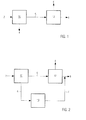
- Fig. 1 shows a device with a first separation unit (10) for separating amorphous PET particles (4) from a polymer mixture (2), and a second separation unit (12) with heating device (not shown) for separating foreign polymers (6) from the resulting polymer mixture (5).
- FIG. 2 A preferred embodiment of the device is in Fig. 2 described. This is analogous to the device according to Fig. 1 with the difference that in this embodiment there is additionally a recirculation unit (13) with which the separated amorphous PET particles (4) are returned to the crystalline PET particles (8), this recirculation following the separation of the foreign polymers (6 ) takes place from the resulting polymer mixture (5).
- a recirculation unit (13) with which the separated amorphous PET particles (4) are returned to the crystalline PET particles (8), this recirculation following the separation of the foreign polymers (6 ) takes place from the resulting polymer mixture (5).
- a method according to the present invention may be carried out in an analogous manner as described above.
- the only difference is that in addition the separated amorphous PET particles (4) after the second separation unit (12) are recycled to the crystalline PET particles, ie after the separation of the foreign polymers from the resulting polymer mixture (5).
- a further preferred embodiment of the device is in Fig. 3 described. This is analogous to the devices according to Fig. 1 and 2 constructed, with the difference that within the recirculation unit (not shown here) a crystallization unit (14) for producing thermally crystallized PET particles (7) is present. Furthermore, the preferred embodiment comprises a color sorting unit (16) for detecting and sorting out remaining foreign polymers (6) from the thermally crystallized PET particles (7) and for producing purified, thermally crystallized PET particles (9).
- a method according to the present invention may be carried out in an analogous manner as described above.
- the difference from the embodiment according to Fig. 2 is that within the step of recycling the amorphous PET particles (4) they are previously converted by thermal crystallization into thermally crystallized PET particles (7).
- This thermal crystallization simultaneously causes a darkening of remaining foreign polymers (6), which are separated by detection and rejection from the thermally crystallized PET particles (7) in the color sorting unit (16).
- the purified, crystallized PET particles (9) are added to the crystalline PET particles (8).
Landscapes
- Engineering & Computer Science (AREA)
- Environmental & Geological Engineering (AREA)
- Mechanical Engineering (AREA)
- Processing And Handling Of Plastics And Other Materials For Molding In General (AREA)
- Separation, Recovery Or Treatment Of Waste Materials Containing Plastics (AREA)
- Developing Agents For Electrophotography (AREA)
Abstract
Description
- Die Erfindung betrifft ein Verfahren und eine Vorrichtung zum Abtrennen von Fremdpolymeren aus einem Polymergemisch, das amorphe PET Partikel und kristalline PET Partikel umfasst, und insbesondere die Reinigung von Polymerflakes aus PET Flaschenabfällen.
- Beim Recycling von PET Flaschen wird das gesammelte Flaschenmaterial zunächst zu sogenannten Flakes zerkleinert, die Partikeldurchmesser im Bereich von ca. 1 bis 10 mm aufweisen. Etwa 70 % bis 90 % der Flakes bestehen aus kristallinem PET Material aus der Flaschenwand, die eine Wandstärke von kleiner ca. 0,5 mm aufweisen. Etwa 10 % bis 30 % der Flakes bestehen aus amorphem PET Material aus Hals- und Bodenbereichen der Flaschen oder aus gemahlenen Preforms mit Wandstärken bzw. Partikelgrößen von ca. 1 mm oder mehr. Zusätzlich enthalten die Flakes üblicherweise Verunreinigungen wie Fremdpolymere wie z.B. Polyvinylchlorid (PVC), Polyamid (PA), Polyolefine, wie Polypropylen (PP) oder Polyethylen (PE), Polymilchsäure (PLA) oder Polystyrol (PS).
- Diese Fremdpolymere stören bei der weiteren thermischen Verarbeitung des PET Materials, wie z.B. Rekristallisation oder Extrusion, da sie die Qualität des PET Recyclats erniedrigen. Insbesondere bedingt der Verbleib von größeren Mengen an Fremdpolymeren eine Dunkelfärbung des PET Recyclats, da die Fremdpolymere bei der thermischen Beanspruchung zumindest teilweise zersetzt werden. Zusätzlich enthält insbesondere PVC Chloridanteile, die bei der thermischen Wiederaufarbeitung des Recyclats zu einem Abbau der Polymerketten führen- Um dies zu vermeiden, müssen die Fremdstoffe weitestgehend, d.h. bis bevorzugt unter ca. 100 ppm Restanteil im PET Recyclat, abgetrennt werden.
- Herkömmliche Trennverfahren sind z.B. Methoden die über Unterschiede in der spezifischen Materialdichte erfolgen, womit Polymere mit einer geringeren Dichte als PET, wie z.B. PP oder PE, gut abgetrennt werden können. Allerdings kann damit z.B. PVC nur ungenügend von PET getrennt werden.
- Weiter sind Verfahren zum Abtrennen von Fremdpolymeren aus PET Material bekannt, die auf dem Prinzip einer erhöhten Haftungsneigung der Fremdpolymere auf Oberflächen im Vergleich zu PET beruhen. Dabei wird das Polymergemisch auf eine bestimmte Temperatur erhitzt, die über dem Erweichungspunkt der abzutrennenden Fremdpolymere aber unter der Erweichungstemperatur des PET Materials liegt. Anschließend wird das Gemisch mit einem mechanischen Kontaktkörper in Berührung gebracht. Durch die mechanische Haftung der Fremdpolymere am Kontaktkörper können diese vom PET abgetrennt werden. Diese Trennmethoden sind z.B. in
DE4303500A1 ,DE4004300A1 ,DE3722777A1 oderUS5236603A beschrieben. Insbesondere bei Flakes aus PET-Flaschenmaterial, die einen hohen Anteil von Flakes aus amorphem PET Material besitzen, besteht der Nachteil dieser herkömmlichen Verfahren darin, dass die erforderlichen Betriebstemperaturen auch über dem Erweichungspunkt der amorphen PET Flakes liegen, und diese dadurch auch am Kontaktkörper haften. Dies wiederum verringert die Ausbeute an gereinigtem PET-Material, d.h. die herkömmlichen Verfahren sind sehr ineffektiv. - Somit liegt die Aufgabe der vorliegenden Erfindung in der Bereitstellung eines Verfahrens und einer Vorrichtung zum Abtrennen von Fremdpolymeren aus einem Polymergemisch, das amorphe PET Partikel und kristalline PET Partikel umfasst, die eine hohe Qualität des resultierenden PET Materials bedingen, und mit denen Fremdpolymere effektiv abgetrennt werden können, ohne dass die Ausbeute an resultierendem PET Material verringert wird.
- Diese Aufgabe wird mit dem Verfahren nach Anspruch 1 erfindungsgemäß gelöst. Bevorzugte Ausführungsformen des Verfahrens sind in den Ansprüchen 2 bis 7 beschrieben, wobei auch alle Kombinationen dieser Ausführungsformen umfasst sind.
- Das erfindungsgemäße Verfahren gemäß Anspruch 1 zum Abtrennen von Fremdpolymeren aus einem Polymergemisch, umfassend amorphe PET Partikel und kristalline PET Partikel, wobei der Erweichungspunkt der Fremdpolymere niedriger als der der kristallinen PET Partikel ist, umfasst die folgenden Schritte:
- Abtrennen der amorphen PET Partikel aus dem Polymergemisch,
- Erhitzen des resultierenden Polymergemisches auf eine Temperatur, die zwischen dem Erweichungspunkt der Fremdpolymere und dem der kristallinen PET Partikel liegt, und
- Abtrennen der Fremdpolymere aus dem resultierenden Polymergemisch.
- Der Begriff "amorphe PET Partikel" bezieht sich auf PET Partikel die keine oder nur sehr geringe Anteile an kristallinen Bereichen, bevorzugt weniger als 1% kristalline Bereiche, umfassen, insbesondere auf PET Flakes aus Material aus Hals- und Bodenbereichen von PET Flaschen oder aus gemahlenen Preforms. Der Begriff "kristalline PET Partikel" bezieht sich auf kristalline und semikristalline PET Partikel, die eine Kristallinität von mindestens > 5%, bevorzugt > 25%, besonders bevorzugt > 40% besitzen, d. h. insbesondere auf PET Flakes aus Wandmaterial von PET Flaschen, die durch eine biaxiale Verstreckung einer kalten Kristallisation unterzogen wurden.
- Unter dem Begriff "PET" werden Polyethylenterephthalat Copolymere verstanden, die weitere übliche Copolymere umfassen können, insbesondere PET Material zur Herstellung von Verpackungsbehältern wie z.B. Getränkeflaschen. Der Begriff "Fremdpolymer" umfasst sämtliche Arten von anderen Polymeren, die im Polymergemisch vorhanden sind, insbesondere PVC, PP, PE, PS, PET-G, PA oder PLA.
- Unter dem Begriff "Erweichungspunkt" wird die Temperatur verstanden, bei dem das Polymer von einem festen in einen flüssigen Zustand übergeht, d.h. der Erweichungspunkt entspricht bei amorphen Polymeren dem Glasübergangspunkt und bei (teil)kristallinen Polymeren dem Schmelzpunkt.
- Das Abtrennen der amorphen PET Partikel aus dem Polymergemisch, d.h. insbesondere das Trennen der amorphen PET Partikel von den kristallinen PET Partikeln kann auf eine beliebige Art und Weise z.B. aufgrund von Unterschieden in der Dichte, Kristallinität oder Größe (Wandstärke) der Partikel erfolgen.
- Nach Abtrennen der amorphen PET Partikel aus dem Polymergemisch erfolgt ein Erhitzen des resultierenden Polymergemisches auf eine Temperatur, die zwischen dem Erweichungspunkt der Fremdpolymere und dem der kristallinen Partikel liegt, d.h. insbesondere auf eine Temperatur zwischen 100 und 190°C, bevorzugt zwischen 130 und 170°C.
- Das Erhitzen des Polymergemisches auf eine Temperatur, die nur über dem Erweichungspunkt der Fremdpolymere liegt, bedingt die Abtrennbarkeit der erweichten Fremdpartikel von den festen kristallinen PET Partikeln. Zum einen resultiert die Erweichung der Fremdpolymere in einer Änderung ihrer physikalischen Eigenschaften wie z.B. der Plastizität oder der Haftungsneigung and Oberflächen, die für die Abtrennung der Fremdpolymere ausgenützt werden kann. Zum anderen erfolgt beim Erhitzen der Fremdpolymeren auf eine Temperatur, die über deren Erweichungspunkt liegt, ein zumindest teilweises Zersetzen, wodurch eine Dunkelfärbung der Fremdpolymere erfolgt, was wiederum für den Abrennungsschritt ausgenützt werden kann.
- Gleichzeitig ist anzumerken, dass der oben beschriebene Temperaturbereich über dem Erweichungspunkt der amorphen PET Partikel liegt. D.h. ohne ein vorhergehendes
- Abtrennen der amorphen PET Partikel aus dem Polymergemisch würden diese beim Schritt des Abtrennens der Fremdpolymere der amorphen PET Partikel auch mit aus dem Polymergemisch mit abgetrennt werden, und so für den weiteren Recyclingprozess nicht mehr zur Verfügung stehen.
- Somit bedingt das Verfahren eine hohe Qualität des resultierenden PET-Materials, da störende Fremdpolymere effektiv abgetrennt werden können. Der Anteil der Fremdpolymere im resultierenden PET Material ist dabei bevorzugt kleiner als 100 ppm, besonders bevorzugt kleiner als 10 ppm. Gleichzeitig erfolgt auch ein Abtrennen der amorphen PET Partikel von den Fremdstoffen, die dann für den Recyclingprozess, im Gegensatz zu herkömmlichen Verfahren, zur Verfügung stehen, d.h. beim vorliegenden Verfahren erfolgt keine Verringerung der Ausbeute an PET Material.
- Nach dem Abtrennen der Fremdpolymere aus dem Polymergemisch kann insbesondere ein Schritt des Rückführens der amorphen PET Partikeln zu den kristallinen PET Partikeln erfolgen, so dass das resultierende PET Material gemeinsam und effektiv weiterverarbeitet werden kann.
- Bevorzugt umfasst der Schritt des Abtrennens der amorphen PET Partikel aus dem Polymergemisch einen Windsichtungsprozess. Windsichtungsprozesse trennen amorphe PET Partikel von kristallinen PET Partikeln aufgrund von Unterschieden in Ihrer Wandstärke, Form, Dichte oder Durchmesser. Insbesondere kann die Windsichtung über einen sogenannten Zickzacksichtungsprozess, einen Luftherdsortierungsprozess oder einen Trenntischsortierungsprozess erfolgen. Entsprechende Prozesse sind im Stand der Technik bekannt, und werden hier nicht weiter erläutert. Damit lassen sich effektiv amorphe PET Partikel aus dem Polymergemisch, d.h. von den kristallinen PET Partikeln, abtrennen. Fremdpolymere werden mit einem Windschichtungsprozess nur zu einem sehr geringen Teil aus dem Polymergemisch abgetrennt, d.h. verbleiben zum Großteil dort.
- Weiter ist bevorzugt, dass das Verfahren, als den Schritt des Abtrennens der Fremdpolymere, den Schritt des In Kontaktbringens des resultierenden Polymergemisches mit einem mechanischen Kontaktkörper umfasst, wobei der Kontaktkörper bevorzugt eine rotierende Metallwalze ist. Am mechanischen Kontaktkörper haften die Fremdpolymere aufgrund der Tatsache, dass diese über deren Erweichungspunkt erwärmt worden sind und so ihre Haftungsneigung im Vergleich zu den festen kristallinen PET Partikeln erhöht ist. Insbesondere bevorzugt ist dabei, dass der Schritt des Erhitzens des Polymergemisches über ein Erhitzen des mechanischen Kontaktkörpers erfolgt, d.h. dass der Energieeintrag der nötig ist um das Polymergemisch zu erwärmen, über den erhitzten Kontaktkörper erfolgt. Über eine solche Abtrennung können effektiv Fremdpolymere aus dem Polymergemisch abgetrennt werden.
- Alternativ oder in Kombination dazu verursacht der Schritt des Erhitzens eine Farbänderung, insbesondere bevorzugt eine Dunkelfärbung, der Fremdpolymere aufgrund des Erhitzens. Dadurch können die Fremdpolymere aus dem resultierenden Polymergemisch über ein Detektieren und Aussortieren der Fremdpolymere aufgrund der Farbänderung erfolgen. Somit können Fremdpolymere effektiv aus dem Polymergemisch entfernt werden.
- Weiter umfasst das Verfahren bevorzugt einen Schritt, bei dem die abgetrennten, amorphen PET Partikel vor dem Schritt des Rückführens zu den kristallinen PET Partikeln durch eine thermische Kristallisation in thermisch kristallisierte PET Partikel überführt werden. Somit kann die Ausbeute von kristallinen PET Partikeln maximiert werden.
- Es ist insbesondere bevorzugt, dass diese thermische Behandlung eine Farbänderung, bevorzugt eine Dunkelfärbung, von verbliebenen Fremdpolymeren in den abgetrennten, amorphen PET Partikeln verursacht. Dabei umfasst das Verfahren den Schritt des Herstellens von gereinigten, thermisch kristallisierten PET Partikeln über das Abtrennen der Fremdpolymere durch deren Detektieren und Aussortieren aus den thermisch kristallisierten PET Partikeln aufgrund dieser Farbänderung. Über diesen zusätzlichen Abtrennungsschritt lässt sich eine besonders hohe Qualität an resultierendem PET Material gewährleisten.
- Die oben beschriebenen Aufgaben werden weiter mit einer Vorrichtung nach Anspruch 8 gelöst. Bevorzugte Ausführungsformen der Vorrichtung sind in den Ansprüchen 9 bis 14 beschrieben, wobei auch alle Kombinationen dieser Ausführungsformen umfasst sind.
- Die erfindungsgemäße Vorrichtung nach Anspruch 8 zum Abtrennen von Fremdpolymeren aus einem Polymergemisch, umfassend amorphe PET Partikel und kristalline PET Partikel, wobei der Erweichungspunkt der Fremdpolymere niedriger als der der kristallinen PET Partikel ist, umfasst:
- Eine erste Abtrennungseinheit zum Abtrennen der amorphen PET Partikel aus dem Polymergemisch,
- eine zweite Abtrennungseinheit mit Heizvorrichtung zum Abtrennen der Fremdpolymere aus dem resultierenden Polymergemisch.
- Durch die Kombination der ersten Abtrennungseinheit und der zweiten Abtrennungseinheit kann aufgrund der vorherigen Abtrennung der amorphen PET Partikel aus dem Polymergemisch vor dem Abtrennen der Fremdpolymere die Vorrichtung effektiv betrieben werden. Weiter lässt sich mit der Vorrichtung eine hohe Qualität des resultierenden PET Materials gewährleisten.
- Bevorzugt umfasst die Vorrichtung eine Rückführungseinheit zum Rückführen der amorphen PET Partikel zu den kristallinen PET Partikeln nach Abtrennen der Fremdpolymere. Dadurch kann der Anteil an PET Material maximiert werden und das resultierende PET Material kann gemeinsam und effektiv weiterverarbeitet werden.
- Bevorzugt umfasst die erste Abtrennungseinheit zum Abtrennen der amorphen PET Partikel aus dem Polymergemisch einen Windsichter, bevorzugt einen Zickzacksichter, Luftherdsortierer oder einen Trenntischsortierer. Entsprechende Vorrichtungen sind im Stand der Technik bekannt und werden hier nicht weiter erläutert. Mit diesen Abtrennungseinheiten können effektiv amorphe PET Partikel von kristallinen PET Partikeln, insbesondere Material aus dem Hals- oder Bodenbereich vom Wandmaterial von PET Flakes aus Flaschenmaterial, getrennt werden.
- Weiter ist die zweite Abtrennungseinheit zum Abtrennen der Fremdpolymere aus dem resultierenden Polymergemisch bevorzugt ein mechanischer Kontaktkörper, insbesondere bevorzugt eine rotierende Metallwalze, an der die Fremdpolymere haften. Insbesondere umfasst der mechanische Kontaktkörper eine Heizvorrichtung, die das Polymergemisch nach Abtrennen der amorphen PET Partikel auf eine Temperatur erhitzt, die zwischen dem Erweichungspunkt der Fremdpolymere und dem der kristallinen PET Partikel liegt. Durch diese zweite Abtrennungseinheit lassen sich effektiv Fremdpolymere aus PET Material abtrennen und so eine hohe Qualität des resultierenden PET Materials gewährleisten.
- Alternativ oder in Kombination dazu ist bevorzugt, dass die zweite Abtrennungseinheit zum Abtrennen der Fremdpolymere aus dem resultierenden Polymergemisch eine Farbsortierungseinheit zum Detektieren und Aussortieren von Fremdpolymeren aus dem resultierenden Polymergemisch ist. Über diese Farbsortierungseinheit lassen sich effektiv dunkel gefärbte Fremdpolymere, die aufgrund des Erhitzens auf eine Temperatur, die über deren Erweichungspunkt liegt, ausgebildet wurden, abtrennen und so eine hohe Qualität des resultierenden PET Materials gewährleisten.
- Weiter kann die Vorrichtung eine Kristallisationseinheit zum Herstellen von thermisch kristallisierten PET Partikeln aus den abgetrennten amorphen PET Partikeln umfassen. Über diese Kristallisationseinheit lässt sich die Menge an gereinigten kristallinen PET Partikeln erhöhen und die Vorrichtung so besonders effektiv ausgestalten.
- Dabei ist insbesondere bevorzugt, dass die Vorrichtung eine Farbsortierungseinheit zum Detektieren und Aussortieren von verbliebenen Fremdpolymeren aus den thermisch kristallisierten PET Partikeln und zur Herstellung von gereinigten, thermisch kristallisierten PET Partikeln umfasst. Über eine solche Farbsortierungseinheit lassen sich evtl. verbliebene Fremdpolymere aus den abgetrennten amorphen PET Partikeln abtrennen, was die Qualität des resultierenden PET Materials weiter erhöht.
- Die Erfindung und ihre Vorteile werden anhand der in den nachfolgenden Zeichnungen dargestellten Ausführungsbeispiele weiter erklärt. Dabei zeigen:
- Fig. 1:
- Eine schematische Schnittzeichnung einer erfindungsgemäßen Vorrichtung;
- Fig. 2:
- Eine schematische Schnittzeichnung einer bevorzugten Ausführungsform einer erfindungsgemäßen Vorrichtung; und
- Fig. 3:
- Eine schematische Schnittzeichnung einer weiteren bevorzugten Ausführungsform einer erfindungsgemäßen Vorrichtung.
-
Fig. 1 zeigt eine Vorrichtung mit einer ersten Abtrennungseinheit (10) zum Abtrennen von amorphen PET Partikeln (4) aus einem Polymergemisch (2), sowie eine zweite Abtrennungseinheit (12) mit Heizvorrichtung (nicht gezeigt) zum Abtrennen von Fremdpolymeren (6) aus dem resultierenden Polymergemisch (5). Dabei werden gereinigte kristalline PET Partikel (8) erzeugt. - In der Vorrichtung gemäß
Fig. 1 kann ein Verfahren gemäß der vorliegenden Erfindung wie folgt durchgeführt werden: - Das Polymergemisch (2), das amorphe PET Partikel (4), kristalline PET Partikel (8), sowie Fremdpolymere (6) umfasst, wird in die erste Abtrennungseinheit (10) überführt. Dort werden die amorphen PET Partikel (4) über einen Windsichter aus dem Polymergemisch (2) abgetrennt. Das resultierende Polymergemisch (5) wird in eine zweite Abtrennungseinheit (12) überführt, und mit einer Heizvorrichtung (nicht gezeigt) auf eine Temperatur erhitzt, die zwischen dem Erweichungspunkt der Fremdpolymere (6) und dem der kristallinen PET Partikel liegt. In der zweiten Abtrennungseinheit (12) erfolgt anschließend das Abtrennen der Fremdpolymere (6), wobei das Abtrennen durch in Kontakt bringen mit einer rotierenden Metallwalze erfolgt, an der die Fremdpolymere (6) haften. Weiter bedingt das Erhitzen des resultierenden Polymergemisches (5) eine Dunkelfärbung der Fremdpolymere. In einem zusätzlichen oder alternativen Trennungsschritt erfolgt die Abtrennung der Fremdpolymere (6) mittels Detektieren und Aussortieren der Fremdpolymere (6) aufgrund dieser Farbänderung über eine Farbsortierungseinheit (nicht gezeigt). Nach dem Schritt des Abtrennens der Fremdpolymere (6) resultieren gereinigte kristalline PET Partikel (8), die aus der zweiten Abtrennungseinheit (12) ausgeführt werden.
- Eine bevorzugte Ausführungsform der Vorrichtung ist in
Fig. 2 beschrieben. Diese ist analog zu der Vorrichtung gemäßFig. 1 aufgebaut, mit dem Unterschied, dass sich in dieser Ausführungsform zusätzlich eine Rückführungseinheit (13) befindet, mit der die abgetrennten amorphen PET Partikel (4) zu den kristallinen PET Partikeln (8) zurückgeführt werden, wobei diese Zurückführung nach der Abtrennung der Fremdpolymere (6) aus dem resultierenden Polymergemisch (5) erfolgt. - In der Vorrichtung gemäß
Fig. 2 kann ein Verfahren gemäß der vorliegenden Erfindung in analoger Weise wie oben beschrieben durchgeführt werden. Der einzige Unterschied besteht darin, dass zusätzlich die abgetrennten amorphen PET Partikel (4) nach der zweiten Abtrennungseinheit (12) zu den kristallinen PET Partikeln, d.h. nach dem Abtrennen der Fremdpolymere aus dem resultierenden Polymergemisch (5), zurückgeführt werden. - Eine weitere bevorzugte Ausführungsform der Vorrichtung ist in
Fig. 3 beschrieben. Diese ist analog zu den Vorrichtungen gemäßFig. 1 und 2 aufgebaut, mit dem Unterschied, dass innerhalb der Rückführungseinheit (hier nicht gezeigt) eine Kristallisationseinheit (14) zum Herstellen von thermisch kristallisierten PET Partikeln (7) vorhanden ist. Weiter umfasst die bevorzugte Ausführungsform eine Farbsortierungseinheit (16) zum Detektieren und Aussortieren von verbliebenen Fremdpolymeren (6) aus den thermisch kristallisierten PET Partikeln (7) und zur Herstellung von gereinigten, thermisch kristallisierten PET Partikeln (9). - In der Vorrichtung gemäß
Fig. 3 kann ein Verfahren gemäß der vorliegenden Erfindung in analoger Weise wie oben beschrieben durchgeführt werden. Der Unterschied zur Ausführungsform gemäßFig. 2 besteht darin, dass innerhalb des Schrittes des Rückführens der amorphen PET Partikel (4) diese vorher durch eine thermische Kristallisation in thermisch kristallisierte PET Partikel (7) überführt werden. Diese thermische Kristallisation verursacht gleichzeitig eine Dunkelfärbung von verbliebenen Fremdpolymeren (6), die durch Detektieren und Aussortieren aus den thermisch kristallisierten PET Partikeln (7) in der Farbsortierungseinheit (16) abgetrennt werden. Anschließend werden die gereinigten, kristallisierten PET Partikel (9) zu den kristallinen PET Partikeln (8) zugegeben.
Claims (14)
- Verfahren zum Abtrennen von Fremdpolymeren (6) aus einem Polymergemisch (2), umfassend amorphe PET Partikel (4) und kristalline PET Partikel (8), wobei der Erweichungspunkt der Fremdpolymere (6) niedriger als der der kristallinen PET Partikel (8) ist, und wobei das Verfahren die Schritte umfasst:- Abtrennen der amorphen PET Partikel (4) aus dem Polymergemisch (2),- Erhitzen des resultierenden Polymergemisches (5) auf eine Temperatur, die zwischen dem Erweichungspunkt der Fremdpolymere (6) und dem der kristallinen PET Partikel (8) liegt, und- Abtrennen der Fremdpolymere (6) aus dem resultierenden Polymergemisch (5).
- Verfahren nach Anspruch 1, weiter umfassend den Schritt des Rückführens der abgetrennten amorphen PET Partikel (4) zu den kristallinen PET Partikeln (8) nach dem Schritt des Abtrennens der Fremdpolymere (6) aus dem resultierenden Polymergemisch (5).
- Verfahren nach Anspruch 1 oder 2, wobei der Schritt des Abtrennens der amorphen PET Partikel (4) aus dem Polymergemisch (2) ein Windsichtungsprozess, bevorzugt ein Zickzacksichtungsprozess, ein Luftherdsortierungsprozess oder ein Trenntischsortierungsprozess, ist.
- Verfahren nach Anspruch 1 bis 3, wobei der Schritt des Abtrennens der Fremdpolymere (6) das in Kontakt bringen mit einem mechanischen Kontaktkörper, bevorzugt einer rotierenden Metallwalze, umfasst, an der die Fremdpolymere (6) haften, und wobei der Schritt des Erhitzens des resultierenden Polymergemisches (5) bevorzugt über ein Erhitzen des mechanischen Kontaktkörpers erfolgt.
- Verfahren nach Anspruch 1 bis 4, wobei der Schritt des Erhitzens eine Farbänderung, bevorzugt eine Dunkelfärbung, der Fremdpolymere (6) verursacht, und der Schritt des Abtrennens der Fremdpolymere (6) aus dem resultierenden Polymergemisch (5) das Detektieren und Aussortieren der Fremdpolymere (6) aufgrund der Farbänderung umfasst.
- Verfahren nach Anspruch 2 bis 5, wobei die abgetrennten amorphen PET Partikel (4) vor dem Schritt des Rückführens zu den kristallinen PET Partikeln (8) durch eine thermische Kristallisation in thermisch kristallisierte PET Partikel (7) überführt werden.
- Verfahren nach Anspruch 6, wobei die thermische Kristallisation eine Farbänderung, bevorzugt eine Dunkelfärbung, von verbliebenen Fremdpolymeren (6) verursacht, und wobei das Verfahren den Schritt des Herstellens von gereinigten, thermisch kristallisierten PET Partikeln (9) über Abtrennen der Fremdpolymere (6) durch Detektieren und Aussortieren aus den thermisch kristallisierten PET Partikeln (7) aufgrund der Farbänderung umfasst.
- Vorrichtung zum Abtrennen von Fremdpolymeren (6) aus einem Polymergemisch (2), umfassend amorphe PET Partikel (4) und kristalline PET Partikel (8), wobei der Erweichungspunkt der Fremdpolymere (6) niedriger als der der kristallinen PET Partikel (8) ist, umfassend:- eine erste Abtrennungseinheit (10) zum Abtrennen der amorphen PET Partikel (4) aus dem Polymergemisch (2),- eine zweite Abtrennungseinheit (12) mit Heizvorrichtung zum Abtrennen der Fremdpolymere (6) aus dem resultierenden Polymergemisch (5).
- Vorrichtung nach Anspruch 8, weiter umfassend eine Rückführungseinheit (13) zum Rückführen der amorphen PET Partikel (4) zu den kristallinen PET Partikeln (8) nach Abtrennen der Fremdpolymere (6).
- Vorrichtung nach Anspruch 8 oder 9, wobei die erste Abtrennungseinheit (10) zum Abtrennen der amorphen PET Partikel (4) aus dem Polymergemisch (2) ein Windsichter, bevorzugt ein Zickzacksichter, Luftherdsortierer oder ein Trenntischsortierer, ist.
- Vorrichtung nach Anspruch 8 bis 10, wobei die zweite Abtrennungseinheit (12) zum Abtrennen der Fremdpolymere (6) aus dem resultierenden Polymergemisch (5) einen mechanischen Kontaktkörper, bevorzugt eine rotierenden Metallwalze, umfasst, an der die Fremdpolymere (6) haften, und wobei der mechanische Kontaktkörper bevorzugt die Heizvorrichtung ist.
- Vorrichtung nach Anspruch 8 bis 11, wobei die zweite Abtrennungseinheit (12) zum Abtrennen der Fremdpolymere (6) aus dem resultierenden Polymergemisch (5) eine Farbsortierungseinheit zum Detektieren und Aussortieren von Fremdpolymeren (6) aus dem resultierenden Polymergemisch (5) ist.
- Vorrichtung nach Anspruch 8 bis 12, weiter umfassend eine Kristallisationseinheit (14) zum Herstellen von thermisch kristallisierten PET Partikeln (7) aus den abgetrennten amorphen PET Partikeln (4).
- Vorrichtung nach Anspruch 13, weiter umfassend eine Farbsortierungseinheit (16) zum Detektieren und Aussortieren von verbliebenen Fremdpolymeren (6) aus den thermisch kristallisierten PET Partikeln (7) und zur Herstellung von gereinigten, thermisch kristallisierten PET Partikeln (9).
Applications Claiming Priority (1)
| Application Number | Priority Date | Filing Date | Title |
|---|---|---|---|
| DE201010063601 DE102010063601A1 (de) | 2010-12-20 | 2010-12-20 | Verfahren und Vorrichtung zum Abtrennen von Fremdpolymeren aus einem Polymergemisch |
Publications (2)
| Publication Number | Publication Date |
|---|---|
| EP2465656A1 true EP2465656A1 (de) | 2012-06-20 |
| EP2465656B1 EP2465656B1 (de) | 2016-03-16 |
Family
ID=45370409
Family Applications (1)
| Application Number | Title | Priority Date | Filing Date |
|---|---|---|---|
| EP11186506.9A Not-in-force EP2465656B1 (de) | 2010-12-20 | 2011-10-25 | Verfahren zum Abtrennen von Fremdpolymeren aus einem Polymergemisch |
Country Status (7)
| Country | Link |
|---|---|
| US (1) | US9061443B2 (de) |
| EP (1) | EP2465656B1 (de) |
| CN (1) | CN102601888B (de) |
| BR (1) | BRPI1105360A2 (de) |
| CA (1) | CA2761452C (de) |
| DE (1) | DE102010063601A1 (de) |
| MX (1) | MX336063B (de) |
Cited By (1)
| Publication number | Priority date | Publication date | Assignee | Title |
|---|---|---|---|---|
| WO2012143692A3 (en) * | 2011-04-20 | 2013-05-10 | Buhler Sortex Ltd | Processing system and method |
Families Citing this family (2)
| Publication number | Priority date | Publication date | Assignee | Title |
|---|---|---|---|---|
| GB2499632B (en) * | 2012-02-23 | 2017-07-05 | Nextek Ltd | Separation of components of plastic |
| DE102015118393A1 (de) * | 2015-10-28 | 2017-05-04 | STF Maschinen- & Anlagenbau GmbH | Verfahren zum Sortieren von Verpackungsbehälter aus Kunststoff |
Citations (8)
| Publication number | Priority date | Publication date | Assignee | Title |
|---|---|---|---|---|
| DE3722777A1 (de) | 1987-07-09 | 1989-01-19 | Thimm Dorner Geb Schorp | Einrichtung zum aussortieren thermoplastischer kunststoffteile aus einem gemengestrom |
| DE4004300A1 (de) | 1990-02-13 | 1991-08-14 | Refakt Anlagenbau Gmbh | Verfahren und vorrichtung zum trennen unterschiedlicher kunststoffprodukte |
| DE4303500A1 (en) | 1992-02-07 | 1993-08-12 | Juergen Deuerlein | Plastics sepn. for polyvinyl chloride and polyethylene terephthalate bottles - by sepg. hollow components contacting heated body and with lower softening point w.r.t. various physical properties e.g. elasticity |
| US5236603A (en) | 1991-06-18 | 1993-08-17 | Sampson Donald L | Method for plastics recycling |
| US5660282A (en) * | 1993-04-29 | 1997-08-26 | Evergreen Global Resources, Inc. | Method and apparatus for separating resource materials from solid waste |
| JPH11226957A (ja) * | 1998-02-19 | 1999-08-24 | Kurabo Ind Ltd | 異種プラスチック材の分別方法及び分別装置、並びにpvcとpetの分別装置 |
| DE19953659A1 (de) * | 1999-11-08 | 2001-05-10 | Buehler Ag | Verfahren und Vorrichtung zur Dekontamination von Polykondensaten |
| WO2005037514A1 (de) * | 2003-10-13 | 2005-04-28 | Krones Ag | Pet-flaschen-recycling |
Family Cites Families (2)
| Publication number | Priority date | Publication date | Assignee | Title |
|---|---|---|---|---|
| DE4337539A1 (de) * | 1993-10-31 | 1995-06-14 | Siebert Martin | Verfahren und Vorrichtung zum Sortieren und Aussortieren thermoplastischer Kunststoffteile durch selektive Formveränderung der zu sortierenden Teile |
| US6284808B1 (en) * | 1997-02-03 | 2001-09-04 | Illinois Tool Works Inc. | Inline solid state polymerization of PET flakes for manufacturing plastic strap by removing non-crystalline materials from recycled PET |
-
2010
- 2010-12-20 DE DE201010063601 patent/DE102010063601A1/de not_active Withdrawn
-
2011
- 2011-10-25 EP EP11186506.9A patent/EP2465656B1/de not_active Not-in-force
- 2011-12-12 CA CA2761452A patent/CA2761452C/en active Active
- 2011-12-19 BR BRPI1105360-7A patent/BRPI1105360A2/pt not_active IP Right Cessation
- 2011-12-20 CN CN201110430865.8A patent/CN102601888B/zh not_active Expired - Fee Related
- 2011-12-20 US US13/330,842 patent/US9061443B2/en active Active
-
2012
- 2012-01-02 MX MX2012000064A patent/MX336063B/es unknown
Patent Citations (8)
| Publication number | Priority date | Publication date | Assignee | Title |
|---|---|---|---|---|
| DE3722777A1 (de) | 1987-07-09 | 1989-01-19 | Thimm Dorner Geb Schorp | Einrichtung zum aussortieren thermoplastischer kunststoffteile aus einem gemengestrom |
| DE4004300A1 (de) | 1990-02-13 | 1991-08-14 | Refakt Anlagenbau Gmbh | Verfahren und vorrichtung zum trennen unterschiedlicher kunststoffprodukte |
| US5236603A (en) | 1991-06-18 | 1993-08-17 | Sampson Donald L | Method for plastics recycling |
| DE4303500A1 (en) | 1992-02-07 | 1993-08-12 | Juergen Deuerlein | Plastics sepn. for polyvinyl chloride and polyethylene terephthalate bottles - by sepg. hollow components contacting heated body and with lower softening point w.r.t. various physical properties e.g. elasticity |
| US5660282A (en) * | 1993-04-29 | 1997-08-26 | Evergreen Global Resources, Inc. | Method and apparatus for separating resource materials from solid waste |
| JPH11226957A (ja) * | 1998-02-19 | 1999-08-24 | Kurabo Ind Ltd | 異種プラスチック材の分別方法及び分別装置、並びにpvcとpetの分別装置 |
| DE19953659A1 (de) * | 1999-11-08 | 2001-05-10 | Buehler Ag | Verfahren und Vorrichtung zur Dekontamination von Polykondensaten |
| WO2005037514A1 (de) * | 2003-10-13 | 2005-04-28 | Krones Ag | Pet-flaschen-recycling |
Cited By (1)
| Publication number | Priority date | Publication date | Assignee | Title |
|---|---|---|---|---|
| WO2012143692A3 (en) * | 2011-04-20 | 2013-05-10 | Buhler Sortex Ltd | Processing system and method |
Also Published As
| Publication number | Publication date |
|---|---|
| CA2761452C (en) | 2019-02-19 |
| CN102601888B (zh) | 2015-06-10 |
| US9061443B2 (en) | 2015-06-23 |
| US20120157557A1 (en) | 2012-06-21 |
| CA2761452A1 (en) | 2012-06-20 |
| MX2012000064A (es) | 2012-06-19 |
| BRPI1105360A2 (pt) | 2013-04-02 |
| CN102601888A (zh) | 2012-07-25 |
| EP2465656B1 (de) | 2016-03-16 |
| MX336063B (es) | 2016-01-06 |
| DE102010063601A1 (de) | 2012-06-21 |
Similar Documents
| Publication | Publication Date | Title |
|---|---|---|
| EP3509811B1 (de) | Verfahren zur herstellung von polyolefin-rezyklaten | |
| EP2364246B1 (de) | Verfahren und vorrichtung zum abtrennen einzelner wertstoffe aus gemischtem, insbesondere zerkleinertem, kunstoffabfall | |
| EP2101974B1 (de) | Verfahren zur vorbehandlung, aufarbeitung bzw. recyclierung von thermoplastischem kunststoffmaterial | |
| EP1673206B1 (de) | Pet-flaschen-recycling | |
| DE69026829T2 (de) | Polymerrecycling durch selektive auflösung | |
| EP4613238A2 (de) | Anlage und verfahren für das recycling verunreinigter polyolefine | |
| DE102016015198A1 (de) | Lösungsmittel sowie Verfahren zum Lösen eines Kunststoffes von einem Feststoff innerhalb einer Suspension | |
| EP2823945A2 (de) | Verfahren und Vorrichtung zur Aufbereitung von Kunststoffabfällen | |
| DE69936125T2 (de) | Festphasenkondensation von PET-Flocken | |
| WO2001087567A1 (de) | Verfahren und vorrichtung zur trockenen auftrennung von sammelmüll mit verpackungsabfällen | |
| EP2465656B1 (de) | Verfahren zum Abtrennen von Fremdpolymeren aus einem Polymergemisch | |
| EP2260071B1 (de) | Verfahren zur herstellung eines gefüllten polymermaterials | |
| DE69408794T2 (de) | Geformte Folie aus Polyethylenterephtalat und deren Herstellungsverfahren | |
| DE4303500A1 (en) | Plastics sepn. for polyvinyl chloride and polyethylene terephthalate bottles - by sepg. hollow components contacting heated body and with lower softening point w.r.t. various physical properties e.g. elasticity | |
| EP0792730A2 (de) | Verfahren zum Trennen von Glas und Folien insbesondere von Verbundscheiben | |
| WO2000010787A1 (de) | Verfahren und vorrichtung zur sortenreinen rückgewinnung von pvc aus pvc-haltigen kunststoffabfällen | |
| EP2192150B1 (de) | Polyester-mit-Ätzmaterial-Mischverfahren und -Mischreaktoren | |
| DE4220665C2 (de) | Verfahren zur Gewinnung von thermoplastischen Schaumstoffanteilen aus einem Kunststoffabfälle enthaltenden Gemenge | |
| DE102014104955A1 (de) | Verfahren und Vorrichtung zur Verarbeitung eines Kunststoffes und Verpackungsband | |
| DE102023130501A1 (de) | Vorrichtung und Verfahren zur Herstellung eines Behälters aus einem Vorformling | |
| WO2024200218A1 (de) | Verfahren zum recycling von polyolefin-behältern | |
| AT509067B1 (de) | Verfahren zum recyceln von thermoplasten | |
| EP3030393A1 (de) | Verfahren zur aufbereitung von werkstoffen und eine entsprechende vorrichtung | |
| DE20321865U1 (de) | Kunststoffwiederaufbereitung mit steuerbarer Dekontamination |
Legal Events
| Date | Code | Title | Description |
|---|---|---|---|
| PUAI | Public reference made under article 153(3) epc to a published international application that has entered the european phase |
Free format text: ORIGINAL CODE: 0009012 |
|
| AK | Designated contracting states |
Kind code of ref document: A1 Designated state(s): AL AT BE BG CH CY CZ DE DK EE ES FI FR GB GR HR HU IE IS IT LI LT LU LV MC MK MT NL NO PL PT RO RS SE SI SK SM TR |
|
| AX | Request for extension of the european patent |
Extension state: BA ME |
|
| 17P | Request for examination filed |
Effective date: 20120716 |
|
| 17Q | First examination report despatched |
Effective date: 20150409 |
|
| GRAP | Despatch of communication of intention to grant a patent |
Free format text: ORIGINAL CODE: EPIDOSNIGR1 |
|
| INTG | Intention to grant announced |
Effective date: 20150922 |
|
| GRAS | Grant fee paid |
Free format text: ORIGINAL CODE: EPIDOSNIGR3 |
|
| GRAA | (expected) grant |
Free format text: ORIGINAL CODE: 0009210 |
|
| AK | Designated contracting states |
Kind code of ref document: B1 Designated state(s): AL AT BE BG CH CY CZ DE DK EE ES FI FR GB GR HR HU IE IS IT LI LT LU LV MC MK MT NL NO PL PT RO RS SE SI SK SM TR |
|
| REG | Reference to a national code |
Ref country code: GB Ref legal event code: FG4D Free format text: NOT ENGLISH |
|
| REG | Reference to a national code |
Ref country code: CH Ref legal event code: EP |
|
| REG | Reference to a national code |
Ref country code: IE Ref legal event code: FG4D Free format text: LANGUAGE OF EP DOCUMENT: GERMAN |
|
| REG | Reference to a national code |
Ref country code: AT Ref legal event code: REF Ref document number: 780800 Country of ref document: AT Kind code of ref document: T Effective date: 20160415 |
|
| REG | Reference to a national code |
Ref country code: DE Ref legal event code: R096 Ref document number: 502011009090 Country of ref document: DE |
|
| REG | Reference to a national code |
Ref country code: NL Ref legal event code: FP |
|
| REG | Reference to a national code |
Ref country code: LT Ref legal event code: MG4D |
|
| PG25 | Lapsed in a contracting state [announced via postgrant information from national office to epo] |
Ref country code: FI Free format text: LAPSE BECAUSE OF FAILURE TO SUBMIT A TRANSLATION OF THE DESCRIPTION OR TO PAY THE FEE WITHIN THE PRESCRIBED TIME-LIMIT Effective date: 20160316 Ref country code: GR Free format text: LAPSE BECAUSE OF FAILURE TO SUBMIT A TRANSLATION OF THE DESCRIPTION OR TO PAY THE FEE WITHIN THE PRESCRIBED TIME-LIMIT Effective date: 20160617 Ref country code: HR Free format text: LAPSE BECAUSE OF FAILURE TO SUBMIT A TRANSLATION OF THE DESCRIPTION OR TO PAY THE FEE WITHIN THE PRESCRIBED TIME-LIMIT Effective date: 20160316 Ref country code: NO Free format text: LAPSE BECAUSE OF FAILURE TO SUBMIT A TRANSLATION OF THE DESCRIPTION OR TO PAY THE FEE WITHIN THE PRESCRIBED TIME-LIMIT Effective date: 20160616 |
|
| PG25 | Lapsed in a contracting state [announced via postgrant information from national office to epo] |
Ref country code: LV Free format text: LAPSE BECAUSE OF FAILURE TO SUBMIT A TRANSLATION OF THE DESCRIPTION OR TO PAY THE FEE WITHIN THE PRESCRIBED TIME-LIMIT Effective date: 20160316 Ref country code: SE Free format text: LAPSE BECAUSE OF FAILURE TO SUBMIT A TRANSLATION OF THE DESCRIPTION OR TO PAY THE FEE WITHIN THE PRESCRIBED TIME-LIMIT Effective date: 20160316 Ref country code: LT Free format text: LAPSE BECAUSE OF FAILURE TO SUBMIT A TRANSLATION OF THE DESCRIPTION OR TO PAY THE FEE WITHIN THE PRESCRIBED TIME-LIMIT Effective date: 20160316 Ref country code: RS Free format text: LAPSE BECAUSE OF FAILURE TO SUBMIT A TRANSLATION OF THE DESCRIPTION OR TO PAY THE FEE WITHIN THE PRESCRIBED TIME-LIMIT Effective date: 20160316 |
|
| REG | Reference to a national code |
Ref country code: FR Ref legal event code: PLFP Year of fee payment: 6 |
|
| PG25 | Lapsed in a contracting state [announced via postgrant information from national office to epo] |
Ref country code: IS Free format text: LAPSE BECAUSE OF FAILURE TO SUBMIT A TRANSLATION OF THE DESCRIPTION OR TO PAY THE FEE WITHIN THE PRESCRIBED TIME-LIMIT Effective date: 20160716 Ref country code: EE Free format text: LAPSE BECAUSE OF FAILURE TO SUBMIT A TRANSLATION OF THE DESCRIPTION OR TO PAY THE FEE WITHIN THE PRESCRIBED TIME-LIMIT Effective date: 20160316 Ref country code: PL Free format text: LAPSE BECAUSE OF FAILURE TO SUBMIT A TRANSLATION OF THE DESCRIPTION OR TO PAY THE FEE WITHIN THE PRESCRIBED TIME-LIMIT Effective date: 20160316 |
|
| PG25 | Lapsed in a contracting state [announced via postgrant information from national office to epo] |
Ref country code: SM Free format text: LAPSE BECAUSE OF FAILURE TO SUBMIT A TRANSLATION OF THE DESCRIPTION OR TO PAY THE FEE WITHIN THE PRESCRIBED TIME-LIMIT Effective date: 20160316 Ref country code: ES Free format text: LAPSE BECAUSE OF FAILURE TO SUBMIT A TRANSLATION OF THE DESCRIPTION OR TO PAY THE FEE WITHIN THE PRESCRIBED TIME-LIMIT Effective date: 20160316 Ref country code: SK Free format text: LAPSE BECAUSE OF FAILURE TO SUBMIT A TRANSLATION OF THE DESCRIPTION OR TO PAY THE FEE WITHIN THE PRESCRIBED TIME-LIMIT Effective date: 20160316 Ref country code: PT Free format text: LAPSE BECAUSE OF FAILURE TO SUBMIT A TRANSLATION OF THE DESCRIPTION OR TO PAY THE FEE WITHIN THE PRESCRIBED TIME-LIMIT Effective date: 20160718 Ref country code: RO Free format text: LAPSE BECAUSE OF FAILURE TO SUBMIT A TRANSLATION OF THE DESCRIPTION OR TO PAY THE FEE WITHIN THE PRESCRIBED TIME-LIMIT Effective date: 20160316 |
|
| REG | Reference to a national code |
Ref country code: DE Ref legal event code: R097 Ref document number: 502011009090 Country of ref document: DE |
|
| PLBE | No opposition filed within time limit |
Free format text: ORIGINAL CODE: 0009261 |
|
| STAA | Information on the status of an ep patent application or granted ep patent |
Free format text: STATUS: NO OPPOSITION FILED WITHIN TIME LIMIT |
|
| PG25 | Lapsed in a contracting state [announced via postgrant information from national office to epo] |
Ref country code: DK Free format text: LAPSE BECAUSE OF FAILURE TO SUBMIT A TRANSLATION OF THE DESCRIPTION OR TO PAY THE FEE WITHIN THE PRESCRIBED TIME-LIMIT Effective date: 20160316 |
|
| 26N | No opposition filed |
Effective date: 20161219 |
|
| PG25 | Lapsed in a contracting state [announced via postgrant information from national office to epo] |
Ref country code: BE Free format text: LAPSE BECAUSE OF NON-PAYMENT OF DUE FEES Effective date: 20161031 Ref country code: BG Free format text: LAPSE BECAUSE OF FAILURE TO SUBMIT A TRANSLATION OF THE DESCRIPTION OR TO PAY THE FEE WITHIN THE PRESCRIBED TIME-LIMIT Effective date: 20160616 |
|
| PG25 | Lapsed in a contracting state [announced via postgrant information from national office to epo] |
Ref country code: SI Free format text: LAPSE BECAUSE OF FAILURE TO SUBMIT A TRANSLATION OF THE DESCRIPTION OR TO PAY THE FEE WITHIN THE PRESCRIBED TIME-LIMIT Effective date: 20160316 |
|
| REG | Reference to a national code |
Ref country code: CH Ref legal event code: PL |
|
| REG | Reference to a national code |
Ref country code: IE Ref legal event code: MM4A |
|
| PG25 | Lapsed in a contracting state [announced via postgrant information from national office to epo] |
Ref country code: LI Free format text: LAPSE BECAUSE OF NON-PAYMENT OF DUE FEES Effective date: 20161031 Ref country code: CH Free format text: LAPSE BECAUSE OF NON-PAYMENT OF DUE FEES Effective date: 20161031 |
|
| PG25 | Lapsed in a contracting state [announced via postgrant information from national office to epo] |
Ref country code: LU Free format text: LAPSE BECAUSE OF NON-PAYMENT OF DUE FEES Effective date: 20161025 |
|
| REG | Reference to a national code |
Ref country code: FR Ref legal event code: PLFP Year of fee payment: 7 |
|
| PG25 | Lapsed in a contracting state [announced via postgrant information from national office to epo] |
Ref country code: IE Free format text: LAPSE BECAUSE OF NON-PAYMENT OF DUE FEES Effective date: 20161025 |
|
| REG | Reference to a national code |
Ref country code: BE Ref legal event code: MM Effective date: 20161031 |
|
| PG25 | Lapsed in a contracting state [announced via postgrant information from national office to epo] |
Ref country code: HU Free format text: LAPSE BECAUSE OF FAILURE TO SUBMIT A TRANSLATION OF THE DESCRIPTION OR TO PAY THE FEE WITHIN THE PRESCRIBED TIME-LIMIT; INVALID AB INITIO Effective date: 20111025 Ref country code: CY Free format text: LAPSE BECAUSE OF FAILURE TO SUBMIT A TRANSLATION OF THE DESCRIPTION OR TO PAY THE FEE WITHIN THE PRESCRIBED TIME-LIMIT Effective date: 20160316 |
|
| PG25 | Lapsed in a contracting state [announced via postgrant information from national office to epo] |
Ref country code: MK Free format text: LAPSE BECAUSE OF FAILURE TO SUBMIT A TRANSLATION OF THE DESCRIPTION OR TO PAY THE FEE WITHIN THE PRESCRIBED TIME-LIMIT Effective date: 20160316 Ref country code: MT Free format text: LAPSE BECAUSE OF FAILURE TO SUBMIT A TRANSLATION OF THE DESCRIPTION OR TO PAY THE FEE WITHIN THE PRESCRIBED TIME-LIMIT Effective date: 20160316 Ref country code: MC Free format text: LAPSE BECAUSE OF FAILURE TO SUBMIT A TRANSLATION OF THE DESCRIPTION OR TO PAY THE FEE WITHIN THE PRESCRIBED TIME-LIMIT Effective date: 20160316 Ref country code: TR Free format text: LAPSE BECAUSE OF FAILURE TO SUBMIT A TRANSLATION OF THE DESCRIPTION OR TO PAY THE FEE WITHIN THE PRESCRIBED TIME-LIMIT Effective date: 20160316 |
|
| REG | Reference to a national code |
Ref country code: FR Ref legal event code: PLFP Year of fee payment: 8 |
|
| PG25 | Lapsed in a contracting state [announced via postgrant information from national office to epo] |
Ref country code: AL Free format text: LAPSE BECAUSE OF FAILURE TO SUBMIT A TRANSLATION OF THE DESCRIPTION OR TO PAY THE FEE WITHIN THE PRESCRIBED TIME-LIMIT Effective date: 20160316 |
|
| PGFP | Annual fee paid to national office [announced via postgrant information from national office to epo] |
Ref country code: NL Payment date: 20220916 Year of fee payment: 12 Ref country code: GB Payment date: 20220901 Year of fee payment: 12 Ref country code: CZ Payment date: 20220927 Year of fee payment: 12 |
|
| PGFP | Annual fee paid to national office [announced via postgrant information from national office to epo] |
Ref country code: FR Payment date: 20220908 Year of fee payment: 12 |
|
| PGFP | Annual fee paid to national office [announced via postgrant information from national office to epo] |
Ref country code: IT Payment date: 20220913 Year of fee payment: 12 Ref country code: DE Payment date: 20220621 Year of fee payment: 12 Ref country code: AT Payment date: 20220926 Year of fee payment: 12 |
|
| P01 | Opt-out of the competence of the unified patent court (upc) registered |
Effective date: 20230523 |
|
| REG | Reference to a national code |
Ref country code: DE Ref legal event code: R119 Ref document number: 502011009090 Country of ref document: DE |
|
| REG | Reference to a national code |
Ref country code: NL Ref legal event code: MM Effective date: 20231101 |
|
| REG | Reference to a national code |
Ref country code: AT Ref legal event code: MM01 Ref document number: 780800 Country of ref document: AT Kind code of ref document: T Effective date: 20231025 |
|
| GBPC | Gb: european patent ceased through non-payment of renewal fee |
Effective date: 20231025 |
|
| PG25 | Lapsed in a contracting state [announced via postgrant information from national office to epo] |
Ref country code: GB Free format text: LAPSE BECAUSE OF NON-PAYMENT OF DUE FEES Effective date: 20231025 |
|
| PG25 | Lapsed in a contracting state [announced via postgrant information from national office to epo] |
Ref country code: NL Free format text: LAPSE BECAUSE OF NON-PAYMENT OF DUE FEES Effective date: 20231101 |
|
| PG25 | Lapsed in a contracting state [announced via postgrant information from national office to epo] |
Ref country code: CZ Free format text: LAPSE BECAUSE OF NON-PAYMENT OF DUE FEES Effective date: 20231025 Ref country code: AT Free format text: LAPSE BECAUSE OF NON-PAYMENT OF DUE FEES Effective date: 20231025 |
|
| PG25 | Lapsed in a contracting state [announced via postgrant information from national office to epo] |
Ref country code: NL Free format text: LAPSE BECAUSE OF NON-PAYMENT OF DUE FEES Effective date: 20231101 Ref country code: GB Free format text: LAPSE BECAUSE OF NON-PAYMENT OF DUE FEES Effective date: 20231025 Ref country code: FR Free format text: LAPSE BECAUSE OF NON-PAYMENT OF DUE FEES Effective date: 20231031 Ref country code: DE Free format text: LAPSE BECAUSE OF NON-PAYMENT OF DUE FEES Effective date: 20240501 Ref country code: CZ Free format text: LAPSE BECAUSE OF NON-PAYMENT OF DUE FEES Effective date: 20231025 Ref country code: AT Free format text: LAPSE BECAUSE OF NON-PAYMENT OF DUE FEES Effective date: 20231025 |
|
| PG25 | Lapsed in a contracting state [announced via postgrant information from national office to epo] |
Ref country code: IT Free format text: LAPSE BECAUSE OF NON-PAYMENT OF DUE FEES Effective date: 20231025 |
|
| PG25 | Lapsed in a contracting state [announced via postgrant information from national office to epo] |
Ref country code: IT Free format text: LAPSE BECAUSE OF NON-PAYMENT OF DUE FEES Effective date: 20231025 |