EP2463377A1 - Process for production of l-lysine using bacterium belonging to genus vibrio - Google Patents
Process for production of l-lysine using bacterium belonging to genus vibrio Download PDFInfo
- Publication number
- EP2463377A1 EP2463377A1 EP10806301A EP10806301A EP2463377A1 EP 2463377 A1 EP2463377 A1 EP 2463377A1 EP 10806301 A EP10806301 A EP 10806301A EP 10806301 A EP10806301 A EP 10806301A EP 2463377 A1 EP2463377 A1 EP 2463377A1
- Authority
- EP
- European Patent Office
- Prior art keywords
- lysine
- vibrio
- gene
- bacterium
- medium
- Prior art date
- Legal status (The legal status is an assumption and is not a legal conclusion. Google has not performed a legal analysis and makes no representation as to the accuracy of the status listed.)
- Granted
Links
Images


Classifications
-
- C—CHEMISTRY; METALLURGY
- C12—BIOCHEMISTRY; BEER; SPIRITS; WINE; VINEGAR; MICROBIOLOGY; ENZYMOLOGY; MUTATION OR GENETIC ENGINEERING
- C12P—FERMENTATION OR ENZYME-USING PROCESSES TO SYNTHESISE A DESIRED CHEMICAL COMPOUND OR COMPOSITION OR TO SEPARATE OPTICAL ISOMERS FROM A RACEMIC MIXTURE
- C12P13/00—Preparation of nitrogen-containing organic compounds
- C12P13/04—Alpha- or beta- amino acids
- C12P13/08—Lysine; Diaminopimelic acid; Threonine; Valine
-
- C—CHEMISTRY; METALLURGY
- C12—BIOCHEMISTRY; BEER; SPIRITS; WINE; VINEGAR; MICROBIOLOGY; ENZYMOLOGY; MUTATION OR GENETIC ENGINEERING
- C12N—MICROORGANISMS OR ENZYMES; COMPOSITIONS THEREOF; PROPAGATING, PRESERVING, OR MAINTAINING MICROORGANISMS; MUTATION OR GENETIC ENGINEERING; CULTURE MEDIA
- C12N9/00—Enzymes; Proenzymes; Compositions thereof; Processes for preparing, activating, inhibiting, separating or purifying enzymes
- C12N9/0004—Oxidoreductases (1.)
- C12N9/0006—Oxidoreductases (1.) acting on CH-OH groups as donors (1.1)
-
- C—CHEMISTRY; METALLURGY
- C12—BIOCHEMISTRY; BEER; SPIRITS; WINE; VINEGAR; MICROBIOLOGY; ENZYMOLOGY; MUTATION OR GENETIC ENGINEERING
- C12Y—ENZYMES
- C12Y101/00—Oxidoreductases acting on the CH-OH group of donors (1.1)
- C12Y101/01—Oxidoreductases acting on the CH-OH group of donors (1.1) with NAD+ or NADP+ as acceptor (1.1.1)
- C12Y101/01055—Lactaldehyde reductase (NADPH) (1.1.1.55)
Definitions
- the present invention relates to a method for producing L-lysine using a Vibrio bacterium.
- L-Lysine is an industrially useful L-amino acid as an additive for animal feed, ingredient of health food, amino acid infusion, and so forth.
- L-lysine is produced by fermentation using a coryneform bacterium belonging to the genus Brevibacterium, Corynebacterium, or the like, a bacterium belonging to the genus Bacillus, Escherichia, Streptomyces, Methylobacillus, or the like, or a filamentous fungus belonging to the genus Penicillium, or the like.
- L-Amino acid production methods based on direct fermentation have a problem that the action of a microorganism is reduced by increase of osmotic pressure due to accumulation of L-amino acid in the medium, and thus the productivity cannot be maintained for a long period of time.
- a method for producing an L-amino acid such as L-lysine by direct fermentation using a Vibrio bacterium has been disclosed (Patent document 5).
- Non-patent document 1, Patent document 4 As a method for producing L-lysine in which decomposition of L-lysine accumulated in the medium can be reduced, methods using a microorganism of which L-lysine decomposition ability is reduced, in particular, a microorganism belonging to the genus Escherichia in which the cadA gene or the ldcC gene is deleted, or expression amount or enzymatic activity of the product thereof is decreased have been known (Non-patent document 1, Patent document 4).
- a cadA homologue gene is present in Vibrio cholerae, Vibrio parahaemolyticus and Vibrio vuinificus among the Vibrio bacteria (Non-patent documents 2 to 4).
- L-lysine decomposition ability is attenuated or deleted by disruption of such a cadA homologue gene in those Vibrio bacteria.
- presence of an L-lysine decomposition pathway other than the L-lysine decomposition pathway involving a cadA homologue gene product has not been known in Vibrio bacteria.
- An object of the present invention is to provide a method for efficiently producing L-lysine using a Vibrio bacterium.
- the inventors of the present invention have already found a phenomenon that L-lysine accumulated in the medium decreases with progress of culture in the case of Vibrio bacteria, and one of objects of the present invention is to reduce this decrease of L-lysine.
- the inventors of the present invention conducted various researches in order to achieve the aforementioned object. As a result, they specified a gene coding for a factor involved in L-lysine decomposition in Vibrio bacteria. And they found that, by disrupting that gene, decomposition of accumulated L-lysine can be suppressed, and L-lysine can be efficiently produced, and accomplished the present invention.
- the present invention thus relates to the followings.
- the bacterium of the present invention is a Vibrio bacterium which has an ability to produce L-lysine and has been modified so that an activity of a protein encoded by the fucO gene is reduced.
- the ability to produce L-lysine referred to herein means an ability of the bacterium of the present invention to produce and accumulate L-lysine in a medium or cells thereof in such a degree that L-lysine can be collected from the medium or cells, when the bacterium is cultured in the medium. That is, the bacterium of the present invention is a Vibrio bacterium that can produce L-lysine by fermentation using a saccharide or the like as a carbon source (also called direct fermentation).
- a Vibrio bacterium which has been modified so that the activity of the protein encoded by the fucO gene is reduced is cultured under preferred conditions, for example, if 1.5 times or more, preferably twice or more, more preferably 3 times or more, of L-lysine is accumulated, the bacterium has the ability to produce L-lysine.
- L-lysine includes L-lysine of the free form and a salt thereof such as sulfate, hydrochloride and carbonate.
- the Vibrio bacterium having the ability to produce L-lysine may be a bacterium inherently having the ability to produce L-lysine, or may be a bacterium obtained by modifying a Vibrio bacterium such as those described later using mutagenisis methods or DNA recombination techniquea so that the bacterium acquires the ability to produce L-lysine.
- the Vibrio bacterium of the present invention may have an ability to produce another amino acid, for example, L-threonine, L-glutamic acid, or the like, in addition to the ability to produce L-lysine.
- the Vibrio bacteria are facultative anaerobic gram-negative bacteria belonging to the family Vibrionaceae of ⁇ - Proteobacteria, and are motile bacteria with a single polarly flagellum seen in fresh water or seawater.
- the Vibrio bacterium used in the present invention is desirably a nonpathogenic Vibrio bacterium, and Vibrio bacteria for which pathogenicity has not been known are listed in Biosafety level 1 (Biosafety in Microbiological and Biomedical Laboratories (BMBL), 4th Edition, published by Office of Health and Safety (OHS)), and such Vibrio bacteria as mentioned below can be used.
- Vibrio natriegens is an oceanic facultative anaerobic bacterium belonging to the family Vibrionaceae of ⁇ - Proteobacteria, and it was isolated on 1958 as an uronic acid-oxidizing bacterium ( Payne, W.J., J. Bacteriology, 76, 301 (1958 )).
- the bacterium was considered to belong to the genus Pseudomonas of ⁇ -Proteobacteria, but the bacterium was re-classified into the genus Beneckea and then incorporated into the genus Vibrio along with other bacteria belonging to the genus Beneckea. That bacterium is classified as Biosafety level 1 in ATCC, and classified as Risk Group 1 (German classification) in the German National Resource Center for Biological Material (DSMZ), and pathogenicity is not known for the bacterium.
- Vibrio natriegens As Vibrio natriegens, the Vibrio natriegens ATCC 14048 strain (NBRC 15636 strain) can be used.
- the Vibrio bacteria described above are available from, for example, American Type Culture Collection (Address: P.O. Box 1549, Manassas, VA 20108, United States of America). That is, accession numbers are given to the strains, respectively, and the strains can be ordered using these accession numbers (refer to http://www.atcc.org/). The accession numbers of the strains are listed in the catalogue of the American Type Culture Collection.
- the Vibrio natriegens ATCC 14048 strain is also stored at the National Institute of Technology and Evaluation, Biological Resource Center (NITE NBRC, 2-5-8 Kazusakamatari, Kisarazushi, Chiba-ken, 292-0818, Japan), with a number of NBRC 15636, and can also be provided from that institute.
- the Vibrio bacteria can grow well under high osmotic pressure conditions observed in a period when the produced substance is accumulated at a high level at a later stage of amino acid fermentation, or under high osmotic pressure conditions induced by a high sugar concentration, in contrast to microorganisms that have been conventionally used for production of an L-amino acid (such as Escherichia coli and coryneform bacteria), which cannot sufficiently grow under such conditions.
- the "high osmotic pressure” is, for example, not lower than 925 mOsm, preferably not lower than 1100 mOsm, more preferably not lower than 1500 mOsm.
- the upper limit of osmotic pressure is not particularly limited so long as the amino acid fermentation is possible, and is, for example, 2000 mOsm.
- the expression "the bacteria can grow well under high osmotic pressure” means that the growth rate is maintained to be, for example, not lower than 50% of the maximum growth rate at 1100 mOsm, at which the growth rate of an E. coli wild-type strain, for example MG1655 strain (ATCC 47076), decreases to 50% or less of the maximum growth rate, preferably not lower than about 90% of the maximum growth rate.
- a Vibrio bacterium having an ability to produce L-lysine can be obtained by imparting an ability to produce L-lysine to a wild-type strain of any of such Vibrio bacteria as described above.
- methods conventionally employed in the breeding of coryneform bacteria, Escherichia bacteria etc. can be used. Such methods include acquiring auxotrophic mutant strains, strains resistant to an analogue of L-amino acid such as L-lysine, or a metabolic regulation mutant strains, constructing a recombinant strain in which activity of an L-lysine biosynthesis enzyme is increased, and so forth.
- Activity of an L-lysine biosynthesis enzyme can be enhanced by increasing copy number of a gene coding for the enzyme or modifying an expression regulatory sequence such as promoter of the gene.
- an expression regulatory sequence such as promoter of the gene.
- the impartation of such properties as auxotrophy, analogue resistance and metabolic regulation mutation may be combined with the enhancement of an L-lysine biosynthesis enzyme. Methods for imparting an ability to produce L-lysine will be exemplified below.
- L-Lysine-producing bacteria can be bred as, for example, mutant strains that are auxotrophic for L-homoserine, or L-threonine and L-methionine (Japanese Patent Publication (KOKOKU) Nos. 48-28078 and 56-6499 ), mutant strains that are auxotrophic for inositol or acetic acid (Japanese Patent Laid-open Nos.
- strains that are resistant to oxalysine, lysine hydroxamate, S-(2-aminoethyl)-L-cysteine, ⁇ -methyllysine, ⁇ -chlorocaprolactam, DL- ⁇ -amino- ⁇ -caprolactam, ⁇ -amino-lauryllactam, aspartate analogues, sulfa drugs, quinoids, or N-lauroylleucine. It is particularly preferable to breed a strain that is resistant to S-(2-aminoethyl)-L-cysteine (AEC) as an L-lysine analogue.
- AEC S-(2-aminoethyl)-L-cysteine
- Examples of the mutagenesis method for obtaining a mutant strain of a Vibrio bacterium include ultraviolet irradiation, and treatment with a mutagen used for conventional mutagenesis such as N-methyl-N'-nitro-N-nitrosoguanidine (NTG) and nitrous acid.
- NTG N-methyl-N'-nitro-N-nitrosoguanidine
- a Vibrio bacterium having an ability to produce an L-amino acid can also be obtained by selecting a naturally occurring mutant of a Vibrio bacterium.
- An L-amino acid analogue resistant mutant strain can be obtained by, for example, inoculating Vibrio bacteria subjected to a mutation treatment on agar media containing the L-amino acid analogue at various concentrations and selecting a strain that forms a colony.
- An auxotrophic mutant strain can be obtained by allowing Vibrio bacteria to form colonies on an agar medium containing a specific nutrient such as an L-amino acid, then replicating the colonies on another agar medium not containing the nutrient, and selecting a strain that cannot form a colony on the medium not containing the nutrient.
- a specific nutrient such as an L-amino acid
- L-lysine-producing strain of Vibrio natriegens resistant to AEC examples include the Vibrio natriegens 28-15 strain (PERM BP-10946). This strain designated as AJ110593 strain was deposited at the National Institute of Advanced Industrial Science and Technology, International Patent Organism Depositary (Tsukuba Central 6, 1-1, Higashi 1-Chome, Tsukuba-shi, Ibaraki-ken, 305-8566, Japan) on October 24, 2006, and assigned an accession number of FERM P-21066. It was then converted to an international deposit, and assigned an accession number of FERM BP-10946.
- an ability to produce L-lysine can be imparted by enhancing the dihydrodipicolinate synthase activity and/or the aspartokinase activity.
- Enhancement of the dihydrodipicolinate synthase activity and/or the aspartokinase activity of a Vibrio bacterium can be attained by constructing a recombinant DNA by ligating a gene fragment coding for dihydrodipicolinate synthase and/or a gene fragment coding for aspartokinase to a vector that functions in Vibrio bacteria, preferably such a vector of multi-copy type, and introducing the DNA into a host Vibrio bacterium for transformation.
- the activities of these enzymes are enhanced as a result of increase in copy numbers of the genes coding for dihydrodipicolinate synthase and/or aspartokinase in the cells of the transformant strain.
- dihydrodipicolinate synthase may be abbreviated as DDPS
- aspartokinase may be abbreviated as AK
- aspartokinase III may be abbreviated as AKIII.
- Any microorganism may be used as a donor of genes coding for DDPS and AK so long as a microorganism that can express the DDPS and AK activities in a microorganism belonging to the genus Vibrio is chosen.
- the microorganism may be a wild-type strain or a mutant strain that is derived from a wild-type strain. Specific examples thereof include the E. coli ( Escherichia coli ) K-12 strain and the Vibrio natriegens ATCC 14048 strain (NBRC 15636).
- the nucleotide sequences of both genes coding for DDPS dapA, Richaud, F. et al. J.
- AKIII lysC, Cassan, M., Parsot, C., Cohen, G.N. and Patte, J.C., J. Biol. Chem., 261, 1052 (1986 )
- these genes can be obtained by synthesizing primers on the basis of the nucleotide sequences of the genes and performing PCR using a chromosomal DNA of a microorganism such as the E. coli K-12 strain or the Vibrio natriegens ATCC 14048 strain as a template.
- Genes of Vibrio bacteria can also be obtained by using the following GenBank database information.
- DDPS and AK used in the present invention are preferably not to subjcet to feedback inhibition by L-lysine. It is known that wild-type DDPS derived from a Vibrio bacterium is not subject to feedback inhibition by L-lysine, and wild-type AKIII derived from a Vibrio bacterium is subject to suppression and feedback inhibition by L-lysine. Therefore, dapA and lysC to be introduced into a Vibrio bacterium are preferably those coding for DDPS and AK having a mutation for desensitizing them to the feedback inhibition by L-lysine.
- DDPS and AK may not necessarily be mutants.
- DDPS derived from a Corynebacterium bacterium is not originally subject to the feedback inhibition by L-lysine.
- Homologues of a gene coding for aspartokinase may be present, and the source of the gene is not limited so long as the gene codes for a protein having the aspartokinase activity.
- examples of the AK gene of Vibrio natriegens include the AKO gene, thrA gene, metL gene, lysC gene and putative-AK gene.
- SEQ ID NO: 11 is the nucleotide sequence of the region including the AKO gene of Vibrio natriegens. It is estimated that, in SEQ ID NO: 11, GTG of the nucleotide numbers 526 to 528, GTG of the nucleotide numbers 544 to 546, or GTG of the nucleotide numbers of 568 to 570 constitutes the initiation codon, and TGA of the nucleotide numbers 1711 to 1713 constitutes the stop codon.
- a DNA having the nucleotide sequence of the nucleotide numbers 526 to 1710 in SEQ ID NO: 11 encoded amino acid sequence is that of the amino acid numbers 1 to 395 in SEQ ID NO: 12
- the nucleotide sequence of the nucleotide numbers 544 to 1710 in SEQ ID NO: 11 encoded amino acid sequence is that of the amino acid numbers 7 to 395 in SEQ ID NO: 12
- the nucleotide sequence of the nucleotide numbers 568 to 1710 in SEQ ID NO: 11 encoded amino acid sequence is that of the amino acid numbers 15 to 395 in SEQ ID NO: 12 as an open reading frame can be used as the AKO gene.
- SEQ ID NO: 13 is the nucleotide sequence of the region including the thrA gene of Vibrio natriegens. It is estimated that, in SEQ ID NO: 13, ATG of the nucleotide numbers 486 to 488, GTG of the nucleotide numbers 591 to 593, or GTG of the nucleotide numbers 633 to 635 constitutes the initiation codon, and TAA of the nucleotide numbers 2943 to 2945 constitutes the stop codon.
- a DNA having the nucleotide sequence of the nucleotide numbers 486 to 2942 in SEQ ID NO: 13 encoded amino acid sequence is that of the amino acid numbers 1 to 819 in SEQ ID NO: 14
- the nucleotide sequence of the nucleotide numbers 591 to 2942 in SEQ ID NO: 13 encoded amino acid sequence is that of the amino acid numbers 35 to 819 in SEQ ID NO: 14
- the nucleotide sequence of the nucleotide numbers 633 to 2942 in SEQ ID NO: 13 encoded amino acid sequence is that of the amino acid numbers 50 to 819 in SEQ ID NO: 14 as an open reading frame can be used as the thrA gene.
- SEQ ID NO: 15 is the nucleotide sequence of the region including the metL gene of Vibrio natriegens. It is estimated that, in SEQ ID NO: 15, ATG of the nucleotide numbers 376 to 378, GTG of the nucleotide numbers 487 to 489, or GTG of the nucleotide numbers 490 to 492 constitutes the initiation codon, and TAA of the nucleotide numbers 2782 to 2784 constitutes the stop codon.
- a DNA having the nucleotide sequence of the nucleotide numbers 376 to 2781 in SEQ ID NO: 15 encoded amino acid sequence is that of the amino acid numbers 1 to 802 in SEQ ID NO: 16
- the nucleotide sequence of the nucleotide numbers 487 to 2781 in SEQ ID NO: 15 encoded amino acid sequence is that of the amino acid numbers 38 to 802 in SEQ ID NO: 16
- the nucleotide sequence of the nucleotide numbers 490 to 2781 in SEQ ID NO: 15 encoded amino acid sequence is that of the amino acid numbers 39 to 802 in SEQ ID NO: 16 as an open reading frame can be used as the metL gene.
- SEQ ID NO: 17 is the nucleotide sequence of the region including the lysC gene of Vibrio natriegens. It is estimated that, in SEQ ID NO: 17, GTG of the nucleotide numbers 1060 to 1062, or ATG of the nucleotide numbers 1117 to 1119 constitutes the initiation codon, and TAA of the nucleotide numbers 2410 to 2412 constitutes the stop codon.
- a DNA having the nucleotide sequence of the nucleotide numbers 1060 to 2409 in SEQ ID NO: 17 encoded amino acid sequence is that of the amino acid numbers 1 to 450 in SEQ ID NO: 18
- the nucleotide sequence of the nucleotide numbers 1117 to 2409 in SEQ ID NO: 17 encoded amino acid sequence is that of the amino acid numbers 20 to 450 in SEQ ID NO: 18
- SEQ ID NO: 19 is the nucleotide sequence of the region including a putative-AK gene of Vibrio natriegens. It is estimated that, in SEQ ID NO: 19, ATG of the nucleotide numbers 344 to 346, ATG of the nucleotide numbers 380 to 382, or ATG of the nucleotide numbers 470 to 472 constitutes the initiation codon, and TAA of the nucleotide numbers 1766 to 1768 constitutes the stop codon.
- a DNA having the nucleotide sequence of the nucleotide numbers 344 to 1765 in SEQ ID NO: 19 encoded amino acid sequence is that of the amino acid numbers 1 to 474 of SEQ ID NO: 20
- the nucleotide sequence of the nucleotide numbers 380 to 1765 in SEQ ID NO: 19 encoded amino acid sequence is that of the amino acid numbers 13 to 474 in SEQ ID NO: 20
- the nucleotide sequence of the nucleotide numbers 470 to 1765 of SEQ ID NO: 19 encoded amino acid sequence is that of the amino acid numbers 43 to 474 in SEQ ID NO: 20
- the aforementioned AKO gene, thrA gene, metL gene, lysC gene and putative-AK gene may be a DNA hybridizable with a complementary strand of each sequence or a probe prepared from these sequences under stringent conditions and coding for a protein having the aspartokinase activity.
- stringent conditions are conditions where a so-called specific hybrid is formed, and a non-specific hybrid is not formed.
- examples of the stringent conditions include those where highly homologous DNAs hybridize each other, for example, DNAs not less than 80% homologous, preferably not less than 90% homologous, more preferably not less than 95% homologous, still more preferably not less than 97% homologous, particularly preferably not less than 99% homologous, hybridize each other, and DNAs less homologous than the above do not hybridize each other, or conditions of washing once, preferably 2 or 3 times, at salt concentrations and temperature corresponding to washing in typical Southern hybridization, i.e., 1 x SSC, 0.1% SDS at 60°C, preferably 0.1 x SSC, 0.1% SDS at 60°C, more preferably 0.1 x SSC, 0.1% SDS at 68°C.
- length of the probe is appropriately chosen according to the conditions of the hybrid
- the aspartokinase activity can be measured by the method described in Miyajima, R. et al., The Journal of Biochemistry, 63 (2), 139-148 (1968 ).
- the aforementioned AKO gene, thrA gene, metL gene, lysC gene and putative-AK gene are not limited to wild-type genes and may be mutant or artificially modified genes coding for a conservative variant protein having the amino acid sequence encoded by the open reading frame of each gene, but including substitutions, deletions, insertions, additions or the like of one or several amino acids at one or a plurality of positions, so long as the genes code for a protein having the aspartokinase activity.
- the number of the "one or several" amino acid residues referred to herein may differ depending on the position in the three-dimensional structure or the types of amino acid residues of the protein, specifically, it may be preferably 1 to 20, more preferably 1 to 10, still more preferably 1 to 5.
- the aforementioned substitutions, deletions, insertions, or additions of one or several amino acid residues is a conservative mutation that preserves the normal function of the protein.
- the conservative mutation is a mutation wherein substitution takes place mutually among Phe, Trp, and Tyr, if the substitution site is an aromatic amino acid; among Leu, Ile and Val, if it is a hydrophobic amino acid; between Gln and Asn, if it is a polar amino acid; among Lys, Arg and His, if it is a basic amino acid; between Asp and Glu, if it is an acidic amino acid; and between Ser and Thr, if it is an amino acid having a hydroxyl group.
- Typical examples of a conservative mutation are conservative substitutions, and substitutions considered conservative substitutions include, specifically, substitution of Ser or Thr for Ala, substitution of Gln, His or Lys for Arg, substitution of Glu, Gln, Lys, His or Asp for Asn, substitution of Asn, Glu or Gln for Asp, substitution of Ser or Ala for Cys, substitution of Asn, Glu, Lys, His, Asp or Arg for Gln, substitution of Gly, Asn, Gln, Lys or Asp for Glu, substitution of Pro for Gly, substitution of Asn, Lys, Gln, Arg or Tyr for His, substitution of Leu, Met, Val or Phe for Ile, substitution of Ile, Met, Val or Phe for Leu, substitution of Asn, Glu, Gln, His or Arg for Lys, substitution of Ile, Leu, Val or Phe for Met, substitution of Trp, Tyr, Met, Ile or Leu for Phe, substitution of Thr or Ala for
- the aforementioned amino acid substitutions, deletions, insertions, additions, inversions or the like may be a result of a naturally-occurring mutation or a variation due to an individual difference or difference of species of a microorganism which harbors the AKO, thrA, metL, lysC and putative-AK genes.
- Such a mutant or modified gene as described above can be obtained by modifying the nucleotide sequence of each open reading frame described above by, for example, site-specific mutagenesis so that the encoded protein includes substitution, deletion, insertion or addition of amino acid residues at a specific position.
- AKO gene thrA gene, metL gene, lysC gene and putative-AK gene
- genes that code for an amino acid sequence not less than 80% homologous, preferably not less than 90% homologous, more preferably not less than 95% homologous, still more preferably not less than 97% homologous, particularly preferably not less than 99% homologous, to the entire amino acid sequence encoded by the aforementioned open reading frame of each gene, and code for a protein having the aspartokinase activity.
- the homology of amino acid sequences and nucleotide sequences may be determined by using, for example, the algorithm BLAST ( Proc. Natl. Acad. Sci.
- Plasmids to be used for gene cloning may be those replicable in bacteria such as Escherichia bacteria, and specific examples thereof include pBR322, pTWV228, pMW119, pUC 19, and so forth.
- any vector autonomously replicable in Vibrio bacteria may be used.
- the vector plasmid any of vector plasmids having ori derived from pUC plasmid, pACYC184 plasmid, or IncQ plasmid may be used.
- the marker gene used for the selection the kanamycin resistance gene derived from Tn903, the chloramphenicol resistance gene derived from Tn9, a streptomycin resistant gene, a tetracycline resistant gene and so forth may be used.
- the vector is digested with restriction enzymes that correspond to the terminuses of a DNA fragment containing dapA and lysC. Ligation is usually performed by using a ligase such as T4 DNA ligase. dapA and lysC may be carried by separate vectors or a single vector.
- Examples of DNA coding for a mutant dihydrodipicolinate synthetase which is not subject to feedback inhibition by L-lysine include a DNA coding for such a protein having an amino acid sequence in which the histidine residue at position 118 is replaced by tyrosine residue.
- Examples of DNA coding for a mutant aspartokinase which is not subject to feedback inhibition by L-lysine include a DNA coding for an AKIII having an amino acid sequence in which the threonine residue at position 352, the glycine residue at position 323, and the methionine residue at position 318 are replaced by isoleucine, asparagine and isoleucine residues, respectively (for these mutants, see U.S. Patent Nos. 5,661,012 and 6,040,160 ).
- Such mutant DNAs can be obtained by site-specific mutagenesis using PCR or the like.
- Wide host-range plasmids RSFD80, pCAB1, and pCABD2 are known as plasmids containing a mutant dapA gene coding for a mutant dihydrodipicolinate synthase and a mutant lysC gene coding for a mutant aspartokinase ( U.S. Patent No. 6,040,160 ).
- Escherichia coli JM109 strain transformed with the plasmid was named AJ12396 ( U.S. Patent No.
- the recombinant DNA prepared as described above may be introduced into a Vibrio bacterium by any method that affords sufficient transformation efficiency, and examples thereof include electroporation ( Canadian Journal of Microbiology, 43, 197 (1997 )).
- the DDPS activity and/or the AK activity can also be enhanced by introducing multiple copies of the dapA and/or lysC into a chromosomal DNA of a Vibrio bacterium.
- Introduction of multiple copies of the dapA and/or lysC into a chromosomal DNA of a Vibrio bacterium can be attained by homologous recombination which targets a sequence present on the chromosomal DNA in multiple copies.
- Such a sequence present on a chromosomal DNA in multiple copies may be a repetitive DNA or an inverted repeat present on the end of a transposable element.
- multiple copies of dapA and/or lysC can be introduced into the chromosomal DNA by inserting the genes into a transposon and transferring it so that multiple copies of the genes are introduced into the chromosomal DNA.
- These methods increase the copy numbers of dapA and/or lysC, which leads to enhancement in the DDPS activity and/or the AK activity.
- the enhancement of the DDPS activity and/or the AK activity can also be attained by replacing an expression regulatory sequence such as a promoter of dapA and/or lysC with a potent sequence (Japanese Patent Laid-open No. 1-215280 ).
- potent promoters include lac promoter, trp promoter, trc promoter, tac promoter, PR promoter and PL promoter of lambda phage, hybrid promoters of these, and so forth. Replacement with these promoters enhances the expression of dapA and/or lysC, and the DDPS activity and/or the AK activity are thereby increased.
- Digestion, ligation, etc. of DNA, preparation of chromosomal DNA, PCR, preparation of plasmid DNA, transformation, design of oligonucleotides to be used as primers and so forth can be performed according to conventional methods well known to those skilled in the art. Such methods are described in Sambrook, J., Fritsch, E.F., and Maniatis, T., "Molecular Cloning A Laboratory Manual, Second Edition", Cold Spring Harbor Laboratory Press, (1989 ) and so forth.
- DDPS activity and/or the AK activity activities of other enzymes involved in L-lysine biosynthesis may be enhanced.
- enzymes in the diaminopimelic acid pathway such as dihydrodipicolinate reductase ( dapB ) , diaminopimelate decarboxylase ( lysA ) , diaminopimelate dehydrogenase (ddh) (International Patent Publication WO96/40934 for those mentioned above), phosphoenolpyruvate carboxylase (ppc, Japanese Patent Laid-open No. 60-87788 ), aspartate aminotransferase ( aspC, Japanese Patent Publication No.
- the plasmid pCABD2 contains a mutant dapA gene derived from Escherichia coli and coding for DDPS having a mutation for desensitization to the feedback inhibition by L-lysine, a mutant lysC gene derived from Escherichia coli and coding for AKIII having a mutation for desensitization to the feedback inhibition by L-lysine, the dapB gene derived from Escherichia coli and coding for dihydrodipicolinate reductase, and the ddh gene derived from Brevibacterium lactofermentum and coding for diaminopimelate dehydrogenase (International Patent Publications WO95/16042 and WO01/53459 ).
- the Vibrio bacterium of the present invention may be a bacterium in which the ability to produce L-lysine is increased by enhancing L-lysine secretion activity.
- L-lysine secretion activity For example, by increasing expression amount of the ybjE gene, or increasing expression amount of the lysE gene, the L-lysine secretion activity can be enhanced (Japanese Patent Laid-open No. 2005-237379 , International Patent Publication WO97/23697 ).
- activity of an enzyme that catalyzes a reaction branching off from the L-lysine biosynthesis pathway to produce a compound other than L-lysine, or activity of an enzyme that negatively functions against L-lysine synthesis or accumulation may be decreased or deleted.
- an enzyme for the L-lysine production include homoserine dehydrogenase, malic enzyme, and so forth, and strains in which activities of such enzymes are decreased or deficient can be constructed by referring to International Patent Publications WO95/23864 , WO96/17930 , and WO2005/010175 .
- Activities of these enzymes can be decreased or deleted by introducing such a mutation that the activities of the enzymes in a cell are decreased or deleted into the genes coding for the enzymes on the genome using a conventional mutagenesis or genetic engineering techniques.
- introduction of a mutation can be attained by, for example, eliminating the genes coding for the enzymes on the genome by gene recombination or by modifying an expression regulatory sequence such as a promoter or Shine-Dalgamo (SD) sequence.
- SD Shine-Dalgamo
- a mutation for an amino acid substitution into the region coding for the enzymes on the genome, introducing a stop codon (nonsense mutation), introducing a frame shift mutation that adds or deletes one or two nucleotides, or deleting a part or whole region of the gene ( Journal of Biological Chemistry, 272, 8611-8617 (1997 ); Proc. Natl. Acad. Sci. USA, 95, 5511-5515 (1998 ), J. Biol. Chem., 266, 20833-20839 (1991 )).
- the activities of the enzymes can also be decreased or eliminated by constructing a mutant gene coding for a mutant enzyme a part or all of which coding region is deleted, and then replacing the normal gene on the genome with the mutant gene by homologous recombination or the like, or introducing a transposon or an IS factor into the gene.
- Such a method as described below is used to introduce a mutation that decreases or eliminates the activities of the above-mentioned enzymes by genetic recombination.
- a mutant gene is prepared by modifying a partial sequence of a target gene so that it does not produce an enzyme that can function normally. Then, a Vibrio bacterium is transformed with a DNA containing the mutant gene to cause recombination of a gene on the genome with the mutant gene, and thereby the target gene on the genome is replaced with the mutant gene.
- Examples of this type of gene substitution using homologous recombination include the method using a linear DNA such as the method called "Red-driven integration" ( Datsenko, K.A, and Wanner, B.L., Proc. Natl.
- the aforementioned method for reducing enzyme activity can also be applied to decrease of the activity of the FucO protein described below.
- the bacterium of the present invention can be obtained by modifying such a bacterium belonging to the genus Vibrio and having an ability to produce L-lysine as described above so that activity of the protein encoded by the fucO gene (hereafter the protein is also described as "FucO") is reduced.
- the protein hereafter the protein is also described as "FucO”
- either the impartation of the ability to produce L-lysine or the modification for reducing the activity of the FucO protein may be performed first.
- the bacterium of the present invention may be a bacterium which has been modified so that the activity of the protein encoded by the fucO gene is reduced as compared to a wild-type strain or a non-modified strain, it is more desirable that it further has improved ability to accumulate L-lysine as compared to a wild-type strain or a non-modified strain.
- the fucO gene means a homologue of the fucO gene of E. coli obtainable from a Vibrio bacterium, and examples include, for example, a gene having the nucleotide sequence of SEQ ID NO: 1.
- the nucleotide sequence of SEQ ID NO: 1 is the nucleotide sequence of the fucO gene of the V. natriegens 28-15 strain.
- the amino acid sequence encoded by this gene is shown in SEQ ID NO: 2.
- the fucO gene of the present invention is a gene showing homology to the fucO gene of E. coli.
- the fucO gene of the E. coli MG1655 strain is registered at GenBank as a gene coding for L-1,2-propanediol oxidoreductase (complementary strand of GenBank NC_000913.2, nucleotide numbers 2929887 to 2931038).
- the fucO gene of the present invention includes the eutG gene of Vibrio parahaemolyticus and a gene showing homology to that gene.
- the eutG gene is registered at GenBank as a gene of iron-containing alcohol dehydrogenase (NC_004603.1, nucleotide numbers 1301840 to 1303159).
- the homology between the fucO gene product of E. coli and the eutG gene product of E. coli in terms of amino acid composition is 77.3% (analyzed by using Genetix ver. 9.0.3 produced by Molecular Devices, Inc.).
- a homologue of the fucO gene of a Vibrio bacterium can be obtained by, for example, searching for a gene showing high homology to a gene having the nucleotide sequence of SEQ ID NO: 1, the fucO gene of E. coli, or the eutG gene using BLAST (http://blast.genome.jp/).
- Degree of the homology is not particularly limited so long as accumulation of L-lysine is improved by reduction of the activity of the expression product of the gene, but the homology is, for example, 80% or more, preferably 90% or more, more preferably 95% or more, still more preferably 97% or more, particularly preferably 99% or more, with respect to the entire amino acid sequence.
- Examples of the protein encoded by the fucO gene include those having the amino acid sequence of SEQ ID NO: 2. However, the protein may be a conservative variant so long as the function of the protein is not changed.
- the fucO gene may be a DNA hybridizable with the nucleotide sequence of SEQ ID NO: 1 or a probe that can be prepared from that nucleotide sequence under stringent conditions, so long as it codes for the FucO protein.
- stringent conditions have the same meaning as that described above.
- the expression "activity of the protein encoded by the fucO gene is reduced” means that the function of the FucO protein encoded by the fucO gene is attenuated or deleted due to introduction of a mutation into the coding region of the fucO gene attained by using a drug or genetic engineering, and also means that expression or translation of the fucO gene is reduced due to introduction of a mutation into an expression control region of the fucO gene or the like, and thus amount of the FucO protein is reduced. Furthermore, the activity of the FucO protein can be reduced by the so-called gene disruption, i.e., deletion of a part of the fucO gene or the entire fucO gene on a chromosome. Reduction of the activity includes complete elimination of the activity.
- the methods for reducing an enzyme activity described for impartation of ability to produce L-lysine can be used.
- the method of the present invention is a method of culturing the bacterium of the present invention in a medium to produce and accumulate L-lysine in the medium or cells of the bacterium, and collecting L-lysine from the medium or the cells.
- media conventionally used for the production of L-amino acids by fermentation using microorganisms can be used. That is, usual media containing a carbon source, a nitrogen source, inorganic ions, and optionally other organic components as required can be used.
- a carbon source saccharides such as glucose, sucrose, lactose, galactose, fructose, and hydrolysates of starches; alcohols such as glycerol and sorbitol; and organic acids such as fumaric acid, citric acid and succinic acid can be used.
- glycerol it is especially preferable to use glycerol as the carbon source.
- glycerol may be used at any concentration so long as a concentration suitable for production of L-lysine is chosen.
- Glycerol is preferably contained in the medium in an amount of about 0.1 to 50 w/v %, more preferably about 0.5 to 40 w/v %, particularly preferably about 1 to 30% w/v %.
- Glycerol can also be used in combination with other carbon sources such as glucose, fructose, sucrose, blackstrap molasses and starch hydrolysate.
- glycerol and other carbon sources may be mixed at an arbitrary ratio, it is desirable that the ratio of glycerol in the carbon source is 10% by weight or more, more preferably 50% by weight or more, still more preferably 70% by weight or more.
- Preferable other carbon sources are saccharides such as glucose, fructose, sucrose, lactose, galactose, blackstrap molasses, starch hydrolysate and a sugar solution obtained by hydrolysis of biomass, alcohols such as ethanol, and organic acids such as fumaric acid, citric acid and succinic acid.
- glucose is preferred.
- initial concentration of glycerol at the time of starting the culture is preferably as described above, glycerol may be supplemented with consumption of glycerol during the culture.
- Glycerol to be used may be pure glycerol or crude glycerol.
- Crude glycerol refers to industrially produced glycerol containing impurities. Crude glycerol is industrially produced by contacting fats and oils with water under a high temperature and high pressure to hydrolyze them, or by the esterification reaction for biodiesel fuel production.
- Biodiesel fuel refers to aliphatic acid methyl esters produced from fats and oils and methanol by a transesterification reaction, and crude glycerol is produced as a by-product of this reaction (refer to Fukuda, H., Kondo, A., and Noda, H., 2001, J. Biosci.
- Crude glycerol produced in the biodiesel fuel production process contains, in addition to water, residual methanol, salts of alkali such as NaOH as a catalyst and an acid used for neutralizing the alkali, such as K 2 SO 4 , as impurities. Although it depends on manufacturers and production methods, the amount of these salts and methanol can reach several percent.
- the crude glycerol preferably contains ions derived from the alkali and the acid used for neutralization thereof, such as sodium ions, potassium ions, chloride ions, and sulfate ions, in an amount of 2 to 7%, preferably 3 to 6%, more preferably 4 to 5.8%, based on the weight of the crude glycerol.
- ions derived from the alkali and the acid used for neutralization thereof such as sodium ions, potassium ions, chloride ions, and sulfate ions, in an amount of 2 to 7%, preferably 3 to 6%, more preferably 4 to 5.8%, based on the weight of the crude glycerol.
- methanol may not be contained as an impurity, it is preferably present in an amount of 0.01% or less.
- the crude glycerol may further contain trace amounts of metals, organic acids, phosphorus, aliphatic acids, and so forth.
- organic acids include formic acid, acetic acid, and so forth, and although they may not be contained as impurities, they are preferably present in an amount of 0.01% or less.
- trace metals contained in the crude glycerol trace metals required for growth of the microorganism are preferred, and examples include, for example, magnesium, iron, calcium, manganese, copper, zinc, and so forth.
- Magnesium, iron, and calcium are preferably present in an amount of 0.00001 to 0.1%, preferably 0.0005 to 0.1%, more preferably 0.004 to 0.05%, still more preferably 0.007 to 0.01%, in terms of the total amount based on the weight of the crude glycerol.
- Manganese, copper, and zinc are preferably present in an amount of 0.000005 to 0.01%, preferably 0.000007 to 0.005%, more preferably 0.00001 to 0.001%, in terms of the total amount.
- the purity of the crude glycerol may be 10% or higher, preferably 50% or higher, more preferably 70% or higher, particularly preferably 80% or higher. As long as the impurities are within the aforementioned range, the purity of the glycerol may be 90% or higher.
- the crude glycerol may be added to the medium according to the purity of the glycerol so that the amount of glycerol is within the concentration range described above. Both glycerol and the crude glycerol may be added to the medium.
- inorganic ammonium salts such as ammonium sulfate, ammonium chloride, and ammonium phosphate
- organic nitrogen such as soybean hydrolysate, ammonia gas, aqueous ammonia, and so forth
- the medium desirably contains required substances such as vitamin B1 and L-homoserine, yeast extract, and so forth in appropriate amounts.
- potassium phosphate, magnesium sulfate, iron ions, manganese ions and so forth are added in small amounts, as required.
- the medium used for the present invention may be either a natural medium or a synthetic medium, so long as a medium containing a carbon source, a nitrogen source, and inorganic ions, and containing other organic trace ingredients as required is used.
- the culture is preferably performed for 1 to 7 days under aerobic conditions.
- the culture temperature is preferably 24 to 37°C, and pH during the culture is preferably 5 to 9.
- pH adjustment inorganic or organic acidic or alkaline substances, ammonia gas, and so forth can be used.
- the production can be performed by a method in which fermentation is performed by controlling pH of the medium during the culture to be 6.5 to 9.0, and the pH of the medium at the end of the culture to be 7.2 to 9.0, and providing a culture period when the medium contains 20 mM or more of bicarbonate ions and/or carbonate ions, so that these bicarbonate ions and/or carbonate ions serve as counter ions of the basic amino acid, and the objective basic amino acid is then collected (Japanese Patent Laid-open No. 2002-65287 , U.S. Patent Published Application No. 2002/0025564 , EP 1813677 A ).
- carbonate ions, bicarbonate ions, or both can be used as major counter ions of the basic amino acid.
- the pH of the medium can be controlled to be 6.5 to 9.0, or 6.5 to 8.0 in another example, during the culture, and can be 7.2 to 9.0 at the end of the culture, and the pressure in the fermentation tank can be controlled so that it is positive during fermentation, or carbon dioxide or a mixed gas containing carbon dioxide can be supplied into the medium (Japanese Patent Laid-open No. 2002-65287 , U.S. Patent Published Application No. 2002/0025564 , EP 1813677 A ).
- L-lysine can be collected from a fermentation solution by a combination of the following conventionally known methods: use of an ion-exchange resin ( Nagai, H. et al., Separation Science and Technology, 39(16), 3691-3710 ), precipitation, membrane separation (Japanese Patent Laid-open Nos. 9-164323 and 9-173792 ), crystallization (International Patent Publications WO2008/078448 , WO2008/078646 ), and so forth.
- L-lysine When L-lysine is accumulated in cells, the cells can be disrupted with, for example, ultrasonication or the like, and L-lysine can be collected by the ion exchange resin method or the like from supernatant obtained by removing the cells from the cell-disrupted suspension by centrifugation.
- the collected L-lysine may contain bacterial cells, medium components, moisture, and by-product metabolites of the bacterium in addition to L-lysine. Purity of the collected L-lysine can be 50% or higher, 85% or higher, or even 95% or higher (Japanese Patent No. 1214636 , U.S. Patent Nos. 5,431,933 , 4,956,471 , 4,777,051 , 4,946,654 , 5,840,358 , 6,238,714 , U.S. Patent Published Application No. 2005/0025878 ).
- L-lysine precipitates in the medium it can be collected by centrifugation, filtration or the like.
- L-Lysine precipitated in the medium and L-lysine dissolved in the medium may be isolated together after the L-lysine dissolved in the medium is crystallized.
- the sacB gene of Bacillus subtilis was amplified by PCR using pDNR-Dual Doner vector (Clontech, USA) having the sacB gene of Bacillus subtilis as a template DNA and synthetic DNAs having the sequences of SEQ ID NOS: 3 and 4 as primers.
- the sacB gene is a gene coding for levan sucrase, and used for efficiently selecting a strain in which a vector portion is eliminated from a chromosome ( Schafer, A. et al., Gene, 145, 69-73 (1994 )). That is, if levan sucrase is expressed, sucrose is assimilated, and the produced levan lethally acts on bacteria, so that they cannot grow.
- pUT399 used here is a plasmid having the replication origin of R6K, and containing the mob region required for conjugative transfer, and it is a plasmid that cannot replicate in a strain not having the pir gene ( U.S. Patent No. 7,090,998 ). Then, PCR was performed by using the chromosomal DNA of V.
- natriegens 28-15 as a template DNA and the synthetic DNAs having the sequences of SEQ ID NOS: 5 and 6 or SEQ ID NOS: 7 and 8 as primers, sequences of about 800 bp on both sides of the fucO gene were amplified, respectively.
- PCR was performed again by using a mixture of two kinds of the obtained PCR products as a template DNA, and synthetic DNAs of the sequences of SEQ ID NOS: 5 and 7 as primers.
- the obtained PCR product and pUT_sacB were digested with the restriction enzymes Sal I and Sph I , and ligated to obtain a vector pUT_sacB_fucOFR.
- pUT_sacB_fucOFR is a plasmid for disrupting the fucO gene, lacking a part of the coding region of fucO. And pUT_sacB_fucOFR was introduced into the E. coli S17-1 ( ⁇ pir+, available from Biomedal, R. Simon., et al., Bio/Technology, 1:784-791 (1983 )) to obtain S17-1/pUT_sacB_fucOFR.
- S17-1/pUT_sacB_fucOFR was inoculated into 1.5 ml of the LB medium (containing 10 g/L of Bacto tryptone, 5 g/L of Bacto yeast extract, 5 g/L of NaCl, and 40 mg/L of chloramphenicol, pH 7.0), and cultured at 37°C for 18 hours.
- the cells were collected by centrifuging the obtained culture medium (at 5000 rpm for 5 minutes), and suspended in 50 ⁇ l of fresh LB medium.
- This cell suspension was inoculated on the LB-NaCl agar medium (containing 10 g/L of Bacto tryptone, 5 g/L of Bacto yeast extract, 30 g/L of NaCl, 0.4 g/L of MgSO 4 and 20 g/L of agar, pH 7.0) in the shape of circle having a diameter of 2 cm, and dried by leaving the inoculated medium at room temperature for 30 minutes.
- V V.
- natriegens 28-15 was inoculated in 1.5 ml of the LB-NaCl medium (containing 10 g/L of Bacto tryptone, 5 g/L of Bacto yeast extract, 30 g/L of NaCl, and 0.4 g/L of MgSO 4 , pH 7.0), and cultured at 37°C for 18 hours. The cells were collected by centrifuging the obtained culture medium (at 6000 rpm for 2 minutes), and suspended in 50 ⁇ l of fresh LB-NaCl medium.
- the LB-NaCl medium containing 10 g/L of Bacto tryptone, 5 g/L of Bacto yeast extract, 30 g/L of NaCl, and 0.4 g/L of MgSO 4 , pH 7.0
- This cell suspension was inoculated on the site at which S17-1/pUT_sacB_fucOFR had been previously inoculated in the shape of circle, and dried by leaving the inoculated medium at room temperature for 30 minutes. Then, the cells were left at 37°C for 4 hours to transfer pUT_sacB_fucOFR harbored by S17-1/pUT_sacB_fucOFR to V. natriegens 28-15 by conjugative transfer.
- the obtained bacterial cells were scraped together, and suspended in 1 ml of the LB-NaCl medium, then the total volume of the suspension was inoculated on a TCBS agar medium (containing 5 g/L of yeast extract, 10 g/L of peptone, 17 g/L of sucrose, 10 g/L of sodium thiosulfate (pentahydrate), 10 g/L of sodium citrate (dihydrate), 3 g/L of sodium cholate, 1 g/L of ferric citrate, 10 g/L of sodium chloride, 5 g/L of bovine bile powder, 0.04 g/L of bromothymol blue, 0.05 g/L of thymol blue, 15 g/L of agar, and 10 mg/L of chloramphenicol, NISSUI PHARMACEUTICAL CO., LTD., Japan), and culture was performed at 37°C for 18 hours to allow formation of yellow colonies.
- TCBS agar medium
- That strain was inoculated in the LB-NaCl medium supplemented with 10% (w/v) sucrose, and formation of colonies was allowed to obtain V. natriegens 28-15 in which the fucO gene on the chromosome was disrupted with elimination of pUT_sacB_fucOFR inserted into the chromosome (V. natriegens 28-15 ⁇ fucO).
- the disruption of the fucO gene was confirmed by PCR using chromosomal DNA extracted from the obtained strain in a conventional manner as a template DNA, and DNAs having the sequences of SEQ ID NOS: 9 and 10 as primers.
- pCABD2 U.S. Patent No. 6,040,160 was introduced into V. natriegens 28-15 ⁇ fucO and V. natriegens 28-15 by electroporation. Electroporation was performed by using Gene Pluser Xcell (BioRad, USA) with pulse conditions of 9 kV/cm, 25 ⁇ F, and 200 Q.
- V. natriegens 28-15 ⁇ fucO/pCABD2 and V. natriegens 28-15/pCABD2 were each cultured on the LB-NaCl agar medium (containing 500 mg/L of streptomycin) at 37°C for 10 hours.
- the obtained cells were scraped together, inoculated into 20 ml of the MS medium (containing 500 mg/L of streptomycin) contained in a Sakaguchi flask (volume: 500 ml) at OD660 of 0.1, and cultured at 37°C with shaking. Each strain was cultured in three flasks.
- the medium was periodically sampled in a volume of 1 ml, and OD660 as well as glucose concentration and L-lysine concentration in the medium were measured.
- OD660 was measured for the culture medium diluted with 51 times with a 2% (w/v) NaCl aqueous solution by using a spectrophotometer DU-800 (Beckman Coulter, USA).
- the glucose concentration and L-lysine concentration in the medium were measured by using Biotech Analyzer AS-300 (Sakura Seiki Co., Ltd., Japan).
- Glucose 40 g/L (separately sterilized) MgSO 4 ⁇ 7H 2 O 1 g/L (separately sterilized) (NH 4 ) 2 SO 4 16 g/L KH 2 PO 4 1 g/L Yeast extract 2 g/L FeSO 4 0.01 g/L MnSO 4 0.01 g/L CaCO 3 30 g/L (separately sterilized) NaCl 15 g/L
- L-lysine decomposition pathway of V. natriegens may differ from the pathway through which cadaverine is generated from L-lysine.
- V. natriegens 28-15 ⁇ fucO/pCABD2 L-lysine production was performed under a high salt concentration by using glucose as the carbon source.
- V. natriegens 28-15 ⁇ fucO/pCABD2 was cultured on the LB-NaCl agar medium (containing 500 mg/L of streptomycin) at 37°C for 8 hours.
- the obtained cells were scraped together, inoculated into 20 ml of the MS medium (containing 500 mg/L of streptomycin, and 0 to 8% (w/v) NaCl) contained in a Sakaguchi flask (volume: 500 ml) at OD660 of 0.1, and cultured at 37°C with shaking.
- the strain was cultured in three flasks for each salt concentration.
- the medium was periodically sampled in a volume of 1 ml, and OD660 as well as glucose concentration and L-lysine concentration in the medium were measured.
- OD660 was measured for the culture medium diluted with 51 times with a 2% (w/v) NaCl aqueous solution by using a spectrophotometer DU-800 (Beckman Coulter, USA).
- the glucose concentration and L-lysine concentration in the medium were measured by using Biotech Analyzer AS-300 (Sakura Seiki Co., Ltd., Japan).
- V. natriegens 28-15 ⁇ fucO/pCABD2 L-lysine production was performed by using glycerol" as the carbon source.
- V. natriegens 28-15 ⁇ fuco/pCABD2 was cultured on the LB-NaCl agar medium (containing 500 mg/L of streptomycin) at 37°C for 8 hours.
- the obtained cells were scraped together, inoculated into 20 ml of the MS medium (containing 500 mg/L of streptomycin, and 2% or 4% (w/v) NaCl) at OD660 of 0.1, and cultured at 37°C with shaking.
- glycerol of the carbon source As the glycerol of the carbon source, glycerol produced by Junsei Chemical Co., Ltd., Japan was used. The strain was cultured in three flasks for each salt concentration. The medium was periodically sampled in a volume of 1 ml, and OD660 as well as glycerol concentration and L-lysine concentration in the medium were measured. OD660 was measured for the culture medium diluted with 51 times with a 2% (w/v) NaCl aqueous solution by using a spectrophotometer DU-800 (Beckman Coulter, USA).
- the glycerol concentration in the medium was measured by using Biosensor BF-5 (Oji Scientific Instruments Co., Ltd., Japan), and the L-lysine concentration was measured by using Biotech Analyzer AS-300 (Sakura Seiki Co., Ltd., Japan).
- Example 1 used for obtaining V. natriegens 28-15 ⁇ fucO, except that a V. natriegens wild-type strain, ATCC 14048 strain (NBRC 15636, AJ13670), was used instead of the V. natriegens 28-15 strain, a fucO gene-disrupted strain, VLD01, was obtained.
- a V. natriegens wild-type strain ATCC 14048 strain (NBRC 15636, AJ13670)
- a fucO gene-disrupted strain, VLD01 was obtained.
- V. natriegens 28-15 ⁇ fucO/pCABD2, VLD01/pCABD2, and V. natriegens ATCC 14048/pCABD2 L-lysine production was performed by using glycerol as the carbon source in the MS4Y medium, which is the MS culture excessively supplemented with yeast extract.
- MS4Y medium which is the MS culture excessively supplemented with yeast extract.
- each strain was cultured on the LB-NaCl agar medium (containing 500 mg/L of streptomycin) at 37°C for 8 hours. The obtained cells were scraped together, inoculated into 20 ml of the MS4Y medium at OD660 of 0.1, and cultured at 37°C with shaking.
- glycerol of the carbon source As the glycerol of the carbon source, glycerol produced by Junsei Chemical Co., Ltd., Japan was used. Each strain was cultured in two flasks. The medium was periodically sampled in a volume of 0.5 ml, and OD660 as well as glycerol concentration and L-lysine concentration in the medium were measured. OD660 was measured for the culture medium diluted with 50 times with 1 N HC1 aqueous solution by using a spectrophotometer DU-800 (Beckman Coulter, USA).
- the glycerol concentration in the medium was measured by using Biosensor BF-5 (Oji Scientific Instruments Co., Ltd., Japan), and the L-lysine concentration was measured by using Biotech Analyzer AS-300 (Sakura Seiki Co., Ltd., Japan).
- Glycerol 40 g/L (separately sterilized) MgSO 4 ⁇ 7H 2 O 1 g/L (separately sterilized) (NH 4 ) 2 SO 4 24 g/L KH 2 PO 4 1 g/L Yeast extract 8 g/L FeSO 4 0.01 g/L MnSO 4 0.01 g/L CaCO 3 30 g/L (separately sterilized) NaCl 20 g/L (separately sterilized)
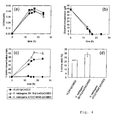
- V. natriegens 28-15 ⁇ fucO/pCABD2 accumulated 61 mM L-lysine ( Fig. 4 ).
- the L-lysine yield based on consumed glycerol was 28% (w/w).
- accumulation of 45 mM L-lysine was also observed with VLD01/pCABD2, and the L-lysine yield based on consumed glycerol was 21% (w/w).
- V. natriegens ATCC 14048/pCABD2 accumulation of L-lysine was not substantially observed.
- L-lysine can be efficiently produced by using a Vibrio bacterium.
Landscapes
- Chemical & Material Sciences (AREA)
- Organic Chemistry (AREA)
- Life Sciences & Earth Sciences (AREA)
- Engineering & Computer Science (AREA)
- Zoology (AREA)
- Health & Medical Sciences (AREA)
- Wood Science & Technology (AREA)
- Bioinformatics & Cheminformatics (AREA)
- Genetics & Genomics (AREA)
- General Health & Medical Sciences (AREA)
- General Engineering & Computer Science (AREA)
- Biochemistry (AREA)
- Microbiology (AREA)
- Biotechnology (AREA)
- Biomedical Technology (AREA)
- Molecular Biology (AREA)
- Medicinal Chemistry (AREA)
- Chemical Kinetics & Catalysis (AREA)
- General Chemical & Material Sciences (AREA)
- Micro-Organisms Or Cultivation Processes Thereof (AREA)
- Preparation Of Compounds By Using Micro-Organisms (AREA)
Abstract
Description
- The present invention relates to a method for producing L-lysine using a Vibrio bacterium. L-Lysine is an industrially useful L-amino acid as an additive for animal feed, ingredient of health food, amino acid infusion, and so forth.
- L-lysine is produced by fermentation using a coryneform bacterium belonging to the genus Brevibacterium, Corynebacterium, or the like, a bacterium belonging to the genus Bacillus, Escherichia, Streptomyces, Methylobacillus, or the like, or a filamentous fungus belonging to the genus Penicillium, or the like.
- As methods for producing L-lysine by fermentation using a microorganism, there are methods using an auxotroph derived from a wild-type strain, a metabolic regulation mutant strain derived from a wild-type strain as a strain resistant to any of various drugs, a strain having properties of both auxotroph and metabolic regulation mutants, and so forth. Furthermore, microorganisms that can efficiently produce L-lysine have been bred using recombinant DNA techniques (Patent documents 1 to 4).
- Although productivity of L-lysine has been considerably increased by such breeding of microorganisms and improvement of production method as described above, development of still more inexpensive and efficient L-lysine production methods has been desired in order to respond to further increase of the demand in future.
- L-Amino acid production methods based on direct fermentation have a problem that the action of a microorganism is reduced by increase of osmotic pressure due to accumulation of L-amino acid in the medium, and thus the productivity cannot be maintained for a long period of time. As a method for solving this problem, a method for producing an L-amino acid such as L-lysine by direct fermentation using a Vibrio bacterium has been disclosed (Patent document 5).
- As a method for producing L-lysine in which decomposition of L-lysine accumulated in the medium can be reduced, methods using a microorganism of which L-lysine decomposition ability is reduced, in particular, a microorganism belonging to the genus Escherichia in which the cadA gene or the ldcC gene is deleted, or expression amount or enzymatic activity of the product thereof is decreased have been known (Non-patent document 1, Patent document 4).
- It is known that a cadA homologue gene is present in Vibrio cholerae, Vibrio parahaemolyticus and Vibrio vuinificus among the Vibrio bacteria (Non-patent
documents 2 to 4). However, it has not been known whether L-lysine decomposition ability is attenuated or deleted by disruption of such a cadA homologue gene in those Vibrio bacteria. Moreover, presence of an L-lysine decomposition pathway other than the L-lysine decomposition pathway involving a cadA homologue gene product has not been known in Vibrio bacteria. -
- Patent document 1: European Patent Laid-open No.
0857784 - Patent document 2: Japanese Patent Laid-open (KOKAI) No.
11-192088 - Patent document 3: International Patent Publication
WO00/53726 - Patent document 4: International Patent Publication
WO96/17930 - Patent document 5: International Patent Publication
WO2008/093829 -
- Non-patent document 1: S. Meng, and G.N. Bennett, J. Bacteriol., 174, 2659-2669 (1992)
- Non-patent document 2: D.S. Merrell, and A. Camilli, Mol. Microbiol., 34, 836-849 (1999)
- Non-patent document 3: Y. Tanaka, et al., J. Appl. Microbiol., 104, 1283-1293 (2007)
- Non-patent document 4: J.E. Rhee, et al., FEMS Microbiol. Lett., 208, 245-251 (2002)
- An object of the present invention is to provide a method for efficiently producing L-lysine using a Vibrio bacterium. In particular, the inventors of the present invention have already found a phenomenon that L-lysine accumulated in the medium decreases with progress of culture in the case of Vibrio bacteria, and one of objects of the present invention is to reduce this decrease of L-lysine.
- The inventors of the present invention conducted various researches in order to achieve the aforementioned object. As a result, they specified a gene coding for a factor involved in L-lysine decomposition in Vibrio bacteria. And they found that, by disrupting that gene, decomposition of accumulated L-lysine can be suppressed, and L-lysine can be efficiently produced, and accomplished the present invention.
- The present invention thus relates to the followings.
- (1) A method for producing L-lysine, which comprises culturing a Vibrio bacterium having an ability to produce L-lysine in a medium to produce and accumulate L-lysine in the medium or cells of the bacterium, and collecting L-lysine from the medium or cells, wherein the Vibrio bacterium has been modified so that an activity of a protein encoded by the fucO gene is reduced.
- (2) The method as mentioned above, wherein the activity of the protein is reduced by introducing a mutation into a coding region of the fucO gene and/or an expression control region of the gene.
- (3) The method as mentioned above, wherein the fucO gene on a chromosome is disrupted.
- (4) The method as mentioned above, wherein the protein is a protein defined in the following (A) or (B):
- (A) a protein having the amino acid sequence shown in SEQ ID NO: 2,
- (B) a protein having the amino acid sequence shown in SEQ ID NO: 2 including substitutions, deletions, insertions or additions of one or several amino acid residues, wherein the reduction of the activity in the bacterium improves the ability to produce L-lysine.
- (5) The method as mentioned above, wherein the fucO gene is a DNA defined in the following (a) or (b):
- (a) a DNA comprising the nucleotide sequence of SEQ ID NO: 1,
- (b) a DNA which hybridizes with the nucleotide sequence of SEQ ID NO: 1 or a probe that can be prepared from the nucleotide sequence under stringent conditions, and codes for a protein, wherein the reduction of the activity in the bacterium improves the ability to produce L-lysine.
- (6) The method as mentioned above, wherein an activity or activities of one or two or more kinds of enzymes selected from the group consisting of dihydrodipicolinate synthase, aspartokinase, dihydrodipicolinate reductase, and diaminopimelate dehydrogenase are enhanced.
- (7) The method as mentioned above, wherein the Vibrio bacterium is Vibrio natriegens.
- (8) The method as mentioned above, wherein the medium contains glycerol as a carbon source.
- (9) A Vibrio bacterium which has an ability to produce L-lysine, and has been modified so that an activity of a protein encoded by the fucO gene is reduced.
- (10) The Vibrio bacterium as mentioned above, which is Vibrio natriegens.
-
-
Fig. 1 shows suppression of L-lysine decomposition by fucO gene deficiency: (a) change of OD660 of culture medium diluted 51-fold over the period of time, (b) change of glucose concentration in the medium over the period of time, and (c) change of L-lysine concentration in the medium over the period of time. Each graph includes curves plotted with averages of results for three samples, and indicates standard deviations. -
Fig. 2 shows L-lysine production from glucose by V. natriegens 28-15 ΔfucO/pCABD2: (a) OD660 of culture medium diluted 51-fold, (b) glucose concentration in the medium, (c) L-lysine concentration in the medium, and (d) L-lysine yield based on consumedsaccharide 40 hours after the start of the culture. In the graphs, the indications of 0 to 8% NaCl mean that the graphs show averages and standard deviations of the results obtained by culture in the MS culture media containing 0 to 8% (w/v) NaCl. -
Fig. 3 shows L-lysine production from glycerol by V. natriegens 28-15 ΔfucO/pCABD2: (a) change of OD660 of culture medium diluted 51-fold over the period of time, (b) change of glycerol concentration in the medium over the period of time, (c) change of L-lysine concentration in the medium over the period of time, and (d) L-lysine yield based on consumedglycerol 40 hours after the start of the culture. In the graphs, the indications of 0% NaCl, 2% NaCl and 4% NaCl mean that the graphs show averages and standard deviations of the results obtained by culture in the MS culture media containing glycerol as a carbon source and 0 to 4% (w/v) NaCl. -
Fig. 4 shows L-lysine production from glycerol by V. natriegens 28-15 ΔfucO/pCABD2 and V. natriegens VLD01/pCABD2: (a) change of OD660 of culture medium diluted 50-fold, (b) change of glycerol concentration in the medium over the period of time, (c) change of L-lysine concentration in the medium over the period of time, (d) L-lysine yield based on consumed glycerol 24 hours after the start of the culture. - The bacterium of the present invention is a Vibrio bacterium which has an ability to produce L-lysine and has been modified so that an activity of a protein encoded by the fucO gene is reduced.
- The ability to produce L-lysine referred to herein means an ability of the bacterium of the present invention to produce and accumulate L-lysine in a medium or cells thereof in such a degree that L-lysine can be collected from the medium or cells, when the bacterium is cultured in the medium. That is, the bacterium of the present invention is a Vibrio bacterium that can produce L-lysine by fermentation using a saccharide or the like as a carbon source (also called direct fermentation). Specifically, when a Vibrio bacterium which has been modified so that the activity of the protein encoded by the fucO gene is reduced is cultured under preferred conditions, for example, if 1.5 times or more, preferably twice or more, more preferably 3 times or more, of L-lysine is accumulated, the bacterium has the ability to produce L-lysine.
- "L-lysine" includes L-lysine of the free form and a salt thereof such as sulfate, hydrochloride and carbonate.
- The Vibrio bacterium having the ability to produce L-lysine may be a bacterium inherently having the ability to produce L-lysine, or may be a bacterium obtained by modifying a Vibrio bacterium such as those described later using mutagenisis methods or DNA recombination techniquea so that the bacterium acquires the ability to produce L-lysine. The Vibrio bacterium of the present invention may have an ability to produce another amino acid, for example, L-threonine, L-glutamic acid, or the like, in addition to the ability to produce L-lysine.
- Hereinafter, the Vibrio bacteria will be explained.
- The Vibrio bacteria are facultative anaerobic gram-negative bacteria belonging to the family Vibrionaceae of γ-Proteobacteria, and are motile bacteria with a single polarly flagellum seen in fresh water or seawater. The Vibrio bacterium used in the present invention is desirably a nonpathogenic Vibrio bacterium, and Vibrio bacteria for which pathogenicity has not been known are listed in Biosafety level 1 (Biosafety in Microbiological and Biomedical Laboratories (BMBL), 4th Edition, published by Office of Health and Safety (OHS)), and such Vibrio bacteria as mentioned below can be used.
- Vibrio abalonicus ATCC 27390
- Vibrio adaptatus ATCC 19263
- Vibrio aerogenes ATCC 700797
- Vibrio aestuarianus ATCC 35048
- Vibrio alginolyticus ATCC 14582
- Vibrio algosus ATCC 14390
- Vibrio anguillarum ATCC 43305
- Vibrio calviensis ATCC BAA-606
- Vibrio campbellii ATCC 25920
- Vibrio carchariae ATCC 35084
- Vibrio coralliilyticus ATCC BAA-450
- Vibrio costicola ATCC 43147
- Vibrio cyclitrophicus ATCC 700982
- Vibrio cyclosites ATCC 14635
- Vibrio diazotrophicus ATCC 33466
- Vibrio fischeri ATCC 25918
- Vibrio gazogenes ATCC 29988
- Vibrio halioticoli ATCC 700680
- Vibrio harveyi ATCC 14126
- Vibrio hispanica ATCC 51589
- Vibrio ichthyoenteri ATCC 700023
- Vibrio iliopiscarius ATCC 51760
- Vibrio lentus ATCC BAA-539
- Vibrio liquefaciens ATCC 17058
- Vibrio logei ATCC 15382
- Vibrio marinagilis ATCC 14398
- Vibrio marinofulvus ATCC 14395
- Vibrio marinovulgaris ATCC 14394
- Vibrio mediterranei ATCC 43341
- Vibrio metschnikovii ATCC 7708
- Vibrio mytili ATCC 51288
- Vibrio natriegens ATCC 14048
- Vibrio navarrensis ATCC 51183
- Vibrio nereis ATCC 25917
- Vibrio nigripulchritudo ATCC 27043
- Vibrio ordalii ATCC 33509
- Vibrio orientalis ATCC 33933
- Vibrio pectenicida ATCC 700783
- Vibrio pelagius ATCC 33504
- Vibrio penaeicida ATCC 51841
- Vibrio ponticus ATCC 14391
- Vibrio proteolyticus ATCC 53559
- Vibrio psychroerythrus ATCC 27364
- Vibrio salmonicida ATCC 43839
- Vibrio shiloii ATCC BAA-91
- Vibrio splendidus ATCC 33125
- Vibrio tyrosinaticus ATCC 19378
- Vibrio viscosus ATCC BAA-105
- Vibrio wodanis ATCC BAA-104
- Beneckea pelagia ATCC 25916
- Listonella anguillarum ATCC 19264
- Beneckea pelagia and Listonella anguillarum closely relate to the Vibrio bacteria, and some strains thereof are classified as Vibrio bacteria according to the current classification (Thompson F.L. et al., Microbiol. Mol. Biol. Rev., 23, 403-431 (2004) and Macian M.C. et al., Syst. Appl. Microbiol., 23, 373-375 (2000)). Therefore, such bacteria can also be used in the present invention as the Vibrio bacterium.
- Among these, it is preferable to use Vibrio natriegens. Vibrio natriegens is an oceanic facultative anaerobic bacterium belonging to the family Vibrionaceae of γ-Proteobacteria, and it was isolated on 1958 as an uronic acid-oxidizing bacterium (Payne, W.J., J. Bacteriology, 76, 301 (1958)). At first, the bacterium was considered to belong to the genus Pseudomonas of γ-Proteobacteria, but the bacterium was re-classified into the genus Beneckea and then incorporated into the genus Vibrio along with other bacteria belonging to the genus Beneckea. That bacterium is classified as Biosafety level 1 in ATCC, and classified as Risk Group 1 (German classification) in the German National Resource Center for Biological Material (DSMZ), and pathogenicity is not known for the bacterium.
- As Vibrio natriegens, the Vibrio natriegens ATCC 14048 strain (NBRC 15636 strain) can be used.
- The Vibrio bacteria described above are available from, for example, American Type Culture Collection (Address: P.O. Box 1549, Manassas, VA 20108, United States of America). That is, accession numbers are given to the strains, respectively, and the strains can be ordered using these accession numbers (refer to http://www.atcc.org/). The accession numbers of the strains are listed in the catalogue of the American Type Culture Collection. The Vibrio natriegens ATCC 14048 strain is also stored at the National Institute of Technology and Evaluation, Biological Resource Center (NITE NBRC, 2-5-8 Kazusakamatari, Kisarazushi, Chiba-ken, 292-0818, Japan), with a number of NBRC 15636, and can also be provided from that institute.
- The Vibrio bacteria can grow well under high osmotic pressure conditions observed in a period when the produced substance is accumulated at a high level at a later stage of amino acid fermentation, or under high osmotic pressure conditions induced by a high sugar concentration, in contrast to microorganisms that have been conventionally used for production of an L-amino acid (such as Escherichia coli and coryneform bacteria), which cannot sufficiently grow under such conditions. The "high osmotic pressure" is, for example, not lower than 925 mOsm, preferably not lower than 1100 mOsm, more preferably not lower than 1500 mOsm. The upper limit of osmotic pressure is not particularly limited so long as the amino acid fermentation is possible, and is, for example, 2000 mOsm. In addition, the expression "the bacteria can grow well under high osmotic pressure" means that the growth rate is maintained to be, for example, not lower than 50% of the maximum growth rate at 1100 mOsm, at which the growth rate of an E. coli wild-type strain, for example MG1655 strain (ATCC 47076), decreases to 50% or less of the maximum growth rate, preferably not lower than about 90% of the maximum growth rate.
- A Vibrio bacterium having an ability to produce L-lysine can be obtained by imparting an ability to produce L-lysine to a wild-type strain of any of such Vibrio bacteria as described above. To impart an ability to produce L-lysine, methods conventionally employed in the breeding of coryneform bacteria, Escherichia bacteria etc. (see "Amino Acid Fermentation", Gakkai Shuppan Center Ltd.) can be used. Such methods include acquiring auxotrophic mutant strains, strains resistant to an analogue of L-amino acid such as L-lysine, or a metabolic regulation mutant strains, constructing a recombinant strain in which activity of an L-lysine biosynthesis enzyme is increased, and so forth. Activity of an L-lysine biosynthesis enzyme can be enhanced by increasing copy number of a gene coding for the enzyme or modifying an expression regulatory sequence such as promoter of the gene. In the breeding of L-lysine-producing bacteria, the impartation of such properties as auxotrophy, analogue resistance and metabolic regulation mutation may be combined with the enhancement of an L-lysine biosynthesis enzyme. Methods for imparting an ability to produce L-lysine will be exemplified below.
- L-Lysine-producing bacteria can be bred as, for example, mutant strains that are auxotrophic for L-homoserine, or L-threonine and L-methionine (Japanese Patent Publication (KOKOKU) Nos.
48-28078 56-6499 55-9784 56-8692 - Examples of the mutagenesis method for obtaining a mutant strain of a Vibrio bacterium include ultraviolet irradiation, and treatment with a mutagen used for conventional mutagenesis such as N-methyl-N'-nitro-N-nitrosoguanidine (NTG) and nitrous acid. A Vibrio bacterium having an ability to produce an L-amino acid can also be obtained by selecting a naturally occurring mutant of a Vibrio bacterium.
- An L-amino acid analogue resistant mutant strain can be obtained by, for example, inoculating Vibrio bacteria subjected to a mutation treatment on agar media containing the L-amino acid analogue at various concentrations and selecting a strain that forms a colony.
- An auxotrophic mutant strain can be obtained by allowing Vibrio bacteria to form colonies on an agar medium containing a specific nutrient such as an L-amino acid, then replicating the colonies on another agar medium not containing the nutrient, and selecting a strain that cannot form a colony on the medium not containing the nutrient.
- Examples of L-lysine-producing strain of Vibrio natriegens resistant to AEC include the Vibrio natriegens 28-15 strain (PERM BP-10946). This strain designated as AJ110593 strain was deposited at the National Institute of Advanced Industrial Science and Technology, International Patent Organism Depositary (
Tsukuba Central 6, 1-1, Higashi 1-Chome, Tsukuba-shi, Ibaraki-ken, 305-8566, Japan) on October 24, 2006, and assigned an accession number of FERM P-21066. It was then converted to an international deposit, and assigned an accession number of FERM BP-10946. - Methods for imparting or enhancing an ability to produce L-lysine by enhancing activity of an L-lysine biosynthesis enzyme will be exemplified below.
- For example, an ability to produce L-lysine can be imparted by enhancing the dihydrodipicolinate synthase activity and/or the aspartokinase activity.
- Enhancement of the dihydrodipicolinate synthase activity and/or the aspartokinase activity of a Vibrio bacterium can be attained by constructing a recombinant DNA by ligating a gene fragment coding for dihydrodipicolinate synthase and/or a gene fragment coding for aspartokinase to a vector that functions in Vibrio bacteria, preferably such a vector of multi-copy type, and introducing the DNA into a host Vibrio bacterium for transformation. The activities of these enzymes are enhanced as a result of increase in copy numbers of the genes coding for dihydrodipicolinate synthase and/or aspartokinase in the cells of the transformant strain. Hereinafter, dihydrodipicolinate synthase may be abbreviated as DDPS, aspartokinase may be abbreviated as AK, and aspartokinase III may be abbreviated as AKIII.
- Any microorganism may be used as a donor of genes coding for DDPS and AK so long as a microorganism that can express the DDPS and AK activities in a microorganism belonging to the genus Vibrio is chosen. The microorganism may be a wild-type strain or a mutant strain that is derived from a wild-type strain. Specific examples thereof include the E. coli (Escherichia coli) K-12 strain and the Vibrio natriegens ATCC 14048 strain (NBRC 15636). The nucleotide sequences of both genes coding for DDPS (dapA, Richaud, F. et al. J. Bacteriol., 297 (1986)) and AKIII (lysC, Cassan, M., Parsot, C., Cohen, G.N. and Patte, J.C., J. Biol. Chem., 261, 1052 (1986)) derived from an Escherichia bacterium have been already elucidated. Therefore, these genes can be obtained by synthesizing primers on the basis of the nucleotide sequences of the genes and performing PCR using a chromosomal DNA of a microorganism such as the E. coli K-12 strain or the Vibrio natriegens ATCC 14048 strain as a template.
- Genes of Vibrio bacteria can also be obtained by using the following GenBank database information.
- Vibrio cholerae O1 biovar eltor str. N16961 chromosome I, complete sequence: AE003852
- Vibrio cholerae O1 biovar eltor str. N16961 chromosome II, complete sequence: AE003853
- Vibrio parahaemolyticus RIMD 2210633 chromosome I, complete sequence: BA000031
- Vibrio parahaemolyticus RIMD 2210633 chromosome II, complete sequence: BA000032
- Vibrio fischeri ES114 chromosome I, complete sequence: CP000020
- Vibrio fischeri ES114 chromosome II, complete sequence: CP000021
- Vibrio vulnificus CMCP6 chromosome I, complete sequence: AE016795
- Vibrio vulnificus CMCP6 chromosome II, complete sequence: AE016796
- Vibrio vulnificus YJ016 chromosome I, complete sequence: BA000037
- Vibrio vulnificus YJ016 chromosome II, complete sequence; BA000038
- DDPS and AK used in the present invention are preferably not to subjcet to feedback inhibition by L-lysine. It is known that wild-type DDPS derived from a Vibrio bacterium is not subject to feedback inhibition by L-lysine, and wild-type AKIII derived from a Vibrio bacterium is subject to suppression and feedback inhibition by L-lysine. Therefore, dapA and lysC to be introduced into a Vibrio bacterium are preferably those coding for DDPS and AK having a mutation for desensitizing them to the feedback inhibition by L-lysine.
- However, in the present invention, DDPS and AK may not necessarily be mutants. For example, it is known that DDPS derived from a Corynebacterium bacterium is not originally subject to the feedback inhibition by L-lysine.
- Homologues of a gene coding for aspartokinase may be present, and the source of the gene is not limited so long as the gene codes for a protein having the aspartokinase activity.
- For example, examples of the AK gene of Vibrio natriegens include the AKO gene, thrA gene, metL gene, lysC gene and putative-AK gene.
- SEQ ID NO: 11 is the nucleotide sequence of the region including the AKO gene of Vibrio natriegens. It is estimated that, in SEQ ID NO: 11, GTG of the nucleotide numbers 526 to 528, GTG of the nucleotide numbers 544 to 546, or GTG of the nucleotide numbers of 568 to 570 constitutes the initiation codon, and TGA of the nucleotide numbers 1711 to 1713 constitutes the stop codon. Therefore, a DNA having the nucleotide sequence of the nucleotide numbers 526 to 1710 in SEQ ID NO: 11 (encoded amino acid sequence is that of the amino acid numbers 1 to 395 in SEQ ID NO: 12), the nucleotide sequence of the nucleotide numbers 544 to 1710 in SEQ ID NO: 11 (encoded amino acid sequence is that of the amino acid numbers 7 to 395 in SEQ ID NO: 12), or the nucleotide sequence of the nucleotide numbers 568 to 1710 in SEQ ID NO: 11 (encoded amino acid sequence is that of the
amino acid numbers 15 to 395 in SEQ ID NO: 12) as an open reading frame can be used as the AKO gene. - SEQ ID NO: 13 is the nucleotide sequence of the region including the thrA gene of Vibrio natriegens. It is estimated that, in SEQ ID NO: 13, ATG of the nucleotide numbers 486 to 488, GTG of the nucleotide numbers 591 to 593, or GTG of the nucleotide numbers 633 to 635 constitutes the initiation codon, and TAA of the nucleotide numbers 2943 to 2945 constitutes the stop codon. Therefore, a DNA having the nucleotide sequence of the nucleotide numbers 486 to 2942 in SEQ ID NO: 13 (encoded amino acid sequence is that of the amino acid numbers 1 to 819 in SEQ ID NO: 14), the nucleotide sequence of the nucleotide numbers 591 to 2942 in SEQ ID NO: 13 (encoded amino acid sequence is that of the
amino acid numbers 35 to 819 in SEQ ID NO: 14), or the nucleotide sequence of the nucleotide numbers 633 to 2942 in SEQ ID NO: 13 (encoded amino acid sequence is that of theamino acid numbers 50 to 819 in SEQ ID NO: 14) as an open reading frame can be used as the thrA gene. - SEQ ID NO: 15 is the nucleotide sequence of the region including the metL gene of Vibrio natriegens. It is estimated that, in SEQ ID NO: 15, ATG of the nucleotide numbers 376 to 378, GTG of the nucleotide numbers 487 to 489, or GTG of the nucleotide numbers 490 to 492 constitutes the initiation codon, and TAA of the nucleotide numbers 2782 to 2784 constitutes the stop codon. Therefore, a DNA having the nucleotide sequence of the nucleotide numbers 376 to 2781 in SEQ ID NO: 15 (encoded amino acid sequence is that of the amino acid numbers 1 to 802 in SEQ ID NO: 16), the nucleotide sequence of the nucleotide numbers 487 to 2781 in SEQ ID NO: 15 (encoded amino acid sequence is that of the amino acid numbers 38 to 802 in SEQ ID NO: 16), or the nucleotide sequence of the nucleotide numbers 490 to 2781 in SEQ ID NO: 15 (encoded amino acid sequence is that of the amino acid numbers 39 to 802 in SEQ ID NO: 16) as an open reading frame can be used as the metL gene.
- SEQ ID NO: 17 is the nucleotide sequence of the region including the lysC gene of Vibrio natriegens. It is estimated that, in SEQ ID NO: 17, GTG of the nucleotide numbers 1060 to 1062, or ATG of the nucleotide numbers 1117 to 1119 constitutes the initiation codon, and TAA of the nucleotide numbers 2410 to 2412 constitutes the stop codon. Therefore, a DNA having the nucleotide sequence of the nucleotide numbers 1060 to 2409 in SEQ ID NO: 17 (encoded amino acid sequence is that of the amino acid numbers 1 to 450 in SEQ ID NO: 18), or the nucleotide sequence of the nucleotide numbers 1117 to 2409 in SEQ ID NO: 17 (encoded amino acid sequence is that of the
amino acid numbers 20 to 450 in SEQ ID NO: 18) as an open reading frame can be used as the lysC gene. - SEQ ID NO: 19 is the nucleotide sequence of the region including a putative-AK gene of Vibrio natriegens. It is estimated that, in SEQ ID NO: 19, ATG of the nucleotide numbers 344 to 346, ATG of the nucleotide numbers 380 to 382, or ATG of the nucleotide numbers 470 to 472 constitutes the initiation codon, and TAA of the nucleotide numbers 1766 to 1768 constitutes the stop codon. Therefore, a DNA having the nucleotide sequence of the nucleotide numbers 344 to 1765 in SEQ ID NO: 19 (encoded amino acid sequence is that of the amino acid numbers 1 to 474 of SEQ ID NO: 20), the nucleotide sequence of the nucleotide numbers 380 to 1765 in SEQ ID NO: 19 (encoded amino acid sequence is that of the amino acid numbers 13 to 474 in SEQ ID NO: 20), or the nucleotide sequence of the nucleotide numbers 470 to 1765 of SEQ ID NO: 19 (encoded amino acid sequence is that of the amino acid numbers 43 to 474 in SEQ ID NO: 20) as an open reading frame can be used as the putative-AK gene.
- The aforementioned AKO gene, thrA gene, metL gene, lysC gene and putative-AK gene may be a DNA hybridizable with a complementary strand of each sequence or a probe prepared from these sequences under stringent conditions and coding for a protein having the aspartokinase activity.
- The "stringent conditions" referred to herein are conditions where a so-called specific hybrid is formed, and a non-specific hybrid is not formed. Although it is difficult to definitely define these conditions with numerals, examples of the stringent conditions include those where highly homologous DNAs hybridize each other, for example, DNAs not less than 80% homologous, preferably not less than 90% homologous, more preferably not less than 95% homologous, still more preferably not less than 97% homologous, particularly preferably not less than 99% homologous, hybridize each other, and DNAs less homologous than the above do not hybridize each other, or conditions of washing once, preferably 2 or 3 times, at salt concentrations and temperature corresponding to washing in typical Southern hybridization, i.e., 1 x SSC, 0.1% SDS at 60°C, preferably 0.1 x SSC, 0.1% SDS at 60°C, more preferably 0.1 x SSC, 0.1% SDS at 68°C. Although length of the probe is appropriately chosen according to the conditions of the hybridization, it is usually 100 bp to 1 kbp.
- In this specification, the term "homology" may means "identity".
- The aspartokinase activity can be measured by the method described in Miyajima, R. et al., The Journal of Biochemistry, 63 (2), 139-148 (1968).
- The aforementioned AKO gene, thrA gene, metL gene, lysC gene and putative-AK gene are not limited to wild-type genes and may be mutant or artificially modified genes coding for a conservative variant protein having the amino acid sequence encoded by the open reading frame of each gene, but including substitutions, deletions, insertions, additions or the like of one or several amino acids at one or a plurality of positions, so long as the genes code for a protein having the aspartokinase activity.
- Although the number of the "one or several" amino acid residues referred to herein may differ depending on the position in the three-dimensional structure or the types of amino acid residues of the protein, specifically, it may be preferably 1 to 20, more preferably 1 to 10, still more preferably 1 to 5. The aforementioned substitutions, deletions, insertions, or additions of one or several amino acid residues is a conservative mutation that preserves the normal function of the protein. The conservative mutation is a mutation wherein substitution takes place mutually among Phe, Trp, and Tyr, if the substitution site is an aromatic amino acid; among Leu, Ile and Val, if it is a hydrophobic amino acid; between Gln and Asn, if it is a polar amino acid; among Lys, Arg and His, if it is a basic amino acid; between Asp and Glu, if it is an acidic amino acid; and between Ser and Thr, if it is an amino acid having a hydroxyl group. Typical examples of a conservative mutation are conservative substitutions, and substitutions considered conservative substitutions include, specifically, substitution of Ser or Thr for Ala, substitution of Gln, His or Lys for Arg, substitution of Glu, Gln, Lys, His or Asp for Asn, substitution of Asn, Glu or Gln for Asp, substitution of Ser or Ala for Cys, substitution of Asn, Glu, Lys, His, Asp or Arg for Gln, substitution of Gly, Asn, Gln, Lys or Asp for Glu, substitution of Pro for Gly, substitution of Asn, Lys, Gln, Arg or Tyr for His, substitution of Leu, Met, Val or Phe for Ile, substitution of Ile, Met, Val or Phe for Leu, substitution of Asn, Glu, Gln, His or Arg for Lys, substitution of Ile, Leu, Val or Phe for Met, substitution of Trp, Tyr, Met, Ile or Leu for Phe, substitution of Thr or Ala for Ser, substitution of Ser or Ala for Thr, substitution of Phe or Tyr for Trp, substitution of His, Phe or Trp for Tyr, and substitution of Met, Ile or Leu for Val. The aforementioned amino acid substitutions, deletions, insertions, additions, inversions or the like may be a result of a naturally-occurring mutation or a variation due to an individual difference or difference of species of a microorganism which harbors the AKO, thrA, metL, lysC and putative-AK genes. Such a mutant or modified gene as described above can be obtained by modifying the nucleotide sequence of each open reading frame described above by, for example, site-specific mutagenesis so that the encoded protein includes substitution, deletion, insertion or addition of amino acid residues at a specific position.
- As the AKO gene, thrA gene, metL gene, lysC gene and putative-AK gene, there may be used genes that code for an amino acid sequence not less than 80% homologous, preferably not less than 90% homologous, more preferably not less than 95% homologous, still more preferably not less than 97% homologous, particularly preferably not less than 99% homologous, to the entire amino acid sequence encoded by the aforementioned open reading frame of each gene, and code for a protein having the aspartokinase activity. The homology of amino acid sequences and nucleotide sequences may be determined by using, for example, the algorithm BLAST (Proc. Natl. Acad. Sci. USA, 90, 5873 (1993)) created by Karlin and Altschul or FASTA (Methods Enzymol., 183, 63 (1990)). On the basis of the algorithm BLAST, the programs called BLASTN and BLASTX have been developed (refer to http://www.ncbi.nlm.nih.gov).
- The above descriptions concerning conservative variants and genes coding for them, as well as conservative mutation are also applied to enzymes other than aspartokinase and genes coding for them, as well as the FucO protein and the fucO gene described later.
- Plasmids to be used for gene cloning may be those replicable in bacteria such as Escherichia bacteria, and specific examples thereof include pBR322, pTWV228, pMW119, pUC 19, and so forth.
- As the vector that functions in Vibrio bacteria, any vector autonomously replicable in Vibrio bacteria may be used. As the vector plasmid, any of vector plasmids having ori derived from pUC plasmid, pACYC184 plasmid, or IncQ plasmid may be used. As the marker gene used for the selection, the kanamycin resistance gene derived from Tn903, the chloramphenicol resistance gene derived from Tn9, a streptomycin resistant gene, a tetracycline resistant gene and so forth may be used.
- In order to prepare a recombinant DNA by ligating dapA and lysC to a vector that functions in Vibrio bacteria, the vector is digested with restriction enzymes that correspond to the terminuses of a DNA fragment containing dapA and lysC. Ligation is usually performed by using a ligase such as T4 DNA ligase. dapA and lysC may be carried by separate vectors or a single vector.
- Examples of DNA coding for a mutant dihydrodipicolinate synthetase which is not subject to feedback inhibition by L-lysine include a DNA coding for such a protein having an amino acid sequence in which the histidine residue at position 118 is replaced by tyrosine residue. Examples of DNA coding for a mutant aspartokinase which is not subject to feedback inhibition by L-lysine include a DNA coding for an AKIII having an amino acid sequence in which the threonine residue at position 352, the glycine residue at position 323, and the methionine residue at position 318 are replaced by isoleucine, asparagine and isoleucine residues, respectively (for these mutants, see
U.S. Patent Nos. 5,661,012 and6,040,160 ). Such mutant DNAs can be obtained by site-specific mutagenesis using PCR or the like. - Wide host-range plasmids RSFD80, pCAB1, and pCABD2 are known as plasmids containing a mutant dapA gene coding for a mutant dihydrodipicolinate synthase and a mutant lysC gene coding for a mutant aspartokinase (
U.S. Patent No. 6,040,160 ). Escherichia coli JM109 strain transformed with the plasmid was named AJ12396 (U.S. Patent No. 6,040,160 ), and the strain was deposited at the National Institute of Bioscience and Human-Technology, Agency of Industrial Science and Technology, Ministry of International Trade and Industry (currently National Institute of Advanced Industrial Science and Technology, International Patent Organism Depositary) on October 28, 1993 and assigned an accession number of FERM P-13936. The deposit was then converted to an international deposit under the provisions of Budapest Treaty on November 1, 1994 and assigned an accession number of FERM BP-4859. RSFD80 can be obtained from the AJ12396 strain by a conventional method. - The recombinant DNA prepared as described above may be introduced into a Vibrio bacterium by any method that affords sufficient transformation efficiency, and examples thereof include electroporation (Canadian Journal of Microbiology, 43, 197 (1997)).
- The DDPS activity and/or the AK activity can also be enhanced by introducing multiple copies of the dapA and/or lysC into a chromosomal DNA of a Vibrio bacterium. Introduction of multiple copies of the dapA and/or lysC into a chromosomal DNA of a Vibrio bacterium can be attained by homologous recombination which targets a sequence present on the chromosomal DNA in multiple copies. Such a sequence present on a chromosomal DNA in multiple copies may be a repetitive DNA or an inverted repeat present on the end of a transposable element. Alternatively, as disclosed in Japanese Patent Laid-open No.
2-109985 - Besides the above-described gene amplification, the enhancement of the DDPS activity and/or the AK activity can also be attained by replacing an expression regulatory sequence such as a promoter of dapA and/or lysC with a potent sequence (Japanese Patent Laid-open No.
1-215280 WO98/04715 WO98/17806 U.S. Patent Nos. 5,830,690 , and5, 861, 273 ). - Digestion, ligation, etc. of DNA, preparation of chromosomal DNA, PCR, preparation of plasmid DNA, transformation, design of oligonucleotides to be used as primers and so forth can be performed according to conventional methods well known to those skilled in the art. Such methods are described in Sambrook, J., Fritsch, E.F., and Maniatis, T., "Molecular Cloning A Laboratory Manual, Second Edition", Cold Spring Harbor Laboratory Press, (1989) and so forth.
- In addition to enhancement of the DDPS activity and/or the AK activity, activities of other enzymes involved in L-lysine biosynthesis may be enhanced.
Examples of such enzymes include enzymes in the diaminopimelic acid pathway such as dihydrodipicolinate reductase (dapB), diaminopimelate decarboxylase (lysA), diaminopimelate dehydrogenase (ddh) (International Patent PublicationWO96/40934 60-87788 6-102028 2003-135066 WO00/61723 2000-157276 - The plasmid pCABD2 contains a mutant dapA gene derived from Escherichia coli and coding for DDPS having a mutation for desensitization to the feedback inhibition by L-lysine, a mutant lysC gene derived from Escherichia coli and coding for AKIII having a mutation for desensitization to the feedback inhibition by L-lysine, the dapB gene derived from Escherichia coli and coding for dihydrodipicolinate reductase, and the ddh gene derived from Brevibacterium lactofermentum and coding for diaminopimelate dehydrogenase (International Patent Publications
WO95/16042 WO01/53459 - The Vibrio bacterium of the present invention may be a bacterium in which the ability to produce L-lysine is increased by enhancing L-lysine secretion activity. For example, by increasing expression amount of the ybjE gene, or increasing expression amount of the lysE gene, the L-lysine secretion activity can be enhanced (Japanese Patent Laid-open No.
2005-237379 WO97/23697 - Furthermore, in the bacterium of the present invention, activity of an enzyme that catalyzes a reaction branching off from the L-lysine biosynthesis pathway to produce a compound other than L-lysine, or activity of an enzyme that negatively functions against L-lysine synthesis or accumulation may be decreased or deleted. Examples of such an enzyme for the L-lysine production include homoserine dehydrogenase, malic enzyme, and so forth, and strains in which activities of such enzymes are decreased or deficient can be constructed by referring to International Patent Publications
WO95/23864 WO96/17930 WO2005/010175 . - Activities of these enzymes can be decreased or deleted by introducing such a mutation that the activities of the enzymes in a cell are decreased or deleted into the genes coding for the enzymes on the genome using a conventional mutagenesis or genetic engineering techniques. Such introduction of a mutation can be attained by, for example, eliminating the genes coding for the enzymes on the genome by gene recombination or by modifying an expression regulatory sequence such as a promoter or Shine-Dalgamo (SD) sequence. In addition, it can also be attained by introducing a mutation for an amino acid substitution (missense mutation) into the region coding for the enzymes on the genome, introducing a stop codon (nonsense mutation), introducing a frame shift mutation that adds or deletes one or two nucleotides, or deleting a part or whole region of the gene (Journal of Biological Chemistry, 272, 8611-8617 (1997); Proc. Natl. Acad. Sci. USA, 95, 5511-5515 (1998), J. Biol. Chem., 266, 20833-20839 (1991)). Furthermore, the activities of the enzymes can also be decreased or eliminated by constructing a mutant gene coding for a mutant enzyme a part or all of which coding region is deleted, and then replacing the normal gene on the genome with the mutant gene by homologous recombination or the like, or introducing a transposon or an IS factor into the gene.
- For example, such a method as described below is used to introduce a mutation that decreases or eliminates the activities of the above-mentioned enzymes by genetic recombination. A mutant gene is prepared by modifying a partial sequence of a target gene so that it does not produce an enzyme that can function normally. Then, a Vibrio bacterium is transformed with a DNA containing the mutant gene to cause recombination of a gene on the genome with the mutant gene, and thereby the target gene on the genome is replaced with the mutant gene. Examples of this type of gene substitution using homologous recombination include the method using a linear DNA such as the method called "Red-driven integration" (Datsenko, K.A, and Wanner, B.L., Proc. Natl. Acad. Sci. USA, 97:6640-6645 (2000), and a method consisting of a combination of the Red-driven integration and an excision system derived from A phage (Cho, E.H., Gumport, R.I., Gardner, J.F., J. Bacteriol., 184, 5200-5203 (2002), refer to International Patent Publication
WO2003/010175 ) a method using a plasmid containing a temperature-sensitive replication origin (U.S. Patent No. 6,303,383 ; Japanese Patent Laid-open No.05-007491 - The aforementioned method for reducing enzyme activity can also be applied to decrease of the activity of the FucO protein described below.
- The bacterium of the present invention can be obtained by modifying such a bacterium belonging to the genus Vibrio and having an ability to produce L-lysine as described above so that activity of the protein encoded by the fucO gene (hereafter the protein is also described as "FucO") is reduced. In breeding of the Vibrio bacterium of the present invention, either the impartation of the ability to produce L-lysine or the modification for reducing the activity of the FucO protein may be performed first. Although the bacterium of the present invention may be a bacterium which has been modified so that the activity of the protein encoded by the fucO gene is reduced as compared to a wild-type strain or a non-modified strain, it is more desirable that it further has improved ability to accumulate L-lysine as compared to a wild-type strain or a non-modified strain.
- In the present invention, the fucO gene means a homologue of the fucO gene of E. coli obtainable from a Vibrio bacterium, and examples include, for example, a gene having the nucleotide sequence of SEQ ID NO: 1. The nucleotide sequence of SEQ ID NO: 1 is the nucleotide sequence of the fucO gene of the V. natriegens 28-15 strain. The amino acid sequence encoded by this gene is shown in SEQ ID NO: 2.
- The fucO gene of the present invention is a gene showing homology to the fucO gene of E. coli. The fucO gene of the E. coli MG1655 strain is registered at GenBank as a gene coding for L-1,2-propanediol oxidoreductase (complementary strand of GenBank NC_000913.2, nucleotide numbers 2929887 to 2931038).
- Moreover, the fucO gene of the present invention includes the eutG gene of Vibrio parahaemolyticus and a gene showing homology to that gene. The eutG gene product of the V. parahaemolyticus RIMD 2210633 strain is registered at the GenPept database (http://www.ncbi.nlm.nih.gov/protein/NP_797614.1?report=gen pept) as an iron-containing alcohol dehydrogenase (NP_797614). Moreover, the eutG gene is registered at GenBank as a gene of iron-containing alcohol dehydrogenase (NC_004603.1, nucleotide numbers 1301840 to 1303159).
- The homology between the fucO gene product of E. coli and the eutG gene product of E. coli in terms of amino acid composition is 77.3% (analyzed by using Genetix ver. 9.0.3 produced by Molecular Devices, Inc.).
- A homologue of the fucO gene of a Vibrio bacterium can be obtained by, for example, searching for a gene showing high homology to a gene having the nucleotide sequence of SEQ ID NO: 1, the fucO gene of E. coli, or the eutG gene using BLAST (http://blast.genome.jp/). Degree of the homology is not particularly limited so long as accumulation of L-lysine is improved by reduction of the activity of the expression product of the gene, but the homology is, for example, 80% or more, preferably 90% or more, more preferably 95% or more, still more preferably 97% or more, particularly preferably 99% or more, with respect to the entire amino acid sequence.
- Examples of the protein encoded by the fucO gene include those having the amino acid sequence of SEQ ID NO: 2. However, the protein may be a conservative variant so long as the function of the protein is not changed.
- Furthermore, the fucO gene may be a DNA hybridizable with the nucleotide sequence of SEQ ID NO: 1 or a probe that can be prepared from that nucleotide sequence under stringent conditions, so long as it codes for the FucO protein. The "stringent conditions" have the same meaning as that described above.
- The expression "activity of the protein encoded by the fucO gene is reduced" means that the function of the FucO protein encoded by the fucO gene is attenuated or deleted due to introduction of a mutation into the coding region of the fucO gene attained by using a drug or genetic engineering, and also means that expression or translation of the fucO gene is reduced due to introduction of a mutation into an expression control region of the fucO gene or the like, and thus amount of the FucO protein is reduced. Furthermore, the activity of the FucO protein can be reduced by the so-called gene disruption, i.e., deletion of a part of the fucO gene or the entire fucO gene on a chromosome. Reduction of the activity includes complete elimination of the activity.
- In order to reduce the activity of the FucO protein, specifically, the methods for reducing an enzyme activity described for impartation of ability to produce L-lysine can be used.
- The method of the present invention is a method of culturing the bacterium of the present invention in a medium to produce and accumulate L-lysine in the medium or cells of the bacterium, and collecting L-lysine from the medium or the cells.
- As the medium to be used, media conventionally used for the production of L-amino acids by fermentation using microorganisms can be used. That is, usual media containing a carbon source, a nitrogen source, inorganic ions, and optionally other organic components as required can be used. As the carbon source, saccharides such as glucose, sucrose, lactose, galactose, fructose, and hydrolysates of starches; alcohols such as glycerol and sorbitol; and organic acids such as fumaric acid, citric acid and succinic acid can be used. In the present invention, it is especially preferable to use glycerol as the carbon source.
- In the present invention, it is preferable to use glycerol as the carbon source. Glycerol may be used at any concentration so long as a concentration suitable for production of L-lysine is chosen. When glycerol is used as a sole carbon source in the medium, it is preferably contained in the medium in an amount of about 0.1 to 50 w/v %, more preferably about 0.5 to 40 w/v %, particularly preferably about 1 to 30% w/v %. Glycerol can also be used in combination with other carbon sources such as glucose, fructose, sucrose, blackstrap molasses and starch hydrolysate. In this case, although glycerol and other carbon sources may be mixed at an arbitrary ratio, it is desirable that the ratio of glycerol in the carbon source is 10% by weight or more, more preferably 50% by weight or more, still more preferably 70% by weight or more. Preferable other carbon sources are saccharides such as glucose, fructose, sucrose, lactose, galactose, blackstrap molasses, starch hydrolysate and a sugar solution obtained by hydrolysis of biomass, alcohols such as ethanol, and organic acids such as fumaric acid, citric acid and succinic acid. Among these, glucose is preferred.
- Although initial concentration of glycerol at the time of starting the culture is preferably as described above, glycerol may be supplemented with consumption of glycerol during the culture.
- Glycerol to be used may be pure glycerol or crude glycerol. Crude glycerol refers to industrially produced glycerol containing impurities. Crude glycerol is industrially produced by contacting fats and oils with water under a high temperature and high pressure to hydrolyze them, or by the esterification reaction for biodiesel fuel production. Biodiesel fuel refers to aliphatic acid methyl esters produced from fats and oils and methanol by a transesterification reaction, and crude glycerol is produced as a by-product of this reaction (refer to Fukuda, H., Kondo, A., and Noda, H., 2001, J. Biosci. Bioeng., 92, 405-416). In the biodiesel fuel production process, the alkaline catalyst method is used for the transesterification in many cases, and acids are added for neutralization. Therefore, crude glycerol of a purity of about 70 to 95% by weight, containing water and impurities, is produced. Crude glycerol produced in the biodiesel fuel production process contains, in addition to water, residual methanol, salts of alkali such as NaOH as a catalyst and an acid used for neutralizing the alkali, such as K2SO4, as impurities. Although it depends on manufacturers and production methods, the amount of these salts and methanol can reach several percent. The crude glycerol preferably contains ions derived from the alkali and the acid used for neutralization thereof, such as sodium ions, potassium ions, chloride ions, and sulfate ions, in an amount of 2 to 7%, preferably 3 to 6%, more preferably 4 to 5.8%, based on the weight of the crude glycerol. Although methanol may not be contained as an impurity, it is preferably present in an amount of 0.01% or less.
- The crude glycerol may further contain trace amounts of metals, organic acids, phosphorus, aliphatic acids, and so forth. Examples of the organic acids include formic acid, acetic acid, and so forth, and although they may not be contained as impurities, they are preferably present in an amount of 0.01% or less. As the trace metals contained in the crude glycerol, trace metals required for growth of the microorganism are preferred, and examples include, for example, magnesium, iron, calcium, manganese, copper, zinc, and so forth. Magnesium, iron, and calcium are preferably present in an amount of 0.00001 to 0.1%, preferably 0.0005 to 0.1%, more preferably 0.004 to 0.05%, still more preferably 0.007 to 0.01%, in terms of the total amount based on the weight of the crude glycerol. Manganese, copper, and zinc are preferably present in an amount of 0.000005 to 0.01%, preferably 0.000007 to 0.005%, more preferably 0.00001 to 0.001%, in terms of the total amount.
- The purity of the crude glycerol may be 10% or higher, preferably 50% or higher, more preferably 70% or higher, particularly preferably 80% or higher. As long as the impurities are within the aforementioned range, the purity of the glycerol may be 90% or higher.
- When the crude glycerol is used, the crude glycerol may be added to the medium according to the purity of the glycerol so that the amount of glycerol is within the concentration range described above. Both glycerol and the crude glycerol may be added to the medium.
- As the nitrogen source, inorganic ammonium salts such as ammonium sulfate, ammonium chloride, and ammonium phosphate, organic nitrogen such as soybean hydrolysate, ammonia gas, aqueous ammonia, and so forth can be used. As organic trace nutrient sources, the medium desirably contains required substances such as vitamin B1 and L-homoserine, yeast extract, and so forth in appropriate amounts. Other than the above, potassium phosphate, magnesium sulfate, iron ions, manganese ions and so forth are added in small amounts, as required. In addition, the medium used for the present invention may be either a natural medium or a synthetic medium, so long as a medium containing a carbon source, a nitrogen source, and inorganic ions, and containing other organic trace ingredients as required is used.
- The culture is preferably performed for 1 to 7 days under aerobic conditions. The culture temperature is preferably 24 to 37°C, and pH during the culture is preferably 5 to 9. For pH adjustment, inorganic or organic acidic or alkaline substances, ammonia gas, and so forth can be used.
- When a basic amino acid such as L-lysine is produced, the production can be performed by a method in which fermentation is performed by controlling pH of the medium during the culture to be 6.5 to 9.0, and the pH of the medium at the end of the culture to be 7.2 to 9.0, and providing a culture period when the medium contains 20 mM or more of bicarbonate ions and/or carbonate ions, so that these bicarbonate ions and/or carbonate ions serve as counter ions of the basic amino acid, and the objective basic amino acid is then collected (Japanese Patent Laid-open No.
2002-65287 U.S. Patent Published Application No. 2002/0025564 ,EP 1813677 A ). - When a microorganism having a basic amino acid-producing ability is cultured in a medium under aerobic conditions, carbonate ions, bicarbonate ions, or both can be used as major counter ions of the basic amino acid. To provide carbonate ions and/or bicarbonate ions in the medium in an amount required to serve as counter ions of the basic amino acid, it is known that the pH of the medium can be controlled to be 6.5 to 9.0, or 6.5 to 8.0 in another example, during the culture, and can be 7.2 to 9.0 at the end of the culture, and the pressure in the fermentation tank can be controlled so that it is positive during fermentation, or carbon dioxide or a mixed gas containing carbon dioxide can be supplied into the medium (Japanese Patent Laid-open No.
2002-65287 U.S. Patent Published Application No. 2002/0025564 ,EP 1813677 A ). - L-lysine can be collected from a fermentation solution by a combination of the following conventionally known methods: use of an ion-exchange resin (Nagai, H. et al., Separation Science and Technology, 39(16), 3691-3710), precipitation, membrane separation (Japanese Patent Laid-open Nos.
9-164323 9-173792 WO2008/078448 ,WO2008/078646 ), and so forth. When L-lysine is accumulated in cells, the cells can be disrupted with, for example, ultrasonication or the like, and L-lysine can be collected by the ion exchange resin method or the like from supernatant obtained by removing the cells from the cell-disrupted suspension by centrifugation. - The collected L-lysine may contain bacterial cells, medium components, moisture, and by-product metabolites of the bacterium in addition to L-lysine. Purity of the collected L-lysine can be 50% or higher, 85% or higher, or even 95% or higher (Japanese Patent No.
1214636 U.S. Patent Nos. 5,431,933 ,4,956,471 ,4,777,051 ,4,946,654 ,5,840,358 ,6,238,714 ,U.S. Patent Published Application No. 2005/0025878 ). - Furthermore, when L-lysine precipitates in the medium, it can be collected by centrifugation, filtration or the like. L-Lysine precipitated in the medium and L-lysine dissolved in the medium may be isolated together after the L-lysine dissolved in the medium is crystallized.
- Hereinafter, the present invention will be still more specifically explained with reference to examples.
- The fucO gene on the chromosome of lysine-producing bacterium, V. natriegens 28-15, was disrupted.
- First, the sacB gene of Bacillus subtilis was amplified by PCR using pDNR-Dual Doner vector (Clontech, USA) having the sacB gene of Bacillus subtilis as a template DNA and synthetic DNAs having the sequences of SEQ ID NOS: 3 and 4 as primers. The sacB gene is a gene coding for levan sucrase, and used for efficiently selecting a strain in which a vector portion is eliminated from a chromosome (Schafer, A. et al., Gene, 145, 69-73 (1994)). That is, if levan sucrase is expressed, sucrose is assimilated, and the produced levan lethally acts on bacteria, so that they cannot grow. Therefore, if a strain in which a vector carrying a levan sucrase gene still remains on a chromosome is cultured on a plate containing sucrose, it cannot grow, and thus only a strain in which the vector is eliminated can be selected on the plate containing sucrose.
- The amplified sacB gene fragment and pUT399 were digested with the restriction enzyme EcoRI and ligated to obtain a vector pUT_sacB. pUT399 used here is a plasmid having the replication origin of R6K, and containing the mob region required for conjugative transfer, and it is a plasmid that cannot replicate in a strain not having the pir gene (
U.S. Patent No. 7,090,998 ). Then, PCR was performed by using the chromosomal DNA of V. natriegens 28-15 as a template DNA and the synthetic DNAs having the sequences of SEQ ID NOS: 5 and 6 or SEQ ID NOS: 7 and 8 as primers, sequences of about 800 bp on both sides of the fucO gene were amplified, respectively. Then, PCR was performed again by using a mixture of two kinds of the obtained PCR products as a template DNA, and synthetic DNAs of the sequences of SEQ ID NOS: 5 and 7 as primers. The obtained PCR product and pUT_sacB were digested with the restriction enzymes SalI and SphI, and ligated to obtain a vector pUT_sacB_fucOFR. pUT_sacB_fucOFR is a plasmid for disrupting the fucO gene, lacking a part of the coding region of fucO. And pUT_sacB_fucOFR was introduced into the E. coli S17-1 (λpir+, available from Biomedal, R. Simon., et al., Bio/Technology, 1:784-791 (1983)) to obtain S17-1/pUT_sacB_fucOFR. - Then, S17-1/pUT_sacB_fucOFR was inoculated into 1.5 ml of the LB medium (containing 10 g/L of Bacto tryptone, 5 g/L of Bacto yeast extract, 5 g/L of NaCl, and 40 mg/L of chloramphenicol, pH 7.0), and cultured at 37°C for 18 hours. The cells were collected by centrifuging the obtained culture medium (at 5000 rpm for 5 minutes), and suspended in 50 µl of fresh LB medium. This cell suspension was inoculated on the LB-NaCl agar medium (containing 10 g/L of Bacto tryptone, 5 g/L of Bacto yeast extract, 30 g/L of NaCl, 0.4 g/L of MgSO4 and 20 g/L of agar, pH 7.0) in the shape of circle having a diameter of 2 cm, and dried by leaving the inoculated medium at room temperature for 30 minutes. In parallel, V. natriegens 28-15 was inoculated in 1.5 ml of the LB-NaCl medium (containing 10 g/L of Bacto tryptone, 5 g/L of Bacto yeast extract, 30 g/L of NaCl, and 0.4 g/L of MgSO4, pH 7.0), and cultured at 37°C for 18 hours. The cells were collected by centrifuging the obtained culture medium (at 6000 rpm for 2 minutes), and suspended in 50 µl of fresh LB-NaCl medium. This cell suspension was inoculated on the site at which S17-1/pUT_sacB_fucOFR had been previously inoculated in the shape of circle, and dried by leaving the inoculated medium at room temperature for 30 minutes. Then, the cells were left at 37°C for 4 hours to transfer pUT_sacB_fucOFR harbored by S17-1/pUT_sacB_fucOFR to V. natriegens 28-15 by conjugative transfer.
- The obtained bacterial cells were scraped together, and suspended in 1 ml of the LB-NaCl medium, then the total volume of the suspension was inoculated on a TCBS agar medium (containing 5 g/L of yeast extract, 10 g/L of peptone, 17 g/L of sucrose, 10 g/L of sodium thiosulfate (pentahydrate), 10 g/L of sodium citrate (dihydrate), 3 g/L of sodium cholate, 1 g/L of ferric citrate, 10 g/L of sodium chloride, 5 g/L of bovine bile powder, 0.04 g/L of bromothymol blue, 0.05 g/L of thymol blue, 15 g/L of agar, and 10 mg/L of chloramphenicol, NISSUI PHARMACEUTICAL CO., LTD., Japan), and culture was performed at 37°C for 18 hours to allow formation of yellow colonies. On the TCBS medium, E. coli cannot proliferate. Furthermore, pUT_sacB_fucOFR cannot replicate in V. natriegens 28-15. Therefore, the obtained colonies were those of a V. natriegens 28-15 strain that acquired chloramphenicol resistance by introduction of pUT_sacB_fucOFR into the chromosome.
- That strain was inoculated in the LB-NaCl medium supplemented with 10% (w/v) sucrose, and formation of colonies was allowed to obtain V. natriegens 28-15 in which the fucO gene on the chromosome was disrupted with elimination of pUT_sacB_fucOFR inserted into the chromosome (V. natriegens 28-15 ΔfucO). The disruption of the fucO gene was confirmed by PCR using chromosomal DNA extracted from the obtained strain in a conventional manner as a template DNA, and DNAs having the sequences of SEQ ID NOS: 9 and 10 as primers.
- L-Lysine decomposition activity of V. natriegens 28-15 ΔfucO was examined.
- pCABD2 (
U.S. Patent No. 6,040,160 ) was introduced into V. natriegens 28-15 ΔfucO and V. natriegens 28-15 by electroporation. Electroporation was performed by using Gene Pluser Xcell (BioRad, USA) with pulse conditions of 9 kV/cm, 25 µF, and 200 Q. - The obtained V. natriegens 28-15 ΔfucO/pCABD2 and V. natriegens 28-15/pCABD2 were each cultured on the LB-NaCl agar medium (containing 500 mg/L of streptomycin) at 37°C for 10 hours. The obtained cells were scraped together, inoculated into 20 ml of the MS medium (containing 500 mg/L of streptomycin) contained in a Sakaguchi flask (volume: 500 ml) at OD660 of 0.1, and cultured at 37°C with shaking. Each strain was cultured in three flasks. The medium was periodically sampled in a volume of 1 ml, and OD660 as well as glucose concentration and L-lysine concentration in the medium were measured. OD660 was measured for the culture medium diluted with 51 times with a 2% (w/v) NaCl aqueous solution by using a spectrophotometer DU-800 (Beckman Coulter, USA). The glucose concentration and L-lysine concentration in the medium were measured by using Biotech Analyzer AS-300 (Sakura Seiki Co., Ltd., Japan).
-
Glucose 40 g/L (separately sterilized) MgSO4·7H2O 1 g/L (separately sterilized) (NH4)2SO4 16 g/L KH2PO4 1 g/L Yeast extract 2 g/L FeSO4 0.01 g/L MnSO4 0.01 g/L CaCO3 30 g/L (separately sterilized) NaCl 15 g/L - As a result, with V. natriegens 28-15 Δfuco/pCABD2, accumulation of 10 mM L-lysine was observed, and decomposition of L-lysine was not observed after glucose was completely consumed (
Fig. 1 ). On the other hand, with the strain in which the fucO gene was not disrupted, although accumulation of 3 mM L-lysine was observed at most, decomposition of L-lysine was observed after that. That is, with the fucO-deficient strain, L-lysine accumulation higher by more than 3 times was observed, and decomposition of L-lysine was also suppressed, as compared to the strain in which the fucO gene was not deleted. - As described above, there was suggested a possibility that the fucO gene was involved in decomposition of L-lysine in V. natriegens. Therefore, L-lysine decomposition pathway of V. natriegens may differ from the pathway through which cadaverine is generated from L-lysine.
- Then, with V. natriegens 28-15 ΔfucO/pCABD2, L-lysine production was performed under a high salt concentration by using glucose as the carbon source. V. natriegens 28-15 ΔfucO/pCABD2 was cultured on the LB-NaCl agar medium (containing 500 mg/L of streptomycin) at 37°C for 8 hours. The obtained cells were scraped together, inoculated into 20 ml of the MS medium (containing 500 mg/L of streptomycin, and 0 to 8% (w/v) NaCl) contained in a Sakaguchi flask (volume: 500 ml) at OD660 of 0.1, and cultured at 37°C with shaking. The strain was cultured in three flasks for each salt concentration. The medium was periodically sampled in a volume of 1 ml, and OD660 as well as glucose concentration and L-lysine concentration in the medium were measured. OD660 was measured for the culture medium diluted with 51 times with a 2% (w/v) NaCl aqueous solution by using a spectrophotometer DU-800 (Beckman Coulter, USA). The glucose concentration and L-lysine concentration in the medium were measured by using Biotech Analyzer AS-300 (Sakura Seiki Co., Ltd., Japan).
- As a result, with the culture condition of adding 6% (w/v) NaCl, accumulation of 27 mM L-lysine at most was observed, and the L-lysine yield based on consumed saccharide at that time was 12 % (w/w) (
Fig. 2 ). - Then, with V. natriegens 28-15 ΔfucO/pCABD2, L-lysine production was performed by using glycerol" as the carbon source. Specifically, V. natriegens 28-15 Δfuco/pCABD2 was cultured on the LB-NaCl agar medium (containing 500 mg/L of streptomycin) at 37°C for 8 hours. The obtained cells were scraped together, inoculated into 20 ml of the MS medium (containing 500 mg/L of streptomycin, and 2% or 4% (w/v) NaCl) at OD660 of 0.1, and cultured at 37°C with shaking. As the glycerol of the carbon source, glycerol produced by Junsei Chemical Co., Ltd., Japan was used. The strain was cultured in three flasks for each salt concentration. The medium was periodically sampled in a volume of 1 ml, and OD660 as well as glycerol concentration and L-lysine concentration in the medium were measured. OD660 was measured for the culture medium diluted with 51 times with a 2% (w/v) NaCl aqueous solution by using a spectrophotometer DU-800 (Beckman Coulter, USA). The glycerol concentration in the medium was measured by using Biosensor BF-5 (Oji Scientific Instruments Co., Ltd., Japan), and the L-lysine concentration was measured by using Biotech Analyzer AS-300 (Sakura Seiki Co., Ltd., Japan).
- As a result, with the culture condition of adding 4% (w/v) NaCl, accumulation of 30 mM L-lysine at most was observed, and the L-lysine yield based on consumed saccharide was 15 % (w/w) (
Fig. 3 ). - In the same manner as that of Example 1 used for obtaining V. natriegens 28-15 ΔfucO, except that a V. natriegens wild-type strain, ATCC 14048 strain (NBRC 15636, AJ13670), was used instead of the V. natriegens 28-15 strain, a fucO gene-disrupted strain, VLD01, was obtained.
- With V. natriegens 28-15 ΔfucO/pCABD2, VLD01/pCABD2, and V. natriegens ATCC 14048/pCABD2, L-lysine production was performed by using glycerol as the carbon source in the MS4Y medium, which is the MS culture excessively supplemented with yeast extract. First, each strain was cultured on the LB-NaCl agar medium (containing 500 mg/L of streptomycin) at 37°C for 8 hours. The obtained cells were scraped together, inoculated into 20 ml of the MS4Y medium at OD660 of 0.1, and cultured at 37°C with shaking. As the glycerol of the carbon source, glycerol produced by Junsei Chemical Co., Ltd., Japan was used. Each strain was cultured in two flasks. The medium was periodically sampled in a volume of 0.5 ml, and OD660 as well as glycerol concentration and L-lysine concentration in the medium were measured. OD660 was measured for the culture medium diluted with 50 times with 1 N HC1 aqueous solution by using a spectrophotometer DU-800 (Beckman Coulter, USA). The glycerol concentration in the medium was measured by using Biosensor BF-5 (Oji Scientific Instruments Co., Ltd., Japan), and the L-lysine concentration was measured by using Biotech Analyzer AS-300 (Sakura Seiki Co., Ltd., Japan).
-
Glycerol 40 g/L (separately sterilized) MgSO4·7H2O 1 g/L (separately sterilized) (NH4)2SO4 24 g/L KH2PO4 1 g/L Yeast extract 8 g/L FeSO4 0.01 g/L MnSO4 0.01 g/L CaCO3 30 g/L (separately sterilized) NaCl 20 g/L (separately sterilized) - In the medium excessively supplemented with yeast extract, V. natriegens 28-15 ΔfucO/pCABD2 accumulated 61 mM L-lysine (
Fig. 4 ). In this case, the L-lysine yield based on consumed glycerol was 28% (w/w). Furthermore, accumulation of 45 mM L-lysine was also observed with VLD01/pCABD2, and the L-lysine yield based on consumed glycerol was 21% (w/w). With V. natriegens ATCC 14048/pCABD2, accumulation of L-lysine was not substantially observed. -
- SEQ ID NO: 1: Nucleotide sequence of fucO gene of V. natriegens
- SEQ ID NO: 2: Amino acid sequence encoded by fucO gene of V. natriegens
- SEQ ID NO: 3: Nucleotide sequence of PCR primer for amplifying sacB gene
- SEQ ID NO: 4: Nucleotide sequence of PCR primer for amplifying sacB gene
- SEQ ID NO: 5: Nucleotide sequence of PCR primer for amplifying 0.8 kbp sequences on both sides of fucO gene
- SEQ ID NO: 6: Nucleotide sequence of PCR primer for amplifying 0.8 kbp sequences on both sides of fucO gene
- SEQ ID NO: 7: Nucleotide sequence of PCR primer for amplifying 0.8 kbp sequences on both sides of fucO gene
- SEQ ID NO: 8: Nucleotide sequence of PCR primer for amplifying 0.8 kbp sequences on both sides of fucO gene
- SEQ ID NO: 9: Nucleotide sequence of PCR primer for confirming disruption of fucO gene on chromosome
- SEQ ID NO: 10: Nucleotide sequence of PCR primer for confirming disruption of fucO gene on chromosome
- SEQ ID NO: 11: Nucleotide sequence of AKO gene of V. natriegens
- SEQ ID NO: 12: Amino acid sequence encoded by AKO gene of V. natriegens
- SEQ ID NO: 13: Nucleotide sequence of thrA gene of V. natriegens
- SEQ ID NO: 14: Amino acid sequence encoded by thrA gene of V. natriegens
- SEQ ID NO: 15: Nucleotide sequence of metL gene of V. natriegens
- SEQ ID NO: 16: Amino acid sequence encoded by metL gene of V. natriegens
- SEQ ID NO: 17: Nucleotide sequence of lysC gene of V. natriegens
- SEQ ID NO: 18: Amino acid sequence encoded by lysC gene of V. natriegens
- SEQ ID NO: 19: Nucleotide sequence of putative-AK gene of V. natriegens
- SEQ ID NO: 20: Amino acid sequence encoded by putative-AK gene of V. natriegens
- According to the method of the present invention, L-lysine can be efficiently produced by using a Vibrio bacterium.
- In particular, with a Vibrio bacterium deficient in the fucO gene, decomposition of L-lysine accumulated with time is suppressed, and thus L-lysine can be very efficiently accumulated.
-
- <110> Ajinomoto Co., Inc.
- <120> A method for producing L-lysine using a Vibrio bacterium
- <130> EPA-65211
- <150>
JP2009-180819
<151> 2009-08-03 - <160> 20
- <170> PatentIn version 3.5
- <210> 1
<211> 1149
<212> DNA
<213> Vibrio natriegens - <220>
<221> CDS
<222> (1)..(1149) - <400> 1


- <210> 2
<211> 382
<212> PRT
<213> Vibrio natriegens - <400> 2


- <210> 3
<211> 28
<212> DNA
<213> Artificial - <220>
<223> primer - <400> 3
aaagaattcg acgtccacat atacctgc 28 - <210> 4
<211> 28
<212> DNA
<213> Artificial - <220>
<223> primer - <400> 4
aaagaattcg acgtcaatgc caatagga 28 - <210> 5
<211> 29
<212> DNA
<213> Artificial - <220>
<223> primer - <400> 5
aaagtcgacg aggaaatgga tgagaccag 29 - <210> 6
<211> 30
<212> DNA
<213> Artificial - <220>
<223> primer - <400> 6
tctgattcga attggattgc tccgtcgttc 30 - <210> 7
<211> 29
<212> DNA
<213> Artificial - <220>
<223> primer - <400> 7
aaagcatgct tcgagccttt ctttatcag 29 - <210> 8
<211> 30
<212> DNA
<213> Artificial - <220>
<223> primer - <400> 8
gcaatccaat tcgaatcaga gttcactctc 30 - <210> 9
<211> 17
<212> DNA
<213> Artificial - <220>
<223> primer - <400> 9
tatcgaccag ttgcatg 17 - <210> 10
<211> 17
<212> DNA
<213> Artificial - <220>
<223> primer - <400> 10
ttcgcttcgc caacatc 17 - <210> 11
<211> 1779
<212> DNA
<213> Vibrio natriegens - <220>
<221> CDS
<222> (526)..(1710) - <400> 11


- <210> 12
<211> 395
<212> PRT
<213> Vibrio natriegens - <400> 12


- <210> 13
<211> 3547
<212> DNA
<213> Vibrio natriegens - <220>
<221> CDS
<222> (486)..(2942) - <400> 13

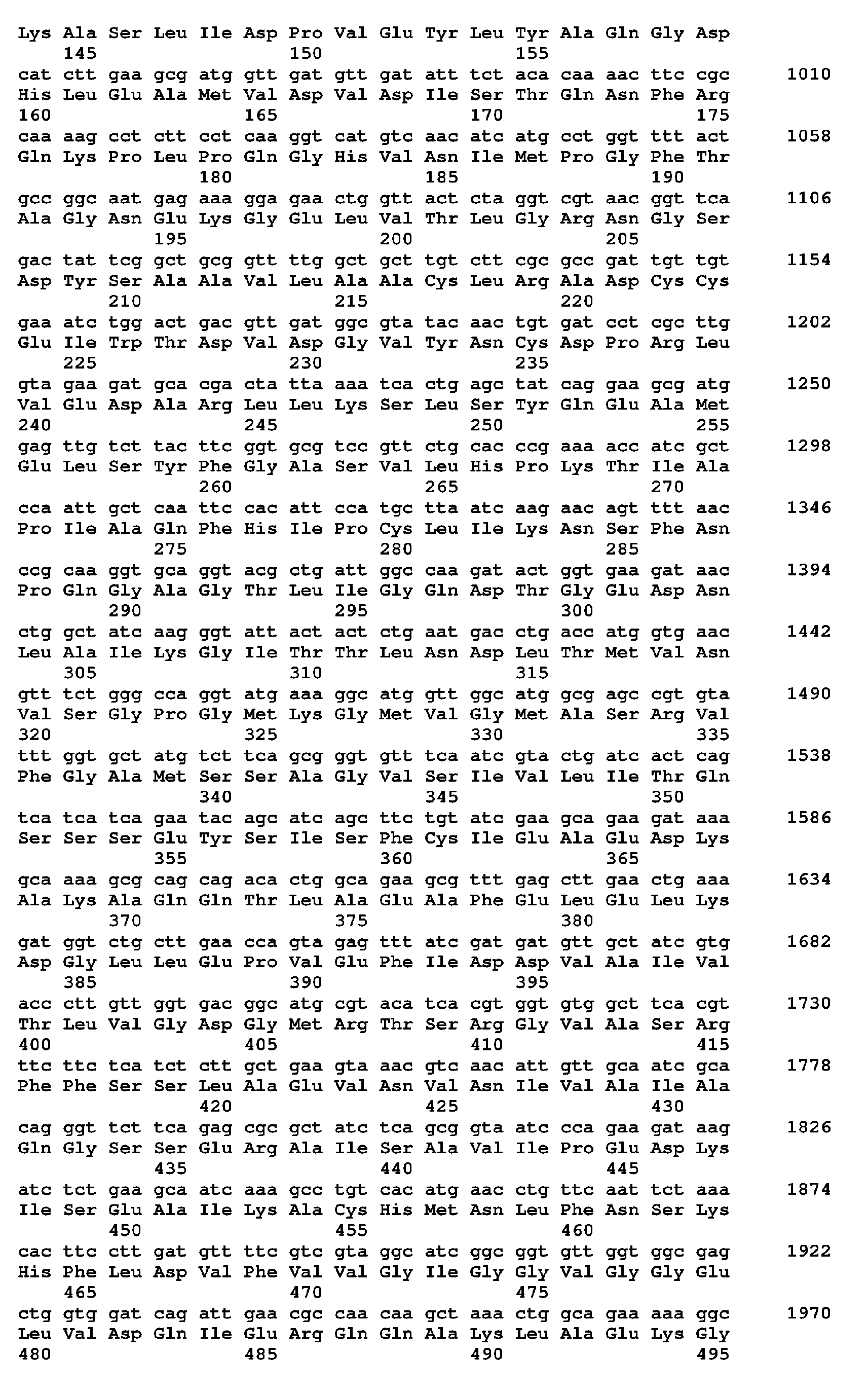


- <210> 14
<211> 819
<212> PRT
<213> Vibrio natriegens - <400> 14
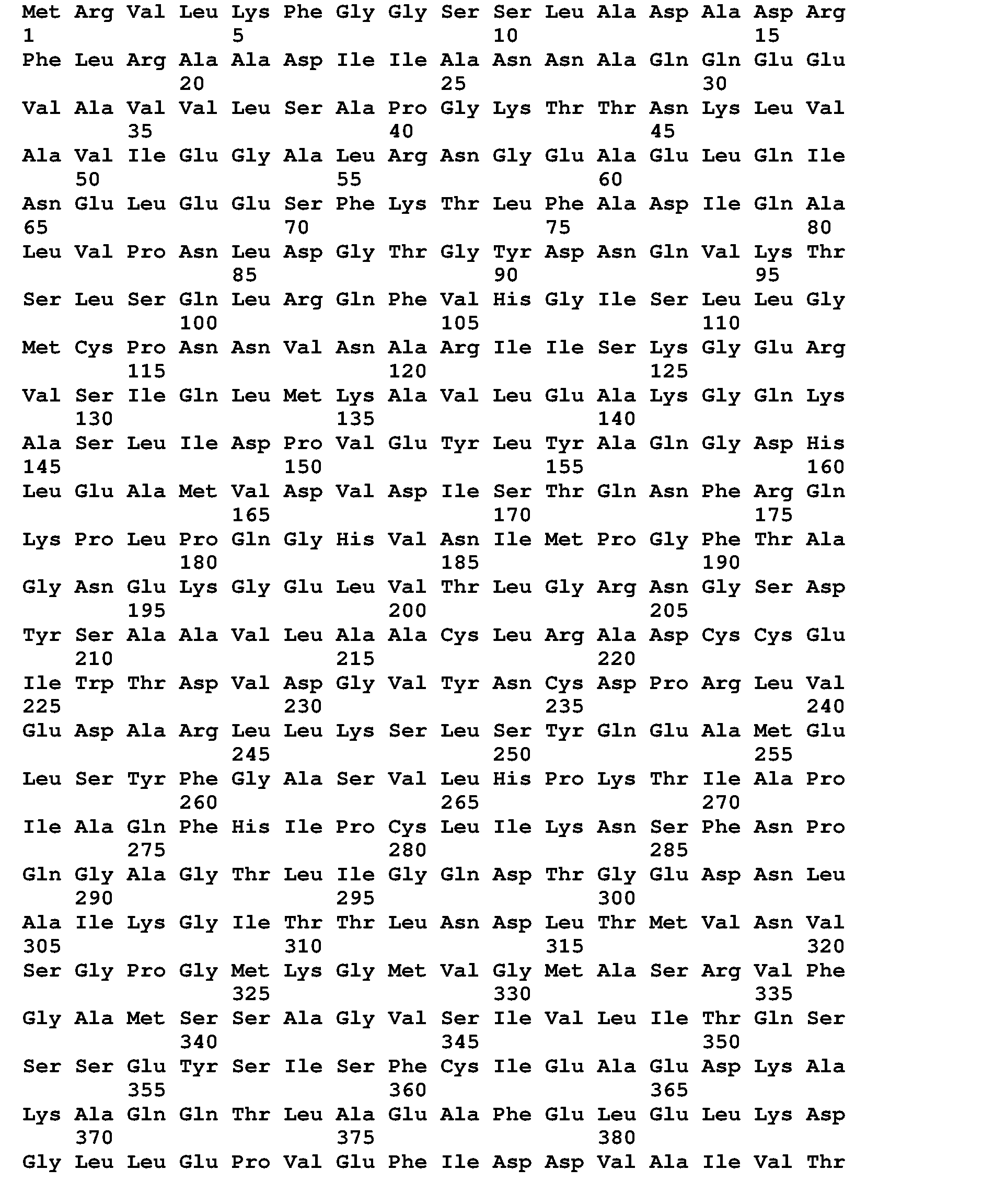

- <210> 15
<211> 3214
<212> DNA
<213> Vibrio natriegens - <220>
<221> CDS
<222> (376)..(2781) - <400> 15


- <210> 16
<211> 802
<212> PRT
<213> Vibrio natriegens - <400> 16


- <210> 17
<211> 2648
<212> DNA
<213> Vibrio natriegens - <220>
<221> misc_feature
<222> (862)
<223> n = a, t, g or c - <220>
<221> CDS
<222> (1060)..(2409) - <400> 17


- <210> 18
<211> 450
<212> PRT
<213> Vibrio natriegens - <400> 18


- <210> 19
<211> 2331
<212> DNA
<213> Vibrio natriegens - <220>
<221> CDS
<222> (344)..(1765) - <400> 19


- <210> 20
<211> 474
<212> PRT
<213> Vibrio natriegens - <400> 20


Claims (10)
- A method for producing L-lysine, which comprises culturing a Vibrio bacterium having an ability to produce L-lysine in a medium to produce and accumulate L-lysine in the medium or cells of the bacterium, and collecting L-lysine from the medium or cells, wherein the Vibrio bacterium has been modified so that an activity of a protein encoded by the fucO gene is reduced.
- The method according to claim 1, wherein the activity of the protein is reduced by introducing a mutation into a coding region of the fucO gene and/or an expression control region of the gene.
- The method according to claim 1 or 2, wherein, the fucO gene on a chromosome is disrupted.
- The method according to any one of claims 1 to 3, wherein the protein is a protein defined in the following (A) or (B):(A) a protein having the amino acid sequence shown in SEQ ID NO: 2,(B) a protein having the amino acid sequence shown in SEQ ID NO: 2 including substitutions, deletions, insertions or additions of one or several amino acid residues, wherein the reduction of the activity in the bacterium improves the ability to produce L-lysine.
- The method according to any one of claims 1 to 4, wherein the fucO gene is a DNA defined in the following (a) or (b):(a) a DNA comprising the nucleotide sequence of SEQ ID NO: 1,(b) a DNA which hybridizes with the nucleotide sequence of SEQ ID NO: 1 or a probe that can be prepared from the nucleotide sequence under stringent conditions, and codes for a protein, wherein the reduction of the activity in the bacterium improves the ability to produce L-lysine.
- The method according to any one of claims 1 to 5, wherein an activity or activities of one or two or more kinds of enzymes selected from the group consisting of dihydrodipicolinate synthase, aspartokinase, dihydrodipicolinate reductase, and diaminopimelate dehydrogenase are enhanced.
- The method according to any one of claims 1 to 6, wherein the Vibrio bacterium is Vibrio natriegens.
- The method according to any one of claims 1 to 7, wherein the medium contains glycerol as a carbon source.
- A Vibrio bacterium which has an ability to produce L-lysine, and has been modified so that an activity of a protein encoded by the fucO gene is reduced.
- The Vibrio bacterium according to claim 9, which is Vibrio natriegens.
Applications Claiming Priority (2)
| Application Number | Priority Date | Filing Date | Title |
|---|---|---|---|
| JP2009180819A JP2012196144A (en) | 2009-08-03 | 2009-08-03 | Method for producing l-lysine using vibrio bacterium |
| PCT/JP2010/060972 WO2011016301A1 (en) | 2009-08-03 | 2010-06-28 | Process for production of l-lysine using bacterium belonging to genus vibrio |
Publications (3)
| Publication Number | Publication Date |
|---|---|
| EP2463377A1 true EP2463377A1 (en) | 2012-06-13 |
| EP2463377A4 EP2463377A4 (en) | 2013-01-23 |
| EP2463377B1 EP2463377B1 (en) | 2014-05-14 |
Family
ID=43544202
Family Applications (1)
| Application Number | Title | Priority Date | Filing Date |
|---|---|---|---|
| EP10806301.7A Not-in-force EP2463377B1 (en) | 2009-08-03 | 2010-06-28 | A method for producing L-lysine using a Vibrio bacterium |
Country Status (6)
| Country | Link |
|---|---|
| US (1) | US20120156736A1 (en) |
| EP (1) | EP2463377B1 (en) |
| JP (1) | JP2012196144A (en) |
| CN (1) | CN102471791B (en) |
| BR (1) | BR112012002441A2 (en) |
| WO (1) | WO2011016301A1 (en) |
Cited By (1)
| Publication number | Priority date | Publication date | Assignee | Title |
|---|---|---|---|---|
| WO2019243467A1 (en) * | 2018-06-19 | 2019-12-26 | Universitetet I Tromsø - Norges Arktiske Universitet | Fusion moieties and microbial hosts for protein production |
Families Citing this family (4)
| Publication number | Priority date | Publication date | Assignee | Title |
|---|---|---|---|---|
| US10377997B1 (en) * | 2015-12-01 | 2019-08-13 | Synthetic Genomics, Inc. | Genetically engineered Vibrio sp. and uses thereof |
| JP2021166470A (en) * | 2018-05-25 | 2021-10-21 | Spiber株式会社 | Vibrio Bacterial Medium |
| CN117545361A (en) * | 2021-06-21 | 2024-02-09 | 微收获有限公司 | Extracts from fast-growing microorganisms |
| CN115960801B (en) * | 2022-09-28 | 2024-07-09 | 浙江大学杭州国际科创中心 | Genetically engineered bacterium for high-yield L-threonine and application thereof |
Family Cites Families (46)
| Publication number | Priority date | Publication date | Assignee | Title |
|---|---|---|---|---|
| JPS4828078B1 (en) | 1969-03-20 | 1973-08-29 | ||
| US3738479A (en) | 1970-04-14 | 1973-06-12 | S Sato | Disposable rigid thermometer probe cover |
| JPS559784A (en) | 1978-07-10 | 1980-01-23 | Ajinomoto Co Inc | Preparation of l-lysine |
| JPS568692A (en) | 1979-07-03 | 1981-01-29 | Kyowa Hakko Kogyo Co Ltd | Preparation of l-lysine by fermentation |
| JPH0783714B2 (en) | 1983-08-29 | 1995-09-13 | 味の素株式会社 | Fermentation method for producing L-amino acid |
| EP0163836B1 (en) | 1984-04-07 | 1988-10-12 | Bayer Ag | Process and apparatus for the production of granules |
| FR2603581B1 (en) | 1986-04-28 | 1993-08-13 | Ajinomoto Kk | PROCESS FOR ISOLATING AND PURIFYING AMINO ACIDS BY CHROMATOGRAPHY |
| US4777051A (en) | 1986-06-20 | 1988-10-11 | Ajinomoto Co., Inc. | Process for the production of a composition for animal feed |
| FR2627508B1 (en) | 1988-02-22 | 1990-10-05 | Eurolysine | PROCESS FOR THE INTEGRATION OF A SELECTED GENE ON THE CHROMOSOME OF A BACTERIA AND BACTERIA OBTAINED BY SAID METHOD |
| JP2537260B2 (en) | 1988-02-23 | 1996-09-25 | 東陶機器株式会社 | Japanese-style toilet construction method |
| JP2708168B2 (en) | 1988-02-23 | 1998-02-04 | 昭和電工株式会社 | Microbial improvement |
| JPH07108228B2 (en) | 1990-10-15 | 1995-11-22 | 味の素株式会社 | Temperature sensitive plasmid |
| DE4130868C2 (en) | 1991-09-17 | 1994-10-13 | Degussa | Animal feed supplement based on an amino acid and process for its preparation |
| JPH06102028A (en) | 1992-09-22 | 1994-04-12 | Nikon Corp | Optical non-contact distance measuring machine and measuring method |
| RU2113484C1 (en) | 1992-11-10 | 1998-06-20 | Адзиномото Ко., Инк. | Dna fragment encoding aspartokinase-iii, a method of l-threonine preparing |
| JPH07155184A (en) | 1993-12-08 | 1995-06-20 | Ajinomoto Co Inc | Fermentation method for producing L-lysine |
| US5861273A (en) | 1993-12-21 | 1999-01-19 | Celtrix Phamraceuticals, Inc. | Chromosomal expression of heterologous genes in bacterial cells |
| JP3783065B2 (en) | 1994-03-04 | 2006-06-07 | 味の素株式会社 | Method for producing L-lysine |
| US6326356B1 (en) | 1996-10-18 | 2001-12-04 | Board Of Regents, The University Of Texas System | Suppression of neu overexpression using a mini-E1A gene |
| ES2256850T5 (en) | 1994-12-09 | 2013-04-15 | Ajinomoto Co., Inc. | New lysine decarboxylase gene and procedure for the production of L-lysine |
| DK0841395T3 (en) | 1995-06-07 | 2012-01-09 | Ajinomoto Kk | Process for Preparing L-Lysine |
| JP3861341B2 (en) | 1995-10-13 | 2006-12-20 | 味の素株式会社 | Membrane sterilization method of fermentation broth |
| JPH09173792A (en) | 1995-10-23 | 1997-07-08 | Ajinomoto Co Inc | Fermentation liquid treatment method |
| DE19548748A1 (en) | 1995-12-23 | 1997-06-26 | Krups Kompaktlogistik Gmbh | Automatic parking garage |
| US5830690A (en) | 1995-12-29 | 1998-11-03 | Council Of Scientific & Indus. Res. & Dept. Of Biotech. | Process for producing polypeptides |
| DE19621930C1 (en) | 1996-05-31 | 1997-12-11 | Degussa | Process for the preparation of an animal feed additive based on fermentation broth |
| US5939307A (en) | 1996-07-30 | 1999-08-17 | The Archer-Daniels-Midland Company | Strains of Escherichia coli, methods of preparing the same and use thereof in fermentation processes for l-threonine production |
| JP4075087B2 (en) | 1996-12-05 | 2008-04-16 | 味の素株式会社 | Method for producing L-lysine |
| JP2000157276A (en) | 1998-11-24 | 2000-06-13 | Ajinomoto Co Inc | L-Lysine biosynthesis gene of the genus Thermus |
| JP3965821B2 (en) | 1999-03-09 | 2007-08-29 | 味の素株式会社 | Method for producing L-lysine |
| JP2000262288A (en) | 1999-03-16 | 2000-09-26 | Ajinomoto Co Inc | Temperature sensitive plasmid of coryneform bacteria |
| JP2003135066A (en) | 1999-03-19 | 2003-05-13 | Ajinomoto Co Inc | Method for producing L-lysine |
| RU2368659C2 (en) | 1999-04-09 | 2009-09-27 | Адзиномото Ко., Инк. | Bacterium producing l-amino acid, and method for production of l-amino acid |
| US6238714B1 (en) | 1999-05-05 | 2001-05-29 | Degussa-Huls Ag | Feedstuff additive which contains D-pantothenic acid and/or its salts and a process for the preparation thereof |
| BRPI0016995B1 (en) | 2000-01-21 | 2016-03-08 | Ajinomoto Kk | genetically modified escherichia coli bacteria, and method for producing l-lysine |
| JP4362959B2 (en) | 2000-08-24 | 2009-11-11 | 味の素株式会社 | Method for producing basic amino acid |
| JPWO2002101027A1 (en) * | 2001-05-29 | 2004-09-24 | 協和醗酵工業株式会社 | Microorganisms useful for industrial production |
| US6939966B2 (en) | 2001-07-24 | 2005-09-06 | Merck & Co., Inc. | Radiolabeled neuropeptide Y Y5 receptor antagonists |
| AU2003205041A1 (en) | 2002-07-12 | 2004-01-29 | Ajinomoto Co., Inc. | Method for producing target substance by fermentation |
| DE10331366A1 (en) | 2003-07-11 | 2005-01-27 | Degussa Ag | Granulating feed additives containing amino acids and/or vitamins, especially L-threonine, optionally in fermentation broth form, using circulating fluidized bed |
| CN100520793C (en) | 2003-07-29 | 2009-07-29 | 味之素株式会社 | Method for determination of metabolic flux affecting production of useful material |
| JP4665537B2 (en) | 2004-01-30 | 2011-04-06 | 味の素株式会社 | L-amino acid producing bacterium and method for producing L-amino acid |
| RU2350655C2 (en) | 2004-10-07 | 2009-03-27 | Адзиномото Ко., Инк. | Method of basic substance obtaining |
| WO2008078646A1 (en) | 2006-12-22 | 2008-07-03 | Ajinomoto Co., Inc. | Method for separation of crystal of amino acid or nucleic acid |
| BRPI0703692B1 (en) | 2006-12-25 | 2016-12-27 | Ajinomoto Kk | A method for obtaining the crystals of a basic amino acid hydrochloride comprising generating a basic amino acid using microbial cells by fermentation in a fermentation broth or by an enzymatic method in an enzyme reaction solution using the cells as catalysts. |
| JP2010088301A (en) * | 2007-02-01 | 2010-04-22 | Ajinomoto Co Inc | Method for production of l-amino acid |
-
2009
- 2009-08-03 JP JP2009180819A patent/JP2012196144A/en active Pending
-
2010
- 2010-06-28 WO PCT/JP2010/060972 patent/WO2011016301A1/en not_active Ceased
- 2010-06-28 CN CN201080034564.7A patent/CN102471791B/en not_active Expired - Fee Related
- 2010-06-28 BR BRBR112012002441-8A patent/BR112012002441A2/en not_active IP Right Cessation
- 2010-06-28 EP EP10806301.7A patent/EP2463377B1/en not_active Not-in-force
-
2012
- 2012-02-02 US US13/364,637 patent/US20120156736A1/en not_active Abandoned
Cited By (2)
| Publication number | Priority date | Publication date | Assignee | Title |
|---|---|---|---|---|
| WO2019243467A1 (en) * | 2018-06-19 | 2019-12-26 | Universitetet I Tromsø - Norges Arktiske Universitet | Fusion moieties and microbial hosts for protein production |
| US11560582B2 (en) | 2018-06-19 | 2023-01-24 | Universitetet I Tromsø—Norges Arktiske Universitet | Fusion moieties and microbial hosts for protein production |
Also Published As
| Publication number | Publication date |
|---|---|
| WO2011016301A1 (en) | 2011-02-10 |
| EP2463377A4 (en) | 2013-01-23 |
| US20120156736A1 (en) | 2012-06-21 |
| JP2012196144A (en) | 2012-10-18 |
| CN102471791A (en) | 2012-05-23 |
| EP2463377B1 (en) | 2014-05-14 |
| CN102471791B (en) | 2015-08-05 |
| BR112012002441A2 (en) | 2015-09-01 |
Similar Documents
| Publication | Publication Date | Title |
|---|---|---|
| US10815509B2 (en) | Microorganism producing O-acetyl homoserine and the method of producing O-acetyl homoserine using the same | |
| CN104862352B (en) | Microorganism producing O-phosphoserine and method for producing L-cysteine or derivative thereof from O-phosphoserine using the same | |
| RU2368659C2 (en) | Bacterium producing l-amino acid, and method for production of l-amino acid | |
| US7186531B2 (en) | L-threonine producing bacterium belonging to the genus Escherichia and method for producing L-threonine | |
| KR101537508B1 (en) | Method for production of L-lysine | |
| EP2128263B1 (en) | Method for production of l-amino acid | |
| US20040146974A1 (en) | Method for producing L-amino acid using methylotroph | |
| CA2455878A1 (en) | Production of l-lysine by genetically modified corynebacterium glutamicum strains | |
| CN102002473A (en) | O-acetyl homoserine-producing microorganism and method for producing O-acetyl homoserine using the same | |
| CA2456416A1 (en) | Coryneform bacteria which produce chemical compounds ii | |
| JPWO1996017930A1 (en) | Novel lysine decarboxylase gene and method for producing L-lysine | |
| CN106574237B (en) | Microorganism producing O-acetylhomoserine and method for producing O-acetylhomoserine using the same | |
| EP2471942B1 (en) | Process for production of l-amino acid | |
| TWI785327B (en) | Microorganism producing l-amino acid and method of producing l-amino acid using the same | |
| EP2463377B1 (en) | A method for producing L-lysine using a Vibrio bacterium | |
| EP1561811A1 (en) | Microorganism producing L-threonine having inactivated galR gene, method of producing the same and method of producing L-threonine using the microorganism | |
| US20130266993A1 (en) | Method for Producing Carboxylic Acid Using Methanol-Assimilating Bacterium | |
| US8017363B2 (en) | Method for production of L-lysine using methanol-utilizing bacterium | |
| EP2202299B1 (en) | A method for producing L-lysine | |
| JP2009507505A (en) | Amino acid production method using microorganisms | |
| WO1997048790A1 (en) | Process for producing target substances by fermentation | |
| EP1591520A2 (en) | Microorganism producing L-threonine having inactivated tyR gene, method of producing the same and method of producing L-threonine using the microorganism |
Legal Events
| Date | Code | Title | Description |
|---|---|---|---|
| PUAI | Public reference made under article 153(3) epc to a published international application that has entered the european phase |
Free format text: ORIGINAL CODE: 0009012 |
|
| 17P | Request for examination filed |
Effective date: 20120228 |
|
| AK | Designated contracting states |
Kind code of ref document: A1 Designated state(s): AL AT BE BG CH CY CZ DE DK EE ES FI FR GB GR HR HU IE IS IT LI LT LU LV MC MK MT NL NO PL PT RO SE SI SK SM TR |
|
| DAX | Request for extension of the european patent (deleted) | ||
| A4 | Supplementary search report drawn up and despatched |
Effective date: 20130104 |
|
| RIC1 | Information provided on ipc code assigned before grant |
Ipc: C12R 1/63 20060101ALI20121220BHEP Ipc: C12P 13/08 20060101AFI20121220BHEP Ipc: C12N 1/21 20060101ALI20121220BHEP Ipc: C12N 15/09 20060101ALI20121220BHEP |
|
| 17Q | First examination report despatched |
Effective date: 20130130 |
|
| GRAP | Despatch of communication of intention to grant a patent |
Free format text: ORIGINAL CODE: EPIDOSNIGR1 |
|
| INTG | Intention to grant announced |
Effective date: 20131218 |
|
| GRAS | Grant fee paid |
Free format text: ORIGINAL CODE: EPIDOSNIGR3 |
|
| GRAA | (expected) grant |
Free format text: ORIGINAL CODE: 0009210 |
|
| AK | Designated contracting states |
Kind code of ref document: B1 Designated state(s): AL AT BE BG CH CY CZ DE DK EE ES FI FR GB GR HR HU IE IS IT LI LT LU LV MC MK MT NL NO PL PT RO SE SI SK SM TR |
|
| REG | Reference to a national code |
Ref country code: GB Ref legal event code: FG4D |
|
| REG | Reference to a national code |
Ref country code: AT Ref legal event code: REF Ref document number: 668356 Country of ref document: AT Kind code of ref document: T Effective date: 20140615 |
|
| REG | Reference to a national code |
Ref country code: IE Ref legal event code: FG4D |
|
| REG | Reference to a national code |
Ref country code: DE Ref legal event code: R096 Ref document number: 602010016152 Country of ref document: DE Effective date: 20140626 |
|
| REG | Reference to a national code |
Ref country code: NL Ref legal event code: T3 |
|
| REG | Reference to a national code |
Ref country code: AT Ref legal event code: MK05 Ref document number: 668356 Country of ref document: AT Kind code of ref document: T Effective date: 20140514 |
|
| REG | Reference to a national code |
Ref country code: LT Ref legal event code: MG4D |
|
| PG25 | Lapsed in a contracting state [announced via postgrant information from national office to epo] |
Ref country code: GR Free format text: LAPSE BECAUSE OF FAILURE TO SUBMIT A TRANSLATION OF THE DESCRIPTION OR TO PAY THE FEE WITHIN THE PRESCRIBED TIME-LIMIT Effective date: 20140815 Ref country code: NO Free format text: LAPSE BECAUSE OF FAILURE TO SUBMIT A TRANSLATION OF THE DESCRIPTION OR TO PAY THE FEE WITHIN THE PRESCRIBED TIME-LIMIT Effective date: 20140814 Ref country code: LT Free format text: LAPSE BECAUSE OF FAILURE TO SUBMIT A TRANSLATION OF THE DESCRIPTION OR TO PAY THE FEE WITHIN THE PRESCRIBED TIME-LIMIT Effective date: 20140514 Ref country code: CY Free format text: LAPSE BECAUSE OF FAILURE TO SUBMIT A TRANSLATION OF THE DESCRIPTION OR TO PAY THE FEE WITHIN THE PRESCRIBED TIME-LIMIT Effective date: 20140514 Ref country code: IS Free format text: LAPSE BECAUSE OF FAILURE TO SUBMIT A TRANSLATION OF THE DESCRIPTION OR TO PAY THE FEE WITHIN THE PRESCRIBED TIME-LIMIT Effective date: 20140914 Ref country code: FI Free format text: LAPSE BECAUSE OF FAILURE TO SUBMIT A TRANSLATION OF THE DESCRIPTION OR TO PAY THE FEE WITHIN THE PRESCRIBED TIME-LIMIT Effective date: 20140514 |
|
| PG25 | Lapsed in a contracting state [announced via postgrant information from national office to epo] |
Ref country code: LV Free format text: LAPSE BECAUSE OF FAILURE TO SUBMIT A TRANSLATION OF THE DESCRIPTION OR TO PAY THE FEE WITHIN THE PRESCRIBED TIME-LIMIT Effective date: 20140514 Ref country code: HR Free format text: LAPSE BECAUSE OF FAILURE TO SUBMIT A TRANSLATION OF THE DESCRIPTION OR TO PAY THE FEE WITHIN THE PRESCRIBED TIME-LIMIT Effective date: 20140514 Ref country code: SE Free format text: LAPSE BECAUSE OF FAILURE TO SUBMIT A TRANSLATION OF THE DESCRIPTION OR TO PAY THE FEE WITHIN THE PRESCRIBED TIME-LIMIT Effective date: 20140514 Ref country code: AT Free format text: LAPSE BECAUSE OF FAILURE TO SUBMIT A TRANSLATION OF THE DESCRIPTION OR TO PAY THE FEE WITHIN THE PRESCRIBED TIME-LIMIT Effective date: 20140514 Ref country code: ES Free format text: LAPSE BECAUSE OF FAILURE TO SUBMIT A TRANSLATION OF THE DESCRIPTION OR TO PAY THE FEE WITHIN THE PRESCRIBED TIME-LIMIT Effective date: 20140514 Ref country code: PL Free format text: LAPSE BECAUSE OF FAILURE TO SUBMIT A TRANSLATION OF THE DESCRIPTION OR TO PAY THE FEE WITHIN THE PRESCRIBED TIME-LIMIT Effective date: 20140514 |
|
| PG25 | Lapsed in a contracting state [announced via postgrant information from national office to epo] |
Ref country code: PT Free format text: LAPSE BECAUSE OF FAILURE TO SUBMIT A TRANSLATION OF THE DESCRIPTION OR TO PAY THE FEE WITHIN THE PRESCRIBED TIME-LIMIT Effective date: 20140915 |
|
| PG25 | Lapsed in a contracting state [announced via postgrant information from national office to epo] |
Ref country code: RO Free format text: LAPSE BECAUSE OF FAILURE TO SUBMIT A TRANSLATION OF THE DESCRIPTION OR TO PAY THE FEE WITHIN THE PRESCRIBED TIME-LIMIT Effective date: 20140514 Ref country code: CZ Free format text: LAPSE BECAUSE OF FAILURE TO SUBMIT A TRANSLATION OF THE DESCRIPTION OR TO PAY THE FEE WITHIN THE PRESCRIBED TIME-LIMIT Effective date: 20140514 Ref country code: SK Free format text: LAPSE BECAUSE OF FAILURE TO SUBMIT A TRANSLATION OF THE DESCRIPTION OR TO PAY THE FEE WITHIN THE PRESCRIBED TIME-LIMIT Effective date: 20140514 Ref country code: DK Free format text: LAPSE BECAUSE OF FAILURE TO SUBMIT A TRANSLATION OF THE DESCRIPTION OR TO PAY THE FEE WITHIN THE PRESCRIBED TIME-LIMIT Effective date: 20140514 Ref country code: EE Free format text: LAPSE BECAUSE OF FAILURE TO SUBMIT A TRANSLATION OF THE DESCRIPTION OR TO PAY THE FEE WITHIN THE PRESCRIBED TIME-LIMIT Effective date: 20140514 Ref country code: BE Free format text: LAPSE BECAUSE OF FAILURE TO SUBMIT A TRANSLATION OF THE DESCRIPTION OR TO PAY THE FEE WITHIN THE PRESCRIBED TIME-LIMIT Effective date: 20140514 |
|
| REG | Reference to a national code |
Ref country code: CH Ref legal event code: PL |
|
| REG | Reference to a national code |
Ref country code: DE Ref legal event code: R097 Ref document number: 602010016152 Country of ref document: DE |
|
| PLBE | No opposition filed within time limit |
Free format text: ORIGINAL CODE: 0009261 |
|
| STAA | Information on the status of an ep patent application or granted ep patent |
Free format text: STATUS: NO OPPOSITION FILED WITHIN TIME LIMIT |
|
| REG | Reference to a national code |
Ref country code: IE Ref legal event code: MM4A |
|
| 26N | No opposition filed |
Effective date: 20150217 |
|
| GBPC | Gb: european patent ceased through non-payment of renewal fee |
Effective date: 20140814 |
|
| PG25 | Lapsed in a contracting state [announced via postgrant information from national office to epo] |
Ref country code: IE Free format text: LAPSE BECAUSE OF NON-PAYMENT OF DUE FEES Effective date: 20140628 Ref country code: IT Free format text: LAPSE BECAUSE OF FAILURE TO SUBMIT A TRANSLATION OF THE DESCRIPTION OR TO PAY THE FEE WITHIN THE PRESCRIBED TIME-LIMIT Effective date: 20140514 Ref country code: CH Free format text: LAPSE BECAUSE OF NON-PAYMENT OF DUE FEES Effective date: 20140630 Ref country code: LI Free format text: LAPSE BECAUSE OF NON-PAYMENT OF DUE FEES Effective date: 20140630 |
|
| REG | Reference to a national code |
Ref country code: DE Ref legal event code: R097 Ref document number: 602010016152 Country of ref document: DE Effective date: 20150217 |
|
| PG25 | Lapsed in a contracting state [announced via postgrant information from national office to epo] |
Ref country code: SI Free format text: LAPSE BECAUSE OF FAILURE TO SUBMIT A TRANSLATION OF THE DESCRIPTION OR TO PAY THE FEE WITHIN THE PRESCRIBED TIME-LIMIT Effective date: 20140514 Ref country code: GB Free format text: LAPSE BECAUSE OF NON-PAYMENT OF DUE FEES Effective date: 20140814 |
|
| PG25 | Lapsed in a contracting state [announced via postgrant information from national office to epo] |
Ref country code: MT Free format text: LAPSE BECAUSE OF FAILURE TO SUBMIT A TRANSLATION OF THE DESCRIPTION OR TO PAY THE FEE WITHIN THE PRESCRIBED TIME-LIMIT Effective date: 20140514 |
|
| PG25 | Lapsed in a contracting state [announced via postgrant information from national office to epo] |
Ref country code: SM Free format text: LAPSE BECAUSE OF FAILURE TO SUBMIT A TRANSLATION OF THE DESCRIPTION OR TO PAY THE FEE WITHIN THE PRESCRIBED TIME-LIMIT Effective date: 20140514 Ref country code: MC Free format text: LAPSE BECAUSE OF FAILURE TO SUBMIT A TRANSLATION OF THE DESCRIPTION OR TO PAY THE FEE WITHIN THE PRESCRIBED TIME-LIMIT Effective date: 20140514 |
|
| REG | Reference to a national code |
Ref country code: FR Ref legal event code: PLFP Year of fee payment: 7 |
|
| PG25 | Lapsed in a contracting state [announced via postgrant information from national office to epo] |
Ref country code: BG Free format text: LAPSE BECAUSE OF FAILURE TO SUBMIT A TRANSLATION OF THE DESCRIPTION OR TO PAY THE FEE WITHIN THE PRESCRIBED TIME-LIMIT Effective date: 20140514 |
|
| PGFP | Annual fee paid to national office [announced via postgrant information from national office to epo] |
Ref country code: NL Payment date: 20160510 Year of fee payment: 7 |
|
| PG25 | Lapsed in a contracting state [announced via postgrant information from national office to epo] |
Ref country code: LU Free format text: LAPSE BECAUSE OF NON-PAYMENT OF DUE FEES Effective date: 20140628 Ref country code: HU Free format text: LAPSE BECAUSE OF FAILURE TO SUBMIT A TRANSLATION OF THE DESCRIPTION OR TO PAY THE FEE WITHIN THE PRESCRIBED TIME-LIMIT; INVALID AB INITIO Effective date: 20100628 Ref country code: TR Free format text: LAPSE BECAUSE OF FAILURE TO SUBMIT A TRANSLATION OF THE DESCRIPTION OR TO PAY THE FEE WITHIN THE PRESCRIBED TIME-LIMIT Effective date: 20140514 |
|
| PGFP | Annual fee paid to national office [announced via postgrant information from national office to epo] |
Ref country code: DE Payment date: 20160622 Year of fee payment: 7 |
|
| PGFP | Annual fee paid to national office [announced via postgrant information from national office to epo] |
Ref country code: FR Payment date: 20160516 Year of fee payment: 7 |
|
| REG | Reference to a national code |
Ref country code: DE Ref legal event code: R119 Ref document number: 602010016152 Country of ref document: DE |
|
| REG | Reference to a national code |
Ref country code: NL Ref legal event code: MM Effective date: 20170701 |
|
| PG25 | Lapsed in a contracting state [announced via postgrant information from national office to epo] |
Ref country code: NL Free format text: LAPSE BECAUSE OF NON-PAYMENT OF DUE FEES Effective date: 20170701 |
|
| REG | Reference to a national code |
Ref country code: FR Ref legal event code: ST Effective date: 20180228 |
|
| PG25 | Lapsed in a contracting state [announced via postgrant information from national office to epo] |
Ref country code: DE Free format text: LAPSE BECAUSE OF NON-PAYMENT OF DUE FEES Effective date: 20180103 |
|
| PG25 | Lapsed in a contracting state [announced via postgrant information from national office to epo] |
Ref country code: FR Free format text: LAPSE BECAUSE OF NON-PAYMENT OF DUE FEES Effective date: 20170630 |
|
| PG25 | Lapsed in a contracting state [announced via postgrant information from national office to epo] |
Ref country code: MK Free format text: LAPSE BECAUSE OF FAILURE TO SUBMIT A TRANSLATION OF THE DESCRIPTION OR TO PAY THE FEE WITHIN THE PRESCRIBED TIME-LIMIT Effective date: 20140514 |
|
| PG25 | Lapsed in a contracting state [announced via postgrant information from national office to epo] |
Ref country code: AL Free format text: LAPSE BECAUSE OF FAILURE TO SUBMIT A TRANSLATION OF THE DESCRIPTION OR TO PAY THE FEE WITHIN THE PRESCRIBED TIME-LIMIT Effective date: 20140514 |