EP2463373B1 - Gene coding for an auxin receptor protein derived from the rice plant, and applications therefor - Google Patents
Gene coding for an auxin receptor protein derived from the rice plant, and applications therefor Download PDFInfo
- Publication number
- EP2463373B1 EP2463373B1 EP10755073.3A EP10755073A EP2463373B1 EP 2463373 B1 EP2463373 B1 EP 2463373B1 EP 10755073 A EP10755073 A EP 10755073A EP 2463373 B1 EP2463373 B1 EP 2463373B1
- Authority
- EP
- European Patent Office
- Prior art keywords
- plant
- protein
- gene
- abp57
- auxin
- Prior art date
- Legal status (The legal status is an assumption and is not a legal conclusion. Google has not performed a legal analysis and makes no representation as to the accuracy of the status listed.)
- Not-in-force
Links
Images





Classifications
-
- C—CHEMISTRY; METALLURGY
- C12—BIOCHEMISTRY; BEER; SPIRITS; WINE; VINEGAR; MICROBIOLOGY; ENZYMOLOGY; MUTATION OR GENETIC ENGINEERING
- C12N—MICROORGANISMS OR ENZYMES; COMPOSITIONS THEREOF; PROPAGATING, PRESERVING, OR MAINTAINING MICROORGANISMS; MUTATION OR GENETIC ENGINEERING; CULTURE MEDIA
- C12N15/00—Mutation or genetic engineering; DNA or RNA concerning genetic engineering, vectors, e.g. plasmids, or their isolation, preparation or purification; Use of hosts therefor
- C12N15/09—Recombinant DNA-technology
- C12N15/11—DNA or RNA fragments; Modified forms thereof; Non-coding nucleic acids having a biological activity
-
- A—HUMAN NECESSITIES
- A01—AGRICULTURE; FORESTRY; ANIMAL HUSBANDRY; HUNTING; TRAPPING; FISHING
- A01H—NEW PLANTS OR NON-TRANSGENIC PROCESSES FOR OBTAINING THEM; PLANT REPRODUCTION BY TISSUE CULTURE TECHNIQUES
- A01H1/00—Processes for modifying genotypes ; Plants characterised by associated natural traits
- A01H1/06—Processes for producing mutations, e.g. treatment with chemicals or with radiation
-
- A—HUMAN NECESSITIES
- A01—AGRICULTURE; FORESTRY; ANIMAL HUSBANDRY; HUNTING; TRAPPING; FISHING
- A01H—NEW PLANTS OR NON-TRANSGENIC PROCESSES FOR OBTAINING THEM; PLANT REPRODUCTION BY TISSUE CULTURE TECHNIQUES
- A01H1/00—Processes for modifying genotypes ; Plants characterised by associated natural traits
- A01H1/12—Processes for modifying agronomic input traits, e.g. crop yield
- A01H1/129—Processes for modifying agronomic input traits, e.g. crop yield involving hormone-influenced development, e.g. auxin
-
- A—HUMAN NECESSITIES
- A01—AGRICULTURE; FORESTRY; ANIMAL HUSBANDRY; HUNTING; TRAPPING; FISHING
- A01H—NEW PLANTS OR NON-TRANSGENIC PROCESSES FOR OBTAINING THEM; PLANT REPRODUCTION BY TISSUE CULTURE TECHNIQUES
- A01H5/00—Angiosperms, i.e. flowering plants, characterised by their plant parts; Angiosperms characterised otherwise than by their botanic taxonomy
- A01H5/10—Seeds
-
- A—HUMAN NECESSITIES
- A01—AGRICULTURE; FORESTRY; ANIMAL HUSBANDRY; HUNTING; TRAPPING; FISHING
- A01H—NEW PLANTS OR NON-TRANSGENIC PROCESSES FOR OBTAINING THEM; PLANT REPRODUCTION BY TISSUE CULTURE TECHNIQUES
- A01H6/00—Angiosperms, i.e. flowering plants, characterised by their botanic taxonomy
-
- C—CHEMISTRY; METALLURGY
- C07—ORGANIC CHEMISTRY
- C07K—PEPTIDES
- C07K14/00—Peptides having more than 20 amino acids; Gastrins; Somatostatins; Melanotropins; Derivatives thereof
- C07K14/415—Peptides having more than 20 amino acids; Gastrins; Somatostatins; Melanotropins; Derivatives thereof from plants
-
- C—CHEMISTRY; METALLURGY
- C12—BIOCHEMISTRY; BEER; SPIRITS; WINE; VINEGAR; MICROBIOLOGY; ENZYMOLOGY; MUTATION OR GENETIC ENGINEERING
- C12N—MICROORGANISMS OR ENZYMES; COMPOSITIONS THEREOF; PROPAGATING, PRESERVING, OR MAINTAINING MICROORGANISMS; MUTATION OR GENETIC ENGINEERING; CULTURE MEDIA
- C12N15/00—Mutation or genetic engineering; DNA or RNA concerning genetic engineering, vectors, e.g. plasmids, or their isolation, preparation or purification; Use of hosts therefor
- C12N15/09—Recombinant DNA-technology
- C12N15/63—Introduction of foreign genetic material using vectors; Vectors; Use of hosts therefor; Regulation of expression
- C12N15/79—Vectors or expression systems specially adapted for eukaryotic hosts
- C12N15/82—Vectors or expression systems specially adapted for eukaryotic hosts for plant cells, e.g. plant artificial chromosomes (PACs)
- C12N15/8241—Phenotypically and genetically modified plants via recombinant DNA technology
- C12N15/8261—Phenotypically and genetically modified plants via recombinant DNA technology with agronomic (input) traits, e.g. crop yield
- C12N15/8291—Hormone-influenced development
- C12N15/8294—Auxins
Definitions
- the present invention is related to a method of improving traits of a plant comprising transforming a plant with a recombinant plant expression vector, wherein the plant expression vector comprises a gene encoding an auxin receptor protein involved in the activation of a proton pump in the plasma membrane of a plant derived from rice, wherein the protein has an amino acid sequence of SEQ ID NO: 1 wherein the improved traits are increased plant growth or increased seed size and to plants, the use of a recombinant plant expression vector and a composition comprising a gene encoding SEQ ID NO: 1 for producing by transformation a plant having increased plant growth or seed having increased seed size.
- the present invention discloses an auxin receptor protein ABP57 derived from crops like rice, corn, and etc., gene and analogous gene thereof, and its use for the improvement of traits of a plant that are related to the activity of a proton pump of a plant like growth promotion, etc.
- auxin is a plant hormone which is involved in various traits of a plant. Hormone's activity of controlling physiology is achieved by a binding of a hormone to a receptor protein and a series of signal transduction pathways that are derived therefrom. Thus, characterization of a hormone receptor is the most basic requirement to understand the control mechanism of a hormone ( Badescu and Napier (2006) Trends Plant Sci 11, 217-223 ). Studies to identify the receptor for auxin, which is one of the basic plant hormones, have been carried out for a long time, and as a result it was reported that the proteins like ABP1, TIR1, and ABP57, etc. are able to function as an auxin receptor ( Hertel et al. (1972) Planta 107, 325-340 )
- the data base entry UniProt: A2YHP3 discloses a putative and uncharacterized protein from Oryza Sativa Subsp. Indica.
- US 2006/0123505 discloses full-length cDNAs of the rice genome and their use for various purposes.
- ABP1 which was first separated from cotyledons of a corn, there are accumulated studies on separation of a gene for the 22kD protein, binding of the protein to auxin, and physiological function, etc., and consequently it was found that ABP1 is related to the physiological effect of auxin.
- IAA dissociation constant of ABP1 is relatively high and the auxin signal transduction pathway after binding with auxin cannot be explained, it remains uncertain whether or not ABP1 is truly a receptor for auxin.
- T1R1 which is identified through a series of studies on a group of genes which show different expression under the treatment with auxin hormone, was found to be a receptor for auxin hormone that is involved in the turnover of the protein degradation.
- auxin hormone for example the physiological activity of auxin including acidification of a cell wall by auxin and bell-like dose response of auxin, etc., can be explained by T1R1, and it remains as a problem.
- inventors of the present invention identified the water-soluble protein from young seedlings and roots of a rice plant, which is directly related to the activation of a proton pump in plant plasma membrane by auxin ( Kim et al. (1997) FEBS Lett 409, 273-276 ; Kim et al. (1998) FEBS Lett 438, 241-244 ; Kim et al. (2000) Plant Growth Regul 32, 143-150 ; Kim et al. (2001) J Biol Chem 276, 10730-10736 ).
- the size of the protein determined by the inventors was 57kD, and based on the characteristics that are found in an auxin receptor like activation of a proton pump by a protein-protein interaction, IAA binding constant, and the biochemical property of directly mediating bell-like IAA-dose response which affects proton pump activation and also in view of the size of the protein, it was named "ABP57.”
- the present invention is devised in view of the needs described above.
- the inventors of the present invention newly isolated the gene of auxin receptor ABP57 that is related to activation of a proton pump in a plasma membrane of a plant, and found out that the gene can be used for improvement of traits that are useful in agriculture like growth and development of a plant, etc., and therefore completed the invention.
- the present invention provides a method of improving traits of a plant comprising transforming a plant with a recombinant plant expression vector, wherein the plant expression vector comprises a gene encoding an auxin receptor protein involved in the activation of a proton pump in the plasma membrane of a plant derived from rice, wherein the protein has an amino acid sequence of SEQ ID NO:1, wherein the improved traits are increased plant growth or increased seed size.
- a plant having improved traits by transformation with a recombinant plant expression vector wherein the plant expression vector comprises a gene encoding an auxin receptor protein involved in the activation of a proton pump in the plasma membrane of a plant derived from rice, wherein the protein has an amino acid sequence of SEQ ID NO:1 as well as seeds thereof.
- the invention relates to the use of a recombinant plant expression vector, wherein the plant expression vector comprises a gene encoding an auxin receptor protein involved in the activation of a proton pump in the plasma membrane of a plant derived from rice, wherein the protein has an amino acid sequence of SEQ ID NO:1 for producing by transformation a plant having increased plant growth or a seed having increased seed size.
- the present invention provides the use of a composition for improving the traits of a plant comprising a gene encoding an auxin receptor protein involved in the activation of a proton pump in the plasma membrane of a plant derived from rice, wherein the protein has an amino acid sequence of SEQ ID NO:1, wherein the improved traits are increased plant growth or increased seed size.
- gene for auxin receptor ABP57 was newly identified, and according to an in vitro test and an in vivo test by which a transformant was tested in a plant, it is suggested for the first time that ABP57 gene has an ability of activating a proton pump in a plant plasma membrane and binding to auxin hormone IAA, and it is involved in plant growth which is related to the physiological function of auxin.
- ABP57 gene has an ability of activating a proton pump in a plant plasma membrane and binding to auxin hormone IAA, and it is involved in plant growth which is related to the physiological function of auxin.
- various industrial applications like development of an agent for promoting growth of a crop plant or an agent for protecting a crop plant, etc. are expected.
- the present invention discloses the auxin receptor protein which is involved in the activation of a proton pump (H + -ATPase) in plasma membrane of a plant derived from rice, wherein the protein has the amino acid sequence of SEQ ID NO: 1.
- the amino acid sequence of SEQ ID NO: 1 to 5 has Protein Id of BAC10824 (ABP57), BAC10825, BAC79737, BAC79739 and BAC83785, respectively.
- the auxin receptor protein is ABP57 protein consisting of the amino acid sequence of SEQ ID NO: 1.
- the auxin receptor protein is a protein having an amino acid sequence of SEQ ID NO: 1 that is isolated from rice ( Oryza sativa ). Further disclosed are functional equivalents of said proteins.
- the term "functional equivalent” means that, as a result of addition, substitution or deletion of amino acid residues, it has an amino acid sequence with at least 70%, preferably at least 80%, more preferably at least 90%, still more preferably at least 95% homology with the amino acid sequence that of SEQ ID NO: 1, thus indicating a protein which has substantially the same physiological activity as the protein of SEQ ID NO: 1.
- the present invention discloses a gene which encodes the auxin receptor protein.
- the gene disclosed herein includes both genomic DNA and cDNA which encode the auxin receptor protein.
- the gene disclosed herein may comprise a nucleotide sequence of SEQ ID NO: 6 to 10.
- the nucleotide sequence of SEQ ID NO: 6 to 10 has a cDNA Id of AK072975, AK073714, AK102706, AK102508 and AK103212, respectively.
- the gene is AK072975 consisting of the nucleotide sequence of SEQ ID NO: 6. Variants of said nucleotide sequence are also disclosed.
- said gene may comprise a nucleotide sequence with at least 70%, preferably at least 80%, more preferably at least 90%, still more preferably at least 95% homology with the nucleotide sequences of SEQ ID NO: 6.
- sequence homology % for a certain polynucleotide is determined by comparing two nucleotide sequences that are optimally arranged with a region to be compared.
- a part of the polynucleotide sequence in a region to be compared may comprise an addition or a deletion (i.e., a gap) compared to a reference sequence (without any addition or deletion) relative to the optimized arrangement of the two sequences.
- the inventors of the present invention purified the auxin receptor ABP57 from the stems of rice seedling, and by digesting the purified protein with trypsin and analyzing it with ESI-MS/MS, amino acid information was obtained for the four peptides. Using non-redundant protein sequence database of NCBI, BLAST search was carried out for the amino acid sequence of the four peptides. As a result, a gene (AK072975) of which function has not been known yet was identified. With the registered nucleotide sequence of the gene, PCR primer was designed, and total RNA and genomic DNA from rice seedlings were amplified to obtain a gene fragment. As a result of the nucleotide sequence analysis, it shows 100% match with AK072975. ORF of the gene consists of 1,539 bp and encodes the protein of 58.7kDa (pI 7.97) which consists of 512 amino acids.
- a protein expression vector comprising the isolated gene was constructed, expressed in E. coli, and then the recombinant protein was purified.
- the recombinant protein was tested as a sample to determine an ability of activating a proton pump in rice plasma membrane and an ability of binding to auxin. As a result, it was found that the recombinant protein has all the characteristics, and therefore identified as a gene which encodes ABP57.
- a recombinant vector comprising the gene encoding the auxin receptor protein of the invention.
- the recombinant vector is a recombinant plant expression vector.
- recombinant indicates a cell which replicates a heterogeneous nucleotide or expresses said nucleotide, a peptide, a heterogeneous peptide, or a protein encoded by a heterogeneous nucleotide.
- Recombinant cell can express a gene or a gene fragment in a form of a sense or antisense, that are not found in natural state of cell.
- a recombinant cell can express a gene that is found in natural state, provided that said gene is modified and re-introduced into the cell by an artificial means
- vector is used herein to refer DNA fragment (s) and nucleotide molecules that are delivered to a cell.
- Vector can replicate DNA and be independently reproduced in a host cell.
- delivery system and “vector” are often interchangeably used.
- expression vector means a recombinant DNA molecule comprising a desired coding sequence and other appropriate nucleotide sequences that are essential for the expression of the operatively-linked coding sequence in a specific host organism.
- the promoter, enhancer, termination signal and polymerization signal which can be used by eukaryotic cells are well known in the art.
- a preferred example of plant expression vector is Ti-plasmid vector which can transfer a part of itself, i.e., so called T-region, to a plant cell when the vector is present in an appropriate host such as Agrobacterium tumefaciens.
- Other types of Ti-plasmid vector are currently used for transferring a hybrid gene to protoplasts that can produce a new plant by appropriately inserting a plant cell or hybrid DNA to a genome of a plant.
- Especially preferred form of Ti-plasmid vector is a so-called binary vector which has been disclosed in EP 0 120 516 B1 and USP No. 4,940,838 .
- vector that can be used for introducing the DNA of the present invention to a host plant can be selected from a double-stranded plant virus (e.g., CaMV), a single-stranded plant virus, and a viral vector which can be originated from Gemini virus, etc., for example a non-complete plant viral vector.
- a double-stranded plant virus e.g., CaMV
- a single-stranded plant virus e.g., a single-stranded plant virus
- a viral vector which can be originated from Gemini virus, etc. for example a non-complete plant viral vector.
- Use of said vector can be advantageous especially when a plant host cannot be appropriately transformed.
- Expression vector may comprise at least one selective marker.
- Said selective marker is a nucleotide sequence having a property that can make a target gene get selected by a common chemical method.
- Example includes, a gene resistant to herbicide such as glyphosate and phosphinotricine, and a gene resistant to antibiotics such as kanamycin, G418, bleomycin, hygromycin, and chloramphenicol, but not limited thereto.
- the promoter can be CaMV 35S promoter, actin promoter, ubiquitin promoter, pEMU promoter, MAS promoter, or histone promoter, but not limited thereto.
- the term “promoter” indicates a region of DNA located upstream of a structure gene, and it corresponds to a DNA molecule to which an RNA polymerase binds to initiate transcription.
- the term “plant promoter” indicates the promoter that can initiate transcription in a plant cell.
- the term “constitutive promoter” indicates the promoter that is active under most environmental conditions and cell growth or differentiation state. Since selection of a transformant can be made for various tissues at various stages, the constitutive promoter may be preferred for the present invention. Thus, selection property is not limited by a constitutive promoter.
- any kind of a typical terminator can be used.
- Example includes, nopalin synthase (NOS), rice ⁇ -amylase RAmyl A terminator, phaseoline terminator, and a terminator for Octopine gene of Agrobacterium tumefaciens, etc., but are not limited thereto.
- NOS nopalin synthase
- rice ⁇ -amylase RAmyl A terminator rice ⁇ -amylase RAmyl A terminator
- phaseoline terminator phaseoline terminator
- a terminator for Octopine gene of Agrobacterium tumefaciens etc.
- the use of terminator is highly preferable in view of the context of the present invention.
- a host cell that is transformed with the recombinant vector disclosed above.
- Any kind of a host cell known in the pertinent art can be used if stable and continuous cloning and expression of the vector disclosed above can be achieved by using it.
- Examples include strains belonging to the genus Bascillus such as E. coli JM109, E . coli BL21, E. coli RR1, E . coli LE392, E. coli B, E. coli X 1776, E . coli W3110, Bascillus subtilus, Bascillus thuringiensis, and the like, Salmonella typhimurium, intestinal flora and strains such as Serratia marcescens and various Pseudomonas Spp. and the like.
- a host cell such as Saccharomyce cerevisiae, an insect cell, a human cell (e.g., CHO cell line (Chinese hamster ovary), W138, BHK, COS-7, 293, HepG2, 3T3, RIN and MDCK cell line), a plant cell line and the like can be used.
- the host cell is a plant cell.
- a host cell When a host cell is a prokaryotic cell, transfer of the vector disclosed above into a host cell can be carried out according to CaCl 2 method, Hanahan's method ( Hanahan, D., J. Mol. Biol., 166:557-580 (1983 )), and an electroporation method, etc.
- the vector disclosed above when a host cell is an eukaryotic cell, can be transferred into a host cell according to a microscopic injection method, calcium phosphate precipitation method, an electroporation method, a liposome-mediated transformation, DEAE-dextran treatment method and a gene bombardment method, etc.
- the present invention provides a method of improving traits of a plant comprising transforming a plant with a recombinant plant expression vector, wherein the plant expression vector comprises a gene encoding an auxin receptor protein involved in the activation of a proton pump in the plasma membrane of a plant derived from rice, wherein the protein has an amino acid sequence of SEQ ID NO:1, wherein the improved traits are increased plant growth or increased seed size.
- Determination of a physiological activity of a gene using an in vivo system is very important.
- the inventors of the present invention over-expressed the ABP57 gene in Arabidopsis thaliana as a model plant, and observed any characteristics of the growth. As a result, it was found that the growth was at least two times faster than the control plant.
- the in vitro test relating to the activation of a proton pump, it is believed that the growth promotion by ABP57 gene as expressed in Arabidopsis thaliana is closely related to the activation of a proton pump present in the plasma membrane of Arabidopsis thaliana.
- a plant having improved traits by transformation with a recombinant plant expression vector wherein the plant expression vector comprises a gene encoding an auxin receptor protein involved in the activation of a proton pump in the plasma membrane of a plant derived from rice, wherein the protein has an amino acid sequence of SEQ ID NO: 1.
- the plant is preferably a plant with promoted growth.
- the plant includes monocot and dicot plants. Examples of monocot plant include rice, wheat, barley, bamboo shoot, corn, taro, asparagus, onion, garlic, scallion, leek, wild rocambole, hemp, and ginger, but not limited thereto.
- dicot plant examples include, tobacco, Arabidopsis thaliana, eggplant, pepper, tomato, potato, burdock, crown daisy, lettuce, Chinese bellflower, chard, spinach, sweet potato, celery, carrot, coriander, parsley, Chinese cabbage, cabbage, leaf mustard, radish, watermelon, melon, cucumber, zucchini, gourd, strawberry, soy bean, mung bean, kidney bean, sweet pea and the like, but not limited thereto.
- the plant is preferably Arabidopsis thaliana or rice.
- the present invention provides the use of a composition for improving the traits of a plant comprising a gene encoding an auxin receptor protein involved in the activation of a proton pump in the plasma membrane of a plant derived from rice, wherein the protein has an amino acid sequence of SEQ ID NO:1, wherein the improved traits are increased plant growth or increased seed size.
- the gene consists of the nucleotide sequence of SEQ ID NO: 6.
- the improvement of traits of a plant is a promotion of plant growth.
- Example 1 Amplification and nucleotide sequence determination of ABP57 gene by RT-PCR method
- ABP567 was purified from the extract of rice seedlings of Nakdong variety.
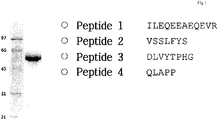
- the protein was digested with trypsin, and the amino acid sequence of the digested protein was analyzed by ESI-MS/MS. As a result, the amino acid sequence information of four peptides was obtained ( Fig. 1 ).
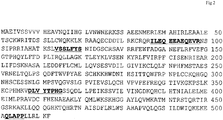
- Fig. 1 the amino acid sequence information of four peptides was obtained (AK072975), and the PCR primers were prepared based on the nucleotide sequence information of the gene ( Fig. 2 ).
- RNA and genomic DNA were isolated and amplified by RT-PCR.
- the amplified cDNA fragment (1.5 kb) was cloned into pGEM T-easy vector (Promega), and then the entire base sequencing was carried out.
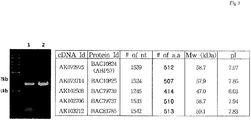
- the amplified ABP57 gene encodes the protein of 58.7 kDa, which consists of 512 amino acids with 1,539 bp of gene ( Fig. 3 ), and it shows 100% sequence homology with AK072975 registered with NCBI.
- Example 2 Obtainment of nucleotide sequence information of a gene which is analogous to ABP57 and gene expression analysis
- Example 3 Activation of a proton pump in plant plasma membrane by ABP57 recombinant protein
- ABP57 recombinant protein in E. coli In order to produce ABP57 recombinant protein in E. coli, full-length ORF of ABP57 cDNA was cloned in BamH1 and HindIII sites of pMAL-c2x (New England Biolabs). IPTG was added to culture medium for E. coli (E. coli Rosetta(DE3)/pLysS) comprising pMAL-c2x/ABP57 vector to induce the expression of ABP57. By using an amylase resin, MBP-fused ABP57 was purified from the extract of E. coli.
- E. coli Rosetta(DE3)/pLysS E. coli Rosetta(DE3)/pLysS
- TEV tobacco Etch Virus protease was added (1%) and incubated for 12 hours at 4°C for a reaction to remove MBP (maltose binding protein) which is bound to ABP57. Finally, the protein was purified by FPLC using HiPrep TM Phenyl FF 16/10 column ( Fig. 6 ).
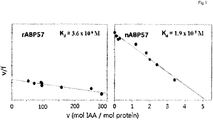
- the IAA dissociation constant of the recombinant protein was found to be 3.6 x 10 -6 M, and the number of binding site was 1, corresponding to the low affinity binding site of natural ABP57 ( Fig. 9 ).
- Example 4 Determination of the function of ABP57 by using a transformed plant
- the gene fragment comprising the ORF of the amplified ABP57 was introduced to BamHI and XhoI sites in pBI111L vector ( Fig. 10 ), and it was subsequently introduced to Agrobacterium strain C58C1.
- Arabidopsis Col-0 wild type host was transformed by flower dipping method.
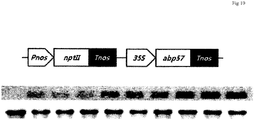
- the seeds harvested therefrom were germinated in a medium comprising kanamycin to select the transformant, which was then transferred to a pot. While growing the plant, expression of the introduced gene was confirmed from the leaves by RT-PCR ( Fig. 10 ).
- Fig. 11 As a result of comparing the growth of the transformant with the control group which had been transformed only with pBI111L vector, it was found that most of the transformants showed growth that is almost two times faster than the control plant ( Fig. 11 ).
Landscapes
- Health & Medical Sciences (AREA)
- Life Sciences & Earth Sciences (AREA)
- Genetics & Genomics (AREA)
- Chemical & Material Sciences (AREA)
- Organic Chemistry (AREA)
- Engineering & Computer Science (AREA)
- Molecular Biology (AREA)
- General Health & Medical Sciences (AREA)
- Biomedical Technology (AREA)
- Zoology (AREA)
- General Engineering & Computer Science (AREA)
- Bioinformatics & Cheminformatics (AREA)
- Wood Science & Technology (AREA)
- Biotechnology (AREA)
- Biophysics (AREA)
- Biochemistry (AREA)
- Botany (AREA)
- Developmental Biology & Embryology (AREA)
- Plant Pathology (AREA)
- Microbiology (AREA)
- Physics & Mathematics (AREA)
- Environmental Sciences (AREA)
- Endocrinology (AREA)
- Cell Biology (AREA)
- Gastroenterology & Hepatology (AREA)
- Medicinal Chemistry (AREA)
- Proteomics, Peptides & Aminoacids (AREA)
- Physiology (AREA)
- Micro-Organisms Or Cultivation Processes Thereof (AREA)
- Peptides Or Proteins (AREA)
- Breeding Of Plants And Reproduction By Means Of Culturing (AREA)
- Cultivation Of Plants (AREA)
Description
- The present invention is related to a method of improving traits of a plant comprising transforming a plant with a recombinant plant expression vector, wherein the plant expression vector comprises a gene encoding an auxin receptor protein involved in the activation of a proton pump in the plasma membrane of a plant derived from rice, wherein the protein has an amino acid sequence of SEQ ID NO: 1 wherein the improved traits are increased plant growth or increased seed size and to plants, the use of a recombinant plant expression vector and a composition comprising a gene encoding SEQ ID NO: 1 for producing by transformation a plant having increased plant growth or seed having increased seed size. More specifically, the present invention discloses an auxin receptor protein ABP57 derived from crops like rice, corn, and etc., gene and analogous gene thereof, and its use for the improvement of traits of a plant that are related to the activity of a proton pump of a plant like growth promotion, etc.
- Auxin is a plant hormone which is involved in various traits of a plant. Hormone's activity of controlling physiology is achieved by a binding of a hormone to a receptor protein and a series of signal transduction pathways that are derived therefrom. Thus, characterization of a hormone receptor is the most basic requirement to understand the control mechanism of a hormone (Badescu and Napier (2006) Trends Plant Sci 11, 217-223 ). Studies to identify the receptor for auxin, which is one of the basic plant hormones, have been carried out for a long time, and as a result it was reported that the proteins like ABP1, TIR1, and ABP57, etc. are able to function as an auxin receptor (Hertel et al. (1972) Planta 107, 325-340 )
- The data base entry UniProt: A2YHP3 discloses a putative and uncharacterized protein from Oryza Sativa Subsp. Indica.
-
US 2006/0123505 discloses full-length cDNAs of the rice genome and their use for various purposes. - Steffen Vaneste et al: "Auxin: A Trigger for Change in Plant Development", Cell, vol. 136, no. 6, 2009-03-01, pages 1005-1016 discloses auxin-dependent TIR1 activity, which leads to ubiquitination-based degradation of transcriptional repressors and complex transcriptional reprogramming upon auxin binding.
- Keithanne Mockaitis et al: "Auxin Receptors and Plant Development: A New Signaling Paradigm", Annual Review of Cell and Developmental Biology, vol. 24, no. 1,2008-11-01, pages 55-80 discloses the signalling pathway of the plant hormone auxin upon binding auxin receptors with the focus on the resulting unbiquitination and subsequent degradation events.
- Regarding ABP1 which was first separated from cotyledons of a corn, there are accumulated studies on separation of a gene for the 22kD protein, binding of the protein to auxin, and physiological function, etc., and consequently it was found that ABP1 is related to the physiological effect of auxin. However, as the IAA dissociation constant of ABP1 is relatively high and the auxin signal transduction pathway after binding with auxin cannot be explained, it remains uncertain whether or not ABP1 is truly a receptor for auxin. Meanwhile, T1R1, which is identified through a series of studies on a group of genes which show different expression under the treatment with auxin hormone, was found to be a receptor for auxin hormone that is involved in the turnover of the protein degradation. However, except the regulation of the expression of auxin gene, not all of the various controlling activities of auxin hormone, for example the physiological activity of auxin including acidification of a cell wall by auxin and bell-like dose response of auxin, etc., can be explained by T1R1, and it remains as a problem.
- According to the previous studies, inventors of the present invention identified the water-soluble protein from young seedlings and roots of a rice plant, which is directly related to the activation of a proton pump in plant plasma membrane by auxin (Kim et al. (1997) FEBS Lett 409, 273-276 ; Kim et al. (1998) FEBS Lett 438, 241-244 ; Kim et al. (2000) Plant Growth Regul 32, 143-150; Kim et al. (2001) J Biol Chem 276, 10730-10736). The size of the protein determined by the inventors was 57kD, and based on the characteristics that are found in an auxin receptor like activation of a proton pump by a protein-protein interaction, IAA binding constant, and the biochemical property of directly mediating bell-like IAA-dose response which affects proton pump activation and also in view of the size of the protein, it was named "ABP57."
- The present invention is devised in view of the needs described above. The inventors of the present invention newly isolated the gene of auxin receptor ABP57 that is related to activation of a proton pump in a plasma membrane of a plant, and found out that the gene can be used for improvement of traits that are useful in agriculture like growth and development of a plant, etc., and therefore completed the invention.
- In order to solve the problems descried above, the present invention provides a method of improving traits of a plant comprising transforming a plant with a recombinant plant expression vector, wherein the plant expression vector comprises a gene encoding an auxin receptor protein involved in the activation of a proton pump in the plasma membrane of a plant derived from rice, wherein the protein has an amino acid sequence of SEQ ID NO:1, wherein the improved traits are increased plant growth or increased seed size.
- Furthermore, described is a plant having improved traits by transformation with a recombinant plant expression vector, wherein the plant expression vector comprises a gene encoding an auxin receptor protein involved in the activation of a proton pump in the plasma membrane of a plant derived from rice, wherein the protein has an amino acid sequence of SEQ ID NO:1 as well as seeds thereof.
- Furthermore, the invention relates to the use of a recombinant plant expression vector, wherein the plant expression vector comprises a gene encoding an auxin receptor protein involved in the activation of a proton pump in the plasma membrane of a plant derived from rice, wherein the protein has an amino acid sequence of SEQ ID NO:1 for producing by transformation a plant having increased plant growth or a seed having increased seed size.
- Furthermore, the present invention provides the use of a composition for improving the traits of a plant comprising a gene encoding an auxin receptor protein involved in the activation of a proton pump in the plasma membrane of a plant derived from rice, wherein the protein has an amino acid sequence of SEQ ID NO:1, wherein the improved traits are increased plant growth or increased seed size.
- According to the present invention, gene for auxin receptor ABP57 was newly identified, and according to an in vitro test and an in vivo test by which a transformant was tested in a plant, it is suggested for the first time that ABP57 gene has an ability of activating a proton pump in a plant plasma membrane and binding to auxin hormone IAA, and it is involved in plant growth which is related to the physiological function of auxin. Considering various physiological and biochemical functions of a proton pump in plant plasma membrane, with the novel gene identified by the present invention, various industrial applications like development of an agent for promoting growth of a crop plant or an agent for protecting a crop plant, etc. are expected.
-
-
Fig.1 shows the SDS-PAGE electrophoresis of purified auxin receptor protein ABP57 that is derived from young seedlings of a rice plant and the results of amino acid sequencing of the peptide fragment that is obtained from trypsin digestion. -
Fig. 2 shows the ORF amino acid sequence of ABP57 gene which is obtained by BLASTP analysis using the NCBI's protein database and the amino acid sequence information of the peptide fragment. -
Fig. 3 shows the electrophoresis of the total RNA derived from rice seedlings (lane 1) and gene fragment of ABP57 that is amplified from genomic DNA (lane 2), together with the characteristics of the presumed protein that is encoded by a group of genes that are analogous to ABP57, as obtained by BLASTN analysis using full length cDNA database of a rice plant (KOME). -
Fig. 4 shows the result of the comparison of amino acid sequence of the proteins that are encoded by a group of genes analogous to ABP57. -
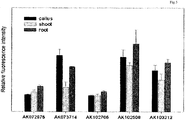
Fig. 5 shows the result of expression analysis of a group of genes analogous to ABP57 that are obtained from callus, stem and roots of rice based on microarray analysis data. -
Fig. 6 shows a process of purifying ABP57 based on production of MBP (maltose binding protein)-fused ABP using E. coli system and a column. -
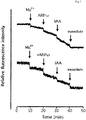
Fig. 7 shows the assay result of proton pump in plasma membrane of a rice plant by using recombinant ABP57. -
Fig. 8 shows the assay result of the interaction between the proton pump and ABP57 based on Hill Plot analysis in which rice plasma membrane activation was determined in terms of the dependency on ABP57 concentration. rABP57: recombinant ABP57 protein; nABP57: natural ABP57 protein. -
Fig. 9 shows the assay result of the ABP57's binding property for IAA (indole-3-acetic acid) based on Scatchard plot analysis. rABP57: recombinant ABP57 protein; nABP57: natural ABP57 protein. -
Fig. 10 shows a schematic diagram of a vector for transforming Arabidopsis thaliana with ABP57 gene and the result of gene expression analysis for the transformant. -
Fig.11 shows a photograph (A) and a graph (B) in which plant growth properties are compared between the Arabidopsis thaliana transformed with ABP57 and the control group. -
Fig.12 shows a photograph in which germination properties are compared between the rice plant (over-expression strain) transformed with ABP57 gene and the control group (Nakdong variety). - In order to achieve the object of the invention described above, the present invention discloses the auxin receptor protein which is involved in the activation of a proton pump (H+-ATPase) in plasma membrane of a plant derived from rice, wherein the protein has the amino acid sequence of SEQ ID NO: 1. The amino acid sequence of SEQ ID NO: 1 to 5 has Protein Id of BAC10824 (ABP57), BAC10825, BAC79737, BAC79739 and BAC83785, respectively. The auxin receptor protein is ABP57 protein consisting of the amino acid sequence of SEQ ID NO: 1.
- The auxin receptor protein is a protein having an amino acid sequence of SEQ ID NO: 1 that is isolated from rice (Oryza sativa). Further disclosed are functional equivalents of said proteins. The term "functional equivalent" means that, as a result of addition, substitution or deletion of amino acid residues, it has an amino acid sequence with at least 70%, preferably at least 80%, more preferably at least 90%, still more preferably at least 95% homology with the amino acid sequence that of SEQ ID NO: 1, thus indicating a protein which has substantially the same physiological activity as the protein of SEQ ID NO: 1.
- Further, the present invention discloses a gene which encodes the auxin receptor protein. The gene disclosed herein includes both genomic DNA and cDNA which encode the auxin receptor protein. The gene disclosed herein may comprise a nucleotide sequence of SEQ ID NO: 6 to 10.
The nucleotide sequence of SEQ ID NO: 6 to 10 has a cDNA Id of AK072975, AK073714, AK102706,
AK102508 and AK103212, respectively. Preferably, the gene is AK072975 consisting of the nucleotide sequence of SEQ ID NO: 6. Variants of said nucleotide sequence are also disclosed. - Specifically, said gene may comprise a nucleotide sequence with at least 70%, preferably at least 80%, more preferably at least 90%, still more preferably at least 95% homology with the nucleotide sequences of SEQ ID NO: 6. The "sequence homology %" for a certain polynucleotide is determined by comparing two nucleotide sequences that are optimally arranged with a region to be compared. In this regard, a part of the polynucleotide sequence in a region to be compared may comprise an addition or a deletion (i.e., a gap) compared to a reference sequence (without any addition or deletion) relative to the optimized arrangement of the two sequences.
- The inventors of the present invention purified the auxin receptor ABP57 from the stems of rice seedling, and by digesting the purified protein with trypsin and analyzing it with ESI-MS/MS, amino acid information was obtained for the four peptides. Using non-redundant protein sequence database of NCBI, BLAST search was carried out for the amino acid sequence of the four peptides. As a result, a gene (AK072975) of which function has not been known yet was identified. With the registered nucleotide sequence of the gene, PCR primer was designed, and total RNA and genomic DNA from rice seedlings were amplified to obtain a gene fragment. As a result of the nucleotide sequence analysis, it shows 100% match with AK072975. ORF of the gene consists of 1,539 bp and encodes the protein of 58.7kDa (pI 7.97) which consists of 512 amino acids.
- By using the information of the nucleotide sequence of a gene above, full-length cDNA database search with KOME (Knowledge-based Oryza Molecular Biological Encyclopedia) and EST database search with Maize Genome Sequence Consortium were carried out. As a result, in addition to AK072975, four kinds of analogous genes (AK073714, AK102508, AK102706 and AK103212) with unknown function were identified from a rice plant, and ORF of each gene shows 53 to 73% of amino acid homology, respectively. Further, one gene with sequence homology to maize and unknown function was also identified. As a result of rice 60k microarray analysis, AK072975 and the analogous genes were found to be expressed in callus, stem and roots of a rice plant.
- In order to confirm whether or not the protein encoded by the gene described above has an ability of activating a proton pump, a protein expression vector comprising the isolated gene was constructed, expressed in E. coli, and then the recombinant protein was purified. The recombinant protein was tested as a sample to determine an ability of activating a proton pump in rice plasma membrane and an ability of binding to auxin. As a result, it was found that the recombinant protein has all the characteristics, and therefore identified as a gene which encodes ABP57.
- Further, disclosed is a recombinant vector comprising the gene encoding the auxin receptor protein of the invention. The recombinant vector is a recombinant plant expression vector.
- The term "recombinant" indicates a cell which replicates a heterogeneous nucleotide or expresses said nucleotide, a peptide, a heterogeneous peptide, or a protein encoded by a heterogeneous nucleotide. Recombinant cell can express a gene or a gene fragment in a form of a sense or antisense, that are not found in natural state of cell. In addition, a recombinant cell can express a gene that is found in natural state, provided that said gene is modified and re-introduced into the cell by an artificial means
- The term "vector" is used herein to refer DNA fragment (s) and nucleotide molecules that are delivered to a cell. Vector can replicate DNA and be independently reproduced in a host cell. The terms "delivery system" and "vector" are often interchangeably used. The term "expression vector" means a recombinant DNA molecule comprising a desired coding sequence and other appropriate nucleotide sequences that are essential for the expression of the operatively-linked coding sequence in a specific host organism. The promoter, enhancer, termination signal and polymerization signal which can be used by eukaryotic cells are well known in the art.
- A preferred example of plant expression vector is Ti-plasmid vector which can transfer a part of itself, i.e., so called T-region, to a plant cell when the vector is present in an appropriate host such as Agrobacterium tumefaciens. Other types of Ti-plasmid vector (see,
EP 0 116 718 B1EP 0 120 516 B1USP No. 4,940,838 . Other vector that can be used for introducing the DNA of the present invention to a host plant can be selected from a double-stranded plant virus (e.g., CaMV), a single-stranded plant virus, and a viral vector which can be originated from Gemini virus, etc., for example a non-complete plant viral vector. Use of said vector can be advantageous especially when a plant host cannot be appropriately transformed. - Expression vector may comprise at least one selective marker. Said selective marker is a nucleotide sequence having a property that can make a target gene get selected by a common chemical method. Example includes, a gene resistant to herbicide such as glyphosate and phosphinotricine, and a gene resistant to antibiotics such as kanamycin, G418, bleomycin, hygromycin, and chloramphenicol, but not limited thereto.
- According to the expression vector disclosed herein, the promoter can be
CaMV 35S promoter, actin promoter, ubiquitin promoter, pEMU promoter, MAS promoter, or histone promoter, but not limited thereto. The term "promoter" indicates a region of DNA located upstream of a structure gene, and it corresponds to a DNA molecule to which an RNA polymerase binds to initiate transcription. The term "plant promoter" indicates the promoter that can initiate transcription in a plant cell. The term "constitutive promoter" indicates the promoter that is active under most environmental conditions and cell growth or differentiation state. Since selection of a transformant can be made for various tissues at various stages, the constitutive promoter may be preferred for the present invention. Thus, selection property is not limited by a constitutive promoter. - In the above-described recombinant vector, any kind of a typical terminator can be used. Example includes, nopalin synthase (NOS), rice α-amylase RAmyl A terminator, phaseoline terminator, and a terminator for Octopine gene of Agrobacterium tumefaciens, etc., but are not limited thereto. Regarding the necessity of terminator, it is generally known that such region can increase a reliability and an efficiency of transcription in plant cells. Therefore, the use of terminator is highly preferable in view of the context of the present invention.
- Further disclosed is a host cell that is transformed with the recombinant vector disclosed above. Any kind of a host cell known in the pertinent art can be used if stable and continuous cloning and expression of the vector disclosed above can be achieved by using it. Examples include strains belonging to the genus Bascillus such as E. coli JM109, E. coli BL21, E. coli RR1, E. coli LE392, E. coli B, E. coli X 1776, E. coli W3110, Bascillus subtilus, Bascillus thuringiensis, and the like, Salmonella typhimurium, intestinal flora and strains such as Serratia marcescens and various Pseudomonas Spp. and the like.
- In addition, when the vector disclosed above is transformed in an eukaryotic cell, a host cell such as Saccharomyce cerevisiae, an insect cell, a human cell (e.g., CHO cell line (Chinese hamster ovary), W138, BHK, COS-7, 293, HepG2, 3T3, RIN and MDCK cell line), a plant cell line and the like can be used. According to the present invention, the host cell is a plant cell.
- When a host cell is a prokaryotic cell, transfer of the vector disclosed above into a host cell can be carried out according to CaCl2 method, Hanahan's method (Hanahan, D., J. Mol. Biol., 166:557-580 (1983)), and an electroporation method, etc. In addition, when a host cell is an eukaryotic cell, the vector disclosed above can be transferred into a host cell according to a microscopic injection method, calcium phosphate precipitation method, an electroporation method, a liposome-mediated transformation, DEAE-dextran treatment method and a gene bombardment method, etc. Further, the present invention provides a method of improving traits of a plant comprising transforming a plant with a recombinant plant expression vector, wherein the plant expression vector comprises a gene encoding an auxin receptor protein involved in the activation of a proton pump in the plasma membrane of a plant derived from rice, wherein the protein has an amino acid sequence of SEQ ID NO:1, wherein the improved traits are increased plant growth or increased seed size.
- Determination of a physiological activity of a gene using an in vivo system is very important. In this connection, the inventors of the present invention over-expressed the ABP57 gene in Arabidopsis thaliana as a model plant, and observed any characteristics of the growth. As a result, it was found that the growth was at least two times faster than the control plant. Considering the in vitro test relating to the activation of a proton pump, it is believed that the growth promotion by ABP57 gene as expressed in Arabidopsis thaliana is closely related to the activation of a proton pump present in the plasma membrane of Arabidopsis thaliana.
- Further, disclosed is a plant having improved traits by transformation with a recombinant plant expression vector, wherein the plant expression vector comprises a gene encoding an auxin receptor protein involved in the activation of a proton pump in the plasma membrane of a plant derived from rice, wherein the protein has an amino acid sequence of SEQ ID NO: 1. The plant is preferably a plant with promoted growth. The plant includes monocot and dicot plants. Examples of monocot plant include rice, wheat, barley, bamboo shoot, corn, taro, asparagus, onion, garlic, scallion, leek, wild rocambole, hemp, and ginger, but not limited thereto. Examples of dicot plant include, tobacco, Arabidopsis thaliana, eggplant, pepper, tomato, potato, burdock, crown daisy, lettuce, Chinese bellflower, chard, spinach, sweet potato, celery, carrot, coriander, parsley, Chinese cabbage, cabbage, leaf mustard, radish, watermelon, melon, cucumber, zucchini, gourd, strawberry, soy bean, mung bean, kidney bean, sweet pea and the like, but not limited thereto. The plant is preferably Arabidopsis thaliana or rice.
- Further, described is a seed obtained from the plant having improved traits by the transformation with the recombinant plant expression vector disclosed above. Still further, the present invention provides the use of a composition for improving the traits of a
plant comprising a gene encoding an auxin receptor protein involved in the activation of a proton pump in the plasma membrane of a plant derived from rice, wherein the protein has an amino acid sequence of SEQ ID NO:1, wherein the improved traits are increased plant growth or increased seed size. - It is preferable that the gene consists of the nucleotide sequence of SEQ ID NO: 6. Preferably, the improvement of traits of a plant is a promotion of plant growth.
- The present invention will now be described in greater detail with reference to the following examples.
- By using DEAE, CM ion exchange chromatography and tryptophan affinity chromatography, ABP567 was purified from the extract of rice seedlings of Nakdong variety. The protein was digested with trypsin, and the amino acid sequence of the digested protein was analyzed by ESI-MS/MS. As a result, the amino acid sequence information of four peptides was obtained (
Fig. 1 ). As a result of the search of the amino acid sequence information of the peptide against NCBI's protein sequence database, one gene comprising all four peptides was found (AK072975), and the PCR primers were prepared based on the nucleotide sequence information of the gene (Fig. 2 ). - Forward primer (ABP57-5'): 5'-ATGGCAGAGATTGTTAGTTC-3' (SEQ ID NO: 11)
- Reverse primer (RAPK1-2): 5'-CTAAAATTTCAGGCGCAGTA-3' (SEQ ID NO: 12)
- From the stems of rice seedlings of Nakdong variety, which have been grown for 4 weeks to isolate the gene, RNA and genomic DNA were isolated and amplified by RT-PCR. The amplified cDNA fragment (1.5 kb) was cloned into pGEM T-easy vector (Promega), and then the entire base sequencing was carried out. The amplified ABP57 gene encodes the protein of 58.7 kDa, which consists of 512 amino acids with 1,539 bp of gene (
Fig. 3 ), and it shows 100% sequence homology with AK072975 registered with NCBI. - By using the nucleotide sequence information of the gene above, full-length cDNA database search with KOME (Knowledge-based Oryza Molecular Biological Encyclopedia) and EST database search with Maize Genome Sequence Consortium were carried out. As a result, in addition to AK072975, four kinds of analogous genes (AK073714, AK102508, AK102706 and AK103212) were identified from a rice plant, and ORF of each gene shows 53 to 73% of amino acid homology, respectively. Further, one gene with sequence homology to maize was also identified (
Fig. 3 andFig. 4 ). As a result of rice 60k microarray analysis, AK072975 and the analogous genes were found to be expressed in callus, stem and roots of a rice plant (Fig. 5 ). - In order to produce ABP57 recombinant protein in E. coli, full-length ORF of ABP57 cDNA was cloned in BamH1 and HindIII sites of pMAL-c2x (New England Biolabs). IPTG was added to culture medium for E. coli (E. coli Rosetta(DE3)/pLysS) comprising pMAL-c2x/ABP57 vector to induce the expression of ABP57. By using an amylase resin, MBP-fused ABP57 was purified from the extract of E. coli. To the fused protein, TEV (Tobacco Etch Virus) protease was added (1%) and incubated for 12 hours at 4°C for a reaction to remove MBP (maltose binding protein) which is bound to ABP57. Finally, the protein was purified by FPLC using HiPrep™ Phenyl FF 16/10 column (
Fig. 6 ). - The purified protein and the proton pump in plasma membrane, which had been separated from rice, were admixed with each other, and then the activity of proton pump was measured by fluorescence analyzer. As a result, an increase in the activity of proton pump was confirmed (
Fig. 7 ). - The change in degree of activating proton pump according to concentration of the recombinant protein was measured and analyzed by Hill plot analysis. As a result, the Hill coefficient was found to be 0.94, which is close to the constant 1 indicating the non-cooperative interaction between a protein and a ligand. Further, this value was very close to the Hill coefficient of 0.97, which was obtained by previous studies for the interaction between the proton pump and natural ABP57 (
Fig. 8 ). As a result of Scatchard analysis for determining binding constant between the recombinant protein and auxin hormone IAA, the IAA dissociation constant of the recombinant protein was found to be 3.6 x 10⁻⁶ M, and the number of binding site was 1, corresponding to the low affinity binding site of natural ABP57 (Fig. 9 ). - In order to amplify ABP57 gene by PCR and construct a plant transformation vector, a pair of PCR primers was produced.
- ABP57-5'-1: 5'-AGTCGGATCCATGGCAGAGA-3' (SEQ ID NO: 13)
- ABP57-3'-1: 5'-AGTCCTCGAGCTAAAATTTC-3' (SEQ ID NO: 14)
- The gene fragment comprising the ORF of the amplified ABP57 was introduced to BamHI and XhoI sites in pBI111L vector (
Fig. 10 ), and it was subsequently introduced to Agrobacterium strain C58C1. Arabidopsis Col-0 wild type host was transformed by flower dipping method. The seeds harvested therefrom were germinated in a medium comprising kanamycin to select the transformant, which was then transferred to a pot. While growing the plant, expression of the introduced gene was confirmed from the leaves by RT-PCR (Fig. 10 ). As a result of comparing the growth of the transformant with the control group which had been transformed only with pBI111L vector, it was found that most of the transformants showed growth that is almost two times faster than the control plant (Fig. 11 ). - Meanwhile, the rice plant transformed with ABP57 showed promoted germination and early growth compared to the control group (
Fig. 12 ), and the size of the seed was increased as much as 4 to 8% compared to the control group (Table 1).Table 1. Comparison of 100 unpolished grains between the rice transformed with ABP57 gene and the control group Strain In 100 grains of unpolished rice (g) Increase ratio in 100 grains (%) Nakdong (wild type) 2.166 100% 7-14-13 (transformant) 2.341 108% 2-17-14 (transformant) 2.247 104% - <110> REPUBLIC OF KOREA(MANAGEMENT : RURAL DEVELOPMENT ADMINISTRATION)
- <120> Genes encoding auxin receptor proteins from rice and uses thereof
- <130> PCT10013
- <160> 14
- <170> KopatentIn 1.71
- <210> 1
<211> 512
<212> PRT
<213> Oryza sativa - <400> 1


- <210> 2
<211> 507
<212> PRT
<213> Oryza sativa - <400> 2


- <210> 3
<211> 510
<212> PRT
<213> Oryza sativa - <400> 3


- <210> 4
<211> 414
<212> PRT
<213> Oryza sativa - <400> 4


- <210> 5
<211> 513
<212> PRT
<213> Oryza sativa - <400> 5


- <210> 6
<211> 1539
<212> DNA
<213> Oryza sativa - <400> 6


- <210> 7
<211> 2413
<212> DNA
<213> Oryza sativa - <400> 7


- <210> 8
<211> 2331
<212> DNA
<213> Oryza sativa - <400> 8


- <210> 9
<211> 1977
<212> DNA
<213> Oryza sativa - <400> 9


- <210> 10
<211> 2189
<212> DNA
<213> Oryza sativa - <400> 10


- <210> 11
<211> 20
<212> DNA
<213> Artificial Sequence - <220>
<223> ABP57-5' primer - <400> 11
atggcagaga ttgttagttc 20 - <210> 12
<211> 20
<212> DNA
<213> Artificial Sequence - <220>
<223> RAPK1-2 primer - <400> 12
ctaaaatttc aggcgcagta 20 - <210> 13
<211> 20
<212> DNA
<213> Artificial Sequence - <220>
<223> ABP57-5'-1 primer - <400> 13
agtcggatcc atggcagaga 20 - <210> 14
<211> 20
<212> DNA
<213> Artificial Sequence - <220>
<223> ABP57-3'-1 primer - <400> 14
agtcctcgag ctaaaatttc 20
Claims (3)
- A method of improving traits of a plant comprising transforming a plant with a recombinant plant expression vector, wherein the plant expression vector comprises a gene encoding an auxin receptor protein involved in the activation of a proton pump in the plasma membrane of a plant derived from rice, wherein the protein has an amino acid sequence of SEQ ID NO:1, wherein the improved traits are increased plant growth or increased seed size.
- Use of a recombinant plant expression vector, wherein the plant expression vector comprises a gene encoding an auxin receptor protein involved in the activation of a proton pump in the plasma membrane of a plant derived from rice, wherein the protein has an amino acid sequence of SEQ ID NO:1 for producing by transformation a plant having increased plant growth or a seed having increased seed size.
- Use of a composition for improving the traits of a plant comprising a gene encoding an auxin receptor protein involved in the activation of a proton pump in the plasma membrane of a plant derived from rice, wherein the protein has an amino acid sequence of SEQ ID NO:1, wherein the improved traits are increased plant growth or increased seed size.
Applications Claiming Priority (2)
| Application Number | Priority Date | Filing Date | Title |
|---|---|---|---|
| KR1020090071553A KR101153463B1 (en) | 2009-08-04 | 2009-08-04 | Genes encoding auxin receptor proteins from rice and uses thereof |
| PCT/KR2010/004754 WO2011016632A2 (en) | 2009-08-04 | 2010-07-21 | Gene coding for an auxin receptor protein derived from the rice plant, and applications therefor |
Publications (3)
| Publication Number | Publication Date |
|---|---|
| EP2463373A2 EP2463373A2 (en) | 2012-06-13 |
| EP2463373A4 EP2463373A4 (en) | 2013-01-30 |
| EP2463373B1 true EP2463373B1 (en) | 2017-04-12 |
Family
ID=43544757
Family Applications (1)
| Application Number | Title | Priority Date | Filing Date |
|---|---|---|---|
| EP10755073.3A Not-in-force EP2463373B1 (en) | 2009-08-04 | 2010-07-21 | Gene coding for an auxin receptor protein derived from the rice plant, and applications therefor |
Country Status (5)
| Country | Link |
|---|---|
| US (1) | US20120131697A1 (en) |
| EP (1) | EP2463373B1 (en) |
| JP (1) | JP2011526627A (en) |
| KR (1) | KR101153463B1 (en) |
| WO (1) | WO2011016632A2 (en) |
Families Citing this family (2)
| Publication number | Priority date | Publication date | Assignee | Title |
|---|---|---|---|---|
| KR102194283B1 (en) | 2019-03-28 | 2020-12-22 | 충북대학교 산학협력단 | Recombinant vector for promoting plant length growth and volumetric growth and uses thereof |
| CN121450598B (en) * | 2026-01-07 | 2026-06-02 | 国际竹藤中心 | Moso bamboo membrane H+-ATPase, its gene PePMHA9 and its applications |
Family Cites Families (3)
| Publication number | Priority date | Publication date | Assignee | Title |
|---|---|---|---|---|
| EP0290799B9 (en) | 1983-01-13 | 2004-09-01 | Max-Planck-Gesellschaft zur Förderung der Wissenschaften e.V. | Transgenic dicotyledonous plant cells and plants |
| NL8300698A (en) | 1983-02-24 | 1984-09-17 | Univ Leiden | METHOD FOR BUILDING FOREIGN DNA INTO THE NAME OF DIABIC LOBAL PLANTS; AGROBACTERIUM TUMEFACIENS BACTERIA AND METHOD FOR PRODUCTION THEREOF; PLANTS AND PLANT CELLS WITH CHANGED GENETIC PROPERTIES; PROCESS FOR PREPARING CHEMICAL AND / OR PHARMACEUTICAL PRODUCTS. |
| JP2005185101A (en) * | 2002-05-30 | 2005-07-14 | National Institute Of Agrobiological Sciences | Plant full-length cDNA and use thereof |
-
2009
- 2009-08-04 KR KR1020090071553A patent/KR101153463B1/en active Active
-
2010
- 2010-07-21 EP EP10755073.3A patent/EP2463373B1/en not_active Not-in-force
- 2010-07-21 US US12/935,483 patent/US20120131697A1/en not_active Abandoned
- 2010-07-21 WO PCT/KR2010/004754 patent/WO2011016632A2/en not_active Ceased
- 2010-07-21 JP JP2011525999A patent/JP2011526627A/en active Pending
Non-Patent Citations (1)
| Title |
|---|
| None * |
Also Published As
| Publication number | Publication date |
|---|---|
| WO2011016632A2 (en) | 2011-02-10 |
| KR20110013871A (en) | 2011-02-10 |
| EP2463373A2 (en) | 2012-06-13 |
| KR101153463B1 (en) | 2012-06-27 |
| US20120131697A1 (en) | 2012-05-24 |
| EP2463373A4 (en) | 2013-01-30 |
| JP2011526627A (en) | 2011-10-13 |
| WO2011016632A3 (en) | 2011-07-21 |
Similar Documents
| Publication | Publication Date | Title |
|---|---|---|
| AU2008309345B2 (en) | Methods of controlling plant seed and organ size | |
| US9303269B2 (en) | Methods of increasing abiotic stress tolerance and/or biomass in plants | |
| EP2422615B1 (en) | Dominant negative mutant krp protein protection of active cyclin-cdk complex inhibition by wild-type krp | |
| KR20150045611A (en) | OsGASD gene involved in gibellelin mechanism in plant and uses thereof | |
| KR102130550B1 (en) | CYP90D2 gene derived from rice controlling plant seed size, low temperature germinability and tolerance to abiotic stresses and uses thereof | |
| US10487337B2 (en) | Methods for monocot plant improvement | |
| KR20230047247A (en) | OsCM gene from Oryza sativa increasing disease resistance of plant and uses thereof | |
| EP2463373A2 (en) | Gene coding for an auxin receptor protein derived from the rice plant, and applications therefor | |
| KR101812409B1 (en) | Mutation of LeBZR1 or LeBZR2 gene inducing biomass increase of plant and uses thereof | |
| CN104017781A (en) | Agapanthus praecox gibberellin synthesis dioxygenase APGA20ox protein, and coding gene and probe thereof | |
| KR101955075B1 (en) | OsCYP71 Gene Enhancing Pathogen Resistance of Plant and Uses Thereof | |
| US20190359996A1 (en) | Transcription factor genes and proteins from helianthus annuus, and transgenic plants including the same | |
| KR101536894B1 (en) | Method for producing transgenic plant with regulated height using OsMDB1 gene and the plant thereof | |
| KR20240086759A (en) | RCD1 gene derived from maize controlling plant drought stress resistance and uses thereof | |
| KR101350228B1 (en) | RsSIP1 gene from Raphanus sativus and uses thereof | |
| KR101874192B1 (en) | OsTat1 gene enhancing plant disease and uses thereof | |
| KR102385599B1 (en) | Cytochrome P450 gene from Spinacia oleracea increasing 20-hydroxyecdysone content of plant and uses thereof | |
| KR20130082255A (en) | Rserf1 gene from raphanus sativus and uses thereof | |
| KR102084007B1 (en) | Ferritin gene from Bombus ignitus improving iron uptake efficiency in plant and uses thereof | |
| KR101611428B1 (en) | OsDW2 gene for enhancing drought resistance and their uses | |
| CA2966100C (en) | Methods for monocot plant improvement | |
| KR101559128B1 (en) | An abiotic stress-inducible OsATL5 gene, protein and an enhancer of OsATL5 expression enhancing environmental tolerance | |
| KR101592863B1 (en) | D-h gene showing dwarf phenotype and uses thereof | |
| KR20190047222A (en) | Method for producing transgenic plant with increased heavy metal stress tolerance using OsAIR2 gene from Oryza sativa and plant thereof |
Legal Events
| Date | Code | Title | Description |
|---|---|---|---|
| PUAI | Public reference made under article 153(3) epc to a published international application that has entered the european phase |
Free format text: ORIGINAL CODE: 0009012 |
|
| 17P | Request for examination filed |
Effective date: 20100929 |
|
| AK | Designated contracting states |
Kind code of ref document: A2 Designated state(s): AL AT BE BG CH CY CZ DE DK EE ES FI FR GB GR HR HU IE IS IT LI LT LU LV MC MK MT NL NO PL PT RO SE SI SK SM TR |
|
| DAX | Request for extension of the european patent (deleted) | ||
| RIC1 | Information provided on ipc code assigned before grant |
Ipc: C12N 15/82 20060101ALI20121217BHEP Ipc: A01H 1/00 20060101ALI20121217BHEP Ipc: C07K 14/415 20060101ALI20121217BHEP Ipc: C12N 15/29 20060101AFI20121217BHEP |
|
| A4 | Supplementary search report drawn up and despatched |
Effective date: 20130107 |
|
| 17Q | First examination report despatched |
Effective date: 20150713 |
|
| GRAP | Despatch of communication of intention to grant a patent |
Free format text: ORIGINAL CODE: EPIDOSNIGR1 |
|
| INTG | Intention to grant announced |
Effective date: 20161031 |
|
| GRAS | Grant fee paid |
Free format text: ORIGINAL CODE: EPIDOSNIGR3 |
|
| GRAA | (expected) grant |
Free format text: ORIGINAL CODE: 0009210 |
|
| AK | Designated contracting states |
Kind code of ref document: B1 Designated state(s): AL AT BE BG CH CY CZ DE DK EE ES FI FR GB GR HR HU IE IS IT LI LT LU LV MC MK MT NL NO PL PT RO SE SI SK SM TR |
|
| REG | Reference to a national code |
Ref country code: GB Ref legal event code: FG4D |
|
| REG | Reference to a national code |
Ref country code: CH Ref legal event code: EP |
|
| REG | Reference to a national code |
Ref country code: IE Ref legal event code: FG4D |
|
| REG | Reference to a national code |
Ref country code: AT Ref legal event code: REF Ref document number: 883911 Country of ref document: AT Kind code of ref document: T Effective date: 20170515 |
|
| REG | Reference to a national code |
Ref country code: DE Ref legal event code: R096 Ref document number: 602010041496 Country of ref document: DE |
|
| REG | Reference to a national code |
Ref country code: NL Ref legal event code: MP Effective date: 20170412 |
|
| REG | Reference to a national code |
Ref country code: LT Ref legal event code: MG4D |
|
| REG | Reference to a national code |
Ref country code: AT Ref legal event code: MK05 Ref document number: 883911 Country of ref document: AT Kind code of ref document: T Effective date: 20170412 |
|
| PG25 | Lapsed in a contracting state [announced via postgrant information from national office to epo] |
Ref country code: NL Free format text: LAPSE BECAUSE OF FAILURE TO SUBMIT A TRANSLATION OF THE DESCRIPTION OR TO PAY THE FEE WITHIN THE PRESCRIBED TIME-LIMIT Effective date: 20170412 |
|
| PG25 | Lapsed in a contracting state [announced via postgrant information from national office to epo] |
Ref country code: ES Free format text: LAPSE BECAUSE OF FAILURE TO SUBMIT A TRANSLATION OF THE DESCRIPTION OR TO PAY THE FEE WITHIN THE PRESCRIBED TIME-LIMIT Effective date: 20170412 Ref country code: NO Free format text: LAPSE BECAUSE OF FAILURE TO SUBMIT A TRANSLATION OF THE DESCRIPTION OR TO PAY THE FEE WITHIN THE PRESCRIBED TIME-LIMIT Effective date: 20170712 Ref country code: FI Free format text: LAPSE BECAUSE OF FAILURE TO SUBMIT A TRANSLATION OF THE DESCRIPTION OR TO PAY THE FEE WITHIN THE PRESCRIBED TIME-LIMIT Effective date: 20170412 Ref country code: AT Free format text: LAPSE BECAUSE OF FAILURE TO SUBMIT A TRANSLATION OF THE DESCRIPTION OR TO PAY THE FEE WITHIN THE PRESCRIBED TIME-LIMIT Effective date: 20170412 Ref country code: HR Free format text: LAPSE BECAUSE OF FAILURE TO SUBMIT A TRANSLATION OF THE DESCRIPTION OR TO PAY THE FEE WITHIN THE PRESCRIBED TIME-LIMIT Effective date: 20170412 Ref country code: GR Free format text: LAPSE BECAUSE OF FAILURE TO SUBMIT A TRANSLATION OF THE DESCRIPTION OR TO PAY THE FEE WITHIN THE PRESCRIBED TIME-LIMIT Effective date: 20170713 Ref country code: LT Free format text: LAPSE BECAUSE OF FAILURE TO SUBMIT A TRANSLATION OF THE DESCRIPTION OR TO PAY THE FEE WITHIN THE PRESCRIBED TIME-LIMIT Effective date: 20170412 |
|
| PG25 | Lapsed in a contracting state [announced via postgrant information from national office to epo] |
Ref country code: LV Free format text: LAPSE BECAUSE OF FAILURE TO SUBMIT A TRANSLATION OF THE DESCRIPTION OR TO PAY THE FEE WITHIN THE PRESCRIBED TIME-LIMIT Effective date: 20170412 Ref country code: PL Free format text: LAPSE BECAUSE OF FAILURE TO SUBMIT A TRANSLATION OF THE DESCRIPTION OR TO PAY THE FEE WITHIN THE PRESCRIBED TIME-LIMIT Effective date: 20170412 Ref country code: SE Free format text: LAPSE BECAUSE OF FAILURE TO SUBMIT A TRANSLATION OF THE DESCRIPTION OR TO PAY THE FEE WITHIN THE PRESCRIBED TIME-LIMIT Effective date: 20170412 Ref country code: BG Free format text: LAPSE BECAUSE OF FAILURE TO SUBMIT A TRANSLATION OF THE DESCRIPTION OR TO PAY THE FEE WITHIN THE PRESCRIBED TIME-LIMIT Effective date: 20170712 Ref country code: IS Free format text: LAPSE BECAUSE OF FAILURE TO SUBMIT A TRANSLATION OF THE DESCRIPTION OR TO PAY THE FEE WITHIN THE PRESCRIBED TIME-LIMIT Effective date: 20170812 |
|
| REG | Reference to a national code |
Ref country code: DE Ref legal event code: R097 Ref document number: 602010041496 Country of ref document: DE |
|
| PG25 | Lapsed in a contracting state [announced via postgrant information from national office to epo] |
Ref country code: EE Free format text: LAPSE BECAUSE OF FAILURE TO SUBMIT A TRANSLATION OF THE DESCRIPTION OR TO PAY THE FEE WITHIN THE PRESCRIBED TIME-LIMIT Effective date: 20170412 Ref country code: SK Free format text: LAPSE BECAUSE OF FAILURE TO SUBMIT A TRANSLATION OF THE DESCRIPTION OR TO PAY THE FEE WITHIN THE PRESCRIBED TIME-LIMIT Effective date: 20170412 Ref country code: DK Free format text: LAPSE BECAUSE OF FAILURE TO SUBMIT A TRANSLATION OF THE DESCRIPTION OR TO PAY THE FEE WITHIN THE PRESCRIBED TIME-LIMIT Effective date: 20170412 Ref country code: CZ Free format text: LAPSE BECAUSE OF FAILURE TO SUBMIT A TRANSLATION OF THE DESCRIPTION OR TO PAY THE FEE WITHIN THE PRESCRIBED TIME-LIMIT Effective date: 20170412 Ref country code: RO Free format text: LAPSE BECAUSE OF FAILURE TO SUBMIT A TRANSLATION OF THE DESCRIPTION OR TO PAY THE FEE WITHIN THE PRESCRIBED TIME-LIMIT Effective date: 20170412 |
|
| PLBE | No opposition filed within time limit |
Free format text: ORIGINAL CODE: 0009261 |
|
| STAA | Information on the status of an ep patent application or granted ep patent |
Free format text: STATUS: NO OPPOSITION FILED WITHIN TIME LIMIT |
|
| PG25 | Lapsed in a contracting state [announced via postgrant information from national office to epo] |
Ref country code: SM Free format text: LAPSE BECAUSE OF FAILURE TO SUBMIT A TRANSLATION OF THE DESCRIPTION OR TO PAY THE FEE WITHIN THE PRESCRIBED TIME-LIMIT Effective date: 20170412 Ref country code: IT Free format text: LAPSE BECAUSE OF FAILURE TO SUBMIT A TRANSLATION OF THE DESCRIPTION OR TO PAY THE FEE WITHIN THE PRESCRIBED TIME-LIMIT Effective date: 20170412 |
|
| REG | Reference to a national code |
Ref country code: CH Ref legal event code: PL |
|
| 26N | No opposition filed |
Effective date: 20180115 |
|
| GBPC | Gb: european patent ceased through non-payment of renewal fee |
Effective date: 20170721 |
|
| REG | Reference to a national code |
Ref country code: IE Ref legal event code: MM4A |
|
| REG | Reference to a national code |
Ref country code: FR Ref legal event code: ST Effective date: 20180330 |
|
| PG25 | Lapsed in a contracting state [announced via postgrant information from national office to epo] |
Ref country code: CH Free format text: LAPSE BECAUSE OF NON-PAYMENT OF DUE FEES Effective date: 20170731 Ref country code: LI Free format text: LAPSE BECAUSE OF NON-PAYMENT OF DUE FEES Effective date: 20170731 Ref country code: GB Free format text: LAPSE BECAUSE OF NON-PAYMENT OF DUE FEES Effective date: 20170721 Ref country code: IE Free format text: LAPSE BECAUSE OF NON-PAYMENT OF DUE FEES Effective date: 20170721 |
|
| PG25 | Lapsed in a contracting state [announced via postgrant information from national office to epo] |
Ref country code: SI Free format text: LAPSE BECAUSE OF FAILURE TO SUBMIT A TRANSLATION OF THE DESCRIPTION OR TO PAY THE FEE WITHIN THE PRESCRIBED TIME-LIMIT Effective date: 20170412 Ref country code: FR Free format text: LAPSE BECAUSE OF NON-PAYMENT OF DUE FEES Effective date: 20170731 |
|
| REG | Reference to a national code |
Ref country code: BE Ref legal event code: MM Effective date: 20170731 |
|
| PG25 | Lapsed in a contracting state [announced via postgrant information from national office to epo] |
Ref country code: LU Free format text: LAPSE BECAUSE OF NON-PAYMENT OF DUE FEES Effective date: 20170721 |
|
| PG25 | Lapsed in a contracting state [announced via postgrant information from national office to epo] |
Ref country code: BE Free format text: LAPSE BECAUSE OF NON-PAYMENT OF DUE FEES Effective date: 20170731 |
|
| PG25 | Lapsed in a contracting state [announced via postgrant information from national office to epo] |
Ref country code: MT Free format text: LAPSE BECAUSE OF NON-PAYMENT OF DUE FEES Effective date: 20170721 |
|
| PG25 | Lapsed in a contracting state [announced via postgrant information from national office to epo] |
Ref country code: MC Free format text: LAPSE BECAUSE OF FAILURE TO SUBMIT A TRANSLATION OF THE DESCRIPTION OR TO PAY THE FEE WITHIN THE PRESCRIBED TIME-LIMIT Effective date: 20170412 Ref country code: HU Free format text: LAPSE BECAUSE OF FAILURE TO SUBMIT A TRANSLATION OF THE DESCRIPTION OR TO PAY THE FEE WITHIN THE PRESCRIBED TIME-LIMIT; INVALID AB INITIO Effective date: 20100721 |
|
| PG25 | Lapsed in a contracting state [announced via postgrant information from national office to epo] |
Ref country code: CY Free format text: LAPSE BECAUSE OF NON-PAYMENT OF DUE FEES Effective date: 20170412 |
|
| PG25 | Lapsed in a contracting state [announced via postgrant information from national office to epo] |
Ref country code: MK Free format text: LAPSE BECAUSE OF FAILURE TO SUBMIT A TRANSLATION OF THE DESCRIPTION OR TO PAY THE FEE WITHIN THE PRESCRIBED TIME-LIMIT Effective date: 20170412 |
|
| PG25 | Lapsed in a contracting state [announced via postgrant information from national office to epo] |
Ref country code: TR Free format text: LAPSE BECAUSE OF FAILURE TO SUBMIT A TRANSLATION OF THE DESCRIPTION OR TO PAY THE FEE WITHIN THE PRESCRIBED TIME-LIMIT Effective date: 20170412 |
|
| PG25 | Lapsed in a contracting state [announced via postgrant information from national office to epo] |
Ref country code: PT Free format text: LAPSE BECAUSE OF FAILURE TO SUBMIT A TRANSLATION OF THE DESCRIPTION OR TO PAY THE FEE WITHIN THE PRESCRIBED TIME-LIMIT Effective date: 20170412 |
|
| PG25 | Lapsed in a contracting state [announced via postgrant information from national office to epo] |
Ref country code: AL Free format text: LAPSE BECAUSE OF FAILURE TO SUBMIT A TRANSLATION OF THE DESCRIPTION OR TO PAY THE FEE WITHIN THE PRESCRIBED TIME-LIMIT Effective date: 20170412 |
|
| PGFP | Annual fee paid to national office [announced via postgrant information from national office to epo] |
Ref country code: DE Payment date: 20220603 Year of fee payment: 13 |
|
| REG | Reference to a national code |
Ref country code: DE Ref legal event code: R119 Ref document number: 602010041496 Country of ref document: DE |
|
| PG25 | Lapsed in a contracting state [announced via postgrant information from national office to epo] |
Ref country code: DE Free format text: LAPSE BECAUSE OF NON-PAYMENT OF DUE FEES Effective date: 20240201 |