EP2453511A1 - Polymer gel electrolyte and polymer secondary battery using same - Google Patents
Polymer gel electrolyte and polymer secondary battery using same Download PDFInfo
- Publication number
- EP2453511A1 EP2453511A1 EP09847085A EP09847085A EP2453511A1 EP 2453511 A1 EP2453511 A1 EP 2453511A1 EP 09847085 A EP09847085 A EP 09847085A EP 09847085 A EP09847085 A EP 09847085A EP 2453511 A1 EP2453511 A1 EP 2453511A1
- Authority
- EP
- European Patent Office
- Prior art keywords
- polymer
- gel electrolyte
- group
- secondary battery
- lithium
- Prior art date
- Legal status (The legal status is an assumption and is not a legal conclusion. Google has not performed a legal analysis and makes no representation as to the accuracy of the status listed.)
- Withdrawn
Links
Images


Classifications
-
- H—ELECTRICITY
- H01—ELECTRIC ELEMENTS
- H01M—PROCESSES OR MEANS, e.g. BATTERIES, FOR THE DIRECT CONVERSION OF CHEMICAL ENERGY INTO ELECTRICAL ENERGY
- H01M10/00—Secondary cells; Manufacture thereof
- H01M10/05—Accumulators with non-aqueous electrolyte
- H01M10/056—Accumulators with non-aqueous electrolyte characterised by the materials used as electrolytes, e.g. mixed inorganic/organic electrolytes
- H01M10/0564—Accumulators with non-aqueous electrolyte characterised by the materials used as electrolytes, e.g. mixed inorganic/organic electrolytes the electrolyte being constituted of organic materials only
- H01M10/0565—Polymeric materials, e.g. gel-type or solid-type
-
- H—ELECTRICITY
- H01—ELECTRIC ELEMENTS
- H01G—CAPACITORS; CAPACITORS, RECTIFIERS, DETECTORS, SWITCHING DEVICES, LIGHT-SENSITIVE OR TEMPERATURE-SENSITIVE DEVICES OF THE ELECTROLYTIC TYPE
- H01G11/00—Hybrid capacitors, i.e. capacitors having different positive and negative electrodes; Electric double-layer [EDL] capacitors; Processes for the manufacture thereof or of parts thereof
- H01G11/54—Electrolytes
- H01G11/56—Solid electrolytes, e.g. gels; Additives therein
-
- H—ELECTRICITY
- H01—ELECTRIC ELEMENTS
- H01M—PROCESSES OR MEANS, e.g. BATTERIES, FOR THE DIRECT CONVERSION OF CHEMICAL ENERGY INTO ELECTRICAL ENERGY
- H01M10/00—Secondary cells; Manufacture thereof
- H01M10/05—Accumulators with non-aqueous electrolyte
- H01M10/056—Accumulators with non-aqueous electrolyte characterised by the materials used as electrolytes, e.g. mixed inorganic/organic electrolytes
- H01M10/0564—Accumulators with non-aqueous electrolyte characterised by the materials used as electrolytes, e.g. mixed inorganic/organic electrolytes the electrolyte being constituted of organic materials only
- H01M10/0566—Liquid materials
- H01M10/0567—Liquid materials characterised by the additives
-
- H—ELECTRICITY
- H01—ELECTRIC ELEMENTS
- H01M—PROCESSES OR MEANS, e.g. BATTERIES, FOR THE DIRECT CONVERSION OF CHEMICAL ENERGY INTO ELECTRICAL ENERGY
- H01M10/00—Secondary cells; Manufacture thereof
- H01M10/05—Accumulators with non-aqueous electrolyte
- H01M10/056—Accumulators with non-aqueous electrolyte characterised by the materials used as electrolytes, e.g. mixed inorganic/organic electrolytes
- H01M10/0564—Accumulators with non-aqueous electrolyte characterised by the materials used as electrolytes, e.g. mixed inorganic/organic electrolytes the electrolyte being constituted of organic materials only
- H01M10/0566—Liquid materials
- H01M10/0568—Liquid materials characterised by the solutes
-
- H—ELECTRICITY
- H01—ELECTRIC ELEMENTS
- H01M—PROCESSES OR MEANS, e.g. BATTERIES, FOR THE DIRECT CONVERSION OF CHEMICAL ENERGY INTO ELECTRICAL ENERGY
- H01M10/00—Secondary cells; Manufacture thereof
- H01M10/05—Accumulators with non-aqueous electrolyte
- H01M10/056—Accumulators with non-aqueous electrolyte characterised by the materials used as electrolytes, e.g. mixed inorganic/organic electrolytes
- H01M10/0564—Accumulators with non-aqueous electrolyte characterised by the materials used as electrolytes, e.g. mixed inorganic/organic electrolytes the electrolyte being constituted of organic materials only
- H01M10/0566—Liquid materials
- H01M10/0569—Liquid materials characterised by the solvents
-
- H—ELECTRICITY
- H01—ELECTRIC ELEMENTS
- H01M—PROCESSES OR MEANS, e.g. BATTERIES, FOR THE DIRECT CONVERSION OF CHEMICAL ENERGY INTO ELECTRICAL ENERGY
- H01M10/00—Secondary cells; Manufacture thereof
- H01M10/05—Accumulators with non-aqueous electrolyte
- H01M10/052—Li-accumulators
-
- H—ELECTRICITY
- H01—ELECTRIC ELEMENTS
- H01M—PROCESSES OR MEANS, e.g. BATTERIES, FOR THE DIRECT CONVERSION OF CHEMICAL ENERGY INTO ELECTRICAL ENERGY
- H01M2300/00—Electrolytes
- H01M2300/0085—Immobilising or gelification of electrolyte
-
- H—ELECTRICITY
- H01—ELECTRIC ELEMENTS
- H01M—PROCESSES OR MEANS, e.g. BATTERIES, FOR THE DIRECT CONVERSION OF CHEMICAL ENERGY INTO ELECTRICAL ENERGY
- H01M4/00—Electrodes
- H01M4/02—Electrodes composed of, or comprising, active material
- H01M4/36—Selection of substances as active materials, active masses, active liquids
- H01M4/48—Selection of substances as active materials, active masses, active liquids of inorganic oxides or hydroxides
- H01M4/485—Selection of substances as active materials, active masses, active liquids of inorganic oxides or hydroxides of mixed oxides or hydroxides for inserting or intercalating light metals, e.g. LiTi2O4 or LiTi2OxFy
-
- H—ELECTRICITY
- H01—ELECTRIC ELEMENTS
- H01M—PROCESSES OR MEANS, e.g. BATTERIES, FOR THE DIRECT CONVERSION OF CHEMICAL ENERGY INTO ELECTRICAL ENERGY
- H01M4/00—Electrodes
- H01M4/02—Electrodes composed of, or comprising, active material
- H01M4/36—Selection of substances as active materials, active masses, active liquids
- H01M4/58—Selection of substances as active materials, active masses, active liquids of inorganic compounds other than oxides or hydroxides, e.g. sulfides, selenides, tellurides, halogenides or LiCoFy; of polyanionic structures, e.g. phosphates, silicates or borates
- H01M4/583—Carbonaceous material, e.g. graphite-intercalation compounds or CFx
- H01M4/587—Carbonaceous material, e.g. graphite-intercalation compounds or CFx for inserting or intercalating light metals
-
- Y—GENERAL TAGGING OF NEW TECHNOLOGICAL DEVELOPMENTS; GENERAL TAGGING OF CROSS-SECTIONAL TECHNOLOGIES SPANNING OVER SEVERAL SECTIONS OF THE IPC; TECHNICAL SUBJECTS COVERED BY FORMER USPC CROSS-REFERENCE ART COLLECTIONS [XRACs] AND DIGESTS
- Y02—TECHNOLOGIES OR APPLICATIONS FOR MITIGATION OR ADAPTATION AGAINST CLIMATE CHANGE
- Y02E—REDUCTION OF GREENHOUSE GAS [GHG] EMISSIONS, RELATED TO ENERGY GENERATION, TRANSMISSION OR DISTRIBUTION
- Y02E60/00—Enabling technologies; Technologies with a potential or indirect contribution to GHG emissions mitigation
- Y02E60/10—Energy storage using batteries
-
- Y—GENERAL TAGGING OF NEW TECHNOLOGICAL DEVELOPMENTS; GENERAL TAGGING OF CROSS-SECTIONAL TECHNOLOGIES SPANNING OVER SEVERAL SECTIONS OF THE IPC; TECHNICAL SUBJECTS COVERED BY FORMER USPC CROSS-REFERENCE ART COLLECTIONS [XRACs] AND DIGESTS
- Y02—TECHNOLOGIES OR APPLICATIONS FOR MITIGATION OR ADAPTATION AGAINST CLIMATE CHANGE
- Y02E—REDUCTION OF GREENHOUSE GAS [GHG] EMISSIONS, RELATED TO ENERGY GENERATION, TRANSMISSION OR DISTRIBUTION
- Y02E60/00—Enabling technologies; Technologies with a potential or indirect contribution to GHG emissions mitigation
- Y02E60/13—Energy storage using capacitors
Definitions
- the present invention relates to a polymer gel electrolyte and polymer secondary battery using the same.
- a polymer secondary battery such as lithium polymer battery can be slimmed, it has high degree of freedom for selecting its shape, and it has higher safety due to non-use of an electrolytic solution, it is noted as a power source for mobile devices, etc.
- the target of technical development of a lithium polymer battery is to obtain high energy and to improve battery characteristics required for a battery with high energy.
- the significant technical problem is to improve safety further, high-temperature storage characteristics, and cycle characteristics, etc.
- the cycle characteristics have been improved by devising the used polymer materials.
- Patent Literature 1 there is described that cycle characteristics are improved by using a gel electrolyte comprising a physical crosslinking type polymer and a chemical crosslinking type polymer.
- Patent Literature 2 there is described that a permeability of a pre-gel solution is improved by modifying the surface of the used separator.
- Patent Literature 3 there is described that a lithium polymer battery with excellent battery performance and high safety is obtained by gelating an electrolytic solution using a crosslinking material and using a non-conductive porous material and an electrically insulating particle as a separator.
- Non-Patent Literature 1 the study such as the electrode material and cell shape is made in a polymer secondary battery using a gel electrolyte, and for example, although artificial graphite (agglomerate graphite) is high price as an anode material, it is used to inhibit cell expansion or improve cycle characteristics.
- artificial graphite agglomerate graphite
- a selection of a gel electrolyte material as well as a selection of an electrode material, a cell shape, cell production conditions, and an electrolytic solution material, etc. is very important in a polymer secondary battery using a gel electrolyte.
- a gel electrolyte has lower ion conductivity than an electrolytic solution
- a polymer secondary battery using a gel electrolyte generally has inferior cycle characteristics to a secondary battery using an electrolytic solution.
- a polymer secondary battery has internal resistance in a high-temperature storage or cycle at high temperature, and thus, does not have enough characteristics required for battery which is applied to electronic vehicles, storage batteries, etc.
- the present invention has made so as to solve the above problems.
- the problems to be solved by the present invention are to inhibit the cell expansion of a polymer secondary battery and to improve the cycle characteristics and high-temperature storage characteristics of a polymer secondary battery.
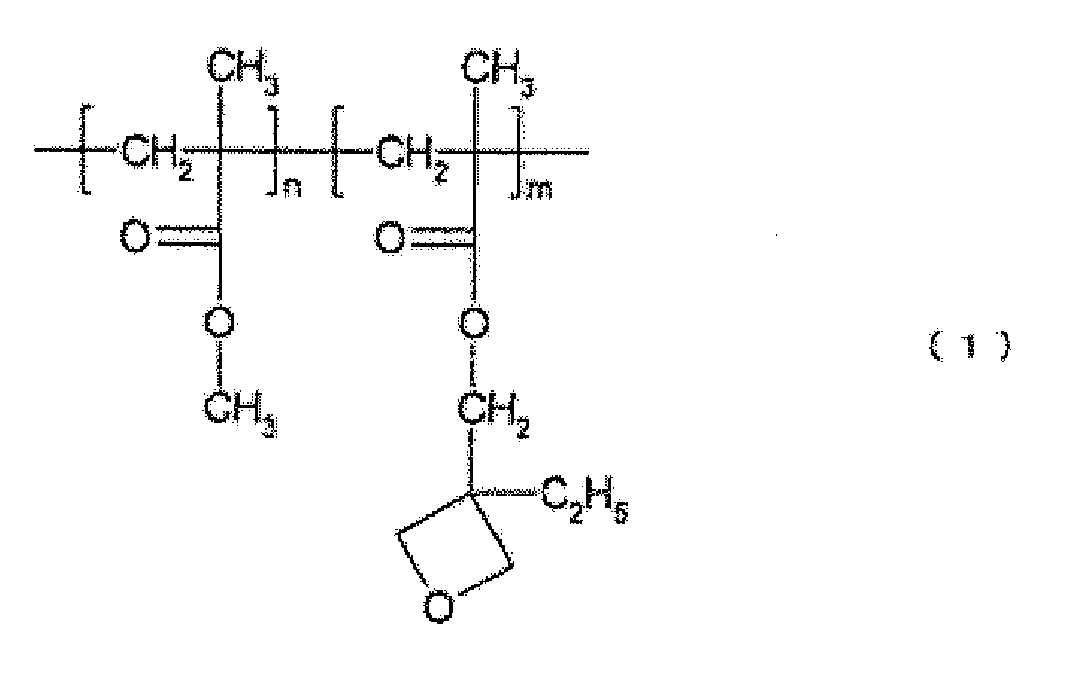
- the present invention provides a polymer gel electrolyte comprising an aprotic solvent; a supporting salt; a cyclic sulfonic acid ester including at least two sulfonyl groups; and a crosslinked polymer obtained by crosslinking a methacrylic acid ester polymer represented by general formula (1) below. Also, the present invention provides a polymer secondary battery comprising a cathode, an anode, and the polymer gel electrolyte.
- n meets 1800 ⁇ n ⁇ 3000 and m meets 350 ⁇ m ⁇ 600.
- the cell expansion of a polymer secondary battery can be inhibited and the cycle characteristics and high-temperature storage characteristics of a polymer secondary battery can be improved.
- the polymer gel electrolyte of the present invention comprises an aprotic solvent; a supporting salt; a cyclic sulfonic acid ester including at least two sulfonyl groups; and a crosslinked polymer obtained by crosslinking a methacrylic acid ester polymer represented by the general formula (1).
- a mixture of an aprotic solvent and a supporting salt is referred to as an electrolytic solution.
- the polymer electrolyte is used for a polymer secondary battery, and, particularly, preferably is used for a lithium polymer secondary battery.
- an aprotic solvent examples include cyclic carbonates such as propylene carbonate (PC), ethylene carbonate (EC), butylene carbonate (BC), and vinylene carbonate (VC); chain carbonates such as dimethyl carbonate (DMC), diethyl carbonate (DEC), ethyl methyl carbonate (EMC), and dipropyl carbonate (DPC); aliphatic carbonic acid esters such as methyl formate, methyl acetate, and ethyl propionate; ⁇ -lactones such as ⁇ -butyrolactone; chain ethers such as 1,2-ethoxy ethane (DEE), and ethoxy methoxy ethane (EME); cyclic ethers such as tetrahydrofuran, and 2-methyl tetrahydrofuran; fluorine derivatives thereof; dimethyl sulfoxide, 1,3-dioxolane, formamide, acetamide, dimethyl formamide, dioxolane,
- a supporting salt can be accordingly selected from a material capable of increasing conductivity of an aprotic solvent, considering the type of a polymer secondary battery.
- the specific examples of the supporting salt include LiPF 6 .
- Supporting salt may be one or two or more.
- the concentration of a supporting salt is preferably 5 to 25% by mass. If the concentration of a supporting salt is 5% by mass or more, the desired ion conductivity can be attained. If the concentration of a supporting salt is 25% by mass or less, it is possible to inhibit the reduction of ion conductivity caused by an increase in the viscosity of an electrolytic solution.
- a cyclic sulfonic acid ester including at least two sulfonyl groups contributes to the formation of passivity film on an electrode interface of a polymer secondary battery, and thus, can inhibit the decomposition of solvent molecules. Also, if a cathode active material is an oxide containing manganese, a cyclic sulfonic acid ester can inhibit the elution of manganese and can prevent eluted manganese from attaching to an anode.
- a polymer gel electrolyte comprising a cyclic sulfonic acid ester is used for a polymer secondary battery, to form a film on an anode and to reduce influence caused by the elution of manganese, etc. thereby improving the cycle characteristics of a secondary battery, and inhibiting the expansion of cells due to the gas generation and the increase in internal resistance further.
- the specific example of the cyclic sulfonic acid ester includes a compound represented by the general formula (2).
- Q is an oxygen atom, a methylene group, or a single bond
- A is a substituted or unsubstituted alkylene group including 1 to 5 carbon atoms, a carbonyl group, and a sulfinyl group, a substituted or unsubstituted fluoroalkylene group including 1 to 6 carbon atoms, or a divalent group including 2 to 6 carbon atoms which an alkylene unit or a fluoroalkylene unit is bonded via a ether bond
- B is a substituted or unsubstituted alkylene group, a substituted or unsubstituted fluoroalkylene group, or an oxygen atom.
- Q is a single bond
- the carbon molecules comprised in A and S form a C-S single bond.
- the number of carbon atoms in A represents the number of carbon atoms making the cycle and does not include the number of carbon atoms in the side chain.
- A is a substituted or unsubstituted fluoroalkylene group including 1 to 6 carbon atoms
- A may include a methylene unit and a fluoromethylene unit, or only a fluoromethylene unit.
- an alkylene unit or a fluoroalkylene unit is bonded via ether bond, the alkylene units may be bonded with each other, or the fluoroalkylene units may be bonded with each other, or the alkylene unit may be bonded to fluoroalkylene unit.
- the compound represented by the general formula (2) can be produced by the method described in the Patent Literature 4.
- the specific example of the compound represented by the general formula (2) include cyclic disulfonic acid ester represented by the general formulae (3) to (8).
- x is 0 or 1
- n is an integer between 1 and 5
- R is a hydrogen atom, a methyl group, an ethyl group, or a halogen atom.
- x is 0 or 1
- n is an integer between 1 and 5
- R is a hydrogen atom, a methyl group, an ethyl group, or a halogen atom.
- x is 0 or 1
- m is independently 1 or 2
- n is an integer between 1 and 4
- R is a hydrogen atom, a methyl group, an ethyl group, or a halogen atom.
- x is 0 or 1
- m is independently 1 or 2
- n is an integer between 1 and 4
- R is a hydrogen atom, a methyl group, an ethyl group, or a halogen atom.
- x is 0 or 1
- m is independently 1 or 2
- n is an integer between 1 and 4
- R is a hydrogen atom, a methyl group, an ethyl group, or a halogen atom.
- x is 0 or 1
- m is independently 1 or 2
- n is an integer between 1 and 4
- R is a hydrogen atom, a methyl group, an ethyl group, or a halogen atom.
- the cyclic sulfonic acid ester may be one, or two or more.
- a mixed amount of a cyclic sulfonic acid ester is preferably 0.005 to 10% by mass, and more preferably 0.01 to 5% by mass, with respect to 100 % by mass of an electrolytic solution. If a mixed amount of a cyclic sulfonic acid ester is 0.005% by mass or more, sufficient film effect can be achieved. If a mixed amount of a cyclic sulfonic acid ester is 0.01% by mass or more, the battery characteristics can be further improved. If a mixed amount of a cyclic sulfonic acid ester is 10 % by mass or less, the transfer resistance of lithium ion is not increased and there is little adverse effect to the polymer. If a mixed amount of a cyclic sulfonic acid ester is 5 % by mass or less, the battery characteristics can be further improved.
- the methacrylic acid ester polymer represented by the general formula (1) is obtained by the radical copolymerization of methyl methacrylate and (3-ethyl-3-oxetanyl) methyl methacrylate.
- the number of methyl methacrylate unit is represented as n, and n meets 1800 ⁇ n ⁇ 3000.
- the number of (3-ethyl-3-oxetanyl) methyl methacrylate unit is represented as m, and m meets 350 ⁇ m ⁇ 600.
- the methacrylic acid ester polymer represented by the general formula (1) may be a block copolymer or a random copolymer. Also, n and m represent an average value and may not be an integer.
- crosslinked polymer obtained by crosslinking methacrylic acid ester polymer represented by the general formula (1) is obtained by the ring-opening polymerization an oxetanyl group contained in the methacrylic acid ester polymer represented by the general formula (1) using a cation polymerization initiator.
- the known polymerization initiators may be generally used as the cation polymerization initiator.
- an amount of a lithium salt contained in an electrolytic solution is the same as the preferable concentration of a supporting salt in an electrolytic solution.
- a mixed amount of the crosslinked polymer is preferably 0.5 to 10% by mass, more preferably 1 to 5% by mass, and most preferably 1.5 to 2.5% by mass, with respect to 100 % by mass of an electrolytic solution. If a mixed amount of the crosslinked polymer is 0.5% by mass or more, it is possible to attain the gelation which an electrolytic solution is capable of being successfully retained. If a mixed amount of the crosslinked polymer is 10% by mass or less, it is possible to prevent a gel from becoming brittle because of an over gelation and battery characteristics from reducing.
- the polymer electrolyte of the present invention is easily and stably produced by for example, a method which comprises dissolving a supporting salt in an aprotic solvent; dissolving a cyclic sulfonic acid ester in the aprotic solvent; mixing a methacrylic acid ester polymer represented by a general formula (1) with the aprotic solvent; and crosslinking the methacrylic acid ester polymer represented by the general formula (1).
- a polymer electrolyte of the present invention is used for a polymer secondary battery, to inhibit the cell expansion and improve cycle characteristics and high-temperature storage characteristics
- the polymer secondary battery of the present invention is configured so as to comprise a cathode, an anode, and said polymer gel electrolyte.
- a cathode As a cathode, a cathode which a cathode active material layer is formed on a current collector made of metal such as aluminum foil may be used. A cathode slurry is applied onto the current collector, dried, compressed and shaped to form the cathode active material layer.
- the cathode slurry may be obtained by dispersing and kneading a cathode active material in a solvent such as N-methyl-2-pyrrolidone (NMP) together with a conductive aid such as carbon black and a binder such as polyvinylidine difluoride (PVDF).
- NMP N-methyl-2-pyrrolidone
- PVDF polyvinylidine difluoride
- a lithium containing composite oxide such as LiCoO 2 , LiNiO 2 , LiMn 2 O 4 may be used as a cathode active material.
- the transition metal parts in these lithium containing composite oxides may be replaced with other element.
- the specific examples of such lithium containing composite oxide include a spinel type lithium manganese composite oxide, an olivine type lithium containing composite oxide, and an inverse spinel type lithium containing composite oxide, etc.
- the lithium containing composite oxide corresponds to a compound represented by the general formula (9).
- x meets 0 ⁇ x ⁇ 2
- a meets 0 ⁇ a ⁇ 1.2
- M is at least one selected from the group consisting of Ni, Co, Fe, Cr and Cu.
- an anode As an anode, an anode which an anode active material layer is formed on a current collector made of metal such as copper foil may be used.
- lithium metal or a lithium alloy as well as one, or two or more materials selected from materials capable of absorbing and releasing lithium, as the anode active material.
- material capable of absorbing and releasing lithium include carbon material and oxide, etc.
- a lithium alloy is composed of lithium and metal capable of forming an alloy together with lithium.
- the examples of the lithium alloy include a binary alloy or at least a ternary alloy of lithium and metal such as Al, Si, Pb, Sn, In, Bi, Ag, Ba, Ca, Hg, Pd, Pt, Te, Zn, and La.
- a lithium metal or a lithium alloy is preferably in an amorphous state, because it is hard to generate the deterioration resulting from non-uniformity such as a crystal grain boundary and crystal fault in an amorphous structure.
- An anode active material layer made of a lithium metal or a lithium alloy can be formed by a method such as a melt cooling method, a liquid rapid cooling method, an atomization method, a vacuum vapor deposition method, a sputtering method, a plasma CVD method, a photo CVD method, a thermal CVD and a sol-gel method.
- Graphite, amorphous carbon, diamond like carbon, a carbon nanotube, or a composite oxide thereof may be used as a carbon material, Among them, graphite or amorphous carbon is preferable. Particularly, graphite has high electronic conductivity and excellent adhesion to a current collector made of metal such as copper and voltage plateau. Since graphite is formed at a high process temperature, it contains less impurity and is benefit in improving the performance of an anode.
- An anode active material layer comprising a carbon material as an anode active material may be formed by applying an anode slurry comprising a carbon material onto a current collector, drying, compressing and molding it.
- the anode slurry may be obtained by dispersing and kneading a carbon material as the anode active material in a solvent such as N-methyl-2-pyrrolidone (NMP) together with a binder such as polyvinylidine difluoride (PVDF).
- NMP N-methyl-2-pyrrolidone
- PVDF polyvinylidine difluoride
- a silicon oxide, a tin oxide, an indium oxide, a zinc oxide, a lithium oxide, or a composite thereof can be used as an oxide.
- a silicon oxide is preferable, because it is safety and does not react with other compounds.
- an oxide is preferably in an amorphous state, because the deterioration resulting from non-uniformity such as a crystal grain boundary and crystal fault does not occur.
- An anode active material layer made of an oxide can be formed by a method such as a vapor deposition method, a CVD method, or a sputtering method.
- a polymer secondary battery can be produced as below. First, a cathode and an anode are stacked to form a stacked body by interposing a separator between the cathode and anode. Alternatively, a cathode and an anode are wound so as to be flat by interposing a separator between the cathode and anode, and then, are shaped to form a winding body. Subsequently, after the laminated body or winding body is inserted into an outer covering body such as a can or a laminate, a polymer gel electrolyte (pre-gel solution) is injected into the outer covering body to cure (gelate) it, thereby obtaining a polymer secondary battery. After a pre-gel solution and an electrode is inserted into the outer covering body, the pre-gel solution may be cured. Alternatively, a battery may be assembled after applying a gel electrolyte onto an electrode or a separator.
- pre-gel solution polymer gel electrolyte
- a separator such as a nonwoven fabric and a polyolefin fine porous film used for a lithium polymer battery generally may be used as a separator.
- a separator is not an essential element and a polymer gel electrolyte may have a function as a separator.
- the cell expansion is inhibited, and cycle characteristics and high-temperature storage characteristics are improved.
- the present invention is adopted to a polymer secondary battery comprising a laminate film outer covering body, resulting in inhibiting the resistance increase and battery expansion (gas generation). For example, it has remarkable effects in a lithium polymer secondary battery from information portable devices to a large-sized battery for automobiles.
- N-methyl-2-pyrrolidone was added to and further mixed with a mixture of 85% by mass of LiMn 2 O 4 as a cathode active material, 7% by mass of acetylene black as a conductive aid and 8% by mass of PVDF as a binder, to prepare a cathode slurry.
- the cathode slurry was applied onto both surfaces of an Al foil 2 having a thickness of 20 ⁇ m to be a current collector so that the cathode slurry had a thickness of 160 ⁇ m after roll press processing, by doctor blade method, thereby forming a cathode active material coated portion 3.
- a cathode active material non-coated portion 4 which a cathode active material is not coated on both surfaces of the portion 4.
- a cathode active material one surface coated portion 5 which a cathode active material is coated on only one surface of the portion 5.
- a cathode conductive tab 6 was attached to the cathode active material non-coated portion 4, to form a cathode 1.
- N-methyl-pyrrolidone was added to and further mixed with a mixture of 90% by mass of flake graphite as an anode active material and 10% by mass of PVDF as a binder, to prepare an anode slurry.
- the anode slurry was applied onto both surfaces of a Cu foil 8 having a thickness of 10 ⁇ m to be a current collector so that the anode slurry had a thickness of 120 ⁇ m after roll press processing, thereby forming an anode active material coated portion 9.
- An anode conductive tab 12 was attached to the anode active material non-coated portion 11, to form an anode 7.
- FIG. 3 A process for producing a battery element will be explained with reference to Fig. 3 .
- Two separators 13 made of a polyethylene fine porous film and having a thickness of 12 ⁇ m and a porosity of 35% were welded and their cut portions were fixed to a winding core of a winding device and wound, and then the front ends of the cathode 1 and anode 7 were introduced into them.
- the front end of the cathode 1 was an end to which a cathode conductive tab 6 was not attached
- the front end of the anode 7 was an end to which an anode conductive tab 8 was not attached.
- the winding core was rotated and the anode 7, cathode 1, and separators were wound to form a battery element (hereinafter, referred as "jelly - roll (J/R)") while the anode was disposed between the two separators and the cathode electrode was disposed on the top surface of the separators.
- jelly - roll J/R
- the gel electrolyte 14 in Fig. 3 was not present.
- the J/R was integrated into an embossed laminate outer covering body 15, the sides of the laminate outer covering body 15 were folded, and the portion of the laminate outer covering body 15 except for a pre-gel solution injecting portion was heat-welded.
- LiPF 6 as a supporting salt was added to an aprotic solvent comprising 30% by mass of ethylene carbonate (EC) and 58% by mass of diethyl carbonate (DEC), thereby obtaining an electrolytic solution.
- the pre-gel solution was injected through the pre-gel solution injecting portion, was subjected to a vacuum impregnation, and was gelated at 60°C for 20 hours, thereby obtaining a lithium polymer battery.
- the obtained lithium polymer battery was charged up to a voltage of 4.2V (charge condition: current of 0.2 C, time of 6.5 h, and temperature of 20°C), and then was discharged down to a voltage of 3.0V at current of 0.2 C. Discharge capacity at this time is defined as an initial capacity.
- lithium polymer batteries were produced by the same processes as Example 1, except that a compound represented by Compound No. 1 was changed to the compound shown in Table 2. The characteristics of the obtained lithium polymer batteries are shown in Table 2.
- a lithium polymer battery was produced by the same process as Example 1, except that a compound represented by Compound No. 1 was not used.
- the characteristics of the obtained lithium polymer battery are shown in Table 2.
- a lithium polymer battery was produced by the same process as Example 1, except that a compound represented by Compound No. 1 was changed to VC.
- the characteristics of the obtained lithium polymer battery are shown in Table 2.
- the lithium polymer batteries produced by Examples 1 to 4 have a significantly improved capacity retention rate after 500 cycles and significant inhibition of a volume change after 500 cycles, in comparison to a lithium polymer battery produced by Comparative Example 1 not using a cyclic sulfonic acid ester and a lithium polymer battery produced by Comparative Example 2 using a VC instead of a cyclic sulfonic acid ester.
- a lithium polymer battery was produced by the same process as Example 1, except that an amorphous carbon was used as an anode active material and an electrolytic solution was prepared by adding 12% by mass of LiPF 6 as a supporting salt to an aprotic solvent comprising 20% by mass of propylene carbonate (PC), 21% by mass of ethylene carbonate (EC) and 47% by mass of diethyl carbonate (DEC) as an electrolytic solution for preparing a pre-gel solution.
- PC propylene carbonate
- EC ethylene carbonate
- DEC diethyl carbonate
- lithium polymer batteries were produced by the same processes as Example 5, except that a compound represented by Compound No. 1 was changed to the compound shown in Table 3. The characteristics of the obtained lithium polymer batteries are shown in Table 3.
- a lithium polymer battery was produced by the same process as Example 5, except that a compound represented by Compound No. 1 was not used.
- the characteristics of the obtained lithium polymer battery are shown in Table 3.
- a lithium polymer battery was produced by the same process as Example 5, except that a compound represented by Compound No. 1 was changed to VC.
- the characteristics of the obtained lithium polymer battery are shown in Table 3.
- the lithium polymer batteries produced by Examples 5 to 8 have a significantly improved capacity retention rate after 500 cycles and significant inhibition of a volume change after 500 cycles, in comparison to a lithium polymer battery produced by Comparative Example 3 not using a cyclic sulfonic acid ester and a lithium polymer battery produced by Comparative Example 4 using a VC instead of a cyclic sulfonic acid ester.
- a lithium polymer battery was produced by the same process as Example 1, and the direct current resistance of a lithium polymer battery was measured when it was preserved to be fully charged.
- the produced lithium polymer battery was respectively charged (upper limit voltage of 4.2 V) and discharged (lower limit voltage of 3.0V) once at 20°C.
- the charge current and discharge current at this time were constant (1C).
- the discharge capacity at this time is defined as an initial capacity, and the resistance at this time is defined as an initial resistance.
- the lithium polymer battery was charged for 2.5 hours at a constant current (1C) up to a predetermined voltage (4.2V), and preserved for 90 days under condition at 20°C, 45°C and 60°C, respectively.
- the lithium polymer battery was discharged at a constant current (1C) (lower limit voltage of 3.0 V), and was subsequently charged (upper limit voltage of 4.2V) and discharged (lower limit voltage of 3.0V) at a constant current (1C) once more to measure the resistance of the lithium polymer battery at the time of performing the second charge.
- Table 5 shows the results represented by the relative resistance values after 90 days preservation when the initial resistance is 1 .
- lithium polymer batteries were produced by the same processes as Example 9 and the same evaluations as Example 9 were performed, except that a compound represented by Compound No. 1 was changed to the compound shown in Table 4. The obtained results are shown in Table 4.
- a lithium polymer battery was produced by the same process as Example 9 and the same evaluation as Example 9 was performed, except that a compound represented by Compound No. 1 was not used. The obtained results are shown in Table 4.
- a lithium polymer battery was produced by the same process as Example 9 and the same evaluation as Example 9 was performed, except that a compound represented by Compound No. 1 was changed to VC. The obtained results are shown in Table 4.
Landscapes
- Chemical & Material Sciences (AREA)
- Chemical Kinetics & Catalysis (AREA)
- Electrochemistry (AREA)
- Engineering & Computer Science (AREA)
- Physics & Mathematics (AREA)
- Condensed Matter Physics & Semiconductors (AREA)
- General Physics & Mathematics (AREA)
- Inorganic Chemistry (AREA)
- Manufacturing & Machinery (AREA)
- General Chemical & Material Sciences (AREA)
- Power Engineering (AREA)
- Microelectronics & Electronic Packaging (AREA)
- Dispersion Chemistry (AREA)
- Secondary Cells (AREA)
- Conductive Materials (AREA)
Abstract
Description
- The present invention relates to a polymer gel electrolyte and polymer secondary battery using the same.
- Since a polymer secondary battery such as lithium polymer battery can be slimmed, it has high degree of freedom for selecting its shape, and it has higher safety due to non-use of an electrolytic solution, it is noted as a power source for mobile devices, etc. Recently, as functions of mobile devices increase, the target of technical development of a lithium polymer battery is to obtain high energy and to improve battery characteristics required for a battery with high energy.
- Particularly, the significant technical problem is to improve safety further, high-temperature storage characteristics, and cycle characteristics, etc. The cycle characteristics have been improved by devising the used polymer materials. In
Patent Literature 1, there is described that cycle characteristics are improved by using a gel electrolyte comprising a physical crosslinking type polymer and a chemical crosslinking type polymer. On the other hand, inPatent Literature 2, there is described that a permeability of a pre-gel solution is improved by modifying the surface of the used separator. InPatent Literature 3, there is described that a lithium polymer battery with excellent battery performance and high safety is obtained by gelating an electrolytic solution using a crosslinking material and using a non-conductive porous material and an electrically insulating particle as a separator. Also, in Non-PatentLiterature 1, the study such as the electrode material and cell shape is made in a polymer secondary battery using a gel electrolyte, and for example, although artificial graphite (agglomerate graphite) is high price as an anode material, it is used to inhibit cell expansion or improve cycle characteristics. - As described above, a selection of a gel electrolyte material as well as a selection of an electrode material, a cell shape, cell production conditions, and an electrolytic solution material, etc. is very important in a polymer secondary battery using a gel electrolyte.
-
- Patent Literature 1:
JP2002-100406 A1 - Patent Literature 2:
JP2003-257490 A1 - Patent Literature 3:
JP2009-70605 A1 - Patent Literature 4:
WO85/03075 -
- Non-Patent Literature 1: Kanemura Kiyoshi, "Latest Technology of Polymer Battery II," pp. 242-247, (CMC Publishing Co., Ltd.; 2003)
- However, since a gel electrolyte has lower ion conductivity than an electrolytic solution, a polymer secondary battery using a gel electrolyte generally has inferior cycle characteristics to a secondary battery using an electrolytic solution. Also, a polymer secondary battery has internal resistance in a high-temperature storage or cycle at high temperature, and thus, does not have enough characteristics required for battery which is applied to electronic vehicles, storage batteries, etc.
- The present invention has made so as to solve the above problems. In other words, the problems to be solved by the present invention are to inhibit the cell expansion of a polymer secondary battery and to improve the cycle characteristics and high-temperature storage characteristics of a polymer secondary battery.
- In order to solve the above problems, the present invention provides a polymer gel electrolyte comprising an aprotic solvent; a supporting salt; a cyclic sulfonic acid ester including at least two sulfonyl groups; and a crosslinked polymer obtained by crosslinking a methacrylic acid ester polymer represented by general formula (1) below. Also, the present invention provides a polymer secondary battery comprising a cathode, an anode, and the polymer gel electrolyte.
-

- In the general formula (1), n meets 1800<n<3000 and m meets 350<m<600.
- According to the present invention, the cell expansion of a polymer secondary battery can be inhibited and the cycle characteristics and high-temperature storage characteristics of a polymer secondary battery can be improved.
-
-
Fig. 1 explains the constitution of a cathode in the polymer secondary battery of the present invention. -
Fig. 2 explains the constitution of an anode in the polymer secondary batter of the present invention. -
Fig. 3 explains the constitution of battery element after winding the polymer secondary battery of the present invention. -
Fig. 4 explains the constitution of the lithium polymer secondary battery of the present invention. - The polymer gel electrolyte of the present invention comprises an aprotic solvent; a supporting salt; a cyclic sulfonic acid ester including at least two sulfonyl groups; and a crosslinked polymer obtained by crosslinking a methacrylic acid ester polymer represented by the general formula (1). In this specification, a mixture of an aprotic solvent and a supporting salt is referred to as an electrolytic solution. The polymer electrolyte is used for a polymer secondary battery, and, particularly, preferably is used for a lithium polymer secondary battery.
- The specific examples of an aprotic solvent include cyclic carbonates such as propylene carbonate (PC), ethylene carbonate (EC), butylene carbonate (BC), and vinylene carbonate (VC); chain carbonates such as dimethyl carbonate (DMC), diethyl carbonate (DEC), ethyl methyl carbonate (EMC), and dipropyl carbonate (DPC); aliphatic carbonic acid esters such as methyl formate, methyl acetate, and ethyl propionate; γ-lactones such as γ-butyrolactone; chain ethers such as 1,2-ethoxy ethane (DEE), and ethoxy methoxy ethane (EME); cyclic ethers such as tetrahydrofuran, and 2-methyl tetrahydrofuran; fluorine derivatives thereof; dimethyl sulfoxide, 1,3-dioxolane, formamide, acetamide, dimethyl formamide, dioxolane, acetonitrile, propylnitrile, nitromethane, ethyl monoglyme, phosphoric acid tri-ester, trimethoxymethane, dioxolane derivative, sulfolane, methylsulfolane, 1,3-dimethyl-2-imidazolidinone, 3-methyl-2-oxazolidinone, propylene carbonate derivative, tetrahydrofuran derivative, ethyl ether, 1,3-propane sultone, anisole, N-methyl pyrrolidone, fluorinated carbonic acid ester. Aprotic organic solvent may be one, or two or more.
- A supporting salt can be accordingly selected from a material capable of increasing conductivity of an aprotic solvent, considering the type of a polymer secondary battery. For example, when it is used for a lithium polymer secondary battery, the specific examples of the supporting salt include LiPF6. LiAsF6, LiAlCl4, LiClO4, LiBF4, LiSbF6, LiCF3SO3, LiC4F9SO3, LiC(CF3SO2)3, LiN(CF3SO2)2, LiN(C2F5SO2)2, carbonic acid lithium, chloro borane lithium, 4-phenyl-boric acid lithium, LiBr, LiI, LiSCN, LiCI, LiF. Among them, LiPF6, LiBF4, LiAsF6 and LiSbF6 are preferable. Supporting salt may be one or two or more.
- In an electrolytic solution, the concentration of a supporting salt is preferably 5 to 25% by mass. If the concentration of a supporting salt is 5% by mass or more, the desired ion conductivity can be attained. If the concentration of a supporting salt is 25% by mass or less, it is possible to inhibit the reduction of ion conductivity caused by an increase in the viscosity of an electrolytic solution.
- A cyclic sulfonic acid ester including at least two sulfonyl groups (hereinafter, simply referred to as "cyclic sulfonic acid ester") contributes to the formation of passivity film on an electrode interface of a polymer secondary battery, and thus, can inhibit the decomposition of solvent molecules. Also, if a cathode active material is an oxide containing manganese, a cyclic sulfonic acid ester can inhibit the elution of manganese and can prevent eluted manganese from attaching to an anode. Therefore, a polymer gel electrolyte comprising a cyclic sulfonic acid ester is used for a polymer secondary battery, to form a film on an anode and to reduce influence caused by the elution of manganese, etc. thereby improving the cycle characteristics of a secondary battery, and inhibiting the expansion of cells due to the gas generation and the increase in internal resistance further.
- The specific example of the cyclic sulfonic acid ester includes a compound represented by the general formula (2).
-

- In the general formula (2), Q is an oxygen atom, a methylene group, or a single bond; A is a substituted or unsubstituted alkylene group including 1 to 5 carbon atoms, a carbonyl group, and a sulfinyl group, a substituted or unsubstituted fluoroalkylene group including 1 to 6 carbon atoms, or a divalent group including 2 to 6 carbon atoms which an alkylene unit or a fluoroalkylene unit is bonded via a ether bond; and B is a substituted or unsubstituted alkylene group, a substituted or unsubstituted fluoroalkylene group, or an oxygen atom. In the general formula (2), if Q is a single bond, the carbon molecules comprised in A and S form a C-S single bond.
- Also, in the general formula (2), the number of carbon atoms in A represents the number of carbon atoms making the cycle and does not include the number of carbon atoms in the side chain. If A is a substituted or unsubstituted fluoroalkylene group including 1 to 6 carbon atoms, A may include a methylene unit and a fluoromethylene unit, or only a fluoromethylene unit. Also, if an alkylene unit or a fluoroalkylene unit is bonded via ether bond, the alkylene units may be bonded with each other, or the fluoroalkylene units may be bonded with each other, or the alkylene unit may be bonded to fluoroalkylene unit.
- The compound represented by the general formula (2) can be produced by the method described in the
Patent Literature 4. - The specific example of the compound represented by the general formula (2) include cyclic disulfonic acid ester represented by the general formulae (3) to (8).
-

- In the general formula (3), x is 0 or 1, n is an integer between 1 and 5, and R is a hydrogen atom, a methyl group, an ethyl group, or a halogen atom.
-

- In the general formula (4), x is 0 or 1, n is an integer between 1 and 5, and R is a hydrogen atom, a methyl group, an ethyl group, or a halogen atom.
-


- In the general formula (5), x is 0 or 1, m is independently 1 or 2, n is an integer between 1 and 4, and R is a hydrogen atom, a methyl group, an ethyl group, or a halogen atom.
-

- In the general formula (6), x is 0 or 1, m is independently 1 or 2, n is an integer between 1 and 4, and R is a hydrogen atom, a methyl group, an ethyl group, or a halogen atom.
-

- In the general formula (7), x is 0 or 1, m is independently 1 or 2, n is an integer between 1 and 4, and R is a hydrogen atom, a methyl group, an ethyl group, or a halogen atom.
-

- In the general formula (8), x is 0 or 1, m is independently 1 or 2, n is an integer between 1 and 4, and R is a hydrogen atom, a methyl group, an ethyl group, or a halogen atom.
- The specific examples of the compound represented by the general formula (2) are shown in Table 1, but the compound represented by the general formula (2) is not limited to these examples.
-
[Table 1] compound No. chemical structure compound No. chemical structure compound No. chemical structure 1 
8 
15 
2 
9 
16 
3 
10 
17 
4 
11 
18 
5 
12 
19 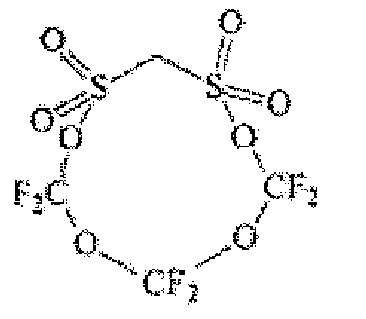
6 
13 
20 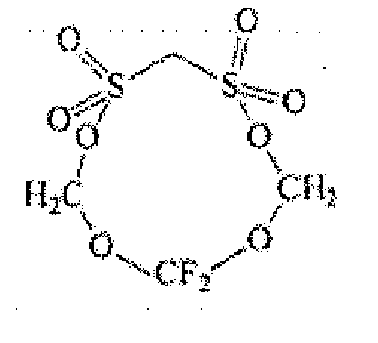
7 
14 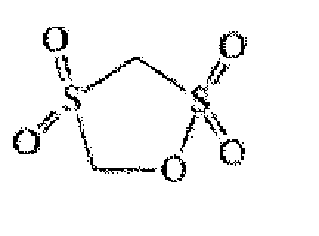
- The cyclic sulfonic acid ester may be one, or two or more.
- A mixed amount of a cyclic sulfonic acid ester is preferably 0.005 to 10% by mass, and more preferably 0.01 to 5% by mass, with respect to 100 % by mass of an electrolytic solution. If a mixed amount of a cyclic sulfonic acid ester is 0.005% by mass or more, sufficient film effect can be achieved. If a mixed amount of a cyclic sulfonic acid ester is 0.01% by mass or more, the battery characteristics can be further improved. If a mixed amount of a cyclic sulfonic acid ester is 10 % by mass or less, the transfer resistance of lithium ion is not increased and there is little adverse effect to the polymer. If a mixed amount of a cyclic sulfonic acid ester is 5 % by mass or less, the battery characteristics can be further improved.
- The methacrylic acid ester polymer represented by the general formula (1) is obtained by the radical copolymerization of methyl methacrylate and (3-ethyl-3-oxetanyl) methyl methacrylate. The number of methyl methacrylate unit is represented as n, and n meets 1800<n<3000. The number of (3-ethyl-3-oxetanyl) methyl methacrylate unit is represented as m, and m meets 350<m<600. The methacrylic acid ester polymer represented by the general formula (1) may be a block copolymer or a random copolymer. Also, n and m represent an average value and may not be an integer.
- The crosslinked polymer (hereinafter, simply referred to as "crosslinked polymer") obtained by crosslinking methacrylic acid ester polymer represented by the general formula (1) is obtained by the ring-opening polymerization an oxetanyl group contained in the methacrylic acid ester polymer represented by the general formula (1) using a cation polymerization initiator. The known polymerization initiators may be generally used as the cation polymerization initiator. However, it is preferable to use a small amount of an acid material obtained by hydrolyzing a lithium salt and an anion component of the lithium salt included in an electrolytic solution, because it has little characteristics added to a battery. Herein, an amount of a lithium salt contained in an electrolytic solution is the same as the preferable concentration of a supporting salt in an electrolytic solution.
- A mixed amount of the crosslinked polymer is preferably 0.5 to 10% by mass, more preferably 1 to 5% by mass, and most preferably 1.5 to 2.5% by mass, with respect to 100 % by mass of an electrolytic solution. If a mixed amount of the crosslinked polymer is 0.5% by mass or more, it is possible to attain the gelation which an electrolytic solution is capable of being successfully retained. If a mixed amount of the crosslinked polymer is 10% by mass or less, it is possible to prevent a gel from becoming brittle because of an over gelation and battery characteristics from reducing.
- The polymer electrolyte of the present invention is easily and stably produced by for example, a method which comprises dissolving a supporting salt in an aprotic solvent; dissolving a cyclic sulfonic acid ester in the aprotic solvent; mixing a methacrylic acid ester polymer represented by a general formula (1) with the aprotic solvent; and crosslinking the methacrylic acid ester polymer represented by the general formula (1).
- A polymer electrolyte of the present invention is used for a polymer secondary battery, to inhibit the cell expansion and improve cycle characteristics and high-temperature storage characteristics
- The polymer secondary battery of the present invention is configured so as to comprise a cathode, an anode, and said polymer gel electrolyte.
- As a cathode, a cathode which a cathode active material layer is formed on a current collector made of metal such as aluminum foil may be used. A cathode slurry is applied onto the current collector, dried, compressed and shaped to form the cathode active material layer. The cathode slurry may be obtained by dispersing and kneading a cathode active material in a solvent such as N-methyl-2-pyrrolidone (NMP) together with a conductive aid such as carbon black and a binder such as polyvinylidine difluoride (PVDF).
- A lithium containing composite oxide such as LiCoO2, LiNiO2, LiMn2O4 may be used as a cathode active material. Also, the transition metal parts in these lithium containing composite oxides may be replaced with other element. Also, it is possible to use a lithium containing composite oxide including a plateau at 4.5 V or more as potential with regard to metal lithium electrode. The specific examples of such lithium containing composite oxide include a spinel type lithium manganese composite oxide, an olivine type lithium containing composite oxide, and an inverse spinel type lithium containing composite oxide, etc. Specifically, the lithium containing composite oxide corresponds to a compound represented by the general formula (9).
-
Lia(MxMn2-x)O4 (9)
In the general formula (9), x meets 0<x<2, a meets 0<a<1.2, and M is at least one selected from the group consisting of Ni, Co, Fe, Cr and Cu. - As an anode, an anode which an anode active material layer is formed on a current collector made of metal such as copper foil may be used.
- It is possible to use a lithium metal or a lithium alloy as well as one, or two or more materials selected from materials capable of absorbing and releasing lithium, as the anode active material. The specific examples of material capable of absorbing and releasing lithium include carbon material and oxide, etc.
- A lithium alloy is composed of lithium and metal capable of forming an alloy together with lithium. Specifically, the examples of the lithium alloy include a binary alloy or at least a ternary alloy of lithium and metal such as Al, Si, Pb, Sn, In, Bi, Ag, Ba, Ca, Hg, Pd, Pt, Te, Zn, and La.
- A lithium metal or a lithium alloy is preferably in an amorphous state, because it is hard to generate the deterioration resulting from non-uniformity such as a crystal grain boundary and crystal fault in an amorphous structure. An anode active material layer made of a lithium metal or a lithium alloy can be formed by a method such as a melt cooling method, a liquid rapid cooling method, an atomization method, a vacuum vapor deposition method, a sputtering method, a plasma CVD method, a photo CVD method, a thermal CVD and a sol-gel method.
- Graphite, amorphous carbon, diamond like carbon, a carbon nanotube, or a composite oxide thereof may be used as a carbon material, Among them, graphite or amorphous carbon is preferable. Particularly, graphite has high electronic conductivity and excellent adhesion to a current collector made of metal such as copper and voltage plateau. Since graphite is formed at a high process temperature, it contains less impurity and is benefit in improving the performance of an anode. An anode active material layer comprising a carbon material as an anode active material may be formed by applying an anode slurry comprising a carbon material onto a current collector, drying, compressing and molding it. The anode slurry may be obtained by dispersing and kneading a carbon material as the anode active material in a solvent such as N-methyl-2-pyrrolidone (NMP) together with a binder such as polyvinylidine difluoride (PVDF).
- Also, a silicon oxide, a tin oxide, an indium oxide, a zinc oxide, a lithium oxide, or a composite thereof can be used as an oxide. Among them, a silicon oxide is preferable, because it is safety and does not react with other compounds. Also, an oxide is preferably in an amorphous state, because the deterioration resulting from non-uniformity such as a crystal grain boundary and crystal fault does not occur. An anode active material layer made of an oxide can be formed by a method such as a vapor deposition method, a CVD method, or a sputtering method.
- A polymer secondary battery can be produced as below. First, a cathode and an anode are stacked to form a stacked body by interposing a separator between the cathode and anode. Alternatively, a cathode and an anode are wound so as to be flat by interposing a separator between the cathode and anode, and then, are shaped to form a winding body. Subsequently, after the laminated body or winding body is inserted into an outer covering body such as a can or a laminate, a polymer gel electrolyte (pre-gel solution) is injected into the outer covering body to cure (gelate) it, thereby obtaining a polymer secondary battery. After a pre-gel solution and an electrode is inserted into the outer covering body, the pre-gel solution may be cured. Alternatively, a battery may be assembled after applying a gel electrolyte onto an electrode or a separator.
- A separator such as a nonwoven fabric and a polyolefin fine porous film used for a lithium polymer battery generally may be used as a separator. A separator is not an essential element and a polymer gel electrolyte may have a function as a separator.
- In the polymer secondary battery of the present invention, the cell expansion is inhibited, and cycle characteristics and high-temperature storage characteristics are improved. In other words, the present invention is adopted to a polymer secondary battery comprising a laminate film outer covering body, resulting in inhibiting the resistance increase and battery expansion (gas generation). For example, it has remarkable effects in a lithium polymer secondary battery from information portable devices to a large-sized battery for automobiles.
- Firstly, a process for producing a
cathode 1 will be explained with reference toFig. 1 . N-methyl-2-pyrrolidone was added to and further mixed with a mixture of 85% by mass of LiMn2O4 as a cathode active material, 7% by mass of acetylene black as a conductive aid and 8% by mass of PVDF as a binder, to prepare a cathode slurry. The cathode slurry was applied onto both surfaces of anAl foil 2 having a thickness of 20 µm to be a current collector so that the cathode slurry had a thickness of 160 µm after roll press processing, by doctor blade method, thereby forming a cathode active material coatedportion 3. On one end, there is provided a cathode active materialnon-coated portion 4 which a cathode active material is not coated on both surfaces of theportion 4. On the other end, there is provided a cathode active material one surface coatedportion 5 which a cathode active material is coated on only one surface of theportion 5. Acathode conductive tab 6 was attached to the cathode active materialnon-coated portion 4, to form acathode 1. - Next, a process for producing an
anode 7 will be explained with reference toFig. 2 . N-methyl-pyrrolidone was added to and further mixed with a mixture of 90% by mass of flake graphite as an anode active material and 10% by mass of PVDF as a binder, to prepare an anode slurry. The anode slurry was applied onto both surfaces of aCu foil 8 having a thickness of 10 µm to be a current collector so that the anode slurry had a thickness of 120 µm after roll press processing, thereby forming an anode active material coatedportion 9. On one end, there is provided an anode active materialnon-coated portion 1 of which an anode active material is not applied onto both surfaces of theportion 11, and an anode active material one surface coatedportion 10 which an anode active material is applied onto only one surface ofportion 10. An anodeconductive tab 12 was attached to the anode active materialnon-coated portion 11, to form ananode 7. - A process for producing a battery element will be explained with reference to
Fig. 3 . Twoseparators 13 made of a polyethylene fine porous film and having a thickness of 12 µm and a porosity of 35% were welded and their cut portions were fixed to a winding core of a winding device and wound, and then the front ends of thecathode 1 andanode 7 were introduced into them. The front end of thecathode 1 was an end to which a cathodeconductive tab 6 was not attached, and the front end of theanode 7 was an end to which an anodeconductive tab 8 was not attached. The winding core was rotated and theanode 7,cathode 1, and separators were wound to form a battery element (hereinafter, referred as "jelly - roll (J/R)") while the anode was disposed between the two separators and the cathode electrode was disposed on the top surface of the separators. In this process, thegel electrolyte 14 inFig. 3 was not present. - As shown in
Fig. 4 , the J/R was integrated into an embossed laminateouter covering body 15, the sides of the laminateouter covering body 15 were folded, and the portion of the laminateouter covering body 15 except for a pre-gel solution injecting portion was heat-welded. - 12% by mass of LiPF6 as a supporting salt was added to an aprotic solvent comprising 30% by mass of ethylene carbonate (EC) and 58% by mass of diethyl carbonate (DEC), thereby obtaining an electrolytic solution. The electrolytic solution was mixed with 2% by mass of a methacrylic acid ester polymer represented by the general formula (1) (n=2620, m=420) and 1% by mass of a compound represented by Compound No.1, to prepare the pre-gel solution to be the
polymer gel electrolyte 14. The pre-gel solution was injected through the pre-gel solution injecting portion, was subjected to a vacuum impregnation, and was gelated at 60°C for 20 hours, thereby obtaining a lithium polymer battery. - The obtained lithium polymer battery was charged up to a voltage of 4.2V (charge condition: current of 0.2 C, time of 6.5 h, and temperature of 20°C), and then was discharged down to a voltage of 3.0V at current of 0.2 C. Discharge capacity at this time is defined as an initial capacity.
- Subsequently, 500 cycles of charges and discharges were performed to the lithium polymer battery. The charge conditions were an upper limit voltage of 4.2 V, a current of 1 C, and time of 2.5 h, and the discharge conditions were a lower limit voltage of 3.0 V and a current of 1 C. Both charges and discharges were performed at 40°C. The ratio of the discharge capacity (1 C) of the 500th cycle to the discharge capacity (1 C) of the first cycle is defined as the capacity retention rate after 500 cycles. Also, the ratio of the cell volume after charge of the 500th cycle to the cell volume after charge of the first cycle is defined as the cell volume change rate after 500 cycles. The results are shown in Table 2.
- lithium polymer batteries were produced by the same processes as Example 1, except that a compound represented by Compound No. 1 was changed to the compound shown in Table 2. The characteristics of the obtained lithium polymer batteries are shown in Table 2.
- A lithium polymer battery was produced by the same process as Example 1, except that a compound represented by Compound No. 1 was not used. The characteristics of the obtained lithium polymer battery are shown in Table 2.
- A lithium polymer battery was produced by the same process as Example 1, except that a compound represented by Compound No. 1 was changed to VC. The characteristics of the obtained lithium polymer battery are shown in Table 2.
-
[Table 2] Cyclic sulfonic acid ester Capacity retention rate after 500 cycles (%) Cell volume change rate after 500 cycles (%) Example 1 No. 1 87 3.0 Example 2 No. 4 82 3.2 Example 3 No. 9 80 3.4 Example 4 No. 12 75 4.3 Comparative Example 1 None 5 30 Comparative Example 2 (VC) 76 7.3 - As shown in Table 2, the lithium polymer batteries produced by Examples 1 to 4 have a significantly improved capacity retention rate after 500 cycles and significant inhibition of a volume change after 500 cycles, in comparison to a lithium polymer battery produced by Comparative Example 1 not using a cyclic sulfonic acid ester and a lithium polymer battery produced by Comparative Example 2 using a VC instead of a cyclic sulfonic acid ester.
- A lithium polymer battery was produced by the same process as Example 1, except that an amorphous carbon was used as an anode active material and an electrolytic solution was prepared by adding 12% by mass of LiPF6 as a supporting salt to an aprotic solvent comprising 20% by mass of propylene carbonate (PC), 21% by mass of ethylene carbonate (EC) and 47% by mass of diethyl carbonate (DEC) as an electrolytic solution for preparing a pre-gel solution. The characteristics of the obtained lithium polymer battery are shown in Table 3.
- lithium polymer batteries were produced by the same processes as Example 5, except that a compound represented by Compound No. 1 was changed to the compound shown in Table 3. The characteristics of the obtained lithium polymer batteries are shown in Table 3.
- A lithium polymer battery was produced by the same process as Example 5, except that a compound represented by Compound No. 1 was not used. The characteristics of the obtained lithium polymer battery are shown in Table 3.
- A lithium polymer battery was produced by the same process as Example 5, except that a compound represented by Compound No. 1 was changed to VC. The characteristics of the obtained lithium polymer battery are shown in Table 3.
-
[Table 3] Cyclic sulfonic acid ester Capacity retention rate after 500 cycles (%) Cell volume change rate after 500 cycles (%) Example 5 Compound No. 1 88 3.0 Example 6 Compound No. 4 83 3.2 Example 7 Compound No. 9 82 3.4 Examples 8 Compound No. 12 79 3.8 Comparative Example 3 None 5 30 Comparative Example 4 (VC) 75 7.4 - As shown in Table 3, the lithium polymer batteries produced by Examples 5 to 8 have a significantly improved capacity retention rate after 500 cycles and significant inhibition of a volume change after 500 cycles, in comparison to a lithium polymer battery produced by Comparative Example 3 not using a cyclic sulfonic acid ester and a lithium polymer battery produced by Comparative Example 4 using a VC instead of a cyclic sulfonic acid ester.
- A lithium polymer battery was produced by the same process as Example 1, and the direct current resistance of a lithium polymer battery was measured when it was preserved to be fully charged.
- First, the produced lithium polymer battery was respectively charged (upper limit voltage of 4.2 V) and discharged (lower limit voltage of 3.0V) once at 20°C. The charge current and discharge current at this time were constant (1C). The discharge capacity at this time is defined as an initial capacity, and the resistance at this time is defined as an initial resistance. Thereafter, the lithium polymer battery was charged for 2.5 hours at a constant current (1C) up to a predetermined voltage (4.2V), and preserved for 90 days under condition at 20°C, 45°C and 60°C, respectively. After preservation, at a room temperature, the lithium polymer battery was discharged at a constant current (1C) (lower limit voltage of 3.0 V), and was subsequently charged (upper limit voltage of 4.2V) and discharged (lower limit voltage of 3.0V) at a constant current (1C) once more to measure the resistance of the lithium polymer battery at the time of performing the second charge. Table 5 shows the results represented by the relative resistance values after 90 days preservation when the initial resistance is 1 .
- lithium polymer batteries were produced by the same processes as Example 9 and the same evaluations as Example 9 were performed, except that a compound represented by Compound No. 1 was changed to the compound shown in Table 4. The obtained results are shown in Table 4.
- A lithium polymer battery was produced by the same process as Example 9 and the same evaluation as Example 9 was performed, except that a compound represented by Compound No. 1 was not used. The obtained results are shown in Table 4.
- A lithium polymer battery was produced by the same process as Example 9 and the same evaluation as Example 9 was performed, except that a compound represented by Compound No. 1 was changed to VC. The obtained results are shown in Table 4.
-
[Table 4] Cyclic sulfonic acid ester Resistance increase rate (%) after 90 days Preservation at 20°C Preservation at 45°C Preservation at 60°C Example 9 Compound No. 1 1 1 1.01 Example 10 Compound No. 4 1.02 1.04 1.1 Example 11 Compound No. 9 1.04 1.1 1.2 Example 12 Compound No. 12 1.05 1.12 1.26 Comparative Example 5 None 5 10 20 Comparative Example 6 (VC) 1.15 1.3 1.54 - As shown in Table 4, it is found the resistance increase rate at each temperature of the lithium polymer batteries produced by Examples 9 to 12 is significantly inhibited, in comparison to lithium polymer batteries produced by Comparative Example 5 not using a cyclic sulfonic acid ester and Comparative Example 6 using a VC instead of a cyclic sulfonic acid ester. Particularly, the resistance increase of the lithium polymer battery at preservation at 60 °C was remarkably inhibited.
-
- 1
- cathode
- 2
- Al foil
- 3
- cathode active material coated portion
- 4
- cathode active material non-coated portion
- 5
- cathode active material one surface coated portion
- 6
- cathode conductive tab
- 7
- anode
- 8
- Cu foil
- 9
- anode active material coated portion
- 10
- anode active material one surface coated portion
- 11
- anode active material non-coated portion
- 12
- anode conductive tab
- 13
- separator
- 14
- polymer gel electrolyte
- 15
- laminate outer covering body
Claims (8)
- A polymer gel electrolyte comprising:an aprotic solvent;a supporting salt;a cyclic sulfonic acid ester including at least two sulfonyl groups; anda crosslinked polymer obtained by crosslinking a methacrylic acid ester polymer represented by general formula (1) below:

- The polymer gel electrolyte according to claim 1;
wherein the cyclic sulfonic acid ester is a compound represented by general formula (2) below:
- The polymer gel electrolyte according to claim 1 or 2,
wherein the polymer gel electrolyte comprises a solvent selected from the group consisting of cyclic carbonates, chain carbonates, aliphatic carbonic acid esters, γ-lactones, cyclic ethers, chain ethers, and fluorine derivatives thereof as the aprotic solvent. - The polymer gel electrolyte according to any one of claims 1 to 3,
wherein the polymer gel electrolyte comprises a material selected from the group consisting of LiPF6, LiBF4, LiAsF6 and LiSbF6 as the supporting salt. - A polymer secondary battery comprising:a cathode;an anode; andthe polymer gel electrolyte according to any one of claims 1 to 4.
- The polymer secondary battery according to claim 5,
wherein the cathode comprises a lithium containing composite oxide as a cathode active material. - The polymer secondary battery according to claim 5 or 6,
wherein the anode comprises a material selected from the group consisting of material capable of absorbing and releasing lithium as an anode active material. - The polymer secondary battery according to claim 7,
wherein the material capable of absorbing and releasing lithium is a carbon material.
Applications Claiming Priority (1)
| Application Number | Priority Date | Filing Date | Title |
|---|---|---|---|
| PCT/JP2009/062531 WO2011004483A1 (en) | 2009-07-09 | 2009-07-09 | Polymer gel electrolyte and polymer secondary battery using same |
Publications (2)
| Publication Number | Publication Date |
|---|---|
| EP2453511A1 true EP2453511A1 (en) | 2012-05-16 |
| EP2453511A4 EP2453511A4 (en) | 2013-11-27 |
Family
ID=43428921
Family Applications (1)
| Application Number | Title | Priority Date | Filing Date |
|---|---|---|---|
| EP09847085.9A Withdrawn EP2453511A4 (en) | 2009-07-09 | 2009-07-09 | ELECTROLYTE POLYMER GEL AND POLYMER SECONDARY BATTERY USING THE SAME |
Country Status (5)
| Country | Link |
|---|---|
| US (1) | US20120115037A1 (en) |
| EP (1) | EP2453511A4 (en) |
| JP (1) | JPWO2011004483A1 (en) |
| CN (1) | CN102473966A (en) |
| WO (1) | WO2011004483A1 (en) |
Families Citing this family (10)
| Publication number | Priority date | Publication date | Assignee | Title |
|---|---|---|---|---|
| US8802283B2 (en) * | 2012-01-19 | 2014-08-12 | Samsung Sdi Co., Ltd. | Fabricating method of secondary battery |
| WO2014133171A1 (en) | 2013-03-01 | 2014-09-04 | 日本電気株式会社 | Gel electrolyte and polymer secondary battery using same |
| WO2016063838A1 (en) * | 2014-10-21 | 2016-04-28 | 日本電気株式会社 | Secondary battery and production method therefor |
| WO2016125726A1 (en) * | 2015-02-05 | 2016-08-11 | 日立マクセル株式会社 | Lithium secondary battery |
| CN107579280B (en) * | 2016-12-14 | 2019-09-06 | 广州天赐高新材料股份有限公司 | Lithium secondary battery electrolyte and lithium secondary battery containing cyclic silicon disulfonate |
| JP6750723B2 (en) * | 2017-02-20 | 2020-09-02 | 日本電気株式会社 | Electrolyte for lithium-ion secondary battery and lithium-ion secondary battery using the same |
| US20200028212A1 (en) | 2017-03-15 | 2020-01-23 | Envision Aesc Energy Devices Ltd. | Lithium ion secondary battery |
| CN114221036B (en) * | 2021-12-14 | 2023-11-28 | 珠海冠宇电池股份有限公司 | Electrolyte and electrochemical device comprising same |
| JP7047181B1 (en) | 2021-12-15 | 2022-04-04 | 第一工業製薬株式会社 | Non-aqueous electrolyte and lithium ion secondary battery |
| JP7868241B1 (en) * | 2025-10-20 | 2026-06-01 | 第一工業製薬株式会社 | Electrolyte and lithium-ion secondary battery |
Family Cites Families (10)
| Publication number | Priority date | Publication date | Assignee | Title |
|---|---|---|---|---|
| US4950768A (en) | 1984-01-16 | 1990-08-21 | Cronyn Marshall W | Cyclic disulfonic ester cross-linking compounds |
| JP4911813B2 (en) * | 2000-10-03 | 2012-04-04 | サンスター技研株式会社 | Crosslinkable composition for solid electrolyte, polymer solid electrolyte lithium ion secondary battery, and method for producing polymer solid electrolyte lithium ion secondary battery |
| JP2002100406A (en) | 2000-09-25 | 2002-04-05 | Toshiba Battery Co Ltd | Polymer lithium secondary battery and method of manufacturing the same |
| JP2003257490A (en) | 2002-02-28 | 2003-09-12 | Mitsubishi Materials Corp | Gel polymer electrolyte and lithium polymer battery using the same |
| WO2005057714A1 (en) * | 2003-12-15 | 2005-06-23 | Nec Corporation | Electrolyte solution for secondary battery and secondary battery using same |
| JP4497456B2 (en) * | 2004-04-19 | 2010-07-07 | 日立マクセル株式会社 | Gel electrolyte and electrochemical device using the same |
| JP2007273445A (en) * | 2006-03-09 | 2007-10-18 | Nec Tokin Corp | Polymer gel electrolyte and polymer secondary battery using the same |
| CN101033323A (en) * | 2006-03-09 | 2007-09-12 | Nec东金株式会社 | Polymer gel electrolyte and polymer secondary battery using the same |
| JP2009070605A (en) | 2007-09-11 | 2009-04-02 | Dai Ichi Kogyo Seiyaku Co Ltd | Lithium polymer battery |
| JP5429845B2 (en) * | 2007-12-04 | 2014-02-26 | Necエナジーデバイス株式会社 | Non-aqueous electrolyte, gel electrolyte and secondary battery using them |
-
2009
- 2009-07-09 WO PCT/JP2009/062531 patent/WO2011004483A1/en not_active Ceased
- 2009-07-09 US US13/382,851 patent/US20120115037A1/en not_active Abandoned
- 2009-07-09 JP JP2011521748A patent/JPWO2011004483A1/en active Pending
- 2009-07-09 EP EP09847085.9A patent/EP2453511A4/en not_active Withdrawn
- 2009-07-09 CN CN200980160379XA patent/CN102473966A/en active Pending
Also Published As
| Publication number | Publication date |
|---|---|
| US20120115037A1 (en) | 2012-05-10 |
| EP2453511A4 (en) | 2013-11-27 |
| WO2011004483A1 (en) | 2011-01-13 |
| JPWO2011004483A1 (en) | 2012-12-13 |
| CN102473966A (en) | 2012-05-23 |
Similar Documents
| Publication | Publication Date | Title |
|---|---|---|
| EP2109177B1 (en) | Non-aqueous electrolyte and non-aqueous electrolyte secondary battery using the same | |
| EP1936731B1 (en) | Rechargeable lithium battery | |
| EP2538485B1 (en) | Polymer secondary battery and method for manufacturing the same | |
| EP2238643B1 (en) | Pouch-type lithium secondary battery | |
| EP1892790A1 (en) | Lithium secondary battery | |
| US20120115037A1 (en) | Polymer gel electrolyte and polymer secondary battery using same | |
| EP2600457B1 (en) | Lithium ion secondary battery and process for production thereof | |
| KR101669110B1 (en) | Negative active material composition, method of preparing negative electrode plate and lithium secondary battery by using the same | |
| JP2007273445A (en) | Polymer gel electrolyte and polymer secondary battery using the same | |
| CN104584312B (en) | Lithium secondary battery, and production method therefor | |
| EP3982460A1 (en) | Manufacturing method of lithium secondary battery | |
| EP2584634B1 (en) | Nonaqueous electrolyte secondary battery | |
| US10622674B2 (en) | Polymer gel electrolyte, lithium ion battery and method for producing same | |
| KR20210120686A (en) | Method for manufacturing negative electrode | |
| KR102955009B1 (en) | Anode active material for lithium ion secondary battery, anode and lithium ion secondary battery including thereof | |
| KR20190064272A (en) | Electrolyte for lithium secondary battery and lithium secondary battery including the same | |
| KR101472848B1 (en) | Non-crosslinked-crosslinked polymer hybrid binder, preparation method thereof, and anode active material composition for a lithium ion battery comprising same | |
| JP5312751B2 (en) | Method for producing non-aqueous electrolyte secondary battery | |
| EP1912274A1 (en) | Lithium secondary battery | |
| KR101573424B1 (en) | Positive electrode active material and method of manufacturing the same, and electrochemical device having the positive electrode | |
| US10431813B2 (en) | Carbon-silicon composite structure and method of preparing the same | |
| KR101701415B1 (en) | Anode active material, method of preparing the same, and anode and lithium battery containing the material | |
| EP4535495A1 (en) | Non-aqueous electrolyte for lithium secondary battery, and lithium secondary battery comprising same | |
| KR20190021099A (en) | A organic electrolyte, and lithium battery comprising the solid electrolyte | |
| KR20170120897A (en) | Organic electrolytic solution and Lithium battery comprising organic electrolyte solution |
Legal Events
| Date | Code | Title | Description |
|---|---|---|---|
| PUAI | Public reference made under article 153(3) epc to a published international application that has entered the european phase |
Free format text: ORIGINAL CODE: 0009012 |
|
| 17P | Request for examination filed |
Effective date: 20120118 |
|
| AK | Designated contracting states |
Kind code of ref document: A1 Designated state(s): AT BE BG CH CY CZ DE DK EE ES FI FR GB GR HR HU IE IS IT LI LT LU LV MC MK MT NL NO PL PT RO SE SI SK SM TR |
|
| DAX | Request for extension of the european patent (deleted) | ||
| RIC1 | Information provided on ipc code assigned before grant |
Ipc: H01M 10/0569 20100101ALI20131011BHEP Ipc: H01M 10/0565 20100101ALI20131011BHEP Ipc: H01M 10/052 20100101ALN20131011BHEP Ipc: H01M 4/485 20100101ALN20131011BHEP Ipc: H01M 10/05 20100101AFI20131011BHEP Ipc: H01M 10/0568 20100101ALI20131011BHEP Ipc: H01M 4/587 20100101ALN20131011BHEP Ipc: H01M 10/0567 20100101ALI20131011BHEP |
|
| A4 | Supplementary search report drawn up and despatched |
Effective date: 20131030 |
|
| STAA | Information on the status of an ep patent application or granted ep patent |
Free format text: STATUS: THE APPLICATION IS DEEMED TO BE WITHDRAWN |
|
| 18D | Application deemed to be withdrawn |
Effective date: 20140527 |