EP2440666B1 - Virus induced gene silencing (vigs) for functional analysis of genes in cotton - Google Patents
Virus induced gene silencing (vigs) for functional analysis of genes in cotton Download PDFInfo
- Publication number
- EP2440666B1 EP2440666B1 EP10786471.2A EP10786471A EP2440666B1 EP 2440666 B1 EP2440666 B1 EP 2440666B1 EP 10786471 A EP10786471 A EP 10786471A EP 2440666 B1 EP2440666 B1 EP 2440666B1
- Authority
- EP
- European Patent Office
- Prior art keywords
- sequence
- cotton
- gene
- trv
- silencing
- Prior art date
- Legal status (The legal status is an assumption and is not a legal conclusion. Google has not performed a legal analysis and makes no representation as to the accuracy of the status listed.)
- Not-in-force
Links
Images










Classifications
-
- C—CHEMISTRY; METALLURGY
- C12—BIOCHEMISTRY; BEER; SPIRITS; WINE; VINEGAR; MICROBIOLOGY; ENZYMOLOGY; MUTATION OR GENETIC ENGINEERING
- C12N—MICROORGANISMS OR ENZYMES; COMPOSITIONS THEREOF; PROPAGATING, PRESERVING, OR MAINTAINING MICROORGANISMS; MUTATION OR GENETIC ENGINEERING; CULTURE MEDIA
- C12N15/00—Mutation or genetic engineering; DNA or RNA concerning genetic engineering, vectors, e.g. plasmids, or their isolation, preparation or purification; Use of hosts therefor
- C12N15/09—Recombinant DNA-technology
- C12N15/63—Introduction of foreign genetic material using vectors; Vectors; Use of hosts therefor; Regulation of expression
- C12N15/79—Vectors or expression systems specially adapted for eukaryotic hosts
- C12N15/82—Vectors or expression systems specially adapted for eukaryotic hosts for plant cells, e.g. plant artificial chromosomes (PACs)
- C12N15/8216—Methods for controlling, regulating or enhancing expression of transgenes in plant cells
- C12N15/8218—Antisense, co-suppression, viral induced gene silencing [VIGS], post-transcriptional induced gene silencing [PTGS]
-
- C—CHEMISTRY; METALLURGY
- C12—BIOCHEMISTRY; BEER; SPIRITS; WINE; VINEGAR; MICROBIOLOGY; ENZYMOLOGY; MUTATION OR GENETIC ENGINEERING
- C12N—MICROORGANISMS OR ENZYMES; COMPOSITIONS THEREOF; PROPAGATING, PRESERVING, OR MAINTAINING MICROORGANISMS; MUTATION OR GENETIC ENGINEERING; CULTURE MEDIA
- C12N15/00—Mutation or genetic engineering; DNA or RNA concerning genetic engineering, vectors, e.g. plasmids, or their isolation, preparation or purification; Use of hosts therefor
- C12N15/09—Recombinant DNA-technology
- C12N15/63—Introduction of foreign genetic material using vectors; Vectors; Use of hosts therefor; Regulation of expression
- C12N15/79—Vectors or expression systems specially adapted for eukaryotic hosts
- C12N15/82—Vectors or expression systems specially adapted for eukaryotic hosts for plant cells, e.g. plant artificial chromosomes (PACs)
- C12N15/8241—Phenotypically and genetically modified plants via recombinant DNA technology
- C12N15/8261—Phenotypically and genetically modified plants via recombinant DNA technology with agronomic (input) traits, e.g. crop yield
-
- Y—GENERAL TAGGING OF NEW TECHNOLOGICAL DEVELOPMENTS; GENERAL TAGGING OF CROSS-SECTIONAL TECHNOLOGIES SPANNING OVER SEVERAL SECTIONS OF THE IPC; TECHNICAL SUBJECTS COVERED BY FORMER USPC CROSS-REFERENCE ART COLLECTIONS [XRACs] AND DIGESTS
- Y02—TECHNOLOGIES OR APPLICATIONS FOR MITIGATION OR ADAPTATION AGAINST CLIMATE CHANGE
- Y02A—TECHNOLOGIES FOR ADAPTATION TO CLIMATE CHANGE
- Y02A40/00—Adaptation technologies in agriculture, forestry, livestock or agroalimentary production
- Y02A40/10—Adaptation technologies in agriculture, forestry, livestock or agroalimentary production in agriculture
- Y02A40/146—Genetically Modified [GMO] plants, e.g. transgenic plants
Definitions
- the present invention relates to the field of functional analysis of cotton genes on a genomic scale. More specifically, the present invention relates to a method for high-throughput functional analysis of cotton genes on a genomic scale using virus-induced gene silencing (VIGS). The present invention also relates to a method for transient expression of genes in cotton plants.
- VIPGS virus-induced gene silencing
- Cotton ( Gossypium spp.) is the world's most important fiber plant and a significant oilseed crop, being grown in more than 80 countries with a record of 122 million 480-pound bales in world production during the 2006/2007 growing season (United States Department of Agriculture-Foreign Agricultural Service). The deficit between consumption and production has happened in 1994/1995 and is forecasted to continue to widen to 2.5 million 480-pound bales in the 2009/2010 growing season (United States Department of Agriculture-Foreign Agricultural Service [USDA-FAS] 2009). Cotton production provides income for approximately 100 million families, and approximately 150 countries are involved in cotton import and export (Lee et al., 2007). Its economic impact is estimated to be approximately $500 billion/ year worldwide.
- Cotton is also a potential candidate plant of renewable biofuel.
- Cotton fiber is composed of nearly pure cellulose. Compared to lignin, cellulose is easily convertible to biofuels. Optimized cotton fiber production and processing will ensure that this natural renewable product will be competitive with petroleum-derived synthetic non-renewable fiber to ensure more sustainable development.
- Cotton is an important crop that is widely grown and is used to produce both natural textile fiber and cotton seed oil.
- Cotton fiber is a model system for the study of cell elongation and cell wall and cellulose biosynthesis. And it is unicellular, therefore cell elongation can be evaluated independently from cell division.
- One of the most significant benefits for using cotton fiber as a model system for plant development is that a culture method for cotton ovules was perfected by Beasley and Ting (1973).
- Most modern cotton varieties are forms of Gossypium hirsutum (upland cotton, tetraploid), about 95% of annual cotton crop world wide, although three other species are also utilized to a lesser extent, Gossypium barbadense (tetraploid), Gossypium arboreum (diploid), and Gossypium herbaceum (diploid). These three species are also very important genetic resources and offer gene reservoir for special breeding purpose. For example, G .
- herbaceum with high resistance to biotic and abiotic stresses, can be used as a good start genetic material for interspecies crossings with G . hirsutum to improve its resistance to various stresses. Therefore, a species independent method for gene functional analysis in Gossypium genus and relative plants is also greatly needed.
- cotton fibers are known to express genes with no known homologs in other plants, which may confer some of the unique properties of fibers. Even if the function of several transcriptional factors genes have been tested in Arabidopsis, their exact functions need to be further verified in the homologus cotton plant.
- WO 2005/103267 A2 discloses methods and compositions that allow efficient induction of virus-induced gene silencing in plants. Said methods allow high-throughput analysis of gene function in plants.
- the present invention in one embodiment, relates to a method of directly manipulating expression of a target gene in cotton ( Gossypium spp.) plants. More specifically, the present invention relates to a method of modulating or inhibiting expression of one or more target genes in all cotton species and germplasms, in particular, in tetraploid cotton, such as upland cotton ( Gossypium hirsutum ) and Gossypium barbadense , in diploid cotton, such as Gossypium herbaceum and Gossypium arboreum, and in germplasms derived from intra-species and inter-species crossings. Genes belonging to several functional categories, including transcriptional factor involved in development, small RNA pathway and secondary metabolites biosynthesis, etc have been tested by this method. It is specifically contemplated that the methods and compositions of the present invention are useful in the functional analysis of cotton genes.
- the present invention relates to the field of functional analysis of cotton genes on a genomic scale. More specifically, the present invention relates to a method for high-throughput functional analysis of cotton genes on a genomic scale using virus-induced gene silencing (VIGS). The present invention also relates to a method for transient expression of genes in cotton plants and plant tissue.
- VIPGS virus-induced gene silencing
- the present invention relates to the use of VIGS to evaluate gene function in cotton ( Gossypium spp.) plants and plant tissue reliably and rapidly, and in a high-throughput manner.
- the present invention provides an efficient and reproducible system and procedure for VIGS in cotton (such as, Gossypium hirsutum ) .
- the present disclosure provides for the further re-synthesis of the whole tobacco rattle virus (TRV) viral genomes.
- TRV tobacco rattle virus
- the present invention provides for a rapid silencing procedure for genome wide functional analysis.
- the present invention provides for the use of TRV VIGS system for cloning and functional identifying several functional categories genes. These important genes can be used to improve cotton agronomic traits such as pest resistance.
- the present invention provides a method of virus-induced gene silencing (VIGS) in cotton as claimed in claim 1 below, the method comprising:
- the present invention provides a method of analyzing gene function in cotton as claimed in claim 2 below comprising:
- the desired gene is a candidate transcription factor gene.
- the desired gene is a candidate gene in chlorophyll or carotenoids biosynthesis.
- the desired gene is a candidate gene in flavonoid biosynthetic pathway.
- the desired gene is a candidate gene in proanthocyanidins and anthocyanidins biosynthetic pathway.
- the desired gene is a candidate gene in cotton fiber development.
- the desired gene is a candidate gene in cotton fiber initiantion, elongation, secondary wall deposition, maturation or seed development.
- the desired gene is a candidate gene in small RNA (smRNA) biosynthesis.
- the desired gene may be a candidate gene in biosynthesis of secondary metabolic toxic agents and also important for plant resistance to biotic stress.
- the desired gene may be a candidate gene correlating to cell elongation, cell wall biosynthesis and cellulose biosynthesis.
- the plant tissue is a cotton plant or a cotton seedling.
- an infected plant is produced in step (c) and the infected plant is grown in step (d).
- the plant tissue is a cotton ovule.
- an infected cotton ovule is produced in step (c) and the infected cotton ovule is grown in culture in step (d).
- the plant tissue is cotton fiber.
- infected cotton fiber is produced in step (c) and the infected cotton fiber is grown in culture in step (d).
- a cotton plant or seedling is infected and the virus spreads through the cotton tissue, such that VIGS occurs in all tissue of the infected cotton plant or seedling.
- the present invention provides a method for transiently expressing genes in cotton plants or cotton tissue.
- the method for transiently expressing a nucleic acid of interest in cotton plant tissue comprises:
- the plant tissue is cotton seedlings, the plant tissue is cotton ovules, the plant tissue is cotton plants or the plant tissue is cotton fiber.
- a cotton plant or seedling is infected and the virus spreads through the cotton tissue, such that VIGS occurs in all tissue of the infected cotton plant or seedling.
- the present invention provides a modified TRV RNA1 vector comprising a TRV RNA1 sequence into which an intron has been inserted wherein the insertion is within positions 10919-10922 in the psTRV1001 sequence of SEQ ID NO:1.
- the present invention relates to the field of functional analysis of cotton genes on a genomic scale. More specifically, the present invention relates to a method for high-throughput functional analysis of cotton genes on a genomic scale using virus-induced gene silencing (VIGS). The present invention also relates to a method for transient expression of genes in cotton plants.
- VIPGS virus-induced gene silencing
- Virus-induced gene silencing (VIGS) (Ruiz et al., 1998; Burch-Smith et al., 2004) system offers the possibility to determine the biological function of gene products without the need to genetically transform the plant. Both RNA and DNA viruses induce RNA silencing resulting in the production of virus-related siRNAs (Baulcombe, 2004). Recombinant viruses can be constructed carrying an inserted partial sequence of a candidate plant gene. Such recombinant viruses can move systemically in whole plants producing siRNA which can mediate degradation of the endogenous candidate gene transcripts (Brigneti et al., 2004; Burch-Smith et al., 2004) resulting in silencing of the candidate gene expression in inoculated plants.
- TRV The tobacco rattle virus
- TRV RNA1 encodes 134 kDa and 194 kDa replicase proteins from the genomic RNA, a 29-kDa movement protein and 16-kDa cysteine-rich protein from subgenomic RNAs.
- TRV RNA2 encodes the coat protein from the genomic RNA and two non-structural proteins from the subgenomic RNAs.
- TRV RNA1 can replicate and move systemically without RNA2.
- the non-structural genes were replaced with a multiple cloning site (MCS) useful for cloning the target gene sequences for VIGS (MacFarlane and Popovich, 2000).
- MCS multiple cloning site
- TRV VIGS system has been successfully applied in some plants such as Arabidopsis (Burch-Smith et al., 2006 ), Capsicum annuum (Chung et al., 2004 ), Lycopersicon esculentum (Liu et al., 2002 ), Petunia hybrida (Chen et al., 2005 ) and Solanum tuberosum (Brigneti et al., 2004 ). Most of these plants have been experimentally proven to be susceptible hosts of some strain of TRV (Plant Virus Online, http colon backslash backslash image dot fs dot uidaho dot edu backslash vide backslash descr808 dot htm).
- this TRV VIGS system cannot reasonably be expected to inevitably work in all plants.
- Dinesh Kumar et al. (2007) contains a list of plants for which it is stated that the TRV VIGS system may work.
- this TRV VIGS system cannot work in Arachis hypogaea and Glycine max, because they are not hosts to TRV despite their inclusion in the list in Dinesh Kumar et al. (2007).
- the TRV VIGS system does not work in all plants listed as being susceptible to Tobacco Rattle Virus (TRV) in Dinesh Kumar et al. (2007) or in the online virus databases.
- systemic infection is required for the TRV VIGS system to be useful for functional gene analysis.
- the present invention provides an efficient and reproducible system and procedure for VIGS in cotton.
- the disclosure provides for the further re-synthesis of the whole TRV viral genomes.
- the present invention demonstrates that these vectors have similar efficiency as the original vectors.
- the present invention provides for the use of TRV VIGS system for cloning and functionally identifying cotton genes.
- the transient expression vector comprises a TRV RNA2 sequence and at least one copy of a strong subgenomic promoter and optionally a nucleic acid comprising a first sequence of interest.
- the subgenomic promoter is one that is recognized by the replicase of TRV, the subgenomic promoter is a strong coat protein subgenomic promoter, the subgenomic promoter is derived from a Tobravirus other than TRV, is a synthetic pea early browning virus (PEBV) subgenomic promoter, or is a Pepper ringspot virus (PepRSV) coat protein subgenomic promoter.
- the nucleic acid of interest for transient expression in cotton is inserted downstream of the subgenomic promoter and is operably linked to this promoter. This vector can be used for the transient expression of a nucleic acid of interest in cotton plants.
- the present invention provides a modified TRV RNA1 vector in which an intron has been inserted into the TRV RNA1 sequence, wherein the insertion is within positions 10919-108-10922 in the psTRV1001 sequence ofSEQ ID NO:1.
- the present invention provides a method of virus-induced gene silencing (VIGS) in cotton as claimed in claim 1 below.
- VGS virus-induced gene silencing
- the present invention provides a method of analyzing gene function in cotton as claimed in claim 2 below.
- the plant tissue is a cotton plant or a cotton seedling.
- an infected plant is produced in step (c) and the infected plant is grown in step (d).
- the plant tissue is a cotton ovule.
- an infected cotton ovule is produced in step (c) and the infected cotton ovule is grown in culture in step (d).
- the plant tissue is cotton fiber.
- infected cotton fiber is produced in step (c) and the infected cotton fiber is grown in culture in step (d).
- a cotton plant or seedling is infected and the virus spreads through the cotton tissue, such that VIGS occurs in all tissue of the infected cotton plant or seedling.
- the vector comprising TRV RNA2 and the vector comprising TRV RNA1 are synthetic plant vectors.
- the results and the phenotypic data shown herein indicate that the synthetic TRV-VIGS systems can be used as effectively as TRV-VIGS systems to induce silencing of desirable endogenous cotton genes.
- the nucleic acid further comprises a second silencing sequence capable of silencing a second desired gene.
- the nucleic acid comprises more than two silencing sequences capable of silencing more than two desired genes.
- the desired gene is a candidate transcription factor gene. In another embodiment, the desired gene is a candidate gene in chlorophyll or carotenoids biosynthesis. In a further embodiment, the desired gene is a candidate gene in flavonoid biosynthetic pathway. In another embodiment, the desired gene is a candidate gene in proanthocyanidins and anthocyanidins biosynthetic pathway. In an additional embodiment, the desired gene is a candidate gene in cotton fiber development. In a further embodiment, the desired gene is a candidate gene in cotton fiber initiantion, elongation, secondary wall deposition, maturation or seed development. In another embodiment, the desired gene is a candidate gene in smRNA biosynthesis.
- the desired gene may be a candidate gene in photohermone signal pathway, a candidate gene invoved in abotic and biotic stress resistance or in fatty acid biosynthesis, such as stearoyl-acyl carrier protein desaturase ( SAD ) gene.
- SAD stearoyl-acyl carrier protein desaturase
- the desired gene is a candidate gene in cotton fiber development such as a candidate gene correlating to cell elongation, cell wall biosynthesis and cellulose biosynthesis.
- the desired gene may be a candidate gene in cotton trichome related or secondary metabolites biosynthesis.
- the results shown herein demonstrate that the VIGS system of the present invention can efficiently suppress targeted host genes and can be used as a rapid means to assay the role of candidate genes, as well as to study the role of regulatory genes, such a transcription factor genes or the role of genes involved in the small RNA biogenesis pathways.
- the VIGS assay described herein offers a means to test the function of cotton gene sequences in a homologous system. Using a normalized cDNA library it is possible to conduct large scale screens of gene function with the VIGS system of the present invention.
- the host plant can be Gossypium hirsutum (upland cotton, tetraploid), but as demonstrated herein, the invention is not limited to this species.
- the host plant can also be Gossypium barbadense (tetraploid), Gossypium arboreium (diploid), and Gossypium herbaceum (diploid) and other natural Gossypium species and all commercial cotton varieties and germplasms including germplasms derived from intra-species and inter-species crossings.
- transgenic plants can be prepared using conventional techniques to alter expression patterns of the gene or genes.
- plants transiently expressing a gene or genes can be prepared as described herein.
- the DNA that is inserted (the DNA of interest) into plants of the genera Gossypium is not critical to the transformation process.
- the DNA that is introduced into a plant is part of a construct.
- the DNA may be a gene of interest, e.g., a coding sequence for a protein, or it may be a sequence that is capable of regulating expression of a gene, such as an antisense sequence, a sense suppression sequence, a shRNA, a precursor miRNA or a miRNA sequence.
- the construct typically includes regulatory regions operatively linked to the 5' side of the DNA of interest and/or to the 3' side of the DNA of interest. A cassette containing all of these elements is also referred to herein as an expression cassette.
- the expression cassettes may additionally contain 5' leader sequences in the expression cassette construct.
- the regulatory regions i.e., promoters, transcriptional regulatory regions, and translational termination regions
- the polynucleotide encoding a signal anchor may be native/analogous to the host cell or to each other.
- the regulatory regions and/or the polynucleotide encoding a signal anchor may be heterologous to the host cell or to each other. See, U.S. Patent No. 7,205,453 and U.S. Patent Application Publication Nos. 2006/0218670 and 2006/0248616 .
- the expression cassette may additionally contain selectable marker genes. See, U.S. Patent No. 7,205,453 and U.S. Patent Application Publication Nos. 2006/0218670 and 2006/0248616 .
- the expression cassette will comprise a selectable marker gene for the selection of transformed cells.
- Selectable marker genes are utilized for the selection of transformed cells or tissues.
- the plant selectable marker gene will encode antibiotic resistance, with suitable genes including at least one set of genes coding for resistance to the antibiotic spectinomycin, the streptomycin phosphotransferase (spt) gene coding for streptomycin resistance, the neomycin phosphotransferase (nptII) gene encoding kanamycin or geneticin resistance, the hygromycin phosphotransferase (hpt or aphiv) gene encoding resistance to hygromycin, acetolactate synthase (als) genes.
- the plant selectable marker gene will encode herbicide resistance such as resistance to the sulfonylurea-type herbicides, glufosinate, glyphosate, ammonium, bromoxynil, imidazolinones, and 2,4-dichlorophenoxyacetate (2,4-D), including genes coding for resistance to herbicides which act to inhibit the action of glutamine synthase such as phosphinothricin or basta (e.g., the bar gene).
- glutamine synthase such as phosphinothricin or basta
- This list of selectable marker genes is not meant to be limiting. Any selectable marker gene can be used.
- promoters can be used in the practice of the invention.
- the promoters can be selected based on the desired outcome. That is, the nucleic acids can be combined with constitutive, tissue-preferred, or other promoters for expression in the host cell of interest.
- constitutive promoters include, for example, the core promoter of the Rsyn7 ( WO 99/48338 and U.S. Patent No.
- promoters include inducible promoters, particularly from a pathogen-inducible promoter.
- Such promoters include those from pathogenesis-related proteins (PR proteins), which are induced following infection by a pathogen; e.g., PR proteins, SAR proteins, beta-1,3-glucanase, chitinase, etc.
- PR proteins pathogenesis-related proteins
- Other promoters include those that are expressed locally at or near the site of pathogen infection.
- the promoter may be a wound-inducible promoter, chemical-regulated promoters can be used to modulate the expression of a gene in a plant through the application of an exogenous chemical regulator.
- the promoter may be a chemical-inducible promoter, where application of the chemical induces gene expression, or a chemical-repressible promoter, where application of the chemical represses gene expression.
- tissue-preferred promoters can be utilized to target enhanced expression of a polynucleotide of interest within a particular plant tissue. Each of these promoters are described in U.S. Patent Nos. 6,506,962 , 6,575,814 , 6,972,349 and 7,301,069 and in U.S. Patent Application Publication Nos. 2007/0061917 and 2007/0143880 .
- the DNA of interest may be optimized for increased expression in the transformed plant. That is, the coding sequences can be synthesized using plant-preferred codons for improved expression. Methods are available in the art for synthesizing plant-preferred genes. See, for example, U.S. Patent Nos. 5,380,831 , 5,436,391 , and 7,205,453 and U.S. Patent Application Publication Nos. 2006/0218670 and 2006/0248616 .
- dsRNA for gene silencing as well as the design of siRNA or shRNA molecules for use in gene silencing in plants is well known in the art. See, for example, U.S. Patent Application Publication Nos. 2004/0192626 , 2004/0203145 , 2005/0026278 , 2005/0186586 , 2005/0244858 , 2006/0212950 , 2007/0259827 , 2007/0265220 , 2007/0269815 , 20080269474 and 2008/0318896 .
- miRNA for gene silencing as well as the design of precursor miRNA or miRNA molecules for use in gene silencing in plants is well known in the art. See, for example, U.S. Patent Application Publication Nos. 2006/0130176 , 2006/0218673 , 2007/0083947 , 2007/0130653 , 2007/0154896 and 2008/0313773 .
- the invention also provides plant products obtained from transgenic plants of the invention.
- plant product is intended to include anything that may be obtained from a particular plant, including, for example, fruits, seeds, pollen, ovules, plant embryos, oils, juices, waxes, proteins, lipids, fatty acids, vitamins, plant tissues in whole or in part, (e.g. roots, leaves, stems, flowers, boll, fruit, bark), cells, cell suspensions, tubers and stolons.
- the present invention provides a method for transiently expressing genes in cotton plants.
- the transient expression vector comprises a TRV RNA2 sequence and at least one copy of a strong subgenomic promoter and optionally a nucleic acid comprising a first sequence of interest.
- the subgenomic promoter is one that is recognized by the replicase of TRV, the subgenomic promoter is a strong coat protein subgenomic promoter, the subgenomic promoter is derived from a Tobravirus other than TRV, the subgenomic promoter is a synthetic pea early browning virus (PEBV) subgenomic promoter or a Pepper ringspot virus (PepRSV) coat protein subgenomic promoter.
- PEBV pea early browning virus
- PepRSV Pepper ringspot virus
- the nucleic acid of interest for transient expression in cotton is inserted downstream of the subgenomic promoter and is operably linked to this promoter.
- the nucleic acid comprises two or more sequences of interest each to be expressed in a cotton plant.
- the method comprises two or more nucleic acids being inserted into the transient expression vector in the TRV RNA2 sequence, wherein each nucleic acid comprises a sequence of interest to be expressed in a cotton plant and wherein each nucleic acid of interest is operably linked to a separate copy of the the subgenomic promoter.
- the sequence of interest to be transiently expressed in plants of the genera Gossypium is not critical to the transient expression method of the present invention.
- the sequence of interest may be a gene of interest, e.g., a coding sequence for a protein, or it may be a sequence that is capable of regulating expression of a gene, such as an antisense sequence, a sense suppression sequence or a micro-RNA (miRNA) sequence.
- the sequence of interest typically includes regulatory regions operatively linked to the 5' side of the sequence of interest and/or to the 3' side of the sequence of interest in addition to the subgenomic promoter.
- the sequence of interest may additionally contain operably linked 5' leader sequences in the transient expression vector.
- the regulatory regions (i.e., transcriptional regulatory regions, and translational termination regions) and/or the polynucleotide encoding a signal anchor may be native/analogous to the host cell or to each other.
- the regulatory regions and/or the polynucleotide encoding a signal anchor may be heterologous to the host cell or to each other. See, U.S. Patent No. 7,205,453 and U.S. Patent Application Publication Nos. 2006/0218670 and 2006/0248616 .
- sequence of interest may be optimized for increased transient expression in the plant. That is, the coding sequences can be synthesized using plant-preferred codons for improved expression. Methods are available in the art for synthesizing plant-preferred genes. See, for example, U.S. Patent Nos. 5,380,831 , 5,436,391 , and 7,205,453 and U.S. Patent Application Publication Nos. 2006/0218670 and 2006/0248616 .
- the sequence of interest is (a) a coding sequence of a gene to be expressed in cotton, such as a Bacillus thuringiensis insecticidal toxin protein (BT) and a Flower locus T (FT ) gene to shorten flowing time or (b) a sequence of a gene to down regulate, such as a candidate transcription factor gene, a candidate gene in smRNA biosynthesis, a candidate gene in photohermone signal pathway, a candidate gene invoved in abotic and biotic stress resistance, a candidate gene in fatty acid biosynthesis a candidate gene in cotton fiber development a candidate gene in cotton trichome related and a candidate gene in secondary metabolite biosynthesis.
- BT Bacillus thuringiensis insecticidal toxin protein
- FT Flower locus T
- a gene to down regulate such as a candidate transcription factor gene, a candidate gene in smRNA biosynthesis, a candidate gene in photohermone signal pathway, a candidate gene invoved in abotic and biotic stress
- the method for transiently expressing a nucleic acid comprising a sequence of interest in cotton plant tissue is as claimed in claim 14 below.
- the plant tissue is cotton seedlings, cotton ovules, cotton plants or cotton fiber.
- a cotton plant or seedling is infected and the virus spreads through the cotton tissue, such that VIGS occurs in all tissue of the infected cotton plant or seedling.
- the vector comprising TRV RNA2 and the vector comprising TRV RNA1 are synthetic plant vectors.
- the first sequence of interest is the sequence of a sense strand of a gene
- the first sequence of interest is the sequence of an antisense strand of a gene the first sequence encodes a precursor miRNA or a miRNA.
- the transient expression vector of the present invention can be used to rapidly transiently express nucleic acids of interest in cotton plants.
- the nucleic acid further comprises a second sequence of interest to be expressed in cotton plants.
- the nucleic acid comprises more than two sequences of interest to be expressed in cotton plants.
- two or more nucleic acids are inserted into the transient expression vector.
- each nucleic acid comprises a sequence of interest and each is operably linked to a separate copy of the the subgenomic promoter.
- the sequences of interest in the two or more nucleic acids may be the same or different.
- the sequences of interest include those described above.
- the host plant can be Gossypium hirsutum (upland cotton, tetraploid), but as demonstrated herein, the invention is not limited to this species.
- the host plant can also be Gossypium barbadense (tetraploid), Gossypium arboreium (diploid), and Gossypium herbaceum (diploid) and other natural Gossypium species and all commercial cotton varieties and germplasms including germplasms derived from intra-species and inter-species crossings.
- the invention also provides plant products obtained from transiently expressing plants of the invention.
- plant product is intended to include anything that may be obtained from a particular plant, including, for example, fruits, seeds, pollen, ovules, plant embryos, oils, juices, waxes, proteins, lipids, fatty acids, vitamins, plant tissues in whole or in part, (e.g. roots, leaves, stems, flowers, boll, fruit, bark), cells, cell suspensions, tubers and stolons.
- the present invention provides a modified TRV RNA1 vector with improved initiation of transcription.
- RNA viral vectors There are many reasons that cause RNA viral vectors to have difficulties in initiation of transcription.
- First is the non-optimized genome sequence that might be improperly recognized by the RNA processing machinery such as cryptic splice sites and thymine-rich, putative intron sequences embedded in RNA genomes.
- Second, TRV RNA1 viral vector encode very large transcripts about 7.0 kilonucleotides, a size is about 3-4 fold of average plant genes size (1-2 Kb).
- plant genes often contain huge numbers of introns that facilitate processing and export of the pre-mRNA from the nucleus.
- pre-mRNA transcripts made in plant nucleus from viral constructs may not be efficiently recognized or proper processing without intron sequences.
- the modified TRV RNA1 vector comprises a TRV RNA1 sequence into which an intron has been inserted wherein the insertion is within positions 10919-10922 in the psTRV1001 sequence of SEQ ID NO:1. Additional introns can be inserted to make the viral transcript easier to be recognized by the host nuclear pre-mRNA processing and export machinery, therefore to increase the percentage of plant cells in which viral replication could occur, but also the efficiency by which an infection could be initiated. Theoretically, any plant intron can be used. The intron ranges is in size from about 100 nucleotides to about 400 nucleotides. The intron is derived from Arabidopsis thaliana.
- Intron insertion site can be the consensus AG/GT sequences in the TRV1 genome or a sequence that has been mutated with silent nucleotide substitutions to match the consensus sequence.
- This modified TRV RNA1 vector can be used in place of the vector containing TRV RNA1 in any of the above methods.
- the host plant can be Gossypium hirsutum (upland cotton, tetraploid), but as demonstrated herein, the invention is not limited to this species.
- the host plant can also be Gossypium barbadense (tetraploid), Gossypium arboreium (diploid), and Gossypium herbaceum (diploid) and other natural Gossypium species and all commercial cotton varieties and germplasms including germplasms derived from intra-species and inter-species crossings.
- the practice of the present invention employs, unless otherwise indicated, conventional techniques of chemistry, molecular biology, microbiology, recombinant DNA, genetics, immunology, cell biology, cell culture and transgenic biology, which are within the skill of the art. See, e.g., Maniatis et al., 1982, Molecular Cloning (Cold Spring Harbor Laboratory Press, Cold Spring Harbor, New York ); Sambrook et al., 1989, Molecular Cloning, 2nd Ed. (Cold Spring Harbor Laboratory Press, Cold Spring Harbor, New York ); Sambrook and Russell, 2001, Molecular Cloning, 3rd Ed.
- RNA Interference RNA Interference
- RNAi The Nuts & Bolts of siRNA Technology, DNA Press, 2003 ; Gott, RNA Interference, Editing, and Modification: Methods and Protocols (Methods in Molecular Biology), Human Press, Totowa, NJ, 2004 ; Sohail, Gene Silencing by RNA Interference: Technology and Application, CRC, 2004 .
- Cotton seedlings Cotton seeds were propagated and germinated in a greenhouse. Four to 14 day old seedlings carrying 2-3 true leaves were used for VIGS assays. Younger seedlings with only cotyledons can also be used for VIGS assays.
- Synthetic TRV RNA1 expression vector Synthetic TRV1 vector full length (7756bp) sequence including: SphI site, T-DNA right border sequence (152bp), the duplicated cauliflower mosaic virus (CaMV) 35S enhancer region (752bp) (Shi et al., 1997) the TRV Ppk20 strain RNA1 (6791bp), Subterranean Clover Mottle Virus satellite RNA ribozyme sequence (46bp) and SmaI site sequence. This full length sequence was divided into two parts by an endogenous SalI site. The two parts were separately synthesized and cloned into pGH vector to give two vectors pGH-YeJ-V1-1 and pGH-YeJ-V1-2.
- the new synthetic TRV RNA1 vector was named psTRV1001 (also referred to as psTRV1 herein).
- the sequence of the synthetic psTRV1001 is set forth in SEQ ID NO:1.
- the synthetic TRV RNA1 sequence is the same as the published TRV RNA1 sequence.
- Synthetic TRV RNA2 expression vector Synthetic TRV2 vector full length (2915bp) sequence including: HindIII site, the duplicated cauliflower mosaic virus (CaMV) 35S enhancer region (752bp) (Shi et al., 1997) the TRV strain ppk20 RNA2 5'-sequence (1639bp), multiple cloning site (61bp), the TRV strain ppk20 RNA2 3'-sequence (396bp), HpaI site.
- the full length sequence was synthesized and cloned into pGH vector give pGH-YeJ-V2.
- the synthetic TRV RNA2 fragment V2 was linked into the pCAMBIA0390 (GenBank accession number: AF234291) by Hind III and Hpa I sites.
- the new synthetic TRV RNA2 vector was named psTRV2001 (also referred to as psTRV2 herein).
- the sequence of the synthetic sTRV2 is set forth in SEQ ID NO:2.
- the synthetic TRV RNA2 sequence is the same as the published TRV RNA2 sequence.
- the sequence of the synthetic psTRV2001 is set forth in SEQ ID NO:82.
- Synthetic TRV transient expression vector For construction of the transient expression vector psTRV2100, a synthetic pea early browning virus (PEBV) subgenomic promoter (237bp, SEQ ID NO:3) polynucleotide including an Eco RI site at its 5' end and a NcoI site at its 3' end was inserted into the multiple cloning site in the psTRV2001 vector.
- PEBV pea early browning virus
- Green Fluorescent Protein (GFP) expression vector pK20GFPc was PCR amplified with primers GFP-F (5'-TTATAGGTACCATGGCTAGCAAAGGAGAAGAAC-3' (SEQ ID NO:25)) and GFP-R (5'-CCTAAGAGCTCTTAATCCATGCCATGTGTAATCCC-3' (SEQ ID NO:26) and the GFP gene was inserted into the Nco I and Bam HI sites in psTRV2100. This vector was named psTRV2:GFP.
- Modified sTRV1 vector A PCR based strategy was used to introduce a plant intron from A. thaliana actin 1 (intron 2, GenBank Accession NO U27981, position 1957-2111 bp) into TRV RNA1 genome. Three fragments were amplified based on three primer pairs: F1P5 and F1P3 for F1, F2P5 and F2P3 for F2, F3P5 and F3P3 for F3. The sequences of these primer pairs are set forth in Table 1. The locations of the primers with respect to this intron are shown in Figure 2 . Overlapping PCR was used to get a longer DNA fragment with F1P5 and F3P3 in the second round PCR amplification.
- the PCR product was further digested with EcoRI and Xba I and inserted into the psTRV1001 vector.
- the intron-containing psTRV1 was named psTRV1001-intron (also referred to as psTRV1-intron herein).
- sequence of the inserted intron is gtaagtacatttccataacgttccatcgtcattgattcttcattagtatgcgtttatgaagctttttcaatttaattctctttggtagatctt aagattcctctgtttcttgcaaaataaagggttcaattatgctaatatttttttatatcaattttgacag (SEQ ID NO:27).
- Candidate genes were amplified by PCR from cDNA products of Gossypium hirsutum leaf samples, and cloned into the Xba I and Bam HI sites of the synthetic vector psTRV2001.
- the primers used in cloning the genes are set forth in Table 2, which also includes reference to the sequence of the cloned gene.
- Agrobacterium infiltration Synthetic psTRV vectors and their derivatives were introduced into Agrobacterium strain AGL1 by electroporation. A 3 ml culture was grown for 24 hr at 28° C in 50 mg/L kanamycin and 25 mg/L rifampicin. On the following day, the culture was inoculated into LB medium containing 50 mg/L kanamycin, 10 mM 2-(N-morpholino)ethanesulfonic acid (MES) and 20 ⁇ M acetosyringone and grown overnight in a 28° C shaker.
- MES 2-(N-morpholino)ethanesulfonic acid
- Agrobacterial cells were collected by centrifugation and resuspended in MMA solution (10 mM MES, 10 mM MgCl 2 , 200 ⁇ M acetosyringone) to a final OD 600 of 1.5.
- the agrobacterial suspension was left at room temperature for 3-4 hr without shaking.
- Agrobacterium culture containing the pTRV1/psTRV1 or pTRV2/psTRV2 vectors was mixed in a 1:1 ratio. Cotton plants were infiltrated with cultures either by syringe infiltration or by vacuum infiltration.
- agrobacterial-inocula were delivered into the underside of two or three youngest fully-expanded leaf using a 1 ml needleless syringe.
- whole plants were submerged into agrobacterial-inocula and subjected to 80-90 kPa vacuum for 5 min, and then quickly releasing the vacuum, letting the inoculum rapidly enter plant tissues. All data described below were obtained by vacuum infiltration. However, syringe infiltration can also be used, but it is more time costly than vacuum infiltration. The silencing effect obtained with vacuum infiltration is better than that obtained with syringe infiltration.
- GFP imaging and quantitative fluorescence analysis To visually detect GFP fluorescence on leaf patches and whole plants, a hand-held 100 W, long-wave UV lamp (UV Products, Upland, CA) was used, and fluorescence images were taken using a Nikon Coolpix 995 digital camera (Tokyo, Japan) mounted with UV and Kenko yellow lens (Tokyo, Japan).
- Antibodies and protein gel blot analysis Total plant proteins were separated by 12% sodium dodecyl sulfate-polyacrylamide gel electrophoresis. Mouse monoclonal IgG against GFP protein was used for primary antibody. ECL peroxidase conjugated donkey anti-rabbit immunoglobulin G was used as a secondary antibody. Immunoreactive bands were visualized using ECL Western blotting Detection Reagents (GE healthcare). Coomassie blue-stained rbcL band was used as a loading control.
- SEM Scanning Electron Microscope
- RNA extraction and analysis 100 mg leaf tissues was ground in liquid N2 and extracted with plant RNA purification reagent (Invitrogen). RNA concentration was measured by Nanodrop (Thermo, USA). M-MLV reverse transcriptase (Promega, USA) was used for reverse transcription reactions. Real-time PCR was performed with Power SYBR® Green PCR Master (Applied Biosystems, USA) and run in ABI7900HT using the gene specific primers set forth in Table 3. All samples were run in triplicates and data was analyzed with RQ manager at a pre-set Ct value (Applied Biosystems, USA). The Jatropha rbcL mRNA served as an internal control.
- VIGS tobacco rattle virus
- PTGS post-transcriptional gene silencing mechanism
- Gossypol and related terpenoids are present throughout the cotton plant in the glands of foliage, floral organs, and bolls, as well as in the roots. Gossypol and other sesquiterpenoids are derived from (+)- ⁇ -cadinene.
- the gene silencing efficiency of the TRV VIGS clones to suppress cad gene expression was assessed in cotton.
- the enzyme encoded by the ⁇ -cadinene synthase gene is responsible for the first committed step involving the cyclization of farnesyl diphosphate to (+)- ⁇ -cadinene. When this gene is silenced, the biosynthesis of gossypol and other sesquiterpenoids will be all disrupted.
- Sunilkumar et al. (2006) have successfully used cad gene RNAi to disrupt gossypol biosynthesis in cotton seed by stable transformation.
- these terpenoids are induced in response to microbial infections. These compounds protect the plant from both insects and pathogens.
- CAD RNA accumulation in the upper leaves of psTRV2:CAD infected plant was much lower than that of plants infected with the empty sTRV2 vector and there is only 0.2% of CAD RNA was left in CAD treated plants.
- HPLC High-performance liquid chromatography
- This example describes the construction of additional tobacco rattle virus (TRV) based vectors and their use for virus induced gene silencing in cotton.
- TRV tobacco rattle virus
- a putative EST sequence was identified by using Arabidopsis CH42 gene (NM 117962) as a seed sequence to BLAST against the whole EST sequences of GenBank.
- One EST encoded the putative CH42 protein in cotton was identified.
- PCR primers (SEQ ID NOs: 54 and 55) were designed to amplify a 653-bp CH42 cDNA of G . hirsutum by PCR, and the CH42 fragment (SEQ ID NO:76) was inserted into the psTRV2 MCS site to give psTRV2:CH42. The sequence of CH42 was verified by sequencing.
- Cultures of Agrobacterium carrying psTRV1 was mixed with cultures of Agrobacterium carrying either psTRV2:CH42 or psTRV2 vector control.
- the mixed culture was vacuum-infiltrated into G . hirsutum plants with 2-3 true leaves (for details see Example 1).
- Upper leaves or reproductive organ flower bud of the treated plants were examined for silencing effects ( Fig. 4A and 4B ). Uniform silencing of target gene in whole plants were observed in almost all of treated plants and is helpful for high-throughout study and rapid analysis using VIGS since it allows easy sampling and collection of reproducible data.
- PDS phytoene desaturase
- a putative EST sequence was identified by using Arabidopsis PDS gene (AY 057669) sequence to BLAST against the whole EST sequences of GenBank. O ne EST encoded the putative PDS protein in cotton was identified.
- PCR primers SEQ ID NOs: 56 and 57 were designed to amplify a 479-bp PDS cDNA of G . hirsutum by PCR, and the PDS fragment (SEQ ID NO:77) was inserted into the sTRV2 MCS site to give psTRV2:PDS. The sequence of PDS was also verified by sequencing.
- Most modern cotton varieties are forms of Gossypium hirsutum (upland cotton, tetraploid), about 95% of annual cotton crop world wide, although three other species are also utilized to a lesser extent, Gossypium barbadense (tetraploid), Gossypium arboreum (diploid), and Gossypium herbaceum (diploid). These three species are also very important genetic resources and offer gene reservoir for special breeding purpose. For example, G .
- herbaceum with high resistance to biotic and abiotic stresses, can be used as a good start genetic material for interspecies crossings with G . hirsutum to improve its resistance to various stresses. Therefore, a species independent method for gene functional analysis in Gossypium genus and relative plants is also greatly needed.
- Figures 5A-5C show that the sTRV VIGS system not only works in tetraploid cotton G . hirsutum, but also in diploid cotton Gossypium arboreum and Gossypium herbaceum by demonstrating the silencing effect on one chlorophyll biosynthesis gene magensium chelatase CH42 gene:
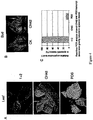
- Fig. 5A Cultures of Agrobacterium tumefaciens strains carrying psTRV1 and psTRV2 ( Fig. 5A , Vector control 1+2) or psTRV2:CH42 ( Fig. 5B and 5C ) were mixed in 1:1 ratio. Mixed culture was vacuum infiltrated into Gossypium arboreum and Gossypium herbaceum plants at 2-3 leaf stage plants. Fig. 5A and 5B of cotton leaves were taken at 7 DPI, while Fig. 5C was taken at 14 DPI.
- TFs Transcription factors
- AS1 The Arabidopsis ASYMMETRIC LEAVES 1 (AS1) and its orthologs belong to the R2R3 MYB family. They play an evolutionarily conserved role in shoot apical meristem, leaf and fruit development (Sun et al, 2002; Alonso-Cantabrana et al., 2007). AS1 represses class I KNOTTED1-like homeobox ( KNOX ) gene expression by binding to their promoters (Guo_et al., 2008) and it promotes stem cell function by regulating phytohormone activities (Alonso-Cantabrana et al., 2007).
- KNOX class I KNOTTED1-like homeobox
- AS1 also negatively regulates inducible resistance against pathogens by selective binding to certain JA-responsive gene promoters (Nurmberg et al., 2007; Yang et al., 2008).
- AS1 is a positive regulator of salicylic acid (SA)-independent extra-cellular defenses against bacterial pathogens (Nurmberg et al., 2007).
- SA salicylic acid
- PCR primers were designed to target a 418 bp fragment which was inserted into psTRV2 to give psTRV2:AS1.
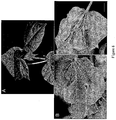
- a mixture of Agrobacterium cultures containing psTRV1 and psTRV2:AS1 vector was vacuum infiltrated into cotton plants. After 18 dpi, obvious phenotypes can be seen in newly emerged leaves. Severe downward curling was the most obvious phenotype from the adaxial side ( Fig. 7B and Fig. 7C ) of leaves.
- adaxial leaf blade phenotypes provide evidence that this is cotton AS1 gene and that TRV VIGS could be used in cotton to rapidly screen for function of TF genes.
- Such genes may be important for cotton boll development and cotton fiber initiation and elongation in different developing stages. More importantly, recent evidence shows that common networks regulate leaf and fruit patterning in Arabidopsis (Nurmberg et al., 2007).
- the leaf is a model system for rapid assessment of TF gene functions and to make use of such information to further to make use of these genes to modify or enhance the quality and quantity of cotton fiber.
- the invention also provides plant products obtained from transgenic plants of the invention.
- plant product is intended to include anything that may be obtained from a particular plant, including, for example, fruits, seeds, pollen, ovules, plant embryos, oils, juices, waxes, proteins, lipids, fatty acids, vitamins, plant tissues in whole or in part, (e.g. roots, leaves, stems, flowers, boll, fruit, bark), cells, cell suspensions, tubers and stolons.
- smRNAs Small RNAs regulate processes as diverse as plant resistance to viruses, and plant development and differentiation.
- TRV VIGS TRV VIGS system for high-throughput analysis of functions of genes involved in smRNA biogenesis pathways.
- RNA-silencing pathways require the genesis of 18- to 26-nt smRNAs from the cleavage of double-stranded RNA (dsRNA) or highly structured regions within single-stranded viral RNAs.
- MicroRNA is one important kind of smRNAs. Bound to ARGONAUTE1 (AGO1) protein, miRNAs guide RNA-induced silencing complexes (RISCs) to cleave mRNAs with partial or complete sequence complementarity. Accordingly, Arabidopsis AGO1 binds miRNAs and displays slicer activity toward miRNA targets, and strong ago1 loss-of-function mutants overaccumulate miRNA target transcripts (Baulcombe, 2004). AGO1 has also proven to bind viral-derived siRNA and ago1 mutant show hypersusceptibility to virus (Beclin et al., 2002; Morel et al., 2002).
- PCR primers were designed to target a 583 bp fragment which was inserted into psTRV2 to give psTRV2:AGO1.
- a mixture of Agrobacterium cultures containing psTRV1 and psTRV2:AGO1 vector was vacuum infiltrated into cotton plants.
- a mixture of Agrobacterium cultures containing psTRV1 and psTRV2:AGO1 vector was infiltrated into cotton plants. After 27 dpi, diverse and varied phenotypes can be seen in new emerged leaves. Severe upward curling was the most obvious phenotype both from the adaxial side ( Fig.
- the invention also provides plant products obtained from transgenic plants of the invention.
- plant product is intended to include anything that may be obtained from a particular plant, including, for example, fruits, seeds, pollen, ovules, plant embryos, oils, juices, waxes, proteins, lipids, fatty acids, vitamins, plant tissues in whole or in part, (e.g. roots, leaves, stems, flowers, boll, fruit, bark), cells, cell suspensions, tubers and stolons.
- PAs Proanthocyanidins
- PAs are oligomeric and polymeric end products of the flavonoid biosynthetic pathway. PAs act as antibiotics, antisporulants, feeding deterrents, and enzyme denaturants. Many evidences have shown good correlation between cotton wilt disease/insect resistances with PAs level in cotton. Most genetic studies on PAs biosynthesis pathway were done model plant Arabidopsis and recently Medicago truncatula. By our knowledge, there is no gene functional analysis in PA biosynthesis pathway in cotton. We took advantages of our sTRV VIGS system in cotton to decipher structure genes and regulated network for PA biosynthesis process.
- PAs are one class of products from the pathway leading to anthocyanins.
- Two enzymes anthocyanidin synthase (ANS) and anthocyanidin reducatase (ANR) function at branches between anthocyanin and PA biosynthesis.
- ANS converts the substrate flavan-3,4-diol (leucoanthocyanidin) to anthocyanidin, which can serve as substrate for ANR to produce another major PA unit, 2,3-cis-flavan-3-ol (epicatechin) in Arabidopsis and Medicago.
- PCR primers (ANS: SEQ ID NOs:58 and 59; ANR: SEQ ID NOs:60 and 61) to amplify partial fragments of putative GhANS and GhANR according to the querying results of GenBank EST database with amino acid sequence of Arabidopsis ANS and ANR proteins.
- the PCR products (ANS: SEQ ID NO:78; ANR: SEQ ID NO:79) were further into cloned psTRV2 to give psTRV2:ANS and psTRV2:ANR.
- a mixture of Agrobacterium cultures containing psTRV1 with psTRV2, p sTRV2:ANS or psTRV2:ANR was vaccum infiltrated into 2-3 true leaf cotton plants. After 7-10 days post inoculation, leaf margin around new systemic leaves of psTRV2:ANR cotton plants appeared brownish phenotypes. Two to 7 days later, gene silencing phenotype was obvious in whole leaf blade, esp. the leaf veins in 3-5 new, expanding leaves ( Fig. 9A ) and the brownish phenotype was also visible in the lateral leaf below the infiltrated leaf. Brownish phenotype can be also found on the petiole ( Fig. 9A ), bark ( Fig.
- DMACA an aromatic aldehyde
- DMACA staining reagent DMACA shows deep blue coloration after reaction with catechins, the major flavan-3-ols associated in cotton PAs.
- Most of the tissues in vector (1+2) control plants contain high level of PAs level as showed by DMACA staining (bark in Fig. 11 , leaf, bud, flower, root in Fig. 12 and dissected bud in Fig. 13 ).
- PAs are highly accumulated in parenchyma cell around phloem.
- the leaf vein region and petiole show deeper anthocyanidin red color in ANR plants.
- ANS plants show colorless because there is neither anthocyanidin red color nor PAs blue color ( Fig. 11 , Fig. 12 and Fig. 13 ). Both ANR and ANS silencing results prove silencing effect can enter into all over the cotton plants and shows very homogenous silencing effect, which is very important merit for a good VIGS system ( Fig. 4A - Fig. 7 ). More importantly, silencing can be achieved in reproductive organs, such as bud, flower and ovule. These results indicate sTRV VIGS can be used to screen genes important for cotton fiber development. ANS and ANR silencing were also found in the cotton roots, where verticillium dahliae infects from and causes the wilt disease. That strongly suggested that sTRV VIGS system can also be used to cotton fungal disease resistance.
- Cotton fibers are seed trichomes and are the most important product of cotton plants. Cotton fiber development undergoes several distinctive but overlapping steps including fiber initiation, elongation, secondary cell wall biosynthesis, and maturation, leading to mature fibers. Single-celled cotton fiber also provides a unique experimental system to study cell elongation. Many evidences demonstrated in previous examples have shown sTRV VIGS system can work effectively both in vegetative but also reproductive organs such as flower and bud. In this example, we showed sTRV VIGS can also work in cotton fiber.
- CtBP C-terminal binding protein
- NAD(H)-dependent transcriptional corepressor whose activity has been shown to be regulated by the NAD/NADH ratio.
- ANGUSTIFOLIA AN
- CtBP C-terminal binding protein
- a putative EST sequence was identified by using Arabidopsis AN gene (NM 100033) sequence to BLAST against the whole cotton EST sequences of GenBank.
- One EST encoded the putative AN protein in cotton was identified.
- PCR primers (SEQ ID NOs:62 and 63) were designed to amplify a 621-bp AN cDNA of G . hirsutum by PCR, and the AN fragment (SEQ ID NO:80) was inserted into the sTRV2 MCS site to give psTRY2:AN.
- the sequence of AN was also verified by sequencing.
- AN RNA accumulation in the upper leaves of psTRV2:AN infected plant was much lower than that of plants infected with the empty sTRV vector and there is only 10% of AN RNA was left in AN treated plants.
- AN plays an very impressively key role in organ size determination, specific in width orientation and fiber development.
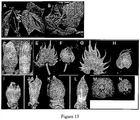
- the flower bud and ball was thinner and smaller ( Figs. 13D, 13F, 13H, 13J, 13L, 13N ) comparing to control ( Figs. 13C, 13E, 13G, 13I, 13K, 13M ) individually.
- the most severe phenotype in AN -silenced ball showed few initiated fiber in one ovule and totally few ovule number in one ball ( Fig. 14 and Fig. 15 ).
- Real-time PCR analysis showed AN transcript levels were greatly reduced in ovules ( Fig. 16B ).
- cortical MTs This may be caused by abnormal arrangement of cortical MTs. It has been proved that the abnormal arrangement of cortical microtubules account for the abnormal shape of the cells in Arabidopsis. AN gene might regulate the polarity of cell growth by controlling the arrangement of cortical MTs (Kim et al., 2002).
- AN encodes a novel protein with sequence similarity to C-terminal binding protein/BrefeldinA ribosylated substrates that are known to be involved in transcriptional regulation or in vesicle budding.
- CtBPs self-associate and act as co-repressor of transcription.
- CtBP invoved in embryogenesis mutants leads to embryo development stop at some stages. This may help to explain why some of AN-silenced ovule is lethal in cotton ovule development ( Fig. 14 ).
- Microarray analysis in Arabidopsis suggested AN gene might regulate the expression of certain genes, e.g. the genes involved in formation of cell walls (Kim et al., 2002).
- Microtubule cytoskeleton plays an important role in cell morphogenesis in plants as demonstrated by pharmacological, biochemical, and genetic studies.
- the microtubule cytoskeleton may be involved in the transportation of organelles and vesicles carrying membranes and cell wall components to the site of cell growth as in root hairs, trichome cells, and pollen tubes. Therefore, the microtubule cytoskeleton is essential for cell elongation and tip growth.
- Katanin is a heterodimeric microtubule (MT) severing protein that uses energy from ATP hydrolysis to generate internal breaks along MTs.
- Katanin p60 one of the two subunits, possesses ATPase and MT-binding/severing activities, and the p80 subunit is responsible for targeting of katanin to certain subcellular locations.
- katanin plays an important role in the release of MTs from their nucleation sites in the centrosome. It is also involved in severing MTs into smaller fragments which can serve as templates for further polymerization to increase MT number during meiotic and mitoticspindle assembly.
- Katanin homologs are present in a wide variety of plant species.
- the Arabidopsis katanin homolog has been shown to possess ATP-dependent MT severing activity in vitro and exhibit a punctate localization pattern at the cellcortex and the perinuclear region. Disruption of katanin functions by genetic mutations causes a delay in the disappearance of the perinuclear MT array and results in an aberrant organization of cortical MTs in elongating cells. Consequently, katanin mutations lead to defects in cell elongation, cellulose microfibril deposition, and hormonal responses. Studies of kataninin plants provide new insights into our understanding of its roles in cellular functions.
- a putative EST sequence was identified by using Arabidopsis KTN gene (NM_106684.4) sequence to BLAST against the whole cotton EST sequences of GenBank.
- One EST encoded the putative KTN protein in cotton was identified.
- PCR primers (SEQ ID NOs:64 and 65) were designed to amplify a 675-bp KTN cDNA of G . hirsutum by PCR, and the KTN fragment (SEQ ID NO:81) was inserted into the sTRV2 MCS site to give psTRV2:KTN .
- the sequence of KTN was also verified by sequencing.
- Cultures of Agrobacterium carrying pTRV1 was mixed with cultures of Agrobacterium carrying either psTRV2:KTN or vector control.
- the mixed culture was vacuum-infiltrated into G . hirsutum plants with 2-3 true leaves (for details see Example 1).
- KTN -silenced cotton plants There are very obvious phenotypes in vegetative organs of KTN -silenced cotton plants, such as dark green and smaller leaf blades, shorter petiole (compare with vector control in Fig. 17A and KTN -silenced in Fig. 17B ) and pattern of trichome branching and length of leaf trichomes ( Fig. 19 ). These data suggested KTN play multiple significant roles on plant development.
- KTN not only plays key roles on vegetative growth and development, but also plays very impressively key roles in organ size determination, specific in width orientation and fiber development.
- the flower bud and ball was thinner and smaller ( Figs. 17D, 17F, 17H, 17J ) comparing to control ( Figs. 17C, 17E, 17G, 17I ) individually.
- the most severe phenotype in KTN -silenced ball showed much shorter fiber in one ovule ( Fig. 18 ). This may be caused by abnormal arrangement of cortical MTs. It has been proved that the abnormal arrangement of cortical microtubules account for the abnormal shape of the cells in Arabidopsis.
- the method requires that a heterologous DNA construct comprising a plant promoter, a DNA sequence encoding a protein.
- the DNA construct encodes an additional gene of interest.
- the DNA construct may include a gene the expression of which results in increased cotton resistance to insect or increase cotton fiber length or other agronomic properties in infiltrated plants.
- GFP green fluorescent protein
- GUS luciferase gene
- the present invention may be employed to obtain a cotton plant expressing virtually any other gene.
- the method for obtaining transient expressed cotton plants involves the fusion of GFP with other genes and the other of which comprises a gene of interest.
- PCR primers were designed to a fragment which was inserted into the psTRV2001, with a synthetic pea early browning virus (PEBV) subgenomic promoter to give psTRV2:GFP.
- PEBV pea early browning virus
- a mixture of Agrobacterium cultures containing psTRV1 and psTRV2:GFP vector was vaccum infiltrated into cotton plants.
- strong GFP expression was fast screened when infiltrated cotton plants excited with ultraviolet light in whole plants ( Figs. 20B, 20C, 20D ).
- Cotton leaves were collected and GFP antiboby was used to detect the curcin protein.
- Western blot analysis showed that strong GFP accumulated in cotton leaves.
- Coomassie Bright Blue staining of the large subunit of ribulose 1,5-bisphosphate carboxylase/oxygenase indicates comparable loading of the samples.
- RNA viral vectors There are many reasons that cause RNA viral vectors to have difficulties in initiation of transcription.
- pre-mRNA transcripts made in plant nucleus from viral constructs may not be efficiently recognized or proper processing without intron sequences. Addition of an intron can make the viral transcript easier to be recognized by the host huclear pre-mRNA processing and export machinery, therefore to increase the percentage of plant cells in which viral replication could occure, but also the efficiency by which an infection could be initiated.
- the consensus sequences AG/GT is used as a target sequence for intron insetion.
- a second round screen cycle we analyzed the sequence of TRV1 using the NetgeneII program (http colon backslash backslash www dot cbs dot dtu dot dk backslash services backslash NetGene2/) with parameters set for A. thaliana sequnces.
- Overlapping PCR was used to generate TRV1 fused with intron sequence derived from A. thaliana and inserted into the psTRV1001 vector to make psTRV1001-intron vector.
- the modified vector is analyzed to show that the intron-containing vector can lead to better VIGS effiencncy and higher overexpression level.
- Examples 12 and 13 The approach described in Examples 12 and 13 involves cloning a short sequence of a targeted cotton gene correlating to cell elongation, cell wall and cellulose biosynthesis into a viral delivery vector.
- the vector is used to infect the cotton ovules in vitro, and in a few days or weeks natural defense mechanisms directed at suppressing virus replication also result in specific degradation of mRNAs from the endogenous plant gene that is targeted for silencing.
- the method is rapid (1-4 days from infection to silencing), does not require development of stable transformants, allows characterization of phenotypes that might be lethal in stable lines, and offers the potential to silence either individual or multiple members of a gene family.
- Plant growth conditions All the cotton plants ( Gossypium hirsutum ) were grown in potting soil in a greenhouse with natural temperature and light. Flower buds to be used for the collection of ovaries were tagged on the day of anthesis and the corresponding bolls were harvested at 1 day after that day.
- Cotton ovule culture One day post-anthesis (DPA), flower buds or bolls were collected, and bracts, sepals, and petals were removed. Ovaries were surface sterilized by using 75% ethanol , followed by washing with sterile water 3-5 times. Ovules were carefully dissected from the ovaries under aseptic conditions. These ovules were infected by TRV containing the Actin 1 gene. Followinged by washing with sterile water 3-5 times, these ovules were immediately floated on the surface of BT medium supplemented with 1.1mg/L IAA, 1.7mg/L GA3 and 0.3 mg/L IBA (Beasley and Ting 1973).
- Oxygenate pure oxygen
- the ovules were incubated at 32E C in the dark without agitation except for occasional brief periods for examination.
- Cotton ovule culture is shown in Figures 21A and 21B .
- RNA extraction Cotton fibers were frozen in liquid nitrogen and ground with a pestle to a fine powder in a cold mortar. Total RNA was extracted according to Wan and Wilkins (1994) with up to 100 mg of ground fibers. All RNA preparations were DNase treated and purified by Qiagen RNeasy plant mini kit.
- Reverse transcription-PCR analysis A two-step RT-PCR procedure was performed in all experiments. First, First-strand cDNA was synthesized from 2 ⁇ g total RNA using the Superscript first-strand synthesis system for RT-PCR (Invitrogen) and was primed with 1 ⁇ g of oligo(dT) (dT15). Then, the cDNAs were used as templates in RT-PCR reactions with gene-specific primers.
- the RT-PCR primers used for amplifying GhActin 1 were Act-up (5'-ATATTCTAGAAGAAGAACTATGAGTTGCCT-3'; SEQ ID NO:28) and Act-dn (5'-ATGGG ATCCCGTAGAGATCCTTCCTGATAT-3'; SEQ ID NO:29).
- Tubulin gene was used as the RNA standard.
- the RT-PCR primers used for amplifying the GhTubulin gene were Tub-up (5'-GATGTTGTGCCCAAGGATGTTAATGC-3'; SEQ ID NO:30) and Tub-dn (5'-ATGAGATCA AACTTGTGGTCAATGCG-3'; SEQ ID NO:31).
- GhActin 1 GhADF 1, GhCTR 1, GhDELLA 1
- GhAlpha-tubulin 1 GhBeta-tubulin 1
- GhMADS 9 GhMBY 5 and GhMBY6
- VIGS virus-induced gene silencing approaches using RNAi technology were employed.
- the 500-650bp fragment of a candidate gene was constructed into a vector comprising a chemically synthesized tobacco rattle virus (sTRV) RNA2. sequence to produce a modified sTRV2 vector.
- sTRV tobacco rattle virus
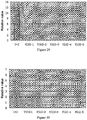
- GhActin1 Actin expression in cotton ovule culture is shown in Figures 22A and 22B . A strong band was detected in wild-type control fiber and psTRV1 + psTRV2 control fiber, whereas no or weak signals were detected in the VIGS-Actin 1 lines ( Figures 27A, 27B ). The results of real-time PCR revealed that the expression levels of the GhActin 1 RNAi resulted in complete GhActin 1 silence in lines VIGS-1, VIGS-2, VIGS-3, VIGS-4 and VIGS-5 ( Figure 28 ).
- GhADF 1 The results of real-time PCR revealed that the expression levels of the GhADF 1 RNAi resulted in complete GhADF 1 silence in lines VIGS-1, VIGS-2, VIGS-3, VIGS-4 and VIGS-5 ( Figure 29 ). The results of SEM showed that the length of fibers was same as psTRV1 + psTRV2 at the same stages ( Figures 23A-23D and Figures 23I-23L ). Although all VIGS-GhADF 1 showed the reduction of ADF 1 transcript levels, the length of fibers was not any changed. These data suggest that GhADF 1 is not related with the fiber elongation.
- GhCTR 1 The results of real-time PCR revealed that the expression levels of the GhCTR 1 RNAi resulted in complete GhCTR 1 silence in lines VIGS-1, VIGS-2, VIGS-3, VIGS-4 and VIGS-5 ( Figure 30 ). The results of SEM suggested that the length of fibers was much shorter than that in psTRV1 + psTRV2 at the same stages ( Figures 24A and 24B ). All VIGS-GhCTR 1 showed a short-fiber phenotype and the reduction of CTR 1 transcript levels, indicating that the phenotype was a result of the CTR 1 reduction caused by GhCTR 1 silence. These data suggest that GhCTR 1 is one of the dominant and functional gene in fiber elongation.
- GhDELLA 1 The results of real-time PCR revealed that the expression levels of the GhDELLA 1 RNAi resulted in complete GhDELLA 1 silence in lines VIGS-1, VIGS-2, VIGS-3, VIGS-4 and VIGS-5 ( Figure 31 ). The results of SEM showed that the length of fibers was same as psTRV1 + psTRV2 at the same stages ( Figures 24A and 24C ). Although all VIGS-GhDELLA 1 showed the reduction of DELLA 1 transcript levels, the length of fibers was not any changed. These data suggest that GhDELLA 1 is not related with the fiber elongation.
- GhAlpha-tubulin 1 The results of real-time PCR revealed that the expression levels of the GhAlpha-tubulin 1 RNAi resulted in complete GhAlpha-tubulin 1 silence in lines VIGS-1, VIGS-2, VIGS-3, VIGS-4 and VIGS-5 ( Figure 32 ). The results of SEM suggested that the length of fibers was shorter than that in psTRV1 + psTRV2 at the same stages and the surface of trichome was rough and wrinkled ( Figures 25A and 25B ).
- GhBeta-tubulin 1 The results of real-time PCR revealed that the expression levels of the GhBeta-tubulin 1 RNAi resulted in complete GhBeta-tubulin 1 silence in lines VIGS-1, VIGS-2, VIGS-3, VIGS-4 and VIGS-5 ( Figure 33 ). The results of SEM suggested that the length of fibers was shorter than that in psTRV1 + psTRV2 at the same stages and the surface of trichome was rough and wrinkled ( Figures 25A and 25C ).
- GhMADS 9 The results of real-time PCR revealed that the expression levels of the GhMADS 9 RNAi resulted in complete GhMADS 9 silence in lines VIGS-1, VIGS-2, VIGS-3, VIGS-4 and VIGS-5 ( Figure 34 ). The results of SEM suggested that the length of fibers was longer than that in psTRV1 + psTRV2 at the same stages ( Figures 26A and 26B ). All VIGS-GhMADS 9 showed a long-fiber phenotype and the reduction of MADS 9 transcript levels, indicating that the phenotype was a result of the MADS 9 reduction caused by GhMADS 9 silence. These data suggest that GhMADS 9 is one of the negative regulator in fiber elongation.
- GhMYB 5 The results of real-time PCR revealed that the expression levels of the GhMYB 5 RNAi resulted in complete GhMYB 5 silence in lines VIGS-1, VIGS-2, VIGS-3, VIGS-4 and VIGS-5 ( Figure 35 ). The results of SEM showed that the length of fibers was same as psTRV1 + psTRV2 at the same stages ( Figures 26A and 26C ). Although all VIGS-GhMYB 5 showed the reduction of MYB 5 transcript levels, the length of fibers was not any changed. These data suggest that GhMYB 5 is not related with the fiber elongation.
- GhMYB 6 The results of real-time PCR revealed that the expression levels of the GhMYB 6 RNAi resulted in complete GhMYB 6 silence in lines VIGS-1, VIGS-2, VIGS-3, VIGS-4 and VIGS-5 ( Figure 36 ). The results of SEM showed that the length of fibers was same as psTRV1 + psTRV2 at the same stages ( Figures 26A and 26D ). Although all VIGS-GhMYB 6 showed the reduction of MYB 6 transcript levels, the length of fibers was not any changed. These data suggest that GhMYB 6 is not related with the fiber elongation.
Landscapes
- Health & Medical Sciences (AREA)
- Genetics & Genomics (AREA)
- Life Sciences & Earth Sciences (AREA)
- Engineering & Computer Science (AREA)
- Biotechnology (AREA)
- Chemical & Material Sciences (AREA)
- Organic Chemistry (AREA)
- Zoology (AREA)
- Biomedical Technology (AREA)
- Wood Science & Technology (AREA)
- Molecular Biology (AREA)
- General Engineering & Computer Science (AREA)
- Bioinformatics & Cheminformatics (AREA)
- Plant Pathology (AREA)
- Microbiology (AREA)
- Biophysics (AREA)
- Cell Biology (AREA)
- Biochemistry (AREA)
- General Health & Medical Sciences (AREA)
- Physics & Mathematics (AREA)
- Virology (AREA)
- Measuring Or Testing Involving Enzymes Or Micro-Organisms (AREA)
Description
- The present application claims priority to
U.S. provisional patent application Serial No. 61/185,631 filed on 10 June 2009 - The present application is being filed along with a Sequence Listing in electronic format. The Sequence Listing is entitled 2577_195PCT_Sequence_Listing.txt, created on 3 June 2010.
- The present invention relates to the field of functional analysis of cotton genes on a genomic scale. More specifically, the present invention relates to a method for high-throughput functional analysis of cotton genes on a genomic scale using virus-induced gene silencing (VIGS). The present invention also relates to a method for transient expression of genes in cotton plants.
- The publications and other materials used herein to illuminate the background of the invention or provide additional details respecting the practice are respectively grouped in the Bibliography.
- Cotton (Gossypium spp.) is the world's most important fiber plant and a significant oilseed crop, being grown in more than 80 countries with a record of 122 million 480-pound bales in world production during the 2006/2007 growing season (United States Department of Agriculture-Foreign Agricultural Service). The deficit between consumption and production has happened in 1994/1995 and is forecasted to continue to widen to 2.5 million 480-pound bales in the 2009/2010 growing season (United States Department of Agriculture-Foreign Agricultural Service [USDA-FAS] 2009). Cotton production provides income for approximately 100 million families, and approximately 150 countries are involved in cotton import and export (Lee et al., 2007). Its economic impact is estimated to be approximately $500 billion/ year worldwide. Moreover, modifying cotton-seed for food and feed could profoundly enhance the nutrition and livelihoods of millions of people in food-challenged economies. Cotton is also a potential candidate plant of renewable biofuel. Cotton fiber is composed of nearly pure cellulose. Compared to lignin, cellulose is easily convertible to biofuels. Optimized cotton fiber production and processing will ensure that this natural renewable product will be competitive with petroleum-derived synthetic non-renewable fiber to ensure more sustainable development.
- To solve the issues stated above, many agronomic properties of cotton, such as fiber length and strength, agricultural productivity, drought tolerance and pest resistance need to be enhanced by the availability of genetic resources and rapid methods to identify gene functions (Udall et al., 2006).
- Cotton is an important crop that is widely grown and is used to produce both natural textile fiber and cotton seed oil. Cotton fiber is a model system for the study of cell elongation and cell wall and cellulose biosynthesis. And it is unicellular, therefore cell elongation can be evaluated independently from cell division. One of the most significant benefits for using cotton fiber as a model system for plant development is that a culture method for cotton ovules was perfected by Beasley and Ting (1973).
- Gossypium includes approximately 45 diploid (2n = 2x = 26) and five tetraploid (2n = 4x = 52) species, all exhibiting disomic patterns of inheritance. Most modern cotton varieties are forms of Gossypium hirsutum (upland cotton, tetraploid), about 95% of annual cotton crop world wide, although three other species are also utilized to a lesser extent, Gossypium barbadense (tetraploid), Gossypium arboreum (diploid), and Gossypium herbaceum (diploid). These three species are also very important genetic resources and offer gene reservoir for special breeding purpose. For example, G. herbaceum, with high resistance to biotic and abiotic stresses, can be used as a good start genetic material for interspecies crossings with G. hirsutum to improve its resistance to various stresses. Therefore, a species independent method for gene functional analysis in Gossypium genus and relative plants is also greatly needed.
- Currently, complete sequencing of cotton genomes is just beginning. Meanwhile, an ever-expanding set of Gossypium EST sequences (about 400,000 now) and derived unigene sets from different libraries constructed from a variety of tissues and organs under a range of growth conditions are accessible on the web, as well as by microarray analyses based on these sequences (Udall et al., 2006). The availability of other plant genomic sequences serves as a useful platform for identifying and annotating putative orthologs in cotton EST databases. Even though analogies can be drawn between cotton fiber differentiation and the formation of leaf trichomes and secondary-walled xylem cells, ultimately the function of putative orthologous genes needs to be tested directly in cotton. In addition, cotton fibers are known to express genes with no known homologs in other plants, which may confer some of the unique properties of fibers. Even if the function of several transcriptional factors genes have been tested in Arabidopsis, their exact functions need to be further verified in the homologus cotton plant.
- An important strategy to identify agronomic and quality traits of Gossypium is by stable transformation into cotton. However, the inefficient production of stably transformed cotton plants limits gene identification on a large scale. Moreover, such procedure is laborious and time consuming and not suitable for high throughput analysis on a genomic scale. Furthermore, only few cultivars can be used for host for transformation. Normally, it is difficult to directly identify important genetic elements from good start genetic materials by stable transformation in cotton.
WO 2005/103267 A2 discloses methods and compositions that allow efficient induction of virus-induced gene silencing in plants. Said methods allow high-throughput analysis of gene function in plants. - Thus, it is desired to develop a method for the species independent high-throughput functional analysis of Gossypium genes on a genomic scale.
- The present invention, in one embodiment, relates to a method of directly manipulating expression of a target gene in cotton (Gossypium spp.) plants. More specifically, the present invention relates to a method of modulating or inhibiting expression of one or more target genes in all cotton species and germplasms, in particular, in tetraploid cotton, such as upland cotton (Gossypium hirsutum) and Gossypium barbadense, in diploid cotton, such as Gossypium herbaceum and Gossypium arboreum, and in germplasms derived from intra-species and inter-species crossings. Genes belonging to several functional categories, including transcriptional factor involved in development, small RNA pathway and secondary metabolites biosynthesis, etc have been tested by this method. It is specifically contemplated that the methods and compositions of the present invention are useful in the functional analysis of cotton genes.
- The present invention relates to the field of functional analysis of cotton genes on a genomic scale. More specifically, the present invention relates to a method for high-throughput functional analysis of cotton genes on a genomic scale using virus-induced gene silencing (VIGS). The present invention also relates to a method for transient expression of genes in cotton plants and plant tissue.
- The present invention relates to the use of VIGS to evaluate gene function in cotton (Gossypium spp.) plants and plant tissue reliably and rapidly, and in a high-throughput manner. In one aspect, the present invention provides an efficient and reproducible system and procedure for VIGS in cotton (such as, Gossypium hirsutum). The present disclosure provides for the further re-synthesis of the whole tobacco rattle virus (TRV) viral genomes. In an additional embodiment, the present invention provides for a rapid silencing procedure for genome wide functional analysis. In a further embodiment, the present invention provides for the use of TRV VIGS system for cloning and functional identifying several functional categories genes. These important genes can be used to improve cotton agronomic traits such as pest resistance.
- In a first embodiment, the present invention provides a method of virus-induced gene silencing (VIGS) in cotton as claimed in
claim 1 below, the method comprising: - (a) inserting a nucleic acid comprising a first silencing sequence that is capable of silencing a first desired gene into a vector comprising a tobacco rattle virus (TRV) RNA2 sequence, wherein the nucleic acid is inserted into the TRV RNA2 sequence to produce a vector comprising a modified TRV RNA2 sequence, wherein the first silencing sequence is selected from the group consisting of a partial sequence of the first desired gene, a sense strand of the first desired gene, an antisense strand of the first desired gene, an shRNA, a precursor miRNA or an miRNA;
- (b) preparing a mixed culture of Agrobacterium comprising Agrobacterium containing a vector comprising a modified TRV RNA1 sequence and Agrobacterium containing the vector comprising the modified TRV RNA2 vector, wherein the modified TRV RNA1 sequence is a TRV RNA1 sequence into which an intron has been inserted wherein the insertion is within positions 10919-10922 in the psTRV1001 sequence of SEQ ID NO:1;
- (c) introducing the mixed culture of Agrobacterium into plant tissue of cotton to produce infected plant tissue; and
- (d) growing the infected plant tissue for a sufficient time to produce systemic TRV infection in the infected plants and to thereby induce gene silencing of the first desired gene.
- In a second embodiment, the present invention provides a method of analyzing gene function in cotton as claimed in
claim 2 below comprising: - (a) inserting a nucleic acid comprising a first silencing sequence capable of silencing a first candidate gene the function of which is to be analyzed into a vector comprising a tobacco rattle virus (TRV) RNA2 sequence, wherein the nucleic acid is inserted into the TRV RNA2 sequence to produce a vector comprising a modified TRV RNA2 sequence, wherein the first silencing sequence is selected from the group consisting of of a partial sequence of the first candidate gene, a sense strand of the first candidate gene, an antisense strand of the first candidate gene, an shRNA, a precursor miRNA or an miRNA;
- (b) preparing a mixed culture of Agrobacterium comprising Agrobacterium containing a vector comprising a modified TRV RNA1 sequence and Agrobacterium containing the vector comprising the modified TRV RNA2 sequence, wherein the modified TRV RNA1 sequence is a TRV RNA1 sequence into which an intron has been inserted wherein the insertion is within positions 10919-10922 in the psTRV1001 sequence of SEQ ID NO:1;
- (c) introducing the mixed culture of Agrobacterium into plant tissue of cotton to produce infected plant tissue;
- (d) growing the infected plant tissue for a sufficient time to produce systemic TRV infection in the infected plants and to thereby induce gene silencing of the first candidate gene; and
- (e) analyzing the phenotypic effect of the silenced candidate gene on the infected plant tissue.
- In some embodiments, the desired gene is a candidate transcription factor gene. In another embodiment, the desired gene is a candidate gene in chlorophyll or carotenoids biosynthesis. In a further embodiment, the desired gene is a candidate gene in flavonoid biosynthetic pathway. In another embodiment, the desired gene is a candidate gene in proanthocyanidins and anthocyanidins biosynthetic pathway. In an additional embodiment, the desired gene is a candidate gene in cotton fiber development. In a further embodiment, the desired gene is a candidate gene in cotton fiber initiantion, elongation, secondary wall deposition, maturation or seed development. In one embodiment, the desired gene is a candidate gene in small RNA (smRNA) biosynthesis.
- The desired gene may be a candidate gene in biosynthesis of secondary metabolic toxic agents and also important for plant resistance to biotic stress. The desired gene may be a candidate gene correlating to cell elongation, cell wall biosynthesis and cellulose biosynthesis.
- In one embodiment, the plant tissue is a cotton plant or a cotton seedling. In this embodiment, an infected plant is produced in step (c) and the infected plant is grown in step (d). In another embodiment, the plant tissue is a cotton ovule. In this embodiment, an infected cotton ovule is produced in step (c) and the infected cotton ovule is grown in culture in step (d). In an additional embodiment, the plant tissue is cotton fiber. In this embodiment, infected cotton fiber is produced in step (c) and the infected cotton fiber is grown in culture in step (d). In a further embodiment, a cotton plant or seedling is infected and the virus spreads through the cotton tissue, such that VIGS occurs in all tissue of the infected cotton plant or seedling.
- In a third embodiment, the present invention provides a method for transiently expressing genes in cotton plants or cotton tissue.
- In accordance with this embodiment, the method for transiently expressing a nucleic acid of interest in cotton plant tissue comprises:
- (a) inserting a nucleic acid comprising a first sequence of interest to be expressed in a cotton plant into a transient expression vector comprising a tobacco rattle virus (TRV) RNA2 sequence and at least one copy of a strong subgenomic promoter, wherein the nucleic acid is inserted into the TRV RNA2 sequence to produce a transient expression vector comprising a modified TRV RNA2 sequence, wherein the nucleic acid is operably linked to the subgenomic promoter, and wherein the subgenomic promoter is a strong non-TRV Tobravirus subgenomic promoter;
- (b) preparing a mixed culture of Agrobacterium comprising Agrobacterium containing a vector comprising a modified TRV RNA1 sequence and Agrobacterium containing the transient expression vector comprising the modified TRV RNA2 sequence, wherein the modified TRV RNA1 sequence is a TRV RNA1 sequence into which an intron has been inserted wherein the insertion is within positions 10919-10922 in the psTRV1001 sequence of SEQ ID NO:1;
- (c) introducing the mixed culture of Agrobacterium into plant tissue of cotton; and
- (d) growing the infected plants for a sufficient time to transiently express the desired gene.
- Preferably, the plant tissue is cotton seedlings, the plant tissue is cotton ovules, the plant tissue is cotton plants or the plant tissue is cotton fiber.
- Again preferably, a cotton plant or seedling is infected and the virus spreads through the cotton tissue, such that VIGS occurs in all tissue of the infected cotton plant or seedling.
- In another embodiment, the present invention provides a modified TRV RNA1 vector comprising a TRV RNA1 sequence into which an intron has been inserted wherein the insertion is within positions 10919-10922 in the psTRV1001 sequence of SEQ ID NO:1.
-
-
Figure 1 illustrates a method for cotton transient expression in accordance with the present invention. The transient expression can be used for virus-induced gene silencing (VIGS) or for gene expression. -
Figure 2 shows schematic drawing of TRV RNA1 modification with one intron insertion. -
Figures 3A-3C show the silencing of the Gossypol biosynthesis gene.Fig. 3A : Phenotypes of cotton plants infected with control and psTRV2:CAD.Fig. 3B : Quantitative real-time PCR using total RNA extracted from upper leaves of treated plants. The real-time PCR analysis showed that CAD transcript levels were greatly reduced in systemic leaves.Fig. 3C : HPLC chromatograms of gossypol and related sesquiterpenoids from cad silenced cotton leaves. CK: vector control infected; CAD, leaves from plants silenced in cadinene synthase expression. tert-butylanthraquinone was used as an internal standard. -
Figures 4A-C show the VIGS effect on one chlorophyll biosynthesis gene magensium chelatase CH42 gene and the effect of carotene biosynthesis gene phytoene desaturase (PDS) gene. Cultures of Agrobacterium tumefaciens strains carrying psTRV1 or psTRV2 (Vector control 1+2 (Fig. 4A ) or check (Fig. 4B ), psTRV2:CH42 (Fig. 2A and 2B ), psTRV2:PDS (Fig. 2A )) were mixed in 1:1 ratio. Mixed culture was vacuum infiltrated into G. hirsutum plants at 2-3 leaf stage plants.Fig. 4A shows cotton leaves taken at 14 days post inoculation (DPI), whileFig. 4B show cotton buds and taken at 45 DPI. The CH42 enzyme is responsible for adding Mg into the porphyrin ring during chlorophyll biosynthesis. Silencing of the CH42 gene blocked chlorophyll synthesis in newly emerging leaves which lost their green color but appeared yellow owing to the presence of carotenoids.Fig. 4C : Quantitative RT-PCR analysis to determine the RNA level of silenced G. hirsutum CH42 RNA levels in the CH42 treated and G. hirsutum PDS RNA levels on PDS treated cotton new emerged leaves. The numbers represent average values from 3 independent experiments with standard deviations. The real-time PCR analysis showed that CH42 and PDS transcript levels were greatly reduced in systemic leaves. -
Figures 5A-C show show the VIGS system works not only in tetraploid cotton G. hirsutum, but also in diploid cotton Gossypium arboreum (Fig. A, Fig. B), and Gossypium herbaceum (Fig. C). -
Figure 6 shows the amino acid sequence comparison of the predicted putative cotton AS1 (GhAS1) protein (SEQ ID NO:18) with the Arabidopsis thaliana AS1, AtAS1 (GenBank accession number: NM_129319; SEQ ID NO:19), Nicotiana tabacum AS1, NtAS1 (GenBank accession number: AY559043; SEQ ID NO:20), and Selaginella. kraussiana ARP, SkARP (GenBank accession number: AY667452; SEQ ID NO:21). CLUSTALW produced alignment file was formatted and consensus sequence (SEQ ID NO:22) was listed below. The conserved R2R3 MYB domain is underlined. -
Figures 7A-7H show the silencing of the transcription factor AS1.Figs. 7A-7D : Phenotypes of cotton plants infected with psTRV2:AS1.Figs. 7F and 7G : Scanning electron microscopy of cotton plants infected with psTRV2:AS1. Fig. 9H: Quantitative real-time PCR using total RNA extracted from upper leaves of treated plants. The real-time PCR analysis showed that AS1 a transcript levels were greatly reduced in systemic leaves. PB: primary blade; EB, ectopic blade; ebad: ectopic blade adaxial; ebab: ectopic blade abaxial. CK: vector control infected; AS1, leaves from plants silenced in AS1 expression. -
Figures 8A-8C show phenotypes of cotton plants infected with psTRV2:AGO1. PB: primary blade; EB, ectopic blade. -
Figures 9A and 9B show the silencing of anthocyanidin and proanthocyanidin biosynthesis gene ANS and ANR in cotton leaves.Fig. 9A : Phenotypes of cotton plants infected with psTRV2:ANS or with sTRV2:ANR showing effects on leaves, petioles and buds.Fig. 9B : Quantitative real-time PCR using total RNA extracted from upper leaves of treated plants. The real-time PCR analysis showed that ANR and ANS transcript levels were greatly reduced in systemic leaves. CK: vector control infected; ANR, leaves from plants silenced in ANR expression; ANS, leaves from plants silenced in ANS expression. -
Figure 10 shows the silencing of anthocyanidin and proanthocyanidin biosynthesis gene ANS and ANR in cotton bark. -
Figure 11 shows the silencing of anthocyanidin and proanthocyanidin biosynthesis gene ANS and ANR in different cotton organs. -
Figure 12 shows the silencing of anthocyanidin and proanthocyanidin biosynthesis gene ANS and ANR in cotton buds. -
Figures 13A-13N show the silencing of the CtBP ortholog gene AN in cotton in leaves (Figs. 13A and 13B ), flower bud and ball in psTRV2:AN treated plants (Figs. 13D, 13F, 13H, 13J, 13L and 13N ) and in flower bud and ball in control plants (Figs. 13C, 13E, 13G, 13I,13K and 13M ). -
Figure 14 shows silencing of the CtBP ortholog gene AN in cotton ovule and fiber. CK: vector control infected; ANR, leaves from plants silenced in AN expression. -
Figure 15 shows that the cotton CtBP ortholog gene AN plays a key role in cotton fiber initiation. 1+2: vector control infected; AN, leaves from plants silenced in AN expression. -
Figures 16A and 16B show silencing of the CtBP ortholog gene AN in cotton systemic leaves (Fig. 16A ) and ovules (Fig. 16B ). The real-time PCR analysis showed that AN transcript levels were greatly reduced in both systemic leaves and ovules. CK: vector control infected; AN, leaves from plants silenced in AN expression. -
Figures 17A-J show silencing of cytoskeleton gene Katanin (KTN) in cotton. Phenotypic effect in vector control treated plant (Fig. 17A ), in psTRV2:KTN treated plant (Fig. 17B ), in flower bud and ball in psTRV2:KTN treated plants (Figs. 17D, 17F, 17H and 17J ) and in flower bud and ball in control plantsFigs. 17C, 17D, 17G and 17I ). -
Figure 18 shows that KTN is an essential gene for cotton fiber elongation. -
Figure 19 shows that KTN plays a role in leaf trichome length and patterning. -
Figures 20A-20E show plants infected with psTRV2:GFP.Fig.20A : Phenotype of plants infected with empty vector.Figs. 20B-20D : Phenotypes of plants infected with psTRV2:GFP.Fig. 20E : Western blot of plants infected with psTRV2: GFP. Top panel: GFP protein band detected with anti-GFP antibody. Bottom panel: rbcL band stained with coomassie brilliant blue, which serves as a loading control. Lane1: empty vector, lanes 2-4, 3 independent plants infiltrated with psTRV2:GFP. -
Figures 21A and 21B show cotton ovule culture.Fig. 21 A: 2-week culture in BT medium.Fig. 21B : Length of fibers on in vitro ovule culture. -
Figures 22A and 22B show actin gene expression in cotton.Fig. 22A : Ovules treated with psTRV1 + psTRV2. All of ovules can grow fiber well.Fig. 22B : Ovules treated with psTRV1 + psTRV2:Actin 1. Although the ovules can grow fiber, fibers were shorter than control fibers. -
Figures 23A-23L show scanning electron micrographs of the ovule surface of VIGS-GhActin1, VIGS-GhADF1 and psTRV1 + psTRV2.Figs. 23A-23D : Ovules infected by psTRV1 + psTRV2 at 0 (Fig. 23A ), 1 (Fig. 23B ), and2 (Fig. 23C, Fig. 23D ) DPA and scanned on 1 (Fig. 23A, Fig. 23B, Fig. 23C ), and2 (Fig. 23D ) days after infected. Note the length of fibers increases with time.Figs. 23E-23H : Ovules infected by psTRV1 + psTRV2:Actin 1 at 0 (Fig. 23E ), 1 (Fig. 23F ), and2 (Fig. 23G, Fig. 23H ) DPA and scanned on 1 (Fig. 23E, Fig. 23F, Fig. 23G ), and2 (Fig. 23H ) days after infected. Note the length of fibers is much shorter than that in psTRV1 + psTRV2 at the same stages and the surface of trichome is rough and wrinkled.Figs. 23I-23L : Ovules infected by psTRV1 + psTRV2:GhADF 1 at 0 (Fig. 23I ), 1 (Fig. 23J ), and2 (Fig. 23K, Fig. 23L ) DPA and scanned on 1 (Fig. 23I, Fig. 23J, Fig. 23K ), and2 (Fig. 23L ) days after infected. Note the length of fibers is same as psTRV1 + psTRV2 at the same stages. -
Figures 24A-24C show scanning electron micrographs of the ovule surface of VIGS-GhCTR 1, VIGS-GhDELLA 1 and psTRV1 + psTRV2.Fig. 24A : Ovules infected by psTRV1 + psTRV2 at 1 DPA and scanned on 1 day after infected.Fig. 24B : Ovules infected by psTRV1 + psTRV2:GhCTR 1 at 1 DPA and scanned on 1 day after infected. Note the length of fibers is shorter than sTRV1 + sTRV2 at the same stages.Fig. 24C : Ovules infected by psTRV1 + psTRV2:GhDELLA 1 at 1 DPA and scanned on 1 day after infected. Note the length of fibers is same as psTRV1 + psTRV2 at the same stages. -
Figures 25A-25C show scanning electron micrographs of the ovule surface of VIGS-GhAlpha-tubulin 1, VIGS-GhBeta-tubulin 1 and psTRV1 + psTRV2.Fig. 25A : Ovules infected by psTRV1 + psTRV2 at 1 DPA and scanned on 1 day after infected.Fig. 25B : Ovules infected by psTRV1 + psTRV2:GhAlpha-tubulin1 DPA and scanned on 1 day after infected. Note the the surface of trichome is rough and wrinkled.Fig. 25C : Ovules infected by psTRV1 + psTRV2:ADFGhBeta-tubulin 1 at 1 DPA and scanned on 1 day after infected. Note the surface of trichome is rough and wrinkled. -
Figures 26A-26D show scanning electron micrographs of the ovule surface of VIGS-GhMADS 9, VIGS-GhMBY5, VIGS-GhMBY6 and psTRV1 + psTRV2.Fig. 26A : Ovules infected by psTRV1 + psTRV2 at 1 DPA and scanned on 3 days after infected.Fig. 26B : Ovules infected by psTRV1 + psTRV2:GhMADS 9 at 1 DPA and scanned on 3 days after infected. Note the length of fibers is longer than sTRV1 + sTRV2 at the same stages.Fig. 26C : Ovules infected by psTRV1 + psTRV2:ADFGhMYB 5 at 1 DPA and scanned on 3 dayS after infected. Note the length of fibers is same as psTRV1 + psTRV2 at the same stages.Fig. 26D : Ovules infected by psTRV1 + psTRV2:ADFGhMYB 6 at 1 DPA and scanned on 3 days after infected. Note the length of fibers is same as sTRV1 + sTRV2 at the same stages. -
Figures 27A and 27B show RT-PCR analysis ofGhActin 1 gene expression in cotton fibers.Fig. 27A : Control using tubulin gene as the RNA standard.Fig. 27B :GhActin 1 gene expression in cotton fibers. The result of RT-PCR showed that VIGS ofActin 1 caused significant reduction in its mRNA expression. -
Figure 28 shows real-time RT-PCR Analysis of VIGS-Actin 1 in cotton fibers. Relative value ofGhActin 1 gene expression in 14 days after infected fibers is shown as a percentage of GhTubulin expression activity (see Materials and Methods Example 12). The result of real-time PCR shows that VIGS ofActin 1 caused significant reduction its mRNA. -
Figure 29 shows real-time RT-PCR Analysis of VIGS-ADF 1 in cotton fibers. Relative value ofGhADF 1 gene expression in 14 days after infected fibers is shown as a percentage of GhTubulin expression activity (see Materials and Methods Example 12). The result of real-time PCR shows that VIGS ofADF 1 caused significant reduction its mRNA. -
Figure 30 shows real-time RT-PCR Analysis of VIGS-CTR 1 in cotton fibers. Relative value ofGhCTR 1 gene expression in 14 days after infected fibers is shown as a percentage of GhTubulin expression activity (see Materials and Methods Example 12). The result of real-time PCR shows that VIGS ofCTR 1 caused significant reduction its mRNA. -
Figure 31 shows real-time RT-PCR Analysis of VIGS-DELLA 1 in cotton fibers. Relative value ofGhDELLA 1 gene expression in 14 days after infected fibers is shown as a percentage of GhTubulin expression activity (see Materials and Methods Example 12). The result of real-time PCR shows that VIGS ofDELLA 1 caused significant reduction its mRNA. -
Figure 32 shows real-time RT-PCR Analysis of VIGS-GhAlpha-tubulin 1 in cotton fibers. Relative value of GhAlpha-tubulin 1 gene expression in 14 days after infected fibers is shown as a percentage of GhUbiquitin expression activity (see Materials and Methods Example 12). The result of real-time PCR shows that VIGS ofGhAlphytubulin 1 caused significant reduction its mRNA. -
Figure 33 shows real-time RT-PCR Analysis of VIGS-GhBeta-tubulin 1 in cotton fibers. Relative value of GhBeta-tubulin 1 gene expression in 14 days after infected fibers is shown as a percentage of GhUbiquitin expression activity (see Materials and Methods Example 12). The result of real-time PCR shows that VIGS of GhBeta-tubulin 1 caused significant reduction its mRNA. -
Figure 34 shows real-time RT-PCR Analysis of VIGS-GhMADS 9 in cotton fibers. Relative value ofGhMADS 9 gene expression in 14 days after infected fibers is shown as a percentage of GhUbiquitin expression activity (see Materials and Methods Example 12). The result of real-time PCR shows that VIGS of GhMADS 9caused significant reduction its mRNA. -
Figure 35 shows real-time RT-PCR Analysis of VIGS-GhMYB 5 in cotton fibers. Relative value ofGhMYB 5 gene expression in 14 days after infected fibers is shown as a percentage of GhUbiquitin expression activity (see Materials and Methods Example 12). The result of real-time PCR shows that VIGS ofGhMYB 5 caused significant reduction its mRNA. -
Figure 36 shows real-time RT-PCR Analysis of VIGS-GhMYB 6 in cotton fibers. Relative value ofGhMYB 6 gene expression in 14 days after infected fibers is shown as a percentage of GhUbiquitin expression activity (see Materials and Methods Example 12). The result of real-time PCR shows that VIGS ofGhMYB 6 caused significant reduction its mRNA. -
Figure 37 shows the map for psTRV2001. The sequence for sTRV2 extends from nucleotide 6785 throughnucleotide 9696 as set forth in SEQ ID NO:82. - The present invention relates to the field of functional analysis of cotton genes on a genomic scale. More specifically, the present invention relates to a method for high-throughput functional analysis of cotton genes on a genomic scale using virus-induced gene silencing (VIGS). The present invention also relates to a method for transient expression of genes in cotton plants.
- Virus-induced gene silencing (VIGS) (Ruiz et al., 1998; Burch-Smith et al., 2004) system offers the possibility to determine the biological function of gene products without the need to genetically transform the plant. Both RNA and DNA viruses induce RNA silencing resulting in the production of virus-related siRNAs (Baulcombe, 2004). Recombinant viruses can be constructed carrying an inserted partial sequence of a candidate plant gene. Such recombinant viruses can move systemically in whole plants producing siRNA which can mediate degradation of the endogenous candidate gene transcripts (Brigneti et al., 2004; Burch-Smith et al., 2004) resulting in silencing of the candidate gene expression in inoculated plants.
- VIGS approach offers several opportunities:
- (1) an efficient reverse genetics tool to gene/gene family knock-down;
- (2) a rapid and high-throughout (Nasir et al., 2005) -- whole genome ORF knock-out in less than one month;
- (3) transient, reversible and so called "inducible" knock-out phenotype (Burch-Smith et al., 2004); and
- (4) different organs suitable for silencing, offer a chance to knock-out genes in roots (Valentine et al., 2004), flowers (Liu et al., 2004), leaves (Liu et al., 2002), or fruit (Fu et al., 2005), by different infection methods
- The tobacco rattle virus (TRV) is a bipartite positive sense RNA virus. TRV RNA1 encodes 134 kDa and 194 kDa replicase proteins from the genomic RNA, a 29-kDa movement protein and 16-kDa cysteine-rich protein from subgenomic RNAs. TRV RNA2 encodes the coat protein from the genomic RNA and two non-structural proteins from the subgenomic RNAs. TRV RNA1 can replicate and move systemically without RNA2. In the TRV RNA2 cDNA construct, the non-structural genes were replaced with a multiple cloning site (MCS) useful for cloning the target gene sequences for VIGS (MacFarlane and Popovich, 2000).
- The TRV VIGS system has been successfully applied in some plants such as Arabidopsis (Burch-Smith et al., 2006), Capsicum annuum (Chung et al., 2004), Lycopersicon esculentum (Liu et al., 2002), Petunia hybrida (Chen et al., 2005) and Solanum tuberosum (Brigneti et al., 2004). Most of these plants have been experimentally proven to be susceptible hosts of some strain of TRV (Plant Virus Online, http colon backslash backslash image dot fs dot uidaho dot edu backslash vide backslash descr808 dot htm). More importantly, this TRV VIGS system cannot reasonably be expected to inevitably work in all plants. For example, Dinesh Kumar et al. (2007) contains a list of plants for which it is stated that the TRV VIGS system may work. However, this TRV VIGS system cannot work in Arachis hypogaea and Glycine max, because they are not hosts to TRV despite their inclusion in the list in Dinesh Kumar et al. (2007). In fact, as demonstrated herein, the TRV VIGS system does not work in all plants listed as being susceptible to Tobacco Rattle Virus (TRV) in Dinesh Kumar et al. (2007) or in the online virus databases. Furthermore, systemic infection is required for the TRV VIGS system to be useful for functional gene analysis. Some plants may be susceptible to TRV locally but not systemically, and thus the TRV VIGS system will not work in those plants. Prior to the present invention, plants in Malvales including cotton plants (Gossypium spp.) were not known to be host to TRV or known to be susceptible in any degree to TRV either locally or systemically. The finding that cotton is susceptible to TRV and that the TRV VIGS system can be used in cotton was discovered after screening many viral vectors and thus was unexpected. The unexpected nature of the present invention is further evidenced by the inability of the TRV VIGS system to work in all plants which are susceptible to TRV or are listed as host plants for TRV.
- In one embodiment, the present invention provides an efficient and reproducible system and procedure for VIGS in cotton. The disclosure provides for the further re-synthesis of the whole TRV viral genomes. In another embodiment, the present invention demonstrates that these vectors have similar efficiency as the original vectors. In a further embodiment, the present invention provides for the use of TRV VIGS system for cloning and functionally identifying cotton genes. The transient expression vector comprises a TRV RNA2 sequence and at least one copy of a strong subgenomic promoter and optionally a nucleic acid comprising a first sequence of interest. Preferably, the subgenomic promoter is one that is recognized by the replicase of TRV, the subgenomic promoter is a strong coat protein subgenomic promoter, the subgenomic promoter is derived from a Tobravirus other than TRV, is a synthetic pea early browning virus (PEBV) subgenomic promoter, or is a Pepper ringspot virus (PepRSV) coat protein subgenomic promoter. The nucleic acid of interest for transient expression in cotton is inserted downstream of the subgenomic promoter and is operably linked to this promoter. This vector can be used for the transient expression of a nucleic acid of interest in cotton plants. In an additional embodiment, the present invention provides a modified TRV RNA1 vector in which an intron has been inserted into the TRV RNA1 sequence, wherein the insertion is within positions 10919-108-10922 in the psTRV1001 sequence ofSEQ ID NO:1.
- Thus in a first embodiment, the present invention provides a method of virus-induced gene silencing (VIGS) in cotton as claimed in
claim 1 below. In a second embodiment, the present invention provides a method of analyzing gene function in cotton as claimed inclaim 2 below. - In one embodiment, the plant tissue is a cotton plant or a cotton seedling. In this embodiment, an infected plant is produced in step (c) and the infected plant is grown in step (d). In another embodiment, the plant tissue is a cotton ovule. In this embodiment, an infected cotton ovule is produced in step (c) and the infected cotton ovule is grown in culture in step (d). In an additional embodiment, the plant tissue is cotton fiber. In this embodiment, infected cotton fiber is produced in step (c) and the infected cotton fiber is grown in culture in step (d). In a further embodiment, a cotton plant or seedling is infected and the virus spreads through the cotton tissue, such that VIGS occurs in all tissue of the infected cotton plant or seedling.
- In one embodiment, the vector comprising TRV RNA2 and the vector comprising TRV RNA1 are synthetic plant vectors. The results and the phenotypic data shown herein indicate that the synthetic TRV-VIGS systems can be used as effectively as TRV-VIGS systems to induce silencing of desirable endogenous cotton genes. In a further embodiment, the nucleic acid further comprises a second silencing sequence capable of silencing a second desired gene. In a further embodiment, the nucleic acid comprises more than two silencing sequences capable of silencing more than two desired genes.
- In one embodiment, the desired gene is a candidate transcription factor gene. In another embodiment, the desired gene is a candidate gene in chlorophyll or carotenoids biosynthesis. In a further embodiment, the desired gene is a candidate gene in flavonoid biosynthetic pathway. In another embodiment, the desired gene is a candidate gene in proanthocyanidins and anthocyanidins biosynthetic pathway. In an additional embodiment, the desired gene is a candidate gene in cotton fiber development. In a further embodiment, the desired gene is a candidate gene in cotton fiber initiantion, elongation, secondary wall deposition, maturation or seed development. In another embodiment, the desired gene is a candidate gene in smRNA biosynthesis.
- The desired gene may be a candidate gene in photohermone signal pathway, a candidate gene invoved in abotic and biotic stress resistance or in fatty acid biosynthesis, such as stearoyl-acyl carrier protein desaturase (SAD) gene.
- In a further embodiment, the desired gene is a candidate gene in cotton fiber development such as a candidate gene correlating to cell elongation, cell wall biosynthesis and cellulose biosynthesis. The desired gene may be a candidate gene in cotton trichome related or secondary metabolites biosynthesis.
- The results shown herein demonstrate that the VIGS system of the present invention can efficiently suppress targeted host genes and can be used as a rapid means to assay the role of candidate genes, as well as to study the role of regulatory genes, such a transcription factor genes or the role of genes involved in the small RNA biogenesis pathways. The VIGS assay described herein offers a means to test the function of cotton gene sequences in a homologous system. Using a normalized cDNA library it is possible to conduct large scale screens of gene function with the VIGS system of the present invention.
- The host plant can be Gossypium hirsutum (upland cotton, tetraploid), but as demonstrated herein, the invention is not limited to this species. Thus, the host plant can also be Gossypium barbadense (tetraploid), Gossypium arboreium (diploid), and Gossypium herbaceum (diploid) and other natural Gossypium species and all commercial cotton varieties and germplasms including germplasms derived from intra-species and inter-species crossings.
- Once the function of a cotton gene or cotton genes has been characterized, transgenic plants can be prepared using conventional techniques to alter expression patterns of the gene or genes. Alternatively, plants transiently expressing a gene or genes can be prepared as described herein.
- The DNA that is inserted (the DNA of interest) into plants of the genera Gossypium is not critical to the transformation process. Generally the DNA that is introduced into a plant is part of a construct. The DNA may be a gene of interest, e.g., a coding sequence for a protein, or it may be a sequence that is capable of regulating expression of a gene, such as an antisense sequence, a sense suppression sequence, a shRNA, a precursor miRNA or a miRNA sequence. The construct typically includes regulatory regions operatively linked to the 5' side of the DNA of interest and/or to the 3' side of the DNA of interest. A cassette containing all of these elements is also referred to herein as an expression cassette. The expression cassettes may additionally contain 5' leader sequences in the expression cassette construct. The regulatory regions (i.e., promoters, transcriptional regulatory regions, and translational termination regions) and/or the polynucleotide encoding a signal anchor may be native/analogous to the host cell or to each other. Alternatively, the regulatory regions and/or the polynucleotide encoding a signal anchor may be heterologous to the host cell or to each other. See,
U.S. Patent No. 7,205,453 andU.S. Patent Application Publication Nos. 2006/0218670 and2006/0248616 . The expression cassette may additionally contain selectable marker genes. See,U.S. Patent No. 7,205,453 andU.S. Patent Application Publication Nos. 2006/0218670 and2006/0248616 . - Generally, the expression cassette will comprise a selectable marker gene for the selection of transformed cells. Selectable marker genes are utilized for the selection of transformed cells or tissues. Usually, the plant selectable marker gene will encode antibiotic resistance, with suitable genes including at least one set of genes coding for resistance to the antibiotic spectinomycin, the streptomycin phosphotransferase (spt) gene coding for streptomycin resistance, the neomycin phosphotransferase (nptII) gene encoding kanamycin or geneticin resistance, the hygromycin phosphotransferase (hpt or aphiv) gene encoding resistance to hygromycin, acetolactate synthase (als) genes. Alternatively, the plant selectable marker gene will encode herbicide resistance such as resistance to the sulfonylurea-type herbicides, glufosinate, glyphosate, ammonium, bromoxynil, imidazolinones, and 2,4-dichlorophenoxyacetate (2,4-D), including genes coding for resistance to herbicides which act to inhibit the action of glutamine synthase such as phosphinothricin or basta (e.g., the bar gene). See generally,
WO 02/36782 U.S. Patent No. 7,205,453 andU.S. Patent Application Publication Nos. 2006/0248616 and2007/0143880 , and those references cited therein. This list of selectable marker genes is not meant to be limiting. Any selectable marker gene can be used. - A number of promoters can be used in the practice of the invention. The promoters can be selected based on the desired outcome. That is, the nucleic acids can be combined with constitutive, tissue-preferred, or other promoters for expression in the host cell of interest. Such constitutive promoters include, for example, the core promoter of the Rsyn7 (
WO 99/48338 U.S. Patent No. 6,072,050 ); the core CaMV35S promoter (Odell et al., 1985); rice actin (McElroy et al., 1990); ubiquitin (Christensen and Quail, 1989 and Christensen et al., 1992); pEMU (Last et al., 1991); MAS (Velten et al., 1984); ALS promoter (U.S. Patent No. 5,659,026 ). Other constitutive promoters include, for example, those disclosed inU.S. Patent Nos. 5,608,149 ;5,608,144 ;5,604,121 ;5,569,597 ;5,466,785 ;5,399,680 ;5,268,463 ; and5,608,142 . - Other promoters include inducible promoters, particularly from a pathogen-inducible promoter. Such promoters include those from pathogenesis-related proteins (PR proteins), which are induced following infection by a pathogen; e.g., PR proteins, SAR proteins, beta-1,3-glucanase, chitinase, etc. Other promoters include those that are expressed locally at or near the site of pathogen infection. The promoter may be a wound-inducible promoter, chemical-regulated promoters can be used to modulate the expression of a gene in a plant through the application of an exogenous chemical regulator. The promoter may be a chemical-inducible promoter, where application of the chemical induces gene expression, or a chemical-repressible promoter, where application of the chemical represses gene expression. In addition, tissue-preferred promoters can be utilized to target enhanced expression of a polynucleotide of interest within a particular plant tissue. Each of these promoters are described in
U.S. Patent Nos. 6,506,962 ,6,575,814 ,6,972,349 and7,301,069 and inU.S. Patent Application Publication Nos. 2007/0061917 and2007/0143880 . - Where appropriate, the DNA of interest may be optimized for increased expression in the transformed plant. That is, the coding sequences can be synthesized using plant-preferred codons for improved expression. Methods are available in the art for synthesizing plant-preferred genes. See, for example,
U.S. Patent Nos. 5,380,831 ,5,436,391 , and7,205,453 andU.S. Patent Application Publication Nos. 2006/0218670 and2006/0248616 . - The use of dsRNA for gene silencing as well as the design of siRNA or shRNA molecules for use in gene silencing in plants is well known in the art. See, for example,
U.S. Patent Application Publication Nos. 2004/0192626 ,2004/0203145 ,2005/0026278 ,2005/0186586 ,2005/0244858 ,2006/0212950 ,2007/0259827 ,2007/0265220 ,2007/0269815 ,20080269474 and2008/0318896 . The use of miRNA for gene silencing as well as the design of precursor miRNA or miRNA molecules for use in gene silencing in plants is well known in the art. See, for example,U.S. Patent Application Publication Nos. 2006/0130176 ,2006/0218673 ,2007/0083947 ,2007/0130653 ,2007/0154896 and2008/0313773 . - In certain embodiments, the invention also provides plant products obtained from transgenic plants of the invention. The term "plant product" is intended to include anything that may be obtained from a particular plant, including, for example, fruits, seeds, pollen, ovules, plant embryos, oils, juices, waxes, proteins, lipids, fatty acids, vitamins, plant tissues in whole or in part, (e.g. roots, leaves, stems, flowers, boll, fruit, bark), cells, cell suspensions, tubers and stolons.
- In a further embodiment, the present invention provides a method for transiently expressing genes in cotton plants. In accordance with the disclosure, the transient expression vector comprises a TRV RNA2 sequence and at least one copy of a strong subgenomic promoter and optionally a nucleic acid comprising a first sequence of interest. Preferably, the subgenomic promoter is one that is recognized by the replicase of TRV, the subgenomic promoter is a strong coat protein subgenomic promoter, the subgenomic promoter is derived from a Tobravirus other than TRV, the subgenomic promoter is a synthetic pea early browning virus (PEBV) subgenomic promoter or a Pepper ringspot virus (PepRSV) coat protein subgenomic promoter. The nucleic acid of interest for transient expression in cotton is inserted downstream of the subgenomic promoter and is operably linked to this promoter. In another embodiment, the nucleic acid comprises two or more sequences of interest each to be expressed in a cotton plant. In a further embodiment, the method comprises two or more nucleic acids being inserted into the transient expression vector in the TRV RNA2 sequence, wherein each nucleic acid comprises a sequence of interest to be expressed in a cotton plant and wherein each nucleic acid of interest is operably linked to a separate copy of the the subgenomic promoter.
- The sequence of interest to be transiently expressed in plants of the genera Gossypium is not critical to the transient expression method of the present invention. The sequence of interest may be a gene of interest, e.g., a coding sequence for a protein, or it may be a sequence that is capable of regulating expression of a gene, such as an antisense sequence, a sense suppression sequence or a micro-RNA (miRNA) sequence. The sequence of interest typically includes regulatory regions operatively linked to the 5' side of the sequence of interest and/or to the 3' side of the sequence of interest in addition to the subgenomic promoter. The sequence of interest may additionally contain operably linked 5' leader sequences in the transient expression vector. The regulatory regions (i.e., transcriptional regulatory regions, and translational termination regions) and/or the polynucleotide encoding a signal anchor may be native/analogous to the host cell or to each other. Alternatively, the regulatory regions and/or the polynucleotide encoding a signal anchor may be heterologous to the host cell or to each other. See,
U.S. Patent No. 7,205,453 andU.S. Patent Application Publication Nos. 2006/0218670 and2006/0248616 . - Where appropriate, the sequence of interest may be optimized for increased transient expression in the plant. That is, the coding sequences can be synthesized using plant-preferred codons for improved expression. Methods are available in the art for synthesizing plant-preferred genes. See, for example,
U.S. Patent Nos. 5,380,831 ,5,436,391 , and7,205,453 andU.S. Patent Application Publication Nos. 2006/0218670 and2006/0248616 . - In one embodiment, the sequence of interest is (a) a coding sequence of a gene to be expressed in cotton, such as a Bacillus thuringiensis insecticidal toxin protein (BT) and a Flower locus T (FT) gene to shorten flowing time or (b) a sequence of a gene to down regulate, such as a candidate transcription factor gene, a candidate gene in smRNA biosynthesis, a candidate gene in photohermone signal pathway, a candidate gene invoved in abotic and biotic stress resistance, a candidate gene in fatty acid biosynthesis a candidate gene in cotton fiber development a candidate gene in cotton trichome related and a candidate gene in secondary metabolite biosynthesis.
- In accordance with this embodiment, the method for transiently expressing a nucleic acid comprising a sequence of interest in cotton plant tissue is as claimed in
claim 14 below. - Preferably, the plant tissue is cotton seedlings, cotton ovules, cotton plants or cotton fiber. Again preferably, a cotton plant or seedling is infected and the virus spreads through the cotton tissue, such that VIGS occurs in all tissue of the infected cotton plant or seedling.
- Preferably, the vector comprising TRV RNA2 and the vector comprising TRV RNA1 are synthetic plant vectors. Again preferably, the first sequence of interest is the sequence of a sense strand of a gene, the first sequence of interest is the sequence of an antisense strand of a gene the first sequence encodes a precursor miRNA or a miRNA. As shown herein, the transient expression vector of the present invention can be used to rapidly transiently express nucleic acids of interest in cotton plants. In another embodiment, the nucleic acid further comprises a second sequence of interest to be expressed in cotton plants. In an additional embodiment, the nucleic acid comprises more than two sequences of interest to be expressed in cotton plants. In another embodiment, two or more nucleic acids are inserted into the transient expression vector. In this embodiment each nucleic acid comprises a sequence of interest and each is operably linked to a separate copy of the the subgenomic promoter. The sequences of interest in the two or more nucleic acids may be the same or different. The sequences of interest include those described above.
- The host plant can be Gossypium hirsutum (upland cotton, tetraploid), but as demonstrated herein, the invention is not limited to this species. Thus, the host plant can also be Gossypium barbadense (tetraploid), Gossypium arboreium (diploid), and Gossypium herbaceum (diploid) and other natural Gossypium species and all commercial cotton varieties and germplasms including germplasms derived from intra-species and inter-species crossings.
- In certain embodiments, the invention also provides plant products obtained from transiently expressing plants of the invention. The term "plant product" is intended to include anything that may be obtained from a particular plant, including, for example, fruits, seeds, pollen, ovules, plant embryos, oils, juices, waxes, proteins, lipids, fatty acids, vitamins, plant tissues in whole or in part, (e.g. roots, leaves, stems, flowers, boll, fruit, bark), cells, cell suspensions, tubers and stolons.
- In another embodiment, the present invention provides a modified TRV RNA1 vector with improved initiation of transcription. There are many reasons that cause RNA viral vectors to have difficulties in initiation of transcription. First is the non-optimized genome sequence that might be improperly recognized by the RNA processing machinery such as cryptic splice sites and thymine-rich, putative intron sequences embedded in RNA genomes. Second, TRV RNA1 viral vector encode very large transcripts about 7.0 kilonucleotides, a size is about 3-4 fold of average plant genes size (1-2 Kb). In nature, plant genes often contain huge numbers of introns that facilitate processing and export of the pre-mRNA from the nucleus. In the agroinfiltration-based VIGS and transient expression systems, pre-mRNA transcripts made in plant nucleus from viral constructs may not be efficiently recognized or proper processing without intron sequences.
- In accordance with this embodiment, the modified TRV RNA1 vector comprises a TRV RNA1 sequence into which an intron has been inserted wherein the insertion is within positions 10919-10922 in the psTRV1001 sequence of SEQ ID NO:1. Additional introns can be inserted to make the viral transcript easier to be recognized by the host nuclear pre-mRNA processing and export machinery, therefore to increase the percentage of plant cells in which viral replication could occur, but also the efficiency by which an infection could be initiated. Theoretically, any plant intron can be used. The intron ranges is in size from about 100 nucleotides to about 400 nucleotides. The intron is derived from Arabidopsis thaliana. Intron insertion site can be the consensus AG/GT sequences in the TRV1 genome or a sequence that has been mutated with silent nucleotide substitutions to match the consensus sequence. This modified TRV RNA1 vector can be used in place of the vector containing TRV RNA1 in any of the above methods.
- The host plant can be Gossypium hirsutum (upland cotton, tetraploid), but as demonstrated herein, the invention is not limited to this species. Thus, the host plant can also be Gossypium barbadense (tetraploid), Gossypium arboreium (diploid), and Gossypium herbaceum (diploid) and other natural Gossypium species and all commercial cotton varieties and germplasms including germplasms derived from intra-species and inter-species crossings.
- The practice of the present invention employs, unless otherwise indicated, conventional techniques of chemistry, molecular biology, microbiology, recombinant DNA, genetics, immunology, cell biology, cell culture and transgenic biology, which are within the skill of the art. See, e.g., Maniatis et al., 1982, Molecular Cloning (Cold Spring Harbor Laboratory Press, Cold Spring Harbor, New York); Sambrook et al., 1989, Molecular Cloning, 2nd Ed. (Cold Spring Harbor Laboratory Press, Cold Spring Harbor, New York); Sambrook and Russell, 2001, Molecular Cloning, 3rd Ed. (Cold Spring Harbor Laboratory Press, Cold Spring Harbor, New York); Ausubel et al., 1992), Current Protocols in Molecular Biology (John Wiley & Sons, including periodic updates); Glover, 1985, DNA Cloning (IRL Press, Oxford); Russell, 1984, Molecular biology of plants: a laboratory course manual (Cold Spring Harbor Laboratory Press, Cold Spring Harbor, N.Y.); Anand, Techniques for the Analysis of Complex Genomes, (Academic Press, New York, 1992); Guthrie and Fink, Guide to Yeast Genetics and Molecular Biology (Academic Press, New York, 1991); Harlow and Lane, 1988, Antibodies, (Cold Spring Harbor Laboratory Press, Cold Spring Harbor, New York); Nucleic Acid Hybridization (B. D. Hames & S. J. Higgins eds. 1984); Transcription And Translation (B. D. Hames & S. J. Higgins eds. 1984); Culture Of Animal Cells (R. I. Freshney, Alan R. Liss, Inc., 1987); Immobilized Cells And Enzymes (IRL Press, 1986); B. Perbal, A Practical Guide To Molecular Cloning (1984); the treatise, Methods In Enzymology (Academic Press, Inc., N.Y.); Methods In Enzymology, Vols. 154 and 155 (Wu et al. eds.), Immunochemical Methods In Cell And Molecular Biology (Mayer and Walker, eds., Academic Press, London, 1987); Handbook Of Experimental Immunology, Volumes I-IV (D. M. Weir and C. C. Blackwell, eds., 1986); Riott, Essential Immunology, 6th Edition, Blackwell Scientific Publications, Oxford, 1988; Fire et al., RNA Interference Technology: From Basic Science to Drug Development, Cambridge University Press, Cambridge, 2005; Schepers, RNA Interference in Practice, Wiley-VCH, 2005; Engelke, RNA Interference (RNAi): The Nuts & Bolts of siRNA Technology, DNA Press, 2003; Gott, RNA Interference, Editing, and Modification: Methods and Protocols (Methods in Molecular Biology), Human Press, Totowa, NJ, 2004; Sohail, Gene Silencing by RNA Interference: Technology and Application, CRC, 2004.
- The present invention is described by reference to the following Examples, which is offered by way of illustration and is not intended to limit the invention in any manner. Standard techniques well known in the art or the techniques specifically described below were utilized.
- Cotton seedlings: Cotton seeds were propagated and germinated in a greenhouse. Four to 14 day old seedlings carrying 2-3 true leaves were used for VIGS assays. Younger seedlings with only cotyledons can also be used for VIGS assays.
- Synthetic TRV RNA1 expression vector: Synthetic TRV1 vector full length (7756bp) sequence including: SphI site, T-DNA right border sequence (152bp), the duplicated cauliflower mosaic virus (CaMV) 35S enhancer region (752bp) (Shi et al., 1997) the TRV Ppk20 strain RNA1 (6791bp), Subterranean Clover Mottle Virus satellite RNA ribozyme sequence (46bp) and SmaI site sequence. This full length sequence was divided into two parts by an endogenous SalI site. The two parts were separately synthesized and cloned into pGH vector to give two vectors pGH-YeJ-V1-1 and pGH-YeJ-V1-2. The synthetic TRV RNA1 fragments, V1-1, released from pGH-YeJ-V1-1 by treatment with SphI and SalI enzymes, and V1-2, released from pGH-YeJ-V1-2 by treatment with SalI and SmaI enzymes, were linked with the pBI121 (GenBank accession number: AF485783) vector treated with SphI and EcoICRI enzymes. The new synthetic TRV RNA1 vector was named psTRV1001 (also referred to as psTRV1 herein). The sequence of the synthetic psTRV1001 is set forth in SEQ ID NO:1. The synthetic TRV RNA1 sequence is the same as the published TRV RNA1 sequence.
- Synthetic TRV RNA2 expression vector: Synthetic TRV2 vector full length (2915bp) sequence including: HindIII site, the duplicated cauliflower mosaic virus (CaMV) 35S enhancer region (752bp) (Shi et al., 1997) the TRV strain ppk20 RNA2 5'-sequence (1639bp), multiple cloning site (61bp), the TRV strain ppk20 RNA2 3'-sequence (396bp), HpaI site. The full length sequence was synthesized and cloned into pGH vector give pGH-YeJ-V2. The synthetic TRV RNA2 fragment V2 was linked into the pCAMBIA0390 (GenBank accession number: AF234291) by HindIII and HpaI sites. The new synthetic TRV RNA2 vector was named psTRV2001 (also referred to as psTRV2 herein). The sequence of the synthetic sTRV2 is set forth in SEQ ID NO:2. The synthetic TRV RNA2 sequence is the same as the published TRV RNA2 sequence. The sequence of the synthetic psTRV2001 is set forth in SEQ ID NO:82.
- Synthetic TRV transient expression vector: For construction of the transient expression vector psTRV2100, a synthetic pea early browning virus (PEBV) subgenomic promoter (237bp, SEQ ID NO:3) polynucleotide including an EcoRI site at its 5' end and a NcoI site at its 3' end was inserted into the multiple cloning site in the psTRV2001 vector. Green Fluorescent Protein (GFP) expression vector pK20GFPc was PCR amplified with primers GFP-F (5'-TTATAGGTACCATGGCTAGCAAAGGAGAAGAAC-3' (SEQ ID NO:25)) and GFP-R (5'-CCTAAGAGCTCTTAATCCATGCCATGTGTAATCCC-3' (SEQ ID NO:26) and the GFP gene was inserted into the NcoI and BamHI sites in psTRV2100. This vector was named psTRV2:GFP.
- Modified sTRV1 vector: A PCR based strategy was used to introduce a plant intron from A. thaliana actin1 (
intron 2, GenBank Accession NO U27981, position 1957-2111 bp) into TRV RNA1 genome. Three fragments were amplified based on three primer pairs: F1P5 and F1P3 for F1, F2P5 and F2P3 for F2, F3P5 and F3P3 for F3. The sequences of these primer pairs are set forth in Table 1. The locations of the primers with respect to this intron are shown inFigure 2 . Overlapping PCR was used to get a longer DNA fragment with F1P5 and F3P3 in the second round PCR amplification. The PCR product was further digested with EcoRI and XbaI and inserted into the psTRV1001 vector. The intron-containing psTRV1 was named psTRV1001-intron (also referred to as psTRV1-intron herein). The sequence of the inserted intron is gtaagtacatttccataacgttccatcgtcattgattcttcattagtatgcgtttatgaagctttttcaatttaattctctttggtagatctt aagattcctctgtttcttgcaaaataaagggttcaattatgctaatattttttatatcaattttgacag (SEQ ID NO:27).TABLE 1 Gene Primers for Synthesis of Intron Primer Sequence (5'→ 3') SEQ ID NO: Location in psTRV1001 F1P5 cctgaattcaatatcgtgtttaaagacg 4 10764-10791 F1P3 ataattctagagggggactgtttctggtggcatg 5 F2P5 cgttttgggtaactagaggtaagtacatttccataacgttcc 6 F2P3 aatgaatccttttctcacctgtcaaaattgatataaaaaata 7 F3P5 ttatatcaattttgacaggtgagaaaaggattcattcctgttg 8 F3P3 cctacatgtacaaccctgatatgtatt 9 11115-11141 - Gene cloning and VIGS vector cloning: Candidate genes were amplified by PCR from cDNA products of Gossypium hirsutum leaf samples, and cloned into the XbaI and BamHI sites of the synthetic vector psTRV2001. The primers used in cloning the genes are set forth in Table 2, which also includes reference to the sequence of the cloned gene.
TABLE 2 Gene Primers and Gene Sequences Gene Primers:Sequence (5'→ 3') SEQ ID NO: Cloned Gene CAD F: ATTATCTAGAAATTGAAAGAAGAAGTGAGG 10 604 bp, GenBank: AY800106 R: TATTGGATCCCAGGAAGTTCATCTATGCAT 11 AS1 F: ATAATTCTAGAGGGGGACTGTTTCTGGTGGCATG 12 418 bp R: CCGTAAGGGATCCCTTCTTGATACC 13 AGO1 F: ATAATTCTAGAGGGGGACTGTTTCTGGTGGCATG 14 583 bp R: TACCTGGATCCCCACTTATCATTGATCCACTGTCTG 15 CH42 F: AAATATCTAGAGGTGCTACTGAAGATAGGGTCTGTGG 54 653 bp R: GACTCCAAAGGATCCTTGCGAAGACG 55 PDS F: TTATTTCTAGAGCACGAGCTTCCTTTGTATCTGCC 56 479 bp R: TCCTAGGATCCAATATTGGTGTATGACCTGCATCCGC 57 ANS F: AATAATCTAGAAGAGAAGTATGCCAACGACCA 58 663 R: GCTATGGATCCGGAGGGAACAGTGGAGGTTCGG 59 ANR F: AATAATCTAGACTTGTAACACTACAAGAGTTGGG 60 595 R: GAGCTGGATCCGGGCTCGGCATACGTCTTCCAC 61 AN F: AATAATCTAGACACTCATCAACCATATCCAGTACC 62 621 bp R: GTCCTGGATCCACAATTCCCAACACTAGTCCTCGG 63 KTN F: ATGGCGGATCCTGTTGGAAATTCGCTAGCTGG 64 675 bp R: GTCCTGGATCCATACTCAGGCATCCATAGAGGAAG 65 - Agrobacterium infiltration: Synthetic psTRV vectors and their derivatives were introduced into Agrobacterium strain AGL1 by electroporation. A 3 ml culture was grown for 24 hr at 28° C in 50 mg/L kanamycin and 25 mg/L rifampicin. On the following day, the culture was inoculated into LB medium containing 50 mg/L kanamycin, 10 mM 2-(N-morpholino)ethanesulfonic acid (MES) and 20µM acetosyringone and grown overnight in a 28° C shaker. Agrobacterial cells were collected by centrifugation and resuspended in MMA solution (10 mM MES, 10 mM MgCl2, 200 µM acetosyringone) to a final OD600 of 1.5. The agrobacterial suspension was left at room temperature for 3-4 hr without shaking. Before infiltration, Agrobacterium culture containing the pTRV1/psTRV1 or pTRV2/psTRV2 vectors was mixed in a 1:1 ratio. Cotton plants were infiltrated with cultures either by syringe infiltration or by vacuum infiltration. For syringe infiltration, agrobacterial-inocula were delivered into the underside of two or three youngest fully-expanded leaf using a 1 ml needleless syringe. For vacuum infiltration, whole plants were submerged into agrobacterial-inocula and subjected to 80-90 kPa vacuum for 5 min, and then quickly releasing the vacuum, letting the inoculum rapidly enter plant tissues. All data described below were obtained by vacuum infiltration. However, syringe infiltration can also be used, but it is more time costly than vacuum infiltration. The silencing effect obtained with vacuum infiltration is better than that obtained with syringe infiltration. After infiltration, excess agrobacterial cell suspension was used to drench the root system of infiltrated plants. Infiltrated plants were grown in a growth chamber at 25° C with 16 hr light/8 hr dark photoperiod cycle. The same method was also used in experiments testing VIGS in putative host plants.
- Determination of Gossypol and related terpenoids by high-performance liquid chromatography: Levels of gossypol and related terpenoids in cottonseed and other tissues were determined by using HPLC-based methods, as described. 100 mg fresh cotton leaf samples were homogenized in liquid nitrogen with mortar and pestle and 1 ml of Solvent 1 (acetonitrile:water:phosphoric acetic acid = 80:20:0.1(V/V/V), pH = 2.8-2.9) was added to samples. Plant tissue was further broken with MIXER MILL MM300 (Qiagen, Germany). The suspension was centrifuged at 3000 g for 10 min. A 50 µl fraction of the extract was analyzed on an Agilent 1200 HPLC system equipped with autoinjector. Samples were isocratically eluted from a Synergi 4µm Fusion-RP 80A (Phenomenx) column maintained at 40° C. The mobile phase was ethanol:methanol:isopropyl alcohol:acetonitrile:water:ethyl acetate:dimethyl-formamide:phosphoric acid = 16.7:4.6:12.1:20.2:37.4:3.8:5.1:0.1 (Stipanovic et al., 1988). Solvent flow rate was 1.0 mL min-1 and total run time was 45 min. The signal was monitored at 272 nm. Data collection and analysis were performed on Agilent Chemstation software. tert-butylanthraquinone was used as an internal standard.
- GFP imaging and quantitative fluorescence analysis. To visually detect GFP fluorescence on leaf patches and whole plants, a hand-held 100 W, long-wave UV lamp (UV Products, Upland, CA) was used, and fluorescence images were taken using a Nikon Coolpix 995 digital camera (Tokyo, Japan) mounted with UV and Kenko yellow lens (Tokyo, Japan).
- Antibodies and protein gel blot analysis: Total plant proteins were separated by 12% sodium dodecyl sulfate-polyacrylamide gel electrophoresis. Mouse monoclonal IgG against GFP protein was used for primary antibody. ECL peroxidase conjugated donkey anti-rabbit immunoglobulin G was used as a secondary antibody. Immunoreactive bands were visualized using ECL Western blotting Detection Reagents (GE healthcare). Coomassie blue-stained rbcL band was used as a loading control.
- Scanning Electron Microscope (SEM). Fresh leaves were fixed with a tape inside a sample chamber, following freezing in liquid N2. Images were collected using a SEM (JSM-6360LV, JEOL, USA).
- RNA extraction and analysis. 100 mg leaf tissues was ground in liquid N2 and extracted with plant RNA purification reagent (Invitrogen). RNA concentration was measured by Nanodrop (Thermo, USA). M-MLV reverse transcriptase (Promega, USA) was used for reverse transcription reactions. Real-time PCR was performed with Power SYBR® Green PCR Master (Applied Biosystems, USA) and run in ABI7900HT using the gene specific primers set forth in Table 3. All samples were run in triplicates and data was analyzed with RQ manager at a pre-set Ct value (Applied Biosystems, USA). The Jatropha rbcL mRNA served as an internal control. Ct values included in the analyses were based on 3 biological replicates, with three technical replicates for each biological sample. Standard deviation was calculated based on 3 biological replicates.
TABLE 3 Primers Used in Gene-Specific Real-Time PCR Analysis Genes Primer (SEQ ID NO:) CH42 5'-AAGGCAGAGCAAGAGAAG-3' (forward) (66) 5'-TCTATTAGTGACAATATC-3' (reverse) (67) PDS 5'-TTTGTATCTGCCCAACCC-3' (forward) (68) 5'-TATTGGTGTATGACCTGC-3' (reverse) (69) ANS 5'-GTGGGTGACCGCTAAATG-3' (forward) (70) 5'-GGCTCACAGAAAACTGCC-3' (reverse) (71) ANR 5'-TGCAGTGCTGTCAATACC-3' (forward) (72) 5'-CTCTGAGGAAATGATCAAC-3' (reverse) (73) AN 5'-CGACTCCGCCTTAGCTGCTGAC-3' (forward) (74) 5'-GAACTGATCCAAGCCAACCGG-3' (reverse) (75) - This example describes the construction of a tobacco rattle virus (TRV) based vector and its use for gene silencing in cotton. Virus induced gene silencing (VIGS) is initiated when a recombinant virus carrying a sequence from a host gene infects the plant. The endogenous gene transcripts with sequence homology to the insert in the VIGS vector are degraded by a post-transcriptional gene silencing mechanism (PTGS) (Baulcombe, 2004).
- Gossypol and related terpenoids are present throughout the cotton plant in the glands of foliage, floral organs, and bolls, as well as in the roots. Gossypol and other sesquiterpenoids are derived from (+)-δ-cadinene. The gene silencing efficiency of the TRV VIGS clones to suppress cad gene expression was assessed in cotton. The enzyme encoded by the δ-cadinene synthase gene is responsible for the first committed step involving the cyclization of farnesyl diphosphate to (+)-δ-cadinene. When this gene is silenced, the biosynthesis of gossypol and other sesquiterpenoids will be all disrupted. Sunilkumar et al. (2006) have successfully used cad gene RNAi to disrupt gossypol biosynthesis in cotton seed by stable transformation. In addition, these terpenoids are induced in response to microbial infections. These compounds protect the plant from both insects and pathogens.
- In order to study the role of cad in cotton pest resistance and development roles, we first cloned cotton cad (SEQ ID NO:16) by PCR with primers (SEQ ID NOs:10 and 11) based on full length cDNA sequences (GenBank accession number: AY800106) and inserted into the psTRV2 vector to give psTRV2:CAD. A mixture of Agrobacterium cultures containing psTRV1 and psTRV2:CAD vector was infiltrated into cotton plants using vacuum infiltration.
- At 14 days post infection (dpi) the stem in infected cotton plants turned to brownish and became brittle and leaves begin to wither. There is no obvious phenotype in upper leaves of psTRV2:CAD treated plants (
Fig. 3A ). Brownwish necrosis and withering were seen in most of the psTRV2:CAD plants bark at 25 dpi whereas no obvious phenotypes can be seen in the vector only control plants (Fig. 3A ). Most of the psTRV2:CAD plants were dead after 35 dpi (25 / 30 plant dead), which indicates that VIGS in cotton works with high efficiency and in a robust and reliable manner. - We performed quantitative realtime PCR, using total RNA extracted from leaves of treated plants to confirm the VIGS of the CAD gene at the molecular and the results are shown in
Fig. 3B . CAD RNA accumulation in the upper leaves of psTRV2:CAD infected plant was much lower than that of plants infected with the empty sTRV2 vector and there is only 0.2% of CAD RNA was left in CAD treated plants. - High-performance liquid chromatography (HPLC) was used to examine gossypol and related sesquiterpenoids from control and silenced cotton leaves. As gossypol is very sensitive to air oxidation and readily forms acetals in alcoholic colutions, we modified the extraction and analysis methods were modified (for details see Example 1) in order to achieve accurate and reproducible results. As expected, HPLC data showed that the gossypol and related sesquiterpenoids levels were reduced to almost zero, while control plants maintain high level of these chemical components (
Fig. 3C ). - These results and the phenotypic data in CAD silenced plants indicated that the synthetic sTRV VIGS systems could be used to induce silencing of desirable endogenous cotton genes with high efficiency and in a robust and reliable style.
- Currently, complete sequencing of cotton genomes is just beginning. Meanwhile, an ever-expanding set of Gossypium EST sequences (about 400,000 now) and derived unigene sets from different libraries constructed from a variety of tissues and organs under a range of conditions are accessible on the web. These expressed sequence tags (ESTs) provide a wealth of information for functional genomics study of cotton. Therefore, the VIGS assay described here offers a means to test the function of cotton gene sequences in a homologous system. Using a normalized cDNA library it is possible to conduct large scale screens of gene function with the sTRV based VIGS system.
- This example describes the construction of additional tobacco rattle virus (TRV) based vectors and their use for virus induced gene silencing in cotton.
- We assessed the gene silencing efficiency of the synthetic TRV (sTRV) clones to suppress CH42 gene expression in Gossypium hirsutum. The enzyme encoded by the CH42 gene is responsible for adding magnesium into the porphyrin ring during chlorophyll biosynthesis. When this gene is silenced, chlorophyll synthesis is blocked and consequently leaves lose their green color but appear yellow instead owing to the presence of carotenoids.
- To amplify the CH42 homolog from Gossypium hirsutum, a putative EST sequence was identified by using Arabidopsis CH42 gene (NM 117962) as a seed sequence to BLAST against the whole EST sequences of GenBank. One EST encoded the putative CH42 protein in cotton was identified. PCR primers (SEQ ID NOs: 54 and 55) were designed to amplify a 653-bp CH42 cDNA of G. hirsutum by PCR, and the CH42 fragment (SEQ ID NO:76) was inserted into the psTRV2 MCS site to give psTRV2:CH42. The sequence of CH42 was verified by sequencing.
- Cultures of Agrobacterium carrying psTRV1 was mixed with cultures of Agrobacterium carrying either psTRV2:CH42 or psTRV2 vector control. The mixed culture was vacuum-infiltrated into G. hirsutum plants with 2-3 true leaves (for details see Example 1). Upper leaves or reproductive organ flower bud of the treated plants were examined for silencing effects (
Fig. 4A and 4B ). Uniform silencing of target gene in whole plants were observed in almost all of treated plants and is helpful for high-throughout study and rapid analysis using VIGS since it allows easy sampling and collection of reproducible data. We performed quantitative realtime PCR, using total RNA extracted from plants treated with different sTRV vectors to confirm the VIGS of the CH42 gene at the molecular and the results are shown inFig. 4C . CH42 RNA accumulation in the upper leaves of psTRV2:CH42 infected plant was much lower than that of plants infected with the empty psTRV2 vector and there is only 0.2% of CH42 RNA was left in CH42 treated plants. - We further chose to silence another marker gene phytoene desaturase (PDS) which encodes a key enzyme involved in carotenoid biosynthesis. Silencing of the PDS gene would inhibit carotenoid biosynthesis leading to chlorophyll photooxidation and destruction at high light intensity and resulting in photo-bleached leaves.
- To amplify the PDS homolog from G. hirsutum, a putative EST sequence was identified by using Arabidopsis PDS gene (AY 057669) sequence to BLAST against the whole EST sequences of GenBank. O ne EST encoded the putative PDS protein in cotton was identified. PCR primers (SEQ ID NOs: 56 and 57) were designed to amplify a 479-bp PDS cDNA of G. hirsutum by PCR, and the PDS fragment (SEQ ID NO:77) was inserted into the sTRV2 MCS site to give psTRV2:PDS. The sequence of PDS was also verified by sequencing. Cultures of Agrobacterium carrying psTRV1 was mixed with cultures of Agrobacterium carrying either psTRV2:PDS or vector control. The mixed culture was vacuum-infiltrated into G. hirsutum plants with 2-3 true leaves. Upper leaves of the treated plants were examined for silencing effects (
Fig. 4A ). We performed quantitative realtime PCR, using total RNA extracted from plants treated with different sTRV vectors to confirm the VIGS of the PDS gene at the molecular and the results are shown inFig. 4C . PDS RNA accumulation in the upper leaves of psTRV:PDS infected plant was much lower than that of plants infected with the empty sTRV vector and there is only 10% of PDS RNA was left in PDS treated plants. - Gossypium includes approximately 45 diploid (2n = 2x = 26) and five tetraploid (2n = 4x = 52) species, all exhibiting disomic patterns of inheritance. Most modern cotton varieties are forms of Gossypium hirsutum (upland cotton, tetraploid), about 95% of annual cotton crop world wide, although three other species are also utilized to a lesser extent, Gossypium barbadense (tetraploid), Gossypium arboreum (diploid), and Gossypium herbaceum (diploid). These three species are also very important genetic resources and offer gene reservoir for special breeding purpose. For example, G. herbaceum, with high resistance to biotic and abiotic stresses, can be used as a good start genetic material for interspecies crossings with G. hirsutum to improve its resistance to various stresses. Therefore, a species independent method for gene functional analysis in Gossypium genus and relative plants is also greatly needed.
-
Figures 5A-5C show that the sTRV VIGS system not only works in tetraploid cotton G. hirsutum, but also in diploid cotton Gossypium arboreum and Gossypium herbaceum by demonstrating the silencing effect on one chlorophyll biosynthesis gene magensium chelatase CH42 gene: - Cultures of Agrobacterium tumefaciens strains carrying psTRV1 and psTRV2 (
Fig. 5A ,Vector control 1+2) or psTRV2:CH42 (Fig. 5B and 5C ) were mixed in 1:1 ratio. Mixed culture was vacuum infiltrated into Gossypium arboreum and Gossypium herbaceum plants at 2-3 leaf stage plants.Fig. 5A and 5B of cotton leaves were taken at 7 DPI, whileFig. 5C was taken at 14 DPI. - Our data demonstrated that our sTRV VIGS system can work in all tested diploid and tetraploid cotton species, at least in leaves. These data indicated that this STRV VIGS system can also work for all commercial cotton varieties and germplasms, which are derived from intra-species or inter-species crossing.
- Transcription factors (TFs)-mediated regulation of mRNA production is a major mode of regulation for plants mounting responses to developmental signals and environmental cues, and transcriptional regulation has been widely studied in model plants, such as Arabidopsis and rice. We tested the utility of the TRV-VIGS system for high-throughput analysis TF gene functions.
- The Arabidopsis ASYMMETRIC LEAVES 1 (AS1) and its orthologs belong to the R2R3 MYB family. They play an evolutionarily conserved role in shoot apical meristem, leaf and fruit development (Sun et al, 2002; Alonso-Cantabrana et al., 2007). AS1 represses class I KNOTTED1-like homeobox (KNOX) gene expression by binding to their promoters (Guo_et al., 2008) and it promotes stem cell function by regulating phytohormone activities (Alonso-Cantabrana et al., 2007). AS1 also negatively regulates inducible resistance against pathogens by selective binding to certain JA-responsive gene promoters (Nurmberg et al., 2007; Yang et al., 2008). By contrast, AS1 is a positive regulator of salicylic acid (SA)-independent extra-cellular defenses against bacterial pathogens (Nurmberg et al., 2007).
- In order to study the role of AS1 in cotton development and biotic stress, we first cloned putative cotton AS1 gene homologue. We used the amino acid sequence of Arabidopsis AS1 (GenBank accession number: NM129319) to search the GenBank cotton EST database using TBLASTN. Cotton EST clone DT568841, DW499296, ES792898 showed significant homology to
Arabidopsis AS 1. Based on these information, we got a full-length cDNA encoded a putative cotton AS1 protein. The nucleotide sequence of putative cotton AS1 gene is set forth in SEQ ID NO:17. Amino acid sequence analysis of cotton AS1 shows 65.9% identity and 75.8% similarity to Arabidopsis AS1 (FIG. 4A ). Similar to other AS1 in diverse plant species, this putative cotton AS1 contains a conserved R2R3 MYB domain (shown by dark underline inFig. 6 ). The amino acid sequences outside the R2R3 MYB domain are significantly different between this putative cotton AS1 and other AS1 orthologs (Fig. 6 ). The amino acid of putative cotton AS1 gene is set forth in SEQ ID NO:18. - To amplify the AS1 gene for functional analysis using VIGS in cotton, PCR primers were designed to target a 418 bp fragment which was inserted into psTRV2 to give psTRV2:AS1. A mixture of Agrobacterium cultures containing psTRV1 and psTRV2:AS1 vector was vacuum infiltrated into cotton plants. After 18 dpi, obvious phenotypes can be seen in newly emerged leaves. Severe downward curling was the most obvious phenotype from the adaxial side (
Fig. 7B and Fig. 7C ) of leaves. Leaves silenced in AS1-expression had normal adaxial/abaxial polarity but displayed a specific disruption in the adaxial domain, leading to the formation of ectopic leaf blades on the lateral flanks of vein (Fig. 7D ). Ectopic adaxial leaf blades (EB) developed directly from the main vein of primary blade (PB) and showed a fixed polarity (Fig. 7D ). These phenotypes of AS1 treated plants were also verified in detail by using scanning electron microscope (Fig. 7F and Fig. 7G ). These phenotypes were found in tobacco with AS1 down-regulation (McHale and Koning, 2004). In Arabidopsis and tobacco, ectopic expression of KNOX genes leads to production of ectopic adaxial leaf blades (Orr et al., 2000; McHale and Koning, 2004). In Jatropha, a small and woody plant of the Euphorbiaceae family, silencing of AS1-like gene also leads to similar ectopic adacial leaf blade and downward leaf curling (see International patent application No.PCT SG20009/000481 filed on 16 December 2009 U.S. provisional patent application No. 61/143,484 filed on 9 January 2009 - We performed quantitative realtime PCR, using total RNA extracted from leaves of treated plants to confirm the VIGS of the AS1 gene at the molecular and the results are shown in
Fig. 7H . AS1 RNA accumulation in the upper leaves of psTRV2:AS1 infected plant was much lower than that of plants infected with the empty sTRV vector and there is only 17% of AS1 RNA was left in AS1 treated plants. - These adaxial leaf blade phenotypes provide evidence that this is cotton AS1 gene and that TRV VIGS could be used in cotton to rapidly screen for function of TF genes. Such genes may be important for cotton boll development and cotton fiber initiation and elongation in different developing stages. More importantly, recent evidence shows that common networks regulate leaf and fruit patterning in Arabidopsis (Nurmberg et al., 2007). Thus, one can use the leaf as a model system for rapid assessment of TF gene functions and to make use of such information to further to make use of these genes to modify or enhance the quality and quantity of cotton fiber. In certain embodiments, the invention also provides plant products obtained from transgenic plants of the invention. The term "plant product" is intended to include anything that may be obtained from a particular plant, including, for example, fruits, seeds, pollen, ovules, plant embryos, oils, juices, waxes, proteins, lipids, fatty acids, vitamins, plant tissues in whole or in part, (e.g. roots, leaves, stems, flowers, boll, fruit, bark), cells, cell suspensions, tubers and stolons.
- Small RNAs (smRNAs) regulate processes as diverse as plant resistance to viruses, and plant development and differentiation. We tested the ability of the TRV VIGS system for high-throughput analysis of functions of genes involved in smRNA biogenesis pathways.
- All RNA-silencing pathways require the genesis of 18- to 26-nt smRNAs from the cleavage of double-stranded RNA (dsRNA) or highly structured regions within single-stranded viral RNAs. MicroRNA is one important kind of smRNAs. Bound to ARGONAUTE1 (AGO1) protein, miRNAs guide RNA-induced silencing complexes (RISCs) to cleave mRNAs with partial or complete sequence complementarity. Accordingly, Arabidopsis AGO1 binds miRNAs and displays slicer activity toward miRNA targets, and strong ago1 loss-of-function mutants overaccumulate miRNA target transcripts (Baulcombe, 2004). AGO1 has also proven to bind viral-derived siRNA and ago1 mutant show hypersusceptibility to virus (Beclin et al., 2002; Morel et al., 2002).
- In order to study the role of AGO1 in cotton development and biotic stress, we first cloned the cotton homologue of AGO1. We used the amino acid sequence of Arabidopsis AGO1 (GenBank Accession Number NM_179453) to search the GenBank cotton EST database using TBLASTN. Several cotton EST clones showed significant homology to different regions of Arabidopsis AGO1. Based on this information, we obtained a 2329 bp partial cDNA sequences encoding a part of the putative cotton AGO1 protein. The nucleotide sequence of cotton AGO1 gene is set forth in SEQ ID NO:23. The amino acid sequence of cotton AGO1 is set forth in SEQ ID NO:24. Analysis of this putative cotton AGO1 shows 87.5% identity and 92.7% similarity to Arabidopsis AGO1 in this 776 aa region.
- To amplify the AGO1-like gene for functional analysis using VIGS in cotton, PCR primers were designed to target a 583 bp fragment which was inserted into psTRV2 to give psTRV2:AGO1. A mixture of Agrobacterium cultures containing psTRV1 and psTRV2:AGO1 vector was vacuum infiltrated into cotton plants. A mixture of Agrobacterium cultures containing psTRV1 and psTRV2:AGO1 vector was infiltrated into cotton plants. After 27 dpi, diverse and varied phenotypes can be seen in new emerged leaves. Severe upward curling was the most obvious phenotype both from the adaxial side (
Fig. 8B ) and the abaxial side (Fig. 8C ) of leaves. AGO1-silenced leaves showed a specific disruption in the abaxial domain, leading to the formation of abaxial ectopic leaf blades (Fig. 8C ). We further observed ectopic abaxial leaf blades structure emerged along with the leaf vein and the ectopic abaxial side faced to the primary blade abaxial (Fig. 8C ). In Arabidopsis, ectopic PHAV expression leads to the formation of ectopic abaxial leaf blade in AGO1 mutants (Kidner and Martienssen, 2004). In Jatropha, a small and woody plant of the Euphorbiaceae family, silencing of AGO1-like gene also leads to similar ectopic abacial leaf blade and upward leaf curling (see International patent application No.PCT/SG20009/000481 filed on 16 December 2009 U.S. provisional patent application No. 61/143,484 filed on 9 January 2009 - These abaxial leaf blade phenotypes provide evidence that this is the cotton AGO1 gene and that TRV VIGS could be used in cotton to rapidly screen for function of small RNA regulated pathway and virus resistance pathway. Such genes may be important for cotton boll development and cotton fiber initiation and elongation in different developing stages. More importantly, recent evidence shows that common networks regulate leaf and fruit patterning in Arabidopsis (Nurmberg et al., 2007). Thus, one can use the leaf as a model system for rapid assessment of small RNA pathway gene functions and to make use of such information to further to make use of these genes to modify or enhance the quality and quantity of cotton fiber. In certain embodiments, the invention also provides plant products obtained from transgenic plants of the invention. The term "plant product" is intended to include anything that may be obtained from a particular plant, including, for example, fruits, seeds, pollen, ovules, plant embryos, oils, juices, waxes, proteins, lipids, fatty acids, vitamins, plant tissues in whole or in part, (e.g. roots, leaves, stems, flowers, boll, fruit, bark), cells, cell suspensions, tubers and stolons.
- Proanthocyanidins (PAs) is one major class of flavonoids, one of the largest groups of plant secondary metabolites. PAs are oligomeric and polymeric end products of the flavonoid biosynthetic pathway. PAs act as antibiotics, antisporulants, feeding deterrents, and enzyme denaturants. Many evidences have shown good correlation between cotton wilt disease/insect resistances with PAs level in cotton. Most genetic studies on PAs biosynthesis pathway were done model plant Arabidopsis and recently Medicago truncatula. By our knowledge, there is no gene functional analysis in PA biosynthesis pathway in cotton. We took advantages of our sTRV VIGS system in cotton to decipher structure genes and regulated network for PA biosynthesis process.
- PAs are one class of products from the pathway leading to anthocyanins. Two enzymes anthocyanidin synthase (ANS) and anthocyanidin reducatase (ANR) function at branches between anthocyanin and PA biosynthesis. ANS converts the substrate flavan-3,4-diol (leucoanthocyanidin) to anthocyanidin, which can serve as substrate for ANR to produce another major PA unit, 2,3-cis-flavan-3-ol (epicatechin) in Arabidopsis and Medicago.
- Two putative genes coding ANS and ANR were used to insert into sTRV VIGS vector for functional analysis. To amplify these two genes from Gossypium hirsutum, we designed PCR primers (ANS: SEQ ID NOs:58 and 59; ANR: SEQ ID NOs:60 and 61) to amplify partial fragments of putative GhANS and GhANR according to the querying results of GenBank EST database with amino acid sequence of Arabidopsis ANS and ANR proteins. The PCR products (ANS: SEQ ID NO:78; ANR: SEQ ID NO:79) were further into cloned psTRV2 to give psTRV2:ANS and psTRV2:ANR. A mixture of Agrobacterium cultures containing psTRV1 with psTRV2, psTRV2:ANS or psTRV2:ANR was vaccum infiltrated into 2-3 true leaf cotton plants. After 7-10 days post inoculation, leaf margin around new systemic leaves of psTRV2:ANR cotton plants appeared brownish phenotypes. Two to 7 days later, gene silencing phenotype was obvious in whole leaf blade, esp. the leaf veins in 3-5 new, expanding leaves (
Fig. 9A ) and the brownish phenotype was also visible in the lateral leaf below the infiltrated leaf. Brownish phenotype can be also found on the petiole (Fig. 9A ), bark (Fig. 10 ), root (Fig. 11 ) and reproductive organ flower bud (Fig. 12 ). We deduce this brownish phenotype was due to blocking ANR functions on conversion anthocyanidin into proanthocyanidin unit. This blocking leads to accumulate higher level of colourful substrate anthocyanidin. On contrast, ANS plants show no visible phenotype difference with vector control plants. Transcript analysis by real-time PCR showed 99.9% reduction of ANS and ANR transcript levels in corresponding plants compared to vector (1+2) control (Fig. 9B ). - Next we used the widely-used PAs staining reagent DMACA to check the PAs accumulation level in gene silencing cotton. The DMACA, an aromatic aldehyde, shows deep blue coloration after reaction with catechins, the major flavan-3-ols associated in cotton PAs. Most of the tissues in vector (1+2) control plants contain high level of PAs level as showed by DMACA staining (bark in
Fig. 11 , leaf, bud, flower, root inFig. 12 and dissected bud inFig. 13 ). For example in cotton leaf, PAs are highly accumulated in parenchyma cell around phloem. The leaf vein region and petiole show deeper anthocyanidin red color in ANR plants. In contrast to ANR plants, ANS plants show colorless because there is neither anthocyanidin red color nor PAs blue color (Fig. 11 ,Fig. 12 andFig. 13 ). Both ANR and ANS silencing results prove silencing effect can enter into all over the cotton plants and shows very homogenous silencing effect, which is very important merit for a good VIGS system (Fig. 4A - Fig. 7 ). More importantly, silencing can be achieved in reproductive organs, such as bud, flower and ovule. These results indicate sTRV VIGS can be used to screen genes important for cotton fiber development. ANS and ANR silencing were also found in the cotton roots, where verticillium dahliae infects from and causes the wilt disease. That strongly suggested that sTRV VIGS system can also be used to cotton fungal disease resistance. - Cotton fibers are seed trichomes and are the most important product of cotton plants. Cotton fiber development undergoes several distinctive but overlapping steps including fiber initiation, elongation, secondary cell wall biosynthesis, and maturation, leading to mature fibers. Single-celled cotton fiber also provides a unique experimental system to study cell elongation. Many evidences demonstrated in previous examples have shown sTRV VIGS system can work effectively both in vegetative but also reproductive organs such as flower and bud. In this example, we showed sTRV VIGS can also work in cotton fiber.
- CtBP (C-terminal binding protein) is an evolutionarily conserved NAD(H)-dependent transcriptional corepressor, whose activity has been shown to be regulated by the NAD/NADH ratio. Although recent studies have provided significant new insights into mechanisms by which CtBP regulates transcription and interaction with other protein components, the biological function of CtBP remains incompletely understood. ANGUSTIFOLIA (AN) is the first C-terminal binding protein (CtBP) gene from plants and controls leaf width and pattern of trichome branching in Arabidopsis. However the role of CtBP or its ortholog in cotton fiber development is unknown.
- To amplify the AN ortholog from G. hirsutum, a putative EST sequence was identified by using Arabidopsis AN gene (NM 100033) sequence to BLAST against the whole cotton EST sequences of GenBank. One EST encoded the putative AN protein in cotton was identified. PCR primers (SEQ ID NOs:62 and 63) were designed to amplify a 621-bp AN cDNA of G. hirsutum by PCR, and the AN fragment (SEQ ID NO:80) was inserted into the sTRV2 MCS site to give psTRY2:AN. The sequence of AN was also verified by sequencing. Cultures of Agrobacterium carrying pTRV1 was mixed with cultures of Agrobacterium carrying either psTRY2:AN or vector control. The mixed culture was vacuum-infiltrated into G. hirsutum plants with 2-3 true leaves (for details see Example 1). There are no obvious phenotypes in vegetative organs of AN-silenced cotton plants, such as leaf width (
Fig. 13A and 13B ) and pattern of trichome branching. We performed quantitative realtime PCR, using total RNA extracted from upper leaves of treated plants to confirm the VIGS of the AN gene at the molecular and the results are shown inFig. 16A . AN RNA accumulation in the upper leaves of psTRV2:AN infected plant was much lower than that of plants infected with the empty sTRV vector and there is only 10% of AN RNA was left in AN treated plants. These data suggested the role of AN on leaf expansion in the leaf width direction is not conserved in cotton. - On contrast of no obvious roles on vegetative growth and development, AN plays an very impressively key role in organ size determination, specific in width orientation and fiber development. In AN-silenced cotton, the flower bud and ball was thinner and smaller (
Figs. 13D, 13F, 13H, 13J, 13L, 13N ) comparing to control (Figs. 13C, 13E, 13G, 13I, 13K, 13M ) individually. The most severe phenotype in AN-silenced ball showed few initiated fiber in one ovule and totally few ovule number in one ball (Fig. 14 and Fig. 15 ). Real-time PCR analysis showed AN transcript levels were greatly reduced in ovules (Fig. 16B ). This may be caused by abnormal arrangement of cortical MTs. It has been proved that the abnormal arrangement of cortical microtubules account for the abnormal shape of the cells in Arabidopsis. AN gene might regulate the polarity of cell growth by controlling the arrangement of cortical MTs (Kim et al., 2002). - Beside AN role in cytoskyloton, there might be other roles such as negative transcriptional regulation on development by interaction with other protein components. AN encodes a novel protein with sequence similarity to C-terminal binding protein/BrefeldinA ribosylated substrates that are known to be involved in transcriptional regulation or in vesicle budding. In the animal kingdom, CtBPs self-associate and act as co-repressor of transcription. In mouse, CtBP invoved in embryogenesis, mutants leads to embryo development stop at some stages. This may help to explain why some of AN-silenced ovule is lethal in cotton ovule development (
Fig. 14 ). Microarray analysis in Arabidopsis suggested AN gene might regulate the expression of certain genes, e.g. the genes involved in formation of cell walls (Kim et al., 2002). - This example clearly proved sTRV VIGS works very well in cotton fiber and ovule development step, which is the key stage to determinate cotton fiber length, fiber and ovule number.
- Microtubule cytoskeleton plays an important role in cell morphogenesis in plants as demonstrated by pharmacological, biochemical, and genetic studies. The microtubule cytoskeleton may be involved in the transportation of organelles and vesicles carrying membranes and cell wall components to the site of cell growth as in root hairs, trichome cells, and pollen tubes. Therefore, the microtubule cytoskeleton is essential for cell elongation and tip growth.
- Katanin (KTN) is a heterodimeric microtubule (MT) severing protein that uses energy from ATP hydrolysis to generate internal breaks along MTs. Katanin p60, one of the two subunits, possesses ATPase and MT-binding/severing activities, and the p80 subunit is responsible for targeting of katanin to certain subcellular locations. In animals, katanin plays an important role in the release of MTs from their nucleation sites in the centrosome. It is also involved in severing MTs into smaller fragments which can serve as templates for further polymerization to increase MT number during meiotic and mitoticspindle assembly. Katanin homologs are present in a wide variety of plant species. The Arabidopsis katanin homolog has been shown to possess ATP-dependent MT severing activity in vitro and exhibit a punctate localization pattern at the cellcortex and the perinuclear region. Disruption of katanin functions by genetic mutations causes a delay in the disappearance of the perinuclear MT array and results in an aberrant organization of cortical MTs in elongating cells. Consequently, katanin mutations lead to defects in cell elongation, cellulose microfibril deposition, and hormonal responses. Studies of kataninin plants provide new insights into our understanding of its roles in cellular functions.
- Enrichment of siRNAs in ovules and fibers suggests active small RNA metabolism and chromatin modifications during fiber development, whereas general repression of miRNAs in fibers correlates with upregulation of a dozen validated miRNA targets encoding transcription and phytohormone response factors, including the genes found to be highly expressed in cotton fibers. Microtubule dynamics play a role in miRNA-guided translational inhibition but not in miRNA-guided cleavage. However the role of KTN in reproductive organ development or its ortholog in cotton fiber development is unknown
- To amplify the KTN ortholog from G. hirsutum, a putative EST sequence was identified by using Arabidopsis KTN gene (NM_106684.4) sequence to BLAST against the whole cotton EST sequences of GenBank. One EST encoded the putative KTN protein in cotton was identified. PCR primers (SEQ ID NOs:64 and 65) were designed to amplify a 675-bp KTN cDNA of G. hirsutum by PCR, and the KTN fragment (SEQ ID NO:81) was inserted into the sTRV2 MCS site to give psTRV2:KTN. The sequence of KTN was also verified by sequencing. Cultures of Agrobacterium carrying pTRV1 was mixed with cultures of Agrobacterium carrying either psTRV2:KTN or vector control. The mixed culture was vacuum-infiltrated into G. hirsutum plants with 2-3 true leaves (for details see Example 1).
- There are very obvious phenotypes in vegetative organs of KTN-silenced cotton plants, such as dark green and smaller leaf blades, shorter petiole (compare with vector control in
Fig. 17A and KTN-silenced inFig. 17B ) and pattern of trichome branching and length of leaf trichomes (Fig. 19 ). These data suggested KTN play multiple significant roles on plant development. - KTN not only plays key roles on vegetative growth and development, but also plays very impressively key roles in organ size determination, specific in width orientation and fiber development. In KTN-silenced cotton, the flower bud and ball was thinner and smaller (
Figs. 17D, 17F, 17H, 17J ) comparing to control (Figs. 17C, 17E, 17G, 17I ) individually. The most severe phenotype in KTN-silenced ball showed much shorter fiber in one ovule (Fig. 18 ). This may be caused by abnormal arrangement of cortical MTs. It has been proved that the abnormal arrangement of cortical microtubules account for the abnormal shape of the cells in Arabidopsis. - The use of crops that are genetically engineered to produce expressed protein or polypeptide such as Bacillus thuringiensis (Bt) toxins has risen rapidly to more than 32 million hectares. Transient systems to quickly express exogenous or endogenous polypeptide is greatly needed in cotton, which is difficult to transform.
- Examples of transient expression using the method of the present invention are detailed below. Briefly, the method requires that a heterologous DNA construct comprising a plant promoter, a DNA sequence encoding a protein. Preferably, the DNA construct encodes an additional gene of interest. For example, the DNA construct may include a gene the expression of which results in increased cotton resistance to insect or increase cotton fiber length or other agronomic properties in infiltrated plants.
- In the example below, cotton plants transiently expressing green fluorescent protein (GFP) were obtained from tissue was vacuum infiltrated with agrobacterium that included a GFP gene. This GFP gene and other genes such as GUS, luciferase gene, which can serve as easily screenable markers, were used in some of the examples described below, simply because their phenotypes can be readily detected in the vacuum-infiltrated plants. It is reasonable to expect that by using DNA constructs created by standard molecular biological techniques, the present invention may be employed to obtain a cotton plant expressing virtually any other gene. In an alternative embodiment, the method for obtaining transient expressed cotton plants involves the fusion of GFP with other genes and the other of which comprises a gene of interest.
- To amplify the GFP gene for transient expression analysis as a marker in cotton, PCR primers were designed to a fragment which was inserted into the psTRV2001, with a synthetic pea early browning virus (PEBV) subgenomic promoter to give psTRV2:GFP. A mixture of Agrobacterium cultures containing psTRV1 and psTRV2:GFP vector was vaccum infiltrated into cotton plants. At 3 dpi, strong GFP expression was fast screened when infiltrated cotton plants excited with ultraviolet light in whole plants (
Figs. 20B, 20C, 20D ). Cotton leaves were collected and GFP antiboby was used to detect the curcin protein. Western blot analysis showed that strong GFP accumulated in cotton leaves. Coomassie Bright Blue staining of the large subunit ofribulose 1,5-bisphosphate carboxylase/oxygenase indicates comparable loading of the samples. - There are many reasons that cause RNA viral vectors to have difficulties in initiation of transcription. First, the non-optimized genome sequence might be improperly recognized by the RNA processing machinery such as cryptic splice sites and thymine-rich, putative intron sequences embedded in RNA genomes. Second, TRV RNA1 viral vector encode very large transcripts about 7.0 kilonucleotides, a size is about 3-4 fold of avarage plant genes size (1-2 Kb). In nature, plant genes often contain huge numbers of introns that facilitate processing and export of the pre-mRNA from the nucleus. In the agroinfiltration-based VIGS and transient expression systems of the present invention, pre-mRNA transcripts made in plant nucleus from viral constructs may not be efficiently recognized or proper processing without intron sequences. Addition of an intron can make the viral transcript easier to be recognized by the host huclear pre-mRNA processing and export machinery, therefore to increase the percentage of plant cells in which viral replication could occure, but also the efficiency by which an infection could be initiated.
- The consensus sequences AG/GT is used as a target sequence for intron insetion. In a second round screen cycle, we analyzed the sequence of TRV1 using the NetgeneII program (http colon backslash backslash www dot cbs dot dtu dot dk backslash services backslash NetGene2/) with parameters set for A. thaliana sequnces. We noticed one site (position of 10919-10922 in psTRV1001 sequence) cotaining AG/GT with a high confidence to act as a donor splice site. Therefore we chose this site for insertion of plant intron.
- Overlapping PCR was used to generate TRV1 fused with intron sequence derived from A. thaliana and inserted into the psTRV1001 vector to make psTRV1001-intron vector. The modified vector is analyzed to show that the intron-containing vector can lead to better VIGS effiencncy and higher overexpression level.
- The approach described in Examples 12 and 13 involves cloning a short sequence of a targeted cotton gene correlating to cell elongation, cell wall and cellulose biosynthesis into a viral delivery vector. The vector is used to infect the cotton ovules in vitro, and in a few days or weeks natural defense mechanisms directed at suppressing virus replication also result in specific degradation of mRNAs from the endogenous plant gene that is targeted for silencing. The method is rapid (1-4 days from infection to silencing), does not require development of stable transformants, allows characterization of phenotypes that might be lethal in stable lines, and offers the potential to silence either individual or multiple members of a gene family.
- Plant growth conditions: All the cotton plants (Gossypium hirsutum) were grown in potting soil in a greenhouse with natural temperature and light. Flower buds to be used for the collection of ovaries were tagged on the day of anthesis and the corresponding bolls were harvested at 1 day after that day.
- Cotton ovule culture: One day post-anthesis (DPA), flower buds or bolls were collected, and bracts, sepals, and petals were removed. Ovaries were surface sterilized by using 75% ethanol , followed by washing with sterile water 3-5 times. Ovules were carefully dissected from the ovaries under aseptic conditions. These ovules were infected by TRV containing the
Actin 1 gene. Followed by washing with sterile water 3-5 times, these ovules were immediately floated on the surface of BT medium supplemented with 1.1mg/L IAA, 1.7mg/L GA3 and 0.3 mg/L IBA (Beasley and Ting 1973). Oxygenate (pure oxygen) the BT medium over 30 min before use. The ovules were incubated at 32E C in the dark without agitation except for occasional brief periods for examination. Cotton ovule culture is shown inFigures 21A and 21B . - Scanning electron microscopy: In order to examine fiber initiation and elongation, ovules infected by TRV-
Actin 1 were placed on double-sided sticky tape on an aluminum specimen holder and frozen immediately in liquid nitrogen. The frozen sample was viewed with a JSM-6360LV scanning electron microscope (JEOL, Tokyo, Japan). - Total RNA extraction: Cotton fibers were frozen in liquid nitrogen and ground with a pestle to a fine powder in a cold mortar. Total RNA was extracted according to Wan and Wilkins (1994) with up to 100 mg of ground fibers. All RNA preparations were DNase treated and purified by Qiagen RNeasy plant mini kit.
- Reverse transcription-PCR analysis: A two-step RT-PCR procedure was performed in all experiments. First, First-strand cDNA was synthesized from 2µg total RNA using the Superscript first-strand synthesis system for RT-PCR (Invitrogen) and was primed with 1µg of oligo(dT) (dT15). Then, the cDNAs were used as templates in RT-PCR reactions with gene-specific primers. The RT-PCR primers used for amplifying
GhActin 1 were Act-up (5'-ATATTCTAGAAGAAGAACTATGAGTTGCCT-3'; SEQ ID NO:28) and Act-dn (5'-ATGGG ATCCCGTAGAGATCCTTCCTGATAT-3'; SEQ ID NO:29). Tubulin gene was used as the RNA standard. The RT-PCR primers used for amplifying the GhTubulin gene were Tub-up (5'-GATGTTGTGCCCAAGGATGTTAATGC-3'; SEQ ID NO:30) and Tub-dn (5'-ATGAGATCA AACTTGTGGTCAATGCG-3'; SEQ ID NO:31). - Real-time PCR analysis: The expression of the
GhActin 1 gene in cotton fibers was analyzed by real-time quantitative RT-PCR using the fluorescent intercalating dye SYBR-Green in a LightCycler detection system (Applied Biosystems) using the gene specific primers set forth in Table 4. A cotton Tubulin gene (GhTubulin) or Ubiquitin gene (GhUbiquitin) was used as a standard control in the QRT-PCR reactions. The real-time PCR reaction was performed using the Power SYBR Green PCR Master Mix (Applied Biosystems) with an ABI 7900 sequence detection system according to the manufacturer's instructions (Applied Biosystems). The amplification of the target genes was monitored every cycle by SYBR-Green fluorescence. The relative value for expression level was calculated by the equation Y=taget gene (Actin 1)/standard control (Tubulin or Ubiquitin).TABLE 4 Primers Used in Gene-Specific Real-Time PCR Analysis Genes Primer (SEQ ID NO:) GhActin 1 5'-ATATTCTAGAAGAAGAACTATGAGTTGCCT-3' (forward) (32) 5'-ATGGGATCCCGTAGAGATCCTTCCTGATAT-3' (reverse) (33) GhADF 1 5'-TATCTGTGGATTCTTATGGGGTATGTGTGT-3' (forward) (34) 5'-AGACCTTCTAACTTGATAACCAAATCTTTG-3' (reverse) (35) GhCTR 1 5'-TGAATCCTCAAGTGGCTGCCATTATTGAGG-3' (forward) (36) 5'-GCATGTACCCTTGGGAAGCATATAATGTTA-3' (reverse) (37) GhDELLA 1 5'-GCAGTTGGAGGAGGTTATGTGTAATGTTCA-3' (forward) (38) 5'-TCCGATTGATGTTGTCGAAATCCAACGTCG-3' (reverse) (39) GhAlpha-tubulin 1 5'-TCATTTCAGCTGAGAAGGCTTACCATGAGC-3' (forward) (40) 5'-TGGTAGTTGATACCGCACTTGAATCCAGTA-3' (reverse) (41) GhBeta-tubulin 1 5'-ATGATGTGCGCGGCTGATCCTCGTCA-3' (forward) (42) 5'-CATCTCTTGTATCGATGTCGAGTTCC-3' (reverse) (43) GhMADS 9 5'-TGCTGATGGATATAGTTTAGTCGTGA-3' (forward) (44) 5'-ACAACTTTCTAAGTAGCAGAAAGAAG-3' (reverse) (45) GhMYB 5 5'-GTGGTCGAAAATTGCACAACACTTGCCTGG-3' (forward) (46) 5'-GCTTATGTTGCTGATACGATCATTGTAGGT-3' (reverse) (47) GhMYB 6 5'-AGATGGATAAATTACTTAAGACCAGATATC-3' (forward) (48) 5'-ATCTACCAGCTATCAGTGACCACCTAACAC-3' (reverse) (49) GhTubulin 5'-GATGTTGTGCCCAAGGATGTTAATGC-3' (forward) (50) 5'-ATGAGATCAAACTTGTGGTCAATGCG-3' (reverse) (51) GhUbiquitin 5'-CTGAATCTTCGCTTTCACGTTATC-3' (forward) (52) 5'-GGGATGCAAATCTTCGTGAAAAC-3' (reverse) (53) - To test the function of cotton genes in fiber development, we chose
GhActin 1,GhADF 1,GhCTR 1,GhDELLA 1, GhAlpha-tubulin 1, GhBeta-tubulin 1,GhMADS 9,GhMBY 5 and GhMBY6. VIGS (virus-induced gene silencing) approaches using RNAi technology were employed. The 500-650bp fragment of a candidate gene was constructed into a vector comprising a chemically synthesized tobacco rattle virus (sTRV) RNA2. sequence to produce a modified sTRV2 vector. To understand whether the reduced mRNAs of all of the candidate genes, we analyzed the expression levels of all the candidate genes in fiber by real-time quantitative SYBR-Green RT-PCR using gene-specific primers (Table 4). To understand whether the changed the length of fiber also including all of the candidate genes, we observed the ovules surface by scanning electron microscopy. - GhActin1: Actin expression in cotton ovule culture is shown in
Figures 22A and 22B . A strong band was detected in wild-type control fiber and psTRV1 + psTRV2 control fiber, whereas no or weak signals were detected in the VIGS-Actin 1 lines (Figures 27A, 27B ). The results of real-time PCR revealed that the expression levels of theGhActin 1 RNAi resulted incomplete GhActin 1 silence in lines VIGS-1, VIGS-2, VIGS-3, VIGS-4 and VIGS-5 (Figure 28 ). The results of SEM suggested that the length of fibers was much shorter than that in psTRV1 + psTRV2 at the same stages and the surface of trichome was rough and wrinkled (Figures 23A-11D andFigures 23E-23H ). All VIGS-GhActin 1 showed a short-fiber phenotype and the reduction ofActin 1 transcript levels, indicating that the phonetype was a result of theActin 1 reduction caused byGhActin 1 silence. These data suggest thatGhActin 1 is one of the dominant and functional gene in fiber elongation. - GhADF 1: The results of real-time PCR revealed that the expression levels of the
GhADF 1 RNAi resulted incomplete GhADF 1 silence in lines VIGS-1, VIGS-2, VIGS-3, VIGS-4 and VIGS-5 (Figure 29 ). The results of SEM showed that the length of fibers was same as psTRV1 + psTRV2 at the same stages (Figures 23A-23D and Figures 23I-23L ). Although all VIGS-GhADF 1 showed the reduction ofADF 1 transcript levels, the length of fibers was not any changed. These data suggest thatGhADF 1 is not related with the fiber elongation. - GhCTR 1: The results of real-time PCR revealed that the expression levels of the
GhCTR 1 RNAi resulted incomplete GhCTR 1 silence in lines VIGS-1, VIGS-2, VIGS-3, VIGS-4 and VIGS-5 (Figure 30 ). The results of SEM suggested that the length of fibers was much shorter than that in psTRV1 + psTRV2 at the same stages (Figures 24A and 24B ). All VIGS-GhCTR 1 showed a short-fiber phenotype and the reduction ofCTR 1 transcript levels, indicating that the phenotype was a result of theCTR 1 reduction caused byGhCTR 1 silence. These data suggest thatGhCTR 1 is one of the dominant and functional gene in fiber elongation. - GhDELLA 1: The results of real-time PCR revealed that the expression levels of the
GhDELLA 1 RNAi resulted incomplete GhDELLA 1 silence in lines VIGS-1, VIGS-2, VIGS-3, VIGS-4 and VIGS-5 (Figure 31 ). The results of SEM showed that the length of fibers was same as psTRV1 + psTRV2 at the same stages (Figures 24A and 24C ). Although all VIGS-GhDELLA 1 showed the reduction ofDELLA 1 transcript levels, the length of fibers was not any changed. These data suggest thatGhDELLA 1 is not related with the fiber elongation. - GhAlpha-tubulin 1: The results of real-time PCR revealed that the expression levels of the GhAlpha-
tubulin 1 RNAi resulted in complete GhAlpha-tubulin 1 silence in lines VIGS-1, VIGS-2, VIGS-3, VIGS-4 and VIGS-5 (Figure 32 ). The results of SEM suggested that the length of fibers was shorter than that in psTRV1 + psTRV2 at the same stages and the surface of trichome was rough and wrinkled (Figures 25A and 25B ). All VIGS-GhAlpha-tubulin 1 showed a short-fiber phenotype and the reduction of Alpha-tubulin 1 transcript levels, indicating that the phenotype was a result of the Alpha-tubulin 1 reduction caused by GhAlpha-tubulin 1 silence. These data suggest that GhAlpha-tubulin 1 is one of the dominant and functional gene in fiber elongation. - GhBeta-tubulin 1: The results of real-time PCR revealed that the expression levels of the GhBeta-
tubulin 1 RNAi resulted in complete GhBeta-tubulin 1 silence in lines VIGS-1, VIGS-2, VIGS-3, VIGS-4 and VIGS-5 (Figure 33 ). The results of SEM suggested that the length of fibers was shorter than that in psTRV1 + psTRV2 at the same stages and the surface of trichome was rough and wrinkled (Figures 25A and 25C ). All VIGS-GhBeta-tubulin 1 showed a short-fiber phenotype and the reduction of Beta-tubulin 1 transcript levels, indicating that the phenotype was a result of the Beta-tubulin 1 reduction caused by GhBeta-tubulin 1 silence. These data suggest that GhBeta-tubulin 1 is one of the dominant and functional genes in fiber elongation. - GhMADS 9: The results of real-time PCR revealed that the expression levels of the
GhMADS 9 RNAi resulted incomplete GhMADS 9 silence in lines VIGS-1, VIGS-2, VIGS-3, VIGS-4 and VIGS-5 (Figure 34 ). The results of SEM suggested that the length of fibers was longer than that in psTRV1 + psTRV2 at the same stages (Figures 26A and 26B ). All VIGS-GhMADS 9 showed a long-fiber phenotype and the reduction ofMADS 9 transcript levels, indicating that the phenotype was a result of theMADS 9 reduction caused byGhMADS 9 silence. These data suggest thatGhMADS 9 is one of the negative regulator in fiber elongation. - GhMYB 5: The results of real-time PCR revealed that the expression levels of the
GhMYB 5 RNAi resulted incomplete GhMYB 5 silence in lines VIGS-1, VIGS-2, VIGS-3, VIGS-4 and VIGS-5 (Figure 35 ). The results of SEM showed that the length of fibers was same as psTRV1 + psTRV2 at the same stages (Figures 26A and 26C ). Although all VIGS-GhMYB 5 showed the reduction ofMYB 5 transcript levels, the length of fibers was not any changed. These data suggest thatGhMYB 5 is not related with the fiber elongation. - GhMYB 6: The results of real-time PCR revealed that the expression levels of the
GhMYB 6 RNAi resulted incomplete GhMYB 6 silence in lines VIGS-1, VIGS-2, VIGS-3, VIGS-4 and VIGS-5 (Figure 36 ). The results of SEM showed that the length of fibers was same as psTRV1 + psTRV2 at the same stages (Figures 26A and 26D ). Although all VIGS-GhMYB 6 showed the reduction ofMYB 6 transcript levels, the length of fibers was not any changed. These data suggest thatGhMYB 6 is not related with the fiber elongation. - The use of the terms "a" and "an" and "the" and similar referents in the context of describing the invention (especially in the context of the following claims) are to be construed to cover both the singular and the plural, unless otherwise indicated herein or clearly contradicted by context. The terms "comprising," "having," "including," and "containing" are to be construed as open-ended terms (i.e., meaning "including, but not limited to,") unless otherwise noted. Recitation of ranges of values herein are merely intended to serve as a shorthand method of referring individually to each separate value falling within the range, unless otherwise indicated herein, and each separate value is incorporated into the specification as if it were individually recited herein. For example, if the range 10-15 is disclosed, then 11, 12, 13, and 14 are also disclosed. All methods described herein can be performed in any suitable order unless otherwise indicated herein or otherwise clearly contradicted by context. The use of any and all examples, or exemplary language (e.g., "such as") provided herein, is intended merely to better illuminate the invention.
- It will be appreciated that the methods and compositions of the instant invention can be incorporated in the form of a variety of embodiments, only a few of which are disclosed herein. Embodiments of this invention are described herein, including the best mode known to the inventors for carrying out the invention. Variations of those embodiments may become apparent to those of ordinary skill in the art upon reading the foregoing description. The inventors expect skilled artisans to employ such variations as appropriate, and the inventors intend for the invention to be practiced otherwise than as specifically described herein.
-
- Alonso-Cantabrana, H. et al. (2007). Common regulatory networks in leaf and fruit patterning revealed by mutations in the Arabidopsis ASYMMETRIC LEAVES1 gene. Development 134:2663-2671.
- Baulcombe, D. (2004). RNA silencing in plants. Nature 431:356-363.
- Beclin, C. et al. (2002). A branched pathway for transgene-induced RNA silencing in plants. Curr Biol 12:684-688.
- Beasley, C.A. and Ting, I.P. (1973). The effects of plant growth substances on in vitro fiber development from fertilized cotton ovules. Amer J Bot 60:130-139.
- Brigneti, G. et al. (2004). Virus-induced gene silencing in Solanum species. Plant J 39:264-272.
- Burch-Smith, T.M. et al. (2004). Applications and advantages of virus-induced gene silencing for gene function studies in plants. Plant J 39:734-746.
- Burch-Smith, T.M. (2006). Efficient virus-induced gene silencing in Arabidopsis. Plant Physiol 142:21-27 .
- Chen, J.C. et al. (2005). Silencing a prohibitin alters plant development and senescence. Plant J 44:16-24.
- Chung, E. et al. (2004). A method of high frequency virus-induced gene silencing in chili pepper (Capsicum annuum L. cv. Bukang). Mol Cells 17:377-380.
- Fu, D.Q. et al. (2005). Virus-induced gene silencing in tomato fruit. Plant. J 43:299-308.
- Guo, M. et al. (2008). Direct repression of KNOX loci by the ASYMMETRIC LEAVES 1 complex of Arabidopsis. Plant Cell 20:48-58.
- Kidner, C.A. and Martienssen, R.A. (2004). Spatially restricted microRNA directs leaf polarity through ARGONAUTE1. Nature 428:81-84.
- Kim, G. et al. (2002). The ANGUSTIFOLIA gene of Arabidopsis, a plant CtBP gene, regulates leaf-cell expansion, the arrangement of cortical microtubules in leaf cells and expression of a gene involved in cell-wall formation. EMBO J 21:1267-1279.
- Lee, J.J. et al. (2007). A method of high frequency virus-induced gene silencing in chili pepper (Capsicum annuum L. cv. Bukang). Mol Cells 17:377-380.
- Liu, Y. et al. (2002). Virus-induced gene silencing in tomato. Plant J 31:777-786.
- Liu, Y. et al. (2004). Virus induced gene silencing of a DEFICIENS ortholog in Nicotiana benthamiana. Plant Mol Biol 54:701-711.
- MacFarlane, S.A. and Popovich, A.H. (2000). Efficient expression of foreign proteins in roots from tobravirus vectors. Virology 267:29-35.
- McHale, N.A. et al. (2004). PHANTASTICA regulates development of the adaxial mesophyll in Nicotiana leaves. Plant Cell 16:1251-1262.
- Morel, J.B. et al. (2002). Fertile hypomorphic ARGONAUTE (ago1) mutants impaired in post-transcriptional gene silencing and virus resistance. Plant Cell 14:629-639.
- Nurmberg, P.L. et al. (2007). The developmental selector AS1 is an evolutionarily conserved regulator of the plant immune response. Proc Natl Acad Sci USA 104:18795-18800.
- Ori, N. et al. (2000). Mechanisms that control knox gene expression in the Arabidopsis shoot. Development 127:5523-5532.
- Ruiz, M.T. et al. (1998). Initiation and maintenance of virus-induced gene silencing. Plant Cell 10:937-946.
- Shi, B.J. et al. (1997). Plasmid vector for cloning infectious cDNAs from plant RNA viruses: high infectivity of cDNA clones of tomato aspermy cucumovirus. J Gen Virol 78 (Pt 5):1181-1185.
- Stipanovic, R.D. et al. (1988). Terpenoid aldehydes in upland cottons: analysis by aniline and HPLC methods. J Agric Food Chem 36:509-515.
- Sun, Y. et al. (2002). ASYMMETRIC LEAVES 1, an Arabidopsis gene that is involved in the control of cell differentiation in leaves. Planta 214:694-702.
- Udall, J.A. et al. (2006). A global assembly of cotton ESTs. Genome Res 16:441-450.
- Valentine, T. et al. (2004). Efficient virus-induced gene silencing in roots using a modified tobacco rattle virus vector. Plant Physiol 136:3999-4009.
- Wan, C.Y. and Wilkins, T.A. (1994). A modified hot borate method significantly enhances the yield of high quality RNA from cotton (Gossypium hirsutum L.). Anal Biochem 223:7-12.
-
WO 2005/103267 A2 . Agroinoculation method for virus induced gene silencing. -
- <110> Temasek Life sciences Laboratory Limited
- <120> Rapid Functional Analysis of Cotton Genes
- <130> FP5092
- <150>
61/185,631
<151> 2009-10-09 - <160> 82
- <170> PatentIn version 3.5
- <210> 1
<211> 17164
<212> DNA
<213> Artificial - <220>
<223> sequence of synthetic psTRV1001 vector - <400> 1
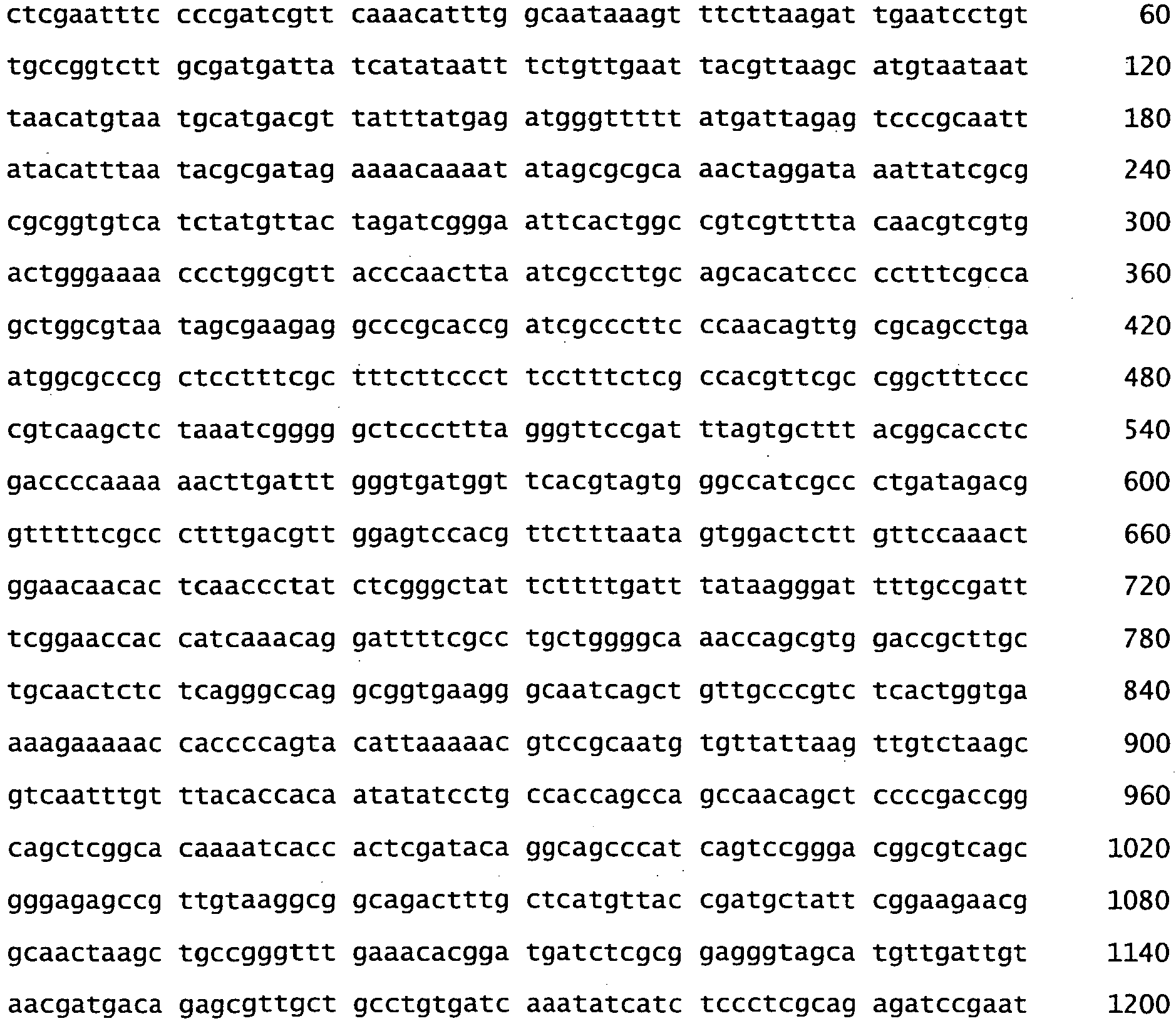


- <210> 2
<211> 2915
<212> DNA
<213> Artificial - <220>
<223> sequence of synthetic sTRV2 - <400> 2



- <210> 3
<211> 235
<212> DNA
<213> Pea early browning virus - <400> 3

- <210> 4
<211> 28
<212> DNA
<213> Artificial - <220>
<223> PCR Primer - <400> 4
cctgaattca atatcgtgtt taaagacg 28 - <210> 5
<211> 34
<212> DNA
<213> Artificial - <220>
<223> PCR Primer - <400> 5
ataattctag agggggactg tttctggtgg catg 34 - <210> 6
<211> 42
<212> DNA
<213> Artificial - <220>
<223> PCR Primer - <400> 6
cgttttgggt aactagaggt aagtacattt ccataacgtt cc 42 - <210> 7
<211> 42
<212> DNA
<213> Artificial - <220>
<223> PCR Primer - <400> 7
aatgaatcct tttctcacct gtcaaaattg atataaaaaa ta 42 - <210> 8
<211> 43
<212> DNA
<213> Artificial - <220>
<223> PCR Primer - <400> 8
ttatatcaat tttgacaggt gagaaaagga ttcattcctg ttg 43 - <210> 9
<211> 27
<212> DNA
<213> Artificial - <220>
<223> PCR Primer - <400> 9
cctacatgta caaccctgat atgtatt 27 - <210> 10
<211> 30
<212> DNA
<213> Artificial - <220>
<223> PCR Primer - <400> 10
attatctaga aattgaaaga agaagtgagg 30 - <210> 11
<211> 30
<212> DNA
<213> Artificial - <220>
<223> PCR Primer - <400> 11
tattggatcc caggaagttc atctatgcat 30 - <210> 12
<211> 34
<212> DNA
<213> Artificial - <220>
<223> PCR Primer - <400> 12
ataattctag agggggactg tttctggtgg catg 34 - <210> 13
<211> 25
<212> DNA
<213> Artificial - <220>
<223> PCR Primer - <400> 13
ccgtaaggga tcccttcttg atacc 25 - <210> 14
<211> 34
<212> DNA
<213> Artificial - <220>
<223> PCR Primer - <400> 14
ataattctag agggggactg tttctggtgg catg 34 - <210> 15
<211> 25
<212> DNA
<213> Artificial - <220>
<223> PCR Primer - <400> 15
ccgtaaggga tcccttcttg atacc 25 - <210> 16
<211> 604
<212> DNA
<213> Gossypium sp. - <400> 16
taga 604

- <210> 17
<211> 1489
<212> DNA
<213> Gossypium herbaceum - <400> 17

- <210> 18
<211> 353
<212> PRT
<213> Gossypium herbaceum - <400> 18



- <210> 19
<211> 367
<212> PRT
<213> Arabidopsis thaliana - <400> 19

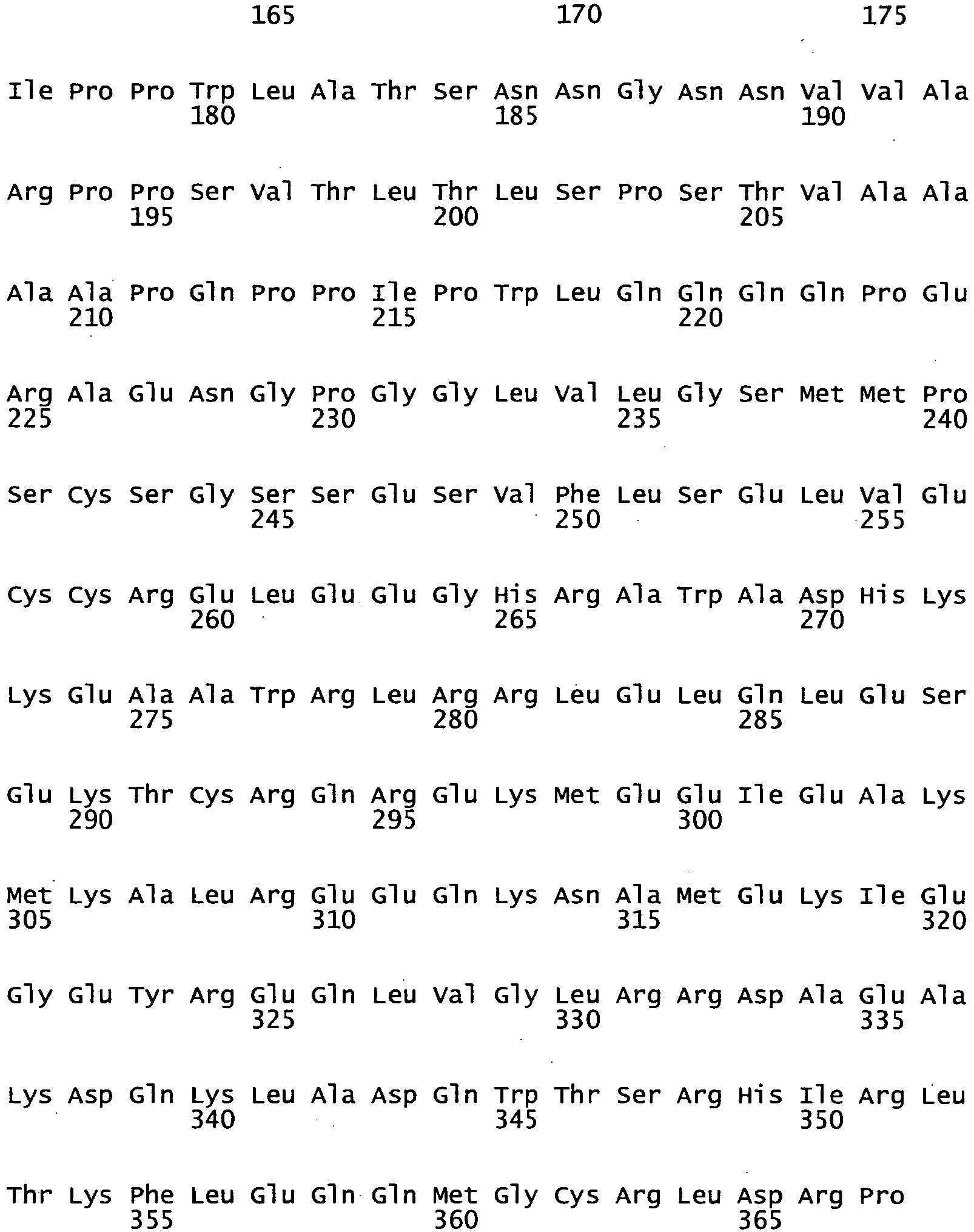
- <210> 20
<211> 363
<212> PRT
<213> Nicotiana tabacum - <400> 20


- <210> 21
<211> 404
<212> PRT
<213> Selaginella kraussiana - <400> 21


- <210> 22
<211> 349
<212> PRT
<213> Artificial - <220>
<223> Consensus sequence of SINs 18-21 - <400> 22


- <210> 23
<211> 2329
<212> DNA
<213> Gossypium herbaceum - <220>
<221> CDS
<222> (1)..(2328) - <400> 23


- <210> 24
<211> 776
<212> PRT
<213> Gossypium herbaceum - <400> 24
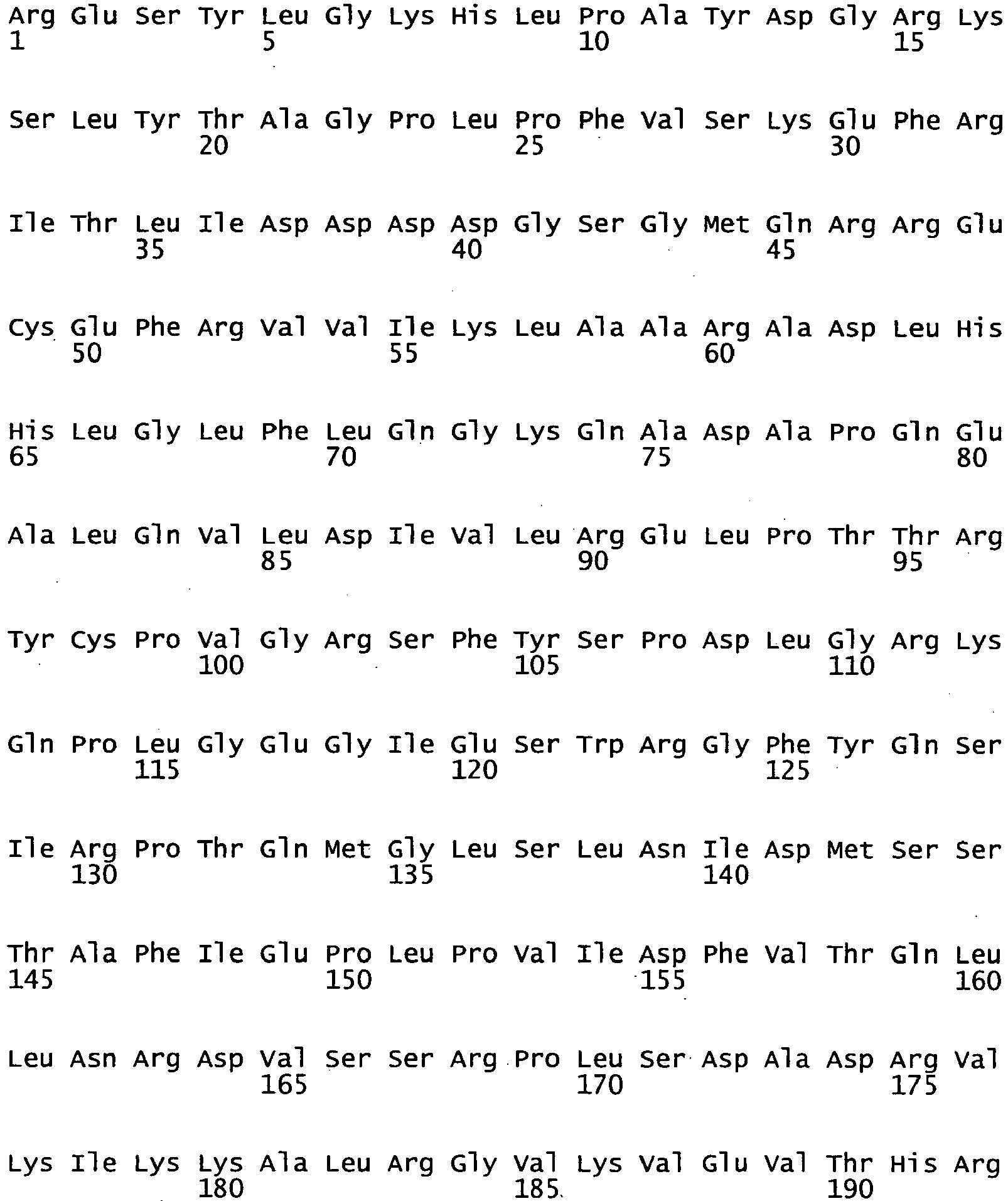


- <210> 25
<211> 33
<212> DNA
<213> Gossypium hirsutum - <400> 25
ttataggtac catggctagc aaaggagaag aac 33 - <210> 26
<211> 35
<212> DNA
<213> Gossypium hirsutum - <400> 26
cctaagagct cttaatccat gccatgtgta atccc 35 - <210> 27
<211> 162
<212> DNA
<213> Arabidopsis thaliana - <400> 27

- <210> 28
<211> 30
<212> DNA
<213> Gossypium hirsutum - <400> 28
atattctaga agaagaacta tgagttgcct 30 - <210> 29
<211> 30
<212> DNA
<213> Gossypium hirsutum - <400> 29
atgggatccc gtagagatcc ttcctgatat 30 - <210> 30
<211> 26
<212> DNA
<213> Gossypium hirsutum - <400> 30
gatgttgtgc ccaaggatgt taatgc 26 - <210> 31
<211> 26
<212> DNA
<213> Gossypium hirsutum - <400> 31
atgagatcaa acttgtggtc aatgcg 26 - <210> 32
<211> 30
<212> DNA
<213> Gossypium hirsutum - <400> 32
atattctaga agaagaacta tgagttgcct 30 - <210> 33
<211> 30
<212> DNA
<213> Gossypium hirsutum - <400> 33
atgggatccc gtagagatcc ttcctgatat 30 - <210> 34
<211> 30
<212> DNA
<213> Gossypium hirsutum - <400> 34
tatctgtgga ttcttatggg gtatgtgtgt 30 - <210> 35
<211> 30
<212> DNA
<213> Gossypium hirsutum - <400> 35
agaccttcta acttgataac caaatctttg 30 - <210> 36
<211> 30
<212> DNA
<213> Gossypium hirsutum - <400> 36
tgaatcctca agtggctgcc attattgagg 30 - <210> 37
<211> 30
<212> DNA
<213> Gossypium hirsutum - <400> 37
gcatgtaccc ttgggaagca tataatgtta 30 - <210> 38
<211> 30
<212> DNA
<213> Gossypium hirsutum - <400> 38
gcagttggag gaggttatgt gtaatgttca 30 - <210> 39
<211> 30
<212> DNA
<213> Gossypium hirsutum - <400> 39
tccgattgat gttgtcgaaa tccaacgtcg 30 - <210> 40
<211> 30
<212> DNA
<213> Gossypium hirsutum - <400> 40
tcatttcagc tgagaaggct taccatgagc 30 - <210> 41
<211> 30
<212> DNA
<213> Gossypium hirsutum - <400> 41
tggtagttga taccgcactt gaatccagta 30 - <210> 42
<211> 26
<212> DNA
<213> Gossypium hirsutum - <400> 42
atgatgtgcg cggctgatcc tcgtca 26 - <210> 43
<211> 26
<212> DNA
<213> Gossypium hirsutum - <400> 43
catctcttgt atcgatgtcg agttcc 26 - <210> 44
<211> 26
<212> DNA
<213> Gossypium hirsutum - <400> 44
tgctgatgga tatagtttag tcgtga 26 - <210> 45
<211> 26
<212> DNA
<213> Gossypium hirsutum - <400> 45
acaactttct aagtagcaga aagaag 26 - <210> 46
<211> 30
<212> DNA
<213> Gossypium hirsutum - <400> 46
gtggtcgaaa attgcacaac acttgcctgg 30 - <210> 47
<211> 30
<212> DNA
<213> Gossypium hirsutum - <400> 47
gcttatgttg ctgatacgat cattgtaggt 30 - <210> 48
<211> 30
<212> DNA
<213> Gossypium hirsutum - <400> 48
agatggataa attacttaag accagatatc 30 - <210> 49
<211> 30
<212> DNA
<213> Gossypium hirsutum - <400> 49
atctaccagc tatcagtgac cacctaacac 30 - <210> 50
<211> 26
<212> DNA
<213> Gossypium hirsutum - <400> 50
gatgttgtgc ccaaggatgt taatgc 26 - <210> 51
<211> 26
<212> DNA
<213> Gossypium hirsutum - <400> 51
atgagatcaa acttgtggtc aatgcg 26 - <210> 52
<211> 24
<212> DNA
<213> Gossypium hirsutum - <400> 52
ctgaatcttc gctttcacgt tatc 24 - <210> 53
<211> 23
<212> DNA
<213> Gossypium hirsutum - <400> 53
gggatgcaaa tcttcgtgaaaac 23 - <210> 54
<211> 37
<212> DNA
<213> Gossypium hirsutum - <400> 54
aaatatctag aggtgctact gaagataggg tctgtgg 37 - <210> 55
<211> 26
<212> DNA
<213> Gossypium hirsutum - <400> 55
gactccaaag gatccttgcg aagacg 26 - <210> 56
<211> 35
<212> DNA
<213> Gossypium hirsutum - <400> 56
ttatttctag agcacgagct tcctttgtat ctgcc 35 - <210> 57
<211> 37
<212> DNA
<213> Gossypium hirsutum - <400> 57
tcctaggatc caatattggt gtatgacctg catccgc 37 - <210> 58
<211> 32
<212> DNA
<213> Gossypium hirsutum - <400> 58
aataatctag aagagaagta tgccaacgac ca 32 - <210> 59
<211> 33
<212> DNA
<213> Gossypium hirsutum - <400> 59
gctatggatc cggagggaac agtggaggtt cgg 33 - <210> 60
<211> 34
<212> DNA
<213> Gossypium hirsutum - <400> 60
aataatctag acttgtaaca ctacaagagt tggg 34 - <210> 61
<211> 33
<212> DNA
<213> Gossypium hirsutum - <400> 61
gagctggatc cgggctcggc atacgtcttc cac 33 - <210> 62
<211> 35
<212> DNA
<213> Gossypium hirsutum - <400> 62
aataatctag acactcatca accatatcca gtacc 35 - <210> 63
<211> 35
<212> DNA
<213> Gossypium hirsutum - <400> 63
gtcctggatc cacaattccc aacactagtc ctcgg 35 - <210> 64
<211> 32
<212> DNA
<213> Gossypium hirsutum - <400> 64
atggcggatc ctgttggaaa ttcgctagct gg 32 - <210> 65
<211> 35
<212> DNA
<213> Gossypium hirsutum - <400> 65
gtcctggatc catactcagg catccataga ggaag 35 - <210> 66
<211> 18
<212> DNA
<213> Gossypium hirsutum - <400> 66
aaggcagagc aagagaag 18 - <210> 67
<211> 18
<212> DNA
<213> Gossypium hirsutum - <400> 67
tctattagtg acaatatc 18 - <210> 68
<211> 18
<212> DNA
<213> Gossypium hirsutum - <400> 68
tttgtatctg cccaaccc 18 - <210> 69
<211> 18
<212> DNA
<213> Gossypium hirsutum - <400> 69
tattggtgta tgacctgc 18 - <210> 70
<211> 18
<212> DNA
<213> Gossypium hirsutum - <400> 70
gtgggtgacc gctaaatg 18 - <210> 71
<211> 18
<212> DNA
<213> Gossypium hirsutum - <400> 71
ggctcacaga aaactgcc 18 - <210> 72
<211> 18
<212> DNA
<213> Gossypium hirsutum - <400> 72
tgcagtgctg tcaatacc 18 - <210> 73
<211> 19
<212> DNA
<213> Gossypium hirsutum - <400> 73
ctctgaggaa atgatcaac 19 - <210> 74
<211> 22
<212> DNA
<213> Gossypium hirsutum - <400> 74
cgactccgcc ttagctgctg ac 22 - <210> 75
<211> 21
<212> DNA
<213> Gossypium hirsutum - <400> 75
gaactgatcc aagccaaccg g 21 - <210> 76
<211> 653
<212> DNA
<213> Gossypium hirsutum - <400> 76


- <210> 77
<211> 479
<212> DNA
<213> Gossypium hirsutum - <400> 77

- <210> 78
<211> 663
<212> DNA
<213> Gossypium hirsutum - <400> 78
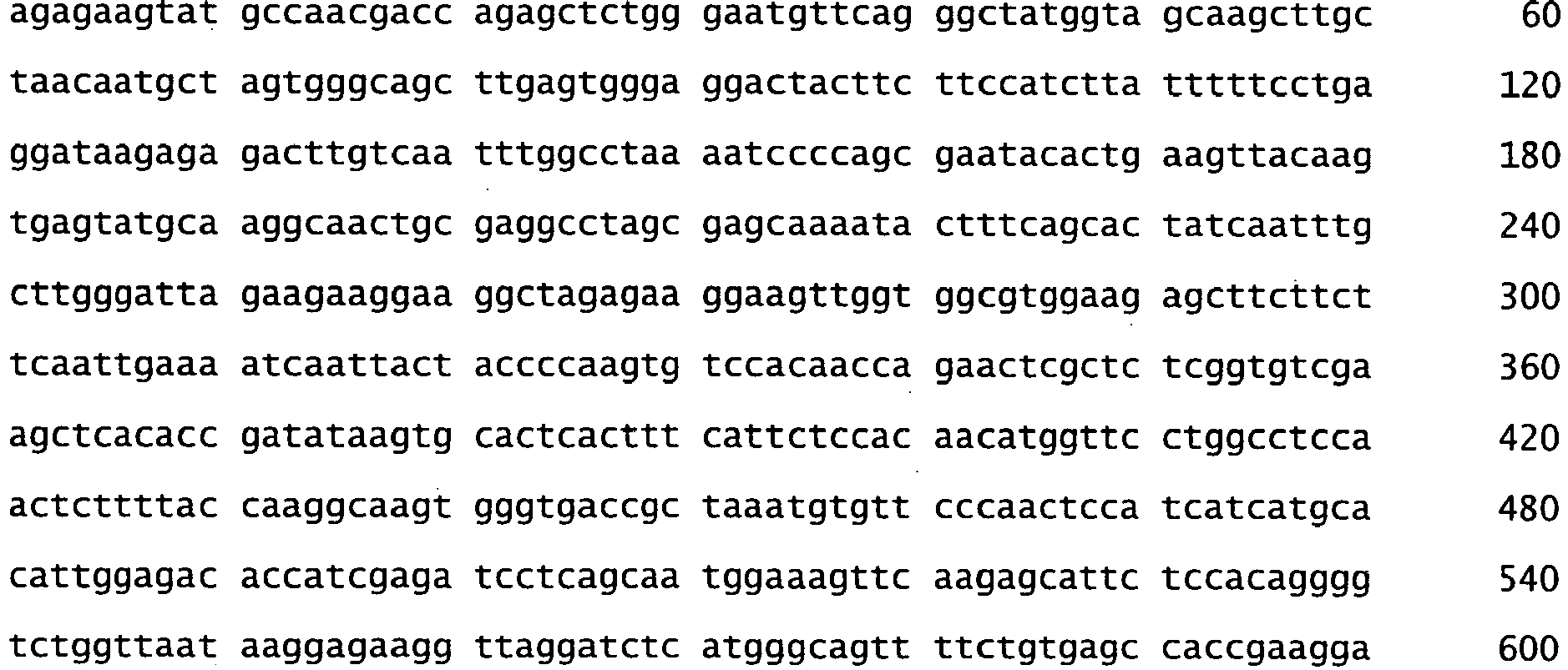

- <210> 79
<211> 595
<212> DNA
<213> Gossypium hirsutum - <400> 79

- <210> 80
<211> 621
<212> DNA
<213> Gossypium hirsutum - <400> 80

- <210> 81
<211> 675
<212> DNA
<213> Gossypium hirsutum - <400> 81


- <210> 82
<211> 9696
<212> DNA
<213> Artificial Sequence - <220>
<223> sequence of synthetic psTRV2001 vector - <220>
<221> misc_feature
<222> (6785)..(9696)
<223> sequence of synthetic sTRV2 - <400> 82


Claims (20)
- A method of virus-induced gene silencing (VIGS) in cotton comprising:(a) inserting a nucleic acid comprising a first silencing sequence capable of silencing a first desired gene into a vector comprising a tobacco rattle virus (TRV) RNA2 sequence, wherein the nucleic acid is inserted into the TRV RNA2 sequence to produce a vector comprising a modified TRV RNA2 sequence, wherein the first silencing sequence is selected from the group consisting of a partial sequence of the first desired gene, a sense strand of the first desired gene, an antisense strand of the first desired gene, an shRNA, a precursor miRNA or an miRNA;(b) preparing a mixed culture of Agrobacterium comprising Agrobacterium containing a vector comprising a modified TRV RNA1 sequence and Agrobacterium containing the vector comprising the modified TRV RNA2 vector, wherein the modified TRV RNA1 sequence is a TRV RNA1 sequence into which an intron has been inserted wherein the insertion is within positions 10919-10922 in the psTRV1001 sequence of SEQ ID NO:1;(c) introducing the mixed culture of Agrobacterium into plant tissue of cotton to produce infected plant tissue; and(d) growing the infected plant tissue for a sufficient time to produce systemic TRV infection in the infected plants and to thereby induce gene silencing of the first desired gene.
- A method of analyzing gene function in cotton comprising:(a) inserting a nucleic acid comprising a first silencing sequence capable of silencing a first candidate gene the function of which is to be analyzed into a vector comprising a tobacco rattle virus (TRV) RNA2 sequence, wherein the nucleic acid is inserted into the TRV RNA2 sequence to produce a vector comprising a modified TRV RNA2 sequence, wherein the first silencing sequence is selected from the group consisting of a partial sequence of the first candidate gene, a sense strand of the first candidate gene, an antisense strand of the first candidate gene, an shRNA, a precursor miRNA or an miRNA;(b) preparing a mixed culture of Agrobacterium comprising Agrobacterium containing a vector comprising a modified TRV RNA1 sequence and Agrobacterium containing the vector comprising the modified TRV RNA2 sequence, wherein the modified TRV RNA1 sequence is a TRV RNA1 sequence into which an intron has been inserted wherein the insertion is within positions 10919-10922 in the psTRV1001 sequence of SEQ ID NO:1;(c) introducing the mixed culture of Agrobacterium into plant tissue of cotton to produce infected plant tissue;(d) growing the infected plant tissue for a sufficient time to produce systemic TRV infection in the infected plants and to thereby induce gene silencing of the first candidate gene; and(e) analyzing the phenotypic effect of the first silenced candidate gene on the infected plant tissue.
- The method of claim 1 or 2, wherein the first silencing sequence is a sequence of a sense strand of the first desired gene.
- The method of claim 1 or 2, wherein the first silencing sequence is a sequence of an antisense strand of the first desired gene.
- The method of claim 1 or 2, wherein the first silencing sequence encodes a short hairpin RNA (shRNA) or a precursor microRNA (miRNA).
- The method of claim 1 or 2, wherein the nucleic acid further comprises a second silencing sequence capable of silencing a second desired or candidate gene, wherein the second silencing sequence is selected from the group consisting of a partial sequence of the second desired or candidate gene, a sense strand of the second desired or candidate gene, an antisense strand of the second desired or candidate gene, an shRNA, a precursor miRNA or an miRNA.
- The method of claim 1 or 2, wherein the nucleic acid comprises multiple silencing sequences capable of silencing multiple desired or candidate genes, wherein each silencing sequence is selected from the group consisting of a partial sequence of the desired or candidate gene, a sense strand of the desired or candidate gene, an antisense strand of the desired or candidate gene, an shRNA, a precursor miRNA or an miRNA.
- The method of claim 1 or 2, wherein the desired gene or candidate gene is a candidate transcription factor gene.
- The method of claim 1 or 2, wherein the desired gene or candidate gene is a candidate gene in smRNA biosynthesis.
- The method of claim 1 or 2, wherein the desired gene is selected from the group consisting of (a) a candidate gene in a proanthocyanidin or anthocyanidin biosynthetic pathway, (b) a candidate gene in cotton fiber development, (c) a candidate gene in a chlorophyll or arotenoid biosynthetic pathway and (d) a candidate gene in a flavonoid biosynthetic pathway.
- The method of claim 10, wherein the candidate gene in cotton fiber development is a candidate gene in cotton fiber initiation, elongation, secondary wall deposition, maturation or seed development.
- The method of claim 1 or 2, wherein the cotton tissue is a cotton plant, a cotton seedling, a cotton ovule or cotton fiber.
- The method of claim 1 or 2, wherein the cotton is a diploid variety, a tetraploid variety, a variety of an intra-species cross or a variety of an interspecies cross.
- A method for transiently expressing a nucleic acid comprising a sequence of interest in cotton plant tissue comprising:(a) inserting a nucleic acid comprising a first sequence of interest to be expressed in a cotton plant into a transient expression vector comprising a tobacco rattle virus (TRV) RNA2 sequence and at least one copy of a strong subgenomic promoter, wherein the nucleic acid is inserted into the TRV RNA2 sequence to produce a transient expression vector comprising a modified TRV RNA2 sequence, wherein the nucleic acid is operably linked to the subgenomic promoter, and wherein the subgenomic promoter is a strong non-TRV Tobravirus subgenomic promoter;(b) preparing a mixed culture of Agrobacterium comprising Agrobacterium containing a vector comprising a modified TRV RNA1 sequence and Agrobacterium containing the transient expression vector comprising the modified TRV RNA2 sequence, wherein the modified TRV RNA1 sequence is a TRV RNA1 sequence into which an intron has been inserted wherein the insertion is within positions 10919-10922 in the psTRV1001 sequence of SEQ ID NO:1;(c) introducing the mixed culture of Agrobacterium into plant tissue of cotton; and(d) growing the infected plant tissue for a sufficient time to transiently express the desired gene.
- The method of claim 14, wherein the nucleic acid comprises two or more sequences of interest to be expressed in a cotton plant.
- The method of claim 14, wherein two or more nucleic acids are inserted into the transient expression vector in the TRV RNA2 sequence, wherein each nucleic acid comprises a sequence of interest to be expressed in a cotton plant and wherein each nucleic acid of interest is operably linked to a separate copy of the subgenomic promoter.
- The method of claim 14, wherein the cotton tissue is a cotton plant, a cotton seedling, a cotton ovule or cotton fiber.
- A modified TRV RNA1 vector comprising a TRV RNA1 sequence into which an intron has been inserted wherein the insertion is within positions 10919-10922 in the psTRV1001 sequence of SEQ ID NO:1.
- The use of a mixed culture of Agrobacterium in virus-induced gene silencing (VIGS) in cotton or in analyzing gene function in cotton comprising Agrobacterium containing a vector comprising a modified TRV RNA1 sequence and Agrobacterium containing a vector comprising a modified TRV RNA2 sequence, wherein the modified TRV RNA1 sequence is a TRV RNA1 sequence into which an intron has been inserted, wherein the insertion is within positions 10919-10922 in the psTRV1001 sequence of SEQ ID NO:1, wherein the modified TRV RNA2 sequence is a TRV RNA2 sequence into which a nucleic acid has been inserted, wherein the nucleic acid comprises a silencing sequence capable of silencing a desired gene or a candidate gene, wherein the silencing sequence is selected from the group consisting of a partial sequence of the desired gene or the candidate gene, a sense strand of the desired gene or the candidate gene, an antisense strand of the desired gene or candidate gene, an shRNA, a precursor miRNA or an miRNA.
- The use of a mixed culture of Agrobacterium in transiently expressing a nucleic acid comprising a sequence of interest in cotton plant tissue comprising Agrobacterium containing a vector comprising a modified TRV RNA1 sequence and Agrobacterium containing a transient expression vector, wherein the modified TRV RNA1 sequence is a TRV RNA1 sequence into which an intron has been inserted wherein the insertion is within positions 10919-10922 in the psTRV1001 sequence of SEQ ID NO:1, wherein the transient expression vector comprises a tobacco rattle virus (TRV) RNA2 sequence, at least one copy of a strong subgenomic promoter and at least one nucleic acid comprising a sequence of interest, wherein the nucleic acid is inserted into the TRV RNA2 sequence to produce a transient expression vector comprising a modified TRV RNA2 sequence, wherein the nucleic acid is operably linked to the subgenomic promoter, and wherein the subgenomic promoter is a strong non-TRV Tobravirus subgenomic promoter.
Applications Claiming Priority (2)
| Application Number | Priority Date | Filing Date | Title |
|---|---|---|---|
| US18563109P | 2009-06-10 | 2009-06-10 | |
| PCT/SG2010/000220 WO2010144058A1 (en) | 2009-06-10 | 2010-06-10 | Virus induced gene silencing (vigs) for functional analysis of genes in cotton. |
Publications (3)
| Publication Number | Publication Date |
|---|---|
| EP2440666A1 EP2440666A1 (en) | 2012-04-18 |
| EP2440666A4 EP2440666A4 (en) | 2013-02-20 |
| EP2440666B1 true EP2440666B1 (en) | 2017-03-01 |
Family
ID=43309117
Family Applications (1)
| Application Number | Title | Priority Date | Filing Date |
|---|---|---|---|
| EP10786471.2A Not-in-force EP2440666B1 (en) | 2009-06-10 | 2010-06-10 | Virus induced gene silencing (vigs) for functional analysis of genes in cotton |
Country Status (5)
| Country | Link |
|---|---|
| US (1) | US8853493B2 (en) |
| EP (1) | EP2440666B1 (en) |
| CN (2) | CN102803496A (en) |
| AU (1) | AU2010259295B2 (en) |
| WO (1) | WO2010144058A1 (en) |
Families Citing this family (39)
| Publication number | Priority date | Publication date | Assignee | Title |
|---|---|---|---|---|
| EP2839007B1 (en) * | 2012-04-19 | 2017-12-27 | Temasek Life Sciences Laboratory Limited | Methods for increasing cotton fiber length |
| CN104388463B (en) * | 2014-10-30 | 2017-09-26 | 中国农业大学 | The gene silencing system of cucumber mosaic virus induction and its application |
| CN104388443B (en) * | 2014-11-19 | 2017-05-03 | 上海市农业科学院 | Strawberry auxin synthetic rate-limiting enzyme gene FaYUC11 and application |
| CN104928314B (en) * | 2015-06-02 | 2017-09-22 | 石河子大学 | Verticillium dahliae pathogen-relatedprotein VdpdaA1 purposes |
| CN104894156B (en) * | 2015-06-02 | 2018-01-02 | 石河子大学 | Verticillium dahliae conidium yield GAP-associated protein GAP VdpdaA3 purposes |
| CN105647966B (en) * | 2016-03-17 | 2019-05-28 | 山东棉花研究中心 | One kind being inoculated with TRV Gene Silencing method by receptor of cotton immature embryos |
| CN109477093B (en) * | 2016-07-21 | 2022-08-26 | 石原产业株式会社 | Peptide effective in controlling geminivirus disease and method of using the same |
| CN107541518B (en) * | 2017-09-06 | 2020-07-03 | 中国烟草总公司郑州烟草研究院 | Cotton GhAS1 gene, GhAS1 protein, recombinant vector, recombinant bacterium and application thereof |
| CN107653253B (en) * | 2017-11-28 | 2021-02-19 | 云南省烟草农业科学研究院 | NtMADS2 gene for regulating and controlling tobacco flowering period and cloning method and application thereof |
| CN108395473B (en) * | 2018-02-13 | 2020-03-27 | 中国农业科学院生物技术研究所 | Plant carotenoid synthesis related protein and coding gene and application thereof |
| CN109897864A (en) * | 2018-11-28 | 2019-06-18 | 云南省农业科学院花卉研究所 | A kind of fast method of Chinese rose floral base because of silencing |
| CN110172473B (en) * | 2019-05-17 | 2023-02-24 | 郑州大学 | A Cotton Early Gene Silencing Method Si-VIGS |
| CN110373419B (en) * | 2019-08-28 | 2022-02-11 | 中国农业科学院棉花研究所 | Application of cotton GhMADS44-A03 gene in promoting plant flowering |
| CN110684797B (en) * | 2019-11-06 | 2023-05-26 | 中国热带农业科学院热带生物技术研究所 | TCV-based VIGS vector for simultaneous silencing of two endogenous genes |
| CN111944842A (en) * | 2020-08-24 | 2020-11-17 | 华中农业大学 | A method for constructing a library of upland cotton insect resistance-related gene editing mutants |
| CN112795589B (en) * | 2020-12-31 | 2023-10-24 | 河南农业大学 | A non-GMO mixed infection method to inhibit the blackening of tobacco leaves during baking and its application |
| CN114107374B (en) * | 2021-11-19 | 2024-04-05 | 广东省林业科学研究院 | Construction method and application of iridaceae plant red onion VIGS silencing system |
| CN114230651B (en) * | 2021-12-30 | 2023-11-17 | 中国热带农业科学院热带作物品种资源研究所 | Method for instantaneously changing color of dendrobium by using DhMYB2 gene |
| CN114369614B (en) * | 2022-02-25 | 2025-02-11 | 江苏省中国科学院植物研究所 | A VIGS silencing vector and silencing system of Lycoris radiata LcCLA gene and its construction method and application |
| CN114561401B (en) * | 2022-03-09 | 2023-08-04 | 中国农业科学院棉花研究所 | Upland cotton GhEXO2 and its application in regulating plant architecture |
| CN114540372B (en) * | 2022-03-09 | 2023-08-08 | 中国农业科学院棉花研究所 | Upland cotton GhLTP17-A and application thereof in aspect of regulating and controlling fiber development |
| CN114941009B (en) * | 2022-05-25 | 2023-05-02 | 贵州大学 | VIGS method for researching gene functions of tea trees |
| CN115948413B (en) * | 2022-08-10 | 2025-03-21 | 九圣禾种业股份有限公司 | Cotton transcription factor encoding gene GhDOF5.4 and its acquisition method and application |
| CN116042700B (en) * | 2022-10-20 | 2025-03-14 | 青岛农业大学 | Method for identifying function of dormancy-relieving related gene in peony buds and application of gene PsmiR b |
| CN116064646B (en) * | 2022-10-27 | 2025-10-10 | 河北农业大学 | A VIGS silencing vector for the jujube ZjCLA gene and its application |
| CN116064613B (en) * | 2022-11-24 | 2025-05-09 | 浙江大学 | A cotton chilling injury-related natural antisense transcript gene CAN1 and its application |
| CN116004712B (en) * | 2022-12-01 | 2025-04-29 | 郑州大学 | Application of RH2 gene in regulating cotton leaf expansion/shrinkage traits |
| CN116334131B (en) * | 2023-03-22 | 2026-04-10 | 浙江大学 | Methods for constructing homologous silencing systems for bud dormancy genes in peony-like plants |
| CN117327730A (en) * | 2023-10-12 | 2024-01-02 | 河北农业大学 | A VIGS method applied to cotton seedlings |
| CN117363634B (en) * | 2023-10-24 | 2024-05-24 | 河北省农林科学院棉花研究所(河北省农林科学院特种经济作物研究所) | Gene cluster GhAPs related to cotton fiber length and application thereof |
| CN117126962B (en) * | 2023-10-26 | 2024-02-02 | 中国农业科学院生物技术研究所 | Cotton leaf wrinkling control gene GhZY, linkage SNP locus and application thereof |
| CN117535343A (en) * | 2023-11-16 | 2024-02-09 | 武汉市农业科学院 | Method for rapidly, efficiently and stably verifying functions of capsicum gene and application |
| CN117363644B (en) * | 2023-12-07 | 2024-02-09 | 三亚中国农业科学院国家南繁研究院 | VIGS silencing efficiency reporting plasmid, methods and applications for evaluating silencing efficiency |
| CN118581147B (en) * | 2024-08-06 | 2024-11-29 | 河南大学三亚研究院 | Application of ANT gene in regulating the formation of pigment glands in cotton leaves |
| CN118703458B (en) * | 2024-08-30 | 2025-02-07 | 江西农业大学 | Taro CePDS gene and its VIGS virus vector and silencing method |
| CN118813693B (en) * | 2024-09-20 | 2024-11-19 | 三亚中国农业科学院国家南繁研究院 | Application of upland cotton GhLRP1 gene in regulation and control of plant dwarf |
| CN119464371B (en) * | 2024-11-21 | 2025-12-19 | 中国农业科学院蔬菜花卉研究所 | A method for virus-induced gene silencing in hydrangea. |
| CN119876256B (en) * | 2025-02-21 | 2025-11-21 | 石河子大学 | Method for regulating and controlling verticillium wilt resistance of plants by using gene silencing technology |
| CN121109431B (en) * | 2025-04-23 | 2026-05-01 | 中国科学院昆明植物研究所 | China rose skin thorn regulation gene and application thereof |
Family Cites Families (43)
| Publication number | Priority date | Publication date | Assignee | Title |
|---|---|---|---|---|
| US5380831A (en) | 1986-04-04 | 1995-01-10 | Mycogen Plant Science, Inc. | Synthetic insecticidal crystal protein gene |
| US5569597A (en) | 1985-05-13 | 1996-10-29 | Ciba Geigy Corp. | Methods of inserting viral DNA into plant material |
| US5268463A (en) | 1986-11-11 | 1993-12-07 | Jefferson Richard A | Plant promoter α-glucuronidase gene construct |
| US5608142A (en) | 1986-12-03 | 1997-03-04 | Agracetus, Inc. | Insecticidal cotton plants |
| ES2187497T3 (en) | 1990-04-12 | 2003-06-16 | Syngenta Participations Ag | PROMOTERS PREFERREDLY IN FABRICS. |
| US5498830A (en) | 1990-06-18 | 1996-03-12 | Monsanto Company | Decreased oil content in plant seeds |
| US5399680A (en) | 1991-05-22 | 1995-03-21 | The Salk Institute For Biological Studies | Rice chitinase promoter |
| JPH06510187A (en) | 1991-08-27 | 1994-11-17 | ノバルティス アクチエンゲゼルシャフト | Proteins with insecticidal properties against homopterous insects and their use in plant protection |
| TW261517B (en) | 1991-11-29 | 1995-11-01 | Mitsubishi Shozi Kk | |
| US5608144A (en) | 1994-08-12 | 1997-03-04 | Dna Plant Technology Corp. | Plant group 2 promoters and uses thereof |
| US5659026A (en) | 1995-03-24 | 1997-08-19 | Pioneer Hi-Bred International | ALS3 promoter |
| US6072050A (en) | 1996-06-11 | 2000-06-06 | Pioneer Hi-Bred International, Inc. | Synthetic promoters |
| JP3646510B2 (en) | 1998-03-18 | 2005-05-11 | セイコーエプソン株式会社 | Thin film forming method, display device, and color filter |
| WO2000070069A1 (en) | 1999-05-13 | 2000-11-23 | Monsanto Technology Llc | Acquired resistance genes in plants |
| US6972349B1 (en) | 1999-11-12 | 2005-12-06 | University Of South Carolina | Control of post-transcriptional gene silencing in plants |
| US6369296B1 (en) * | 2000-02-01 | 2002-04-09 | Plant Bioscience Limited | Recombinant plant viral vectors |
| US8202979B2 (en) | 2002-02-20 | 2012-06-19 | Sirna Therapeutics, Inc. | RNA interference mediated inhibition of gene expression using chemically modified short interfering nucleic acid |
| US6575814B1 (en) | 2000-08-21 | 2003-06-10 | Bausch & Lomb Incorporated | Dry polishing of intraocular lenses |
| CN102212534A (en) | 2000-10-30 | 2011-10-12 | 弗迪亚股份有限公司 | Novel glyphosate N-acetyltransferase (GAT) genes |
| CN100523215C (en) | 2000-12-01 | 2009-08-05 | 马普科技促进协会 | Small RNA molecules mediating RNA interference |
| CA2451765A1 (en) | 2001-06-05 | 2002-12-12 | Karen K. Oishi | Gene expression and production of tgf-b proteins including bioactive mullerian inhibiting substance from plants |
| AU2003222018A1 (en) * | 2002-03-14 | 2003-09-29 | Yale University | Tobacco rattle virus vectors and related compositions and methods |
| AU2003261449A1 (en) | 2002-08-07 | 2004-02-25 | Compositions for rna interference and methods of use thereof | |
| EP1583832B1 (en) | 2003-01-17 | 2010-12-01 | Max-Planck-Gesellschaft zur Förderung der Wissenschaften e.V. | Inducible small interfering rna (sirna) expression constructs for targeted gene silencing |
| US20060218669A1 (en) | 2003-02-11 | 2006-09-28 | Lokesh Joshi | Sialylation of glycoproteins in plants |
| CA2528012C (en) | 2003-06-02 | 2015-11-24 | University Of Massachusetts | Methods and compositions for controlling efficacy of rna silencing |
| US7750144B2 (en) | 2003-06-02 | 2010-07-06 | University Of Massachusetts | Methods and compositions for enhancing the efficacy and specificity of RNA silencing |
| WO2005030967A2 (en) | 2003-09-25 | 2005-04-07 | Pioneer Hi-Bred International, Inc. | Crop plant cystatin proteinase inhibitors and methods of use |
| WO2005035769A2 (en) | 2003-10-09 | 2005-04-21 | E. I. Du Pont De Nemours And Company | Gene silencing by using micro-rna molecules |
| CA2559955C (en) | 2004-03-15 | 2016-02-16 | City Of Hope | Methods and compositions for the specific inhibition of gene expression by double-stranded rna |
| US20070265220A1 (en) | 2004-03-15 | 2007-11-15 | City Of Hope | Methods and compositions for the specific inhibition of gene expression by double-stranded RNA |
| US7476780B2 (en) * | 2004-04-16 | 2009-01-13 | The Samuel Roberts Noble Foundation | Root agroinoculation method for virus induced gene silencing |
| US7301069B2 (en) | 2004-06-30 | 2007-11-27 | Pioneer Hi-Bred International, Inc. | Methods of protecting plants from pathogenic fungi and nematodes |
| AU2005295948A1 (en) | 2004-10-12 | 2006-04-27 | The Rockefeller University | MicroRNAs |
| US20060200878A1 (en) | 2004-12-21 | 2006-09-07 | Linda Lutfiyya | Recombinant DNA constructs and methods for controlling gene expression |
| US20070154896A1 (en) | 2005-02-11 | 2007-07-05 | International Business Machines Corporation | System and method for identification of MicroRNA target sites and corresponding targeting MicroRNA sequences |
| WO2006138638A1 (en) | 2005-06-17 | 2006-12-28 | Pioneer Hi-Bred International, Inc. | Methods and compositions for gene silencing |
| US7973218B2 (en) | 2005-08-24 | 2011-07-05 | Pioneer Hi-Bred International, Inc. | Methods and compositions for controlling weeds |
| EP1951263A4 (en) | 2005-11-21 | 2009-11-18 | Johnson & Johnson Res Pty Ltd | Multitargeting interfering rnas having two active strands and methods for their design and use |
| US20070143880A1 (en) | 2005-12-16 | 2007-06-21 | Pioneer Hi-Bred International, Inc. | Methods for Introducing Into a Plant a Polynucleotide of Interest |
| US20070259827A1 (en) | 2006-01-25 | 2007-11-08 | University Of Massachusetts | Compositions and methods for enhancing discriminatory RNA interference |
| US8252526B2 (en) | 2006-11-09 | 2012-08-28 | Gradalis, Inc. | ShRNA molecules and methods of use thereof |
| US20080313773A1 (en) | 2007-05-14 | 2008-12-18 | The Rockefeller University | Production of artificial micrornas using synthetic microrna precursors |
-
2010
- 2010-06-10 WO PCT/SG2010/000220 patent/WO2010144058A1/en not_active Ceased
- 2010-06-10 AU AU2010259295A patent/AU2010259295B2/en not_active Ceased
- 2010-06-10 CN CN2010800354468A patent/CN102803496A/en active Pending
- 2010-06-10 EP EP10786471.2A patent/EP2440666B1/en not_active Not-in-force
- 2010-06-10 US US13/376,902 patent/US8853493B2/en active Active
- 2010-06-10 CN CN201710025640.1A patent/CN107129998A/en active Pending
Non-Patent Citations (1)
| Title |
|---|
| None * |
Also Published As
| Publication number | Publication date |
|---|---|
| US8853493B2 (en) | 2014-10-07 |
| CN102803496A (en) | 2012-11-28 |
| AU2010259295B2 (en) | 2015-05-07 |
| EP2440666A1 (en) | 2012-04-18 |
| CN107129998A (en) | 2017-09-05 |
| US20120096595A1 (en) | 2012-04-19 |
| EP2440666A4 (en) | 2013-02-20 |
| WO2010144058A1 (en) | 2010-12-16 |
| AU2010259295A1 (en) | 2012-02-02 |
| WO2010144058A8 (en) | 2011-03-31 |
Similar Documents
| Publication | Publication Date | Title |
|---|---|---|
| US8853493B2 (en) | Virus induced gene silencing (VIGS) for functional analysis of genes in cotton | |
| Liang et al. | Auxin regulates sucrose transport to repress petal abscission in rose (Rosa hybrida) | |
| Oh et al. | NaJAZh regulates a subset of defense responses against herbivores and spontaneous leaf necrosis in Nicotiana attenuata plants | |
| US9074217B2 (en) | Methods of increasing plant growth | |
| Kondhare et al. | A historical overview of long-distance signalling in plants | |
| Sah et al. | Genetic transformation of rice: problems, progress and prospects | |
| Fan et al. | Integrated multi‐omics analysis uncovers roles of mdm‐miR164b‐MdORE1 in strigolactone‐mediated inhibition of adventitious root formation in apple | |
| Tian et al. | Tobacco rattle virus mediated gene silencing in strawberry plants | |
| CN115991753A (en) | Application of soybean C2H2 type zinc finger protein transcription factor GmZFP7 and/or its gene in regulating isoflavones | |
| Xie et al. | Virus-induced gene silencing in the perennial woody Paeonia ostii | |
| Wang et al. | Functional characterization of WRKY46 in grape and its putative role in the interaction between grape and phylloxera (Daktulosphaira vitifoliae) | |
| KR102674979B1 (en) | CaPRR2 gene and Method for improving the resistance to the drought or salt stress using CaPRR2 in plants | |
| WO2016200336A1 (en) | Regulation of secondary metabolite production in plants | |
| Hendelman et al. | The developmental outcomes of P0-mediated ARGONAUTE destabilization in tomato | |
| Urso et al. | An Agrobacterium tumefaciens-mediated gene silencing system for functional analysis in grapevine | |
| Raji et al. | Multiple fungal diseases resistance induction in Cucumis melo through co-transformation of different pathogenesis related (PR) protein genes | |
| Li et al. | SlPP2C2 interacts with FZY/SAUR and regulates tomato development via signaling crosstalk of ABA and auxin | |
| Cheng et al. | Investigation of petal senescence by TRV-mediated virus-induced gene silencing in rose | |
| Pandey et al. | RNA-directed RNA polymerase3 from Nicotiana attenuata is required for competitive growth in natural environments | |
| US20110265223A1 (en) | Functional analysis of jatropha curcas genes | |
| Zhang et al. | Gibberellin acid 4 and 7 increase indole-3-acetic acid production and induce cell division via PbCRF4-mediated activation of PbYUCCA6 expression in ‘Dangshansu’pear | |
| Tzean et al. | Engineering plant resistance to tomato yellow leaf curl Thailand virus using a phloem-specific promoter expressing hairpin RNA | |
| Yang et al. | CsLOX facilitates glandular trichome development and increases jasmonate in cucumber (Cucumis sativus L.) | |
| KR102145531B1 (en) | Composition for increasing sink strength of sink tissues comprising expression or activity inhibitor of JULGI protein | |
| Kwon | Mitochondrial porin isoform AtVDAC1 regulates the competence of Arabidopsis thaliana to Agrobacterium-mediated genetic transformation |
Legal Events
| Date | Code | Title | Description |
|---|---|---|---|
| PUAI | Public reference made under article 153(3) epc to a published international application that has entered the european phase |
Free format text: ORIGINAL CODE: 0009012 |
|
| 17P | Request for examination filed |
Effective date: 20120105 |
|
| AK | Designated contracting states |
Kind code of ref document: A1 Designated state(s): AL AT BE BG CH CY CZ DE DK EE ES FI FR GB GR HR HU IE IS IT LI LT LU LV MC MK MT NL NO PL PT RO SE SI SK SM TR |
|
| DAX | Request for extension of the european patent (deleted) | ||
| RIC1 | Information provided on ipc code assigned before grant |
Ipc: C12N 15/83 20060101AFI20121221BHEP Ipc: C12N 15/82 20060101ALI20121221BHEP |
|
| A4 | Supplementary search report drawn up and despatched |
Effective date: 20130122 |
|
| RIC1 | Information provided on ipc code assigned before grant |
Ipc: C12N 15/83 20060101AFI20130115BHEP Ipc: C12N 15/82 20060101ALI20130115BHEP |
|
| 17Q | First examination report despatched |
Effective date: 20131010 |
|
| GRAP | Despatch of communication of intention to grant a patent |
Free format text: ORIGINAL CODE: EPIDOSNIGR1 |
|
| INTG | Intention to grant announced |
Effective date: 20160906 |
|
| GRAS | Grant fee paid |
Free format text: ORIGINAL CODE: EPIDOSNIGR3 |
|
| GRAA | (expected) grant |
Free format text: ORIGINAL CODE: 0009210 |
|
| AK | Designated contracting states |
Kind code of ref document: B1 Designated state(s): AL AT BE BG CH CY CZ DE DK EE ES FI FR GB GR HR HU IE IS IT LI LT LU LV MC MK MT NL NO PL PT RO SE SI SK SM TR |
|
| REG | Reference to a national code |
Ref country code: GB Ref legal event code: FG4D |
|
| REG | Reference to a national code |
Ref country code: CH Ref legal event code: EP Ref country code: AT Ref legal event code: REF Ref document number: 871397 Country of ref document: AT Kind code of ref document: T Effective date: 20170315 |
|
| REG | Reference to a national code |
Ref country code: IE Ref legal event code: FG4D |
|
| REG | Reference to a national code |
Ref country code: DE Ref legal event code: R096 Ref document number: 602010040430 Country of ref document: DE |
|
| REG | Reference to a national code |
Ref country code: FR Ref legal event code: PLFP Year of fee payment: 8 |
|
| REG | Reference to a national code |
Ref country code: NL Ref legal event code: MP Effective date: 20170301 |
|
| REG | Reference to a national code |
Ref country code: LT Ref legal event code: MG4D |
|
| REG | Reference to a national code |
Ref country code: AT Ref legal event code: MK05 Ref document number: 871397 Country of ref document: AT Kind code of ref document: T Effective date: 20170301 |
|
| PG25 | Lapsed in a contracting state [announced via postgrant information from national office to epo] |
Ref country code: FI Free format text: LAPSE BECAUSE OF FAILURE TO SUBMIT A TRANSLATION OF THE DESCRIPTION OR TO PAY THE FEE WITHIN THE PRESCRIBED TIME-LIMIT Effective date: 20170301 Ref country code: LT Free format text: LAPSE BECAUSE OF FAILURE TO SUBMIT A TRANSLATION OF THE DESCRIPTION OR TO PAY THE FEE WITHIN THE PRESCRIBED TIME-LIMIT Effective date: 20170301 Ref country code: GR Free format text: LAPSE BECAUSE OF FAILURE TO SUBMIT A TRANSLATION OF THE DESCRIPTION OR TO PAY THE FEE WITHIN THE PRESCRIBED TIME-LIMIT Effective date: 20170602 Ref country code: NO Free format text: LAPSE BECAUSE OF FAILURE TO SUBMIT A TRANSLATION OF THE DESCRIPTION OR TO PAY THE FEE WITHIN THE PRESCRIBED TIME-LIMIT Effective date: 20170601 Ref country code: HR Free format text: LAPSE BECAUSE OF FAILURE TO SUBMIT A TRANSLATION OF THE DESCRIPTION OR TO PAY THE FEE WITHIN THE PRESCRIBED TIME-LIMIT Effective date: 20170301 |
|
| PG25 | Lapsed in a contracting state [announced via postgrant information from national office to epo] |
Ref country code: AT Free format text: LAPSE BECAUSE OF FAILURE TO SUBMIT A TRANSLATION OF THE DESCRIPTION OR TO PAY THE FEE WITHIN THE PRESCRIBED TIME-LIMIT Effective date: 20170301 Ref country code: LV Free format text: LAPSE BECAUSE OF FAILURE TO SUBMIT A TRANSLATION OF THE DESCRIPTION OR TO PAY THE FEE WITHIN THE PRESCRIBED TIME-LIMIT Effective date: 20170301 Ref country code: BG Free format text: LAPSE BECAUSE OF FAILURE TO SUBMIT A TRANSLATION OF THE DESCRIPTION OR TO PAY THE FEE WITHIN THE PRESCRIBED TIME-LIMIT Effective date: 20170601 Ref country code: SE Free format text: LAPSE BECAUSE OF FAILURE TO SUBMIT A TRANSLATION OF THE DESCRIPTION OR TO PAY THE FEE WITHIN THE PRESCRIBED TIME-LIMIT Effective date: 20170301 Ref country code: ES Free format text: LAPSE BECAUSE OF FAILURE TO SUBMIT A TRANSLATION OF THE DESCRIPTION OR TO PAY THE FEE WITHIN THE PRESCRIBED TIME-LIMIT Effective date: 20170301 |
|
| PG25 | Lapsed in a contracting state [announced via postgrant information from national office to epo] |
Ref country code: NL Free format text: LAPSE BECAUSE OF FAILURE TO SUBMIT A TRANSLATION OF THE DESCRIPTION OR TO PAY THE FEE WITHIN THE PRESCRIBED TIME-LIMIT Effective date: 20170301 |
|
| PG25 | Lapsed in a contracting state [announced via postgrant information from national office to epo] |
Ref country code: RO Free format text: LAPSE BECAUSE OF FAILURE TO SUBMIT A TRANSLATION OF THE DESCRIPTION OR TO PAY THE FEE WITHIN THE PRESCRIBED TIME-LIMIT Effective date: 20170301 Ref country code: IT Free format text: LAPSE BECAUSE OF FAILURE TO SUBMIT A TRANSLATION OF THE DESCRIPTION OR TO PAY THE FEE WITHIN THE PRESCRIBED TIME-LIMIT Effective date: 20170301 Ref country code: CZ Free format text: LAPSE BECAUSE OF FAILURE TO SUBMIT A TRANSLATION OF THE DESCRIPTION OR TO PAY THE FEE WITHIN THE PRESCRIBED TIME-LIMIT Effective date: 20170301 Ref country code: EE Free format text: LAPSE BECAUSE OF FAILURE TO SUBMIT A TRANSLATION OF THE DESCRIPTION OR TO PAY THE FEE WITHIN THE PRESCRIBED TIME-LIMIT Effective date: 20170301 Ref country code: SK Free format text: LAPSE BECAUSE OF FAILURE TO SUBMIT A TRANSLATION OF THE DESCRIPTION OR TO PAY THE FEE WITHIN THE PRESCRIBED TIME-LIMIT Effective date: 20170301 |
|
| PG25 | Lapsed in a contracting state [announced via postgrant information from national office to epo] |
Ref country code: IS Free format text: LAPSE BECAUSE OF FAILURE TO SUBMIT A TRANSLATION OF THE DESCRIPTION OR TO PAY THE FEE WITHIN THE PRESCRIBED TIME-LIMIT Effective date: 20170701 Ref country code: SM Free format text: LAPSE BECAUSE OF FAILURE TO SUBMIT A TRANSLATION OF THE DESCRIPTION OR TO PAY THE FEE WITHIN THE PRESCRIBED TIME-LIMIT Effective date: 20170301 Ref country code: PT Free format text: LAPSE BECAUSE OF FAILURE TO SUBMIT A TRANSLATION OF THE DESCRIPTION OR TO PAY THE FEE WITHIN THE PRESCRIBED TIME-LIMIT Effective date: 20170703 Ref country code: PL Free format text: LAPSE BECAUSE OF FAILURE TO SUBMIT A TRANSLATION OF THE DESCRIPTION OR TO PAY THE FEE WITHIN THE PRESCRIBED TIME-LIMIT Effective date: 20170301 |
|
| REG | Reference to a national code |
Ref country code: DE Ref legal event code: R097 Ref document number: 602010040430 Country of ref document: DE |
|
| PLBE | No opposition filed within time limit |
Free format text: ORIGINAL CODE: 0009261 |
|
| STAA | Information on the status of an ep patent application or granted ep patent |
Free format text: STATUS: NO OPPOSITION FILED WITHIN TIME LIMIT |
|
| PG25 | Lapsed in a contracting state [announced via postgrant information from national office to epo] |
Ref country code: MC Free format text: LAPSE BECAUSE OF FAILURE TO SUBMIT A TRANSLATION OF THE DESCRIPTION OR TO PAY THE FEE WITHIN THE PRESCRIBED TIME-LIMIT Effective date: 20170301 Ref country code: DK Free format text: LAPSE BECAUSE OF FAILURE TO SUBMIT A TRANSLATION OF THE DESCRIPTION OR TO PAY THE FEE WITHIN THE PRESCRIBED TIME-LIMIT Effective date: 20170301 |
|
| REG | Reference to a national code |
Ref country code: CH Ref legal event code: PL |
|
| 26N | No opposition filed |
Effective date: 20171204 |
|
| GBPC | Gb: european patent ceased through non-payment of renewal fee |
Effective date: 20170610 |
|
| PG25 | Lapsed in a contracting state [announced via postgrant information from national office to epo] |
Ref country code: SI Free format text: LAPSE BECAUSE OF FAILURE TO SUBMIT A TRANSLATION OF THE DESCRIPTION OR TO PAY THE FEE WITHIN THE PRESCRIBED TIME-LIMIT Effective date: 20170301 |
|
| REG | Reference to a national code |
Ref country code: IE Ref legal event code: MM4A |
|
| PG25 | Lapsed in a contracting state [announced via postgrant information from national office to epo] |
Ref country code: IE Free format text: LAPSE BECAUSE OF NON-PAYMENT OF DUE FEES Effective date: 20170610 Ref country code: LU Free format text: LAPSE BECAUSE OF NON-PAYMENT OF DUE FEES Effective date: 20170610 Ref country code: LI Free format text: LAPSE BECAUSE OF NON-PAYMENT OF DUE FEES Effective date: 20170630 Ref country code: GB Free format text: LAPSE BECAUSE OF NON-PAYMENT OF DUE FEES Effective date: 20170610 Ref country code: CH Free format text: LAPSE BECAUSE OF NON-PAYMENT OF DUE FEES Effective date: 20170630 |
|
| REG | Reference to a national code |
Ref country code: BE Ref legal event code: MM Effective date: 20170630 |
|
| REG | Reference to a national code |
Ref country code: FR Ref legal event code: PLFP Year of fee payment: 9 |
|
| PG25 | Lapsed in a contracting state [announced via postgrant information from national office to epo] |
Ref country code: BE Free format text: LAPSE BECAUSE OF NON-PAYMENT OF DUE FEES Effective date: 20170630 |
|
| PG25 | Lapsed in a contracting state [announced via postgrant information from national office to epo] |
Ref country code: MT Free format text: LAPSE BECAUSE OF NON-PAYMENT OF DUE FEES Effective date: 20170610 |
|
| PG25 | Lapsed in a contracting state [announced via postgrant information from national office to epo] |
Ref country code: HU Free format text: LAPSE BECAUSE OF FAILURE TO SUBMIT A TRANSLATION OF THE DESCRIPTION OR TO PAY THE FEE WITHIN THE PRESCRIBED TIME-LIMIT; INVALID AB INITIO Effective date: 20100610 |
|
| PG25 | Lapsed in a contracting state [announced via postgrant information from national office to epo] |
Ref country code: CY Free format text: LAPSE BECAUSE OF NON-PAYMENT OF DUE FEES Effective date: 20170301 |
|
| PG25 | Lapsed in a contracting state [announced via postgrant information from national office to epo] |
Ref country code: MK Free format text: LAPSE BECAUSE OF FAILURE TO SUBMIT A TRANSLATION OF THE DESCRIPTION OR TO PAY THE FEE WITHIN THE PRESCRIBED TIME-LIMIT Effective date: 20170301 |
|
| PG25 | Lapsed in a contracting state [announced via postgrant information from national office to epo] |
Ref country code: TR Free format text: LAPSE BECAUSE OF FAILURE TO SUBMIT A TRANSLATION OF THE DESCRIPTION OR TO PAY THE FEE WITHIN THE PRESCRIBED TIME-LIMIT Effective date: 20170301 |
|
| PG25 | Lapsed in a contracting state [announced via postgrant information from national office to epo] |
Ref country code: AL Free format text: LAPSE BECAUSE OF FAILURE TO SUBMIT A TRANSLATION OF THE DESCRIPTION OR TO PAY THE FEE WITHIN THE PRESCRIBED TIME-LIMIT Effective date: 20170301 |
|
| PGFP | Annual fee paid to national office [announced via postgrant information from national office to epo] |
Ref country code: DE Payment date: 20220621 Year of fee payment: 13 |
|
| PGFP | Annual fee paid to national office [announced via postgrant information from national office to epo] |
Ref country code: FR Payment date: 20220623 Year of fee payment: 13 |
|
| P01 | Opt-out of the competence of the unified patent court (upc) registered |
Effective date: 20230321 |
|
| REG | Reference to a national code |
Ref country code: DE Ref legal event code: R119 Ref document number: 602010040430 Country of ref document: DE |
|
| PG25 | Lapsed in a contracting state [announced via postgrant information from national office to epo] |
Ref country code: DE Free format text: LAPSE BECAUSE OF NON-PAYMENT OF DUE FEES Effective date: 20240103 |
|
| PG25 | Lapsed in a contracting state [announced via postgrant information from national office to epo] |
Ref country code: FR Free format text: LAPSE BECAUSE OF NON-PAYMENT OF DUE FEES Effective date: 20230630 |