EP2425672B1 - Steuerung von kommunikationsgeräten bei trägeransammlung (carrier aggregation) - Google Patents
Steuerung von kommunikationsgeräten bei trägeransammlung (carrier aggregation) Download PDFInfo
- Publication number
- EP2425672B1 EP2425672B1 EP10726327.9A EP10726327A EP2425672B1 EP 2425672 B1 EP2425672 B1 EP 2425672B1 EP 10726327 A EP10726327 A EP 10726327A EP 2425672 B1 EP2425672 B1 EP 2425672B1
- Authority
- EP
- European Patent Office
- Prior art keywords
- component carriers
- transceiver
- control
- base station
- operable
- Prior art date
- Legal status (The legal status is an assumption and is not a legal conclusion. Google has not performed a legal analysis and makes no representation as to the accuracy of the status listed.)
- Active
Links
Images



Classifications
-
- H—ELECTRICITY
- H04—ELECTRIC COMMUNICATION TECHNIQUE
- H04W—WIRELESS COMMUNICATION NETWORKS
- H04W72/00—Local resource management
- H04W72/12—Wireless traffic scheduling
- H04W72/121—Wireless traffic scheduling for groups of terminals or users
-
- H—ELECTRICITY
- H04—ELECTRIC COMMUNICATION TECHNIQUE
- H04L—TRANSMISSION OF DIGITAL INFORMATION, e.g. TELEGRAPHIC COMMUNICATION
- H04L5/00—Arrangements affording multiple use of the transmission path
- H04L5/0091—Signalling for the administration of the divided path, e.g. signalling of configuration information
- H04L5/0096—Indication of changes in allocation
- H04L5/0098—Signalling of the activation or deactivation of component carriers, subcarriers or frequency bands
-
- H—ELECTRICITY
- H04—ELECTRIC COMMUNICATION TECHNIQUE
- H04W—WIRELESS COMMUNICATION NETWORKS
- H04W74/00—Wireless channel access
- H04W74/04—Scheduled access
-
- H—ELECTRICITY
- H04—ELECTRIC COMMUNICATION TECHNIQUE
- H04L—TRANSMISSION OF DIGITAL INFORMATION, e.g. TELEGRAPHIC COMMUNICATION
- H04L5/00—Arrangements affording multiple use of the transmission path
- H04L5/0001—Arrangements for dividing the transmission path
- H04L5/0003—Two-dimensional division
- H04L5/0005—Time-frequency
- H04L5/0007—Time-frequency the frequencies being orthogonal, e.g. OFDM(A) or DMT
- H04L5/001—Time-frequency the frequencies being orthogonal, e.g. OFDM(A) or DMT the frequencies being arranged in component carriers
-
- H—ELECTRICITY
- H04—ELECTRIC COMMUNICATION TECHNIQUE
- H04L—TRANSMISSION OF DIGITAL INFORMATION, e.g. TELEGRAPHIC COMMUNICATION
- H04L5/00—Arrangements affording multiple use of the transmission path
- H04L5/0001—Arrangements for dividing the transmission path
- H04L5/0014—Three-dimensional division
- H04L5/0023—Time-frequency-space
-
- H—ELECTRICITY
- H04—ELECTRIC COMMUNICATION TECHNIQUE
- H04L—TRANSMISSION OF DIGITAL INFORMATION, e.g. TELEGRAPHIC COMMUNICATION
- H04L5/00—Arrangements affording multiple use of the transmission path
- H04L5/003—Arrangements for allocating sub-channels of the transmission path
- H04L5/0053—Allocation of signalling, i.e. of overhead other than pilot signals
-
- H—ELECTRICITY
- H04—ELECTRIC COMMUNICATION TECHNIQUE
- H04L—TRANSMISSION OF DIGITAL INFORMATION, e.g. TELEGRAPHIC COMMUNICATION
- H04L5/00—Arrangements affording multiple use of the transmission path
- H04L5/003—Arrangements for allocating sub-channels of the transmission path
- H04L5/0078—Timing of allocation
- H04L5/0087—Timing of allocation when data requirements change
-
- H—ELECTRICITY
- H04—ELECTRIC COMMUNICATION TECHNIQUE
- H04W—WIRELESS COMMUNICATION NETWORKS
- H04W48/00—Access restriction; Network selection; Access point selection
- H04W48/08—Access restriction or access information delivery, e.g. discovery data delivery
- H04W48/12—Access restriction or access information delivery, e.g. discovery data delivery using downlink control channel
-
- H—ELECTRICITY
- H04—ELECTRIC COMMUNICATION TECHNIQUE
- H04W—WIRELESS COMMUNICATION NETWORKS
- H04W68/00—User notification, e.g. alerting and paging, for incoming communication, change of service or the like
-
- H—ELECTRICITY
- H04—ELECTRIC COMMUNICATION TECHNIQUE
- H04W—WIRELESS COMMUNICATION NETWORKS
- H04W72/00—Local resource management
- H04W72/04—Wireless resource allocation
- H04W72/044—Wireless resource allocation based on the type of the allocated resource
- H04W72/0453—Resources in frequency domain, e.g. a carrier in FDMA
-
- H—ELECTRICITY
- H04—ELECTRIC COMMUNICATION TECHNIQUE
- H04W—WIRELESS COMMUNICATION NETWORKS
- H04W72/00—Local resource management
- H04W72/20—Control channels or signalling for resource management
- H04W72/23—Control channels or signalling for resource management in the downlink direction of a wireless link, i.e. towards a terminal
-
- H—ELECTRICITY
- H04—ELECTRIC COMMUNICATION TECHNIQUE
- H04W—WIRELESS COMMUNICATION NETWORKS
- H04W72/00—Local resource management
- H04W72/20—Control channels or signalling for resource management
- H04W72/23—Control channels or signalling for resource management in the downlink direction of a wireless link, i.e. towards a terminal
- H04W72/231—Control channels or signalling for resource management in the downlink direction of a wireless link, i.e. towards a terminal the control data signalling from the layers above the physical layer, e.g. RRC or MAC-CE signalling
-
- H—ELECTRICITY
- H04—ELECTRIC COMMUNICATION TECHNIQUE
- H04W—WIRELESS COMMUNICATION NETWORKS
- H04W72/00—Local resource management
- H04W72/30—Resource management for broadcast services
-
- H—ELECTRICITY
- H04—ELECTRIC COMMUNICATION TECHNIQUE
- H04W—WIRELESS COMMUNICATION NETWORKS
- H04W72/00—Local resource management
- H04W72/50—Allocation or scheduling criteria for wireless resources
- H04W72/53—Allocation or scheduling criteria for wireless resources based on regulatory allocation policies
-
- H—ELECTRICITY
- H04—ELECTRIC COMMUNICATION TECHNIQUE
- H04W—WIRELESS COMMUNICATION NETWORKS
- H04W76/00—Connection management
- H04W76/20—Manipulation of established connections
- H04W76/28—Discontinuous transmission [DTX]; Discontinuous reception [DRX]
-
- H—ELECTRICITY
- H04—ELECTRIC COMMUNICATION TECHNIQUE
- H04W—WIRELESS COMMUNICATION NETWORKS
- H04W88/00—Devices specially adapted for wireless communication networks, e.g. terminals, base stations or access point devices
- H04W88/02—Terminal devices
-
- H—ELECTRICITY
- H04—ELECTRIC COMMUNICATION TECHNIQUE
- H04W—WIRELESS COMMUNICATION NETWORKS
- H04W88/00—Devices specially adapted for wireless communication networks, e.g. terminals, base stations or access point devices
- H04W88/08—Access point devices
-
- H—ELECTRICITY
- H04—ELECTRIC COMMUNICATION TECHNIQUE
- H04W—WIRELESS COMMUNICATION NETWORKS
- H04W36/00—Hand-off or reselection arrangements
- H04W36/06—Reselecting a communication resource in the serving access point
-
- Y—GENERAL TAGGING OF NEW TECHNOLOGICAL DEVELOPMENTS; GENERAL TAGGING OF CROSS-SECTIONAL TECHNOLOGIES SPANNING OVER SEVERAL SECTIONS OF THE IPC; TECHNICAL SUBJECTS COVERED BY FORMER USPC CROSS-REFERENCE ART COLLECTIONS [XRACs] AND DIGESTS
- Y02—TECHNOLOGIES OR APPLICATIONS FOR MITIGATION OR ADAPTATION AGAINST CLIMATE CHANGE
- Y02D—CLIMATE CHANGE MITIGATION TECHNOLOGIES IN INFORMATION AND COMMUNICATION TECHNOLOGIES [ICT], I.E. INFORMATION AND COMMUNICATION TECHNOLOGIES AIMING AT THE REDUCTION OF THEIR OWN ENERGY USE
- Y02D30/00—Reducing energy consumption in communication networks
- Y02D30/70—Reducing energy consumption in communication networks in wireless communication networks
Definitions
- the present invention relates to communications devices, particularly but not exclusively devices operating according to the 3GPP standards or equivalents or derivatives thereof.
- the invention has particular but not exclusive relevance to the impacts of carrier aggregation that is to be used in LTE-Advanced as currently defined in 3GPP standards documentation TR 36.814.
- LTE Rel 8 a transmission band of 20MHz was defined.
- LTE-Advanced carrier aggregation will be used to support system bandwidths up to 100 MHz. This involves splitting the system bandwidth into five 20 MHz sub-bands, each centred on a respective component carrier. In order to be backwards compatible with LTE Rel 8 User Equipment (UEs), at least one of those sub-bands has to be LTE Rel 8 compliant.
- UEs User Equipment
- PDCCH Physical Downlink Control Channel
- RAN 1 Two different approaches, separate PDCCH for each carrier and common PDCCH for multiple carriers, are under consideration in RAN 1.
- One of these two methods will be agreed to be adopted for the LTE-Advanced System. Irrespective of this decision, at any given point in time the UE may not transmit or receive data on all the component carriers.
- the base station (referred to as the eNB in LTE documentation) should have the flexibility to schedule a UE on any of the component carriers it wishes and should be able to move the UE on to different component carriers as required.
- the UE on the other hand should know in advance which subset of the component carriers it should monitor and turn off its RF transceiver circuitry for the others. This would result in considerable power savings in the UE.
- 3GPP publication No. R2-092180 titled “RAN2 considerations for carrier aggregation” discloses further details of the impact of carrier aggregation on 3GPP RAN2. It is disclosed therein that there are two type of CA: contiguous CA and non-contiguous CA and that these different types of CA will form different deployment and that, in order to support CA with multiple layers with different coverage, efficient procedures and measurements are needed to manage usage of component carriers, management of an active carrier set, etc.
- 3GPP TS 36.321 V8.5.0 discloses the E-UTRA MAC protocol specifications.
- 3GPP publication No. R1-090359 titled “Multicarrier Control for LTE-Advanced" discusses the benefits of introducing multicarrier DL and UL assignments in LTE-Advanced.
- the multicarrier assignments are considered more suitable for multicarrier configuration as they can provide overhead reduction compared to single carrier assignments and possibly reduce the UE assignment monitoring to one carrier.
- 3GPP publication No. R1-090860 titled “Notion of Anchor Carrier in LTE-A" discusses the definition of anchor and non-anchor component carriers to reduce the overhead as the system information, synchronization and paging for a certain cell would be provided on anchor carriers only.
- EP2480037A1 discloses multiple downlink (DL) and uplink (UL) carriers for wireless communication between nodes and user equipment (UE) and, among the carriers, designated carriers to provide synchronization, system information, paging, data and control for multicarrier enabled UEs.
- DL downlink
- UL uplink
- 3GPP publication No R1-090628 titled “Downlink control structure for LTE-A2" discloses one transport block and one HARQ entity per scheduled component carrier, and a UE which may receive multiple component carriers simultaneously.
- 3GPP publication No Rl-091200 titled “Component carrier types and the corresponding characteristics" discloses that in LTE-Advanced, a cell may consist of multiple component carriers to extend its transmission/reception bandwidth to be larger than that of LTE Rel-8. A rough categorization and definition of the various types of CCs in such a system are discussed.
- the present invention provides a simple mechanism by which the eNB scheduler can switch the UE among the different component carriers.
- the present invention provides a base station comprising: a transceiver operable to transmit downlink data to a user equipment, UE, (3) and to receive uplink data from the UE using a plurality of component carriers; and a controller operable to control the transceiver to transmit broadcast and paging channels on a primary subset of said component carriers but not on another subset of the component carriers; and cause the transceiver to transmit control data to the UE instructing the UE to monitor one or more component carriers in the other subset of component carriers, wherein the control data comprises a MAC control element comprising a bitmap indication indicating that the UE should monitor one or more corresponding component carrier for which a bit is set to "1".
- the controller may also transmit DRX control data to the UE to cause the UE to switch off transceiver circuits for component carriers that it has not been instructed to monitor.
- the controller may transmit the control data within a MAC layer communication message as this is fast and relatively reliable compared with RRC layer signalling.
- the controller may receive a connection request from the UE on a component carrier belonging to the primary subset and in response transmits downlink data for the UE on a different component carrier. Before sending the downlink data, the controller would inform the remote user equipment, UE, of the component carriers it will use to carry the downlink data.
- the present invention also provides a UE comprising: a transceiver operable to transmit uplink data to a base station and to receive downlink data from the base station on a plurality of component carriers, wherein a primary subset of the component carriers include broadcast and paging channels; and a controller operable to: control the transceiver, during an idle mode, to cause the UE to camp on one or more of the component carriers in the primary subset; and control the transceiver to receive control data from the base station instructing the UE to monitor one or more component carriers in another subset of the component carriers, wherein the control data comprises a MAC control element comprising a bitmap indication indicating that the UE should monitor one or more corresponding component carriers for which a bit is set to "1" and wherein the controller is operable to control the transceiver to monitor the one or more component carriers in the other subset.
- a transceiver operable to transmit uplink data to a base station and to receive downlink data from the base station on a plurality
- the controller may control the transceiver to transmit a connection request on the component carrier on which the UE is camped and may control the receiver to receive downlink data from the base station on a different component carrier that the UE has been instructed to monitor.
- a communications device comprising: a transceiver operable to transmit downlink data to and to receive uplink data from a remote communications device using a subset of component carriers; and a controller operable to control the transceiver so that: i) during a first interval the communications device is operable to communicate with the remote communications device on a first subset of component carriers; ii) the communications device transmits control data to the remote communications device using the first subset of component carriers, the control data instructing the remote communications device to communicate with the communications device using a second subset of component carriers; and iii) during a second interval the communications device is operable to communicate with the remote communications device on the second subset of component carriers.
- a communications device comprising: a transceiver operable to transmit uplink data to and to receive downlink data from a remote communications device using a subset of component carriers; and a controller operable to: i) control the transceiver so that during a first interval the communications device is operable to communicate with the remote communications device on a first subset of component carriers; ii) receive control data from the remote communications device using the first subset of component carriers, the control data instructing the communications device to communicate with the remote communications device using a second subset of component carriers; and iii) control the transceiver so that during a second interval the communications device is operable to communicate with the remote communications device on the second subset of component carriers.
- the invention provides a computer program product according to claim 9.
- Figure 1 schematically illustrates a mobile (cellular) telecommunication system 1 in which users of mobile telephones (MT) 3-0, 3-1, and 3-2 can communicate with other users (not shown) via one of the base stations 5-1 or 5-2 and a telephone network 7.
- a number of uplink and downlink communications resources are available for the wireless link between the mobile telephones 3 and the base stations 5.
- the base stations 5 allocate downlink resources to each mobile telephone 3 depending on the amount of data to be sent to the mobile telephone 3.
- the base stations 5 allocate uplink resources to each mobile telephone 3 depending on the amount and type of data the mobile telephone 3 has to send to the base station 5.
- the system bandwidth is divided into five 20 MHz sub-bands, each being carried by a respective component carrier.
- the base station 5 is operable to allocated resources for each mobile telephone 3 on one or more of the component carriers, depending on the capability of the mobile telephone 3 concerned and the amount of data to be transmitted between the base station 5 and that mobile telephone 3.
- the mobile telephones 3 have transceiver circuitry that can receive and transmit signals on the different component carriers and when the mobile telephone 3 is not scheduled to use a particular component carrier, it can power down the corresponding transceiver circuitry to conserve battery power.
- An Orthogonal Frequency Division Multiple Access (OFDMA) technique is used for the downlink to allow the mobile telephones 3 to receive data over the air interface with the base station 5.
- OFDMA Orthogonal Frequency Division Multiple Access
- Different sub-carriers are allocated by the base station 5 (for a predetermined amount of time) to each mobile telephone 3 depending on the amount of data to be sent to the mobile telephone 3. These are referred to as physical resource blocks (PRBs) in the LTE specifications. PRBs thus have a time and frequency dimension.
- PRBs physical resource blocks
- the base station 5 dynamically allocates PRBs for each device that it is serving and signals the allocations for each sub-frame (TTI) to each of the scheduled mobile telephones 3 in a control channel.
- FIG. 2a illustrates a generic frame structure agreed for LTE Rel 8 communications over the air interface with the base station 5.
- one frame 13 is 10 msec long and comprises ten sub-frames 15 of 1 msec duration (known as a Transmission Time Interval (TTI)).
- TTI Transmission Time Interval
- Each sub-frame or TTI comprises two slots 17 of 0.5 msec duration.
- Each slot 17 comprises either six or seven OFDM symbols 19, depending on whether the normal or extended cyclic prefix (CP) is employed.
- the total number of available sub-carriers depends on the overall transmission bandwidth of the system.
- the LTE specifications define parameters for system bandwidths from 1.4 MHz to 20 MHz and one PRB is currently defined to comprise 12 consecutive subcarriers for one slot 17.
- a PRB over two slots is also defined by the LTE specifications as being the smallest element of resource allocation assigned by the base station scheduler. These sub-carriers are then modulated onto a component carrier to up-convert the signal to the desired transmission bandwidth.
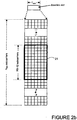
- the transmitted downlink signal thus comprises N BW subcarriers for a duration of N symb OFDM symbols. It can be represented by a resource grid as illustrated in Figure 2b . Each box in the grid represents a single sub-carrier for one symbol period and is referred to as a resource element.
- each PRB 21 is formed from 12 consecutive sub-carriers and (in this case) seven symbols for each subcarrier; although in practice the same allocations are made in the second slot 17 of each sub-frame 15 as well.
- the base station 5 transmits a PDCCH 23 (Physical Downlink Control Channel) over the first three symbols.
- the remaining symbols form the PDSCH 25 (Physical Downlink Shared CHannel) which is used to carry the downlink user data for the mobile telephones 3.
- the PDCCH channel includes, among other things, data for each of the mobile telephones 3, indicating if the mobile telephone 3 is scheduled for receiving downlink data in that sub-frame or is scheduled for uplink transmission in that sub-frame; and if so, data identifying the PRBs to be used for receiving the downlink data or for transmitting the uplink data.
- each of the sub-bands will at least be similar in structure to the LTE structure discussed above.
- the sub-carriers for each sub-band will be modulated onto a separate component carrier so that the transmitted sub-bands are contiguous or non-contiguous with each other. This is known as carrier aggregation and is schematically illustrated in Figure 3 for five sub-bands 25-1 to 25-5, each being 20 MHz wide, giving a total system bandwidth of 100 MHz.
- carrier aggregation is schematically illustrated in Figure 3 for five sub-bands 25-1 to 25-5, each being 20 MHz wide, giving a total system bandwidth of 100 MHz.
- the terms sub-band and component carrier will be used interchangeably.
- LTE-Advanced mobile telephones 3 will support bandwidths up to 100 MHz, they may not transmit/receive in the whole spectrum at any given time.
- the system is preferably arranged so that the mobile telephones 3 monitor one or a subset of the component carriers to start with; and then the base station scheduler, based on the activity of the mobile telephone 3, can direct the mobile telephone 3 to monitor a different (although perhaps overlapping) subset of the component carriers.
- sub-bands 25 are configured as LTE Rel 8 compatible, then full system information and paging would be broadcast on each component carrier. However the inventor considers this to be a waste of system resources. The inventor has realised that since all these component carriers belong to one cell (of base station 5) there is no real benefit in putting the paging and broadcast information in each of the component carriers (sub-bands 25). The inventor therefore proposes that only one or a subset of the component carriers in the cell should carry broadcast and paging information. In this exemplary embodiment, one component carrier (sub-band 25) carries this system information and it will be referred to as the anchor or primary carrier component.
- sub-band 25-3 is the anchor carrier component and it carries the broadcast and paging information for the cell.
- all mobile telephones 3 will camp on this anchor carrier component when in the Idle mode and will read the system and paging information from it.
- Release 8 mobile telephones 3 will only be scheduled on one of the anchor carrier components as they will have the same structure as defined for LTE Release 8.
- LTE-Advanced mobile telephone 3 since it will be camped on the anchor carrier component of the cell when Idle, the inventor proposes that such a mobile telephone 3 would initiate the RRC Connection Establishment Procedure on the anchor carrier component when it wants to make a connection (for example to make a call).
- the base station 5 can then instruct the mobile telephone 3 to move to one or more different component carriers at a suitable instance. This helps in balancing the load among the different component carriers within the cell and reduces battery consumption in the mobile telephone 3 as the mobile telephone only has to monitor a subset of the carrier components together with the anchor carrier component.
- the base station 5 can signal which of the component carriers the mobile telephone 3 should monitor and on which the mobile telephone 3 should transmit/receive data, by:
- IE Information Element
- PDCCH Signalling Signalling a mobile telephone 3 which component carrier it should monitor through PDCCH is the fastest technique. However, it is also the most unreliable (as no acknowledgement is sent by the mobile telephone 3 back to the base station 3 to acknowledge receipt of the information).
- PDCCH signalling can be achieved by signalling a special PDCCH format with a 5-bit bitmap indication for each mobile telephone 3 in sub-frame (n-1), indicating that the mobile telephone 3 should start listening to the component carriers for which the bit is set to "1" from sub-frame (n) onwards, until a further change is signalled.
- MAC Signalling Signalling each mobile telephone 3 which component carriers it should monitor through a MAC Control element is fast and fairly reliable. It could be achieved, for example, by having an IE in the DRX Command MAC Control Element, with a 5-bit bitmap indication for each mobile telephone 3, indicating that the mobile telephone 3 should start listening to the corresponding component carriers for which the bit is set to "1". The base station 5 can then assume that the mobile telephone 3 has applied the new configuration once it has received the acknowledgement that the mobile telephone 3 has received the DRX Command MAC Control Element.
- RRC Signalling RRC layer Signalling each mobile telephone 3 which component carriers it should monitor through an RRC message would be slow but very reliable. However, as the component carriers that a mobile telephone 3 may monitor might change frequently, RRC signaling is not preferred for this purpose.
- MAC Signalling is used for indicating to each mobile telephone 3 which component carriers it should monitor. As they will not monitor or transmit/receive data on the other component carriers, LTE-Advanced mobile telephones 3 can switch off their transceiver circuitry for the component carriers they will not monitor.
- each mobile telephone 3 can be configured to receive and/or transmit data in discontinuous time periods, the duration and frequency of which are controlled by the base station 5.
- This discontinuous reception/transmission is called DRX/DTX and allows the mobile telephone 3 to turn off its transceiver circuitry during the periods when it is not supposed to receive data from and/or transmit data to the base station 5, thereby reducing power consumption.
- the base station 5 defines the DRX pattern such that the mobile telephone 3 remains awake for the on-duration and monitors PDCCH and then goes to sleep. This concept is illustrated in Figure 4 .
- the mobile telephone 3 When the mobile telephone's activity increases, the mobile telephone 3 will start transmitting/receiving on an increased number of component carriers but the "On duration" would remain unchanged. If the mobile telephone 3 is already transmitting/receiving on on all the component carriers and if there is a further increase in activity, then the base station 5 can increase the On-duration defined for that mobile telephone 3.
- Alternative 2 Another alternative is to have one DRX configuration per component carrier (On Duration, DRX Cycle).
- the mobile telephone 3 would perform a Boolean "OR" of the DRX configurations for all the component carriers to determine the overall DRX pattern - defining when the mobile telephone 3 should be awake and asleep; and would use the individual DRX configurations to control the switching off of the transceiver circuitry for the non-monitored component carriers during the awake periods.
- battery savings in the mobile telephone 3 will be less with this alternative if the DRX cycles and the starting instances of the On Durations for the component carriers are not time aligned.
- a better way would be to have the same DRX cycle for all component carriers but with different On Durations. This would also work if the DRX cycle for one or more of the component carriers is an integer multiple of the DRX cycle of the other component carriers.
- FIG. 5 is a block diagram illustrating the main components of each of the base stations 5 shown in Figure 1 .
- each base station 5 includes transceiver circuit 31 which is operable to transmit signals to and to receive signals from the mobile telephones 3 via one or more antennas 33 and which is operable to transmit signals to and to receive signals from the telephone network 7 via a network interface 35.
- a controller 37 controls the operation of the transceiver circuit 31 in accordance with software stored in a memory 39.
- the software includes, among other things, an operating system 41 and a communications control module 43 having a resource allocation module 45 and a scheduler module 47.
- the communications control module 43 is operable to control the generation of the sub-frames in the different sub-bands 25 in which the uplink and downlink data is transmitted from/to the mobile telephones 3.
- the resource allocation module 45 is operable for allocating the resource blocks in the different sub-bands 25 to be used by the transceiver circuit 31 in its communications with each of the mobile telephones 3, depending on the amount of data to be transmitted between the base station 5 and the mobile telephones 3.
- the scheduler module 47 is operable to schedule the times for the transmission of the downlink data to the mobile telephones 3 and the times for the mobile telephone 3 to transmit its uplink data to the base station 5.
- the communications control module 43 is responsible for signalling, to each of the mobile telephones 3, data identifying which component carriers the mobile telephone should be monitoring when in the Idle mode; and for moving the mobile telephones 3 between the different component carriers when in RRC Connected mode; and for defining the DRX patterns used for controlling the times when the mobile telephones 3 can switch off its transceiver circuitry.
- FIG 6 is a block diagram illustrating the main components of each of the mobile telephones 3 shown in Figure 1 .
- the mobile telephones 3 include transceiver circuit 71 that is operable to transmit signals to and to receive signals from the base station 5 via one or more antennas 73.
- the mobile telephone 3 also includes a controller 75 which controls the operation of the mobile telephone 3 and which is connected to the transceiver circuit 71 and to a loudspeaker 77, a microphone 79, a display 81, and a keypad 83.
- the controller 75 operates in accordance with software instructions stored within a memory 85.
- these software instructions include, among other things, an operating system 87 and a communications control module 89 that includes a resource allocation module 91 and a transceiver control module 93.
- the communications control module 89 is operable to control communications with the base station 5 and during the Idle mode monitors the anchor component carrier 25-3.
- the resource allocation module is responsible for identifying the resources on which uplink should be transmitted and on which downlink data is to be received in the different sub-bands 25.
- the transceiver control module 93 is responsible for identifying the parts of the transceiver circuit 71 that can be switched off at the current instance using, for example, DRX configuration data received from the base station 5 or using knowledge of the sub-bands 25 that the mobile telephone 3 is to monitor.
- the base station 5 and the mobile telephones 3 are described for ease of understanding as having a number of discrete modules (such as the resource allocation modules, scheduler module, transceiver control module etc). Whilst these modules may be provided in this way for certain applications, for example where an existing system has been modified to implement the invention, in other applications, for example in systems designed with the inventive features in mind from the outset, these modules may be built into the overall operating system or code and so these modules may not be discernible as discrete entities.
- LTE-Advanced mobile telephones 3 have transceiver circuit 71 that can transmit and receive data on a number of different component carriers.
- Figure 7 is a block diagram illustrating suitable transceiver circuit 71 that may be used.
- the transceiver circuit 71 includes five up-converter/down-converter circuits 95-1 to 95-5, one for each of the five sub-bands 25, for modulating and demodulating the sub-carriers onto the corresponding component carrier (C1 to C5).
- the transceiver circuit 71 also includes five encoding/decoding circuits 97-1 to 97-5 for encoding and decoding the uplink data and downlink data respectively in each of the five sub-bands 25.
- the encoding/decoding circuits 97 receive the uplink data from, and pass the decoded downlink data to, the controller 75.
- the controller 75 also supplies individual power control signals (via the dashed signal lines) to the encoding/decoding circuits 97 and to the up-converter circuits 95, so that individual circuits can be powered down when not needed and so that they can all be powered down when none of the circuits are needed (for example when the mobile telephone 3 enters its sleep mode).
- the base stations and the mobile telephones can be considered as communications nodes or devices which communicate with each other.
- Other communications nodes or devices may include user devices such as, for example, personal digital assistants, laptop computers, web browsers, etc.
- the software modules may be provided in compiled or un-compiled form and may be supplied to the base station or to the mobile telephone as a signal over a computer network, or on a recording medium. Further, the functionality performed by part or all of this software may be performed using one or more dedicated hardware circuits. However, the use of software modules is preferred as it facilitates the updating of base station 5 and the mobile telephones 3 in order to update their functionalities. Similarly, although the above embodiments employed transceiver circuitry, at least some of the functionality of the transceiver circuitry can be performed by software.
- a new PDCCH structure is needed to address up to 100 MHz of aggregated system bandwidth.
- Two different approaches, separate PDCCH for each carrier and common PDCCH for multiple carriers, are under consideration in RAN 1.
- One of the methods will be agreed to be adopted for LTE Advance System. Irrespective of this decision, at any given point in time the UE may not transmit or receive data on all the component carriers.
- eNB scheduler should have the flexibility to schedule a UE in any of the component carrier it wishes and should be able to move it around. The UE on the other hand should know in advance which subset of the component carriers it should monitor and turn of the RF for the others. This would result in considerable power savings in UEs.
- LTE Advance system we would see Carrier aggregation, where two or more component carriers are aggregated in order to support wider transmission bandwidths e.g. up to 100MHz and for spectrum aggregation. These carrier aggregations could be contiguous or non-contiguous. Although LTE Advanced UEs will support 100 MHz BW however it may not transmit/receive in the whole spectrum at any given time. In order to enable the UE to save battery power it would be wise that the UE listens to only some of the component carriers to start with and then the eNB scheduler, based on the activity of the UE can direct it to monitor subset of component carriers.
- Proposal 2 There should be a mechanism available through which the UE should be moved around the different component carriers.
- Signalling of which component carriers the UE will monitor and transmit/receive the data on can be done by
- PDCCH Signalling Signalling the UE which component carrier it should monitor through PDCCH is the fastest although it is unreliable.
- MAC Signalling Signalling the UE which component carrier it should monitor through MAC Control element is fast and fairly reliable. We could have an IE in the DRX Command MAC Control Element with 5 bits bitmap indication to the UE that it should start listening to the component carriers for which the bit is set to 1. eNB will assume that the UE has applied the new configuration after it has received the acknowledgement from the UE.
- RRC Signalling RRC layer Signalling the UE which component carrier it should monitor through in a RRC message would be slow and although very reliable. As the component carriers a UE may monitor may change frequently RRC signaling may not be a suited for this purpose.
- Proposal 3 MAC Signalling be used to indicate to the UE which carrier component it should monitor
- Proposal 4 UE could be configured to monitor the Anchor Carrier and a subset of the carriers.
- Rel 8 we have a DRX defined such that the UE remains awake for the on-duration and monitors PDCCH and then goes to sleep. This concept is shown in Figure 4 .
- the UE When the UE activity increases, the UE will start transmitting/receiving on the increased number of component carriers but the On duration would remain unchanged. If UE is already transmitting/ receiving on on all the component carriers and if there is a further increase in the activity, the on-duration will be increased.
- Alternative 2 Another general alternative is to have the one DRX configuration per component carrier (On Duration, DRX Cycle) and the UE "ORs" the DRX configuration per component carrier to determine other the overall DRX pattern.
- battery savings in the UE will be less in case DRX Cycles and the starting instance of the On Duration of the comnponent carriers are not aligned.
- a better way would be to have the same DRX cycle on all component carrier with a different on duration.
- DRX cycle in one component carrier could be a integral multiple of DRX cycle on the other component carrier.
Landscapes
- Engineering & Computer Science (AREA)
- Signal Processing (AREA)
- Computer Networks & Wireless Communication (AREA)
- Computer Security & Cryptography (AREA)
- Mobile Radio Communication Systems (AREA)
Claims (9)
- Basisstation, die aufweist:einen Transceiver (31), der betriebsfähig ist, um unter Verwendung mehrerer Komponententräger Downlink-Daten an ein Benutzergerät (3) zu übertragen und von diesem zu empfangen; undeine Steuerung (37), die betriebsfähig ist, um:den Transceiver (31) zu steuern, um Rundfunk- und Funkrufkanäle auf einem primären Teilsatz der Komponententräger, aber nicht auf einem anderen Teilsatz der Komponententräger zu übertragen; undzu bewirken, dass der Transceiver (31) Steuerdaten an das UE überträgt, die das UE anweisen, einen oder mehrere Komponententräger in dem anderen Teilsatz von Komponententrägern zu überwachen,wobei die Steuerdaten ein MAC-Steuerelement aufweisen, das eine Bitmapanzeige aufweist, die anzeigt, dass das UE einen oder mehrere entsprechende Komponententräger, für die ein Bit auf "1" gesetzt ist, überwachen sollte.
- Basisstation nach Anspruch 1, wobei die Steuerung (37) betriebsfähig ist, um den Transceiver (31) zu steuern, um DRX-Steuerdaten an das UE zu übertragen, um zu bewirken, dass das UE Transceiverschaltungen für Komponententräger, die es nicht überwacht, ausschaltet.
- Basisstation nach Anspruch 1 oder 2, wobei die Steuerung (37) betriebsfähig ist, um den Transceiver (31) zu steuern, um auf einem Komponententräger des primären Teilsatzes eine Verbindungsanforderung von dem UE zu empfangen, und betriebsfähig ist, um den Transceiver (31) zu steuern, um Downlink-Daten für das UE auf einem unterschiedlichen Komponententräger zu übertragen.
- Benutzergerät, UE, das aufweist:einen Transceiver (71), der betriebsfähig ist, um auf mehreren Komponententrägern Uplink-Daten zu übertragen und Downlink-Daten von einer Basisstation zu empfangen, wobei ein primärer Teilsatz der Komponententräger Rundfunk- und Funkrufkanäle umfasst; undeine Steuerung (75), die betriebsfähig ist, um:den Transceiver (71) während einer Leerlaufbetriebsart zu steuern, um zu bewirken, dass das UE auf einem oder mehreren der Komponententräger in dem primären Teilsatz kampiert; undden Transceiver (71) zu steuern, um Steuerdaten von der Basisstation zu empfangen, die das UE anweisen, einen oder mehrere Komponententräger in einem anderen Teilsatz der Komponententräger zu überwachen, wobei die Steuerdaten ein MAC-Steuerelement aufweisen, das eine Bitmapanzeige aufweist, die anzeigt, dass das UE einen oder mehrere entsprechende Komponententräger, für die ein Bit auf "1" gesetzt ist, überwachen sollte, und wobei die Steuerung (75) betriebsfähig ist, um den Transceiver (71) zu steuern, um den einen oder die mehreren Komponententräger in dem anderen Teilsatz zu überwachen.
- Benutzergerät nach Anspruch 4, wobei die Steuerung (75) betriebsfähig ist, um den Transceiver (31) zu steuern, um DRX-Steuerdaten von der Basisstation zu empfangen, und wobei die Steuerung (75) betriebsfähig ist, um die empfangenen DRX-Steuerdaten zu verwenden, um zu bestimmen, wann Teile des Transceivers (71), die für Komponententräger konfiguriert sind, die nicht überwacht werden sollen, ausgeschaltet werden sollen, optional wobei die DRX-Steuerdaten eine Ein-Dauer und einen DRC-Zyklus umfassen, und wobei die Steuerung (75) betriebsfähig ist, um Teile des Transceivers (71), die während den durch die DRX-Steuerdaten definierten Ein-Dauern nicht überwacht werden sollen, auszuschalten, und/oder optional wobei die DRX-Steuerdaten Steuerdaten in Bezug auf jeden Komponententräger umfassen und Zeiten definieren, während denen Transceiverschaltungsanordnungen für die verschiedenen Komponententräger ausgeschaltet werden können.
- Benutzergerät nach Anspruch 5, wobei die Steuerung (75) betriebsfähig ist, um den Transceiver (71) zu steuern, um eine Verbindungsanforderung auf dem Komponententräger, auf dem das UE kampiert, zu übertragen, und betriebsfähig ist, um den Transceiver (71) zu steuern, um Downlink-Daten von der Basisstation auf einem unterschiedlichen Komponententräger, zu dessen Überwachung das UE angewiesen wurde, zu empfangen.
- Verfahren, das von einer Basisstation durchgeführt wird, das aufweist:Übertragen von Downlink-Daten an ein Benutzergerät und Empfangen von Uplink-Daten von diesem unter Verwendung mehrerer Komponententräger; undÜbertragen von Rundfunk- und Funkrufkanälen auf einem primären Teilsatz der Komponententräger, aber nicht auf einem anderen Teilsatz der Komponententräger; undÜbertragen von Steuerdaten an das UE, die das UE anweisen, einen oder mehrere Komponententräger in dem anderen Teilsatz von Komponententrägern zu überwachen,wobei die Steuerdaten ein MAC-Steuerelement aufweisen, das eine Bitmapanzeige aufweist, die anzeigt, dass das UE einen oder mehrere entsprechende Komponententräger, für die ein Bit auf "1" gesetzt ist, überwachen sollte.
- Verfahren, das von einem Benutzergerät, UE, durchgeführt wird, das aufweist:Übertragen von Uplink-Daten an und Empfangen von Downlink-Daten auf mehreren Komponententrägern von einer Basisstation, wobei ein primärer Teilsatz der Komponententräger Rundfunk- und Funkrufkanäle umfasst;während einer Leerlaufbetriebsart Kampieren auf einem oder mehreren der Komponententräger in dem primären Teilsatz; undEmpfangen von Steuerdaten von der Basisstation, die das UE anweisen, einen oder mehrere Komponententräger in einem anderen Teilsatz der Komponententräger zu überwachen, wobei die Steuerdaten ein MAC-Steuerelement aufweisen, das eine Bitmapanzeige aufweist, die anzeigt, dass das UE einen oder mehrere entsprechende Komponententräger, für die ein Bit auf "1" gesetzt ist, überwachen sollte; undÜberwachen des einen oder der mehreren Komponententräger in dem anderen Teilsatz.
- Computerprogrammprodukt, das computerimplementierbare Anweisungen aufweist, die, wenn sie von einer Steuerung einer Basisstation ausgeführt werden, bewirken, dass die Basisstation das Verfahren von Anspruch 7 durchführt, und Anweisungen, die, wenn sie von einer Steuerung eines Benutzergeräts ausgeführt werden, bewirken, dass das Benutzergerät das Verfahren von Anspruch 8 durchführt.
Priority Applications (1)
| Application Number | Priority Date | Filing Date | Title |
|---|---|---|---|
| EP20205044.9A EP3809787A1 (de) | 2009-04-27 | 2010-04-26 | Steuerung von kommunikationsvorrichtungen zur trägeraggregation |
Applications Claiming Priority (2)
| Application Number | Priority Date | Filing Date | Title |
|---|---|---|---|
| GB0907180A GB2469800A (en) | 2009-04-27 | 2009-04-27 | Communications system |
| PCT/JP2010/057781 WO2010126154A1 (en) | 2009-04-27 | 2010-04-26 | Control of communciation devices for carrier aggregation |
Related Child Applications (2)
| Application Number | Title | Priority Date | Filing Date |
|---|---|---|---|
| EP20205044.9A Division EP3809787A1 (de) | 2009-04-27 | 2010-04-26 | Steuerung von kommunikationsvorrichtungen zur trägeraggregation |
| EP20205044.9A Division-Into EP3809787A1 (de) | 2009-04-27 | 2010-04-26 | Steuerung von kommunikationsvorrichtungen zur trägeraggregation |
Publications (2)
| Publication Number | Publication Date |
|---|---|
| EP2425672A1 EP2425672A1 (de) | 2012-03-07 |
| EP2425672B1 true EP2425672B1 (de) | 2020-12-09 |
Family
ID=40791830
Family Applications (2)
| Application Number | Title | Priority Date | Filing Date |
|---|---|---|---|
| EP20205044.9A Pending EP3809787A1 (de) | 2009-04-27 | 2010-04-26 | Steuerung von kommunikationsvorrichtungen zur trägeraggregation |
| EP10726327.9A Active EP2425672B1 (de) | 2009-04-27 | 2010-04-26 | Steuerung von kommunikationsgeräten bei trägeransammlung (carrier aggregation) |
Family Applications Before (1)
| Application Number | Title | Priority Date | Filing Date |
|---|---|---|---|
| EP20205044.9A Pending EP3809787A1 (de) | 2009-04-27 | 2010-04-26 | Steuerung von kommunikationsvorrichtungen zur trägeraggregation |
Country Status (8)
| Country | Link |
|---|---|
| US (7) | US20120014257A1 (de) |
| EP (2) | EP3809787A1 (de) |
| JP (11) | JP2012519984A (de) |
| KR (1) | KR101395443B1 (de) |
| CN (3) | CN103945468B (de) |
| ES (1) | ES2847291T3 (de) |
| GB (1) | GB2469800A (de) |
| WO (1) | WO2010126154A1 (de) |
Families Citing this family (26)
| Publication number | Priority date | Publication date | Assignee | Title |
|---|---|---|---|---|
| GB2469800A (en) * | 2009-04-27 | 2010-11-03 | Nec Corp | Communications system |
| EP2468050B1 (de) | 2009-08-17 | 2020-02-12 | Nokia Technologies Oy | Diskontinuierlicher empfang für ein mehrkomponenten-trägersystem |
| GB2472789A (en) | 2009-08-17 | 2011-02-23 | Nec Corp | In a lte-advanced network a target enb sends a source enb information to indicate to the ue which of multiple component carriers is to be used for initail acc |
| KR101785997B1 (ko) | 2009-10-30 | 2017-10-17 | 주식회사 골드피크이노베이션즈 | 무선통신 시스템에서 요소 반송파 집합 정보 전송방법 및 그 기지국, 단말의 수신방법 |
| KR20110052418A (ko) * | 2009-11-11 | 2011-05-18 | 삼성전자주식회사 | 이동통신 시스템에서 불연속 수신을 수행하는 방법 및 장치 |
| US9137840B2 (en) * | 2010-01-07 | 2015-09-15 | Lg Electronics Inc. | Method for managing component carrier setting information and a device for the same |
| EP3413679A1 (de) * | 2010-01-08 | 2018-12-12 | Interdigital Patent Holdings, Inc. | Verfahren und vorrichtung zur ausführung eines diskontinuierlichen empfangs und/oder einer diskontinuierlichen übertragung für mehrträger-/mehrzellenbetrieb |
| US9450735B2 (en) * | 2010-11-16 | 2016-09-20 | Futurewei Technologies, Inc. | System and method for communicating over multiple communications links |
| US9271281B2 (en) * | 2011-05-06 | 2016-02-23 | Innovation Sonic Corporation | Method and apparatus to improve inter-band carrier aggregation (CA) in TDD (time division duplex) mode |
| JP5917962B2 (ja) | 2012-03-15 | 2016-05-18 | 株式会社Nttドコモ | 移動通信システムにおけるユーザ装置及び間欠受信制御方法 |
| EP2822211B1 (de) * | 2012-03-21 | 2017-08-09 | Huawei Technologies Co., Ltd. | Verfahren zur einrichtung eines trägers für ein evolved-packet-system und basisstation |
| CN104272830B (zh) * | 2012-05-02 | 2018-10-02 | 马维尔国际贸易有限公司 | 分配无线介质资源或操作与其他客户端站共享信道带宽的客户端站的方法和通信设备 |
| CN103458509B (zh) * | 2012-05-28 | 2016-12-28 | 华为技术有限公司 | 通信方法、基站和用户设备 |
| EP3031294B1 (de) * | 2013-08-07 | 2019-10-09 | Telefonaktiebolaget LM Ericsson (publ) | Verfahren und geräte zur steuerung eines basisstationssystems |
| CN104684050B (zh) * | 2013-11-26 | 2019-05-07 | 中国移动通信集团公司 | 非连续接收控制方法及设备 |
| WO2016014733A1 (en) * | 2014-07-23 | 2016-01-28 | The Procter & Gamble Company | Fabric and home care treatment compositions |
| JP6394249B2 (ja) * | 2014-09-30 | 2018-09-26 | ブラザー工業株式会社 | 画像処理装置 |
| CN114585021A (zh) * | 2014-10-31 | 2022-06-03 | 三菱电机株式会社 | 无线通信系统、基站及通信终端 |
| US10028279B2 (en) * | 2014-12-19 | 2018-07-17 | Futurewei Technologies, Inc. | Communications in a wireless network for carrier selection and switching |
| CN110267316B (zh) | 2015-10-13 | 2021-08-20 | 华为技术有限公司 | 一种子带切换的方法、设备及系统 |
| GB2552838B (en) * | 2016-08-12 | 2018-08-08 | Tcl Communication Ltd | Non-Anchor carrier utilisation |
| CN113691360B (zh) * | 2017-03-24 | 2023-04-28 | 展讯通信(上海)有限公司 | 一种部分带宽无线传输方法、装置及用户设备 |
| KR102398999B1 (ko) * | 2017-06-09 | 2022-05-16 | 광동 오포 모바일 텔레커뮤니케이션즈 코포레이션 리미티드 | 대역폭 구성 방법 및 기기 |
| WO2019023827A1 (zh) * | 2017-07-31 | 2019-02-07 | 华为技术有限公司 | 一种固定信道传输方法、装置及通信装置 |
| US11323961B2 (en) * | 2019-03-08 | 2022-05-03 | Parallel Wireless, Inc. | Energy-efficient base station with synchronization |
| CN112738903B (zh) * | 2019-10-28 | 2022-08-09 | 普天信息技术有限公司 | Drx实现方法、用户终端及基站 |
Citations (1)
| Publication number | Priority date | Publication date | Assignee | Title |
|---|---|---|---|---|
| EP2480037A1 (de) * | 2008-08-11 | 2012-07-25 | Qualcomm Incorporated | Ankerträger in einem drahtlosen Mehrfachträgerkommunikationssystem |
Family Cites Families (31)
| Publication number | Priority date | Publication date | Assignee | Title |
|---|---|---|---|---|
| US5949777A (en) * | 1994-05-03 | 1999-09-07 | George Uyesugi | Wireless communication processor system |
| US8094595B2 (en) * | 2005-08-26 | 2012-01-10 | Qualcomm Incorporated | Method and apparatus for packet communications in wireless systems |
| EP2384066B1 (de) * | 2005-12-22 | 2013-04-24 | Electronics and Telecommunications Research Institute | Verfahren für diskontinuierlichen Sende-/Empfangsbetrieb zur Verringerung des Stromverbrauchs in einem zellularen System |
| US20070155390A1 (en) * | 2006-01-04 | 2007-07-05 | Ipwireless, Inc. | Initial connection establishment in a wireless communication system |
| GB2439367A (en) * | 2006-06-20 | 2007-12-27 | Nec Corp | Separate ACK/NACK channel from a control channel |
| US8848618B2 (en) * | 2006-08-22 | 2014-09-30 | Qualcomm Incorporated | Semi-persistent scheduling for traffic spurts in wireless communication |
| US7734264B2 (en) * | 2006-08-29 | 2010-06-08 | Qualcomm Incorporated | System frame number (SFN) evaluator |
| CN101543120B (zh) * | 2006-12-01 | 2011-12-14 | 交互数字技术公司 | 用于控制不连续传输和接收的方法和设备 |
| US8169957B2 (en) * | 2007-02-05 | 2012-05-01 | Qualcomm Incorporated | Flexible DTX and DRX in a wireless communication system |
| US20080225772A1 (en) * | 2007-03-12 | 2008-09-18 | Shugong Xu | Explicit layer two signaling for discontinuous reception |
| CN105578542B (zh) * | 2007-08-03 | 2019-04-05 | 交互数字专利控股公司 | 由wtru实现的处理信息的方法、wtru以及演进型节点b |
| ES2877075T3 (es) * | 2007-08-08 | 2021-11-16 | Ericsson Telefon Ab L M | Sondeo de canales utilizando múltiples configuraciones de señales de sondeo |
| US7978646B2 (en) * | 2007-10-19 | 2011-07-12 | Telefonaktiebolaget Lm Ericsson (Publ) | Hybrid contention-based and schedule-based access to a communication link |
| ES2428223T3 (es) * | 2008-03-25 | 2013-11-06 | Telefonaktiebolaget L M Ericsson (Publ) | Funcionalidad de DRX en redes inalámbricas multi-portadoras |
| US8711785B2 (en) * | 2008-03-25 | 2014-04-29 | Qualcomm Incorporated | Fast carrier allocation in multi-carrier systems |
| US20090253470A1 (en) * | 2008-04-02 | 2009-10-08 | Shugong Xu | Control of user equipment discontinuous reception setting via mac lcid |
| US8184599B2 (en) * | 2008-06-23 | 2012-05-22 | Qualcomm Incorporated | Management of UE operation in a multi-carrier communication system |
| US8515481B2 (en) * | 2008-09-05 | 2013-08-20 | Mediatek Inc. | Power management for multi-carrier transmission |
| US8705461B2 (en) | 2008-10-20 | 2014-04-22 | Interdigital Patent Holdings, Inc. | Control channel signaling and acquisition for carrier aggregation |
| US8514793B2 (en) * | 2008-10-31 | 2013-08-20 | Interdigital Patent Holdings, Inc. | Method and apparatus for monitoring and processing component carriers |
| EP2533454B1 (de) * | 2008-10-31 | 2019-12-04 | InterDigital Patent Holdings, Inc. | Verfahren und Vorrichtung zur Verwendung mehrerer Träger in High-Speed-Paketzugriffskommunikationen |
| CN101404526B (zh) * | 2008-11-03 | 2013-05-01 | 中兴通讯股份有限公司 | 下行控制信息处理方法 |
| CN101404539A (zh) * | 2008-11-18 | 2009-04-08 | 中兴通讯股份有限公司 | 一种混合时分双工大带宽系统数据传输方法 |
| US20100130218A1 (en) * | 2008-11-21 | 2010-05-27 | Interdigital Patent Holdings, Inc. | Method and apparatus for supporting aggregation of multiple component carriers |
| WO2010088536A1 (en) | 2009-01-30 | 2010-08-05 | Interdigital Patent Holdings, Inc. | Method and apparatus for component carrier aggregation in wireless communications |
| EP2405691B1 (de) * | 2009-03-06 | 2019-12-18 | Sharp Kabushiki Kaisha | Kommunikationssystem und verfahren für diskontinuierlichen empfang damit |
| US8620334B2 (en) * | 2009-03-13 | 2013-12-31 | Interdigital Patent Holdings, Inc. | Method and apparatus for carrier assignment, configuration and switching for multicarrier wireless communications |
| KR20100106243A (ko) | 2009-03-23 | 2010-10-01 | 이노베이티브 소닉 리미티드 | 반송파 관리 방법 및 통신장치 |
| WO2010114447A1 (en) | 2009-03-31 | 2010-10-07 | Telefonaktiebolaget L M Ericsson (Publ) | Methods and arrangements in a telecommunication system |
| GB2469800A (en) | 2009-04-27 | 2010-11-03 | Nec Corp | Communications system |
| EP2425566B1 (de) * | 2009-06-12 | 2018-02-14 | LG Electronics Inc. -1- | Trägerverwaltungsverfahren in einem drahtlosen breitbandzugangssystem |
-
2009
- 2009-04-27 GB GB0907180A patent/GB2469800A/en not_active Withdrawn
-
2010
- 2010-04-26 JP JP2011538562A patent/JP2012519984A/ja active Pending
- 2010-04-26 CN CN201410117402.XA patent/CN103945468B/zh not_active Expired - Fee Related
- 2010-04-26 EP EP20205044.9A patent/EP3809787A1/de active Pending
- 2010-04-26 ES ES10726327T patent/ES2847291T3/es active Active
- 2010-04-26 KR KR1020117025506A patent/KR101395443B1/ko active Active
- 2010-04-26 US US13/138,755 patent/US20120014257A1/en not_active Abandoned
- 2010-04-26 EP EP10726327.9A patent/EP2425672B1/de active Active
- 2010-04-26 WO PCT/JP2010/057781 patent/WO2010126154A1/en not_active Ceased
- 2010-04-26 CN CN201080018549.3A patent/CN102415189B/zh not_active Expired - Fee Related
- 2010-04-26 CN CN201510007390.XA patent/CN104602345B/zh active Active
-
2014
- 2014-01-07 JP JP2014000748A patent/JP5831717B2/ja not_active Expired - Fee Related
-
2015
- 2015-07-01 JP JP2015132400A patent/JP6132110B2/ja not_active Expired - Fee Related
- 2015-10-06 US US14/875,797 patent/US9888464B2/en active Active
-
2017
- 2017-04-11 JP JP2017077988A patent/JP6361901B2/ja not_active Expired - Fee Related
- 2017-12-29 US US15/858,889 patent/US10542532B2/en active Active
-
2018
- 2018-06-29 JP JP2018124032A patent/JP6512420B2/ja not_active Expired - Fee Related
-
2019
- 2019-04-12 JP JP2019076167A patent/JP6680385B2/ja not_active Expired - Fee Related
-
2020
- 2020-01-06 US US16/735,012 patent/US11147054B2/en not_active Expired - Fee Related
- 2020-03-18 JP JP2020047194A patent/JP6919739B2/ja not_active Expired - Fee Related
-
2021
- 2021-07-20 JP JP2021119758A patent/JP7147936B2/ja not_active Expired - Fee Related
- 2021-08-30 US US17/461,521 patent/US11889524B2/en active Active
-
2022
- 2022-09-20 JP JP2022148784A patent/JP7218833B2/ja active Active
-
2023
- 2023-01-23 JP JP2023007781A patent/JP7298792B2/ja active Active
- 2023-06-14 JP JP2023097383A patent/JP7494989B2/ja active Active
- 2023-12-01 US US18/526,847 patent/US12137466B2/en active Active
-
2024
- 2024-10-01 US US18/903,083 patent/US20250031213A1/en active Pending
Patent Citations (1)
| Publication number | Priority date | Publication date | Assignee | Title |
|---|---|---|---|---|
| EP2480037A1 (de) * | 2008-08-11 | 2012-07-25 | Qualcomm Incorporated | Ankerträger in einem drahtlosen Mehrfachträgerkommunikationssystem |
Non-Patent Citations (5)
| Title |
|---|
| ERICSSON: "Carrier aggregation in LTE-Advanced", 3GPP DRAFT; R1-082468, 3RD GENERATION PARTNERSHIP PROJECT (3GPP), MOBILE COMPETENCE CENTRE ; 650, ROUTE DES LUCIOLES ; F-06921 SOPHIA-ANTIPOLIS CEDEX ; FRANCE, vol. RAN WG1, no. Warsaw, Poland; 20080624, 24 June 2008 (2008-06-24), XP050110739 * |
| LG ELECTRONICS: "Component carrier types and the corresponding characteristics", 3GPP DRAFT; R1-091200 LTEA_CC CATEGORY, 3RD GENERATION PARTNERSHIP PROJECT (3GPP), MOBILE COMPETENCE CENTRE ; 650, ROUTE DES LUCIOLES ; F-06921 SOPHIA-ANTIPOLIS CEDEX ; FRANCE, no. Seoul, Korea; 20090317, 17 March 2009 (2009-03-17), XP050338815 * |
| QUALCOMM EUROPE: "Multicarrier Control for LTE-Advanced", 3GPP DRAFT; R1-090359, 3RD GENERATION PARTNERSHIP PROJECT (3GPP), MOBILE COMPETENCE CENTRE ; 650, ROUTE DES LUCIOLES ; F-06921 SOPHIA-ANTIPOLIS CEDEX ; FRANCE, no. Ljubljana; 20090108, 8 January 2009 (2009-01-08), XP050318265 * |
| QUALCOMM EUROPE: "Notion of Anchor Carrier in LTE-A", 3GPP DRAFT; R1-090860, 3RD GENERATION PARTNERSHIP PROJECT (3GPP), MOBILE COMPETENCE CENTRE ; 650, ROUTE DES LUCIOLES ; F-06921 SOPHIA-ANTIPOLIS CEDEX ; FRANCE, no. Athens, Greece; 20090203, 3 February 2009 (2009-02-03), XP050318710 * |
| ZTE: "Downlink control structure for LTE-A", 3GPP DRAFT; R1-090628 DOWNLINK CONTROL STRUCTURE FOR LTE-A, 3RD GENERATION PARTNERSHIP PROJECT (3GPP), MOBILE COMPETENCE CENTRE ; 650, ROUTE DES LUCIOLES ; F-06921 SOPHIA-ANTIPOLIS CEDEX ; FRANCE, no. Athens, Greece; 20090203, 3 February 2009 (2009-02-03), XP050318509 * |
Also Published As
Similar Documents
| Publication | Publication Date | Title |
|---|---|---|
| US12137466B2 (en) | Communications system | |
| EP2443898B1 (de) | Verfahren und system für den unterbrochenen empfangsbetrieb für fortgeschrittene lte-trägeraggregation | |
| KR20120109502A (ko) | 무선 통신 시스템에서 상향링크 신호 송신 방법 및 이를 위한 장치 |
Legal Events
| Date | Code | Title | Description |
|---|---|---|---|
| PUAI | Public reference made under article 153(3) epc to a published international application that has entered the european phase |
Free format text: ORIGINAL CODE: 0009012 |
|
| 17P | Request for examination filed |
Effective date: 20111110 |
|
| AK | Designated contracting states |
Kind code of ref document: A1 Designated state(s): AT BE BG CH CY CZ DE DK EE ES FI FR GB GR HR HU IE IS IT LI LT LU LV MC MK MT NL NO PL PT RO SE SI SK SM TR |
|
| DAX | Request for extension of the european patent (deleted) | ||
| STAA | Information on the status of an ep patent application or granted ep patent |
Free format text: STATUS: EXAMINATION IS IN PROGRESS |
|
| 17Q | First examination report despatched |
Effective date: 20170911 |
|
| GRAP | Despatch of communication of intention to grant a patent |
Free format text: ORIGINAL CODE: EPIDOSNIGR1 |
|
| STAA | Information on the status of an ep patent application or granted ep patent |
Free format text: STATUS: GRANT OF PATENT IS INTENDED |
|
| RIC1 | Information provided on ipc code assigned before grant |
Ipc: H04W 72/12 20090101AFI20190430BHEP Ipc: H04W 52/02 20090101ALN20190430BHEP |
|
| RIC1 | Information provided on ipc code assigned before grant |
Ipc: H04W 52/02 20090101ALN20190513BHEP Ipc: H04W 72/12 20090101AFI20190513BHEP |
|
| INTG | Intention to grant announced |
Effective date: 20190531 |
|
| GRAJ | Information related to disapproval of communication of intention to grant by the applicant or resumption of examination proceedings by the epo deleted |
Free format text: ORIGINAL CODE: EPIDOSDIGR1 |
|
| STAA | Information on the status of an ep patent application or granted ep patent |
Free format text: STATUS: EXAMINATION IS IN PROGRESS |
|
| INTC | Intention to grant announced (deleted) | ||
| GRAP | Despatch of communication of intention to grant a patent |
Free format text: ORIGINAL CODE: EPIDOSNIGR1 |
|
| STAA | Information on the status of an ep patent application or granted ep patent |
Free format text: STATUS: GRANT OF PATENT IS INTENDED |
|
| RIC1 | Information provided on ipc code assigned before grant |
Ipc: H04W 72/12 20090101AFI20200528BHEP Ipc: H04W 52/02 20090101ALN20200528BHEP |
|
| INTG | Intention to grant announced |
Effective date: 20200630 |
|
| GRAS | Grant fee paid |
Free format text: ORIGINAL CODE: EPIDOSNIGR3 |
|
| GRAA | (expected) grant |
Free format text: ORIGINAL CODE: 0009210 |
|
| STAA | Information on the status of an ep patent application or granted ep patent |
Free format text: STATUS: THE PATENT HAS BEEN GRANTED |
|
| AK | Designated contracting states |
Kind code of ref document: B1 Designated state(s): AT BE BG CH CY CZ DE DK EE ES FI FR GB GR HR HU IE IS IT LI LT LU LV MC MK MT NL NO PL PT RO SE SI SK SM TR |
|
| REG | Reference to a national code |
Ref country code: GB Ref legal event code: FG4D |
|
| REG | Reference to a national code |
Ref country code: AT Ref legal event code: REF Ref document number: 1344648 Country of ref document: AT Kind code of ref document: T Effective date: 20201215 Ref country code: CH Ref legal event code: EP |
|
| REG | Reference to a national code |
Ref country code: DE Ref legal event code: R096 Ref document number: 602010066108 Country of ref document: DE |
|
| REG | Reference to a national code |
Ref country code: IE Ref legal event code: FG4D |
|
| PG25 | Lapsed in a contracting state [announced via postgrant information from national office to epo] |
Ref country code: GR Free format text: LAPSE BECAUSE OF FAILURE TO SUBMIT A TRANSLATION OF THE DESCRIPTION OR TO PAY THE FEE WITHIN THE PRESCRIBED TIME-LIMIT Effective date: 20210310 Ref country code: NO Free format text: LAPSE BECAUSE OF FAILURE TO SUBMIT A TRANSLATION OF THE DESCRIPTION OR TO PAY THE FEE WITHIN THE PRESCRIBED TIME-LIMIT Effective date: 20210309 Ref country code: FI Free format text: LAPSE BECAUSE OF FAILURE TO SUBMIT A TRANSLATION OF THE DESCRIPTION OR TO PAY THE FEE WITHIN THE PRESCRIBED TIME-LIMIT Effective date: 20201209 |
|
| REG | Reference to a national code |
Ref country code: AT Ref legal event code: MK05 Ref document number: 1344648 Country of ref document: AT Kind code of ref document: T Effective date: 20201209 |
|
| PG25 | Lapsed in a contracting state [announced via postgrant information from national office to epo] |
Ref country code: SE Free format text: LAPSE BECAUSE OF FAILURE TO SUBMIT A TRANSLATION OF THE DESCRIPTION OR TO PAY THE FEE WITHIN THE PRESCRIBED TIME-LIMIT Effective date: 20201209 Ref country code: LV Free format text: LAPSE BECAUSE OF FAILURE TO SUBMIT A TRANSLATION OF THE DESCRIPTION OR TO PAY THE FEE WITHIN THE PRESCRIBED TIME-LIMIT Effective date: 20201209 Ref country code: BG Free format text: LAPSE BECAUSE OF FAILURE TO SUBMIT A TRANSLATION OF THE DESCRIPTION OR TO PAY THE FEE WITHIN THE PRESCRIBED TIME-LIMIT Effective date: 20210309 |
|
| REG | Reference to a national code |
Ref country code: NL Ref legal event code: MP Effective date: 20201209 |
|
| PG25 | Lapsed in a contracting state [announced via postgrant information from national office to epo] |
Ref country code: HR Free format text: LAPSE BECAUSE OF FAILURE TO SUBMIT A TRANSLATION OF THE DESCRIPTION OR TO PAY THE FEE WITHIN THE PRESCRIBED TIME-LIMIT Effective date: 20201209 Ref country code: NL Free format text: LAPSE BECAUSE OF FAILURE TO SUBMIT A TRANSLATION OF THE DESCRIPTION OR TO PAY THE FEE WITHIN THE PRESCRIBED TIME-LIMIT Effective date: 20201209 |
|
| REG | Reference to a national code |
Ref country code: LT Ref legal event code: MG9D |
|
| PG25 | Lapsed in a contracting state [announced via postgrant information from national office to epo] |
Ref country code: LT Free format text: LAPSE BECAUSE OF FAILURE TO SUBMIT A TRANSLATION OF THE DESCRIPTION OR TO PAY THE FEE WITHIN THE PRESCRIBED TIME-LIMIT Effective date: 20201209 Ref country code: CZ Free format text: LAPSE BECAUSE OF FAILURE TO SUBMIT A TRANSLATION OF THE DESCRIPTION OR TO PAY THE FEE WITHIN THE PRESCRIBED TIME-LIMIT Effective date: 20201209 Ref country code: EE Free format text: LAPSE BECAUSE OF FAILURE TO SUBMIT A TRANSLATION OF THE DESCRIPTION OR TO PAY THE FEE WITHIN THE PRESCRIBED TIME-LIMIT Effective date: 20201209 Ref country code: RO Free format text: LAPSE BECAUSE OF FAILURE TO SUBMIT A TRANSLATION OF THE DESCRIPTION OR TO PAY THE FEE WITHIN THE PRESCRIBED TIME-LIMIT Effective date: 20201209 Ref country code: SK Free format text: LAPSE BECAUSE OF FAILURE TO SUBMIT A TRANSLATION OF THE DESCRIPTION OR TO PAY THE FEE WITHIN THE PRESCRIBED TIME-LIMIT Effective date: 20201209 Ref country code: PT Free format text: LAPSE BECAUSE OF FAILURE TO SUBMIT A TRANSLATION OF THE DESCRIPTION OR TO PAY THE FEE WITHIN THE PRESCRIBED TIME-LIMIT Effective date: 20210409 Ref country code: SM Free format text: LAPSE BECAUSE OF FAILURE TO SUBMIT A TRANSLATION OF THE DESCRIPTION OR TO PAY THE FEE WITHIN THE PRESCRIBED TIME-LIMIT Effective date: 20201209 |
|
| REG | Reference to a national code |
Ref country code: ES Ref legal event code: FG2A Ref document number: 2847291 Country of ref document: ES Kind code of ref document: T3 Effective date: 20210802 |
|
| PG25 | Lapsed in a contracting state [announced via postgrant information from national office to epo] |
Ref country code: AT Free format text: LAPSE BECAUSE OF FAILURE TO SUBMIT A TRANSLATION OF THE DESCRIPTION OR TO PAY THE FEE WITHIN THE PRESCRIBED TIME-LIMIT Effective date: 20201209 Ref country code: PL Free format text: LAPSE BECAUSE OF FAILURE TO SUBMIT A TRANSLATION OF THE DESCRIPTION OR TO PAY THE FEE WITHIN THE PRESCRIBED TIME-LIMIT Effective date: 20201209 |
|
| REG | Reference to a national code |
Ref country code: DE Ref legal event code: R097 Ref document number: 602010066108 Country of ref document: DE |
|
| PG25 | Lapsed in a contracting state [announced via postgrant information from national office to epo] |
Ref country code: IS Free format text: LAPSE BECAUSE OF FAILURE TO SUBMIT A TRANSLATION OF THE DESCRIPTION OR TO PAY THE FEE WITHIN THE PRESCRIBED TIME-LIMIT Effective date: 20210409 |
|
| PLBE | No opposition filed within time limit |
Free format text: ORIGINAL CODE: 0009261 |
|
| STAA | Information on the status of an ep patent application or granted ep patent |
Free format text: STATUS: NO OPPOSITION FILED WITHIN TIME LIMIT |
|
| 26N | No opposition filed |
Effective date: 20210910 |
|
| PG25 | Lapsed in a contracting state [announced via postgrant information from national office to epo] |
Ref country code: SI Free format text: LAPSE BECAUSE OF FAILURE TO SUBMIT A TRANSLATION OF THE DESCRIPTION OR TO PAY THE FEE WITHIN THE PRESCRIBED TIME-LIMIT Effective date: 20201209 Ref country code: MC Free format text: LAPSE BECAUSE OF FAILURE TO SUBMIT A TRANSLATION OF THE DESCRIPTION OR TO PAY THE FEE WITHIN THE PRESCRIBED TIME-LIMIT Effective date: 20201209 Ref country code: DK Free format text: LAPSE BECAUSE OF FAILURE TO SUBMIT A TRANSLATION OF THE DESCRIPTION OR TO PAY THE FEE WITHIN THE PRESCRIBED TIME-LIMIT Effective date: 20201209 |
|
| PG25 | Lapsed in a contracting state [announced via postgrant information from national office to epo] |
Ref country code: LU Free format text: LAPSE BECAUSE OF NON-PAYMENT OF DUE FEES Effective date: 20210426 |
|
| REG | Reference to a national code |
Ref country code: BE Ref legal event code: MM Effective date: 20210430 |
|
| PG25 | Lapsed in a contracting state [announced via postgrant information from national office to epo] |
Ref country code: FR Free format text: LAPSE BECAUSE OF NON-PAYMENT OF DUE FEES Effective date: 20210430 Ref country code: CH Free format text: LAPSE BECAUSE OF NON-PAYMENT OF DUE FEES Effective date: 20210430 Ref country code: LI Free format text: LAPSE BECAUSE OF NON-PAYMENT OF DUE FEES Effective date: 20210430 |
|
| PG25 | Lapsed in a contracting state [announced via postgrant information from national office to epo] |
Ref country code: IE Free format text: LAPSE BECAUSE OF NON-PAYMENT OF DUE FEES Effective date: 20210426 |
|
| PG25 | Lapsed in a contracting state [announced via postgrant information from national office to epo] |
Ref country code: IS Free format text: LAPSE BECAUSE OF FAILURE TO SUBMIT A TRANSLATION OF THE DESCRIPTION OR TO PAY THE FEE WITHIN THE PRESCRIBED TIME-LIMIT Effective date: 20210409 |
|
| REG | Reference to a national code |
Ref country code: ES Ref legal event code: FD2A Effective date: 20220706 |
|
| PG25 | Lapsed in a contracting state [announced via postgrant information from national office to epo] |
Ref country code: ES Free format text: LAPSE BECAUSE OF NON-PAYMENT OF DUE FEES Effective date: 20210427 Ref country code: BE Free format text: LAPSE BECAUSE OF NON-PAYMENT OF DUE FEES Effective date: 20210430 |
|
| PG25 | Lapsed in a contracting state [announced via postgrant information from national office to epo] |
Ref country code: IT Free format text: LAPSE BECAUSE OF NON-PAYMENT OF DUE FEES Effective date: 20210426 |
|
| PG25 | Lapsed in a contracting state [announced via postgrant information from national office to epo] |
Ref country code: HU Free format text: LAPSE BECAUSE OF FAILURE TO SUBMIT A TRANSLATION OF THE DESCRIPTION OR TO PAY THE FEE WITHIN THE PRESCRIBED TIME-LIMIT; INVALID AB INITIO Effective date: 20100426 Ref country code: CY Free format text: LAPSE BECAUSE OF FAILURE TO SUBMIT A TRANSLATION OF THE DESCRIPTION OR TO PAY THE FEE WITHIN THE PRESCRIBED TIME-LIMIT Effective date: 20201209 |
|
| PG25 | Lapsed in a contracting state [announced via postgrant information from national office to epo] |
Ref country code: MK Free format text: LAPSE BECAUSE OF FAILURE TO SUBMIT A TRANSLATION OF THE DESCRIPTION OR TO PAY THE FEE WITHIN THE PRESCRIBED TIME-LIMIT Effective date: 20201209 |
|
| PG25 | Lapsed in a contracting state [announced via postgrant information from national office to epo] |
Ref country code: MT Free format text: LAPSE BECAUSE OF FAILURE TO SUBMIT A TRANSLATION OF THE DESCRIPTION OR TO PAY THE FEE WITHIN THE PRESCRIBED TIME-LIMIT Effective date: 20201209 |
|
| PG25 | Lapsed in a contracting state [announced via postgrant information from national office to epo] |
Ref country code: TR Free format text: LAPSE BECAUSE OF NON-PAYMENT OF DUE FEES Effective date: 20210426 |
|
| PGFP | Annual fee paid to national office [announced via postgrant information from national office to epo] |
Ref country code: GB Payment date: 20260422 Year of fee payment: 17 |
|
| PGFP | Annual fee paid to national office [announced via postgrant information from national office to epo] |
Ref country code: DE Payment date: 20260422 Year of fee payment: 17 |