EP2425633B1 - Verwendung einer bitmaske zum erhalten einer einzigartigen kennung - Google Patents
Verwendung einer bitmaske zum erhalten einer einzigartigen kennung Download PDFInfo
- Publication number
- EP2425633B1 EP2425633B1 EP10720465A EP10720465A EP2425633B1 EP 2425633 B1 EP2425633 B1 EP 2425633B1 EP 10720465 A EP10720465 A EP 10720465A EP 10720465 A EP10720465 A EP 10720465A EP 2425633 B1 EP2425633 B1 EP 2425633B1
- Authority
- EP
- European Patent Office
- Prior art keywords
- bit mask
- onu
- serial
- mask value
- unique identifier
- Prior art date
- Legal status (The legal status is an assumption and is not a legal conclusion. Google has not performed a legal analysis and makes no representation as to the accuracy of the status listed.)
- Not-in-force
Links
- 230000015654 memory Effects 0.000 claims description 35
- 238000000034 method Methods 0.000 claims description 33
- 230000003287 optical effect Effects 0.000 claims description 26
- 238000004891 communication Methods 0.000 description 24
- 238000005516 engineering process Methods 0.000 description 8
- 230000005540 biological transmission Effects 0.000 description 7
- 238000011144 upstream manufacturing Methods 0.000 description 6
- 238000012545 processing Methods 0.000 description 5
- 230000008859 change Effects 0.000 description 4
- 230000009471 action Effects 0.000 description 3
- 230000007246 mechanism Effects 0.000 description 3
- 230000008569 process Effects 0.000 description 3
- 238000001994 activation Methods 0.000 description 2
- 238000013459 approach Methods 0.000 description 2
- 230000008901 benefit Effects 0.000 description 2
- 238000010586 diagram Methods 0.000 description 2
- 230000002708 enhancing effect Effects 0.000 description 2
- 230000006870 function Effects 0.000 description 2
- 230000007704 transition Effects 0.000 description 2
- 230000001960 triggered effect Effects 0.000 description 2
- 230000004913 activation Effects 0.000 description 1
- 230000002457 bidirectional effect Effects 0.000 description 1
- 238000012790 confirmation Methods 0.000 description 1
- 230000003247 decreasing effect Effects 0.000 description 1
- 230000001934 delay Effects 0.000 description 1
- 230000001419 dependent effect Effects 0.000 description 1
- 230000006872 improvement Effects 0.000 description 1
- 238000012423 maintenance Methods 0.000 description 1
- 238000012986 modification Methods 0.000 description 1
- 230000004048 modification Effects 0.000 description 1
- 230000006855 networking Effects 0.000 description 1
- 239000013307 optical fiber Substances 0.000 description 1
- 230000002085 persistent effect Effects 0.000 description 1
- 230000004044 response Effects 0.000 description 1
- 230000011664 signaling Effects 0.000 description 1
- 230000008685 targeting Effects 0.000 description 1
Images


Classifications
-
- H—ELECTRICITY
- H04—ELECTRIC COMMUNICATION TECHNIQUE
- H04Q—SELECTING
- H04Q11/00—Selecting arrangements for multiplex systems
- H04Q11/0001—Selecting arrangements for multiplex systems using optical switching
- H04Q11/0062—Network aspects
- H04Q11/0067—Provisions for optical access or distribution networks, e.g. Gigabit Ethernet Passive Optical Network (GE-PON), ATM-based Passive Optical Network (A-PON), PON-Ring
-
- H—ELECTRICITY
- H04—ELECTRIC COMMUNICATION TECHNIQUE
- H04J—MULTIPLEX COMMUNICATION
- H04J14/00—Optical multiplex systems
- H04J14/02—Wavelength-division multiplex systems
- H04J14/0227—Operation, administration, maintenance or provisioning [OAMP] of WDM networks, e.g. media access, routing or wavelength allocation
- H04J14/0228—Wavelength allocation for communications one-to-all, e.g. broadcasting wavelengths
- H04J14/023—Wavelength allocation for communications one-to-all, e.g. broadcasting wavelengths in WDM passive optical networks [WDM-PON]
- H04J14/0232—Wavelength allocation for communications one-to-all, e.g. broadcasting wavelengths in WDM passive optical networks [WDM-PON] for downstream transmission
-
- H—ELECTRICITY
- H04—ELECTRIC COMMUNICATION TECHNIQUE
- H04J—MULTIPLEX COMMUNICATION
- H04J14/00—Optical multiplex systems
- H04J14/02—Wavelength-division multiplex systems
- H04J14/0227—Operation, administration, maintenance or provisioning [OAMP] of WDM networks, e.g. media access, routing or wavelength allocation
- H04J14/0238—Wavelength allocation for communications one-to-many, e.g. multicasting wavelengths
-
- H—ELECTRICITY
- H04—ELECTRIC COMMUNICATION TECHNIQUE
- H04J—MULTIPLEX COMMUNICATION
- H04J14/00—Optical multiplex systems
- H04J14/02—Wavelength-division multiplex systems
- H04J14/0227—Operation, administration, maintenance or provisioning [OAMP] of WDM networks, e.g. media access, routing or wavelength allocation
- H04J14/0241—Wavelength allocation for communications one-to-one, e.g. unicasting wavelengths
- H04J14/0242—Wavelength allocation for communications one-to-one, e.g. unicasting wavelengths in WDM-PON
- H04J14/0245—Wavelength allocation for communications one-to-one, e.g. unicasting wavelengths in WDM-PON for downstream transmission, e.g. optical line terminal [OLT] to ONU
- H04J14/0247—Sharing one wavelength for at least a group of ONUs
-
- H—ELECTRICITY
- H04—ELECTRIC COMMUNICATION TECHNIQUE
- H04J—MULTIPLEX COMMUNICATION
- H04J14/00—Optical multiplex systems
- H04J14/02—Wavelength-division multiplex systems
- H04J14/0227—Operation, administration, maintenance or provisioning [OAMP] of WDM networks, e.g. media access, routing or wavelength allocation
- H04J14/0241—Wavelength allocation for communications one-to-one, e.g. unicasting wavelengths
- H04J14/0242—Wavelength allocation for communications one-to-one, e.g. unicasting wavelengths in WDM-PON
- H04J14/0249—Wavelength allocation for communications one-to-one, e.g. unicasting wavelengths in WDM-PON for upstream transmission, e.g. ONU-to-OLT or ONU-to-ONU
- H04J14/0252—Sharing one wavelength for at least a group of ONUs, e.g. for transmissions from-ONU-to-OLT or from-ONU-to-ONU
-
- H—ELECTRICITY
- H04—ELECTRIC COMMUNICATION TECHNIQUE
- H04Q—SELECTING
- H04Q11/00—Selecting arrangements for multiplex systems
- H04Q11/0001—Selecting arrangements for multiplex systems using optical switching
- H04Q11/0062—Network aspects
- H04Q2011/0079—Operation or maintenance aspects
-
- H—ELECTRICITY
- H04—ELECTRIC COMMUNICATION TECHNIQUE
- H04Q—SELECTING
- H04Q11/00—Selecting arrangements for multiplex systems
- H04Q11/0001—Selecting arrangements for multiplex systems using optical switching
- H04Q11/0062—Network aspects
- H04Q2011/0088—Signalling aspects
Definitions
- the present invention relates to identifier assignment and, more particularly, to unique identifier assignment in a passive optical network.
- the International Telecommunications Union has standards for point to multi point (p2mp) relating to the use of optical access networking, e.g., ITU-T G.984.
- Networks of particular interest for this specification are passive optical networks (PONs).
- PONs passive optical networks
- Three types of PONs are, e.g., Ethernet PONs (EPONs), broadband PONs (BPONs) and gigabit capable PONs (GPONs), characteristics of which are displayed below for comparison in Table 1.
- PON efficiency can be affected by numerous things, for example, transmit power, distance, traffic volume, quality of equipment, quiet windows, etc. While there is often a tradeoff between cost and efficiency, efficiency improvements can reduce the overall cost of a system, particularly when considered over time.
- Another factor that can affect PON efficiency is the number of optical network units (ONUs) supported by each optical line termination (OLT) in the PON. The more ONUs per OLT in a PON, the more splitting of the optical signal (which increases the link budget) and the more control signaling that is typically required, which leads to more inefficiencies in the desired data transfers.
- PONs could scale from 32 ONUs per OLT to possibly, 64, 128 or more per OLT, particularly if these ONUs are located relatively close to their OLT e.g., within 20 kilometers. As such, decreasing the likelihood of inefficiencies in PONs is addressed by the present invention. Similar kinds of inefficiencies present in many other contexts are likely addressed by the present invention.
- US 2008/0292313 A1 discloses the ranging of a device in a point-to-multipoint network. Specifically, the respective teaching considers a device identifier which is associated with a device, this device identifier and a so-called unique identifier also associated with the device are transmitted over a point-to-multipoint network to a central unit for ranging a device in the network. However, the respective teaching does not consider any bit mask value for producing a plurality of unique identifiers from data values.
- US 2006/0277309 A1 discloses discovering so called Antenna Line Devices. The respective teaching considers a so-called divide-and-conquer approach for identifying devices on the network in a short period of time.
- the present invention relates to a method for assigning unique identifiers to a plurality of nodes comprising the steps of maintaining a plurality of data values in a memory, each being associated to one of the nodes, obtaining a bit mask value that, when applied to the plurality of data values, produces a plurality of unique identifiers and sending the bit mask value to the nodes in order to assign a unique identifier to ach of the nodes.
- the step of maintaining the plurality of data values may optionally be performed by storing each of the plurality of data values in the memory of an Optical Line Terminal (OLT).
- OLT Optical Line Terminal
- Each of the plurality of nodes can be Optical Network Units (ONUs) and each of the data values correspond to a serial number of its related ONU.
- the method may comprise a step of obtaining the serial numbers from the plurality of ONUs from a discovery procedure.
- the bit mask value may be stores in memory.
- Obtaining the bit mask value may optionally be performed by iteratively computing a preliminary bit mask value and applying the preliminary bit mask value to the plurality of data values until the plurality of unique identifiers is obtained in which case the preliminary bit mask value provides the bit mask value.
- the step of obtaining the bit mask value can be performed by reading an appropriate value from the memory.
- Sending the bit mask value may be performed, for instance, by sending a broadcast or multicast message to the plurality of nodes.
- the method may optionally comprise determining the plurality of unique identifiers for each of the nodes and storing the plurality of unique identifiers in the memory. Subsequently, traffic may be received from one of the plurality of nodes containing the unique identifier of the one node, wherein the unique identifier of the one node has been obtained therein using the bit mask value. Likewise, the unique identifiers may subsequently be used to send a unicast message to any one of the plurality nodes.
- a second aspect of the present invention is directed to a method for obtaining a unique identifier for a node comprising the steps of maintaining a data value in the node, obtaining a bit mask value in the node, applying the bit mask value to the data value thereby obtaining a unique identifier for the node and storing the unique identifier in a memory.
- the method may subsequently comprise steps of receiving traffic and discarding the traffic if it is not broadcast and if it does not contain the unique identifier. Likewise, the method may further comprise a step of subsequently using the unique identifier upon sending traffic.
- a third aspect of the present invention is directed to a communications node comprising a secondary storage, a memory and a processor.
- the secondary storage is capable of maintaining at least one data value, one unique identifier associated with each of the at least one data value and a bit mask value.
- the memory is for storing program instructions associated with the generation of the unique identifier and the processor is for executing the program instructions causing the bit mask value to be applied to the data value thereby obtaining the associated unique identifier.
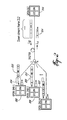
- FIG. 1 illustrates an exemplary Gigabit-capable PON (GPON) in accordance with the teachings of the present invention
- FIG. 2 depicts Optical Network Units (ONUs) using a time division multiple access (TDMA) scheme in accordance with the teachings of the present invention
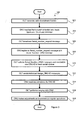
- Figure 3 shows a high level flowchart of steps performed during the setup of an ONU in a PON in accordance with the teachings of the present invention
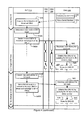
- Figure 4 is an exemplary signal diagram and flow chart of a system for enhancing ONU-ID assignment in accordance with the teachings of the invention
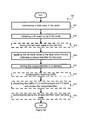
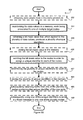
- Figures 5A and 5B together referred to as Figure 5 are exemplary flow charts performed in a node in accordance with the teachings of the present invention.
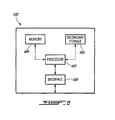
- FIG. 6 shows a communications node in accordance with the teachings of the present invention.
- GPON passive optical network
- EONs Ethernet PONs
- BPONs broadband PONs
- GPON 100 in Figure 1 shows elements of an optical distribution network (ODN) that interact with various endpoints of an optical network unit (ONU).
- OLT optical line termination
- CO central office
- the OLT 104 provides the network side interface and is typically in communication with at least one ONU 112, 118 (or an optical network termination (ONT) which performs similar functions as an ONU).
- OLT optical line termination
- These service providers 102 can provide a variety of services such as video-on-demand or high definition television (HDTV), Voice over IP (VoIP) and high speed internet access (HSIA).
- HDTV high definition television
- VoIP Voice over IP
- HSIA high speed internet access
- the OLT 104 transmits information to multiplexer 106 which multiplexes the data and transmits the data optically to a passive combiner/splitter 108.
- the passive combiner/splitter 108 then splits the signal and transmits it to the upstream multiplexers 110 and 116.
- the multiplexers 110 and 116 demultiplex the signal and forward it on to their respective ONUs 112 and 118.
- These multiplexers (108, 110 and 116) are typically integrated into both the OLT and the ONUs and are used for placing and extracting the upstream and downstream wavelengths depending upon their locations in the optical network.
- These ONUs 112 and 118 then forward the information onto their respective end users (EU) 114, 120 and 122, e.g., devices such as a computer, a television, etc.
- EU end users
- this purely illustrative GPON 100 can be implemented in various ways, e.g., with modifications where different functions are combined or performed in a different manner.
- the multiplexers typically are duplexers, but if an additional signal is being transmitted, e.g., a cable-television signal in a GPON 100, they can act as triplexers.
- the optical signal would typically have a different wavelength from the downstream signal and use the same multiplexers 106, 110 and 116, which have bidirectional capabilities.
- FIG. 2 shows exemplary Optical Network Units (ONUs) using a time division multiple access (TDMA).
- TDMA time division multiple access
- ONUs 202 and 206 are allowed to transmit data in granted time-slots on their optical wavelength(s). This means that ONUs 202, 206 transmit in a burst mode at their allotted time slots, as compared to a 125 ⁇ s long frame 212 in the downstream direction from the OLT 210.
- the ONUs 202, 206 are located at different distances from the OLT 210, the ONUs 202, 206 are informed by the OLT 210 when, and with what power, to transmit their respective bursts so that the ONUs signals are arriving in an aligned time structure at the OLT 210.
- the OLT 210 transmits a 125 ⁇ s long frame 212 which is composed of a GTC header and a GTC payload.
- the GTC Payload typically contains a sequence of GEM Headers and GEM Payloads, with the GEM Header containing information identifying the destination ONU, e.g., the ONU-ID, and the GEM Payload containing the desired data.
- each ONU 202, 206 is receiving a single GEM Header/Payload segment within the frame 212 in sequential order
- an ONU 202, 206 can receive multiple GEM header/Payload segments within a single downstream frame 212 in whatever order the OLT 210 decides to use since each ONU can filter the downstream data based, e.g., on its assigned ONU-ID.
- the ONUs Based on the received data the ONUs know their transmission time slot which results in an upstream message 214 where the different ONU outputs are in a time sequential order.
- Each of the ONUs 202, 206 and the OLT 210 may include various protocol stack processing entities including, for example, a GPON transmission convergence (GTC) processing entity and a GPON physical medium (GPM) processing entity. More information regarding GTC and GPM can be found in ITU-T G.984.3.
- GTC GPON transmission convergence
- GPS physical medium
- FIG. 3 is a high level flowchart which shows steps performed during the setup of an ONU 202 in a PON.
- the OLT 210 is not aware of all the Serial Numbers of ONUs on the PON (Discovered SN Method).
- the OLT 210 is transmitting valid downstream frames (step 302), and the ONU 202 attempts to attain frame synchronization. Once the ONU 202 is satisfied that it reached frame synchronization, it transits to the second state (02).
- the OLT 210 After transmitting at least two valid downstream frames, the OLT 210 transmits an Upstream_Overhead message 3 times. Upon receiving at least one of the messages, the ONU 202 treats the Upstream_Overhead message by storing the received values and constructing the preamble and delimiter using the values received (step 304). The ONU 202 then transitions to a third state (03).
- the purpose of the third state is to assign unique ONU-ID to each ONU.
- the Serial_Number_Request message (or SN_request message) is broadcast by the OLT 202 (step 306).
- the Serial_Number_Request message further instructs the receiving ONUs of the duration of a quiet window to follow the Serial_Number_Request message.
- the quiet window is allowing the ONUs to respond to the Serial_Number_Request message, as will be shown later.
- the quiet window characteristics are determined in order to reduce the likelihood of transmission collision in the upstream.
- the quiet window should take into account the following parameters: ONUs minimum and maximum distances, 48 ⁇ s random delay, 2 ⁇ s caused by ⁇ 1 ⁇ s variation in ONU response time, margin for ONUs which transmit ONU Additional Data (up to 120 bytes) and margin for next transmission (up to 131 bytes).
- the ONU 202 responds to the Serial_Number_Request message by sending an Serial_Number_ONU message (step 308) after waiting a random delay (e.g., of 0-48 ⁇ s, i.e., during the quiet window). If the ONU 202 supports Extended Burst Length, and the Extended_Burst_Length message was received, the ONU 202 should reflect it in this transmission. The ONU 202 may transmit ONU Additional Data of up to 120 bytes following this transmission.
- a random delay e.g., of 0-48 ⁇ s, i.e., during the quiet window.
- the OLT 210 waits for transmissions following the Serial_Number_Request message and collects incoming Senal_Number_ONU messages. Thereafter, the OLT 210 associates available ONU-ID values with the received serial numbers (step 310). The OLT 210 then assigns each ONU-ID to each individual ONU 202 using an Assign_ONU-ID message addressed to each individual ONU 202 (step 312). The OLT 210 transmits the Assign_ONU-ID messages 3 times. Upon receiving at least one of the messages, the ONU 202 stores the ONU-ID and transitions to a fourth state (04) (step 314). Ranging is performed in the fourth state by the OLT 210 and the ONU 202 (step 316). The ONU 202 then makes adjustments as instructed (and/or needed) and commences regular operations (step 318).
- ONUs 202, 206 can be discovered by the OLT 210. This can occur via an auto discovery process, e.g., when the PON is first turned on, through preconfigured ONUs informing the OLT 210 of their presence when they are added to the network, or some combination of the two. Auto discovery can be turned off after an OLT 210 initially discovers all ONUs in the PON at startup. Additionally, according to exemplary embodiments, the auto discovery feature of the OLT 210 can be turned back on either manually, or at pre-set times for pre-set durations as desired.
- an OLT 210 transmits a specific Assign_ONU-ID message to every ONU 202, 206. Furthermore, given the shared nature of a PON, various delays are likely incurred to avoid collision. The overall delay in assigning ONU-IDs to each ONU therefore increases with the number of ONUs 202, 206 managed by the OLT 210.
- a general objective of the present invention is to enable determination of identifiers unique into a given realm by relying on existing distinguishable data. Subsequent assignment of the unique identifiers can thereafter be made without relying only on individual assignment messages by targeting more than one node at once.
- an OLT could define a realm for the purpose of the present example.
- Each ONU has a serial number.
- FIG 4 shows an exemplary signal diagram and flow chart of a system for enhancing ONU-ID assignment in accordance with the teachings of the invention.
- the OLT 210, the ONUs 202 and 206 are shown on Figure 4 .
- the OLT 210 is likely to control more than two ONUs.
- the number ONUs likely to be controlled is not limited by the present invention.
- the ONU 202 and the ONU 206 each have a serial number (502 and 504).
- the ONUs 202 and 206 are in communication with the OLT 210. In that context, the serial number of the ONU 202 and the serial number of the ONU 206 need to be distinct under the OLT 210.
- serial numbers of ONUs under the OLT 210 would also have to be distinct (or unique) thereunder.
- the serial number of an ONU is likely to be a fixed value entered upon confirmation of the ONU. Yet, the serial number could be generated by the OLT 210 or the ONU itself as long as the condition of uniqueness under the OLT 210 is met. In any case, the OLT 210 has to acquire serial number of each ONU with which it communicates. The acquisition of serial numbers may be done dynamically (e.g., an in the example shown in Figure 3 ) or may be statically entered upon configuration of the OLT 210. The OLT 210 thereafter maintains a record of some sort for each serial number (506).
- Such record for each serial number can be stored in a memory of the OLT 210 (Random Access Memory (RAM) of various types, flash memory, Hard Disk Drive (HDD) of various kinds, clustered storage means or database of various kinds that hide the actual storing details, etc.).
- Storing in the context of the present invention, refers to keeping information in persistent or volatile memory e.g., as needed for conducting the invention, for future reference or statistical purpose.
- the OLT 210 determines a Serial_Number bit mask 508 that, when applied to all the serial numbers of the ONUs under the OLT 210, produces unique values.
- Two examples of bit masks in view of exemplary serial number values are shown below in Table 2.
- Table 2 Examples of bit masks in view of exemplary serial numbers expressed in bits (binary). [Table 2] [Table ] Example 1 Example 2 Serial # 1 01010101 01010101010101 Serial # 2 11010101 0101010101110101 Bit Mask 11111111 0000000001111111 Unique values 01010101 and 1010101 and • • 11010101 1110101
- the Serial_Number bit mask can be determined and expressed in many different manners.
- Table 2 shows a bit-wise bit mask while an hexadecimal bit mask is shown in Table 3 below.
- Table 3 shows that the Serial_number bit mask does not need to contain only successive '1' values.
- Table 4 shows serial numbers expressed using ASCII characters, each using 1 byte with a Serial_Number bit mask expressed in hexadecimal (two symbols per byte).
- Table 4 further shows that the Serial_Number bit mask does not need to be optimal, as long as unique values are obtained upon its application on relevant serial numbers.
- Table 5 shows examples of bit masks in view of exemplary serial numbers expressed in ASCII characters each using 1 byte with a Serial_Number bit mask expressed in hexadecimal (two symbols per byte).
- the unique values are expressed in a contracted format (e.g., over a fixed length shorter than the length of the serial numbers).
- Table 5 further shows that data not useful in determining the unique values (e.g., because it is common to all values) could be removed. This is especially useful if the unique values have to fit over a fixed length shorter than the serial numbers.
- Table 3 Examples of bit masks in view of exemplary serial numbers expressed in hexadecimal.
- the Serial_Number bit mask determination (508) can take the form of a simple reading from a memory of a bit mask value previously entered (e.g., during configuration of the OLT 210 or a previous computation). This option is of particular interest when serial numbers of ONUs are provided in a standard and known manner. Alternatively, the determination can be made by iteratively computing a bit mask value and successively applying such bit mask value on serial numbers until only unique values are obtained. The granularity of the serial numbers can be taken in consideration during such computation (e.g., ASCII or hexadecimal serial numbers with hexadecimal bit mask or binary serial numbers and bit mask, etc.).
- the Serial_Number bit mask is ready to be sent by the OLT 210 to the ONUs 202 and 206 (510) using a single message (or using a number of messages that is smaller than the number of destinations that should receive it).
- the Serial_Number bit mask is likely to be sent using a broadcast message.
- Other technologies could use multicast message(s). Therefore, the individual and specific Assign_ONU-ID messages can be replaced by the Serial_Number bit mask message(s) 510.
- the OLT 210 is ready to obtain one ONU-ID for each of its ONUs 202 and 206 (514) by applying the Serial_Number bit mask to each serial number.
- the obtainment of ONU-IDs may already be completed in the computation related to the step 508, in which case in it might not be repeated.
- the ONU-IDs can be stored conventionally (518) thereby allowing normal use thereof by the OLT 210.
- only the Serial_Number bit mask could be stored and used to obtain the necessary ONU-ID(s) based on the relevant serial number(s). While this option appears to have more drawbacks than advantages for the PON technologies, there might be some PON examples or other technologies where the approach is sensible. It shall be noted that, if ONU-IDs are stored, storing the Serial_Number bit mask itself may not be necessary.
- the Serial_Number bit mask is received (512A) and stored, at least temporarily, in the ONU 202. Thereafter, the Serial_Number bit mask is applied to the serial number of the ONU 202 (516A) to obtain the ONU-ID of the ONU 202. Once obtained, the ONU-ID of the ONU 202 can be stored conventionally (520A) thereby allowing normal use thereof by the ONU 202. It could alternatively be generated each time it is needed using the Serial_Number bit mask. Just as in the case of the OLT 210, the Serial_Number bit mask may be stored or not, depending on the configuration choices.
- the OLT 210 and the ONUs 202, 206 then proceed with normal operations, making use of the ONU-ID as needed during the course of normal operations.
- Figure 4 then continues with the addition (526) of an ONU 208 to the OLT 210.
- the ONU 208 has to have serial number (528) that is distinct from other serial numbers already present under the OLT 210.
- the OLT 210 is shown acquiring the serial number of the ONU 208 (536). If the format of the serial numbers under the OLT 210 is already determined (e.g., the OLT 210 knows what portion of the serial number is distinctive), the step 536 of acquiring the serial number may be unnecessary.
- the OLT 210 In view of the addition of the ONU 208, the OLT 210 nevertheless has to take action to enable assignment of an ONU-ID to the ONU 208.
- the OLT 210 likely applies the Serial_Number bit mask previously used to obtained the ONU-IDs for the ONUs 202 and 206 (i.e., existing Serial_Number bit mask) to the ONU's 208 serial number. If the result is unique compared to the ONU-IDs currently in service, then the existing Serial_Number bit mask can be used as is.
- FIG. 4 shows some examples of options in treating the addition of the ONU 208: A) there is a change in the Serial_Number bit mask and B) there is no change in the Serial_Number bit mask. A third option C) (not shown) is that no new Serial_Number bit mask can be determined in view of the existing Serial_Number bit mask.
- the OLT 210 determines a new Serial_Number bit mask (538A) that is compatible with the existing Serial_Number bit mask (i.e., provides for a unique ONU-ID when applied to the serial number of the ONU 208 in view of the ONU-IDs already assigned to the ONUs 202 and 206).
- the Serial_Number bit mask being different, the OLT 210 thus sends the Serial_Number bit mask in a message (540A).
- Aspects related to the step 510 apply mutatis mutandis to step 540A. Steps similar to the steps 514 and 518 may further be executed, as needed depending on the configuration, by the OLT 210 (not shown).
- the ONUs 202, 206 and 208 receive the new Serial_Number bit mask (542A). Depending on the configuration, ONUs 202 and 206 are likely to simply discard the message (e.g., not compatible in their current state). Yet, while it may imply complexity, the ONUs 202, 206 208 could all obtain their ONU-ID by applying the bit mask to their respective serial number (546A). Step 546A, in any case, is executed at least by the ONU 208. As exemplified in relation to steps 520A, the obtained ONU-ID may be stored (550A) by the ONU. Again, aspects presented in relation to steps 512, 516 and 520A are applicable here as well.
- Option B that involves no change to the Serial_Number bit mask, may be the result, for instance, of a preliminary determination that the existing Serial_Number bit mask is already proper or a configuration of the OLT 210 and the ONUs 202, 206 and 208 that allows only predetermined formats of serial numbers to be used under the OLT 210. In the latter case, the OLT 210 knows without processing that the Serial_Number bit mask previously determined is still valid.
- a step of determining a Serial_Number bit mask (538B) similar to the step 508 may be executed by the OLT from computation of the serial numbers of the ONUs 202, 206 and 208 to arrive at the same Serial_Number bit mask previously determined.
- step 538B may or not be executed in option B.
- the determination that the existing Serial_Number bit mask is proper can also be made by applying he existing Serial_Number bit mask to the serial number of the ONU 208 and verifying if the obtained result is unique when compared to the ONU-IDs already in service. Nevertheless, the Serial_Number bit mask need to be made available at least to the ONU 208. This can be done, in the context of an added ONU, by sending the Serial_Number bit mask using a unicast message (540B) from the OLT 210 addressed to the ONU 208.
- a unicast message (540B)
- a unicast message sent before the assignment of an ONU-ID would actually be a broadcast message that contains the serial number of the target ONU (thereby enabling non-target ONUs to readily discard the message).
- the OLT 210 may render the Serial_Number bit mask available to the ONUs by sending a broadcast message (not shown) to all ONUs under the OLT 210 (as in 540A) or by sending a multicast message (not shown) to all affected ONUs under the OLT 210 (e.g., specifying multiple targeted serial numbers in a broadcast message).
- the non-target ONUs i.e.
- ONU 202 and the ONU 206 in the present example may simply discard the Serial_Number bit mask (e.g., because it is incompatible with their current state or upon comparison with stored value (if any)) or could perform steps similar to the steps 512, 516 and 520A (e.g., for the sake of simplicity, such steps could be triggered by each received Serial_Number bit mask, no matter its difference from previous values).
- Serial_Number bit mask e.g., because it is incompatible with their current state or upon comparison with stored value (if any)
- steps similar to the steps 512, 516 and 520A e.g., for the sake of simplicity, such steps could be triggered by each received Serial_Number bit mask, no matter its difference from previous values.
- Option C implies that, given the existing Serial_Number bit mask determined in step 508, no new Serial_Number bit mask can be determined that would provide for a unique ONU-ID when compared to the ONU-IDs already assigned to the ONUs 202 and 206.
- the OLT 210 could decide to determine a unique ONU-ID without reference to any bit mask and to assign the so determined ONU-ID using the known Assign_ONU-ID message.
- the condition that prevents the OLT 210 from determining a new Serial_Number bit mask is the presence of an existing Serial_Number bit mask. Once the existing Serial_Number bit mask is no longer valid (e.g., triggered reset, planned or unplanned reboot, global ONU-IDs invalidation, etc.), a new Serial_Number bit mask shall be determinable.
- the size of an ONU-ID is currently set to 1 byte. Of source, the size could be changed (e.g., to 2 bytes in the future) without affecting the teachings of the present invention. Similarly, the size of a Serial Number in GPON is currently set to 8 bytes, which could change to a larger or smaller size without affecting the present invention so long as the requirement of having unique serial numbers under an OLT is respected.
- the present invention does not expressly nor completely replace the Assign_ONU-ID message per se. It rather allows a more efficient broadcast message to be used when possible, in order to avoid sending 3 specific Assign_ONU-ID messages per ONU. It has been shown above that there is a state in which an ONU is waiting for an ONU-ID assignment. The need for an ONU-ID in that specific state can be fulfilled by the Assign-ONU-ID message or the new message. As exemplified above, the present invention can fulfill the need of a single or a plurality of ONUs waiting for ONU-ID assignment. It shall nevertheless be readily appreciated by those skilled in the art that the gain of using the bit mask of the present invention grows with the number of ONUs waiting for an ONU-ID assignment.
- the present invention is not limited to the use of a single bit mask, but could use several different bit masks and/or a mix of bit mask(s) and Assign_ONU-ID messages. For instance, a new bit mask could be determined and used each time an ONU reaches the ONU-ID waiting state. Another example is that the Assign_ONU-ID message could be used whenever a single ONU reaches the ONU_ID assignment state while a new bit mask could be determined and used each time a plurality of ONUs reach the ONU-ID waiting state (e.g., within a given time frame). It shall be noted, though, that the requirement of keeping ONU-IDs unique under a given OLT remains at all time, no matter the technique used to determined and assign the ONU-IDs.
- Serial_Number_Mask Physical Layer Operations, Administration and Maintenance (PLOAM) message is suggested to convey the Serial_Number bit mask.
- PLOAM Physical Layer Operations, Administration and Maintenance
- the Serial_Number_Mask message bears the same name as a PLOAM message previously defined in G.983.4, the old version has been deprecated and was used to find a serial number rather than assign ONU-IDs.
- the Serial_Number_Mask message as specified in the context of the present invention can be used at any time by the OLT 210, but preferably during the activation process of the ONUs.
- Serial_Number_Mask message [Table 6] [Table ] Octet Content Description 1 11111111 Broadcast message to all ONUs 2 00000010 Message identification 'Serial_Number_Mask' 3-10 nnnnnnnn Serial number mask, specify only two bytes 11-12 Unspecified NOTE - If more than two bytes are specified in the mask, only first two are considered
- FIG. 5A shows exemplary flow charts in accordance with the teachings of the present invention.
- the flow chart on Figure 5A represents the action taken by a node that requires a unique identifier (e.g., an ONU)
- Figure 5B represents the actions taken by a node whose responsibilities encompass unique identifier assignment (e.g., an OLT).
- Figure 5A shows a first step 402 by which the node requiring a unique identifier firstmaintains a data value therein.
- the node thereafter obtains a bit mask value in the node (404).
- the bit mask value may be obtained by the reception of a broadcast, multicast or unicast message that the node understands as being addressed thereto.
- the node may further read the bit mask value from a remote location (e.g., network drive) or local memory upon receiving instruction to this affect.
- the node may thereafter optionally store the bit mask value in a memory of the node 406 (e.g., for future use or reference).
- the node then applies the bit mask value to the data value (408).
- the unique identifier may optionally be stored in the memory (410) of the node.
- the unique identifier can be re-obtained at will by reapplying the bit mask to the data value. Person skilled in the art will readily be able to decide whether it is sound to store the unique identifier based on the memory characteristics of the node and the time/resources needed to re-obtain the unique identifier.
- the node can use the unique identifier for its intended purpose.
- the present invention does not limit the types of application of the unique identifier.
- the unique identifier may be used in network messages to distinguish traffic source and/or destination. In such cases, the node may then subsequently receive traffic (412). If the traffic does not contain the unique identifier and is not broadcast, then the node may simply discard the traffic (414). Similarly, the node may subsequently use the unique identifier upon sending traffic (416) (i.e., indicating the source as being the unique identifier).
- a node whose responsibilities encompass unique identifier assignment may optionally obtain multiple data values from a discovery procedure (452).
- the multiple data values may be obtained through configuration or manual data input in the node.
- the node thereafter maintains the data values in a memory thereof (454).
- Each of the data values is associated to one of multiple target nodes to which the node has to assign a unique identifier.
- the node then obtains a bit mask value that, when applied to the multiple data values, produces a plurality of unique identifiers (456).
- the step 456 may be performed in many different ways.
- the bit mask value may be read from an appropriate location in the memory of the node.
- the bit mask value may optionally be obtained by computing a preliminary bit mask value and applying the preliminary bit mask value to the multiple data values until the plurality of unique identifiers is obtained in which case the preliminary bit mask value provides the bit mask value.
- the bit mask value may thereafter be stored in the memory (458) if not already the case or if it is advantageous to be able to refer to the value at a later time or frequently.
- the person skilled in the art will recognize what is best suited depending on the implementation.
- Step 460 the node sends the bit mask value to the multiple target nodes in order to assign a unique identifier to each of those nodes (460).
- Step 460 may be performed, for instance, by sending a broadcast message to the target nodes or by sending a multicast message to the target nodes.
- the node may determine the plurality of unique identifiers for each of the target nodes (462). Such unique identifiers may further be stored in the memory of the node (464). It shall be noted that the unique identifiers may have already been determined and potentially stored, if the bit mask value was obtained by computing the data values with the preliminary bit mask (as shown earlier with step 456).
- the unique identifiers may be used by the target nodes and potentially the node for their intended purposes. As mentioned earlier, the present invention does not limit the types of application of the unique identifiers. In some instances, the unique identifiers may be used in network messages to distinguish traffic source and/or destination. In such cases, the node may thensubsequently receive traffic from one of the target nodes containing the unique identifier of the one node (466). The unique identifier of the one node has been obtained therein using the bit mask value. Similarly, the node may subsequently use an appropriate unique identifier to send a unicast message to any one of the target nodes (468).
- the node may additionally obtain a further data value for a newly discovered node and store the further data value of the newly discovered node in the memory.
- the newly discovered node requires a further unique identifier.
- the node may simply determine a further unique identifier for the newly discovered node and send the further unique identifier to the newly discovered node in a message meaningful only to the newly discovered node (e.g., an Assign_ONU-ID message).
- the node may verify if the bit mask value, when applied to the further data value, produces a further unique identifier when compared to the plurality of unique identifiers.
- the node may simply send the bit mask value to the newly discovered node and, as needed, store the further unique identifier in its memory.
- the node may also, if the further unique identifier is in fact not unique, compute a new bit mask before sending the new bit mask to the newly discovered node.
- communications node 600 can contain a processor 602 (or multiple processor cores), memory 604, one or more secondary storage devices 606 and a communications interface 608.
- the secondary storage devices 606 can be a local and/or remote storage mechanism. It can be a single storage device or a plurality of physical or logical storage mechanisms put together as to provide a storage means suitable for the purpose of the present invention.
- the memory 604 is expected to be used to store program instructions and temporary data, but could also be used to store data permanently (e.g., long enough for completion of all step related to stored data for purpose of the present invention). Persons skilled in the art shall readily identify the storage means, memory or memories suitable in the various contexts of application of the present invention.
- Processor 602 is capable of processing instructions in support of performing the duties of an OLT 210.
- the communications interface 608 can include elements of an optical transceiver to permit the communications node to transmit and receive optical signals, e.g., an optical modulator, an optical demodulator, and one or more lasers connected to optical fiber.
- communications node 600 is capable of performing the tasks of an OLT 210 as described in the exemplary embodiments herein to augment the capabilities of a PON. More specifically the communications node 600, via its various modules 602-606, can maintain data values associated to a plurality of nodes, obtain a bit mask value that, when applied to the multiple data values, produces a plurality of unique identifiers and send the bit mask value to the multiple target nodes in order to assign a unique identifier to each of those nodes. Additionally, communications node 600 is capable of performing the duties of an ONU, i.e., communications node 600 can maintain a data value therein, obtain a bit mask value and apply the bit mask value to the data value in order to obtain its unique identifier. 20.
- the communications node 600 may comprise a secondary storage 606 capable of maintaining at least one data value, one unique identifier associated with each of the at least one data value and a bit mask value.
- the communication node 600 may also comprise a memory 604 for storing program instructions associated with the generation of the unique identifier and a processor 602 for executing the program instructions causing the bit mask value to be applied to the data value thereby obtaining the associated unique identifier.
- the associated unique identifier can be associated to the communication node 600.
- the communication node 600 may further comprise a communication interface 608 for, prior to executing the program instructions, receiving the bit mask value and subsequently to obtaining the associated unique identifier, sending traffic containing the associated unique identifier.
- the received bit mask value may thereafter be stored in the secondary storage 606.
- the communication interface 608 may also be for, subsequently to obtaining the associated unique identifier, receiving traffic and discarding the traffic if it is not broadcast and does not contain the associated unique identifier.
- the secondary storage 606 may maintain a plurality of data values, each being associated to one of a plurality of nodes.
- Each of the plurality of nodes may be Optical Network Unit (ONU) and each of the data values may correspond to a serial number of its related ONU.
- the communication interface 608 may be for, prior to maintaining the plurality of data values, obtaining the serial numbers from the plurality of ONUs from a discovery procedure.
- the memory 604 may store further program instructions associated with the generation of the bit mask value and the processor 602 may be capable of obtaining the bit mask value upon execution of the further program instructions by iteratively computing a preliminary bit mask value and applying the preliminary bit mask value to the plurality of data values until each unique identifier associated to the plurality of data values is obtained in which case the preliminary bit mask value provides the bit mask value.
- the communication interface 608 may be for sending the bit mask value into a broadcast or multicast message to a plurality of nodes. The communication interface may then further be used to subsequently receive traffic from one of the plurality of nodes containing the unique identifier of the one node. The unique identifier of the one node has been obtained therein using the bit mask value. Likewise, the communication interface 608 may further subsequently use one of the unique identifiers to send a unicast message to any one of the plurality nodes.
Landscapes
- Engineering & Computer Science (AREA)
- Computer Networks & Wireless Communication (AREA)
- Signal Processing (AREA)
- Small-Scale Networks (AREA)
Claims (15)
- Verfahren zur Zuweisung von eindeutigen Kennungen zu einer Mehrzahl von optischen Knoten, umfassend die folgenden Schritte:- Bewahren (454) einer Mehrzahl von verschiedenen Datenwerten in einem Speicher, die jeweils einem der Knoten zugeordnet sind;
und dadurch gekennzeichnet, dass es ferner die folgenden Schritte umfasst:- Erhalten (456) eines Bitmaskenwertes, der, wenn auf die Mehrzahl von Datenwerten angewendet, eine Mehrzahl von eindeutigen Kennungen erzeugt; und- Senden (460) des Bitmaskenwertes an die Knoten, um jedem der Knoten eine eindeutige Kennung zuzuweisen. - Verfahren nach Anspruch 1, wobei der Schritt des Bewahrens (454) der Mehrzahl von Datenwerten durch Speichern jedes der Mehrzahl von Datenwerten im Speicher einer optischen Leitungsanschlusseinheit OLT (104) ausgeführt wird, wobei jeder der Mehrzahl von Knoten eine optische Netzeinheit ONU (112, 118) ist, wobei jeder der Datenwerte einer Seriennummer seiner zugehörigen ONU entspricht.
- Verfahren nach Anspruch 2, ferner umfassend vor dem Schritt des Bewahrens (454) der Mehrzahl von Datenwerten in der OLT (104) einen ersten Schritt des Erhaltens (452) der Seriennummern von der Mehrzahl von ONUs (112, 118) aus einer Erkennungsprozedur.
- Verfahren nach Anspruch 1, ferner umfassend nach dem Schritt des Erhaltens (456) des Bitmaskenwertes einen Schritt des Speicherns (458) des Bitmaskenwertes im Speicher.
- Verfahren nach Anspruch 4, wobei der Schritt des Erhaltens (456) des Bitmaskenwertes ausgeführt wird durch iteratives- Berechnen eines vorläufigen Bitmaskenwertes; und- Anwenden des vorläufigen Bitmaskenwertes auf die Mehrzahl von Datenwerten;- bis die Mehrzahl von eindeutigen Kennungen erhalten wird, in welchem Fall der vorläufige Bitmaskenwert den Bitmaskenwert bereitstellt.
- Verfahren nach Schritt 1, wobei der Schritt des Erhaltens (456) des Bitmaskenwertes durch Auslesen eines entsprechenden Wertes aus dem Speicher ausgeführt wird.
- Verfahren nach Schritt 1, wobei der Schritt des Sendens (460) des Bitmaskenwertes durch Senden einer Broadcast-Nachricht an die Mehrzahl von Knoten ausgeführt wird.
- Verfahren nach Schritt 1, wobei der Schritt des Sendens (460) des Bitmaskenwertes durch Senden einer Multicast-Nachricht an die Mehrzahl von Knoten ausgeführt wird.
- Verfahren nach Anspruch 1, ferner umfassend nach dem Schritt des Erhaltens des Bitmaskenwertes die folgenden Schritte:- Bestimmen (462) der Mehrzahl von eindeutigen Kennungen für jeden der Knoten; und- Speichern (464) der Mehrzahl von eindeutigen Kennungen im Speicher.
- Verfahren nach Anspruch 9, ferner umfassend einen Schritt des anschließenden Empfangens (466) von Verkehr von einem der Mehrzahl von Knoten, der die eindeutige Kennung des einen Knotens enthält, wobei die eindeutige Kennung des einen Knotens darin unter Verwendung des Bitmaskenwerts erhalten wurde.
- Verfahren nach Anspruch 9, ferner umfassend einen Schritt des anschließenden Verwendens (468) einer der eindeutigen Kennungen, um eine Unicast-Nachricht an einen beliebigen der Mehrzahl von Knoten zu senden.
- Verfahren nach Anspruch 1, ferner umfassend die folgenden Schritte:- Erhalten eines weiteren Datenwertes für einen neu erkannten Knoten; und- Speichern des weiteren Datenwertes des neu erkannten Knotens im Speicher.
- Verfahren nach Anspruch 12, ferner umfassend die folgenden Schritte:- Bestimmen einer weiteren eindeutigen Kennung für den neu erkannten Knoten; und- Senden der weiteren eindeutigen Kennung in einer Assign_ONU-ID-Nachricht an den neu erkannten Knoten.
- Verfahren nach Anspruch 12, ferner umfassend einen Schritt des Verifizierens, ob der Bitmaskenwert, wenn auf den weiteren Datenwert angewendet, eine weitere eindeutige Kennung erzeugt, wenn mit der Mehrzahl von eindeutigen Kennungen verglichen.
- Verfahren nach Anspruch 14, ferner umfassend die folgenden Schritte:- wenn die weitere eindeutige Kennung nicht in der Mehrzahl von eindeutigen Kennungen ist:- Senden des Bitmaskenwerts an den neu erkannten Knoten; und- Speichern der weiteren eindeutigen Kennung im Speicher,- andernfalls Berechnen eines neuen Bitmaskenwerts vor dem Senden der neuen Bitmaske an den neu erkannten Knoten.
Applications Claiming Priority (2)
| Application Number | Priority Date | Filing Date | Title |
|---|---|---|---|
| US12/433,355 US20100278533A1 (en) | 2009-04-30 | 2009-04-30 | Bit mask to obtain unique identifier |
| PCT/IB2010/051913 WO2010125546A1 (en) | 2009-04-30 | 2010-04-30 | Using a bit mask to obtain a unique identifier |
Publications (2)
| Publication Number | Publication Date |
|---|---|
| EP2425633A1 EP2425633A1 (de) | 2012-03-07 |
| EP2425633B1 true EP2425633B1 (de) | 2013-01-16 |
Family
ID=42731840
Family Applications (1)
| Application Number | Title | Priority Date | Filing Date |
|---|---|---|---|
| EP10720465A Not-in-force EP2425633B1 (de) | 2009-04-30 | 2010-04-30 | Verwendung einer bitmaske zum erhalten einer einzigartigen kennung |
Country Status (4)
| Country | Link |
|---|---|
| US (1) | US20100278533A1 (de) |
| EP (1) | EP2425633B1 (de) |
| CN (1) | CN102428710B (de) |
| WO (1) | WO2010125546A1 (de) |
Families Citing this family (12)
| Publication number | Priority date | Publication date | Assignee | Title |
|---|---|---|---|---|
| US20110016524A1 (en) * | 2009-07-16 | 2011-01-20 | Assa Abloy Ab | Blind verification of computer firmware |
| US8774143B2 (en) * | 2010-11-18 | 2014-07-08 | General Electric Company | System and method of communication using a smart meter |
| US9246882B2 (en) | 2011-08-30 | 2016-01-26 | Nokia Technologies Oy | Method and apparatus for providing a structured and partially regenerable identifier |
| US8805183B2 (en) | 2012-02-08 | 2014-08-12 | Broadcom Corporation | Optical line terminal (OLT) and method therefore for performing in-band and out-band OTDR measurements |
| US9118982B2 (en) * | 2012-02-08 | 2015-08-25 | Broadcom Corporation | Optical line terminal (OLT) optical module adapted to perform optical unit network (ONU) functionality |
| US9165162B2 (en) * | 2012-12-28 | 2015-10-20 | Infineon Technologies Ag | Processor arrangements and a method for transmitting a data bit sequence |
| US9697358B2 (en) * | 2013-06-13 | 2017-07-04 | Google Inc. | Non-volatile memory operations |
| US10250514B2 (en) | 2014-02-06 | 2019-04-02 | Quiet Coach Inc. | Systems, methods, and devices for addressed data communications |
| EP3116234B1 (de) * | 2015-07-09 | 2018-08-29 | Mitsubishi Electric R&D Centre Europe B.V. | Verfahren zur übertragung von signalisierungsinformationen mit reduzierten identifizierungsinformationen in einem optischen übertragungsnetzwerk |
| KR102433853B1 (ko) * | 2016-03-28 | 2022-08-19 | 한국전자통신연구원 | 수동형 광 네트워크 시스템에서의 콰이어트 윈도우 설정 방법 및 그 장치 |
| WO2018156206A1 (en) | 2017-02-24 | 2018-08-30 | Trackio Gmbh | Privacy preserving message blinding |
| FR3109255A1 (fr) * | 2020-04-10 | 2021-10-15 | Orange | Procédé mis en œuvre par une entité intermédiaire pour gérer une communication entre deux dispositifs de communication |
Family Cites Families (18)
| Publication number | Priority date | Publication date | Assignee | Title |
|---|---|---|---|---|
| JPWO2001050686A1 (ja) * | 2000-01-07 | 2004-01-08 | 富士通株式会社 | 情報送受信装置 |
| MXPA04005228A (es) * | 2001-12-05 | 2004-10-11 | Lg Electronics Inc | Metodo para generar codigos para deteccion de errores y generador de codigos para deteccion de errores. |
| US7313639B2 (en) * | 2003-01-13 | 2007-12-25 | Rambus Inc. | Memory system and device with serialized data transfer |
| US8099099B2 (en) * | 2003-02-19 | 2012-01-17 | Qualcomm Incorporated | Methods and apparatus related to assignment in a wireless communications system |
| US7047453B2 (en) * | 2003-11-13 | 2006-05-16 | Nokia, Inc. | Method and apparatus for managing network traffic using cyclical redundancy check hash functions |
| US20050265719A1 (en) * | 2004-05-27 | 2005-12-01 | Bernard Marc R | Optical line termination, optical access network, and method and apparatus for determining network termination type |
| JP4457964B2 (ja) * | 2005-05-11 | 2010-04-28 | 株式会社日立製作所 | Atm−ponシステムおよびonu自動接続方法 |
| WO2006133087A2 (en) * | 2005-06-03 | 2006-12-14 | Ems Technologies, Inc. | Method and system for discovering antenna line devices |
| US7603036B2 (en) * | 2006-01-06 | 2009-10-13 | Fujitsu Limited | System and method for managing network components in a hybrid passive optical network |
| ES2454965T3 (es) * | 2006-01-18 | 2014-04-14 | Huawei Technologies Co., Ltd. | Un método para asociar el flujo de servicio al canal de transmisión del servicio, su sistema y su terminador de red óptica |
| CN1901276B (zh) * | 2006-07-07 | 2010-09-29 | 华为技术有限公司 | 产生扫描标识的方法以及对天线设备进行扫描的方法 |
| US20080019402A1 (en) * | 2006-07-19 | 2008-01-24 | Samsung Electronics Co., Ltd. | Apparatus and method for pid conversion in very high frequency digital radio broadcasting receiver |
| CN101155382A (zh) * | 2006-09-25 | 2008-04-02 | 北京三星通信技术研究有限公司 | 发送用户设备标识和用户信息的设备和方法 |
| CN101291181B (zh) * | 2007-04-19 | 2012-03-21 | 株式会社日立制作所 | 具有可变模式光网络单元的扩展无源光网络设备 |
| US7920792B2 (en) * | 2007-05-02 | 2011-04-05 | Fujitsu Limited | System and method for managing communication in a hybrid passive optical network |
| US20080292313A1 (en) * | 2007-05-25 | 2008-11-27 | Glenn Mark Mahony | Methods, Systems, and Computer-Readable Media for Ranging a Device in a Point-to-Multipoint Network |
| US8582966B2 (en) * | 2007-09-10 | 2013-11-12 | Cortina Systems, Inc. | Method and apparatus for protection switching in passive optical network |
| JP5276935B2 (ja) * | 2008-09-12 | 2013-08-28 | 株式会社日立製作所 | 受動光網システムおよびその障害特定方法 |
-
2009
- 2009-04-30 US US12/433,355 patent/US20100278533A1/en not_active Abandoned
-
2010
- 2010-04-30 WO PCT/IB2010/051913 patent/WO2010125546A1/en not_active Ceased
- 2010-04-30 CN CN201080019163.4A patent/CN102428710B/zh not_active Expired - Fee Related
- 2010-04-30 EP EP10720465A patent/EP2425633B1/de not_active Not-in-force
Also Published As
| Publication number | Publication date |
|---|---|
| CN102428710A (zh) | 2012-04-25 |
| EP2425633A1 (de) | 2012-03-07 |
| US20100278533A1 (en) | 2010-11-04 |
| WO2010125546A1 (en) | 2010-11-04 |
| CN102428710B (zh) | 2015-02-18 |
Similar Documents
| Publication | Publication Date | Title |
|---|---|---|
| EP2425633B1 (de) | Verwendung einer bitmaske zum erhalten einer einzigartigen kennung | |
| EP2058961B1 (de) | Datenübertragungsverfahren, system und einrichtung | |
| AU2009240705B2 (en) | Gigabit passive optical network transmission convergence extension for next generation access | |
| EP1401234B1 (de) | Verfahren zum Finden von OAM-Fähigkeit in einem ethernet, passiven, optischen Netzwerk | |
| EP3537628B1 (de) | Passives optisches netzwerksystem, optischer leitungsanschluss und optische netzwerkeinheit | |
| CN101072144B (zh) | 无源光网系统和加入者连接装置 | |
| US8457494B2 (en) | PON multicast communication system, multicast management method, and corresponding devices | |
| CN101552932B (zh) | 光网络传输处理方法、装置和系统 | |
| US10516923B2 (en) | Dynamic bandwidth assignment method and apparatus, and passive optical network system | |
| EP2389738B1 (de) | Verfahren und systeme für passive optische netze mit dynamischer ausgleichsverzögerung | |
| US9793993B2 (en) | Method and apparatus of delivering upstream data in ethernet passive optical network over coaxial network | |
| JP7314403B2 (ja) | サービス設定方法及び装置 | |
| US20130315594A1 (en) | Method, system, and device for transmittng optical network terminal management and control interface message | |
| WO2011012007A1 (zh) | 光线路终端快速更新光网络单元测距结果的方法及系统 | |
| CN101582734B (zh) | 波分复用无源光网络中的接入控制方法及其装置 | |
| CN117318812A (zh) | 一种数据传输方法及装置 | |
| US6801547B1 (en) | Ranging cell detection in a noisy environment | |
| WO2009155832A1 (zh) | 一种点到多点光接入系统,及其数据传送方法和设备 | |
| JP4891410B2 (ja) | 共に存在する異なる送信レートを有するponにおける帯域幅割り当てのための方法およびデバイス | |
| KR100889729B1 (ko) | 이더넷 수동형 광가입자망에서 멀티캐스트 및 가상랜서비스를 효율적으로 제공하기 위한 프레임 처리 방법 | |
| CN113473268A (zh) | 基于多路复用的通道识别方法及其装置 |
Legal Events
| Date | Code | Title | Description |
|---|---|---|---|
| PUAI | Public reference made under article 153(3) epc to a published international application that has entered the european phase |
Free format text: ORIGINAL CODE: 0009012 |
|
| 17P | Request for examination filed |
Effective date: 20111121 |
|
| AK | Designated contracting states |
Kind code of ref document: A1 Designated state(s): AT BE BG CH CY CZ DE DK EE ES FI FR GB GR HR HU IE IS IT LI LT LU LV MC MK MT NL NO PL PT RO SE SI SK SM TR |
|
| GRAP | Despatch of communication of intention to grant a patent |
Free format text: ORIGINAL CODE: EPIDOSNIGR1 |
|
| DAX | Request for extension of the european patent (deleted) | ||
| RIN1 | Information on inventor provided before grant (corrected) |
Inventor name: JULIEN, MARTIN Inventor name: GORDON, DAVID Inventor name: BELIVEAU, LUDOVIC Inventor name: BRUNNER, ROBERT |
|
| GRAS | Grant fee paid |
Free format text: ORIGINAL CODE: EPIDOSNIGR3 |
|
| GRAA | (expected) grant |
Free format text: ORIGINAL CODE: 0009210 |
|
| RAP1 | Party data changed (applicant data changed or rights of an application transferred) |
Owner name: TELEFONAKTIEBOLAGET L M ERICSSON (PUBL) |
|
| AK | Designated contracting states |
Kind code of ref document: B1 Designated state(s): AT BE BG CH CY CZ DE DK EE ES FI FR GB GR HR HU IE IS IT LI LT LU LV MC MK MT NL NO PL PT RO SE SI SK SM TR |
|
| REG | Reference to a national code |
Ref country code: GB Ref legal event code: FG4D |
|
| REG | Reference to a national code |
Ref country code: CH Ref legal event code: EP |
|
| REG | Reference to a national code |
Ref country code: IE Ref legal event code: FG4D |
|
| REG | Reference to a national code |
Ref country code: AT Ref legal event code: REF Ref document number: 594417 Country of ref document: AT Kind code of ref document: T Effective date: 20130215 Ref country code: CH Ref legal event code: EP |
|
| REG | Reference to a national code |
Ref country code: DE Ref legal event code: R096 Ref document number: 602010004719 Country of ref document: DE Effective date: 20130314 |
|
| REG | Reference to a national code |
Ref country code: AT Ref legal event code: MK05 Ref document number: 594417 Country of ref document: AT Kind code of ref document: T Effective date: 20130116 |
|
| REG | Reference to a national code |
Ref country code: NL Ref legal event code: VDEP Effective date: 20130116 |
|
| REG | Reference to a national code |
Ref country code: LT Ref legal event code: MG4D |
|
| PG25 | Lapsed in a contracting state [announced via postgrant information from national office to epo] |
Ref country code: BG Free format text: LAPSE BECAUSE OF FAILURE TO SUBMIT A TRANSLATION OF THE DESCRIPTION OR TO PAY THE FEE WITHIN THE PRESCRIBED TIME-LIMIT Effective date: 20130416 Ref country code: BE Free format text: LAPSE BECAUSE OF FAILURE TO SUBMIT A TRANSLATION OF THE DESCRIPTION OR TO PAY THE FEE WITHIN THE PRESCRIBED TIME-LIMIT Effective date: 20130116 Ref country code: IS Free format text: LAPSE BECAUSE OF FAILURE TO SUBMIT A TRANSLATION OF THE DESCRIPTION OR TO PAY THE FEE WITHIN THE PRESCRIBED TIME-LIMIT Effective date: 20130516 Ref country code: ES Free format text: LAPSE BECAUSE OF FAILURE TO SUBMIT A TRANSLATION OF THE DESCRIPTION OR TO PAY THE FEE WITHIN THE PRESCRIBED TIME-LIMIT Effective date: 20130427 Ref country code: AT Free format text: LAPSE BECAUSE OF FAILURE TO SUBMIT A TRANSLATION OF THE DESCRIPTION OR TO PAY THE FEE WITHIN THE PRESCRIBED TIME-LIMIT Effective date: 20130116 Ref country code: LT Free format text: LAPSE BECAUSE OF FAILURE TO SUBMIT A TRANSLATION OF THE DESCRIPTION OR TO PAY THE FEE WITHIN THE PRESCRIBED TIME-LIMIT Effective date: 20130116 Ref country code: SE Free format text: LAPSE BECAUSE OF FAILURE TO SUBMIT A TRANSLATION OF THE DESCRIPTION OR TO PAY THE FEE WITHIN THE PRESCRIBED TIME-LIMIT Effective date: 20130116 Ref country code: NO Free format text: LAPSE BECAUSE OF FAILURE TO SUBMIT A TRANSLATION OF THE DESCRIPTION OR TO PAY THE FEE WITHIN THE PRESCRIBED TIME-LIMIT Effective date: 20130416 |
|
| PG25 | Lapsed in a contracting state [announced via postgrant information from national office to epo] |
Ref country code: SI Free format text: LAPSE BECAUSE OF FAILURE TO SUBMIT A TRANSLATION OF THE DESCRIPTION OR TO PAY THE FEE WITHIN THE PRESCRIBED TIME-LIMIT Effective date: 20130116 Ref country code: PL Free format text: LAPSE BECAUSE OF FAILURE TO SUBMIT A TRANSLATION OF THE DESCRIPTION OR TO PAY THE FEE WITHIN THE PRESCRIBED TIME-LIMIT Effective date: 20130116 Ref country code: LV Free format text: LAPSE BECAUSE OF FAILURE TO SUBMIT A TRANSLATION OF THE DESCRIPTION OR TO PAY THE FEE WITHIN THE PRESCRIBED TIME-LIMIT Effective date: 20130116 Ref country code: PT Free format text: LAPSE BECAUSE OF FAILURE TO SUBMIT A TRANSLATION OF THE DESCRIPTION OR TO PAY THE FEE WITHIN THE PRESCRIBED TIME-LIMIT Effective date: 20130516 Ref country code: FI Free format text: LAPSE BECAUSE OF FAILURE TO SUBMIT A TRANSLATION OF THE DESCRIPTION OR TO PAY THE FEE WITHIN THE PRESCRIBED TIME-LIMIT Effective date: 20130116 Ref country code: NL Free format text: LAPSE BECAUSE OF FAILURE TO SUBMIT A TRANSLATION OF THE DESCRIPTION OR TO PAY THE FEE WITHIN THE PRESCRIBED TIME-LIMIT Effective date: 20130116 Ref country code: GR Free format text: LAPSE BECAUSE OF FAILURE TO SUBMIT A TRANSLATION OF THE DESCRIPTION OR TO PAY THE FEE WITHIN THE PRESCRIBED TIME-LIMIT Effective date: 20130417 |
|
| PG25 | Lapsed in a contracting state [announced via postgrant information from national office to epo] |
Ref country code: HR Free format text: LAPSE BECAUSE OF FAILURE TO SUBMIT A TRANSLATION OF THE DESCRIPTION OR TO PAY THE FEE WITHIN THE PRESCRIBED TIME-LIMIT Effective date: 20130116 |
|
| PG25 | Lapsed in a contracting state [announced via postgrant information from national office to epo] |
Ref country code: EE Free format text: LAPSE BECAUSE OF FAILURE TO SUBMIT A TRANSLATION OF THE DESCRIPTION OR TO PAY THE FEE WITHIN THE PRESCRIBED TIME-LIMIT Effective date: 20130116 Ref country code: DK Free format text: LAPSE BECAUSE OF FAILURE TO SUBMIT A TRANSLATION OF THE DESCRIPTION OR TO PAY THE FEE WITHIN THE PRESCRIBED TIME-LIMIT Effective date: 20130116 Ref country code: RO Free format text: LAPSE BECAUSE OF FAILURE TO SUBMIT A TRANSLATION OF THE DESCRIPTION OR TO PAY THE FEE WITHIN THE PRESCRIBED TIME-LIMIT Effective date: 20130116 Ref country code: CZ Free format text: LAPSE BECAUSE OF FAILURE TO SUBMIT A TRANSLATION OF THE DESCRIPTION OR TO PAY THE FEE WITHIN THE PRESCRIBED TIME-LIMIT Effective date: 20130116 Ref country code: SK Free format text: LAPSE BECAUSE OF FAILURE TO SUBMIT A TRANSLATION OF THE DESCRIPTION OR TO PAY THE FEE WITHIN THE PRESCRIBED TIME-LIMIT Effective date: 20130116 |
|
| PLBE | No opposition filed within time limit |
Free format text: ORIGINAL CODE: 0009261 |
|
| STAA | Information on the status of an ep patent application or granted ep patent |
Free format text: STATUS: NO OPPOSITION FILED WITHIN TIME LIMIT |
|
| PG25 | Lapsed in a contracting state [announced via postgrant information from national office to epo] |
Ref country code: CY Free format text: LAPSE BECAUSE OF FAILURE TO SUBMIT A TRANSLATION OF THE DESCRIPTION OR TO PAY THE FEE WITHIN THE PRESCRIBED TIME-LIMIT Effective date: 20130116 Ref country code: MC Free format text: LAPSE BECAUSE OF FAILURE TO SUBMIT A TRANSLATION OF THE DESCRIPTION OR TO PAY THE FEE WITHIN THE PRESCRIBED TIME-LIMIT Effective date: 20130116 |
|
| 26N | No opposition filed |
Effective date: 20131017 |
|
| PG25 | Lapsed in a contracting state [announced via postgrant information from national office to epo] |
Ref country code: IT Free format text: LAPSE BECAUSE OF FAILURE TO SUBMIT A TRANSLATION OF THE DESCRIPTION OR TO PAY THE FEE WITHIN THE PRESCRIBED TIME-LIMIT Effective date: 20130116 |
|
| REG | Reference to a national code |
Ref country code: IE Ref legal event code: MM4A |
|
| REG | Reference to a national code |
Ref country code: FR Ref legal event code: ST Effective date: 20131231 |
|
| REG | Reference to a national code |
Ref country code: DE Ref legal event code: R097 Ref document number: 602010004719 Country of ref document: DE Effective date: 20131017 |
|
| PG25 | Lapsed in a contracting state [announced via postgrant information from national office to epo] |
Ref country code: FR Free format text: LAPSE BECAUSE OF NON-PAYMENT OF DUE FEES Effective date: 20130430 |
|
| PG25 | Lapsed in a contracting state [announced via postgrant information from national office to epo] |
Ref country code: IE Free format text: LAPSE BECAUSE OF NON-PAYMENT OF DUE FEES Effective date: 20130430 |
|
| REG | Reference to a national code |
Ref country code: CH Ref legal event code: PL |
|
| PG25 | Lapsed in a contracting state [announced via postgrant information from national office to epo] |
Ref country code: CH Free format text: LAPSE BECAUSE OF NON-PAYMENT OF DUE FEES Effective date: 20140430 Ref country code: LI Free format text: LAPSE BECAUSE OF NON-PAYMENT OF DUE FEES Effective date: 20140430 |
|
| PG25 | Lapsed in a contracting state [announced via postgrant information from national office to epo] |
Ref country code: MT Free format text: LAPSE BECAUSE OF FAILURE TO SUBMIT A TRANSLATION OF THE DESCRIPTION OR TO PAY THE FEE WITHIN THE PRESCRIBED TIME-LIMIT Effective date: 20130116 |
|
| PG25 | Lapsed in a contracting state [announced via postgrant information from national office to epo] |
Ref country code: SM Free format text: LAPSE BECAUSE OF FAILURE TO SUBMIT A TRANSLATION OF THE DESCRIPTION OR TO PAY THE FEE WITHIN THE PRESCRIBED TIME-LIMIT Effective date: 20130116 |
|
| PG25 | Lapsed in a contracting state [announced via postgrant information from national office to epo] |
Ref country code: TR Free format text: LAPSE BECAUSE OF FAILURE TO SUBMIT A TRANSLATION OF THE DESCRIPTION OR TO PAY THE FEE WITHIN THE PRESCRIBED TIME-LIMIT Effective date: 20130116 |
|
| PG25 | Lapsed in a contracting state [announced via postgrant information from national office to epo] |
Ref country code: LU Free format text: LAPSE BECAUSE OF NON-PAYMENT OF DUE FEES Effective date: 20130430 Ref country code: MK Free format text: LAPSE BECAUSE OF FAILURE TO SUBMIT A TRANSLATION OF THE DESCRIPTION OR TO PAY THE FEE WITHIN THE PRESCRIBED TIME-LIMIT Effective date: 20130116 Ref country code: HU Free format text: LAPSE BECAUSE OF FAILURE TO SUBMIT A TRANSLATION OF THE DESCRIPTION OR TO PAY THE FEE WITHIN THE PRESCRIBED TIME-LIMIT; INVALID AB INITIO Effective date: 20100430 |
|
| PGFP | Annual fee paid to national office [announced via postgrant information from national office to epo] |
Ref country code: GB Payment date: 20190429 Year of fee payment: 10 |
|
| GBPC | Gb: european patent ceased through non-payment of renewal fee |
Effective date: 20200430 |
|
| PG25 | Lapsed in a contracting state [announced via postgrant information from national office to epo] |
Ref country code: GB Free format text: LAPSE BECAUSE OF NON-PAYMENT OF DUE FEES Effective date: 20200430 |
|
| PGFP | Annual fee paid to national office [announced via postgrant information from national office to epo] |
Ref country code: DE Payment date: 20220427 Year of fee payment: 13 |
|
| REG | Reference to a national code |
Ref country code: DE Ref legal event code: R119 Ref document number: 602010004719 Country of ref document: DE |
|
| PG25 | Lapsed in a contracting state [announced via postgrant information from national office to epo] |
Ref country code: DE Free format text: LAPSE BECAUSE OF NON-PAYMENT OF DUE FEES Effective date: 20231103 |