EP2423284A1 - Hydration inhibitor coating for adhesive bonds - Google Patents
Hydration inhibitor coating for adhesive bonds Download PDFInfo
- Publication number
- EP2423284A1 EP2423284A1 EP20110250708 EP11250708A EP2423284A1 EP 2423284 A1 EP2423284 A1 EP 2423284A1 EP 20110250708 EP20110250708 EP 20110250708 EP 11250708 A EP11250708 A EP 11250708A EP 2423284 A1 EP2423284 A1 EP 2423284A1
- Authority
- EP
- European Patent Office
- Prior art keywords
- oxide layer
- coating
- recited
- metallic substrate
- adhesive material
- Prior art date
- Legal status (The legal status is an assumption and is not a legal conclusion. Google has not performed a legal analysis and makes no representation as to the accuracy of the status listed.)
- Granted
Links
Images
Classifications
-
- B—PERFORMING OPERATIONS; TRANSPORTING
- B32—LAYERED PRODUCTS
- B32B—LAYERED PRODUCTS, i.e. PRODUCTS BUILT-UP OF STRATA OF FLAT OR NON-FLAT, e.g. CELLULAR OR HONEYCOMB, FORM
- B32B7/00—Layered products characterised by the relation between layers; Layered products characterised by the relative orientation of features between layers, or by the relative values of a measurable parameter between layers, i.e. products comprising layers having different physical, chemical or physicochemical properties; Layered products characterised by the interconnection of layers
- B32B7/04—Interconnection of layers
- B32B7/12—Interconnection of layers using interposed adhesives or interposed materials with bonding properties
-
- C—CHEMISTRY; METALLURGY
- C09—DYES; PAINTS; POLISHES; NATURAL RESINS; ADHESIVES; COMPOSITIONS NOT OTHERWISE PROVIDED FOR; APPLICATIONS OF MATERIALS NOT OTHERWISE PROVIDED FOR
- C09J—ADHESIVES; NON-MECHANICAL ASPECTS OF ADHESIVE PROCESSES IN GENERAL; ADHESIVE PROCESSES NOT PROVIDED FOR ELSEWHERE; USE OF MATERIALS AS ADHESIVES
- C09J5/00—Adhesive processes in general; Adhesive processes not provided for elsewhere, e.g. relating to primers
- C09J5/02—Adhesive processes in general; Adhesive processes not provided for elsewhere, e.g. relating to primers involving pretreatment of the surfaces to be joined
-
- B—PERFORMING OPERATIONS; TRANSPORTING
- B32—LAYERED PRODUCTS
- B32B—LAYERED PRODUCTS, i.e. PRODUCTS BUILT-UP OF STRATA OF FLAT OR NON-FLAT, e.g. CELLULAR OR HONEYCOMB, FORM
- B32B3/00—Layered products comprising a layer with external or internal discontinuities or unevennesses, or a layer of non-planar shape; Layered products comprising a layer having particular features of form
- B32B3/10—Layered products comprising a layer with external or internal discontinuities or unevennesses, or a layer of non-planar shape; Layered products comprising a layer having particular features of form characterised by a discontinuous layer, i.e. formed of separate pieces of material
- B32B3/12—Layered products comprising a layer with external or internal discontinuities or unevennesses, or a layer of non-planar shape; Layered products comprising a layer having particular features of form characterised by a discontinuous layer, i.e. formed of separate pieces of material characterised by a layer of regularly- arranged cells, e.g. a honeycomb structure
-
- B—PERFORMING OPERATIONS; TRANSPORTING
- B32—LAYERED PRODUCTS
- B32B—LAYERED PRODUCTS, i.e. PRODUCTS BUILT-UP OF STRATA OF FLAT OR NON-FLAT, e.g. CELLULAR OR HONEYCOMB, FORM
- B32B9/00—Layered products comprising a layer of a particular substance not covered by groups B32B11/00 - B32B29/00
- B32B9/04—Layered products comprising a layer of a particular substance not covered by groups B32B11/00 - B32B29/00 comprising such particular substance as the main or only constituent of a layer, which is next to another layer of the same or of a different material
- B32B9/041—Layered products comprising a layer of a particular substance not covered by groups B32B11/00 - B32B29/00 comprising such particular substance as the main or only constituent of a layer, which is next to another layer of the same or of a different material of metal
-
- C—CHEMISTRY; METALLURGY
- C23—COATING METALLIC MATERIAL; COATING MATERIAL WITH METALLIC MATERIAL; CHEMICAL SURFACE TREATMENT; DIFFUSION TREATMENT OF METALLIC MATERIAL; COATING BY VACUUM EVAPORATION, BY SPUTTERING, BY ION IMPLANTATION OR BY CHEMICAL VAPOUR DEPOSITION, IN GENERAL; INHIBITING CORROSION OF METALLIC MATERIAL OR INCRUSTATION IN GENERAL
- C23C—COATING METALLIC MATERIAL; COATING MATERIAL WITH METALLIC MATERIAL; SURFACE TREATMENT OF METALLIC MATERIAL BY DIFFUSION INTO THE SURFACE, BY CHEMICAL CONVERSION OR SUBSTITUTION; COATING BY VACUUM EVAPORATION, BY SPUTTERING, BY ION IMPLANTATION OR BY CHEMICAL VAPOUR DEPOSITION, IN GENERAL
- C23C22/00—Chemical surface treatment of metallic material by reaction of the surface with a reactive liquid, leaving reaction products of surface material in the coating, e.g. conversion coatings, passivation of metals
- C23C22/78—Pretreatment of the material to be coated
-
- C—CHEMISTRY; METALLURGY
- C25—ELECTROLYTIC OR ELECTROPHORETIC PROCESSES; APPARATUS THEREFOR
- C25D—PROCESSES FOR THE ELECTROLYTIC OR ELECTROPHORETIC PRODUCTION OF COATINGS; ELECTROFORMING; APPARATUS THEREFOR
- C25D11/00—Electrolytic coating by surface reaction, i.e. forming conversion layers
- C25D11/02—Anodisation
- C25D11/04—Anodisation of aluminium or alloys based thereon
- C25D11/18—After-treatment, e.g. pore-sealing
-
- C—CHEMISTRY; METALLURGY
- C25—ELECTROLYTIC OR ELECTROPHORETIC PROCESSES; APPARATUS THEREFOR
- C25D—PROCESSES FOR THE ELECTROLYTIC OR ELECTROPHORETIC PRODUCTION OF COATINGS; ELECTROFORMING; APPARATUS THEREFOR
- C25D11/00—Electrolytic coating by surface reaction, i.e. forming conversion layers
- C25D11/02—Anodisation
- C25D11/04—Anodisation of aluminium or alloys based thereon
- C25D11/18—After-treatment, e.g. pore-sealing
- C25D11/24—Chemical after-treatment
-
- C—CHEMISTRY; METALLURGY
- C09—DYES; PAINTS; POLISHES; NATURAL RESINS; ADHESIVES; COMPOSITIONS NOT OTHERWISE PROVIDED FOR; APPLICATIONS OF MATERIALS NOT OTHERWISE PROVIDED FOR
- C09J—ADHESIVES; NON-MECHANICAL ASPECTS OF ADHESIVE PROCESSES IN GENERAL; ADHESIVE PROCESSES NOT PROVIDED FOR ELSEWHERE; USE OF MATERIALS AS ADHESIVES
- C09J2400/00—Presence of inorganic and organic materials
- C09J2400/10—Presence of inorganic materials
- C09J2400/16—Metal
- C09J2400/163—Metal in the substrate
-
- C—CHEMISTRY; METALLURGY
- C09—DYES; PAINTS; POLISHES; NATURAL RESINS; ADHESIVES; COMPOSITIONS NOT OTHERWISE PROVIDED FOR; APPLICATIONS OF MATERIALS NOT OTHERWISE PROVIDED FOR
- C09J—ADHESIVES; NON-MECHANICAL ASPECTS OF ADHESIVE PROCESSES IN GENERAL; ADHESIVE PROCESSES NOT PROVIDED FOR ELSEWHERE; USE OF MATERIALS AS ADHESIVES
- C09J2400/00—Presence of inorganic and organic materials
- C09J2400/10—Presence of inorganic materials
- C09J2400/16—Metal
- C09J2400/166—Metal in the pretreated surface to be joined
-
- C—CHEMISTRY; METALLURGY
- C09—DYES; PAINTS; POLISHES; NATURAL RESINS; ADHESIVES; COMPOSITIONS NOT OTHERWISE PROVIDED FOR; APPLICATIONS OF MATERIALS NOT OTHERWISE PROVIDED FOR
- C09J—ADHESIVES; NON-MECHANICAL ASPECTS OF ADHESIVE PROCESSES IN GENERAL; ADHESIVE PROCESSES NOT PROVIDED FOR ELSEWHERE; USE OF MATERIALS AS ADHESIVES
- C09J2463/00—Presence of epoxy resin
-
- C—CHEMISTRY; METALLURGY
- C23—COATING METALLIC MATERIAL; COATING MATERIAL WITH METALLIC MATERIAL; CHEMICAL SURFACE TREATMENT; DIFFUSION TREATMENT OF METALLIC MATERIAL; COATING BY VACUUM EVAPORATION, BY SPUTTERING, BY ION IMPLANTATION OR BY CHEMICAL VAPOUR DEPOSITION, IN GENERAL; INHIBITING CORROSION OF METALLIC MATERIAL OR INCRUSTATION IN GENERAL
- C23C—COATING METALLIC MATERIAL; COATING MATERIAL WITH METALLIC MATERIAL; SURFACE TREATMENT OF METALLIC MATERIAL BY DIFFUSION INTO THE SURFACE, BY CHEMICAL CONVERSION OR SUBSTITUTION; COATING BY VACUUM EVAPORATION, BY SPUTTERING, BY ION IMPLANTATION OR BY CHEMICAL VAPOUR DEPOSITION, IN GENERAL
- C23C2222/00—Aspects relating to chemical surface treatment of metallic material by reaction of the surface with a reactive medium
- C23C2222/10—Use of solutions containing trivalent chromium but free of hexavalent chromium
-
- Y—GENERAL TAGGING OF NEW TECHNOLOGICAL DEVELOPMENTS; GENERAL TAGGING OF CROSS-SECTIONAL TECHNOLOGIES SPANNING OVER SEVERAL SECTIONS OF THE IPC; TECHNICAL SUBJECTS COVERED BY FORMER USPC CROSS-REFERENCE ART COLLECTIONS [XRACs] AND DIGESTS
- Y10—TECHNICAL SUBJECTS COVERED BY FORMER USPC
- Y10T—TECHNICAL SUBJECTS COVERED BY FORMER US CLASSIFICATION
- Y10T428/00—Stock material or miscellaneous articles
- Y10T428/24—Structurally defined web or sheet [e.g., overall dimension, etc.]
- Y10T428/24149—Honeycomb-like
-
- Y—GENERAL TAGGING OF NEW TECHNOLOGICAL DEVELOPMENTS; GENERAL TAGGING OF CROSS-SECTIONAL TECHNOLOGIES SPANNING OVER SEVERAL SECTIONS OF THE IPC; TECHNICAL SUBJECTS COVERED BY FORMER USPC CROSS-REFERENCE ART COLLECTIONS [XRACs] AND DIGESTS
- Y10—TECHNICAL SUBJECTS COVERED BY FORMER USPC
- Y10T—TECHNICAL SUBJECTS COVERED BY FORMER US CLASSIFICATION
- Y10T428/00—Stock material or miscellaneous articles
- Y10T428/31504—Composite [nonstructural laminate]
- Y10T428/31511—Of epoxy ether
- Y10T428/31515—As intermediate layer
-
- Y—GENERAL TAGGING OF NEW TECHNOLOGICAL DEVELOPMENTS; GENERAL TAGGING OF CROSS-SECTIONAL TECHNOLOGIES SPANNING OVER SEVERAL SECTIONS OF THE IPC; TECHNICAL SUBJECTS COVERED BY FORMER USPC CROSS-REFERENCE ART COLLECTIONS [XRACs] AND DIGESTS
- Y10—TECHNICAL SUBJECTS COVERED BY FORMER USPC
- Y10T—TECHNICAL SUBJECTS COVERED BY FORMER US CLASSIFICATION
- Y10T428/00—Stock material or miscellaneous articles
- Y10T428/31504—Composite [nonstructural laminate]
- Y10T428/31678—Of metal
Definitions
- Assembled components such as aircraft components, may utilize an adhesive material to hold two or more sub-components together.
- at least one of the sub-components is metallic.
- a primer layer may be applied to at least one of the sub-components to help form a strong bond.
- the primer layer may contain hexavalent chromium to protect the metallic sub-component from corrosion and provide a strong bond.
- An example method for adhesively bonding a metallic substrate and a component together includes treating the metallic substrate to form an oxide layer thereon, treating the oxide layer with a conversion coating solution to form a bond promoter coating on the oxide layer, and depositing an adhesive material on the bond promoter coating to bond the component and the metallic substrate together.
- An example method for inhibiting hydration of an adhesive joint in an adhesively bonded article having a metallic substrate, an oxide coating on the metallic substrate, and an adhesive material that joins the metallic substrate and a component includes resisting hydration of the oxide layer by using a bond promoter coating as a barrier between the oxide layer and the adhesive material.
- An example adhesively bonded article includes a metallic substrate having an oxide layer thereon, a bond promoter coating on the oxide layer, an adhesive material on the bond promoter coating, and a component bonded to the metallic substrate by way of the adhesive material.
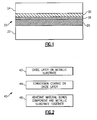
- Figure 1 illustrates selected portions of an example adhesively bonded article 20.
- the adhesively bonded article 20 is not limited to any particular kind of article.
- the adhesively bonded article 20 may be an aircraft component that has a composite structure.
- the composite structure may be a honeycomb composite that includes two sheets and a honeycomb material bonded between the sheets.
- the adhesively bonded article 20 includes a first sub-component 22 and a second sub-component 24 that is adhesively bonded to the first sub-component 22.
- the sub-components 22 and 24 are not limited to any particular kind.
- the first sub-component 22 is a metallic substrate, such as a sheet of aluminum alloy.
- the aluminum alloy may be aluminum 2xxx, aluminum 5xxx, aluminum 3XXX, aluminum 6xxx, aluminum 7xxx, or other desirable aluminum alloy composition.
- the second sub-component 24 is not limited to any particular type of sub-component. In the case of a honeycomb composite, the second sub-component 24 may be a honeycomb material that is bonded to the metallic substrate.
- the first-subcomponent 22 includes an oxide layer 26 that is located at least on the surface of the first-subcomponent 22 that is to be bonded to the second sub-component 24.
- the oxide layer 26 may be an oxide of an element or elements that form the metallic substrate.
- the oxide layer 26 may be aluminum oxide, where the aluminum in the oxide is from the aluminum alloy of the first-subcomponent 22.
- the adhesively bonded article 20 also includes a bond promoter coating 28, which is also considered to be a barrier coating, between the oxide layer 26 and an adhesive material 30.
- the bond promoter coating 28 may be a phosphonate conversion coating that functions to resist hydration of the oxide layer 26.
- the bond promoter coating 28 may be formed by treating the oxide layer 26 with a conversion coating solution.
- the bond promoter coating 28 may be a derivative of the selected conversion coating solution.
- the bond promoter coating 28 is a monolayer coating.
- the monolayer coating has a unitary molecular thickness and is generally 100 angstroms or less in thickness.
- the adhesive material 30 may be epoxy or other type of polymeric material that is suitable for bonding the first sub-component 22 and the second sub-component 24 together.
- the oxide layer 26 can adsorb moisture from the adhesive material 30.
- the moisture can hydrate the oxide layer 26 and convert the oxide layer 26 (e.g., Al 2 O 3 ) into less desirable types of oxides.
- aluminum oxide can hydrate to AIOOH (oxyhydroxide boehmite), Al(OH) 3 (bayerite), other oxide phases, or combinations thereof that exhibit weaker bonds with the underlying metallic substrate and thereby weaken the bond strength between the first sub-component 22 and the second sub-component 24.
- the bond promoter coating 28 resists hydration of the oxide layer 26 to thereby provide a stronger and more durable bond between the first sub-component 22 and the second sub-component 24.
- Figure 2 illustrates an example method 40 for adhesively bonding a metallic substrate and a component together.
- the method 40 may be used to fabricate the adhesively bonded article 20 as described above.
- the method 40 includes steps 42, 44, and 46.
- Step 42 includes treating the metallic substrate to form the oxide layer 26 thereon.
- Step 44 includes treating the oxide layer 26 with a conversion coating solution to form the bond promoter coating 28 on the oxide layer 26, and
- step 46 includes depositing the adhesive material 30 on the bond promoter coating 28 to bond the metallic substrate (first sub-component 22) and the second sub-component 24 together.
- Step 42 may include anodizing the metallic substrate to form the oxide layer 26.
- the anodizing may be conducted in a known manner using a suitable anodizing solution.
- the anodizing solution may be sulfuric acid, phosphoric acid, organic acid, boric acid, chromic acid or combinations thereof, but the anodizing solution is not limited to these examples.
- organic acids include malic acid, sulphonated aromatic acids, sulfosalicylic acid, oxalic acid, tartaric acid, or combinations thereof.
- step 42 includes naturally forming the oxide layer 26 on the metallic substrate by exposing the metallic substrate to air. The oxidation may be accelerated with the application of heat and exposure to air or other oxidizing gas.
- Step 44 includes treating the oxide layer 26 with a conversion coating solution to form the bond promoter coating 28 on the oxide layer 26.
- the type of conversion coating solution that a user selects may depend upon the type of bond promoter coating 28 that the user desires to form.
- the conversion coating solution may include trivalent chromium and phosphonic acid.
- the phosphonic acid may be nitrilotris (methyelene) triphosphonic acid.
- the parameters of the conversion coating process such as the composition of the conversion coating solution and the treatment time may be controlled in a known manner to form the bond promoter coating 28 as a monolayer barrier coating on the oxide layer 26. In this regard, the composition of the monolayer barrier coating depends upon the composition of the conversion coating solution.
- the monolayer barrier coating is a phosphonate monolayer and functions as described above to resist or limit hydration of the underlying oxide layer 26.
- the bond promoter coating 28 thereby functions to decrease or reduce the rate of water diffusion from the adhesive material 30 into the oxide layer 26.
- Step 46 may include depositing the adhesive material 30 onto the bond promoter coating 28, the second sub-component 24, or both to bond the first sub-component 22 and the second sub-component 24 together.
- the depositing of the adhesive material may include a known technique, such as spraying, painting, depositing by syringe, or other known technique.
- an additional step of curing the adhesive may follow step 46. Given this description, one of ordinary skill in the art will recognize other steps that may be used in combination with the described method 40 to suit their particular needs, either prior to, in between, or subsequent to the steps 42, 44, and 46.
Landscapes
- Chemical & Material Sciences (AREA)
- Organic Chemistry (AREA)
- Engineering & Computer Science (AREA)
- Chemical Kinetics & Catalysis (AREA)
- Materials Engineering (AREA)
- Metallurgy (AREA)
- General Chemical & Material Sciences (AREA)
- Electrochemistry (AREA)
- Mechanical Engineering (AREA)
- Ceramic Engineering (AREA)
- Adhesives Or Adhesive Processes (AREA)
- Laminated Bodies (AREA)
Abstract
Description
- This disclosure relates to adhesively bonded joints. Assembled components, such as aircraft components, may utilize an adhesive material to hold two or more sub-components together. Typically, at least one of the sub-components is metallic. A primer layer may be applied to at least one of the sub-components to help form a strong bond. The primer layer may contain hexavalent chromium to protect the metallic sub-component from corrosion and provide a strong bond.
- An example method for adhesively bonding a metallic substrate and a component together includes treating the metallic substrate to form an oxide layer thereon, treating the oxide layer with a conversion coating solution to form a bond promoter coating on the oxide layer, and depositing an adhesive material on the bond promoter coating to bond the component and the metallic substrate together.
- An example method for inhibiting hydration of an adhesive joint in an adhesively bonded article having a metallic substrate, an oxide coating on the metallic substrate, and an adhesive material that joins the metallic substrate and a component, includes resisting hydration of the oxide layer by using a bond promoter coating as a barrier between the oxide layer and the adhesive material.
- An example adhesively bonded article includes a metallic substrate having an oxide layer thereon, a bond promoter coating on the oxide layer, an adhesive material on the bond promoter coating, and a component bonded to the metallic substrate by way of the adhesive material.
- The various features and advantages of the disclosed examples will become apparent to those skilled in the art from the following detailed description. The drawings that accompany the detailed description can be briefly described as follows.
-
Figure 1 illustrates an example adhesively bonded article. -
Figure 2 illustrates an example method for adhesively bonding sub-components together to form an adhesively bonded article. -
Figure 1 illustrates selected portions of an example adhesively bondedarticle 20. The adhesivelybonded article 20 is not limited to any particular kind of article. In one example, the adhesivelybonded article 20 may be an aircraft component that has a composite structure. The composite structure may be a honeycomb composite that includes two sheets and a honeycomb material bonded between the sheets. - In the illustrated example, the adhesively bonded
article 20 includes afirst sub-component 22 and asecond sub-component 24 that is adhesively bonded to thefirst sub-component 22. In this regard thesub-components first sub-component 22 is a metallic substrate, such as a sheet of aluminum alloy. The aluminum alloy may be aluminum 2xxx, aluminum 5xxx, aluminum 3XXX, aluminum 6xxx, aluminum 7xxx, or other desirable aluminum alloy composition. Likewise, thesecond sub-component 24 is not limited to any particular type of sub-component. In the case of a honeycomb composite, thesecond sub-component 24 may be a honeycomb material that is bonded to the metallic substrate. - The first-
subcomponent 22 includes anoxide layer 26 that is located at least on the surface of the first-subcomponent 22 that is to be bonded to thesecond sub-component 24. Theoxide layer 26 may be an oxide of an element or elements that form the metallic substrate. For instance, theoxide layer 26 may be aluminum oxide, where the aluminum in the oxide is from the aluminum alloy of the first-subcomponent 22. - The adhesively bonded
article 20 also includes abond promoter coating 28, which is also considered to be a barrier coating, between theoxide layer 26 and anadhesive material 30. Thebond promoter coating 28 may be a phosphonate conversion coating that functions to resist hydration of theoxide layer 26. As will be described below, thebond promoter coating 28 may be formed by treating theoxide layer 26 with a conversion coating solution. In this regard, thebond promoter coating 28 may be a derivative of the selected conversion coating solution. In some examples, thebond promoter coating 28 is a monolayer coating. The monolayer coating has a unitary molecular thickness and is generally 100 angstroms or less in thickness. Theadhesive material 30 may be epoxy or other type of polymeric material that is suitable for bonding thefirst sub-component 22 and thesecond sub-component 24 together. - The
oxide layer 26 can adsorb moisture from theadhesive material 30. The moisture can hydrate theoxide layer 26 and convert the oxide layer 26 (e.g., Al2O3) into less desirable types of oxides. For instance, aluminum oxide can hydrate to AIOOH (oxyhydroxide boehmite), Al(OH)3 (bayerite), other oxide phases, or combinations thereof that exhibit weaker bonds with the underlying metallic substrate and thereby weaken the bond strength between thefirst sub-component 22 and thesecond sub-component 24. However, in the disclosed examples, thebond promoter coating 28 resists hydration of theoxide layer 26 to thereby provide a stronger and more durable bond between thefirst sub-component 22 and thesecond sub-component 24. -
Figure 2 illustrates anexample method 40 for adhesively bonding a metallic substrate and a component together. For instance, themethod 40 may be used to fabricate the adhesively bondedarticle 20 as described above. In the illustrated example, themethod 40 includessteps Step 42 includes treating the metallic substrate to form theoxide layer 26 thereon.Step 44 includes treating theoxide layer 26 with a conversion coating solution to form the bond promoter coating 28 on theoxide layer 26, andstep 46 includes depositing theadhesive material 30 on thebond promoter coating 28 to bond the metallic substrate (first sub-component 22) and thesecond sub-component 24 together. -
Step 42 may include anodizing the metallic substrate to form theoxide layer 26. The anodizing may be conducted in a known manner using a suitable anodizing solution. For instance, the anodizing solution may be sulfuric acid, phosphoric acid, organic acid, boric acid, chromic acid or combinations thereof, but the anodizing solution is not limited to these examples. A few examples of organic acids include malic acid, sulphonated aromatic acids, sulfosalicylic acid, oxalic acid, tartaric acid, or combinations thereof. Alternatively,step 42 includes naturally forming theoxide layer 26 on the metallic substrate by exposing the metallic substrate to air. The oxidation may be accelerated with the application of heat and exposure to air or other oxidizing gas. -
Step 44 includes treating theoxide layer 26 with a conversion coating solution to form the bond promoter coating 28 on theoxide layer 26. The type of conversion coating solution that a user selects may depend upon the type ofbond promoter coating 28 that the user desires to form. For example, the conversion coating solution may include trivalent chromium and phosphonic acid. The phosphonic acid may be nitrilotris (methyelene) triphosphonic acid. Additionally, the parameters of the conversion coating process, such as the composition of the conversion coating solution and the treatment time may be controlled in a known manner to form thebond promoter coating 28 as a monolayer barrier coating on theoxide layer 26. In this regard, the composition of the monolayer barrier coating depends upon the composition of the conversion coating solution. For the above phosphonic acid conversion coating solution, the monolayer barrier coating is a phosphonate monolayer and functions as described above to resist or limit hydration of the underlyingoxide layer 26. Thebond promoter coating 28 thereby functions to decrease or reduce the rate of water diffusion from theadhesive material 30 into theoxide layer 26. -
Step 46 may include depositing theadhesive material 30 onto thebond promoter coating 28, thesecond sub-component 24, or both to bond thefirst sub-component 22 and thesecond sub-component 24 together. In this regard, the depositing of the adhesive material may include a known technique, such as spraying, painting, depositing by syringe, or other known technique. Depending on the type ofadhesive material 30 that a user selects, an additional step of curing the adhesive may followstep 46. Given this description, one of ordinary skill in the art will recognize other steps that may be used in combination with the describedmethod 40 to suit their particular needs, either prior to, in between, or subsequent to thesteps - Although a combination of features is shown in the illustrated examples, not all of them need to be combined to realize the benefits of various embodiments of this disclosure. In other words, a system designed according to an embodiment of this disclosure will not necessarily include all of the features shown in any one of the Figures or all of the portions schematically shown in the Figures. Moreover, selected features of one example embodiment may be combined with selected features of other example embodiments.
- The preceding description is exemplary rather than limiting in nature. Variations and modifications to the disclosed examples may become apparent to those skilled in the art that do not necessarily depart from the essence of this disclosure. The scope of legal protection given to this disclosure can only be determined by studying the following claims.
Claims (15)
- A method for adhesively bonding a metallic substrate and a component together, the method comprising:treating the metallic substrate to form an oxide layer thereon;treating the oxide layer with a conversion coating solution to form a bond promoter coating on the oxide layer; anddepositing an adhesive material on the bond promoter coatingto bond the component and the metallic substrate together.
- The method as recited in claim 1, wherein the treating of the metallic substrate includes anodizing.
- The method as recited in claim 2, wherein the anodizing includes using a solution selected from a group consisting of sulfuric acid, phosphoric acid, organic acid, boric acid, chromic acid, and combinations thereof.
- The method as recited in any preceding claim, wherein the conversion coating solution includes trivalent chromium.
- The method as recited in claim 4, wherein the conversion coating solution includes phosphonic acid and trivalent chromium.
- The method as recited in any preceding claim, wherein the conversion coating solution includes nitrilotris (methyelene) triphosphonic acid.
- The method as recited in any preceding claim, wherein the bond promoter coating is a phosphonate monolayer coating.
- The method as recited in any preceding claim, wherein the adhesive material is epoxy.
- A method for inhibiting hydration of an adhesive joint, the method comprising:in an adhesively bonded article having a metallic substrate, an oxide layer on the metallic substrate, and an adhesive material joining a component and the metallic substrate together, resisting hydration of the oxide layer by using a bond promoter coating as a barrier between the oxide layer and the adhesive material.
- The method as recited in claim 9, including limiting diffusion movement of water from the adhesive material to the oxide layer using the bond promoter coating.
- The method as recited in claim 9 or claim 10, wherein the bond promoter coating is a phosphonate monolayer coating, preferably wherein the phosphonate monolayer coating is a conversion coating.
- The method as recited in any of claims 9-11, wherein the oxide layer is aluminum oxide, and the resisting of hydration of the oxide layer includes resisting conversion of the aluminum oxide into oxyhydroxide boehmite, bayerite, or combinations thereof.
- An adhesively bonded article comprising:a metallic substrate, preferably an aluminum alloy, having an oxide layer thereon;a bond promoter coating, preferably a phosphonate conversion coating, on the oxide layer;an adhesive material on the bond promoter coating; anda component bonded to the metallic substrate by way of the adhesive material.
- The adhesively bonded article as recited in claim 13, wherein the bond promoter coating is a monolayer bond promoter coating.
- The adhesively bonded article as recited in claim 13 or claim 14, wherein the adhesive material is epoxy.
Applications Claiming Priority (1)
| Application Number | Priority Date | Filing Date | Title |
|---|---|---|---|
| US12/870,892 US8574396B2 (en) | 2010-08-30 | 2010-08-30 | Hydration inhibitor coating for adhesive bonds |
Publications (2)
| Publication Number | Publication Date |
|---|---|
| EP2423284A1 true EP2423284A1 (en) | 2012-02-29 |
| EP2423284B1 EP2423284B1 (en) | 2017-10-04 |
Family
ID=44651520
Family Applications (1)
| Application Number | Title | Priority Date | Filing Date |
|---|---|---|---|
| EP11250708.2A Active EP2423284B1 (en) | 2010-08-30 | 2011-08-05 | Hydration inhibitor coating for adhesive bonds |
Country Status (2)
| Country | Link |
|---|---|
| US (2) | US8574396B2 (en) |
| EP (1) | EP2423284B1 (en) |
Cited By (2)
| Publication number | Priority date | Publication date | Assignee | Title |
|---|---|---|---|---|
| FR3051805A1 (en) * | 2016-05-30 | 2017-12-01 | Turbomeca | CHROMATATION PROCESS AND PIECE OBTAINED BY THIS METHOD |
| CN110249077A (en) * | 2017-03-06 | 2019-09-17 | 奥科宁克公司 | Method and associated product of the preprocessing 7XXX aluminium alloy so as to adhesive bond |
Families Citing this family (3)
| Publication number | Priority date | Publication date | Assignee | Title |
|---|---|---|---|---|
| US9643381B2 (en) * | 2014-05-19 | 2017-05-09 | Vindicoat, Llc | Composite binding materials |
| CN110177902B (en) * | 2017-01-18 | 2021-06-25 | 奥科宁克技术有限责任公司 | Method for preprocessing 7XXX aluminum alloys for adhesive bonding and related products |
| PL4025422T3 (en) | 2020-11-25 | 2023-08-14 | Süper Film Ambalaj Sanayi Ve Ticaret A.S. | Metallized biaxially oriented polypropylene (bopp) film structure |
Citations (4)
| Publication number | Priority date | Publication date | Assignee | Title |
|---|---|---|---|---|
| US4308079A (en) * | 1980-06-16 | 1981-12-29 | Martin Marietta Corporation | Durability of adhesively bonded aluminum structures and method for inhibiting the conversion of aluminum oxide to aluminum hydroxide |
| US5032237A (en) * | 1989-08-23 | 1991-07-16 | Aluminum Company Of America | Anodic phosphonic/phosphinic acid duplex coating on valve metal surface |
| EP1369503A2 (en) * | 2002-05-22 | 2003-12-10 | United Technologies Corporation | Corrosion resistant surface treatment for structural adhesive bonding to metal |
| EP1378585A1 (en) * | 2002-06-27 | 2004-01-07 | United Technologies Corporation | Corrosion resistant trivalent chromium phosphated chemical conversion coatings |
Family Cites Families (44)
| Publication number | Priority date | Publication date | Assignee | Title |
|---|---|---|---|---|
| US3808031A (en) | 1968-05-31 | 1974-04-30 | Chromalloy American Corp | Multi-metal corrosion-resistant diffusion coatings |
| US4085012A (en) * | 1974-02-07 | 1978-04-18 | The Boeing Company | Method for providing environmentally stable aluminum surfaces for adhesive bonding and product produced |
| US4107004A (en) | 1975-03-26 | 1978-08-15 | International Lead Zinc Research Organization, Inc. | Trivalent chromium electroplating baths and method |
| US4171231A (en) | 1978-04-27 | 1979-10-16 | R. O. Hull & Company, Inc. | Coating solutions of trivalent chromium for coating zinc surfaces |
| JPS5845396A (en) | 1981-09-11 | 1983-03-16 | Nippon Steel Corp | Ni-zn alloy plated steel plate for fuel vessel |
| US4416737A (en) | 1982-02-11 | 1983-11-22 | National Steel Corporation | Process of electroplating a nickel-zinc alloy on steel strip |
| US4859289A (en) | 1986-05-26 | 1989-08-22 | Sumitomo Electric Industries, Ltd. | Process for producing a metal wire useful as rubber product reinforcement |
| US5188905A (en) | 1988-05-17 | 1993-02-23 | Nippon Steel Corporation | Coated steel sheets |
| JPH0218982A (en) | 1988-07-07 | 1990-01-23 | Matsushita Electric Ind Co Ltd | Method for manufacturing hybrid integrated circuit device |
| US5246786A (en) | 1988-10-29 | 1993-09-21 | Usui Kokusai Sangyo Kaisha Ltd. | Steel product with heat-resistant, corrosion-resistant plating layers |
| JPH02263633A (en) | 1989-04-04 | 1990-10-26 | Nippon Steel Corp | High corrosion-resistant colored thin film coated steel plate with excellent press workability and spot weldability |
| DE69109928T2 (en) | 1990-04-20 | 1996-02-08 | Sumitomo Metal Ind | Improved, corrosion-resistant, surface-coated steel sheet. |
| JPH0753913B2 (en) | 1990-11-14 | 1995-06-07 | 新日本製鐵株式会社 | Method for manufacturing organic composite plated steel sheet |
| JP2788131B2 (en) | 1991-01-29 | 1998-08-20 | 日本パーカライジング株式会社 | Method for forming composite film on aluminum or aluminum alloy surface |
| JPH05106058A (en) | 1991-10-18 | 1993-04-27 | Kawasaki Steel Corp | Highly corrosion-resistant surface-treated steel sheet for fuel containers |
| US5306526A (en) | 1992-04-02 | 1994-04-26 | Ppg Industries, Inc. | Method of treating nonferrous metal surfaces by means of an acid activating agent and an organophosphate or organophosphonate and substrates treated by such method |
| JP3272422B2 (en) | 1992-10-29 | 2002-04-08 | 日本パーカライジング株式会社 | Water-based metal surface treatment composition with excellent lubricity |
| CA2113968C (en) | 1993-07-29 | 2000-05-30 | Junichi Mano | Chromated metal sheet having high corrosion resistance with improved lubricity and electric conductivity |
| US5374347A (en) | 1993-09-27 | 1994-12-20 | The United States Of America As Represented By The Secretary Of The Navy | Trivalent chromium solutions for sealing anodized aluminum |
| US5304257A (en) | 1993-09-27 | 1994-04-19 | The United States Of America As Represented By The Secretary Of The Navy | Trivalent chromium conversion coatings for aluminum |
| US5595831A (en) | 1994-01-28 | 1997-01-21 | Clark; Eugene V. | Cadium-free corrosion protection for turbines |
| JP3614190B2 (en) | 1994-08-25 | 2005-01-26 | 日本パーカライジング株式会社 | Two-component lubricating chromate treatment composition for metal materials and treatment method |
| US6500565B2 (en) | 1994-08-30 | 2002-12-31 | Usui Kokusai Sangyo Kaisha Limited | Corrosion resistant resin coating structure in a metal tube |
| JPH08100272A (en) | 1994-10-03 | 1996-04-16 | Sumitomo Metal Ind Ltd | Lubricated steel sheet having excellent conductivity and method for producing the same |
| JPH08176845A (en) | 1994-12-28 | 1996-07-09 | Kobe Steel Ltd | Chromated steel sheet excellent in corrosion resistance, lubricity and flawing resistance |
| US5944935A (en) * | 1996-07-24 | 1999-08-31 | Zukas; Florian J. | Preparation of adhesively bonded sandwich structures |
| JPH10168581A (en) | 1996-12-11 | 1998-06-23 | Nippon Steel Corp | Aluminum plated steel sheet or aluminum plated steel sheet for fuel tank |
| KR100453387B1 (en) | 1996-07-31 | 2004-10-15 | 신닛뽄세이테쯔 카부시키카이샤 | Preservative steel plate having high resistance weldability, corrosion resistance and press formability for automobile fuel tanks |
| US6361622B1 (en) | 1997-08-21 | 2002-03-26 | Henkel Corporation | Process for coating and/or touching up coatings on metal surfaces |
| JPH11217682A (en) | 1998-01-28 | 1999-08-10 | Nippon Steel Corp | Surface treated steel sheet for fuel containers with excellent corrosion resistance after painting |
| CN1178999C (en) | 1998-06-01 | 2004-12-08 | 日本帕卡濑精株式会社 | Water-based surface treatment agent for metallic materials |
| US6387538B1 (en) | 1998-12-01 | 2002-05-14 | Pohang Iron & Steel Co., Ltd. | Surface-treated steel sheet for fuel tanks and method of fabricating same |
| WO2000035595A1 (en) | 1998-12-11 | 2000-06-22 | Henkel Corporation | Composition and process for treating metal surfaces |
| WO2001092595A1 (en) | 2000-05-31 | 2001-12-06 | Isoflux, Inc. | Unbalanced plasma generating apparatus having cylindrical symmetry |
| SK286661B6 (en) | 2000-09-07 | 2009-03-05 | Nippon Steel Corporation | Hexavalent chromium-free surface-treating agent for Sn- or Al-based coated steel sheet, and surface treated steel sheet |
| US6527841B2 (en) | 2000-10-31 | 2003-03-04 | The United States Of America As Represented By The Secretary Of The Navy | Post-treatment for metal coated substrates |
| US6375726B1 (en) | 2000-10-31 | 2002-04-23 | The United States Of America As Represented By The Secretary Of The Navy | Corrosion resistant coatings for aluminum and aluminum alloys |
| MY138251A (en) | 2001-06-06 | 2009-05-29 | Thermphos Trading Gmbh | Method for inhibiting calcium salt scale |
| US6631622B1 (en) | 2002-03-22 | 2003-10-14 | Whirlpool Corporation | Demand side management of freezer systems |
| US6648986B1 (en) | 2002-05-13 | 2003-11-18 | United Technologies Corporation | Stability additive for trivalent chrome conversion coating bath solutions |
| US6756134B2 (en) | 2002-09-23 | 2004-06-29 | United Technologies Corporation | Zinc-diffused alloy coating for corrosion/heat protection |
| US8477684B2 (en) | 2005-10-27 | 2013-07-02 | Qualcomm Incorporated | Acknowledgement of control messages in a wireless communication system |
| ES2444406T3 (en) | 2007-06-14 | 2014-02-24 | Atotech Deutschland Gmbh | Anti-corrosion treatment for conversion layers |
| JP5106058B2 (en) | 2007-11-16 | 2012-12-26 | キヤノン株式会社 | Printing system for judging abnormality of printing control device and restoring printing device |
-
2010
- 2010-08-30 US US12/870,892 patent/US8574396B2/en active Active
-
2011
- 2011-08-05 EP EP11250708.2A patent/EP2423284B1/en active Active
-
2013
- 2013-10-04 US US14/046,023 patent/US20140037893A1/en not_active Abandoned
Patent Citations (4)
| Publication number | Priority date | Publication date | Assignee | Title |
|---|---|---|---|---|
| US4308079A (en) * | 1980-06-16 | 1981-12-29 | Martin Marietta Corporation | Durability of adhesively bonded aluminum structures and method for inhibiting the conversion of aluminum oxide to aluminum hydroxide |
| US5032237A (en) * | 1989-08-23 | 1991-07-16 | Aluminum Company Of America | Anodic phosphonic/phosphinic acid duplex coating on valve metal surface |
| EP1369503A2 (en) * | 2002-05-22 | 2003-12-10 | United Technologies Corporation | Corrosion resistant surface treatment for structural adhesive bonding to metal |
| EP1378585A1 (en) * | 2002-06-27 | 2004-01-07 | United Technologies Corporation | Corrosion resistant trivalent chromium phosphated chemical conversion coatings |
Non-Patent Citations (4)
| Title |
|---|
| D. A. HARDWICK ET AL: "Environmental durability of aluminium adhesive joints protected with hydration inhibitors", JOURNAL OF MATERIALS SCIENCE, vol. 19, no. 1, 1 January 1984 (1984-01-01), pages 223 - 232, XP055008992, ISSN: 0022-2461, DOI: 10.1007/BF00553012 * |
| D. A. HARDWICK ET AL: "Environmental durability of phosphoric acid anodized aluminium adhesive joints protected with hydration inhibitors", JOURNAL OF MATERIALS SCIENCE, vol. 21, no. 1, 1 January 1986 (1986-01-01), pages 179 - 187, XP055008998, ISSN: 0022-2461, DOI: 10.1007/BF01144718 * |
| G. D. DAVIS ET AL: "Use of hydration inhibitors to improve bond durability of aluminium adhesive joints", JOURNAL OF MATERIALS SCIENCE, vol. 20, no. 3, 1 March 1985 (1985-03-01), pages 975 - 988, XP055008997, ISSN: 0022-2461, DOI: 10.1007/BF00585742 * |
| L. J. MATIENZO ET AL: "Environmental and adhesive durability of aluminium-polymer systems protected with organic corrosion inhibitors", JOURNAL OF MATERIALS SCIENCE, vol. 21, no. 5, 1 May 1986 (1986-05-01), pages 1601 - 1608, XP055008995, ISSN: 0022-2461, DOI: 10.1007/BF01114714 * |
Cited By (5)
| Publication number | Priority date | Publication date | Assignee | Title |
|---|---|---|---|---|
| FR3051805A1 (en) * | 2016-05-30 | 2017-12-01 | Turbomeca | CHROMATATION PROCESS AND PIECE OBTAINED BY THIS METHOD |
| WO2017207909A1 (en) * | 2016-05-30 | 2017-12-07 | Safran Helicopter Engines | Chromating method and component obtained by this method |
| CN109312468A (en) * | 2016-05-30 | 2019-02-05 | 赛峰直升机发动机公司 | Chromating method and components obtained therefrom |
| CN110249077A (en) * | 2017-03-06 | 2019-09-17 | 奥科宁克公司 | Method and associated product of the preprocessing 7XXX aluminium alloy so as to adhesive bond |
| CN110249077B (en) * | 2017-03-06 | 2022-05-31 | 奥科宁克技术有限责任公司 | Method for preprocessing 7XXX aluminum alloys for adhesive bonding and related products |
Also Published As
| Publication number | Publication date |
|---|---|
| EP2423284B1 (en) | 2017-10-04 |
| US20120052304A1 (en) | 2012-03-01 |
| US20140037893A1 (en) | 2014-02-06 |
| US8574396B2 (en) | 2013-11-05 |
Similar Documents
| Publication | Publication Date | Title |
|---|---|---|
| US8574396B2 (en) | Hydration inhibitor coating for adhesive bonds | |
| EP2474645A1 (en) | Aluminum alloy article, aluminum alloy member, and production method therefor | |
| JP6426135B2 (en) | Method of manufacturing a metal sheet having a Zn-Al-Mg coating, comprising the application of an acidic solution and an adhesive, and the corresponding metal sheet and assembly | |
| KR102290004B1 (en) | Exterior material for lithium cell | |
| CN105228822B (en) | Aluminum alloy plate, joined body and automotive components | |
| US20160160355A1 (en) | Pretreatment of metal surfaces with a calcium-containing aqueous agent | |
| JP6622276B2 (en) | Aluminum plastic film wrapping material for lithium batteries to extend the service life | |
| US20050150771A1 (en) | Method for anodizing aluminum materials | |
| JP2016089261A (en) | Aluminum alloy material, joined body, automotive member, and method for producing aluminum alloy material | |
| US20170066220A1 (en) | Aluminum alloy plate, joined body, and automotive member | |
| US20250051611A1 (en) | Corrosion inhibition system primers and adhesives for metal bond structures | |
| EP1361259B1 (en) | Fiber-metal laninate interphase coating | |
| KR101315533B1 (en) | Surface treated aluminium alloy material and bonded body using thereof | |
| US6686057B2 (en) | Chromate-free coating for metal honeycomb | |
| JP5374320B2 (en) | Surface-treated aluminum alloy material excellent in adhesion durability and surface treatment method of the aluminum alloy material | |
| CN110835753B (en) | Coated steel material having chemical conversion coating and method for producing same | |
| KR100775108B1 (en) | Coated metal sheet having small environmental impact | |
| JP6664308B2 (en) | Material for gasket | |
| JP3898039B2 (en) | Aluminum material for resin film coating excellent in film adhesion and resin film coated aluminum material | |
| US20230278646A1 (en) | Method for producing a body component of a vehicle body of a vehicle, and body component and vehicle body | |
| JP4102723B2 (en) | Surface treatment material and manufacturing method thereof, structure of transportation means and structure of railway vehicle | |
| JP5359916B2 (en) | Painted metal plate with low environmental impact | |
| KR102159112B1 (en) | Surface treatment process for magnesium parts and magnesium parts treated by using the same | |
| JP4871232B2 (en) | Method for producing barrier laminated film | |
| CN105814238A (en) | Flat product with a coating system and process for coating said flat product |
Legal Events
| Date | Code | Title | Description |
|---|---|---|---|
| AK | Designated contracting states |
Kind code of ref document: A1 Designated state(s): AL AT BE BG CH CY CZ DE DK EE ES FI FR GB GR HR HU IE IS IT LI LT LU LV MC MK MT NL NO PL PT RO RS SE SI SK SM TR |
|
| AX | Request for extension of the european patent |
Extension state: BA ME |
|
| PUAI | Public reference made under article 153(3) epc to a published international application that has entered the european phase |
Free format text: ORIGINAL CODE: 0009012 |
|
| 17P | Request for examination filed |
Effective date: 20120817 |
|
| 17Q | First examination report despatched |
Effective date: 20151104 |
|
| RAP1 | Party data changed (applicant data changed or rights of an application transferred) |
Owner name: UNITED TECHNOLOGIES CORPORATION |
|
| GRAP | Despatch of communication of intention to grant a patent |
Free format text: ORIGINAL CODE: EPIDOSNIGR1 |
|
| STAA | Information on the status of an ep patent application or granted ep patent |
Free format text: STATUS: GRANT OF PATENT IS INTENDED |
|
| RIC1 | Information provided on ipc code assigned before grant |
Ipc: B32B 7/12 20060101ALI20170126BHEP Ipc: C25D 11/18 20060101ALI20170126BHEP Ipc: C25D 11/02 20060101ALI20170126BHEP Ipc: C23F 11/167 20060101ALI20170126BHEP Ipc: C23C 22/78 20060101ALI20170126BHEP Ipc: B32B 9/04 20060101ALI20170126BHEP Ipc: C23C 22/00 20060101ALI20170126BHEP Ipc: C25D 11/24 20060101ALI20170126BHEP Ipc: B32B 3/12 20060101ALI20170126BHEP Ipc: C09J 5/02 20060101AFI20170126BHEP |
|
| INTG | Intention to grant announced |
Effective date: 20170215 |
|
| GRAS | Grant fee paid |
Free format text: ORIGINAL CODE: EPIDOSNIGR3 |
|
| GRAA | (expected) grant |
Free format text: ORIGINAL CODE: 0009210 |
|
| STAA | Information on the status of an ep patent application or granted ep patent |
Free format text: STATUS: THE PATENT HAS BEEN GRANTED |
|
| AK | Designated contracting states |
Kind code of ref document: B1 Designated state(s): AL AT BE BG CH CY CZ DE DK EE ES FI FR GB GR HR HU IE IS IT LI LT LU LV MC MK MT NL NO PL PT RO RS SE SI SK SM TR |
|
| REG | Reference to a national code |
Ref country code: GB Ref legal event code: FG4D |
|
| REG | Reference to a national code |
Ref country code: CH Ref legal event code: EP |
|
| REG | Reference to a national code |
Ref country code: AT Ref legal event code: REF Ref document number: 934010 Country of ref document: AT Kind code of ref document: T Effective date: 20171015 |
|
| REG | Reference to a national code |
Ref country code: IE Ref legal event code: FG4D |
|
| REG | Reference to a national code |
Ref country code: DE Ref legal event code: R096 Ref document number: 602011042077 Country of ref document: DE |
|
| REG | Reference to a national code |
Ref country code: NL Ref legal event code: MP Effective date: 20171004 |
|
| REG | Reference to a national code |
Ref country code: LT Ref legal event code: MG4D |
|
| REG | Reference to a national code |
Ref country code: AT Ref legal event code: MK05 Ref document number: 934010 Country of ref document: AT Kind code of ref document: T Effective date: 20171004 |
|
| PG25 | Lapsed in a contracting state [announced via postgrant information from national office to epo] |
Ref country code: NL Free format text: LAPSE BECAUSE OF FAILURE TO SUBMIT A TRANSLATION OF THE DESCRIPTION OR TO PAY THE FEE WITHIN THE PRESCRIBED TIME-LIMIT Effective date: 20171004 |
|
| PG25 | Lapsed in a contracting state [announced via postgrant information from national office to epo] |
Ref country code: FI Free format text: LAPSE BECAUSE OF FAILURE TO SUBMIT A TRANSLATION OF THE DESCRIPTION OR TO PAY THE FEE WITHIN THE PRESCRIBED TIME-LIMIT Effective date: 20171004 Ref country code: NO Free format text: LAPSE BECAUSE OF FAILURE TO SUBMIT A TRANSLATION OF THE DESCRIPTION OR TO PAY THE FEE WITHIN THE PRESCRIBED TIME-LIMIT Effective date: 20180104 Ref country code: ES Free format text: LAPSE BECAUSE OF FAILURE TO SUBMIT A TRANSLATION OF THE DESCRIPTION OR TO PAY THE FEE WITHIN THE PRESCRIBED TIME-LIMIT Effective date: 20171004 Ref country code: LT Free format text: LAPSE BECAUSE OF FAILURE TO SUBMIT A TRANSLATION OF THE DESCRIPTION OR TO PAY THE FEE WITHIN THE PRESCRIBED TIME-LIMIT Effective date: 20171004 Ref country code: SE Free format text: LAPSE BECAUSE OF FAILURE TO SUBMIT A TRANSLATION OF THE DESCRIPTION OR TO PAY THE FEE WITHIN THE PRESCRIBED TIME-LIMIT Effective date: 20171004 |
|
| PG25 | Lapsed in a contracting state [announced via postgrant information from national office to epo] |
Ref country code: RS Free format text: LAPSE BECAUSE OF FAILURE TO SUBMIT A TRANSLATION OF THE DESCRIPTION OR TO PAY THE FEE WITHIN THE PRESCRIBED TIME-LIMIT Effective date: 20171004 Ref country code: LV Free format text: LAPSE BECAUSE OF FAILURE TO SUBMIT A TRANSLATION OF THE DESCRIPTION OR TO PAY THE FEE WITHIN THE PRESCRIBED TIME-LIMIT Effective date: 20171004 Ref country code: GR Free format text: LAPSE BECAUSE OF FAILURE TO SUBMIT A TRANSLATION OF THE DESCRIPTION OR TO PAY THE FEE WITHIN THE PRESCRIBED TIME-LIMIT Effective date: 20180105 Ref country code: HR Free format text: LAPSE BECAUSE OF FAILURE TO SUBMIT A TRANSLATION OF THE DESCRIPTION OR TO PAY THE FEE WITHIN THE PRESCRIBED TIME-LIMIT Effective date: 20171004 Ref country code: AT Free format text: LAPSE BECAUSE OF FAILURE TO SUBMIT A TRANSLATION OF THE DESCRIPTION OR TO PAY THE FEE WITHIN THE PRESCRIBED TIME-LIMIT Effective date: 20171004 Ref country code: IS Free format text: LAPSE BECAUSE OF FAILURE TO SUBMIT A TRANSLATION OF THE DESCRIPTION OR TO PAY THE FEE WITHIN THE PRESCRIBED TIME-LIMIT Effective date: 20180204 Ref country code: BG Free format text: LAPSE BECAUSE OF FAILURE TO SUBMIT A TRANSLATION OF THE DESCRIPTION OR TO PAY THE FEE WITHIN THE PRESCRIBED TIME-LIMIT Effective date: 20180104 |
|
| REG | Reference to a national code |
Ref country code: DE Ref legal event code: R097 Ref document number: 602011042077 Country of ref document: DE |
|
| REG | Reference to a national code |
Ref country code: FR Ref legal event code: PLFP Year of fee payment: 8 |
|
| PG25 | Lapsed in a contracting state [announced via postgrant information from national office to epo] |
Ref country code: CZ Free format text: LAPSE BECAUSE OF FAILURE TO SUBMIT A TRANSLATION OF THE DESCRIPTION OR TO PAY THE FEE WITHIN THE PRESCRIBED TIME-LIMIT Effective date: 20171004 Ref country code: SK Free format text: LAPSE BECAUSE OF FAILURE TO SUBMIT A TRANSLATION OF THE DESCRIPTION OR TO PAY THE FEE WITHIN THE PRESCRIBED TIME-LIMIT Effective date: 20171004 Ref country code: EE Free format text: LAPSE BECAUSE OF FAILURE TO SUBMIT A TRANSLATION OF THE DESCRIPTION OR TO PAY THE FEE WITHIN THE PRESCRIBED TIME-LIMIT Effective date: 20171004 Ref country code: DK Free format text: LAPSE BECAUSE OF FAILURE TO SUBMIT A TRANSLATION OF THE DESCRIPTION OR TO PAY THE FEE WITHIN THE PRESCRIBED TIME-LIMIT Effective date: 20171004 |
|
| PLBE | No opposition filed within time limit |
Free format text: ORIGINAL CODE: 0009261 |
|
| STAA | Information on the status of an ep patent application or granted ep patent |
Free format text: STATUS: NO OPPOSITION FILED WITHIN TIME LIMIT |
|
| PG25 | Lapsed in a contracting state [announced via postgrant information from national office to epo] |
Ref country code: RO Free format text: LAPSE BECAUSE OF FAILURE TO SUBMIT A TRANSLATION OF THE DESCRIPTION OR TO PAY THE FEE WITHIN THE PRESCRIBED TIME-LIMIT Effective date: 20171004 Ref country code: PL Free format text: LAPSE BECAUSE OF FAILURE TO SUBMIT A TRANSLATION OF THE DESCRIPTION OR TO PAY THE FEE WITHIN THE PRESCRIBED TIME-LIMIT Effective date: 20171004 Ref country code: SM Free format text: LAPSE BECAUSE OF FAILURE TO SUBMIT A TRANSLATION OF THE DESCRIPTION OR TO PAY THE FEE WITHIN THE PRESCRIBED TIME-LIMIT Effective date: 20171004 Ref country code: IT Free format text: LAPSE BECAUSE OF FAILURE TO SUBMIT A TRANSLATION OF THE DESCRIPTION OR TO PAY THE FEE WITHIN THE PRESCRIBED TIME-LIMIT Effective date: 20171004 |
|
| 26N | No opposition filed |
Effective date: 20180705 |
|
| PG25 | Lapsed in a contracting state [announced via postgrant information from national office to epo] |
Ref country code: SI Free format text: LAPSE BECAUSE OF FAILURE TO SUBMIT A TRANSLATION OF THE DESCRIPTION OR TO PAY THE FEE WITHIN THE PRESCRIBED TIME-LIMIT Effective date: 20171004 |
|
| PG25 | Lapsed in a contracting state [announced via postgrant information from national office to epo] |
Ref country code: MC Free format text: LAPSE BECAUSE OF FAILURE TO SUBMIT A TRANSLATION OF THE DESCRIPTION OR TO PAY THE FEE WITHIN THE PRESCRIBED TIME-LIMIT Effective date: 20171004 |
|
| REG | Reference to a national code |
Ref country code: CH Ref legal event code: PL |
|
| PG25 | Lapsed in a contracting state [announced via postgrant information from national office to epo] |
Ref country code: CH Free format text: LAPSE BECAUSE OF NON-PAYMENT OF DUE FEES Effective date: 20180831 Ref country code: LI Free format text: LAPSE BECAUSE OF NON-PAYMENT OF DUE FEES Effective date: 20180831 Ref country code: LU Free format text: LAPSE BECAUSE OF NON-PAYMENT OF DUE FEES Effective date: 20180805 |
|
| REG | Reference to a national code |
Ref country code: BE Ref legal event code: MM Effective date: 20180831 |
|
| REG | Reference to a national code |
Ref country code: IE Ref legal event code: MM4A |
|
| PG25 | Lapsed in a contracting state [announced via postgrant information from national office to epo] |
Ref country code: IE Free format text: LAPSE BECAUSE OF NON-PAYMENT OF DUE FEES Effective date: 20180805 |
|
| PG25 | Lapsed in a contracting state [announced via postgrant information from national office to epo] |
Ref country code: BE Free format text: LAPSE BECAUSE OF NON-PAYMENT OF DUE FEES Effective date: 20180831 |
|
| PG25 | Lapsed in a contracting state [announced via postgrant information from national office to epo] |
Ref country code: MT Free format text: LAPSE BECAUSE OF NON-PAYMENT OF DUE FEES Effective date: 20180805 |
|
| PG25 | Lapsed in a contracting state [announced via postgrant information from national office to epo] |
Ref country code: TR Free format text: LAPSE BECAUSE OF FAILURE TO SUBMIT A TRANSLATION OF THE DESCRIPTION OR TO PAY THE FEE WITHIN THE PRESCRIBED TIME-LIMIT Effective date: 20171004 |
|
| PG25 | Lapsed in a contracting state [announced via postgrant information from national office to epo] |
Ref country code: PT Free format text: LAPSE BECAUSE OF FAILURE TO SUBMIT A TRANSLATION OF THE DESCRIPTION OR TO PAY THE FEE WITHIN THE PRESCRIBED TIME-LIMIT Effective date: 20171004 Ref country code: HU Free format text: LAPSE BECAUSE OF FAILURE TO SUBMIT A TRANSLATION OF THE DESCRIPTION OR TO PAY THE FEE WITHIN THE PRESCRIBED TIME-LIMIT; INVALID AB INITIO Effective date: 20110805 |
|
| PG25 | Lapsed in a contracting state [announced via postgrant information from national office to epo] |
Ref country code: CY Free format text: LAPSE BECAUSE OF FAILURE TO SUBMIT A TRANSLATION OF THE DESCRIPTION OR TO PAY THE FEE WITHIN THE PRESCRIBED TIME-LIMIT Effective date: 20171004 Ref country code: MK Free format text: LAPSE BECAUSE OF NON-PAYMENT OF DUE FEES Effective date: 20171004 |
|
| PG25 | Lapsed in a contracting state [announced via postgrant information from national office to epo] |
Ref country code: AL Free format text: LAPSE BECAUSE OF FAILURE TO SUBMIT A TRANSLATION OF THE DESCRIPTION OR TO PAY THE FEE WITHIN THE PRESCRIBED TIME-LIMIT Effective date: 20171004 |
|
| REG | Reference to a national code |
Ref country code: DE Ref legal event code: R081 Ref document number: 602011042077 Country of ref document: DE Owner name: RAYTHEON TECHNOLOGIES CORPORATION (N.D.GES.D.S, US Free format text: FORMER OWNER: UNITED TECHNOLOGIES CORPORATION, FARMINGTON, CONN., US Ref country code: DE Ref legal event code: R081 Ref document number: 602011042077 Country of ref document: DE Owner name: RTX CORPORATION (N.D.GES.D. STAATES DELAWARE),, US Free format text: FORMER OWNER: UNITED TECHNOLOGIES CORPORATION, FARMINGTON, CONN., US |
|
| P01 | Opt-out of the competence of the unified patent court (upc) registered |
Effective date: 20230520 |
|
| PGFP | Annual fee paid to national office [announced via postgrant information from national office to epo] |
Ref country code: DE Payment date: 20250724 Year of fee payment: 15 |
|
| PGFP | Annual fee paid to national office [announced via postgrant information from national office to epo] |
Ref country code: GB Payment date: 20250725 Year of fee payment: 15 |
|
| PGFP | Annual fee paid to national office [announced via postgrant information from national office to epo] |
Ref country code: FR Payment date: 20250725 Year of fee payment: 15 |
|
| REG | Reference to a national code |
Ref country code: DE Ref legal event code: R081 Ref document number: 602011042077 Country of ref document: DE Owner name: RTX CORPORATION (N.D.GES.D. STAATES DELAWARE),, US Free format text: FORMER OWNER: RAYTHEON TECHNOLOGIES CORPORATION (N.D.GES.D.STAATES DELAWARE), ARLINGTON, VA, US |