EP2420522B1 - Copolymerized polycarbonate and method for producing the same - Google Patents
Copolymerized polycarbonate and method for producing the same Download PDFInfo
- Publication number
- EP2420522B1 EP2420522B1 EP09843353.5A EP09843353A EP2420522B1 EP 2420522 B1 EP2420522 B1 EP 2420522B1 EP 09843353 A EP09843353 A EP 09843353A EP 2420522 B1 EP2420522 B1 EP 2420522B1
- Authority
- EP
- European Patent Office
- Prior art keywords
- copolycarbonate
- diol
- following formula
- carbonate
- mol
- Prior art date
- Legal status (The legal status is an assumption and is not a legal conclusion. Google has not performed a legal analysis and makes no representation as to the accuracy of the status listed.)
- Not-in-force
Links
- 239000004417 polycarbonate Substances 0.000 title description 19
- 229920000515 polycarbonate Polymers 0.000 title description 18
- 238000004519 manufacturing process Methods 0.000 title description 4
- -1 ether diol Chemical class 0.000 claims description 46
- KLDXJTOLSGUMSJ-JGWLITMVSA-N Isosorbide Chemical compound O[C@@H]1CO[C@@H]2[C@@H](O)CO[C@@H]21 KLDXJTOLSGUMSJ-JGWLITMVSA-N 0.000 claims description 39
- BVKZGUZCCUSVTD-UHFFFAOYSA-L Carbonate Chemical compound [O-]C([O-])=O BVKZGUZCCUSVTD-UHFFFAOYSA-L 0.000 claims description 35
- 229960002479 isosorbide Drugs 0.000 claims description 32
- 239000000470 constituent Substances 0.000 claims description 31
- 150000002009 diols Chemical class 0.000 claims description 26
- YMWUJEATGCHHMB-UHFFFAOYSA-N Dichloromethane Chemical compound ClCCl YMWUJEATGCHHMB-UHFFFAOYSA-N 0.000 claims description 21
- RTZKZFJDLAIYFH-UHFFFAOYSA-N ether Substances CCOCC RTZKZFJDLAIYFH-UHFFFAOYSA-N 0.000 claims description 18
- 230000009477 glass transition Effects 0.000 claims description 18
- 238000009835 boiling Methods 0.000 claims description 13
- 125000004432 carbon atom Chemical group C* 0.000 claims description 11
- 239000002685 polymerization catalyst Substances 0.000 claims description 10
- 238000000034 method Methods 0.000 claims description 8
- 150000001339 alkali metal compounds Chemical class 0.000 claims description 6
- 150000001341 alkaline earth metal compounds Chemical class 0.000 claims description 5
- 125000000843 phenylene group Chemical group C1(=C(C=CC=C1)*)* 0.000 claims description 5
- 125000004956 cyclohexylene group Chemical group 0.000 claims description 4
- 125000000816 ethylene group Chemical group [H]C([H])([*:1])C([H])([H])[*:2] 0.000 claims description 4
- 229920000642 polymer Polymers 0.000 description 51
- 238000006243 chemical reaction Methods 0.000 description 16
- 238000006116 polymerization reaction Methods 0.000 description 15
- 238000000465 moulding Methods 0.000 description 12
- PUPZLCDOIYMWBV-UHFFFAOYSA-N (+/-)-1,3-Butanediol Chemical compound CC(O)CCO PUPZLCDOIYMWBV-UHFFFAOYSA-N 0.000 description 9
- 239000008188 pellet Substances 0.000 description 9
- 239000002994 raw material Substances 0.000 description 9
- 150000001875 compounds Chemical class 0.000 description 8
- KLDXJTOLSGUMSJ-KVTDHHQDSA-N (3r,3ar,6r,6ar)-2,3,3a,5,6,6a-hexahydrofuro[3,2-b]furan-3,6-diol Chemical compound O[C@@H]1CO[C@@H]2[C@H](O)CO[C@@H]21 KLDXJTOLSGUMSJ-KVTDHHQDSA-N 0.000 description 6
- KLDXJTOLSGUMSJ-UNTFVMJOSA-N (3s,3ar,6s,6ar)-2,3,3a,5,6,6a-hexahydrofuro[3,2-b]furan-3,6-diol Chemical compound O[C@H]1CO[C@@H]2[C@@H](O)CO[C@@H]21 KLDXJTOLSGUMSJ-UNTFVMJOSA-N 0.000 description 6
- HEMHJVSKTPXQMS-UHFFFAOYSA-M Sodium hydroxide Chemical compound [OH-].[Na+] HEMHJVSKTPXQMS-UHFFFAOYSA-M 0.000 description 6
- 125000001931 aliphatic group Chemical group 0.000 description 6
- ROORDVPLFPIABK-UHFFFAOYSA-N diphenyl carbonate Chemical compound C=1C=CC=CC=1OC(=O)OC1=CC=CC=C1 ROORDVPLFPIABK-UHFFFAOYSA-N 0.000 description 6
- 230000003287 optical effect Effects 0.000 description 6
- IJGRMHOSHXDMSA-UHFFFAOYSA-N Atomic nitrogen Chemical compound N#N IJGRMHOSHXDMSA-UHFFFAOYSA-N 0.000 description 5
- ISWSIDIOOBJBQZ-UHFFFAOYSA-N Phenol Chemical compound OC1=CC=CC=C1 ISWSIDIOOBJBQZ-UHFFFAOYSA-N 0.000 description 5
- BQCADISMDOOEFD-UHFFFAOYSA-N Silver Chemical compound [Ag] BQCADISMDOOEFD-UHFFFAOYSA-N 0.000 description 5
- IISBACLAFKSPIT-UHFFFAOYSA-N bisphenol A Chemical compound C=1C=C(O)C=CC=1C(C)(C)C1=CC=C(O)C=C1 IISBACLAFKSPIT-UHFFFAOYSA-N 0.000 description 5
- 238000007334 copolymerization reaction Methods 0.000 description 5
- 239000000155 melt Substances 0.000 description 5
- 229910052709 silver Inorganic materials 0.000 description 5
- 239000004332 silver Substances 0.000 description 5
- DNTHXHASNDRODE-UHFFFAOYSA-N 2-[4-[1-[4-(2-hydroxyethoxy)phenyl]cyclohexyl]phenoxy]ethanol Chemical compound C1=CC(OCCO)=CC=C1C1(C=2C=CC(OCCO)=CC=2)CCCCC1 DNTHXHASNDRODE-UHFFFAOYSA-N 0.000 description 4
- MJYMEZJTEONDTQ-UHFFFAOYSA-N 2-[4-[1-[4-(2-hydroxyethoxy)phenyl]decyl]phenoxy]ethanol Chemical compound C=1C=C(OCCO)C=CC=1C(CCCCCCCCC)C1=CC=C(OCCO)C=C1 MJYMEZJTEONDTQ-UHFFFAOYSA-N 0.000 description 4
- ZMKBETOAFQAZNU-UHFFFAOYSA-N 2-[4-[2-[4-(2-hydroxyethoxy)phenyl]-4-methylpentan-2-yl]phenoxy]ethanol Chemical compound C=1C=C(OCCO)C=CC=1C(C)(CC(C)C)C1=CC=C(OCCO)C=C1 ZMKBETOAFQAZNU-UHFFFAOYSA-N 0.000 description 4
- 229930185605 Bisphenol Natural products 0.000 description 4
- UUAGPGQUHZVJBQ-UHFFFAOYSA-N Bisphenol A bis(2-hydroxyethyl)ether Chemical compound C=1C=C(OCCO)C=CC=1C(C)(C)C1=CC=C(OCCO)C=C1 UUAGPGQUHZVJBQ-UHFFFAOYSA-N 0.000 description 4
- 241000196324 Embryophyta Species 0.000 description 4
- JUJWROOIHBZHMG-UHFFFAOYSA-N Pyridine Chemical compound C1=CC=NC=C1 JUJWROOIHBZHMG-UHFFFAOYSA-N 0.000 description 4
- 125000003118 aryl group Chemical group 0.000 description 4
- 239000003054 catalyst Substances 0.000 description 4
- 230000000052 comparative effect Effects 0.000 description 4
- 238000000354 decomposition reaction Methods 0.000 description 4
- 230000007423 decrease Effects 0.000 description 4
- 150000002148 esters Chemical group 0.000 description 4
- 239000000835 fiber Substances 0.000 description 4
- 239000010408 film Substances 0.000 description 4
- 229920005668 polycarbonate resin Polymers 0.000 description 4
- 239000004431 polycarbonate resin Substances 0.000 description 4
- WGTYBPLFGIVFAS-UHFFFAOYSA-M tetramethylammonium hydroxide Chemical compound [OH-].C[N+](C)(C)C WGTYBPLFGIVFAS-UHFFFAOYSA-M 0.000 description 4
- WQZGKKKJIJFFOK-GASJEMHNSA-N Glucose Natural products OC[C@H]1OC(O)[C@H](O)[C@@H](O)[C@@H]1O WQZGKKKJIJFFOK-GASJEMHNSA-N 0.000 description 3
- KWYUFKZDYYNOTN-UHFFFAOYSA-M Potassium hydroxide Chemical compound [OH-].[K+] KWYUFKZDYYNOTN-UHFFFAOYSA-M 0.000 description 3
- 229920002472 Starch Polymers 0.000 description 3
- ZMANZCXQSJIPKH-UHFFFAOYSA-N Triethylamine Chemical compound CCN(CC)CC ZMANZCXQSJIPKH-UHFFFAOYSA-N 0.000 description 3
- 125000002723 alicyclic group Chemical group 0.000 description 3
- 238000011156 evaluation Methods 0.000 description 3
- 239000000203 mixture Substances 0.000 description 3
- 229910052757 nitrogen Inorganic materials 0.000 description 3
- 239000012788 optical film Substances 0.000 description 3
- 239000012785 packaging film Substances 0.000 description 3
- 229920006280 packaging film Polymers 0.000 description 3
- 239000003208 petroleum Substances 0.000 description 3
- ULWHHBHJGPPBCO-UHFFFAOYSA-N propane-1,1-diol Chemical compound CCC(O)O ULWHHBHJGPPBCO-UHFFFAOYSA-N 0.000 description 3
- 239000011541 reaction mixture Substances 0.000 description 3
- 239000008107 starch Substances 0.000 description 3
- 235000019698 starch Nutrition 0.000 description 3
- KLDXJTOLSGUMSJ-UHFFFAOYSA-N 2,3,3a,5,6,6a-hexahydrofuro[3,2-b]furan-3,6-diol Chemical compound OC1COC2C(O)COC21 KLDXJTOLSGUMSJ-UHFFFAOYSA-N 0.000 description 2
- RAPDSRFNGPRVPV-UHFFFAOYSA-N 2-[4-[1-[4-(2-hydroxyethoxy)phenyl]-3,3,5-trimethylcyclohexyl]phenoxy]ethanol Chemical compound C1C(C)CC(C)(C)CC1(C=1C=CC(OCCO)=CC=1)C1=CC=C(OCCO)C=C1 RAPDSRFNGPRVPV-UHFFFAOYSA-N 0.000 description 2
- TZIYYPHSIYMLQN-UHFFFAOYSA-N 2-[4-[1-[4-(2-hydroxyethoxy)phenyl]ethyl]phenoxy]ethanol Chemical compound C=1C=C(OCCO)C=CC=1C(C)C1=CC=C(OCCO)C=C1 TZIYYPHSIYMLQN-UHFFFAOYSA-N 0.000 description 2
- WURUICCPWMHUFA-UHFFFAOYSA-N 2-[4-[2-[4-(2-hydroxyethoxy)-3-methylphenyl]propan-2-yl]-2-methylphenoxy]ethanol Chemical compound C1=C(OCCO)C(C)=CC(C(C)(C)C=2C=C(C)C(OCCO)=CC=2)=C1 WURUICCPWMHUFA-UHFFFAOYSA-N 0.000 description 2
- RYFDAZYNMLFWKG-UHFFFAOYSA-N 2-[4-[2-[4-(2-hydroxyethoxy)phenyl]butan-2-yl]phenoxy]ethanol Chemical compound C=1C=C(OCCO)C=CC=1C(C)(CC)C1=CC=C(OCCO)C=C1 RYFDAZYNMLFWKG-UHFFFAOYSA-N 0.000 description 2
- FKJIXBPMPGRKIX-UHFFFAOYSA-N 2-[4-[2-[4-(2-hydroxyethoxy)phenyl]octan-2-yl]phenoxy]ethanol Chemical compound C=1C=C(OCCO)C=CC=1C(C)(CCCCCC)C1=CC=C(OCCO)C=C1 FKJIXBPMPGRKIX-UHFFFAOYSA-N 0.000 description 2
- VUXCJJQXZXRORH-UHFFFAOYSA-N 2-[4-[3-[4-(2-hydroxyethoxy)phenyl]-5,7-dimethyl-1-adamantyl]phenoxy]ethanol Chemical compound C1C(C)(C2)CC(C3)(C)CC1(C=1C=CC(OCCO)=CC=1)CC23C1=CC=C(OCCO)C=C1 VUXCJJQXZXRORH-UHFFFAOYSA-N 0.000 description 2
- NJMIRMHNYQIHST-UHFFFAOYSA-M 2-dodecylbenzenesulfonate;tetrabutylphosphanium Chemical compound CCCC[P+](CCCC)(CCCC)CCCC.CCCCCCCCCCCCC1=CC=CC=C1S([O-])(=O)=O NJMIRMHNYQIHST-UHFFFAOYSA-M 0.000 description 2
- XKRFYHLGVUSROY-UHFFFAOYSA-N Argon Chemical compound [Ar] XKRFYHLGVUSROY-UHFFFAOYSA-N 0.000 description 2
- 239000002028 Biomass Substances 0.000 description 2
- LFQSCWFLJHTTHZ-UHFFFAOYSA-N Ethanol Chemical compound CCO LFQSCWFLJHTTHZ-UHFFFAOYSA-N 0.000 description 2
- CTKINSOISVBQLD-UHFFFAOYSA-N Glycidol Chemical compound OCC1CO1 CTKINSOISVBQLD-UHFFFAOYSA-N 0.000 description 2
- VEXZGXHMUGYJMC-UHFFFAOYSA-N Hydrochloric acid Chemical compound Cl VEXZGXHMUGYJMC-UHFFFAOYSA-N 0.000 description 2
- CDBYLPFSWZWCQE-UHFFFAOYSA-L Sodium Carbonate Chemical compound [Na+].[Na+].[O-]C([O-])=O CDBYLPFSWZWCQE-UHFFFAOYSA-L 0.000 description 2
- UIIMBOGNXHQVGW-UHFFFAOYSA-M Sodium bicarbonate Chemical compound [Na+].OC([O-])=O UIIMBOGNXHQVGW-UHFFFAOYSA-M 0.000 description 2
- 125000000217 alkyl group Chemical group 0.000 description 2
- 239000000956 alloy Substances 0.000 description 2
- 239000003963 antioxidant agent Substances 0.000 description 2
- 230000003078 antioxidant effect Effects 0.000 description 2
- 239000012298 atmosphere Substances 0.000 description 2
- 238000007664 blowing Methods 0.000 description 2
- WERYXYBDKMZEQL-UHFFFAOYSA-N butane-1,4-diol Chemical compound OCCCCO WERYXYBDKMZEQL-UHFFFAOYSA-N 0.000 description 2
- 230000000694 effects Effects 0.000 description 2
- 230000007613 environmental effect Effects 0.000 description 2
- 125000005843 halogen group Chemical group 0.000 description 2
- 125000001183 hydrocarbyl group Chemical group 0.000 description 2
- 239000000463 material Substances 0.000 description 2
- 238000002844 melting Methods 0.000 description 2
- 230000008018 melting Effects 0.000 description 2
- VNWKTOKETHGBQD-UHFFFAOYSA-N methane Natural products C VNWKTOKETHGBQD-UHFFFAOYSA-N 0.000 description 2
- 239000012778 molding material Substances 0.000 description 2
- 125000001997 phenyl group Chemical group [H]C1=C([H])C([H])=C(*)C([H])=C1[H] 0.000 description 2
- 230000000704 physical effect Effects 0.000 description 2
- 239000004033 plastic Substances 0.000 description 2
- 229920003023 plastic Polymers 0.000 description 2
- 229920000747 poly(lactic acid) Polymers 0.000 description 2
- 239000004626 polylactic acid Substances 0.000 description 2
- BWHMMNNQKKPAPP-UHFFFAOYSA-L potassium carbonate Chemical compound [K+].[K+].[O-]C([O-])=O BWHMMNNQKKPAPP-UHFFFAOYSA-L 0.000 description 2
- 239000000843 powder Substances 0.000 description 2
- 239000000047 product Substances 0.000 description 2
- UMJSCPRVCHMLSP-UHFFFAOYSA-N pyridine Natural products COC1=CC=CN=C1 UMJSCPRVCHMLSP-UHFFFAOYSA-N 0.000 description 2
- 229920005989 resin Polymers 0.000 description 2
- 239000011347 resin Substances 0.000 description 2
- 150000003839 salts Chemical class 0.000 description 2
- 239000000126 substance Substances 0.000 description 2
- VDZOOKBUILJEDG-UHFFFAOYSA-M tetrabutylammonium hydroxide Chemical compound [OH-].CCCC[N+](CCCC)(CCCC)CCCC VDZOOKBUILJEDG-UHFFFAOYSA-M 0.000 description 2
- JOXIMZWYDAKGHI-UHFFFAOYSA-N toluene-4-sulfonic acid Chemical compound CC1=CC=C(S(O)(=O)=O)C=C1 JOXIMZWYDAKGHI-UHFFFAOYSA-N 0.000 description 2
- GETQZCLCWQTVFV-UHFFFAOYSA-N trimethylamine Chemical compound CN(C)C GETQZCLCWQTVFV-UHFFFAOYSA-N 0.000 description 2
- XLYOFNOQVPJJNP-UHFFFAOYSA-N water Substances O XLYOFNOQVPJJNP-UHFFFAOYSA-N 0.000 description 2
- DNIAPMSPPWPWGF-VKHMYHEASA-N (+)-propylene glycol Chemical compound C[C@H](O)CO DNIAPMSPPWPWGF-VKHMYHEASA-N 0.000 description 1
- GPFJHNSSBHPYJK-UHFFFAOYSA-N (3-methylphenyl) hydrogen carbonate Chemical compound CC1=CC=CC(OC(O)=O)=C1 GPFJHNSSBHPYJK-UHFFFAOYSA-N 0.000 description 1
- YPFDHNVEDLHUCE-UHFFFAOYSA-N 1,3-propanediol Substances OCCCO YPFDHNVEDLHUCE-UHFFFAOYSA-N 0.000 description 1
- 238000005160 1H NMR spectroscopy Methods 0.000 description 1
- RNFJDJUURJAICM-UHFFFAOYSA-N 2,2,4,4,6,6-hexaphenoxy-1,3,5-triaza-2$l^{5},4$l^{5},6$l^{5}-triphosphacyclohexa-1,3,5-triene Chemical compound N=1P(OC=2C=CC=CC=2)(OC=2C=CC=CC=2)=NP(OC=2C=CC=CC=2)(OC=2C=CC=CC=2)=NP=1(OC=1C=CC=CC=1)OC1=CC=CC=C1 RNFJDJUURJAICM-UHFFFAOYSA-N 0.000 description 1
- LFEXGRKRPALUFH-UHFFFAOYSA-N 2-[2-bromo-4-[2-[3-bromo-4-(2-hydroxyethoxy)phenyl]propan-2-yl]phenoxy]ethanol Chemical compound C=1C=C(OCCO)C(Br)=CC=1C(C)(C)C1=CC=C(OCCO)C(Br)=C1 LFEXGRKRPALUFH-UHFFFAOYSA-N 0.000 description 1
- DONOMPLAOYHIGR-UHFFFAOYSA-N 2-[2-tert-butyl-4-[2-[3-tert-butyl-4-(2-hydroxyethoxy)phenyl]propan-2-yl]phenoxy]ethanol Chemical compound C1=C(OCCO)C(C(C)(C)C)=CC(C(C)(C)C=2C=C(C(OCCO)=CC=2)C(C)(C)C)=C1 DONOMPLAOYHIGR-UHFFFAOYSA-N 0.000 description 1
- GPLGAPZOFUAGQL-UHFFFAOYSA-N 2-[4-[1-[4-(2-hydroxyethoxy)phenyl]-1-phenylethyl]phenoxy]ethanol Chemical compound C=1C=C(OCCO)C=CC=1C(C=1C=CC(OCCO)=CC=1)(C)C1=CC=CC=C1 GPLGAPZOFUAGQL-UHFFFAOYSA-N 0.000 description 1
- IGLFRWDFPLPJHA-UHFFFAOYSA-N 2-[4-[1-[4-(2-hydroxyethoxy)phenyl]cyclopentyl]phenoxy]ethanol Chemical compound C1=CC(OCCO)=CC=C1C1(C=2C=CC(OCCO)=CC=2)CCCC1 IGLFRWDFPLPJHA-UHFFFAOYSA-N 0.000 description 1
- DDEMAGHDTBWGLX-UHFFFAOYSA-N 2-[4-[2-[4-(2-hydroxyethoxy)-3,5-dimethylphenyl]propan-2-yl]-2,6-dimethylphenoxy]ethanol Chemical compound CC1=C(OCCO)C(C)=CC(C(C)(C)C=2C=C(C)C(OCCO)=C(C)C=2)=C1 DDEMAGHDTBWGLX-UHFFFAOYSA-N 0.000 description 1
- ZONSCSHISVJYKO-UHFFFAOYSA-N 2-[4-[2-[4-(2-hydroxyethoxy)-3-propan-2-ylphenyl]propan-2-yl]-2-propan-2-ylphenoxy]ethanol Chemical compound C1=C(OCCO)C(C(C)C)=CC(C(C)(C)C=2C=C(C(OCCO)=CC=2)C(C)C)=C1 ZONSCSHISVJYKO-UHFFFAOYSA-N 0.000 description 1
- JDOGLHRXPDOFJQ-UHFFFAOYSA-N 2-[4-[3-[4-(2-hydroxyethoxy)phenyl]cyclohexyl]phenoxy]ethanol Chemical compound C1=CC(OCCO)=CC=C1C1CC(C=2C=CC(OCCO)=CC=2)CCC1 JDOGLHRXPDOFJQ-UHFFFAOYSA-N 0.000 description 1
- UFXJMCPOUORUQC-UHFFFAOYSA-N 2-[4-[4-[4-(2-hydroxyethoxy)phenyl]cyclohexyl]phenoxy]ethanol Chemical compound C1=CC(OCCO)=CC=C1C1CCC(C=2C=CC(OCCO)=CC=2)CC1 UFXJMCPOUORUQC-UHFFFAOYSA-N 0.000 description 1
- NQXNYVAALXGLQT-UHFFFAOYSA-N 2-[4-[9-[4-(2-hydroxyethoxy)phenyl]fluoren-9-yl]phenoxy]ethanol Chemical compound C1=CC(OCCO)=CC=C1C1(C=2C=CC(OCCO)=CC=2)C2=CC=CC=C2C2=CC=CC=C21 NQXNYVAALXGLQT-UHFFFAOYSA-N 0.000 description 1
- WBIQQQGBSDOWNP-UHFFFAOYSA-N 2-dodecylbenzenesulfonic acid Chemical compound CCCCCCCCCCCCC1=CC=CC=C1S(O)(=O)=O WBIQQQGBSDOWNP-UHFFFAOYSA-N 0.000 description 1
- VPWNQTHUCYMVMZ-UHFFFAOYSA-N 4,4'-sulfonyldiphenol Chemical class C1=CC(O)=CC=C1S(=O)(=O)C1=CC=C(O)C=C1 VPWNQTHUCYMVMZ-UHFFFAOYSA-N 0.000 description 1
- CSDQQAQKBAQLLE-UHFFFAOYSA-N 4-(4-chlorophenyl)-4,5,6,7-tetrahydrothieno[3,2-c]pyridine Chemical compound C1=CC(Cl)=CC=C1C1C(C=CS2)=C2CCN1 CSDQQAQKBAQLLE-UHFFFAOYSA-N 0.000 description 1
- CDBAMNGURPMUTG-UHFFFAOYSA-N 4-[2-(4-hydroxycyclohexyl)propan-2-yl]cyclohexan-1-ol Chemical compound C1CC(O)CCC1C(C)(C)C1CCC(O)CC1 CDBAMNGURPMUTG-UHFFFAOYSA-N 0.000 description 1
- REAVCZWUMGIGSW-UHFFFAOYSA-M 4-methylbenzenesulfonate;tetrabutylazanium Chemical compound CC1=CC=C(S([O-])(=O)=O)C=C1.CCCC[N+](CCCC)(CCCC)CCCC REAVCZWUMGIGSW-UHFFFAOYSA-M 0.000 description 1
- QHPQWRBYOIRBIT-UHFFFAOYSA-N 4-tert-butylphenol Chemical compound CC(C)(C)C1=CC=C(O)C=C1 QHPQWRBYOIRBIT-UHFFFAOYSA-N 0.000 description 1
- LSNNMFCWUKXFEE-UHFFFAOYSA-M Bisulfite Chemical compound OS([O-])=O LSNNMFCWUKXFEE-UHFFFAOYSA-M 0.000 description 1
- KHQWFOUFHWJQNQ-UHFFFAOYSA-N CC(C)C1(CC2)C(CO)C(CO)C2(C)CC1 Chemical compound CC(C)C1(CC2)C(CO)C(CO)C2(C)CC1 KHQWFOUFHWJQNQ-UHFFFAOYSA-N 0.000 description 1
- XIGYTBIFAXAVJG-UHFFFAOYSA-N C[O](CC1O)C2C1OCC2O Chemical compound C[O](CC1O)C2C1OCC2O XIGYTBIFAXAVJG-UHFFFAOYSA-N 0.000 description 1
- OKTJSMMVPCPJKN-UHFFFAOYSA-N Carbon Chemical compound [C] OKTJSMMVPCPJKN-UHFFFAOYSA-N 0.000 description 1
- 229920000049 Carbon (fiber) Polymers 0.000 description 1
- WQZGKKKJIJFFOK-QTVWNMPRSA-N D-mannopyranose Chemical compound OC[C@H]1OC(O)[C@@H](O)[C@@H](O)[C@@H]1O WQZGKKKJIJFFOK-QTVWNMPRSA-N 0.000 description 1
- OIFBSDVPJOWBCH-UHFFFAOYSA-N Diethyl carbonate Chemical compound CCOC(=O)OCC OIFBSDVPJOWBCH-UHFFFAOYSA-N 0.000 description 1
- 240000000797 Hibiscus cannabinus Species 0.000 description 1
- WQZGKKKJIJFFOK-ZNVMLXAYSA-N L-idopyranose Chemical compound OC[C@@H]1OC(O)[C@H](O)[C@@H](O)[C@@H]1O WQZGKKKJIJFFOK-ZNVMLXAYSA-N 0.000 description 1
- KXHQCQMJZHIXPX-UHFFFAOYSA-N OCCOC1=CC=CC=C1C1CC2C(C(C3)C=4C(=CC=CC=4)OCCO)CC3C2C1 Chemical compound OCCOC1=CC=CC=C1C1CC2C(C(C3)C=4C(=CC=CC=4)OCCO)CC3C2C1 KXHQCQMJZHIXPX-UHFFFAOYSA-N 0.000 description 1
- YGYAWVDWMABLBF-UHFFFAOYSA-N Phosgene Chemical compound ClC(Cl)=O YGYAWVDWMABLBF-UHFFFAOYSA-N 0.000 description 1
- 239000004952 Polyamide Substances 0.000 description 1
- 239000004793 Polystyrene Substances 0.000 description 1
- 229910000831 Steel Inorganic materials 0.000 description 1
- 239000002250 absorbent Substances 0.000 description 1
- 230000002745 absorbent Effects 0.000 description 1
- 239000006096 absorbing agent Substances 0.000 description 1
- 239000003377 acid catalyst Substances 0.000 description 1
- 239000000654 additive Substances 0.000 description 1
- 230000000996 additive effect Effects 0.000 description 1
- 239000012773 agricultural material Substances 0.000 description 1
- 229920003232 aliphatic polyester Polymers 0.000 description 1
- 229910045601 alloy Inorganic materials 0.000 description 1
- 150000003863 ammonium salts Chemical class 0.000 description 1
- 239000002216 antistatic agent Substances 0.000 description 1
- 229910052786 argon Inorganic materials 0.000 description 1
- 125000003710 aryl alkyl group Chemical group 0.000 description 1
- RQPZNWPYLFFXCP-UHFFFAOYSA-L barium dihydroxide Chemical compound [OH-].[OH-].[Ba+2] RQPZNWPYLFFXCP-UHFFFAOYSA-L 0.000 description 1
- 229910001863 barium hydroxide Inorganic materials 0.000 description 1
- WQZGKKKJIJFFOK-VFUOTHLCSA-N beta-D-glucose Chemical compound OC[C@H]1O[C@@H](O)[C@H](O)[C@@H](O)[C@@H]1O WQZGKKKJIJFFOK-VFUOTHLCSA-N 0.000 description 1
- 230000000035 biogenic effect Effects 0.000 description 1
- MUCRFDZUHPMASM-UHFFFAOYSA-N bis(2-chlorophenyl) carbonate Chemical compound ClC1=CC=CC=C1OC(=O)OC1=CC=CC=C1Cl MUCRFDZUHPMASM-UHFFFAOYSA-N 0.000 description 1
- IKZIIXHETYUAJT-UHFFFAOYSA-N bis(4-butylphenyl) carbonate Chemical compound C1=CC(CCCC)=CC=C1OC(=O)OC1=CC=C(CCCC)C=C1 IKZIIXHETYUAJT-UHFFFAOYSA-N 0.000 description 1
- 229920001400 block copolymer Polymers 0.000 description 1
- QYJXDIUNDMRLAO-UHFFFAOYSA-N butyl 4-methylbenzenesulfonate Chemical compound CCCCOS(=O)(=O)C1=CC=C(C)C=C1 QYJXDIUNDMRLAO-UHFFFAOYSA-N 0.000 description 1
- NIKBCKTWWPVAIC-UHFFFAOYSA-N butyl benzenesulfonate Chemical compound CCCCOS(=O)(=O)C1=CC=CC=C1 NIKBCKTWWPVAIC-UHFFFAOYSA-N 0.000 description 1
- 229910052799 carbon Inorganic materials 0.000 description 1
- 239000004917 carbon fiber Substances 0.000 description 1
- 150000004650 carbonic acid diesters Chemical class 0.000 description 1
- 239000007795 chemical reaction product Substances 0.000 description 1
- 239000003795 chemical substances by application Substances 0.000 description 1
- 239000002131 composite material Substances 0.000 description 1
- 239000002361 compost Substances 0.000 description 1
- 238000010276 construction Methods 0.000 description 1
- 239000004035 construction material Substances 0.000 description 1
- 230000003247 decreasing effect Effects 0.000 description 1
- 230000018044 dehydration Effects 0.000 description 1
- 238000006297 dehydration reaction Methods 0.000 description 1
- 239000008367 deionised water Substances 0.000 description 1
- 229910021641 deionized water Inorganic materials 0.000 description 1
- GUJOJGAPFQRJSV-UHFFFAOYSA-N dialuminum;dioxosilane;oxygen(2-);hydrate Chemical compound O.[O-2].[O-2].[O-2].[Al+3].[Al+3].O=[Si]=O.O=[Si]=O.O=[Si]=O.O=[Si]=O GUJOJGAPFQRJSV-UHFFFAOYSA-N 0.000 description 1
- GDVKFRBCXAPAQJ-UHFFFAOYSA-A dialuminum;hexamagnesium;carbonate;hexadecahydroxide Chemical compound [OH-].[OH-].[OH-].[OH-].[OH-].[OH-].[OH-].[OH-].[OH-].[OH-].[OH-].[OH-].[OH-].[OH-].[OH-].[OH-].[Mg+2].[Mg+2].[Mg+2].[Mg+2].[Mg+2].[Mg+2].[Al+3].[Al+3].[O-]C([O-])=O GDVKFRBCXAPAQJ-UHFFFAOYSA-A 0.000 description 1
- QLVWOKQMDLQXNN-UHFFFAOYSA-N dibutyl carbonate Chemical compound CCCCOC(=O)OCCCC QLVWOKQMDLQXNN-UHFFFAOYSA-N 0.000 description 1
- IEJIGPNLZYLLBP-UHFFFAOYSA-N dimethyl carbonate Chemical compound COC(=O)OC IEJIGPNLZYLLBP-UHFFFAOYSA-N 0.000 description 1
- 239000006185 dispersion Substances 0.000 description 1
- 229940060296 dodecylbenzenesulfonic acid Drugs 0.000 description 1
- 238000005516 engineering process Methods 0.000 description 1
- 238000003912 environmental pollution Methods 0.000 description 1
- VRZVPALEJCLXPR-UHFFFAOYSA-N ethyl 4-methylbenzenesulfonate Chemical compound CCOS(=O)(=O)C1=CC=C(C)C=C1 VRZVPALEJCLXPR-UHFFFAOYSA-N 0.000 description 1
- XDRMBCMMABGNMM-UHFFFAOYSA-N ethyl benzenesulfonate Chemical compound CCOS(=O)(=O)C1=CC=CC=C1 XDRMBCMMABGNMM-UHFFFAOYSA-N 0.000 description 1
- 239000000945 filler Substances 0.000 description 1
- 239000003063 flame retardant Substances 0.000 description 1
- 235000013305 food Nutrition 0.000 description 1
- 239000007789 gas Substances 0.000 description 1
- 239000003365 glass fiber Substances 0.000 description 1
- 229910001385 heavy metal Inorganic materials 0.000 description 1
- 125000005842 heteroatom Chemical group 0.000 description 1
- XXMIOPMDWAUFGU-UHFFFAOYSA-N hexane-1,6-diol Chemical compound OCCCCCCO XXMIOPMDWAUFGU-UHFFFAOYSA-N 0.000 description 1
- 125000004435 hydrogen atom Chemical group [H]* 0.000 description 1
- 229960001545 hydrotalcite Drugs 0.000 description 1
- 229910001701 hydrotalcite Inorganic materials 0.000 description 1
- 230000001771 impaired effect Effects 0.000 description 1
- 239000012770 industrial material Substances 0.000 description 1
- 239000011261 inert gas Substances 0.000 description 1
- 239000011256 inorganic filler Substances 0.000 description 1
- 229910003475 inorganic filler Inorganic materials 0.000 description 1
- 239000004611 light stabiliser Substances 0.000 description 1
- 239000000314 lubricant Substances 0.000 description 1
- 229920002521 macromolecule Polymers 0.000 description 1
- VTHJTEIRLNZDEV-UHFFFAOYSA-L magnesium dihydroxide Chemical compound [OH-].[OH-].[Mg+2] VTHJTEIRLNZDEV-UHFFFAOYSA-L 0.000 description 1
- 239000000347 magnesium hydroxide Substances 0.000 description 1
- 229910001862 magnesium hydroxide Inorganic materials 0.000 description 1
- 239000006078 metal deactivator Substances 0.000 description 1
- VUQUOGPMUUJORT-UHFFFAOYSA-N methyl 4-methylbenzenesulfonate Chemical compound COS(=O)(=O)C1=CC=C(C)C=C1 VUQUOGPMUUJORT-UHFFFAOYSA-N 0.000 description 1
- CZXGXYBOQYQXQD-UHFFFAOYSA-N methyl benzenesulfonate Chemical compound COS(=O)(=O)C1=CC=CC=C1 CZXGXYBOQYQXQD-UHFFFAOYSA-N 0.000 description 1
- 239000010445 mica Substances 0.000 description 1
- 229910052618 mica group Inorganic materials 0.000 description 1
- 125000002950 monocyclic group Chemical group 0.000 description 1
- 239000000178 monomer Substances 0.000 description 1
- 229910052901 montmorillonite Inorganic materials 0.000 description 1
- 239000012299 nitrogen atmosphere Substances 0.000 description 1
- QJGQUHMNIGDVPM-UHFFFAOYSA-N nitrogen group Chemical group [N] QJGQUHMNIGDVPM-UHFFFAOYSA-N 0.000 description 1
- OEIJHBUUFURJLI-UHFFFAOYSA-N octane-1,8-diol Chemical compound OCCCCCCCCO OEIJHBUUFURJLI-UHFFFAOYSA-N 0.000 description 1
- LYQJBZLAANNIER-UHFFFAOYSA-N octyl 4-methylbenzenesulfonate Chemical compound CCCCCCCCOS(=O)(=O)C1=CC=C(C)C=C1 LYQJBZLAANNIER-UHFFFAOYSA-N 0.000 description 1
- GVMDZMPQYYHMSV-UHFFFAOYSA-N octyl benzenesulfonate Chemical compound CCCCCCCCOS(=O)(=O)C1=CC=CC=C1 GVMDZMPQYYHMSV-UHFFFAOYSA-N 0.000 description 1
- 239000012766 organic filler Substances 0.000 description 1
- 238000012856 packing Methods 0.000 description 1
- KZQFPRKQBWRRHQ-UHFFFAOYSA-N phenyl 4-methylbenzenesulfonate Chemical compound C1=CC(C)=CC=C1S(=O)(=O)OC1=CC=CC=C1 KZQFPRKQBWRRHQ-UHFFFAOYSA-N 0.000 description 1
- CGEXUOTXYSGBLV-UHFFFAOYSA-N phenyl benzenesulfonate Chemical compound C=1C=CC=CC=1S(=O)(=O)OC1=CC=CC=C1 CGEXUOTXYSGBLV-UHFFFAOYSA-N 0.000 description 1
- 150000004714 phosphonium salts Chemical class 0.000 description 1
- 239000004014 plasticizer Substances 0.000 description 1
- 229920002647 polyamide Polymers 0.000 description 1
- 125000003367 polycyclic group Chemical group 0.000 description 1
- 229920000728 polyester Polymers 0.000 description 1
- 229920000098 polyolefin Polymers 0.000 description 1
- 229920002223 polystyrene Polymers 0.000 description 1
- 229920000166 polytrimethylene carbonate Polymers 0.000 description 1
- 229920002635 polyurethane Polymers 0.000 description 1
- 239000004814 polyurethane Substances 0.000 description 1
- XAEFZNCEHLXOMS-UHFFFAOYSA-M potassium benzoate Chemical compound [K+].[O-]C(=O)C1=CC=CC=C1 XAEFZNCEHLXOMS-UHFFFAOYSA-M 0.000 description 1
- 229910000027 potassium carbonate Inorganic materials 0.000 description 1
- 239000010453 quartz Substances 0.000 description 1
- 229920005604 random copolymer Polymers 0.000 description 1
- 230000035484 reaction time Effects 0.000 description 1
- 239000000523 sample Substances 0.000 description 1
- 239000012488 sample solution Substances 0.000 description 1
- VYPSYNLAJGMNEJ-UHFFFAOYSA-N silicon dioxide Inorganic materials O=[Si]=O VYPSYNLAJGMNEJ-UHFFFAOYSA-N 0.000 description 1
- 229910000030 sodium bicarbonate Inorganic materials 0.000 description 1
- 235000017557 sodium bicarbonate Nutrition 0.000 description 1
- 229910000029 sodium carbonate Inorganic materials 0.000 description 1
- 159000000000 sodium salts Chemical class 0.000 description 1
- 239000002904 solvent Substances 0.000 description 1
- 230000006641 stabilisation Effects 0.000 description 1
- 238000011105 stabilization Methods 0.000 description 1
- 239000007858 starting material Substances 0.000 description 1
- 239000010959 steel Substances 0.000 description 1
- 238000003756 stirring Methods 0.000 description 1
- 235000000346 sugar Nutrition 0.000 description 1
- 150000008163 sugars Chemical class 0.000 description 1
- 150000003460 sulfonic acids Chemical class 0.000 description 1
- 239000013501 sustainable material Substances 0.000 description 1
- 229920003051 synthetic elastomer Polymers 0.000 description 1
- 229920002994 synthetic fiber Polymers 0.000 description 1
- 239000012209 synthetic fiber Substances 0.000 description 1
- 229920003002 synthetic resin Polymers 0.000 description 1
- 239000000057 synthetic resin Substances 0.000 description 1
- 239000005061 synthetic rubber Substances 0.000 description 1
- 239000000454 talc Substances 0.000 description 1
- 229910052623 talc Inorganic materials 0.000 description 1
- 150000003505 terpenes Chemical class 0.000 description 1
- 235000007586 terpenes Nutrition 0.000 description 1
- XLKZJJVNBQCVIX-UHFFFAOYSA-N tetradecane-1,14-diol Chemical compound OCCCCCCCCCCCCCCO XLKZJJVNBQCVIX-UHFFFAOYSA-N 0.000 description 1
- 229940073455 tetraethylammonium hydroxide Drugs 0.000 description 1
- LRGJRHZIDJQFCL-UHFFFAOYSA-M tetraethylazanium;hydroxide Chemical compound [OH-].CC[N+](CC)(CC)CC LRGJRHZIDJQFCL-UHFFFAOYSA-M 0.000 description 1
- 239000003017 thermal stabilizer Substances 0.000 description 1
- 229920001169 thermoplastic Polymers 0.000 description 1
- 239000004416 thermosoftening plastic Substances 0.000 description 1
- 239000010456 wollastonite Substances 0.000 description 1
- 229910052882 wollastonite Inorganic materials 0.000 description 1
Classifications
-
- C—CHEMISTRY; METALLURGY
- C08—ORGANIC MACROMOLECULAR COMPOUNDS; THEIR PREPARATION OR CHEMICAL WORKING-UP; COMPOSITIONS BASED THEREON
- C08G—MACROMOLECULAR COMPOUNDS OBTAINED OTHERWISE THAN BY REACTIONS ONLY INVOLVING UNSATURATED CARBON-TO-CARBON BONDS
- C08G64/00—Macromolecular compounds obtained by reactions forming a carbonic ester link in the main chain of the macromolecule
- C08G64/02—Aliphatic polycarbonates
- C08G64/0208—Aliphatic polycarbonates saturated
-
- C—CHEMISTRY; METALLURGY
- C08—ORGANIC MACROMOLECULAR COMPOUNDS; THEIR PREPARATION OR CHEMICAL WORKING-UP; COMPOSITIONS BASED THEREON
- C08G—MACROMOLECULAR COMPOUNDS OBTAINED OTHERWISE THAN BY REACTIONS ONLY INVOLVING UNSATURATED CARBON-TO-CARBON BONDS
- C08G64/00—Macromolecular compounds obtained by reactions forming a carbonic ester link in the main chain of the macromolecule
- C08G64/20—General preparatory processes
- C08G64/30—General preparatory processes using carbonates
- C08G64/305—General preparatory processes using carbonates and alcohols
Definitions
- This invention relates to a novel copolycarbonate and a process for producing the same. More specifically, this invention relates to a copolycarbonate that contains units derived from glycide as renewable resources and that is excellent in heat resistance, thermal stability and moldability. This invention also relates to a copolycarbonate useful as various molding materials or polymer alloy materials and a process for producing the same.
- Polycarbonate refers to polymers formed by combining aromatic or aliphatic dioxycompounds with carbonate ester, and of these, a polycarbonate obtained from 2,2-bis(4-hydroxyphenyl)propane (so-called bisphenol A) is excellent in transparency, heat resistance and mechanical properties such as impact resistance, and it is used in many fields.
- bisphenol A 2,2-bis(4-hydroxyphenyl)propane
- polycarbonate is produced from raw materials obtained from petroleum resources, while there are concerns about depletion of petroleum resources, and it is demanded to produce polycarbonate from raw materials obtained from renewable resources such as plants.
- biomass materials using renewable resources as raw materials studies are being made of polycarbonates that use raw materials obtained from ether diol residues producible from glycide in addition to polylactic acid.
- an ether diol of the following formula (a) is easily produced from renewable resources such as sugars and starch, and three kinds of stereoisomers are known. Specifically, they are 1,4:3,6-dianhydro-D-sorbitol (to be referred to as "isosorbide” hereinafter in the present specification) represented by the following formula (a-1), 1,4:3,6-dianhydro-D-mannitol (to be referred to as “isomannide” hereinafter in the present specification) represented by the following formula (a-2), and 1,4:3,6-dianhydro-L-iditol (to be referred to as "isoidide” hereinafter in the present specification) represented by the following formula (a-3) .
- Isosorbide, isomannide and isoidide can be produced from D-glucose, D-mannose and L-idose, respectively.
- isosorbide can be produced by hydrogenating D-glucose and then dehydrating it with an acid catalyst.
- Copolycarbonates of isosorbide with alyphatic diols such as 1,4-butanediol, 1,6-hexanediol, 1,8-octanediol and 1,20-decanediol have been reported (Non-Patent Documents 7 to 8). These polycarbonates are block copolymers or random copolymers, and their glass transition temperatures decrease with an increase the length of the aliphatic chains. It has been observed that the glass transition temperatures thereof are 65°C or 59°C, 26°C or 20°C, 12°C or 23°C, or -1°C or 7°C, and they are poor in heat resistance.
- Patent Document 4 describes a molding material comprising a polycarbonate obtained from isosorbide. Although it is said to have a sufficiently high glass transition temperature over room temperature, further improvements thereof in heat resistance are demanded.
- Patent Document 5 proposes a polycarbonate that is a copolycarbonate of the ether diol of the above formula (a) with an aliphatic diol and that has a melt viscosity suitable for relatively easy moldability and also has heat resistance.
- the above proposal has a problem that when the polymerization is carried out under reduced pressure at a high temperature, unreacted aliphatic diol is distilled from the reaction system since the aliphatic diol has a low boiling point, so that the compositional ratio of an obtained polymer differs from the charged ratio.
- the thermal stability is also sometimes insufficient.
- Patent Document 6 discusses the copolymerization of a diol having a specific structure and isosorbide, and the glass transition temperature thereof is 100°C or higher, while further improvements in heat resistance are demanded.
- EP 2 033 981 A1 relates to the problem to provide a polycarbonate copolymer containing a plant-derived raw material, which is excellent in the mechanical strength and heat-resistant and assured of small refractive index, large Abbe number, small birefringence and excellent transparency.
- a polycarbonate copolymer containing a constitutional unit derived from a dihydroxy compound represented by the following formula (1) and a constitutional unit derived from an alicyclic dihydroxy compound, wherein the Abbe number is 50 or more and the 5% thermal reduction temperature is 340°C or more; and a method of producing this polycarbonate copolymer by reacting a dihydroxy compound represented by the following formula (1) and an alicyclic hydroxy compound with a carbonic acid diester in the presence of a polymerization catalyst.
- JP 2009-062501 A relates to the problem to provide a molded optical element, particularly, a plastic lens which has a good balance between the refractive index and the Abbe number and a low photoelastic constant and is excellent in surface hardness, impact resistance, transparency and heat resistance.
- a molded optical element which is formed of a copolymerized polycarbonate resin or a polycarbonate resin-blended material.
- the copolymerized polycarbonate resin is composed of a carbonate constituent unit [A] shown by the following formula (1) and another constituent unit [B] derived from bisphenols and characterized in that the molar fraction of the carbonate constituent unit [A] is 50-99 mol% of the total of the carbonate constituent units [A] and [B].
- JP 2009-073892 A relates to the problem to provide a polycarbonate resin containing a large amount of portions derived from biogenic substances, having good heat-resistance and thermal stability and useful as an industrial material having excellent moldability.
- a polycarbonate resin which is composed of the carbonate constitutional unit expressed by the above formula (1) (as for JP 2009-062501 ) provided that 75-99 mol% of the carbonate constitutional unit is a unit derived from isosorbide and 25-1 mol% is a unit derived from isomannide and/or isoidide.
- WO 2009/052463 A1 describes an isosorbide-based polycarbonate polymer comprising: an isosorbide unit, an aliphatic unit derived from a C14-44 aliphatic diacid, C14-44 aliphatic diol, or combination of these; and optionally, an additional unit different from the isosorbide and aliphatic units, wherein the isosorbide unit, aliphatic unit, and additional unit are each carbonate, or a combination of carbonate and ester units. Also disclosed are a thermoplastic composition and an article comprising the isosorbide-based polycarbonate.
- EP 2 354 816 A1 describes an optical film formed of a copolycarbonate having a desired chromatic dispersion and low photoelasticity and having excellent melt processability.
- the optical film comprises a copolycarbonate composed of 25 to 90 mol% of unit (A) of the following formula, wherein each of R 1 and R 2 is independently a hydrogen atom, a hydrocarbon group having 1 to 10 carbon atoms or a halogen atom, each of R 3 and R 4 is independently a hydrocarbon group having 1 to 10 carbon atoms, each of m and n is independently an integer of 0 to 4, and each of p and q is independently an integer of 0 or more, and 10 to 75 mol % of unit (B) of the following formula, wherein R a is a monocyclic or polycyclic alicyclic hydrocarbon group having 4 to 20 carbon atoms, the alicyclic hydrocarbon group may contain a hetero atom or may have a bridge structure, and q is 0 or 1; the optical film
- the present inventors have made diligent studies, and as a result have found that when the boiling point of a diol used in the copolymerization of an ether diol of the following formula (a) and the diol is a specific temperature or higher, the resultant copolycarbonate is excellent in heat resistance, thermal stability and moldability, which has led to this invention.
- this invention includes the following inventions.
- the copolycarbonate of this invention comprises a carbonate constituent unit (1) of the following formula.
- the carbonate constituent unit (1) is preferably a unit derived from isosorbide (1,4:3,6-dianhydro-D-sorbitol).
- the copolycarbonate of this invention comprises a carbonate constituent unit (2) as defined above.
- the carbonate constituent unit (2) is a unit derived from a diol having a boiling point of 180°C or higher under reduced pressure of 4 x 10 -3 MPa.
- the carbonate constituent unit (2) is preferably a unit derived from an aliphatic diol having a boiling point of 190°C or higher under reduced pressure of 4 x 10 -3 MPa.
- the alkanediyl group having 1 to 20 carbon atoms in formula (2) includes methylene, ethylene, ethane-1,1-diyl, trimethylene, propanediyl, propane-2,2-diyl, butanediyl, hexanediyl, octanediyl, nonanediyl, decanediyl, undecanediyl, tridecanediyl, tetradecanediyl and pentadecanediyl groups.
- Ar 1 and Ar 2 are the same or different from each other, and each of them is a phenylene, group. These may be substituted with an alkyl group having 1 to 6 carbon atoms or a halogen atom.
- the content of the carbonate constituent unit (1) in the copolycarbonate of this invention is 50 to 99 mol%, preferably 85 to 99 mol%, more preferably 85 to 95 mol%.
- the content of the carbonate constituent unit (2) is 50 to 1 mol%, preferably 15 to 1 mol%, more preferably 15 to 5 mol%.
- the content of the carbonate constituent unit (1) is greater than 99 mol%, the effect of the carbonate constituent unit (2) on the decreasing of the melt viscosity is no longer observed.
- the content of the carbonate constituent unit (1) is smaller than 50 mol%, the moldability is improved, but the heat resistance decreases, and it becomes difficult to satisfy the object of "a polycarbonate using raw materials derived from renewable resources such as plants" that is originally intended.
- the copolycarbonate of this invention may contain other carbonate constituent unit than the units (1) and (2) so long as the object of this invention is not impaired.
- a solution of 0.7 g thereof dissolved in 100 ml of methylene chloride at 20°C has a specific viscosity of 0.18 to 0.65.
- the lower limit of the specific viscosity is preferably 0.18, more preferably 0.20, still more preferably 0.22.
- the upper limit of the specific viscosity is preferably 0.65, more preferably 0.55, still more preferably 0.45.
- the specific viscosity is lower than 0.18, it is difficult to impart sufficient mechanical strength to a molded article obtained from the copolycarbonate of this invention.
- the specific viscosity is higher than 0.65, the melt flowability becomes too high, and the melting temperature providing flowability necessary for molding becomes higher than the decomposition temperature.
- the melt-viscosity of the copolycarbonate of this invention measured with a capillary rheometer at 250°C under the condition of a shear rate of 600 sec -1 is preferably within the range of 0.2 x 10 3 to 5.0 x 10 3 Pa s, more preferably, 0.4 x 10 3 to 5.0 x 10 3 , still more preferably, 0.4 x 10 3 to 3.0 x 10 3 .
- a molded article is excellent in mechanical strength, and when the copolycarbonate of this invention is used for molding, a molded article becomes excellent because of no occurrence of silver.
- the glass transition temperature (Tg) of the copolycarbonate of this invention is preferably 120 to 170°C.
- the lower limit of the Tg is preferably 120°C, more preferably 130°C.
- the upper limit of the Tg is preferably 170°C, more preferably 165°C.
- the Tg is lower than 120°C, the copolycarbonate is poor in heat resistance.
- it exceeds 170°C the melt flowability is poor when the copolycarbonate of this invention is used for molding.
- the Tg is measured with DSC (model DSC2910) supplied by TA Instruments Inc.
- the copolycarbonate of this invention can be produced by melt-polycondensing an ether diol (a) of the following formula, a diol (b) having a boiling point of 180°C or higher under reduced pressure of 4 x 10 -3 MPa as defined above and a carbonate diester (c) in the presence of at least one polymerization catalyst selected from the group consisting of a nitrogen-containing basic compound, an alkali metal compound and an alkaline earth metal compound under reduced pressure at a temperature of 180 to 280°C.
- a polymerization catalyst selected from the group consisting of a nitrogen-containing basic compound, an alkali metal compound and an alkaline earth metal compound under reduced pressure at a temperature of 180 to 280°C.
- the ether diol (a) specifically includes isosorbide, isomannide and isoidide represented by the following formulae (a-1), (a-2) and (a-3).
- ether diols derived from glycides are substances that are also obtained from biomass in nature and are ones called renewable resources.
- Isosorbide is obtained by hydrogenating D-glucose obtained from starch and then subjecting it to dehydration. The other ether diols are also obtained by the same reactions except for starting materials.
- the ether diol (a) is preferably isosorbide (1,4:3,6-dianhydro-D-sorbitol).
- Isosorbide is an ether diol that can be easily produced from starch, etc., and is abundantly available as a resource, and it is excellent over isomannide and isoidide in all of easiness in production, property and broadness in use.
- the diol (b) used for producing the copolycarbonate of this invention has a boiling point of 180°C or higher, preferably 190°C or higher, under reduced pressure of 4 x 10 -3 PMa.
- the upper limit thereof is not specially limited, while it is sufficiently 500°C or lower.
- the boiling point of the diol (b) is 180°C or higher, there is not involved any problem that the compositional ratio of an obtained polymer deviates from the changing ratio, which is caused by the diol (b) being distilled from the reaction system when the copolycarbonate is polymerized, and the copolycarbonate obtained is excellent in heat resistance, thermal stability and moldability.
- the above diol (b) includes a diol having a structure represented by the following formula (3). HO-X-OH (3)
- X is as defined in the formula (2).
- Specific examples of the diol (b) include bis ⁇ 4-(2-hydroxyethoxy)phenyl ⁇ methane, 1,1-bis ⁇ 4-(2-hydroxyethoxy)phenyl ⁇ ethane, 2,2-bis ⁇ 4-(2-hydroxyethoxy)phenyl ⁇ propane, 2,2-bis ⁇ 4-(2-hydroxyethoxy)-3-methylphenyl ⁇ propane, 1,1-bis ⁇ 4-(2-hydroxyethoxy)phenyl ⁇ -3,3,5-trimethylcyclohexane, 2,2-bis ⁇ 4-(2-hydroxyethoxy)-3-isopropylphenyl ⁇ propane, 2,2-bis ⁇ 3-tert-butyl-4-(2-hydroxyethoxy)phenyl ⁇ propane, 2,2-bis ⁇ 4-(2-hydroxyethoxy)phenyl ⁇ butane, 2,2-bis ⁇ 4-(2-hydroxyethoxy)phenyl ⁇ -4-methylpentane, 2,2-bis ⁇ 4-(2-(2-
- bis ⁇ 4-(2-hydroxyethoxy)phenyl ⁇ methane 1,1-bis ⁇ 4-(2-hydroxyethoxy)phenyl ⁇ ethane, 1,1-bis ⁇ 4-(2-hydroxyethoxy)phenyl ⁇ -l-phenylethane, 2,2-bis ⁇ 4-(2-hydroxyethoxy)phenyl ⁇ propane, 2,2-bis ⁇ 4-(2-hydroxyethoxy)-3-methylphenyl ⁇ propane, 1,1-bis ⁇ 4-(2-hydroxyethoxy)phenyl ⁇ -3,3,5-trimethylcyclohexane, 2,2-bis ⁇ 4-(2-hydroxyethoxy)phenyl ⁇ butane, 2,2-bis ⁇ 4-(2-hydroxyethoxy)phenyl ⁇ -4-methylpentane, 2,2-bis ⁇ 4-(2-hydroxyethoxy)phenyl ⁇ octane, 1,1-bis ⁇ 4-(2-hydroxyethoxy)phenyl ⁇ decane, 1,3-bis ⁇ 4-(2-hydroxyethoxy)pheny
- a temperature inside ⁇ >> in the above examples is a boiling point under 4 x 10 -3 MPa.
- the copolycarbonate of this invention can be obtained by carrying out melt-polymerization in the presence of the polymerization catalyst as defined above, wherein the ether diol, the diol (b) and the carbonate diester are mixed and the mixture is subjected to an ester exchange reaction while formed alcohol or phenol is distilling off at a temperature of 180 to 280°C under reduced pressure.
- the reaction temperature it is preferred to employ the condition under which the temperature is the lowest possible, for preventing the decomposition of the ether diol and the aliphatic diol and obtaining a resin that is less colored and has a high viscosity.
- the polymerization temperature is within the range of 180 to 280°C, preferably within the range of 230°C to 270°C.
- the reaction time period is normally about 1 to 4 hours.
- the polymerization catalyst includes alkali metal compounds such as sodium hydroxide, potassium hydroxide, sodium carbonate, potassium carbonate, sodium hydrogen carbonate, and a sodium salt or potassium salt of dihydric phenol. It also includes alkaline earth metal compounds such as calcium hydride, barium hydroxide and magnesium hydroxide. Further, it also includes nitrogen-containing basic compounds such as tetramethylammonium hydroxide, tetraethylammonium hydroxide, tetrabutylammonium hydroxide, trimethylamine and triethylamine. These may be used singly or in combination of two or more of them. Above all, it is preferred to use a nitrogen-containing basic compound and an alkali metal compound in combination.
- alkali metal compounds such as sodium hydroxide, potassium hydroxide, sodium carbonate, potassium carbonate, sodium hydrogen carbonate, and a sodium salt or potassium salt of dihydric phenol. It also includes alkaline earth metal compounds such as calcium hydride, barium hydroxide and magnesium hydro
- the amount of the polymerization catalyst for use per mole of the carbonate diester is preferably within the range of 1 x 10 -9 to 1 x 10 -3 equivalent weight, more preferably 1 x 10 -8 to 5 x 10 -4 equivalent weight. It is preferred to maintain the reaction system in an atmosphere of a gas inert to the raw materials, the reaction mixture and the reaction product, such as nitrogen.
- the inert gas other than nitrogen includes argon. Further, an additive such as an antioxidant may be added as required.
- the carbonate diester (c) used for producing the copolycarbonate of this invention includes esters of an aryl group that has 6 to 20 carbon atoms and may be substituted, an aralkyl group and an alkyl group that has 1 to 18 carbon atoms and may be substituted. Specifically, it includes diphenyl carbonate, bis(chlorophenyl)carbonate, m-cresyl carbonate, dinaphthyl carbonate, bis(p-butylphenyl)carbonate, dimethyl carbonate, diethyl carbonate and dibutyl carbonate. Of these, diphenyl carbonate is preferred.
- the carbonate diester (c) is mixed preferably such that the molar ratio thereof to the total amount of the ether diol compound and the bisphenol is 1.05 to 0.97, more preferably, 1.03 to 0.98, still more preferably, 1.03 to 0.99.
- the molar ratio of the carbonate diester is larger than 1.05, undesirably, a carbonate ester residue works as a terminal stopper, and a sufficient polymerization degree cannot be obtained any longer.
- the molar ratio of the carbonate diester is smaller than 0.97, undesirably, a sufficient polymerization degree cannot be obtained any longer, either.
- a catalyst deactivator can be added to the copolycarbonate obtained by the above process.
- known catalyst deactivators are effectively used.
- ammonium salt and phosphonium salt of sulfonic acid are preferred, and the above salts of dodecylbenzene sulfonic acid such as dodecylbenzenesulfonic acid tetrabutylphosphonium salt and the above salts of p-toluenesulfonic acid such as p-toluenesulfonic acid tetrabutylammonium salt are further preferred.
- esters of sulfonic acids such as methyl benzenesulfonate, ethyl benzenesulfonate, butyl benzenesulfonate, octyl benzenesulfonate, phenyl benzenesulfonate, methyl p-toluenesulfonate, ethyl p-toluenesulfonate, butyl p-toluenesulfonate, octyl p-toluenesulfonate and phenyl p-toluenesulfonate are preferably used, and of these, dodecylbenzenesulfonic acid tetrabutylphosphonium salt is the most preferably used.
- the amount of the catalyst deactivator that can be used per mole of the above polymerization catalyst selected from the alkali metal compound and/or the alkaline earth metal compound is 0.5 to 50 mol, preferably 0.5 to 10 mol, more preferably 0.8 to 5 mol.
- the copolycarbonate of this invention may contain various function-imparting agents depending upon use, and examples thereof include a thermal stabilizer, a stabilization aids, a plasticizer, an antioxidant, a light stabilizer, an impact-absorbing agent, a heavy metal deactivator, a flame retardant, a lubricant, an antistatic agent and an ultraviolet absorbent.
- the copolycarbonate of this invention may contain a composite material of various organic and inorganic fillers and fibers, depending upon use.
- the filler include carbon, talc, mica, wollastonite, montmorillonite and hydrotalcite.
- the fiber include natural fibers such as kenaf and other various synthetic fibers, glass fibers, quartz fibers and carbon fibers.
- copolycarbonate of this invention may be mixed with plant-derived polymers, synthetic resins and rubbers such as polylactic acid, aliphatic polyester, aromatic polyester, aromatic polycarbonate, polyamide, polystyrene, polyolefin, polyacryl, ABS and polyurethane, and may be used as alloys.
- plant-derived polymers synthetic resins and rubbers
- synthetic resins and rubbers such as polylactic acid, aliphatic polyester, aromatic polyester, aromatic polycarbonate, polyamide, polystyrene, polyolefin, polyacryl, ABS and polyurethane
- This invention includes a molded article formed from the copolycarbonate of this invention.
- the evaluation ratings are as follows. ⁇ ; No silver caused by turbidity, breaking, sinking and decomposition was observed. ⁇ ; Silver caused by turbidity, breaking, sinking or decomposition was observed.
- a reactor was charged with 1,447 parts by weight (9.9 mol) of isosorbide, 253 parts by weight (1.1 mol) of 1,14-tetradecanediol and 2,427 parts by weight (11.33 mol) of diphenyl carbonate, and 2.1 parts by weight (2 x 10 -4 mol per mole of diphenyl carbonate) of tetramethylammonium hydroxide and 1.1 x 10 -2 parts by weight (2.5 x 10 -6 mol per mole of diphenyl carbonate) of sodium hydroxide was charged as polymerization catalysts, followed by melting at 180°C under a nitrogen atmosphere.
- the inside of the reactor was pressure-reduced to 13.3 x 10 -3 MPa, and they were allowed to react for 20 minutes with distilling off formed phenol. Then, the temperature was increased to 200°C, and then the pressure was gradually reduced, followed by a reaction at 4.0 x 10 -3 MPa for 25 minutes with distilling phenol off, and the temperature was increased to 220°C, followed by a reaction for 10 minutes. Then, the pressure was gradually reduced, and the reaction was continued at 2.67 x 10 -3 MPa for 10 minutes and at 1.33 x 10 -3 MPa for 10 minutes.
- the pressure was further reduced, and when it came to 4.00 x 10 -5 MPa, the temperature was gradually increased up to 260°C, followed by a final reaction at 260°C at 6.66 x 10 -5 MPa for 2 hours.
- a polymer after the reaction was pelletized.
- the polymer had a specific viscosity of 0.28 and a glass transition temperature of 139°C. When a molding was done by using the polymer, the polymer showed excellent moldability.
- a polymer in the form of pellets was obtained by carrying out polymerization in the same manner as in Example 1 except that 965 parts by weight (6.6 mol) of isosorbide and 1,392 parts by weight (4.4 mol) of 2,2-bis-(4-hydroxycyclohexyl)-propane were used.
- the polymer had a specific viscosity of 0.31 and a glass transition temperature of 145°C. When a molding was done by using the polymer, the polymer showed excellent moldability.
- a polymer in the form of pellets was obtained by carrying out polymerization in the same manner as in Example 1 except that 804 parts by weight (5.5 mol) of isosorbide and 2,412 parts by weight (5.5 mol) of 9,9-bis- ⁇ 4-(2-hydroxyethoxy)phenyl ⁇ fluorene were used.
- the polymer had a specific viscosity of 0.29 and a glass transition temperature of 157°C. When a molding was done by using the polymer, the polymer showed excellent moldability.
- a polymer in the form of pellets was obtained by carrying out polymerization in the same manner as in Example 1 except that 1,446 parts by weight (10.89 mol) of isosorbide and 28 parts by weight (0.11 mol) of a compound of the following formula (4) were used.
- the polymer had a specific viscosity of 0.27 and a glass transition temperature of 160°C. When a molding was done by using the polymer, the polymer showed excellent moldability.
- a polymer in the form of pellets was obtained by carrying out polymerization in the same manner as in Example 1 except that 1,446 parts by weight (10.89 mol) of isosorbide and 35 parts by weight (0.11 mol) of 2,2-bis- ⁇ 4-(2-hydroxyethoxy)phenyl ⁇ propane were used.
- the polymer had a specific viscosity of 0.29 and a glass transition temperature of 140°C. When a molding was done by using the polymer, the polymer showed excellent moldability.
- a polymer in the form of pellets was obtained by carrying out polymerization in the same manner as in Example 1 except that 1,447 parts by weight (9.9 mol) of isosorbide and 392 parts by weight (1.1 mol) of 1,1-bis- ⁇ 4-(2-hydroxyethoxy)phenyl ⁇ cyclohexane were used.
- the polymer had a specific viscosity of 0.29 and a glass transition temperature of 143°C. When a molding was done by using the polymer, the polymer showed excellent moldability.
- a polymer in the form of pellets was obtained by carrying out polymerization in the same manner as in Example 1 except that 1,447 parts by weight (9.9 mol) of isosorbide and 456 parts by weight (1.1 mol) of 1,1-bis- ⁇ 4-(2-hydroxyethoxy)phenyl ⁇ decane were used.
- the polymer had a specific viscosity of 0.28 and a glass transition temperature of 130°C. When a molding was done by using the polymer, the polymer showed excellent moldability.
- a polymer in the form of pellets was obtained by carrying out polymerization in the same manner as in Example 1 except that 1,447 parts by weight (9.9 mol) of isosorbide and 394 parts by weight (1.1 mol) of 2,2-bis- ⁇ 4-(2-hydroxyethoxy)phenyl ⁇ -4-methylpentane were used.
- the polymer had a specific viscosity of 0.29 and a glass transition temperature of 138°C. When a molding was done by using the polymer, the polymer showed excellent moldability.
- a reactor having a thermometer and a stirrer was charged with 1,590 parts by weight (10.88 mol) of isosorbide and 39 parts by weight (0.26 mol) of p-tertbutylphenol, and after the atmosphere inside it was replaced with nitrogen, 5,500 parts by weight of pyridine that was dried well beforehand and 32,400 parts by weight of methylene chloride were added to dissolve them.
- 1,400 parts by weight (14.14 mol) of phosgene was introduced at 25°C by blowing over a time period of 100 minutes. After completion of the introduction by blowing, the obtained reaction mixture was stirred for about 20 minutes to complete the reaction.
- the obtained product was diluted with methylene chloride and pyridine was neutralized with hydrochloric acid to remove it, then, the reaction mixture was washed with water repeatedly until its conductivity became equal to that of deionized water, and then methylene chloride was evaporated off to give a colorless powder.
- the powder was pelletized.
- the polymer had a specific viscosity of 0.43 and a glass transition temperature of 169°C. When the polymer was molded, the polymer was poor in moldability since it was poor in flowability and since a sink mark and silver were observed in a molded article.
- a polymer was obtained by carrying out polymerization in the same manner as in Example 1 except that 1,125 parts by weight (7.7 mol) and 251 parts by weight (3.3 mol) of 1,3-propanediol were used in place.
- the polymer had a specific viscosity of 0.15 and a glass transition temperature of 112°C.
- Table 1 shows the results of Examples 1 to 8 and Comparative Examples 1 to 2.
- Table 1 Ex.1 Ex.2 Ex.3 Ex.4 Ex.5 Ex.6 Ex.7 Ex.8 C.Ex.1 C.Ex.2
- Composition Isosorbide Molar ratio 90 60 50 99 90 90 90 100 70 Aliphatic diol Molar ratio 10 40 50 1 10 10 10 0
- Evaluations of physical properties Specific viscosity 0.28 0.31 0.29 0.27 0.29 0.29 0.28 0.29 0.43 0.15 Tg °C 139 145 157 160 140 143 130 138 169 112 Moldability ⁇ ⁇ ⁇ ⁇ ⁇ ⁇ ⁇ ⁇ (sink mark, silver) Not moldable
- the copolycarbonate of this invention has units derived from renewable resources, has good heat resistance and thermal stability and is also excellent in moldability.
- the copolycarbonate of this invention can be therefore used widely in various fields including optical parts such as an optical sheet, an optical disc, an information disc, an optical lens and a prism, various mechanical parts, construction materials, automobile parts, various resin trays and tableware.
- the copolycarbonate of this invention also has biodegradability and hence can be also used as molded articles in various use fields where it is desired to decrease environmental pollution.
- it can be used as films for agricultural materials such as a film for a greenhouse and a mulching film, packaging films such as a sheet, a food packaging film, a general packaging film and a compost bag, industrial products such as a sheet and a tape, and various packing vessels or containers.
Landscapes
- Chemical & Material Sciences (AREA)
- Health & Medical Sciences (AREA)
- Chemical Kinetics & Catalysis (AREA)
- Medicinal Chemistry (AREA)
- Polymers & Plastics (AREA)
- Organic Chemistry (AREA)
- Polyesters Or Polycarbonates (AREA)
Description
- This invention relates to a novel copolycarbonate and a process for producing the same. More specifically, this invention relates to a copolycarbonate that contains units derived from glycide as renewable resources and that is excellent in heat resistance, thermal stability and moldability. This invention also relates to a copolycarbonate useful as various molding materials or polymer alloy materials and a process for producing the same.
- Polycarbonate refers to polymers formed by combining aromatic or aliphatic dioxycompounds with carbonate ester, and of these, a polycarbonate obtained from 2,2-bis(4-hydroxyphenyl)propane (so-called bisphenol A) is excellent in transparency, heat resistance and mechanical properties such as impact resistance, and it is used in many fields.
- In general, polycarbonate is produced from raw materials obtained from petroleum resources, while there are concerns about depletion of petroleum resources, and it is demanded to produce polycarbonate from raw materials obtained from renewable resources such as plants. As biomass materials using renewable resources as raw materials, studies are being made of polycarbonates that use raw materials obtained from ether diol residues producible from glycide in addition to polylactic acid.
- For example, an ether diol of the following formula (a) is easily produced from renewable resources such as sugars and starch, and three kinds of stereoisomers are known. Specifically, they are 1,4:3,6-dianhydro-D-sorbitol (to be referred to as "isosorbide" hereinafter in the present specification) represented by the following formula (a-1), 1,4:3,6-dianhydro-D-mannitol (to be referred to as "isomannide" hereinafter in the present specification) represented by the following formula (a-2), and 1,4:3,6-dianhydro-L-iditol (to be referred to as "isoidide" hereinafter in the present specification) represented by the following formula (a-3) .


- Isosorbide, isomannide and isoidide can be produced from D-glucose, D-mannose and L-idose, respectively. For example, isosorbide can be produced by hydrogenating D-glucose and then dehydrating it with an acid catalyst.
- It has been heretofore studied to incorporate in particular isosorbide of the above ether diols into a polycarbonate as the main monomer (Patent Documents 1 to 2 and Non-Patent Documents 1 to 3). However, homopolycarbonates from isosorbide have a very high melt viscosity due to their rigid structures and hence have difficulties in moldability.
- For overcoming the above problem, copolymerization with various bishydroxy compounds has been reported. For example, in copolycarbonates of isosorbide with aromatic bisphenols (Patent Document 3 and Non-Patent Documents 4 to 6), aromatic bisphenols themselves have relatively rigid structures and hence work little to decrease the melt viscosity, and these raw materials have a problem that they are derived from petroleum.
- Copolycarbonates of isosorbide with alyphatic diols such as 1,4-butanediol, 1,6-hexanediol, 1,8-octanediol and 1,20-decanediol have been reported (Non-Patent Documents 7 to 8). These polycarbonates are block copolymers or random copolymers, and their glass transition temperatures decrease with an increase the length of the aliphatic chains. It has been observed that the glass transition temperatures thereof are 65°C or 59°C, 26°C or 20°C, 12°C or 23°C, or -1°C or 7°C, and they are poor in heat resistance.
- Further, Patent Document 4 describes a molding material comprising a polycarbonate obtained from isosorbide. Although it is said to have a sufficiently high glass transition temperature over room temperature, further improvements thereof in heat resistance are demanded.
- On the other hand, Patent Document 5 proposes a polycarbonate that is a copolycarbonate of the ether diol of the above formula (a) with an aliphatic diol and that has a melt viscosity suitable for relatively easy moldability and also has heat resistance. However, the above proposal has a problem that when the polymerization is carried out under reduced pressure at a high temperature, unreacted aliphatic diol is distilled from the reaction system since the aliphatic diol has a low boiling point, so that the compositional ratio of an obtained polymer differs from the charged ratio. When such an aliphatic diol having a low boiling point is used for the copolymerization, the thermal stability is also sometimes insufficient.
- Further, Patent Document 6 discusses the copolymerization of a diol having a specific structure and isosorbide, and the glass transition temperature thereof is 100°C or higher, while further improvements in heat resistance are demanded.
- (Patent Document 1) German Patent Laid-open No.
2938464 - (Patent Document 2) International Publication No.
2007/013463 - (Patent Document 3)
JP 56-110723 A - (Patent Document 4)
JP 2003-292603 A - (Patent Document 5) International Publication No.
2004/111106 - (Patent Document 6)
JP 2006-232897 A - (Non-Patent Document 1) "Journal Fuer Praktische Chemie", 1992, Vol. 334, pp. 298-310
- (Non-Patent Document 2) "Macromolecules", 1996, Vol. 29, pp. 8077-8082
- (Non-Patent Document 3) "Journal of Applied Polymer Science", 2002, Vol. 86, pp. 872-880
- (Non-Patent Document 4) "Macromolecular Chemistry and Physics", 1997, Vol. 198, pp. 2197-2210
- (Non-Patent Document 5) "Journal of Polymer Science: Part A", 1997, Vol. 35, pp. 1611-1619
- (Non-Patent Document 6) "Journal of Polymer Science: Part A", 1999, Vol. 37, pp. 1125-1133
- (Non-Patent Document 7) Okada et al, the proceeding of the seventh open symposium on "Polymers with low environmental loads": Construction of a sustainable material system based on production of plastics with low environmental loads from renewable resources, Scientific Research on Priority Areas (B) supported by Grant-in-Aid for Scientific Research of Ministry of Education, Culture, Sports, Science and Technology, pp. 26-29, 2002
- (Non-Patent Document 8) "Journal of Polymer Science: Part A", 2003, Vol. 41, pp. 2312-2321
-
EP 2 033 981 A1 relates to the problem to provide a polycarbonate copolymer containing a plant-derived raw material, which is excellent in the mechanical strength and heat-resistant and assured of small refractive index, large Abbe number, small birefringence and excellent transparency. To solve this problem, there is provided a polycarbonate copolymer containing a constitutional unit derived from a dihydroxy compound represented by the following formula (1) and a constitutional unit derived from an alicyclic dihydroxy compound, wherein the Abbe number is 50 or more and the 5% thermal reduction temperature is 340°C or more; and a method of producing this polycarbonate copolymer by reacting a dihydroxy compound represented by the following formula (1) and an alicyclic hydroxy compound with a carbonic acid diester in the presence of a polymerization catalyst.
-
JP 2009-062501 A 
-
JP 2009-073892 A JP 2009-062501 -
WO 2009/052463 A1 describes an isosorbide-based polycarbonate polymer comprising: an isosorbide unit, an aliphatic unit derived from a C14-44 aliphatic diacid, C14-44 aliphatic diol, or combination of these; and optionally, an additional unit different from the isosorbide and aliphatic units, wherein the isosorbide unit, aliphatic unit, and additional unit are each carbonate, or a combination of carbonate and ester units. Also disclosed are a thermoplastic composition and an article comprising the isosorbide-based polycarbonate. -
EP 2 354 816 A1 describes an optical film formed of a copolycarbonate having a desired chromatic dispersion and low photoelasticity and having excellent melt processability. The optical film comprises a copolycarbonate composed of 25 to 90 mol% of unit (A) of the following formula, wherein each of R1 and R2 is independently a hydrogen atom, a hydrocarbon group having 1 to 10 carbon atoms or a halogen atom, each of R3 and R4 is independently a hydrocarbon group having 1 to 10 carbon atoms, each of m and n is independently an integer of 0 to 4, and each of p and q is independently an integer of 0 or more, and 10 to 75 mol % of unit (B) of the following formula, wherein R a is a monocyclic or polycyclic alicyclic hydrocarbon group having 4 to 20 carbon atoms, the alicyclic hydrocarbon group may contain a hetero atom or may have a bridge structure, and q is 0 or 1; the optical film satisfies the following expression R(450) < R(550) < R(650) wherein R(450), R(550) and R(650) are in-plane retardation values of the film at wavelengths of 450 nm, 550 nm and 650 nm.

- It is an object of this invention to provide a copolycarbonate that is excellent in heat resistance, thermal stability and moldability and that uses renewable resources as raw materials.
- For achieving the above object, the present inventors have made diligent studies, and as a result have found that when the boiling point of a diol used in the copolymerization of an ether diol of the following formula (a) and the diol is a specific temperature or higher,

- That is, this invention includes the following inventions.
- 1. A copolycarbonate comprising 50 to 99 mol % of a carbonate constituent unit (1) of the following formula (1) and 50 to 1 mol% of a carbonate constituent unit (2) derived from a diol having a boiling point of 180°C or higher under reduced pressure of 4 x 10⁻³ MPa,


-R2-Q-Ar2-Y-Ar1-O-R1-
wherein Y is an alkanediyl group having 1 to 20 carbon atoms or a cyclohexylene group, Ar1 and Ar2 are a phenylene group respectively, and R1 and R2 are an ethylene group respectively,
or wherein the carbonate constituent unit (2) is derived from the diol of the following formula (4).
- 2. A copolycarbonate as recited in the above 1, wherein the carbonate constituent unit (1) is a unit derived from isosorbide (1,4:3,6-dianhydro-D-sorbitol).
- 3. A copolycarbonate as recited in the above 1, wherein the carbonate constituent unit (1) accounts for 85 to 99 mol% based on the total carbonate constituent units.
- 4. A copolycarbonate as recited in the above 1, wherein a solution of 0.7 g of the copolycarbonate dissolved in 100 ml of methylene chloride at 20°C has a specific viscosity of 0.18 to 0.65.
- 5. A copolycarbonate.as recited in the above 1, which has a glass transition temperature of 120 to 170°C.
- 6. A process for producing a copolycarbonate recited in the above 1, which comprises melt-polycondensing an ether diol (a) of the following formula (a), a diol (b) having a boiling point of 180°C or higher under reduced pressure of 4 x 10⁻³ MPa and a carbonate diester (c) in the presence of at least one polymerization catalyst selected from the group consisting of a nitrogen-containing basic compound, an alkali metal compound and an alkaline earth metal compound under reduced pressure at a temperature of 180 to 280°C,

HO-X-OH (3)
wherein X is a group represented by the following formula,
-R2-O-Ar2-Y-Ar1-O-R1-
wherein Y is an alkanediyl group having 1 to 20 carbon atoms or a cyclohexylene group, Ar1 and Ar2 are a phenylene group respectively, and R1 and R2 are an ethylene group respectively,
or wherein the diol has the following formula (4).
- 7. A molded article formed from the copolycarbonate recited in the above 1.
- This invention will be explained in detail hereinafter.
- The copolycarbonate of this invention comprises a carbonate constituent unit (1) of the following formula.

- The carbonate constituent unit (1) is preferably a unit derived from isosorbide (1,4:3,6-dianhydro-D-sorbitol).
- The copolycarbonate of this invention comprises a carbonate constituent unit (2) as defined above. The carbonate constituent unit (2) is a unit derived from a diol having a boiling point of 180°C or higher under reduced pressure of 4 x 10⁻³ MPa. The carbonate constituent unit (2) is preferably a unit derived from an aliphatic diol having a boiling point of 190°C or higher under reduced pressure of 4 x 10⁻³ MPa.
- The alkanediyl group having 1 to 20 carbon atoms in formula (2) includes methylene, ethylene, ethane-1,1-diyl, trimethylene, propanediyl, propane-2,2-diyl, butanediyl, hexanediyl, octanediyl, nonanediyl, decanediyl, undecanediyl, tridecanediyl, tetradecanediyl and pentadecanediyl groups.
- Ar1 and Ar2 are the same or different from each other, and each of them is a phenylene, group. These may be substituted with an alkyl group having 1 to 6 carbon atoms or a halogen atom.
- The content of the carbonate constituent unit (1) in the copolycarbonate of this invention is 50 to 99 mol%, preferably 85 to 99 mol%, more preferably 85 to 95 mol%. The content of the carbonate constituent unit (2) is 50 to 1 mol%, preferably 15 to 1 mol%, more preferably 15 to 5 mol%. When the content of the carbonate constituent unit (1) is greater than 99 mol%, the effect of the carbonate constituent unit (2) on the decreasing of the melt viscosity is no longer observed. When the content of the carbonate constituent unit (1) is smaller than 50 mol%, the moldability is improved, but the heat resistance decreases, and it becomes difficult to satisfy the object of "a polycarbonate using raw materials derived from renewable resources such as plants" that is originally intended. The copolycarbonate of this invention may contain other carbonate constituent unit than the units (1) and (2) so long as the object of this invention is not impaired.
- In the copolycarbonate of this invention, a solution of 0.7 g thereof dissolved in 100 ml of methylene chloride at 20°C has a specific viscosity of 0.18 to 0.65. The lower limit of the specific viscosity is preferably 0.18, more preferably 0.20, still more preferably 0.22. The upper limit of the specific viscosity is preferably 0.65, more preferably 0.55, still more preferably 0.45. When the specific viscosity is lower than 0.18, it is difficult to impart sufficient mechanical strength to a molded article obtained from the copolycarbonate of this invention. When the specific viscosity is higher than 0.65, the melt flowability becomes too high, and the melting temperature providing flowability necessary for molding becomes higher than the decomposition temperature.
- The melt-viscosity of the copolycarbonate of this invention, measured with a capillary rheometer at 250°C under the condition of a shear rate of 600 sec-1 is preferably within the range of 0.2 x 10³ to 5.0 x 10³ Pa s, more preferably, 0.4 x 10³ to 5.0 x 10³, still more preferably, 0.4 x 10³ to 3.0 x 10³. When the melt-viscosity within the above range, a molded article is excellent in mechanical strength, and when the copolycarbonate of this invention is used for molding, a molded article becomes excellent because of no occurrence of silver.
- The glass transition temperature (Tg) of the copolycarbonate of this invention is preferably 120 to 170°C. The lower limit of the Tg is preferably 120°C, more preferably 130°C. The upper limit of the Tg is preferably 170°C, more preferably 165°C. When the Tg is lower than 120°C, the copolycarbonate is poor in heat resistance. When it exceeds 170°C, the melt flowability is poor when the copolycarbonate of this invention is used for molding. The Tg is measured with DSC (model DSC2910) supplied by TA Instruments Inc.
- The copolycarbonate of this invention can be produced by melt-polycondensing an ether diol (a) of the following formula, a diol (b) having a boiling point of 180°C or higher under reduced pressure of 4 x 10⁻³ MPa as defined above and a carbonate diester (c) in the presence of at least one polymerization catalyst selected from the group consisting of a nitrogen-containing basic compound, an alkali metal compound and an alkaline earth metal compound under reduced pressure at a temperature of 180 to 280°C.
-

- The ether diol (a) specifically includes isosorbide, isomannide and isoidide represented by the following formulae (a-1), (a-2) and (a-3).


- These ether diols derived from glycides are substances that are also obtained from biomass in nature and are ones called renewable resources. Isosorbide is obtained by hydrogenating D-glucose obtained from starch and then subjecting it to dehydration. The other ether diols are also obtained by the same reactions except for starting materials. In particular, the ether diol (a) is preferably isosorbide (1,4:3,6-dianhydro-D-sorbitol). Isosorbide is an ether diol that can be easily produced from starch, etc., and is abundantly available as a resource, and it is excellent over isomannide and isoidide in all of easiness in production, property and broadness in use.
- The diol (b) used for producing the copolycarbonate of this invention has a boiling point of 180°C or higher, preferably 190°C or higher, under reduced pressure of 4 x 10⁻³ PMa. The upper limit thereof is not specially limited, while it is sufficiently 500°C or lower. When the boiling point of the diol (b) is 180°C or higher, there is not involved any problem that the compositional ratio of an obtained polymer deviates from the changing ratio, which is caused by the diol (b) being distilled from the reaction system when the copolycarbonate is polymerized, and the copolycarbonate obtained is excellent in heat resistance, thermal stability and moldability.
- The above diol (b) includes a diol having a structure represented by the following formula (3).
HO-X-OH (3)
- In the formula (3), X is as defined in the formula (2). Specific examples of the diol (b) include bis{4-(2-hydroxyethoxy)phenyl}methane, 1,1-bis{4-(2-hydroxyethoxy)phenyl}ethane, 2,2-bis{4-(2-hydroxyethoxy)phenyl}propane, 2,2-bis{4-(2-hydroxyethoxy)-3-methylphenyl}propane, 1,1-bis{4-(2-hydroxyethoxy)phenyl}-3,3,5-trimethylcyclohexane, 2,2-bis{4-(2-hydroxyethoxy)-3-isopropylphenyl}propane, 2,2-bis{3-tert-butyl-4-(2-hydroxyethoxy)phenyl}propane, 2,2-bis{4-(2-hydroxyethoxy)phenyl}butane, 2,2-bis{4-(2-hydroxyethoxy)phenyl}-4-methylpentane, 2,2-bis{4-(2-hydroxyethoxy)phenyl}octane, 1,1-bis{4-(2-hydroxyethoxy)phenyl}decane, 2,2-bis{3-bromo-4-(2-hydroxyethoxy)phenyl}propane, 2,2-bis{3,5-dimethyl-4-(2-hydroxyethoxy)phenyl}propane, 1,1-bis{4-(2-hydroxyethoxy)phenyl}cyclopentane, 1,4-bis{4-(2-hydroxyethoxy)phenyl}cyclohexane, 1,3-bis{4-(2-hydroxyethoxy)phenyl}cyclohexane, 4,8-bis{(2-hydroxyethoxy)phenyl}tricyclo[5.2.1.02,6]decane, 1,3-bis{4-(2-hydroxyethoxy)phenyl}-5,7-dimethyladamantane, 1,1-bis{4-(2-hydroxyethoxy)phenyl}cyclohexane, and the terpene dimethylol compound of the following formula (4).

- Above all, bis{4-(2-hydroxyethoxy)phenyl}methane, 1,1-bis{4-(2-hydroxyethoxy)phenyl}ethane, 1,1-bis{4-(2-hydroxyethoxy)phenyl}-l-phenylethane, 2,2-bis{4-(2-hydroxyethoxy)phenyl}propane, 2,2-bis{4-(2-hydroxyethoxy)-3-methylphenyl}propane, 1,1-bis{4-(2-hydroxyethoxy)phenyl}-3,3,5-trimethylcyclohexane, 2,2-bis{4-(2-hydroxyethoxy)phenyl}butane, 2,2-bis{4-(2-hydroxyethoxy)phenyl}-4-methylpentane, 2,2-bis{4-(2-hydroxyethoxy)phenyl}octane, 1,1-bis{4-(2-hydroxyethoxy)phenyl}decane, 1,3-bis{4-(2-hydroxyethoxy)phenyl}-5,7-dimethyladamantane, 1,1-bis{4-(2-hydroxyethoxy)phenyl}cyclohexane and a compound of the above formula (4) are preferred.
- Especially, 2,2-bis{4-(2-hydroxyethoxy)phenyl}propane <<249°C>>, 2,2-bis{4-(2-hydroxyethoxy)phenyl}-4-methylpentane <<>250°C>>, 1,1-bis{4-(2-hydroxyethoxy)phenyl}decane <<>250°C>>, 1,1-bis{4-(2-hydroxyethoxy)phenyl}cyclohexane <<>250°C>> and the compound of the above formula (4) <<>180°C>> are preferred. Further, these may be used singly or in combination of two or more of them. A temperature inside <<>> in the above examples is a boiling point under 4 x 10⁻³ MPa.
- The copolycarbonate of this invention can be obtained by carrying out melt-polymerization in the presence of the polymerization catalyst as defined above, wherein the ether diol, the diol (b) and the carbonate diester are mixed and the mixture is subjected to an ester exchange reaction while formed alcohol or phenol is distilling off at a temperature of 180 to 280°C under reduced pressure.
- For the reaction temperature, it is preferred to employ the condition under which the temperature is the lowest possible, for preventing the decomposition of the ether diol and the aliphatic diol and obtaining a resin that is less colored and has a high viscosity. For proceeding with the polymerization reaction properly, the polymerization temperature is within the range of 180 to 280°C, preferably within the range of 230°C to 270°C.
- In the initial stage of the reaction, it is preferred to employ a method in which the ether diol (a), the diol (b) and the carbonate diester (c) are heated under atmospheric pressure to react them for a preliminary reaction, and then the reaction system is gradually pressure-reduced to approximately 1.3 x 10⁻³ to 1.3 x 10⁻⁵ MPa in the latter stage to make it easier to distill off the formed alcohol or phenol. The reaction time period is normally about 1 to 4 hours.
- For expediting the polymerization speed, a polymerization catalyst is used. The polymerization catalyst includes alkali metal compounds such as sodium hydroxide, potassium hydroxide, sodium carbonate, potassium carbonate, sodium hydrogen carbonate, and a sodium salt or potassium salt of dihydric phenol. It also includes alkaline earth metal compounds such as calcium hydride, barium hydroxide and magnesium hydroxide. Further, it also includes nitrogen-containing basic compounds such as tetramethylammonium hydroxide, tetraethylammonium hydroxide, tetrabutylammonium hydroxide, trimethylamine and triethylamine. These may be used singly or in combination of two or more of them. Above all, it is preferred to use a nitrogen-containing basic compound and an alkali metal compound in combination.
- The amount of the polymerization catalyst for use per mole of the carbonate diester is preferably within the range of 1 x 10⁻⁹ to 1 x 10⁻³ equivalent weight, more preferably 1 x 10⁻⁸ to 5 x 10⁻⁴ equivalent weight. It is preferred to maintain the reaction system in an atmosphere of a gas inert to the raw materials, the reaction mixture and the reaction product, such as nitrogen. The inert gas other than nitrogen includes argon. Further, an additive such as an antioxidant may be added as required.
- The carbonate diester (c) used for producing the copolycarbonate of this invention includes esters of an aryl group that has 6 to 20 carbon atoms and may be substituted, an aralkyl group and an alkyl group that has 1 to 18 carbon atoms and may be substituted. Specifically, it includes diphenyl carbonate, bis(chlorophenyl)carbonate, m-cresyl carbonate, dinaphthyl carbonate, bis(p-butylphenyl)carbonate, dimethyl carbonate, diethyl carbonate and dibutyl carbonate. Of these, diphenyl carbonate is preferred.
- The carbonate diester (c) is mixed preferably such that the molar ratio thereof to the total amount of the ether diol compound and the bisphenol is 1.05 to 0.97, more preferably, 1.03 to 0.98, still more preferably, 1.03 to 0.99. When the molar ratio of the carbonate diester is larger than 1.05, undesirably, a carbonate ester residue works as a terminal stopper, and a sufficient polymerization degree cannot be obtained any longer. When the molar ratio of the carbonate diester is smaller than 0.97, undesirably, a sufficient polymerization degree cannot be obtained any longer, either.
- A catalyst deactivator can be added to the copolycarbonate obtained by the above process. As a catalyst deactivator, known catalyst deactivators are effectively used. Of these, ammonium salt and phosphonium salt of sulfonic acid are preferred, and the above salts of dodecylbenzene sulfonic acid such as dodecylbenzenesulfonic acid tetrabutylphosphonium salt and the above salts of p-toluenesulfonic acid such as p-toluenesulfonic acid tetrabutylammonium salt are further preferred. Further, esters of sulfonic acids such as methyl benzenesulfonate, ethyl benzenesulfonate, butyl benzenesulfonate, octyl benzenesulfonate, phenyl benzenesulfonate, methyl p-toluenesulfonate, ethyl p-toluenesulfonate, butyl p-toluenesulfonate, octyl p-toluenesulfonate and phenyl p-toluenesulfonate are preferably used, and of these, dodecylbenzenesulfonic acid tetrabutylphosphonium salt is the most preferably used. The amount of the catalyst deactivator that can be used per mole of the above polymerization catalyst selected from the alkali metal compound and/or the alkaline earth metal compound is 0.5 to 50 mol, preferably 0.5 to 10 mol, more preferably 0.8 to 5 mol.
- The copolycarbonate of this invention may contain various function-imparting agents depending upon use, and examples thereof include a thermal stabilizer, a stabilization aids, a plasticizer, an antioxidant, a light stabilizer, an impact-absorbing agent, a heavy metal deactivator, a flame retardant, a lubricant, an antistatic agent and an ultraviolet absorbent.
- The copolycarbonate of this invention may contain a composite material of various organic and inorganic fillers and fibers, depending upon use. Examples of the filler include carbon, talc, mica, wollastonite, montmorillonite and hydrotalcite. Further, examples of the fiber include natural fibers such as kenaf and other various synthetic fibers, glass fibers, quartz fibers and carbon fibers.
- Further, the copolycarbonate of this invention may be mixed with plant-derived polymers, synthetic resins and rubbers such as polylactic acid, aliphatic polyester, aromatic polyester, aromatic polycarbonate, polyamide, polystyrene, polyolefin, polyacryl, ABS and polyurethane, and may be used as alloys.
- This invention includes a molded article formed from the copolycarbonate of this invention.
- This invention will be further explained with reference to Examples hereinafter, while this invention shall not be limited by these Examples. In Examples, "part" stands for "part by weight", and "%", for ""% by weight". Evaluations were made according to the following methods.
- Pellets were dissolved in methylene chloride to form a solution having a concentration of about 0.7 g/dL, and the solution was measured with an Ostwald viscometer (apparatus name: RIGO AUTO VISCOSIMETER TYPE VMR-0525·PC) at 20°C. A specific viscosity (ηsp) was determined on the basis of the following expression.

t: A flow time of a sample solution
to: A flow time of a solvent alone - It was measured by using pellets with DSC (model DSC2910) supplied by TA Instruments Inc.
- A sample plate having a thickness of 2 mm, molded with JSWJ-75EIII supplied by Japan Steel Works, Ltd. (mold temperature: 70-90°C, molding temperature: 220-260°C), was visually evaluated. The evaluation ratings are as follows.
○; No silver caused by turbidity, breaking, sinking and decomposition was observed.
×; Silver caused by turbidity, breaking, sinking or decomposition was observed. - A reactor was charged with 1,447 parts by weight (9.9 mol) of isosorbide, 253 parts by weight (1.1 mol) of 1,14-tetradecanediol and 2,427 parts by weight (11.33 mol) of diphenyl carbonate, and 2.1 parts by weight (2 x 10⁻⁴ mol per mole of diphenyl carbonate) of tetramethylammonium hydroxide and 1.1 x 10⁻² parts by weight (2.5 x 10⁻⁶ mol per mole of diphenyl carbonate) of sodium hydroxide was charged as polymerization catalysts, followed by melting at 180°C under a nitrogen atmosphere. While they were stirred, the inside of the reactor was pressure-reduced to 13.3 x 10⁻³ MPa, and they were allowed to react for 20 minutes with distilling off formed phenol. Then, the temperature was increased to 200°C, and then the pressure was gradually reduced, followed by a reaction at 4.0 x 10⁻³ MPa for 25 minutes with distilling phenol off, and the temperature was increased to 220°C, followed by a reaction for 10 minutes. Then, the pressure was gradually reduced, and the reaction was continued at 2.67 x 10⁻³ MPa for 10 minutes and at 1.33 x 10⁻³ MPa for 10 minutes. The pressure was further reduced, and when it came to 4.00 x 10⁻⁵ MPa, the temperature was gradually increased up to 260°C, followed by a final reaction at 260°C at 6.66 x 10⁻⁵ MPa for 2 hours. A polymer after the reaction was pelletized. The polymer had a specific viscosity of 0.28 and a glass transition temperature of 139°C. When a molding was done by using the polymer, the polymer showed excellent moldability.
- A polymer in the form of pellets was obtained by carrying out polymerization in the same manner as in Example 1 except that 965 parts by weight (6.6 mol) of isosorbide and 1,392 parts by weight (4.4 mol) of 2,2-bis-(4-hydroxycyclohexyl)-propane were used. The polymer had a specific viscosity of 0.31 and a glass transition temperature of 145°C. When a molding was done by using the polymer, the polymer showed excellent moldability.
- A polymer in the form of pellets was obtained by carrying out polymerization in the same manner as in Example 1 except that 804 parts by weight (5.5 mol) of isosorbide and 2,412 parts by weight (5.5 mol) of 9,9-bis-{4-(2-hydroxyethoxy)phenyl}fluorene were used. The polymer had a specific viscosity of 0.29 and a glass transition temperature of 157°C. When a molding was done by using the polymer, the polymer showed excellent moldability.
- A polymer in the form of pellets was obtained by carrying out polymerization in the same manner as in Example 1 except that 1,446 parts by weight (10.89 mol) of isosorbide and 28 parts by weight (0.11 mol) of a compound of the following formula (4) were used.

- The polymer had a specific viscosity of 0.27 and a glass transition temperature of 160°C. When a molding was done by using the polymer, the polymer showed excellent moldability.
- A polymer in the form of pellets was obtained by carrying out polymerization in the same manner as in Example 1 except that 1,446 parts by weight (10.89 mol) of isosorbide and 35 parts by weight (0.11 mol) of 2,2-bis-{4-(2-hydroxyethoxy)phenyl}propane were used. The polymer had a specific viscosity of 0.29 and a glass transition temperature of 140°C. When a molding was done by using the polymer, the polymer showed excellent moldability.
- A polymer in the form of pellets was obtained by carrying out polymerization in the same manner as in Example 1 except that 1,447 parts by weight (9.9 mol) of isosorbide and 392 parts by weight (1.1 mol) of 1,1-bis-{4-(2-hydroxyethoxy)phenyl}cyclohexane were used. The polymer had a specific viscosity of 0.29 and a glass transition temperature of 143°C. When a molding was done by using the polymer, the polymer showed excellent moldability.
- A polymer in the form of pellets was obtained by carrying out polymerization in the same manner as in Example 1 except that 1,447 parts by weight (9.9 mol) of isosorbide and 456 parts by weight (1.1 mol) of 1,1-bis-{4-(2-hydroxyethoxy)phenyl}decane were used. The polymer had a specific viscosity of 0.28 and a glass transition temperature of 130°C. When a molding was done by using the polymer, the polymer showed excellent moldability.
- A polymer in the form of pellets was obtained by carrying out polymerization in the same manner as in Example 1 except that 1,447 parts by weight (9.9 mol) of isosorbide and 394 parts by weight (1.1 mol) of 2,2-bis-{4-(2-hydroxyethoxy)phenyl}-4-methylpentane were used. The polymer had a specific viscosity of 0.29 and a glass transition temperature of 138°C. When a molding was done by using the polymer, the polymer showed excellent moldability.
- A reactor having a thermometer and a stirrer was charged with 1,590 parts by weight (10.88 mol) of isosorbide and 39 parts by weight (0.26 mol) of p-tertbutylphenol, and after the atmosphere inside it was replaced with nitrogen, 5,500 parts by weight of pyridine that was dried well beforehand and 32,400 parts by weight of methylene chloride were added to dissolve them. With stirring, 1,400 parts by weight (14.14 mol) of phosgene was introduced at 25°C by blowing over a time period of 100 minutes. After completion of the introduction by blowing, the obtained reaction mixture was stirred for about 20 minutes to complete the reaction. After completion of the reaction, the obtained product was diluted with methylene chloride and pyridine was neutralized with hydrochloric acid to remove it, then, the reaction mixture was washed with water repeatedly until its conductivity became equal to that of deionized water, and then methylene chloride was evaporated off to give a colorless powder. The powder was pelletized. The polymer had a specific viscosity of 0.43 and a glass transition temperature of 169°C. When the polymer was molded, the polymer was poor in moldability since it was poor in flowability and since a sink mark and silver were observed in a molded article.
- A polymer was obtained by carrying out polymerization in the same manner as in Example 1 except that 1,125 parts by weight (7.7 mol) and 251 parts by weight (3.3 mol) of 1,3-propanediol were used in place. The polymer had a specific viscosity of 0.15 and a glass transition temperature of 112°C. With regard to the molar ratio of the diol components when they were charged, it was isosorbide/propanediol = 70/30. When the compositional ratio of the polymer was calculated on the basis of an integral value of 1HNMR, it was isosorbide/propanediol = 81/19. This compositional ratio of the polymer was deviated from the charging ratio. Further, since the propanediol component was distilled off, the diol component and the diphenyl carbonate component became imbalanced, so that not any polymer having a sufficient specific viscosity (molecular weight) could be obtained.
- Table 1 shows the results of Examples 1 to 8 and Comparative Examples 1 to 2.
Table 1 Ex.1 Ex.2 Ex.3 Ex.4 Ex.5 Ex.6 Ex.7 Ex.8 C.Ex.1 C.Ex.2 Composition Isosorbide Molar ratio 90 60 50 99 90 90 90 90 100 70 Aliphatic diol Molar ratio 10 40 50 1 10 10 10 10 0 30 Evaluations of physical properties Specific viscosity 0.28 0.31 0.29 0.27 0.29 0.29 0.28 0.29 0.43 0.15 Tg °C 139 145 157 160 140 143 130 138 169 112 Moldability ○ ○ ○ ○ ○ ○ ○ ○ × (sink mark, silver) Not moldable Ex.: Example C. .Ex.: Comparative Example - The copolycarbonate of this invention has units derived from renewable resources, has good heat resistance and thermal stability and is also excellent in moldability. The copolycarbonate of this invention can be therefore used widely in various fields including optical parts such as an optical sheet, an optical disc, an information disc, an optical lens and a prism, various mechanical parts, construction materials, automobile parts, various resin trays and tableware.
- The copolycarbonate of this invention also has biodegradability and hence can be also used as molded articles in various use fields where it is desired to decrease environmental pollution. For example, it can be used as films for agricultural materials such as a film for a greenhouse and a mulching film, packaging films such as a sheet, a food packaging film, a general packaging film and a compost bag, industrial products such as a sheet and a tape, and various packing vessels or containers.
Claims (7)
- A copolycarbonate comprising 50 to 99 mol % of a carbonate constituent unit (1) of the following formula (1) and 50 to 1 mol% of a carbonate constituent unit (2) derived from a diol having a boiling point of 180°C or higher under reduced pressure of 4 x 10⁻³ MPa,


-R2-O Ar2-Y-Ar1-O-R1-
wherein Y is an alkanediyl group having 1 to 20 carbon atoms or a cyclohexylene group, Ar1 and Ar2 are a phenylene group respectively, and R1 and R2 are an ethylene group respectively,
or wherein the carbonate constituent unit (2) is derived from the diol of the following formula (4).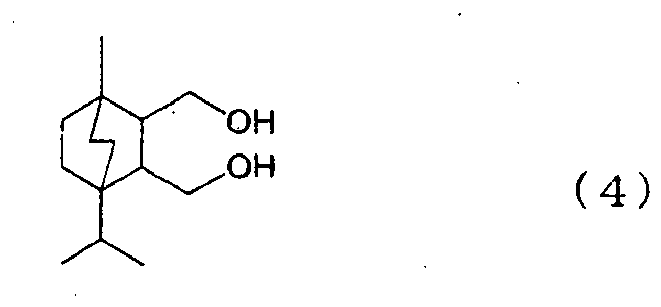
- A copolycarbonate as recited in claim 1, wherein the carbonate constituent unit (1) is a unit derived from isosorbide (1,4:3,6-dianhydro-D-sorbitol).
- A copolycarbonate as recited in claim 1, wherein the carbonate constituent unit (1) accounts for 85 to 99 mol% based on the total carbonate constituent units.
- A copolycarbonate as recited in claim 1, wherein a solution of 0.7 g of the copolycarbonate dissolved in 100 ml of methylene chloride at 20°C has a specific viscosity of 0.18 to 0.65.
- A copolycarbonate as recited in claim 1, which has a glass transition temperature of 120 to 170°C.
- A process for producing a copolycarbonate recited in claim 1, which comprises melt-polycondensing an ether diol (a) of the following formula (a), a diol (b) having a boiling point of 180°C or higher under reduced pressure of 4 x 10⁻³ MPa and a carbonate diester (c) in the presence of at least one polymerization catalyst selected from the group consisting of a nitrogen-containing basic compound, an alkali metal compound and an alkaline earth metal compound under reduced pressure at a temperature of 180 to 280°C,

HO-X-OH (3)
wherein X is a group represented by the following formula,
-R2-O-Ar2-Y-Ar1-O-R1- wherein Y is an alkanediyl group having 1 to 20 carbon atoms or a cyclohexylene group, Ar1 and Ar2 are a phenylene group respectively, and R1 and R2 are an ethylene group respectively, or wherein the diol has the following formula (4).

- A molded article formed from the copolycarbonate recited in claim 1.
Applications Claiming Priority (1)
| Application Number | Priority Date | Filing Date | Title |
|---|---|---|---|
| PCT/JP2009/058029 WO2010119574A1 (en) | 2009-04-16 | 2009-04-16 | Copolymerized polycarbonate and method for producing the same |
Publications (3)
| Publication Number | Publication Date |
|---|---|
| EP2420522A1 EP2420522A1 (en) | 2012-02-22 |
| EP2420522A4 EP2420522A4 (en) | 2012-11-14 |
| EP2420522B1 true EP2420522B1 (en) | 2014-08-20 |
Family
ID=42982254
Family Applications (1)
| Application Number | Title | Priority Date | Filing Date |
|---|---|---|---|
| EP09843353.5A Not-in-force EP2420522B1 (en) | 2009-04-16 | 2009-04-16 | Copolymerized polycarbonate and method for producing the same |
Country Status (5)
| Country | Link |
|---|---|
| US (1) | US8399598B2 (en) |
| EP (1) | EP2420522B1 (en) |
| JP (1) | JP5417432B2 (en) |
| CN (1) | CN102395618B (en) |
| WO (1) | WO2010119574A1 (en) |
Families Citing this family (14)
| Publication number | Priority date | Publication date | Assignee | Title |
|---|---|---|---|---|
| JP2012214796A (en) * | 2011-03-31 | 2012-11-08 | Mitsubishi Chemicals Corp | Polycarbonate resin composition, polycarbonate resin molded article and light reflecting member |
| EP2799463B1 (en) * | 2011-12-27 | 2017-05-03 | Teijin Limited | Polycarbonate resin |
| TWI574991B (en) * | 2012-04-18 | 2017-03-21 | Teijin Ltd | Copolycarbonate |
| WO2014133114A1 (en) * | 2013-02-26 | 2014-09-04 | 帝人株式会社 | Polycarbonate molded article |
| KR102342167B1 (en) | 2015-01-22 | 2021-12-22 | 에스케이케미칼 주식회사 | Novel process for preparing polycarbonate ester having excellent transparency and high heat resistance |
| BR112018068286B1 (en) | 2016-03-10 | 2022-11-01 | Momentive Performance Materials Inc | MOISTURE CURABLE SILYLATED RESIN, AS WELL AS COMPOSITIONS AND CERAMIC, POLYMERIC OR METALLIC SUBSTRATE COMPRISING THE SAME |
| SG11202104284VA (en) * | 2018-11-15 | 2021-05-28 | Univ Kobe Nat Univ Corp | Method for producing carbonate derivative |
| WO2022112943A1 (en) * | 2020-11-26 | 2022-06-02 | Shpp Global Technologies B.V. | Polycarbonate and compositions and articles comprising the polycarbonate |
| KR102865677B1 (en) * | 2021-01-28 | 2025-09-26 | 주식회사 엘지화학 | Polycarbonate and preparation method thereof |
| KR102865742B1 (en) * | 2021-01-29 | 2025-09-26 | 주식회사 엘지화학 | Polycarbonate and method for preparing same |
| KR102855167B1 (en) * | 2021-02-03 | 2025-09-03 | 주식회사 엘지화학 | Polycarbonate and preparation method thereof |
| TWI793863B (en) * | 2021-11-17 | 2023-02-21 | 中國石油化學工業開發股份有限公司 | Method for preparing cycloaliphatic polycarbonate |
| WO2023182859A1 (en) * | 2022-03-25 | 2023-09-28 | 한화솔루션 주식회사 | Polycarbonate copolymer, method for preparing same, and composition comprising same |
| CN114854000B (en) * | 2022-05-26 | 2024-02-02 | 华东理工大学 | A kind of bio-based polycarbonate copolymer and preparation method thereof |
Family Cites Families (18)
| Publication number | Priority date | Publication date | Assignee | Title |
|---|---|---|---|---|
| DE2938464A1 (en) | 1979-09-22 | 1981-04-09 | Bayer Ag, 5090 Leverkusen | THERMOPLASTIC POLYCARBONATES, THEIR PRODUCTION AND THEIR USE AS MOLDED BODIES AND FILMS |
| DE3002762A1 (en) | 1980-01-26 | 1981-07-30 | Bayer Ag, 5090 Leverkusen | METHOD FOR THE PRODUCTION OF HETEROCYCLIC-AROMATIC OLIGOCARBONATES WITH DIPHENOL CARBONATE END GROUPS AND THE USE THEREOF FOR THE PRODUCTION OF THERMOPLASTIC, HIGH-MOLECULAR HETEROCYCLIC-AROMATIC COBOLATE |
| JP2003292603A (en) | 2002-03-29 | 2003-10-15 | Matsushita Electric Ind Co Ltd | Thermoplastic molding materials |
| JP4196326B2 (en) * | 2002-06-12 | 2008-12-17 | 三菱瓦斯化学株式会社 | Polycarbonate copolymer |
| ES2336110T3 (en) | 2003-06-16 | 2010-04-08 | Teijin Limited | POLYCARBONATE AND PROCESS TO PRODUCE IT. |
| WO2006041190A1 (en) * | 2004-10-14 | 2006-04-20 | Teijin Limited | Polycarbonate with low photoelastic constant and film made thereof |
| JP4626847B2 (en) | 2005-02-22 | 2011-02-09 | 三菱瓦斯化学株式会社 | Copolycarbonate resin |
| JP5170388B2 (en) | 2005-07-26 | 2013-03-27 | 宇部興産株式会社 | Polycarbonate and method for producing the same |
| WO2007148604A1 (en) | 2006-06-19 | 2007-12-27 | Mitsubishi Chemical Corporation | Polycarbonate copolymer and process for production thereof |
| JP5526545B2 (en) | 2006-08-18 | 2014-06-18 | 三菱瓦斯化学株式会社 | Polycarbonate resin and optical film using the same |
| JP2009271094A (en) * | 2006-08-23 | 2009-11-19 | Mgc Filsheet Co Ltd | Plastic lens |
| JP5714788B2 (en) | 2007-09-10 | 2015-05-07 | 帝人株式会社 | Plastic lens and manufacturing method thereof |
| JP2009073892A (en) * | 2007-09-19 | 2009-04-09 | Teijin Ltd | Polycarbonate resin and method for producing the same |
| US7666972B2 (en) * | 2007-10-18 | 2010-02-23 | SABIC Innovative Plastics IP B., V. | Isosorbide-based polycarbonates, method of making, and articles formed therefrom |
| JP5623687B2 (en) | 2007-10-24 | 2014-11-12 | 帝人株式会社 | Molded product formed by melt-molding copolymer polycarbonate resin |
| EP2223951A4 (en) * | 2007-12-12 | 2013-08-21 | Mitsubishi Chem Corp | PROCESS FOR PRODUCTION OF POLYCARBONATE AND MOLDINGS IN POLYCARBONATE |
| JP4697295B2 (en) * | 2007-12-13 | 2011-06-08 | 三菱化学株式会社 | Method for producing polycarbonate |
| KR101651306B1 (en) * | 2008-12-05 | 2016-08-25 | 테이진 카세이 가부시키가이샤 | Optical films |
-
2009
- 2009-04-16 WO PCT/JP2009/058029 patent/WO2010119574A1/en not_active Ceased
- 2009-04-16 JP JP2011509167A patent/JP5417432B2/en active Active
- 2009-04-16 US US13/259,876 patent/US8399598B2/en not_active Expired - Fee Related
- 2009-04-16 EP EP09843353.5A patent/EP2420522B1/en not_active Not-in-force
- 2009-04-16 CN CN200980158749.6A patent/CN102395618B/en active Active
Also Published As
| Publication number | Publication date |
|---|---|
| US20120016100A1 (en) | 2012-01-19 |
| CN102395618B (en) | 2014-07-09 |
| US8399598B2 (en) | 2013-03-19 |
| EP2420522A4 (en) | 2012-11-14 |
| JP5417432B2 (en) | 2014-02-12 |
| CN102395618A (en) | 2012-03-28 |
| JPWO2010119574A1 (en) | 2012-10-22 |
| EP2420522A1 (en) | 2012-02-22 |
| WO2010119574A1 (en) | 2010-10-21 |
Similar Documents
| Publication | Publication Date | Title |
|---|---|---|
| US8399598B2 (en) | Copolycarbonate and process for producing the same | |
| JP5623687B2 (en) | Molded product formed by melt-molding copolymer polycarbonate resin | |
| JP4351675B2 (en) | Polycarbonate and process for producing the same | |
| JP5543147B2 (en) | Method for producing polycarbonate resin | |
| CN103619908B (en) | The manufacture method of the aromatic polycarbonate resin that high fluidity Copolycarbonate, macromolecule quantify and aromatic copolycarbonate compound | |
| JP5119169B2 (en) | Method for producing polycarbonate resin | |
| JP5193995B2 (en) | Terminal-modified polycarbonate and method for producing the same | |
| EP2532697B1 (en) | Polycarbonate resin and method for producing same | |
| CN104024302B (en) | Polycarbonate resin | |
| JP2011241277A (en) | Copolycarbonate | |
| JP5001110B2 (en) | Polycarbonate resin and method for producing the same | |
| JP2008291055A (en) | Terminal-modified polycarbonate resin composition | |
| CN103154082B (en) | Polycarbonate resin and molded article | |
| JP2010043244A (en) | Flame-retardant copolymerized polycarbonate resin | |
| JP2012201843A (en) | Copolycarbonate | |
| JP2014101417A (en) | Polycarbonate copolymer | |
| JP5166923B2 (en) | Copolycarbonate resin and method for producing the same | |
| JP2009073892A (en) | Polycarbonate resin and method for producing the same | |
| JP5259988B2 (en) | Copolycarbonate resin and method for producing the same | |
| JP6534793B2 (en) | Polycarbonate resin and optical film | |
| HK1193424A (en) | Polycarbonate copolymer having high fluidity, method for producing aromatic polycarbonate resin having high molecular weight, and aromatic polycarbonate compound |
Legal Events
| Date | Code | Title | Description |
|---|---|---|---|
| PUAI | Public reference made under article 153(3) epc to a published international application that has entered the european phase |
Free format text: ORIGINAL CODE: 0009012 |
|
| 17P | Request for examination filed |
Effective date: 20110920 |
|
| AK | Designated contracting states |
Kind code of ref document: A1 Designated state(s): AT BE BG CH CY CZ DE DK EE ES FI FR GB GR HR HU IE IS IT LI LT LU LV MC MK MT NL NO PL PT RO SE SI SK TR |
|
| DAX | Request for extension of the european patent (deleted) | ||
| A4 | Supplementary search report drawn up and despatched |
Effective date: 20121011 |
|
| RIC1 | Information provided on ipc code assigned before grant |
Ipc: C08G 64/02 20060101AFI20121005BHEP |
|
| 17Q | First examination report despatched |
Effective date: 20131004 |
|
| GRAP | Despatch of communication of intention to grant a patent |
Free format text: ORIGINAL CODE: EPIDOSNIGR1 |
|
| INTG | Intention to grant announced |
Effective date: 20140324 |
|
| GRAS | Grant fee paid |
Free format text: ORIGINAL CODE: EPIDOSNIGR3 |
|
| GRAA | (expected) grant |
Free format text: ORIGINAL CODE: 0009210 |
|
| AK | Designated contracting states |
Kind code of ref document: B1 Designated state(s): AT BE BG CH CY CZ DE DK EE ES FI FR GB GR HR HU IE IS IT LI LT LU LV MC MK MT NL NO PL PT RO SE SI SK TR |
|
| REG | Reference to a national code |
Ref country code: GB Ref legal event code: FG4D |
|
| REG | Reference to a national code |
Ref country code: CH Ref legal event code: EP |
|
| REG | Reference to a national code |
Ref country code: AT Ref legal event code: REF Ref document number: 683448 Country of ref document: AT Kind code of ref document: T Effective date: 20140915 |
|
| REG | Reference to a national code |
Ref country code: IE Ref legal event code: FG4D |
|
| REG | Reference to a national code |
Ref country code: DE Ref legal event code: R096 Ref document number: 602009026213 Country of ref document: DE Effective date: 20141002 |
|
| REG | Reference to a national code |
Ref country code: AT Ref legal event code: MK05 Ref document number: 683448 Country of ref document: AT Kind code of ref document: T Effective date: 20140820 |
|
| REG | Reference to a national code |
Ref country code: NL Ref legal event code: VDEP Effective date: 20140820 |
|
| REG | Reference to a national code |
Ref country code: LT Ref legal event code: MG4D |
|
| PG25 | Lapsed in a contracting state [announced via postgrant information from national office to epo] |
Ref country code: NO Free format text: LAPSE BECAUSE OF FAILURE TO SUBMIT A TRANSLATION OF THE DESCRIPTION OR TO PAY THE FEE WITHIN THE PRESCRIBED TIME-LIMIT Effective date: 20141120 Ref country code: FI Free format text: LAPSE BECAUSE OF FAILURE TO SUBMIT A TRANSLATION OF THE DESCRIPTION OR TO PAY THE FEE WITHIN THE PRESCRIBED TIME-LIMIT Effective date: 20140820 Ref country code: SE Free format text: LAPSE BECAUSE OF FAILURE TO SUBMIT A TRANSLATION OF THE DESCRIPTION OR TO PAY THE FEE WITHIN THE PRESCRIBED TIME-LIMIT Effective date: 20140820 Ref country code: GR Free format text: LAPSE BECAUSE OF FAILURE TO SUBMIT A TRANSLATION OF THE DESCRIPTION OR TO PAY THE FEE WITHIN THE PRESCRIBED TIME-LIMIT Effective date: 20141121 Ref country code: LT Free format text: LAPSE BECAUSE OF FAILURE TO SUBMIT A TRANSLATION OF THE DESCRIPTION OR TO PAY THE FEE WITHIN THE PRESCRIBED TIME-LIMIT Effective date: 20140820 Ref country code: ES Free format text: LAPSE BECAUSE OF FAILURE TO SUBMIT A TRANSLATION OF THE DESCRIPTION OR TO PAY THE FEE WITHIN THE PRESCRIBED TIME-LIMIT Effective date: 20140820 Ref country code: PT Free format text: LAPSE BECAUSE OF FAILURE TO SUBMIT A TRANSLATION OF THE DESCRIPTION OR TO PAY THE FEE WITHIN THE PRESCRIBED TIME-LIMIT Effective date: 20141222 Ref country code: BG Free format text: LAPSE BECAUSE OF FAILURE TO SUBMIT A TRANSLATION OF THE DESCRIPTION OR TO PAY THE FEE WITHIN THE PRESCRIBED TIME-LIMIT Effective date: 20141120 |
|
| PG25 | Lapsed in a contracting state [announced via postgrant information from national office to epo] |
Ref country code: HR Free format text: LAPSE BECAUSE OF FAILURE TO SUBMIT A TRANSLATION OF THE DESCRIPTION OR TO PAY THE FEE WITHIN THE PRESCRIBED TIME-LIMIT Effective date: 20140820 Ref country code: LV Free format text: LAPSE BECAUSE OF FAILURE TO SUBMIT A TRANSLATION OF THE DESCRIPTION OR TO PAY THE FEE WITHIN THE PRESCRIBED TIME-LIMIT Effective date: 20140820 Ref country code: IS Free format text: LAPSE BECAUSE OF FAILURE TO SUBMIT A TRANSLATION OF THE DESCRIPTION OR TO PAY THE FEE WITHIN THE PRESCRIBED TIME-LIMIT Effective date: 20141220 Ref country code: AT Free format text: LAPSE BECAUSE OF FAILURE TO SUBMIT A TRANSLATION OF THE DESCRIPTION OR TO PAY THE FEE WITHIN THE PRESCRIBED TIME-LIMIT Effective date: 20140820 |
|
| PG25 | Lapsed in a contracting state [announced via postgrant information from national office to epo] |
Ref country code: NL Free format text: LAPSE BECAUSE OF FAILURE TO SUBMIT A TRANSLATION OF THE DESCRIPTION OR TO PAY THE FEE WITHIN THE PRESCRIBED TIME-LIMIT Effective date: 20140820 |
|
| PG25 | Lapsed in a contracting state [announced via postgrant information from national office to epo] |
Ref country code: SK Free format text: LAPSE BECAUSE OF FAILURE TO SUBMIT A TRANSLATION OF THE DESCRIPTION OR TO PAY THE FEE WITHIN THE PRESCRIBED TIME-LIMIT Effective date: 20140820 Ref country code: CZ Free format text: LAPSE BECAUSE OF FAILURE TO SUBMIT A TRANSLATION OF THE DESCRIPTION OR TO PAY THE FEE WITHIN THE PRESCRIBED TIME-LIMIT Effective date: 20140820 Ref country code: RO Free format text: LAPSE BECAUSE OF FAILURE TO SUBMIT A TRANSLATION OF THE DESCRIPTION OR TO PAY THE FEE WITHIN THE PRESCRIBED TIME-LIMIT Effective date: 20140820 Ref country code: IT Free format text: LAPSE BECAUSE OF FAILURE TO SUBMIT A TRANSLATION OF THE DESCRIPTION OR TO PAY THE FEE WITHIN THE PRESCRIBED TIME-LIMIT Effective date: 20140820 Ref country code: EE Free format text: LAPSE BECAUSE OF FAILURE TO SUBMIT A TRANSLATION OF THE DESCRIPTION OR TO PAY THE FEE WITHIN THE PRESCRIBED TIME-LIMIT Effective date: 20140820 Ref country code: DK Free format text: LAPSE BECAUSE OF FAILURE TO SUBMIT A TRANSLATION OF THE DESCRIPTION OR TO PAY THE FEE WITHIN THE PRESCRIBED TIME-LIMIT Effective date: 20140820 |
|
| REG | Reference to a national code |
Ref country code: DE Ref legal event code: R097 Ref document number: 602009026213 Country of ref document: DE |
|
| PG25 | Lapsed in a contracting state [announced via postgrant information from national office to epo] |
Ref country code: PL Free format text: LAPSE BECAUSE OF FAILURE TO SUBMIT A TRANSLATION OF THE DESCRIPTION OR TO PAY THE FEE WITHIN THE PRESCRIBED TIME-LIMIT Effective date: 20140820 |
|
| PLBE | No opposition filed within time limit |
Free format text: ORIGINAL CODE: 0009261 |
|
| STAA | Information on the status of an ep patent application or granted ep patent |
Free format text: STATUS: NO OPPOSITION FILED WITHIN TIME LIMIT |
|
| 26N | No opposition filed |
Effective date: 20150521 |
|
| PG25 | Lapsed in a contracting state [announced via postgrant information from national office to epo] |
Ref country code: SI Free format text: LAPSE BECAUSE OF FAILURE TO SUBMIT A TRANSLATION OF THE DESCRIPTION OR TO PAY THE FEE WITHIN THE PRESCRIBED TIME-LIMIT Effective date: 20140820 Ref country code: LU Free format text: LAPSE BECAUSE OF FAILURE TO SUBMIT A TRANSLATION OF THE DESCRIPTION OR TO PAY THE FEE WITHIN THE PRESCRIBED TIME-LIMIT Effective date: 20150416 Ref country code: MC Free format text: LAPSE BECAUSE OF FAILURE TO SUBMIT A TRANSLATION OF THE DESCRIPTION OR TO PAY THE FEE WITHIN THE PRESCRIBED TIME-LIMIT Effective date: 20140820 |
|
| REG | Reference to a national code |
Ref country code: CH Ref legal event code: PL |
|
| REG | Reference to a national code |
Ref country code: IE Ref legal event code: MM4A |
|
| PG25 | Lapsed in a contracting state [announced via postgrant information from national office to epo] |
Ref country code: LI Free format text: LAPSE BECAUSE OF NON-PAYMENT OF DUE FEES Effective date: 20150430 Ref country code: CH Free format text: LAPSE BECAUSE OF NON-PAYMENT OF DUE FEES Effective date: 20150430 |
|
| REG | Reference to a national code |
Ref country code: FR Ref legal event code: ST Effective date: 20151231 |
|
| PG25 | Lapsed in a contracting state [announced via postgrant information from national office to epo] |
Ref country code: FR Free format text: LAPSE BECAUSE OF NON-PAYMENT OF DUE FEES Effective date: 20150430 |
|
| PG25 | Lapsed in a contracting state [announced via postgrant information from national office to epo] |
Ref country code: IE Free format text: LAPSE BECAUSE OF NON-PAYMENT OF DUE FEES Effective date: 20150416 |
|
| PG25 | Lapsed in a contracting state [announced via postgrant information from national office to epo] |
Ref country code: BE Free format text: LAPSE BECAUSE OF FAILURE TO SUBMIT A TRANSLATION OF THE DESCRIPTION OR TO PAY THE FEE WITHIN THE PRESCRIBED TIME-LIMIT Effective date: 20140820 |
|
| PG25 | Lapsed in a contracting state [announced via postgrant information from national office to epo] |
Ref country code: MT Free format text: LAPSE BECAUSE OF FAILURE TO SUBMIT A TRANSLATION OF THE DESCRIPTION OR TO PAY THE FEE WITHIN THE PRESCRIBED TIME-LIMIT Effective date: 20140820 |
|
| PG25 | Lapsed in a contracting state [announced via postgrant information from national office to epo] |
Ref country code: HU Free format text: LAPSE BECAUSE OF FAILURE TO SUBMIT A TRANSLATION OF THE DESCRIPTION OR TO PAY THE FEE WITHIN THE PRESCRIBED TIME-LIMIT; INVALID AB INITIO Effective date: 20090416 |
|
| PG25 | Lapsed in a contracting state [announced via postgrant information from national office to epo] |
Ref country code: CY Free format text: LAPSE BECAUSE OF FAILURE TO SUBMIT A TRANSLATION OF THE DESCRIPTION OR TO PAY THE FEE WITHIN THE PRESCRIBED TIME-LIMIT Effective date: 20140820 |
|
| PG25 | Lapsed in a contracting state [announced via postgrant information from national office to epo] |
Ref country code: TR Free format text: LAPSE BECAUSE OF FAILURE TO SUBMIT A TRANSLATION OF THE DESCRIPTION OR TO PAY THE FEE WITHIN THE PRESCRIBED TIME-LIMIT Effective date: 20140820 |
|
| PG25 | Lapsed in a contracting state [announced via postgrant information from national office to epo] |
Ref country code: MK Free format text: LAPSE BECAUSE OF FAILURE TO SUBMIT A TRANSLATION OF THE DESCRIPTION OR TO PAY THE FEE WITHIN THE PRESCRIBED TIME-LIMIT Effective date: 20140820 |
|
| PGFP | Annual fee paid to national office [announced via postgrant information from national office to epo] |
Ref country code: DE Payment date: 20190507 Year of fee payment: 11 |
|
| PGFP | Annual fee paid to national office [announced via postgrant information from national office to epo] |
Ref country code: GB Payment date: 20190424 Year of fee payment: 11 |
|
| REG | Reference to a national code |
Ref country code: DE Ref legal event code: R119 Ref document number: 602009026213 Country of ref document: DE |
|
| PG25 | Lapsed in a contracting state [announced via postgrant information from national office to epo] |
Ref country code: DE Free format text: LAPSE BECAUSE OF NON-PAYMENT OF DUE FEES Effective date: 20201103 |
|
| GBPC | Gb: european patent ceased through non-payment of renewal fee |
Effective date: 20200416 |
|
| PG25 | Lapsed in a contracting state [announced via postgrant information from national office to epo] |
Ref country code: GB Free format text: LAPSE BECAUSE OF NON-PAYMENT OF DUE FEES Effective date: 20200416 |