EP2412771A2 - Composite article having protective coating - Google Patents
Composite article having protective coating Download PDFInfo
- Publication number
- EP2412771A2 EP2412771A2 EP11175415A EP11175415A EP2412771A2 EP 2412771 A2 EP2412771 A2 EP 2412771A2 EP 11175415 A EP11175415 A EP 11175415A EP 11175415 A EP11175415 A EP 11175415A EP 2412771 A2 EP2412771 A2 EP 2412771A2
- Authority
- EP
- European Patent Office
- Prior art keywords
- poss
- composite article
- reinforcement particles
- protective coating
- recited
- Prior art date
- Legal status (The legal status is an assumption and is not a legal conclusion. Google has not performed a legal analysis and makes no representation as to the accuracy of the status listed.)
- Granted
Links
Images

Classifications
-
- C—CHEMISTRY; METALLURGY
- C09—DYES; PAINTS; POLISHES; NATURAL RESINS; ADHESIVES; COMPOSITIONS NOT OTHERWISE PROVIDED FOR; APPLICATIONS OF MATERIALS NOT OTHERWISE PROVIDED FOR
- C09D—COATING COMPOSITIONS, e.g. PAINTS, VARNISHES OR LACQUERS; FILLING PASTES; CHEMICAL PAINT OR INK REMOVERS; INKS; CORRECTING FLUIDS; WOODSTAINS; PASTES OR SOLIDS FOR COLOURING OR PRINTING; USE OF MATERIALS THEREFOR
- C09D183/00—Coating compositions based on macromolecular compounds obtained by reactions forming in the main chain of the macromolecule a linkage containing silicon, with or without sulfur, nitrogen, oxygen, or carbon only; Coating compositions based on derivatives of such polymers
- C09D183/04—Polysiloxanes
-
- B—PERFORMING OPERATIONS; TRANSPORTING
- B32—LAYERED PRODUCTS
- B32B—LAYERED PRODUCTS, i.e. PRODUCTS BUILT-UP OF STRATA OF FLAT OR NON-FLAT, e.g. CELLULAR OR HONEYCOMB, FORM
- B32B25/00—Layered products comprising a layer of natural or synthetic rubber
- B32B25/12—Layered products comprising a layer of natural or synthetic rubber comprising natural rubber
-
- B—PERFORMING OPERATIONS; TRANSPORTING
- B32—LAYERED PRODUCTS
- B32B—LAYERED PRODUCTS, i.e. PRODUCTS BUILT-UP OF STRATA OF FLAT OR NON-FLAT, e.g. CELLULAR OR HONEYCOMB, FORM
- B32B25/00—Layered products comprising a layer of natural or synthetic rubber
- B32B25/20—Layered products comprising a layer of natural or synthetic rubber comprising silicone rubber
-
- B—PERFORMING OPERATIONS; TRANSPORTING
- B32—LAYERED PRODUCTS
- B32B—LAYERED PRODUCTS, i.e. PRODUCTS BUILT-UP OF STRATA OF FLAT OR NON-FLAT, e.g. CELLULAR OR HONEYCOMB, FORM
- B32B27/00—Layered products comprising a layer of synthetic resin
- B32B27/32—Layered products comprising a layer of synthetic resin comprising polyolefins
- B32B27/322—Layered products comprising a layer of synthetic resin comprising polyolefins comprising halogenated polyolefins, e.g. PTFE
-
- B—PERFORMING OPERATIONS; TRANSPORTING
- B32—LAYERED PRODUCTS
- B32B—LAYERED PRODUCTS, i.e. PRODUCTS BUILT-UP OF STRATA OF FLAT OR NON-FLAT, e.g. CELLULAR OR HONEYCOMB, FORM
- B32B27/00—Layered products comprising a layer of synthetic resin
- B32B27/40—Layered products comprising a layer of synthetic resin comprising polyurethanes
-
- B—PERFORMING OPERATIONS; TRANSPORTING
- B32—LAYERED PRODUCTS
- B32B—LAYERED PRODUCTS, i.e. PRODUCTS BUILT-UP OF STRATA OF FLAT OR NON-FLAT, e.g. CELLULAR OR HONEYCOMB, FORM
- B32B5/00—Layered products characterised by the non- homogeneity or physical structure, i.e. comprising a fibrous, filamentary, particulate or foam layer; Layered products characterised by having a layer differing constitutionally or physically in different parts
- B32B5/14—Layered products characterised by the non- homogeneity or physical structure, i.e. comprising a fibrous, filamentary, particulate or foam layer; Layered products characterised by having a layer differing constitutionally or physically in different parts characterised by a layer differing constitutionally or physically in different parts, e.g. denser near its faces
-
- C—CHEMISTRY; METALLURGY
- C09—DYES; PAINTS; POLISHES; NATURAL RESINS; ADHESIVES; COMPOSITIONS NOT OTHERWISE PROVIDED FOR; APPLICATIONS OF MATERIALS NOT OTHERWISE PROVIDED FOR
- C09D—COATING COMPOSITIONS, e.g. PAINTS, VARNISHES OR LACQUERS; FILLING PASTES; CHEMICAL PAINT OR INK REMOVERS; INKS; CORRECTING FLUIDS; WOODSTAINS; PASTES OR SOLIDS FOR COLOURING OR PRINTING; USE OF MATERIALS THEREFOR
- C09D107/00—Coating compositions based on natural rubber
-
- C—CHEMISTRY; METALLURGY
- C09—DYES; PAINTS; POLISHES; NATURAL RESINS; ADHESIVES; COMPOSITIONS NOT OTHERWISE PROVIDED FOR; APPLICATIONS OF MATERIALS NOT OTHERWISE PROVIDED FOR
- C09D—COATING COMPOSITIONS, e.g. PAINTS, VARNISHES OR LACQUERS; FILLING PASTES; CHEMICAL PAINT OR INK REMOVERS; INKS; CORRECTING FLUIDS; WOODSTAINS; PASTES OR SOLIDS FOR COLOURING OR PRINTING; USE OF MATERIALS THEREFOR
- C09D123/00—Coating compositions based on homopolymers or copolymers of unsaturated aliphatic hydrocarbons having only one carbon-to-carbon double bond; Coating compositions based on derivatives of such polymers
- C09D123/02—Coating compositions based on homopolymers or copolymers of unsaturated aliphatic hydrocarbons having only one carbon-to-carbon double bond; Coating compositions based on derivatives of such polymers not modified by chemical after-treatment
- C09D123/16—Elastomeric ethylene-propylene or ethylene-propylene-diene copolymers, e.g. EPR and EPDM rubbers
-
- C—CHEMISTRY; METALLURGY
- C09—DYES; PAINTS; POLISHES; NATURAL RESINS; ADHESIVES; COMPOSITIONS NOT OTHERWISE PROVIDED FOR; APPLICATIONS OF MATERIALS NOT OTHERWISE PROVIDED FOR
- C09D—COATING COMPOSITIONS, e.g. PAINTS, VARNISHES OR LACQUERS; FILLING PASTES; CHEMICAL PAINT OR INK REMOVERS; INKS; CORRECTING FLUIDS; WOODSTAINS; PASTES OR SOLIDS FOR COLOURING OR PRINTING; USE OF MATERIALS THEREFOR
- C09D123/00—Coating compositions based on homopolymers or copolymers of unsaturated aliphatic hydrocarbons having only one carbon-to-carbon double bond; Coating compositions based on derivatives of such polymers
- C09D123/26—Coating compositions based on homopolymers or copolymers of unsaturated aliphatic hydrocarbons having only one carbon-to-carbon double bond; Coating compositions based on derivatives of such polymers modified by chemical after-treatment
- C09D123/28—Coating compositions based on homopolymers or copolymers of unsaturated aliphatic hydrocarbons having only one carbon-to-carbon double bond; Coating compositions based on derivatives of such polymers modified by chemical after-treatment by reaction with halogens or compounds containing halogen
- C09D123/286—Chlorinated polyethylene
-
- C—CHEMISTRY; METALLURGY
- C09—DYES; PAINTS; POLISHES; NATURAL RESINS; ADHESIVES; COMPOSITIONS NOT OTHERWISE PROVIDED FOR; APPLICATIONS OF MATERIALS NOT OTHERWISE PROVIDED FOR
- C09D—COATING COMPOSITIONS, e.g. PAINTS, VARNISHES OR LACQUERS; FILLING PASTES; CHEMICAL PAINT OR INK REMOVERS; INKS; CORRECTING FLUIDS; WOODSTAINS; PASTES OR SOLIDS FOR COLOURING OR PRINTING; USE OF MATERIALS THEREFOR
- C09D123/00—Coating compositions based on homopolymers or copolymers of unsaturated aliphatic hydrocarbons having only one carbon-to-carbon double bond; Coating compositions based on derivatives of such polymers
- C09D123/26—Coating compositions based on homopolymers or copolymers of unsaturated aliphatic hydrocarbons having only one carbon-to-carbon double bond; Coating compositions based on derivatives of such polymers modified by chemical after-treatment
- C09D123/32—Coating compositions based on homopolymers or copolymers of unsaturated aliphatic hydrocarbons having only one carbon-to-carbon double bond; Coating compositions based on derivatives of such polymers modified by chemical after-treatment by reaction with compounds containing phosphorus or sulfur
- C09D123/34—Coating compositions based on homopolymers or copolymers of unsaturated aliphatic hydrocarbons having only one carbon-to-carbon double bond; Coating compositions based on derivatives of such polymers modified by chemical after-treatment by reaction with compounds containing phosphorus or sulfur by chlorosulfonation
-
- C—CHEMISTRY; METALLURGY
- C09—DYES; PAINTS; POLISHES; NATURAL RESINS; ADHESIVES; COMPOSITIONS NOT OTHERWISE PROVIDED FOR; APPLICATIONS OF MATERIALS NOT OTHERWISE PROVIDED FOR
- C09D—COATING COMPOSITIONS, e.g. PAINTS, VARNISHES OR LACQUERS; FILLING PASTES; CHEMICAL PAINT OR INK REMOVERS; INKS; CORRECTING FLUIDS; WOODSTAINS; PASTES OR SOLIDS FOR COLOURING OR PRINTING; USE OF MATERIALS THEREFOR
- C09D175/00—Coating compositions based on polyureas or polyurethanes; Coating compositions based on derivatives of such polymers
- C09D175/02—Polyureas
-
- C—CHEMISTRY; METALLURGY
- C09—DYES; PAINTS; POLISHES; NATURAL RESINS; ADHESIVES; COMPOSITIONS NOT OTHERWISE PROVIDED FOR; APPLICATIONS OF MATERIALS NOT OTHERWISE PROVIDED FOR
- C09D—COATING COMPOSITIONS, e.g. PAINTS, VARNISHES OR LACQUERS; FILLING PASTES; CHEMICAL PAINT OR INK REMOVERS; INKS; CORRECTING FLUIDS; WOODSTAINS; PASTES OR SOLIDS FOR COLOURING OR PRINTING; USE OF MATERIALS THEREFOR
- C09D175/00—Coating compositions based on polyureas or polyurethanes; Coating compositions based on derivatives of such polymers
- C09D175/04—Polyurethanes
-
- F—MECHANICAL ENGINEERING; LIGHTING; HEATING; WEAPONS; BLASTING
- F01—MACHINES OR ENGINES IN GENERAL; ENGINE PLANTS IN GENERAL; STEAM ENGINES
- F01D—NON-POSITIVE DISPLACEMENT MACHINES OR ENGINES, e.g. STEAM TURBINES
- F01D5/00—Blades; Blade-carrying members; Heating, heat-insulating, cooling or antivibration means on the blades or the members
- F01D5/12—Blades
- F01D5/28—Selecting particular materials; Particular measures relating thereto; Measures against erosion or corrosion
- F01D5/288—Protective coatings for blades
-
- C—CHEMISTRY; METALLURGY
- C08—ORGANIC MACROMOLECULAR COMPOUNDS; THEIR PREPARATION OR CHEMICAL WORKING-UP; COMPOSITIONS BASED THEREON
- C08K—Use of inorganic or non-macromolecular organic substances as compounding ingredients
- C08K3/00—Use of inorganic substances as compounding ingredients
- C08K3/02—Elements
- C08K3/08—Metals
- C08K2003/0862—Nickel
-
- C—CHEMISTRY; METALLURGY
- C08—ORGANIC MACROMOLECULAR COMPOUNDS; THEIR PREPARATION OR CHEMICAL WORKING-UP; COMPOSITIONS BASED THEREON
- C08K—Use of inorganic or non-macromolecular organic substances as compounding ingredients
- C08K3/00—Use of inorganic substances as compounding ingredients
- C08K3/02—Elements
- C08K3/04—Carbon
-
- C—CHEMISTRY; METALLURGY
- C08—ORGANIC MACROMOLECULAR COMPOUNDS; THEIR PREPARATION OR CHEMICAL WORKING-UP; COMPOSITIONS BASED THEREON
- C08K—Use of inorganic or non-macromolecular organic substances as compounding ingredients
- C08K3/00—Use of inorganic substances as compounding ingredients
- C08K3/02—Elements
- C08K3/04—Carbon
- C08K3/041—Carbon nanotubes
-
- C—CHEMISTRY; METALLURGY
- C08—ORGANIC MACROMOLECULAR COMPOUNDS; THEIR PREPARATION OR CHEMICAL WORKING-UP; COMPOSITIONS BASED THEREON
- C08K—Use of inorganic or non-macromolecular organic substances as compounding ingredients
- C08K3/00—Use of inorganic substances as compounding ingredients
- C08K3/02—Elements
- C08K3/04—Carbon
- C08K3/042—Graphene or derivatives, e.g. graphene oxides
-
- C—CHEMISTRY; METALLURGY
- C08—ORGANIC MACROMOLECULAR COMPOUNDS; THEIR PREPARATION OR CHEMICAL WORKING-UP; COMPOSITIONS BASED THEREON
- C08K—Use of inorganic or non-macromolecular organic substances as compounding ingredients
- C08K3/00—Use of inorganic substances as compounding ingredients
- C08K3/02—Elements
- C08K3/08—Metals
-
- C—CHEMISTRY; METALLURGY
- C08—ORGANIC MACROMOLECULAR COMPOUNDS; THEIR PREPARATION OR CHEMICAL WORKING-UP; COMPOSITIONS BASED THEREON
- C08K—Use of inorganic or non-macromolecular organic substances as compounding ingredients
- C08K3/00—Use of inorganic substances as compounding ingredients
- C08K3/18—Oxygen-containing compounds, e.g. metal carbonyls
- C08K3/20—Oxides; Hydroxides
- C08K3/22—Oxides; Hydroxides of metals
-
- C—CHEMISTRY; METALLURGY
- C08—ORGANIC MACROMOLECULAR COMPOUNDS; THEIR PREPARATION OR CHEMICAL WORKING-UP; COMPOSITIONS BASED THEREON
- C08K—Use of inorganic or non-macromolecular organic substances as compounding ingredients
- C08K5/00—Use of organic ingredients
- C08K5/54—Silicon-containing compounds
- C08K5/541—Silicon-containing compounds containing oxygen
- C08K5/5415—Silicon-containing compounds containing oxygen containing at least one Si—O bond
- C08K5/5419—Silicon-containing compounds containing oxygen containing at least one Si—O bond containing at least one Si—C bond
-
- C—CHEMISTRY; METALLURGY
- C08—ORGANIC MACROMOLECULAR COMPOUNDS; THEIR PREPARATION OR CHEMICAL WORKING-UP; COMPOSITIONS BASED THEREON
- C08K—Use of inorganic or non-macromolecular organic substances as compounding ingredients
- C08K5/00—Use of organic ingredients
- C08K5/54—Silicon-containing compounds
- C08K5/541—Silicon-containing compounds containing oxygen
- C08K5/5425—Silicon-containing compounds containing oxygen containing at least one C=C bond
-
- C—CHEMISTRY; METALLURGY
- C08—ORGANIC MACROMOLECULAR COMPOUNDS; THEIR PREPARATION OR CHEMICAL WORKING-UP; COMPOSITIONS BASED THEREON
- C08K—Use of inorganic or non-macromolecular organic substances as compounding ingredients
- C08K7/00—Use of ingredients characterised by shape
- C08K7/22—Expanded, porous or hollow particles
-
- Y—GENERAL TAGGING OF NEW TECHNOLOGICAL DEVELOPMENTS; GENERAL TAGGING OF CROSS-SECTIONAL TECHNOLOGIES SPANNING OVER SEVERAL SECTIONS OF THE IPC; TECHNICAL SUBJECTS COVERED BY FORMER USPC CROSS-REFERENCE ART COLLECTIONS [XRACs] AND DIGESTS
- Y10—TECHNICAL SUBJECTS COVERED BY FORMER USPC
- Y10T—TECHNICAL SUBJECTS COVERED BY FORMER US CLASSIFICATION
- Y10T428/00—Stock material or miscellaneous articles
- Y10T428/31504—Composite [nonstructural laminate]
- Y10T428/31652—Of asbestos
- Y10T428/31663—As siloxane, silicone or silane
Definitions
- Structures such as airfoils, propellers, fan blades, helicopter rotor blades, gas turbine engine blades and vanes, engine inlets, and airframe leading edges are subjected to various environmental conditions during use.
- the air moving over the structure may include particulate matter, such as sand, or water droplets, such as rain, which impact the structure and cause erosion.
- water or other fluid may wet the surface of the structure and then freeze to form ice.
- the structure may include a sheath or coating that protects the structure from such environmental conditions.
- An example composite article in accordance with the present invention includes a substrate and a protective coating on at least a portion of the substrate.
- the protective coating includes reinforcement particles dispersed within an elastomeric matrix that is modified with a silicon-containing modifier selected from the group consisting of polysilsesquioxane, polyhedral oligomeric silicate and polyhedral oligomeric silsesquioxane.
- the composite article includes an airfoil having a body that extends between a leading edge and a trailing edge, and the protective coating on at least a portion of the leading edge.
- the protective coating includes silicone microsphere reinforcement particles dispersed within a silicone elastomer matrix that is modified with polyhedral oligomeric silsesquioxane (POSS) selected from a group consisting of trisnorbornenylisobutyl-POSS, trisilanolisooctyl-POSS, trisilanolphenyl-POSS, trisilanolisobutyl-POSS, trisilanolcyclopentyl-POSS, trisilanolcyclohexyl-POSS, vinyl-containing-POSS and combinations thereof.
- PES polyhedral oligomeric silsesquioxane
- An example method of fabricating the composite article includes mixing polyhedral oligomeric silsesquioxane with reinforcement particles to form a dispersion of the reinforcement particles. The dispersion is then mixed with a resin compound and the mixed resin compound is then cured to form the protective coating on at least a portion of a substrate.
- the reinforcement particles are of metal. In another , the reinforcement particles are carbon reinforcement particles. In another embodiment the reinforcement particles are ceramic. In a further embodiment the reinforcement particles are silicone micropsheres. The reinforcement particles could also comprise mixtures of any of these reinforcement particles.
- Figure 1A illustrates selected portions of an example composite article 20.
- the composite article 20 is a blade having an airfoil 22 for use in a gas turbine engine.
- the examples disclosed herein may also be applied to other components or substrates, and to other components on which ice may build up, such as engine inlets and other leading edges, e.g., of aircraft wings.
- the airfoil 22 of the composite article 20 includes a body 24 that extends between a leading edge 26 and a trailing edge 28 relative to fluid flow over the airfoil 22.
- the airfoil 22 has a wing-like shape that provides a lift force via Bernoulli's principle such that one side of the airfoil 22 is a suction side and the other side of the airfoil 22 is a pressure side.
- the airfoil 22 is connected to a root portion 30 for mounting the composite article 20 in an engine.
- the airfoil 22 of composite article 20 serves as substrate for a protective coating 32, which is on at least a portion of the surfaces of the airfoil 22.
- the protective coating 32 wraps around the leading edge 26 of the airfoil 22 to protect the leading edge 26 from environmental conditions, such as erosion, ice formation, and the like.
- the protective coating 32 may be applied to other portions of the airfoil 22 or all the surfaces of the airfoil 22, depending upon the needs for environmental resistance.
- the protective coating 32 is made of reinforcement particles 34 that are dispersed within an elastomeric matrix 36 that is modified with a silicon-containing modifier, such as polysilsesquioxane (PS), polyhedral oligomeric silicate (POS) or polyhedral oligomeric silsesquioxane (POSS).
- a silicon-containing modifier such as polysilsesquioxane (PS), polyhedral oligomeric silicate (POS) or polyhedral oligomeric silsesquioxane (POSS).
- POS and POSS have a polyhedral morphology and PS
- POS and POSS are compounds represented by the chemical formula RSiO1.5, where Si is silicon, O is oxygen, and R is an organic substituent such as hydrogen, siloxy, alkyl, alkene, aryl, arylene, silene, methyl, ethyl, iso-butyl, iso-octyl, phenyl, cyclic or linear aliphatic or aromatic groups, acrylate, methacrylate, epoxy, vinyl, fluoro-alkyl, alcohol, ester, amine, ketone, olefin, ether, halide, thiol, carboxylic acid, norbornenyl, sulphonic acid, polyethylene glycol, polyethylene oxalate, or other desired organic group.
- the POSS is trisnorbomenylisobutyl-POSS, trisilanolisooctyl-POSS, trisilanolphenyl-POSS, trisilanolisobutyl-POSS, trisilanolcyclopentyl-POSS, trisilanolcyclohexyl-POSS, vinyl-containing-POSS or combinations thereof.
- Polysilsesquioxanes are materials represented by the formula [RSiO1.5] ⁇ where ⁇ is the molar degree of polymerization and R is an organic substituent as defined above. Polysilsesquioxanes may be either homoleptic or heteroleptic. Homoleptic systems contain only one type of R group while heteroleptic systems contain more than one type of R group.
- POS and POSS nanostructure compositions are represented by the formulae: [(RSiO1.5)n] ⁇ # for homoleptic compositions, [(RSiO1.5)m(R'SiO1.5)n] ⁇ # for heteroleptic compositions (where R ⁇ R'), and [(RSiO1.5)m(RXSiO1.0)n] ⁇ # for functionalized heteroleptic compositions (where R groups can be equivalent or inequivalent)
- R is the same as defined above and X includes but is not limited to OH, Cl, Br, I, alkoxide (OR), acetate (OOCR), peroxide (OOR), amine (NR2) isocyanate (NCO), and R.
- m and n refer to the stoichiometry of the composition.
- the symbol ⁇ indicates that the composition forms a nanostructure and the symbol # refers to the number of silicon atoms contained within the nanostructure. The value for # is usually the sum of m+n. It should be noted that ⁇ # is not to be confused as a multiplier for determining stoichiometry, as it merely describes the overall nanostructural characteristics of the system (aka cage size).
- the elastomeric matrix 36 may be selected from polyurethane, fluoropolymer, polyurea, silicone, polysiloxane, natural rubber, polyolefin, chlorosulphonated polyethylene, chlorinated polyethylene, ethylene-propylene copolymer, other elastomeric materials, or combinations thereof.
- silicone for aerospace applications, using silicone as the elastomeric matrix 36 is desirable for erosion resistance and anti-icing.
- the reinforcement particles 34 may be selected from ceramic, metal, carbon, elastomeric particles, or combinations of different kinds of reinforcement particles 34.
- the particles may be alumina, silicon oxide, silicon carbide, silicon aluminum oxynitride, silicon nitride, silicon oxycarbide, silicon oxynitride, boron carbide or generally oxides, nitrides, carbides, or combinations thereof.
- the reinforcement particles 34 may also be selected from a variety of different morphologies, such as fibers, platelets, whiskers, spheres, or other desirable shapes. Surfaces of the reinforcement particles can be generally smooth or textured.
- the metal reinforcement particles 34 are nickel or other conductive metal for imparting the protective coating 32 with electrical conductivity.
- the metal particles may be silicon or a silicon-containing material such as an intermetallic compound.
- carbon reinforcement particles that may be used as reinforcement particles 34 are single or multiwall carbon nanotubes, carbon black, nanofibers or graphene or combinations thereof.
- the reinforcement particles 34 are an elastomer, such as silicone.
- the reinforcement particles 34 are silicone microspheres and the elastomeric matrix 36 is silicone elastomer such that the protective coating 32 consists essentially of the POSS, and the silicone microspheres dispersed throughout a matrix of silicone elastomer.
- the amount of POSS and reinforcement particles 34 used within the elastomeric matrix 36 may be selected to tailor the properties of the protective coating 32 to achieve resistance to particular environmental conditions.
- the protective coating 32 includes up to 20 wt% of the POSS and up to 75 wt% of the reinforcement particles.
- a lower amount of the reinforcement particles 34 may be used.
- an amount of 1-50 wt% of the reinforcement particles 34 may be desired for achieving erosion resistance or anti-icing for very dense reinforcement particles such as certain metals, and in another example, an amount of 1-15 wt% for certain ceramics, carbon and elastomeric reinforcement particles may be desired.
- the composition of the protective coating 32 may also be tailored to the particular environmental conditions that the composite article 20 is expected to encounter in operation. For instance, the composition can be tailored to facilitate optimization of the protective capability of the protective coating 32 for a particular type of environmental condition, such as protection at different angles of incidence for incoming erosion material.
- the POSS functions as a nanosized reinforcement to the elastomeric matrix 36.
- the POSS is on the order in size of about 0.5 - 1000 nanometers. In further examples, the POSS may range in size from about 1-500 nanometers, or even about 5-100 nanometers.
- the POSS modifies the elastomer material by increasing the toughness and/or stiffness (modulus). Additionally, the POSS serves as a dispersant relative to the reinforcement particles 34 to facilitate reduction in agglomeration of the reinforcement particles 34. That is, the POSS enables a more uniform dispersion of the reinforcement particles 34 within the elastomeric matrix 36 to enhance the reinforcing effect.
- the protective coating 32 is thereby better suited to protect the airfoil 22 from environmental conditions, such as erosion and icing.
- the protective coating 32 may be provided in any suitable form for attachment to the airfoil 22, such as a coating that is deposited onto the airfoil 22 or as a tape or appliqué that is adhered to the airfoil 22.
- the thickness of the coating, tape or appliqué can be selected based on the desired level of protection and should be at least 2 times the thickness of the largest average dimension of the reinforcement particles. Desired thicknesses of the protective coating range from about 5 microns to about 250 microns.
- the protective coating 32 is formed by mixing the POSS with the reinforcement particles 34 to form a dispersion of the reinforcement particles 34.
- the POSS By mixing the POSS directly with the reinforcement particles 34, the POSS contacts the reinforcement particles 34 and reduces the amount of agglomerates or extent of agglomeration.
- the dispersion of reinforcement particles 34 is then mixed with a resin compound, which is a precursor to the elastomeric matrix 36.
- the resin compound may be a silicone resin.
- the mixing with the resin compound disperses the reinforcement particles 34 uniformly throughout the compound.
- the mixed compound is then cured in a known manner to form the protective coating 32.
- the mixed resin compound may be cured in situ on the airfoil 22 or cured separately from the airfoil 22 in the form of a tape or appliqué that is then applied to the airfoil 22.
- solvents or liquid carriers may be used to assist processing of the POSS, the reinforcement particles, the resin compound or combinations of these.
- the solvents may be subsequently removed using combinations of heat, reduced pressure and volatility characteristics of the solvent.
- a mixture of POSS, silicone microspheres and silicone resin are combined in the presence of solvent to aid spray deposition of the protective coating onto an airfoil.
- Figure 2 illustrates a portion of another example composite article 120 that may also be an airfoil as illustrated in Figure 1A .
- the composite article 120 includes an airfoil portion 122 and a multi-layered protective coating 132 on the airfoil 122.
- the protective coating 132 includes a first layer 132a and a second layer 132b that is arranged adjacent to the first layer 132a. That is, the second layer 132b runs contiguously to the first layer 132a.
- the first layer 132a has a composition as described in the examples above for the protective coating 32.
- the second layer 132b also has a composition as described above, but is of a different composition than the first layer 132a.
- the multi-layered protective coating 132 provides resistance to a first type of environmental condition by way of the first layer 132a and resistance to a second type of environmental condition by way of the second layer 132b.
- the composition of the first layer 132a may be designed to resist erosion at a first angle of incidence relative to the airfoil 122 and the second layer 132b may be designed to resist erosion relative to a different angle of incidence.
- one of the layers 132a or 132b may be designed for erosion resistance and the other layer 132a or 132b may be designed for anti-icing.
- one of the layers 132a or 132b may include a first kind of reinforcement particle, such as the silicone microspheres, and the other layer 132a or 132b may include a different kind of reinforcement particle, such as a ceramic material, metal, carbon or alternative elastomeric material.
- the first and second layer may have the same or different thicknesses.
Landscapes
- Chemical & Material Sciences (AREA)
- Engineering & Computer Science (AREA)
- Materials Engineering (AREA)
- Organic Chemistry (AREA)
- Life Sciences & Earth Sciences (AREA)
- Wood Science & Technology (AREA)
- Chemical Kinetics & Catalysis (AREA)
- General Chemical & Material Sciences (AREA)
- Mechanical Engineering (AREA)
- General Engineering & Computer Science (AREA)
- Laminated Bodies (AREA)
- Turbine Rotor Nozzle Sealing (AREA)
- Paints Or Removers (AREA)
- Compositions Of Macromolecular Compounds (AREA)
- Health & Medical Sciences (AREA)
- Medicinal Chemistry (AREA)
- Polymers & Plastics (AREA)
Abstract
Description
- Structures, such as airfoils, propellers, fan blades, helicopter rotor blades, gas turbine engine blades and vanes, engine inlets, and airframe leading edges are subjected to various environmental conditions during use. For instance, the air moving over the structure may include particulate matter, such as sand, or water droplets, such as rain, which impact the structure and cause erosion. Likewise, water or other fluid may wet the surface of the structure and then freeze to form ice. Typically, the structure may include a sheath or coating that protects the structure from such environmental conditions.
- An example composite article in accordance with the present invention includes a substrate and a protective coating on at least a portion of the substrate. The protective coating includes reinforcement particles dispersed within an elastomeric matrix that is modified with a silicon-containing modifier selected from the group consisting of polysilsesquioxane, polyhedral oligomeric silicate and polyhedral oligomeric silsesquioxane.
- In another aspect, the composite article includes an airfoil having a body that extends between a leading edge and a trailing edge, and the protective coating on at least a portion of the leading edge. The protective coating includes silicone microsphere reinforcement particles dispersed within a silicone elastomer matrix that is modified with polyhedral oligomeric silsesquioxane (POSS) selected from a group consisting of trisnorbornenylisobutyl-POSS, trisilanolisooctyl-POSS, trisilanolphenyl-POSS, trisilanolisobutyl-POSS, trisilanolcyclopentyl-POSS, trisilanolcyclohexyl-POSS, vinyl-containing-POSS and combinations thereof.
- An example method of fabricating the composite article includes mixing polyhedral oligomeric silsesquioxane with reinforcement particles to form a dispersion of the reinforcement particles. The dispersion is then mixed with a resin compound and the mixed resin compound is then cured to form the protective coating on at least a portion of a substrate.
- In one embodiment the reinforcement particles are of metal. In another , the reinforcement particles are carbon reinforcement particles. In another embodiment the reinforcement particles are ceramic. In a further embodiment the reinforcement particles are silicone micropsheres. The reinforcement particles could also comprise mixtures of any of these reinforcement particles.
- Certain preferred embodiments will now be described in greater detail by way of example only and with reference to the following drawings in which:
-
Figure 1A illustrates an example composite article having a protective coating that includes reinforcement particles within an elastomeric matrix modified with a silicon-containing matrix modifier; -
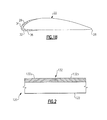
Figure 1B illustrates a cross-section of the composite article shown inFigure 1A ; and -
Figure 2 illustrates another example composite article having a multi-layered protective coating. -
Figure 1A illustrates selected portions of an examplecomposite article 20. In this example, thecomposite article 20 is a blade having anairfoil 22 for use in a gas turbine engine. However, it is to be understood that the examples disclosed herein may also be applied to other components or substrates, and to other components on which ice may build up, such as engine inlets and other leading edges, e.g., of aircraft wings. - In the illustrated example, the
airfoil 22 of thecomposite article 20 includes abody 24 that extends between a leadingedge 26 and atrailing edge 28 relative to fluid flow over theairfoil 22. In general, theairfoil 22 has a wing-like shape that provides a lift force via Bernoulli's principle such that one side of theairfoil 22 is a suction side and the other side of theairfoil 22 is a pressure side. Theairfoil 22 is connected to aroot portion 30 for mounting thecomposite article 20 in an engine. - The
airfoil 22 ofcomposite article 20 serves as substrate for aprotective coating 32, which is on at least a portion of the surfaces of theairfoil 22. As illustrated inFigure 1B , theprotective coating 32 wraps around the leadingedge 26 of theairfoil 22 to protect the leadingedge 26 from environmental conditions, such as erosion, ice formation, and the like. Alternatively, theprotective coating 32 may be applied to other portions of theairfoil 22 or all the surfaces of theairfoil 22, depending upon the needs for environmental resistance. - The
protective coating 32 is made ofreinforcement particles 34 that are dispersed within anelastomeric matrix 36 that is modified with a silicon-containing modifier, such as polysilsesquioxane (PS), polyhedral oligomeric silicate (POS) or polyhedral oligomeric silsesquioxane (POSS). - In general, POS and POSS have a polyhedral morphology and PS, POS and POSS are compounds represented by the chemical formula RSiO1.5, where Si is silicon, O is oxygen, and R is an organic substituent such as hydrogen, siloxy, alkyl, alkene, aryl, arylene, silene, methyl, ethyl, iso-butyl, iso-octyl, phenyl, cyclic or linear aliphatic or aromatic groups, acrylate, methacrylate, epoxy, vinyl, fluoro-alkyl, alcohol, ester, amine, ketone, olefin, ether, halide, thiol, carboxylic acid, norbornenyl, sulphonic acid, polyethylene glycol, polyethylene oxalate, or other desired organic group. In particular examples designed for aeronautic applications, the POSS is trisnorbomenylisobutyl-POSS, trisilanolisooctyl-POSS, trisilanolphenyl-POSS, trisilanolisobutyl-POSS, trisilanolcyclopentyl-POSS, trisilanolcyclohexyl-POSS, vinyl-containing-POSS or combinations thereof.
- Polysilsesquioxanes are materials represented by the formula [RSiO1.5]∞ where ∞ is the molar degree of polymerization and R is an organic substituent as defined above. Polysilsesquioxanes may be either homoleptic or heteroleptic. Homoleptic systems contain only one type of R group while heteroleptic systems contain more than one type of R group. POS and POSS nanostructure compositions are represented by the formulae: [(RSiO1.5)n]∑# for homoleptic compositions, [(RSiO1.5)m(R'SiO1.5)n]∑# for heteroleptic compositions (where R≠R'), and [(RSiO1.5)m(RXSiO1.0)n]∑# for functionalized heteroleptic compositions (where R groups can be equivalent or inequivalent)
- In all of the above R is the same as defined above and X includes but is not limited to OH, Cl, Br, I, alkoxide (OR), acetate (OOCR), peroxide (OOR), amine (NR2) isocyanate (NCO), and R. The symbols m and n refer to the stoichiometry of the composition. The symbol ∑ indicates that the composition forms a nanostructure and the symbol # refers to the number of silicon atoms contained within the nanostructure. The value for # is usually the sum of m+n. It should be noted that ∑# is not to be confused as a multiplier for determining stoichiometry, as it merely describes the overall nanostructural characteristics of the system (aka cage size).
- The
elastomeric matrix 36 may be selected from polyurethane, fluoropolymer, polyurea, silicone, polysiloxane, natural rubber, polyolefin, chlorosulphonated polyethylene, chlorinated polyethylene, ethylene-propylene copolymer, other elastomeric materials, or combinations thereof. For aerospace applications, using silicone as theelastomeric matrix 36 is desirable for erosion resistance and anti-icing. - The
reinforcement particles 34 may be selected from ceramic, metal, carbon, elastomeric particles, or combinations of different kinds ofreinforcement particles 34. In a few examples ofceramic reinforcement particles 34, the particles may be alumina, silicon oxide, silicon carbide, silicon aluminum oxynitride, silicon nitride, silicon oxycarbide, silicon oxynitride, boron carbide or generally oxides, nitrides, carbides, or combinations thereof. Thereinforcement particles 34 may also be selected from a variety of different morphologies, such as fibers, platelets, whiskers, spheres, or other desirable shapes. Surfaces of the reinforcement particles can be generally smooth or textured. - In a few examples of metals that may be used, the
metal reinforcement particles 34 are nickel or other conductive metal for imparting theprotective coating 32 with electrical conductivity. Alternatively, the metal particles may be silicon or a silicon-containing material such as an intermetallic compound. - Examples of carbon reinforcement particles that may be used as
reinforcement particles 34 are single or multiwall carbon nanotubes, carbon black, nanofibers or graphene or combinations thereof. - In another example, the
reinforcement particles 34 are an elastomer, such as silicone. In one particular example, thereinforcement particles 34 are silicone microspheres and theelastomeric matrix 36 is silicone elastomer such that theprotective coating 32 consists essentially of the POSS, and the silicone microspheres dispersed throughout a matrix of silicone elastomer. - The amount of POSS and
reinforcement particles 34 used within theelastomeric matrix 36 may be selected to tailor the properties of theprotective coating 32 to achieve resistance to particular environmental conditions. In some examples, theprotective coating 32 includes up to 20 wt% of the POSS and up to 75 wt% of the reinforcement particles. However, in many instances, a lower amount of thereinforcement particles 34 may be used. For example, an amount of 1-50 wt% of thereinforcement particles 34 may be desired for achieving erosion resistance or anti-icing for very dense reinforcement particles such as certain metals, and in another example, an amount of 1-15 wt% for certain ceramics, carbon and elastomeric reinforcement particles may be desired. - The composition of the
protective coating 32 may also be tailored to the particular environmental conditions that thecomposite article 20 is expected to encounter in operation. For instance, the composition can be tailored to facilitate optimization of the protective capability of theprotective coating 32 for a particular type of environmental condition, such as protection at different angles of incidence for incoming erosion material. - In the
protective coating 32, the POSS functions as a nanosized reinforcement to theelastomeric matrix 36. For instance, the POSS is on the order in size of about 0.5 - 1000 nanometers. In further examples, the POSS may range in size from about 1-500 nanometers, or even about 5-100 nanometers. The POSS modifies the elastomer material by increasing the toughness and/or stiffness (modulus). Additionally, the POSS serves as a dispersant relative to thereinforcement particles 34 to facilitate reduction in agglomeration of thereinforcement particles 34. That is, the POSS enables a more uniform dispersion of thereinforcement particles 34 within theelastomeric matrix 36 to enhance the reinforcing effect. Theprotective coating 32 is thereby better suited to protect theairfoil 22 from environmental conditions, such as erosion and icing. - The
protective coating 32 may be provided in any suitable form for attachment to theairfoil 22, such as a coating that is deposited onto theairfoil 22 or as a tape or appliqué that is adhered to theairfoil 22. The thickness of the coating, tape or appliqué can be selected based on the desired level of protection and should be at least 2 times the thickness of the largest average dimension of the reinforcement particles. Desired thicknesses of the protective coating range from about 5 microns to about 250 microns. In one example, theprotective coating 32 is formed by mixing the POSS with thereinforcement particles 34 to form a dispersion of thereinforcement particles 34. By mixing the POSS directly with thereinforcement particles 34, the POSS contacts thereinforcement particles 34 and reduces the amount of agglomerates or extent of agglomeration. The dispersion ofreinforcement particles 34 is then mixed with a resin compound, which is a precursor to theelastomeric matrix 36. For instance, if theelastomeric matrix 36 is to be silicone, the resin compound may be a silicone resin. The mixing with the resin compound disperses thereinforcement particles 34 uniformly throughout the compound. The mixed compound is then cured in a known manner to form theprotective coating 32. The mixed resin compound may be cured in situ on theairfoil 22 or cured separately from theairfoil 22 in the form of a tape or appliqué that is then applied to theairfoil 22. The use of appropriate solvents or liquid carriers may be used to assist processing of the POSS, the reinforcement particles, the resin compound or combinations of these. The solvents may be subsequently removed using combinations of heat, reduced pressure and volatility characteristics of the solvent. In one example, a mixture of POSS, silicone microspheres and silicone resin are combined in the presence of solvent to aid spray deposition of the protective coating onto an airfoil. -
Figure 2 illustrates a portion of another examplecomposite article 120 that may also be an airfoil as illustrated inFigure 1A . In this case, thecomposite article 120 includes anairfoil portion 122 and a multi-layeredprotective coating 132 on theairfoil 122. Theprotective coating 132 includes afirst layer 132a and asecond layer 132b that is arranged adjacent to thefirst layer 132a. That is, thesecond layer 132b runs contiguously to thefirst layer 132a. - The
first layer 132a has a composition as described in the examples above for theprotective coating 32. Thesecond layer 132b also has a composition as described above, but is of a different composition than thefirst layer 132a. Thus, the multi-layeredprotective coating 132 provides resistance to a first type of environmental condition by way of thefirst layer 132a and resistance to a second type of environmental condition by way of thesecond layer 132b. - As an example, the composition of the
first layer 132a may be designed to resist erosion at a first angle of incidence relative to theairfoil 122 and thesecond layer 132b may be designed to resist erosion relative to a different angle of incidence. Alternatively, one of thelayers other layer layers other layer - Although a combination of features is shown in the illustrated examples, not all of them need to be combined to realize the benefits of various embodiments of this disclosure. In other words, a system designed according to an embodiment of this disclosure will not necessarily include all of the features shown in any one of the Figures or all of the portions schematically shown in the Figures. Moreover, selected features of one example embodiment may be combined with selected features of other example embodiments.
- According to the following clause the present invention can be seen to provide:
- 1. A composite article comprising: an airfoil having a body that extends between a leading edge and a trailing edge; and a protective coating on at least a portion of the leading edge, the protective coating comprising silicone microsphere reinforcement particles dispersed within a silicone elastomer matrix that is modified with polyhedral oligomeric silsesquioxane (POSS) selected from a group consisting of trisnorbornenylisobutyl-POSS, trisilanolisooctyl-POSS, trisilanolphenyl-POSS, trisilanolisobutyl-POSS, trisilanolcyclopentyl-POSS, trisilanolcyclohexyl-POSS, vinyl-containing-POSS and combinations thereof.
- The preceding description is exemplary rather than limiting in nature. Variations and modifications to the disclosed examples may become apparent to those skilled in the art that do not necessarily depart from the scope of this disclosure. The scope of legal protection given to this disclosure can only be determined by studying the following claims.
Claims (15)
- A composite article (20; 120) comprising:a substrate (22; 122); anda protective coating (32; 132) on at least a portion of the substrate, the protective coating comprising reinforcement particles (34) dispersed within an elastomeric matrix (36) that is modified with a silicon-containing modifier selected from a group consisting of polysilsesquioxane, polyhedral oligomeric silicate and polyhedral oligomeric silsesquioxane (POSS).
- The composite article (20; 120) as recited in claim 1, wherein the elastomeric matrix (36) is selected from a group consisting of polyurethane, fluoropolymer, polyurea, silicone, polysiloxane, natural rubber, polyolefin, chlorosulphonated polyethylene, chlorinated polyethylene, ethylene-propylene copolymer, and combinations thereof.
- The composite article (20; 120) as recited in claim 1, wherein the elastomeric matrix (36) is silicone or polysiloxane.
- The composite article (20; 120) as recited in claim 1, 2 or 3, wherein the reinforcement particles (34) are metal, carbon, ceramic or combinations thereof.
- The composite article (20; 120) as recited in claim 1, 2 or 3, wherein the reinforcement particles (34) are electrically conductive.
- The composite article as recited in any preceding claim, wherein the reinforcement particles (34) are silicone microspheres, and preferably wherein the protective coating (32; 132) includes 1-15 wt% of the silicone microsphere reinforcement particles (34).
- The composite article (20; 120) as recited in any preceding claim, wherein the POSS is selected from a group consisting of trisnorbornenylisobutyl-POSS, trisilanolisooctyl-POSS, trisilanolphenyl-POSS, trisilanolisobutyl-POSS, trisilanolcyclopentyl-POSS, trisilanolcyclohexyl-POSS, vinyl-containing-POSS and combinations thereof.
- The composite article (20; 120) as recited in any preceding claim, wherein the protective coating (32; 132) includes up to 20 wt% of the POSS.
- The composite article (20; 120) as recited in any preceding claim, wherein the protective coating (32; 132) includes up to 75 wt% of the reinforcement particles (34) and, preferably includes 1-50 wt% of the reinforcement particles (34).
- The composite article (20; 120) as recited in any preceding claim, wherein the protective coating (32; 132) is multi-layered and includes a first layer (132a) having a first composition, and a second layer (132b) having a second, different composition and that is arranged adjacent to the first layer.
- The composite article (20; 120) as recited in claim 10, wherein the first composition includes silicone microsphere reinforcement particles (34) and the second, different composition includes metal, carbon, or ceramic reinforcement particles (34).
- The composite article (20; 120) as claimed in any preceding claim, wherein the substrate (22; 122) is an airfoil having a body (24) that extends between a leading edge (26) and a trailing edge (28), and wherein the protective coating (32; 132) is provided on at least a portion of the leading edge (26).
- A method of fabricating a composite article (20; 120), the method comprising:mixing polyhedral oligomeric silsesquioxane (POSS) with reinforcement particles (34) to form a dispersion of the reinforcement particles;mixing the dispersion of the reinforcement particles with a resin compound; andcuring the mixed resin compound to form a protective coating (32; 132) on at least a portion of a substrate (22; 122).
- The method as recited in claim 13, including mixing silicone microspheres and/or metal particles as the reinforcement particles (34) with the POSS.
- The method as recited in claim 13 or 14, including mixing silicone resin as the resin compound with the dispersion of reinforcement particles (34).
Applications Claiming Priority (1)
| Application Number | Priority Date | Filing Date | Title |
|---|---|---|---|
| US12/844,323 US9028969B2 (en) | 2010-07-27 | 2010-07-27 | Composite article having protective coating |
Publications (3)
| Publication Number | Publication Date |
|---|---|
| EP2412771A2 true EP2412771A2 (en) | 2012-02-01 |
| EP2412771A3 EP2412771A3 (en) | 2012-03-07 |
| EP2412771B1 EP2412771B1 (en) | 2014-01-08 |
Family
ID=44510769
Family Applications (1)
| Application Number | Title | Priority Date | Filing Date |
|---|---|---|---|
| EP11175415.6A Not-in-force EP2412771B1 (en) | 2010-07-27 | 2011-07-26 | Composite article having protective coating |
Country Status (2)
| Country | Link |
|---|---|
| US (2) | US9028969B2 (en) |
| EP (1) | EP2412771B1 (en) |
Cited By (7)
| Publication number | Priority date | Publication date | Assignee | Title |
|---|---|---|---|---|
| EP2561933A3 (en) * | 2011-08-24 | 2013-06-05 | United Technologies Corporation | Substrates coated with wear resistant layers and methods of applying wear resistant layers to same |
| CN104787282A (en) * | 2015-04-03 | 2015-07-22 | 郑伟 | Propeller with metal leading edge and manufacturing technology |
| CN104817942A (en) * | 2015-04-29 | 2015-08-05 | 广西高农机械有限公司 | Quick-drying environment-friendly paint for rice transplanters |
| EP3105272A4 (en) * | 2014-02-14 | 2017-10-18 | Sikorsky Aircraft Corporation | Erosion resistant blade and blade coating |
| CN109608889A (en) * | 2018-11-27 | 2019-04-12 | 中国船舶重工集团公司第七二五研究所 | A kind of POSS modified high toughness solid buoyancy material and preparation method thereof |
| CN109878124A (en) * | 2017-11-21 | 2019-06-14 | 安萨尔多能源瑞士股份公司 | Blade and method for manufacturing the blade |
| WO2019122607A1 (en) * | 2017-12-21 | 2019-06-27 | Arianegroup Sas | Substrate coated with an erosion protection layer |
Families Citing this family (30)
| Publication number | Priority date | Publication date | Assignee | Title |
|---|---|---|---|---|
| US9028969B2 (en) * | 2010-07-27 | 2015-05-12 | United Technologies Corporation | Composite article having protective coating |
| DE102011077804A1 (en) * | 2011-06-20 | 2012-12-20 | Siemens Aktiengesellschaft | Shovel for a thermal turbomachine |
| JP2014040820A (en) | 2012-08-23 | 2014-03-06 | Mazda Motor Corp | Heat insulating structure of member facing engine combustion chamber, and method of manufacturing the same |
| JP5942698B2 (en) * | 2012-08-23 | 2016-06-29 | マツダ株式会社 | Thermal insulation structure for engine combustion chamber member and method for manufacturing the same |
| WO2014102957A1 (en) * | 2012-12-27 | 2014-07-03 | 三菱重工業株式会社 | Wind turbine rotor blade and wind turbine generator with same |
| US20160298644A1 (en) * | 2013-09-27 | 2016-10-13 | United Technologies Corporation | Fan blade assembly |
| US20160298467A1 (en) * | 2013-11-18 | 2016-10-13 | United Technologies Corporation | Article having variable coating |
| US20160090849A1 (en) * | 2014-09-30 | 2016-03-31 | United Technologies Corporation | Fan blade with static dissipative coating |
| US10927684B2 (en) | 2016-02-08 | 2021-02-23 | Raytheon Technologies Corporation | Repairing a coating with a pre-configured coating patch |
| US10677259B2 (en) | 2016-05-06 | 2020-06-09 | General Electric Company | Apparatus and system for composite fan blade with fused metal lead edge |
| US10738648B2 (en) | 2016-10-13 | 2020-08-11 | General Electric Company | Graphene discs and bores and methods of preparing the same |
| WO2019078729A2 (en) * | 2017-10-20 | 2019-04-25 | Bergen Teknologioverforing As | Method for producing an icing protected arrangement and icing protected arrangement |
| US10183754B1 (en) * | 2017-12-20 | 2019-01-22 | The Florida International University Board Of Trustees | Three dimensional graphene foam reinforced composite coating and deicing systems therefrom |
| US10815798B2 (en) * | 2018-02-08 | 2020-10-27 | General Electric Company | Turbine engine blade with leading edge strip |
| US11001719B2 (en) | 2018-09-14 | 2021-05-11 | Rohr, Inc. | Multi-layer coating for a flow surface of an aircraft component |
| US11149558B2 (en) | 2018-10-16 | 2021-10-19 | General Electric Company | Frangible gas turbine engine airfoil with layup change |
| US10746045B2 (en) | 2018-10-16 | 2020-08-18 | General Electric Company | Frangible gas turbine engine airfoil including a retaining member |
| US10760428B2 (en) | 2018-10-16 | 2020-09-01 | General Electric Company | Frangible gas turbine engine airfoil |
| US10837286B2 (en) | 2018-10-16 | 2020-11-17 | General Electric Company | Frangible gas turbine engine airfoil with chord reduction |
| US11434781B2 (en) | 2018-10-16 | 2022-09-06 | General Electric Company | Frangible gas turbine engine airfoil including an internal cavity |
| US11111815B2 (en) | 2018-10-16 | 2021-09-07 | General Electric Company | Frangible gas turbine engine airfoil with fusion cavities |
| US11286782B2 (en) * | 2018-12-07 | 2022-03-29 | General Electric Company | Multi-material leading edge protector |
| US11827808B2 (en) | 2019-02-01 | 2023-11-28 | Praxair S.T. Technology, Inc. | Erosion and corrosion resistant overlay coating systems for protection of metal components |
| US11407345B2 (en) | 2020-05-28 | 2022-08-09 | Lear Corporation | Silicone-filled capsules for trim coatings |
| US12116903B2 (en) | 2021-06-30 | 2024-10-15 | General Electric Company | Composite airfoils with frangible tips |
| US11674399B2 (en) | 2021-07-07 | 2023-06-13 | General Electric Company | Airfoil arrangement for a gas turbine engine utilizing a shape memory alloy |
| US11668317B2 (en) | 2021-07-09 | 2023-06-06 | General Electric Company | Airfoil arrangement for a gas turbine engine utilizing a shape memory alloy |
| US11988103B2 (en) | 2021-10-27 | 2024-05-21 | General Electric Company | Airfoils for a fan section of a turbine engine |
| US11655828B2 (en) | 2021-10-27 | 2023-05-23 | General Electric Company | Anti-icing systems and airfoils for a fan section of a turbine engine |
| CN117944334B (en) * | 2023-12-18 | 2025-12-09 | 龙源(北京)新能源工程技术有限公司 | Protective film, preparation method thereof and fan blade using protective film |
Family Cites Families (31)
| Publication number | Priority date | Publication date | Assignee | Title |
|---|---|---|---|---|
| US4370160A (en) | 1978-06-27 | 1983-01-25 | Dow Corning Corporation | Process for preparing silicone microparticles |
| JPH01172473A (en) * | 1987-12-28 | 1989-07-07 | Toshiba Silicone Co Ltd | Coating composition |
| JPH0639962A (en) * | 1992-07-23 | 1994-02-15 | Kawasaki Steel Corp | Composite oscillation damping material |
| US5484867A (en) | 1993-08-12 | 1996-01-16 | The University Of Dayton | Process for preparation of polyhedral oligomeric silsesquioxanes and systhesis of polymers containing polyhedral oligomeric silsesqioxane group segments |
| US5674610A (en) * | 1995-03-24 | 1997-10-07 | General Electric Company | Method for chromium coating a surface and tape useful in practicing the method |
| US5842686A (en) * | 1995-11-01 | 1998-12-01 | Pre Finish Metals Incorporated | Patterned noise damping composite |
| JP3674292B2 (en) | 1997-06-19 | 2005-07-20 | 株式会社デンソー | Air-fuel ratio detection device |
| US5994014A (en) * | 1998-02-17 | 1999-11-30 | Lexmark International, Inc. | Photoconductor containing silicone microspheres |
| JP3952428B2 (en) * | 1998-05-25 | 2007-08-01 | シンジーテック株式会社 | Developing roller |
| US7638195B2 (en) * | 1999-08-04 | 2009-12-29 | Hybrid Plastics, Inc. | Surface modification with polyhedral oligomeric silsesquioxanes silanols |
| US20060263531A1 (en) * | 2003-12-18 | 2006-11-23 | Lichtenhan Joseph D | Polyhedral oligomeric silsesquioxanes as glass forming coatings |
| US6341747B1 (en) * | 1999-10-28 | 2002-01-29 | United Technologies Corporation | Nanocomposite layered airfoil |
| AU2001249465A1 (en) | 2000-03-24 | 2001-10-08 | Hybrid Plastics Llp | Nanostructured chemicals as alloying agents in polymers |
| JP2002363406A (en) * | 2001-06-08 | 2002-12-18 | Ge Toshiba Silicones Co Ltd | Silicone rubber composition |
| DE10249453A1 (en) | 2001-12-06 | 2003-06-18 | Creavis Tech & Innovation Gmbh | Production of structured hydrophobic surfaces, e.g. antireflective glass or plastic surfaces, comprises depositing a polyhedral oligomeric silicon-oxygen cluster compound on a surface |
| JP2003295409A (en) * | 2002-04-03 | 2003-10-15 | Konica Corp | Heat treating apparatus and heat developing device provided with heat treating apparatus |
| US20040167283A1 (en) | 2003-02-24 | 2004-08-26 | Michael Vinciguerra | Linear polyphosphonates that exhibit an advantageous combination of properties, and methods related thereto |
| US7060140B2 (en) | 2003-04-08 | 2006-06-13 | General Motors Corporation | Self-healing tribological surfaces |
| US20040260018A1 (en) * | 2003-04-10 | 2004-12-23 | Simendinger William H. | Thermal barrier composition |
| JP2004323716A (en) | 2003-04-25 | 2004-11-18 | Ge Toshiba Silicones Co Ltd | Water-based coating composition |
| DE10331483A1 (en) | 2003-07-11 | 2005-02-10 | Construction Research & Technology Gmbh | Fluoromodified one- or two-component polyurethane resins, process for their preparation and their use |
| DE10331484A1 (en) | 2003-07-11 | 2005-03-03 | Construction Research & Technology Gmbh | Polyurethane-polymer hybrid dispersion with improved surface properties, process for their preparation and their use |
| WO2007052260A2 (en) | 2005-10-31 | 2007-05-10 | Shenkar College Of Engineering And Design | Use of poss nanostructured molecules for hydrophobic and self cleaning coatings |
| EP2069440B1 (en) * | 2006-08-02 | 2011-09-28 | Battelle Memorial Institute | Electrically conductive coating composition |
| US20090067993A1 (en) | 2007-03-22 | 2009-03-12 | Roberge Gary D | Coated variable area fan nozzle |
| US8347854B2 (en) * | 2007-06-19 | 2013-01-08 | Flexible Ceramics, Inc | Internal combustion (IC) engine head assembly combustion chamber multiple spark ignition (MSI) fuel savings device and methods of fabrication thereof |
| US7655738B2 (en) * | 2007-07-10 | 2010-02-02 | The United States Of America As Represented By The Secretary Of The Navy | Polyhedral oligomeric silsesquioxane and carborane containing network polymers |
| US8470518B2 (en) * | 2007-09-14 | 2013-06-25 | E I Du Pont De Nemours And Company | Photosensitive element having reinforcing particles and method for preparing a printing form from the element |
| US20090084512A1 (en) | 2007-10-02 | 2009-04-02 | Moffett Robert H | Process to produce substrate resistant to alkaline starch |
| US8435632B2 (en) * | 2010-03-10 | 2013-05-07 | Xerox Corporation | Intermediate transfer member |
| US9028969B2 (en) * | 2010-07-27 | 2015-05-12 | United Technologies Corporation | Composite article having protective coating |
-
2010
- 2010-07-27 US US12/844,323 patent/US9028969B2/en active Active
-
2011
- 2011-07-26 EP EP11175415.6A patent/EP2412771B1/en not_active Not-in-force
-
2015
- 2015-05-08 US US14/707,273 patent/US9676965B2/en active Active
Non-Patent Citations (1)
| Title |
|---|
| None |
Cited By (10)
| Publication number | Priority date | Publication date | Assignee | Title |
|---|---|---|---|---|
| EP2561933A3 (en) * | 2011-08-24 | 2013-06-05 | United Technologies Corporation | Substrates coated with wear resistant layers and methods of applying wear resistant layers to same |
| US10441968B2 (en) | 2011-08-24 | 2019-10-15 | United Technologies Corporation | Substrates coated with wear resistant layers and methods of applying wear resistant layers to same |
| EP3105272A4 (en) * | 2014-02-14 | 2017-10-18 | Sikorsky Aircraft Corporation | Erosion resistant blade and blade coating |
| US10336435B2 (en) | 2014-02-14 | 2019-07-02 | Sikorsky Aircraft Corporation | Erosion resistant blade and blade coating |
| CN104787282A (en) * | 2015-04-03 | 2015-07-22 | 郑伟 | Propeller with metal leading edge and manufacturing technology |
| CN104817942A (en) * | 2015-04-29 | 2015-08-05 | 广西高农机械有限公司 | Quick-drying environment-friendly paint for rice transplanters |
| CN109878124A (en) * | 2017-11-21 | 2019-06-14 | 安萨尔多能源瑞士股份公司 | Blade and method for manufacturing the blade |
| WO2019122607A1 (en) * | 2017-12-21 | 2019-06-27 | Arianegroup Sas | Substrate coated with an erosion protection layer |
| FR3075803A1 (en) * | 2017-12-21 | 2019-06-28 | Arianegroup Sas | SUBSTRATE COATED BY AN EROSION PROTECTION LAYER |
| CN109608889A (en) * | 2018-11-27 | 2019-04-12 | 中国船舶重工集团公司第七二五研究所 | A kind of POSS modified high toughness solid buoyancy material and preparation method thereof |
Also Published As
| Publication number | Publication date |
|---|---|
| US20160083621A1 (en) | 2016-03-24 |
| US9676965B2 (en) | 2017-06-13 |
| EP2412771A3 (en) | 2012-03-07 |
| US20120028055A1 (en) | 2012-02-02 |
| US9028969B2 (en) | 2015-05-12 |
| EP2412771B1 (en) | 2014-01-08 |
Similar Documents
| Publication | Publication Date | Title |
|---|---|---|
| US9676965B2 (en) | Composite article having protective coating | |
| CN100486719C (en) | Erosion-resistant silicone coatings for protection of fluid-handling parts | |
| EP1174462B1 (en) | Silicone composition and electrically conductive silicone adhesive formed therefrom | |
| EP4129822B1 (en) | Conductive anti-icing coating systems and methods | |
| CN108300009A (en) | The method for postponing to freeze | |
| EP1734090A2 (en) | Erosion resistant anti-icing coatings | |
| EP2047979A1 (en) | Article and method for erosion resistant composite | |
| CA3023908C (en) | Methods and systems for self-lubricating icephobic elastomer coatings | |
| KR20130024882A (en) | Windshield treatment and wiper blade combination | |
| KR20160084808A (en) | Thermal conductive silicone composition and cured product, and composite sheet | |
| CN106243952A (en) | Compo, the wing and anti-deicing system | |
| JP2013144747A (en) | Heat-emissive coating material | |
| US10336435B2 (en) | Erosion resistant blade and blade coating | |
| WO2015009446A1 (en) | Nanocellular and nanocellular particle filled polymer composite coating for erosion protection | |
| Kozera et al. | The effect of modification of gelcoat based on unsaturated polyester resin with polysiloxanes on icephobicity, hydrophobicity and durability | |
| WO2004099320A2 (en) | Erosion-resistant silicone coatings | |
| Danilaev et al. | Icing intensity of passive organosilicon anti-icing coatings | |
| JP5842023B2 (en) | Mixed paint | |
| EP2774846B1 (en) | Aircraft with protective nanocoating | |
| EP4159819A1 (en) | Multi-functional composite coating | |
| JP2017002269A (en) | Mixed coating material, blade, and ice preventing system | |
| EP3447099A1 (en) | Laminar flow coating for aerodynamic surfaces | |
| Łabęda et al. | Effect of polyurethane coatings modification with organosilicon compounds on their hydro-and icephobic properties | |
| WO2023089521A1 (en) | Coating composition, method for obtaining and curing this coating composition and its use to passively protect surfaces against icing | |
| WO2023015374A1 (en) | Carbon-based nanomaterial-enhanced elastomer coating for passive ice accretion prevention |
Legal Events
| Date | Code | Title | Description |
|---|---|---|---|
| AK | Designated contracting states |
Kind code of ref document: A2 Designated state(s): AL AT BE BG CH CY CZ DE DK EE ES FI FR GB GR HR HU IE IS IT LI LT LU LV MC MK MT NL NO PL PT RO RS SE SI SK SM TR |
|
| AX | Request for extension of the european patent |
Extension state: BA ME |
|
| PUAI | Public reference made under article 153(3) epc to a published international application that has entered the european phase |
Free format text: ORIGINAL CODE: 0009012 |
|
| PUAL | Search report despatched |
Free format text: ORIGINAL CODE: 0009013 |
|
| AK | Designated contracting states |
Kind code of ref document: A3 Designated state(s): AL AT BE BG CH CY CZ DE DK EE ES FI FR GB GR HR HU IE IS IT LI LT LU LV MC MK MT NL NO PL PT RO RS SE SI SK SM TR |
|
| AX | Request for extension of the european patent |
Extension state: BA ME |
|
| RIC1 | Information provided on ipc code assigned before grant |
Ipc: C09D 201/04 20060101ALI20120127BHEP Ipc: C09D 175/02 20060101AFI20120127BHEP Ipc: C09D 175/04 20060101ALI20120127BHEP Ipc: C09D 123/02 20060101ALI20120127BHEP Ipc: C09D 107/00 20060101ALI20120127BHEP Ipc: C09D 123/34 20060101ALI20120127BHEP Ipc: C09D 183/04 20060101ALI20120127BHEP Ipc: C09D 123/16 20060101ALI20120127BHEP Ipc: C09D 123/28 20060101ALI20120127BHEP |
|
| 17P | Request for examination filed |
Effective date: 20120907 |
|
| 17Q | First examination report despatched |
Effective date: 20121017 |
|
| GRAP | Despatch of communication of intention to grant a patent |
Free format text: ORIGINAL CODE: EPIDOSNIGR1 |
|
| INTG | Intention to grant announced |
Effective date: 20130816 |
|
| GRAS | Grant fee paid |
Free format text: ORIGINAL CODE: EPIDOSNIGR3 |
|
| GRAA | (expected) grant |
Free format text: ORIGINAL CODE: 0009210 |
|
| AK | Designated contracting states |
Kind code of ref document: B1 Designated state(s): AL AT BE BG CH CY CZ DE DK EE ES FI FR GB GR HR HU IE IS IT LI LT LU LV MC MK MT NL NO PL PT RO RS SE SI SK SM TR |
|
| REG | Reference to a national code |
Ref country code: GB Ref legal event code: FG4D |
|
| REG | Reference to a national code |
Ref country code: CH Ref legal event code: EP |
|
| REG | Reference to a national code |
Ref country code: IE Ref legal event code: FG4D |
|
| REG | Reference to a national code |
Ref country code: AT Ref legal event code: REF Ref document number: 648746 Country of ref document: AT Kind code of ref document: T Effective date: 20140215 |
|
| REG | Reference to a national code |
Ref country code: DE Ref legal event code: R096 Ref document number: 602011004538 Country of ref document: DE Effective date: 20140220 |
|
| REG | Reference to a national code |
Ref country code: AT Ref legal event code: MK05 Ref document number: 648746 Country of ref document: AT Kind code of ref document: T Effective date: 20140108 |
|
| REG | Reference to a national code |
Ref country code: NL Ref legal event code: VDEP Effective date: 20140108 |
|
| REG | Reference to a national code |
Ref country code: LT Ref legal event code: MG4D |
|
| PG25 | Lapsed in a contracting state [announced via postgrant information from national office to epo] |
Ref country code: NO Free format text: LAPSE BECAUSE OF FAILURE TO SUBMIT A TRANSLATION OF THE DESCRIPTION OR TO PAY THE FEE WITHIN THE PRESCRIBED TIME-LIMIT Effective date: 20140408 Ref country code: IS Free format text: LAPSE BECAUSE OF FAILURE TO SUBMIT A TRANSLATION OF THE DESCRIPTION OR TO PAY THE FEE WITHIN THE PRESCRIBED TIME-LIMIT Effective date: 20140508 Ref country code: LT Free format text: LAPSE BECAUSE OF FAILURE TO SUBMIT A TRANSLATION OF THE DESCRIPTION OR TO PAY THE FEE WITHIN THE PRESCRIBED TIME-LIMIT Effective date: 20140108 |
|
| PG25 | Lapsed in a contracting state [announced via postgrant information from national office to epo] |
Ref country code: ES Free format text: LAPSE BECAUSE OF FAILURE TO SUBMIT A TRANSLATION OF THE DESCRIPTION OR TO PAY THE FEE WITHIN THE PRESCRIBED TIME-LIMIT Effective date: 20140108 Ref country code: CY Free format text: LAPSE BECAUSE OF FAILURE TO SUBMIT A TRANSLATION OF THE DESCRIPTION OR TO PAY THE FEE WITHIN THE PRESCRIBED TIME-LIMIT Effective date: 20140108 Ref country code: SE Free format text: LAPSE BECAUSE OF FAILURE TO SUBMIT A TRANSLATION OF THE DESCRIPTION OR TO PAY THE FEE WITHIN THE PRESCRIBED TIME-LIMIT Effective date: 20140108 Ref country code: FI Free format text: LAPSE BECAUSE OF FAILURE TO SUBMIT A TRANSLATION OF THE DESCRIPTION OR TO PAY THE FEE WITHIN THE PRESCRIBED TIME-LIMIT Effective date: 20140108 Ref country code: NL Free format text: LAPSE BECAUSE OF FAILURE TO SUBMIT A TRANSLATION OF THE DESCRIPTION OR TO PAY THE FEE WITHIN THE PRESCRIBED TIME-LIMIT Effective date: 20140108 Ref country code: PT Free format text: LAPSE BECAUSE OF FAILURE TO SUBMIT A TRANSLATION OF THE DESCRIPTION OR TO PAY THE FEE WITHIN THE PRESCRIBED TIME-LIMIT Effective date: 20140508 Ref country code: AT Free format text: LAPSE BECAUSE OF FAILURE TO SUBMIT A TRANSLATION OF THE DESCRIPTION OR TO PAY THE FEE WITHIN THE PRESCRIBED TIME-LIMIT Effective date: 20140108 |
|
| PG25 | Lapsed in a contracting state [announced via postgrant information from national office to epo] |
Ref country code: RS Free format text: LAPSE BECAUSE OF FAILURE TO SUBMIT A TRANSLATION OF THE DESCRIPTION OR TO PAY THE FEE WITHIN THE PRESCRIBED TIME-LIMIT Effective date: 20140108 Ref country code: BE Free format text: LAPSE BECAUSE OF FAILURE TO SUBMIT A TRANSLATION OF THE DESCRIPTION OR TO PAY THE FEE WITHIN THE PRESCRIBED TIME-LIMIT Effective date: 20140108 Ref country code: LV Free format text: LAPSE BECAUSE OF FAILURE TO SUBMIT A TRANSLATION OF THE DESCRIPTION OR TO PAY THE FEE WITHIN THE PRESCRIBED TIME-LIMIT Effective date: 20140108 Ref country code: HR Free format text: LAPSE BECAUSE OF FAILURE TO SUBMIT A TRANSLATION OF THE DESCRIPTION OR TO PAY THE FEE WITHIN THE PRESCRIBED TIME-LIMIT Effective date: 20140108 |
|
| REG | Reference to a national code |
Ref country code: DE Ref legal event code: R097 Ref document number: 602011004538 Country of ref document: DE |
|
| PG25 | Lapsed in a contracting state [announced via postgrant information from national office to epo] |
Ref country code: CZ Free format text: LAPSE BECAUSE OF FAILURE TO SUBMIT A TRANSLATION OF THE DESCRIPTION OR TO PAY THE FEE WITHIN THE PRESCRIBED TIME-LIMIT Effective date: 20140108 Ref country code: RO Free format text: LAPSE BECAUSE OF FAILURE TO SUBMIT A TRANSLATION OF THE DESCRIPTION OR TO PAY THE FEE WITHIN THE PRESCRIBED TIME-LIMIT Effective date: 20140108 Ref country code: DK Free format text: LAPSE BECAUSE OF FAILURE TO SUBMIT A TRANSLATION OF THE DESCRIPTION OR TO PAY THE FEE WITHIN THE PRESCRIBED TIME-LIMIT Effective date: 20140108 Ref country code: EE Free format text: LAPSE BECAUSE OF FAILURE TO SUBMIT A TRANSLATION OF THE DESCRIPTION OR TO PAY THE FEE WITHIN THE PRESCRIBED TIME-LIMIT Effective date: 20140108 |
|
| PLBE | No opposition filed within time limit |
Free format text: ORIGINAL CODE: 0009261 |
|
| STAA | Information on the status of an ep patent application or granted ep patent |
Free format text: STATUS: NO OPPOSITION FILED WITHIN TIME LIMIT |
|
| PG25 | Lapsed in a contracting state [announced via postgrant information from national office to epo] |
Ref country code: PL Free format text: LAPSE BECAUSE OF FAILURE TO SUBMIT A TRANSLATION OF THE DESCRIPTION OR TO PAY THE FEE WITHIN THE PRESCRIBED TIME-LIMIT Effective date: 20140108 Ref country code: SK Free format text: LAPSE BECAUSE OF FAILURE TO SUBMIT A TRANSLATION OF THE DESCRIPTION OR TO PAY THE FEE WITHIN THE PRESCRIBED TIME-LIMIT Effective date: 20140108 |
|
| 26N | No opposition filed |
Effective date: 20141009 |
|
| REG | Reference to a national code |
Ref country code: DE Ref legal event code: R097 Ref document number: 602011004538 Country of ref document: DE Effective date: 20141009 |
|
| PG25 | Lapsed in a contracting state [announced via postgrant information from national office to epo] |
Ref country code: LU Free format text: LAPSE BECAUSE OF FAILURE TO SUBMIT A TRANSLATION OF THE DESCRIPTION OR TO PAY THE FEE WITHIN THE PRESCRIBED TIME-LIMIT Effective date: 20140726 |
|
| REG | Reference to a national code |
Ref country code: CH Ref legal event code: PL |
|
| REG | Reference to a national code |
Ref country code: IE Ref legal event code: MM4A |
|
| REG | Reference to a national code |
Ref country code: FR Ref legal event code: ST Effective date: 20150331 |
|
| PG25 | Lapsed in a contracting state [announced via postgrant information from national office to epo] |
Ref country code: LI Free format text: LAPSE BECAUSE OF NON-PAYMENT OF DUE FEES Effective date: 20140731 Ref country code: CH Free format text: LAPSE BECAUSE OF NON-PAYMENT OF DUE FEES Effective date: 20140731 |
|
| PG25 | Lapsed in a contracting state [announced via postgrant information from national office to epo] |
Ref country code: FR Free format text: LAPSE BECAUSE OF NON-PAYMENT OF DUE FEES Effective date: 20140731 Ref country code: SI Free format text: LAPSE BECAUSE OF FAILURE TO SUBMIT A TRANSLATION OF THE DESCRIPTION OR TO PAY THE FEE WITHIN THE PRESCRIBED TIME-LIMIT Effective date: 20140108 |
|
| PG25 | Lapsed in a contracting state [announced via postgrant information from national office to epo] |
Ref country code: IE Free format text: LAPSE BECAUSE OF NON-PAYMENT OF DUE FEES Effective date: 20140726 |
|
| PG25 | Lapsed in a contracting state [announced via postgrant information from national office to epo] |
Ref country code: MC Free format text: LAPSE BECAUSE OF FAILURE TO SUBMIT A TRANSLATION OF THE DESCRIPTION OR TO PAY THE FEE WITHIN THE PRESCRIBED TIME-LIMIT Effective date: 20140108 Ref country code: SM Free format text: LAPSE BECAUSE OF FAILURE TO SUBMIT A TRANSLATION OF THE DESCRIPTION OR TO PAY THE FEE WITHIN THE PRESCRIBED TIME-LIMIT Effective date: 20140108 |
|
| PG25 | Lapsed in a contracting state [announced via postgrant information from national office to epo] |
Ref country code: BG Free format text: LAPSE BECAUSE OF FAILURE TO SUBMIT A TRANSLATION OF THE DESCRIPTION OR TO PAY THE FEE WITHIN THE PRESCRIBED TIME-LIMIT Effective date: 20140108 Ref country code: IT Free format text: LAPSE BECAUSE OF FAILURE TO SUBMIT A TRANSLATION OF THE DESCRIPTION OR TO PAY THE FEE WITHIN THE PRESCRIBED TIME-LIMIT Effective date: 20140108 Ref country code: MT Free format text: LAPSE BECAUSE OF FAILURE TO SUBMIT A TRANSLATION OF THE DESCRIPTION OR TO PAY THE FEE WITHIN THE PRESCRIBED TIME-LIMIT Effective date: 20140108 Ref country code: GR Free format text: LAPSE BECAUSE OF FAILURE TO SUBMIT A TRANSLATION OF THE DESCRIPTION OR TO PAY THE FEE WITHIN THE PRESCRIBED TIME-LIMIT Effective date: 20140409 |
|
| PG25 | Lapsed in a contracting state [announced via postgrant information from national office to epo] |
Ref country code: TR Free format text: LAPSE BECAUSE OF FAILURE TO SUBMIT A TRANSLATION OF THE DESCRIPTION OR TO PAY THE FEE WITHIN THE PRESCRIBED TIME-LIMIT Effective date: 20140108 Ref country code: HU Free format text: LAPSE BECAUSE OF FAILURE TO SUBMIT A TRANSLATION OF THE DESCRIPTION OR TO PAY THE FEE WITHIN THE PRESCRIBED TIME-LIMIT; INVALID AB INITIO Effective date: 20110726 |
|
| REG | Reference to a national code |
Ref country code: DE Ref legal event code: R082 Ref document number: 602011004538 Country of ref document: DE Representative=s name: SCHMITT-NILSON SCHRAUD WAIBEL WOHLFROM PATENTA, DE |
|
| REG | Reference to a national code |
Ref country code: DE Ref legal event code: R082 Ref document number: 602011004538 Country of ref document: DE Representative=s name: SCHMITT-NILSON SCHRAUD WAIBEL WOHLFROM PATENTA, DE Ref country code: DE Ref legal event code: R081 Ref document number: 602011004538 Country of ref document: DE Owner name: UNITED TECHNOLOGIES CORP. (N.D.GES.D. STAATES , US Free format text: FORMER OWNER: UNITED TECHNOLOGIES CORP., HARTFORD, CONN., US |
|
| PG25 | Lapsed in a contracting state [announced via postgrant information from national office to epo] |
Ref country code: MK Free format text: LAPSE BECAUSE OF FAILURE TO SUBMIT A TRANSLATION OF THE DESCRIPTION OR TO PAY THE FEE WITHIN THE PRESCRIBED TIME-LIMIT Effective date: 20140108 |
|
| PG25 | Lapsed in a contracting state [announced via postgrant information from national office to epo] |
Ref country code: AL Free format text: LAPSE BECAUSE OF FAILURE TO SUBMIT A TRANSLATION OF THE DESCRIPTION OR TO PAY THE FEE WITHIN THE PRESCRIBED TIME-LIMIT Effective date: 20140108 |
|
| REG | Reference to a national code |
Ref country code: DE Ref legal event code: R081 Ref document number: 602011004538 Country of ref document: DE Owner name: RAYTHEON TECHNOLOGIES CORPORATION (N.D.GES.D.S, US Free format text: FORMER OWNER: UNITED TECHNOLOGIES CORP. (N.D.GES.D. STAATES DELAWARE), FARMINGTON, CONN., US |
|
| P01 | Opt-out of the competence of the unified patent court (upc) registered |
Effective date: 20230519 |
|
| PGFP | Annual fee paid to national office [announced via postgrant information from national office to epo] |
Ref country code: GB Payment date: 20240620 Year of fee payment: 14 |
|
| PGFP | Annual fee paid to national office [announced via postgrant information from national office to epo] |
Ref country code: DE Payment date: 20240619 Year of fee payment: 14 |
|
| REG | Reference to a national code |
Ref country code: DE Ref legal event code: R119 Ref document number: 602011004538 Country of ref document: DE |
|
| GBPC | Gb: european patent ceased through non-payment of renewal fee |
Effective date: 20250726 |
|
| PG25 | Lapsed in a contracting state [announced via postgrant information from national office to epo] |
Ref country code: GB Free format text: LAPSE BECAUSE OF NON-PAYMENT OF DUE FEES Effective date: 20250726 |
|
| PG25 | Lapsed in a contracting state [announced via postgrant information from national office to epo] |
Ref country code: DE Free format text: LAPSE BECAUSE OF NON-PAYMENT OF DUE FEES Effective date: 20260203 |