EP2404085B1 - As published - Google Patents
As published Download PDFInfo
- Publication number
- EP2404085B1 EP2404085B1 EP10715304.1A EP10715304A EP2404085B1 EP 2404085 B1 EP2404085 B1 EP 2404085B1 EP 10715304 A EP10715304 A EP 10715304A EP 2404085 B1 EP2404085 B1 EP 2404085B1
- Authority
- EP
- European Patent Office
- Prior art keywords
- piece
- pouch
- opening
- container
- skirt
- Prior art date
- Legal status (The legal status is an assumption and is not a legal conclusion. Google has not performed a legal analysis and makes no representation as to the accuracy of the status listed.)
- Active
Links
Images







Classifications
-
- F—MECHANICAL ENGINEERING; LIGHTING; HEATING; WEAPONS; BLASTING
- F16—ENGINEERING ELEMENTS AND UNITS; GENERAL MEASURES FOR PRODUCING AND MAINTAINING EFFECTIVE FUNCTIONING OF MACHINES OR INSTALLATIONS; THERMAL INSULATION IN GENERAL
- F16J—PISTONS; CYLINDERS; SEALINGS
- F16J13/00—Covers or similar closure members for pressure vessels in general
- F16J13/02—Detachable closure members; Means for tightening closures
- F16J13/06—Detachable closure members; Means for tightening closures attached only by clamps along the circumference
- F16J13/065—Detachable closure members; Means for tightening closures attached only by clamps along the circumference the clamp comprising a ring encircling the flange
-
- B—PERFORMING OPERATIONS; TRANSPORTING
- B65—CONVEYING; PACKING; STORING; HANDLING THIN OR FILAMENTARY MATERIAL
- B65D—CONTAINERS FOR STORAGE OR TRANSPORT OF ARTICLES OR MATERIALS, e.g. BAGS, BARRELS, BOTTLES, BOXES, CANS, CARTONS, CRATES, DRUMS, JARS, TANKS, HOPPERS, FORWARDING CONTAINERS; ACCESSORIES, CLOSURES, OR FITTINGS THEREFOR; PACKAGING ELEMENTS; PACKAGES
- B65D88/00—Large containers
- B65D88/54—Large containers characterised by means facilitating filling or emptying
-
- B—PERFORMING OPERATIONS; TRANSPORTING
- B65—CONVEYING; PACKING; STORING; HANDLING THIN OR FILAMENTARY MATERIAL
- B65D—CONTAINERS FOR STORAGE OR TRANSPORT OF ARTICLES OR MATERIALS, e.g. BAGS, BARRELS, BOTTLES, BOXES, CANS, CARTONS, CRATES, DRUMS, JARS, TANKS, HOPPERS, FORWARDING CONTAINERS; ACCESSORIES, CLOSURES, OR FITTINGS THEREFOR; PACKAGING ELEMENTS; PACKAGES
- B65D90/00—Component parts, details or accessories for large containers
-
- B—PERFORMING OPERATIONS; TRANSPORTING
- B65—CONVEYING; PACKING; STORING; HANDLING THIN OR FILAMENTARY MATERIAL
- B65D—CONTAINERS FOR STORAGE OR TRANSPORT OF ARTICLES OR MATERIALS, e.g. BAGS, BARRELS, BOTTLES, BOXES, CANS, CARTONS, CRATES, DRUMS, JARS, TANKS, HOPPERS, FORWARDING CONTAINERS; ACCESSORIES, CLOSURES, OR FITTINGS THEREFOR; PACKAGING ELEMENTS; PACKAGES
- B65D90/00—Component parts, details or accessories for large containers
- B65D90/02—Wall construction
- B65D90/04—Linings
- B65D90/046—Flexible liners, e.g. loosely positioned in the container
-
- F—MECHANICAL ENGINEERING; LIGHTING; HEATING; WEAPONS; BLASTING
- F16—ENGINEERING ELEMENTS AND UNITS; GENERAL MEASURES FOR PRODUCING AND MAINTAINING EFFECTIVE FUNCTIONING OF MACHINES OR INSTALLATIONS; THERMAL INSULATION IN GENERAL
- F16J—PISTONS; CYLINDERS; SEALINGS
- F16J15/00—Sealings
- F16J15/46—Sealings with packing ring expanded or pressed into place by fluid pressure, e.g. inflatable packings
-
- B—PERFORMING OPERATIONS; TRANSPORTING
- B65—CONVEYING; PACKING; STORING; HANDLING THIN OR FILAMENTARY MATERIAL
- B65D—CONTAINERS FOR STORAGE OR TRANSPORT OF ARTICLES OR MATERIALS, e.g. BAGS, BARRELS, BOTTLES, BOXES, CANS, CARTONS, CRATES, DRUMS, JARS, TANKS, HOPPERS, FORWARDING CONTAINERS; ACCESSORIES, CLOSURES, OR FITTINGS THEREFOR; PACKAGING ELEMENTS; PACKAGES
- B65D2590/00—Component parts, details or accessories for large containers
- B65D2590/02—Wall construction
- B65D2590/04—Linings
- B65D2590/043—Flexible liners
- B65D2590/046—Bladders
-
- B—PERFORMING OPERATIONS; TRANSPORTING
- B65—CONVEYING; PACKING; STORING; HANDLING THIN OR FILAMENTARY MATERIAL
- B65D—CONTAINERS FOR STORAGE OR TRANSPORT OF ARTICLES OR MATERIALS, e.g. BAGS, BARRELS, BOTTLES, BOXES, CANS, CARTONS, CRATES, DRUMS, JARS, TANKS, HOPPERS, FORWARDING CONTAINERS; ACCESSORIES, CLOSURES, OR FITTINGS THEREFOR; PACKAGING ELEMENTS; PACKAGES
- B65D88/00—Large containers
- B65D88/26—Hoppers, i.e. containers having funnel-shaped discharge sections
-
- B—PERFORMING OPERATIONS; TRANSPORTING
- B65—CONVEYING; PACKING; STORING; HANDLING THIN OR FILAMENTARY MATERIAL
- B65D—CONTAINERS FOR STORAGE OR TRANSPORT OF ARTICLES OR MATERIALS, e.g. BAGS, BARRELS, BOTTLES, BOXES, CANS, CARTONS, CRATES, DRUMS, JARS, TANKS, HOPPERS, FORWARDING CONTAINERS; ACCESSORIES, CLOSURES, OR FITTINGS THEREFOR; PACKAGING ELEMENTS; PACKAGES
- B65D88/00—Large containers
- B65D88/54—Large containers characterised by means facilitating filling or emptying
- B65D88/64—Large containers characterised by means facilitating filling or emptying preventing bridge formation
- B65D88/68—Large containers characterised by means facilitating filling or emptying preventing bridge formation using rotating devices
-
- B—PERFORMING OPERATIONS; TRANSPORTING
- B65—CONVEYING; PACKING; STORING; HANDLING THIN OR FILAMENTARY MATERIAL
- B65D—CONTAINERS FOR STORAGE OR TRANSPORT OF ARTICLES OR MATERIALS, e.g. BAGS, BARRELS, BOTTLES, BOXES, CANS, CARTONS, CRATES, DRUMS, JARS, TANKS, HOPPERS, FORWARDING CONTAINERS; ACCESSORIES, CLOSURES, OR FITTINGS THEREFOR; PACKAGING ELEMENTS; PACKAGES
- B65D90/00—Component parts, details or accessories for large containers
- B65D90/54—Gates or closures
- B65D90/56—Gates or closures operating by deformation of flexible walls
Definitions
- the invention relates to mounting O-ring holding on an annular flange, in a fixed manner, removable and sealed, quick set-up and removal, especially for the biopharmaceutical field.
- Such assemblies are aimed either at closing the end opening formed by the rigid collar or the connection - with communication - on this flange.
- first piece For the simplicity of the presentation, it is appropriate to denominate the two parts that are thus mounted or are thus mounted, “first piece” and “second piece”. It is furthermore agreed that the assembly, also referred to as assembly, has as its object either the sealing or the connection with communication, and that therefore mounting, or assembling, means either closing or connecting with communication.
- such containers for biopharmaceutical use were made of stainless steel and connected to one or more tubes of plastic or stainless steel by means of one or more clamps acting as a flange, comprising two jaws interconnected, for example articulated, and clamping and locking means.
- the application of such embodiments has been extended to the case of containers for biopharmaceutical use comprising a plastic bag.
- These pockets are either relatively thin (sometimes called “pillow” pockets or “2D" pockets - D meaning dimensions -) or, as the document states FR-A-2,781,202 , provided with two large walls and side gussets, so that, once expanded, take a three-dimensional shape and have a volume of 50 liters and more (sometimes called 3D pocket).
- Such clamps also known by the name of "tri-clamp" are the subject of many alternative embodiments, such as those described in particular in the documents EP-A-1,230,505 , US-A-6,708,377 , US-A-7,384,078 , this list not being limiting.
- Such tri-clamp conventionally comprises a clamping cuff having at each of its two ends in correspondence a bulge, a clamping member cooperating structurally and functionally with the two bulges vis-à-vis.
- the documents EP-A-0 997 155 and EP-A-1,352,851 aim at the implementation of such clamps or tri-clamps.
- one of the two parts which is the object of assembly or assembly for example the first part, has an annular part provided with an end bulge towards the outside, in the edge end of which is formed an annular groove receiving a bead also annular sealing.
- the other piece, then the second piece also has an annular portion provided with an outward end bulge.
- the clamp, flange or tri-clamp is intended to be clamped on the two annular parts by holding them firmly against each other to prevent their inadvertent disassembly and seal.
- closure covers in which a first cover part has a transverse wall and a peripheral annular wall forming a skirt, and a second part for which the cover is intended, comprises an annular flange and an end opening (EP-A-1336572 , US Patent 2690854 , EP-A-1,425,227 , EP-A-1,666,368 ,
- the document US-B-2690854 discloses a metal drum having an open end and a stiffening fold forming a flange for rolling the metal drum when it is filled and therefore heavy.
- the upper end of the barrel is open and has a curved rim that protrudes outwardly from the drum body.
- a metal lid with a fold on its upper side is used to close the drum.
- This lid has curved portions forming a flange extending towards the barrel while maintaining sufficient clearance to allow the passage of the curved edge of the barrel.
- the flange forms an annular channel in which is disposed an inflatable rubber seal, neoprene or similar material. Latex or polymer solutions can also be used.
- this arrangement does not provide a sufficient seal for the biopharmaceutical field since the swelling of the inflatable seal tends to open the edge of the lid and, in doing so, to weaken the maintenance and tightness of the device.
- the document FR-A-2,379,450 discloses a flexible rubber sheet having a peripheral edge which is sealingly connected against a pressure plate forming a rectified side wall of a tray disposed on the base of a container and forming part of this base.
- the base of the container has another side wall located away from the pressure wall, so that these two walls form between them a groove in which is placed a rigid element, metal or plastic.
- the rigid element has along its length two chambers each receiving an inflatable tube of elastic material supposed to provide a seal.
- This device is not adapted to the biopharmaceutical field either, especially because it does not ensure a fixed and rigid connection, removable and sealed from the flexible sheet vis-à-vis the pressure plate. On the contrary, the action of the only inflatable seals on the flexible sheet does not allow to maintain it effectively against the pressure plate.
- a first piece and a second piece such as, or more parts of, containers, tubes, or ports, used in processes and devices of the biopharmaceutical field with, as inherent requirements, a single-use possibility (in itself or for a process taken as a whole), a low cost, an implementation (i.e. assembly or assembly) and rapid disassembly, assembly or tight assembly, an applicability in the case of biopharmaceutical devices whose openings concerned by the connection can reach about fifty centimeters in diameter, easy, quick and easy installation. safe.
- the invention aims to meet this need which corresponds to specific requirements of the biopharmaceutical field.
- the retaining O-ring is a separate part of the skirt, attached to it, the annular groove, of shape at least partially complementary to that of the retaining O-ring, having an opening located in the inner face of the skirt, the conjugate portion of the holding chamber being located radially to the right of the opening of the groove, the at least one input / output port passing through the skirt in its smaller diameter portion of its inner face.
- the skirt has, on the one hand, the same radial thickness or radial thicknesses adjacent to the portion of larger diameter and to the right of the smaller diameter portion to the right of the retaining ring and, on the other hand, a greater radial thickness in line with its axial end parts of smaller diameter, the inner diameter of the conjugate part of the inner face of the expanded-state holding enclosure being equal or slightly less than the inner diameter of the smaller diameter portion of the skirt radially to the right of its axial end portions of smaller diameter.
- the intermediate portion of the inner face of the skirt has a frustoconical shape, having with the axis XX an inclination angle of the order of 45 °.
- the first mounting piece further comprises a tubular piece delimiting the transverse wall orifice secured to the transverse wall to form a rigid assembly. extending outwards and / or inside the transverse wall.
- the first piece, provided with the tubular piece, provides a function of connection and rigid attachment and passage or transfer, the tubular piece, extending outwardly of the transverse wall, being adapted to receive and rigidly fix and sealing the annular end portion of a third piece.
- such a tubular piece is rigid or has a certain deformation capacity.
- such a tubular piece extending outwardly of the transverse wall, comprises a tubular wall for the reception and rigid and watertight attachment of the annular end portion of the third piece and at one end of the wall tubular, a flange for rigid attachment to the portion of the transverse wall forming the edge of the orifice which it is provided.
- the tubular piece comprises, towards the outside of its tubular wall, an outer cylindrical wall, forming with this tubular wall an annular cylindrical housing adapted to receive the annular end portion of the third piece.
- the tubular piece comprises, forming a rigid assembly with it, a transverse collar, directed towards the outside, adapted to constitute a means of suspension of the third part, cooperating with a support wall provided with a hole.
- a third piece having an annular end portion, which is adapted to be, or is, attached directly to the portion of the transverse wall forming the edge of the orifice.
- the third piece has either a pocket shape open or not opposite the annular end portion or a tube shape.
- a closure member associated with the third piece, where appropriate the tubular piece, whose function is to open or close the passage formed by the annular end portion of the third piece.
- the mounting piece comprises a first annular peripheral means of sealing in the form of a rounded bead in transverse cross-section and located near the skirt, a second annular peripheral means of conjugated sealing in the form of a rounded groove in section crosswise right being formed on the end edge of the flange.
- the mounting piece may further comprise at least one outer peripheral tongue adjacent to the free edge of the skirt and in one piece with it, capable of contributing to the introduction and / or removal of the first piece on and / or the collar of the second piece.
- the transverse wall and the skirt are made of silicone or equivalent material.
- the holding chamber is made of silicone or equivalent material if it is inflated with a liquid or in butyl or equivalent material if it is inflated with a gas, in which case the butyl chamber is coated outwardly by a material acceptable in the clean room and more generally in the biopharmaceutical field, such as silicone or equivalent.
- the constituent materials of the part are antistatic.
- the invention relates to a set, especially intended for the biopharmaceutical field, comprising a first mounting piece as just described and a second piece on which it is fixedly mounted and rigid, removable and waterproof.
- the second hollow part has an end opening delimited by a rigid annular flange, having, on the side of the opening, a bulge directed outwards, the outer face of the flange comprising a part of larger diameter towards the bulge and the opening, a portion of smaller diameter spaced from the bulge and the opening and an intermediate portion, so that, in the active state where the first piece is mounted on the second piece, the conjugate portion of the inner face of the holding chamber comes into contact with retaining clamping and sealing on the mating portion of the outer face of the flange of the second part, the first part being in place and rapid removal on the second part.
- the second sealing means such as an annular groove, is formed on the end edge of the flange forming the bulge, with which, when provided, a first annular peripheral means sealing in the form of rounded bead cross section and located near the skirt.
- the second part is a port forming part of a storage or processing container, further comprising a pocket having a bottom and opposite the bottom an opening intended to be rigidly associated, respectively rigidly associated with the second piece opposite its end opening.
- such a pocket has a flexible side wall that can be in two extreme states, respectively folded flat and deployed, and in any intermediate state, and be deformed to move from one state to another.
- the container comprises in an integrated manner means for processing its contents.
- the second component forming a port also constitutes protection means for the processing means, their active inner part being essentially arranged in the internal space of the second component forming a port when the pouch is in the folded flat state. , the part peripheral of the inner space of the second piece forming a port forming a pocket protection chamber and processing means.
- the processing means are arranged at least partly inside the pocket being adjacent to its bottom, opposite the second piece forming a port.
- the second piece is a tube.
- the transverse wall is continuous and solid, the first part being to seal the second part.
- the transverse wall comprises at least one through hole, the first piece being connected with communication to the second piece.
- the assembly comprises a third part comprising an annular end portion rigidly connected and sealed to the first part, directly or via the tubular part already mentioned.
- the assembly further comprises a closure member associated with the third piece, where appropriate the tubular piece, whose function is to open or close the passage formed by the annular end portion.
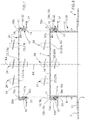
- FIGS 1 and 2 show a first piece 1 of assembly or assembly, and in this case shutter mounted or assembled in a fixed manner, removable and sealed on a second part 2, rigid, hollow, storage or passage, with a quick set-up and removal.
- the two parts 1 and 2, the assembly 1 + 2 formed by the two assembled and assembled parts, and the associated methods and devices are specifically intended for the biopharmaceutical field. This means that they are designed to meet all the requirements and to meet all the constraints of this technical field.
- the second part 2 is now more specifically described.
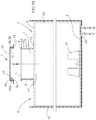
- the second part 2 is a port 2a having an end opening 3, and is part of a container 4 for storage or treatment ( figure 16 ), further comprising a pocket 5 having a bottom 6 and opposite the bottom 6 an opening 7 intended to be rigidly associated, respectively rigidly associated with the second part 2 opposite its end opening 3.
- the second part 2 has an axis XX and has an annular flange 8 defining the end opening 3.
- the second piece 2 is rigid with a degree such that it is able to cash the clamping forces exerted on it by the first piece 1, as described below.
- the end opening 3 may have a larger or smaller diameter or small on the contrary depending on the applications.
- containers 4 large capacity, for example 3,000 liters, for mixing, it may be important that the end opening 3 has a large diameter, for example can be of the order of 50 centimeters.
- Part 1 is adapted to this case, as to that of very small diameters.
- the flange 8 forms, on the side of the opening 3, a bulge 9 directed radially outwardly.
- the outer face 10 of the flange 8 comprises a cylindrical portion 10a of larger diameter towards the bulge 9 and the opening 3, a cylindrical portion 10b of smaller diameter spaced from the bulge 9 and the opening 3 and an intermediate portion 10c of frustoconical form of connection whose large base is adjacent to the portion 10a of larger diameter and whose small base is adjacent to the portion 10b of smaller diameter.
- the angle of inclination of the portion 10c of frustoconical shape on the axis XX is of the order of 45 °.
- the end edge 11 of the bulge 9 of the flange 8 comprises, in the embodiment in question, a second peripheral and annular sealing means 12 having in cross section a rounded groove shape, for example at least substantially half circular.
- the second part 2 comprises, forming an integral part, an annular plate 13 arranged radially outwards, rigidly fixed to the pocket 5, in the vicinity of its opening 7.
- the second piece 2 has a cylindrical shape of axis XX, circular cross section or other. It is made of plastic or any other equivalent material compatible with the use in the biopharmaceutical field.
- the first part 1 is now more particularly described in the embodiment considered here.
- the first piece 1 has an axis XX which, when the two pieces 1 and 2 are mounted on one another or assembled to one another, coincides with the axis XX of the second piece 2, the two parts 1 and 2 being assembled and assembled coaxially.
- the first part 1 comprises a transverse wall 14, having an outer face and an inner face 14a.
- the transverse wall 14 is continuous and solid, the first piece 1 having a shutter function once mounted on and assembled to the second piece 2.
- the inner face 14a of the transverse wall 14 is formed of a substantially flat central zone and of a marginal zone positioned around the central zone in order to form a conjugate part of the edge of the central part.
- end 11 of the flange 3 adapted to be applied against it and participate in the seal between the two parts 1, 2.
- the transverse wall 14 of the first piece 1 when the first piece 1, fixedly mounted rigidly on the second piece 2, must be removed, it is possible to slightly stretch the transverse wall 14 of the first piece 1 without any portion abuts against the inner face of the flange 8.
- the central zone of the transverse wall 14 can be stretched transversely and slide on the end edge 11 of the flange 8 until the first piece 1 is in a state where it can be totally removed,
- the first piece 1 when the first piece 1 is in an inactive summer and it must be fixedly mounted rigidly on the second piece 2, it is possible to slightly stretch the transverse wall 14 of the first piece 1 and to position the first piece 1 on the end edge 11 of the flange 8. Due to the substantially flat continuity that connects the central and marginal areas of the transverse wall 14, it can rest on the end edge 11 of the collar 8 and slide on it without any portion comes disrupt this slip. The marginal zone of the transverse wall 14 then forms a conjugate part of this end edge 11.
- the first piece 1 also comprises a peripheral annular skirt wall 15, having an outer face 57 and an inner face 15a.
- transverse wall 14 and the skirt 15 are in one piece, for example come together manufacturing. Alternatively, it is two separate parts rigidly joined together.
- the transverse wall 14 has the function, when the two parts 1 and 2 are assembled and assembled, to come into the opening 3 so as to conceal it.
- the skirt 15 has the function, in any situation or state, of wearing a holding enclosure 45 and, when the two parts 1 and 2 are assembled and assembled, the holding enclosure 45 then being in the expanded state and its face internal 47 in contact with the outer face 10 of the flange 8, to contain radially outwardly the holding enclosure 45 expanded, the retaining clamping being concealed by the sufficient rigidity of the second part 2.
- the parts of the faces 10 , 10b, on the one hand and 47, 47a on the other hand, in contact with each other with holding clamping are referred to as "conjugate".
- the two parts 1, 2 have complementary shapes for their assembly and assembly.
- the inner face 15a of the skirt 15 has a shape complementary to the face 10 of the collar, apart from a groove 48 formed on the inner face 15a of the skirt 15.
- the inner face 15a of the skirt 15 therefore comprises a cylindrical portion 39a of larger diameter adjacent to the transverse wall 14, a cylindrical portion 39b of smaller diameter axially spaced from the transverse wall 14 in which the groove 48 and a tapered intermediate connecting portion 39c whose large base is adjacent to the portion 39a of larger diameter and whose small base is adjacent to the 39b smaller diameter portion.
- the angle of inclination of the portion 39c of frustoconical shape on the axis XX is of the order of 45 °.
- the portion 39a of the skirt cooperates with the portion 10a of the outer face 10 of the flange 8
- these two portions 39a and 10a can be described as conjugate
- the part 39b cooperates with the part 10b
- these two parts 39b and 10b may be described as conjugate and the portion 39c comes into contact with holding clamp and is conjugate of the portion 10c.
- the first piece 1 also comprises the toric retaining portion 45, integrated into the piece and attached to the skirt 15.
- the retaining O-ring 45 is hollow and adjacent to the inner face 15a of the skirt 15 being located towards the inside thereof.
- the retaining ring 45 is deformable between a retracted state in which it is flattened on itself ( Figures 14A and 15A ) and an expanded state in which it is in volume and filled with a low compressible inflation medium ( Figures 14B and 15B ).
- the retaining O-ring 45 is attached to the skirt 15 and held by, and at least partially housed in, the annular groove 48 of the skirt 15.
- the groove 48 is, in transverse cross-section, of shape at least partially complementary to that of the toric holding enclosure 45. It is formed in the part 39b of smaller diameter. the inner face 15a of the skirt 15 between its two axial end portions 49 - towards the transverse wall 14 - and 50 - spaced apart from the transverse wall 14 -, of smaller diameter.
- the groove 48 has a cross-sectional shape of - or close to that of - a rectangular trapezoid whose large base is the opening 51 of the groove 48 and is situated in the inner face 15a of the skirt 15.
- the small base 54 of the groove 48 forms its bottom and is located opposite the opening 51.
- the small orthogonal side 55 of the groove 48 is located towards the axial end portion 49 of the inner face 15a of the skirt 15 which forms a kind of projection directed towards the axis XX.
- the large inclined side 56 of the groove 48 is located towards the axial end portion 50 of the inner face 15a of the skirt 15 which forms a kind of projection directed towards the axis XX by being inclined.
- the conjugate portion 47a of the holding chamber 45 is located radially to the right of the opening 51 of the groove 48 that it fills.
- the first part 1 also comprises at least one input / output port 46 of an inflation medium of the holding enclosure 45 to bring it to the expanded state.
- Such an input / output port 46 is in fluid communication with the holding enclosure 45 and is accessible from outside the skirt 15.
- This input / output port 46 is able to allow the entry or exit of the inflation medium into the holding retaining ring 45.
- the input / output port 46 passes through the skirt 15 in its portion 39b of smaller diameter of its inner face 15a. It has on the outside of the skirt 15 a valve 52.
- the valve 52 is able, in the first place, to cooperate in fluid communication with an injection nozzle 53 of the inflation medium associated with means for supplying the inflation medium to allow injection of the inflation medium into the chamber 45 and the passage thereof from the retracted state to the expanded state and thus the maintenance of the first part 1 assembled to and on the second part 2.
- the valve 52 is able, secondly, to be closed to allow the preservation of the holding chamber 45 in the expanded state and thus the maintenance of the maintenance of the first part 1 assembled to and on the second part 2.
- the valve 52 is able, third, to be opened to allow the evacuation of the inflation media from the holding chamber 45 and the passage thereof from the expanded state to the retracted state and therefore the threading on or unthreading the first piece 1 relative to the second piece 2.
- the dimensions of the first part 1 and its constituent parts are chosen in relation to those of the flange 8 of the second part 2.
- the dimensions are chosen so that, when the holding enclosure 45 is in the retracted state, the first part 1 can be threaded on or undrawn from the second part 2, if necessary by means of a certain curve given to force the first part 1, manually, by the operator.
- the dimensions are chosen so that, when the holding chamber 45 is in the expanded state, the first piece 1 can be respectively fixedly mounted and rigid, and tight, on the collar 8 of the second piece 2, the conjugate portion 47a of the inner face 47 of the holding chamber 45 then being in contact with holding tightness and sealing on the conjugate portion 10b of the outer face 10 of the collar 8.
- the skirt 15 has the same radial thickness or radial thicknesses adjacent to the portion 39a of larger diameter and to the right of the portion 39b of smaller diameter to the right of the cavity 48 and the O-ring holder 45. It has, on the other hand, a greater radial thickness to the right of its axial end portions 49, 50 of smaller diameter.
- the outer face 57 of the skirt 15 may have a generally cylindrical shape of constant diameter or small variation, radially to the right of the portions 39a, 39b and 39c.
- the inside diameter of the conjugate portion 47a of the inner face 47 of the holding enclosure 45 in the expanded state is equal to or slightly less than the inside diameter of the smaller diameter portion 39b of the skirt 15 radially. to the right of its axial end portions 49, 50 of smaller diameter. Consequently, in the expanded state, the conjugate portion 47a of the inner face 47 of the holding enclosure 45 is coplanar or slightly projecting with respect to the axial end portions 49, 50 of the skirt 15.
- the transverse wall 14 and the skirt 15 are made of a material offering an intrinsic seal, in addition to the first piece 1 is mounted and assembled on the second piece 2 also with a seal between them.
- sealing that required for a biopharmaceutical application, relating to air, water and in particular a barrier to bacteria.
- the first part 1 taken as a whole can, by a sufficient manual action appropriate to the operator, be deformed by bending for threading on and undoing the second part 2.
- the skirt 15 has no, or only a weak, expansion capacity under an external action in the direction of the enlargement and this so as to perform its function of containing radially outward the enclosure hold 45 expanded. This feature does not prevent the skirt 15 from being deformed for threading or stripping the first piece 1.
- the inner face 15a of the skirt 15, in the idle state at rest, has a diameter substantially equal to the outer diameter of the outer face 10 of the collar 8 (see FIG. Figures 14A and 14B ).
- the transverse wall 14 has on its inner face 14a a first means of sealing, peripheral and annular, projecting, located near the skirt 15 and having cross section in the form of a rounded bead, for example at least substantially semi -circular.
- the two sealing means 12 and 16 are conjugate and intended to be associated with each other and thus to cooperate with each other, when the two parts 1 and 2 are mounted or assembled.
- the skirt 15 of the first part 1 can be threaded onto the flange 8 of the second part 2. Where appropriate, the first part 1 is curved during this maneuver.
- the inflation medium is injected into the holding chamber 45, thanks to the port 46, in particular its valve 52, and the injection nozzle 53.
- the holding enclosure 45 is in the retracted state to thread the first part 1 onto the second part 2. And it is possible, when the holding enclosure 45 is in the expanded state, that the first part 1 is mounted in a fixed and rigid manner, and sealed, on the flange 8 of the second part 2, the conjugate part 47a of the inner face 47 of the holding enclosure 45 being in contact with holding clamp and sealing on the conjugate portion 10b of the outer face 10 of the flange 8, while the portions 39a, 49, 50 and 39c of the skirt 15 cooperate with the corresponding parts 10a, 10b and 10c of the flange 8 of the second part 2.
- the first part 1 can then, conversely, be removed and disassembled from the flange 8.
- first part 1 on the second part 2 is easy, fast and safe. It is the same for the removal or disassembly of the first part 1 of the second part 2.
- the assembly or assembly is therefore also removable and in view of the foregoing, well suited to the case where the process employed requires several operations. opening and closing, especially for relatively limited durations.
- the sealing bead 16 of the transverse wall 14 is associated with sealing being housed in the sealing groove 12 conjugate of the collar 8 ( Figure 14B ).
- the holding enclosure 45 of the first part 1 exerts on the flange 8 a clamping force capable of ensuring a fixed and rigid retention, apart from being watertight, with the second part 2 preventing the unwanted disassembly of the two parts. 1, 2 except emptying the holding chamber 45 of its inflation media to bring it to the retracted state.
- the container 4 comprising the pocket 5 is intended to receive a fluid at atmospheric pressure or close to atmospheric pressure and at a positive temperature between temperatures close to 0 ° C. up to temperatures of order of 40 ° C.
- This container 4 is also intended to remain stable, the parts 1 and 2 being arranged upwards. Consequently, the fluid contained in the container 4 can not by itself exert on the first part 1 an external stress that would be sufficient to cause its disassembly.
- the first piece 1 further comprises one or more peripheral tongues 17 arranged radially outwardly, adjacent to the free edge 18 of the skirt 15, adjoining the part 39b, and of one piece with her. This or these tabs 17 are likely to facilitate the handling of the first part 1 for assembly or assembly.
- the transverse wall 14 and the skirt 15 are made of silicone or equivalent material, particularly well suited to the field biopharmaceutical, in particular keeping its integrity during ⁇ radiation sterilization, responding to the approvals of health authorities, and can be implemented in clean room.
- a Shore 55ShA hardness silicone is used.
- the holding enclosure 45 is made of silicone or equivalent material if it is swollen with a liquid or butyl or equivalent material if it is inflated with a gas, in which case the butyl is coated outwards by a acceptable cleanroom material and more generally in the biopharmaceutical field, such as silicone or equivalent.
- the materials constituting the first part 1 are antistatic, and this in order not to hinder the implementation of the assembly comprising the two parts 1, 2, in the case where they are in contact with powder materials.
- the materials constituting the enclosure 45 of the first part 1 and the second part 2 and the state of surfaces of their conjugate faces are such, or chosen in such a way, that their mutual contact is made. with a high friction which contributes to maintaining the assembly or assembly of the two parts 1 and 2 once realized.
- such a first piece 1 can be relatively inexpensive to manufacture, which offers a possibility of single use (in itself or for a process taken as a whole).
- the transverse wall 14 has a thickness of the order of a millimeter, while the skirt 15 has a thickness that can be of the order of six millimeters.
- FIGS. 3 and 4 show another embodiment, similar to the previous one, except that the first part 1 is devoid of the bead forming the first sealing means provided in the previous embodiment.
- Figures 15A and 15B similar to Figures 14A and 14B illustrate the assembly or assembly in this corresponding embodiment.
- the figure 5 shows another achievement, identical to Figures 1 and 2 as regards the first part 1, while the second part 2 is not a port as before but a tube 2b whose diameter may be smaller or larger.
- a tube 2b may have an overall rigidity capable of accommodating the clamping forces exerted by the first piece 1. If necessary, the rigidity of the tube 2b is such that it can be curved by force if necessary by a solicitation sufficient outside.
- Such a tube 2b also has a collar 8 formed by its end portion, this collar 8 having the same structure and the same function as for the port 2a.
- the figure 6 shows another achievement, identical to Figures 3 and 4 as regards the first piece 1, while the second piece 2 is not a port either, but a tube as in the case of the figure 5 .
- the invention can be the subject of many different applications.
- the first piece 1 and the set 1 + 2 comprising the first piece 1 and the second piece 2 are of a production cost for a single use. Assembly or assembly and disassembly of both parts 1 and 2 is fast and safe. It provides a seal comparable to that obtained today with tri-clamps.
- the openings 3 and 7 may have a diameter of between one centimeter or a fraction of a centimeter and about fifty centimeters, without the design of the parts having to be upset.
- the second piece 2 in this case a port 2a, is part of a container 4 comprising a pocket 5 intended to rest at its bottom 6 in the bottom of a rigid outer holding container 19 open upwards.
- a pocket 5 comprises a flexible side wall, with bellows, which can be in two extreme states, respectively folded flat and deployed, and in any intermediate state, and be deformed to move from one state to another.
- This constructive arrangement allows the pocket 5 - said 3D - to be large and have a large volume of up to 3,000 liters.
- the container 4 also comprises, integrated in the pocket 5, means 21 for processing its contents.
- treatment is meant any action on a biopharmaceutical product, or concerning that product, and involving contact with the product, this product being of course in the pocket 5.
- such a treatment is the mixture, the means 21 being mixing means.
- the treatment is aeration, filtration, measurement, this list is not limiting.
- processing means 21 adapted to the desired action are used.
- the means 21 comprise an internal active part, rigid as a whole and, depending on the case, deformable or not, such as a propeller in the case of mixing, an aerator in the case of aeration, a filter in the case of filtration, a probe in the case of measurement, this list is not more limiting.
- the processing means 21 are arranged at least partly inside the pocket 5 while being adjacent to its bottom 6. They are therefore located opposite the second part 2 or port 2a.
- the second part 2 or port 2a can also constitute means for protecting the processing means 21 whose active internal part is essentially disposed in the internal space of the second part 2 or port 2a, when the pocket 5 is in the folded state flat.
- the peripheral part of the internal space of the second part 2 or port 2a then forms a pocket protection chamber 5 and processing means 21.
- Such a set 1 + 2 can be implemented as is now described with reference to the nine diagrams of Figures 17A to 17I , together forming the figure 17 .
- the pocket 5 at this stage of the process is already provided inside the processing means 21, for example here mixing means 21.
- the pocket 5 is then placed by its bottom 6 on the bottom of the rigid container 19 ( Figure 17A ).
- the Figure 17B illustrates the rigid container 19 containing the pocket 5, the latter being not visible because hidden by the vertical side walls of the container 19.
- the pocket 5 comprises one - or several - orifices 22 of product introduction, located especially at or near the bottom 6, accessible from outside the container 19.
- the orifice 22 being open, is gradually introduced into the bag 5 of the container 4 a fluid product, in this case liquid or more or less pasty, and simultaneously the bag is allowed to expand upward and be volume by the container 19 which guides its side walls 20.
- a fluid product in this case liquid or more or less pasty
- Product introduction is continued until the desired amount of this product has been introduced into the bag 5.
- the first piece 1 of the port 2a is then disassembled, as described above, and the end opening 3 of the port 2a is thus opened.
- the first piece 1 previously disassembled (or an identical piece 1) is reassembled or reassembled at and on the port 2a, as previously described, and again occulted. opening 3.
- the mixing means 21 are used or continue to be used if it started when the powdered product was introduced.
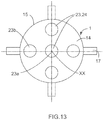
- the transverse wall 14 comprises at least one through hole 23.
- Other arrangements can be envisaged, since they comprise at least one orifice 23.
- the transverse wall 14 comprising at least one through hole 23, the first piece 1 has a connection function with communication, once mounted on and assembled to the second piece 2.
- the figure 9 shows an embodiment of the first part 1 in which it is devoid of the bead forming sealing means as described above, this first part 1 being at rest without external stress.
- the figure 10 shows an embodiment in which such a first piece 1 is mounted or assembled on a port 2a, as described above.
- the figure 11 shows another embodiment in which a first piece 1 with bead forming sealing means as described above is mounted or assembled not on a port but on a tube.
- the figure 12 shows another embodiment in which a first part 1 without bead forming sealing means as described above is mounted or assembled on such a tube.
- the piece 2 may be a port 2a having an end opening 3, which is part of a storage or processing container 4, further comprising a pocket 5 having a bottom 6 and opposite the bottom 6 a opening 7 to be associated rigidly, respectively rigidly associated with the second part 2 opposite its end opening 3.
- a port 2a having an end opening 3, which is part of a storage or processing container 4, further comprising a pocket 5 having a bottom 6 and opposite the bottom 6 a opening 7 to be associated rigidly, respectively rigidly associated with the second part 2 opposite its end opening 3.
- the processing means 21 such as mixing means 21.
- Such a third piece 27 has an annular end portion 26, on the side of which it is fixed rigidly and sealingly, if necessary removably, to the first piece 1.
- the third piece 27 is a pouch, particularly flexible ( Figures 18A, 18B , 20A, 20B , 22A, 22B , 24A, 24B , 25A, 25B , 28A, 26B , 27 ).
- This embodiment can be the subject of different embodiments.
- the third piece 27 has originally, in the axis XX and opposite its annular end portion 26, an axial opening 31a.
- the third piece 27 is permanently closed at its end portion 31b, opposite its annular end portion 26.
- a attachment means of the third piece 27, such as a eyelet 29 is possible to take advantage of the end portion 31b permanently closed to arrange a attachment means of the third piece 27, such as a eyelet 29.
- the third piece 27 originally has, opposite its annular end portion 26, a side opening 31c.
- the end portion 31b being closed permanently, it is also possible to provide a hooking means for the third piece 27, such as a eyelet 29.
- the third piece 27 is a tube open opposite its annular end portion 26 and connected to a pocket or the like ( Figures 19A, 19B , 21A, 21B , 23A, 23B ).
- the third piece 27 is directly associated fixedly and rigidly with the first piece 1, the widened end portion of the annular end portion 26 being rigidly fixed, for example by welding, to the portion 34 of the transverse wall 14 forming the edge of the orifice 23.
- the third piece 27 is indirectly fixedly and rigidly associated with the first piece 1, via a tubular piece 24.
- the tubular piece 24 is fixedly and rigidly associated firstly with the first piece 1, on the other hand to the third piece 27 being placed between them and ensuring between them a sealed passage.
- the first piece 1 provided with the tubular piece 24 provides in combination a function of connection and rigid attachment with the third piece 27 and a function of passage or transfer, in particular of a product and / or a means of treatment and / or measurement, the end opening 3 of the second piece 2 remaining indeed open .
- Such a tubular part 24 defines the orifice 23 and forms with the first piece 1 a rigid assembly extending outwardly and / or inside thereof.
- the tubular member 24 associated with the central orifice 23a extends outwardly and inwardly, while the tubular members 24 associated with the side orifices 23 extend only outwardly.
- tubular parts 24 which extend only outwardly or at the outer portion of the tubular parts 24 which extend outwardly and inwardly.
- Such a tubular piece 24 or such an outer portion of tubular piece 24 acts as a fluid connection between the first piece 1 and the third piece 27.
- the tubular connecting piece 24 is rigid, in particular more rigid than the first piece 1 and the third piece 27, or, on the contrary, the tubular connecting piece 24 has a certain capacity of deformation.
- tubular connecting piece 24 In order for the tubular connecting piece 24 to form a fixed, rigid and sealed assembly with the first piece 1, provision is made, for example, to provide it at one of its ends, in this case at the end adjacent to the first part 1, a flange 32, directed radially outwardly.
- This flange 32 can be fixed rigidly and tightly, by gluing, welding, or the like, to the portion 34 of the transverse wall 14 forming the edge of the orifice 23.
- the tubular connecting piece 24 is fixedly associated, rigid and sealed to the third piece 27.
- the tubular wall 40 of the tubular connecting piece located on the side opposite the flange 32 can be fixed rigidly and sealed, by gluing, welding, or equivalent, at the annular end portion 26 of the third piece 27, the mounting end-of-travel lock of the third piece 27 on the tubular connecting piece 24 being provided, as far as necessary, by locking the free end edge of the annular end portion 26 on the flange 32 or the wall 14 adjacent.
- the tubular connecting piece 24 comprises, forming a rigid assembly with it, a transverse collar 25, adjacent to the tubular wall 40 to the flange 32, directed radially outward, continuous or not.
- the flange 25 is located outside the transverse wall 14, especially in the vicinity thereof.
- This transverse flange 25 is able to constitute a means for suspending the third piece 27, cooperating with a support wall 41 provided with a hole 42.
- the third piece 27 is disposed with its annular end portion 26 directed upwards, so that the transverse flange 25 rests on the upper face of the support wall 41 in the vicinity of the hole 42, while the third part 27 is suspended below the support wall 41 ( figure 26A ).
- the transverse flange 25 is capable of constituting an end-of-travel blocking for the free end edge of the annular end portion 26.
- the tubular piece 24 comprises, towards the outside of the tubular wall 24, an outer cylindrical wall 28, forming with the tubular wall 24 an annular cylindrical housing 28a able to receive the annular end portion 26.
- the closing piece 30 is able to be associated also with the tubular piece 24, flexible, with the function of opening or closing the passage formed by it.
- Figures 24A and 24B the method of implementing an assembly comprising, in addition to the parts 1 and 2, a third pocket-shaped part 27 originally having, in the axis XX and opposite its annular end portion 26, an axial opening 31a.
- This method is intended to aseptically insert - or at least protect - a product such as a powder product P in the pocket 5 associated with the second part 2, through the pocket 27 forming the third part 27.
- a closure piece 30 is associated with the annular end portion 26 of the pocket 27 (third piece) and is appropriately maneuvered to close the passage formed thereby.
- the pocket 27 (third piece) is always open thanks to the opening 31a, opposite its annular end portion 26 which is closed by the closure piece 30, is introduced into the pocket 27, through the opening 31a, the desired amount of product P ( figure 24A ).
- this step is performed while the opening 31a is placed in the upper position, for obvious reasons of facilitated, the pocket 27 (third piece) extending downwards and the pocket 5 being placed in the lower position.
- the closing piece 30 is actuated appropriately to open the passage formed by the annular end portion 26 of the pocket 27 (third piece).
- this step is performed as before then that the annular end portion 26 of the pocket 27 (third piece) is placed in the lower position, for obvious reasons of ease, the product P can pass by gravity from the pocket 27 (third piece) to the pocket 5 of the container 4 placed below.
- a pocket 27 (third piece) which initially does not comprise an axial opening 31a but a lateral opening 31c, the pocket 27 (third piece) comprising a fastening means such as an eyelet 29 at its closed end portion 31b.
- This variant of the method is identical to the previous one, except that the product P is inserted into the pocket 27 (third part) not by an axial opening such as 31a, but by the lateral opening 31c, which is then closes the opening 31c of the pocket 27 (third part), for example by a thermal welding of axial direction 43b and non-transverse, finally that the pocket 27 (third part) is conveniently maintained with its closed end portion 31b in upper position and its annular end portion 26 in the lower position, by simple suspension by gravity, being suspended by the eyelet 29 to a suitable support hook.
- Figures 26A and 26B we now refer more specifically to Figures 26A and 26B and the method of implementing an assembly comprising, in addition to the parts 1 and 2, a third pocket-shaped part 27 (third part) having a closed end portion 31b.
- the desired quantity of the product P is introduced into the pocket 27 (third piece) through the end opening of the annular end portion 26.
- this step is performed, for obvious reasons of ease, while the pocket 27 (third piece) is disposed with its annular end portion 26 in the upper position and its closed end portion 31b in the lower position, which is made possible by the fact that the tubular connecting piece 24 of the bag 27 (third piece) to the first piece 1 comprises, as previously described, a transverse collar 25 cooperating with the support wall 41 provided with a hole 42.
- the product P is then introduced into the pocket 27 (third piece) by simple gravity.
- a closure piece 30 is associated with the end portion 26 of the pocket 27 (third piece) and is maneuvered to close the passage formed by the latter.
- the packaged product P is thus stored in the bag 27 (third piece).
- the closing piece 30 is actuated appropriately to open the passage formed by the annular end portion 26 of the pocket 27 (third piece).
- this step is performed after up-down reversal of the pocket 27 (third piece), the annular end portion 26 of the pocket 27 (third piece) previously in the upper position being brought to the lower position, and the closed end portion 31b previously in the lower position being brought to the upper position, the pocket 27 (third piece) being suspended by gravity by the eyelet 29 to a suitable support hook.
- the product P can pass by gravity from the pocket 27 (third piece) to the pocket 5 of the container 4 placed below.
Landscapes
- Engineering & Computer Science (AREA)
- Mechanical Engineering (AREA)
- General Engineering & Computer Science (AREA)
- Physics & Mathematics (AREA)
- Architecture (AREA)
- Fluid Mechanics (AREA)
- Closures For Containers (AREA)
- Bag Frames (AREA)
- Packages (AREA)
- Pressure Vessels And Lids Thereof (AREA)
Claims (28)
- Teil (erstes Teil 1), das speziell dazu bestimmt ist, stationär und starr, abnehmbar und dicht auf einen ringförmigen starren Kragen (8) eines zweiten Teils (2), das eine Endöffnung (3) hat, montiert zu werden, wobei das erste Teil (1) mit der Achse XX:a. eine Querwand (14) umfasst, die geeignet ist, in die Öffnung (3) zu kommen,∘ eine ringförmige Wand umfasst, die eine Schürze (15) bildet, die eine Innenseite (15a) hat, die keine oder nur eine geringe Verbreiterungskapazität unter einer äußeren Aktion in die Verbreiterungsrichtung hat,∘ einen torischen hohlen Halteeinschluss (45), der zu der Innenseite (15a) der Schürze (15) benachbart ist und zu deren Innerem liegt, der zwischen einem eingezogenen Zustand, in dem er auf sich selbst abgeflacht ist, und einem ausgedehnten Zustand, in dem er aufgerichtet ist und mit einem Aufblasfluid, das gering komprimierbar ist, gefüllt ist, verformbar ist, mindestens einen Eingangs-/Ausgangsanschluss (46) des Aufblasfluids in Fluidverbindung mit dem Halteeinschluss (45) und von außerhalb der Schürze (15) her zugänglich, geeignet, um das Eintreten oder Austreten des Aufblasfluids in den torischen Halteeinschluss (45) zu erlauben, und ein Ventil (52), das außerhalb der Schürze (15) liegt, umfasst,∘ dessen Maße in Bezug zu denen des Kragens (8) derart ausgewählt sind, dass es geeignet ist, wenn der Halteeinschluss (45) in dem zurückgezogenen Zustand ist, auf das zweite Teil (2) aufgezogen oder von ihm abgezogen zu werden, und, wenn der Halteeinschluss (45) im ausgedehnten Zustand ist, stationär und starr und dicht auf den Kragen (8) montiert zu werden, wobei das zugeordnete Teil (47a) der Innenseite (47) des Halteeinschlusses (45) unter Haltespannung auf das zugeordnete Teil (10b) der Außenseite (10) des Kragens (8) in Berührung ist,dadurch gekennzeichnet, dass:° die Querwand (14) mit intrinsischer Abdichtung entweder durchgehend und massiv ist, oder mindestens eine Durchgangsöffnung (23) umfasst,∘ die Innenseite (15a) der Schürze (15) Folgendes umfasst:• einen Teil mit zylindrischer Form (39a) mit größerem Durchmesser, an die Querwand (14) angrenzend,• einen Teil mit zylindrischer Form (39b) mit kleinerem Durchmesser, axial von der Querwand (14) beabstandet, zwischen dessen axialen Endteilen (49, 50) eine ringförmige Hohlkehle (48) eingerichtet ist, wobei der torische Halteeinschluss (45) durch die ringförmige Hohlkehle (48) gehalten und in ihr mindestens teilweise aufgenommen ist, wobei die Schürze (15) den Halteeinschluss (45) trägt,• und einen Verbindungszwischenteil (39c) mit kegelstumpfartiger Form, das an das Teil (39a) mit größerem Durchmesser und an das Teil (39b) mit kleinerem Durchmesser angrenzt,∘ wobei die Innenseite (15a) der Schürze (15) eine komplementäre Form zu der Seite (10) des Kragens (8) hat, abgesehen von der ringförmigen Hohlkehle (48), wobei das Zwischenteil (39c) unter Haltespannung auf das zugeordneten Teil (10c) der Seite (10) zur Berührung kommt, wobei das erste Teil (1) insgesamt genommen durch Biegen für sein Aufziehen auf und Abziehen von dem zweiten Teil (2) verformt werden kann,∘ wobei das erste Teil (1) aus einem Werkstoff hergestellt ist, der an das biopharmazeutische Gebiet angepasst ist, Gebiet, für das das erste Teil (1) mit schnellem stationären und starren und dichten Platzieren und Entfernen speziell bestimmt ist, das zweite Teil (2) verschließt, wenn die Querwand (14) durchgehend und massiv ist, oder in Verbindung an das zweite Teil (2) anschließt, wenn die Querwand (14) eine Durchgangsöffnung (23) umfasst.
- Montageteil (1) nach Anspruch 1, dadurch gekennzeichnet, dass der torische Halteeinschluss (45) ein getrenntes Teil der Schürze (15) ist, das auf sie angebaut ist, die ringförmige Hohlkehle (48) mit mindestens teilweise zu der des torischen Halteeinschlusses (45) komplementärer Form eine Öffnung (51) hat, die in der Innenseite (15a) der Schürze (15) liegt, das zugeordnete Teil (47a) des Halteeinschlusses (45) radial gerade zu der Öffnung (51) der Hohlkehle (48) liegt, der mindestens einen Eingangs-/Ausgangsanschluss (46), der die Schürze (15) in ihrem Teil (39b) mit kleinerem Durchmesser von ihrer Innenseite (15a) durchquert.
- Montageteil (1) nach einem der Ansprüche 1 und 2, dadurch gekennzeichnet, dass die Schürze (15) einerseits eine gleiche radiale Stärke oder ähnliche radiale Stärken gerade zu dem Teil (39a) mit größerem Durchmesser und gerade zu dem Teil (39b) mit kleinerem Durchmesser gerade zu dem torischen Halteeinschluss (45) hat, und andererseits eine größere radiale Stärke gerade zu seinen axialen Endteilen (49, 50) mit kleinerem Durchmesser, wobei der Innendurchmesser des zugeordneten Teils (47a) der Innenseite (47) des Halteeinschlusses (45) im ausgedehnten Zustand gleich oder leicht kleiner ist als der Innendurchmesser des Teils (39b) mit kleinerem Durchmesser der Schürze (15) radial gerade zu seinen axialen Endteilen (49, 50) mit kleinerem Durchmesser.
- Montageteil (1) nach einem der Ansprüche 1 bis 3, dadurch gekennzeichnet, dass das Zwischenteil (39c) der Innenseite (15a) der Schürze (15) eine Kegelstumpfform hat, die mit der Achse XX einen Neigungswinkel in der Größenordnung von 45 Grad bildet.
- Montageteil (1) nach einem der Ansprüche 1 bis 4, in dem Fall, in dem die Querwand (14) eine Durchgangsöffnung (23) umfasst, dadurch gekennzeichnet, dass es außerdem ein rohrförmiges Teil (24) umfasst, das die Öffnung (23) abgrenzt, das fest mit der Querwand (14) verbunden ist, um eine starre Baugruppe zu bilden, die sich von der Querwand (14) nach außen und/oder nach innen erstreckt, wobei das erste Montageteil (1), das mit dem rohrförmigen Teil (24) versehen ist, eine Anschluss- und starre Befestigungs- und Passage- oder Transferfunktion sicherstellt, wobei das rohrförmige Teil (24), das sich von der Querwand (14) nach außen erstreckt, geeignet ist, um das ringförmige Endteil (26) eines dritten Teils (27) aufzunehmen und starr und dicht zu befestigen.
- Montageteil (1) nach Anspruch 5, gekennzeichnet durch ein rohrförmiges Teil (24), das sich von der Querwand (14) nach außen erstreckt, das eine rohrförmige Wand (40) zur Aufnahme und starren und dichten Befestigung des ringförmigen Endteils (26) des dritten Teils (27) und an einem Ende der rohrförmigen Wand (40) einen Kragen (32) zum starren Befestigen an das Teil (34) der Querwand (14), die den Rand der Öffnung (23) bildet, umfasst, und/oder von der rohrförmigen Wand (40) nach außen eine äußere zylindrische Wand (28) umfasst, die mit der Wand (40) eine ringförmige zylindrische Aufnahme (28a) bildet, die geeignet ist, das ringförmige Endteil (26) des dritten Teils (27) aufzunehmen und insbesondere einen Querkragen (25) umfasst, der eine starre Einheit mit ihr bildet, der nach außen gerichtet ist, der geeignet ist, ein Aufhängmittel des dritten Teils (27), das mit einer Stützwand (41), die mit einem Loch (42) versehen ist, zusammenwirkt.
- Montageteil (1) nach einem der Ansprüche 1 bis 4, in dem Fall, in dem die Querwand (14) eine Durchgangsöffnung (23) umfasst, gekennzeichnet durch ein drittes Teil (27), das ein ringförmiges Endteil (26) hat, das geeignet ist, direkt an das Teil (34) der Querwand (14), das den Rand der Öffnung (23) bildet, befestigt zu werden oder daran befestigt ist.
- Montageteil (1) nach einem der Ansprüche 4 bis 7, gekennzeichnet durch ein drittes Teil (27), das entweder die Form einer offenen Tasche oder nicht dem ringförmigen Endteil (26) entgegengesetzt oder eine Rohrform hat.
- Montageteil (1) nach einem der Ansprüche 4 bis 8, gekennzeichnet durch ein Schließteil (30), das mit dem dritten Teil (27) verbunden ist, wobei das rohrförmige Teil (24) die Aufgabe hat, die Passage, die von dem ringförmigen Endteil (26) gebildet wird, zu öffnen oder zu schließen.
- Montageteil (1) nach einem der Ansprüche 1 bis 9, gekennzeichnet durch ein erstes umfängliches ringförmiges Dichtmittel (16) in gerundeter Wulstform im geraden Querschnitt und in der Nähe der Schürze (15) liegend, und ein zweites umfängliches ringförmiges zugeordnetes Dichtmittel (12) in Form einer gerundeten Nut im geraden Querschnitt, eingerichtet auf der Endkante (11) des Kragens (8).
- Montageteil (1) nach einem der Ansprüche 1 bis 10, dadurch gekennzeichnet, dass es außerdem mindestens eine äußere umfängliche Lasche (17) hat, die an den freien Rand (18) der Schürze (15) anschließt und in einem Stück mit ihr, die geeignet ist, zu dem Platzieren und/oder Entfernen des ersten Teils (1) auf und/oder von dem Kragen (8) des zweiten Teils (2) beizutragen.
- Montageteil (1) nach einem der Ansprüche 1 bis 11, dadurch gekennzeichnet, dass die Querwand (14) und die Schürze (15) aus Silikon oder gleichwertigem Werkstoff hergestellt sind, und/oder dass der Halteeinschluss (45) aus Silikon oder gleichwertigem Werkstoff hergestellt ist, falls er mit einer Flüssigkeit aufgeblasen wird, oder aus Butyl oder gleichwertigem Werkstoff, wenn er mit einem Gas aufgeblasen wird, wobei das Butyl nach außen mit einem in dem biopharmazeutischen Gebiet akzeptablem Werkstoff, wie zum Beispiel mit Silikon oder Gleichwertigem, beschichtet ist, und insbesondere dadurch, dass die Bestandswerkstoffe des Montageteils (1) antistatisch sind.
- Baugruppe, die speziell für das biopharmazeutische Gebiet bestimmt ist, die ein erstes Montageteil (1) nach einem der Ansprüche 1 bis 12 und ein zweites Teil (2), auf das es stationär und starr, abnehmbar und dicht montiert ist, umfasst, dadurch gekennzeichnet, dass das zweite Teil (2), das hohl ist, eine Endöffnung (3) umfasst, die durch einen starren ringförmigen Kragen (8) begrenzt ist, der auf der Seite der Öffnung (3) eine Schwellung (9), die nach außen gerichtet ist, hat, wobei die Außenseite (10) des Kragens (8) ein Teil (10a) mit größerem Durchmesser zu der Schwellung (9) und der Öffnung (3), ein Teil (10b) mit kleinerem Durchmesser, der von der Schwellung (9) und der Öffnung (3) beabstandet ist, und ein Zwischenteil (10c), derart umfasst, dass im aktiven Zustand, in dem das erste Teil (1) auf das zweite Teil (2) montiert ist, das zugeordnete Teil (47a) der Innenseite (47) des Halteeinschlusses (45) unter Haltespannung und Abdichtung auf dem zugeordneten Teil (10b) der Außenseite (10) des Kragens (8) des zweiten Teils (2) zur Berührung kommt, wobei das erste Teil (1) schnell auf/von dem zweiten Teil (2) platziert und entfernt werden kann.
- Baugruppe nach Anspruch 13, dadurch gekennzeichnet, dass das zweite Dichtmittel (12), wie zum Beispiel eine ringförmige Nut, auf der Endkante (11) des Kragens (8), der die Schwellung (9) bildet, eingerichtet ist, mit der, wenn es vorgesehen ist, ein erstes umfängliches ringförmiges Dichtmittel (16) in gerundeter Wulstform mit geradem Querschnitt und in der Nähe der Schürze (15) liegend zusammenwirkt.
- Baugruppe nach einem der Ansprüche 13 und 14, dadurch gekennzeichnet, dass das zweite Teil (2) ein Anschluss (2a) ist, der zu einem Lager- oder Behandlungsbehälter (4) gehört, der außerdem eine Tasche (5) umfasst, die einen Grund (6) und dem Grund (6) entgegengesetzt eine Öffnung (7) hat, die dazu bestimmt ist, starr, jeweils starr verbunden, mit dem zweiten Teil (2) entgegengesetzt zu seiner Endöffnung (3) verbunden zu sein, und eine biegsame Seitenwand (20), die sich in zwei Endzuständen befinden kann, jeweils flach gefaltet und ausgebreitet, und in jedem Zwischenzustand, und verformt werden kann, um von einem Zustand zu einem anderen überzugehen.
- Baugruppe nach Anspruch 15, dadurch gekennzeichnet, dass der Behälter (4) integrierte Mittel (21) zum Behandeln seines Inhalts umfasst.
- Baugruppe nach einem der Ansprüche 15 und 16, wobei Anspruch 16 von Anspruch 8 abhängt, dadurch gekennzeichnet, dass das zweite Teil (2), das den Anschluss (2a) bildet, außerdem Schutzmittel der Behandlungsmittel (21) bildet, wobei ihr innerer aktiver Teil im Wesentlichen in dem Innenraum des zweiten Teils (2), das den Anschluss (2a) bildet, angeordnet ist, wenn die Tasche (5) im flach gefalteten Zustand ist, wobei der umfängliche Teil des Innenraums des zweiten Teils (2), das den Anschluss (2a) bildet, eine Schutzkammer der Tasche (5) und der Behandlungsmittel (21) bildet.
- Baugruppe nach einem der Ansprüche 16 und 17, dadurch gekennzeichnet, dass die Behandlungsmittel (21) mindestens zum Teil im Inneren der Tasche (5) an ihrem Grund (6) benachbart, dem zweiten Teil (2), das den Anschluss (2a) bildet, entgegengesetzt, angeordnet sind.
- Baugruppe nach einem der Ansprüche 13 und 14, dadurch gekennzeichnet, dass das zweite Teil (2) ein Rohr ist.
- Baugruppe nach einem der Ansprüche 13 bis 19, wobei die Querwand (14) durchgehend und massiv ist, wobei das erste Teil (1) ein Schließteil des zweiten Teils (2) ist.
- Baugruppe nach einem der Ansprüche 13 bis 19, wobei die Querwand (14) mindestens eine Durchgangsöffnung (23) umfasst, wobei das erste Teil (1) in Verbindung an das zweite Teil (2) anschließt.
- Baugruppe nach Anspruch 21, dadurch gekennzeichnet, dass sie ein drittes Teil (27), das ein ringförmigen Endteil (26) umfasst, das starr und dicht an das erste Teil (1) direkt oder über das rohrförmige Teil (24) angeschlossen ist, und außerdem insbesondere ein Schließteil (30), das mit dem dritten Teil (27) verbunden ist, gegebenenfalls mit dem rohrförmigen Teil (24), das die Aufgabe hat, die Passage, die von dem ringförmigen Endteil (26) gebildet wird, zu öffnen oder zu schließen, umfasst.
- Verfahren zur Montage oder zum Zusammenfügen des ersten Montageteils (1) an und auf das zweite Teil (2) einer Baugruppe nach einem der Ansprüche 13 bis 22, wobei:° man über ein erstes Teil (1) und ein zweites Teil (2), die nicht aneinander montiert oder zusammengefügt sind, verfügt, wobei der Halteeinschluss (45) des ersten Teils (1) im zurückgezogenen Zustand ist,∘ man das erste Teil (1) gegenüber und in der Achse des zweiten Teils (2) anordnet,∘ man die Schürze (15) auf den Kragen (8) aufzieht und das erste Teil (1) axial auf dem zweiten Teil (2) positioniert,∘ man in dieser Position den Halteeinschluss (45) des ersten Teils (1) von dem eingezogenen zu dem aufgeweiteten Zustand übergehen lässt,∘ so dass in dieser Situation, in der das erste Teil (1) im aktiven Zustand auf das zweite Teil (2) montiert oder mit diesem zusammengefügt ist, das zugeordnete Teil (47a) der Innenseite des Halteeinschlusses (45) unter Haltespannung und Abdichtung auf das zugeordnete Teil der Außenseite (10b) des Kragens (8) des zweiten Teils (2) zur Berührung kommt.
- Verfahren zum Auseinandernehmen des ersten Montageteils (1) von dem zweiten Teil (2) einer Baugruppe nach einem der Ansprüche 13 bis 22, wobei:∘ man über ein erstes Teil (1) und ein zweites Teil (2), die aneinander montiert oder zusammengefügt sind, verfügt, wobei der Halteeinschluss (45) des ersten Teils (1) im aufgeweiteten Zustand ist,∘ man den Halteeinschluss (45) des ersten Teils (1) von dem aufgeweiteten Zustand auf den eingezogenen Zustand übergehen lässt,∘ man das erste Teil (1) von dem zweiten Teil (2) abzieht, bis die zwei Teile (1, 2) auseinandergenommen sind.
- Verfahren zur Umsetzung einer Baugruppe nach Anspruch 20, dadurch gekennzeichnet, dass es von den Ansprüchen 15 bis 18 abhängt, wobei:∘ man über einen Lager- oder Behandlungsbehälter (4) verfügt,∘ man von einer Situation ausgeht, in der:◆ die Tasche (5) des Behälters (4) im flach gefalteten Zustand ist,◆ die Endöffnung (3) des Anschlusses (2a) des Behälters (4), der das zweite Teil (2) bildet, von dem ersten Teil (1) verdeckt wird, das nach oben und auf das zweite Teil (2) montiert und mit diesem zusammengefügt angeordnet ist, und◆ die Tasche (5) mit ihrem Grund auf dem Grund eines Containers (19) platziert ist,∘ während eine Einführöffnung (22) von Produkt des Behälters (4) offen ist, man allmählich in den Behälter (4) ein Produkt einführt und gleichzeitig die Tasche (5) sich nach oben ausbreiten und durch den Container (19) aufrichten lässt, bis man in den Behälter (4) die gewünschte Menge des Produkts eingeführt hat,∘ man das erste Teil (1) von dem zweiten Teil (2) abmontiert und daher die Endöffnung (3) des zweiten Teils (2) öffnet,∘ wenn diese Endöffnung (3) des zweiten Teils (2) daher offen ist, man durch sie in die Tasche (5) ein Produkt und/oder ein Behandlungsmittel und/oder ein Messmittel des Inhalts der Tasche (5) einführt, und, sobald dieser letzte Schritt abgeschlossen ist,∘ man das erste Teil (1) an und auf das zweite Teil (2) montiert oder mit diesem zusammenfügt.
- Verfahren nach Anspruch 25, wobei der Behälter (4) integrierte Behandlungsmittel (21) umfasst, die Mischmittel umfassen, die im Inneren der Tasche (5) angeordnet sind, wobei sie neben ihrem Grund (6) liegen, wobei:° während die Endöffnung (3) des Anschlusses (2a) des Behälters (4), der das zweite Teil (2) bildet, durch das erste Teil (1) verschlossen ist und eine Produkteinführöffnung (22) offen ist, man in den Behälter (4) die gewünschte Menge eines Produkts einführt,∘ man das erste Teil (1) von dem zweiten Teil (2) abmontiert und daher die Endöffnung (3) des zweiten Teils (2) öffnet,∘ während diese Endöffnung (3) des zweiten Teils (2) daher geöffnet ist, man durch sie in die Tasche (5) eine gewünschte Menge eines Produkts einführt,∘ man die Mischmittel (21) anwendet,∘ man das erste Teil (1) an und auf das zweite Teil (2) montiert oder mit diesem zusammenfügt,∘ und man die Anwendung der Mischmittel (21) fortsetzt.
- Verfahren zum Umsetzen einer Baugruppe nach Anspruch 22, abhängig von den Ansprüchen 15 bis 18, in dem Fall, in dem das dritte Teil (27) eine Tasche ist, die an der entgegengesetzten Seite ihres ringförmigen Endteils (26) offen ist, um ein Produkt P in den Behälter (4) über das dritte Teil (offene Tasche 27) einzuführen, wobei:∘ man über einen Lager- oder Behandlungsbehälter (4) verfügt, der eine Tasche (5) umfasst, und über ein drittes Teil (offene Tasche 27), das starr und dicht an dem ersten Teil (1) angeschlossen ist,∘ man ein Schließteil (30) mit dem Endteil (26) des dritten Teils (offene Tasche 27) verbindet, um die Passage, die von dem ringförmigen Endteil (26) gebildet wird, zu schließen,∘ während das dritte Teil (offene Tasche 27) entgegengesetzt zu seinem ringförmigen Endteil (26), das so verschlossen wird, offen ist, man durch dieses in das dritte Teil (Tasche 27) die gewünschte Menge des Produkts P einführt,∘ man die Öffnung des dritten Teils (Tasche 27) entgegengesetzt zu ihrem geschlossenen ringförmigen Endteil (26) schließt,∘ man das erste Teil (1) an und auf das zweite Teil (2) montiert oder mit diesem zusammenfügt, wobei keine Verbindung zwischen der Tasche (5) des Lager- oder Behandlungsbehälters (4) und dem dritten Teil (Tasche 27) existiert,∘ man nach Wunsch das Schließteil (30) betätigt, um die Passage zu öffnen, die von dem ringförmigen Endteil (26) gebildet wird, wobei eine Verbindung zwischen der Tasche (5) des Lager- oder Behandlungsbehälters (4) und dem dritten Teil (Tasche 27) hergestellt wird,∘ man das in das dritte Teil (Tasche 27) eingefügte Produkt in die Tasche (5) des Lager- oder Behandlungsbehälters (4) übergehen lässt.
- Verfahren zum Umsetzen einer Baugruppe nach Anspruch 22, abhängig von den Ansprüchen 15 bis 18, in dem Fall, in dem das dritte Teil (27) eine Tasche ist, die entgegengesetzt zu ihrem ringförmigen Endteil (26) geschlossen ist, um ein Produkt P in den Behälter (4) über das dritte Teil (geschlossene Tasche 27) einzuführen, wobei:∘ man über einen Lager- oder Behandlungsbehälter (4), der eine Tasche (5) umfasst, verfügt, und ein drittes Teil (geschlossene Tasche 27), das starr und dicht an das erste Teil (1) angeschlossen ist,∘ während das dritte Teil (Tasche 27) an seinem ringförmigen Endteil (26) offen ist, man durch dieses in dieses dritte Teil (Tasche 27) die gewünschte Menge des Produkts P einführt,∘ man ein Schließteil (30) mit dem Endteil (26) des dritten Teils (Tasche 27) verbindet und betätigt, um die Passage, die von dem ringförmigen Endteil (26) gebildet wird, zu schließen,∘ man das erste Teil (1) an und auf dem zweiten Teil (2) montiert oder mit diesem zusammenfügt, wobei keine Verbindung zwischen der Tasche (5) des Lager- oder Behandlungsbehälters (4) und dem dritten Teil (Tasche 27), die das Produkt P einschließt, besteht,∘ man nach Wunsch das Schließteil (30) betätigt, um die Passage zu öffnen, die von dem ringförmigen Endteil (26) gebildet wird, wodurch eine Verbindung zwischen der Tasche (5) des Lager- oder Behandlungsbehälters (4) und dem dritten Teil (Tasche 27) hergestellt wird,∘ man das Produkt P, das in das dritte Teil (Tasche 27) in der Tasche (5) des Lager- oder Behandlungsbehälters (4) eingefügt ist, übergehen lässt.
Applications Claiming Priority (2)
| Application Number | Priority Date | Filing Date | Title |
|---|---|---|---|
| FR0951430A FR2942778B1 (fr) | 2009-03-06 | 2009-03-06 | Montage a enceinte torique de maintien pour l'obturation de, ou le raccord sur, une collerette annulaire, a mise en place et enlevement rapides, destine au domaine biopharmaceutique |
| PCT/FR2010/050383 WO2010100388A2 (fr) | 2009-03-06 | 2010-03-05 | Montage a enceinte torique de maintien pour l'obturation de, ou le raccord sur, une collerette annulaire, a mise en place et enlevement rapides, destine au domaine biopharmaceutique |
Publications (3)
| Publication Number | Publication Date |
|---|---|
| EP2404085A2 EP2404085A2 (de) | 2012-01-11 |
| EP2404085B1 true EP2404085B1 (de) | 2017-05-10 |
| EP2404085B8 EP2404085B8 (de) | 2018-07-11 |
Family
ID=41258324
Family Applications (1)
| Application Number | Title | Priority Date | Filing Date |
|---|---|---|---|
| EP10715304.1A Active EP2404085B8 (de) | 2009-03-06 | 2010-03-05 | Anordnung mit einem torischen körper zum schliessen eines ringförmigen bundes oder zur verbindung damit, zum schnellen ein-und ausnehmen, zur verwendung im biopharmazeutischen bereich |
Country Status (4)
| Country | Link |
|---|---|
| US (1) | US9027776B2 (de) |
| EP (1) | EP2404085B8 (de) |
| FR (1) | FR2942778B1 (de) |
| WO (1) | WO2010100388A2 (de) |
Families Citing this family (5)
| Publication number | Priority date | Publication date | Assignee | Title |
|---|---|---|---|---|
| WO2016140920A1 (en) | 2015-03-02 | 2016-09-09 | Delaware Capital Formation, Inc. | Customizable mounting interface for a sealed transfer port |
| CH711666A1 (de) * | 2015-10-20 | 2017-04-28 | Netzhammer Eric | Behältnis für kleine Teile in der pharmazeutischen Industrie. |
| FR3054126B1 (fr) * | 2016-07-22 | 2019-07-26 | Sartorius Stedim Fmt Sas | Recipient biopharmaceutique, poche de recipient biopharmaceutique, procede de fabrication et d’utilisation de recipient biopharmaceutique |
| JP2020520309A (ja) | 2017-05-08 | 2020-07-09 | デラウェア・キャピタル・フォーメイション・インコーポレーテッドDelaware Capital Formation Incorporated | カバーを有するアクセスポート |
| CN111977197B (zh) * | 2020-08-07 | 2022-03-01 | 宁波富仕达电力工程有限责任公司 | 防堵料旋转仓 |
Family Cites Families (22)
| Publication number | Priority date | Publication date | Assignee | Title |
|---|---|---|---|---|
| US794987A (en) * | 1904-11-30 | 1905-07-18 | George M Kneuper | Packing. |
| US2201322A (en) * | 1938-08-31 | 1940-05-21 | Barrel Fitting & Seal Corp | Sheet metal container |
| US2551750A (en) * | 1949-08-10 | 1951-05-08 | Jr Ernest C Liskey | Hatch cover and locking and sealing means therefor |
| US2690854A (en) * | 1950-03-06 | 1954-10-05 | Kaye Robert Lee | Closure for open headed drums |
| US2785824A (en) * | 1953-09-28 | 1957-03-19 | John F Reeves | Container closure |
| GB1583692A (en) | 1977-02-07 | 1981-01-28 | Airflex Containers Ltd | Containers having an inflatable tubular seal |
| DE3425890A1 (de) * | 1984-07-13 | 1986-01-23 | Blohm + Voss Ag, 2000 Hamburg | Schiffstuer- oder -lukenanordnung |
| GB2175966A (en) * | 1985-05-29 | 1986-12-10 | Vernon & Company | Seal |
| US5350080A (en) | 1993-02-10 | 1994-09-27 | Hyclone Laboratories | Multi-access port for use in a cell culture media system |
| ATE179393T1 (de) | 1995-01-13 | 1999-05-15 | Duras Trading Limited | Kupplungsanordnung zur sterilen übergabe von sterilen materialien zwischen einem transportablen behälter und einem sterilen gehäuse |
| FR2741267B1 (fr) * | 1995-11-22 | 1998-02-27 | Lataix Gilbert | Transfert sterile de produits ou de composants pre-sterilises |
| FR2781202B1 (fr) | 1998-07-16 | 2001-01-12 | Stedim Sa | Poches pour produits fluides bio-pharmaceutiques |
| EP1878448A1 (de) | 1998-11-01 | 2008-01-16 | Advanced Technology Materials, Inc. | Zum Andocken an einen Anschluss eines Isolationssystems konfigurierter sterilisierbarer Behälter |
| US6657048B2 (en) * | 1999-10-08 | 2003-12-02 | Arius Research, Inc. | Individualized anti-cancer antibodies |
| GB2362428B (en) | 1999-11-17 | 2002-04-24 | Jarzon Plastics Ltd | Nut and seat assembly for clamp |
| US6708377B2 (en) | 2001-04-30 | 2004-03-23 | Bio Pure Technology Ltd | Tube clamp |
| FR2829470B3 (fr) | 2001-09-13 | 2003-10-31 | Sarl Ibi | Procede et dispositif pour la conservation de produits perissables |
| ATE282563T1 (de) | 2002-02-15 | 2004-12-15 | Lecue David Llorente | Verschlussdeckel |
| US7168459B2 (en) | 2002-04-12 | 2007-01-30 | Hynetics Llc | Feed bags and methods of use |
| ES2389870T3 (es) | 2003-08-27 | 2012-11-02 | Sunrise Kitchen Co., Ltd | Cubierta de recipiente |
| DE602005008540D1 (de) | 2004-12-04 | 2008-09-11 | Sar Holdings Internat Ltd | Intelligenter Deckel |
| DE602006016345D1 (de) | 2006-04-24 | 2010-09-30 | Giorgio Tosini | Schutzmembran für ein zum kochen, gefrieren oder lagern von lebensmitteln ausgeführtes gefäss |
-
2009
- 2009-03-06 FR FR0951430A patent/FR2942778B1/fr not_active Expired - Fee Related
-
2010
- 2010-03-05 EP EP10715304.1A patent/EP2404085B8/de active Active
- 2010-03-05 US US13/254,945 patent/US9027776B2/en active Active
- 2010-03-05 WO PCT/FR2010/050383 patent/WO2010100388A2/fr not_active Ceased
Non-Patent Citations (1)
| Title |
|---|
| None * |
Also Published As
| Publication number | Publication date |
|---|---|
| FR2942778B1 (fr) | 2016-02-05 |
| EP2404085B8 (de) | 2018-07-11 |
| FR2942778A1 (fr) | 2010-09-10 |
| US20120037633A1 (en) | 2012-02-16 |
| WO2010100388A2 (fr) | 2010-09-10 |
| US9027776B2 (en) | 2015-05-12 |
| WO2010100388A3 (fr) | 2010-11-04 |
| EP2404085A2 (de) | 2012-01-11 |
Similar Documents
| Publication | Publication Date | Title |
|---|---|---|
| EP2404084B1 (de) | Anordung mit einer selbstklemmenden schürze zum schliessen eines ringförmigen bunds oder zur verbindung damit | |
| EP2404085B1 (de) | As published | |
| BE1016618A5 (fr) | Procede d'assemblage d'un capuchon avec un recipient de reception, capuchon realise pour ce procede ainsi que recipient de reception et installation de reception formee a partir de ceux-ci. | |
| EP3531965B1 (de) | Medizinische verpackung | |
| EP0462861A1 (de) | Verfahren zur Konditionierung eines Produktes in einem Behälter, wobei Produktkonservierung während Aufbewahrung gewährleistet wird, und zugehörige Verpackungseinheit | |
| FR2462357A1 (fr) | Dispositif de fermeture de recipient | |
| FR2985518A1 (fr) | Conteneur pour contenu biopharmaceutique. | |
| EP2943284A1 (de) | Einweganordnung zur herstellung und verwendung von lack oder zum sprühen eines produkts aus der vermischung von mindestens zwei komponenten, zur verwendung als behälter auf einem sprühwerkzeug | |
| WO2016142618A1 (fr) | Dispositif de transport d'une poche comprenant un fluide biopharmaceutique et systèmes et procédé mettant en oeuvre un tel dispositif | |
| EP2999450B1 (de) | Stopfen für verbinder für einen infusionsbeutel | |
| EP2577144B1 (de) | Verbindung mit übertragung zwischen biopharmazeutischen behältern und/oder leitungen | |
| EP3253685B1 (de) | Befestigungsring zur befestigung eines beutels in einer sprühdose und verfahren zur druckbeaufschlagung einer mit einem solchen beutel versehenen sprühdose | |
| WO2018015618A1 (fr) | Recipient biopharmaceutique, poche de recipient biopharmaceutique, procede de fabrication et d'utilisation de recipient biopharmaceutique | |
| EP2999449A1 (de) | Basis für einen verbinder für einen infusionsbeutel | |
| EP2193086B1 (de) | Flexibler transportbehälter und herstellungsverfahren dafür | |
| EP0696958B1 (de) | Hochfrequenzschweisselektrode für medizinisch genutzte mehrfachkammerbeutel aus einer kunststofffolie und aus diesem material hergestellte beutel | |
| JP6449285B2 (ja) | 膨張可能物品修理用の使い捨てシーラント液キャニスタとその製造方法 | |
| FR2889461A1 (fr) | Microtube de laboratoire. | |
| FR2569390A1 (fr) | Emballage etanche et procede de fabrication de cet emballage | |
| FR2679002A1 (fr) | Selle de raccordement a une canalisation et ensemble forme par cette selle et la canalisation. | |
| FR2688485A1 (fr) | Emballage refermable. | |
| FR2872489A1 (fr) | Systeme d'obturation destine a etre monte sur un dispositif de distribution de produit fluide | |
| WO2020161401A1 (fr) | Bouchon hermétique pour embout | |
| FR3027595A1 (fr) | Distributeur pour grand recipient vrac souple | |
| BE491938A (de) |
Legal Events
| Date | Code | Title | Description |
|---|---|---|---|
| PUAI | Public reference made under article 153(3) epc to a published international application that has entered the european phase |
Free format text: ORIGINAL CODE: 0009012 |
|
| 17P | Request for examination filed |
Effective date: 20110928 |
|
| AK | Designated contracting states |
Kind code of ref document: A2 Designated state(s): AT BE BG CH CY CZ DE DK EE ES FI FR GB GR HR HU IE IS IT LI LT LU LV MC MK MT NL NO PL PT RO SE SI SK SM TR |
|
| DAX | Request for extension of the european patent (deleted) | ||
| RAP1 | Party data changed (applicant data changed or rights of an application transferred) |
Owner name: SARTORIUS STEDIM FMT SAS |
|
| 17Q | First examination report despatched |
Effective date: 20151214 |
|
| GRAP | Despatch of communication of intention to grant a patent |
Free format text: ORIGINAL CODE: EPIDOSNIGR1 |
|
| INTG | Intention to grant announced |
Effective date: 20160923 |
|
| GRAS | Grant fee paid |
Free format text: ORIGINAL CODE: EPIDOSNIGR3 |
|
| GRAJ | Information related to disapproval of communication of intention to grant by the applicant or resumption of examination proceedings by the epo deleted |
Free format text: ORIGINAL CODE: EPIDOSDIGR1 |
|
| GRAL | Information related to payment of fee for publishing/printing deleted |
Free format text: ORIGINAL CODE: EPIDOSDIGR3 |
|
| INTC | Intention to grant announced (deleted) | ||
| GRAP | Despatch of communication of intention to grant a patent |
Free format text: ORIGINAL CODE: EPIDOSNIGR1 |
|
| INTG | Intention to grant announced |
Effective date: 20170310 |
|
| GRAA | (expected) grant |
Free format text: ORIGINAL CODE: 0009210 |
|
| AK | Designated contracting states |
Kind code of ref document: B1 Designated state(s): AT BE BG CH CY CZ DE DK EE ES FI FR GB GR HR HU IE IS IT LI LT LU LV MC MK MT NL NO PL PT RO SE SI SK SM TR |
|
| REG | Reference to a national code |
Ref country code: GB Ref legal event code: FG4D Free format text: NOT ENGLISH |
|
| REG | Reference to a national code |
Ref country code: AT Ref legal event code: REF Ref document number: 892691 Country of ref document: AT Kind code of ref document: T Effective date: 20170515 Ref country code: CH Ref legal event code: EP |
|
| REG | Reference to a national code |
Ref country code: IE Ref legal event code: FG4D Free format text: LANGUAGE OF EP DOCUMENT: FRENCH |
|
| REG | Reference to a national code |
Ref country code: DE Ref legal event code: R096 Ref document number: 602010042223 Country of ref document: DE |
|
| GRAT | Correction requested after decision to grant or after decision to maintain patent in amended form |
Free format text: ORIGINAL CODE: EPIDOSNCDEC |
|
| REG | Reference to a national code |
Ref country code: NL Ref legal event code: MP Effective date: 20170510 |
|
| REG | Reference to a national code |
Ref country code: LT Ref legal event code: MG4D |
|
| REG | Reference to a national code |
Ref country code: AT Ref legal event code: MK05 Ref document number: 892691 Country of ref document: AT Kind code of ref document: T Effective date: 20170510 |
|
| PG25 | Lapsed in a contracting state [announced via postgrant information from national office to epo] |
Ref country code: GR Free format text: LAPSE BECAUSE OF FAILURE TO SUBMIT A TRANSLATION OF THE DESCRIPTION OR TO PAY THE FEE WITHIN THE PRESCRIBED TIME-LIMIT Effective date: 20170811 Ref country code: NO Free format text: LAPSE BECAUSE OF FAILURE TO SUBMIT A TRANSLATION OF THE DESCRIPTION OR TO PAY THE FEE WITHIN THE PRESCRIBED TIME-LIMIT Effective date: 20170810 Ref country code: FI Free format text: LAPSE BECAUSE OF FAILURE TO SUBMIT A TRANSLATION OF THE DESCRIPTION OR TO PAY THE FEE WITHIN THE PRESCRIBED TIME-LIMIT Effective date: 20170510 Ref country code: LT Free format text: LAPSE BECAUSE OF FAILURE TO SUBMIT A TRANSLATION OF THE DESCRIPTION OR TO PAY THE FEE WITHIN THE PRESCRIBED TIME-LIMIT Effective date: 20170510 Ref country code: HR Free format text: LAPSE BECAUSE OF FAILURE TO SUBMIT A TRANSLATION OF THE DESCRIPTION OR TO PAY THE FEE WITHIN THE PRESCRIBED TIME-LIMIT Effective date: 20170510 Ref country code: ES Free format text: LAPSE BECAUSE OF FAILURE TO SUBMIT A TRANSLATION OF THE DESCRIPTION OR TO PAY THE FEE WITHIN THE PRESCRIBED TIME-LIMIT Effective date: 20170510 Ref country code: AT Free format text: LAPSE BECAUSE OF FAILURE TO SUBMIT A TRANSLATION OF THE DESCRIPTION OR TO PAY THE FEE WITHIN THE PRESCRIBED TIME-LIMIT Effective date: 20170510 |
|
| PG25 | Lapsed in a contracting state [announced via postgrant information from national office to epo] |
Ref country code: BG Free format text: LAPSE BECAUSE OF FAILURE TO SUBMIT A TRANSLATION OF THE DESCRIPTION OR TO PAY THE FEE WITHIN THE PRESCRIBED TIME-LIMIT Effective date: 20170810 Ref country code: NL Free format text: LAPSE BECAUSE OF FAILURE TO SUBMIT A TRANSLATION OF THE DESCRIPTION OR TO PAY THE FEE WITHIN THE PRESCRIBED TIME-LIMIT Effective date: 20170510 Ref country code: IS Free format text: LAPSE BECAUSE OF FAILURE TO SUBMIT A TRANSLATION OF THE DESCRIPTION OR TO PAY THE FEE WITHIN THE PRESCRIBED TIME-LIMIT Effective date: 20170910 Ref country code: PL Free format text: LAPSE BECAUSE OF FAILURE TO SUBMIT A TRANSLATION OF THE DESCRIPTION OR TO PAY THE FEE WITHIN THE PRESCRIBED TIME-LIMIT Effective date: 20170510 Ref country code: LV Free format text: LAPSE BECAUSE OF FAILURE TO SUBMIT A TRANSLATION OF THE DESCRIPTION OR TO PAY THE FEE WITHIN THE PRESCRIBED TIME-LIMIT Effective date: 20170510 Ref country code: SE Free format text: LAPSE BECAUSE OF FAILURE TO SUBMIT A TRANSLATION OF THE DESCRIPTION OR TO PAY THE FEE WITHIN THE PRESCRIBED TIME-LIMIT Effective date: 20170510 |
|
| PG25 | Lapsed in a contracting state [announced via postgrant information from national office to epo] |
Ref country code: DK Free format text: LAPSE BECAUSE OF FAILURE TO SUBMIT A TRANSLATION OF THE DESCRIPTION OR TO PAY THE FEE WITHIN THE PRESCRIBED TIME-LIMIT Effective date: 20170510 Ref country code: EE Free format text: LAPSE BECAUSE OF FAILURE TO SUBMIT A TRANSLATION OF THE DESCRIPTION OR TO PAY THE FEE WITHIN THE PRESCRIBED TIME-LIMIT Effective date: 20170510 Ref country code: RO Free format text: LAPSE BECAUSE OF FAILURE TO SUBMIT A TRANSLATION OF THE DESCRIPTION OR TO PAY THE FEE WITHIN THE PRESCRIBED TIME-LIMIT Effective date: 20170510 Ref country code: SK Free format text: LAPSE BECAUSE OF FAILURE TO SUBMIT A TRANSLATION OF THE DESCRIPTION OR TO PAY THE FEE WITHIN THE PRESCRIBED TIME-LIMIT Effective date: 20170510 Ref country code: CZ Free format text: LAPSE BECAUSE OF FAILURE TO SUBMIT A TRANSLATION OF THE DESCRIPTION OR TO PAY THE FEE WITHIN THE PRESCRIBED TIME-LIMIT Effective date: 20170510 |
|
| REG | Reference to a national code |
Ref country code: DE Ref legal event code: R097 Ref document number: 602010042223 Country of ref document: DE |
|
| REG | Reference to a national code |
Ref country code: FR Ref legal event code: PLFP Year of fee payment: 9 |
|
| PG25 | Lapsed in a contracting state [announced via postgrant information from national office to epo] |
Ref country code: IT Free format text: LAPSE BECAUSE OF FAILURE TO SUBMIT A TRANSLATION OF THE DESCRIPTION OR TO PAY THE FEE WITHIN THE PRESCRIBED TIME-LIMIT Effective date: 20170510 Ref country code: SM Free format text: LAPSE BECAUSE OF FAILURE TO SUBMIT A TRANSLATION OF THE DESCRIPTION OR TO PAY THE FEE WITHIN THE PRESCRIBED TIME-LIMIT Effective date: 20170510 |
|
| PLBE | No opposition filed within time limit |
Free format text: ORIGINAL CODE: 0009261 |
|
| STAA | Information on the status of an ep patent application or granted ep patent |
Free format text: STATUS: NO OPPOSITION FILED WITHIN TIME LIMIT |
|
| 26N | No opposition filed |
Effective date: 20180213 |
|
| PG25 | Lapsed in a contracting state [announced via postgrant information from national office to epo] |
Ref country code: SI Free format text: LAPSE BECAUSE OF FAILURE TO SUBMIT A TRANSLATION OF THE DESCRIPTION OR TO PAY THE FEE WITHIN THE PRESCRIBED TIME-LIMIT Effective date: 20170510 |
|
| PG25 | Lapsed in a contracting state [announced via postgrant information from national office to epo] |
Ref country code: MT Free format text: LAPSE BECAUSE OF FAILURE TO SUBMIT A TRANSLATION OF THE DESCRIPTION OR TO PAY THE FEE WITHIN THE PRESCRIBED TIME-LIMIT Effective date: 20170510 |
|
| REG | Reference to a national code |
Ref country code: CH Ref legal event code: PL |
|
| GBPC | Gb: european patent ceased through non-payment of renewal fee |
Effective date: 20180305 |
|
| PG25 | Lapsed in a contracting state [announced via postgrant information from national office to epo] |
Ref country code: MC Free format text: LAPSE BECAUSE OF FAILURE TO SUBMIT A TRANSLATION OF THE DESCRIPTION OR TO PAY THE FEE WITHIN THE PRESCRIBED TIME-LIMIT Effective date: 20170510 |
|
| REG | Reference to a national code |
Ref country code: BE Ref legal event code: MM Effective date: 20180331 |
|
| REG | Reference to a national code |
Ref country code: IE Ref legal event code: MM4A |
|
| PG25 | Lapsed in a contracting state [announced via postgrant information from national office to epo] |
Ref country code: LU Free format text: LAPSE BECAUSE OF NON-PAYMENT OF DUE FEES Effective date: 20180305 |
|
| PG25 | Lapsed in a contracting state [announced via postgrant information from national office to epo] |
Ref country code: IE Free format text: LAPSE BECAUSE OF NON-PAYMENT OF DUE FEES Effective date: 20180305 |
|
| PG25 | Lapsed in a contracting state [announced via postgrant information from national office to epo] |
Ref country code: LI Free format text: LAPSE BECAUSE OF NON-PAYMENT OF DUE FEES Effective date: 20180331 Ref country code: GB Free format text: LAPSE BECAUSE OF NON-PAYMENT OF DUE FEES Effective date: 20180305 Ref country code: BE Free format text: LAPSE BECAUSE OF NON-PAYMENT OF DUE FEES Effective date: 20180331 Ref country code: CH Free format text: LAPSE BECAUSE OF NON-PAYMENT OF DUE FEES Effective date: 20180331 |
|
| PG25 | Lapsed in a contracting state [announced via postgrant information from national office to epo] |
Ref country code: TR Free format text: LAPSE BECAUSE OF FAILURE TO SUBMIT A TRANSLATION OF THE DESCRIPTION OR TO PAY THE FEE WITHIN THE PRESCRIBED TIME-LIMIT Effective date: 20170510 |
|
| PG25 | Lapsed in a contracting state [announced via postgrant information from national office to epo] |
Ref country code: PT Free format text: LAPSE BECAUSE OF FAILURE TO SUBMIT A TRANSLATION OF THE DESCRIPTION OR TO PAY THE FEE WITHIN THE PRESCRIBED TIME-LIMIT Effective date: 20170510 Ref country code: HU Free format text: LAPSE BECAUSE OF FAILURE TO SUBMIT A TRANSLATION OF THE DESCRIPTION OR TO PAY THE FEE WITHIN THE PRESCRIBED TIME-LIMIT; INVALID AB INITIO Effective date: 20100305 |
|
| PG25 | Lapsed in a contracting state [announced via postgrant information from national office to epo] |
Ref country code: MK Free format text: LAPSE BECAUSE OF NON-PAYMENT OF DUE FEES Effective date: 20170510 Ref country code: CY Free format text: LAPSE BECAUSE OF FAILURE TO SUBMIT A TRANSLATION OF THE DESCRIPTION OR TO PAY THE FEE WITHIN THE PRESCRIBED TIME-LIMIT Effective date: 20170510 |
|
| P01 | Opt-out of the competence of the unified patent court (upc) registered |
Effective date: 20230517 |
|
| REG | Reference to a national code |
Ref country code: DE Ref legal event code: R081 Ref document number: 602010042223 Country of ref document: DE Owner name: SARTORIUS STEDIM FMT, FR Free format text: FORMER OWNER: SARTORIUS STEDIM FMT SAS, AUBAGNE, FR Ref country code: DE Ref legal event code: R081 Ref document number: 602010042223 Country of ref document: DE Owner name: SARTORIUS STEDIM, FR Free format text: FORMER OWNER: SARTORIUS STEDIM FMT SAS, AUBAGNE, FR |
|
| REG | Reference to a national code |
Ref country code: DE Ref legal event code: R081 Ref document number: 602010042223 Country of ref document: DE Owner name: SARTORIUS STEDIM FMT, FR Free format text: FORMER OWNER: SARTORIUS STEDIM, AUBAGNE, FR |
|
| PGFP | Annual fee paid to national office [announced via postgrant information from national office to epo] |
Ref country code: DE Payment date: 20250319 Year of fee payment: 16 |
|
| PGFP | Annual fee paid to national office [announced via postgrant information from national office to epo] |
Ref country code: FR Payment date: 20250324 Year of fee payment: 16 |