EP2397554B1 - Blühverhinderung - Google Patents
Blühverhinderung Download PDFInfo
- Publication number
- EP2397554B1 EP2397554B1 EP10184112.0A EP10184112A EP2397554B1 EP 2397554 B1 EP2397554 B1 EP 2397554B1 EP 10184112 A EP10184112 A EP 10184112A EP 2397554 B1 EP2397554 B1 EP 2397554B1
- Authority
- EP
- European Patent Office
- Prior art keywords
- nucleic acid
- plant
- sequences
- seq
- flowering
- Prior art date
- Legal status (The legal status is an assumption and is not a legal conclusion. Google has not performed a legal analysis and makes no representation as to the accuracy of the status listed.)
- Expired - Lifetime
Links
Images










Classifications
-
- C—CHEMISTRY; METALLURGY
- C07—ORGANIC CHEMISTRY
- C07K—PEPTIDES
- C07K14/00—Peptides having more than 20 amino acids; Gastrins; Somatostatins; Melanotropins; Derivatives thereof
- C07K14/415—Peptides having more than 20 amino acids; Gastrins; Somatostatins; Melanotropins; Derivatives thereof from plants
-
- C—CHEMISTRY; METALLURGY
- C12—BIOCHEMISTRY; BEER; SPIRITS; WINE; VINEGAR; MICROBIOLOGY; ENZYMOLOGY; MUTATION OR GENETIC ENGINEERING
- C12N—MICROORGANISMS OR ENZYMES; COMPOSITIONS THEREOF; PROPAGATING, PRESERVING, OR MAINTAINING MICROORGANISMS; MUTATION OR GENETIC ENGINEERING; CULTURE MEDIA
- C12N15/00—Mutation or genetic engineering; DNA or RNA concerning genetic engineering, vectors, e.g. plasmids, or their isolation, preparation or purification; Use of hosts therefor
- C12N15/09—Recombinant DNA-technology
- C12N15/63—Introduction of foreign genetic material using vectors; Vectors; Use of hosts therefor; Regulation of expression
- C12N15/79—Vectors or expression systems specially adapted for eukaryotic hosts
- C12N15/82—Vectors or expression systems specially adapted for eukaryotic hosts for plant cells, e.g. plant artificial chromosomes (PACs)
- C12N15/8241—Phenotypically and genetically modified plants via recombinant DNA technology
- C12N15/8261—Phenotypically and genetically modified plants via recombinant DNA technology with agronomic (input) traits, e.g. crop yield
- C12N15/8262—Phenotypically and genetically modified plants via recombinant DNA technology with agronomic (input) traits, e.g. crop yield involving plant development
- C12N15/827—Flower development or morphology, e.g. flowering promoting factor [FPF]
Definitions
- the present invention relates to nucleic acid fragments encoding amino acid sequences for proteins involved in the control of flowering in plants, and the use thereof for the modification of flowering, particularly inhibiting flowering.
- the GIGANTEA (GI) gene has been shown to affect flowering dramatically, and it is positioned early in the interface of the circadian clock and the photoperiod perception mechanisms 17-20 .
- the gene is present as a single copy in arabidopsis and in rice, and its manipulation in rice has similar consequences as in arabidopsis, further supporting validity of the arabidopsis model for at least the photoperiodic control 14 , both in short day and in long day plants.
- nucleic acid sequences encoding some of the proteins involved in the control of flowering have been isolated for certain species of plants, there remains a need for materials useful in the modification of flowering in a wide range of plants, and for methods for their use.
- the present invention provides substantially purified or isolated nucleic acids encoding amino acid sequences of FLOWERING LOCUS T (FT) and TERMINAL FLOWER (TFL) proteins, and functionally active fragments and variants thereof, according to the claims, the presence of which inhibits flowering.
- FT FLOWERING LOCUS T
- TNL TERMINAL FLOWER
- the present invention also provides substantially purified or isolated nucleic acid fragments encoding amino acid sequences for a class of proteins, which are related to FT and TFL, according to the claims, the presence of which inhibits flowering.
- Such polypeptides are referred to herein as FT-like and TFL-like respectively.
- the genes which encode these polypeptides are expressed in a similar manner to FT and TFL, respectively.
- the invention also encompasses functionally active fragments and variants of nucleic acids encoding such polypeptides.
- FT-like relates to polypeptides that are produced in the plant in substantially the same organs and at substantially the same developmental stages as FT.
- TFL-like relates to polypeptides that are produced in the plant in substantially the same organs and at substantially the same developmental stages as TFL.
- the nucleic acid fragments are obtained from ryegrass ( Lolium ) or fescue ( Festuca ) species. These species may be of any suitable type, including Italian or annual ryegrass, perennial ryegrass, tall fescue, meadow fescue and red fescue. Preferably the species is a ryegrass, more preferably perennial ryegrass ( L. perenne ).
- Nucleic acids according to the invention may be full-length genes or part thereof, and are also referred to as “nucleic acid fragments" and “nucleotide sequences" on this specification.
- the nucleic acid fragment may be of any suitable type and includes DNA (such as cDNA or genomic DNA) and RNA (such as mRNA) that is single- or double-stranded, optionally containing synthetic, non-natural or altered nucleotide bases, and combinations thereof.
- DNA such as cDNA or genomic DNA
- RNA such as mRNA
- isolated means that the material is removed from its original environment (eg. the natural environment if it is naturally occurring).
- a naturally occurring nucleic acid fragment or polypeptide present in a living plant is not isolated, but the same nucleic acid fragment or polypeptide separated from some or all of the coexisting materials in the natural system, is isolated.
- Such an isolated nucleic acid fragment could be part of a vector and/or such nucleic acid fragments could be part of a composition, and still be isolated in that such a vector or composition is not part of its natural environment.
- the fragment or variant in respect of a nucleotide sequence is meant that the fragment or variant (such as an analogue, derivative or mutant) is capable of modifying flowering in a plant.
- Such variants include naturally occurring allelic variants and non-naturally occurring variants. Additions, deletions, substitutions and derivatizations of one or more of the nucleotides are contemplated so long as the modifications do not result in loss of functional activity of the fragment or variant.
- the functionally active fragment or variant has at least approximately 80% identity to the relevant part of the above mentioned sequence, more preferably at least approximately 90% identity, most preferably at least approximately 95% identity.
- Such functionally active variants and fragments include, for example, those having nucleic acid changes which result in conservative amino acid substitutions of one or more residues in the corresponding amino acid sequence.
- the fragment has a size of at least 30 nucleotides, more preferably at least 45 nucleotides, most preferably at least 60 nucleotides.
- the fragment or variant has one or more of the biological properties of the FT, FT-like, TFL, or TFL-like, proteins. Additions, deletions, substitutions and derivatizations of one or more of the amino acids are contemplated so long as the modifications do not result in loss of functional activity of the fragment or variant.
- the functionally active fragment or variant has at least approximately 90% identity.
- Such functionally active variants and fragments include, for example, those having conservative amino acid substitutions of one or more residues in the corresponding amino acid sequence.
- the fragment has a size of at least 10 amino acids, more preferably at least 15 amino acids, most preferably at least 20 amino acids.
- a regulatory element is capable of causing expression of said nucleic acid in a plant cell and said terminator is capable of terminating expression of said nucleic acid in a plant cell.
- said regulatory element is upstream of said nucleic acid and said terminator is downstream of said nucleic acid.
- an effective amount is meant an amount sufficient to result in an identifiable phenotypic trait in said plant, or a plant, plant seed or other plant part derived therefrom. Such amounts can be readily determined by an appropriately skilled person, taking into account the type of plant, the route of administration and other relevant factors. Such a person will readily be able to determine a suitable amount and method of administration. See, for example, Maniatis et al, Molecular Cloning: A Laboratory Manual, Cold Spring Harbor Laboratory, Cold Spring Harb or.
- the substantially purified or isolated nucleic acid fragment encoding a FT or TFL protein includes a nucleotide sequence, according to the claims selected from the group consisting of (a) sequences shown in Figure 1 hereto (Sequence ID Nos: 4 and 5); (b) complements of the sequences recited in (a); (c) sequences antisense to the sequences recited in (a) and (b); (d) functionally active fragments and variants of the sequences recited in (a), (b) and (c); and (e) RNA sequences corresponding to the sequences recited in (a), (b), (c) and (d).
- a nucleotide sequence selected from the group consisting of (a) sequences shown in Figure 1 hereto (Sequence ID Nos: 4 and 5); (b) complements of the sequences recited in (a); (c) sequences antisense to the sequences recited in (a) and (b); (d) functionally active fragments
- the nucleic acid fragments of the present invention may be used to isolate cDNAs and genes encoding homologous proteins from the same or other plant species.
- genes encoding other flowering control proteins may be isolated directly by using all or a portion of the nucleic acid fragments of the present invention as hybridisation probes to screen libraries from the desired plant employing the methodology known to those skilled in the art.
- Specific oligonucleotide probes based upon the nucleic acid sequences of the present invention can be designed and synthesized by methods known in the art.
- the entire sequences can be used directly to synthesize DNA probes by methods known to the skilled artisan such as random primer DNA labelling, nick translation, or end-labelling techniques, or RNA probes using available in vitro transcription systems.
- primers can be designed and used to amplify a part or all of the sequences of the present invention.
- the resulting amplification products can be labelled directly during amplification reactions or labelled after amplification reactions, and used as probes to isolate full length cDNA or genomic fragments under conditions of appropriate stringency.
- two short segments of the nucleic acid fragments of the present invention may be used in polymerase chain reaction protocols to amplify longer nucleic acid fragments encoding homologous genes from DNA or RNA.
- the polymerase chain reaction may also be performed on a library of cloned nucleic acid fragments wherein the sequence of one primer is derived from the nucleic acid fragments of the present invention, and the sequence of the other primer takes advantage of the presence of the polyadenylic acid tracts to the 3' end of the mRNA precursor encoding plant genes.
- the second primer sequence may be based upon sequences derived from the cloning vector.
- RACE protocol 30 to generate cDNAs by using PCR to amplify copies of the region between a single point in the transcript and the 3' or 5' end.
- RACE and 5' RACE systems BBL
- specific 3' or 5' cDNA fragments can be isolated 31,32 .
- Products generated by the 3' and 5' RACE procedures can be combined to generate full-length cDNAs.
- a substantially purified or isolated polypeptide from a ryegrass ( Lolium ) or fescue ( Festuca ) species selected from the group consisting of FT, FT-like, TFL and TFL-like proteins, and functionally active fragments and variants thereof.
- the ryegrass ( Lolium ) or fescue ( Festuca ) species may be of any suitable type, including Italian or annual ryegrass, perennial ryegrass, tall fescue, meadow fescue and red fescue.
- the species is a ryegrass, more preferably perennial ryegrass ( L. perenne ).
- a substantially purified or isolated FT, FT-like, TFL or TFL-like polypeptide including an amino acid sequence selected from the group of sequences translated from nucleotide sequences shown in Figure 1 hereto (Sequence ID Nos. 4 and 5); and functionally active fragments and variants thereof.
- polypeptide recombinantly produced from a nucleic acid according to the present invention.
- Techniques for recombinantly producing polypeptides are known to those skilled in the art.
- polypeptide recombinantly produced from a nucleic acid according to the present invention.
- Techniques for recombinantly producing polypeptides are known to those skilled in the art.
- nucleotide sequences of the present invention facilitates immunological screening of cDNA expression libraries.
- Synthetic peptides representing portions of the instant amino acid sequences may be synthesized. These peptides can be used to immunise animals to produce polyclonal or monoclonal antibodies with specificity for peptides and/or proteins comprising the amino acid sequences. These antibodies can be then used to screen cDNA expression libraries to isolate full-length cDNA clones of interest.
- a genotype is the genetic constitution of an individual or group. Variations in genotype are essential in commercial breeding programs, in determining parentage, in diagnostics and fingerprinting, and the like. Genotypes can be readily described in terms of genetic markers.
- a genetic marker identifies a specific region or locus in the genome. The more genetic markers, the finer defined is the genotype.
- a genetic marker becomes particularly useful when it is allelic between organisms because it then may serve to unambiguously identify an individual.
- a genetic marker becomes particularly useful when it is based on nucleic acid sequence information that can unambiguously establish a genotype of an individual and when the function encoded by such nucleic acid is known and is associated with a specific trait.
- nucleic acids and/or nucleotide sequence information including single nucleotide polymorphisms (SNPs), variations in single nucleotides between allelic forms of such nucleotide sequence, can be used as perfect markers or candidate genes for the given trait.
- SNPs single nucleotide polymorphisms
- a method of isolating a nucleic acid of the present invention including a single nucleotide polymorphism (SNP), said method including sequencing nucleic acid fragments from a nucleic acid library.
- SNP single nucleotide polymorphism
- the nucleic acid library may be of any suitable type and is preferably a cDNA library.
- the nucleic acid fragments may be isolated from recombinant plasmids or may be amplified, for example using polymerase chain reaction.
- the sequencing may be performed by techniques known to those skilled in the art.
- nucleic acids of the present invention including SNP's, and/or nucleotide sequence information thereof, as molecular genetic markers.
- nucleic acid according to the present invention and/or nucleotide sequence information thereof, as a molecular genetic marker.
- nucleic acids according to the present invention and/or nucleotide sequence information thereof may be used as a molecular genetic marker for quantitative trait loci (QTL) tagging, QTL mapping, DNA fingerprinting and in marker assisted selection, particularly in ryegrasses and fescues.
- QTL quantitative trait loci
- nucleic acids according to the present invention and/or nucleotide sequence information thereof may be used as molecular genetic markers in forage and turf grass improvement, e.g.
- sequence information revealing SNPs in allelic variants of the nucleic acids of the present invention and/or nucleotide sequence information thereof may be used as molecular genetic markers for QTL tagging and mapping and in marker assisted selection, particularly in ryegrasses and fescues.
- a construct including a nucleic acid according to the present invention may be a vector.
- the vector may include a regulatory element such as a promoter, a nucleic acid according to the present invention and a terminator; said regulatory element, nucleic acid and terminator being operatively linked.
- the vector may be of any suitable type and may be viral or non-viral.
- the vector may be an expression vector.
- Such vectors include chromosomal, non-chromosomal and synthetic nucleic acid sequences, eg. derivatives of plant viruses; bacterial plasmids; derivatives of the Ti plasmid from Agrobacterium tumefaciens, derivatives of the Ri plasmid from Agrobacterium rhizogenes; phage DNA; yeast artificial chromosomes; bacterial artificial chromosomes; binary bacterial artificial chromosomes; vectors derived from combinations of plasmids and phage DNA.
- any other vector may be used as long as it is replicable, or integrative or viable in the plant cell.
- the regulatory element and terminator may be of any suitable type and may be endogenous to the target plant cell or may be exogenous, provided that they are functional in the target plant cell.
- the construct or vector may include more than one nucleic acid.
- the nucleic acids within the same construct or vector may have identical or differing sequences.
- the construct or vector has at least two nucleic acids encoding proteins involved in the control of flowering.
- the construct or vector may include one or more FT or FT-like nucleic acids and one or more TFL or TFL-like nucleic acids according to the present invention, or functionally active fragments or variants thereof, in combination with other genes involved in the control of flowering timing.
- the genes involved in the control of flowering timing may be selected from a group consisting of GIGANTEA (GI), GI-like, SVP and SVP-like, and fragments and variants thereof.
- one of the regulatory element is a promoter.
- promoters which may be employed in the vectors of the present invention are well known to those skilled in the art. Factors influencing the choice of promoter include the desired tissue specificity of the vector, and whether constitutive or inducible expression is desired and the nature of the plant cell to be transformed (eg. monocotyledon or dicotyledon).
- Particularly suitable constitutive promoters include the Cauliflower Mosaic Virus 35S (CaMV 35S) promoter, the maize Ubiquitin promoter, and the rice Actin promoter.
- terminators which may be employed in the vectors of the present invention are also well known to those skilled in the art. It may be from the same gene as the promoter sequence or a different gene. Particularly suitable terminators are polyadenylation signals, such as the CaMV 35S polyA and other terminators from the nopaline synthase (nos) and the octopine synthase (ocs) genes.
- the vector in addition to the regulatory element, the nucleic acid of the present invention and the terminator, may include further elements necessary for expression of the nucleic acid, in different combinations, for example vector backbone, origin of replication (ori), multiple cloning sites, spacer sequences, enhancers, introns (such as the maize Ubiquitin Ubi intron), antibiotic resistance genes and other selectable marker genes (such as the neomycin phosphotransferase ( npt2 ) gene, the hygromycin phosphotransferase ( hph ) gene, the phosphinothricin acetyltransferase ( bar or pat ) gene), and reporter genes (such as beta-glucuronidase (GUS) gene ( gusA ).
- the vector may also contain a ribosome binding site for translation initiation.
- the vector may also include appropriate sequences for amplifying expression.
- the presence of the construct or vector in transformed cells may be determined by other techniques well known in the art, such as PCR (polymerase chain reaction), Southern blot hybridisation analysis, histochemical GUS assays, northern and Western blot hybridisation analyses.
- constructs and vectors of the present invention may be incorporated into a variety of plants, including monocotyledons (such as grasses from the genera Lolium, Festuca, Paspalum, Pennisetum, Panicum and other forage and turfgrasses, corn, rice, sugarcane, oat, wheat and barley, dicotyledons, such as arabidopsis, tobacco, soybean, canola, cotton, potato, chickpea, medics, white clover, red clover, subterranean clover, alfalfa, eucalyptus, poplar, hybrid aspen, and gymnosperms (pine tree).
- monocotyledons such as grasses from the genera Lolium, Festuca, Paspalum, Pennisetum, Panicum and other forage and turfgrasses
- corn rice, sugarcane, oat, wheat and barley
- dicotyledons such as arabidopsis, tobacco, soybean, canola, cotton, potato
- the constructs and vectors are used to transform monocotyledons, preferably grass species such as ryegrasses ( Lolium species) and fescues ( Festuca species), even more preferably a ryegrass, most preferably perennial ryegrass, including forage- and turf-type cultivars.
- grass species such as ryegrasses ( Lolium species) and fescues ( Festuca species)
- fescues Festuca species
- a ryegrass most preferably perennial ryegrass, including forage- and turf-type cultivars.
- Techniques for incorporating the constructs and vectors of the present invention into plant cells are well known to those skilled in the art. Such techniques include Agrobacterium mediated introduction, electroporation to tissues, cells and protoplasts, protoplast fusion, injection into reproductive organs, injection into immature embryos and high velocity projectile introduction to cells, tissues, calli, immature and mature embryos. The choice of technique will depend largely on the type of plant to be transformed.
- Cells incorporating the constructs and vectors of the present invention may be selected, as described above, and then cultured in an appropriate medium to regenerate transformed plants, using techniques well known in the art.
- the culture conditions such as temperature, pH and the like, will be apparent to the person skilled in the art.
- the resulting plants may be reproduced, either sexually or asexually, using methods well known in the art, to produce successive generations of transformed plants.
- a plant cell, plant, plant seed or other plant part including, e.g. transformed with, a construct or vector of the present invention.
- the plant cell, plant, plant seed or other plant part may be from any suitable species, including monocotyledons, dicotyledons and gymnosperms.
- the plant cell, plant, plant seed or other plant part is from a monocotyledon, preferably a grass species, more preferably a ryegrass ( Lolium species) or fescue ( Festuca species), even more preferably a ryegrass, most preferably perennial ryegrass, including both forage- and turf-type cultivars.
- the present invention also provides a plant, plant seed or other plant part derived from a plant cell of the present invention.
- the present invention also provides a plant, plant seed or other plant part derived from a plant of the present invention.
- a method of modifying flowering in a plant including introducing into said plant an effective amount of a nucleic acid, construct and/or vector according to the present invention.
- the method includes inhibiting flowering in said plant.
- More than one regulatory gene may be manipulated, to inactivate multiple redundant and parallel genetic pathways that normally promote flowering in response to internal and external cues.
- the manipulated genes can be the FT/TFL family members, including both promoters and repressors; orthologs of the Gigantea (GI) gene, to disrupt the circadian clock, and therefore to interfere with the photoperiodic response; and the AGL24/SVP MADS box transcription factors, to interfere with response to autonomous and vernalization signals.
- GI Gigantea
- RNA interference in transgenic plants can be used, or naturally or artificially induced hypomorphic alleles could be identified and bred into a production cultivar.
- flowering may be accelerated or delayed. It may be accelerated, for example, by incorporating additional copies of a sense nucleic acid of the present invention. It may be delayed, for example, by incorporating an antisense nucleic acid or dsRNA or small interfering RNA (siRNA) derived from the nucleotide sequences of the present invention.
- siRNA small interfering RNA
- the number of copies of genes encoding for different proteins involved in the timing of flowering may be simultaneously manipulated to modify flowering.
- a preparation for transforming a plant comprising at least one nucleic acid according to the present invention.
- the preparation may contain vectors or other constructs to facilitate administration to and/or transformation of the plant with the nucleic acid.
- the principle of elimination of flowering combined attenuation of expression of genes that control different genetic pathways that is described here can be applied to ryegrass to better control pasture production cycle, and to improve persistence by allowing a more controlled heading.
- the technology to eliminate flowering can be used in combination with system for accelerating or initiating flowering to achieve complete artificial control over vegetative to floral transition that will be independent of weather and growth conditions. Consequently, its application should not be limited to just forage grasses, and such system can be applied to any agricultural crop to facilitate more controlled production, and reduce dependence of yields on weather.
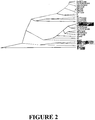
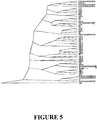
- Partial sequences of the other two FT-like genes of ryegrass, called RgFT1 and 2, and 2 members of the TFL-like subfamily RgTFL1 and 2 were isolated. These share significant sequence similarity with FT, but perform the opposite function of floral repression in arabidopsis 8,9,33 rather than accelerating flowering.
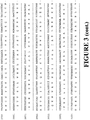
- cDNAs for these genes were isolated using degenerate primers design to amplify conserved regions of the family. Complete cDNA sequences, where available, were obtained by 3' and 5'RACE. Sequences of these additional members of the ryegrass family are shown in Figure 1 .
- Partial cDNA sequence of the putative ryegrass orthologue was identified in the cDNA library. Complete cDNA sequence was obtained using 5'-RACE.
- the sequence shows that the cDNA sequence of the putative ryegrass GI gene has been isolated, based on comparison with GI-like genes from other grasses.
- the sequence contains uninterrupted open reading frame representing the full-size ryegrass GI protein.
- the perennial ryegrass population used for the genetic mapping of the rgFT3 SNP (single nucleotide polymorphism) marker and SSR (simple sequence repeat) markers was an F 1 progeny set derived from a pair cross between the heterozygous parental genotypes A8830/1030 (from the cultivar 'Grasslands Samson') and A10622/2 (from the cultivar 'Grasslands Impact').
- Genomic DNA was extracted by the 1 x CTAB method of Fulton et al. (1995).
- Genotypic data for 94 mapping population progeny was generated using 157 EST-SSRs and the RgGI SNP markers T87 and A125.
- EST-SSR PCR was conducted using the three primer protocol described by Schuelke (2000). An 8 ⁇ L reaction volume was used, containing 10 ng of genomic DNA, 2.5 mM magnesium chloride, 1x PCR buffer (Invitrogen, Carlsbad, California, USA), 0.05 mM of each dNTP, 0.0375 ⁇ M forward primer, 0.15 ⁇ M reverse primer, 0.15 ⁇ M of fluorescent-labelled M13 primer and 0.3 U of Platinum Taq DNA polymerase (Invitrogen).
- Fluorophores used were 6-FAMTM, NEDTM, VICTM and PETTM (Applied Biosystems, Foster City, California, USA).
- EST-SSR primers were synthesised and supplied by either Invitrogen or Integrated DNA Technologies (Coralville, Iowa, USA).
- PCR reactions were run in iCyclers (BioRad, Hercules, California, USA), employing the following profile: (1) 94°C for 4:00 minutes, (2) 30 cycles of: 94°C for 30 seconds, 55°C for 30 seconds and 72°C for 30 seconds, (3) 8 cycles of: 94°C for 30 seconds, 53°C for 30 seconds and 72°C for 30 seconds, (4) 72°C for 30 minutes.
- PCR products were analysed on an ABI 3100 Genetic Analyser using a 22 cm capillary array with POP-7TM polymer (Applied Biosystems). Electropherograms were analysed using ABI Prism GeneScan (v 3.7, Applied Biosystems), and genotype data was scored using ABI Prism Genotyper (v 3.7, Applied Biosystems). The allelic status of the RgGI SNPs was determined by direct sequencing of amplification products produced with oligonucleotides GIK16 5'CATGAAATGTGCAGAACAGG3' (SEQ ID No. 43) and GIK17 5'TGGTTGACTCTCCACATCTTC3' (SEQ ID No. 44).
- the A8830/1030 x A10622 population was analysed as a two-way pseudo-testcross (Grattapaglia and Sederoff 1994). Genetic linkage analysis was conducted using the CP module of JoinMap ® 3.0 software (www.kvyzma.nl ). Map distances in centimorgans (cM) were calculated using the Kosambi mapping function (Kosambi 1944). Genetic linkage maps were first established separately for A8830/1030 and A10622 using segregation data from EST-SSR and SNP markers that could be derived as dominant features.
- Polymorphic loci detected by the same EST-SSR primer pair at similar locations on the maps of both parents were used to identify and align homologous linkage groups in the two parental maps, and to check for consistency of recombination frequency between the parental genotypes.
- Parental datasets were then combined and a consensus genetic linkage map was constructed, using a maximum recombination frequency of 0.4 and minimum LOD threshold of 2.0.
- Ryegrass plants were grown outside and subjected to cold over the winter to achieve natural vernalization. They were then transferred to a glass house, and grown either in natural short day (SD) conditions ( ⁇ 11 hrs daylight), or with supplementary light to create artificial long day (LD) conditions (18 hr day). End of day in both conditions was at ⁇ 18:00. Plant samples were harvested as entire above-ground tillers 10 days after the long day treatment started, samples were taken every 2 hrs for 24 hours from both LD and SD treated plants.
- SD natural short day
- LD long day
- Quantitative RT-PCR was performed in the BioRad iCycler instrument using standard protocols and SyberGreen as reporting dye
- Actin gene levels were assayed using oligonucleotides GTF037 5'GCTGTTTTCCCTAGCATTGTTGG3' (SEQ ID No. 45) and GTF038 5'ATAAGAGAATCCGTGAGATCCCG3'(SEQ ID No. 46), and served as standards to normalize measurements of other genes.
- RgGI mRNA levels were measured using oligonucleotides GIK16 and GIK17 described in the mapping example.
- Amplifications were performed in triplicates, error rates were estimated by adding the average variance between triplicate samples, and average error of the standard curve fit of the standards of both the gene of interest and of the actin standard.
- the mRNA levels of the RgGI gene change significantly over the 24-hour cycle.
- the periodicity of expression suggests that the ryegrass gene, like its arabidopsis orthologue, is under the control of the circadian clock.
- the expression levels do not change significantly in photo inductive conditions, however, there may be a phase shift in long days to earlier increase, coincident with light exposure.
- Such circadian regulation of expression, as well as phase shift in long days strongly support the role of the RgGI gene in mediating and controlling the photoperiodic floral response of ryegrass, as postulated in the external coincidence hypothesis for arabidopsis
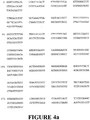
- the gene was identified in the EST collection, and the EST clone was completely sequenced. Diagram of the gene structure is shown in Figure 4 .
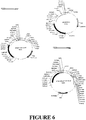
- RNA interference to inactivate the RgSVP gene were created as shown in the Figure 6 .
- RNAi-type constructs described here for FT/TFL and GI genes involved similar vector system and experimental approach.
- This invention can be applied to ryegrass Lolium perenne, for which we have developed efficient stable transformation system as follows: Materials florally induced tillers of Lolium perenne Na-hypochlorite (5% available chlorine) sterile ddH 2 O 100mm Petri plates containing LP5 medium* 100mm Petri plates containing LP3-OS medium 100mm Petri plates containing LP3 medium 100mm Petri plates containing LP3 medium + 200 mg/L Hygromycin (Hm) 100mm Petri plates containing MSK medium + 200 mg/L Hm 250 ml culture vessels containing MSO medium + 200mg/L Hygromycin stock solution (50 mg/ml in PDS, sterile)
- Weights and volumes required of each individual ingredient are specified in Table 1. Adjust media pH to 5.8 with KOH. The addition of a solidifying agent is required. Use agarose (for LP3, LP5 and LP3-OS) and 0.8% (w/v) Agar for MS0 and MSK prior to sterilising. Media LP3, LP5 and MSK are modified from Murashige and Skoog (1962).
Landscapes
- Health & Medical Sciences (AREA)
- Life Sciences & Earth Sciences (AREA)
- Genetics & Genomics (AREA)
- Chemical & Material Sciences (AREA)
- Organic Chemistry (AREA)
- Molecular Biology (AREA)
- Engineering & Computer Science (AREA)
- Biochemistry (AREA)
- Biomedical Technology (AREA)
- Biophysics (AREA)
- Biotechnology (AREA)
- General Engineering & Computer Science (AREA)
- General Health & Medical Sciences (AREA)
- Bioinformatics & Cheminformatics (AREA)
- Zoology (AREA)
- Wood Science & Technology (AREA)
- Microbiology (AREA)
- Plant Pathology (AREA)
- Physics & Mathematics (AREA)
- Cell Biology (AREA)
- Physiology (AREA)
- Botany (AREA)
- Gastroenterology & Hepatology (AREA)
- Medicinal Chemistry (AREA)
- Proteomics, Peptides & Aminoacids (AREA)
- Breeding Of Plants And Reproduction By Means Of Culturing (AREA)
- Micro-Organisms Or Cultivation Processes Thereof (AREA)
- Peptides Or Proteins (AREA)
- Measuring Or Testing Involving Enzymes Or Micro-Organisms (AREA)
Claims (16)
- Aufgereinigte oder isolierte Nukleinsäure, die für ein TERMINAL FLOWER(TFL)-Polypeptid codiert, oder komplementäre oder Antisense zu einer Sequenz, die für TFL codiert, dessen Vorhandensein Blüten hemmt, wobei die Nukleinsäure eine Nukleotidsequenz, ausgewählt aus der Gruppe bestehend aus den Folgenden, beinhaltet:(a) SEQ ID No 4 und SEQ ID No 5;(b) den Komplementen der in (a) genannten Sequenzen;(c) Antisense-Sequenzen zu den in (a) und (b) genannten Sequenzen, wobei die Antisense-Sequenzen, wenn sie in eine Pflanze eingebaut werden, das Blühen verzögern;(d) funktionell aktiven Varianten mit mindestens etwa 95% Identität zu den in (a) und (b) genannten Sequenzen; und(e) RNA-Sequenzen, die den in (a), (b), (c) und (d) genannten Sequenzen entsprechen.
- Im Wesentlichen aufgereinigte oder isolierte Nukleinsäure nach Anspruch 1, wobei die Nukleinsäure eine Nukleotidsequenz, ausgewählt aus der Gruppe bestehend aus den Folgenden, beinhaltet:(a) SEQ ID No 4 und SEQ ID No 5;(b) den Komplementen der in (a) genannten Sequenzen;(c) Antisense-Sequenzen zu den in (a) und (b) genannten Sequenzen, wobei die Antisense-Sequenzen, wenn sie in eine Pflanze eingebaut werden, das Blühen verzögern; und(d) RNA-Sequenzen, die den in (a), (b) und (c) genannten Sequenzen entsprechen.
- Im Wesentlichen aufgereinigte oder isolierte Nukleinsäure nach Anspruch 1, wobei die Nukleinsäure oder das Nukleinsäurefragment eine Nukleotidsequenzen, ausgewählt aus der Gruppe bestehend aus SEQ ID NO 4 und SEQ ID No 5, beinhaltet.
- Konstrukt, das eine oder mehrere Nukleinsäuren nach einem der Ansprüche 1 bis 3 beinhaltet.
- Konstrukt nach Anspruch 4, wobei die eine oder mehreren Nukleinsäuren derart operativ mit einem oder mehreren Regulationselementen verknüpft sind, dass eine oder mehrere Nukleinsäuren jeweils exprimiert werden.
- Konstrukt nach Anspruch 5, wobei das eine oder die mehreren Regulationselemente einen Promoter und einen Terminator beinhalten, wobei der Promoter, die Nukleinsäure und der Terminator operativ verknüpft sind.
- Konstrukt nach einem der Ansprüche 4 bis 6, wobei es sich bei dem Konstrukt um einen Vektor handelt.
- Transformierte Pflanzenzelle, transformierte Pflanze, transformierter Pflanzensamen oder sonstiger transformierter Pflanzenteil, die/der mit einem Vektor nach Anspruch 7 transformiert ist.
- Transformierte Pflanze, transformierter Pflanzensamen oder sonstiger transformierter Pflanzenteil, die/der sich von einer Pflanzenzelle oder Pflanze nach Anspruch 8 ableitet und mit einem Vektor nach Anspruch 7 transformiert ist.
- Verfahren zum Modifizieren des Blühens bei einer Pflanze, wobei man bei dem Verfahren eine wirksame Menge einer Nukleinsäure nach einem der Ansprüche 1 bis 3 oder eines Konstrukts nach einem der Ansprüche 4 bis 7 in die Pflanze einbringt.
- Verfahren nach Anspruch 10, wobei das Verfahren das Hemmen des Blühens bei der Pflanze beinhaltet.
- Verwendung einer Nukleinsäure nach einem der Ansprüche 1 bis 3 und/oder einer Nukleinsäure, die einen SNP (Single Nucleotide Polymorphism) von einer Nukleinsäure nach einem der Ansprüche 1 bis 3 beinhaltet, als molekulargenetischer Marker, wobei der SNP aus den SNPs an den Positionen 53, 160, 395, 235, 250, 255, 259, 268, 275, 279, 281, 293, 314, 405 und 407 von SEQ ID NO: 5 und den Positionen 12, 280 und 247 von SEQ ID NO: 4 ausgewählt ist.
- Im Wesentlichen aufgereinigte oder isolierte Nukleinsäure, die einen SNP (Single Nucleotide Polymorphism) von einem Nukleinsäurefragment nach einem der Ansprüche 1 bis 3 beinhaltet, wobei der SNP aus den SNPs an den Positionen 53, 160, 395, 235, 250, 255, 259, 268, 275, 279, 281, 293, 314, 405 und 407 von SEQ ID NO: 5 und den Positionen 12, 280 und 247 von SEQ ID NO: 4 ausgewählt ist.
- Im Wesentlichen aufgereinigtes oder isoliertes TFL-Polypeptid, wobei das Polypeptid eine Aminosäuresequenz, ausgewählt aus der Gruppe bestehend aus Sequenzen, die von den Nukleotidsequenzen von SEQ ID NO: 4 und SEQ ID NO: 5 translatiert werden, beinhaltet.
- Polypeptid, das von einer Nukleinsäure nach einem der Ansprüche 1 bis 3 codiert wird.
- Präparat zum Transformieren einer Pflanze, umfassend eine Nukleinsäure nach einem der Ansprüche 1 bis 3 oder ein Konstrukt nach einem der Ansprüche 4 bis 7.
Applications Claiming Priority (2)
| Application Number | Priority Date | Filing Date | Title |
|---|---|---|---|
| AU2003902412A AU2003902412A0 (en) | 2003-05-16 | 2003-05-16 | Flowering inhibition |
| EP04732883A EP1627064A4 (de) | 2003-05-16 | 2004-05-14 | Hemmung der blüte |
Related Parent Applications (2)
| Application Number | Title | Priority Date | Filing Date |
|---|---|---|---|
| EP04732883.6 Division | 2004-05-14 | ||
| EP04732883A Division EP1627064A4 (de) | 2003-05-16 | 2004-05-14 | Hemmung der blüte |
Publications (2)
| Publication Number | Publication Date |
|---|---|
| EP2397554A1 EP2397554A1 (de) | 2011-12-21 |
| EP2397554B1 true EP2397554B1 (de) | 2017-08-02 |
Family
ID=31501279
Family Applications (2)
| Application Number | Title | Priority Date | Filing Date |
|---|---|---|---|
| EP04732883A Withdrawn EP1627064A4 (de) | 2003-05-16 | 2004-05-14 | Hemmung der blüte |
| EP10184112.0A Expired - Lifetime EP2397554B1 (de) | 2003-05-16 | 2004-05-14 | Blühverhinderung |
Family Applications Before (1)
| Application Number | Title | Priority Date | Filing Date |
|---|---|---|---|
| EP04732883A Withdrawn EP1627064A4 (de) | 2003-05-16 | 2004-05-14 | Hemmung der blüte |
Country Status (6)
| Country | Link |
|---|---|
| US (1) | US9120864B2 (de) |
| EP (2) | EP1627064A4 (de) |
| AU (3) | AU2003902412A0 (de) |
| DK (1) | DK2397554T3 (de) |
| NZ (3) | NZ566723A (de) |
| WO (1) | WO2004101792A1 (de) |
Families Citing this family (5)
| Publication number | Priority date | Publication date | Assignee | Title |
|---|---|---|---|---|
| EP1763582B1 (de) * | 2004-07-08 | 2014-12-10 | DLF - Trifolium A/S | Mittel und Verfahren zur Steuerung der Blüte in Pflanzen |
| UA108736C2 (uk) | 2008-09-02 | 2015-06-10 | Химерна конструкція для забезпечення стійкості до виходу у стрілку у цукрового буряка | |
| GB201003702D0 (en) * | 2010-03-05 | 2010-04-21 | Univ Warwick | Molecular engineering of a floral inducer for crop improvement |
| CN103694325B (zh) * | 2013-08-22 | 2015-04-22 | 西南大学 | 淫羊藿EsSVP蛋白、编码该蛋白的基因及其应用 |
| MX2024010443A (es) * | 2022-02-25 | 2024-09-11 | Univ Florida | Composiciones y metodos para suprimir la floracion en la ca?a de azucar y en la ca?a energetica. |
Family Cites Families (16)
| Publication number | Priority date | Publication date | Assignee | Title |
|---|---|---|---|---|
| GB9518731D0 (en) | 1995-09-13 | 1995-11-15 | Innes John Centre | Flowering genes |
| CA2324515A1 (en) | 1998-03-20 | 1999-09-30 | Plant Bioscience Limited | Plant control genes |
| US6225530B1 (en) | 1998-04-15 | 2001-05-01 | The Salk Institute For Biological Studies | Flowering locus T (FT) and genetically modified plants having modulated flower development |
| US20010051335A1 (en) | 1998-04-21 | 2001-12-13 | Raghunath V. Lalgudi | Polynucleotides and polypeptides derived from corn tassel |
| US6476212B1 (en) | 1998-05-26 | 2002-11-05 | Incyte Genomics, Inc. | Polynucleotides and polypeptides derived from corn ear |
| AU3380600A (en) | 1999-02-25 | 2000-09-14 | Wisconsin Alumni Research Foundation | Alteration of flowering time in plants |
| EP1055729A1 (de) | 1999-05-18 | 2000-11-29 | Max-Planck-Gesellschaft zur Förderung der Wissenschaften e.V. | Transgene pflanzen, die eine veränderte erblühzeit zeigen |
| CA2386170A1 (en) * | 1999-10-12 | 2001-04-19 | Mendel Biotechnology, Inc. | Flowering time modification |
| AUPR087300A0 (en) | 2000-10-19 | 2000-11-16 | Agresearch Limited | Manipulation of flowering and plant architecture |
| JP2002153283A (ja) * | 2000-11-24 | 2002-05-28 | National Institute Of Agrobiological Sciences | 植物の開花を誘導する遺伝子Hd3aおよびその利用 |
| EP1364033A2 (de) * | 2000-11-28 | 2003-11-26 | E.I. Dupont De Nemours And Company | Blühentwicklungsgene |
| EP1409696A2 (de) * | 2001-06-22 | 2004-04-21 | Syngenta Participations AG | Identifizierung und charakterisierung von pflanzengenen |
| WO2003048319A2 (en) | 2001-11-30 | 2003-06-12 | Syngenta Participations Ag | Nucleotide sequences encoding proteins conferring abiotic stress tolerance in plants |
| US20050013996A1 (en) | 2002-03-08 | 2005-01-20 | Hatfield Stephen F. | Hot melt pressure sensitive adhesives for disposable articles |
| AU2003227061B2 (en) * | 2002-03-11 | 2008-06-05 | Dlf - Trifolium A/S | Method of repressing flowering in a plant |
| WO2004022755A2 (en) | 2002-09-05 | 2004-03-18 | Genesis Research And Development Corporation Limited | Polypeptides involved in the regulation of flowering in forage grasses |
-
2003
- 2003-05-16 AU AU2003902412A patent/AU2003902412A0/en not_active Abandoned
-
2004
- 2004-05-14 DK DK10184112.0T patent/DK2397554T3/en active
- 2004-05-14 NZ NZ566723A patent/NZ566723A/en not_active IP Right Cessation
- 2004-05-14 WO PCT/AU2004/000634 patent/WO2004101792A1/en not_active Ceased
- 2004-05-14 NZ NZ579787A patent/NZ579787A/en not_active IP Right Cessation
- 2004-05-14 AU AU2004238891A patent/AU2004238891B2/en not_active Ceased
- 2004-05-14 EP EP04732883A patent/EP1627064A4/de not_active Withdrawn
- 2004-05-14 US US10/557,031 patent/US9120864B2/en not_active Expired - Fee Related
- 2004-05-14 NZ NZ543674A patent/NZ543674A/en not_active IP Right Cessation
- 2004-05-14 EP EP10184112.0A patent/EP2397554B1/de not_active Expired - Lifetime
-
2009
- 2009-08-20 AU AU2009210389A patent/AU2009210389B2/en not_active Ceased
Non-Patent Citations (1)
| Title |
|---|
| None * |
Also Published As
| Publication number | Publication date |
|---|---|
| AU2009210389B2 (en) | 2012-07-12 |
| NZ543674A (en) | 2008-06-30 |
| NZ566723A (en) | 2009-10-30 |
| US20070192904A1 (en) | 2007-08-16 |
| EP2397554A1 (de) | 2011-12-21 |
| WO2004101792A1 (en) | 2004-11-25 |
| US9120864B2 (en) | 2015-09-01 |
| AU2004238891B2 (en) | 2009-05-21 |
| EP1627064A1 (de) | 2006-02-22 |
| AU2004238891A1 (en) | 2004-11-25 |
| NZ579787A (en) | 2011-06-30 |
| AU2009210389A1 (en) | 2009-09-17 |
| AU2003902412A0 (en) | 2003-06-05 |
| DK2397554T3 (en) | 2017-10-23 |
| EP1627064A4 (de) | 2006-11-22 |
Similar Documents
| Publication | Publication Date | Title |
|---|---|---|
| US6830930B2 (en) | Nucleic acid encoding GAI gene of arabidopsis thaliana | |
| CN104093842A (zh) | 改善植物耐旱性、氮利用效率和产量 | |
| CN101484465A (zh) | 控制植物生长和器官大小的玉米基因及其在改良作物植物中的应用 | |
| AU2009210389B2 (en) | Flowering inhibition (2) | |
| CN101595222B (zh) | 具有改良的种子产量相关性状的植物及其制备方法 | |
| AU2008255131B2 (en) | Modification of plant responses to salt (2) | |
| AU2012238271B2 (en) | Flowering inhibition (3) | |
| EP1627063B1 (de) | Induktion der blütenbildung | |
| AU2004238890B2 (en) | Flowering induction | |
| AU2002252825B2 (en) | Modification of plant and seed development and plant responses to stresses and stimuli | |
| EP1761634B1 (de) | Polynucleotide und polypeptide, die für die zellanzahl verantwortlich sind und methoden zu deren verwendung | |
| AU2011211347B2 (en) | Modification of plant and seed development and plant responses to stresses and stimuli (3) | |
| BRPI0619242A2 (pt) | proteìna, métodos para aumentar produção de semente e/ou aumentar taxa de crescimento de plantas e taxa de crescimento, célula vegetal, construção, e, métodos para produzir uma planta transgenica, para melhorar caracterìsticas de crescimento de plantas e caracterìsticas de crescimento em relação a correspondentes plantas do tipo selvagem, para aumentar produção vegetal, número de sementes em plantas e produção de semente em plantas | |
| AU2008201822A1 (en) | Modification of plant and seed development and plant responses to stresses and stimuli (2) |
Legal Events
| Date | Code | Title | Description |
|---|---|---|---|
| AC | Divisional application: reference to earlier application |
Ref document number: 1627064 Country of ref document: EP Kind code of ref document: P |
|
| AK | Designated contracting states |
Kind code of ref document: A1 Designated state(s): AT BE BG CH CY CZ DE DK EE ES FI FR GB GR HU IE IT LI LU MC NL PL PT RO SE SI SK TR |
|
| PUAI | Public reference made under article 153(3) epc to a published international application that has entered the european phase |
Free format text: ORIGINAL CODE: 0009012 |
|
| 17P | Request for examination filed |
Effective date: 20120621 |
|
| 17Q | First examination report despatched |
Effective date: 20121102 |
|
| GRAP | Despatch of communication of intention to grant a patent |
Free format text: ORIGINAL CODE: EPIDOSNIGR1 |
|
| INTG | Intention to grant announced |
Effective date: 20170216 |
|
| GRAS | Grant fee paid |
Free format text: ORIGINAL CODE: EPIDOSNIGR3 |
|
| GRAA | (expected) grant |
Free format text: ORIGINAL CODE: 0009210 |
|
| AC | Divisional application: reference to earlier application |
Ref document number: 1627064 Country of ref document: EP Kind code of ref document: P |
|
| AK | Designated contracting states |
Kind code of ref document: B1 Designated state(s): AT BE BG CH CY CZ DE DK EE ES FI FR GB GR HU IE IT LI LU MC NL PL PT RO SE SI SK TR |
|
| REG | Reference to a national code |
Ref country code: GB Ref legal event code: FG4D |
|
| REG | Reference to a national code |
Ref country code: CH Ref legal event code: EP Ref country code: AT Ref legal event code: REF Ref document number: 914526 Country of ref document: AT Kind code of ref document: T Effective date: 20170815 |
|
| REG | Reference to a national code |
Ref country code: IE Ref legal event code: FG4D |
|
| REG | Reference to a national code |
Ref country code: DE Ref legal event code: R096 Ref document number: 602004051625 Country of ref document: DE |
|
| REG | Reference to a national code |
Ref country code: DK Ref legal event code: T3 Effective date: 20171019 |
|
| REG | Reference to a national code |
Ref country code: NL Ref legal event code: FP |
|
| REG | Reference to a national code |
Ref country code: AT Ref legal event code: MK05 Ref document number: 914526 Country of ref document: AT Kind code of ref document: T Effective date: 20170802 |
|
| PG25 | Lapsed in a contracting state [announced via postgrant information from national office to epo] |
Ref country code: AT Free format text: LAPSE BECAUSE OF FAILURE TO SUBMIT A TRANSLATION OF THE DESCRIPTION OR TO PAY THE FEE WITHIN THE PRESCRIBED TIME-LIMIT Effective date: 20170802 Ref country code: FI Free format text: LAPSE BECAUSE OF FAILURE TO SUBMIT A TRANSLATION OF THE DESCRIPTION OR TO PAY THE FEE WITHIN THE PRESCRIBED TIME-LIMIT Effective date: 20170802 Ref country code: SE Free format text: LAPSE BECAUSE OF FAILURE TO SUBMIT A TRANSLATION OF THE DESCRIPTION OR TO PAY THE FEE WITHIN THE PRESCRIBED TIME-LIMIT Effective date: 20170802 |
|
| PG25 | Lapsed in a contracting state [announced via postgrant information from national office to epo] |
Ref country code: GR Free format text: LAPSE BECAUSE OF FAILURE TO SUBMIT A TRANSLATION OF THE DESCRIPTION OR TO PAY THE FEE WITHIN THE PRESCRIBED TIME-LIMIT Effective date: 20171103 Ref country code: PL Free format text: LAPSE BECAUSE OF FAILURE TO SUBMIT A TRANSLATION OF THE DESCRIPTION OR TO PAY THE FEE WITHIN THE PRESCRIBED TIME-LIMIT Effective date: 20170802 Ref country code: BG Free format text: LAPSE BECAUSE OF FAILURE TO SUBMIT A TRANSLATION OF THE DESCRIPTION OR TO PAY THE FEE WITHIN THE PRESCRIBED TIME-LIMIT Effective date: 20171102 Ref country code: ES Free format text: LAPSE BECAUSE OF FAILURE TO SUBMIT A TRANSLATION OF THE DESCRIPTION OR TO PAY THE FEE WITHIN THE PRESCRIBED TIME-LIMIT Effective date: 20170802 |
|
| PG25 | Lapsed in a contracting state [announced via postgrant information from national office to epo] |
Ref country code: CZ Free format text: LAPSE BECAUSE OF FAILURE TO SUBMIT A TRANSLATION OF THE DESCRIPTION OR TO PAY THE FEE WITHIN THE PRESCRIBED TIME-LIMIT Effective date: 20170802 Ref country code: RO Free format text: LAPSE BECAUSE OF FAILURE TO SUBMIT A TRANSLATION OF THE DESCRIPTION OR TO PAY THE FEE WITHIN THE PRESCRIBED TIME-LIMIT Effective date: 20170802 |
|
| REG | Reference to a national code |
Ref country code: DE Ref legal event code: R097 Ref document number: 602004051625 Country of ref document: DE |
|
| REG | Reference to a national code |
Ref country code: FR Ref legal event code: PLFP Year of fee payment: 15 |
|
| PG25 | Lapsed in a contracting state [announced via postgrant information from national office to epo] |
Ref country code: SK Free format text: LAPSE BECAUSE OF FAILURE TO SUBMIT A TRANSLATION OF THE DESCRIPTION OR TO PAY THE FEE WITHIN THE PRESCRIBED TIME-LIMIT Effective date: 20170802 Ref country code: IT Free format text: LAPSE BECAUSE OF FAILURE TO SUBMIT A TRANSLATION OF THE DESCRIPTION OR TO PAY THE FEE WITHIN THE PRESCRIBED TIME-LIMIT Effective date: 20170802 Ref country code: EE Free format text: LAPSE BECAUSE OF FAILURE TO SUBMIT A TRANSLATION OF THE DESCRIPTION OR TO PAY THE FEE WITHIN THE PRESCRIBED TIME-LIMIT Effective date: 20170802 |
|
| PLBE | No opposition filed within time limit |
Free format text: ORIGINAL CODE: 0009261 |
|
| STAA | Information on the status of an ep patent application or granted ep patent |
Free format text: STATUS: NO OPPOSITION FILED WITHIN TIME LIMIT |
|
| 26N | No opposition filed |
Effective date: 20180503 |
|
| PG25 | Lapsed in a contracting state [announced via postgrant information from national office to epo] |
Ref country code: SI Free format text: LAPSE BECAUSE OF FAILURE TO SUBMIT A TRANSLATION OF THE DESCRIPTION OR TO PAY THE FEE WITHIN THE PRESCRIBED TIME-LIMIT Effective date: 20170802 |
|
| REG | Reference to a national code |
Ref country code: CH Ref legal event code: PL |
|
| REG | Reference to a national code |
Ref country code: BE Ref legal event code: MM Effective date: 20180531 |
|
| PG25 | Lapsed in a contracting state [announced via postgrant information from national office to epo] |
Ref country code: MC Free format text: LAPSE BECAUSE OF FAILURE TO SUBMIT A TRANSLATION OF THE DESCRIPTION OR TO PAY THE FEE WITHIN THE PRESCRIBED TIME-LIMIT Effective date: 20170802 |
|
| REG | Reference to a national code |
Ref country code: IE Ref legal event code: MM4A |
|
| PG25 | Lapsed in a contracting state [announced via postgrant information from national office to epo] |
Ref country code: CH Free format text: LAPSE BECAUSE OF NON-PAYMENT OF DUE FEES Effective date: 20180531 Ref country code: LI Free format text: LAPSE BECAUSE OF NON-PAYMENT OF DUE FEES Effective date: 20180531 |
|
| PG25 | Lapsed in a contracting state [announced via postgrant information from national office to epo] |
Ref country code: LU Free format text: LAPSE BECAUSE OF NON-PAYMENT OF DUE FEES Effective date: 20180514 |
|
| PG25 | Lapsed in a contracting state [announced via postgrant information from national office to epo] |
Ref country code: IE Free format text: LAPSE BECAUSE OF NON-PAYMENT OF DUE FEES Effective date: 20180514 |
|
| PG25 | Lapsed in a contracting state [announced via postgrant information from national office to epo] |
Ref country code: BE Free format text: LAPSE BECAUSE OF NON-PAYMENT OF DUE FEES Effective date: 20180531 |
|
| PG25 | Lapsed in a contracting state [announced via postgrant information from national office to epo] |
Ref country code: TR Free format text: LAPSE BECAUSE OF FAILURE TO SUBMIT A TRANSLATION OF THE DESCRIPTION OR TO PAY THE FEE WITHIN THE PRESCRIBED TIME-LIMIT Effective date: 20170802 |
|
| PG25 | Lapsed in a contracting state [announced via postgrant information from national office to epo] |
Ref country code: PT Free format text: LAPSE BECAUSE OF FAILURE TO SUBMIT A TRANSLATION OF THE DESCRIPTION OR TO PAY THE FEE WITHIN THE PRESCRIBED TIME-LIMIT Effective date: 20170802 Ref country code: HU Free format text: LAPSE BECAUSE OF FAILURE TO SUBMIT A TRANSLATION OF THE DESCRIPTION OR TO PAY THE FEE WITHIN THE PRESCRIBED TIME-LIMIT; INVALID AB INITIO Effective date: 20040514 |
|
| PG25 | Lapsed in a contracting state [announced via postgrant information from national office to epo] |
Ref country code: CY Free format text: LAPSE BECAUSE OF FAILURE TO SUBMIT A TRANSLATION OF THE DESCRIPTION OR TO PAY THE FEE WITHIN THE PRESCRIBED TIME-LIMIT Effective date: 20170802 |
|
| PGFP | Annual fee paid to national office [announced via postgrant information from national office to epo] |
Ref country code: NL Payment date: 20200527 Year of fee payment: 17 Ref country code: FR Payment date: 20200522 Year of fee payment: 17 Ref country code: DE Payment date: 20200520 Year of fee payment: 17 Ref country code: DK Payment date: 20200527 Year of fee payment: 17 |
|
| PGFP | Annual fee paid to national office [announced via postgrant information from national office to epo] |
Ref country code: GB Payment date: 20200527 Year of fee payment: 17 |
|
| REG | Reference to a national code |
Ref country code: DE Ref legal event code: R119 Ref document number: 602004051625 Country of ref document: DE |
|
| REG | Reference to a national code |
Ref country code: DK Ref legal event code: EBP Effective date: 20210531 |
|
| REG | Reference to a national code |
Ref country code: NL Ref legal event code: MM Effective date: 20210601 |
|
| GBPC | Gb: european patent ceased through non-payment of renewal fee |
Effective date: 20210514 |
|
| PG25 | Lapsed in a contracting state [announced via postgrant information from national office to epo] |
Ref country code: GB Free format text: LAPSE BECAUSE OF NON-PAYMENT OF DUE FEES Effective date: 20210514 Ref country code: DK Free format text: LAPSE BECAUSE OF NON-PAYMENT OF DUE FEES Effective date: 20210531 Ref country code: DE Free format text: LAPSE BECAUSE OF NON-PAYMENT OF DUE FEES Effective date: 20211201 |
|
| PG25 | Lapsed in a contracting state [announced via postgrant information from national office to epo] |
Ref country code: NL Free format text: LAPSE BECAUSE OF NON-PAYMENT OF DUE FEES Effective date: 20210601 Ref country code: FR Free format text: LAPSE BECAUSE OF NON-PAYMENT OF DUE FEES Effective date: 20210531 |