EP2394323B1 - Systeme und verfahren zur erzeugung von biostrom - Google Patents
Systeme und verfahren zur erzeugung von biostrom Download PDFInfo
- Publication number
- EP2394323B1 EP2394323B1 EP10707973.3A EP10707973A EP2394323B1 EP 2394323 B1 EP2394323 B1 EP 2394323B1 EP 10707973 A EP10707973 A EP 10707973A EP 2394323 B1 EP2394323 B1 EP 2394323B1
- Authority
- EP
- European Patent Office
- Prior art keywords
- enzyme
- gox
- yeast
- cells
- cell
- Prior art date
- Legal status (The legal status is an assumption and is not a legal conclusion. Google has not performed a legal analysis and makes no representation as to the accuracy of the status listed.)
- Not-in-force
Links
- 238000000034 method Methods 0.000 title claims description 19
- 238000004519 manufacturing process Methods 0.000 title claims description 9
- 210000004027 cell Anatomy 0.000 claims description 96
- 102000004190 Enzymes Human genes 0.000 claims description 81
- 108090000790 Enzymes Proteins 0.000 claims description 81
- 229940088598 enzyme Drugs 0.000 claims description 80
- 108010015776 Glucose oxidase Proteins 0.000 claims description 50
- 239000004366 Glucose oxidase Substances 0.000 claims description 49
- 229940116332 glucose oxidase Drugs 0.000 claims description 49
- 235000019420 glucose oxidase Nutrition 0.000 claims description 49
- 244000005700 microbiome Species 0.000 claims description 32
- 239000013612 plasmid Substances 0.000 claims description 31
- 150000001413 amino acids Chemical class 0.000 claims description 20
- 108010073178 Glucan 1,4-alpha-Glucosidase Proteins 0.000 claims description 18
- 102100022624 Glucoamylase Human genes 0.000 claims description 18
- 108090000623 proteins and genes Proteins 0.000 claims description 16
- 239000000758 substrate Substances 0.000 claims description 14
- 102000007698 Alcohol dehydrogenase Human genes 0.000 claims description 9
- 108010021809 Alcohol dehydrogenase Proteins 0.000 claims description 9
- 229910052760 oxygen Inorganic materials 0.000 claims description 7
- 239000001301 oxygen Substances 0.000 claims description 7
- QVGXLLKOCUKJST-UHFFFAOYSA-N atomic oxygen Chemical compound [O] QVGXLLKOCUKJST-UHFFFAOYSA-N 0.000 claims description 6
- 238000004891 communication Methods 0.000 claims description 6
- 150000001298 alcohols Chemical class 0.000 claims description 5
- 230000001131 transforming effect Effects 0.000 claims description 5
- 239000012530 fluid Substances 0.000 claims description 3
- 150000004676 glycans Chemical class 0.000 claims description 3
- 229920001282 polysaccharide Polymers 0.000 claims description 3
- 239000005017 polysaccharide Substances 0.000 claims description 3
- 235000000346 sugar Nutrition 0.000 claims description 3
- 150000008163 sugars Chemical class 0.000 claims description 3
- XLYOFNOQVPJJNP-UHFFFAOYSA-N water Substances O XLYOFNOQVPJJNP-UHFFFAOYSA-N 0.000 claims description 3
- LJCNDNBULVLKSG-UHFFFAOYSA-N 2-aminoacetic acid;butane Chemical compound CCCC.CCCC.NCC(O)=O LJCNDNBULVLKSG-UHFFFAOYSA-N 0.000 claims description 2
- 210000003527 eukaryotic cell Anatomy 0.000 claims description 2
- 210000001236 prokaryotic cell Anatomy 0.000 claims description 2
- 230000003100 immobilizing effect Effects 0.000 claims 2
- 240000004808 Saccharomyces cerevisiae Species 0.000 description 57
- 235000014680 Saccharomyces cerevisiae Nutrition 0.000 description 57
- 230000000694 effects Effects 0.000 description 23
- 239000000446 fuel Substances 0.000 description 20
- WQZGKKKJIJFFOK-GASJEMHNSA-N Glucose Natural products OC[C@H]1OC(O)[C@H](O)[C@@H](O)[C@@H]1O WQZGKKKJIJFFOK-GASJEMHNSA-N 0.000 description 17
- WQZGKKKJIJFFOK-VFUOTHLCSA-N beta-D-glucose Chemical compound OC[C@H]1O[C@@H](O)[C@H](O)[C@@H](O)[C@@H]1O WQZGKKKJIJFFOK-VFUOTHLCSA-N 0.000 description 17
- 239000008103 glucose Substances 0.000 description 16
- 108010001336 Horseradish Peroxidase Proteins 0.000 description 12
- 238000005259 measurement Methods 0.000 description 11
- 102000004169 proteins and genes Human genes 0.000 description 11
- 229920002472 Starch Polymers 0.000 description 9
- 238000002835 absorbance Methods 0.000 description 9
- 235000019698 starch Nutrition 0.000 description 9
- 241000894006 Bacteria Species 0.000 description 8
- RGHNJXZEOKUKBD-SQOUGZDYSA-N D-gluconic acid Chemical compound OC[C@@H](O)[C@@H](O)[C@H](O)[C@@H](O)C(O)=O RGHNJXZEOKUKBD-SQOUGZDYSA-N 0.000 description 8
- RIIWUGSYXOBDMC-UHFFFAOYSA-N benzene-1,2-diamine;hydron;dichloride Chemical compound Cl.Cl.NC1=CC=CC=C1N RIIWUGSYXOBDMC-UHFFFAOYSA-N 0.000 description 8
- 239000008107 starch Substances 0.000 description 8
- 230000009466 transformation Effects 0.000 description 8
- 230000006698 induction Effects 0.000 description 7
- 239000012528 membrane Substances 0.000 description 7
- 239000000047 product Substances 0.000 description 7
- 210000005253 yeast cell Anatomy 0.000 description 7
- BAWFJGJZGIEFAR-NNYOXOHSSA-O NAD(+) Chemical compound NC(=O)C1=CC=C[N+]([C@H]2[C@@H]([C@H](O)[C@@H](COP(O)(=O)OP(O)(=O)OC[C@@H]3[C@H]([C@@H](O)[C@@H](O3)N3C4=NC=NC(N)=C4N=C3)O)O2)O)=C1 BAWFJGJZGIEFAR-NNYOXOHSSA-O 0.000 description 6
- 108010076504 Protein Sorting Signals Proteins 0.000 description 6
- 238000005119 centrifugation Methods 0.000 description 6
- 235000019441 ethanol Nutrition 0.000 description 6
- 238000001943 fluorescence-activated cell sorting Methods 0.000 description 6
- 230000000813 microbial effect Effects 0.000 description 6
- 238000012360 testing method Methods 0.000 description 6
- 101710187573 Alcohol dehydrogenase 2 Proteins 0.000 description 5
- 108050006400 Cyclin Proteins 0.000 description 5
- 102000009339 Proliferating Cell Nuclear Antigen Human genes 0.000 description 5
- 102100021669 Stromal cell-derived factor 1 Human genes 0.000 description 5
- 101710088580 Stromal cell-derived factor 1 Proteins 0.000 description 5
- 239000000872 buffer Substances 0.000 description 5
- 238000006243 chemical reaction Methods 0.000 description 5
- 238000002484 cyclic voltammetry Methods 0.000 description 5
- PCHJSUWPFVWCPO-UHFFFAOYSA-N gold Chemical compound [Au] PCHJSUWPFVWCPO-UHFFFAOYSA-N 0.000 description 5
- 239000010931 gold Substances 0.000 description 5
- 229910052737 gold Inorganic materials 0.000 description 5
- 239000000203 mixture Substances 0.000 description 5
- 230000003647 oxidation Effects 0.000 description 5
- 238000007254 oxidation reaction Methods 0.000 description 5
- LUYQYZLEHLTPBH-UHFFFAOYSA-N perfluorobutanesulfonyl fluoride Chemical compound FC(F)(F)C(F)(F)C(F)(F)C(F)(F)S(F)(=O)=O LUYQYZLEHLTPBH-UHFFFAOYSA-N 0.000 description 5
- 230000027756 respiratory electron transport chain Effects 0.000 description 5
- RGHNJXZEOKUKBD-UHFFFAOYSA-N D-gluconic acid Natural products OCC(O)C(O)C(O)C(O)C(O)=O RGHNJXZEOKUKBD-UHFFFAOYSA-N 0.000 description 4
- 101710135898 Myc proto-oncogene protein Proteins 0.000 description 4
- 102100038895 Myc proto-oncogene protein Human genes 0.000 description 4
- 101710150448 Transcriptional regulator Myc Proteins 0.000 description 4
- 230000001419 dependent effect Effects 0.000 description 4
- 239000000174 gluconic acid Substances 0.000 description 4
- 235000012208 gluconic acid Nutrition 0.000 description 4
- 238000010348 incorporation Methods 0.000 description 4
- 239000013642 negative control Substances 0.000 description 4
- 239000011541 reaction mixture Substances 0.000 description 4
- 239000000243 solution Substances 0.000 description 4
- -1 starches or algae) Chemical class 0.000 description 4
- 238000001262 western blot Methods 0.000 description 4
- 108020004414 DNA Proteins 0.000 description 3
- IAZDPXIOMUYVGZ-UHFFFAOYSA-N Dimethylsulphoxide Chemical compound CS(C)=O IAZDPXIOMUYVGZ-UHFFFAOYSA-N 0.000 description 3
- LFQSCWFLJHTTHZ-UHFFFAOYSA-N Ethanol Chemical compound CCO LFQSCWFLJHTTHZ-UHFFFAOYSA-N 0.000 description 3
- 101150108358 GLAA gene Proteins 0.000 description 3
- 102000003855 L-lactate dehydrogenase Human genes 0.000 description 3
- 108700023483 L-lactate dehydrogenases Proteins 0.000 description 3
- 230000008859 change Effects 0.000 description 3
- 238000010276 construction Methods 0.000 description 3
- 238000004132 cross linking Methods 0.000 description 3
- 238000001514 detection method Methods 0.000 description 3
- 238000010790 dilution Methods 0.000 description 3
- 239000012895 dilution Substances 0.000 description 3
- 238000000684 flow cytometry Methods 0.000 description 3
- 238000002372 labelling Methods 0.000 description 3
- BOPGDPNILDQYTO-NNYOXOHSSA-N nicotinamide-adenine dinucleotide Chemical compound C1=CCC(C(=O)N)=CN1[C@H]1[C@H](O)[C@H](O)[C@@H](COP(O)(=O)OP(O)(=O)OC[C@@H]2[C@H]([C@@H](O)[C@@H](O2)N2C3=NC=NC(N)=C3N=C2)O)O1 BOPGDPNILDQYTO-NNYOXOHSSA-N 0.000 description 3
- 229930027945 nicotinamide-adenine dinucleotide Natural products 0.000 description 3
- 230000001590 oxidative effect Effects 0.000 description 3
- 239000013641 positive control Substances 0.000 description 3
- 230000009467 reduction Effects 0.000 description 3
- 239000012130 whole-cell lysate Substances 0.000 description 3
- 241000588724 Escherichia coli Species 0.000 description 2
- LYCAIKOWRPUZTN-UHFFFAOYSA-N Ethylene glycol Chemical compound OCCO LYCAIKOWRPUZTN-UHFFFAOYSA-N 0.000 description 2
- 108010050375 Glucose 1-Dehydrogenase Proteins 0.000 description 2
- 102000004157 Hydrolases Human genes 0.000 description 2
- 108090000604 Hydrolases Proteins 0.000 description 2
- 108010029541 Laccase Proteins 0.000 description 2
- TWRXJAOTZQYOKJ-UHFFFAOYSA-L Magnesium chloride Chemical compound [Mg+2].[Cl-].[Cl-] TWRXJAOTZQYOKJ-UHFFFAOYSA-L 0.000 description 2
- FAPWRFPIFSIZLT-UHFFFAOYSA-M Sodium chloride Chemical compound [Na+].[Cl-] FAPWRFPIFSIZLT-UHFFFAOYSA-M 0.000 description 2
- 238000004458 analytical method Methods 0.000 description 2
- 230000002210 biocatalytic effect Effects 0.000 description 2
- 239000002551 biofuel Substances 0.000 description 2
- 230000015572 biosynthetic process Effects 0.000 description 2
- 239000006227 byproduct Substances 0.000 description 2
- 150000001720 carbohydrates Chemical class 0.000 description 2
- 235000014633 carbohydrates Nutrition 0.000 description 2
- 238000007398 colorimetric assay Methods 0.000 description 2
- 230000008878 coupling Effects 0.000 description 2
- 238000010168 coupling process Methods 0.000 description 2
- 238000005859 coupling reaction Methods 0.000 description 2
- 239000003792 electrolyte Substances 0.000 description 2
- 238000004520 electroporation Methods 0.000 description 2
- 238000002474 experimental method Methods 0.000 description 2
- 230000006870 function Effects 0.000 description 2
- 101150094958 gox gene Proteins 0.000 description 2
- 238000003125 immunofluorescent labeling Methods 0.000 description 2
- XIXADJRWDQXREU-UHFFFAOYSA-M lithium acetate Chemical compound [Li+].CC([O-])=O XIXADJRWDQXREU-UHFFFAOYSA-M 0.000 description 2
- 230000007774 longterm Effects 0.000 description 2
- CXKWCBBOMKCUKX-UHFFFAOYSA-M methylene blue Chemical compound [Cl-].C1=CC(N(C)C)=CC2=[S+]C3=CC(N(C)C)=CC=C3N=C21 CXKWCBBOMKCUKX-UHFFFAOYSA-M 0.000 description 2
- 229960000907 methylthioninium chloride Drugs 0.000 description 2
- 239000002773 nucleotide Substances 0.000 description 2
- 125000003729 nucleotide group Chemical group 0.000 description 2
- 239000005416 organic matter Substances 0.000 description 2
- 239000008188 pellet Substances 0.000 description 2
- 230000008569 process Effects 0.000 description 2
- 230000008929 regeneration Effects 0.000 description 2
- 238000011069 regeneration method Methods 0.000 description 2
- 239000013598 vector Substances 0.000 description 2
- PVPBBTJXIKFICP-UHFFFAOYSA-N (7-aminophenothiazin-3-ylidene)azanium;chloride Chemical compound [Cl-].C1=CC(=[NH2+])C=C2SC3=CC(N)=CC=C3N=C21 PVPBBTJXIKFICP-UHFFFAOYSA-N 0.000 description 1
- HQFLTUZKIRYQSP-UHFFFAOYSA-N 3-ethyl-2h-1,3-benzothiazole-6-sulfonic acid Chemical compound OS(=O)(=O)C1=CC=C2N(CC)CSC2=C1 HQFLTUZKIRYQSP-UHFFFAOYSA-N 0.000 description 1
- QJZYHAIUNVAGQP-UHFFFAOYSA-N 3-nitrobicyclo[2.2.1]hept-5-ene-2,3-dicarboxylic acid Chemical compound C1C2C=CC1C(C(=O)O)C2(C(O)=O)[N+]([O-])=O QJZYHAIUNVAGQP-UHFFFAOYSA-N 0.000 description 1
- ZGXJTSGNIOSYLO-UHFFFAOYSA-N 88755TAZ87 Chemical compound NCC(=O)CCC(O)=O ZGXJTSGNIOSYLO-UHFFFAOYSA-N 0.000 description 1
- 101710204899 Alpha-agglutinin Proteins 0.000 description 1
- 239000004382 Amylase Substances 0.000 description 1
- 102000013142 Amylases Human genes 0.000 description 1
- 108010065511 Amylases Proteins 0.000 description 1
- 241000228245 Aspergillus niger Species 0.000 description 1
- 101100229716 Aspergillus niger gox gene Proteins 0.000 description 1
- 239000002028 Biomass Substances 0.000 description 1
- 241000283707 Capra Species 0.000 description 1
- OKTJSMMVPCPJKN-UHFFFAOYSA-N Carbon Chemical compound [C] OKTJSMMVPCPJKN-UHFFFAOYSA-N 0.000 description 1
- 241000252203 Clupea harengus Species 0.000 description 1
- 108020004705 Codon Proteins 0.000 description 1
- 241000195493 Cryptophyta Species 0.000 description 1
- 108050008938 Glucoamylases Proteins 0.000 description 1
- 101710154606 Hemagglutinin Proteins 0.000 description 1
- 108091092195 Intron Proteins 0.000 description 1
- JVTAAEKCZFNVCJ-UHFFFAOYSA-M Lactate Chemical compound CC(O)C([O-])=O JVTAAEKCZFNVCJ-UHFFFAOYSA-M 0.000 description 1
- 229910009891 LiAc Inorganic materials 0.000 description 1
- 102000003960 Ligases Human genes 0.000 description 1
- 108090000364 Ligases Proteins 0.000 description 1
- 239000006142 Luria-Bertani Agar Substances 0.000 description 1
- 101710093908 Outer capsid protein VP4 Proteins 0.000 description 1
- 101710135467 Outer capsid protein sigma-1 Proteins 0.000 description 1
- 101710176177 Protein A56 Proteins 0.000 description 1
- 229910021607 Silver chloride Inorganic materials 0.000 description 1
- 241000222355 Trametes versicolor Species 0.000 description 1
- 241000588902 Zymomonas mobilis Species 0.000 description 1
- 239000008351 acetate buffer Substances 0.000 description 1
- 150000001299 aldehydes Chemical class 0.000 description 1
- 125000004414 alkyl thio group Chemical group 0.000 description 1
- 150000001412 amines Chemical class 0.000 description 1
- 229960002749 aminolevulinic acid Drugs 0.000 description 1
- 235000019418 amylase Nutrition 0.000 description 1
- 239000000427 antigen Substances 0.000 description 1
- 102000036639 antigens Human genes 0.000 description 1
- 108091007433 antigens Proteins 0.000 description 1
- 238000003556 assay Methods 0.000 description 1
- 238000009638 autodisplay Methods 0.000 description 1
- OHDRQQURAXLVGJ-HLVWOLMTSA-N azane;(2e)-3-ethyl-2-[(e)-(3-ethyl-6-sulfo-1,3-benzothiazol-2-ylidene)hydrazinylidene]-1,3-benzothiazole-6-sulfonic acid Chemical compound [NH4+].[NH4+].S/1C2=CC(S([O-])(=O)=O)=CC=C2N(CC)C\1=N/N=C1/SC2=CC(S([O-])(=O)=O)=CC=C2N1CC OHDRQQURAXLVGJ-HLVWOLMTSA-N 0.000 description 1
- 150000001540 azides Chemical class 0.000 description 1
- 230000001580 bacterial effect Effects 0.000 description 1
- 239000011942 biocatalyst Substances 0.000 description 1
- 230000008238 biochemical pathway Effects 0.000 description 1
- 210000004899 c-terminal region Anatomy 0.000 description 1
- 238000011088 calibration curve Methods 0.000 description 1
- 229940041514 candida albicans extract Drugs 0.000 description 1
- FPPNZSSZRUTDAP-UWFZAAFLSA-N carbenicillin Chemical compound N([C@H]1[C@H]2SC([C@@H](N2C1=O)C(O)=O)(C)C)C(=O)C(C(O)=O)C1=CC=CC=C1 FPPNZSSZRUTDAP-UWFZAAFLSA-N 0.000 description 1
- 229960003669 carbenicillin Drugs 0.000 description 1
- 229910052799 carbon Inorganic materials 0.000 description 1
- 239000003054 catalyst Substances 0.000 description 1
- 150000001768 cations Chemical class 0.000 description 1
- 230000001413 cellular effect Effects 0.000 description 1
- 238000012512 characterization method Methods 0.000 description 1
- 239000003153 chemical reaction reagent Substances 0.000 description 1
- 238000010367 cloning Methods 0.000 description 1
- 238000012258 culturing Methods 0.000 description 1
- 230000007423 decrease Effects 0.000 description 1
- 238000013461 design Methods 0.000 description 1
- 235000014113 dietary fatty acids Nutrition 0.000 description 1
- 238000009792 diffusion process Methods 0.000 description 1
- 239000000539 dimer Substances 0.000 description 1
- 230000008034 disappearance Effects 0.000 description 1
- 230000005611 electricity Effects 0.000 description 1
- 238000003487 electrochemical reaction Methods 0.000 description 1
- 238000006056 electrooxidation reaction Methods 0.000 description 1
- 210000002472 endoplasmic reticulum Anatomy 0.000 description 1
- 238000005516 engineering process Methods 0.000 description 1
- 230000002708 enhancing effect Effects 0.000 description 1
- 230000002255 enzymatic effect Effects 0.000 description 1
- 238000000605 extraction Methods 0.000 description 1
- 239000000194 fatty acid Substances 0.000 description 1
- 229930195729 fatty acid Natural products 0.000 description 1
- 150000004665 fatty acids Chemical class 0.000 description 1
- 229960002413 ferric citrate Drugs 0.000 description 1
- MHMNJMPURVTYEJ-UHFFFAOYSA-N fluorescein-5-isothiocyanate Chemical compound O1C(=O)C2=CC(N=C=S)=CC=C2C21C1=CC=C(O)C=C1OC1=CC(O)=CC=C21 MHMNJMPURVTYEJ-UHFFFAOYSA-N 0.000 description 1
- 239000007789 gas Substances 0.000 description 1
- 125000002791 glucosyl group Chemical group C1([C@H](O)[C@@H](O)[C@H](O)[C@H](O1)CO)* 0.000 description 1
- 150000002343 gold Chemical class 0.000 description 1
- 239000010439 graphite Substances 0.000 description 1
- 229910002804 graphite Inorganic materials 0.000 description 1
- 239000000185 hemagglutinin Substances 0.000 description 1
- 235000019514 herring Nutrition 0.000 description 1
- 239000000710 homodimer Substances 0.000 description 1
- 239000004021 humic acid Substances 0.000 description 1
- 230000007062 hydrolysis Effects 0.000 description 1
- 238000006460 hydrolysis reaction Methods 0.000 description 1
- WGCNASOHLSPBMP-UHFFFAOYSA-N hydroxyacetaldehyde Natural products OCC=O WGCNASOHLSPBMP-UHFFFAOYSA-N 0.000 description 1
- 210000001822 immobilized cell Anatomy 0.000 description 1
- 238000010166 immunofluorescence Methods 0.000 description 1
- 238000011534 incubation Methods 0.000 description 1
- 230000001939 inductive effect Effects 0.000 description 1
- NPFOYSMITVOQOS-UHFFFAOYSA-K iron(III) citrate Chemical compound [Fe+3].[O-]C(=O)CC(O)(CC([O-])=O)C([O-])=O NPFOYSMITVOQOS-UHFFFAOYSA-K 0.000 description 1
- 150000002576 ketones Chemical class 0.000 description 1
- 229910001629 magnesium chloride Inorganic materials 0.000 description 1
- 239000003550 marker Substances 0.000 description 1
- 239000011159 matrix material Substances 0.000 description 1
- 230000007246 mechanism Effects 0.000 description 1
- 239000002609 medium Substances 0.000 description 1
- 230000037353 metabolic pathway Effects 0.000 description 1
- 230000004060 metabolic process Effects 0.000 description 1
- 230000037323 metabolic rate Effects 0.000 description 1
- 239000002207 metabolite Substances 0.000 description 1
- MCPLVIGCWWTHFH-UHFFFAOYSA-L methyl blue Chemical compound [Na+].[Na+].C1=CC(S(=O)(=O)[O-])=CC=C1NC1=CC=C(C(=C2C=CC(C=C2)=[NH+]C=2C=CC(=CC=2)S([O-])(=O)=O)C=2C=CC(NC=3C=CC(=CC=3)S([O-])(=O)=O)=CC=2)C=C1 MCPLVIGCWWTHFH-UHFFFAOYSA-L 0.000 description 1
- 238000012986 modification Methods 0.000 description 1
- 230000004048 modification Effects 0.000 description 1
- 230000035772 mutation Effects 0.000 description 1
- 239000002105 nanoparticle Substances 0.000 description 1
- 239000002070 nanowire Substances 0.000 description 1
- PGSADBUBUOPOJS-UHFFFAOYSA-N neutral red Chemical compound Cl.C1=C(C)C(N)=CC2=NC3=CC(N(C)C)=CC=C3N=C21 PGSADBUBUOPOJS-UHFFFAOYSA-N 0.000 description 1
- 235000015097 nutrients Nutrition 0.000 description 1
- 150000002894 organic compounds Chemical class 0.000 description 1
- 239000011368 organic material Substances 0.000 description 1
- FIKAKWIAUPDISJ-UHFFFAOYSA-L paraquat dichloride Chemical compound [Cl-].[Cl-].C1=C[N+](C)=CC=C1C1=CC=[N+](C)C=C1 FIKAKWIAUPDISJ-UHFFFAOYSA-L 0.000 description 1
- 239000008363 phosphate buffer Substances 0.000 description 1
- 230000004481 post-translational protein modification Effects 0.000 description 1
- 239000008057 potassium phosphate buffer Substances 0.000 description 1
- 150000003138 primary alcohols Chemical class 0.000 description 1
- 108090000765 processed proteins & peptides Proteins 0.000 description 1
- 238000002818 protein evolution Methods 0.000 description 1
- 238000000746 purification Methods 0.000 description 1
- 238000003908 quality control method Methods 0.000 description 1
- 238000011002 quantification Methods 0.000 description 1
- 238000011084 recovery Methods 0.000 description 1
- 150000003839 salts Chemical class 0.000 description 1
- 230000028327 secretion Effects 0.000 description 1
- HKZLPVFGJNLROG-UHFFFAOYSA-M silver monochloride Chemical compound [Cl-].[Ag+] HKZLPVFGJNLROG-UHFFFAOYSA-M 0.000 description 1
- 239000002356 single layer Substances 0.000 description 1
- 239000011780 sodium chloride Substances 0.000 description 1
- 238000010561 standard procedure Methods 0.000 description 1
- 239000007858 starting material Substances 0.000 description 1
- 239000000126 substance Substances 0.000 description 1
- 239000006228 supernatant Substances 0.000 description 1
- 239000000725 suspension Substances 0.000 description 1
- 230000002195 synergetic effect Effects 0.000 description 1
- 238000003786 synthesis reaction Methods 0.000 description 1
- 231100000331 toxic Toxicity 0.000 description 1
- 230000002588 toxic effect Effects 0.000 description 1
- 238000012546 transfer Methods 0.000 description 1
- 230000032258 transport Effects 0.000 description 1
- 239000012137 tryptone Substances 0.000 description 1
- 238000005406 washing Methods 0.000 description 1
- 239000002351 wastewater Substances 0.000 description 1
- 239000012138 yeast extract Substances 0.000 description 1
Images



Classifications
-
- H—ELECTRICITY
- H01—ELECTRIC ELEMENTS
- H01M—PROCESSES OR MEANS, e.g. BATTERIES, FOR THE DIRECT CONVERSION OF CHEMICAL ENERGY INTO ELECTRICAL ENERGY
- H01M8/00—Fuel cells; Manufacture thereof
- H01M8/16—Biochemical fuel cells, i.e. cells in which microorganisms function as catalysts
-
- H—ELECTRICITY
- H01—ELECTRIC ELEMENTS
- H01M—PROCESSES OR MEANS, e.g. BATTERIES, FOR THE DIRECT CONVERSION OF CHEMICAL ENERGY INTO ELECTRICAL ENERGY
- H01M4/00—Electrodes
- H01M4/86—Inert electrodes with catalytic activity, e.g. for fuel cells
-
- H—ELECTRICITY
- H01—ELECTRIC ELEMENTS
- H01M—PROCESSES OR MEANS, e.g. BATTERIES, FOR THE DIRECT CONVERSION OF CHEMICAL ENERGY INTO ELECTRICAL ENERGY
- H01M4/00—Electrodes
- H01M4/86—Inert electrodes with catalytic activity, e.g. for fuel cells
- H01M4/88—Processes of manufacture
-
- Y—GENERAL TAGGING OF NEW TECHNOLOGICAL DEVELOPMENTS; GENERAL TAGGING OF CROSS-SECTIONAL TECHNOLOGIES SPANNING OVER SEVERAL SECTIONS OF THE IPC; TECHNICAL SUBJECTS COVERED BY FORMER USPC CROSS-REFERENCE ART COLLECTIONS [XRACs] AND DIGESTS
- Y02—TECHNOLOGIES OR APPLICATIONS FOR MITIGATION OR ADAPTATION AGAINST CLIMATE CHANGE
- Y02E—REDUCTION OF GREENHOUSE GAS [GHG] EMISSIONS, RELATED TO ENERGY GENERATION, TRANSMISSION OR DISTRIBUTION
- Y02E60/00—Enabling technologies; Technologies with a potential or indirect contribution to GHG emissions mitigation
- Y02E60/30—Hydrogen technology
- Y02E60/50—Fuel cells
-
- Y—GENERAL TAGGING OF NEW TECHNOLOGICAL DEVELOPMENTS; GENERAL TAGGING OF CROSS-SECTIONAL TECHNOLOGIES SPANNING OVER SEVERAL SECTIONS OF THE IPC; TECHNICAL SUBJECTS COVERED BY FORMER USPC CROSS-REFERENCE ART COLLECTIONS [XRACs] AND DIGESTS
- Y02—TECHNOLOGIES OR APPLICATIONS FOR MITIGATION OR ADAPTATION AGAINST CLIMATE CHANGE
- Y02P—CLIMATE CHANGE MITIGATION TECHNOLOGIES IN THE PRODUCTION OR PROCESSING OF GOODS
- Y02P70/00—Climate change mitigation technologies in the production process for final industrial or consumer products
- Y02P70/50—Manufacturing or production processes characterised by the final manufactured product
Definitions
- the present invention relates to the field of microbial fuel cells (MFCs). Some embodiments of the invention relate to use of surface displaying microbes in producing bio-electricity.
- Microbial fuel cells such as for instance disclosed by US20080138663 are devices capable of directly transforming chemical energy to electrical energy via electrochemical reactions involving biochemical pathways.
- a typical microbial fuel cell consists of anode and cathode compartments separated by a cation specific membrane.
- fuel is oxidized by microorganisms or by purified isolated enzymes, generating electrons and protons. Electrons are transferred to the cathode compartment through an external electric circuit, and the protons are transferred to the cathode compartment through the membrane.
- Microbial based fuel cells exploit whole organism metabolism for catalyzing oxidation/reduction of metabolites (fuel) at the anode or cathode whereas enzyme based fuel cells utilize purified enzymes as catalysts.
- Microbially catalyzed systems are generally robust, capable of completely oxidizing the fuel and have a long lifetime. However, these systems are limited by low current and power densities.
- Enzymatically catalyzed systems are generally well defined systems showing higher current and power densities.
- enzyme based bio-fuel cells suffer from poor stability and short-term operational capacity, since enzyme stability and activity decline outside of the cellular milieu and since enzyme coupling with inorganic surfaces is poor.
- enzymatic fuel cells still lack sufficient power density to render them applicable in "real world” applications, the main reason being their slow metabolic rates and lack of efficient means for transferring the electrons generated by substrate oxidation to the extracellular environment (namely, the anode).
- MFCs are ideal for renewable bioelectricity generation from biomass.
- Embodiments of the invention provide whole cell biocatalysts in which enzymes are displayed on the surface of the cells.
- Prokaryotic as well as eukaryotic cells or microorganisms may be used.
- contact between cells and surfaces is optimized by site-specific immobilization of cells displaying enzymes (such as red/ox enzymes or hydrolases) on their surfaces.
- enzymes such as red/ox enzymes or hydrolases
- Systems according to some embodiments of the invention incorporate uniquely tailored electron relay units.
- a system for bio-electricity production includes an anode compartment and a cathode compartment, said compartments being in fluid communication.
- the anode compartment comprises an anode electrode and a substrate; and the cathode compartment comprises a cathode electrode, said anode electrode and cathode electrode being in electrical communication.
- the anode compartment comprises a microorganism cell having displayed thereon an enzyme which is capable of oxidizing the substrate.
- the microorganism cell may be prokaryotic or eukaryotic. A combination of different microorganisms may be used.
- the enzyme is an alcohol dehydrogenase or a glucoamylase.
- a glucose oxidase is used by the system.
- a combination of enzymes may be used.
- the microorganism cell is immobilized onto the anode electrode by a red/ox active molecule.
- the red/ox active molecule may include an unnatural amino acid.
- the system may include more than one type of microorganism cell, each cell type having displayed thereon a different enzyme.
- the cathode compartment may include a mediator and a microorganism cell having displayed thereon an enzyme to reduce oxygen to water.
- the environment in the anode compartment is anaerobic.
- At least the anode electrode is a modified gold electrode.
- the substrate may include sugars, alcohols, polysaccharides or a combination thereof.
- a method for bioelectricity production includes providing, within an MFC, an enzyme to oxidize a substrate, said enzyme being displayed on the surface of a microorganism cell.
- the method may include the step of transforming the microorganism cell with a plasmid comprising genes for surface display and a sequence coding for the enzyme.
- Another step of transforming the microorganism cell with an additional plasmid comprising components for an unnatural amino acid, may also be included in the method.
- the enzyme may be glucose oxidase, alcohol dehydrogenase and/or glucoamylase. Other enzymes may be used.
- System 100 includes an anode compartment 101 and a cathode compartment 102 which are connected by electrical conduit 110.
- the compartments are also in fluid communication with each other, where electrolytes may pass from one compartment to the other. According to some embodiments the compartments are separated by membrane 120.
- a surface displaying cell 111 is immobilized to an electrode 115 for efficient electron transfer.
- the cell 111 displays on its surface a red-ox enzyme 113 which oxidizes a substrate (fuel) 117 thereby generating electrons and protons.
- the electrons are transferred through electrode 115 and conduit 110 to the cathode compartment 102 while the protons diffuse through the membrane 120.
- a terminal electron acceptor usually oxygen, is reduced by a suitable enzyme or microorganism or by an enzyme displaying microorganism 114.
- Electrons and protons are consumed on the electrode 112 surface.
- a mediator 116 may be used to facilitate electron transfer. With the arrival of electrons and protons from the anode compartment 101, oxygen is reduced to water.
- the electric circuit of the system 100 is closed by the diffusion of electrolytes from compartment to compartment.
- the environment in the anode compartment 101 is anaerobic while in the cathode compartment 102, the electrode 112 is maintained under aerobic conditions.
- the two compartments are separated by a membrane 120, typically a proton exchanging membrane (PEM).
- PEM proton exchanging membrane
- System 100 does not require the use of a mediator since the red/ox reaction is carried out through an enzyme that is essentially wired by red/ox active molecules to the electrode.
- the cell displaying enzyme is wired in a site specific manner.
- microorganism cell and enzyme provides an unpredicted synergistic effect enhancing current and power density of the system.
- yeast surface display is a known tool which allows eukaryotic expression of heterologous target proteins.
- the yeast endoplasmic reticulum acts as a quality control mechanism and ensures that only properly folded proteins reach the cell surface.
- enzymes to be displayed on cell surfaces may have the following characteristics: monomeric, small, preferably no cofactor, no posttranslational modifications, redox enzyme suitable for an anode (active in anaerobic environment), not endogenous to the host organism and have a substrate which is relevant to the field of MFC.
- NAD(P) + -dependent and/or FAD dependent enzymes may be displayed on microorganism cell surface.
- Some examples of NAD(P) + -dependent enzymes that may be used include lactate dehydrogenase (LDH), EC 1.1.1.27; alcohol dehydrogenase (ADH), EC 1.1.1.71; glucose dehydrogenase (GDH), EC 1.1.1.118.
- Some examples of FAD dependent enzymes that may be used include Glucose Oxidase (GOx), EC 1.1.3.4, Glucoamylases, Laccase, Horse radish peroxidase (HRP).
- Other enzymes may be used which facilitate the use of a variety of organic materials, such as lactate, alcohols, and glucose and even polysaccharides (such as starches or algae), as fuels.
- each type displaying a different enzyme may be used in a compartment of an MFC according to embodiments of the invention.
- the anodic compartment 101 may include yeast cells displaying GOx on their surface and yeast cells displaying glucoamylase.
- the fuel may be raw starch such that the starch is enzymatically broken down by the glucoamylase to sugars which can then be oxidized by the GOx.
- the cathode compartment 102 may include laccase (from Trametes Versicolor) expressing Saccharomyces Cerevisiae (yeast).
- a mediator e.g. 2,2'-azino-bis(3-ethylbenzo-thiazoline-6-sulfonic acid (ABTS)
- ABTS 2,2'-azino-bis(3-ethylbenzo-thiazoline-6-sulfonic acid
- the cathode compartment 102 includes an oxygen saturated acetate buffer (pH 5).
- the biocatalytic oxidation of fuel substrates requires efficient electrochemical regeneration of enzyme cofactors (e.g., NAD(P) + and FAD cofactors).
- enzyme cofactors e.g., NAD(P) + and FAD cofactors.
- Immobilization, typically by covalent attachment, of the cells to the electrode may be done by using red/ox active linkers, through which an electron may be easily transferred to the electrode.
- Suitable linkers may include unnatural amino acids. Unnatural amino acids enable orthogonal chemistry to be performed on the linked proteins, meaning that none of the natural amino acids will interact under these conditions, which enables a site specific attachment and orientation of the biomolecule on the surface (either displayed or not).
- unnatural amino acids are incorporated into the target red/ox enzyme.
- a microorganism cell e.g., bacteria, yeast or other suitable cells
- a plasmid which includes the enzyme and then with an additional plasmid that includes the components for each specific unnatural amino acid to be incorporated into the target redox enzymes.
- a cell displaying a selected red/ox enzyme with an unnatural amino acid incorporated may be attached to an electrode using methods such as photocrosslinking, electrochemical crosslinking and/or by using click chemistry.
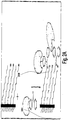
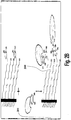
- p-benzoyl-1-phe is incorporated into various sites on the enzyme 200, and the cells (not shown) displaying the selected redox enzymes with the incorporated pBP are subjected to UV (e.g., 360nm) irradiation for photo-crosslinking to a gold electrode 201 modified with alkyl thiol groups.
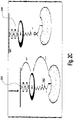
- Fig. 2B enzymes 200 incorporating di-hydroxy-1-phe (L-DHP) are subjected to electrochemical crosslinking to a gold electrode 201 modified with a mixed monolayer of alkane thiolate ethylane glycol and 3,4-hydroquinone-alkane thiolate.
- p-azido-1-phe pAzP
- pPROP p-propargyloxy-phe
- Click chemistry may be used (incorporation of an azide or amine into the red/ox enzyme 200 is interchangeable)
- red/ox enzymes 1. GOx, 2. ADH II and 3. GA (glucoamylase which is not a red/ox enzyme but a hydrolase) were cloned into plasmids containing genes for surface display of proteins on the surface of microorganisms (E. coli, yeast).
- GA glucoamylase which is not a red/ox enzyme but a hydrolase
- the efficiency and activity of the displayed red/ox enzymes was determined electrochemically and biochemically.
- Enzyme displaying cells were immobilized onto electrodes and a fuel cell using the engineered immobilized cells was constructed and tested.
- GOx is a Flavo enzyme, homo-dimer, which catalyzes the oxidation of D-glucose to gluconic acid.
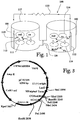
- Aspergillus niger GOx gene (1818 bp) was cloned into pCTCON (see Fig. 3 ), with (nucleotides 1..1815) and without (nucleotides 64..1815) its own signal sequence, yielding plasmids pC-GOx(+) and pC-GOx(-), respectively.
- Constructed ligation products were sequenced and transformed into Saccharomyces cerevisiae strain EBY100.
- Genomic DNA from Aspergillus niger was isolated using the MasterPureTM Yeast DNA Purification Kit (Epicentre).
- GOx gene was amplified by PCR.
- the PCR product and yeast surface display vector pCTCON were digested with NheI and BamHI, and the GOx gene was ligated into the BamHI-NheI backbone of pCTCON, yielding plasmids pC-GOx(+) (including GOx own signal peptide) and pC-GOx(-) (excluding GOx own signal peptide). All cloning steps were done by standard methods.
- Yeast transformation was performed using the lithium acetate method.
- a freshly streaked EBY100 colony was inoculated in 5 ml YPD media and grown overnight at 30°C.
- the overnight culture was inoculated in 100 ml YPD media to an absorbance of 0.1 at 600 nm.
- the cells were grown at 30°C to an absorbance of 1.2 at 600 nm.
- Cells were harvested by centrifugation at 4000 rpm for 5 min at 4°C, and re-suspended in 50 ml H 2 O After another centrifugation cells were re-suspended in 1 ml H 2 O, harvested again (2 min, max speed), and re-suspended in 300 ⁇ l H 2 O.
- Each transformation reaction contained 100 ⁇ l treated yeast cells, 480 ⁇ l PEG 50%, 72 ⁇ l LiAc 1 M, 10 ⁇ l herring sperm 10mg/ml, 30 ⁇ l H 2 O, 30 ⁇ l plasmid (200-300ng). After a short vortex, the reaction was incubated for 30 min at 30°C. 30 ⁇ l DMSO was added and the reaction was incubated for 15 min at 42°C and continuous shaking. After a 30 sec spin at max speed, the pellet was re-suspended in 200 ⁇ l H 2 O and the cells were plated on selective SC-TRP plates, then grown at 30°C for 48hr.
- Transformed yeast were grown overnight in 5 ml SDCAA at 30°C.
- the culture was refreshed (100 ⁇ l starter culture to 5ml SDCAA) and grown (4-6hr) to an absorbance of 1-1.2 at 600 nm.
- 1 ml of the culture was harvested by centrifugation (60 sec max speed) and re-suspended in 5ml of inducing media.
- Induced culture was grown with shaking (250 rpm) for at least 18 hrs, at different temperatures: 20°C, 30°C, 37°C.
- Control cultures Positive controls were yeast expressing PCNA on their surface (induced at 20°C). Negative controls were wild type EBY100 yeast (grown in YPD, at 30°C).
- GOx expression levels were determined by indirect immunofluorescence of a C-terminal c-myc epitope tag using flow cytometry, the results of which are displayed in Fig. 4 , which is a histogram analysis of wild type EBY100 cells without added plasmid, cells displaying PCNA, cells displaying GOx without its own signal peptide (containing plasmid pC-GOx(-)), and cells displaying GOx with its own signal peptide (containing plasmid pC-GOx(+)), according to the legend in the figure.
- Flow cytometric histograms always showed background auto fluorescence with intensity below 10 by cells not expressing GOx, which is a typical phenomenon of yeast display system and likely to be caused by plasmid loss during culturing.
- Significant positive labeling of the c-myc epitope tag demonstrated the expression of GOx on the yeast cell surface. Labeling levels were higher for pC-GOx(-) compared to pC-GOx(+) transformants at all expression temperatures.
- pC-GOx(-) was expressed at all induction temperatures tested (20°C, 30°C, and 37°C).
- FIG. 5 An image of the Western blot is shown in Fig. 5 , in which:
- Native GOx dimer has MW of 150 kDa-186 kDa.
- Glucose oxidase activity was determined by the detection of horseradish peroxidase activity.
- H 2 O 2 is formed as a byproduct.
- H 2 O 2 can be used by horseradish peroxidase to oxidize o-phenylenediamine dihydrochloride, resulting in a color change.
- Samples were prepared in 100 ⁇ l of reaction mixture (100mM glucose, 0.2 U/ml horseradish peroxidase). To each sample o-phenylenediamine dihydrochloride (SIGMA FAST TM OPD) solution (100 ⁇ l of 0.4mg/ml) was added. The mixture was incubated at room temperature for 30 min, in dark.
- SIGMA FAST TM OPD o-phenylenediamine dihydrochloride
- HRP horseradish peroxidase
- Yeast containing plasmid pC-GOx(-) that were induced for expression of yeast surface display product showed significant GOx activity, while all negative controls showed negligible GOx activity.
- Induced yeast containing plasmid pC-GOx(+) showed GOx activity, however lower than pC-GOx(-) yeast.
- Negative controls that were checked included wild type EBY100, induced and not induced yeast expressing on their surface Proliferating Cell Nuclear Antigen (PCNA), and not induced yeast containing plasmids for YSD expression of GOx.
- PCNA Cell Nuclear Antigen
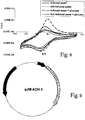
- Cyclic voltammetry measurements were performed to test the electrochemical properties of the engineered cells. The measurements were carried out with VSP potentiostat (BioLogic Science Instruments). The cyclic voltammetry was performed in a three electrode standard cell, using graphite sticks (0.9mm diameter) as working and counter electrodes, and an Ag
- Fig. 8 The results are displayed in Fig. 8 . These results, which are cyclic voltammograms of yeast in 100mM PB and 5 ⁇ M methylene blue, show a significant increase of the oxidation current produced after addition of glucose to GOx expressing yeast, relative to yeast not expressing GOx.
- Tested cultures Yeast expressing GOx, with and without presence of 100mM glucose, yeast not expressing GOx, with and without presence of 100mM glucose.
- ADH II is an alcohol dehydrogenase that facilitates the interconversion between alcohols and aldehydes or ketones with the reduction of NAD+ to NADH.
- Zymomonas mobilis ADH II gene (1146 bp) was amplified from the bacterial genome and cloned into autodisplay plasmid pJM7 4652 bp plasmid (see Fig. 9 ),
- Bacteria transformation was performed by electroporation. Reaction mixture consisted of 40 ⁇ l Dh5 ⁇ electro-competent cells (pre-treated cells that went through several washing steps in order to remove salts) and 1-3 ⁇ l of DNA sample. Reaction mixture was incubated on ice for 1 min and transformed into 0.2cm electroporation cuvettes (USA Scientific). Bacteria were electroporated by MicroPilserTM (BIORAD) and immediately incubated in SOC media for 1hr at continuous shaking. After recovery cells were plated on LB-agar plates containing selection marker (100 ⁇ g/ml Carbenicillin) and grown over night at 37°C. SOC is a nutrient rich media which contains 2% tryptone, 0.5% yeast extract, 8.56mM NaCl, 2.5M KCl, 10mM MgCl 2 and 20mM glucose.
- selection marker 100 ⁇ g/ml Carbenicillin
- Alcohol dehydrogenase catalyses the reduction of NAD + to NADH in the presence of primary alcohols.
- ADH activity was determined by tracking NADH formation, measuring the absorbance at 340nm.
- Glucoamylase catalyses the hydrolysis of ⁇ -1,4 bonds of amylase chains in starch, breaking off glucose units from the end of the chain.
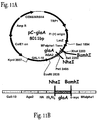
- the pC-glaA plasmid was constructed ( Fig. 11 ).
- the ⁇ -agglutinin surface display consists of two epitope tags that were introduced into the YSD system vectors, allowing quantification of display by immunofluorescence labeling.
- the first is a 9 amino acid peptide epitope from the hemagglutinin antigen (HA), which is fused to the C-terminus of Aga2p, and followed by the desired protein.
- the second is c-myc, a 10 amino acid epitope which is fused to the C-terminus of the displayed protein.
- HA or c-Myc epitope tag can be used for surface expression measurements through immunofluorescence labeling by fluorescence activated cell sorting (FACS).
- FACS fluorescence activated cell sorting
- the gene for glucoamylase can encode for two different glucoamylase enzymes G1 and G2 which vary in the COOH-terminal region.
- the glaA gene (8011 bp) was synthesized by GeneScript USA inc., following modifications to encode for G1 enzyme. All introns were removed from the sequence of glaA together with the enzyme secretion signal sequence (1-54 bp) and TAG stop codon. Two restriction sites were added; NheI 5' GCTAGC and BamHI 3' GGATCC. In order to prevent restriction in undesignated sites, two mutations were enforced.
- Yeast transformation was performed using the lithium acetate method, as described above for GOx transformation.
- Fig. 12 shows a histogram of a FACS procedure testing for the display of glucoamylase in yeast. Signal intensity is shown per the number of cells where FL1-H stands for a filter that receives light at 548nm.
- the negative control, wild type EBY100 showed a high population of cells with very low signal.
- the positive control, yeast expressing PCNA showed a high population of cells with a high fluorescent signal.
- the sample - yeast expressing GAs on their surface- shows a curve similar to the positive control, a high population of cells with high labeling indicating that the structure is indeed expressed on the surface of yeast. Further, the results show that in this sample, 88% of the cells in the yeast culture express the enzyme.
- Transformed yeast were grown overnight in induction medium consisting of 4.5 ml SGCAA, 0.5 ml SDCAA, 5 ⁇ l Ferric citrate 0.2mM, and 50 ⁇ l 5-amino-levulinic acid 3.6mM at 30°C to an absorbance of 1-1.2 at 600 nm.
- 1 ml of the culture was harvested by centrifugation (60 sec max speed) and re-suspended in 1 ml of phosphate buffer with 1% raw starch.
- Yeast culture was incubated at 30°C with shaking (250 rpm). The culture was centrifuged (60 sec max speed) and the supernatant was checked using a colorimetric assay.
- Glucoamylase activity was determined by the detection of horseradish peroxidase (HRP) activity. Glucoamylase digests starch into glucose. In the presence of O 2 and glucose oxidase (GOx) the formed glucose is metabolized into gluconic acid accompanied by production of H 2 O 2 . H 2 O 2 can be used then by horseradish peroxidase to oxidize o-phenylenediamine dihydrochloride (OPD), resulting in a color change. Absorbance of the samples was measured at 450 nm against a standard curve with different concentrations of commercial glucose.
- HRP horseradish peroxidase
- yeasts digest glucose what is shown here is the NET production of glucose from digesting starch by glucoamylase. In order to check the total production of glucose, an assay that detects the starch disappearance needs to be carried out.
- the incorporation of unnatural amino acids into a cell displayed enzyme is done by co-transformation of a plasmid encoding for the mutant synthetase and tRNA and the plasmid containing the enzyme to be displayed on the cell surface.
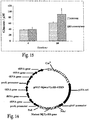
- Fig. 14 A plasmid for the incorporation of unnatural amino acids is illustrated in Fig. 14 .
- Several "nano-wires" may be used to attach the cell displaying the enzyme and unnatural amino acids, for example, as discussed with reference to Figs. 2A-D .
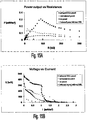
- Fig. 15A presents a V-I plot (voltage versus current density) of the MFC.
- the power density produced by the MFC upon connecting to the variable resistances was derived from the V-I measurements ( Fig. 15B ).
- the open circuit voltage (V oc ) value of GOx expressing yeast biofuel cell was 460 mV
- short circuit current density (i sc ) was approximately 1.2 mA/m 2
- the maximum released power density, P max 0.31 mW/m 2 , was observed at the external load resistance of 90k ⁇ .
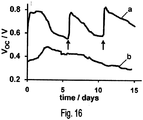
- Regenerated yeast were prepared as follows: a yeast sample (0.5ml) was taken out from the anode compartment of a working fuel cell, and incubated over-night in SDCAA media (5ml). After another cycle of dilution and overnight incubation the yeast sample was incubated in induction media, and returned to the fuel cell.
Landscapes
- Life Sciences & Earth Sciences (AREA)
- Chemical & Material Sciences (AREA)
- Biochemistry (AREA)
- Microbiology (AREA)
- Engineering & Computer Science (AREA)
- Manufacturing & Machinery (AREA)
- Sustainable Development (AREA)
- Sustainable Energy (AREA)
- Chemical Kinetics & Catalysis (AREA)
- Electrochemistry (AREA)
- General Chemical & Material Sciences (AREA)
- Micro-Organisms Or Cultivation Processes Thereof (AREA)
Claims (13)
- System (100) zur Erzeugung von Biostrom, wobei das System Folgendes umfasst:ein Anodenkompartiment (101) und ein Kathodenkompartiment (102), wobei die Kompartimente in Flüssigkeitsverbindung sind,wobei das Anodenkompartiment (101) einen Anodenelektrode (115) und ein Substrat (117) umfasst undwobei das Kathodenkompartiment (102) eine Kathodenelektrode (112) umfasst, wobei die Anodenelektrode und die Kathodenelektrode in elektrischer Verbindung sind,dadurch gekennzeichnet, dass das Anodenkompartiment (101) eine Mikroorganismenzelle (111) umfasst, die ein Enzym darauf gezeigt aufweist, wobei das Enzym das Substrat (117) oxidieren soll, wobei das Enzym ein Red/Ox-Enzym (113) mit einer integrierten unnatürlichen Aminosäure ist, wobei die unnatürliche Aminosäure die Mikroorganismenzelle (111) an der Anodenelektrode (115) immobilisiert.
- System (100) nach Anspruch 1, wobei das Enzym eine Alkoholdehydrogenase oder eine Glucoamylase ist.
- System (100) nach den Ansprüchen 1-2, das eine Glucoseoxidase umfasst.
- System (100) nach den Ansprüchen 1-3, das mehr als einen Typ einer Mikroorganismenzelle (111) umfasst, wobei jeder Zelltyp ein anderes Enzym darauf gezeigt aufweist.
- System (100) nach den Ansprüchen 1-4, wobei das Kathodenkompartiment (102) einen Mediator und eine Mikroorganismenzelle (114) umfasst, die ein Enzym darauf gezeigt aufweist, wobei das Enzym Sauerstoff zu Wasser reduzieren soll.
- System (100) nach den Ansprüchen 1-5, wobei das Anodenkompartiment (101) eine anaerobe Umgebung umfasst.
- System nach den Ansprüchen 1-6, wobei mindestens die Anodenelektrode (115) eine modifizierte Goldelektrode ist.
- System (100) nach den Ansprüchen 1-7, wobei das Substrat (117) aus der Gruppe bestehend aus folgenden ausgewählt ist: Zuckern, Alkoholen, Polysacchariden oder einer Kombination davon.
- System (100) nach den Ansprüchen 1-8, wobei die Mikroorganismenzellen (111) aus der Gruppe bestehend aus prokaryotischen Zellen und eukaryotischen Zellen ausgewählt sind.
- Verfahren zur Erzeugung von Biostrom, wobei das Verfahren Folgendes umfasst: Bereitstellen eines Enzyms, um ein Substrat zu oxidieren, innerhalb einer MBZ, wobei das Enzym auf der Oberfläche einer Mikroorganismenzelle gezeigt ist und das Enzym ein Red/Ox-Enzym mit einer integrierten unnatürlichen Aminosäure ist, wobei die unnatürliche Aminosäure die Mikroorganismenzelle an der Anodenelektrode immobilisiert.
- Verfahren nach Anspruch 10, das das Umwandeln der Mikroorganismenzelle mit einem Plasmid, das Gene für ein Oberflächen-Display und eine Sequenzkodierung für das Enzym umfasst, umfasst.
- Verfahren nach Anspruch 11, das das Umwandeln der Mikroorganismenzelle mit einem zusätzlichen Plasmid, das Komponenten für die unnatürliche Aminosäure umfasst, umfasst.
- Verfahren nach Anspruch 10, wobei das Enzym aus einer Gruppe ausgewählt ist, die aus folgenden besteht:Glucoseoxidase, Alkoholdehydrogenase und/oder Glucoamylase.
Applications Claiming Priority (2)
| Application Number | Priority Date | Filing Date | Title |
|---|---|---|---|
| US14970709P | 2009-02-04 | 2009-02-04 | |
| PCT/IL2010/000099 WO2010089741A1 (en) | 2009-02-04 | 2010-02-04 | Systems and methods for bio-electricity production |
Publications (2)
| Publication Number | Publication Date |
|---|---|
| EP2394323A1 EP2394323A1 (de) | 2011-12-14 |
| EP2394323B1 true EP2394323B1 (de) | 2017-05-24 |
Family
ID=42119747
Family Applications (1)
| Application Number | Title | Priority Date | Filing Date |
|---|---|---|---|
| EP10707973.3A Not-in-force EP2394323B1 (de) | 2009-02-04 | 2010-02-04 | Systeme und verfahren zur erzeugung von biostrom |
Country Status (3)
| Country | Link |
|---|---|
| US (1) | US9017978B2 (de) |
| EP (1) | EP2394323B1 (de) |
| WO (1) | WO2010089741A1 (de) |
Families Citing this family (4)
| Publication number | Priority date | Publication date | Assignee | Title |
|---|---|---|---|---|
| US9034161B2 (en) | 2012-08-23 | 2015-05-19 | Douglas T. Carrell | Sperm separation devices and associated methods |
| ES2457669B1 (es) * | 2012-09-28 | 2015-02-04 | Universitat De València | Dispositivo termoeléctrico microbiano y método asociado a dicho dispositivo |
| CN109065930A (zh) * | 2018-06-26 | 2018-12-21 | 河南师范大学 | 一种含重金属小麦籽粒液化及回收电能的方法 |
| CN112870939B (zh) * | 2021-01-26 | 2021-11-19 | 大连理工大学 | 一种用于连续有效去除空气污染物的生物耦合催化反应体系 |
Family Cites Families (6)
| Publication number | Priority date | Publication date | Assignee | Title |
|---|---|---|---|---|
| JPS5912135B2 (ja) * | 1977-09-28 | 1984-03-21 | 松下電器産業株式会社 | 酵素電極 |
| US5208154A (en) * | 1991-04-08 | 1993-05-04 | The United States Of America As Represented By The Department Of Energy | Reversibly immobilized biological materials in monolayer films on electrodes |
| FI118553B (fi) | 2002-06-28 | 2007-12-14 | Enfucell Oy | Järjestely ja menetelmä sähkötehon tuottamiseksi ja teholähde |
| JP5657850B2 (ja) * | 2003-10-14 | 2015-01-21 | ザ スクリプス リサーチ インスティテュート | 酸化還元機能性アミノ酸のタンパク質への部位特異的組み入れ |
| JP4773736B2 (ja) | 2004-03-29 | 2011-09-14 | 水ing株式会社 | 有機性物質を利用する発電方法及び装置 |
| US20080138663A1 (en) * | 2006-12-12 | 2008-06-12 | Canon Kabushiki Kaisha | Microbial electrode and fuel cell and sensor using the same |
-
2010
- 2010-02-04 WO PCT/IL2010/000099 patent/WO2010089741A1/en not_active Ceased
- 2010-02-04 US US13/138,351 patent/US9017978B2/en not_active Expired - Fee Related
- 2010-02-04 EP EP10707973.3A patent/EP2394323B1/de not_active Not-in-force
Non-Patent Citations (1)
| Title |
|---|
| None * |
Also Published As
| Publication number | Publication date |
|---|---|
| US20120028079A1 (en) | 2012-02-02 |
| US9017978B2 (en) | 2015-04-28 |
| EP2394323A1 (de) | 2011-12-14 |
| WO2010089741A1 (en) | 2010-08-12 |
| WO2010089741A9 (en) | 2010-09-23 |
Similar Documents
| Publication | Publication Date | Title |
|---|---|---|
| Dong et al. | Engineering cyanobacterium with transmembrane electron transfer ability for bioelectrochemical nitrogen fixation | |
| Logan et al. | Electroactive microorganisms in bioelectrochemical systems | |
| Chen et al. | Enzyme-assisted microbial electrosynthesis of poly (3-hydroxybutyrate) via CO2 bioreduction by engineered Ralstonia eutropha | |
| Christwardana et al. | Yeast and carbon nanotube based biocatalyst developed by synergetic effects of covalent bonding and hydrophobic interaction for performance enhancement of membraneless microbial fuel cell | |
| US6495023B1 (en) | Electrochemical methods for generation of a biological proton motive force and pyridine nucleotide cofactor regeneration | |
| Hassan et al. | Power generation from cellulose using mixed and pure cultures of cellulose-degrading bacteria in a microbial fuel cell | |
| US7459223B2 (en) | Electrochemical methods for generation of a biological proton motive force | |
| Vincent et al. | Electricity from low-level H 2 in still air–an ultimate test for an oxygen tolerant hydrogenase | |
| US20080213632A1 (en) | Light-powered microbial fuel cells | |
| Hubenova et al. | Improvement of yeast− biofuel cell output by electrode modifications | |
| FI119267B (fi) | Biokatalyyttinen suora-alkoholipolttokenno | |
| Bahartan et al. | In situ fuel processing in a microbial fuel cell | |
| Galindo-De-la-Rosa et al. | Evaluation of single and stack membraneless enzymatic fuel cells based on ethanol in simulated body fluids | |
| US20140004578A1 (en) | Microbes, methods, and devices for redox-imbalanced metabolism | |
| Takeda et al. | The two-step electrochemical oxidation of alcohols using a novel recombinant PQQ alcohol dehydrogenase as a catalyst for a bioanode | |
| Szczupak et al. | A hybrid biocathode: surface display of O 2-reducing enzymes for microbial fuel cell applications | |
| Yamamoto et al. | Starchy biomass-powered enzymatic biofuel cell based on amylases and glucose oxidase multi-immobilized bioanode | |
| Liu et al. | Nonelectroactive clostridium obtains extracellular electron transfer-capability after forming chimera with Geobacter | |
| US9017978B2 (en) | Systems and method for bio-electricity production | |
| Takeda et al. | Bioelectrocatalysis based on direct electron transfer of fungal pyrroloquinoline quinone-dependent dehydrogenase lacking the cytochrome domain | |
| JP2011243353A (ja) | 酵素電極およびそれを備えるバイオ燃料電池 | |
| Hubenova et al. | The glyoxylate pathway contributes to enhanced extracellular electron transfer in yeast-based biofuel cell | |
| Marcílio et al. | Enhancing the performance of an acetate-fed microbial fuel cell with methylene green | |
| Wang et al. | Power-generation from biorenewable resources: biocatalysis in biofuel cells | |
| Ser et al. | Nanobioreactors and nanobioprocessing nanobioelectrocatalysis in biosensors and biofuel cells |
Legal Events
| Date | Code | Title | Description |
|---|---|---|---|
| PUAI | Public reference made under article 153(3) epc to a published international application that has entered the european phase |
Free format text: ORIGINAL CODE: 0009012 |
|
| 17P | Request for examination filed |
Effective date: 20110729 |
|
| AK | Designated contracting states |
Kind code of ref document: A1 Designated state(s): AT BE BG CH CY CZ DE DK EE ES FI FR GB GR HR HU IE IS IT LI LT LU LV MC MK MT NL NO PL PT RO SE SI SK SM TR |
|
| DAX | Request for extension of the european patent (deleted) | ||
| 17Q | First examination report despatched |
Effective date: 20140213 |
|
| GRAP | Despatch of communication of intention to grant a patent |
Free format text: ORIGINAL CODE: EPIDOSNIGR1 |
|
| RIC1 | Information provided on ipc code assigned before grant |
Ipc: H01M 4/88 20060101ALN20161007BHEP Ipc: H01M 4/86 20060101ALN20161007BHEP Ipc: H01M 8/16 20060101AFI20161007BHEP |
|
| INTG | Intention to grant announced |
Effective date: 20161027 |
|
| RIC1 | Information provided on ipc code assigned before grant |
Ipc: H01M 4/86 20060101ALN20161014BHEP Ipc: H01M 8/16 20060101AFI20161014BHEP Ipc: H01M 4/88 20060101ALN20161014BHEP |
|
| GRAS | Grant fee paid |
Free format text: ORIGINAL CODE: EPIDOSNIGR3 |
|
| STAA | Information on the status of an ep patent application or granted ep patent |
Free format text: STATUS: GRANT OF PATENT IS INTENDED |
|
| GRAJ | Information related to disapproval of communication of intention to grant by the applicant or resumption of examination proceedings by the epo deleted |
Free format text: ORIGINAL CODE: EPIDOSDIGR1 |
|
| GRAL | Information related to payment of fee for publishing/printing deleted |
Free format text: ORIGINAL CODE: EPIDOSDIGR3 |
|
| STAA | Information on the status of an ep patent application or granted ep patent |
Free format text: STATUS: EXAMINATION IS IN PROGRESS |
|
| GRAP | Despatch of communication of intention to grant a patent |
Free format text: ORIGINAL CODE: EPIDOSNIGR1 |
|
| STAA | Information on the status of an ep patent application or granted ep patent |
Free format text: STATUS: GRANT OF PATENT IS INTENDED |
|
| INTC | Intention to grant announced (deleted) | ||
| GRAA | (expected) grant |
Free format text: ORIGINAL CODE: 0009210 |
|
| STAA | Information on the status of an ep patent application or granted ep patent |
Free format text: STATUS: THE PATENT HAS BEEN GRANTED |
|
| INTG | Intention to grant announced |
Effective date: 20170410 |
|
| RIC1 | Information provided on ipc code assigned before grant |
Ipc: H01M 4/88 20060101ALN20170331BHEP Ipc: H01M 4/86 20060101ALN20170331BHEP Ipc: H01M 8/16 20060101AFI20170331BHEP |
|
| AK | Designated contracting states |
Kind code of ref document: B1 Designated state(s): AT BE BG CH CY CZ DE DK EE ES FI FR GB GR HR HU IE IS IT LI LT LU LV MC MK MT NL NO PL PT RO SE SI SK SM TR |
|
| REG | Reference to a national code |
Ref country code: GB Ref legal event code: FG4D |
|
| REG | Reference to a national code |
Ref country code: CH Ref legal event code: EP |
|
| REG | Reference to a national code |
Ref country code: IE Ref legal event code: FG4D |
|
| REG | Reference to a national code |
Ref country code: AT Ref legal event code: REF Ref document number: 896409 Country of ref document: AT Kind code of ref document: T Effective date: 20170615 |
|
| REG | Reference to a national code |
Ref country code: DE Ref legal event code: R096 Ref document number: 602010042540 Country of ref document: DE |
|
| REG | Reference to a national code |
Ref country code: NL Ref legal event code: MP Effective date: 20170524 |
|
| REG | Reference to a national code |
Ref country code: LT Ref legal event code: MG4D |
|
| REG | Reference to a national code |
Ref country code: AT Ref legal event code: MK05 Ref document number: 896409 Country of ref document: AT Kind code of ref document: T Effective date: 20170524 |
|
| PG25 | Lapsed in a contracting state [announced via postgrant information from national office to epo] |
Ref country code: ES Free format text: LAPSE BECAUSE OF FAILURE TO SUBMIT A TRANSLATION OF THE DESCRIPTION OR TO PAY THE FEE WITHIN THE PRESCRIBED TIME-LIMIT Effective date: 20170524 Ref country code: GR Free format text: LAPSE BECAUSE OF FAILURE TO SUBMIT A TRANSLATION OF THE DESCRIPTION OR TO PAY THE FEE WITHIN THE PRESCRIBED TIME-LIMIT Effective date: 20170825 Ref country code: LT Free format text: LAPSE BECAUSE OF FAILURE TO SUBMIT A TRANSLATION OF THE DESCRIPTION OR TO PAY THE FEE WITHIN THE PRESCRIBED TIME-LIMIT Effective date: 20170524 Ref country code: HR Free format text: LAPSE BECAUSE OF FAILURE TO SUBMIT A TRANSLATION OF THE DESCRIPTION OR TO PAY THE FEE WITHIN THE PRESCRIBED TIME-LIMIT Effective date: 20170524 Ref country code: NO Free format text: LAPSE BECAUSE OF FAILURE TO SUBMIT A TRANSLATION OF THE DESCRIPTION OR TO PAY THE FEE WITHIN THE PRESCRIBED TIME-LIMIT Effective date: 20170824 Ref country code: AT Free format text: LAPSE BECAUSE OF FAILURE TO SUBMIT A TRANSLATION OF THE DESCRIPTION OR TO PAY THE FEE WITHIN THE PRESCRIBED TIME-LIMIT Effective date: 20170524 Ref country code: FI Free format text: LAPSE BECAUSE OF FAILURE TO SUBMIT A TRANSLATION OF THE DESCRIPTION OR TO PAY THE FEE WITHIN THE PRESCRIBED TIME-LIMIT Effective date: 20170524 |
|
| PG25 | Lapsed in a contracting state [announced via postgrant information from national office to epo] |
Ref country code: BG Free format text: LAPSE BECAUSE OF FAILURE TO SUBMIT A TRANSLATION OF THE DESCRIPTION OR TO PAY THE FEE WITHIN THE PRESCRIBED TIME-LIMIT Effective date: 20170824 Ref country code: NL Free format text: LAPSE BECAUSE OF FAILURE TO SUBMIT A TRANSLATION OF THE DESCRIPTION OR TO PAY THE FEE WITHIN THE PRESCRIBED TIME-LIMIT Effective date: 20170524 Ref country code: LV Free format text: LAPSE BECAUSE OF FAILURE TO SUBMIT A TRANSLATION OF THE DESCRIPTION OR TO PAY THE FEE WITHIN THE PRESCRIBED TIME-LIMIT Effective date: 20170524 Ref country code: SE Free format text: LAPSE BECAUSE OF FAILURE TO SUBMIT A TRANSLATION OF THE DESCRIPTION OR TO PAY THE FEE WITHIN THE PRESCRIBED TIME-LIMIT Effective date: 20170524 Ref country code: IS Free format text: LAPSE BECAUSE OF FAILURE TO SUBMIT A TRANSLATION OF THE DESCRIPTION OR TO PAY THE FEE WITHIN THE PRESCRIBED TIME-LIMIT Effective date: 20170924 |
|
| PG25 | Lapsed in a contracting state [announced via postgrant information from national office to epo] |
Ref country code: DK Free format text: LAPSE BECAUSE OF FAILURE TO SUBMIT A TRANSLATION OF THE DESCRIPTION OR TO PAY THE FEE WITHIN THE PRESCRIBED TIME-LIMIT Effective date: 20170524 Ref country code: EE Free format text: LAPSE BECAUSE OF FAILURE TO SUBMIT A TRANSLATION OF THE DESCRIPTION OR TO PAY THE FEE WITHIN THE PRESCRIBED TIME-LIMIT Effective date: 20170524 Ref country code: RO Free format text: LAPSE BECAUSE OF FAILURE TO SUBMIT A TRANSLATION OF THE DESCRIPTION OR TO PAY THE FEE WITHIN THE PRESCRIBED TIME-LIMIT Effective date: 20170524 Ref country code: SK Free format text: LAPSE BECAUSE OF FAILURE TO SUBMIT A TRANSLATION OF THE DESCRIPTION OR TO PAY THE FEE WITHIN THE PRESCRIBED TIME-LIMIT Effective date: 20170524 Ref country code: CZ Free format text: LAPSE BECAUSE OF FAILURE TO SUBMIT A TRANSLATION OF THE DESCRIPTION OR TO PAY THE FEE WITHIN THE PRESCRIBED TIME-LIMIT Effective date: 20170524 |
|
| REG | Reference to a national code |
Ref country code: DE Ref legal event code: R097 Ref document number: 602010042540 Country of ref document: DE |
|
| PG25 | Lapsed in a contracting state [announced via postgrant information from national office to epo] |
Ref country code: SM Free format text: LAPSE BECAUSE OF FAILURE TO SUBMIT A TRANSLATION OF THE DESCRIPTION OR TO PAY THE FEE WITHIN THE PRESCRIBED TIME-LIMIT Effective date: 20170524 Ref country code: PL Free format text: LAPSE BECAUSE OF FAILURE TO SUBMIT A TRANSLATION OF THE DESCRIPTION OR TO PAY THE FEE WITHIN THE PRESCRIBED TIME-LIMIT Effective date: 20170524 Ref country code: IT Free format text: LAPSE BECAUSE OF FAILURE TO SUBMIT A TRANSLATION OF THE DESCRIPTION OR TO PAY THE FEE WITHIN THE PRESCRIBED TIME-LIMIT Effective date: 20170524 |
|
| PLBE | No opposition filed within time limit |
Free format text: ORIGINAL CODE: 0009261 |
|
| STAA | Information on the status of an ep patent application or granted ep patent |
Free format text: STATUS: NO OPPOSITION FILED WITHIN TIME LIMIT |
|
| 26N | No opposition filed |
Effective date: 20180227 |
|
| PG25 | Lapsed in a contracting state [announced via postgrant information from national office to epo] |
Ref country code: SI Free format text: LAPSE BECAUSE OF FAILURE TO SUBMIT A TRANSLATION OF THE DESCRIPTION OR TO PAY THE FEE WITHIN THE PRESCRIBED TIME-LIMIT Effective date: 20170524 |
|
| REG | Reference to a national code |
Ref country code: DE Ref legal event code: R119 Ref document number: 602010042540 Country of ref document: DE |
|
| REG | Reference to a national code |
Ref country code: CH Ref legal event code: PL |
|
| PG25 | Lapsed in a contracting state [announced via postgrant information from national office to epo] |
Ref country code: MC Free format text: LAPSE BECAUSE OF FAILURE TO SUBMIT A TRANSLATION OF THE DESCRIPTION OR TO PAY THE FEE WITHIN THE PRESCRIBED TIME-LIMIT Effective date: 20170524 |
|
| GBPC | Gb: european patent ceased through non-payment of renewal fee |
Effective date: 20180204 |
|
| REG | Reference to a national code |
Ref country code: IE Ref legal event code: MM4A |
|
| REG | Reference to a national code |
Ref country code: BE Ref legal event code: MM Effective date: 20180228 |
|
| PG25 | Lapsed in a contracting state [announced via postgrant information from national office to epo] |
Ref country code: CH Free format text: LAPSE BECAUSE OF NON-PAYMENT OF DUE FEES Effective date: 20180228 Ref country code: LU Free format text: LAPSE BECAUSE OF NON-PAYMENT OF DUE FEES Effective date: 20180204 Ref country code: LI Free format text: LAPSE BECAUSE OF NON-PAYMENT OF DUE FEES Effective date: 20180228 |
|
| REG | Reference to a national code |
Ref country code: FR Ref legal event code: ST Effective date: 20181031 |
|
| PG25 | Lapsed in a contracting state [announced via postgrant information from national office to epo] |
Ref country code: IE Free format text: LAPSE BECAUSE OF NON-PAYMENT OF DUE FEES Effective date: 20180204 Ref country code: DE Free format text: LAPSE BECAUSE OF NON-PAYMENT OF DUE FEES Effective date: 20180901 |
|
| PG25 | Lapsed in a contracting state [announced via postgrant information from national office to epo] |
Ref country code: FR Free format text: LAPSE BECAUSE OF NON-PAYMENT OF DUE FEES Effective date: 20180228 Ref country code: GB Free format text: LAPSE BECAUSE OF NON-PAYMENT OF DUE FEES Effective date: 20180204 Ref country code: BE Free format text: LAPSE BECAUSE OF NON-PAYMENT OF DUE FEES Effective date: 20180228 |
|
| PG25 | Lapsed in a contracting state [announced via postgrant information from national office to epo] |
Ref country code: MT Free format text: LAPSE BECAUSE OF NON-PAYMENT OF DUE FEES Effective date: 20180204 |
|
| PG25 | Lapsed in a contracting state [announced via postgrant information from national office to epo] |
Ref country code: TR Free format text: LAPSE BECAUSE OF FAILURE TO SUBMIT A TRANSLATION OF THE DESCRIPTION OR TO PAY THE FEE WITHIN THE PRESCRIBED TIME-LIMIT Effective date: 20170524 |
|
| PG25 | Lapsed in a contracting state [announced via postgrant information from national office to epo] |
Ref country code: PT Free format text: LAPSE BECAUSE OF FAILURE TO SUBMIT A TRANSLATION OF THE DESCRIPTION OR TO PAY THE FEE WITHIN THE PRESCRIBED TIME-LIMIT Effective date: 20170524 Ref country code: HU Free format text: LAPSE BECAUSE OF FAILURE TO SUBMIT A TRANSLATION OF THE DESCRIPTION OR TO PAY THE FEE WITHIN THE PRESCRIBED TIME-LIMIT; INVALID AB INITIO Effective date: 20100204 |
|
| PG25 | Lapsed in a contracting state [announced via postgrant information from national office to epo] |
Ref country code: CY Free format text: LAPSE BECAUSE OF FAILURE TO SUBMIT A TRANSLATION OF THE DESCRIPTION OR TO PAY THE FEE WITHIN THE PRESCRIBED TIME-LIMIT Effective date: 20170524 Ref country code: MK Free format text: LAPSE BECAUSE OF NON-PAYMENT OF DUE FEES Effective date: 20170524 |