EP2383104A2 - Laserverschweißen von Kunststoffteilen - Google Patents
Laserverschweißen von Kunststoffteilen Download PDFInfo
- Publication number
- EP2383104A2 EP2383104A2 EP11003420A EP11003420A EP2383104A2 EP 2383104 A2 EP2383104 A2 EP 2383104A2 EP 11003420 A EP11003420 A EP 11003420A EP 11003420 A EP11003420 A EP 11003420A EP 2383104 A2 EP2383104 A2 EP 2383104A2
- Authority
- EP
- European Patent Office
- Prior art keywords
- plastic
- layer
- plastic parts
- laser welding
- welded
- Prior art date
- Legal status (The legal status is an assumption and is not a legal conclusion. Google has not performed a legal analysis and makes no representation as to the accuracy of the status listed.)
- Withdrawn
Links
- 238000004023 plastic welding Methods 0.000 title claims description 10
- 229920003023 plastic Polymers 0.000 claims abstract description 56
- 239000004033 plastic Substances 0.000 claims abstract description 49
- 238000000034 method Methods 0.000 claims abstract description 11
- 238000003466 welding Methods 0.000 claims abstract description 10
- 238000000465 moulding Methods 0.000 claims description 5
- 239000002023 wood Substances 0.000 claims description 4
- 239000000463 material Substances 0.000 claims description 2
- 239000002990 reinforced plastic Substances 0.000 claims 1
- 238000005034 decoration Methods 0.000 abstract description 5
- 229920002430 Fibre-reinforced plastic Polymers 0.000 abstract description 3
- 239000011151 fibre-reinforced plastic Substances 0.000 abstract description 3
- 238000004519 manufacturing process Methods 0.000 description 4
- 238000005516 engineering process Methods 0.000 description 2
- 229910000831 Steel Inorganic materials 0.000 description 1
- 230000002745 absorbent Effects 0.000 description 1
- 239000002250 absorbent Substances 0.000 description 1
- 239000010959 steel Substances 0.000 description 1
Images
Classifications
-
- B—PERFORMING OPERATIONS; TRANSPORTING
- B29—WORKING OF PLASTICS; WORKING OF SUBSTANCES IN A PLASTIC STATE IN GENERAL
- B29C—SHAPING OR JOINING OF PLASTICS; SHAPING OF MATERIAL IN A PLASTIC STATE, NOT OTHERWISE PROVIDED FOR; AFTER-TREATMENT OF THE SHAPED PRODUCTS, e.g. REPAIRING
- B29C66/00—General aspects of processes or apparatus for joining preformed parts
- B29C66/01—General aspects dealing with the joint area or with the area to be joined
- B29C66/05—Particular design of joint configurations
- B29C66/10—Particular design of joint configurations particular design of the joint cross-sections
- B29C66/11—Joint cross-sections comprising a single joint-segment, i.e. one of the parts to be joined comprising a single joint-segment in the joint cross-section
- B29C66/116—Single bevelled joints, i.e. one of the parts to be joined being bevelled in the joint area
- B29C66/1162—Single bevel to bevel joints, e.g. mitre joints
-
- B—PERFORMING OPERATIONS; TRANSPORTING
- B29—WORKING OF PLASTICS; WORKING OF SUBSTANCES IN A PLASTIC STATE IN GENERAL
- B29C—SHAPING OR JOINING OF PLASTICS; SHAPING OF MATERIAL IN A PLASTIC STATE, NOT OTHERWISE PROVIDED FOR; AFTER-TREATMENT OF THE SHAPED PRODUCTS, e.g. REPAIRING
- B29C65/00—Joining or sealing of preformed parts, e.g. welding of plastics materials; Apparatus therefor
- B29C65/02—Joining or sealing of preformed parts, e.g. welding of plastics materials; Apparatus therefor by heating, with or without pressure
- B29C65/14—Joining or sealing of preformed parts, e.g. welding of plastics materials; Apparatus therefor by heating, with or without pressure using wave energy, i.e. electromagnetic radiation, or particle radiation
- B29C65/16—Laser beams
- B29C65/1603—Laser beams characterised by the type of electromagnetic radiation
-
- B—PERFORMING OPERATIONS; TRANSPORTING
- B29—WORKING OF PLASTICS; WORKING OF SUBSTANCES IN A PLASTIC STATE IN GENERAL
- B29C—SHAPING OR JOINING OF PLASTICS; SHAPING OF MATERIAL IN A PLASTIC STATE, NOT OTHERWISE PROVIDED FOR; AFTER-TREATMENT OF THE SHAPED PRODUCTS, e.g. REPAIRING
- B29C65/00—Joining or sealing of preformed parts, e.g. welding of plastics materials; Apparatus therefor
- B29C65/02—Joining or sealing of preformed parts, e.g. welding of plastics materials; Apparatus therefor by heating, with or without pressure
- B29C65/14—Joining or sealing of preformed parts, e.g. welding of plastics materials; Apparatus therefor by heating, with or without pressure using wave energy, i.e. electromagnetic radiation, or particle radiation
- B29C65/16—Laser beams
- B29C65/1629—Laser beams characterised by the way of heating the interface
- B29C65/1635—Laser beams characterised by the way of heating the interface at least passing through one of the parts to be joined, i.e. laser transmission welding
-
- B—PERFORMING OPERATIONS; TRANSPORTING
- B29—WORKING OF PLASTICS; WORKING OF SUBSTANCES IN A PLASTIC STATE IN GENERAL
- B29C—SHAPING OR JOINING OF PLASTICS; SHAPING OF MATERIAL IN A PLASTIC STATE, NOT OTHERWISE PROVIDED FOR; AFTER-TREATMENT OF THE SHAPED PRODUCTS, e.g. REPAIRING
- B29C65/00—Joining or sealing of preformed parts, e.g. welding of plastics materials; Apparatus therefor
- B29C65/02—Joining or sealing of preformed parts, e.g. welding of plastics materials; Apparatus therefor by heating, with or without pressure
- B29C65/14—Joining or sealing of preformed parts, e.g. welding of plastics materials; Apparatus therefor by heating, with or without pressure using wave energy, i.e. electromagnetic radiation, or particle radiation
- B29C65/16—Laser beams
- B29C65/1629—Laser beams characterised by the way of heating the interface
- B29C65/1635—Laser beams characterised by the way of heating the interface at least passing through one of the parts to be joined, i.e. laser transmission welding
- B29C65/1638—Laser beams characterised by the way of heating the interface at least passing through one of the parts to be joined, i.e. laser transmission welding focusing the laser beam on the interface
-
- B—PERFORMING OPERATIONS; TRANSPORTING
- B29—WORKING OF PLASTICS; WORKING OF SUBSTANCES IN A PLASTIC STATE IN GENERAL
- B29C—SHAPING OR JOINING OF PLASTICS; SHAPING OF MATERIAL IN A PLASTIC STATE, NOT OTHERWISE PROVIDED FOR; AFTER-TREATMENT OF THE SHAPED PRODUCTS, e.g. REPAIRING
- B29C65/00—Joining or sealing of preformed parts, e.g. welding of plastics materials; Apparatus therefor
- B29C65/02—Joining or sealing of preformed parts, e.g. welding of plastics materials; Apparatus therefor by heating, with or without pressure
- B29C65/14—Joining or sealing of preformed parts, e.g. welding of plastics materials; Apparatus therefor by heating, with or without pressure using wave energy, i.e. electromagnetic radiation, or particle radiation
- B29C65/16—Laser beams
- B29C65/1629—Laser beams characterised by the way of heating the interface
- B29C65/1664—Laser beams characterised by the way of heating the interface making use of several radiators
-
- B—PERFORMING OPERATIONS; TRANSPORTING
- B29—WORKING OF PLASTICS; WORKING OF SUBSTANCES IN A PLASTIC STATE IN GENERAL
- B29C—SHAPING OR JOINING OF PLASTICS; SHAPING OF MATERIAL IN A PLASTIC STATE, NOT OTHERWISE PROVIDED FOR; AFTER-TREATMENT OF THE SHAPED PRODUCTS, e.g. REPAIRING
- B29C65/00—Joining or sealing of preformed parts, e.g. welding of plastics materials; Apparatus therefor
- B29C65/02—Joining or sealing of preformed parts, e.g. welding of plastics materials; Apparatus therefor by heating, with or without pressure
- B29C65/14—Joining or sealing of preformed parts, e.g. welding of plastics materials; Apparatus therefor by heating, with or without pressure using wave energy, i.e. electromagnetic radiation, or particle radiation
- B29C65/16—Laser beams
- B29C65/1629—Laser beams characterised by the way of heating the interface
- B29C65/1664—Laser beams characterised by the way of heating the interface making use of several radiators
- B29C65/1667—Laser beams characterised by the way of heating the interface making use of several radiators at the same time, i.e. simultaneous laser welding
-
- B—PERFORMING OPERATIONS; TRANSPORTING
- B29—WORKING OF PLASTICS; WORKING OF SUBSTANCES IN A PLASTIC STATE IN GENERAL
- B29C—SHAPING OR JOINING OF PLASTICS; SHAPING OF MATERIAL IN A PLASTIC STATE, NOT OTHERWISE PROVIDED FOR; AFTER-TREATMENT OF THE SHAPED PRODUCTS, e.g. REPAIRING
- B29C66/00—General aspects of processes or apparatus for joining preformed parts
- B29C66/01—General aspects dealing with the joint area or with the area to be joined
- B29C66/05—Particular design of joint configurations
- B29C66/10—Particular design of joint configurations particular design of the joint cross-sections
- B29C66/12—Joint cross-sections combining only two joint-segments; Tongue and groove joints; Tenon and mortise joints; Stepped joint cross-sections
- B29C66/128—Stepped joint cross-sections
- B29C66/1282—Stepped joint cross-sections comprising at least one overlap joint-segment
- B29C66/12821—Stepped joint cross-sections comprising at least one overlap joint-segment comprising at least two overlap joint-segments
-
- B—PERFORMING OPERATIONS; TRANSPORTING
- B29—WORKING OF PLASTICS; WORKING OF SUBSTANCES IN A PLASTIC STATE IN GENERAL
- B29C—SHAPING OR JOINING OF PLASTICS; SHAPING OF MATERIAL IN A PLASTIC STATE, NOT OTHERWISE PROVIDED FOR; AFTER-TREATMENT OF THE SHAPED PRODUCTS, e.g. REPAIRING
- B29C66/00—General aspects of processes or apparatus for joining preformed parts
- B29C66/01—General aspects dealing with the joint area or with the area to be joined
- B29C66/05—Particular design of joint configurations
- B29C66/10—Particular design of joint configurations particular design of the joint cross-sections
- B29C66/12—Joint cross-sections combining only two joint-segments; Tongue and groove joints; Tenon and mortise joints; Stepped joint cross-sections
- B29C66/128—Stepped joint cross-sections
- B29C66/1284—Stepped joint cross-sections comprising at least one butt joint-segment
- B29C66/12841—Stepped joint cross-sections comprising at least one butt joint-segment comprising at least two butt joint-segments
- B29C66/12842—Stepped joint cross-sections comprising at least one butt joint-segment comprising at least two butt joint-segments comprising at least three butt joint-segments
-
- B—PERFORMING OPERATIONS; TRANSPORTING
- B29—WORKING OF PLASTICS; WORKING OF SUBSTANCES IN A PLASTIC STATE IN GENERAL
- B29C—SHAPING OR JOINING OF PLASTICS; SHAPING OF MATERIAL IN A PLASTIC STATE, NOT OTHERWISE PROVIDED FOR; AFTER-TREATMENT OF THE SHAPED PRODUCTS, e.g. REPAIRING
- B29C66/00—General aspects of processes or apparatus for joining preformed parts
- B29C66/01—General aspects dealing with the joint area or with the area to be joined
- B29C66/05—Particular design of joint configurations
- B29C66/10—Particular design of joint configurations particular design of the joint cross-sections
- B29C66/14—Particular design of joint configurations particular design of the joint cross-sections the joint having the same thickness as the thickness of the parts to be joined
-
- B—PERFORMING OPERATIONS; TRANSPORTING
- B29—WORKING OF PLASTICS; WORKING OF SUBSTANCES IN A PLASTIC STATE IN GENERAL
- B29C—SHAPING OR JOINING OF PLASTICS; SHAPING OF MATERIAL IN A PLASTIC STATE, NOT OTHERWISE PROVIDED FOR; AFTER-TREATMENT OF THE SHAPED PRODUCTS, e.g. REPAIRING
- B29C66/00—General aspects of processes or apparatus for joining preformed parts
- B29C66/50—General aspects of joining tubular articles; General aspects of joining long products, i.e. bars or profiled elements; General aspects of joining single elements to tubular articles, hollow articles or bars; General aspects of joining several hollow-preforms to form hollow or tubular articles
- B29C66/51—Joining tubular articles, profiled elements or bars; Joining single elements to tubular articles, hollow articles or bars; Joining several hollow-preforms to form hollow or tubular articles
- B29C66/54—Joining several hollow-preforms, e.g. half-shells, to form hollow articles, e.g. for making balls, containers; Joining several hollow-preforms, e.g. half-cylinders, to form tubular articles
-
- B—PERFORMING OPERATIONS; TRANSPORTING
- B29—WORKING OF PLASTICS; WORKING OF SUBSTANCES IN A PLASTIC STATE IN GENERAL
- B29C—SHAPING OR JOINING OF PLASTICS; SHAPING OF MATERIAL IN A PLASTIC STATE, NOT OTHERWISE PROVIDED FOR; AFTER-TREATMENT OF THE SHAPED PRODUCTS, e.g. REPAIRING
- B29C66/00—General aspects of processes or apparatus for joining preformed parts
- B29C66/50—General aspects of joining tubular articles; General aspects of joining long products, i.e. bars or profiled elements; General aspects of joining single elements to tubular articles, hollow articles or bars; General aspects of joining several hollow-preforms to form hollow or tubular articles
- B29C66/51—Joining tubular articles, profiled elements or bars; Joining single elements to tubular articles, hollow articles or bars; Joining several hollow-preforms to form hollow or tubular articles
- B29C66/54—Joining several hollow-preforms, e.g. half-shells, to form hollow articles, e.g. for making balls, containers; Joining several hollow-preforms, e.g. half-cylinders, to form tubular articles
- B29C66/547—Joining several hollow-preforms, e.g. half-cylinders, to form tubular articles, e.g. endless tubes
-
- B—PERFORMING OPERATIONS; TRANSPORTING
- B29—WORKING OF PLASTICS; WORKING OF SUBSTANCES IN A PLASTIC STATE IN GENERAL
- B29C—SHAPING OR JOINING OF PLASTICS; SHAPING OF MATERIAL IN A PLASTIC STATE, NOT OTHERWISE PROVIDED FOR; AFTER-TREATMENT OF THE SHAPED PRODUCTS, e.g. REPAIRING
- B29C66/00—General aspects of processes or apparatus for joining preformed parts
- B29C66/70—General aspects of processes or apparatus for joining preformed parts characterised by the composition, physical properties or the structure of the material of the parts to be joined; Joining with non-plastics material
- B29C66/72—General aspects of processes or apparatus for joining preformed parts characterised by the composition, physical properties or the structure of the material of the parts to be joined; Joining with non-plastics material characterised by the structure of the material of the parts to be joined
- B29C66/723—General aspects of processes or apparatus for joining preformed parts characterised by the composition, physical properties or the structure of the material of the parts to be joined; Joining with non-plastics material characterised by the structure of the material of the parts to be joined being multi-layered
-
- B—PERFORMING OPERATIONS; TRANSPORTING
- B29—WORKING OF PLASTICS; WORKING OF SUBSTANCES IN A PLASTIC STATE IN GENERAL
- B29C—SHAPING OR JOINING OF PLASTICS; SHAPING OF MATERIAL IN A PLASTIC STATE, NOT OTHERWISE PROVIDED FOR; AFTER-TREATMENT OF THE SHAPED PRODUCTS, e.g. REPAIRING
- B29C66/00—General aspects of processes or apparatus for joining preformed parts
- B29C66/70—General aspects of processes or apparatus for joining preformed parts characterised by the composition, physical properties or the structure of the material of the parts to be joined; Joining with non-plastics material
- B29C66/73—General aspects of processes or apparatus for joining preformed parts characterised by the composition, physical properties or the structure of the material of the parts to be joined; Joining with non-plastics material characterised by the intensive physical properties of the material of the parts to be joined, by the optical properties of the material of the parts to be joined, by the extensive physical properties of the parts to be joined, by the state of the material of the parts to be joined or by the material of the parts to be joined being a thermoplastic or a thermoset
- B29C66/733—General aspects of processes or apparatus for joining preformed parts characterised by the composition, physical properties or the structure of the material of the parts to be joined; Joining with non-plastics material characterised by the intensive physical properties of the material of the parts to be joined, by the optical properties of the material of the parts to be joined, by the extensive physical properties of the parts to be joined, by the state of the material of the parts to be joined or by the material of the parts to be joined being a thermoplastic or a thermoset characterised by the optical properties of the material of the parts to be joined, e.g. fluorescence, phosphorescence
- B29C66/7336—General aspects of processes or apparatus for joining preformed parts characterised by the composition, physical properties or the structure of the material of the parts to be joined; Joining with non-plastics material characterised by the intensive physical properties of the material of the parts to be joined, by the optical properties of the material of the parts to be joined, by the extensive physical properties of the parts to be joined, by the state of the material of the parts to be joined or by the material of the parts to be joined being a thermoplastic or a thermoset characterised by the optical properties of the material of the parts to be joined, e.g. fluorescence, phosphorescence at least one of the parts to be joined being opaque, transparent or translucent to visible light
- B29C66/73361—General aspects of processes or apparatus for joining preformed parts characterised by the composition, physical properties or the structure of the material of the parts to be joined; Joining with non-plastics material characterised by the intensive physical properties of the material of the parts to be joined, by the optical properties of the material of the parts to be joined, by the extensive physical properties of the parts to be joined, by the state of the material of the parts to be joined or by the material of the parts to be joined being a thermoplastic or a thermoset characterised by the optical properties of the material of the parts to be joined, e.g. fluorescence, phosphorescence at least one of the parts to be joined being opaque, transparent or translucent to visible light at least one of the parts to be joined being opaque to visible light
-
- B—PERFORMING OPERATIONS; TRANSPORTING
- B29—WORKING OF PLASTICS; WORKING OF SUBSTANCES IN A PLASTIC STATE IN GENERAL
- B29C—SHAPING OR JOINING OF PLASTICS; SHAPING OF MATERIAL IN A PLASTIC STATE, NOT OTHERWISE PROVIDED FOR; AFTER-TREATMENT OF THE SHAPED PRODUCTS, e.g. REPAIRING
- B29C66/00—General aspects of processes or apparatus for joining preformed parts
- B29C66/90—Measuring or controlling the joining process
- B29C66/95—Measuring or controlling the joining process by measuring or controlling specific variables not covered by groups B29C66/91 - B29C66/94
- B29C66/952—Measuring or controlling the joining process by measuring or controlling specific variables not covered by groups B29C66/91 - B29C66/94 by measuring or controlling the wavelength
-
- B—PERFORMING OPERATIONS; TRANSPORTING
- B29—WORKING OF PLASTICS; WORKING OF SUBSTANCES IN A PLASTIC STATE IN GENERAL
- B29C—SHAPING OR JOINING OF PLASTICS; SHAPING OF MATERIAL IN A PLASTIC STATE, NOT OTHERWISE PROVIDED FOR; AFTER-TREATMENT OF THE SHAPED PRODUCTS, e.g. REPAIRING
- B29C66/00—General aspects of processes or apparatus for joining preformed parts
- B29C66/70—General aspects of processes or apparatus for joining preformed parts characterised by the composition, physical properties or the structure of the material of the parts to be joined; Joining with non-plastics material
- B29C66/72—General aspects of processes or apparatus for joining preformed parts characterised by the composition, physical properties or the structure of the material of the parts to be joined; Joining with non-plastics material characterised by the structure of the material of the parts to be joined
- B29C66/721—Fibre-reinforced materials
-
- B—PERFORMING OPERATIONS; TRANSPORTING
- B29—WORKING OF PLASTICS; WORKING OF SUBSTANCES IN A PLASTIC STATE IN GENERAL
- B29C—SHAPING OR JOINING OF PLASTICS; SHAPING OF MATERIAL IN A PLASTIC STATE, NOT OTHERWISE PROVIDED FOR; AFTER-TREATMENT OF THE SHAPED PRODUCTS, e.g. REPAIRING
- B29C66/00—General aspects of processes or apparatus for joining preformed parts
- B29C66/70—General aspects of processes or apparatus for joining preformed parts characterised by the composition, physical properties or the structure of the material of the parts to be joined; Joining with non-plastics material
- B29C66/72—General aspects of processes or apparatus for joining preformed parts characterised by the composition, physical properties or the structure of the material of the parts to be joined; Joining with non-plastics material characterised by the structure of the material of the parts to be joined
- B29C66/723—General aspects of processes or apparatus for joining preformed parts characterised by the composition, physical properties or the structure of the material of the parts to be joined; Joining with non-plastics material characterised by the structure of the material of the parts to be joined being multi-layered
- B29C66/7232—General aspects of processes or apparatus for joining preformed parts characterised by the composition, physical properties or the structure of the material of the parts to be joined; Joining with non-plastics material characterised by the structure of the material of the parts to be joined being multi-layered comprising a non-plastics layer
- B29C66/72327—General aspects of processes or apparatus for joining preformed parts characterised by the composition, physical properties or the structure of the material of the parts to be joined; Joining with non-plastics material characterised by the structure of the material of the parts to be joined being multi-layered comprising a non-plastics layer consisting of natural products or their composites, not provided for in B29C66/72321 - B29C66/72324
- B29C66/72329—Wood
-
- B—PERFORMING OPERATIONS; TRANSPORTING
- B29—WORKING OF PLASTICS; WORKING OF SUBSTANCES IN A PLASTIC STATE IN GENERAL
- B29C—SHAPING OR JOINING OF PLASTICS; SHAPING OF MATERIAL IN A PLASTIC STATE, NOT OTHERWISE PROVIDED FOR; AFTER-TREATMENT OF THE SHAPED PRODUCTS, e.g. REPAIRING
- B29C66/00—General aspects of processes or apparatus for joining preformed parts
- B29C66/70—General aspects of processes or apparatus for joining preformed parts characterised by the composition, physical properties or the structure of the material of the parts to be joined; Joining with non-plastics material
- B29C66/73—General aspects of processes or apparatus for joining preformed parts characterised by the composition, physical properties or the structure of the material of the parts to be joined; Joining with non-plastics material characterised by the intensive physical properties of the material of the parts to be joined, by the optical properties of the material of the parts to be joined, by the extensive physical properties of the parts to be joined, by the state of the material of the parts to be joined or by the material of the parts to be joined being a thermoplastic or a thermoset
- B29C66/733—General aspects of processes or apparatus for joining preformed parts characterised by the composition, physical properties or the structure of the material of the parts to be joined; Joining with non-plastics material characterised by the intensive physical properties of the material of the parts to be joined, by the optical properties of the material of the parts to be joined, by the extensive physical properties of the parts to be joined, by the state of the material of the parts to be joined or by the material of the parts to be joined being a thermoplastic or a thermoset characterised by the optical properties of the material of the parts to be joined, e.g. fluorescence, phosphorescence
- B29C66/7336—General aspects of processes or apparatus for joining preformed parts characterised by the composition, physical properties or the structure of the material of the parts to be joined; Joining with non-plastics material characterised by the intensive physical properties of the material of the parts to be joined, by the optical properties of the material of the parts to be joined, by the extensive physical properties of the parts to be joined, by the state of the material of the parts to be joined or by the material of the parts to be joined being a thermoplastic or a thermoset characterised by the optical properties of the material of the parts to be joined, e.g. fluorescence, phosphorescence at least one of the parts to be joined being opaque, transparent or translucent to visible light
- B29C66/73361—General aspects of processes or apparatus for joining preformed parts characterised by the composition, physical properties or the structure of the material of the parts to be joined; Joining with non-plastics material characterised by the intensive physical properties of the material of the parts to be joined, by the optical properties of the material of the parts to be joined, by the extensive physical properties of the parts to be joined, by the state of the material of the parts to be joined or by the material of the parts to be joined being a thermoplastic or a thermoset characterised by the optical properties of the material of the parts to be joined, e.g. fluorescence, phosphorescence at least one of the parts to be joined being opaque, transparent or translucent to visible light at least one of the parts to be joined being opaque to visible light
- B29C66/73362—General aspects of processes or apparatus for joining preformed parts characterised by the composition, physical properties or the structure of the material of the parts to be joined; Joining with non-plastics material characterised by the intensive physical properties of the material of the parts to be joined, by the optical properties of the material of the parts to be joined, by the extensive physical properties of the parts to be joined, by the state of the material of the parts to be joined or by the material of the parts to be joined being a thermoplastic or a thermoset characterised by the optical properties of the material of the parts to be joined, e.g. fluorescence, phosphorescence at least one of the parts to be joined being opaque, transparent or translucent to visible light at least one of the parts to be joined being opaque to visible light both parts to be joined being opaque to visible light
-
- B—PERFORMING OPERATIONS; TRANSPORTING
- B29—WORKING OF PLASTICS; WORKING OF SUBSTANCES IN A PLASTIC STATE IN GENERAL
- B29K—INDEXING SCHEME ASSOCIATED WITH SUBCLASSES B29B, B29C OR B29D, RELATING TO MOULDING MATERIALS OR TO MATERIALS FOR MOULDS, REINFORCEMENTS, FILLERS OR PREFORMED PARTS, e.g. INSERTS
- B29K2311/00—Use of natural products or their composites, not provided for in groups B29K2201/00 - B29K2309/00, as reinforcement
- B29K2311/14—Wood, e.g. woodboard or fibreboard
-
- B—PERFORMING OPERATIONS; TRANSPORTING
- B29—WORKING OF PLASTICS; WORKING OF SUBSTANCES IN A PLASTIC STATE IN GENERAL
- B29L—INDEXING SCHEME ASSOCIATED WITH SUBCLASS B29C, RELATING TO PARTICULAR ARTICLES
- B29L2022/00—Hollow articles
-
- B—PERFORMING OPERATIONS; TRANSPORTING
- B29—WORKING OF PLASTICS; WORKING OF SUBSTANCES IN A PLASTIC STATE IN GENERAL
- B29L—INDEXING SCHEME ASSOCIATED WITH SUBCLASS B29C, RELATING TO PARTICULAR ARTICLES
- B29L2031/00—Other particular articles
- B29L2031/30—Vehicles, e.g. ships or aircraft, or body parts thereof
- B29L2031/3047—Steering wheels
Definitions
- the present invention is concerned with the laser welding of plastic parts which have at least one first plastic layer to be welded and at least one opaque layer.
- Such parts are used, for example, in the manner of decorative parts or shells, with decorative layers being used as the opaque layer, for example in the form of real wood veneers.
- the object of the present invention is also to weld a first plastic layer lying below the opaque layer by means of laser technology.
- the object is achieved by a method in which the opaque layer is transilluminated with the laser beam, whereby by selective selection of the wavelength of the laser light, focusing the laser beam in the weld and / or by bundling several laser beams in the weld at this the required energy is introduced into the material, but at the same time the opaque layer is protected from harmful heat input.
- the method according to the invention can be produced as a special advantage and hollow bodies, which are composed of at least two shell-shaped plastic parts by means of laser welding, although the welds are completely covered by the opaque layer.
- their stability is increased by the fact that the plastic parts are connected in the region of the existing example of fiber-reinforced plastic carrier layer, which is particularly advantageous for example in the field of motor vehicles because of the strict safety requirements for decorative parts.
- the method is also suitable for welding plastic parts, in which the opaque layer between the first plastic layer and another, transparent plastic layer, wherein in a single clamping of the workpiece, first the transparent plastic layers of the two plastic parts and then by transillumination of the transparent plastic layer and the intermediate opaque layer, the first plastic layers of the two plastic parts are welded.
- the inventive method has the advantage that both plastic layers can be welded in one setting, resulting in cost advantages in the production.
- the subject matter of the present invention is also a molded part which has at least two multilayer plastic parts each having an opaque layer and at least one first plastic layer, wherein the plastic layers are welded by means of a method according to one of claims 1 to 9 and the welds of the molded part through the opaque layer at least partially obscured.
- a molded part can, as already mentioned, be designed as a hollow body and be provided on its outer surface with a transparent further plastic layer.
- a steering wheel rim may be mentioned, wherein the plastic parts encase a steering wheel core.
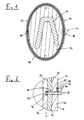
- Fig. 1 shows a steering wheel rim 10, which has a steel core 12 which is sheathed or foamed with a plastic mass 14.
- the plastic mass 14 is surrounded by two plastic decor parts 16, 17 in the form of half-shells, which are welded together at joints 18.
- the plastic decorative parts 16, 17 each have a three-layered structure, which consists of an outer transparent plastic layer 20, a middle decorative layer in the form of a wood veneer 22 and an inner, applied to the plastic mass 14 carrier layer 24 made of a fiber-reinforced plastic.
- the transparent plastic layer 20 and the carrier layer 24 of the two decorative plastic parts 16, 17 are formed in the region of the parting line 18 with corresponding paragraphs 26, 28, so that in the embodiment shown parallel to the decorative layer 22 extending welds 30, 32 result.
- the laser beams are passed through the transparent cover layer 20, the decorative layer 22 and the carrier layer 24 of the plastic decorative part 16 lying below in the example shown, in order to introduce the energy input necessary for welding into the weld 30.
- the wavelength of the laser light 36 is chosen so that no damaging heat input takes place in the decorative layer 22.
- Further or alternative measures to protect the decorative layer 22 may be the focusing of an expanded laser beam on the weld 30 or the bundling of multiple laser beams from different laser sources to the weld 30.
- the shells are welded together not only in the region of the transparent cover layer 20, but also in the region of the fiber-reinforced support layer 24. Both welds can be carried out in a single clamping of the workpiece, which can significantly reduce the production costs.
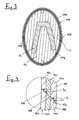
- FIG. 1 another steering wheel rim 110 is shown, which differ from the previously discussed steering wheel rim 10 only by the alignment of the parting lines 118 between the two plastic decorative parts 116, 117.
- the parting line 118 runs in this embodiment approximately at an angle of 45 ° to the decorative layer 122. Paragraphs are not provided.
- a weld 132 in the region of the transparent decorative layer 120 is first welded by means of the laser light 34, while a weld 130 between the two plastic decorative parts 116, 117 in the region of the fiber-reinforced carrier layer 124 is subsequently welded by transillumination of the opaque decoration 122.
- steering wheel rings 10, 110 can be by means of the described method, other hollow body welded together by laser technology, in which welds are covered by an opaque layer. Moldings whose welds are accessible per se can also advantageously be welded by means of the described method if the plastic layers to be welded lie on both sides of the decorative layer, which can then be welded successively in one clamping.
Landscapes
- Physics & Mathematics (AREA)
- Engineering & Computer Science (AREA)
- Mechanical Engineering (AREA)
- Optics & Photonics (AREA)
- Health & Medical Sciences (AREA)
- Electromagnetism (AREA)
- Toxicology (AREA)
- Lining Or Joining Of Plastics Or The Like (AREA)
- Steering Controls (AREA)
- Laminated Bodies (AREA)
Abstract
Description
- Die vorliegende Erfindung befasst sich mit dem Laserverschweißen von Kunststoffteilen, die wenigstens eine zu verschweißende erste Kunststoffschicht und wenigstens eine opake Schicht aufweisen.
- Derartige Teile werden beispielsweise in der Art von Dekorteilen oder -schalen eingesetzt, wobei als opake Schicht Dekorschichten zum Einsatz kommen, beispielsweise in der Form von Echtholzfurnieren.
- Aus der
DE 20 2004 001 133 U1 ist das Verschweißen von mit einer transparenten Deckschicht versehenen Dekorteilen bekannt. Nicht verschweißbar ist mit dem dort aufgezeigten Vorgehen eine unterhalb des Dekors liegende Trägerschicht, es ist lediglich beschrieben, mit Hilfe von Absorptionsmittel die Deckschicht stumpf zu verschweißen. - Die Aufgabe der vorliegenden Erfindung besteht darin, auch eine unterhalb der opaken Schicht liegende erste Kunststoffschicht mittels Lasertechnik zu verschweißen.
- Erfindungsgemäß wird die Aufgabe durch ein Verfahren gelöst, bei welchem mit dem Laserstrahl die opake Schicht durchleuchtet wird, wobei durch gezielte Auswahl der Wellenlänge des Laserlichts, Fokussieren des Laserstrahls in der Schweißstelle und/oder durch Bündeln mehrerer Laserstrahlen in der Schweißstelle an dieser die erforderliche Energie in das Material eingebracht wird, gleichzeitig aber die opake Schicht vor einem schädlichen Wärmeeintrag geschützt wird.
- Es hat sich gezeigt, dass überraschenderweise durch die relativ einfach beherrschbaren Maßnahmen der Auswahl der Wellenlänge des Laserlichts, das Fokussieren des Strahls und/oder das Bündeln mehrerer Laserstrahlen aus unterschiedlichen Quellen ein Verschweißen durch die opake Schicht hindurch möglich ist, selbst wenn es sich bei dieser opaken Deckschicht um eine wärmeempfindliche Dekorschicht, beispielsweise in der Ausgestaltung eines Echtholzfurniers handelt.
- Mit dem erfindungsgemäßen Verfahren lassen sich als besonderen Vorteil auch Hohlkörper, die aus wenigstens zwei schalenförmigen Kunststoffteilen aufgebaut sind, mittels des Laserschweißens herstellen, obgleich die Schweißstellen vollständig durch die opake Schicht verdeckt sind. Dadurch ergeben sich erhebliche Kostenvorteile bei der Herstellung solcher Hohlkörper. Gleichzeitig wird deren Stabilität dadurch erhöht, dass die Kunststoffteile im Bereich der beispielsweise auch aus faserverstärktem Kunststoff bestehenden Trägerschicht verbunden werden, was beispielsweise im Bereich von Kraftfahrzeugen wegen der strengen Sicherheitsanforderungen an Dekorteile besonders vorteilhaft ist.
- Um die Kunststoffteile in einer bestimmten Position zueinander besser fixieren zu können, ist in einer Weiterbildung des Verfahrens vorgesehen, dass an den zu verbindenden Kunststoffteilen korrespondierende Formgebungen vorgesehen werden, beispielsweise in der Form von Absätzen oder Schrägen. Dabei ist es auch unerheblich, wenn mit dem Laserlicht die erste Kunststoffschicht eines der beiden Kunststoffteile durchstrahlt werden muss, bis es an die Schweißstelle gelangt, da in gleicher Weise wie bei dem Durchstrahlen der opaken Schicht auch die in der Regel nicht transparente erste Kunststoffschicht durchleuchtet werden kann.
- Das Verfahren eignet sich auch zum Verschweißen von Kunststoffteilen, bei welchen die opake Schicht zwischen der ersten Kunststoffschicht und einer weiteren, transparenten Kunststoffschicht liegt, wobei in einer einzigen Aufspannung des Werkstückes zunächst die transparenten Kunststoffschichten der beiden Kunststoffteile und anschließend unter Durchleuchtung der transparenten Kunststoffschicht und der zwischenliegenden opaken Schicht die ersten Kunststoffschichten der beiden Kunststoffteile verschweißt werden.
- Auch bei Formteilen, die keinen Hohlkörper bilden, und theoretisch von der Rückseite her verschweißt werden könnten, bietet das erfindungsgemäße Verfahren den Vorteil, dass beide Kunststoffschichten in einer Aufspannung verschweißt werden können, wodurch sich Kostenvorteile bei der Herstellung ergeben.
- Gegenstand der vorliegenden Erfindung ist auch ein Formteil, das wenigstens zwei mehrschichtige Kunststoffteile mit jeweils einer opaken Schicht und wenigstens einer ersten Kunststoffschicht aufweist, wobei die Kunststoffschichten mittels eines Verfahrens nach einem der Ansprüche 1 bis 9 verschweißt sind und die Schweißstellen des Formteils durch die opake Schicht wenigstens teilweise verdeckt sind. Ein solches Formteil kann, wie bereits erwähnt, als Hohlkörper ausgebildet sein und an seiner Außenfläche mit einer transparenten weiteren Kunststoffschicht versehen sein. Als Beispiel für ein solches Formteil kann ein Lenkradkranz genannt werden, wobei die Kunststoffteile einen Lenkradkern ummanteln.
- Nachfolgend wird anhand der beigefügten Zeichnungen näher auf Ausführungsbeispiele der Erfindung eingegangen. Es zeigen:
- Fig. 1
- einen Querschnitt durch einen Lenkradkranz;
- Fig. 2
- ein vergrößertes Detail A aus
Fig. 1 ; - Fig. 3
- einen Querschnitt einer weiteren Ausführungsform eines Lenkradkranzes;
- Fig. 4
- ein vergrößertes Detail A aus
Fig. 3 . -
Fig. 1 zeigt einen Lenkradkranz 10, der einen Stahlkern 12 aufweist, der mit einer Kunststoffmasse 14 ummantelt bzw. umschäumt ist. Zu Dekorzwecken ist die Kunststoffmasse 14 mit zwei Kunststoffdekorteilen 16, 17 in der Form von Halbschalen umgeben, die an Trennfugen 18 miteinander verschweißt sind. Die Kunststoffdekorteile 16, 17 besitzen jeweils einen dreischichtigen Aufbau, der aus einer äußeren transparenten Kunststoffschicht 20, einer mittleren Dekorschicht in der Form eines Edelholzfurniers 22 sowie einer inneren, an der Kunststoffmasse 14 anliegenden Trägerschicht 24 aus einem faserverstärkten Kunststoff besteht. Die transparente Kunststoffschicht 20 und die Trägerschicht 24 der beiden Dekorkunststoffteile 16, 17 sind im Bereich der Trennfuge 18 mit korrespondierenden Absätzen 26, 28 ausgebildet, so dass sich bei dem gezeigten Ausführungsbeispiel parallel zur Dekorschicht 22 verlaufende Schweißstellen 30, 32 ergeben. Bei der Herstellung werden zunächst die beiden Dekorschalen 16, 17 um den Kern 14 angeordnet und in der gewünschten Position fixiert. Anschließend wird mit Hilfe eines Laserstrahls, der bei 34 durch die Pfeile veranschaulicht ist, zunächst die Schweißstelle 32 zwischen den beiden transparenten Schichten 20 der aneinanderstoßenden Kunststoffdekorteile 16, 17 verschweißt. - Anschließend werden die Laserstrahlen, wie bei 36 veranschaulicht, durch die transparente Deckschicht 20, die Dekorschicht 22 und die Trägerschicht 24 des im gezeigten Beispiel untenliegenden Kunststoffdekorteils 16 geleitet, um den zum Verschweißen notwendigen Energieeintrag in die Schweißstelle 30 einzubringen. Die Wellenlänge des Laserlichts 36 wird dabei so gewählt, dass in der Dekorschicht 22 kein schädigender Wärmeeintrag erfolgt. Weitere oder alternative Maßnahmen zur Schonung der Dekorschicht 22 können das Fokussieren eines aufgeweiteten Laserstrahls auf die Schweißstelle 30 oder das Bündeln mehrerer Laserstrahlen aus unterschiedlichen Laserquellen auf die Schweißstelle 30 sein.
- Nach dem Verschweißen der beiden Kunststoffdekorteile 16, 17 ergibt sich ein besonders stabiler Lenkradkranz 10, dessen Schalen nicht nur im Bereich der transparenten Deckschicht 20, sondern auch im Bereich der faserverstärkten Trägerschicht 24 miteinander verschweißt sind. Beide Schweißstellen können dabei in einer einzigen Aufspannung des Werkstückes durchgeführt werden, wodurch sich die Herstellkosten erheblich senken lassen.
- In
Fig. 3 und 4 ist ein weiterer Lenkradkranz 110 gezeigt, der sich von dem zuvor erörterten Lenkradkranz 10 lediglich durch die Ausrichtung der Trennfugen 118 zwischen den beiden Kunststoffdekorteilen 116, 117 unterscheiden. Die Trennfuge 118 läuft bei dieser Ausführungsform ungefähr im Winkel von 45° zu der Dekorschicht 122. Absätze sind nicht vorgesehen. Auch hier wird mittels des Laserlichts 34 zunächst eine Schweißstelle 132 im Bereich der transparenten Dekorschicht 120 verschweißt, während anschließend unter Durchleuchtung des opaken Dekors 122 eine Schweißstelle 130 zwischen den beiden Kunststoffdekorteilen 116, 117 im Bereich der faserverstärkten Trägerschicht 124 verschweißt wird. - Neben den gezeigten Lenkradkränzen 10, 110 lassen sich mittels des beschriebenen Verfahrens auch andere Hohlkörper mittels Lasertechnik miteinander verschweißen, bei welchen Schweißstellen durch eine opake Schicht verdeckt sind. Auch Formteile, deren Schweißstellen an und für sich zugänglich sind, lassen sich vorteilhaft mittels des beschriebenen Verfahrens verschweißen, wenn beidseitig der Dekorschicht zu verschweißende Kunststoffschichten liegen, die dann in einer Aufspannung nacheinander verschweißt werden können.
Claims (13)
- Laserverschweißen von Kunststoffteilen (16, 17), die wenigstens eine zu verschweißende erste Kunststoffschicht (24) und wenigstens eine opake Schicht (22) aufweisen, dadurch gekennzeichnet, dass mit dem Laserlicht (36) die opake Schicht (22) durchleuchtet wird, wobei durch gezielte Auswahl der Wellenlänge des Laserlichts, Fokussieren des Laserstrahls in der Schweißstelle (30) und/oder durch Bündeln mehrerer Laserstrahlen in der Schweißstelle (30) an dieser die erforderliche Energie in das Material eingebracht wird, gleichzeitig aber die opake Schicht (22) vor einem schädlichen Wärmeeintrag geschützt wird.
- Laserschweißen nach Anspruch 1, dadurch gekennzeichnet, dass als opake Schicht eine Dekorschicht durchleuchtet wird.
- Laserverschweißen von Kunststoffteilen (16, 17) nach Anspruch 2, dadurch gekennzeichnet, dass als Dekorschicht (22) Echtholzfurnier eingesetzt wird.
- Laserverschweißen von Kunststoffteilen (16, 17) nach einem der vorhergehenden Ansprüche, dadurch gekennzeichnet, dass die erste Kunststoffschicht (24) als Trägerschicht aus verstärktem Kunststoff hergestellt wird.
- Laserverschweißen von Kunststoffteilen nach einem der vorhergehenden Ansprüche, dadurch gekennzeichnet, dass an den zu verschweißenden Kunststoffteilen (16, 17) korrespondierende Formgebungen (18; 118) vorgesehen werden.
- Laserverschweißen von Kunststoffteilen nach Anspruch 5, dadurch gekennzeichnet, dass die Formgebungen durch Trennfugen (18; 118) mit Absätzen (26, 28) bzw. Schrägen ausgebildet werden.
- Laserverschweißen von Kunststoffteilen nach einem der vorhergehenden Ansprüche, dadurch gekennzeichnet, dass Kunststoffteile (16, 17) verschweißt werden, bei welchen die opake Schicht (22) zwischen der ersten Kunststoffschicht (24) und einer weiteren, transparenten Kunststoffschicht (16) liegt, wobei in einer Aufspannung zunächst die transparenten Kunststoffschichten (20) der Kunststoffteile (16, 17) und anschließend unter Durchleuchtung der transparenten Schicht (20) und der opaken Schicht (22) die ersten Kunststoffschichten (24) der beiden Kunststoffteile (16, 17) verschweißt werden.
- Laserverschweißen von Kunststoffteilen nach einem der vorhergehenden Ansprüche, dadurch gekennzeichnet, dass die Kunststoffteile schalenförmig ausgebildet und zu einem Hohlkörper verschweißt werden.
- Laserverschweißen von Kunststoffteilen nach Anspruch 8, dadurch gekennzeichnet, dass der Hohlkörper durch das Laserverschweißen verschlossen wird.
- Formteil, das wenigstens zwei mehrschichtige Kunststoffteile (16, 17) mit jeweils einer opaken Schicht (22) und wenigstens einer ersten Kunststoffschicht (24) aufweist, wobei die Kunststoffschichten der Kunststoffteile (16, 17) nach einem Verfahren der Ansprüche 1 bis 9 verschweißt sind und die Schweißstellen des Formteils (10; 110) durch die opake Schicht (22) wenigstens teilweise verdeckt sind.
- Formteil nach Anspruch 10, dadurch gekennzeichnet, dass es ein Hohlkörper ist.
- Formteil nach Anspruch 10 oder 11, dadurch gekennzeichnet, dass es an der Außenfläche mit einer transparenten weiteren Kunststoffschicht (20) versehen ist.
- Formteil nach einem der Ansprüche 10 bis 12, dadurch gekennzeichnet, dass es als Lenkradkranz (10) ausgebildet ist, wobei die Kunststoffteile (16, 17) einen Lenkradkern (12, 14) ummanteln.
Applications Claiming Priority (1)
| Application Number | Priority Date | Filing Date | Title |
|---|---|---|---|
| DE102010018418A DE102010018418A1 (de) | 2010-04-27 | 2010-04-27 | Laserverschweißen von Kunststoffteilen |
Publications (2)
| Publication Number | Publication Date |
|---|---|
| EP2383104A2 true EP2383104A2 (de) | 2011-11-02 |
| EP2383104A3 EP2383104A3 (de) | 2014-01-22 |
Family
ID=44310405
Family Applications (1)
| Application Number | Title | Priority Date | Filing Date |
|---|---|---|---|
| EP11003420.4A Withdrawn EP2383104A3 (de) | 2010-04-27 | 2011-04-26 | Laserverschweißen von Kunststoffteilen |
Country Status (2)
| Country | Link |
|---|---|
| EP (1) | EP2383104A3 (de) |
| DE (1) | DE102010018418A1 (de) |
Families Citing this family (1)
| Publication number | Priority date | Publication date | Assignee | Title |
|---|---|---|---|---|
| US9610967B2 (en) * | 2015-01-30 | 2017-04-04 | Ford Global Technologies, Llc | Steering wheel assembly for a vehicle |
Citations (1)
| Publication number | Priority date | Publication date | Assignee | Title |
|---|---|---|---|---|
| DE202004001133U1 (de) | 2004-01-27 | 2005-08-04 | Quin Gmbh | Formteil |
Family Cites Families (3)
| Publication number | Priority date | Publication date | Assignee | Title |
|---|---|---|---|---|
| FI118379B (fi) * | 2004-02-25 | 2007-10-31 | Stora Enso Oyj | Menetelmä paperin tai kartongin saumaamiseksi |
| JP2007230183A (ja) * | 2006-03-03 | 2007-09-13 | Toto Ltd | 樹脂成形品及びその製造方法 |
| FR2922149B1 (fr) * | 2007-10-10 | 2011-06-10 | Alstom Transport Sa | Procede de soudage de deux elements en materiau polymere opaques et resistant a haute temperature |
-
2010
- 2010-04-27 DE DE102010018418A patent/DE102010018418A1/de not_active Withdrawn
-
2011
- 2011-04-26 EP EP11003420.4A patent/EP2383104A3/de not_active Withdrawn
Patent Citations (1)
| Publication number | Priority date | Publication date | Assignee | Title |
|---|---|---|---|---|
| DE202004001133U1 (de) | 2004-01-27 | 2005-08-04 | Quin Gmbh | Formteil |
Also Published As
| Publication number | Publication date |
|---|---|
| EP2383104A3 (de) | 2014-01-22 |
| DE102010018418A1 (de) | 2011-10-27 |
Similar Documents
| Publication | Publication Date | Title |
|---|---|---|
| EP2366542B1 (de) | Kantenleiste für möbelstücke | |
| DE102013202223B4 (de) | Verfahren zur Herstellung eines Dekorverbunds durch Umformen von Folie an Materialöffnungen mittels eines Laser- und/oder Warmluftstrahls | |
| DE102011014017A1 (de) | Verfahren zur Vorbehandlung eines Faserverbundwerkstoffs | |
| DE102011053100A1 (de) | Zweiradrahmen, Zweirad und Verfahren zur Herstellung eines Zweiradrahmens | |
| DE102015110193A1 (de) | Verfahren zum Schweißverbinden zweier Komponenten aus einem thermoplastischen Schichtverbundwerkstoff | |
| EP1172282A2 (de) | Fahrzeugverbundbauteil sowie Verfahren und Vorrichtung zur Herstellung des Fahrzeugverbundbauteils | |
| DE102013219820A1 (de) | Faserverbundwerkstoffbauteil, Verfahren zur Herstellung eines Faserverbundwerkstoffbauteils sowie Verwendung von Faserbündeln und Verstrebungsmitteln zur Herstellung eines Faserverbundwerkstoffbauteils | |
| DE102015005407A1 (de) | Rührreibschweißen von Thermoplasten | |
| DE102009021373A1 (de) | Verfahren zum Fügen von Bauteilen | |
| DE102013021396B3 (de) | Fahrzeugbauteil mit einer Mehrschichtstruktur | |
| DE202013100888U1 (de) | Dreidimensionale Biegeform für Schläuche aus Kunststoff oder Kautschuk | |
| EP2383104A2 (de) | Laserverschweißen von Kunststoffteilen | |
| DE102010028562A1 (de) | Verfahren zum Herstellen eines Verbundes für einen Kraftfahrzeugsitz sowie Verbund für einen Kraftfahrzeugsitz | |
| DE102007057637A1 (de) | Verfahren zum Beledern eines Fahrzeuginnenraumteiles, insbesondere eines Fahrzeuglenkrades | |
| EP2510246B1 (de) | Verfahren und vorrichtung zum befestigen eines beschlagelements an einer leichtbauplatte sowie entsprechendes bauteil | |
| WO2019224013A1 (de) | Verbundbauteil für ein fahrzeug und verfahren zum herstellen eines verbundbauteils | |
| DE102013200287A1 (de) | Verfahren für die Herstellung eines Strukturbauteils eines Fahrzeugs | |
| WO2008138616A1 (de) | Zahnbürstenaufsatzteil sowie verfahren zu seiner herstellung | |
| DE102008004303A1 (de) | Verfahren zum Herstellen einer mehrschichtigen Kunststoffformhaut | |
| EP3310571A1 (de) | Verbundbauteil für ein fahrzeug, insbesondere einen kraftwagen, sowie verfahren zum herstellen eines verbundbauteils | |
| DE102013223302A1 (de) | Verfahren zur Reparatur von Composite-verstärkten metallischen Strukturen in Hybridbauweise | |
| DE10336589B3 (de) | Verfahren zur Reparatur von aus Profilteilen bestehenden Tragstrukturen, insbesondere Rahmenkonstruktionen von Kraftfahrzeug-Karosserien | |
| DE102014119069B4 (de) | Verfahren zum Einbringen einer Vertiefung oder eines Ausschnitts in ein textiles Halbzeug eines faserverstärkten Kunststoffteils und Verfahren zur Herstellung eines faserverstärkten Kunststoffteils | |
| DE102016103060A1 (de) | Verfahren zum Schweißen einer Verbindung zwischen einer ersten Fügefläche eines ersten Formteils und einer zweiten Fügefläche eines zweiten Formteils und zugehörige Vorrichtung | |
| DE102014017969A1 (de) | Stoßfängeranordnung einer Fahrzeugkarosserie |
Legal Events
| Date | Code | Title | Description |
|---|---|---|---|
| AK | Designated contracting states |
Kind code of ref document: A2 Designated state(s): AL AT BE BG CH CY CZ DE DK EE ES FI FR GB GR HR HU IE IS IT LI LT LU LV MC MK MT NL NO PL PT RO RS SE SI SK SM TR |
|
| AX | Request for extension of the european patent |
Extension state: BA ME |
|
| PUAI | Public reference made under article 153(3) epc to a published international application that has entered the european phase |
Free format text: ORIGINAL CODE: 0009012 |
|
| PUAL | Search report despatched |
Free format text: ORIGINAL CODE: 0009013 |
|
| AK | Designated contracting states |
Kind code of ref document: A3 Designated state(s): AL AT BE BG CH CY CZ DE DK EE ES FI FR GB GR HR HU IE IS IT LI LT LU LV MC MK MT NL NO PL PT RO RS SE SI SK SM TR |
|
| AX | Request for extension of the european patent |
Extension state: BA ME |
|
| RIC1 | Information provided on ipc code assigned before grant |
Ipc: B29K 311/14 20060101ALN20131216BHEP Ipc: B29C 65/16 20060101AFI20131216BHEP Ipc: B62D 1/06 20060101ALN20131216BHEP Ipc: B29L 31/30 20060101ALN20131216BHEP |
|
| STAA | Information on the status of an ep patent application or granted ep patent |
Free format text: STATUS: THE APPLICATION IS DEEMED TO BE WITHDRAWN |
|
| 18D | Application deemed to be withdrawn |
Effective date: 20140723 |