EP2379114B1 - Conjugates comprising nanoparticles coated with platinum containing compounds - Google Patents
Conjugates comprising nanoparticles coated with platinum containing compounds Download PDFInfo
- Publication number
- EP2379114B1 EP2379114B1 EP09768395.7A EP09768395A EP2379114B1 EP 2379114 B1 EP2379114 B1 EP 2379114B1 EP 09768395 A EP09768395 A EP 09768395A EP 2379114 B1 EP2379114 B1 EP 2379114B1
- Authority
- EP
- European Patent Office
- Prior art keywords
- formula
- conjugate
- linker
- platinum
- conjugates
- Prior art date
- Legal status (The legal status is an assumption and is not a legal conclusion. Google has not performed a legal analysis and makes no representation as to the accuracy of the status listed.)
- Not-in-force
Links
- 0 **(*)C(CN=O)N=O Chemical compound **(*)C(CN=O)N=O 0.000 description 4
Images




Classifications
-
- A—HUMAN NECESSITIES
- A61—MEDICAL OR VETERINARY SCIENCE; HYGIENE
- A61K—PREPARATIONS FOR MEDICAL, DENTAL OR TOILETRY PURPOSES
- A61K47/00—Medicinal preparations characterised by the non-active ingredients used, e.g. carriers or inert additives; Targeting or modifying agents chemically bound to the active ingredient
- A61K47/50—Medicinal preparations characterised by the non-active ingredients used, e.g. carriers or inert additives; Targeting or modifying agents chemically bound to the active ingredient the non-active ingredient being chemically bound to the active ingredient, e.g. polymer-drug conjugates
- A61K47/69—Medicinal preparations characterised by the non-active ingredients used, e.g. carriers or inert additives; Targeting or modifying agents chemically bound to the active ingredient the non-active ingredient being chemically bound to the active ingredient, e.g. polymer-drug conjugates the conjugate being characterised by physical or galenical forms, e.g. emulsion, particle, inclusion complex, stent or kit
- A61K47/6921—Medicinal preparations characterised by the non-active ingredients used, e.g. carriers or inert additives; Targeting or modifying agents chemically bound to the active ingredient the non-active ingredient being chemically bound to the active ingredient, e.g. polymer-drug conjugates the conjugate being characterised by physical or galenical forms, e.g. emulsion, particle, inclusion complex, stent or kit the form being a particulate, a powder, an adsorbate, a bead or a sphere
- A61K47/6923—Medicinal preparations characterised by the non-active ingredients used, e.g. carriers or inert additives; Targeting or modifying agents chemically bound to the active ingredient the non-active ingredient being chemically bound to the active ingredient, e.g. polymer-drug conjugates the conjugate being characterised by physical or galenical forms, e.g. emulsion, particle, inclusion complex, stent or kit the form being a particulate, a powder, an adsorbate, a bead or a sphere the form being an inorganic particle, e.g. ceramic particles, silica particles, ferrite or synsorb
-
- A—HUMAN NECESSITIES
- A61—MEDICAL OR VETERINARY SCIENCE; HYGIENE
- A61P—SPECIFIC THERAPEUTIC ACTIVITY OF CHEMICAL COMPOUNDS OR MEDICINAL PREPARATIONS
- A61P35/00—Antineoplastic agents
-
- B—PERFORMING OPERATIONS; TRANSPORTING
- B82—NANOTECHNOLOGY
- B82Y—SPECIFIC USES OR APPLICATIONS OF NANOSTRUCTURES; MEASUREMENT OR ANALYSIS OF NANOSTRUCTURES; MANUFACTURE OR TREATMENT OF NANOSTRUCTURES
- B82Y5/00—Nanobiotechnology or nanomedicine, e.g. protein engineering or drug delivery
Definitions
- the present invention relates to conjugates having colloidal stability in a medium comprising metallic nanoparticles coated with platinum containing compounds. It also relates to a process for their preparation and to pharmaceutical compositions containing them.
- the conjugates of the invention are used for the treatment of cancer.
- Cisplatin the first generation of platinum based chemotherapy drug, is one of the most common anticancer agents and has a wide spectrum of anticancer activity.
- drawbacks such as the poor selectivity between malignant and normal cells, leading to severe toxic effects (such as nephrotoxicity, neurotoxicity and ototoxicity) and the presence of intrinsic or acquired resistance, so that the doses must be increased, importantly limit its efficacy.
- cisplatin has additional drawbacks, such as low solubility in aqueous solutions and side effects such as nausea and vomiting.
- second generation platinum-based drugs such as carboplatin or oxaliplatin
- carboplatin or oxaliplatin have lower renal and gastrointestinal toxicities but bone marrow toxicity caused by carboplatin and neurotoxicity of oxaliplatin are limitant.
- Their anticancer spectrum and efficacy are different than cisplatin.
- Drug delivery systems in which carriers incorporate the drug either through chemical bonding or passive adsorption may deliver the drug to specific cells and avoid elimination by the immune system. Ideally, such delivery systems extravasate the tumor vasculature and accumulate within the tumor environment.
- a particle delivery system capable to release a cancer drug solely within the tumor may also reduce the accumulation of the drug in healthy tissues.
- cisplatin with nanostructures such as polymeric capsules, functionalized soluble single-walled carbon nantotubes (SWNT), Nanohorns, Fe 3 O 4 particles, or polymers such as Prolindac®, a 22 kD hydroxypropylmethacrilamide copolymer as a backbone and then a glycine chelator linker which is pH sensitive.
- SWNT functionalized soluble single-walled carbon nantotubes
- Nanohorns Fe 3 O 4 particles
- polymers such as Prolindac®, a 22 kD hydroxypropylmethacrilamide copolymer as a backbone and then a glycine chelator linker which is pH sensitive.
- Prolindac® a 22 kD hydroxypropylmethacrilamide copolymer as a backbone
- glycine chelator linker which is pH sensitive.
- the resulting delivery system is capable of delivering 10 times more platinum to the tumor without increasing the toxicity to normal tissues.
- tumor resistance to platinum compounds is reduced and side effects are diminished.
- the conjugates of the invention are highly soluble in comparison with the currently used free platinum compounds, whose solubility is low.
- the inventor's approach used for the preparation of the conjugates of the invention comprises both the two following properties which are required in order to have therapeutic effects: i) it controls efficiently the colloidal stability of the conjugates maximizing the therapeutic drug load and ii) provides conjugates having at the same time a pH sensitive link which makes that the drug is deactivated when attached to the nanoparticle and it only becomes active after detaching from the conjugate when encountering an acidic environment as in the endolysosome.
- a first aspect of the present invention refers to a conjugate of the formula (I) NP-L-A (I) having colloidal stability in a medium wherein
- Another aspect of the invention refers to a process for the preparation of a conjugate of formula (I) as defined above, comprising the following steps:
- the conjugates of the present invention may be administered to mammals, including humans, suffering from a cancer.
- another aspect of the present invention relates to pharmaceutical compositions comprising the conjugates of formula (I) as defined above together with one or more pharmaceutically acceptable excipients.
- a further aspect of the invention relates to a conjugate of formula (I) as defined above for use in cancer. Therefore, this aspect relates to the use of the conjugates of formula (I) as defined above for the manufacture of a medicament for the treatment of cancer. Alternatively, this aspect may also be formulated as the conjugates of formula (I) according to the claims for use in a method for the treatment of cancer in a mammal, including a human, the method comprising administering to said mammal an effective amount of the previously defined conjugates of formula (I) together with one or more pharmaceutically acceptable excipients.
- conjugate refers to a gold, silver or platinum nanoparticle which is attached to another compound which contains platinum.
- conjugate also referred to as NP-L-A, refers to a gold, silver or platinum nanoparticle which is attached to a linker L through a pseudo-covalent bond, like the one occurring between S and Au (45 kcal/mol), and wherein the linker L is attached to a platinum compound through a coordination bond between O and Pt (about 4 kcal/mol).
- the coordination bond is not sensitive to weak variations of the pH. Thus, said coordination bonds are only hydrolyzed at pH lower than 5, thereby releasing the platinum drug.
- the conjugate while the conjugate is stable in serum, it releases its drug load when the pH is lowered, as it occurs in the endolysosome of a tumoral cell.
- the conjugates of the invention have colloidal stability in a medium. This means that the conjugates of the invention when dispersed in another medium are able to resist aggregation (i.e. precipitation). Thus, the dispersion obtained exhibits a long shelf-life and has the appearance of a solution.
- the colloidal stability of the conjugates of the invention is essential since if the conjugates are not stable, they do not show any benefit either in vivo or in vitro in respect to the free drug.
- the conjugates show colloidal stability in physiologic conditions, that is the condition or state of the body or bodily functions comprising pH close to neutral (7) and high saline concentration.
- UV-Vis spectroscopy is a useful technique to determine the colloidal stability of conjugates.
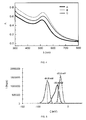
- FIG. 2 shows UV-Vis spectra for several conjugates (NP: 20 nm gold nanosphere, L: 11-mercaptoundecanoic acid (MUA), A: cisplatin) each comprising a different load of the platinum compound, ranging from 0.04 mM to 0.3 mM.
- Irreversible aggregation i.e. red shift and broadening of the surface plasma resonance (SPR) peak
- SPR surface plasma resonance
- the concentration of platinum compound that a conjugate can support is related to the surface charge.
- the linker molecules are deprotonated and therefore charged.
- the working pH corresponds to the pH under physiological conditions.
- the addition of the platinum coordination complex quenches part of that charge. This can be measured by the decrease in the ⁇ -potential values at a given pH. It is well known that a colloidal particle generally needs about 30 mV (positive or negative) to be stable against aggregation. This value is dependent on pH and ionic strength.
- the conjugates of the invention having a surface electrostatic absolute charge of at least 25 mV are also stable and also form part of the invention.
- the present invention relates to conjugates of the formula (I) having a surface electrostatic absolute charge of at least 25 mV, that is a zeta potential absolute value of at least 25mV under physiological conditions.
- the conjugates of the formula (I) have a surface electrostatic absolute charge of at least 30 mV, that is a zeta potential absolute value of at least 30mV under physiological conditions.
- the conjugates of the invention comprise nanoparticles (also referred to herein as NPs) made of gold, silver or platinum. These metals show a high affinity towards sulfur groups (including both SH and disulfide S-S groups), such as the sulfur groups of a compound of formula (IIa) or formula (IIIa) wherein X, n, p, Y and s have the meanings described above.
- a free SH group or a disulfide group have a high tendency to spontaneously react with the metallic nanoparticle to form a pseudo-covalent bond metal-S.
- the strong binding between the linker and the nanoparticle is needed to avoid desorption of the linker molecule.
- the inorganic nanoparticle is a good antenna for electromagnetic fields including for example gamma ray, X-ray, Near Infrared (NIR) or UV-Vis and microwaves).
- electromagnetic fields including for example gamma ray, X-ray, Near Infrared (NIR) or UV-Vis and microwaves.
- AuNPs gold nanoparticles
- AuNPs have a strong surface plasmon enhanced absorption and scattering making them ideal as imaging labels and contrast agents. They are not susceptible to photobleaching, biocompatible and noncytotoxic. Moreover, they can be heated when they absorb light at their resonant frequency allowing photothermal therapy of cancer.
- nanoparticles refers to particles of nanometric size which may have different shapes and sizes.
- shape of the nanoparticles described herein spheres and polyhedra comprising flat faces and straight edges are comprised within the scope of the invention.
- polyhedra include cubes, prisms and rods.
- the polyhedra have the advantage that they can be near infrared (NIR)-sensitive and therefore the nanoparticles may be locally heated.
- NIR near infrared
- the nanoparticles are spheres.
- the nanoparticles are gold nanospheres.
- the size of the nanoparticle must be such that allows prolonged plasma life, i.e. the conjugate remains in the systemic circulation until it encounters hyperpermeable tumor capillaries.
- the diameter is comprised in the range from 3 to 100 nm, preferably in the range from 4 to 20 nm.
- the size is defined in terms of the sphere, inscribed inside the nanocube or the nanoprism, which has the maximum diameter possible.
- the diameter of said sphere is comprised in the range from 3 to 100 nm, preferably in the range from 4 to 20 nm.
- the size is 100 nm length and 15 nm width, preferably 45 nm length x 15 nm width.
- conjugates which are large enough to avoid the kidney, and small enough to avoid the reticuloendothelial system, part of the immune system, consisting of the phagocytic cells located in reticular connective tissue, primarily monocytes and macrophages. Moreover, this size of the conjugates of the invention (above that of essential small molecules as amino acids or small peptides) promotes endocytosis.
- the nanospheres of the invention have a diameter of about 10 nm.
- the invention relates to nanocubes and nanoprisms wherein their inscribed sphere has a diameter of about 10 nm.
- the nanoparticles of the invention are gold nanospheres having a diameter from 4 to 20 nm.
- the conjugates of the invention comprise a linker L selected from the group consisting of formula (II), formula (III), and a stereoisomer of any of the formulas (II) and (III), wherein X, n, p, Y and s have the meanings as previously described.
- the term (C 2 -C 20 )hydrocarbon chain relates to a linear or branched hydrocarbon chain comprising from 2 to 20 carbon atoms, wherein at least one carbon atom may be optionally replaced by a CO group or a heteroatom selected from the group consisting of O and N and which may optionally comprise one or more insaturations in the form of double bonds and/or triple bonds.
- the (C 2 -C 20 )hydrocarbon chain is optionally substituted with one or more substitutents selected from the group consisting of halogen, OH, CONH 2 , CO 2 (C 1 -C 6 )alkyl and -CHO.
- L is a linker of formula (II), it is attached to the nanoparticle NP through the only available sulfur atom; whereas when L is a linker of formula (III), it is attached to the nanoparticle NP through the two sulfur atoms.
- X and Y independently represent an unsubstituted (C 2 -C 20 )hydrocarbon chain as defined above.
- X represents -(CH 2 ) m -and in a linker of formula (III), Y represents -(CH 2 ) r -, wherein m represents a value from 2 to 10 with the condition that m+n represents a value from 2 to 10; and r represents a value from 2 to 10 with the condition that r+s represents a value from 2 to 10.
- the linker molecule is linear and more molecules can be attached to the nanoparticle.
- the linker L is further attached to a platinum (II) biradical as defined above.
- A is a platinum (II) biradical selected from the group consisting of formula (IV), (V) and (VI).
- the conjugate of formula (I) comprises a linker of formula (II) wherein X represents -(CH 2 ) m - or a linker formula (III) wherein Y represents -(CH 2 ) r -, wherein m represents a value from 2 to 10 with the condition that m+n represents a value from 2 to 10; and r represents a value from 2 to 10 with the condition that r+s represents a value from 2 to 10.
- A represents a platinum (II) biradical of formula (IV).
- the platinum biradical of formulas (IV), (V) and (VI) may form a salt together with an anion.
- anions that may be present in a birradical in salt form are chloride, nitrate or hydroxide.
- A is a platinum (II) biradical substantially having a cis configuration. This means that, at least 80% of the platinum (II) compounds show cis configuration.
- the platinum compounds of the invention comprise two different sides as shown in the following scheme, the left side (reactive side) is designed to attach to the DNA of the cancer cells.
- the right side (inert side) comprising the N atoms is responsible of the bio distribution of the drug.
- the partial functionalization of the conjugates of formula (I) with platinum compounds gives rise to a surface disorder.
- This fact together with the highly hydrophylicity of the COO- groups prevents opsonisation, that is, coating of the particles with special proteins called opsonins, and subsequent recognition by phagocytes and transportation into the liver.
- opsonisation that is, coating of the particles with special proteins called opsonins
- opsonins special proteins
- the conjugates of formula (I) may be conveniently prepared by a two-step process, firstly by preparing an intermediate conjugate NP-L' and secondly, attaching the platinum containing compound to this intermediate conjugate.
- a compound of formula (IIa) is used, which is 11-mercaptoundecanoic acid (MUA) or 3-mercaptopropanoic acid (MPA).
- a compound of formula (IIIa) is used which is 5-[(3R)-dithiolan-3-yl]pentanoic acid (also named as alpha lipoic acid or thioctic acid).
- the uncoated metallic nanoparticles may be prepared by using synthesis protocols for nanoparticles that allow the simple and scalable production of monodisperse nanoparticles with control of size and shape.
- the nanoparticles may be prepared by rapid injection of a metallic salt selected from a salt of Au, Ag and Pt in a reducing agent, thus producing a temporally discrete homogeneous nucleation employed for the production of monodisperse metallic nanoparticles.
- the reducing agent may be, for example, citrate at high temperature (classical Turkevitch method), sodium borohydride or a mixture of sodium borohydride and ascorbic acid, optionally in the presence of Cetyl Trimethyl Ammonium Bromide (CTAB).
- the formation of metallic nanoparticles may be observed by a change in colour in the reaction medium.
- the nanoparticles obtained will have a different size and shape in the presence of the right surfactants as CTAB.
- the intermediate conjugates of formula NP-L' are further reacted with a platinum compound selected from the group consisting of formula (IVa), formula (Va) and formula (VIa), including the stereoisomers of all of them, to give rise to a conjugate of formula (I), wherein A is a platinum (II) biradical selected from the group consisting of formula (IV), formula (V) and formula (VI) respectively, wherein the biradical of formulas (IV), (V) and (VI) is optionally in form of a salt.
- This reaction may be carried out in an aqueous solution in the presence of a base in order to deprotonate the carboxylic acid groups of the linker L' of formula (IIb) or formula (IIIb).
- the compounds (IVa), (Va) and (VIa), including the stereoisomers of all of them, may form a salt in the presence of an anion such as, for example, chloride or nitrate.
- a soluble conjugate of formula (I) that is a conjugate having colloidal stability in the medium
- some charge has to be maintained at the surface to provide the NPs with enough electrostatic charge and repulsion to avoid aggregation and precipitation.
- the surface is coated with linker molecules ending in carboxyl groups (COO - ), which at physiological pH are deprotonated and present negative surface charge.
- platinum drug molecules are linked to a fraction of the carboxyl terminations, so that some of the surface charge is cancelled, but leave enough charge for the electrostatic repulsion.
- the amount of the platinum (II) compound has to be previously calculated. This amount may be easily determined by routine tasks. In particular, a calibration curve using different amounts of platinum (II) compound may be used. The idea behind this is that different amounts of platinum (II) compounds are reacted with the intermediate conjugates and the resulting conjugates are analysed by UV-Vis spectroscopy. When the amount of platinum compound is too high to lead to a conjugate having colloidal stability, and thus, an aggregate is formed, this can be detected by the red-shift of the UV-Vis peak when comparing the UV-Vis spectra of the resulting conjugate and the corresponding intermediate conjugate. Thus, the amount of platinum compound is subsequently reduced until no aggregation is observed.
- FIG. 3 shows the UV-Vis spectroscopy analysis of reaction aliquots taken every ten minutes (NP: 20 nm gold nanosphere, L: 11-mercaptoundecanoic acid (MUA), A: cisplatin).
- NP 20 nm gold nanosphere
- L 11-mercaptoundecanoic acid
- A cisplatin
- the attachment of platinum compound molecules to the linker molecules has to be stopped when the charge of platinum drug is maximal and the resulting conjugate is still stable. This cannot be achieved spontaneously.
- the conjugating solution is placed for example in a dyalisis bag where from the free platinum compound molecules escape rapidly leaving the conjugate NP-L' partially coated with the platinum compound.
- the time at which the reaction has to be stopped can be previously calculated in experiments similar to the one shown in FIG. 3 . This last procedure has the advantage that it is faster and more controlled.
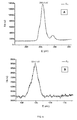
- Conjugation may be monitored by the combination of series of experiments including dynamic light scattering (DLS), UV-Vis spectroscopy, Zeta Potential, transmission electron microscopy (TEM), optical microscopy, Gel Electrophoresis and ICP-MS for quantitative analysis.
- DLS dynamic light scattering
- UV-Vis spectroscopy Zeta Potential
- TEM transmission electron microscopy
- ICP-MS ICP-MS for quantitative analysis.
- the compound of formula (IVa) may be synthesized starting from the compound of formula (VII) (cisplatin) or formula (VIII) (carboplatin); the compound of formula (Va) may be synthesized starting from the compound of formula (IX) (oxaliplatin); and the compound of formula (VIa) may be synthesized starting from the compound of formula (X).
- the conversion is carried out by treating the compound with a source of a Ag cation, such as AgNO 3 , to remove Cl from the cisplatin molecule and yield the hydrated species.
- a source of a Ag cation such as AgNO 3
- the compound is converted to a compound of formula (IVa) by hydrolysis of the COO bonds by standard methods well-known in the art.
- a compound of formula (VII) may be converted to a compound of formula (V) by analog methods.
- the compounds of formula (Va) and (VIa) may be obtained by a two-step synthesis comprising:
- the undesired side-products in particular, trans platinum compounds, may be removed by means of chromatography.
- the pharmaceutical compositions of the invention may be formulated as solid or liquid compositions.
- the administration of the pharmaceutical composition may be intramuscular, intravenous, intraperitoneal or intratumoral.
- suitable formulations include aqueous and non-aqueous, isotonic sterile injection solutions which have suitable pH and stability, which can contain for instance anti-oxidant agents, buffers and bacteriostatic agents; and aqueous and non-aqueous sterile suspensions that may include suspending agents, solubilizers, thickening agents, stabilizers, and preservatives.
- conjugates of the invention may be useful for the treatment of cancer in a patient suffering therefrom, especially in cases where surgery is not feasible.
- cancers of interest include head, neck and lung tissue; gastrointestinal tract and pancreas, such as gastric carcinoma, colorectal adenoma, colorectal carcinoma and pancreatic carcinoma; hepatic tissue, such as hepatocellular carcinoma; Kidney and urinary tract, such as bladder carcinoma, renal carcinoma; breast tissue, such as breast carcinoma; neural tissue, such as neuroblastoma and meningioma malignant; skin tissue, such as melanoma; and hematological tissues, such as lymphoma and leukemia.
- gastrointestinal tract and pancreas such as gastric carcinoma, colorectal adenoma, colorectal carcinoma and pancreatic carcinoma
- hepatic tissue such as hepatocellular carcinoma
- Kidney and urinary tract such as bladder carcinoma, renal carcinoma
- breast tissue such as breast carcinoma
- neural tissue such as neuroblastoma and meningioma malignant
- skin tissue such as melanoma
- hematological tissues such as lymphoma and
- dose levels may vary, among others, as a function of the specific compound, the nature of the delivery vehicle, and the nature of the tumor to be treated.
- concentration of the conjugates is increased about 50 times.
- the nanoparticles are precipitated by centrifugation and the pellet recovered and re-dissolved in progressively decreasing amounts of solvent without loosing any stability.
- the conjugates of the invention have the advantage that they reduce the side effects in comparison with the currently used therapies with cisplatin and analogs.
- the conjugates of the invention may concentrate on the tumors as a result of the Enhanced Permeability and Retention effect (EPR).
- EPR Enhanced Permeability and Retention effect
- the EPR effect is the result of defective tissue integrity, changes in permeation mediators and impaired lymphatic drainage in tumors.
- the vascular endothelium of tumors tends to have relatively large gaps that allow larger molecular species up to 200 nm to permeate the tissue rather than in healthy tissues.
- the altered permeation mediators and impaired lymphatic drainage mechanism then assure that the molecules that have penetrated the tumor stay there.
- the conjugates of the invention passively accumulate in the tumor and from there are internalized via endocytosis.
- the conjugates are inactive in the systemic circulation and they are only activable after reaching tumour, or in the liver, as particulate matter does, where no toxicity has been observed.
- the low pH used by the digestive apparatus of the cell the endolysosome, resulting from the fusion of the endosome and the lysosome
- the invention also relates to the conjugates according to the claims for use in a method for the treatment of cancer comprising administering to a mammal in need thereof, including a human, a therapeutically effective amount of a conjugate of formula (I) together with one or more pharmaceutically acceptable excipients.
- the later method may further comprise locally irradiating the tumor with radiotherapy at any frequency (from gamma to XR, NIR and MW) in order that the platinum drug becomes more effective.
- UV-Visible spectra were acquired with a Shimadzu UV-2400 spectrophotometer. 1 mL of nanoparticles or conjugates were placed in a cell, and spectral analysis was performed in the 300 nm to 800 nm range.
- the zeta potential of nanoparticles and conjugates was determined using a Malvern ZetaSizer Analyzer (Malvern Instruments, UK). These measurements were performed with control of the pH (7.0).
- Example 1.1 Gold nanospheres having a diameter of 4 nm
- the conjugation was carried out by addition of an aqueous solution of mercaptoundecanoic acid (MUA, 10 mM, 50 ⁇ L/mL NPs), to the AuNP solution obtained in example 1.1).
- the reaction took place at room temperature, observing an instantaneously color change of the colloidal solution upon addition of the thiolated molecules.
- the reaction was allowed to run for at least 30 min to reach optimal conjugation.
- Purification was done by dialysis against MilliQ H 2 O (10 mL of NPs/ 5 L of H 2 O) at neutral pH for two days.
- Example 2.4 AuNP(NP:4 nm)-TA intermediate conjugate ( FIG. 9 , B).
- Example 4.1 AuNP(NP:4 nm)-MUA-Pt conjugates
- a colloidal solution of example 2.1 (10 mL, ⁇ 7.12 x 10 13 NP/mL) was brought to basic pH (9-14) with an aqueous solution of NaOH (0.1 M).
- An excess of the compound of formula (IVa) obtained in step 3 (0.5 equiv. respect to the excess of MUA added) was added to the solution while stirring at room temperature.
- the reaction was allowed to run for at least 30 min. and purification was carried out via dialysis of the conjugated colloidal solution (5 mL AuNP(NP:4 nm)-MUA-Pt conjugates/ 5 L MilliQ H 2 O) at neutral pH for 2 days.
- Example 5 Synthesis of a conjugate AuNP (NP:4 nm)-MUA-cisplatin (comparative example)
- AuNP-MUA (example 2.1,5 mL of 10 12 NP/mL) were dispersed in 5 mL of a 1 mg/mL of aqueous commercial cisplatin solution after at least three washes. The absorption of cisplatin on the coated nanoparticles was allowed to take place over 2 days. Excess of cisplatin was removed by centrifugation. The drug loaded conjugates were washed at least three times and dispersed in water.
- FIG. 10 shows stability measured as the variation in time of the amount of atomic platinum of A: the conjugate of example 4.1 in cell media; B: the conjugate of example 5 in water; and C: the conjugate of example 5 in cell media.
- the assays were done with three cellular cancer lines: HeLa, A549 and HEK.
- Studies with the different cultured cancer cells (HeLa, A549 and HEK) showed that the conjugates of the invention, in particular the conjugates of example 4.1, achieved higher intracellular drug levels than when free cisplatin was administered to these cells.
- Figure 11 shows the % of A549 lung tumoral cells viability when exposing the cells to the uncoated gold nanospheres of example 1.1 (B); to the intermediate conjugate of example 2.1 (C); to the conjugate of example 4.1 (D); to commercial cisplatin (E); and to the cisplatin derivative of example 3 (F).
- a and G represent the control values at 0 and 48 h respectively.
- SCID mice Fifteen SCID mice were choosen for the in vivo experiment.
- Mouse were injected 20 106 A549 lung tumoral cells in their flanks. Three random groups of five mice each were prepared. Then we waited until the tumour grew to an easily measurable size. The first group (A) was given no treatment.
- the second group (B) was given mild doses of commercial cisplatin (30 mg per Kg animal weight).
- the third group (C) was treated with the conjugates of example 4.1 with 100 ml of 1.9 mg of platinum drug per litre in one intraperitoneal dose. Tumour size (as a sign of therapeutical success) and animal weight (as a sign of secondary effects) were measured every three days. After fifteen days the experiments were stopped. As shown in FIG.
- the tumour growth in the first case (A) the tumour growth as expected.
- the second case (B) there was a reduction of tumour size, as expected, and a loose of body weight (not shown), as a secondary effect of the treatment.
- the third case (C) a larger tumour reduction was observed at doses 5 times lower than the free cisplatin, and no body weight loose was observed (not shown), consistent with the lower dose or the modified biodistribution of the platinum drug attached to the nanoparticle or both.
- Preliminary biochemical measurements did not indicate any kidney and hepatic significant dysfunction in any case, what is consistent with the low doses used in each case.
Landscapes
- Chemical & Material Sciences (AREA)
- Engineering & Computer Science (AREA)
- Health & Medical Sciences (AREA)
- Pharmacology & Pharmacy (AREA)
- Medicinal Chemistry (AREA)
- General Health & Medical Sciences (AREA)
- Life Sciences & Earth Sciences (AREA)
- Nanotechnology (AREA)
- Bioinformatics & Cheminformatics (AREA)
- Animal Behavior & Ethology (AREA)
- Public Health (AREA)
- Veterinary Medicine (AREA)
- Medical Informatics (AREA)
- Crystallography & Structural Chemistry (AREA)
- Molecular Biology (AREA)
- Biophysics (AREA)
- Biotechnology (AREA)
- General Engineering & Computer Science (AREA)
- Inorganic Chemistry (AREA)
- Ceramic Engineering (AREA)
- Epidemiology (AREA)
- General Chemical & Material Sciences (AREA)
- Nuclear Medicine, Radiotherapy & Molecular Imaging (AREA)
- Chemical Kinetics & Catalysis (AREA)
- Organic Chemistry (AREA)
- Medicinal Preparation (AREA)
- Pharmaceuticals Containing Other Organic And Inorganic Compounds (AREA)
- Acyclic And Carbocyclic Compounds In Medicinal Compositions (AREA)
- Powder Metallurgy (AREA)
Priority Applications (4)
| Application Number | Priority Date | Filing Date | Title |
|---|---|---|---|
| PL09768395T PL2379114T3 (pl) | 2008-12-16 | 2009-12-15 | Koniugaty zawierające nanocząsteczki powlekane związkami zawierającymi platynę |
| EP09768395.7A EP2379114B1 (en) | 2008-12-16 | 2009-12-15 | Conjugates comprising nanoparticles coated with platinum containing compounds |
| SI200931018T SI2379114T1 (sl) | 2008-12-16 | 2009-12-15 | Konjugati, ki vsebujejo nanodelce, prevleäśeni s spojinami, ki vsebujejo platino |
| CY20141100802T CY1115601T1 (el) | 2008-12-16 | 2014-10-03 | Συζευγματα που περιλαμβανουν νανοσωματιδια επικαλυμμενα με λευκοχρυσουχες ενωσεις |
Applications Claiming Priority (3)
| Application Number | Priority Date | Filing Date | Title |
|---|---|---|---|
| EP08171870 | 2008-12-16 | ||
| PCT/EP2009/067136 WO2010069941A1 (en) | 2008-12-16 | 2009-12-15 | Conjugates comprising nanoparticles coated with platinum containing compounds |
| EP09768395.7A EP2379114B1 (en) | 2008-12-16 | 2009-12-15 | Conjugates comprising nanoparticles coated with platinum containing compounds |
Publications (2)
| Publication Number | Publication Date |
|---|---|
| EP2379114A1 EP2379114A1 (en) | 2011-10-26 |
| EP2379114B1 true EP2379114B1 (en) | 2014-07-09 |
Family
ID=40568646
Family Applications (1)
| Application Number | Title | Priority Date | Filing Date |
|---|---|---|---|
| EP09768395.7A Not-in-force EP2379114B1 (en) | 2008-12-16 | 2009-12-15 | Conjugates comprising nanoparticles coated with platinum containing compounds |
Country Status (13)
| Country | Link |
|---|---|
| US (1) | US9023370B2 (enExample) |
| EP (1) | EP2379114B1 (enExample) |
| JP (1) | JP5873719B2 (enExample) |
| CA (1) | CA2745972C (enExample) |
| CY (1) | CY1115601T1 (enExample) |
| DK (1) | DK2379114T3 (enExample) |
| ES (1) | ES2505890T3 (enExample) |
| HR (1) | HRP20140804T1 (enExample) |
| IL (1) | IL213408A (enExample) |
| PL (1) | PL2379114T3 (enExample) |
| PT (1) | PT2379114E (enExample) |
| SI (1) | SI2379114T1 (enExample) |
| WO (1) | WO2010069941A1 (enExample) |
Families Citing this family (8)
| Publication number | Priority date | Publication date | Assignee | Title |
|---|---|---|---|---|
| GB0909435D0 (en) * | 2009-06-02 | 2009-07-15 | Univ Strathclyde | Nanoparticle for biomolecule delivery |
| ES2392528B1 (es) * | 2010-12-28 | 2013-10-21 | Endor Nanotechnologies, S.L. | Sistema de liberación de agente terapéutico, composiciones farmacéuticas que lo contienen, su preparación y su uso médico. |
| ITRM20130138A1 (it) | 2013-03-07 | 2014-09-08 | Consiglio Nazionale Ricerche | Assemblato comprendente un assorbitore della luce nel vicino infrarosso legato covalentemente ad un inibitore dell'anidrasi carbonica |
| JP6316011B2 (ja) * | 2014-02-04 | 2018-04-25 | 国立大学法人滋賀医科大学 | 抗癌剤が担持されたナノ粒子 |
| JP7018191B2 (ja) * | 2016-01-29 | 2022-02-10 | 国立大学法人北海道大学 | 細胞内物質移送システムおよびその利用 |
| PL236093B1 (pl) | 2017-07-04 | 2020-11-30 | Dominika Szczepaniak | Rozpuszczalne w wodzie kompleksy złota (III), sposób wytwarzania rozpuszczalnych w wodzie kompleksów złota (III) i ich zastosowanie |
| EP3908324B1 (en) | 2019-01-08 | 2022-05-11 | Nanonica S.A. | Conjugates comprising nanoparticles coated with platinum derivatives through sulfonyl or phosphonyl-containing linkers |
| TW202615847A (zh) * | 2024-09-27 | 2026-04-16 | 高雄醫學大學 | 檢測dna甲基化的方法 |
Family Cites Families (7)
| Publication number | Priority date | Publication date | Assignee | Title |
|---|---|---|---|---|
| GR851932B (enExample) | 1984-08-14 | 1985-12-13 | Engelhard Corp | |
| JP2866554B2 (ja) | 1992-08-25 | 1999-03-08 | 松下電器産業株式会社 | 情報記録媒体とその製造方法及び情報記録媒体の使用方法 |
| JP2005535604A (ja) | 2002-06-03 | 2005-11-24 | アルニス バイオサイエンシーズ, インコーポレイテッド | 治療剤を含むポリマーナノ物品 |
| WO2006037081A2 (en) * | 2004-09-28 | 2006-04-06 | The Regents Of The University Of California | Nanoparticle radiosensitizers |
| US7601331B2 (en) * | 2004-11-10 | 2009-10-13 | National University Of Singapore | NIR-sensitive nanoparticle |
| US20060222595A1 (en) * | 2005-03-31 | 2006-10-05 | Priyabrata Mukherjee | Nanoparticles for therapeutic and diagnostic applications |
| US8785505B2 (en) * | 2005-10-28 | 2014-07-22 | The Regents Of The University Of California | Toxicology and cellular effect of manufactured nanomaterials |
-
2009
- 2009-12-15 US US13/140,347 patent/US9023370B2/en not_active Expired - Fee Related
- 2009-12-15 WO PCT/EP2009/067136 patent/WO2010069941A1/en not_active Ceased
- 2009-12-15 PT PT97683957T patent/PT2379114E/pt unknown
- 2009-12-15 HR HRP20140804AT patent/HRP20140804T1/hr unknown
- 2009-12-15 ES ES09768395.7T patent/ES2505890T3/es active Active
- 2009-12-15 CA CA2745972A patent/CA2745972C/en active Active
- 2009-12-15 SI SI200931018T patent/SI2379114T1/sl unknown
- 2009-12-15 PL PL09768395T patent/PL2379114T3/pl unknown
- 2009-12-15 DK DK09768395.7T patent/DK2379114T3/da active
- 2009-12-15 JP JP2011540141A patent/JP5873719B2/ja not_active Expired - Fee Related
- 2009-12-15 EP EP09768395.7A patent/EP2379114B1/en not_active Not-in-force
-
2011
- 2011-06-06 IL IL213408A patent/IL213408A/en active IP Right Grant
-
2014
- 2014-10-03 CY CY20141100802T patent/CY1115601T1/el unknown
Non-Patent Citations (1)
| Title |
|---|
| JANA N R ET AL: "SEEDING GROWTH FOR SIZE CONTROL OF 5-40 NM DIAMETER GOLD NANOPARTICLES", LANGMUIR, AMERICAN CHEMICAL SOCIETY, NEW YORK, NY; US, vol. 17, no. 22, 30 October 2001 (2001-10-30), pages 6782 - 6786, XP009076397, ISSN: 0743-7463, DOI: 10.1021/LA0104323 * |
Also Published As
| Publication number | Publication date |
|---|---|
| WO2010069941A1 (en) | 2010-06-24 |
| US20110262500A1 (en) | 2011-10-27 |
| CY1115601T1 (el) | 2017-01-04 |
| CA2745972A1 (en) | 2010-06-24 |
| PT2379114E (pt) | 2014-10-06 |
| IL213408A0 (en) | 2011-07-31 |
| HRP20140804T1 (hr) | 2014-11-07 |
| SI2379114T1 (sl) | 2014-11-28 |
| JP2012512149A (ja) | 2012-05-31 |
| IL213408A (en) | 2017-06-29 |
| US9023370B2 (en) | 2015-05-05 |
| EP2379114A1 (en) | 2011-10-26 |
| JP5873719B2 (ja) | 2016-03-01 |
| PL2379114T3 (pl) | 2014-12-31 |
| CA2745972C (en) | 2016-11-01 |
| ES2505890T3 (es) | 2014-10-10 |
| DK2379114T3 (da) | 2014-09-29 |
Similar Documents
| Publication | Publication Date | Title |
|---|---|---|
| US9023370B2 (en) | Conjugates comprising nanoparticles coated with platinum containing compounds | |
| Li et al. | Ultrasmall MoS2 nanodots-doped biodegradable SiO2 nanoparticles for clearable FL/CT/MSOT imaging-guided PTT/PDT combination tumor therapy | |
| Di Pietro et al. | Gold and silver nanoparticles for applications in theranostics | |
| Karamipour et al. | Fabrication and spectroscopic studies of folic acid-conjugated Fe3O4@ Au core–shell for targeted drug delivery application | |
| Fang et al. | Albumin-MnO2 gated hollow mesoporous silica nanosystem for modulating tumor hypoxia and synergetic therapy of cervical carcinoma | |
| CN103608139B (zh) | 表面改性的重金属纳米粒子、组合物及其用途 | |
| Mansur et al. | Supramolecular magnetonanohybrids for multimodal targeted therapy of triple-negative breast cancer cells | |
| Singh et al. | Biosynthesis of folic acid appended PHBV modified copper oxide nanorods for pH sensitive drug release in targeted breast cancer therapy | |
| Saepudin et al. | The influence of carboxylate moieties for efficient loading and pH-controlled release of doxorubicin in Fe3O4 magnetic nanoparticles | |
| Sironmani et al. | Silver nanoparticles–universal multifunctional nanoparticles for bio sensing, imaging for diagnostics and targeted drug delivery for therapeutic applications | |
| Bose et al. | Cyclodextrin nanoparticles in targeted cancer theranostics | |
| Li et al. | Surface-engineered carbon nanohorns as a theranostic nanodevice for photoacoustic imaging and effective radiochemotherapy of cancer | |
| Guo et al. | Biomimetic nanotherapeutics based on oxygen supply and ultrasmall Cu-Se-Au alloy nanoparticles for boosting radio-photothermal ablation of breast cancer | |
| CN104491868A (zh) | 新型基于抗体偶联化疗药物纳米adc及制备方法和应用 | |
| He et al. | Targeted gold nanoparticles for ovarian cancer | |
| Tarin et al. | Targeted delivery of elesclomol using a magnetic mesoporous platform improves prostate cancer treatment both in vitro and in vivo | |
| Aghaei et al. | Synthesis of single-walled carbon nanotubes functionalized with platinum nanoparticles to sense breast cancer cells in 4T1 model to X-ray radiation | |
| Zayed et al. | Effect of Chemical Binding of Doxorubicin Hydrochloride to Gold Nanoparticles, Versus Electrostatic Adsorption, on the In Vitro Drug Release and Cytotoxicity to Breast Cancer Cells: Zayed et al. | |
| KR20100000203A (ko) | 금나노입자를 이용한 표적지향형 항암약물전달체 | |
| Chakroborty et al. | Carbon‐based nanomaterials in drug delivery systems | |
| Yang et al. | Preparation, pharmacokinetic and application of gold nanoclusters (AuNCs) in tumor treatment | |
| Xu et al. | Metal-based nanocontainers for drug delivery in tumor therapy | |
| EP3908324B1 (en) | Conjugates comprising nanoparticles coated with platinum derivatives through sulfonyl or phosphonyl-containing linkers | |
| CN116392455A (zh) | 羟烷基淀粉和聚多巴胺共稳定的CuET纳米颗粒、靶向递送CuET的纳米药物及其制备和应用 | |
| Siddiqua et al. | Biomedical application of gold nanoparticles in different cancers |
Legal Events
| Date | Code | Title | Description |
|---|---|---|---|
| PUAI | Public reference made under article 153(3) epc to a published international application that has entered the european phase |
Free format text: ORIGINAL CODE: 0009012 |
|
| 17P | Request for examination filed |
Effective date: 20110718 |
|
| AK | Designated contracting states |
Kind code of ref document: A1 Designated state(s): AT BE BG CH CY CZ DE DK EE ES FI FR GB GR HR HU IE IS IT LI LT LU LV MC MK MT NL NO PL PT RO SE SI SK SM TR |
|
| DAX | Request for extension of the european patent (deleted) | ||
| GRAP | Despatch of communication of intention to grant a patent |
Free format text: ORIGINAL CODE: EPIDOSNIGR1 |
|
| RIC1 | Information provided on ipc code assigned before grant |
Ipc: B82Y 5/00 20110101ALI20131204BHEP Ipc: A61P 35/00 20060101ALI20131204BHEP Ipc: A61K 47/48 20060101AFI20131204BHEP |
|
| INTG | Intention to grant announced |
Effective date: 20131219 |
|
| GRAS | Grant fee paid |
Free format text: ORIGINAL CODE: EPIDOSNIGR3 |
|
| GRAA | (expected) grant |
Free format text: ORIGINAL CODE: 0009210 |
|
| AK | Designated contracting states |
Kind code of ref document: B1 Designated state(s): AT BE BG CH CY CZ DE DK EE ES FI FR GB GR HR HU IE IS IT LI LT LU LV MC MK MT NL NO PL PT RO SE SI SK SM TR |
|
| RAP1 | Party data changed (applicant data changed or rights of an application transferred) |
Owner name: UNIVERSIDAD DE VALENCIA Owner name: UNIVERSIDADE DE SANTIAGO DE COMPOSTELA Owner name: FUNDACIO PRIVADA INSTITUT CATALA DE NANOTECNOLOGIA Owner name: INSTITUCIO CATALANA DE RECERCA I ESTUDIS AVANCATS Owner name: FUNDACIO PRIVADA INSTITUT DE RECERCA DE L'HOSPITAL |
|
| REG | Reference to a national code |
Ref country code: GB Ref legal event code: FG4D |
|
| REG | Reference to a national code |
Ref country code: CH Ref legal event code: EP Ref country code: AT Ref legal event code: REF Ref document number: 676333 Country of ref document: AT Kind code of ref document: T Effective date: 20140715 |
|
| REG | Reference to a national code |
Ref country code: IE Ref legal event code: FG4D |
|
| REG | Reference to a national code |
Ref country code: HR Ref legal event code: TUEP Ref document number: P20140804 Country of ref document: HR |
|
| REG | Reference to a national code |
Ref country code: DE Ref legal event code: R096 Ref document number: 602009025227 Country of ref document: DE Effective date: 20140828 |
|
| REG | Reference to a national code |
Ref country code: DK Ref legal event code: T3 Effective date: 20140922 |
|
| REG | Reference to a national code |
Ref country code: PT Ref legal event code: SC4A Free format text: AVAILABILITY OF NATIONAL TRANSLATION Effective date: 20140926 Ref country code: RO Ref legal event code: EPE |
|
| REG | Reference to a national code |
Ref country code: ES Ref legal event code: FG2A Ref document number: 2505890 Country of ref document: ES Kind code of ref document: T3 Effective date: 20141010 |
|
| REG | Reference to a national code |
Ref country code: SE Ref legal event code: TRGR |
|
| REG | Reference to a national code |
Ref country code: NL Ref legal event code: T3 |
|
| REG | Reference to a national code |
Ref country code: HR Ref legal event code: T1PR Ref document number: P20140804 Country of ref document: HR |
|
| REG | Reference to a national code |
Ref country code: NO Ref legal event code: T2 Effective date: 20140709 |
|
| REG | Reference to a national code |
Ref country code: SK Ref legal event code: T3 Ref document number: E 17210 Country of ref document: SK |
|
| REG | Reference to a national code |
Ref country code: EE Ref legal event code: FG4A Ref document number: E009680 Country of ref document: EE Effective date: 20141003 |
|
| REG | Reference to a national code |
Ref country code: PL Ref legal event code: T3 |
|
| REG | Reference to a national code |
Ref country code: GR Ref legal event code: EP Ref document number: 20140402024 Country of ref document: GR Effective date: 20141121 |
|
| REG | Reference to a national code |
Ref country code: DE Ref legal event code: R097 Ref document number: 602009025227 Country of ref document: DE |
|
| PLBE | No opposition filed within time limit |
Free format text: ORIGINAL CODE: 0009261 |
|
| STAA | Information on the status of an ep patent application or granted ep patent |
Free format text: STATUS: NO OPPOSITION FILED WITHIN TIME LIMIT |
|
| 26N | No opposition filed |
Effective date: 20150410 |
|
| REG | Reference to a national code |
Ref country code: HU Ref legal event code: AG4A Ref document number: E023659 Country of ref document: HU |
|
| REG | Reference to a national code |
Ref country code: FR Ref legal event code: PLFP Year of fee payment: 7 |
|
| PG25 | Lapsed in a contracting state [announced via postgrant information from national office to epo] |
Ref country code: SM Free format text: LAPSE BECAUSE OF FAILURE TO SUBMIT A TRANSLATION OF THE DESCRIPTION OR TO PAY THE FEE WITHIN THE PRESCRIBED TIME-LIMIT Effective date: 20140709 |
|
| REG | Reference to a national code |
Ref country code: DE Ref legal event code: R079 Ref document number: 602009025227 Country of ref document: DE Free format text: PREVIOUS MAIN CLASS: A61K0047480000 Ipc: A61K0047500000 |
|
| REG | Reference to a national code |
Ref country code: FR Ref legal event code: PLFP Year of fee payment: 8 |
|
| PG25 | Lapsed in a contracting state [announced via postgrant information from national office to epo] |
Ref country code: IT Free format text: LAPSE BECAUSE OF NON-PAYMENT OF DUE FEES Effective date: 20151215 |
|
| PG25 | Lapsed in a contracting state [announced via postgrant information from national office to epo] |
Ref country code: IT Free format text: LAPSE BECAUSE OF NON-PAYMENT OF DUE FEES Effective date: 20151215 |
|
| PGRI | Patent reinstated in contracting state [announced from national office to epo] |
Ref country code: IT Effective date: 20170710 |
|
| REG | Reference to a national code |
Ref country code: FR Ref legal event code: PLFP Year of fee payment: 9 |
|
| PG25 | Lapsed in a contracting state [announced via postgrant information from national office to epo] |
Ref country code: MK Free format text: LAPSE BECAUSE OF FAILURE TO SUBMIT A TRANSLATION OF THE DESCRIPTION OR TO PAY THE FEE WITHIN THE PRESCRIBED TIME-LIMIT Effective date: 20140709 |
|
| REG | Reference to a national code |
Ref country code: HR Ref legal event code: ODRP Ref document number: P20140804 Country of ref document: HR Payment date: 20181121 Year of fee payment: 10 |
|
| REG | Reference to a national code |
Ref country code: HR Ref legal event code: ODRP Ref document number: P20140804 Country of ref document: HR Payment date: 20191121 Year of fee payment: 11 |
|
| PGFP | Annual fee paid to national office [announced via postgrant information from national office to epo] |
Ref country code: CY Payment date: 20191127 Year of fee payment: 11 Ref country code: CZ Payment date: 20191129 Year of fee payment: 11 Ref country code: PT Payment date: 20191121 Year of fee payment: 11 Ref country code: SK Payment date: 20191120 Year of fee payment: 11 Ref country code: BG Payment date: 20191218 Year of fee payment: 11 Ref country code: MC Payment date: 20191121 Year of fee payment: 11 Ref country code: LT Payment date: 20191119 Year of fee payment: 11 Ref country code: FI Payment date: 20191227 Year of fee payment: 11 Ref country code: HU Payment date: 20191203 Year of fee payment: 11 Ref country code: RO Payment date: 20191121 Year of fee payment: 11 |
|
| PGFP | Annual fee paid to national office [announced via postgrant information from national office to epo] |
Ref country code: PL Payment date: 20191126 Year of fee payment: 11 Ref country code: GR Payment date: 20191230 Year of fee payment: 11 Ref country code: HR Payment date: 20191121 Year of fee payment: 11 Ref country code: IS Payment date: 20191119 Year of fee payment: 11 Ref country code: LV Payment date: 20191121 Year of fee payment: 11 Ref country code: EE Payment date: 20191121 Year of fee payment: 11 Ref country code: SI Payment date: 20191120 Year of fee payment: 11 |
|
| PGFP | Annual fee paid to national office [announced via postgrant information from national office to epo] |
Ref country code: AT Payment date: 20191120 Year of fee payment: 11 |
|
| PGFP | Annual fee paid to national office [announced via postgrant information from national office to epo] |
Ref country code: NO Payment date: 20191227 Year of fee payment: 11 Ref country code: DK Payment date: 20191230 Year of fee payment: 11 |
|
| PGFP | Annual fee paid to national office [announced via postgrant information from national office to epo] |
Ref country code: SE Payment date: 20201228 Year of fee payment: 12 Ref country code: IE Payment date: 20201228 Year of fee payment: 12 Ref country code: MT Payment date: 20201120 Year of fee payment: 12 |
|
| PGFP | Annual fee paid to national office [announced via postgrant information from national office to epo] |
Ref country code: BE Payment date: 20201228 Year of fee payment: 12 |
|
| PGFP | Annual fee paid to national office [announced via postgrant information from national office to epo] |
Ref country code: NL Payment date: 20201226 Year of fee payment: 12 Ref country code: LU Payment date: 20201228 Year of fee payment: 12 |
|
| PGFP | Annual fee paid to national office [announced via postgrant information from national office to epo] |
Ref country code: ES Payment date: 20210103 Year of fee payment: 12 |
|
| REG | Reference to a national code |
Ref country code: HR Ref legal event code: PBON Ref document number: P20140804 Country of ref document: HR Effective date: 20201215 |
|
| REG | Reference to a national code |
Ref country code: FI Ref legal event code: MAE |
|
| REG | Reference to a national code |
Ref country code: EE Ref legal event code: MM4A Ref document number: E009680 Country of ref document: EE Effective date: 20201231 |
|
| REG | Reference to a national code |
Ref country code: DK Ref legal event code: EBP Effective date: 20201231 |
|
| REG | Reference to a national code |
Ref country code: NO Ref legal event code: MMEP |
|
| PG25 | Lapsed in a contracting state [announced via postgrant information from national office to epo] |
Ref country code: PT Free format text: LAPSE BECAUSE OF NON-PAYMENT OF DUE FEES Effective date: 20210615 Ref country code: RO Free format text: LAPSE BECAUSE OF NON-PAYMENT OF DUE FEES Effective date: 20201215 Ref country code: CZ Free format text: LAPSE BECAUSE OF NON-PAYMENT OF DUE FEES Effective date: 20201215 Ref country code: CY Free format text: LAPSE BECAUSE OF NON-PAYMENT OF DUE FEES Effective date: 20201215 Ref country code: FI Free format text: LAPSE BECAUSE OF NON-PAYMENT OF DUE FEES Effective date: 20201215 |
|
| REG | Reference to a national code |
Ref country code: AT Ref legal event code: MM01 Ref document number: 676333 Country of ref document: AT Kind code of ref document: T Effective date: 20201215 |
|
| REG | Reference to a national code |
Ref country code: SK Ref legal event code: MM4A Ref document number: E 17210 Country of ref document: SK Effective date: 20201215 |
|
| PG25 | Lapsed in a contracting state [announced via postgrant information from national office to epo] |
Ref country code: MC Free format text: LAPSE BECAUSE OF NON-PAYMENT OF DUE FEES Effective date: 20210104 Ref country code: LV Free format text: LAPSE BECAUSE OF NON-PAYMENT OF DUE FEES Effective date: 20201215 |
|
| REG | Reference to a national code |
Ref country code: LT Ref legal event code: MM4D Effective date: 20201215 |
|
| PG25 | Lapsed in a contracting state [announced via postgrant information from national office to epo] |
Ref country code: EE Free format text: LAPSE BECAUSE OF NON-PAYMENT OF DUE FEES Effective date: 20201231 Ref country code: AT Free format text: LAPSE BECAUSE OF NON-PAYMENT OF DUE FEES Effective date: 20201215 Ref country code: BG Free format text: LAPSE BECAUSE OF NON-PAYMENT OF DUE FEES Effective date: 20210630 Ref country code: HU Free format text: LAPSE BECAUSE OF NON-PAYMENT OF DUE FEES Effective date: 20201216 Ref country code: HR Free format text: LAPSE BECAUSE OF NON-PAYMENT OF DUE FEES Effective date: 20201215 |
|
| PG25 | Lapsed in a contracting state [announced via postgrant information from national office to epo] |
Ref country code: SK Free format text: LAPSE BECAUSE OF NON-PAYMENT OF DUE FEES Effective date: 20201215 Ref country code: NO Free format text: LAPSE BECAUSE OF NON-PAYMENT OF DUE FEES Effective date: 20201231 Ref country code: GR Free format text: LAPSE BECAUSE OF NON-PAYMENT OF DUE FEES Effective date: 20210707 |
|
| REG | Reference to a national code |
Ref country code: SI Ref legal event code: KO00 Effective date: 20211125 |
|
| PG25 | Lapsed in a contracting state [announced via postgrant information from national office to epo] |
Ref country code: LT Free format text: LAPSE BECAUSE OF NON-PAYMENT OF DUE FEES Effective date: 20201215 Ref country code: DK Free format text: LAPSE BECAUSE OF NON-PAYMENT OF DUE FEES Effective date: 20201231 |
|
| PGFP | Annual fee paid to national office [announced via postgrant information from national office to epo] |
Ref country code: TR Payment date: 20211126 Year of fee payment: 13 Ref country code: DE Payment date: 20211227 Year of fee payment: 13 Ref country code: GB Payment date: 20211227 Year of fee payment: 13 Ref country code: FR Payment date: 20211227 Year of fee payment: 13 |
|
| PG25 | Lapsed in a contracting state [announced via postgrant information from national office to epo] |
Ref country code: SI Free format text: LAPSE BECAUSE OF NON-PAYMENT OF DUE FEES Effective date: 20201216 |
|
| PGFP | Annual fee paid to national office [announced via postgrant information from national office to epo] |
Ref country code: IT Payment date: 20211221 Year of fee payment: 13 |
|
| PGFP | Annual fee paid to national office [announced via postgrant information from national office to epo] |
Ref country code: CH Payment date: 20220104 Year of fee payment: 13 |
|
| REG | Reference to a national code |
Ref country code: SE Ref legal event code: EUG |
|
| REG | Reference to a national code |
Ref country code: NL Ref legal event code: MM Effective date: 20220101 |
|
| REG | Reference to a national code |
Ref country code: BE Ref legal event code: MM Effective date: 20211231 |
|
| PG25 | Lapsed in a contracting state [announced via postgrant information from national office to epo] |
Ref country code: NL Free format text: LAPSE BECAUSE OF NON-PAYMENT OF DUE FEES Effective date: 20220101 |
|
| PG25 | Lapsed in a contracting state [announced via postgrant information from national office to epo] |
Ref country code: SE Free format text: LAPSE BECAUSE OF NON-PAYMENT OF DUE FEES Effective date: 20211216 Ref country code: LU Free format text: LAPSE BECAUSE OF NON-PAYMENT OF DUE FEES Effective date: 20211215 Ref country code: IE Free format text: LAPSE BECAUSE OF NON-PAYMENT OF DUE FEES Effective date: 20211215 |
|
| PG25 | Lapsed in a contracting state [announced via postgrant information from national office to epo] |
Ref country code: PL Free format text: LAPSE BECAUSE OF NON-PAYMENT OF DUE FEES Effective date: 20201215 Ref country code: BE Free format text: LAPSE BECAUSE OF NON-PAYMENT OF DUE FEES Effective date: 20211231 |
|
| REG | Reference to a national code |
Ref country code: ES Ref legal event code: FD2A Effective date: 20230307 |
|
| PG25 | Lapsed in a contracting state [announced via postgrant information from national office to epo] |
Ref country code: ES Free format text: LAPSE BECAUSE OF NON-PAYMENT OF DUE FEES Effective date: 20211216 |
|
| REG | Reference to a national code |
Ref country code: DE Ref legal event code: R119 Ref document number: 602009025227 Country of ref document: DE |
|
| REG | Reference to a national code |
Ref country code: CH Ref legal event code: PL |
|
| GBPC | Gb: european patent ceased through non-payment of renewal fee |
Effective date: 20221215 |
|
| PG25 | Lapsed in a contracting state [announced via postgrant information from national office to epo] |
Ref country code: LI Free format text: LAPSE BECAUSE OF NON-PAYMENT OF DUE FEES Effective date: 20221231 Ref country code: GB Free format text: LAPSE BECAUSE OF NON-PAYMENT OF DUE FEES Effective date: 20221215 Ref country code: DE Free format text: LAPSE BECAUSE OF NON-PAYMENT OF DUE FEES Effective date: 20230701 Ref country code: CH Free format text: LAPSE BECAUSE OF NON-PAYMENT OF DUE FEES Effective date: 20221231 |
|
| PG25 | Lapsed in a contracting state [announced via postgrant information from national office to epo] |
Ref country code: FR Free format text: LAPSE BECAUSE OF NON-PAYMENT OF DUE FEES Effective date: 20221231 |
|
| PG25 | Lapsed in a contracting state [announced via postgrant information from national office to epo] |
Ref country code: MT Free format text: LAPSE BECAUSE OF NON-PAYMENT OF DUE FEES Effective date: 20211215 |
|
| PG25 | Lapsed in a contracting state [announced via postgrant information from national office to epo] |
Ref country code: TR Free format text: LAPSE BECAUSE OF NON-PAYMENT OF DUE FEES Effective date: 20221215 |
|
| PG25 | Lapsed in a contracting state [announced via postgrant information from national office to epo] |
Ref country code: IT Free format text: LAPSE BECAUSE OF NON-PAYMENT OF DUE FEES Effective date: 20221215 |
|
| PG25 | Lapsed in a contracting state [announced via postgrant information from national office to epo] |
Ref country code: IS Free format text: LAPSE BECAUSE OF NON-PAYMENT OF DUE FEES Effective date: 20210628 |