EP2376376B1 - Verwendung einer arrojadite phosphat basierte verbindung in einer elektrochemischen speichervorrichtung - Google Patents
Verwendung einer arrojadite phosphat basierte verbindung in einer elektrochemischen speichervorrichtung Download PDFInfo
- Publication number
- EP2376376B1 EP2376376B1 EP09775109.3A EP09775109A EP2376376B1 EP 2376376 B1 EP2376376 B1 EP 2376376B1 EP 09775109 A EP09775109 A EP 09775109A EP 2376376 B1 EP2376376 B1 EP 2376376B1
- Authority
- EP
- European Patent Office
- Prior art keywords
- elements
- group
- compound
- periodic table
- arrojadite
- Prior art date
- Legal status (The legal status is an assumption and is not a legal conclusion. Google has not performed a legal analysis and makes no representation as to the accuracy of the status listed.)
- Not-in-force
Links
Images







Classifications
-
- H—ELECTRICITY
- H01—ELECTRIC ELEMENTS
- H01M—PROCESSES OR MEANS, e.g. BATTERIES, FOR THE DIRECT CONVERSION OF CHEMICAL ENERGY INTO ELECTRICAL ENERGY
- H01M4/00—Electrodes
- H01M4/02—Electrodes composed of, or comprising, active material
- H01M4/36—Selection of substances as active materials, active masses, active liquids
- H01M4/58—Selection of substances as active materials, active masses, active liquids of inorganic compounds other than oxides or hydroxides, e.g. sulfides, selenides, tellurides, halogenides or LiCoFy; of polyanionic structures, e.g. phosphates, silicates or borates
- H01M4/5825—Oxygenated metallic salts or polyanionic structures, e.g. borates, phosphates, silicates, olivines
-
- C—CHEMISTRY; METALLURGY
- C01—INORGANIC CHEMISTRY
- C01B—NON-METALLIC ELEMENTS; COMPOUNDS THEREOF; METALLOIDS OR COMPOUNDS THEREOF NOT COVERED BY SUBCLASS C01C
- C01B25/00—Phosphorus; Compounds thereof
- C01B25/16—Oxyacids of phosphorus; Salts thereof
- C01B25/26—Phosphates
- C01B25/45—Phosphates containing plural metal, or metal and ammonium
-
- H—ELECTRICITY
- H01—ELECTRIC ELEMENTS
- H01M—PROCESSES OR MEANS, e.g. BATTERIES, FOR THE DIRECT CONVERSION OF CHEMICAL ENERGY INTO ELECTRICAL ENERGY
- H01M4/00—Electrodes
- H01M4/02—Electrodes composed of, or comprising, active material
- H01M4/36—Selection of substances as active materials, active masses, active liquids
- H01M4/58—Selection of substances as active materials, active masses, active liquids of inorganic compounds other than oxides or hydroxides, e.g. sulfides, selenides, tellurides, halogenides or LiCoFy; of polyanionic structures, e.g. phosphates, silicates or borates
-
- H—ELECTRICITY
- H01—ELECTRIC ELEMENTS
- H01M—PROCESSES OR MEANS, e.g. BATTERIES, FOR THE DIRECT CONVERSION OF CHEMICAL ENERGY INTO ELECTRICAL ENERGY
- H01M50/00—Constructional details or processes of manufacture of the non-active parts of electrochemical cells other than fuel cells, e.g. hybrid cells
- H01M50/40—Separators; Membranes; Diaphragms; Spacing elements inside cells
- H01M50/409—Separators, membranes or diaphragms characterised by the material
- H01M50/431—Inorganic material
- H01M50/434—Ceramics
-
- C—CHEMISTRY; METALLURGY
- C01—INORGANIC CHEMISTRY
- C01P—INDEXING SCHEME RELATING TO STRUCTURAL AND PHYSICAL ASPECTS OF SOLID INORGANIC COMPOUNDS
- C01P2006/00—Physical properties of inorganic compounds
- C01P2006/40—Electric properties
-
- H—ELECTRICITY
- H01—ELECTRIC ELEMENTS
- H01M—PROCESSES OR MEANS, e.g. BATTERIES, FOR THE DIRECT CONVERSION OF CHEMICAL ENERGY INTO ELECTRICAL ENERGY
- H01M4/00—Electrodes
- H01M4/02—Electrodes composed of, or comprising, active material
- H01M2004/026—Electrodes composed of, or comprising, active material characterised by the polarity
- H01M2004/027—Negative electrodes
-
- Y—GENERAL TAGGING OF NEW TECHNOLOGICAL DEVELOPMENTS; GENERAL TAGGING OF CROSS-SECTIONAL TECHNOLOGIES SPANNING OVER SEVERAL SECTIONS OF THE IPC; TECHNICAL SUBJECTS COVERED BY FORMER USPC CROSS-REFERENCE ART COLLECTIONS [XRACs] AND DIGESTS
- Y02—TECHNOLOGIES OR APPLICATIONS FOR MITIGATION OR ADAPTATION AGAINST CLIMATE CHANGE
- Y02E—REDUCTION OF GREENHOUSE GAS [GHG] EMISSIONS, RELATED TO ENERGY GENERATION, TRANSMISSION OR DISTRIBUTION
- Y02E60/00—Enabling technologies; Technologies with a potential or indirect contribution to GHG emissions mitigation
- Y02E60/10—Energy storage using batteries
Definitions
- the present invention relates to an Arrojadite phosphate based compound having a novel structure and suitable, amongst other things, for use as an electrode material such as a cathode or an anode or as an electroactive material in a primary or secondary battery or in another type of electrochemical storage device or electrochemical cell and also to methods of preparing such a material.
- the LiFePO 4 materials used to date are isostructural to olivine.
- the principal object underlying the present invention is to provide a new class of materials which are ideally suited for use as an electroactive material particularly in batteries, especially but not only in lithium ion batteries and also materials with excellent storage capacities for various types of ions. It is a further object to provide a new class of materials which is superior in many respects to LiFePO 4 , not just in its physical, chemical and electrochemical properties but also with respect to its ease of manufacture, favourable cost and environmentally friendly properties.
- Arrojadite phosphate based compound as an electroactive material in accordance with claim 1.
- the phosphate based compound comprising:
- the value of less than 31 Mol-% is selected because at 31 Mol-% the compound becomes unstable and for this reason values higher than 30 Mol-% should preferably not be selected.
- the compound can additionally comprise at least one element selected from the group consisting of Group 2 of the periodic table of elements and aluminium. Aluminium is optional.
- the element selected from the group of transition metals can comprise at least one of Sc, Ti, V, Cr, Mn, Fe, Co, Ni, Cu and Zn.
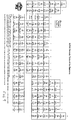
- transition metal is a synonym for the elements of Group 3-12 of the periodic table of elements ( Fig. 9 ).
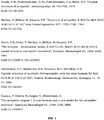
- Arrojadites Some materials of the general class described above are known and are generally referred to as "Arrojadites". In the following the term “Arrojadite” will be used as a generic term or synonym to describe the crystalline structure in accordance with the present invention. Arrojadites are known per se and seven different structure models have been described in five publications (as listed in Fig. 1 ).
- compositions are either naturally occurring forms of Arrojadite or synthetically prepared forms. Although their crystalline nature has been identified no-one has hitherto recognised that they include elongate channels extending through the respective unit cells from one side to the other, but are described as isolated parts of the framework or as vacancies.
- These partially unoccupied lattice sites are usually described as mixed positions of at least two different ions, e.g. for Nickel Plate Arrojadite Fe and Al, which show up as a pseudo atom, e.g. "Cr 3+ ", with approximately the same electron density (24 electrons, taken from 92 % Fe III and 8 % Al III ) in the structural model, data provided as Computer Interchange Format (CIF).
- CIF Computer Interchange Format
- the flexible occupations of the different sites offer the technical advantage of filling up these sites with a variety of mobile cations, e.g. Na, Li, K, Ag.
- the split positions are divided between the cations and part of the framework C, the amount of exchangeable cations is even more enhanced.
- the element or elements filling these elongate channels can readily be removed chemically or electrochemically to form open elongate channels which can subsequently be used to accommodate and reversibly store ions such as Li, Na, K and/or Ag thus making the materials particularly suitable for use as a cathode material in an Li, Na, K or Ag based battery.
- the Arrojadite phosphate based compound can be readily used an electroactive material in the form of an electrode material such as a cathode or anode for a primary or secondary battery or in another form of electrochemical storage device such as a supercapacitor. It can also be used generally as an electroactive material e.g. as a semipermeable membrane used as separator in electrochemical cells or battery.
- the material is particularly beneficial when used in an electrochemical storage device because a relatively large amount of the relevant ions can be stored resulting in a high exploitable electrical capacity, which can certainly be increased when the new material has been fully developed. Moreover, the material is dimensionally and chemically stable. Thus there is virtually no change in size of the electrode material when the battery is charged or discharged so that the battery or electrochemical storage device does not suffer mechanical damage due to size changes during the work cycles and has a long working life. Moreover, the fact that there is no chemical change in the structural framework involved during the storage, removal or transport of the relevant ions means that the charge capacity and particularly the useful charge capacity is maintained over very many cycles. This has already been proved experimentally over 5000 charge and discharge cycles and there is no reason why the number of cycles should be limited.
- the element selected for the exchangeable cations is Li or, when used in a sodium battery, the element selected for the exchangeable cations is Na or, when used in a potassium battery the element selected for the exchangeable cations is K or when used in a silver battery, the element selected for the exchangeable cations is Ag.
- the material of the invention is not however restricted to use as an electrode in a battery or supercapacitor, it can for example, as suggested earlier in this specification, also be used as a semipermeable membrane for a separator in a battery with the elongate channels serving as a transport passage for the relevant conductive ions or, alternatively, as an ion exchange material, for example in chromatography.
- the invention also relates to an electrochemical storage device comprising an electrode formed of a phosphate based compound as described above and to a separator formed from such a phosphate based compound.
- Arrojadite phosphate based compound of the present invention can be prepared by a method comprising the steps of:
- the cleaning process can, for example, comprise a flotation process.
- the cleaned compound is chemically treated to remove the exchangeable cation or cations, i.e. Li, Na, K, Ca, Mg, Sr, Al, Fe, Mn, Zn and/or Ag to unload the structure and leave open elongate channels extending through the unit cell of the structure.
- the exchangeable cation or cations i.e. Li, Na, K, Ca, Mg, Sr, Al, Fe, Mn, Zn and/or Ag to unload the structure and leave open elongate channels extending through the unit cell of the structure.
- the chemical treatment step is conveniently carried out using a complexing agent such as EDTA (2-[2-(Bis(carboxymethyl)amino)ethyl-(carboxymethyl)amino]acetic acid), pentan-2,4-dione (acetyl-acetone), crown-ethers e.g. 18-crown-6 or 1,5-diphenylthiocarbazone (dithiozone).
- EDTA is particularly favoured as it is a water based and thus environmentally particularly friendly compound.
- the method of preparation can also include the further step of at least partially filling the elongate channels with an active element selected from Group 1 of the periodic table of elements and/or Ag. This can, for example, be carried out by immersing said compound in a salt melt, by suspension or electrochemically.
- the phosphate based compound in accordance with the present invention can also be synthesised, for example using the method proposed by O. V. Yakubovich, E. N. Matvienko, M. A. Simonov and O.K. Mel'nikov in the publication entitled "Crystal Structure of Synnthetic Fe3+- Arrojadite with ideal formula of K2Na5Fe2+14Fe3+(PO4)12(OH)2", Vestnik Moskovskogo Universiteta, Geologiya, Vol. 41, No. 1, pages 36 - 47, 1986 .
- Arrojadite phosphate based compound of the present invention can be synthesised by hydrothermal synthesis, carried out using:
- the material of the invention is present as a crystalline material in an aqueous solution which can be removed leaving the crystalline product with the elongate channels filled with type A cations such as Li, Na, K and/or Ag.
- the synthesised compound is made by synthesis and is not chemically treated to remove the exchangeable cation or cations, because the exchangeable ions are provided directly during the hydrothermal synthesis.
- the amount of lattice sites for exchangeable cations is highest for the synthetic compound and differs amongst the naturally occurring minerals, e.g. from Nickel Plate and Hagendorf.
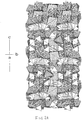
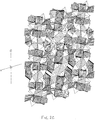
- Figs 2A to 2C now show a typical unit cell for a naturally occurring Arrojadite crystal from Nickel Plate, a phosphate based compound of the following formula:
- the compound is present in crystalline form and has elongate channels extending through the unit cell of the structure. It is present here in an anisotropic microcrystalline form.
- Fig. 2D shows the same view as Fig. 2C but presents only the framework of type B cations building up the channels and omits all other components for the sake of clarity.
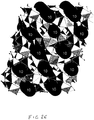
- Fig. 2E presents the same view as Fig. 2C but as an artistic impression of the unit cell in three dimensions when viewed along the b-axis, with the elongate channels 10 being shown as approximately black cylinders passing through the unit cell in the direction of the b-axis.
- Fig. 2E shows a three-dimensional artist's representation of the unit cell of Figs. 2A to 2C which has been shaded to show the presence of elongate channels 10 passing through the unit cell in the direction of the b-axis.
- the Arrojadite material of the present invention can be present in the form of single crystal material, in which case the channels 10 extend right through the single crystal (other than at any dislocations which may be present) It is however by no means necessary for the Arrojadite material to be present in single crystal form. Instead it can be present in microcrystalline, 500 ⁇ m - 1 ⁇ m, or nanocrystalline, 1 ⁇ m - 0.001 ⁇ m, form and indeed will normally be present as a powder optionally together with a suitable binder such as poly-vinyl-difluoride (PVDF).
- PVDF poly-vinyl-difluoride
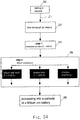
- lithium-enriched Arrojadite a mineral or a synthetic manufactured Arrojadite with a defined chemical composition and defined thermal and structural properties is used as an educt and modified chemically in a two-stage process as illustrated in Fig. 3A or in a one-step process for the synthetic material as illustrated in Fig. 3B , in order to be used, for example, as a cathode material for the lithium ion battery.
- the starting point for the manufacture of a lithium-enriched Arrojadite material is a naturally occurring mined product symbolised in box 20 which has been cleaned by, for example, flotation as shown by arrow 21 to produce a cleaned mineral as an educt as symbolised in box 22.
- the educt Arrojadite is mined as a naturally occurring mineral, for example from corresponding deposits such as the Nickel Plate mine in USA as described in the paper by Lindberg, M.L. with the title "Arrojadite, hühnerkobelite and graftonite" in the Am. Mineral., 35:59-76,1950 .
- the product obtained in box 22 then forms the starting product "educt" for the first process step of cation extraction carried out using a suitable complexing agent such as EDTA, acetyl-acetone, 18-crown-6 or dithiozone.
- a suitable complexing agent such as EDTA, acetyl-acetone, 18-crown-6 or dithiozone.
- the process step of box 24 is then followed by a second process step illustrated in box 26 in the form of lithium enrichment.
- This can be done in several ways.
- the insertion of lithium into the open elongate channels can take place in a charge cycle when using the material from process step 24 as an electrode material in a lithium ion battery, for example at room temperature or simply in an electrochemical cell used for this purpose.
- the resulting electrode material of step 24 can be prepared into an electrode for a lithium ion battery, for example by pasting it with a binder on a conductive material.
- Arrojadite materials can be manufactured synthetically, for example by means of hydrothermal processes as described by Yakubovich, O., Matvienko, E. N., Simonov, M. A, Mellnikov, O. K. entitled "Crystal structure of synthetic Fe3+ - arrojadite with ideal formula of K2Na5Fe2+14Fe3+(PO4)12(OH)2" in Geologiya 41:36-47, 1986 . This synthesis is illustrated as a flow diagram in Fig. 3B .
- the material of the invention is present as a crystalline material in an aqueous solution which can be removed leaving the crystalline product with the elongate channels filled with type A exchangeable cations such as Li, Na, K and/or Ag.
- lithium is only quoted as an example here for the enrichment step and any other suitable ions, for example, Na, K or Ag could be used in one of the procedures mentioned above.
- the manufacture of lithium-enriched Arrojadite material is a two-stage process which is simple to carry out consisting basically of cation extraction and lithium enrichment. This ability to readily remove the elements filling the channels makes it possible to manufacture the material at very competitive cost and with little technical complexity in air using non-poisonous and favourably priced chemicals which can be manufactured on a large scale technically such as EDTA and lithium perchlorate.
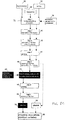
- Fig. 3C which generally illustrates the manufacture of LiFePO 4 by means of solid state reaction as described by Yamada, A, Chung, S. C., Hinokuma, K in the paper "Optimised LiFePO4 for lithium battery cathodes” in Journal of the Electrochemical Society 148:A224-229, 2001 .
- the starting point for this process is to form a mixture of Fe(CH 3 COO) 2 , Li 2 CO 3 and NH 4 H 2 PO 4 (boxes 30, 32 and 34) and to mix and grind the mixture in acetone (box 36).
- box 38 In order to achieve a sufficient electric conductivity of the material on activation carbon or a carbon-containing compound has to be added, either at this point (box 38) or at a later step in the process chain, box 48.
- the product will not have sufficient electric conductivity and needs to be activated by additional carbon or carbon-containing compounds, box 48. Then the product is ground again (box 52) and subsequently sintered again (box 54) in an N 2 flow to obtain the LiFePO 4 material (box 56) which has then to be finally processed into the cathode of a lithium ion battery (box 58).
- the lithium enrichment leads with Arrojadite material to an improvement of the electrical conductivity by six orders of magnitude from ⁇ ⁇ 3 ⁇ 10 -10 S/cm to ⁇ ⁇ 4 ⁇ 10-4 S/cm.
- the thermal and structural properties are not substantially changed.
- LiFePO 4 In comparison to this the material-typical properties of LiFePO 4 such as for example the chemical composition and the structural layout are strongly dependent on the manufacturing process and ultimately lead to LiFePO 4 materials with different properties.
- the extraction time (stirring time) of the educt in the EDTA solution during the first process step affects its grain size, with the grain size reducing with increasing stirring duration.
- the second process step there is likewise a simple and direct linking of the method parameters with the manufactured product.
- the degree of lithium enrichment is dependent on whether a salt melt or an aqueous suspension of lithium perchlorate and Arrojadite is used for the manufacture of the lithium-enriched material. The highest enrichment was obtained using a suspension of Arrojadite powder and LiClO 4 .
- the low electrical conductivity of the undoped carbon-free LiFePO 4 material has a negative effect on its use as a cathode material above all on the maximum exploitable capacity and the long term stability of such a lithium ion battery.
- the activation by carbon-containing compounds or elementary carbon can take place at two points during the manufacturing process, during synthesis of LiFePO 4 or after conclusion in further process steps ( Fig. 3C ).
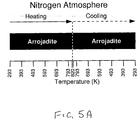
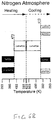
- Arrojadite and LiFePO 4 The thermal stability of the two materials Arrojadite and LiFePO 4 is fundamentally different when used in different reactive gas atmosphere (oxidizing, reducing and inert). It is illustrated in Figs. 4A and 4B for heating in air and in Figs. 5A and 5B for heating in nitrogen.
- the structure of the Arrojadite is maintained both during heating up to a temperature of T ⁇ 820K and also during subsequent cooling down to room temperature. This circumstance applies both for oxidizing air and also for an inert gas atmosphere of the nitrogen and has been confirmed by independent experiments using in situ high temperature powder diffraction with synchrotron and X-ray radiation ( Figs. 4A and 5A ).
- the thermal expansion of the material Arrojadite in the temperature range 293K ⁇ T ⁇ 733K in the direction of the three crystallographic axes is very small with values for the thermal expansion coefficient ⁇ a ⁇ ⁇ b ⁇ ⁇ c ⁇ 1 ⁇ 10 ⁇ 5 1 K .
- the increase of the volume of the unit cell in this temperature range amounts to only ⁇ V ⁇ 0.11 %.
- LiFePO 4 shows a different thermal behaviour.
- the material irreversibly decomposes, by the increasing oxidation of the divalent iron contained therein, into a multi-phase system.
- This multi-phase mixture is preserved with a luminous bright red colour after cooling down to room temperature ( Fig. 4B ).
- thermocalorimetric and gravimetric measurements of Arrojadite and LiFePO 4 samples are significantly different.
- the structural changes on heating Arrojadite samples in different gas atmospheres (air and nitrogen atmospheres) observed in independent experiments using in-situ high temperature powder diffraction with synchrotron and X-ray radiation agree with the results of the differential thermal analysis (DTA).
- DTA differential thermal analysis
- the exothermic principle maximum of the DTA curve is in a temperature interval 820K ⁇ K ⁇ 890K which is caused by the decomposition of the Arrojadite structure as recorded by means of in situ high temperature powder diffractometry.
- the powder patterns of the resulting products from the DTA measurements correspond to those obtained by experiments using in situ high temperature powder diffraction with synchrotron or X-ray radiation in the same gas atmosphere.
- a product arises whose lattice constants can be refined from the powder pattern with those of Arrojadite.
- the central difference between the materials Arrojadite and LiFePO 4 is the structural framework. That of LiFePO 4 is shown in Fig. 6 and can be compared with that of Arrojadite as shown, for example, in Fig. 2C . From this comparison significant distinctions result both with respect to the mechanical properties, the thermal stability, the electrical conductivity and the long term stability of lithium ion batteries manufactured from the respective materials and also with respect to the possibility of optimizing the respective material by chemical modification.
- Arrojadite has a space frame structure with channels 10 in Fig. 2D extending along the crystallographic b-axis. This places the Arrojadite structure in the area of the zeolites and zeolitex have not hitherto been considered useful for a lithium ion battery for many reasons.
- the structure of the zeolites is described in the book by Tomlinson A. A. G. Modern zeolites. Structure and function in detergents and petrochemicals. Trans Tech Publications Ltd., Uetikon-Zürich, 1998, ISBN 0-87849-794-0
- the occupation of the lattice sites in the channels of the Arrojadite structure forms a basis for the chemical modification of the Arrojadite structure and the use as electro-active cathode material for, for example, a lithium ion battery.
- the extraction experiments with Arrojadite powder from the "Nickel Plate” mine using an aqueous EDTA solution confirm by experimental routes the occupation of the atomic positions within the channels. A mixed occupation of these atomic positions by the following cations is present: Fe > Na > Mn > Ca > Al > Mg > Zn.
- the lithium cations in the lithium enriched Arrojadite material move along the corresponding channels 10 opened by the extraction process.
- the structure of the Arrojadite is, in contrast to most of the zeolites, despite increasing extraction of the cations from the channels 10 with aqueous EDTA solution so stable that in a time period between 2 and 90 hours extraction duration no changes of the powder pattern relative to the educt can be found in the recorded powder pattern of the respective product.
- nanocrystalline powders After 189 hours extraction duration nanocrystalline powders have arisen as shown by the powder patterns of Fig. 7 .
- the powder pattern shows reflexes with a full width at half maximum (FWHM) which can be attributed to mechanical reduction during the stirring process.
- Arrojadite nano-powders can be manufactured also by heating in an oxygen atmosphere under elevated pressure. The characterization of the electrical properties of the material Arrojadite in the form of nano-powders requires further investigation.
- LiFePO 4 material differs significantly: significantly shorter lattice parameters and smaller unit cell.
- the oxygen anions form an approximately hexagonal closest packing with the layer sequence ABAB.
- the intermediate spaces which result are occupied by the Li + , Fe 2+ and P 5+ cations as shown in Fig. 6 .
- two different conductive paths for Li cations are possible per unit cell which are perpendicular to each other.
- up to eight different conductive paths are present for cations per unit cell of the Arrojadite structure which are all in one direction and therefore their individual conductivities are summed up.
- the electrical conductivity of pressed powder pellets of Arrojadite shows a pronounced anisotropic behaviour and, in contrast to pellets of LiFePO 4 , can be influenced by the choice of the pressing process by the formation of different orientations of the powder particles within the pellet.
- an electrical conductivity higher by two orders of magnitude can be achieved in comparison to undoped carbon-free LiFePO 4 powder.
- Texture analyses show that the conductivity paths in the Arrojadite coincide with the channels 10 in the crystal structure.
- the degree of the lithium enrichment contributes to a further increase of the conductivity of the material Arrojadite, which shows that the conductivity is predominantly based on a lithium ion conduction.
- the lithium content of the material LiFePO 4 does not influence its electrical conductivity.
- LiFePO 4 a significant increase of the conductivity can be achieved by the manufacture of differently doped powders with mixed occupations at the Li lattice sites or by mixed occupation of the Fe lattice sites.
- the electrical conductivity and the exploitable maximum capacity can be increased through the choice of the corresponding synthesis route using partly organic educts, sinter temperatures which are as low as possible or by the manufacture and use of nano-powders.
- the influence of the synthesis route on the resulting side products, such as for example iron phosphide, lithium phosphate and Fe III oxide and the associated changes of the properties of the material LiFePO 4 are currently also the subject of discussion.
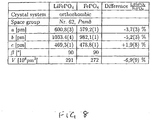
- Both the charging cycle and the discharging cycle of a lithium ion battery of LiFePO 4 is associated with a phase transition of the 1 st order LiFePO 4 to FePO 4 . This migrates as a zone through each material particle. After the first charge and discharge cycle an initially small proportion of FePO 4 remains which cannot be converted again into LiFePO 4 . The concentration of the FePO 4 increases with increasing number of the charge and discharge cycles.
- the phase transition LiFePO 4 to FePO 4 is also associated with structural changes. For example the length of the lattice parameters and change in size of the unit cell ( Fig. 8 ).
- the maximum achievable number of cycles without a capacity loss of the order of magnitude of 10 % or more depends on the environmental temperature, i.e. on the temperature of use of this battery type, when T ⁇ 25° C.
- the charge and discharge process of a lithium ion battery on the basis of the material Arrojadite proceeds in accordance with another mechanism than is the case with the material LiFePO 4 .
- the zeolites serve as an example for the manner of operation of a lithium ion battery of Arrojadite material.
- the zeolites function as an ion exchange medium due to hollow cavities in the form of "cages" and channels within their scaffold structure. These hollow cavities can be reversibly occupied with different cations.
- Li enriched Arrojadite material In the manufacture of lithium enriched Arrojadite material a part or all of the cations which are located at lattice sites within the channels 10 of the Arrojadite structure are extracted and replaced by Li cations. In a directly comparable manner to the ion exchange function of the zeolites Li cations occupy with the Arrojadite material the lattice sites within the channels reversibly and in dependence on the state of charge.
- the lithium enrichment by an aqueous suspension of Arrojadite powder and lithium perchlorate achieves with 1.72 % by weight approximately 96 % on the theoretical value.
- the remaining inactive charge is due to Na cations of the Na-EDTA solution of the 1 st process step that are present.
- the capacity of the lithium ion battery of Arrojadite material is almost independent of the number of charge and discharge cycles. This high cycle stability of the material Arrojadite favours the use on a technical scale.
- the achieved capacity for experimental lithium ion batteries of Arrojadite built to date is still below that of comparable LiFePO 4 batteries on initial charging but it must be borne in mind that the LiFePO 4 batteries have undergone a long period of over ten years optimization. Given further development it should be possible to significantly improve the capacity of batteries using Arrojadite cathodes, so that they are highly competitive with LiFePO 4 batteries on all counts.
- Example 1 use as a cathode material
- the cathode material comprises the Arrojadite compound described immediately above which has been ground to a powder with an average particle size of 1 ⁇ m. This size is not critical and average particle sizes in the range from 500nm to 200 ⁇ m are also readily possible as are particle sizes below and above this range.
- the particles used typically have a Gaussian size distribution or a narrower distribution.
- the powder is mixed with a binder, in this case polyvinyl difluoride (PVDF), at a weight ratio of nine parts arrojadite material to one part of PVDF and is then pasted onto an electrically conductive foil, in this example a copper foil of say 99.6% purity available from Goodfellow.
- a binder in this case polyvinyl difluoride (PVDF)
- PVDF polyvinyl difluoride
- an electrically conductive foil in this example a copper foil of say 99.6% purity available from Goodfellow.
- a binder material, nor the weight ratio nor the material of the conductive foil is critical.
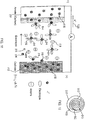
- the lithium electrode, i.e. the anode, 110 is, for example, a pure lithium foil available from Aldrich.
- the electrolyte 114 is disposed in the space between the anode 110 and the cathode 112.
- the electrolyte can be any known electrolyte for a lithium ion battery and in this case is an electrolyte in the form of a solution of 1M LiPF 6 in ethylene carbonate (EC)/dimethyl carbonate (DMC) in the ratio 1:1 by volume obtained from Ube industries Ltd., which is accommodated in a glass fibre separator such as GF/D from Whatman.
- the cell of Figs. 10 is accommodated in a casing (not shown).
- Example 2 use as a cathode material
- This example is the same as Example 1 but uses a carbon material as an anode in place of lithium.
- the anode material can be in the form of a solid piece of graphite or powdered carbon in a binder.
- the carbon powder has an average particle size of 2 ⁇ m and is mixed with a binder in the form of PVDF at a weight ratio of nine parts of carbon material to one of binder and is pasted on an electrically conductive foil, in this case an aluminium foil.
- an aluminium foil in this case an aluminium foil.
- Examples 3 and 4 are generally the same as examples 1 and 2 except that an electrolyte is used consisting of a polymer material with lithiumn ion salts in dissolved or particulate form such as LiPF 6 rather than LiPF 6 in EC/DMC as described for Examples 1 and 2.
- an electrolyte consisting of a polymer material with lithiumn ion salts in dissolved or particulate form such as LiPF 6 rather than LiPF 6 in EC/DMC as described for Examples 1 and 2.
- the anode 110 can be made of the material defined in claim 1 of the present application and more specifically with the specific composition set out in the above description, more specifically with the specific composition set out above for a naturally occurring Arrojadite from the Nickel Plate mine, as described in connection with Figs. 2A to 2E at the start of the specific description of this application.
- the cathode 112 could for example consist of the lithium electrode, for example a pure lithum foil available for Aldrich.
- the electrolyte 114 can be any known electrolyte for a lithium ion battery as described above in examples 1 - 4.
- the electrical connections to the power supply, in case of example 5, is the reverse of that used in examples 1 - 4.
- Fig. 11 shows an alternative layout for a battery where the electrodes 110 and 112 are coiled in a spiral 113 with the electrolyte 115 disposed between them and the structure being encapsulated in a housing 117. Terminals connected to the anode 110 and the cathode 112 are provided at opposite ends of the housing (terminals not shown) in manner known per se.
- the same layout as shown in and described with reference to Fig. 11 can be used for a supercapacitor.
- the materials can be the same as those described with reference to Fig. 10 .
- the oxides were dried in vacuum at 250°C for 24 hours prior to composite preparation and all samples were prepared under an Argon atmosphere in a glove box (closed container with a window and gloves for handling the materials involved).
- Room temperature conductivity was measured for various volume fractions using impedance spectroscopy with the samples placed between two parallel stainless steel electrodes of a home-built cell (samples loaded under Argon). The impurity effects were excluded by pre-washing the oxides in the liquid solvents. The conductivity was better than 2 ⁇ 10 -3 S/cm.
- the solvent is a compound according to the general formula (I): or a mixture of compounds of this kind wherein:
- the solvent used in the Examples 10 to 13 is a solvent according to the general formula (I) containing a lithium salt.
- the at least one ionically conducting salt is a lithium salt and may, for example, be any salt selected from the group consisting of LiCl, LiF, LiSO 3 CF 3 , LiClO 4 , LiN(SO 2 CF 3 ) 2 , lithium-bis[oxalato]borate (LiBOB), LiPF 6 and LiN(SO 2 CF 2 CF 3 ) 2 .
- the ionically conducting salt is dissolved in the solvent in a concentration of about 1 M and the specific oxide used in thes examples 10 to 13 is 0.005% by volume.
- the average particle size of the at least one oxide in a particulate form is typically 20nm.
- the resulting electrolyte has a lithium transference number of 0.65 but a value anywhere between 0.5 and 0.75 is acceptable.
- Example 14 Use as a separator
- the material of the present invention is also particularly suited for use as a separator, for example in a molten salt cell such as the Zebra cell.
- a molten salt cell such as the Zebra cell.
- This is a battery with a positive electrode of nickel in the discharged state and nickel chloride in the charged state.
- the negative electrode is molten sodium.
- the electrolyte is molten chloroaluminate (NaAlCl 4 ).
- a separator based on the material claimed here is used instead of the traditional sodium conducting ß-alumina ceramic separator and the open elongate channels in the separator of the present teaching serve for the transport of sodium ions during charging and discharging of the battery.
Landscapes
- Chemical & Material Sciences (AREA)
- Inorganic Chemistry (AREA)
- Organic Chemistry (AREA)
- Chemical Kinetics & Catalysis (AREA)
- Electrochemistry (AREA)
- General Chemical & Material Sciences (AREA)
- Engineering & Computer Science (AREA)
- Ceramic Engineering (AREA)
- Crystallography & Structural Chemistry (AREA)
- Battery Electrode And Active Subsutance (AREA)
- Silicates, Zeolites, And Molecular Sieves (AREA)
Claims (14)
- Verwendung einer arrojaditphosphatbasierten Verbindung als elektroaktives Material, wobei die phosphatbasierte Verbindung umfasst:- A: extrahierbare Kationen, die beim Laden und Entladen verwendet werden und zumindest eines von Li, Na, K und Ag sind,- wobei bis zu 25 Mol-% der Verbindung in jeder der folgenden Kategorien vorhanden sein können:- Elemente der Gruppe 1 des Periodensystems der Elemente,- Elemente der Gruppe 2 des Periodensystems der Elemente,- Elemente der Gruppe 13 des Periodensystems der Elemente,- Elemente der Gruppe der Übergangsmetalle, Gruppe 3 - 12 des Periodensystems der Elemente, z.B. Mn, Fe, Ag,- Elemente der Gruppe 14 des Periodensystems der Elemente, z.B. Pb,- B: nicht austauschbare Kationen von den Übergangsmetallen, z.B. Fe, Mn, Co, Cr, Ti, V, Cu, Sc,- wobei 9 Mol-% - 23 Mol-%, bevorzugt 16 Mol-% der Verbindung in jeder der folgenden Kategorien vorhanden sein können:- Elemente der Gruppe 1 des Periodensystems der Elemente,- Elemente der Gruppe 2 des Periodensystems der Elemente,- Elemente der Gruppe 13 des Periodensystems der Elemente,- Elemente der Gruppe der Übergangsmetalle, Gruppe 3 - 12 des Periodensystems der Elemente, z.B. Mn, Fe,- Elemente der Gruppe 14 des Periodensystems der Elemente, z.B. Pb,- C: 60 Mol-% - 90 Mol-%, bevorzugt 75 Mol-% der Verbindung anionisch in der Form von Phosphat-(PO4)3--Anionen ist, wobei Sauerstoff durch ein Halid (z.B. F-, Cl-) und/oder OH- zu einer maximalen Konzentration von 10 Mol-% des Sauerstoffs der Anionen teilweise substituiert ist oder sein kann,bis zu einer Menge < 31 Mol-% der Anionen,- wobei die Phosphat-(PO4)3--Anionen teilweise substituiert sein können durch eines oder mehrere von- SiO4 4- Silikat,- BO3 3- Borat,- CO3 2- Carbonat,- H2O Wasser- die Verbindung in kristalliner Form vorliegt und offene längliche Kanäle aufweist, die sich durch die Einheitszelle der Struktur erstrecken, und- wobei die Verbindung entweder in einkristalliner Form oder als ein anisotropes mikrokristallines oder nanokristallines Material vorliegt,- wobei die Verbindung in kristalliner Form behandelt worden ist, um die extrahierbaren Kationen zu entfernen und somit offene längliche Kanäle zurückzulassen, die sich durch die Einheitszelle der Verbindung erstrecken, wobei die länglichen Kanäle optional anschließend mit einer gewünschten Kationenart füllbar sind.
- Verwendung nach Anspruch 1, wobei die Verbindung zusätzlich zumindest ein Element umfasst, das aus der Gruppe ausgewählt ist, die aus der Gruppe 2 des Periodensystems der Elemente und Aluminium besteht.
- Verwendung nach Anspruch 1 oder Anspruch 2, wobei das Element, das aus der Gruppe der Übergangsmetalle, Gruppe 3 - 12 des Periodensystems der Elemente, ausgewählt ist, zumindest eines von Sc, Ti, V, Cr, Mn, Fe, Co, Ni, Cu und Zn umfasst.
- Verwendung nach einem der vorhergehenden Ansprüche, wobei das elektroaktive Material als ein Elektrodenmaterial, wie etwa eine Kathode, für eine primäre oder sekundäre Batterie, oder in einer anderen Form einer elektrochemischen Speichereinrichtung oder als eine Anode für eine primäre oder sekundäre Batterie verwendet wird.
- Verwendung nach einem der vorhergehenden Ansprüche 1 bis 3, wobei das elektroaktive Material in einer elektrisch isolierenden Form verwendet wird, z.B. als eine halbdurchlässige Membran, die als ein Separator in einer elektrochemischen Zelle oder einer Batterie verwendet wird.
- Verwendung nach Anspruch 4, wobei, in einer Lithiumbatterie, das Element, das für die austauschbaren Kationen ausgewählt wird, Li ist, oder, in einer Natriumbatterie, das Element, das für die austauschbaren Kationen ausgewählt wird, Na ist, oder, in einer Kaliumbatterie, das Element, das für die austauschbaren Kationen ausgewählt wird, K ist, oder, in einer Silberbatterie, das Element, das für die austauschbaren Kationen ausgewählt wird, Ag ist.
- Verwendung nach einem der vorhergehenden Ansprüche 1 bis 3, wobei das elektroaktive Material in einem Ionenaustauschmaterial enthalten ist.
- Verwendung nach einem der Ansprüche 1 bis 3, wobei die phosphatbasierte Verbindung durch ein Verfahren hergestellt wird, das die Schritte umfasst:- Entnahme aus der Erde an einem geeigneten Ort, z.B. der Nickel Plate Mine in South Dakota, USA, oder der Hagendorf-Mine in der Oberpfalz, Bayern, Deutschland, einer natürlich auftretenden Verbindung mit der chemischen Zusammensetzung nach einem der Ansprüche 1 bis 3 zusammen mit Fremdstoffen,- Reinigung der natürlich auftretenden Verbindung, um die Fremdstoffe zu entfernen, und- chemisches Behandeln der natürlich auftretenden Verbindung, bevorzugt nach der Reinigung, um so weit wie möglich mobile Kationen des Typs A und die natürlich auftretenden Fremdstoffe zu entfernen und somit die offenen länglichen Kanäle, die sich durch die Einheitszelle der Struktur erstrecken, freizumachen.
- Verwendung nach Anspruch 8, wobei der Reinigungsprozess einen Flotationsprozess umfasst.
- Verwendung nach einem der Ansprüche 1 bis 3, wobei die Verbindung durch Synthese hergestellt und chemisch behandelt wird, um ein Element, das austauschbare Kationen bildet, zum Beispiel Li, Na, K, Ag und/oder Al, zu entfernen und somit die länglichen Kanäle, die sich durch die Einheitszelle der Struktur erstrecken, zu leeren oder freizumachen.
- Verwendung nach Anspruch 10, wobei die Synthese eine hydrothermale Synthese ist, ausgeführt unter Verwendung:B: nicht austauschbarer Kationen, z.B. in der Form eines Oxids von einem oder mehreren Übergangsmetallen, Gruppe 3 - 12 des Periodensystems der Elemente, z.B. Fe2O3,C: Anionen in der Form eines Phosphats, z.B. (NH4)2HPO4 oder (Na,K)2HPO4,A: austauschbarer Kationen als lösliches Salz von einem von Li, Na, K und Ag, z.B. KCl, wobei das Verfahren in einem Druckgefäß in Gegenwart von Wasser in einem Temperaturbereich von 300°C - 600°C, z.B. 450°C, ausgeführt wird, wobei die Anfangskonzentration der wässrigen Lösung derart gewählt wird, dass die Konzentration von Kationen des Typs A, z.B. KCl bis zu 30 - 70 Gew.-%, bevorzugt bis etwa 50 Gew.-% beträgt, und wobei CsCl in einer Menge von 70 - 30 Gew.-%, bevorzugt z.B. 50 Gew.-% vorhanden ist.
- Verwendung nach einem der Ansprüche 7 bis 8, wobei der chemische Behandlungsschritt unter Verwendung eines komplexbildenden Mittels, z.B. EDTA (2-[2-(Bis(carboxymethyl)amino)ethyl-(carboxymethyl)amino]essigsäure, Pentan-2,4-dion(acetyl-aceton), Kronenether, z.B. 18-Krone-6, oder 1,5-Diphenylthiocarbazon(dithizon) ausgeführt wird.
- Verwendung nach einem der Ansprüche 8 bis 12 und mit dem weiteren Schritt eines zumindest teilweisen Füllens der offenen länglichen Kanäle mit einem aktiven Element, das aus der Gruppe 1 des Periodensystems der Elemente ausgewählt ist, z.B. Li, Na, K und Ag.
- Verwendung nach Anspruch 13, wobei der Füllschritt durch einen chemischen Prozess, z.B. durch Eintauchen der Verbindung in eine Salzschmelze oder durch Herstellen der Verbindung in Suspension oder elektrochemisch ausgeführt wird.
Priority Applications (1)
| Application Number | Priority Date | Filing Date | Title |
|---|---|---|---|
| EP09775109.3A EP2376376B1 (de) | 2008-12-12 | 2009-12-11 | Verwendung einer arrojadite phosphat basierte verbindung in einer elektrochemischen speichervorrichtung |
Applications Claiming Priority (3)
| Application Number | Priority Date | Filing Date | Title |
|---|---|---|---|
| EP08021669A EP2196434A1 (de) | 2008-12-12 | 2008-12-12 | Phosphatbasierte Verbindung, Verwendung der Verbindung in einer elektrochemischen Speichervorrichtung und Herstellungsverfahren dafür |
| PCT/EP2009/008879 WO2010066439A2 (en) | 2008-12-12 | 2009-12-11 | Phosphate based compound, use of the compound in an electrochemical storage device and methods for its preparation |
| EP09775109.3A EP2376376B1 (de) | 2008-12-12 | 2009-12-11 | Verwendung einer arrojadite phosphat basierte verbindung in einer elektrochemischen speichervorrichtung |
Publications (2)
| Publication Number | Publication Date |
|---|---|
| EP2376376A2 EP2376376A2 (de) | 2011-10-19 |
| EP2376376B1 true EP2376376B1 (de) | 2017-03-29 |
Family
ID=41021070
Family Applications (2)
| Application Number | Title | Priority Date | Filing Date |
|---|---|---|---|
| EP08021669A Withdrawn EP2196434A1 (de) | 2008-12-12 | 2008-12-12 | Phosphatbasierte Verbindung, Verwendung der Verbindung in einer elektrochemischen Speichervorrichtung und Herstellungsverfahren dafür |
| EP09775109.3A Not-in-force EP2376376B1 (de) | 2008-12-12 | 2009-12-11 | Verwendung einer arrojadite phosphat basierte verbindung in einer elektrochemischen speichervorrichtung |
Family Applications Before (1)
| Application Number | Title | Priority Date | Filing Date |
|---|---|---|---|
| EP08021669A Withdrawn EP2196434A1 (de) | 2008-12-12 | 2008-12-12 | Phosphatbasierte Verbindung, Verwendung der Verbindung in einer elektrochemischen Speichervorrichtung und Herstellungsverfahren dafür |
Country Status (5)
| Country | Link |
|---|---|
| US (2) | US20120064397A1 (de) |
| EP (2) | EP2196434A1 (de) |
| KR (1) | KR101659887B1 (de) |
| CN (1) | CN102245504B (de) |
| WO (1) | WO2010066439A2 (de) |
Families Citing this family (12)
| Publication number | Priority date | Publication date | Assignee | Title |
|---|---|---|---|---|
| DE102010026613A1 (de) | 2010-07-09 | 2012-01-12 | MAX-PLANCK-Gesellschaft zur Förderung der Wissenschaften e.V. | Neue Phosphat- und Silikat-basierte Elektrodenmaterialien, insbesondere für Lithiumionen-Batterien und Lithiumkondensatoren |
| EP2458665A3 (de) * | 2010-11-25 | 2015-05-06 | Basf Se | Verfahren zur Herstellung von Vorstufen für Übergangsmetallmischoxide |
| CN102145880B (zh) * | 2011-03-31 | 2012-09-05 | 福州大学 | 一种在离子液体中制备磷酸亚铁锂的方法 |
| US10090516B2 (en) | 2012-04-24 | 2018-10-02 | National University Of Singapore | Electrode material and method of synthesizing |
| WO2014021395A1 (ja) * | 2012-07-31 | 2014-02-06 | シャープ株式会社 | 非水電解質二次電池用正極活物質 |
| GB201223473D0 (en) * | 2012-12-28 | 2013-02-13 | Faradion Ltd | Metal-containing compounds |
| EP2851340B1 (de) * | 2013-09-23 | 2018-10-31 | Goodrich Lighting Systems GmbH | Orthophosphat-, orthovanadat oder orthophosphatvanadat komponenten zur verwendung in festen chemische sauerstofferzeugern |
| GB201409154D0 (en) | 2014-05-22 | 2014-07-09 | Faradion Ltd | Sodium transition metal silicates |
| CN105372229A (zh) * | 2014-08-27 | 2016-03-02 | 北京有色金属研究总院 | 一种碳包覆磷酸铁锂或磷酸锰铁锂中主元素含量的检测方法 |
| WO2018164477A1 (ko) * | 2017-03-10 | 2018-09-13 | 세종대학교 산학협력단 | 칼륨 이차 전지용 양극 활물질, 이를 포함하는 칼륨 이차 전지 |
| EP3703169A1 (de) | 2019-02-27 | 2020-09-02 | Technische Universität Graz | Elektrodenmaterialien mit einer fluorid-granat-ähnlichen struktur und elektroden mit solchen elektrodenmaterialien |
| CN113437291B (zh) * | 2021-07-27 | 2022-08-05 | 西安交通大学 | 一种氟磷硅酸钒锂正极材料及其制备方法 |
Family Cites Families (4)
| Publication number | Priority date | Publication date | Assignee | Title |
|---|---|---|---|---|
| JPS606318B2 (ja) * | 1979-12-13 | 1985-02-16 | 日本重化学工業株式会社 | 混合りん酸肥料 |
| US4289612A (en) * | 1980-06-11 | 1981-09-15 | Texasgulf Inc. | Phosphate ore triple float |
| EP1505680B1 (de) | 2003-08-08 | 2008-12-03 | Max-Planck-Gesellschaft zur Förderung der Wissenschaften e.V. | Nicht-wässriger Elektrolyt und eine Batterie, ein Superkondensator, eine elektrochromische Vorrichtung und eine Solarzelle enthaltend einen solchen Elektrolyt |
| TWI466370B (zh) * | 2008-01-17 | 2014-12-21 | A123 Systems Inc | 鋰離子電池的混合式金屬橄欖石電極材料 |
-
2008
- 2008-12-12 EP EP08021669A patent/EP2196434A1/de not_active Withdrawn
-
2009
- 2009-12-11 US US13/139,036 patent/US20120064397A1/en not_active Abandoned
- 2009-12-11 CN CN2009801498420A patent/CN102245504B/zh not_active Expired - Fee Related
- 2009-12-11 EP EP09775109.3A patent/EP2376376B1/de not_active Not-in-force
- 2009-12-11 KR KR1020117016149A patent/KR101659887B1/ko not_active Expired - Fee Related
- 2009-12-11 WO PCT/EP2009/008879 patent/WO2010066439A2/en not_active Ceased
-
2016
- 2016-10-17 US US15/295,663 patent/US20170033361A1/en not_active Abandoned
Non-Patent Citations (1)
| Title |
|---|
| None * |
Also Published As
| Publication number | Publication date |
|---|---|
| WO2010066439A3 (en) | 2011-04-28 |
| KR101659887B1 (ko) | 2016-09-26 |
| CN102245504A (zh) | 2011-11-16 |
| EP2196434A1 (de) | 2010-06-16 |
| CN102245504B (zh) | 2013-11-06 |
| EP2376376A2 (de) | 2011-10-19 |
| KR20110120868A (ko) | 2011-11-04 |
| WO2010066439A2 (en) | 2010-06-17 |
| US20170033361A1 (en) | 2017-02-02 |
| US20120064397A1 (en) | 2012-03-15 |
Similar Documents
| Publication | Publication Date | Title |
|---|---|---|
| EP2376376B1 (de) | Verwendung einer arrojadite phosphat basierte verbindung in einer elektrochemischen speichervorrichtung | |
| EP1702373B1 (de) | Prozess zur herstellung von elektroaktiven einfügungszusammensetzungen und daraus erhaltene elektrodenmaterialien | |
| EP1500154B1 (de) | Aktives elektrodenmaterial und verfahren zur herstellung desselben | |
| US20080153002A1 (en) | Mixed Lithium/Sodium Ion Iron Fluorophosphate Cathodes for Lithium Ion Batteries | |
| US9077037B2 (en) | Electrode and electrolyte materials for batteries | |
| Padhi | Mapping redox energies of electrode materials for lithium batteries | |
| Su | Development of novel electrode materials for Li-ion batteries and Na-ion batteries | |
| Sanusi | Synthesis and Characterization of Limpo4 (M= Mn, Ni And Fe) Olivine Materials | |
| Sun | Elaboration of novel sulfate based positive electrode materials for Li-ion batteries | |
| Ribero Rodriguez | Synthesis and microstructural characterization of phosphate cathode materials prepared by a polymeric steric entrapment precursor route | |
| Hwu et al. | Electrode and Electrolyte Materials for Batteries |
Legal Events
| Date | Code | Title | Description |
|---|---|---|---|
| PUAI | Public reference made under article 153(3) epc to a published international application that has entered the european phase |
Free format text: ORIGINAL CODE: 0009012 |
|
| 17P | Request for examination filed |
Effective date: 20110712 |
|
| AK | Designated contracting states |
Kind code of ref document: A2 Designated state(s): AT BE BG CH CY CZ DE DK EE ES FI FR GB GR HR HU IE IS IT LI LT LU LV MC MK MT NL NO PL PT RO SE SI SK SM TR |
|
| DAX | Request for extension of the european patent (deleted) | ||
| 17Q | First examination report despatched |
Effective date: 20160429 |
|
| REG | Reference to a national code |
Ref country code: DE Ref legal event code: R079 Ref document number: 602009045099 Country of ref document: DE Free format text: PREVIOUS MAIN CLASS: C01B0025450000 Ipc: H01M0002160000 |
|
| RIC1 | Information provided on ipc code assigned before grant |
Ipc: H01M 4/58 20060101ALI20160901BHEP Ipc: H01M 2/16 20060101AFI20160901BHEP Ipc: C01B 25/45 20060101ALI20160901BHEP |
|
| GRAP | Despatch of communication of intention to grant a patent |
Free format text: ORIGINAL CODE: EPIDOSNIGR1 |
|
| INTG | Intention to grant announced |
Effective date: 20161007 |
|
| GRAS | Grant fee paid |
Free format text: ORIGINAL CODE: EPIDOSNIGR3 |
|
| STAA | Information on the status of an ep patent application or granted ep patent |
Free format text: STATUS: GRANT OF PATENT IS INTENDED |
|
| GRAA | (expected) grant |
Free format text: ORIGINAL CODE: 0009210 |
|
| STAA | Information on the status of an ep patent application or granted ep patent |
Free format text: STATUS: THE PATENT HAS BEEN GRANTED |
|
| AK | Designated contracting states |
Kind code of ref document: B1 Designated state(s): AT BE BG CH CY CZ DE DK EE ES FI FR GB GR HR HU IE IS IT LI LT LU LV MC MK MT NL NO PL PT RO SE SI SK SM TR |
|
| REG | Reference to a national code |
Ref country code: GB Ref legal event code: FG4D |
|
| REG | Reference to a national code |
Ref country code: CH Ref legal event code: EP |
|
| REG | Reference to a national code |
Ref country code: AT Ref legal event code: REF Ref document number: 880514 Country of ref document: AT Kind code of ref document: T Effective date: 20170415 |
|
| REG | Reference to a national code |
Ref country code: IE Ref legal event code: FG4D |
|
| REG | Reference to a national code |
Ref country code: DE Ref legal event code: R096 Ref document number: 602009045099 Country of ref document: DE |
|
| PG25 | Lapsed in a contracting state [announced via postgrant information from national office to epo] |
Ref country code: GR Free format text: LAPSE BECAUSE OF FAILURE TO SUBMIT A TRANSLATION OF THE DESCRIPTION OR TO PAY THE FEE WITHIN THE PRESCRIBED TIME-LIMIT Effective date: 20170630 Ref country code: NO Free format text: LAPSE BECAUSE OF FAILURE TO SUBMIT A TRANSLATION OF THE DESCRIPTION OR TO PAY THE FEE WITHIN THE PRESCRIBED TIME-LIMIT Effective date: 20170629 Ref country code: FI Free format text: LAPSE BECAUSE OF FAILURE TO SUBMIT A TRANSLATION OF THE DESCRIPTION OR TO PAY THE FEE WITHIN THE PRESCRIBED TIME-LIMIT Effective date: 20170329 Ref country code: LT Free format text: LAPSE BECAUSE OF FAILURE TO SUBMIT A TRANSLATION OF THE DESCRIPTION OR TO PAY THE FEE WITHIN THE PRESCRIBED TIME-LIMIT Effective date: 20170329 Ref country code: HR Free format text: LAPSE BECAUSE OF FAILURE TO SUBMIT A TRANSLATION OF THE DESCRIPTION OR TO PAY THE FEE WITHIN THE PRESCRIBED TIME-LIMIT Effective date: 20170329 |
|
| REG | Reference to a national code |
Ref country code: NL Ref legal event code: MP Effective date: 20170329 |
|
| REG | Reference to a national code |
Ref country code: AT Ref legal event code: MK05 Ref document number: 880514 Country of ref document: AT Kind code of ref document: T Effective date: 20170329 |
|
| PG25 | Lapsed in a contracting state [announced via postgrant information from national office to epo] |
Ref country code: SE Free format text: LAPSE BECAUSE OF FAILURE TO SUBMIT A TRANSLATION OF THE DESCRIPTION OR TO PAY THE FEE WITHIN THE PRESCRIBED TIME-LIMIT Effective date: 20170329 Ref country code: LV Free format text: LAPSE BECAUSE OF FAILURE TO SUBMIT A TRANSLATION OF THE DESCRIPTION OR TO PAY THE FEE WITHIN THE PRESCRIBED TIME-LIMIT Effective date: 20170329 Ref country code: BG Free format text: LAPSE BECAUSE OF FAILURE TO SUBMIT A TRANSLATION OF THE DESCRIPTION OR TO PAY THE FEE WITHIN THE PRESCRIBED TIME-LIMIT Effective date: 20170629 |
|
| PG25 | Lapsed in a contracting state [announced via postgrant information from national office to epo] |
Ref country code: NL Free format text: LAPSE BECAUSE OF FAILURE TO SUBMIT A TRANSLATION OF THE DESCRIPTION OR TO PAY THE FEE WITHIN THE PRESCRIBED TIME-LIMIT Effective date: 20170329 |
|
| PG25 | Lapsed in a contracting state [announced via postgrant information from national office to epo] |
Ref country code: IT Free format text: LAPSE BECAUSE OF FAILURE TO SUBMIT A TRANSLATION OF THE DESCRIPTION OR TO PAY THE FEE WITHIN THE PRESCRIBED TIME-LIMIT Effective date: 20170329 Ref country code: AT Free format text: LAPSE BECAUSE OF FAILURE TO SUBMIT A TRANSLATION OF THE DESCRIPTION OR TO PAY THE FEE WITHIN THE PRESCRIBED TIME-LIMIT Effective date: 20170329 Ref country code: SK Free format text: LAPSE BECAUSE OF FAILURE TO SUBMIT A TRANSLATION OF THE DESCRIPTION OR TO PAY THE FEE WITHIN THE PRESCRIBED TIME-LIMIT Effective date: 20170329 Ref country code: CZ Free format text: LAPSE BECAUSE OF FAILURE TO SUBMIT A TRANSLATION OF THE DESCRIPTION OR TO PAY THE FEE WITHIN THE PRESCRIBED TIME-LIMIT Effective date: 20170329 Ref country code: EE Free format text: LAPSE BECAUSE OF FAILURE TO SUBMIT A TRANSLATION OF THE DESCRIPTION OR TO PAY THE FEE WITHIN THE PRESCRIBED TIME-LIMIT Effective date: 20170329 Ref country code: RO Free format text: LAPSE BECAUSE OF FAILURE TO SUBMIT A TRANSLATION OF THE DESCRIPTION OR TO PAY THE FEE WITHIN THE PRESCRIBED TIME-LIMIT Effective date: 20170329 Ref country code: ES Free format text: LAPSE BECAUSE OF FAILURE TO SUBMIT A TRANSLATION OF THE DESCRIPTION OR TO PAY THE FEE WITHIN THE PRESCRIBED TIME-LIMIT Effective date: 20170329 |
|
| PG25 | Lapsed in a contracting state [announced via postgrant information from national office to epo] |
Ref country code: PL Free format text: LAPSE BECAUSE OF FAILURE TO SUBMIT A TRANSLATION OF THE DESCRIPTION OR TO PAY THE FEE WITHIN THE PRESCRIBED TIME-LIMIT Effective date: 20170329 Ref country code: SM Free format text: LAPSE BECAUSE OF FAILURE TO SUBMIT A TRANSLATION OF THE DESCRIPTION OR TO PAY THE FEE WITHIN THE PRESCRIBED TIME-LIMIT Effective date: 20170329 Ref country code: IS Free format text: LAPSE BECAUSE OF FAILURE TO SUBMIT A TRANSLATION OF THE DESCRIPTION OR TO PAY THE FEE WITHIN THE PRESCRIBED TIME-LIMIT Effective date: 20170729 Ref country code: PT Free format text: LAPSE BECAUSE OF FAILURE TO SUBMIT A TRANSLATION OF THE DESCRIPTION OR TO PAY THE FEE WITHIN THE PRESCRIBED TIME-LIMIT Effective date: 20170731 |
|
| REG | Reference to a national code |
Ref country code: FR Ref legal event code: PLFP Year of fee payment: 9 |
|
| REG | Reference to a national code |
Ref country code: DE Ref legal event code: R097 Ref document number: 602009045099 Country of ref document: DE |
|
| PG25 | Lapsed in a contracting state [announced via postgrant information from national office to epo] |
Ref country code: DK Free format text: LAPSE BECAUSE OF FAILURE TO SUBMIT A TRANSLATION OF THE DESCRIPTION OR TO PAY THE FEE WITHIN THE PRESCRIBED TIME-LIMIT Effective date: 20170329 |
|
| PLBE | No opposition filed within time limit |
Free format text: ORIGINAL CODE: 0009261 |
|
| STAA | Information on the status of an ep patent application or granted ep patent |
Free format text: STATUS: NO OPPOSITION FILED WITHIN TIME LIMIT |
|
| 26N | No opposition filed |
Effective date: 20180103 |
|
| PG25 | Lapsed in a contracting state [announced via postgrant information from national office to epo] |
Ref country code: SI Free format text: LAPSE BECAUSE OF FAILURE TO SUBMIT A TRANSLATION OF THE DESCRIPTION OR TO PAY THE FEE WITHIN THE PRESCRIBED TIME-LIMIT Effective date: 20170329 |
|
| REG | Reference to a national code |
Ref country code: CH Ref legal event code: PL |
|
| REG | Reference to a national code |
Ref country code: IE Ref legal event code: MM4A |
|
| PG25 | Lapsed in a contracting state [announced via postgrant information from national office to epo] |
Ref country code: LU Free format text: LAPSE BECAUSE OF NON-PAYMENT OF DUE FEES Effective date: 20171211 Ref country code: MT Free format text: LAPSE BECAUSE OF NON-PAYMENT OF DUE FEES Effective date: 20171211 |
|
| REG | Reference to a national code |
Ref country code: BE Ref legal event code: MM Effective date: 20171231 |
|
| PG25 | Lapsed in a contracting state [announced via postgrant information from national office to epo] |
Ref country code: IE Free format text: LAPSE BECAUSE OF NON-PAYMENT OF DUE FEES Effective date: 20171211 |
|
| PG25 | Lapsed in a contracting state [announced via postgrant information from national office to epo] |
Ref country code: LI Free format text: LAPSE BECAUSE OF NON-PAYMENT OF DUE FEES Effective date: 20171231 Ref country code: CH Free format text: LAPSE BECAUSE OF NON-PAYMENT OF DUE FEES Effective date: 20171231 Ref country code: BE Free format text: LAPSE BECAUSE OF NON-PAYMENT OF DUE FEES Effective date: 20171231 |
|
| PG25 | Lapsed in a contracting state [announced via postgrant information from national office to epo] |
Ref country code: MC Free format text: LAPSE BECAUSE OF FAILURE TO SUBMIT A TRANSLATION OF THE DESCRIPTION OR TO PAY THE FEE WITHIN THE PRESCRIBED TIME-LIMIT Effective date: 20170329 Ref country code: HU Free format text: LAPSE BECAUSE OF FAILURE TO SUBMIT A TRANSLATION OF THE DESCRIPTION OR TO PAY THE FEE WITHIN THE PRESCRIBED TIME-LIMIT; INVALID AB INITIO Effective date: 20091211 |
|
| PG25 | Lapsed in a contracting state [announced via postgrant information from national office to epo] |
Ref country code: CY Free format text: LAPSE BECAUSE OF NON-PAYMENT OF DUE FEES Effective date: 20170329 |
|
| PG25 | Lapsed in a contracting state [announced via postgrant information from national office to epo] |
Ref country code: MK Free format text: LAPSE BECAUSE OF FAILURE TO SUBMIT A TRANSLATION OF THE DESCRIPTION OR TO PAY THE FEE WITHIN THE PRESCRIBED TIME-LIMIT Effective date: 20170329 |
|
| PG25 | Lapsed in a contracting state [announced via postgrant information from national office to epo] |
Ref country code: TR Free format text: LAPSE BECAUSE OF FAILURE TO SUBMIT A TRANSLATION OF THE DESCRIPTION OR TO PAY THE FEE WITHIN THE PRESCRIBED TIME-LIMIT Effective date: 20170329 |
|
| REG | Reference to a national code |
Ref country code: DE Ref legal event code: R079 Ref document number: 602009045099 Country of ref document: DE Free format text: PREVIOUS MAIN CLASS: H01M0002160000 Ipc: H01M0050409000 |
|
| PGFP | Annual fee paid to national office [announced via postgrant information from national office to epo] |
Ref country code: GB Payment date: 20201223 Year of fee payment: 12 Ref country code: FR Payment date: 20201223 Year of fee payment: 12 |
|
| PGFP | Annual fee paid to national office [announced via postgrant information from national office to epo] |
Ref country code: DE Payment date: 20210225 Year of fee payment: 12 |
|
| REG | Reference to a national code |
Ref country code: DE Ref legal event code: R119 Ref document number: 602009045099 Country of ref document: DE |
|
| GBPC | Gb: european patent ceased through non-payment of renewal fee |
Effective date: 20211211 |
|
| PG25 | Lapsed in a contracting state [announced via postgrant information from national office to epo] |
Ref country code: GB Free format text: LAPSE BECAUSE OF NON-PAYMENT OF DUE FEES Effective date: 20211211 Ref country code: DE Free format text: LAPSE BECAUSE OF NON-PAYMENT OF DUE FEES Effective date: 20220701 |
|
| PG25 | Lapsed in a contracting state [announced via postgrant information from national office to epo] |
Ref country code: FR Free format text: LAPSE BECAUSE OF NON-PAYMENT OF DUE FEES Effective date: 20211231 |